
A bridal lehenga has to do two jobs at once: hold its own in every photograph and let you sit through a long ceremony, walk the pheras and eat dinner without wincing. Below you’ll find classic red zardozi, regal velvet, soft pastels, heritage Banarasi weaves, corset blouses and double dupattas, each with notes on jewelry, footwear and draping. Bridal workshops today offer everything from traditional zardozi and handwoven silk to structured bodices and dimensional florals. When I style a bride, I ask about the venue lighting and how long her ceremonies run before we look at a single color, because those two answers rule out more lehengas than taste does.
How a Custom Lehenga Order Usually Runs
Most bridal lehengas are made to order, and the timeline catches people out. Boutiques commonly ask for several months for heavy handwork, often somewhere around three to six, because the embroidery is done by hand panel by panel before the skirt is assembled. Rush orders exist, but they usually mean less handwork or a higher price, and lead times vary a lot between workshops.
Here’s what I ask brides to settle at the first appointment:
- The finished weight. Ask roughly how heavy the skirt and dupatta will be, and hold a similar sample. A skirt that feels fine for five minutes in a showroom feels very different after a long ceremony.
- The can-can. Layered net underskirts create the flare, so decide how much volume you want before cutting. A very full can-can makes car journeys and narrow stairs awkward.
- Hem length with your actual shoes. Bring the juttis or heels you’ll wear, since a lehenga hemmed for flats drags once you add height, and one hemmed for heels trips you in flats.
- Fabric swatches in daylight. Showroom lights flatter reds and golds, so step outside with the swatch before signing off.
I also like a dupatta draping trial at the last fitting with your hairstylist there if possible, so the pins go where the hair can actually hold them.
1. Classic Red Zardozi Bridal Lehenga
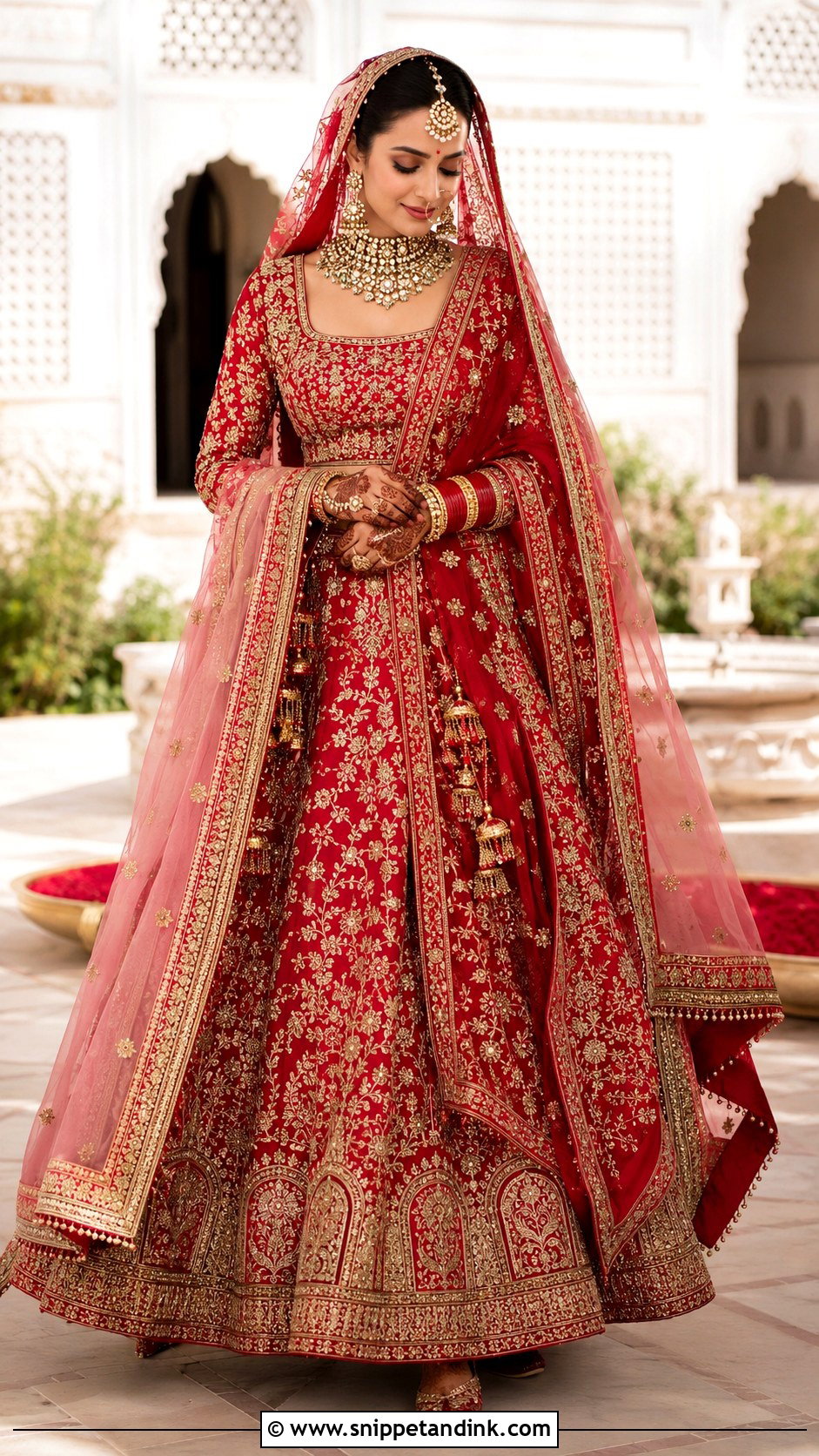
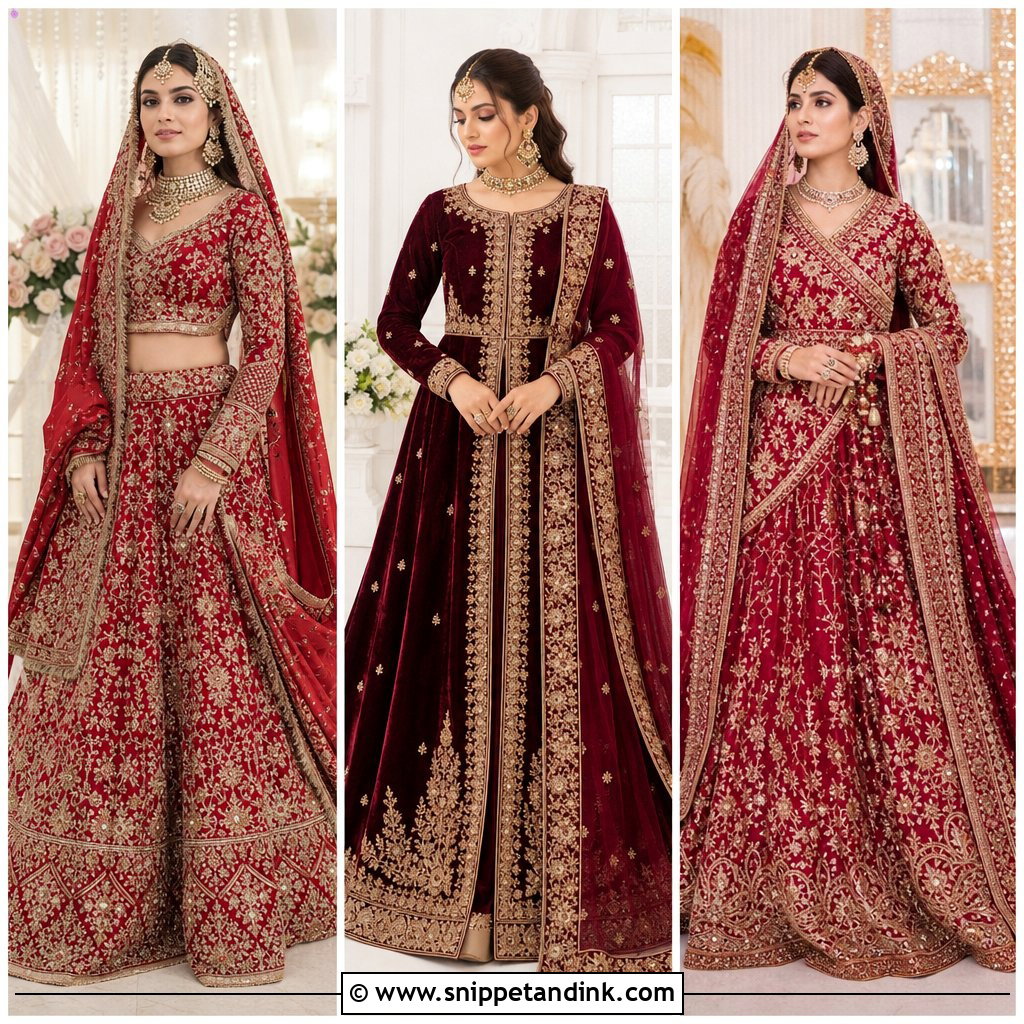
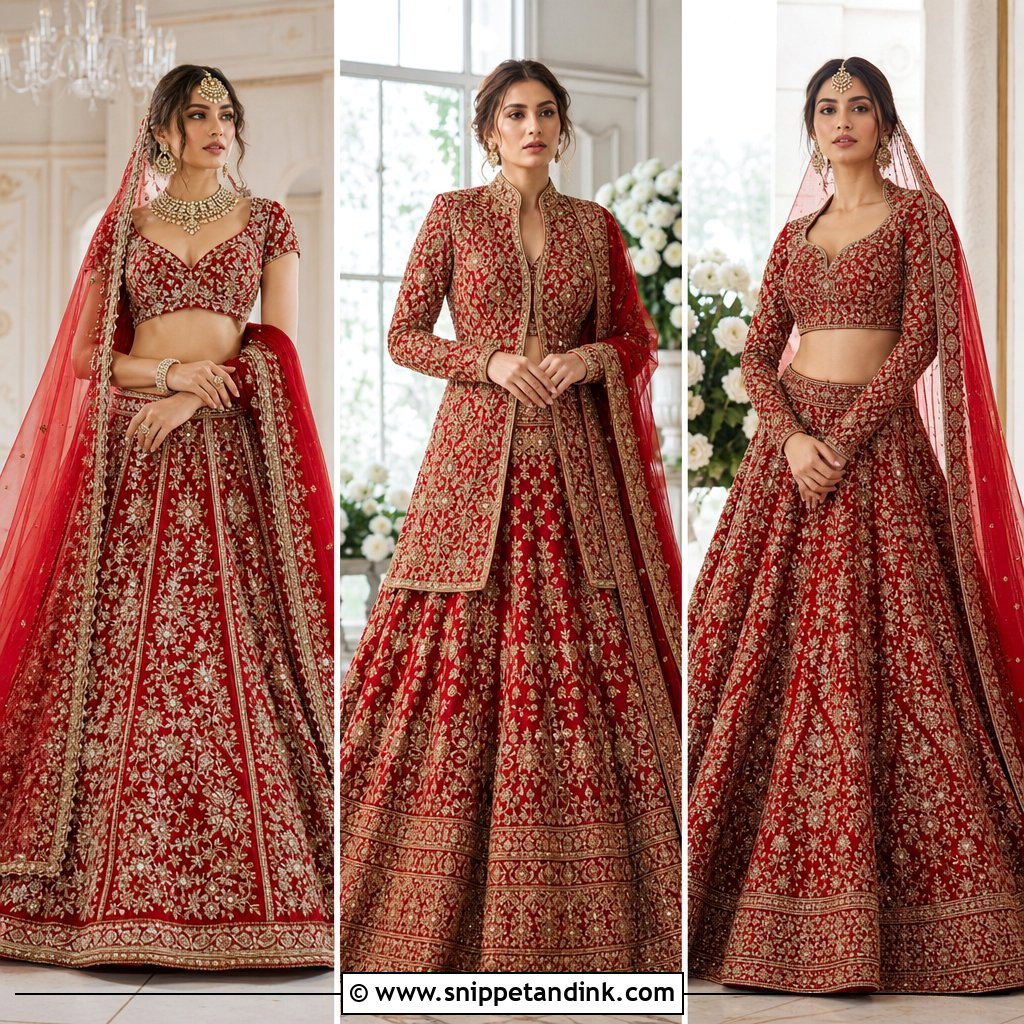
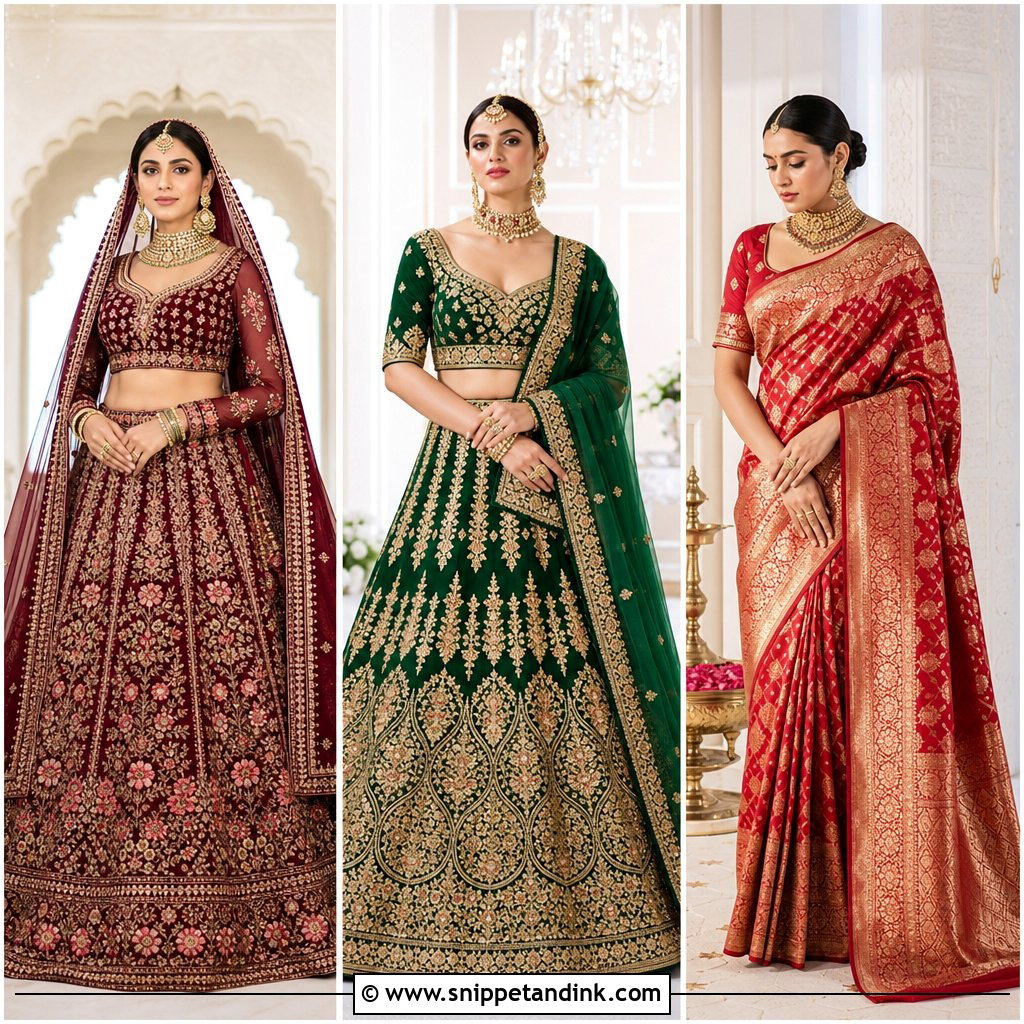
Red zardozi is still the look most families picture, and a classic red bridal lehenga earns that place because metal threadwork glows in daylight and warm evening light alike. The catch is weight. Dense zardozi, dabka and sequins on a full skirt add up quickly, so I ask the boutique to concentrate the heaviest work at the hem and keep the upper skirt lighter. A sweetheart or square-neck blouse balances the volume. Use a red embroidered dupatta over the head and a lighter second one across a shoulder. Gold jhumkas, a layered necklace, bangles and a maang tikka finish it, with cushioned juttis underneath. If you have a say in the motifs, floral vines and architectural borders read clearly even in wide shots.
2. Maroon Velvet Bridal Lehenga
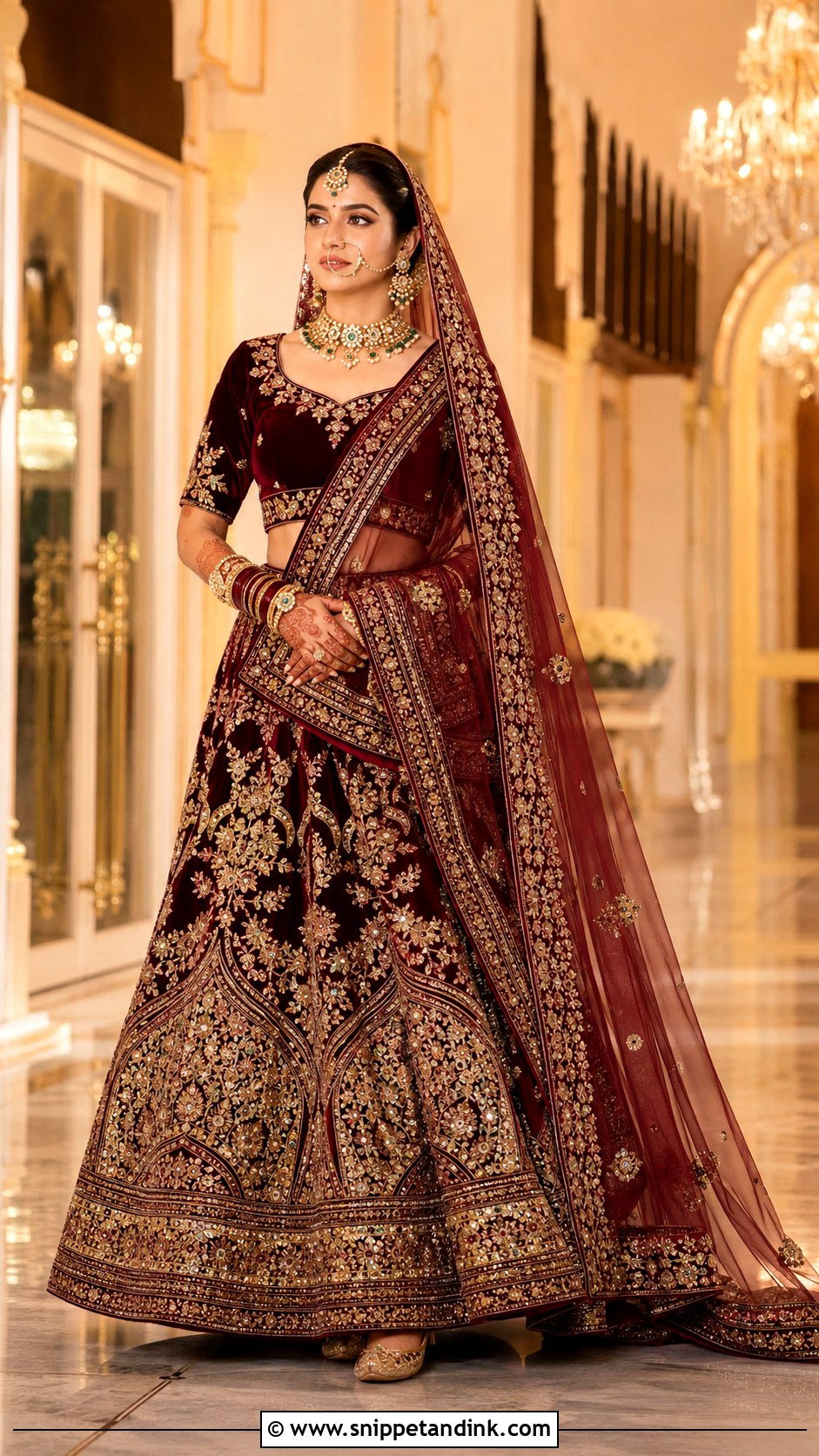
Velvet is the warmest fabric here, which is exactly why I only suggest it for evening or winter weddings. In a summer marquee it traps heat, and the bride feels it by the second hour. A paneled maroon skirt with antique gold embroidery at the hem and waist looks regal, and a matching blouse with elbow-length sleeves balances the heavy pile. Velvet also crushes where you sit, so steam it from the reverse and never press it flat. Keep the dupatta light, in organza or net, or the whole outfit looks dense. Polki, antique gold bangles and a statement nath suit the deep color, with a sleek bun and a muted berry lip.
3. Ivory And Gold Bridal Lehenga
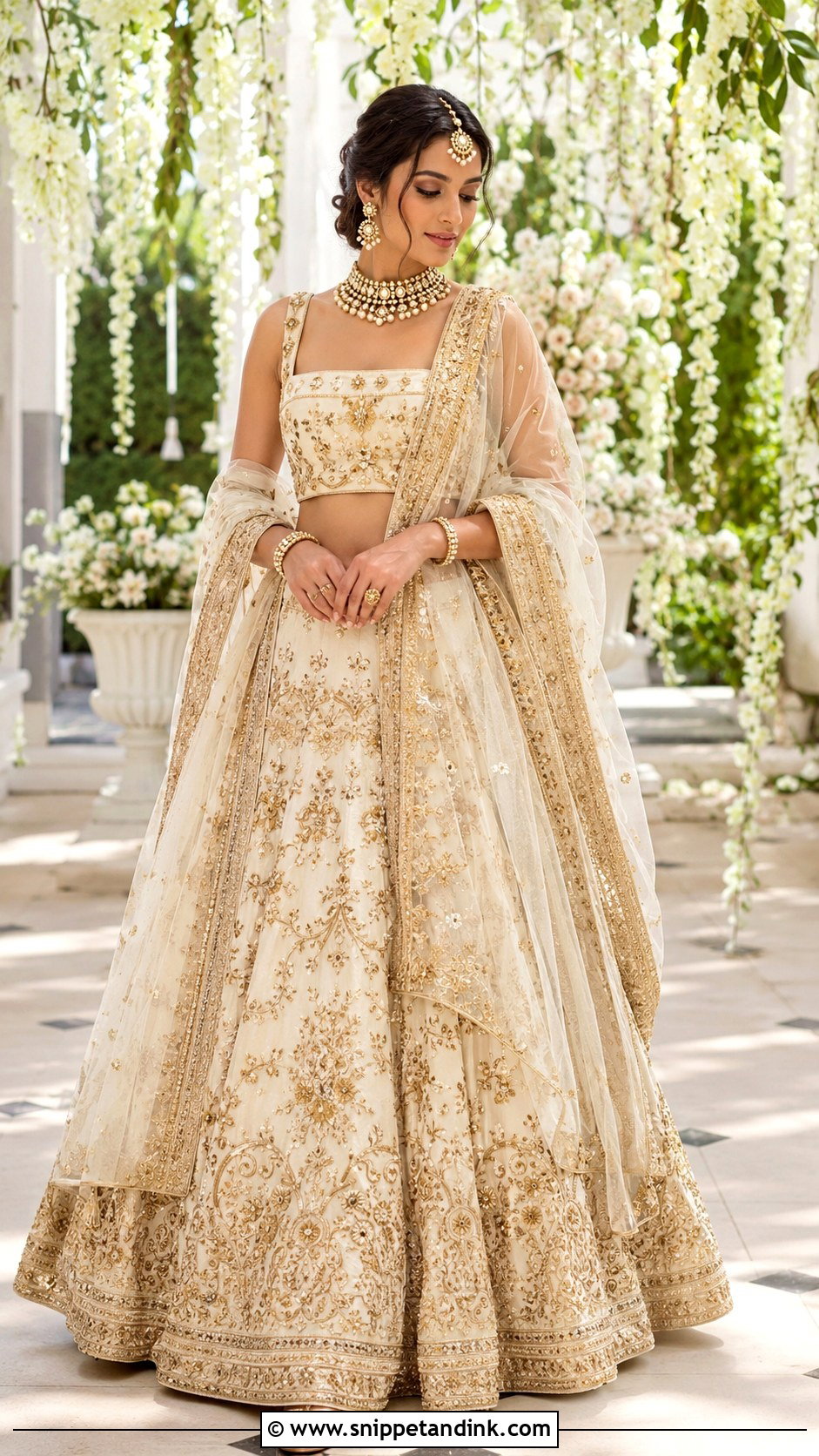
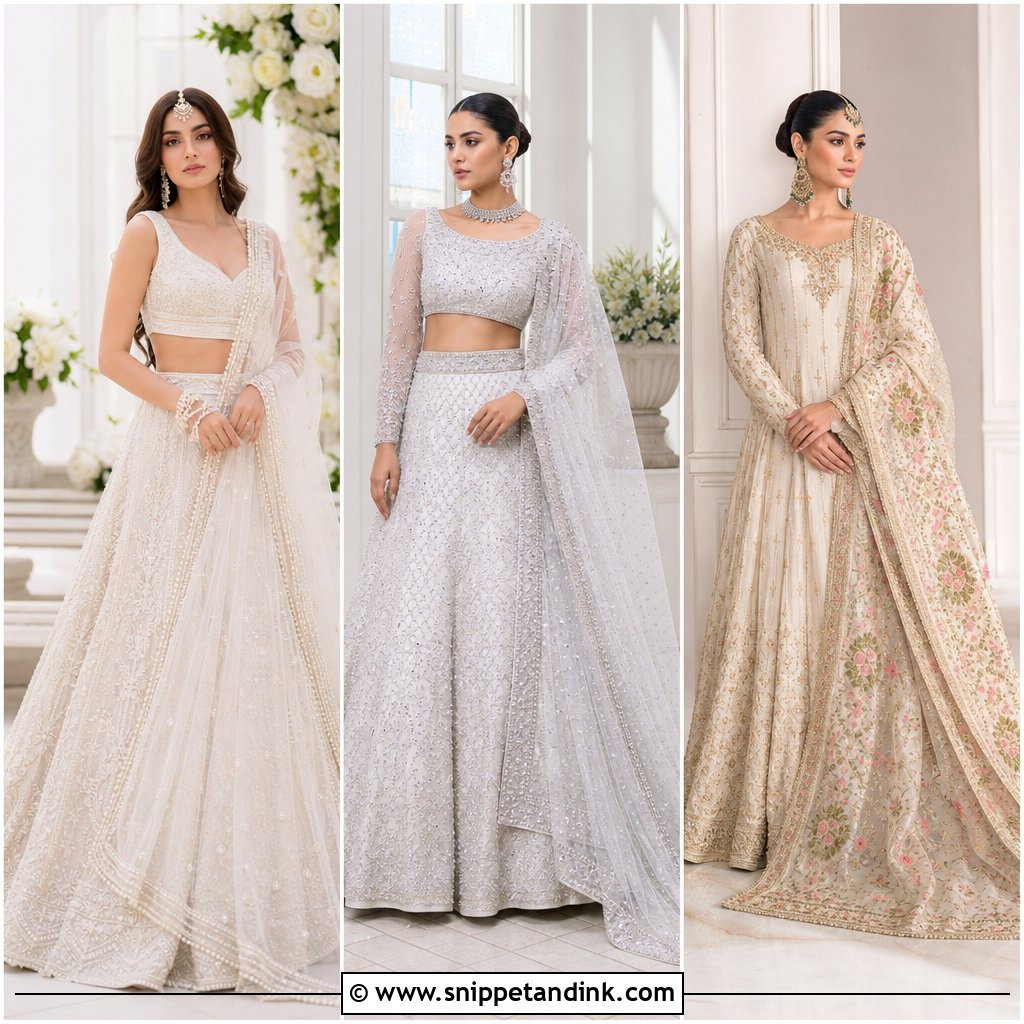
Ivory and gold is the outfit I’d suggest to a bride whose family is open to something lighter than red, though check that first, since in some communities ivory carries associations you may not want on a wedding day. Choose silk or organza with fine gold threadwork, sequins and a scattering of pearls, paired with a structured square or softly curved neckline. One ivory dupatta with a gold border goes over the head and a sheer second one over the arms. Kundan with pearls, or a touch of emerald, gives the jewelry contrast. Ivory shows every mark, so wear it only once your mehndi paste is fully dry and scraped off. Gold sandals, luminous skin, brown liner and a rose lip complete it.
4. Blush Pink Floral Bridal Lehenga
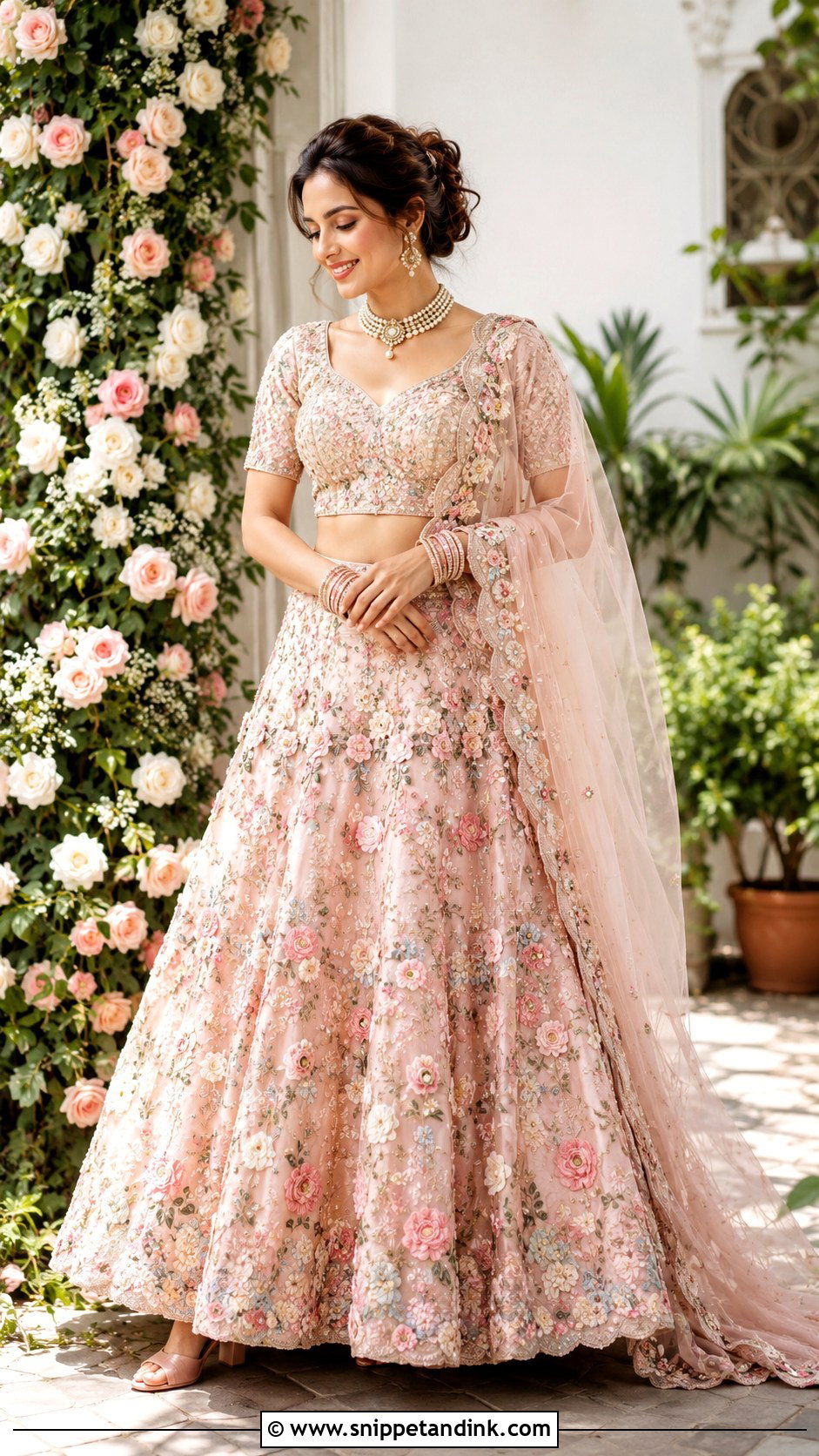
Three-dimensional flowers photograph with real depth, but they crush. If your blush lehenga has raised florals, ask how they’re attached and keep them off the seat area, because sitting through a long ceremony flattens fabric petals. Fine multicolored threadwork and tiny sequins fill in around them. A fitted blouse with short sleeves or supportive straps carries the jewelry well. Let the embroidered edge of a sheer blush dupatta frame your face. Pearls, rose-gold bangles and a small maang tikka keep the palette soft, with metallic block heels underneath. My one makeup note: go slightly deeper on eyes and lips, or pale pink washes the face out.
5. Pastel Blue Bridal Lehenga
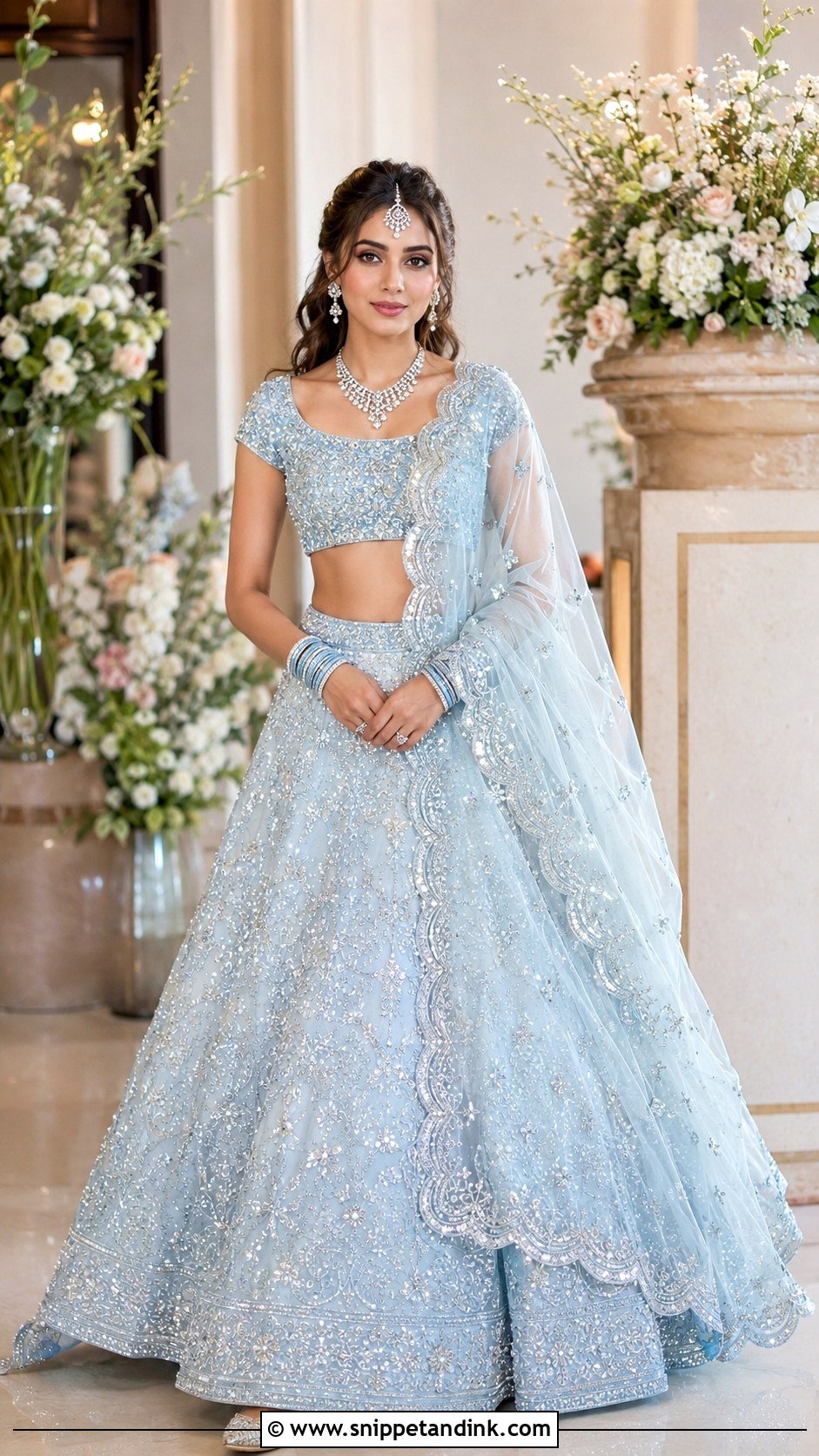
Pastel blue is a calm alternative to red that still looks like the main event, provided the embroidery carries enough sparkle. Silver threadwork and crystals keep it festive; without them, blue can read as a guest outfit. A voluminous skirt with fine florals pairs with a fitted blouse on straps, short sleeves or an off-shoulder neckline. A sheer dupatta with a scalloped silver edge moves well without hiding the work. Cool metals suit this palette, so wear diamond-style pieces or pearls with silver heels or embellished juttis. Check the shade under the venue’s evening lights, as some powder blues dull toward grey under yellow-toned bulbs. A soft braided bun and cool pink blush finish it.
6. Emerald Green Bridal Lehenga
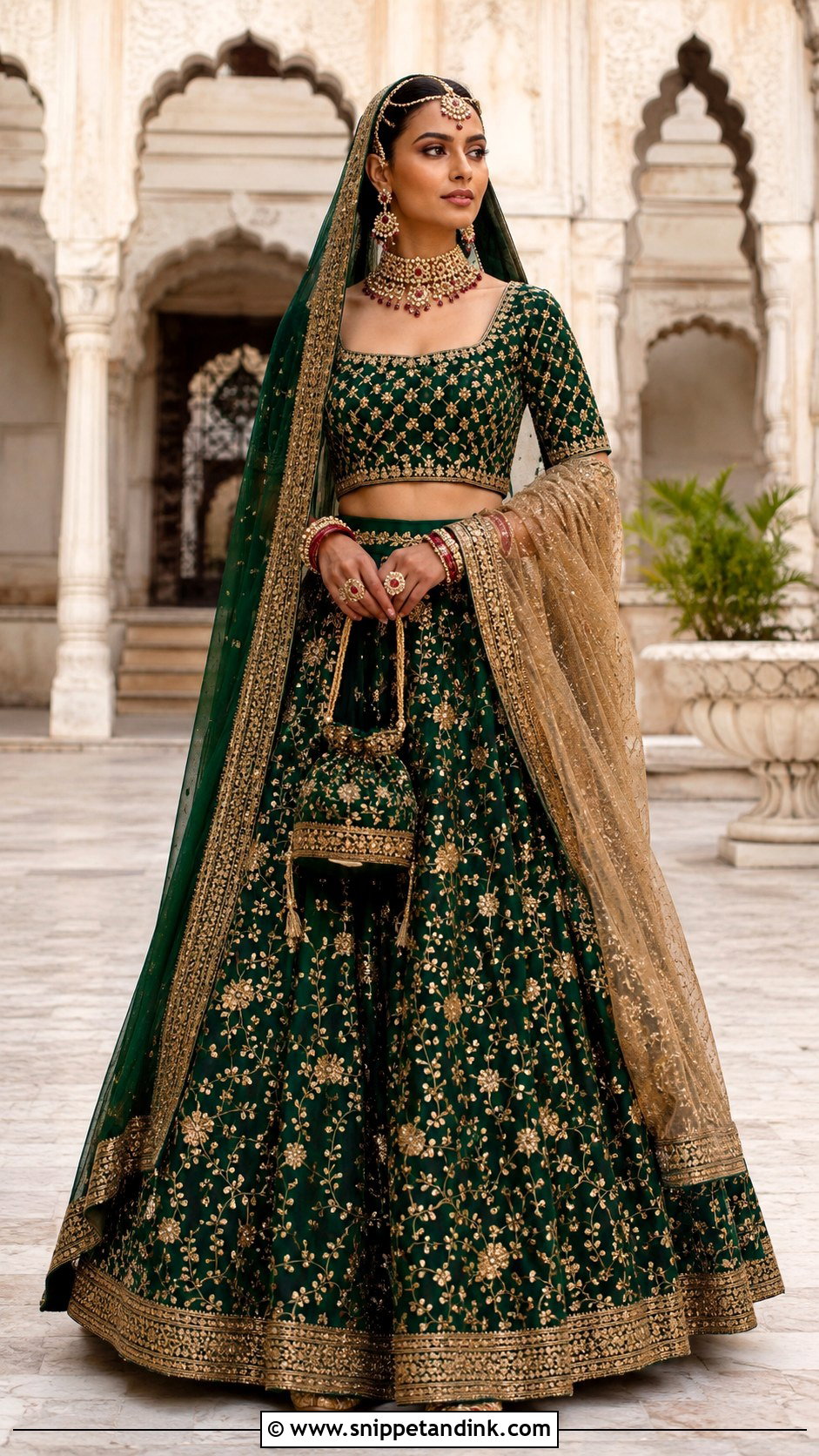
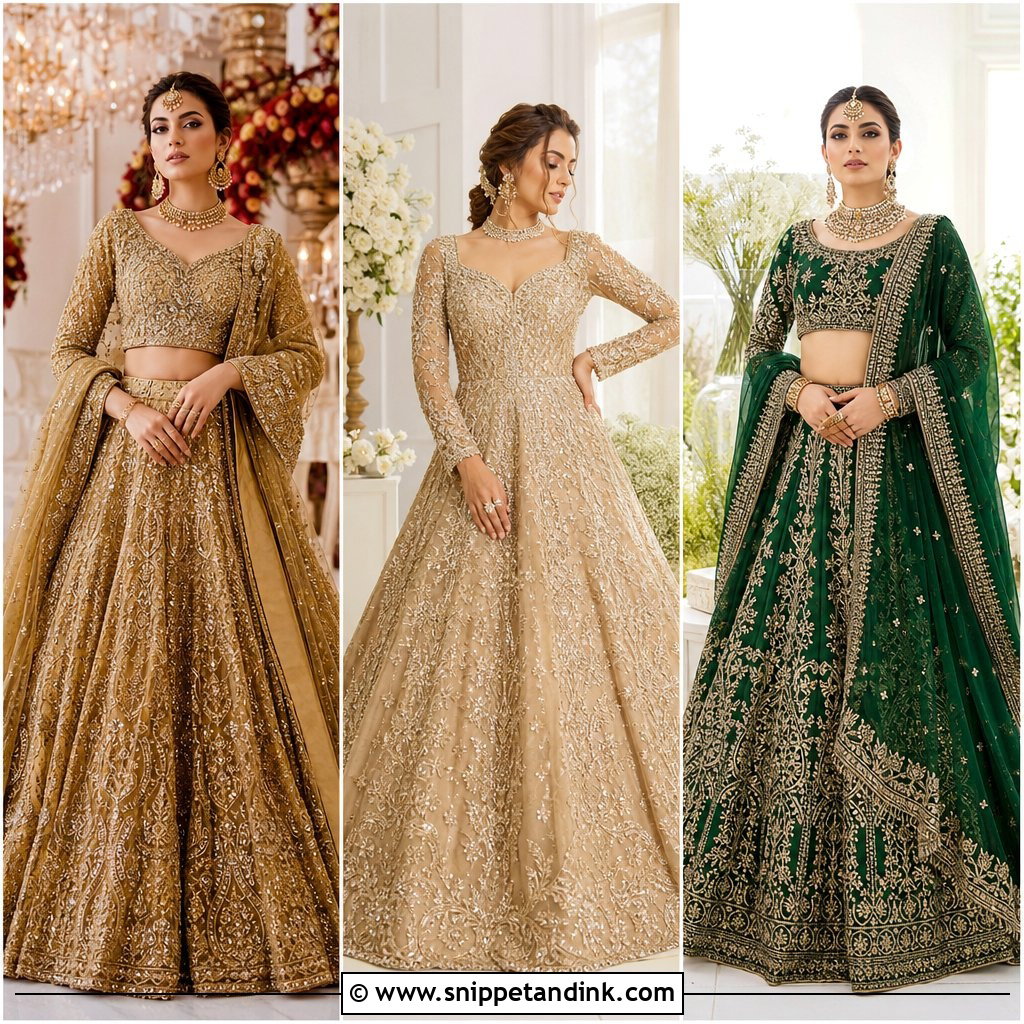
Emerald is my favorite non-red bridal color because it keeps its depth from the stage to the back row. Silk or velvet with antique gold vines and a broad hem suits it, and emerald velvet is especially rich at night. A matching blouse with a deep square neck and elbow sleeves keeps the line clean. Add a sheer green dupatta over the head, and if you want contrast, make the second dupatta a muted gold rather than a bright one. Kundan with pearls or ruby-toned stones gives traditional depth. Gold juttis, stacked bangles and a structured potli bag finish it, and small white flowers in a sleek low bun stand out against the green.
7. Rani Pink Bridal Lehenga
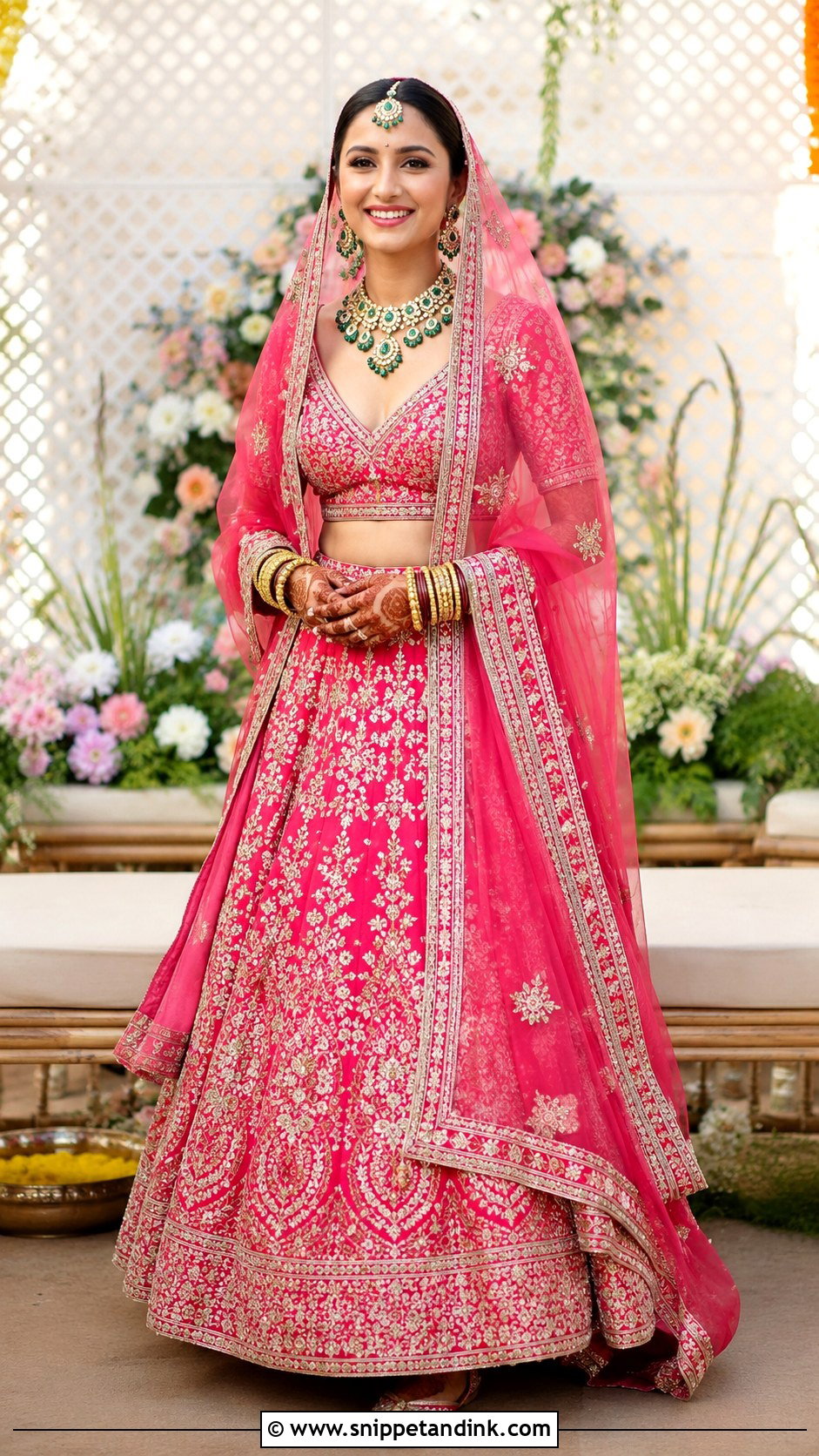
Rani pink is loud in the best way. It looks most vivid in daylight, so I steer it toward morning and afternoon ceremonies. Raw silk takes the color richly and holds gold zari or meenakari-style threadwork without sagging. Keep the matching blouse simple with a V or rounded neckline. A lighter pink organza dupatta over the head softens the saturation, and you can pleat a second one over a shoulder for more ceremony. Green stone jewelry against pink is a classic contrast that never looks dated. Gold bangles, a statement maang tikka and embroidered juttis complete it, with a braided or low bun so the neckline shows.
8. Burnt Orange Bridal Lehenga
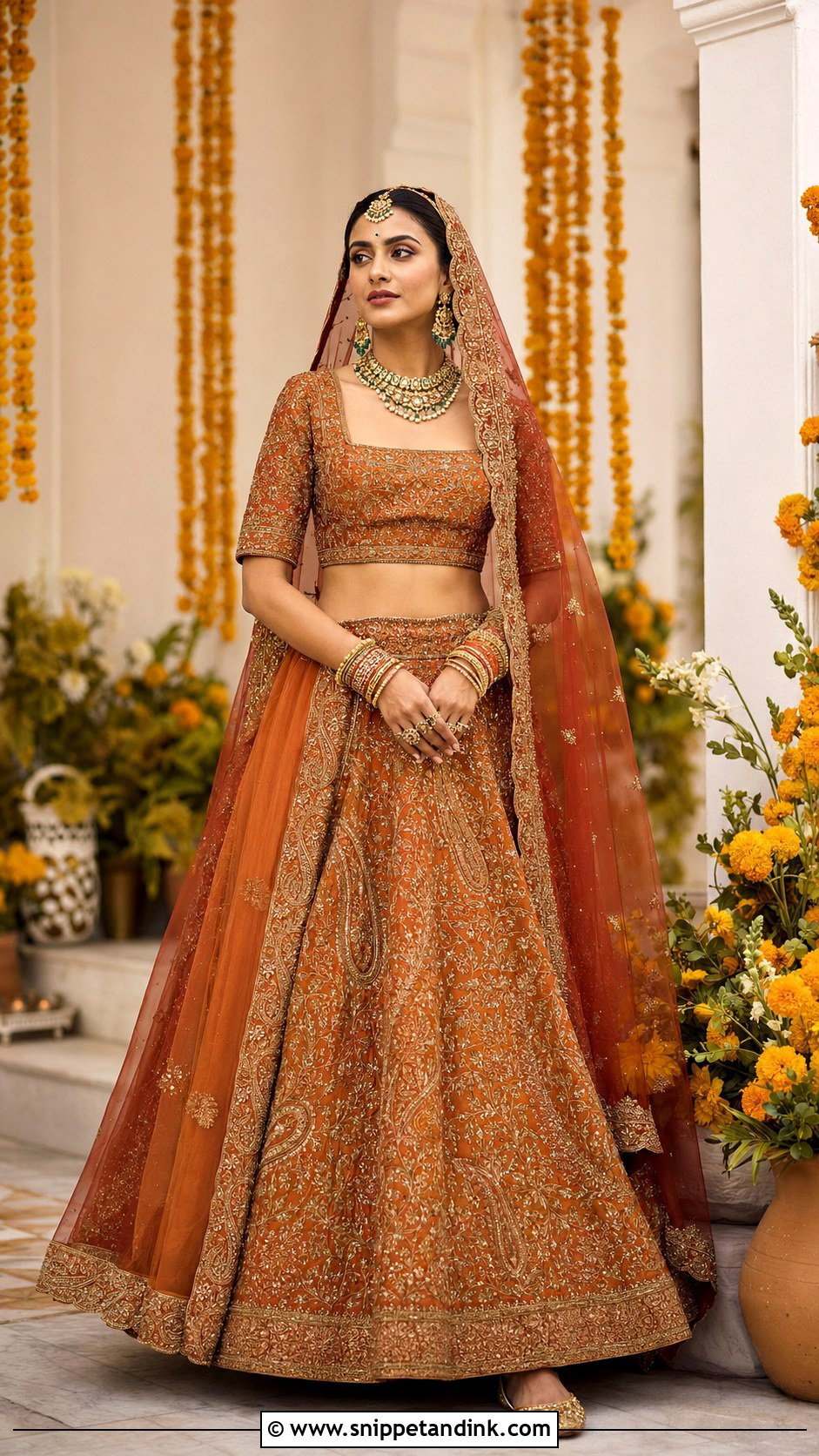
Burnt orange is what I bring out when a bride finds red too expected but still wants warmth. It flatters warm and olive undertones especially, and deep skin looks rich in it too. Silk with antique gold embroidery, paisleys and touches of rust keeps the mood earthy. A fitted orange blouse with a square neck and elbow sleeves stays comfortable through long rituals. Layer a rust-red dupatta over the head and a light organza one over a shoulder so the outfit doesn’t turn heavy. Antique gold, layered necklaces, matching bangles and a classic nath suit the palette, with tan or gold juttis. It sits naturally among marigold decor at an outdoor venue.
9. Banarasi Silk Bridal Lehenga
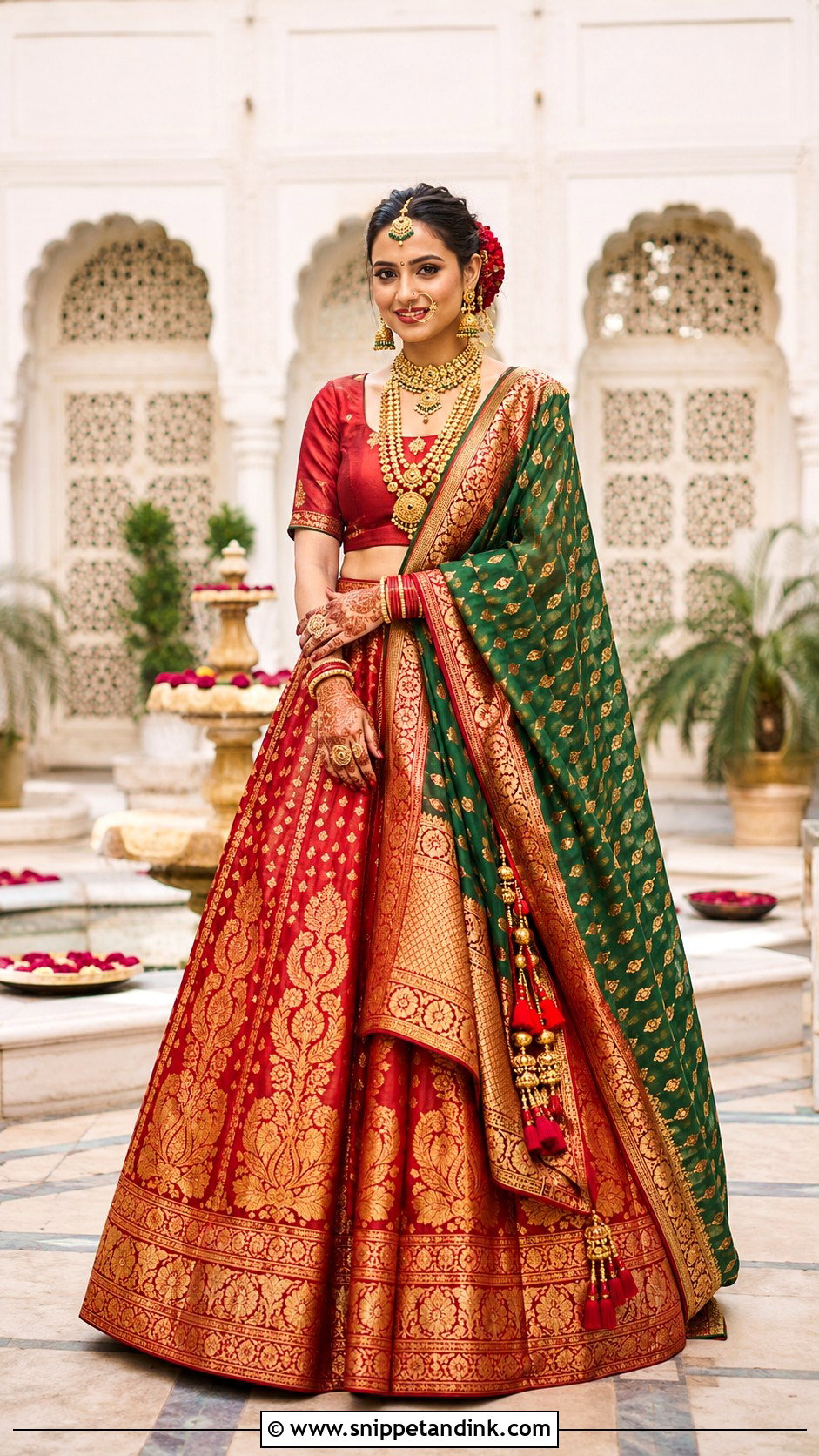
Banarasi silk is woven rather than embroidered, so the pattern is part of the cloth, and the skirt usually weighs less than one with equally rich zardozi. That’s its quiet advantage for long ceremonies. Choose red, maroon, magenta or green with intricate gold motifs and a wide border, and pair it with a solid silk blouse so the weave stays readable. A contrasting dupatta in green, mustard or deep pink adds dimension over the head. Temple jewelry, gold jhumkas and layered necklaces suit the heritage textile. Turn the fabric over before buying: handwoven brocade usually shows loose thread floats behind the motifs, which is normal rather than a flaw. A center-parted bun with a simple floral garland finishes it.
10. Gota Patti Bridal Lehenga
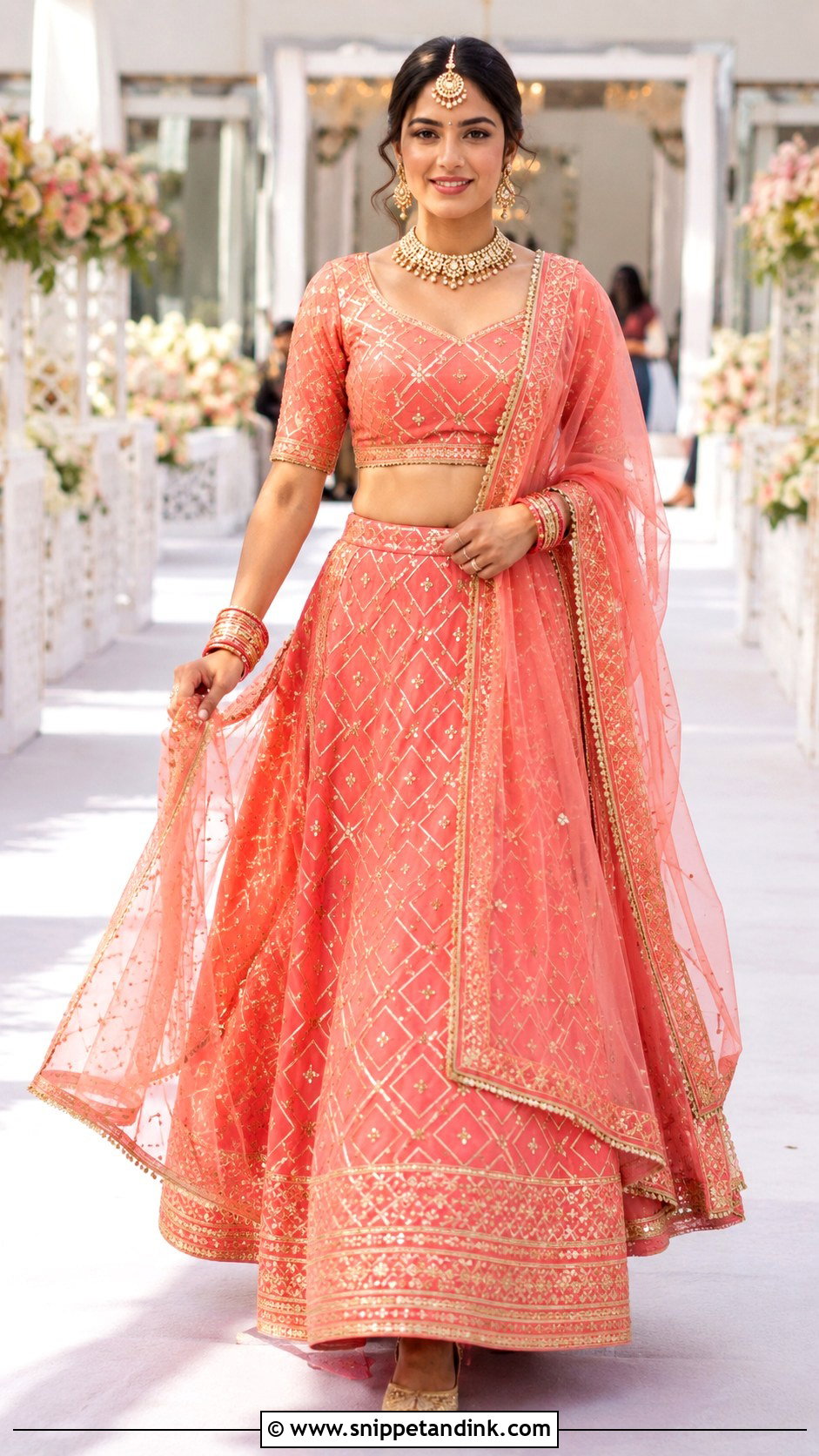
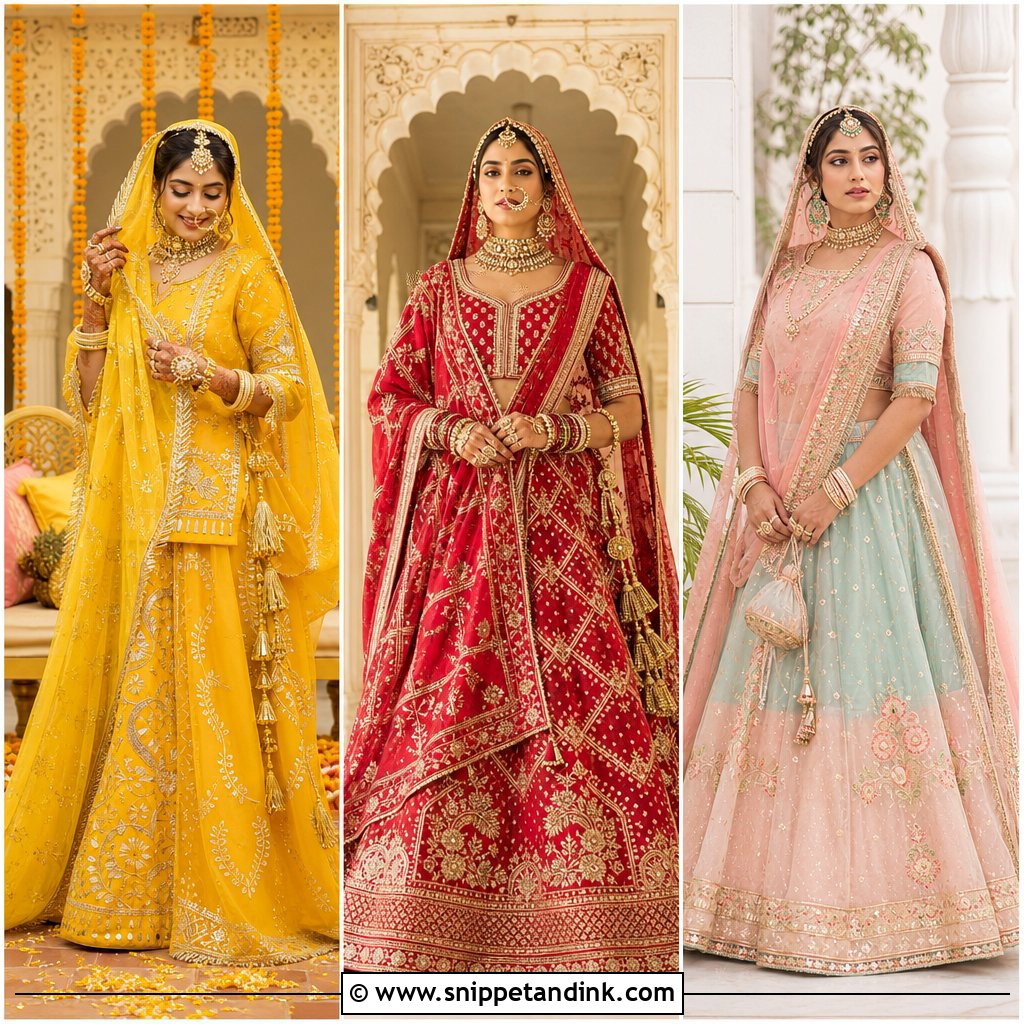
I reach for gota patti work when a bride wants sparkle she can actually dance in. The metallic ribbon is appliqued onto the fabric, so it catches light like heavy embroidery without the weight of dense stonework. Red, pink, mustard or coral grounds with geometric and floral gota shapes all suit it. A matching blouse with a clean neckline and secure sleeves keeps movement easy. Cover the head with a light organza dupatta scattered with gota and pleat a second across the torso. Kundan earrings, a medium necklace, bangles, a delicate tikka and gold juttis finish it. One honest caution: gota can tarnish if it’s stored damp, so wrap it in soft cotton afterward.
11. Mirror Work Bridal Lehenga
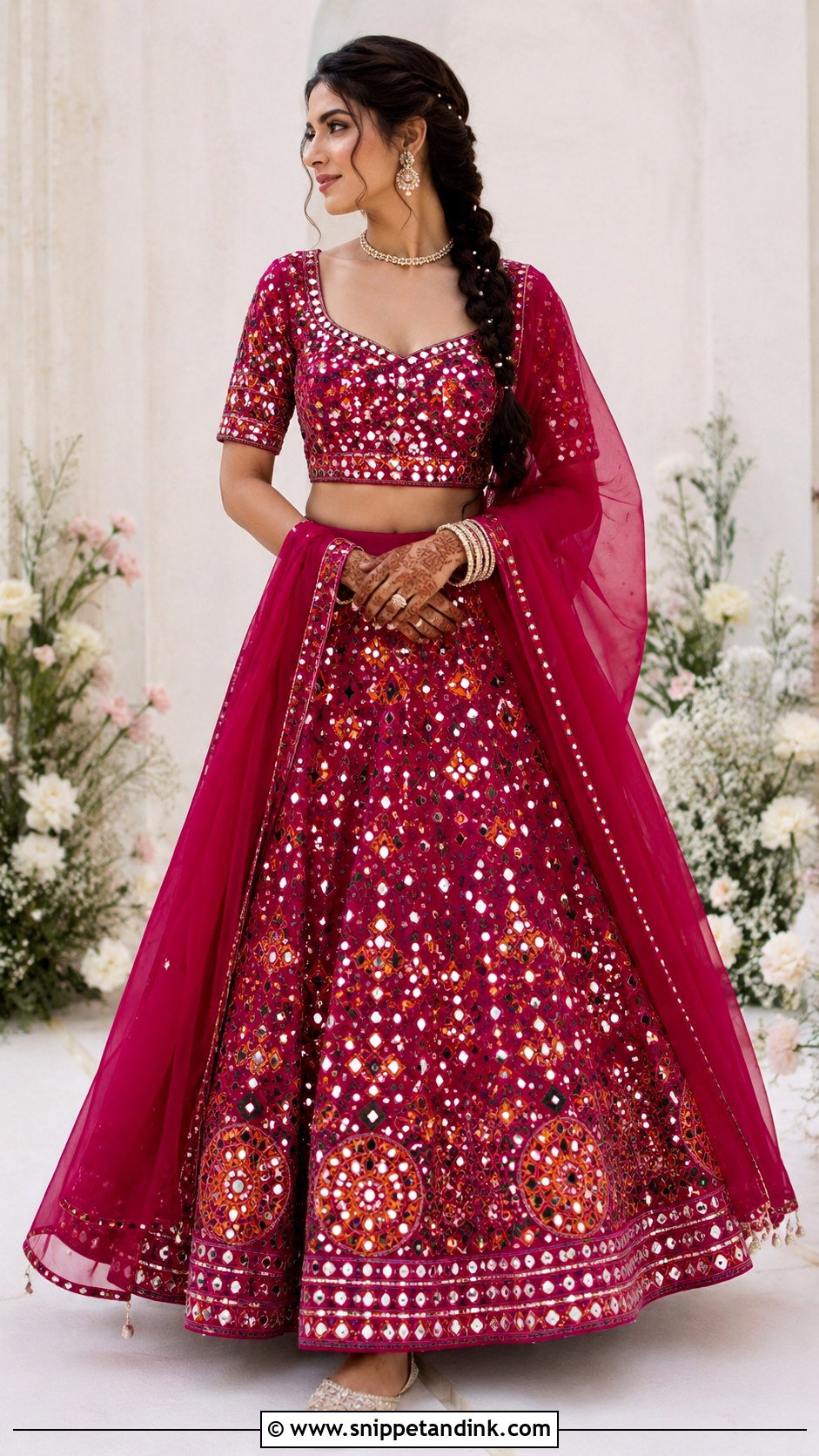
Mirror work flashes as you move, which makes it lively on video and slightly unpredictable in stills, because each mirror can throw a bright spot back at the lens. The fix is matte makeup and restraint everywhere else. Choose a jewel-toned skirt in red, magenta, emerald or navy with small mirrors held by colorful thread, and a blouse that repeats the pattern lightly. A plain net or organza dupatta lets the work show. One structured necklace and statement earrings beat a stack of reflective pieces. Metallic juttis, coordinated bangles, a simple potli and a neat braid or low bun finish it. Ask for a soft lining under any mirrored panels on the blouse, since the back of that embroidery can feel scratchy.
12. Pearl Embroidered Bridal Lehenga
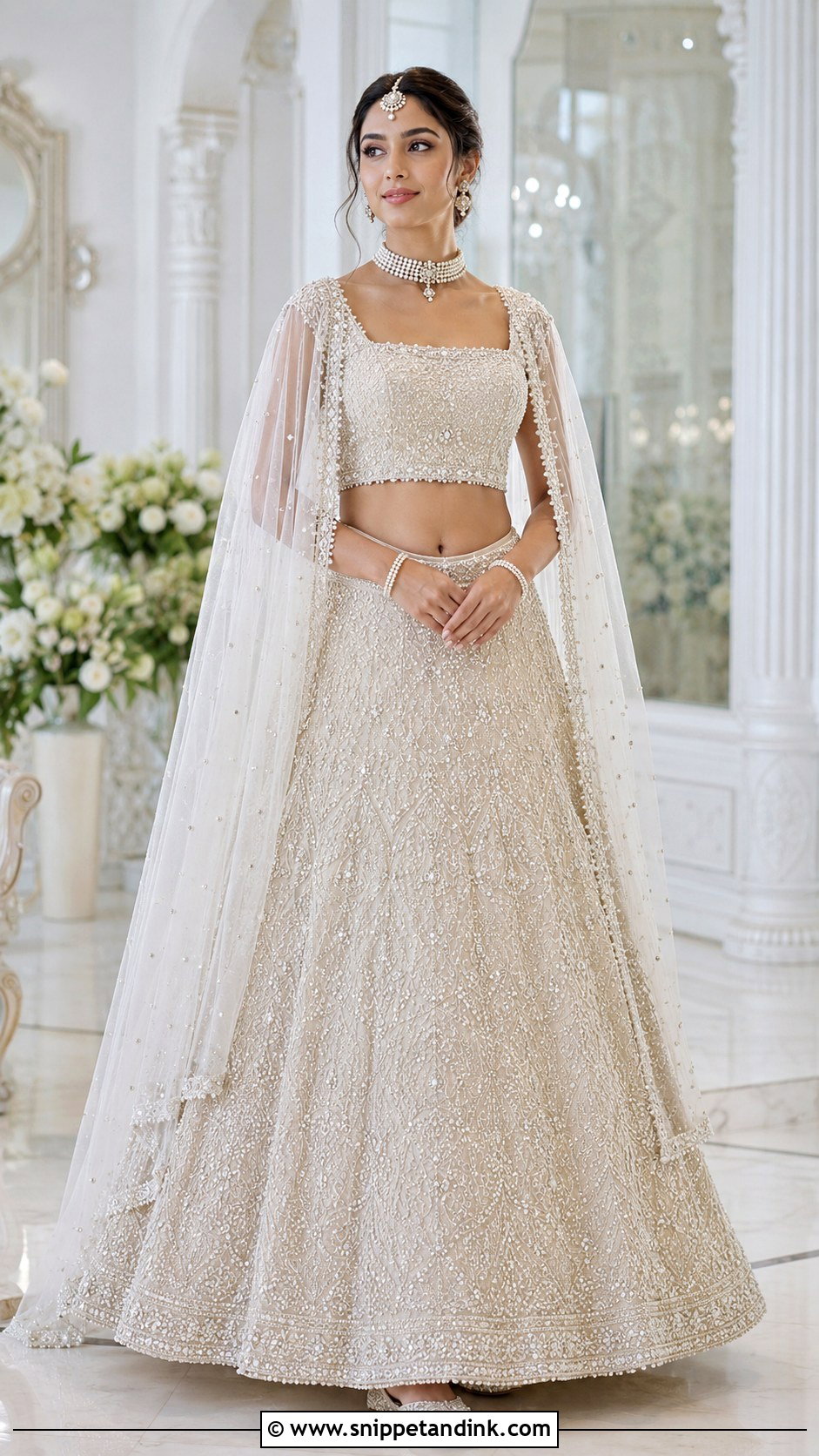
Pearls are heavier than they look, and a skirt covered edge to edge can drag at the waistband by evening. I’d concentrate pearl work around the border and let tonal threadwork and small crystals carry the rest of an ivory, champagne, blush or pale peach skirt. A structured square-neck blouse frames the face. If the dupatta has a pearl-edged border, pin it on at the fitting and wear it for twenty minutes to see whether it pulls at your hair. A pearl choker, matching earrings and a delicate maang tikka continue the theme. Neutral block heels or ivory juttis, a smooth low bun and luminous skin suit the soft design.
13. Sequined Bridal Lehenga
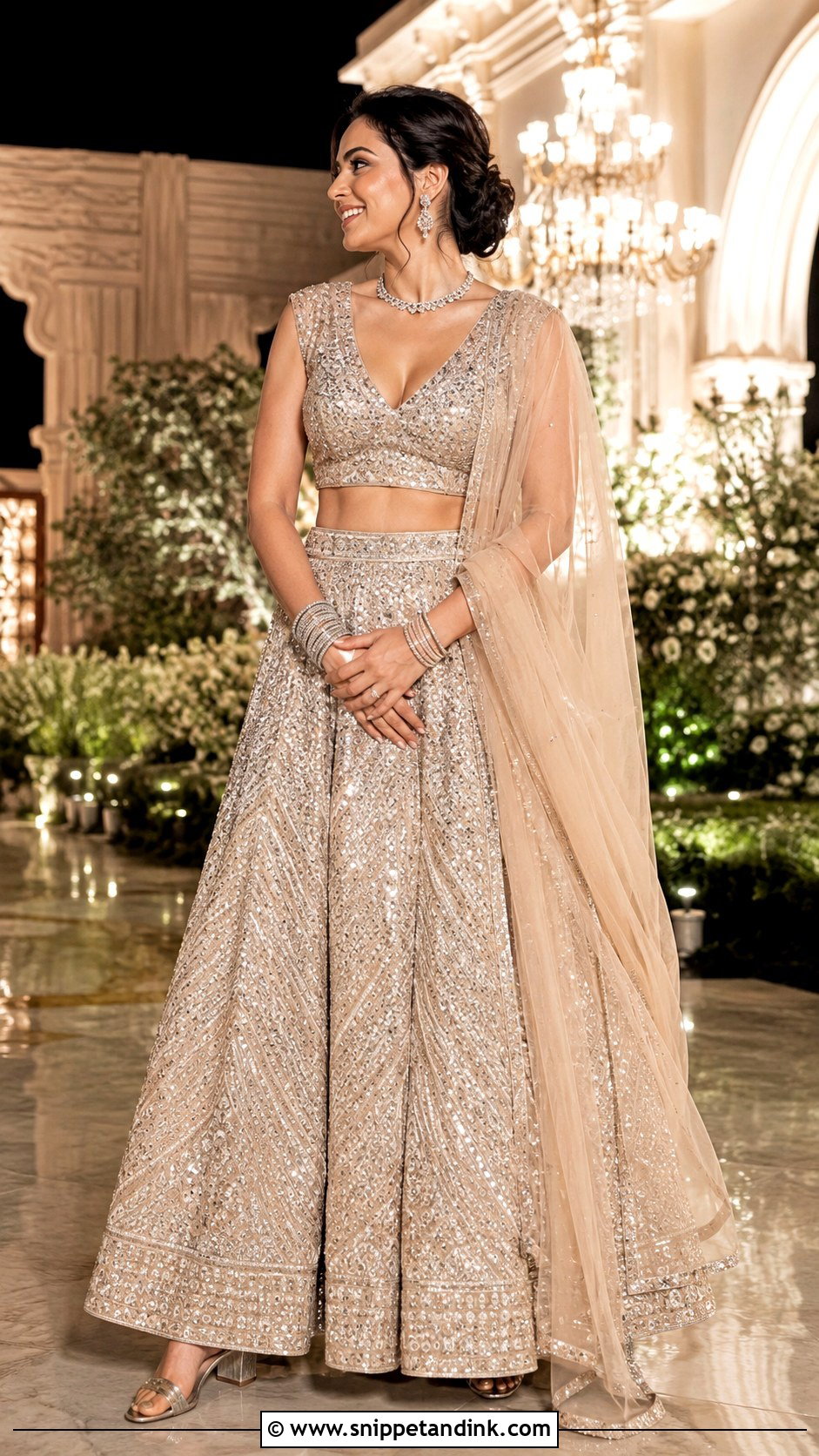
Sequins come alive under evening spotlights and look flatter in daylight, so I keep sequined lehengas for night receptions. Champagne, rose gold, silver or deep burgundy with evenly spaced sequins and structured panels looks crisp. A supportive V, scoop or square neckline works. Plain dupattas are the right partner here, because a sequined dupatta over a sequined skirt turns into one glittering blur in photos. Crystal earrings, one streamlined necklace and a few bangles are enough. Metallic heels suit smooth indoor floors; cushioned juttis are kinder for long rituals. Sequins also scratch the inner arm, so ask for a lined blouse sleeve.
14. Ombre Bridal Lehenga
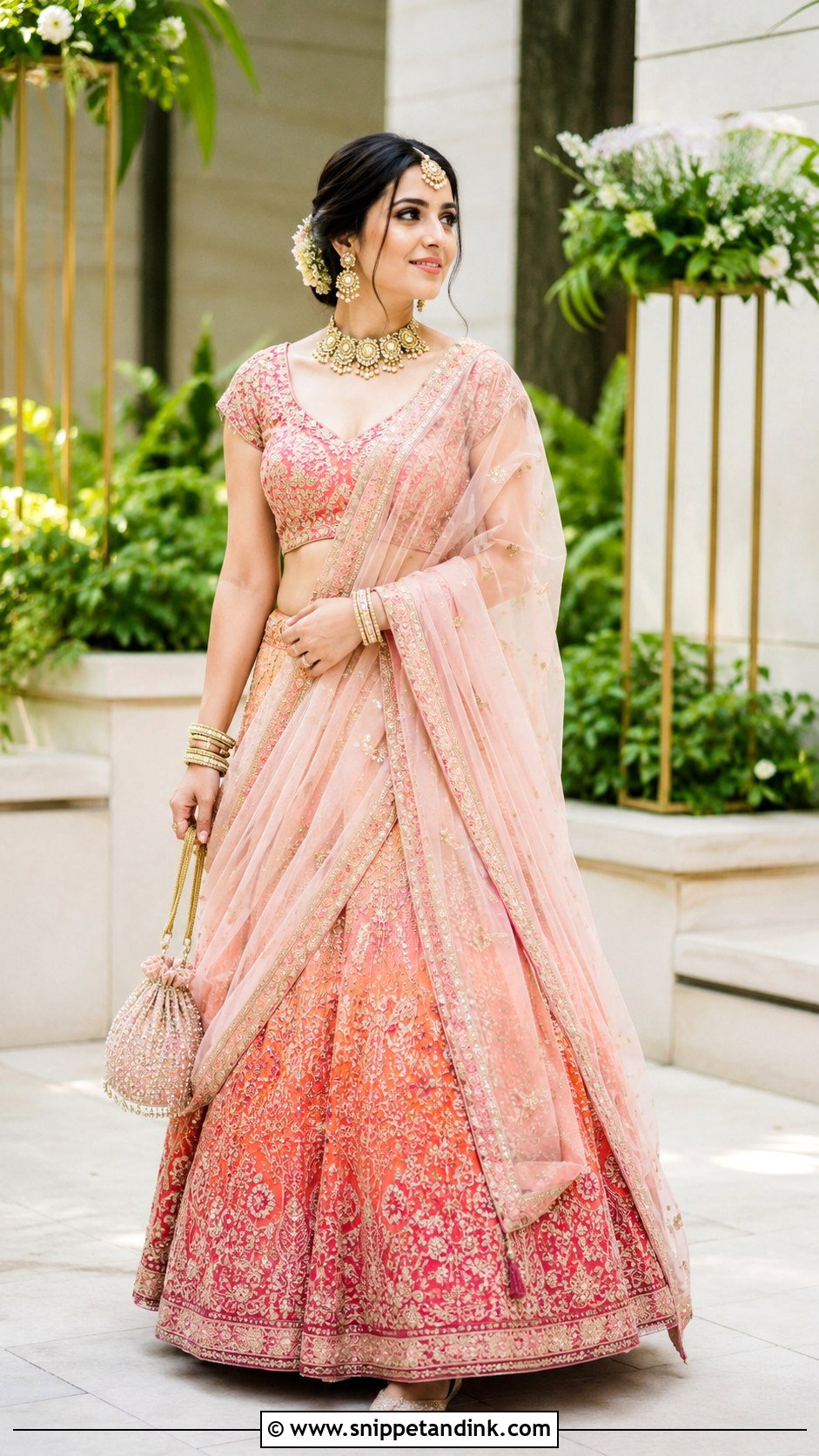
Ombre depends on how smoothly the dye transitions, and that’s hard to judge from a phone screen. Ask for the actual fabric, or at least a daylight photo, before committing. Blush into coral, red into maroon and ivory into soft gold are the gradients I’ve seen hold up best, with embroidery growing denser toward the hem to follow the color. A blouse in the deepest shade gives the top definition, and a sheer dupatta in the lightest tone keeps the whole outfit bright. Match jewelry to the embroidery metal, not to every color in the fade. Metallic juttis, matching bangles, a compact potli and a smooth bun complete it.

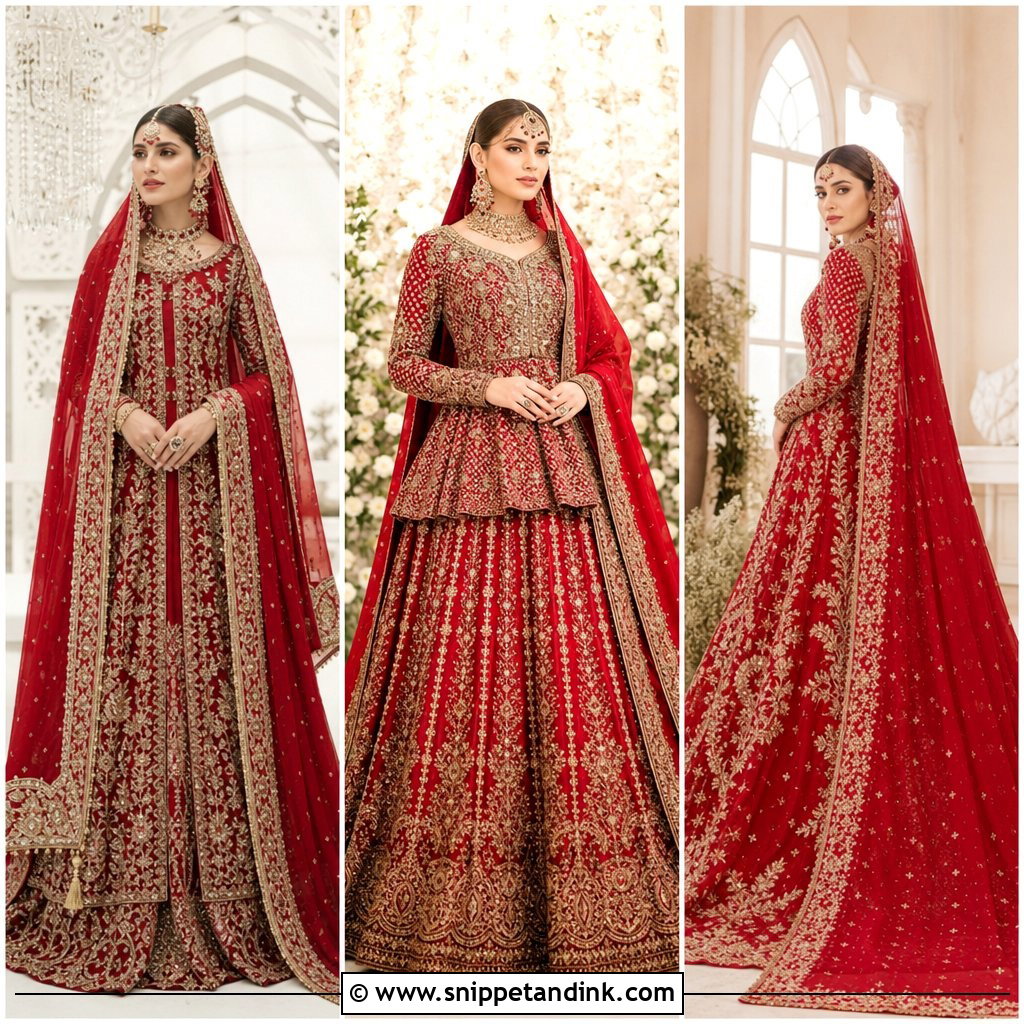
15. Multi-Panel Bridal Lehenga
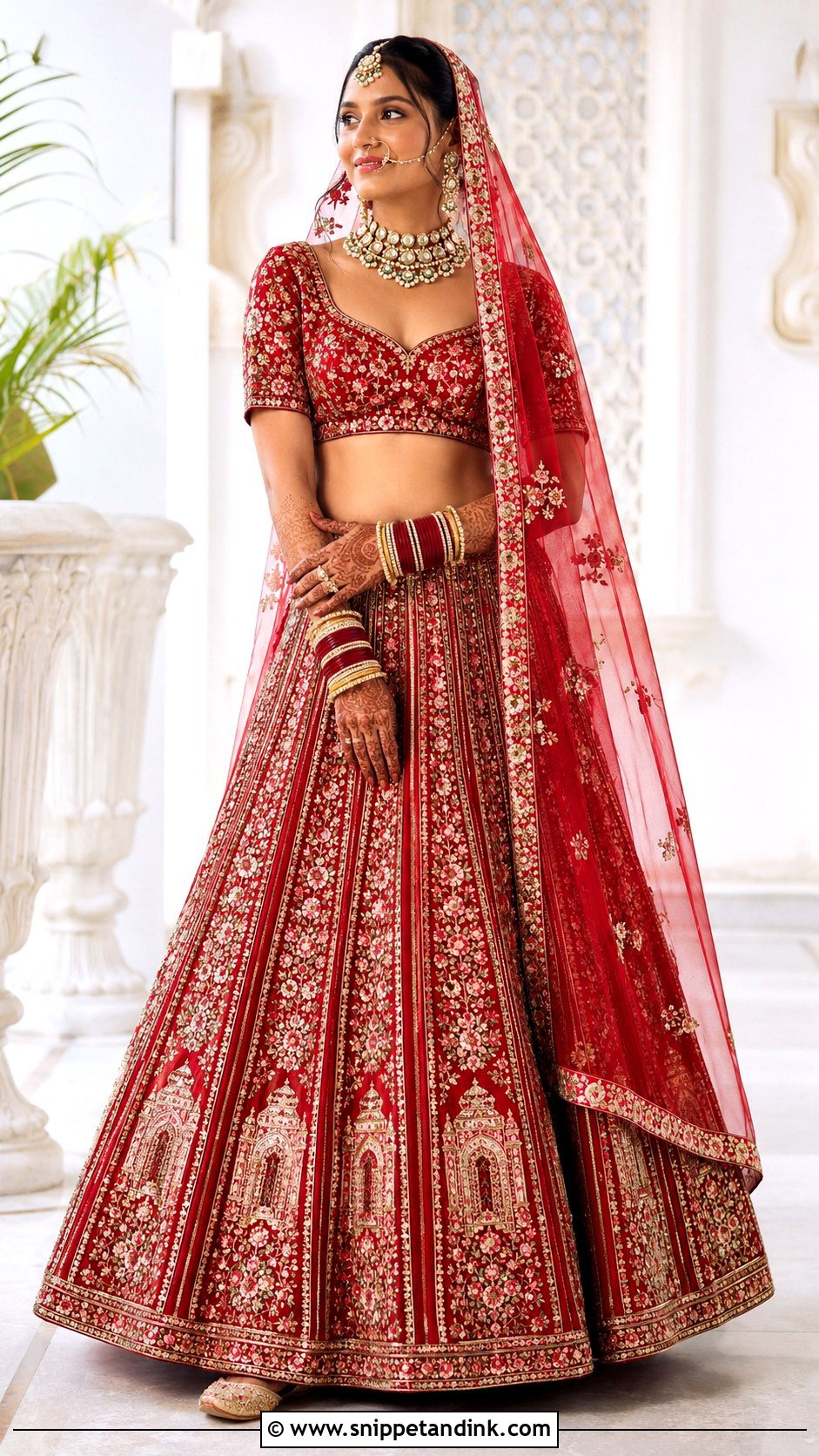
Panels are what give a lehenga its swing, and a multi-panel bridal lehenga uses each one as space for its own floral arrangement, architectural motif or border. Keep the colors linked so it doesn’t look patchwork. Panels must be cut and joined evenly, or the hem dips on one side, so turn a full circle in the mirror at the fitting and watch the hemline. Too many panels gathered at the waist also add bulk right where you least want it. A blouse repeating one motif, a sheer dupatta with a narrow embroidered edge, kundan, stacked bangles, a small nath and embroidered juttis complete it, with a sleek bun to balance the fullness.
16. Corset Blouse Bridal Lehenga
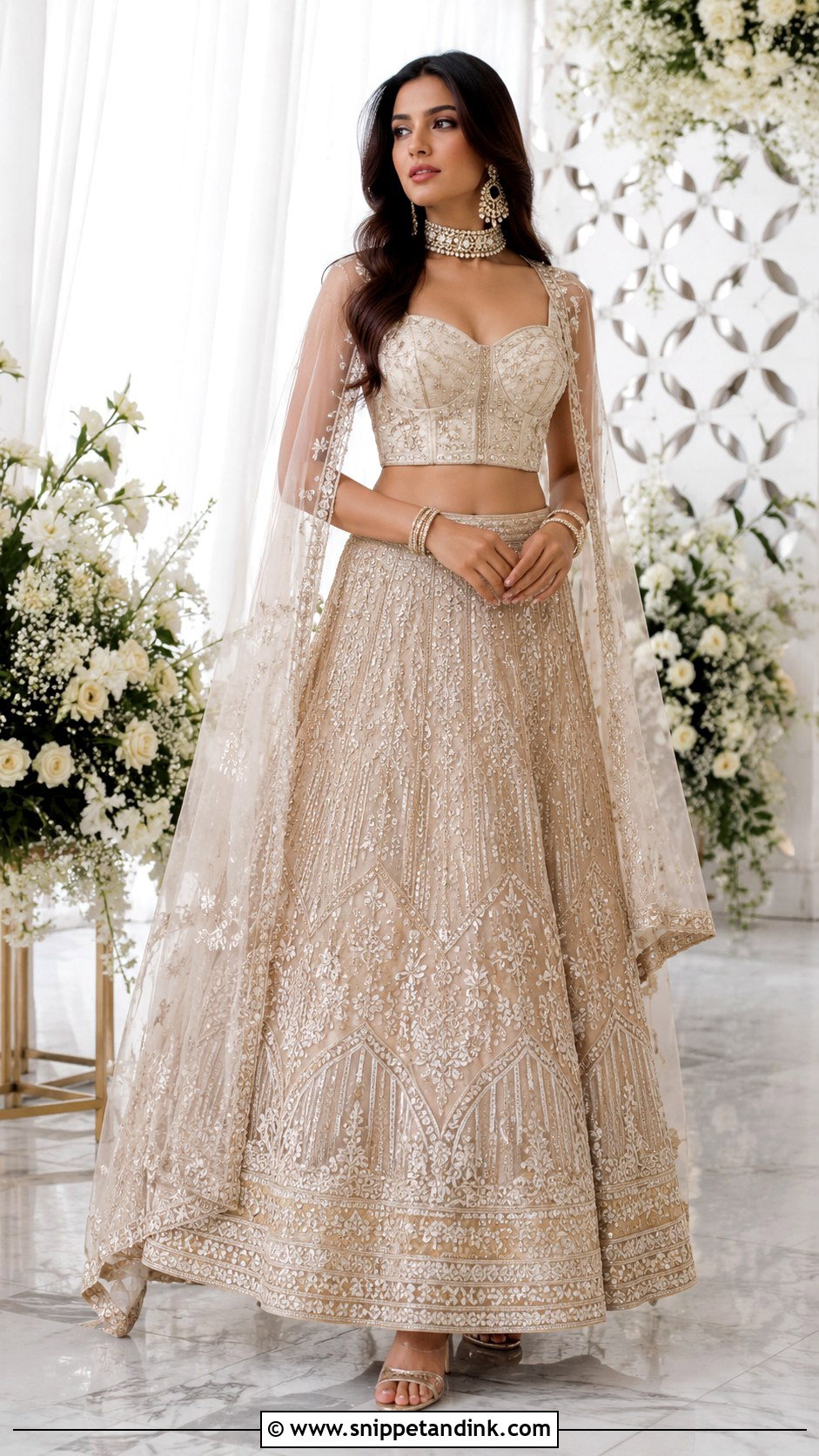
A corset blouse gives a lehenga a modern line, but only if it’s built properly. I look for boning that lies flat against the body, enough coverage to raise your arms during rituals, and ideally a laced back you can ease slightly before dinner. A high-waisted embroidered skirt in red, ivory, blush or champagne pairs with it. Drape a light dupatta over one shoulder, or secure a head drape for the ceremony itself. A statement choker, drop earrings, bangles and metallic heels finish it, with sleek hair so the bodice shows. Sit down for ten minutes at the final fitting. If breathing or bending feels tight then, it’ll be miserable by the reception.
17. Long Jacket Bridal Lehenga
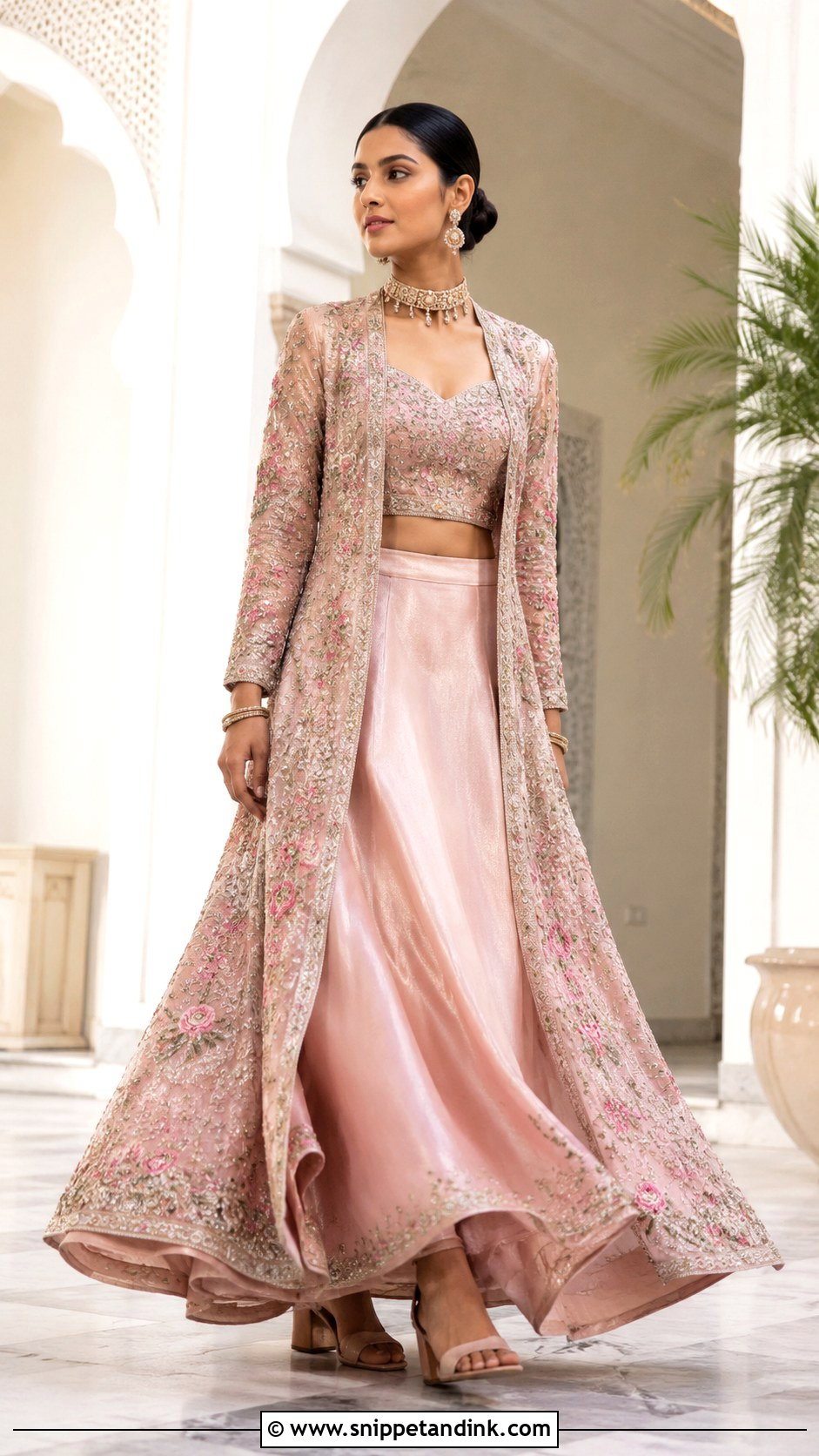
A long open jacket over a lehenga adds coverage and a long, graceful line, and it’s a smart answer to a cool evening. Start with a simple silk or lightly embellished skirt and a fitted blouse, then add a jacket falling below the knee with zardozi, pearls, threadwork or scalloped edges. Keep skirt and jacket in one color family. The jacket is the statement, so one light dupatta is enough, or none at a non-ceremonial event. Drop earrings, a delicate choker, bangles and block heels suit it. Armholes are where jackets fail: lift your arms fully at the fitting, because a tight armhole drags the whole front open.
18. Double Dupatta Bridal Lehenga
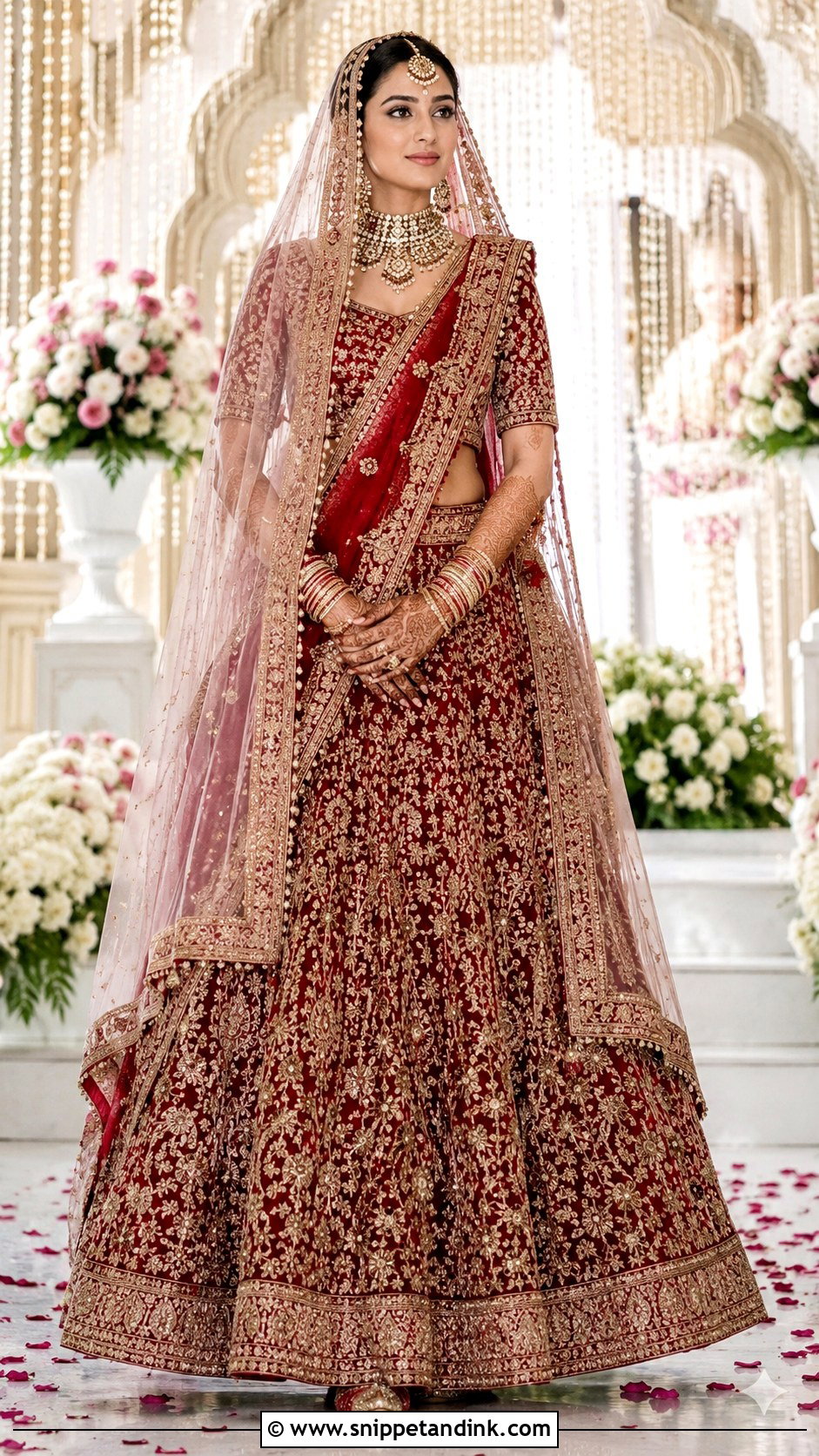
Two dupattas give you options through the day, one over the head for rituals and one draped across the body or pleated over a shoulder. Pair a richly embroidered red, maroon, pink or ivory skirt with a matching blouse. The head dupatta should be the lighter, sheer one, held with U-pins anchored into the bun rather than loose hair, or it slides back every time you bow. Choose borders that complement each other instead of two heavy designs competing. A layered necklace, earrings, maang tikka, bangles and comfortable juttis complete it. At the final fitting, walk, sit and turn so you know the pins hold and neither drape covers the best skirt embroidery.
19. Minimalist Bridal Lehenga
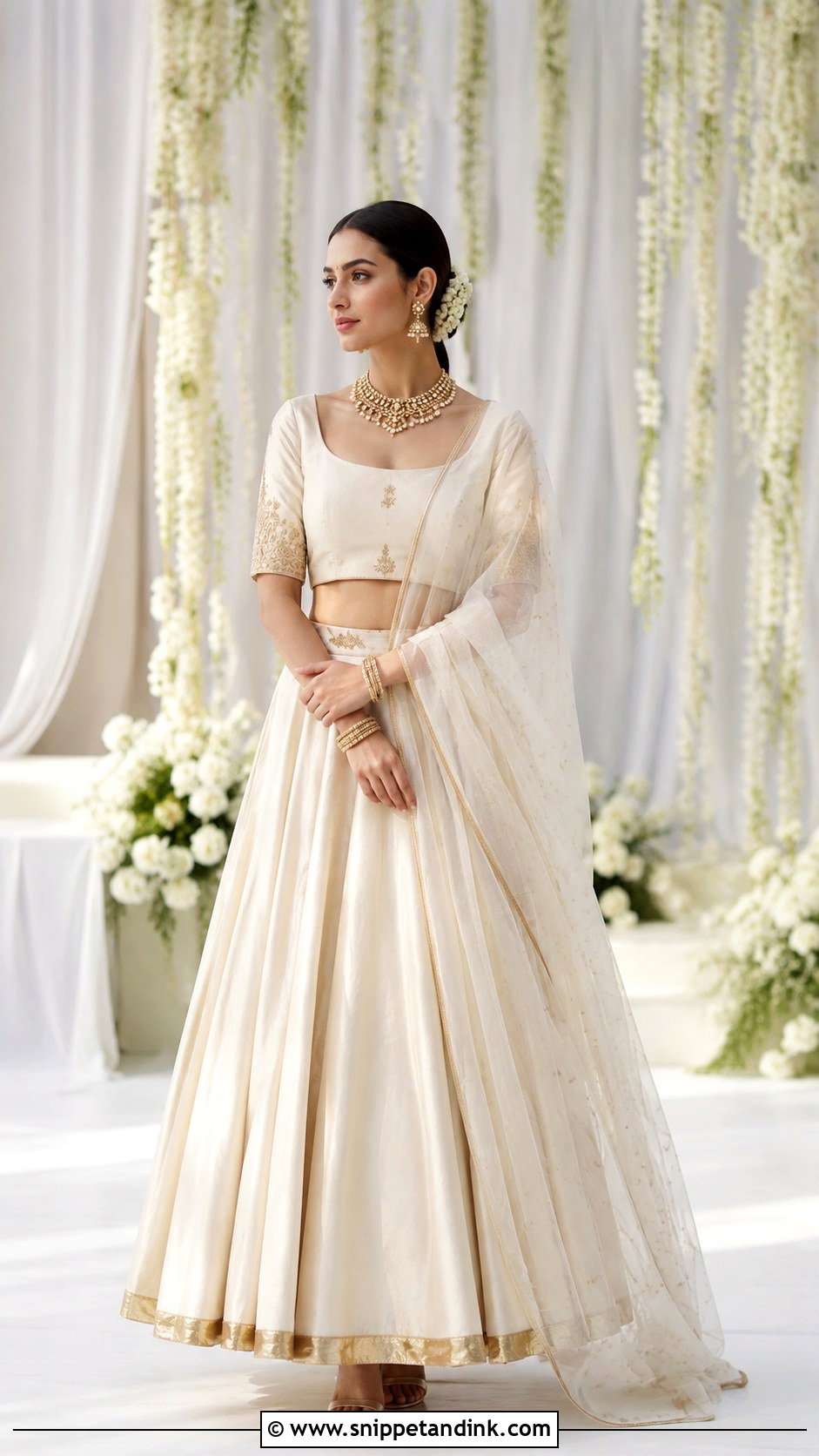
With little embellishment, cut and fabric carry everything, and poor construction shows straight away. A plain silk, satin or structured organza skirt with a clean waistband and one detailed border looks deliberate only when the tailoring is precise. Pair it with a blouse embroidered lightly at the neck or sleeves, and keep to a single tone such as ivory, blush, muted red or sage. A sheer dupatta with a narrow metallic edge is enough. One statement necklace, matching earrings, slim bangles and sleek heels finish it. This is the lehenga I’d point a bride toward for a small daytime ceremony, or as a second outfit she’ll wear again.


20. Personalized Embroidery Bridal Lehenga
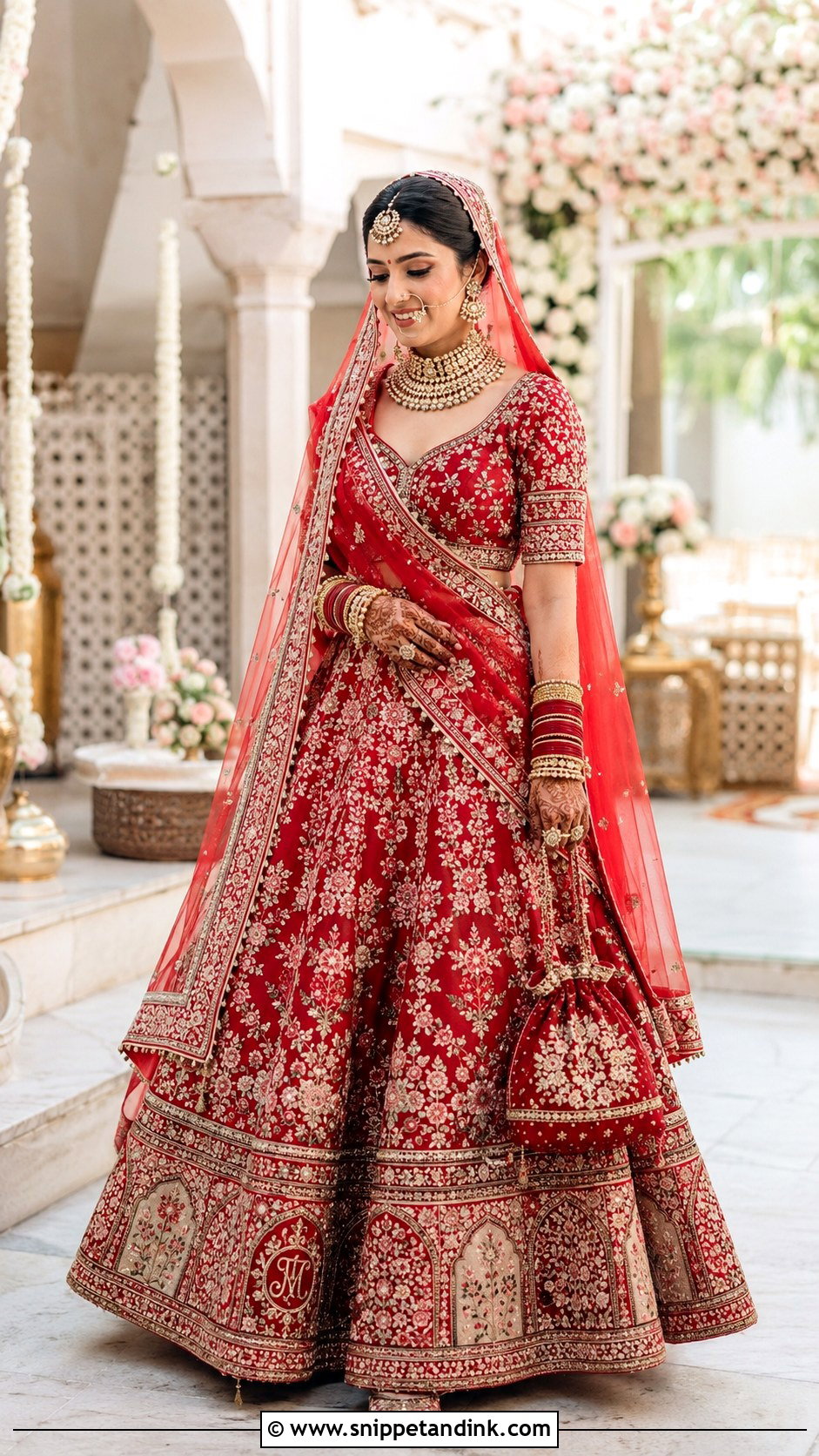
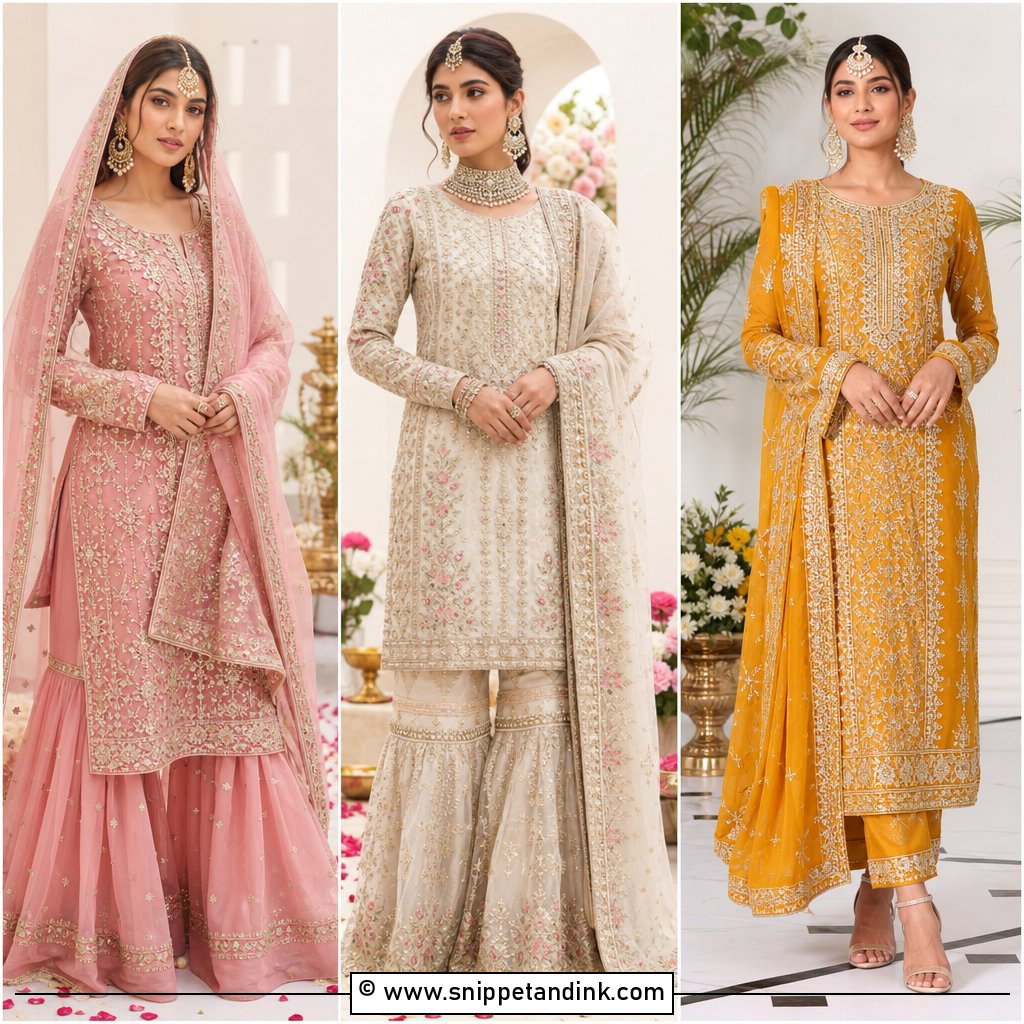
Personalized embroidery turns a lehenga into an heirloom. Initials, the wedding date, favorite flowers, a building that matters to you or a pattern from your family’s region can all be worked in. Place them on the hem, waistband or dupatta border, where they reward a close look without taking over. Start with a classic silhouette in a color that means something to you, then add a coordinated blouse and a light ceremonial dupatta. Heirloom jewelry, embroidered juttis, bangles and a structured potli fit the sentiment. Always ask for a full-scale sketch or a stitched sample first. Small lettering can blur once it’s worked onto textured silk, and it’s far easier to fix on paper.
Folding Away Heavy Embroidery After the Wedding
Zari and metal threadwork tarnish with moisture, and sequins and stones press dents into the fabric beside them when folded tight. Let the lehenga air for a day after the wedding, away from direct sun, before anything gets packed.
Wrap it in soft white cotton or muslin rather than plastic, which traps humidity. Fold embroidered panels with acid-free tissue between the layers, and keep the heaviest work flat instead of creased through the middle. Every few months, take it out and refold along different lines so the creases don’t set and crack the metallic thread.
On the day itself, spray perfume onto skin before dressing and keep it off the embroidery, since it can discolor zari. For food or makeup marks, go to a dry cleaner who handles bridal handwork. Home washing will ruin most heavy lehengas.
Wear It for an Hour Before You Say Yes to It
Look at the complete outfit, not only the skirt color or the embroidery. Skirt, blouse, dupatta, jewelry, footwear, hair and makeup should all pull in one direction. Red zardozi, velvet, Banarasi, florals, corsets and personalized work can each be right for someone. Before deciding, walk, sit and lift your arms in the full outfit, and look at it in daylight and under the kind of lighting your venue uses. Secure construction, manageable weight and comfortable shoes matter more than one extra row of stones. The right lehenga is the one you stop noticing halfway through the night.
You'll Like These Ideas:







Leave a Reply