
Folk bridal style is about handwork you can see: botanical embroidery, crochet lace, flowing sleeves, prairie shapes and bright floral motifs. It reads most naturally in gardens, woods, barns and backyards, and the current bohemian mood favors dresses you can move in over heavy boning and stiff petticoats. When I style a folk gown, the job is mostly restraint. The craftsmanship should lead, so the shoes, jewelry and veil sit quietly beside it. Rustic, vintage, colorful or minimal, the twenty looks below each start from a different handmade detail.
Wearing Embroidery From a Tradition That Isn’t Yours
Folk dress grew out of real communities, and many motifs still mean something specific: a region, a marital status, protection, fertility, a family line. That doesn’t mean only one group may wear embroidered flowers, but it does change how I’d shop.
- Ask the maker what the pattern represents before you buy. A good artisan will tell you happily, and occasionally a motif turns out to belong to a ceremony you wouldn’t want to borrow.
- Buy from the people who keep the craft alive where you can, rather than a mass-produced copy of their work.
- If you have heritage of your own, look there first. Many brides find a regional pattern from a grandparent’s village and have it stitched onto a modern gown.
Family textiles are worth a look too. An embroidered blouse, apron border or shawl can often be stitched onto a sash, a cuff or the inside of a bodice. I’d ask a textile restorer rather than a general tailor to handle anything old, and never cut the original piece if it can be tacked on by hand and removed later.
1. Floral Embroidered Folk Wedding Dress
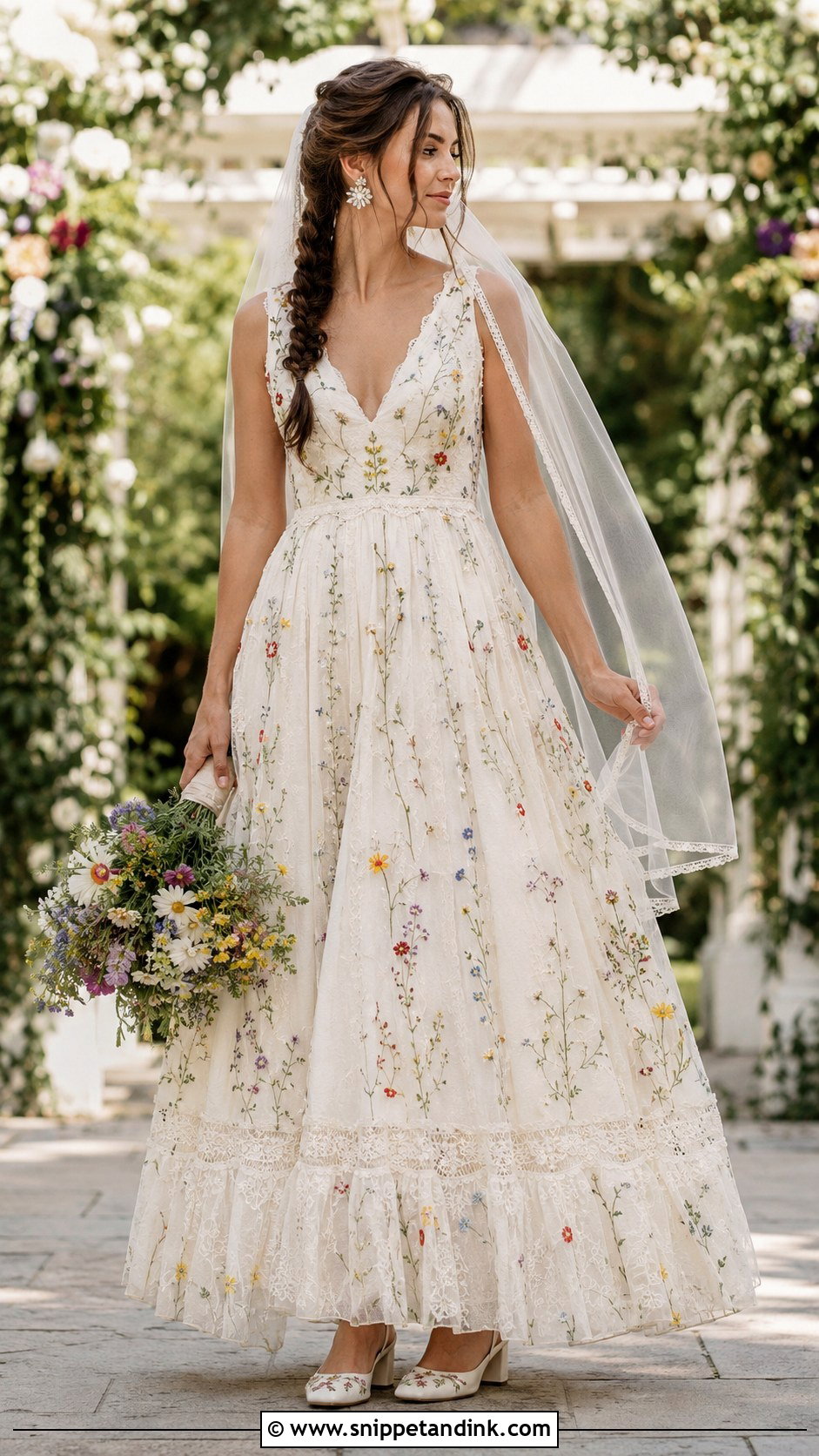
Scattered wildflowers stitched over the bodice, sleeves and skirt of an ivory A-line turn a classic shape into something that tells a story. Blue, red, yellow and green threads look handcrafted rather than busy as long as the motifs have space between them. I check the embroidery on the inside of the skirt: knots and long floats of thread on the reverse can catch on tights or a slip. Ivory block heels, small floral earrings and a loose braid with fresh blooms suit it, with a plain fingertip veil so the stitching stays visible. Repeat just two colors from the thread in the bouquet. Gardens, meadows and small outdoor weddings are its home.
2. Long Sleeve Lace Folk Wedding Dress
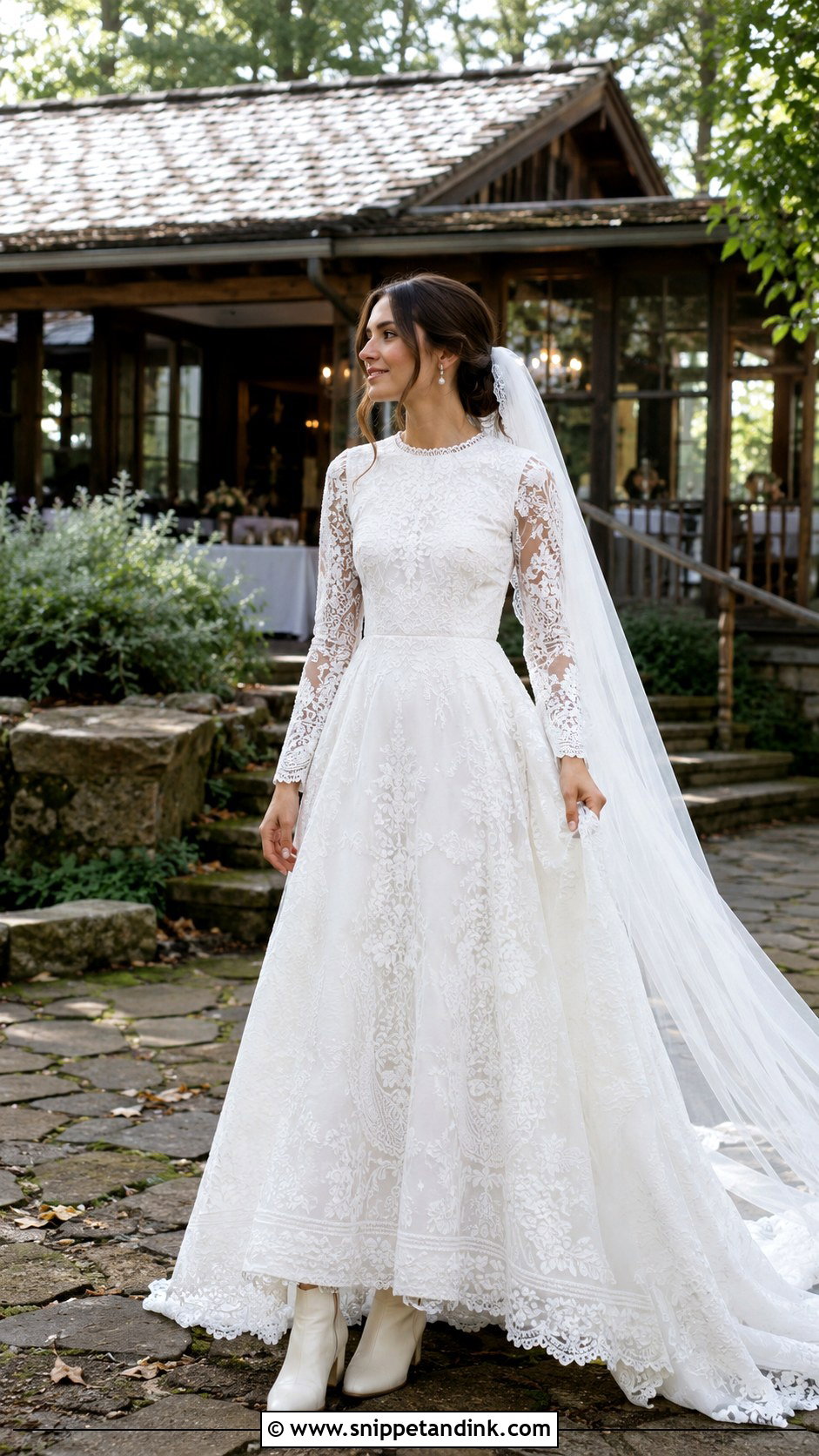
Long lace sleeves work in every season, but their comfort depends on the lining. In an easy A-line with a softly fitted bodice, botanical lace and semi-sheer sleeves, I want the sleeves unlined or lined only with fine mesh so they don’t trap heat. A defined waist gives shape while the skirt moves freely. Ivory ankle boots suit a rustic venue; low block heels suit a formal one. Pearl drops, a simple pendant and a loosely gathered updo finish it, with a narrow lace-trimmed veil echoing the dress instead of a heavily embellished one. Woodland, barn and early fall weddings suit it best.
3. Cotton Prairie Folk Wedding Dress
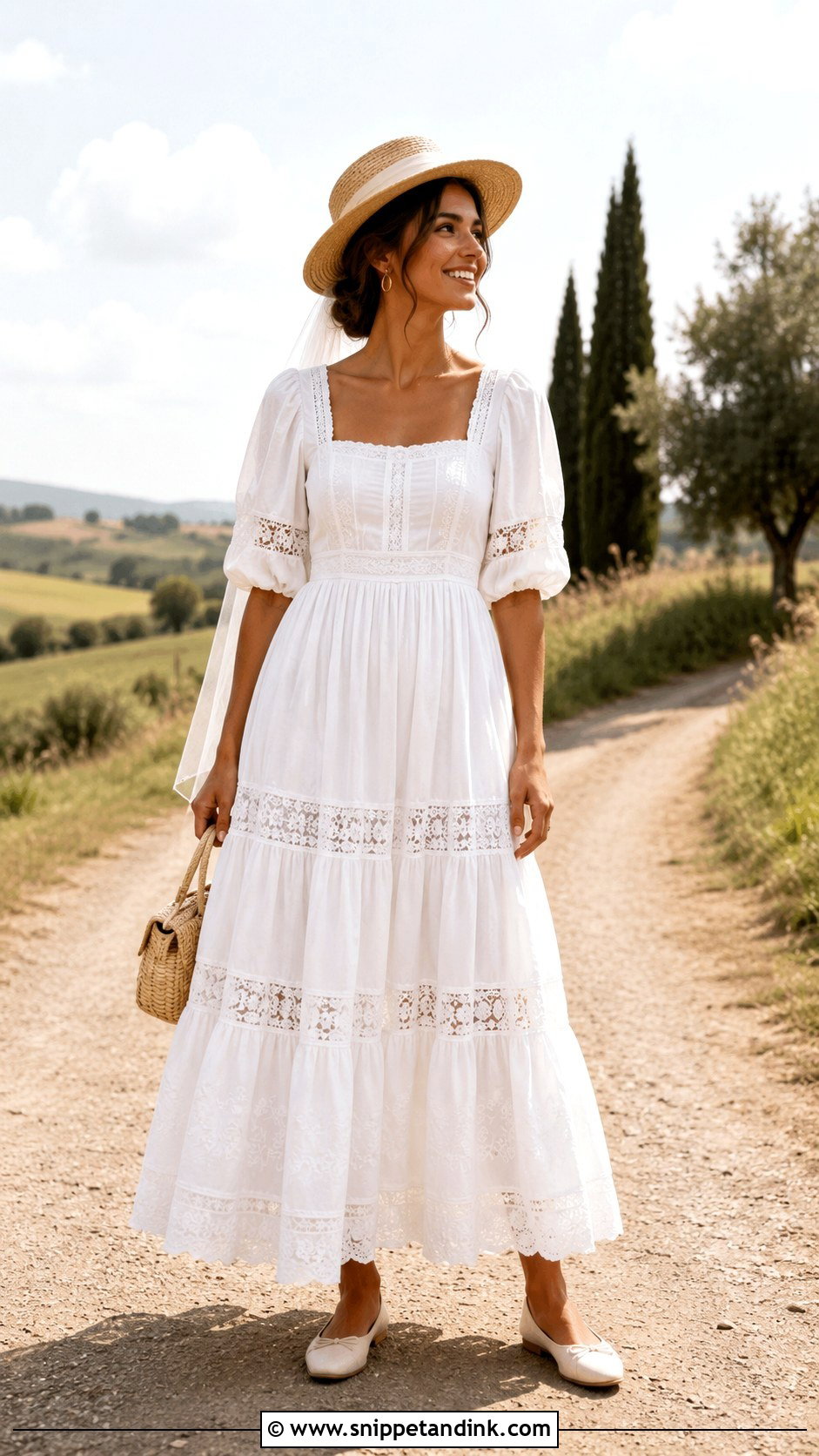
Cotton prairie dresses are the most relaxed shape in this list. A square neckline and tiered skirt in light cotton feel natural in warm weather, while puff sleeves, pintucks and narrow lace inserts add vintage detail without bulk. Cream leather flats, a woven bag and small gold hoops keep it simple. A straw hat with a narrow ribbon can stand in for a veil at a countryside or backyard wedding. Keep the bouquet loose and seasonal with daisies, greenery or small wildflowers. One fit note from experience: tiered skirts add width at every seam, so have the top tier sit at your natural waist, not lower, or the whole dress looks dropped.
4. Colorful Embroidered Folk Wedding Dress
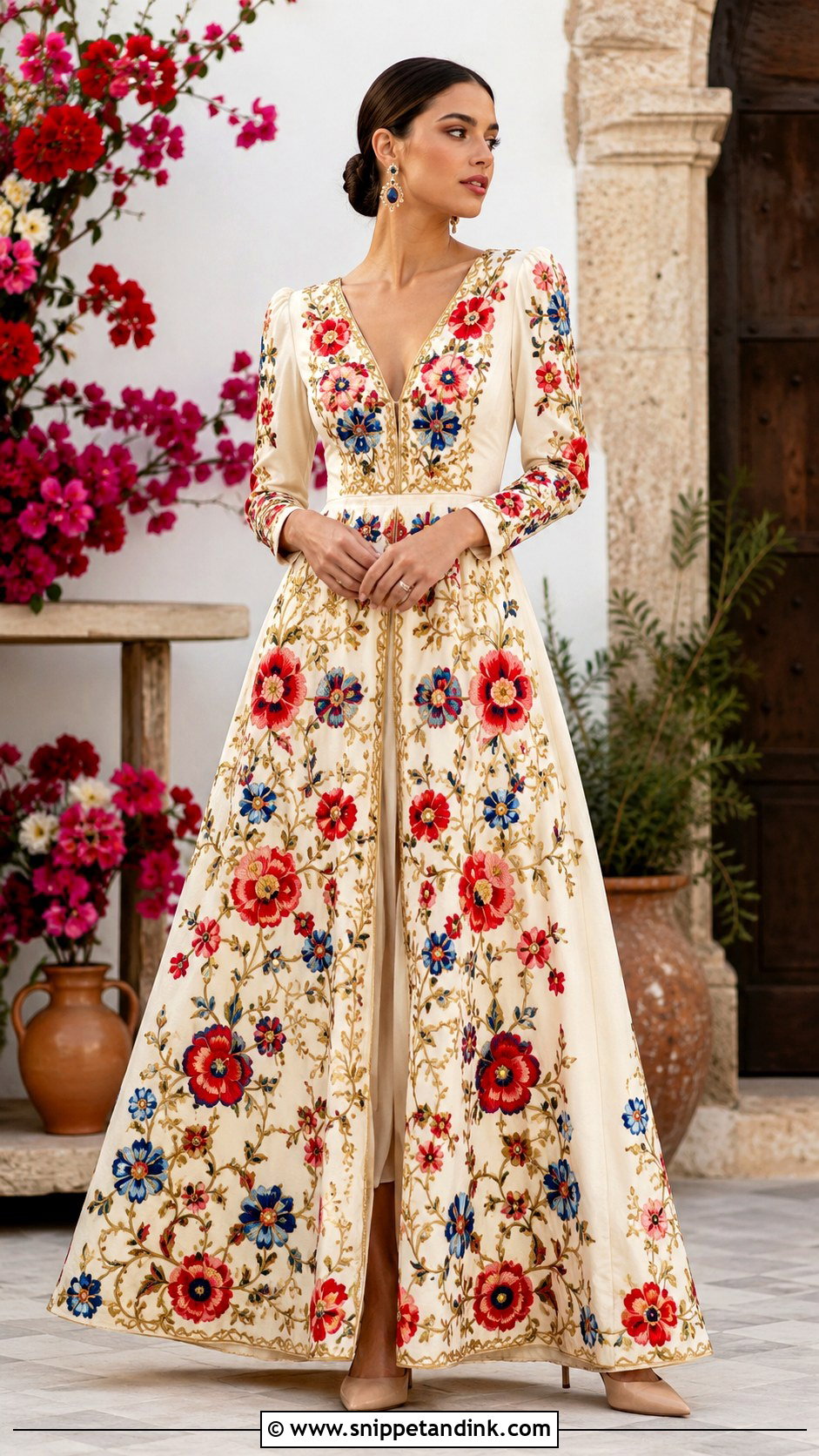
Who said a bride has to stay in ivory? Vibrant flowers around the neckline, cuffs, waist and hem can carry a whole outfit, provided the base silhouette is plain. A gently fitted bodice and floor-length skirt give red, cobalt, pink or gold motifs a clean background. Neutral leather shoes, gemstone earrings in one embroidery color, a smooth low bun and a compact bouquet in the dominant shade complete it. Traditional motifs often carry meaning, so I encourage brides to choose designs from their own heritage, or to commission the work from makers who know that tradition.
5. Off Shoulder Folk Wedding Dress
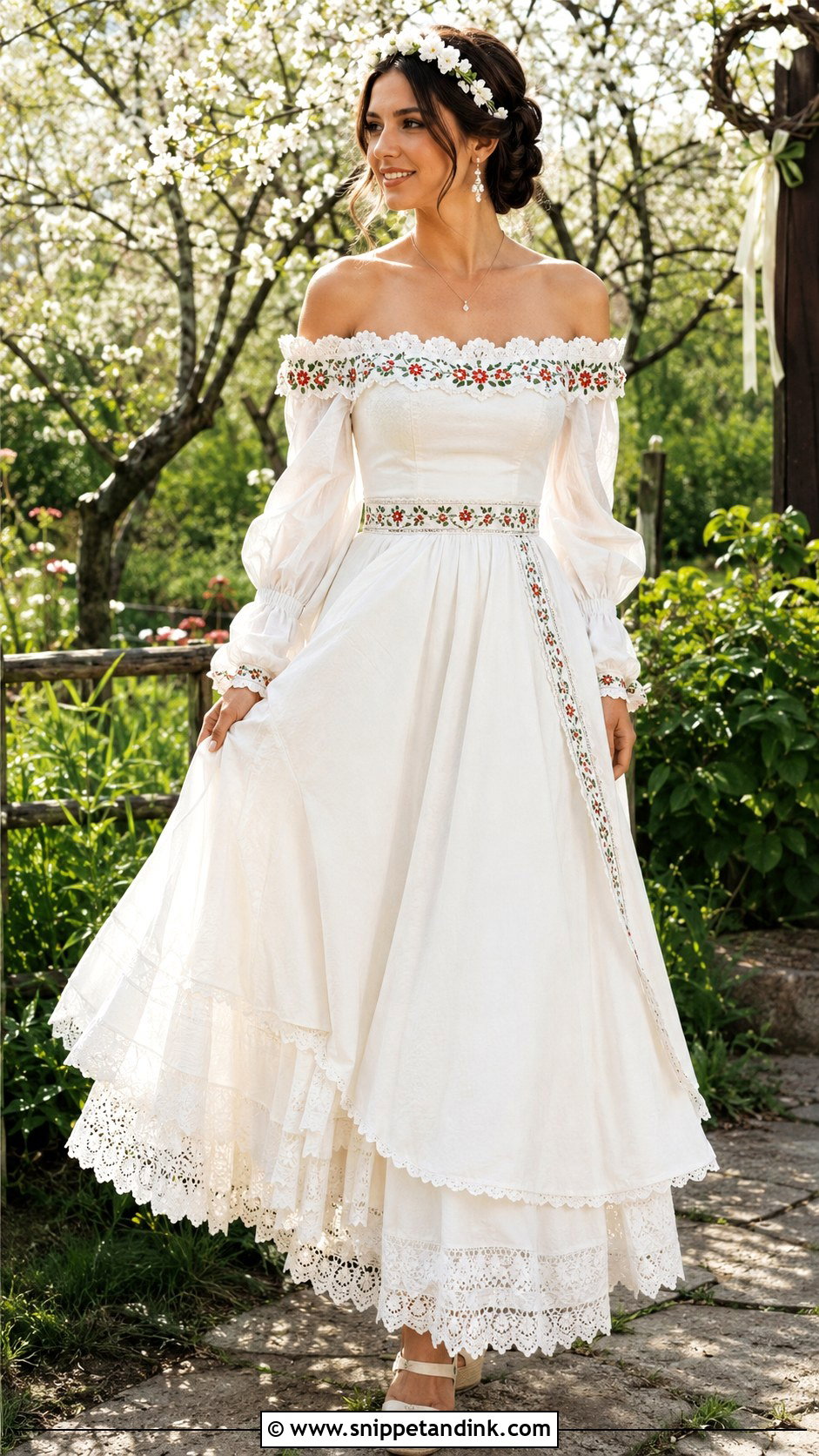
An off-shoulder folk dress pairs a relaxed neckline with a full bridal skirt. Gathered sleeves, a lightly structured bodice and a soft layered skirt make the shape; floral embroidery or crochet trim along the neckline makes it folk. I always do an arm-raise test with gathered off-shoulder sleeves, because elastic that holds them in place can dig in by evening. Ivory wedges, a fine pendant and small drops keep the open neckline refined. Soft waves suit a casual venue, a low textured bun a formal one. Swap the veil for a narrow floral headband, or keep a chapel veil for more ceremony. Late spring gardens and summer outdoor weddings suit it.
6. Crochet Lace Folk Wedding Dress
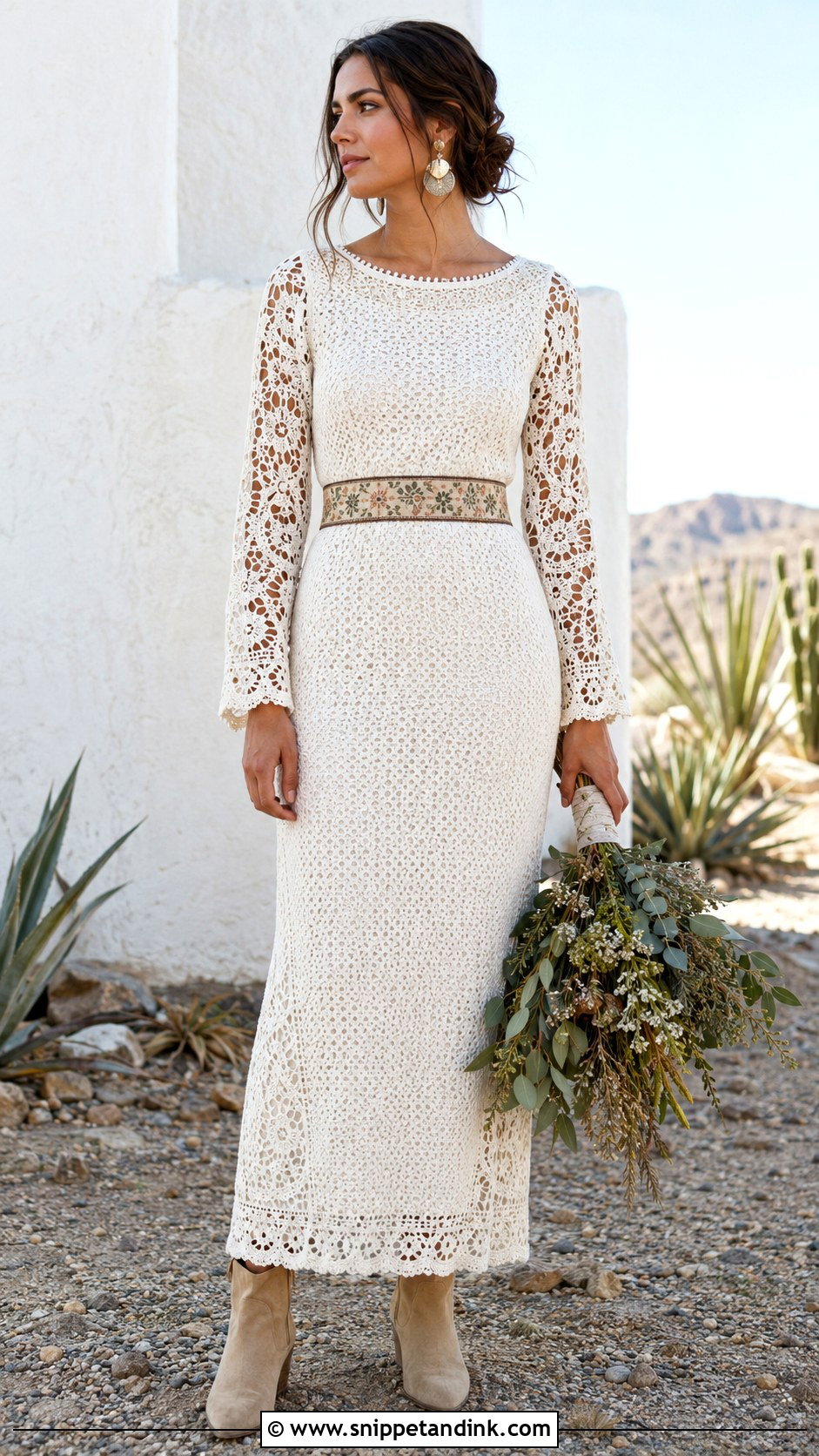
Crochet shows the hand that made it, which is exactly its appeal. Openwork across the sleeves, neckline and upper bodice of a lined column or relaxed A-line gives texture you can see from across a field. The lining shade changes the whole effect: skin-toned lining makes the holes read as pattern on you, while ivory lining makes the lace look solid. Cream suede ankle boots, hammered-metal earrings and a leather or embroidered belt suit the organic mood. Add a loose bouquet of greenery and white flowers, and a few small blossoms or pins in natural hair. Crochet can stretch when wet or under its own weight, so hang it folded over a padded bar instead of on a hanger. Beaches, deserts, woods and casual country weddings fit it.
7. Bell Sleeve Folk Wedding Dress
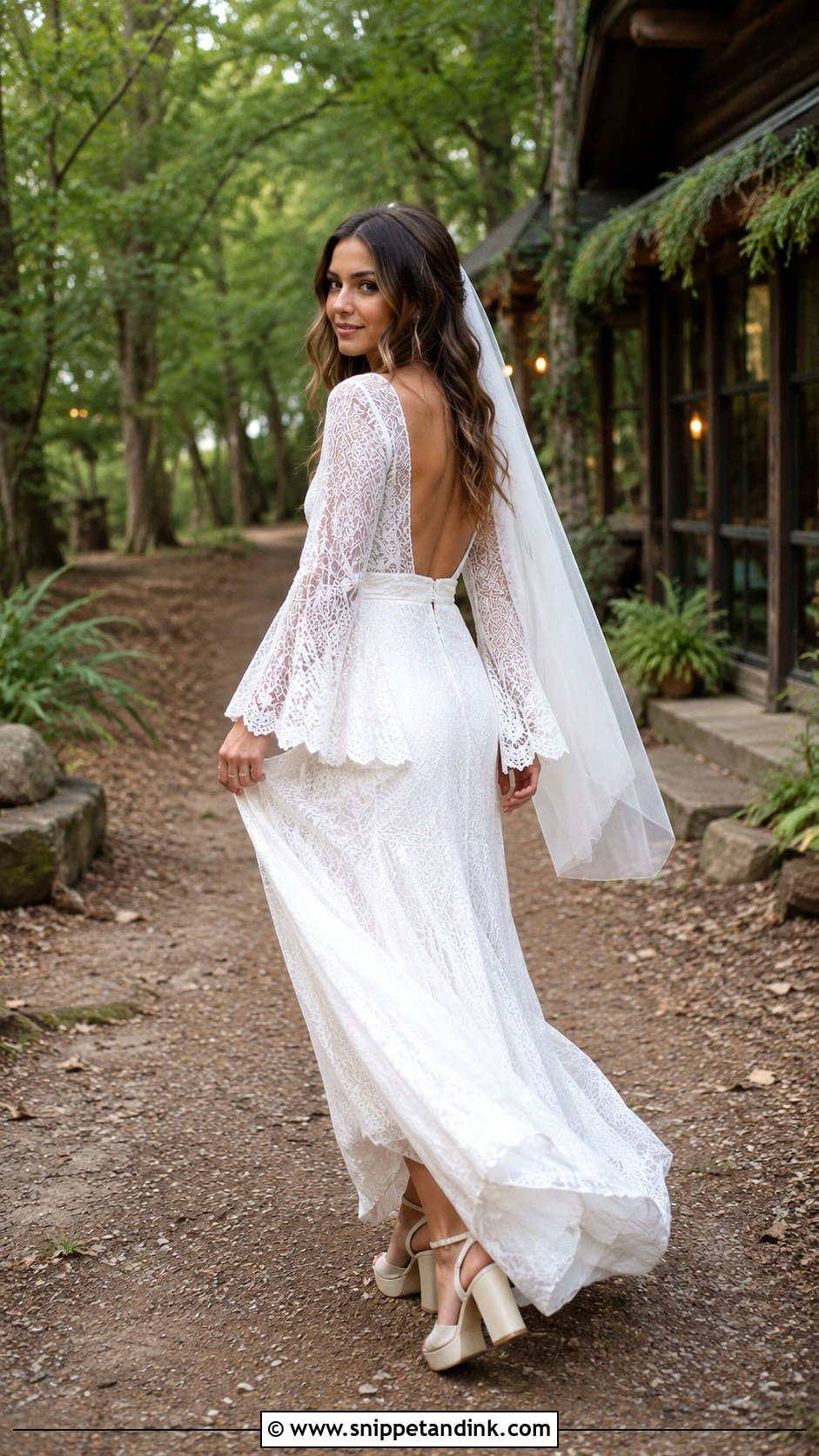
Bell sleeves bring an unmistakable 1970s mood, and they’re also the most likely sleeve to land in your dinner. I’d pair them with a fitted lace bodice, an open back and a fluid skirt to balance the volume, and choose embroidered cuffs or scalloped lace edges that give the opening shape when your arms are at rest. Platform block heels, a long pendant and center-parted waves suit the era, with a simple raw-edge veil. Before buying, eat a pretend meal, dance and hold a bouquet in the fitting room. If the sleeves get in the way in five minutes, they’ll get in the way all day. Woodland ceremonies, old barns and creative outdoor venues suit them.
8. Peasant Sleeve Folk Wedding Dress
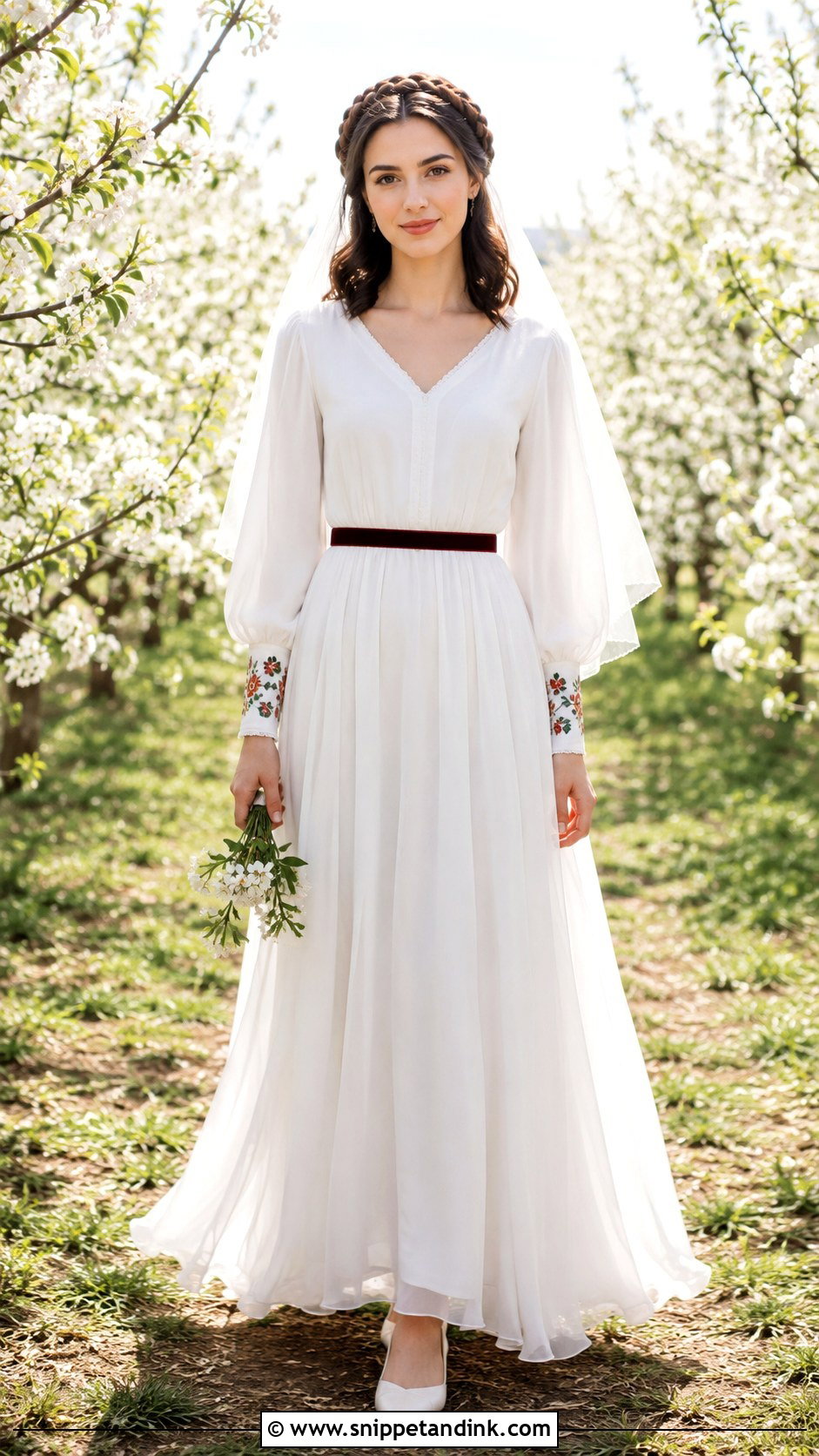
Gathered sleeves narrowing into embroidered cuffs soften the shoulders on a peasant sleeve folk wedding dress. Pair them with a fitted waist and a modest V so the upper half doesn’t look bulky, and a chiffon or light crepe skirt for movement. A narrow velvet ribbon at the waist adds a line of color and definition. Pointed ivory flats, vintage-style earrings and a braided crown or low ponytail suit it, with a shoulder-length veil or floral comb that leaves the sleeves visible. Orchards, country estates and early autumn foliage make the setting for this one.
9. High Neck Victorian Folk Wedding Dress
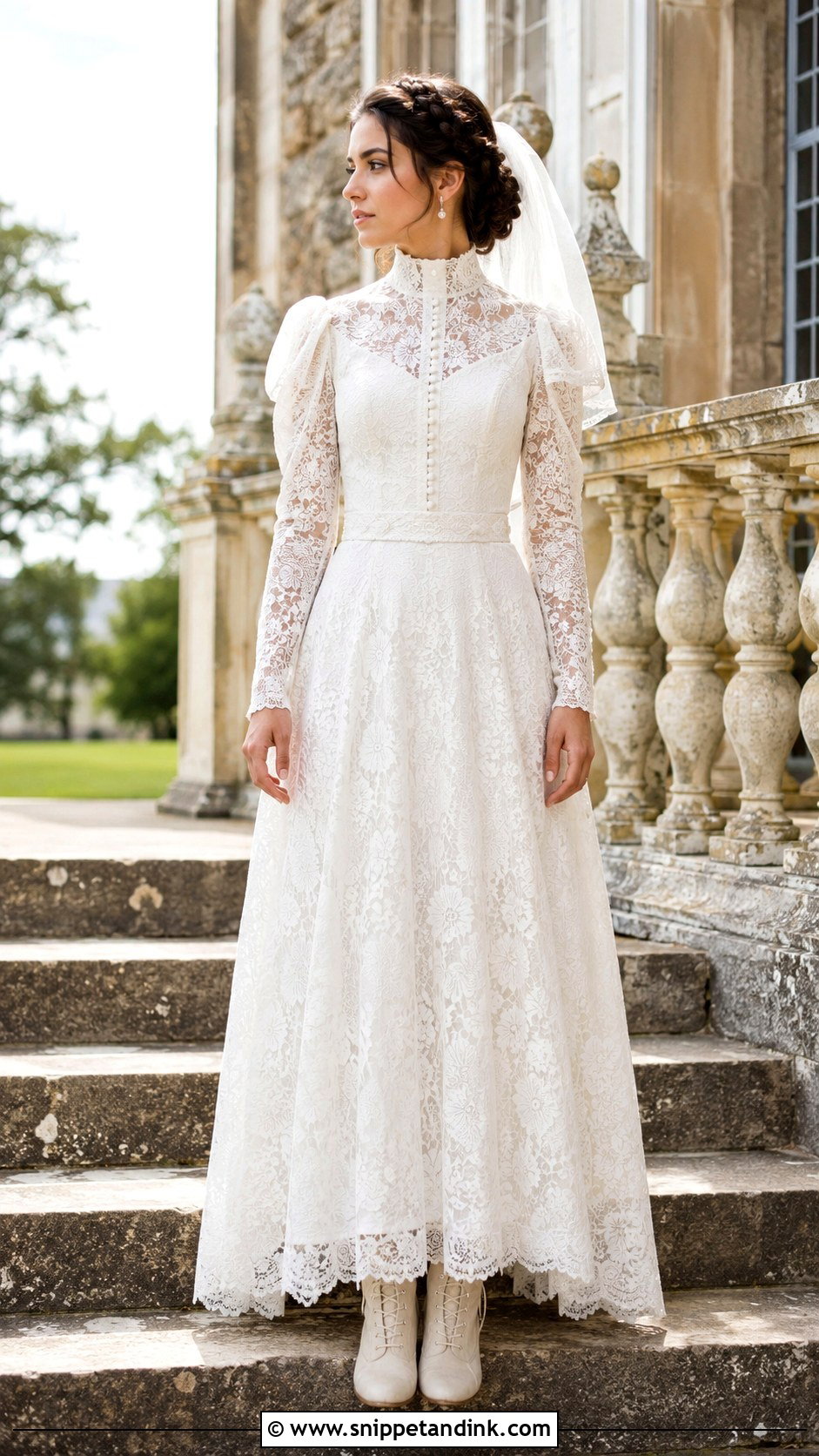
A standing collar, covered buttons and lightly puffed sleeves give a high neck Victorian folk wedding dress its historical character, while a streamlined A-line keeps it wearable. With this much coverage, breathable lining and lace with some give are non-negotiable; stiff lace at a high collar chafes the neck within hours. Covered buttons down the back also take time, so plan five extra minutes when you dress, or ask for a hidden zip underneath. Lace-up ivory boots, small pearls and a neat braided low bun, with a short tulle veil tucked below the hair so the collar shows. Historic homes and mountain lodges in cool weather suit it.
10. Square Neck Folk Wedding Dress
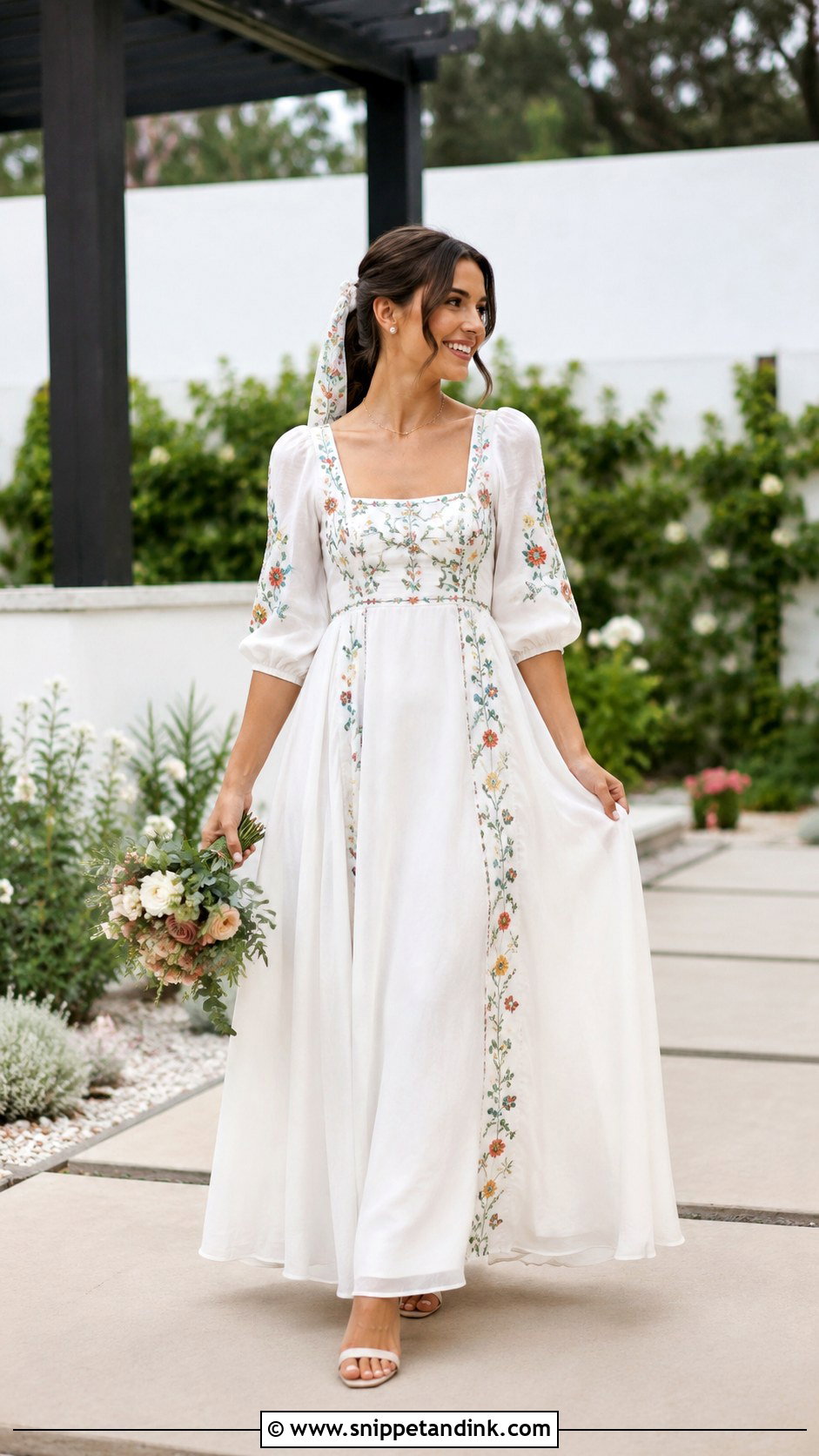
A square neck frames the face and gives embroidery a clean straight edge to follow. Pair a fitted bodice with short puffs or elbow-length gathered sleeves and a flowing A-line, with floral stitching at the neckline and hem for balance. Choose a delicate necklace that follows the angle, simple studs and ivory block heels. A center-parted low bun reads composed, loose waves relaxed. For the hair, I like an embroidered ribbon tied around the style in place of a veil, or a waist-length veil if you want tradition. It moves easily between garden, barn, courthouse and small destination weddings.
11. Corset Bodice Folk Wedding Dress
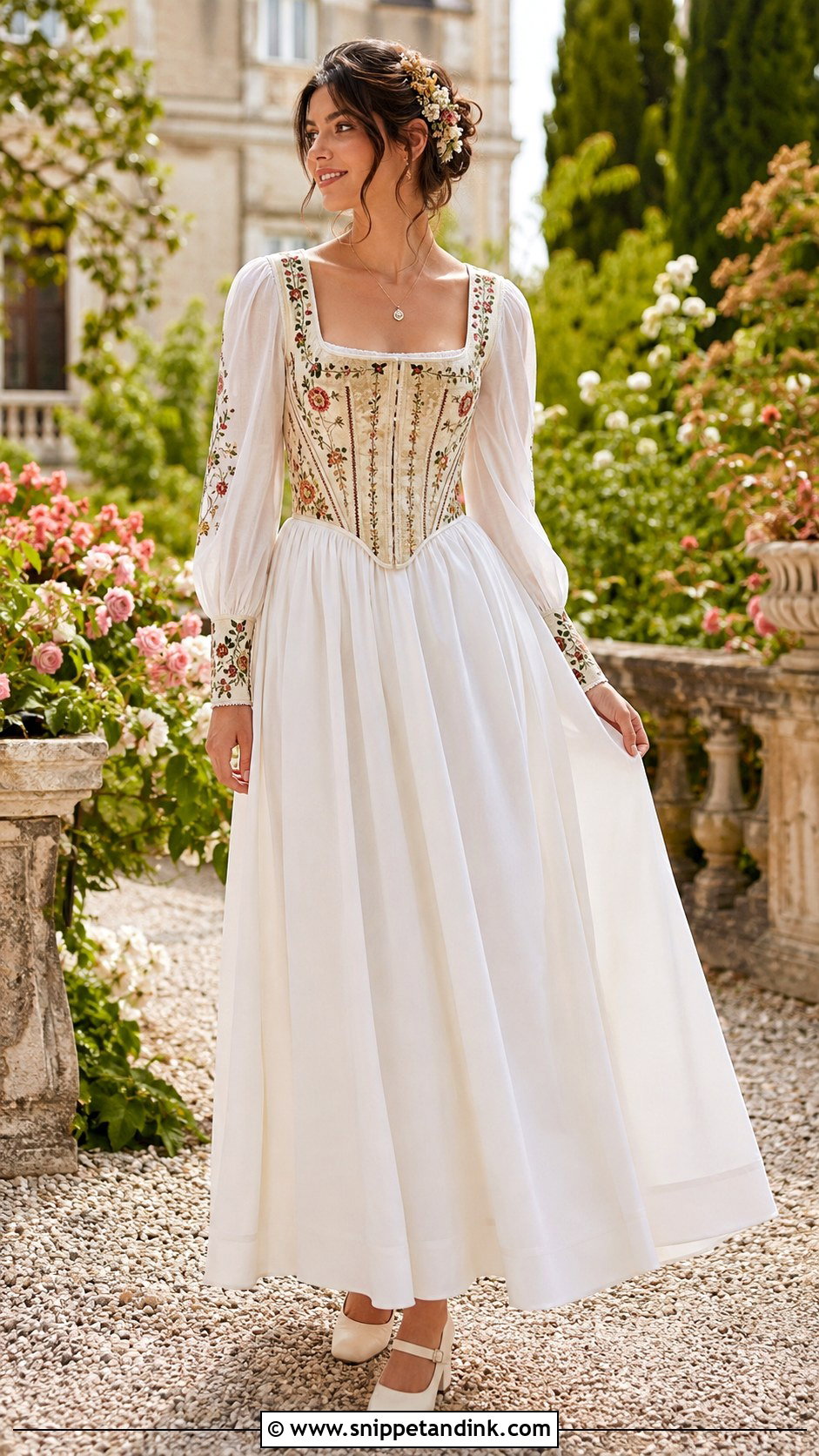
Folk corsets are softer than formal ones. Look for gentle shaping, visible seams and decorative lacing over a flowing skirt rather than heavy boning. Embroidered floral panels or patterned jacquard connect the bodice to folk craft, and a blouse-style underlayer with sheer sleeves adds coverage if you want it. Keep the skirt plain so the bodice leads. Ivory Mary Janes, a velvet choker or fine pendant and a floral comb suit it. Decorative front lacing is for looks; I’d still want a hidden zip or hook closure underneath so you aren’t relacing it every time you sit.
12. Two Piece Folk Wedding Dress
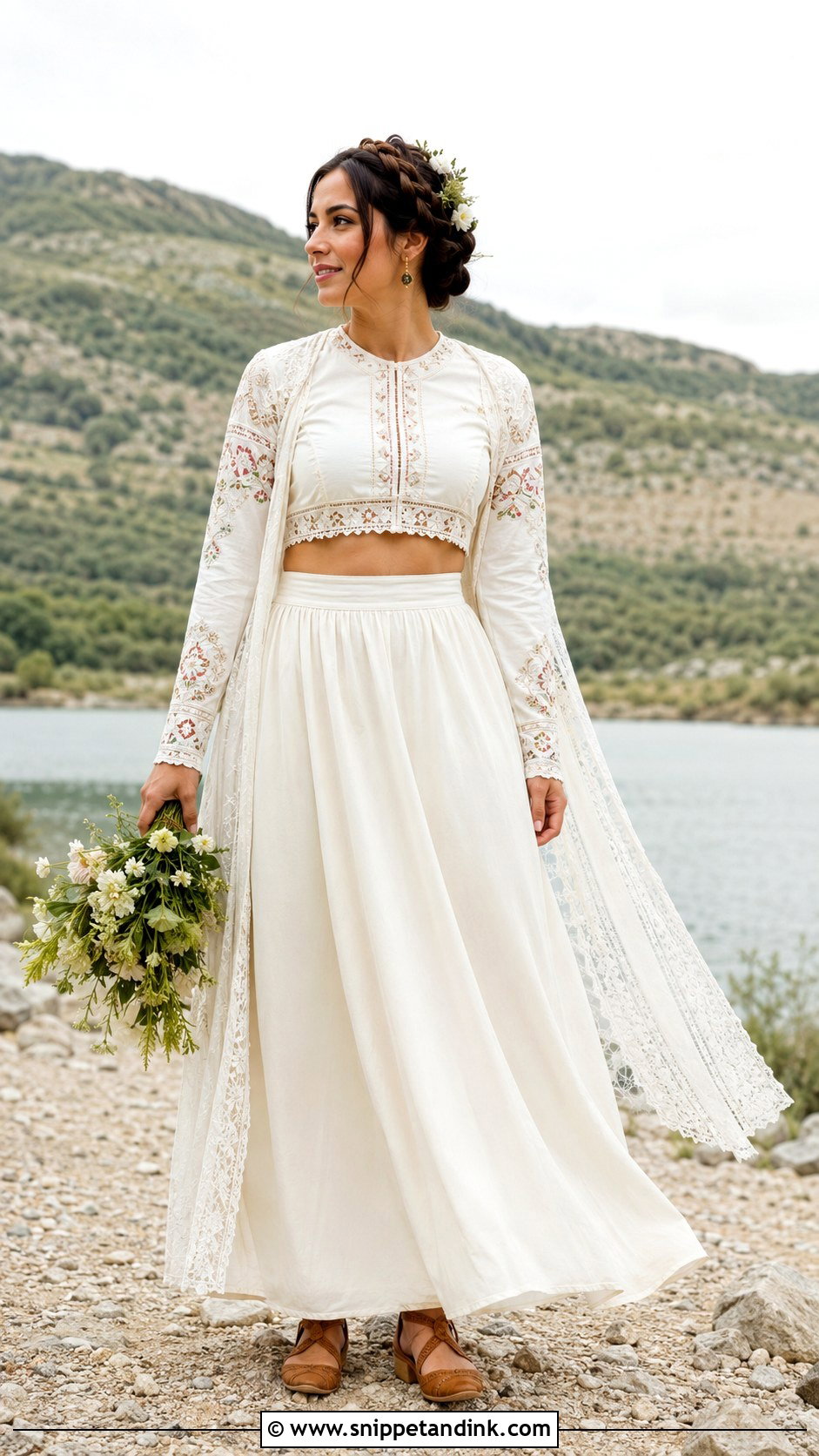
A two piece folk outfit gives you choices. Pair an embroidered crop-length blouse with a high-waisted flowing skirt that shows little or no midriff, and make sure the pieces share fabric, motifs or lace so they look made together. Low leather heels, a small structured bag and gold earrings, plus a braided updo with tiny flowers. An embroidered jacket or long lace duster adds coverage. The blouse should overlap the skirt’s waistband by a couple of inches when you lift your arms. Both pieces can be worn again, which suits courthouse ceremonies, elopements and casual outdoor weddings.
13. Tea Length Folk Wedding Dress
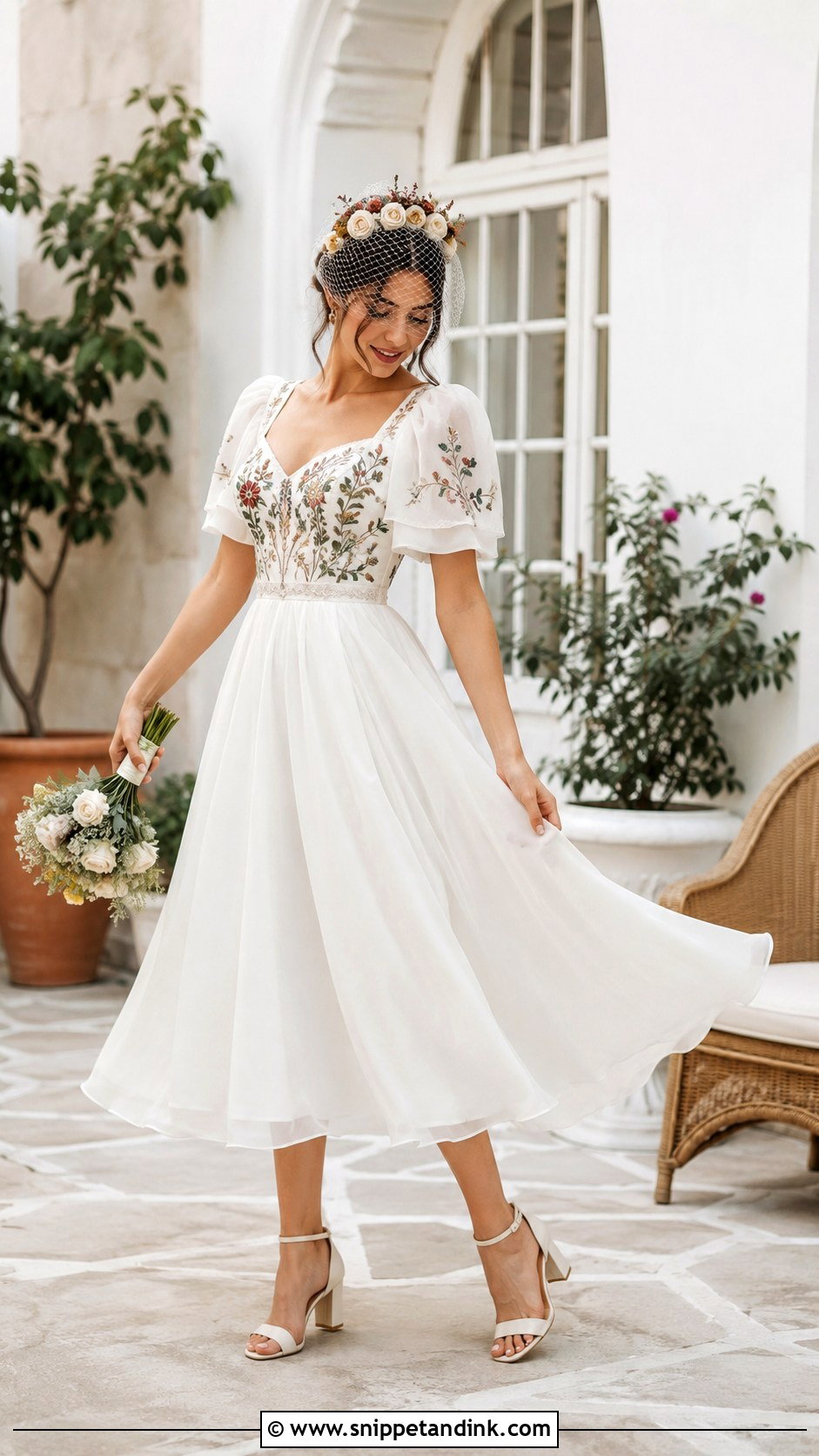
Tea length is cheerful and easy to dance in, and it makes your shoes part of the outfit. Choose a fitted embroidered bodice and a softly flared skirt ending between knee and ankle; puff sleeves, lace edging or colored ribbon trim add folk character. Embroidered pumps, ankle straps or lace-up boots all work, with a birdcage veil or floral headband and a compact bouquet. Because the hem is so visible, I’d never skip a hemming appointment here: an inch too long or short changes your proportions. Courthouses, daytime gardens and small receptions are where it fits.
14. Folk Wedding Dress With Cape
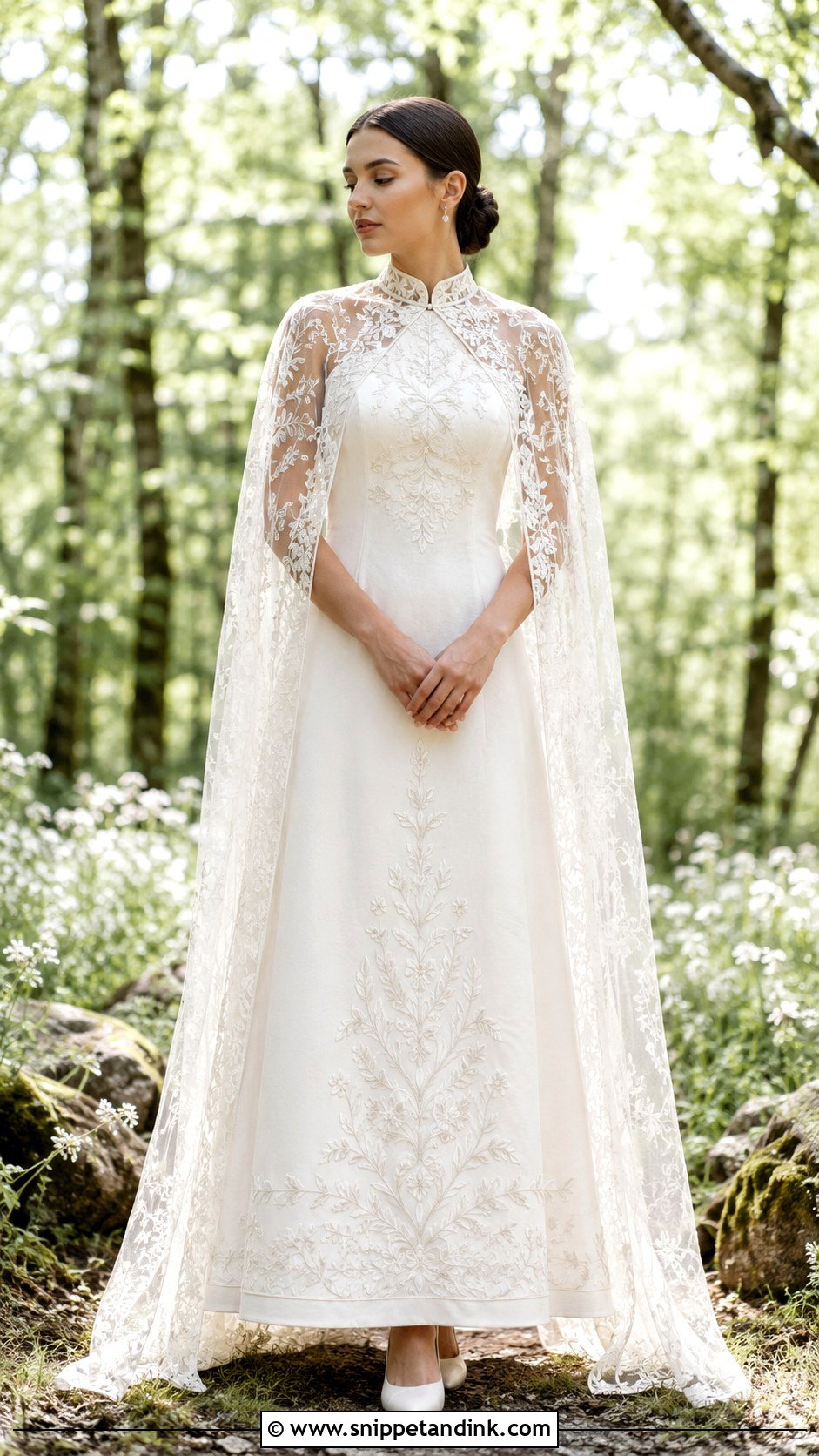
A cape gives drama with less weight than a structured coat. Start with a simple embroidered A-line or column, then add a light tulle, lace or chiffon cape with botanical motifs at its edges that echo the dress without copying it exactly. Exact matching looks like a costume. Closed-toe ivory heels, understated earrings and a smooth low bun. Leave the neckline bare; the cape already frames the shoulders. You rarely need a veil as well, though a small comb helps. Forests, mountains and changeable spring or autumn weather suit this layering.
15. Velvet Folk Wedding Dress
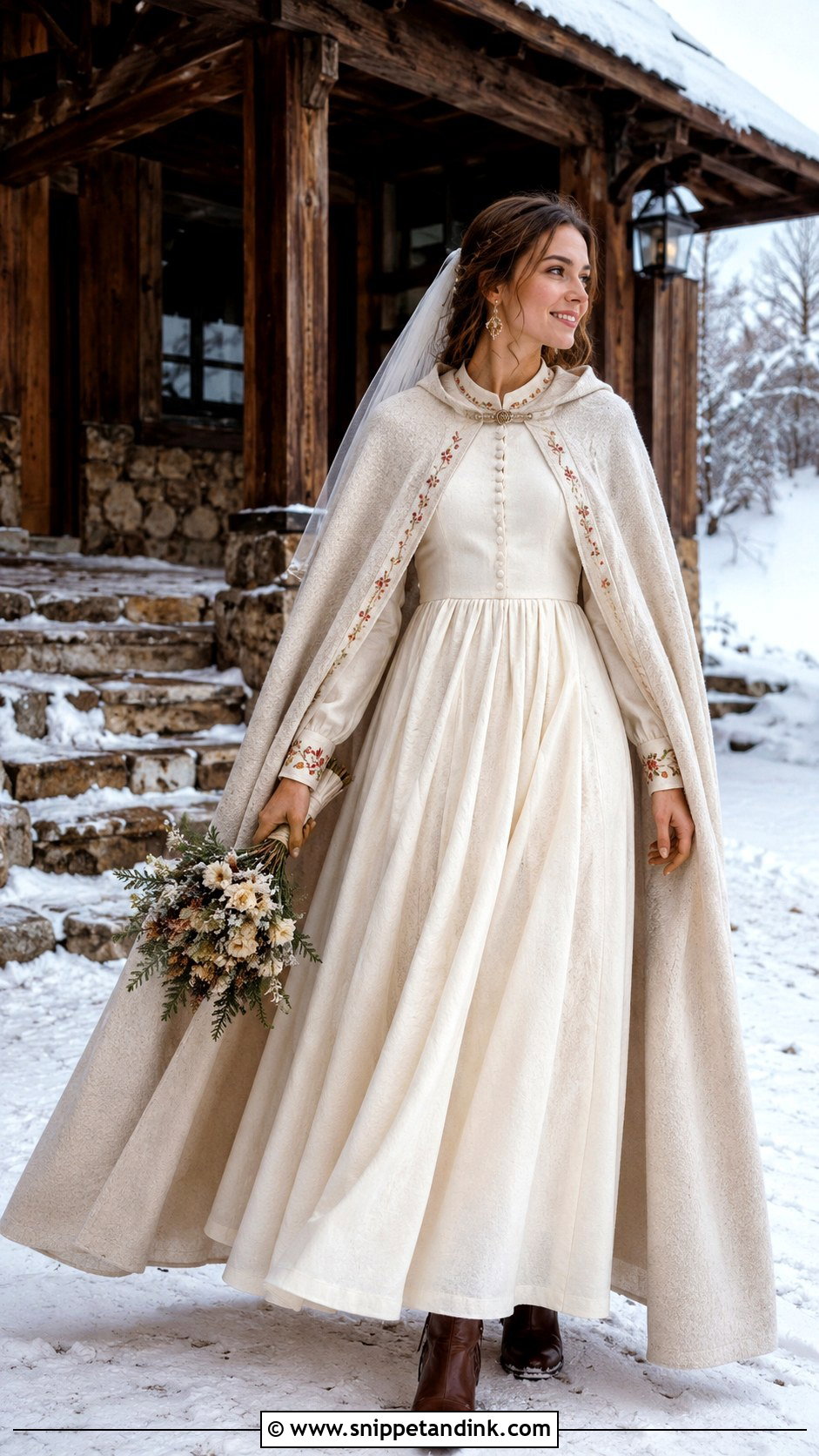
Velvet makes sense for cold weather, and its pile soaks up light so it photographs soft rather than shiny. Deep ivory, cream, muted blue or soft green work in a fitted bodice and fluid skirt, with embroidered cuffs, covered buttons and a square or round neckline. Leather ankle boots, a velvet ribbon and antique-style earrings suit it, and a long wool cape keeps you warm for outdoor portraits. Keep the bouquet seasonal: evergreen, white flowers or dried botanicals. Velvet looks heavy, so go easy on jewelry. One practical point: velvet marks where it’s pressed, so travel with it hanging, never folded. Winter lodges and historic country houses are the right setting.
16. Linen Folk Wedding Dress
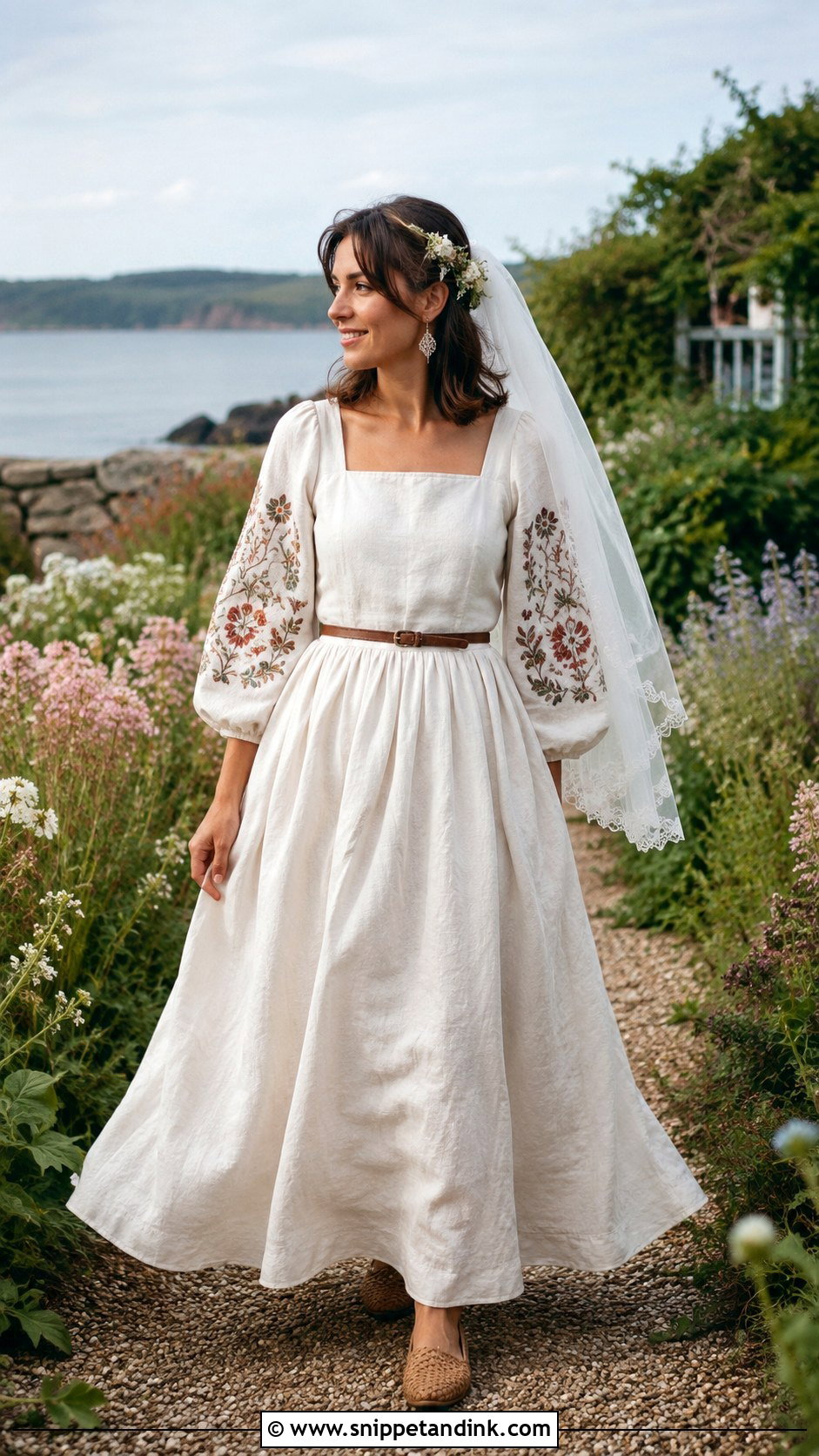
Linen breathes, which is why I suggest it for warm and informal celebrations. A softly tailored gown with a square neck, fitted waist and full skirt holds its shape, while embroidered sleeves, lace inserts or covered buttons stop it from looking too plain. Woven flats, a slim leather belt and handmade ceramic or metal earrings suit it, along with a loose bun, floral comb and shoulder-length veil. Linen creases. Steam it on the morning, then accept the soft wrinkles that appear after an hour of sitting; fighting them all day just makes you anxious in photos. Beaches, backyards, farms and destination weddings suit it.
17. Fringe Folk Wedding Dress
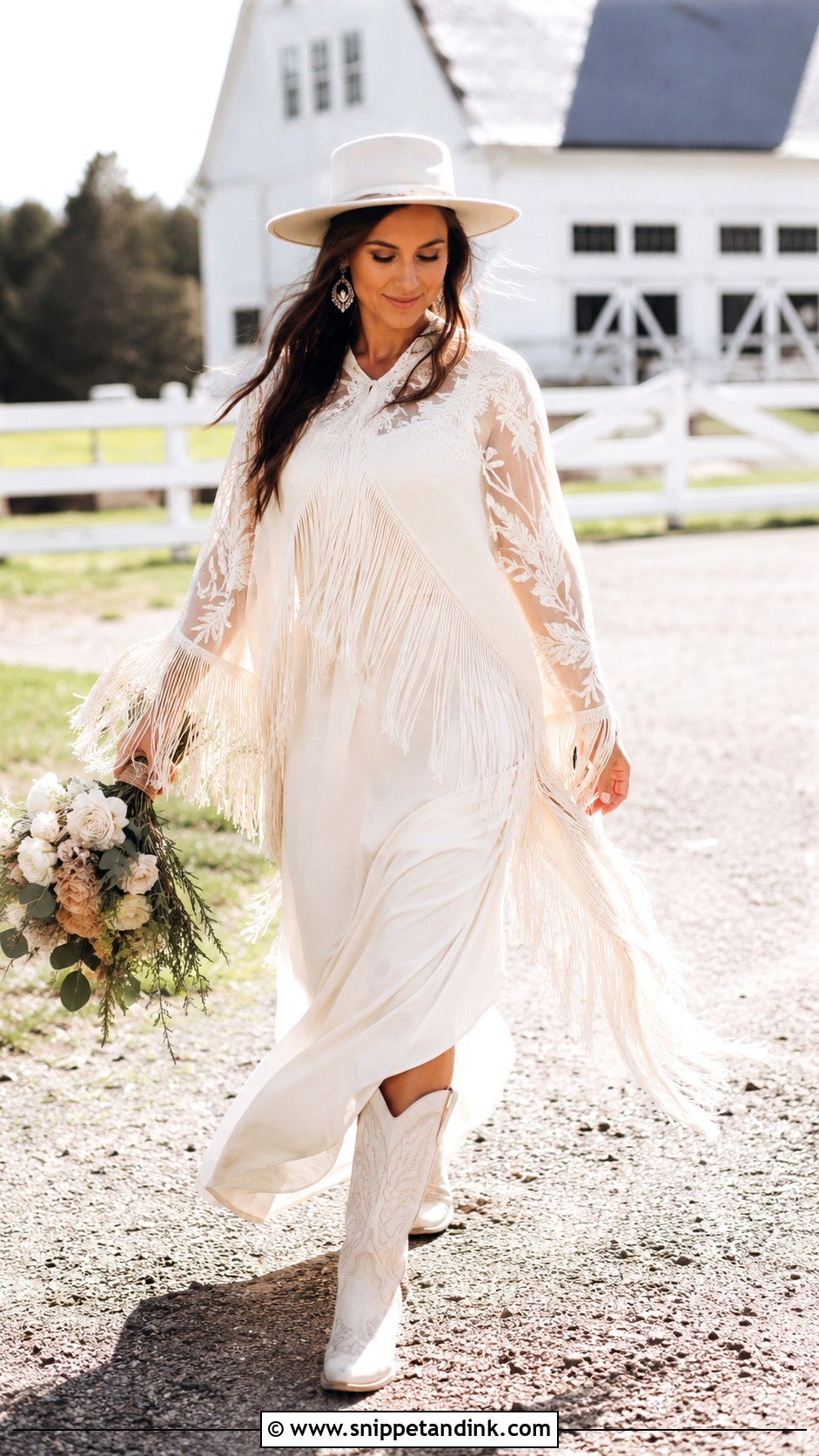
Fringe moves every time you do, which is great for a lively reception and less great if it tangles. Place it along the sleeves, a cape overlay or the hem rather than across the whole dress, so embroidery and lace still show. Pair it with ivory western boots, small silver earrings and a textured ponytail or loose waves. A narrow-brim hat suits a ranch; a simple veil gives a more traditional finish. Walk and spin in it during a fitting. Long fringe can knot with a bracelet or a lace veil edge. Ranches, deserts and festival-style open-air weddings are where it belongs.
18. Folk Wedding Dress With Floral Veil
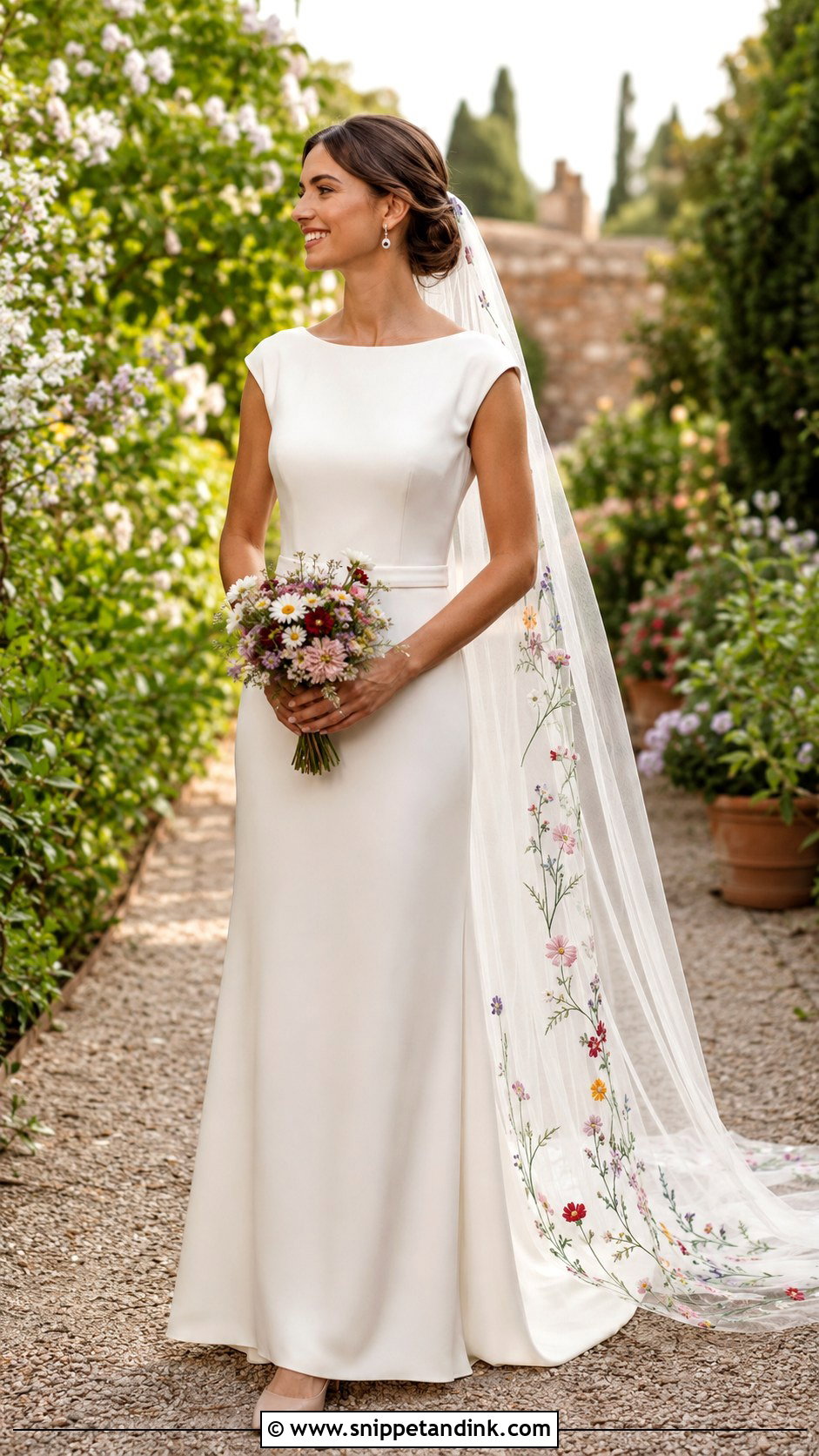
Sometimes the veil carries the folk detail and the dress stays quiet. Start with a clean ivory crepe or cotton gown, simple neckline and lightly defined waist, then add a sheer veil embroidered with wildflowers, vines or small botanicals. Neutral shoes and jewelry in one embroidery color. The hair needs a firm base: a sleek bun or low braid gives the comb something to grip and lets the veil lie flat. Keep the bouquet modest. At the reception, remove the veil and the dress takes new accessories easily. It works at almost any venue.
19. Plus Size A Line Folk Wedding Dress
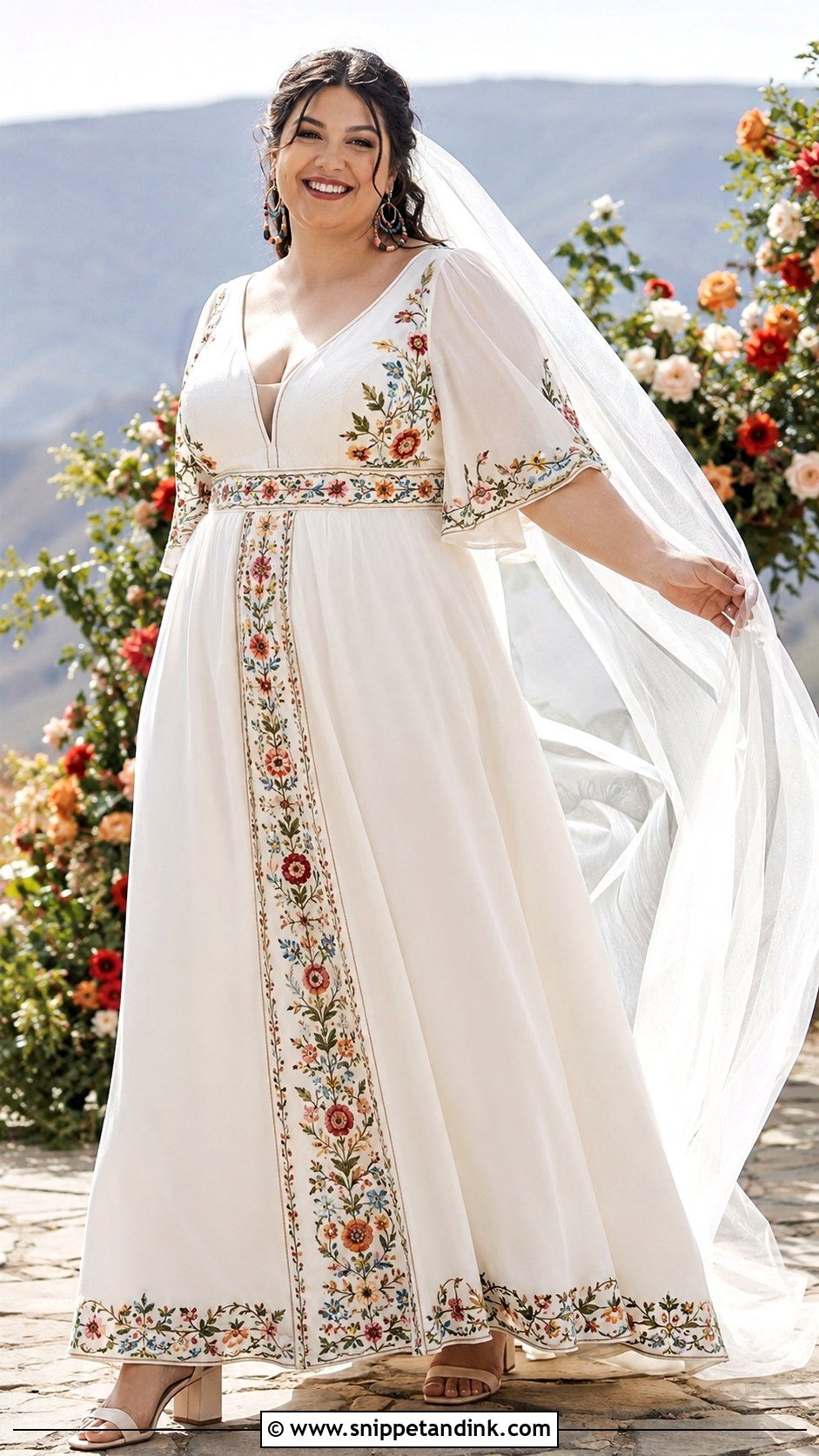
For plus size brides, an A-line folk dress gives support and movement, provided the bodice has proper internal structure. I look for an open square or V neckline and sleeves set high enough to lift your arms. Embroidered panels running along the neckline, waist and skirt create vertical flow, and they don’t limit your color or pattern at all. Supportive block heels, statement earrings and a veil anchored firmly into a soft updo. Order for your largest measurement rather than sizing down; taking in is far easier than letting out, and an experienced bridal tailor can shape the rest. Wear the embroidery, sleeves or color you love. The rules about which bodies can wear them are not worth following.
20. Minimal Folk Wedding Dress With Embroidered Belt
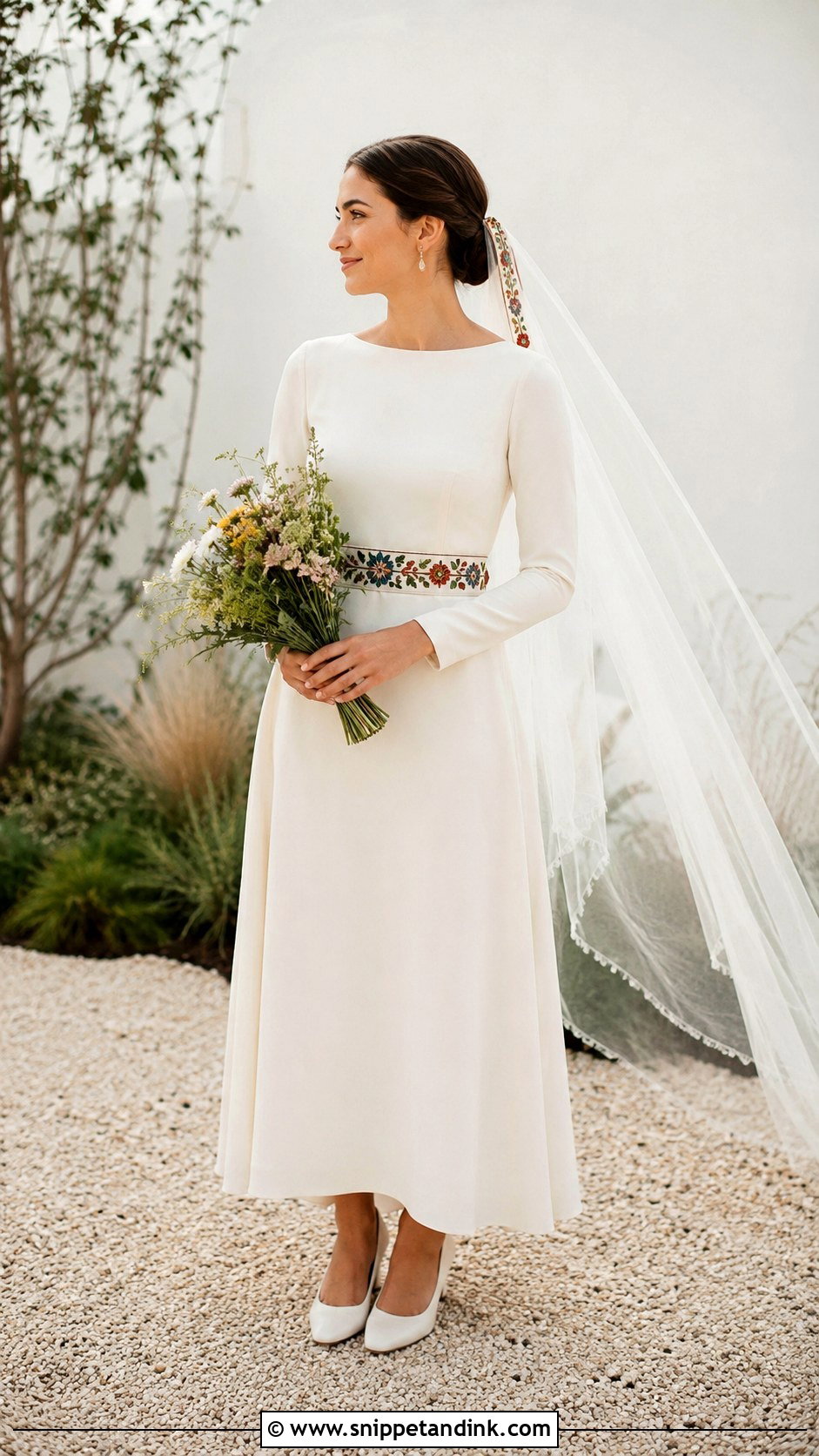
An embroidered belt is the lightest way into folk style. Choose a plain ivory gown in crepe, cotton or matte silk with a clean A-line, then add a detachable belt with geometric stitching, tiny flowers, woven ribbon or colors that mean something to your family. Simple pumps, delicate earrings and a low bun with a matching ribbon complete it, along with a light raw-edge veil that adds no second pattern. Remove the belt for the reception, or keep it afterward as a keepsake. Modern venues, courthouses and gardens suit this quieter approach.
What Grass, Dew and Sun Do to Cotton and Linen
Most folk weddings happen outside, and the fabrics in these dresses react to that more than polyester satin does. Here’s what I prepare brides for.
The hem
A floor-length cotton or linen skirt drinks up dew and picks up grass stains within the first hour. If the ceremony is on a lawn, have the hem finished a touch shorter than you would indoors, so it brushes the top of your boots rather than the ground. A small clean towel and a stain pen in someone’s bag save a lot of worry.
Heat, sun and layers
Cotton, linen and crochet breathe well, but sheer lace sleeves in full sun can leave you pink by the speeches, so apply sunscreen to the arms and let it dry before dressing. For evening chill, plan the cape, shawl or jacket at your fitting so it suits the dress rather than grabbing a cardigan at the last minute.
A Dress That Tells Your Own Story
Folk wedding dresses work when the handwork leads and everything else supports it. Floral embroidery, natural fabrics, expressive sleeves, crochet lace, colored belts and botanical veils can each carry the style on their own. Pair an ornate dress with quiet accessories, or add one handmade piece to a simple gown, but rarely both. Think about the weather, the ground underfoot, how much you’ll move and which shoes you’ll actually wear. Where cultural motifs are involved, learn what they mean and buy from makers who know them. Then pick the dress that feels like yours.
You'll Like These Ideas:







Leave a Reply