
The 1960s were the first decade when a bride could walk down the aisle above the knee and still look entirely bridal. Minis, clean shifts, empire waists, big sleeves and graphic lace all arrived then, and brides like Mia Farrow, Sharon Tate and Yoko Ono made short wedding dresses part of iconic wedding fashion. The shapes still suit courthouse vows, small parties, retro receptions and weddings abroad. What separates a sharp sixties look from fancy dress is the finish: tailoring, the right height of heel, a veil cut to scale. That’s what I’ve focused on in the looks below, from strict mod to softer vintage.
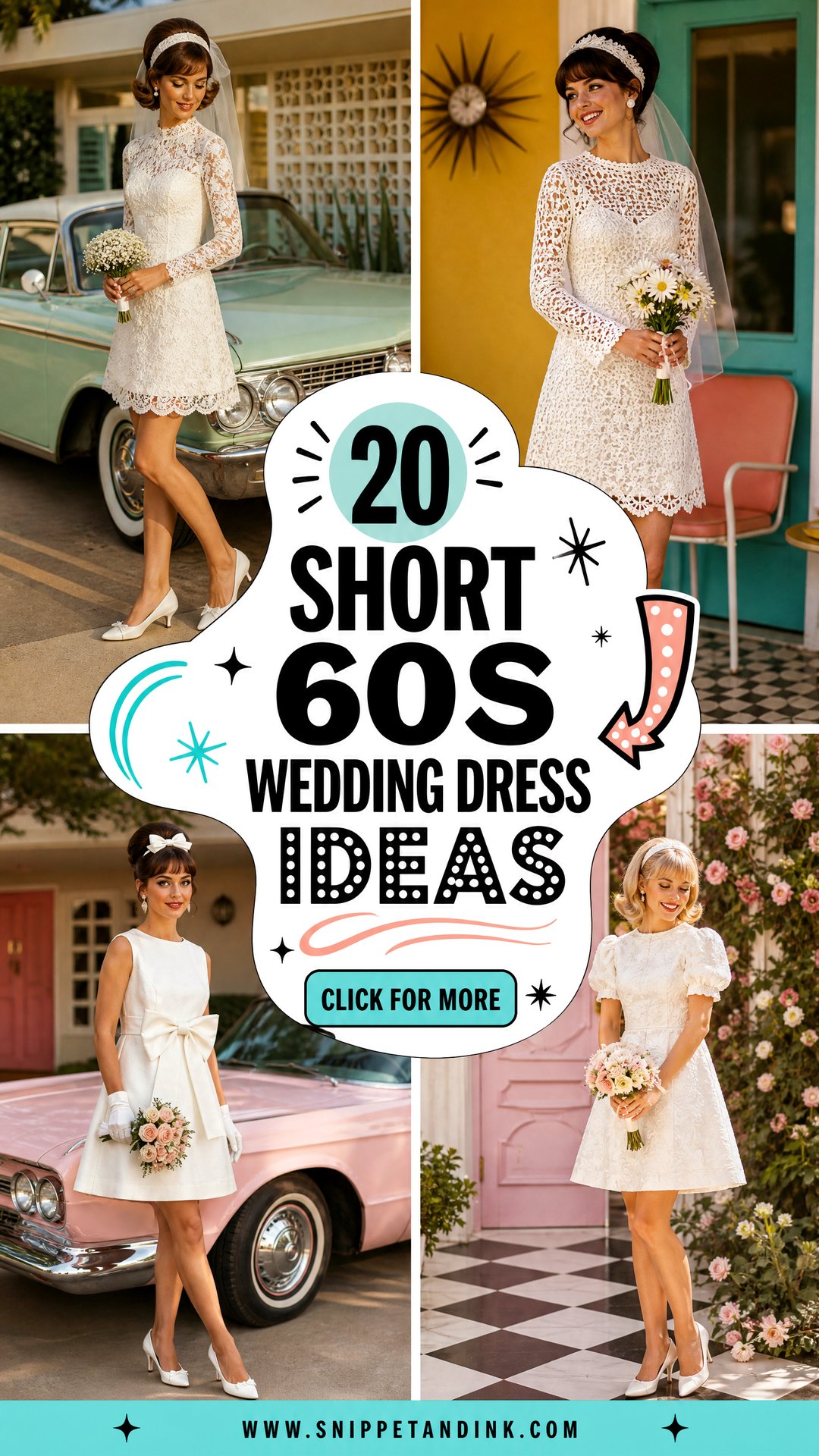
Real 1960s Dress or Modern Reproduction?
Brides who love the decade often ask whether to hunt for a genuine sixties wedding dress. It can be wonderful, but an original needs a different kind of checking than a new dress does.
If you buy an original
- Ignore the size on the label. Vintage sizing runs much smaller than today’s, so shop by your actual bust, waist and hip measurements.
- Look inside the seams. If there’s very little seam allowance, the dress can be taken in but hardly let out.
- Check the underarms, collar and hem in daylight for yellowing and old stains; some lift with specialist cleaning, some never do.
- Test the zip and any snaps. Old metal zips can split, and replacing one is routine work if you allow time for it.
- Hold synthetic fabrics up to the light. Older nylon and acetate can become brittle, and a fabric that tears easily won’t survive alterations.
I’d take any original to a seamstress who works with vintage before you pay, if the seller allows it, and leave extra weeks for cleaning and repairs.
If you prefer something new
A modern dress cut in a sixties shape gives you the look with current sizing, fresh fabric and a proper bridal lining. You can also ask a dressmaker to copy the line of a vintage photo in new crepe, which is often the easiest way to get exactly the collar or sleeve you want.
1. Short 60s Mod Shift Wedding Dress
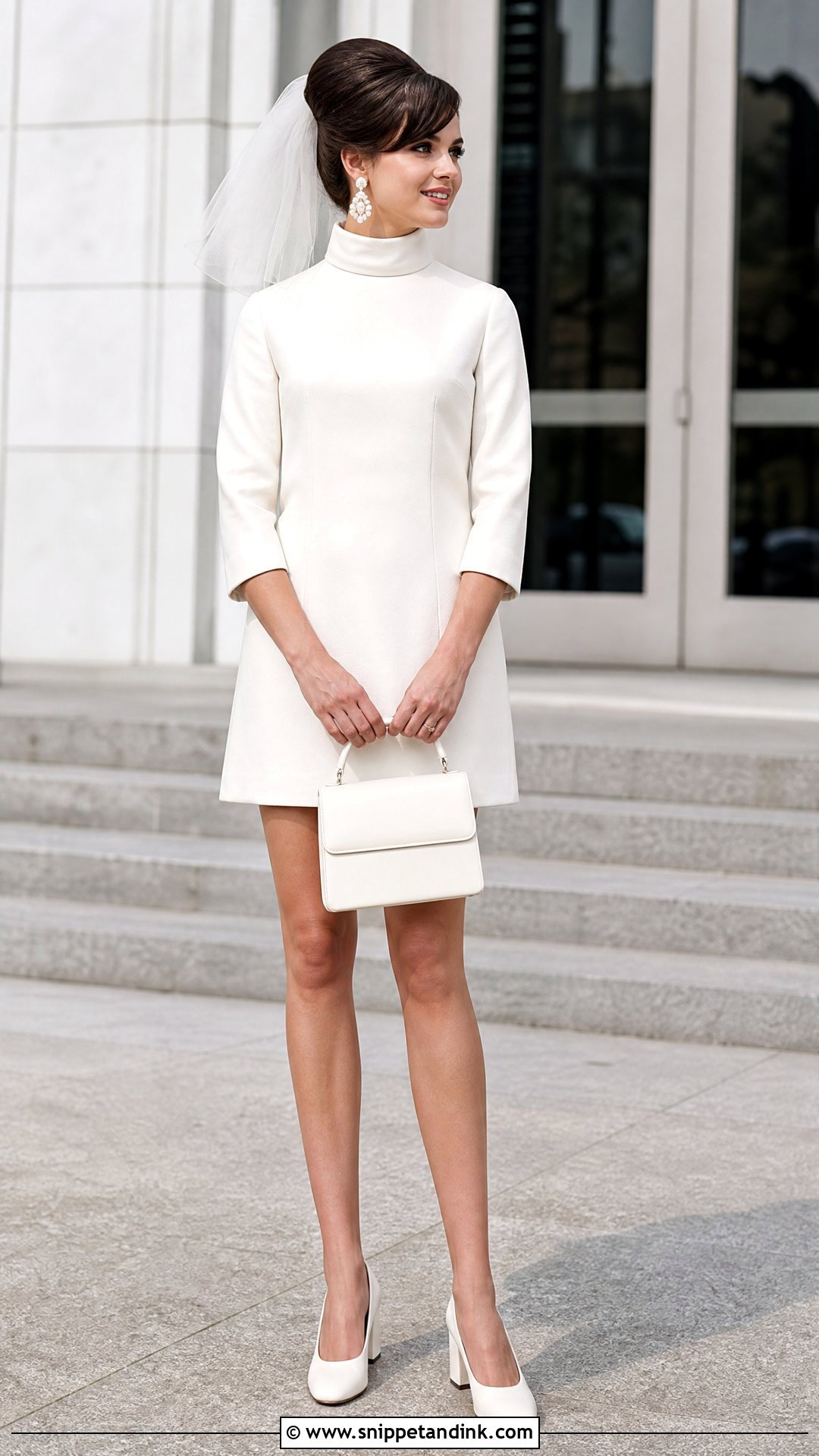
Nothing says sixties faster than a mod shift, and nothing goes wrong faster if it’s cut loose. Choose an ivory mini with a high round neck, a straight body and three-quarter sleeves, in structured crepe or heavier satin; soft fabric at this length looks like a nightdress. The shift should skim the hips with a little ease, so I always have the bride sit before we mark the hem. White block-heel pumps, geometric pearl earrings and a small boxy bag finish it, with a short bouffant veil and smooth hair lifted at the roots or a polished bob. Galleries and restaurants suit it.
2. Short 60s A-Line Wedding Dress With Veil
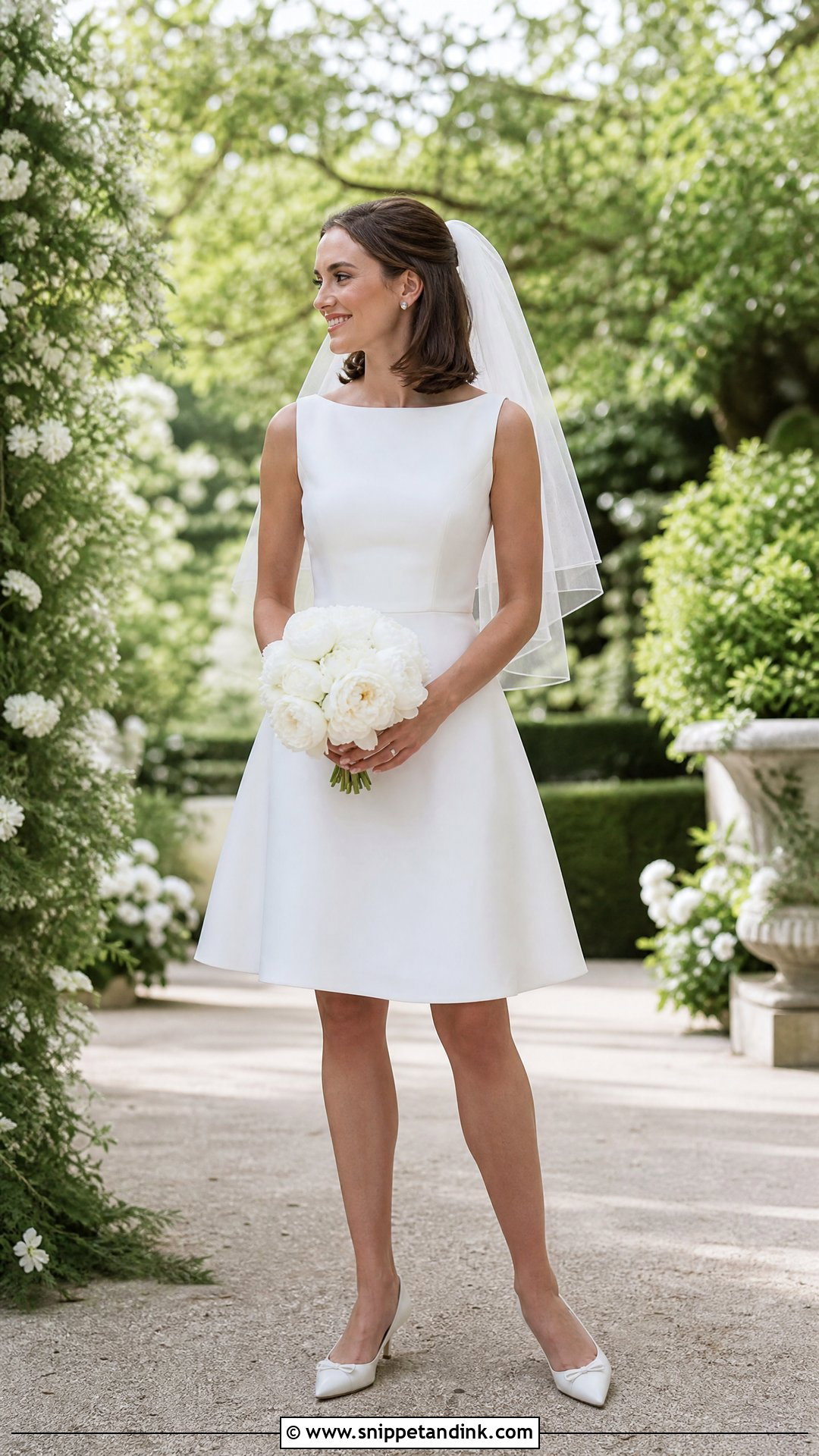
An A-line is the friendliest short shape. A fitted bodice, a natural waist and a skirt that flares to just above the knee move easily and forgive a lot, and a bateau or scoop neck gives it a clean period line. Pointed kitten heels and pearl studs keep the scale small, with a compact white bouquet. A shoulder-length veil on a neat comb gives enough ceremony without swamping a short dress; anything longer than the hem starts to look borrowed. A narrow ivory satin belt adds waist definition. It’s my usual pick for weddings that move between a few locations.
3. Short 60s Lace Wedding Dress With Kitten Heels
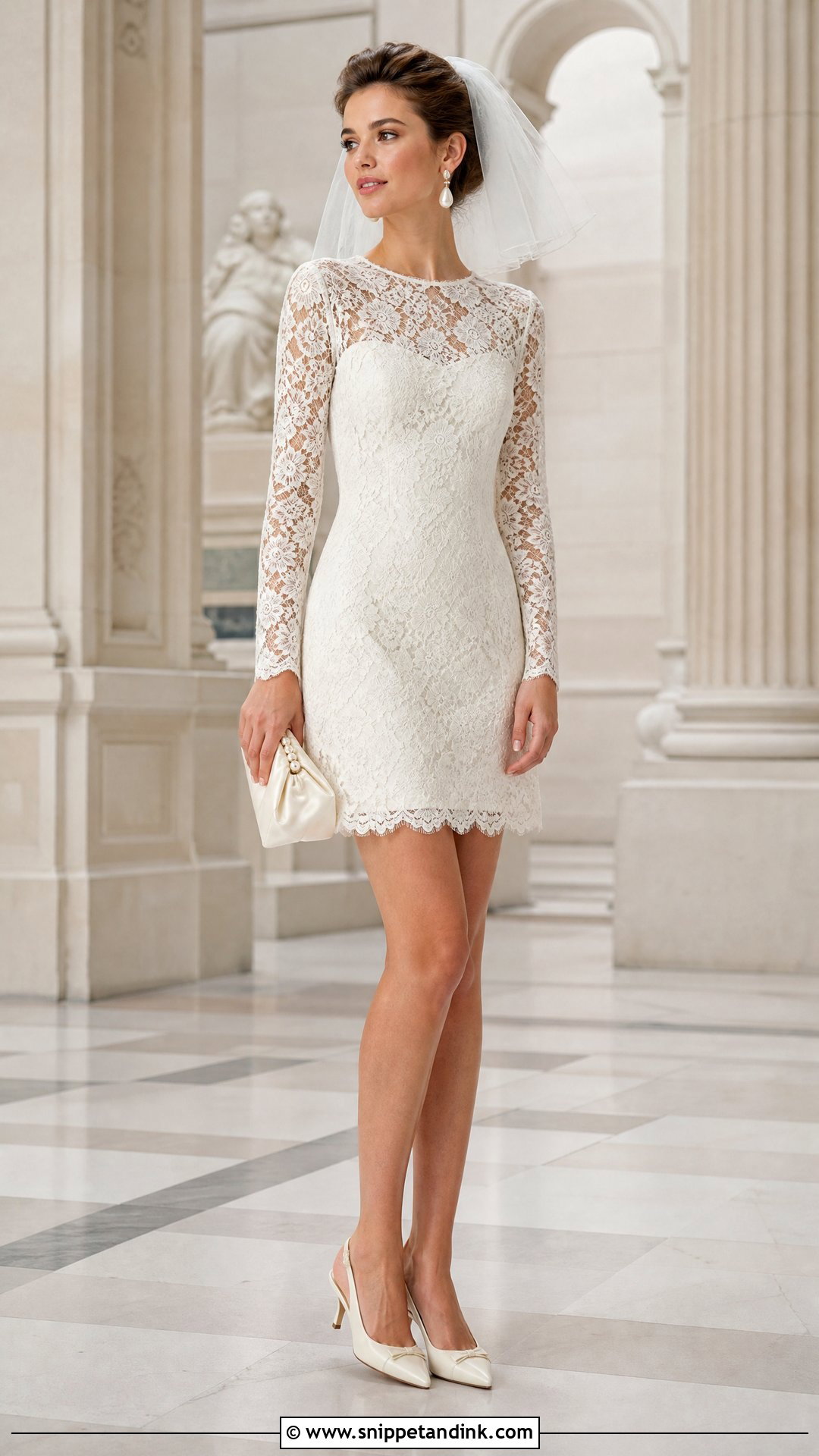
Lace softens the strict sixties outline, but the placement of the pattern decides whether it looks expensive. Before buying, check that the motifs sit evenly around the neckline, sleeves and hem, and aren’t chopped off at a seam. A mini or knee-length dress with fitted sleeves, a simple lining and either floral or geometric lace works; then hold back elsewhere, with a clean neckline and few accessories. Ivory slingback kitten heels, pearl drops and a small satin clutch suit it, with a short tulle veil tucked under a smooth half-up style. Spring and civil weddings suit it best.
4. Short 60s Bell Sleeve Wedding Dress
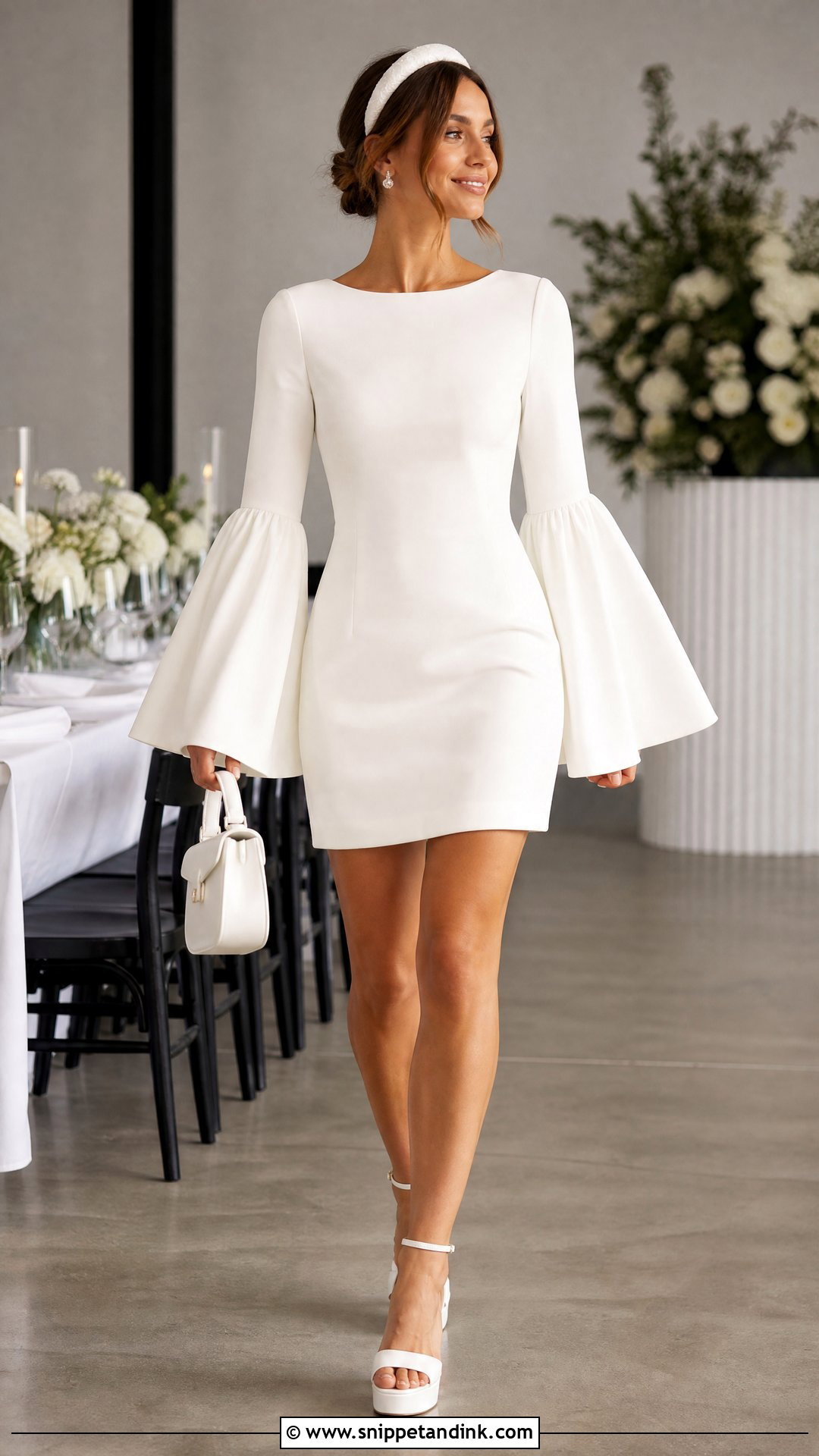
Bell sleeves are the most theatrical detail of the decade, which means everything else must stay calm. A simple mini with a lightly fitted body and sleeves that widen below the elbow, in matte crepe, soft lace or fluid satin, is enough. White platform sandals, small pearl earrings and a structured mini bag; a narrow headband or plain fingertip veil, not an elaborate headpiece. Check the length with your arms bent. If the flare covers your fingers, it will get in the way when you hold flowers or take the ring, so have the sleeve shortened to the wrist bone.
5. Short 60s Peter Pan Collar Wedding Dress
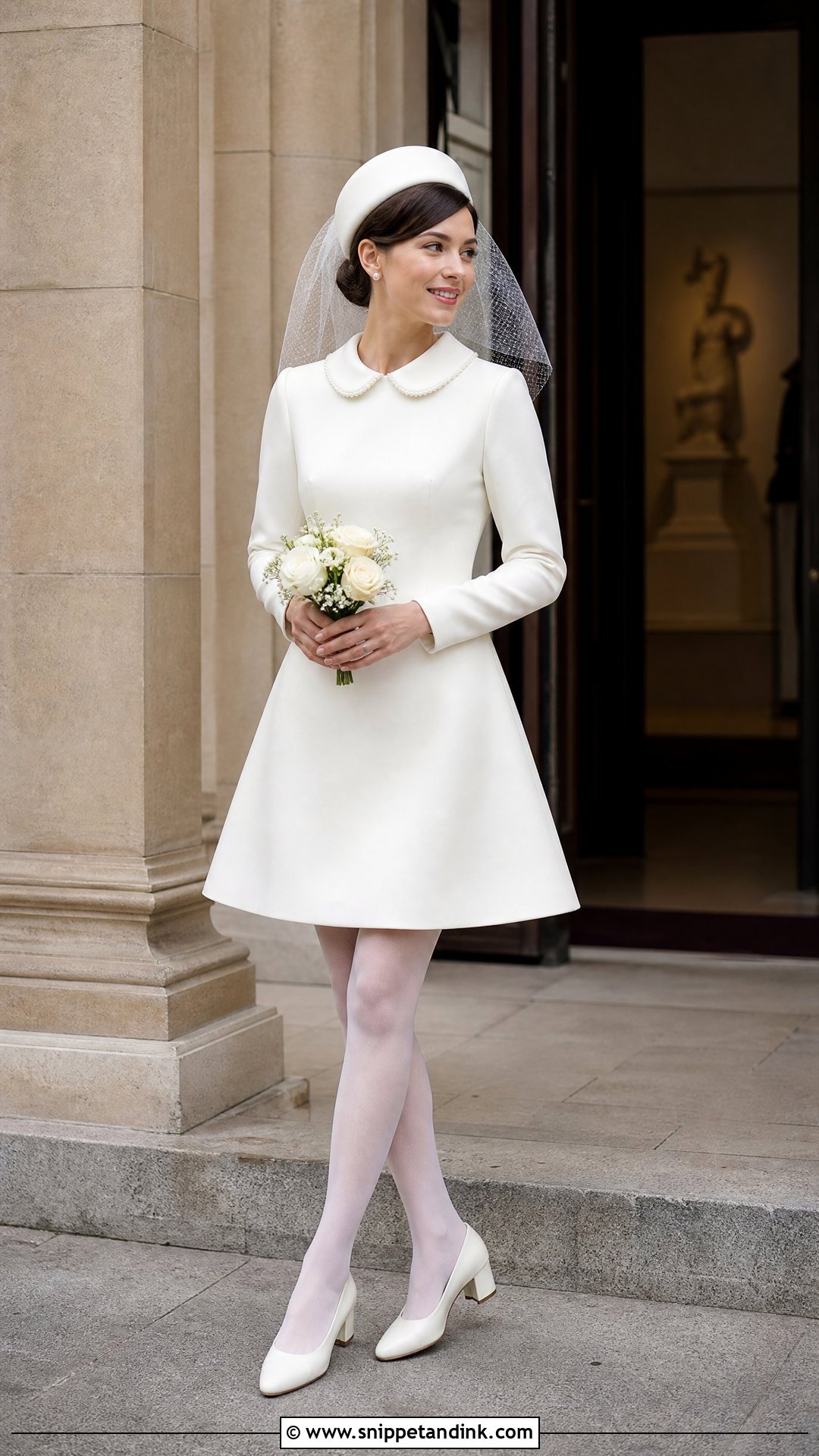
A Peter Pan collar is instantly vintage, and it can tip into schoolgirl if the fabric is too soft. A structured A-line or shift in substantial ivory keeps it grown-up, and edging the collar with pearls, satin piping or fine embroidery adds definition. Almond-toe block heels, sheer white tights in cool weather and simple studs complete it. A compact veil or a pillbox set toward the back of the head looks right, with a low bun so the collar stays visible. A hem near the knee adds coverage while keeping the youthful shape.
6. Short 60s Babydoll Wedding Dress With Mary Janes
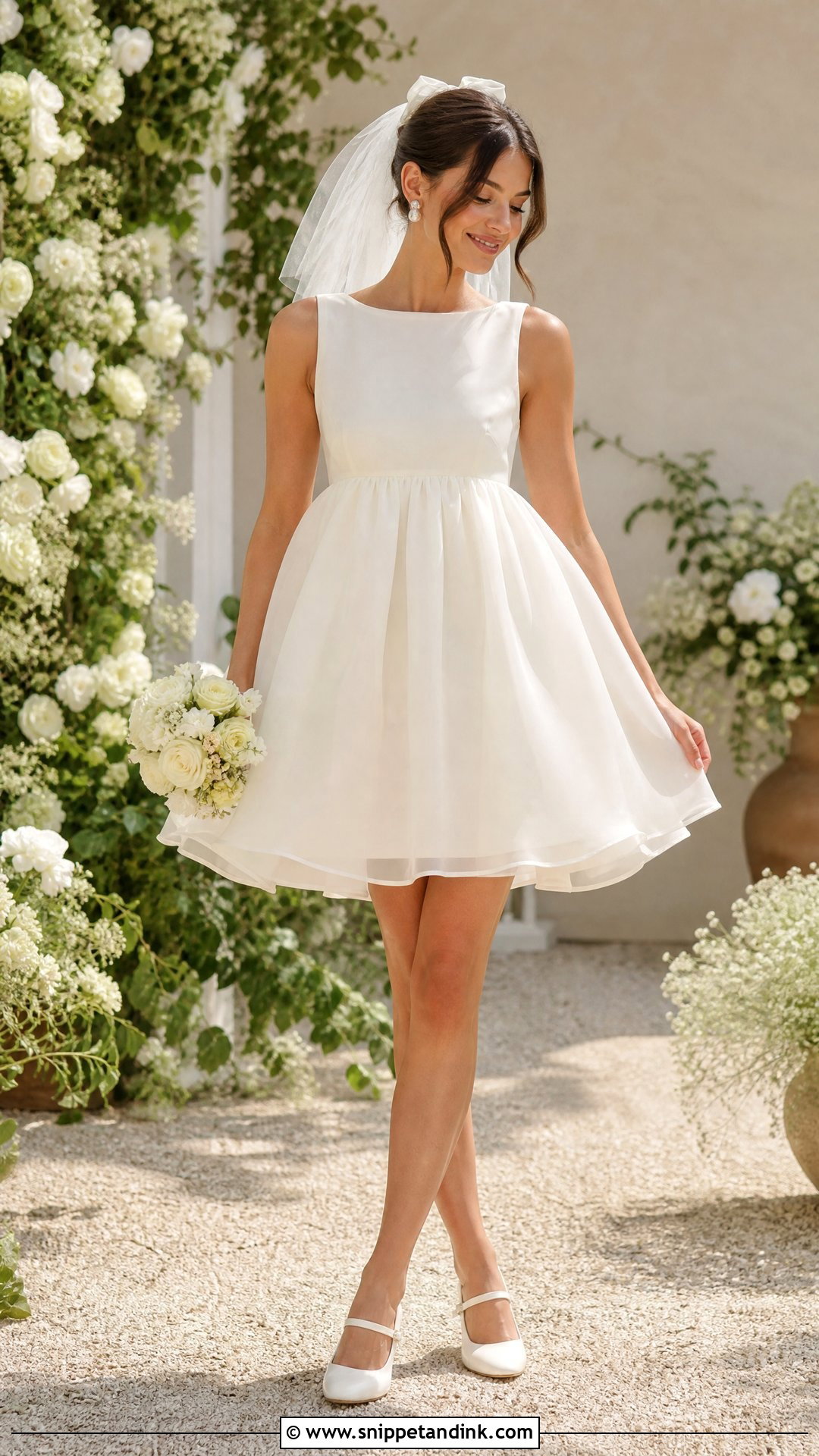
The babydoll is the softest sixties shape, and also the one most likely to look young. Refined fabrics are what make it bridal: silk organza, embroidered tulle or matte satin rather than cotton. Look for a raised waist and a gently gathered skirt, and keep the volume restrained, since a lightly flared skirt looks more polished than layers of petticoat. White Mary Jane heels suit the period and, because of the strap, stay on better for dancing than delicate sandals. Pearl earrings, a petite bouquet and a short veil fixed with a slim satin bow finish it for a relaxed ceremony or reception.
7. Short 60s Empire Waist Wedding Dress
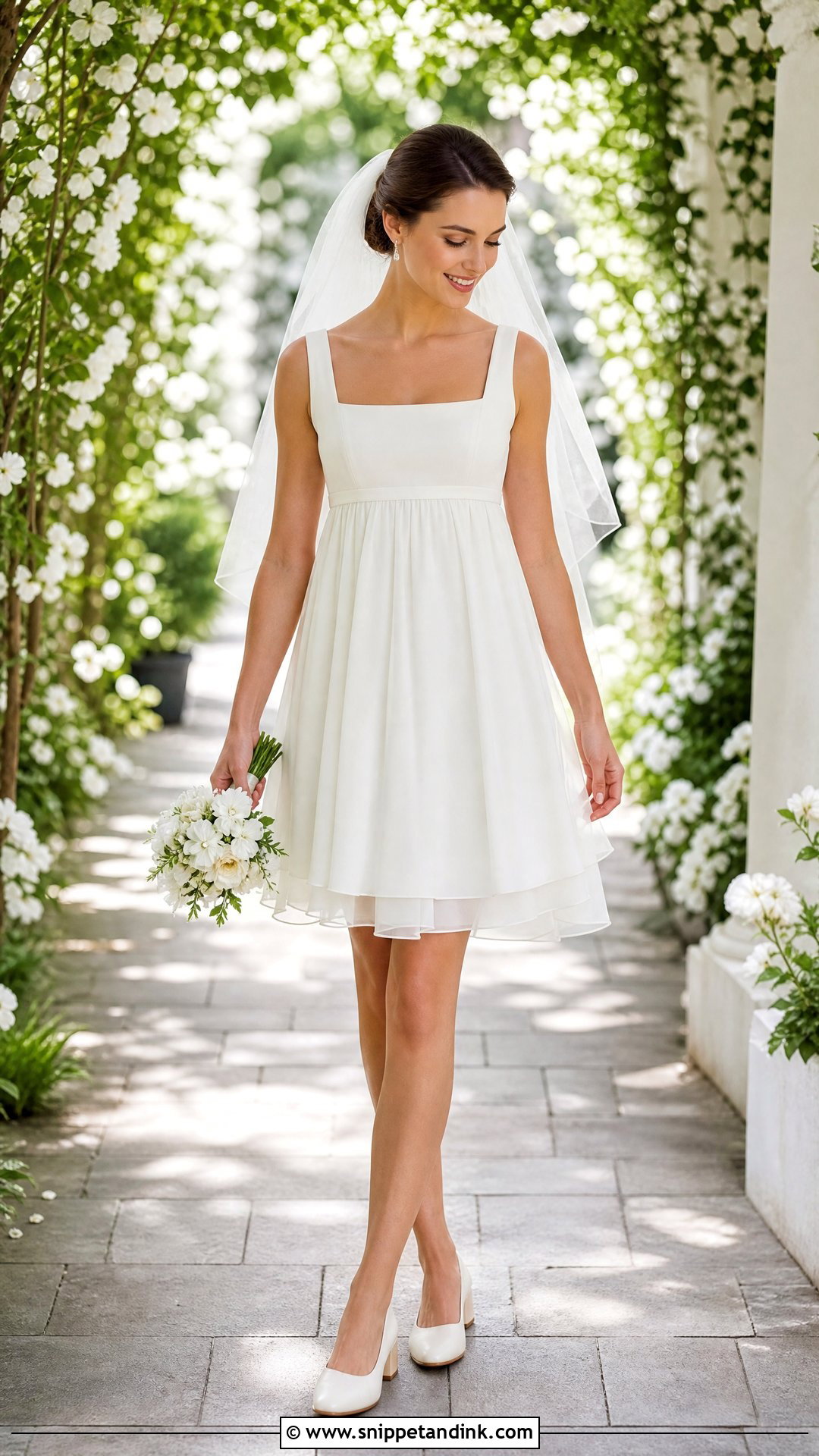
With the seam just under the bust, an empire waist draws a long line and leaves the waist and hips free, which makes it the most comfortable dress here for a long day. A short ivory version with a fitted upper bodice and a square, scoop or high neck all suit the period. Low block heels, small drop earrings, a simple green bouquet, a softly gathered veil and a sleek updo complete it. It’s also a good shape for pregnant brides, with enough room built in and alterations done close to the date. Avoid very thin fabric, which clings and turns see-through in sunlight; lined crepe or layered chiffon looks cleaner.
8. Short 60s Satin Mini Wedding Dress
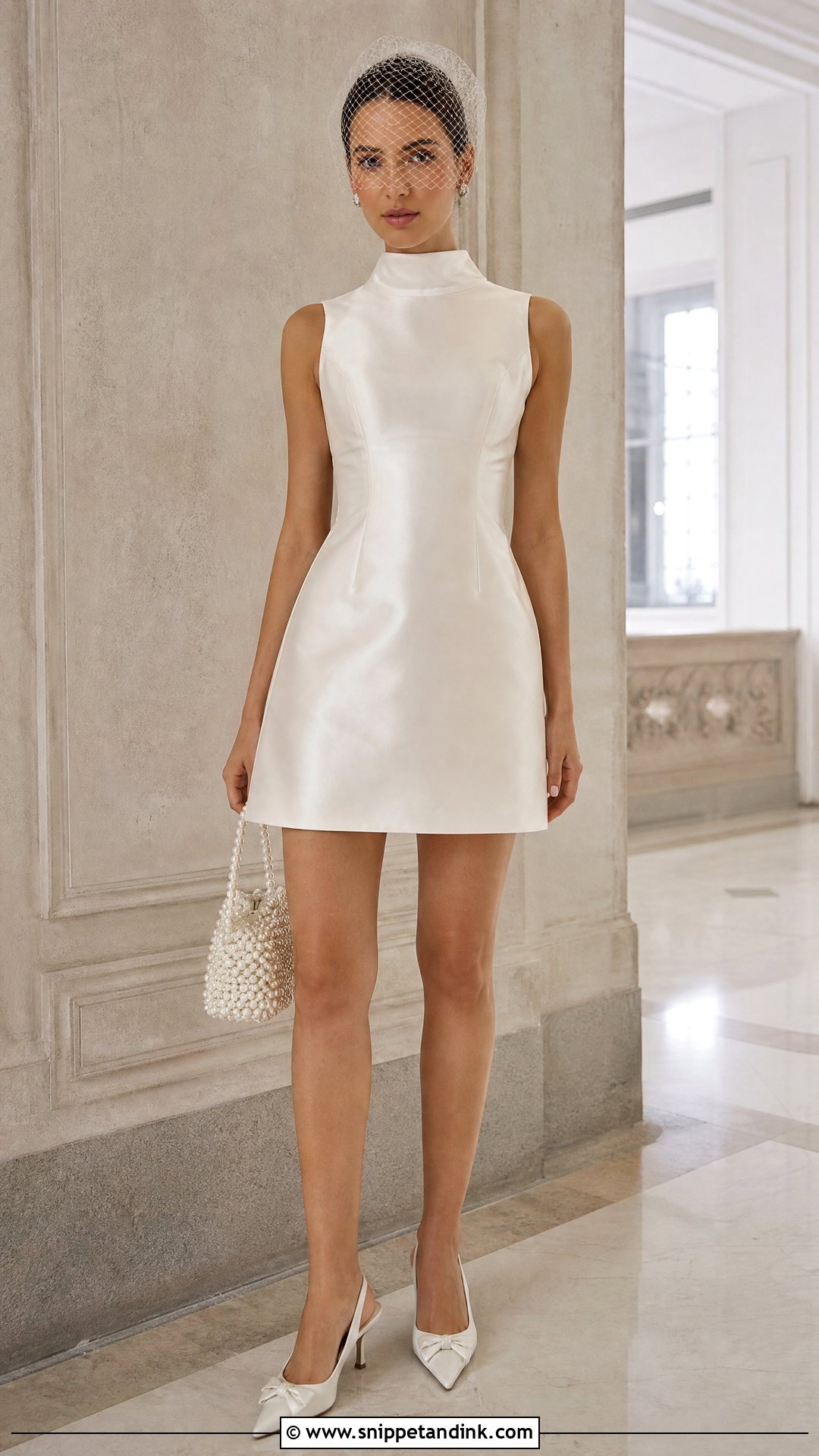
Satin makes a simple mini look expensive and also shows every flaw in the fit, because the shine picks up pulls and puckers. A structured shape with a high neck, subtle darts and a straight or gently flared skirt is the safest choice. Pointed slingbacks, crystal studs and a small pearl-covered bag suit it, with a neat birdcage or shoulder-length veil. A low chignon, softly defined eyes and a neutral lip keep the face classic. Satin creases from a car seat more than textured fabrics, so steam it at the venue and keep it in its bag until you dress.
9. Short 60s Tweed Wedding Dress With Pillbox Hat
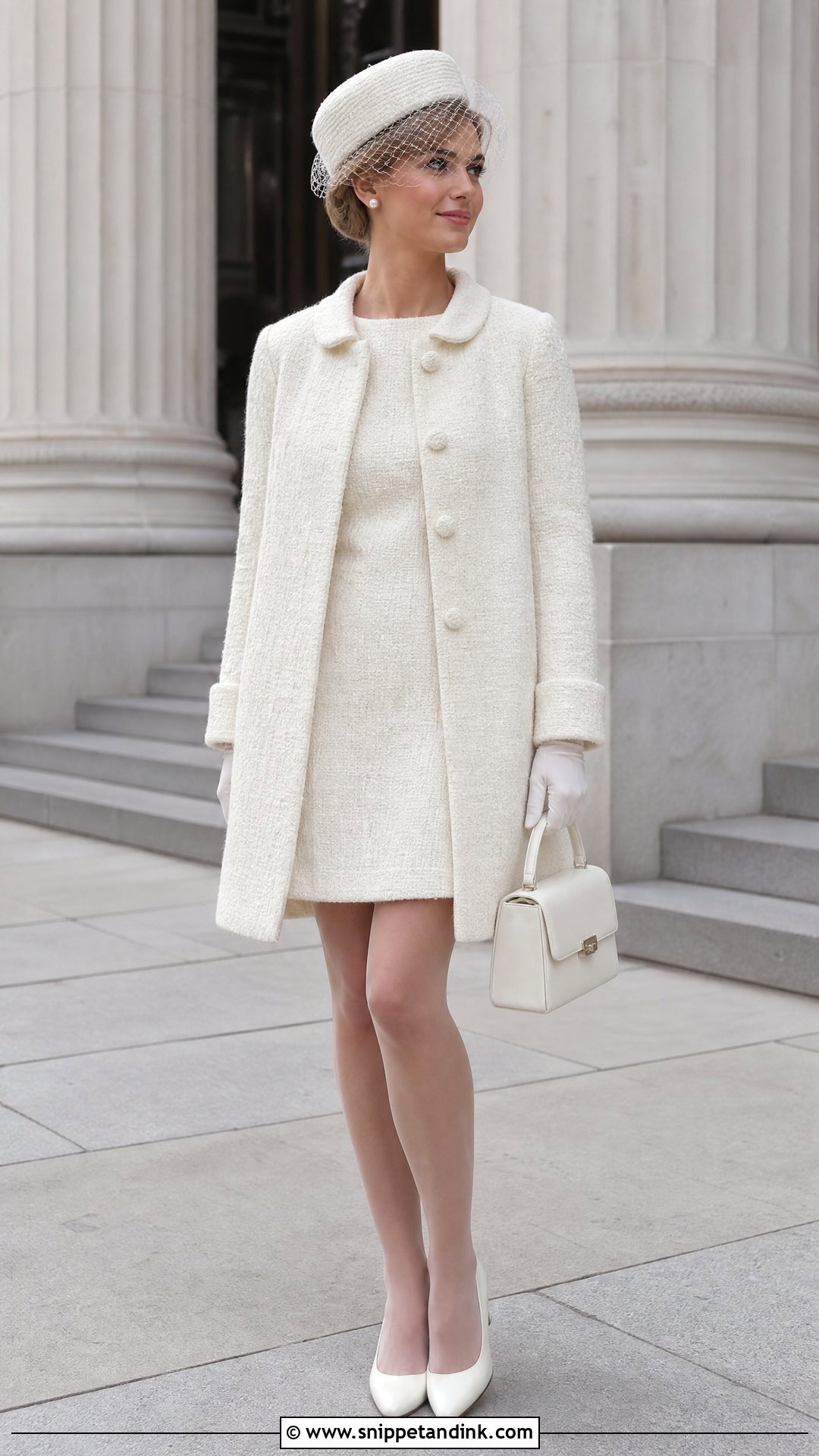
Ivory tweed is the cold-weather answer, and it carries a lot of sixties history in the boxy suit and dress shapes of the time. Choose a short shift or A-line with clean seams, a jewel neck and bracelet-length sleeves. Closed-toe block heels, sheer tights, pearl button earrings and a matching pillbox with a short veil complete it, with a small box-shaped bag. Tweed already has texture, so keep everything else tonal and plain. Hair and makeup should stay soft, or the structured pieces start to look like a costume. A matching ivory swing coat ending near the hem keeps the outline neat outdoors.
10. Short 60s Crochet Lace Wedding Dress
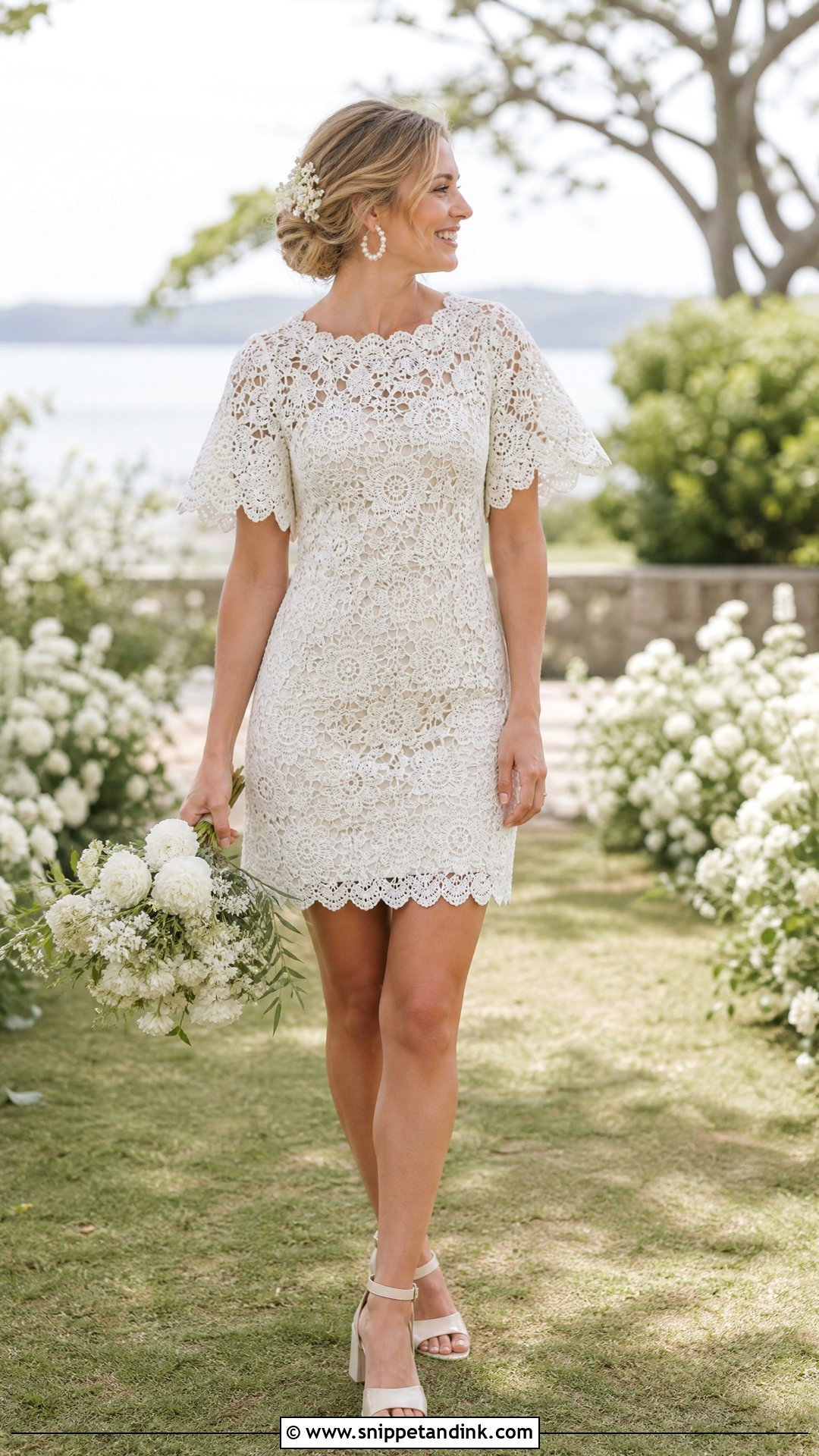
Crochet lace brings in the relaxed end of the decade and suits outdoor weddings. A lined mini or knee-length dress with an openwork pattern, a fitted bodice and a gently flared skirt is the shape. The lining is not optional here: openwork shows everything in daylight. Scalloped sleeves and hems add detail. Cream block-heel sandals, pearl hoops and a floral comb, with a loose bouquet rather than a tight round one. A fingertip veil makes it more traditional; a floral headband feels freer. Keep the shoes refined, or the dress drifts toward holiday wear.
11. Short 60s High Neck Wedding Dress
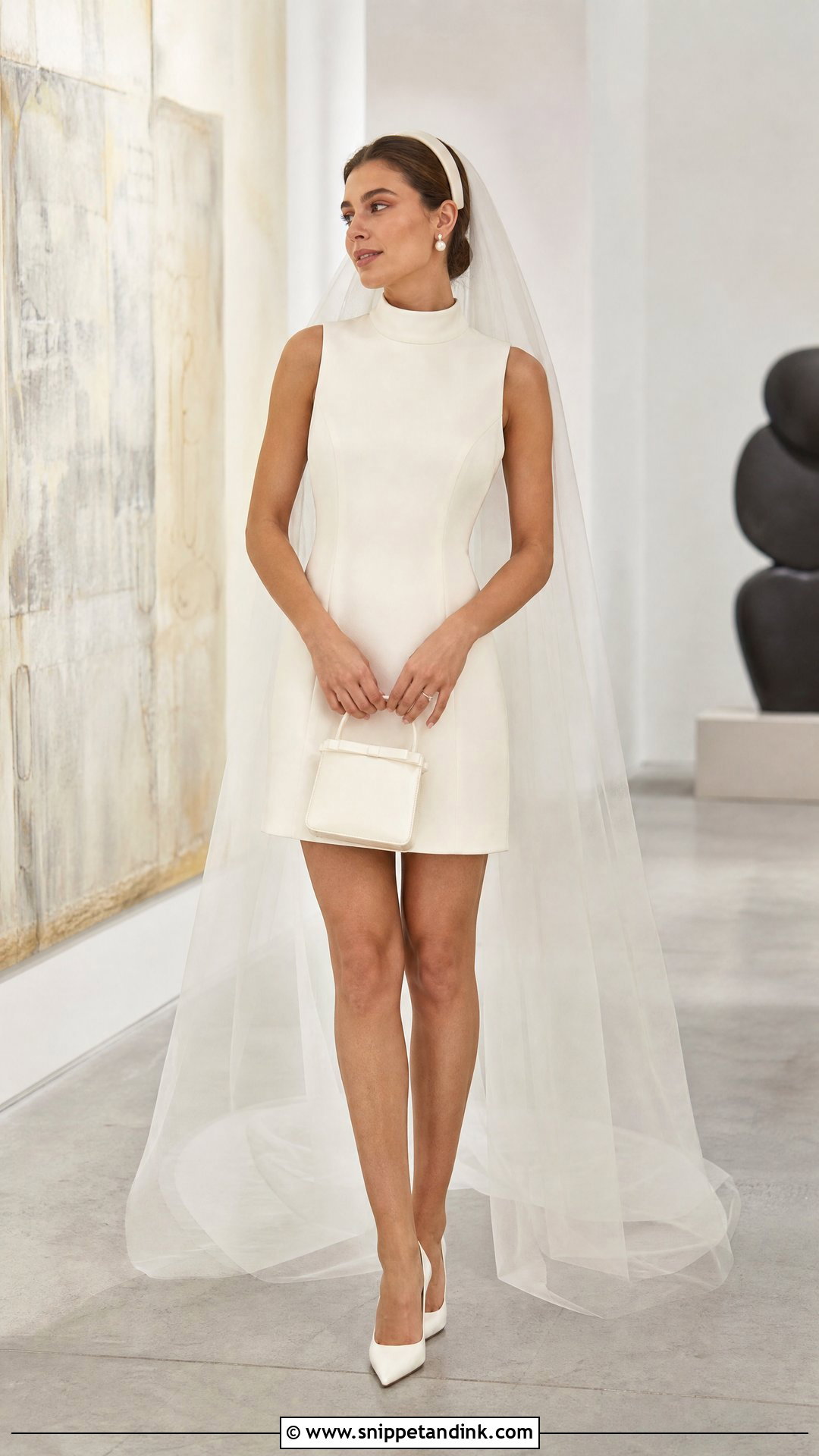
A high-neck mini is the cleanest look on this list. A structured ivory dress with fitted shoulders, slight waist shaping and a straight or A-line skirt can go sleeveless for summer or long-sleeved for winter. Pointed pumps, a narrow headband, pearl earrings and a small top-handle bag; no necklace. A long veil over a short hem creates a contrast I love in ceremony photos. Have the collar and armholes checked closely. A high neck on a sleeveless cut tends to gape at the armhole when you lift your arms, and a tailor can tighten it in minutes.
12. Short 60s Cape Wedding Dress
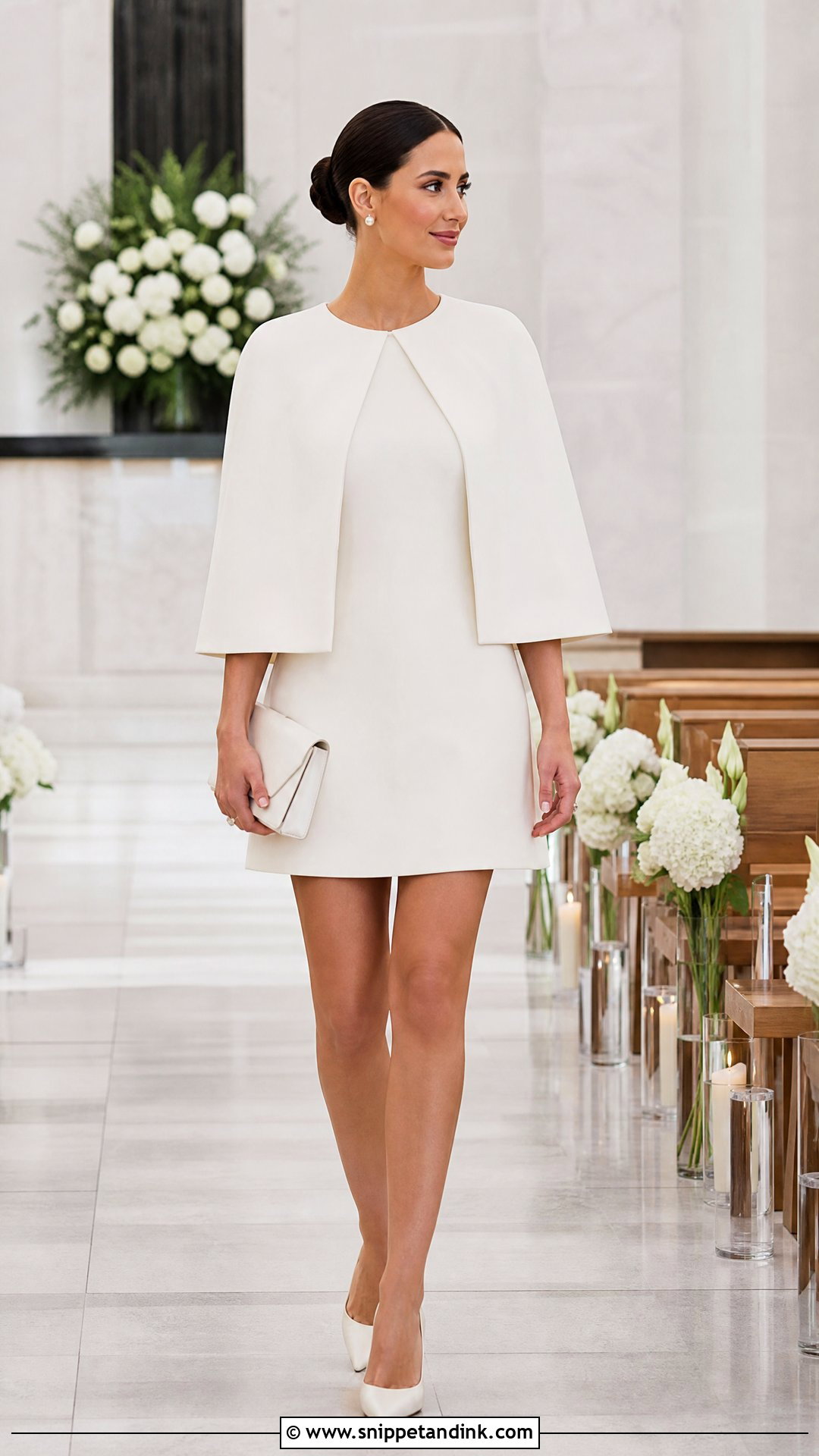
A cape gives you the drama of a train while keeping the hem short. Start with a sleeveless shift or fitted mini, then add an ivory cape to the elbow, hip or hem. Crepe gives a crisp mod edge; chiffon floats more. Low pointed heels, pearl studs, a structured clutch and a sleek bun or polished bob keep the neckline neat under the cape. You can skip the veil altogether. The cape is practical in cool weather and comes off for the reception. Buy both pieces together if you can, because two whites from different bolts rarely match exactly.
13. Short 60s Two-Piece Wedding Dress
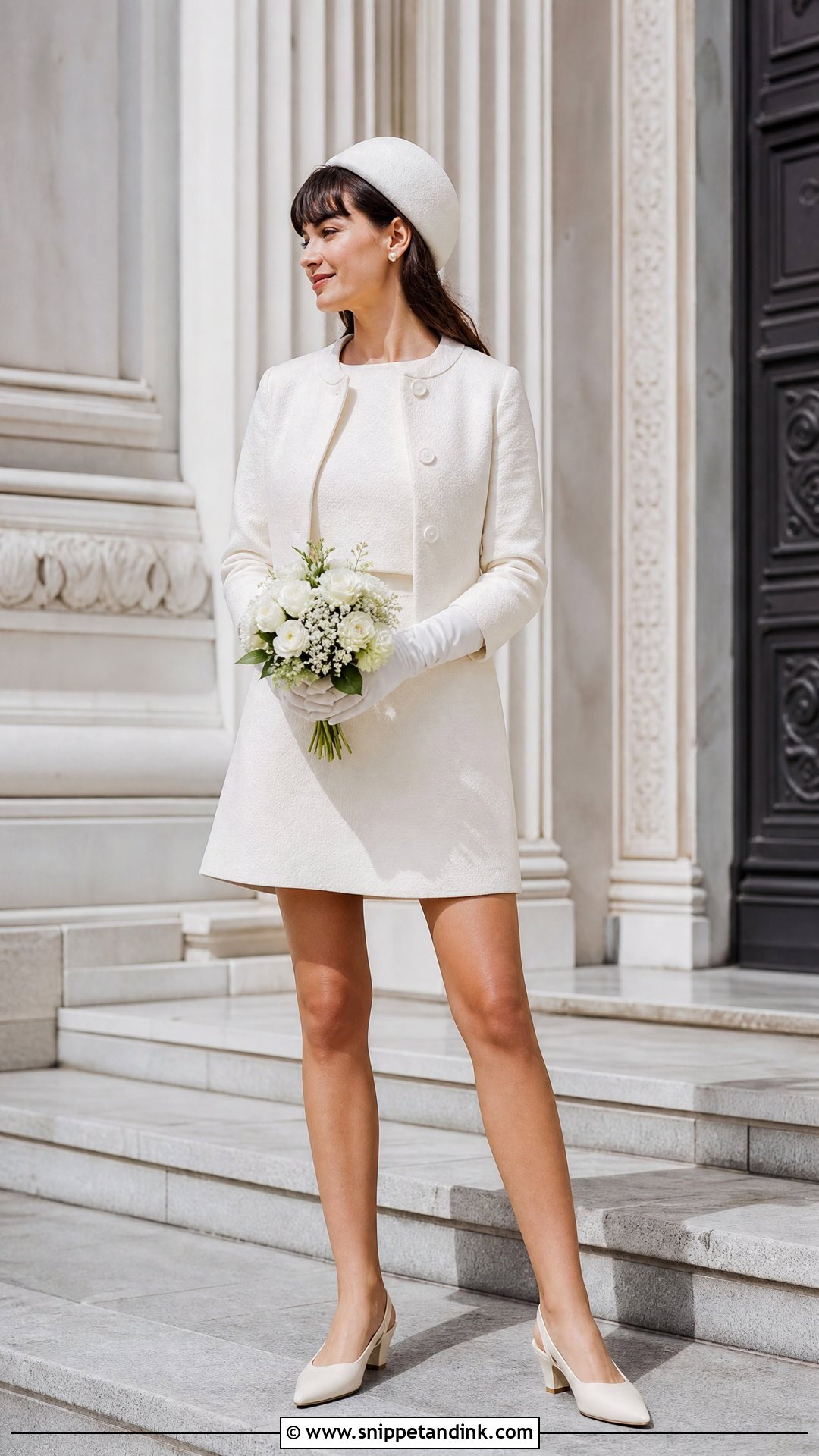
A two-piece is the civil-wedding classic of the decade: a fitted ivory jacket or boxy cropped top over a matching short A-line skirt. A sleeveless shell underneath lets you take the jacket off once the room warms up. Low slingbacks, pearl studs, short gloves and a compact floral bouquet suit it, with a small pillbox or bow veil. I’d steer you away from buying the top and skirt from different places; even two ivory crepes can sit a shade apart. The real bonus comes later, since the jacket and skirt both wear well on their own.
14. Short 60s Bow Wedding Dress With Pumps
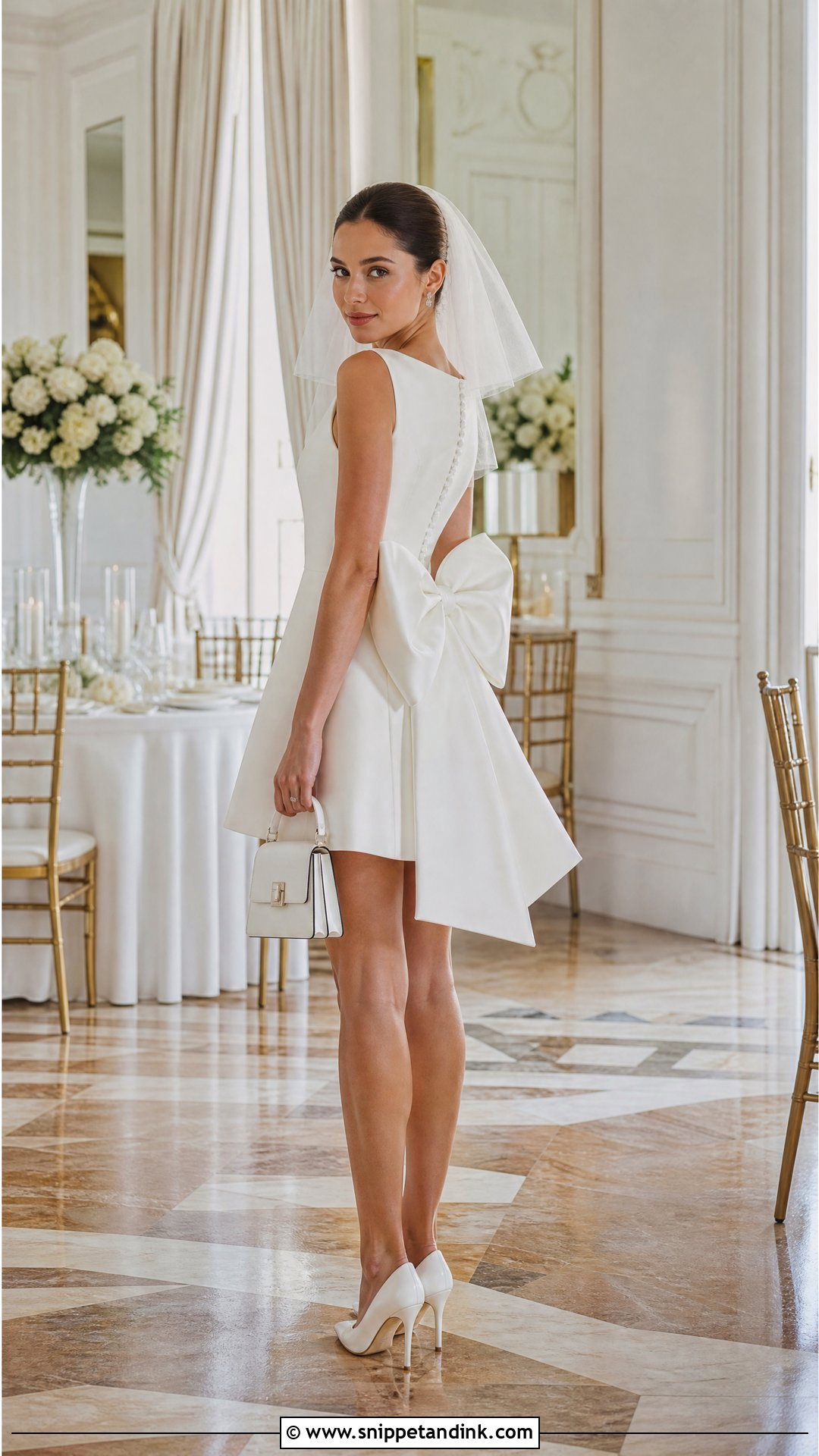
A single bow is enough to make a plain mini memorable. Choose a structured shift or A-line with one bow, at the neck, waist, shoulder or back, and keep everything else simple. Satin pumps, crystal studs and a small structured bag finish it, with a smooth updo to show a neck or back bow and a short veil. A small bow reads vintage; a large sculptural one reads fashion. Think about where it sits when you sit down or hug someone: a big waist bow crushes, and a shoulder bow can catch on a bouquet held in that arm.

15. Short 60s Pleated Wedding Dress
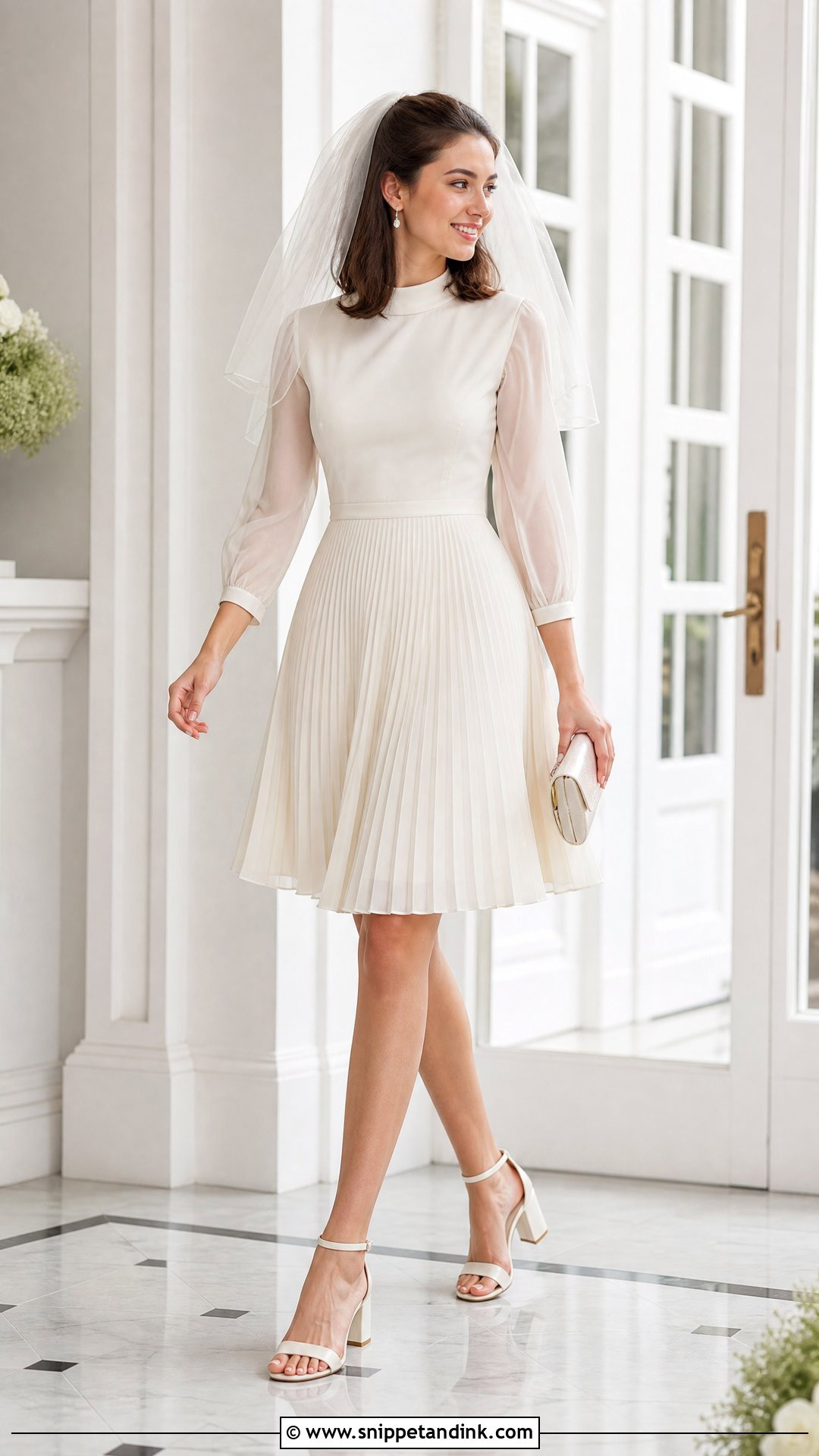
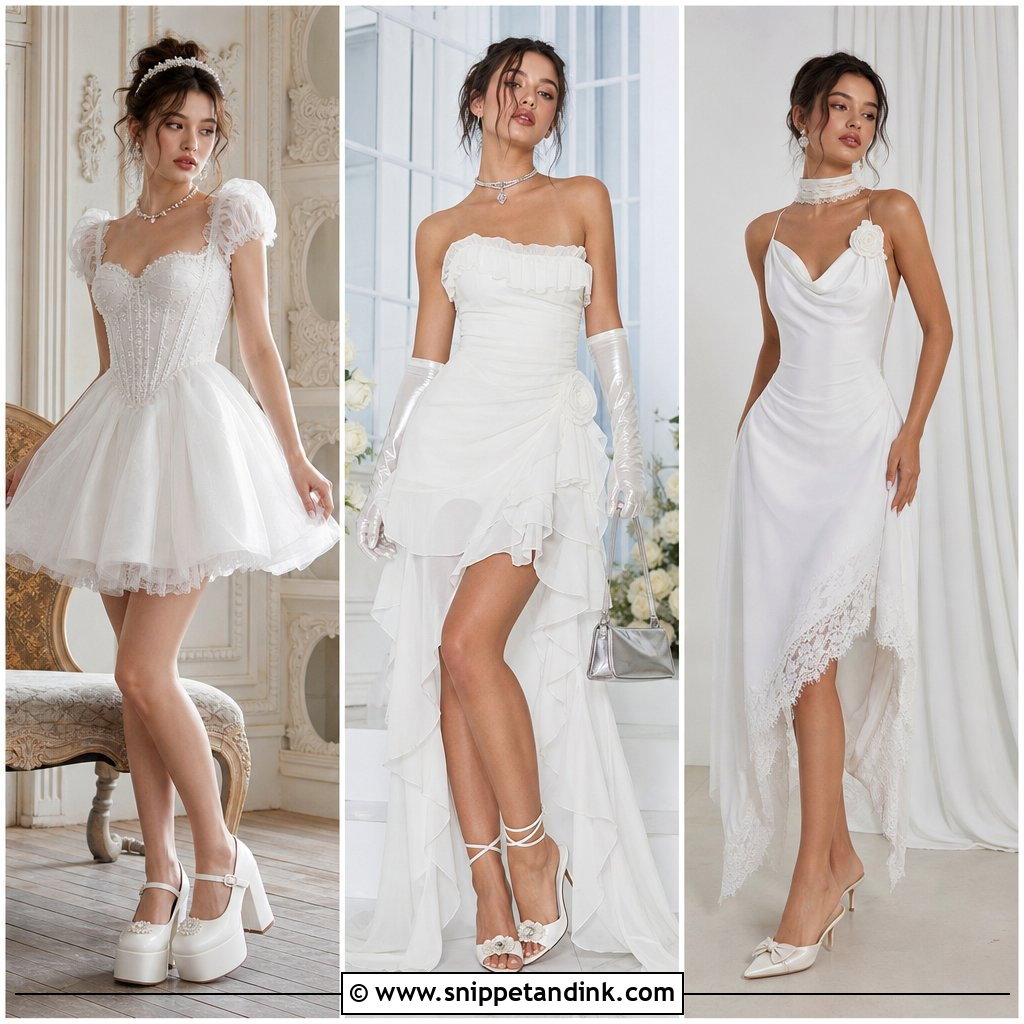
Fine pleats bring texture without embellishment and swing nicely with every step. An ivory chiffon or light crepe dress with a fitted top and a pleated skirt ending above or at the knee is the shape, with a high neck and sheer bracelet-length sleeves for a stronger period feel. Simple block-heel sandals, small earrings, a smooth satin clutch and a shoulder-length veil or narrow fabric band complete it. Keep the bag small and the shoes plain. Crushed pleats are the giveaway in photos, so have them pressed properly the day before and don’t sit on the back of the skirt in the car.
16. Short 60s Puff Sleeve Wedding Dress
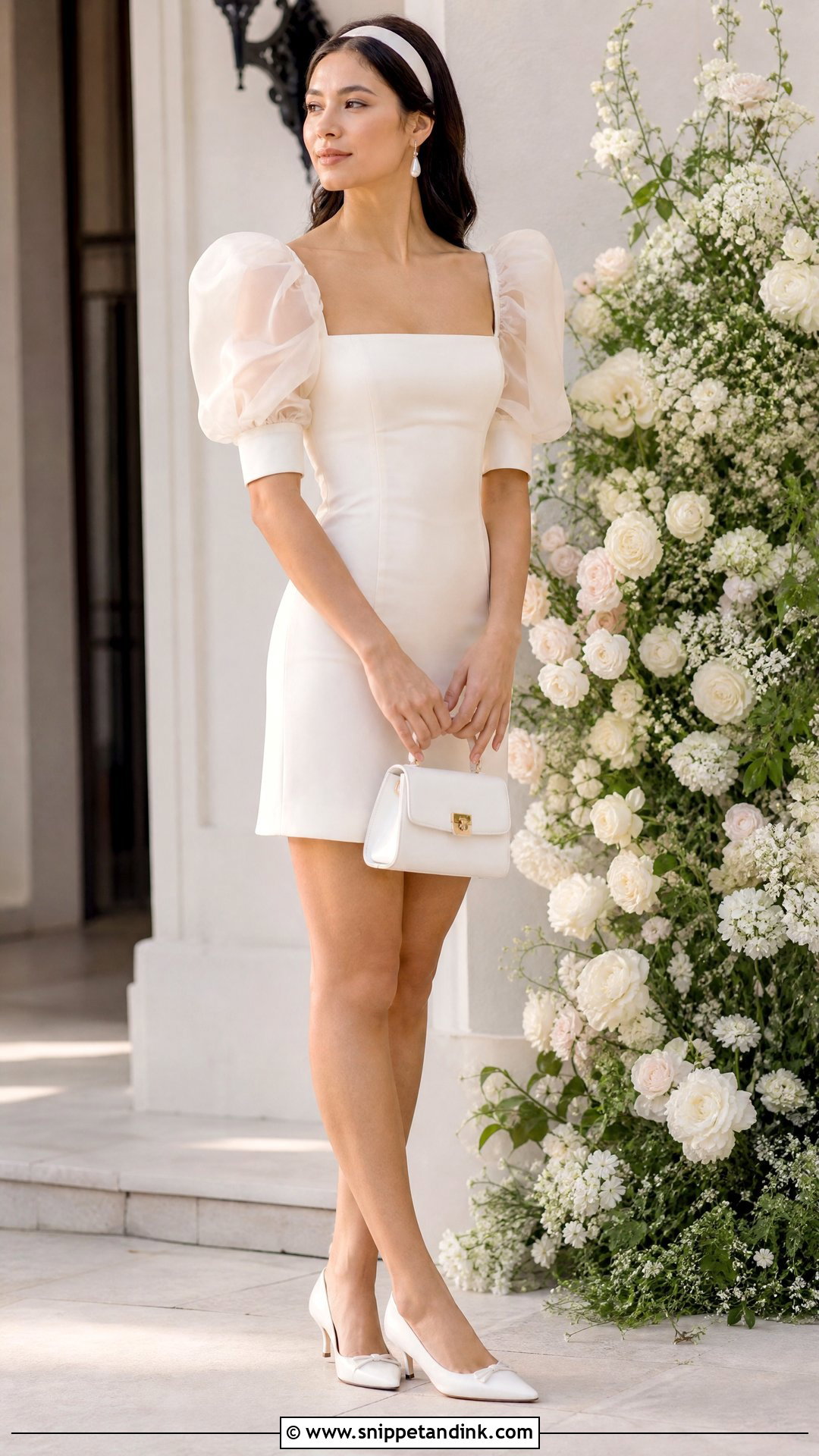
Puff sleeves add volume to the top of a short dress, which can tip the proportions if you’re not careful. Fitted cuffs, a shaped bodice and a neat A-line or straight skirt hold it together. Organza sleeves feel light and structured; lace or satin are more formal. Pointed kitten heels, pearl drops and a small top-handle bag, with a slim headband or compact veil rather than anything that adds height. Broader shoulders suit a smaller sleeve cap. If you want fuller sleeves, balance them with a clearly defined waist and a simple neckline.
17. Short 60s Sleeveless Wedding Dress With Gloves
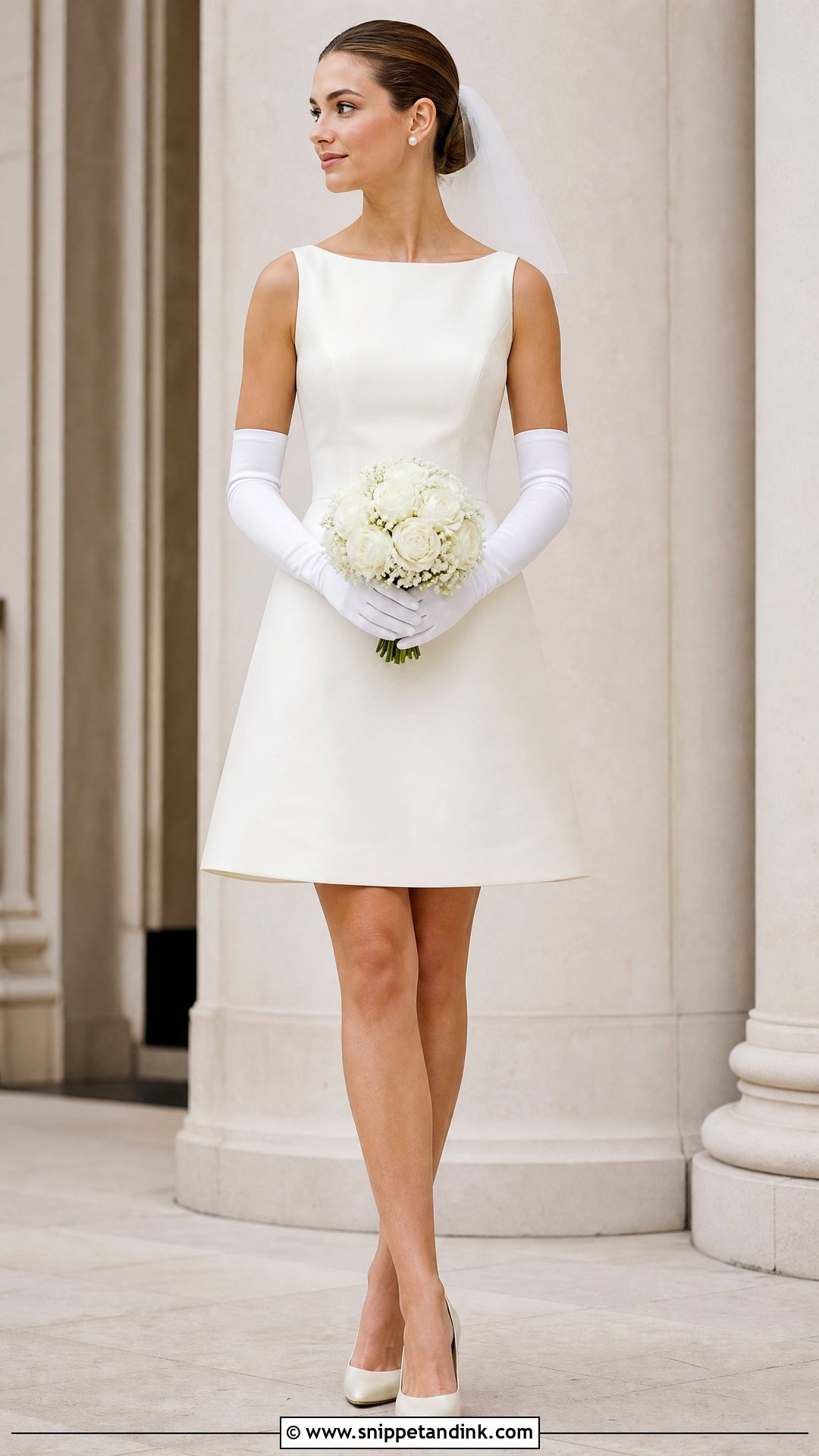
Gloves were everyday wear for a smart sixties woman, and a sleeveless mini gives them space to shine. Choose a high-neck or bateau dress with a fitted waist and a gently flared skirt, then add wrist- or elbow-length white gloves in the same tone as the dress. Low pumps, pearl earrings, a short veil on a smooth bun and a small round bouquet keep it neat. Practise the ring moment. Long gloves are fiddly to remove at the altar, so either slip off the left glove beforehand or choose a pair with a small opening at the ring finger.
18. Short 60s Off Shoulder Wedding Dress
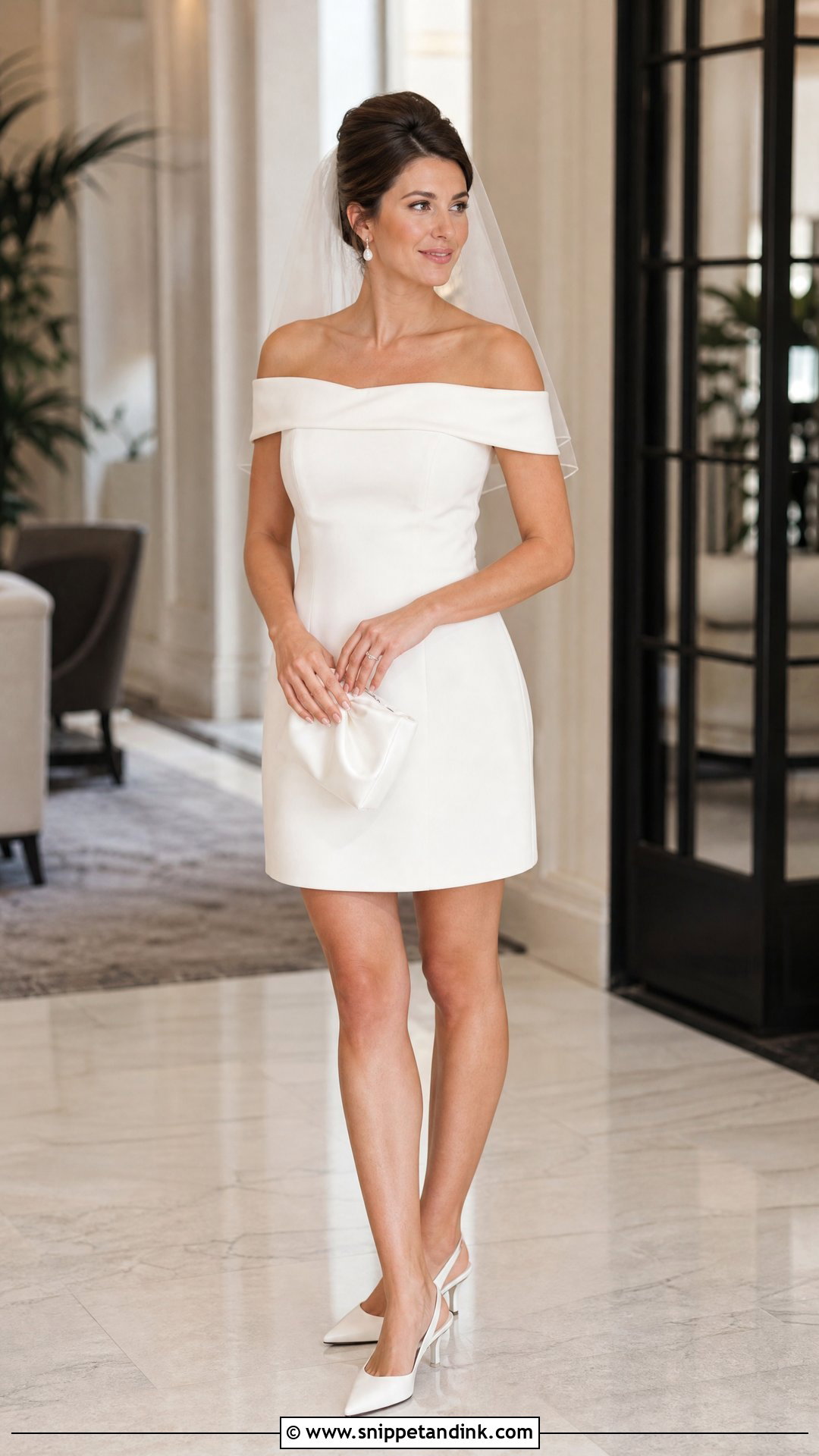
Off-the-shoulder brings romance to a short shape. A folded neckline, a fitted bodice and a straight or lightly flared skirt work, and I’d keep the hem a little longer to balance the bare shoulders. Closed-toe slingbacks, drop earrings and a small satin clutch, with a short tulle veil set behind a smooth bouffant. Skip the necklace. Support has to be hidden completely, so plan the bra at the first fitting, not the last. It’s best indoors, where temperature is steady; for cooler portraits, a cropped ivory jacket or swing coat slips on without disturbing the hair.
19. Short 60s Courthouse Wedding Dress With Coat
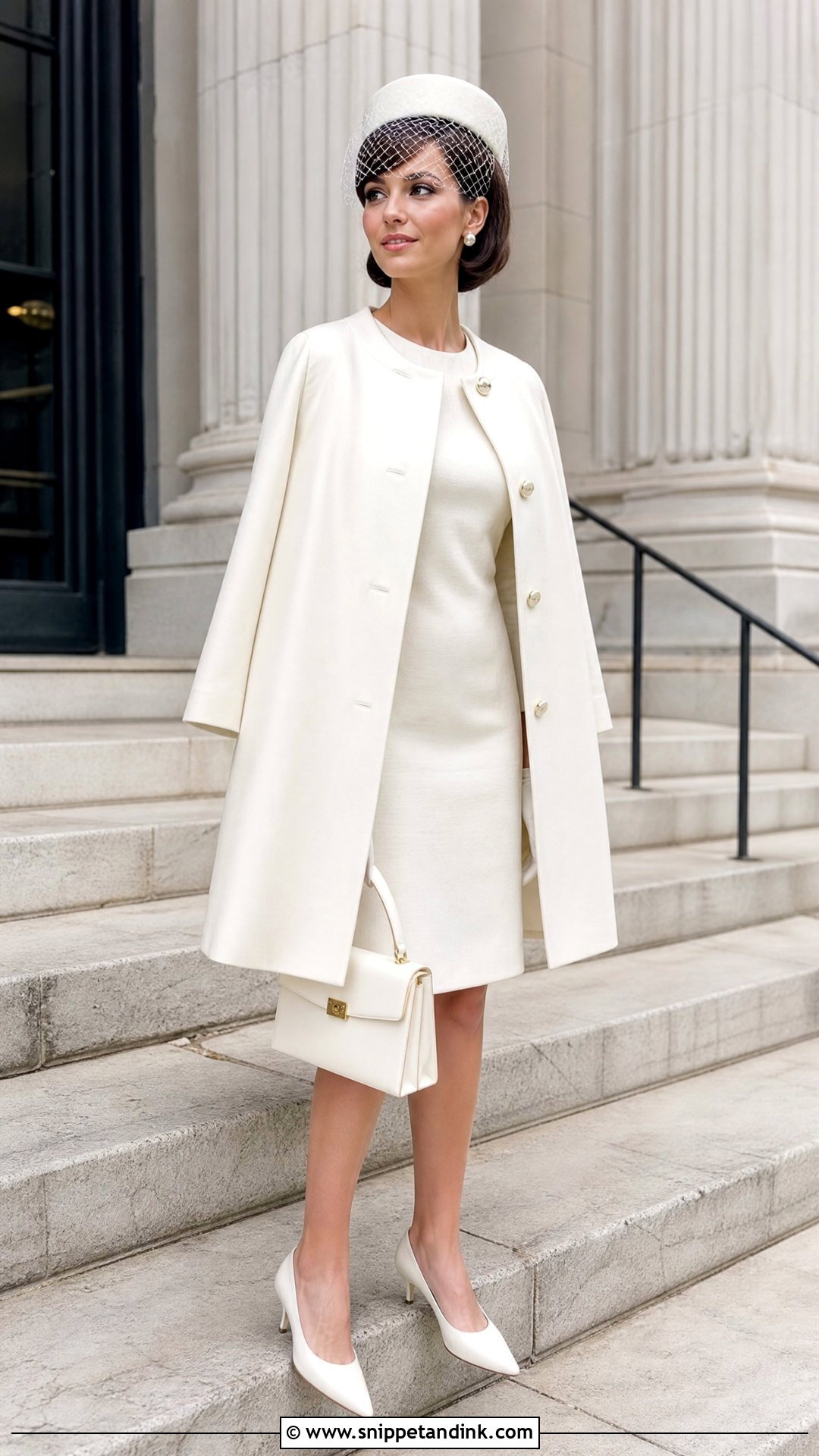
For a courthouse, a dress and coat is the most practical sixties outfit of all. Start with a knee-length ivory shift with a jewel neck and slight waist shaping, then add a matching swing coat that ends at or just above the hem. Finish with pointed kitten heels, a structured bag, pearl earrings and a compact veil or pillbox. The coat keeps you warm on the steps and comes off indoors. Fabric weight changes the season: light crepe for spring, textured wool or heavy satin for winter. Keep every piece in one ivory family.
20. Short 60s Wedding Dress With White Boots
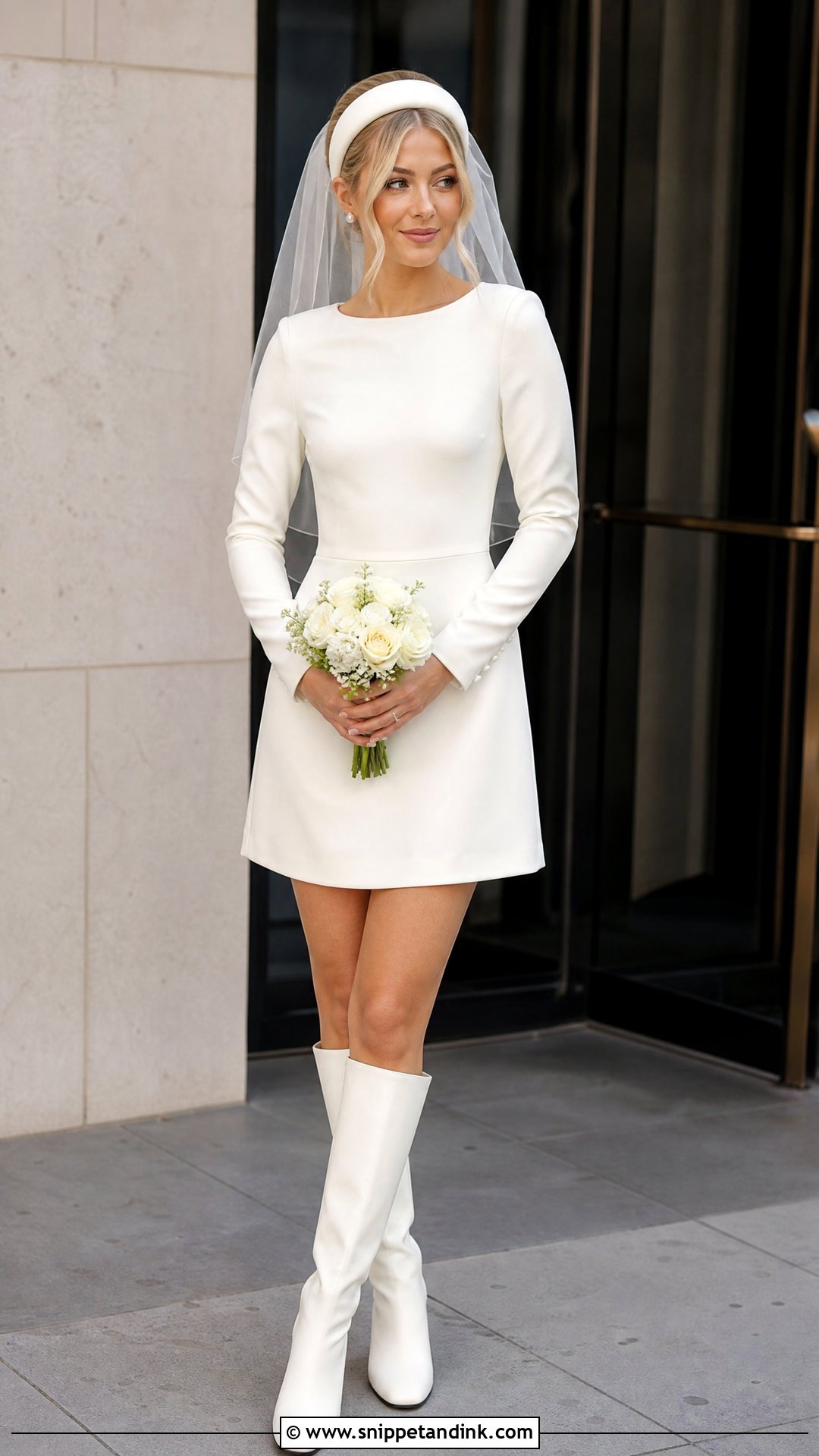
White boots are the loudest sixties choice and lend a bold mod finish to a short dress. Knee-high or mid-calf boots look best with a structured mini that leaves a strip of leg between hem and boot. A high neck, long sleeves and a clean A-line keep it balanced. Smooth leather or good faux leather with a low block heel is better than a detailed pair. Pearl studs, a small bouquet and a short veil or wide fabric headband finish it. Wear the full outfit around the house a few times; boots change your stride, and the hem-to-boot gap should look right from the side too.
How a Short Hem Behaves on Steps, Altars and Low Chairs
A mini looks simple on a hanger, but the ceremony puts a short hem through more than most brides expect. Photographers often shoot from below, guests sit lower than you stand, and you’ll climb steps, kneel or perch on a low seat at some point.
- Sit on a low sofa at your fitting. A short straight dress can rise four or five inches when seated, so set the hem with that in mind.
- If your ceremony involves kneeling, practise it. A flared skirt is far easier to kneel in than a slim shift.
- Wear smooth shorts or a slip shorts layer under the dress. It stops static cling and saves worry on windy steps.
- Stand at the top of a staircase and have a friend photograph you from the bottom, so nothing surprises you later.
A short dress also puts your legs and shoes on show, so break in your shoes at home and bring a pair of plasters. Fake tan streaks show clearly on bare shins under flash, so do it a few days early if you use it, and moisturise rather than shimmer if you’d prefer an even, natural finish.
Which Sixties Shape Fits Your Wedding?
A short sixties look works when the period details feel easy rather than studied. Start with the shape that fits your day: a clean shift, a soft A-line, an empire waist or a playful babydoll mini. Then add shoes you can actually walk in, a veil or headpiece scaled to the hem, simple jewelry and a layer for the season. Tailoring does more than any accessory to make a plain short dress look bridal. Use the decade as a reference, not a costume: one or two retro touches with modern accessories usually look best.
You'll Like These Ideas:









Leave a Reply