
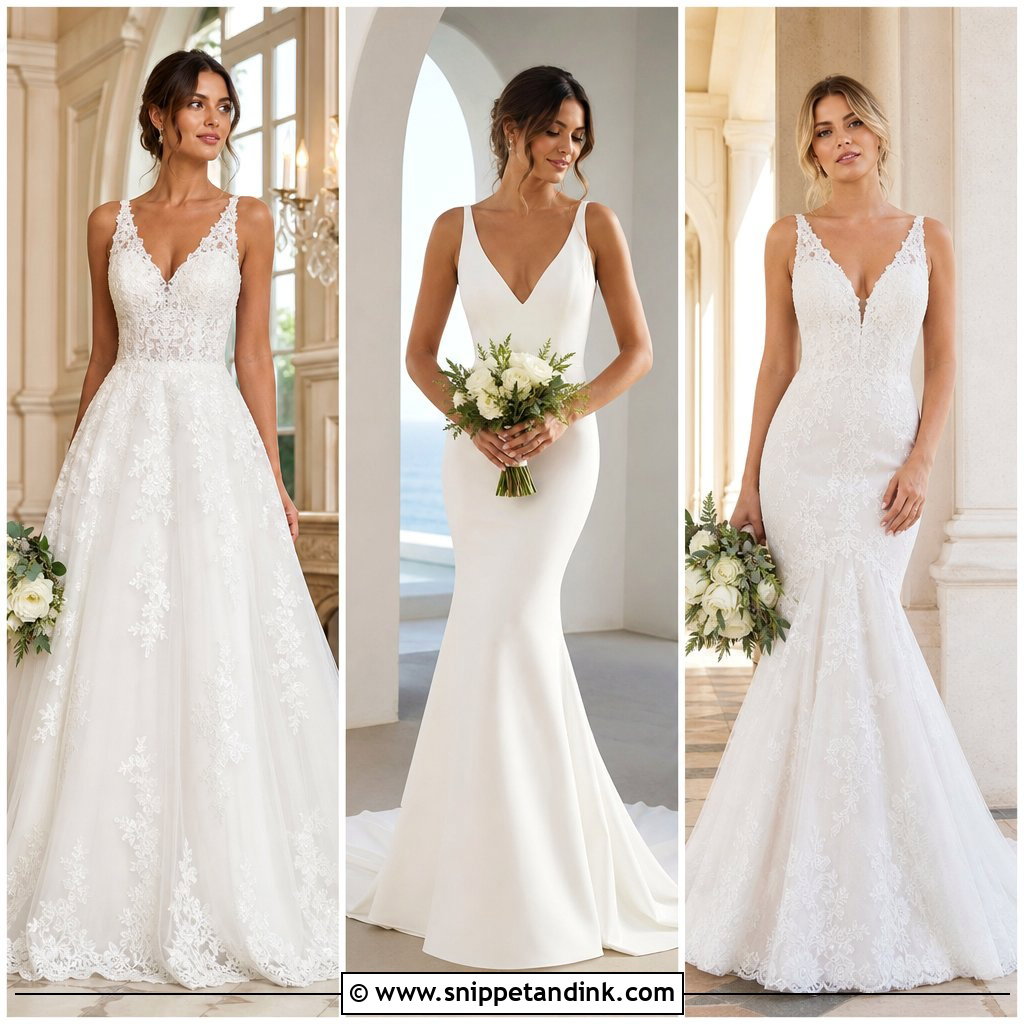
Every flared gown has a fitted bodice and a skirt that opens toward the hem. What changes its whole personality is the point where that opening happens. A-line widens gently from the waist, while trumpet and mermaid dresses hold close through the hips and release lower down. Fabric decides the rest: satin and mikado keep a sculpted edge, lace adds surface, tulle floats. In my fittings, brides usually know the silhouette they love long before they realise the fabric is what makes it work for them. The twenty head-to-toe looks below pair each shape with the styling and the checks I’d make before buying.
Satin, Mikado, Crepe or Tulle: How Each One Holds a Flare
Two dresses cut from the same pattern can look completely different depending on the fabric. Before falling for a silhouette in a picture, I want brides to know what the material is doing.
- Mikado and duchess satin are firm. They hold a flare out from the body by themselves and keep sharp folds. They are also the heaviest and warmest to wear.
- Stretch crepe clings and drapes. The flare falls rather than stands, which looks modern but shows every line underneath.
- Silk charmeuse and soft satin are fluid and catch light along the body. Beautiful in motion, but they wrinkle when you sit and need very precise fitting.
- Tulle and organza build volume through layers. Tulle stays soft; organza is crisper and slightly shiny. Both are light, which helps in summer.
- Chiffon floats and moves in wind. It barely holds a shape, so the flare comes from the cut and the lining.
If you have a long day ahead, especially outdoors in warm weather, the weight of the fabric matters as much as the look. Ask the shop to let you hold the skirt in your hands. You can feel the difference in seconds.
1. Satin A-Line Flared Wedding Dress
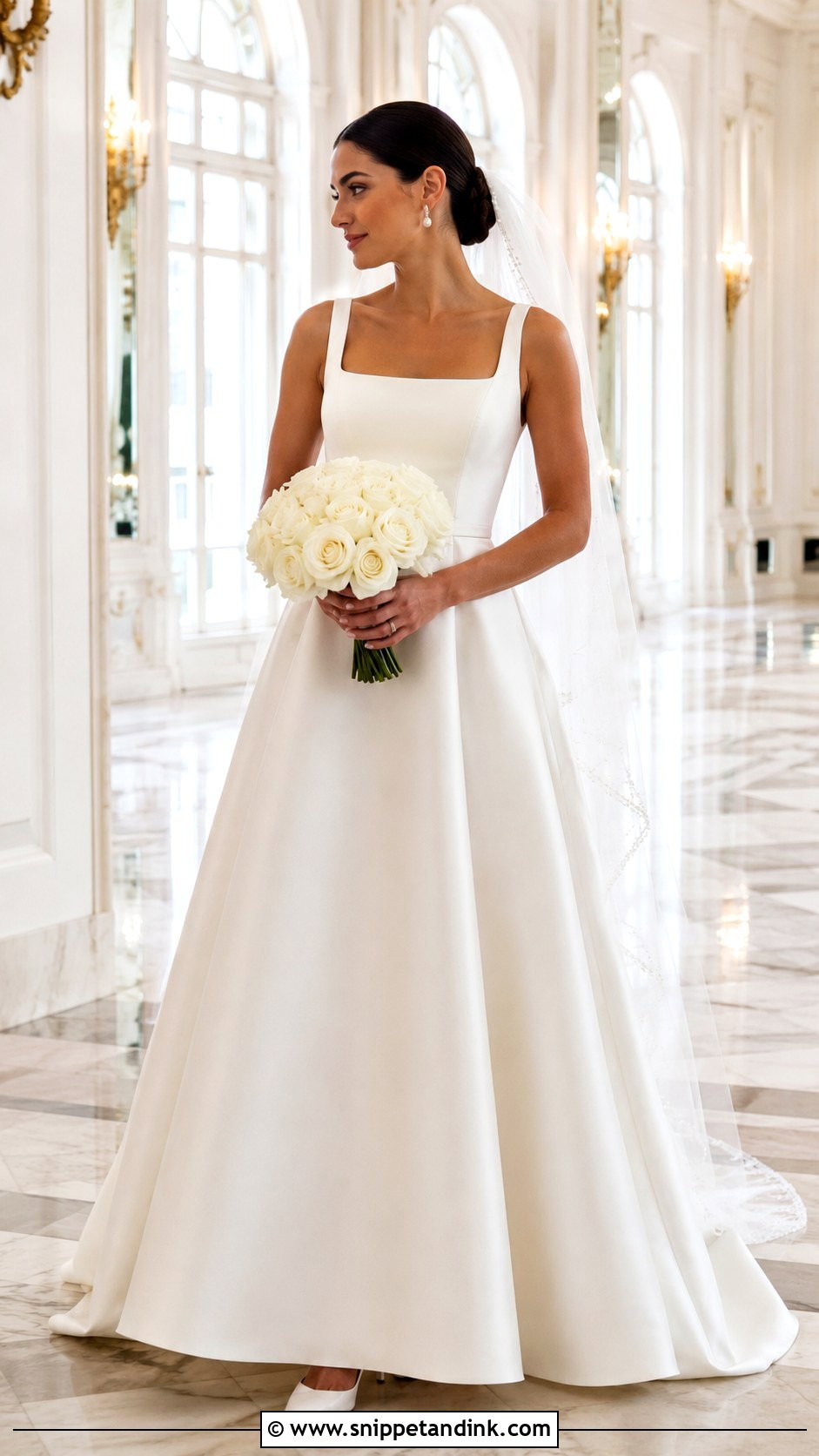
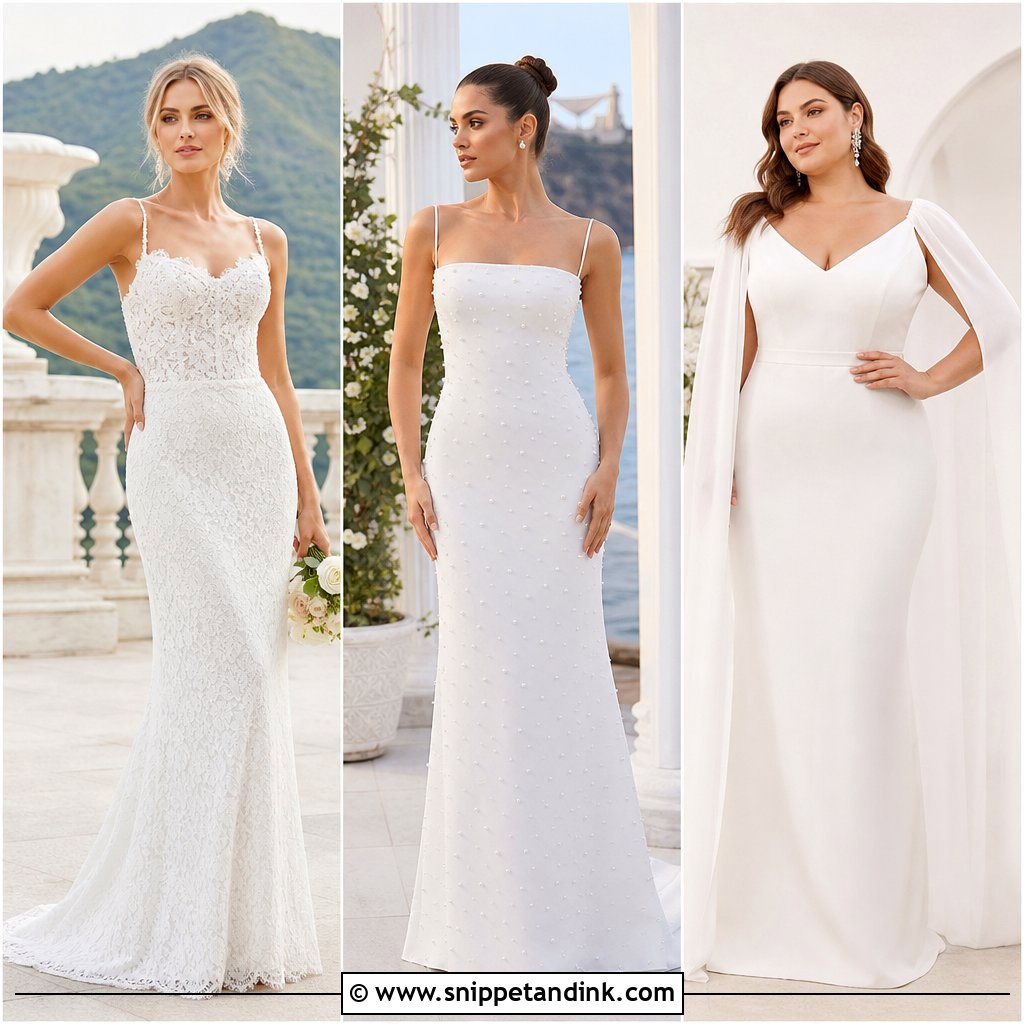
Satin A-line is the shape I suggest when a bride wants classic and doesn’t want to think about it. Mikado or duchess satin holds the skirt out on its own, so the flare looks the same at midnight as it did at the altar. A square, scoop or curved neckline keeps it polished. Pointed ivory pumps, pearl drops and a fingertip veil edged in narrow satin ribbon match the fabric’s simplicity, and a low bun shows off the neckline. Keep the bouquet small. Heavy satin creases where you sit, so have someone steam the back panel after the car ride.
2. Lace Fit-And-Flare Wedding Dress
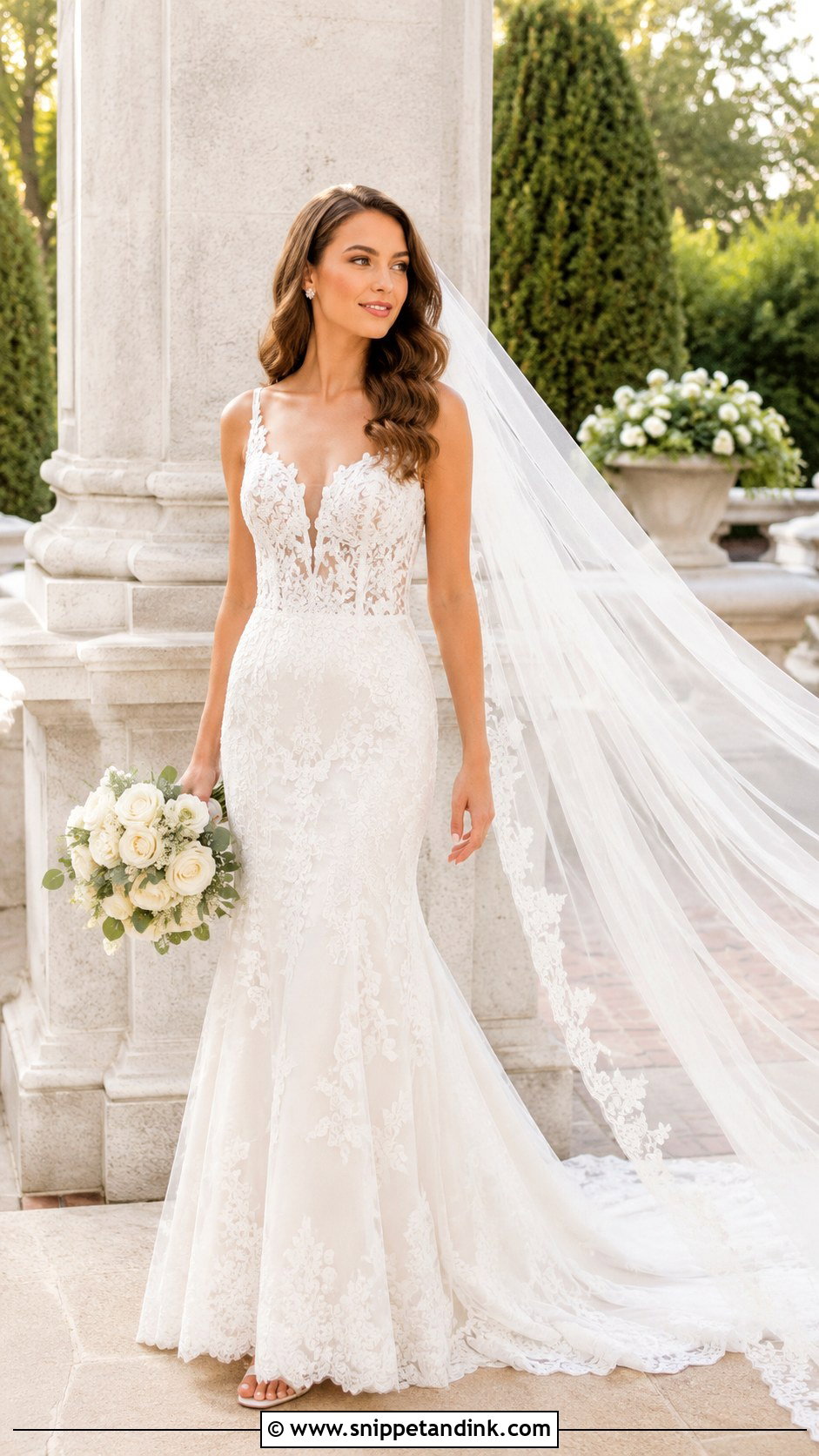
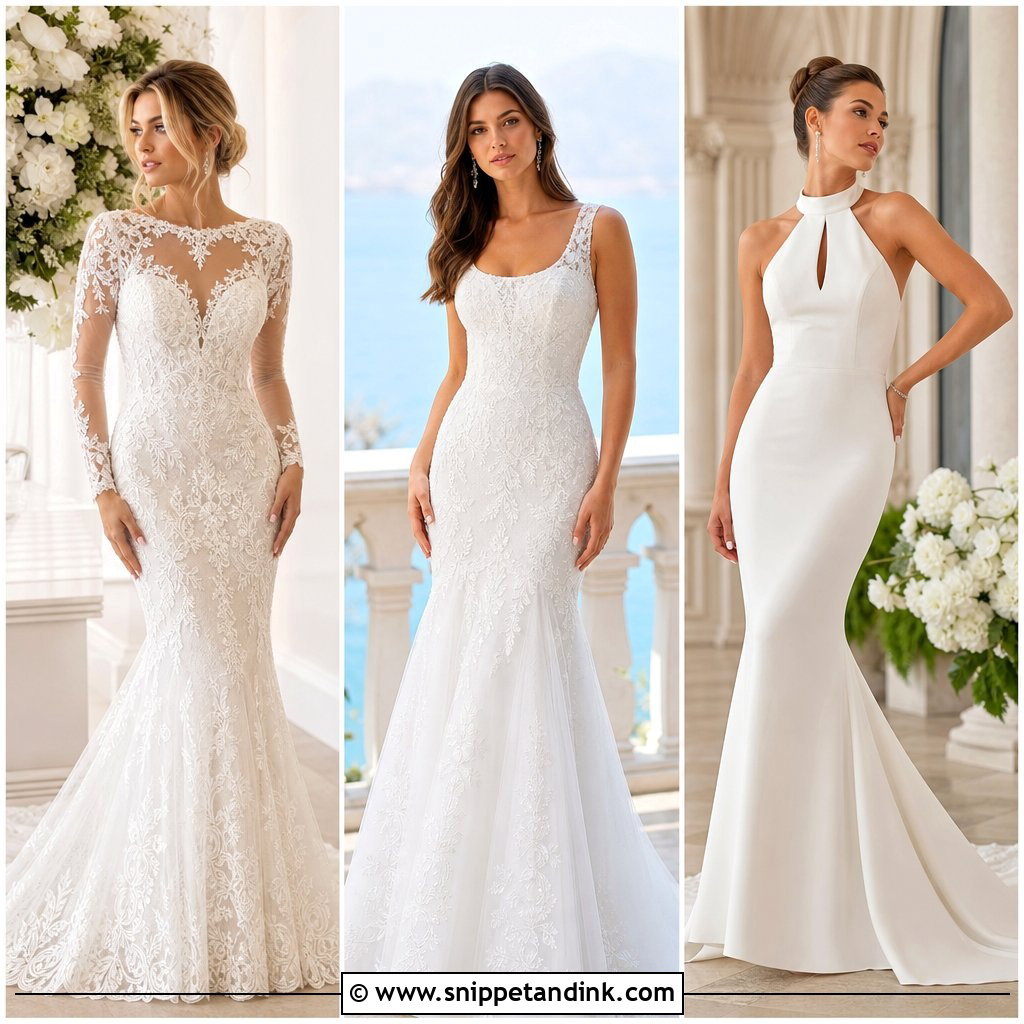
Lace fit-and-flare follows the body through waist and upper hip, then releases around the thigh. Small floral lace reads traditional; large botanical motifs look newer. I pair it with a sheer cathedral veil that repeats one lace element rather than copying the whole pattern, since two busy layers on top of each other cancel out. Crystal studs, an ivory clutch, slim closed heels and loose waves or a relaxed updo suit the softness. Ask whether the lining comes in nude or tonal shades. A lining close to your skin tone makes the lace pattern pop; a stark white one flattens it.
3. Strapless Mermaid Flared Wedding Dress
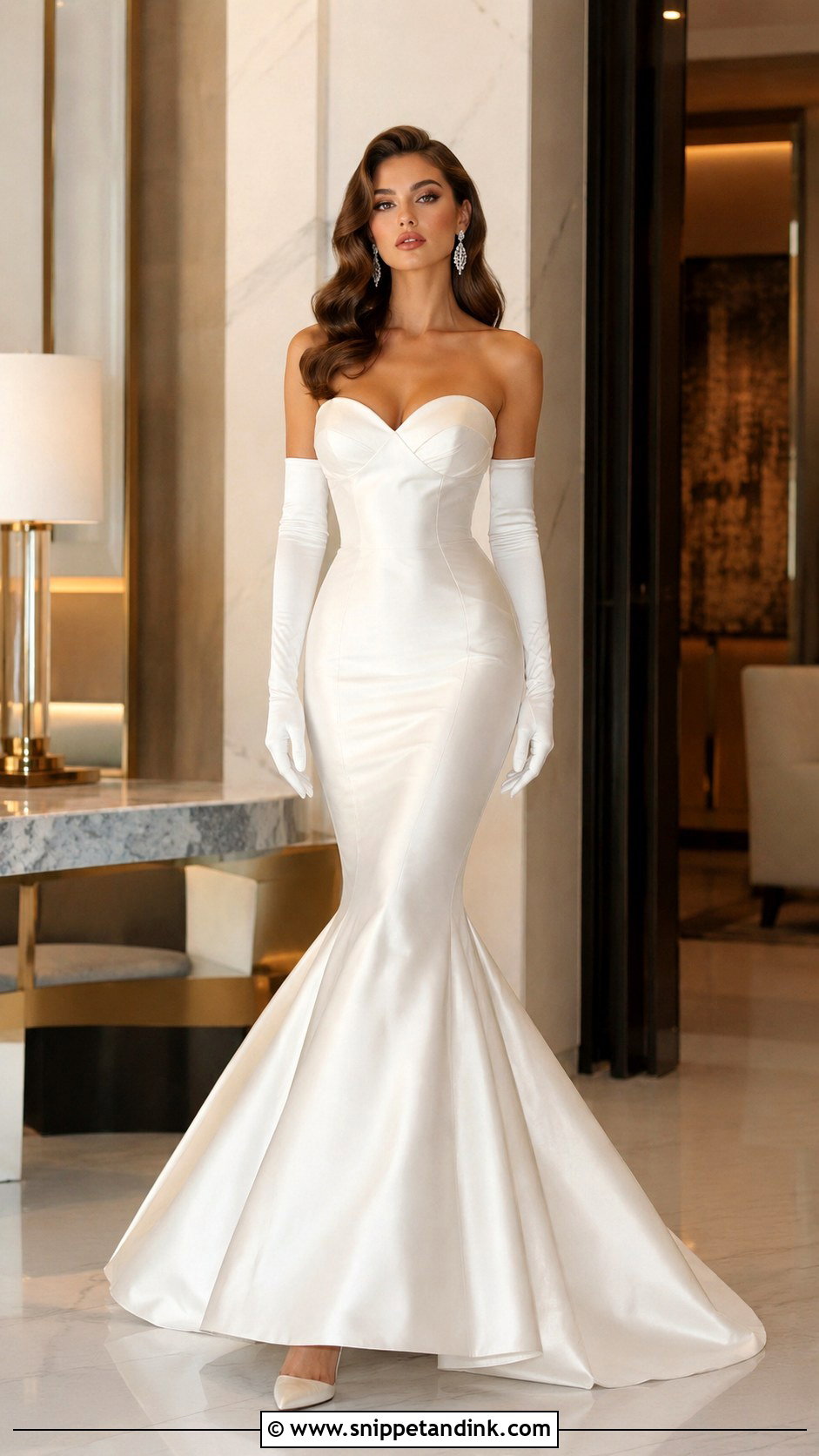
A strapless mermaid holds tight through the torso, hips and knees and then opens hard, which gives the biggest entrance on this list and the shortest stride. A sweetheart neckline softens the structure. Keep accessories deliberate: elbow-length satin gloves, small diamond or crystal earrings, pumps hidden under the hem, and a sleek bun or Hollywood waves. A chapel-length veil suits a voluminous skirt; a sculptural comb works if you skip the veil. Practise stairs in the fitting room. Mermaid skirts mean small steps and sometimes lifting the front of the skirt, and it’s better to learn that before the aisle.
4. Long-Sleeve Crepe Flared Wedding Dress
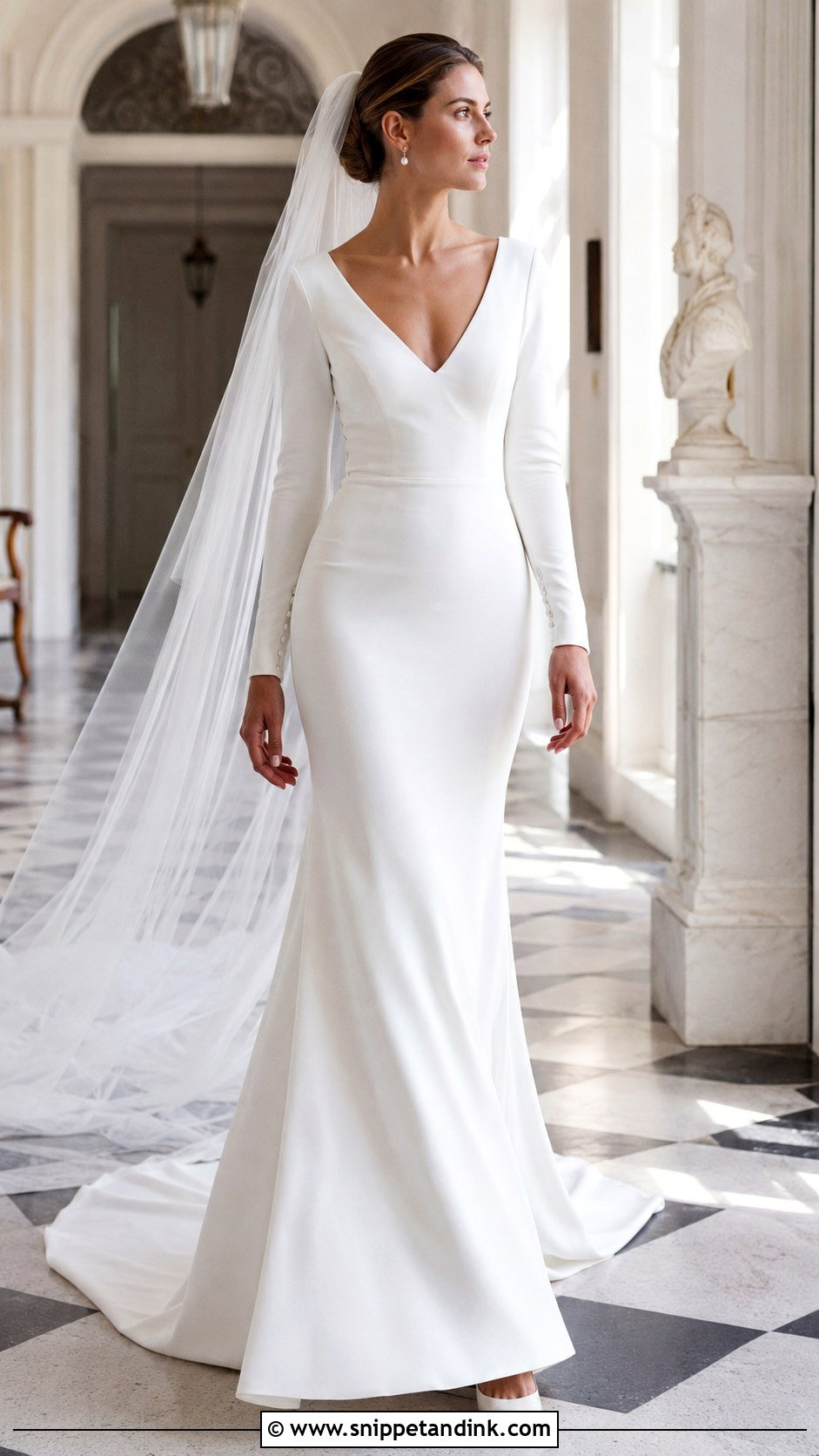
Stretch crepe with long sleeves is my cool-weather favourite, because it follows the body without satin’s shine and handles both bright and dim rooms in photos. A controlled trumpet flare, fitted sleeves and covered buttons at the wrist give it a tailored finish. A V-neck lengthens the upper body; a bateau neckline feels more reserved. Pearl earrings, ivory ankle-strap pumps and a chapel veil beneath a low chignon complete it, with callas or roses kept structured. Fitted sleeves need room to bend, so hug someone and lift a glass at the fitting before signing off on the sleeve width.
5. Off-The-Shoulder Mikado Flared Wedding Dress
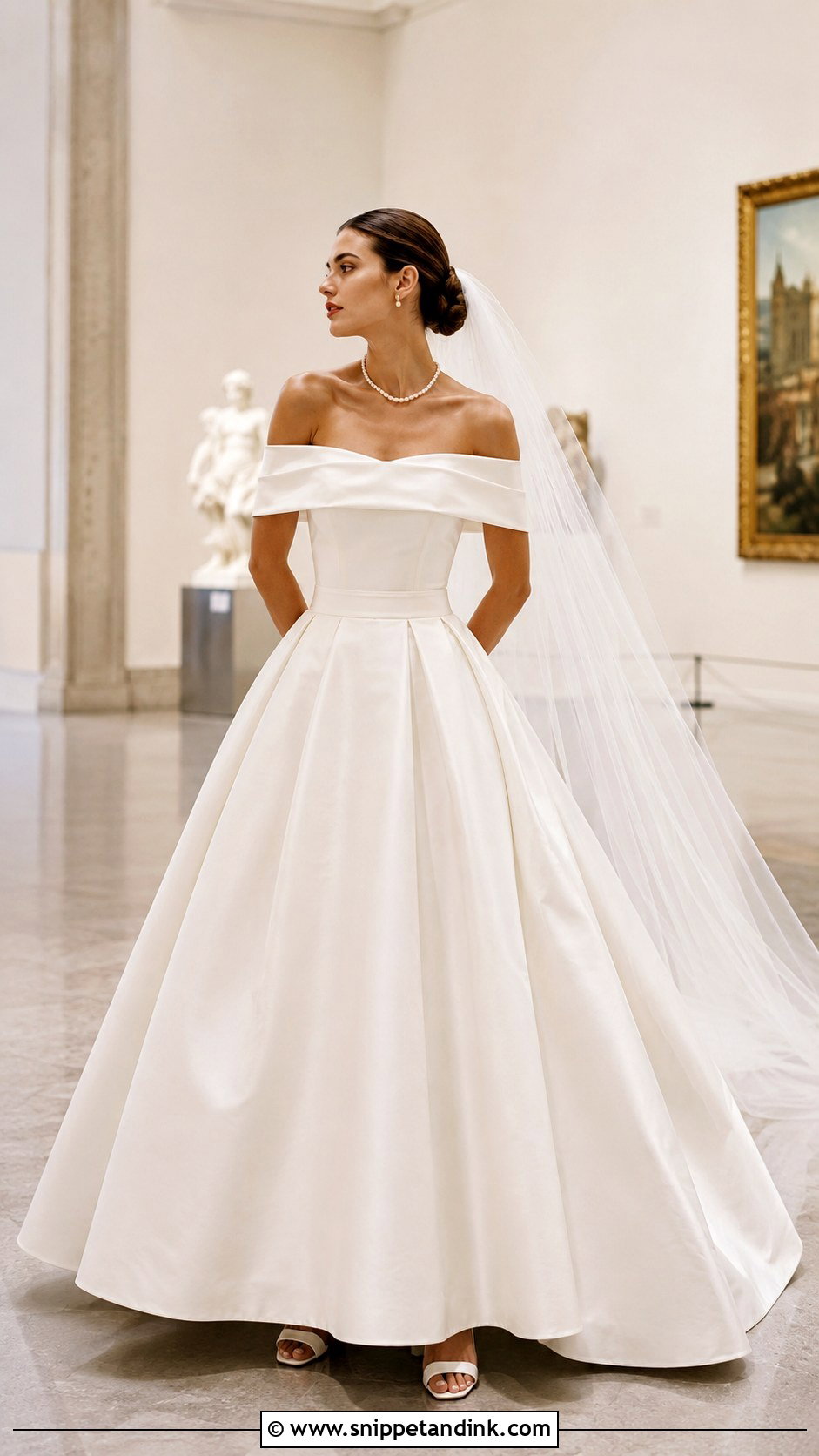
Mikado is stiff enough to build volume without layers of tulle underneath, so an off-the-shoulder mikado gown gets a strong architectural skirt that stays crisp. A folded neckline or slight drape softens the collarbone. Wear a short pearl necklace with matching studs and satin block heels. A polished bun keeps the shoulders clear, and a plain cathedral veil without lace lets the construction show. The off-the-shoulder band in a firm fabric won’t stretch to forgive, so it needs to sit exactly on the upper arm without pinching. Ballrooms and museums suit it.
6. Square-Neck Flared Wedding Dress With Pearl Veil
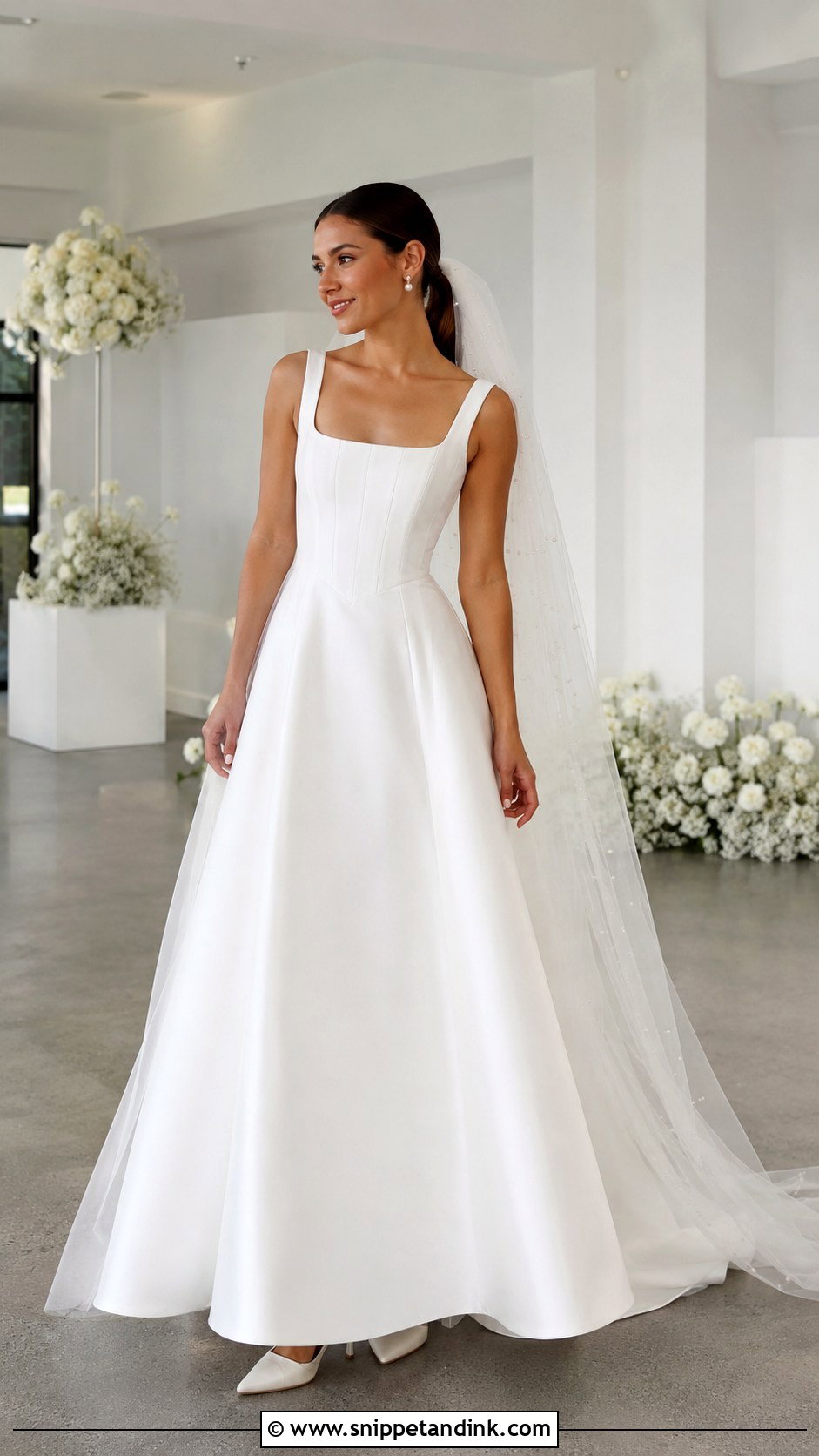
A square neckline covers more than a deep V while still looking modern. Wide straps and a seamed bodice give support, and a flowing or modified A-line skirt balances the strong top. A pearl-scattered veil adds detail, so keep the rest to small pearl earrings, one pearl hairpin and ivory slingbacks. Two pearl pieces look considered; five look like a matching gift set. A low ponytail, smooth bun or waved bob suits the geometry. Check the strap width from the back too, because bra straps tend to peek out at the corners of a square neck.
7. Corset Tulle Flared Wedding Dress
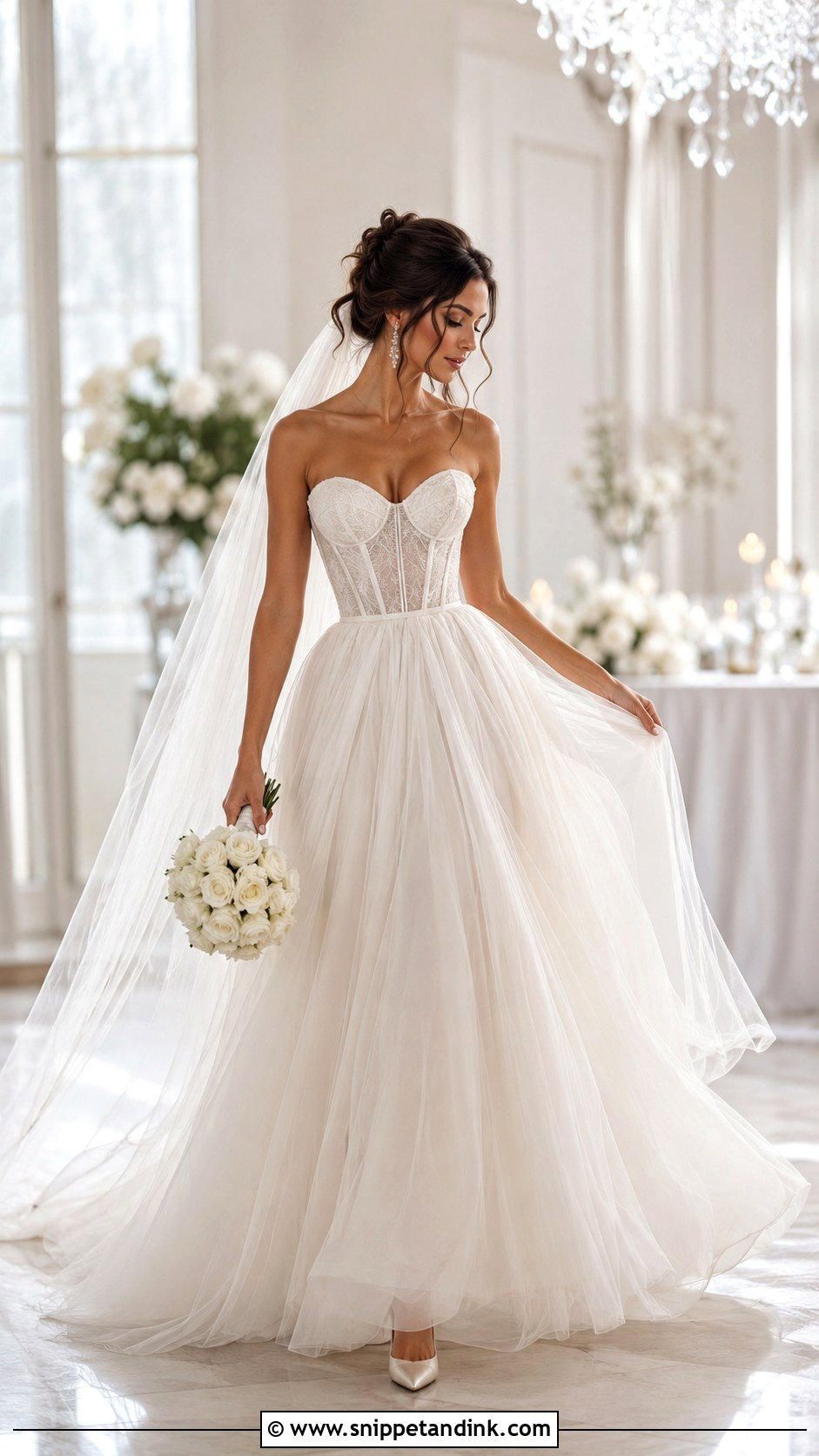
Tulle over a corset bodice gives a floating skirt with real shape above it. The bodice needs fitted cups and secure boning, with lined or subtly sheer panels depending on how much you want to show. The flare can start at the natural waist for an A-line feel or lower for a fitted line. Delicate crystal earrings, satin pumps and a sheer veil with no thick border keep the outfit light; a loose updo shows the corset seams. Carry a rounded bouquet, since a very large one hides the waist the corset creates. Breathe deeply and sit down in it at every fitting.
8. High-Neck Lace Trumpet Wedding Dress
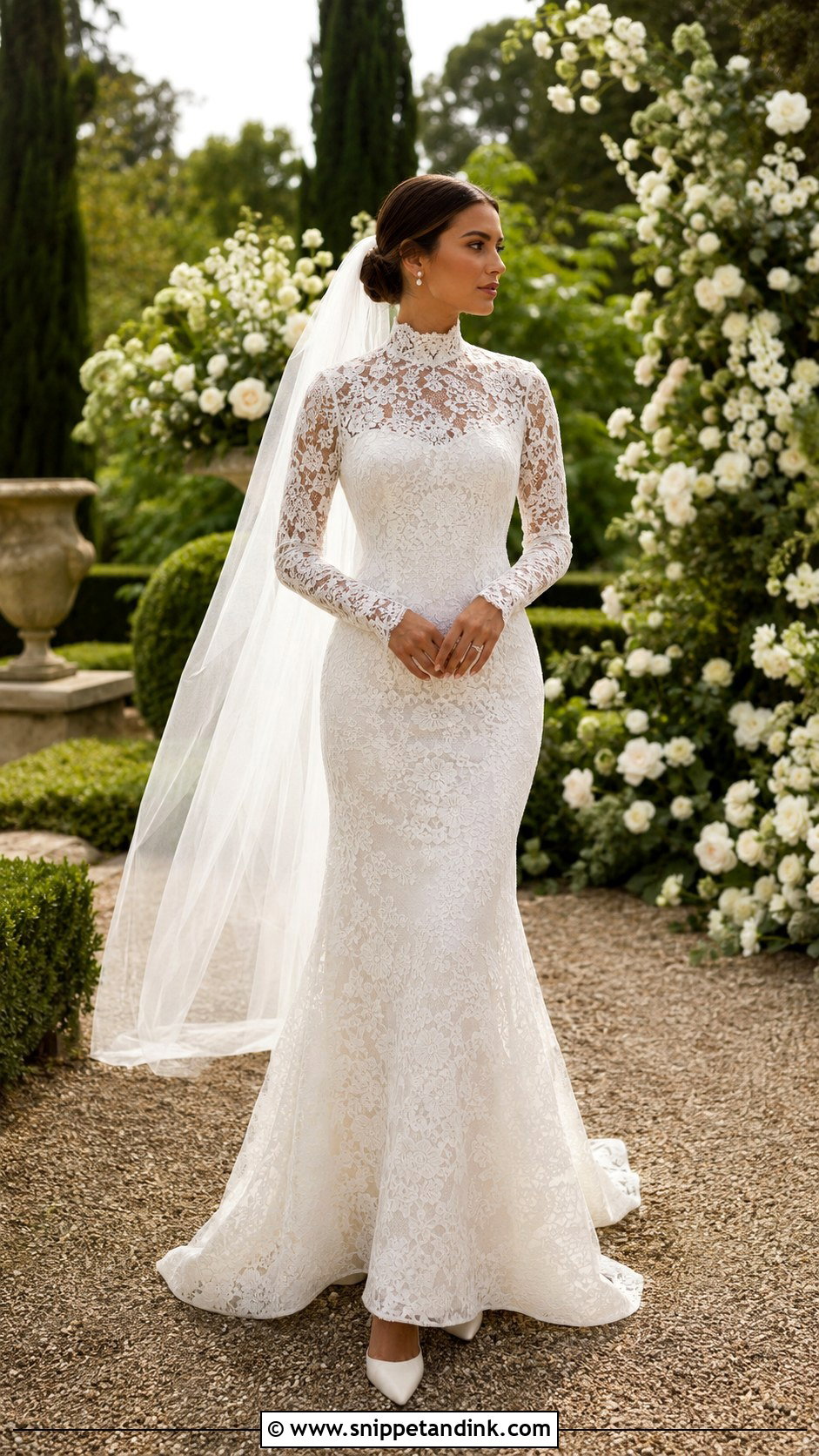
High-neck lace over a trumpet skirt is refined and covered without feeling heavy, provided the lace at the collar and sleeves is sheer over a fitted lining. The upper half already carries plenty of detail. No necklace, just pearl or crystal studs. A low bun leaves the collar visible. Pointed pumps and a light chapel veil keep the volume down, and a slim long-stem bouquet repeats the line of the gown. The collar edge should lie flat when you turn your head; if it pulls, it will itch by the second hour.
9. Minimalist Silk Fit-And-Flare Wedding Dress
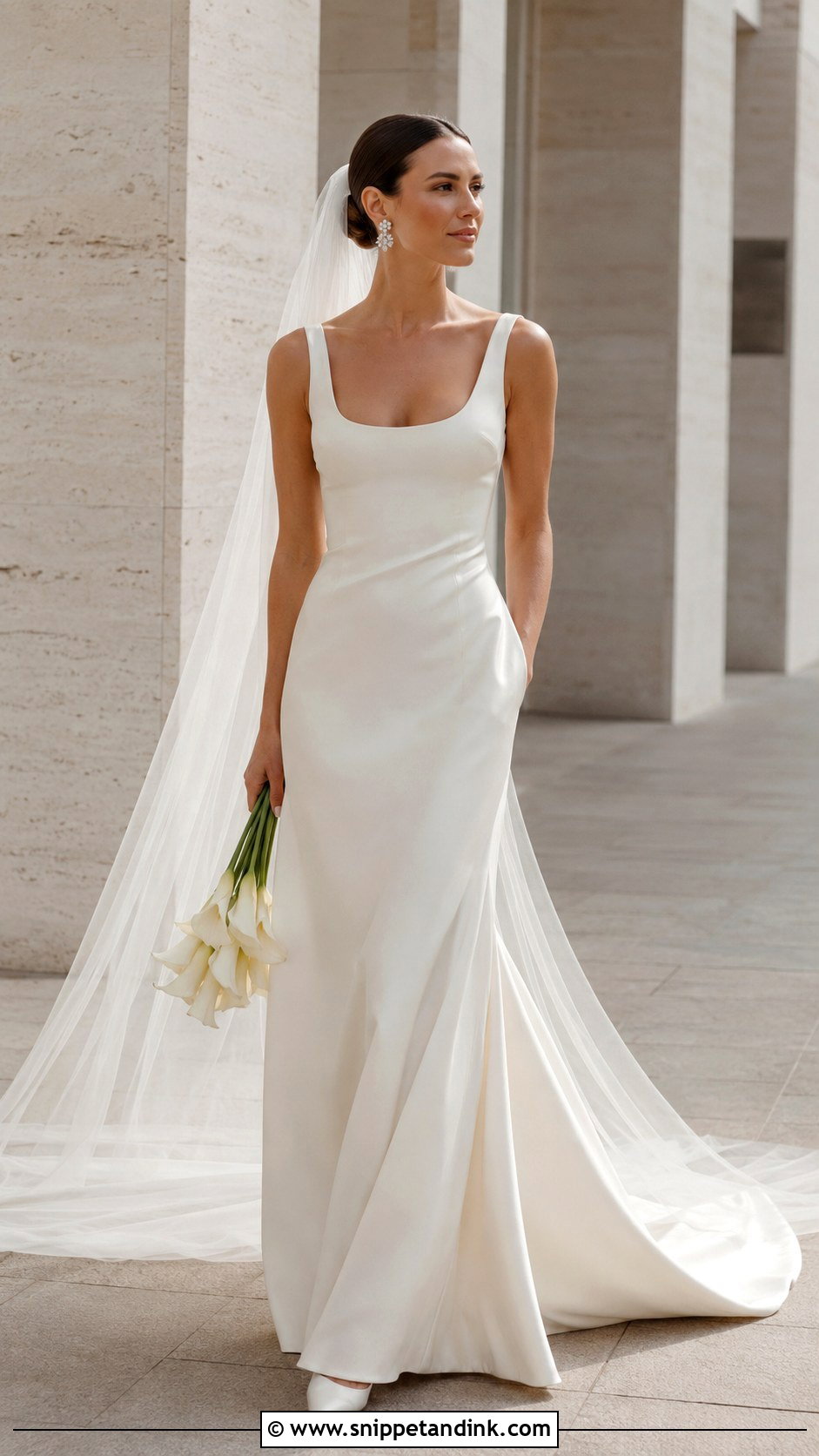
Silk is simple but never plain, because the fabric itself does all the work. A scoop, cowl or straight neck, minimal seams, no embellishment, and a skirt that skims the hips into a relaxed flare rather than a tight mermaid. Sculptural earrings, sleek pointed pumps and a narrow cathedral veil keep it modern; a smooth bun or side-parted waves match. Carry one flower variety. Lightweight silk shows everything underneath it, including seam allowances and underwear lines, so I ask about the quality of the lining before anything else and bring the exact undergarments to the alteration appointment.
10. Floral Appliqué Flared Wedding Dress
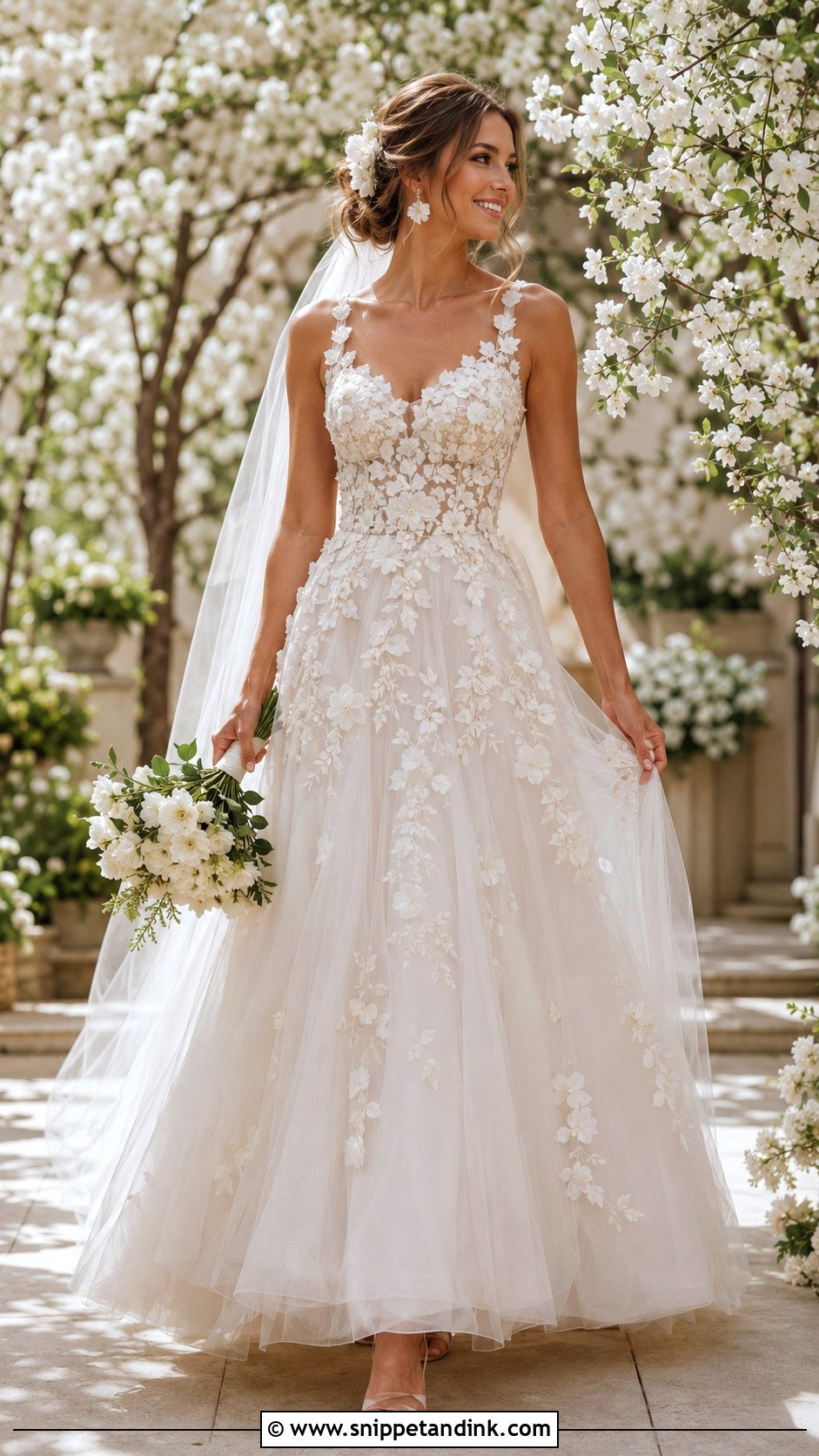
Raised flower appliqués work best when they are concentrated at the bodice and waist and fade lighter down the skirt. That placement helps define the figure instead of spreading equal weight over the whole dress. Soft tulle A-line suits delicate flowers; a fitted trumpet handles bolder motifs. Small floral earrings, ivory heels and a plain veil that doesn’t repeat every bloom. A loose bun with one flower pin and a white and pale green bouquet tie it together without matching too tightly. Ask the bridal shop how firmly the appliqués are attached; loosely tacked petals lift after a few hours of hugging.
11. Beaded Mermaid Flared Wedding Dress
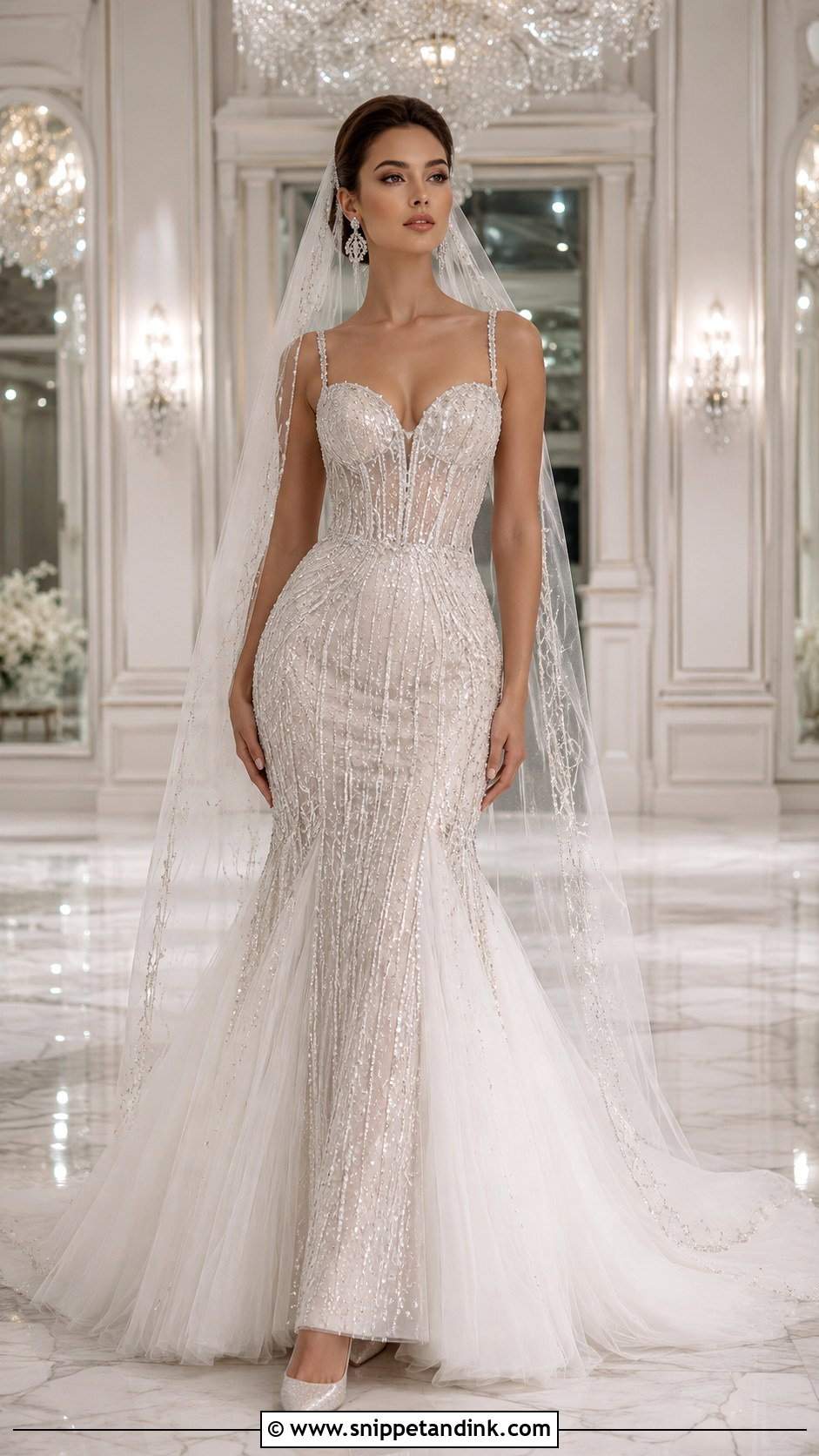
Beadwork that runs vertically through the bodice and hips keeps a mermaid long and balanced, and it comes alive under evening light. It can trail lightly onto the skirt or stop at the knee and give way to plain tulle, which I prefer because it keeps the hem lighter to move. Crystal drops, metallic ivory pumps and a sheer veil with a narrow beaded edge, with an updo to keep the neckline clear. No stacked bracelets if the sleeves are beaded. Run your arms against your sides when you try it on. Beading under the arm can scratch, and it catches veil tulle and bouquet ribbon.
12. Boho Chiffon Flared Wedding Dress
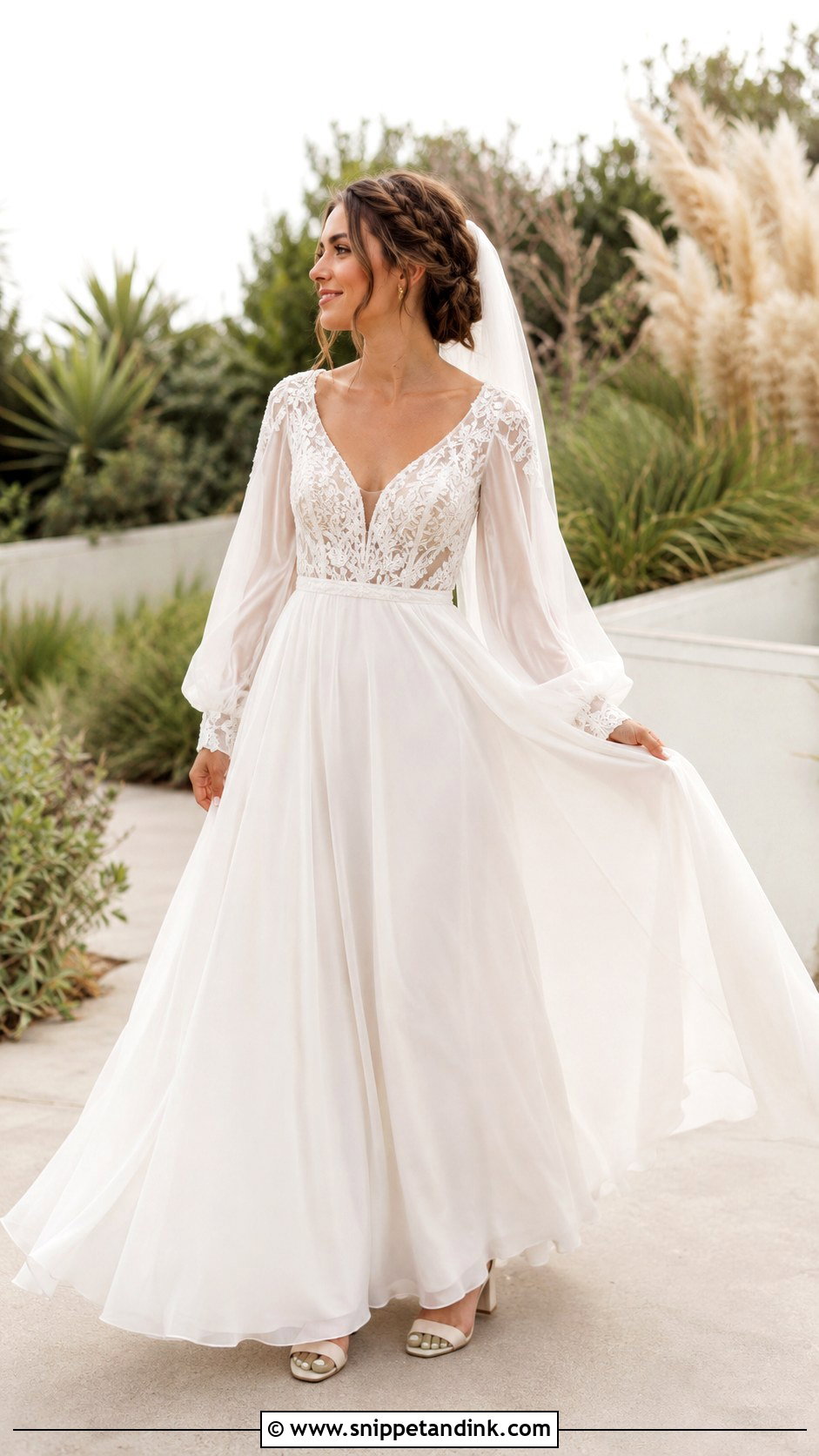
Chiffon moves with the air, which makes it lovely for desert, woodland and garden weddings and tricky in wind. Pick a fitted lace or embroidered bodice with a skirt that flares softly from the waist, and make sure it has enough lining underneath to hang rather than balloon. Flutter sleeves, bishop sleeves or slim straps all suit the relaxed mood. Shoes depend on the ground: low block heels, embellished flats or boots. Small gold earrings, a light fingertip veil and a braided updo, plus an airy bouquet of greenery and seasonal flowers. It should still look polished, just unhurried.
13. Tea-Length Flared Wedding Dress
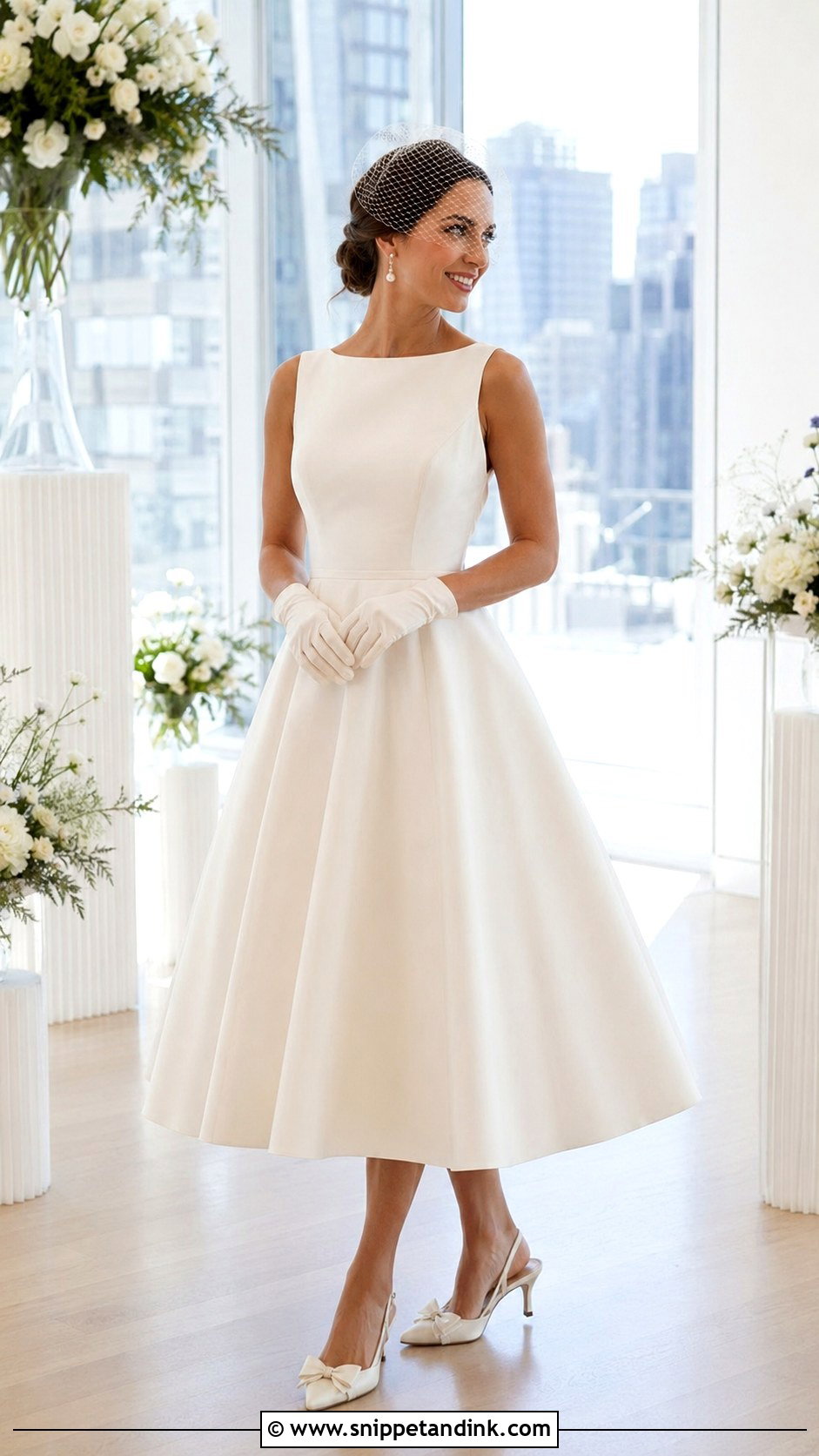
Tea length shows off the shoes, so treat them as part of the dress. The bodice can be scoop, bateau or sweetheart, with a skirt that flares between waist and mid-calf. Structured satin gives a vintage shape; tulle gives softer volume. Pointed pumps, bow heels or slingbacks in ivory all work. Add pearl studs, short gloves and a birdcage veil for a retro influence, or drop the gloves for sculptural earrings and a smooth bun. Hem placement is the detail I fuss over: just above the ankle bone looks deliberate, while mid-shin can look like the dress shrank.
14. High-Low Flared Wedding Dress With Heels
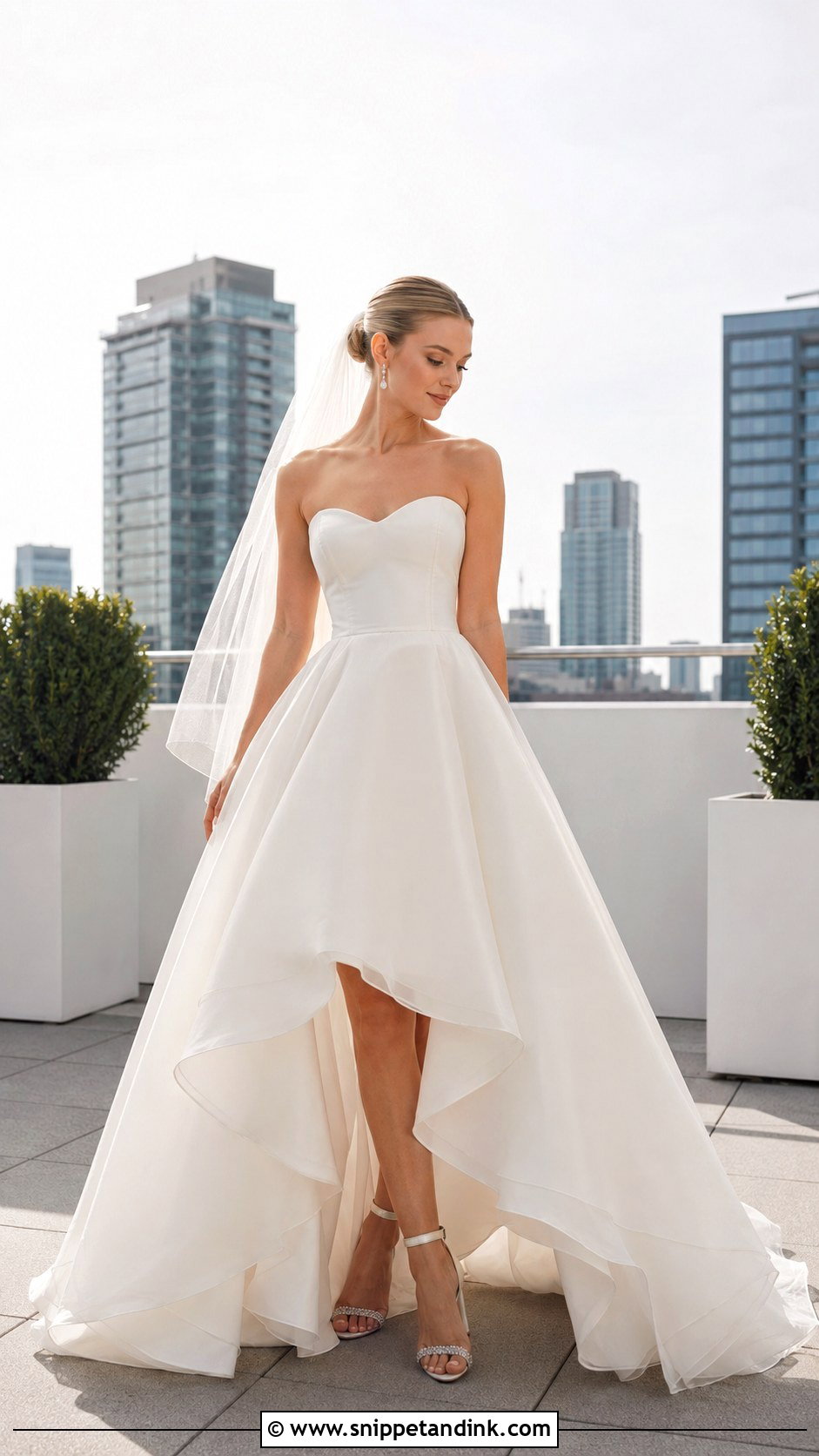
High-low combines a long back with a short front that shows the shoes. Keep the bodice fitted and supportive and the flare controlled, not ruffled. Clean satin looks modern; layered organza moves more softly. The shoes are on view the whole day, so pointed pumps, crystal straps or embellished block heels should look good from the side as well as the front. Understated earrings, a sleek updo and a fingertip veil ending above the longest part of the skirt complete it. Both hems must be set while you wear the exact shoes, otherwise the front can end at an awkward spot or catch your toe.
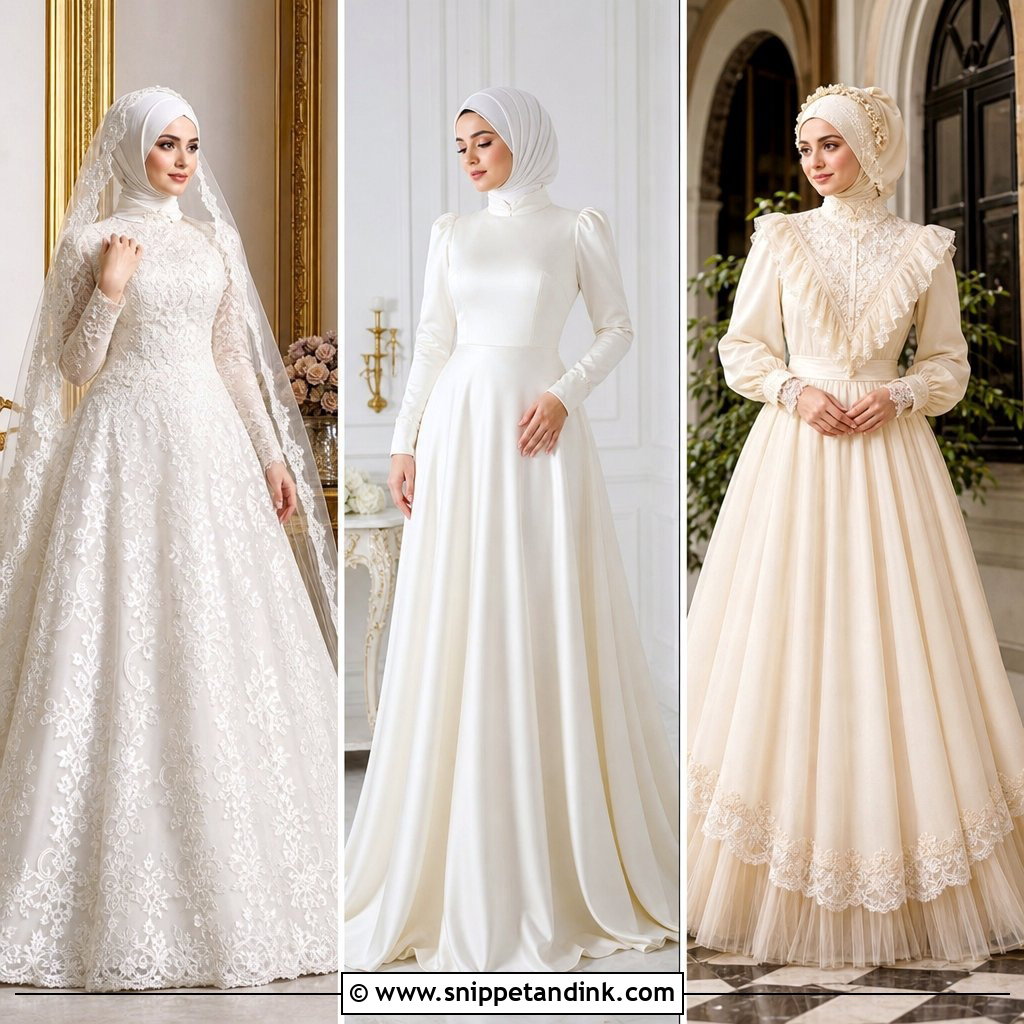
15. Fit-And-Flare Wedding Dress With Detachable Overskirt
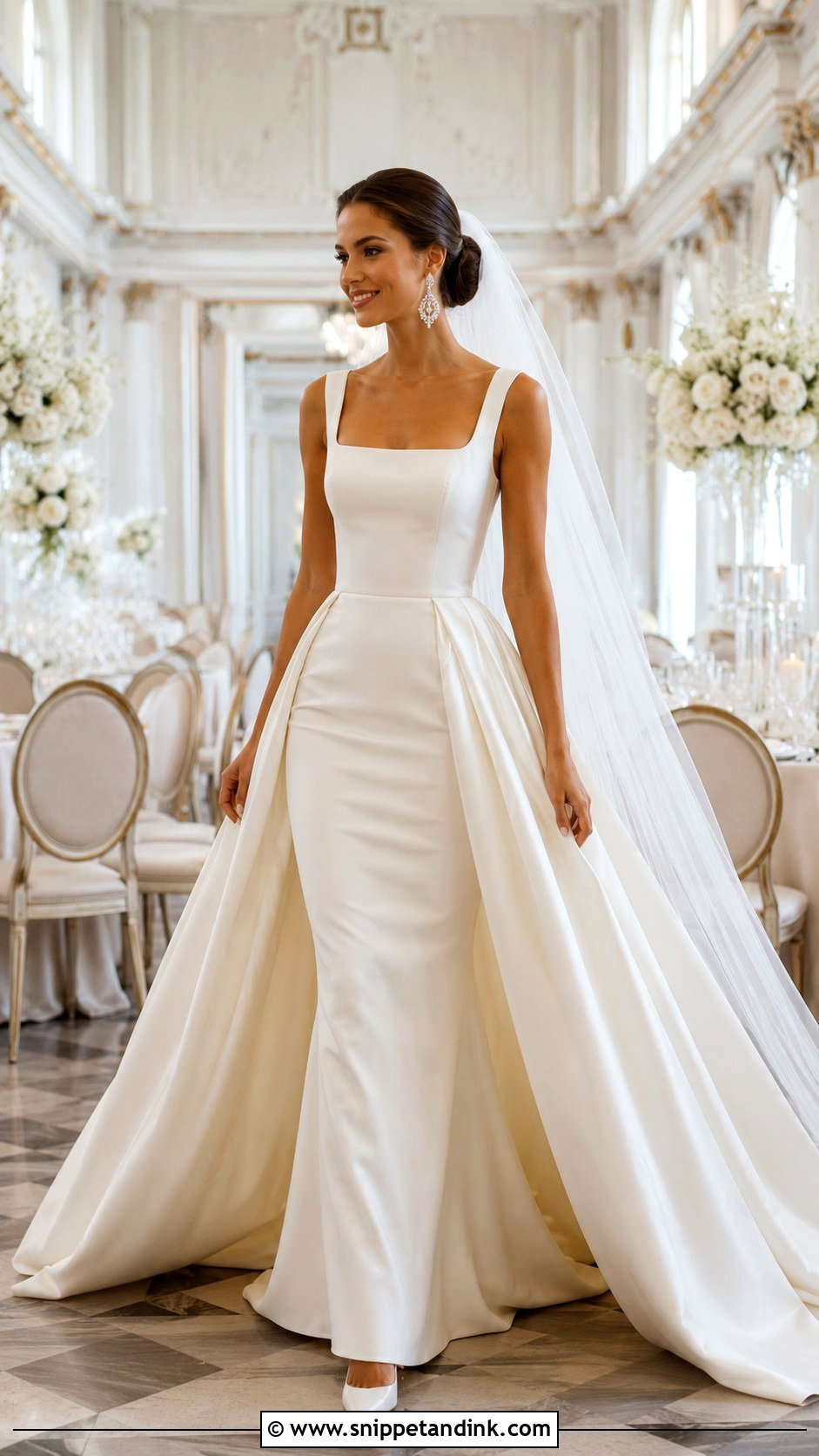
A detachable overskirt gives you a fuller A-line or ball-gown shape for the ceremony and a fit-and-flare for dancing. Matching fabric and embellishment matter, so the two layers look designed together rather than assembled. A strapless or square-neck bodice is the cleanest base, with a closure that keeps the waist smooth. Statement earrings, pointed pumps and a cathedral veil for the ceremony; afterwards, swap the veil for a decorative comb. Have the seamstress demonstrate the fastening, and get one attendant to practise it twice. Fumbled hooks with guests waiting is a stress nobody needs.
16. Blush Flared Wedding Dress
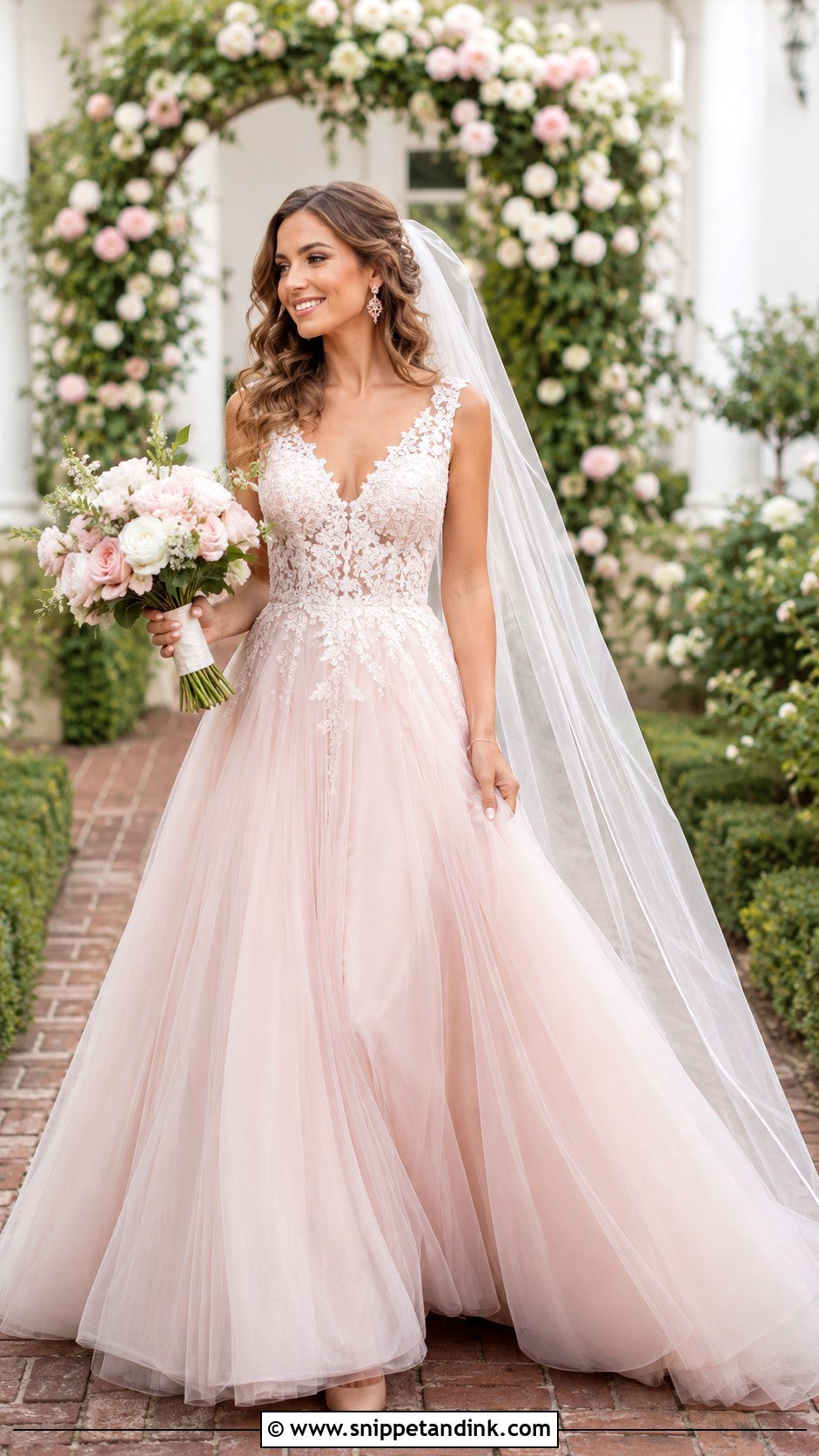
Blush can live in a lining under ivory lace or cover the whole gown in pale pink tulle, satin or organza. The first one is subtler and easier to wear. Hold the fabric against your face in daylight and under warm bulbs; some blushes turn peach under tungsten light and others go grey outdoors. Rose-gold earrings, blush pumps and a sheer ivory veil keep enough contrast. A loose bun or brushed waves keep it soft without tipping into a theme. Carry white, cream and pale pink flowers. If the dress has heavy lace or appliqué, keep everything else plain.
17. Plus-Size Flared Wedding Dress With Structured Bodice
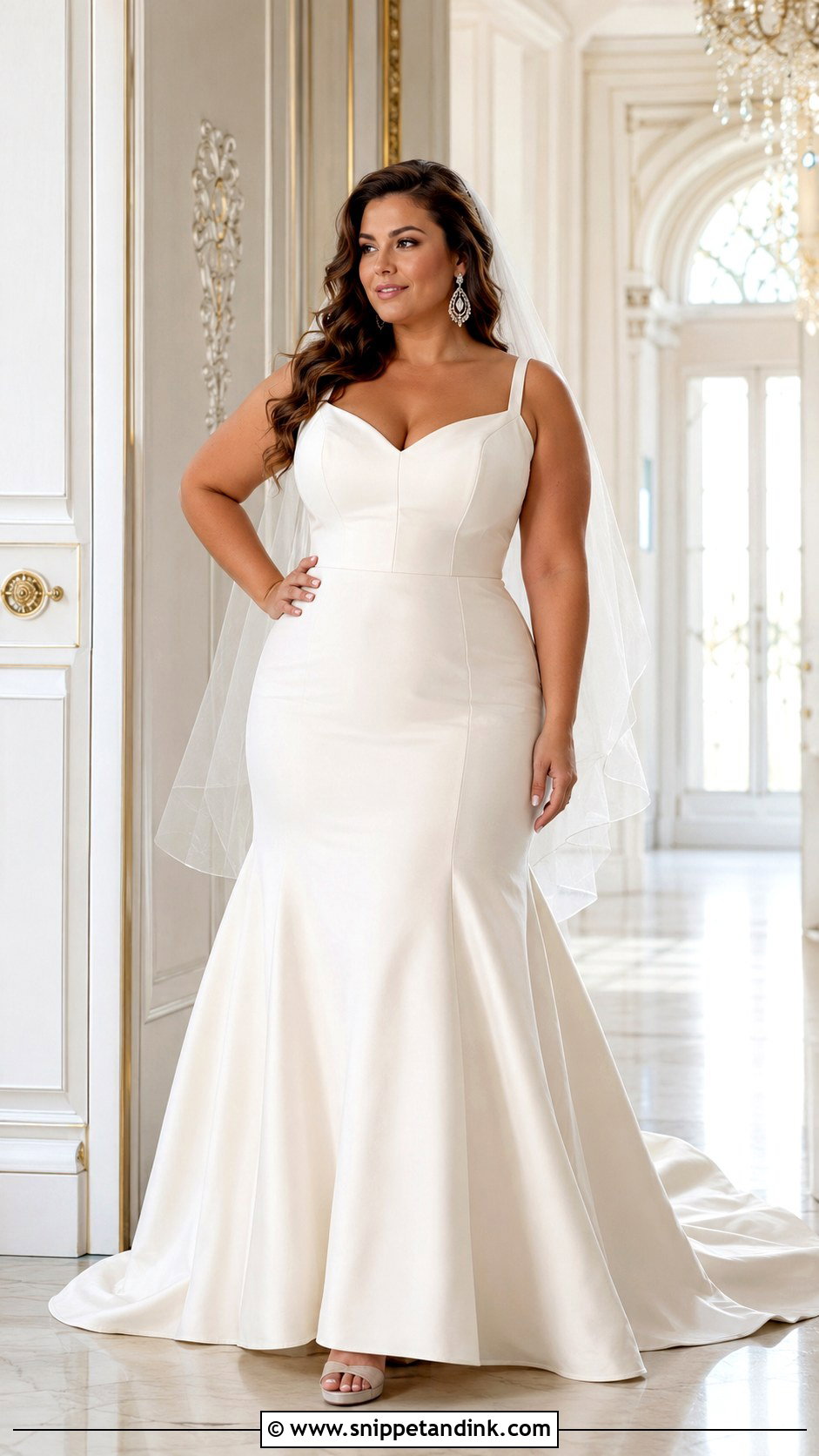
A plus-size flared gown should do its work from the inside: proper cups, strong boning, secure straps, and seams that follow your shape. A modified A-line or fit-and-flare highlights the waist and leaves room to sit and walk. Choose the flare point by what you want to show, not by body-shape charts. Supportive block heels, statement earrings and a lightweight veil that won’t drag on your hair complete it, with an updo or side-swept waves. Order to your largest measurement and let alterations take in the rest. A dress chosen a size small to motivate yourself is the one that feels tight all day.
18. Petite Drop-Waist Flared Wedding Dress
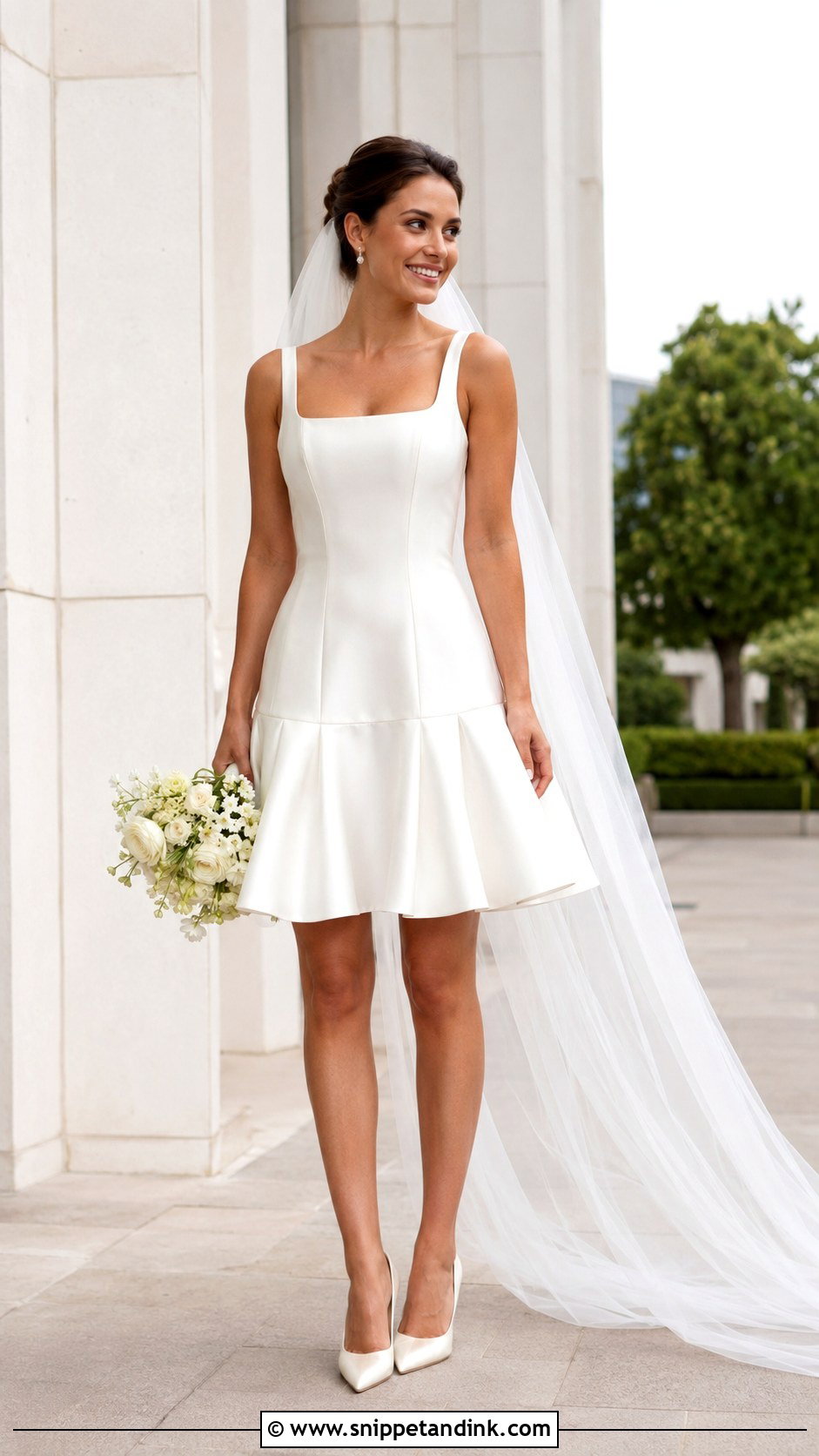
On a petite bride, a well-placed drop waist can draw a long line before the skirt releases. Look for vertical seams, little bulk, and a flare starting around the upper hip or mid-thigh. A very low mermaid flare tends to cut the leg line, so try a few placements side by side in the shop. V, square or slim strapless bodices keep things in proportion. Pointed pumps, small drops and a veil that falls past the train without swamping you finish it, with hair up or back. Petite sizing helps, but torso length still usually needs adjusting along with the hem.
19. Organza Flared Beach Wedding Dress
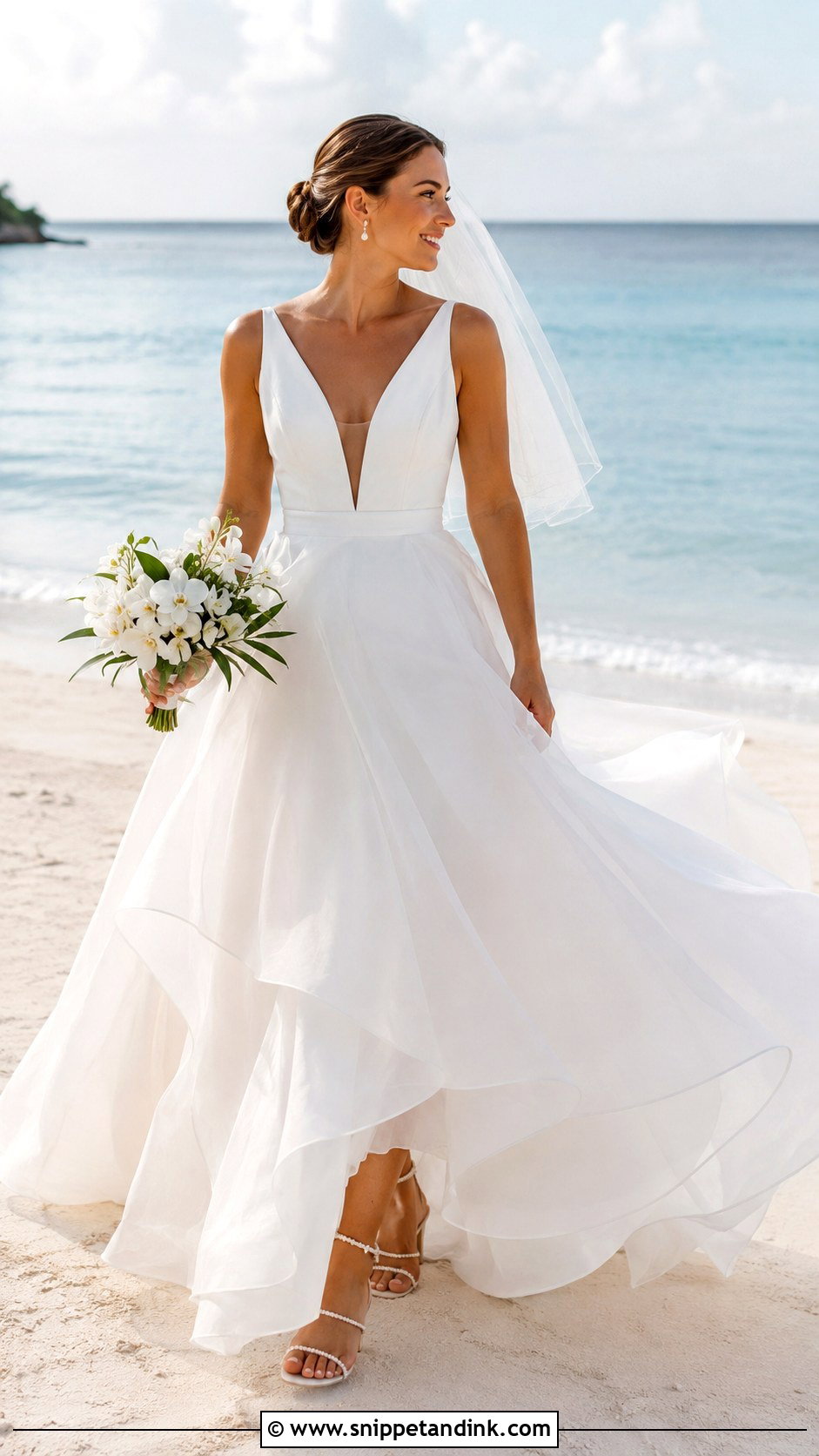
Organza gives volume without weight, so it suits a coastal ceremony. A secure fitted bodice with a softly layered A-line or trumpet skirt moves well in the breeze. Wide straps, off-the-shoulder or a simple V stay comfortable in the heat. On sand, flat sandals or foot jewelry make more sense than heels; on a boardwalk, low stable heels. Small pearl earrings, a short veil and a low bun survive the wind better than loose hair and long tulle. Skip a long train unless there’s an aisle runner, because organza snags on shells and dried seagrass.
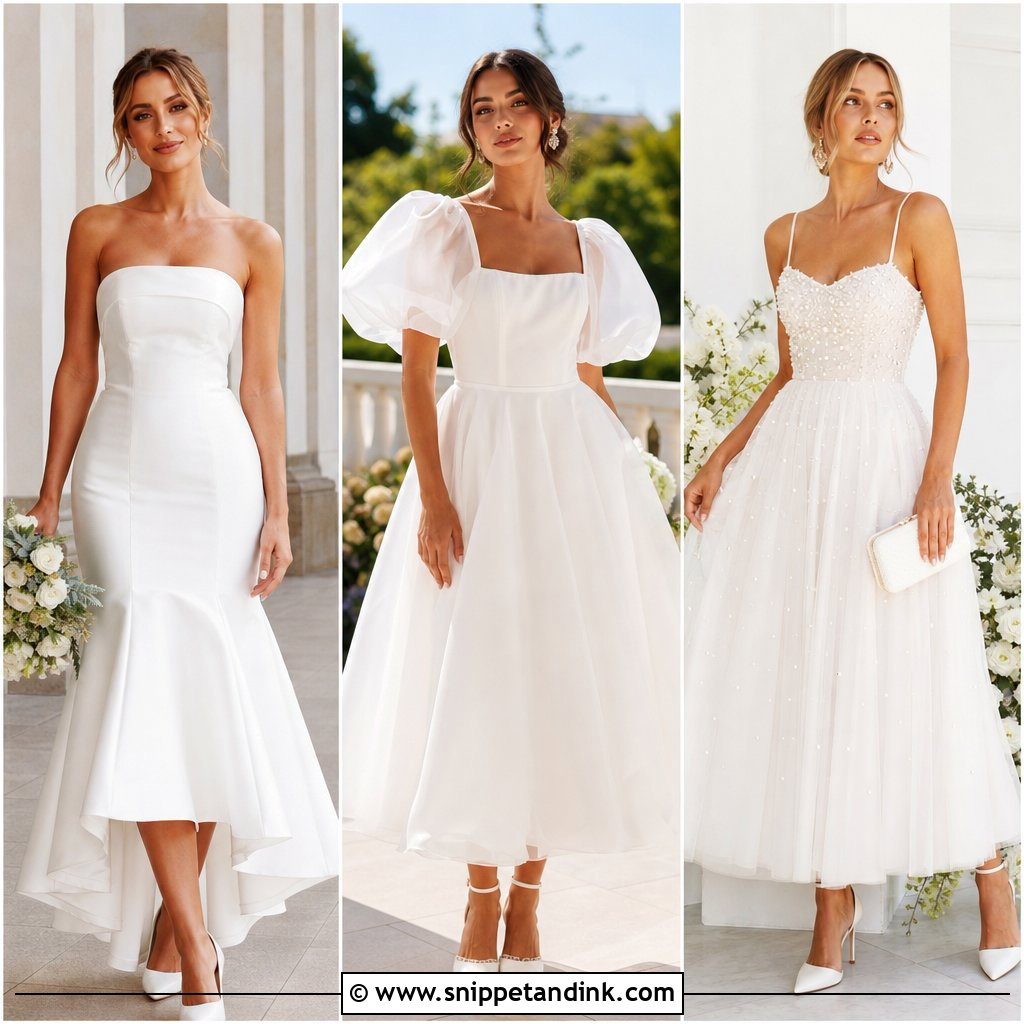
20. Basque-Waist Flared Wedding Dress With Bridal Cape
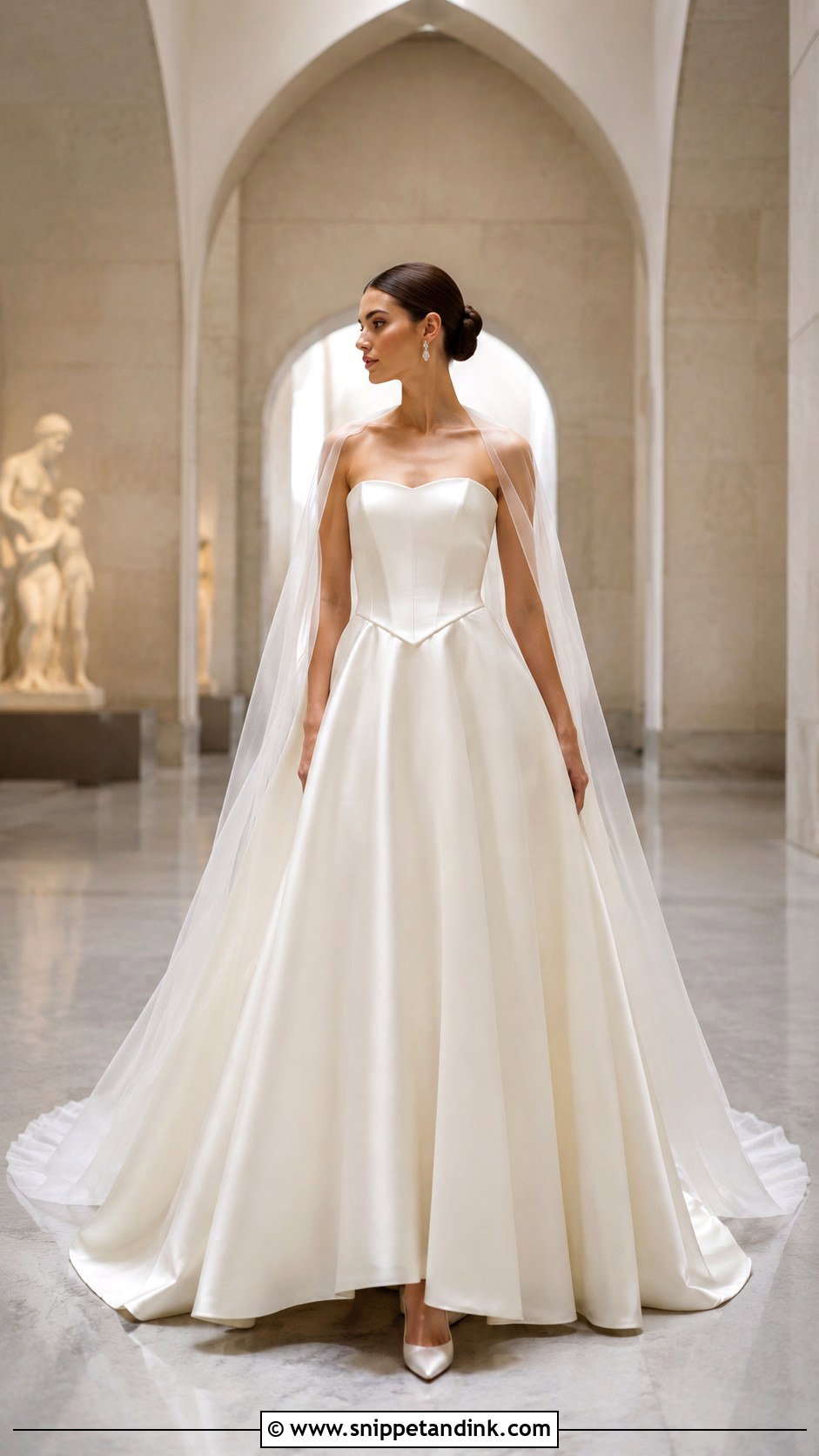
A basque waist dips into a point below the natural waist and leads into a full skirt. It is strongest in satin, mikado or layered tulle, under a simple strapless or scoop bodice so the point stays sharp. In place of a veil, a sheer cape falls from the shoulders and follows the train. Small crystal earrings, satin pumps and a low bun complete it. The cape must attach without dragging the neckline back or stopping your arms from rising. Ask the seamstress to bustle the dress and the cape together, or the cape will trail separately all evening.
Living in a Flared Skirt From the Car to the Last Dance
Flared gowns photograph well standing still. The real day involves cars, stairs, bathrooms and a dance floor, and a little planning makes each of them easy.
Bustles
Any train longer than a sweep needs a bustle for the reception. An over-bustle lifts the train up onto hooks at the back of the skirt; an under-bustle tucks it beneath with ribbon ties. Satin and mikado suit an over-bustle; soft tulle often looks better tucked under. Ask your seamstress which suits your skirt, and mark the hooks with coloured thread if there are several.
Cars, stairs and bathrooms
- Sit into the car first and then lift the skirt in after you, never step in skirt first.
- On stairs, hold the front of the skirt up an inch or two with one hand. Mermaid and trumpet shapes need this most.
- For the bathroom, gather the skirt from the hem upward and face the cistern. One friend holding the bundle helps more than any gadget.
None of this needs to be stressful. Practise each one once in the dress at your final fitting, and on the day it will feel ordinary.
Start With the Point Where the Skirt Opens
Start with where you want the skirt to open: waist, hip, thigh or knee. Then look at how the fabric holds that shape, and only after that think about neckline, sleeves and decoration. Accessories should support whichever detail you noticed first, never compete with it. Take your shoes and underwear to every appointment and walk, sit and dance in each dress you’re serious about. Clean satin, textured lace, light chiffon or sparkling beadwork can all give you a flared gown that feels right to wear, as long as you choose it moving rather than standing still.
You'll Like These Ideas:



Leave a Reply