
A detachable train is the answer I give most often to brides who want a real aisle moment but dread dragging four metres of fabric around a dance floor. You get the sweep for the ceremony and portraits, then a lighter dress for the rest of the night. The train usually joins the gown at the waist, hips, shoulders or back with concealed hooks, snaps, buttons or a zip, and the join is where most of my fitting time goes. Below are twenty convertible looks, from plain satin to heavy lace, each with the accessories I’d pair and the fitting check I’d insist on before the day.
Hooks, Snaps or a Hidden Waistband: How the Train Holds On
Before you fall for a particular train, ask how it attaches. The fastening decides how heavy the train can be, how long the change takes and whether anything shows afterwards. These are the systems I see most at fittings.
- Hooks and thread bars or eyes are flat and hidden, and they suit light tulle or chiffon trains. They take a steady hand to undo, so they are slower than they look.
- Covered snaps are quick to release and good for a mid-weight train. On their own they can pop open under a sharp tug, so heavier trains often get snaps plus a couple of hooks.
- Buttons and loops look beautiful and double as decoration, but twenty tiny buttons take time. Your helper needs a crochet hook or a buttonhook and a bit of patience.
- A separate waistband that wraps and closes on its own is the strongest option for a full overskirt or cathedral train, because the weight sits on the band rather than on the dress seams.
A heavy train hung from a few small points will distort the gown, usually at the back waist, so the heavier the train, the more fastening points it needs. If you’re buying a train separately to add to an existing dress, take the dress along. Your seamstress has to reinforce the gown at each fastening point, and that’s far easier to plan with both pieces on the table.
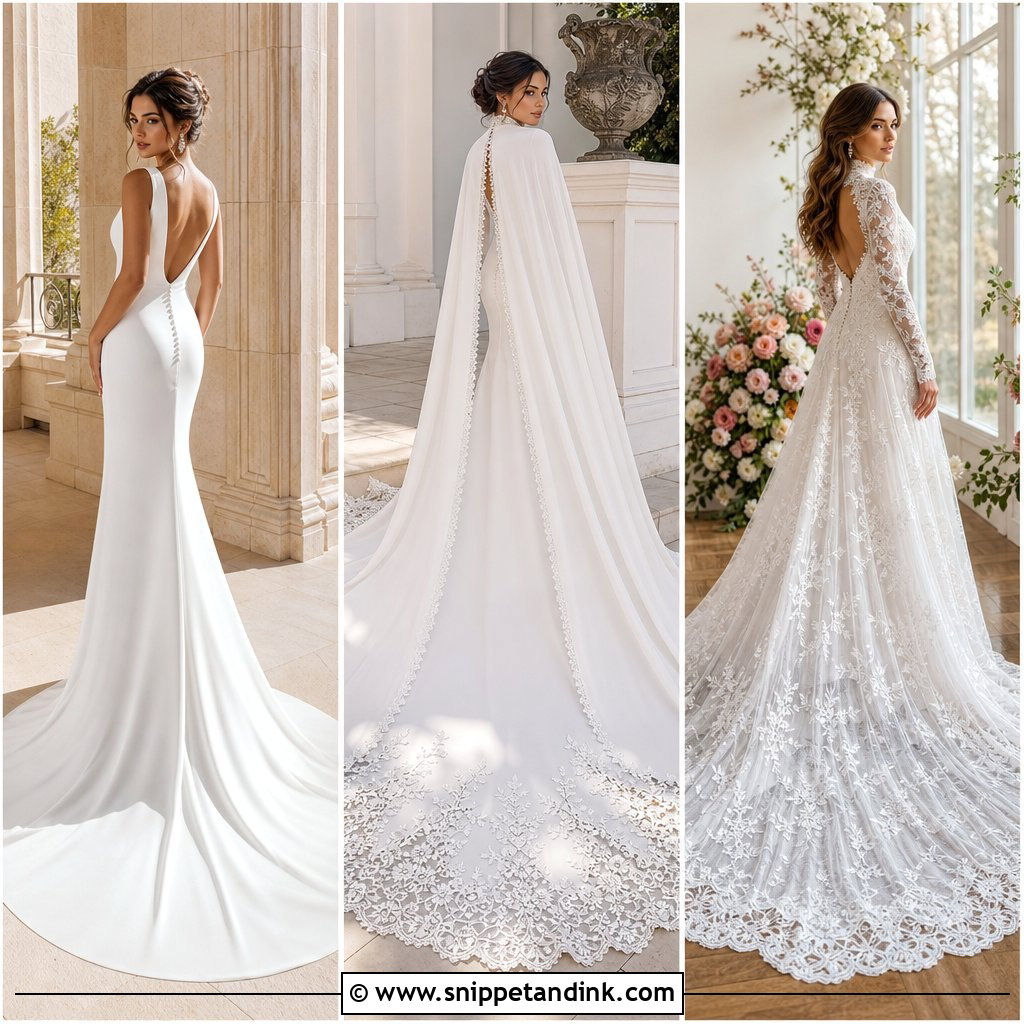
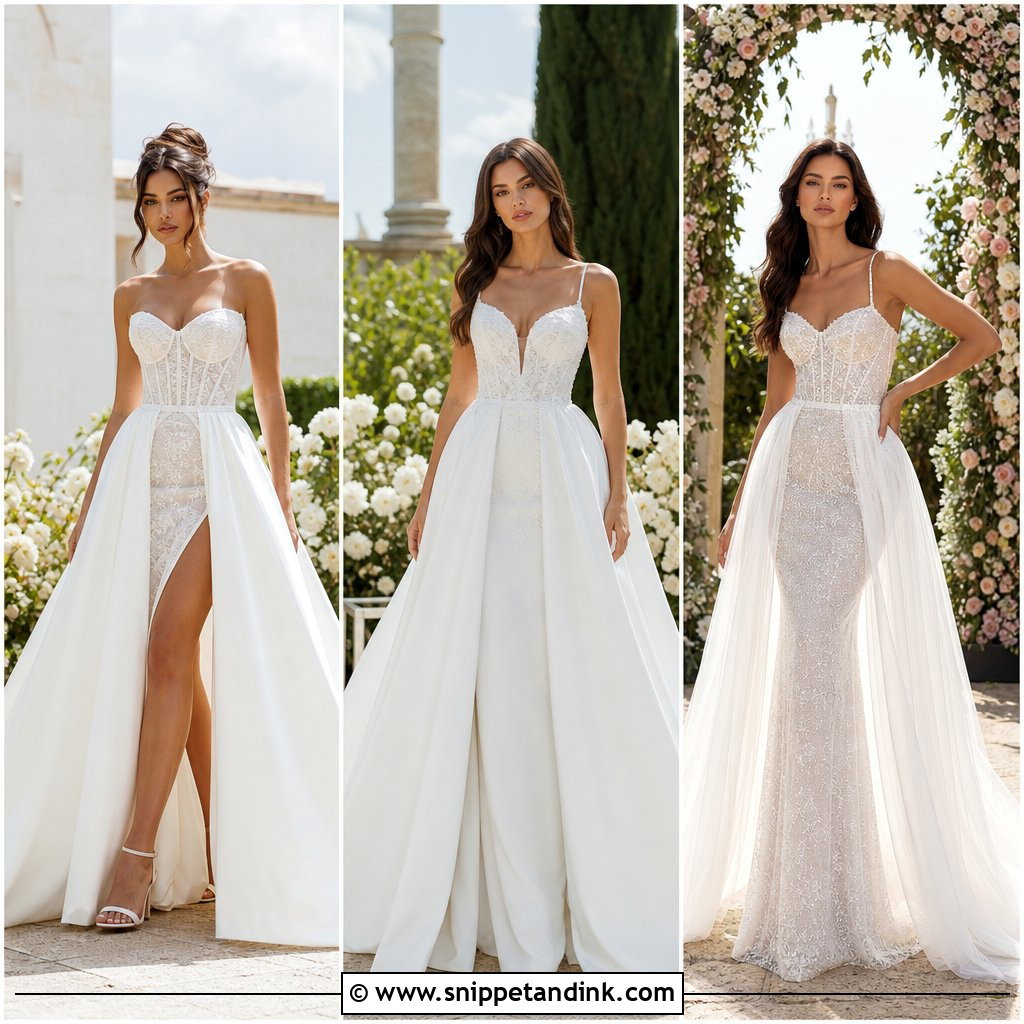
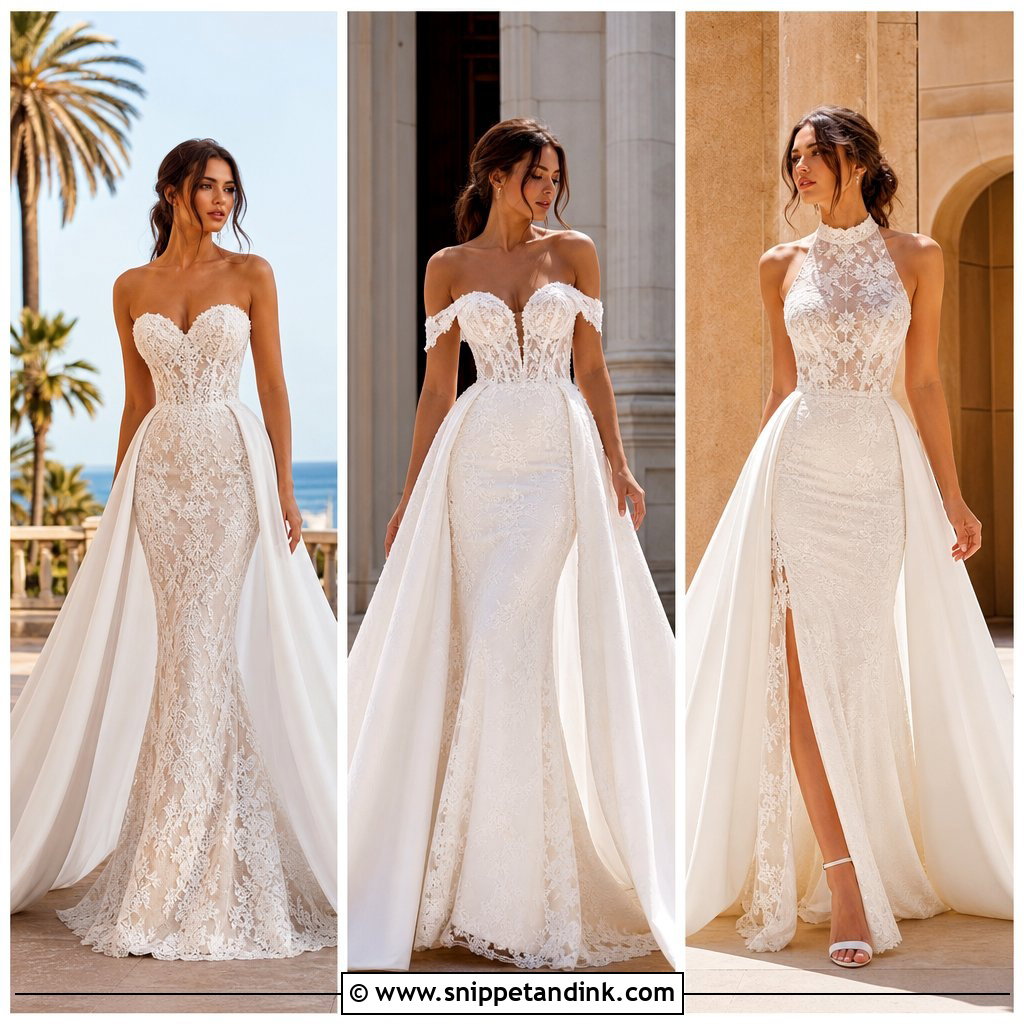
1. Satin Mermaid Wedding Dress With Detachable Cathedral Train
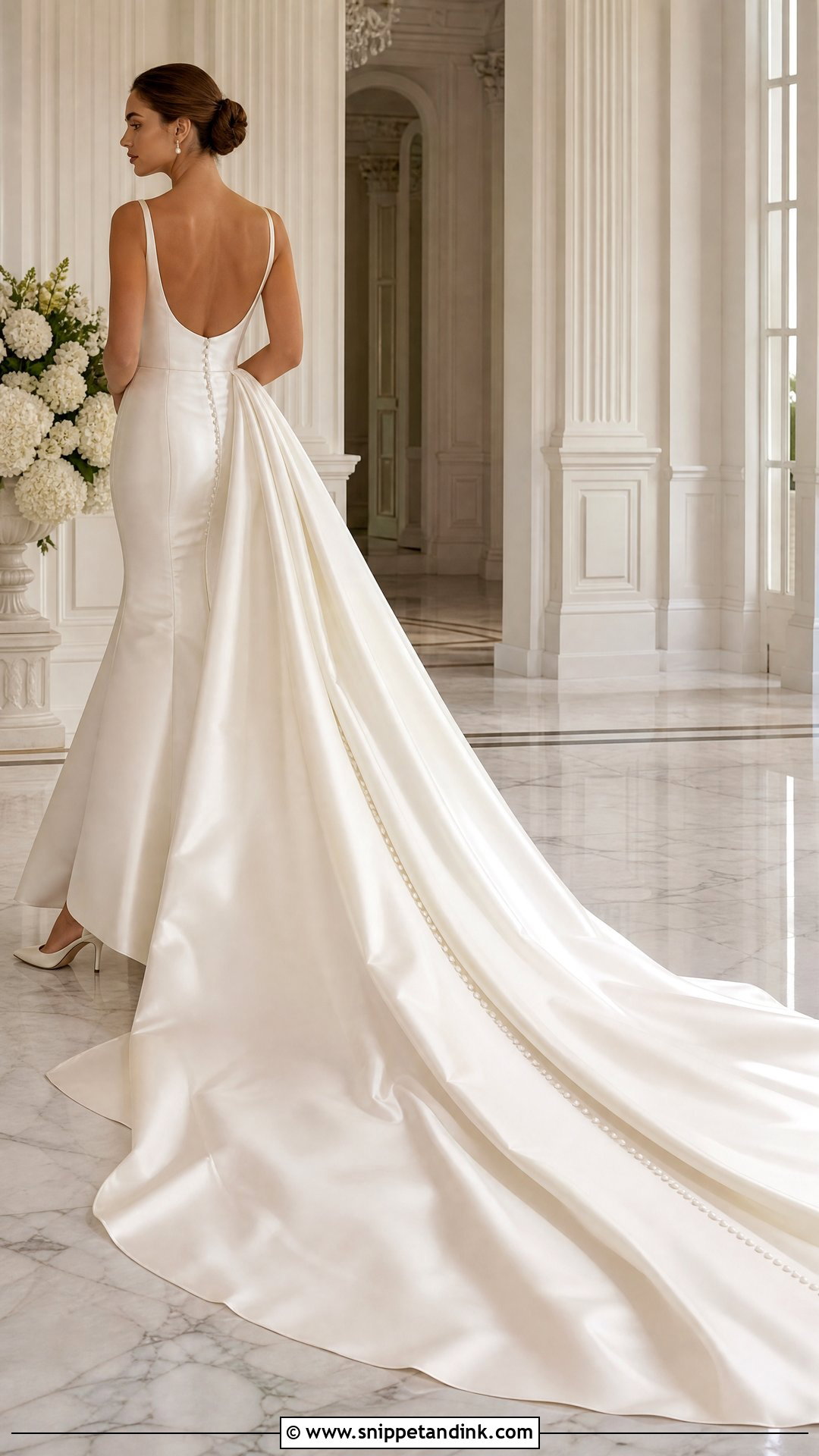
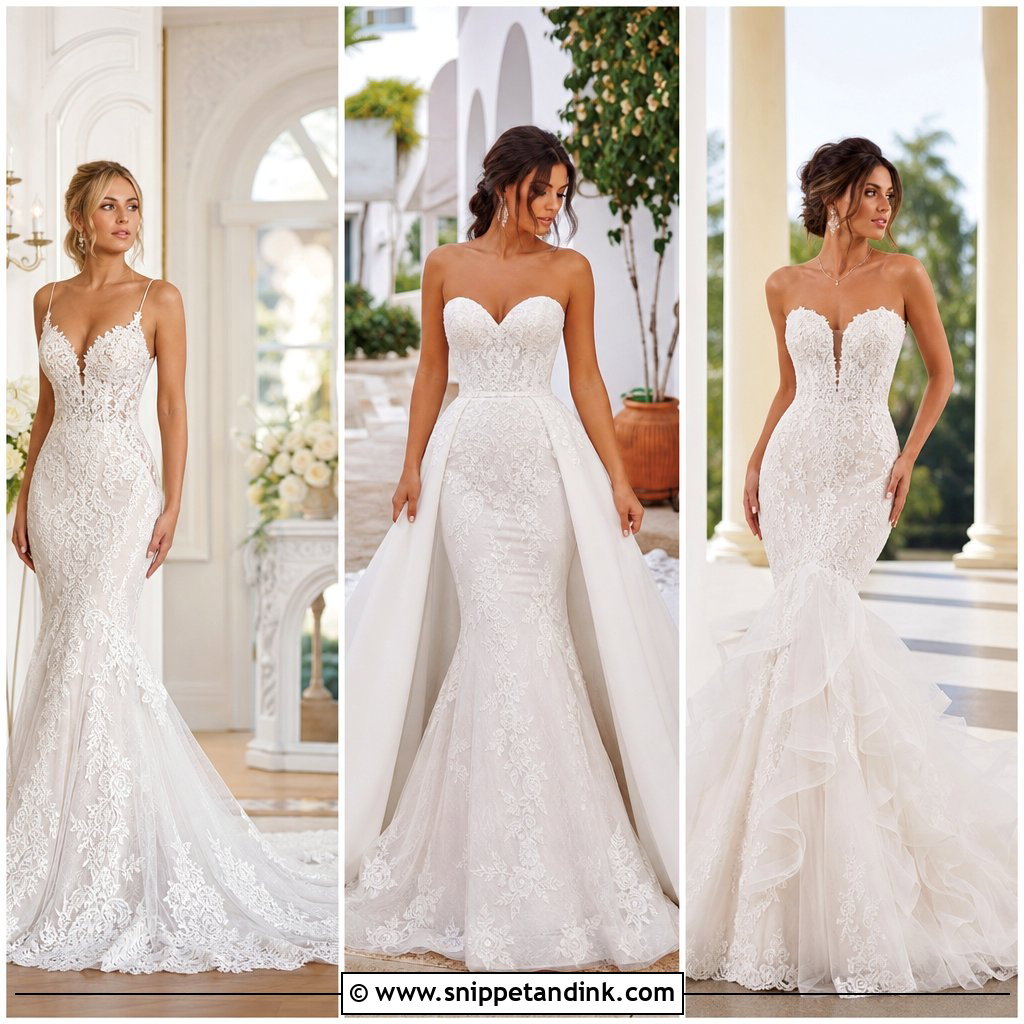
Mermaid gowns live or die on the knee line, so the train has to attach above it and leave the fitted front alone. I’d go for structured satin or Mikado fabric here, because a heavy cathedral train fastened around the lower waist needs a bodice firm enough not to crease under the pull. Once the train is off, you’re left with a sleek mermaid you can actually walk in. Pointed satin pumps, pearl drops and a smooth low bun keep the top clean, and a fingertip veil stops short of the train instead of fighting it. Ask your seamstress to bury the fasteners under covered buttons or a matching fabric band.
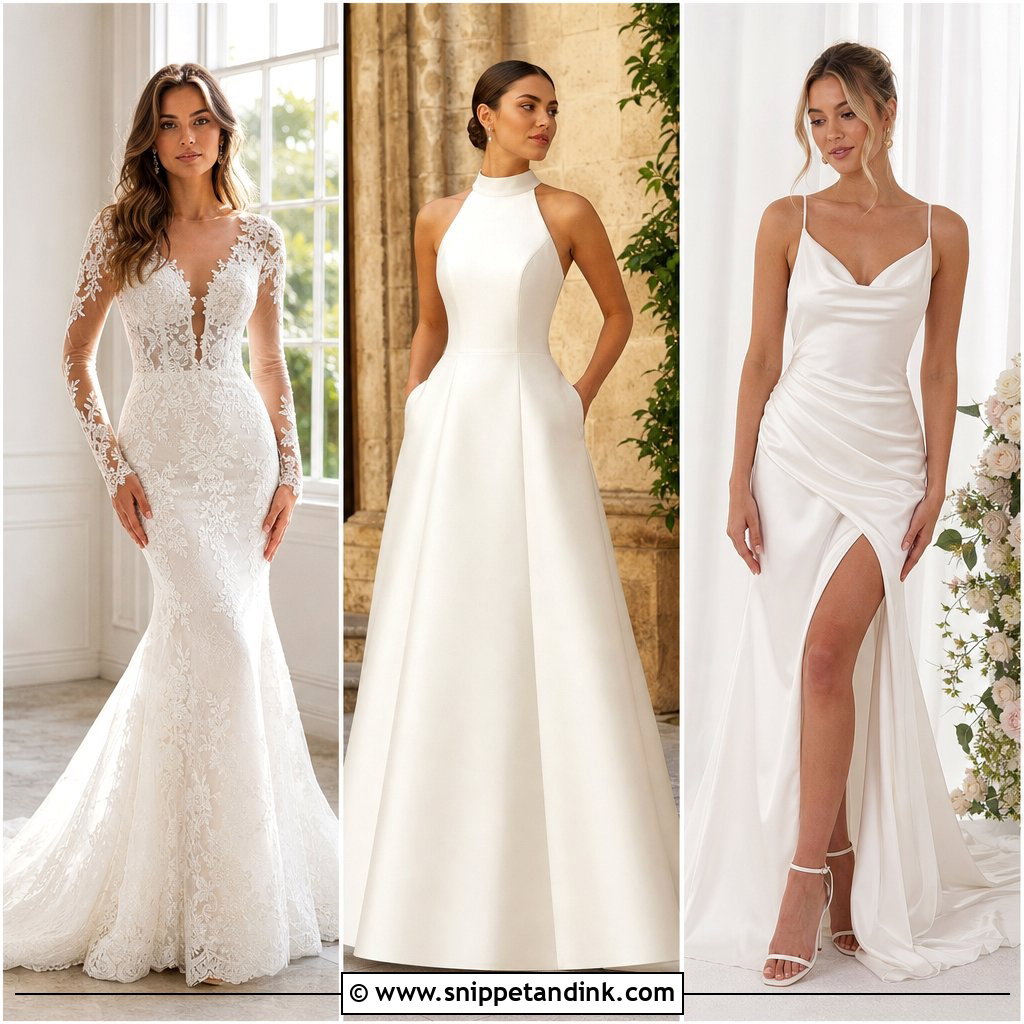
2. Lace Fit And Flare Wedding Dress With Detachable Tulle Train
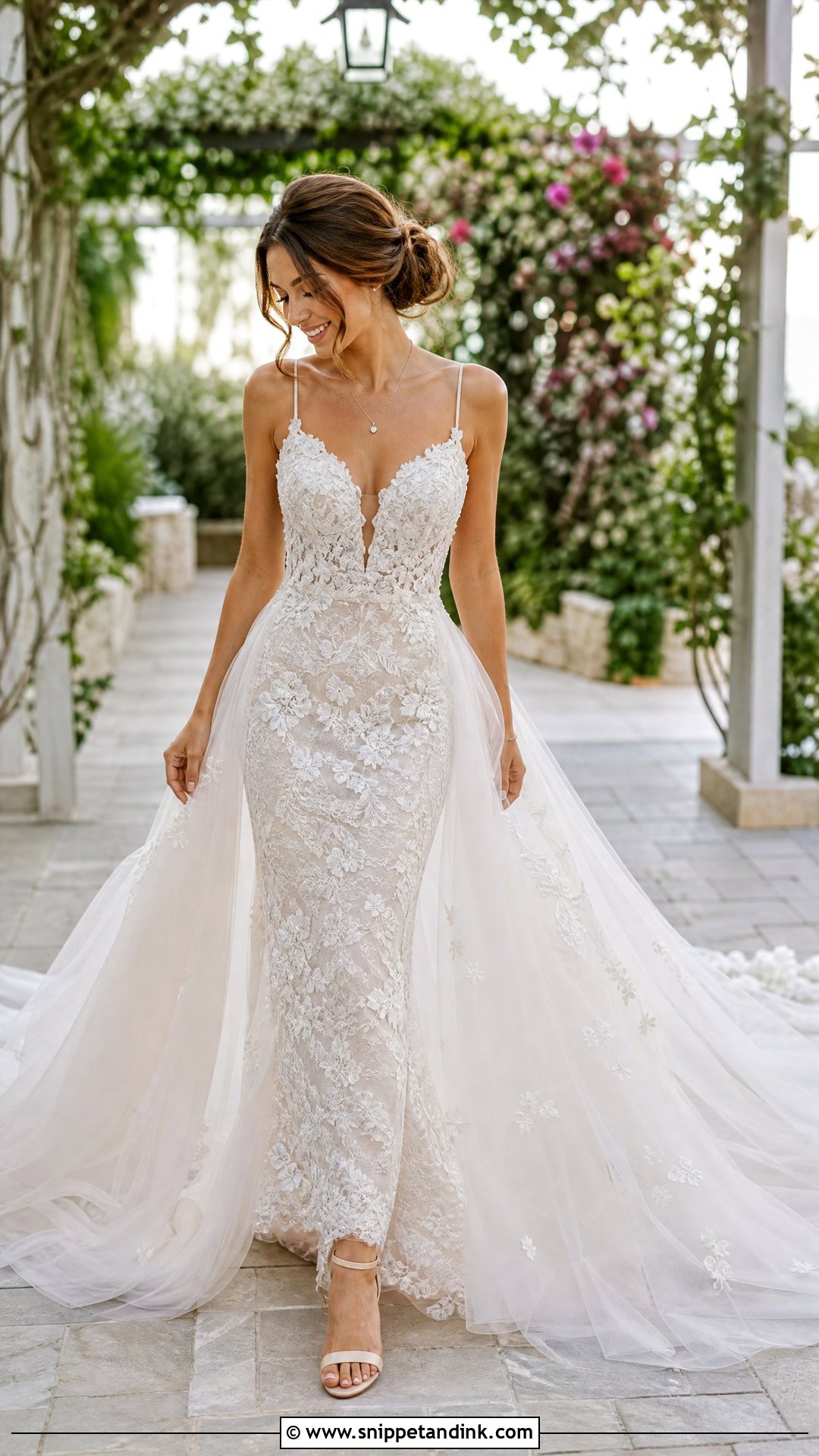
Tulle over lace is a pairing I like because the train adds air rather than weight. The base should be a fit-and-flare with a properly lined bodice and a little stretch in the lining, and the tulle should attach at the natural waist or high hip so it falls around the flare instead of flattening it. A few matching lace appliqués stitched across the join make the two pieces look born together. Ivory ankle-strap heels, a fine pendant and a loose chignon suit it; a lace-edged veil is fine if the lace is smaller than the gown’s. Test the hooks while you turn on the spot. Tulle trains tend to swing to one side if the hooks are spaced unevenly.
3. Strapless Ball Gown Wedding Dress With Detachable Overskirt Train
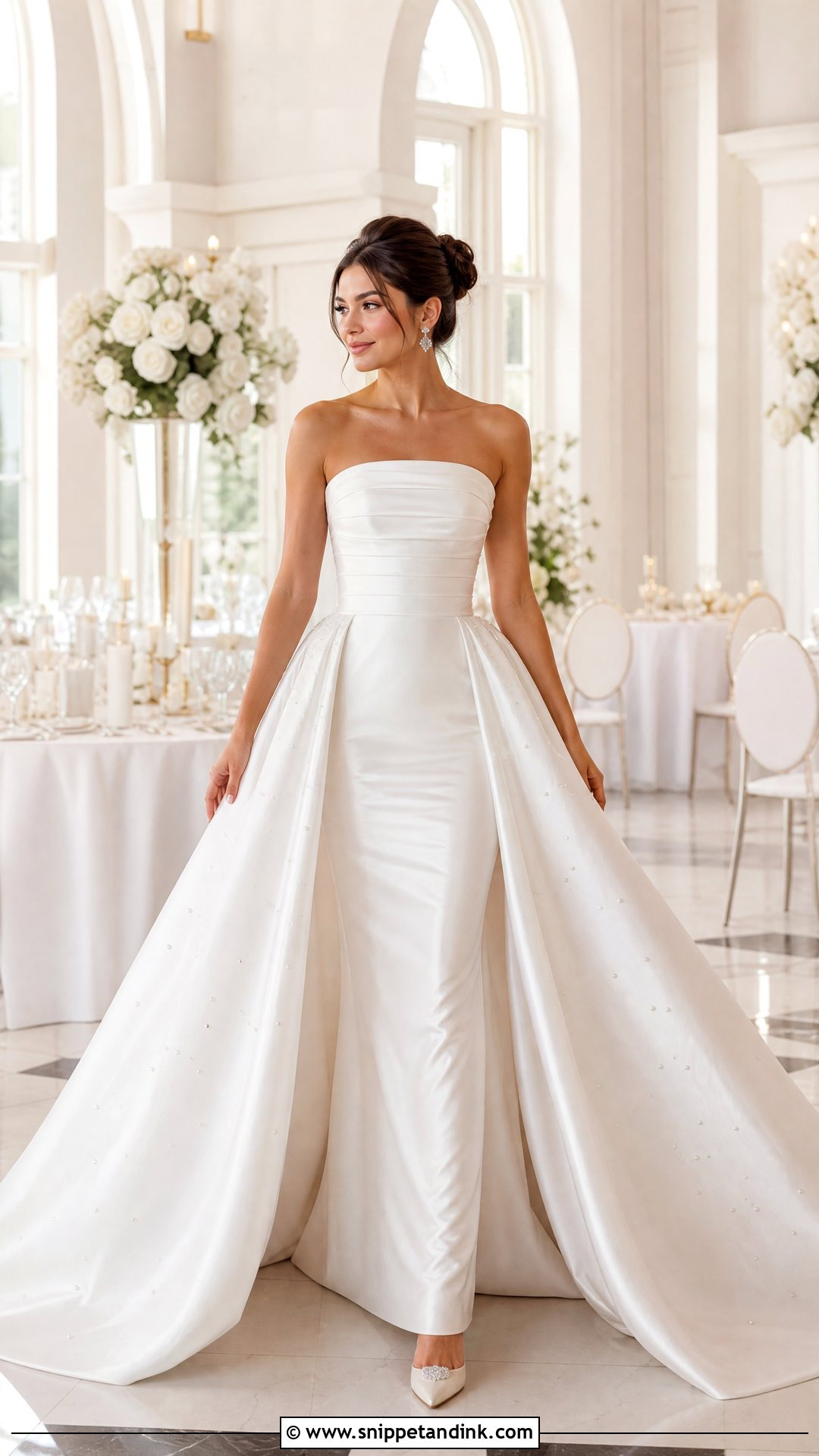
This is the classic two-dresses-in-one. A fitted satin, crepe or lace base sits under a full overskirt that opens slightly at the front, so guests see the slim line underneath while the back builds into a big train. The overskirt is heavy, which is why I want a proper corset interior in any strapless version; without it the neckline slips every time the skirt is lifted. Crystal studs, a polished updo and ivory pumps are all it needs. If the fastening points still show after removal, a slim beaded belt covers them. Practise the change with your helper at least twice before the wedding.
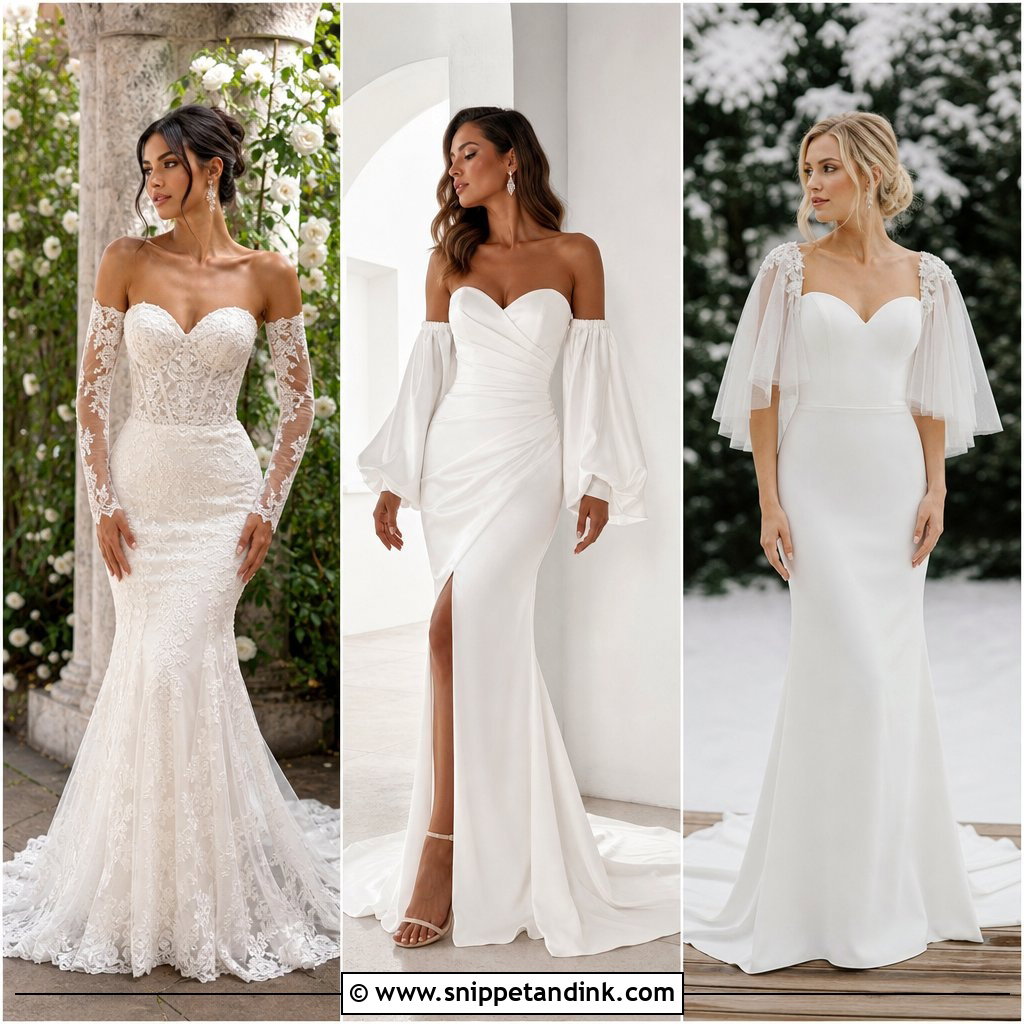
4. Minimalist Column Wedding Dress With Detachable Watteau Train
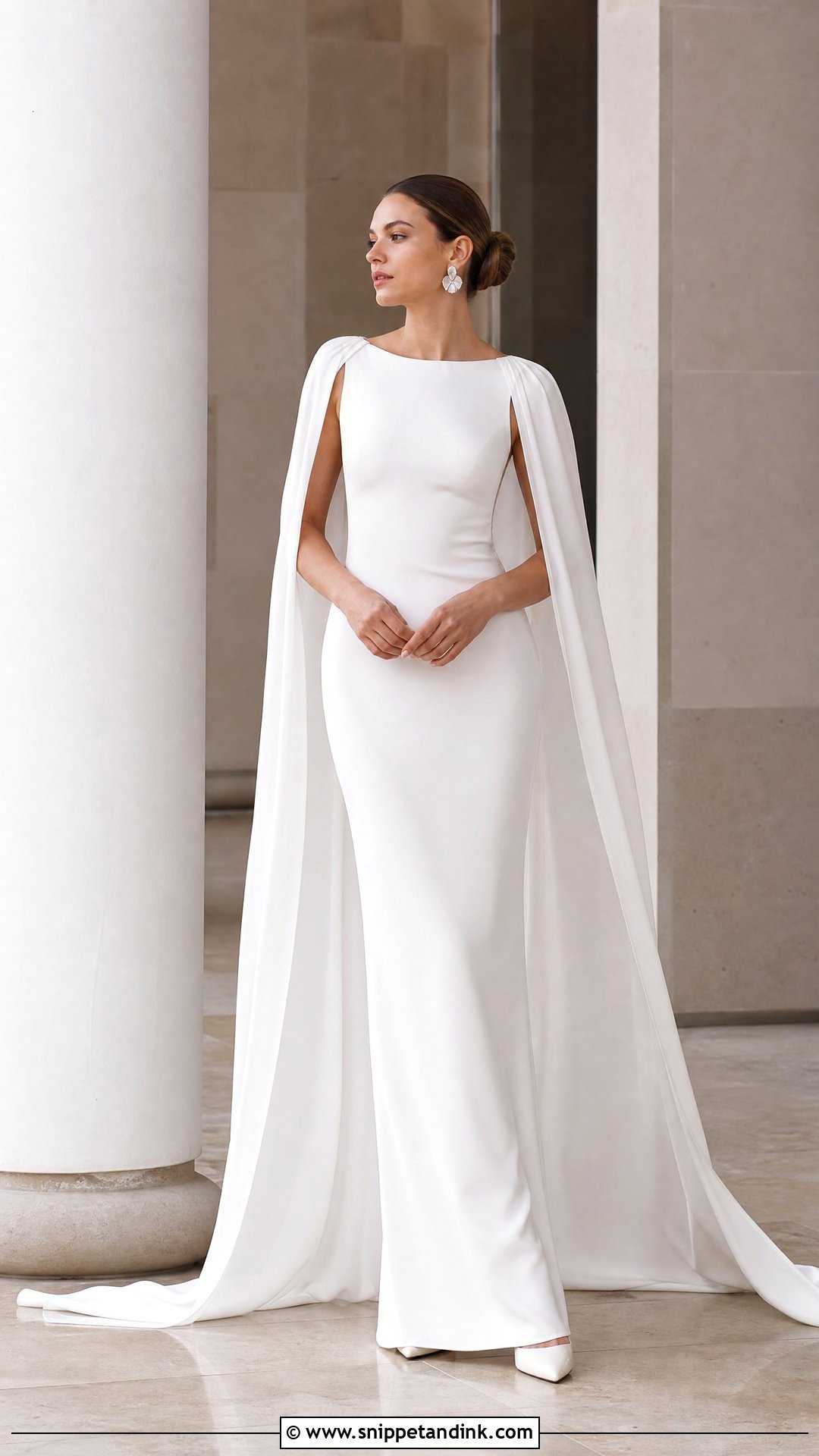
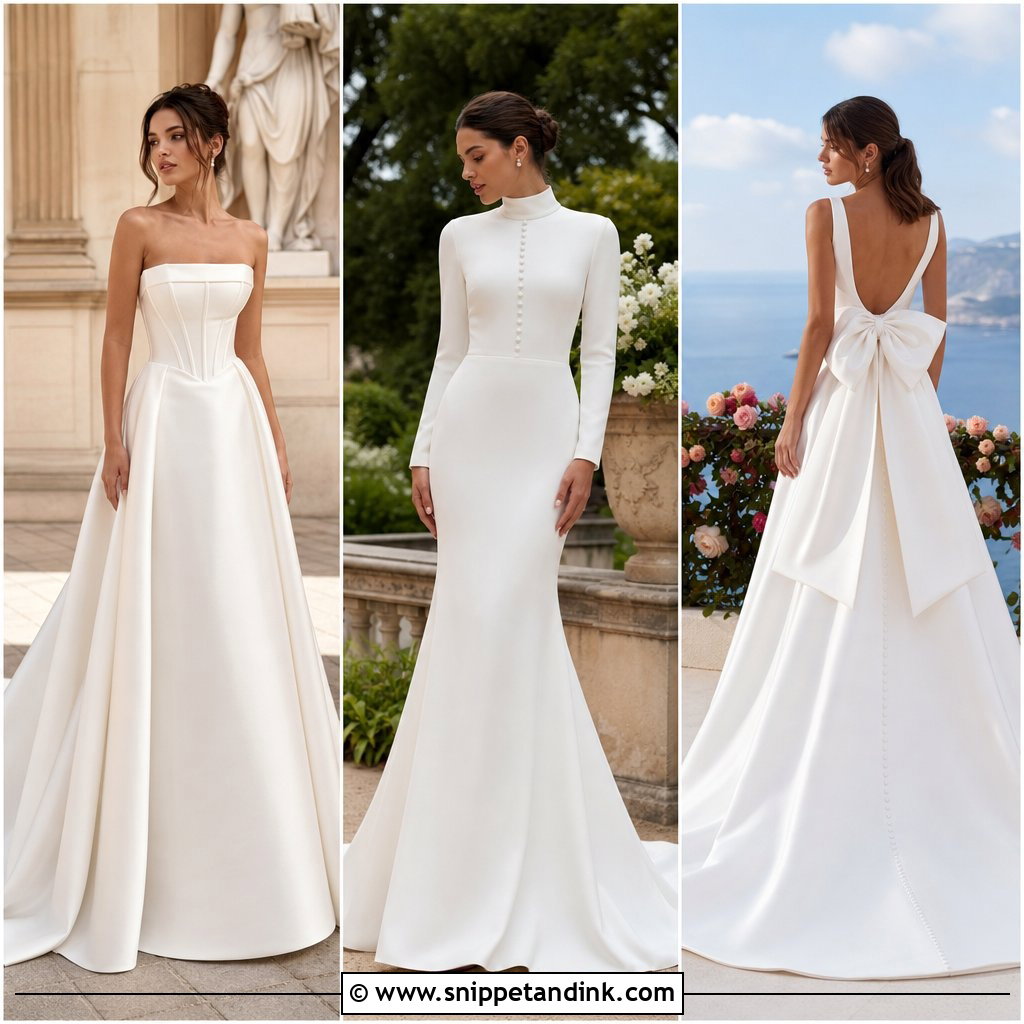
A Watteau train hangs from the shoulders or upper back like a cape, which gives a narrow column dress far more movement than its shape suggests. Bateau, square and high necklines all suit it. I prefer the train in the same silk crepe or satin as the gown; organza works if you want it lighter and slightly see-through. Sculptural earrings, pointed pumps and a small bouquet keep it modern, and a neat bun or sleek ponytail shows off the shoulder join. Walk in it at the fitting. If the neckline lifts at the back with each step, the attachment is too tight.
5. Long Sleeve Crepe Wedding Dress With Detachable Chiffon Train
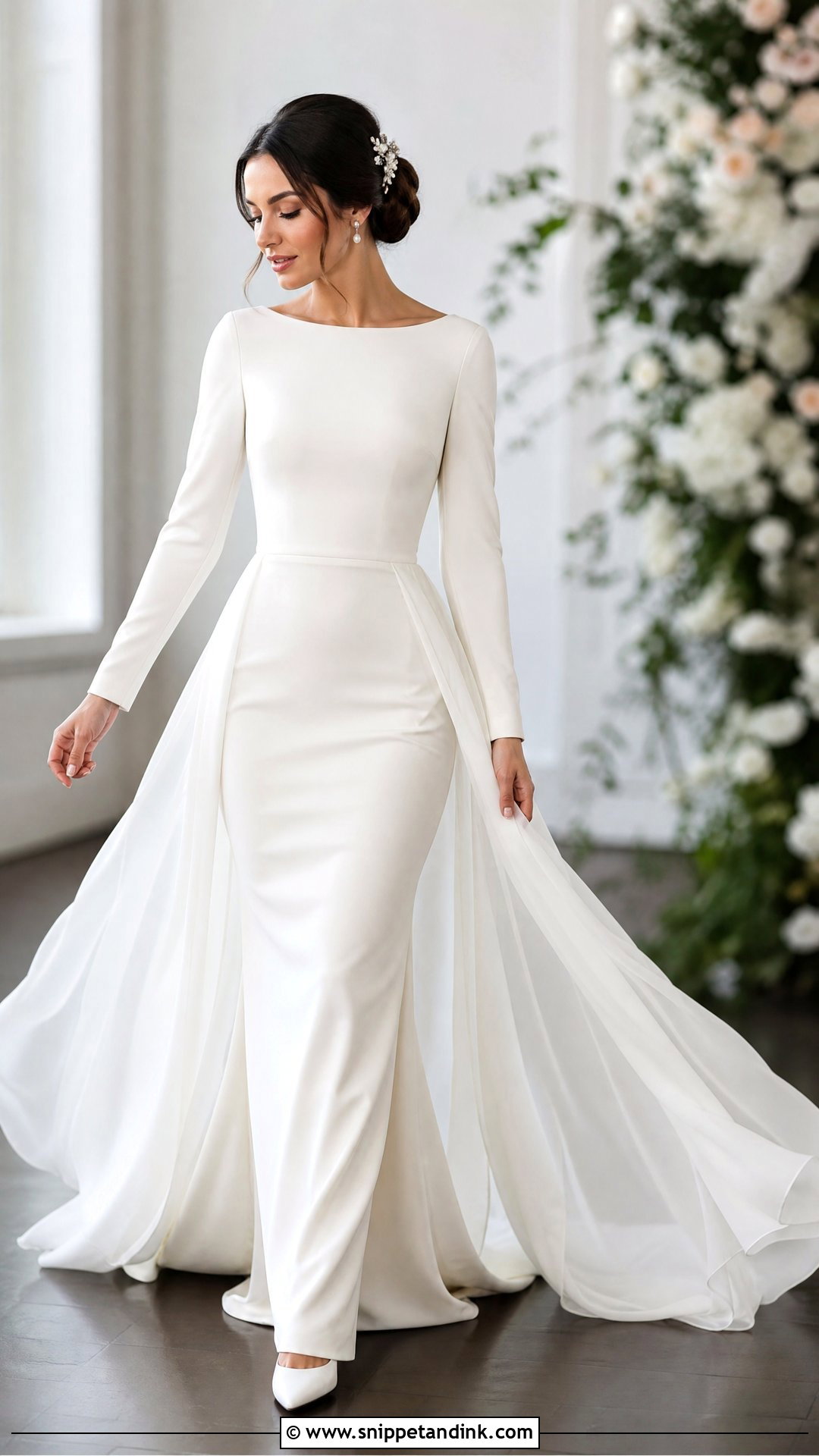
Long crepe sleeves are warm and substantial, so the train should go the other way. Chiffon panels attached at the back waist float behind you and keep the whole outfit from feeling like a winter coat. Look for a smooth bodice, a defined waist and a gently flared skirt. The two fabrics must be the same shade of ivory or white, and I’d hold swatches together in daylight before ordering, because chiffon often reads a touch cooler than crepe. Closed-toe pumps, a pearl comb and a low twisted bun finish it. Chiffon is fragile at stress points, so ask for the fastening tabs to be backed with a stronger fabric.
6. Off Shoulder Mikado Wedding Dress With Detachable Bow Train
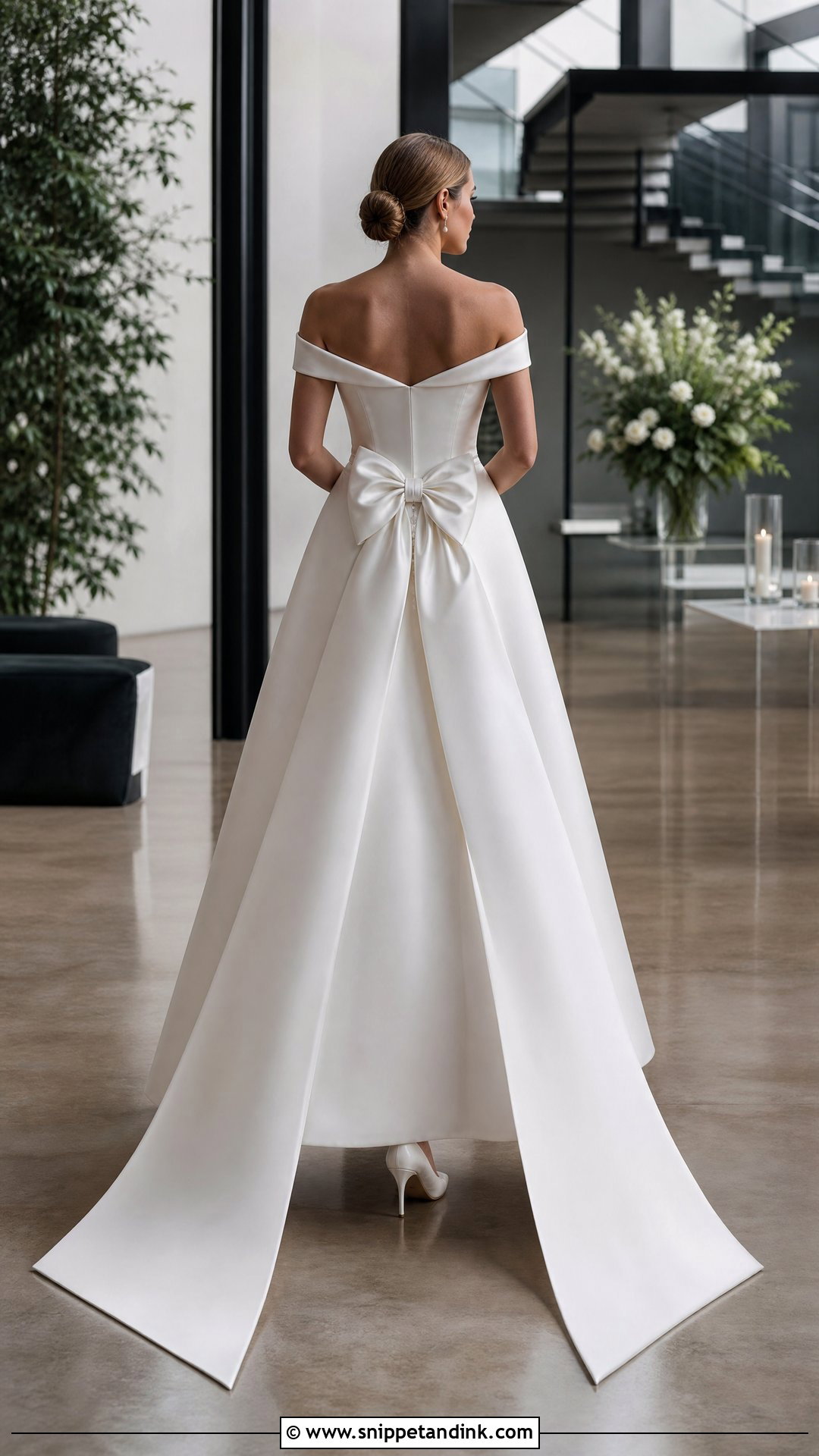
A big bow is the cleverest disguise for an attachment line I know. On a structured Mikado A-line with a folded off-shoulder neckline, the bow sits at the back waist and its tails run out into a chapel or cathedral train. Mikado holds a bow’s loops crisply, which softer satins won’t do for long. Keep the rest quiet: pearl studs, pointed ivory heels and a smooth centre-parted bun, with a plain veil or none. Remove the whole bow for the reception and the back reads clean. Sit down at your fitting with the bow on. Some bows dig into the lower back when seated, and you’ll find out in seconds.
7. Square Neck Satin Wedding Dress With Detachable Pearl Train
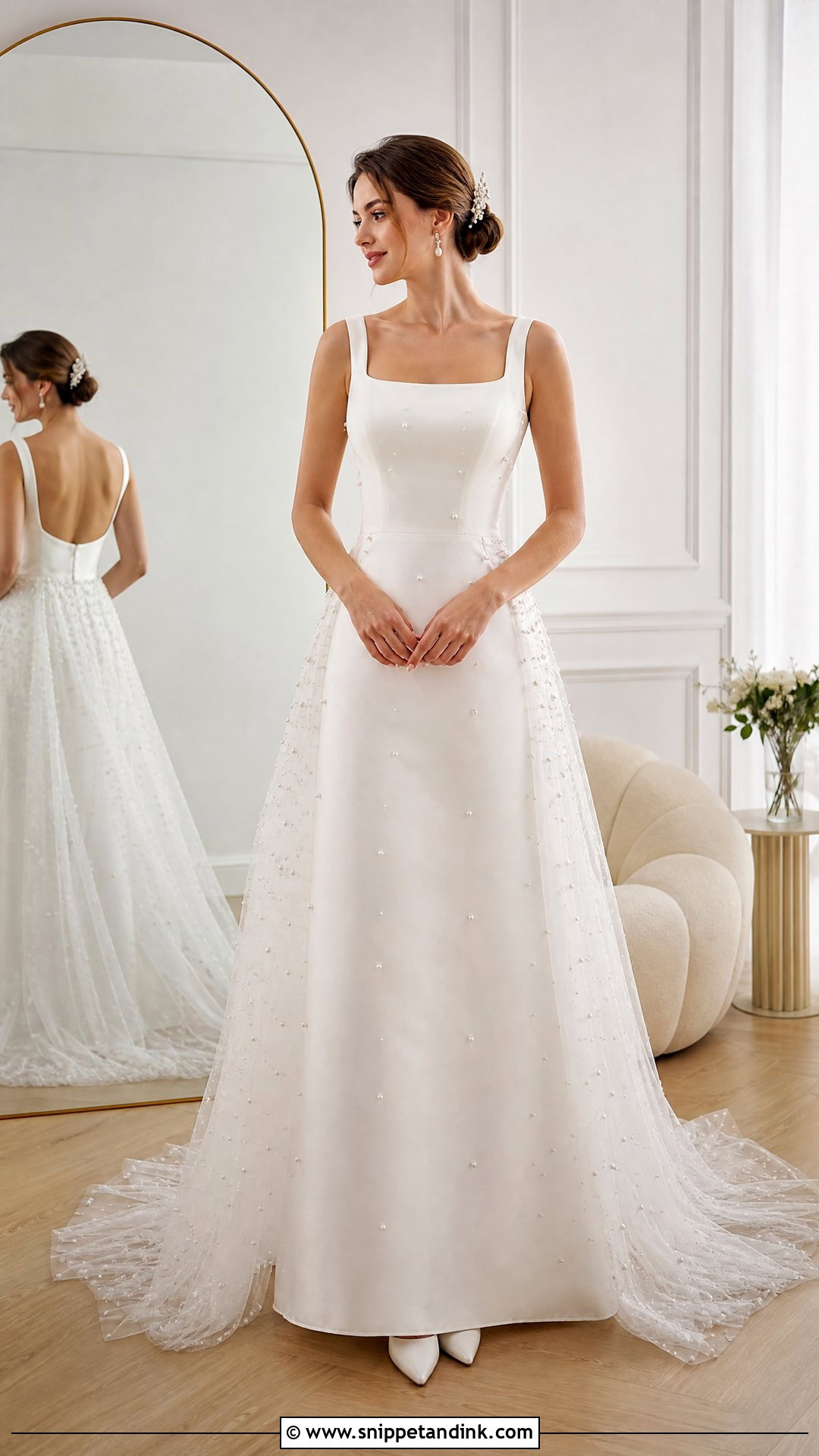
Pearls on a tulle train give a plain square-neck satin dress some texture without cluttering the bodice. Wide straps and a supportive neckline keep the base simple. I like the pearls spaced in clusters that get sparser toward the hem, and a satin waistband or a row of covered buttons hides the join. Small pearl earrings, a beaded hairpin, a pearl-edged fingertip veil and closed-toe satin heels carry the theme through. Weight is the catch here. Real or glass pearls add up fast on tulle, so lightweight faux pearls stop the train sagging or twisting at the fasteners.
8. Sweetheart Corset Wedding Dress With Detachable Floral Train
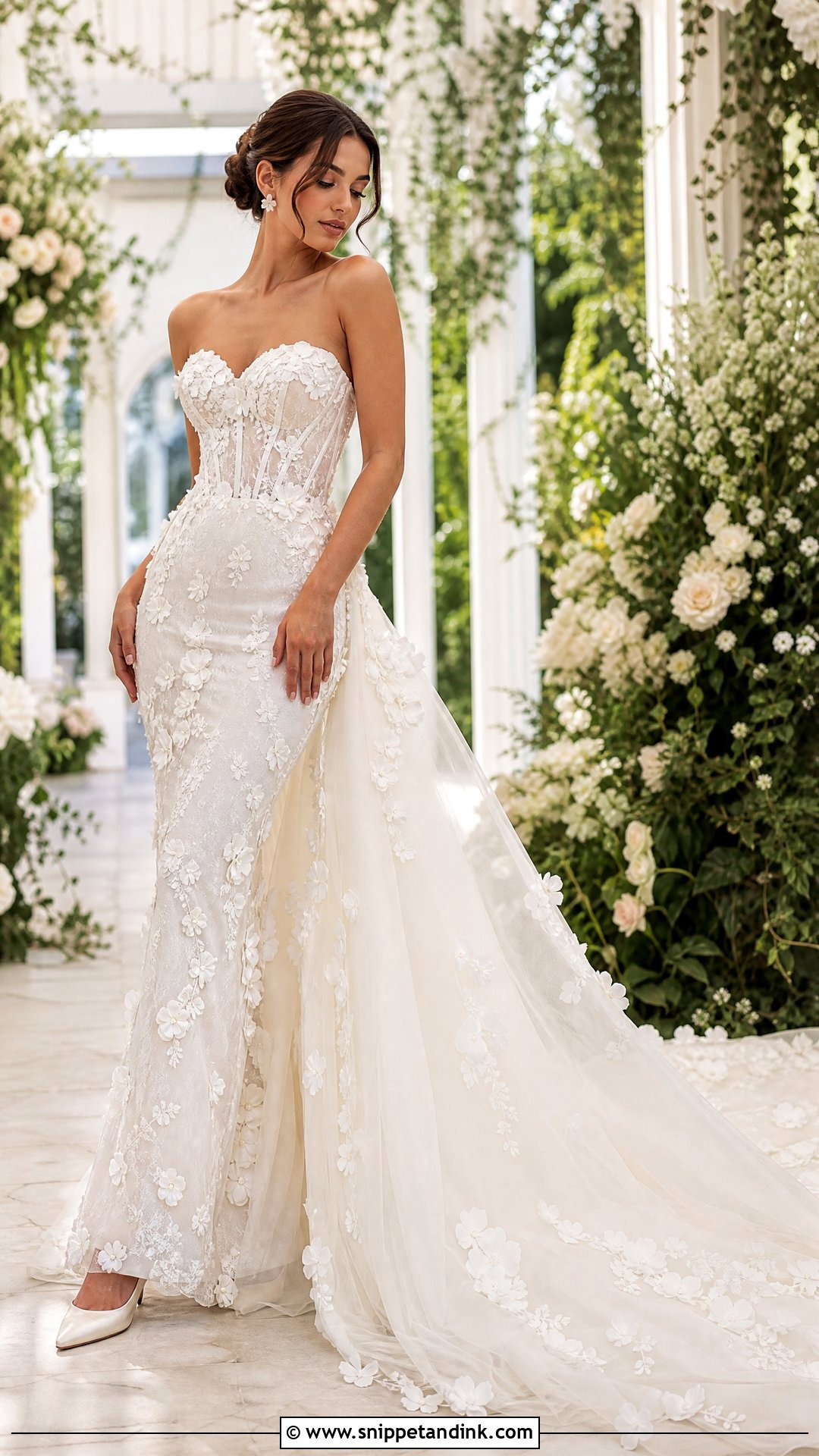
Three-dimensional flowers suit a sweetheart corset because the boning gives them a firm surface to sit on. The base should have visible boning, secure cups and scattered appliqués on the bodice; the train, in layered tulle or organza, picks the flowers up at the waist and carries them down. I cluster the most flowers right over the join, which hides it better than any button row. Floral studs, ivory pumps and a softly pinned bun work, with a plain veil. Ask for slightly flexible attachment points. A rigid join on a corset tends to pull the bodice down at the back when the train is stepped on.
9. Halter Sheath Wedding Dress With Detachable Cape Train
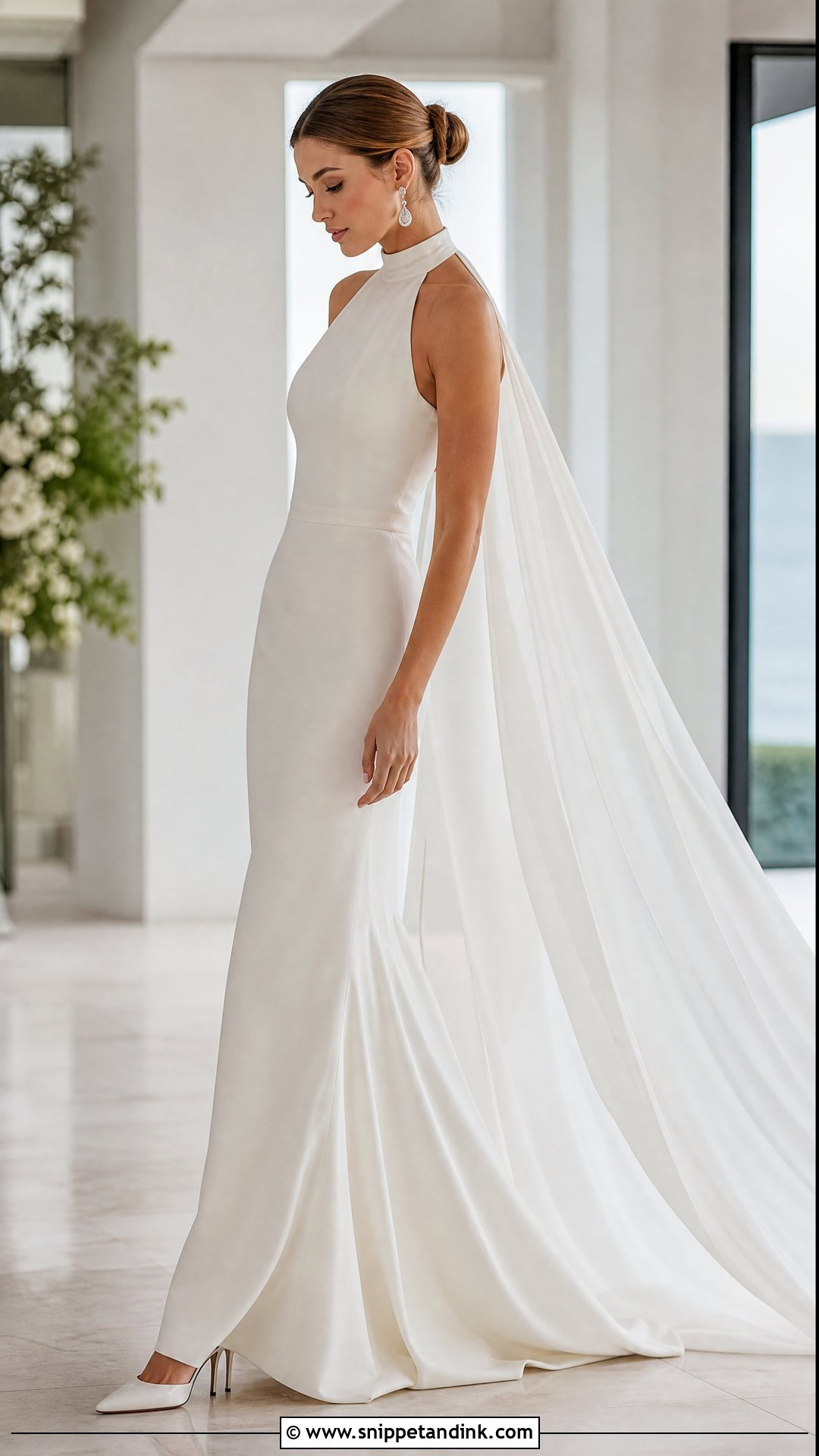
A halter sheath dress with a cape train moves the drama from the waist to the shoulders, which suits brides who don’t want anything around the middle. The gown needs a clean neckline, sharp seams and enough stretch to sit and dance. The cape fastens at the back of the neck or shoulders and falls into a long train in chiffon, georgette or sheer crepe. A sleek updo, modern drops and metallic or ivory pumps keep the halter visible; skip the veil. My caution: everything hangs from the neck, so a heavy or beaded cape will drag the halter backward and leave you tugging at it all evening.
10. High Neck Lace Wedding Dress With Detachable Scalloped Train
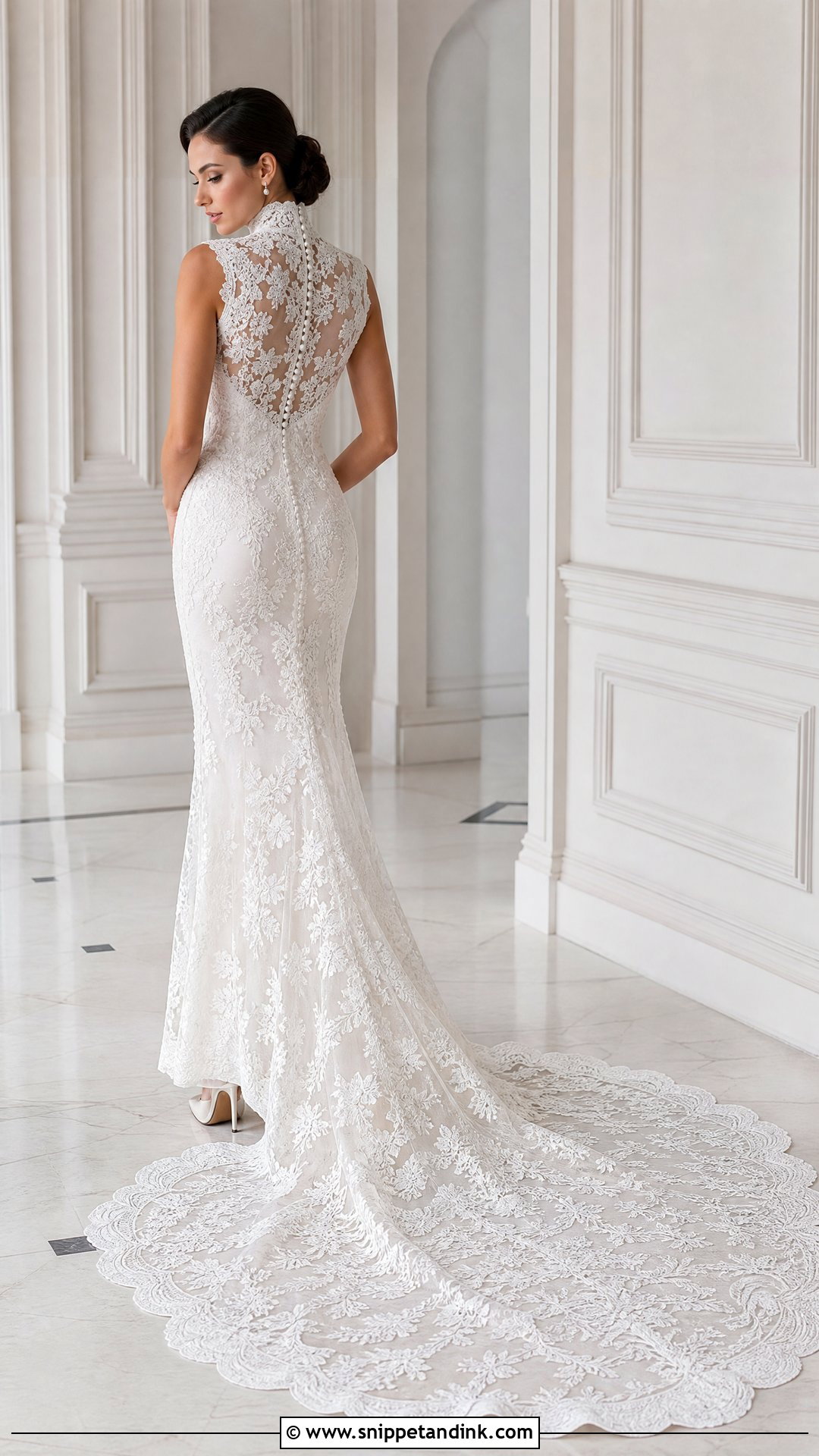
Matching the train’s edge to the gown’s lace is what makes this look cohesive. Start with a high-neck dress with a lined body, a sheer lace yoke and a softly flared skirt, then add a tulle or lace train with a scalloped border on hidden loops at the back waist. Ask the maker to place lace motifs across the seam so the join disappears. Pearl studs, low satin heels and a tucked chignon are enough, and a veil with no edging keeps the neckline from competing. In portraits, have someone spread the scallops flat. Folded scallops just look like a crumpled hem.
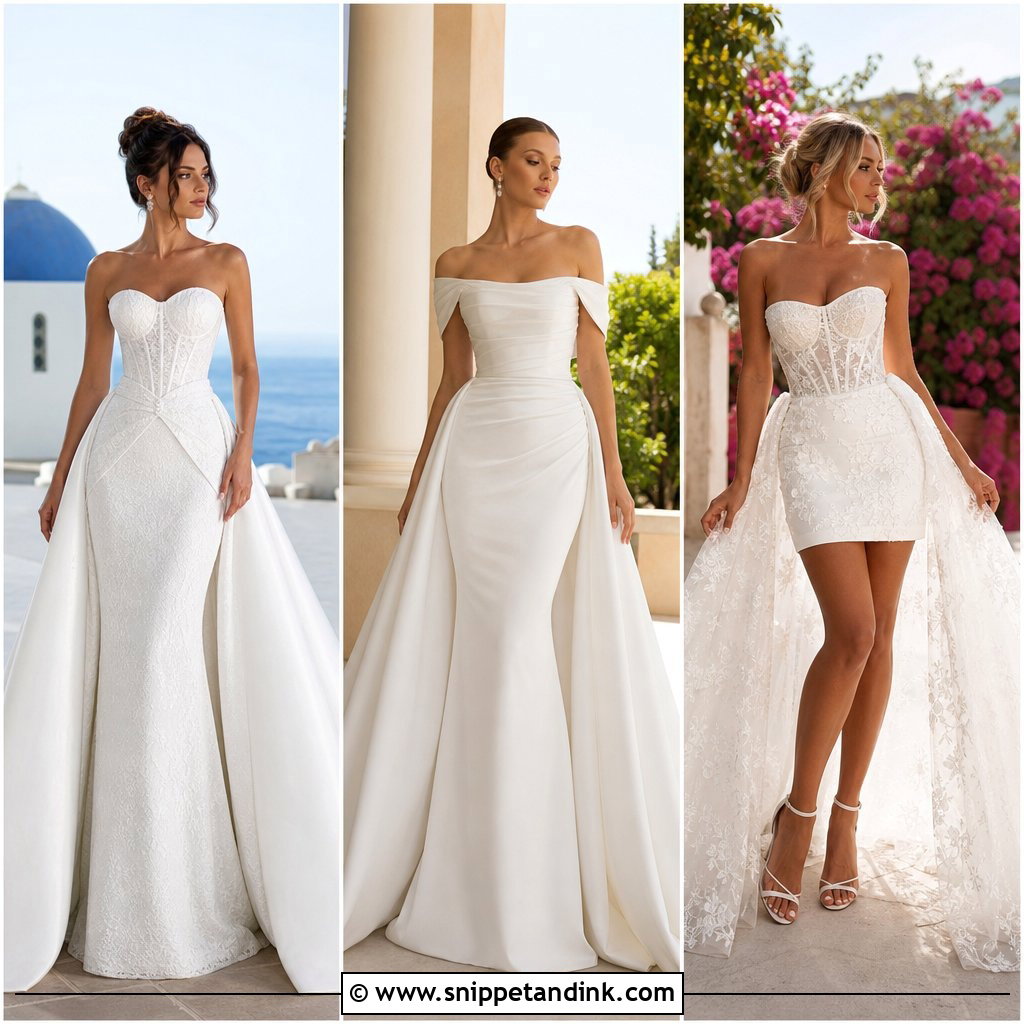
11. Basque Waist Ball Gown With Detachable Pleated Train
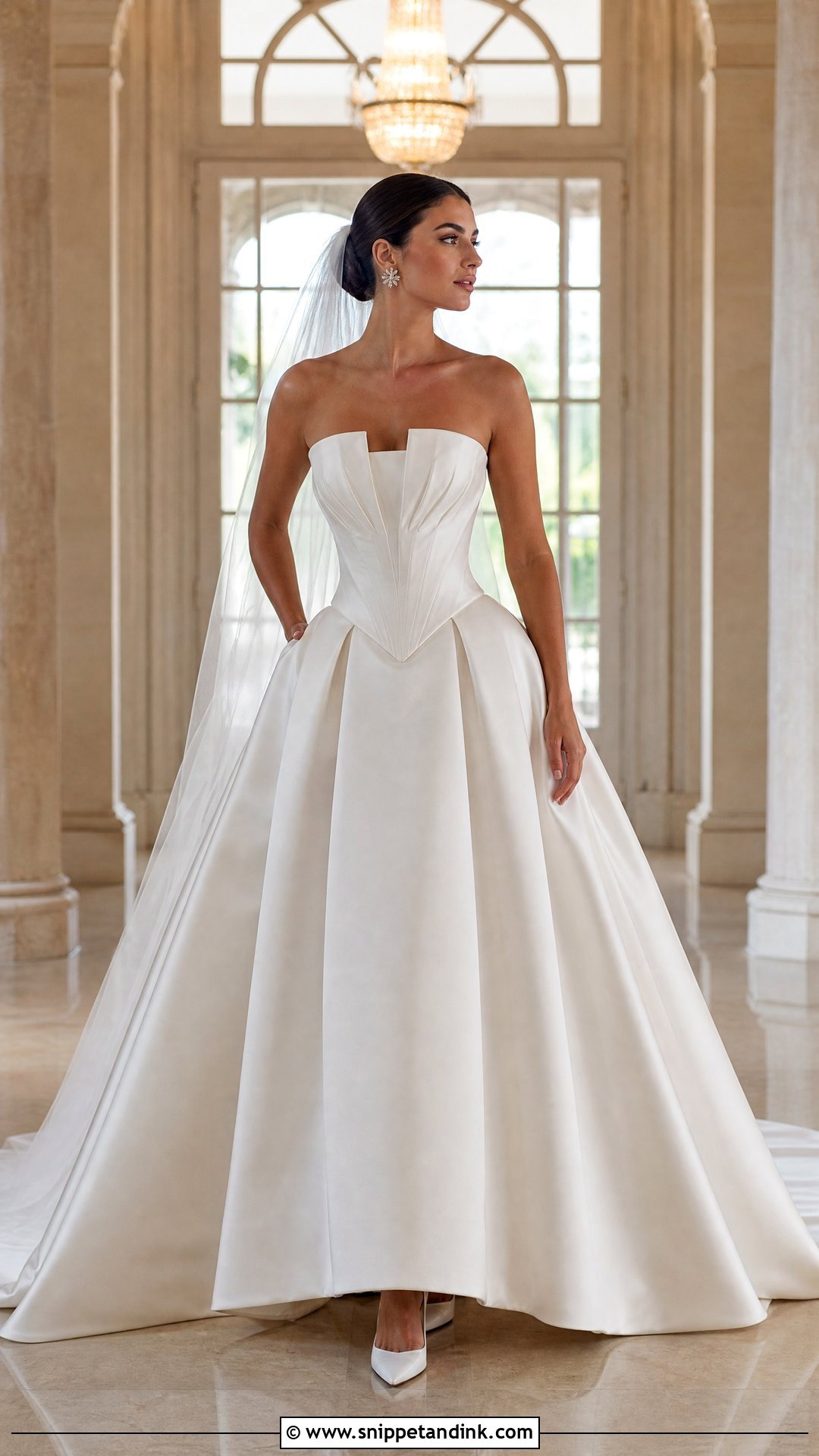
The pointed basque waist is already a statement, so the train must frame it, never cover it. A removable pleated train fastened around the back and sides of the waist widens the silhouette while leaving the front point clear. Box pleats hold best in Mikado, duchess satin or taffeta; softer fabrics let the pleats collapse within an hour. Sparkling studs, a classic veil, satin pumps and an updo complete it. I’m strict about fastener spacing on this one, because an unevenly loaded overskirt creeps toward one hip as you walk.
12. One Shoulder Wedding Dress With Detachable Asymmetric Train
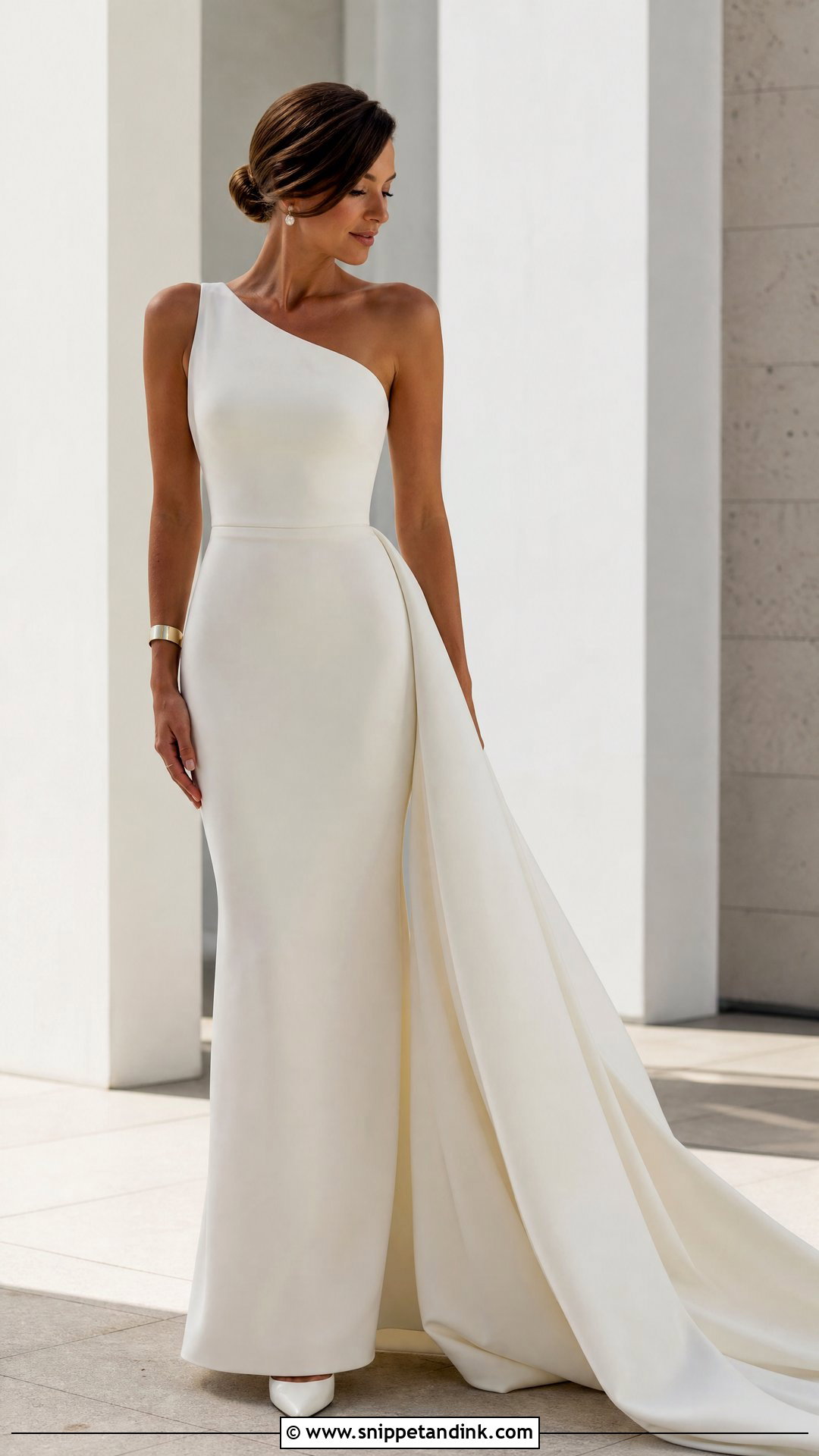
An asymmetric train follows the diagonal of a one-shoulder neckline. The base should be a sleek crepe or satin gown that follows the body without restricting it; the train attaches at one side of the waist, sweeps across the back and lands longer on the opposite side. That keeps the front untouched. A cuff on the bare arm, small earrings, pointed pumps and a side-parted low bun balance the line, and I’d leave the neck bare. Because all the weight sits off-centre, have your seamstress watch you walk from the front, back and side before signing it off.
13. Tea Length Wedding Dress With Detachable Floor Length Train
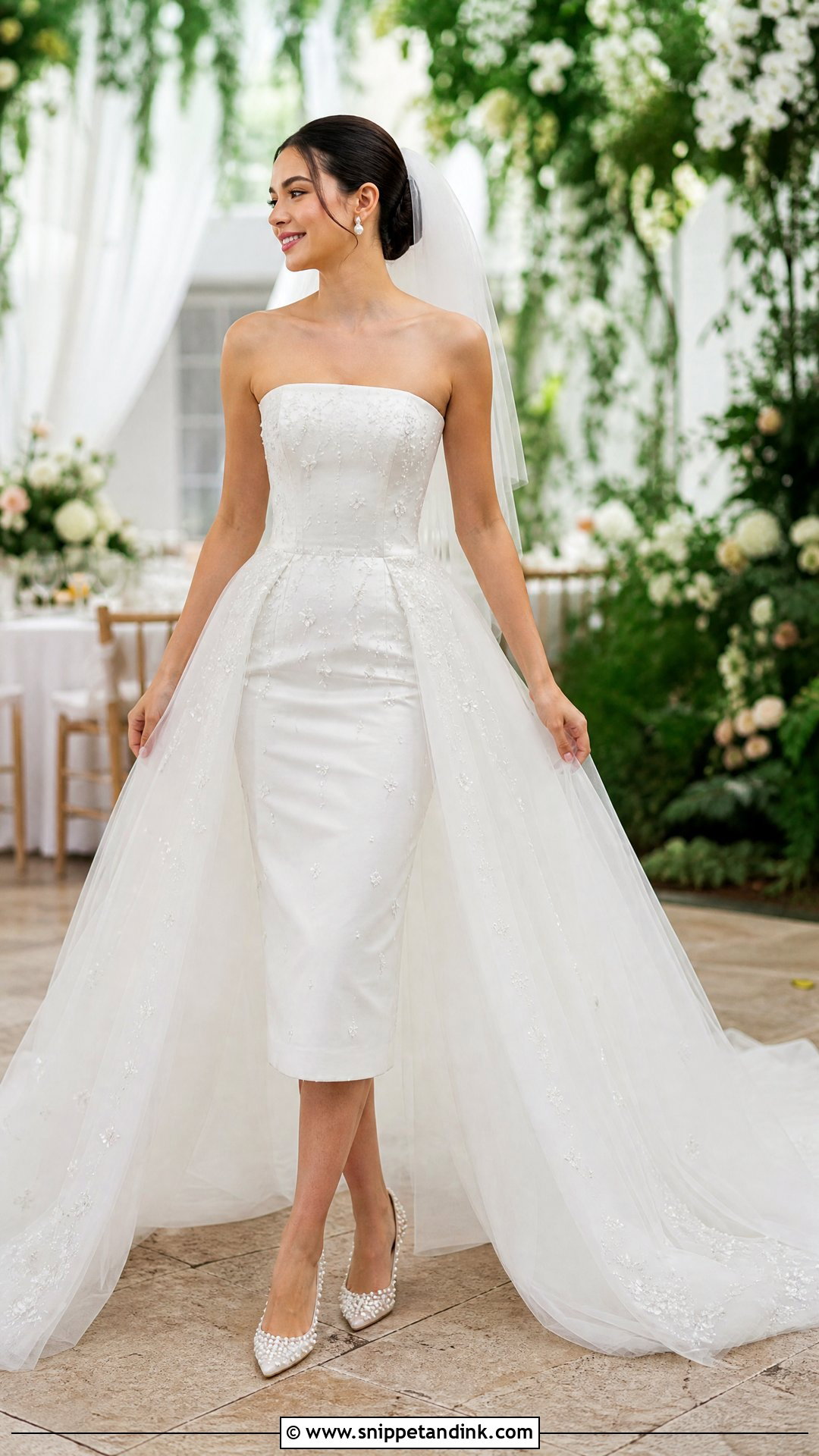
I love this for brides who mainly want to dance. A structured tea-length dress with a fitted bodice and a flared skirt ending between knee and ankle sits under an open-front tulle or organza overskirt, so the shorter hem and the shoes still peek out during the ceremony. Embellished pumps, a short veil, pearl earrings and a neat bun suit the playful length. Then the overskirt comes off and you’re in a midi for the rest of the night. The one fit point I’d check twice: the overskirt waistband must sit exactly on the dress waist, or it slides and bunches.
14. Bridal Mini Dress With Detachable Overskirt Train
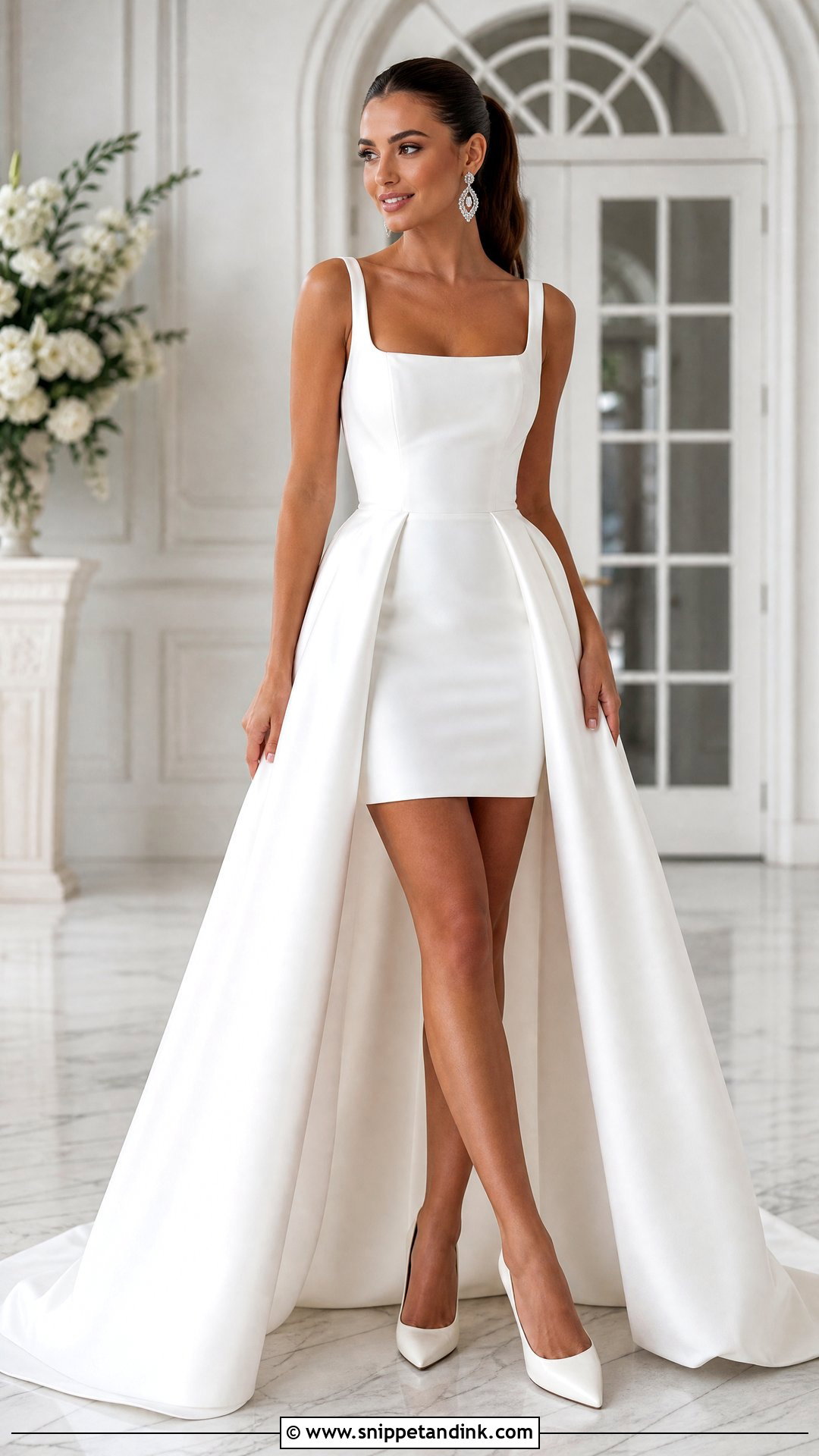
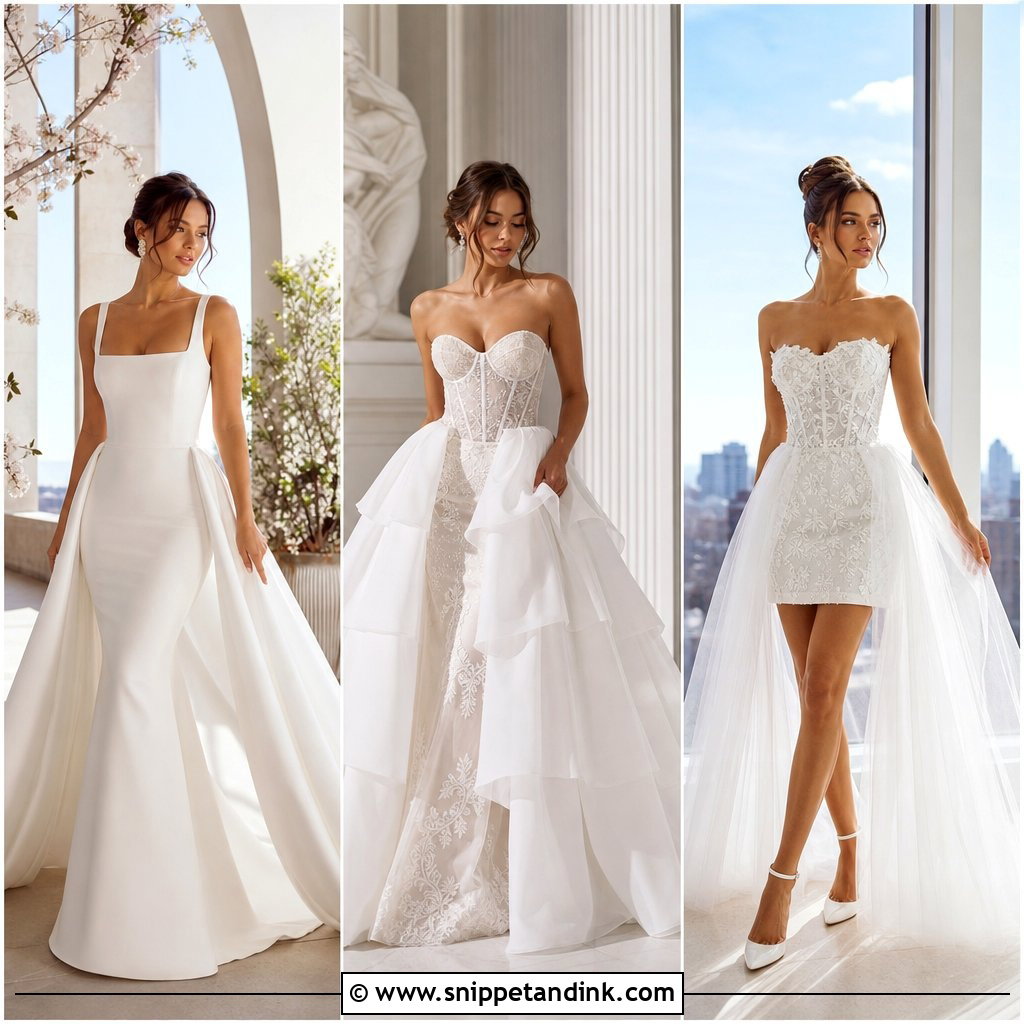
For a bold transformation, a tailored mini sits under a full overskirt with a sweeping train. The base can have a square neck, a corset bodice or long sleeves. The overskirt, in satin, tulle or organza, closes at the waist and opens at the front, giving coverage and volume for the ceremony and leaving a party dress behind. Pointed pumps or ankle-strap heels, statement earrings and a sleek ponytail fit the mood. Wear fitted shorts underneath. And ask for a generous overlap at the sides, since a skimpy overlap shows the jump from mini to floor-length in every side-on photo.
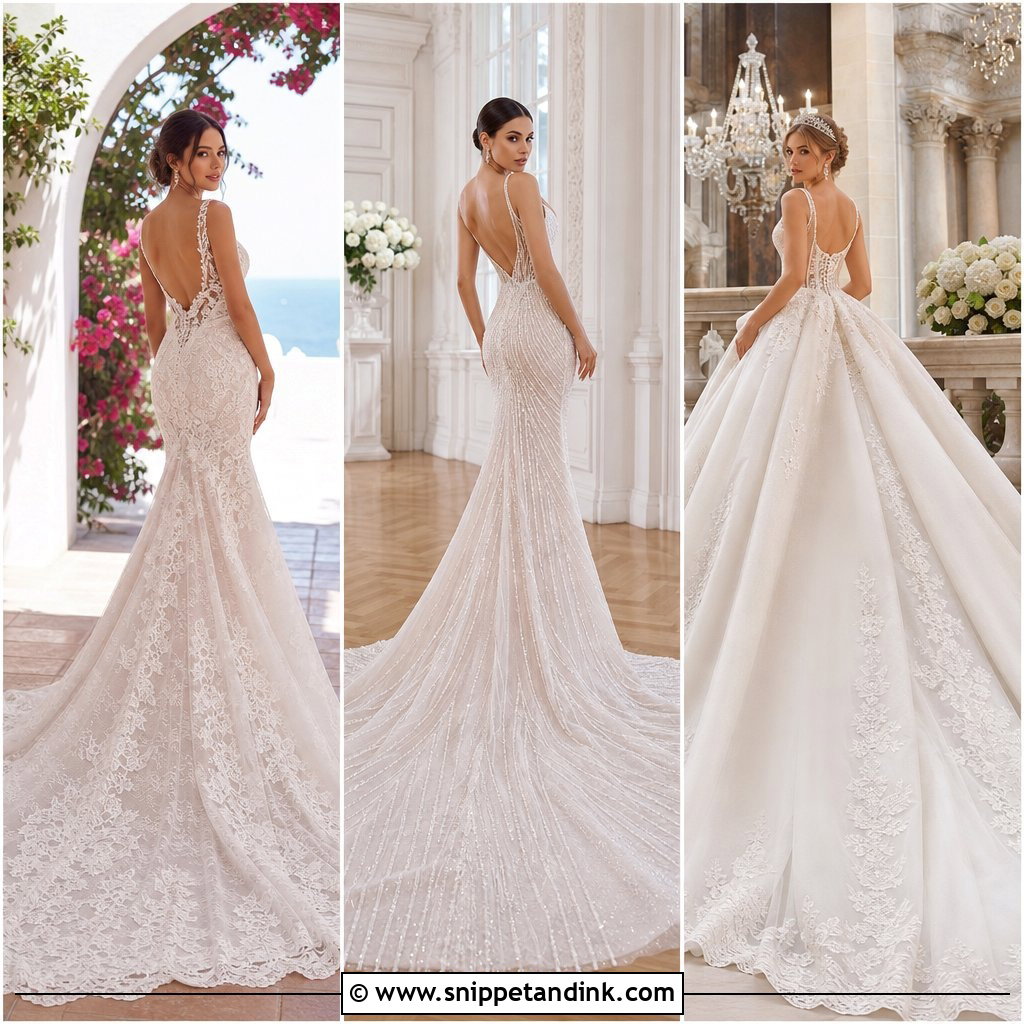
15. Plus Size A-Line Wedding Dress With Detachable Lace Train
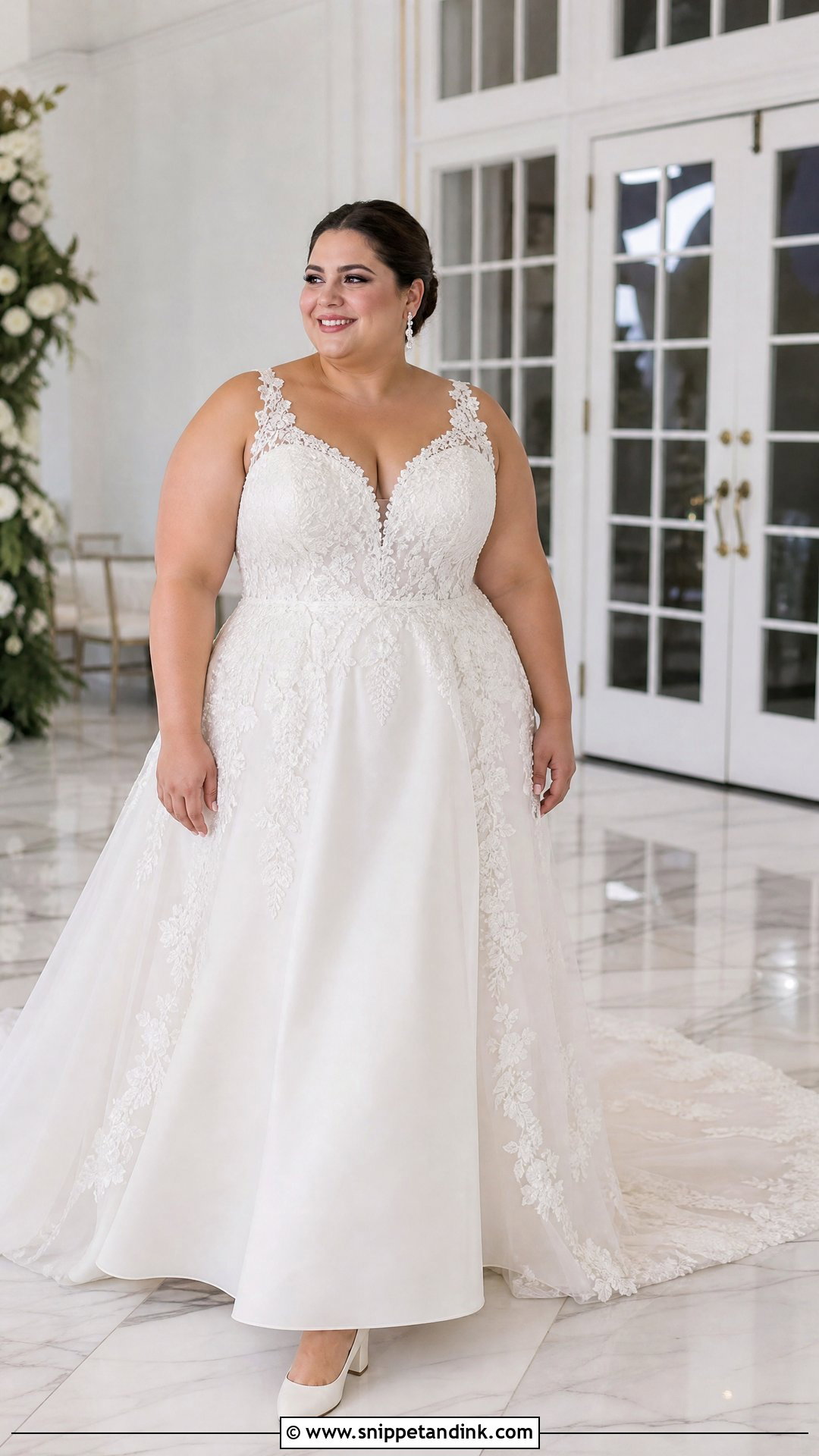
With a curvier figure, a detachable train lets you keep the back drama without adding bulk at the front, and an A-line is the most forgiving base for it. I look for a structured bodice, secure straps, real internal boning and a waistline placed where you feel comfortable rather than where a size chart puts it. The skirt should skim the hips, with the lace or tulle train building volume only at the back. Block-heel pumps, drop earrings, a combed-back updo and a soft veil work well. Appliqués along the join keep the finish continuous. Bring both pieces to every alteration, since the train’s weight changes how the waist and hem sit.
16. Modest Satin Wedding Dress With Detachable Chapel Train
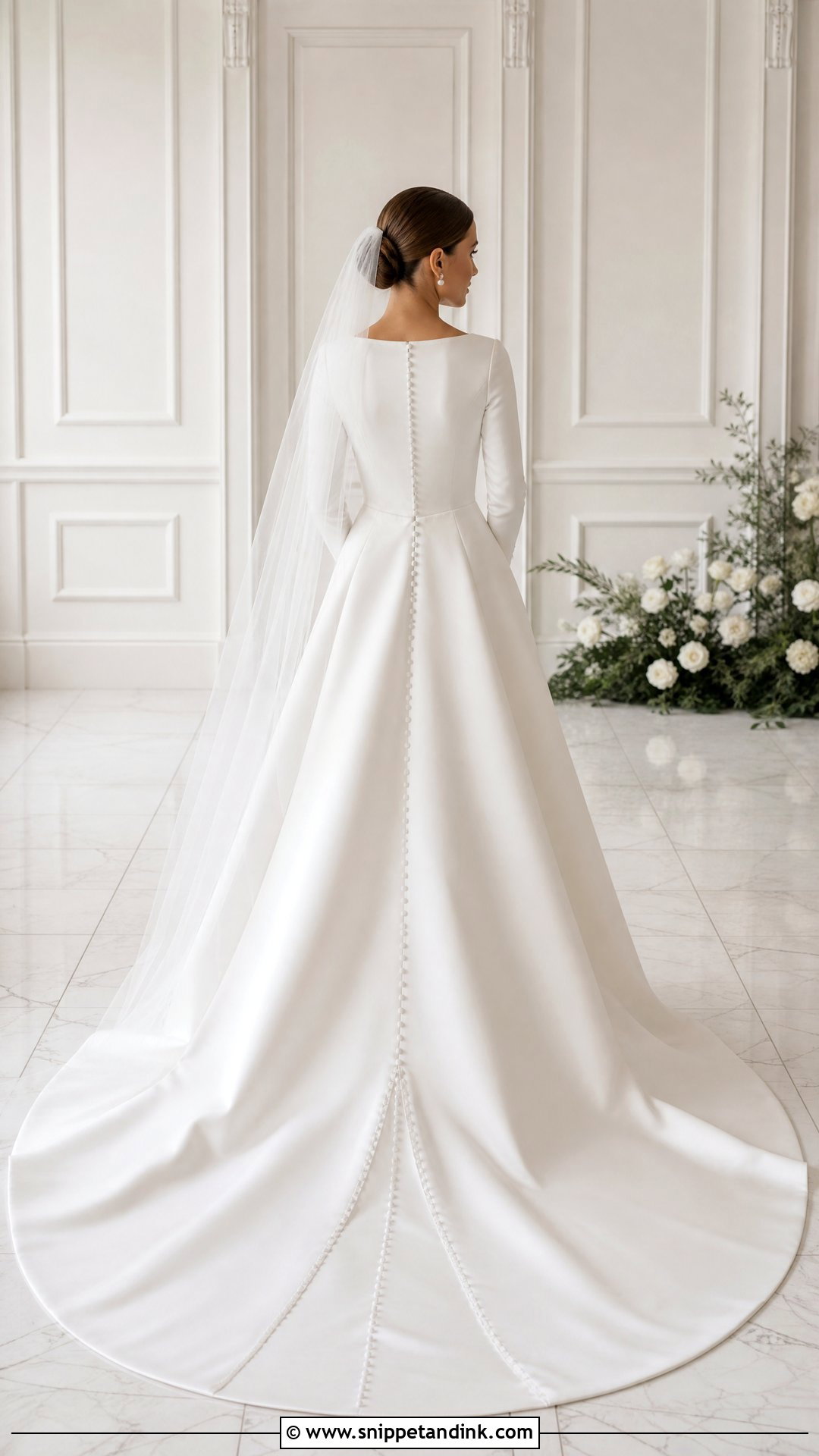
A modest satin gown with long sleeves and a bateau or high neck can look very current when the back is handled well. My favourite trick is carrying the covered buttons from the back of the bodice straight onto the train, so the join vanishes into the button row. A chapel length gives a real sweep without the logistics of a cathedral train. Closed-toe heels, pearl earrings, a simple veil and a low bun keep it graceful. Make sure the train fastens below the zip, not over it, so getting changed later doesn’t mean undoing the dress itself.
17. Boho Chiffon Wedding Dress With Detachable Lace Train
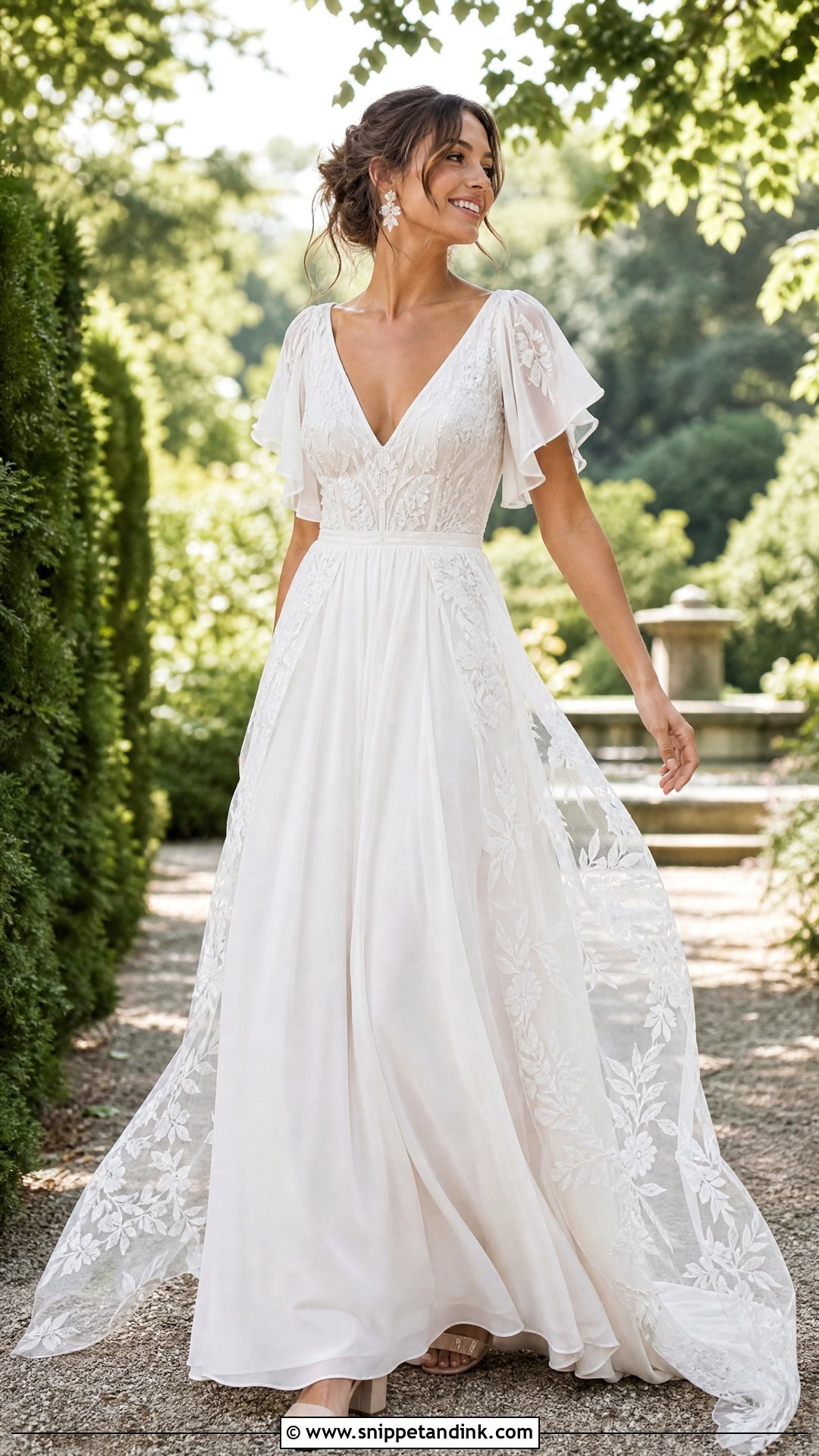
Chiffon and botanical lace suit a relaxed outdoor wedding. The base is an A-line with flutter sleeves, a V-neck and a lightly defined waist; the lace train starts at the back waistband and falls to an airy chapel length. Leaf motifs and embroidered vines sit better against chiffon than dense florals do. Low block heels, small floral earrings, a loose braided updo and a raw-edge veil complete it. The weights are the problem: heavy lace on light chiffon will drag the skirt out of shape, so keep the train lace light and the fasteners flexible.
18. Beach Slip Wedding Dress With Detachable Organza Train
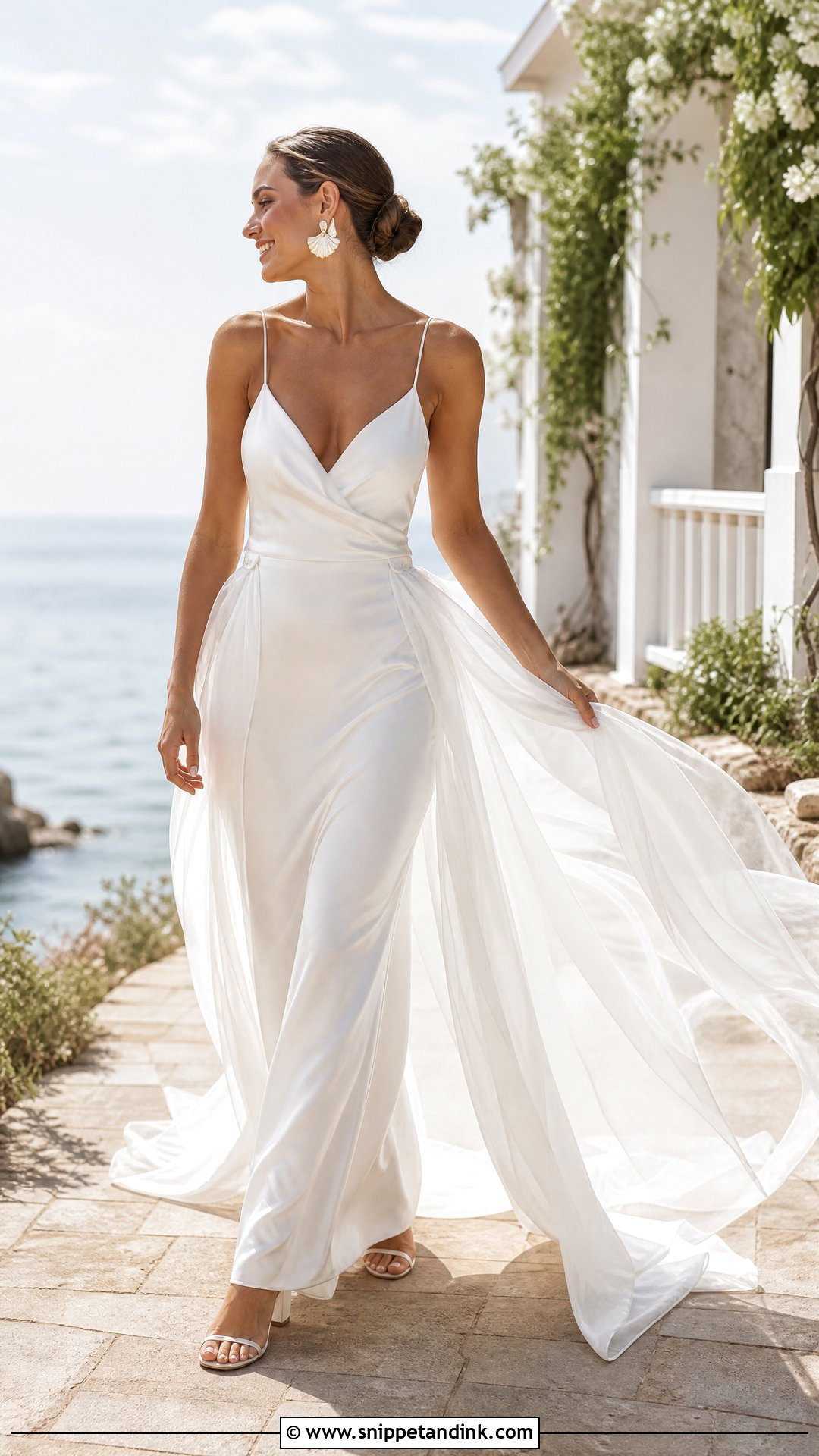
On a beach, practicality comes first. A bias-cut satin gown with comfortable straps and a draped neckline moves easily, and a sheer organza train fastened at the back waist adds ceremony impact without much weight. The front stays open and simple. Low block-heel sandals, shell earrings and a secure low bun suit the setting, plus a short veil that won’t trail in sand. Wind is the real test. Organza catches it like a sail, so ask for sturdy covered snaps and take the train off before you cross dunes or rocks.
19. Black And White Wedding Dress With Detachable Black Train
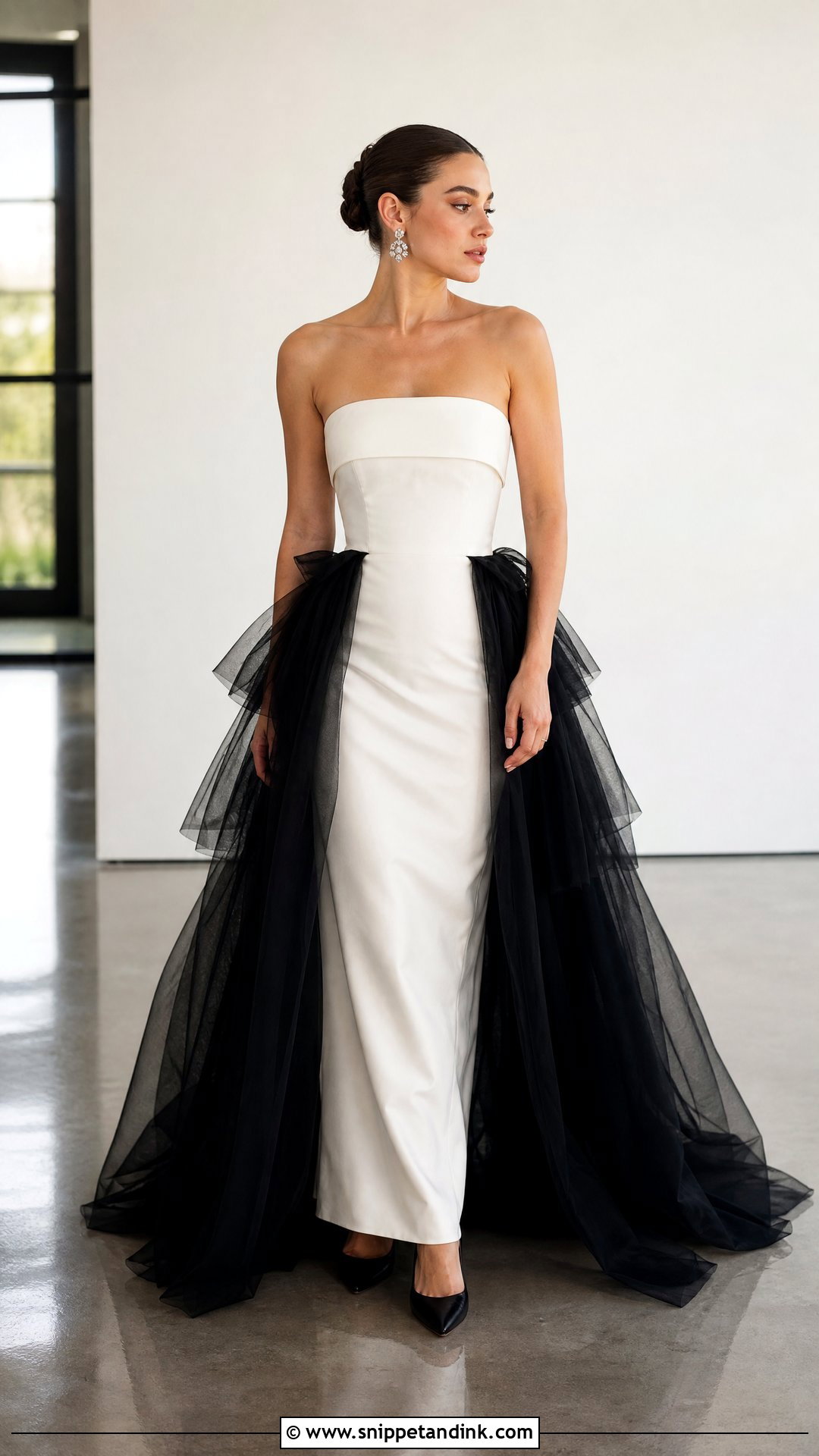
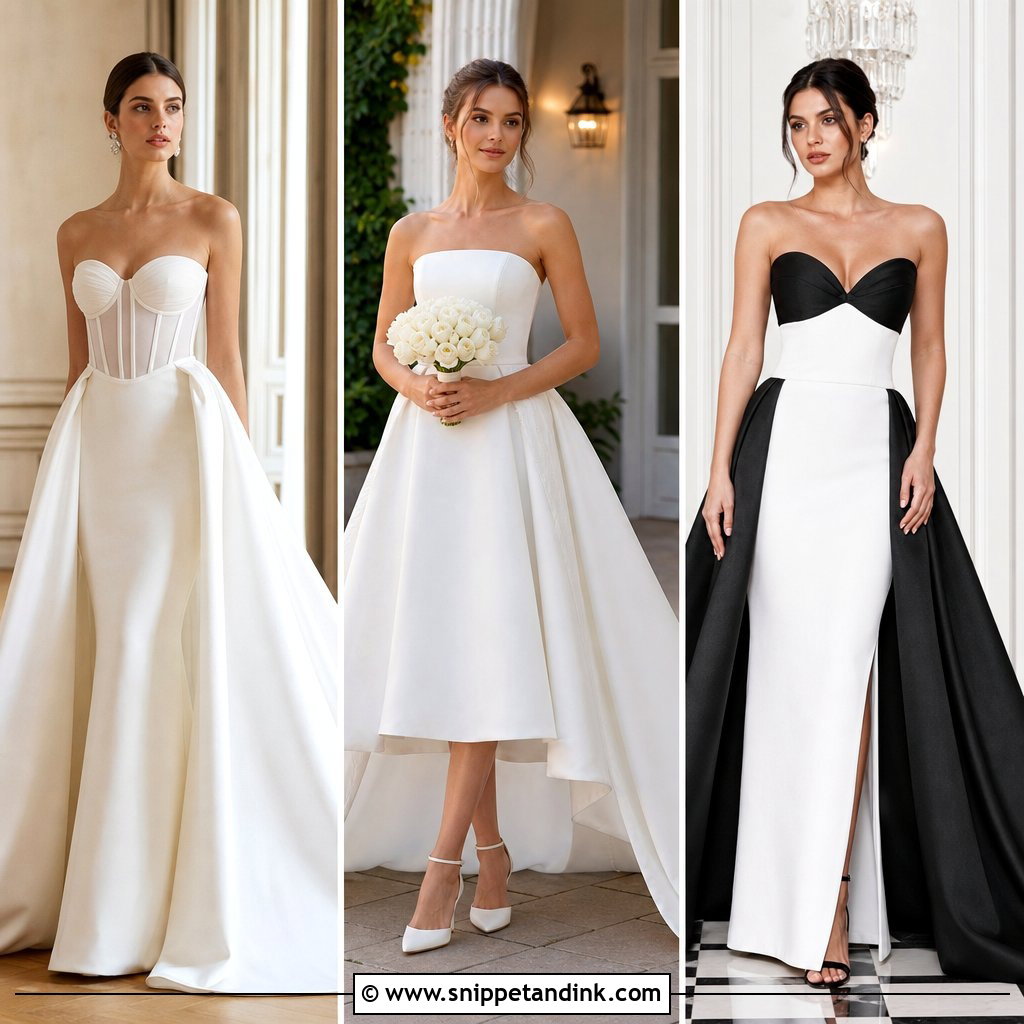
A black train against white or ivory is graphic and very modern, and it only works if the base is simple: a strapless column, fit-and-flare or A-line. I’d keep the black in tulle or organza layers rather than a heavy opaque fabric, which can look like a separate garment. A narrow black waistband, a velvet bow or a few black appliqués tie the colours together. Black pointed pumps, crystal earrings and a clean updo finish it; keep the veil white or go without. Once the train is off, you’re back in a classic light dress. Look at the black layers outdoors and under indoor light before committing. Sheer black changes a lot depending on what’s behind it.
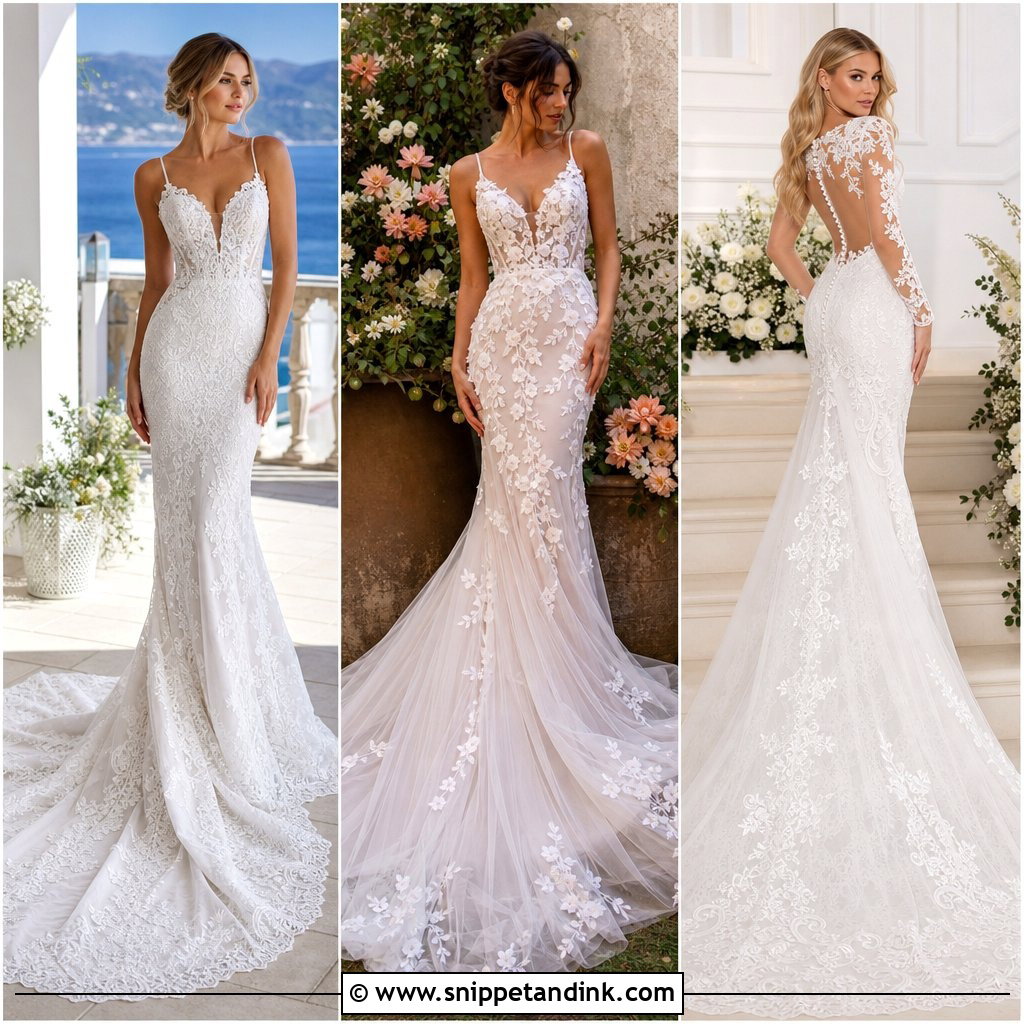
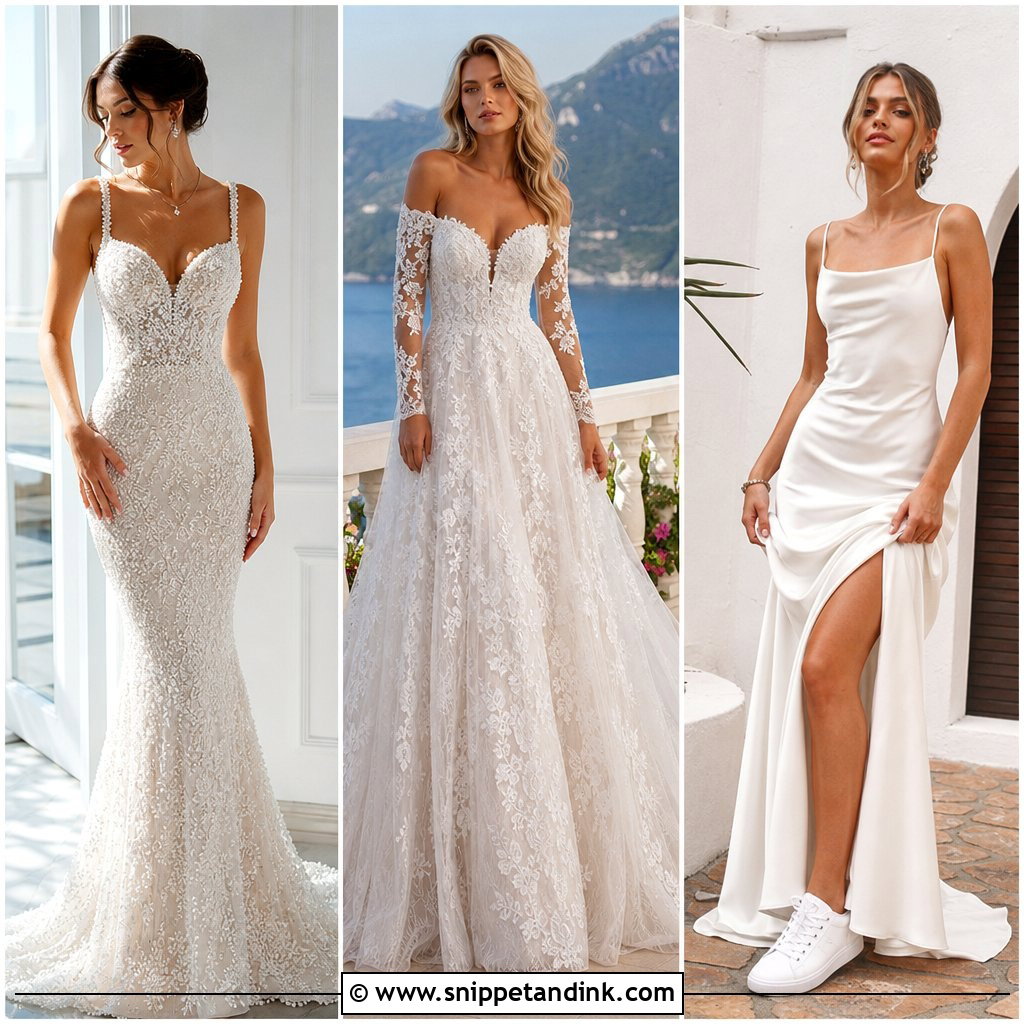
20. Beaded Trumpet Wedding Dress With Detachable Glitter Train
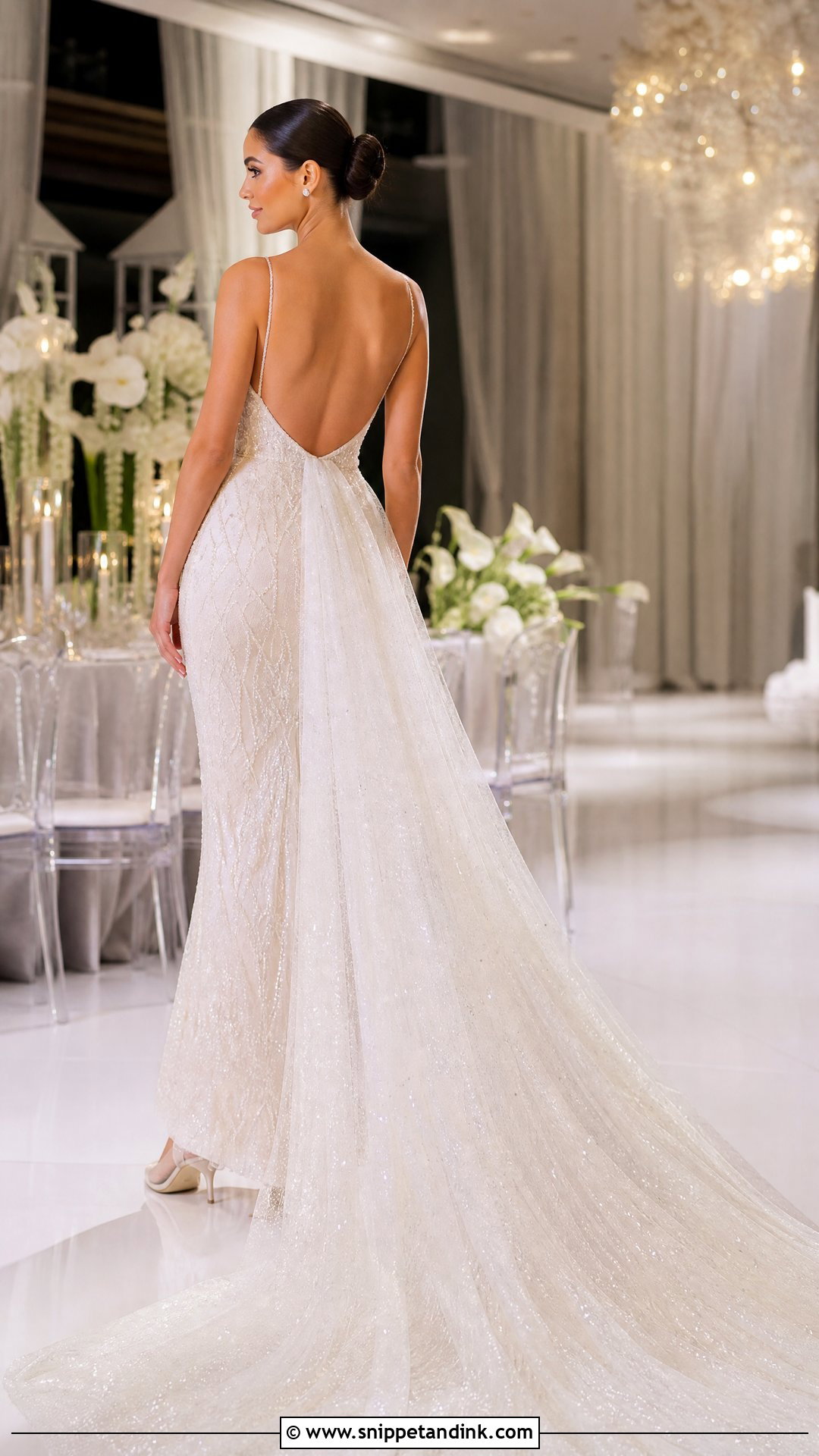
Beading that is heavy at the bodice and thins out down the skirt gives a trumpet gown an evening finish without weighing down the flare. The train, in glitter tulle, attaches at the upper hips or back waist, and its sparkle should match the beading’s tone, silver with silver and pearl with pearl. Crystal studs, metallic ivory pumps and a sleek bun are plenty. Run your hand along the inside of the train before the wedding. Rough glitter and loose beads snag the gown and the veil, and some venues dislike glitter on their floors.
Rehearse the Switch With the Person Who Will Do It
The removal always takes longer on the day than in the shop, because the room is busier and the helper is nervous. I ask brides to pick one person, usually a bridesmaid or the planner, and have them do it at the last two fittings.
- Decide when it happens. Straight after portraits, before the grand entrance, gives you the lighter dress for the first dance.
- Choose where. A side room or a corner with a chair is better than the middle of the reception, and a cheap clean sheet on the floor keeps the train off whatever is underfoot.
- Pack a small kit: a buttonhook if there are loops, a few safety pins, a lint roller and a hand steamer if the venue allows one.
- Check the back afterwards in a mirror or a phone photo. A single hook left done up makes the dress hitch on one side.
Most changes take a few minutes once rehearsed. Twenty buttons or a double fastening will run longer, so build that into the timeline rather than hoping.
Where the Train Goes After It Comes Off
Nobody plans for this, and the train ends up crumpled on a chair or stuffed into a tote. Bring the garment bag the train arrived in and hand it to someone who will take it straight to the car or the suite. Lay tulle and organza loosely rather than folding them tight; satin and Mikado crease hard where they’re folded, so roll them around tissue if you can.
After the wedding, send the gown and the train to the cleaner together, even if the train looks spotless. Cleaning only one piece can shift its shade slightly, and you’ll notice the mismatch if you ever wear them together again for photos or pass the dress on. Store both away from light in breathable cotton bags, never in plastic, with acid-free tissue in the folds.
Two Looks, One Fitting Room: What to Settle Before the Final Alteration
A good detachable train should look like part of the dress and leave you noticeably freer once it’s off. The fabric, where it attaches, how heavy it is and how big your venue is will narrow the field faster than any photo. Bring the dress and train together to every fitting that matters. Walk, sit, turn and rehearse the removal with the person who will actually do it on the day. Hidden fasteners, a balanced load and closely matched fabric are what make the change look easy to guests, even when it took three rehearsals to get there.
You'll Like These Ideas:





Leave a Reply