
Dip dye sits halfway between classic bridal white and a full colored gown. Color rises from the hem in a graduated ombré effect, as a faint wash or a strong blend, and it changes the feel of a tulle, chiffon, lace or satin dress completely. The shade usually comes from the venue, the flowers or the season. The part brides underestimate is the fabric: each fiber takes dye differently, so the same blush can look rosy on one skirt and peach on another. Below are twenty complete outfits, from a barely-there pink hem to a full rainbow skirt, with what I’d watch for in each.

Why the Same Dye Turns Out Differently on Tulle, Satin and Lace
The fiber decides almost everything about a dip-dyed gown. Most bridal tulle, satin and chiffon today is polyester, and polyester won’t take ordinary household dye. It needs special dyes and water close to boiling, which is why home attempts on synthetic gowns usually come out patchy or barely tinted. Nylon tulle and real silk accept dye much more easily and give clearer, brighter color.
- Check the care label for fiber content before choosing a shade. A dyer can tell you what’s realistic once they know it.
- Expect lace to take color unevenly, because the net and the embroidery thread are often different fibers.
- Beading, sequins and glued trims may not survive a hot dye bath, so a beaded hem is a reason to ask about hand painting or spraying instead.
- Linings and seam threads are frequently polyester even on a silk gown, and they may stay white.
This is why I always ask for a test strip cut from the hem allowance. It’s the only honest preview of how your particular gown will look.
1. Pink Dip Dye Wedding Dress
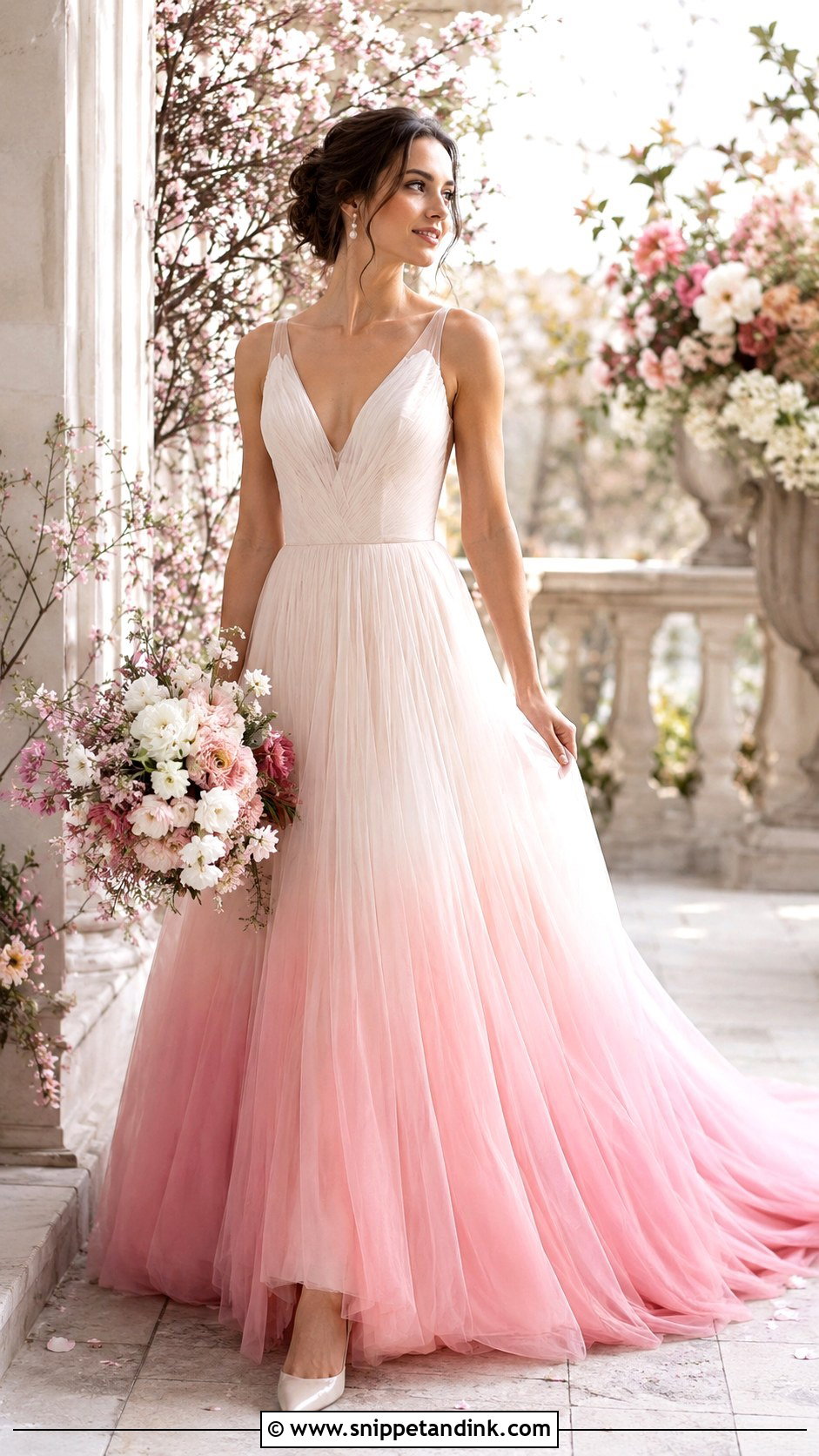
Pink is the gentlest way into color, and it’s where I start most brides who are nervous about dye. On an ivory A-line with a fitted bodice and a light tulle skirt, pale blush can deepen into rose around the lowest layers and the hem. Tulle layers each catch the dye a little differently, which softens the transition naturally. Pearl drop earrings, a delicate bracelet and ivory pointed pumps keep it polished, and a loose bouquet of white roses, pink ranunculus and soft greenery picks up the gradient. Use a sheer fingertip veil; a decorated one fights the colored skirt. Natural makeup, rosy cheeks and a relaxed low bun suit gardens, ballrooms and spring weddings.
2. Blue Dip Dye Wedding Dress
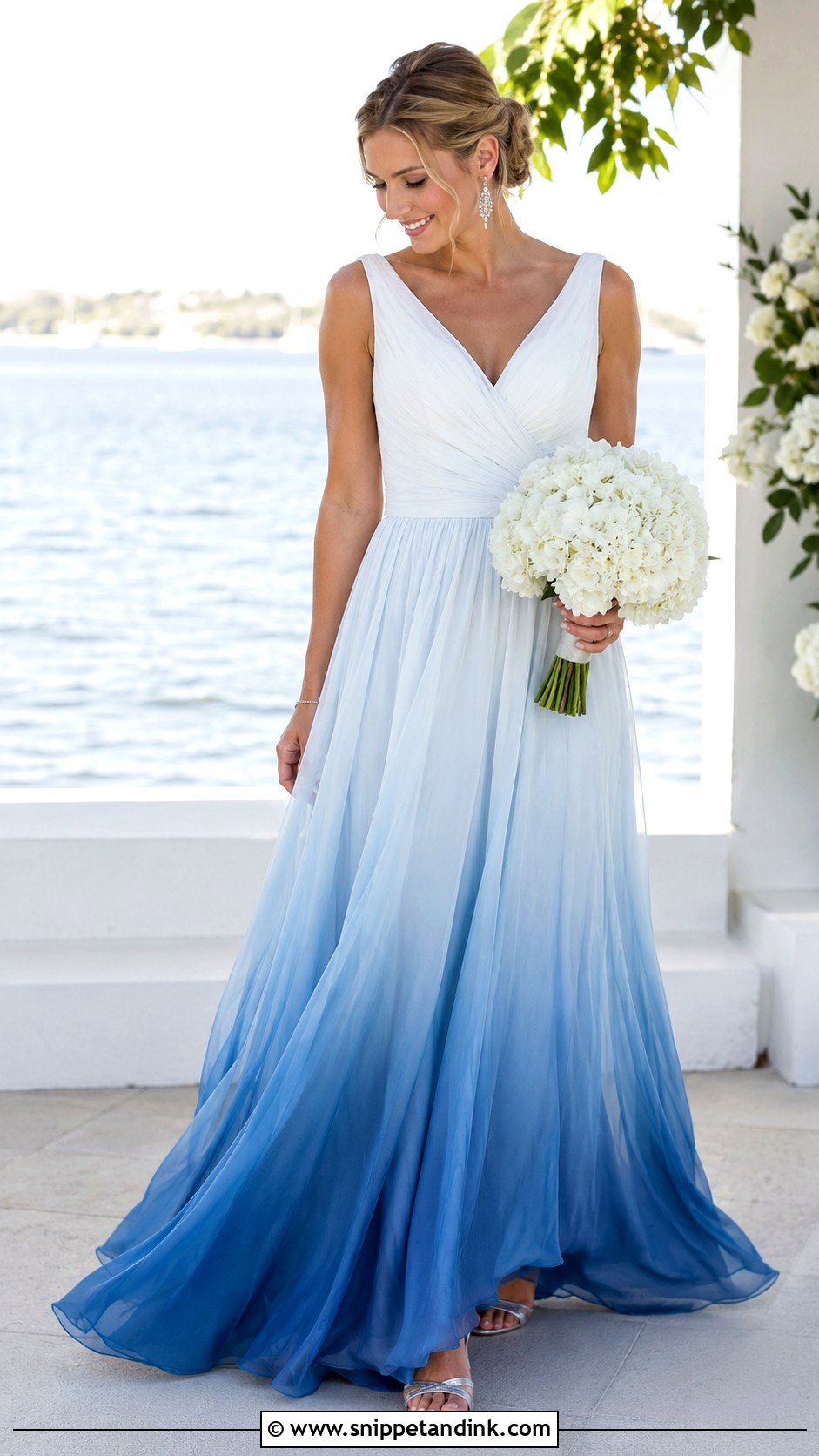
Blue looks its best on fabric that moves, so a white chiffon gown with a softly draped bodice, a defined waist and a flowing skirt is the ideal base. Start with powder blue and deepen toward cornflower or ocean blue at the floor. Silver earrings, a slim crystal comb and white or metallic low sandals suit it, along with white hydrangeas, delphiniums and eucalyptus. A short, simple veil keeps the blue hem visible from behind. It’s made for waterfront ceremonies and coastal venues. One caution: at the beach, wet sand and seawater can lift fresh dye onto your feet or shoes, so keep the hem dry until the photos are done.
3. Purple Dip Dye Wedding Dress
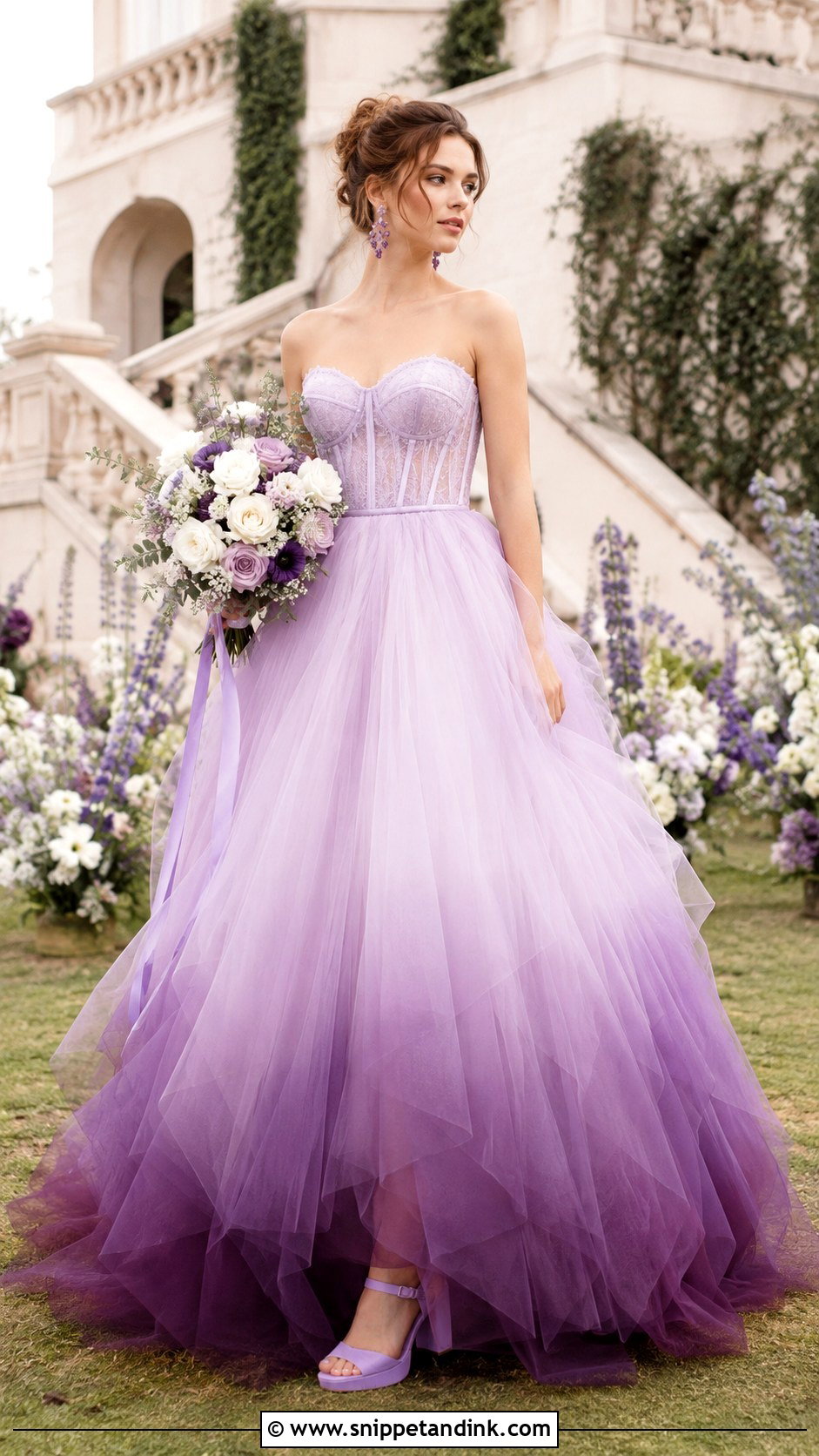
Purple turns an ivory gown into something artistic and plainly nontraditional. A structured corset bodice over a layered tulle ball gown gives enough volume to show several shades: lavender into violet, finishing in plum. Purple is also the color I check most carefully in photos, because some violet dyes shift blue under flash and redder in candlelight. Amethyst-style earrings, a simple silver necklace and lavender block heels suit it, with lilacs, white roses and trailing greenery. Soft waves or a loose braided updo with a small crystal pin finish the hair. Pick a clean veil with no lace edging. Woodland, estate and evening settings all work.
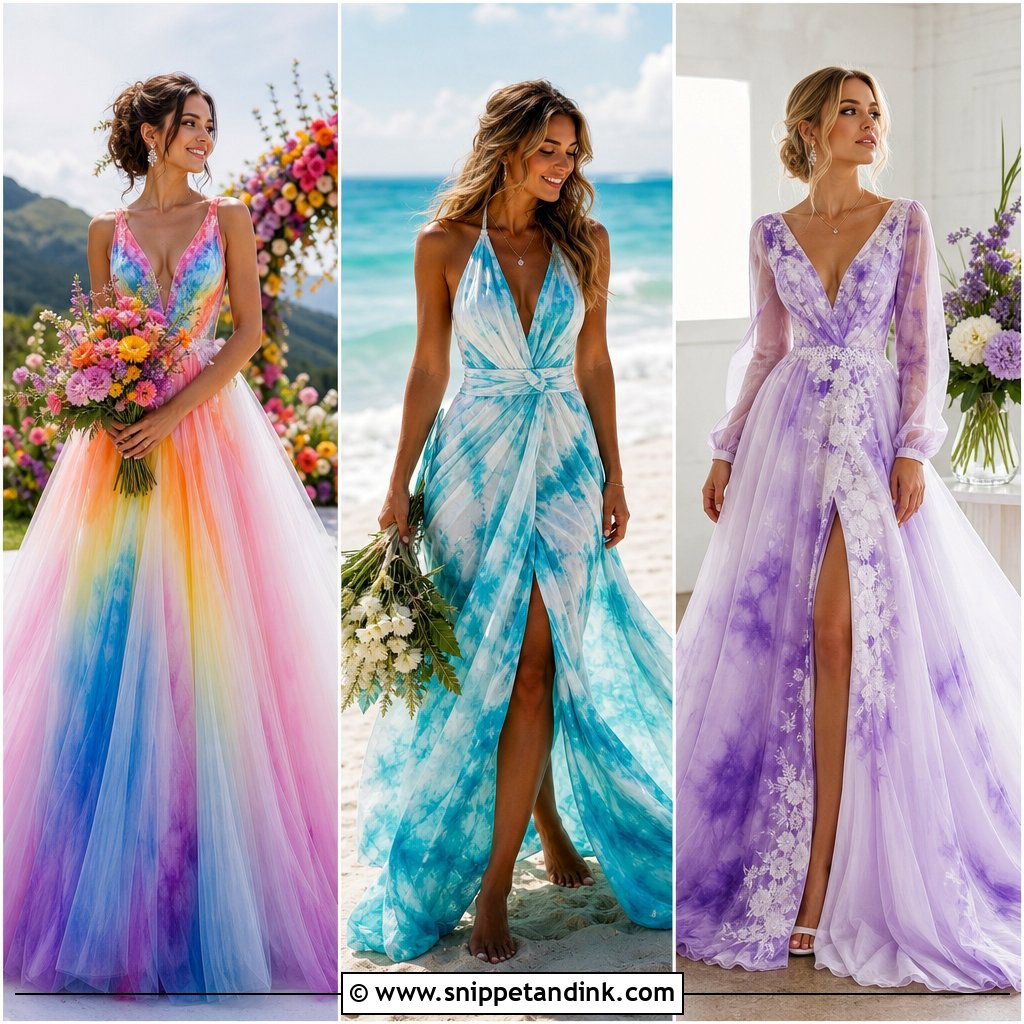
4. Sunset Dip Dye Wedding Dress
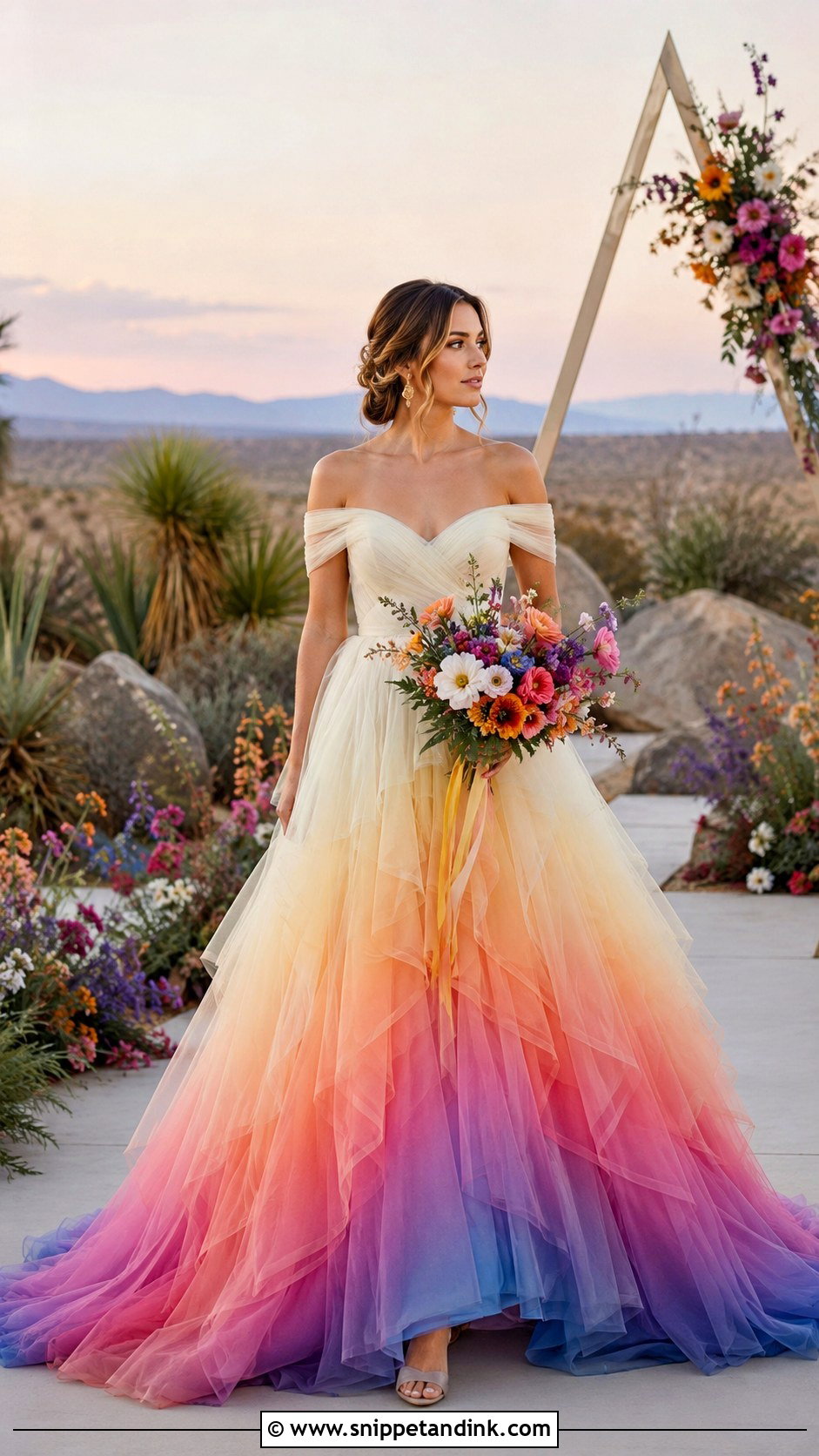
A sunset skirt blends yellow, orange, coral, pink, and purple through the hem of an off-the-shoulder ivory gown, a mix some dyers call a phoenix palette. Layered tulle gives it the most movement, because each layer shows a slightly different band of color as you walk. With five colors involved, everything else stays quiet: understated gold earrings, neutral heels and a plain ivory veil. Peach roses, coral ranunculus, yellow blooms and a few deep burgundy accents make the bouquet, with soft bronze makeup and a twisted low bun. Time the portraits for late afternoon at an outdoor or desert venue, when the sky does half the work.
5. Rainbow Dip Dye Wedding Dress
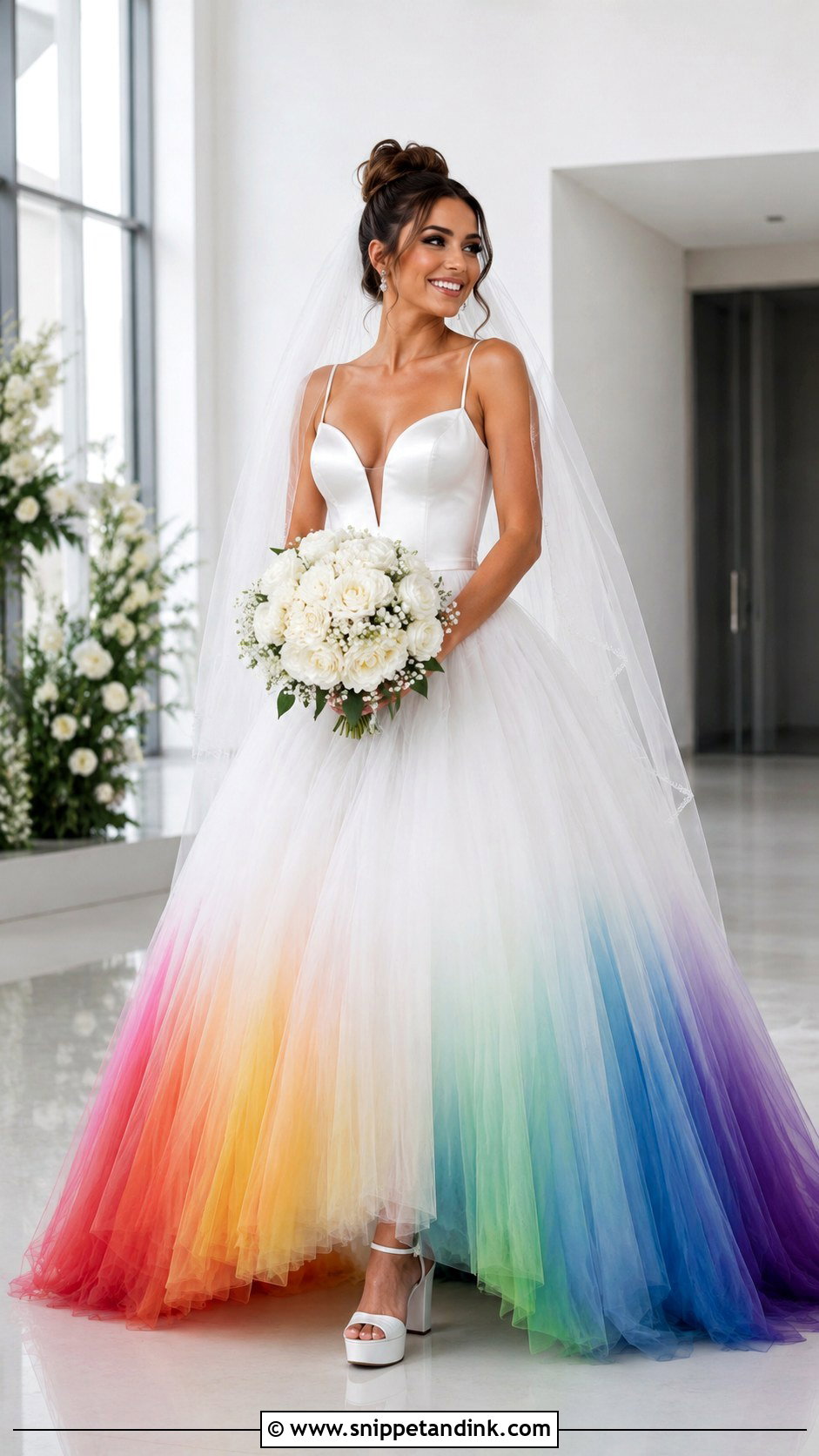
A rainbow dip dye wedding dress is pure joy, and it suits a bride whose personality is already colorful. Keep the bodice plain white satin and give the color a full tulle skirt, so red, orange, yellow, green, blue and violet each have room. Hold the color to the lower skirt. Rainbow skirts usually work best across several sheer layers, which blur the edges between colors instead of leaving hard stripes. White platform sandals, small crystal studs and a clean cathedral veil finish it. Carry mostly white flowers with a few bright blooms placed through the bouquet. A sleek bun and fresh makeup keep the styling calm; the hem has all the personality the outfit needs.
6. Black Dip Dye Wedding Dress
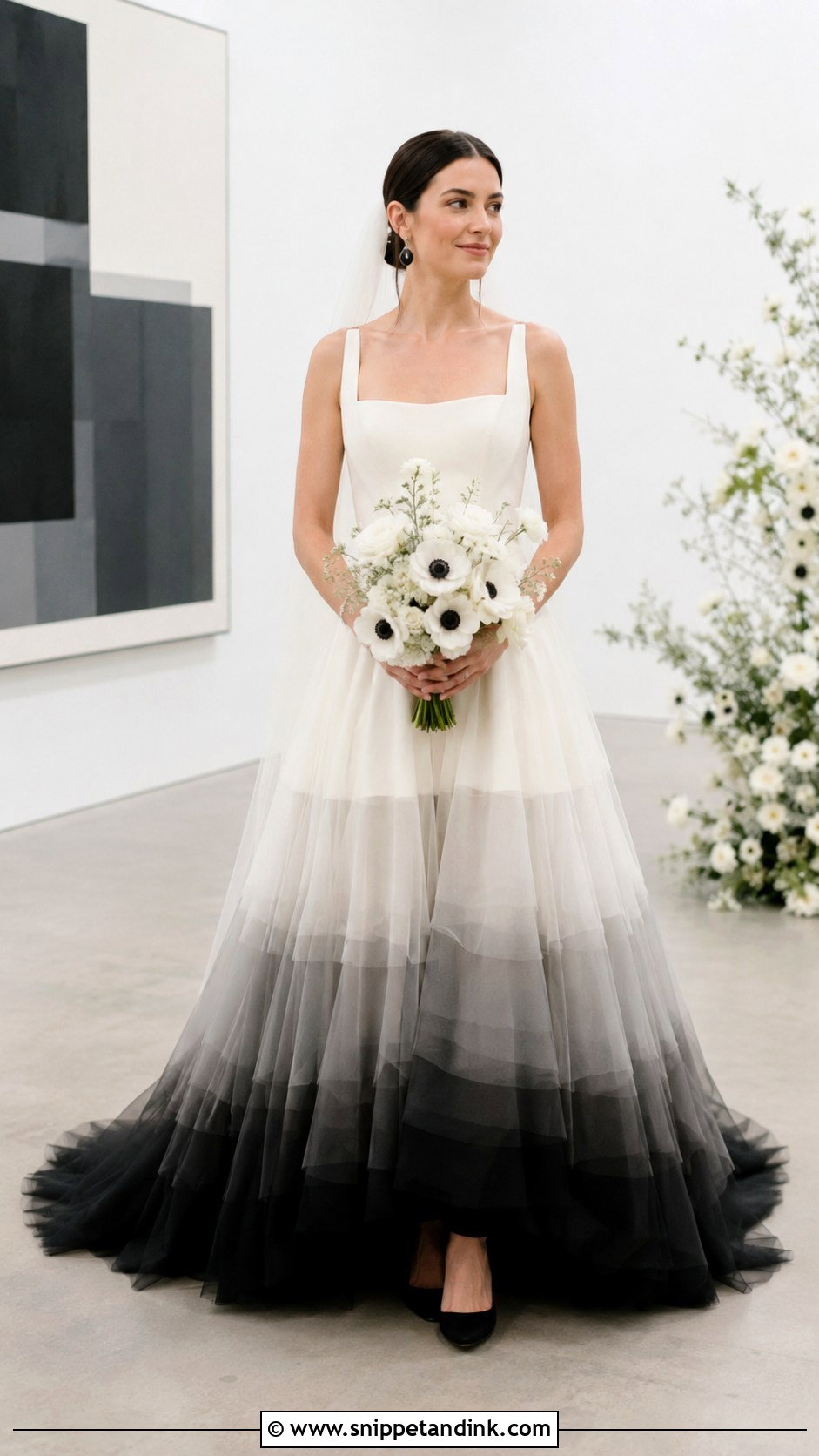
Black at the hem gives an alternative bride drama while keeping a recognizable white gown on top. A strapless or square-neck A-line with a smooth ivory bodice and layered skirt works well, with soft grey appearing near the knee and deepening through charcoal to black. Black velvet pumps, onyx-style earrings and a slim black ribbon around the bouquet tie it together, and white anemones, roses and dark greenery balance light and dark. A plain ivory veil and a neat chignon keep the top traditional. Galleries, historic hotels and formal evenings suit it. Black dye is the most likely to transfer, so ask for the skirt to be rinsed until the water runs clear and keep it off pale upholstery.
7. Red Dip Dye Wedding Dress
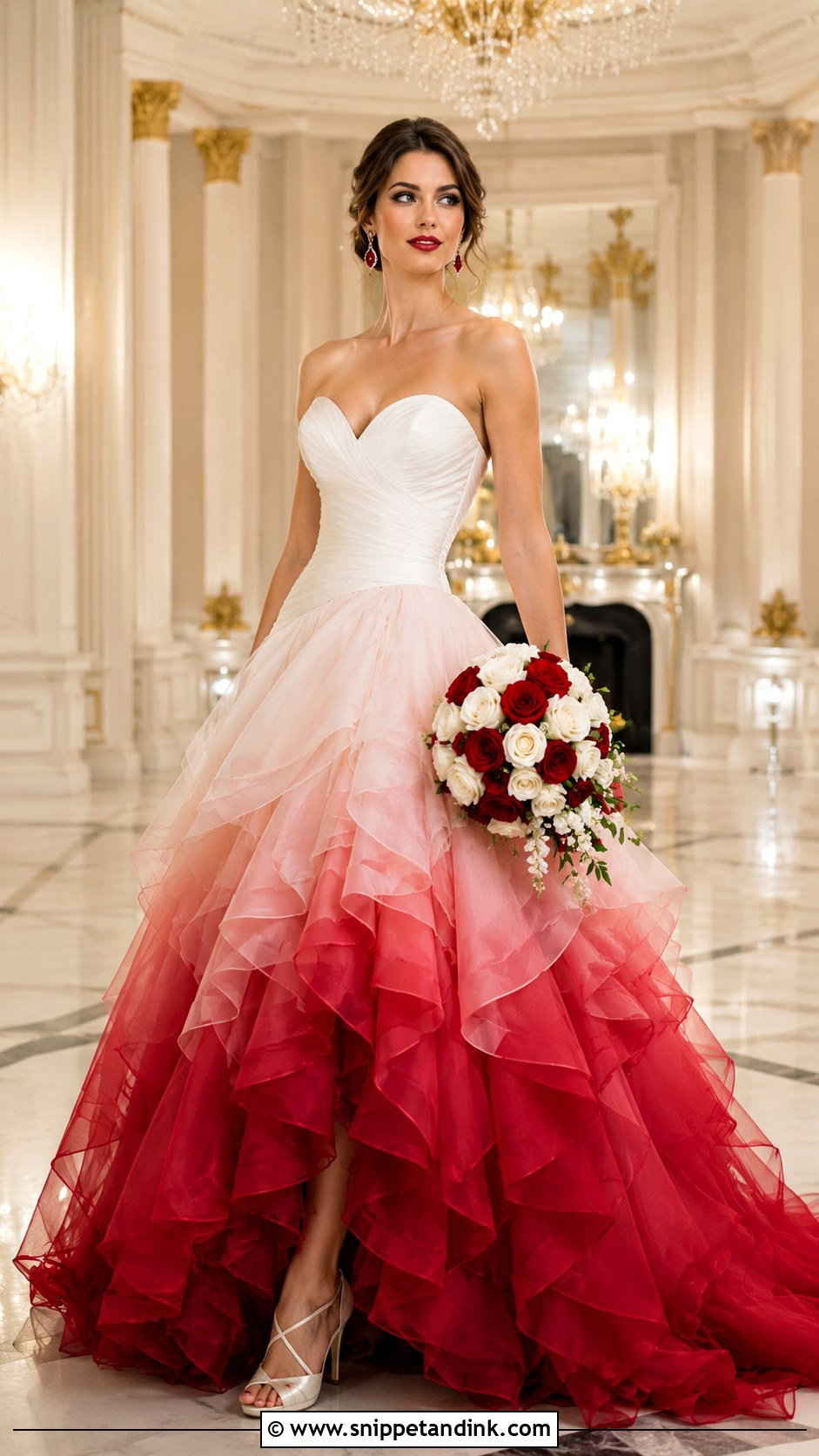
Organza holds a red gradient well because it’s crisp enough to show color without looking heavy. On a fitted ivory bodice with a full organza skirt, let pale pink build to cherry and finish in crimson along the edge. Nude or ivory heels lengthen the line, and small ruby-toned earrings echo the hem. Carry white roses with only a few red blooms and deep green foliage. I’d resist red everywhere: a red necklace or headpiece on top of a red hem looks like a costume. A smooth updo, classic makeup and a soft red lip finish it, for a ballroom, a winter wedding or portraits against plain stone.
8. Teal Dip Dye Wedding Dress
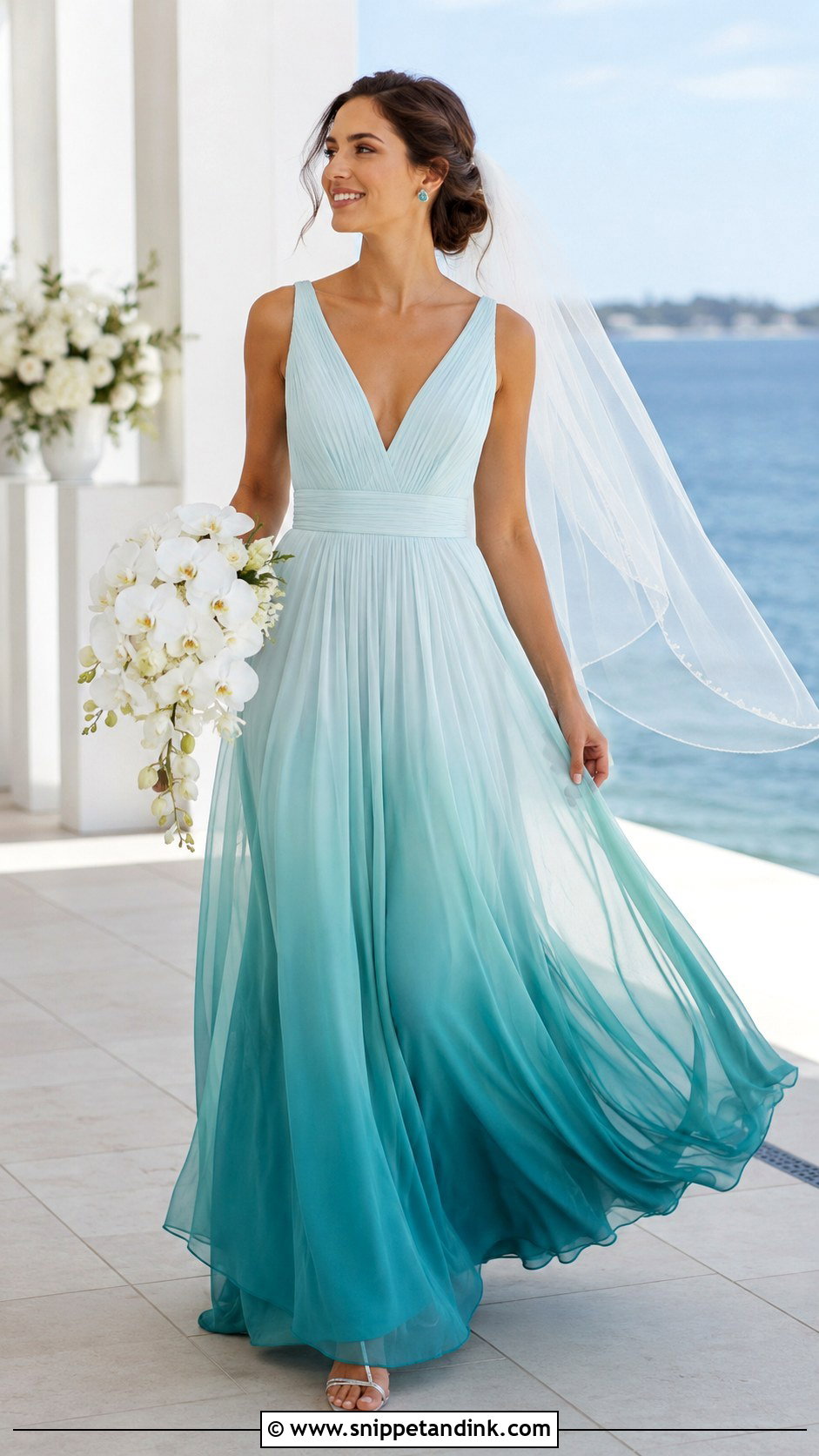
Teal pops against ivory more than almost any other shade. A sleeveless chiffon gown with a V-neck, a natural waist and a softly gathered skirt fades from pale aqua through turquoise into saturated teal at the hem and train. Metallic silver sandals, aquamarine studs and a slim bracelet add shine. White orchids, pale blue flowers and eucalyptus keep the bouquet clean, and a sheer chapel veil lets the teal train show from behind. Waved hair and luminous makeup finish it. Beaches, greenhouses and waterfront venues suit it. Teal sits between blue and green, so I match your swatch to the flowers in daylight; under warm lights it can drift toward plain green.
9. Green Dip Dye Wedding Dress
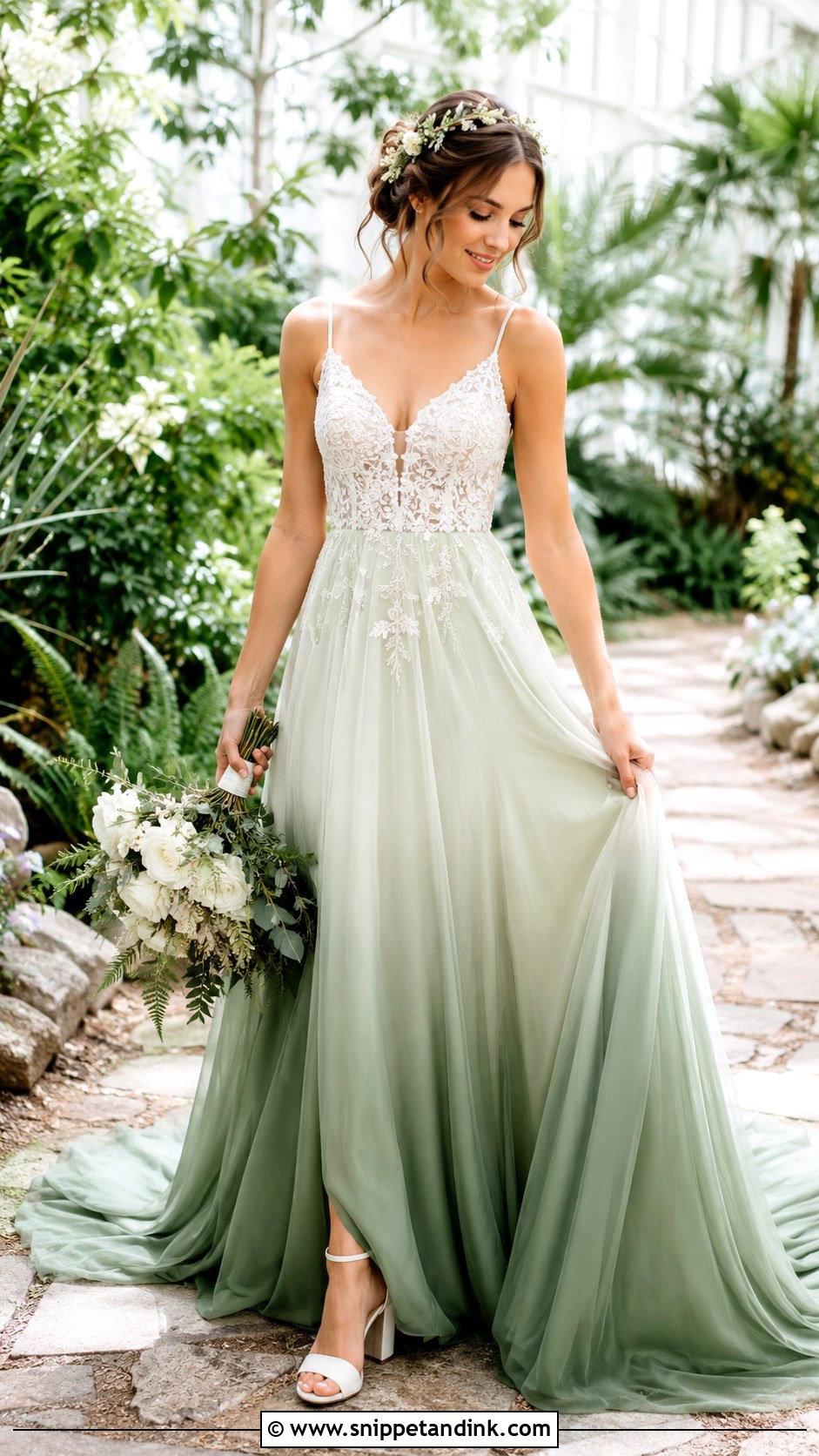
Green feels calm and connected to the outdoors. An ivory lace bodice over a light chiffon or tulle skirt can fade from pale sage to eucalyptus green, with the transition diffused rather than a sharp line. Ivory block heels, small pearl earrings and a delicate botanical hair vine suit it, with white garden roses, ferns and mixed greenery. End the veil above the strongest color so the hem shows. Loose waves or a low textured bun finish the hair. Forest ceremonies, botanical gardens and mountain venues are natural settings. On grass all day, a green hem also hides stains better than any other shade here.
10. Peach Dip Dye Wedding Dress
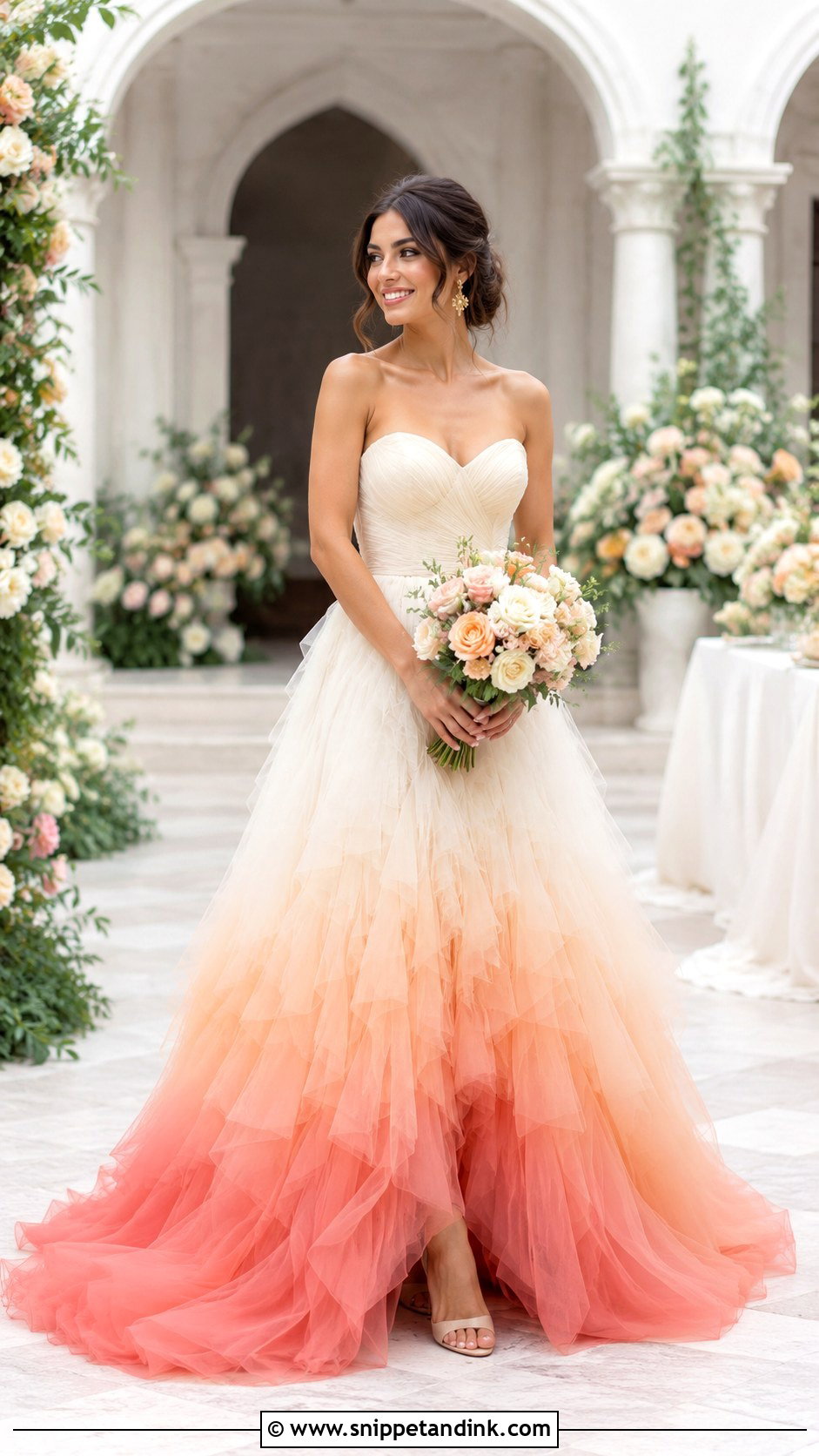
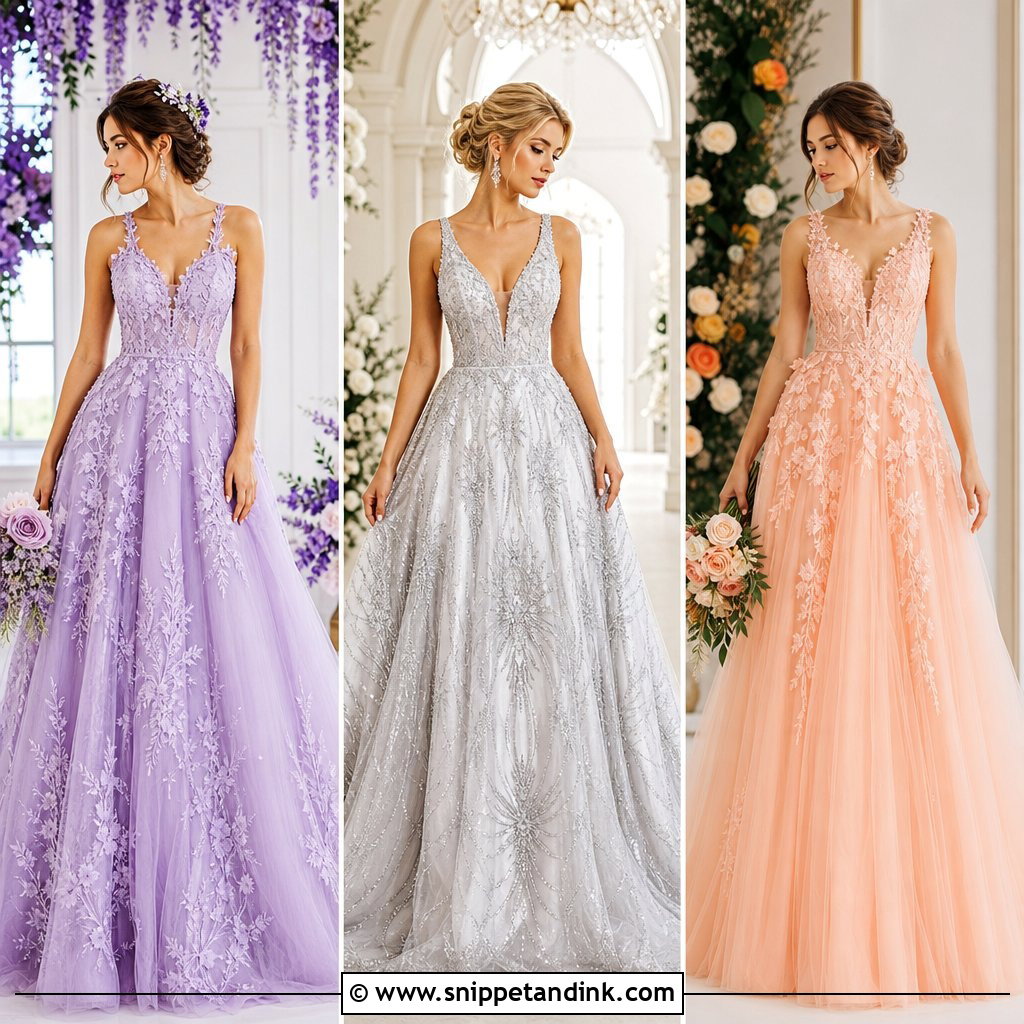
Peach is warm and kind to most skin tones, especially in spring and summer light. On a sweetheart gown with an ivory bodice and several layers of soft tulle, blend pale champagne into peach, apricot and a slightly deeper coral at the hem. Nude heels, gold drop earrings and a fine gold bracelet suit the warmth. Carry ivory roses, peach ranunculus and light greenery wrapped in cream ribbon, and keep the veil shoulder length so the color stays visible. A loose low bun with a few face-framing pieces finishes it. Gardens, vineyards and courtyards suit it. Pale peach can disappear into ivory in bright sun, so I usually ask for one shade deeper at the hem than looks right indoors.
11. Lavender Dip Dye Wedding Dress
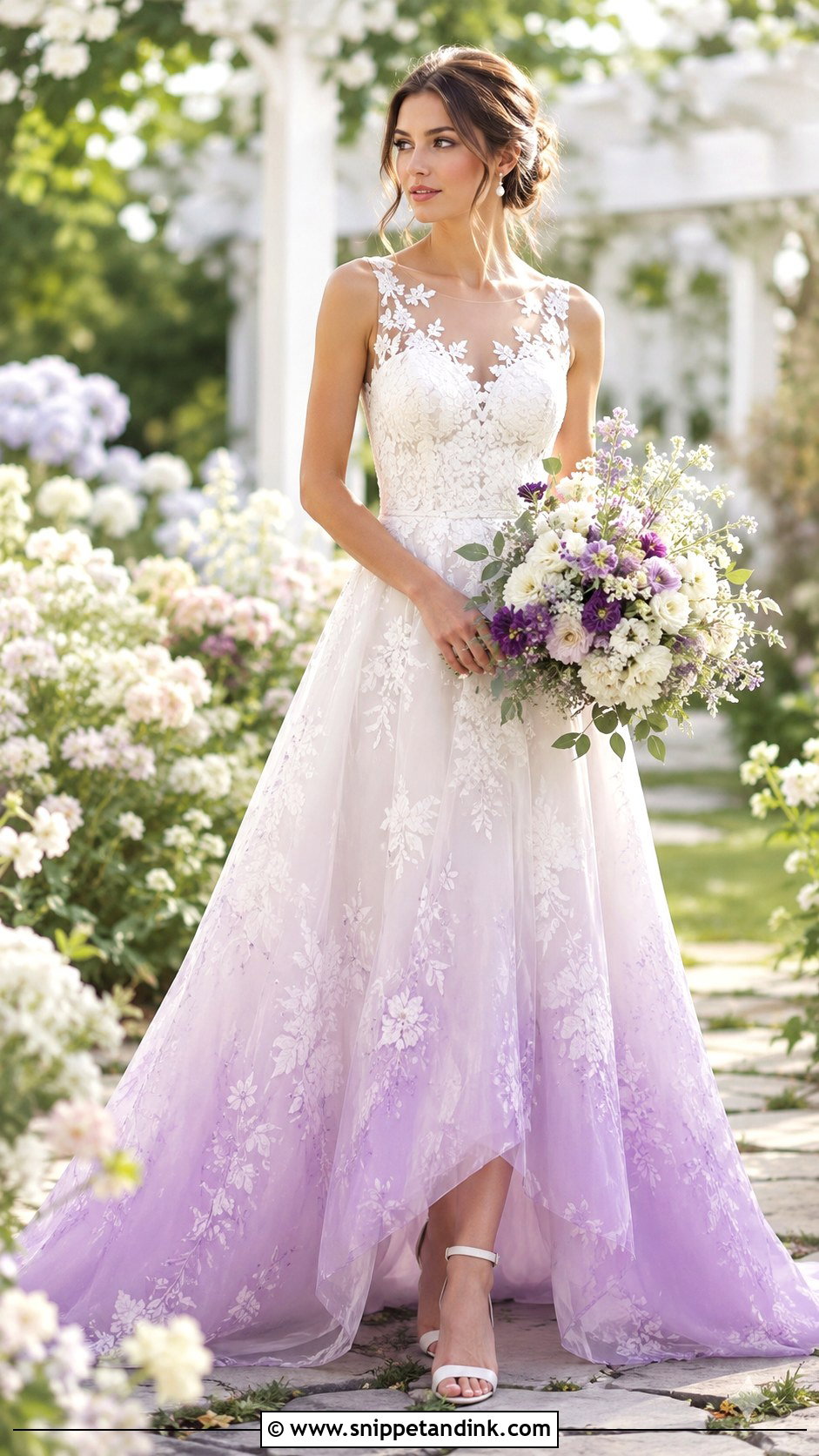
Lavender gives visible color while staying delicate. An ivory gown with a lace illusion bodice, a defined waist and an A-line skirt carries a lilac wash that’s nearly transparent at the top and deepens to lavender at the bottom. Pearl-and-crystal earrings, ivory ankle-strap heels and a narrow silver bracelet suit it. White sweet peas, pale purple flowers and muted greenery support the color without making the bouquet look themed. Choose a lace-free fingertip veil. Soft curls, a hint of lilac on the eyes and a natural lip finish the look for flower gardens, country estates and spring ceremonies. Lavender fades faster than most shades in strong sunlight, so store the gown in the dark between fittings.
12. Dusty Blue Dip Dye Wedding Dress
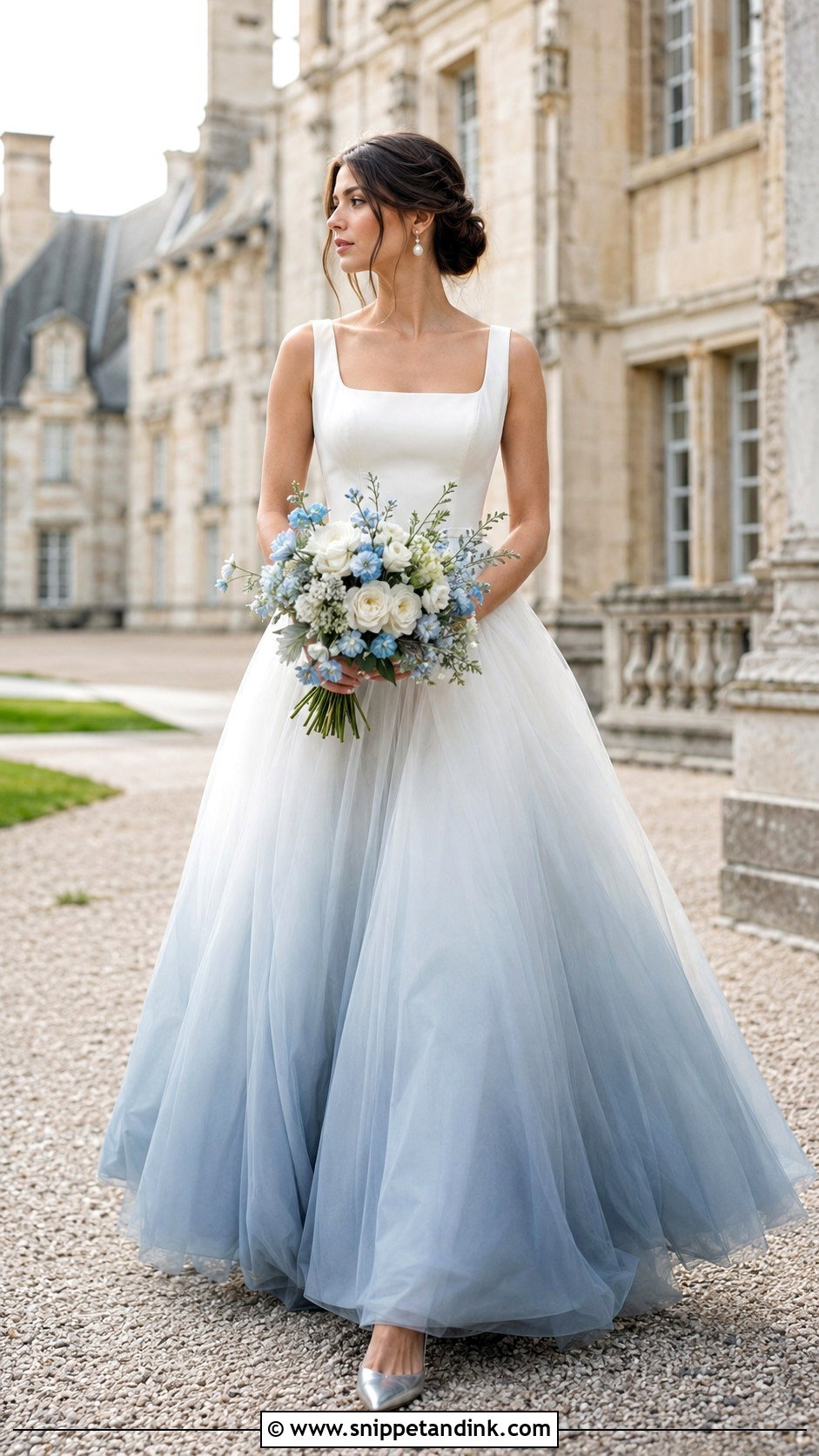
Dusty blue is the answer when bright blue feels too loud and plain ivory too expected. A square-neck gown with a fitted bodice and a full matte tulle skirt moves from ivory through misty blue to a muted slate at the hem. Matte tulle helps here, since shiny tulle can make dusty shades look flatter. Silver pointed shoes, pearl earrings and a structured white clutch for the reception suit it, along with white roses, blue thistle and soft eucalyptus. A long sheer veil adds ceremony without hiding the color. A polished side-parted low bun finishes it. Historic venues, winter celebrations and city weddings all suit this shade.
13. Rose Gold Dip Dye Wedding Dress
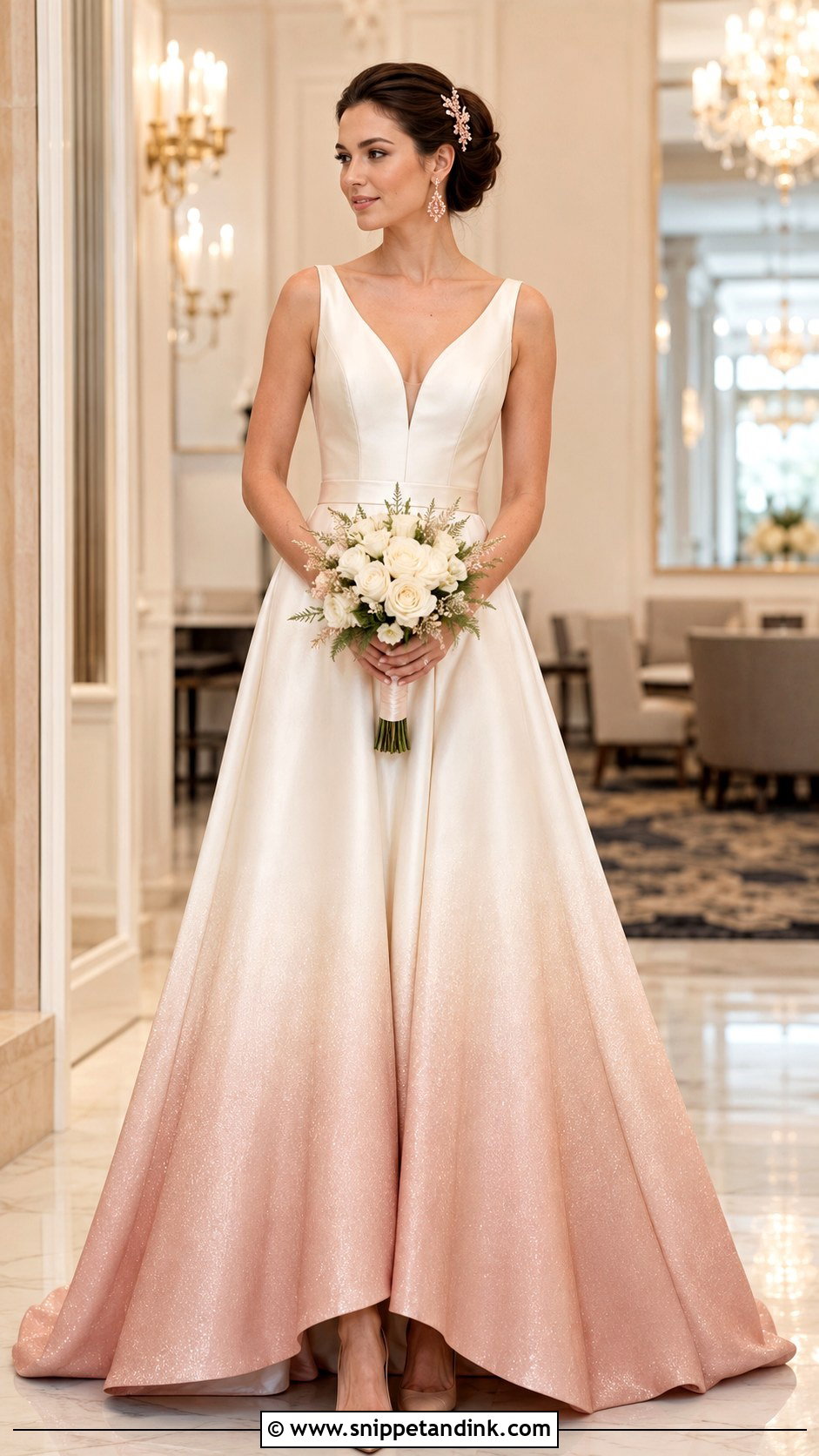
Rose gold adds warmth and a little shimmer. On an ivory satin gown with a fitted waist and a softly flared skirt, pale blush deepens toward a metallic-looking rose gold near the hem. That metallic look usually comes from a shimmer finish applied over dye, so ask how it’s done and whether it rubs off on hands and shoes. Rose gold earrings, nude pumps and a crystal hair comb suit it, with a compact ivory and blush bouquet and a plain cathedral veil. Brushed-back waves, glowing makeup and a muted rose lip finish it for hotel ballrooms, lofts and evening receptions.
14. Pastel Rainbow Dip Dye Wedding Dress
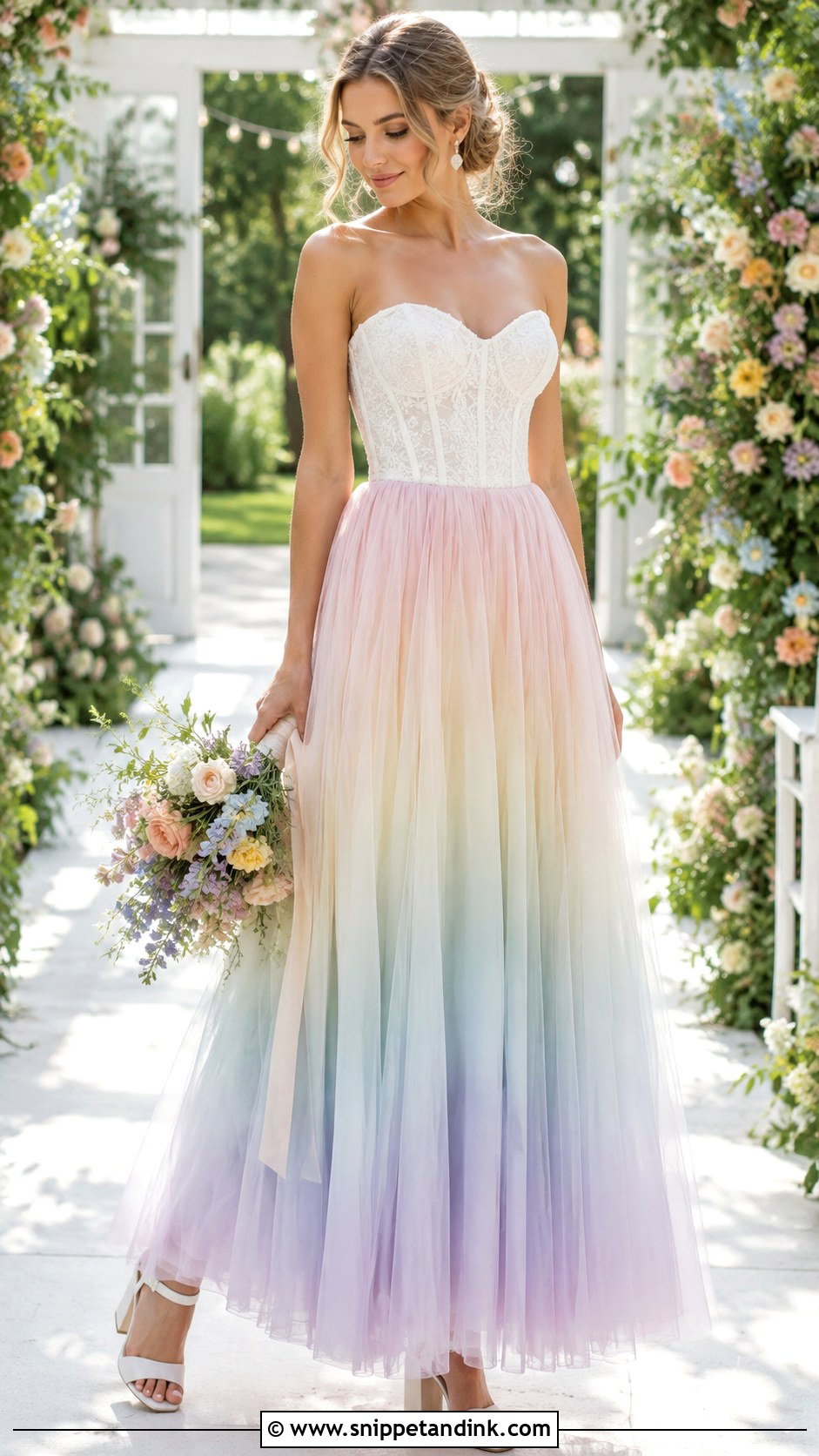
A pastel rainbow gown gives you many colors in a softer form. A structured ivory bodice over a feather-light tulle skirt carries blush, peach, pale yellow, mint, powder blue and lavender, each flowing into the next. Pale yellow is the hardest of these to see on ivory, so ask the dyer to strengthen it slightly or it vanishes in photos. White block heels, opal-style earrings and a thin pearl bracelet keep the styling bright. Carry a mostly white bouquet with small pastel accents spread through it, not grouped by color. A plain fingertip veil and a loose bun with soft strands finish it for gardens and light-filled rooms.

15. Orange Dip Dye Wedding Dress
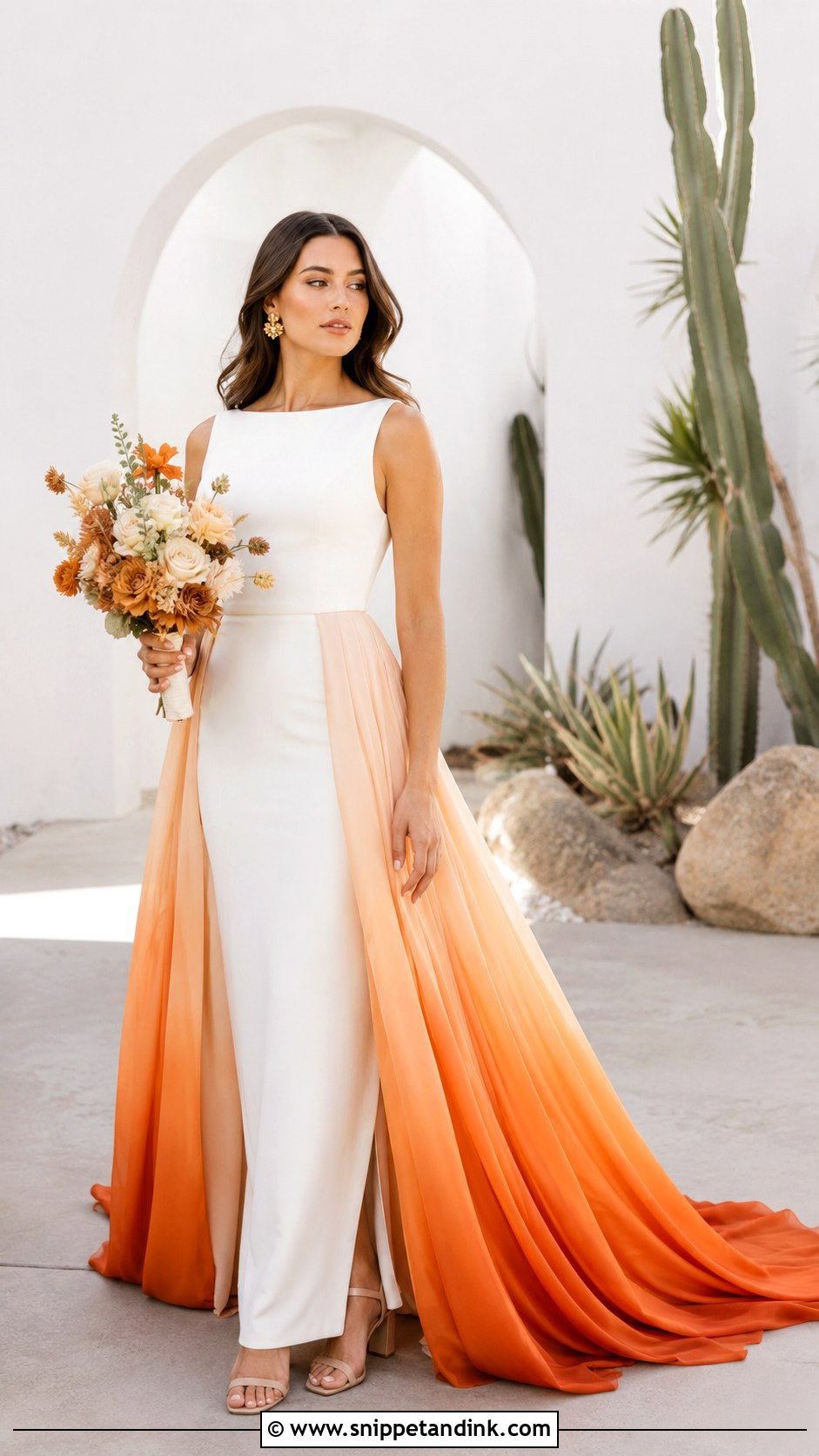
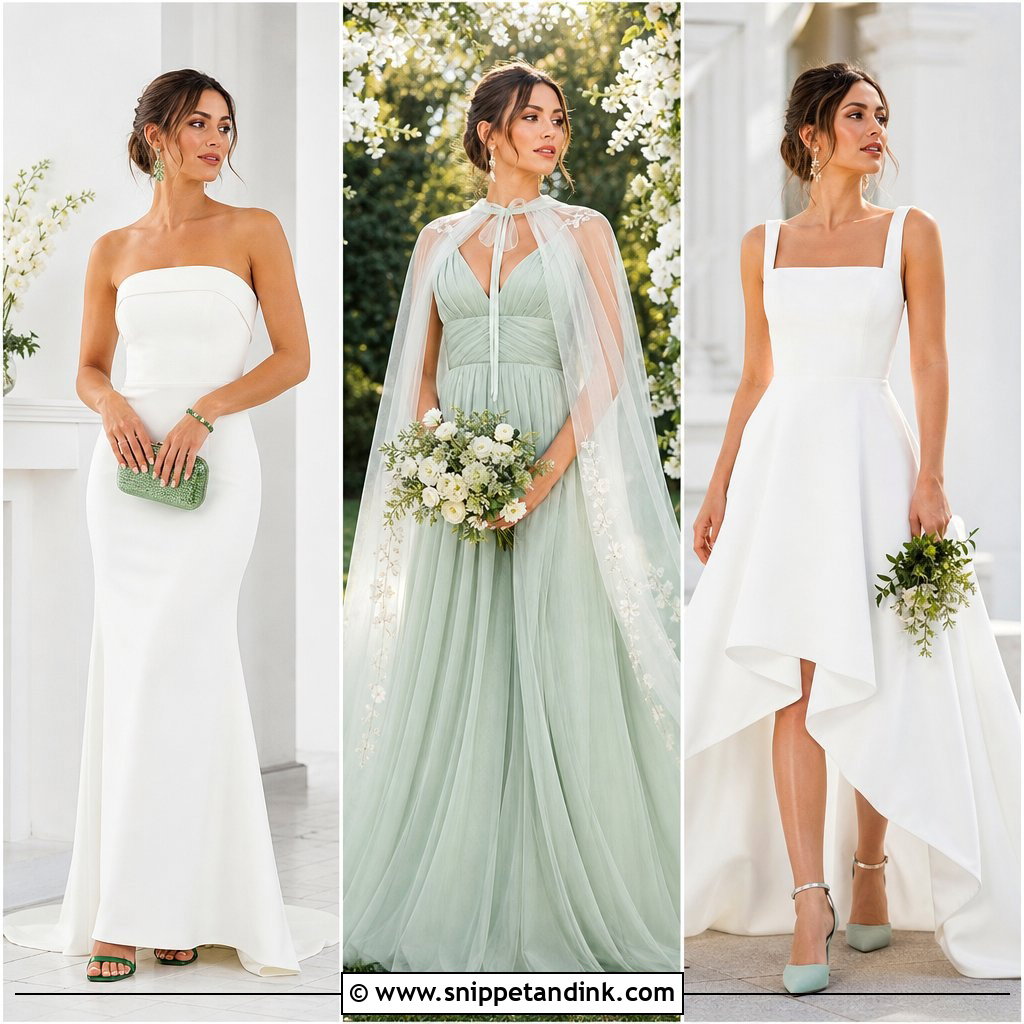
Orange can be earthy or bold depending on where the gradient ends. On a sleeveless ivory crepe gown with a fitted top and a flowing overskirt, pale peach fades into tangerine and then a deeper burnt orange around the train. Gold hoops, neutral block heels and a narrow cuff suit the warm palette, with cream roses, orange ranunculus and textured greenery. Skip the necklace and keep the chapel veil plain. A smooth low ponytail and soft bronzing finish it. Deserts, autumn ceremonies and venues with warm stone or wood suit it. Crepe is often polyester, which needs specialist dyeing to reach a deep burnt orange, so I confirm the fiber before a bride falls in love with the shade.
16. Navy Dip Dye Wedding Dress
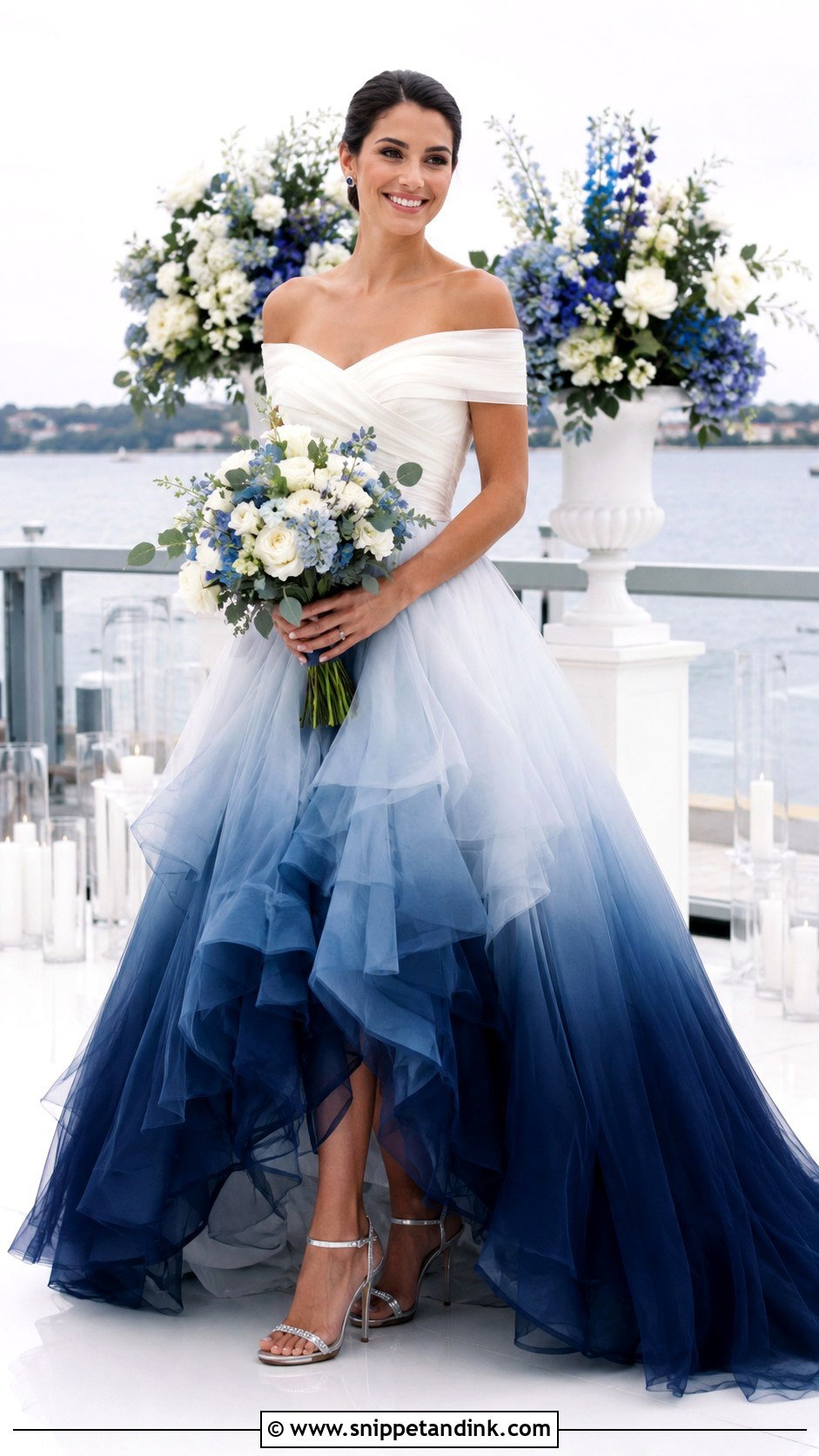
Navy makes a dip-dyed gown feel formal and ready for evening without darkening the whole dress. On an ivory off-the-shoulder bodice and a generous organza skirt, the color moves through pale blue and denim to deep navy at the hem. Navy velvet pumps or silver heels both work, depending on how closely you like accessories to match. Sapphire-toned studs and a fine silver bracelet add a little sparkle. Carry white roses, blue delphiniums and dark foliage in a structured bouquet. A sheer ivory veil softens the contrast; a classic chignon and defined eyes finish it. Hotels, evening ceremonies and winter weddings suit navy, and a dark hem copes far better with a wet terrace than a pale one.
17. Floral Dip Dye Wedding Dress
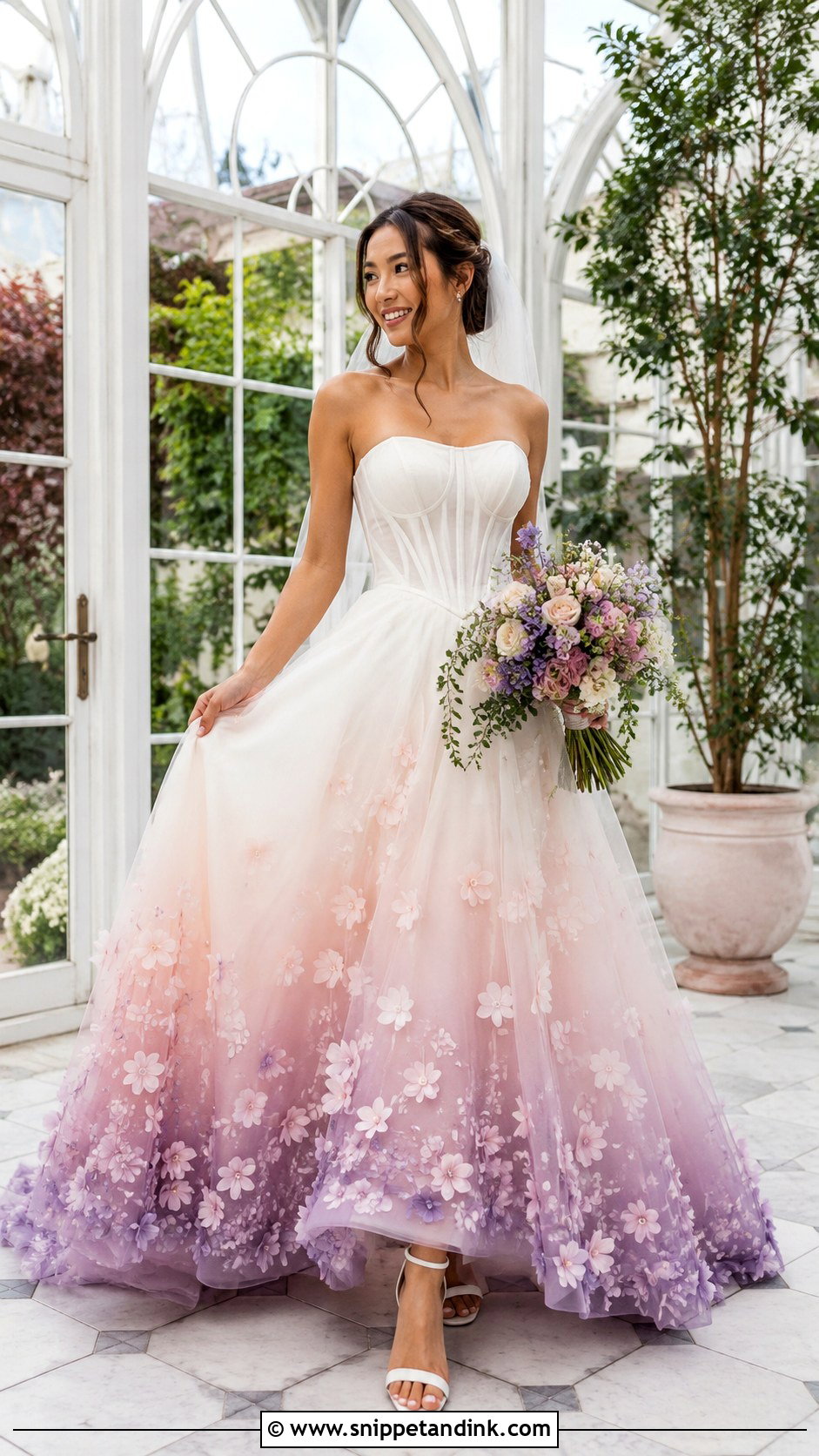
This one layers two ideas: graduated color plus three-dimensional flowers. On an ivory tulle gown with a simple corset bodice, the skirt fades from blush into pink and violet, and appliquéd flowers cluster around the color change so they seem to grow up from the hem. Appliqués often take dye differently from the tulle around them, so many makers dye them separately and attach them afterward, which gives better control. Keep the rest restrained: ivory heels, pearl studs and a plain veil. The bouquet should repeat only two or three shades from the skirt. A braided bun and natural makeup suit gardens, conservatories and art-focused venues.
18. Lace Dip Dye Wedding Dress
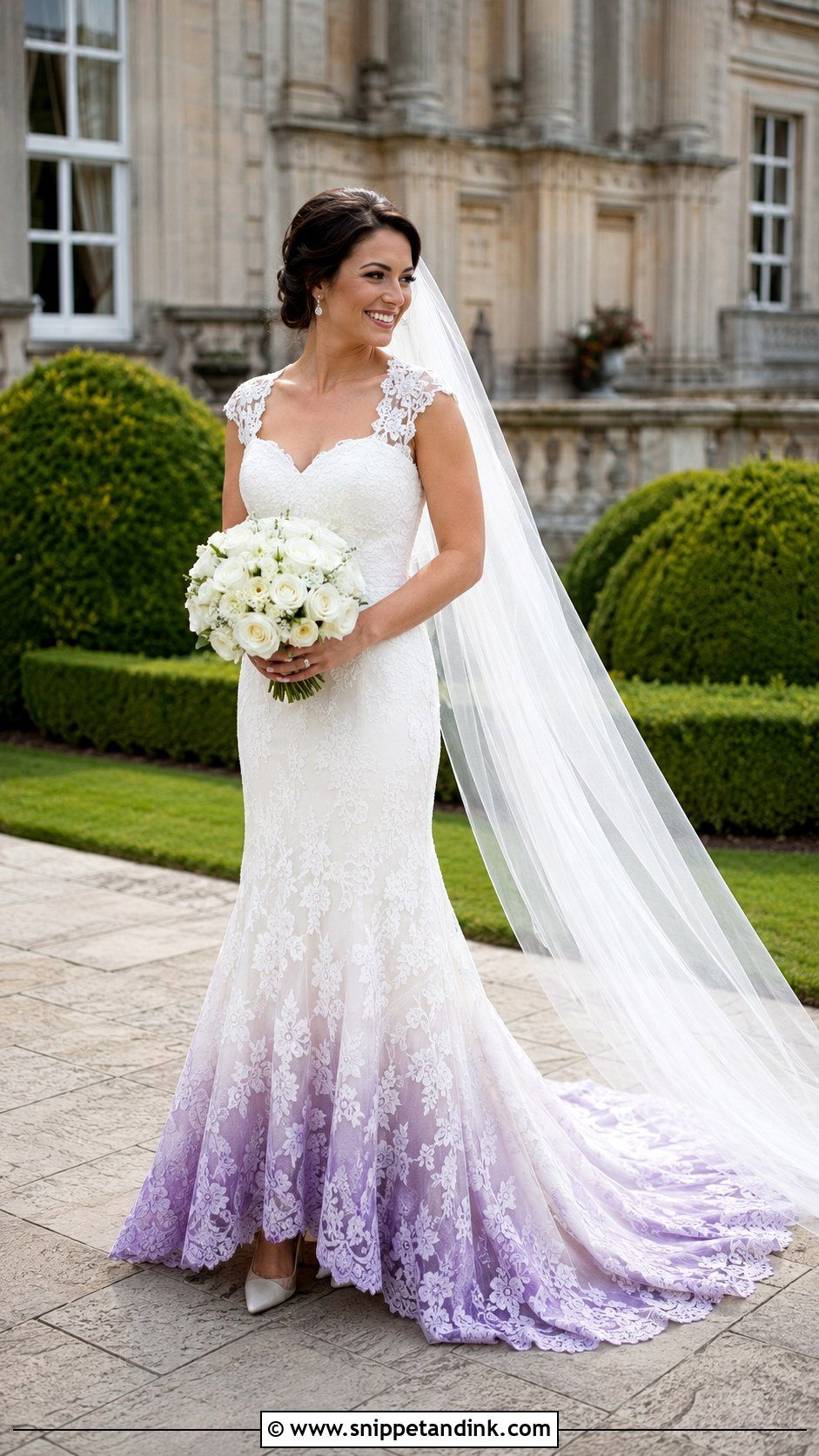
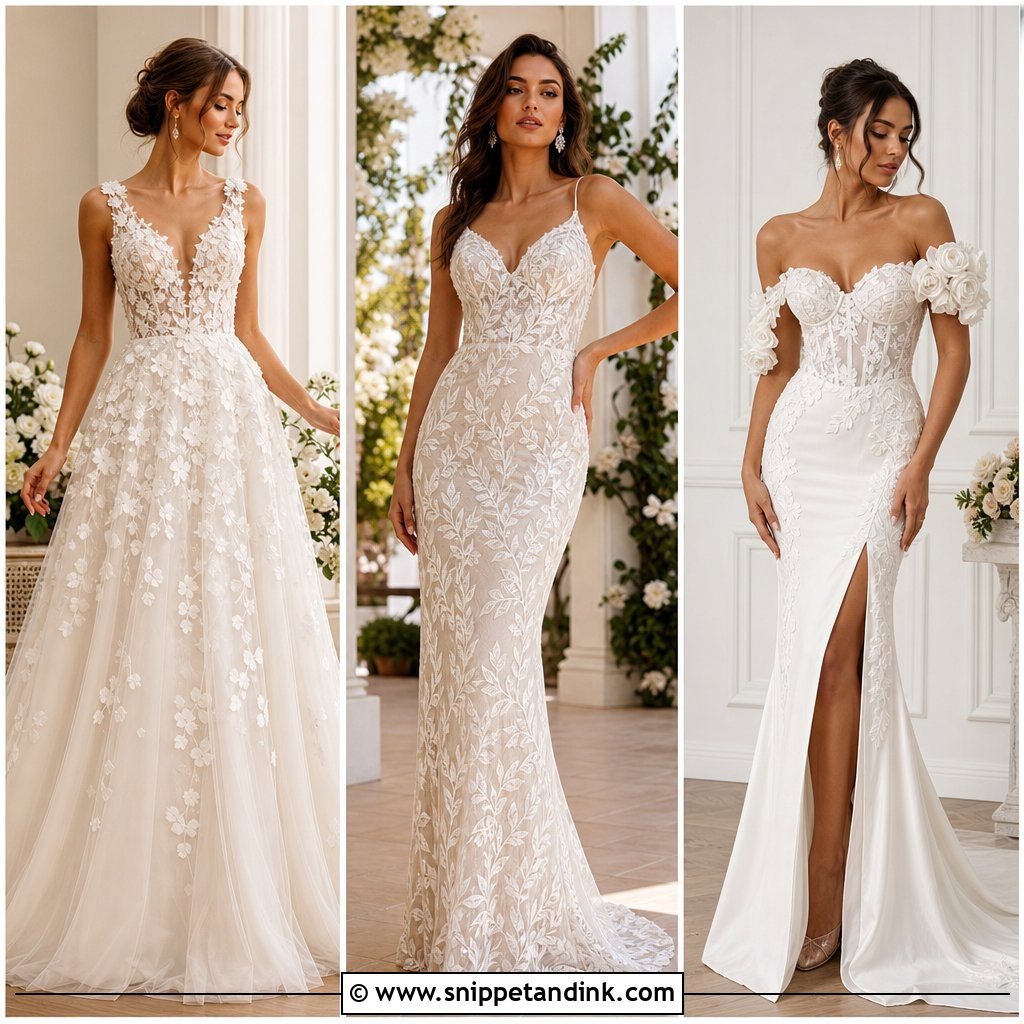
Coloring the hem makes lace pattern stand out more, not less. On an ivory fit-and-flare gown with floral lace running from bodice to train, a soft blue, lavender or blush gradient along the lower lace shows every motif. Lace is often a blend of fibers, and the embroidery thread may stay paler than the net behind it; done well, that contrast is exactly what makes the pattern pop. Ivory pumps, pearl earrings and a narrow bracelet suit it, with white roses and a few blooms in the hem color. A plain tulle veil keeps it from looking ornate. A low bun or polished half-up style finishes it for estates and historic houses.
19. Tulle Ball Gown Dip Dye Wedding Dress
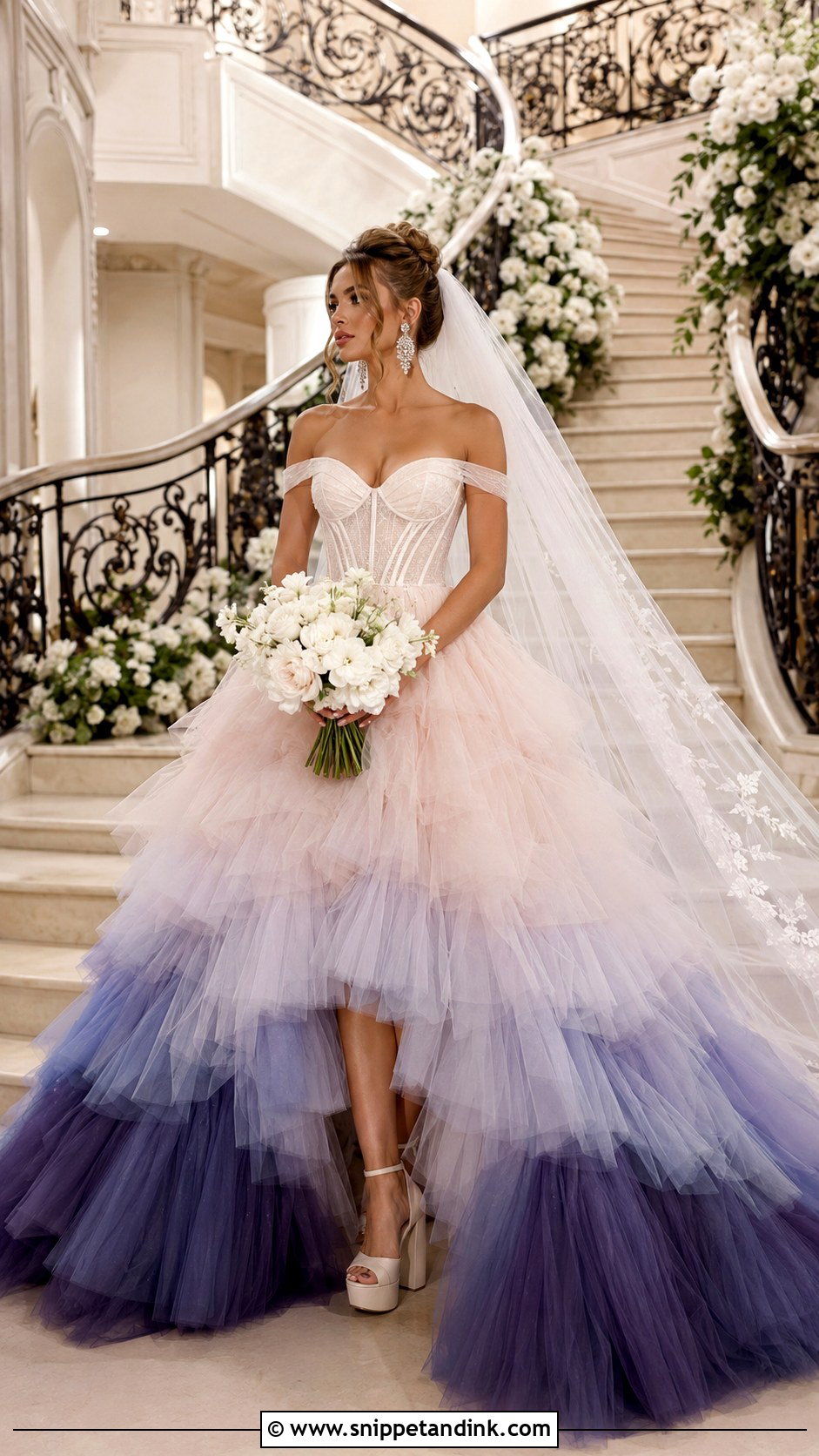
A tulle ball gown is the widest canvas for a bold gradient. Pair a structured ivory corset bodice and off-the-shoulder straps with a full multilayered skirt fading from white into blush, blue, purple or your own combination; the layers will each show slightly different intensity, which gives depth as you move. Comfortable platform heels, crystal earrings and a small structured clutch for later finish it. Carry a rounded bouquet of white flowers with a few colored blooms. A cathedral veil matches the scale but should stay sheer and plain. A balanced updo and fresh makeup suit ballrooms and grand staircases. Many layers mean a long dye job, so build extra time into the order.

20. Short Dip Dye Wedding Dress
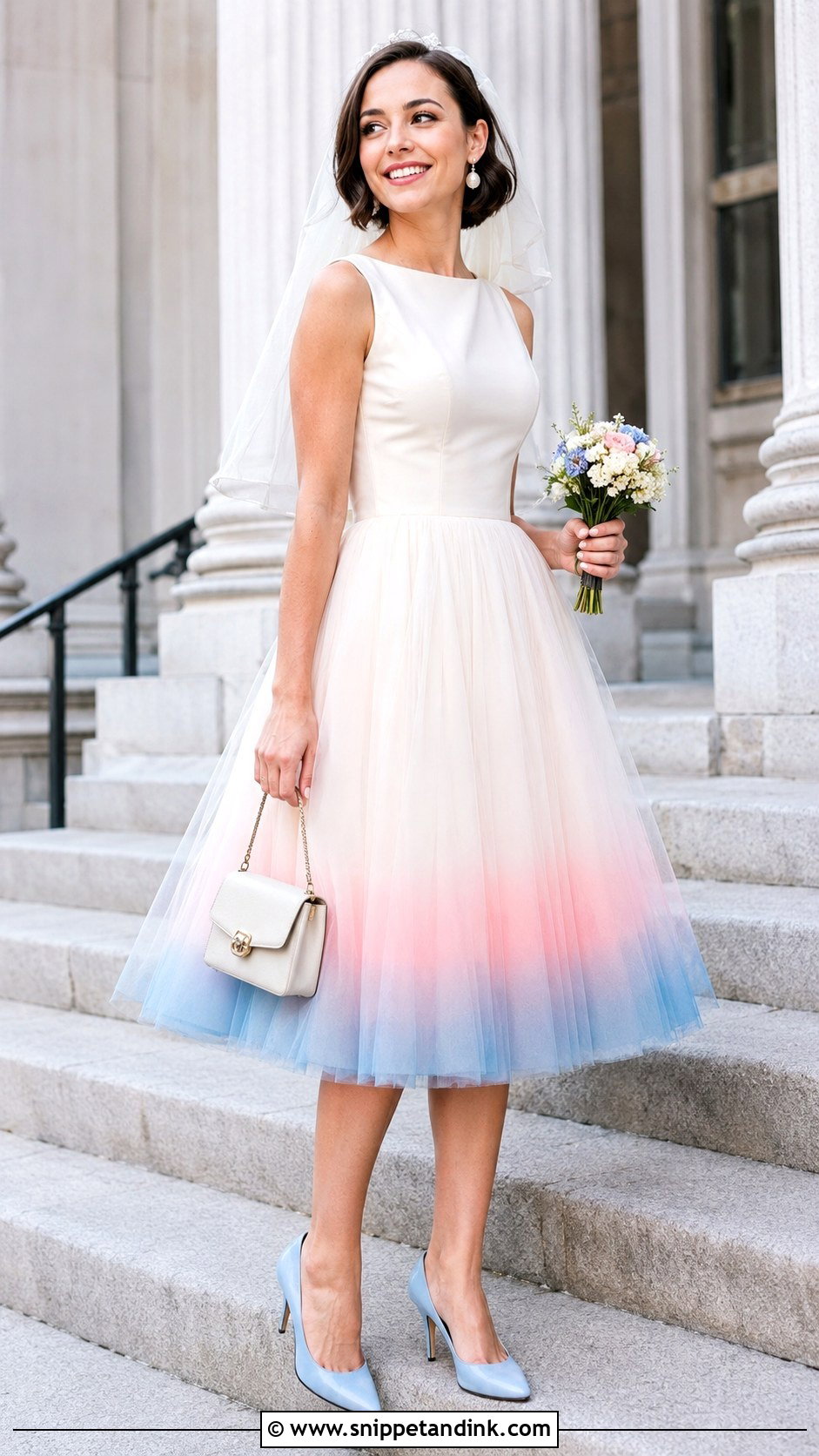
A short dip-dyed dress is the practical choice for a courthouse ceremony, a casual party or a reception change. An ivory tea-length dress with a fitted bodice and a softly flared tulle skirt can be dipped in pink, blue, purple or a rainbow blend, with the color held below the knee. Your shoes will be on show, so pale blue pumps, pink block heels or metallic sandals can pick up the hem. Pearl earrings, a small bag and a birdcage or shoulder-length veil finish it, with a compact bouquet repeating one shade. A smooth ponytail or soft waves suit the shorter length. It’s clearly bridal and much easier for walking, greeting guests and dancing.
Hem First, Dye Second
The order matters. If the gown is dyed first and shortened afterward, the seamstress cuts off the deepest band of color and the gradient ends abruptly. Have length alterations finished, wearing your actual wedding shoes, before the dress goes to the dyer. Bodice and waist adjustments can still happen later, because they don’t touch the colored area.
I allow extra time on top of normal alteration schedules. Custom dyeing involves a test strip, approval, the dye work itself and drying, and multi-layer skirts take longer still, so start the conversation months ahead rather than weeks.
If It Rains: Protecting a Colored Hem on the Day
A well-rinsed gown should be colorfast in normal wear, but water, sweat and friction are where any loose dye shows up. Wet grass, a damp terrace or a spilled drink can move color from the hem onto ivory layers above it or onto pale shoes.
- Carry a clean white cloth and blot, never rub, if the hem gets wet.
- Keep a bustle plan ready for rain so the colored train stays off wet ground.
- Tell the dry cleaner afterward that the gown was custom dyed, and which area, before they clean it.
- Store it away from daylight, which fades pale shades like lavender and blush over time.
Test the Shade on a Scrap Before the Whole Skirt
Dip dye gives a familiar white gown color, movement and a point of view. Start with a silhouette you already love, then choose a gradient that suits its fabric, your venue and the wedding palette. Blush, sage and dusty blue stay understated; sunset, rainbow, red and black make a stronger statement. Coordinate shoes, jewelry, flowers and veil without matching every color exactly. Before anyone dyes a gown, test the shade on a scrap of the same fabric, ideally from the hem allowance, and look at it in daylight. Romantic or unconventional, the right gradient will look like it was always meant to be there.
You'll Like These Ideas:





Leave a Reply