
An overlay is simply a second layer laid over the base of a gown, and it changes more than people expect. It can soften a fitted silhouette, cover a plain bodice, or add volume without buying a second dress. Lace, tulle, organza, chiffon, pearls, embroidery and three-dimensional flowers all behave differently once they’re sitting on a body. Some overlays stay on all day; detachable skirts, capes and toppers come off after the ceremony so you change your look in minutes. I’ve grouped twenty of them below, from A-line gowns to bridal minis, and added the fitting checks I’d make before saying yes to each.
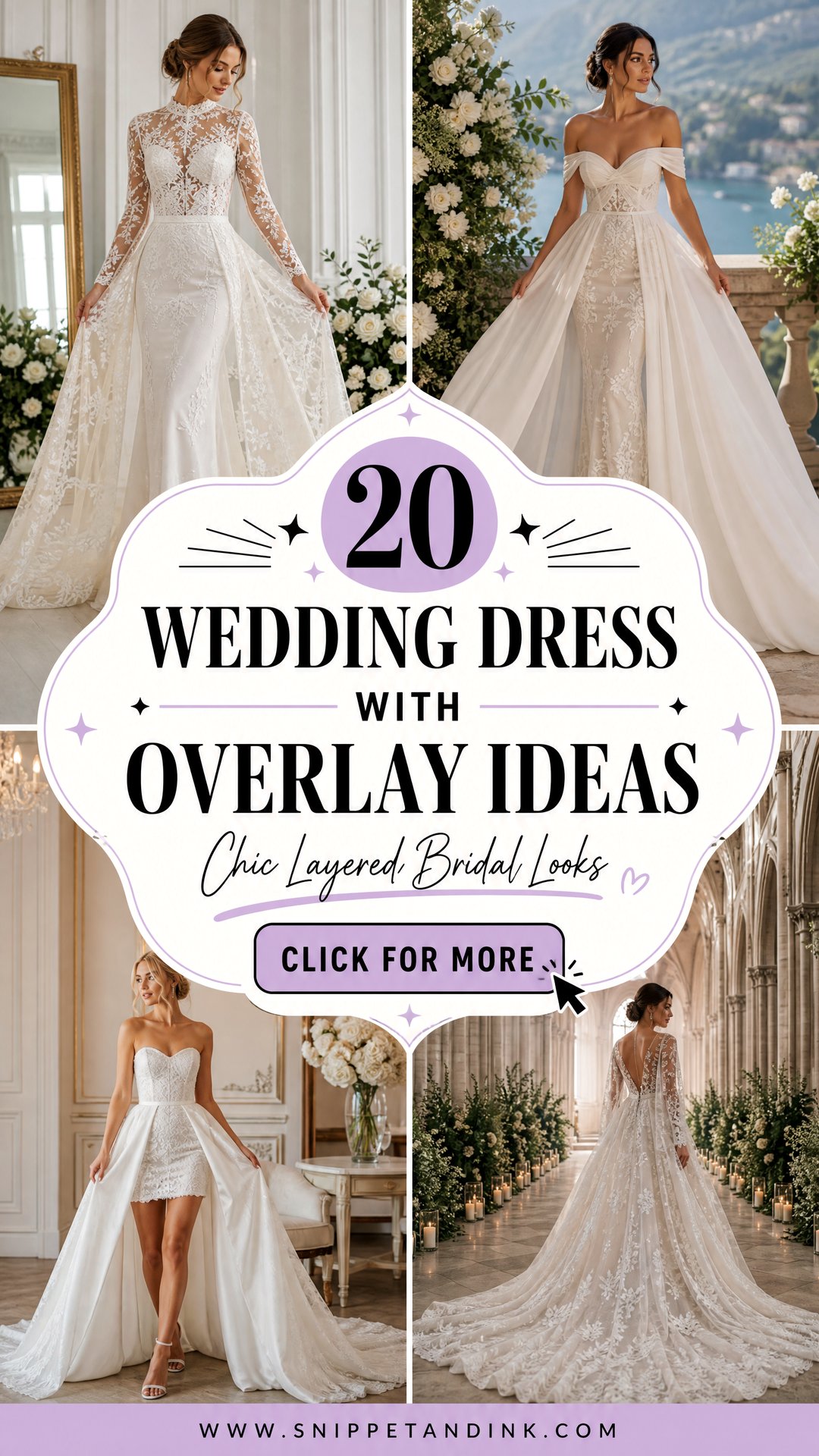
Tulle Floats, Organza Holds, Chiffon Clings
The overlay fabric decides how the gown moves and how it survives the day, so I talk about it before we talk about style.
- Tulle gives soft volume and hides small creases well. In humid weather it can lose some lift, and in wind it moves a lot, which looks lovely in photos and less so during vows.
- Organza is crisp and keeps its shape, so it suits structured skirts. It shows every fold, so it needs steaming after travel.
- Chiffon drapes close to the body and flows when you walk. In dry winter air it can build static and cling to the legs; an anti-static slip or a light spray on the lining helps.
- Lace adds pattern and weight, and its real cost shows up at alterations, since moving it is handwork.
For an outdoor ceremony, I hold the skirt up near an open door or a fan in the shop. Seeing how much it lifts tells you more than any description.
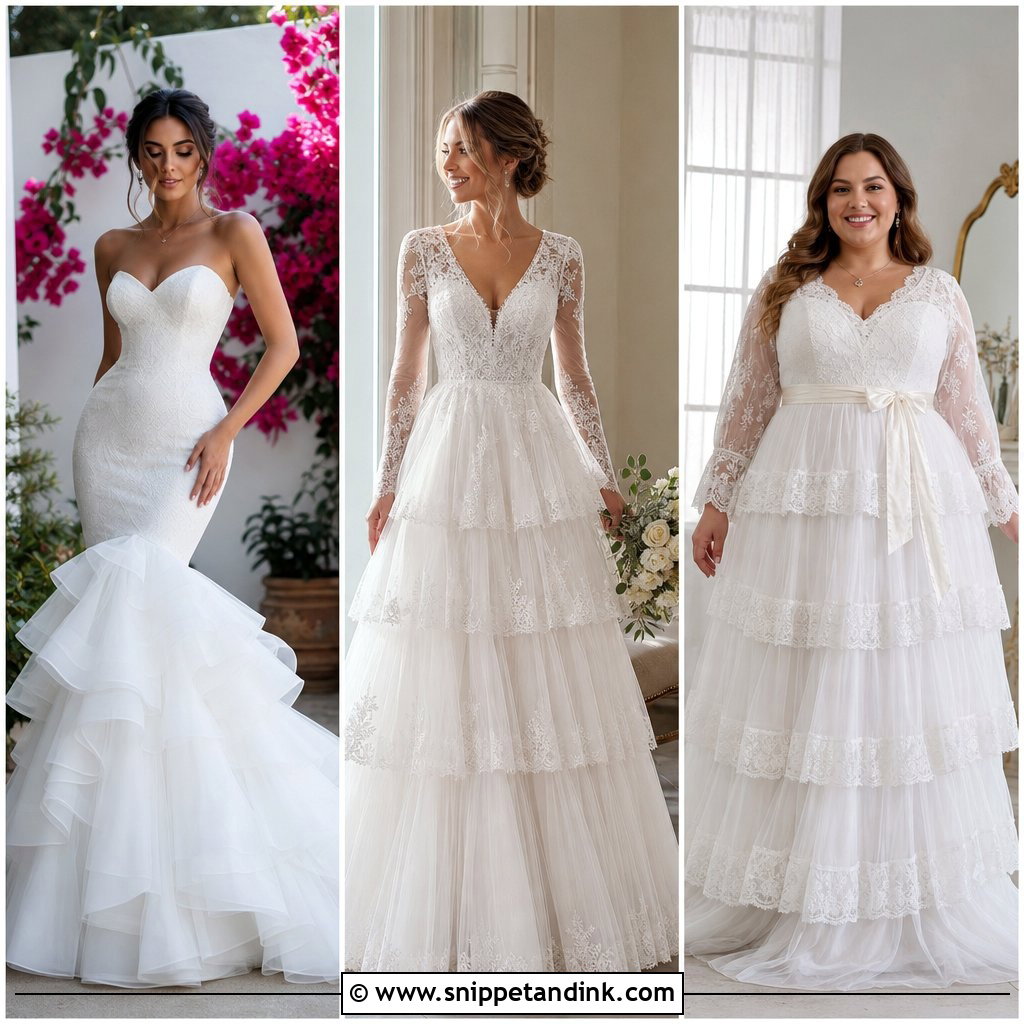
1. Lace Overlay A-Line Wedding Dress
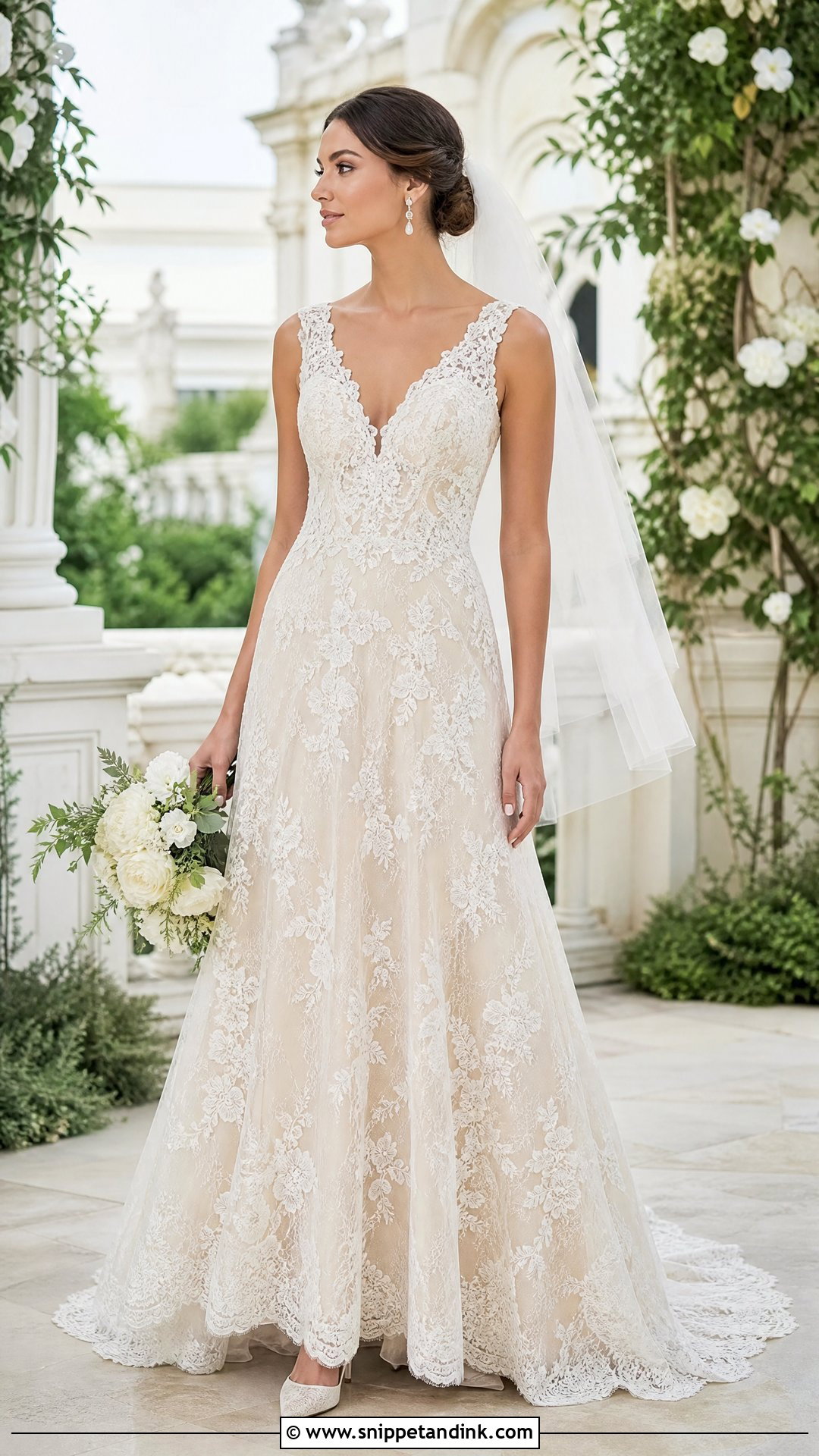
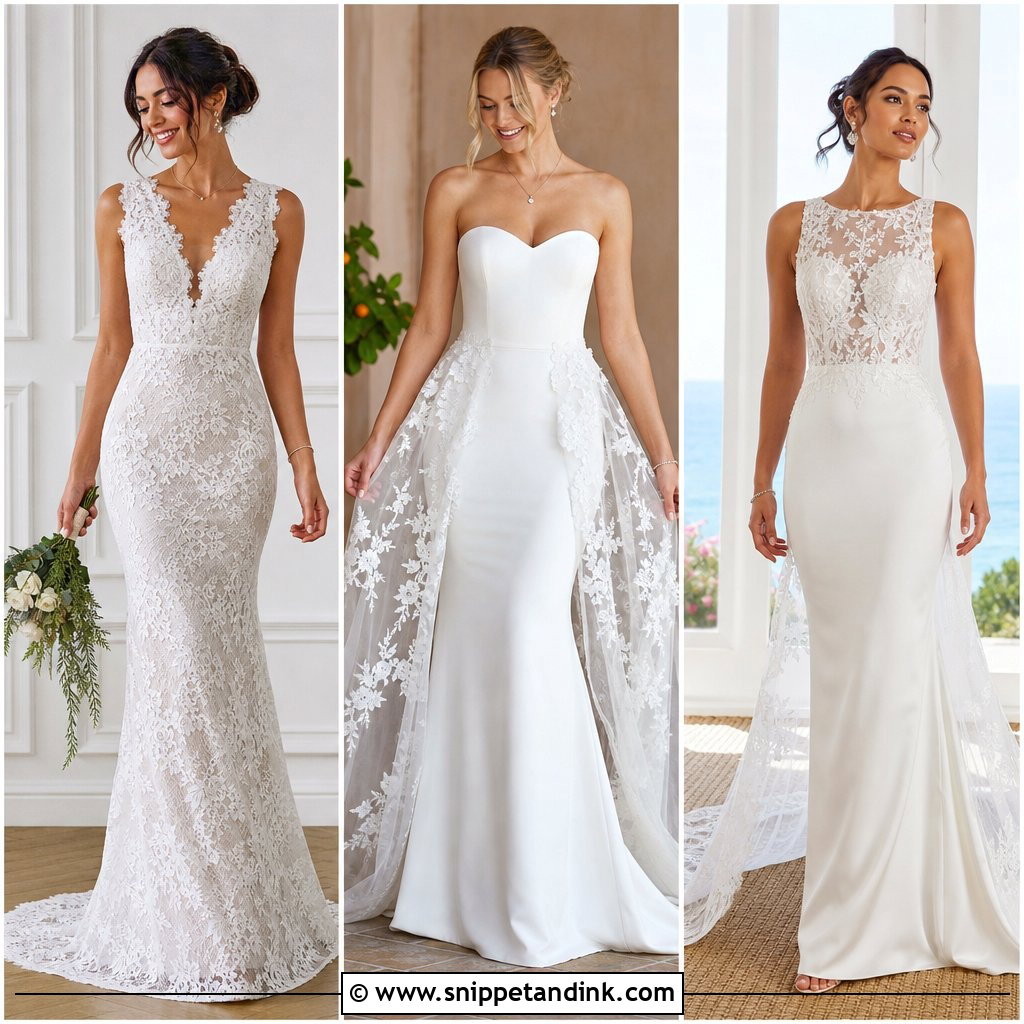
A lace overlay on an A-line runs texture from bodice to hem, and its success depends mostly on what’s underneath. Ivory, champagne or a light nude lining makes the floral pattern readable; white under white tends to flatten in photos. A defined natural waist and a gently flowing skirt keep it easy to wear. Pointed ivory pumps, pearl drops and a small structured clutch suit it, with a fingertip veil that stops before it covers the lace skirt. Outdoors, I swap stilettos for block heels. A low bun with a few loose pieces keeps the hair relaxed.
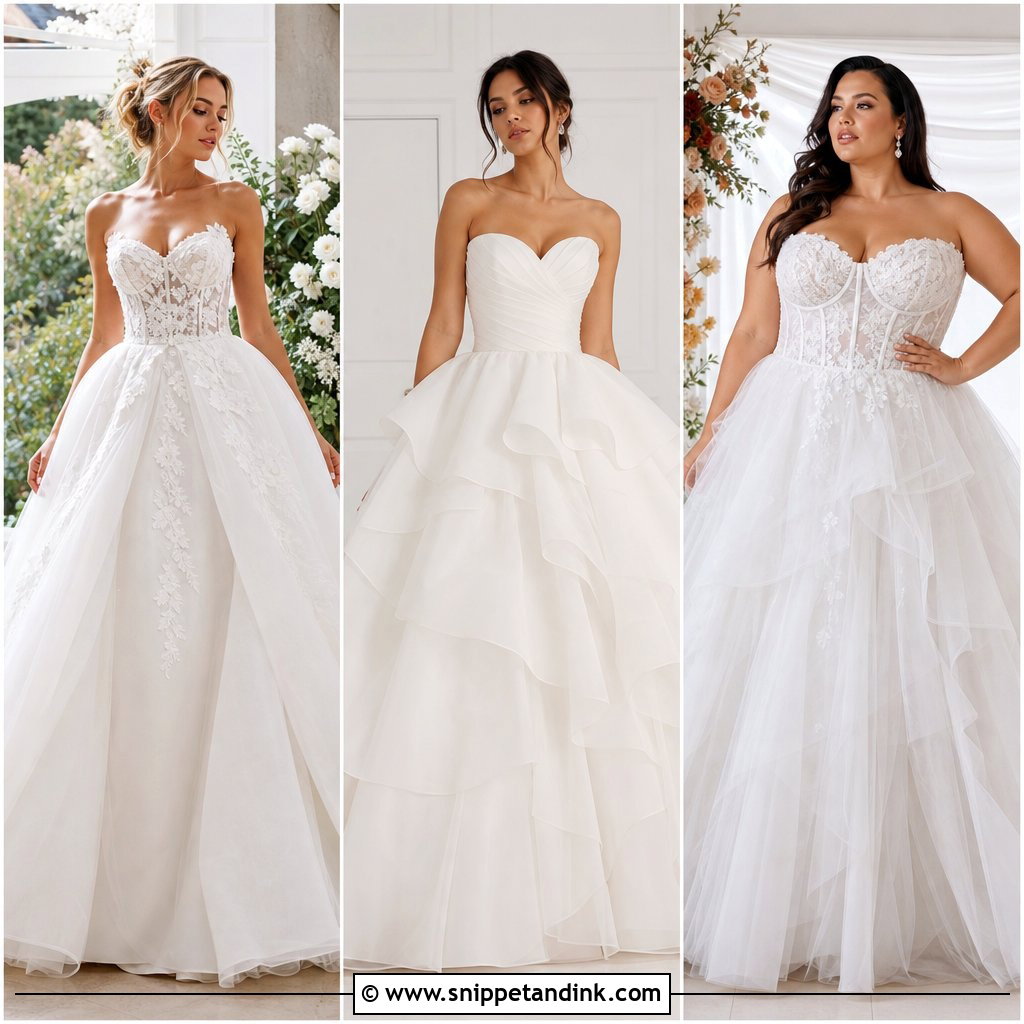
2. Tulle Overlay Ball Gown Wedding Dress
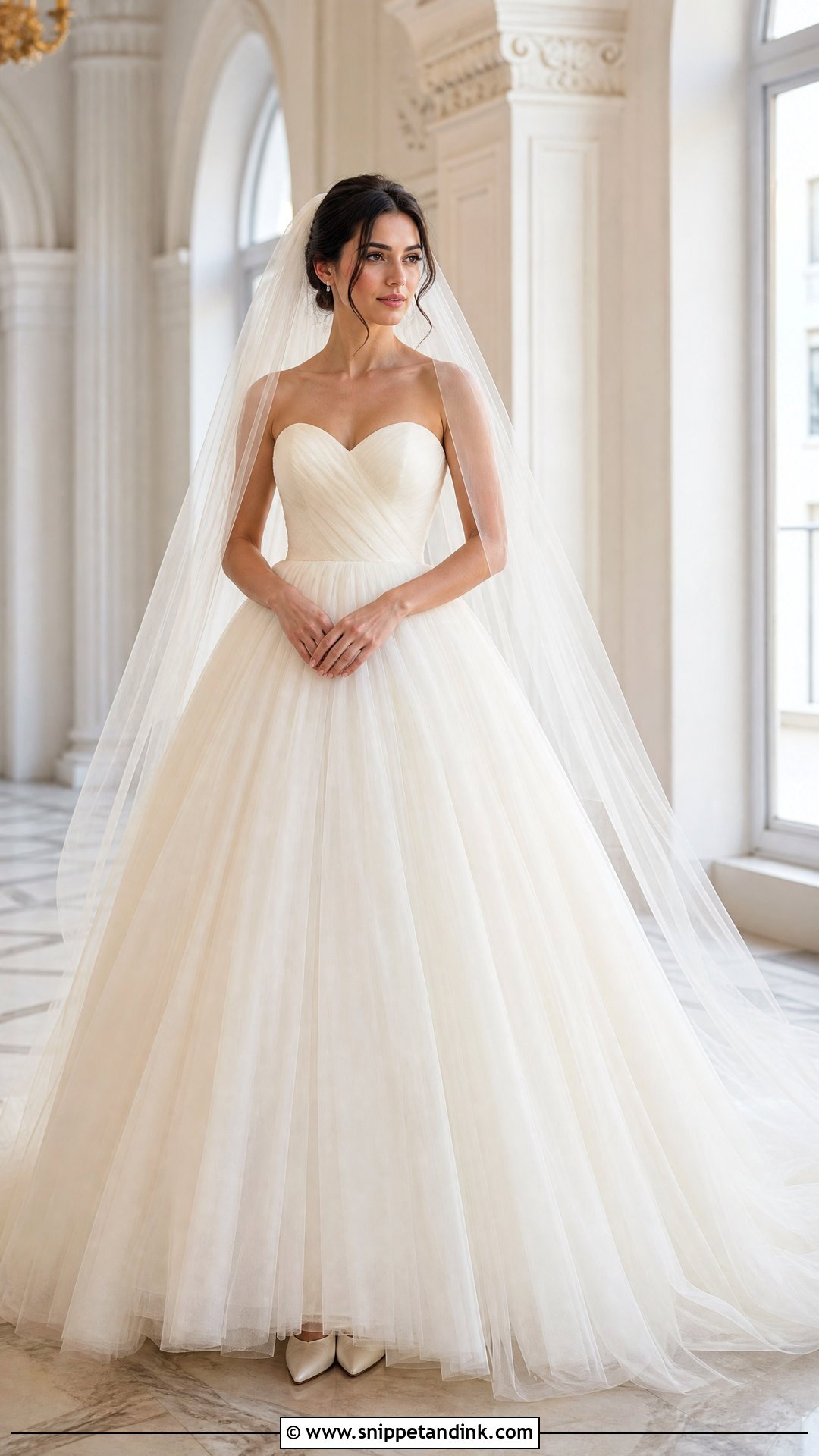
Imagine walking into the ceremony in a full skirt that seems to float. Layers of tulle over a satin base give that softness, and the number of layers matters: three or four fine ones look airier than one stiff one. A fitted bodice with a sweetheart, scoop or straight neckline balances the volume, and a chapel-length train adds movement. Crystal studs, closed-toe satin pumps and a simple cathedral veil under a smooth bun finish it. If you add a jeweled belt, keep it narrow and close in tone so it doesn’t slice the gown in two.
3. Organza Overlay Wedding Dress
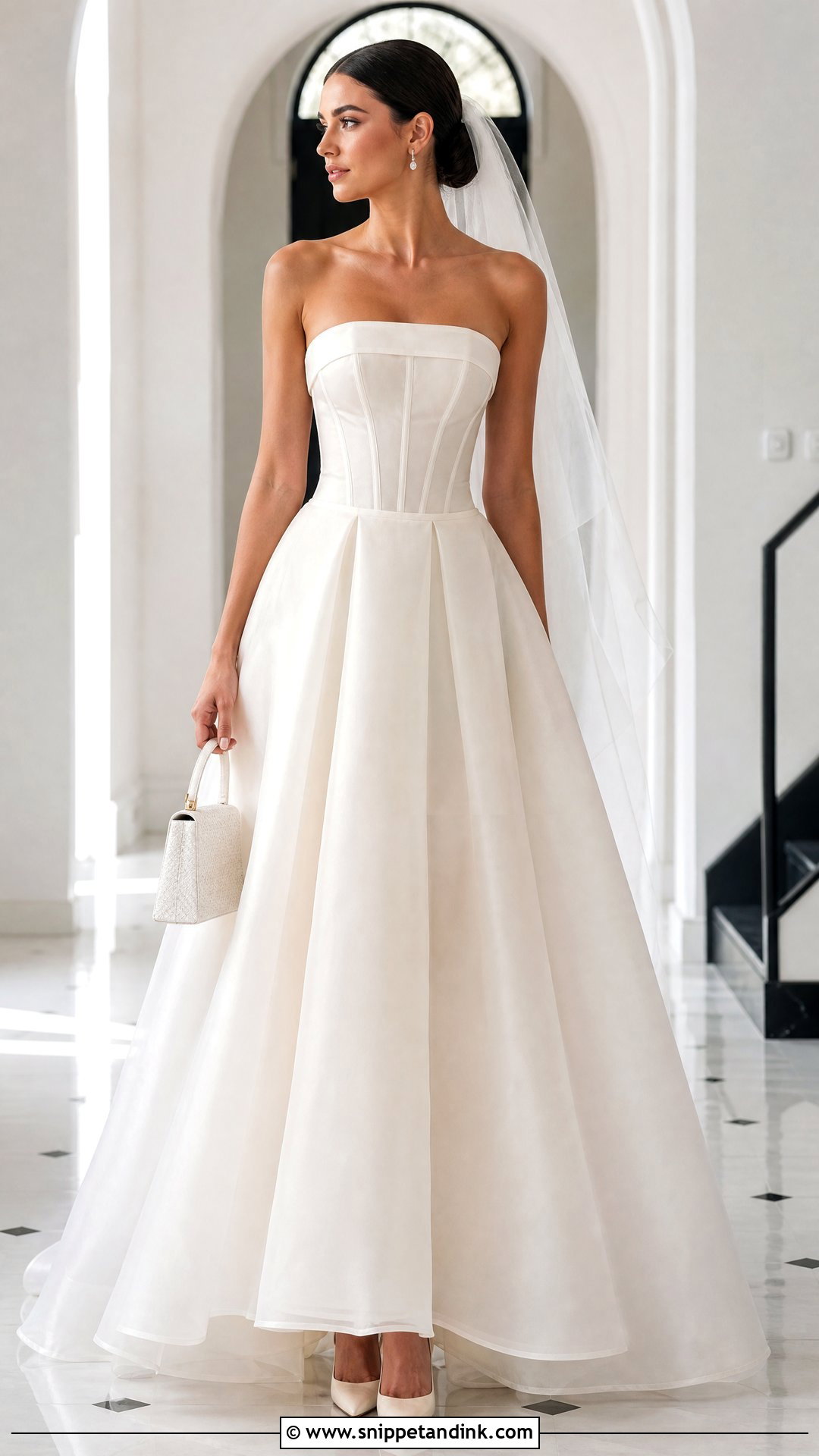
Organza is crisp yet light, so it builds shape without weight, which is why I like it over a clean strapless A-line or structured ball gown. Wide pleats or soft gathers give the skirt movement, and an organza train looks fresh rather than heavy. The downside is that organza creases sharply and shows it, so plan a steam at the venue. Sleek ivory heels, small diamond or crystal earrings and a structured top-handle bag suit it, with a smooth chignon and an elbow-length veil. Formal indoor rooms, modern estates and bright gardens all suit this fabric.
4. Beaded Overlay Column Wedding Dress
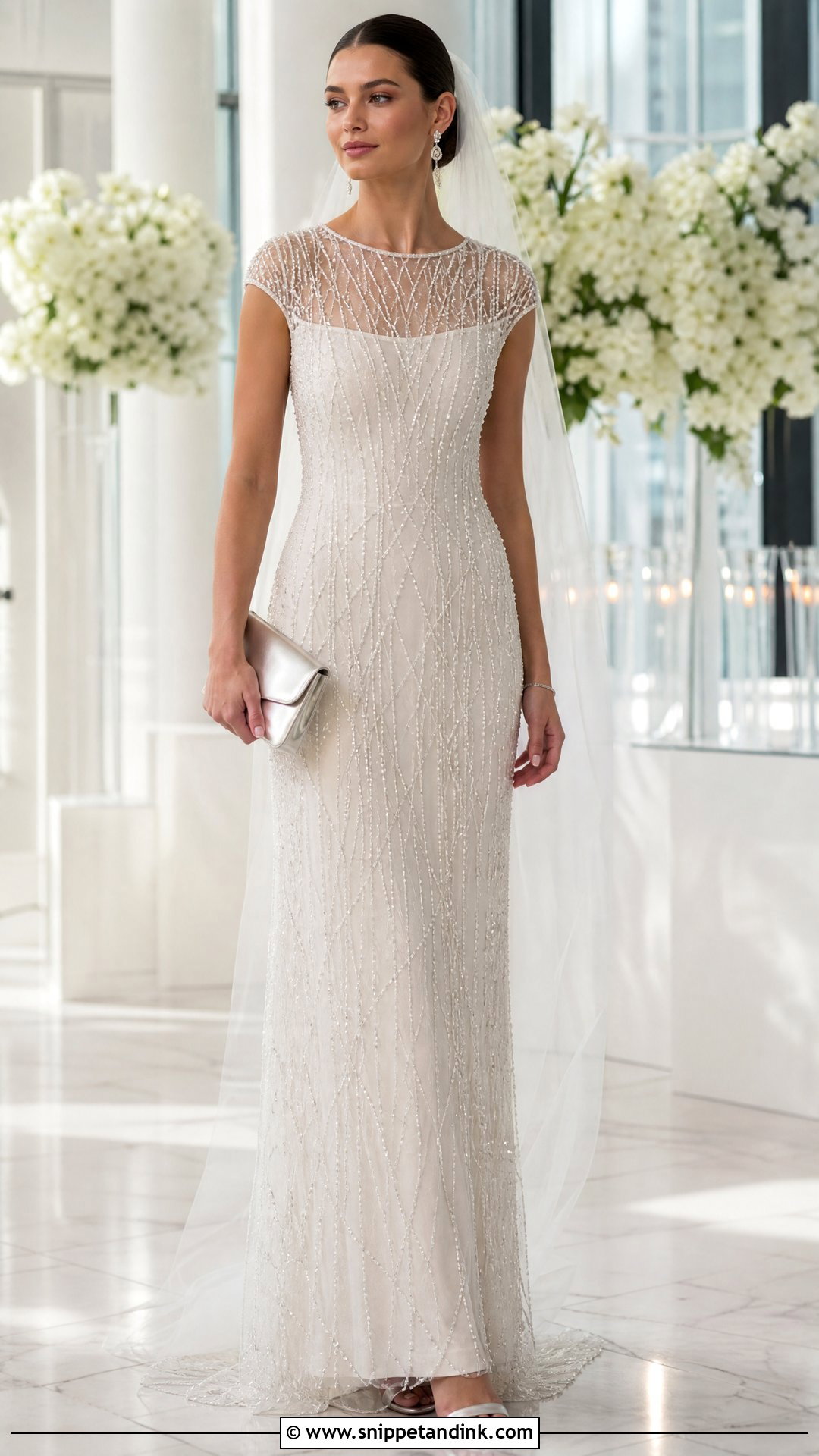
A beaded mesh overlay on a narrow column gives quiet glamour, but only if the overlay follows the gown’s lines. Extra mesh gathered at the waist or hips makes a column look bulky fast. Scattered crystals, glass beads or sequins catch light without shouting. Square necklines or thin straps keep it modern. Metallic silver sandals, crystal drops, a compact satin clutch and a sheer veil with minimal beaded edging suit it, with a side-parted low bun or waves tucked behind the ears. Run your palm over the beading in the shop; rough backs catch veils and scratch the inner arm.
5. Floral Embroidered Overlay Wedding Dress
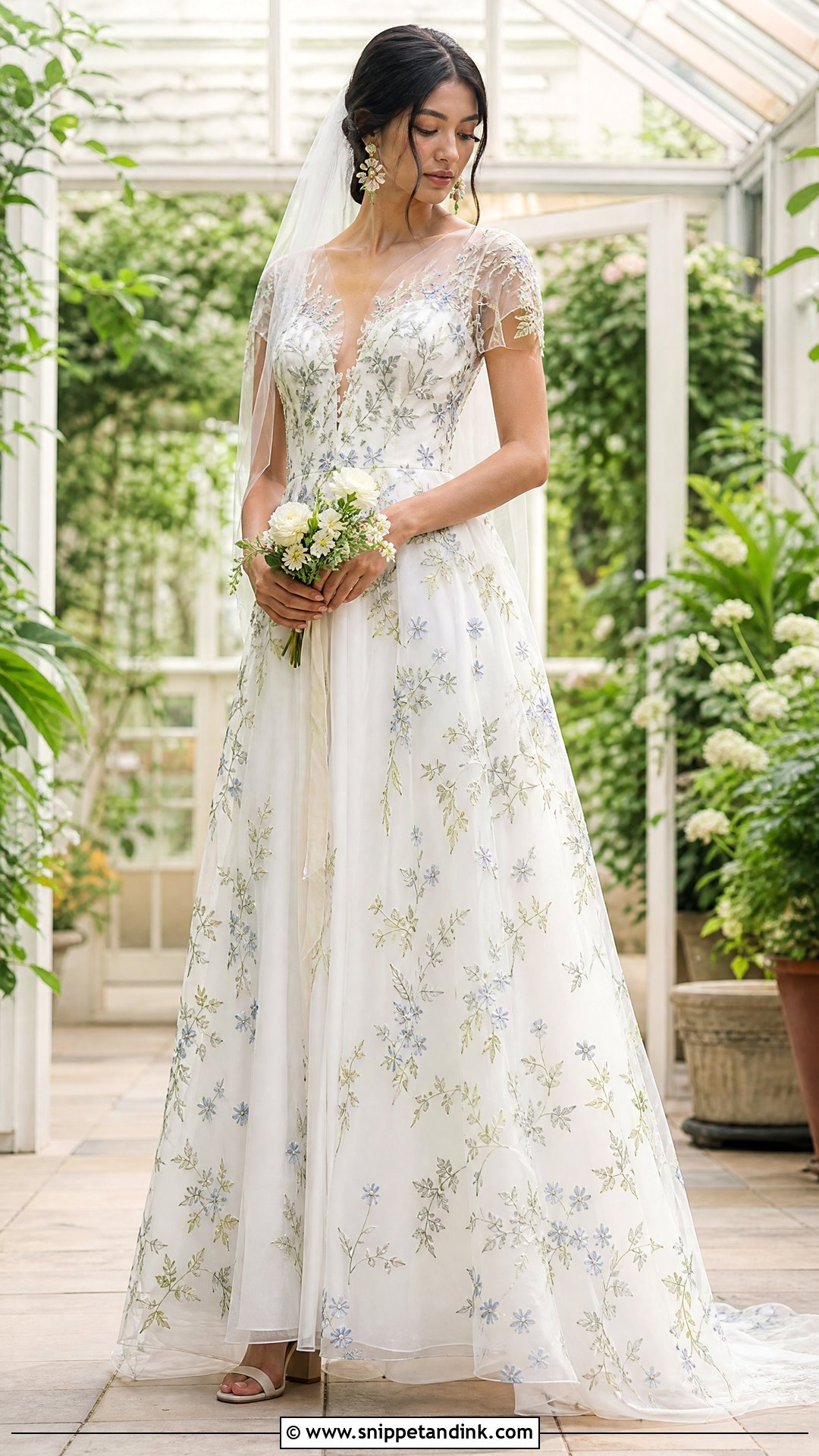
Embroidered vines, leaves or small blossoms over sheer tulle bring the most color of any overlay here. Ivory on ivory stays traditional, while pale blue, blush or green threads make it more personal. I take one or two of those thread colors into the bouquet and stop there, because matching every shade looks forced. Simple block-heel sandals and botanical earrings suit it, with a plain veil, since floral edging would crowd the embroidery. Soft waves, a twisted half-up style or a low textured bun match the relaxed mood of a garden, greenhouse or woodland ceremony.
6. Detachable Tulle Overskirt Mermaid Wedding Dress
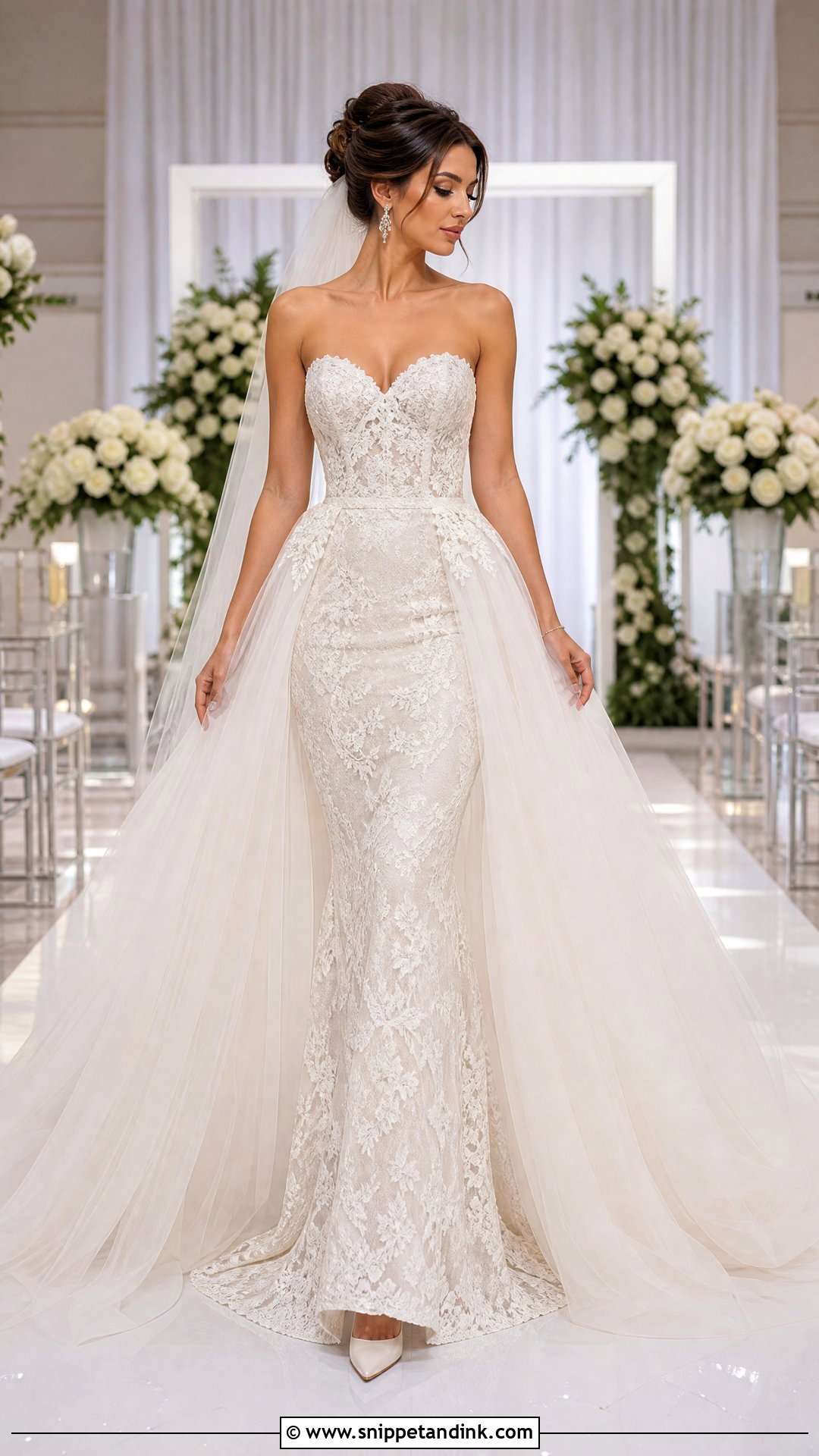
Can’t decide between a fitted gown and a full ceremony skirt? A mermaid with a detachable tulle overskirt gives you both. The base is a fitted crepe or lace gown that flares near the knee; the tulle layer fastens at the waist for the ceremony and turns it into an A-line or ball gown shape. I’d choose the base dress first and the overskirt second, because the base is what you’ll dance in for hours. Hide the attachment under appliqué or a satin waistband. Pointed pumps, delicate earrings and a long veil suit the ceremony; swap to statement earrings or a sparkling comb afterward.
7. Chiffon Cape Overlay Wedding Dress
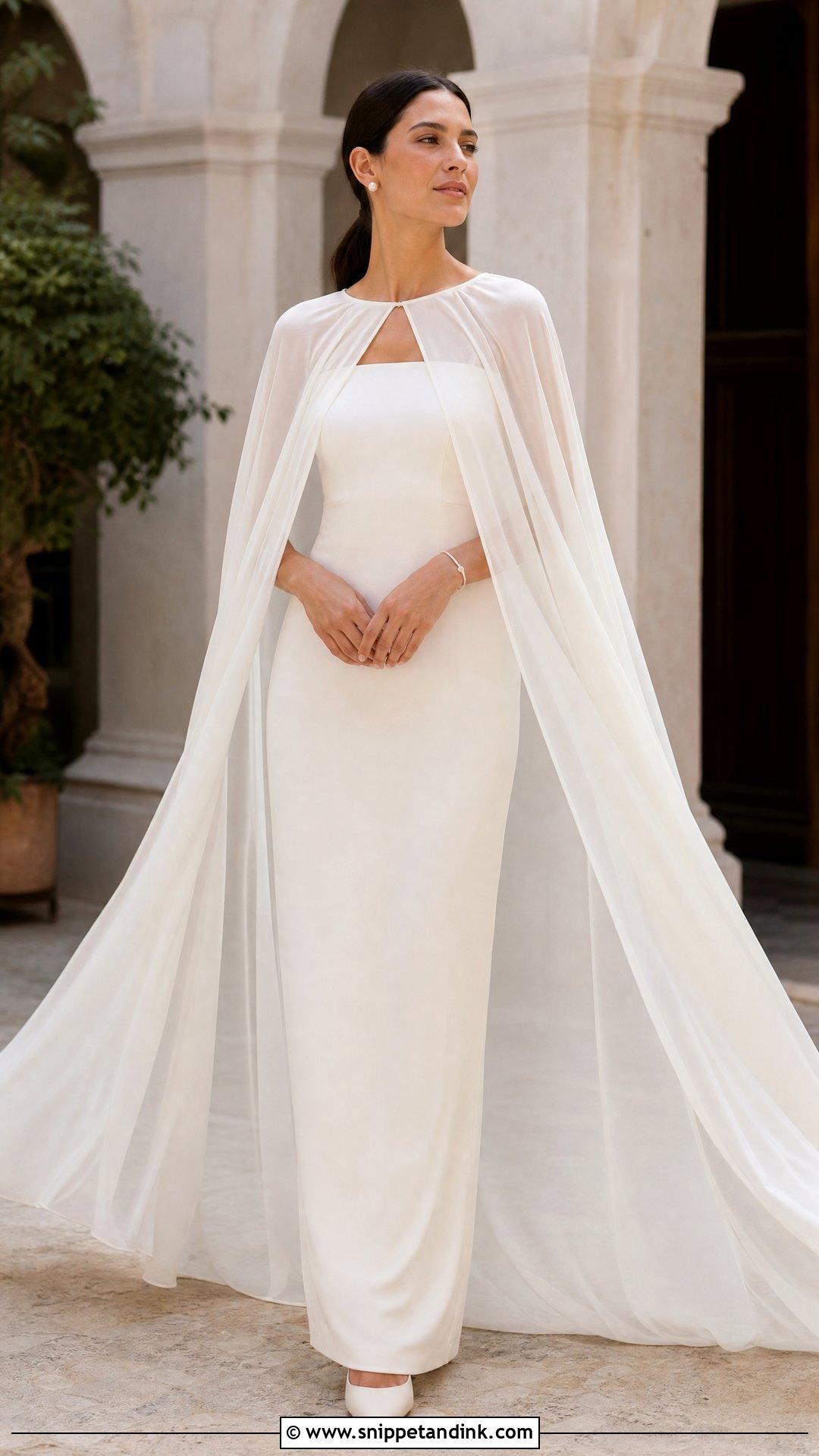
A chiffon cape adds movement without putting any weight at the waist, which makes it ideal over a clean column, sheath or modest A-line in crepe or satin. Attached at the shoulders, it falls to the floor or into a light train and gives a little arm coverage. If the cape already trails behind you, skip the veil; two sheer layers compete. Low pointed heels, pearl studs, a slim bracelet and a sleek low ponytail or bun keep the shoulder attachments visible. Check the width by reaching forward as if to hold someone’s hands. A narrow cape pulls tight across the back.
8. Long Sleeve Lace Topper Wedding Dress
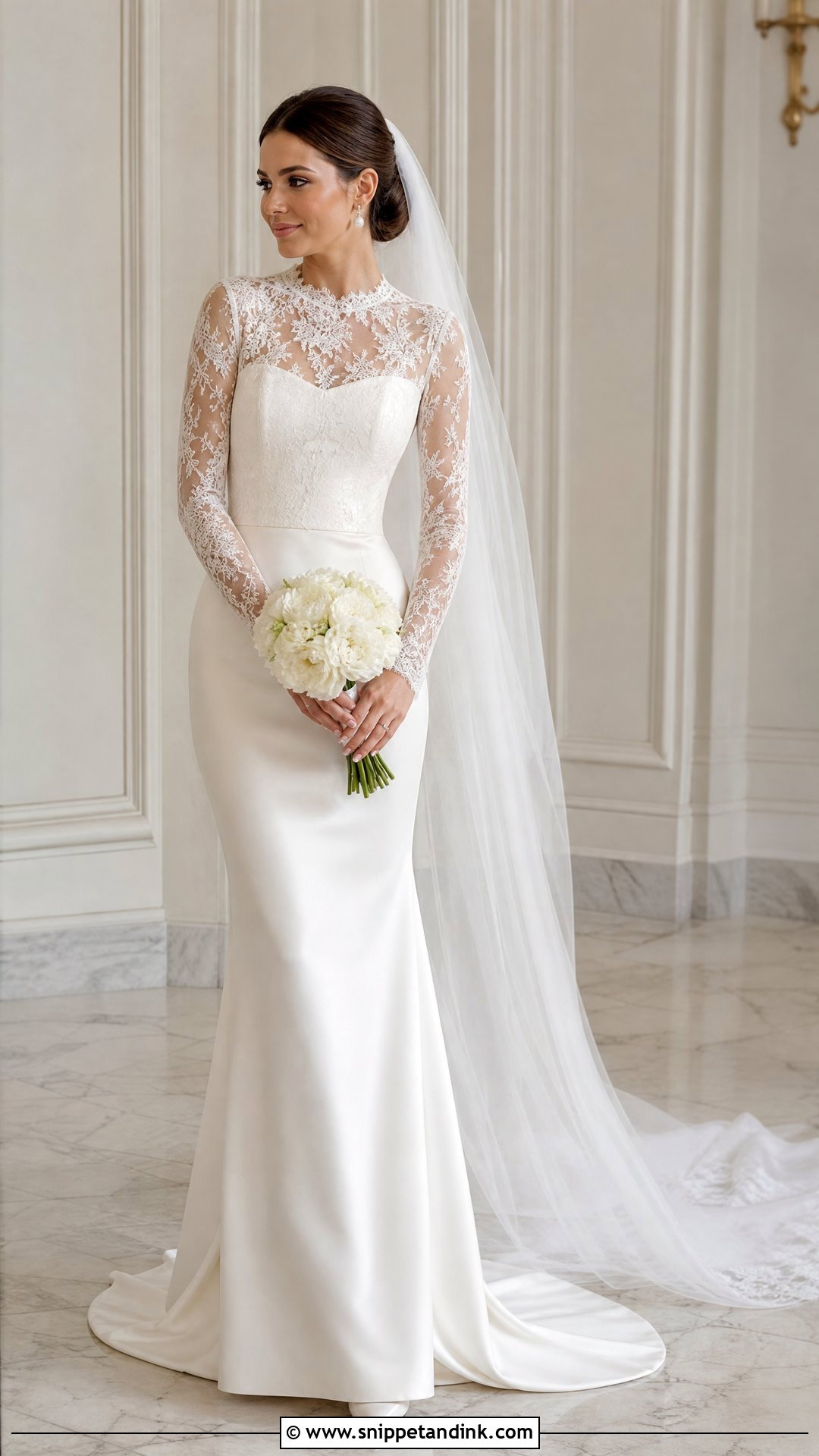
Toppers are the easiest way to give a minimalist strapless dress a covered ceremony look. A fitted topper with an illusion neckline, well-placed appliqués and buttons or hidden fastenings at the back goes over a smooth satin or crepe gown, which keeps the base modern. Satin pumps, pearl earrings, a plain chapel veil and a low bun show off the neckline and back. For the reception, take the topper off and swap the veil for a jeweled comb or hair bow. Because the topper isn’t sewn to the dress, it can ride up when you raise your arms, so have it fitted while you’re wearing the actual gown.
9. Pearl Tulle Overlay Wedding Dress
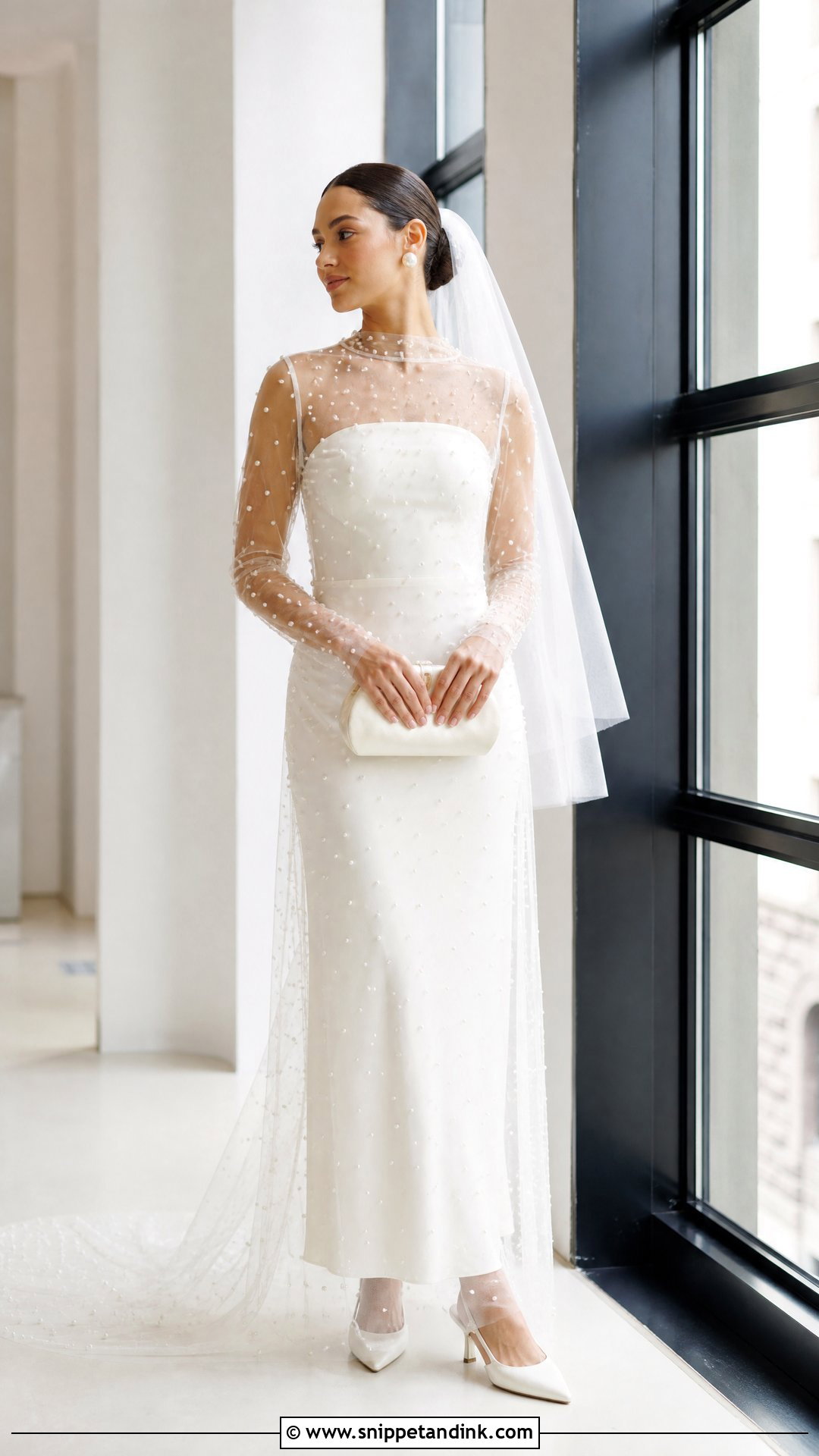
Scattered pearls on tulle make a simple gown feel detailed without color or sparkle. The base can be a fitted slip, a column or a soft A-line, with the pearl layer across bodice and skirt, either evenly spaced or in a gentle pattern. Ivory slingbacks, small pearl earrings and a satin clutch with minimal hardware suit it. Use a plain raw-edge veil so you aren’t doubling the embellishment, and a clean bun, polished waves or a short natural style. Pearls add weight to fine mesh, so look at the shoulder seams from the side; if they’re dragging forward, the overlay needs anchoring.
10. Off-the-Shoulder Overlay Wedding Dress
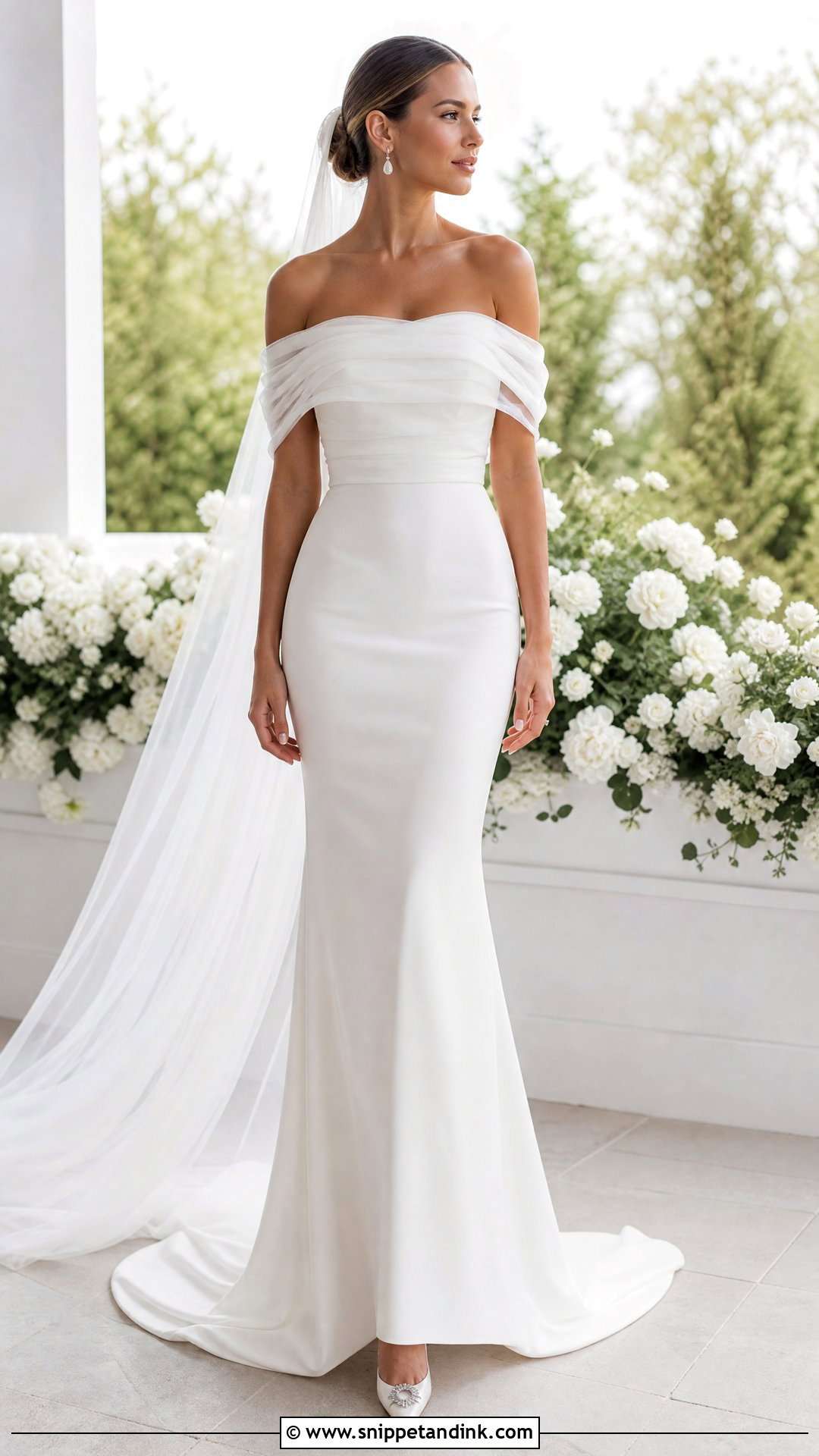
An off-the-shoulder overlay frames the collarbone, and a removable tulle or organza layer draped across the upper arms lets you take it off later. It can be gathered, trimmed with flowers or folded into a clean edge. The supportive bodice underneath does the work of holding the neckline, so test it by walking, sitting and dancing a few steps. Teardrop earrings, pointed ivory heels and a low chignon suit it, with the veil placed under the bun so fabric doesn’t pile up at the shoulders. If the band slides upward when you reach, it needs adjusting.
11. Illusion Overlay Wedding Dress
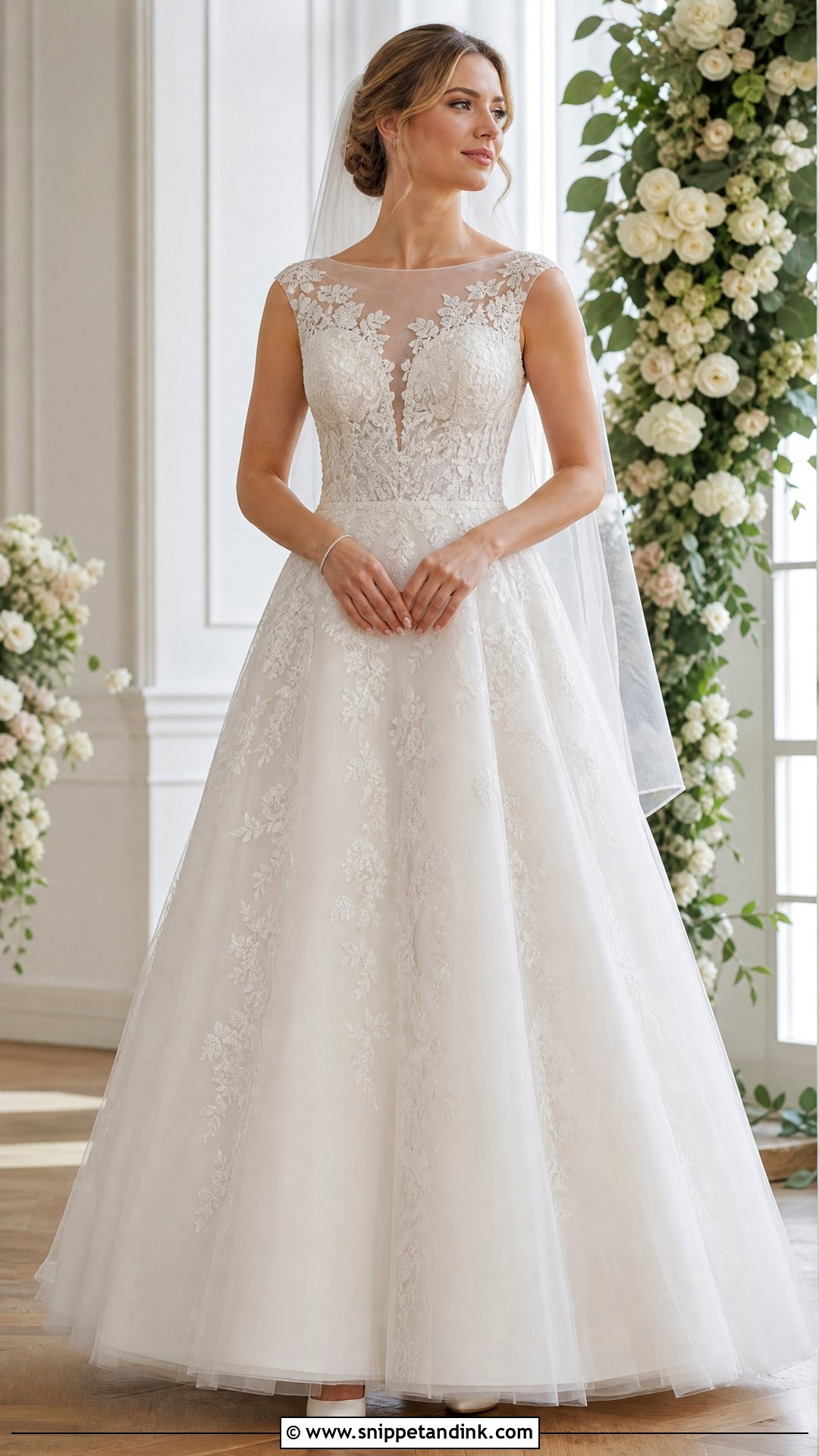
Illusion overlays only look like embroidery floating on skin when the mesh is the right shade. I match the tulle to the bride’s skin in daylight and indoors before anything else. The overlay usually pairs a sheer neckline with lace, beads or embroidery over a supportive bodice, and you can choose a bateau, scoop or high illusion neck depending on how much coverage you want. A fitted waist and flowing A-line skirt keep the balance. Closed-toe pumps, small studs, a narrow bracelet and a plain veil below a neat bun let the work show. Check that the neckline lies flat without rippling.
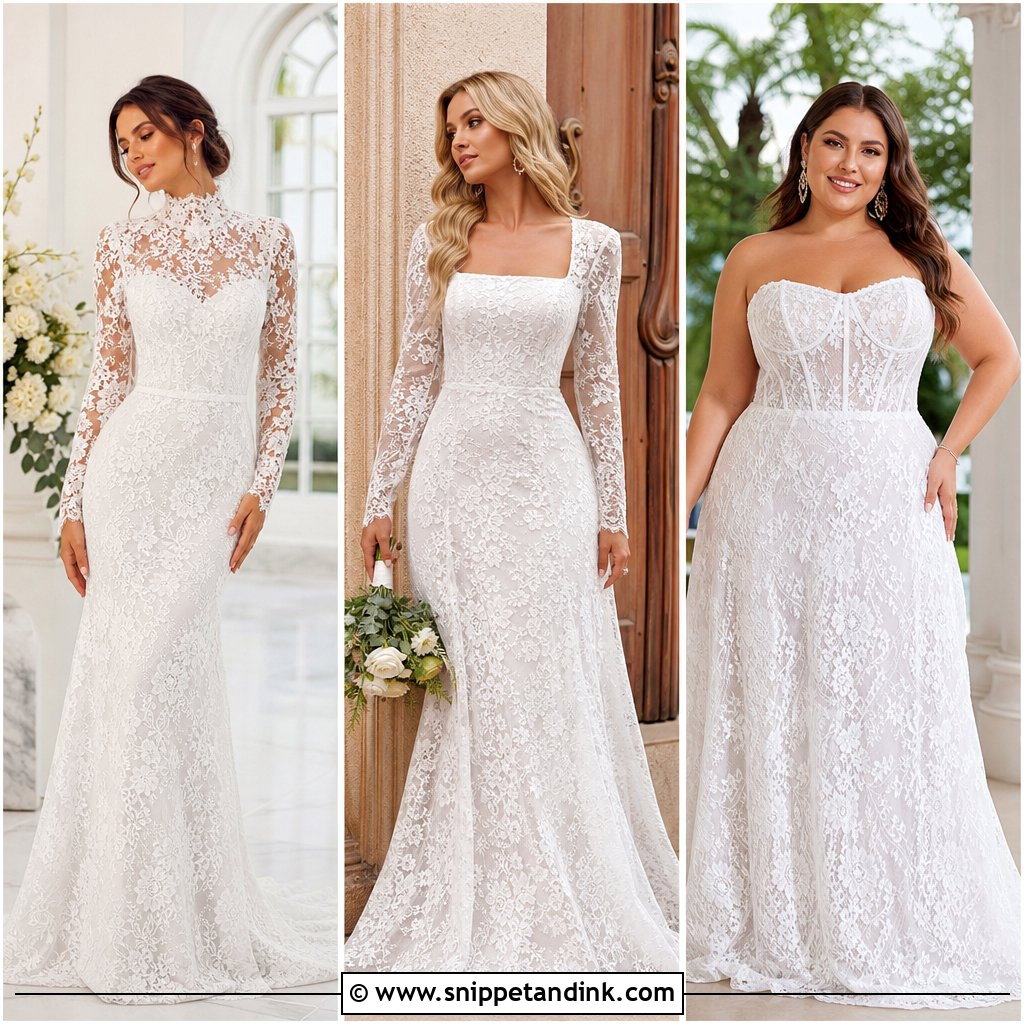
12. High Neck Lace Overlay Wedding Dress
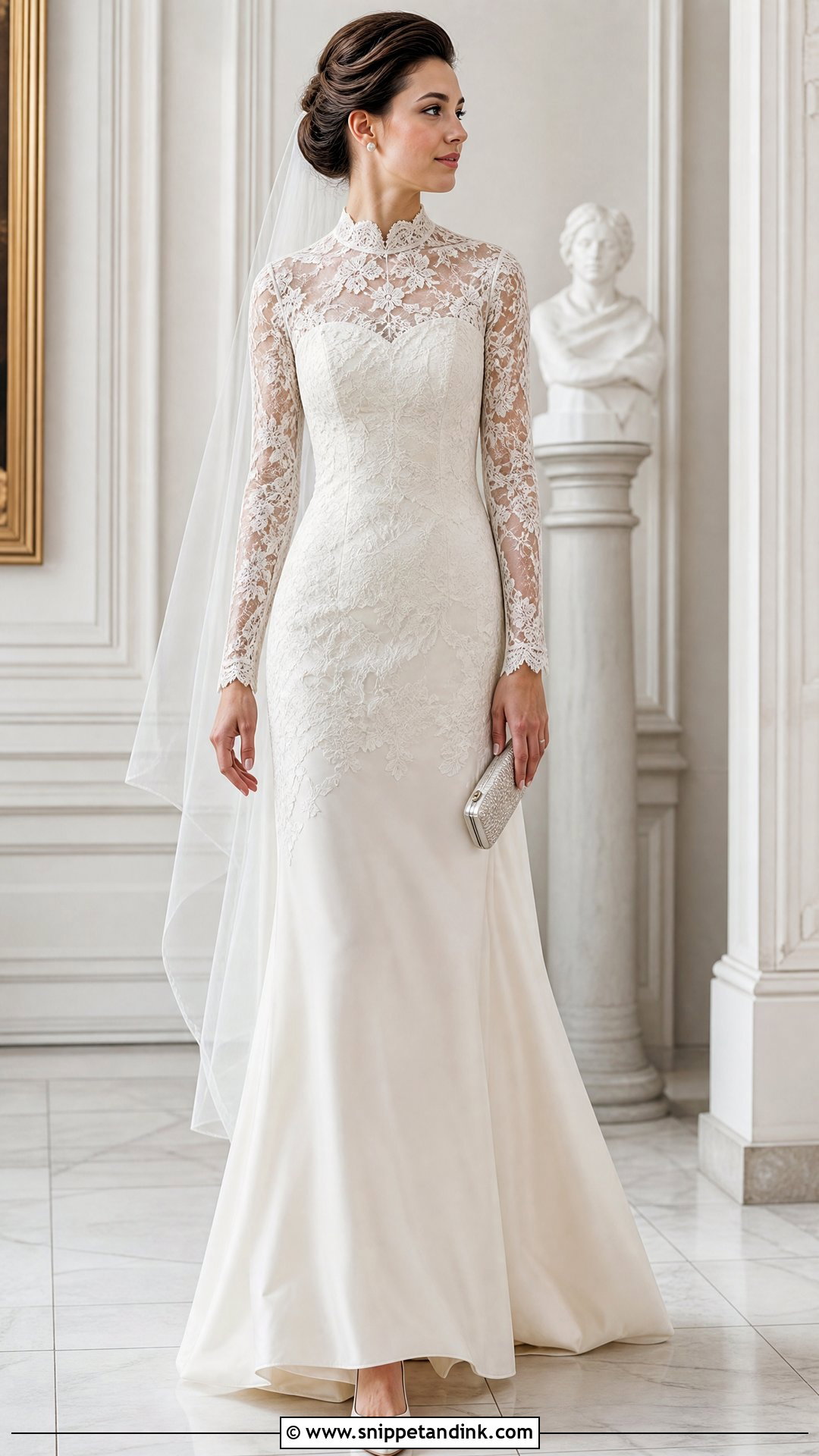
High lace necklines put all the detail up by your face, so I keep everything near it simple. Choose a fitted bodice with sheer lace rising toward the collarbone over an A-line, sheath or gently flared skirt. Long sleeves feel formal, while a sleeveless high-neck design is lighter for spring and summer. No necklace. Pearl studs, low satin pumps and a decorative comb in a low bun or French twist do the job, with the veil secured beneath the hair. Rub the lace against the side of your neck in the fitting room. Scratchy collars get worse with every hour.
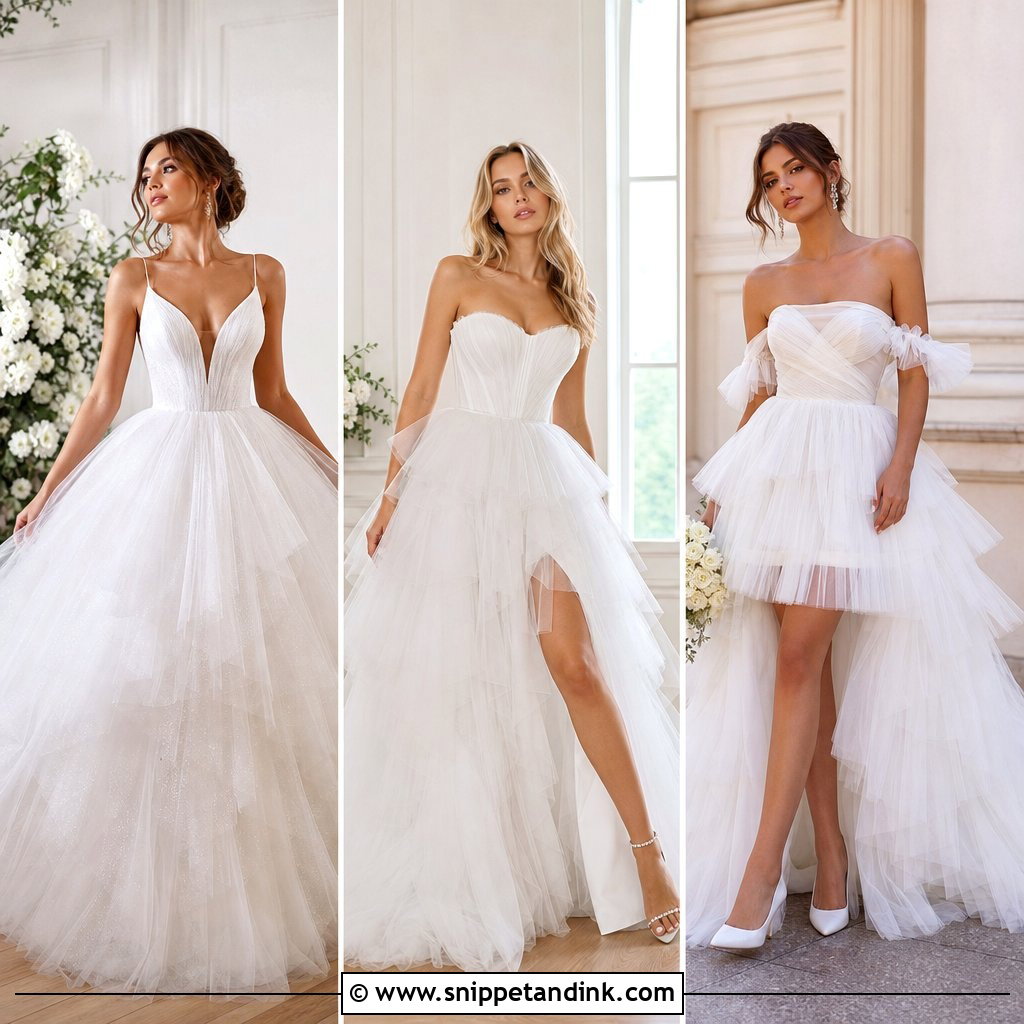
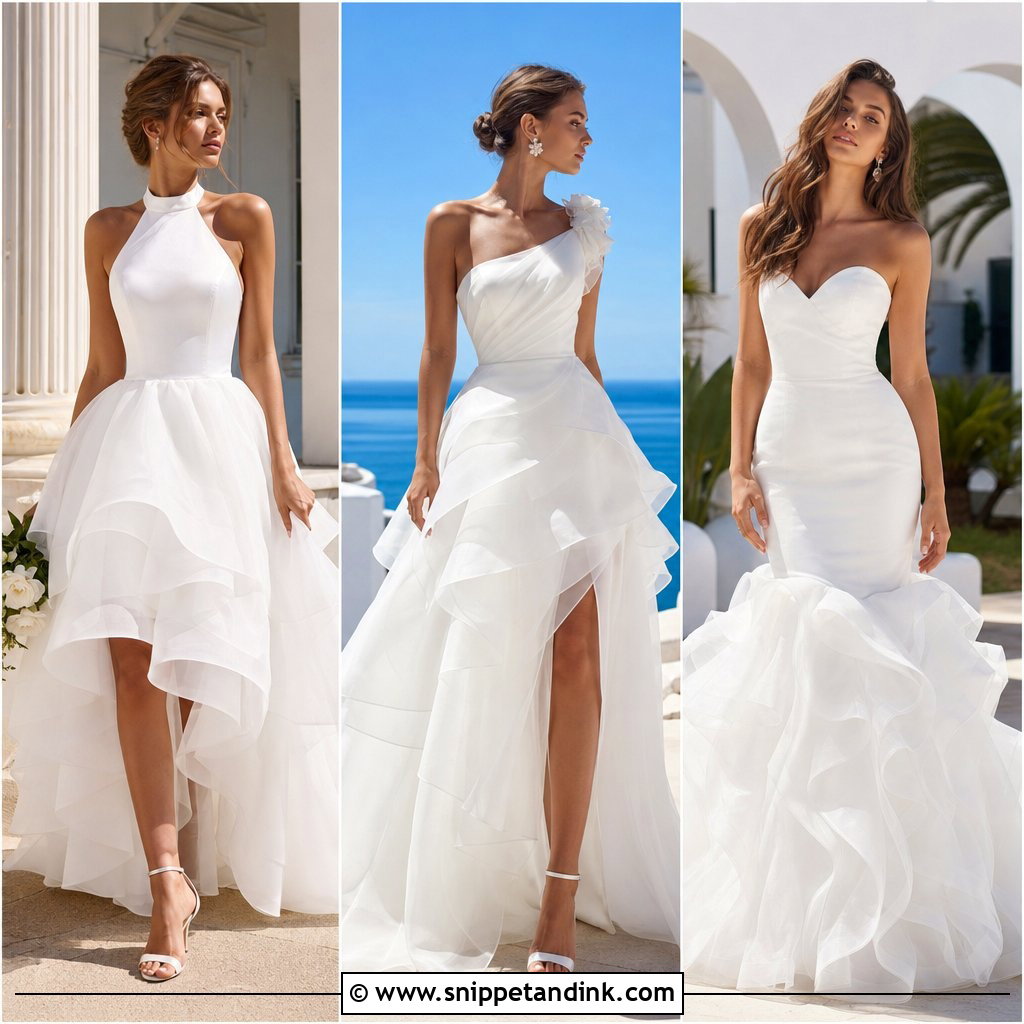
13. Ruffled Tulle Overlay Wedding Dress
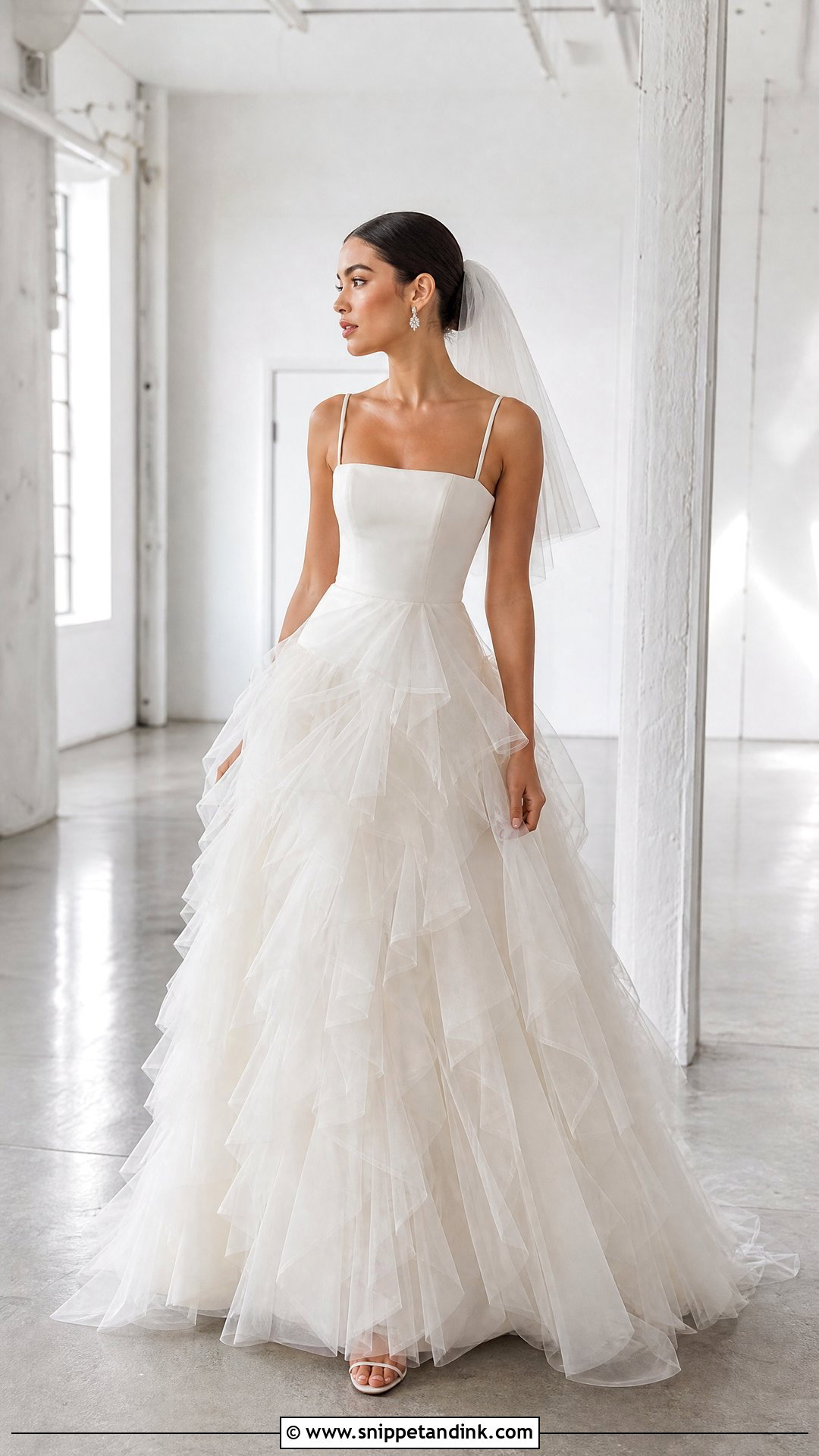
Ruffled tulle is the most playful overlay here and the one that takes up the most room. Keep the bodice simple so the skirt is the statement. Horizontal tiers add width, while diagonal or cascading ruffles lengthen the body. Stay in one color, ivory or soft white. Streamlined sandals, small crystal earrings, a smooth updo and a short plain veil let the texture show. If the skirt is detachable, the base needs its own finished hem. Practice turning in the dress, since wide ruffles knock into chairs, and set the length so the toe of your shoe just peeks out.
14. Blush Tulle Overlay Wedding Dress
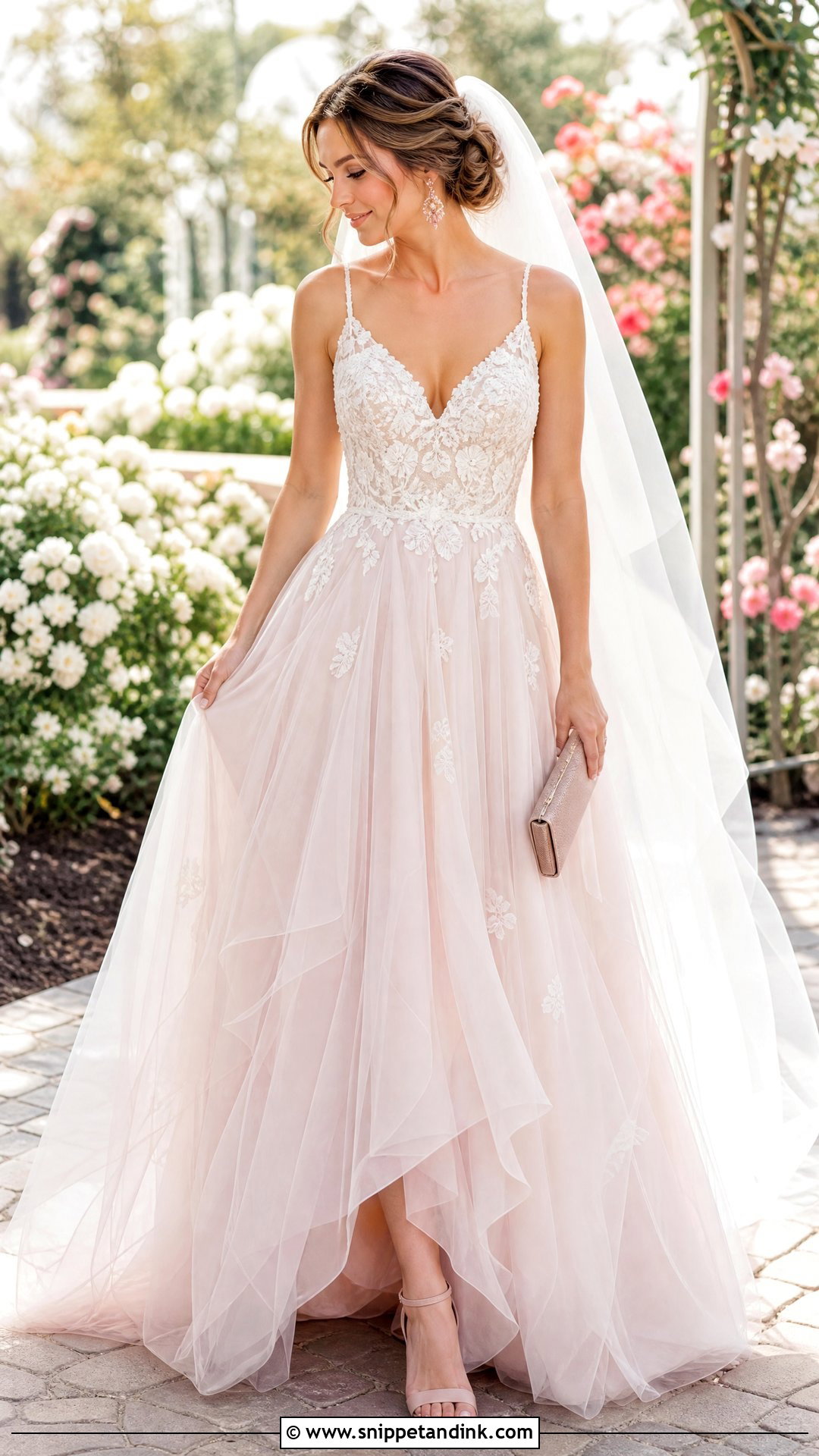
Blush tulle over an ivory lace bodice gives gentle color while still reading as bridal. Several fine blush layers look subtler than one dense pink one, and they shift more kindly in different light. A-line or ball gown shapes both carry it. Nude or pale blush heels, rose-toned earrings, a neutral clutch and a plain ivory veil link the colored skirt to the bodice. I keep the bouquet to a few soft shades. Before alterations, look at the dress under warm, venue-style lighting as well as daylight, because blush can lean peach indoors and almost grey outdoors.
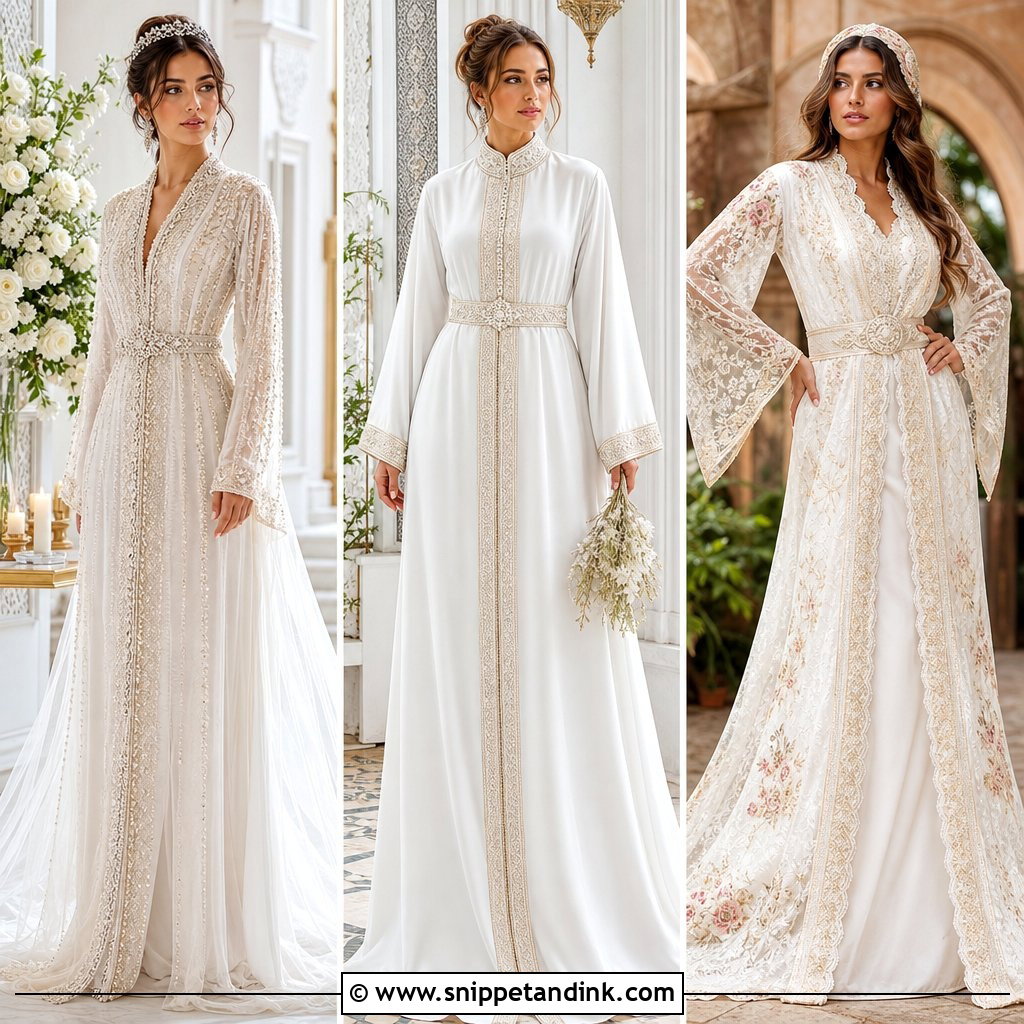
15. 3D Floral Overlay Wedding Dress
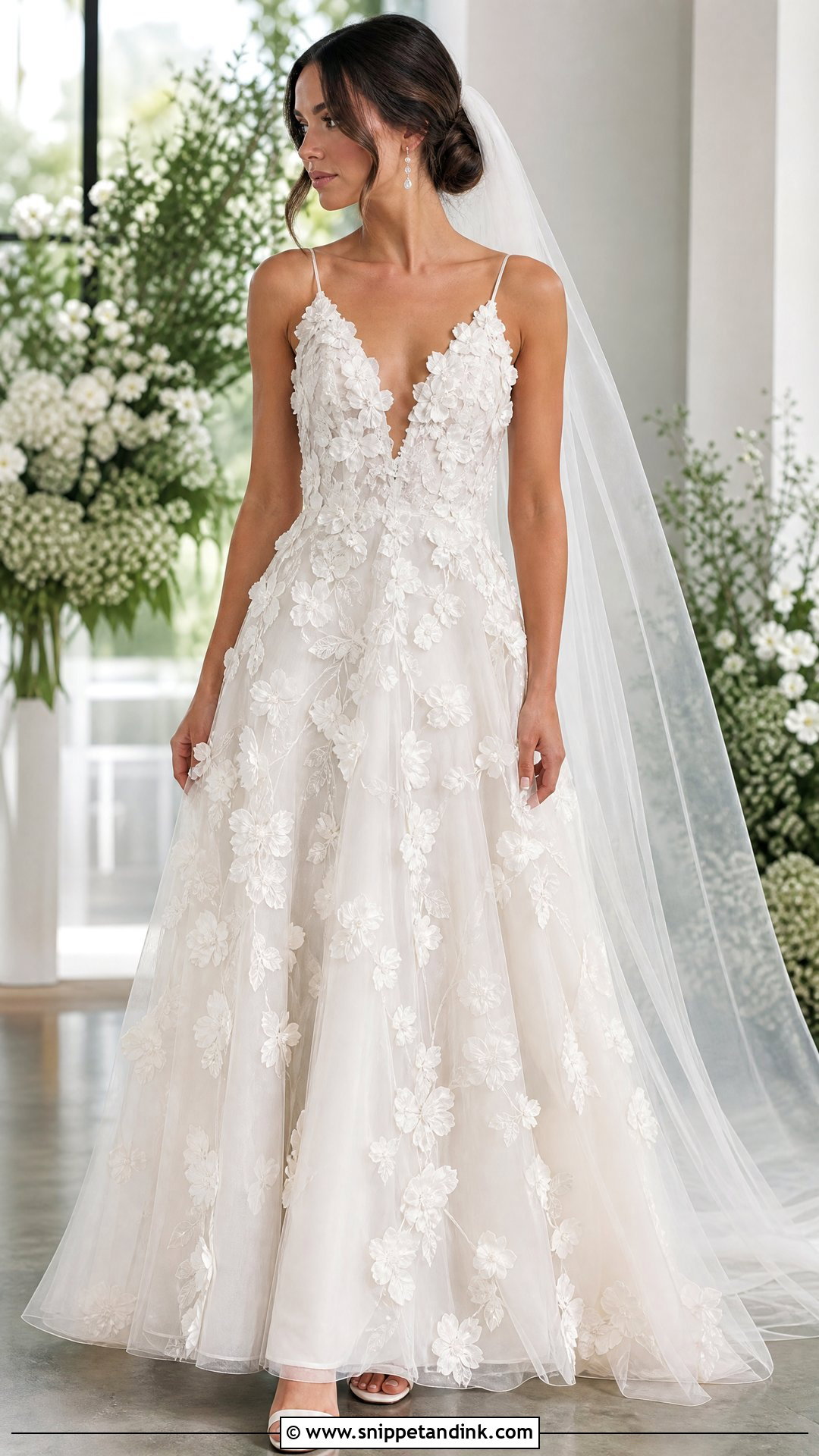
Three-dimensional flowers turn a gown into a sculpture, and they need clear space around them. I look for heavier detail at the bodice thinning down the skirt, on an A-line that gives the petals room. Keep accessories restrained: simple drops, ivory sandals and a clean-edged veil. A low textured bun keeps loose hair from catching on raised petals. If the flowers carry pearls or crystals, repeat only one of those in the jewelry. Flowers at the underarm and where your hands rest on your waist get crushed and rub, so ask for them to be moved or thinned there.
16. Asymmetrical Tulle Overlay Wedding Dress
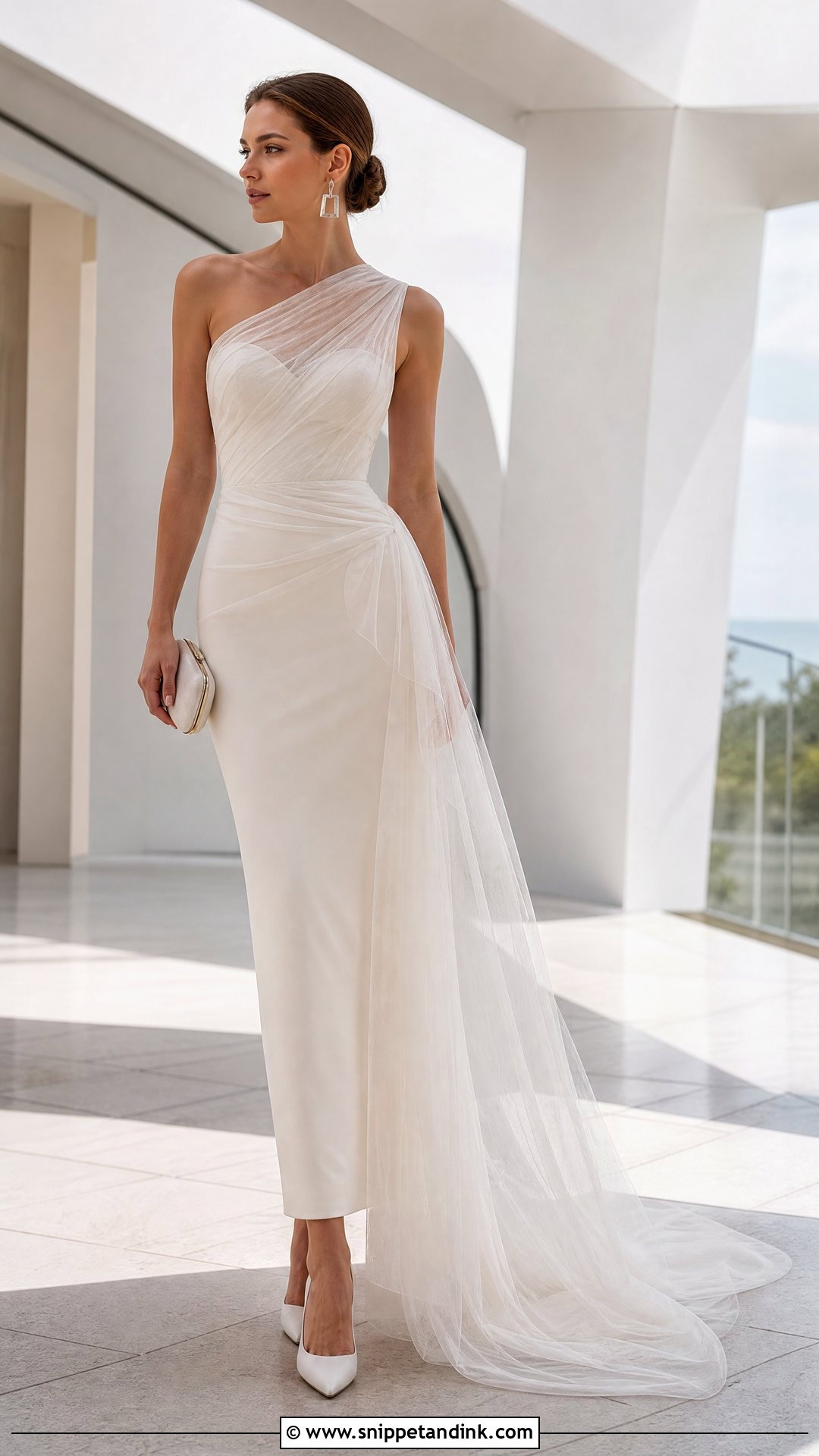
An asymmetrical tulle overlay gives movement through shape rather than decoration. On a fitted column, trumpet or mini base, the sheer layer falls diagonally from one hip into a longer side train. Sleek pointed pumps, geometric earrings, a compact clutch and a smooth ponytail or sculpted low bun keep the styling clean. Skip a wide veil that would hide the uneven hem; a short one or a small hair accessory works better. View it from the front, side and back at fittings. The shorter side should clear your shoes when you walk, or you’ll step on it with every stride.
17. Satin Wedding Dress With Sheer Overlay
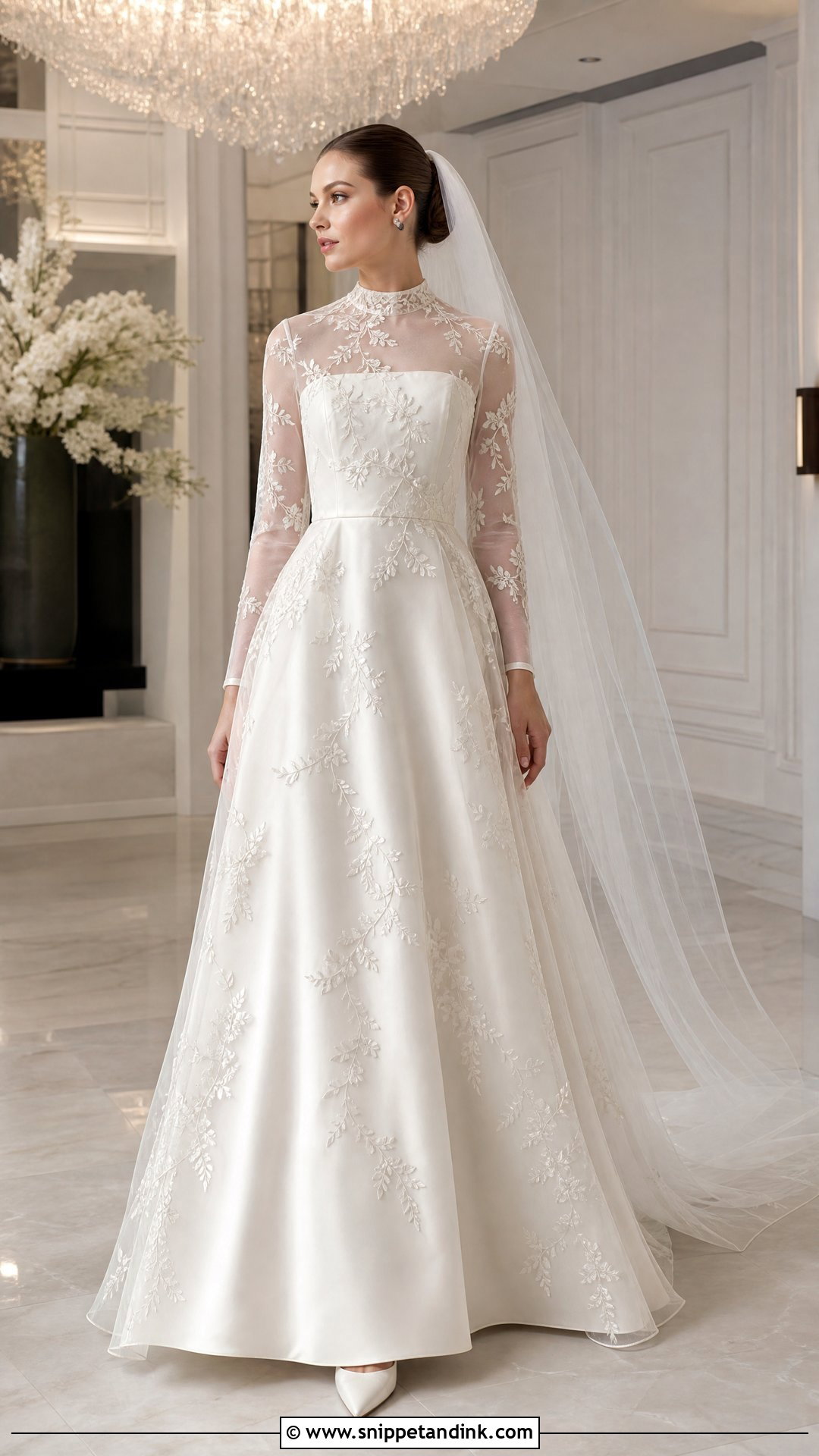
A sheer layer over satin cuts the shine and adds depth, which suits brides who love satin’s structure but find it too glossy. Start with a structured satin A-line or column with a clean neckline and fitted waist, then add tulle or organza over the skirt, bodice or both. Minimal embroidery keeps the satin in charge. Closed-toe satin heels, crystal studs, a polished bun and a veil with a narrow finished edge suit it. Two slippery fabrics can twist against each other, so ask your seamstress to tack the overlay at the side seams. Steam each layer separately before dressing.
18. Tea-Length Wedding Dress With Tulle Overlay
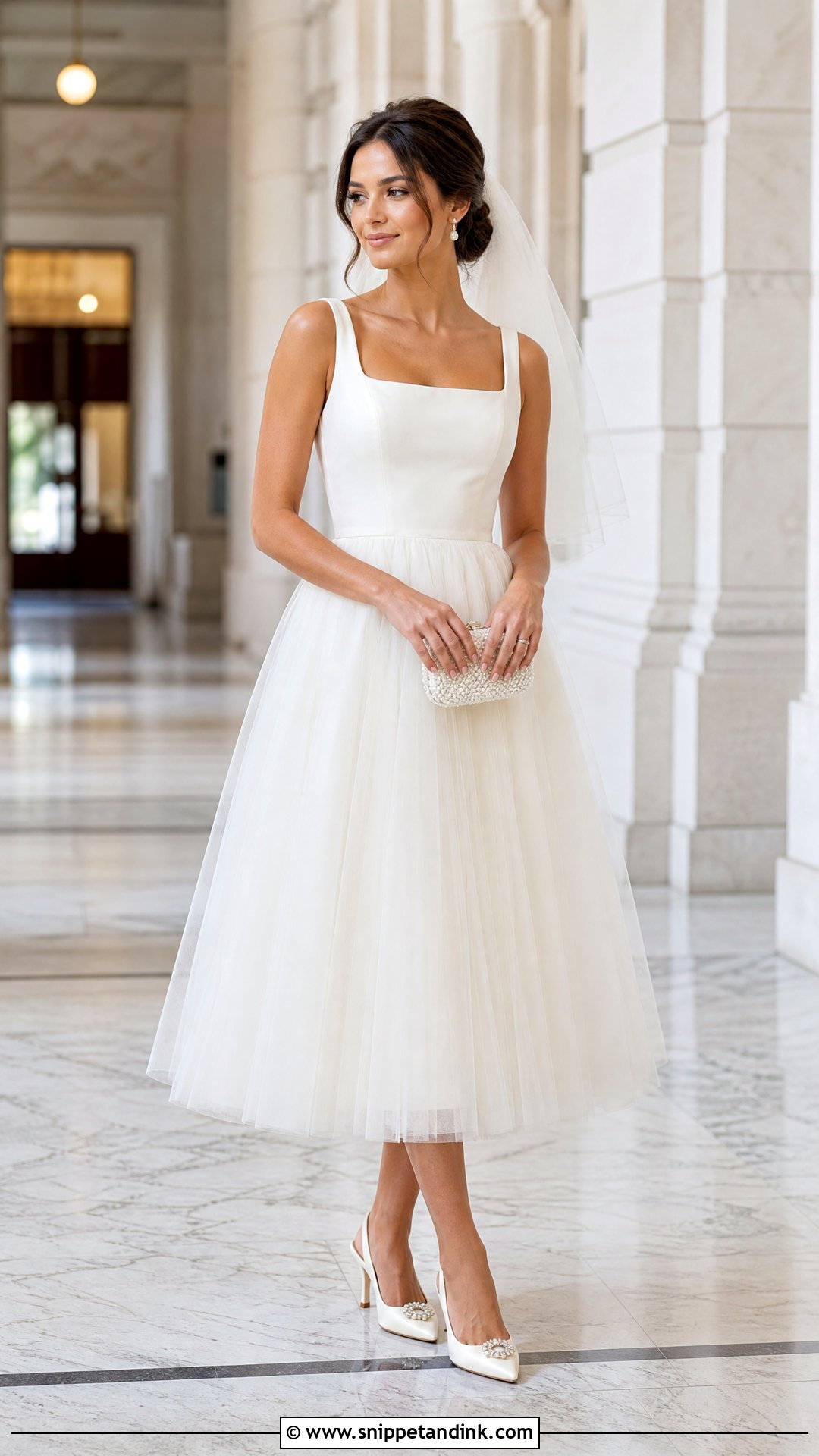
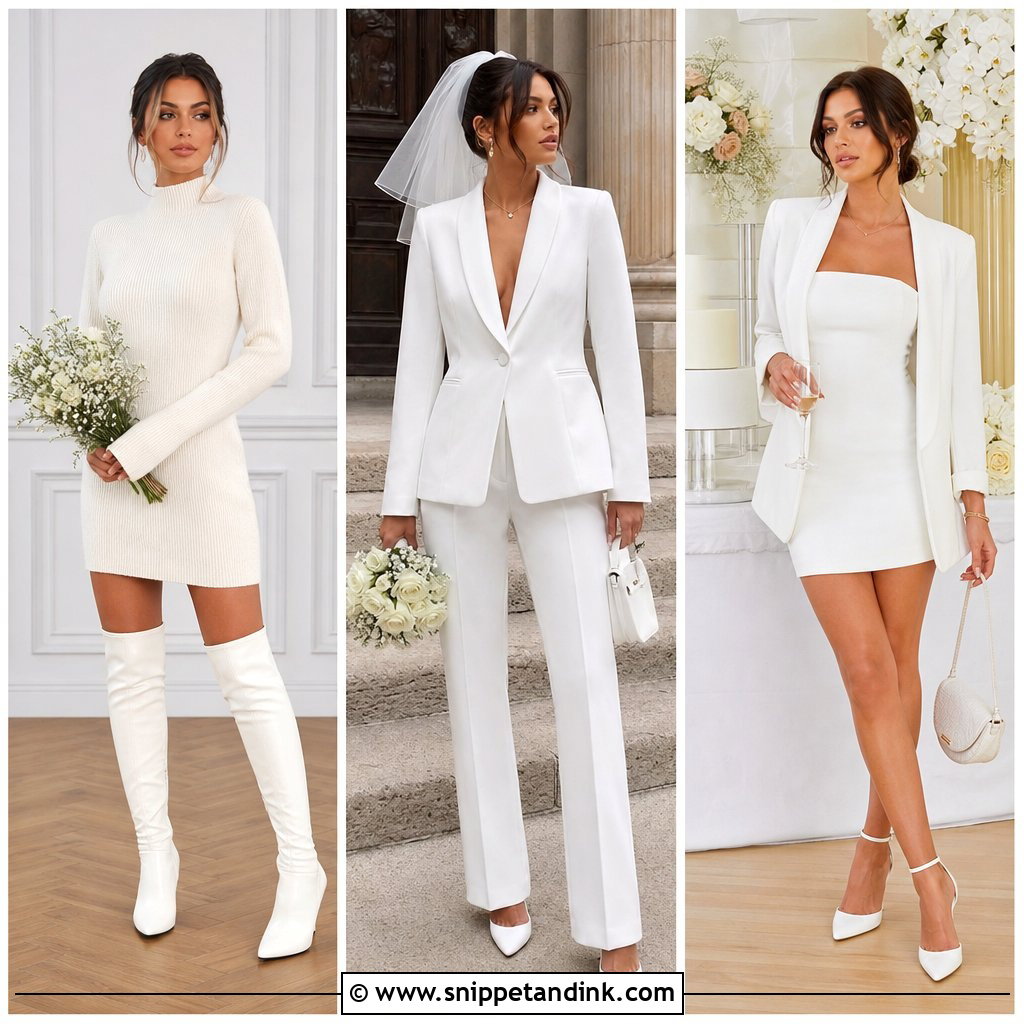
Tea length with a tulle overlay is easy to move in, and the shoes become part of the look. Choose a fitted bodice with a skirt ending between knee and ankle, then add one or two layers of soft tulle for volume. A lace-trimmed hem can define it if it stays narrow. Ivory slingbacks, low block heels or embellished pumps all work, with pearl earrings, a small clutch and a short veil or structured bow. It suits courthouse ceremonies and daytime parties. Watch the hem around your heels; tulle that sits too close catches on a heel tip with each step.
19. Bridal Mini Dress With Detachable Overlay Skirt
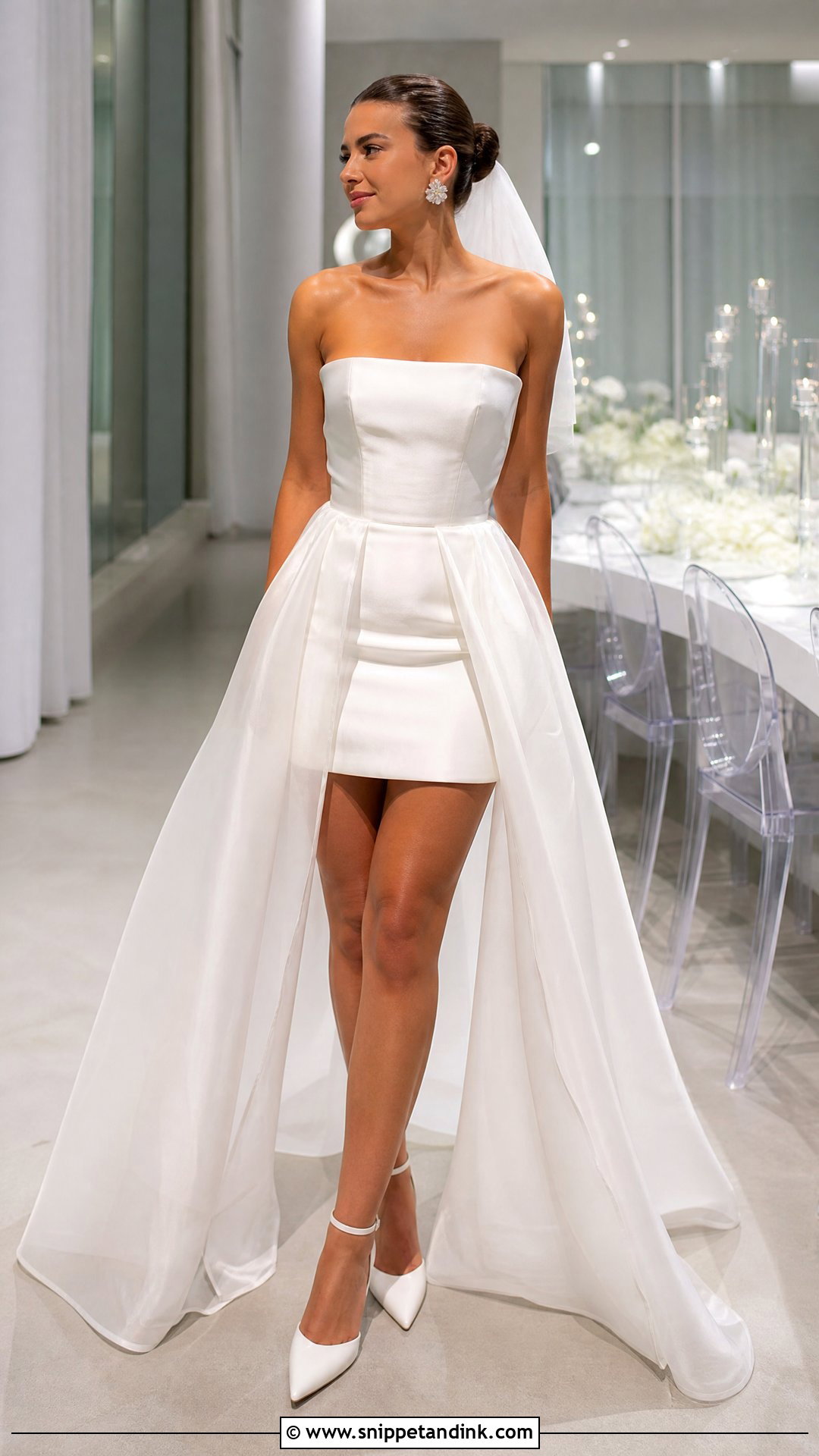
A bridal mini with a detachable skirt gives a big entrance and an instant party outfit. The mini needs a secure bodice, a finished hem and enough length to sit and dance in comfortably. Over it goes a full-length tulle or organza overskirt that fastens around the waist and opens slightly at the front to show the dress beneath. Pointed pumps or ankle straps suit both versions. Wear statement earrings and a simple veil for the ceremony, then switch to a sleek headband or comb. Check that the waistband lies flat with no twisting, because a bulky band shows through the mini later.
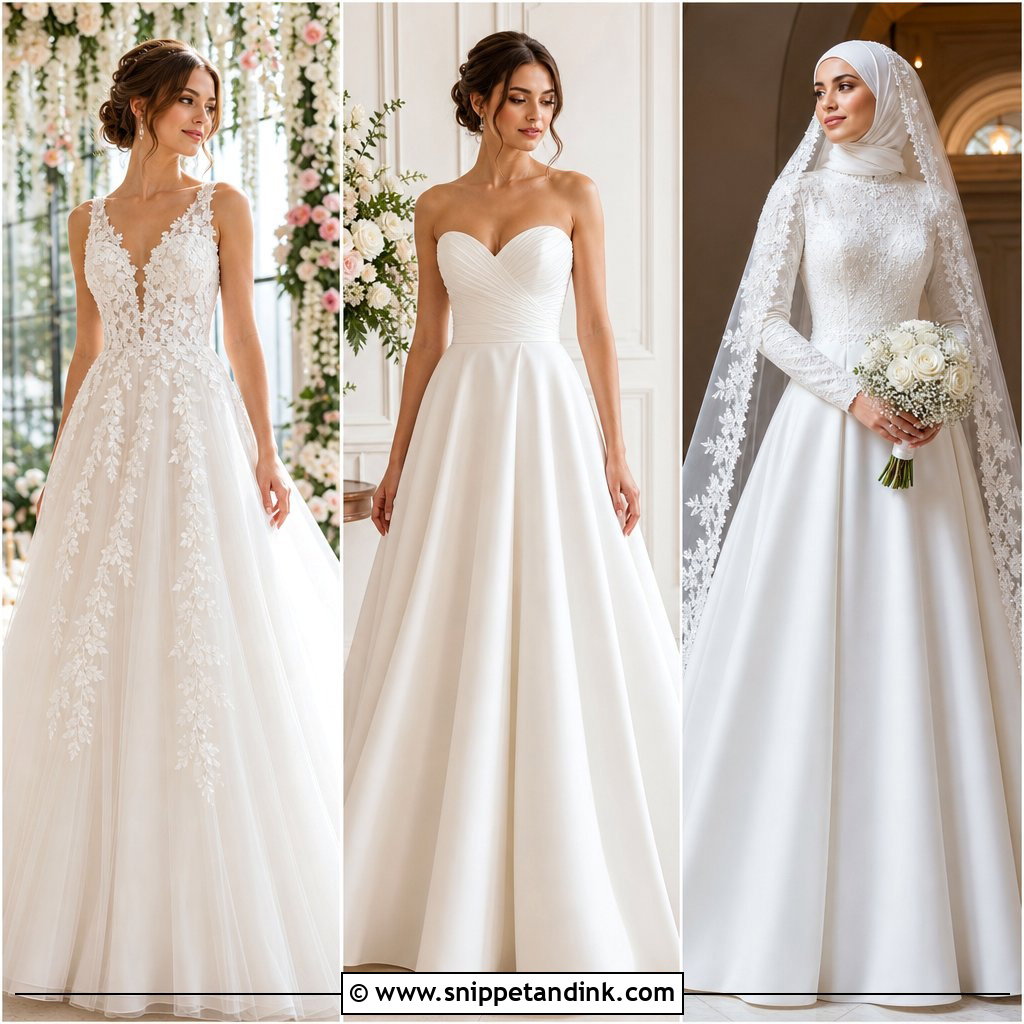
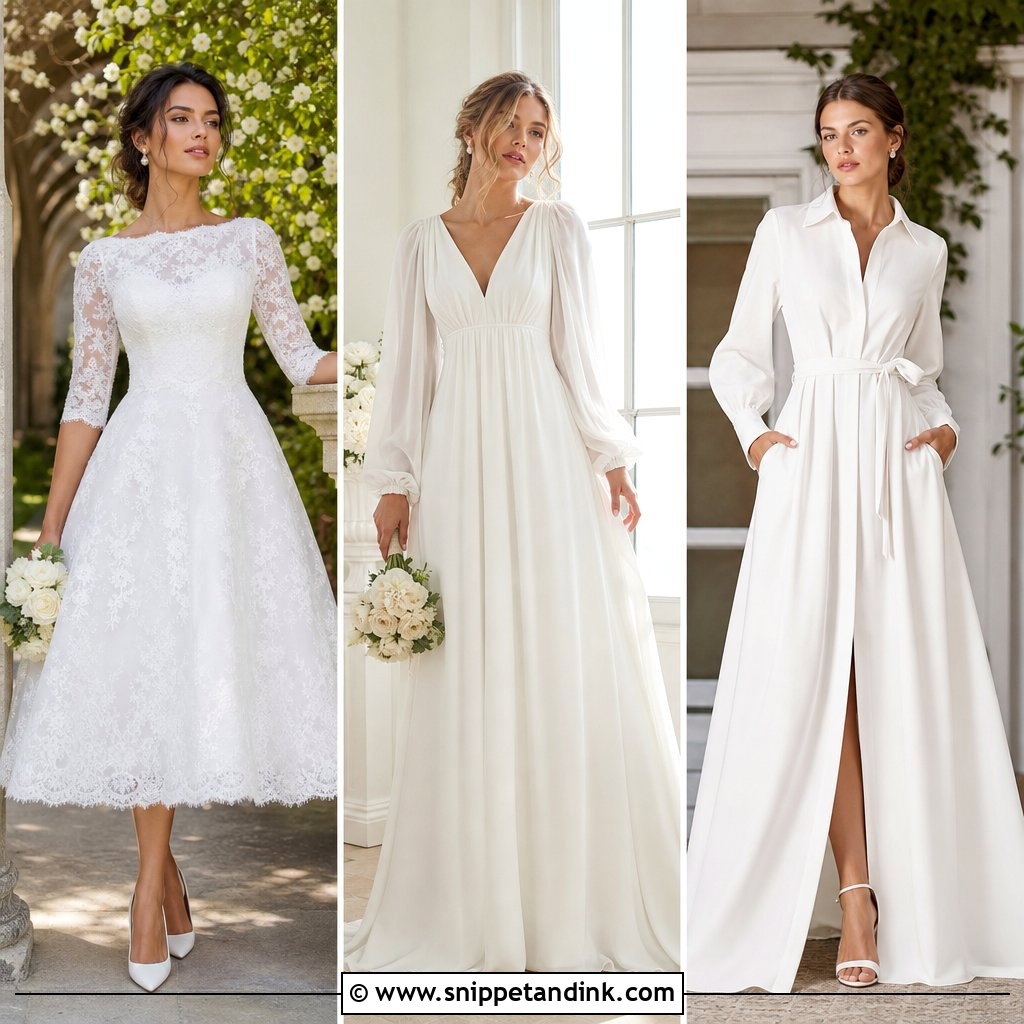
20. Cathedral Train Overlay Wedding Dress
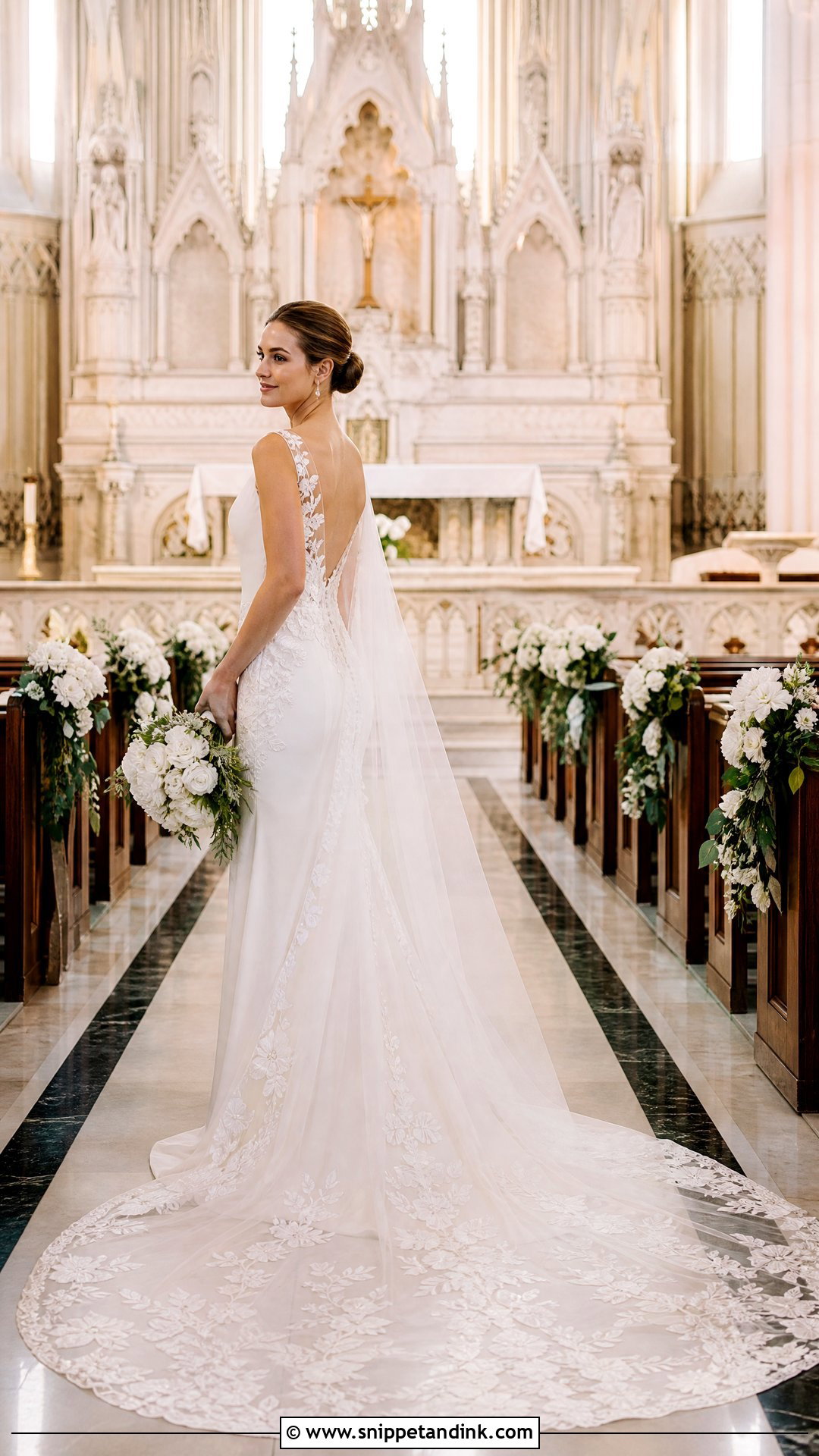
A sheer cathedral train overlay makes the longest aisle look short. A fitted sheath, mermaid or A-line base gives a clean start, and a long layer of embroidered tulle or lace falls from the waist or shoulders, often finished with scattered flowers, vines, pearls or a border. Comfortable closed-toe heels, understated earrings and a neat low bun suit it. If the overlay starts at the shoulders like a cape, drop the veil; if it starts at the waist, a veil can work if the lengths don’t fight. Plan from the start whether the train will be bustled or removed before dinner.
How Long Does the Quick Change Really Take?
Removing an overskirt, cape or topper looks instant online. In real life, with a helper, hidden hooks and a bustled hem, allow ten to twenty minutes. Plan it into the timeline, often between the ceremony photos and the reception entrance, and make sure there’s a private room close to the reception space.
- Choose one helper and walk through the change with them at the final fitting.
- Bring a padded hanger and a garment bag for the removed layer, so it isn’t left over a chair.
- Name the person who takes it home at the end of the night.
- Do the hair swap (veil out, comb in) in the same room so you only stop once.
Getting a Layered Gown to the Venue Uncrushed
Layered skirts travel best hanging, not folded, in a long garment bag with the tulle loosely fluffed rather than pressed flat. Lay it across a back seat if you can’t hang it, and never put anything on top. On arrival, hang it high so the train falls freely, and steam with distilled water from a short distance, never touching the fabric. Organza and satin will need the most attention; tulle often relaxes on its own within an hour.
Does the Base Dress Stand on Its Own?
A good overlay looks as though it belongs to the gown, not as though it was added later. Lace sleeves, a pearl layer, a big overskirt or a cape can all work if the fabric suits your venue’s light and you can still walk, sit and raise your arms in it. With a detachable piece, test the fastenings and look at the base dress from every side on its own. Let shoes, jewelry, hair pieces and veil support the texture instead of adding more. Most of all, choose the layer you’ll be comfortable in from the first photo to the last dance.
You'll Like These Ideas:



Leave a Reply