
Long sleeves are where vintage bridal design shows its era most clearly. A Victorian high collar, a bias-cut 1930s cuff and a 1970s bell sleeve each tell a different story before anyone notices the skirt. Below are twenty-five directions, from heavy lace to fluid satin to structured 1950s shapes, and for each one I’ve noted what I look for at a fitting. Sleeves are the part of a gown that most often needs work, so keep alterations in mind from the first try-on, not the last. Shoes, hair and a veil come afterward and should support the dress rather than fight it.
Original From the Era, or Newly Made in an Old Style?
The first question I ask any bride drawn to vintage is whether she wants a dress that is actually old or one that only looks it. Both can be wonderful to wear, but they behave very differently in a fitting room.
Buying a true vintage gown
- Ignore the size on the label. Older gowns run much smaller than modern sizing, so go by bust, waist and back-length measurements.
- Hold the fabric up to a window. Silk that has gone brittle shows tiny splits along fold lines and under the arms, and those splits spread once a seamstress starts handling it.
- Yellowing at the underarms or hem can sometimes be lifted by a specialist cleaner, but not always, so treat it as a risk rather than a certainty.
- Look at the seam allowance inside. Many older gowns were already taken in, which can leave nothing to let out.
Ordering a new gown cut in a vintage style
Order early. Made-to-order bridal gowns commonly take several months to arrive, and alterations need their own block of time on top of that. Ask the shop for the lead time in writing and count back from your date. In exchange you get modern zippers, stretch linings and fabric you can move in freely, which matters more than people expect once the sleeves are long and fitted.
1. Victorian High Neck Lace Wedding Dress
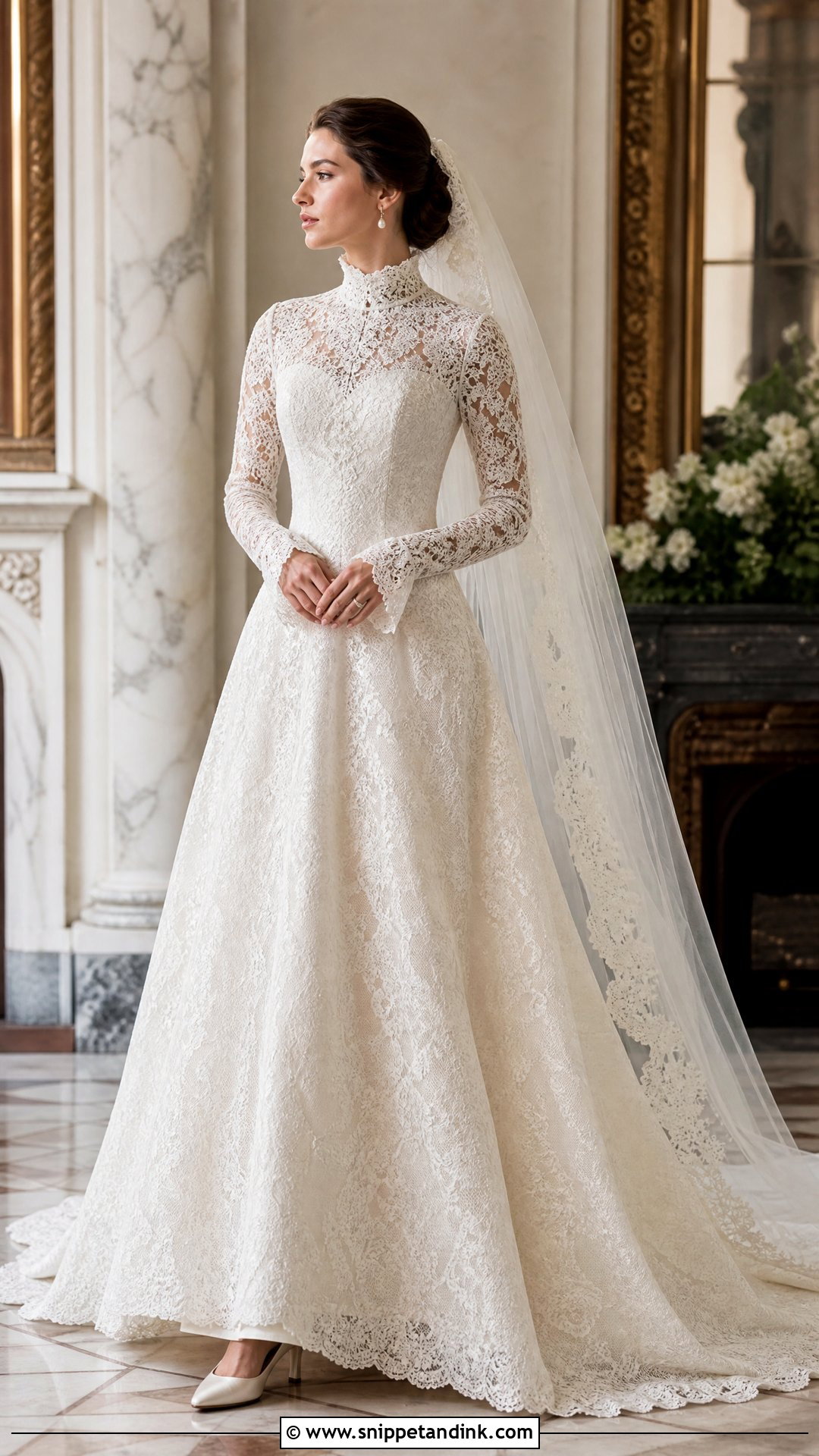
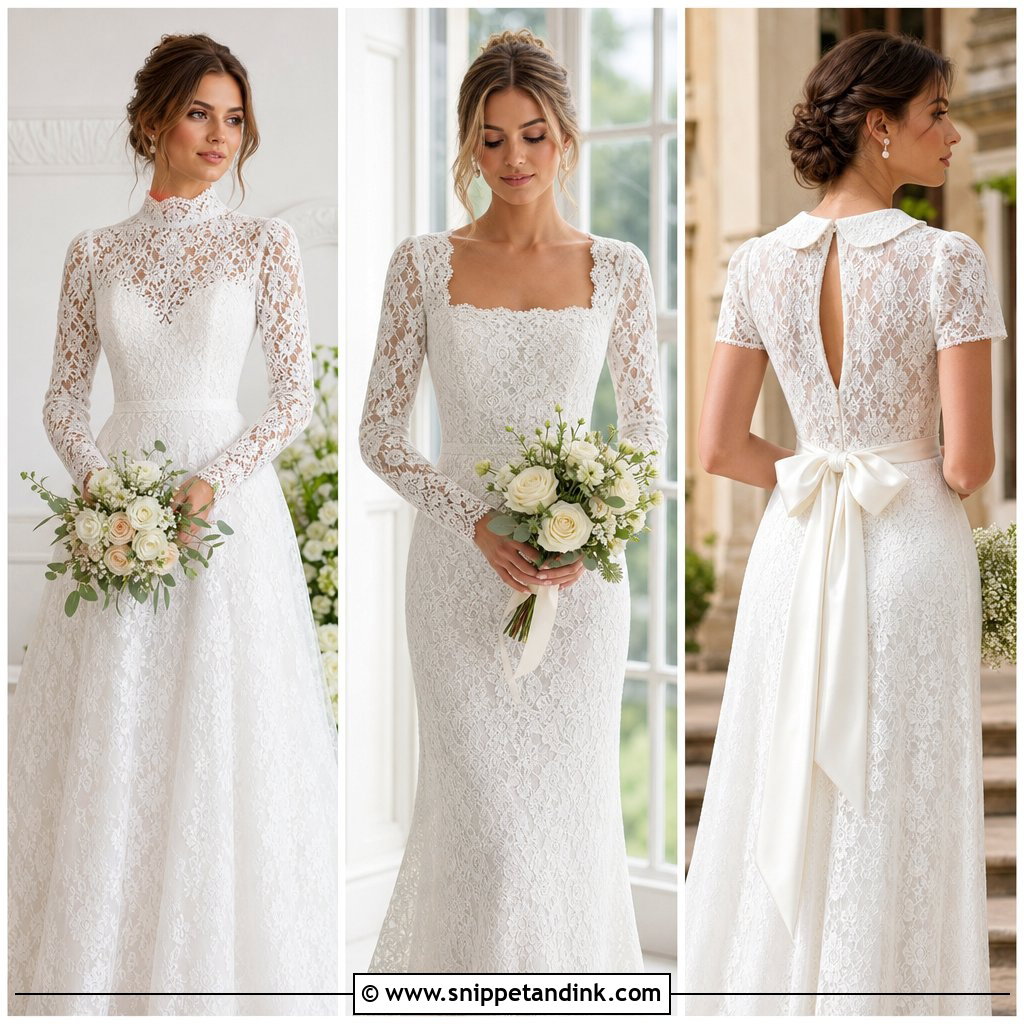
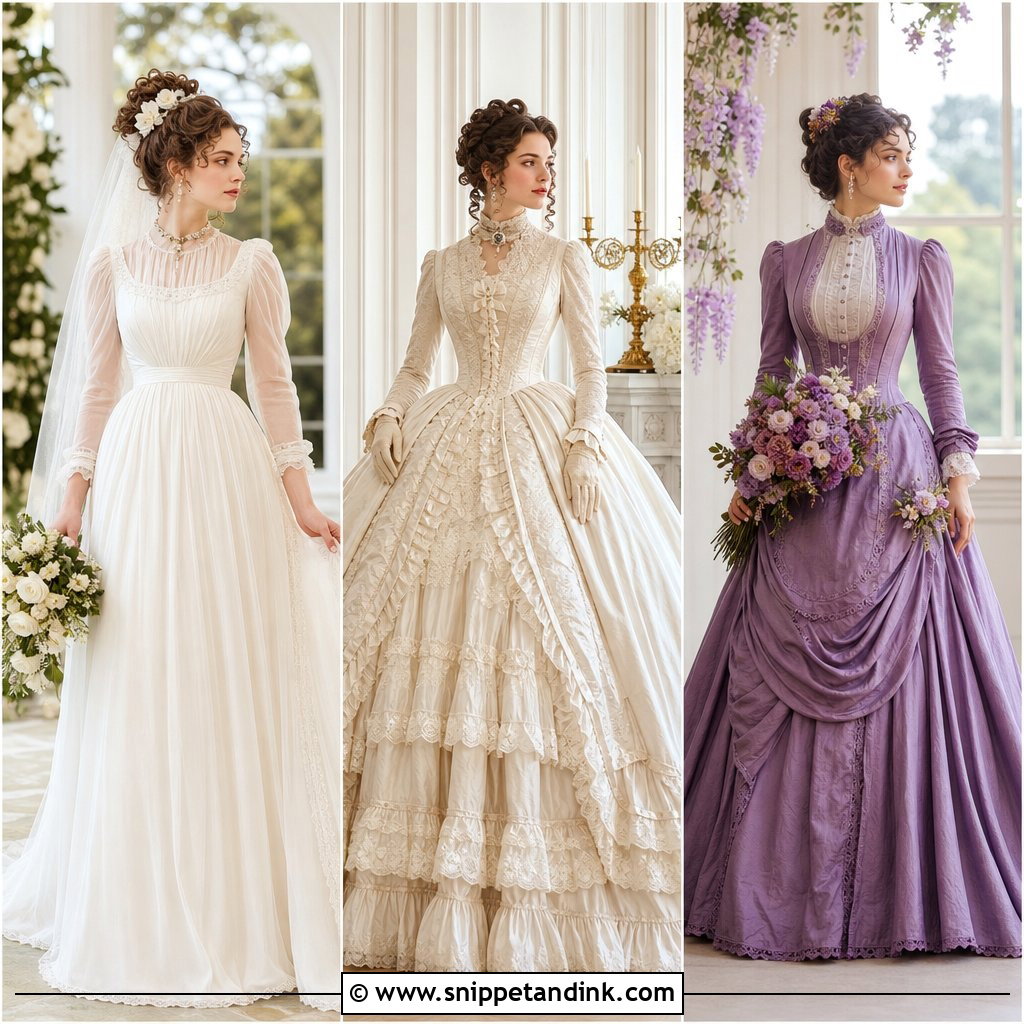
A high lace collar needs a neck that can carry it. I start every fitting of this style by checking where the collar sits against the jaw when the bride looks down at her bouquet; if it pushes into the chin, we lower it or switch to a narrow stand collar or a sheer lace yoke. An ivory A-line with a fitted bodice, covered buttons and lace sleeves gives you the Victorian outline, and scalloped cuffs add period character without tipping into costume. Wear the hair in a low chignon so the collar stays visible, then add pearl drops, an antique-style comb and a cathedral veil. Lace with no stretch can bind at the armhole, so lift both arms over your head before you sign off on the fit.
2. Edwardian Lace Wedding Dress
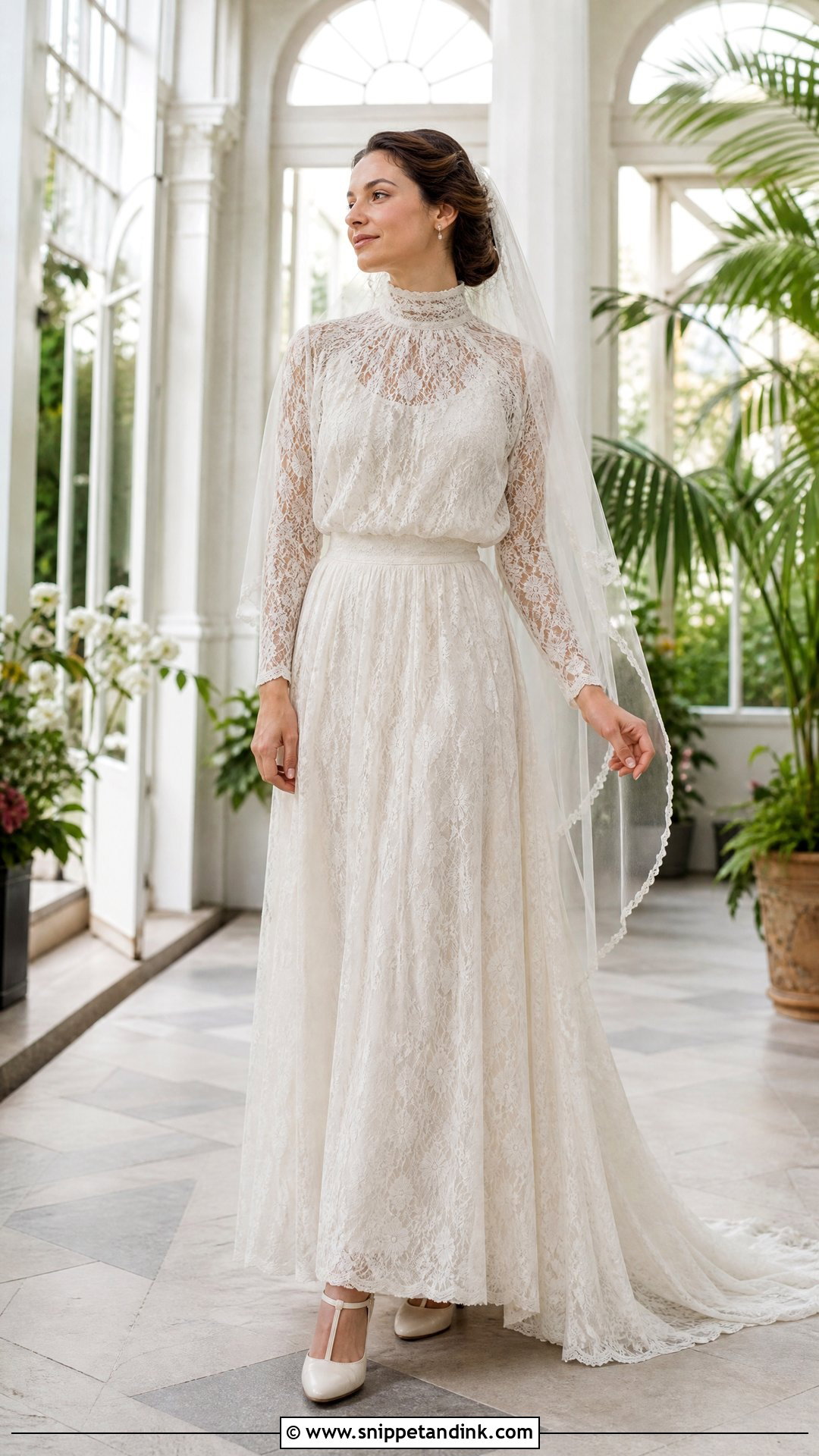
An Edwardian lace wedding dress depends on the blouson bodice, that soft pouch of fabric above a defined waist. Too much blousing and the bride looks shapeless in side profile, so I pin it in small amounts and judge it from the side, not just the front. Pintucks, fine floral lace and small covered buttons carry the era, while long fitted sleeves with lace cuffs keep the line graceful. Finish with a loose updo with the fingertip veil tucked beneath it, pearl studs and ivory T-strap heels. Hold back on everything else. The handwork is the point, and a silk ribbon belt is usually all the extra detail this gown needs.
3. 1920s Beaded Long Sleeve Wedding Dress
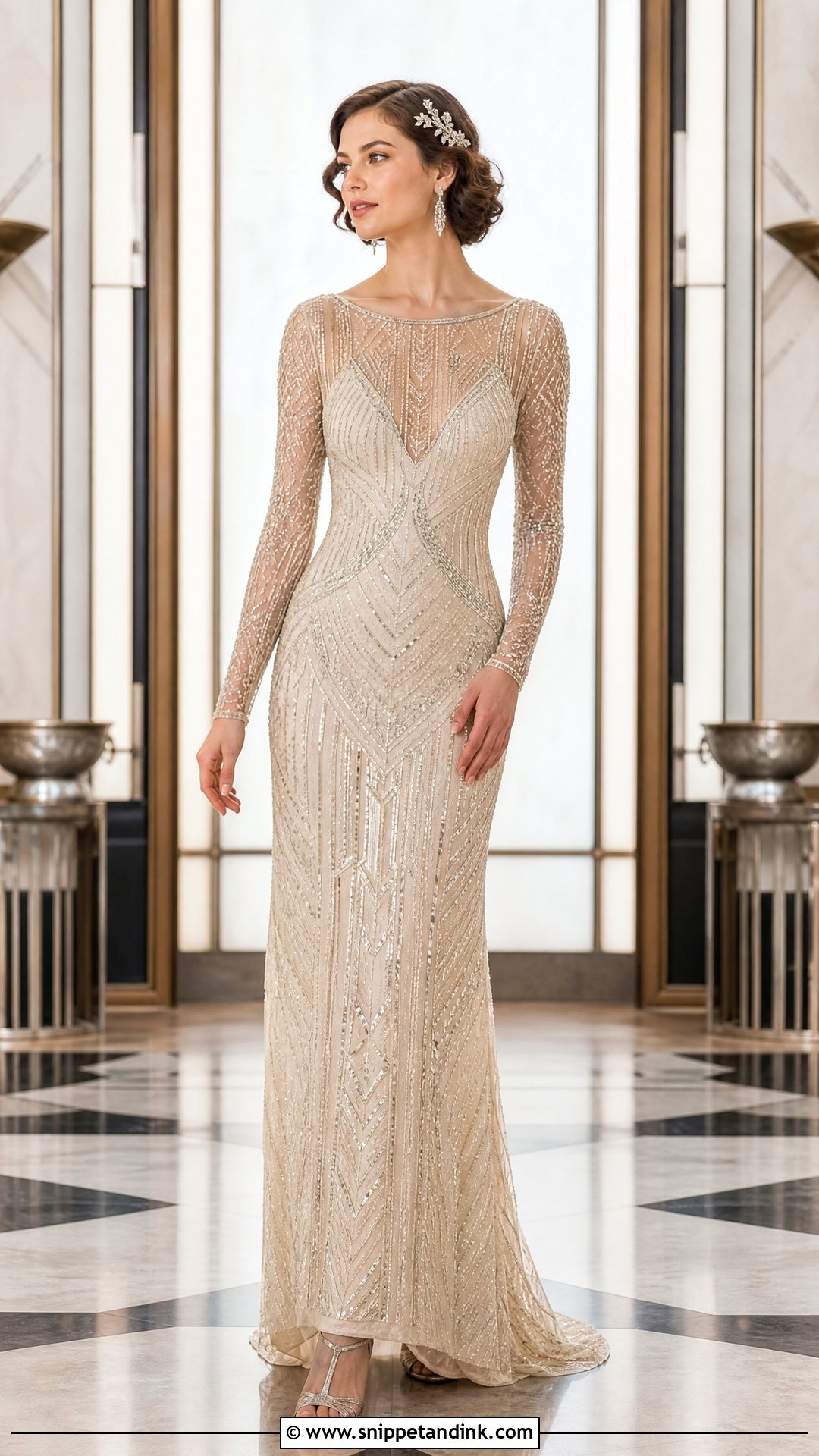
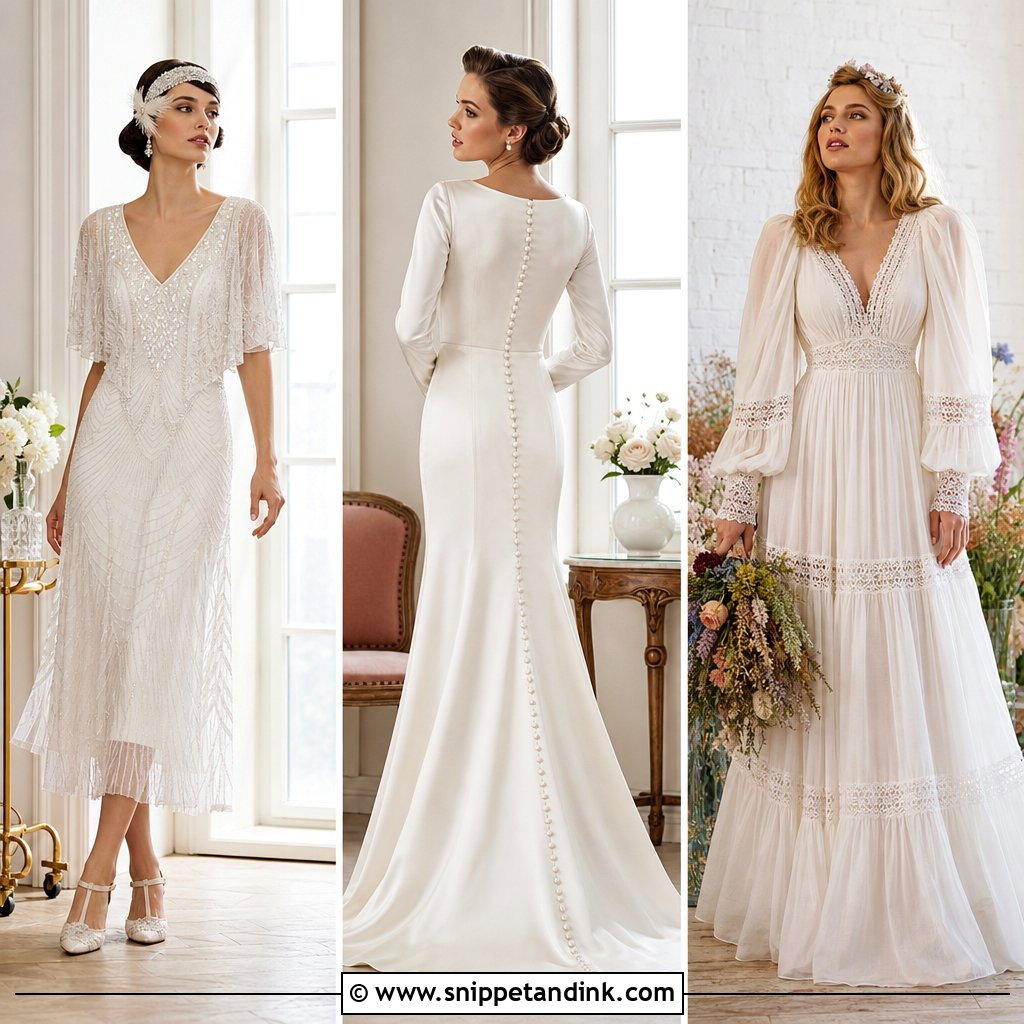
Beadwork is heavy, and that’s the first thing I warn brides about with a 1920s column. A fully beaded gown pulls down on the shoulders over a long day, and the beads on the back of the skirt take a beating every time you sit. Geometric patterns over tulle sleeves suit the decade best, and a champagne or pale ivory lining lets the beading read clearly instead of vanishing against bright white. Low metallic T-straps, crystal earrings and a small satin clutch are enough. Pair it with a waved bob or a smooth low bun under a jeweled comb, and do a full sit, stand and walk test before the final fitting.
4. 1930s Satin Long Sleeve Wedding Dress
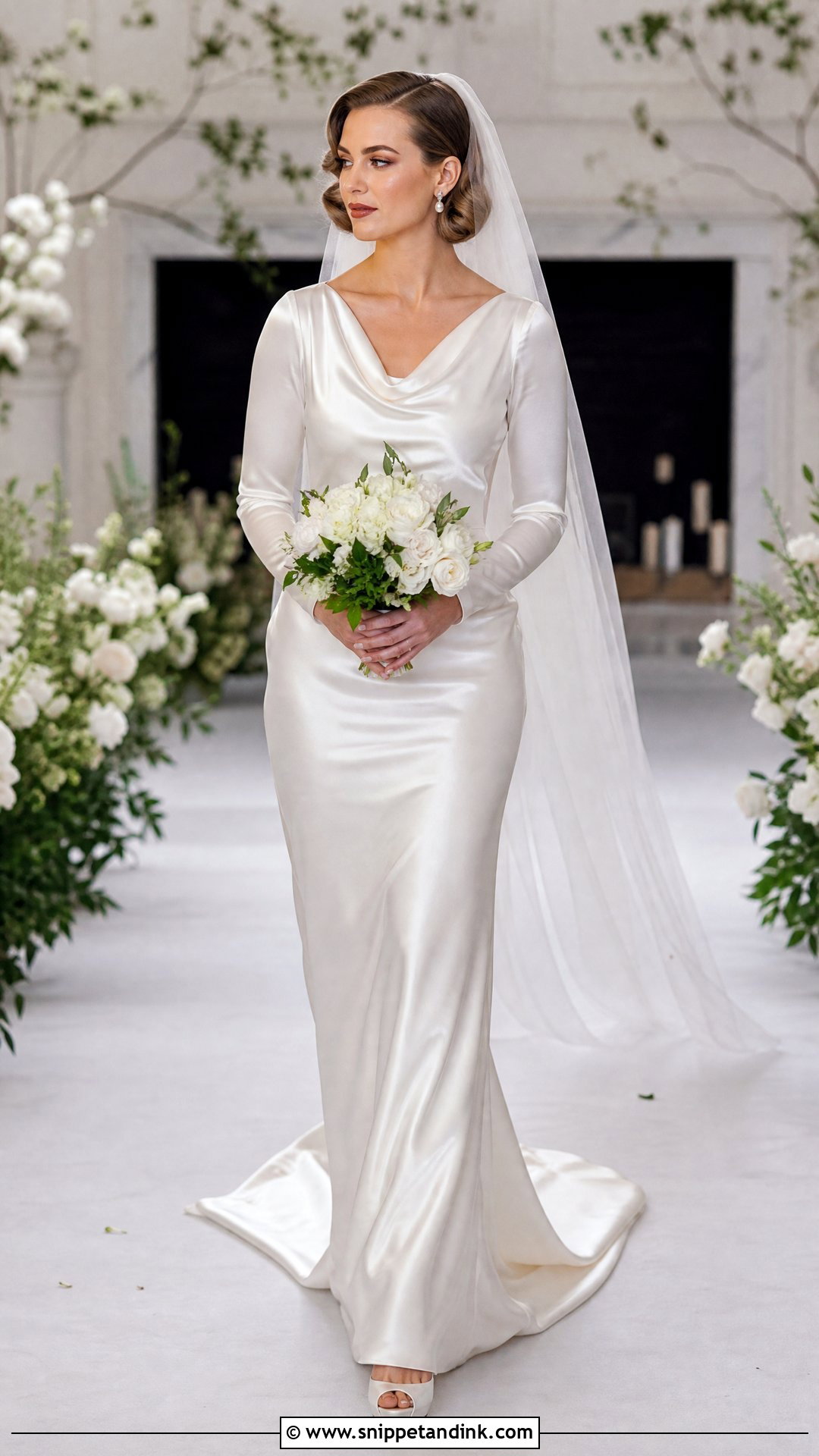
Bias-cut satin is honest to a fault. A 1930s satin long sleeve wedding dress skims the body because the fabric is cut on the diagonal, which also means it shows every seam and strap underneath, so I ask brides to bring their exact underwear to every fitting. A soft cowl or V-neck, sleeves tapering to the wrist and a short train keep the shape clean. Satin peep-toes, pearl earrings and a chapel veil suit it, with side-parted waves for period polish or a sleek low bun if you want it to feel current. Check it under light like your venue’s, because satin throws glare and can look brighter on camera than in the mirror. Indoor evening ceremonies are where it shines, literally.
5. 1940s Crepe Long Sleeve Wedding Dress
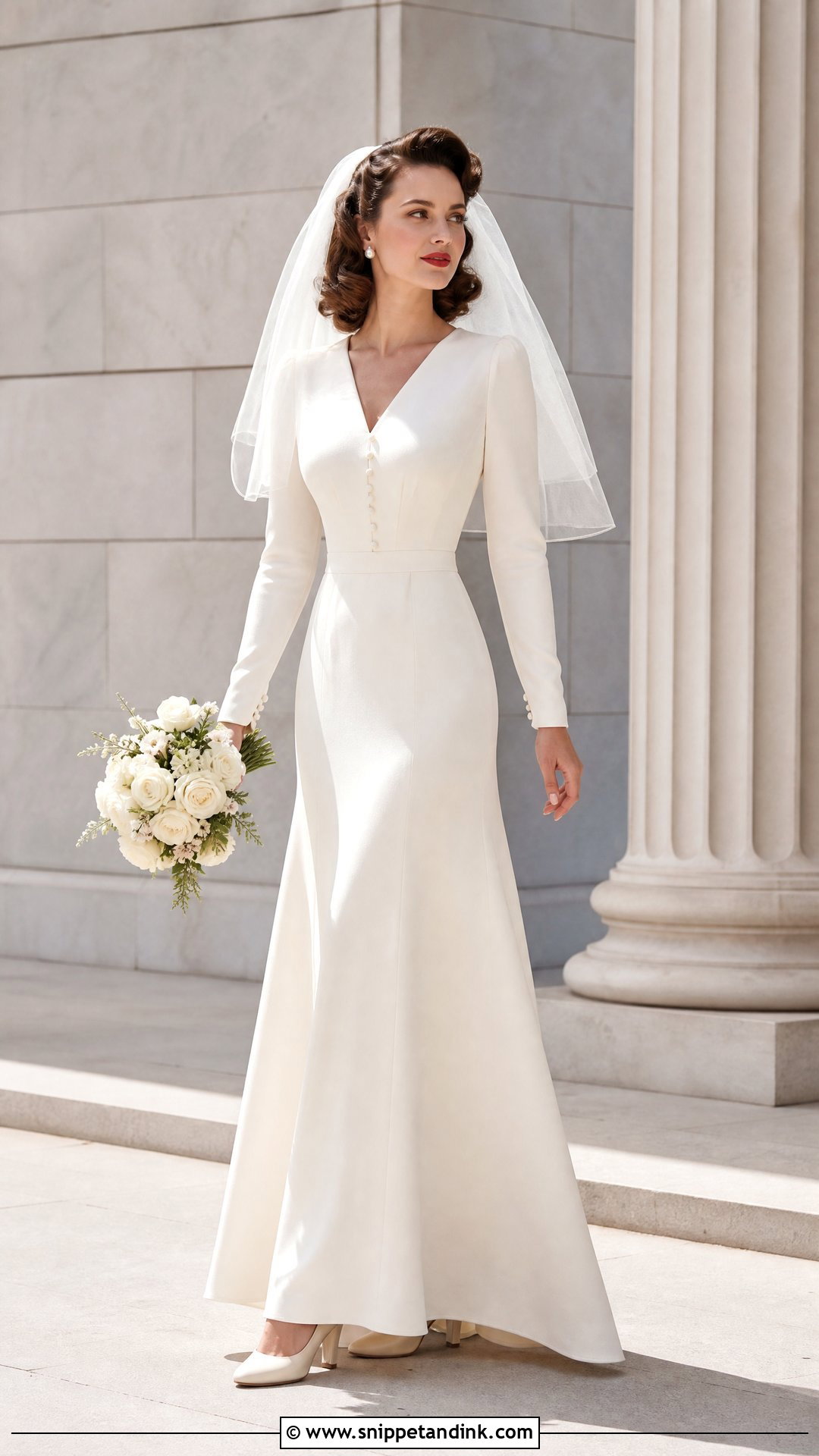
Crepe is the fabric I suggest to brides who dislike shine. It’s matte, it drapes close without clinging the way satin does, and it forgives a long day of sitting. The 1940s shape is all about the shoulder: a little structure there, a fitted waist, a V-neck bodice and a smooth A-line skirt, with fabric-covered buttons or soft gathering at the waist for the period note. Ivory block heels, pearl studs and a shoulder-length veil keep it practical. A structured bouquet with a victory-roll updo leans fully into the decade; soft waves are the gentler version. Ask for enough ease in the skirt to dance, since tailored crepe rides up when you take long steps.
6. 1950s Tea Length Long Sleeve Wedding Dress
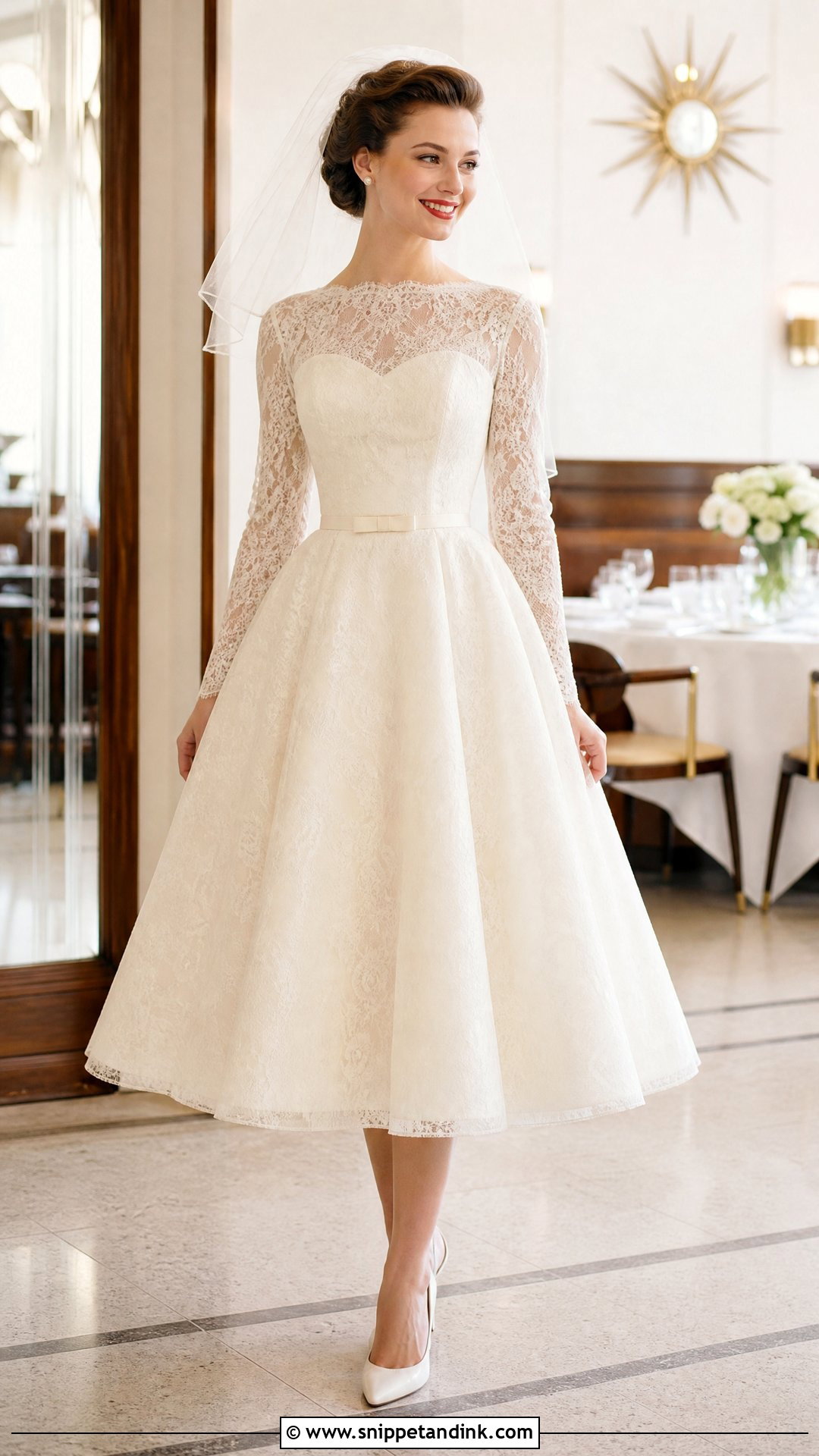
Tea length puts your shoes on show, so I plan them at the same appointment as the dress. A 1950s tea length long sleeve wedding dress has a fitted bodice, a natural waist and a full skirt ending somewhere between knee and ankle, and lace sleeves or a bateau neckline make it read as retro. Pointed ivory pumps, pearl earrings and a birdcage or shoulder-length veil sit right with it. A slim belt and a compact bouquet balance the skirt. If you want more volume, wear a soft petticoat rather than a stiff crinoline, because stiff layers flip up when you sit and look rigid in dancing photos.
7. 1960s Mod Long Sleeve Wedding Dress
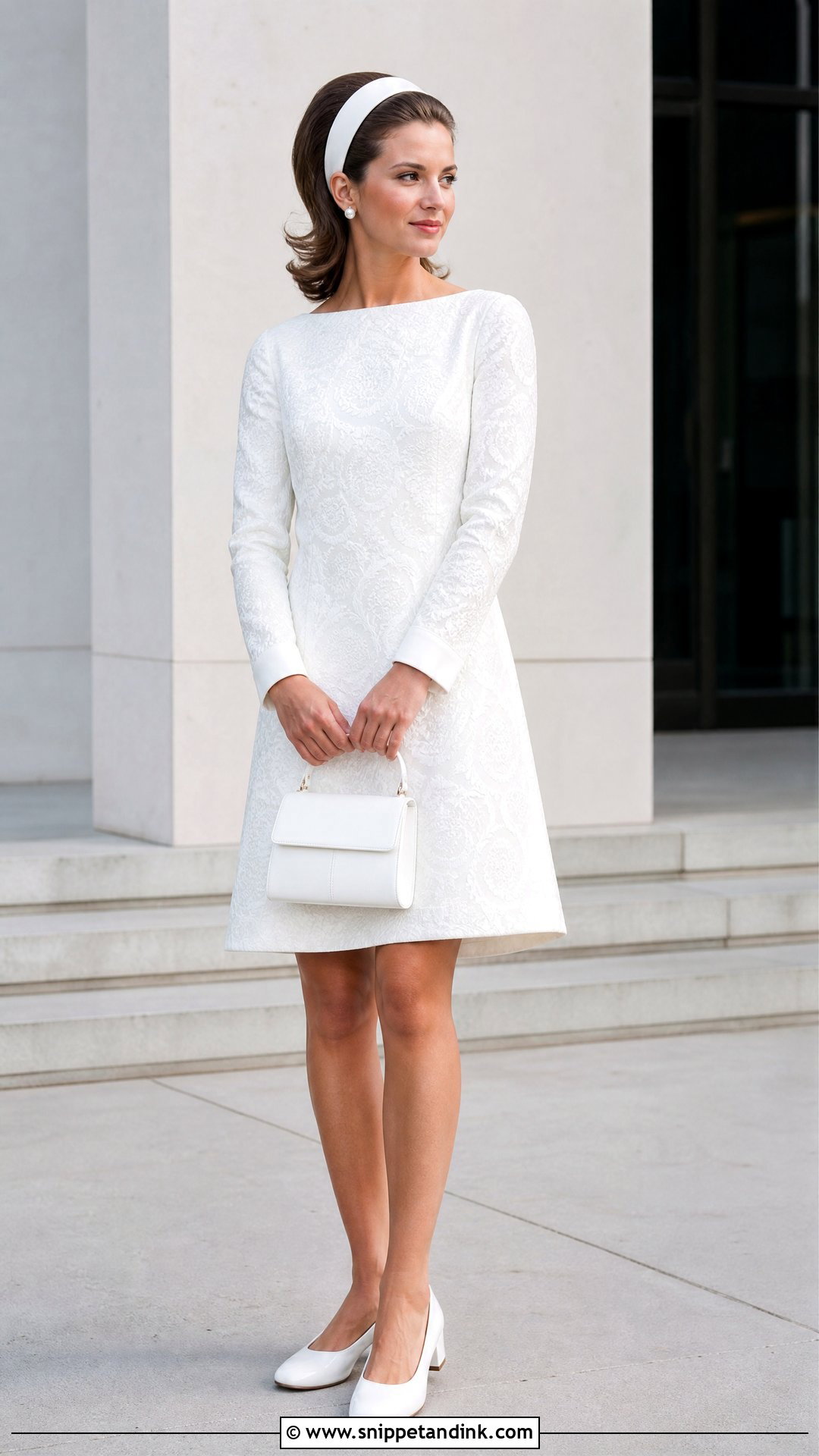
A mod mini is short, so the hemline is the real decision. Try it sitting down before anything else. The shift or A-line shape, bateau neck, simple cuffs and clean tailoring carry the 1960s feel, and jacquard or guipure lace adds texture without fussing up the outline. Low block heels, pearl button earrings and a small structured bag are enough, with a sleek bob or a wide headband. Brides who feel exposed in a mini can go to knee length or wear sheer ivory tights, and nobody reads that as a compromise. I like it most for a courthouse wedding or as a reception change.
8. 1970s Boho Bell Sleeve Wedding Dress
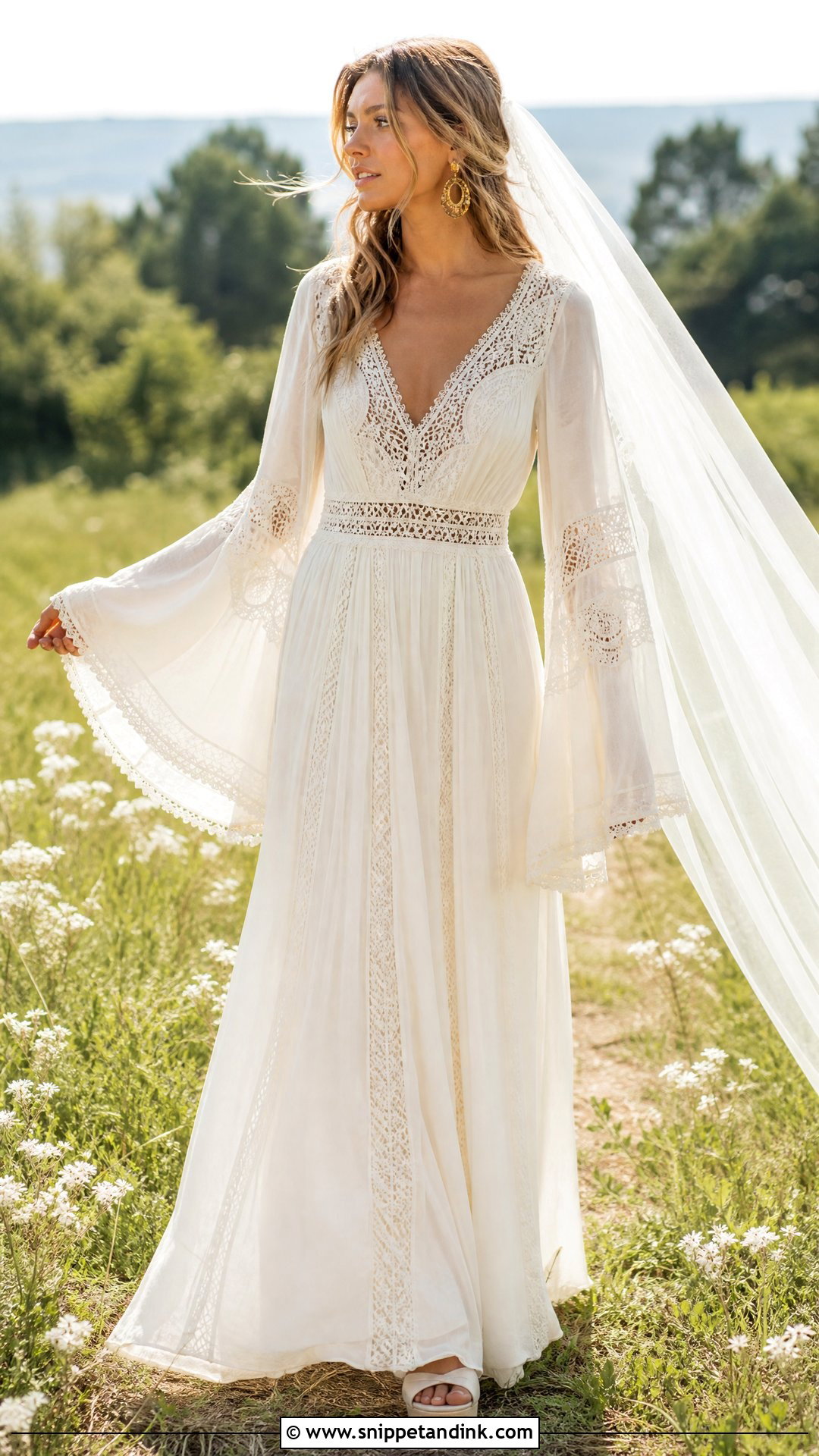
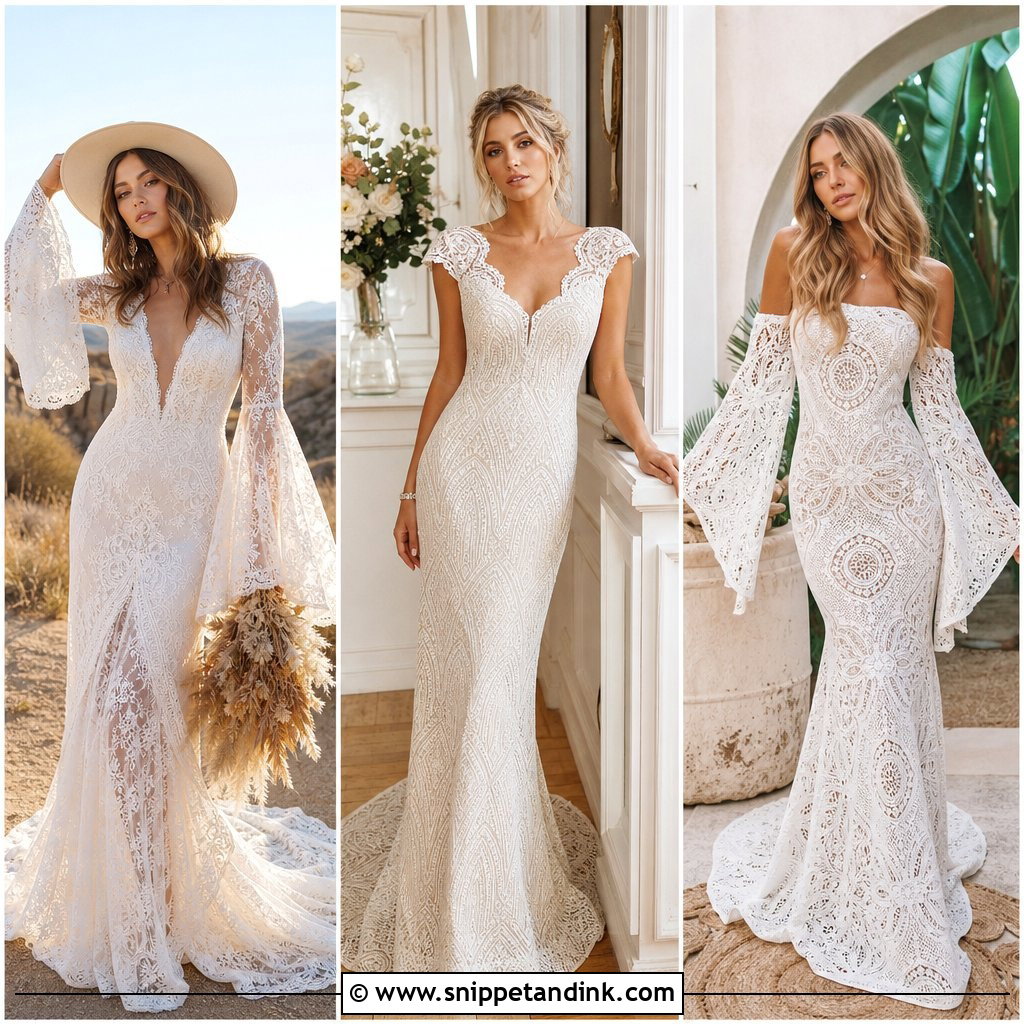
Bell sleeves and candles are a genuine hazard, and I say so to every bride who picks them. Keep the flare starting below the elbow, and make sure the opening clears a dinner plate when you reach for a glass. Chiffon, crochet lace or light crepe in a relaxed A-line or empire waist gives the easy 1970s drape. Simple platform sandals, fine gold earrings and a loose floral comb beat anything heavily jeweled. Wear soft waves or a relaxed braided updo with a sheer chapel veil that leaves the sleeves visible. Outdoors, have the hem cut for the ground you’ll stand on, since gravel shreds a long chiffon hem quickly.
9. 1980s Puff Sleeve Wedding Dress
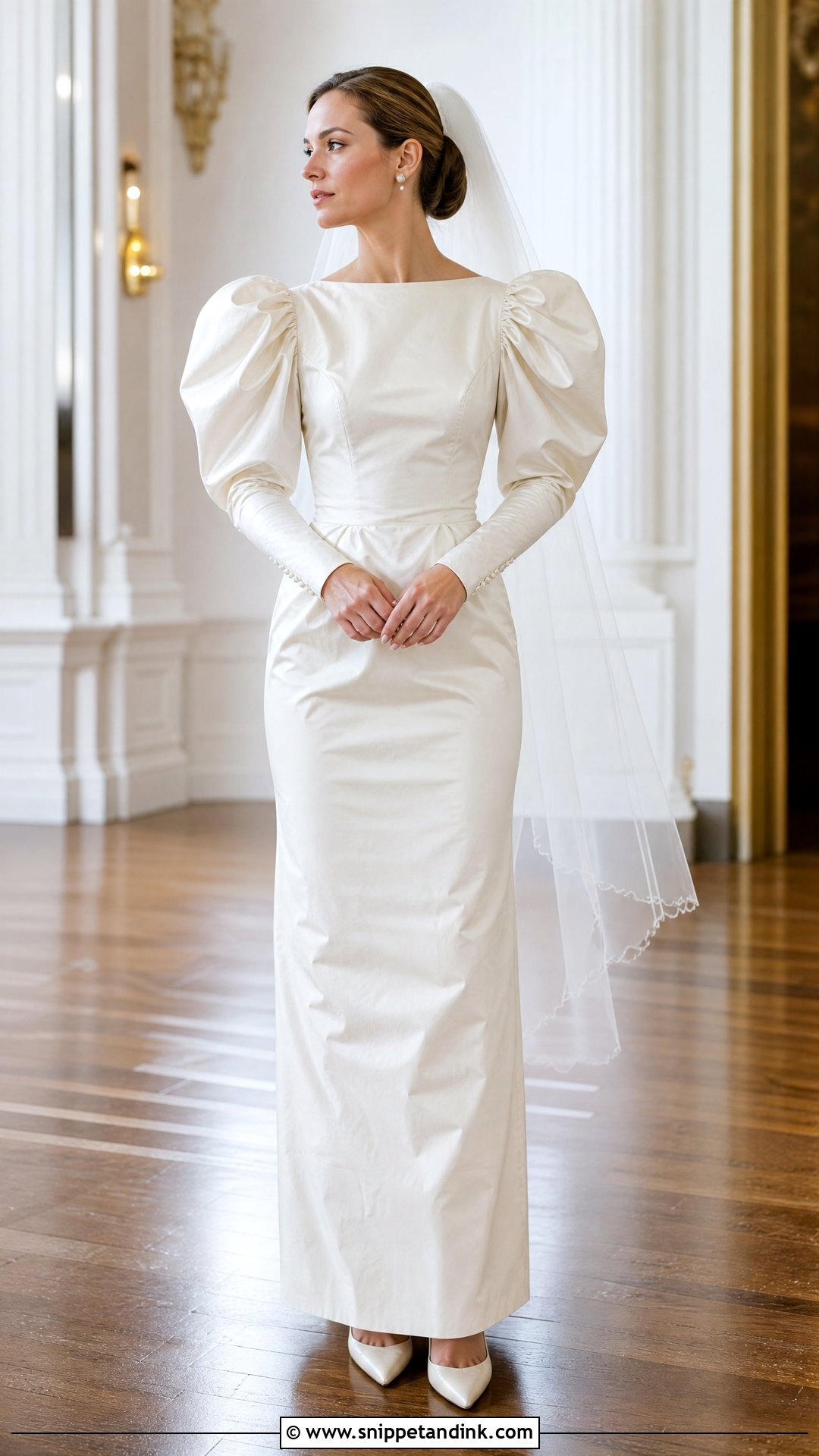
Proportion makes or breaks an 1980s puff sleeve wedding dress. I keep the gathered volume at the shoulder and fit the forearm closely so the sleeve reads as deliberate rather than oversized, with a defined waist and a streamlined skirt below. Taffeta holds a firm puff; organza or lace gives a softer one. Pearl studs, pointed pumps, a clean fingertip veil and a smooth low bun keep everything above the waist controlled, and I’d skip the large bouquet and statement necklace. If you’re buying an original from the decade, check the elastic, underarm seams and lace closely. Elastic that old has usually lost its spring and needs replacing before a seamstress can do anything else.
10. Renaissance Square Neck Wedding Dress
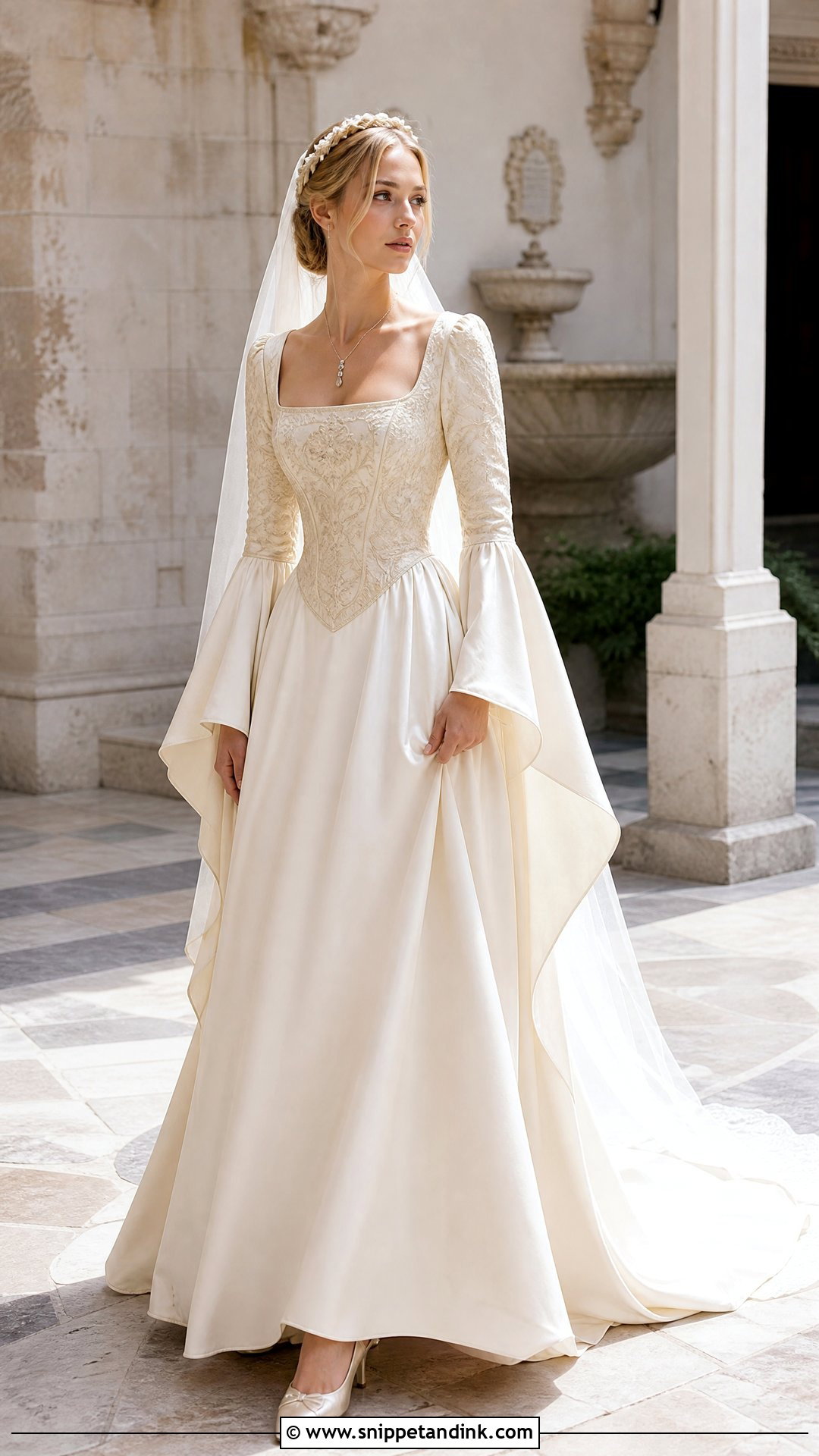
The straight top edge of a Renaissance square neck shows every wobble if the bodice isn’t supported. I usually ask for a structured inner bodice hidden under the decorative layer; it keeps the neckline flat and makes the dress far more comfortable for hours of wear. Satin, brocade or soft jacquard with a natural or slightly dropped waist gives the right weight, and long trumpet sleeves or draped cuffs add movement. Pair a delicate pendant and low satin shoes with a narrow braided headband, and attach a long veil under a half-up style. Keep embroidery to the neckline and cuffs. Spread it everywhere and the gown starts to look like a stage costume.
11. Regency Empire Waist Wedding Dress
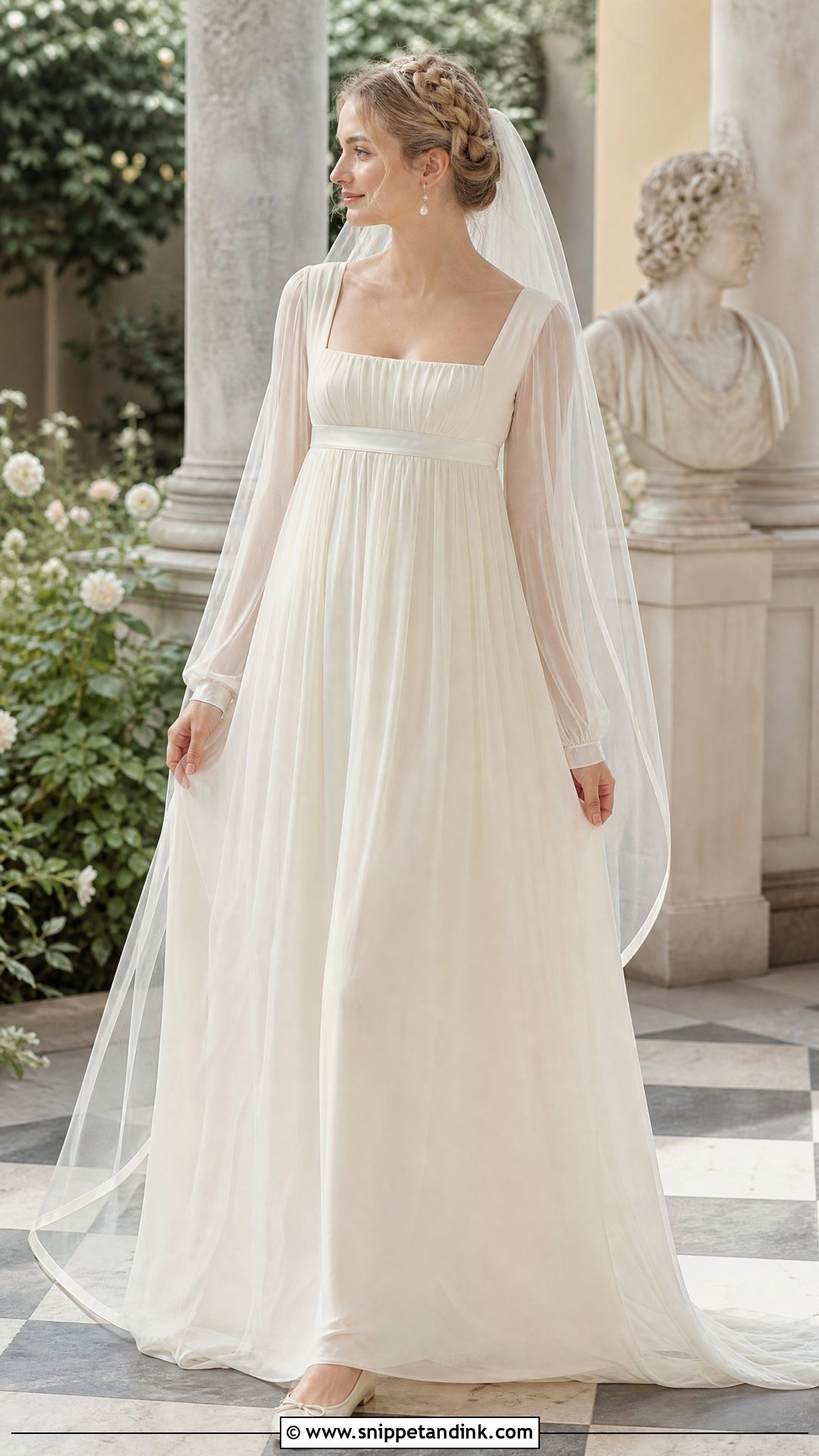
Empire seams sit right under the bust, so the fit there is everything. A Regency empire waist wedding dress with a high seam, a gathered skirt and long sheer sleeves moves well in chiffon, silk georgette or fine dotted tulle. If the seam sits even slightly low it cuts across the bust, and too high it rides up when you lift your arms, so I pin it with the bride wearing her final bra. A square or scoop neckline, small drop earrings, low satin flats and a ribbon-trimmed veil keep the look light. A loose braided updo or soft curls pinned back suit it. Carry a small bouquet; a big one swallows the column shape.
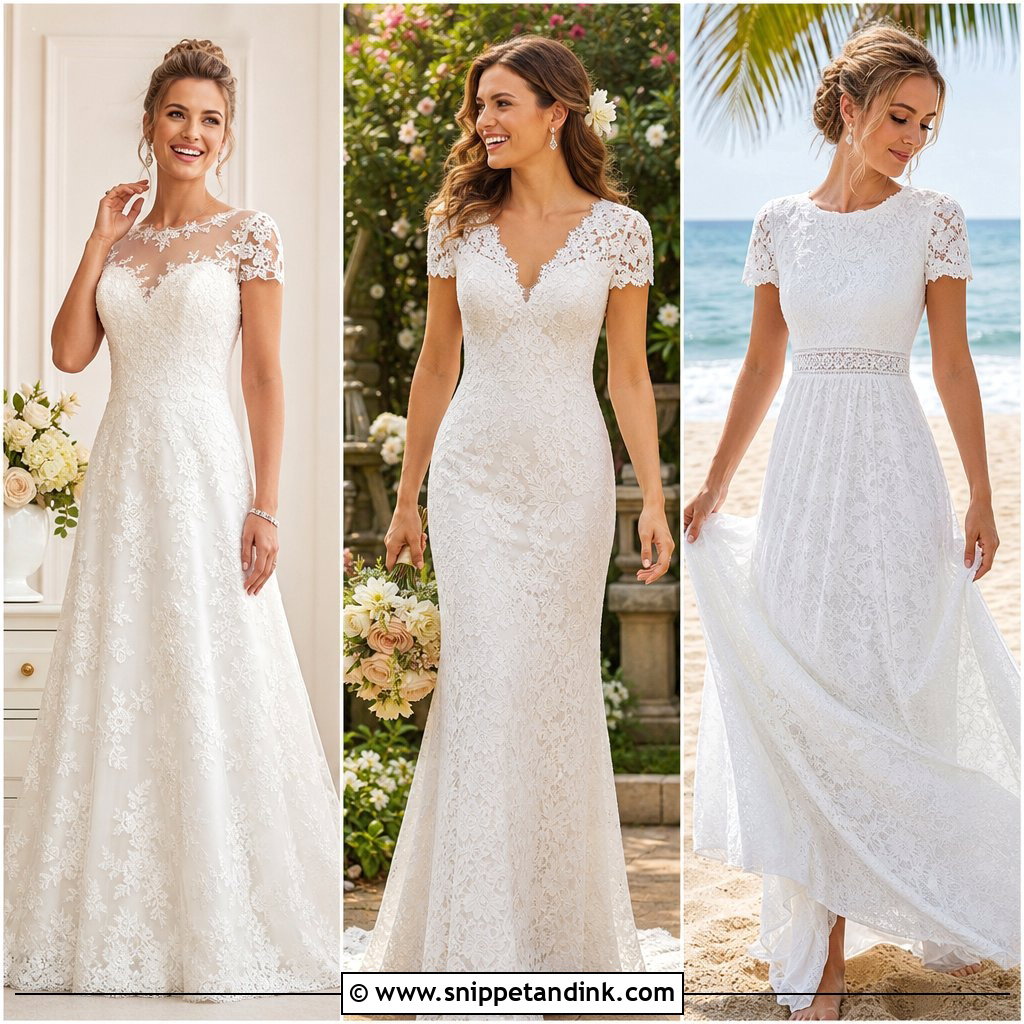
12. Vintage Lace A-Line Wedding Dress
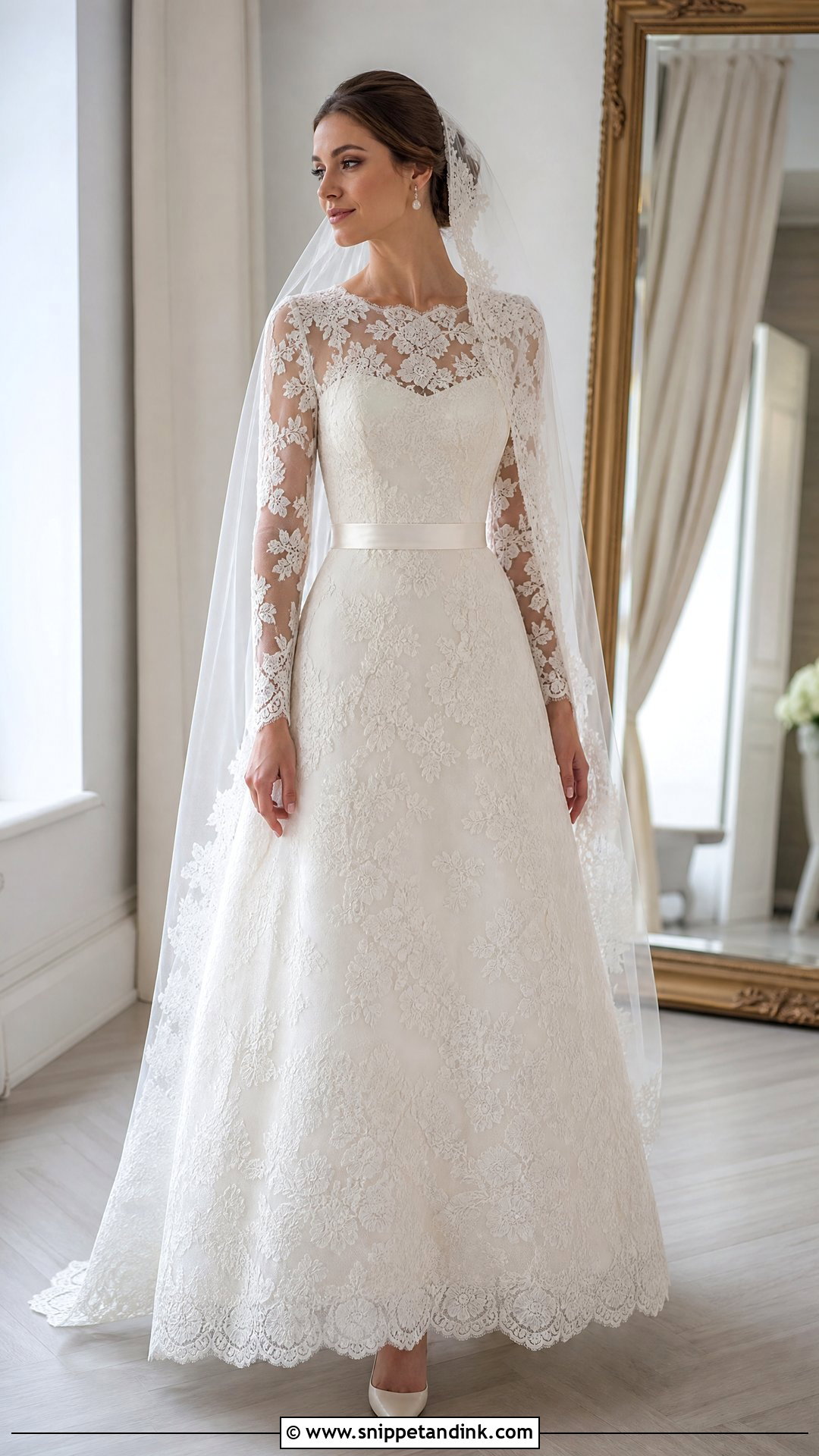
The A-line is my safest recommendation for brides who don’t yet know what they want, because it defines the waist without gripping the hips. With long illusion sleeves under floral lace, it gives coverage while letting a little skin show through the pattern. I always check motif placement at the shoulders, cuffs and side seams; a skilled seamstress cuts and re-appliqués lace so motifs meet cleanly instead of being chopped by a seam. Pearl earrings, ivory almond-toe heels and a lace-edged veil suit it, with a low bun or half-up style. If the lace is dense, keep accessories plain and smooth. A narrow satin sash is an easy personal touch.
13. Vintage Satin Ball Gown Wedding Dress
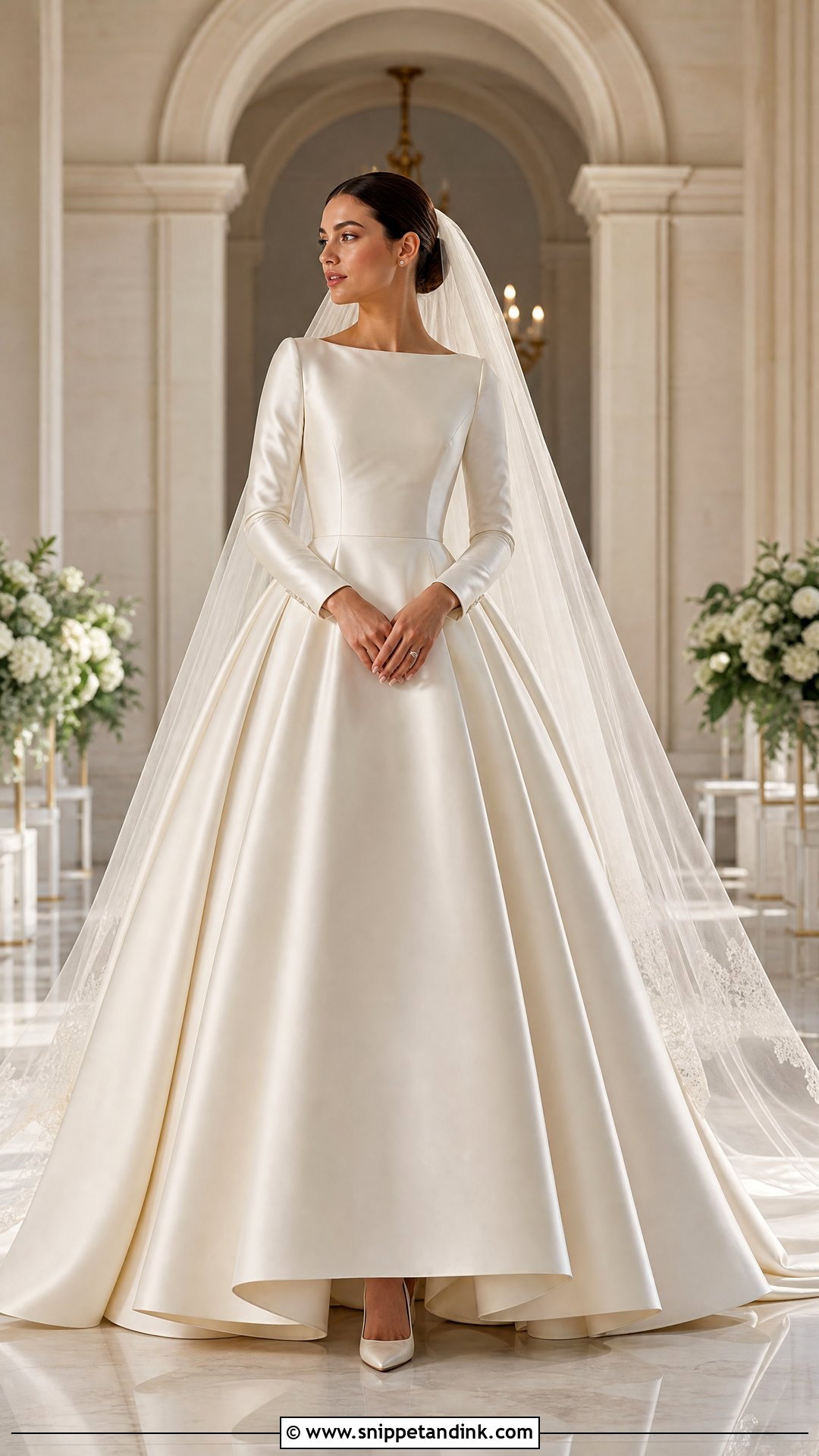
Duchess satin is heavy, and a full ball gown in it with long sleeves is real weight to carry through a long day. I have brides practice walking, turning and sitting in a petticoat like the one they’ll wear, because the skirt behaves differently once that layer is underneath. A fitted bodice and defined waist with a bateau or portrait neckline balance the volume. Crystal studs, closed-toe satin pumps and a cathedral veil longer than the train finish it, and a neat chignon keeps it regal. Ask for hidden pockets while the alterations are happening. Keep the bouquet compact so the waist stays visible.
14. Illusion Sleeve Vintage Wedding Dress
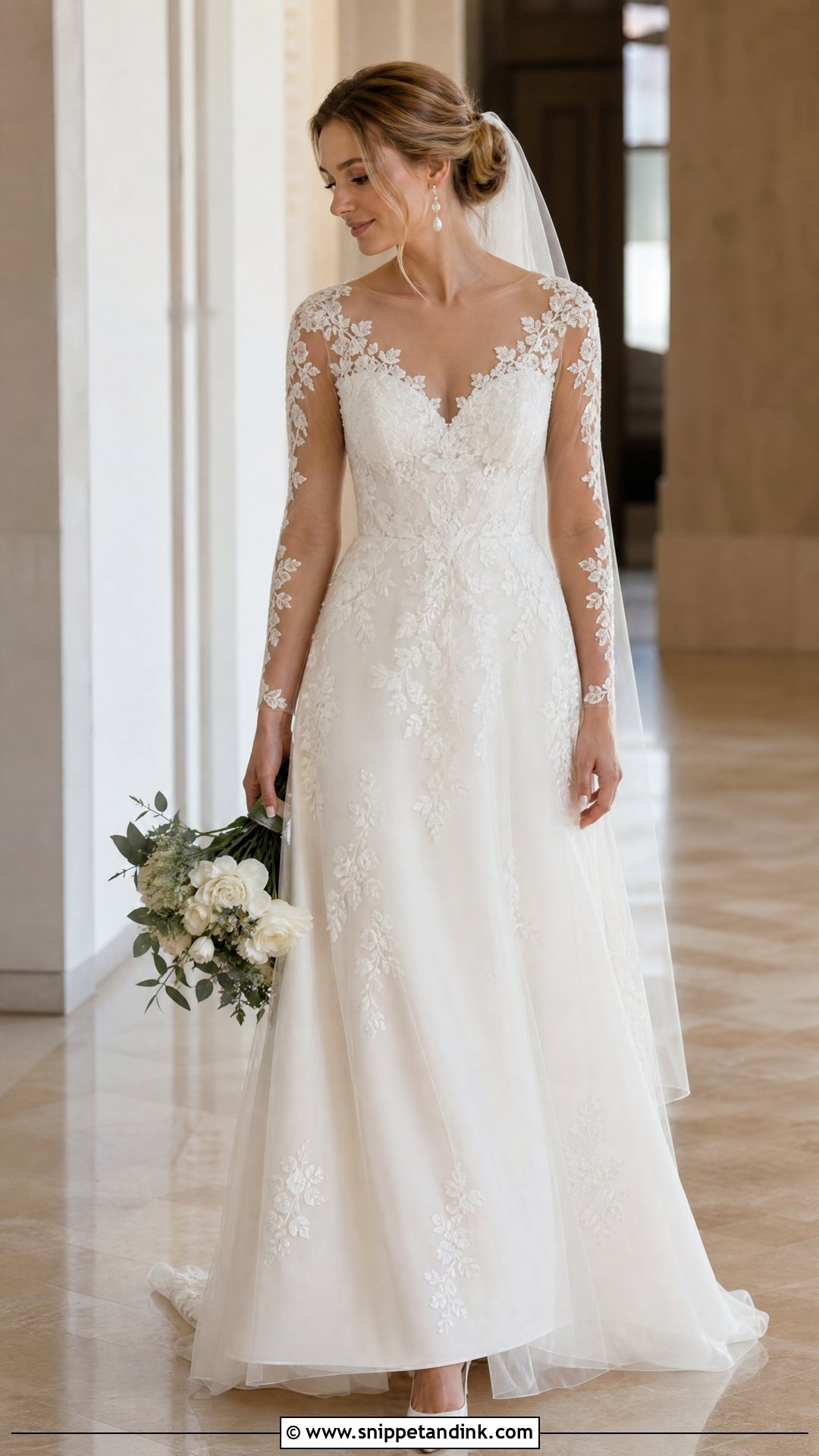
Illusion tulle only works when it disappears, so its shade has to match your skin closely. I hold swatches against the inner arm in daylight, because a mismatch shows up as a greyish sleeve in flash photos. Lace appliqués, pearls or small embroidered flowers scattered over the tulle give the vintage effect, with a fitted bodice, an A-line skirt and a soft V or bateau neckline. Pearl drops, pointed ivory heels and a lightly edged sheer veil go with it, plus a low textured bun to show the shoulders. Tulle sleeves have little give. Bend your elbows and lift your arms at every fitting, or you’ll feel the pull across your shoulders by the first dance.
15. Crochet Lace Long Sleeve Wedding Dress
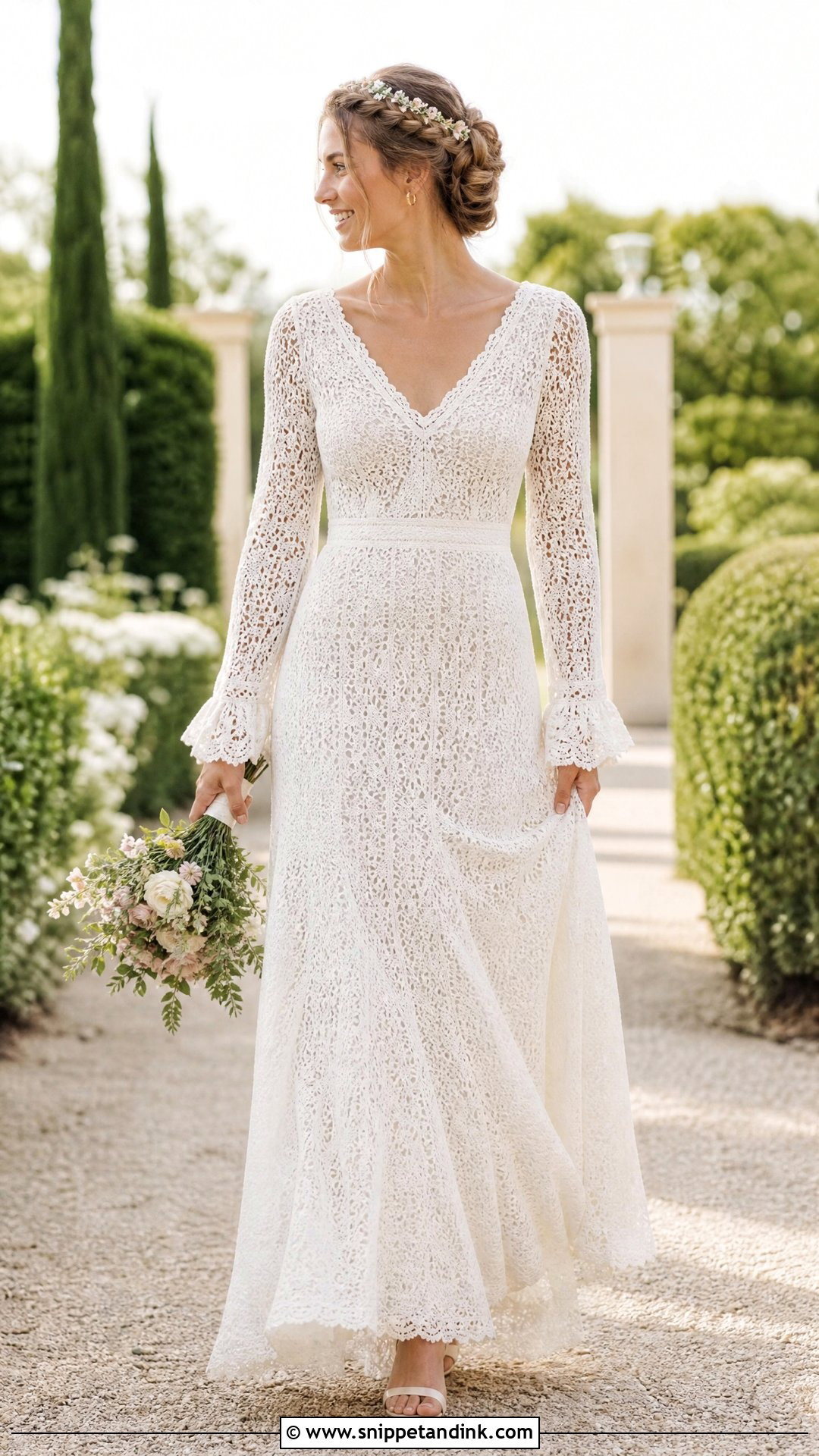
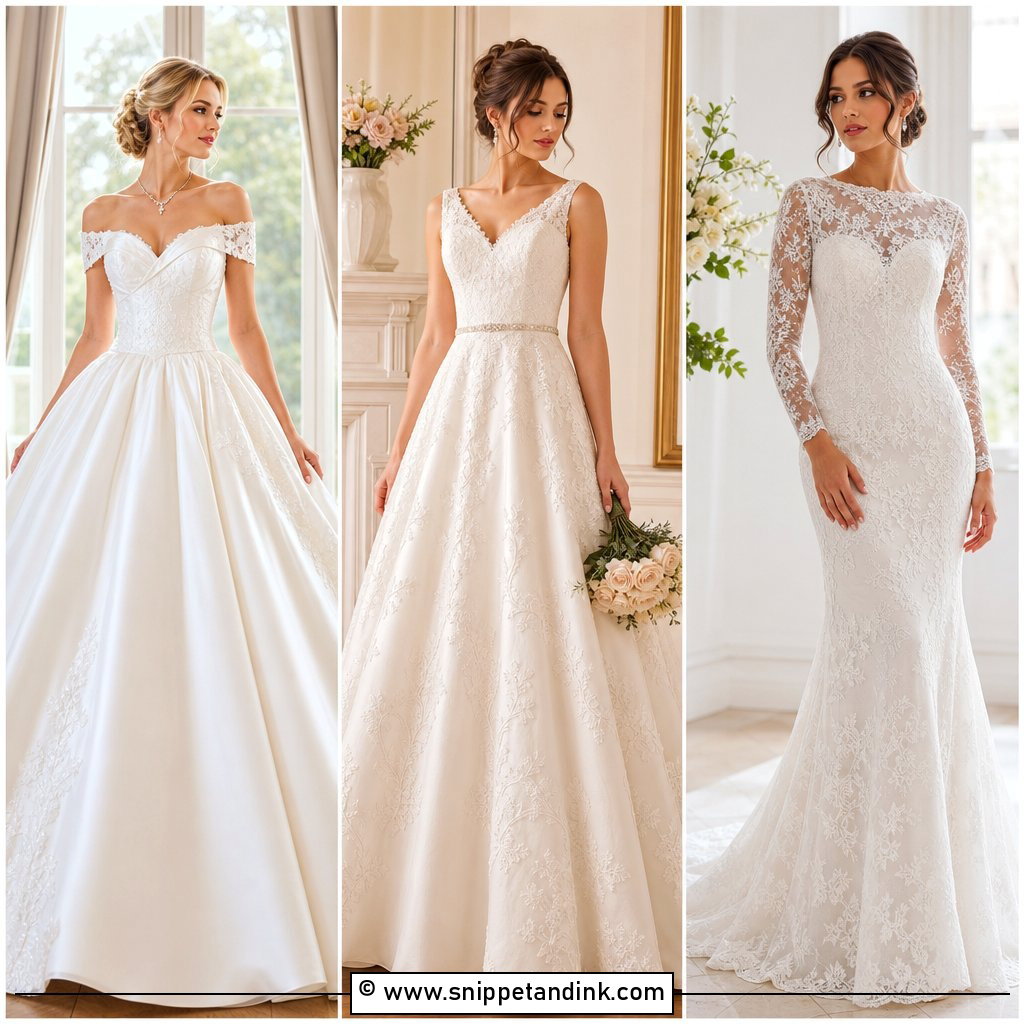
Crochet lace looks solid in a fitting room and close to see-through in midday sun. I take every crochet gown outside or to a bright window before we finalize the lining, because open stitches can reveal more than the bride expected. A lightly lined bodice, defined waist and fluid skirt suit the relaxed vintage mood, and scalloped cuffs with a simple V-neck show off the handmade texture. Leather-lined ivory sandals, small gold earrings and a narrow floral hairpiece go with it, along with a loose braided updo or natural waves. Keep the veil plain. Lace shoes or a patterned bouquet wrap make crochet look busy fast.
16. Velvet Long Sleeve Winter Wedding Dress
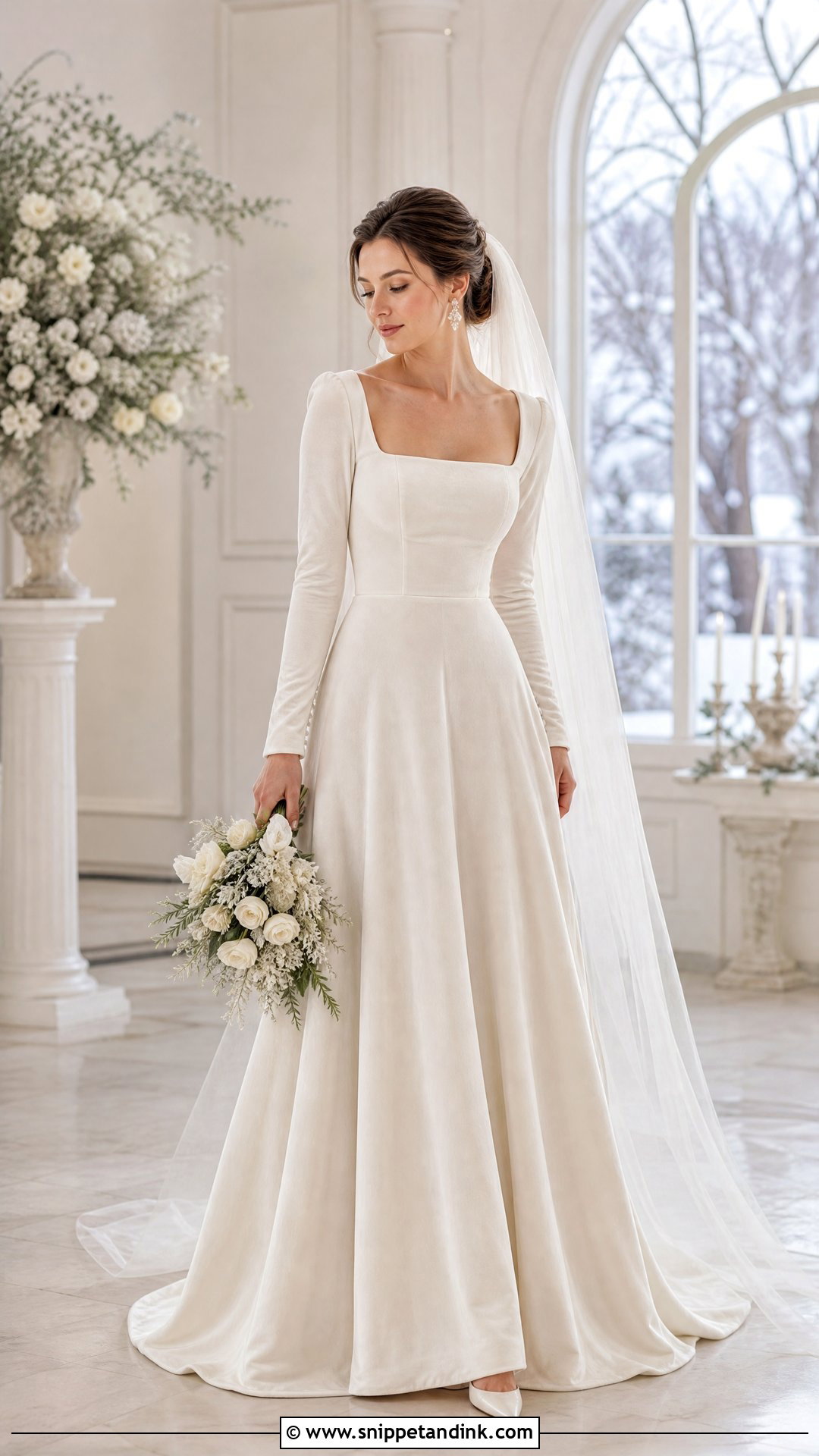
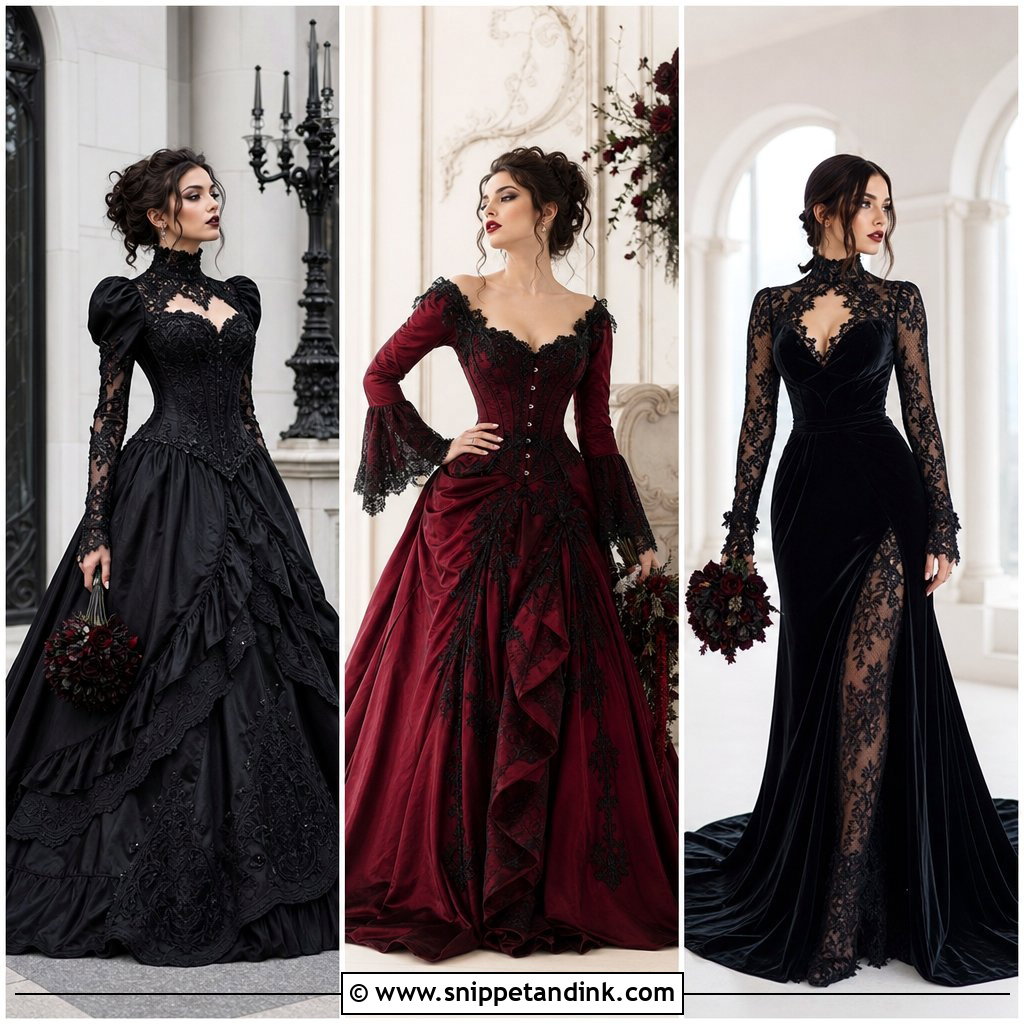
Velvet has a nap, so it looks lighter or darker depending on which way the light strikes it. Before a bride commits, I photograph the gown from a few angles so she sees how it reads on camera. Ivory, cream or soft champagne velvet with a fitted bodice, tapered sleeves and a gently flared skirt suits a winter wedding, and a square or modest V-neck stops the dense fabric from feeling closed in. Closed-toe block heels, pearl-and-crystal earrings and a simple cape or long veil handle the outdoor shots, with a deeper-toned bouquet for contrast. Velvet is warm. Ask the seamstress to keep interior seams light if the reception room will be heated.
17. Floral Embroidered Long Sleeve Wedding Dress
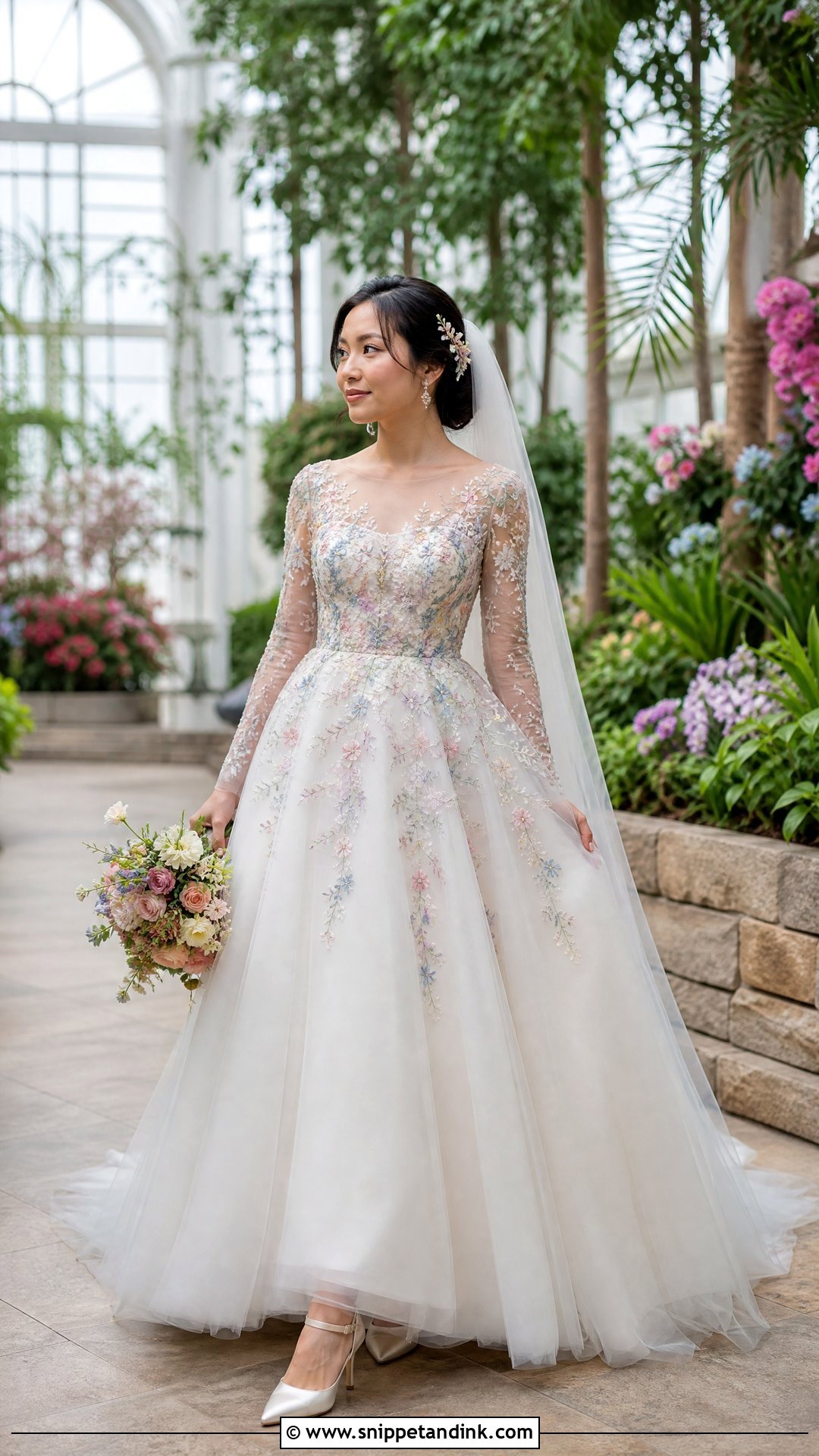
Where the embroidery lands on your body matters more than the motif itself. A cluster of flowers sitting right on the bust point or the hip can widen you visually, so at the first try-on I note where each motif falls and ask whether any can be shifted. On tulle or organza, flowers trailing from the bodice onto the sleeves and upper skirt look lovely over an A-line shape. Pearl earrings, satin heels and a plain veil let the stitching show, and one or two matching floral pins in a soft updo tie the hair in. Choose bouquet colors that relate to the thread colors without copying each one.
18. Pearl Beaded Long Sleeve Wedding Dress
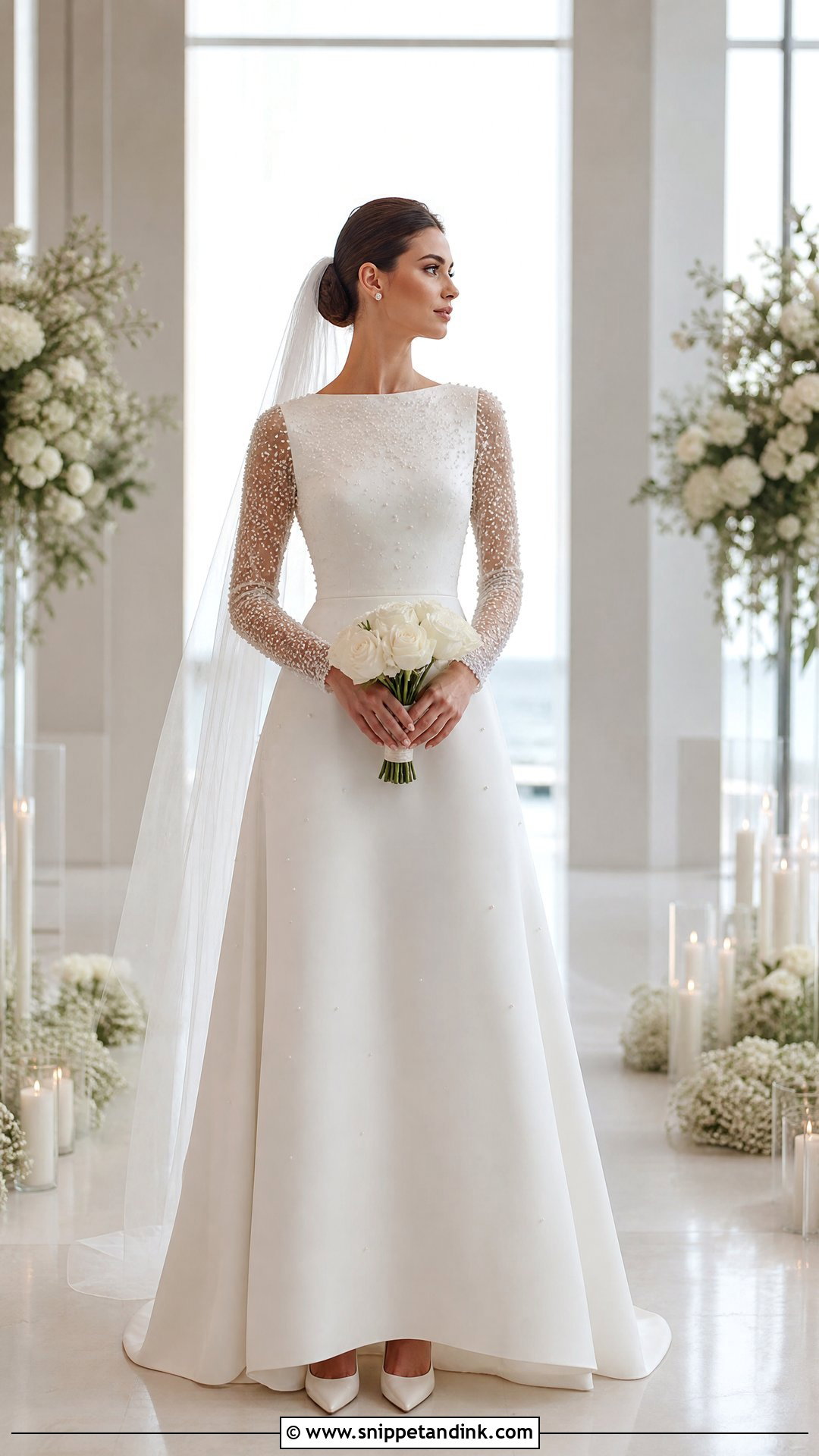
Pearls on a sleeve add weight and friction, and the cuffs and underarms take the most wear. I ask for the beads in those areas to be checked and restitched before the wedding, since one broken thread can drop a whole row of pearls during an evening of dancing. Pearl-scattered tulle sleeves with a crepe or satin bodice and a column or gentle A-line skirt stay refined. Keep pearl accessories to plain studs; pearls on every surface looks over-coordinated. Sleek ivory pumps, an unadorned veil and a smooth bun or sculpted waves let the sleeves catch the light.
19. Corset Long Sleeve Vintage Wedding Dress
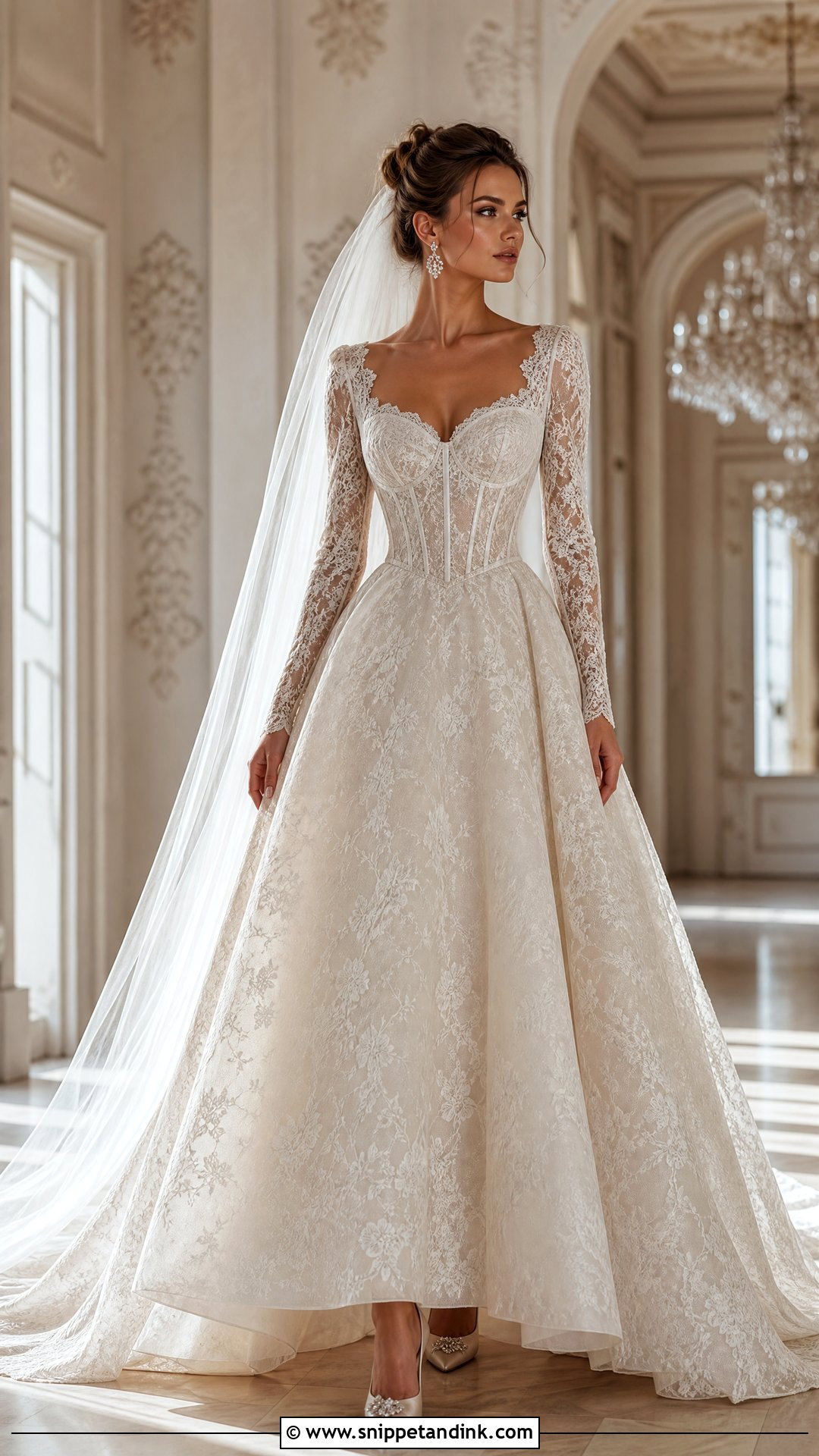
A corset bodice should support you, not squeeze you. My test is simple: sit, take a full breath and laugh. If any of that hurts, it’s too tight. Visible seaming or light boning under lace, fitted sleeves (attached or detachable) and a full A-line skirt give the classic bridal outline. Small crystal earrings, satin heels and a long veil under a tidy updo suit it; skip an ornate necklace if the bodice already has lace or piping. Ask how it closes. Lacing can be eased after dinner, while a concealed zipper is fixed, and that difference shows up around hour six.
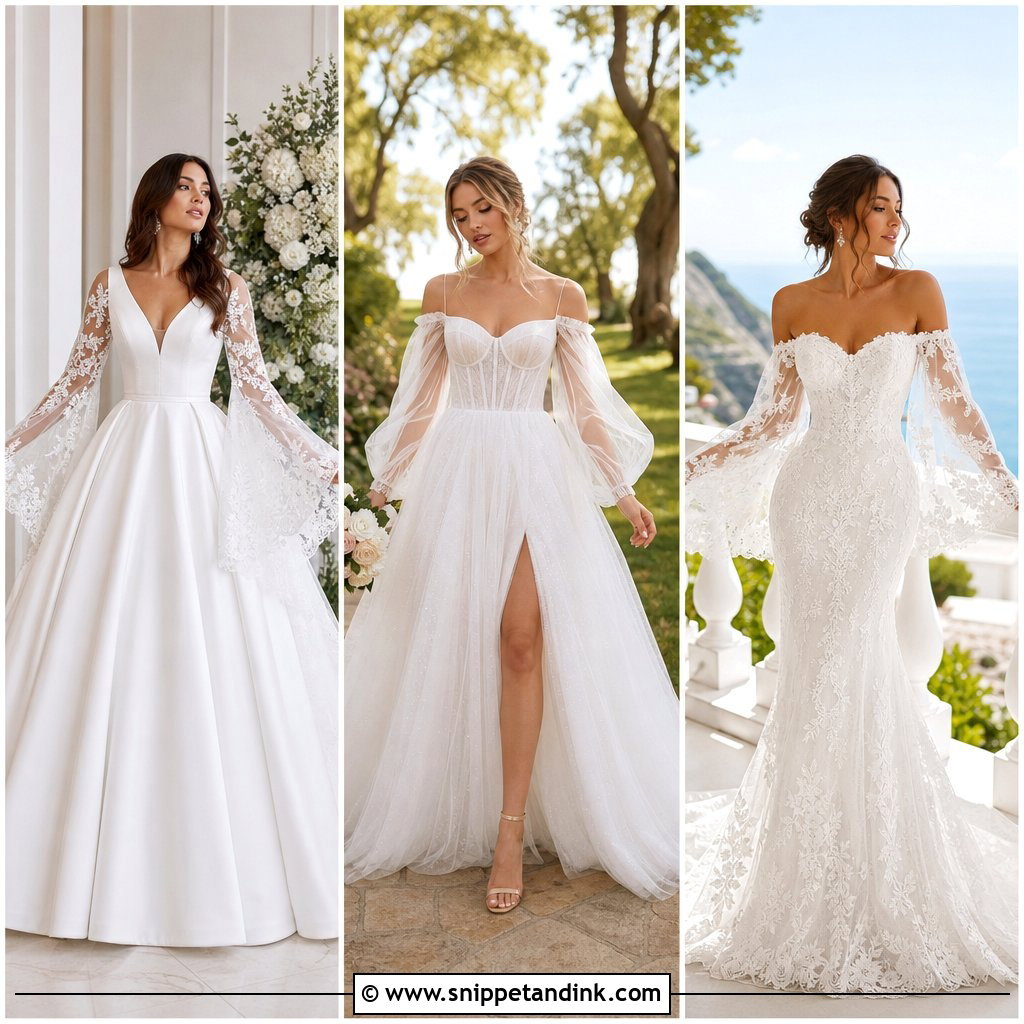
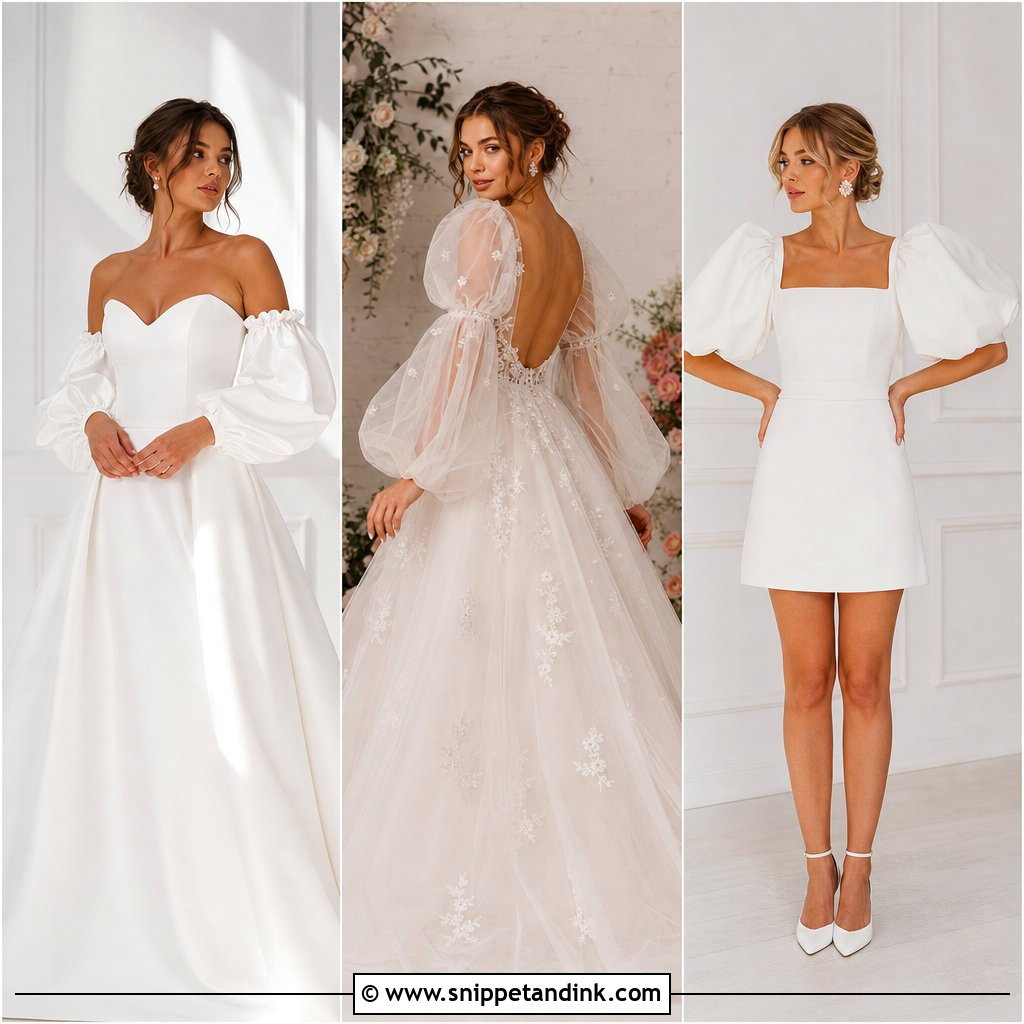
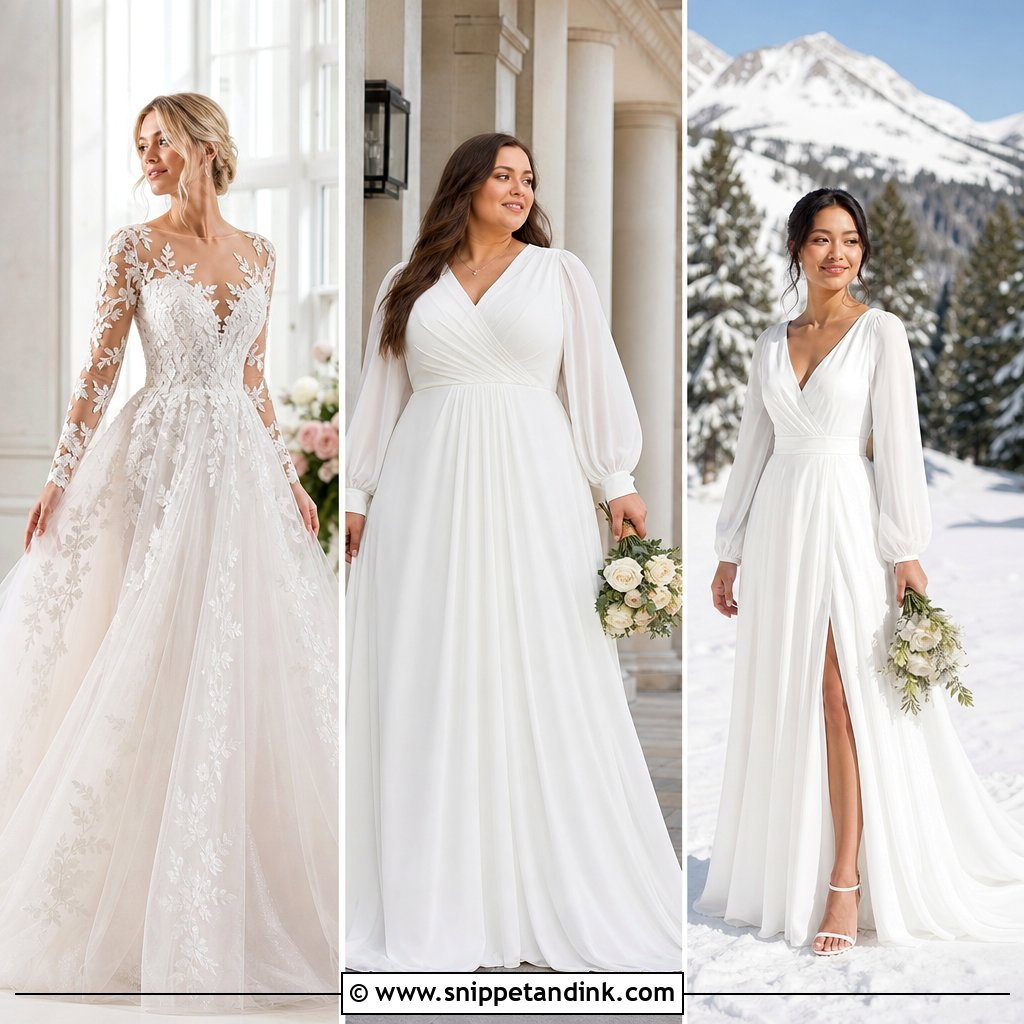
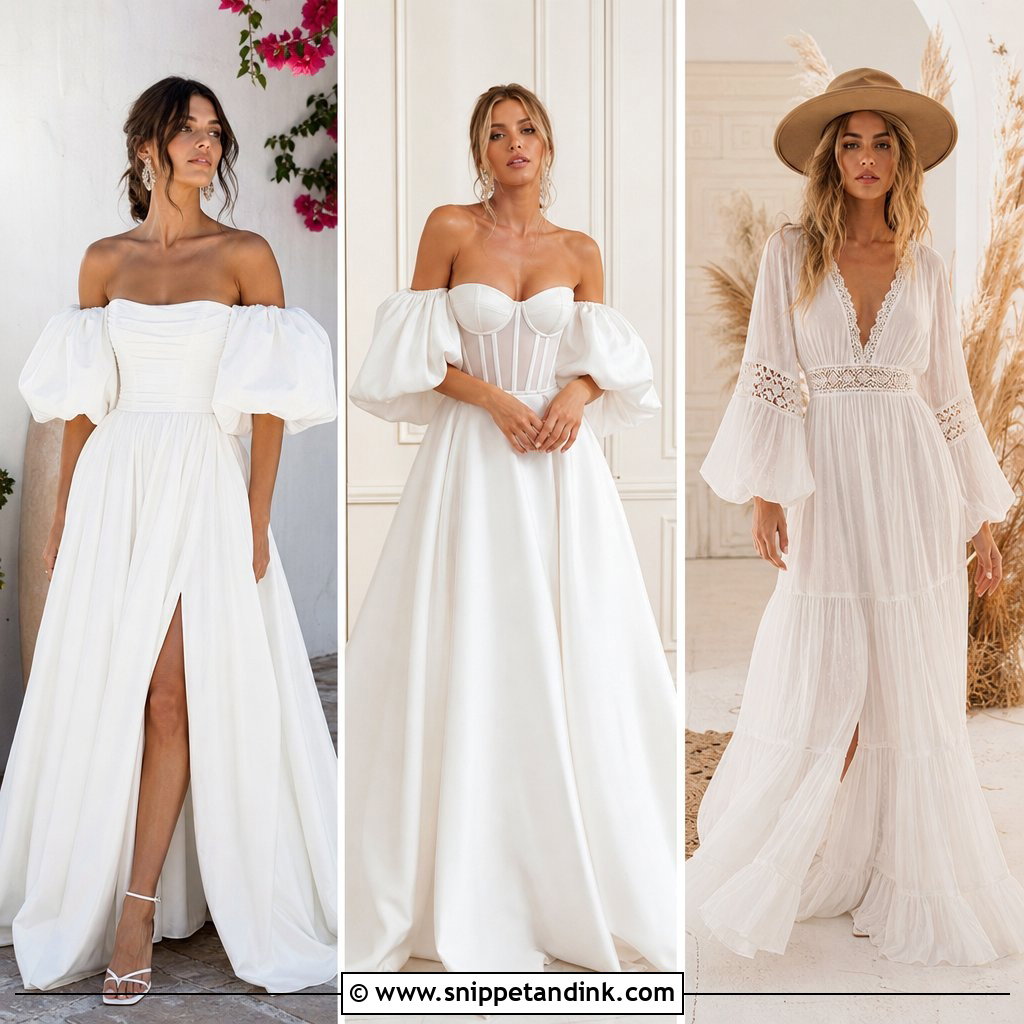
20. Drop Waist Long Sleeve Wedding Dress
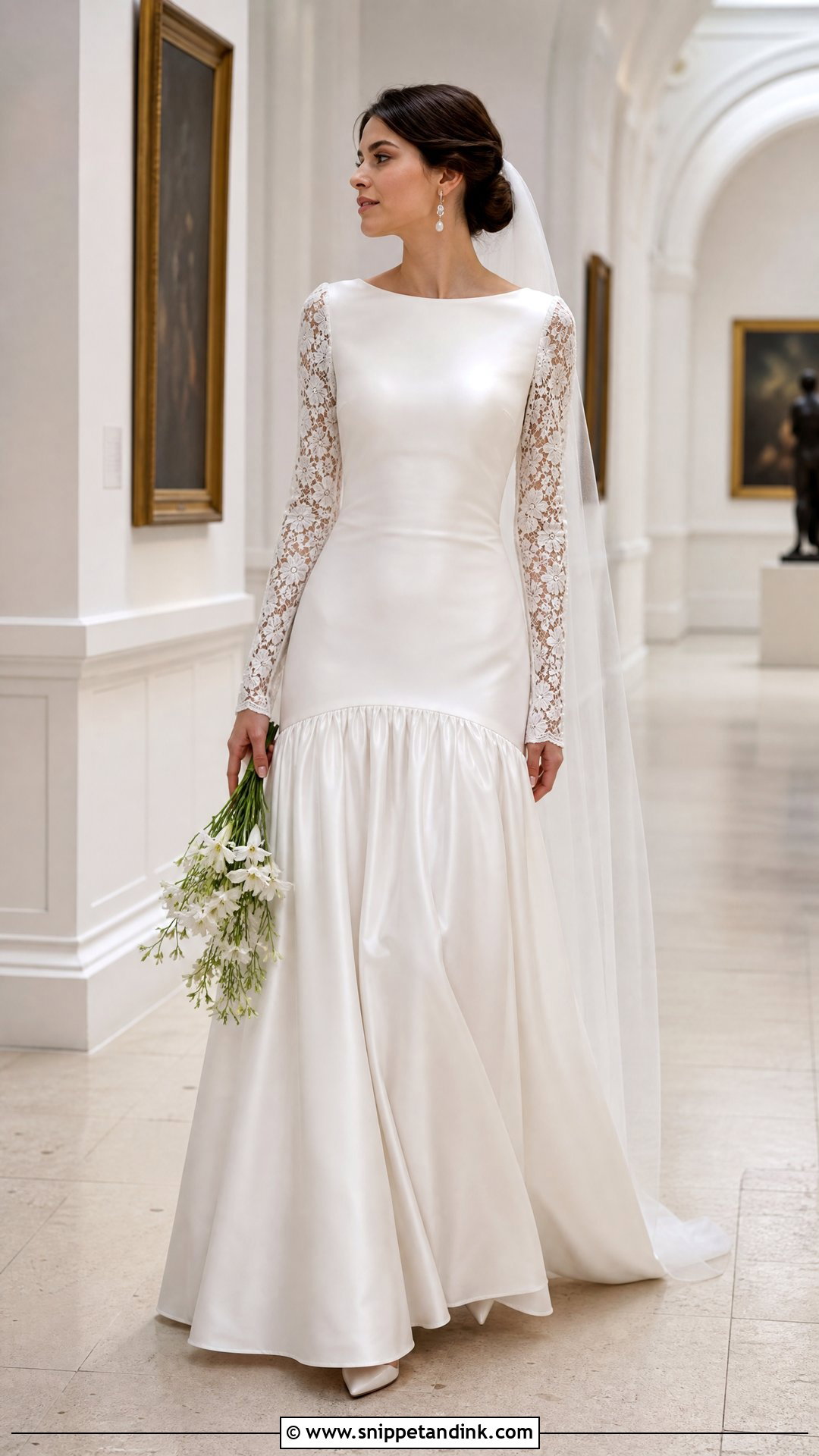
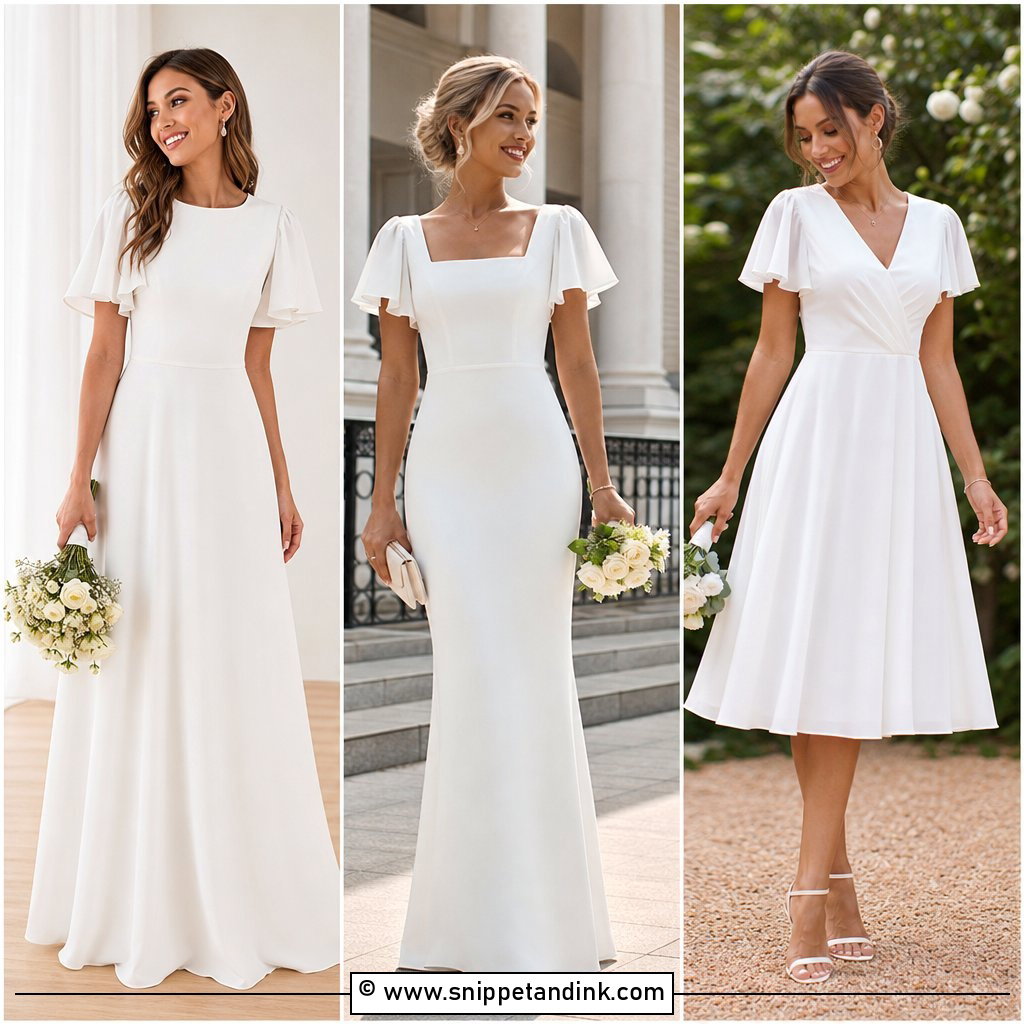
Because the seam drops below the natural waist, this style lengthens the torso and puts the attention on the hips. That’s why the tailoring there has to be exact; a seam that sits even slightly crooked is obvious from across the room. A bodice extending below the waist into a gathered, pleated or softly flared skirt creates the shape, with lace sleeves and subtle beading for romance or clean satin to look more architectural. If a straight horizontal seam feels harsh on you, ask for a curved Basque seam that dips at center front. Pointed pumps, drop earrings, a smooth low bun and a narrow, vertical bouquet keep the line long.
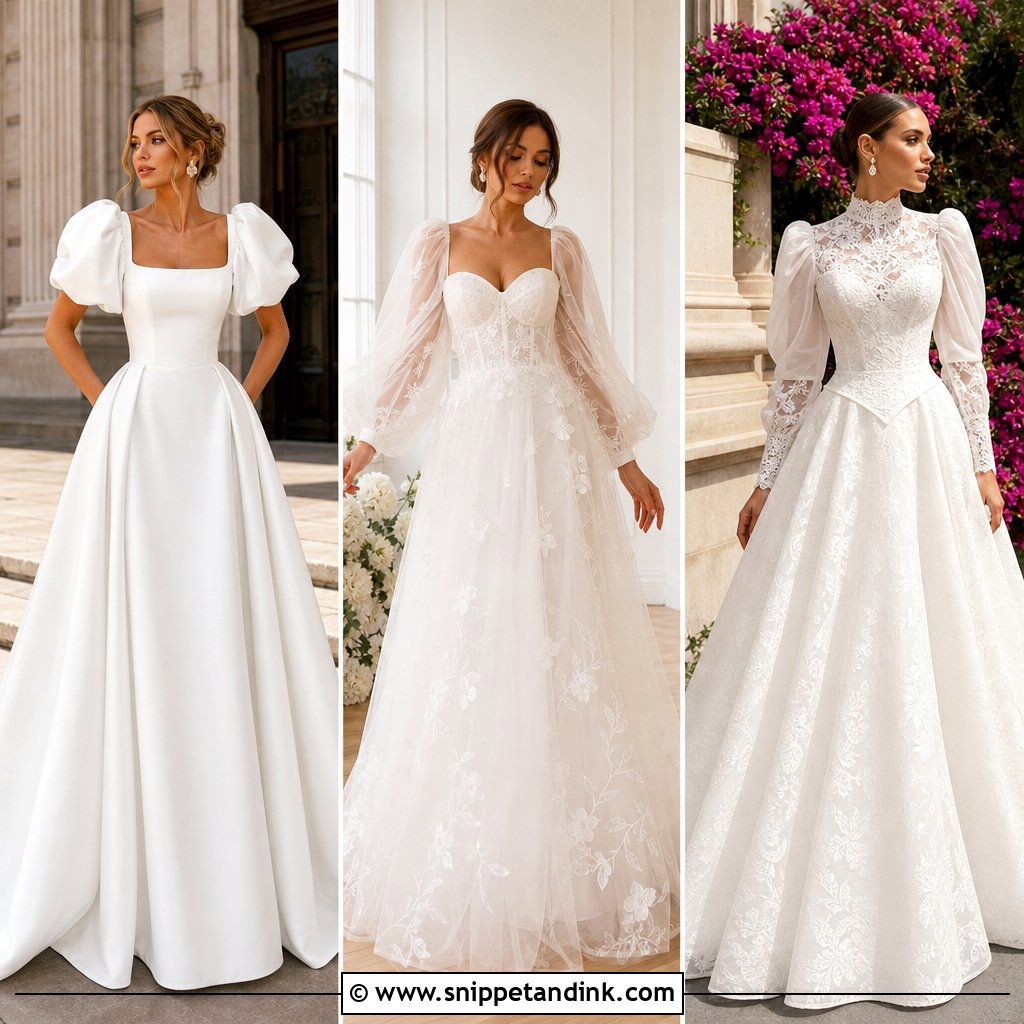
21. Juliet Sleeve Vintage Wedding Dress
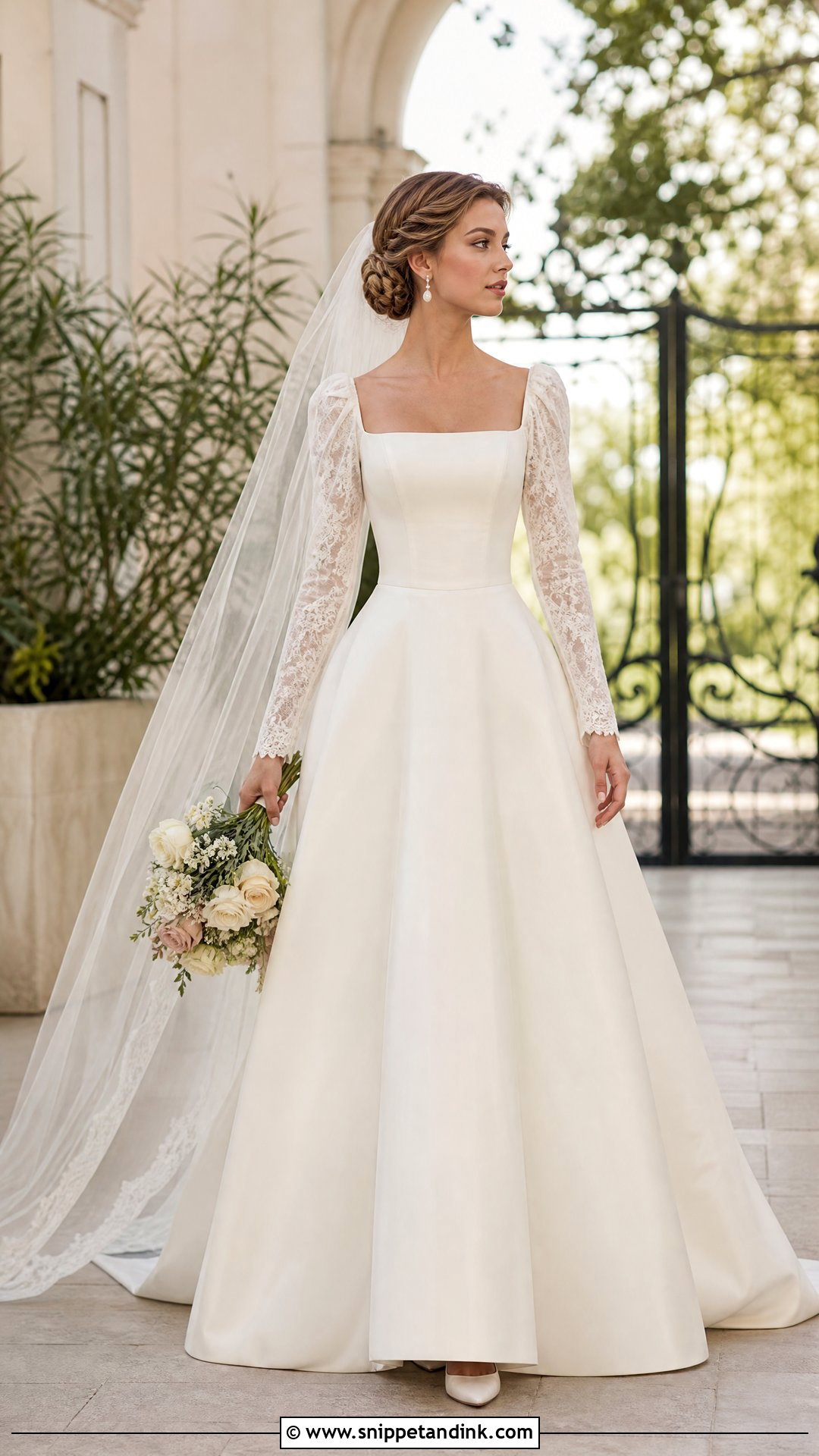
Juliet sleeves gather at the top of the arm and then narrow along the forearm, so you get romance without a full puff’s bulk. The sleeve head is where problems hide. Gathers often end up uneven from one shoulder to the other, and I check them in the mirror with the bride’s arms relaxed at every fitting. Chiffon, organza or light tulle move best. An A-line with a square or rounded neckline, lace cuffs and a natural waist suits it, with pearl earrings, ivory pumps, a chapel veil and a braided low bun. Petite brides should ask for less volume so the sleeve doesn’t outweigh the bodice.
22. Bishop Sleeve Vintage Wedding Dress
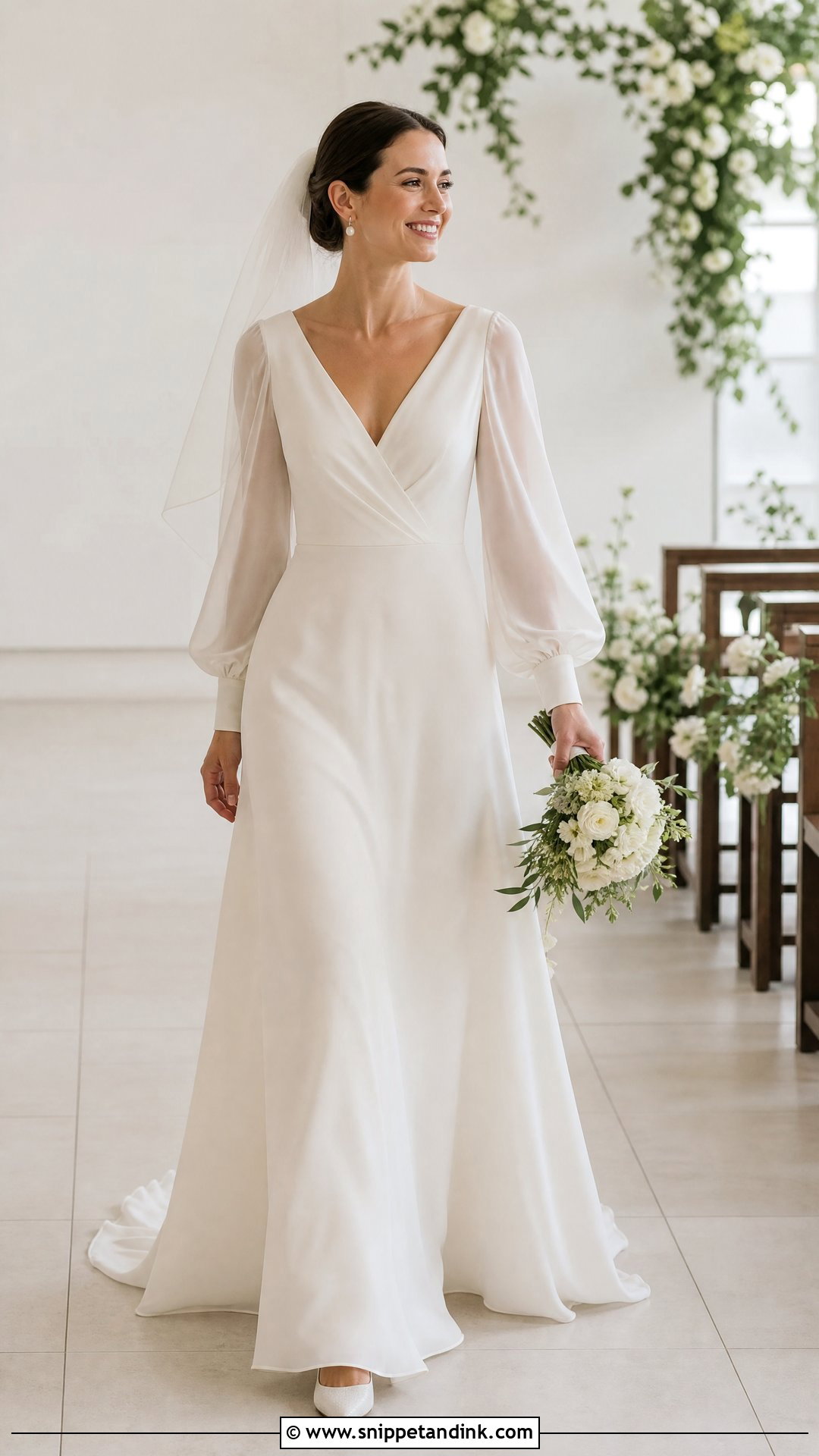
Bishop sleeves are full from shoulder to wrist and caught in a fitted cuff, which means plenty of movement and plenty of fabric near your plate. At the try-on, I have brides reach across an imaginary dinner table. If the sleeve drags there, it will drag through dessert. Chiffon floats; silk or satin holds more shape. A simple V-neck bodice with an A-line or column skirt keeps the outline balanced, and small gold or pearl earrings, closed-toe heels and a lightweight veil finish it. A low ponytail keeps the neckline open.
23. Backless Lace Long Sleeve Wedding Dress
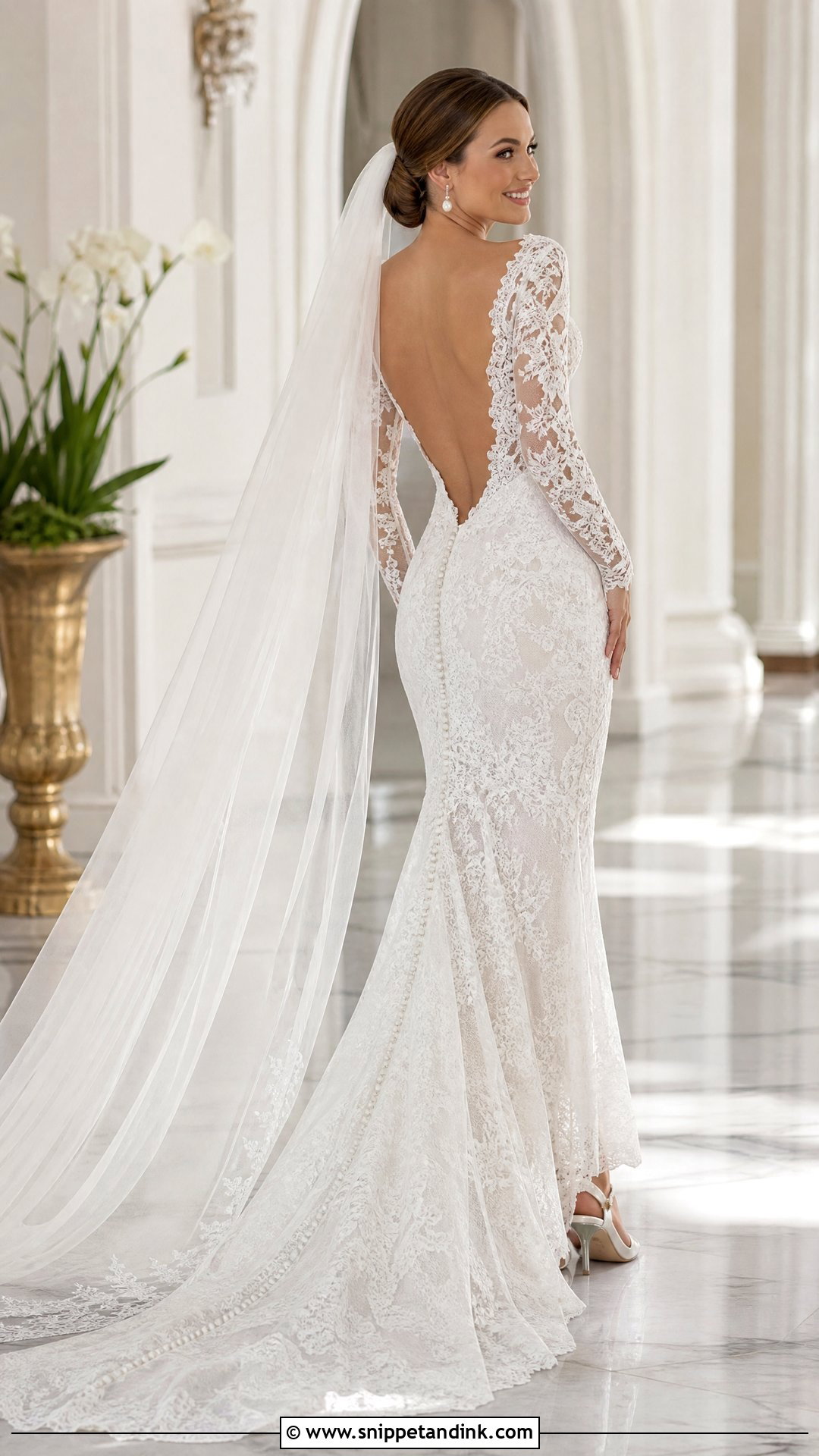
The edge of an open back is where gaping shows up, usually when you sit or reach forward. I check it in three positions: standing, seated, and arms forward as if hugging someone. Fitted lace sleeves, a supportive front bodice and a low V, oval or keyhole back create the look, with covered buttons along the lower closure as a vintage touch. Settle your underwear plan before alterations start, because the bodice has to be fitted around whatever support you’ll wear. For more security, a sheer lace panel keeps the open effect. Attach the veil below a low bun so it doesn’t cover the back, and add pearl drops and satin heels.
24. Square Neck Long Sleeve Wedding Dress
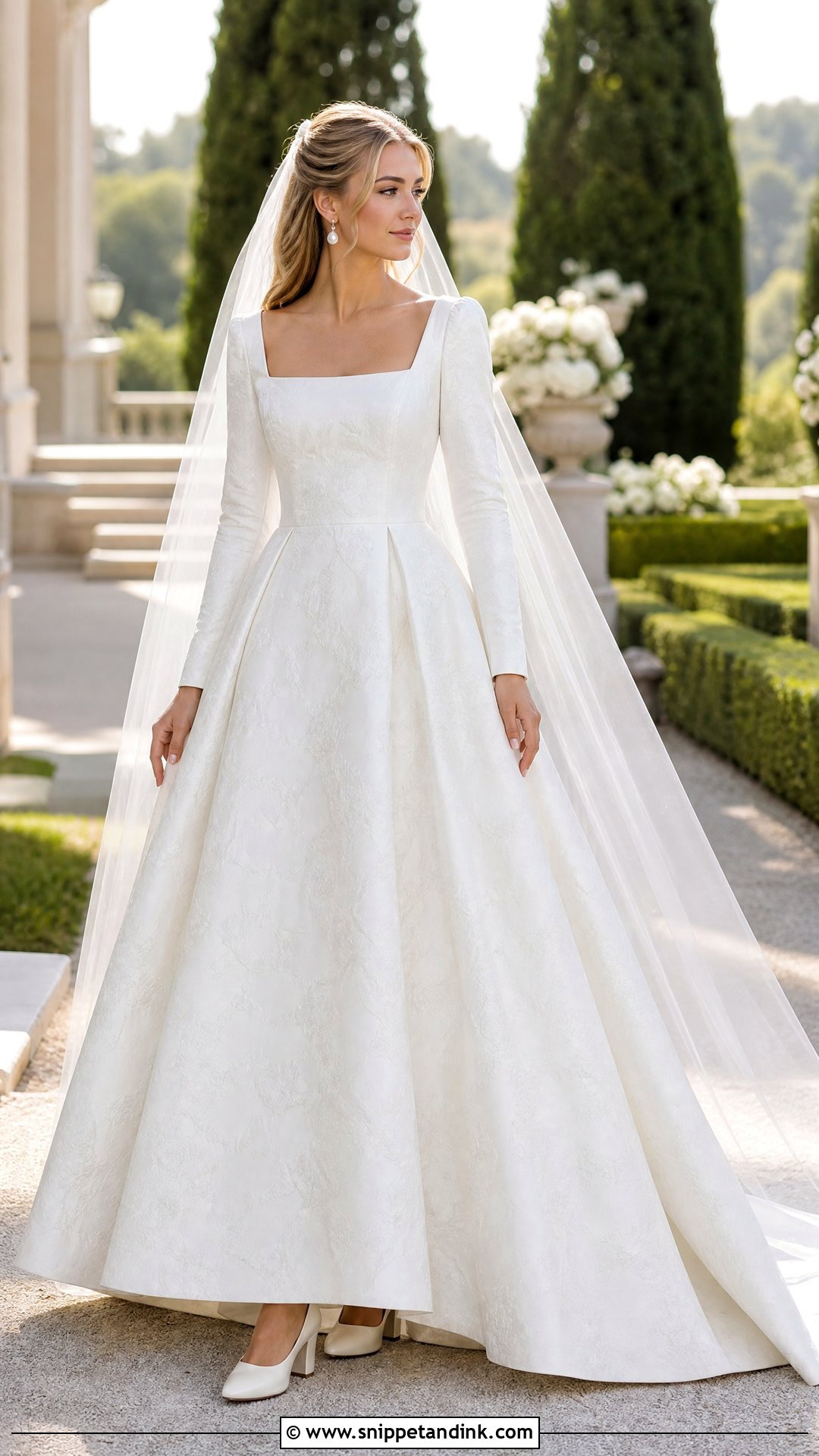
Square necklines look simple and are fussy to fit. The corners have to lie flat and match, and I check them standing and seated, since they tend to lift when the bride leans forward. A structured bodice with princess seams, fitted sleeves and an A-line or full skirt suits it in matte satin, crepe or floral jacquard. A shallow neckline can take a short pearl necklace; a deeper one is better with small drop earrings alone. Ivory block heels, a plain fingertip veil and a low bun or half-up style keep it open. Many brides find a slightly softened square more comfortable than a sharp-cornered one.


25. Champagne Long Sleeve Vintage Wedding Dress
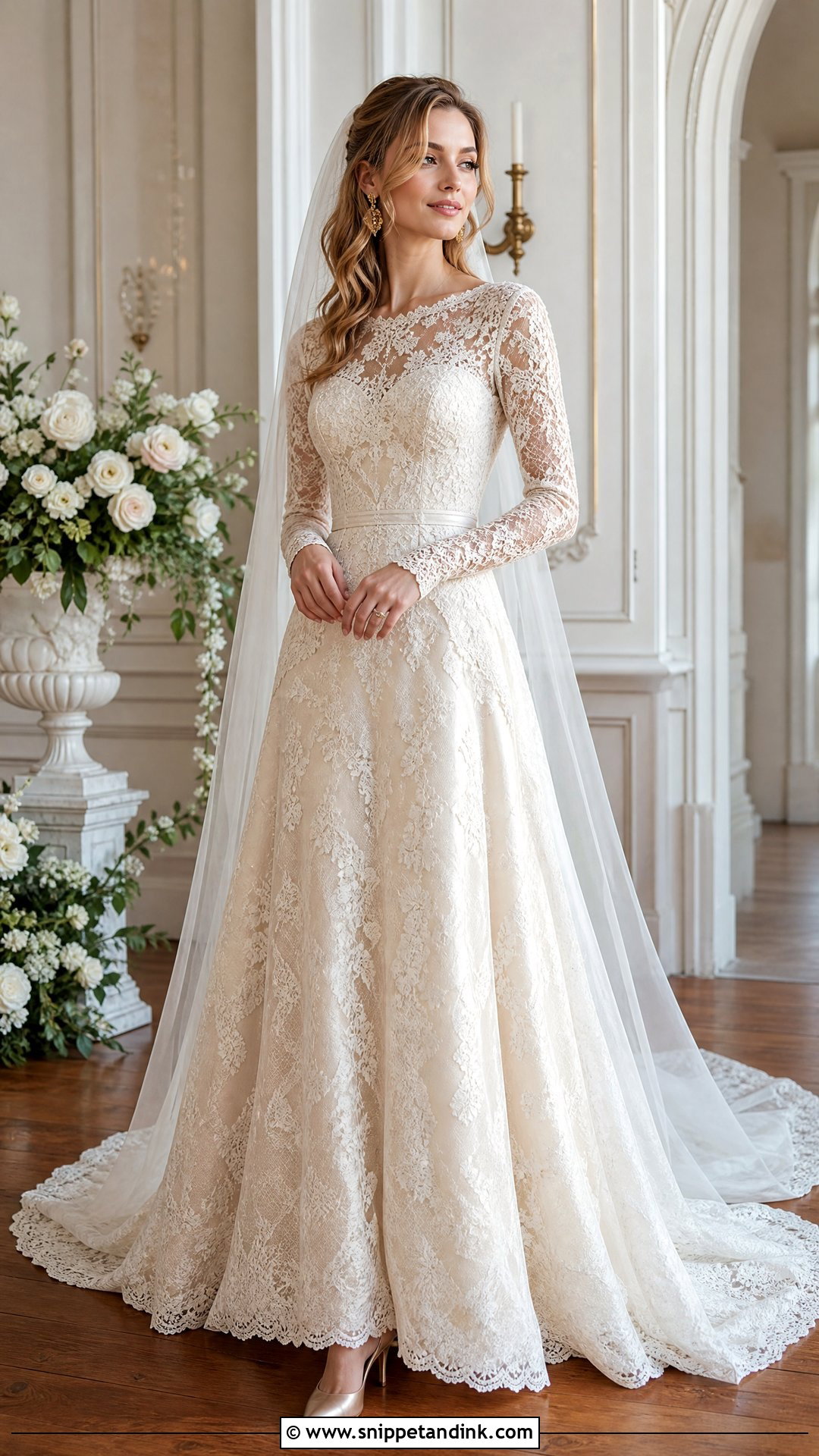
Champagne changes more between rooms than any other bridal shade. A pale champagne lining under ivory lace makes the pattern and beading stand out, but under warm indoor bulbs it can turn yellowish, and in cool daylight it can look almost pinkish beige. I always ask brides to view fabric samples in both before ordering. An A-line with fitted sleeves, a defined waist and a gentle train is a sound base. Neutral satin heels and antique-gold earrings suit it; strongly yellow metals clash. Match the veil to the lace overlay rather than the lining so the layers read as one.
Why Long Sleeves Eat Up the Most Fitting Time
Of everything on a long sleeve gown, the sleeves are where I spend the most fitting time. A sleeve that looks smooth while you stand with your arms down can pull across the back the moment you lift a bouquet or hug a grandparent. The fix usually happens at the armhole and sleeve cap, which is fiddly work, and on lace it often means unpicking appliqués and stitching them back by hand.
I run every bride through the same short routine at each fitting:
- Raise both arms as if to cup someone’s face.
- Reach forward and across, the way you would for a glass at dinner.
- Sit down and bend your elbows fully.
- Check the cuff at the wrist bone. It shouldn’t ride up past it or creep over the back of the hand unless that’s the design.
Expect two or three fittings, with the last one roughly two weeks before the wedding so a small change in weight doesn’t undo the work.
Lace, Satin and Velvet Once the Party Is Over
Get the gown cleaned within a few weeks instead of leaving it zipped in a bag. Sugar from champagne or cake can be invisible on the night and turn brown months later as it oxidizes, so point out every spill to the cleaner, even the clear ones.
For storage, lay the dress flat or loosely folded with acid-free tissue in a breathable box, away from attics and basements where heat and damp swing. Don’t leave a beaded or velvet gown hanging for long. The weight stretches the shoulders and sleeves, and velvet crushes wherever it presses against the hanger. Plastic garment bags trap moisture, so use cotton if the dress has to hang for a while.
Sleeves, Seams and an Era That Feels Like You
Begin with the era that feels like you, then let comfort decide between versions of it. Lace, fluid satin, full sleeves and structured bodices all appear above, and none of them has to be copied exactly. Try a few necklines, waist placements and sleeve shapes on your own body before committing, because a gown that looked right on a hanger can feel wrong the moment you raise your arms. Keep shoes, jewelry and hair in a supporting role. And leave time for alterations, since long sleeves and fitted bodices are the slowest parts of any gown to get right.
You'll Like These Ideas:





Leave a Reply