
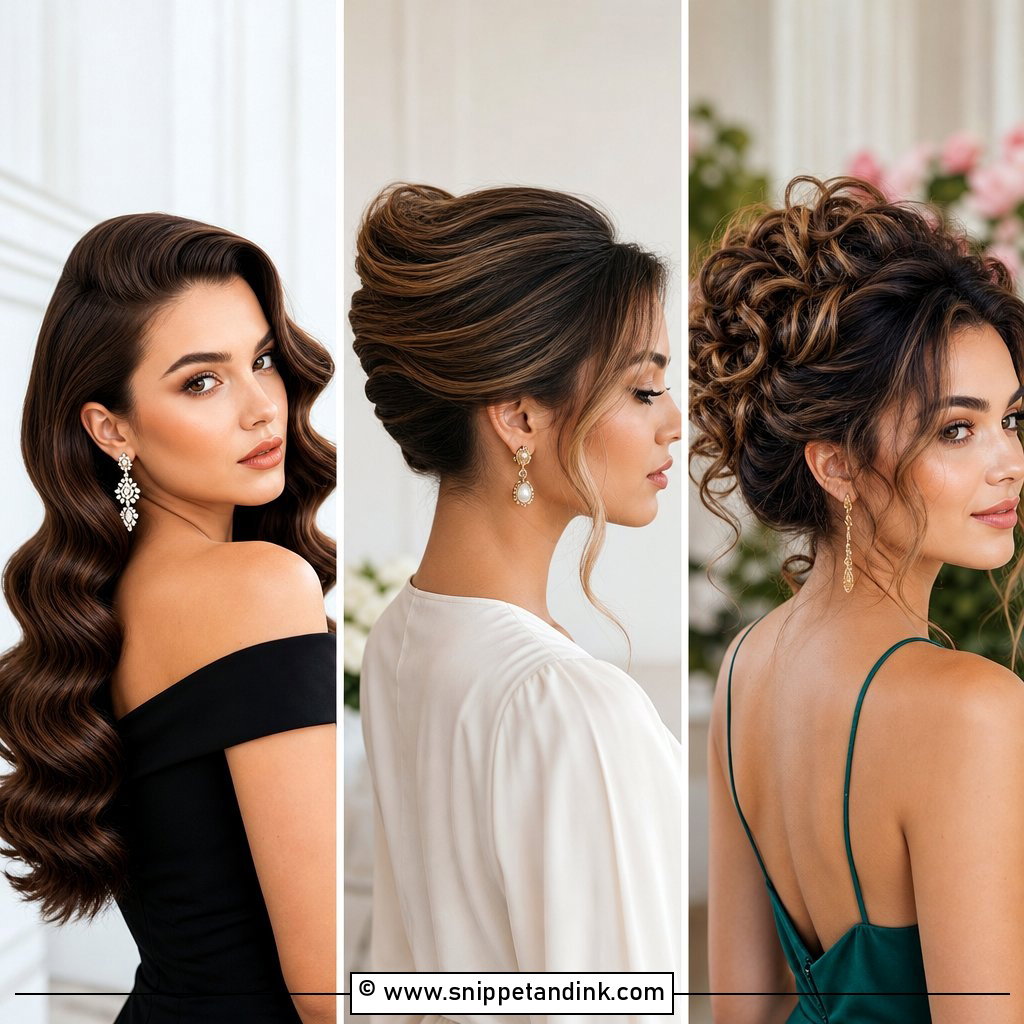
A French twist is one of the most honest updos I pin. There’s no padding hiding a weak base: the hair is gathered to one side, folded vertically up the back of the head, and held along a hidden seam of pins. That simple structure is why it lasts, and it’s also why the details matter so much. Placement, smoothness and what you tuck into the seam change it from a 1960s office chignon to something soft enough for a garden. Below are 25 versions I’d put on a bride, with notes on the hair each one needs and where each one tends to go wrong.
What Your Hair Needs Before a French Twist Will Hold
A twist is held by friction. That makes the state of your hair on the morning more important than the style you pick. Freshly washed, conditioned hair is silky, and pins slide straight out of it. I ask brides to wash the night before or the morning before, skip heavy conditioner on the lengths, and let me add texture spray or dry shampoo before I start.
Adjusting for your texture
- Fine hair: backcomb the roots and the inside of the fold so the twist has body. A small hair pad can fill the shape without showing.
- Thick or very long hair: the fold can get bulky. I sometimes split it into two layered twists so it sits flatter against the head.
- Curly and coily hair: I either work with a sleek smoothing and stretch first or keep your texture and build a softer, fuller twist. Tell me which you want before the trial.
- Layered hair: shorter layers escape the seam, so expect a few more pins and some planned loose pieces.
Length matters too. Roughly shoulder length and beyond folds properly; shorter hair works with clip-in extensions or a modified half-twist.
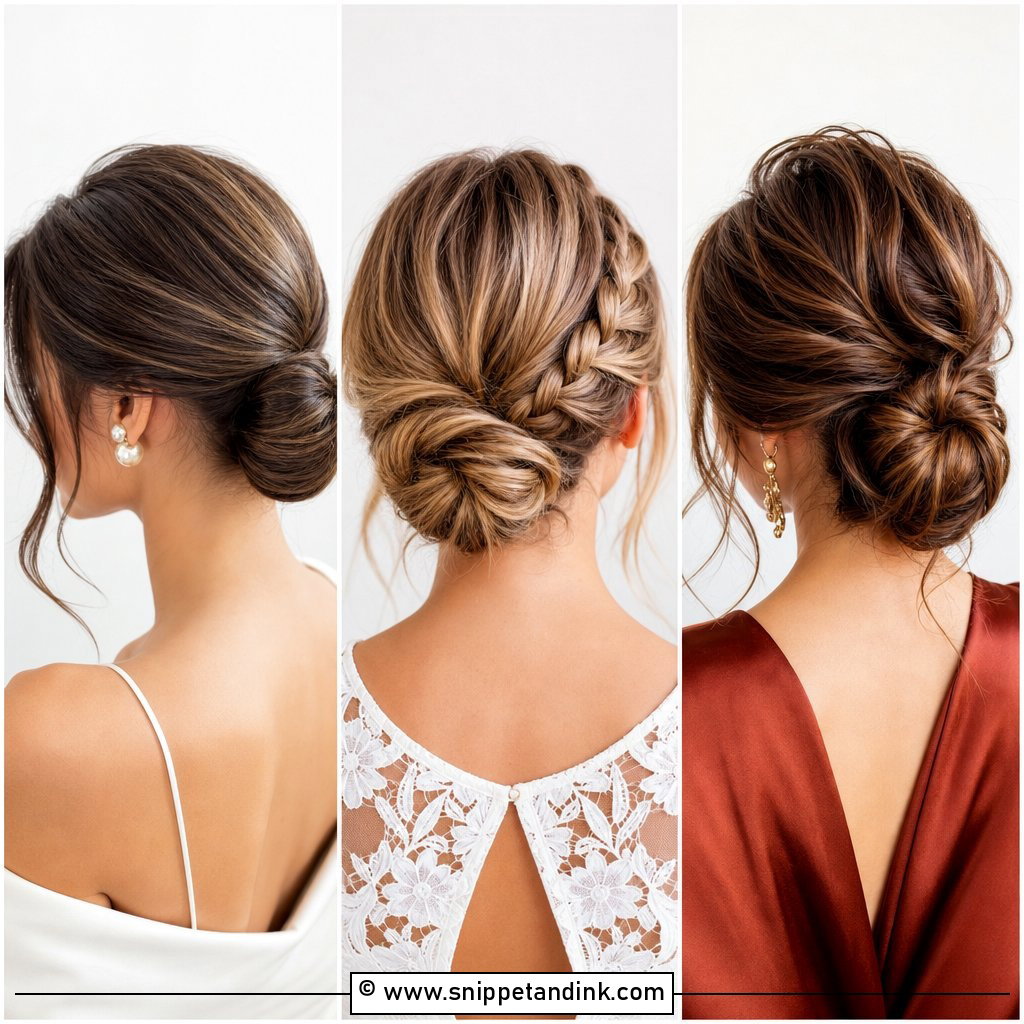
1. Classic French Twist With Face-Framing Wisps
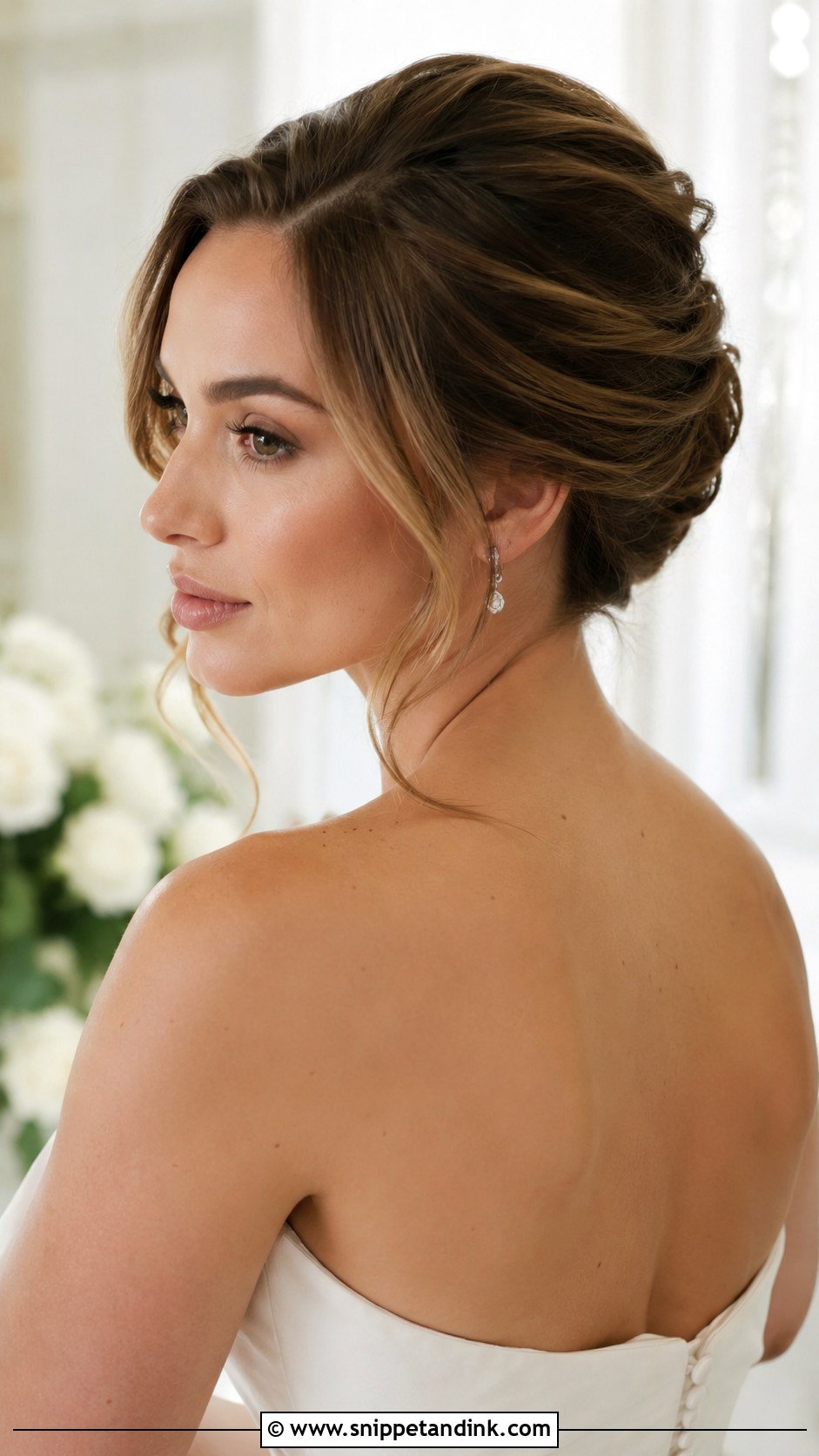
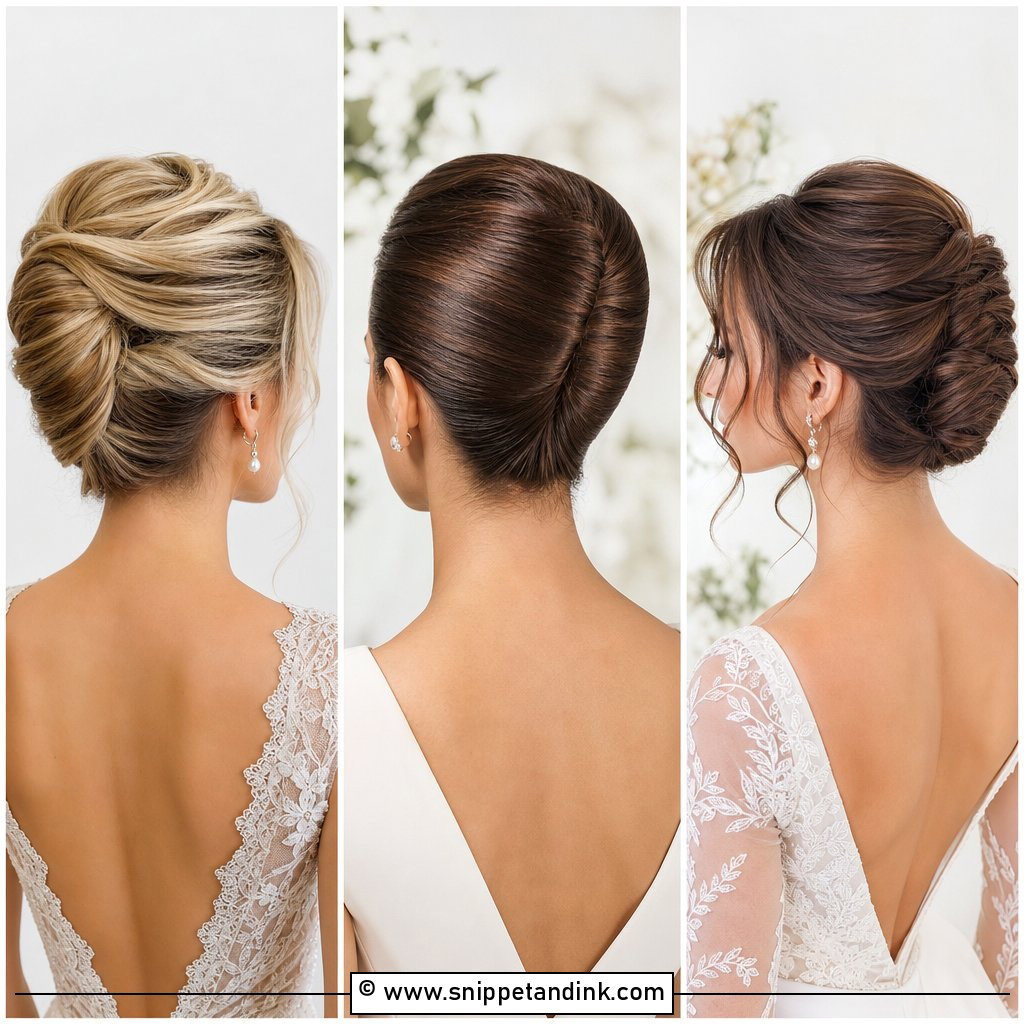
This is the twist I start most trials with. The back is folded smooth and the front is left with a few loose wisps at the cheekbones and jaw, which stop the shape from looking severe. The wisps are the fussy part. Cut-in face-framing layers work best; if your front pieces are all one length, I pull out fewer and curl them with a small iron so they don’t hang straight. It sits happily with almost any neckline.
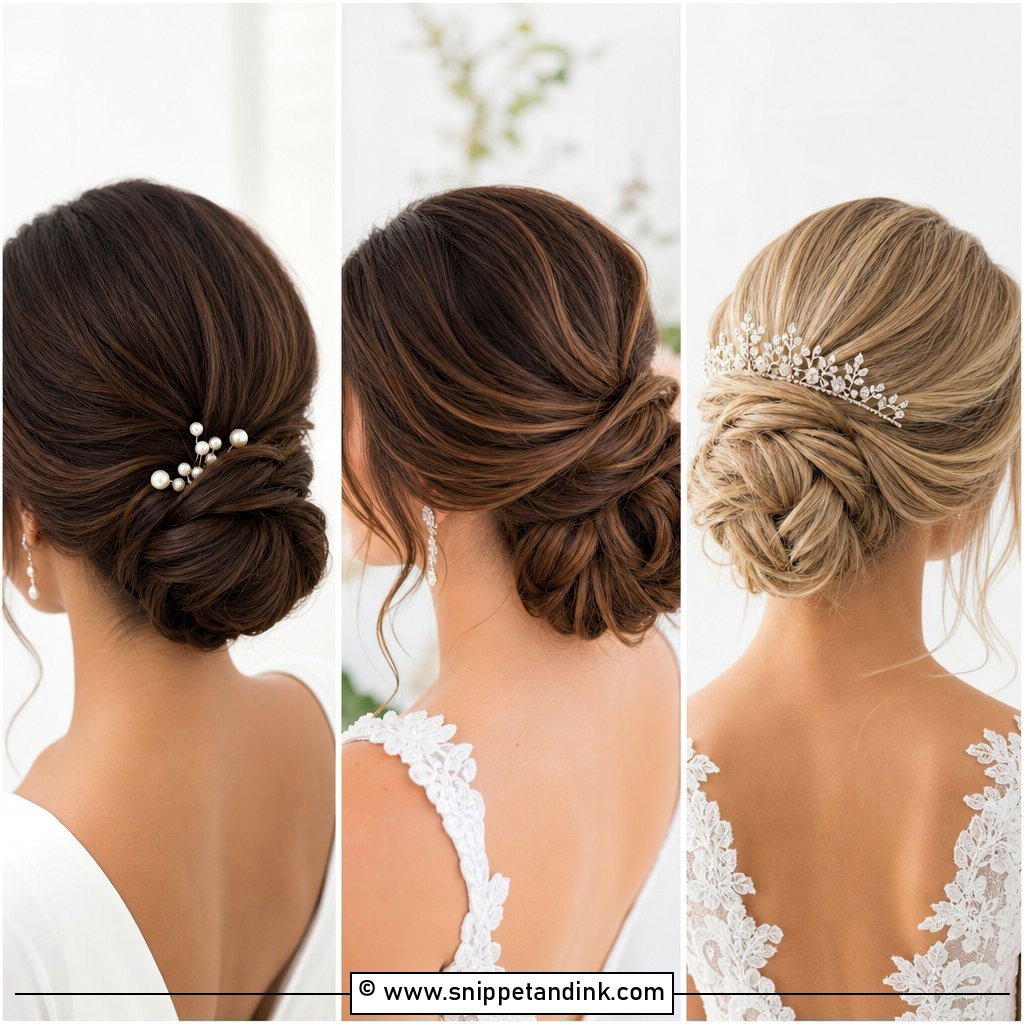
2. Low French Twist With Pearl Accents
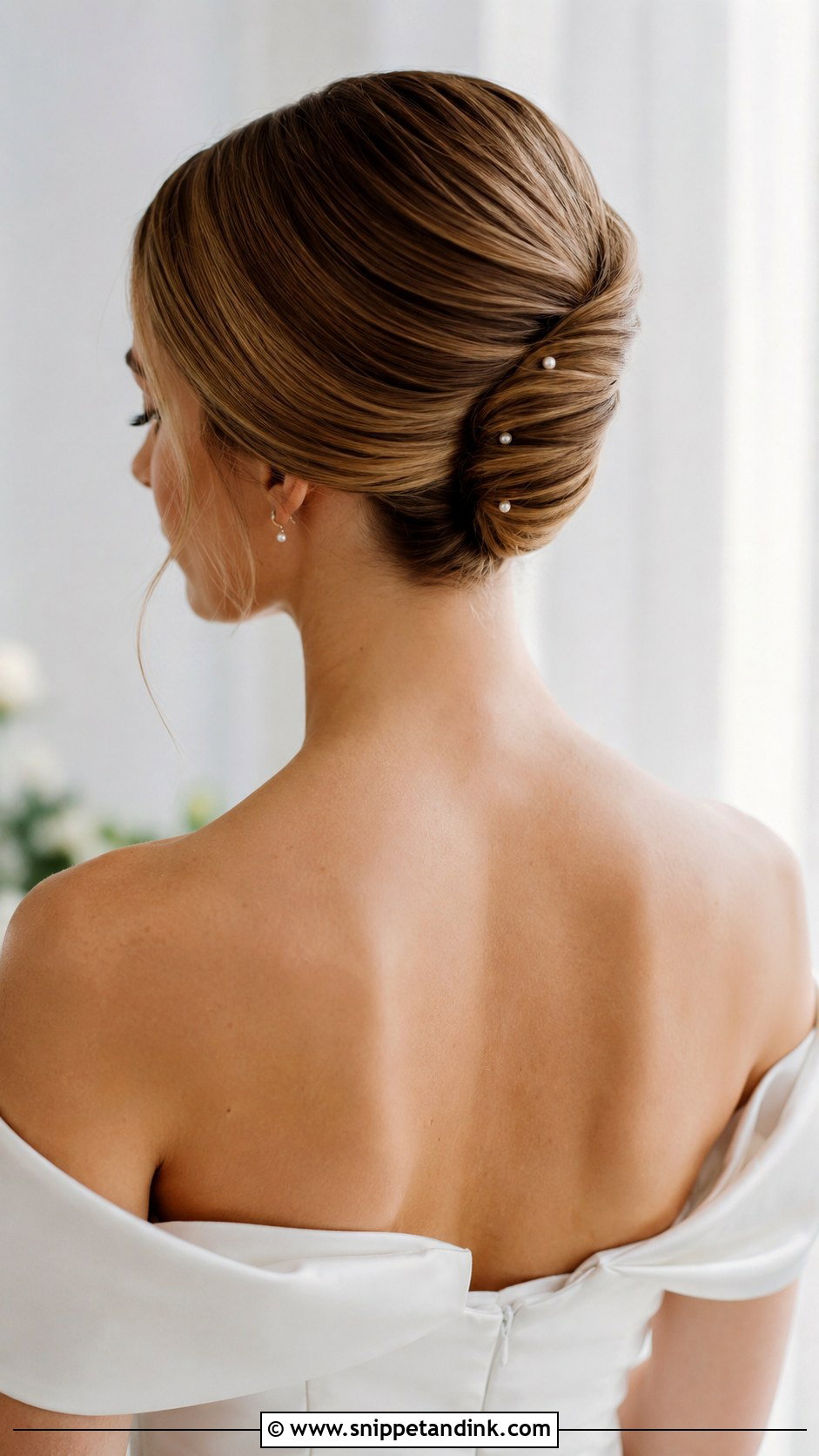
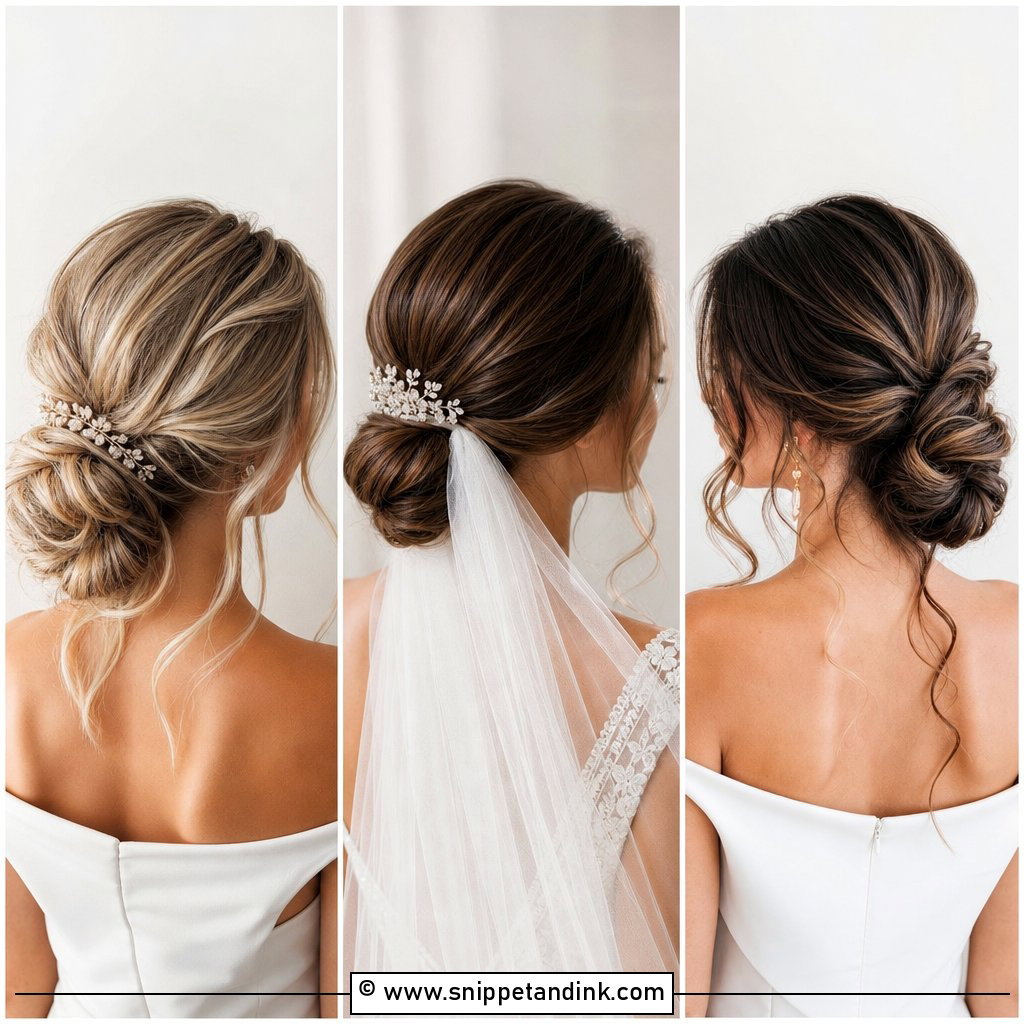
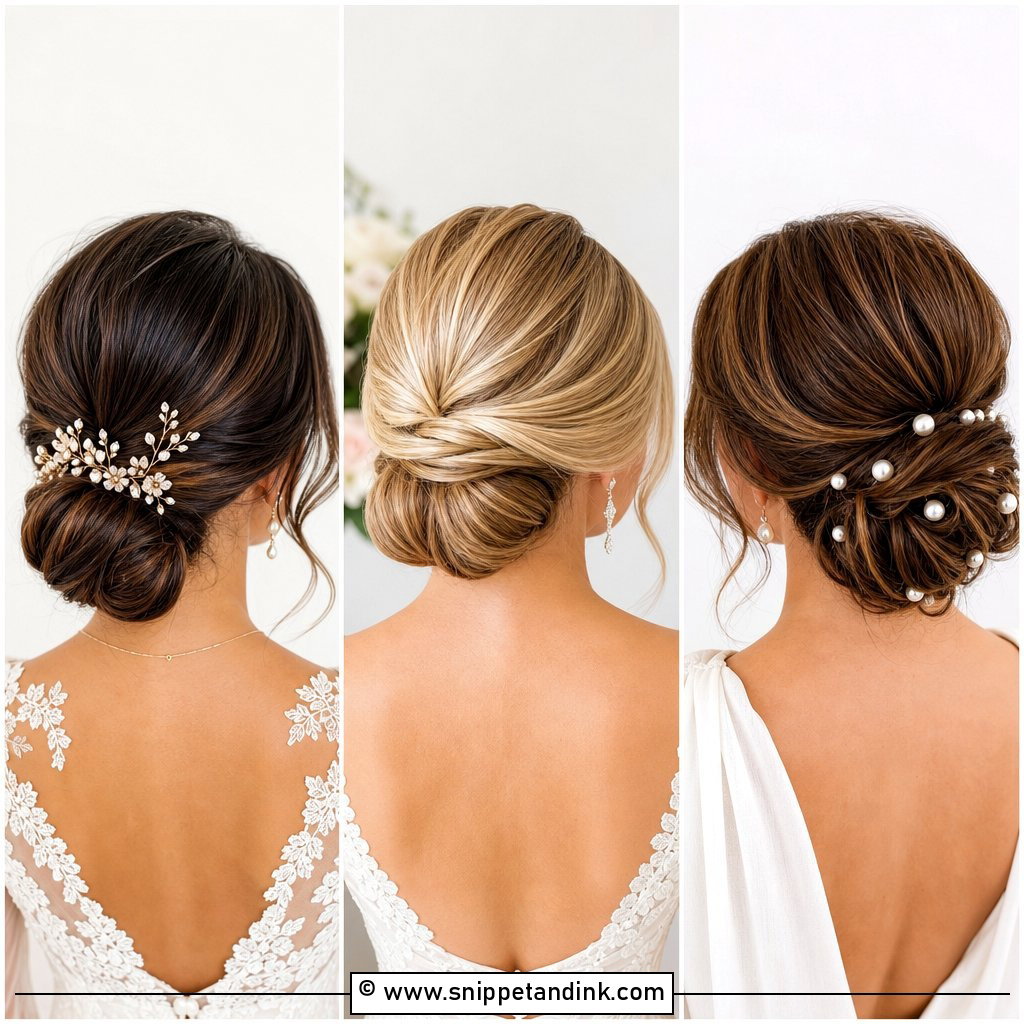
A low twist sits right at the nape, which leaves the neck and shoulders clean for a bare neckline or heavy earrings. I add pearls on short pins after the twist is fully secured, never before, because pushing a decorative pin through an unfinished fold can open it. Small pearls scattered along the seam look natural; a tight cluster at the bottom reads more formal. Low placement is also the easiest to sit back against a chair in, which brides forget about until the dinner.
3. Textured French Twist Updo
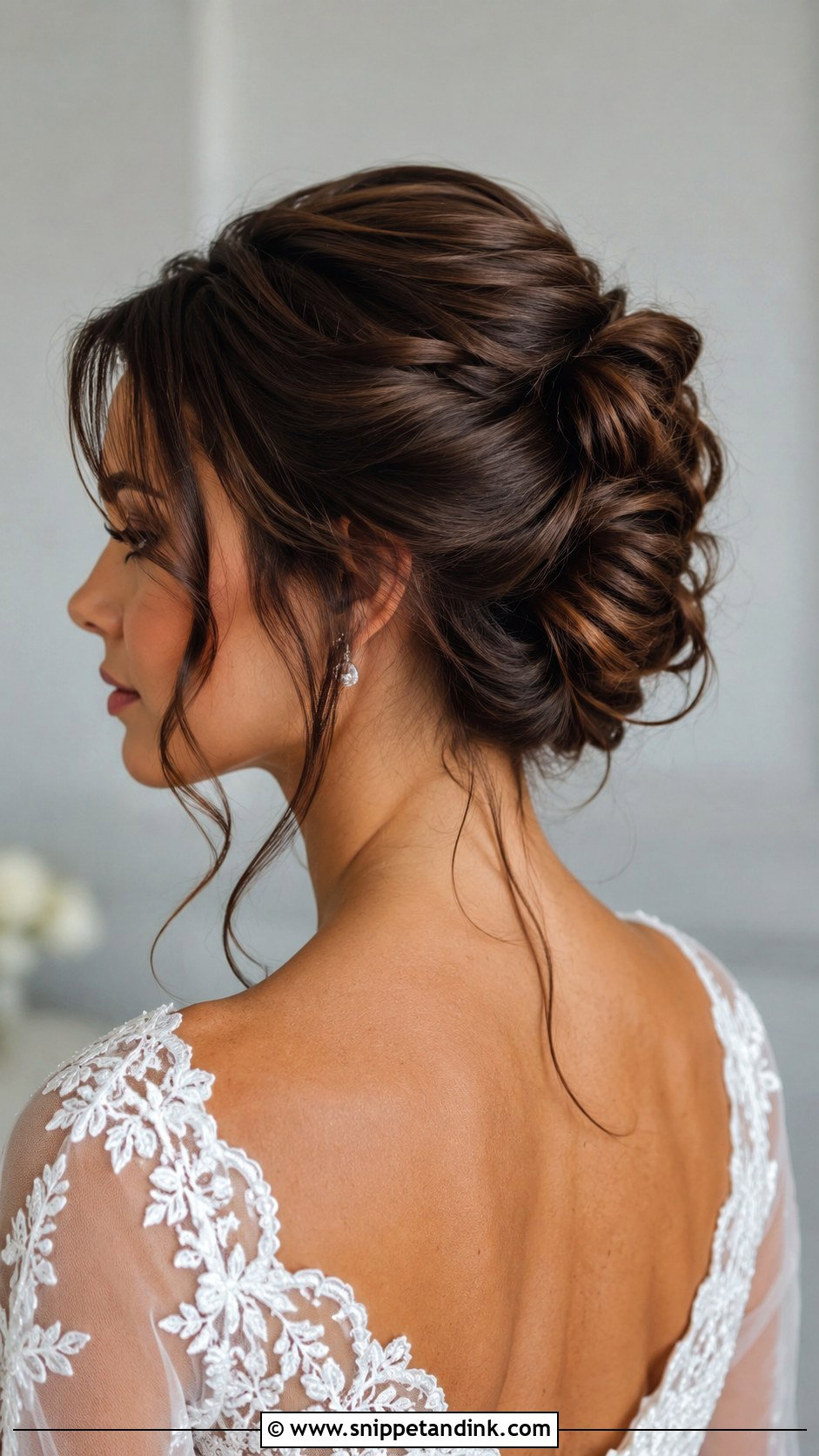
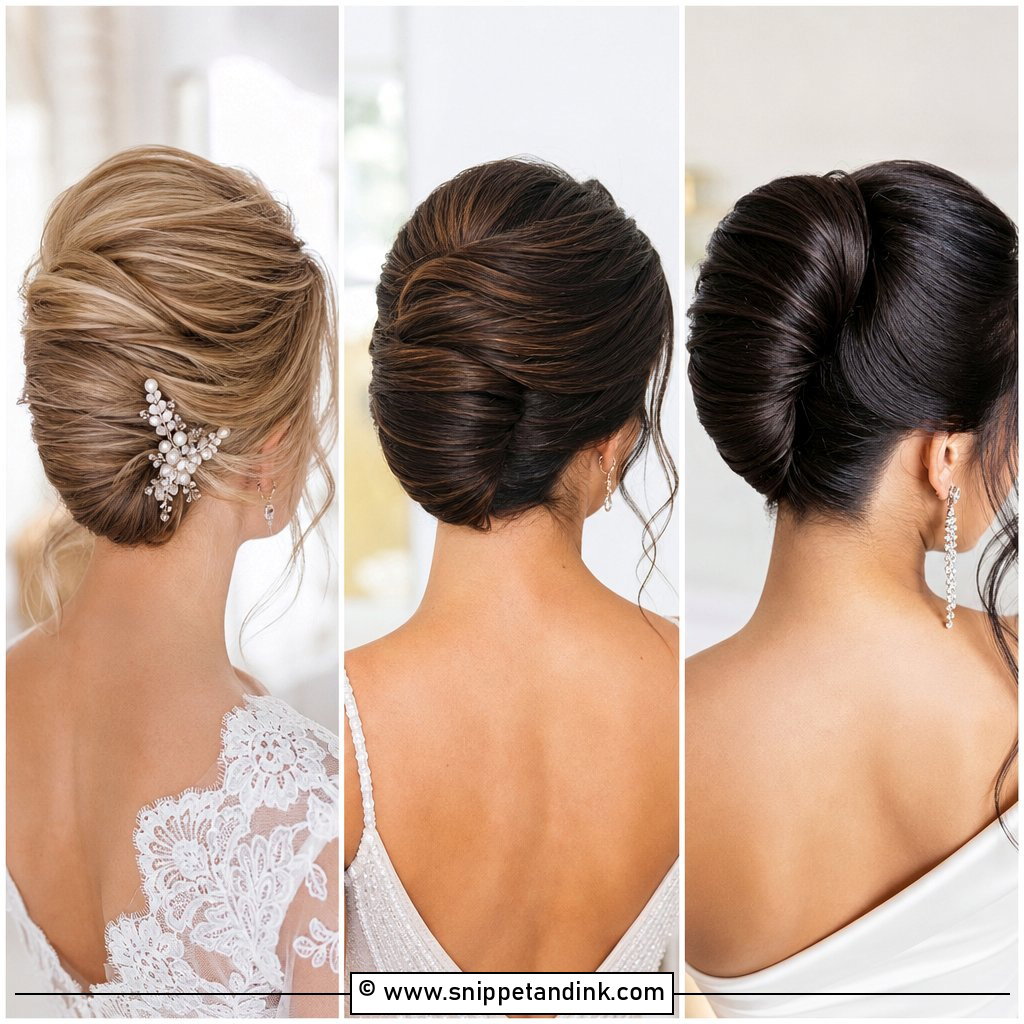
Here I loosen and pinch out the fold after it’s pinned, so the twist has depth and movement instead of a glossy surface. Thick or naturally wavy hair is ideal because it holds that loose structure without collapsing. Fine hair can do it, but I prep with texture spray and backcomb at the roots first, otherwise pulled-out pieces simply flatten by the speeches. Done right, it looks relaxed without looking unfinished.
4. Sleek Sculpted French Twist
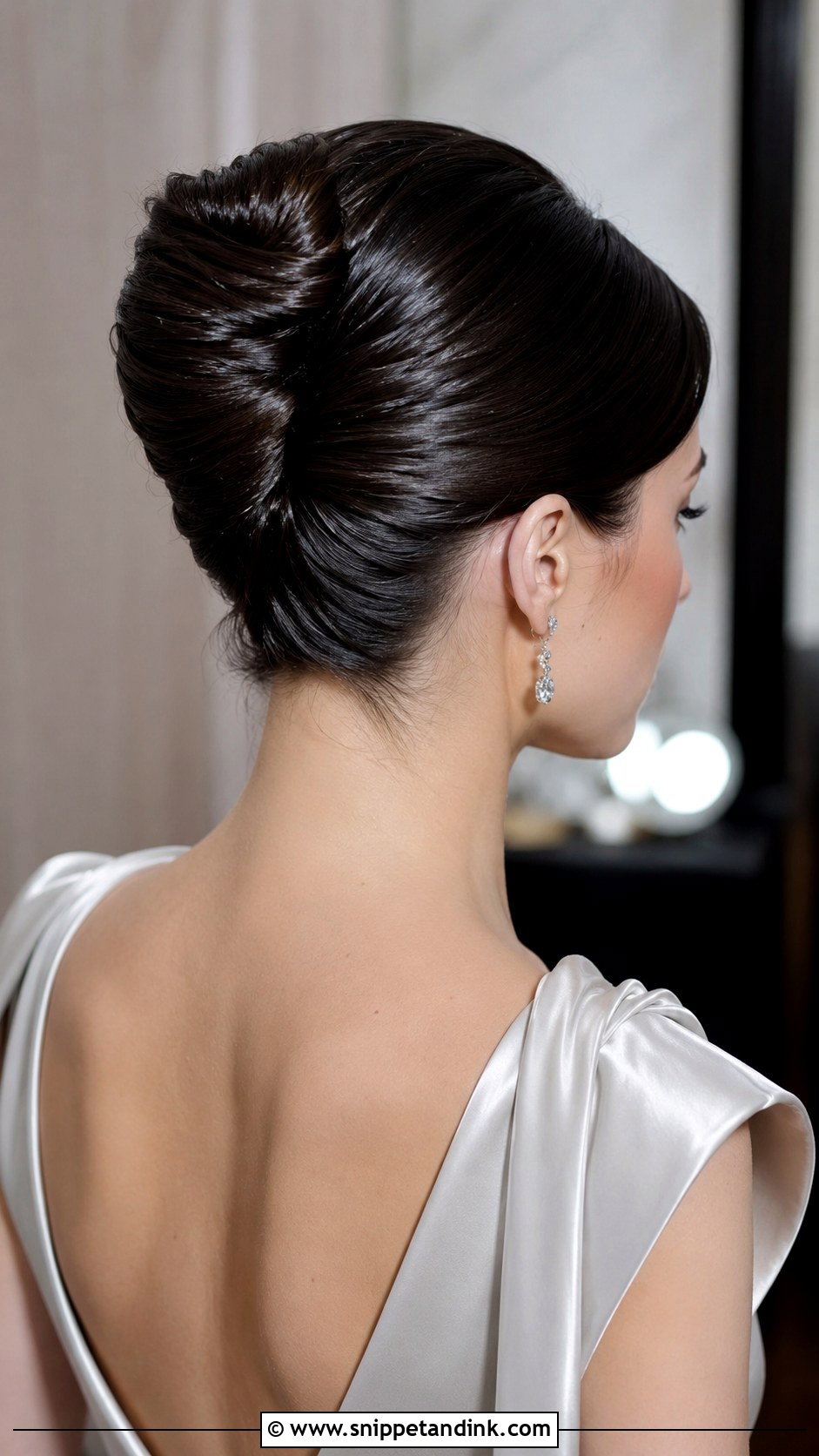
The sculpted twist is all about surface: no flyaways, a glassy finish and a sharp vertical seam. It needs smoothing cream, a fine-tooth comb and patience, and it’s the version most likely to show a mistake, because every bump is visible. I’d only recommend it if your hair is healthy and fairly dense. Very fine hair can look flat and expose the scalp when it’s pulled this tight. Think of it as the couture version of the twist, and plan for a few extra minutes in the chair.
5. French Twist With Cathedral Veil
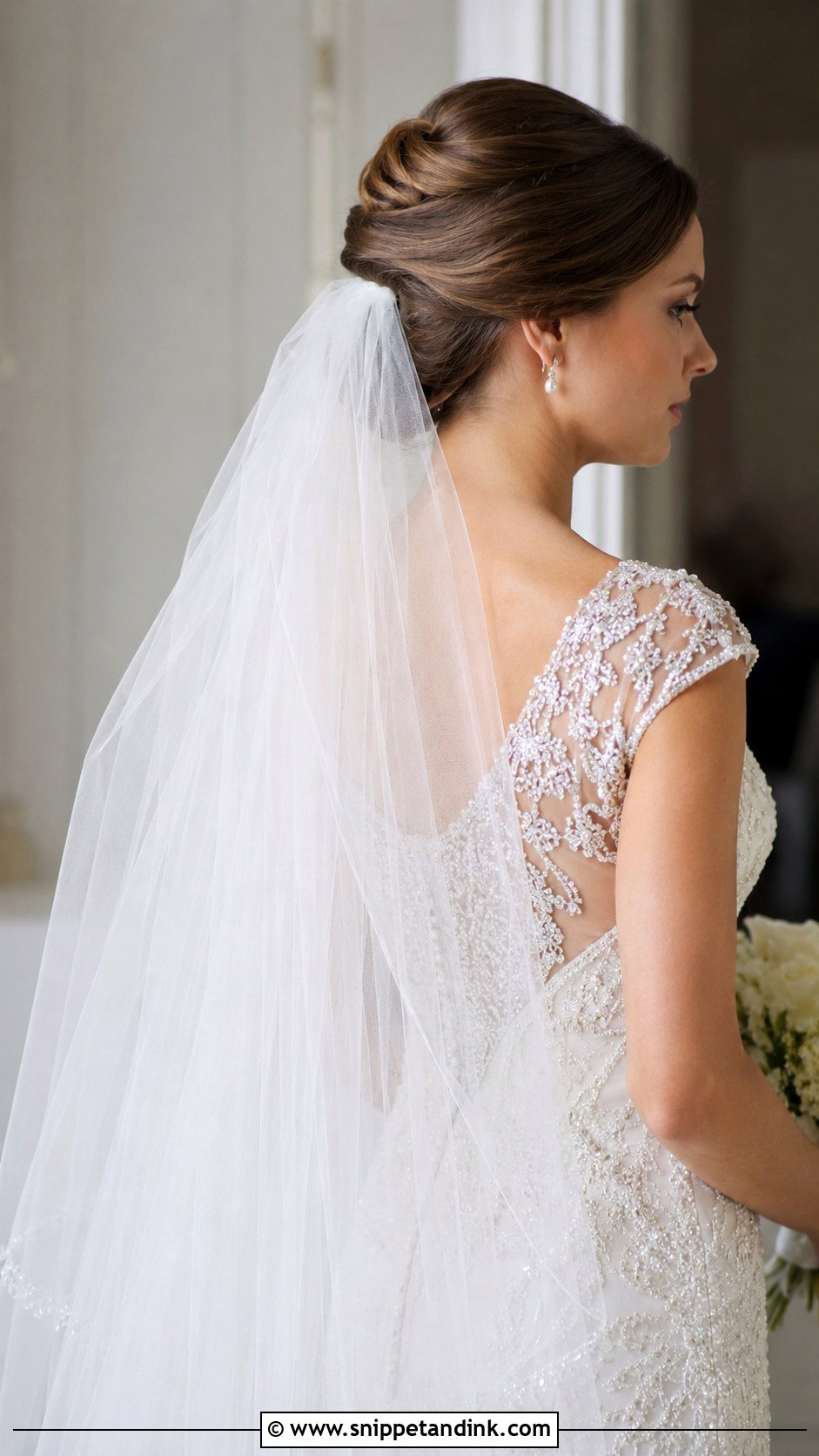
A cathedral veil is long and has real weight, which is exactly why the twist suits it: the fold gives a solid vertical line to anchor into. I slide the comb in either just above or just below the twist, into a base of crisscrossed bobby pins, never into the fold itself, where it pries the shape open. As you walk, the veil hangs from that base and the twist stays visible through it. For grand churches and formal venues it’s hard to beat.
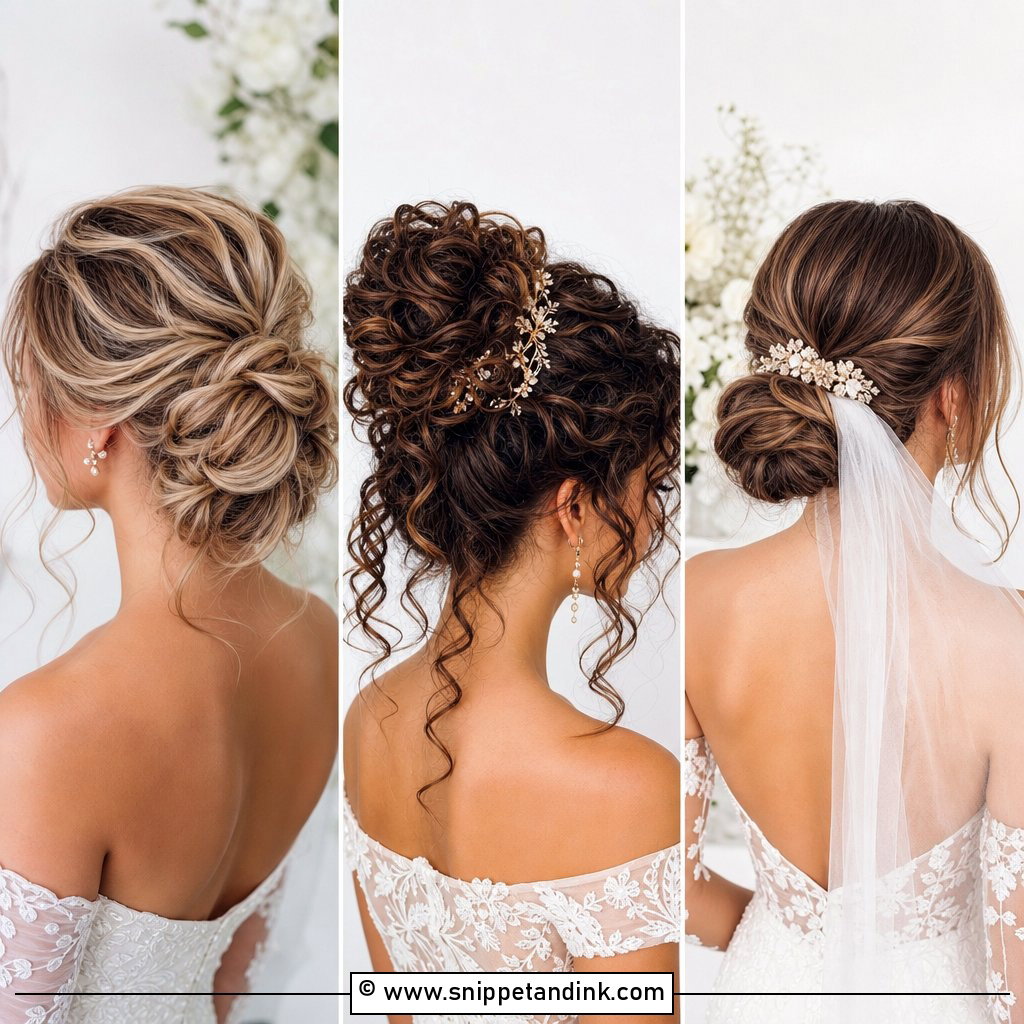
6. Loose French Twist With Soft Tendrils
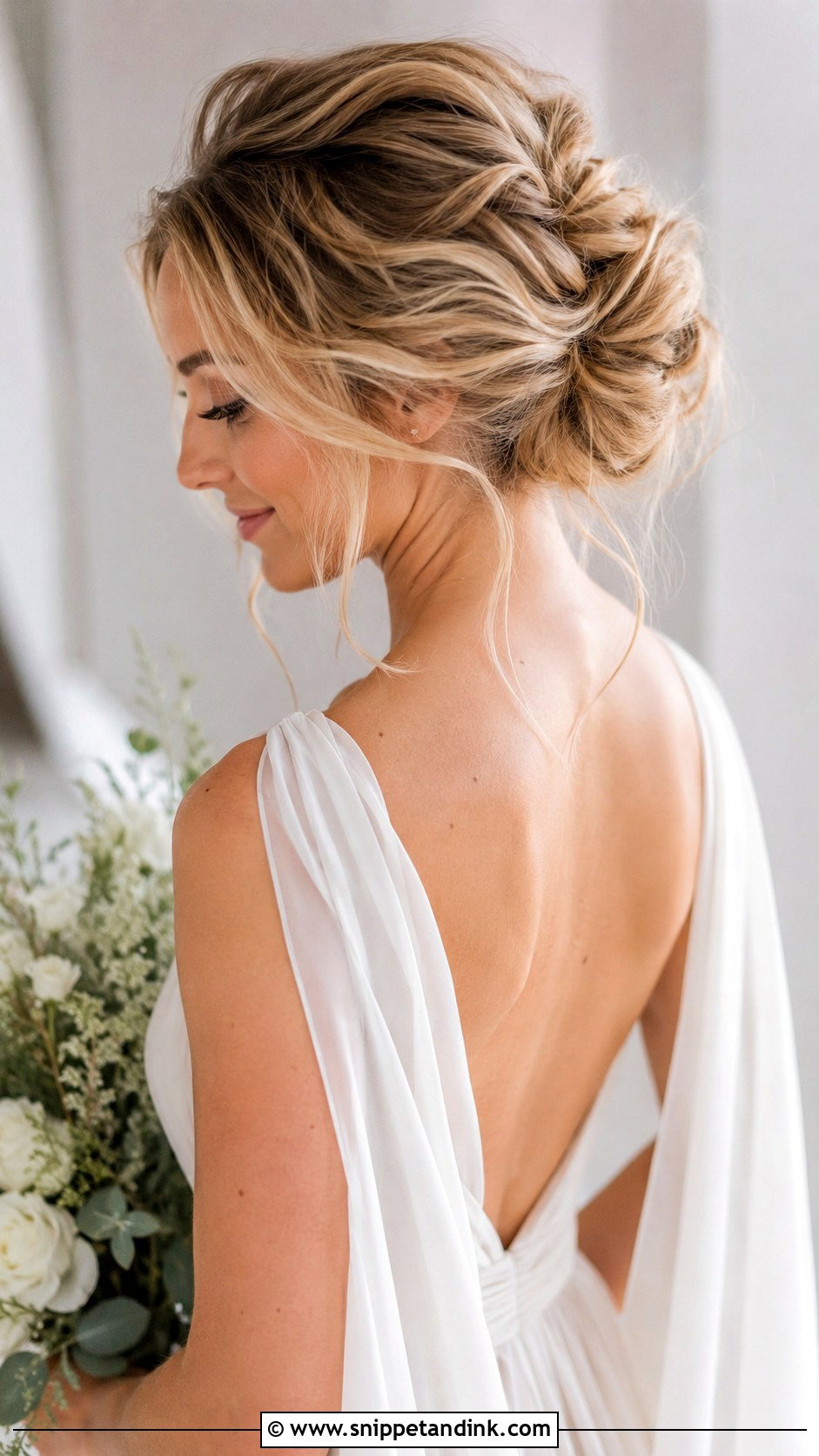
A loose twist keeps the fold soft and lets tendrils fall at the face and neck. It suits outdoor and beach weddings, but tendrils are the first casualty of humidity. I curl them in small sections and set them with a light spray before the bride gets dressed. If your wedding is somewhere sticky, ask for slightly fewer and shorter tendrils; long ones stretch out and go limp by evening.
7. French Twist With Floral Accents
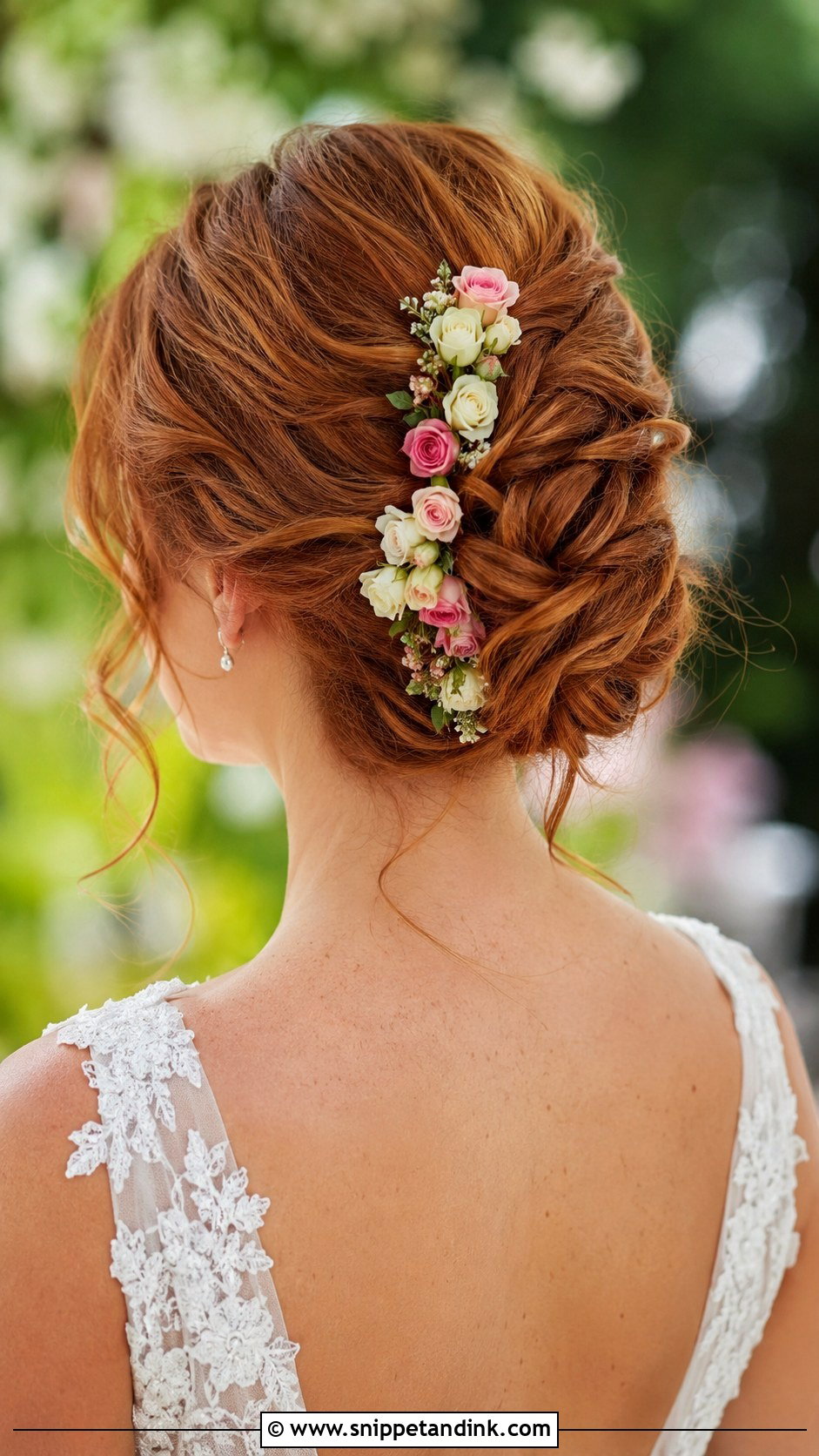
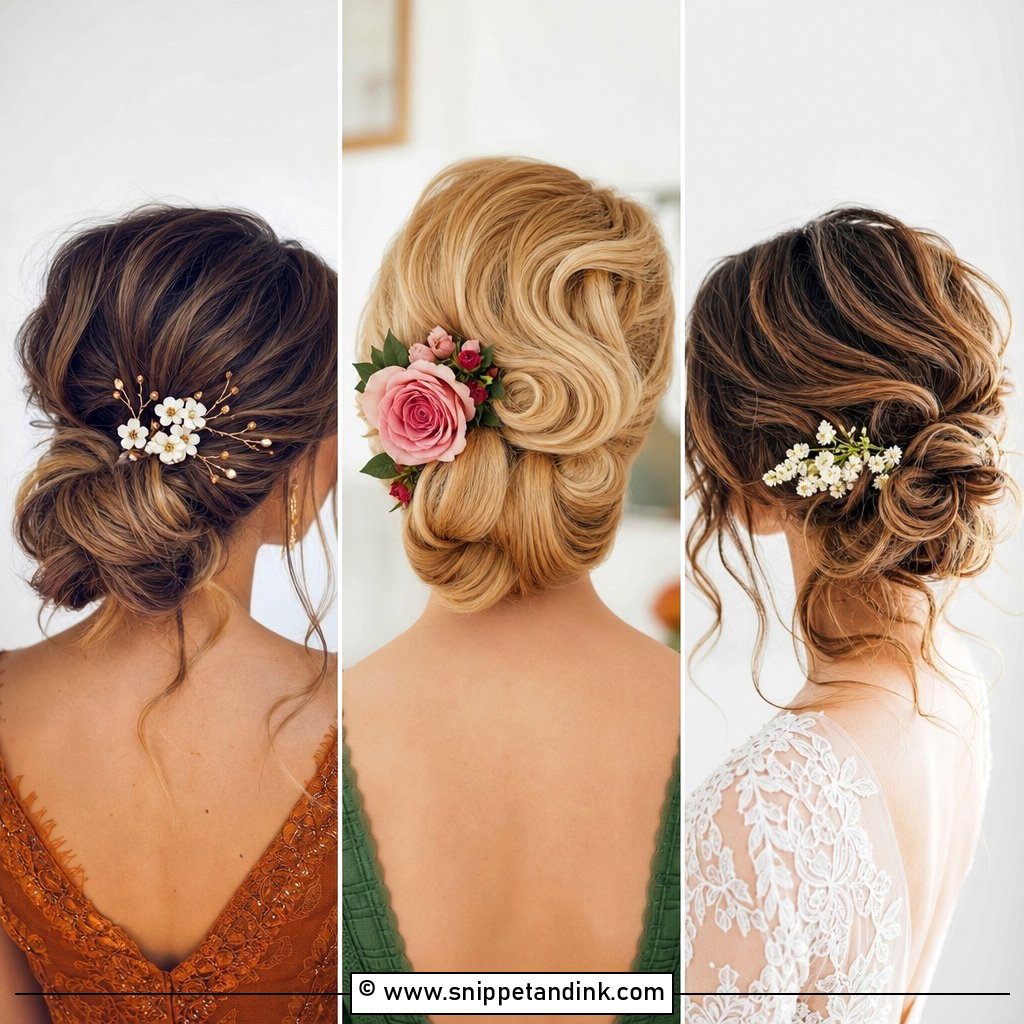
Flowers tucked along the seam bring the garden into the hair. I pick blooms that cope out of water: spray roses, waxflower and baby’s breath hold up, while gardenias and soft petals bruise and brown within a couple of hours. Each stem gets wired and taped, then pinned into the seam rather than pushed in loose. Ask your florist for a few spare stems that match your bouquet, or use silk flowers if the ceremony is in full summer sun.
8. French Twist With Elbow-Length Veil
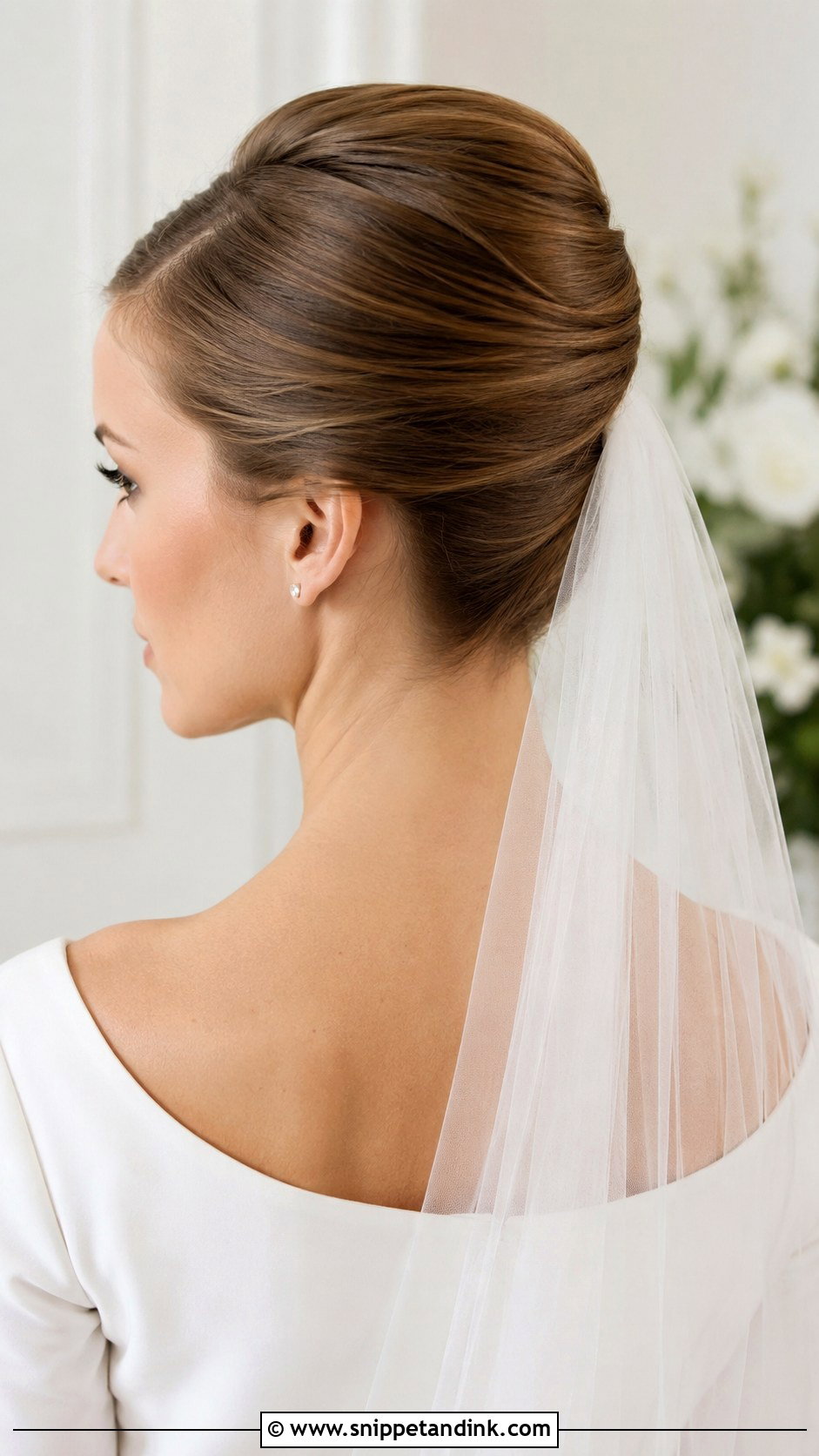
An elbow-length veil falls to about the bend of your arm, which shows off the neck and the twist without covering your back entirely. It’s much lighter than a cathedral, so you can keep it on into the reception. Off-the-shoulder and bateau necklines sit especially well with it because the hem lands just below the bare shoulder. I place the comb just above the twist so the veil drapes over the fold with a little lift.
9. French Twist With Side-Swept Bangs
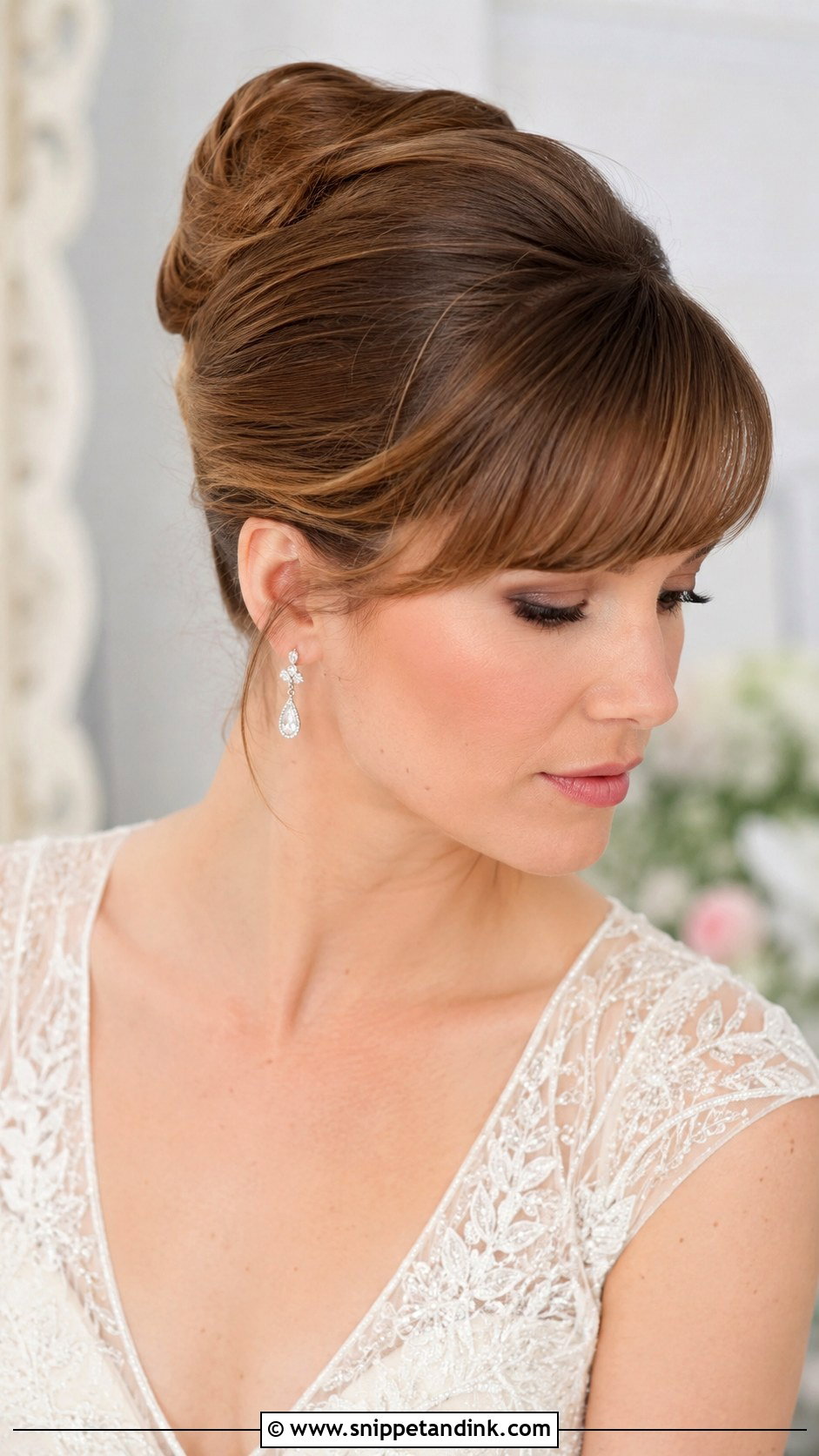
Bangs and a twist give a sleek back with softness at the front. Side-swept bangs flatter a higher forehead and pull attention to the eyes. If you already wear a fringe, get it trimmed about a week before the wedding, not the day before. A fresh cut sits too heavy and blunt, and a week of growing out lets it fall softly. I blow-dry it across the forehead with a round brush, then pin the end discreetly behind the ear so it won’t flop forward during the vows.
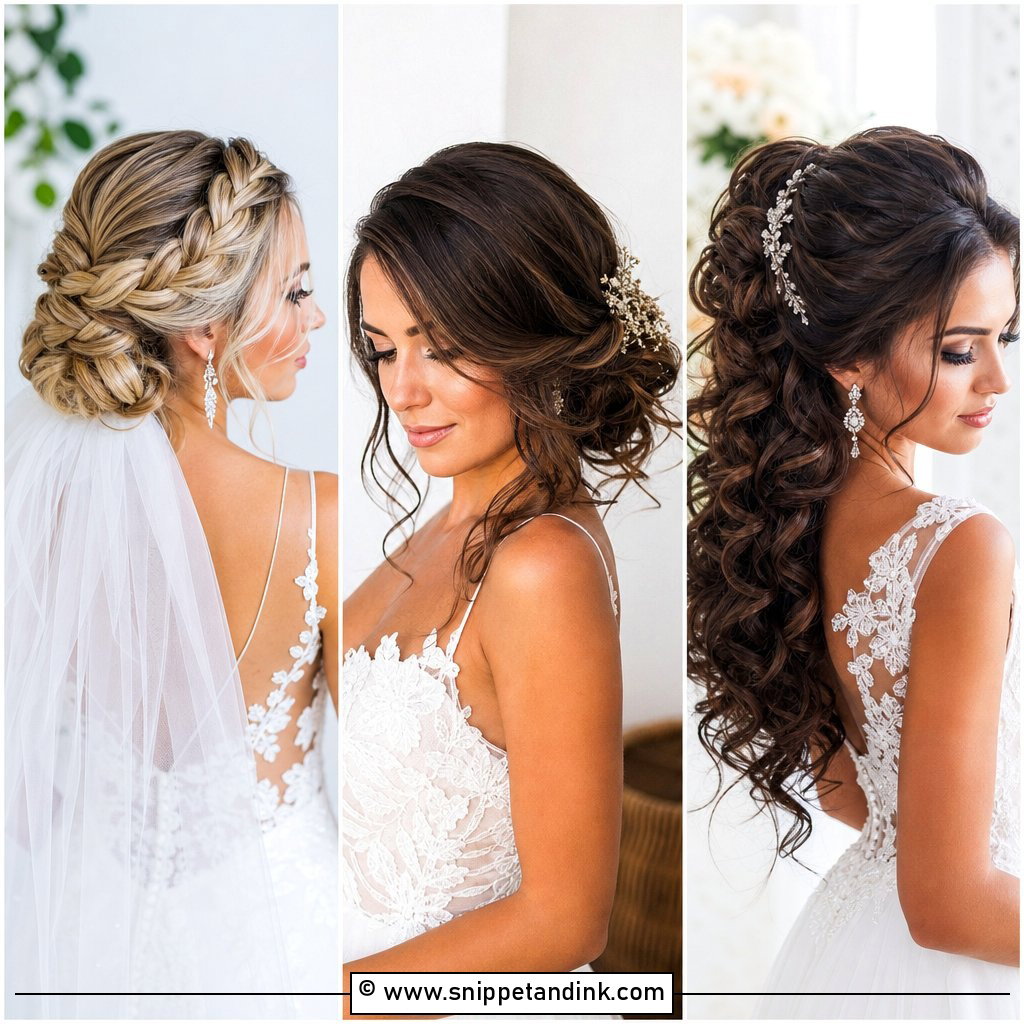
10. Braided French Twist
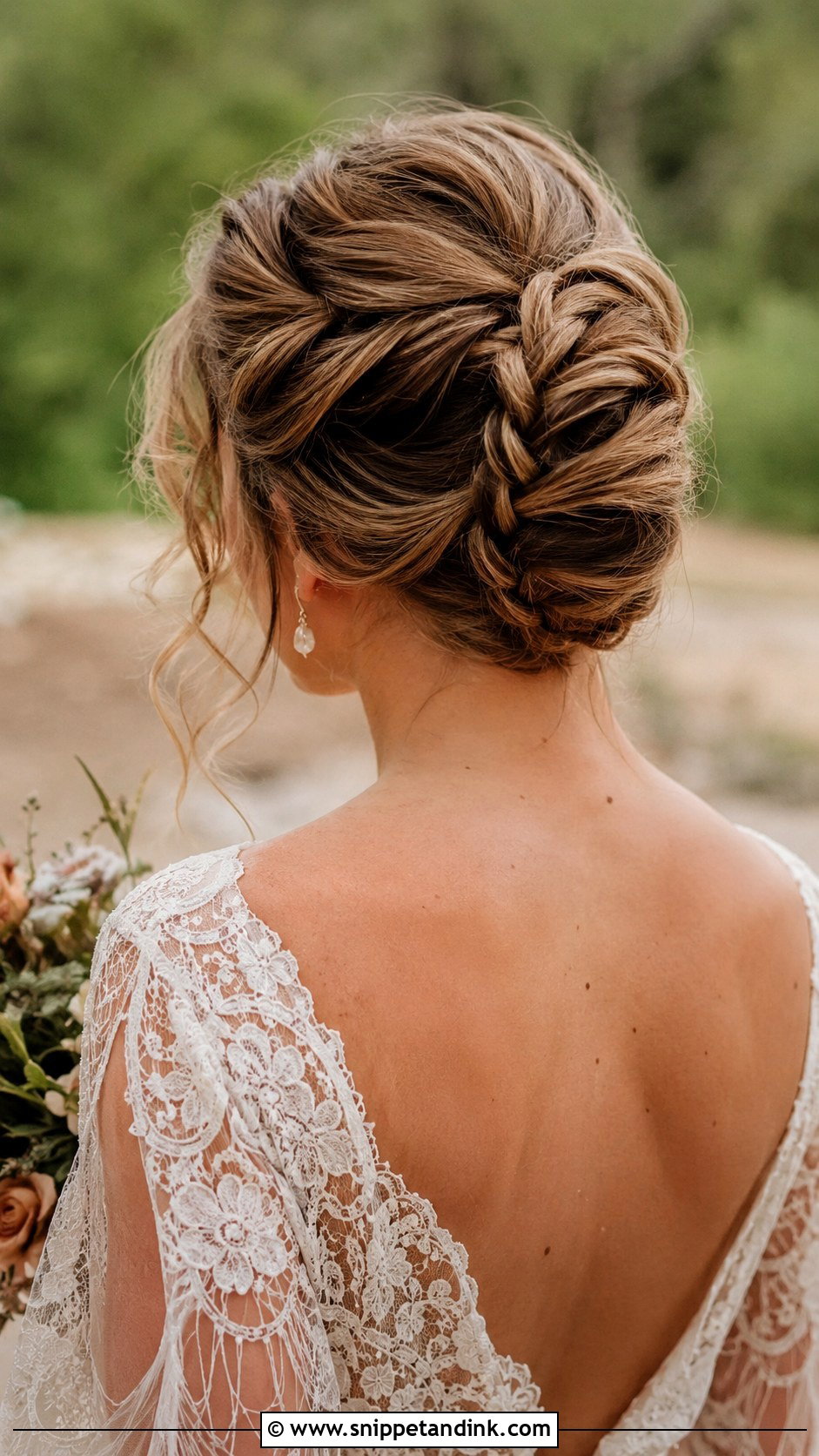
Weaving a braid along the seam or down one side adds texture you can see from the back of the aisle. I braid first, pancake it a little, then fold the remaining length into the twist so the braid sits on top of the structure rather than inside it. A loose braid suits boho and rustic settings; a tight one looks crisper with a structured gown. Layered hair can poke out of a braid, so expect a few small pins hidden along it.
11. French Twist With Crystal Hair Pins
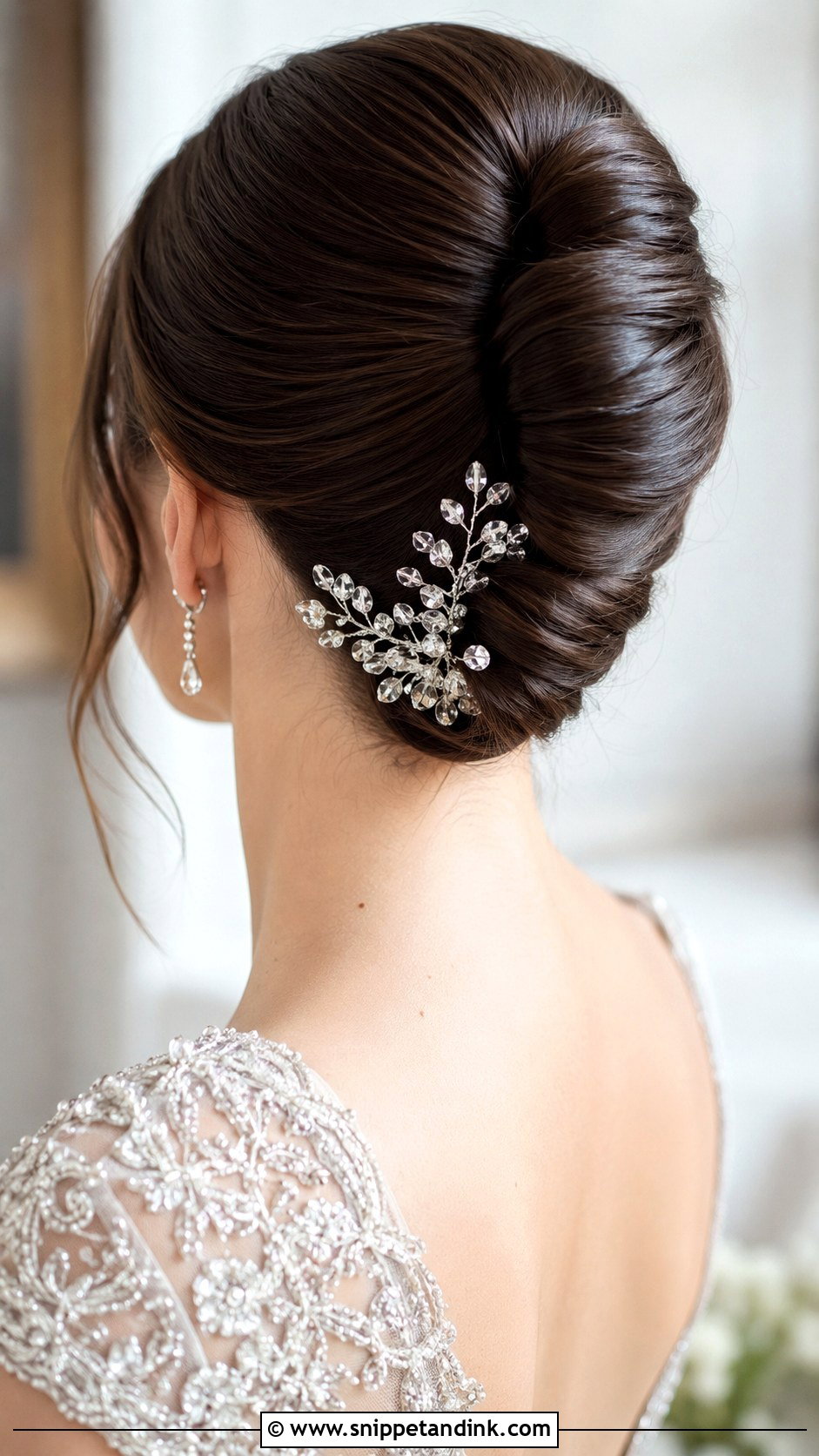
Crystal pins add sparkle without the commitment of a headpiece. You can cluster them at the bottom of the twist or scatter them up the seam. They work hardest with beaded or sequined gowns, since the light catches both at once. I always push them in at an angle, following the fold, so they grip the pins underneath rather than sitting loose on the surface. Bring your full set to the trial so we can decide how many actually look right.
12. High French Twist Updo
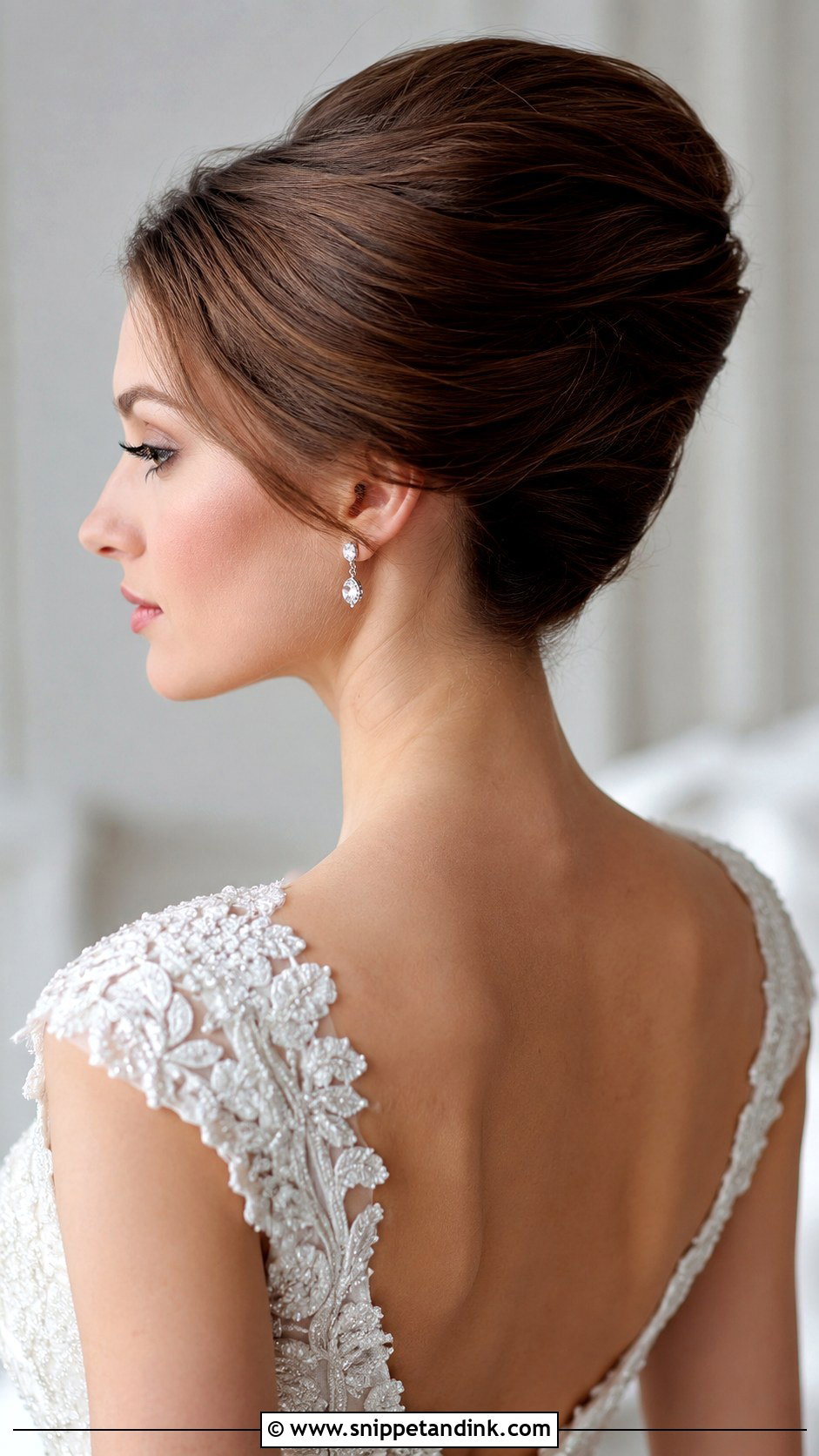
Raising the twist toward the crown changes the whole profile. It lengthens the neck and gives the shape a confident, formal presence. It suits dramatic gowns and bold jewellery. A high twist puts more weight on the top of the head, so I build an extra anchor of crisscrossed pins under it. Brides with heavy, long hair sometimes feel it pulling by evening; if that’s you, settle for a mid-height placement.
13. French Twist With Mantilla Veil
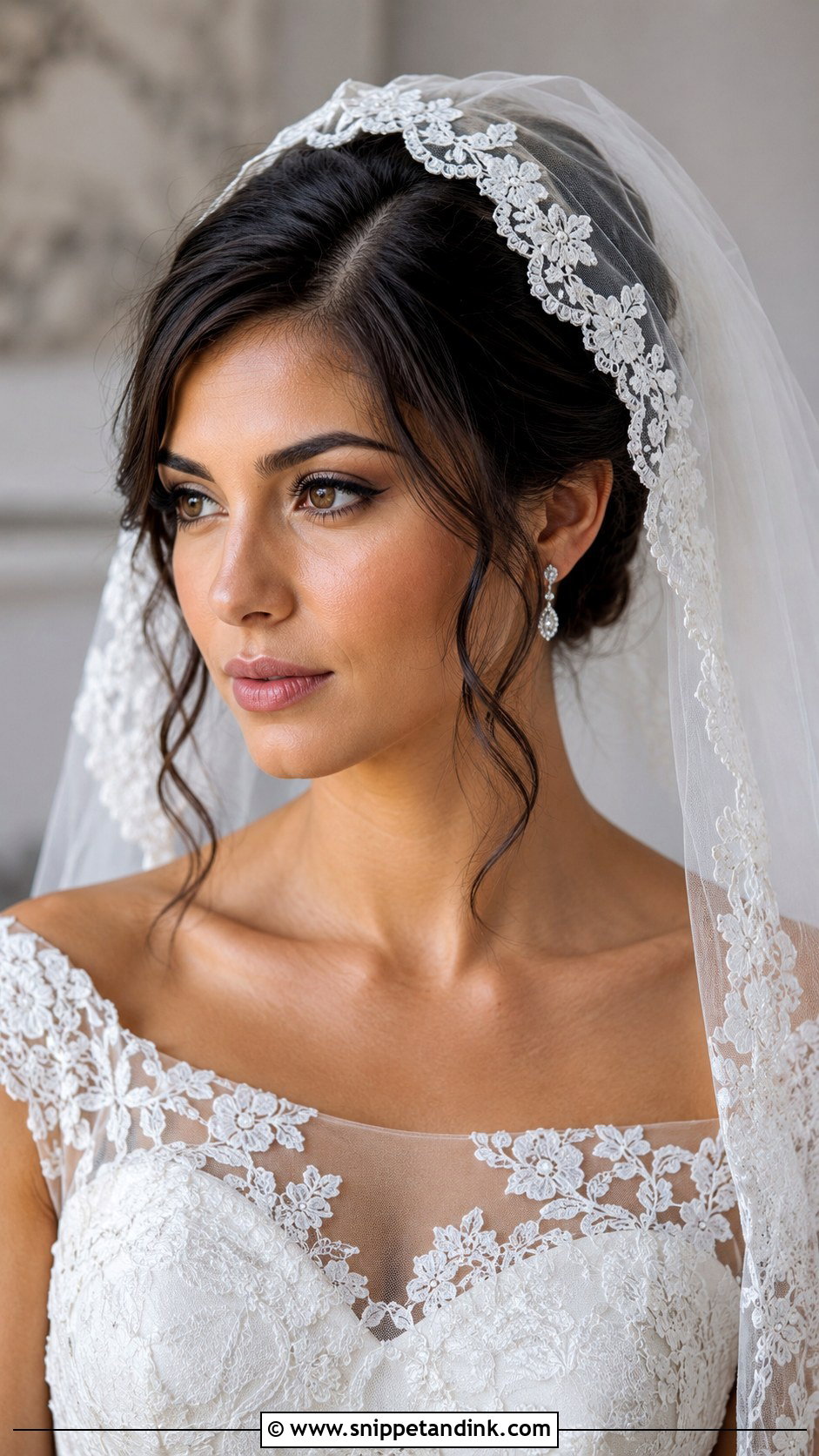
The mantilla veil sits further forward than most veils, at or just behind the crown, and its lace edge frames the face. A twist works well underneath because the back stays smooth and the lace can lie flat over it. I choose a lightweight mantilla when possible so the twist still shows through. It has deep roots in Spanish and Catholic ceremonies, and in a church setting it feels both grand and gentle.
14. Messy French Twist
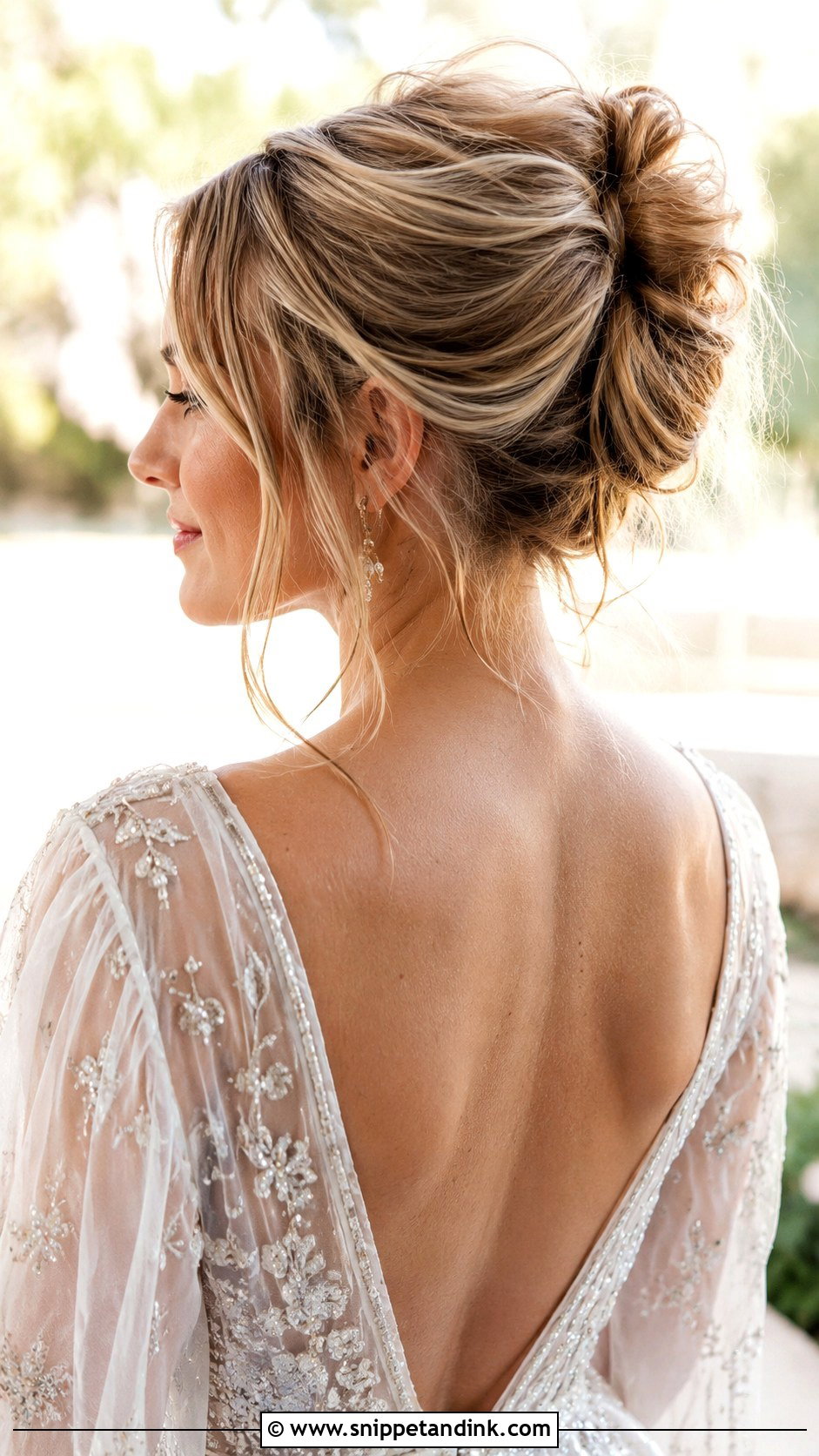
A deliberately messy twist is harder to do well than a sleek one. The mess has to look intentional, which means structure underneath and loosened pieces pulled out with fingers, not combs. It suits flowing casual gowns and outdoor parties. The plus is how forgiving it is: if a strand escapes during the hugs, it just becomes part of the look. Day-old hair with dry shampoo gives it the grip it needs.
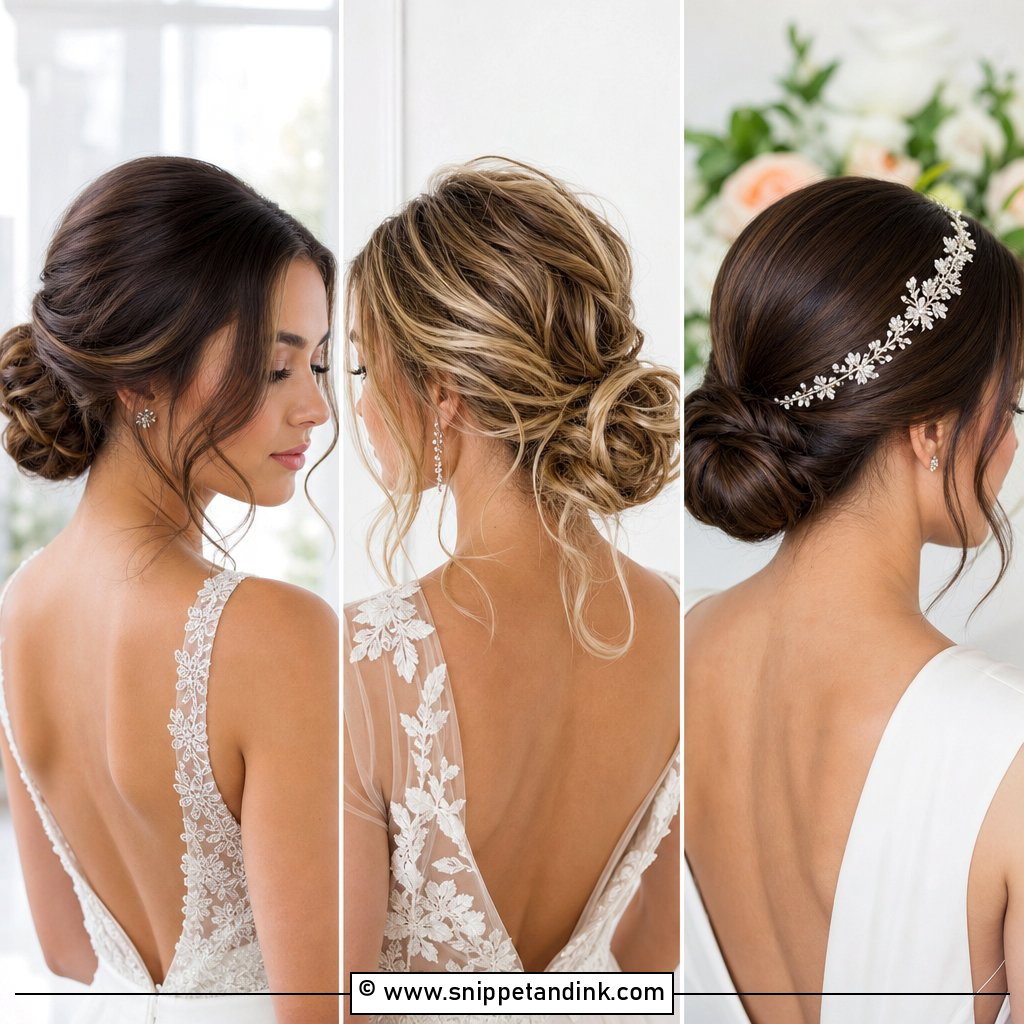
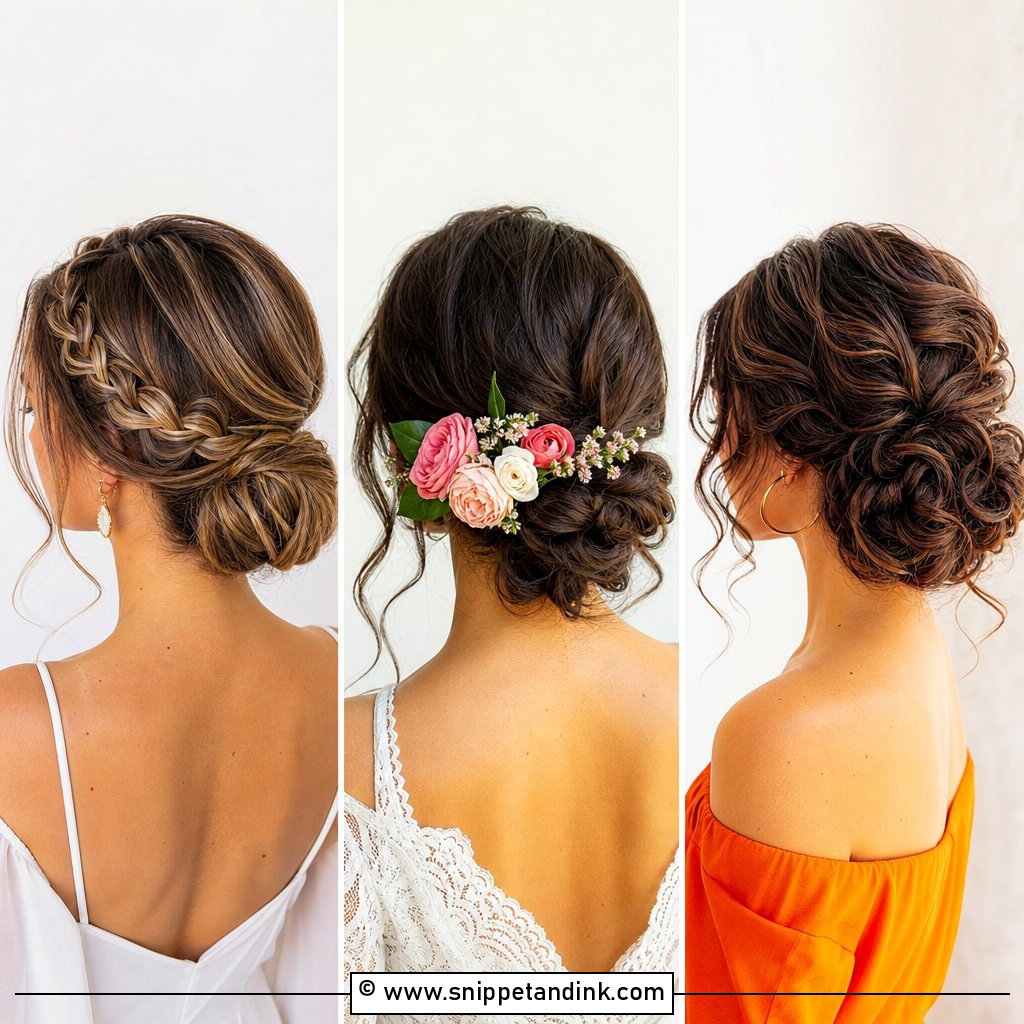
15. French Twist With Gold Hair Comb
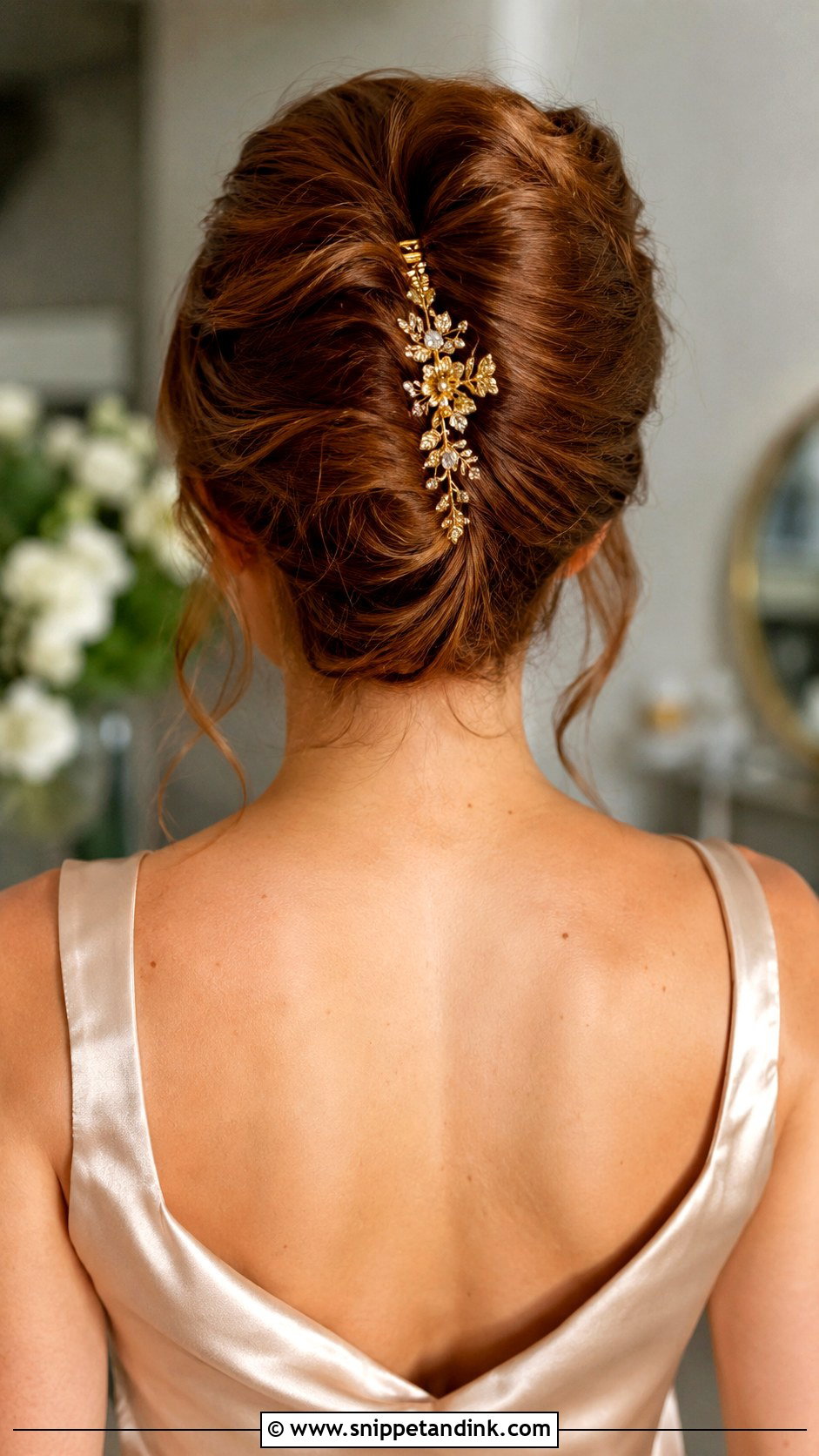
A gold comb tucked along the seam gives one warm focal point. Combs are heavier than pins, so I set them into a row of crossed bobby pins first; the teeth then lock onto the pins and don’t slide out. Filigree combs suit vintage and heirloom styling, and plain gold bars look cleaner and modern. Gold sits especially well against brown and red hair and next to warm-toned gowns and yellow gold jewellery.
16. French Twist With Tiara
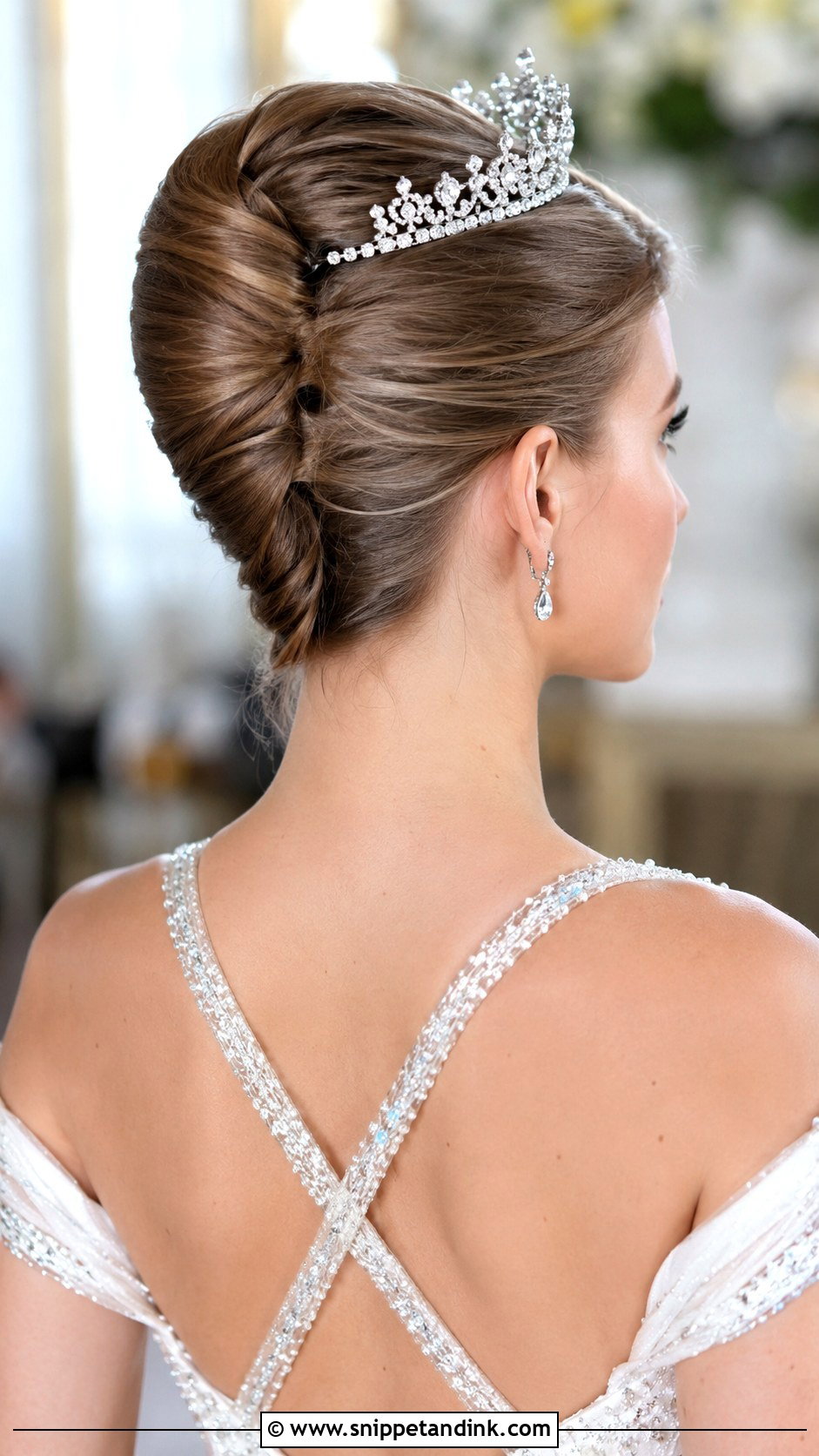
A tiara needs a little height at the crown to sit on, otherwise it slips forward or looks pasted flat. I tease the crown lightly before folding the twist, because a tiara adds sparkle only when it rests on that cushion, and I pin it through the loops at each end. The sleek back keeps the overall shape tidy. It belongs in ballrooms and with structured gowns, and a delicate band looks less costume than a tall crown.
17. French Twist With Loose Curls
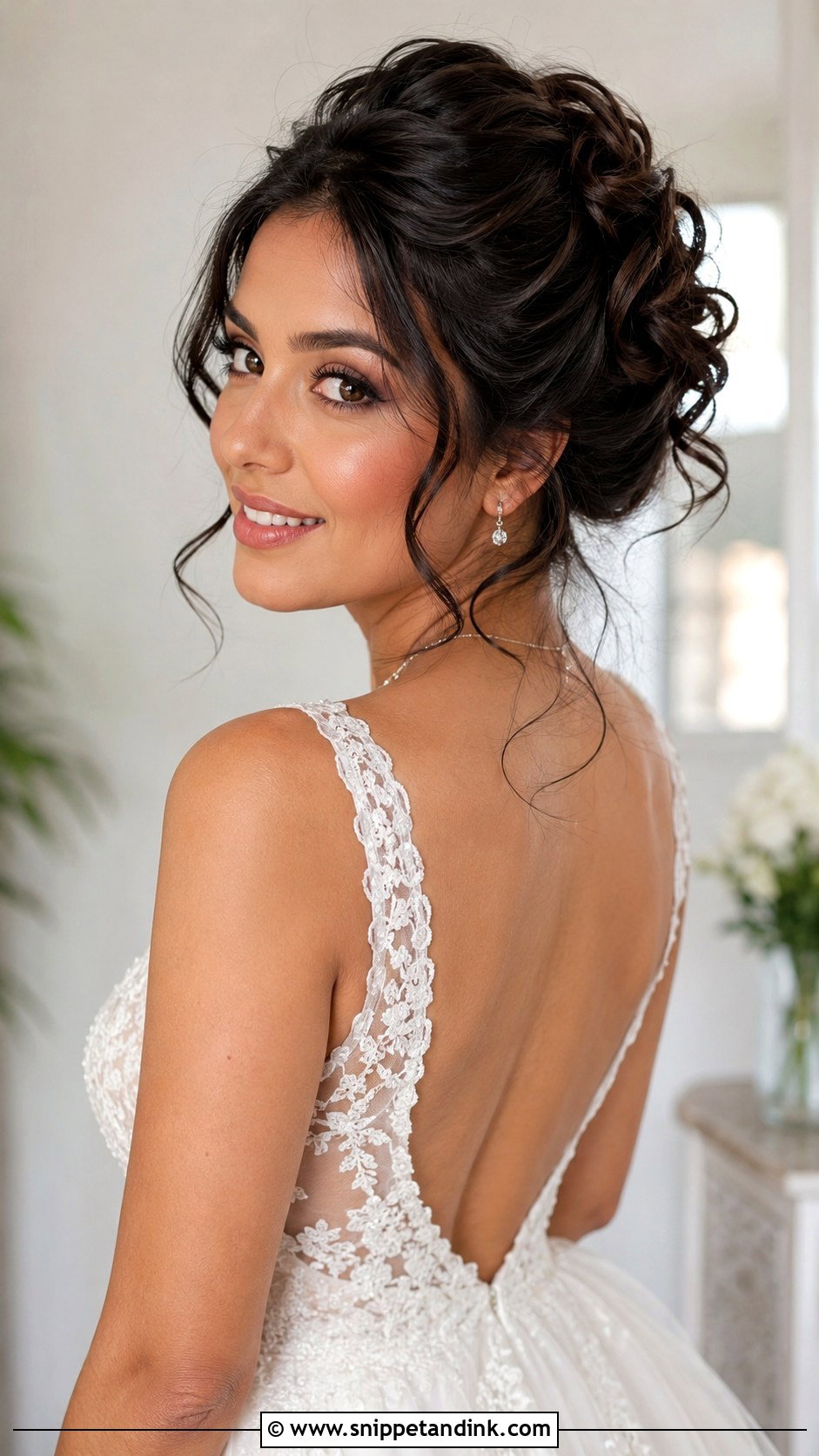
Leaving a few loose curls around the face and the base of the twist gives movement while the back stays polished. Naturally curly or wavy hair is ideal, since I can enhance your own pattern instead of fighting it. On straight hair, I set the curls with a medium iron and pin them up to cool before releasing. The curls should be part of the plan, not stray bits: three to five carefully placed pieces look better than a halo.
18. Vintage French Twist
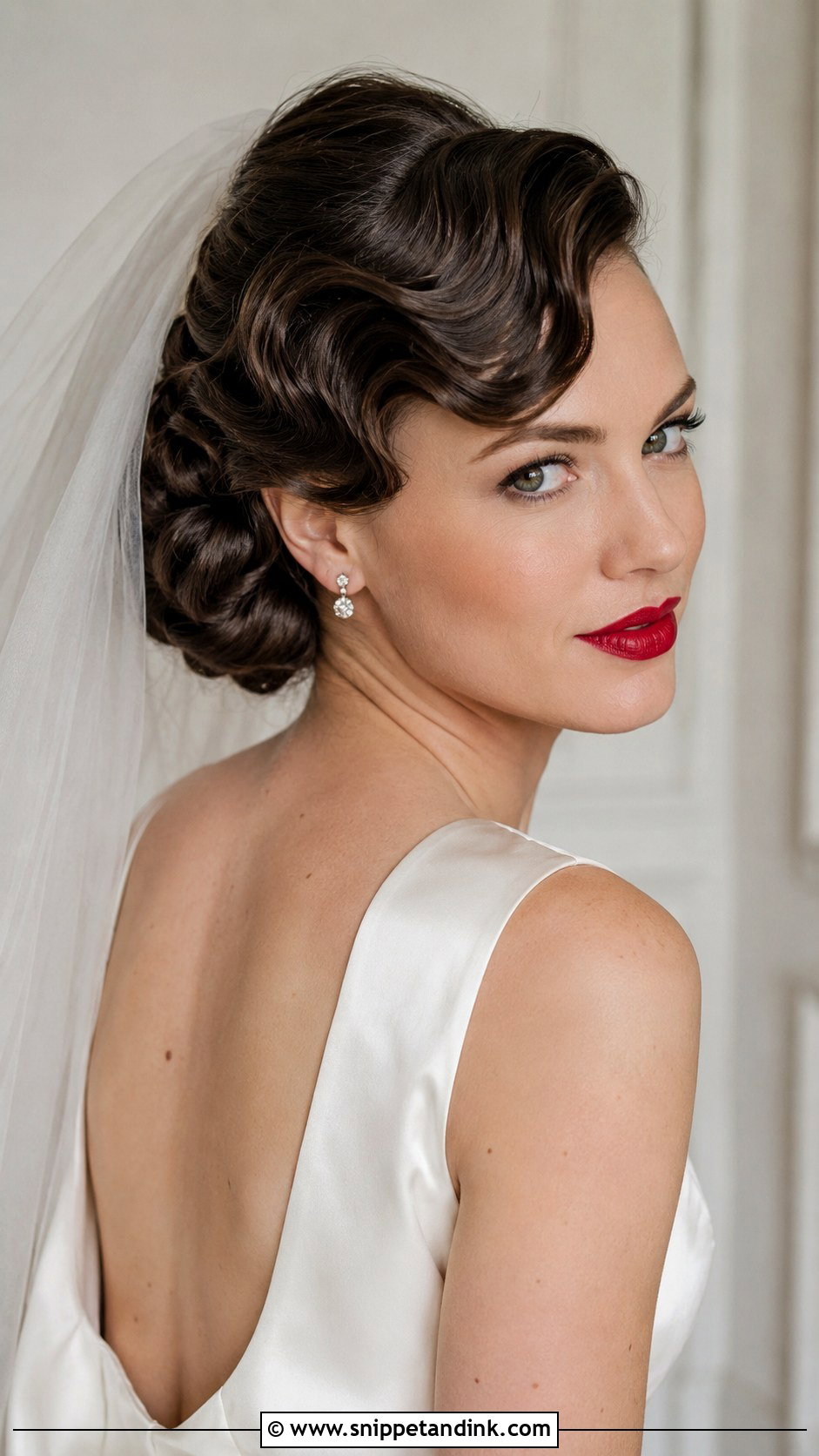
The vintage twist pairs a smooth fold with finger waves or soft retro curls at the front. The look draws on 1940s and 1950s bridal style. Finger waves take time and a strong setting gel; if you have heavy layers, I usually create the wave with a curling iron and brush it out instead. It pairs with satin and a red lip without looking like dress-up as long as the rest of the styling stays simple.
19. French Twist For Short Hair
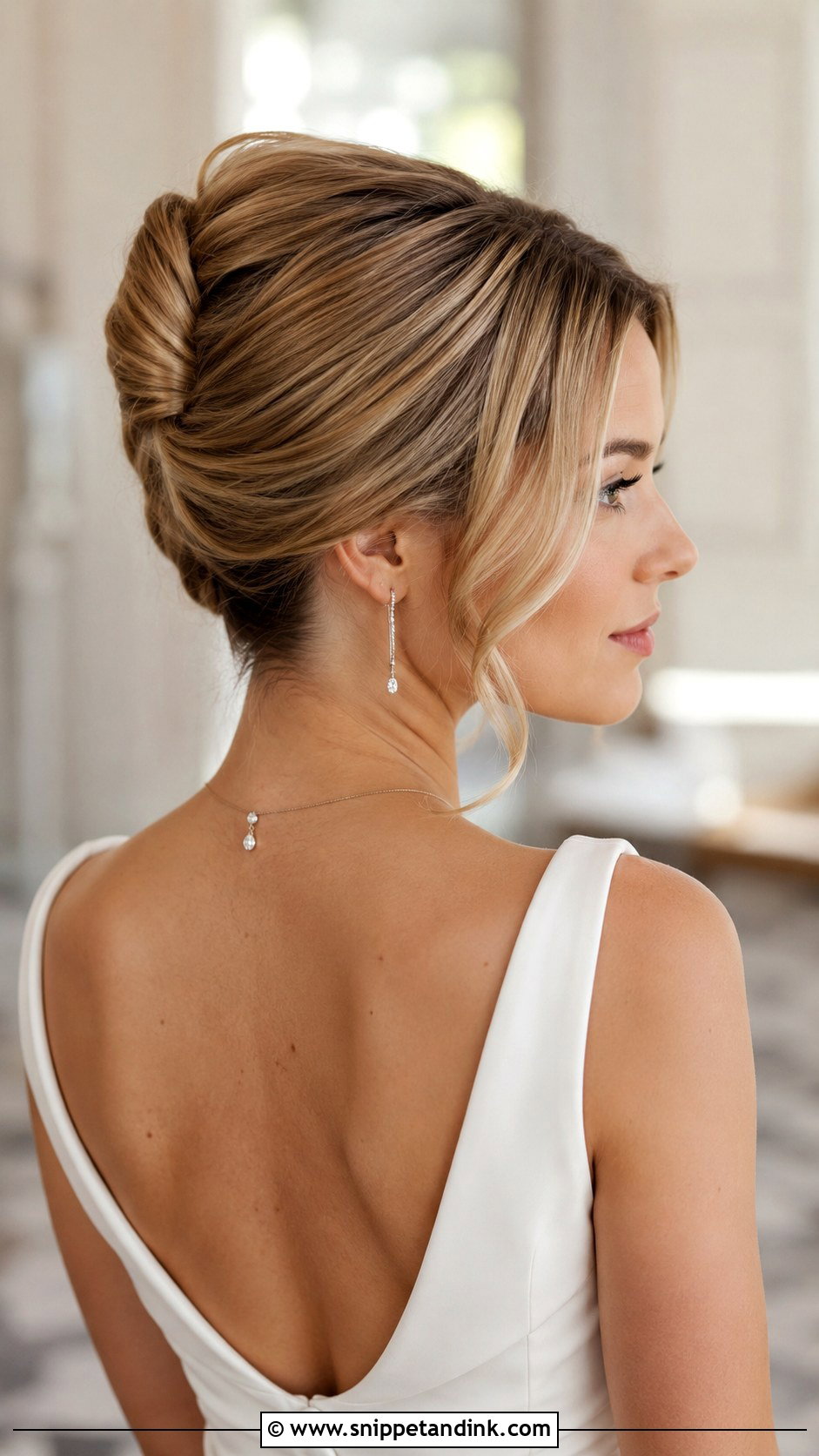
A French twist on short hair is possible, but there’s a minimum. Hair needs to reach roughly the shoulders to fold properly; a chin-length bob usually gives a half-twist at the back with the ends pinned flat. Heavy layering is the bigger problem, as short layers pop out of the seam. I tease the base, use more pins than usual and leave a few deliberate face-framing pieces so the escaped ones look planned. Clip-in extensions are worth discussing at the trial if you want a full twist.
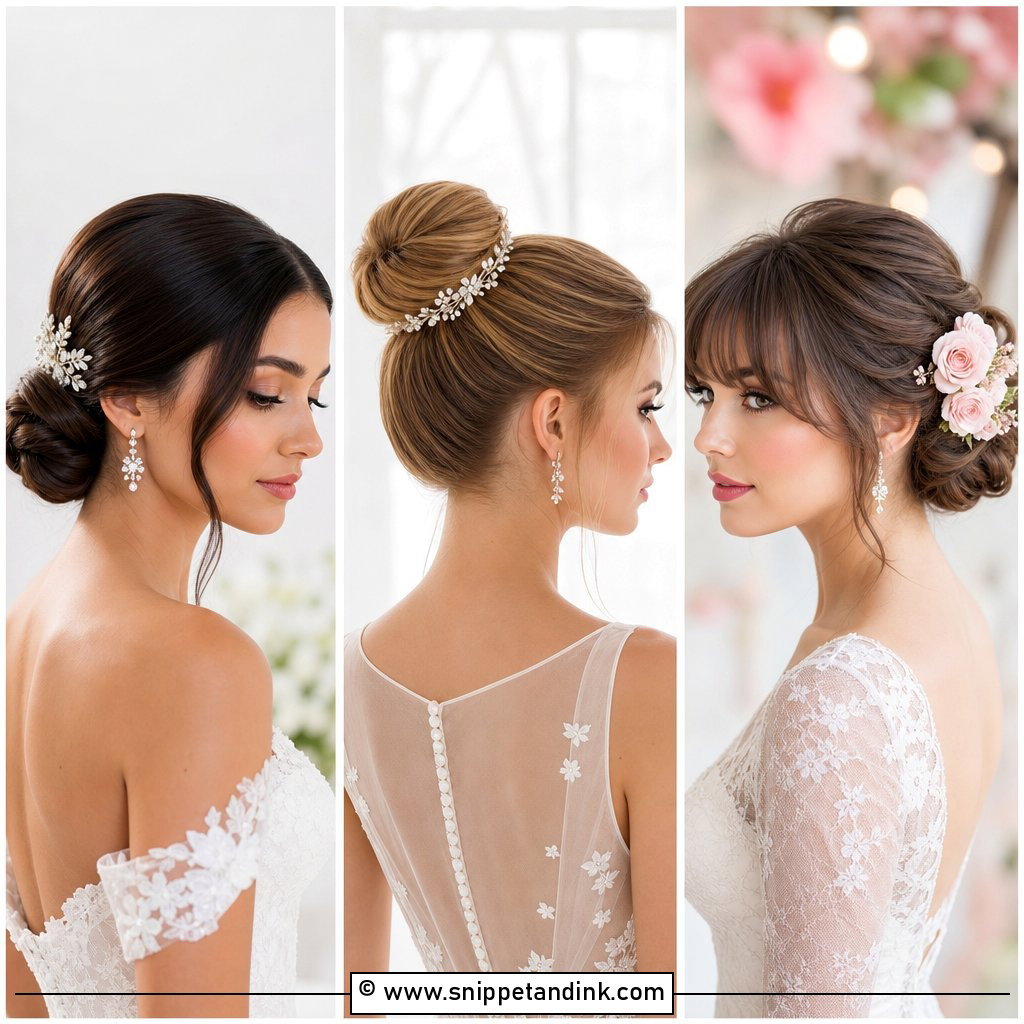
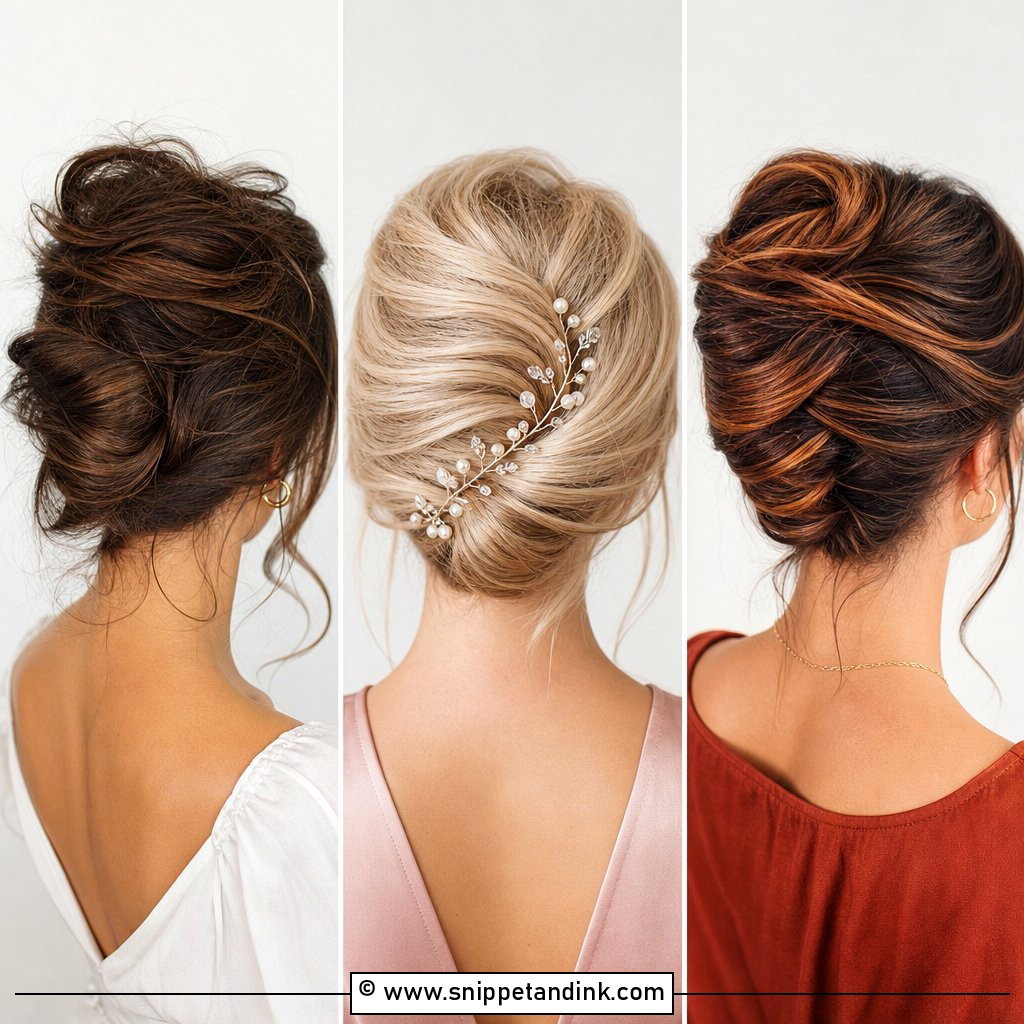
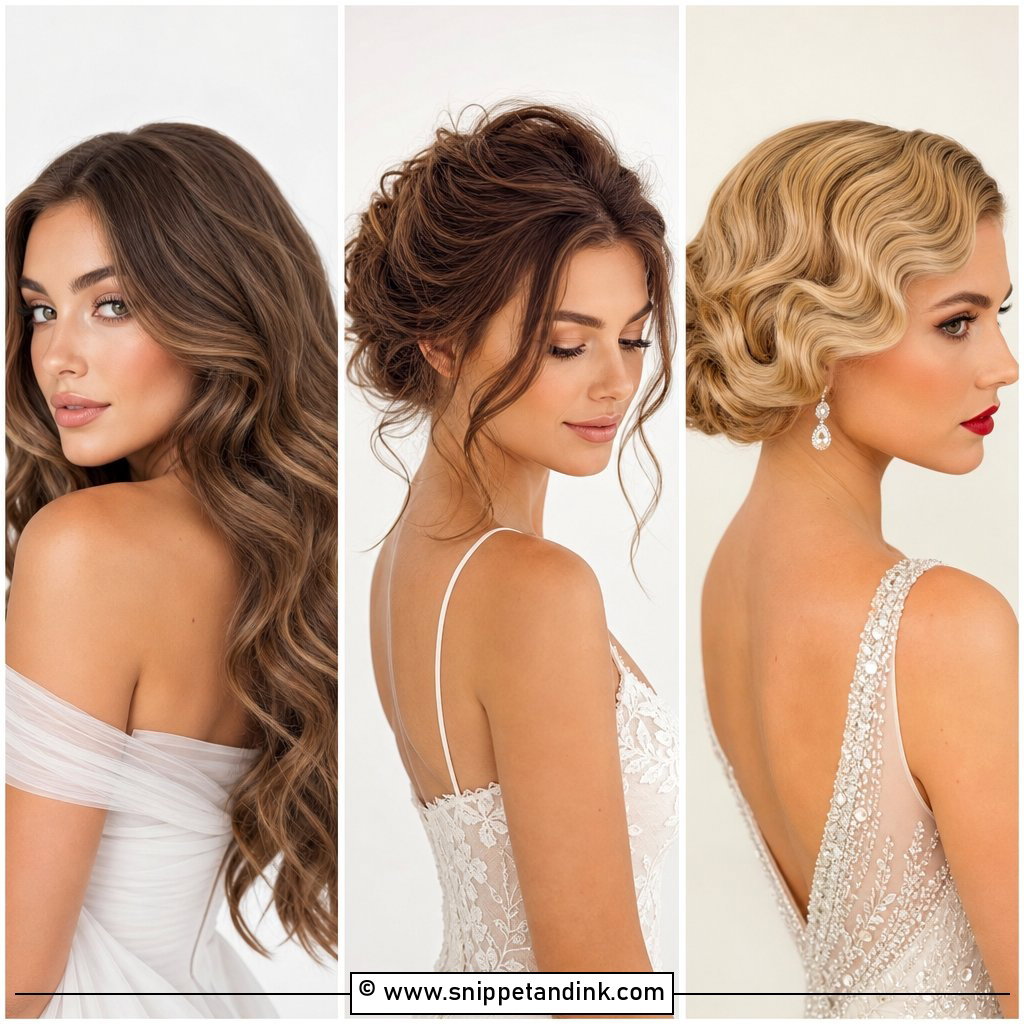
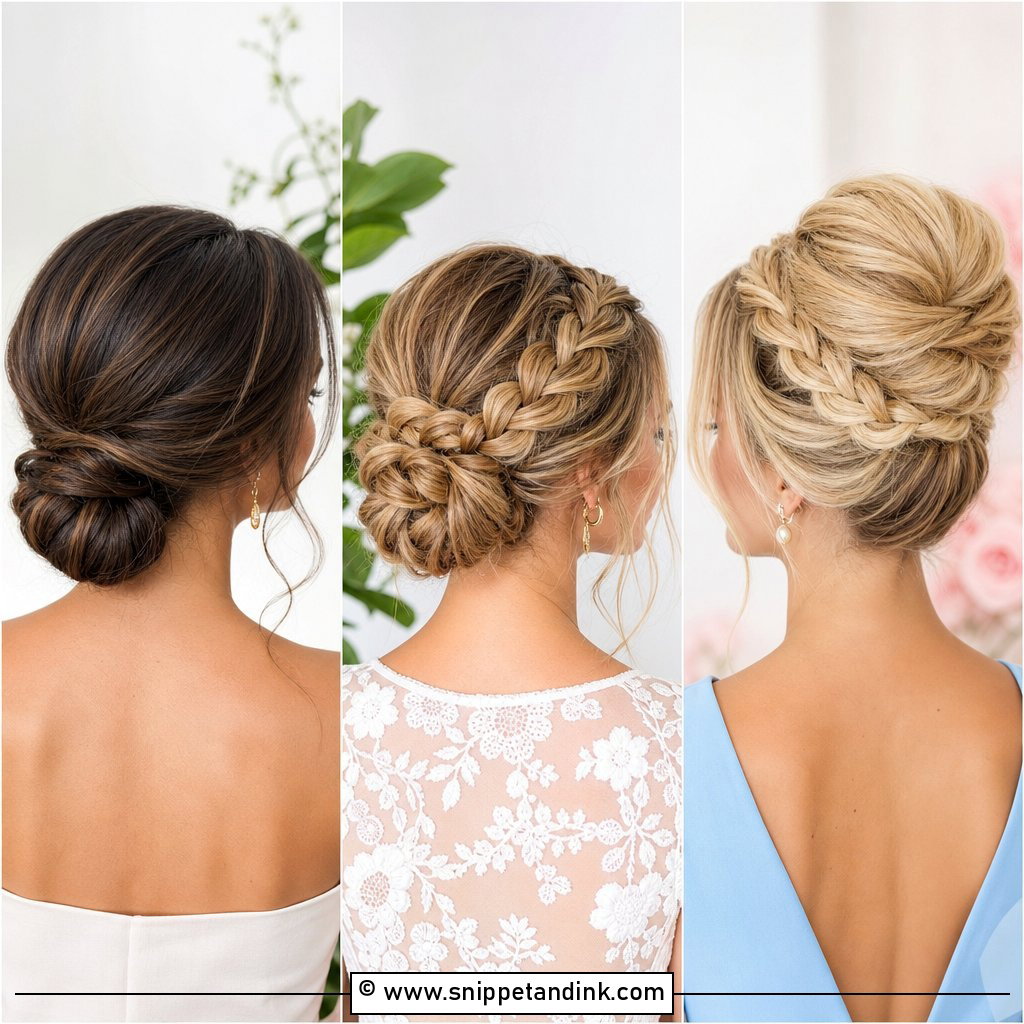
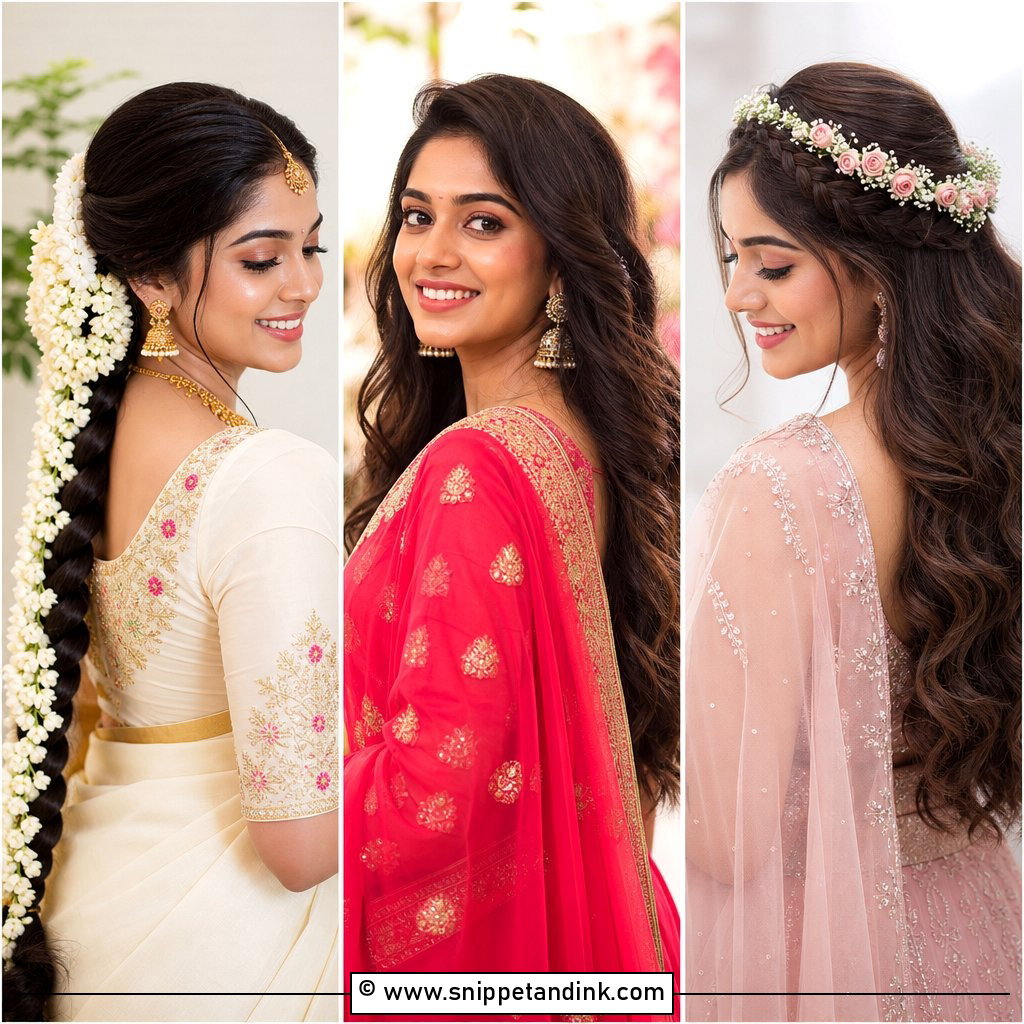
20. French Twist With Rhinestone Headband
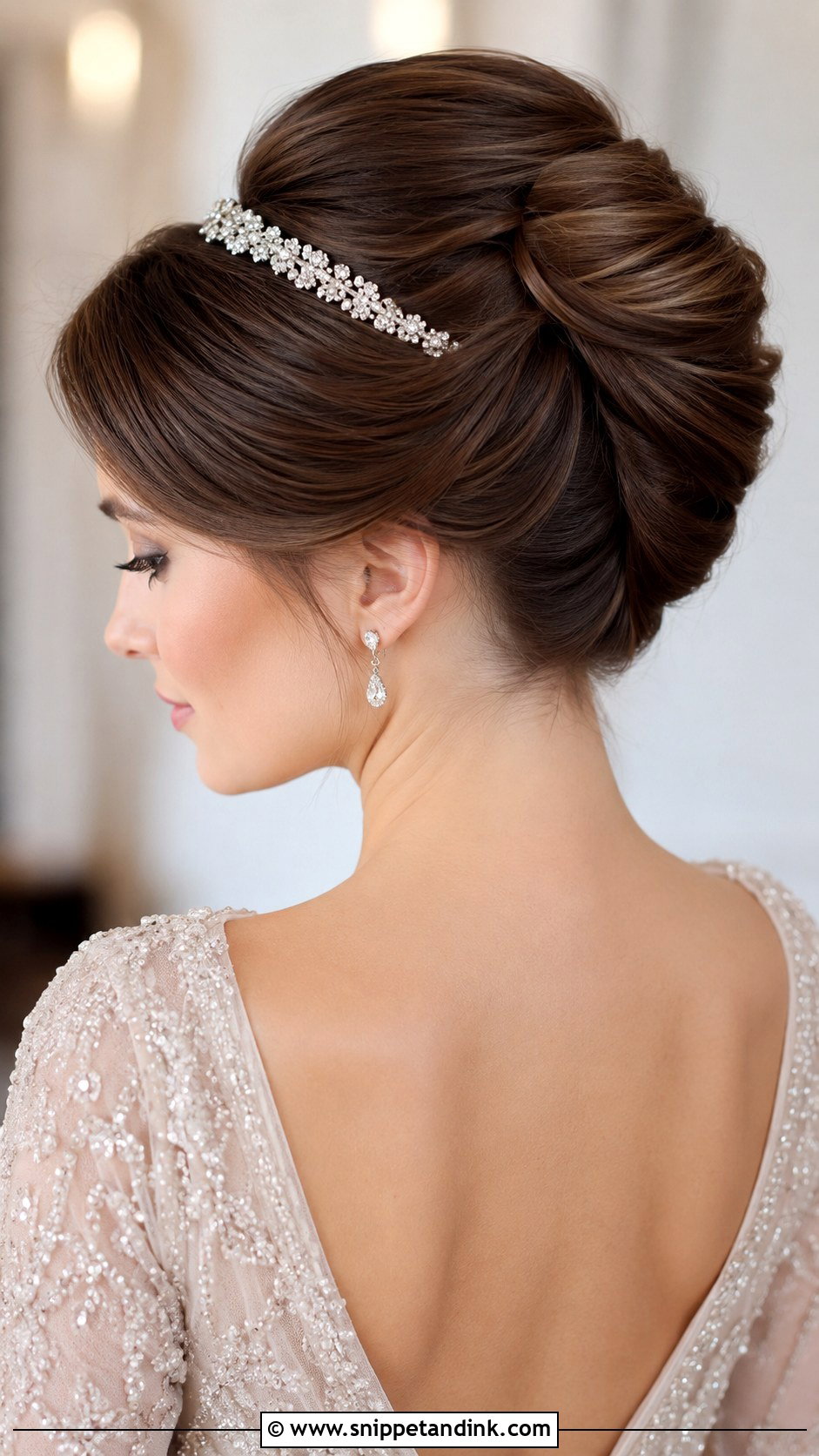
A rhinestone headband worn across the crown frames the face and gives sparkle from the front, while the twist handles the back. Headbands can press and cause a headache over a long day, so try one on for a full hour before deciding. I pin a band behind the ears with small bobby pins so it can’t creep forward. Beaded gowns and statement earrings pair well with it.
21. French Twist With Baby’s Breath
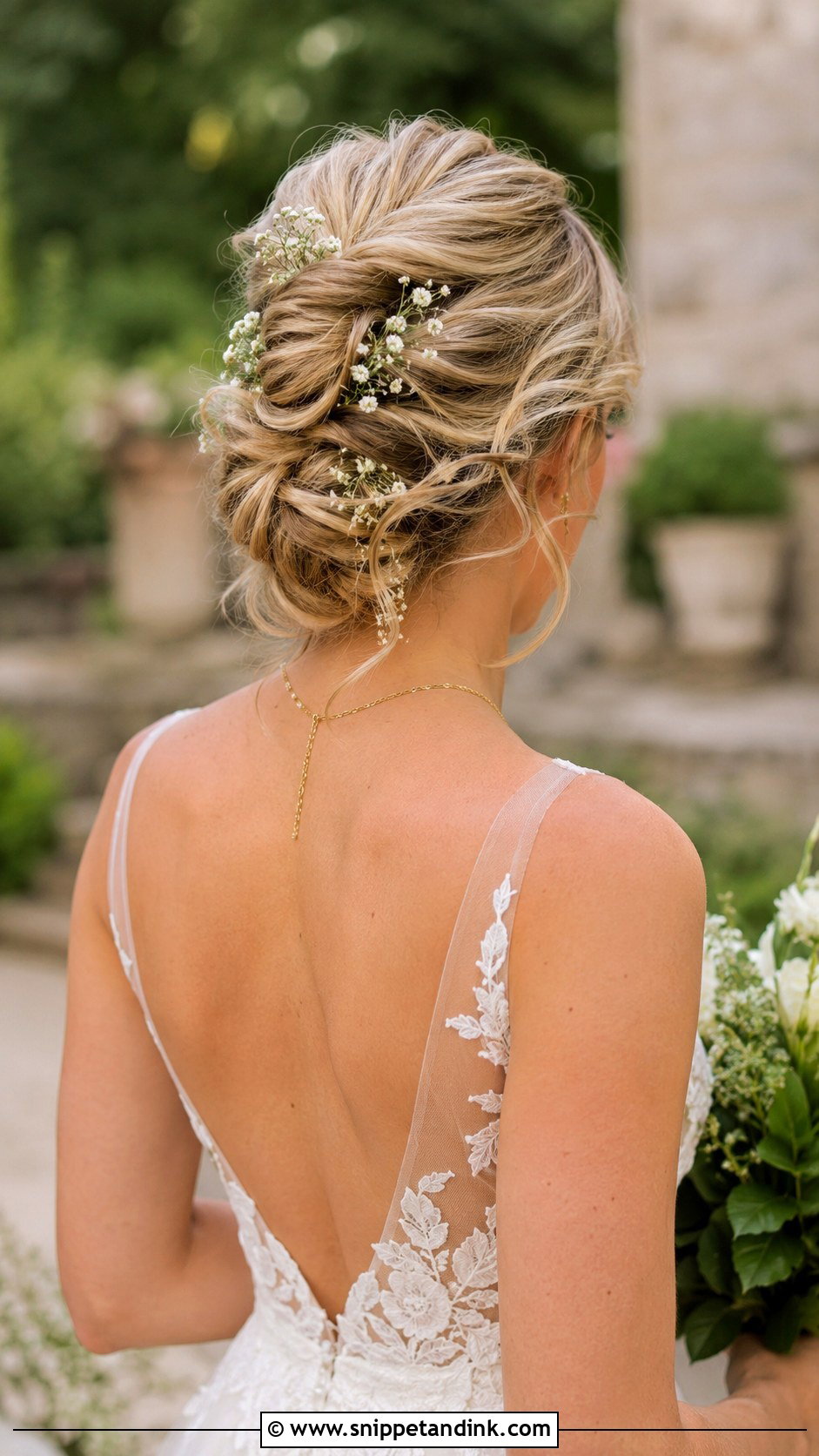
Baby’s breath is the most dependable fresh flower for hair. It’s light, survives hours without water and doesn’t brown quickly. I break it into small sprigs and pin them along the seam or scatter them through a loose twist for a soft cloud. Use fewer sprigs than you think; a light scatter looks airy, while a dense wall looks like a hedge in photos. It’s also one of the least expensive blooms a florist stocks.
22. French Twist With Birdcage Veil
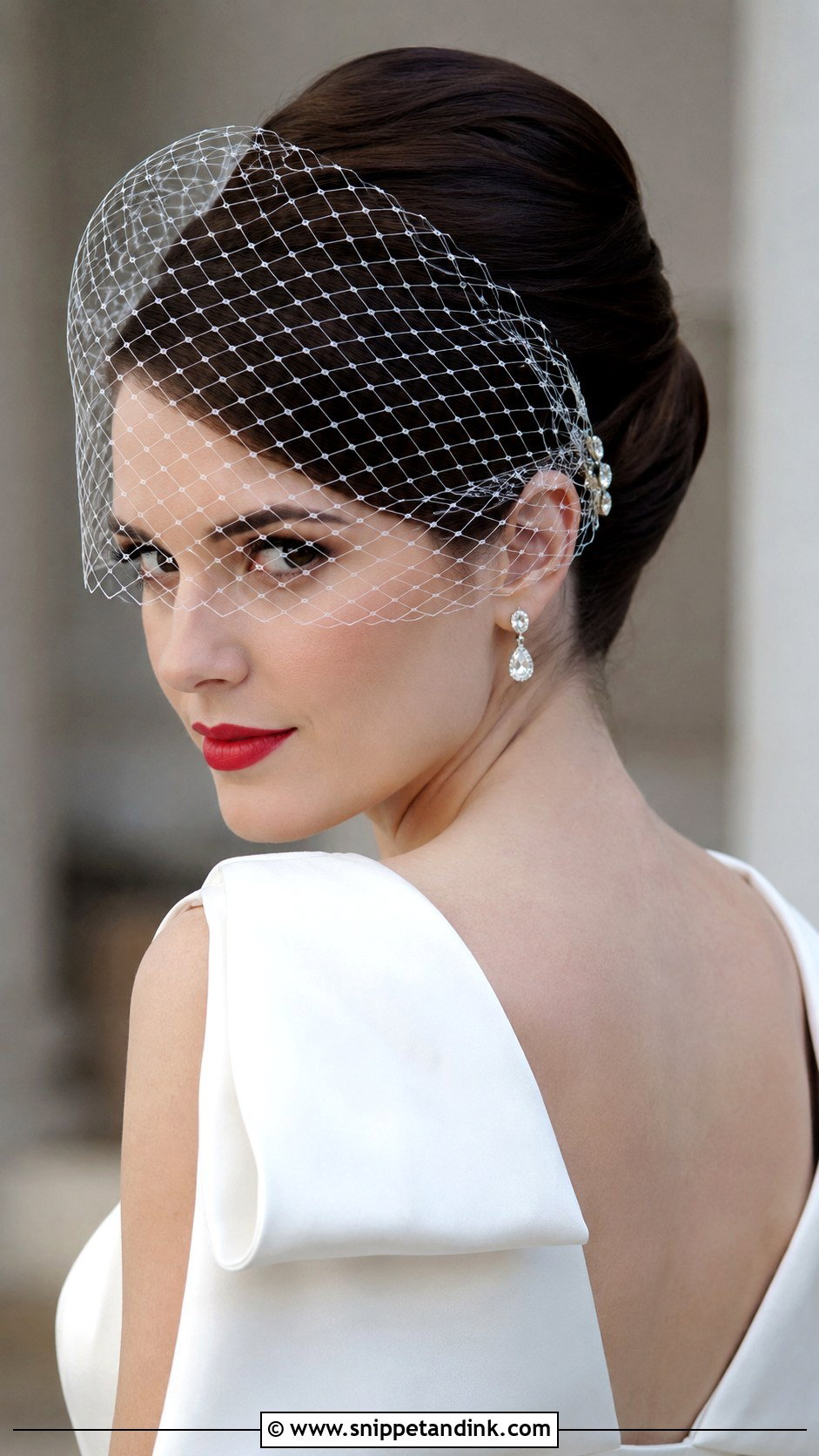
A birdcage veil is a short net that covers the eyes or the top half of the face. It’s pinned at the side or front, so it barely touches the twist. The pairing works for 1950s styling, registry offices and smaller modern weddings. The net is usually attached to a comb or a small headpiece. I keep the hair at the front smooth so the net sits evenly and doesn’t snag on a curl.
23. French Twist With Volume On Top
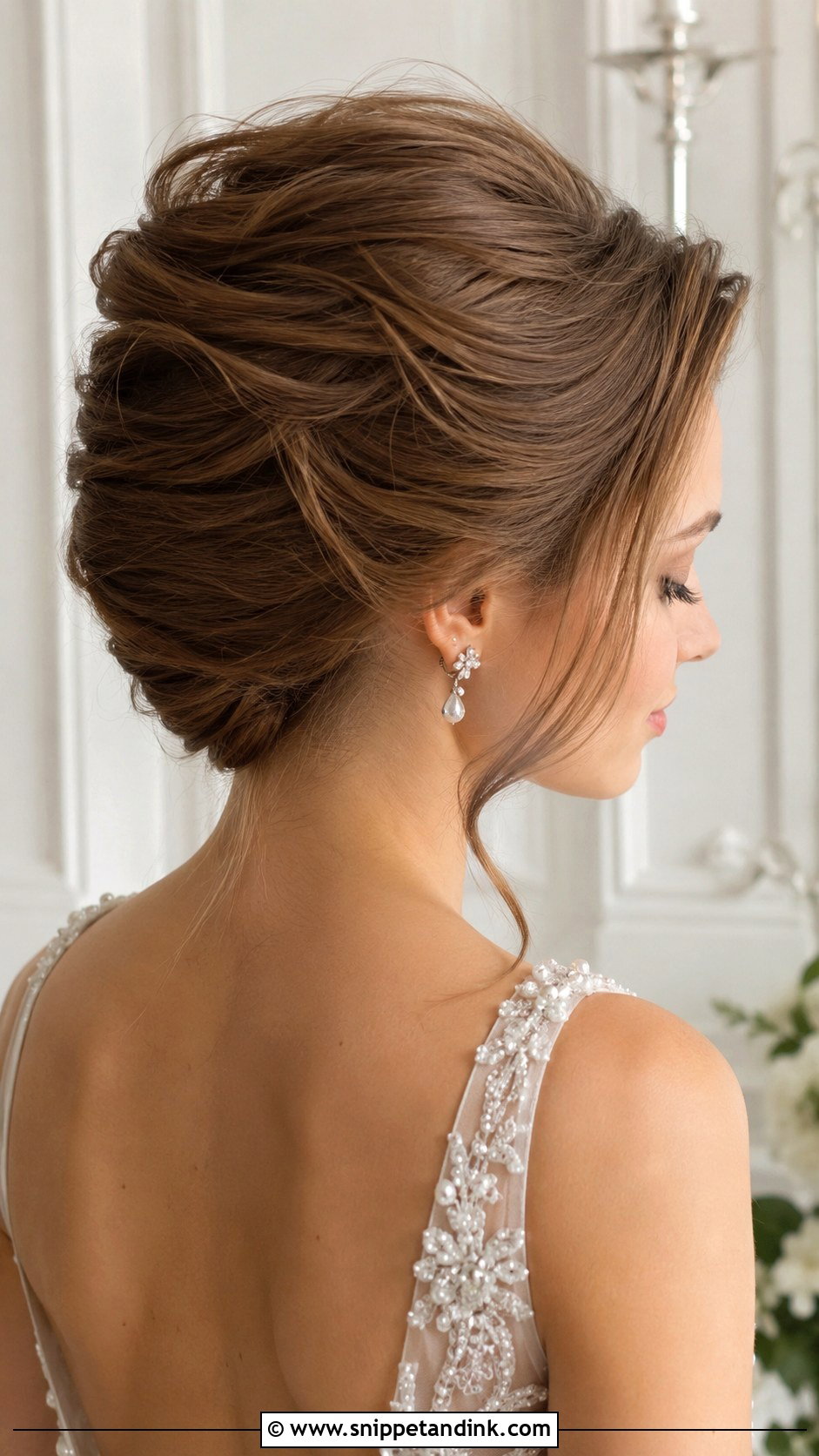
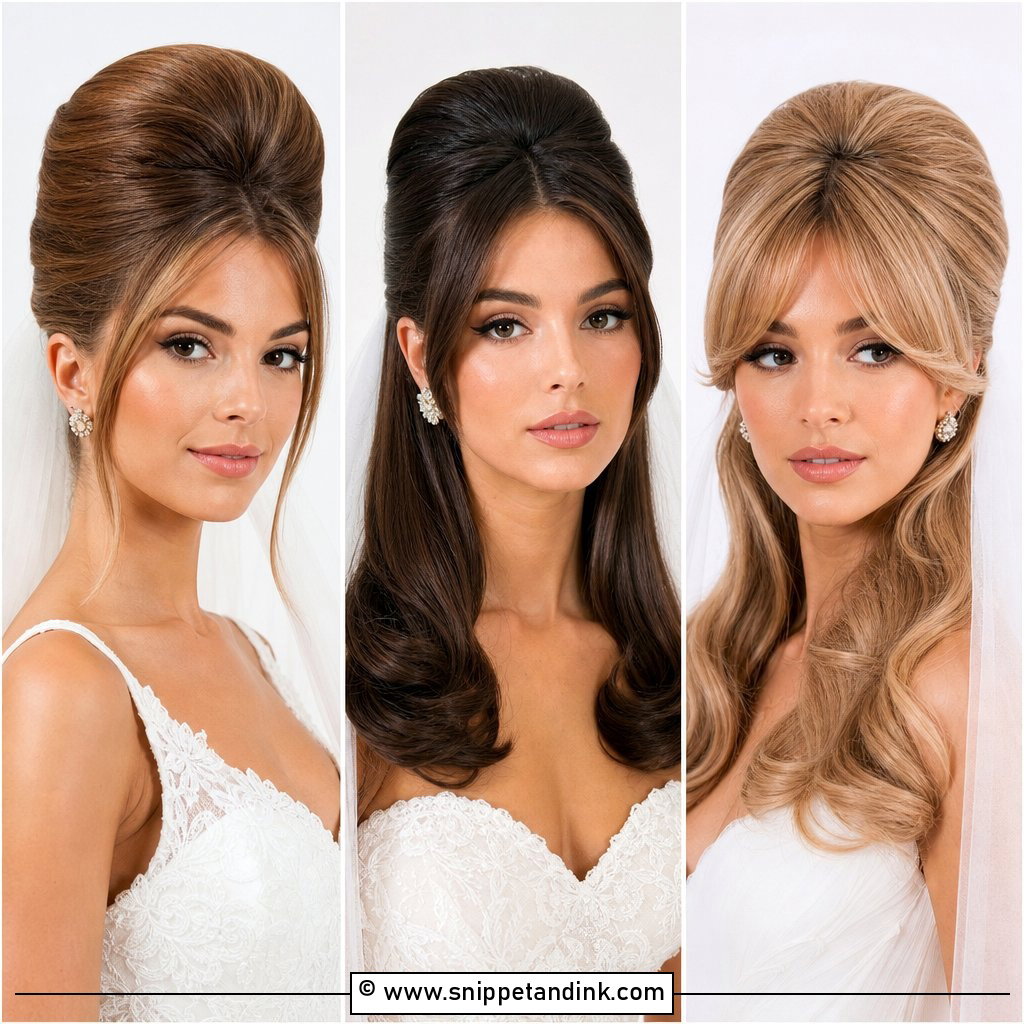
Volume at the crown before folding the twist adds height and balances a long or narrow jaw. I backcomb in small sections at the roots, smooth the top layer over it and spray before folding. Too much height can look dated, so I build it in stages and check the profile in a mirror each time. On fine hair, a small padding insert can hold the lift without heavy teasing.
24. French Twist With Gold Leaf Accents
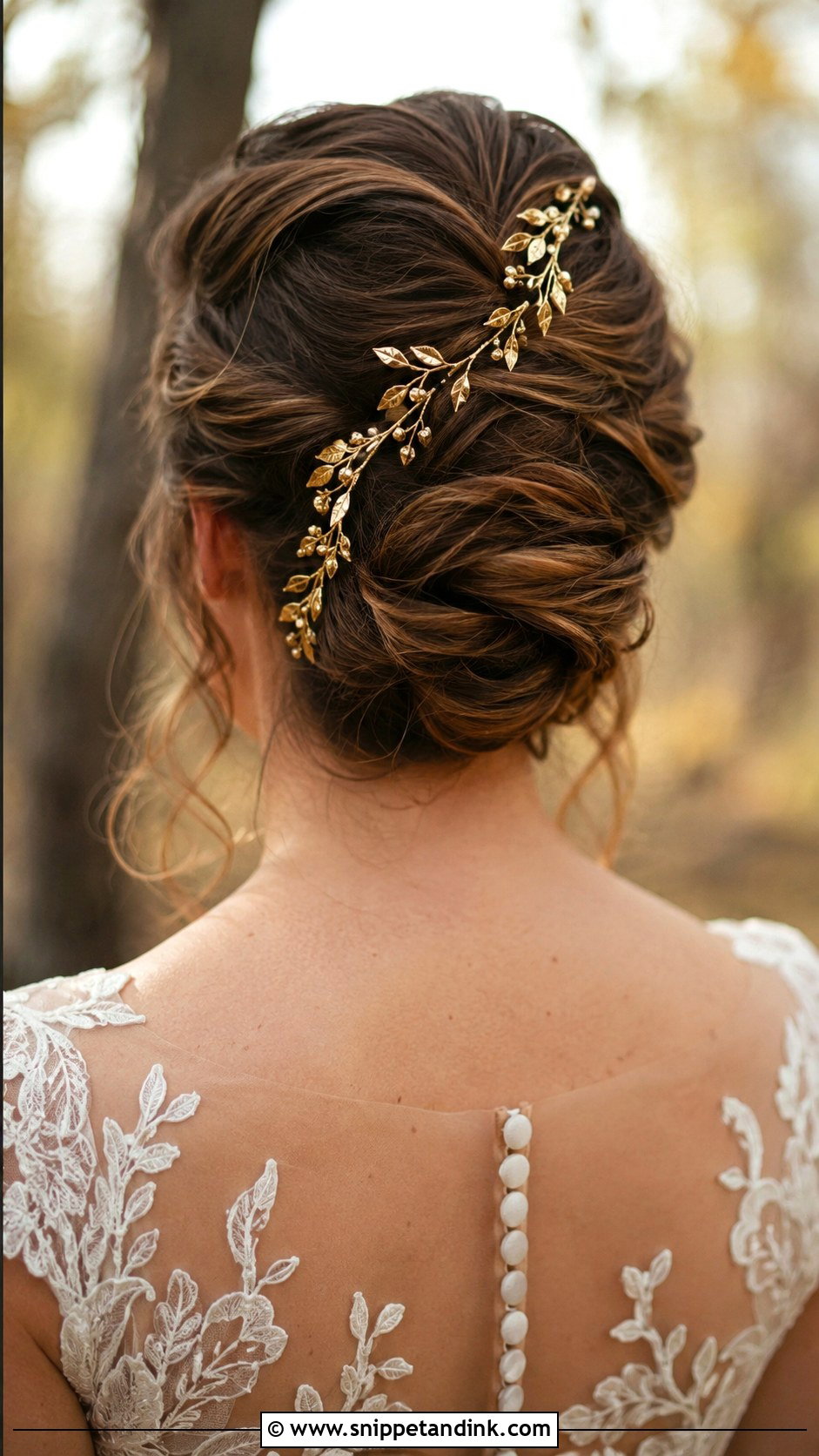
Small gold leaf accents along the twist bring a botanical touch for autumn and woodland weddings. Leaf combs are easier to secure than single pieces, but separate leaf pins can be arranged up the seam like a vine. They suit warm-toned gowns and earthy colour palettes. I’d keep them to one side of the twist; leaves on both sides compete with each other.
25. French Twist With Cascading Side Strand
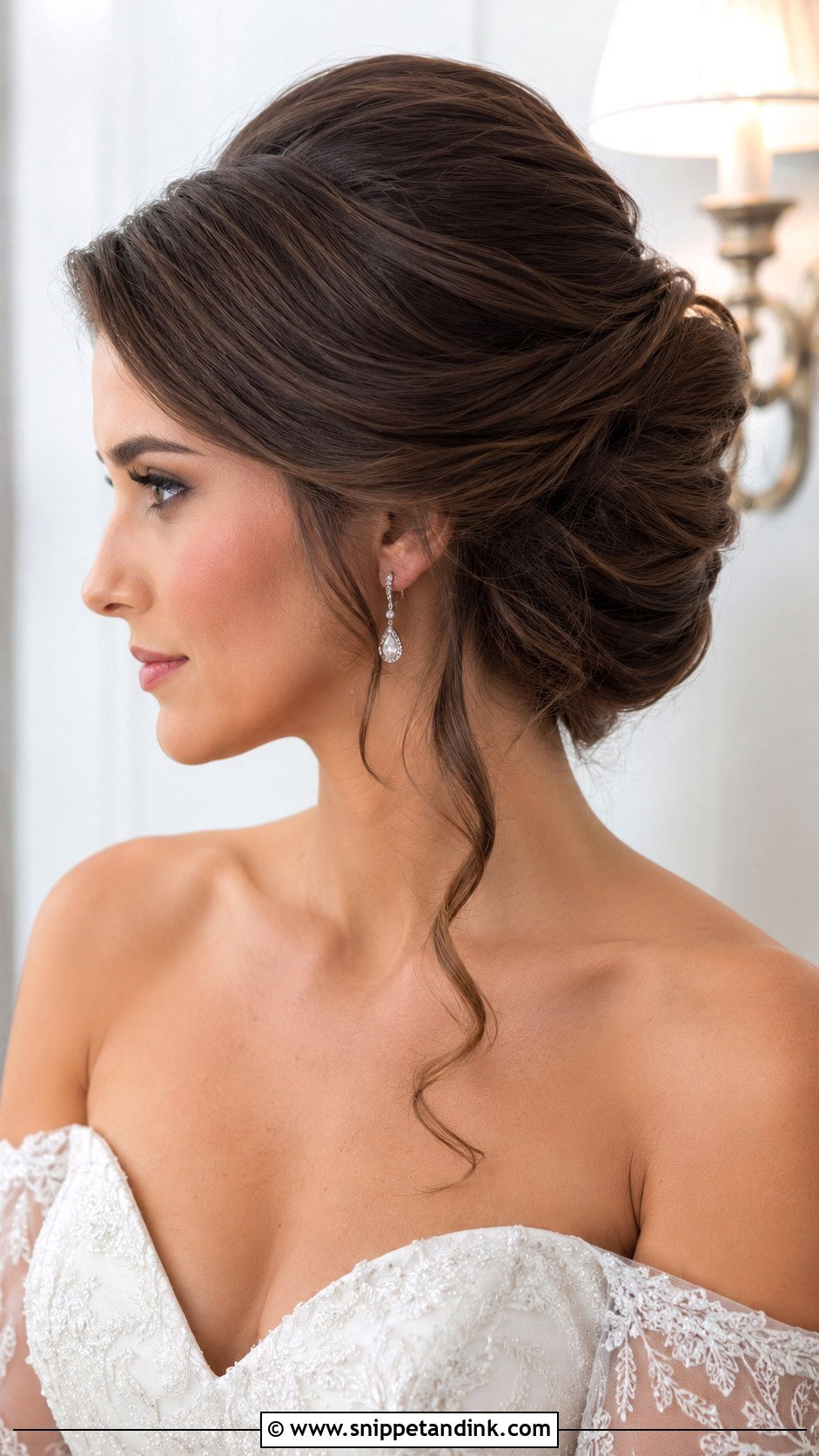
One loose strand falling down one side of the neck gives the twist asymmetry. I curl the strand before the twist is finished and take it from behind the ear, so it falls naturally instead of from the twist itself, which would weaken the fold. Off-the-shoulder gowns and delicate jewellery set it off. Keep the strand on the side away from your partner during the ceremony, or it will get crushed in the first kiss photos.
How I Pin It So It Lasts Through the Dancing
The secret of a twist that survives a long day is the line of crisscrossed bobby pins up the back of the head before I fold anything. Hair is gathered to one side and pinned in X pairs along that line. The fold then wraps over the pins and is held closed with U-shaped hairpins pushed in along the seam. Bobby pins hold; U-pins shape. Mixing them up is why some twists start to sag by the first dance.
- Bring your veil and every hair accessory to the trial, not just photos. Weight changes where I put the anchor pins.
- Wear a button or zip top on the day so nothing gets pulled over your head.
- Ask for a few spare pins and a travel-size hairspray in your clutch. A loose end can be pushed back in under the seam in seconds.
Taking it out at night
Remove accessories first, then the U-pins along the seam, and only then the bobby pins underneath. Let the hair fall, then work through the backcombing with your fingers and a little conditioner or oil before you brush. Yanking a brush through a teased twist is how hair snaps.
The Seam Is Where a French Twist Becomes Yours
Every version above starts from the same fold. What changes is placement, smoothness, the pieces left loose and whatever you tuck into the seam: pearls, flowers, a comb or a tiara. Match it to your veil, your neckline and your hair texture, test it at a trial, and bring every accessory you plan to wear. A well-pinned twist will still hold its shape at the end of the night.
You'll Like These Ideas:


Leave a Reply