
Big cakes are back. More couples are asking me for real height, heavy piping, sculpted shapes and long table cakes that run the length of the dessert table, and I’m glad, because a large cake is the one wedding detail every guest walks up to look at. A big cake also brings big practical questions: how it stands up, how it travels, how it copes with a warm room and how many people it feeds. Below are 25 large designs I’d build for a wedding, from tall white tiers to black fondant, with notes from the bench on structure, finish and flavor for each.
Sizing Tiers to Your Guest Count, Not the Inspiration Photo
The cakes in these photos are often built for show, and many are taller than their guest list needs. Before you fall for a six-tier design, work out how much cake you actually need.
Wedding portions are cut smaller than party slices, usually a finger-sized piece about one inch wide and two inches across, around four inches tall. Using that cut, a round stack of 6, 8, 10 and 12 inch tiers serves somewhere around 120 to 140 guests. Bakers use slightly different charts, so ask yours which one they cut to.
- Fewer guests than the cake you want? Swap one or two tiers for decorated display tiers. They look identical and cost less.
- More guests than the design allows? Add a plain kitchen cake in the same flavor, cut out of sight and served on the plate.
- Serving dessert separately? You can size the cake for about two-thirds of your guests, since many people won’t take both.
1. Tall White Wedding Cake
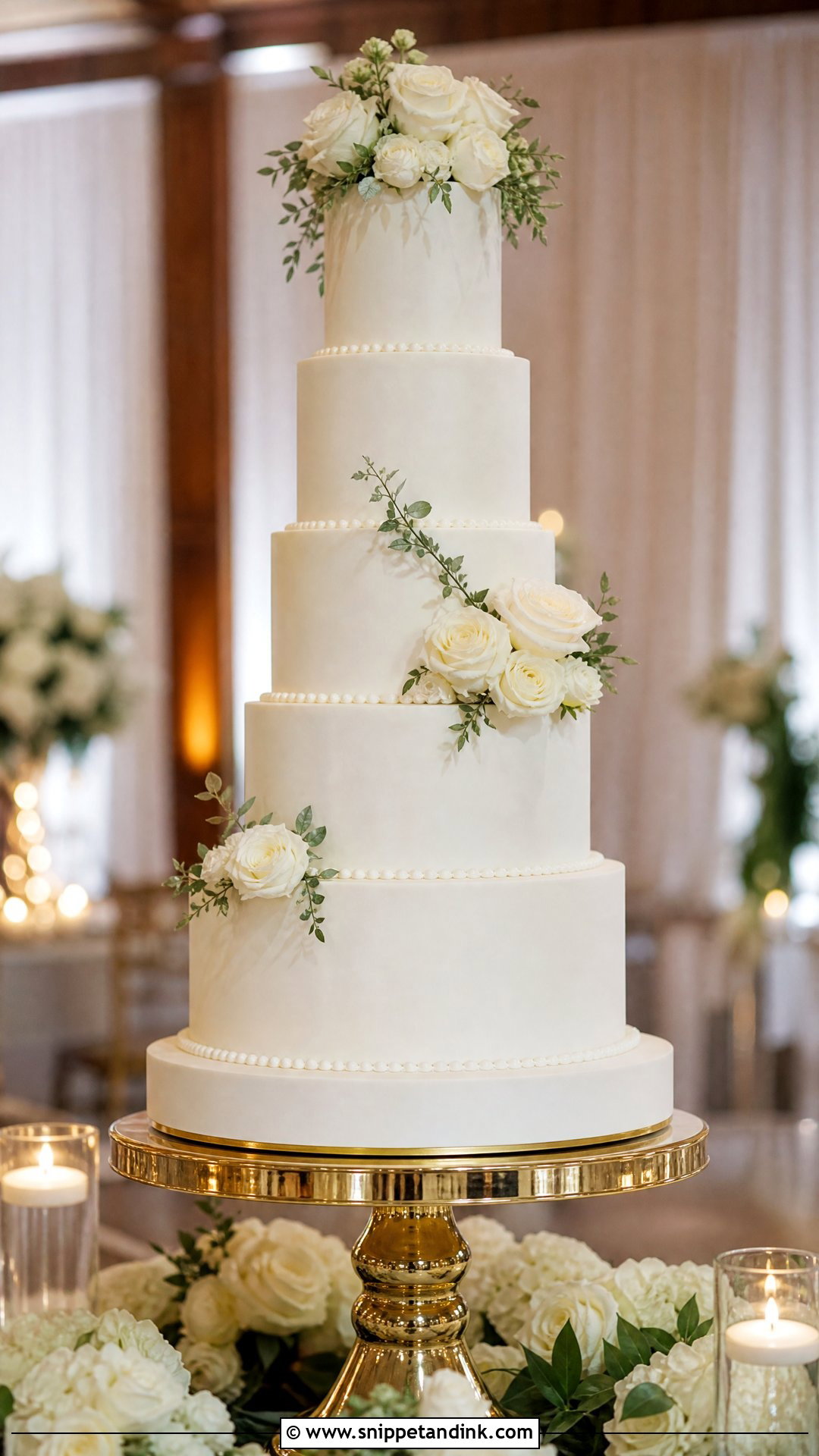
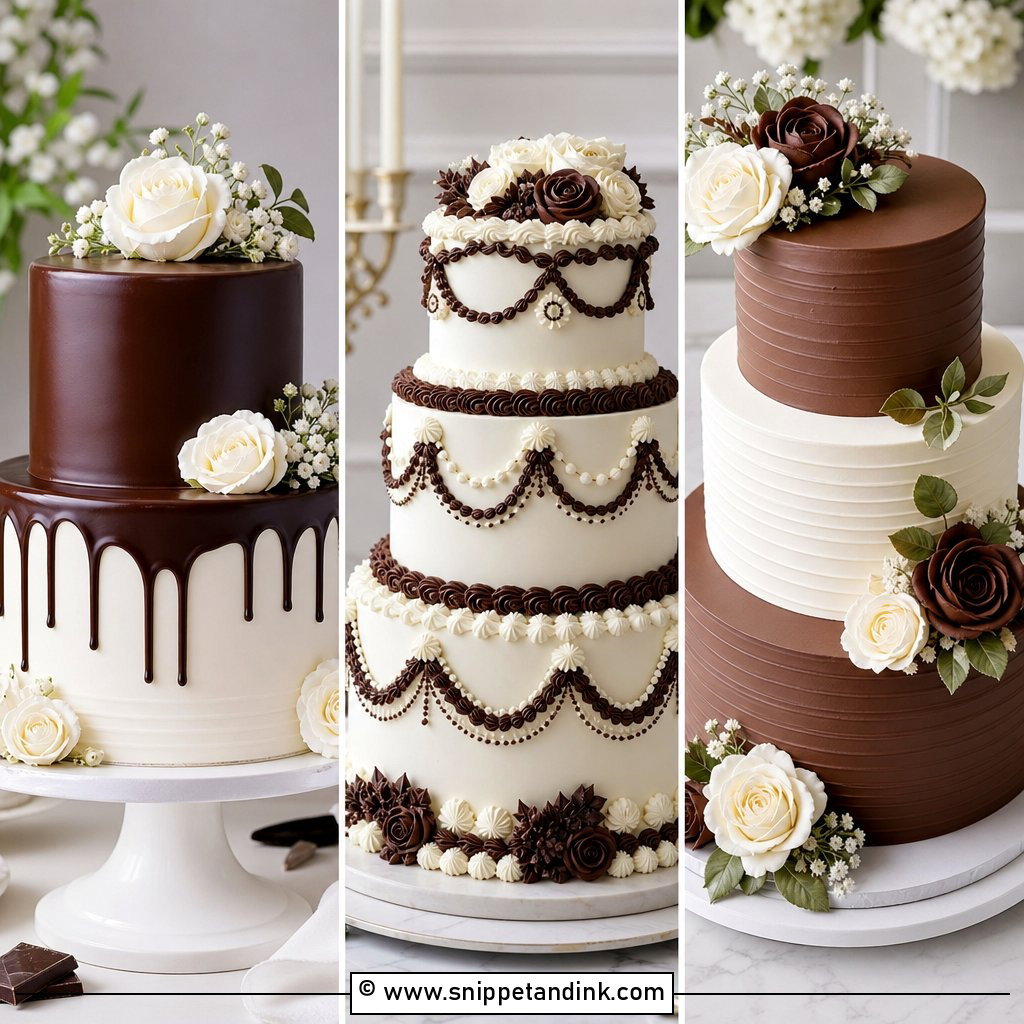
A tall white cake is still the design I build most. Four to six tiers in smooth white buttercream or fondant, finished with flowers, pearls, ribbon or fine piping, gets its drama from height alone. Every tier above the base sits on its own cake board with dowels pushed into the tier below, plus a central dowel through the whole stack if it’s going over five tiers. If your guest count doesn’t need that much cake, ask about mixing real tiers with styrofoam display tiers; nobody can tell from the outside. Vanilla bean, almond, champagne and lemon elderflower stay light under white icing.
2. Pearl Wedding Cake
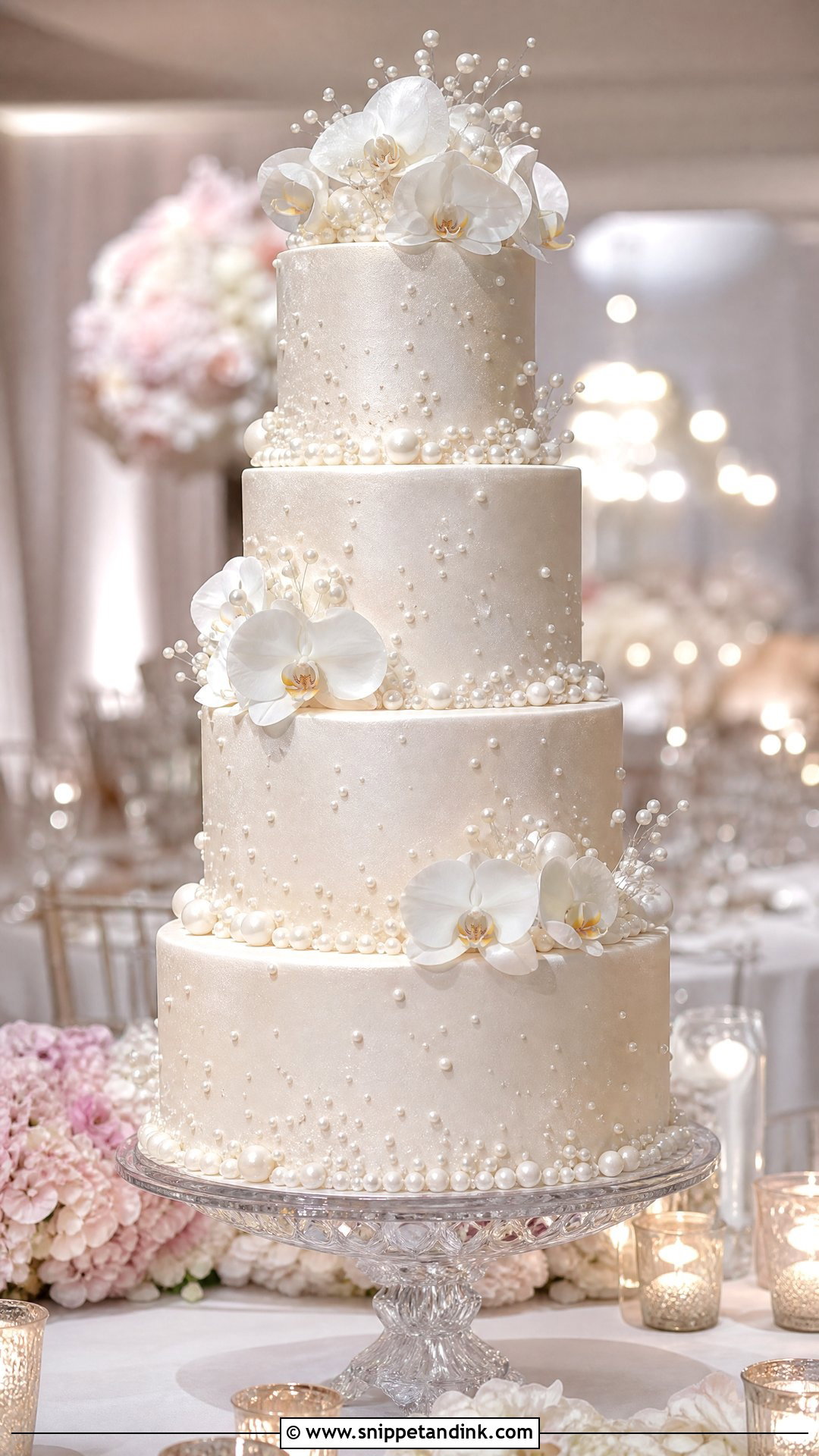
Pearls give a soft shine that suits ivory, blush and champagne palettes. I use edible sugar pearls, either a single border, clusters, or a full covering, and a pearl luster dust brushed over fondant for an all-over sheen. On a big cake, changing the pearl treatment tier by tier stops it from looking repetitive: a border on one, smooth satin on the next, a heavily beaded base. Applying thousands of sugar pearls by hand takes hours, so expect it to cost more than a plain finish. White chocolate raspberry or coconut cream sit well underneath.
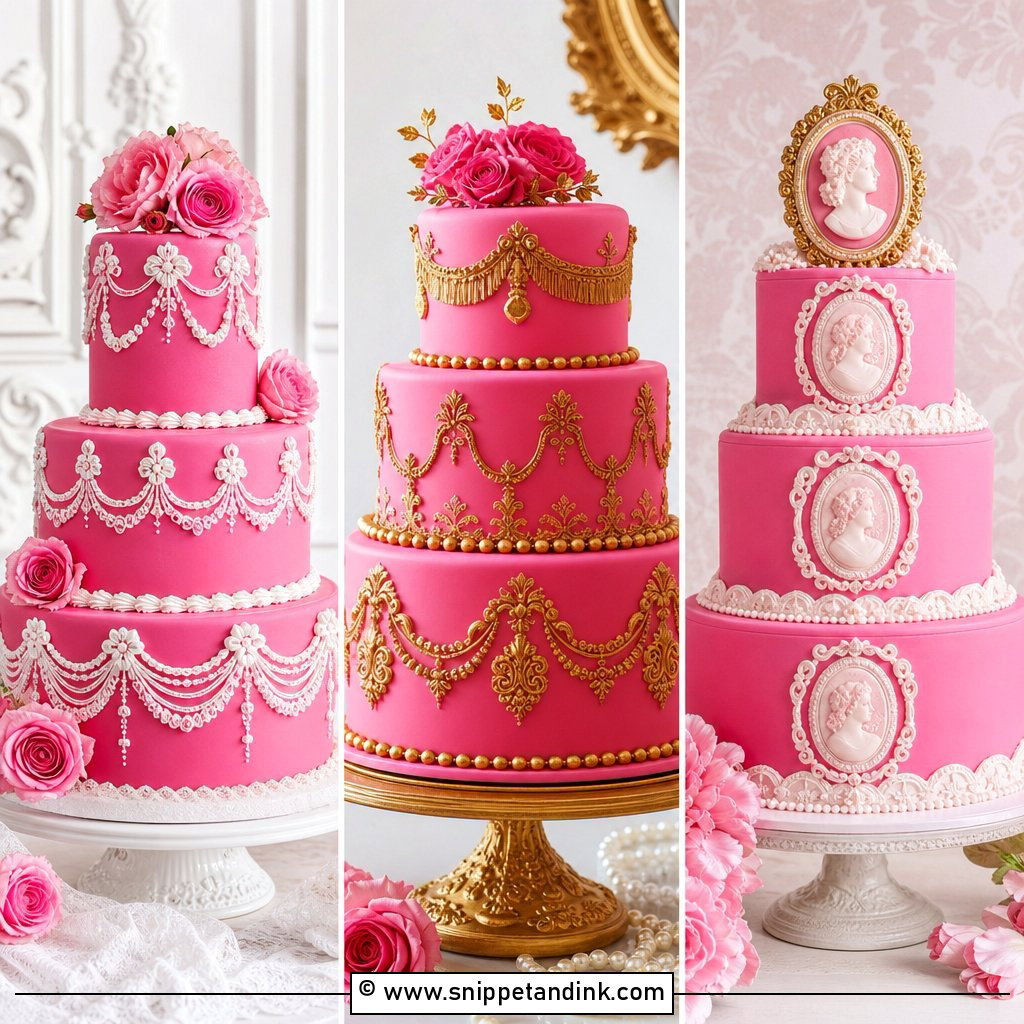
3. Vintage Lambeth Wedding Cake
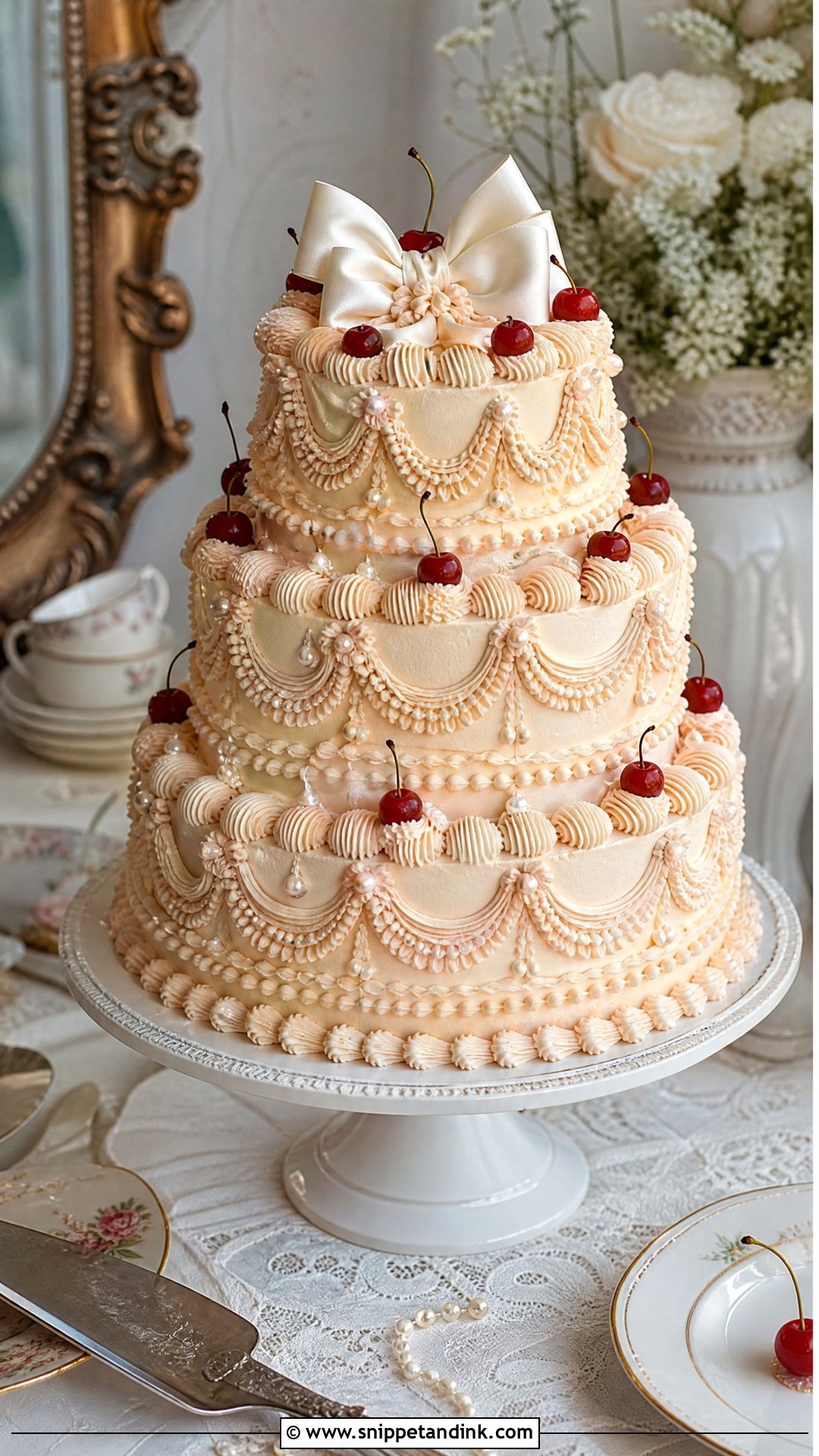
Lambeth piping is the over-piped Victorian style, and it’s what I’d point couples toward who love bold piping and a full, old-fashioned cake table. It’s built from stacked layers of buttercream borders, shells, scrolls, drop strings and swags. White, ivory, blush, pale blue and butter yellow all work. Big Lambeth cakes can be two or three wide tiers or a taller stack of narrow ones. The honest drawback is heat: drop strings and swags in soft buttercream sag in a warm room, so I pipe with a stiffer, crusting buttercream for summer weddings. Cherries and bows soften it.
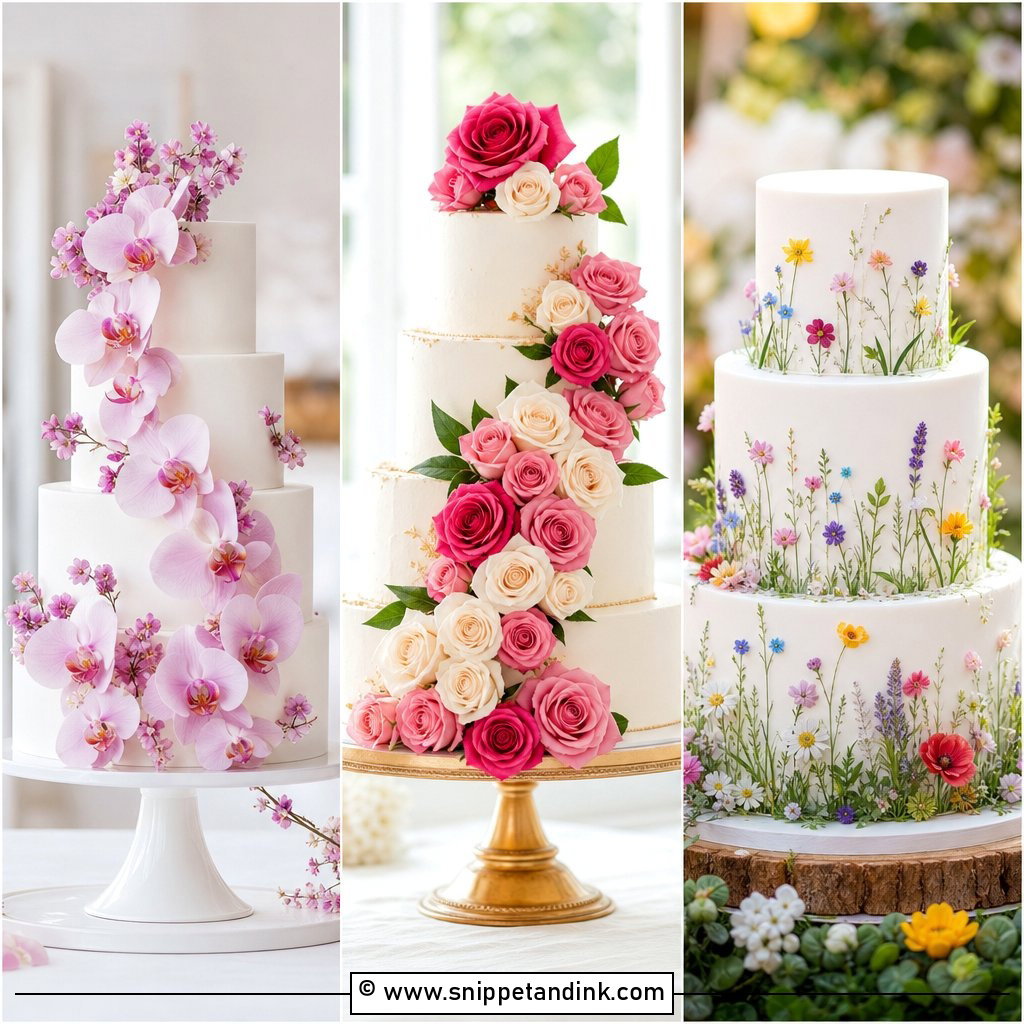
4. Floral Cascade Wedding Cake
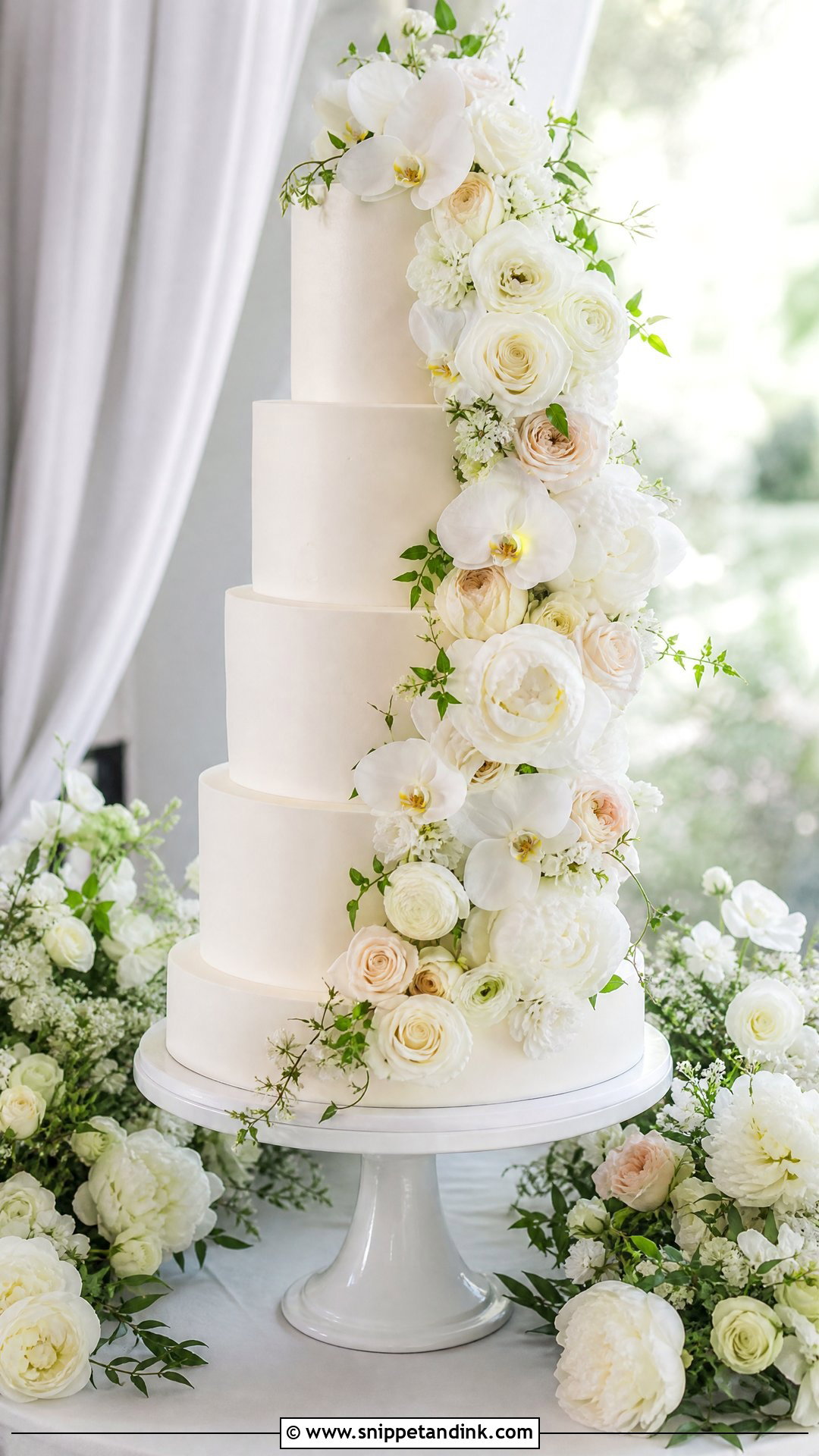
A floral cascade runs flowers from the top tier down one side, which adds movement to a tall cake. Fresh roses, orchids, peonies and ranunculus are common, but fresh flowers should never go straight into the cake; I wrap stems in floral tape and insert them into food-safe picks, and I check every variety, because many popular wedding flowers aren’t safe to touch food. Sugar flowers avoid the question entirely and can be kept afterward. White buttercream, ivory fondant or soft texture all suit it. Lemon berry in spring, vanilla rose in summer and spiced pear in fall follow the season.
5. Modern Square Wedding Cake
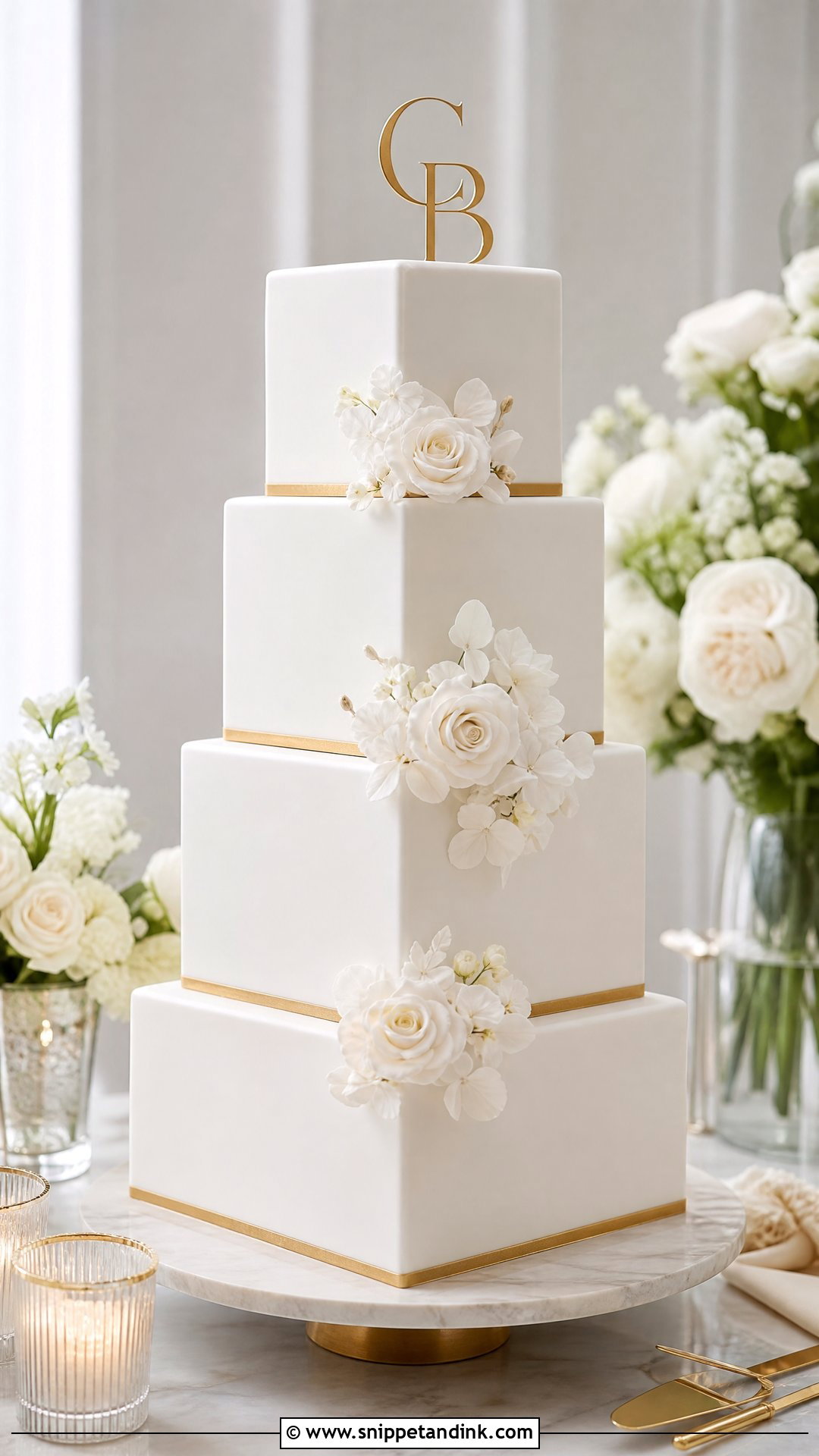
Square tiers look architectural and give more flat surface for pressed florals, metallic edges, monograms or smooth panels. Getting crisp corners is the hard part. I use the ganache-then-fondant method, which sets firm enough to hold sharp edges, because buttercream corners soften quickly at room temperature. Square tiers also serve more slices than a round of the same width. White chocolate, almond, pistachio or espresso vanilla suit the polished look. Hold back on decoration; the shape is the point, and clutter fights it.
6. Sculptural Wedding Cake
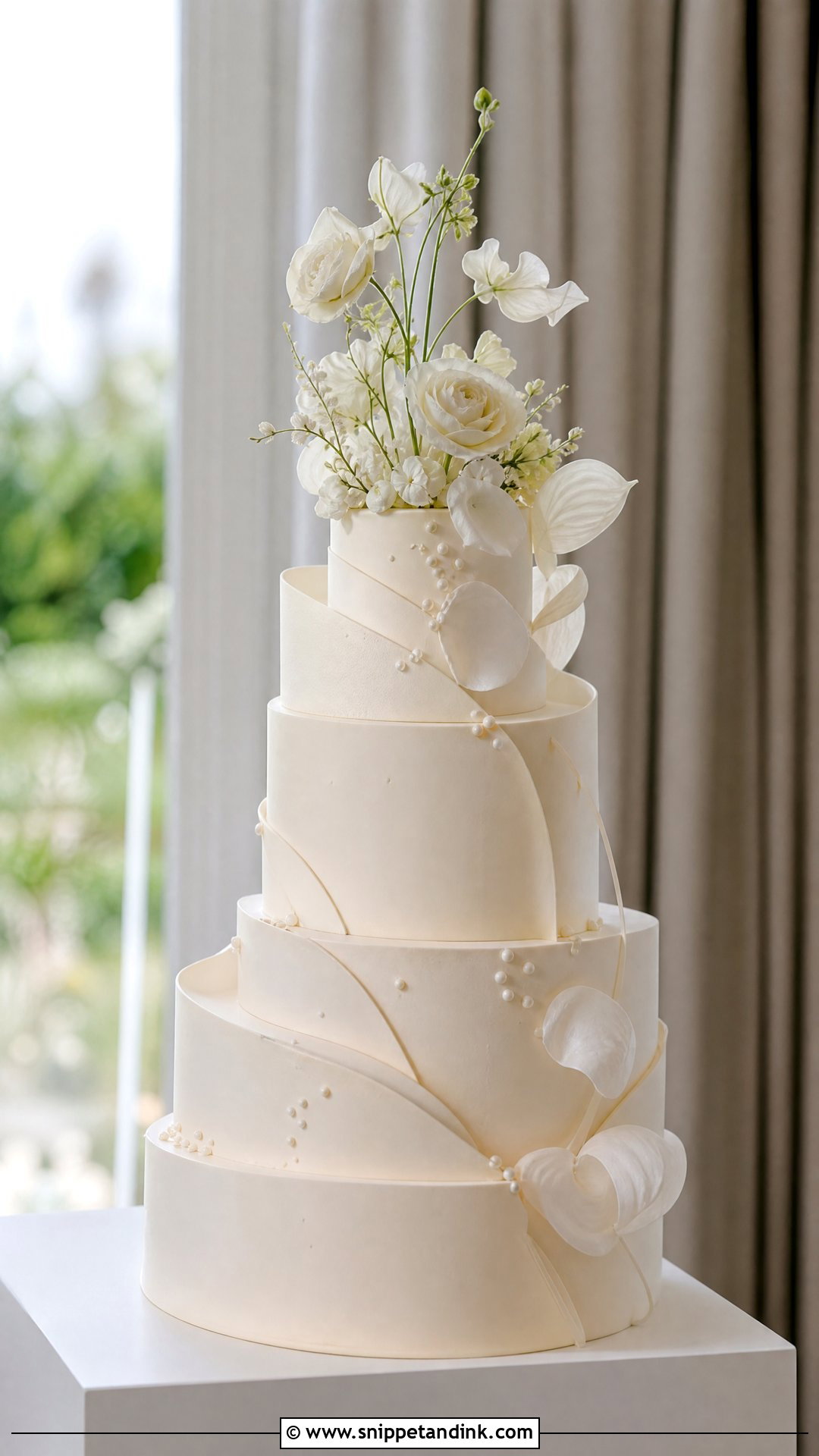
Sculptural cakes use curved, offset, wavy or textured forms inspired by fabric, stone, pottery or architecture. They’re the most interesting cakes I make and the most demanding structurally. Offset tiers need internal supports that run off-center, and anything carved has to be built on chilled cake that won’t slump. Choose a baker who can talk you through their support system and how the cake travels; a sculpted cake is usually assembled at the venue. Neutral colors or one metallic accent let the shape speak. Vanilla bean, chocolate ganache or passion fruit cream taste good behind the drama.
7. Gold Wedding Cake
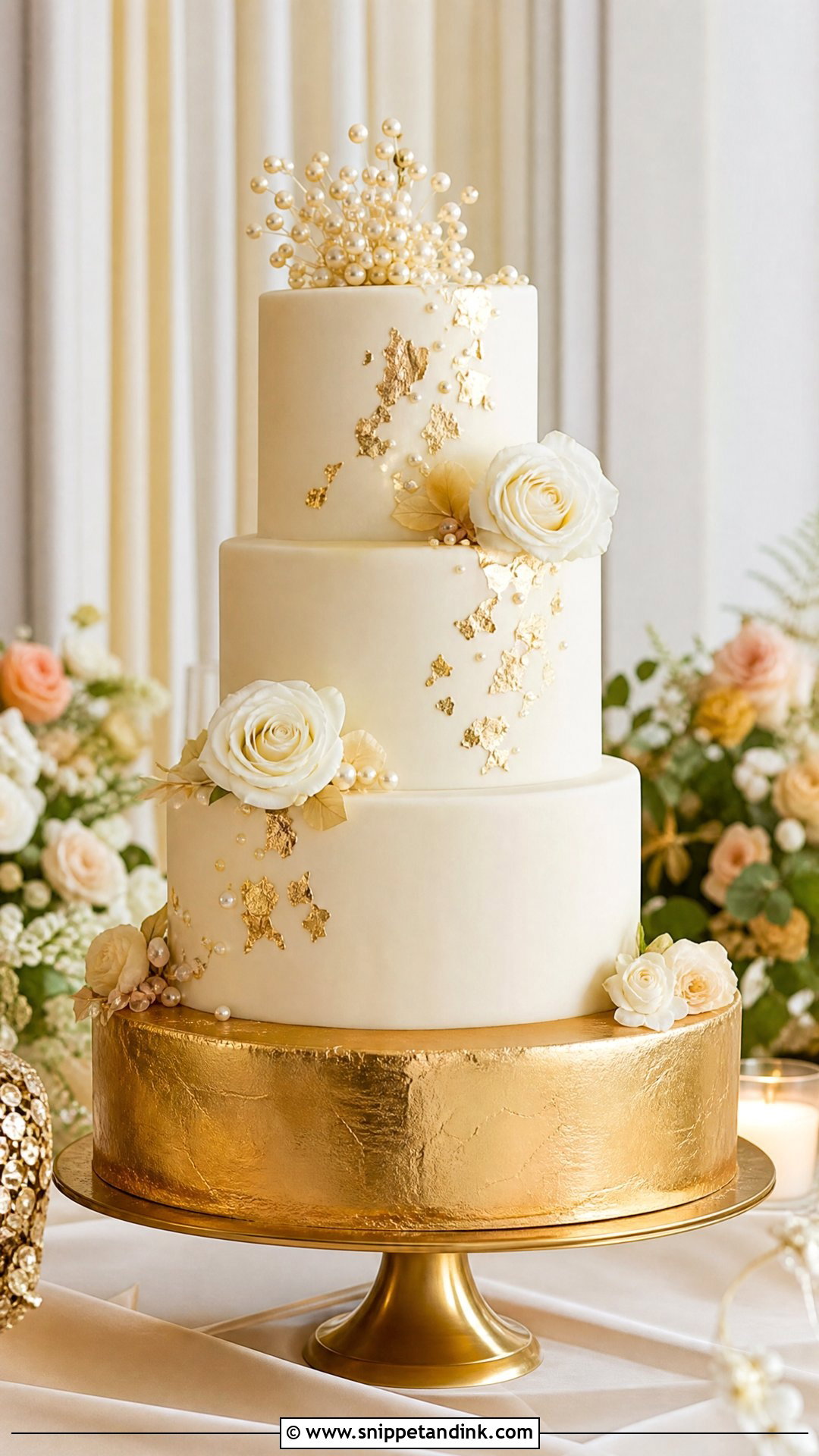
Gold reads as celebration immediately. It can be a fully metallic tier, brushed gold leaf, gold trim or painted detail. One thing to check: real edible gold leaf is food-safe, but many gold dusts sold for cakes are labeled only “non-toxic” and are meant for decoration you don’t eat, so ask which one your baker uses. On a big cake I like one full gold tier at the base and lighter tiers above. White, ivory, blush, emerald or black balance it. Caramel vanilla, hazelnut praline and champagne cake match the richness.
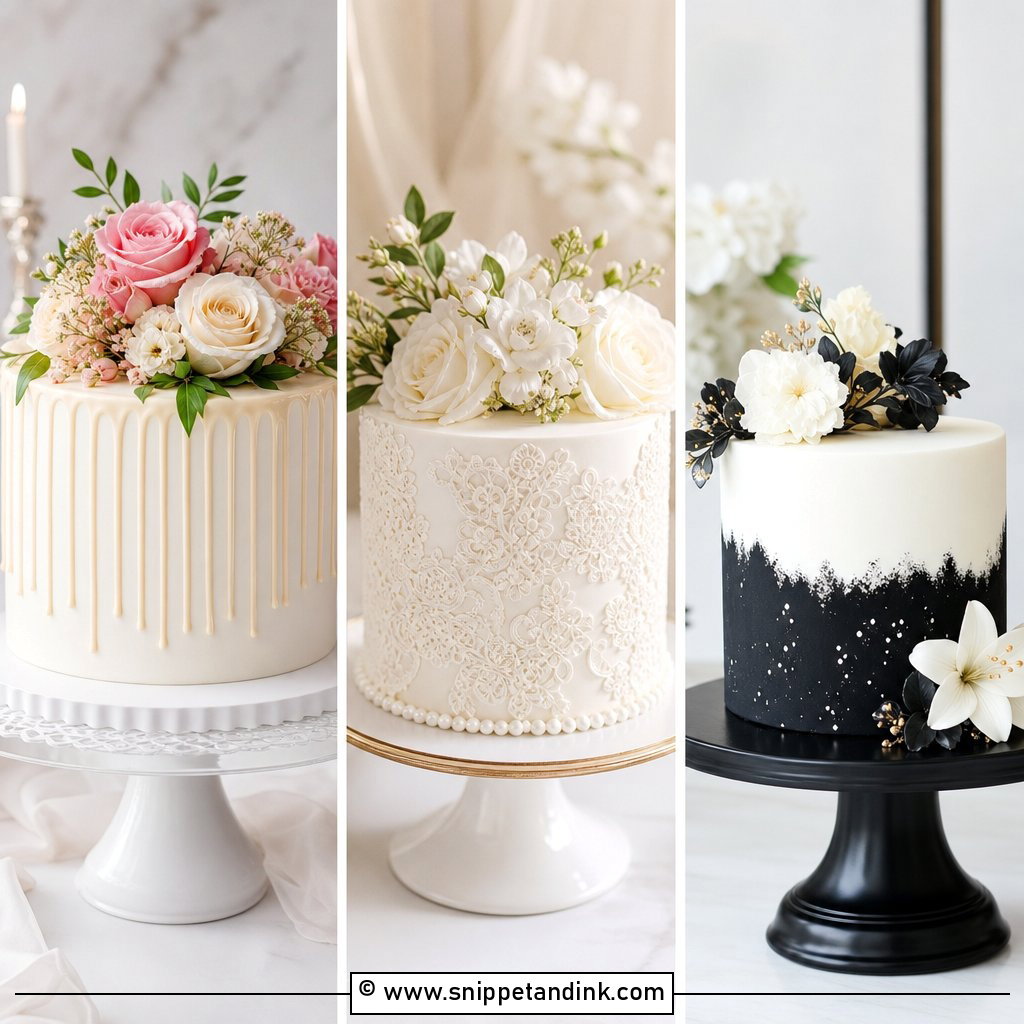
8. Black And White Wedding Cake
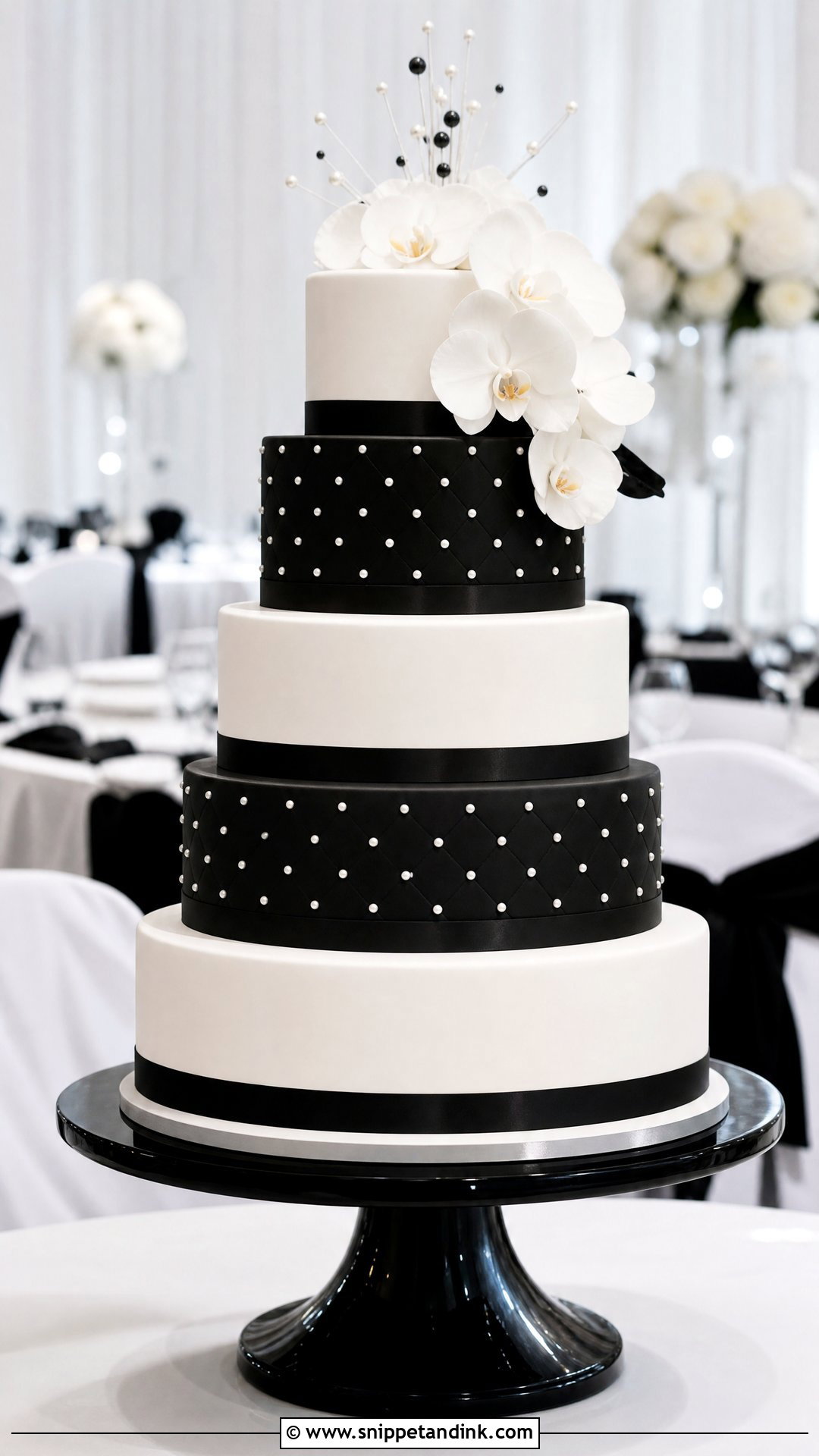
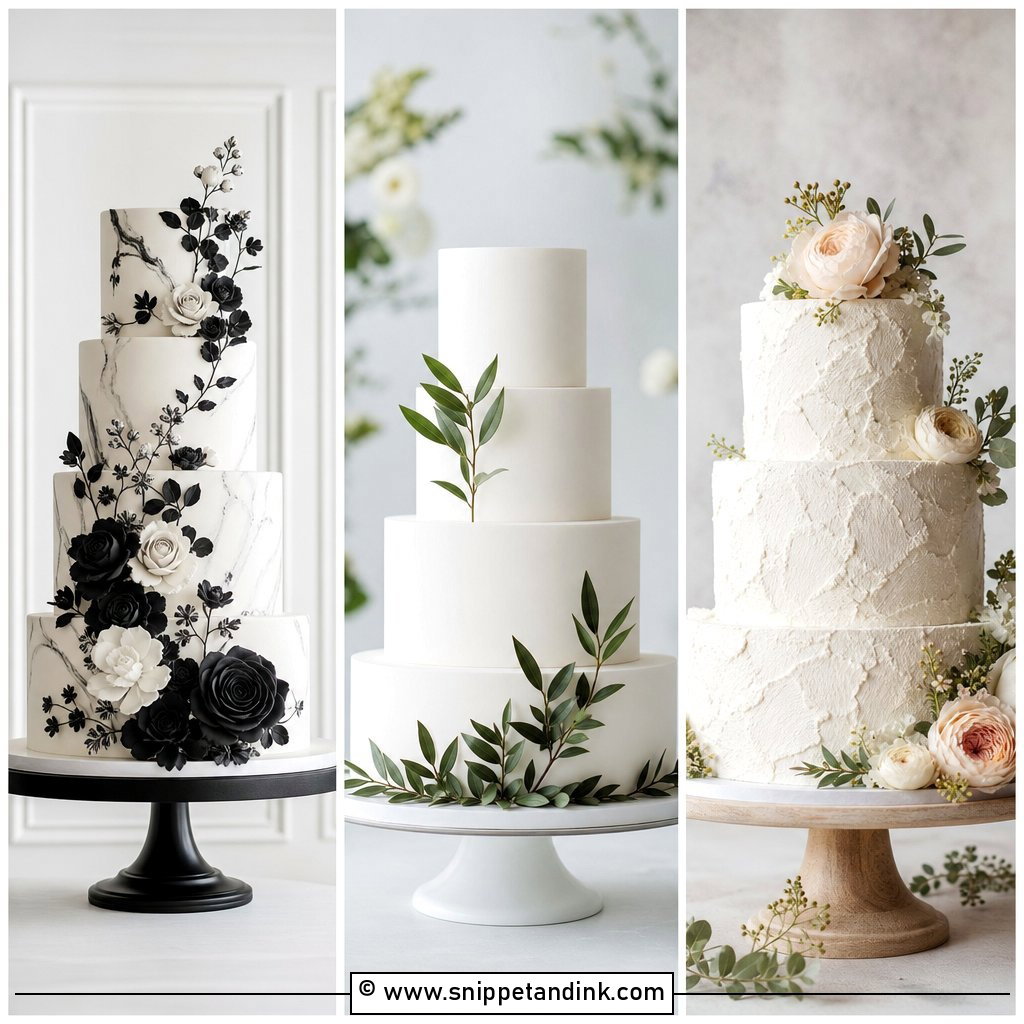
Black and white suits evening receptions, ballrooms and modern venues. It can be black fondant bands on white tiers, black piping, painted botanicals or a black base tier with white flowers. On a big cake, alternating tiers gives the strongest contrast; mostly white with one black tier is calmer. Black fondant takes a lot of coloring and can taste slightly bitter, so I often make the dark tier from black cocoa, which gives the color naturally. Chocolate, cookies and cream and vanilla bean suit the theme. White orchids or pearls keep it bridal.
9. Ruffle Wedding Cake
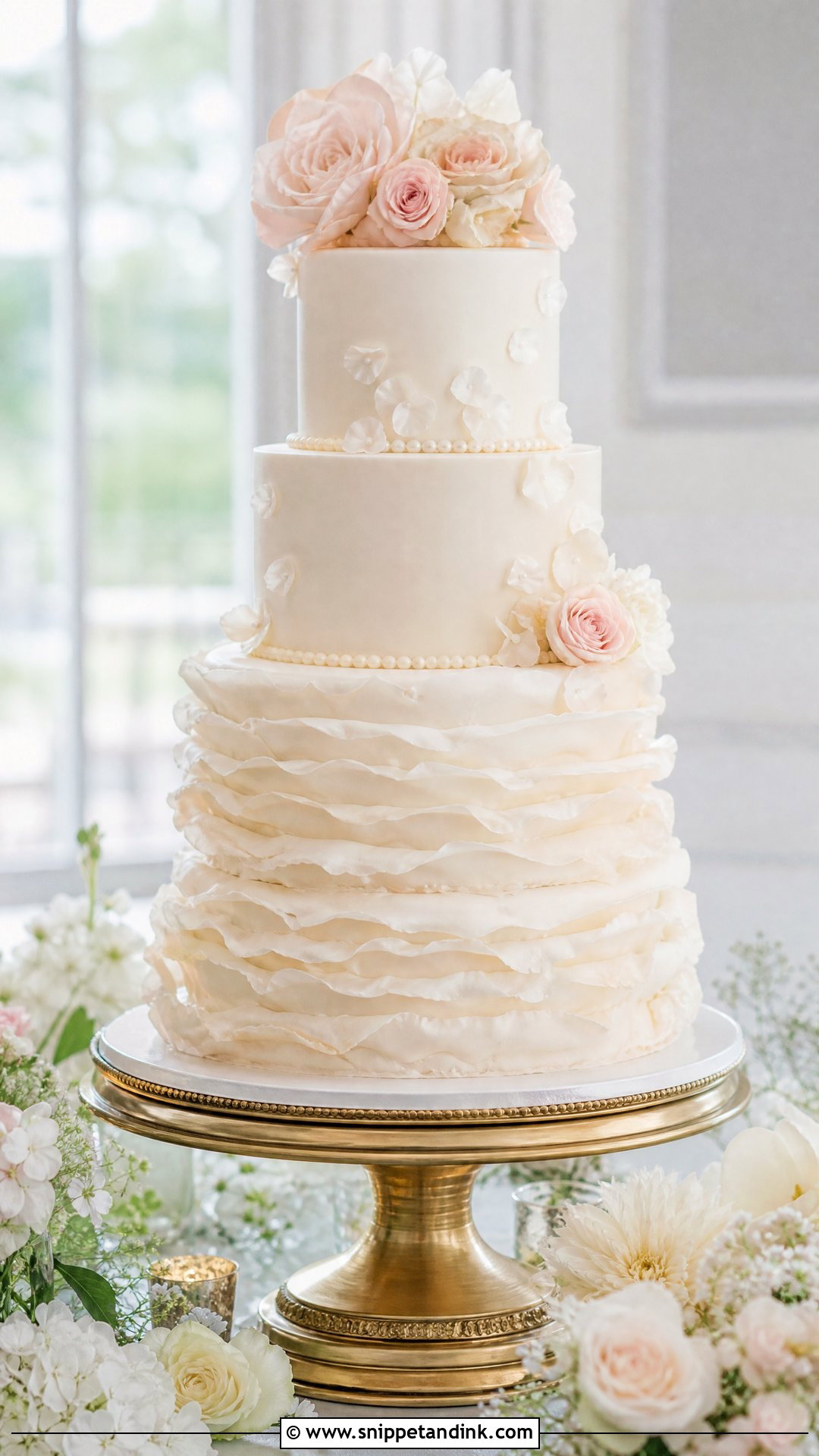
Ruffles add movement and softness, and the material changes the look completely. Fondant ruffles are clean and structured. Wafer paper is airy and almost translucent, but it softens if it touches buttercream or humidity, so I attach it over a ganache layer. Buttercream ruffles look handmade and romantic and are the most heat-sensitive of the three. Ruffled lower tiers with smooth tiers above keep a big cake balanced. Ivory, blush, champagne or pale gray suit it, with vanilla raspberry, coconut or lemon curd inside.
10. Draped Wedding Cake
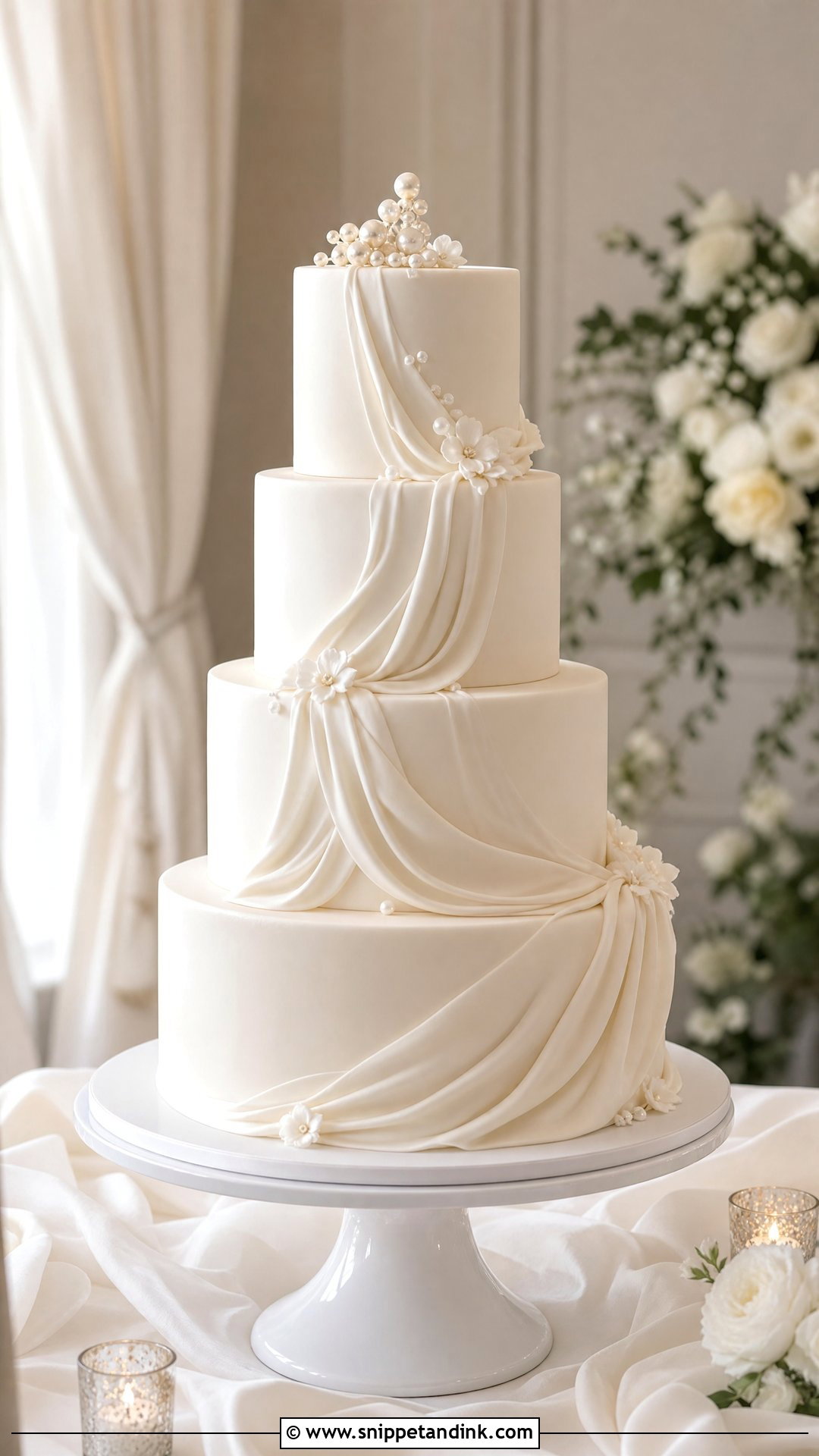
A draped cake borrows from the dress itself: fondant folds, buttercream pleats or swags that look like silk. Real fabric-like folds need fondant rolled thin and draped while it’s still soft, which means working one tier at a time with no breaks. It can wrap every tier or sit on one focal side for a more modern look. Keep the palette soft with white, ivory, pearl or champagne. If your gown has a distinctive drape or pleat, bring a photo; matching it is one of my favorite details to do. Vanilla bean, almond and strawberry cream suit it.
11. Oval Wedding Cake
Oval tiers are softer than squares and less expected than rounds, and they look long and elegant in photos taken from the side. Smooth buttercream, satin fondant, vertical piping or pearl borders all follow the curve well, and flowers placed along the long side look especially natural. Practically, oval pans are less common, so not every baker has a full set, and the stacking needs care because the support points sit differently than on a round. Vanilla citrus, almond cherry, pistachio cream and champagne strawberry are good matches.
12. Long Table Wedding Cake
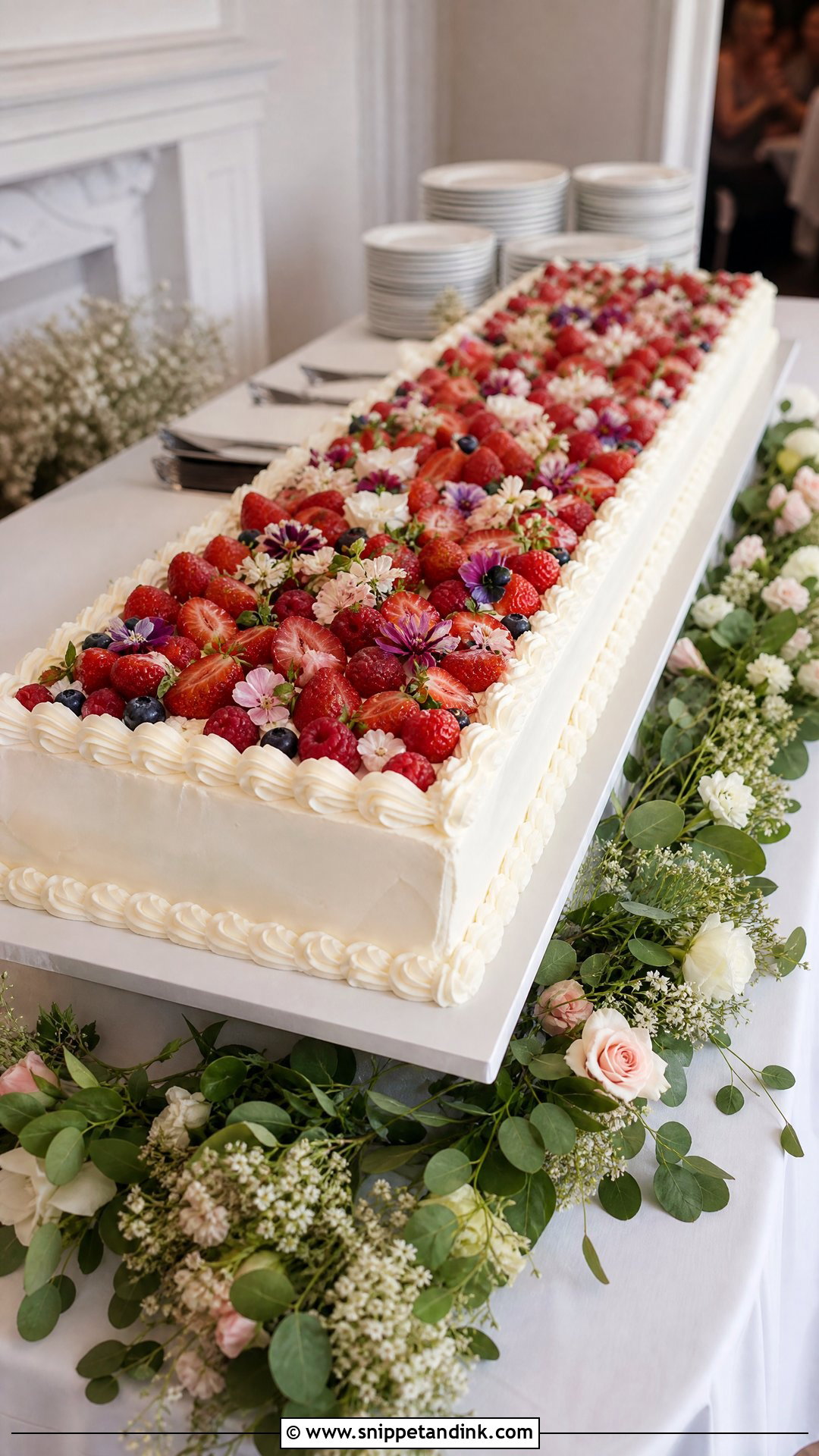
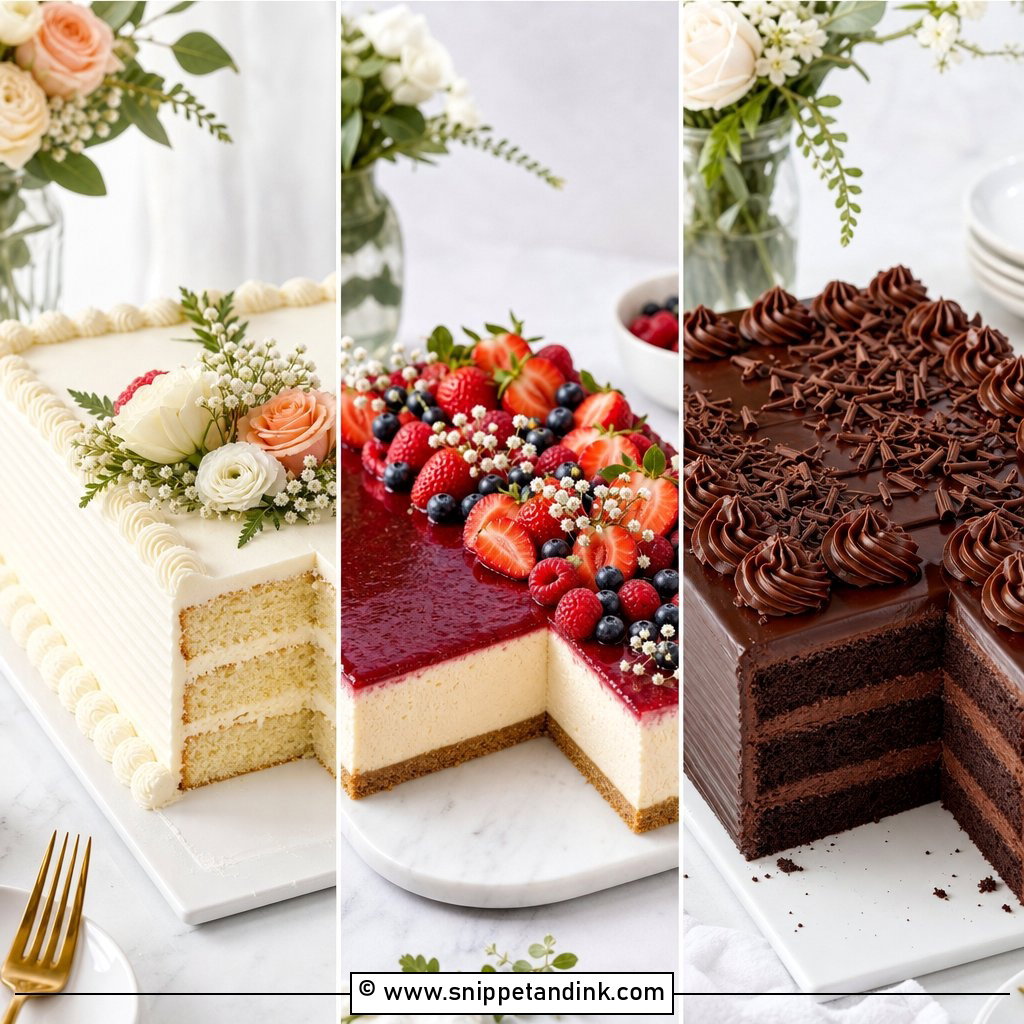
A long table wedding cake stretches across the dessert table instead of stacking up. It’s usually low, wide and rectangular, with generous frosting, fruit, flowers or piped borders on top. Family-style receptions suit it well. The length means I can bake flavor zones, such as vanilla berry at one end and chocolate hazelnut at the other. It needs a solid board and a table that won’t flex; a long cake can crack if lifted from one end. It’s easy to slice and fast to serve.
13. Italian Wedding Cake
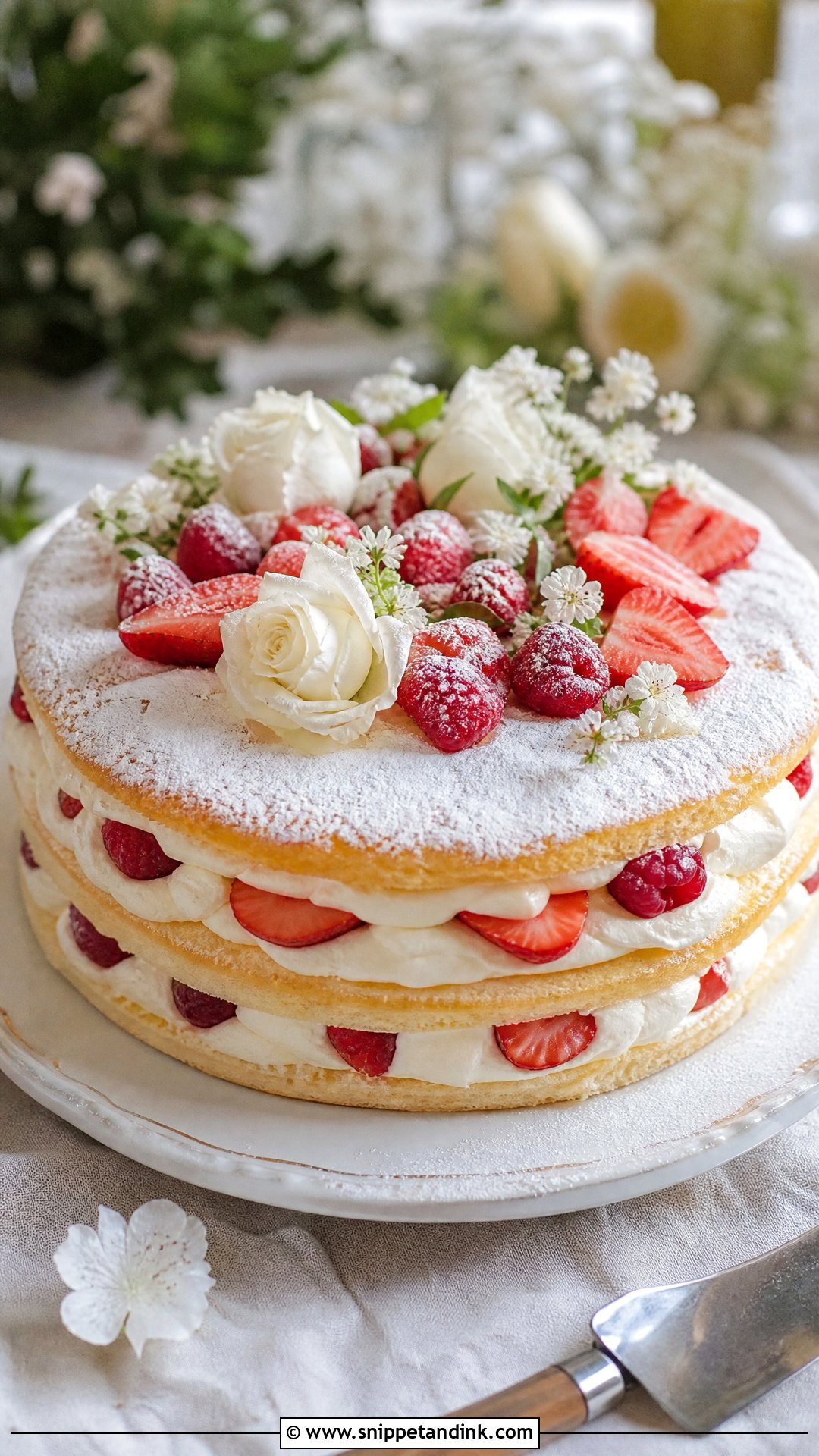
An Italian wedding cake is often wide, low and layered with pastry cream, whipped cream, berries and light sponge. Styled as a large table cake with powdered sugar, fruit and edible flowers, it’s relaxed and generous. The catch is that cream-filled cakes need refrigeration and can’t sit out for hours. For an outdoor or warm-weather reception, plan for the cake to come out just before cutting, or choose a stabilized cream. Vanilla cream, lemon, strawberry and pistachio suit it.
14. Watercolor Wedding Cake
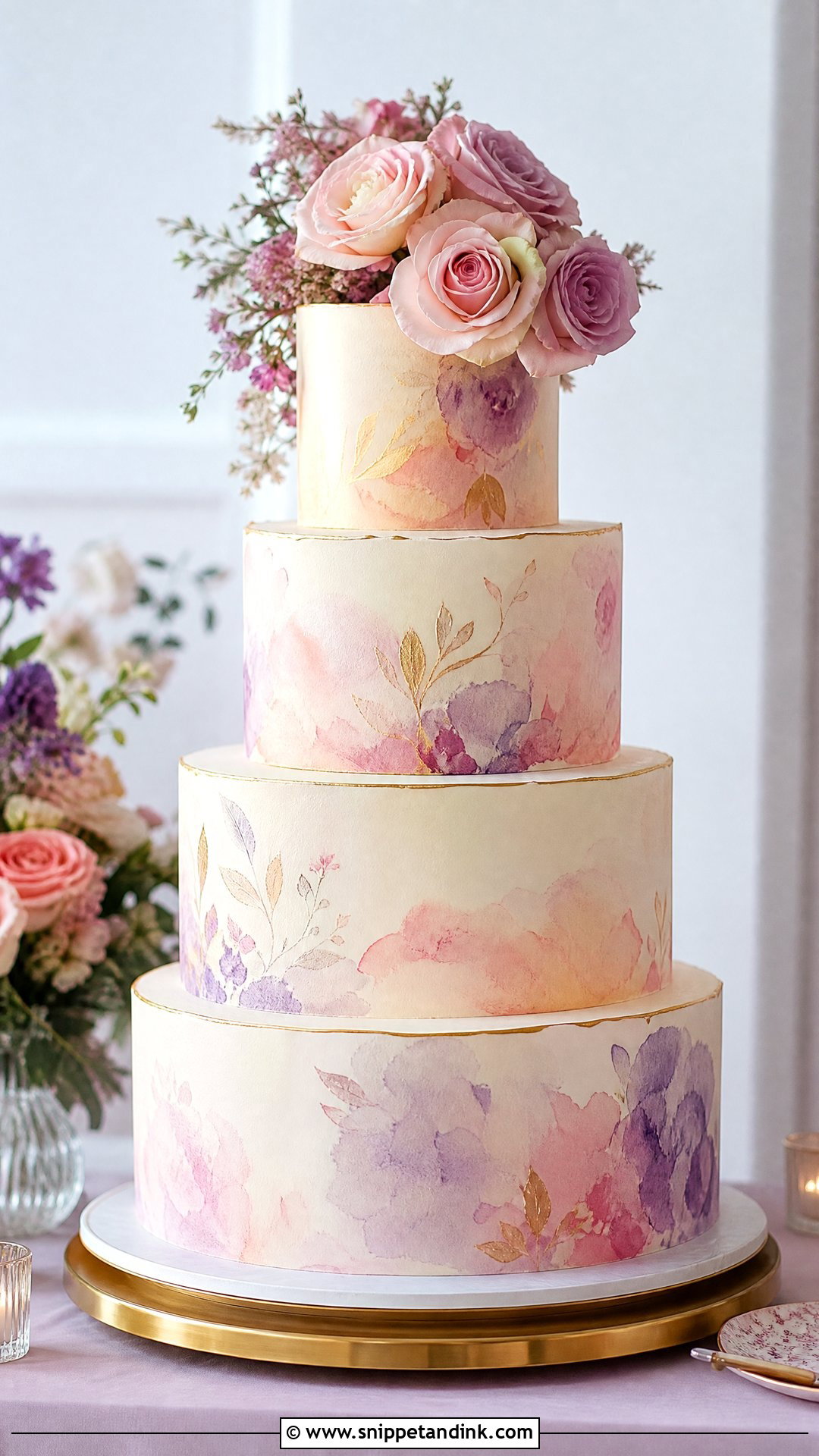
Watercolor finishes are painted with thinned gel colors on fondant, or blended with a palette knife on buttercream, in washes of blush, blue, lavender, peach or sage. On a big cake the color can fade tier by tier or appear as loose painted flowers. Keep everything else simple so the painting stays the focus: a few fresh flowers, wafer paper petals or a thin gold edge. Bring your invitation or fabric swatches so I can mix the colors to match. Lemon lavender, vanilla raspberry or honey almond fit the airy mood.
15. Hand Painted Wedding Cake
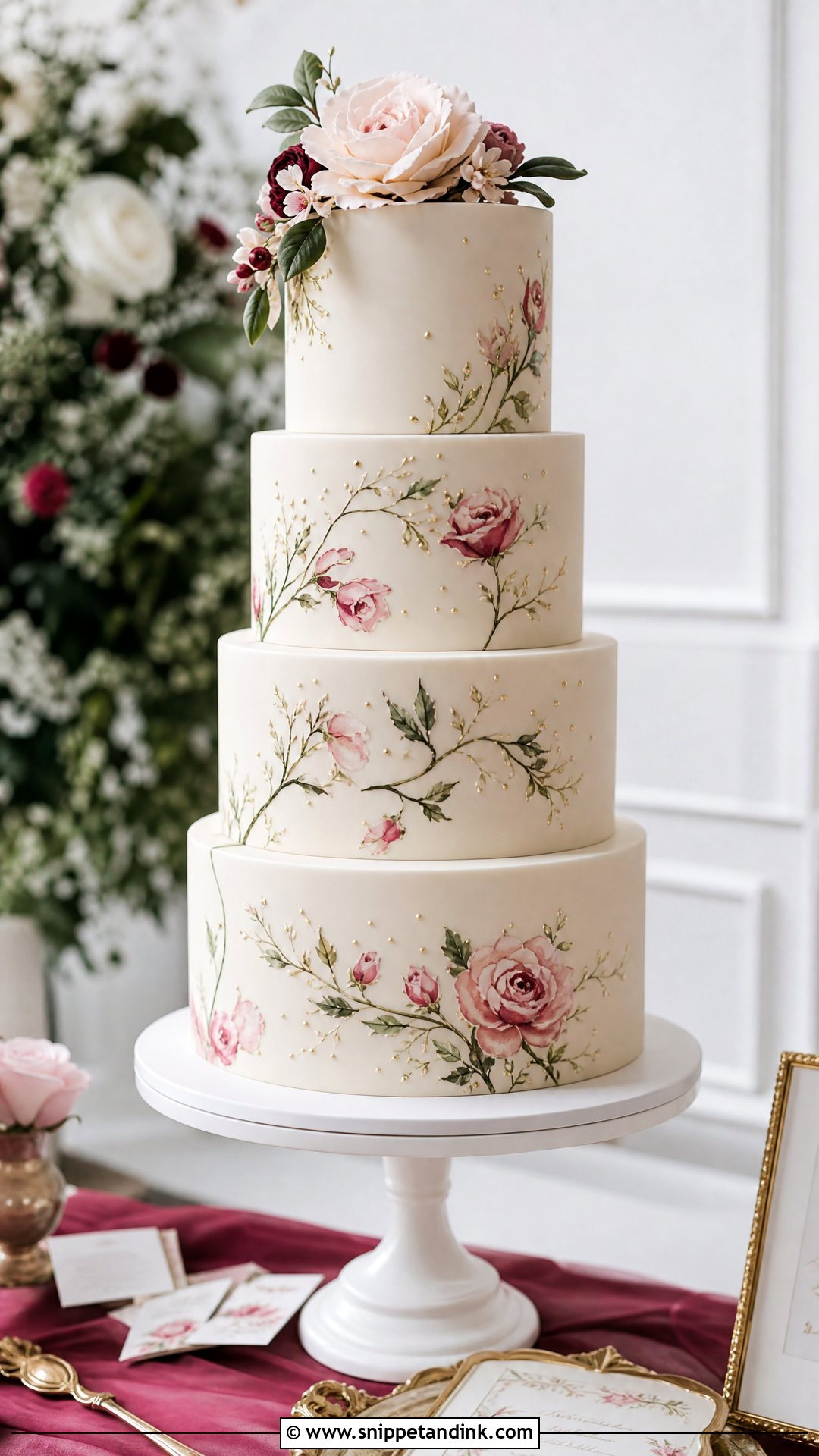
Hand painting turns the cake into a personal piece. I can paint flowers, vines, birds, monograms, the venue or a pattern from your stationery. Smooth fondant takes fine detail best; buttercream suits looser, softer brushstrokes. On a big cake, painting can wrap around several tiers or sit in panels for a cleaner look. It’s slow work, often a full day for a detailed cake, so book early. Flavors like vanilla almond, lemon raspberry, chocolate cherry or pistachio rose suit the craft.
16. Pressed Flower Wedding Cake
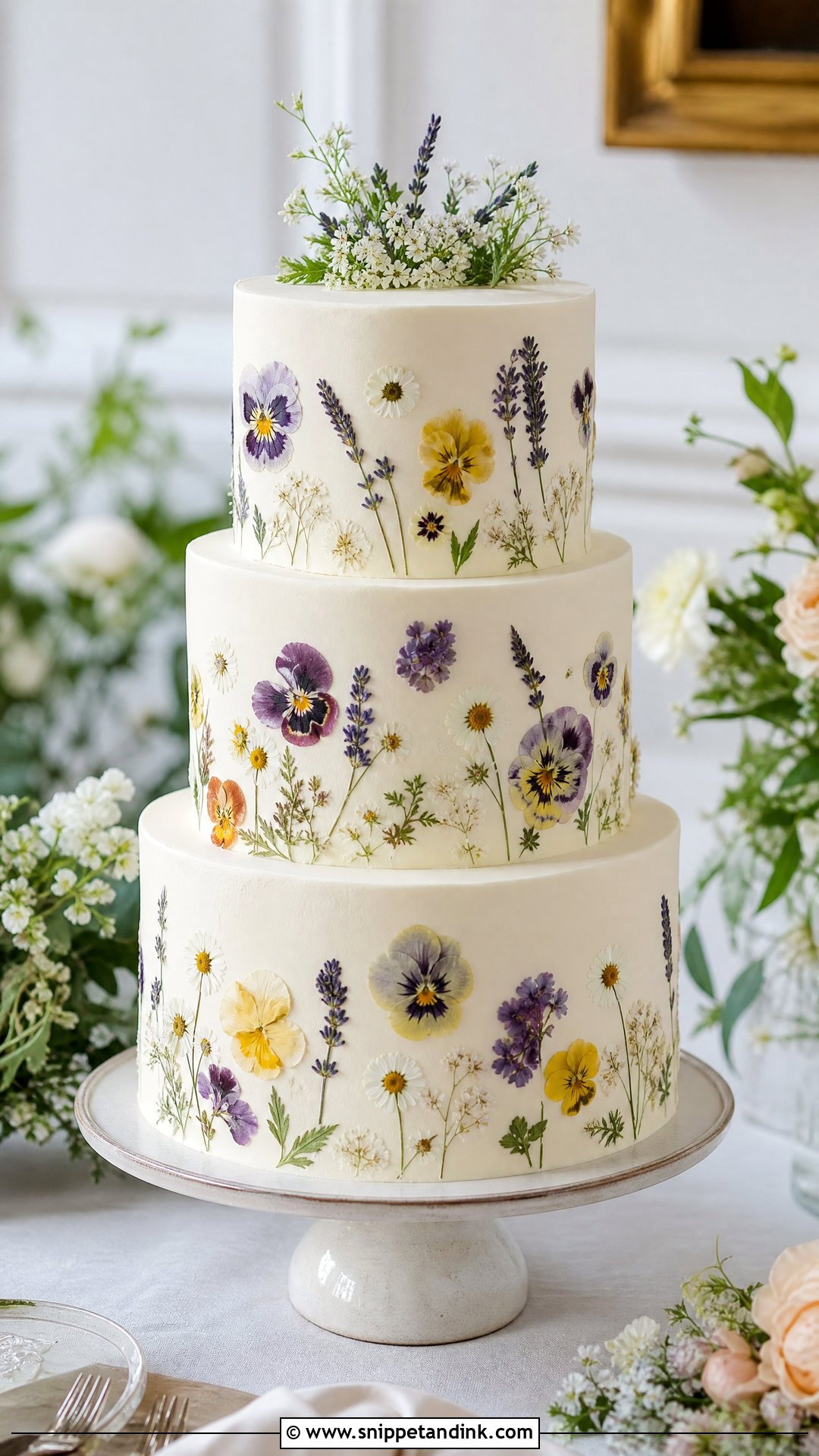
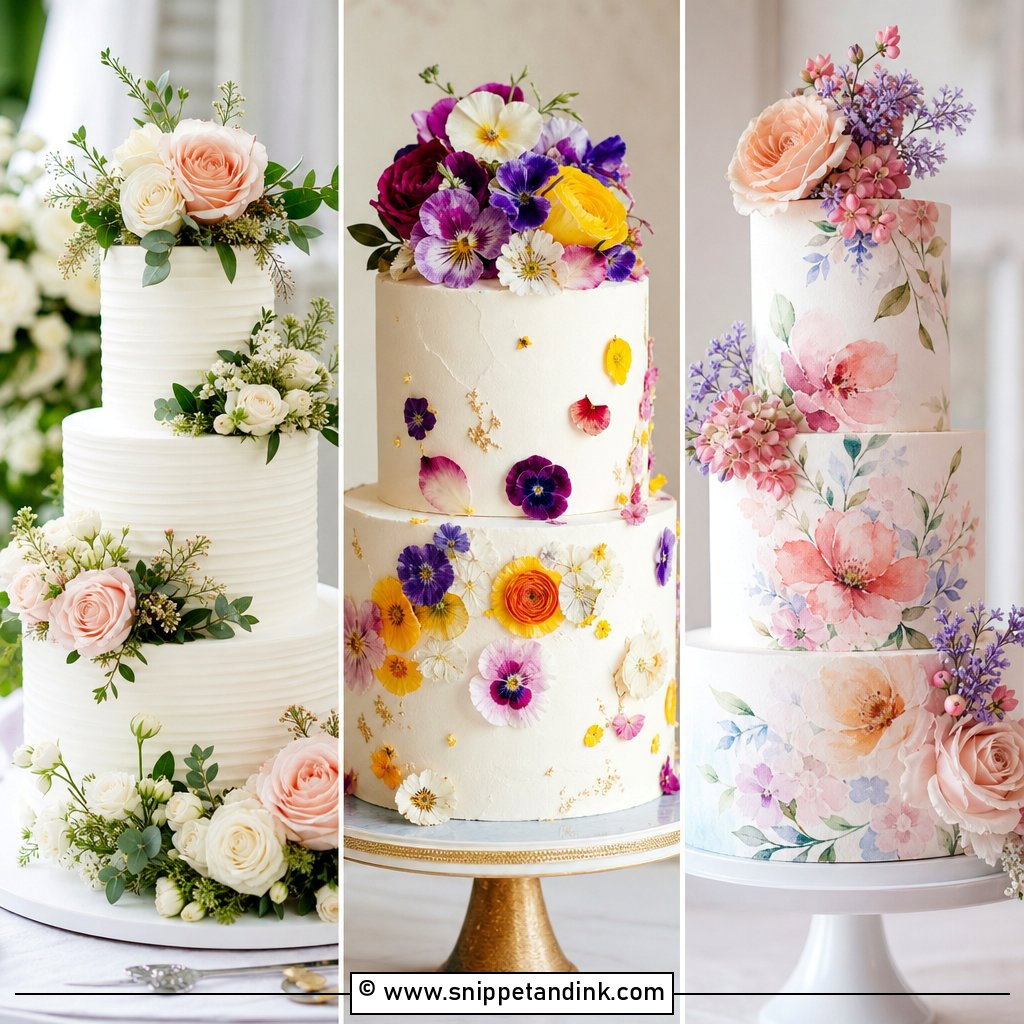
Pressed flowers give a natural, botanical look. I use only edible flowers, pressed flat and pushed gently into fresh buttercream or brushed onto fondant with a little piping gel. They can form a full meadow, a border or scattered patterns across each tier. White or ivory backgrounds let the petals stand out. Pressed petals fade and darken if they sit in direct sun, so I keep the cake shaded until it’s cut. Lemon elderflower, vanilla honey and strawberry shortcake suit the style. Every flower that touches the cake has to be confirmed edible.
17. Greenery Wedding Cake
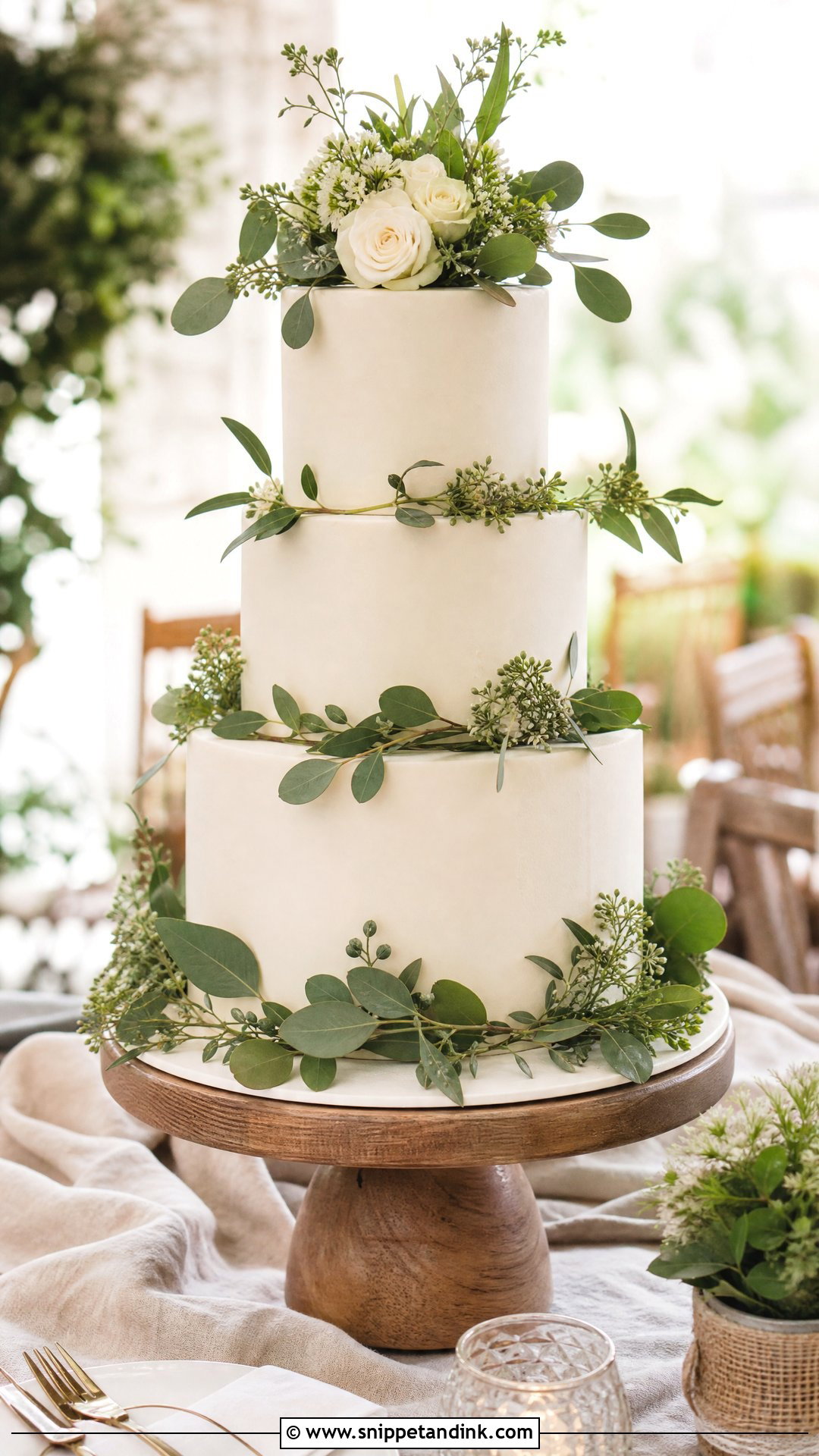
Greenery is clean and works with almost any venue: eucalyptus, olive branches, herbs, ferns or leafy vines wrapping each tier, trailing down one side or framing the base. Many decorative greens aren’t food-safe, and eucalyptus in particular should never touch the cake directly, so I back each piece with food-safe film or use herbs like rosemary and thyme, which are edible. White buttercream and a few small white flowers keep it refined on a big cake. Vanilla bean, lemon thyme, almond or chocolate mint tie into the fresh look.
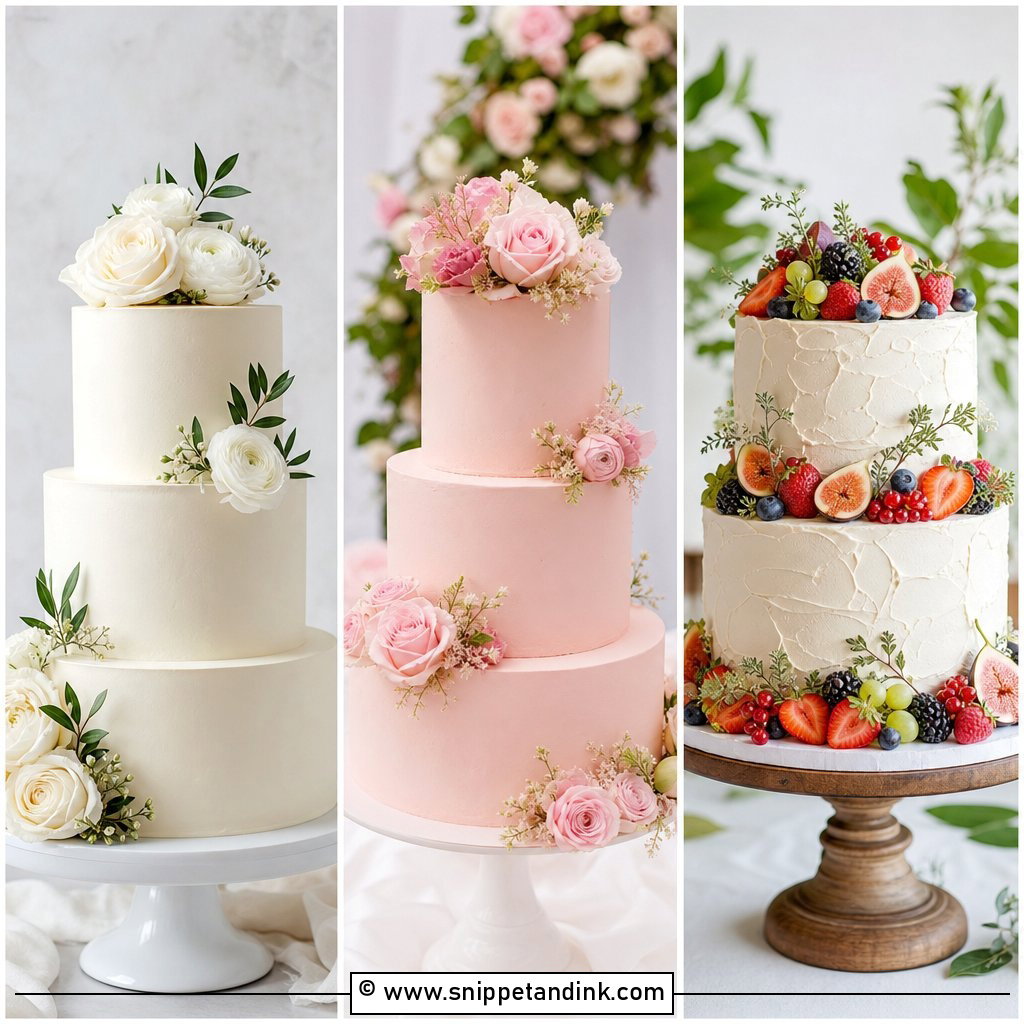
18. Rustic Buttercream Wedding Cake
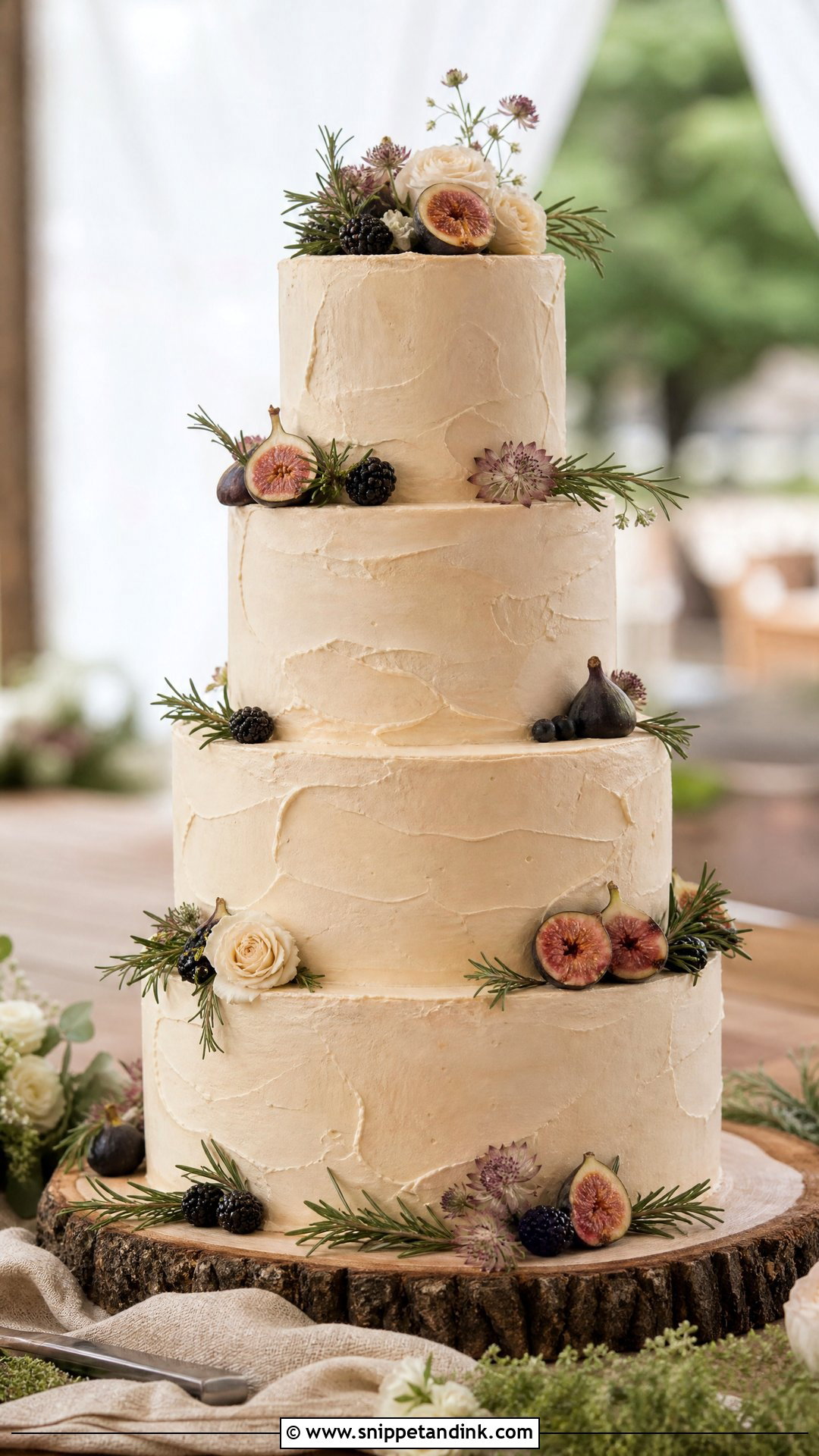
Rustic buttercream has soft ridges, palette knife texture or light swirls instead of a perfectly smooth finish. It looks relaxed and handmade, and on wide tiers it suits a farmhouse or garden reception. Fresh flowers, berries, figs, herbs or greenery add color. Rustic doesn’t mean careless; the texture still has to be even all the way round, or it reads as unfinished in photos. Vanilla berry, carrot cake, spice cake, lemon and chocolate ganache are the usual flavors. A wood stand and linen table suit it well.
19. Naked Wedding Cake
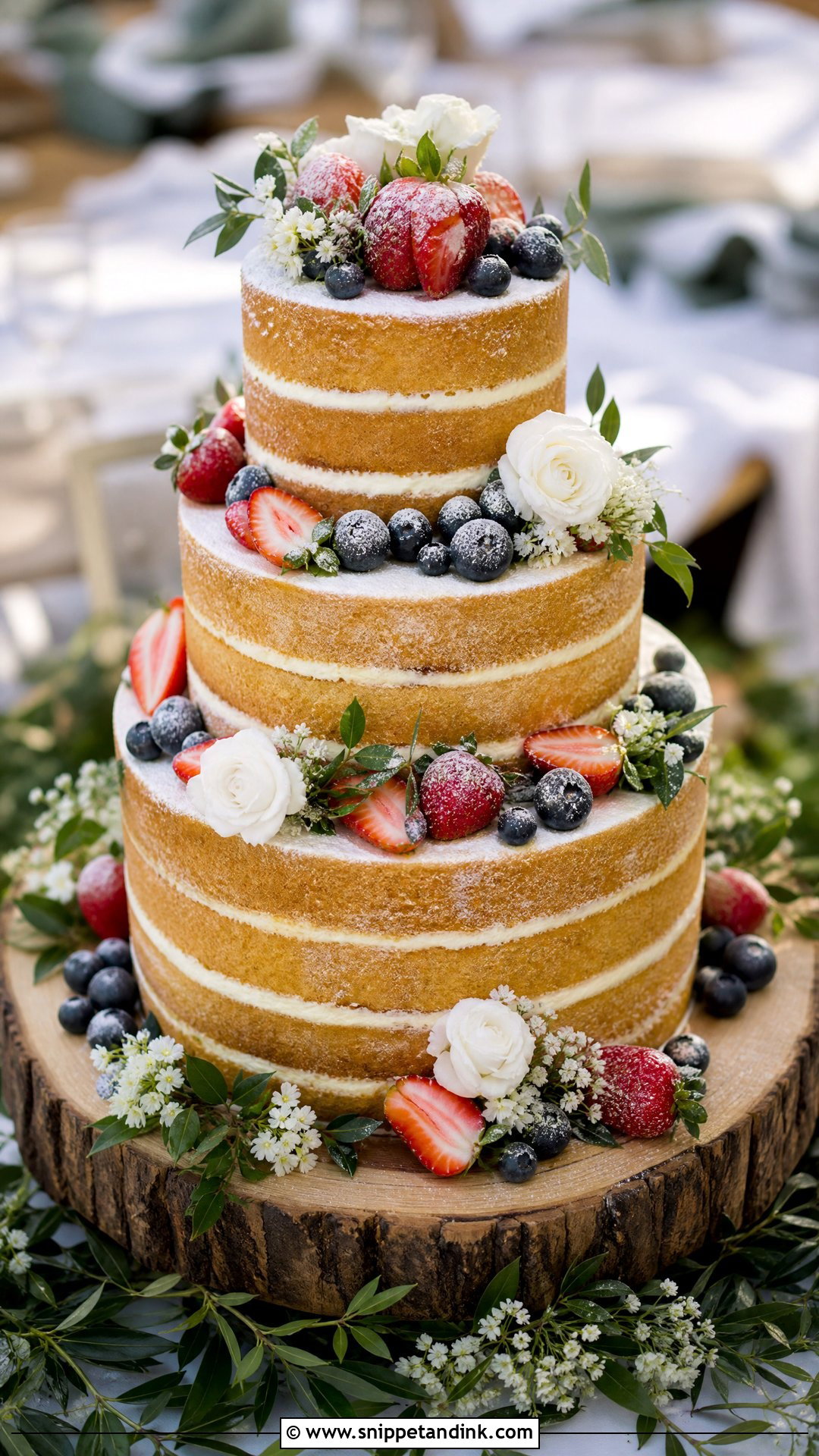
A naked wedding cake shows the cake layers through a thin scrape of frosting. Exposed sponge dries out faster than iced cake, which is my biggest concern with this style. I brush the layers with syrup, assemble as late as possible and keep it covered until it’s displayed. A tall naked cake needs sturdy sponge and full dowelling. Fruit, flowers, herbs or powdered sugar finish it. Vanilla berry, chocolate raspberry, carrot, almond and lemon all suit it.
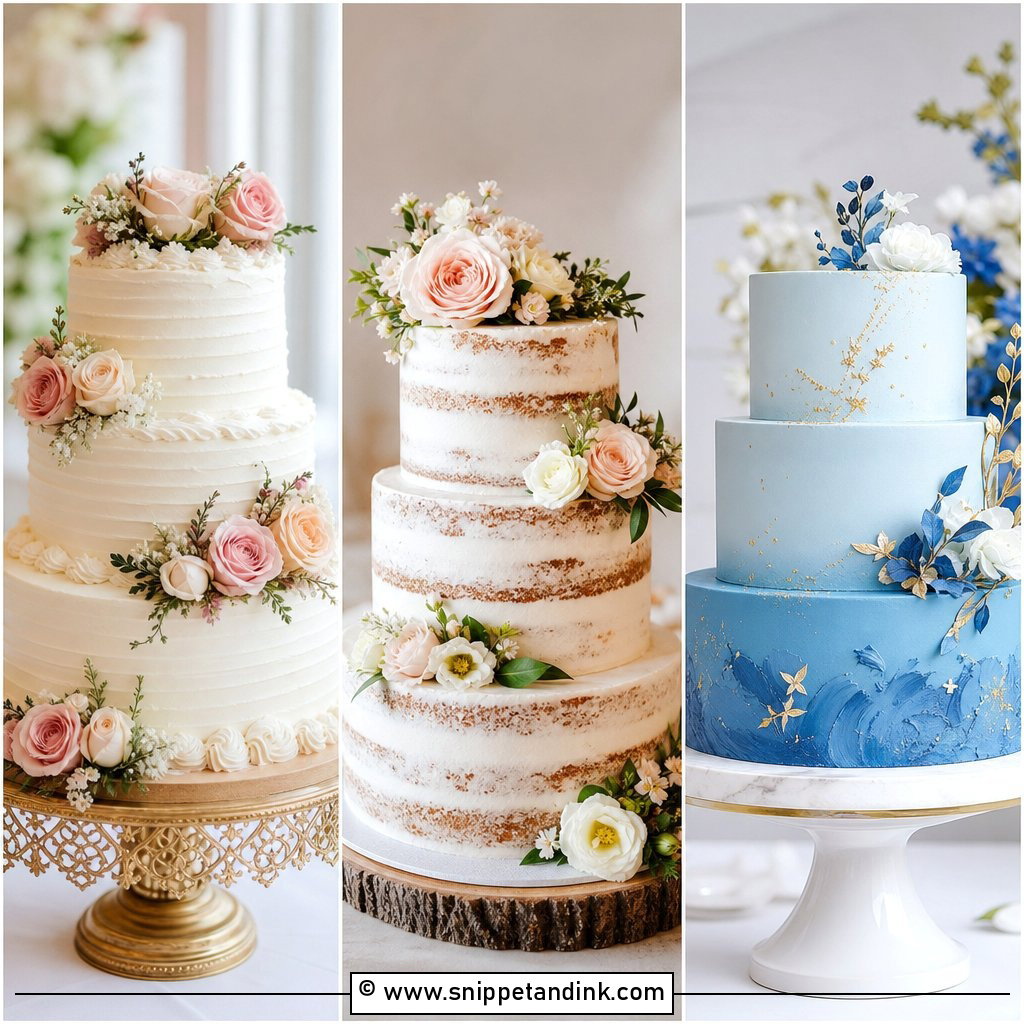
20. Semi Naked Wedding Cake
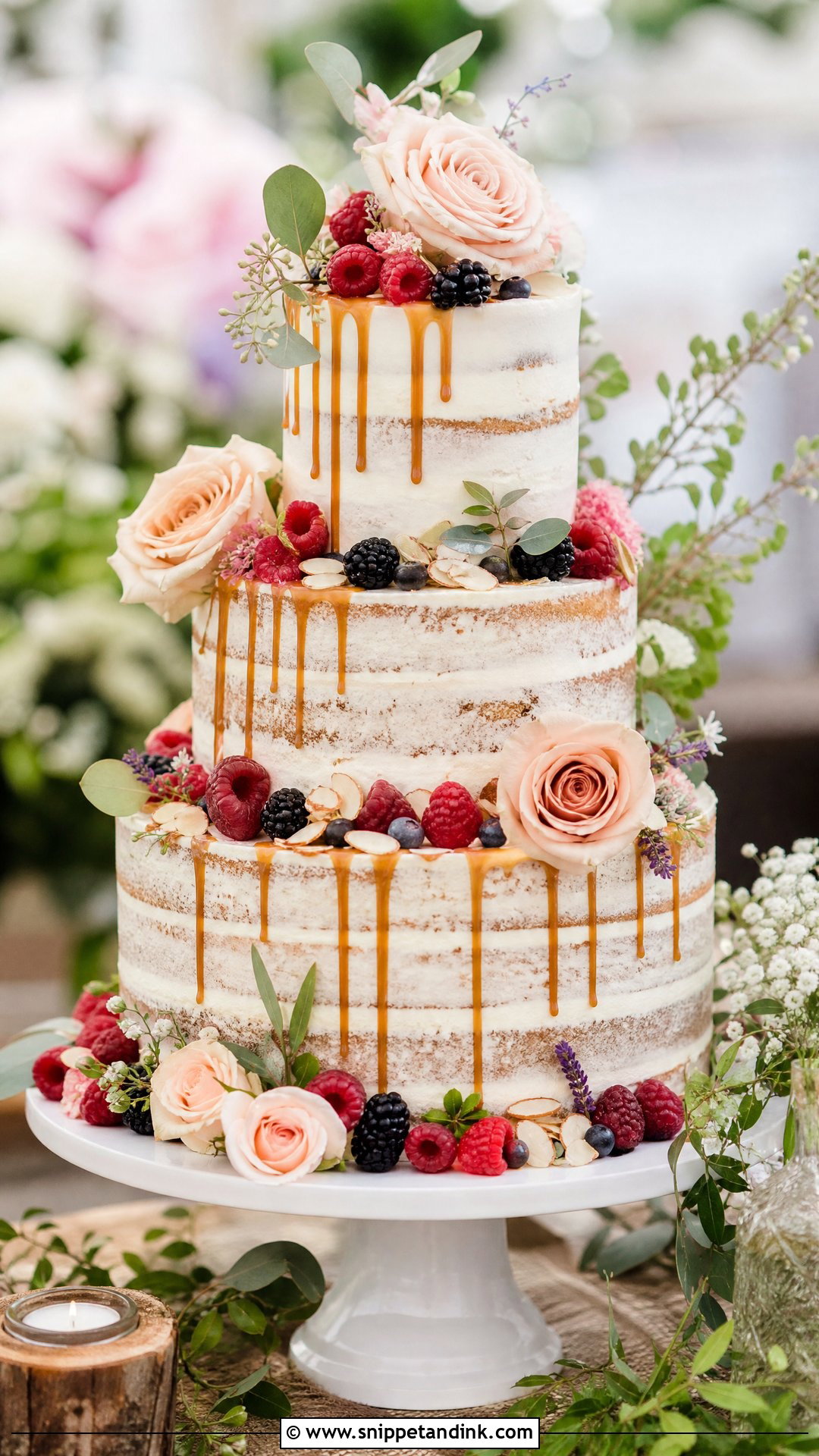
Semi-naked is the version I recommend more often than fully naked. The thin layer of frosting still shows the cake, but it seals in moisture and gives a more finished edge. Multiple tiers with fresh flowers, berries, greenery or a caramel drip look relaxed rather than unfinished. Ask your baker to keep layer thickness even all the way up; uneven layers are what make a semi-naked cake look sloppy. Almond raspberry, vanilla bean, chocolate salted caramel, lemon blueberry and carrot cream cheese are good choices.
21. Buttercream Flower Wedding Cake
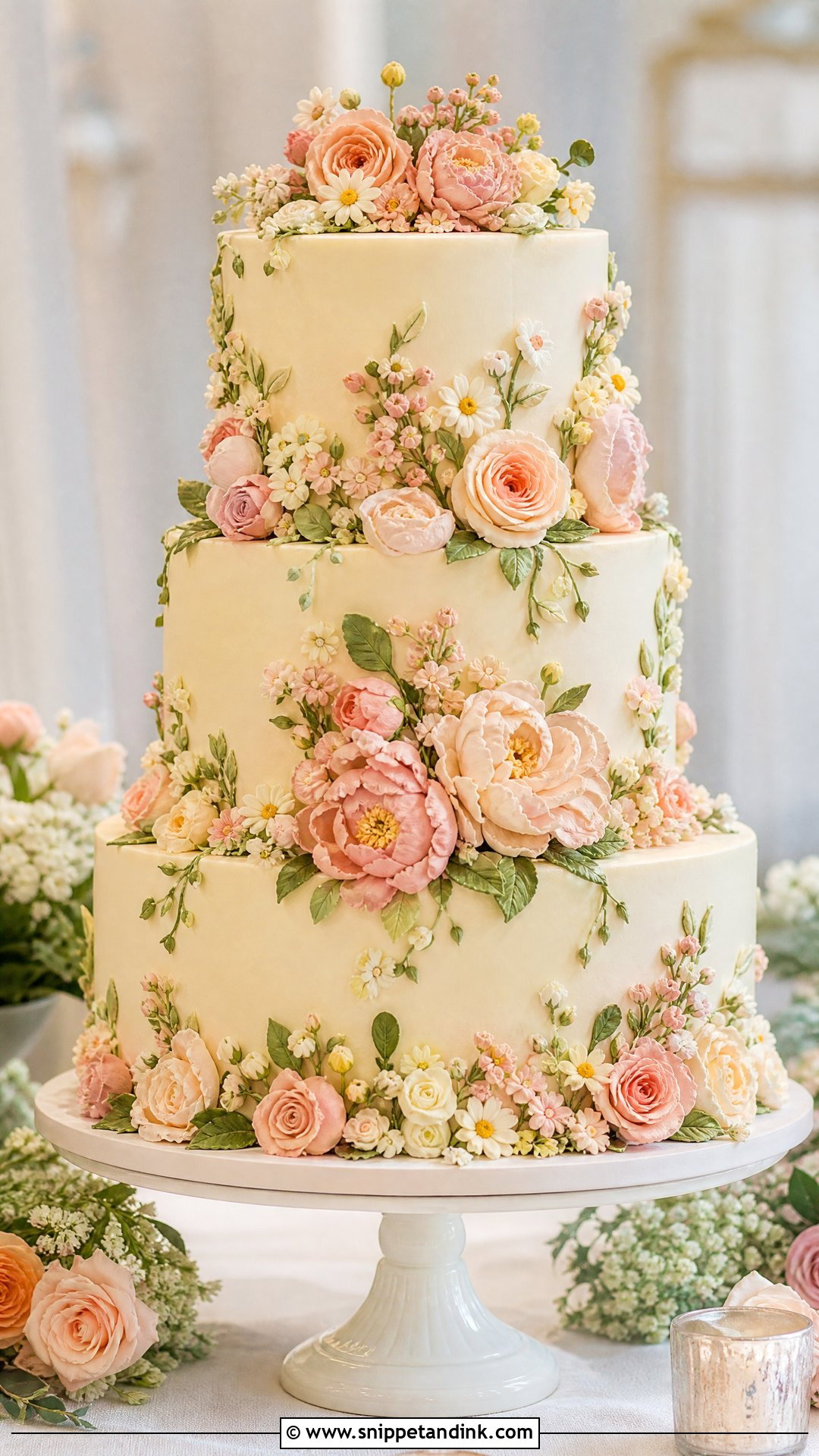
Buttercream flowers are piped directly onto the cake: roses, peonies, daisies, wildflowers and small leaves can cover a whole tier or trail down one side. It gives a garden effect without any food-safety worry, and every bit of it is edible. Colors can be soft pastels or bright, matched to your palette. American buttercream flowers hold detail well but soften in heat; Korean-style bean paste flowers are firmer and hold sharper petals. Vanilla, lemon, strawberry, chocolate and almond all suit buttercream.
22. Textured Buttercream Wedding Cake
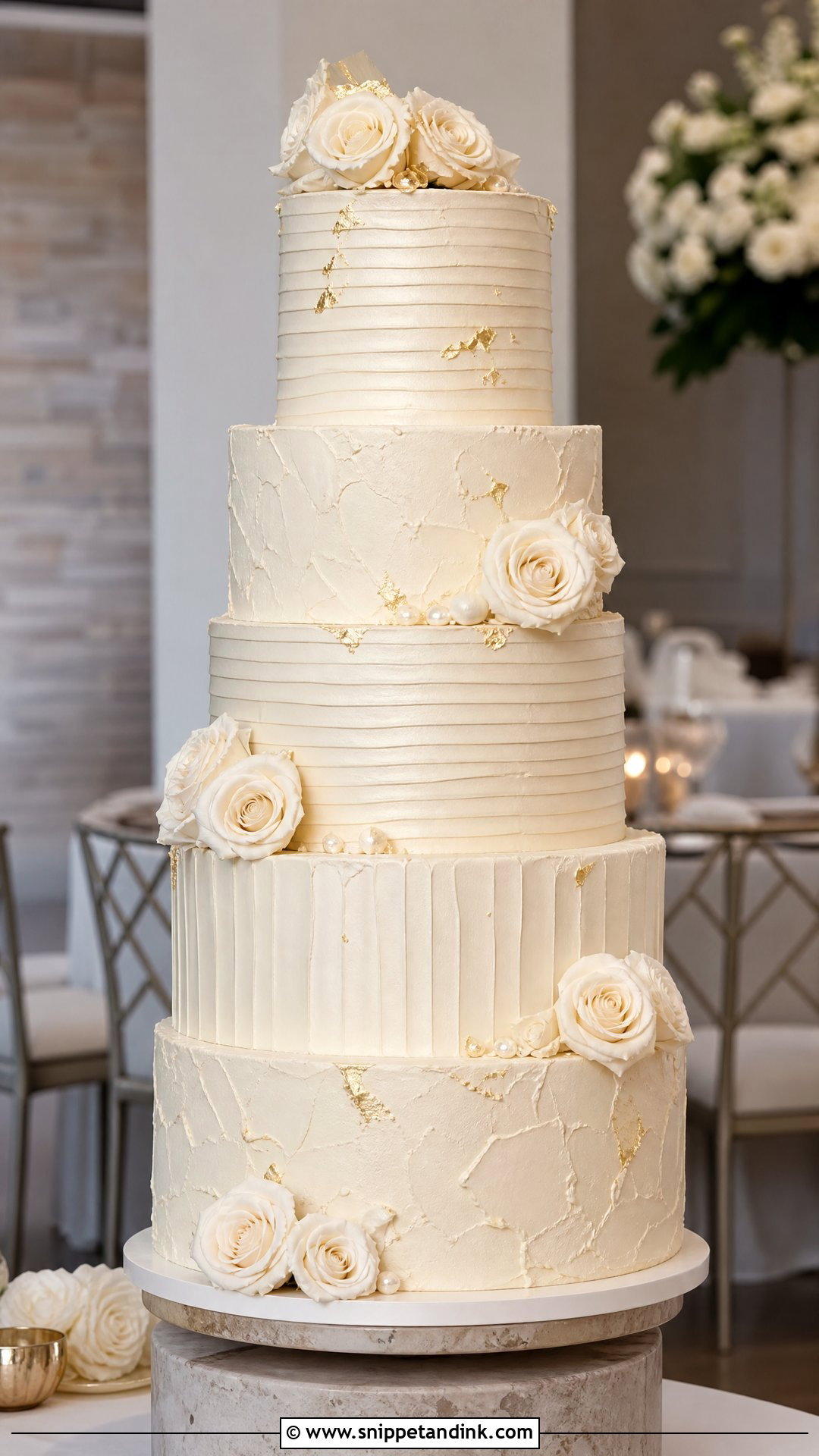
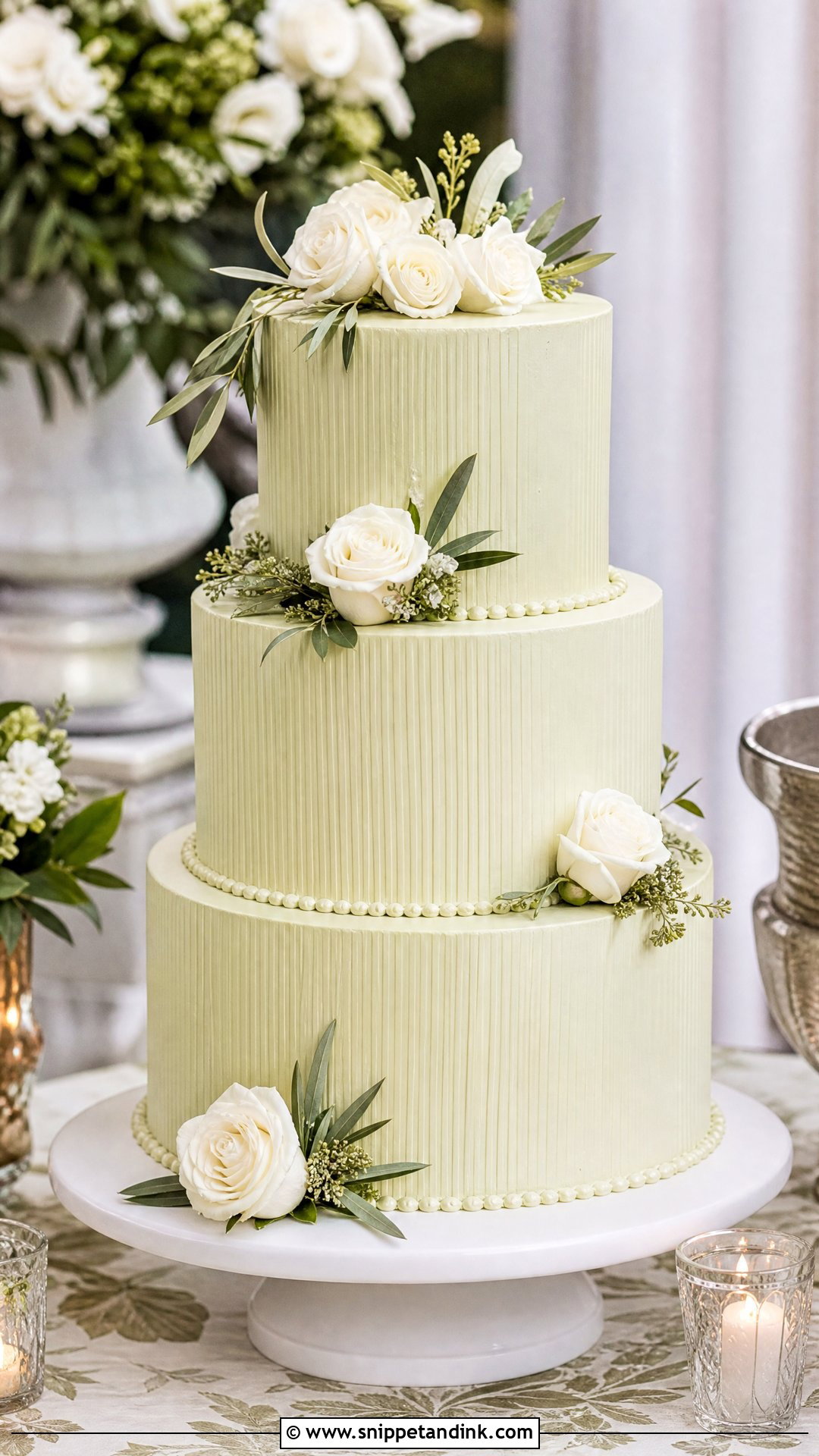
Textured buttercream looks simple from across the room and detailed up close: ribbed, pleated, stucco, combed, brushed or finished in fine vertical lines. On a big cake it keeps things interesting without heavy decoration. Each tier can carry a different pattern, or the whole cake can share one. I chill the cake between passes so each texture stays crisp. White, ivory, taupe, blush and soft green all work. Vanilla bean, espresso cream, chocolate, lemon and coconut pair easily with it.
23. Ombre Wedding Cake
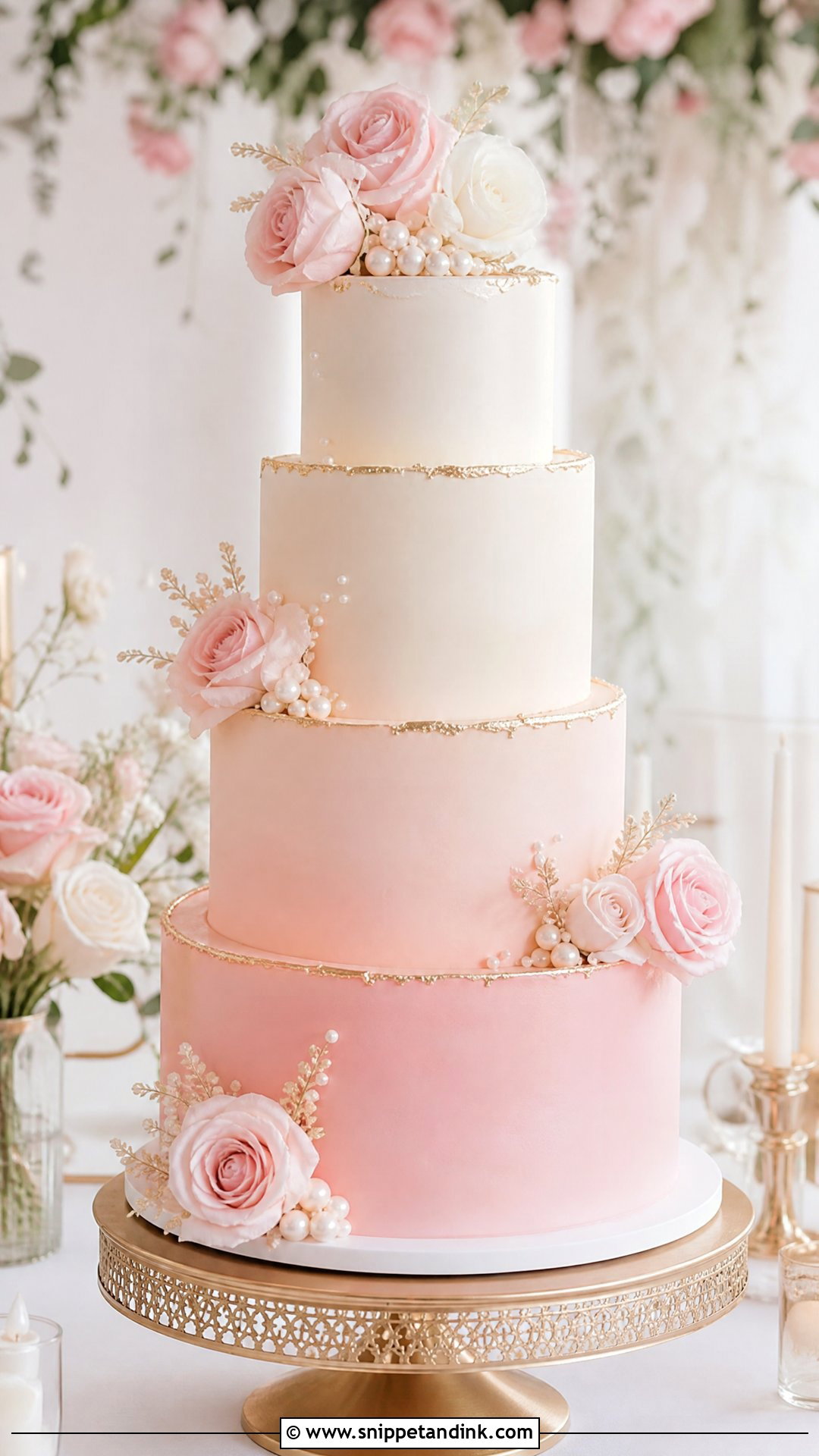
Ombre fades from one color into another, ivory to blush, white to blue, peach to coral or sage to deep green. On a big cake I usually run the darkest shade on the bottom tier, which keeps the cake looking grounded and adds visual height as it lightens. Buttercream gives a softer blend; fondant gives a smoother, more exact fade. Getting five even steps of color takes careful mixing, so I tint all the batches at once. Keep decoration minimal. Strawberry, lemon, blueberry, vanilla or coconut can match the colors.
24. Black Wedding Cake
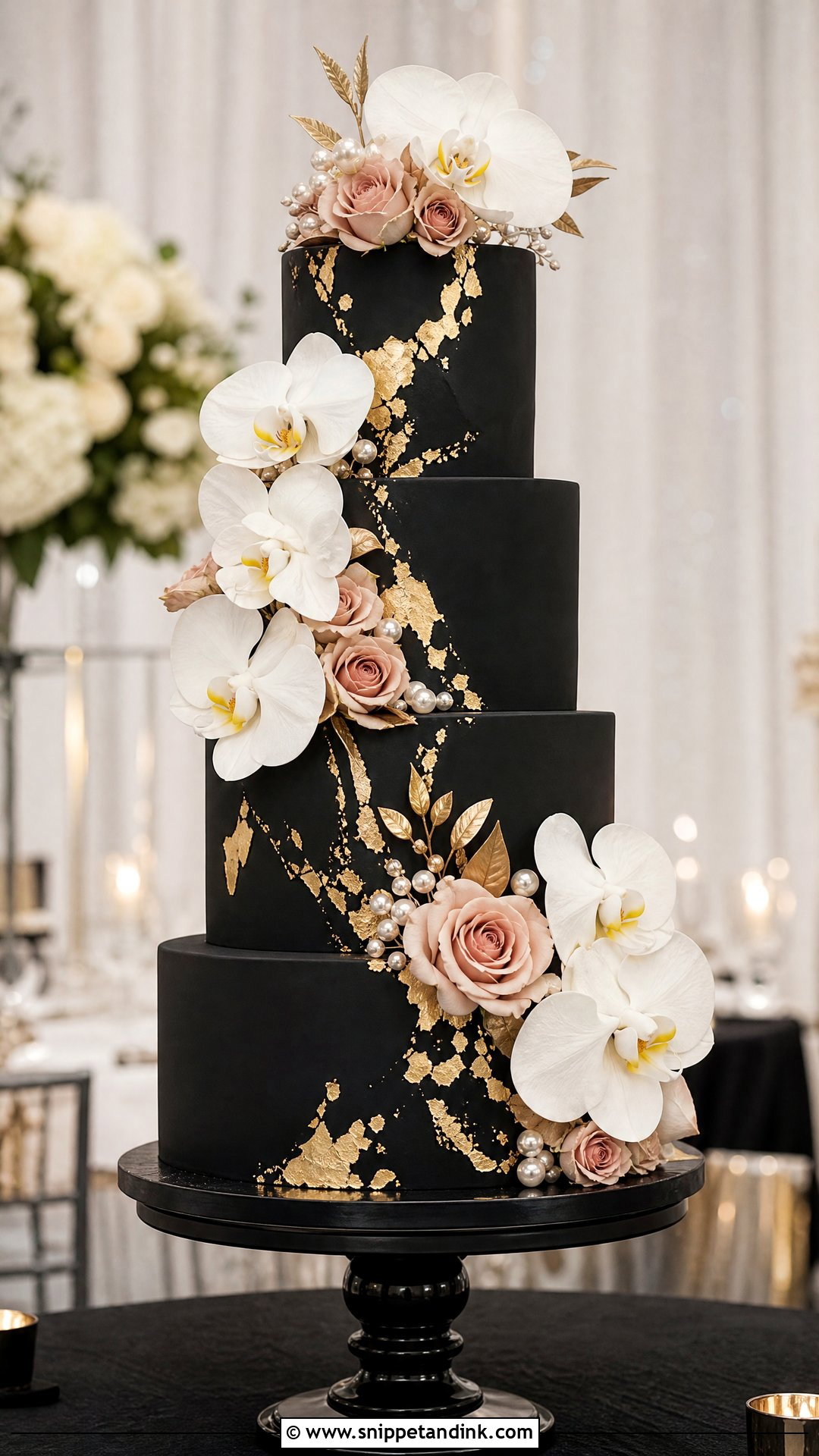
Black cakes are dramatic and suit evening weddings, modern venues and bold flowers. Matte black fondant, black cocoa buttercream or deep charcoal frosting are the options. Heavily colored icing can stain teeth and lips, which is worth knowing before the cutting photos, so black cocoa is my preferred base. Contrast keeps it balanced: white flowers, gold leaf, pearls, blush roses or metallic piping. Chocolate, espresso, red velvet and blackberry suit the dark color. It works best when the rest of the room has an equally strong direction.
25. Dessert Table Wedding Cake
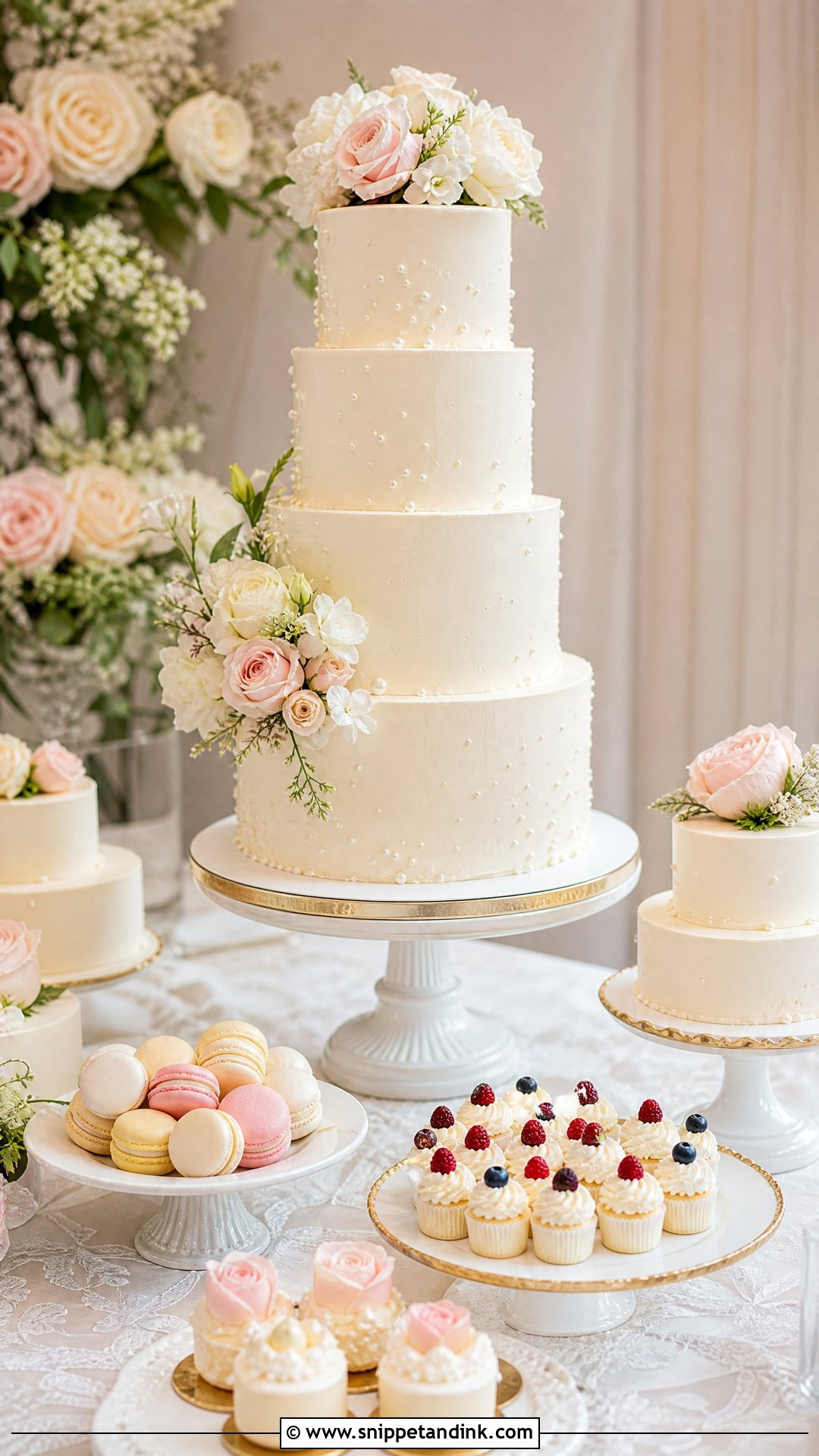
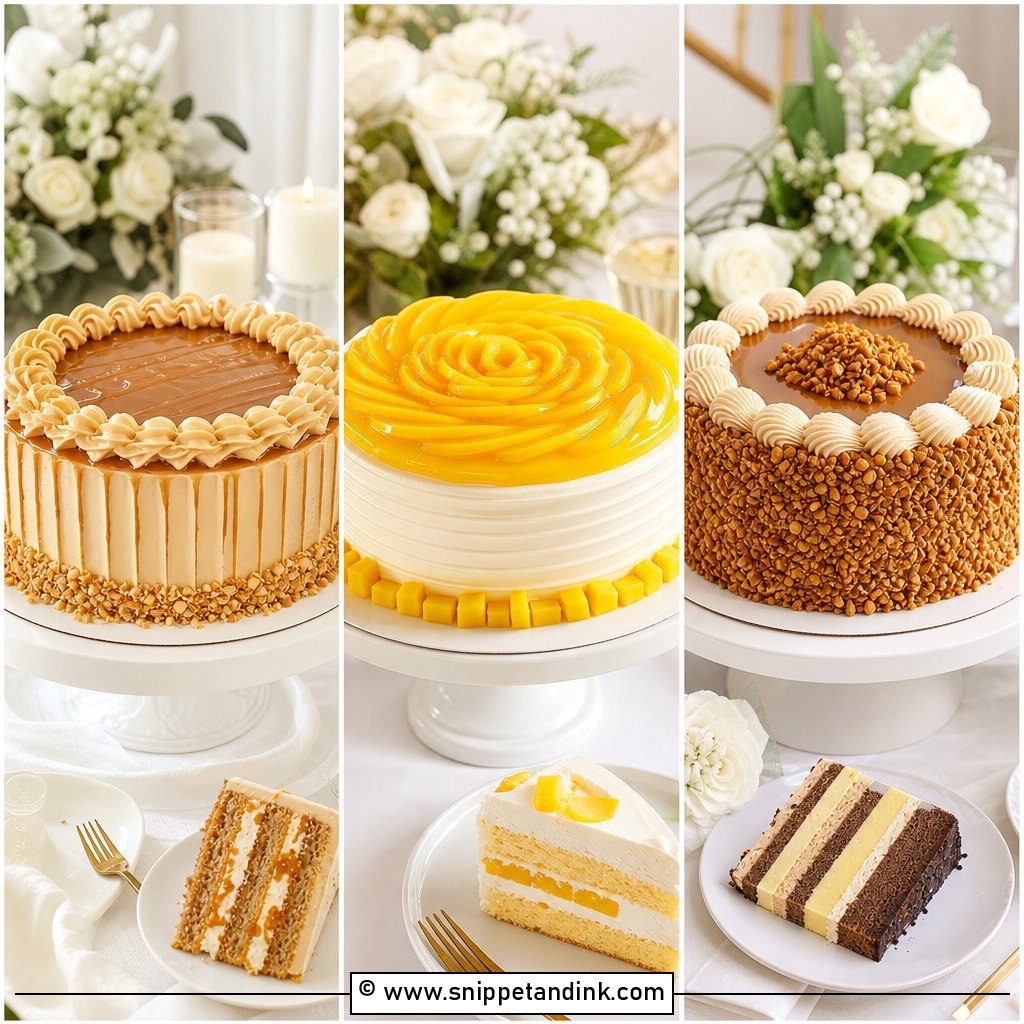
A dessert table wedding cake puts one tall cake at the center, surrounded by smaller cakes, cupcakes, macarons, fruit tarts or plated slices. You get the visual moment of a big cake with more flavor choice for guests. Keep one color palette across everything so the table reads as one design. The main cake might be vanilla almond, with chocolate, lemon, raspberry and coconut in the smaller pieces. Use cake stands at different heights and keep candles well away from sugar flowers and any buttercream.
Getting a Tall Cake From the Bakery to the Reception
Most cake disasters happen in the car or the first hour at the venue, not in the kitchen. A big cake almost always travels in separate tiers and gets stacked on site. That’s why your baker needs set-up time on the timeline, usually an hour or more for anything tall or sculpted, and access to the room before guests arrive.
- Confirm the table is level and sturdy. A slight tilt over five tiers becomes a lean by the speeches.
- Ask your venue whether there’s a cool place to hold tiers before assembly, ideally away from kitchen ovens.
- Agree who is responsible for the cake once it’s set up, and who will cut and serve it.
- Make sure your florist knows when to deliver any cake flowers, so they’re added at assembly, not before.
Where the Cake Table Should Stand in a Warm Room
Buttercream begins to soften once a room warms up, and a tall cake carries a lot of weight on its lower tiers. Keep the table out of direct sun, away from windows, heaters and the dance floor lighting, and not right beside the kitchen door. In summer, ask whether the cake can come out after the ceremony rather than sitting through cocktail hour. Fondant handles warmth better than buttercream, but it can sweat if a chilled cake is carried straight into a hot, humid tent, so let it come up to room temperature indoors first.
Talk Structure With Your Baker Before Decoration
A big cake earns its place when it suits your venue, flowers and the scale of the room. Tall white tiers feel classic, sculptural cakes feel modern, long table cakes feel generous and vintage piping feels nostalgic. Before you settle on a design, talk through servings, room temperature, delivery distance, frosting stability and whether every decoration is safe to eat. Bring clear inspiration to your baker, then listen to what they say about structure and scale. The cake should look right in the room, hold its shape until it’s cut and taste good enough that nobody leaves a slice.
You'll Like These Ideas:








Leave a Reply