
Most of what a wedding dress says happens below the waist. The skirt sets how formal you look, how you move, how much room you need on the aisle and how the dress behaves at dinner. Below are twenty ways to build a bridal look around the skirt: full gowns where the skirt is the feature, bridal separates you can fit piece by piece, and detachable overskirts that give you a ceremony silhouette and a lighter one for dancing. Satin gives structure; chiffon, tulle, lace and organza give softness or volume. When I help a bride decide, I ask about the floor she’ll walk on, the season and how much she wants to dance before I look at a single sample, because those answers rule out half the options straight away.
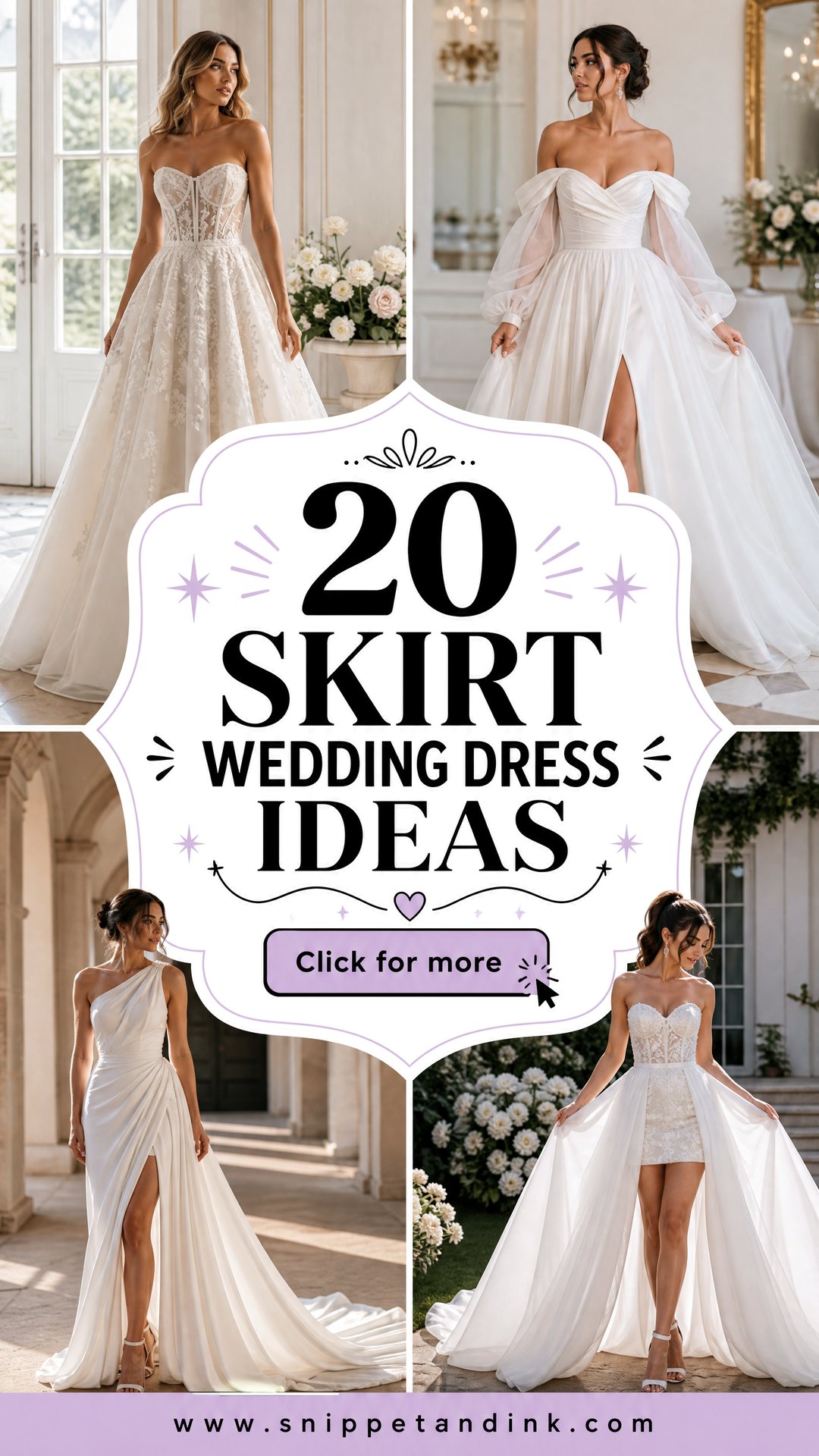
Separates, Overskirt or One Gown: Which Construction Suits Your Day
The ideas below are built three ways, and each has practical consequences beyond how it looks.
Bridal separates
A top and skirt bought as separate pieces can be sized independently, which helps when your bust and hips fall into different sizes. They often need fewer alterations. The weak point is the waist, where the two pieces meet, so plan for hidden snaps or hooks to hold them together.
Detachable overskirt
You get two silhouettes without changing dresses. The cost is logistics: someone has to remove it, and it needs a place to go. The base dress also has to look finished on its own, so I fit it first and the overskirt second.
A single gown
Nothing can separate or ride up, and the structure is all built in. It is usually the heaviest option, and bustling a full train takes planning.
Timing differs too. Made-to-order gowns commonly take several months to arrive, while many separates ship faster, but lead times vary widely between designers. Whatever you choose, leave room for two or three fittings in the final couple of months.
1. Satin Ball Gown Wedding Dress
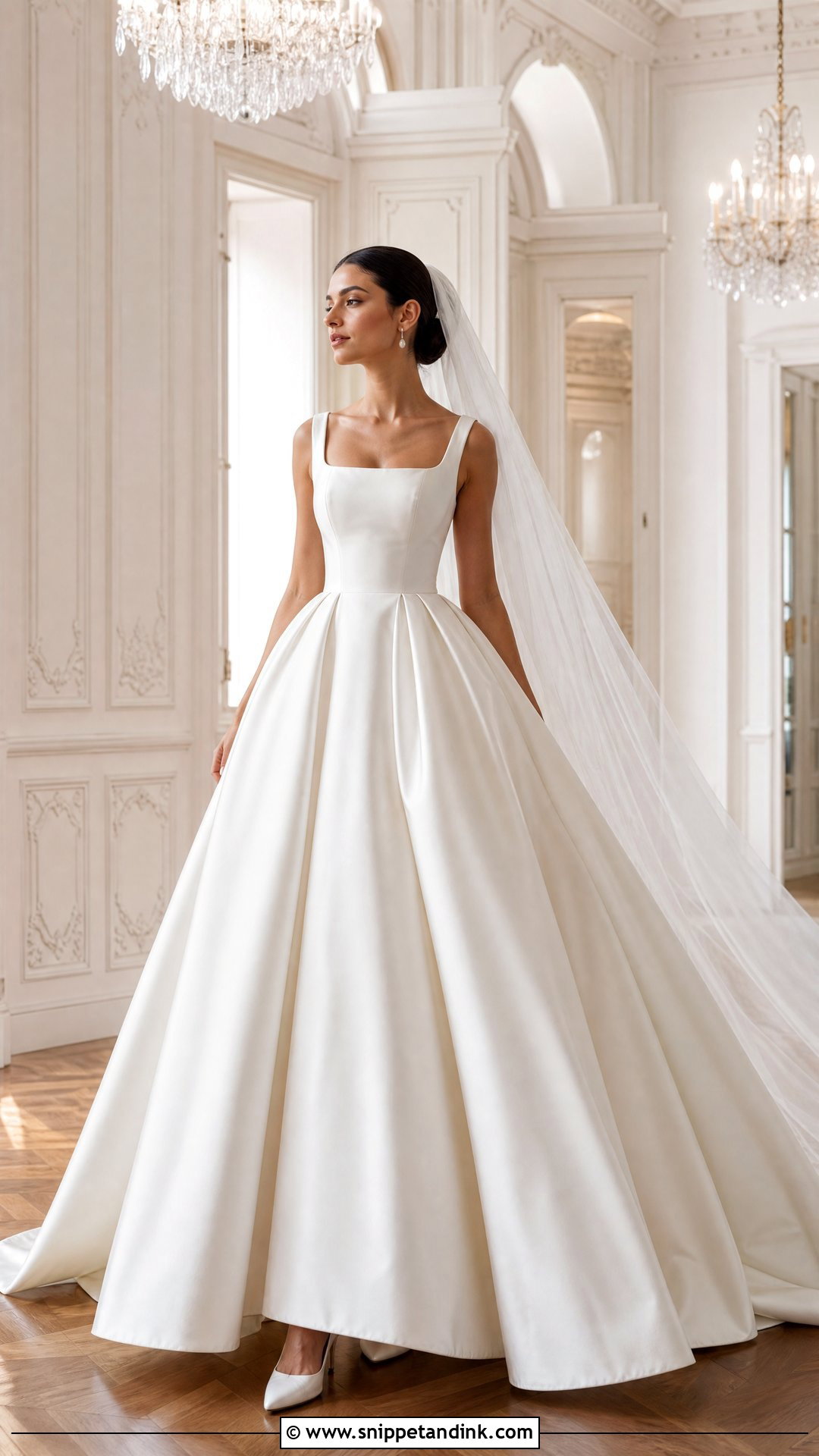
A satin ball gown is all about the skirt’s shape, and satin holds that shape better than any softer fabric. A clean scoop, square or strapless neckline keeps the bodice from competing with the volume. A natural or basque waist sharpens the line where bodice meets skirt. Pearl earrings, a plain cathedral veil and pointed pumps under the hem. Satin carries its own shine, so I’d keep jewellery small. The two alterations that matter most: a bustle that can take the weight of a full satin train, and a front hem set to your exact shoe height. Bring the actual shoes to every fitting. Half a centimetre is the difference between gliding and tripping on the steps.
2. Lace Top And Tulle Skirt Wedding Dress
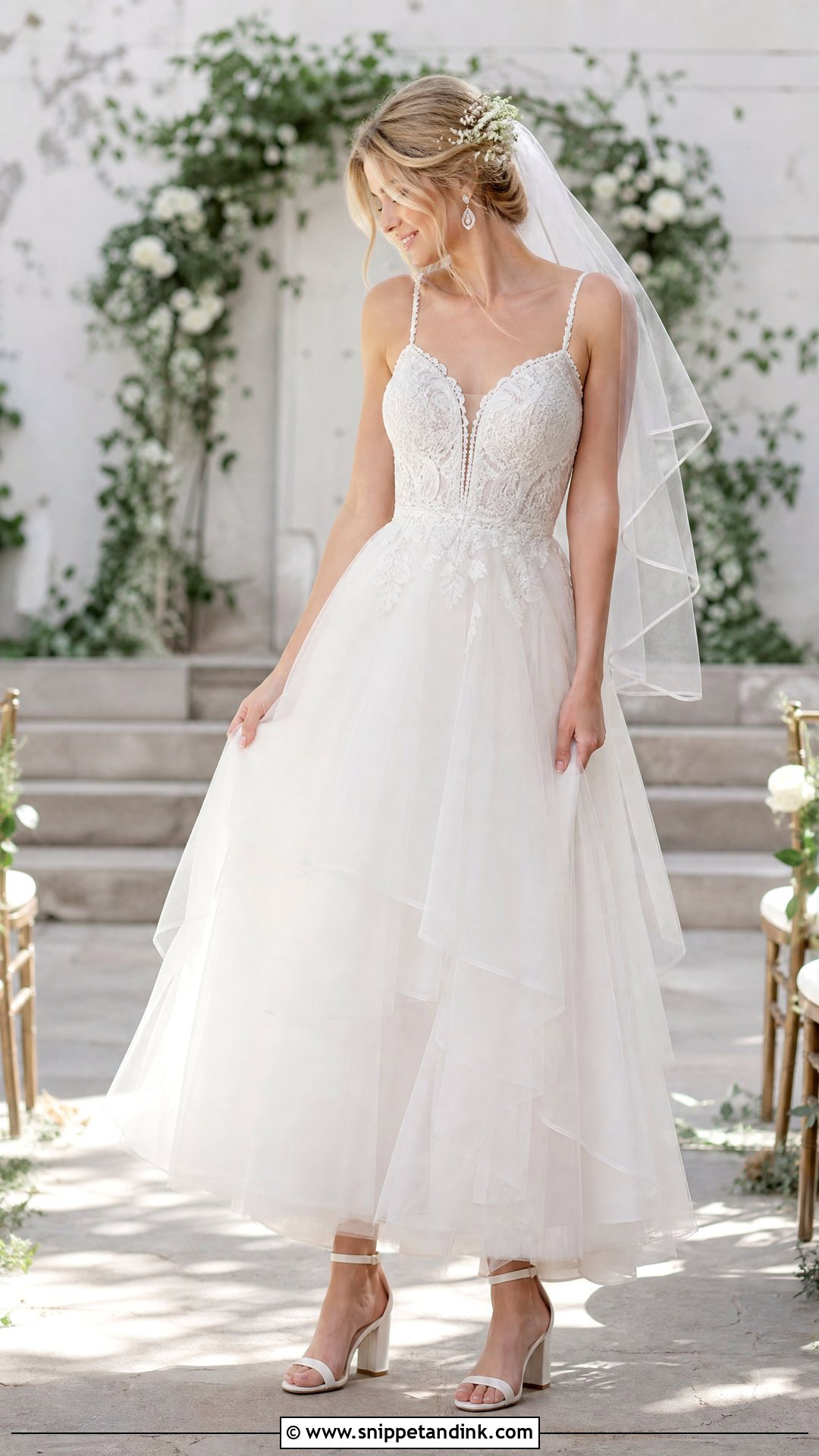
Lace on top, tulle below is the classic romantic pairing for gardens, estates and ballrooms. A fitted lace top with fine sleeves or a lined sweetheart bodice, over a layered tulle skirt that starts at the natural waist. The thing that catches people out is colour. Ivory lace and ivory tulle from different makers are rarely the same ivory, and next to each other the difference is obvious in daylight. I hold swatches together by a window before anything is ordered. The top should finish under the skirt waistband so the pieces read as one dress. Slim drops, a fingertip veil and block-heel sandals; a floral comb can echo the lace.
3. Corset Top And A-Line Skirt Wedding Dress
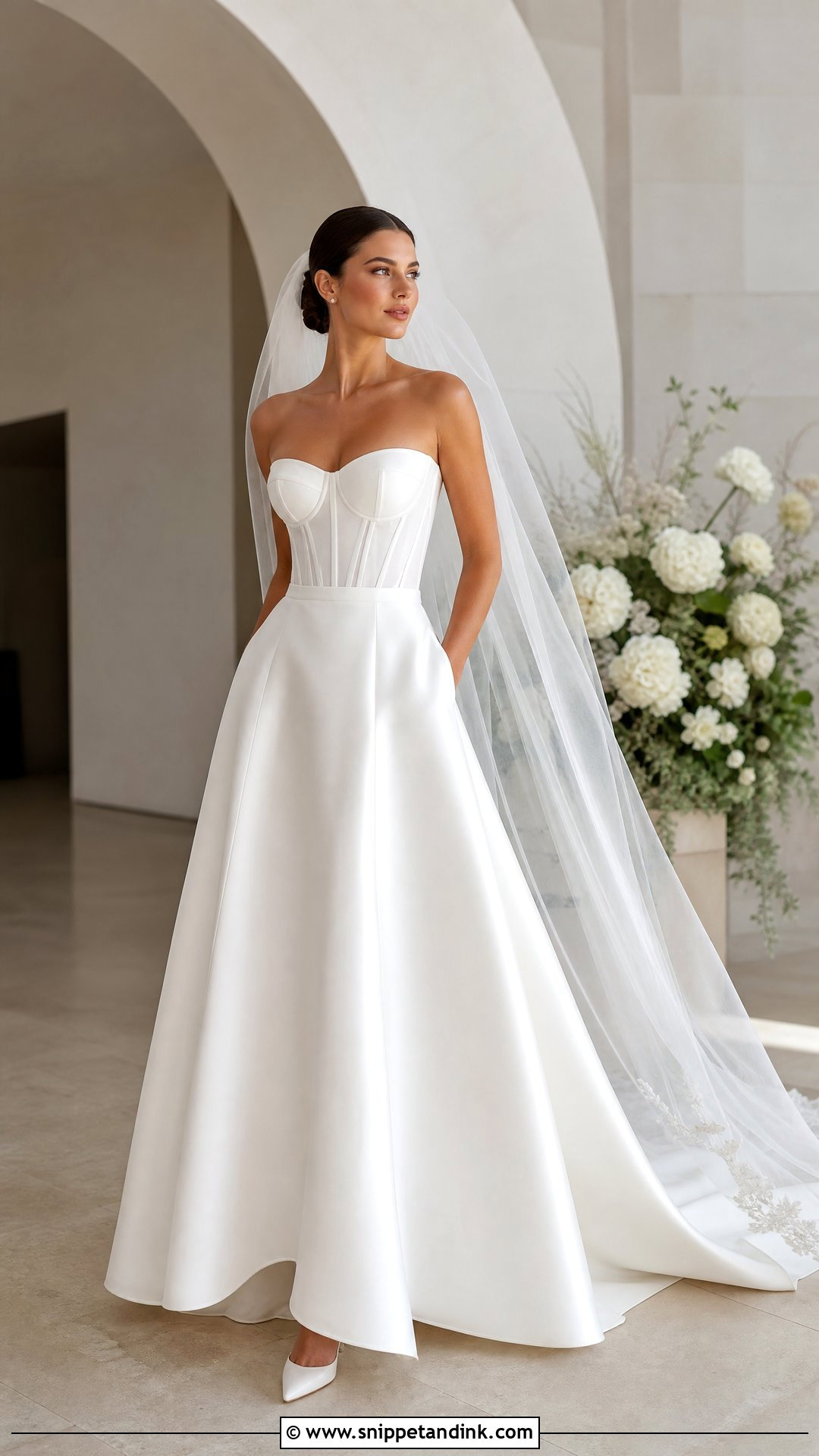
If you want structure without the weight of a full gown, this is the answer. A supportive corset top over an A-line skirt in satin, mikado or crepe that skims the hips and widens gently. The support should come from internal boning and a waistband stay, not from the visible lacing; lacing alone loosens through the day. A single-strand necklace, studs and a chapel veil, with pointed pumps continuing the skirt’s line. At every fitting I have the bride sit, walk, raise her arms and take a full breath. If any of those pinches at the ribs, the corset is too small, not too new.
4. Long Sleeve Top And Chiffon Skirt Wedding Dress
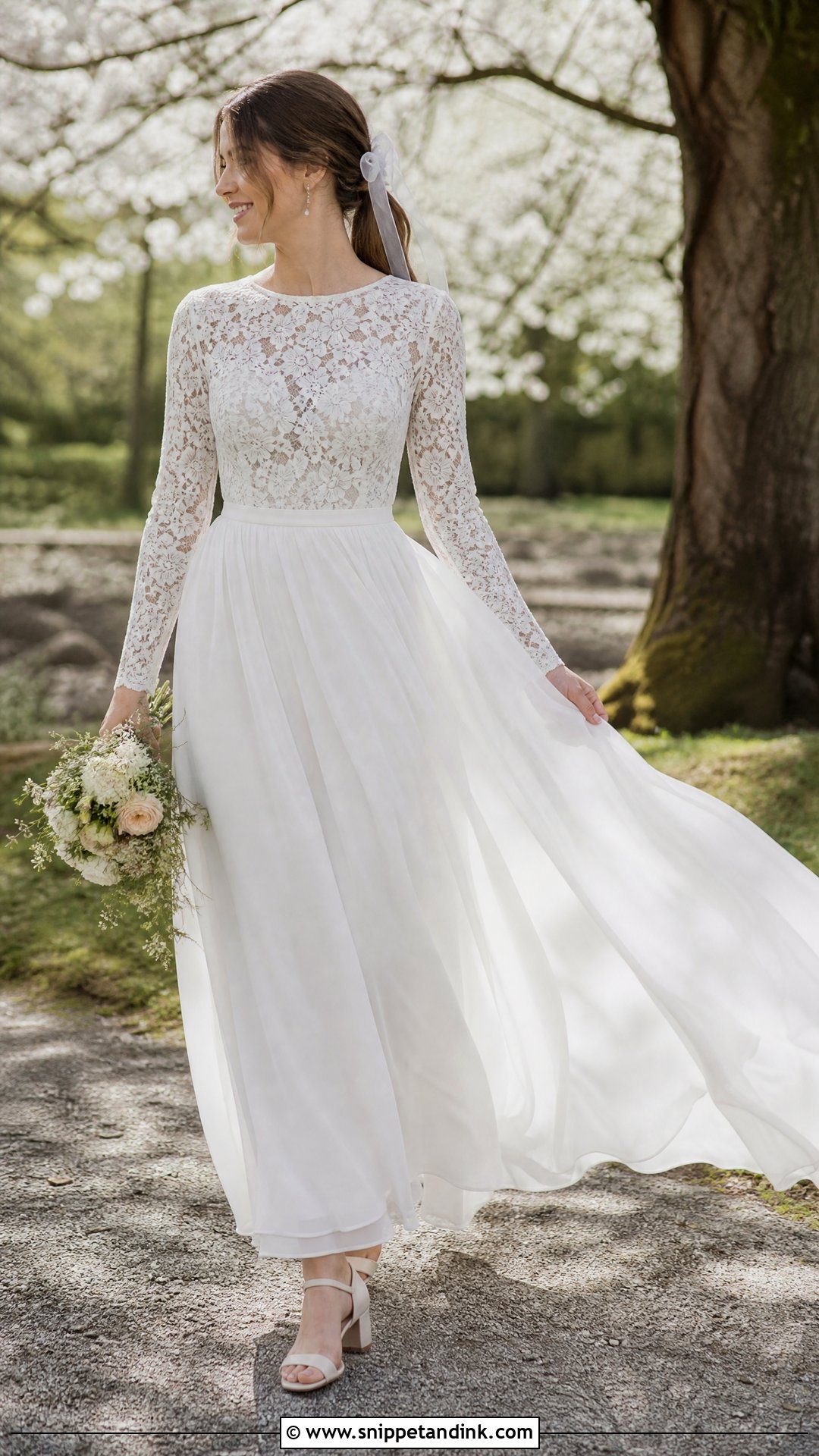
Long sleeves and a flowing chiffon skirt give coverage that still looks light. Choose a lined lace, crepe or lightly beaded top with sleeves that sit smoothly at the shoulder and wrist, and a high-waisted chiffon skirt with several thin layers and a proper lining. Low block heels, small earrings and a ribbon at the base of a relaxed bun. Chiffon is the most wind-sensitive fabric in this list. Outdoors, a long train lifts, wraps around your legs and picks up grass, so I’d keep it short and add a wrist loop or discreet bustle for walking and dancing. Check the sleeves by hugging someone; tight armholes show up immediately.
5. Pearl Top And Satin Skirt Wedding Dress
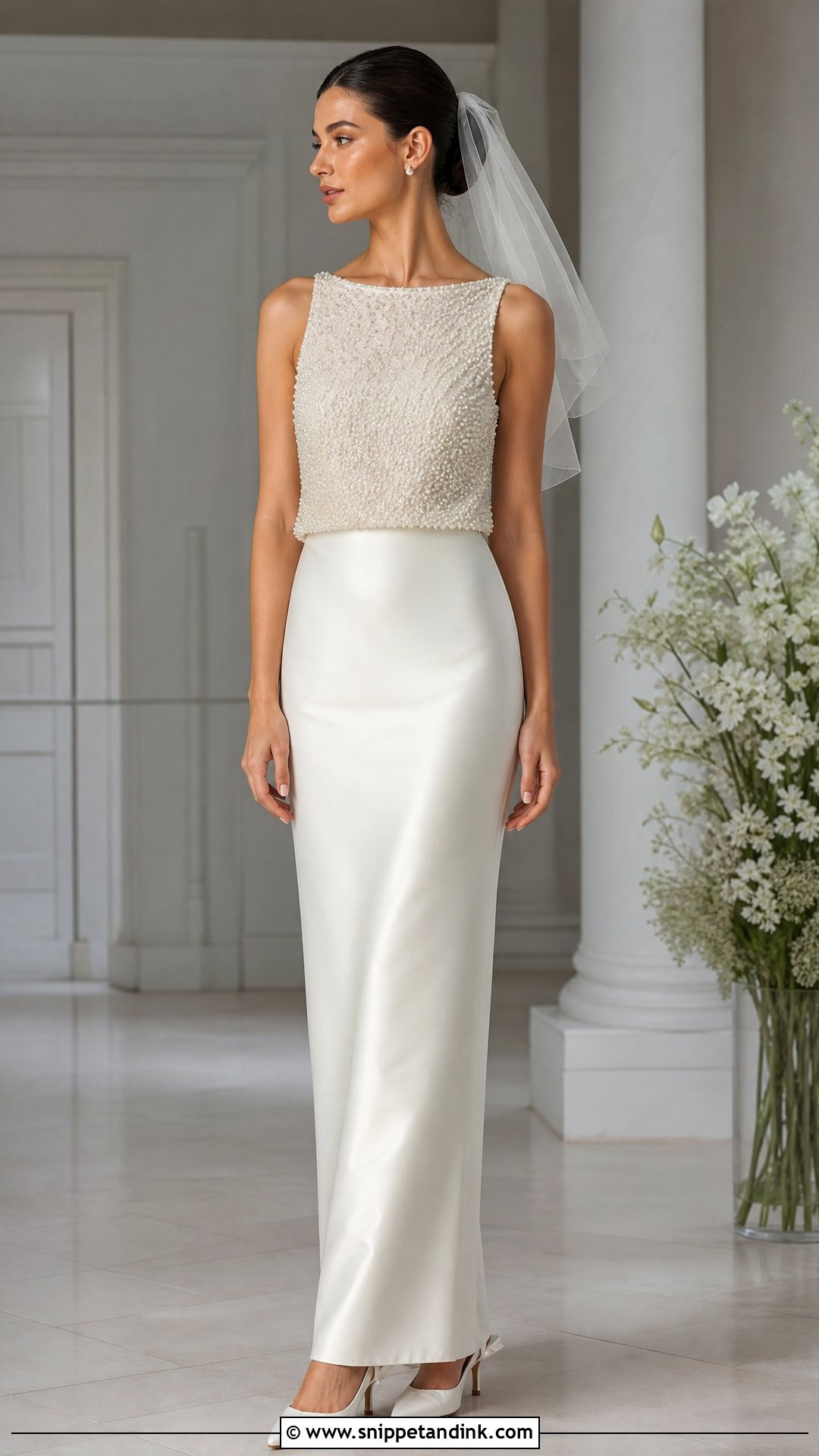
Pearl tops trade sparkle for soft texture. Make sure the beads are backed with a smooth lining, because pearls sewn straight onto mesh rub the skin raw under the arms by evening. A high-waisted satin skirt in a column or gentle A-line keeps it balanced. Pearl studs, a short tulle veil and satin slingbacks. With a densely beaded bodice, skip the necklace and wear the hair up. Where top meets skirt is the weak point of any two-piece, and pearls are heavy enough to drag the top upward when you sit. A hidden snap or hook at the side seams keeps both pieces aligned from ceremony to dancing.
6. Off Shoulder Top And Organza Skirt Wedding Dress
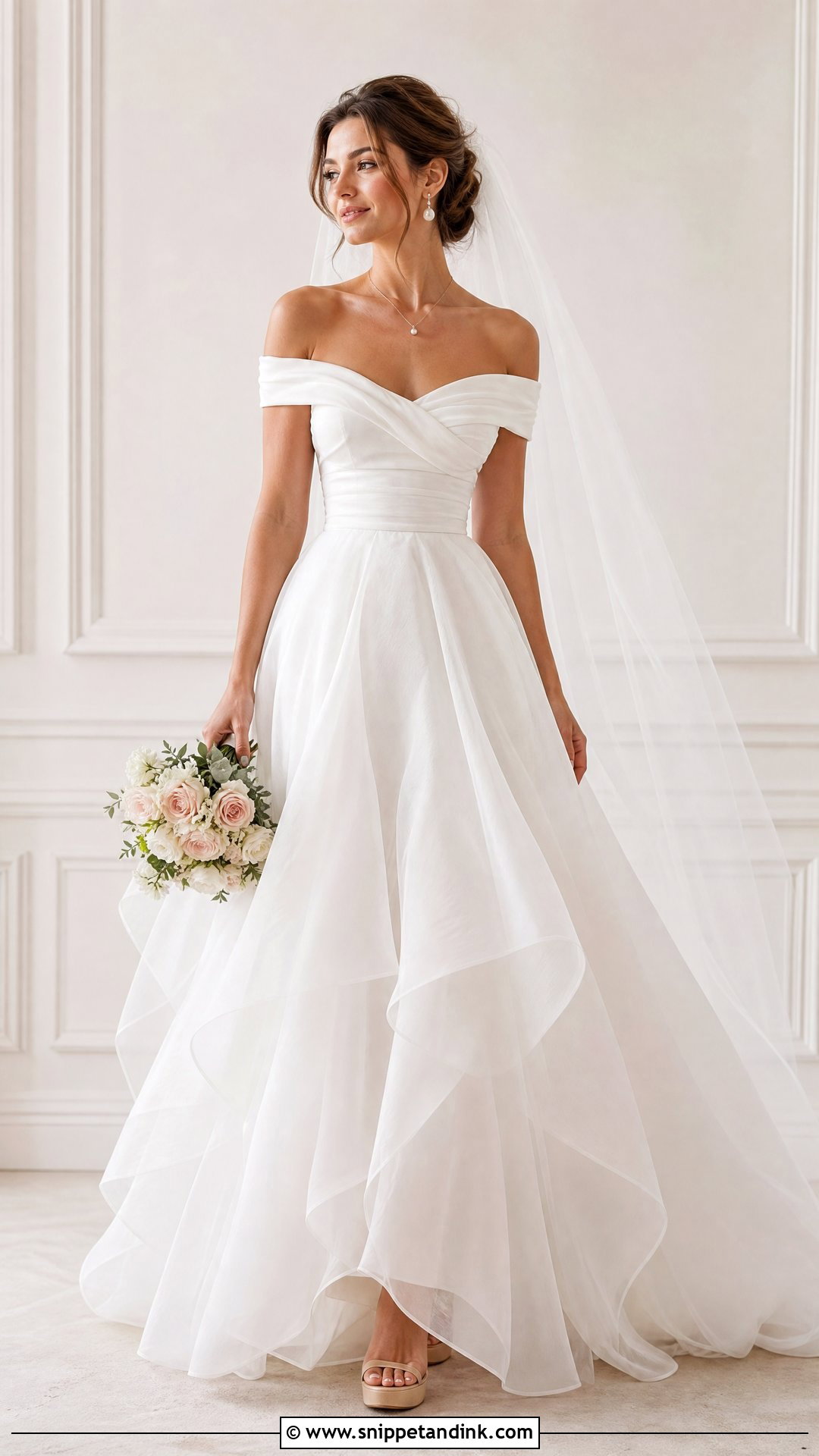
Organza is crisp and translucent, which gives volume without the solid look of satin. With an off-the-shoulder bodice it reads light and a little dramatic. The bodice needs internal support so the bands stay put, and the sleeve bands must allow your arms to rise; I ask brides to hug, sit and lift both arms before anything is decided. A delicate pendant, small earrings and a low chignon with a pearl comb. Platform sandals give height and are steadier than stilettos. A sheer chapel veil suits organza’s see-through quality. One thing to know: organza creases sharply where it’s crushed, so the car journey matters. Sit on a clean sheet with the skirt spread loosely.
7. Halter Top And Column Skirt Wedding Dress
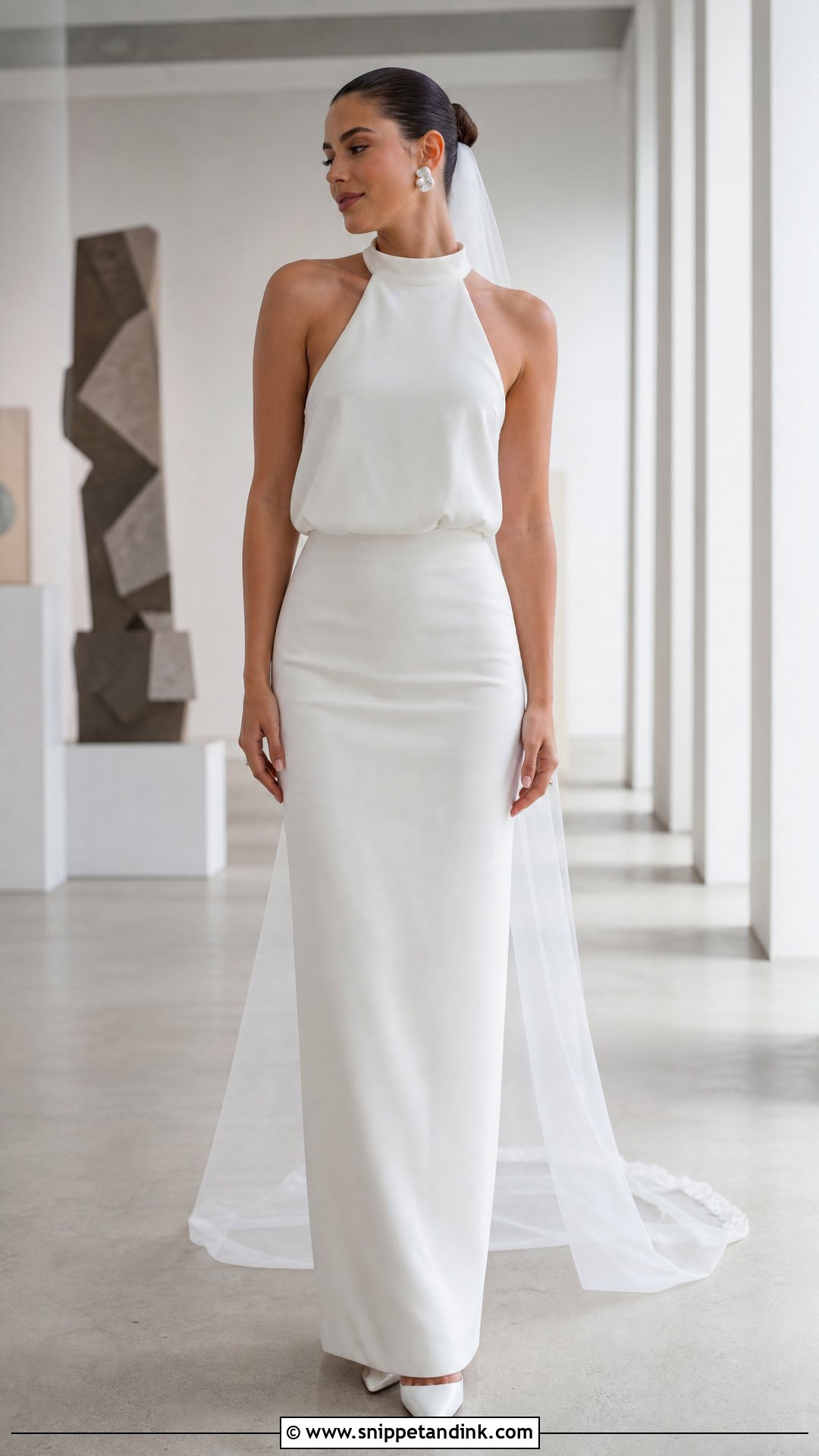
A halter top and column skirt is the minimalist’s two-piece. A high or softly draped halter frames the shoulders, and a slim crepe or satin skirt runs in one unbroken line to the floor. The top can meet the waistband or show a narrow strip of skin. Sculptural earrings, a sleek bun, pointed mules or slingbacks; a long veil adds ceremony drama without changing the shape. Column skirts fail when they’re cut to look good standing still. I fit them with the bride walking, because the hips and knees need room for a natural stride. A back slit and a light stretch lining make the difference.
8. Square Neck Top And Pleated Skirt Wedding Dress
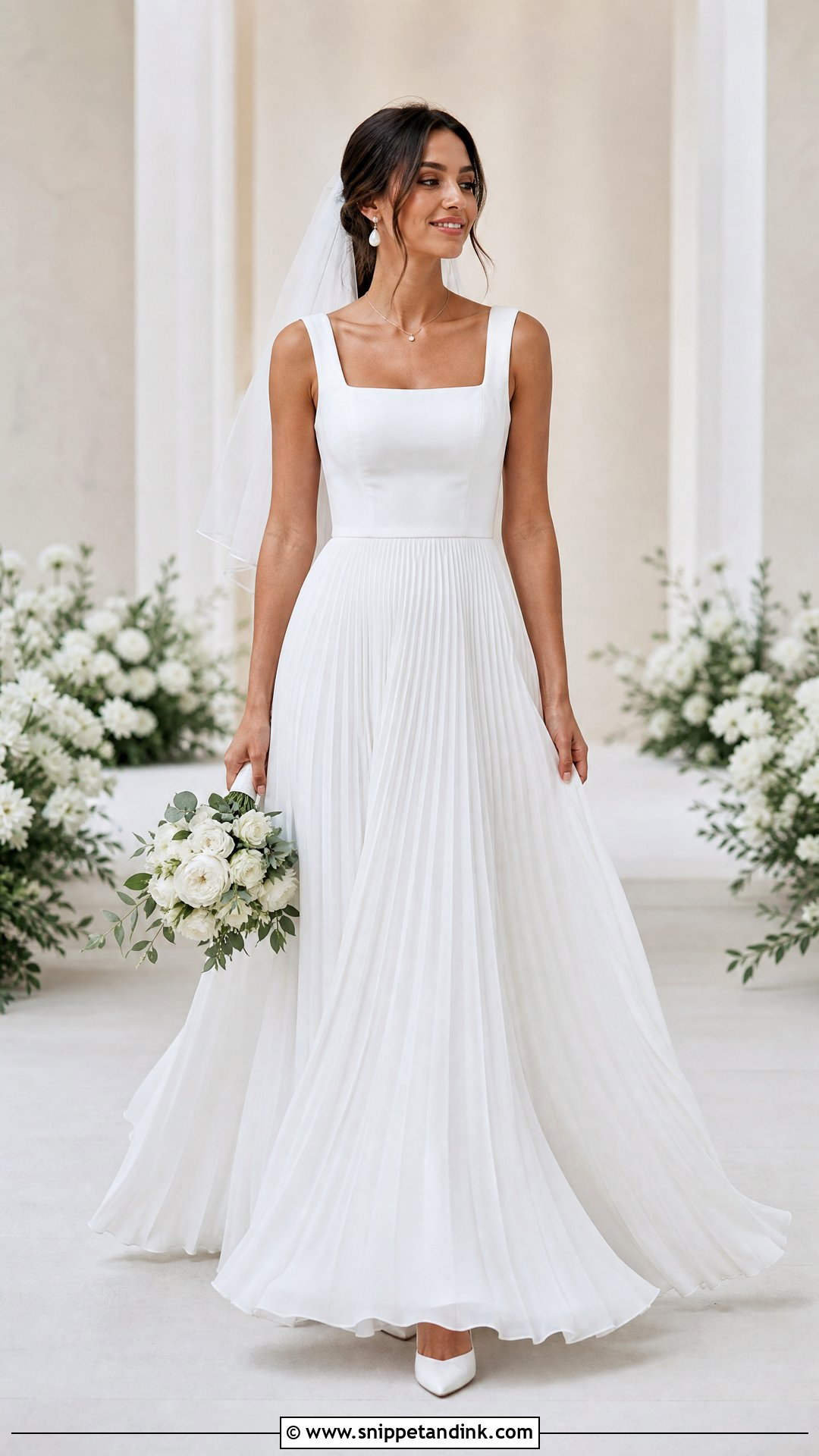
Square necks frame the face with a clean edge and work with or without sleeves. Below it, a finely pleated chiffon or georgette skirt falls from a fitted band; vertical pleats lengthen the body and give plenty of room to dance. A fine chain necklace, pearl drops and low pointed heels. A shoulder-length veil keeps the pleats visible. Pleats tell you immediately when the waistband is wrong: they splay open across the hips. That’s a fitting fix, not a steaming fix. Once the fit is right, steam the pleats lightly from inside and never press flat across them.
9. High Neck Lace Top And Crepe Skirt Wedding Dress
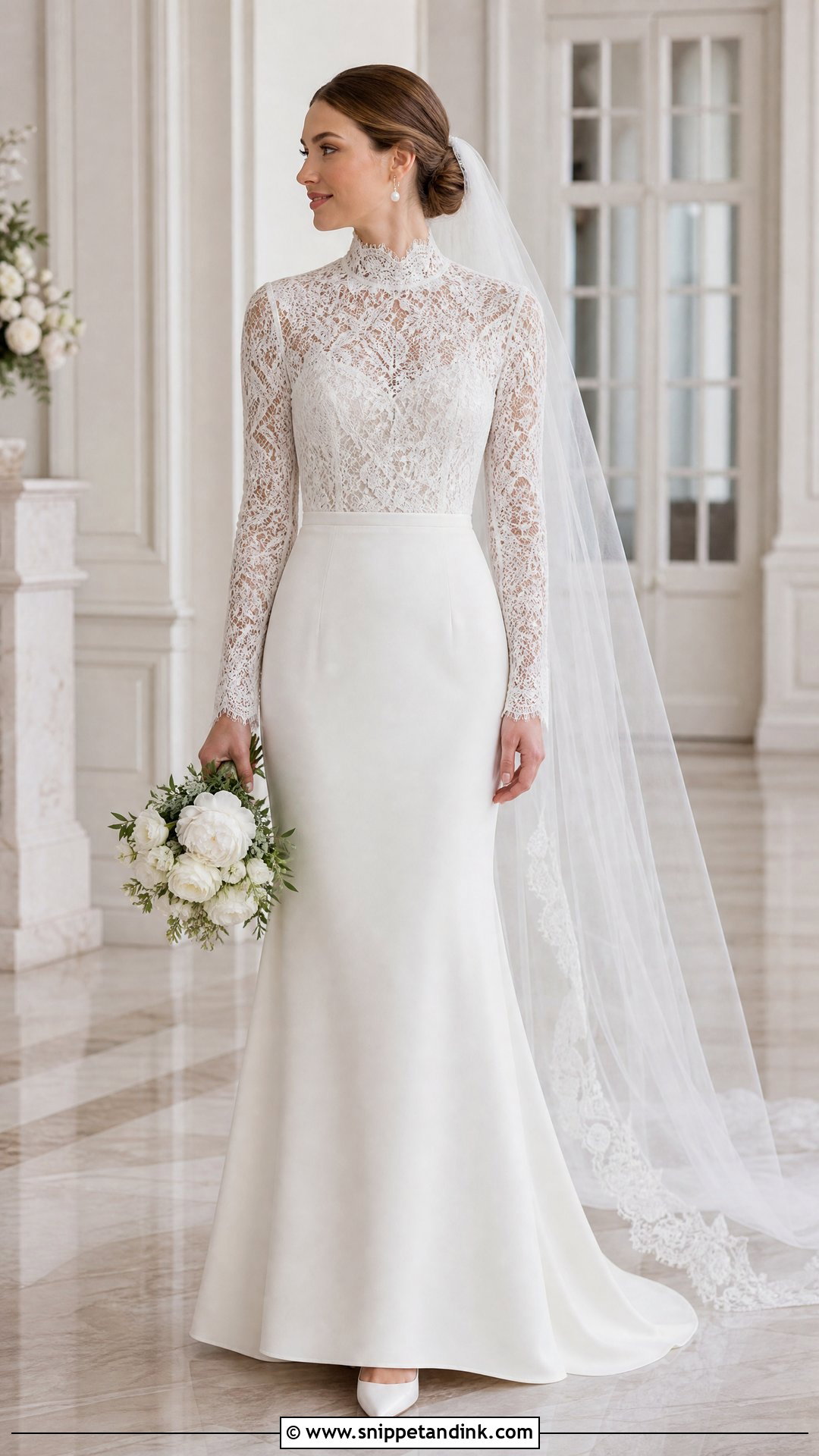
High-neck lace over smooth crepe gives coverage with balance: detail on top, clean below. A sleeveless high neck looks modern; fitted long sleeves look more traditional. The crepe skirt needs a gentle flare, slit or short train for movement. Small pearl earrings, closed-toe pumps and a low bun. With a high neck I place the veil comb under the hair rather than on top, so there’s no bulk near the collar. The lace should be soft and lined, and it must not pull across the shoulder blades when you reach forward. Back buttons take time; a button hook in the getting-ready kit saves several minutes and some fingernails.
10. One Shoulder Top And Draped Skirt Wedding Dress
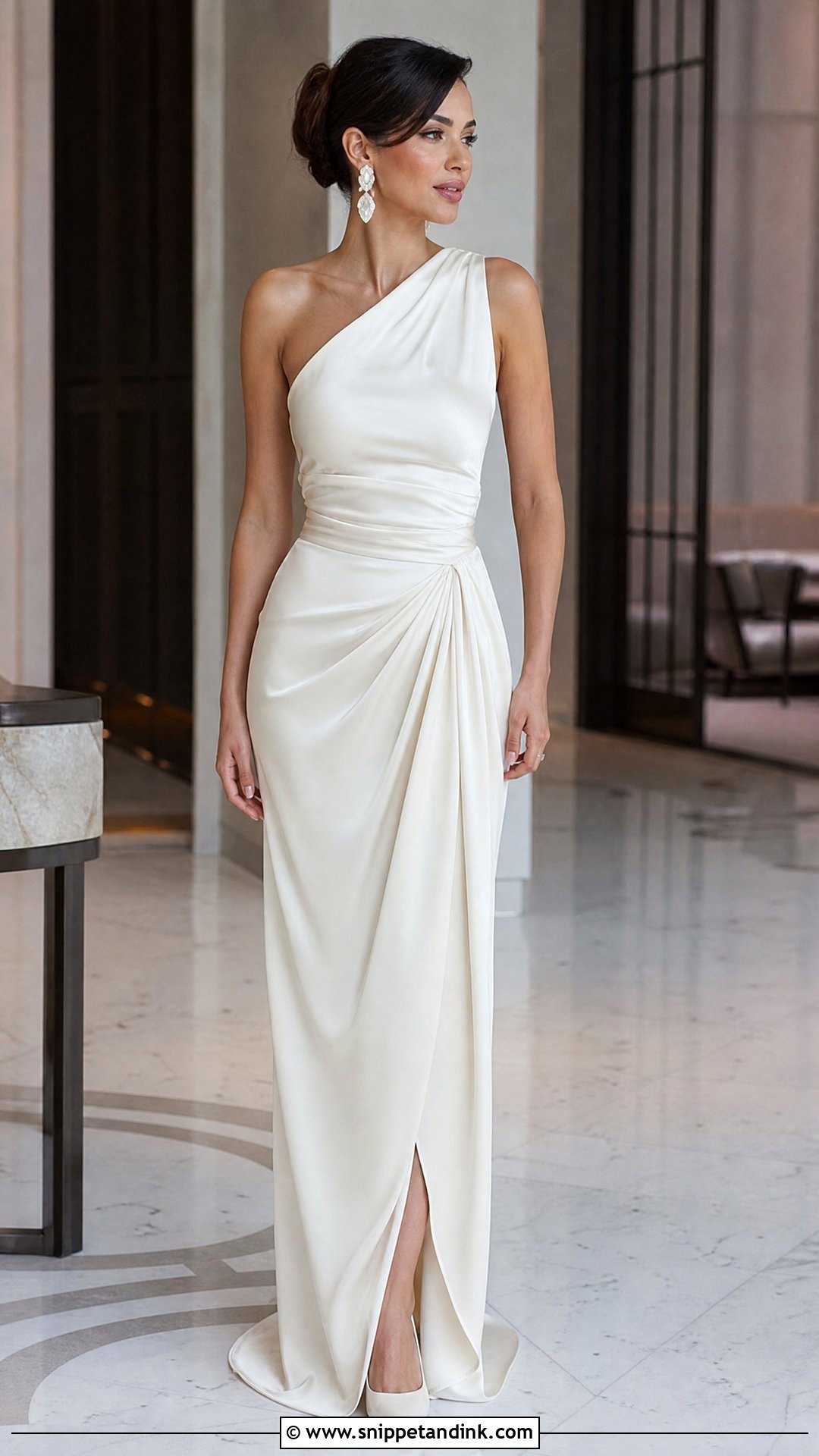
Asymmetry gives shape without decoration. A one-shoulder bodice with a draped satin or crepe skirt gathered softly at the waist creates diagonal movement from shoulder to hem. One statement earring on the bare side, or a small sculptural pair. Sleek heels and a rounded clutch. A low ponytail or side-swept updo keeps the neckline clear, and no necklace, which breaks the line. Draping looks easy and is the hardest thing to alter. I check that the strap lies flat and that the ruching stays where it was placed when the bride sits, turns and walks, because pleated drapes tend to slide toward the low side over a long day.
11. Mini Wedding Dress With Detachable Overskirt
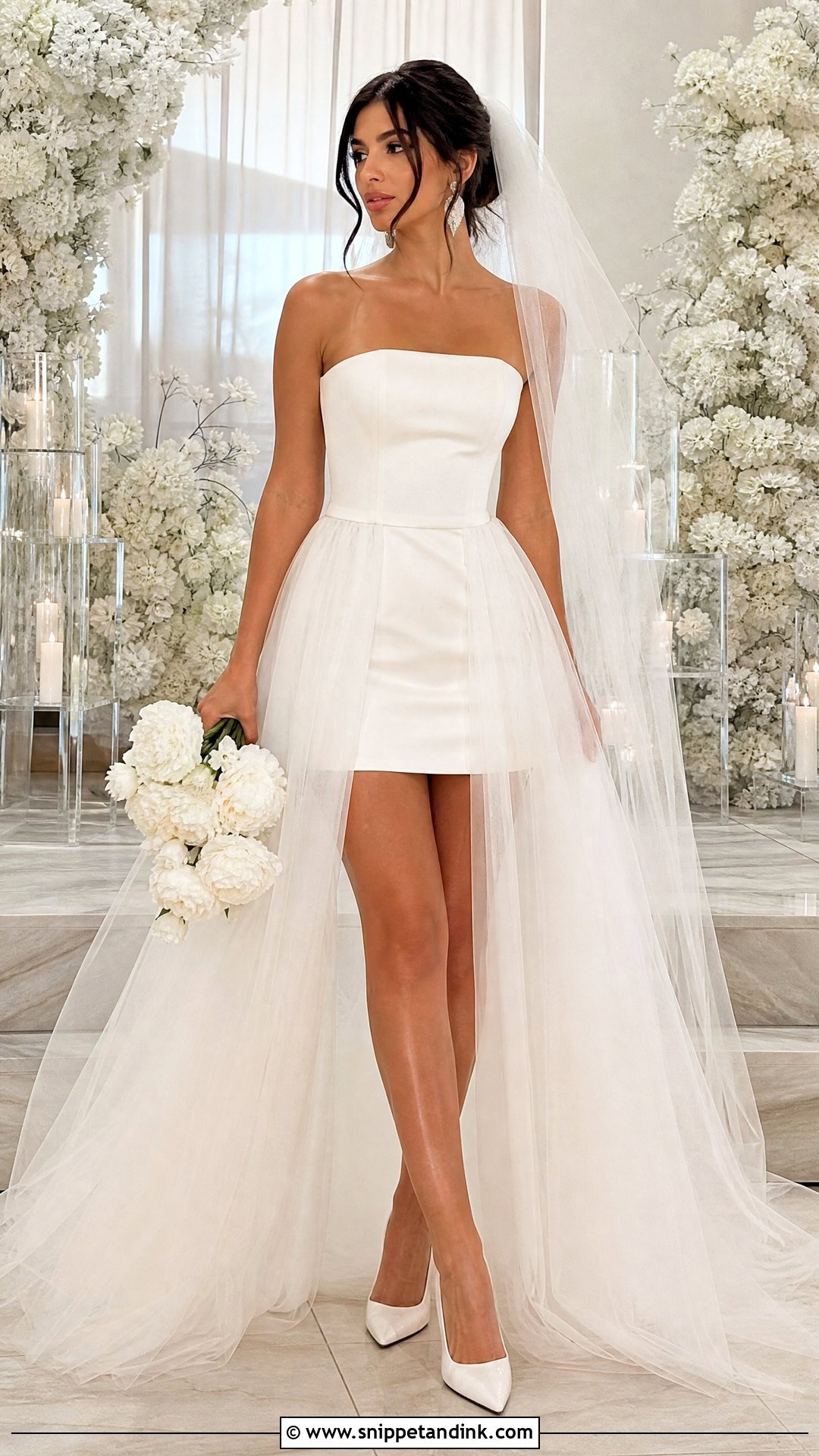
Two looks, one dress. A structured mini under a floor-length tulle, lace or organza overskirt for the ceremony; after portraits, the outer layer comes off for dancing. The overskirt waistband should lie flat with hidden fastenings. For the ceremony, a long veil, refined earrings and pointed pumps; later, a headband and block heels or embellished flats. With the overskirt on, the mini must not peek through at the front opening when you walk, so I test it on a step, not on a flat floor. And practise removing it: it should come off without anyone touching your hair or makeup.
12. Mermaid Wedding Dress With Tulle Overskirt
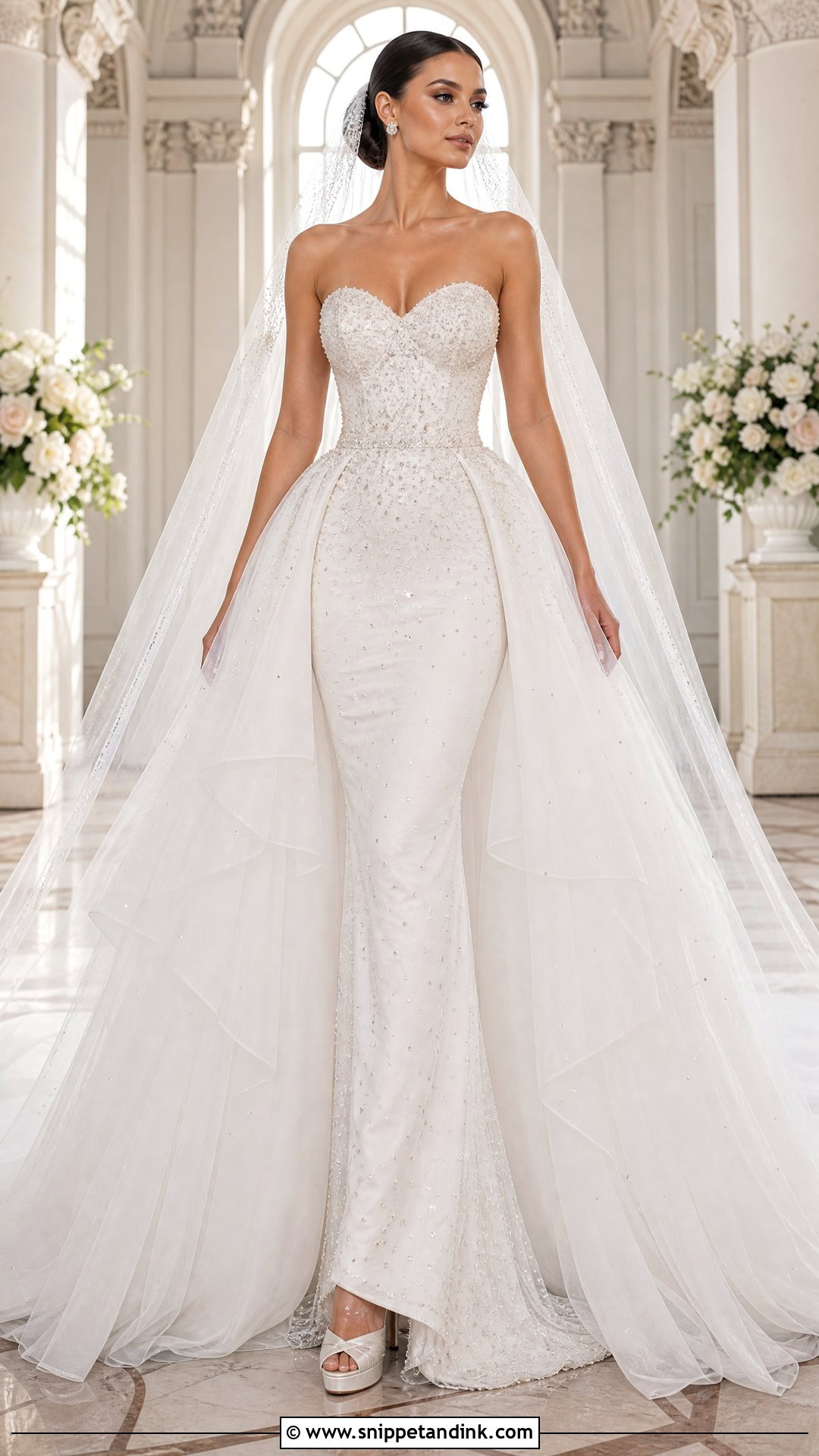
A fitted mermaid looks very different under a removable tulle overskirt. With the layer, you get a full ceremony silhouette; without it, the close shape for the reception. Soft tulle should start at the waist and fall evenly over the fitted skirt, not bunch at the hips where the mermaid is tightest. Strapless, scoop and off-shoulder bodices all suit it. Crystal studs, a cathedral veil and supportive heels; keep hair smooth. I always teach one person, a sister or friend, how the overskirt fastens and folds, and we rehearse it at the last fitting. Tulle snags on jewellery, so whoever handles it should take off rings first.
13. Slip Wedding Dress With Organza Overskirt
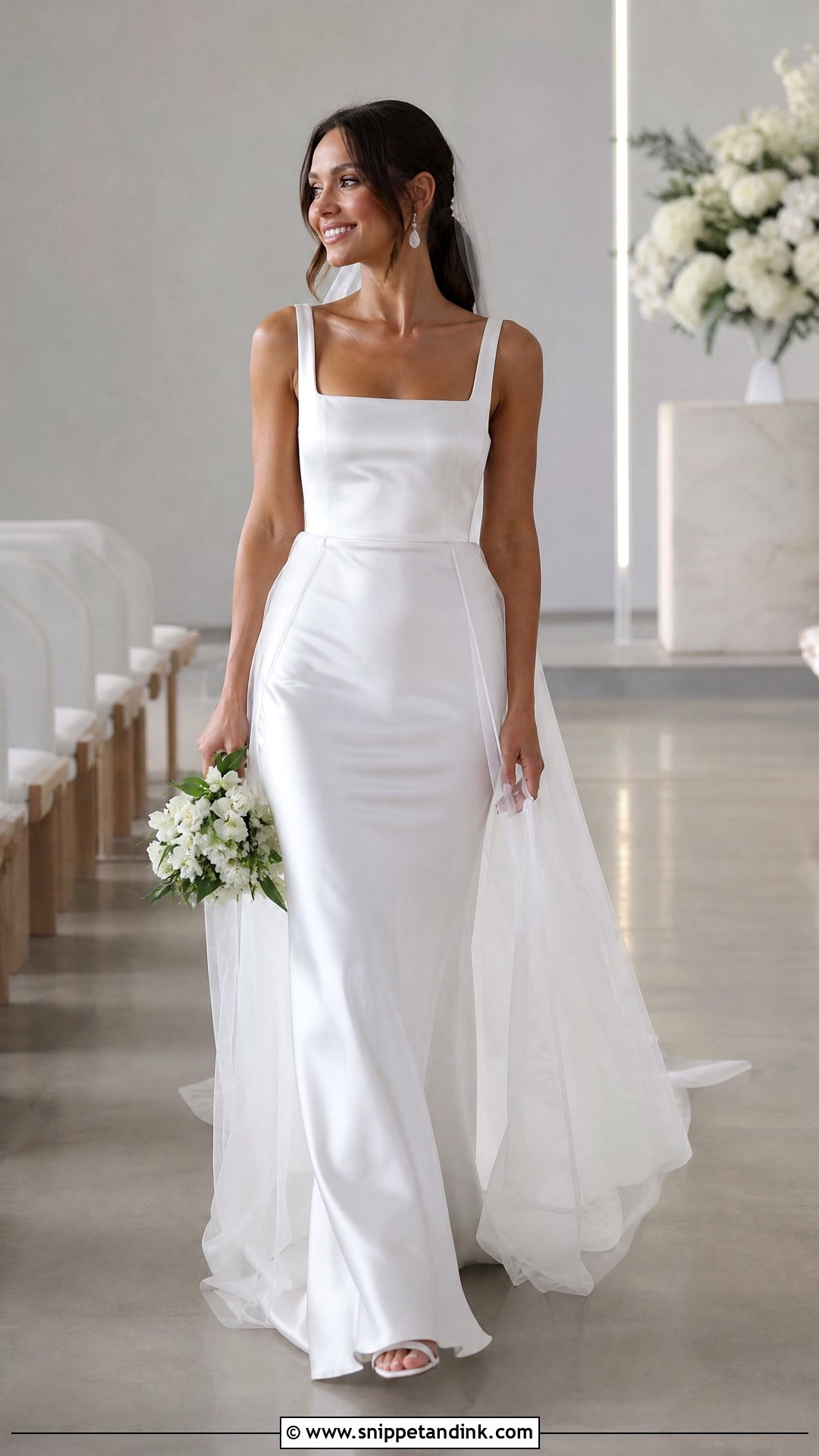
Simplicity underneath, volume on top. A sleek slip dress and transparent organza overskirt pairs a bias-cut slip with a cowl, square or straight neck and a crisp organza layer with a wide hem or soft train for the aisle. Sheer veil, drop earrings and minimal sandals. Without the overskirt, the slip feels lighter for dinner. Both fabrics must share an undertone; a warm ivory slip under a cool white organza looks grey in photos. The overskirt waistband should grip without crushing the slip, which marks easily. Bias-cut fabric also twists if the overskirt pulls unevenly, so the attachment points need to be evenly spaced.
14. Tea Length Skirt Wedding Dress With Jacket
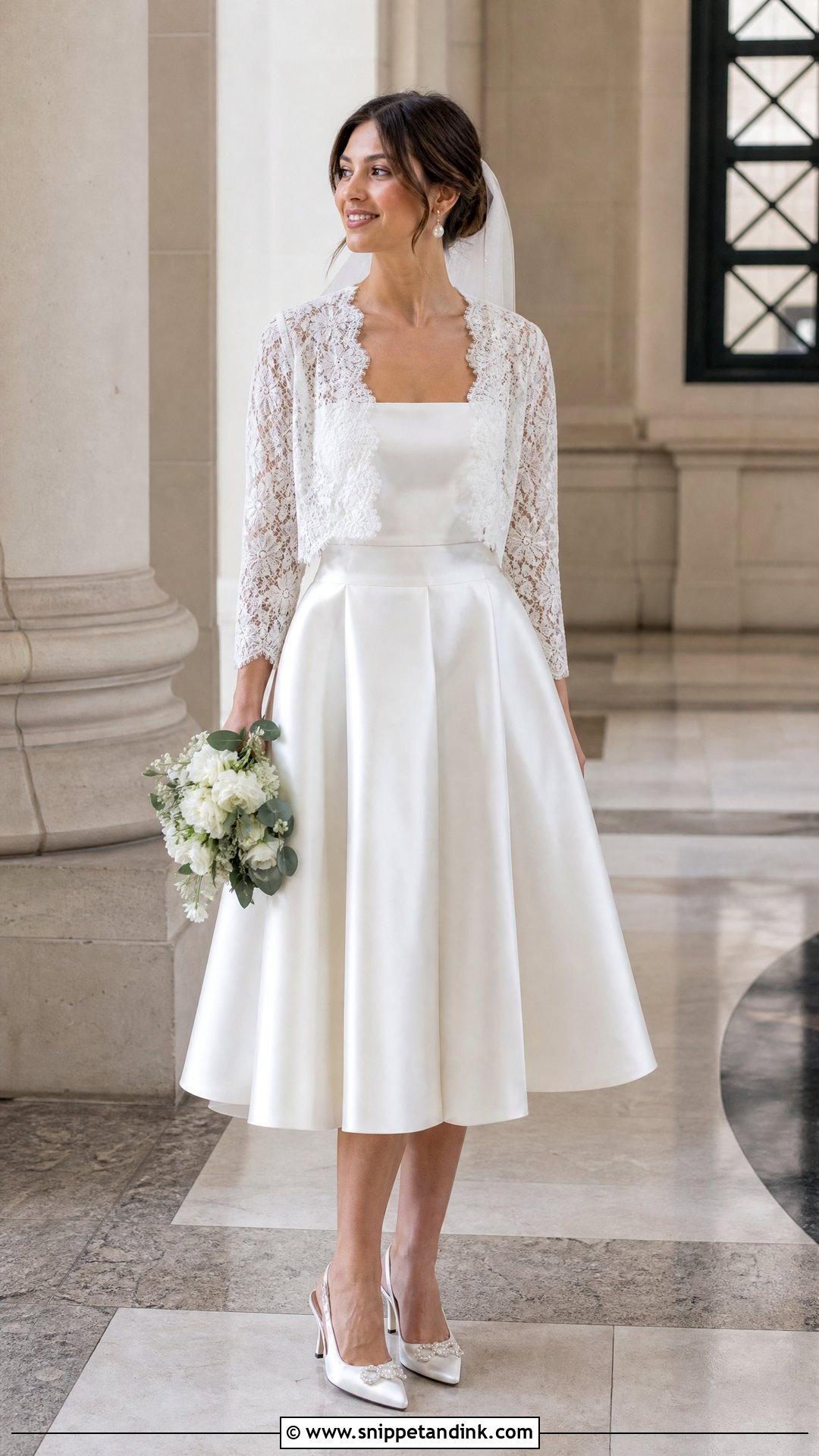
Tea length puts your shoes into the outfit, which makes it a natural fit for a courthouse, a daytime ceremony or a small wedding. The skirt ends between knee and ankle. A clean camisole or square-neck bodice under a cropped lace, satin or tailored jacket. Slingbacks, pearl earrings and a short veil or structured headband. Because the hem is on view, it has to be perfectly level; I measure it from the floor in the bride’s shoes, not from the waist, since hips are rarely identical. A light petticoat adds volume. Without one, a softly flared satin or crepe skirt hangs cleanly.
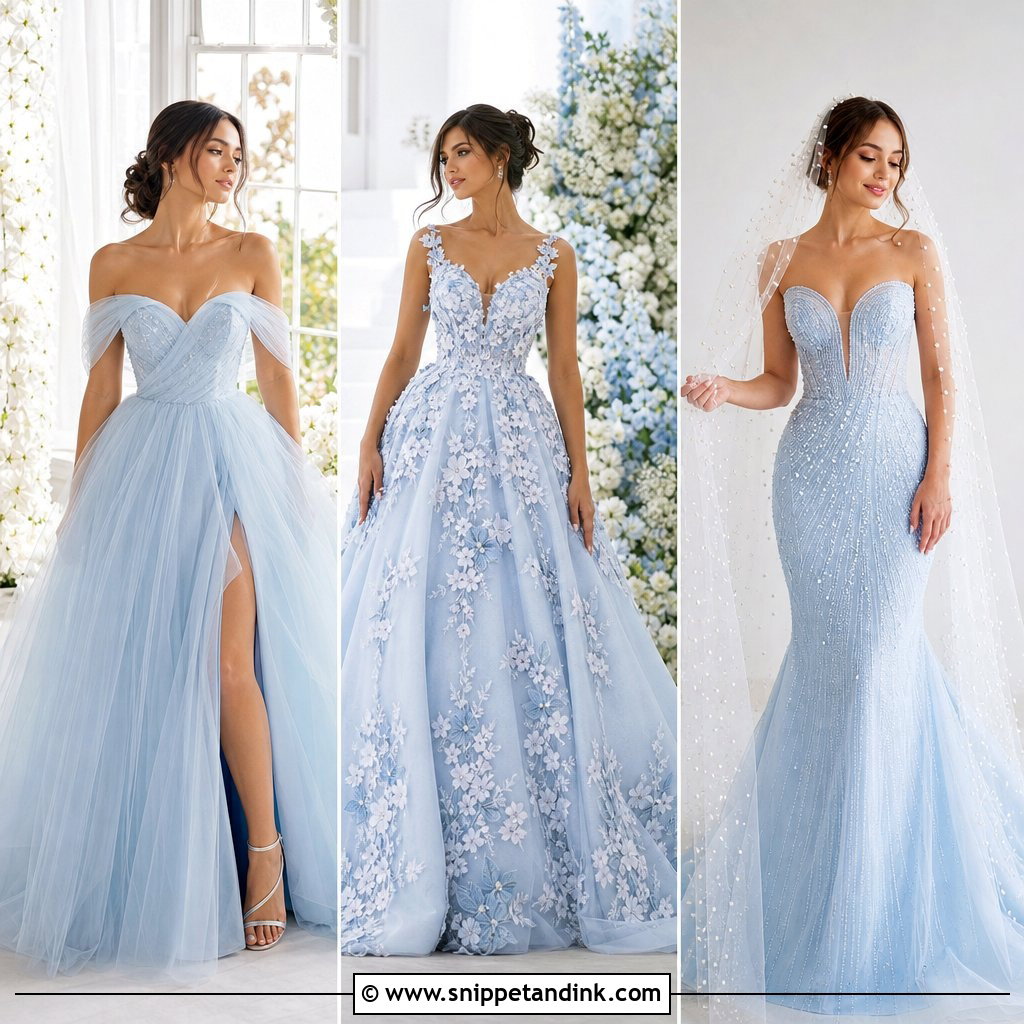
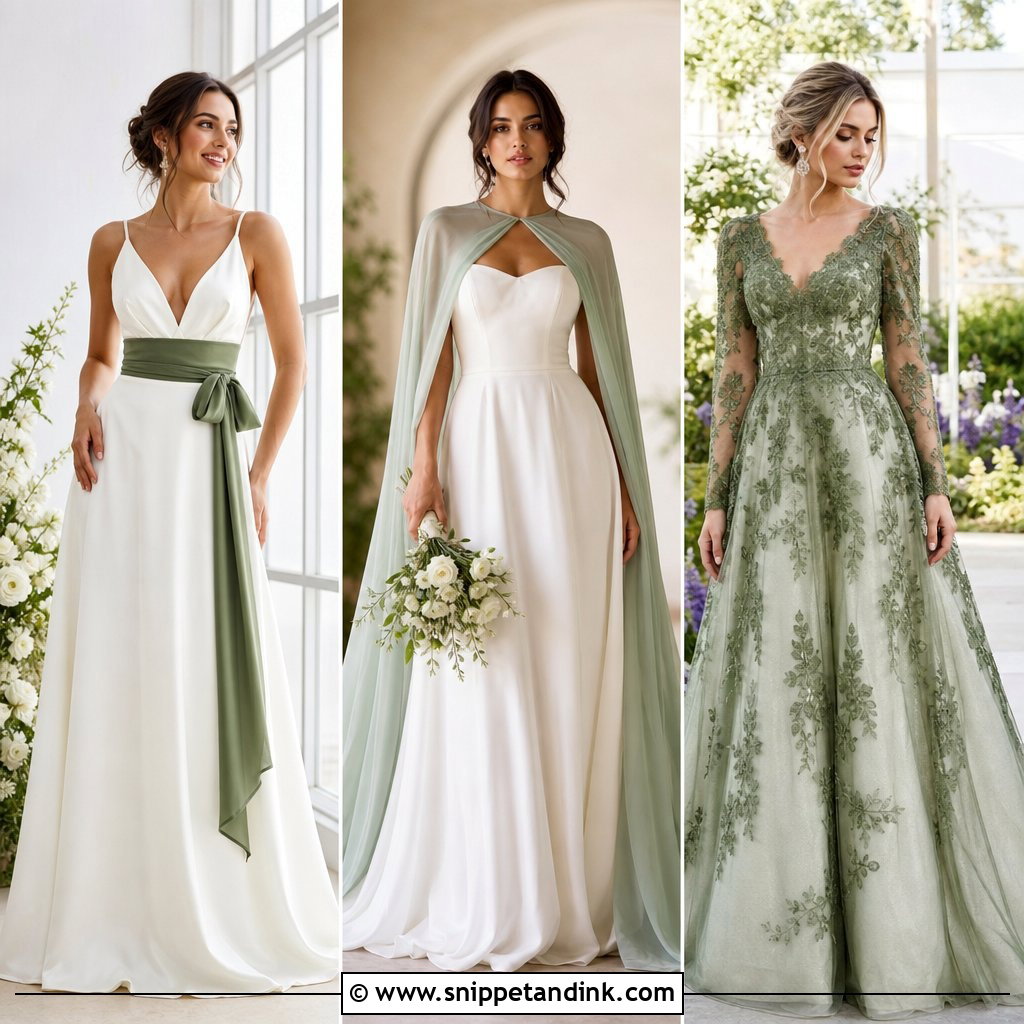
15. Floral Applique Skirt Wedding Dress
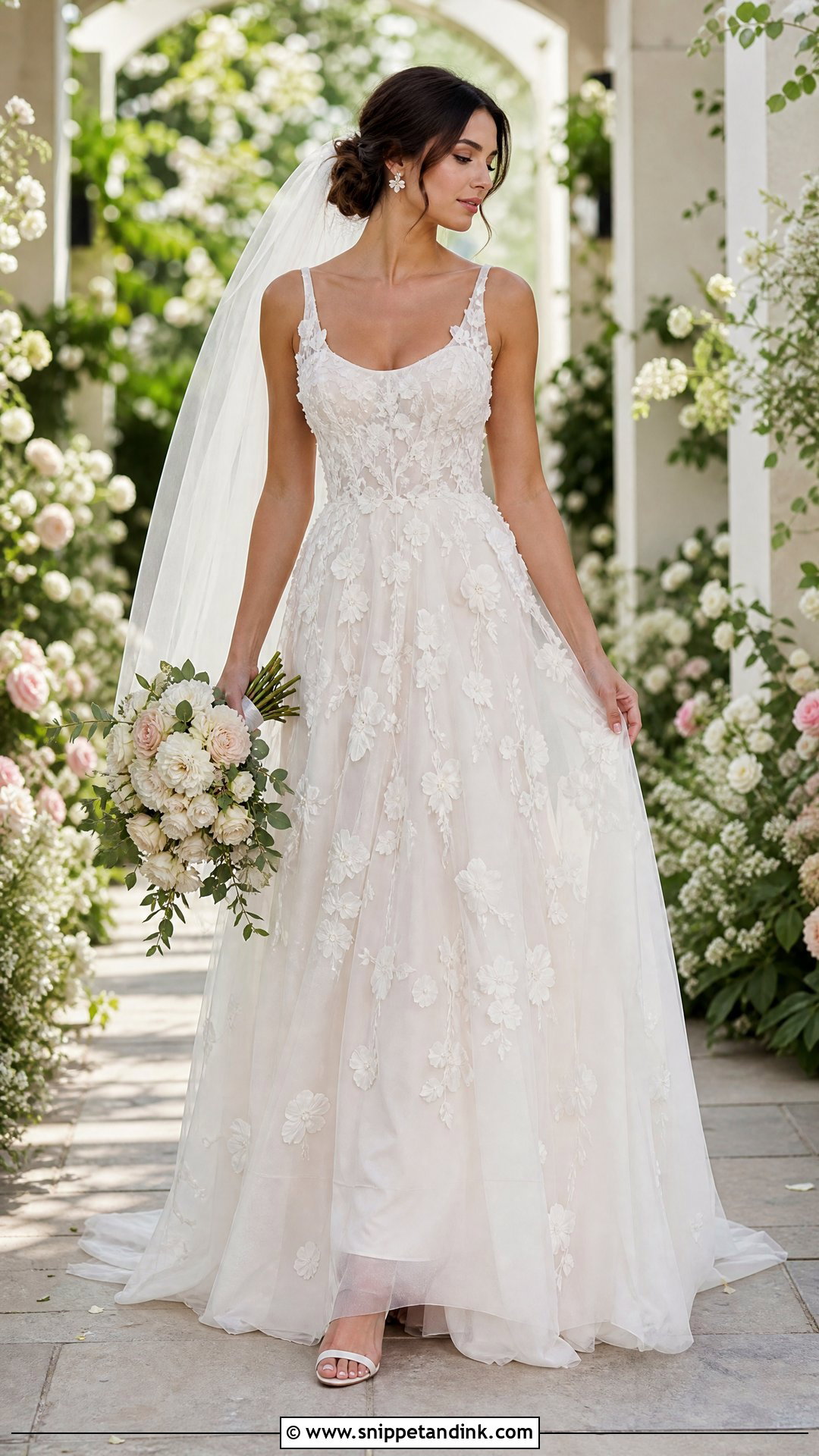
Three-dimensional appliqué makes the skirt the whole story. The most flattering placement is graduated: heavier near the hem, scattering up the skirt over tulle, organza or lace. Keep the top clean, a corset, scoop or fitted long sleeve, so the outfit doesn’t get crowded. Small floral earrings, plain satin heels and a plain veil that lets the flowers show. Scale matters: small motifs give texture, large ones make a bold statement, and very large flowers can overwhelm a petite frame. Raised petals catch on everything, so I go over the skirt before the wedding and tack down any loose edges with a few hand stitches.
16. Tiered Tulle Skirt Wedding Dress
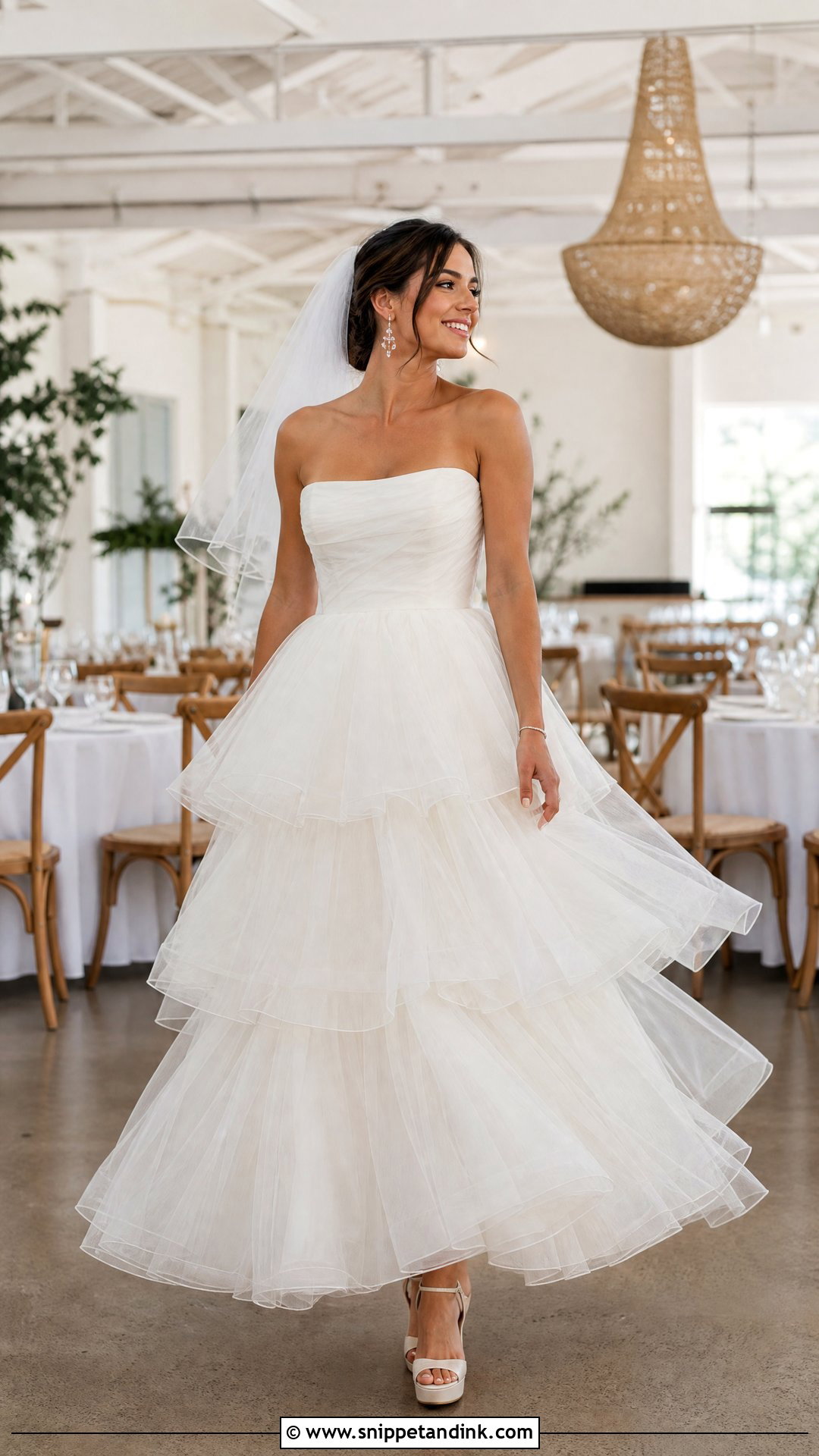
Layers of tiered tulle make a light, playful skirt. Tiers can be gathered, ruffled or graduated in length. A fitted strapless or sleeveless bodice keeps the volume low. Delicate earrings, a narrow bracelet and platform sandals for stable height under the layers; keep the veil plain. Tiers are unforgiving with hems. Each tier must be hemmed in your wedding shoes, because an uneven layer is very hard to fix later. With a train, ask for a multi-point bustle that lifts each tier evenly; one hook drags the whole skirt to one side.
17. Basque Waist Satin Skirt Wedding Dress
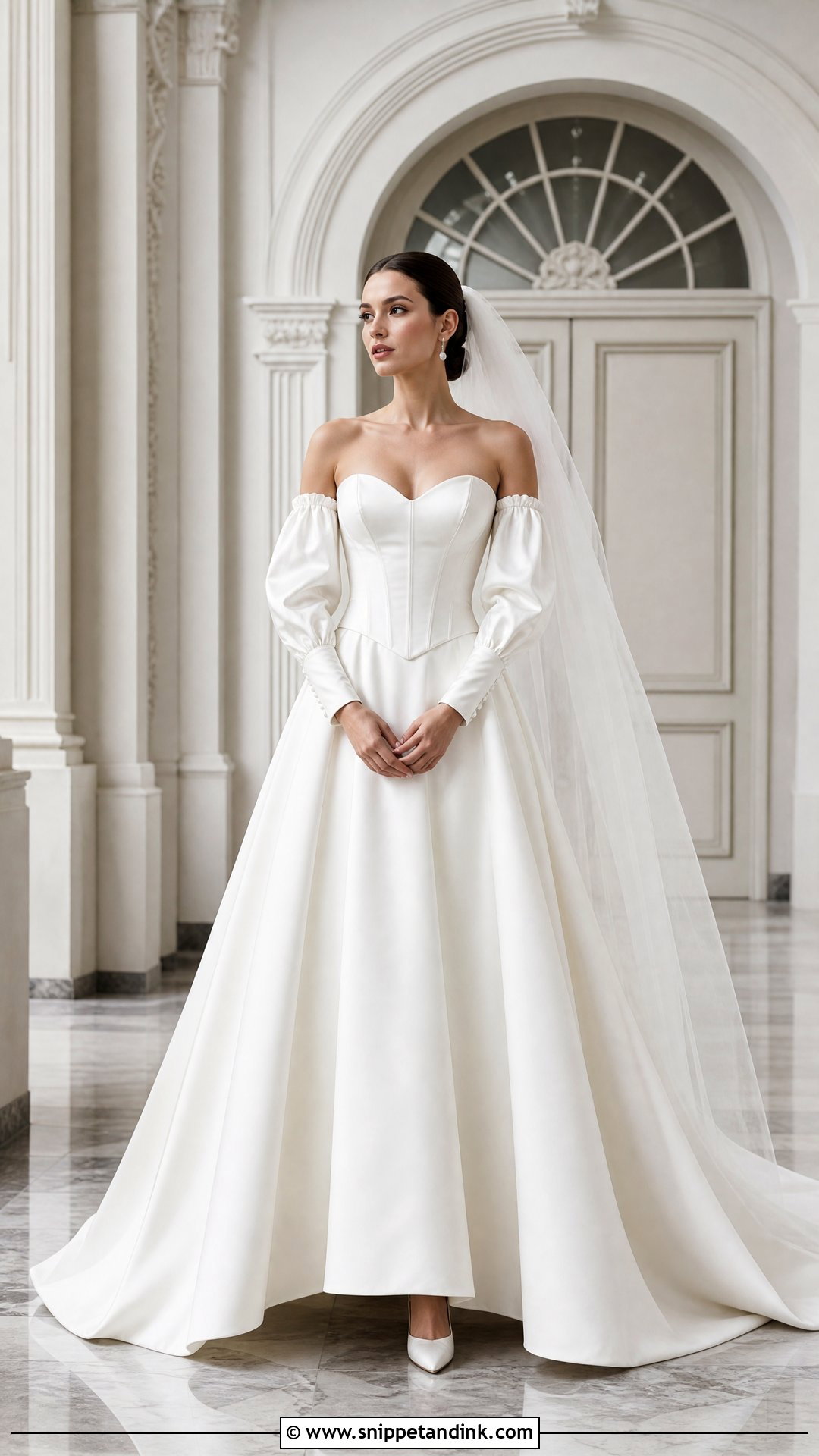
The basque waist dips into a soft V at the front and gives the dress a sculpted line. With a smooth satin A-line or ball gown skirt, it looks architectural. A strapless corset bodice shows the point clearly; detachable sleeves add ceremony coverage. Fine necklace, drop earrings, closed satin pumps and a long plain veil. This is the most precise alteration on the list. The point must sit centred and level, and it mustn’t press into the stomach when you sit. I check it seated at every fitting. Good boning and a balanced skirt weight stop the bodice twisting during the day.
18. Crochet Top And Chiffon Skirt Wedding Dress
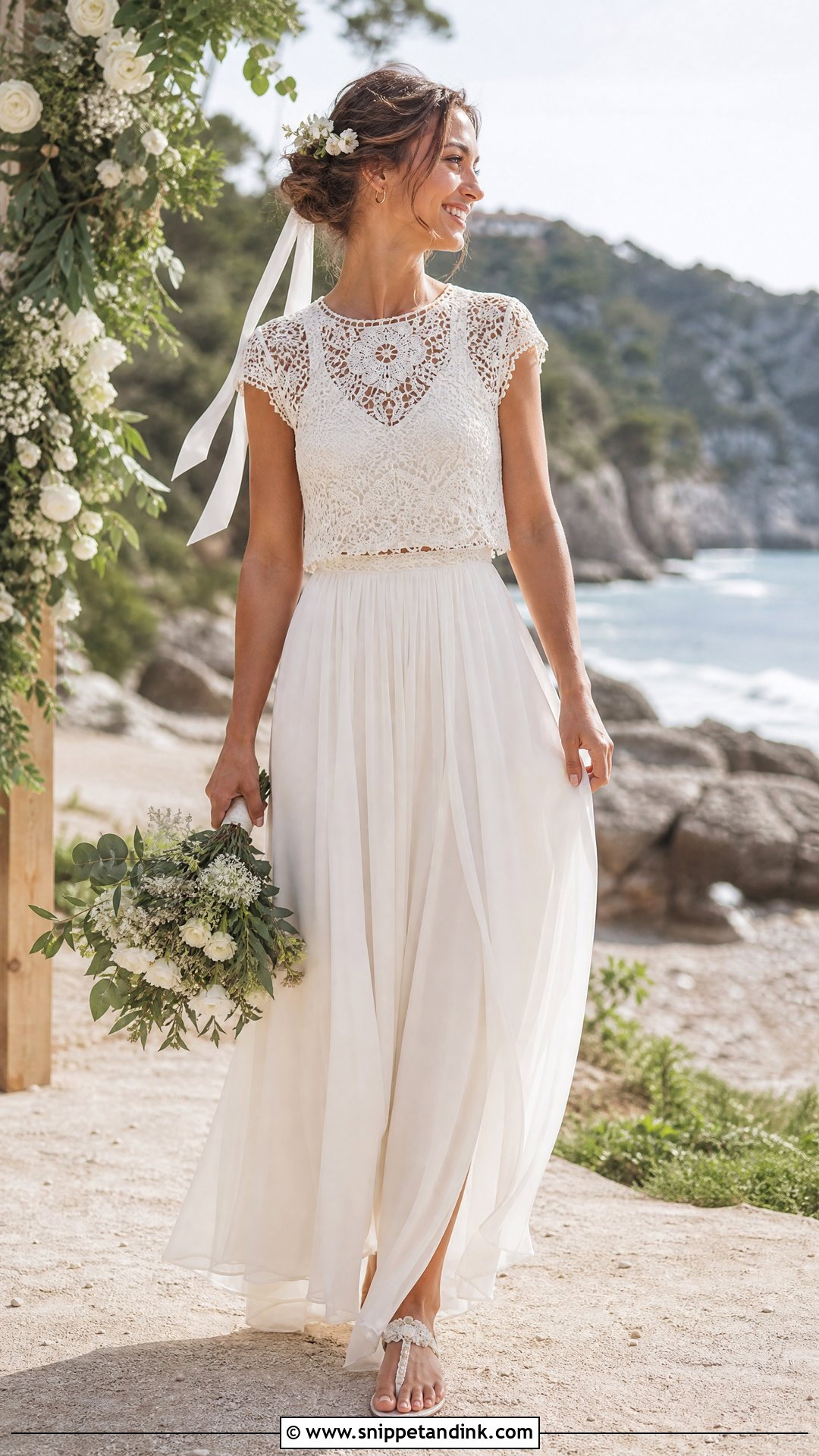
Crochet and chiffon belong outdoors: beach, woodland, desert. Look for fine crochet with secure edges and a breathable lining; a very open weave stretches out of shape by evening. A flowing chiffon skirt from the natural waist, lined enough for full coverage. Small hoops, a floral pin and flat sandals or low block heels to suit the ground. A light veil works; in wind, a ribbon in the hair is easier. Keep the train short, as crochet and chiffon both catch on sticks and shells. Match the undertones, and a narrow waistband gives a clean break between the two textures.
19. Modest Blouse And Full Skirt Wedding Dress
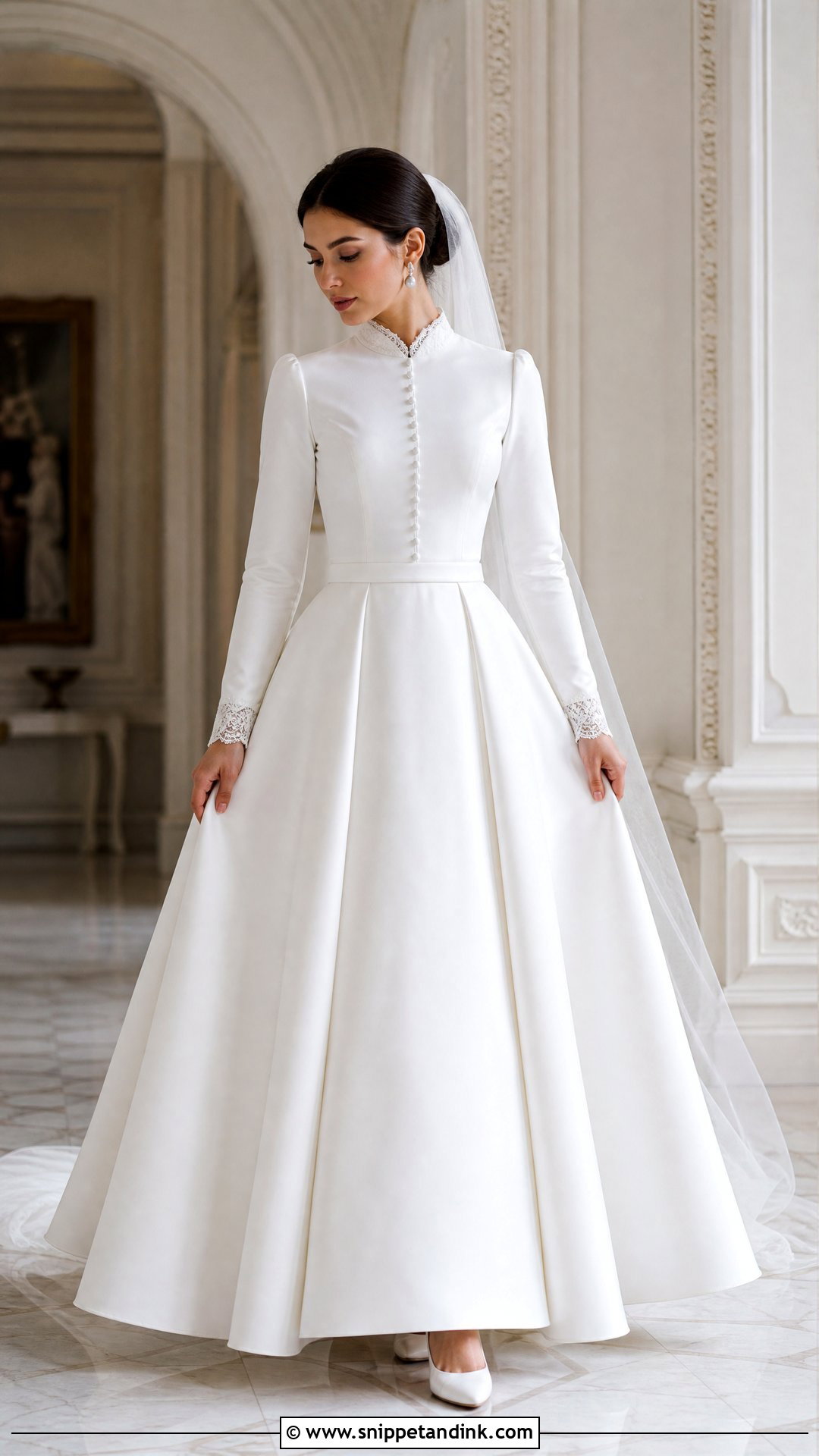
Coverage doesn’t mean losing formality. A bridal blouse with long sleeves, a high neck and details like covered buttons, lace cuffs or soft gathers, tucked into a high-waisted satin, tulle or mikado A-line. The structured waistband defines the figure and stops the blouse overwhelming it. Pearl earrings, closed block heels and a chapel veil, with a neat bun so the back detail shows. Blouses always creep out of skirts by the reception. I ask the seamstress to add small snaps or loops inside the waistband; it’s a quick job and the blouse stays put through greeting, dinner and dancing.
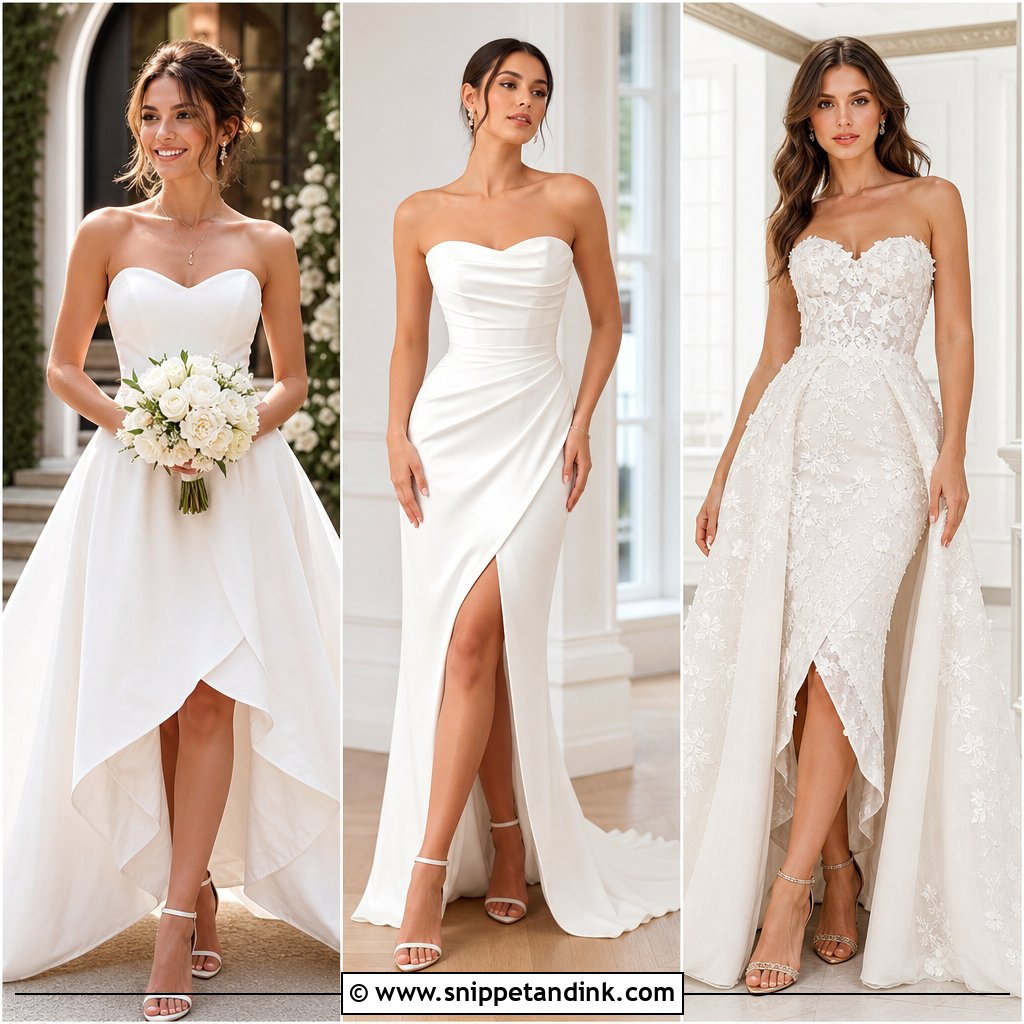
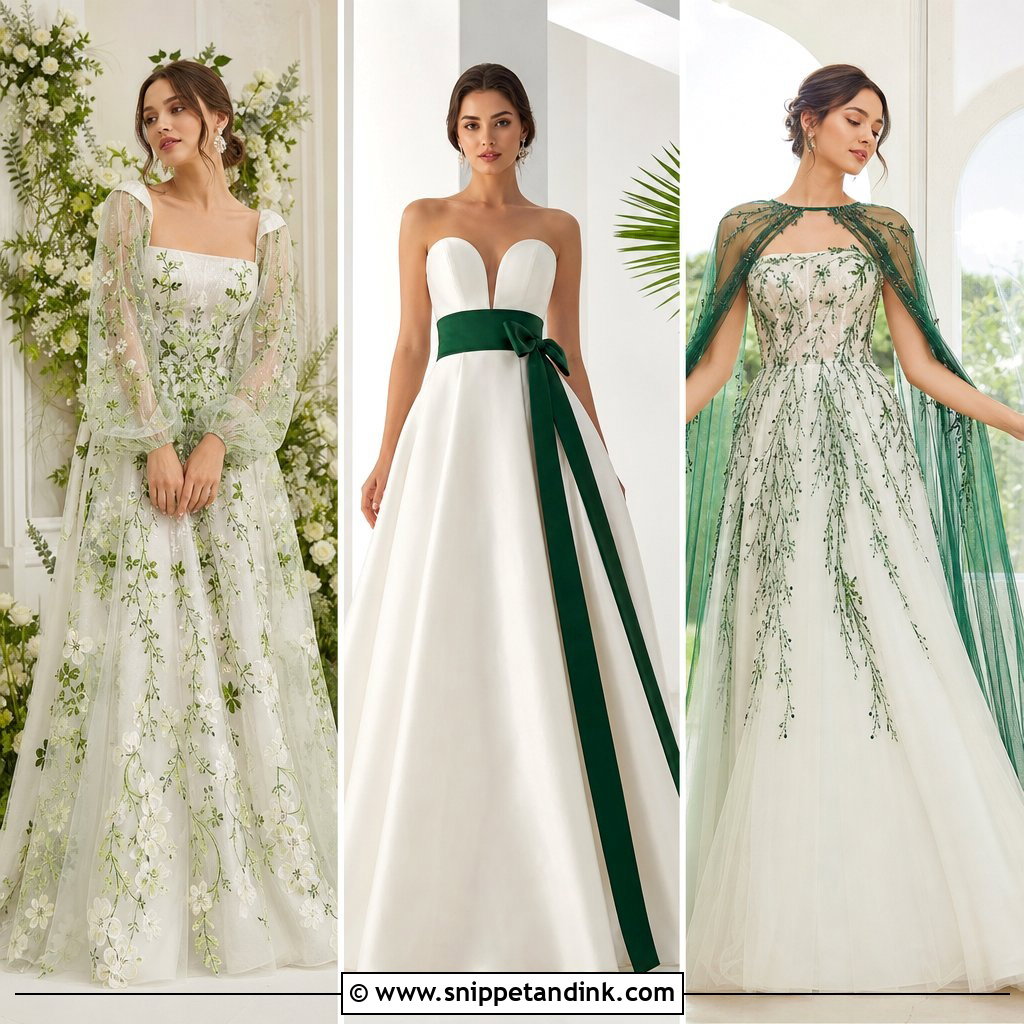
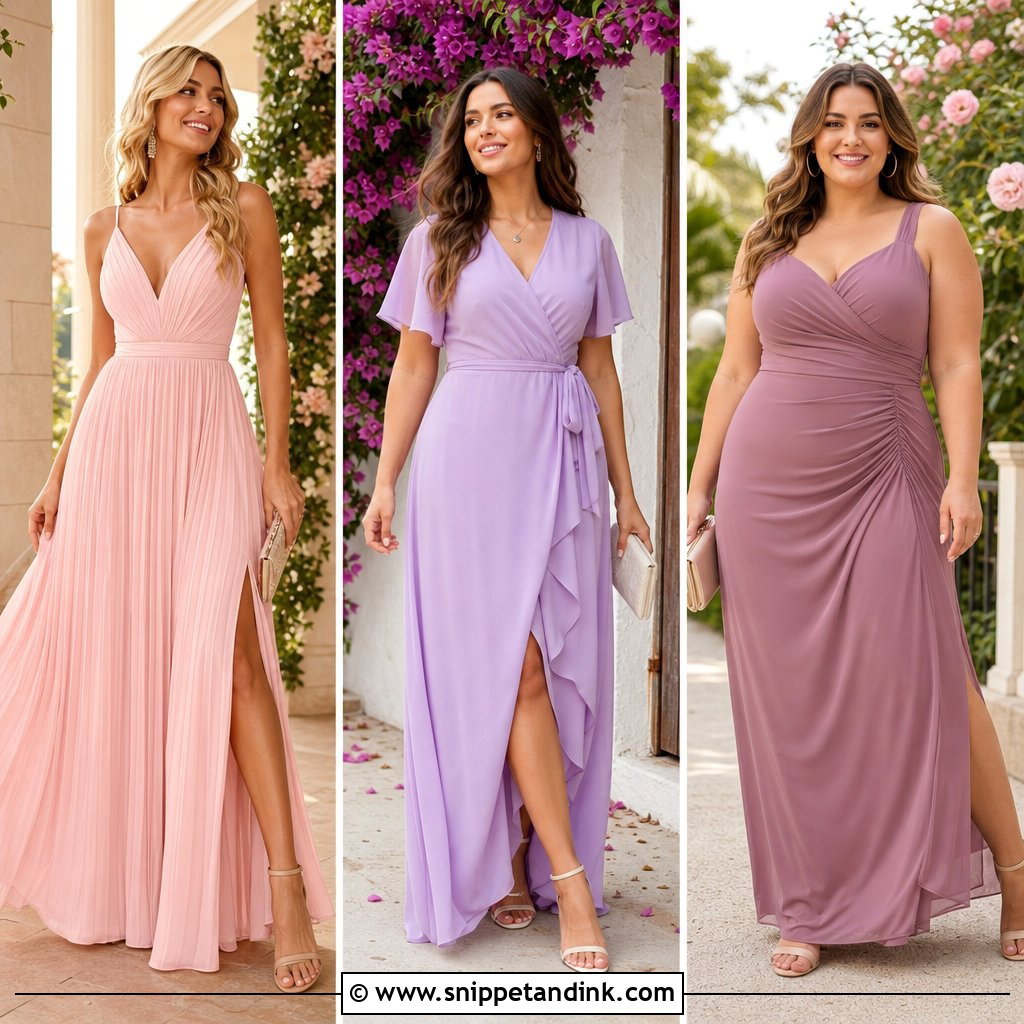
20. Sequin Top And Chiffon Skirt Wedding Dress
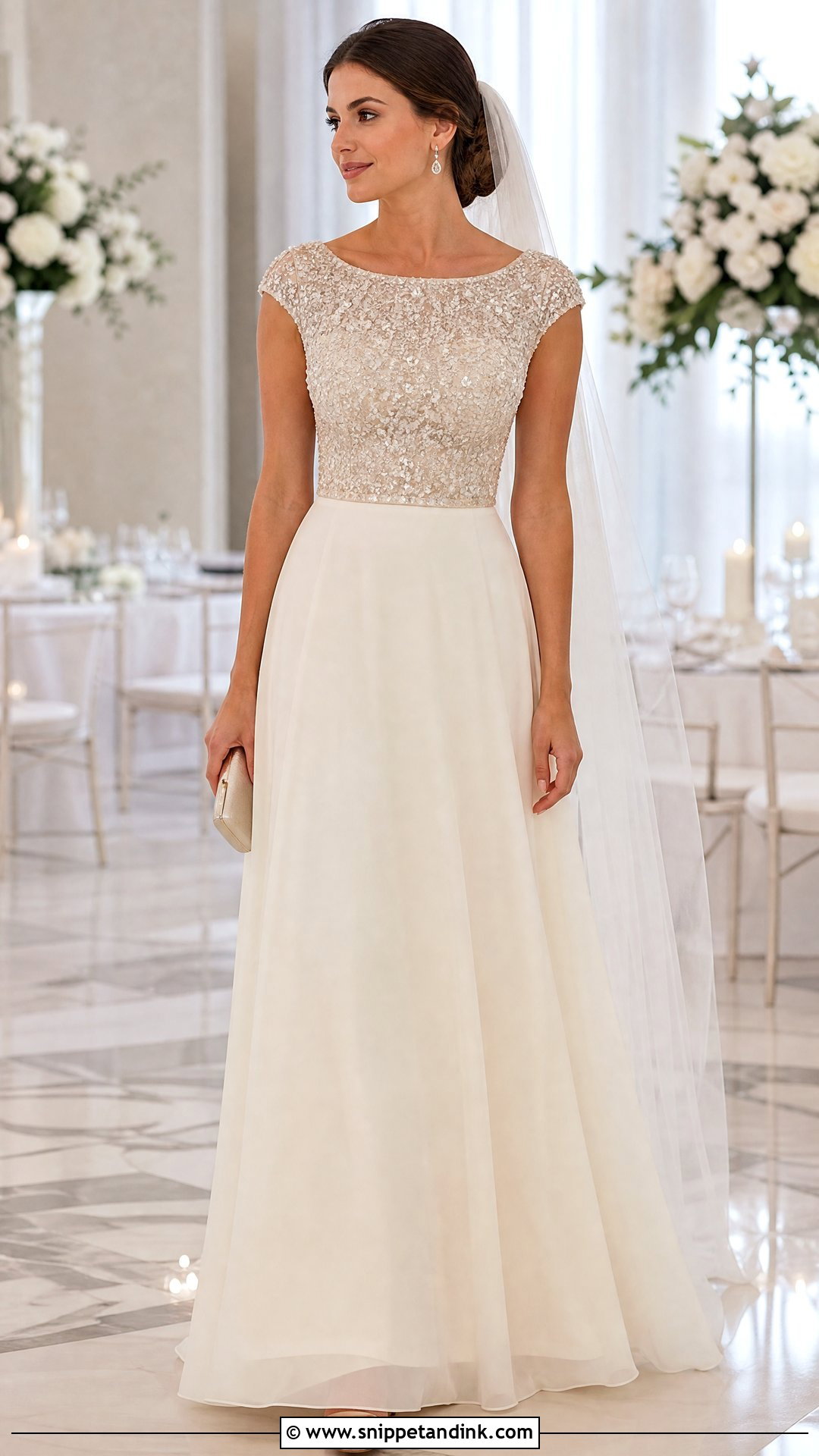
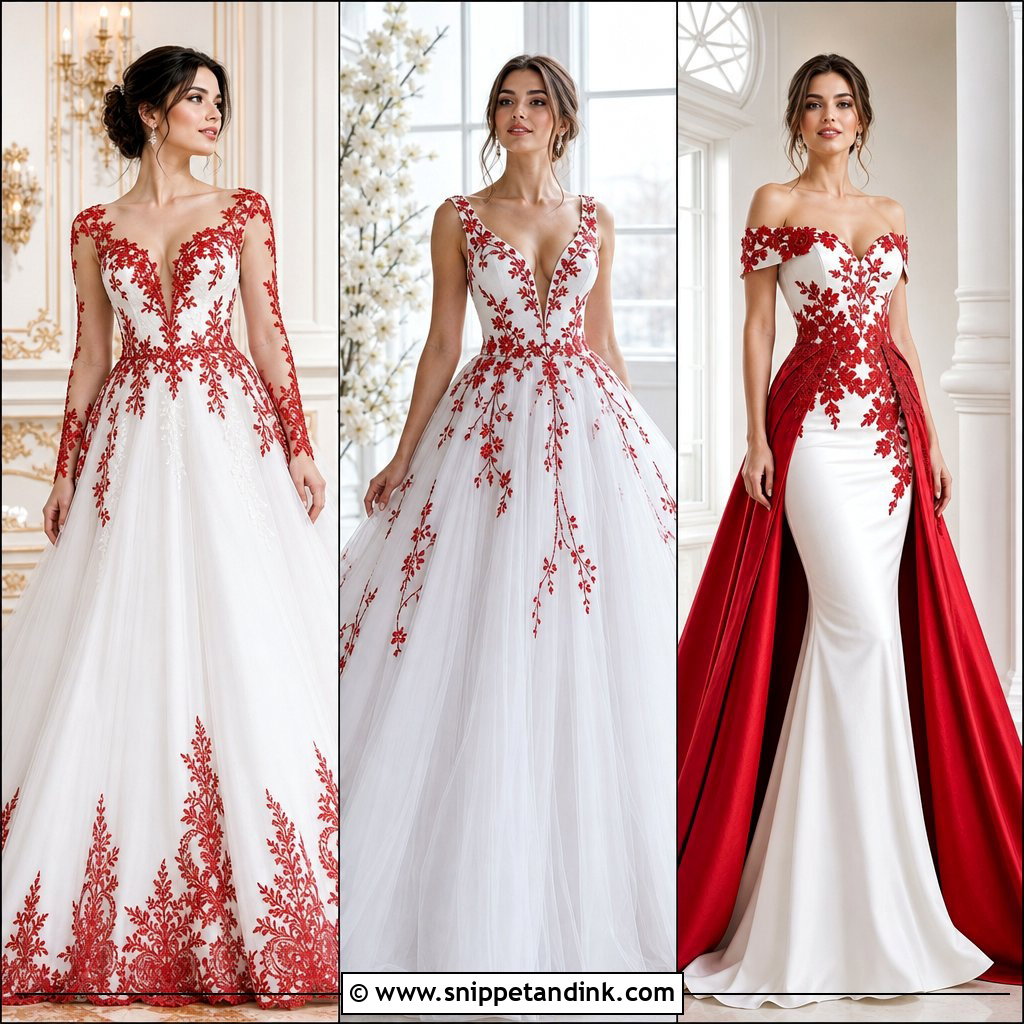
Sequins add glamour, chiffon keeps it soft. Choose ivory, pearl or pale champagne sequins rather than a hard metallic. A fitted sleeveless or short-sleeve top balances a floor-length chiffon skirt. Simple earrings, neutral metallic sandals and a smooth clutch; keep the veil plain. For the reception, swap the veil for a polished headband and the outfit feels new. Rough sequin edges are the problem here: they snag chiffon and the veil and scratch the inner arms. I run a hand along every edge of the top before the wedding, and a smooth lining with a reinforced waistband keeps the whole thing comfortable.
Taking the Overskirt Off Without Losing Twenty Minutes
An overskirt change sounds simple until it’s happening in a corridor with the photographer waiting. A few decisions made in advance keep it to a few minutes.
- Know the fastening. Hooks and bars hold firmly but are fiddly; snaps are quick but can pop under a heavy skirt; buttons with loops look tidy but take longest. Ask what yours uses at the first fitting.
- Pick one helper and rehearse at the final fitting. Two people pulling at once tangle tulle.
- Choose the moment. Straight after portraits, before the entrance into the reception, is usually calm.
- Pick the room. You’ll want a clean floor and a mirror. Step out of the skirt rather than lifting it over your head.
- Plan where it goes. Bring a padded hanger and a breathable garment bag; tulle and organza crease badly if folded into a box.
I also check the base dress for marks after the overskirt comes off. Pressure from the overskirt band can leave a faint line on satin or slip fabric. A handheld steamer in the bridal kit removes it in under a minute.
How Much Skirt Can You Actually Carry?
A skirt-led bridal look comes down to movement as much as appearance. Separates let you mix fabrics and silhouettes; removable overskirts give two looks from one outfit; a traditional gown can put everything into satin, tulle, lace, chiffon or appliqué. Before you decide, think about the floor, the weather, your heel height, the length of the train and how many alterations you’re willing to fit in. Then wear the sample properly: walk, sit, raise your arms, climb a step. The skirt you forget about by the second hour is the right one.
You'll Like These Ideas:





Leave a Reply