
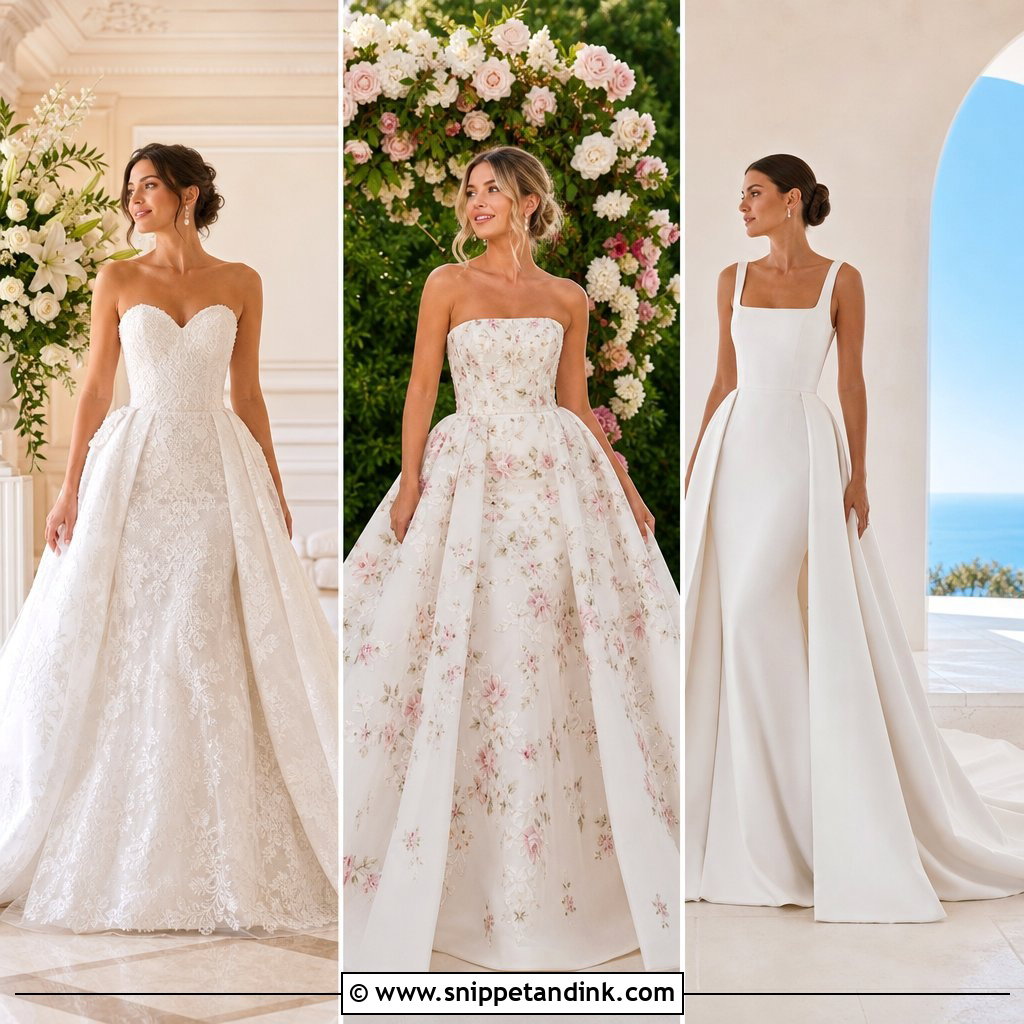
An overskirt is a separate skirt layer that fastens over a finished gown at the waist, so you walk the aisle in a full silhouette and then unhook it for a slimmer dress at the reception. I like it because it solves a real problem: the skirt that looks right coming down an aisle is rarely the one you want to dance in for four hours. The base can be a column, a mermaid, an A-line or even a mini, and the overskirt does the heavy lifting for the first half of the day. Below are 25 combinations I’d happily put on a bride, with notes on fabric, fit and what to watch for at the fitting.
How an Overskirt Actually Fastens to a Gown
Most brides see the reveal online and never see the inside of the waistband, which is where the whole idea succeeds or fails. An overskirt is either sold as a pair with its gown or bought separately and fitted to a dress you already own. Paired sets are easier because the attachment is designed in. A separate overskirt can work very well, but expect your seamstress to adjust the band to your exact waist and to the base gown’s seam line.
There are three common fastenings, and each behaves differently on the day:
- Hooks and eyes on a firm band: the most secure under a heavy satin or beaded overskirt, but slow to undo, so the helper needs a few minutes.
- Snaps or hidden poppers: quick to remove, best for light tulle or organza. They can pop open under strain on a very full skirt.
- A ribbon or self-fabric tie: adjustable and forgiving if your waist changes after dinner, though the bow has to sit somewhere, usually at the back or the side.
Bring the base gown, your shoes and your undergarments to every fitting. The overskirt’s length has to be set in the shoes you’ll wear, and its band has to sit over the gown’s waist seam rather than a few millimetres off it, or you’ll see a ridge in every side-on photo.
1. Lace Mermaid Wedding Dress With Overskirt
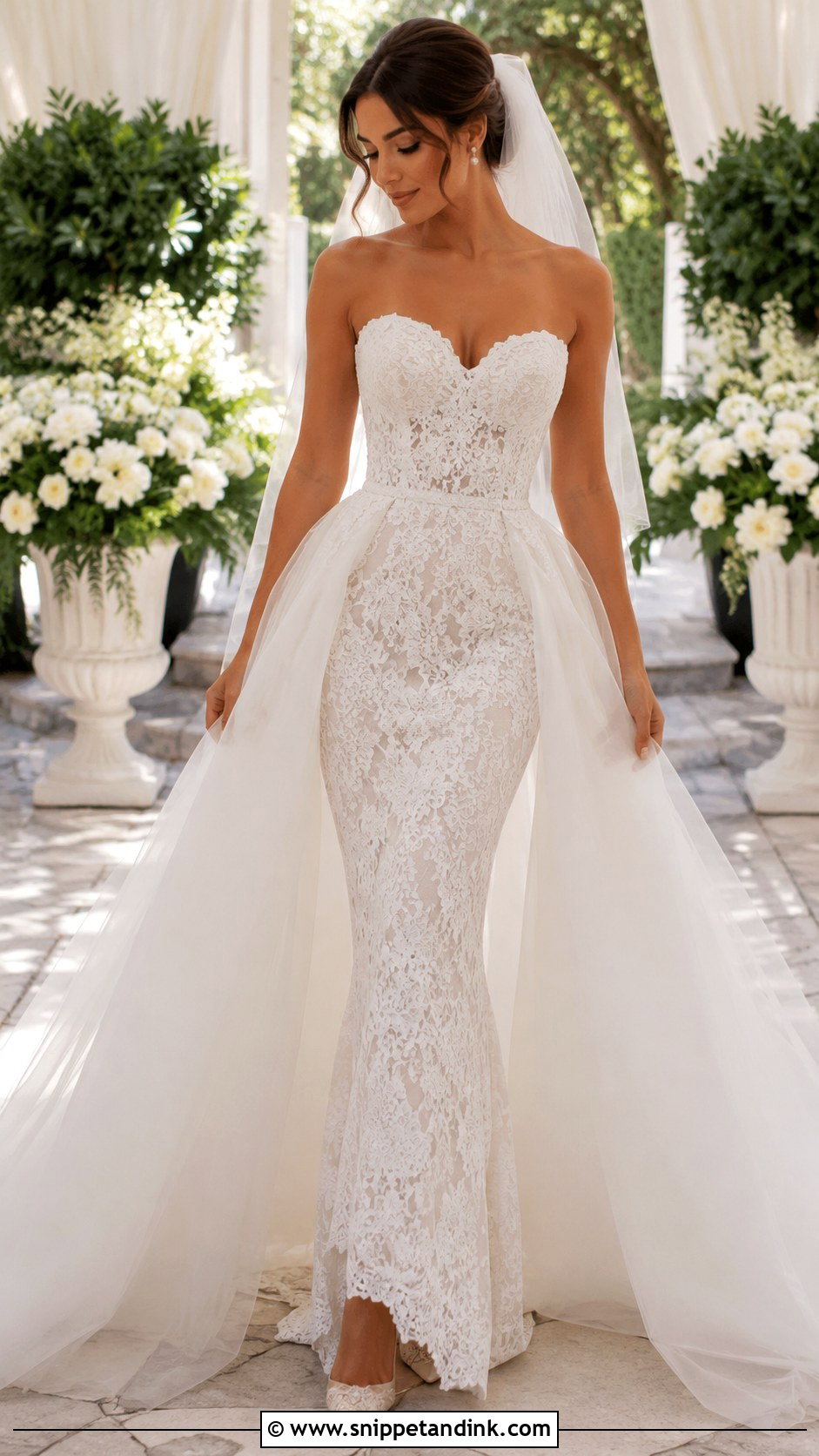
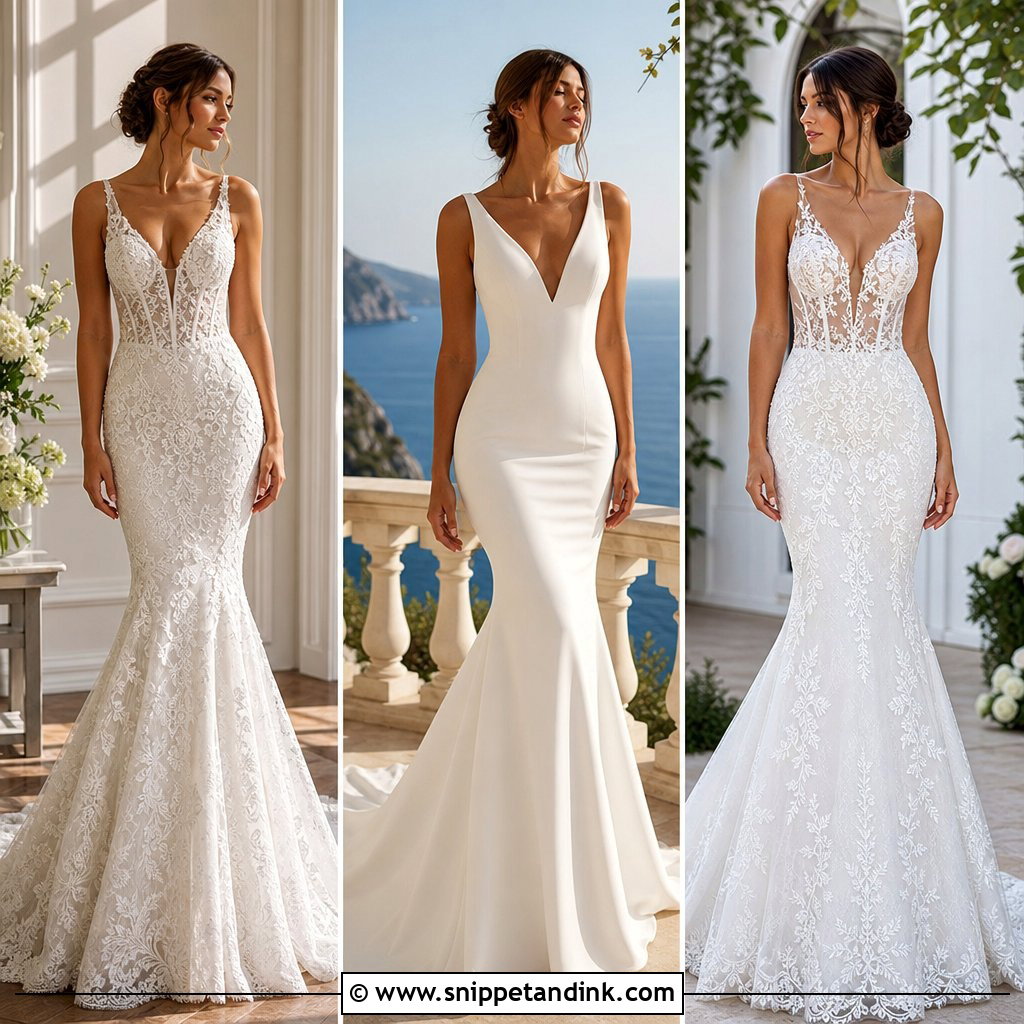
Lace mermaid plus overskirt is the classic reveal, and the first thing I check is where the mermaid’s flare starts. A full overskirt hides that shape entirely, which is fine, but a sheer tulle layer lets the lace read through even during the ceremony. Matching lace on the overskirt looks rich, yet it adds real weight at the waist, so I only suggest it over a boned bodice that can carry it. A fingertip veil and pointed heels keep the line long. Once the outer layer comes off you’re in the fitted mermaid dress underneath, so practise walking in it beforehand: a mermaid shortens your stride far more than the overskirt ever did.
2. Satin Ball Gown Wedding Dress With Overskirt
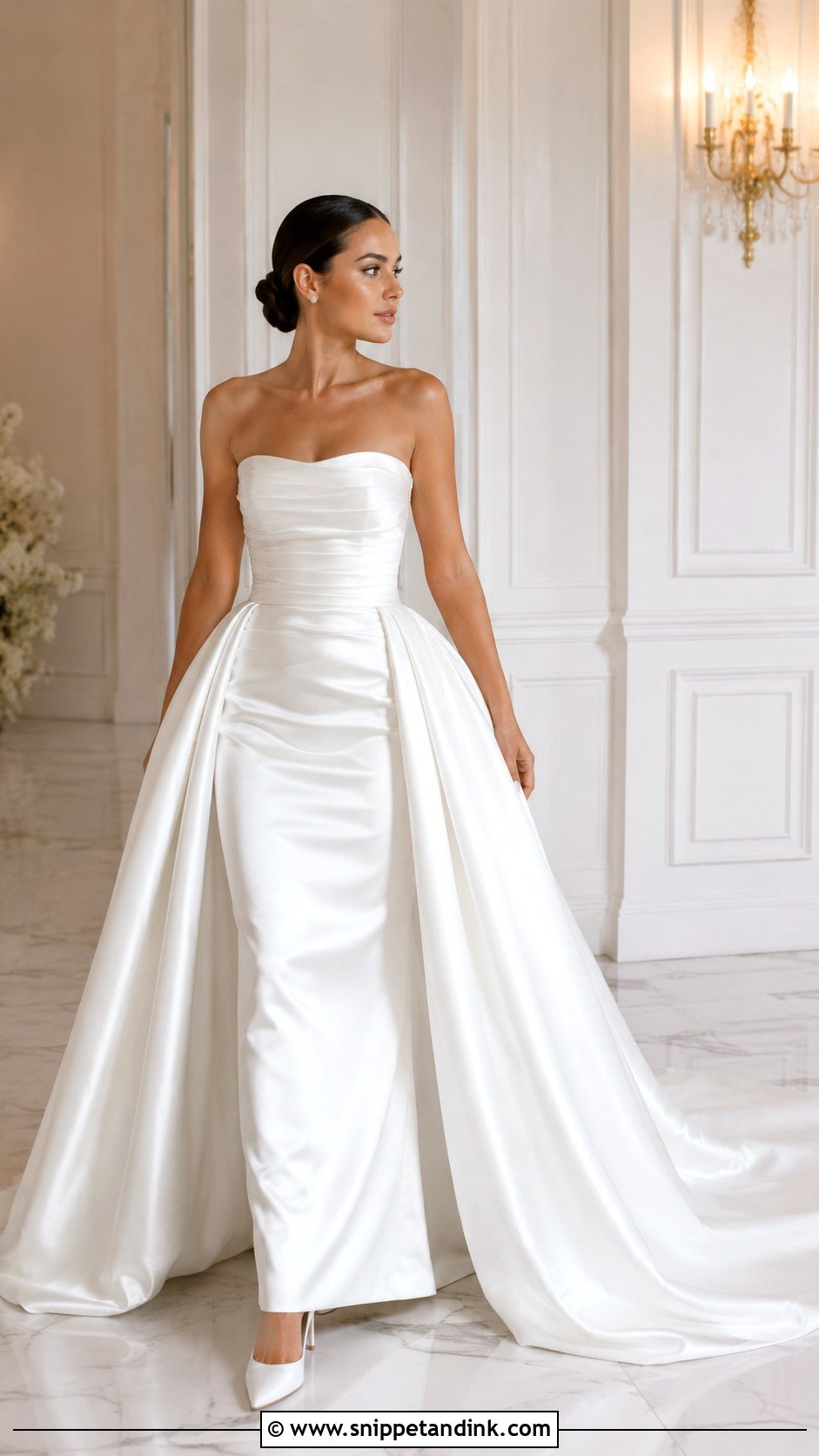
Satin shows every attachment point. Over a satin ball gown base, I ask the seamstress to hide the hooks under a waist seam or a narrow self-fabric band, otherwise you get small pull marks wherever the weight hangs. Get that right and you have a very formal ceremony shape that unhooks to leave a slimmer satin gown. Strapless and square necklines suit it, since nothing up top competes with the skirt. A long veil and a low bun stop the back view from looking empty during the vows.
3. Tulle Wedding Dress With Detachable Overskirt
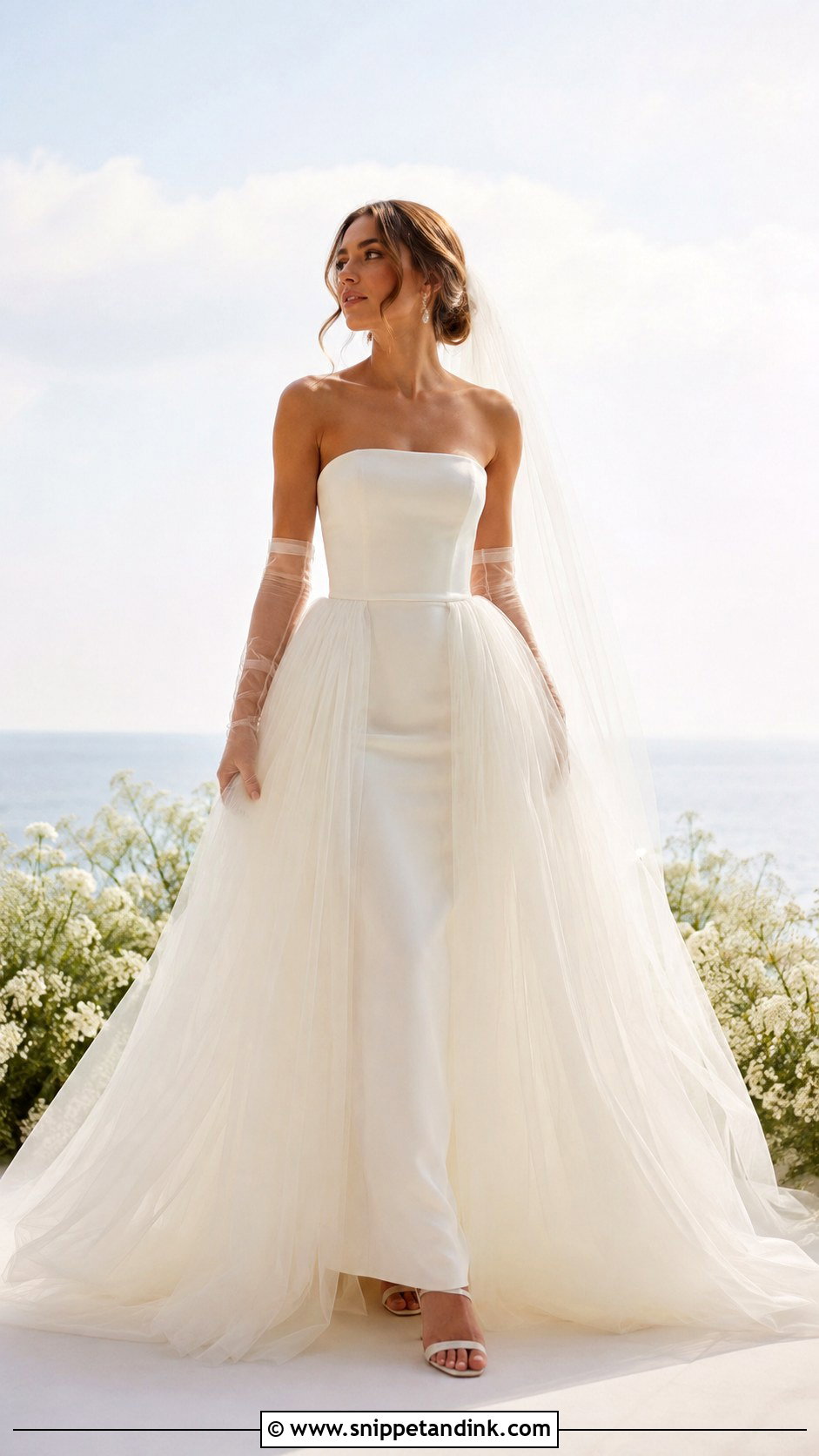
Tulle is the lightest overskirt to wear through a long ceremony, and it’s my usual suggestion for outdoor summer weddings. The trap is bulk: many layers gathered onto a waistband can add visible thickness right where you want definition, so look for fine tulle on a flat yoke or a softly pleated band. The base can be a sheath, a fit-and-flare or a plain A-line. Sheer gloves, a simple veil and small drop earrings are enough. One honest warning: tulle snags on rough stone steps, shrubs and the hook-and-loop strap of someone’s shoe, so pack needle and thread.
4. Strapless Wedding Dress With Overskirt
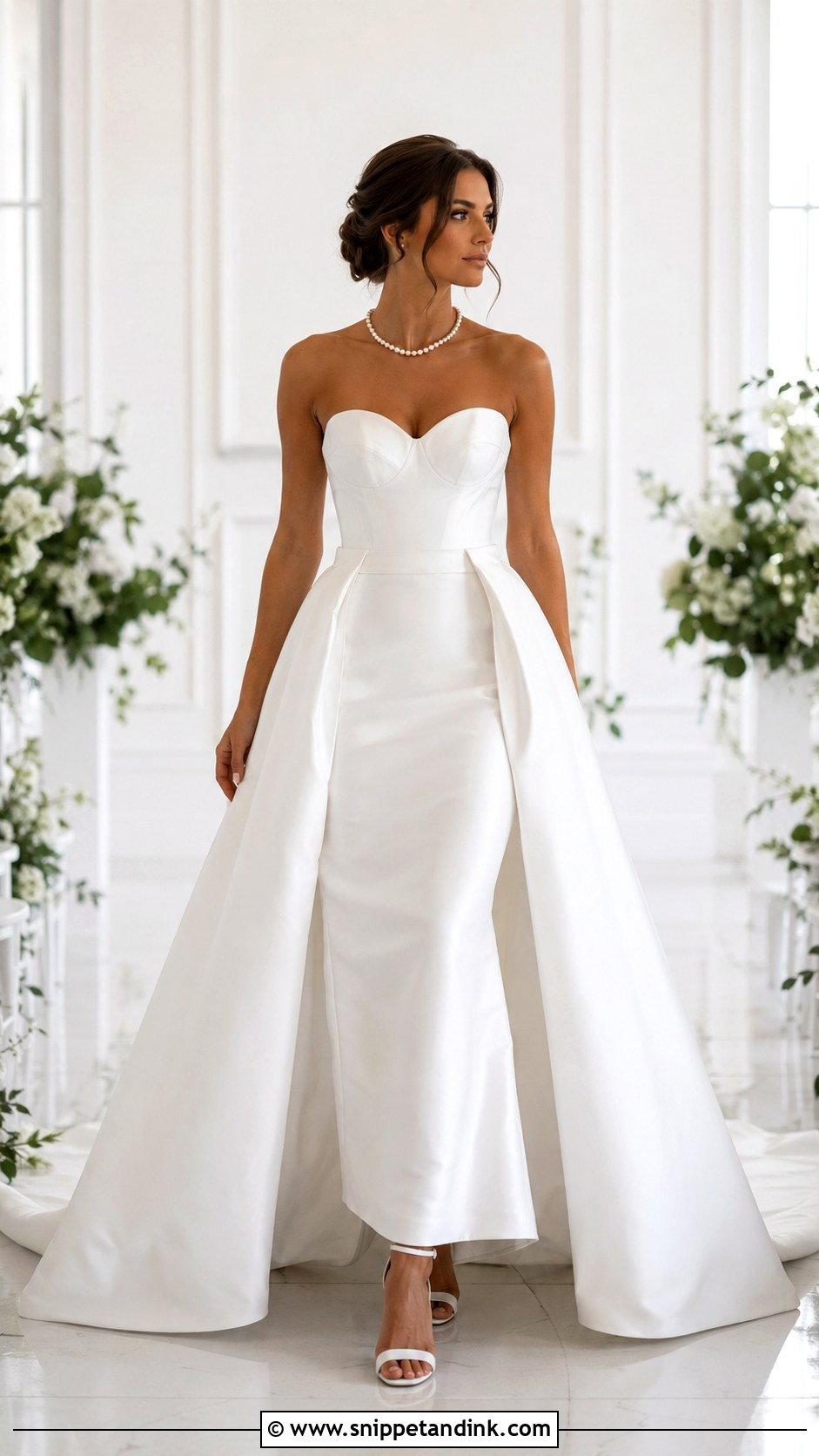
A strapless bodice has to hold itself up, and an overskirt adds weight hanging from the waist, so bodice fit is where I spend most of the fitting. If it gapes slightly in the mirror, it will slide by the vows. A boned corset bodice is the most secure base; a softer sweetheart line reads more romantic but needs a firm internal waist stay. For jewelry, a choker-style pearl necklace fills the bare neckline, or keep it to diamond studs. Ankle-strap heels help you stay steady under the extra skirt, and with the overskirt off, the strapless base looks clean and modern for the party.
5. Long Sleeve Wedding Dress With Overskirt
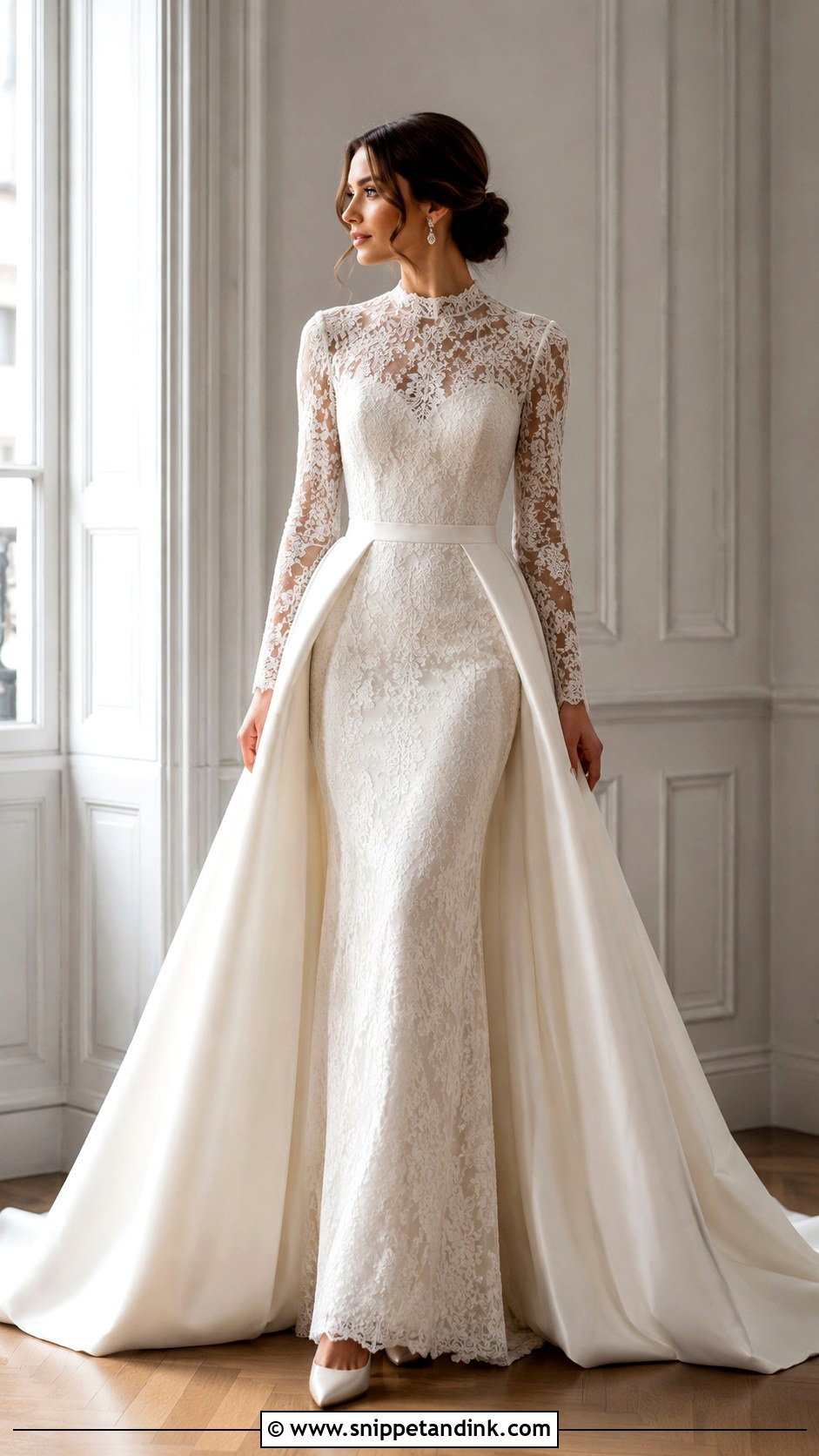
Sleeves plus an overskirt is a lot of fabric. I love it for a winter wedding or a cathedral and steer brides away from it for an August garden. Lace sleeves bring texture, sheer tulle sleeves stay airy, and crepe sleeves look the most minimal. Let the overskirt carry the volume so the base gown stays slim and light enough for the whole day. If the sleeves are beaded, keep the veil plain so the two don’t fight at the shoulder. Before you approve alterations, raise both arms as if you’re hugging someone taller than you; fitted sleeves that pass the mirror test often fail that one.
6. Off Shoulder Wedding Dress With Overskirt
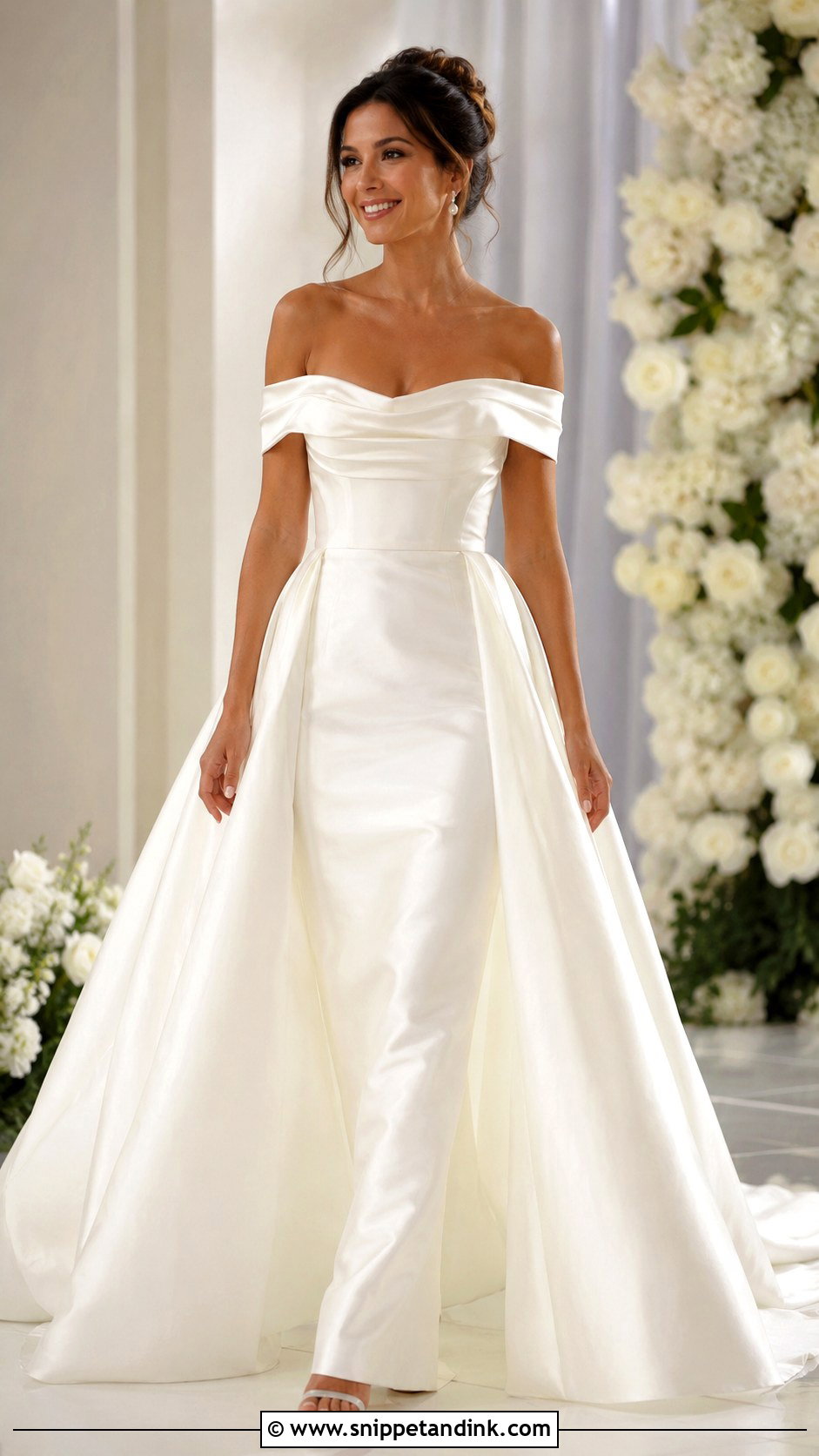
An off-shoulder neckline has to stay put, and that gets harder once a heavy overskirt pulls the bodice downward. I ask for silicone grip tape inside the neckline band and test it by having the bride hug her mother at the fitting. Satin, lace, mikado and soft crepe all work as the base. If the neckline is draped, keep the overskirt smooth, because drape above and gathers below quickly turns into too much fabric. A narrow belt at the join hides the fastening and ties the two pieces together visually.
7. Corset Wedding Dress With Overskirt
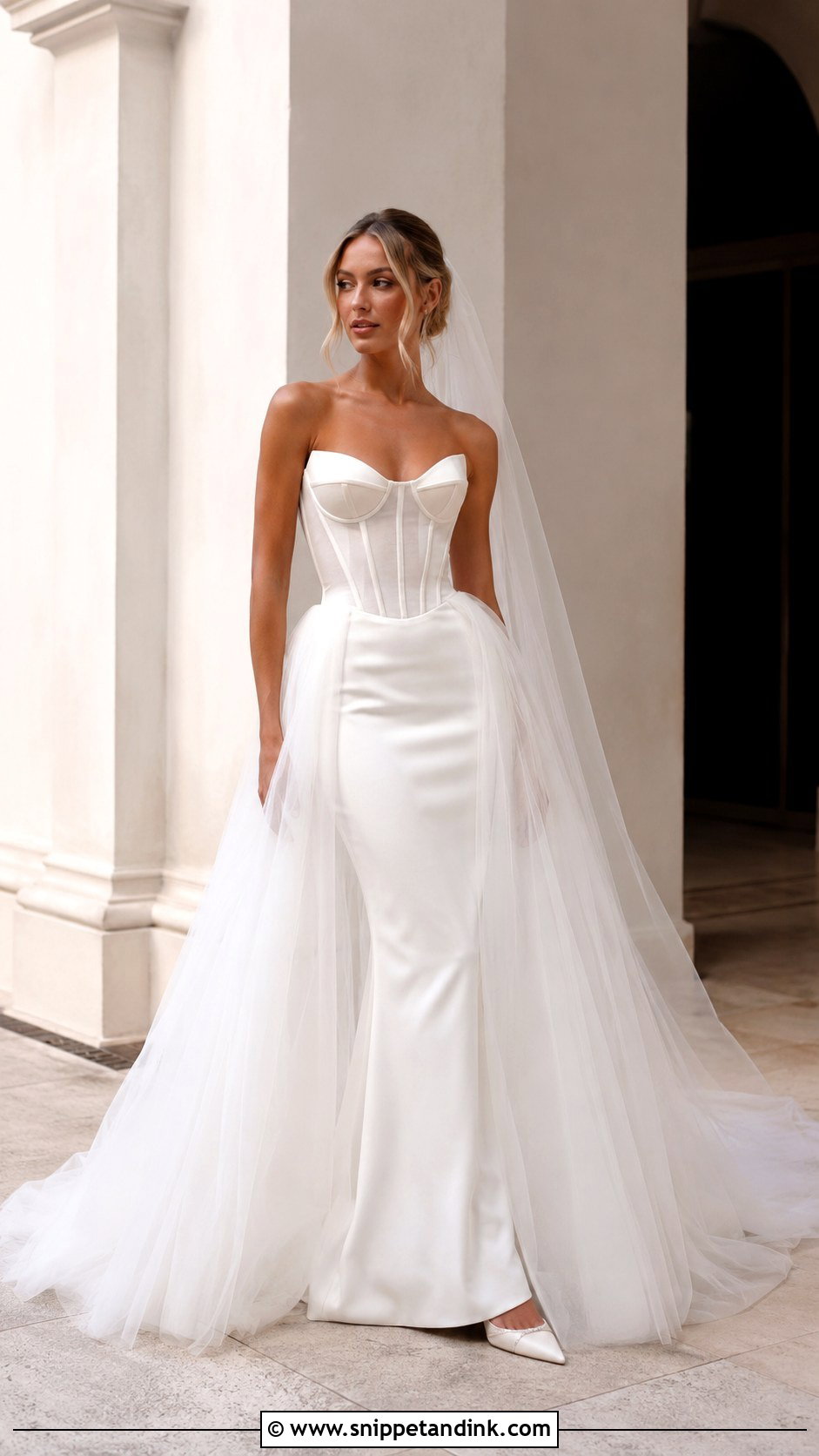
A corset is the strongest base for an overskirt. The boning spreads the outer skirt’s weight around your torso instead of letting it drag on one waist seam. Visible boning looks fashion-led, covered boning softer. A fitted crepe or lace skirt underneath contrasts well with the fuller outer layer, and minimal jewelry keeps the eye on the bodice. Sit down in it at the final fitting. A corset that fits perfectly standing can press into the ribs once you’re seated for a two-hour dinner.
8. Simple Wedding Dress With Overskirt
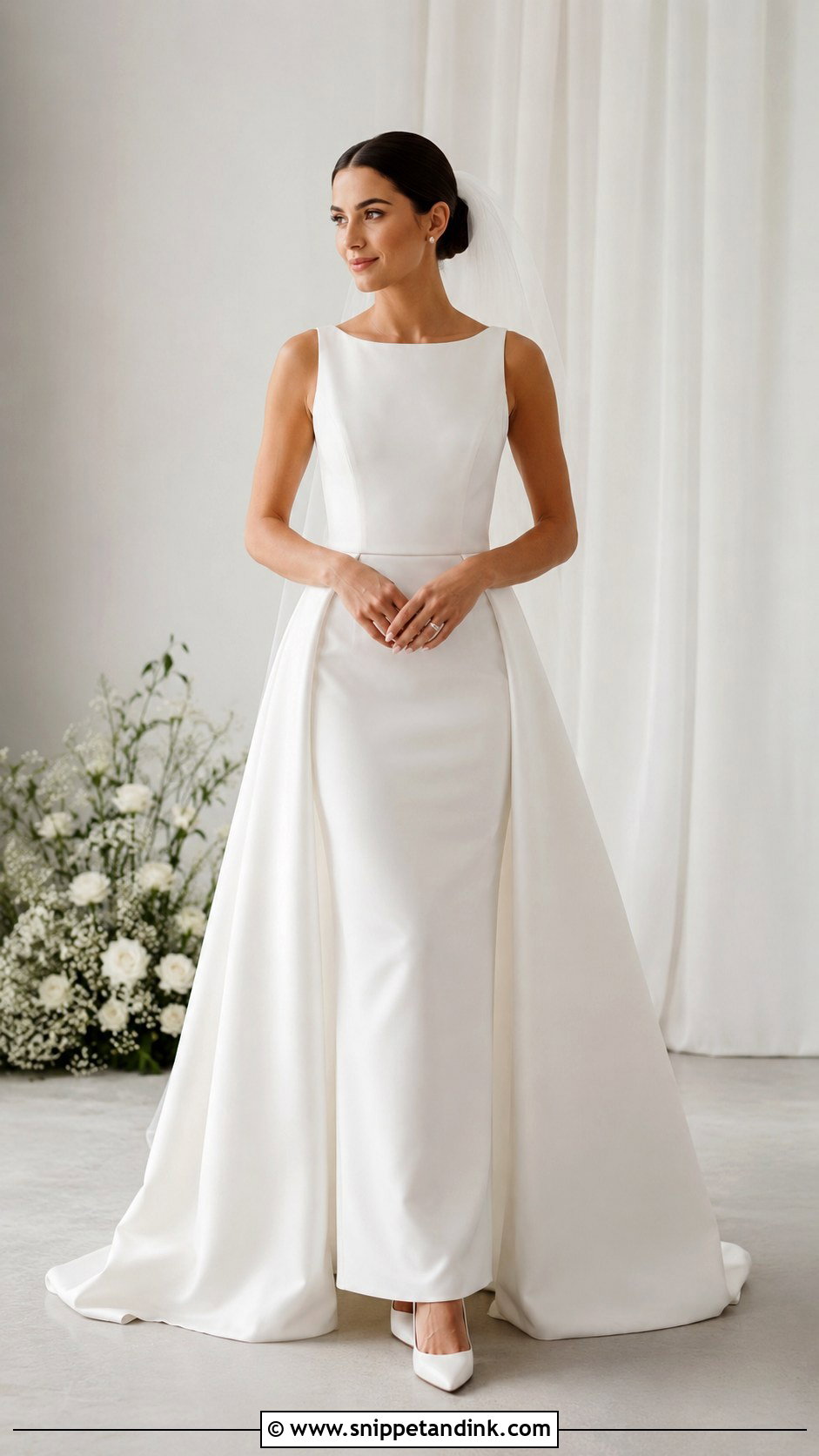
A simple wedding dress with an overskirt lives or dies on precision. With no lace or beading to distract, a wavy seam or a slight shade difference between the two pieces is obvious in daylight. Start with a minimal sheath, column or fit-and-flare in crepe, satin or mikado, and if the overskirt is being made to match, ask for it to be cut from the same bolt, since dye lots vary. Sleek pumps, a low bun and a plain veil are all it needs. This is the version I point brides toward when they dislike embellishment but still want a ceremony reveal.
9. Floral Wedding Dress With Overskirt
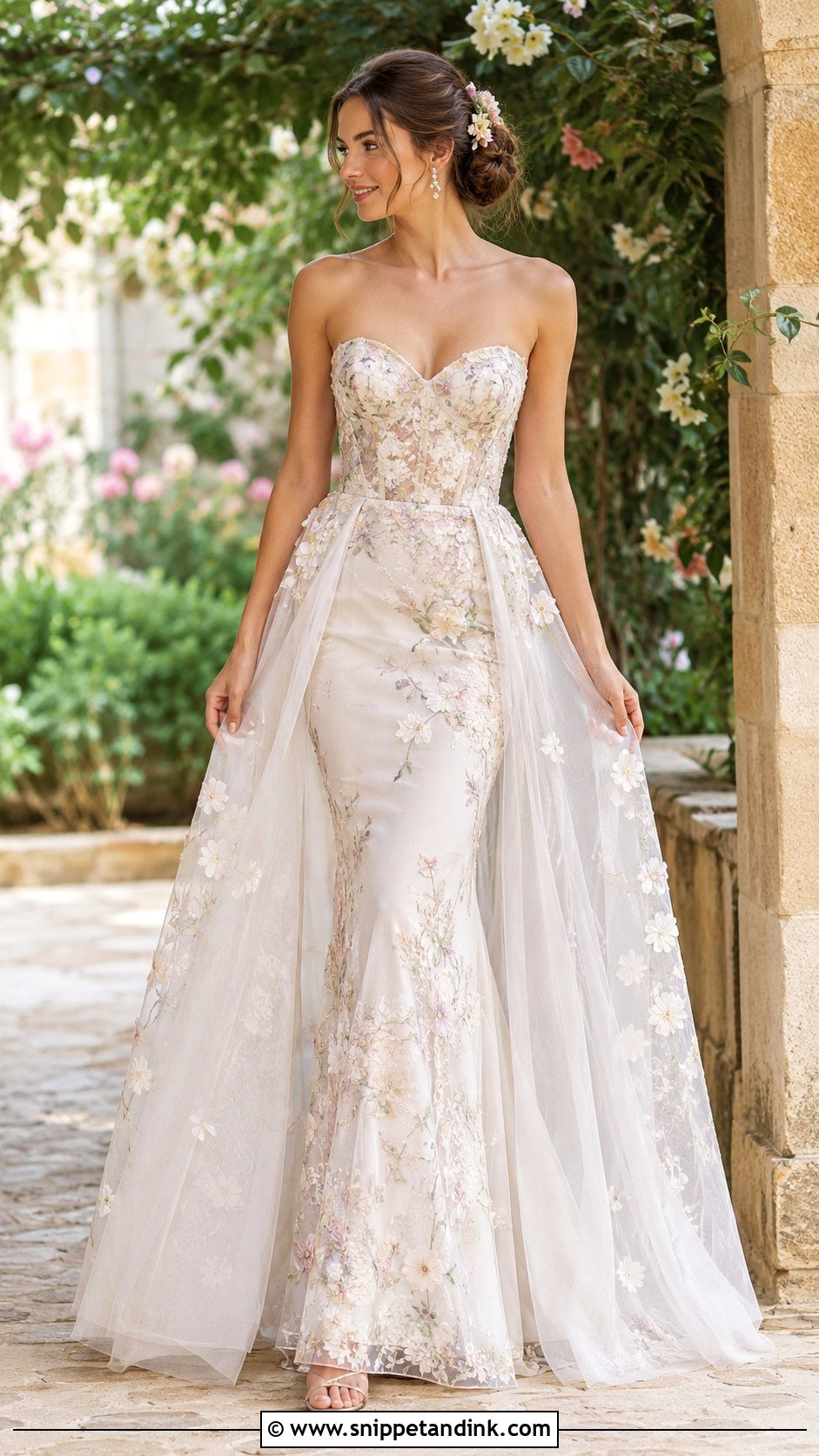
Floral texture goes wrong when both layers are busy. My rule: one piece carries the flowers, the other stays sheer or plain. Either a 3D appliqué gown sits under soft tulle, or a plain base sits under an embroidered overskirt, and the first gives the better reveal because the detailed gown appears when the outer layer comes off. Raised petals can catch the tulle as it’s lifted away, so ask whether the appliqué edges are tacked flat. Floral hair pins and barely-there heels finish it for a garden or spring wedding.
10. Beaded Wedding Dress With Overskirt
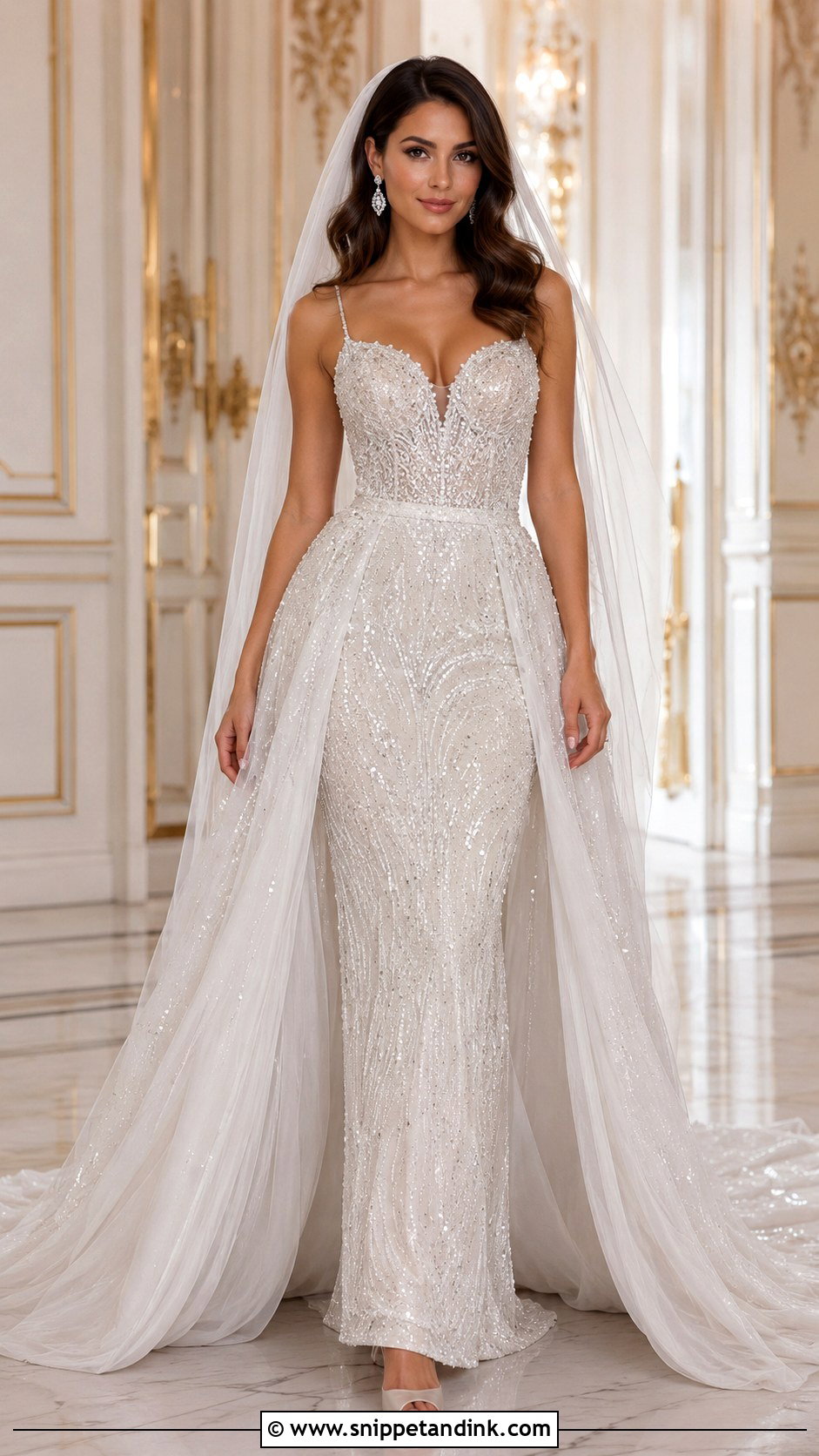
Beading is heavy. If both layers are beaded, your waist carries that weight for hours, so pick one: an embellished gown under a sheer, plain overskirt, or a simple gown under a beaded overskirt that becomes the showpiece. Beads also snag tulle on the way off. Whoever removes it should lift the overskirt up and away rather than sliding it down. Soft waves and small crystal earrings are plenty with this much shine, and I’d keep it for evening receptions and ballrooms where candlelight picks up the beadwork.
11. Crepe Wedding Dress With Overskirt
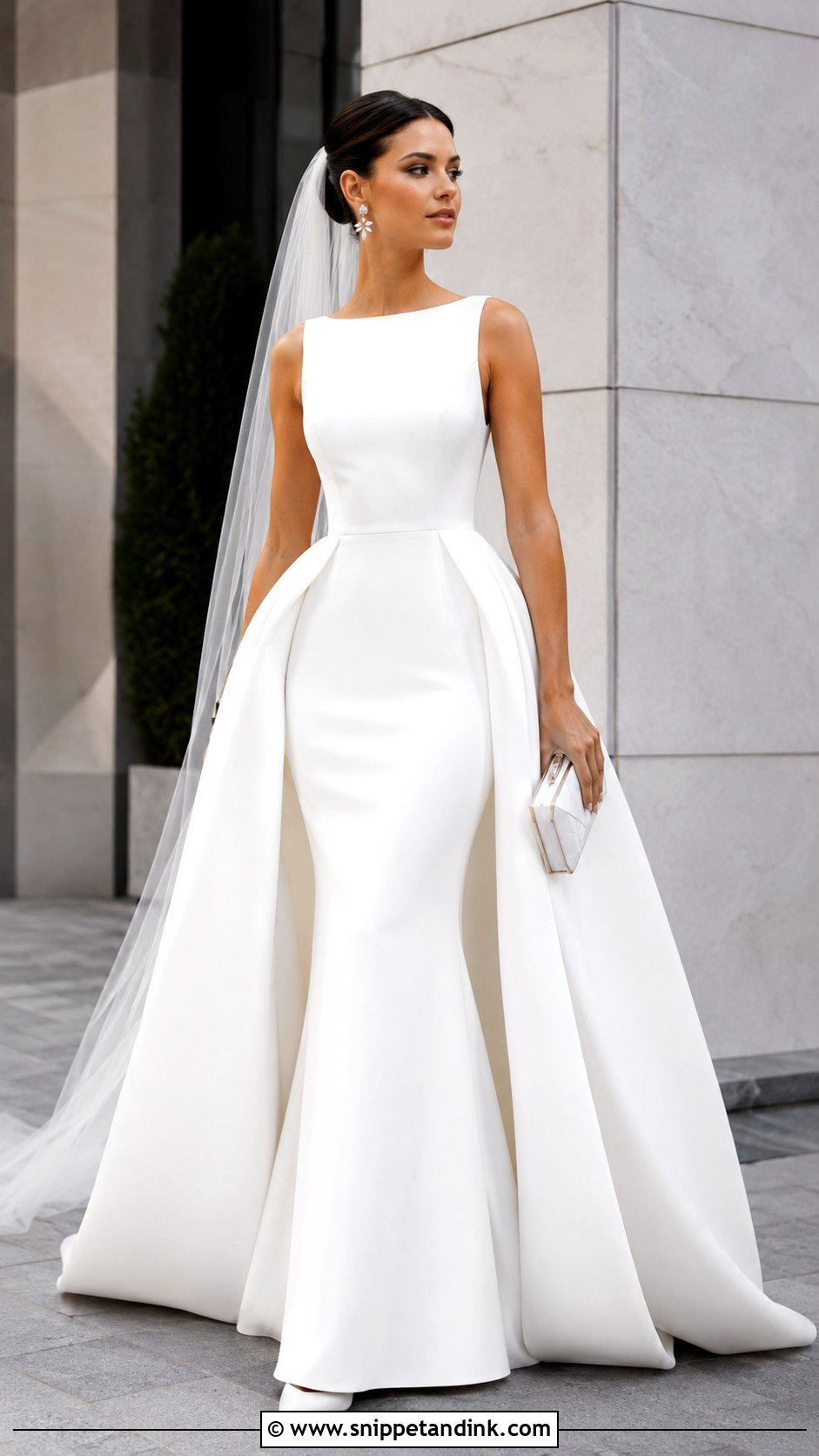
Crepe is unforgiving, which is exactly why I like it as a base. A heavier crepe skims the body and gives a clean line from the side; a lightweight one shows underwear seams and even the imprint of the overskirt’s waistband, so check it in daylight, not just under fitting-room bulbs. Pair it with a long-train overskirt for ceremony drama or a lighter A-line layer for easier movement. Simple pumps, a neat veil and sculptural earrings are enough. Crepe also creases less than satin in the car, which you’ll appreciate on the way to the venue.
12. Mikado Wedding Dress With Overskirt
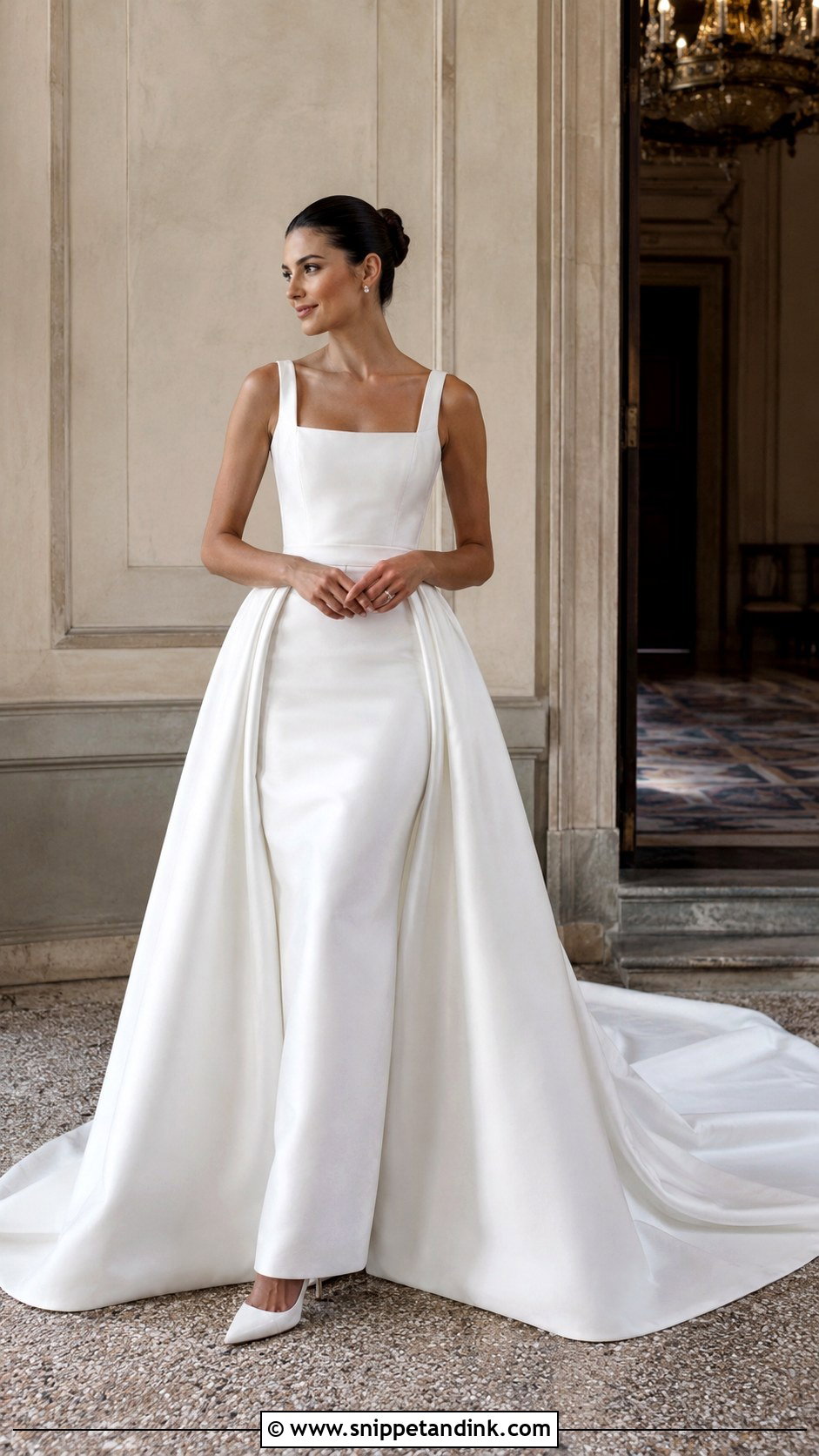
Mikado has enough body to hold a shape on its own, so a mikado overskirt looks full without layers of petticoat underneath. That keeps it lighter than its silhouette suggests. A fitted mikado base works with strapless, square and bateau necklines and becomes a sleek reception dress once the outer layer is off. The catch is creasing: mikado keeps a fold line, so the overskirt should travel hanging at full length, never packed into a box. Pointed satin heels, pearl studs and a long veil complete it.
13. A Line Wedding Dress With Overskirt
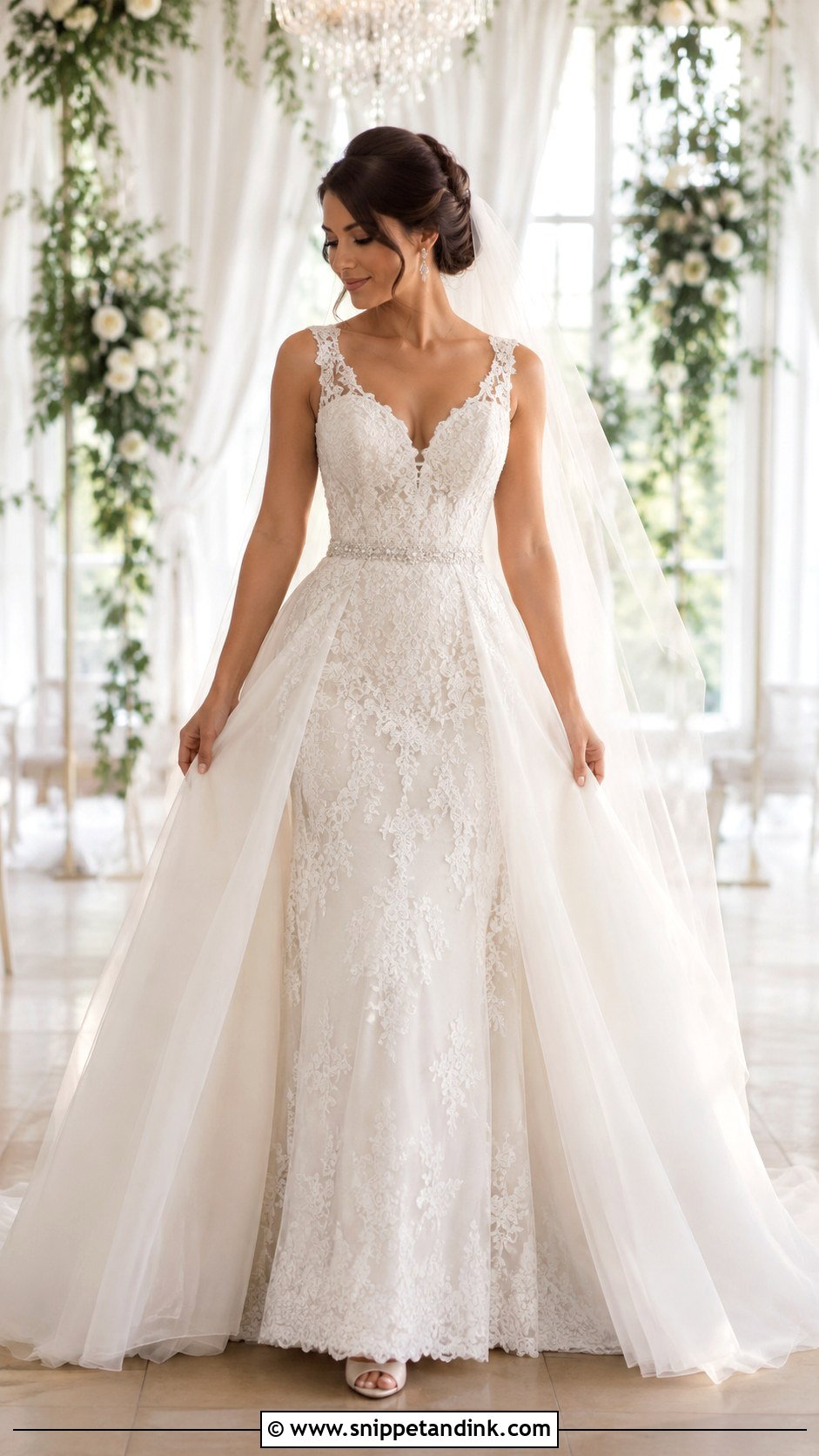
This is the gentlest version. The base already flares, so the overskirt adds length and texture rather than a new shape, which suits brides who want coverage without ball-gown width. Lace under plain tulle reads romantic; satin under matching satin looks formal. What I watch is the two hemlines. An overskirt only an inch or two longer than the gown can look like a sizing mistake, so go clearly longer, ideally with a train. A belt over the join and a soft veil finish it.
14. Sheath Wedding Dress With Overskirt
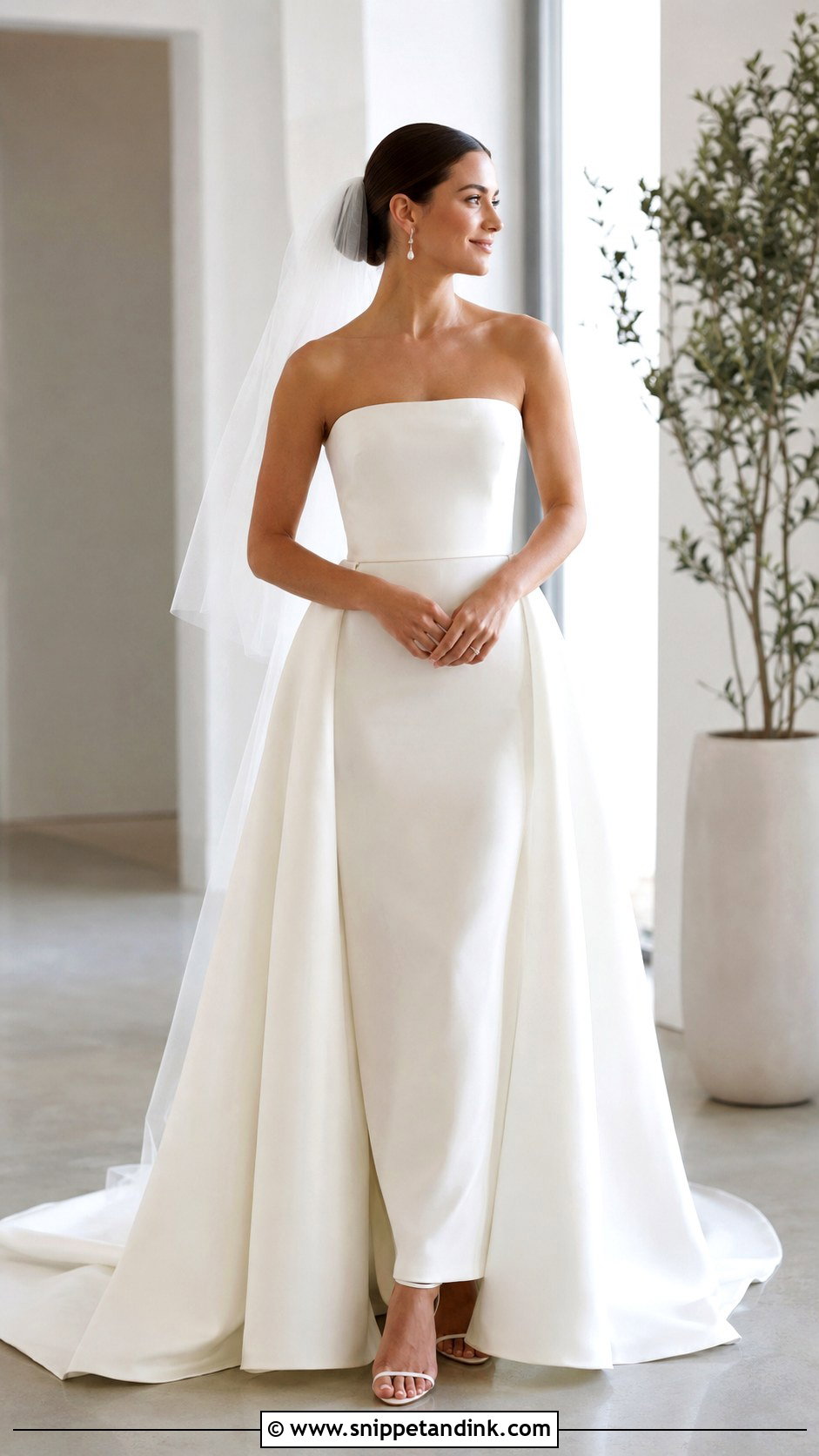
A sheath keeps you light, and that’s the point of choosing it. The overskirt then sets the ceremony mood: sheer tulle softens the straight line, while satin or mikado builds a more architectural shape. The fitting issue is that a slim sheath has no seam to hide the overskirt’s waistband, so I usually add a separate belt or a ribbon tie over the join. Clean heels and a smooth hairstyle keep it modern. After the ceremony, you’re in a dress you can actually sit, walk and dance in.
15. Mini Wedding Dress With Overskirt
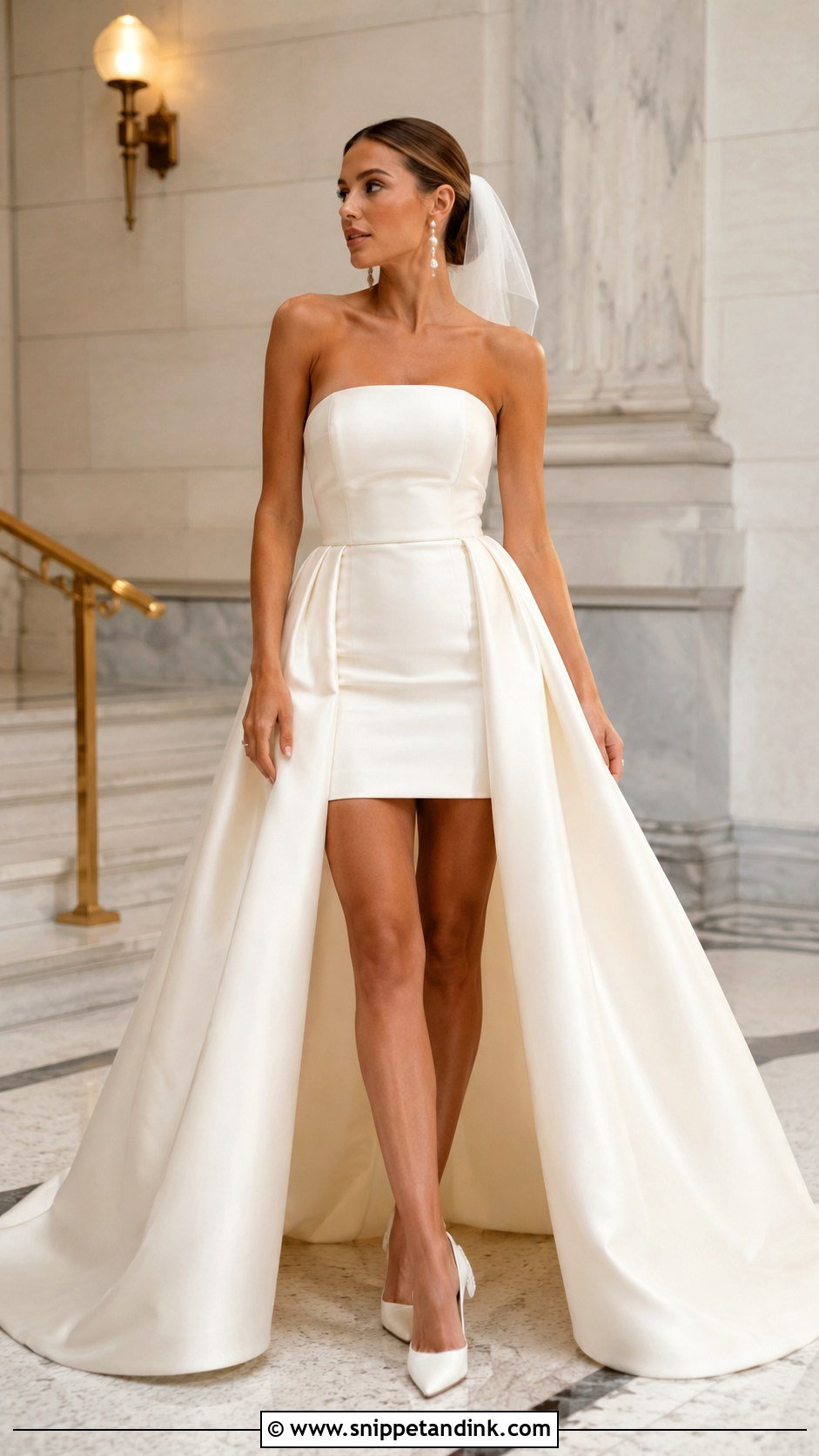
The mini reveal is the biggest change of the lot, and it needs a structured mini with a defined waist, because a loose shift gives the overskirt nothing to grip. Satin, crepe and embellished minis all hold a fastening well. Walk the length of the fitting room before you commit: some overskirts open at the front and flash leg with every step, which won’t suit every family or ceremony. Pointed heels and statement earrings carry the after-party half, and a short veil or a bow works for both. It’s a natural fit for civil ceremonies and second looks.
16. Square Neck Wedding Dress With Overskirt
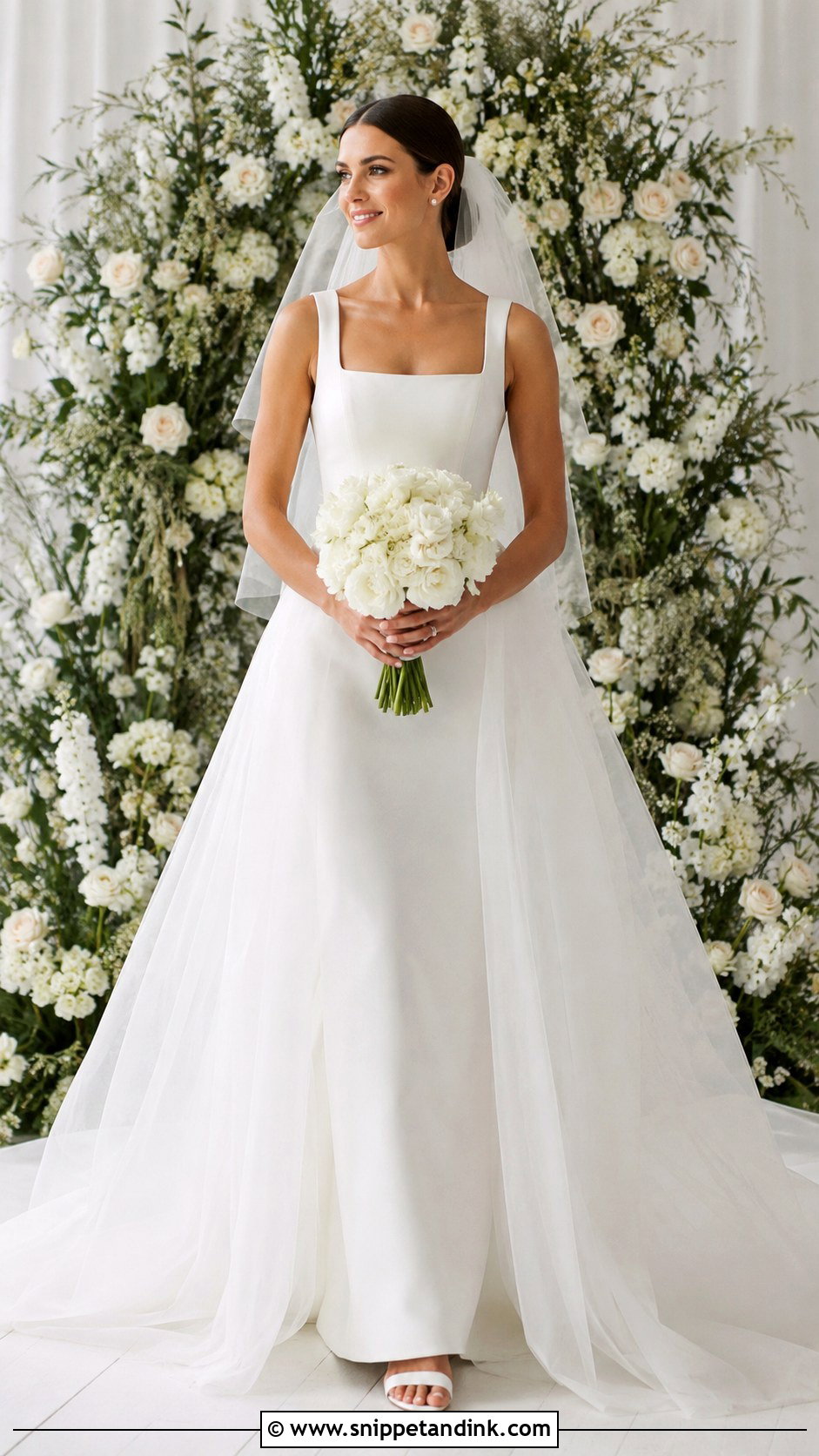
Square necklines usually come with straps or sleeves, and those carry part of the bodice’s weight, which makes this a comfortable base under a heavier overskirt. A crepe square-neck gown with a tulle overskirt feels modern; satin with matching satin feels classic. Block heels or pointed pumps both suit it, and a mid-length veil balances the straight neckline. Because the straps anchor the bodice, the dress stays where it should through a long receiving line of hugs.
17. Sweetheart Wedding Dress With Overskirt
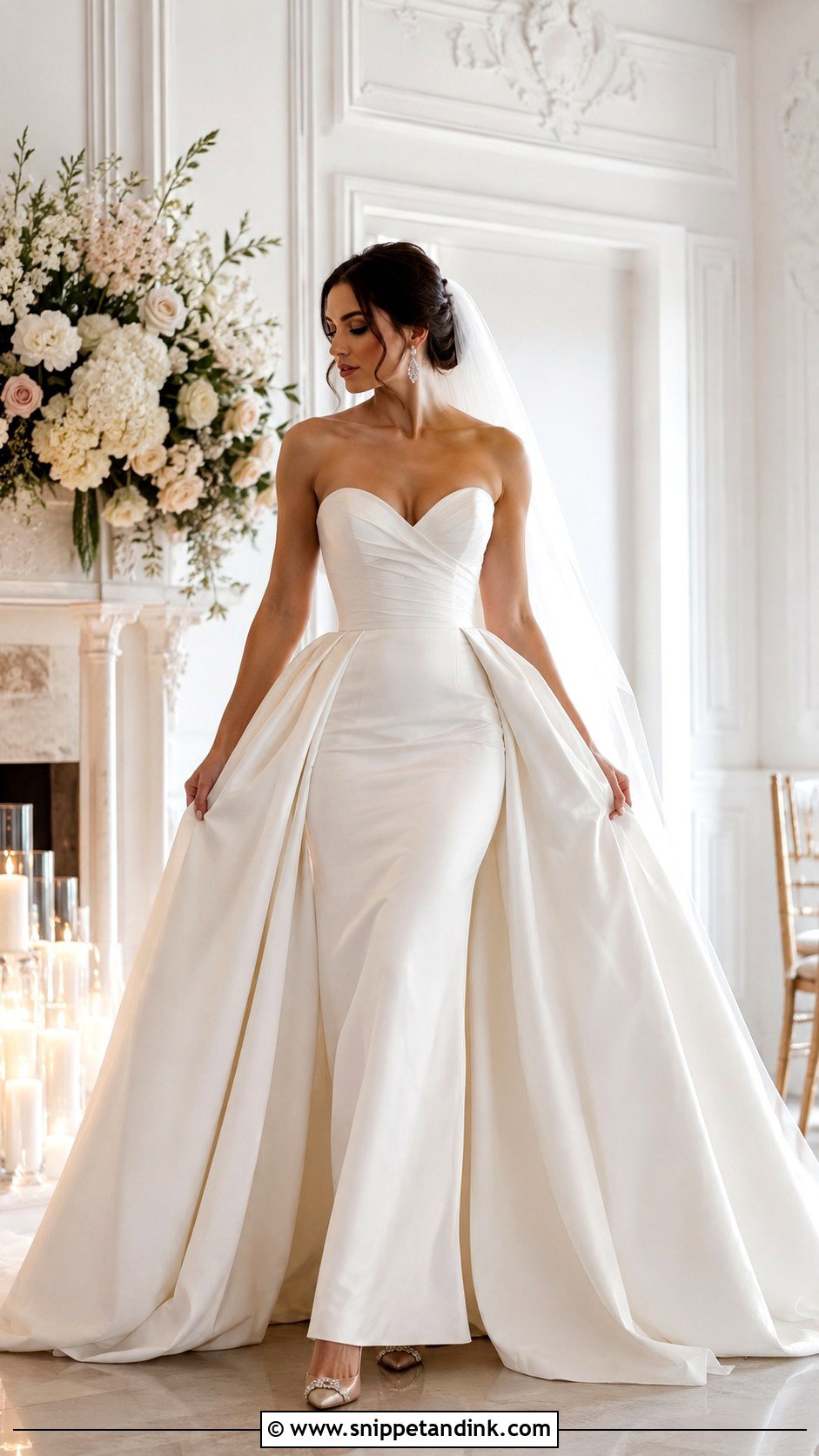
The sweetheart wedding dress with an overskirt is the most romantic pairing here. The curved neckline softens the bodice while the overskirt brings ceremony volume. Satin leans classic, lace leans romantic, beading leans evening. On a strapless sweetheart, I like detachable sleeves or gloves for the ceremony half, which can come off with the overskirt for the party. Earrings with a rounded drop echo the neckline. Since the base dress is complete on its own, the reveal never looks like something’s been removed.
18. High Slit Wedding Dress With Overskirt
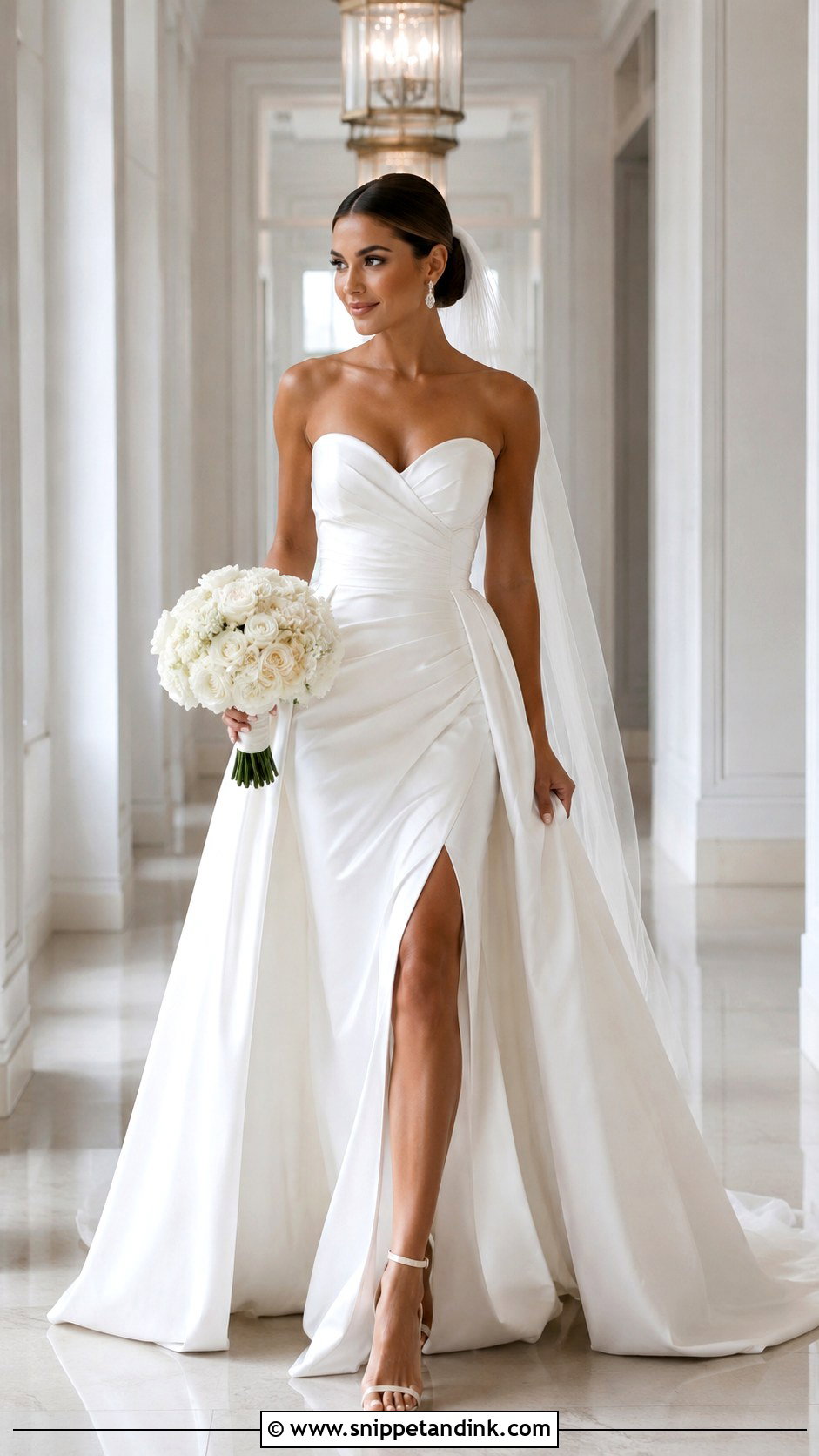
A high slit under an overskirt is a two-stage reveal: the overskirt covers the leg during the ceremony, then the slit shows as you move at the reception. I check two things. The slit should end where you’re comfortable sitting down, not just standing, and the overskirt’s opening must not line up with it, or the reveal happens halfway down the aisle. Your shoes will be on show, so pick a pair you can stand in. A clean updo and drop earrings keep the focus where you want it.
19. Backless Wedding Dress With Overskirt
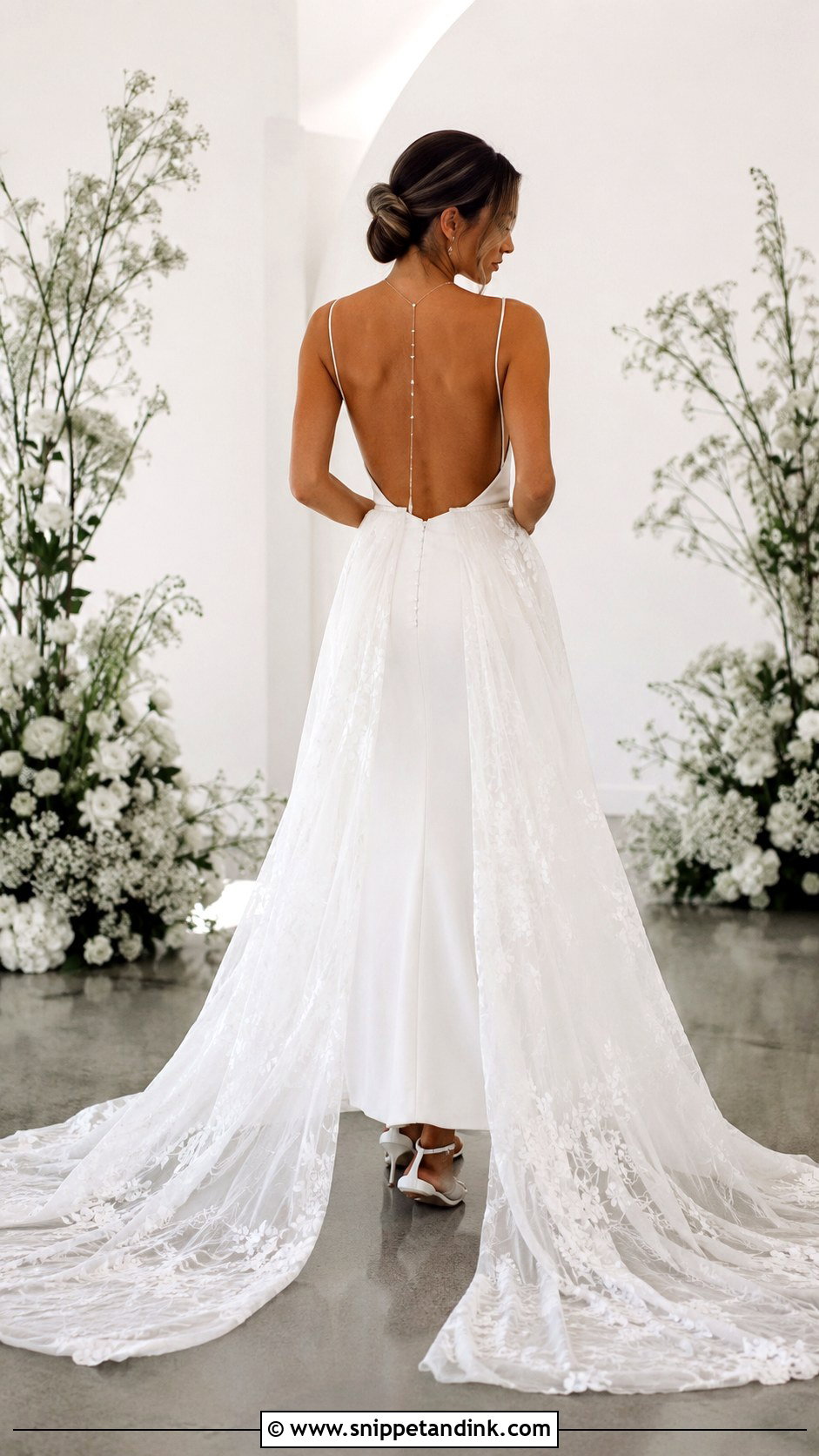
An open back is a big detail, and an overskirt fastened at the natural waist can cut straight across it. Ask exactly where the waistband sits relative to the lowest point of the back opening; if it covers that, either lower the attachment or treat the back as your reception reveal. Clean crepe, satin or fine lace suits the base. A low bun keeps the back clear, a back-drop necklace adds interest, and a sheer veil softens the view without hiding it. Sort out your adhesive or built-in bra solution before the first fitting, not after.
20. Bow Wedding Dress With Overskirt
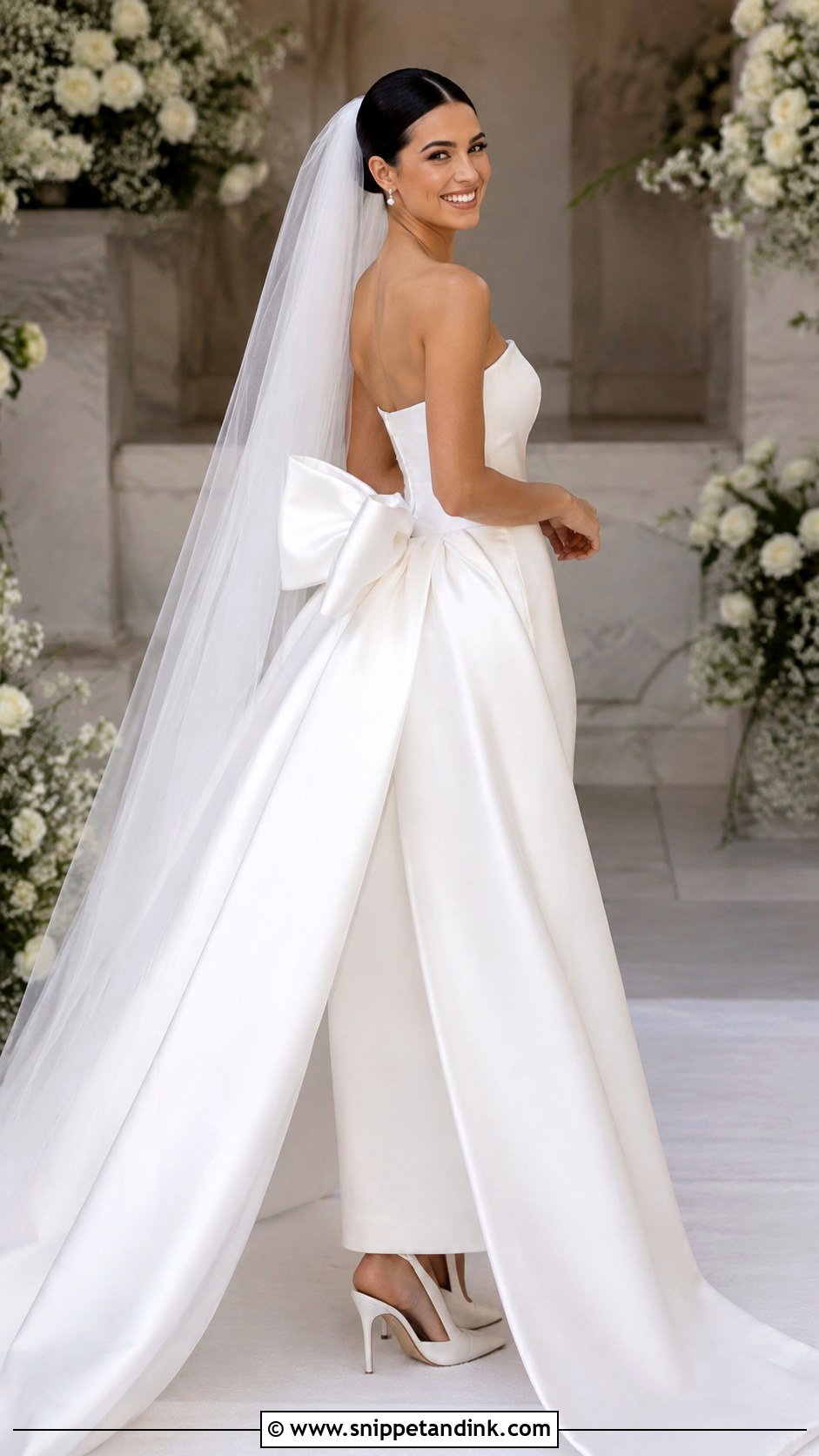
Bows are structural. Satin and mikado hold a crisp loop; soft chiffon droops after a couple of hours. A back bow over a detachable overskirt gives guests something to look at during the ceremony, but it also sits right where the overskirt fastens, so confirm whether the bow is sewn to the gown or to the overskirt. If it belongs to the overskirt, it leaves with it. Keep the base plain if the bow is large, and stick to classic heels, pearl earrings and a clean veil.
21. Pearl Wedding Dress With Overskirt
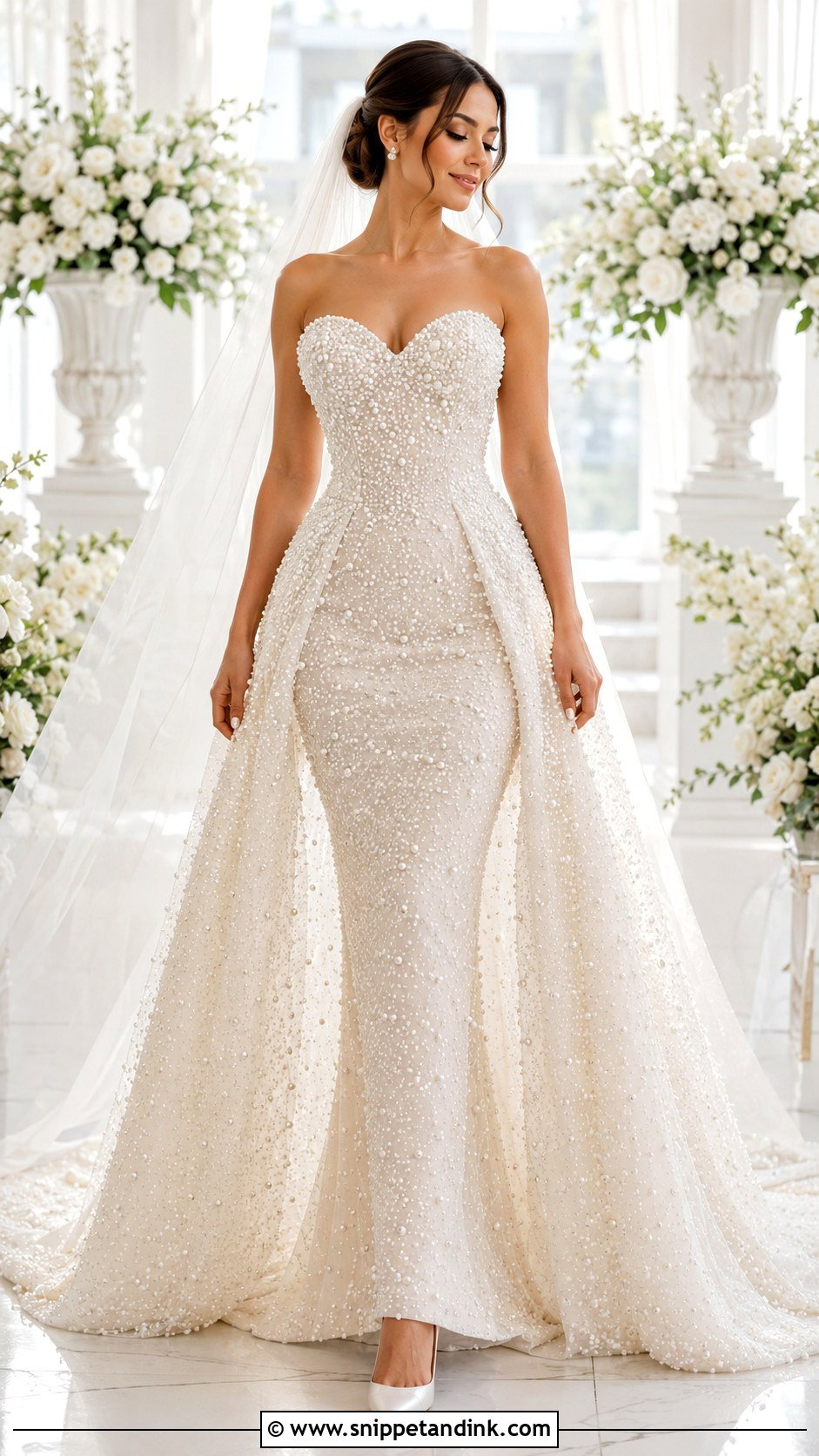
Pearls show through a sheer overskirt, so a pearl-detailed fitted gown under organza or tulle gives one of the nicer layered effects on this list. Scattered pearls on the bodice and sleeves weigh far less than pearls across the whole skirt. They can catch on the inside of the overskirt, so ask for a smooth lining at the waistband. Keep accessories quiet: pearl studs, satin heels, a smooth veil and no heavy headpiece. Pearls glow rather than sparkle, which reads soft in bright daylight.
22. One Shoulder Wedding Dress With Overskirt
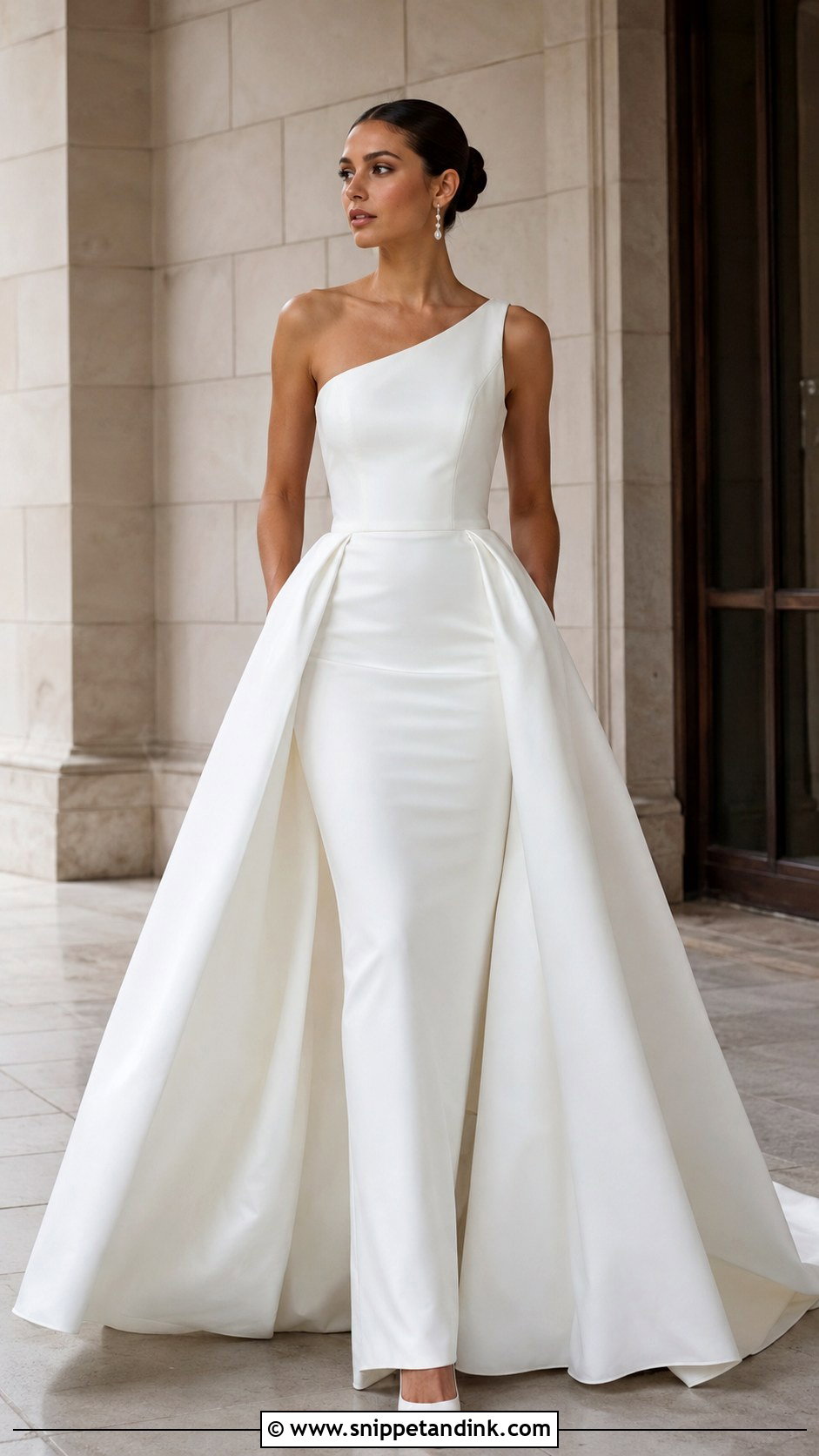
The asymmetric neckline already makes its point, so the overskirt should stay calm. A sleek one-shoulder base with a detachable satin or crepe overskirt looks architectural; tulle or organza is softer. One-shoulder bodices tend to shift when you lift the strapped arm, so I ask for a grip strip along the bare side. Sweep the hair away from the neckline and wear one statement earring on the open side, or matching drops if you prefer balance. It suits a bride who wants something less traditional that still holds up in formal portraits.
23. Plus Size Wedding Dress With Overskirt
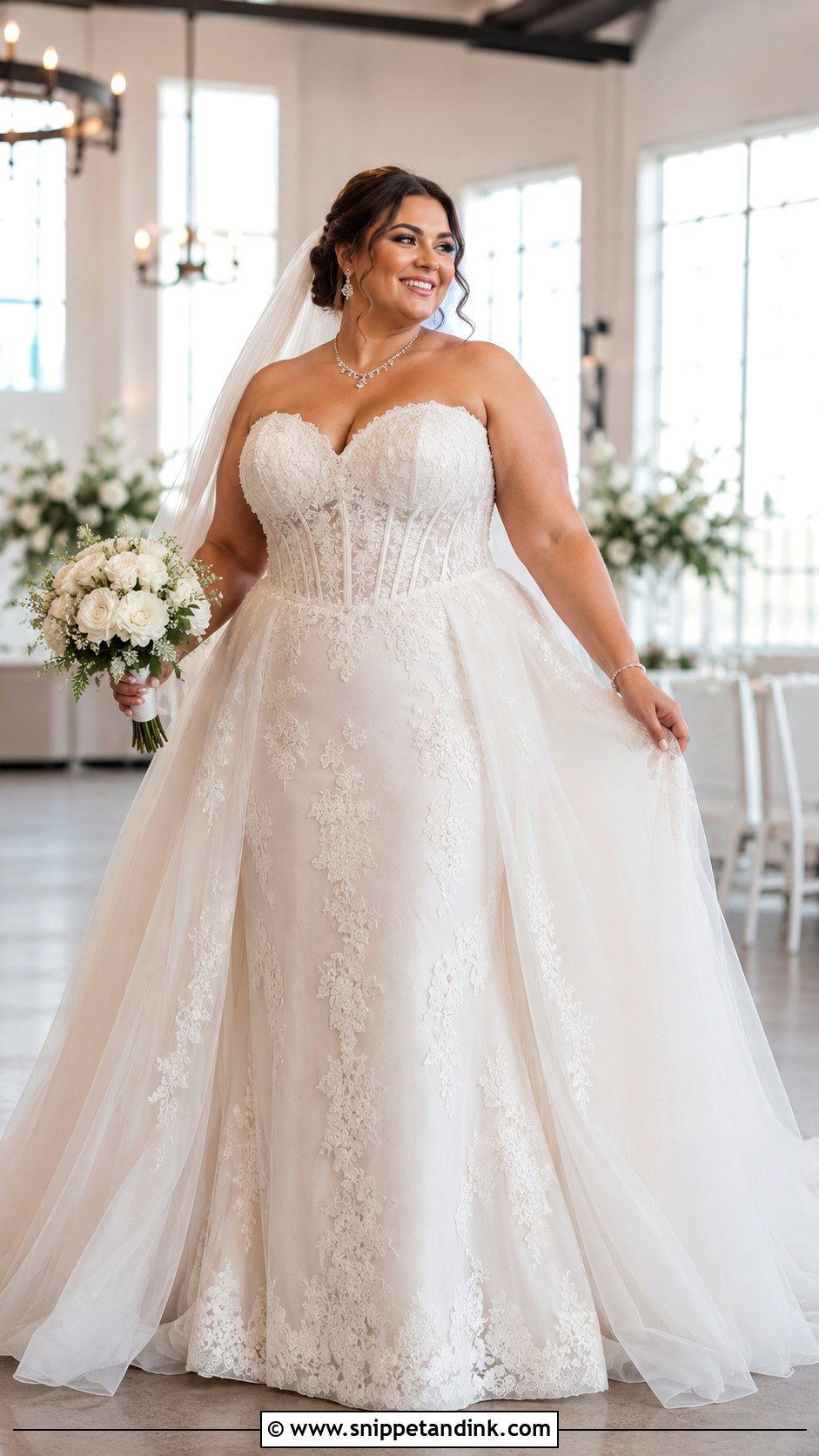
For a plus size bride, the overskirt’s attachment point decides comfort. I place it at the natural waist or a little above, wherever the base gown has the most structure, and ask for a wide, flat band rather than a narrow one that can roll when you sit. Look for real support inside the base: comfortable boning, sturdy straps or a fitted corset. A-line, fit-and-flare and sheath shapes all work, and fabric that moves with you matters more than any size label. Stable heels and a veil scaled to the skirt’s volume finish the look.
24. Maternity Wedding Dress With Overskirt
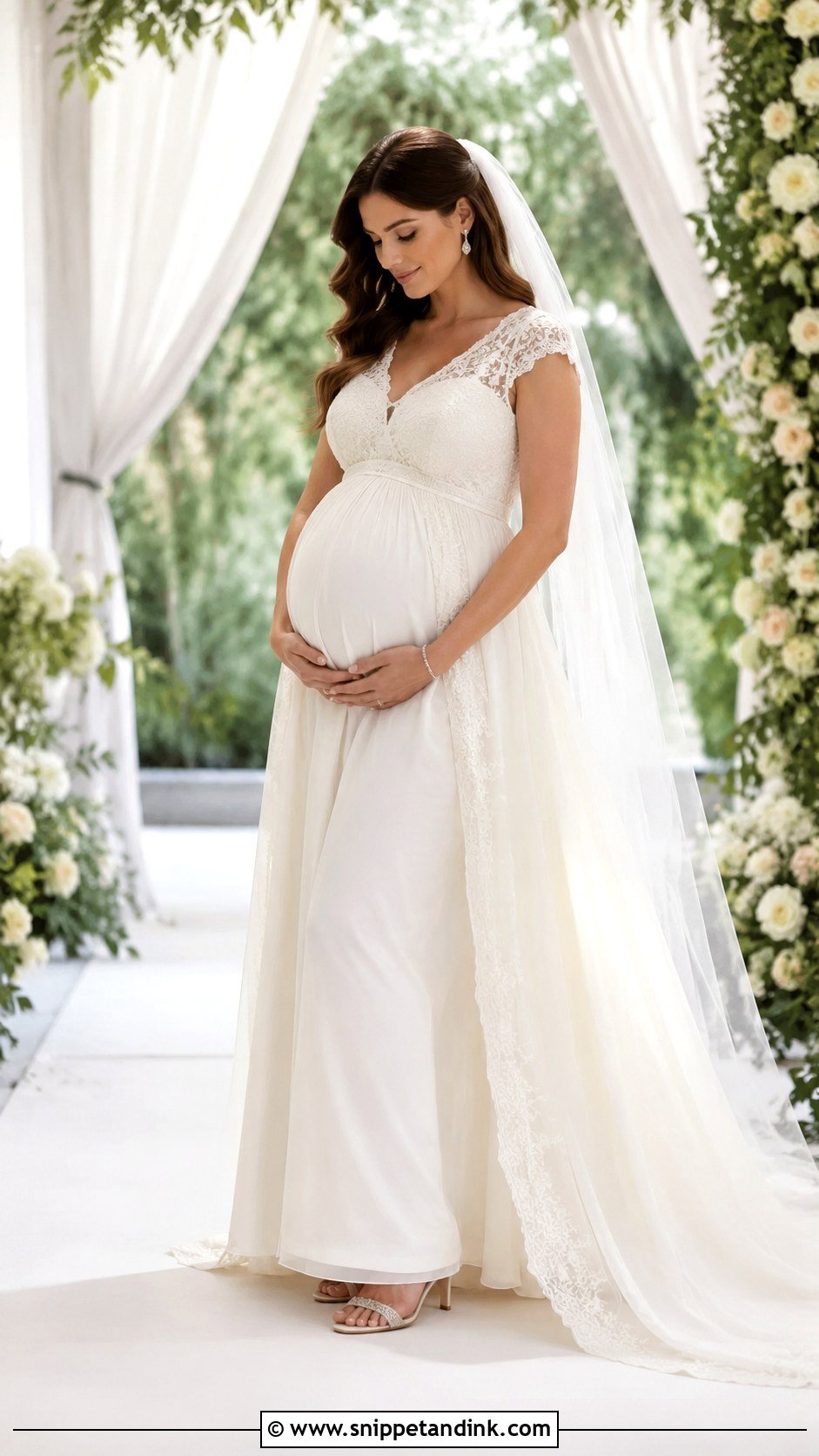
A maternity wedding dress with an overskirt should feel comfortable first. Empire waists, soft A-lines, stretch crepe and chiffon give room without looking shapeless. On an empire line, the overskirt should fasten just under the bust, never at the natural waist, and it needs to be light enough to wear for hours. Book the final fitting as close to the date as your seamstress allows, because a bump changes week to week. Low supportive heels and a lightweight veil make sense, and dropping the overskirt after photos leaves you a softer dress to sit and celebrate in.
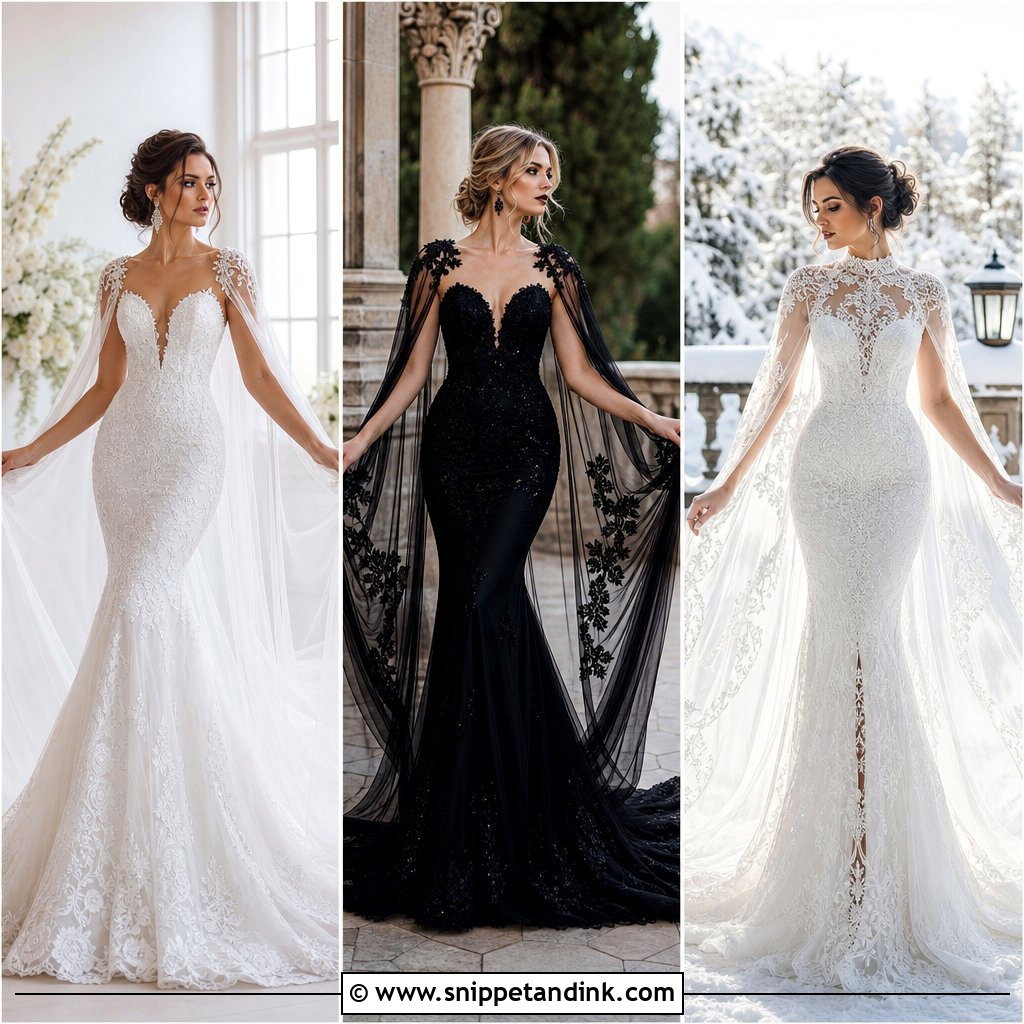
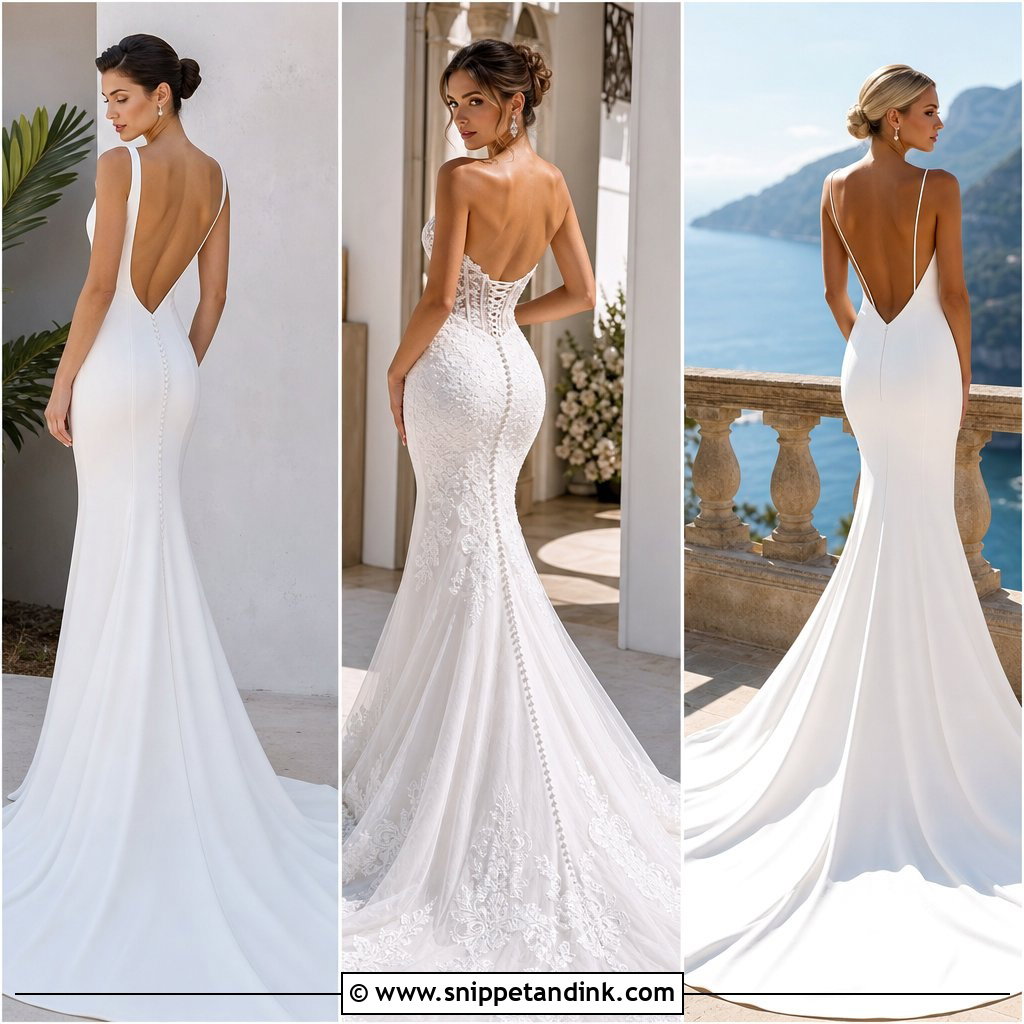
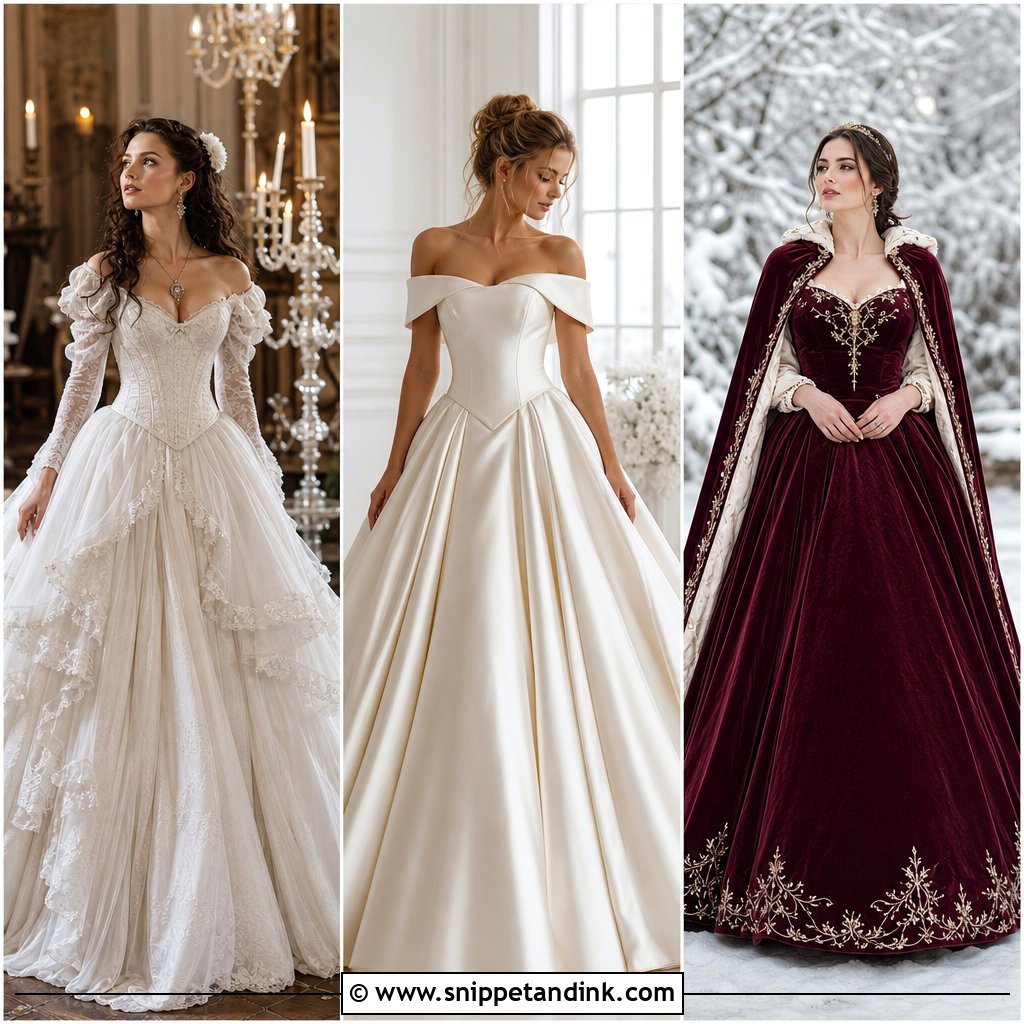
25. Reception Wedding Dress With Overskirt
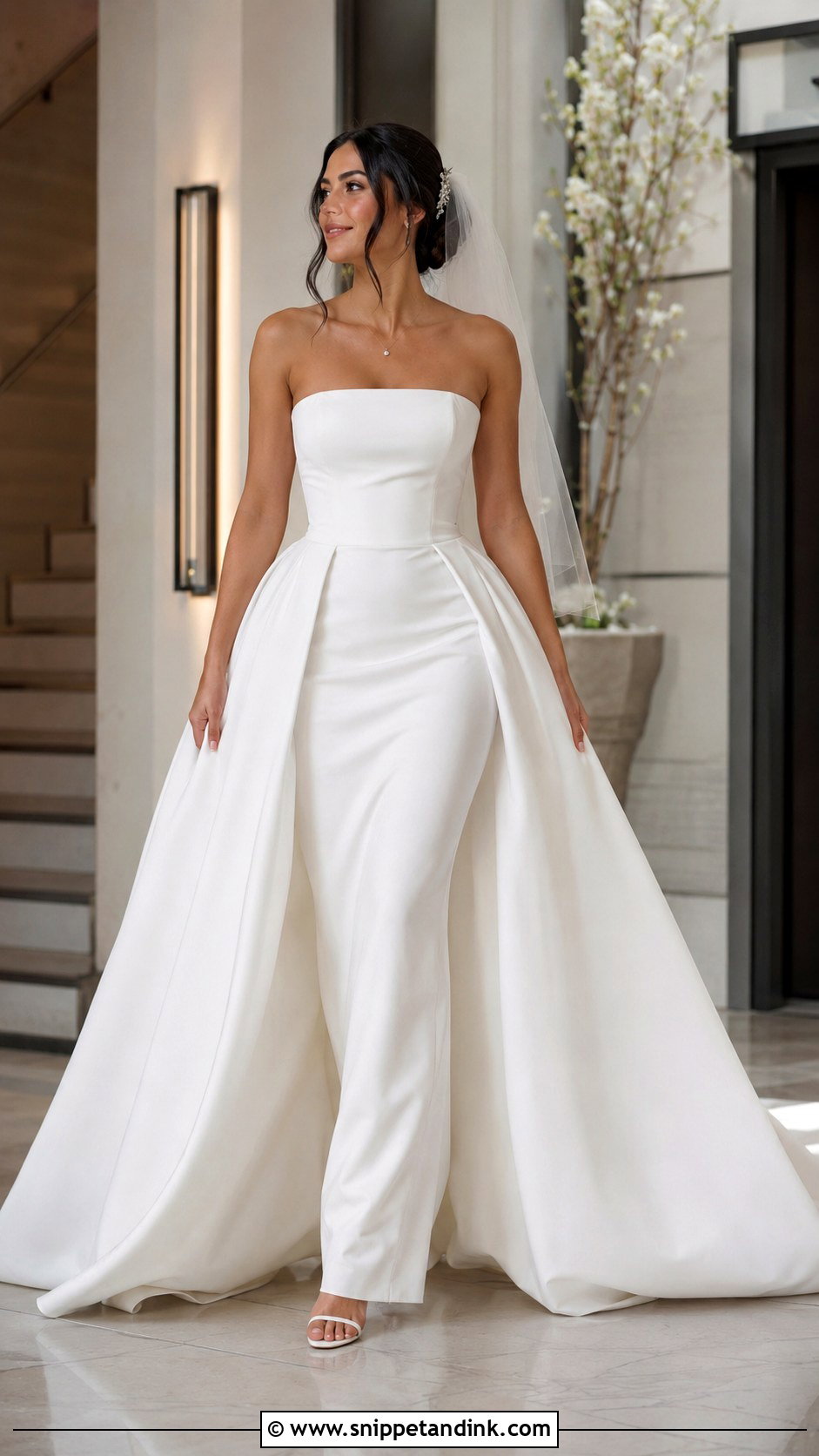
If you want one outfit for the entire day, this is the version to build around: full for the ceremony, sleek for the reception. A fitted satin gown, crepe sheath, lace mermaid or mini all make good bases. The fastening matters more than anything else. Hooks and eyes on a band are the most secure, snaps are the quickest to undo, and a ribbon tie is easiest to adjust if your waist changes over the evening. Jewelry that works with both halves saves a second change, and it’s one of the most practical ways to get a two-look bridal wardrobe.
Planning the Moment It Comes Off
The reveal sounds spontaneous, yet it works best when it’s scheduled. I suggest removing the overskirt after the family portraits and before you’re announced into the reception, so the photographer has the full silhouette and your grand entrance shows the new look. Pick a private room near the reception space, and pick one person to do it. That person should practise at the final fitting, with the seamstress watching, until they can undo every hook in the right order without tugging the bodice.
Where the overskirt goes next
Once it’s off, a metre or more of tulle or satin needs somewhere to live. Hang it by its inner loops on a padded hanger inside a breathable garment bag, and give it to a named person to take home, not to the venue staff. Never lay it over a chair in a busy room; that’s how hems end up with footprints.
Cleaning and storing both pieces together
Send the gown and overskirt to the cleaner as one order. Satin and silk can yellow slowly over the years, and two pieces cleaned at different times can age to slightly different shades. For long-term storage, fold the overskirt loosely with acid-free tissue between the layers and keep it somewhere cool and dark, away from plastic and attic heat.
The Waistband Does More Work Than You Think
Every combination above comes down to the same few checks. The two pieces should match in shade and weight, the waistband should carry the overskirt without dragging the bodice down, and the fastening should come undone quickly with one helper. Try the full outfit sitting, walking and hugging before final alterations. Get those right and the overskirt gives you the ceremony entrance, then hands you back a dress you’ll gladly dance in.
You'll Like These Ideas:





Leave a Reply