
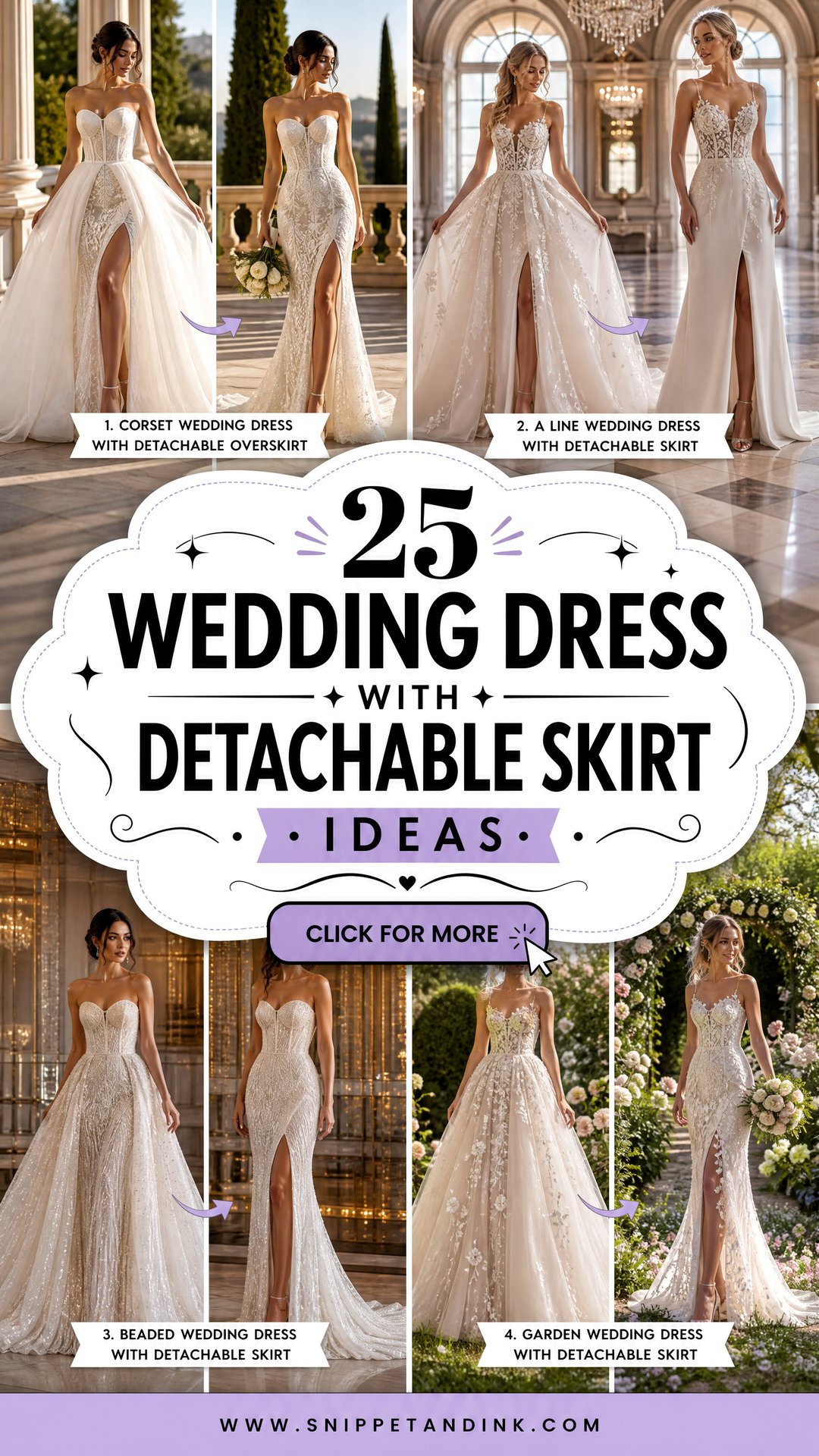
A removable overskirt gives you two looks from one gown: full volume for the ceremony, then a lighter dress for the reception without disappearing for a whole outfit change. I’ve fitted them over lace, satin, corset bodices, mermaid shapes, minis, jumpsuits and very plain crepe. The trick is that you’re really buying two garments that must work together and apart. Below are the convertible styles I find most wearable, with notes on where each one tends to need help.
How an Overskirt Hooks On, and Why It Matters
The closure is the part nobody photographs and the part I check first. A beautiful overskirt with a weak fastening sags at the waist by the time you reach the altar. Ask the shop to show you the inside of the waistband before you fall in love with the outside.
- Hook-and-bar or hook-and-eye tape: secure and flat, but slow to undo with nervous hands.
- Snaps: quick to remove, though large heavy skirts can pop them open when you sit.
- Buttons and loops: pretty when visible, fiddly when hidden.
- A separate waistband that wraps and closes at the back: the easiest to take off and usually the most stable for heavy fabrics.
The overskirt’s waistband has to land exactly on the base dress’s waist seam, or you’ll see a ridge where the two meet. That means both pieces get fitted together, and the base dress gets its own separate fitting with the skirt removed. Plan for two hems as well, both set with the shoes you’ll actually wear.
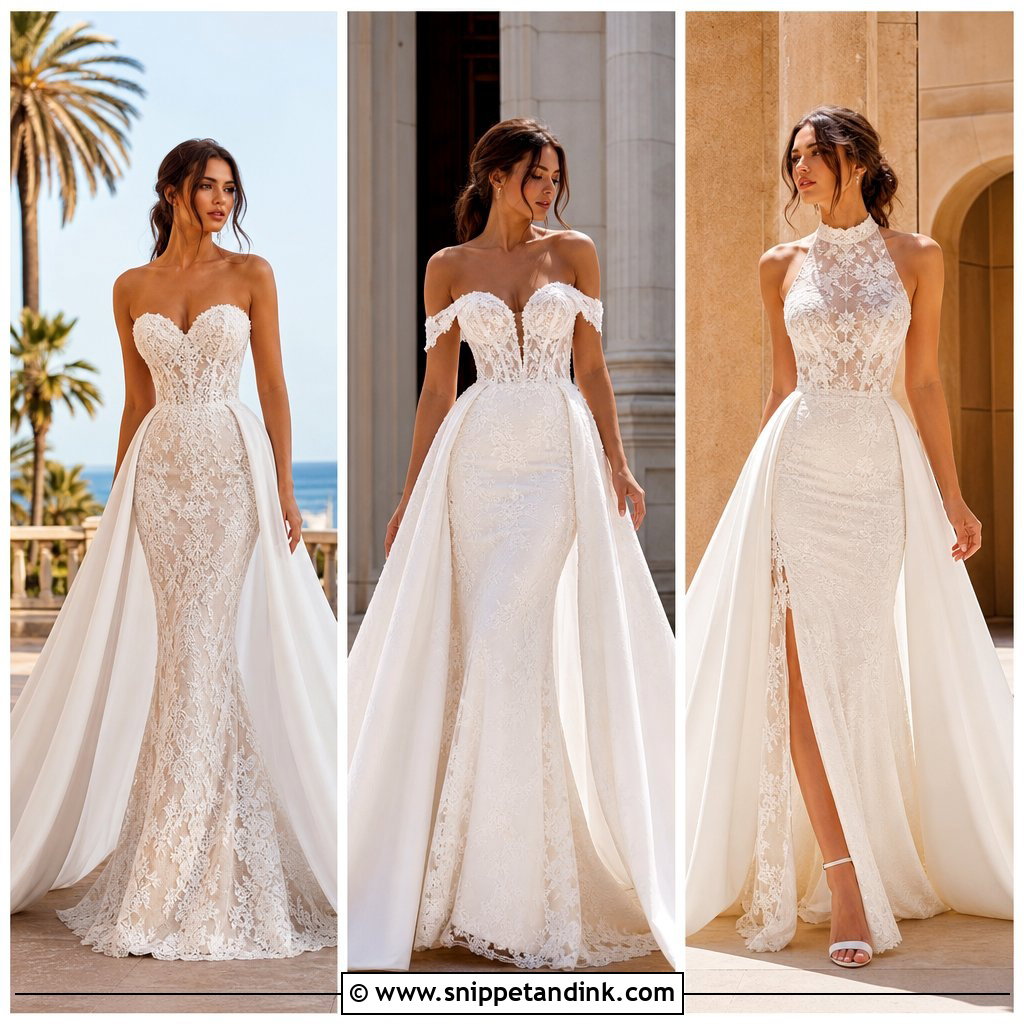
1. Lace Mermaid Wedding Dress With Detachable Skirt
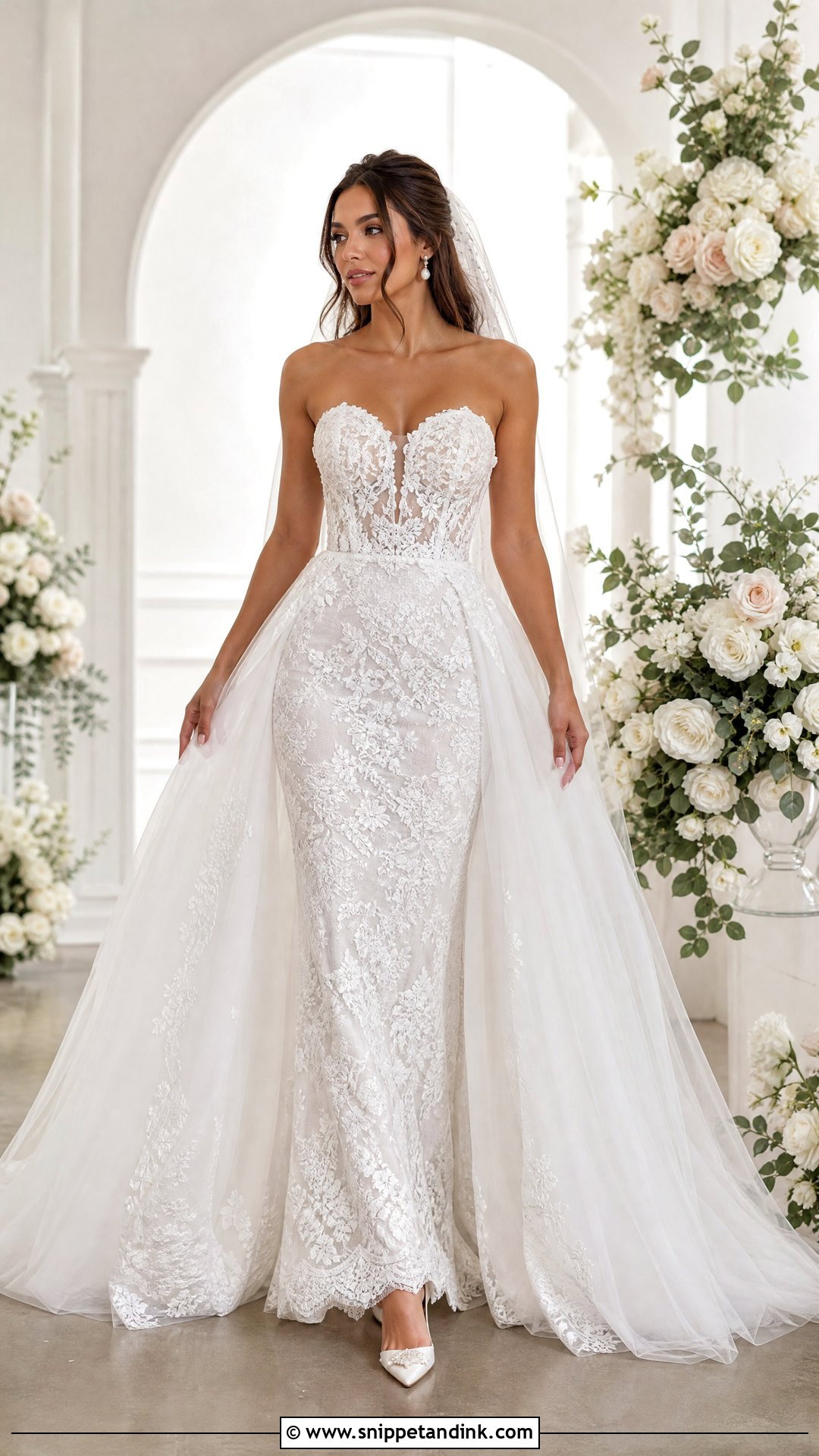
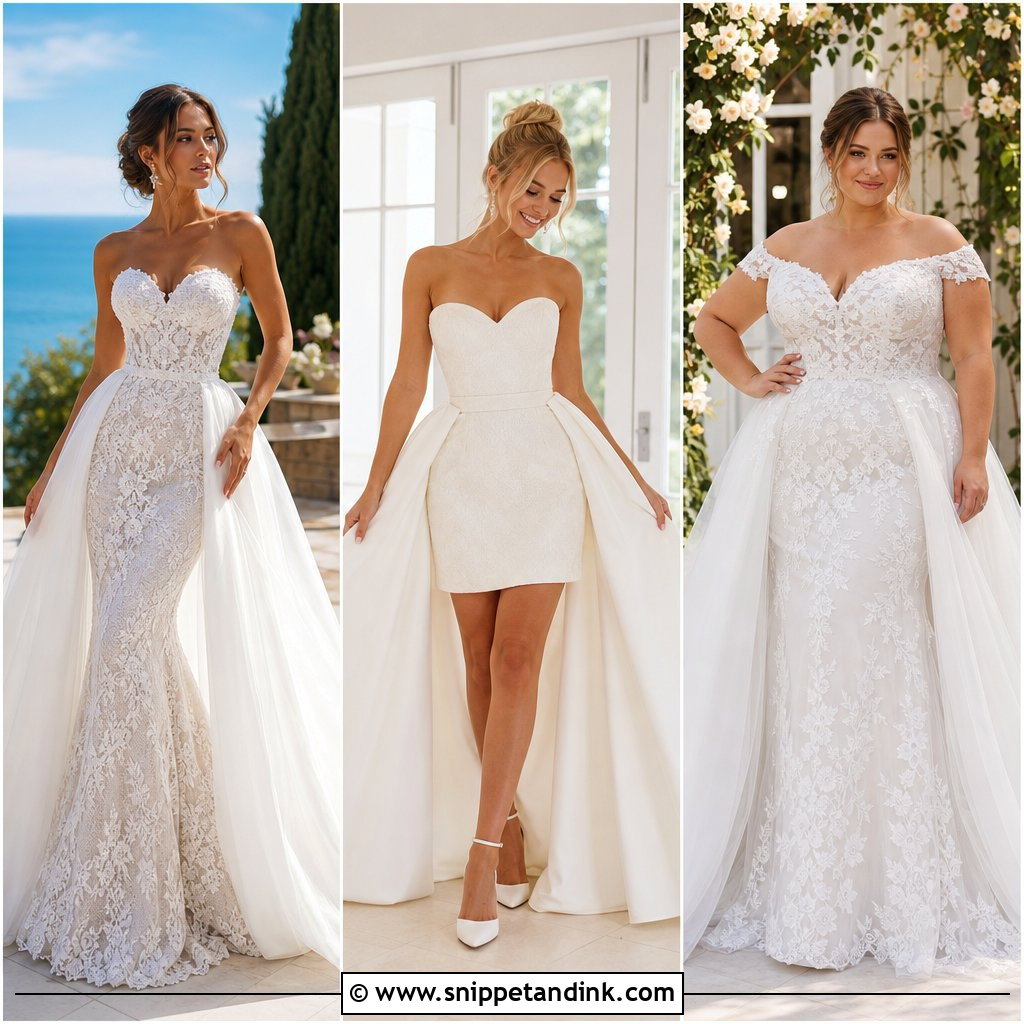
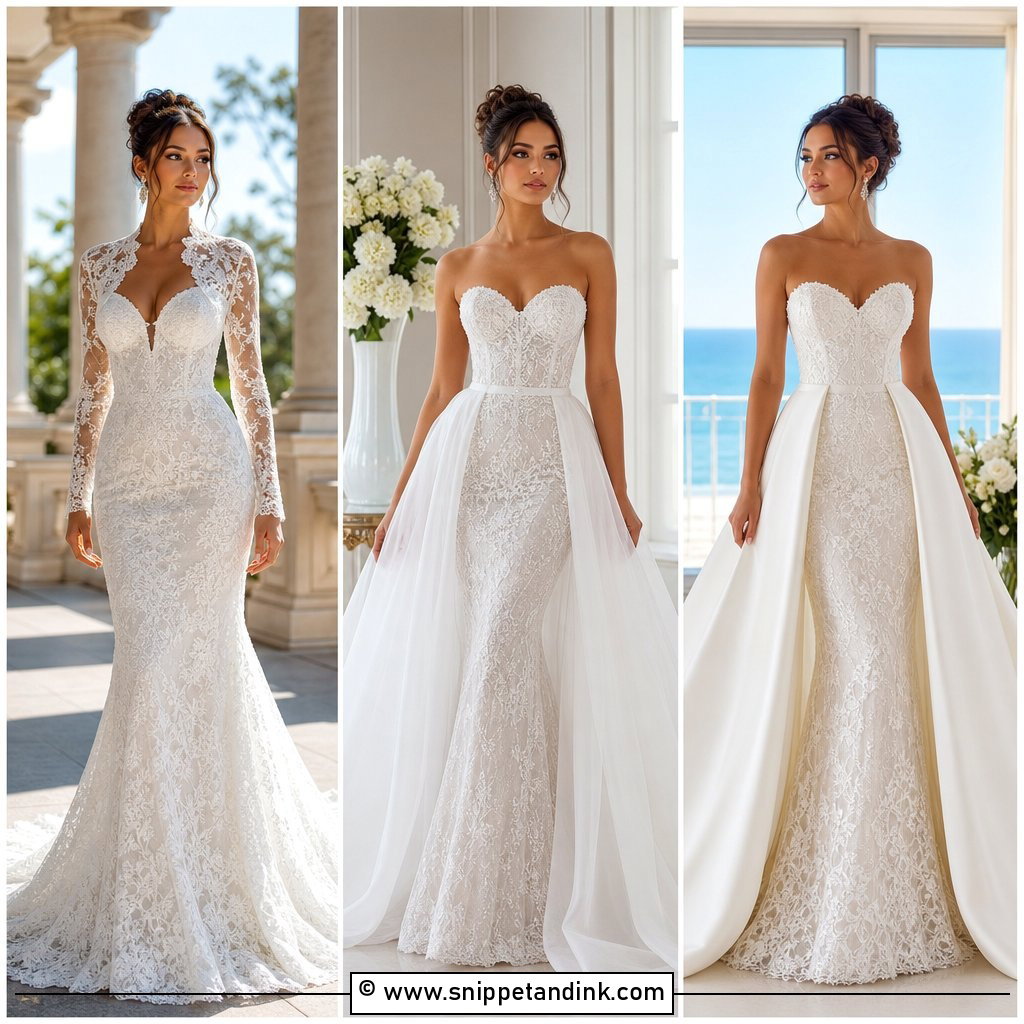
A lace mermaid wedding dress under a full overskirt is the most dramatic swap on the list: ball gown from the front at the ceremony, close-fitting lace for the party. Have the overskirt start at your natural waist so it reads as one gown. Lace mermaids are fitted to the knee, so the overskirt’s waistband has to sit flat over the lace without crushing any appliqué at the hip. A fingertip veil, pearl earrings, pointed heels and a clean low bun suit both versions.
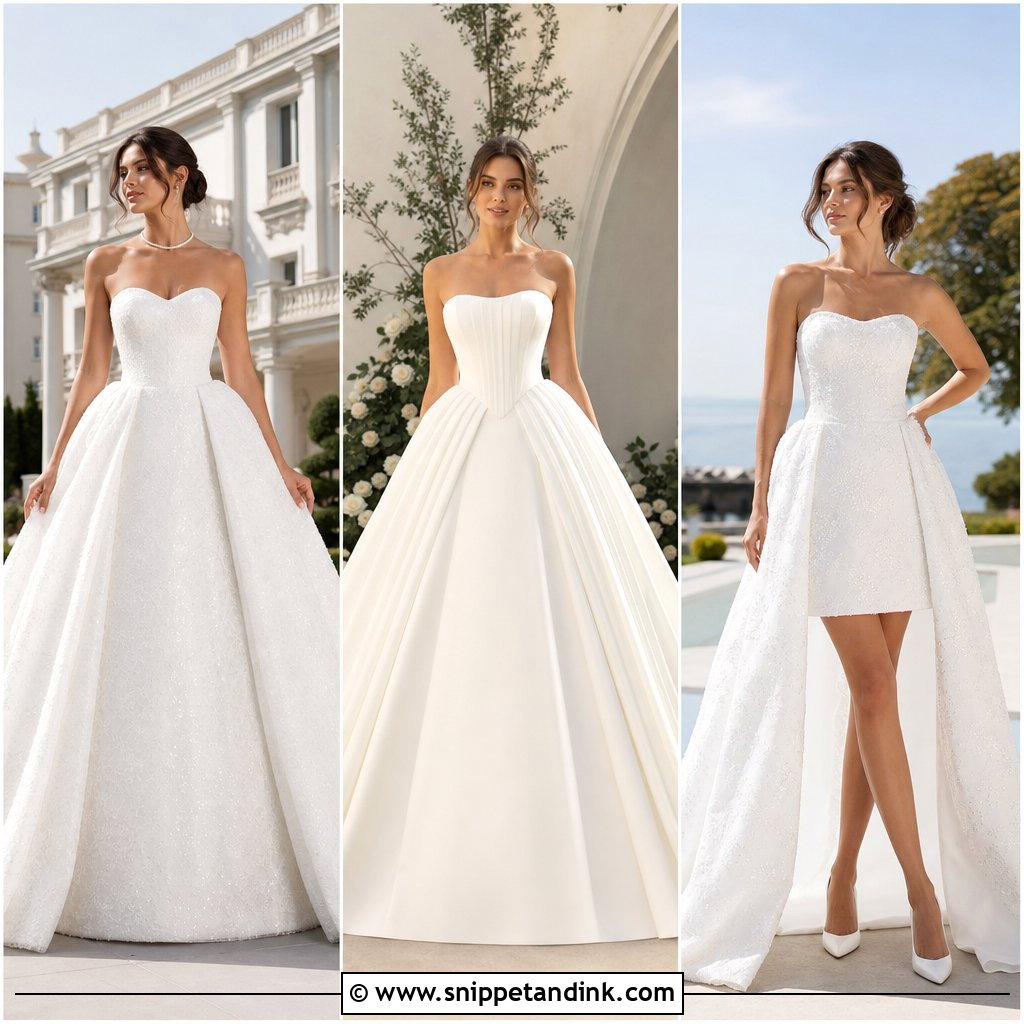
2. Satin Ball Gown Wedding Dress With Detachable Skirt
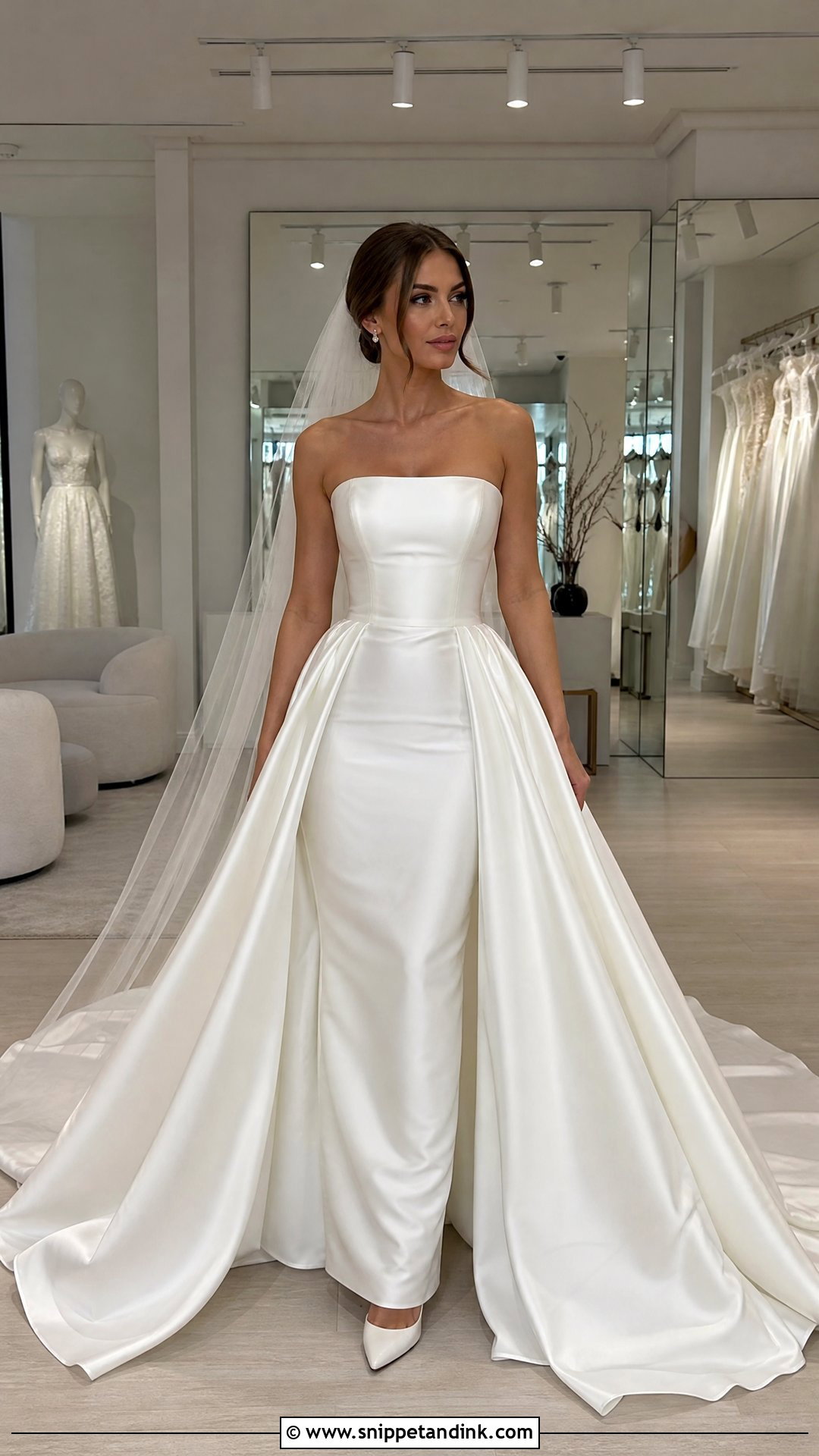
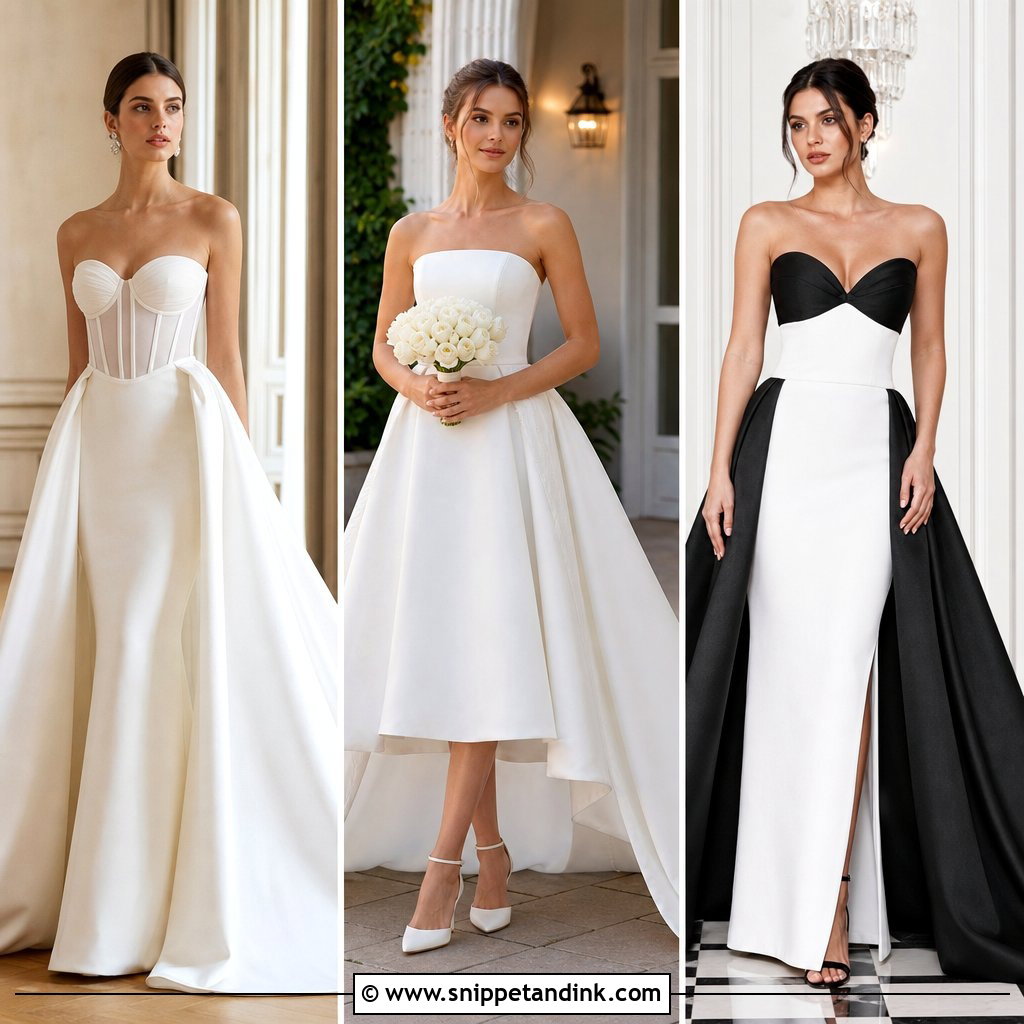
Satin ball gowns are heavy, and that’s exactly why a detachable version makes sense. The base can be a satin sheath, column or strapless gown, with the overskirt providing the full shape for the aisle. Heavy satin overskirts can drag the base dress’s waist down over a few hours, so I ask for the overskirt to hook onto a sturdy internal waist stay rather than the delicate face fabric. Satin pumps, a cathedral veil, diamond studs and a sleek bun keep it classic.
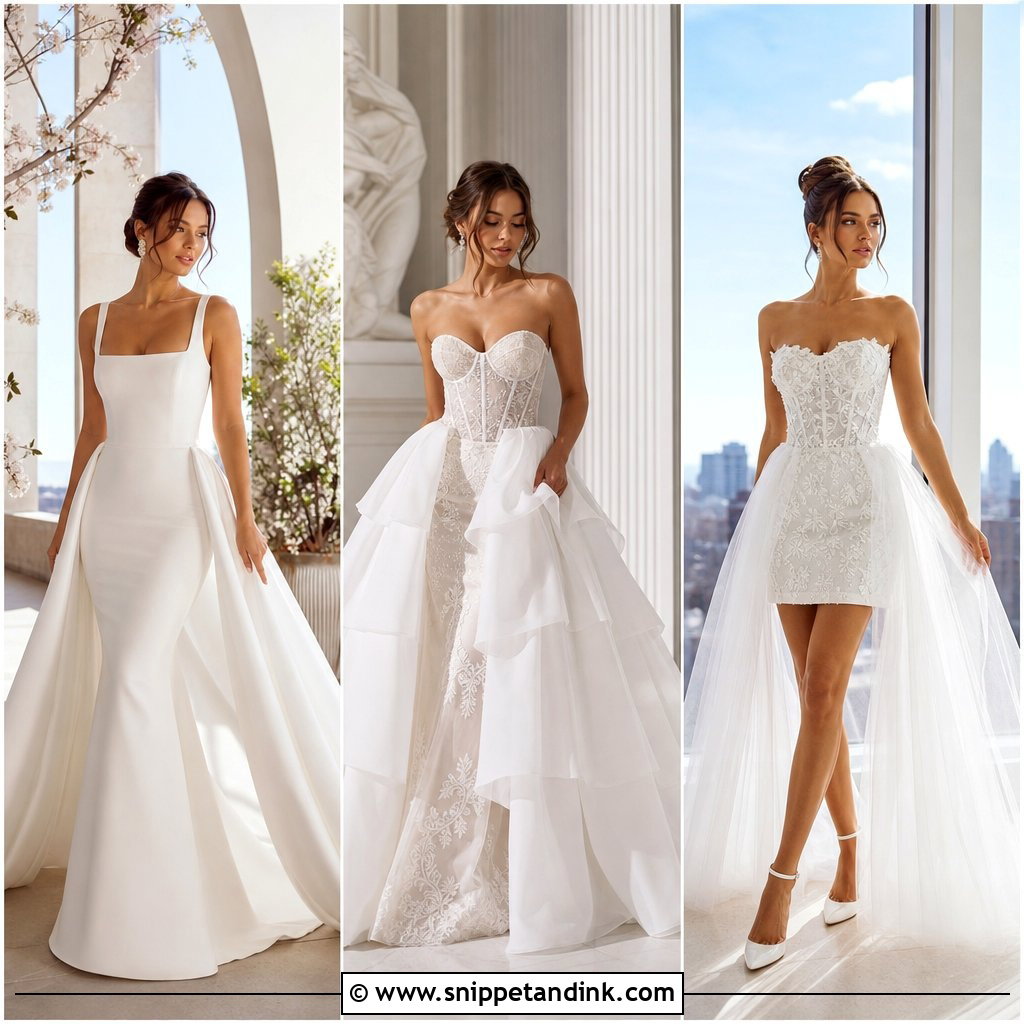
3. Strapless Wedding Dress With Detachable Tulle Skirt
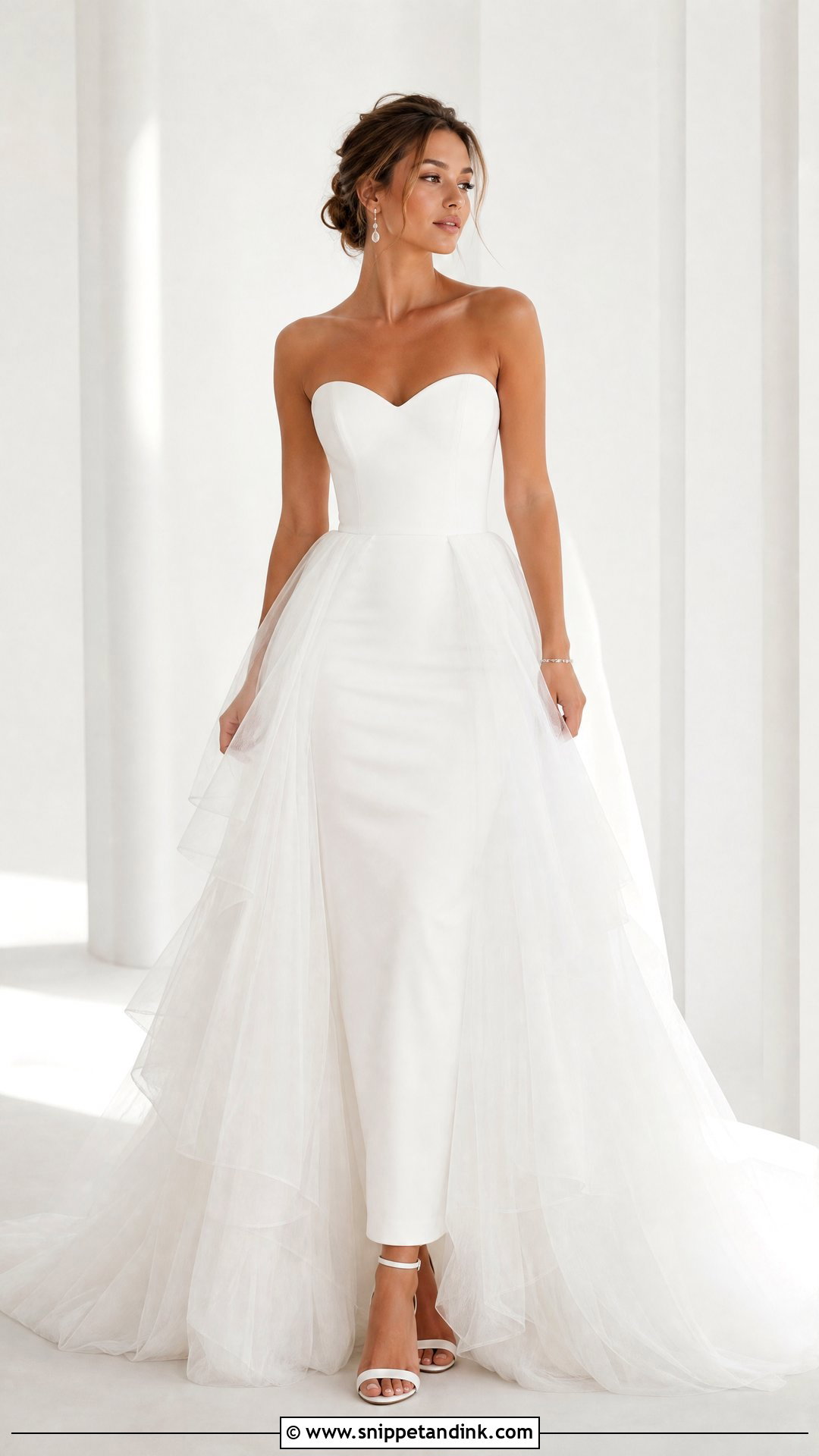
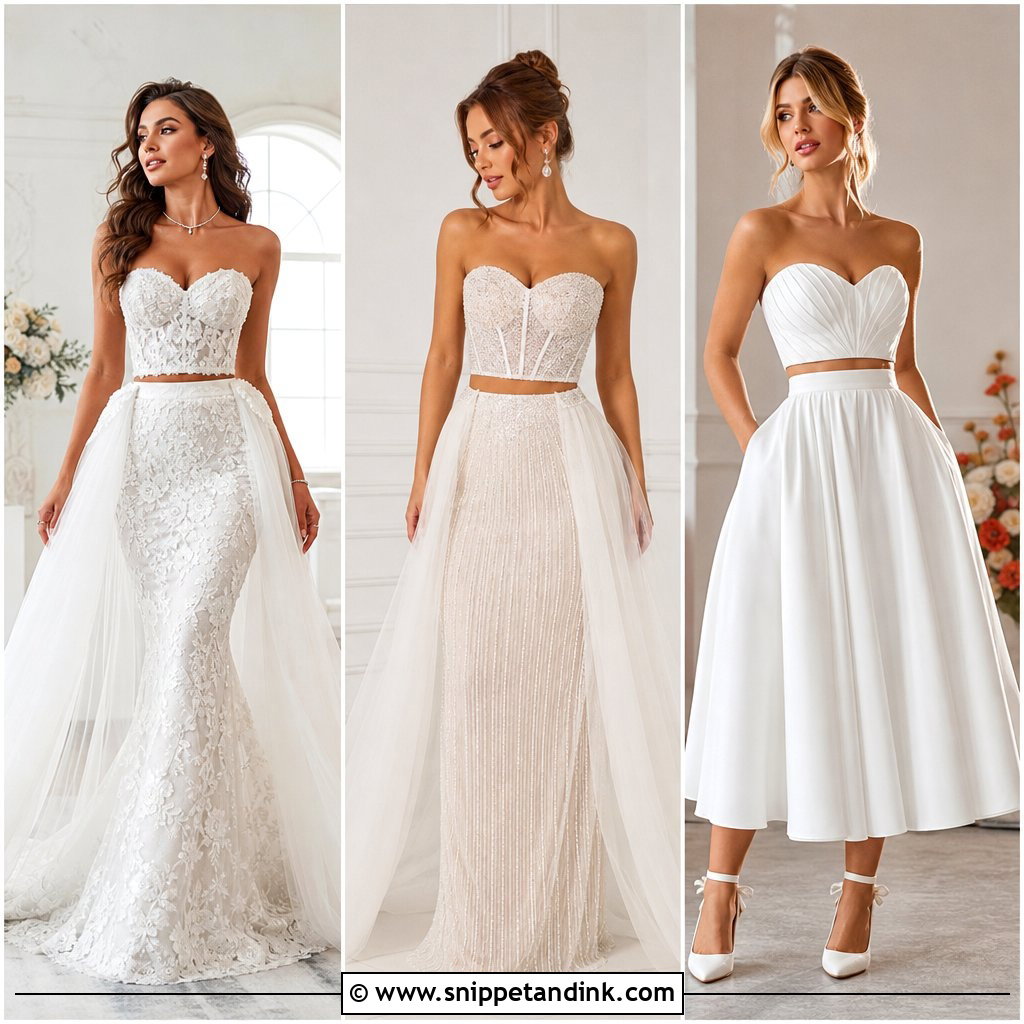
Tulle overskirts are the lightest to wear and the easiest to take off. A strapless base needs proper internal boning, since the bodice carries the gown alone once the skirt is gone. A sheer single layer lets the base dress show through; several layers give real ceremony drama. Tulle crushes in storage, so steam the overskirt on the morning rather than unpacking it at the last minute. Drop earrings, soft waves, ankle-strap heels and a fine bracelet finish it.
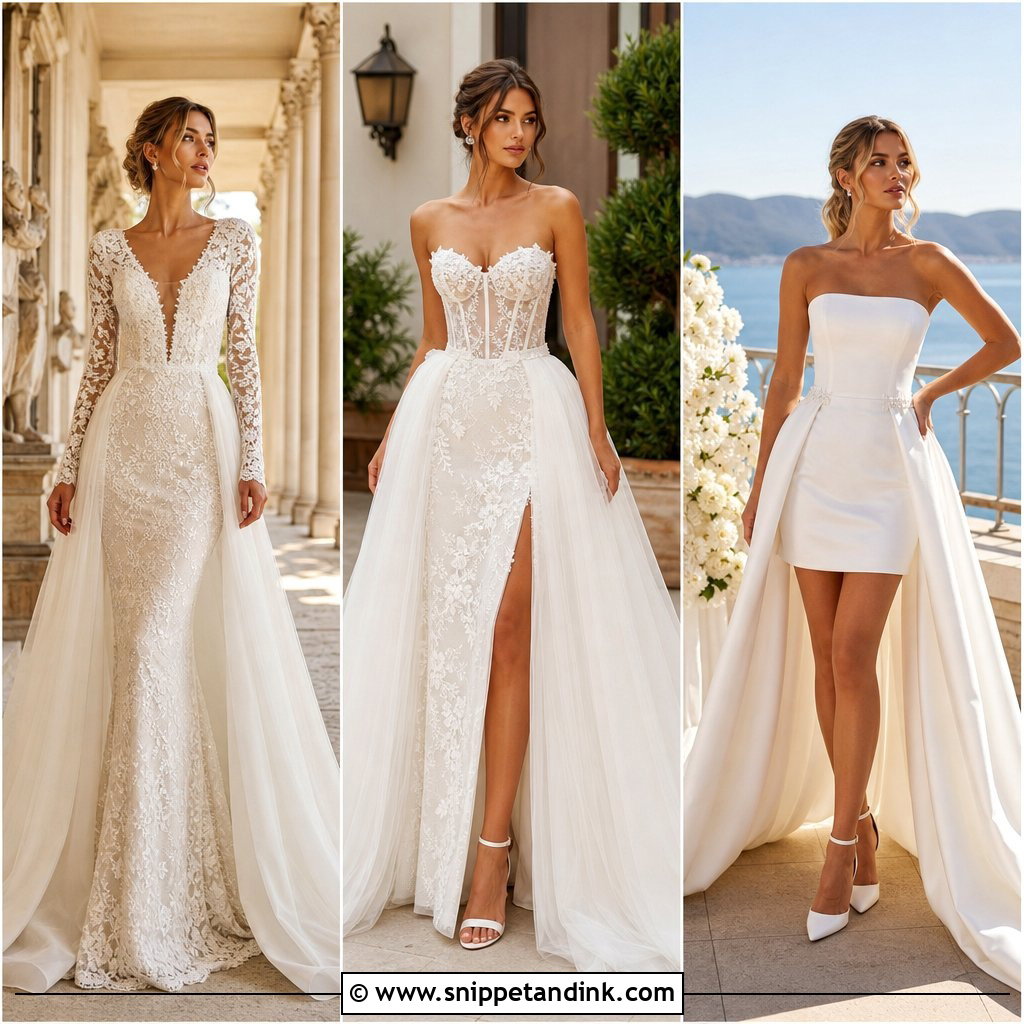
4. Corset Wedding Dress With Detachable Overskirt
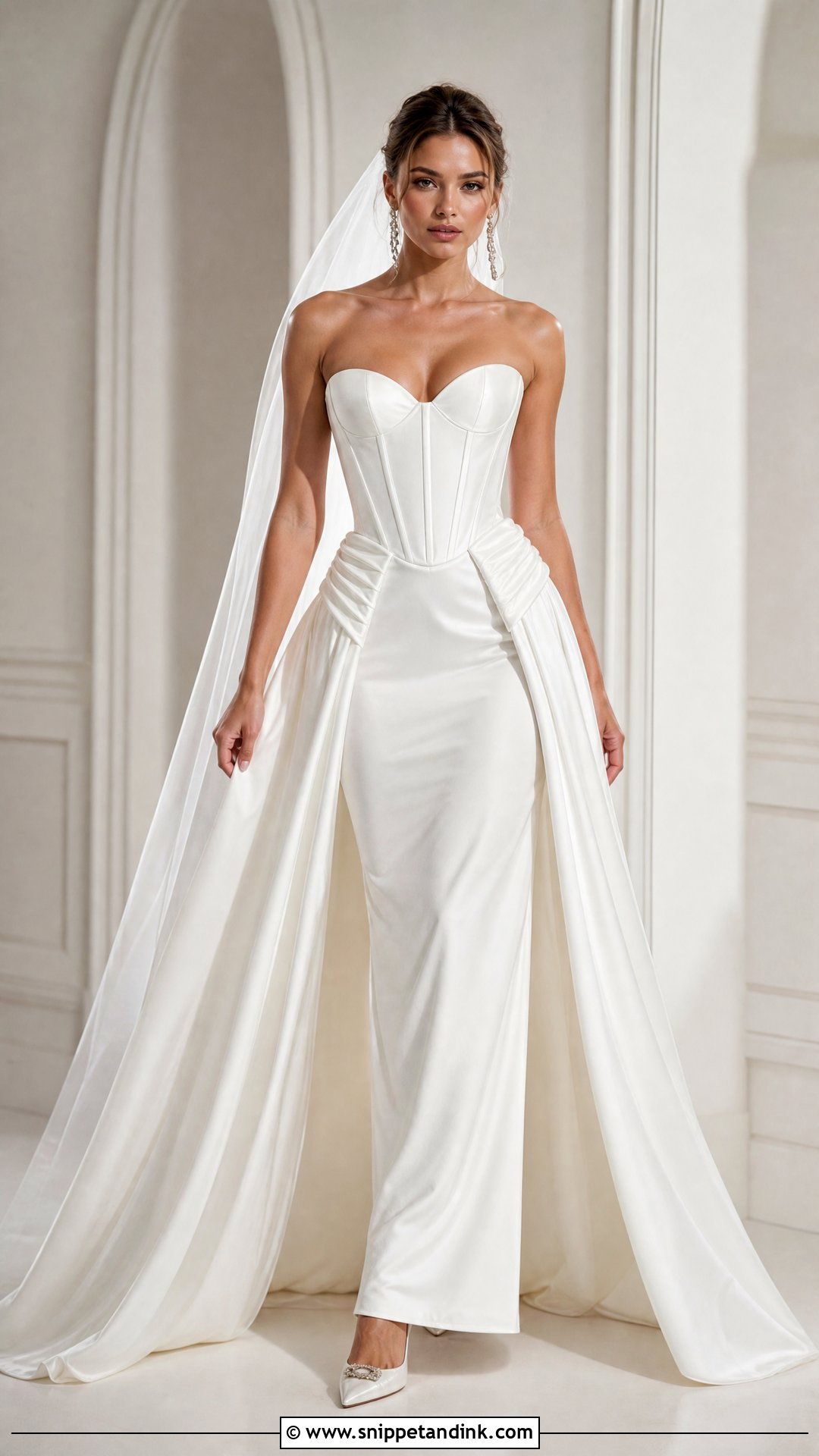
Corset bodices make the most secure base for an overskirt, because the boning holds the waistline firm while the skirt hangs from it. Lace-up backs, visible boning and sheer panels let you choose how much structure shows. One detail to check: a lace-up back must still close neatly over the overskirt’s waistband, or you get a bulge where the two meet. Pointed heels, a soft veil, crystal earrings and a smooth updo keep attention on the waist and neckline.
5. A Line Wedding Dress With Detachable Skirt
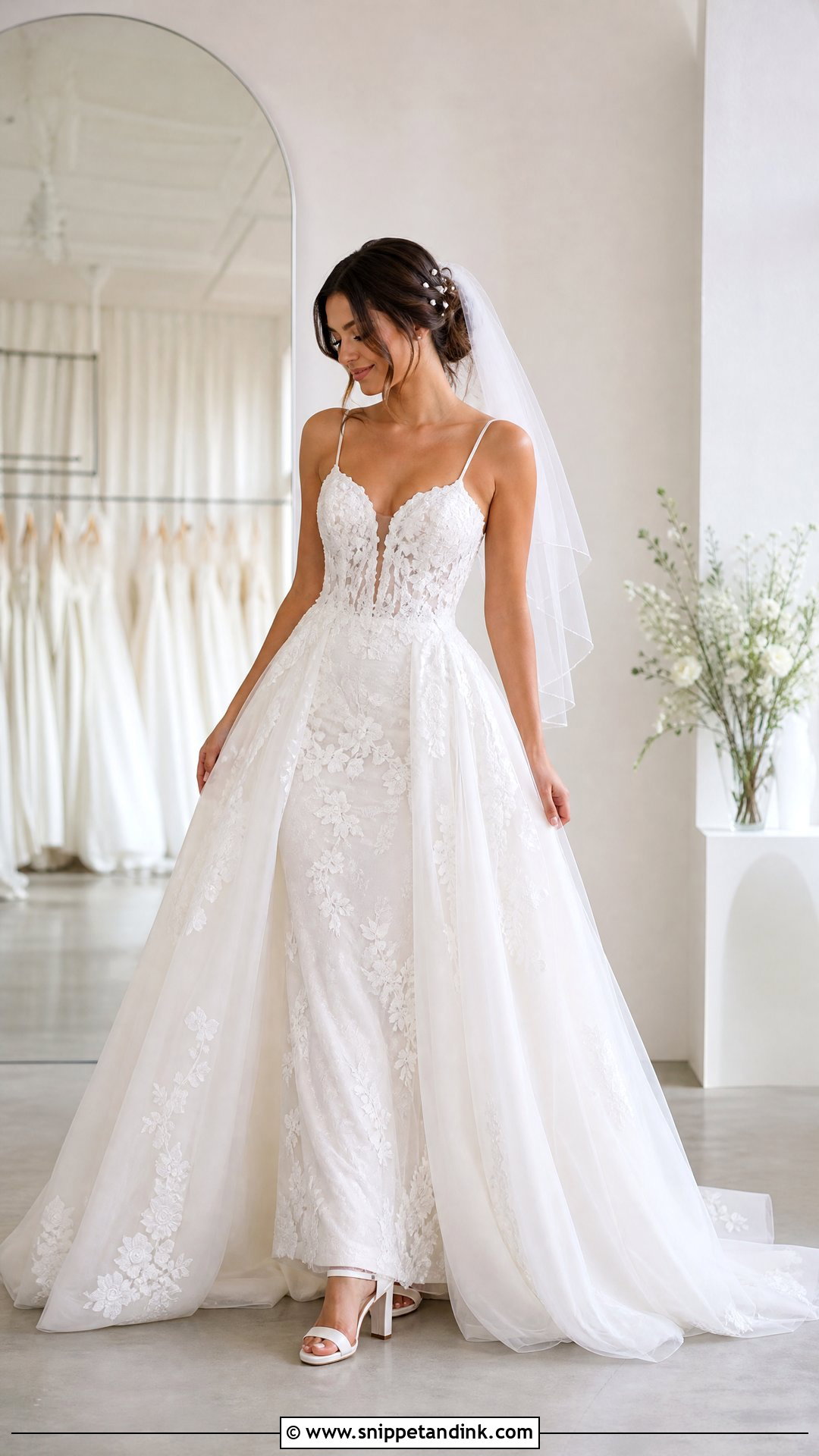
An A-line base with an extra A-line layer on top is the gentlest version of this idea, and the one I recommend most to brides who aren’t sure they’ll actually remove the skirt. Even without the overskirt, the base still looks like a complete wedding gown. It’s comfortable for walking, sitting and dancing. Lace appliqué, satin, organza or crepe each set a different mood. Block heels, a simple veil, pearl hairpins and a structured bouquet complete it.
6. Simple Crepe Wedding Dress With Detachable Skirt
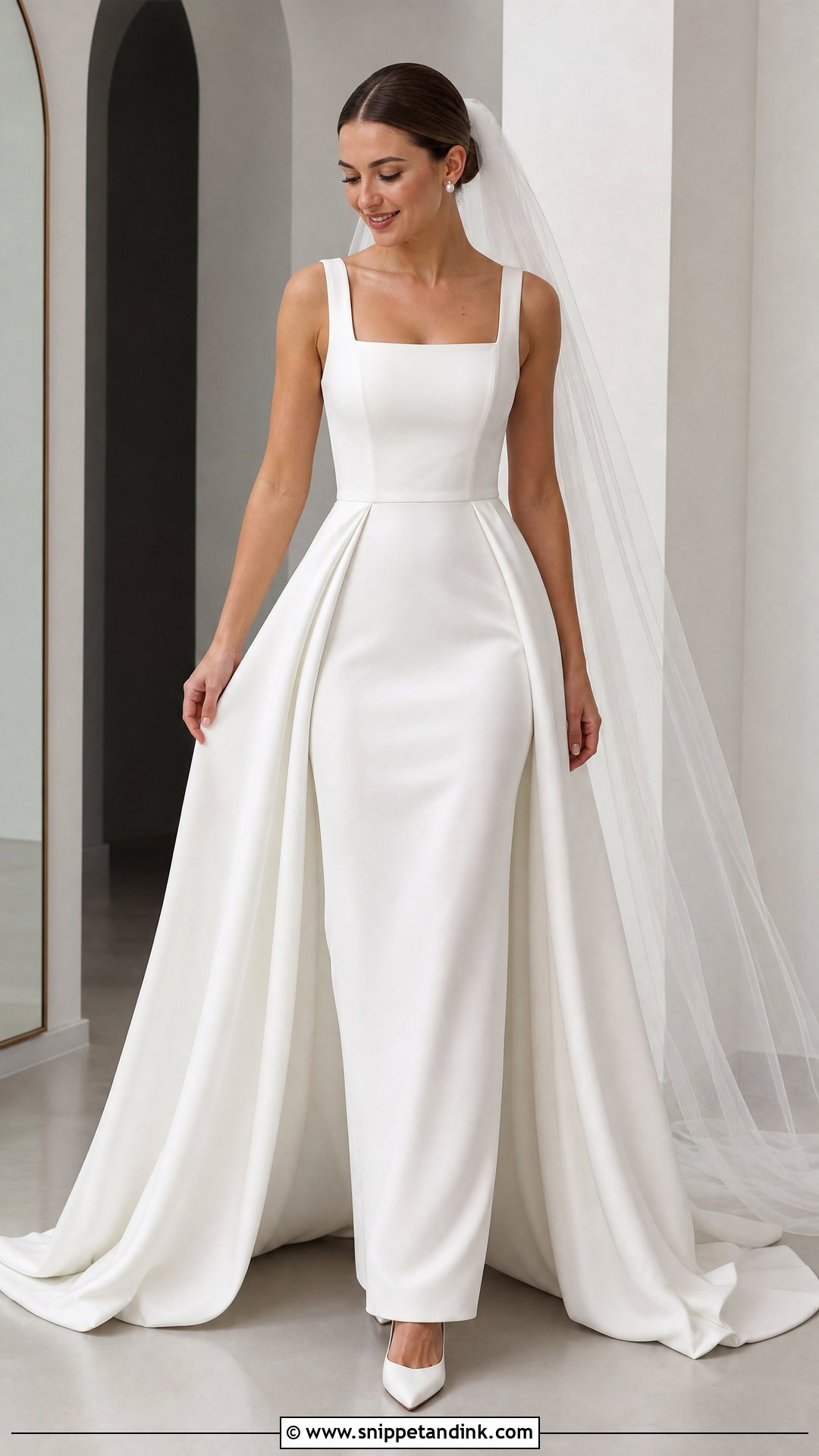
A simple crepe wedding dress with an overskirt suits brides who like clean lines. Crepe skims the body for a sheath or fit-and-flare base, but it also shows every lump underneath, so any hooks on the base dress must sit flat. A matching crepe overskirt looks architectural; sheer organza is softer. Square, bateau and off-shoulder necklines all suit it. Pearl studs, white heels, a sleek low bun and a long veil keep the look crisp.
7. Short Wedding Dress With Detachable Long Skirt
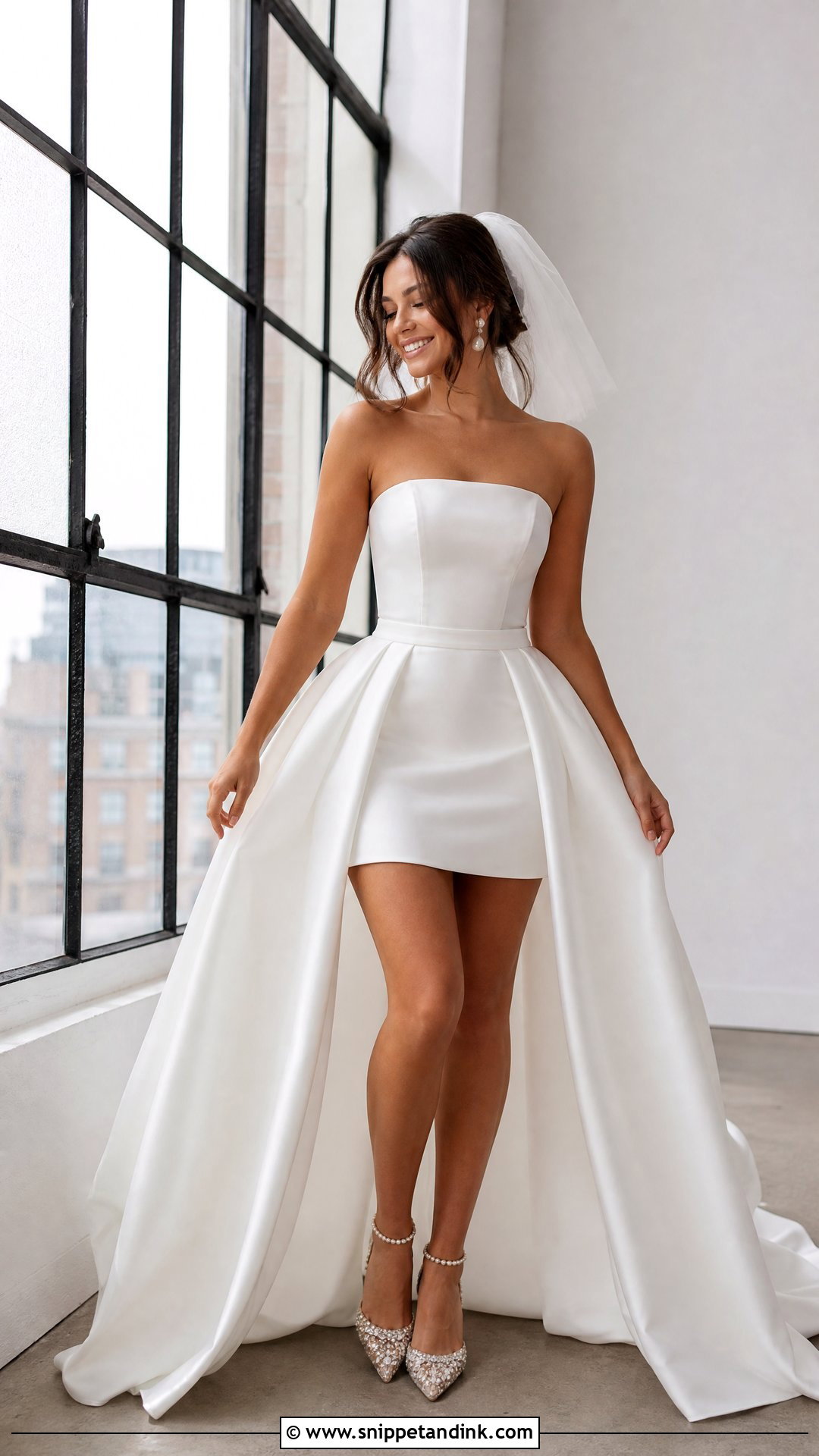
The short-under-long trick is the biggest reveal you can do with one dress. Long skirt for the ceremony, then off it comes and you’re in a mini or knee-length dress ready to dance. Satin minis, lace minis, structured bodices and plain strapless shapes all work. The short dress must have its own finished hem and lining, because the overskirt covers it during fittings and alterations sometimes skip it. Embellished heels, pearl earrings, a mini veil and a polished ponytail suit city and warm-weather weddings.
8. Off Shoulder Wedding Dress With Detachable Skirt
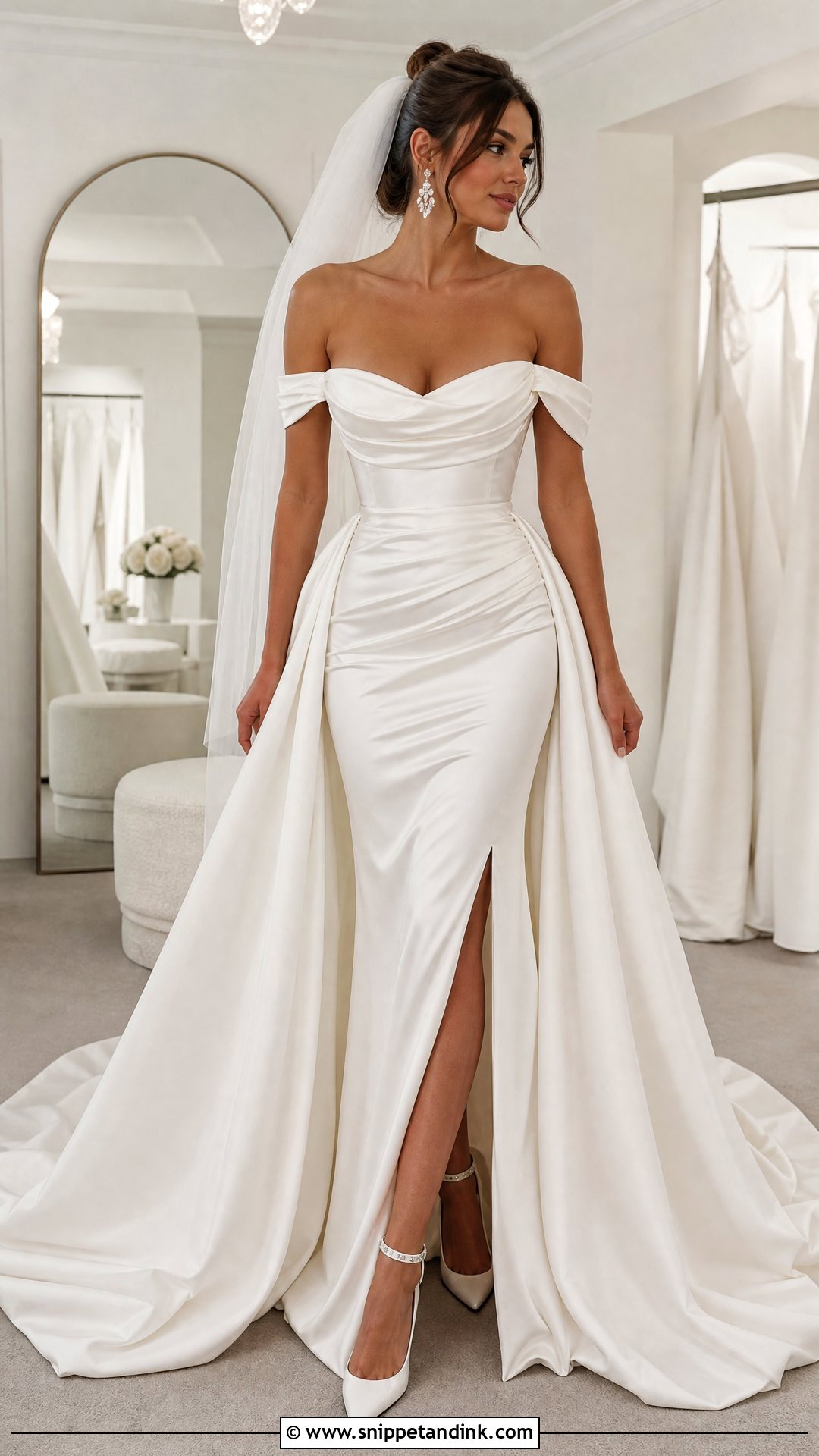
Off-shoulder necklines frame the collarbone and pair with fitted, A-line or mermaid bases. Satin, lace and mikado hold the neckline best. The off-shoulder band is the weak point once you’re dancing, because arms go up and the bodice wants to lift. I’d add a silicone grip strip inside the band before the reception. Wear a necklace only if the neckline is plain; otherwise statement earrings. Soft curls, pointed heels and a medium-length veil complete it.
9. Long Sleeve Wedding Dress With Detachable Skirt
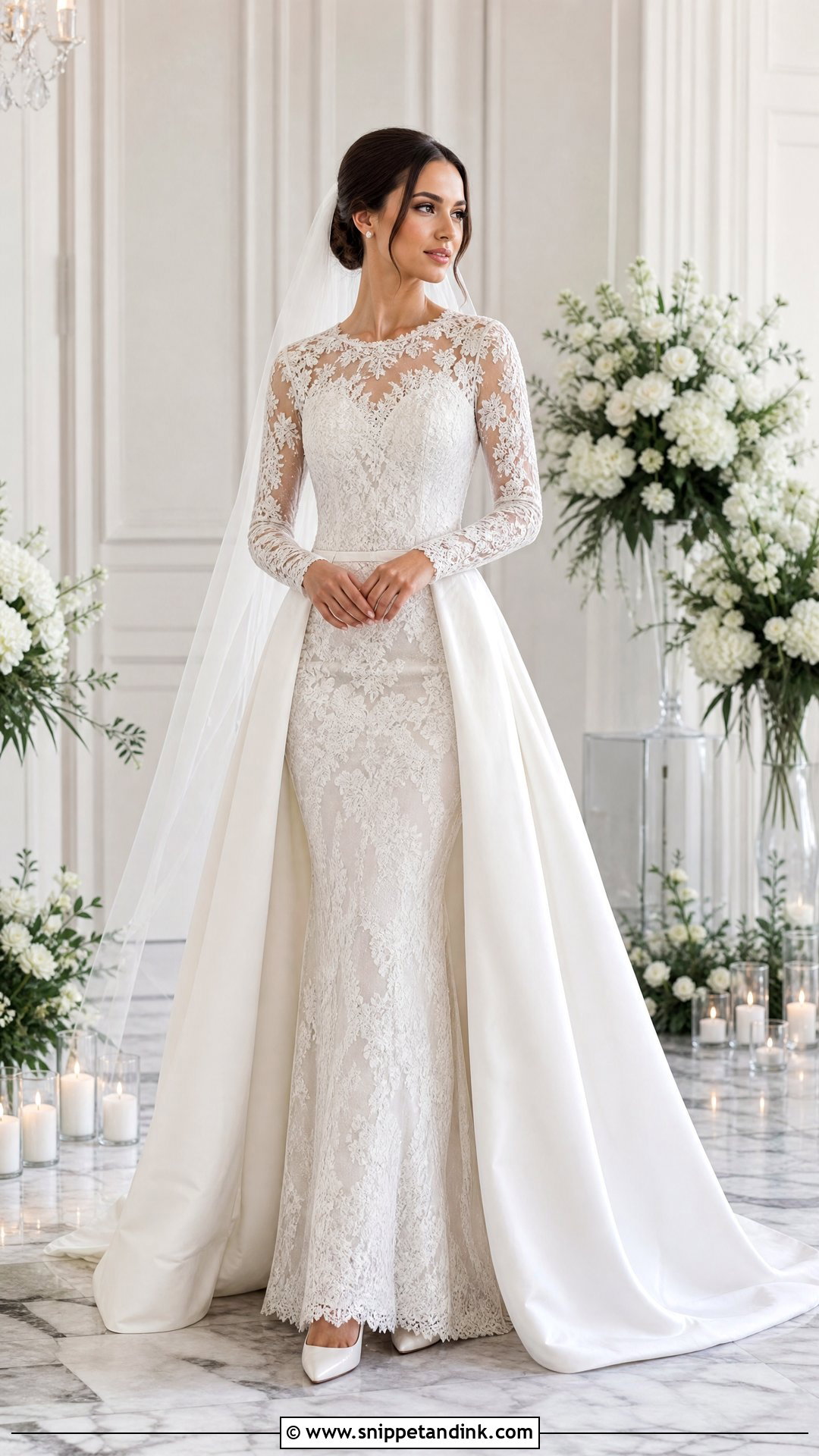
Long sleeves and a detachable skirt make a good contrast: covered and formal at the ceremony, then a slimmer silhouette for the evening while the sleeves stay. Lace, illusion mesh, crepe or satin sleeves each suit a different season. A fitted base looks best here, since the overskirt is what creates the contrast. Lift your arms at the fitting, because tight sleeves pull the bodice up when the overskirt’s weight is tugging it down. Pearl studs, closed-toe heels, a low chignon and a soft veil.
10. Beaded Wedding Dress With Detachable Skirt
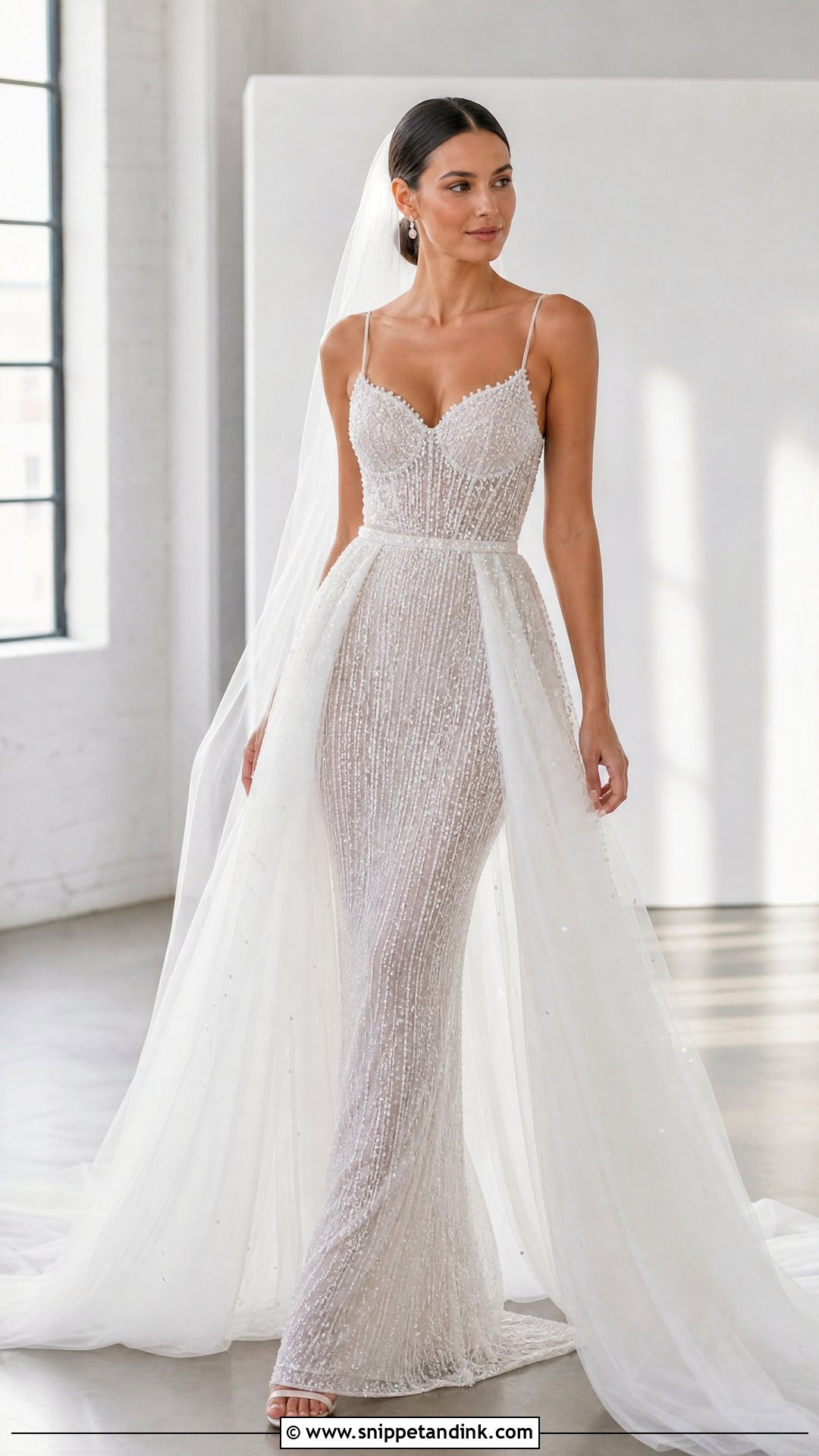
Beadwork changes the rules for an overskirt. A sheer tulle layer lets beading glow through for the ceremony; a plain satin overskirt over a fully beaded gown makes a sharp contrast when it comes off. Beading snags tulle, though, so I look for overskirts lined at the waist where the two layers rub. The base can be beaded at the bodice, along the neckline and waist, or all over. Keep accessories controlled: simple heels, delicate earrings, a sleek veil and soft makeup.
11. Floral Wedding Dress With Detachable Skirt
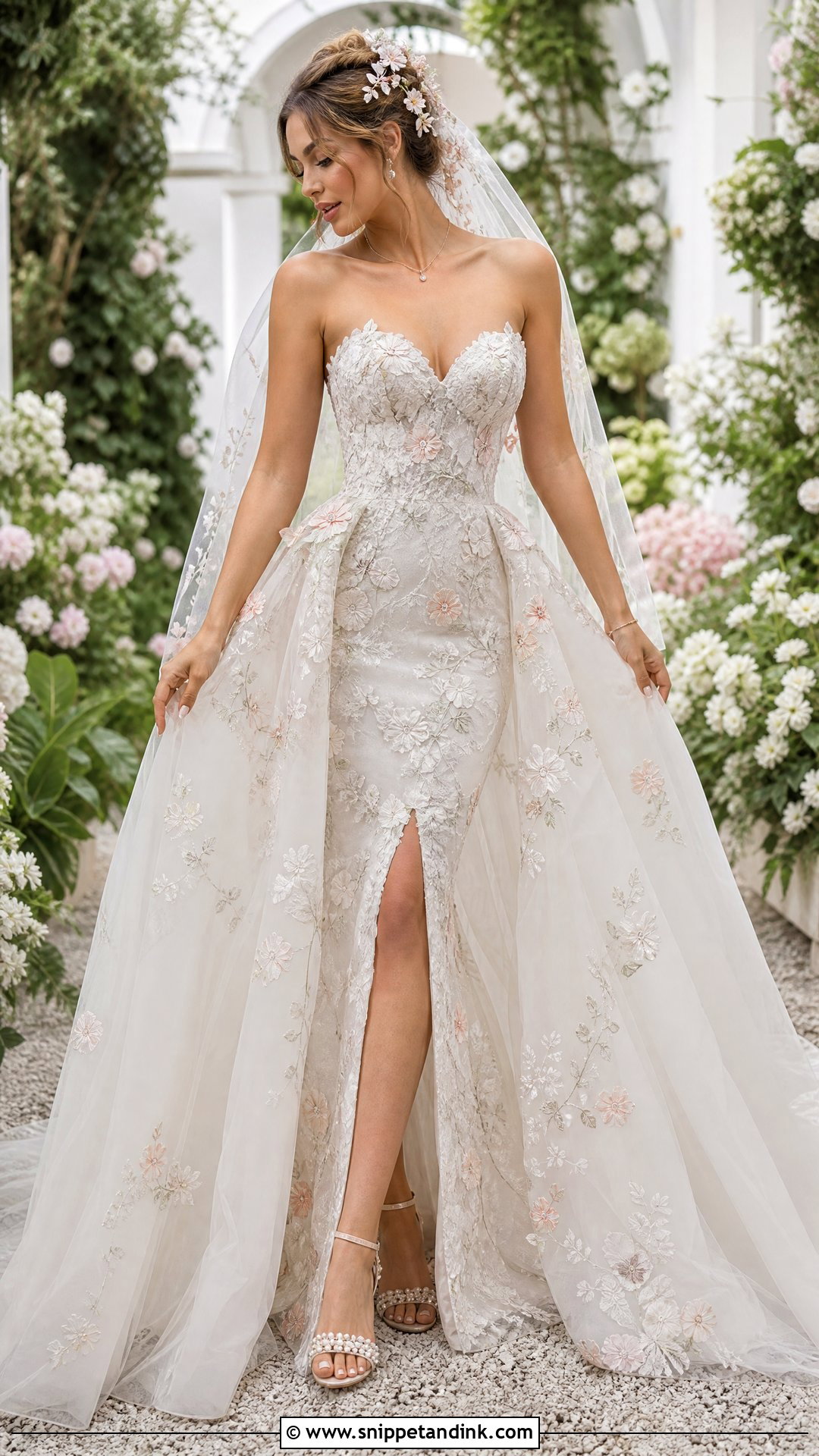
Floral appliqué can sit on the bodice, trail down the base skirt, or cover the overskirt itself. Garden ceremonies and spring weddings suit it. If the flowers are on the base dress, a sheer overskirt keeps them visible; a solid one hides them until the reveal, which can be fun. Raised 3D blooms crush under an overskirt waistband, so flat appliqué works better at the waist. Ivory florals give subtle texture, dimensional blooms a bigger effect. Pearl heels, floral pins, a sheer veil and natural makeup finish it.
12. Square Neck Wedding Dress With Detachable Skirt
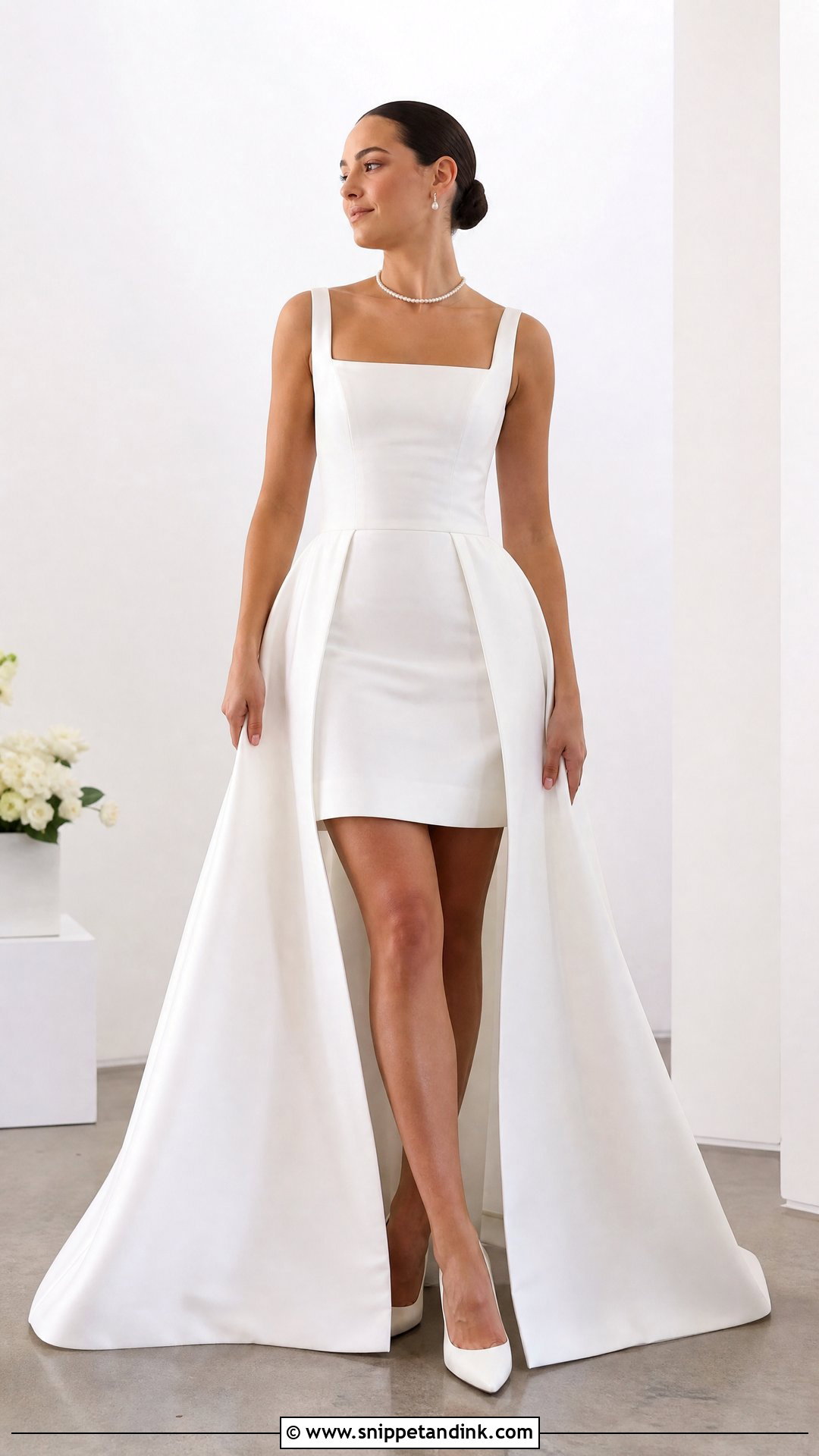
The square neckline adds a little architecture without a deep plunge. Satin, crepe, mikado and lace all hold its shape. Because the neckline is so linear, I keep the overskirt’s waist seam equally straight; a curved or dropped waist on the overskirt fights it visually. The base gown stays sleek for later. A thin pearl necklace, small earrings, pointed heels and a smooth bun keep the neckline visible.
13. High Neck Wedding Dress With Detachable Skirt
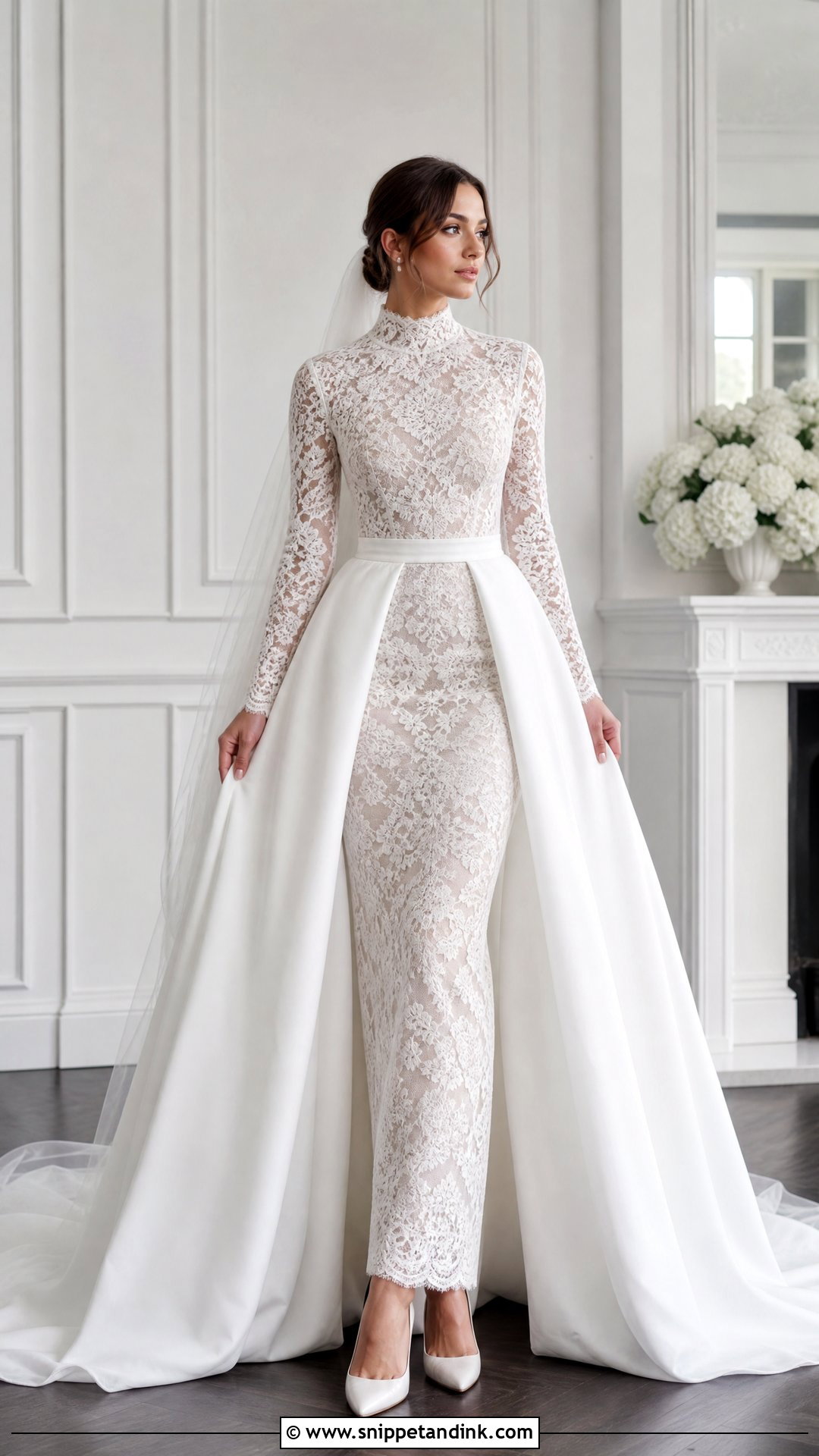
High necks give coverage and a fashion-forward edge in lace, crepe, satin or illusion fabric. With the neckline already doing the work, accessories stay minimal: small studs, a clean updo and elegant pumps. Attach the long veil low at the back so it doesn’t fight the collar. A high neck plus a big overskirt can make a short torso look shorter, so I’d raise the overskirt waist slightly in that case. Once the skirt comes off, the fitted base looks sleek and modern.
14. Plunge Neck Wedding Dress With Detachable Skirt
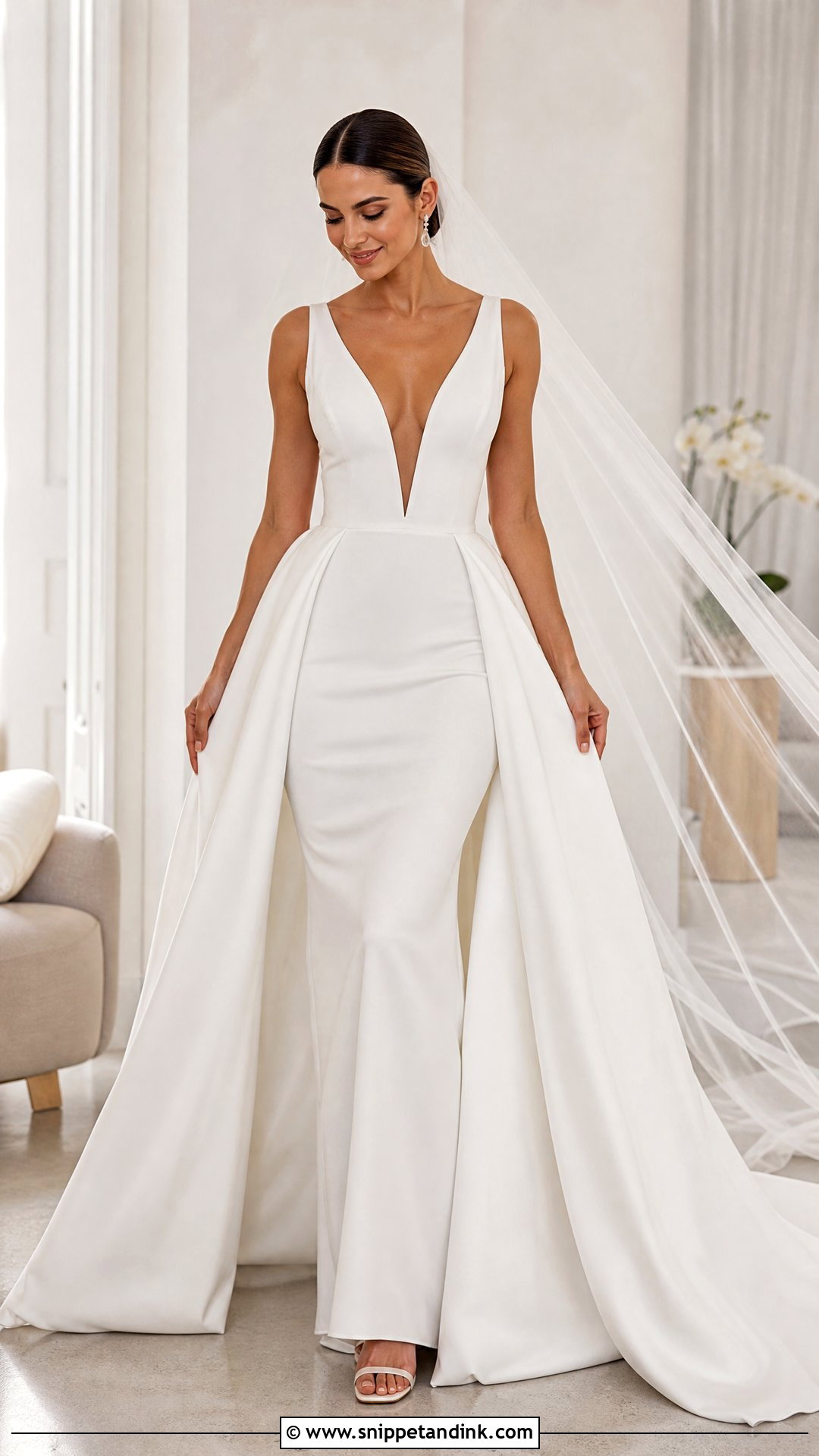
A plunge neckline adds length through the upper body, and the overskirt balances it below. Fit is critical: look for mesh support, careful tailoring and a bodice that stays put when you bend. I always ask a plunge bride to bend over as though picking up a dropped earring. If the neckline gapes, it needs taking in before anything else. Crepe, lace, satin and beaded versions all work. Slim heels, drop earrings, a soft veil and smooth waves let the neckline lead.
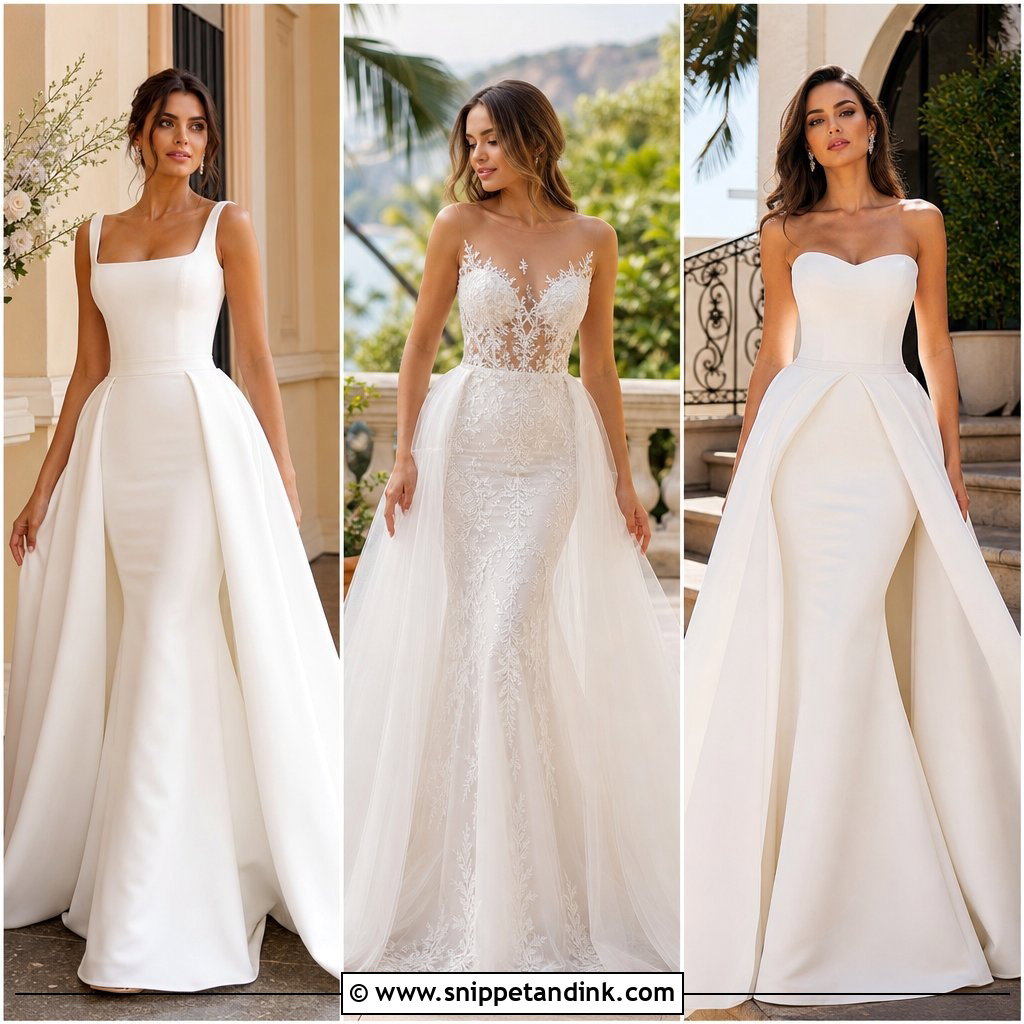
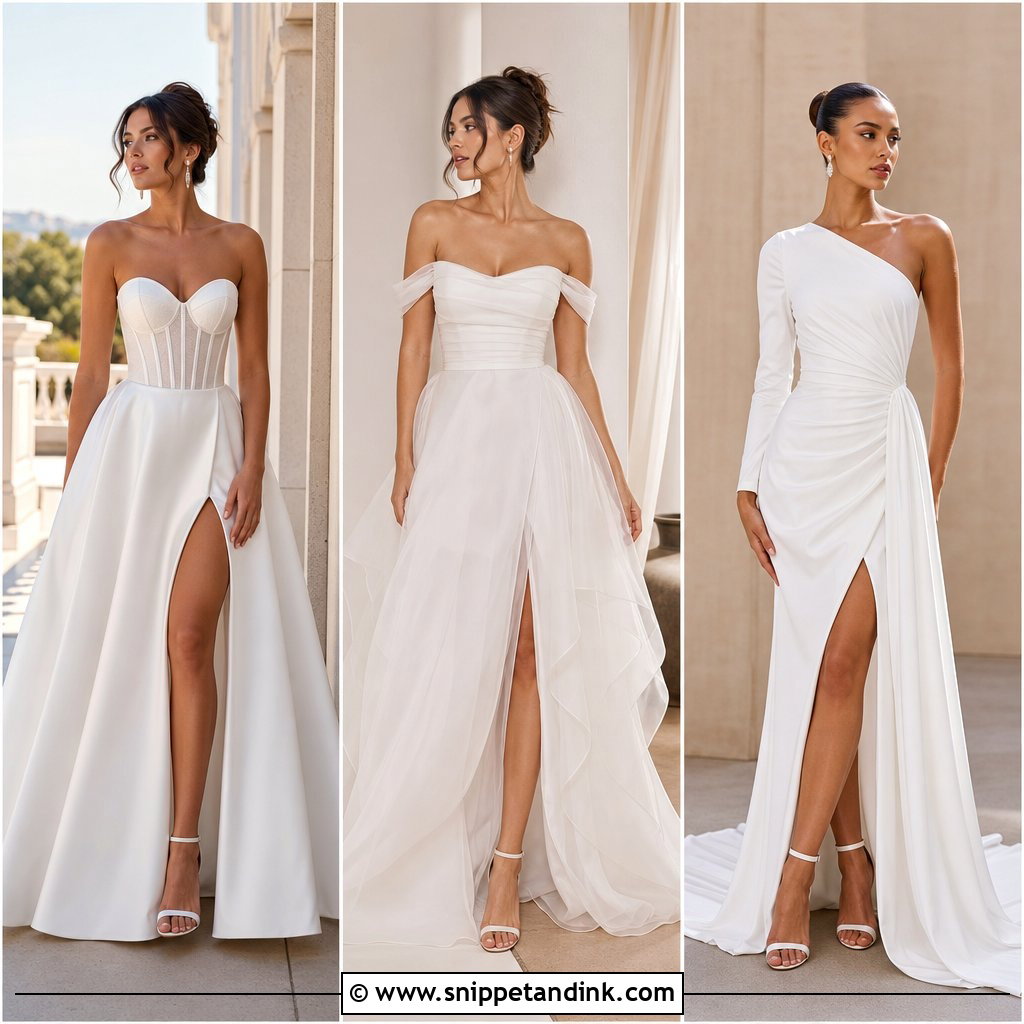
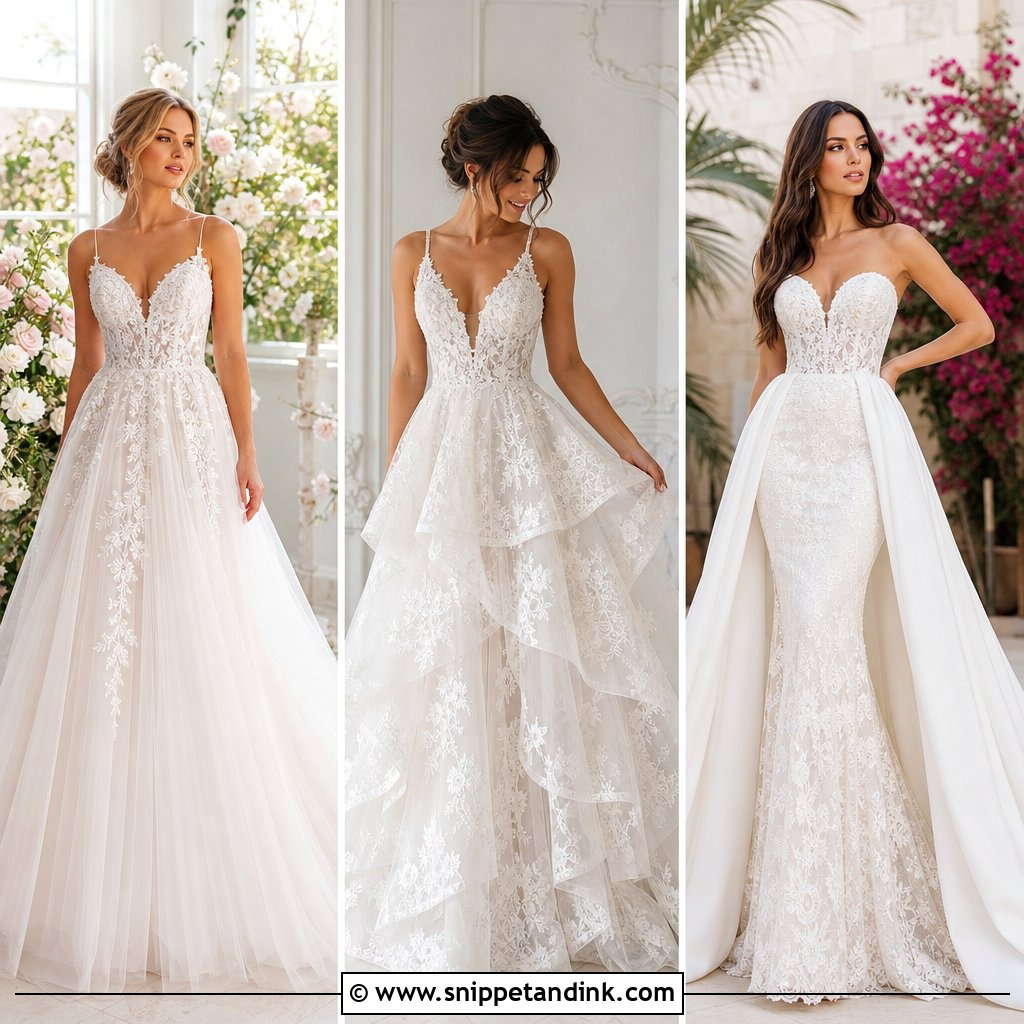
15. Modern Minimalist Wedding Dress With Detachable Skirt
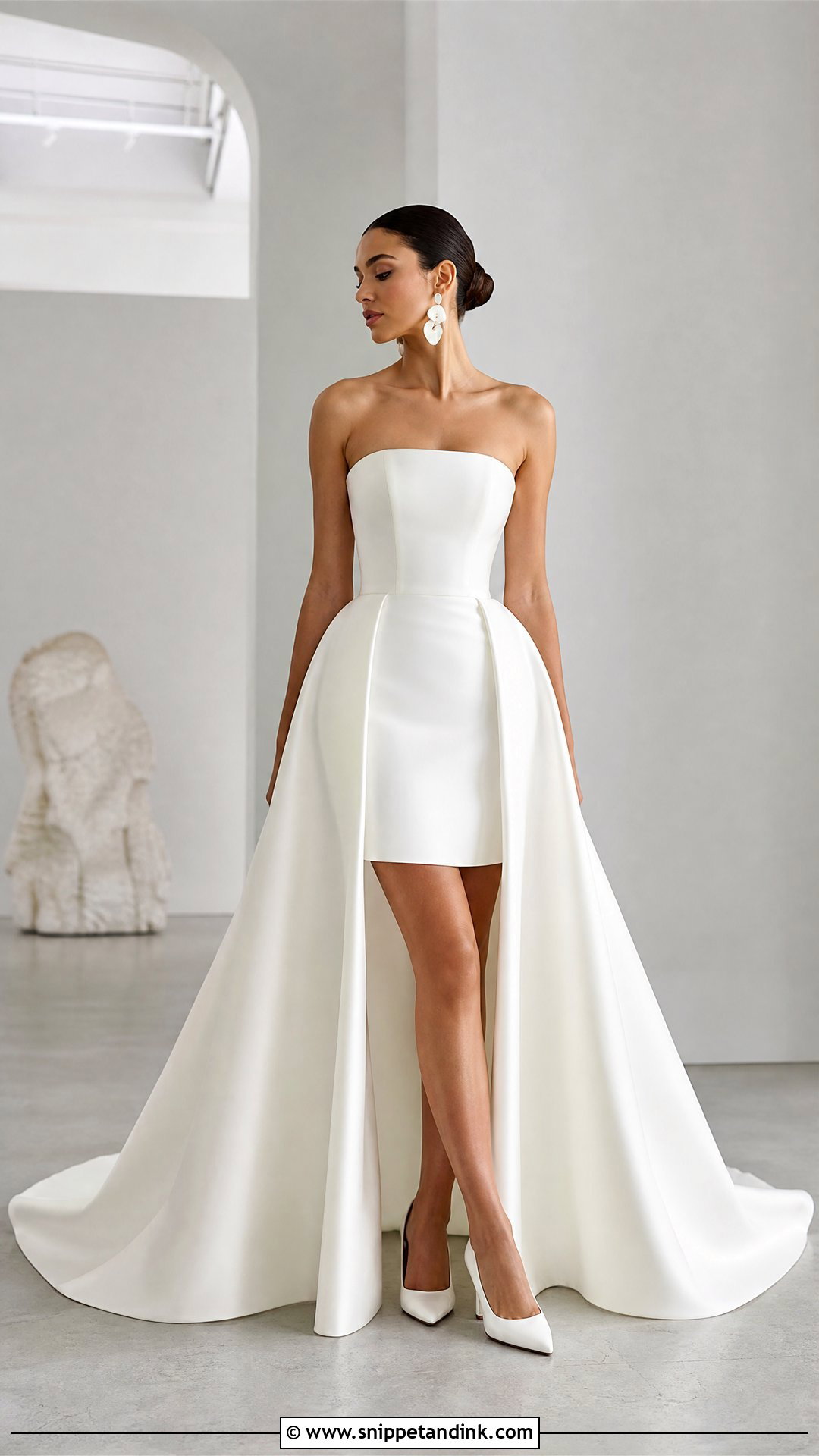
Minimalist gowns rely on cut, so the overskirt becomes the main design feature, adding volume or a train without sparkle. Smooth crepe, satin or mikado with almost no embellishment. Strapless, square-neck and one-shoulder bases all work. With nothing to hide behind, the overskirt’s closure must be invisible: hidden hooks under a waistband flap, not visible buttons. White heels, sculptural earrings, a structured veil and a sleek bun make the change from ceremony to reception subtle and modern.
16. Princess Wedding Dress With Detachable Skirt
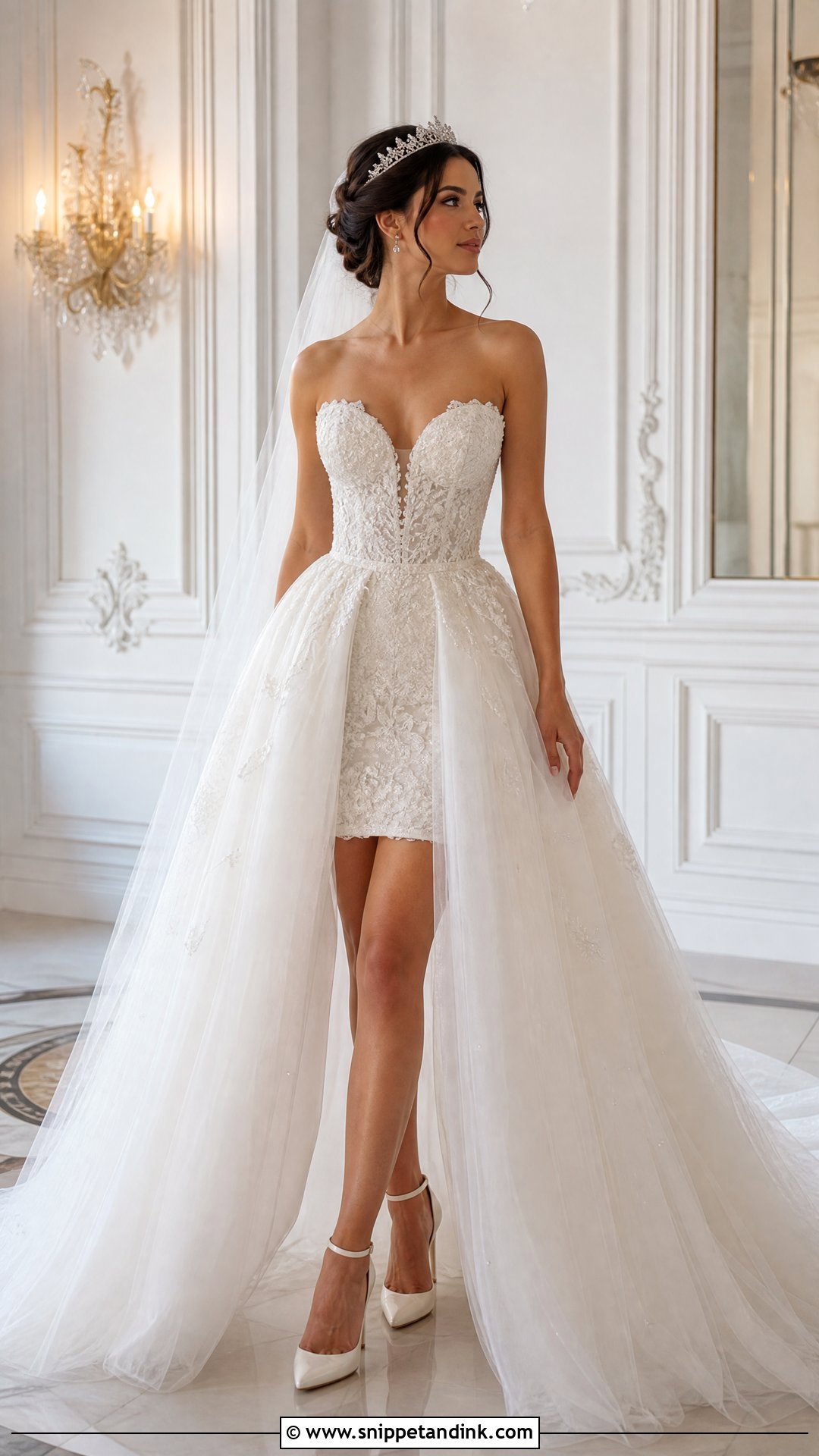
A princess wedding dress that comes apart gives you the fairytale entrance without carrying it all night. Full overskirt, long train, fitted bodice for the ceremony; a lighter A-line, mermaid or fitted base for the reception. Big tulle or organza overskirts are bulky to store, so decide in advance who carries it away and where it goes. Mikado holds volume with fewer layers. A tiara-style headband, pearl earrings, satin heels and a soft veil keep it classic.
17. Boho Wedding Dress With Detachable Skirt
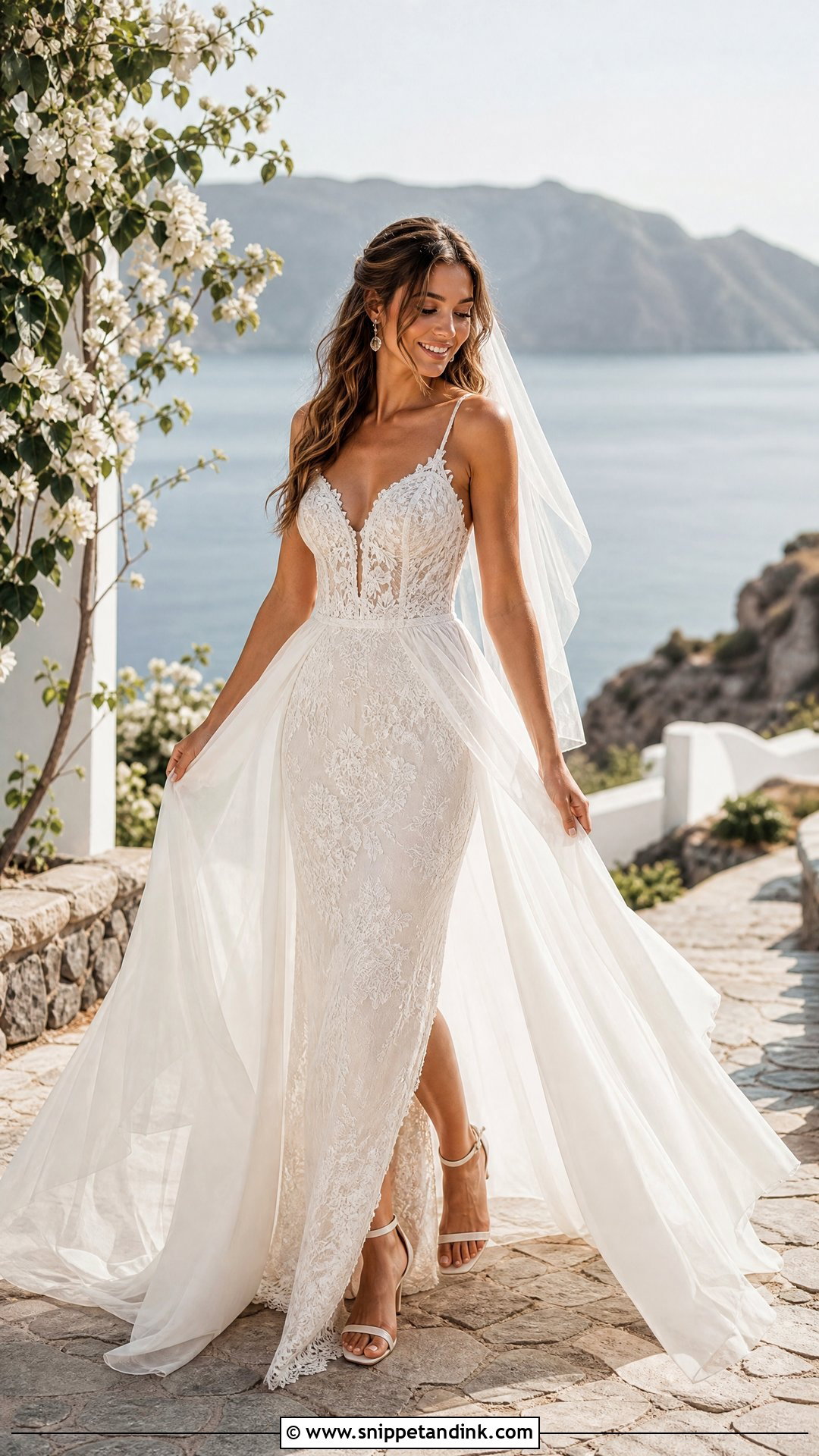
Boho bases usually have soft lace, flutter sleeves, a light train or a relaxed fitted shape. An overskirt in tulle, chiffon or lace adds ceremony drama while staying airy; anything stiff looks out of place. Desert, beach and rustic weddings suit it. Wind catches loose overskirts, so ask for a few hidden snaps along the side seam as well as at the waist. Loose waves, delicate earrings, block heels or bridal sandals and a simple veil.
18. Beach Wedding Dress With Detachable Skirt
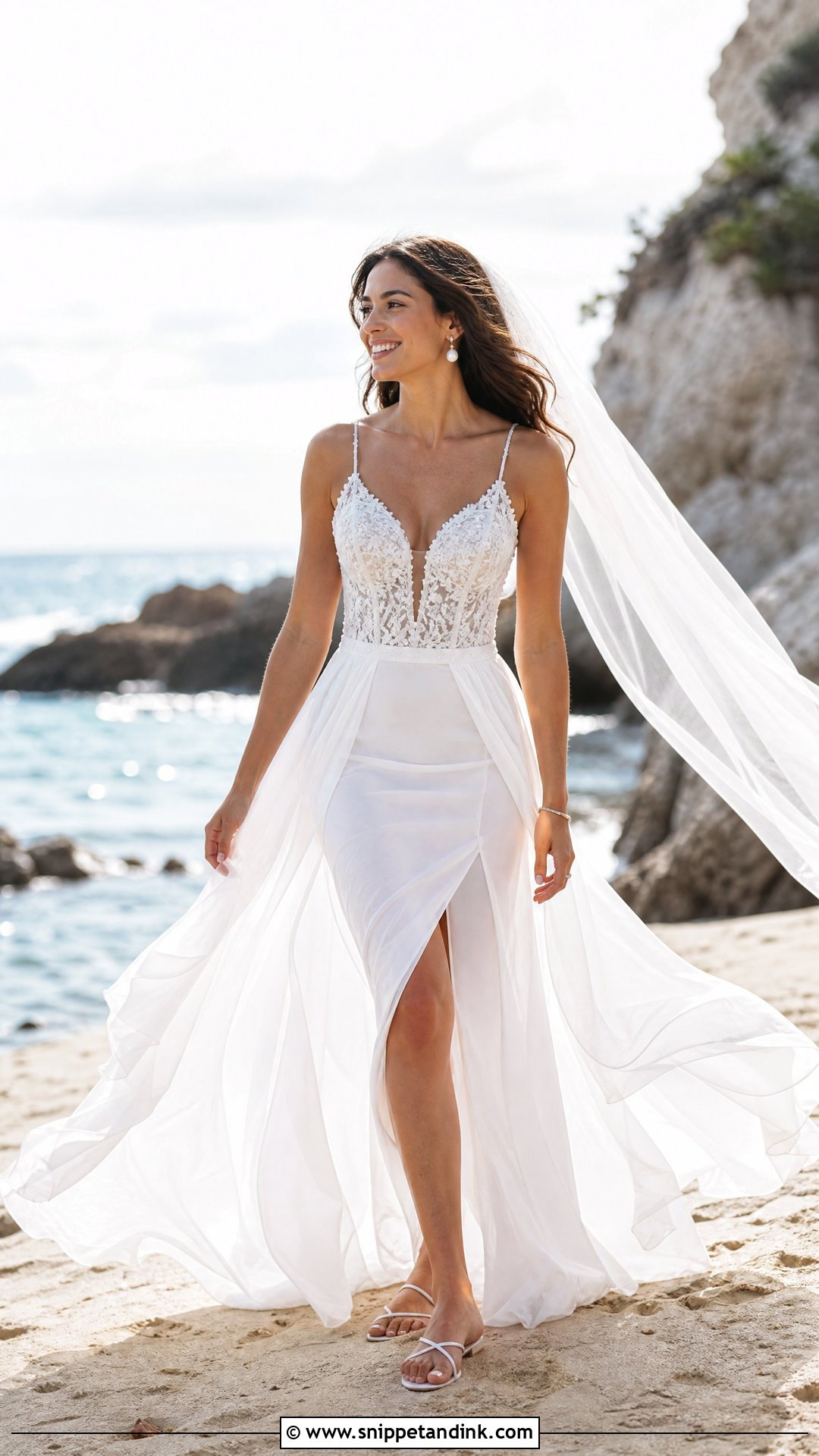
Beach heat and sand change everything. The base should be chiffon, crepe, soft lace or light satin, and the overskirt should be the lightest thing you can find. Take it off right after the ceremony photos by the water, before sand works into the layers. A slit, simple bodice or relaxed A-line base makes walking easier. Flat sandals, pearl earrings, loose waves and a soft veil that moves with the breeze.
19. Garden Wedding Dress With Detachable Skirt
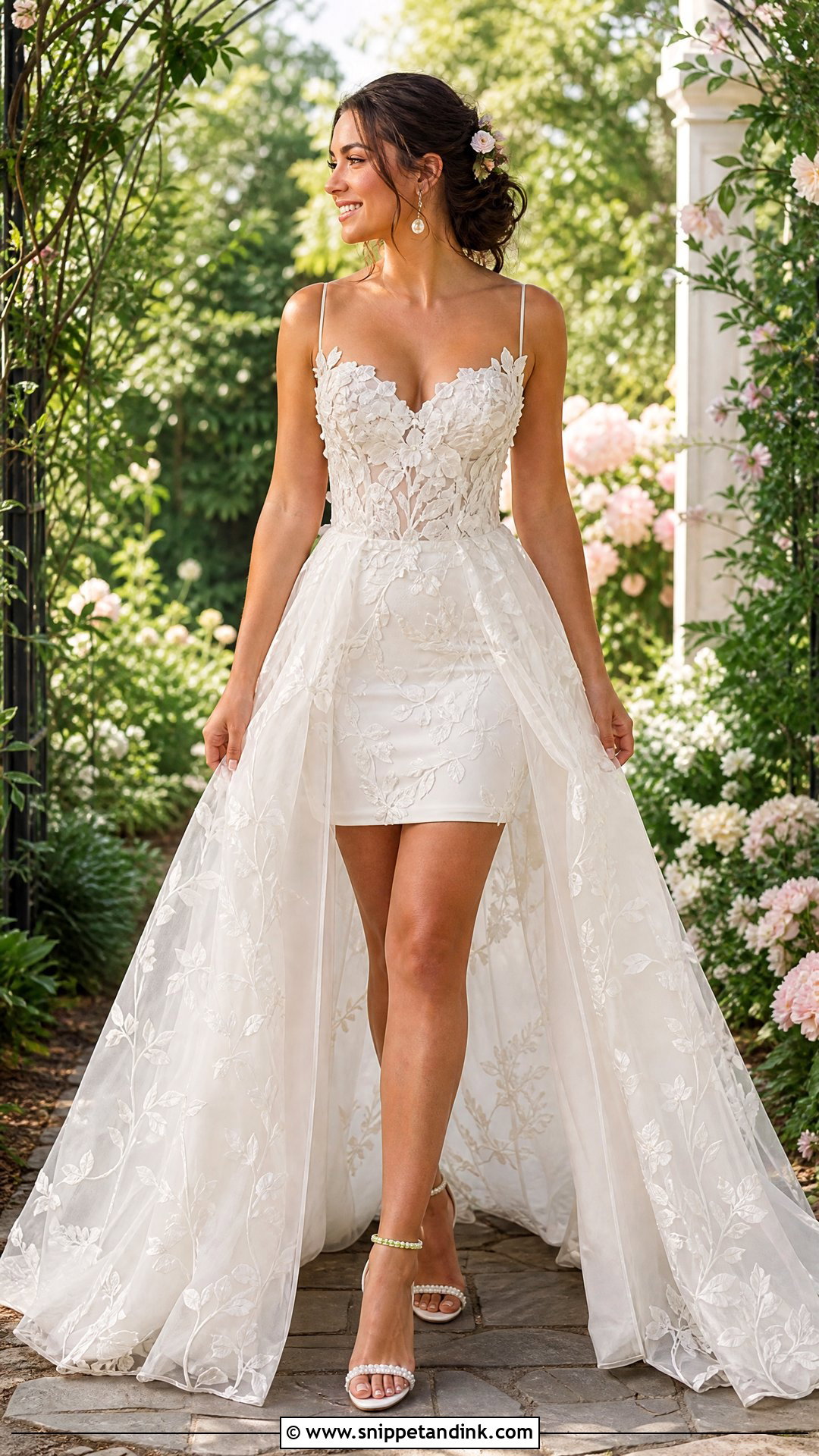
Garden overskirts look best in sheer tulle, embroidered organza or lace with botanical appliqué. Choose a fitted, A-line or corset base that feels secure. Grass, gravel and garden paths are hard on long overskirts, so I’d keep the ceremony train modest and the hem a touch shorter than for indoor venues. Ivory, blush undertones or delicate embroidery suit the setting. Floral pins, pearl heels, dainty earrings and natural makeup complete the look.
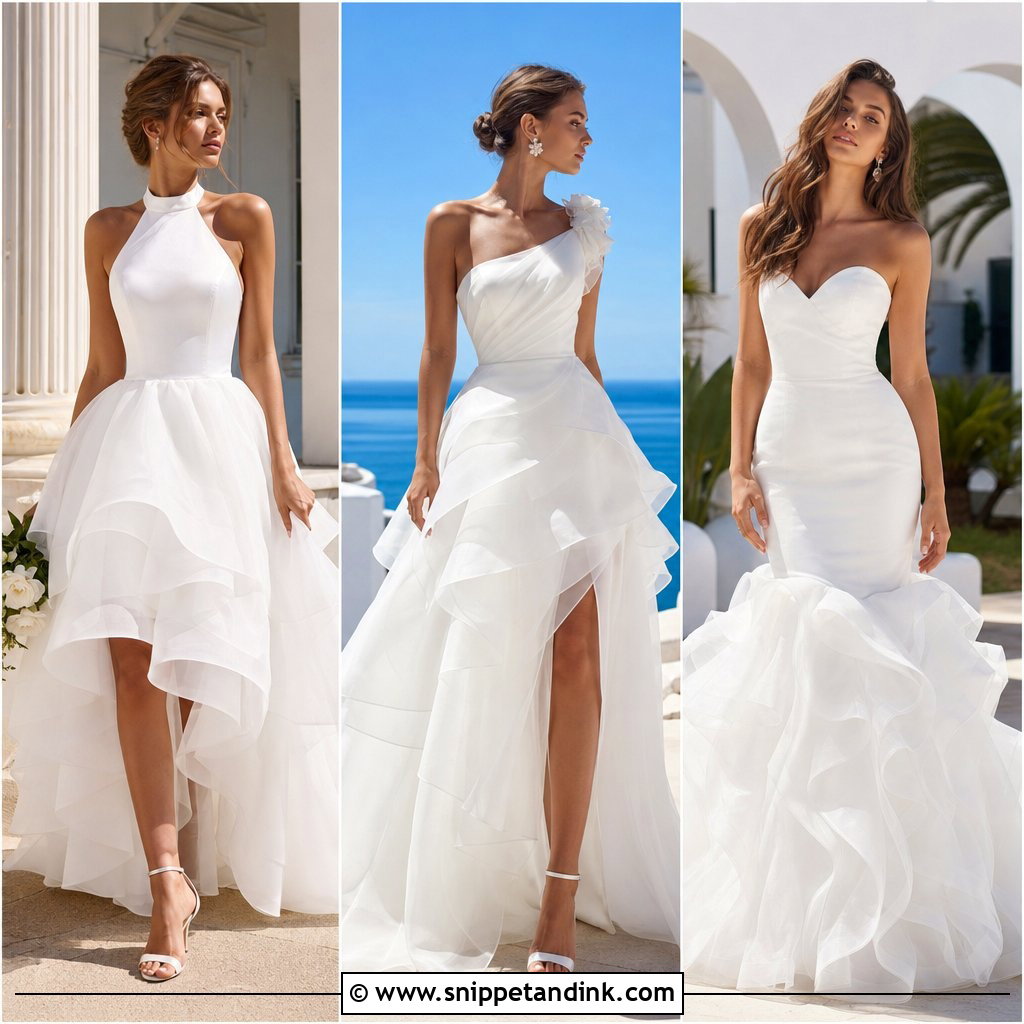
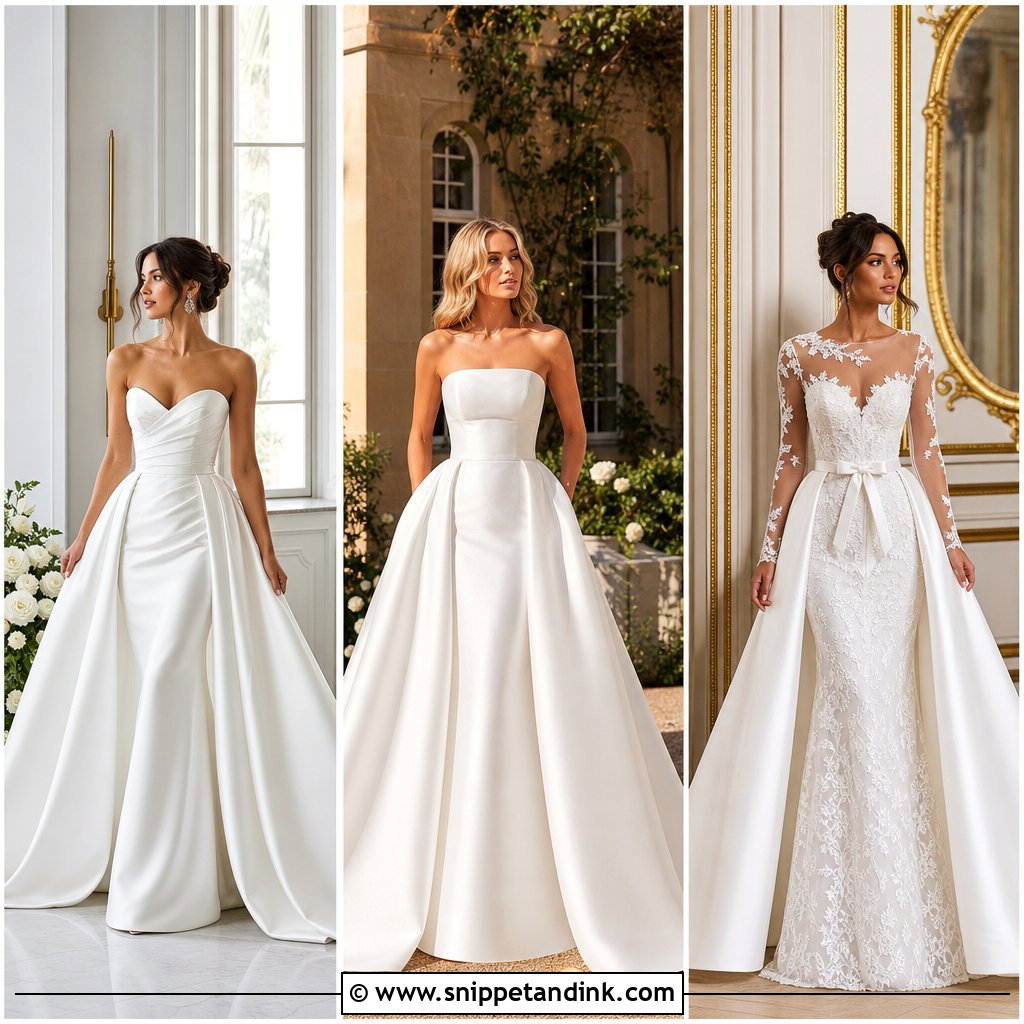
20. Vintage Wedding Dress With Detachable Skirt
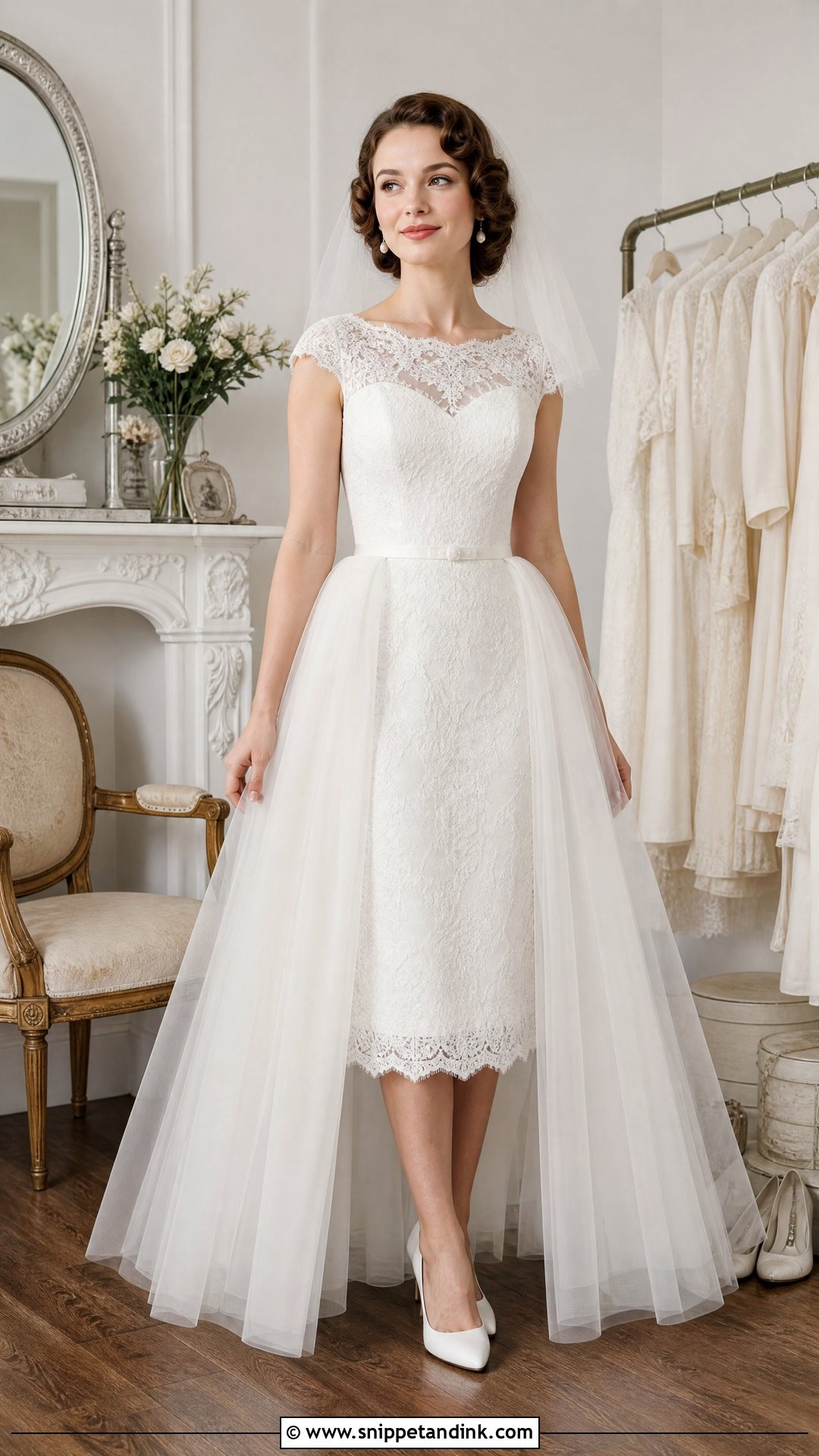
Old-inspired details work well with a modern convertible design. Look for lace sleeves, basque waists, satin buttons, tea-length bases or structured bodices. A basque waist needs a matching V-shaped overskirt waistband, otherwise the point gets hidden or the band buckles over it. Satin, lace, tulle and jacquard all suit. Keep the accessories short of costume: pearl earrings, a short veil, classic pumps and soft curls.
21. Wedding Jumpsuit With Detachable Skirt
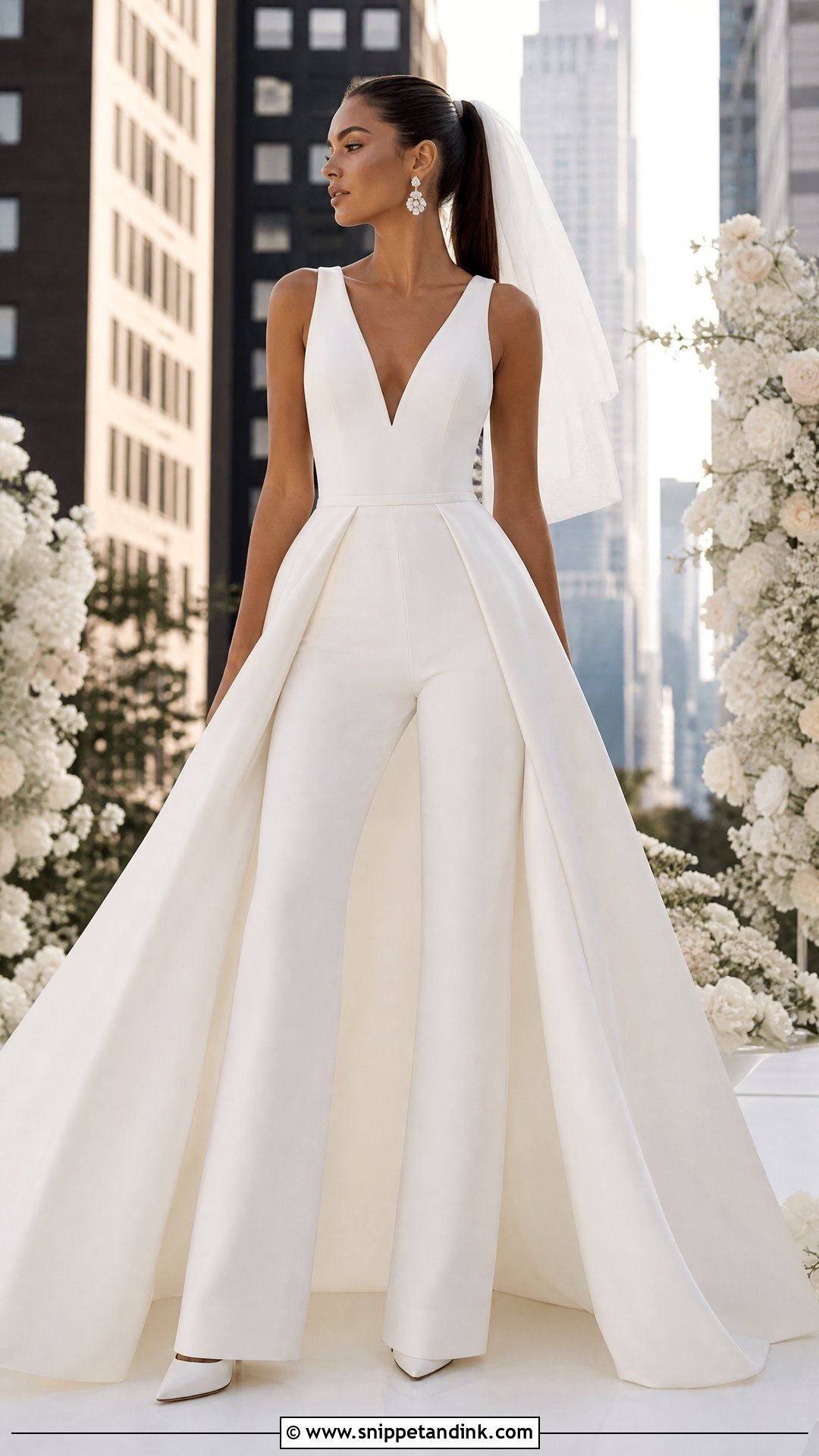
A jumpsuit under an overskirt reads as a gown from most angles at the ceremony, then turns into something you can dance in. Tailored bodices, wide-leg trousers and crepe finishes work best. The overskirt should attach at the waist and sweep behind like a train, open at the front if you want the trousers glimpsed. Have the trousers hemmed with the overskirt off, since that’s how you’ll wear them most of the night. Pointed heels, statement earrings, a sleek ponytail and a short veil or bow.
22. Plus Size Wedding Dress With Detachable Skirt
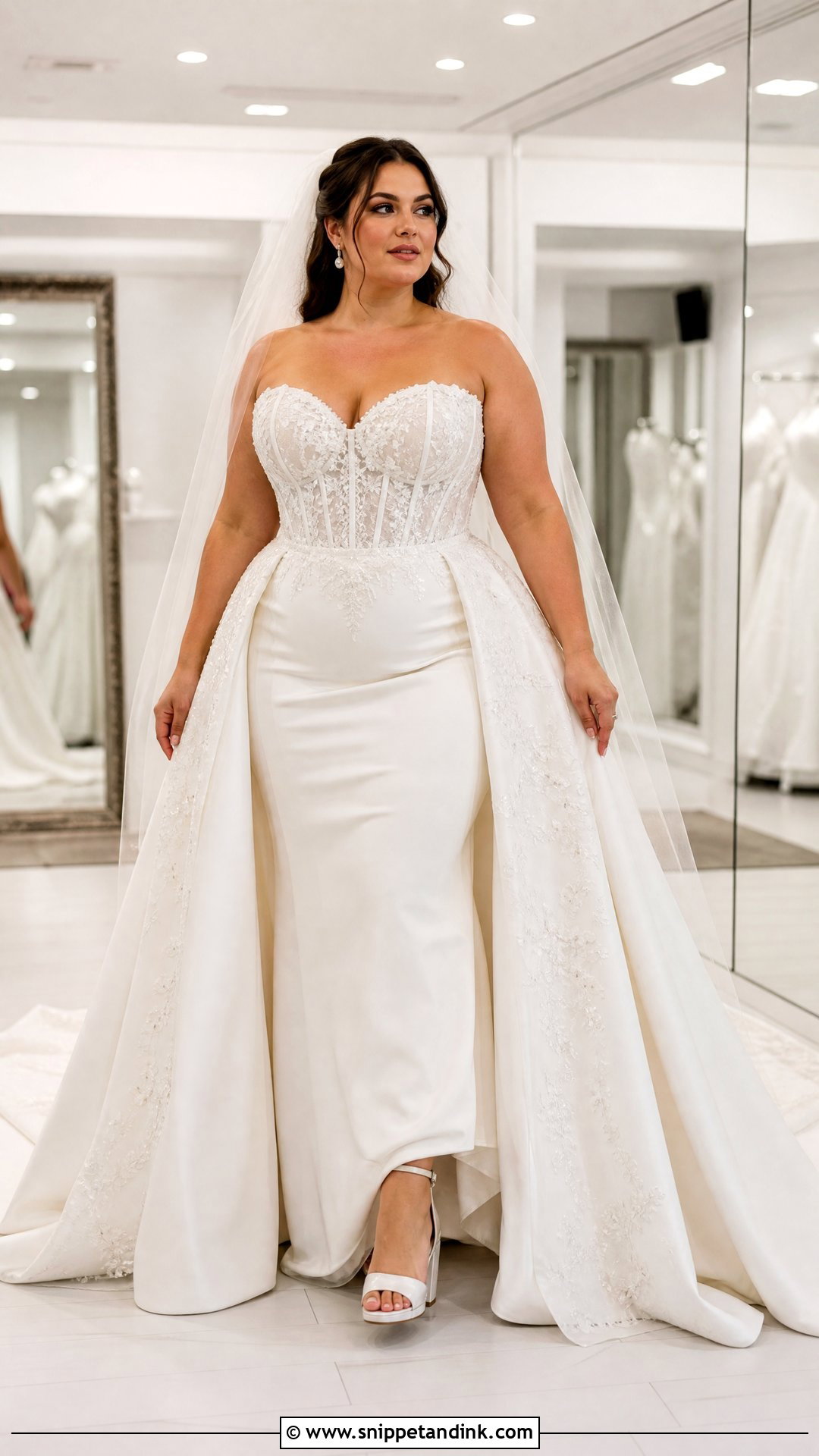
Support and proportion matter most for plus size convertible gowns. A structured bodice, secure waistline and balanced overskirt give a flattering shape without restriction. A-line, corset, fit-and-flare and ball gown bases all work. I pay most attention to the closures: an overskirt’s weight pulls hardest on a curvier waist, so the hooks need a reinforced band behind them. Smooth lining and alterations that fit both versions are worth the extra appointment. Comfortable heels, supportive undergarments, pearl earrings and a veil matched to the skirt length.
23. Petite Wedding Dress With Detachable Skirt
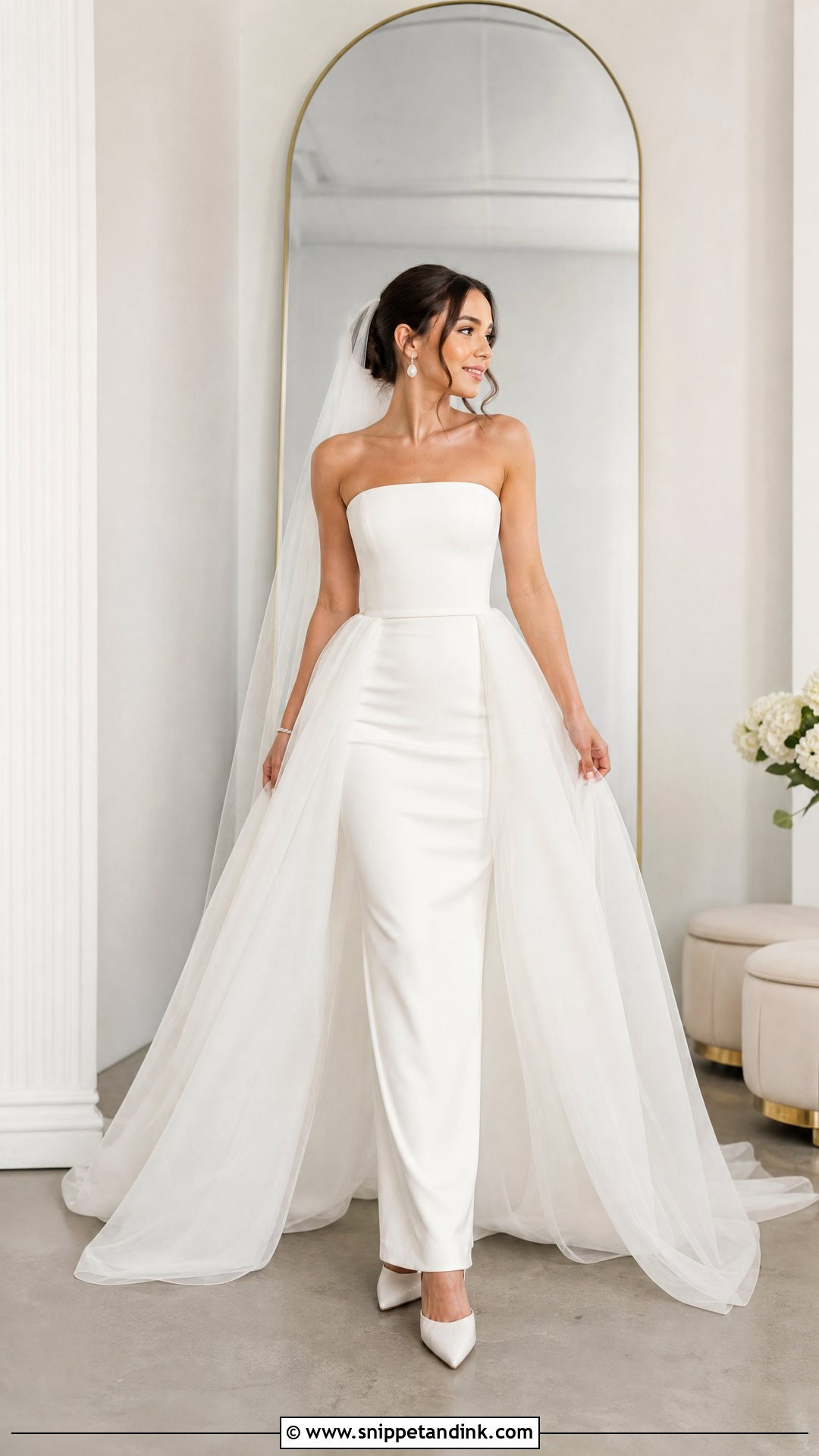
Petite frames get swallowed by heavy layers, so choose an overskirt with soft volume rather than stacked tulle. A fitted base, slim A-line or short dress under a long overskirt all suit. A high waist placement lengthens the legs; a vertical seam or clean front panel adds height. Ask for the train shortened in proportion, not just the hem. Pointed heels, delicate earrings, a narrow veil and a neat updo keep the scale right.
24. Black And White Wedding Dress With Detachable Skirt
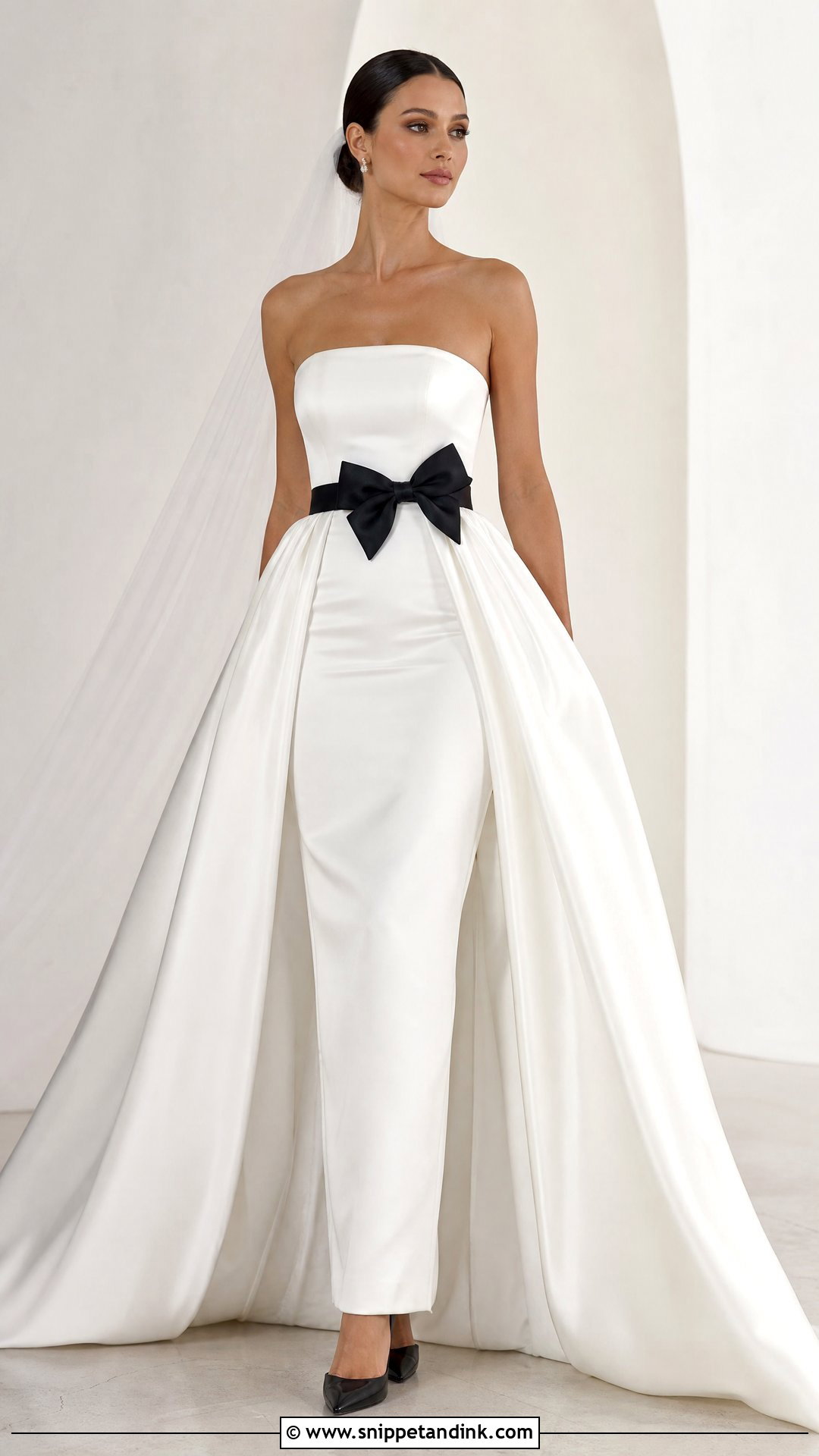
Black and white is all about where the black goes. The base gown might carry black bows, gloves, a waist detail or trim at the neckline; the overskirt can stay white for softness or pick up a black accent. Satin, mikado and crepe make contrast look intentional. Check that black trim is colourfast before steaming, because dye can bleed into white under heat and moisture. Black or white heels, simple earrings, a sleek bun and a clean veil.
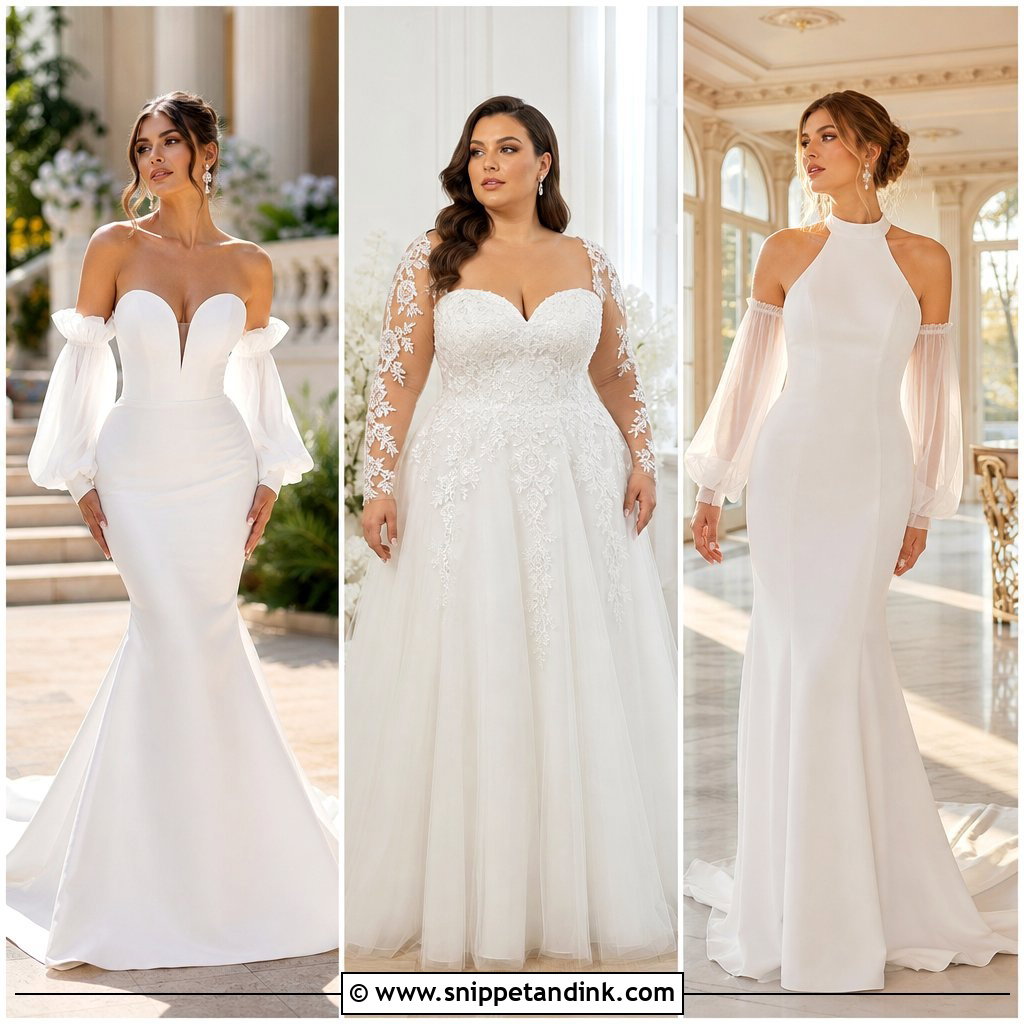
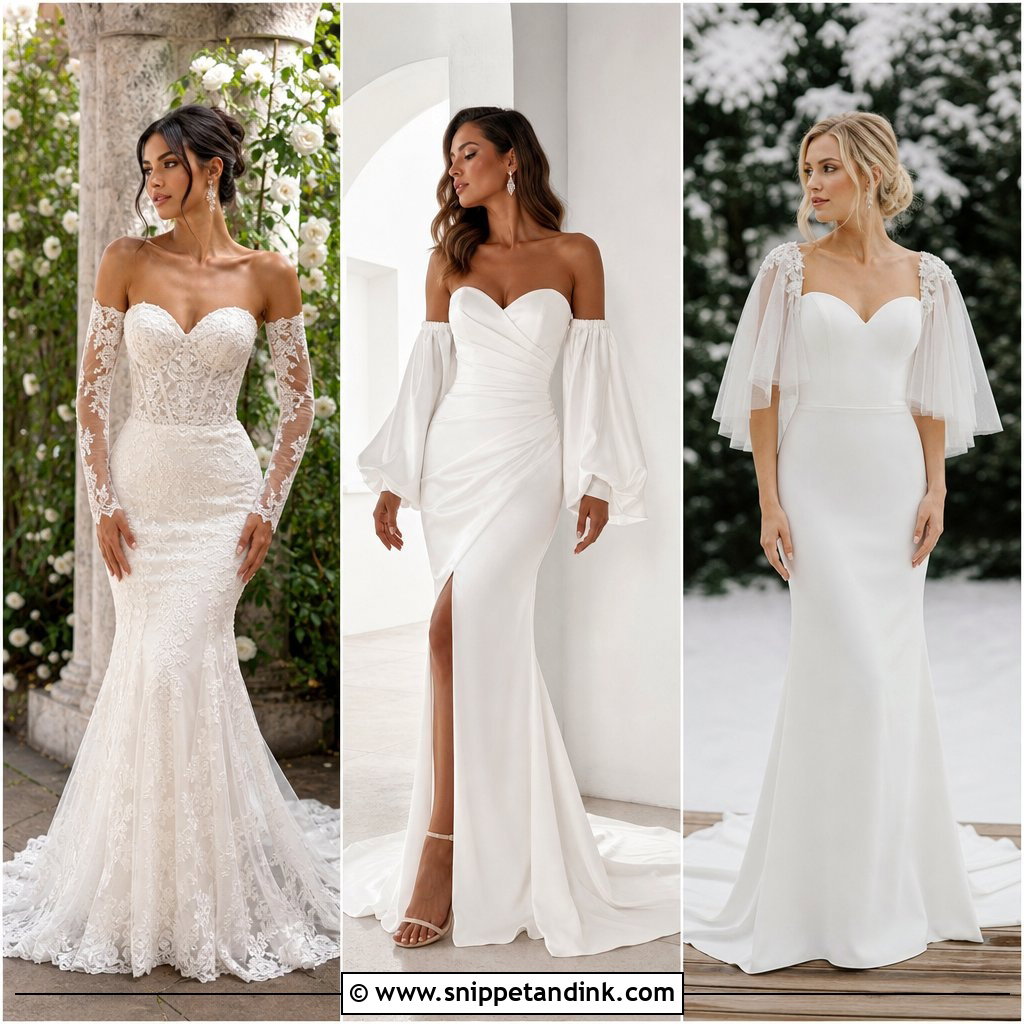
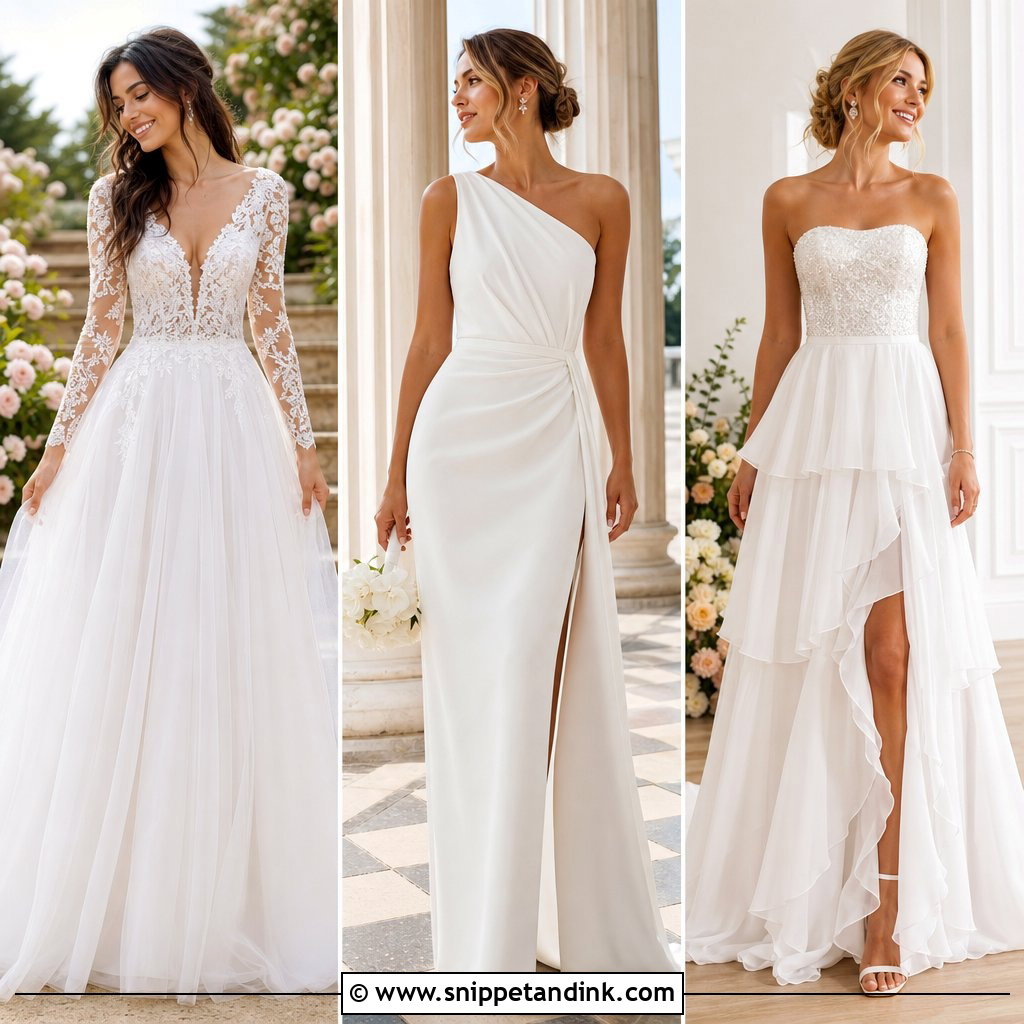
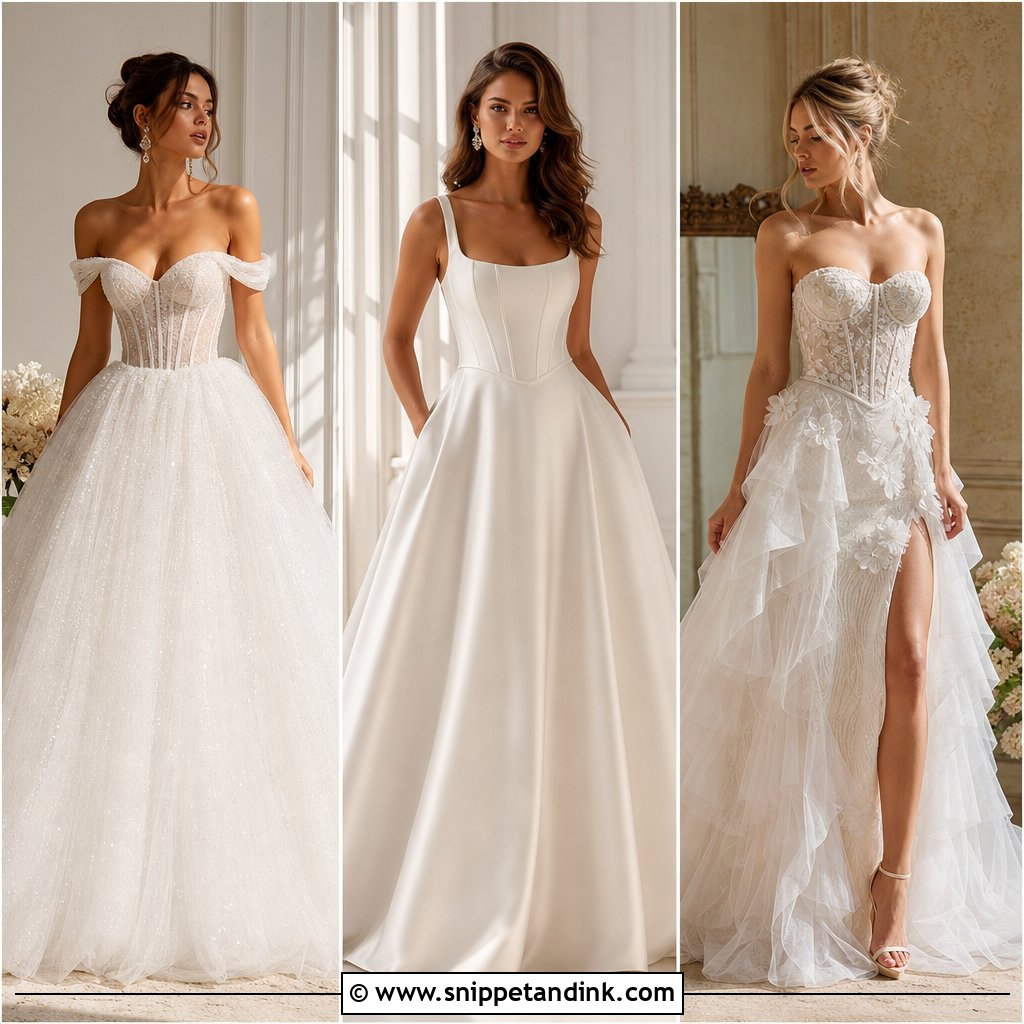
25. Reception Wedding Dress With Detachable Skirt
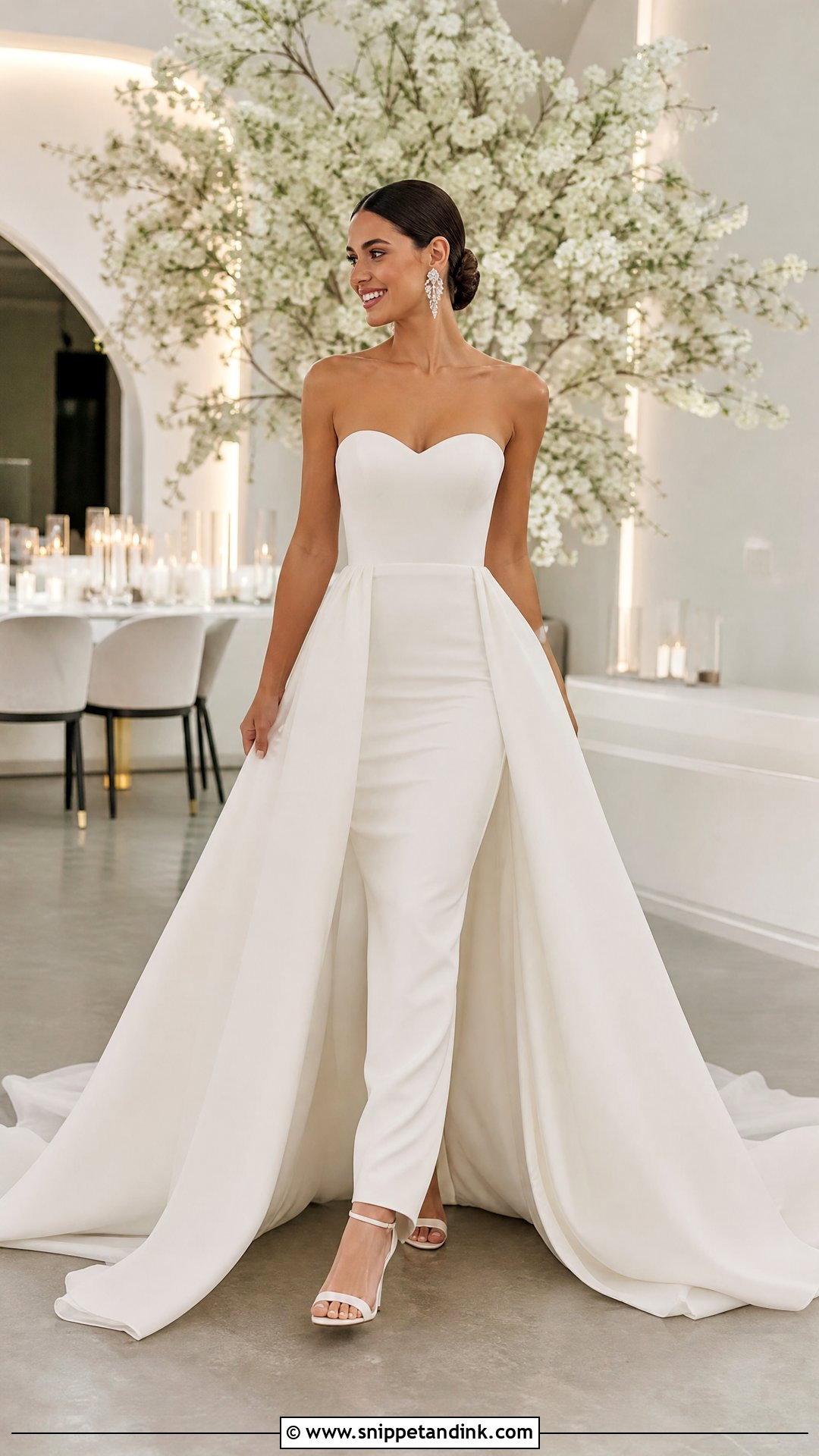
Designing a reception dress means thinking about movement from the start. The ceremony version gives volume, a train or a formal entrance; the version underneath must be comfortable and easy to dance in. A fitted crepe gown, satin mini, lace sheath or tailored jumpsuit all make good bases. Both versions must look finished on their own. Ask how the skirt attaches, what replaces a bustle, and where the skirt will be stored once it’s off. Dance-friendly heels, statement earrings and a hair change finish it.
Planning the Swap Between Dinner and the First Dance
Most brides remove the overskirt after the formal portraits and before the reception entrance or first dance. It takes a few minutes with the right helper and a lot longer without one, so the swap belongs in your day’s timeline, not left to chance.
- Pick one person to remove the skirt and have them practise at your final fitting.
- Choose a private room with a clean floor or a sheet to stand on.
- Bring a hanger with clips or a garment bag, and name who takes the skirt home.
- Check the base hem and any lace at the waist for snags before you walk back out.
- Get a few full-length photos of the second look straight away, while the light and your hair are still fresh.
After the wedding, clean and store both pieces together, flat in an acid-free box if the overskirt is tulle. Kept apart, it’s easy for one half to end up in a cupboard and forgotten.
Does the Dress Underneath Stand on Its Own?
A convertible gown gives you a dramatic ceremony and a comfortable reception from one purchase. The overskirt should look like part of the dress, never an add-on. Watch the fabric, waist placement, closures and weight, and spend as much time looking at the base dress alone as at the full look. Think about your venue, season and how much you want to move later. Lace, satin, tulle, minimalist crepe or a bridal jumpsuit: whichever you choose, both versions should feel like you.
You'll Like These Ideas:




Leave a Reply