
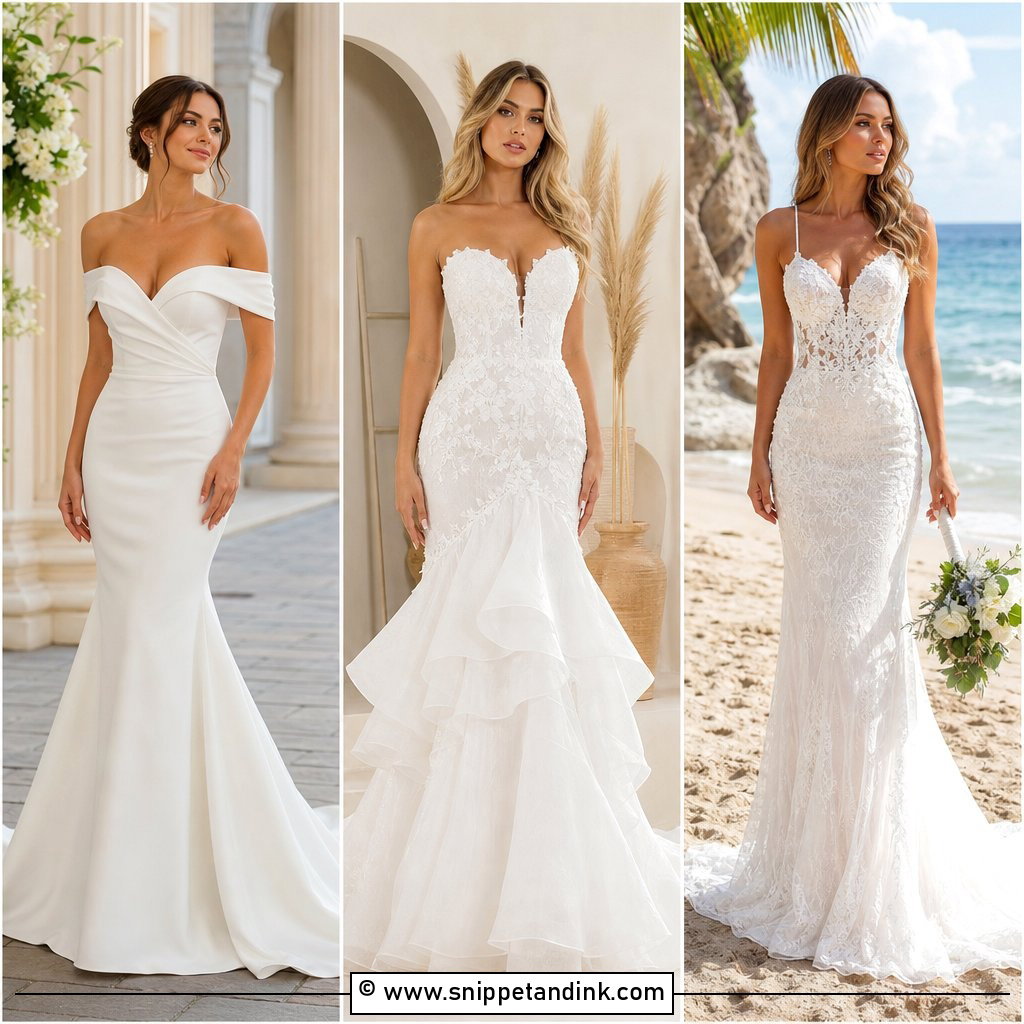
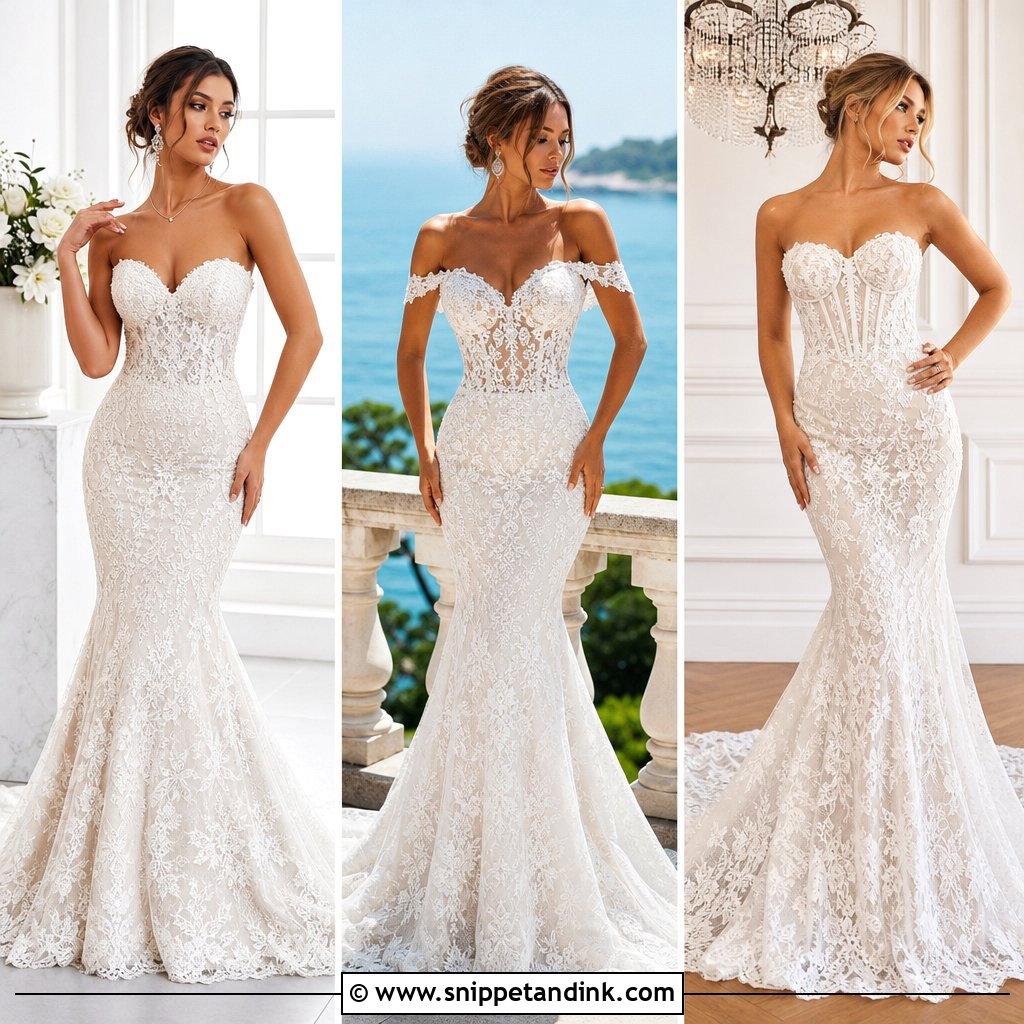
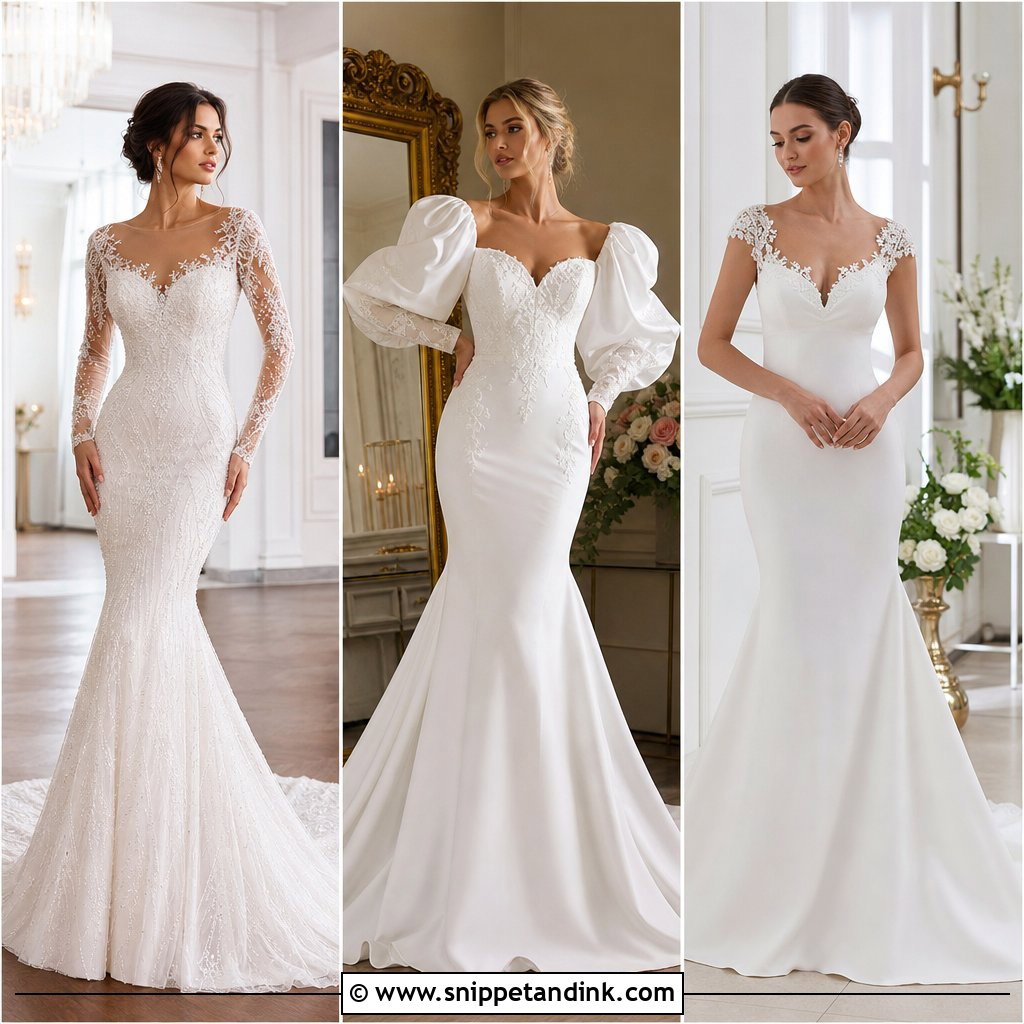
A trumpet gown hugs the bodice, waist and hips, then opens around mid-thigh. In satin that shape looks sculpted, because the fabric is firm enough to hold the flare instead of collapsing into it. Necklines, sleeves, drapes, trains and beading are what turn the same silhouette minimal, romantic or glamorous. I style it as a whole outfit, because satin’s smooth surface shows everything, so the veil, shoes, jewellery, bouquet and hair have to sit quietly alongside it. Below are twenty versions with what I’d pair them with and the fitting points I watch for on each.
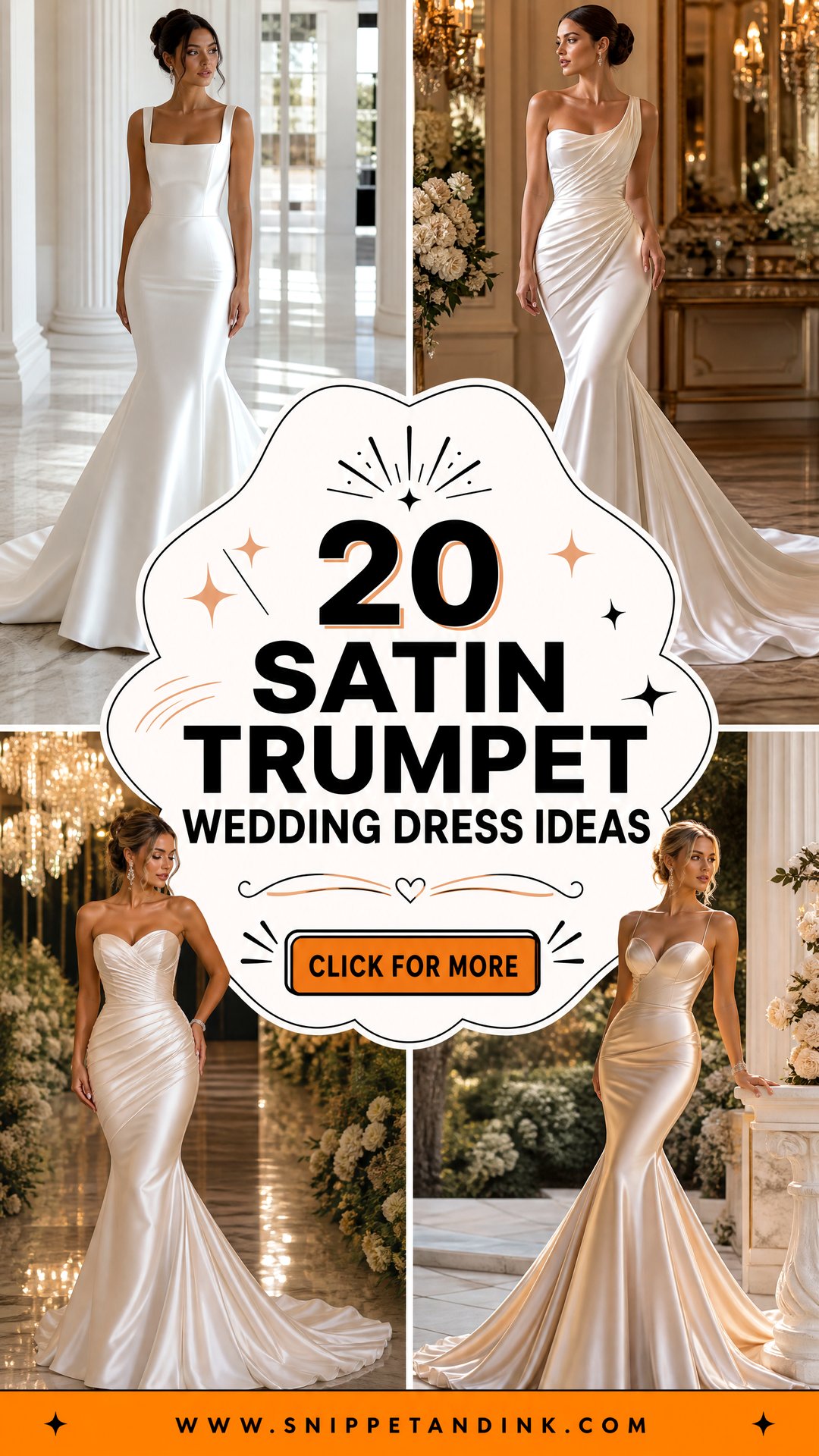
Trumpet, Mermaid or Fit-and-Flare? Watch the Knee
Brides often use these three names interchangeably, but the difference is just where the skirt opens, and it changes how you’ll move all day.
- Fit-and-flare opens at or just below the hips. It’s the easiest to walk, sit and dance in.
- Trumpet opens around mid-thigh. It shows more shape but still lets you take a normal stride.
- Mermaid stays fitted to the knee or below. It’s the most dramatic and the most restrictive on stairs.
When I try a trumpet on a bride, I have her walk across the room at her usual pace. If she has to shorten her stride, the flare starts too low for her height or the skirt is too narrow above the knee. Satin needs a bit more ease than stretchy crepe, because it doesn’t give at all when your leg moves forward.
1. Strapless Sweetheart Satin Trumpet Wedding Dress
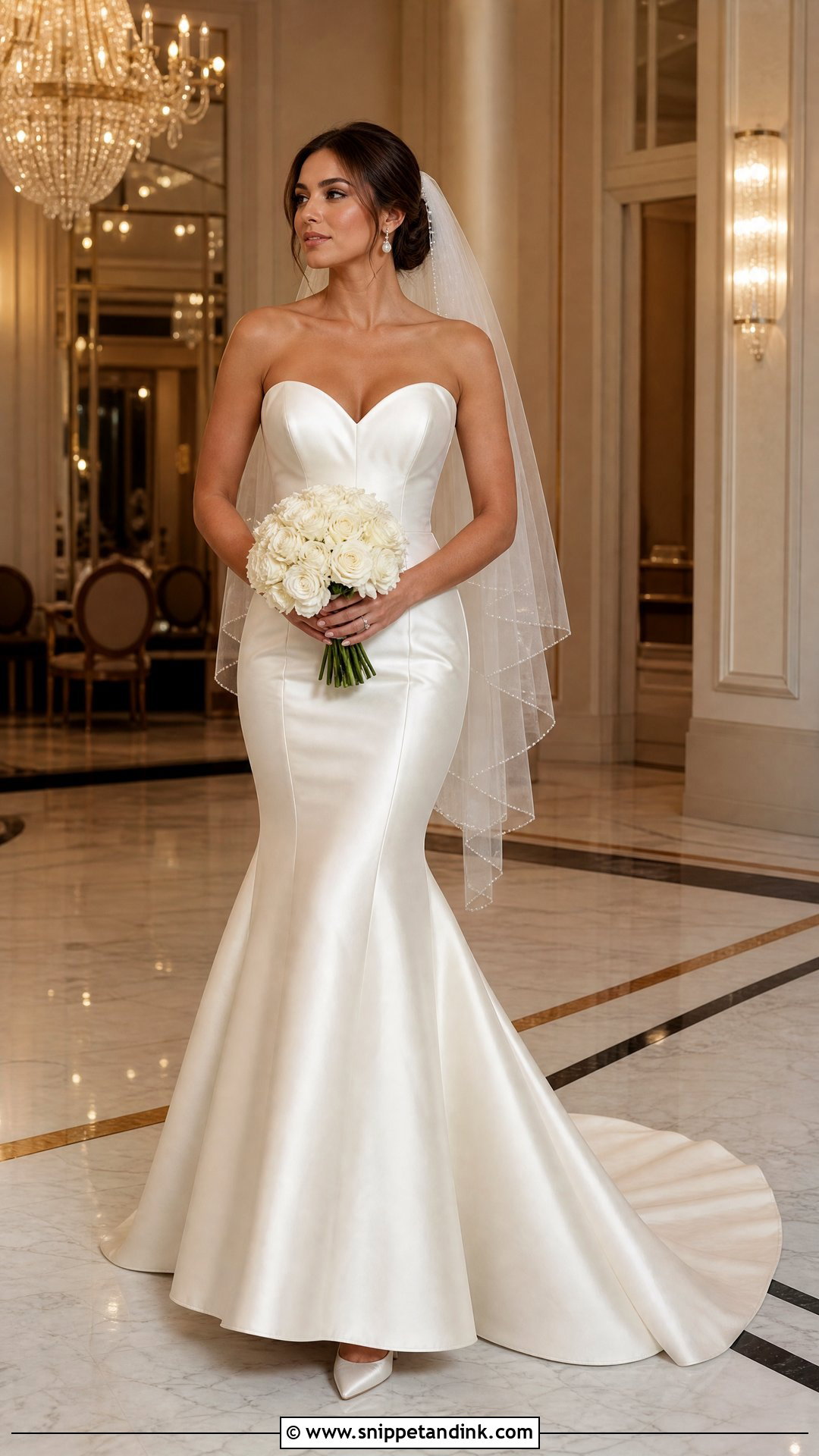
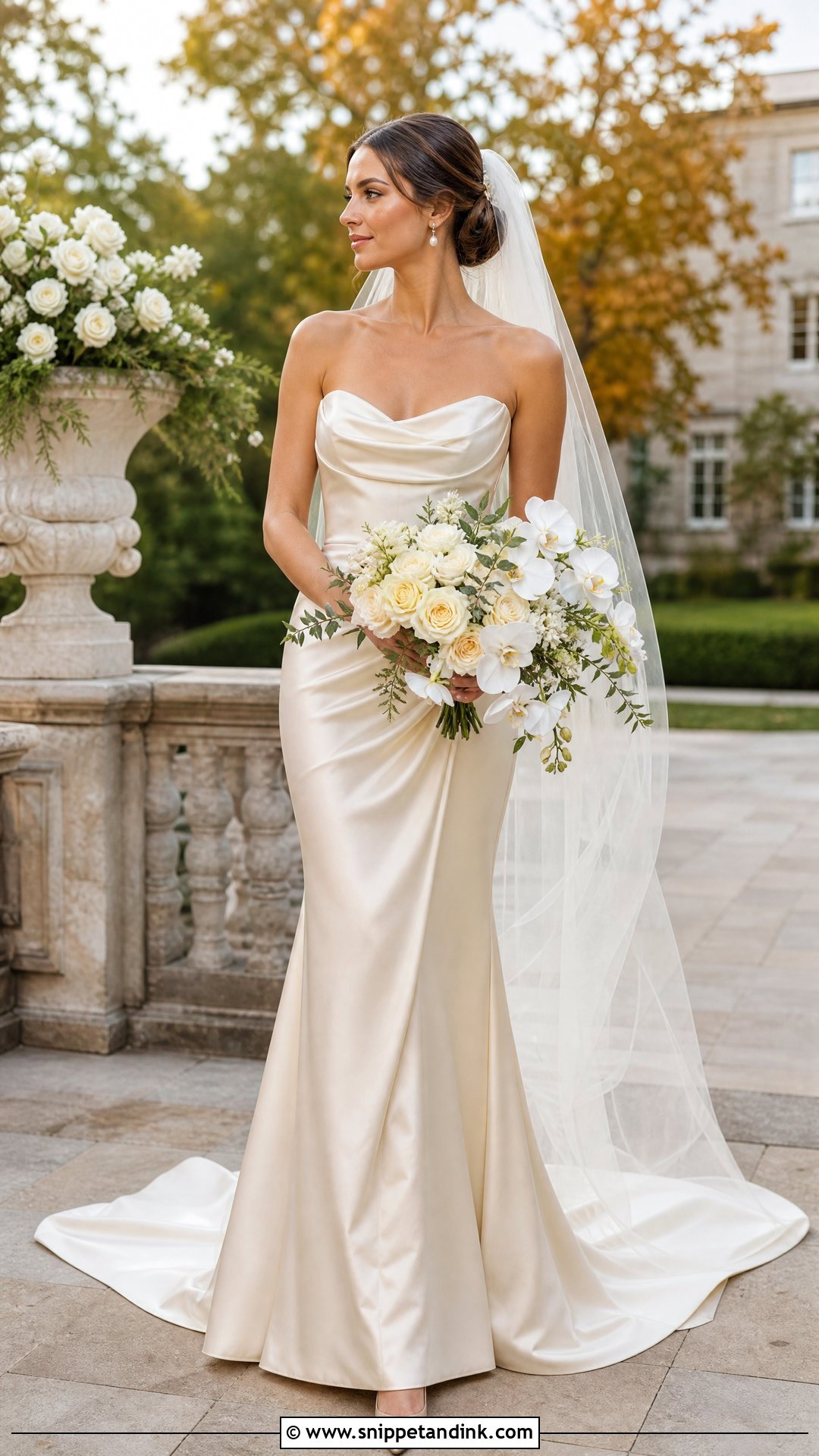
A sweetheart neckline on a strapless trumpet is the classic for a reason: the curve at the bust echoes the flare at the knee. A strapless sweetheart satin trumpet wedding dress needs proper boning and a waist stay inside, otherwise the neckline slips a little lower every time you hug someone. Pearl drops and a fine tennis bracelet are enough; leave the neck bare. A smooth fingertip veil softens the fitted line without hiding it, and pointed ivory pumps peek out neatly. A compact bouquet of white roses and greenery, plus a low bun or side-parted waves, suits a ballroom or hotel.
2. Off The Shoulder Satin Trumpet Wedding Dress
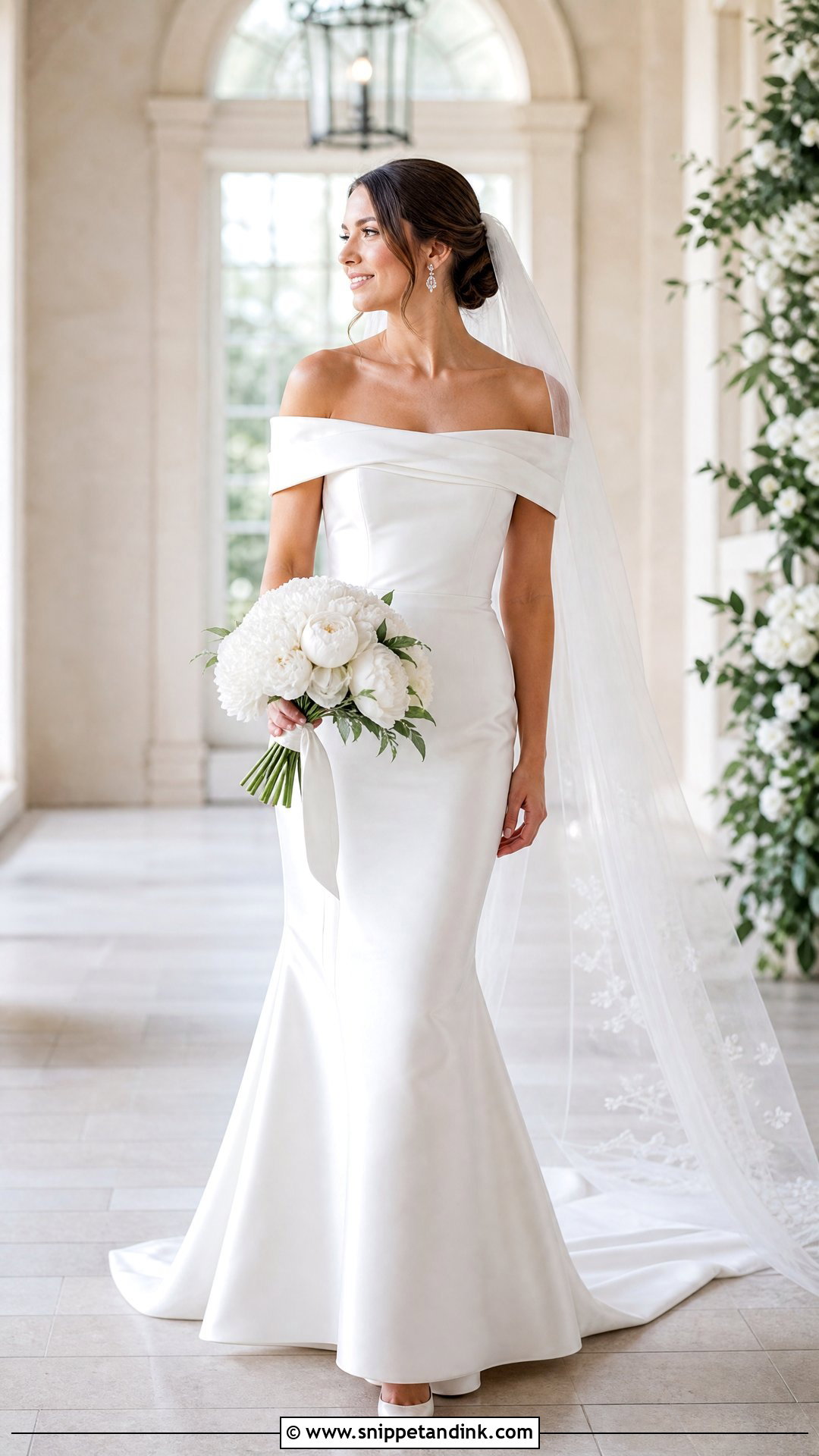
Off-shoulder bands look graceful, but they restrict how high you can lift your arms. I always ask brides to mime throwing the bouquet in the fitting room. A fold-over satin band reads sleek; gathered sleeves add a little texture, and a wider band gives more arm coverage. Small crystal earrings, a thin bracelet and closed-toe satin heels keep it clean. Pin a cathedral veil under a low chignon so the aisle view is dramatic while the front neckline stays clear. White peonies, ranunculus and loose greenery in the bouquet suit an estate or a grand indoor venue.
3. Square Neck Satin Trumpet Wedding Dress
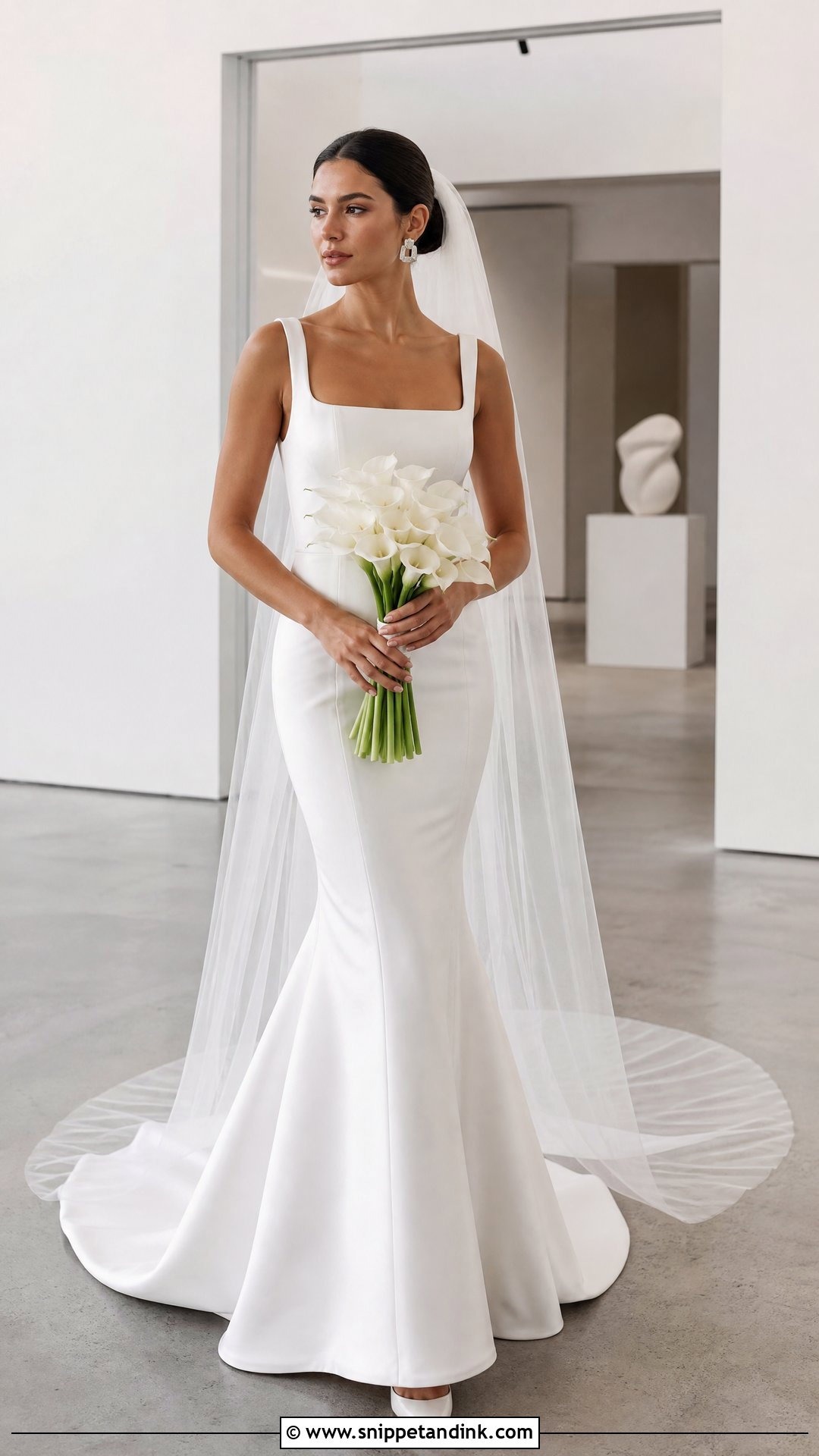
A square neck and a trumpet skirt set straight lines against curves, which is why the combination looks modern. Wide straps carry the bodice comfortably, and princess seams give a smooth fit through the torso; I’d check that the neckline corners sit level when you’re standing naturally, not posed. Geometric studs, a sleek bun and a plain chapel veil suit it. For the reception, pointed pumps and a small structured bag take over from the bouquet. Calla lilies or white tulips echo the neat lines, and a loft or gallery lets the satin stand out against plain walls.
4. Long Sleeve Satin Trumpet Wedding Dress
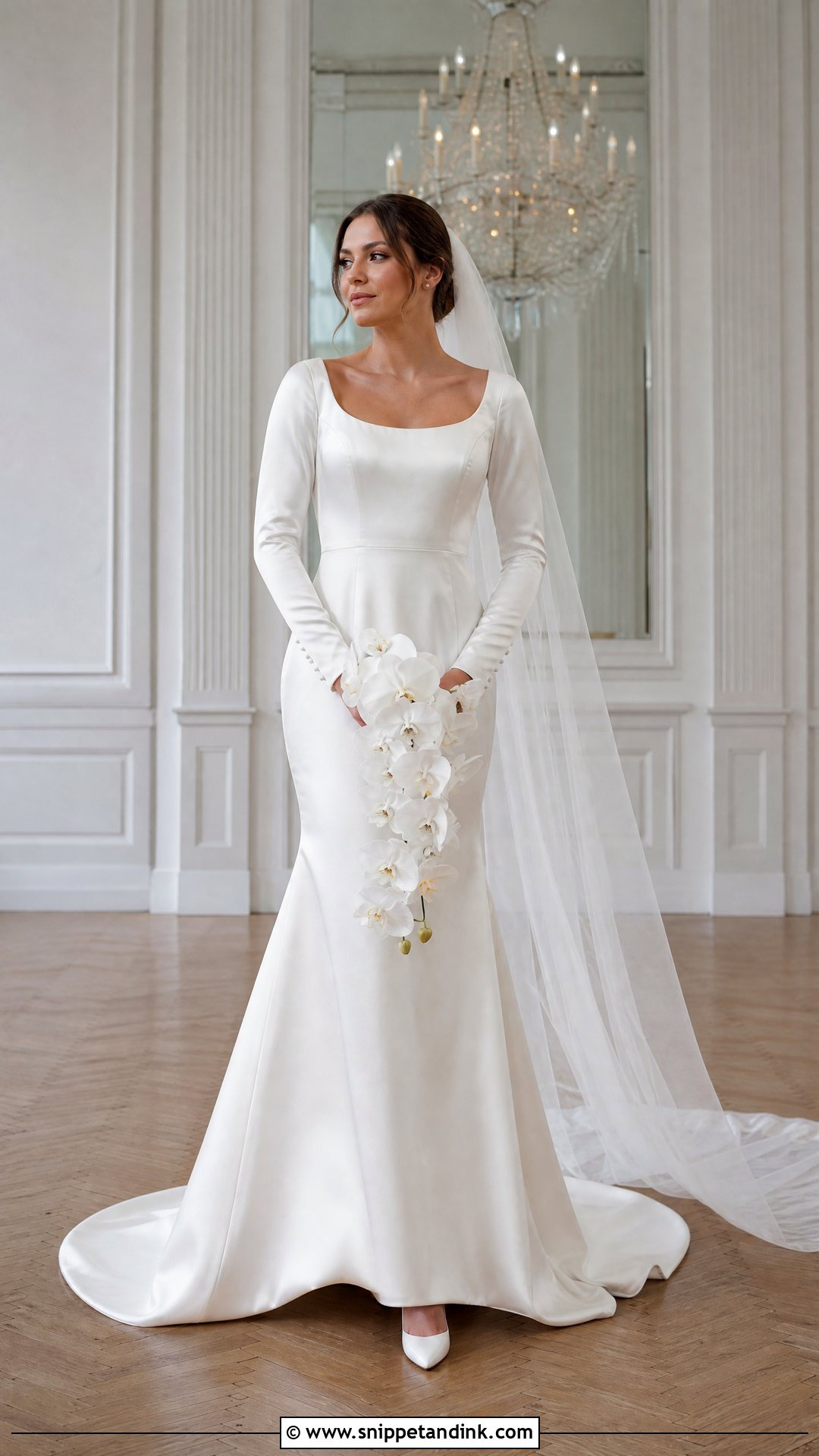
Fitted satin sleeves are the part of this gown I spend most fitting time on. A long sleeve satin trumpet wedding dress looks smooth when the sleeves have a little stretch, but too tight and you can’t lift your arms to dance or hug. Covered buttons at the wrist are a nice finish. A bateau, scoop or modest V keeps the top from looking heavy. Pearl studs, a narrow cathedral veil, matching ivory closed-toe heels and a low twisted bun keep it neat, and a cascading orchid bouquet softens all that structure. It suits autumn and winter, or a cool spring day in lighter satin.
5. One Shoulder Satin Trumpet Wedding Dress
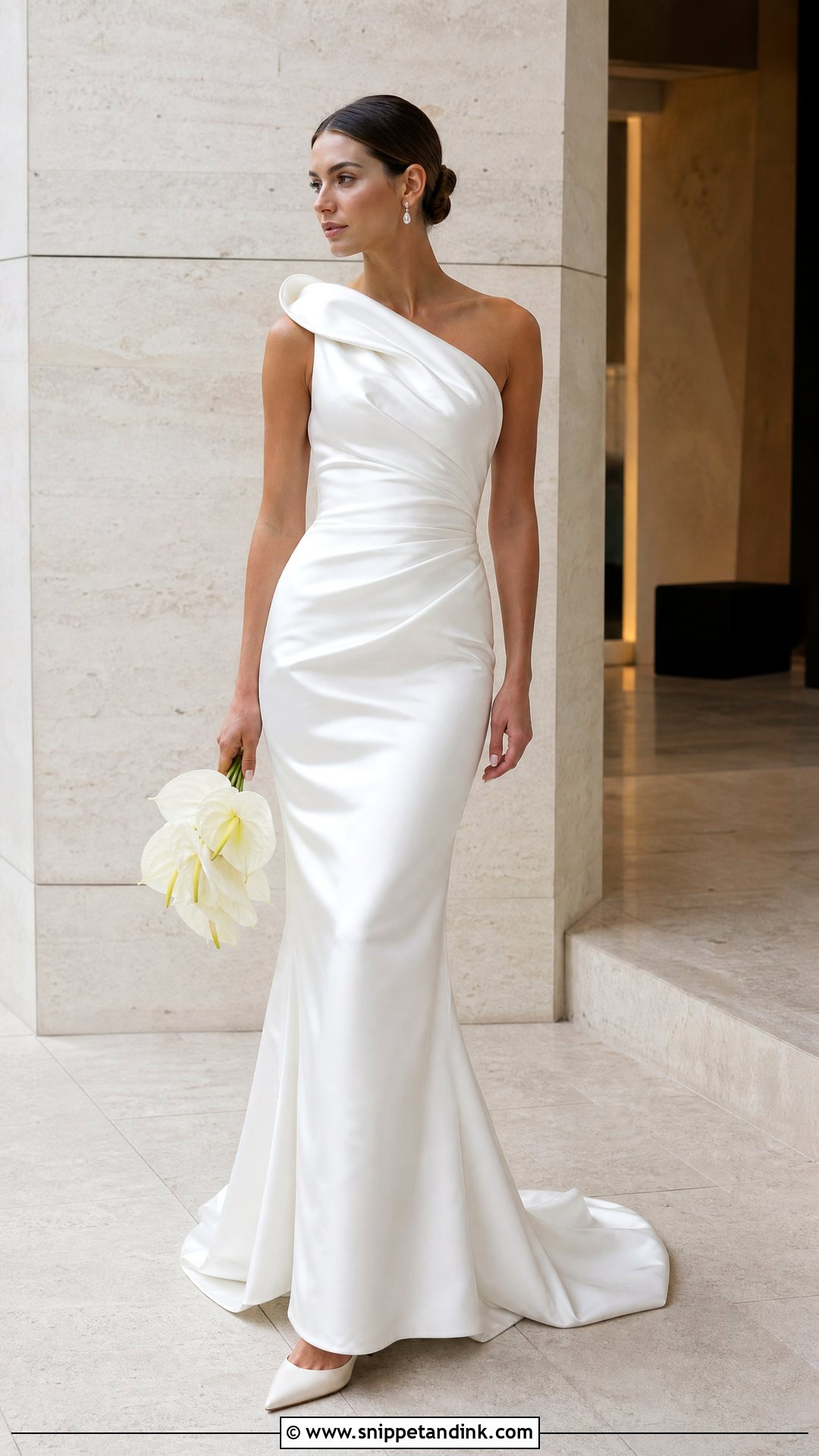
One shoulder makes the neckline the entire focus, so I strip everything else back. A clean strap, a sculptural fold or a short draped sleeve are the options. Skip the necklace for streamlined drops, slick the hair into a bun, and slide the veil comb in beneath it. Pointed satin heels and a compact bouquet of anthuriums or calla lilies keep it graphic. A sweep or chapel train gives aisle drama without overwhelming the modern shape. Check that the single strap stays on your shoulder as you turn; on a heavy satin gown it can slowly migrate toward your neck. Rooftops and city venues suit this one.
6. High Neck Satin Trumpet Wedding Dress
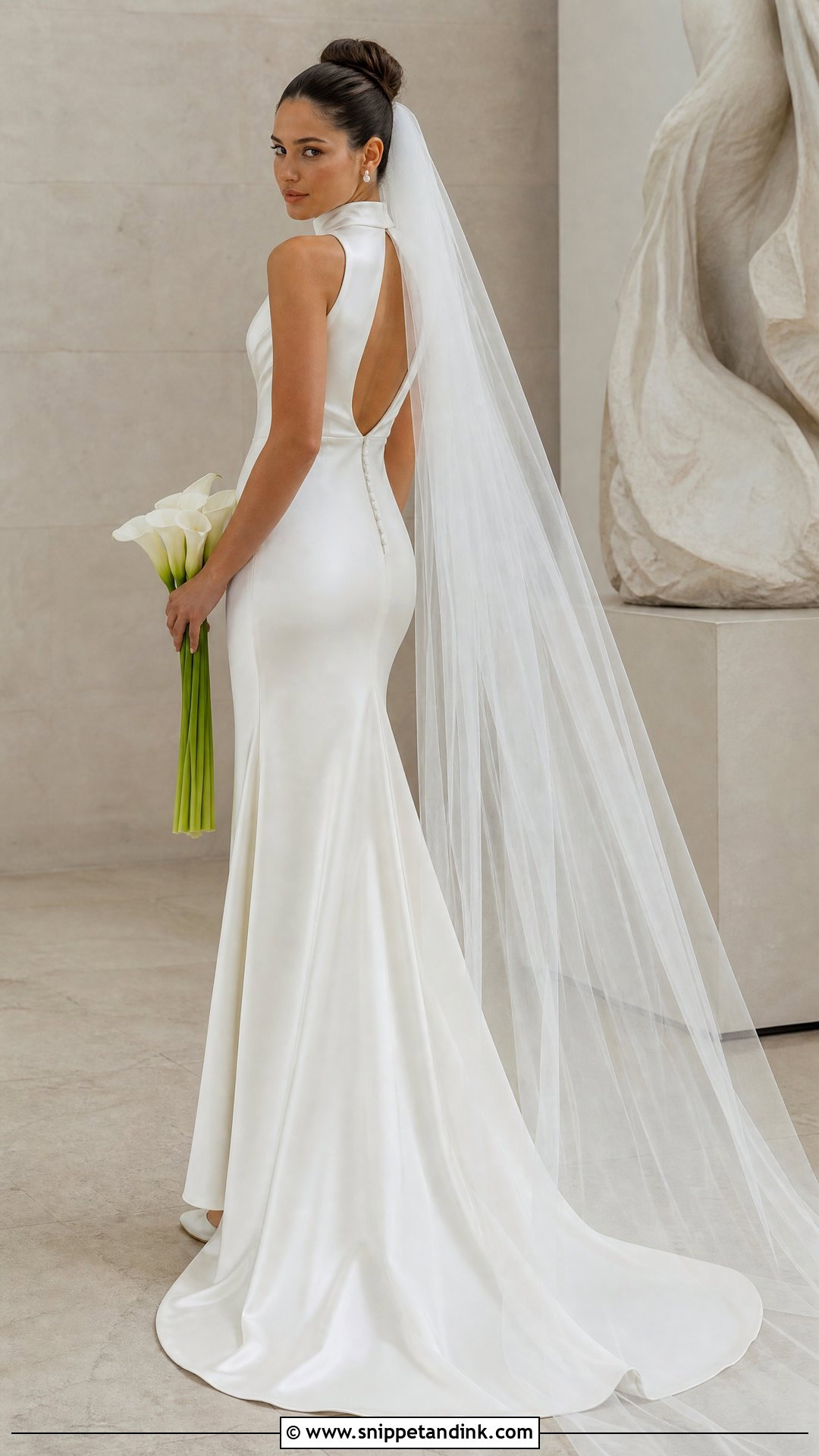
Covered bodices look most striking when the construction is perfect, because there’s nothing to distract from a pucker. A high neck satin trumpet wedding dress can be a softly draped mock neck or a crisp structured halter. An open or keyhole back balances the coverage at the front. Small earrings and a smooth high bun keep the neck clear; the veil attaches below the hairstyle. Closed-toe pumps and slim calla lilies continue the long line. No necklace. A museum, formal venue or restaurant reception suits its sophistication.
7. Plunging V Neck Satin Trumpet Wedding Dress
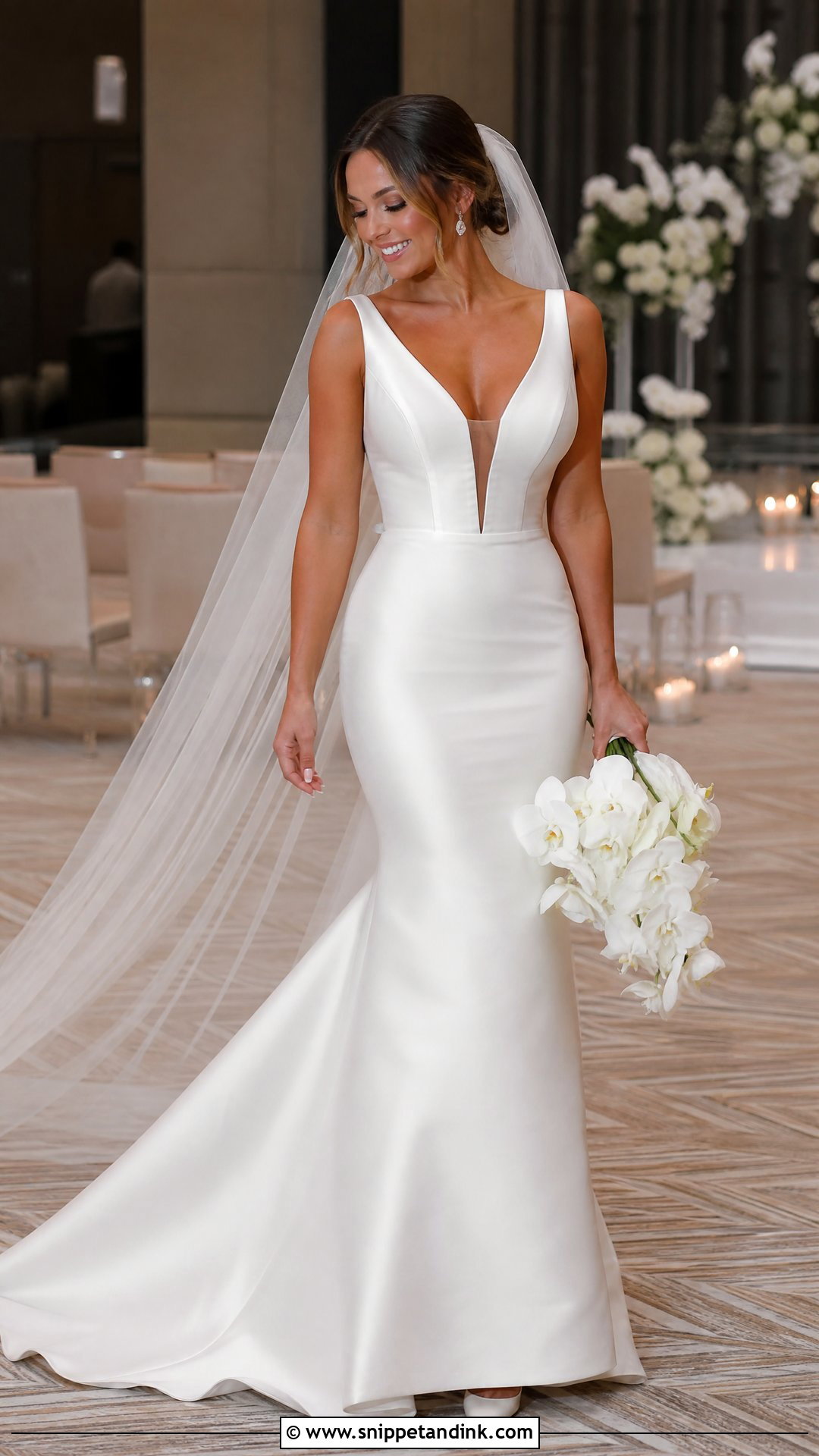
A plunging V-neckline draws the eye down toward the waist, which flatters a trumpet’s shape. Support is everything: look for built-in cups, firm boning and, if you want security, an illusion panel matched to your skin. Wider straps help fuller busts. Fine drops, a barely there pendant and a low ponytail or bun suit it, with a plain cathedral veil to soften the plunge. Pointed ivory heels and a loose rose and orchid bouquet complete the look. At alterations, bend forward, sit and walk; if you instinctively put a hand to your chest, it needs more work.
8. Scoop Neck Satin Trumpet Wedding Dress
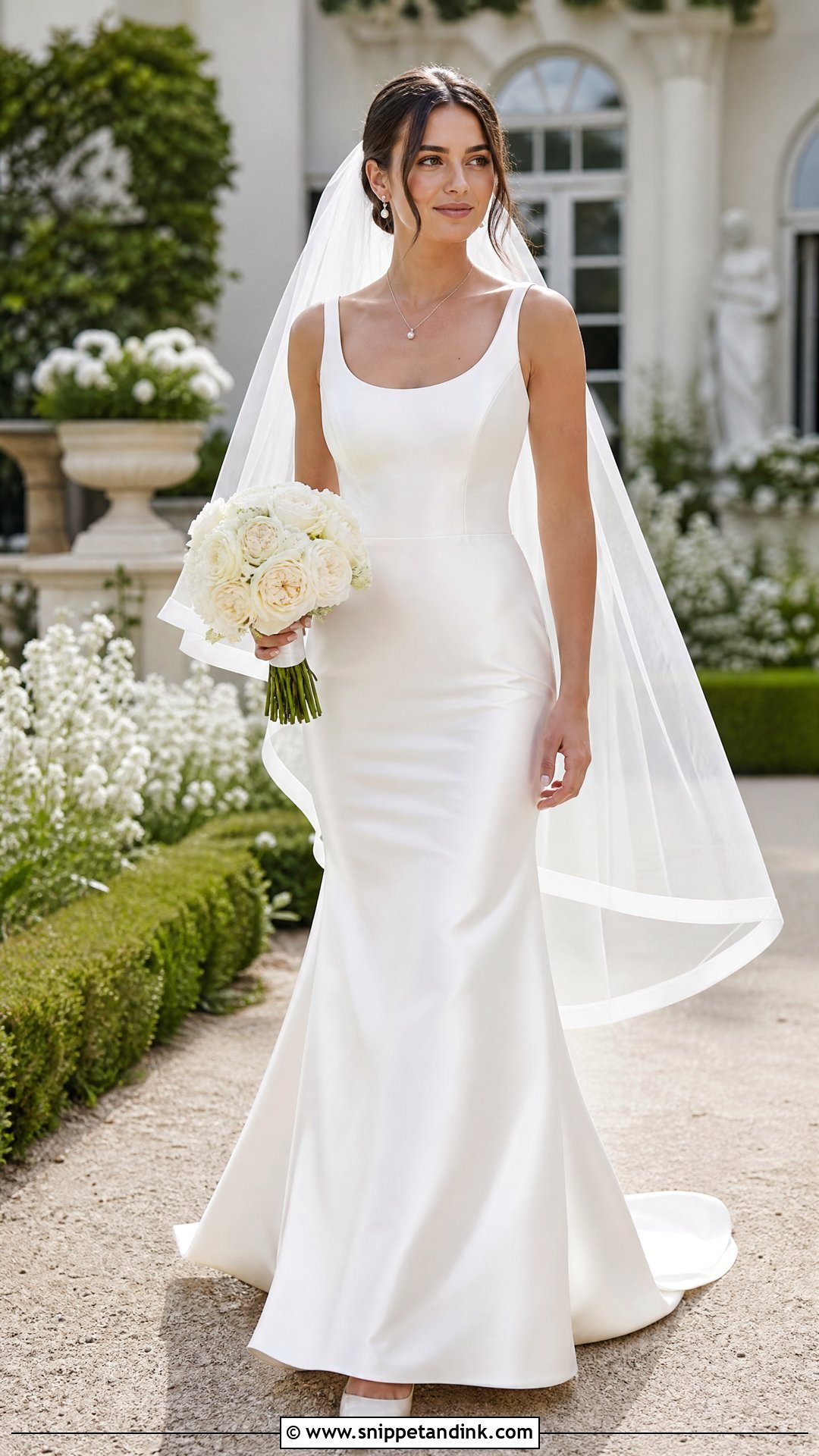
A scoop neck sits between the openness of a V and the coverage of a high neck, and it’s the one I suggest to brides who want to wear a family pendant. Medium-width straps and a carefully shaped bodice stop the edge from gaping when you lean forward. Pearl earrings, a short pendant and a low chignon are a natural set, and a fingertip veil with a narrow satin edge picks up the gown’s fabric. Almond-toe ivory heels and a round bouquet of garden roses finish it. It adapts easily from a ballroom to a garden.
9. Corset Bodice Satin Trumpet Wedding Dress
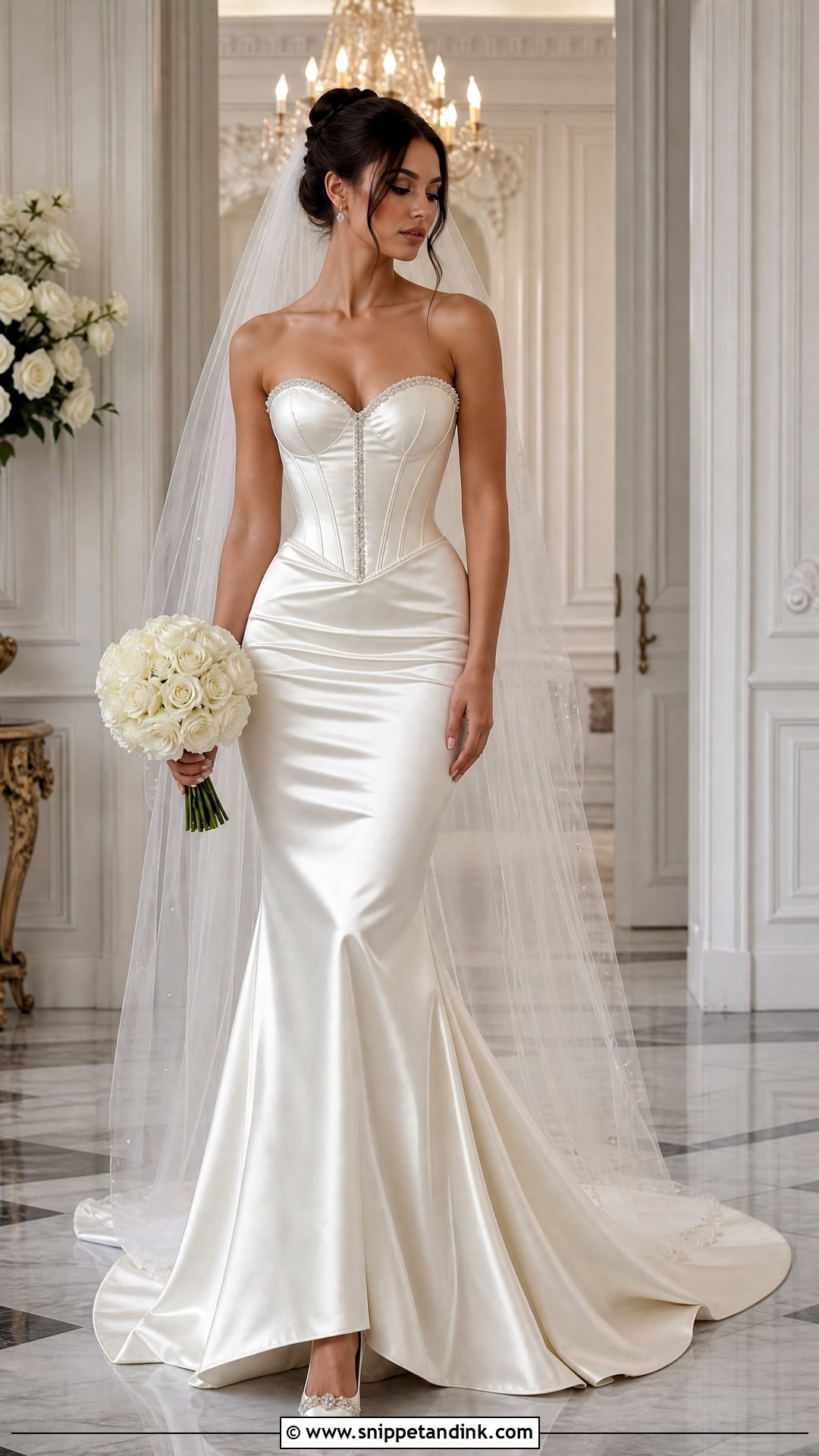
Visible corsetry gives satin a couture look, as long as the boning follows your body rather than digging into it. I check where the bones end at the hip; a trumpet’s fitted section means the boning often runs lower than in other gowns, and if it presses when you sit, it needs shortening. Supportive cups and a straight or softly curved neckline keep it refined. Crystal studs, a clean updo and a veil that falls behind the bodice, pointed heels and structured white roses complete it. If it laces up the back, have someone you trust shown exactly how to tighten it, not on the morning but at your final fitting.
10. Draped Satin Trumpet Wedding Dress
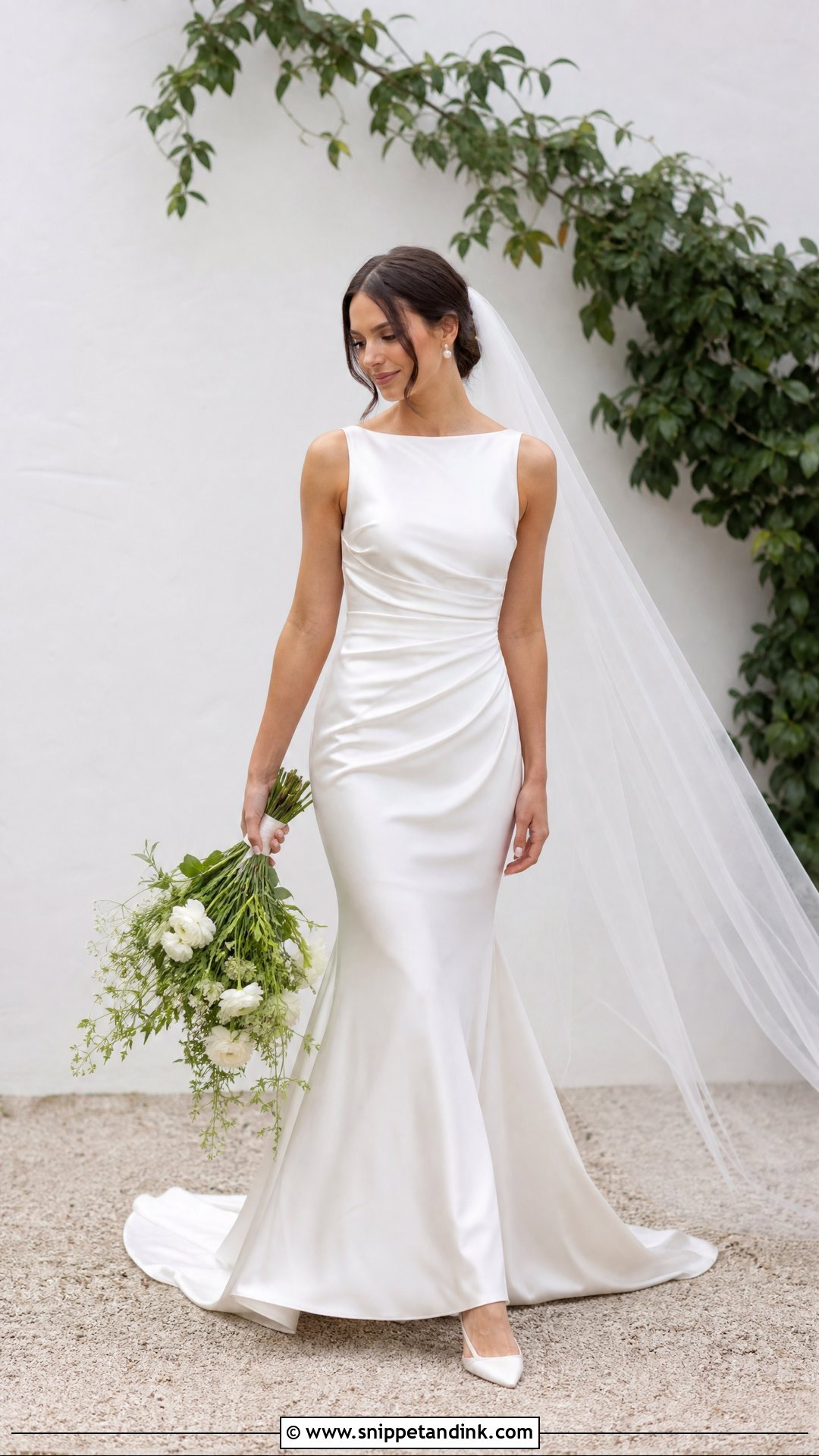
Draping softens satin’s shine by breaking up the surface with shadow. Folds across the bodice or waist should run toward your natural waist and lie flat; if they puff out, they add bulk exactly where a trumpet wants to look narrow. A drape that continues into the skirt makes the flare feel more organic. Pearl earrings, a low bun, a plain chapel veil and slingback ivory pumps keep it light, with a loose ranunculus bouquet. It suits a coastal venue, a garden or a romantic indoor reception.
11. Ruched Satin Trumpet Wedding Dress
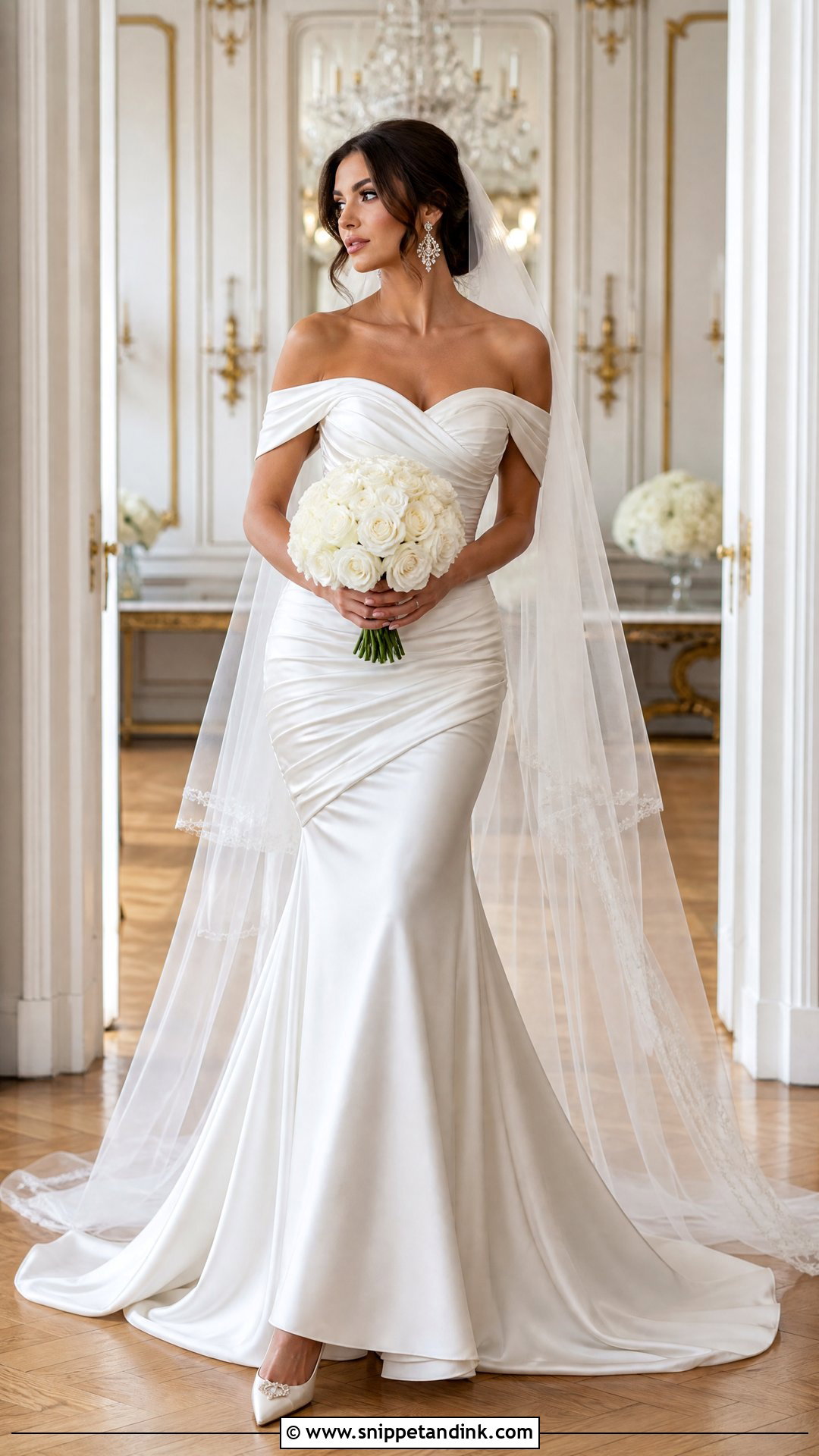
Ruching hides more than people expect, which is why I like it for brides nervous about a fitted gown. Gathers across the waist, hip or bodice add texture and disguise small creases that form as you sit, a real advantage in satin. Keep them controlled; too much fabric distorts the shape. A strapless sweetheart or off-shoulder neckline suits it. Chandelier earrings, a sleek low bun and a sheer chapel veil add glamour, while pointed heels sit hidden under the hem. A compact rose bouquet doesn’t compete. It shines at an evening ballroom or formal hotel.
12. Bow Back Satin Trumpet Wedding Dress
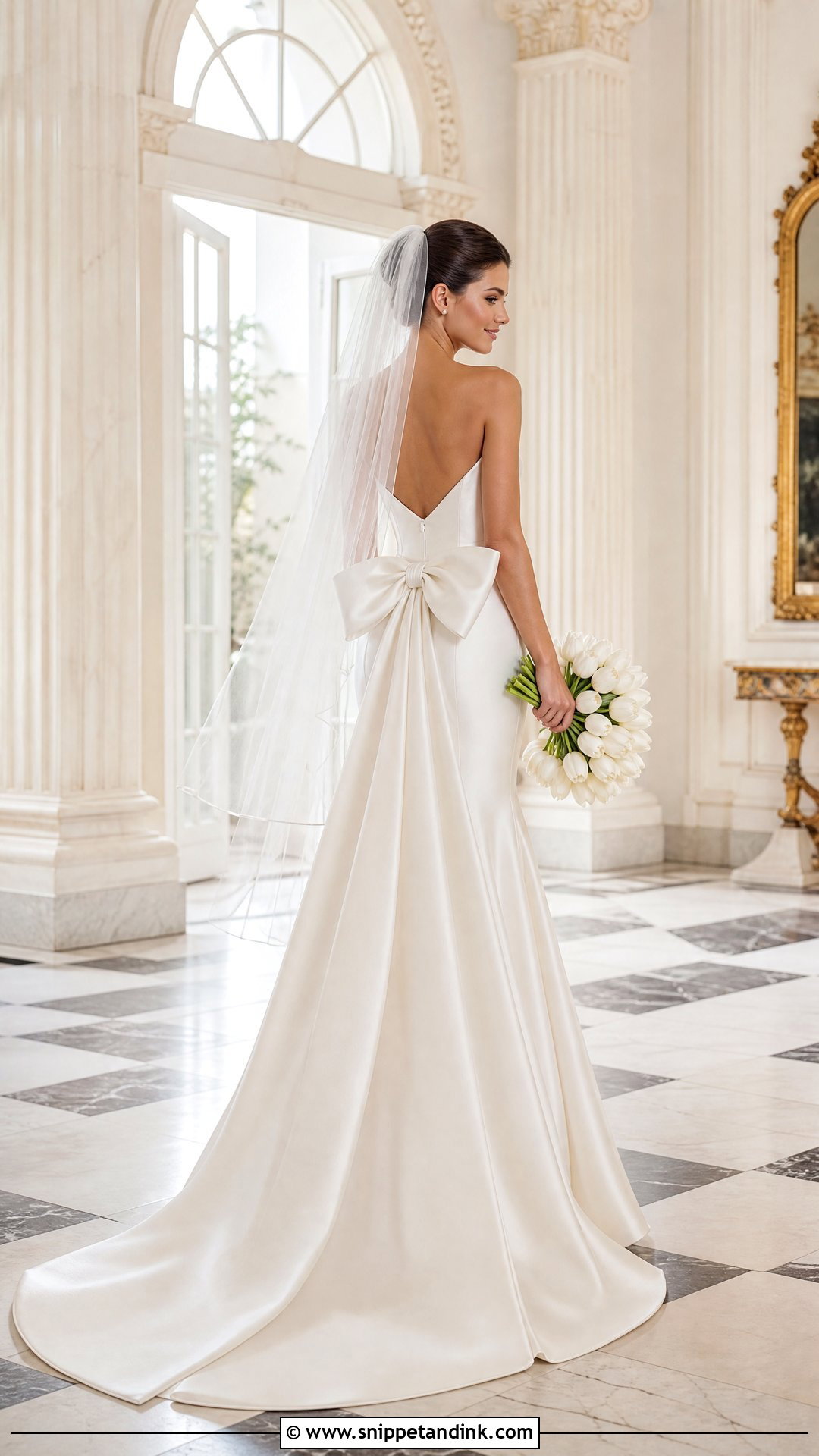
A statement bow gives guests something to look at for the whole ceremony, since they see the back far more than the front. Choose a structured bow at the waist or long tails that move as you walk, with a relatively plain front. The bow should sit above the flare and leave room for the bustle; I always check with the seamstress where the bustle points will go before a bow is placed. Pearl studs, a polished bun and a sheer veil you remove after the ceremony keep the bow visible later. Pointed satin pumps and a round tulip bouquet complete it.
13. Button Back Satin Trumpet Wedding Dress
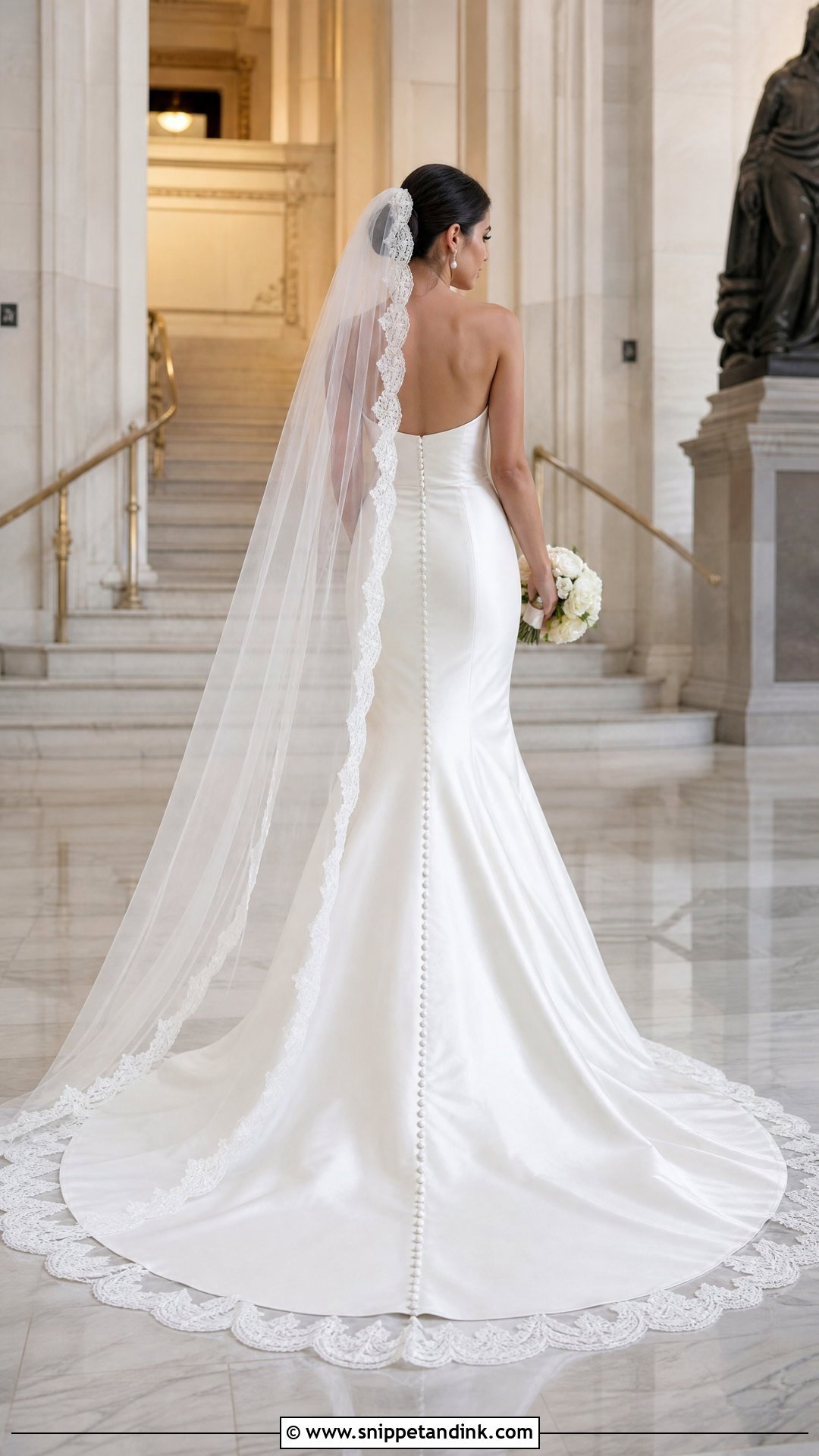
Satin-covered buttons running down a trumpet back make a strong vertical line, from the bodice to the hem or stopping where the train begins. Ask early whether they’re functional or decorative over a zip. Real button loops take a long time to fasten, and I’ve seen it eat into the getting-ready schedule. A fitted bodice with a bateau, scoop, or sweetheart neckline keeps it classic. Pearl earrings, a chignon and a scalloped or satin-edged cathedral veil suit it, along with closed-toe ivory pumps and roses with lily of the valley. The buttons show well in processional photos.
14. Open Back Satin Trumpet Wedding Dress
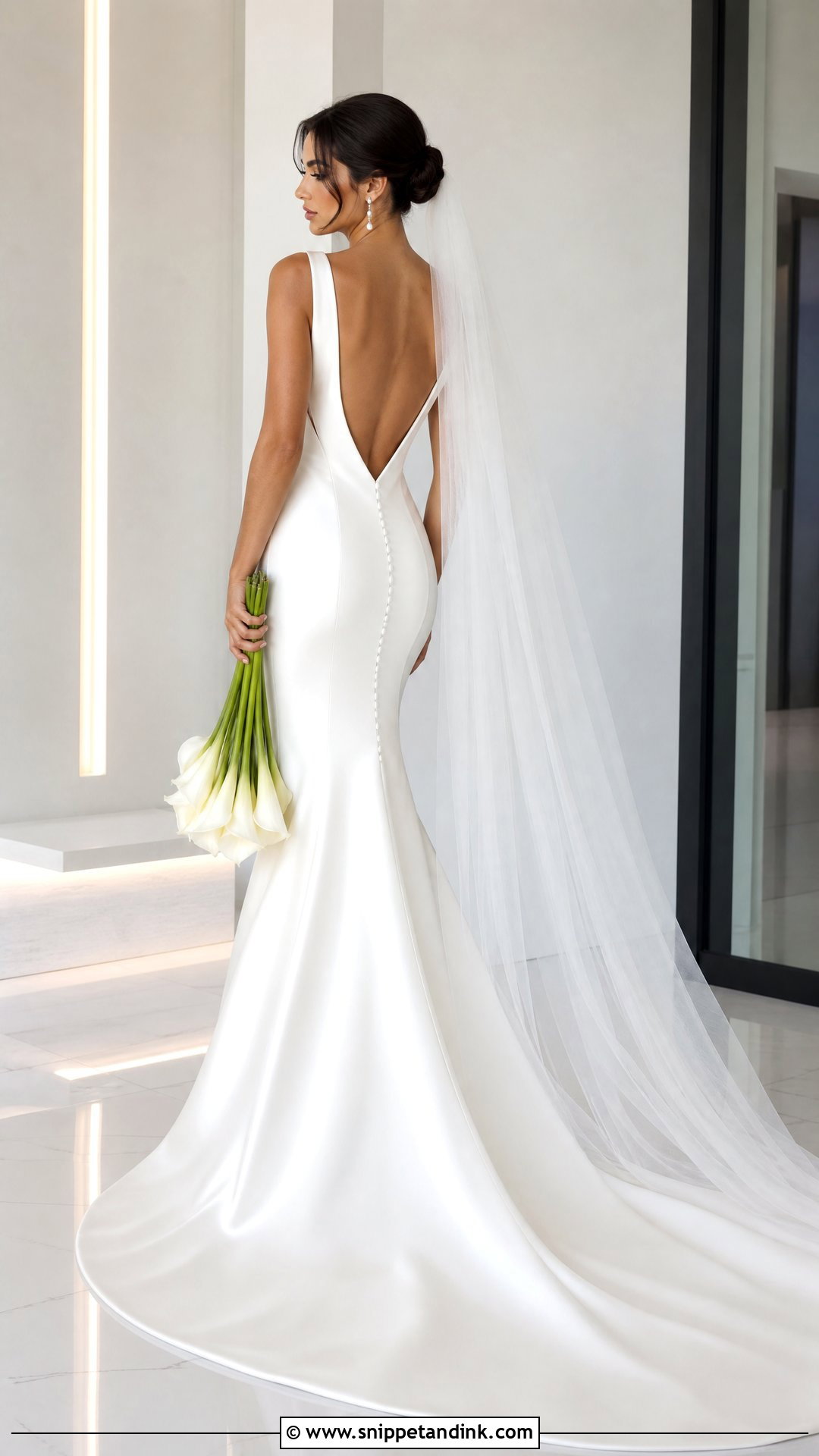
An open back keeps the front streamlined and puts the drama behind you. A rounded scoop reads soft; a low V feels sharper. Supportive side panels and secure straps keep the bodice from shifting once there’s nothing across the back to hold it. I’d ask for cups sewn in at alterations rather than leaving underwear to the last week. Wear the hair up or swept to one side, with the veil under the hairstyle. Delicate drops, pointed pumps and orchids or long calla lilies suit it. It works best at a modern or destination venue.
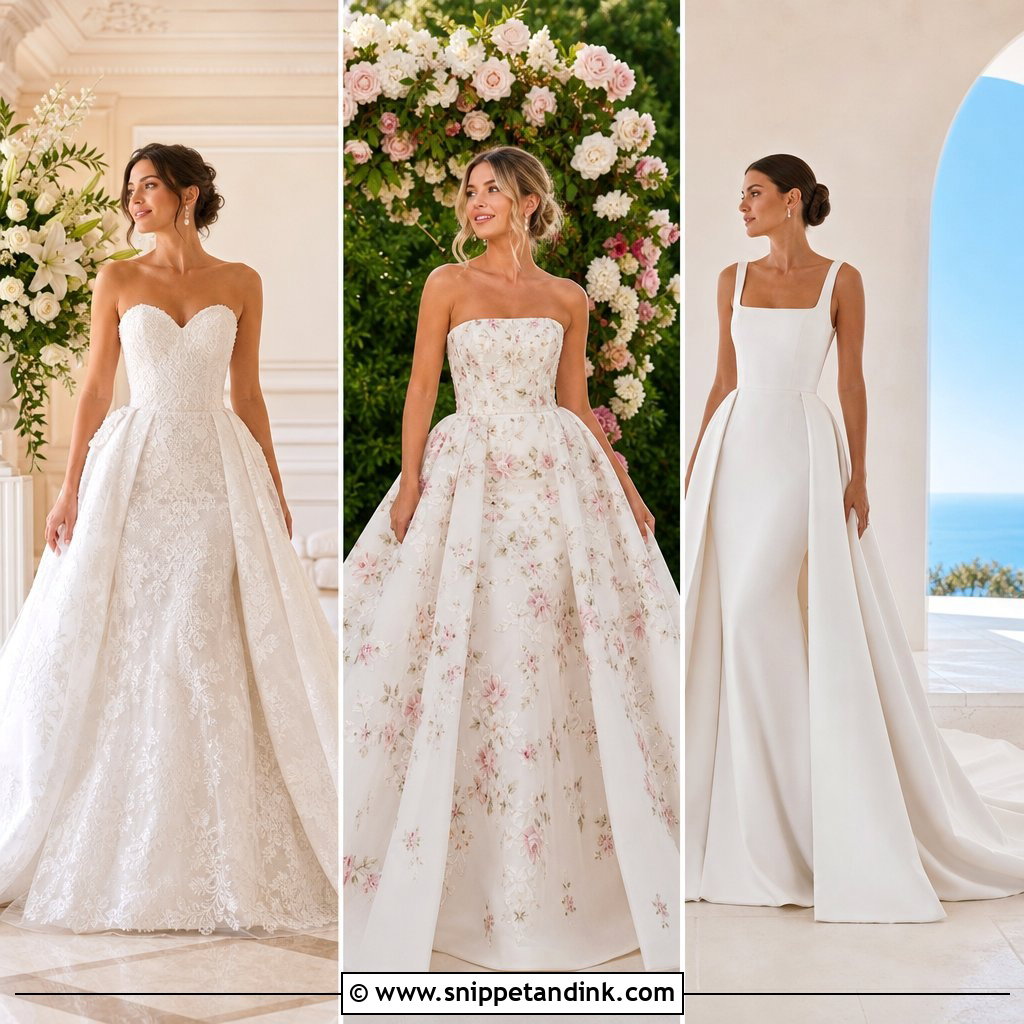
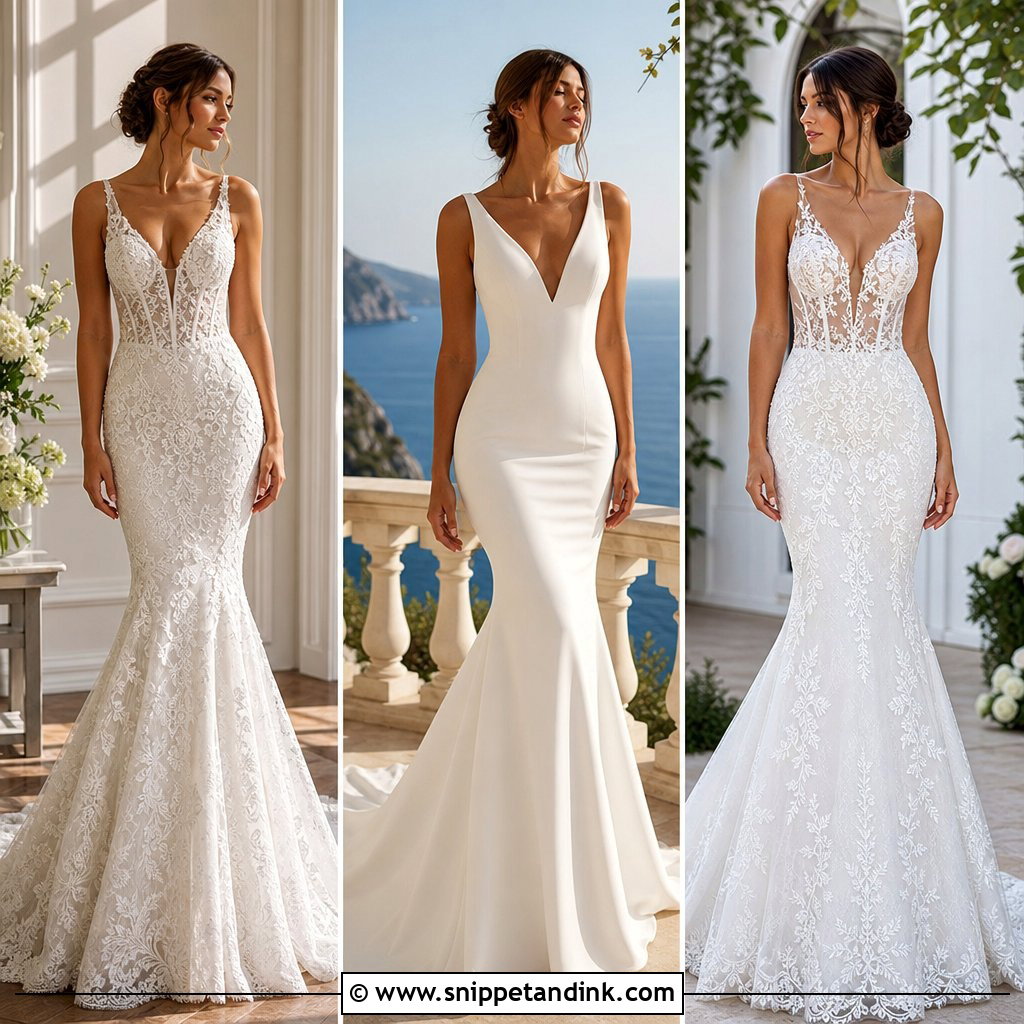
15. Satin Trumpet Wedding Dress With Detachable Overskirt
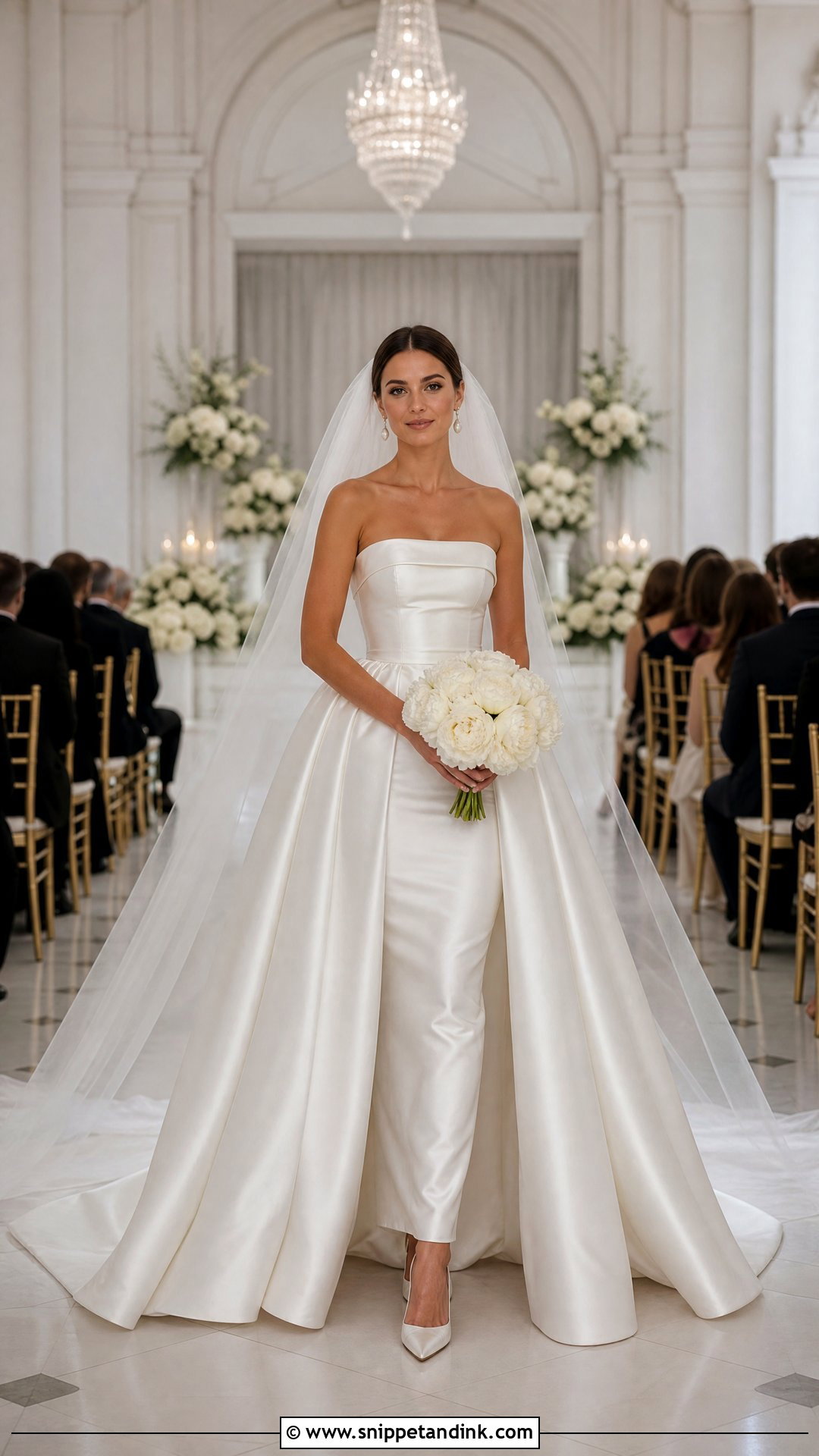
A detachable overskirt gives you two dresses for one budget. A full satin or organza layer creates volume down the aisle, then comes off to reveal the trumpet for dancing. Look for a smooth waistband and hidden fastenings, usually hooks or snaps, so it looks part of the gown. Pair the ceremony version with a cathedral veil, pearl earrings and white peonies, then swap to statement earrings or a sparkling comb for the reception. Pointed ivory heels work with both. Practise taking it off with whoever will help you on the day; doing it for the first time in a restroom is stressful.
16. Lace Applique Satin Trumpet Wedding Dress
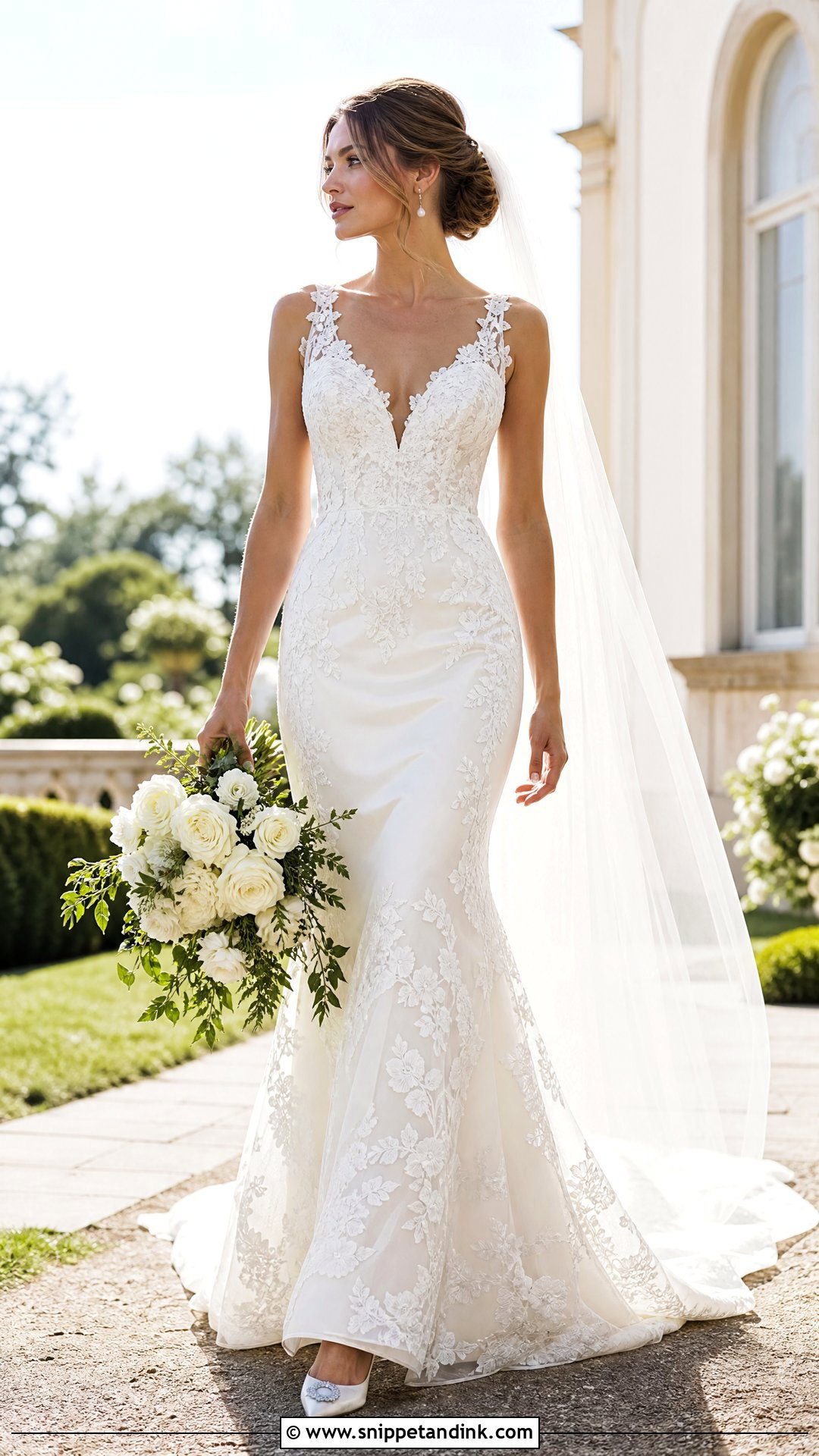
Lace appliqué adds texture to satin, but placement decides whether it looks refined or busy. I prefer motifs concentrated in one or two areas, like the neckline and the flare, rather than scattered across the whole gown. Tonal ivory appliqués stay subtle; raised, dimensional lace shows more. Small pearl earrings, a soft low bun and a plain tulle veil let the lace lead. Ivory pumps and loose garden roses suit it. Watch for appliqués with raised edges near your arms, since they can scratch on a long day.
17. Pearl Beaded Satin Trumpet Wedding Dress
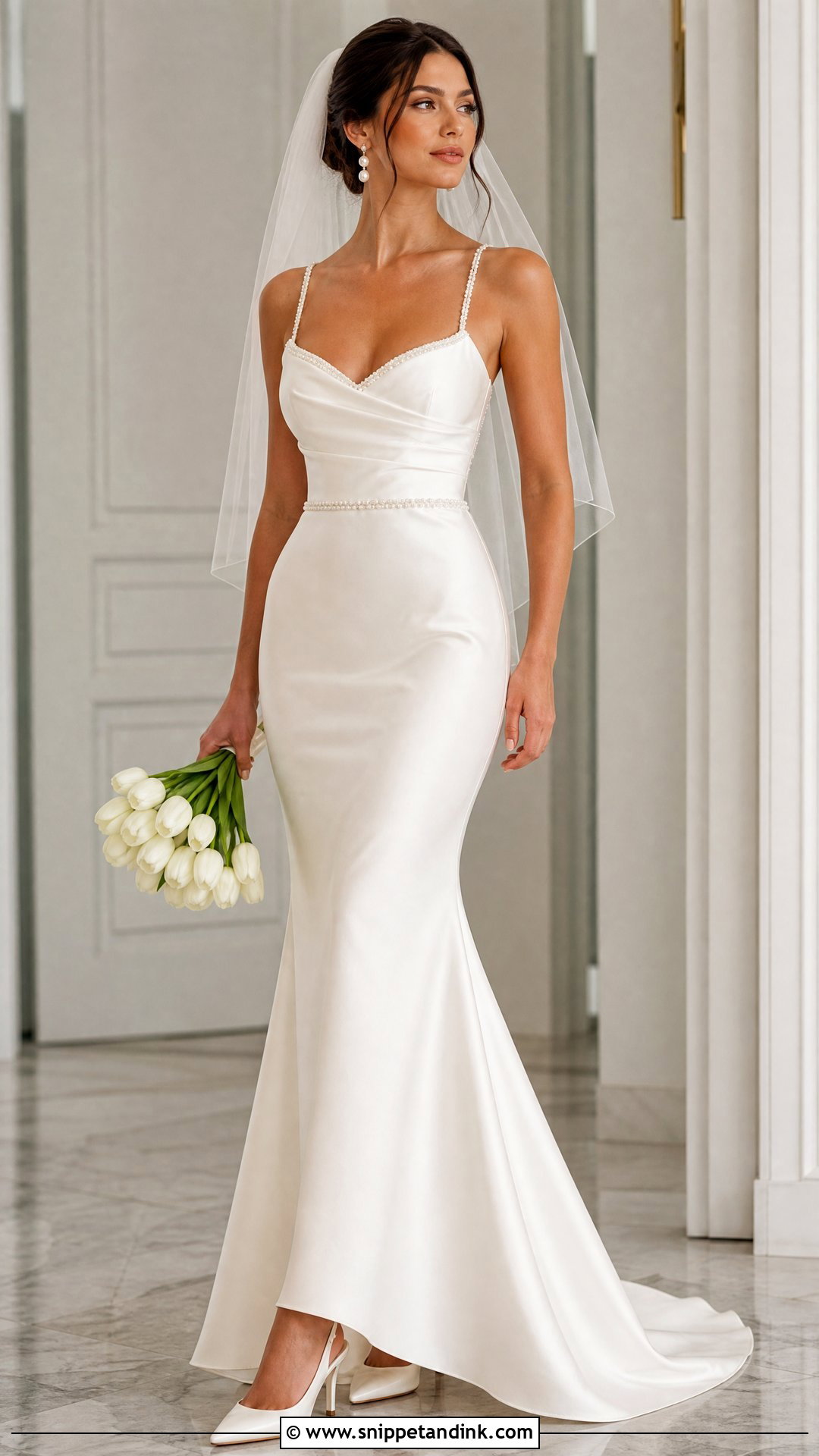
Pearl beading gives satin a soft glow, especially at the neckline, straps, waist or back. Dense beading over the whole skirt makes the gown heavy and stiff, which fights the flare. Match it with pearl drops and a simple hairpin, but no busy necklace. A clean fingertip veil, ivory slingbacks and white tulips complete it. Run your hand over the beading at the fitting; pearls sewn with a single thread can snag a veil and pop off, and I’d ask the seamstress to secure any loose ones.
18. Pleated Satin Trumpet Wedding Dress
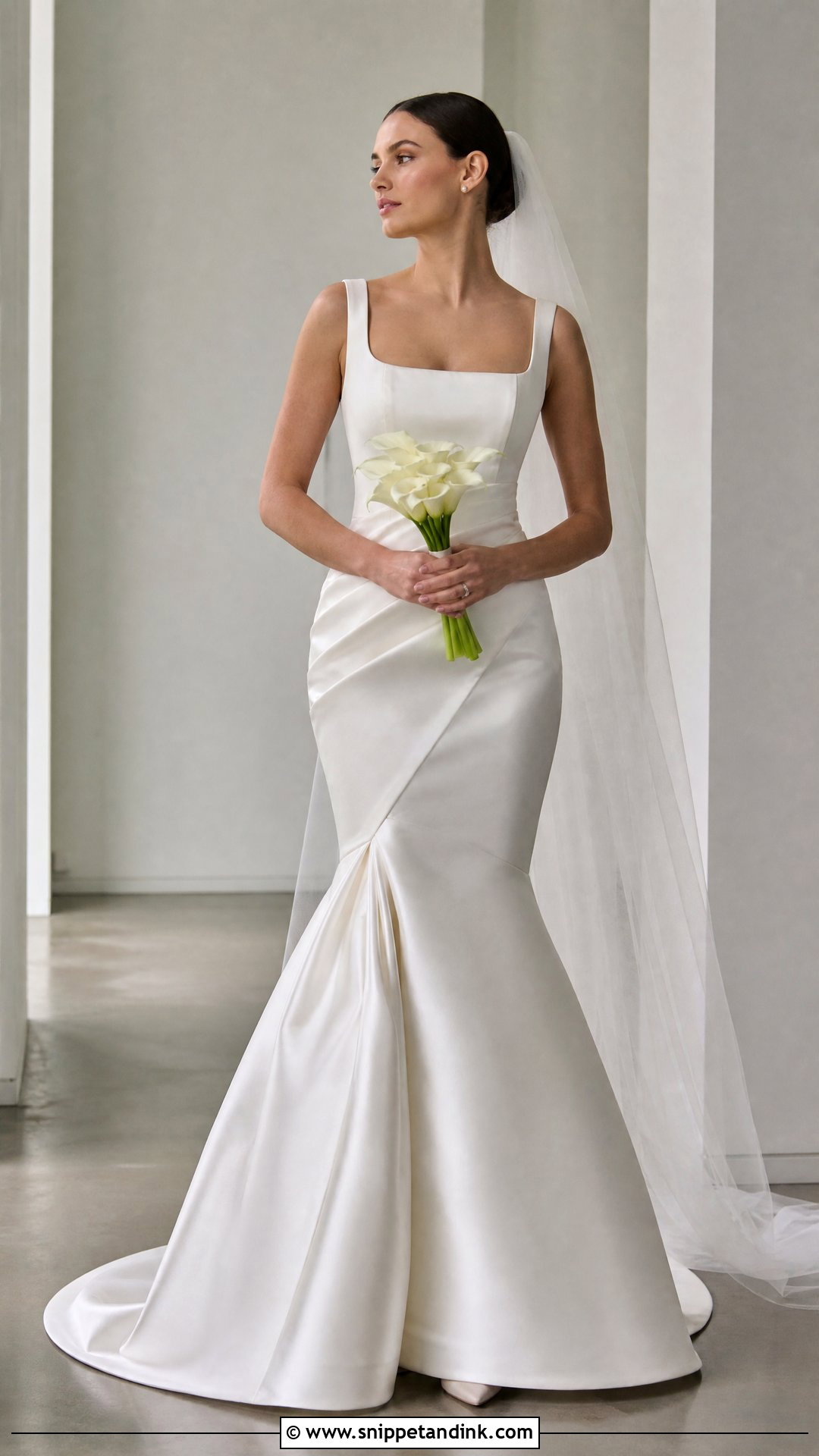
Pleats make the flare point unmistakable. Box pleats give architectural volume, while softer folded pleats move more. A clean tank, square-neck or strapless bodice balances the skirt. Keep accessories restrained: studs, a smooth bracelet, a neat low bun and a plain chapel veil so the pleats show from the side. Closed-toe pumps and compact calla lilies repeat the clean lines. On a satin trumpet wedding dress with pleats, walk and sit at the fitting; the pleats should open and fall back neatly, not crush flat after the first sit-down.
19. Minimalist Satin Trumpet Wedding Dress
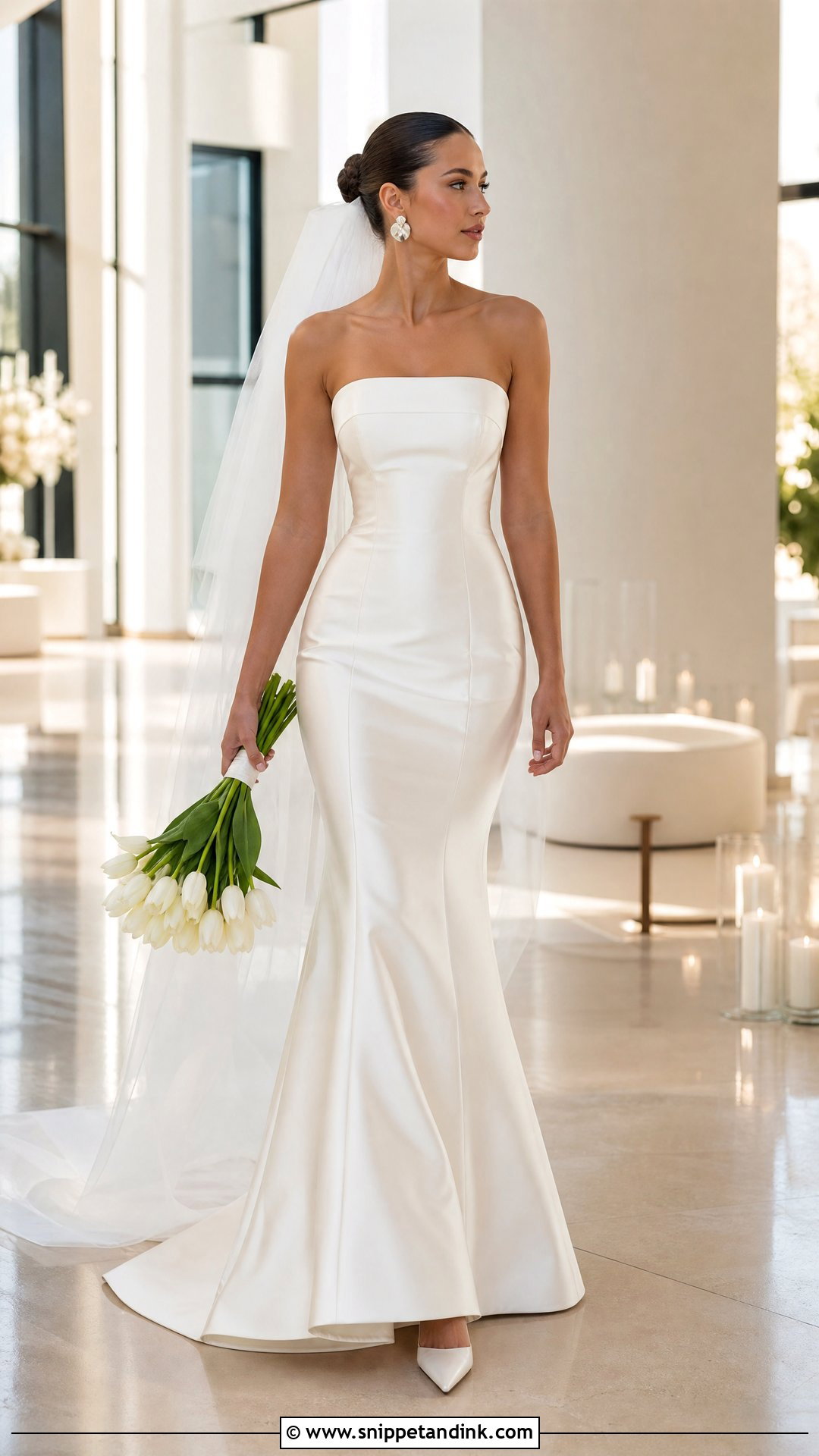
A plain trumpet is the hardest gown to get right, because satin with no detail shows every pull and uneven seam. I’d book alterations early and bring your actual underwear and shoe height to each appointment. Precise princess seams and a secure neckline, either straight strapless or square, do the work. Sculptural studs, a polished bun, pointed ivory pumps and a single-layer veil continue the restraint. White tulips or calla lilies wrapped in matching satin ribbon finish the look. Get the fit right and the gown suits almost any venue or season.
20. Champagne Satin Trumpet Wedding Dress
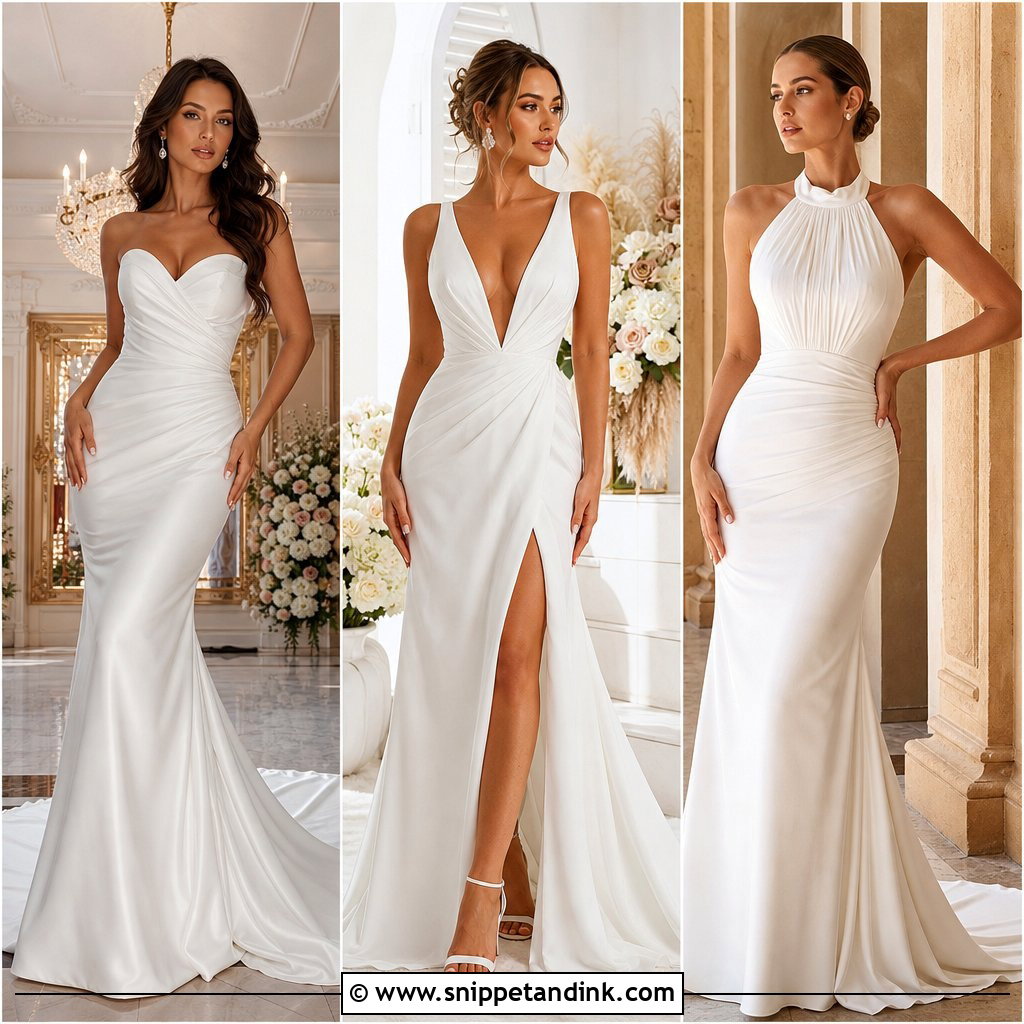
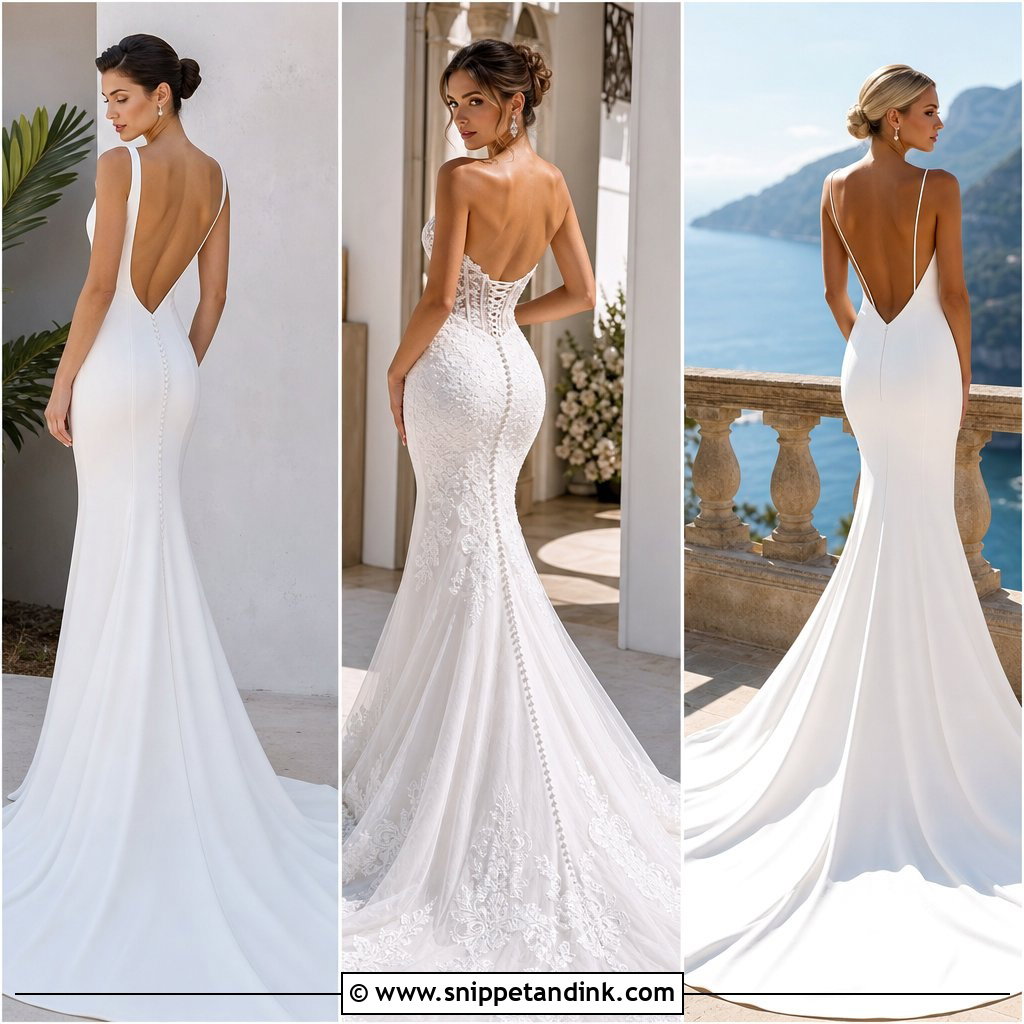
Champagne ranges from pale beige to a deep golden neutral, and the same fabric can look quite different in daylight and under warm venue bulbs. I always take a swatch outside and then into a dim room before a bride commits. An ivory veil over champagne gives soft contrast; neutral-toned heels and pearl or clear crystal earrings suit it. Avoid strongly yellow-gold jewellery, which can make the dress look dull next to it. Cream roses, white orchids and greenery complement the colour. A low textured bun or polished waves suit a ballroom, an estate or an autumn garden.
Bustling a Satin Train Before the First Dance
Every trumpet with a train needs a bustle, and the type you choose affects how the back looks at the reception. Your seamstress adds it at the final alterations once the hem is set.
- Over bustle: the train hooks up onto the outside of the skirt at one or several points. Quick, and it works well on smooth satin.
- French or under bustle: the train is tucked under and tied with ribbons on the inside, creating soft folds. Neater, but it takes longer to do.
- Ballroom bustle: the train lifts so the hem looks even all round, as if there were no train. It needs many points and a confident helper.
Heavy satin pulls on its bustle points, so I’d ask for reinforced hooks and a spare thread loop sewn in. Take a video of the seamstress bustling it at your last fitting and send it to the person who’ll do it on the day.
Stairs, Bathroom Breaks and Sitting Down
A fitted skirt changes the small logistics of the day. On stairs, lift the skirt from the front at knee height and take each step sideways if the flare is low. For bathroom trips, two people help most: one to hold the skirt bunched in front, while you face the toilet. Sitting is easiest on the front half of a chair, with the train swept to one side. Practise all three at home in the dress shoes before the wedding.
Start With the Neckline, End With the Bouquet
A trumpet gown asks for a few decisions in a sensible order. Start with the neckline and the amount of structure that makes you feel secure, then sleeves, back details, embellishment, colour and train. Add the veil, hair, jewellery, shoes and bouquet last, and keep them quiet against the satin. Test the dress while walking, sitting, turning and lifting your arms, and bring your wedding shoes and underwear to every fitting. Satin rewards careful alterations, so give your seamstress time.
You'll Like These Ideas:





Leave a Reply