
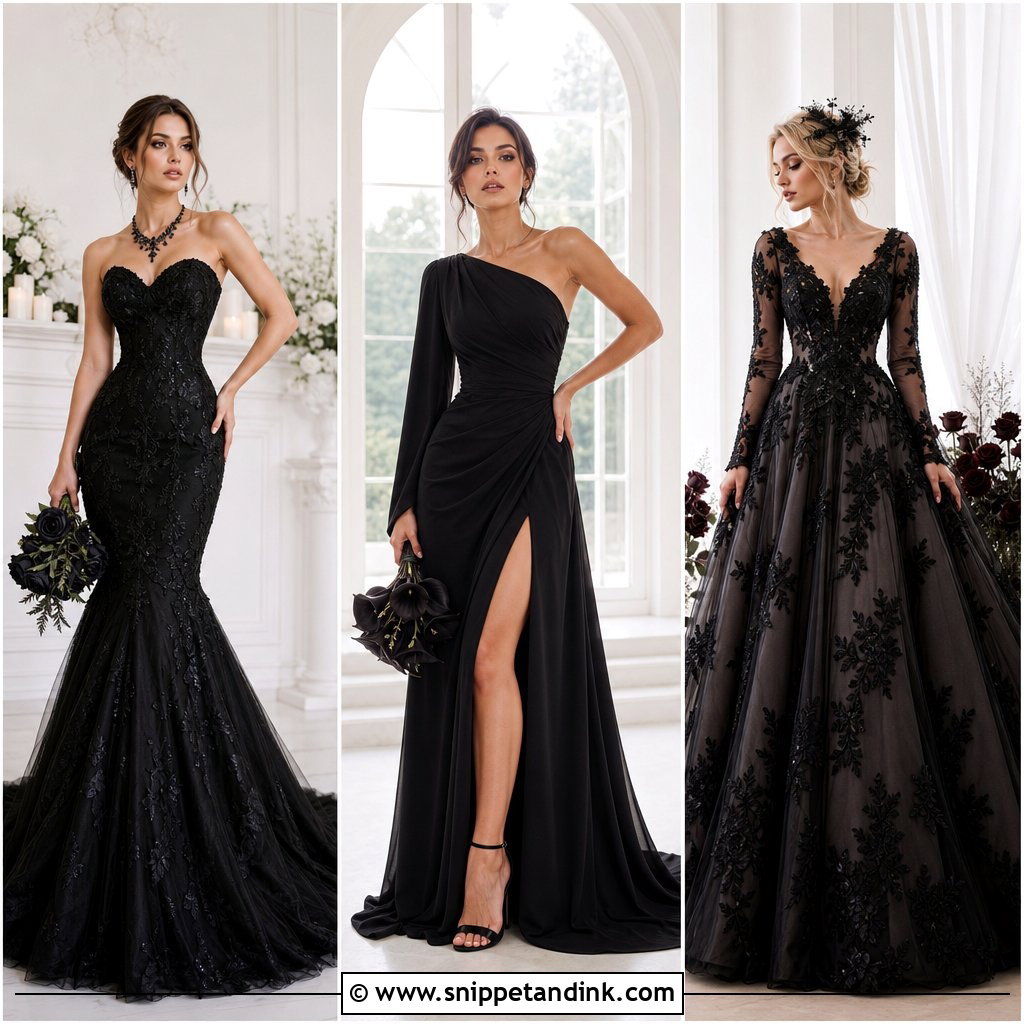
Anok Yai carries clothes the way a sculptor shows off a piece: shoulders back, nothing fussy, every line deliberate. That’s the quality brides mean when they bring me her photos. It comes from cut and construction far more than from decoration, so the looks below lean on corsetry, clean architectural shapes, liquid satin and a few unexpected finishes like feathers, capes and black trim. Some are classic, others go toward couture-level drama. Each one is styled from dress to shoes, with notes from the fitting room on what these shapes ask of the person wearing them.
What a Well-Made Corset Bodice Should Feel Like
Half of these looks rely on a structured bodice, and brides often assume structure means discomfort. It shouldn’t. A properly built corset spreads its hold across the ribs and waist through boning and a waist stay, so you feel supported rather than squeezed.
At the fitting, I put brides through three small tests. First, take a full breath and speak a long sentence; if you run short of air, it’s too tight at the ribs. Second, sit on a hard chair and lean toward a table as if eating; the top edge shouldn’t dig into your bust or gape away from it. Third, raise your arms to hug someone and check whether the bodice drops or lifts. If it passes, it will last a full day.
Lace-up backs give you a little adjustment on the day, which is useful if your body changes slightly between final fitting and wedding. Zip backs look sleeker but don’t forgive. Ask whoever is lacing you to practise once at the final fitting, starting from the middle and tightening outward, so it isn’t the first attempt on the morning.
1. Anok Yai Corset Wedding Dress
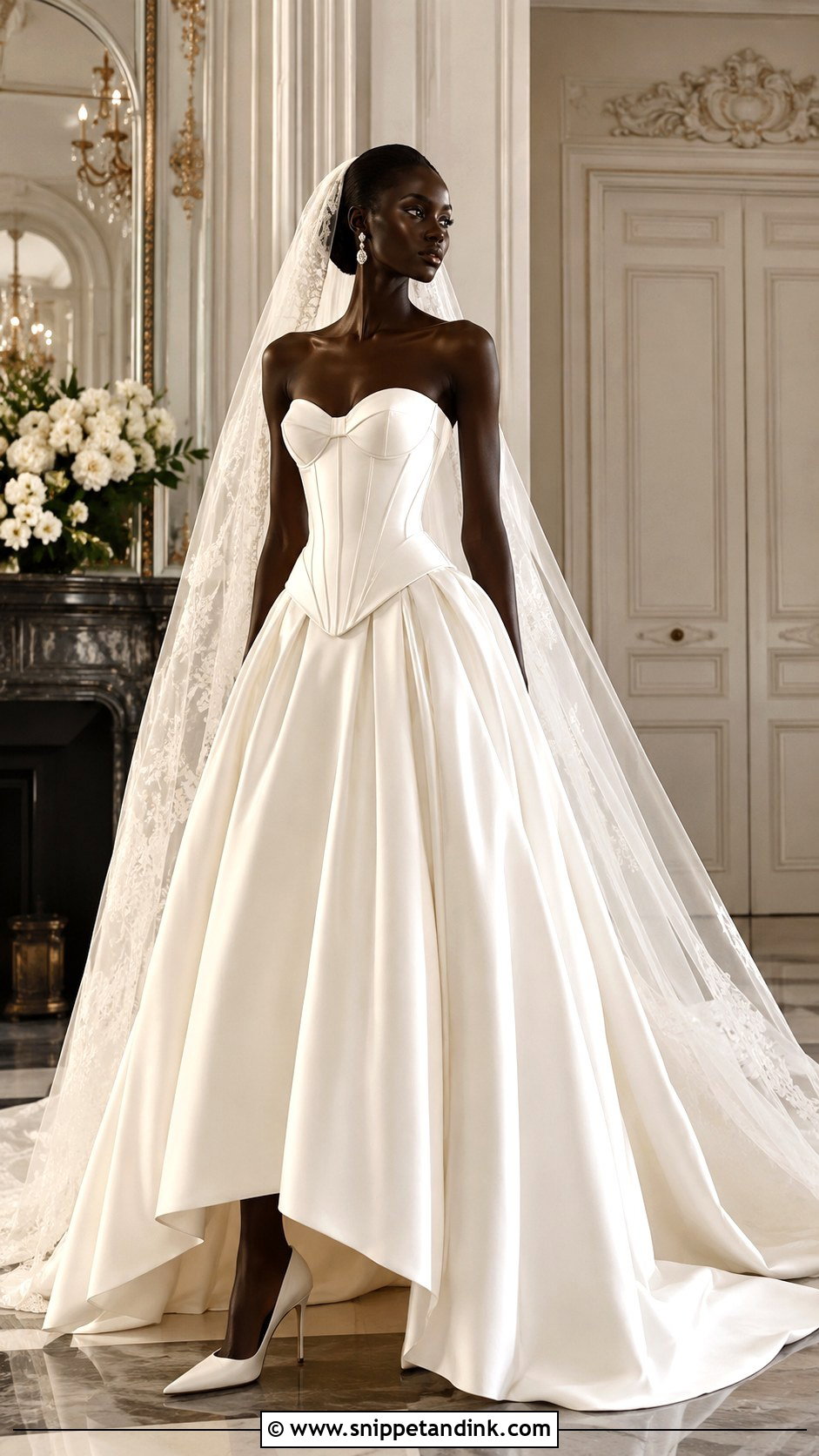
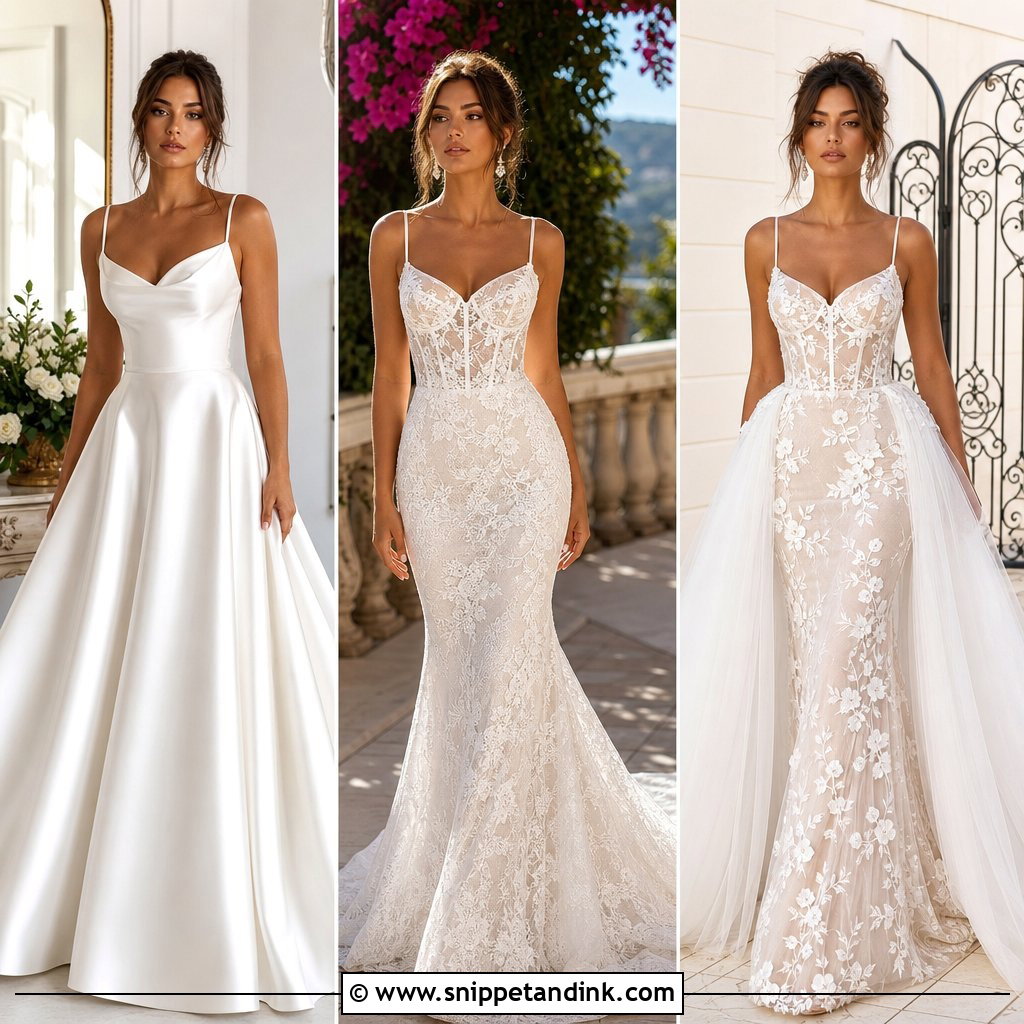
A true corset gown is built, not just sewn. Look for ivory satin with visible boning, a softly curved neckline and a bodice that flows into a full skirt; a basque point at the waist sharpens the shape further. Pointed satin pumps, diamond drops and a cathedral veil with no heavy edging finish it, and a necklace isn’t needed. I’d pair it with a sleek bun and luminous skin so the construction does the talking. Ballrooms, museums and formal hotels let people see it from every side, which is exactly what this kind of bodice is made for.
2. Anok Yai Lace Wedding Dress
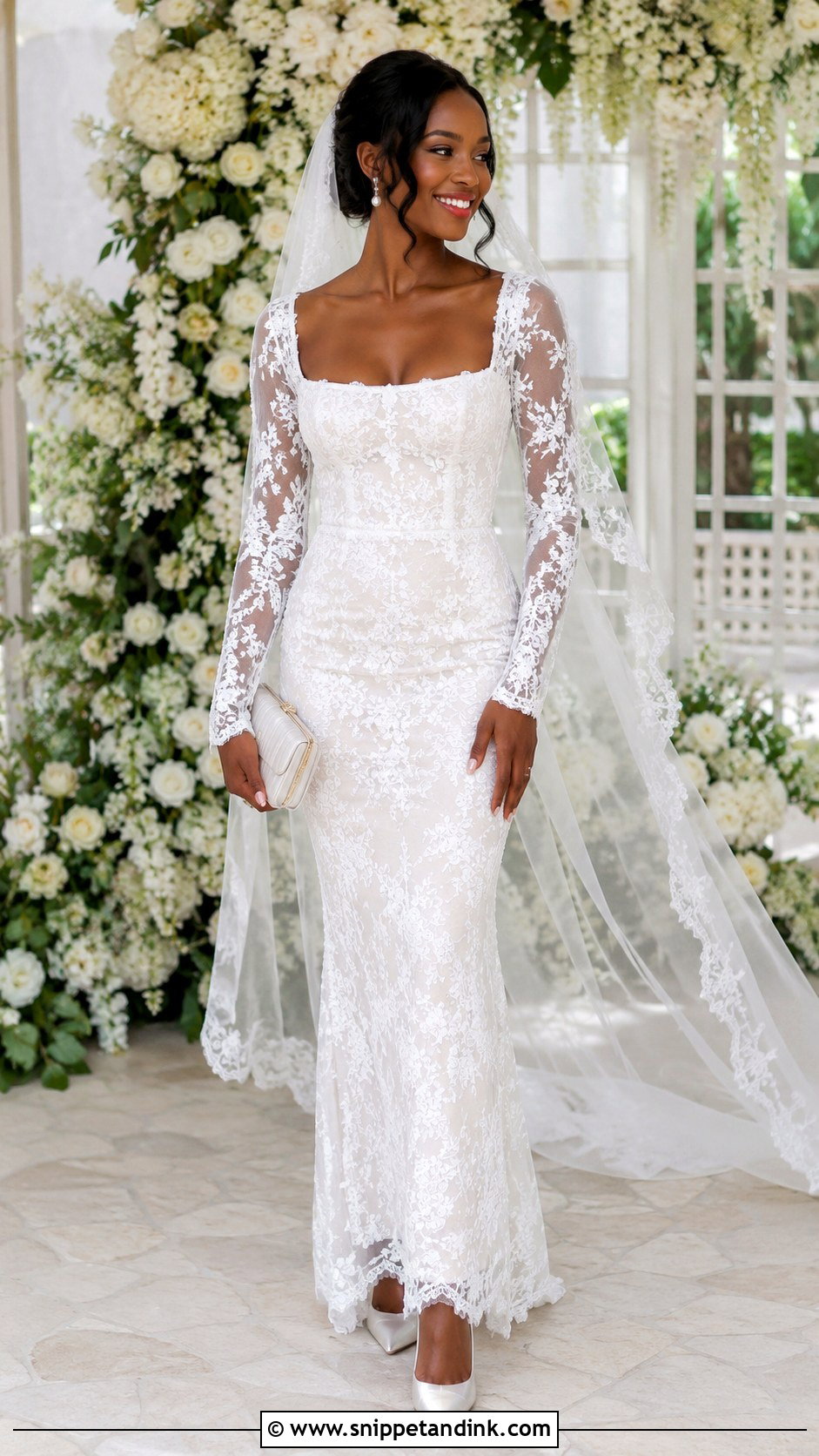
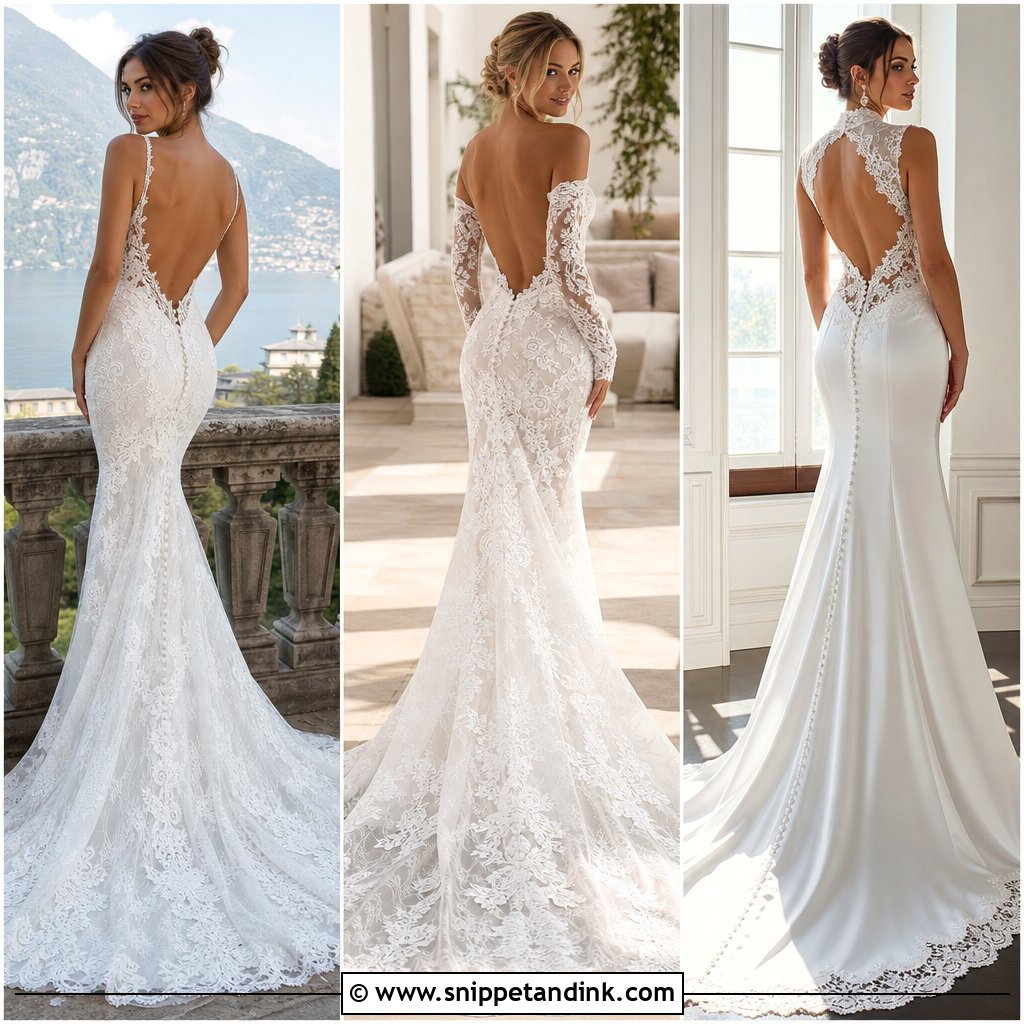
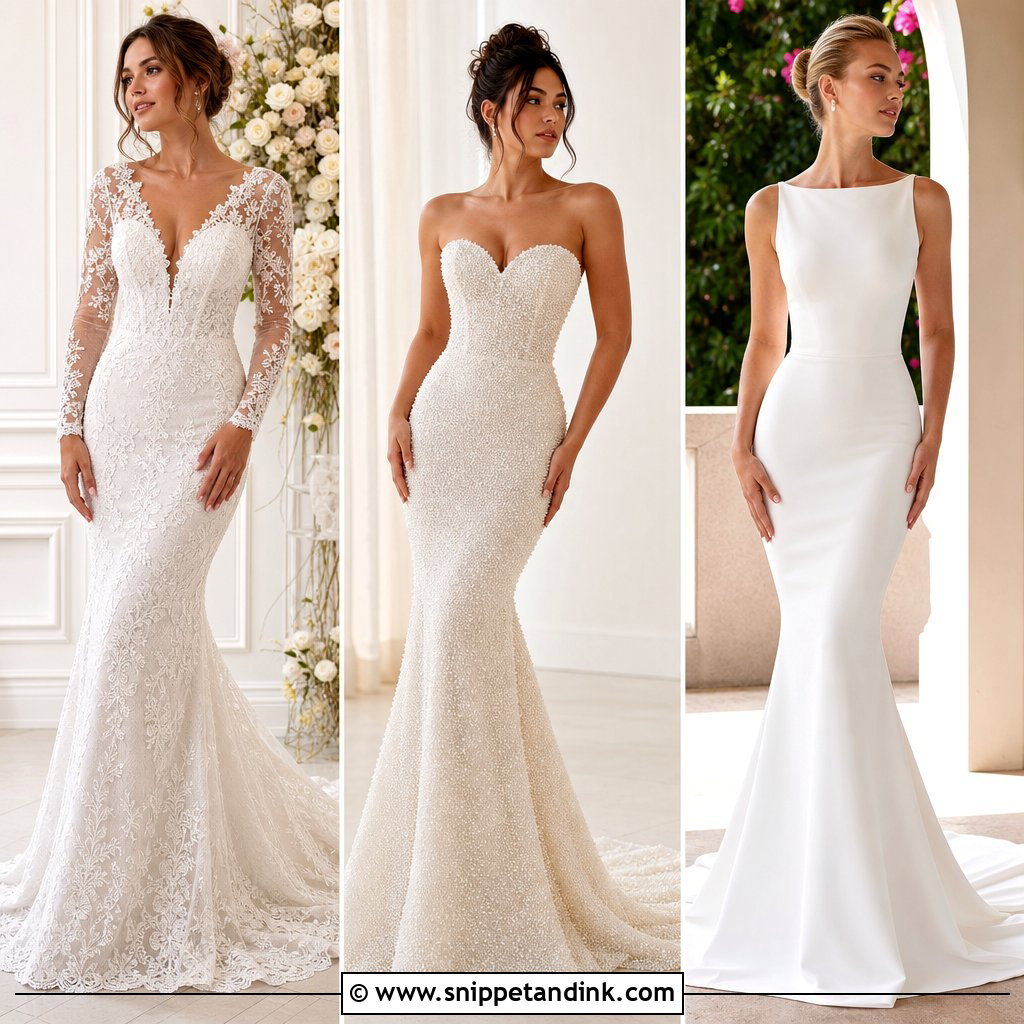
Lace goes modern the moment the silhouette gets long and lean. Choose a fitted dress with floral lace, a defined waist and sheer long sleeves where the appliqués are placed by hand along the arm rather than cut off at the seam; you can see the difference at the cuff. A square or gently scooped neckline keeps it from turning traditional. Ivory slingbacks, pearl-and-diamond earrings, a simple lace-trimmed veil and a small satin clutch round it out. Brush the hair back so the shoulder lace stays visible. Gardens and historic estates suit it.
3. Anok Yai Satin Mermaid Wedding Dress
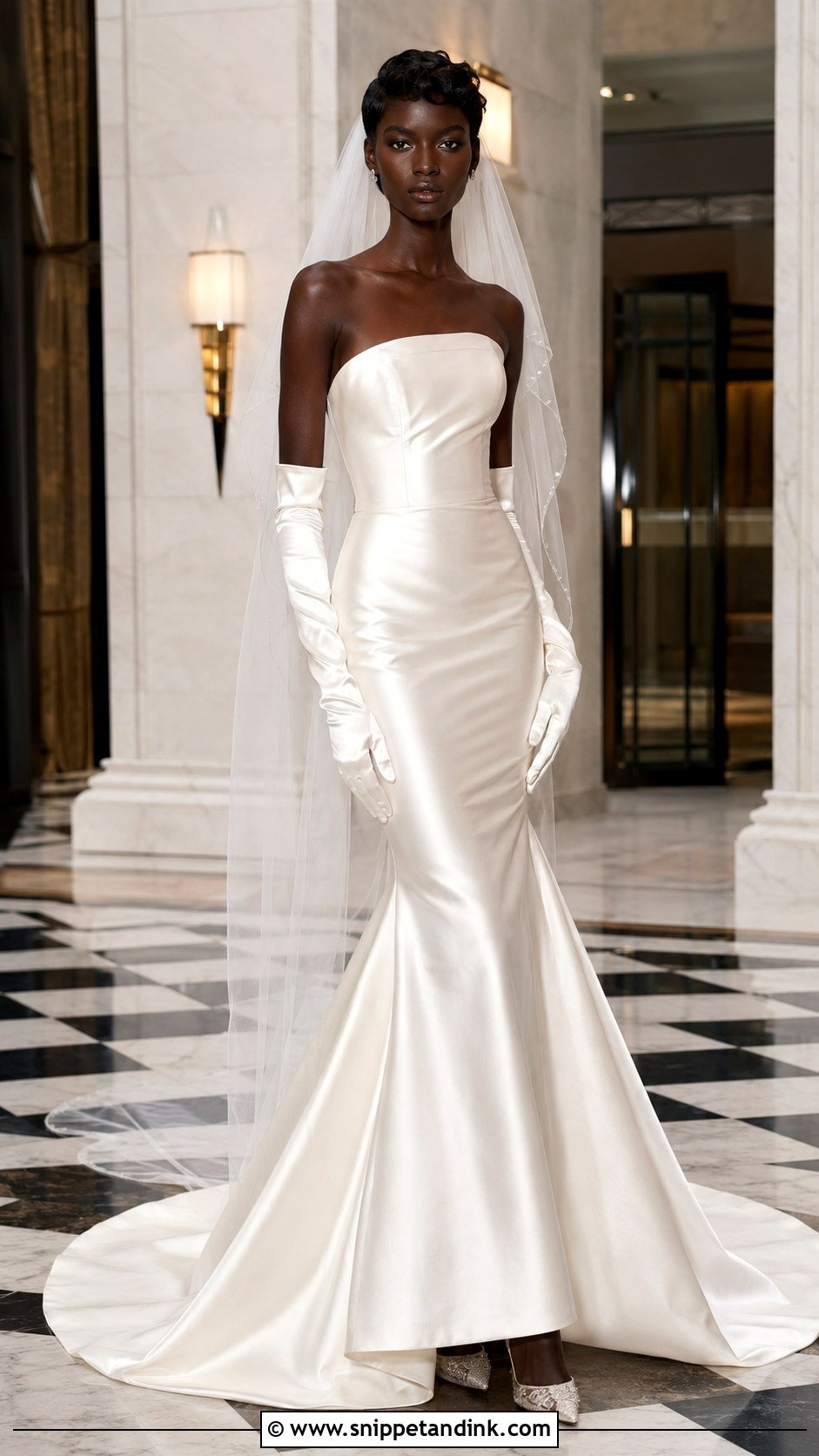
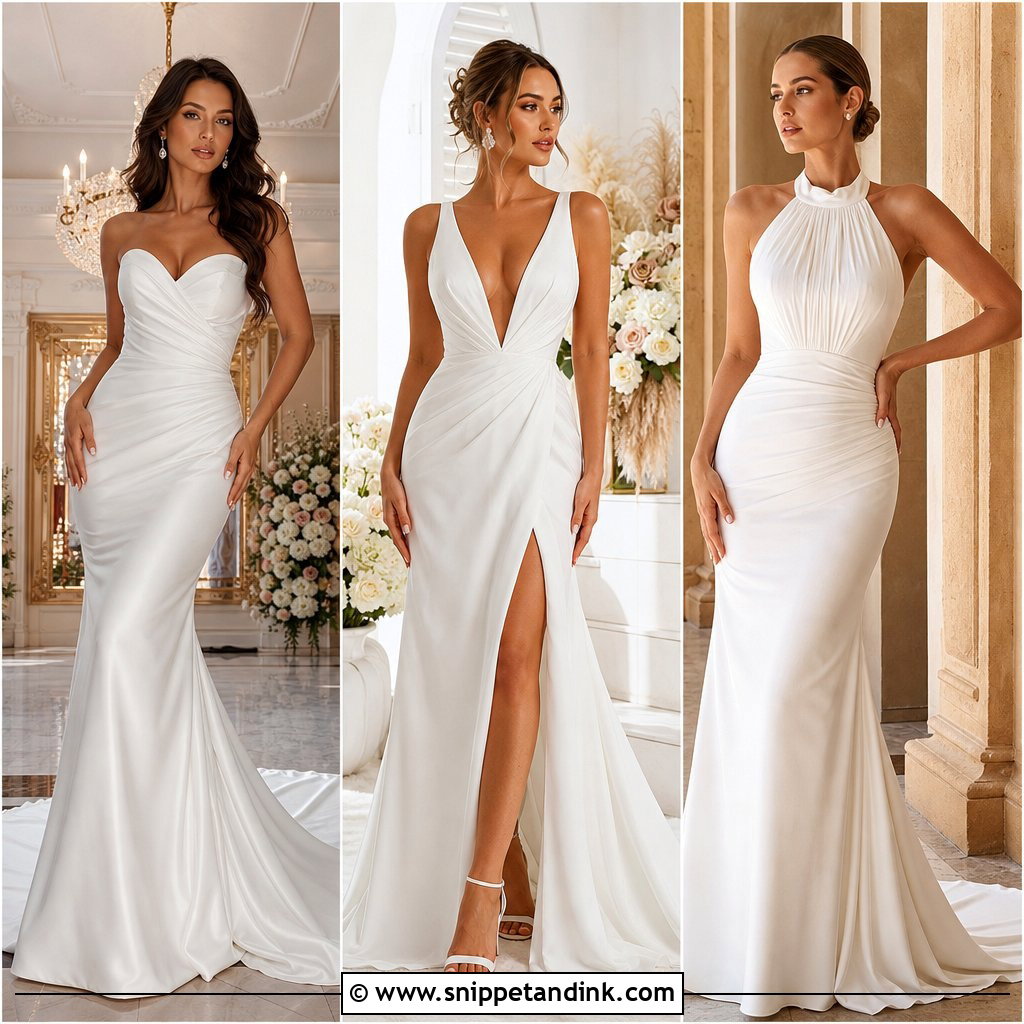
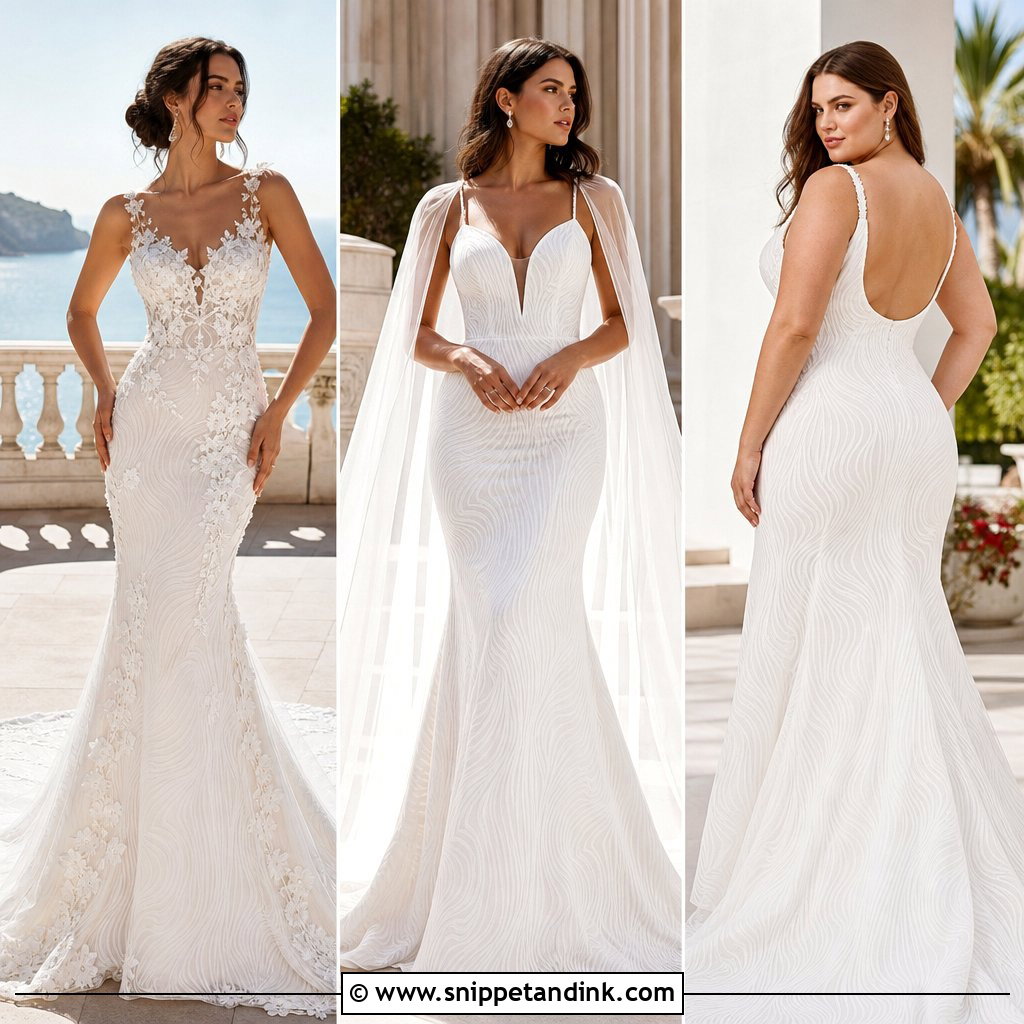
Satin mermaid gowns show every curve, and every fitting flaw, so this is the one I’d budget the most alteration time for. Look for a strapless neckline, a fitted waist and a skirt that opens below the knee into a controlled train. Check where the flare starts: too high and you can’t take a full step, too low and walking up stairs gets awkward. Crystal pumps, sculptural silver earrings, a sheer fingertip veil and matching satin opera gloves for the ceremony give it editorial drama. A polished updo and defined eyes finish it for a city or black-tie night.
4. Anok Yai Basque Waist Wedding Dress
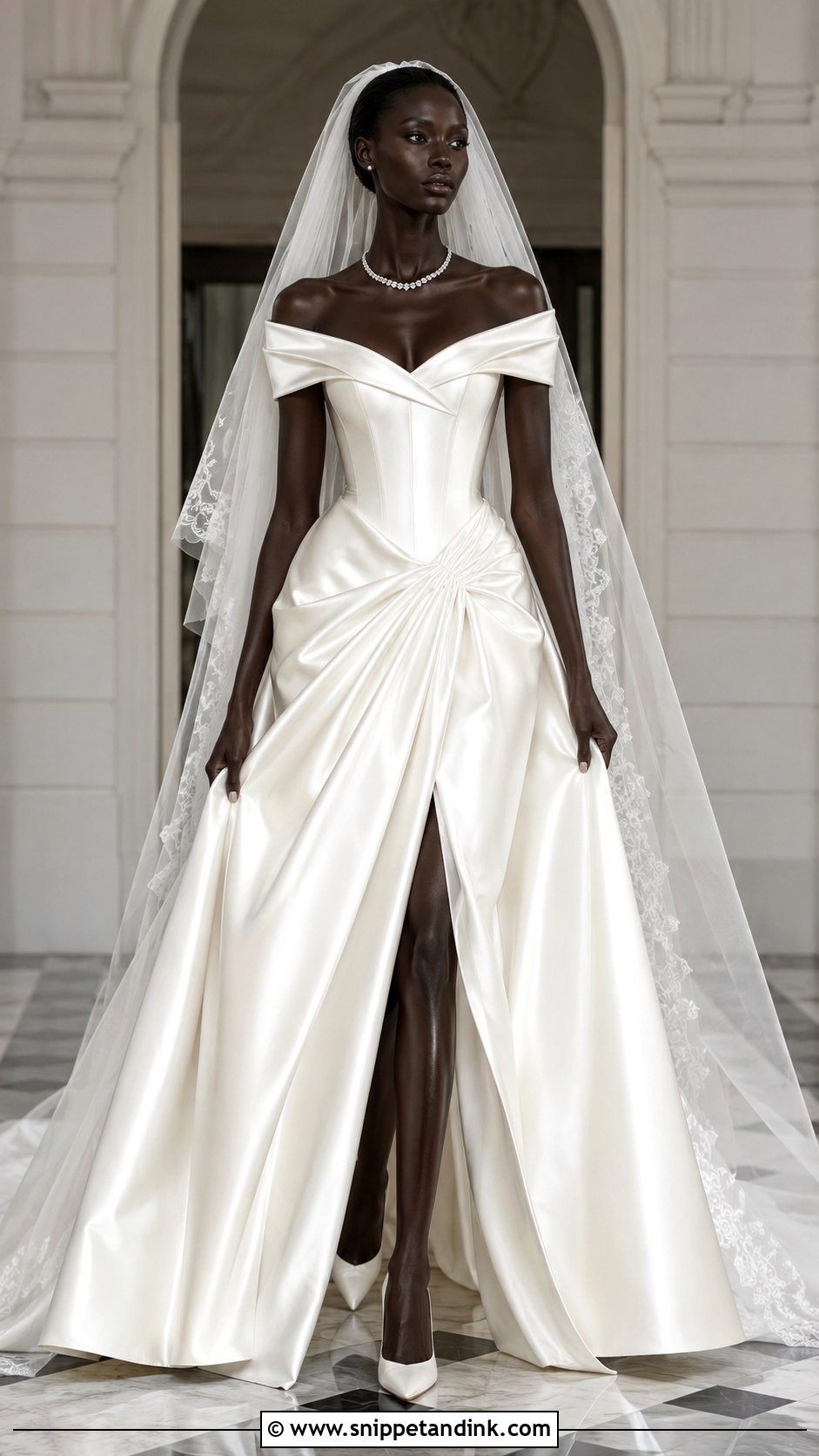
The basque waist dips into a point below the natural waistline, which lengthens the torso in a way photographs love. Choose a structured ivory gown with that pointed waist, a lightly draped skirt and a strapless or off-the-shoulder neckline. Supportive is the goal; if you can’t take a deep breath in it, the bodice is too tight, not too flattering. Add pointed white heels, a narrow diamond tennis necklace and small studs, with a long sheer veil under a sleek bun. Luminous duchess satin or silk faille holds the point crisply. It gives a regal ceremony look without lace or beading.
5. Anok Yai Crystal Wedding Dress
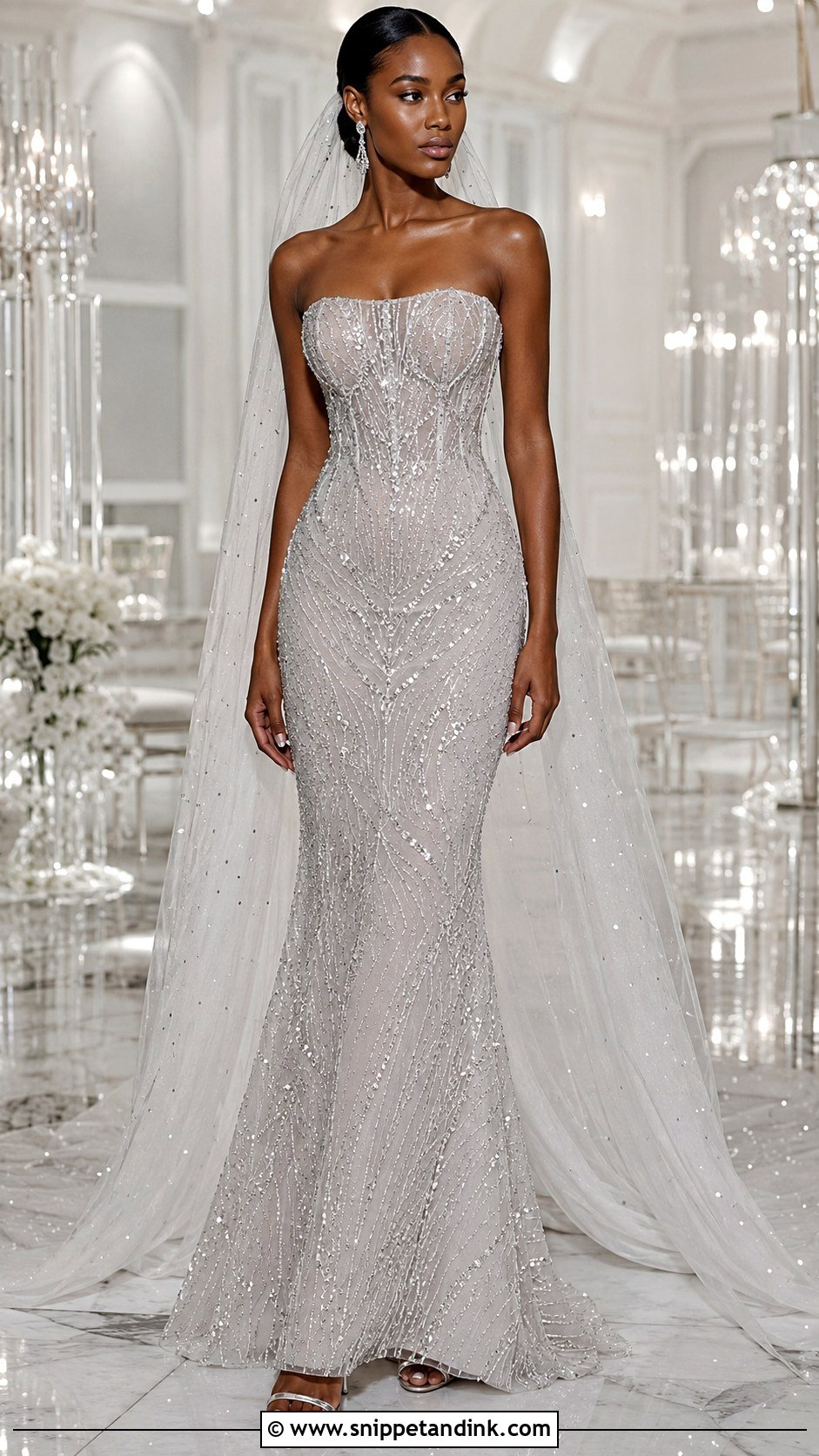
Crystal gowns depend on light. Under a single chandelier they glitter; under flat daylight they can look grey and heavy. Pick a column or fitted trumpet dress with clear crystals, silver beading and a little reflective embroidery, and keep the neckline high or plainly strapless. Heavily beaded gowns are weighty, so I ask brides to wear one for twenty minutes in the shop before deciding. Silver sandals, diamond studs and a sheer veil with only a few crystals scattered on it finish it. Center-parted sleek hair and glossy neutral makeup suit the cool tone. Evening ballrooms show it at its best.
6. Anok Yai Sculptural Wedding Dress
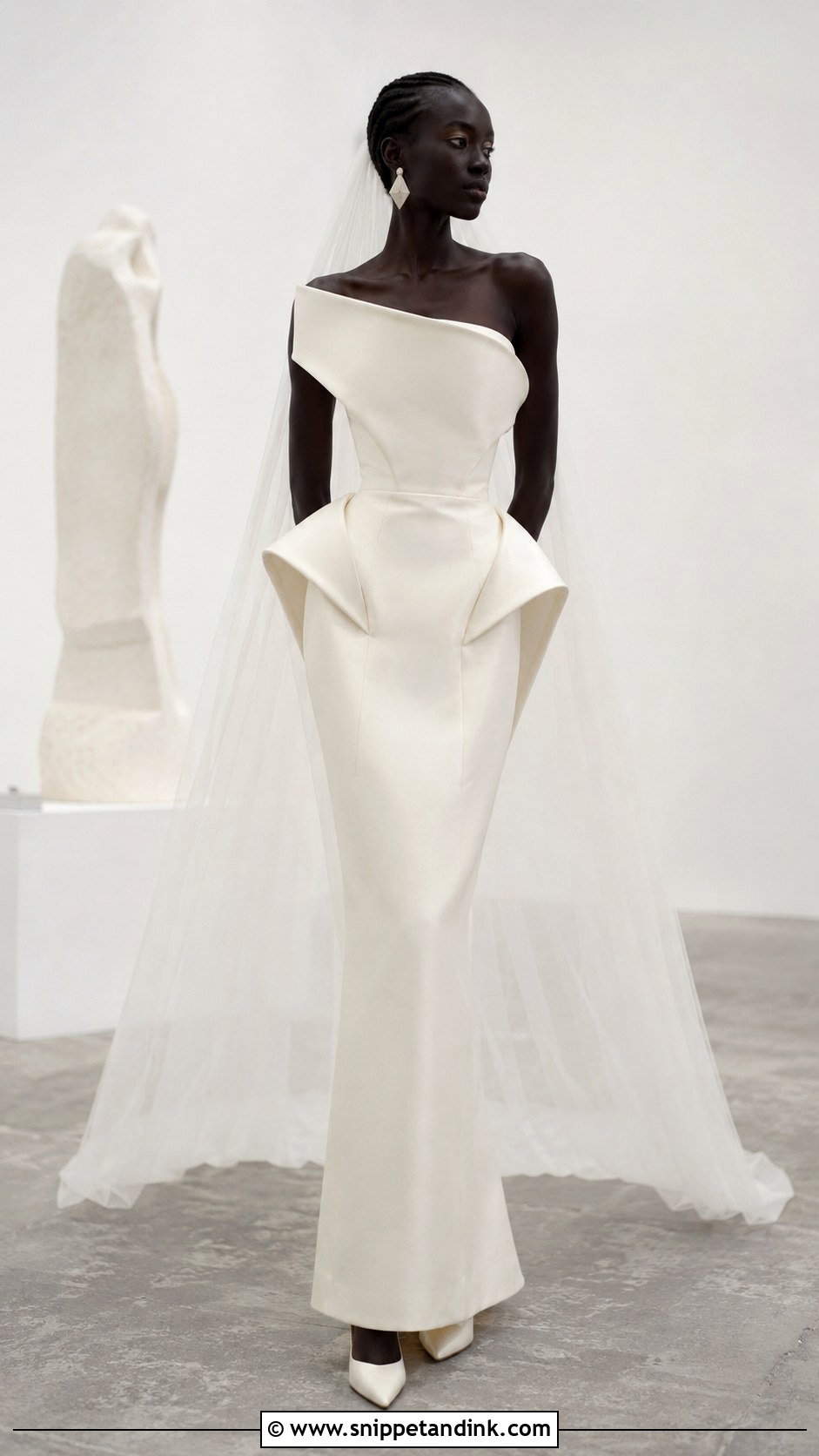
Could a wedding dress read as wearable art and still feel bridal? A sculptural dress manages it with curved seams, folded fabric and an exaggerated but balanced shape, such as a shaped hip or a soft peplum over a narrow skirt. These designs depend on heavy fabric and interfacing, so look inside the bodice: you want structure built in, not just stiffened fabric that will soften by evening. Pointed pumps, geometric diamond earrings, a clean tulle veil and a low knot let the construction lead. Galleries and minimalist venues suit it.
7. Anok Yai Draped Wedding Dress
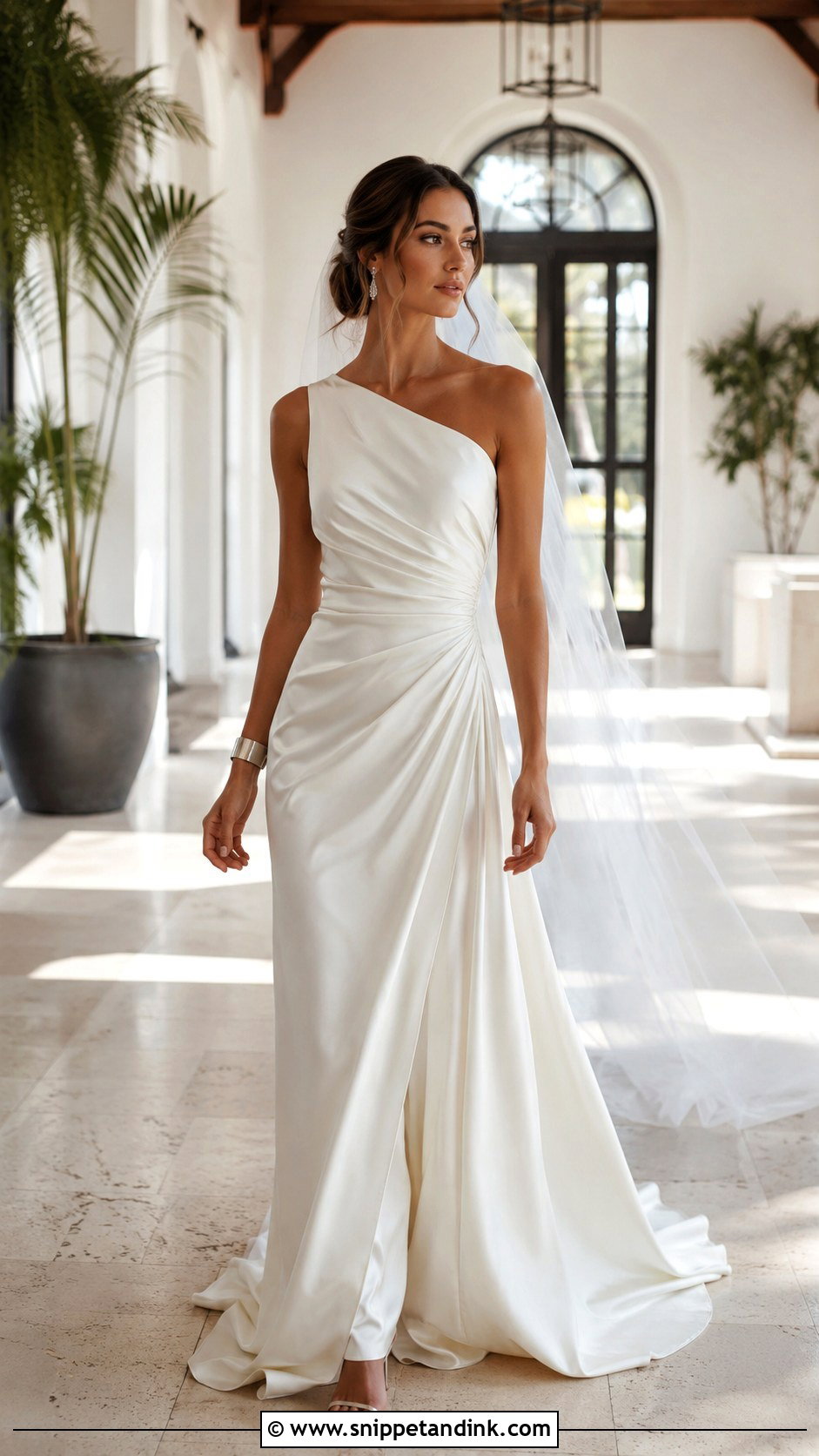
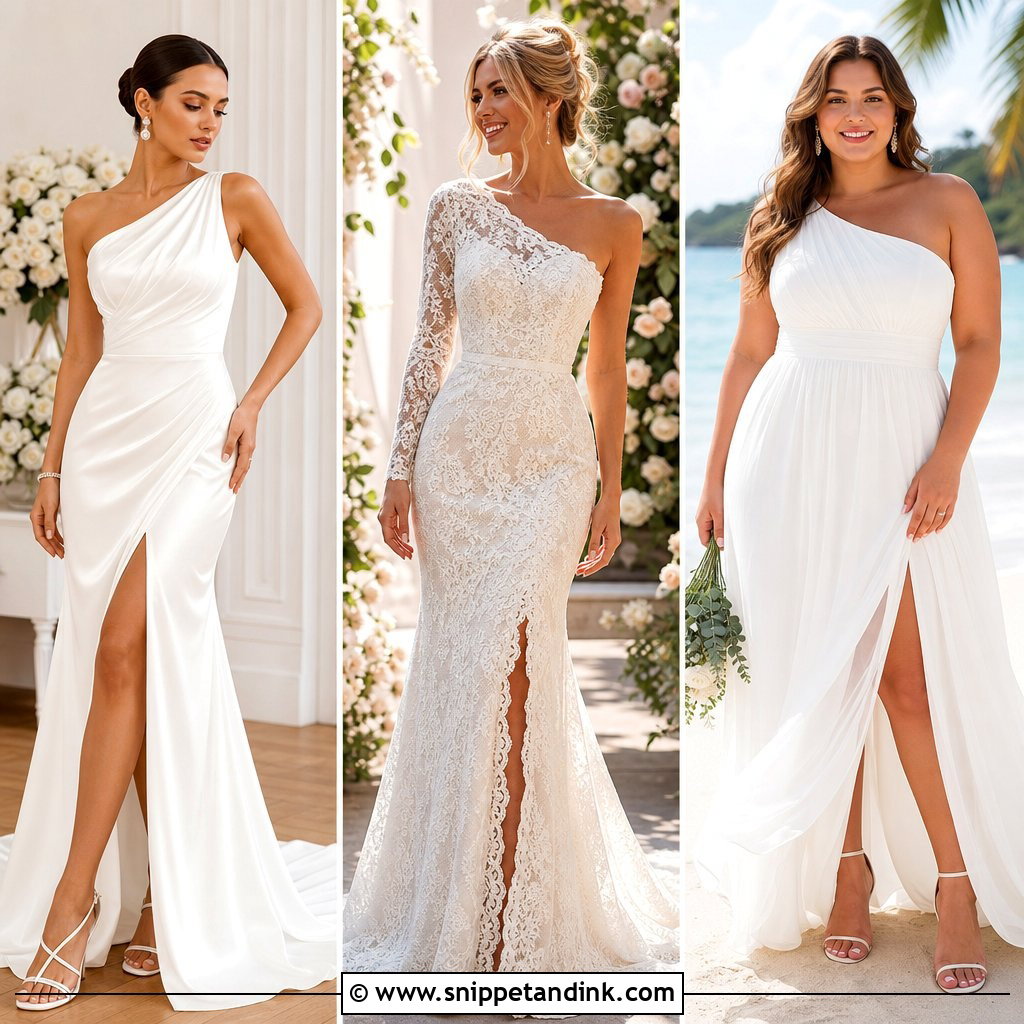
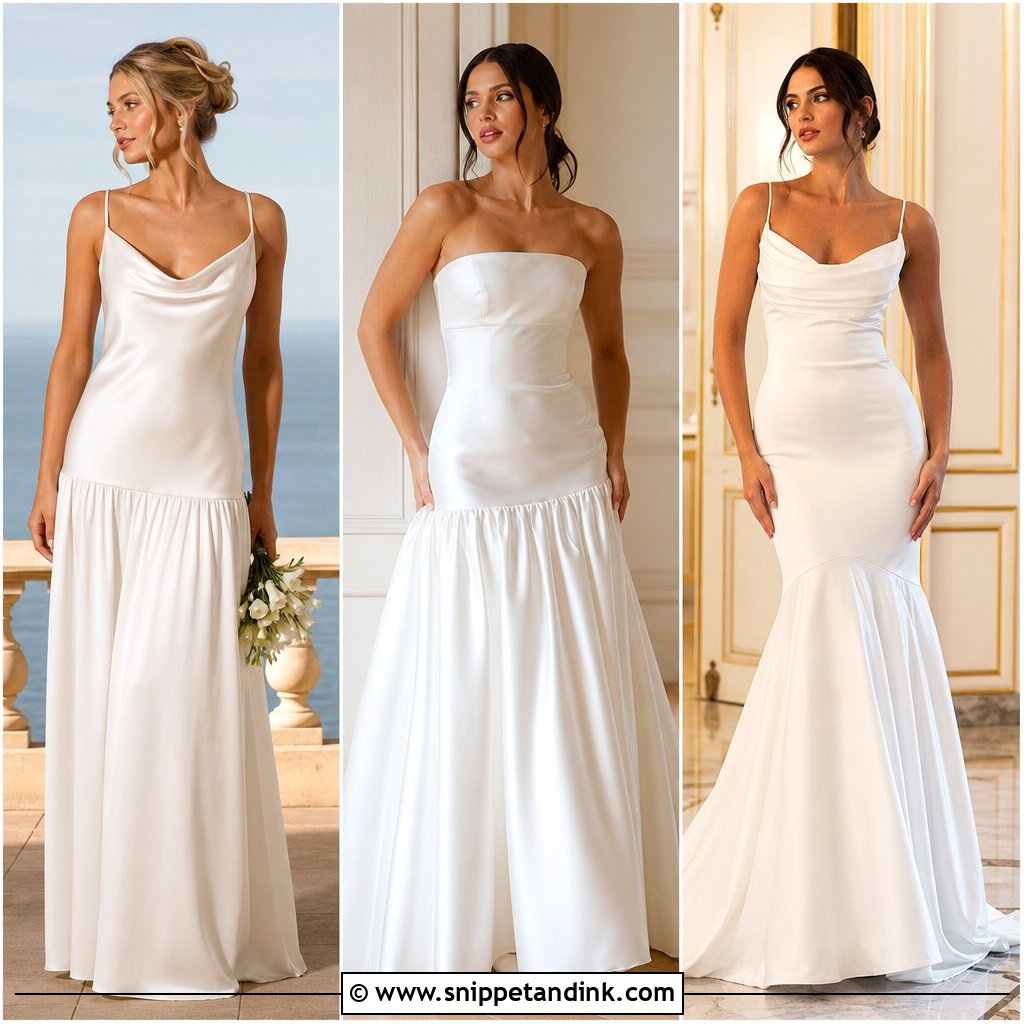
Draped silk moves well without a single bead, which is why I suggest it for heat and long days. Look for gathered fabric across the bodice, an asymmetric neckline and a skirt that falls straight to the floor. The trick is hidden structure: a fitted inner corselet keeps soft draping from collapsing once you’ve hugged a few dozen guests. Strappy heels, long drop earrings and a weightless plain tulle veil, plus a slim metallic cuff, finish it. A softly twisted bun suits the mood. Destination weddings and airy estates are its home.
8. Anok Yai Off-Shoulder Wedding Dress
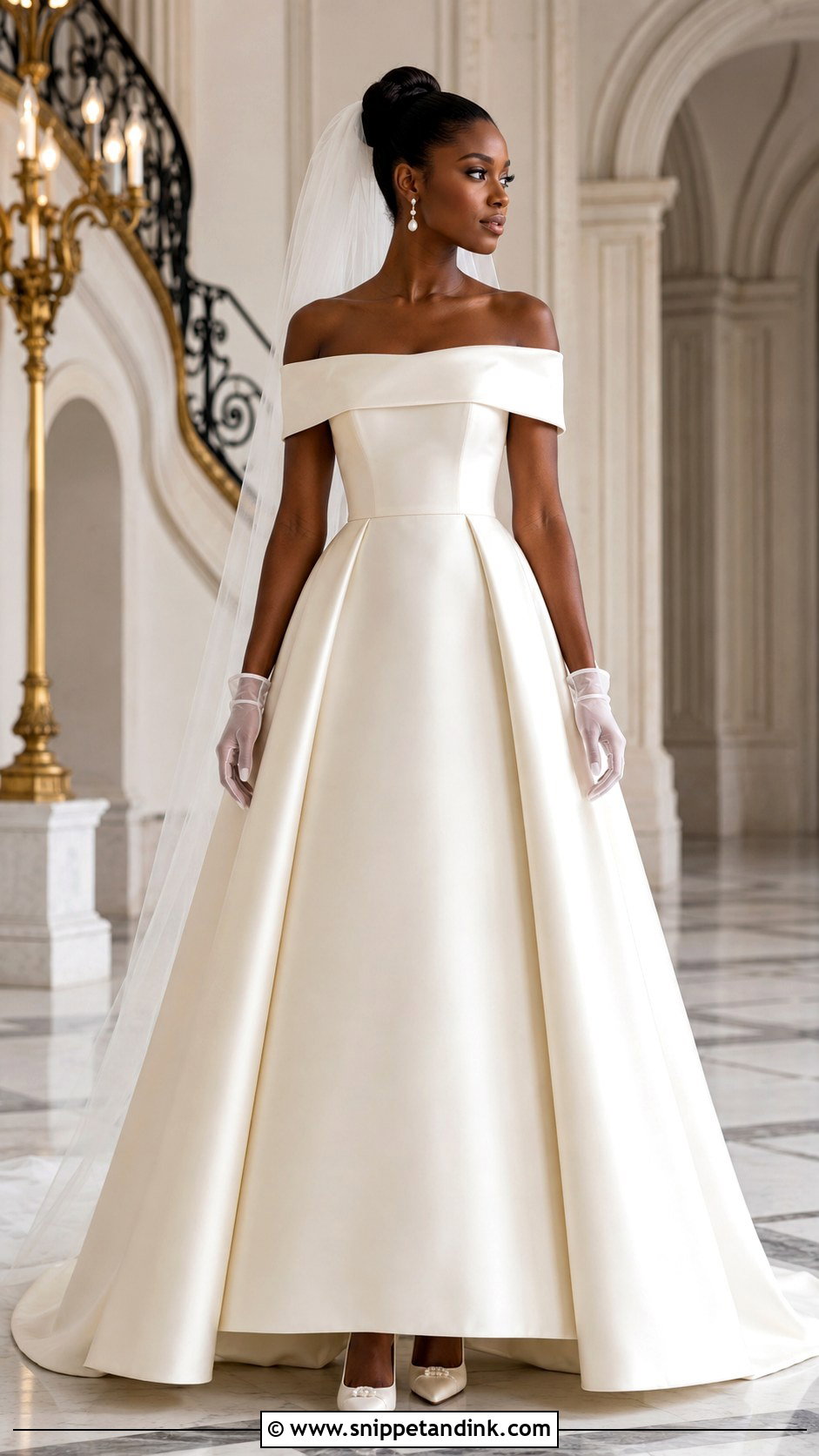
Mikado is the fabric I reach for when a bride wants an off-the-shoulder neckline that won’t wilt. It’s a stiff, slightly ribbed silk or blend that holds a folded edge on its own. Choose an ivory gown with a folded neckline, fitted waist and full A-line skirt. Pearl drops, closed-toe satin heels and a long veil set under the hair keep the shoulders open, and short sheer gloves add a quiet editorial note. A sleek bun or sculpted ponytail keeps the collarbones clear. Ballrooms and grand halls suit the proportions.
9. Anok Yai Pearl Wedding Dress
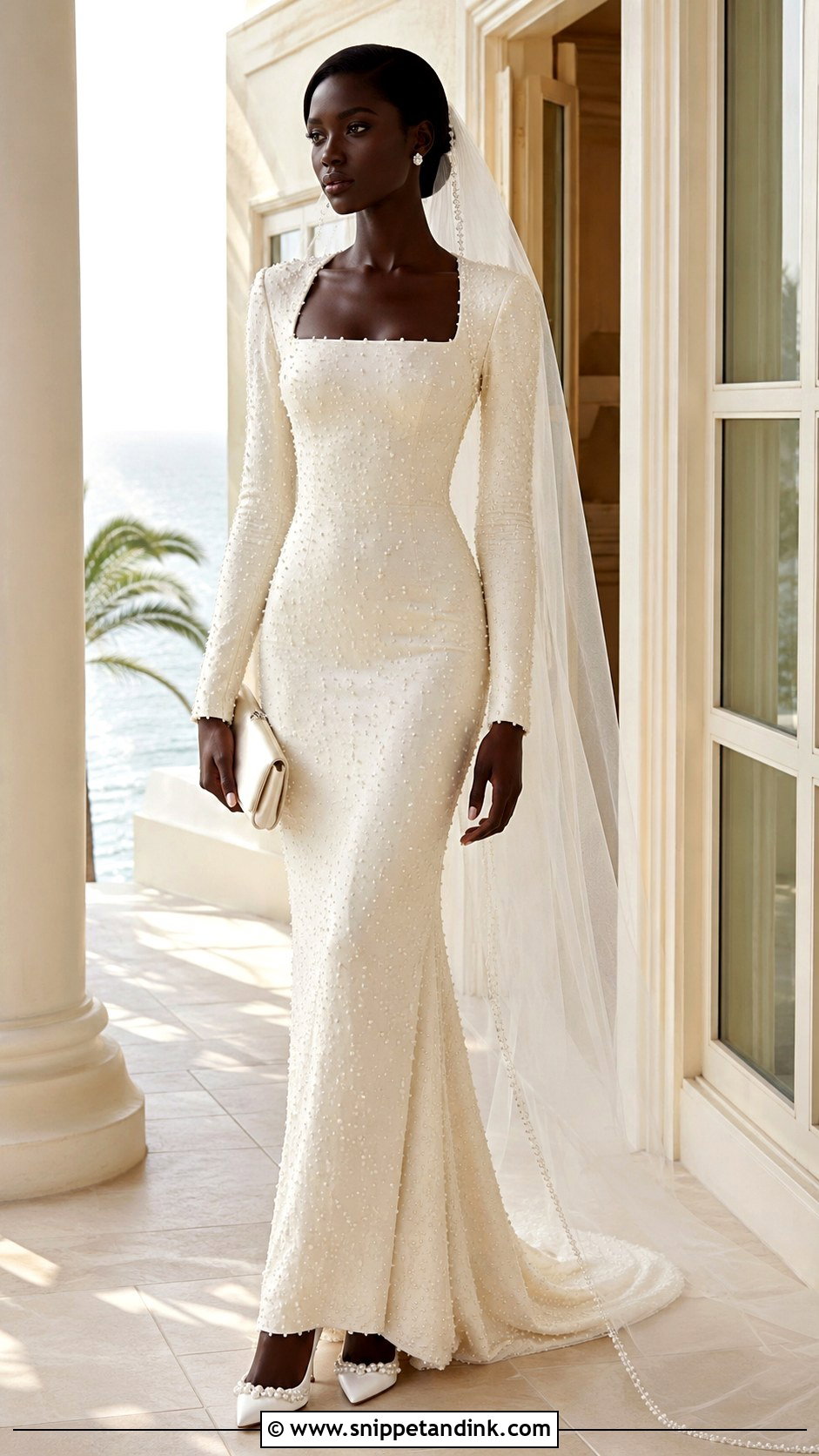
Pearls look modern when they’re scattered rather than packed. Pick a fitted ivory gown with pearls across the bodice, sleeves and upper skirt, and a square neck with a low back to sharpen the detail. Ask how they’re attached: hand-sewn pearls stay put, while glued ones can pop off when the dress is bustled. Pearl-accented pumps, diamond studs and a veil with a light pearl border finish it, plus a small satin clutch for portraits. A smooth low bun and soft luminous makeup keep the focus on texture. Upscale gardens and coastal hotels suit it.
10. Anok Yai Long Sleeve Wedding Dress
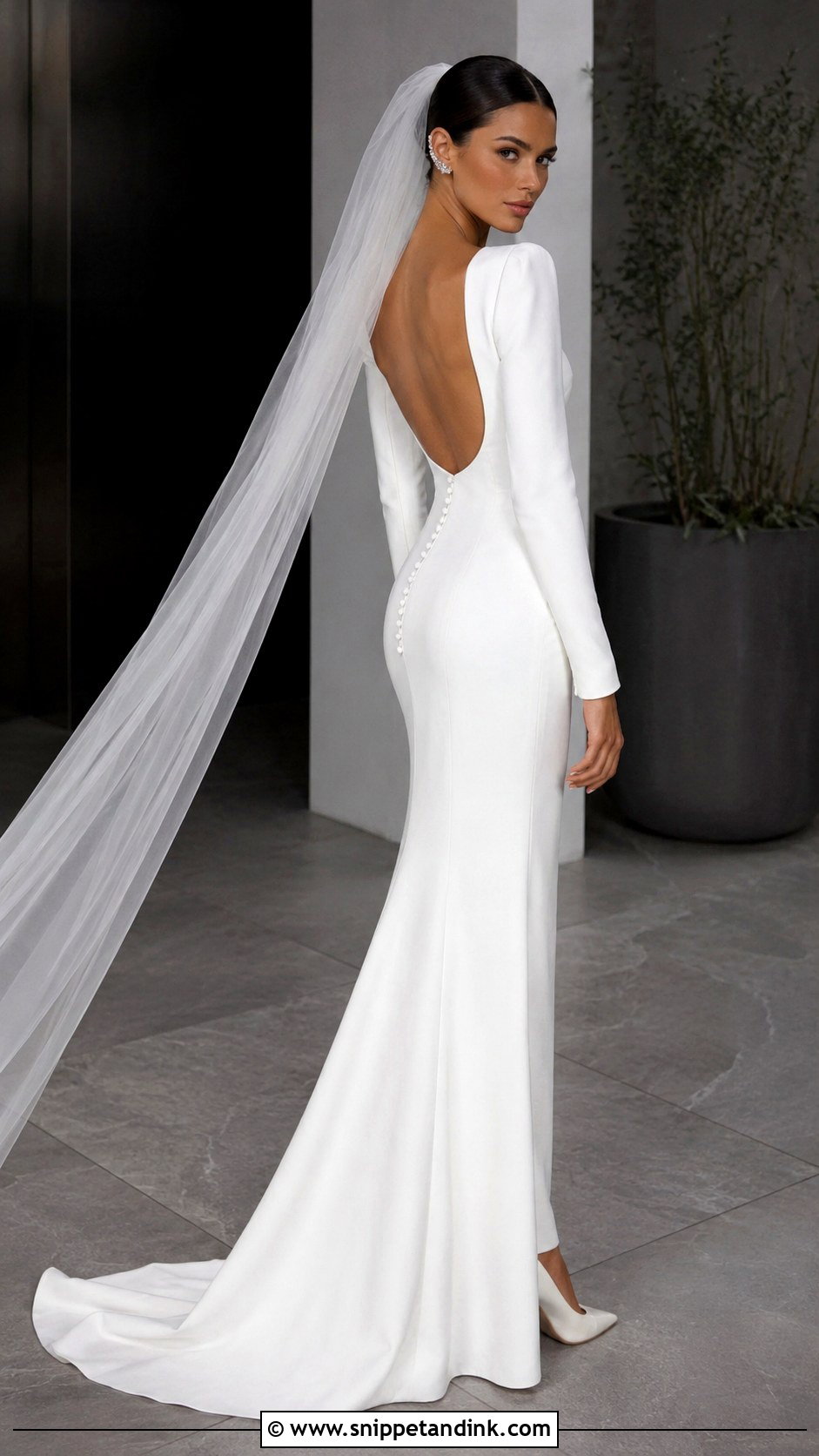
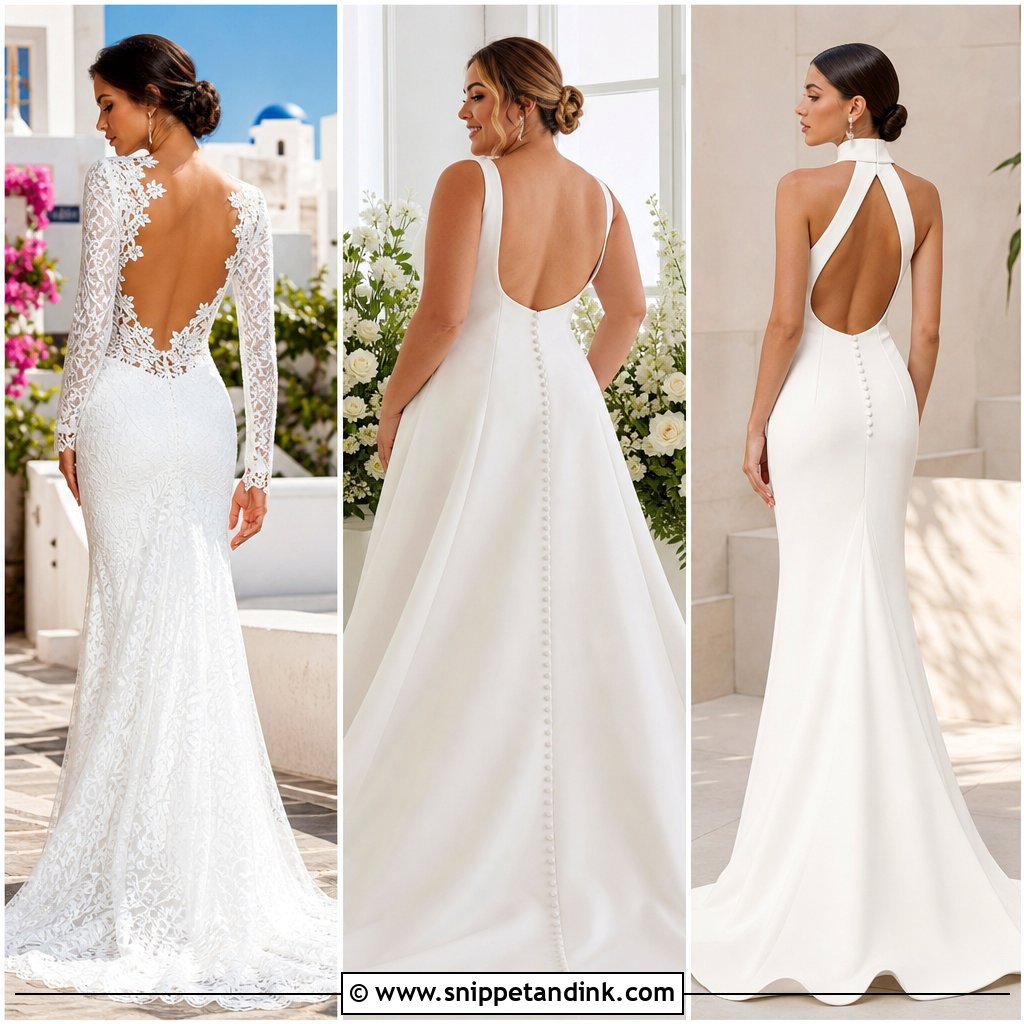
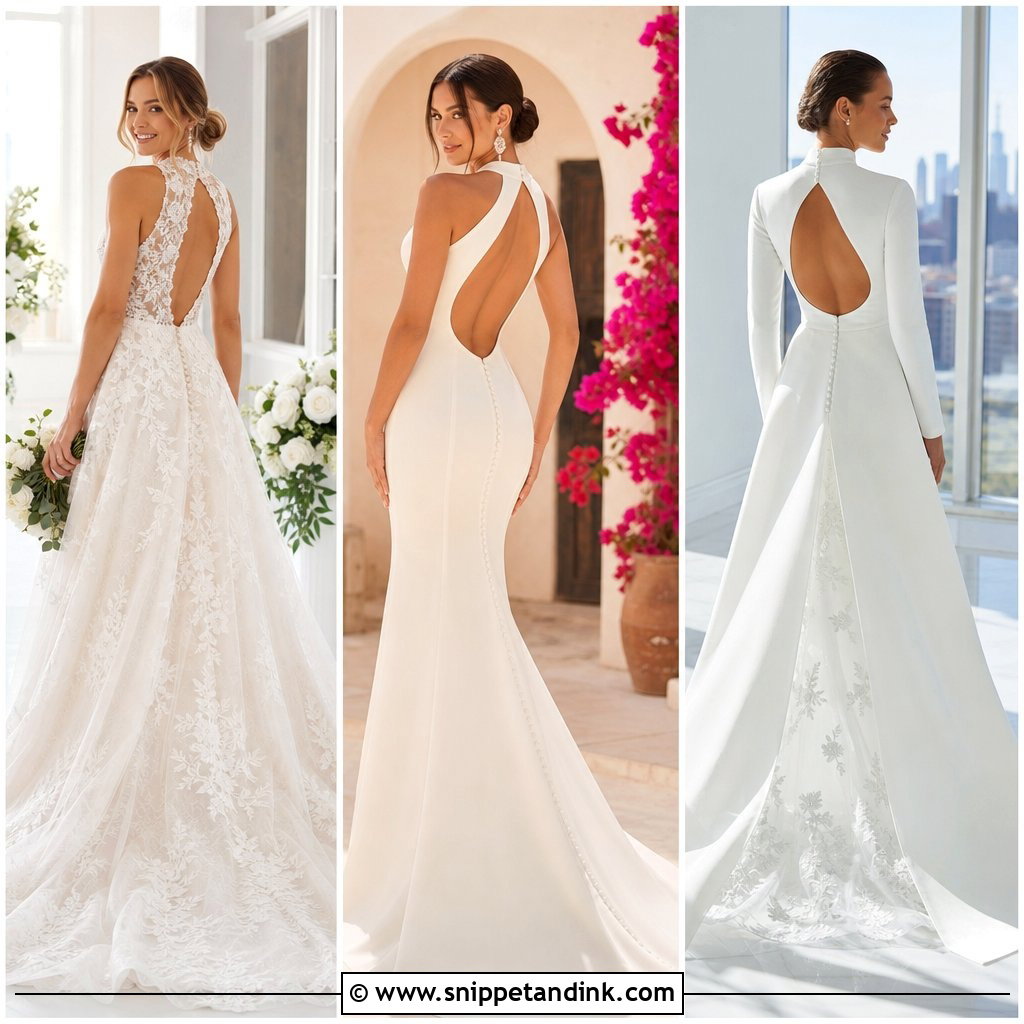
Long sleeves give a lean gown real presence. Try fitted crepe with a bateau neckline, structured shoulders and sleeves that reach just over the hands; I always test the armhole by asking the bride to hug me, because a sleeve cut too narrow pulls the whole bodice. A dramatic open back or row of covered buttons gives interest from behind. Pointed ivory pumps, sculptural earrings and a long plain veil, with no necklace. A center-parted bun and defined eyes give it an editorial edge for a winter or city ceremony.
11. Anok Yai Halter Wedding Dress
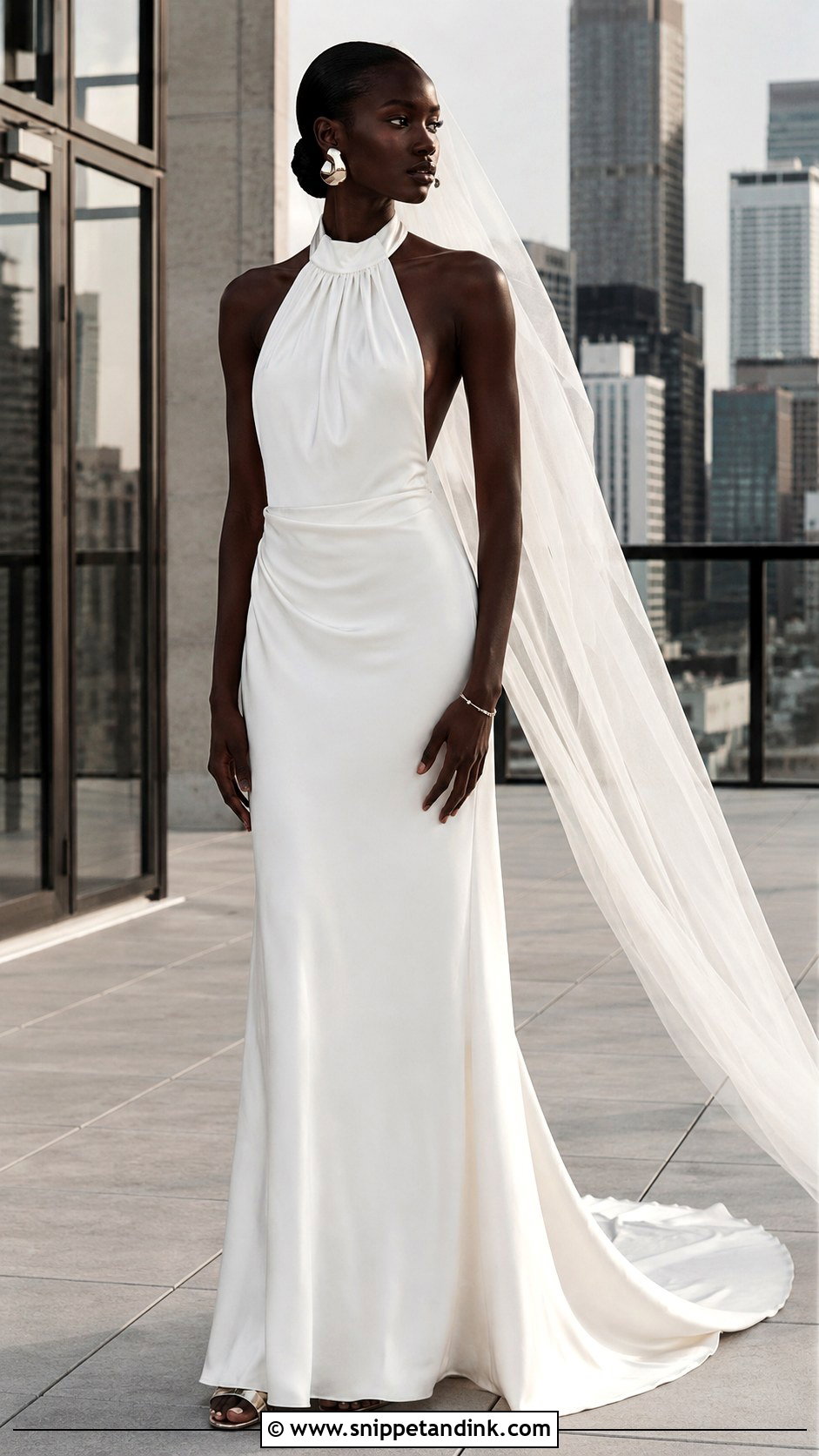
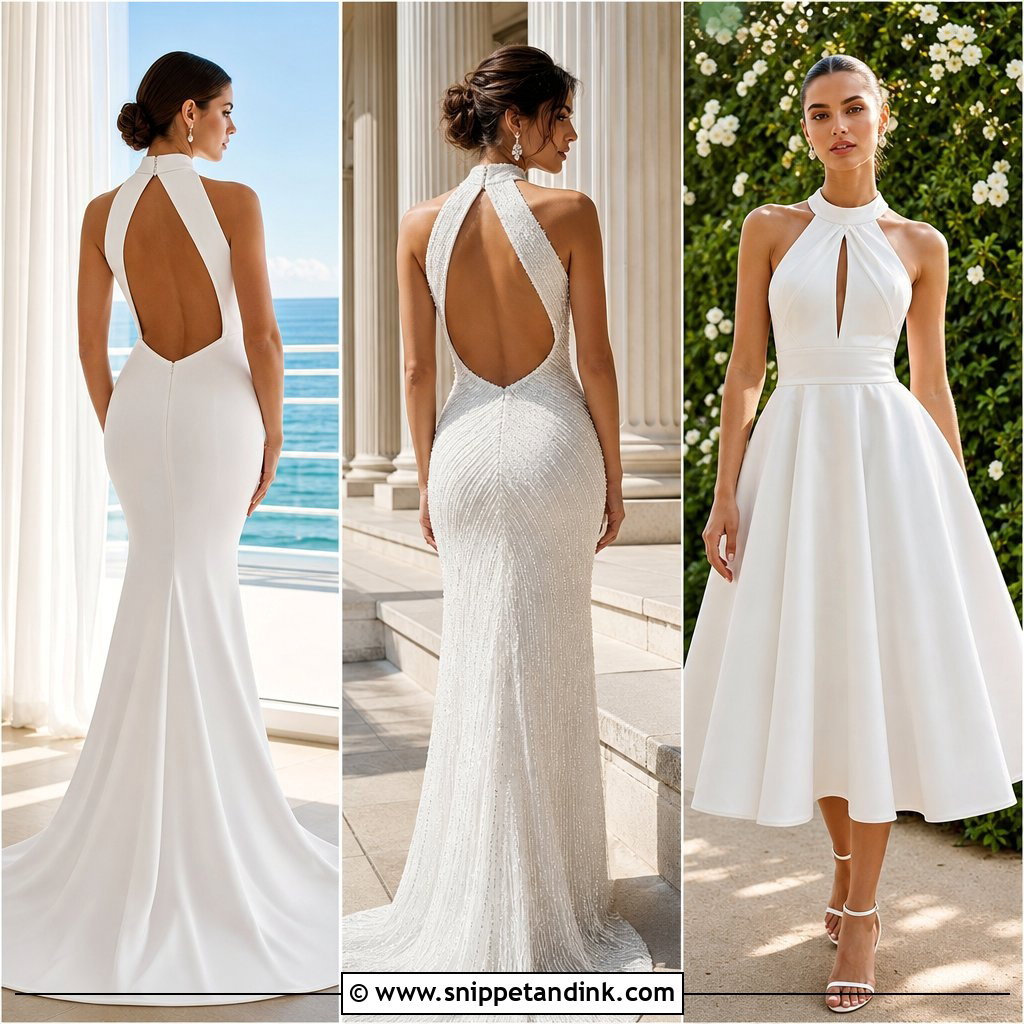
The halter draws a long line from the neck down, and on a tall or long-necked bride it’s hard to beat. Silk with a gathered neckline, fitted waist and fluid column skirt is the classic version, with an open back and narrow train. A halter tie has to hold the full weight of the bodice, so I check that it’s anchored by an inner band rather than hanging from the neck alone. Metallic sandals, bold cuff earrings and a detachable veil under a polished updo finish it. Rooftops and destination celebrations suit its liquid finish in bright light.
12. Anok Yai High Neck Wedding Dress
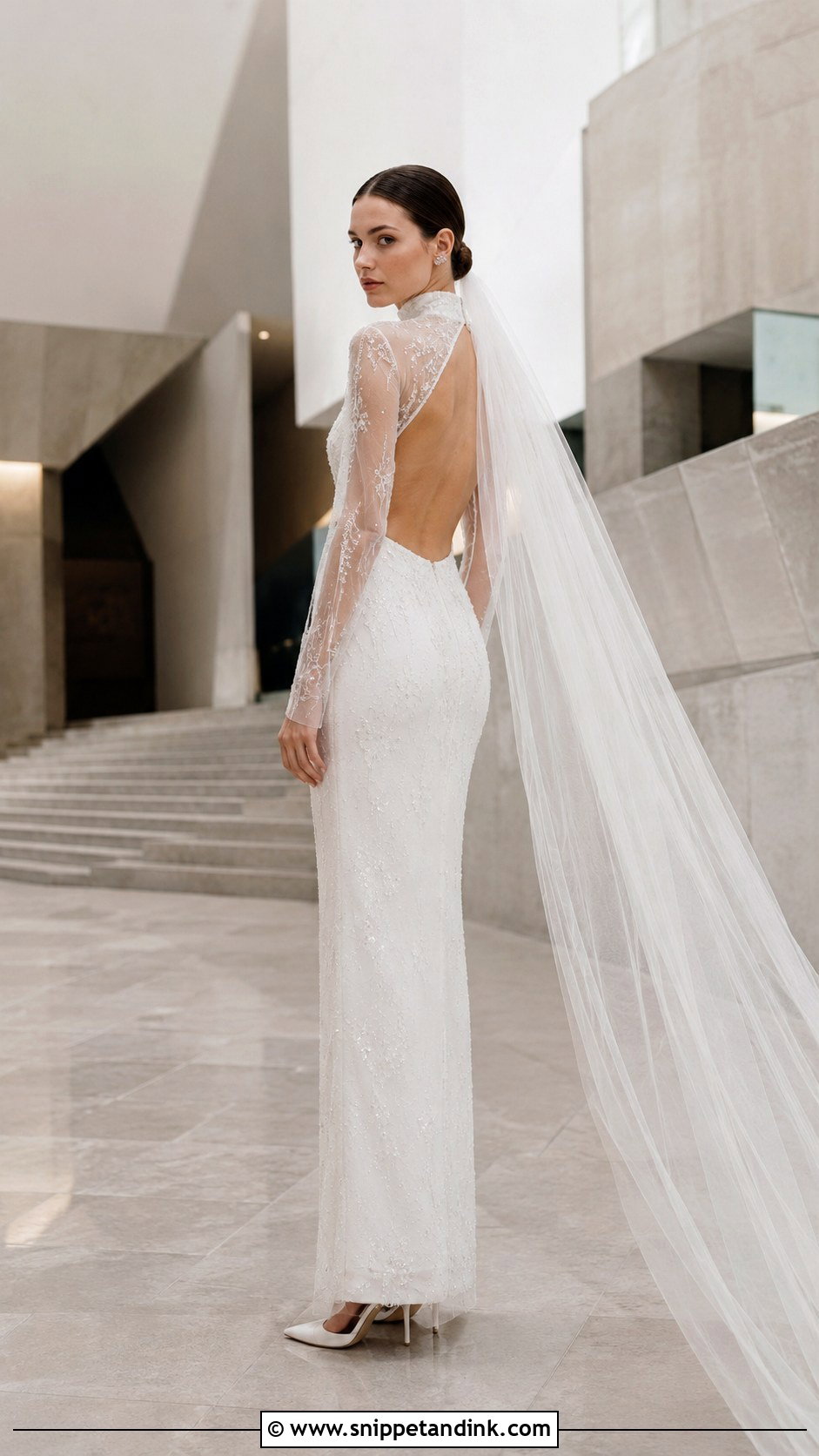
A high neck looks statuesque and severe in a good way. Choose fitted crepe, fine lace or lightly embellished tulle with long sleeves and a narrow column skirt, then balance all that coverage with an open back, small keyhole or sheer shoulder panels. A covered throat can feel warm by evening, so on a summer date I’d steer you to a lace or tulle version rather than solid crepe. Pointed pumps, diamond ear cuffs and a veil fixed low under a sculpted bun are enough. Precise eyeliner and a neutral lip suit the clean verticals in museums and formal hotels.
13. Anok Yai Feather Wedding Dress
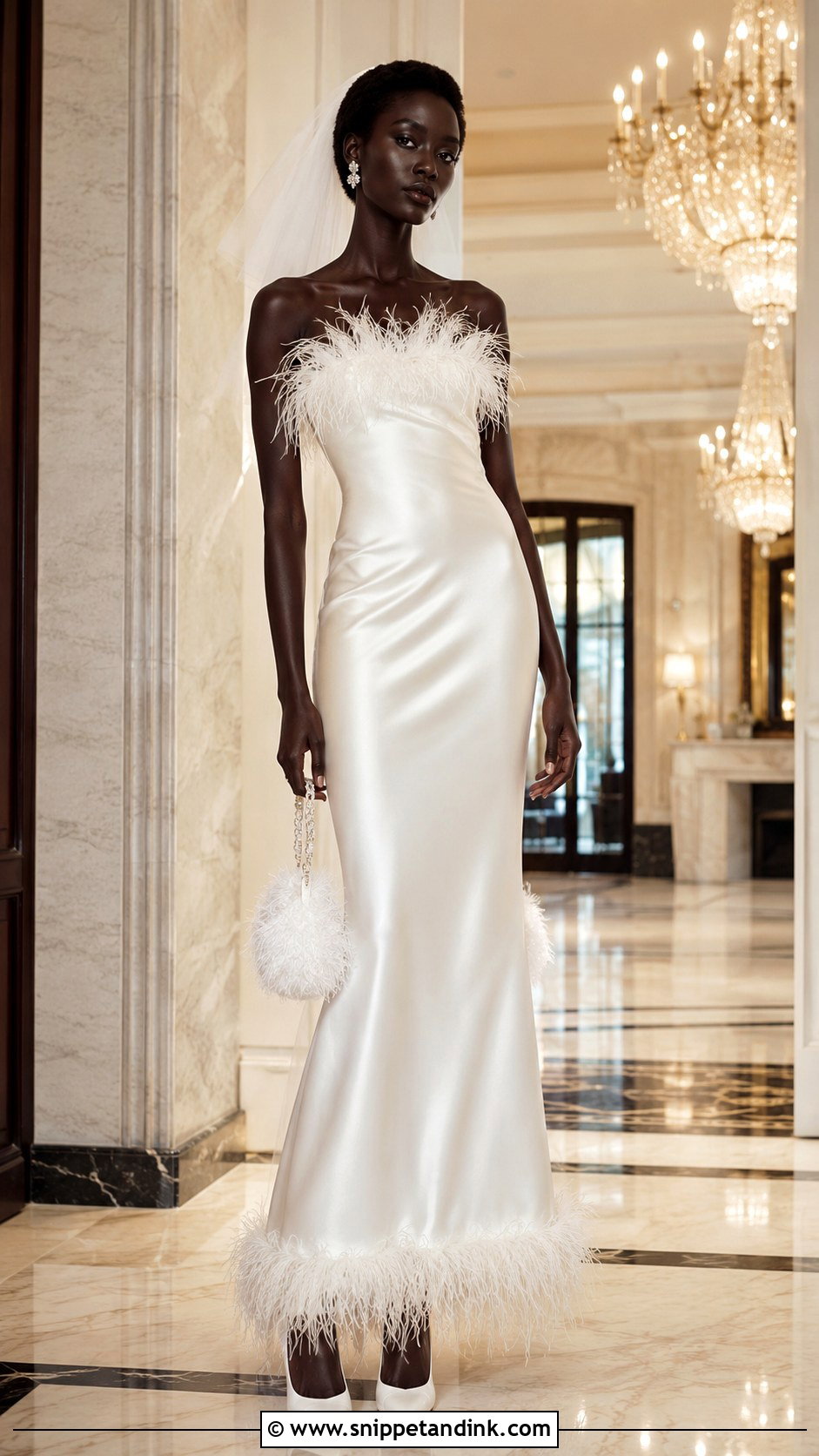
Feathers are fun and fragile. Keep them to one area, the neckline, sleeves or hem, on a fitted satin or crepe gown rather than covering the whole dress. Ostrich trim sheds a little and flattens in rain or humidity, so I’d keep a feathered hem for indoor evenings only. White pumps, crystal earrings and a short plain veil let the trim be the feature; swap the veil for a feather-trimmed mini bag at the reception. A neat updo and glowing makeup keep it from getting busy. Fashion-forward hotel celebrations are where it belongs.
14. Anok Yai Metallic Wedding Dress
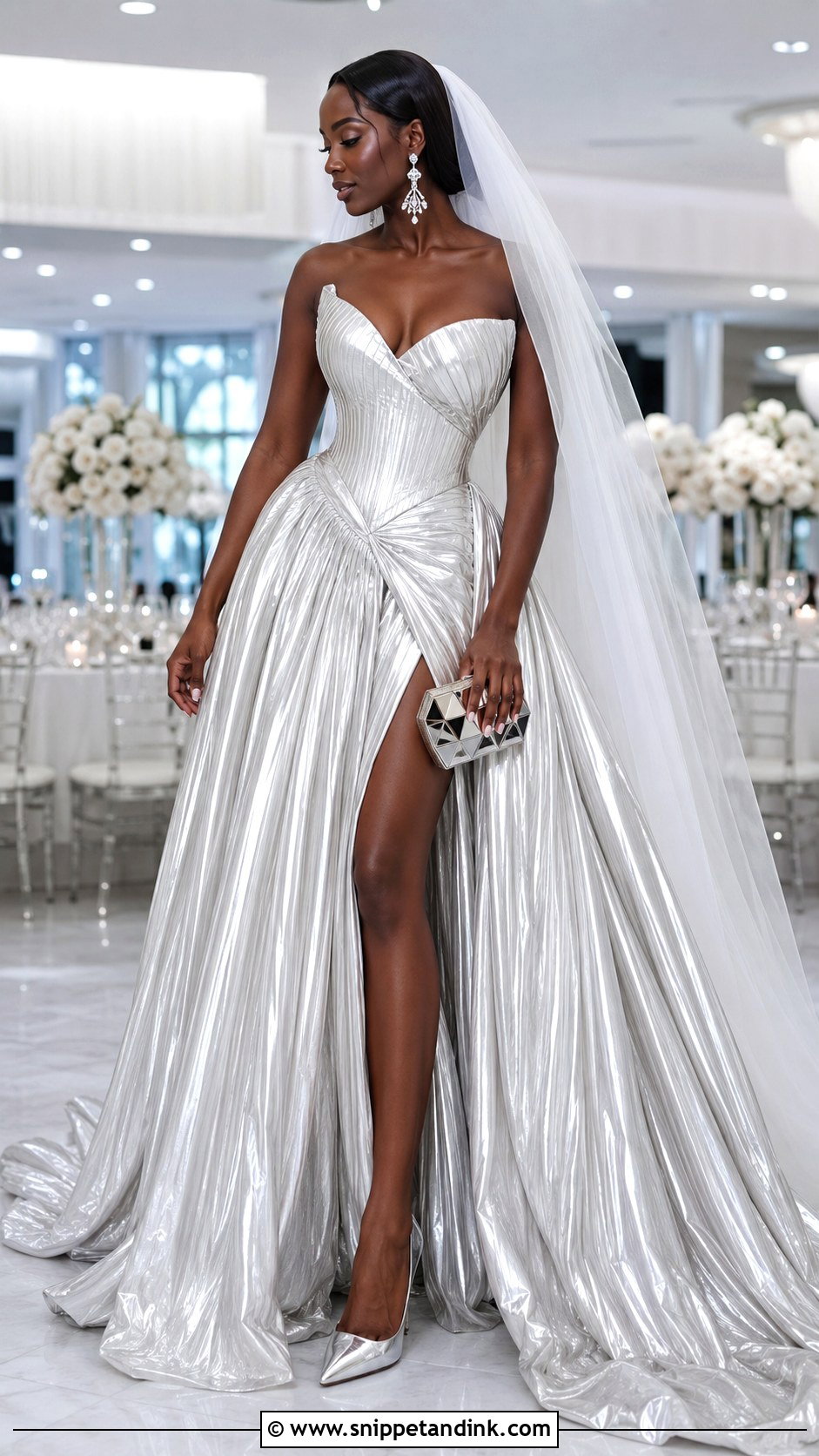
A pale metallic dress steps away from white and still reads bridal. Silver, platinum or soft champagne with a structured bodice and a fluid skirt works, with fine sequins, metallic embroidery or reflective pleating providing the shine. Metallic shades change with skin tone: platinum suits cool undertones, champagne warms most others. Hold the fabric against your face in daylight before ordering. Silver pointed heels, crystal drops, a cool ivory veil and a mirrored mini bag finish it, with sleek hair and a touch of metallic on the eyes. Modern ballrooms and city venues suit it.
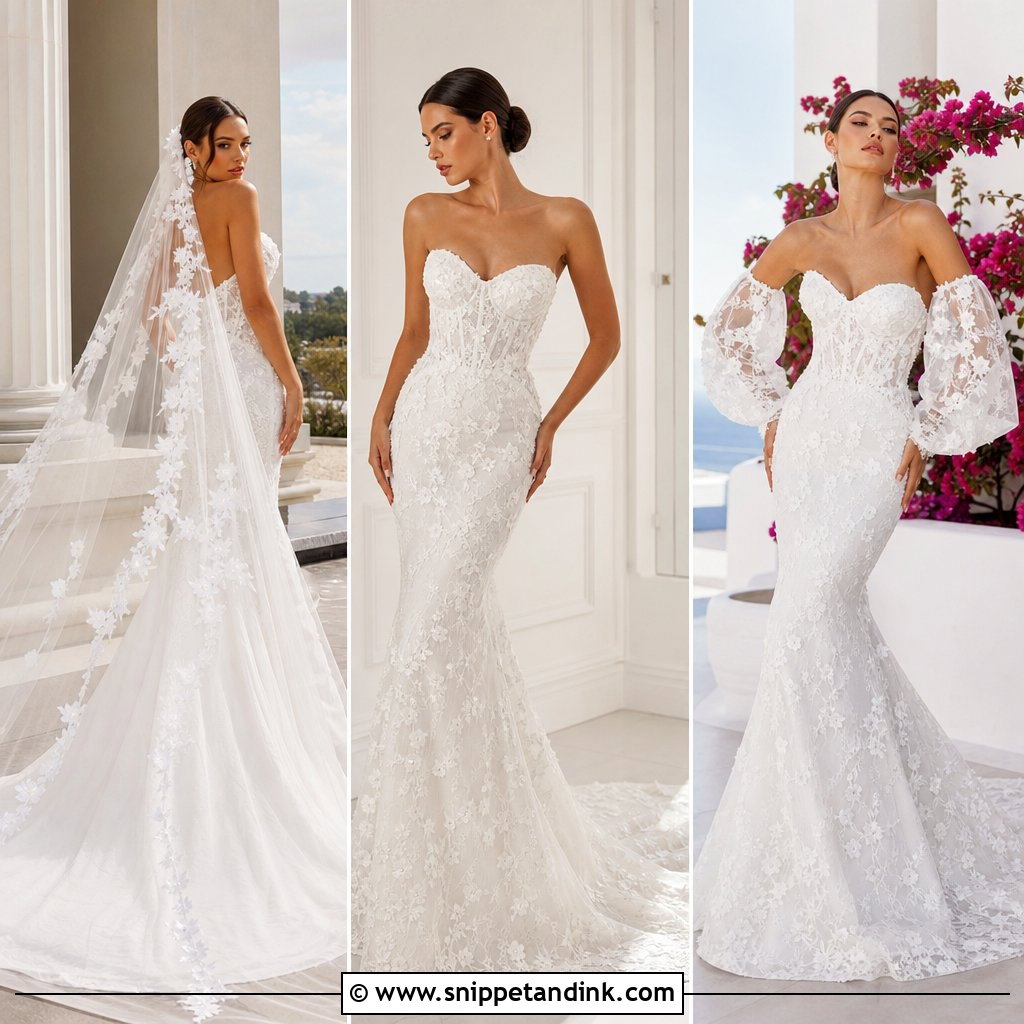
15. Anok Yai Cape Wedding Dress
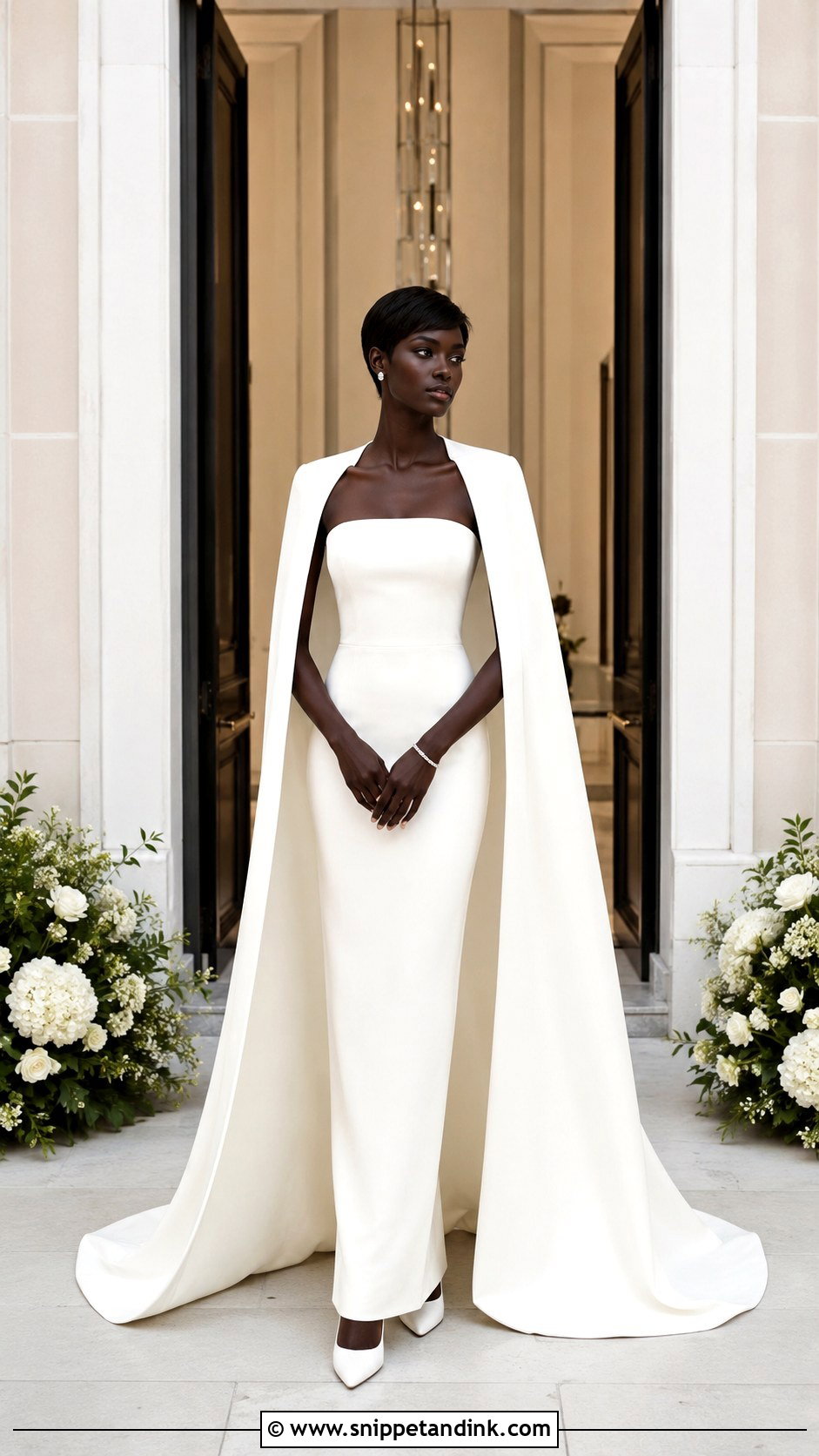
A cape gives you the movement of a veil with a stronger shape. Start with a plain strapless column in ivory crepe or satin, then add a floor-length cape fixed at the shoulders or wrapped softly at the neck. Skip the veil; two long layers fight each other. Pointed pumps, diamond studs and a narrow bracelet are enough, with a smooth bun or short sculpted cut. A cape attached with snaps or hooks at the shoulder seam comes off faster than one built into the dress, which matters if you want a lighter reception look. Formal indoor weddings and courthouses suit it.
16. Anok Yai Black And White Wedding Dress
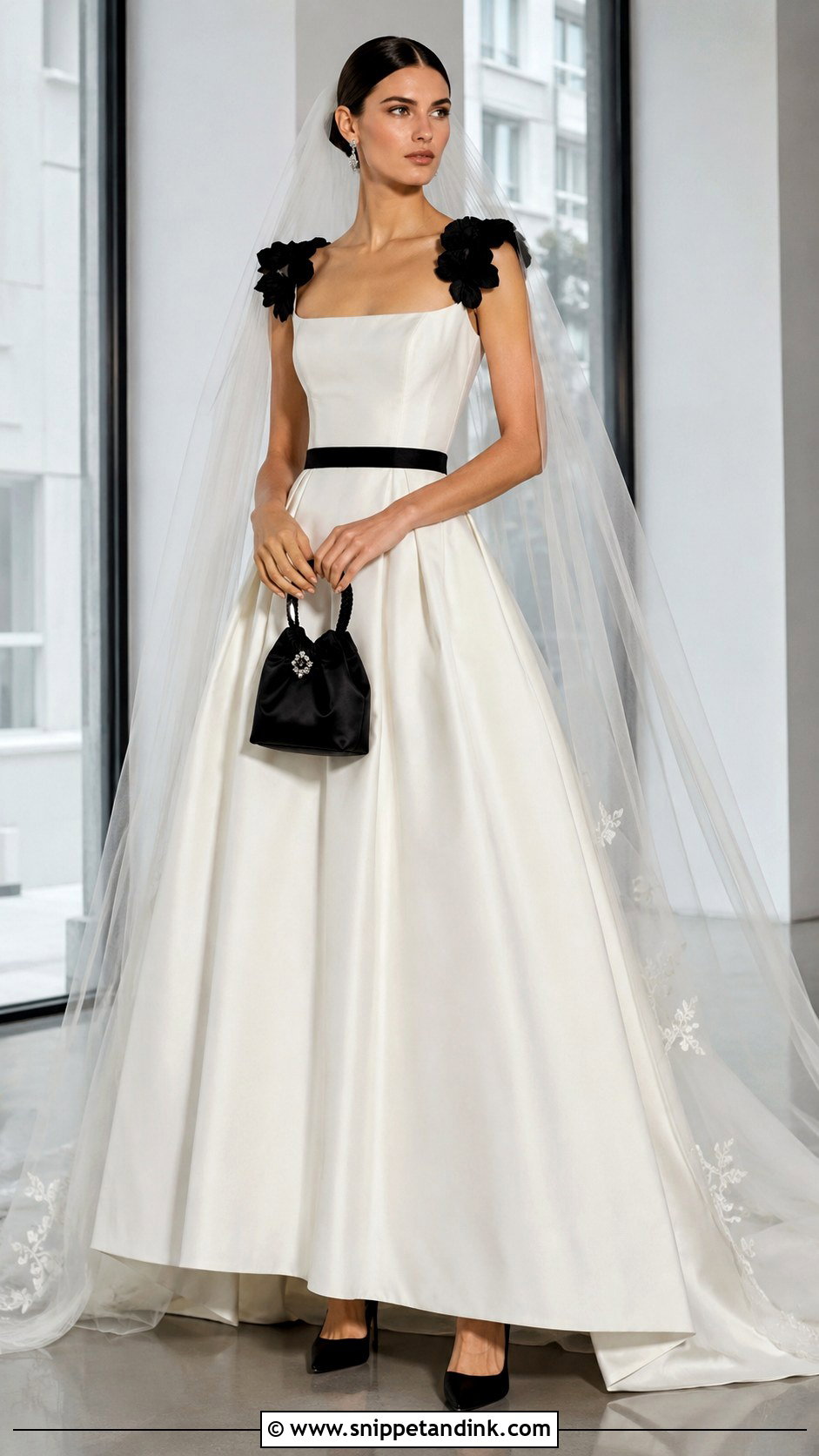
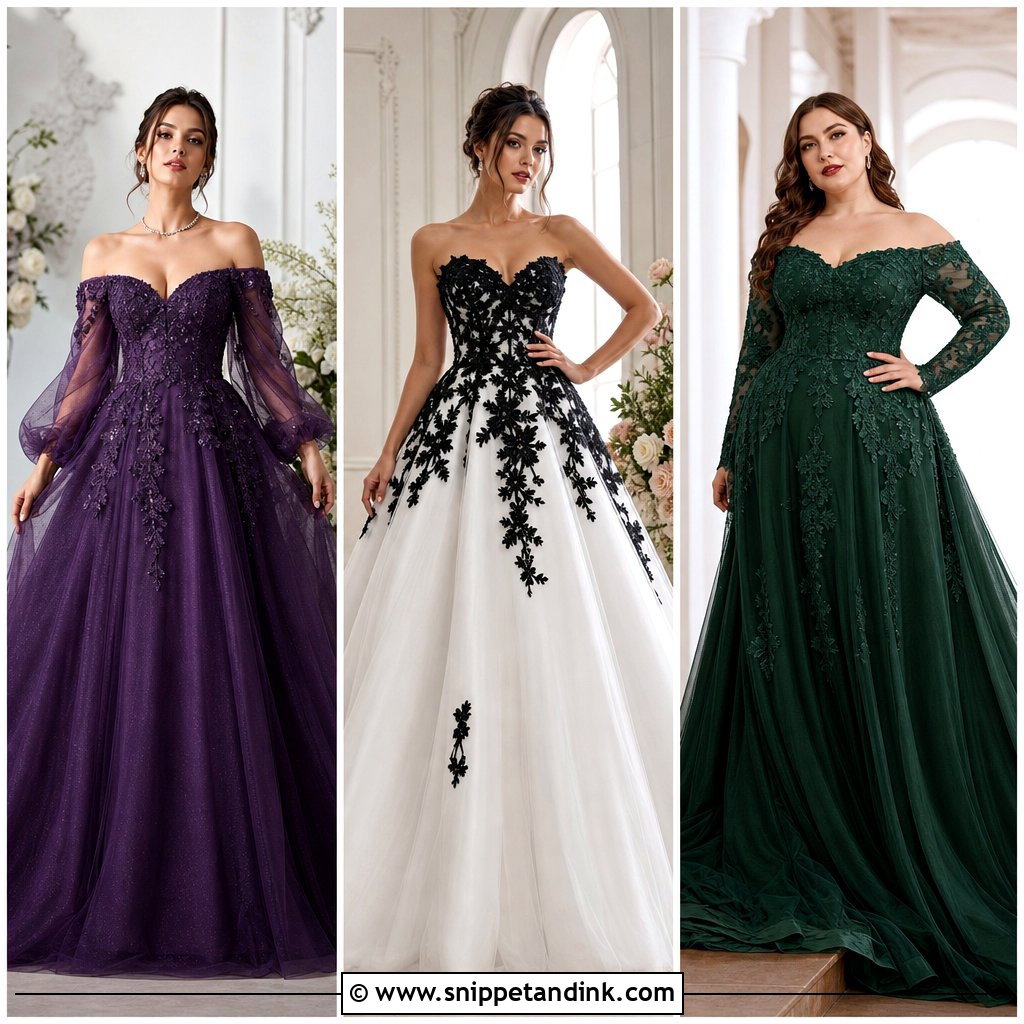
Black on white turns a classic gown graphic. An ivory column or ball gown with a thin black waist ribbon, velvet shoulder bows, black appliqués or a removable black-trimmed overskirt does it without going costume. Ask your seamstress whether the black trim is colorfast before any steaming; dark velvet near ivory can mark it. Black pointed pumps, diamond earrings, a plain white veil and a small black satin bag carry the theme, with polished hair and precise liner. It suits a bride who likes traditional shapes with a darker edge.
17. Anok Yai Overskirt Wedding Dress
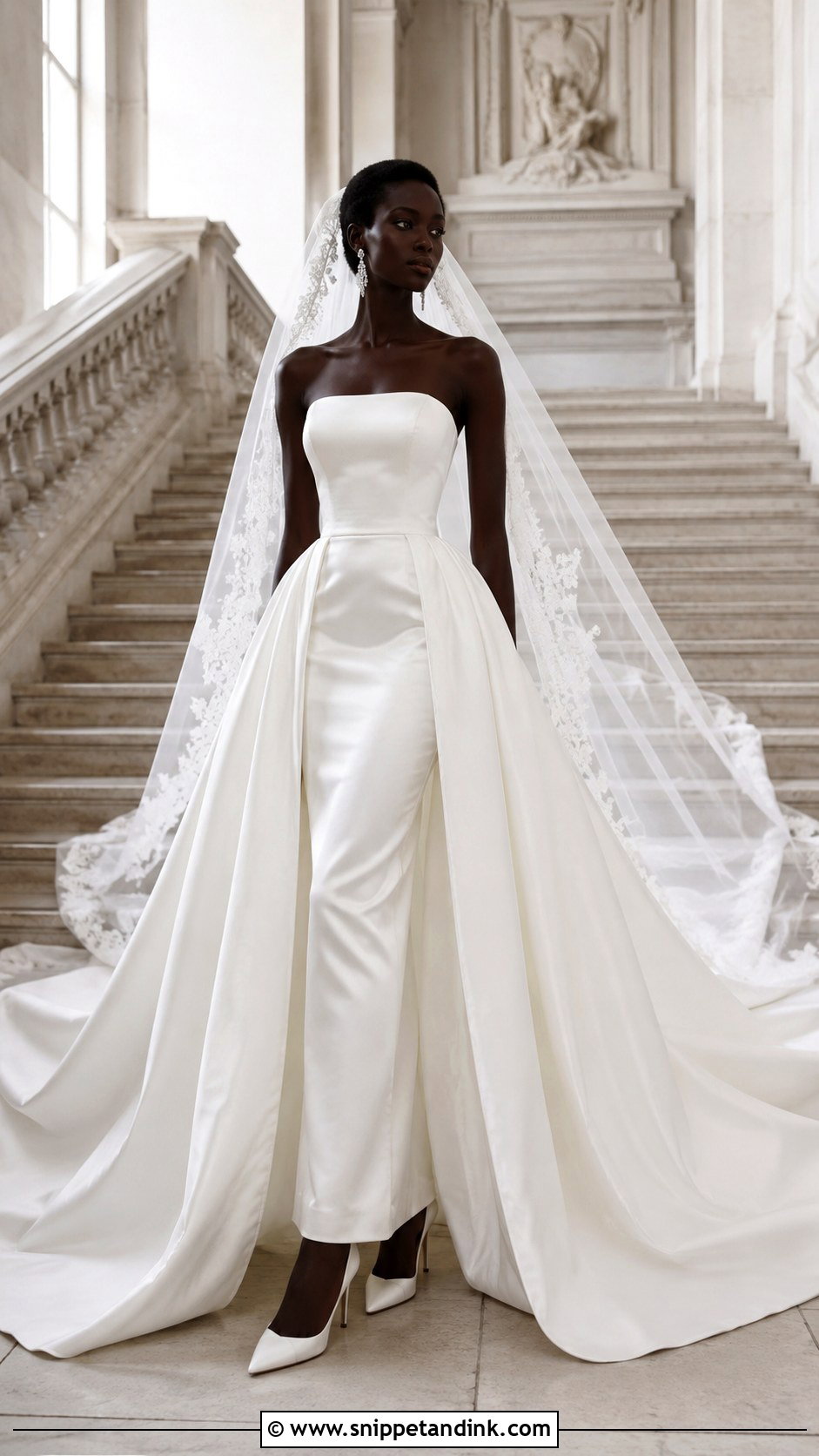
An overskirt gives you two silhouettes from one dress. Begin with a fitted strapless gown in satin, crepe or a lightly embellished fabric, add a full overskirt at the waist for the ceremony, then remove it for the reception to reveal the slim dress underneath. Overskirts add bulk at the waist, so the base gown should be fitted with the overskirt on, not off. Pointed pumps, long earrings and a removable cathedral veil work for both versions. A polished updo keeps the changing shape readable. It’s the right call if you want grandeur at the altar and freedom on the dance floor.
18. Anok Yai Minimalist Wedding Dress
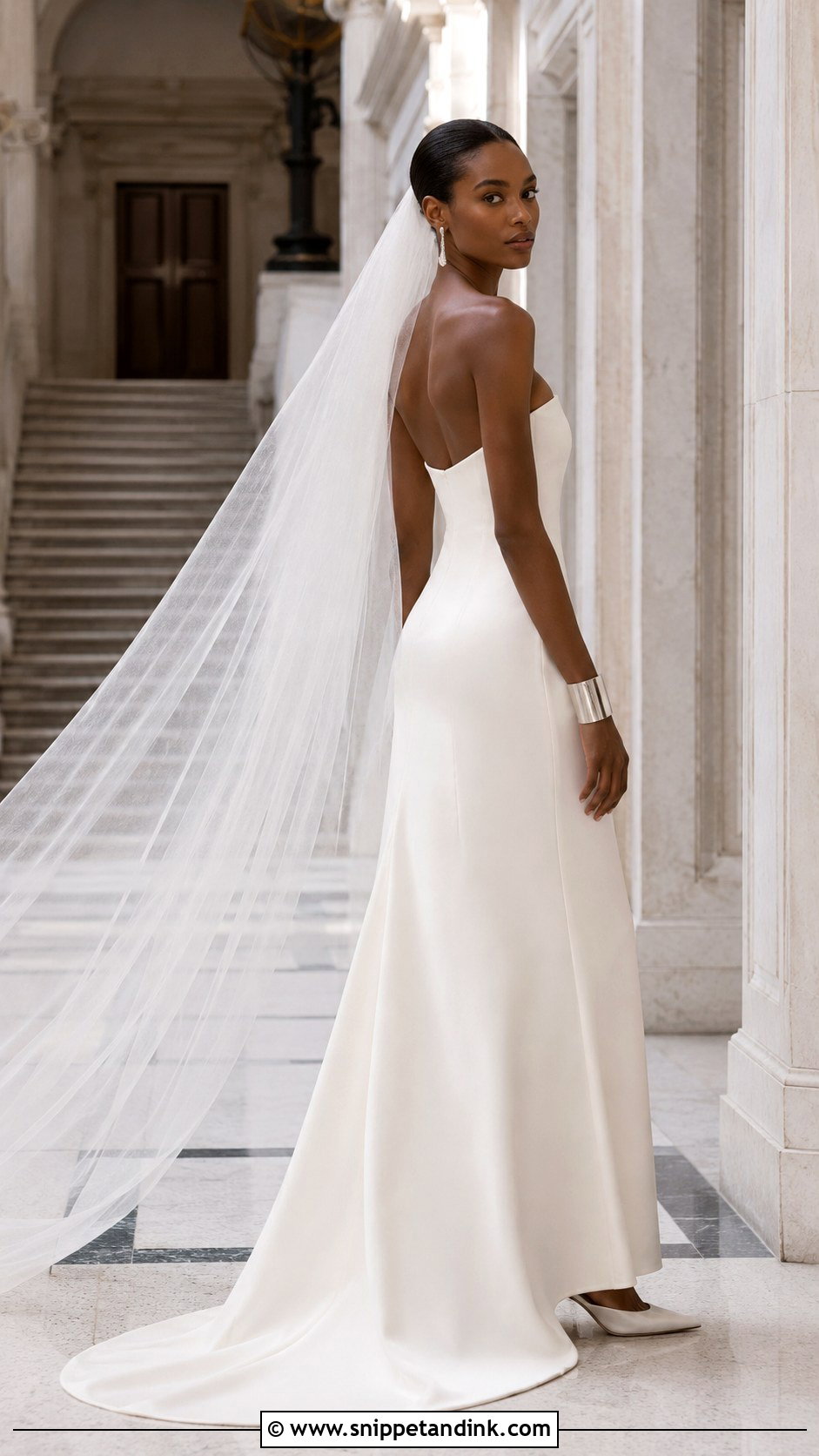
Minimal only looks powerful when the fit is perfect, because there’s nothing to hide behind. A smooth ivory column with a straight neckline, low back and narrow train in silk crepe or heavy satin needs no lace or beading. I’d spend the money on a good seamstress rather than embellishment here. Sharp pointed pumps, one sculptural cuff and small diamond earrings. Add a plain cathedral veil for the ceremony and take it off to show the clean back. A sleek bun or polished waves and fresh makeup finish it for a city wedding or courthouse ceremony.
19. Anok Yai Ruffle Wedding Dress
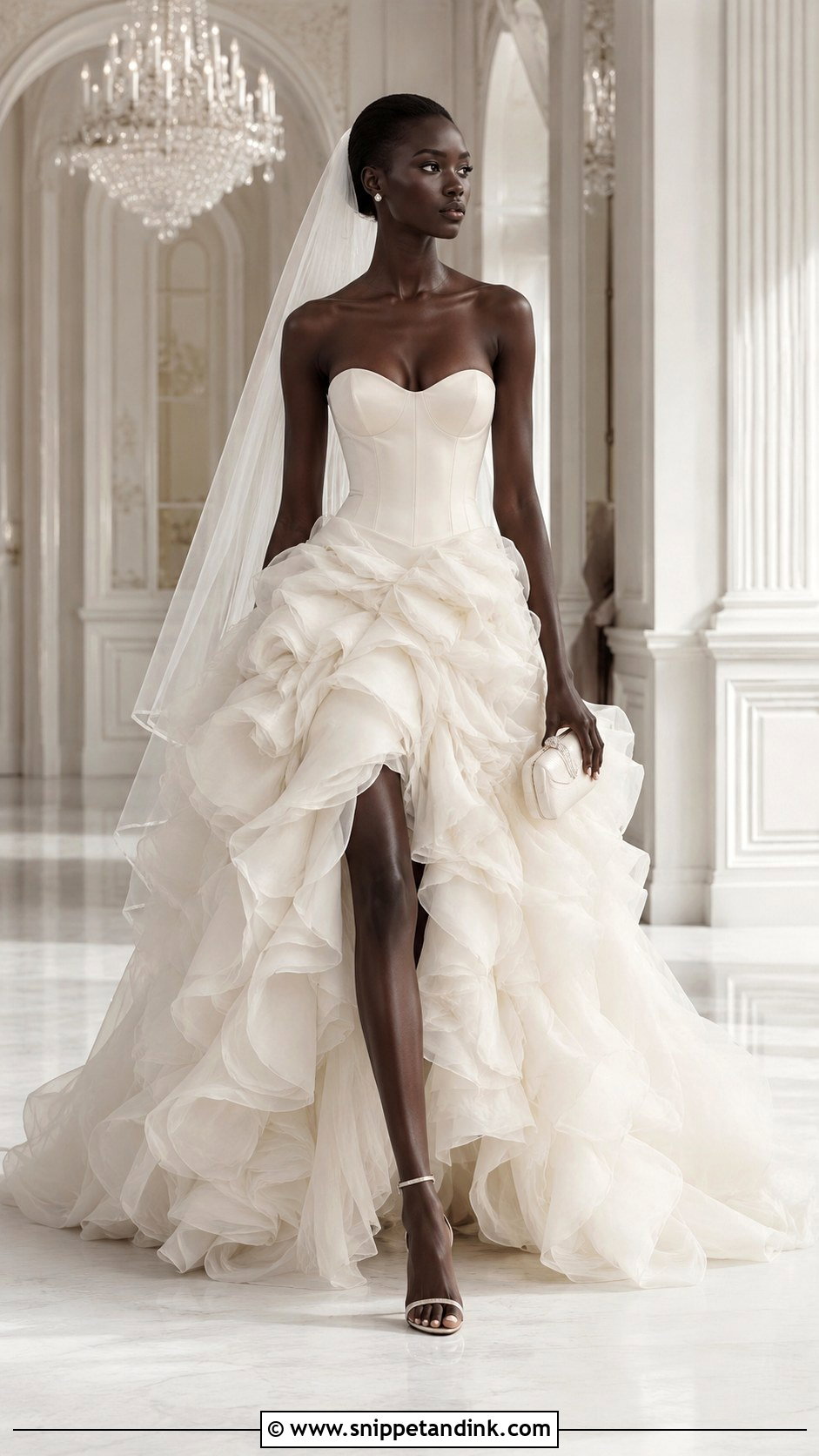
Ruffles give volume and a dramatic outline in full-length photos, but only in one place at a time. Choose a fitted bodice with organza ruffles concentrated on the skirt, a shoulder or an asymmetric neckline. Organza crushes when packed, so plan to steam the ruffles on the morning and keep the gown hanging until you step in. Delicate heels, crystal studs, a fingertip veil and a small clutch keep everything else quiet, with sleek hair as contrast. It brings the energy of high-fashion runway dressing to grand staircases and spacious ballrooms.
20. Anok Yai Bridal Mini Dress
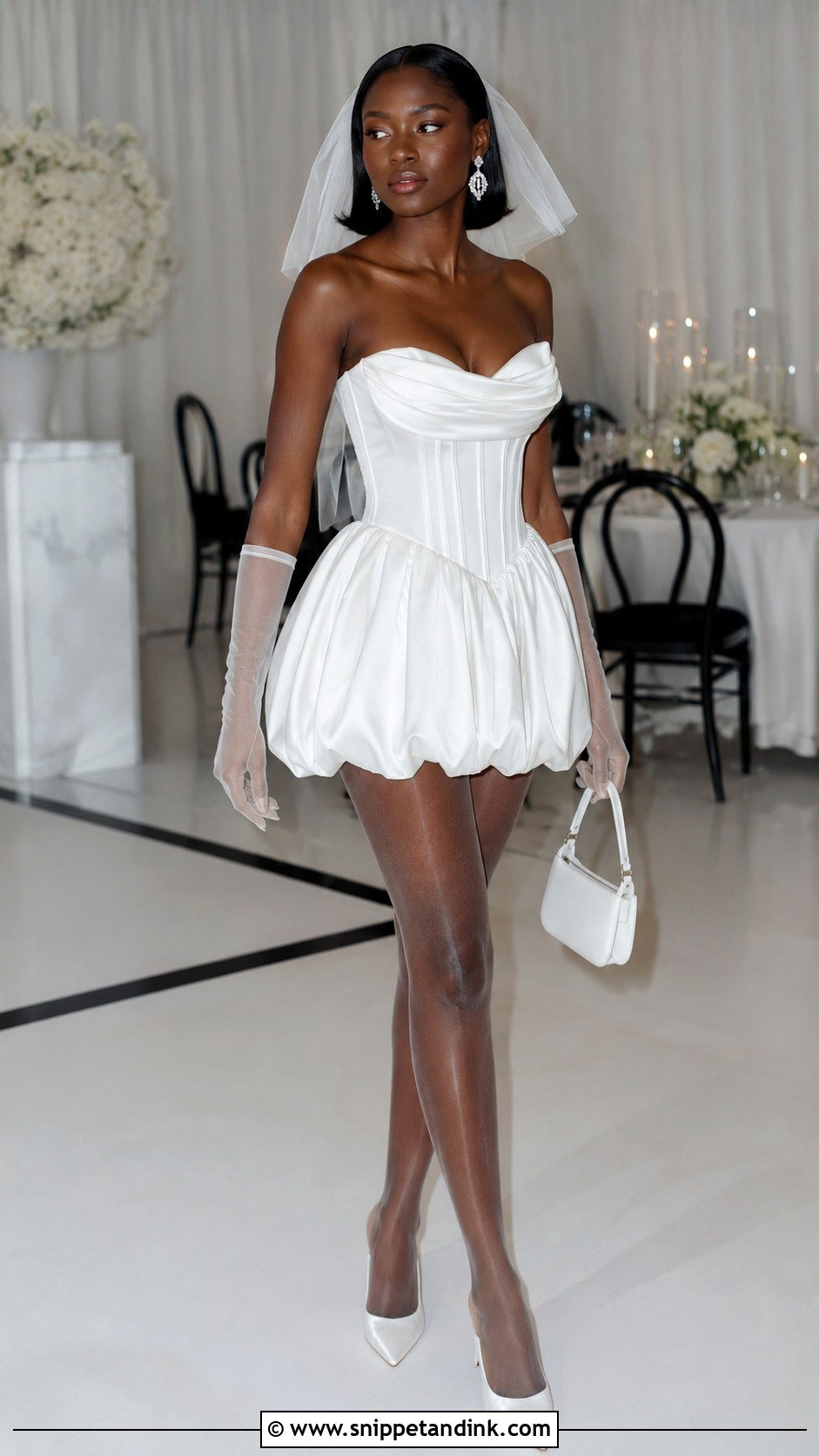
A short dress can carry as much fashion weight as a gown when it’s built properly. Pick a structured white mini with a corseted bodice, sculpted neckline and a flared or bubble skirt. Sheer tights, pointed satin pumps and shoulder-length gloves finish it, with crystal earrings and either a short veil or a clean bow. Hem length is the detail I adjust most: for sitting at a reception, it should still cover comfortably with the skirt pulled under you. A sleek ponytail, bun or glossy waves, and a small bag. It works for a courthouse wedding, a welcome party or a second outfit.
Who Unhooks the Overskirt, and Where Does the Cape Go?
Several of these designs are meant to change between ceremony and reception: a cape comes off, an overskirt is removed, a cathedral veil is replaced by nothing at all. It sounds simple, but I’ve watched a planned two-minute change take twenty because nobody knew how the pieces fastened.
- Pick one person, a bridesmaid or your planner, and have them practise the removal at your final fitting.
- Agree on a room and a time slot, usually just after portraits and before the grand entrance.
- Bring a padded hanger and a garment bag for the removed piece. Capes and overskirts crease badly if dropped on a chair.
- If hooks are tiny, ask your seamstress to swap them for larger snaps or covered buttons that are easier to find in a hurry.
- Check the reception look on its own before the day; a gown that was fitted under an overskirt can look loose at the waist without it.
Treat the change as part of the schedule, not something that happens in the gaps. It also gives you a few quiet minutes away from the crowd, which most brides end up grateful for.
Construction First, Accessories Second
Every look above starts from structure: corsetry, sculpted draping, liquid satin, metallic finishes or a dramatic outer layer. That’s where the Anok Yai effect comes from, much more than from any single accessory. Once the gown is right, I’d plan the veil, shoes, jewelry and hair as one outfit, and think through how you’ll move in it from the aisle to the dance floor. Pick the silhouette that supports your body properly, whether that’s a minimal column, a crystal gown or a corseted ball gown, and stand in it the way you’d want to be photographed.
You'll Like These Ideas:



Leave a Reply