
A bow is the detail on a wedding dress that guests look at longest, because for most of the ceremony they are looking at your back. That alone makes it worth choosing carefully. Some bows are barely there, like understated ribbon straps; others are tailored waist knots or oversized loops running into the train. Whether a bow looks crisp or droopy comes down mostly to fabric. Mikado holds a sculpted loop, satin falls into softer folds, and tulle stays airy but rarely keeps a sharp edge. Below are twenty bow dresses, each with the practical checks I would make before you commit to one.
How Big a Bow Can You Actually Carry?
A bow that looks right in a shop mirror at arm’s length can vanish from the back row of a large church, and one sized for a cathedral aisle can swamp a petite frame in a close-up portrait. I size bows against two things: the width of your back and how far away most of your guests will be standing.
My starting point on a petite bride is to keep the full width of a back bow within the width of her waist; on a taller bride, or in a big room, it can stretch toward shoulder width. Tails look finished when they end at the knee, the hem or on the train. Stopping at mid-calf makes them look cut short.
Which fabrics hold a loop
- Mikado and faille are stiff enough to keep a sculpted loop standing all day.
- Duchess satin holds its shape with a soft sheen but shows creases from sitting.
- Crepe and charmeuse drape rather than stand, so they suit knots and sashes better than big loops.
- Organza is crisp and sheer, and it creases sharply when crushed.
- Tulle gives soft volume and collapses under pressure, which makes it best for small or shoulder bows.
1. Satin Ball Gown Wedding Dress With Back Bow
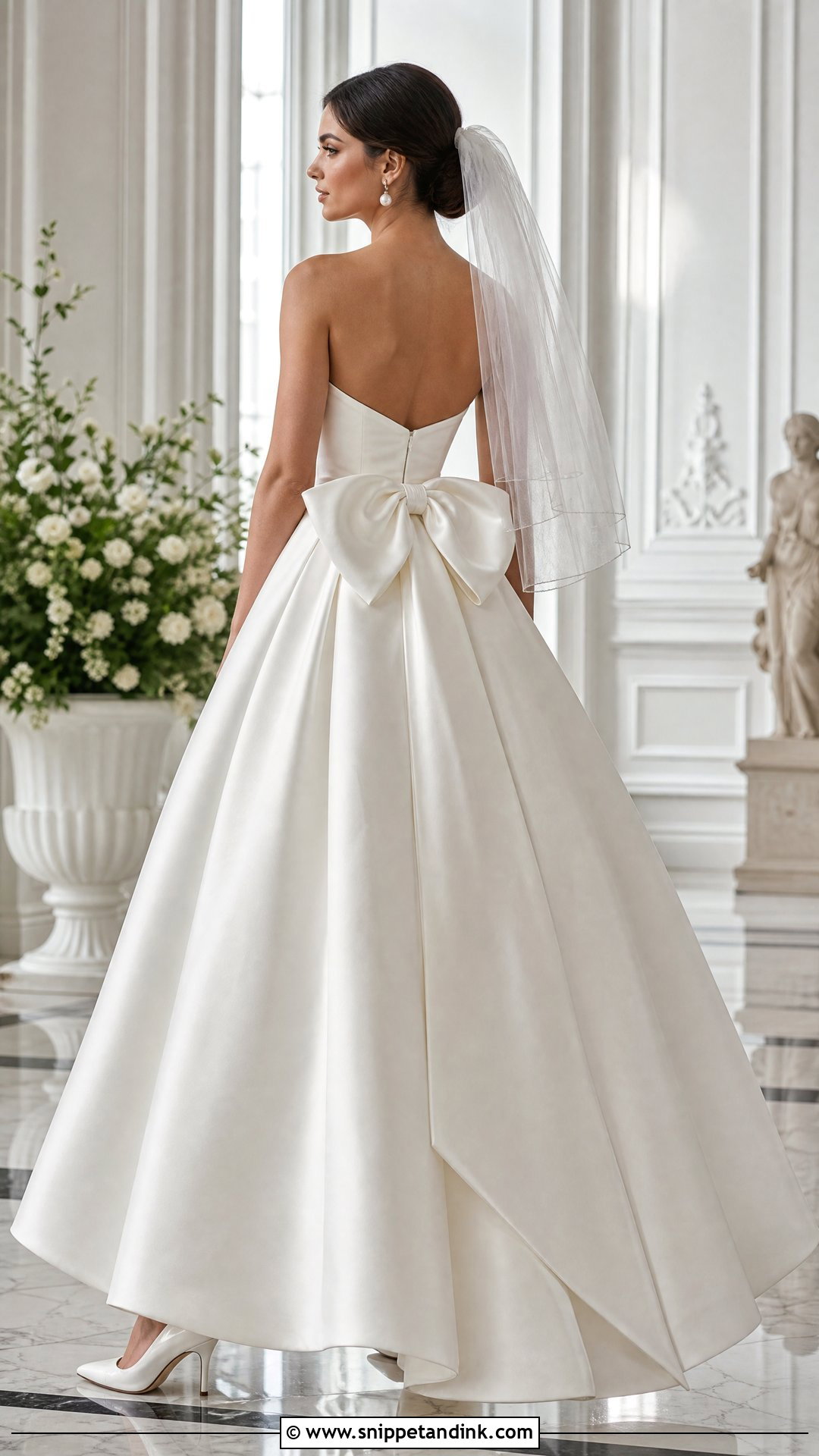
A large bow at the back waist of a satin ball gown sits exactly where the bustle usually goes, and that is the first conversation I have with any bride choosing one. If the bustle points are hidden beneath the bow, the train lifts without disturbing it. Get it wrong and the bow is crumpled before the first dance. A structured strapless bodice balances the skirt’s volume, and the bow marks the narrowest point before the train begins. Pearl studs and a smooth fingertip veil are all it needs. On very luminous satin, leave heavy crystal at home, because the two kinds of shine fight.
2. Minimalist Column Wedding Dress With Oversized Bow
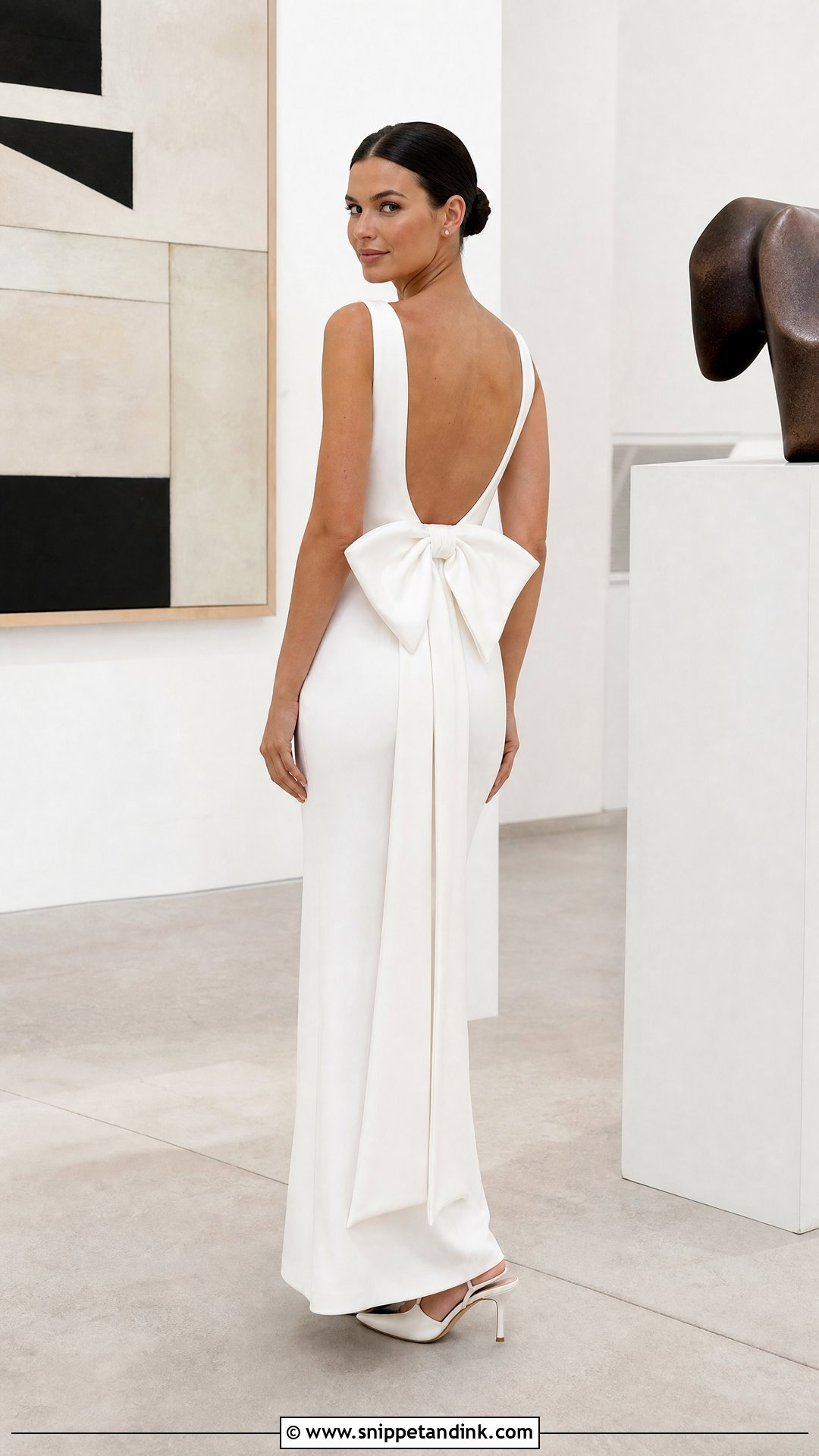
Clean lines are what stop an oversized bow from tipping into sweet. On a sleek crepe or matte satin column, a sculptural bow at the lower back reads modern, especially with long tails that stop short of the hem. Column gowns sit close to the body, so a heavy bow pulls the fabric down and sideways when you sit. Have it anchored to an internal waist stay rather than the outer fabric alone. A short veil, or none, keeps the outline clear, and a center-parted bun suits a gallery or hotel venue.
3. Mikado A-Line Wedding Dress With Detachable Bow
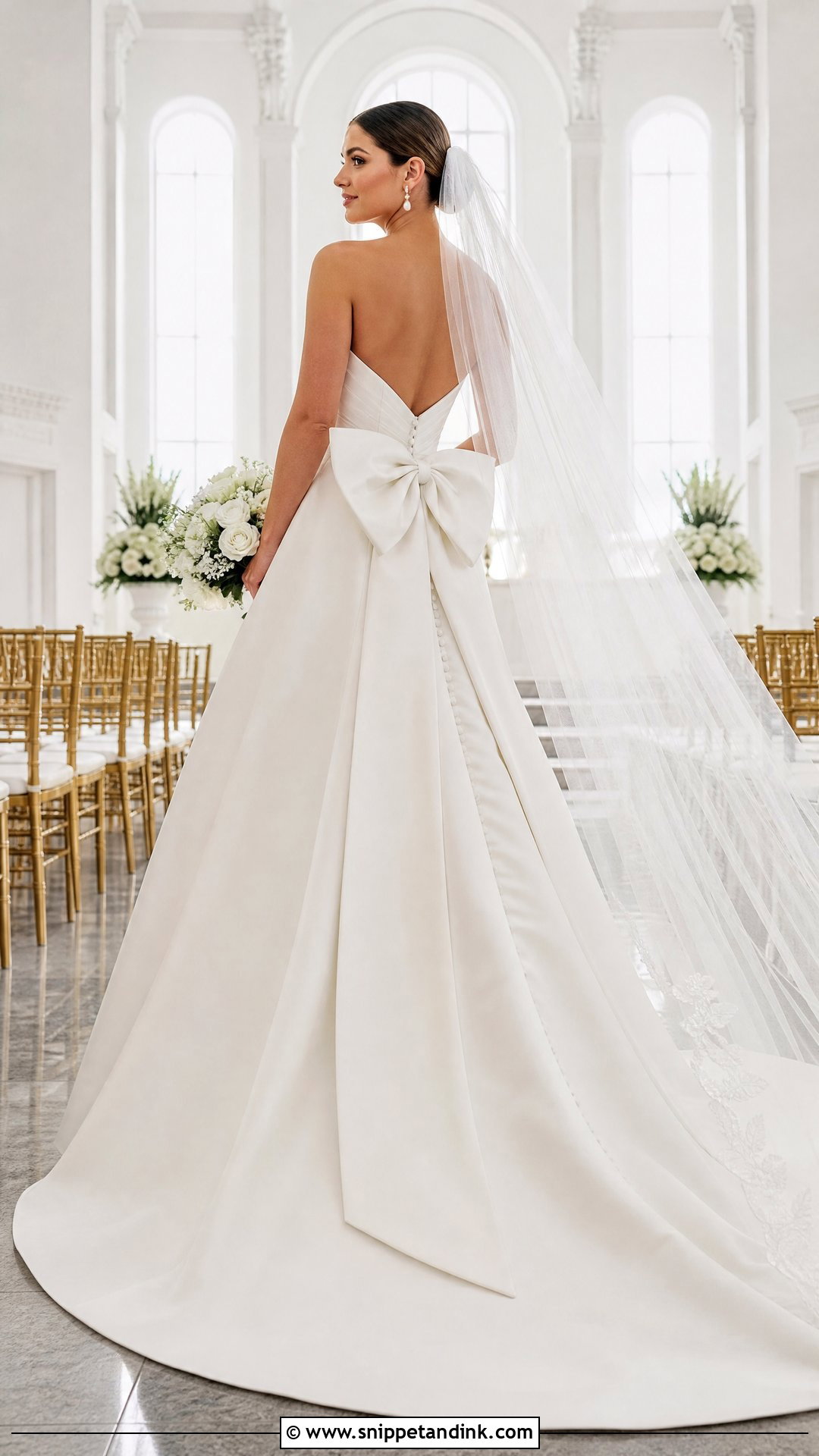
Mikado’s stiffness is the reason it holds a bow so well: the loops stand up by themselves without wire or padding. On an A-line with a defined waist, a detachable back bow gives you one look for the ceremony and a lighter one for dancing. The attachment is where these go wrong. Ask for hidden hooks or snaps sewn into the waist seam, then check the dress with the bow off; you do not want visible thread loops or a dented patch of fabric. A cathedral veil and block-heel pumps keep you steady on a long aisle.
4. Strapless Wedding Dress With Bow Train
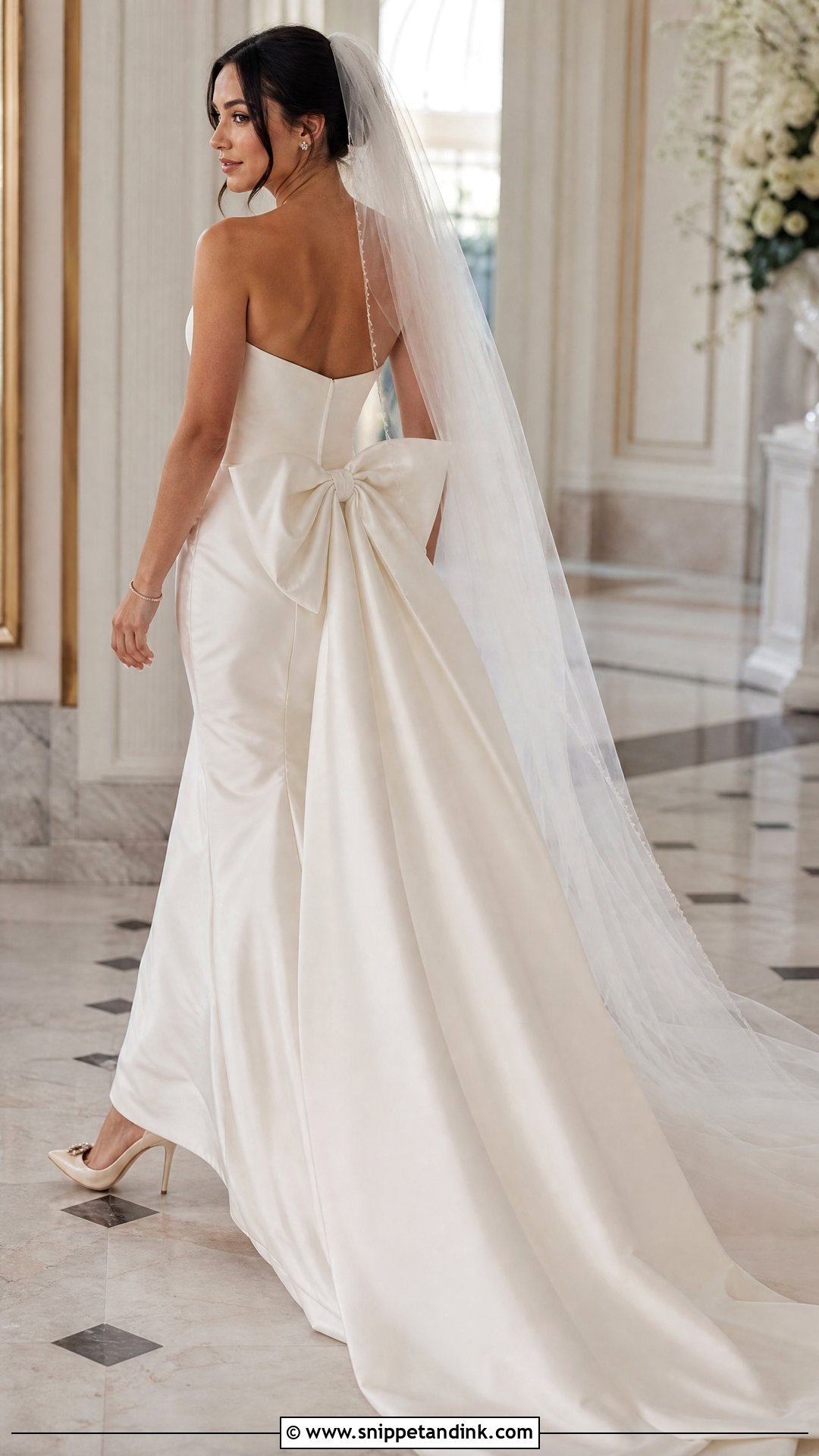
Long satin tails over a chapel train behave like a second train, and they add real weight to the back of a strapless bodice. That weight pulls the top edge backward, so the bodice needs firm boning and a snug fit at the ribs to stay where it should. Pair it with a simple raw-edge veil that ends clearly above or below the bow instead of landing on it. At fittings, walk, sit and turn a full circle. The tails should fall straight after every turn and fold neatly into the bustle.
5. Wedding Dress With Tulle Shoulder Bows
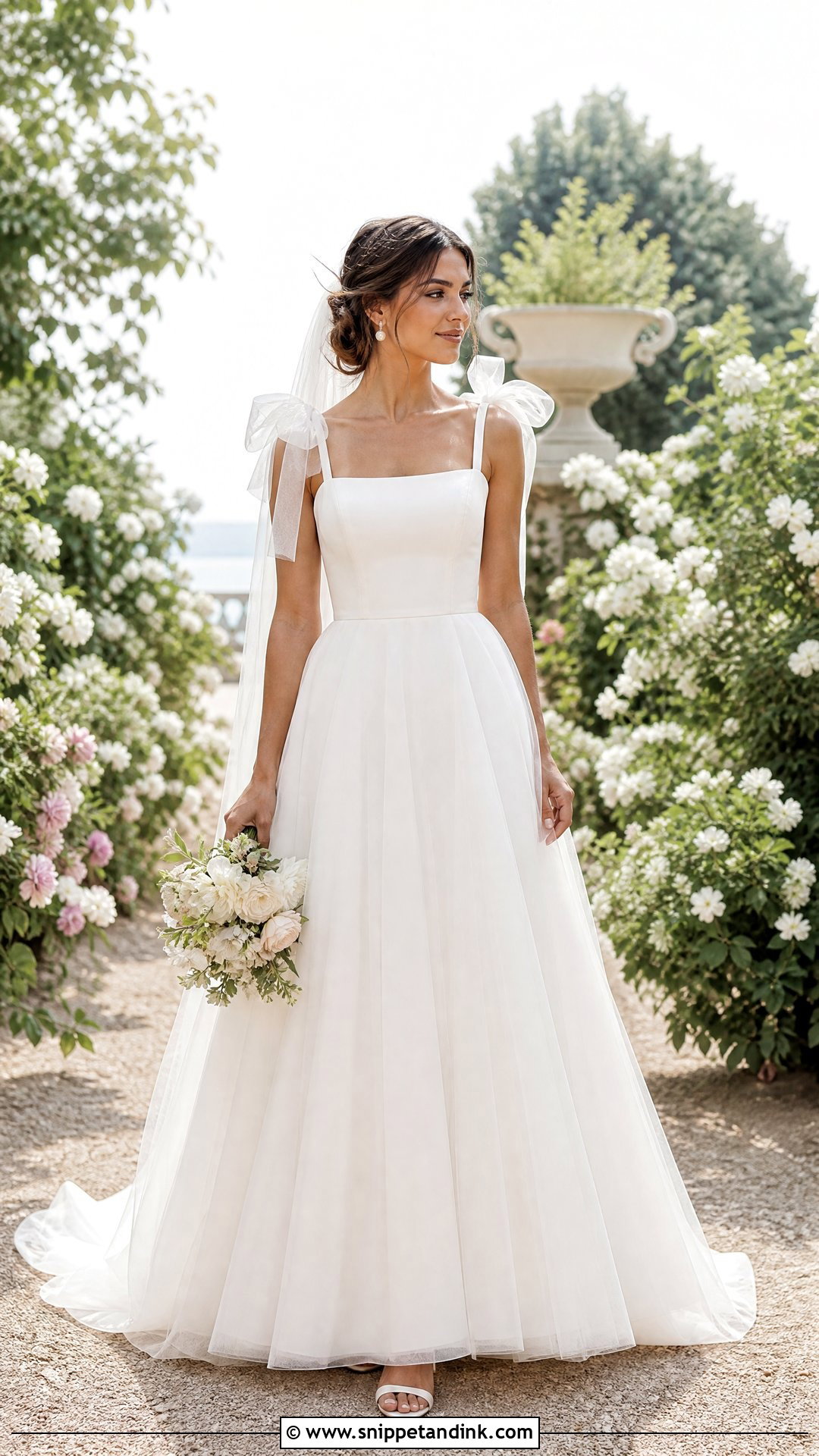
Tulle shoulder bows look weightless, and they mostly are. The catch is that tulle crushes under a hug or a veil comb and does not spring back the way satin does. I keep them modest in size and have each one tacked at two points so it cannot spin round toward the front. A square neckline on delicate straps is the natural base, over an A-line or sheath. Pearl earrings and a loose low bun keep the shoulders on view, and outdoors the translucent tulle catches daylight nicely.
6. One-Shoulder Wedding Dress With Statement Bow
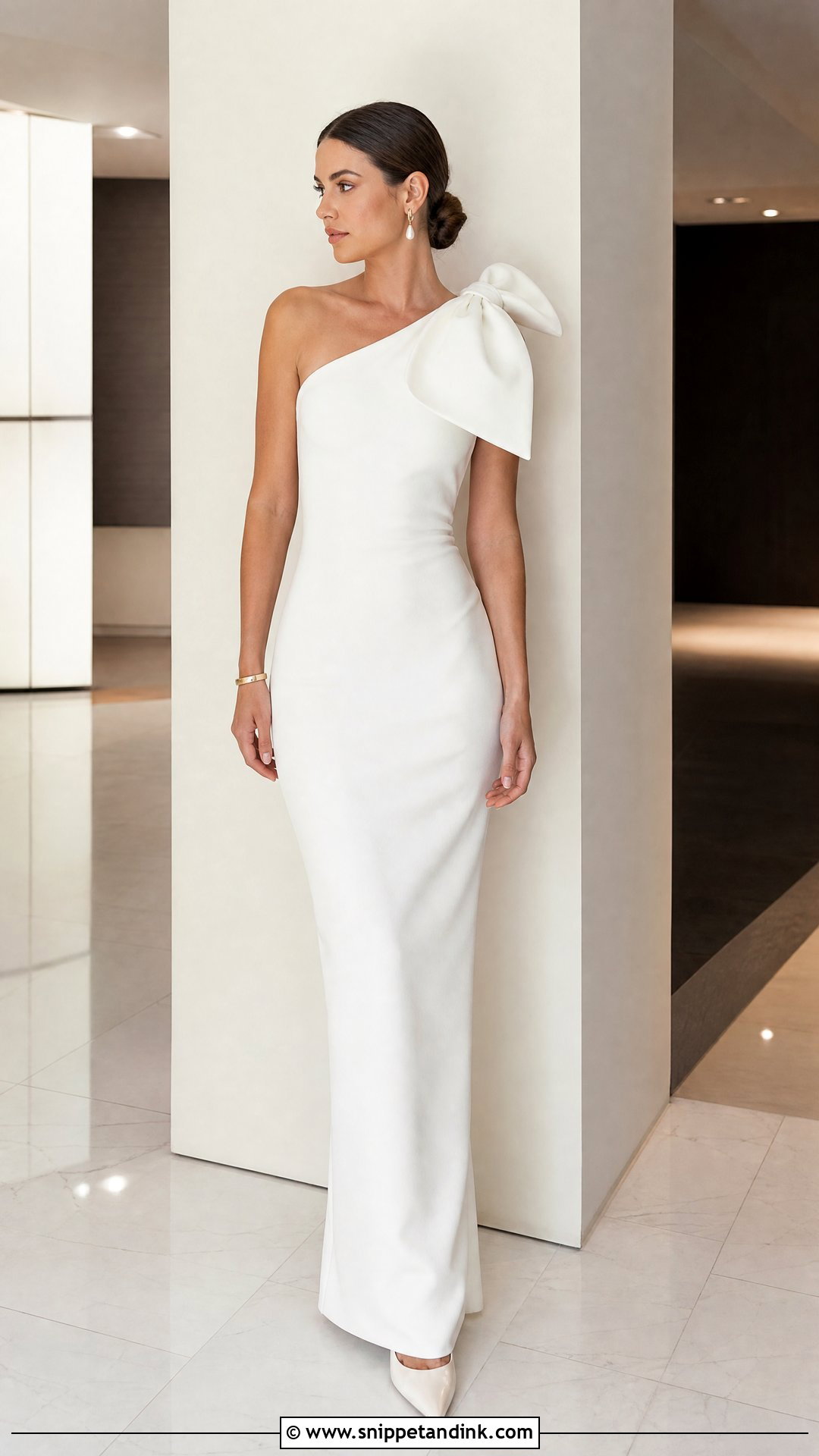
Asymmetry already draws the eye to one shoulder, so the bow there should angle upward or slightly back, framing the face without brushing your cheek each time you turn your head. Test that exact turn at the fitting. Keep the other side completely clean and skip the necklace. Fitted crepe gives a sharper result than fluid satin. A smooth ponytail or side bun sits away from the bow. If you want a veil, attach it below the bun so it falls behind the bow rather than tangling in it.
7. Lace Wedding Dress With Satin Waist Bow
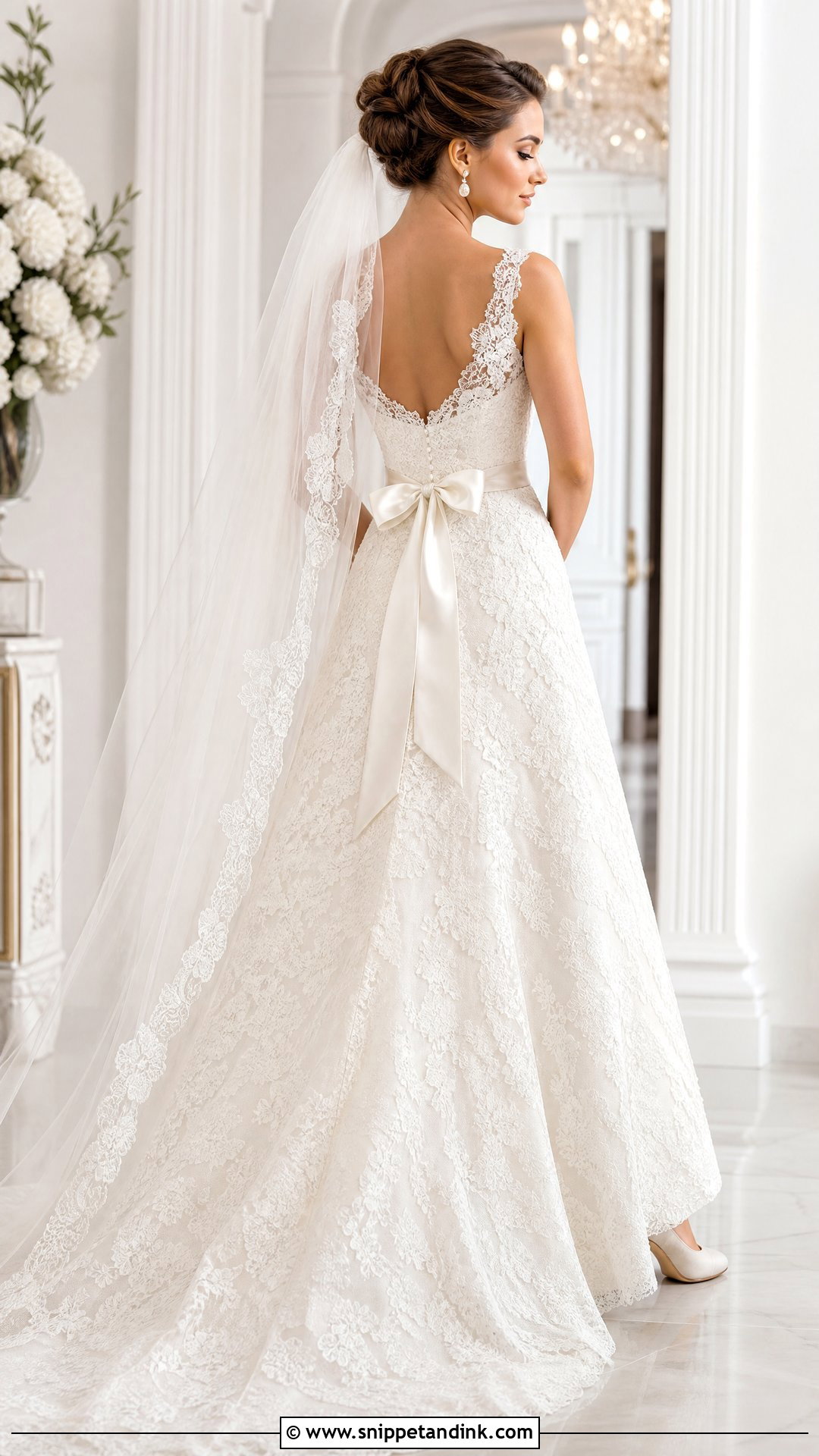
Satin against lace gives the eye a smooth band to rest on in the middle of all that pattern. On an A-line lace dress, a slim satin sash tied into a medium bow at the back defines the waist. The thing to watch is raised appliqué: a tight sash crushes it, so tie firmly enough to stay put but never so tight that it flattens what lies underneath. Match the ribbon exactly or go one shade warmer. Very wide sashes shorten the torso and slice through the lace pattern.
8. Mermaid Wedding Dress With Low Back Bow
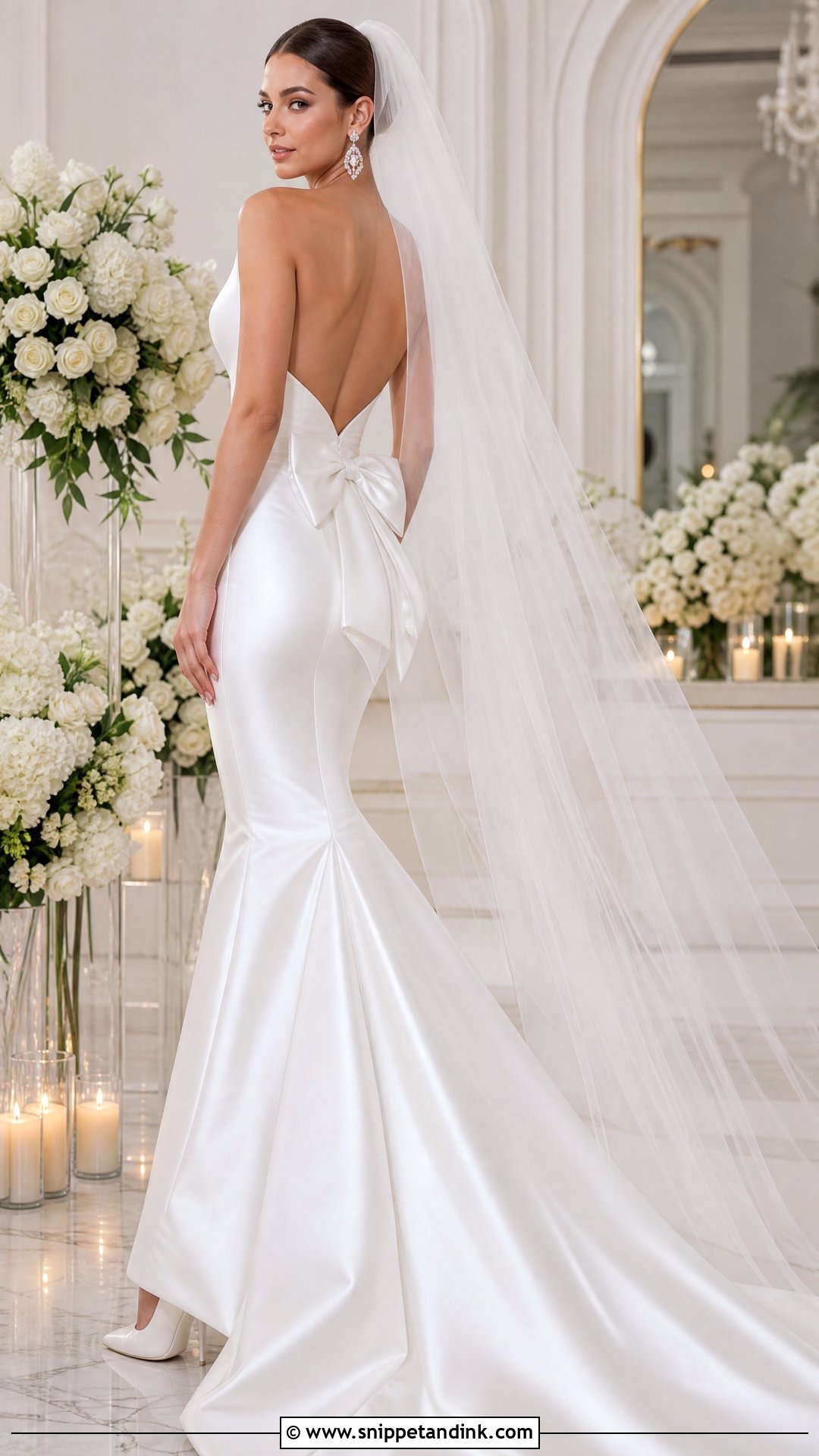
On a mermaid gown the bow belongs above the flare, never on it. Placed on the fullest part of the skirt, it interferes with how the panels swing as you walk and adds bulk exactly where the dress is meant to open out. Structured satin or organza holds the shape best. Heels with enough height stop the hem dragging, and a sleek low bun leaves the open back on show. Test the placement during alterations, particularly if buttons or a removable overskirt sit nearby.
9. Square Neck Wedding Dress With Small Back Bow
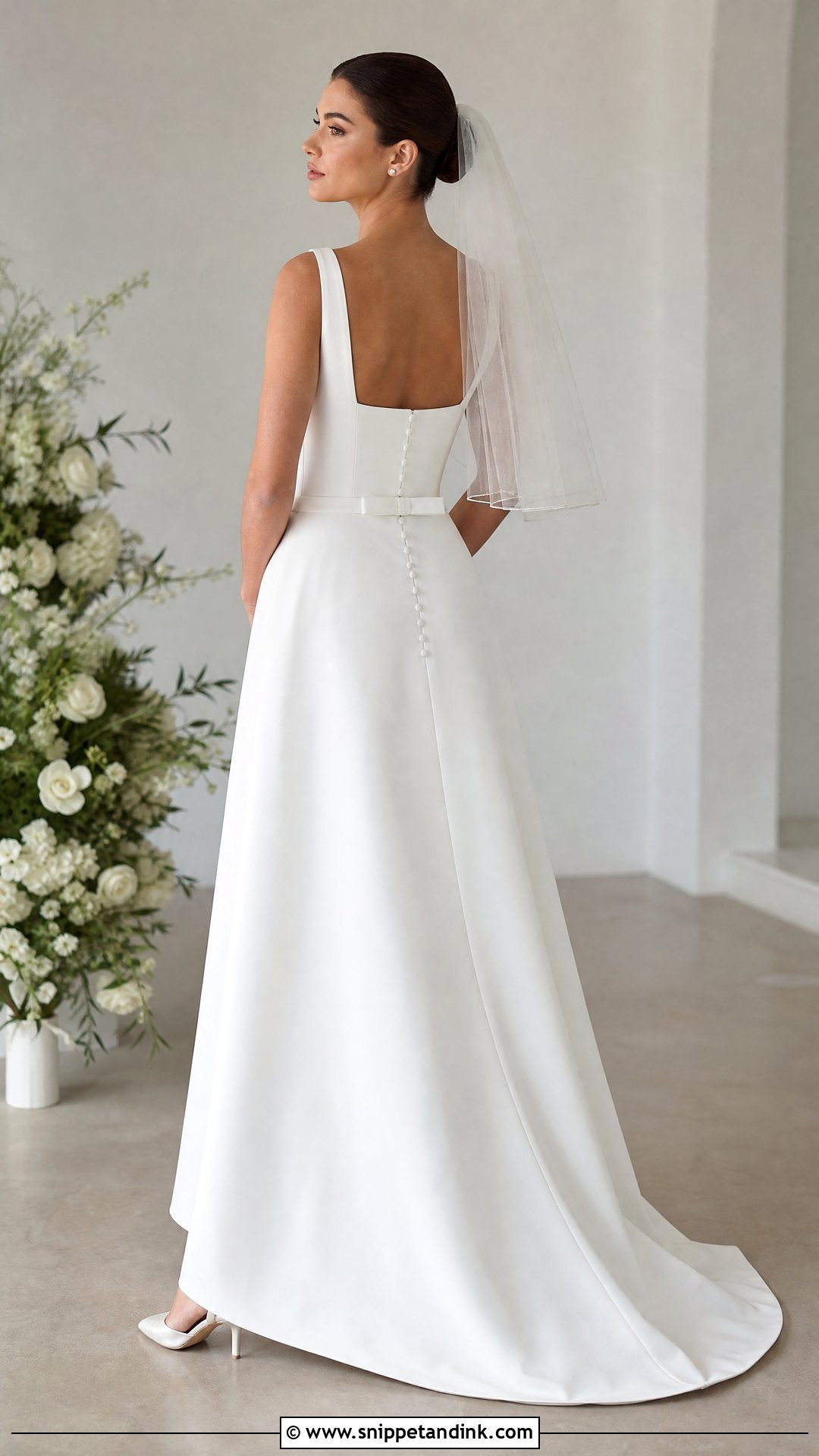
Not every bow has to be big. A small, precise one sitting just above a row of covered buttons is among the quietest details a gown can carry, and I find it ages better in photos than an oversized one. On a clean square-neck A-line in crepe or light Mikado, it gives the back a focal point without changing how you accessorize the front. A shoulder-length veil will not hide it. Pearl studs and low slingbacks keep everything in proportion, and the dress stays one you could describe in a single sentence.
10. Off-the-Shoulder Wedding Dress With Back Bow
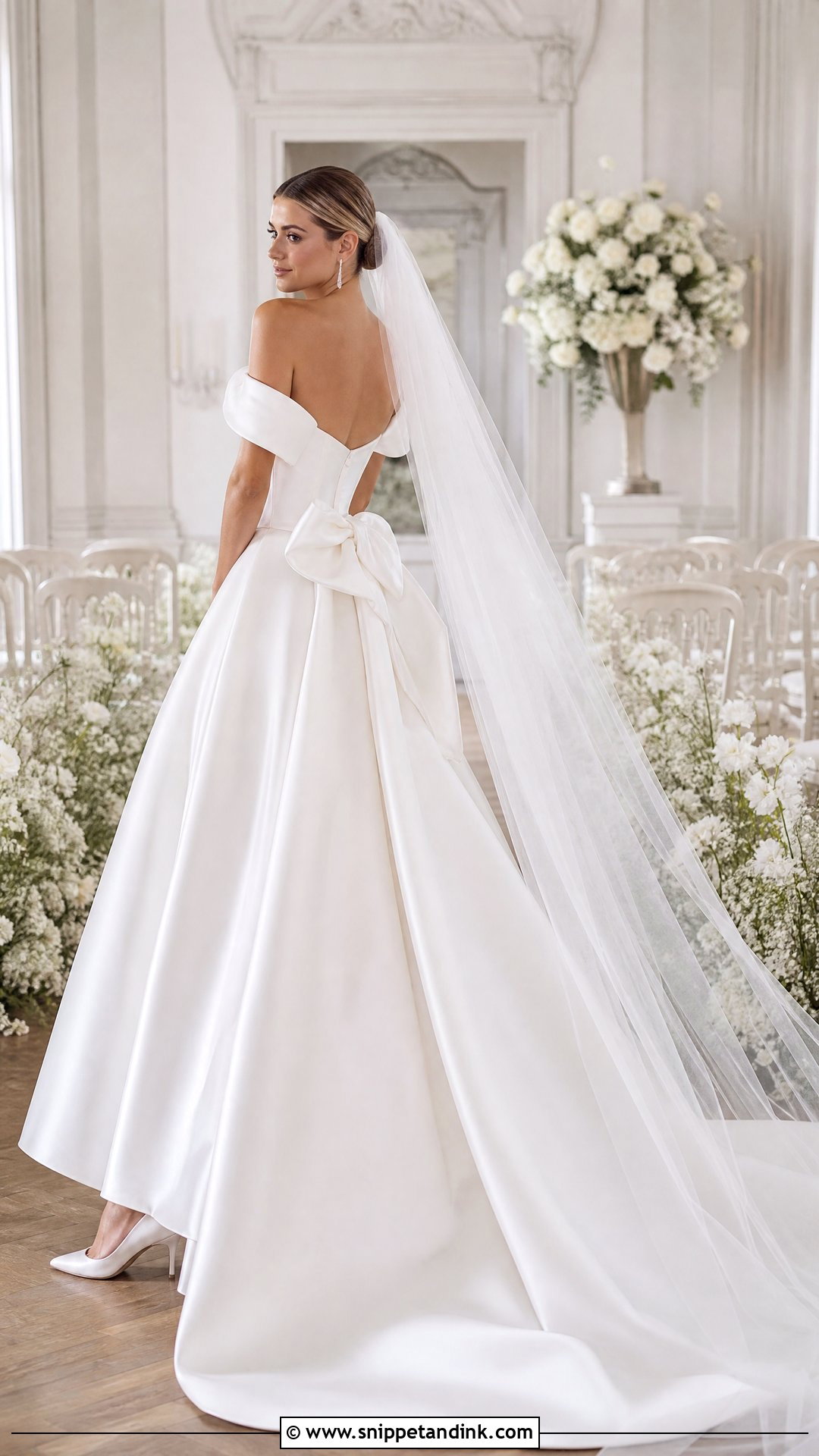
Off-the-shoulder sleeves and a back bow both pull the bodice in the same direction, backward. That is why the folded sleeves have to be supportive rather than decorative, sitting firmly on the upper arm. Place the bow at the back waist so it leads into the skirt. A low bun and an unembellished cathedral veil keep the view clear. During fittings, raise your arms and sit down; if the neckline creeps down at the front, the bodice needs tightening before anything else is touched.
11. Tea-Length Wedding Dress With Bow Belt
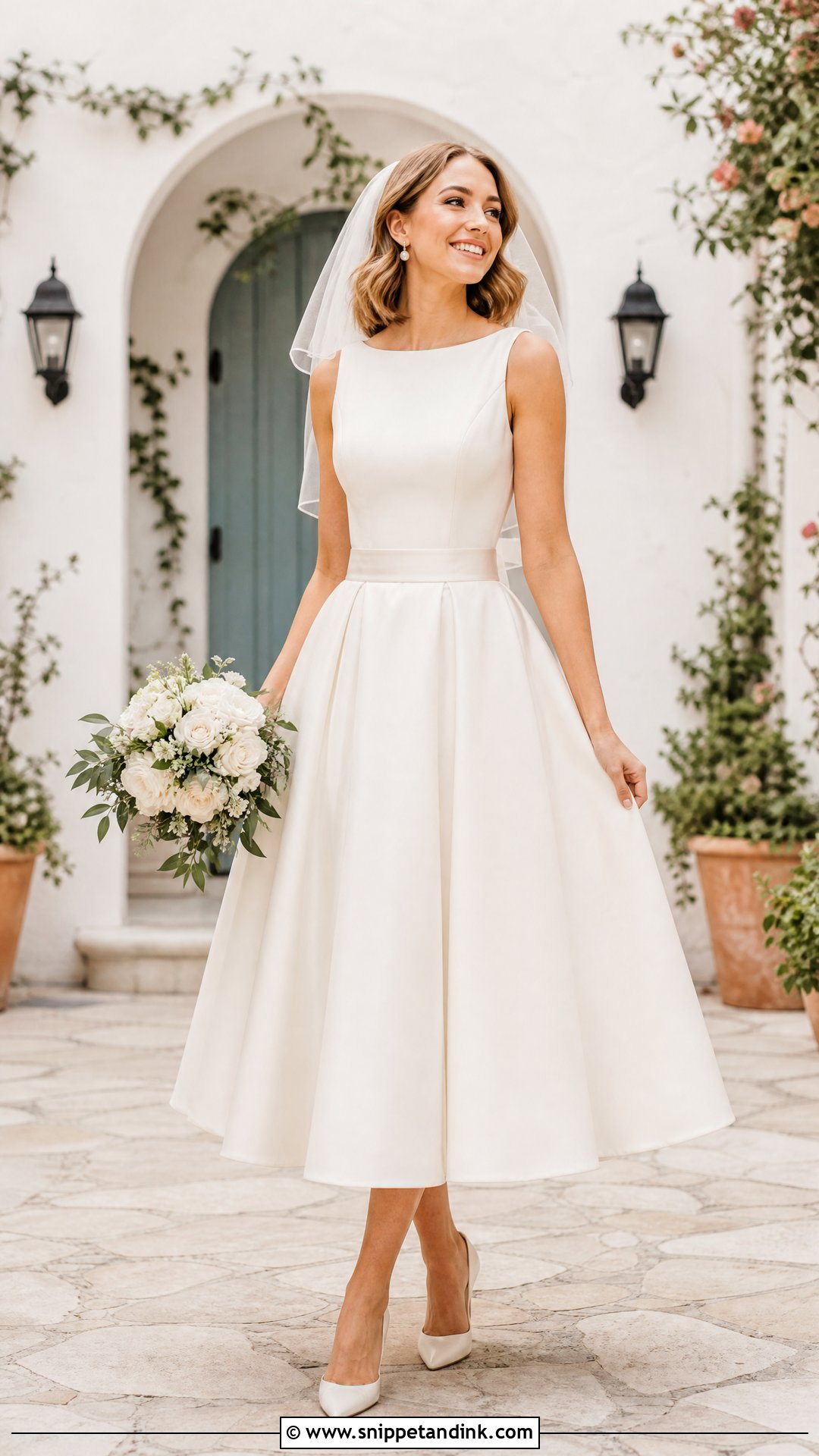
Tea length shows the shoes, and a bow belt at the side or back gives the waist a clear mark without adding volume to the skirt. Proportion is what makes it look intentional. Keep the tails ending well above the hem, since tails that hang to the skirt edge look like a ribbon that has come loose. Pointed pumps and a birdcage or shoulder-length veil suit the shorter length, as does a waved bob. It is a practical outfit for a courthouse ceremony and an easy reception change.
12. High Neck Wedding Dress With Bow Back
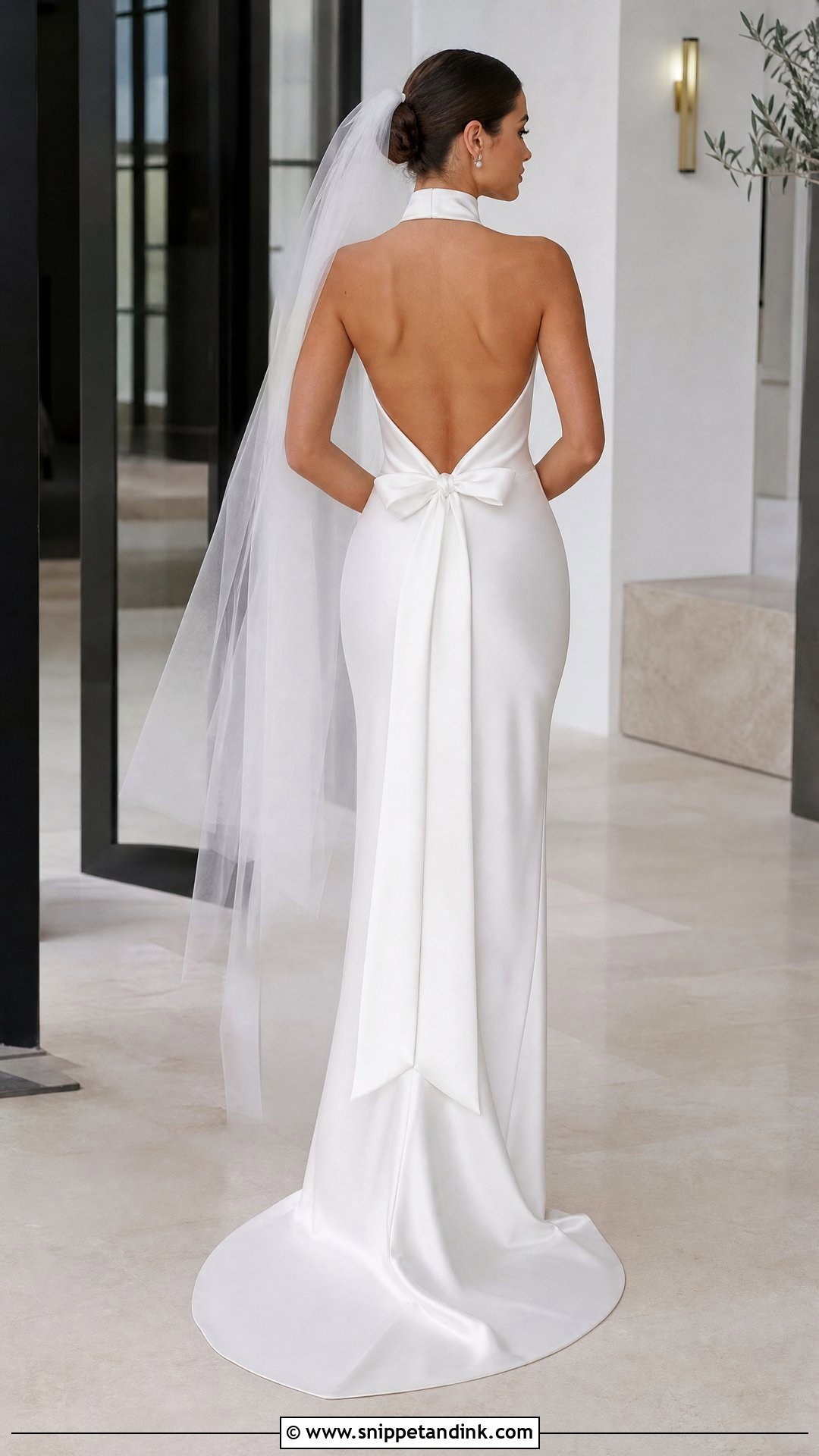
From the front, a high neck reads reserved, which is exactly why a bow at an open back lands so well when you turn around. On a fitted crepe or satin gown with a bateau, mock-neck or jewel neckline, I would place a medium bow near the bottom of the back opening with narrow tails toward the waist, and match its fabric closely to the gown. Then think about the reception chairs. A bow at shoulder-blade height gets pressed flat every time you lean back, so a lower placement is kinder.
13. Basque Waist Wedding Dress With Sculptural Bow
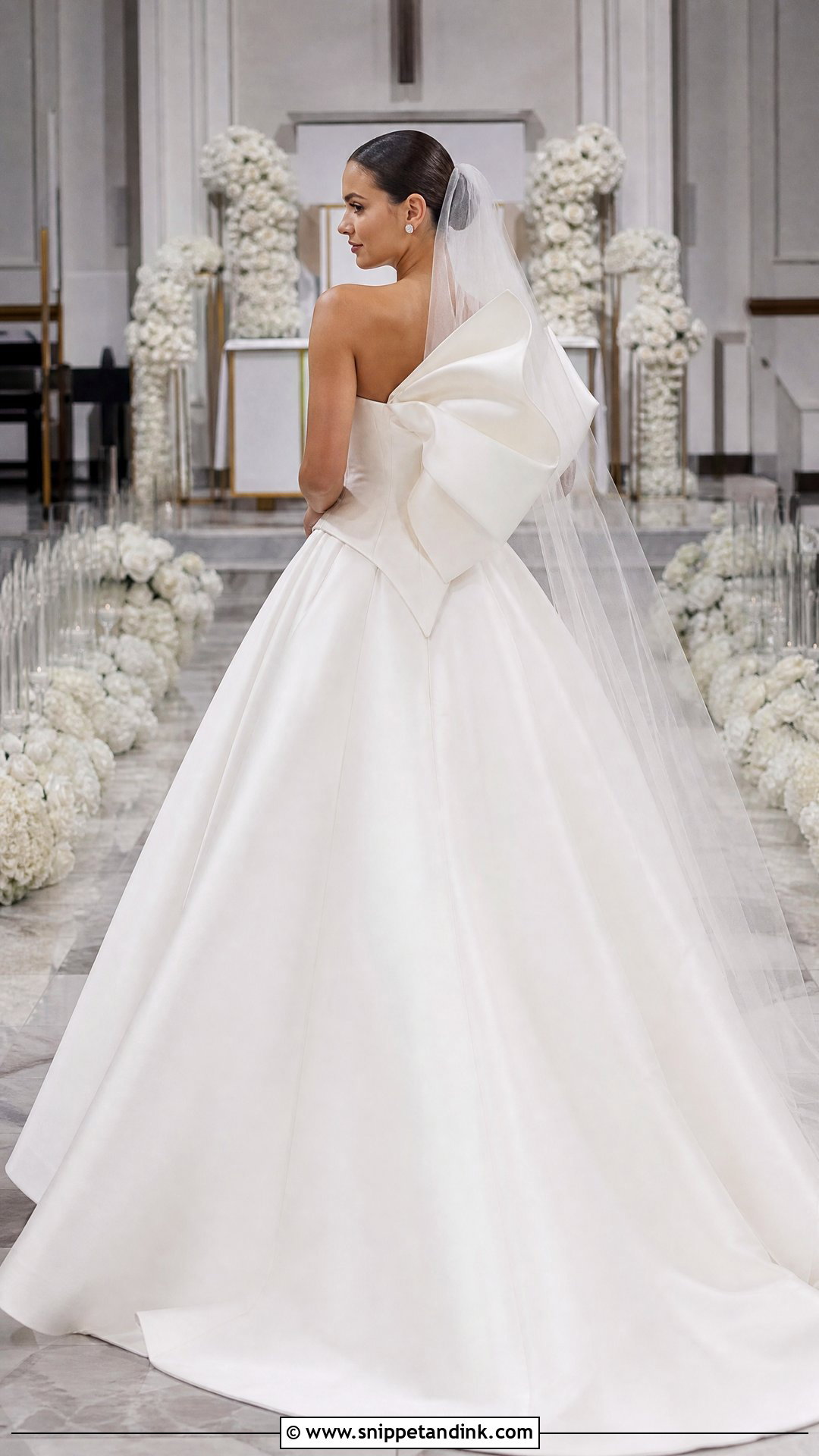
Two strong features compete here: the point of a basque waist and a sculptural bow. Put the bow on that point and you lose both. I ask for it higher on the back, so the V and the loops each read clearly in photographs. Mikado or structured satin can carry both shapes without collapsing. A strapless bodice or narrow straps keep the outline clean, a sleek updo stops it getting busy, and platform pumps under the full skirt add height nobody sees.
14. Floral Wedding Dress With Organza Bow
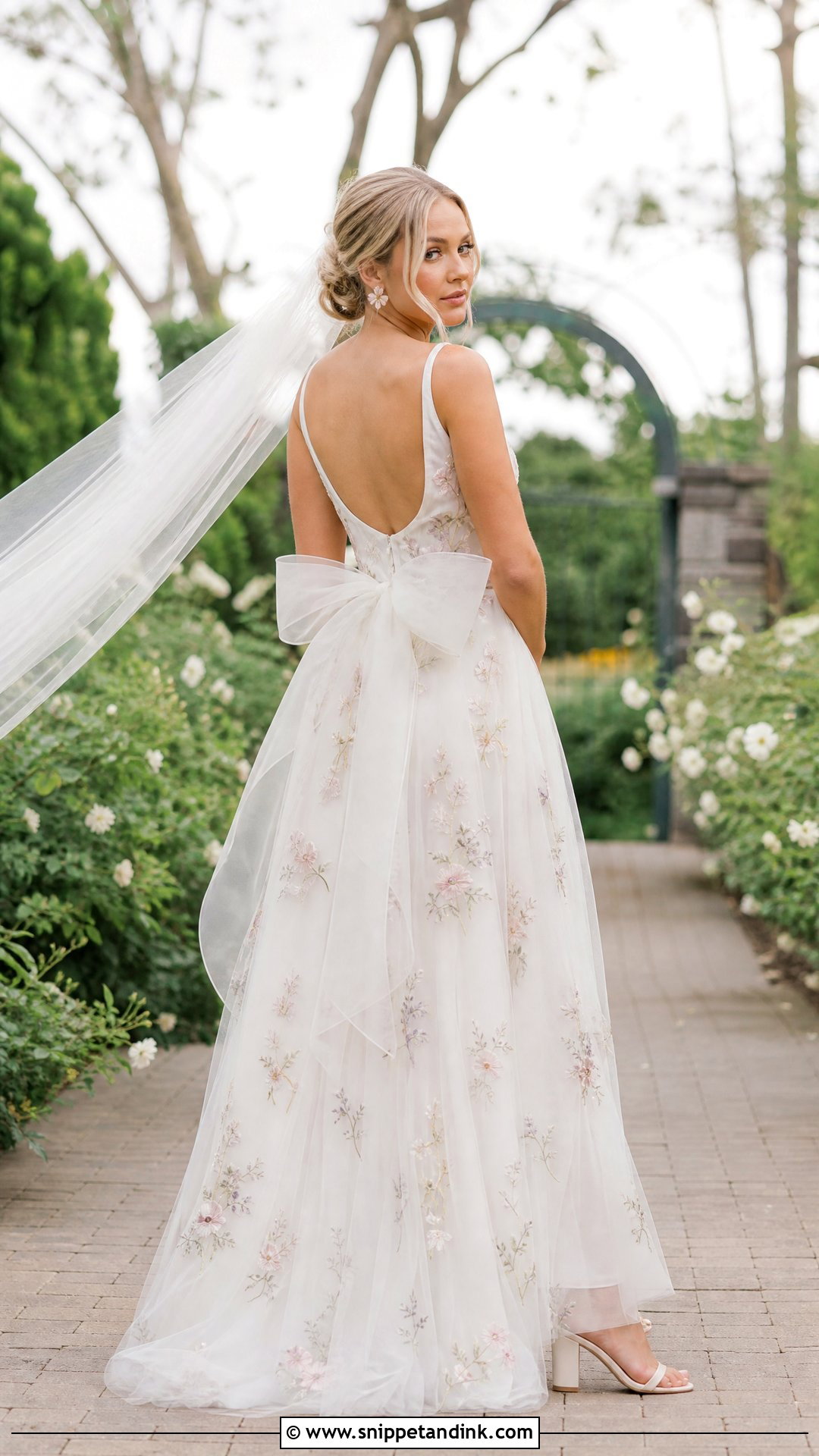
Sheer organza lets embroidered or appliquéd flowers show through the bow, which is the whole reason to choose it over satin on a floral gown. Pick a bow color that repeats one of the soft tones in the embroidery so it reads as part of the dress. Organza creases sharply, so keep it out of the folds of the garment bag and steam it lightly on the morning. A plain tulle veil and small earrings are enough. A flower crown would be one floral element too many.



15. Wedding Dress With Bow Straps
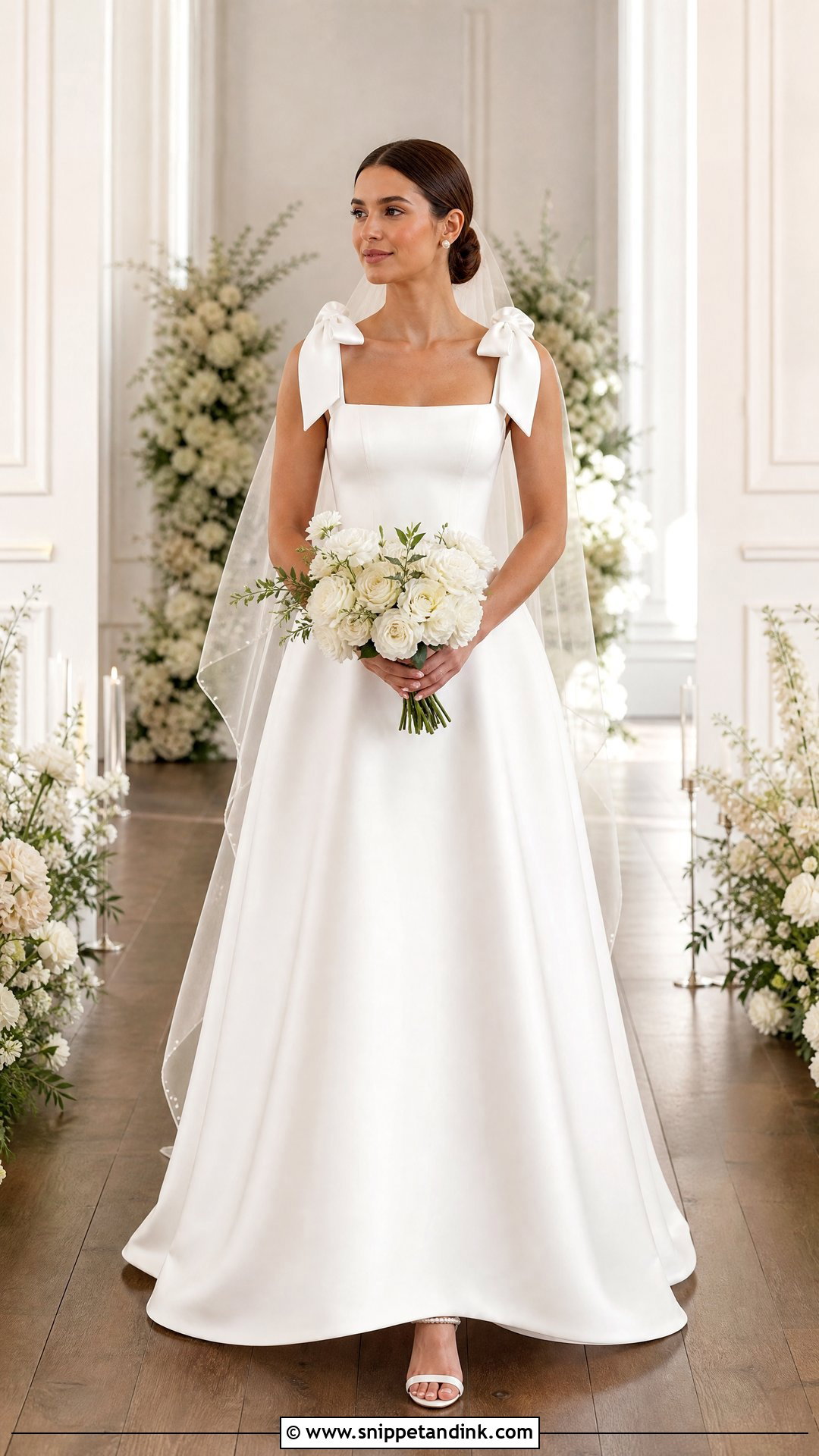
Bow straps look tied, but they should never rely on the tie. If they can come undone, they will, usually mid-hug, so I ask for each bow to be stitched in place over a fixed strap. Medium satin bows look polished; tulle or organza ones look softer. Trim the tails so they do not rub the upper arm all evening. Bare collarbones and a fingertip veil attached below a low bun let the shoulders lead.
16. Wedding Dress With Asymmetric Hip Bow
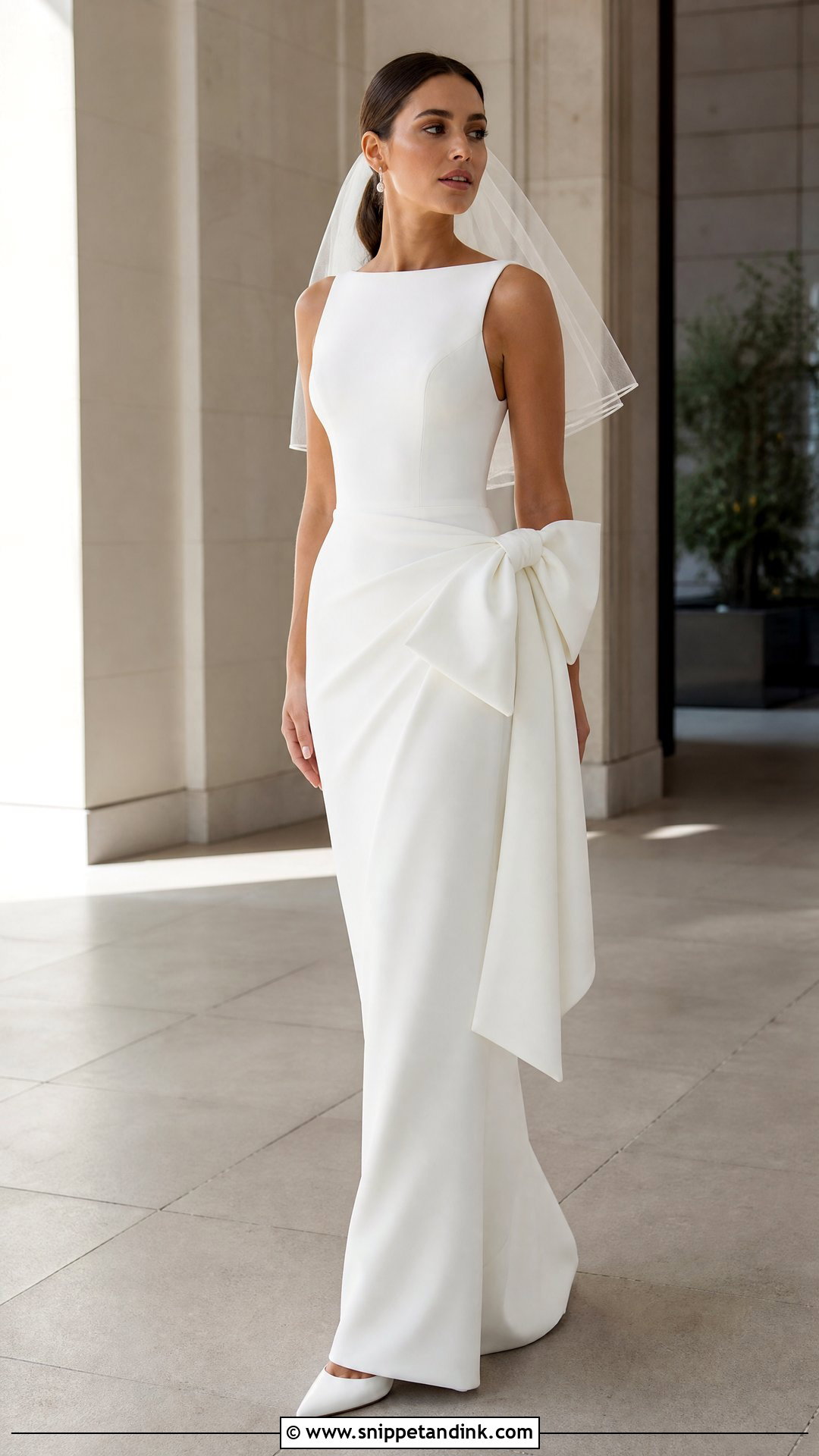
An off-center bow pulls the eye sideways, so where it lands matters more than its size. Set at the waist or just above the hip bone, it defines your shape; dropped onto the widest point of the hip, it adds width. I check this from the front, side and back, and again with you seated. Smooth crepe or satin on a fitted sheath or column keeps everything else quiet. A sleek low ponytail and a short veil hold attention near the upper body.
17. Wedding Dress With Micro Bows
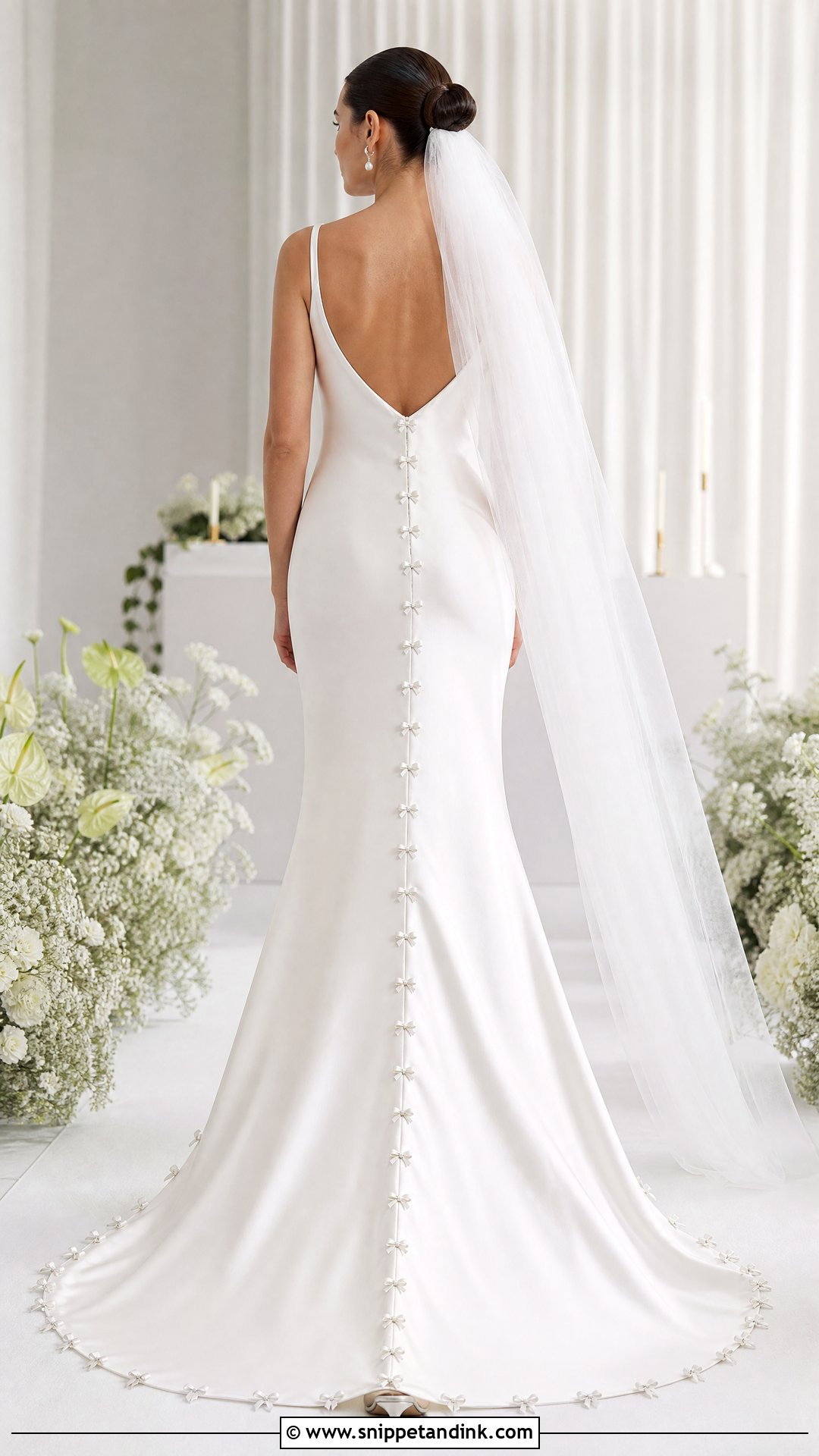
Tiny bows work in a row and fall apart when scattered. Keep them to one defined area, such as down the back closure, along the straps or at the edge of the train, with even spacing between them. On a gown with covered buttons, alternate the two details rather than crowding them together. Every micro bow should be stitched through, not glued, because hours of movement loosen anything that is not sewn. A neat bun keeps the back uncovered and a plain veil leaves the pattern visible.
18. Wedding Dress With Removable Bow Cape
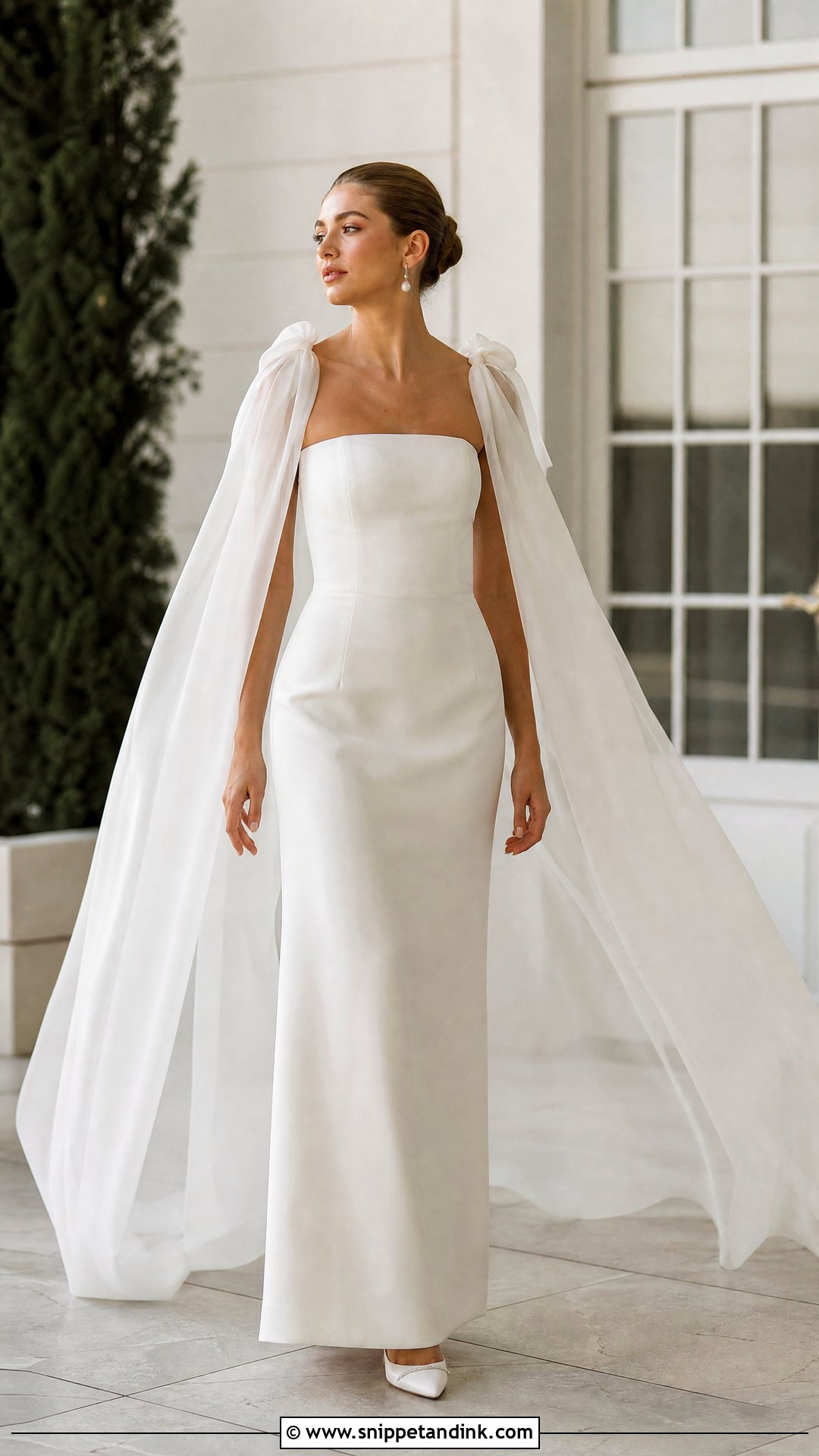
A cape that ties on with bows at the shoulders gives you a covered ceremony look and a clean reception one without changing dresses. Sheer tulle or organza keeps the strapless or sleeveless gown visible underneath. The fastening is the part I check most closely. Clips hidden under the bows come off faster than untying knots in front of guests, and they will not tug the neckline out of place. Skip a veil if the cape reaches the floor, and choose a smooth updo so the ties never catch in your hair.
19. Short Reception Wedding Dress With Back Bow
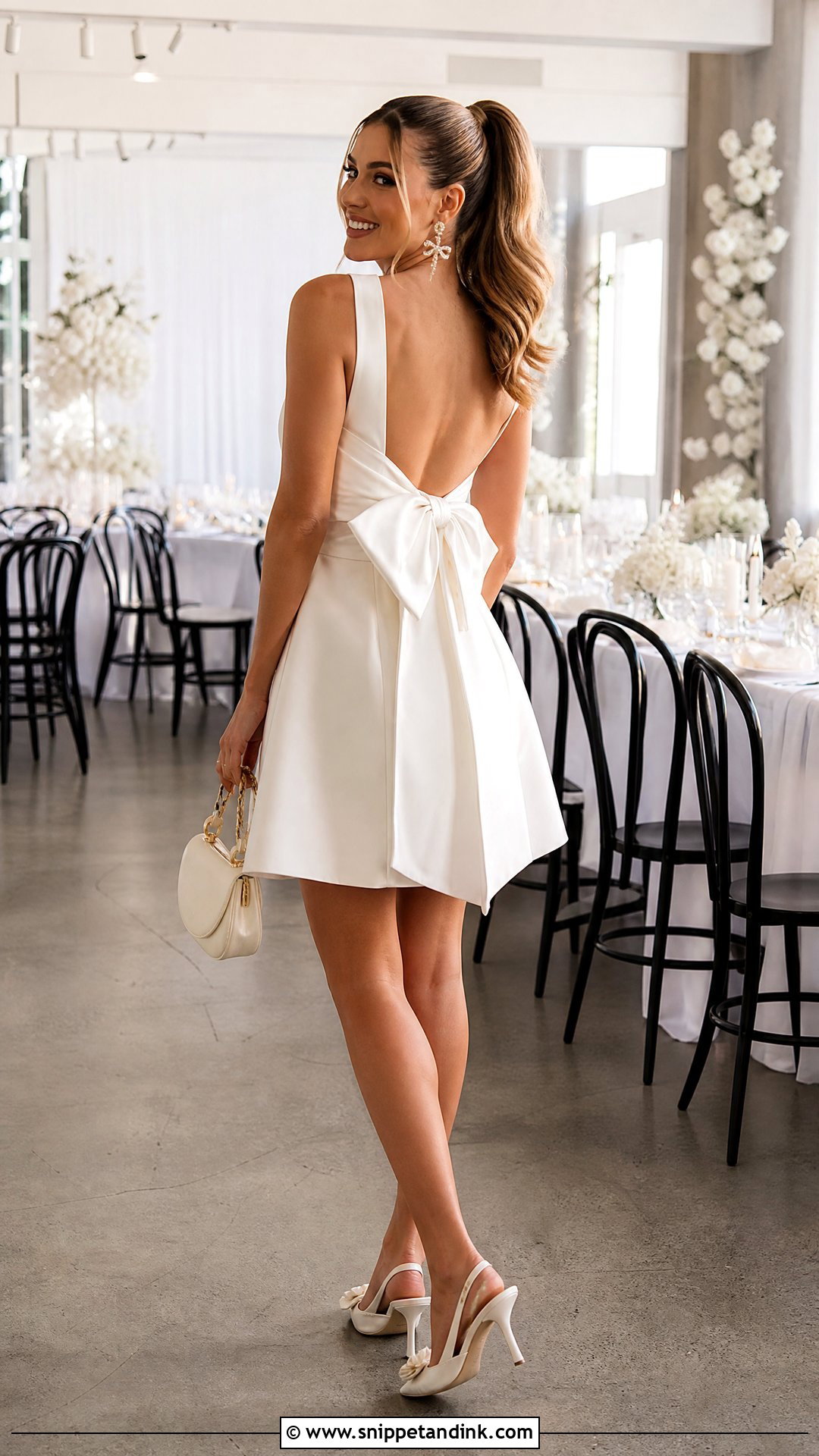
A short dress puts the bow at eye level on the dance floor, and every spin shows it off. A mini or above-the-knee A-line needs enough structure in the bodice to carry a medium or large bow without sagging, which is why Mikado and jacquard outlast soft satin here. Keep the tails ending above the hem so they do not flick against your legs. Slingbacks and statement earrings suit the party mood, and a high ponytail keeps the bow in view. Sheer tights are an option if you want more coverage.

20. Pearl Wedding Dress With Satin Bow
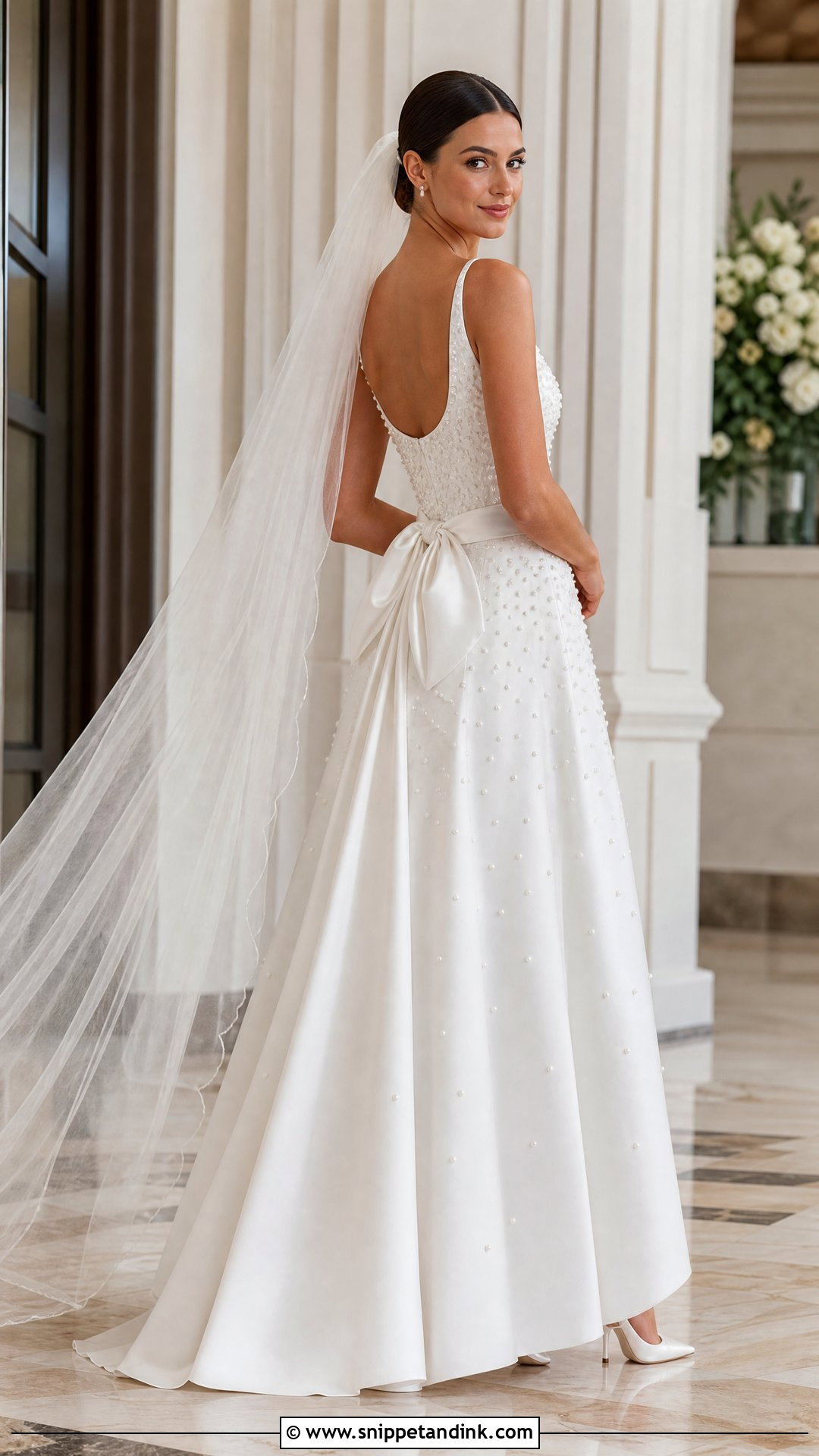
Pearls and a bow on the same back can look crowded, or they can look planned, and the difference is where the bow lands. Sit it over an area with little or no beading so it lies flat and does not rub pearls loose through the day. Scattered pearls across the bodice with a smooth satin bow at the waist gives texture without overload. Then restrain the accessories to pearl studs, a raw-edge veil and plain satin heels. Pearl gloves, shoes and hairpins all at once would tip it over.
Sitting Down Is Where Back Bows Suffer
Most damage to a back bow happens in the car and at dinner. A car seat presses the loops flat for the whole drive, and a straight-backed reception chair does the same through an hour of speeches.
- In the car, sit forward and have someone lift the bow clear of the seat back, or travel with a detachable bow in its own box.
- At the reception, ask the venue whether your chair can be one without a high solid back, or perch slightly forward through dinner.
- Have the bustle done before you sit down to eat, so the tails are off the floor and out from under you.
Reviving a flattened bow
Open each loop gently from the inside and stuff it with tissue paper for ten minutes. A handheld steamer kept moving a short distance from Mikado or polyester satin relaxes the creases, but silk satin can water-spot, so steam it from the inside of the loop. Never press an iron straight onto a bow on the day. Tulle recovers best with a light steam and a shake. A small steamer and a few sheets of tissue in the emergency kit cover all of it.
Ask to See the Back Before You Say Yes
A bow should look as though the dress was built around it, not added the week before. Columns, ball gowns, lace dresses and reception minis can all carry one; the right version comes down to scale, fabric, placement and weight. Make sure you can walk, sit and dance without crushing or dragging it, and keep your accessories quieter than the bow. At every fitting, hold up a hand mirror and study the back, because that is the view guests have through the vows, and the one that gives you an equally impressive exit.
You'll Like These Ideas:









Leave a Reply