
Suzanne Neville gowns are built from the inside out. The British designer is known for precise internal corsetry, so the shape you see in the mirror comes from boning and structure rather than from you holding your breath. Her styles range from plain satin to lace overlays, drop waists, sculpted necklines and full ball gowns. When I bring a bride into a structured gown like this, we start with her proportions, the venue and the season, then look at how the fabric moves and how the neckline frames her face. Many of these designs have detachable pieces, which can give you a second look for the evening. Below are twenty directions, each with the shoes, jewelry and veil I’d pair with it.
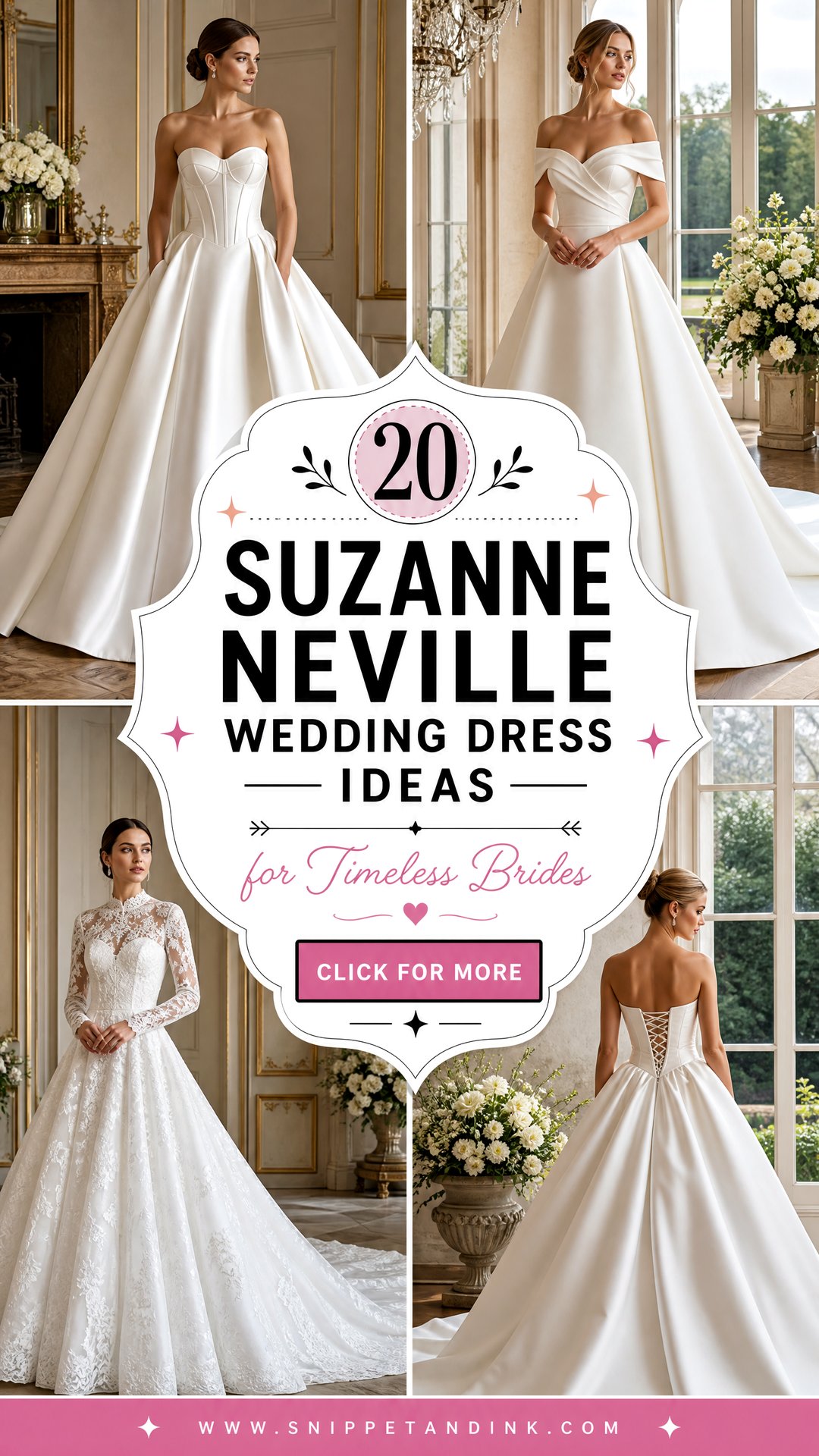
What Built-In Boning Means for Your Fittings
A gown with a properly built corset fits differently from a dress that relies on a zip and some elastic. The boning is shaped to sit against your ribs and waist, which is what gives that sculpted line, but it also means the bodice needs to match your body closely. Small changes in fit show straight away.
Your first appointment
Wear smooth nude underwear and bring shoes close to the height you’ll wear on the day. Sample gowns are often clipped at the back to fit, so look at the shape, not the exact fit. I’d try at least one completely different silhouette even if you’re sure of your style; brides often surprise themselves.
Alterations on a boned bodice
Taking in a corseted bodice is skilled work, because each bone channel may need moving. Ask the boutique who does their alterations and whether they’ve worked with this kind of construction. Expect two or three fittings, and try to keep your weight steady in the final couple of months, since a corset that’s perfect at the last fitting can feel tight or loose a few weeks later.
At every fitting, sit down, bend forward and lift your arms. If the top edge digs in or gapes, say so then. It’s much easier to fix at that stage than in the final week.
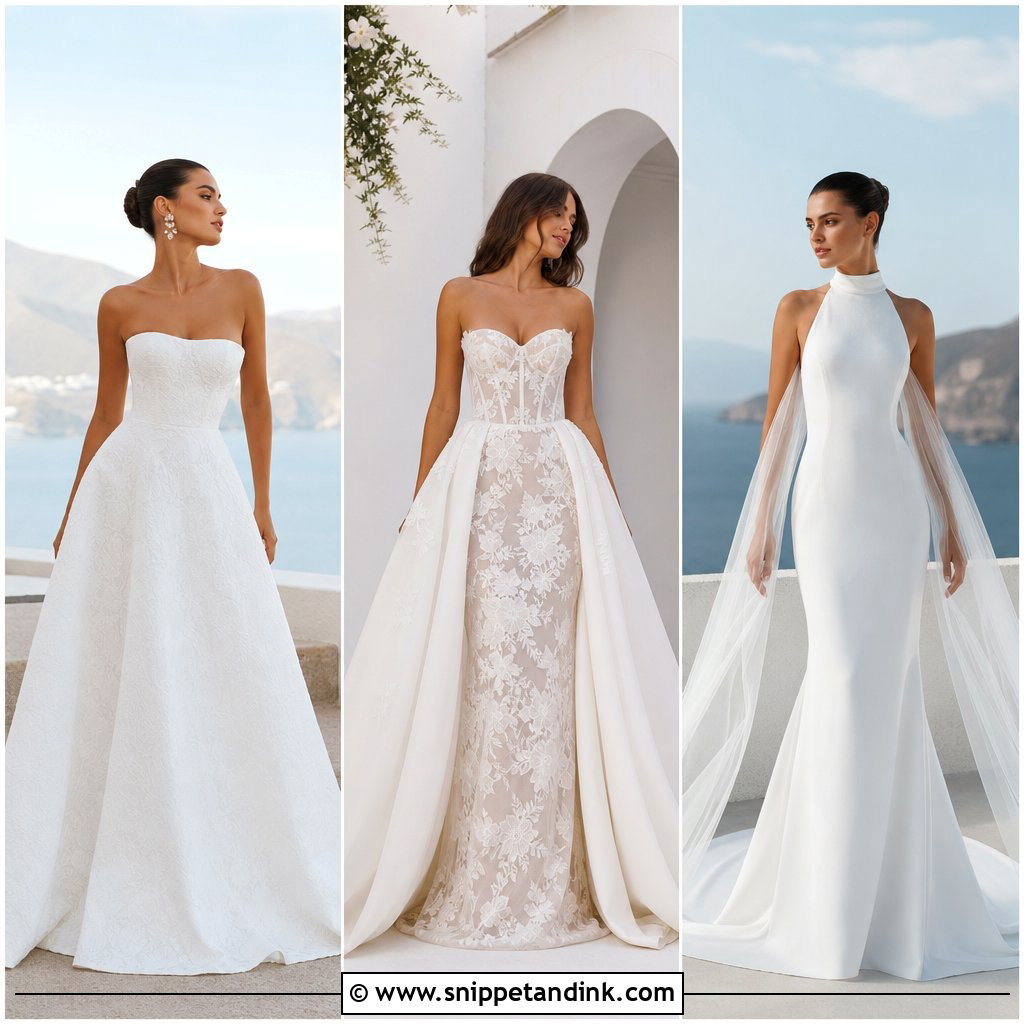
1. Suzanne Neville Strapless Corset Wedding Dress
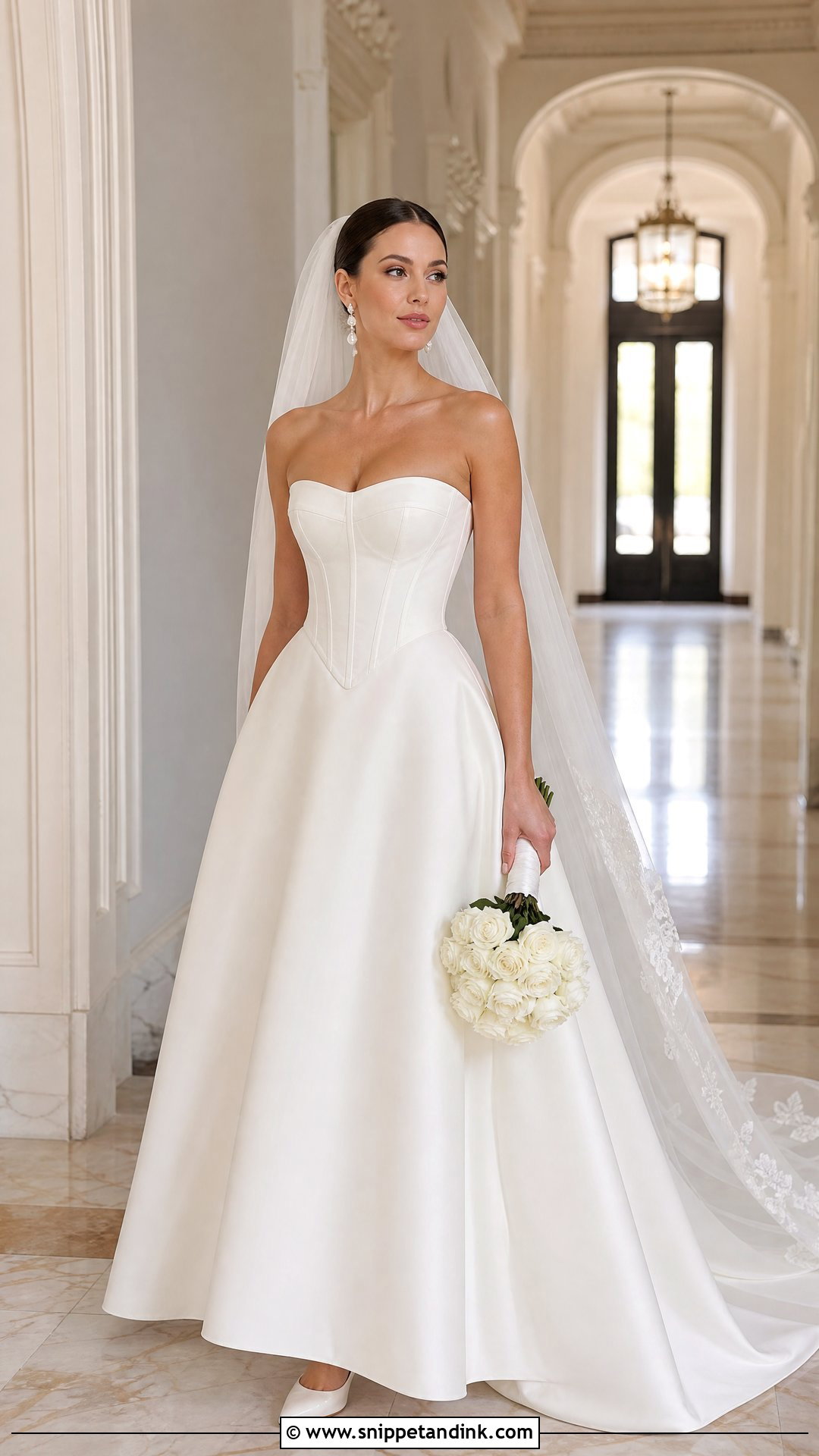
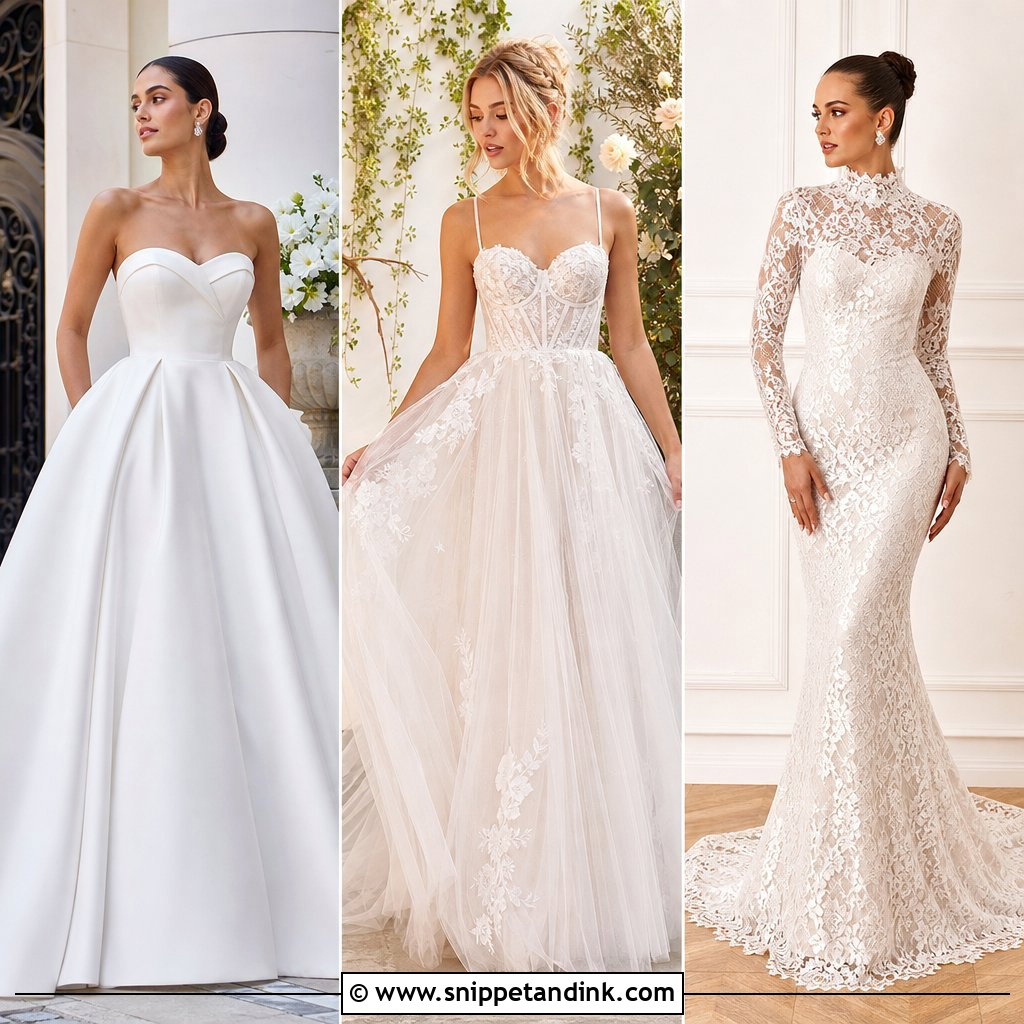
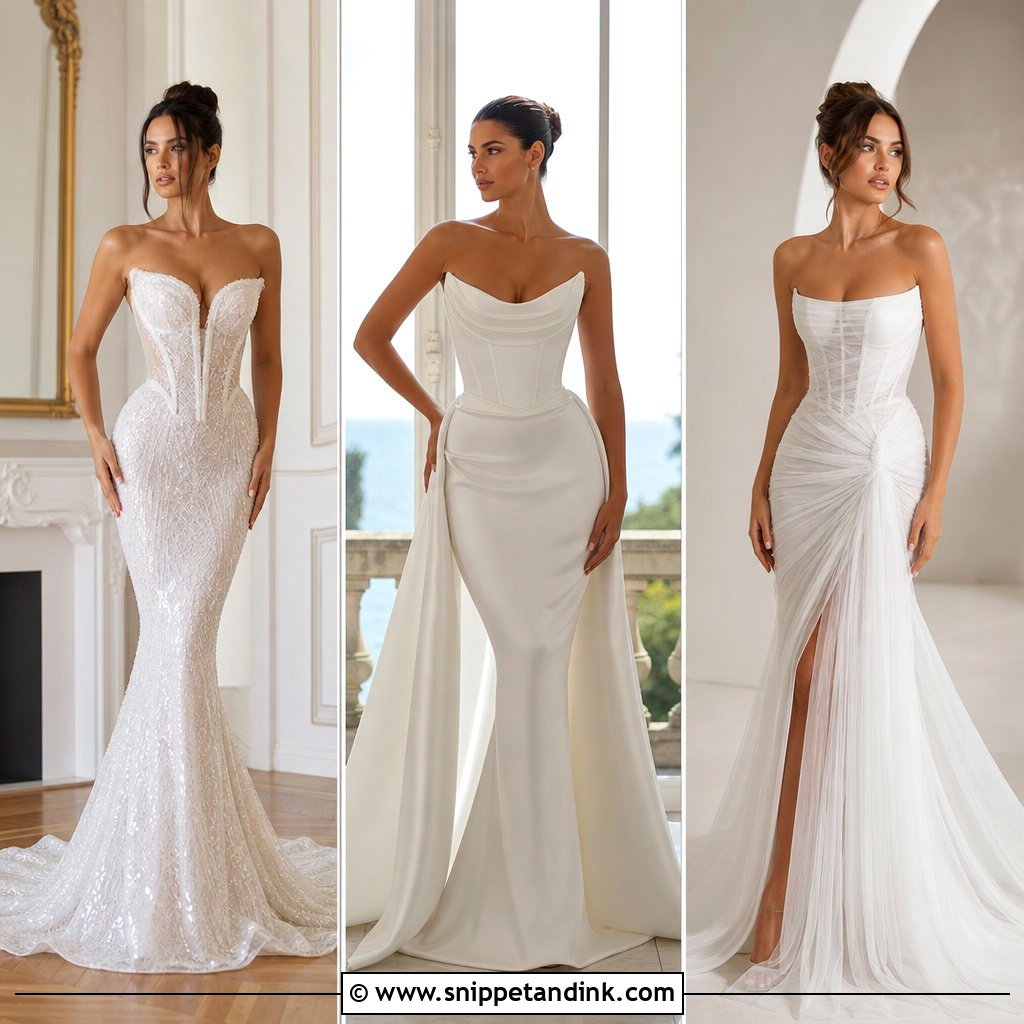
A strapless corset bodice holds itself up, which is the whole point. The boning sits close to the ribs and grips just above the waist, so nothing needs hitching. Pair a softly curved neckline with a smooth A-line skirt that moves from ceremony to dance floor. A cathedral veil gives drama to a plain surface, and ivory pointed pumps, pearl drops and a compact white rose bouquet are all it needs. Keep the neck bare. At the fitting I ask brides to sit, walk and lift both arms: if the top edge gapes when you reach forward, it needs taking in.
2. Suzanne Neville Satin Ball Gown Wedding Dress
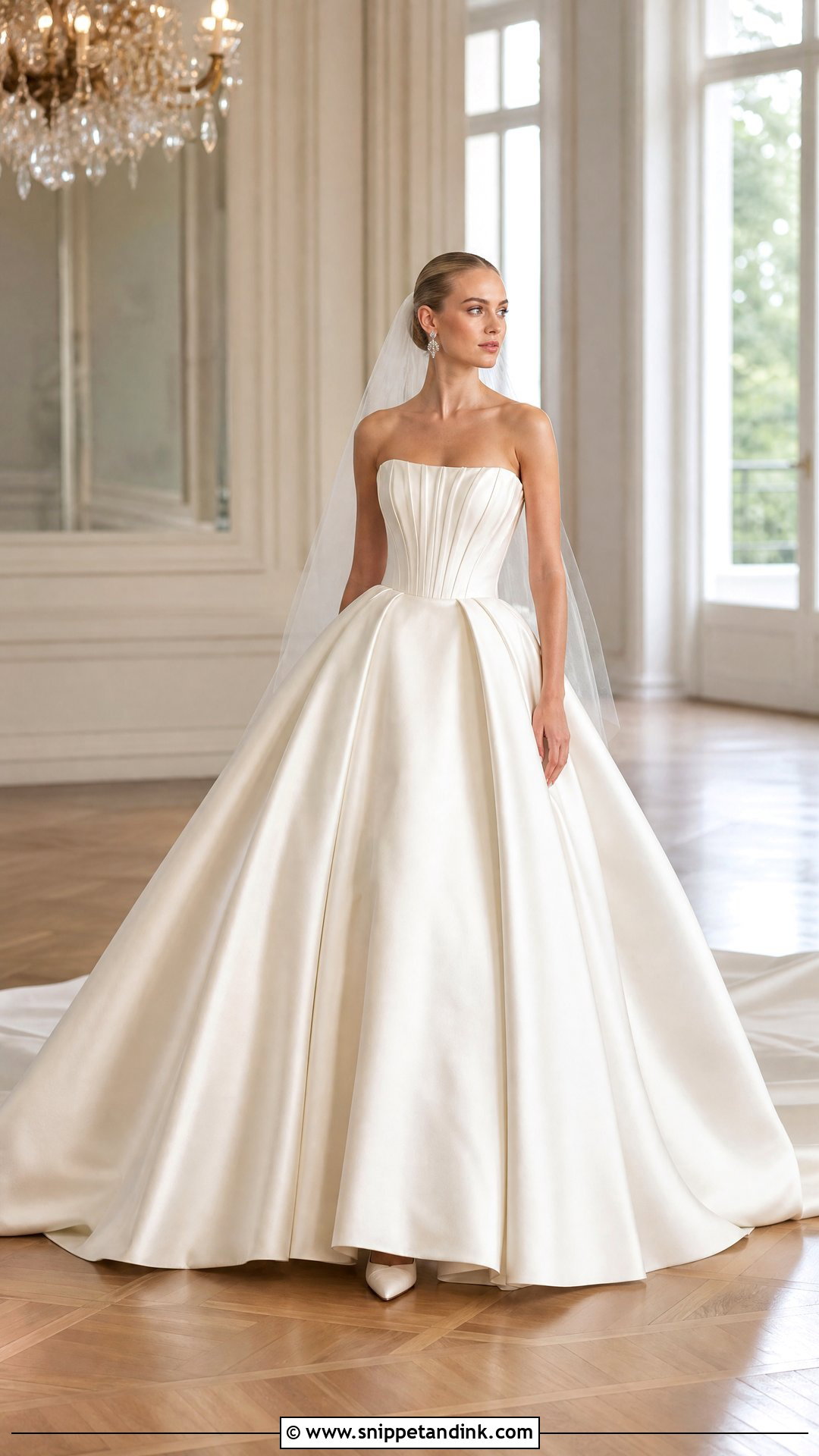
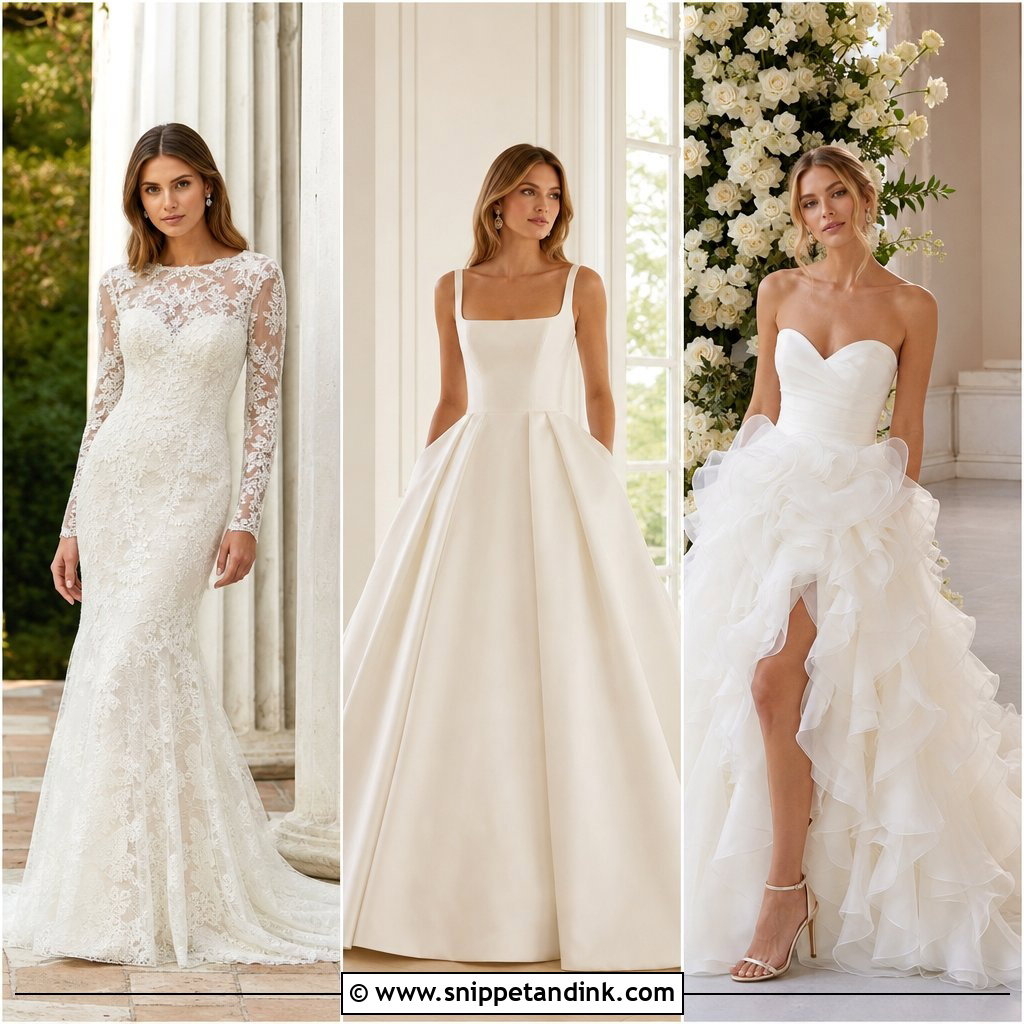
For a formal ballroom or a cathedral ceremony, a satin ball gown gives you scale and a real entrance. A corseted bodice, a wide skirt and a long sweeping train are the structure; a pleated or ruched neckline adds softness. Strapless ball gowns with dramatic trains suit grand settings especially well. Heavy satin is warm and weighty, so expect to feel it by the evening and plan a bustle for the reception. A fingertip veil, crystal studs, closed-toe satin heels and a low chignon keep the focus on the shoulders. Satin reflects light, so check the gown in daylight, room lighting and camera flash before final alterations.
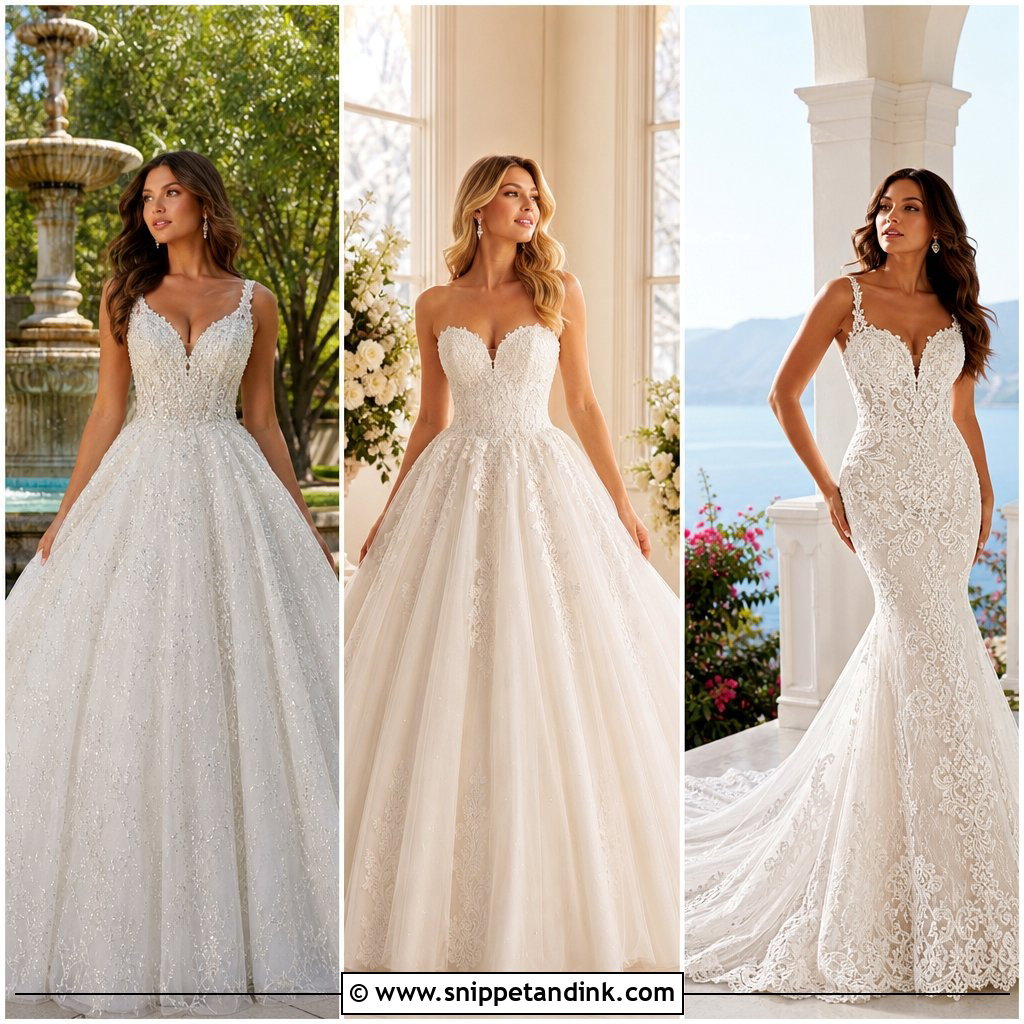
3. Suzanne Neville Lace Mermaid Wedding Dress
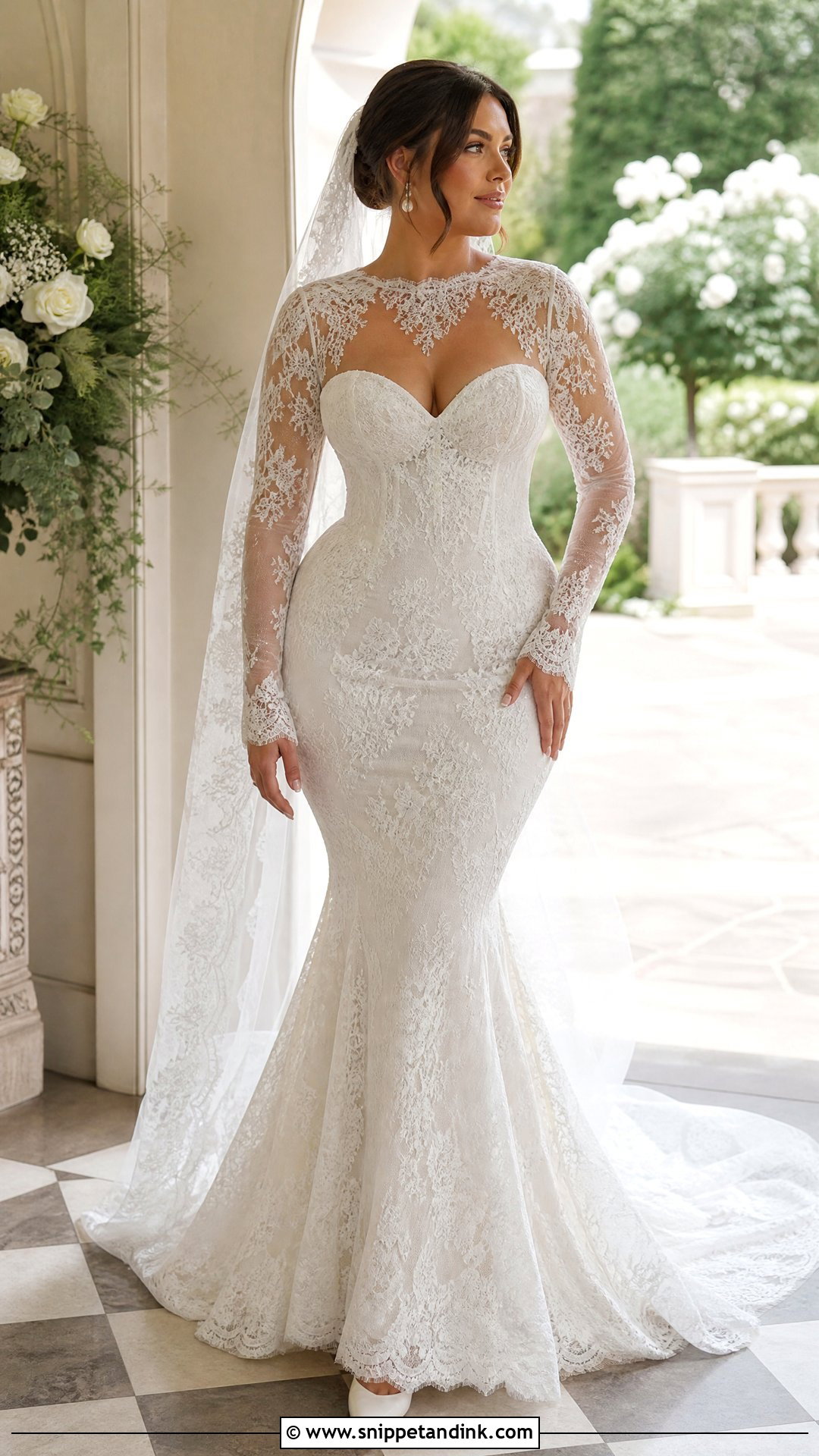
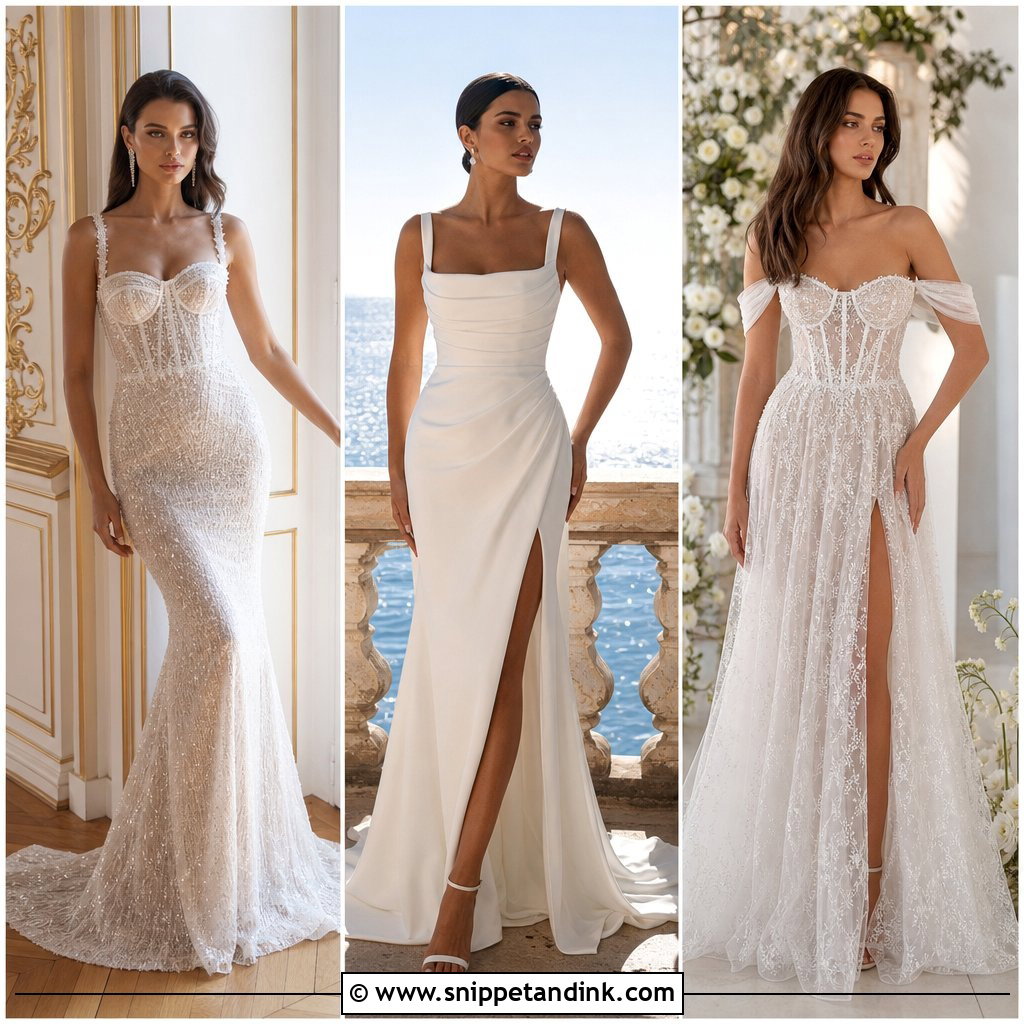
Lace on a mermaid shape shows texture along the whole length of the body. The fit has to be close through the bodice, waist and hips before the skirt flares at the knee; if the flare starts too low, walking becomes a shuffle. A sweetheart neckline and inner corset give support. I like adding a detachable lace top with long sleeves for the ceremony, then wearing it strapless in the evening. Pearl earrings, a scalloped veil and comfortable pointed pumps finish it. Carry a narrow bouquet so it doesn’t hide the waist or the lace pattern in photos.
4. Suzanne Neville Square Neck Wedding Dress
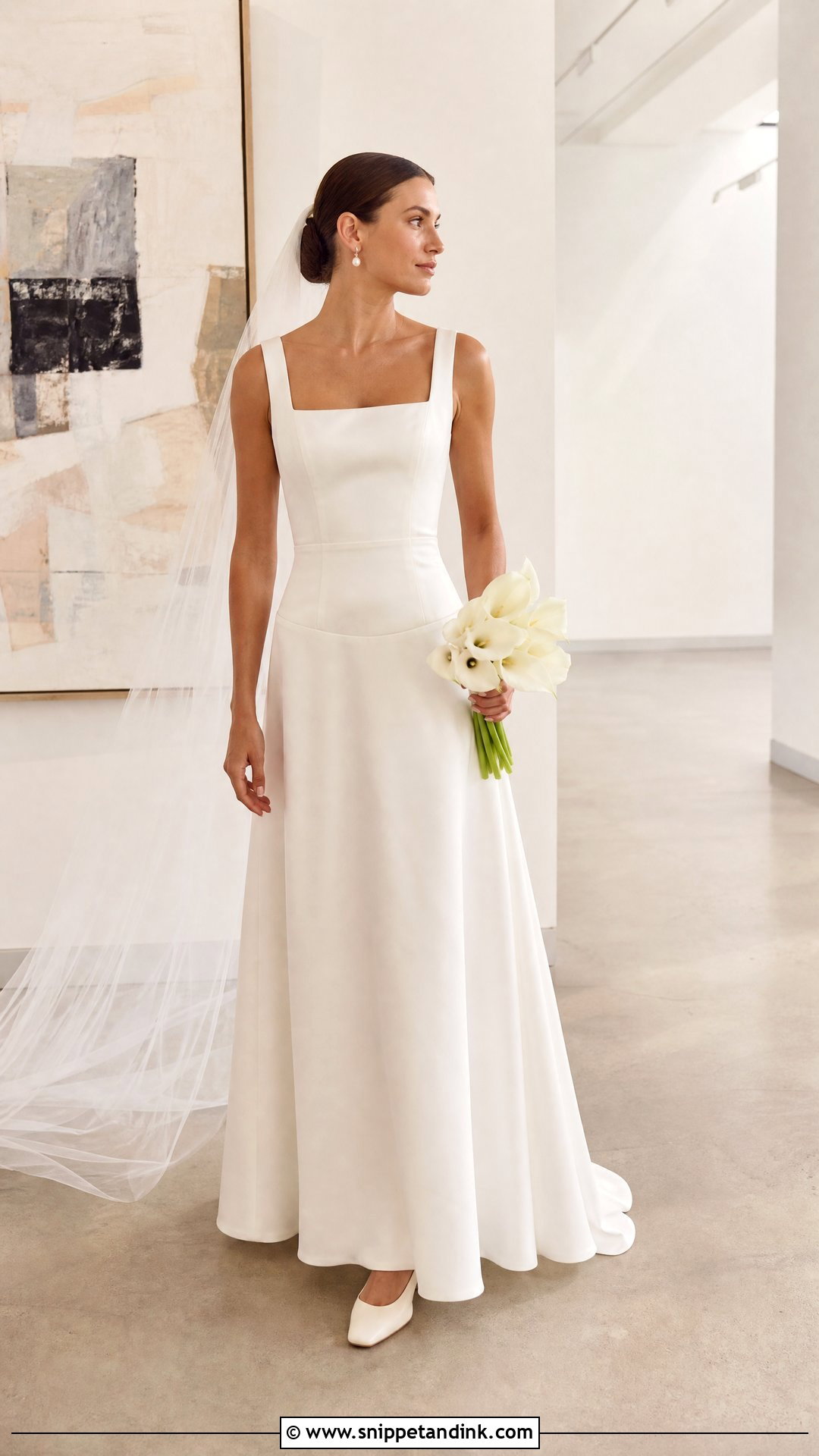
A square neckline on wide straps frames the collarbones and gives more coverage than strapless without looking prim. Over a fitted, dropped-waist bodice and a fluid satin A-line skirt, it looks modern. The detail I’m fussiest about is the corners: they must lie flat against the chest, and on a fuller bust that often means adjusting strap width and neckline depth. Rippling corners or loose straps spoil the whole design. A smooth low bun, small diamond earrings, a single-layer veil, ivory block-heel pumps and calla lilies or white tulips suit the clean lines.
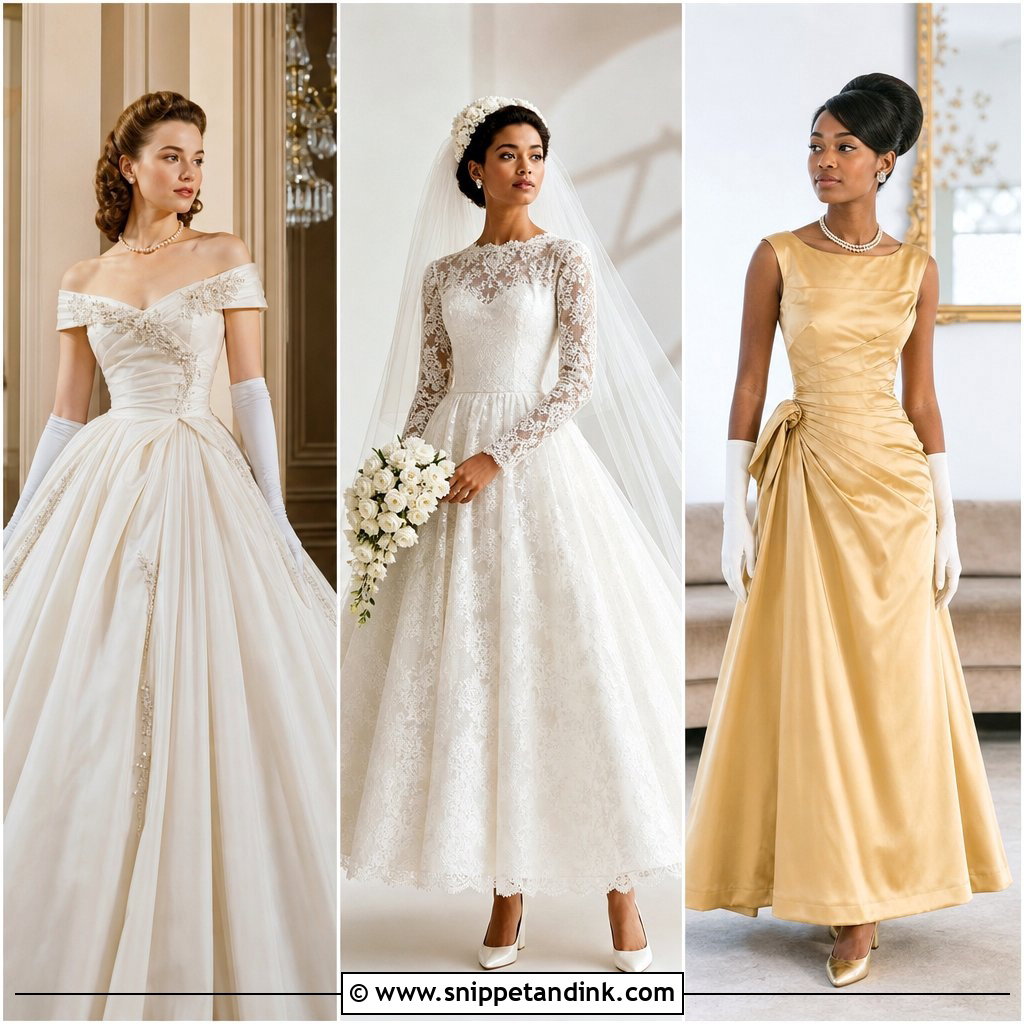
5. Suzanne Neville Off Shoulder Wedding Dress
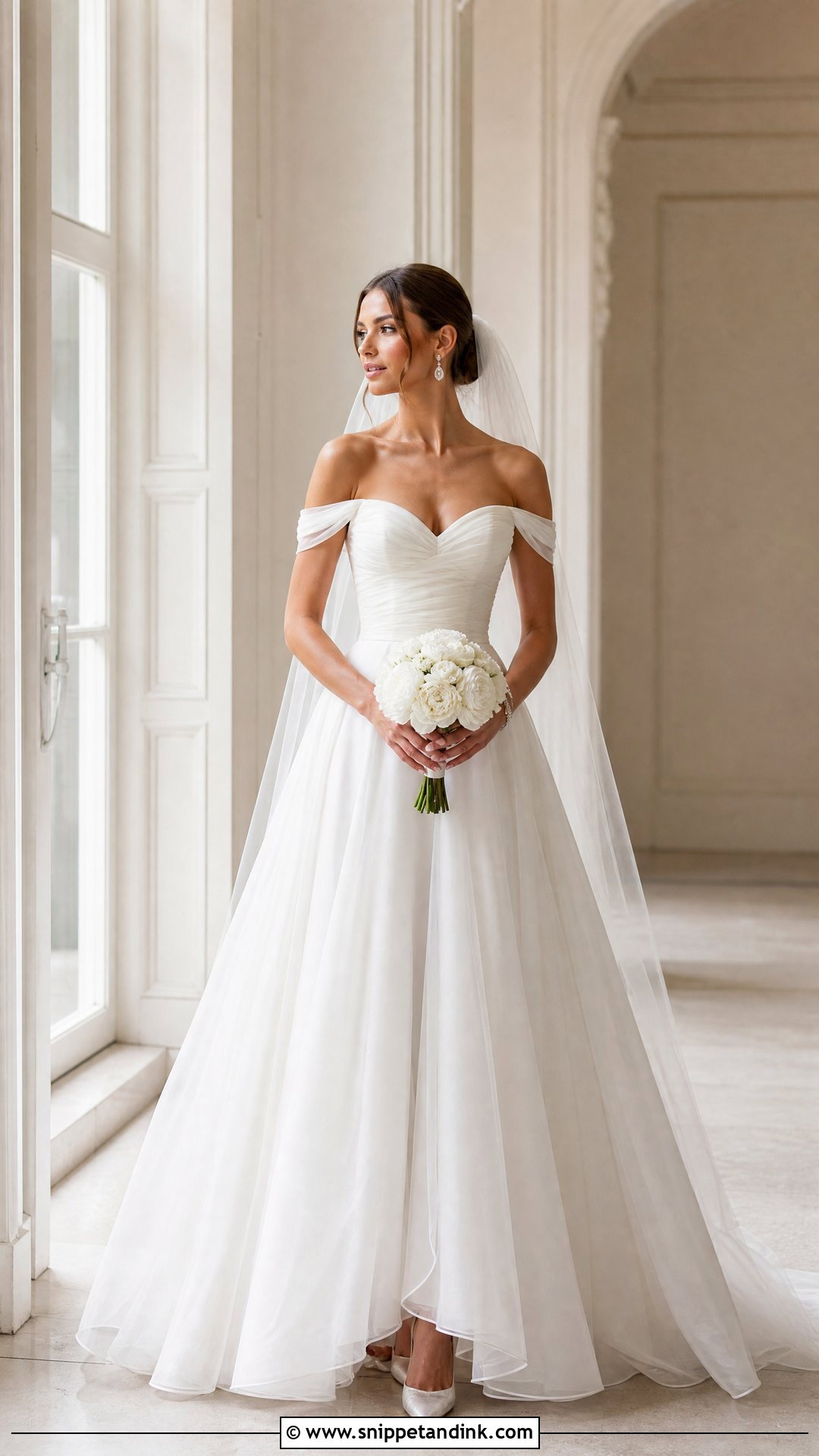
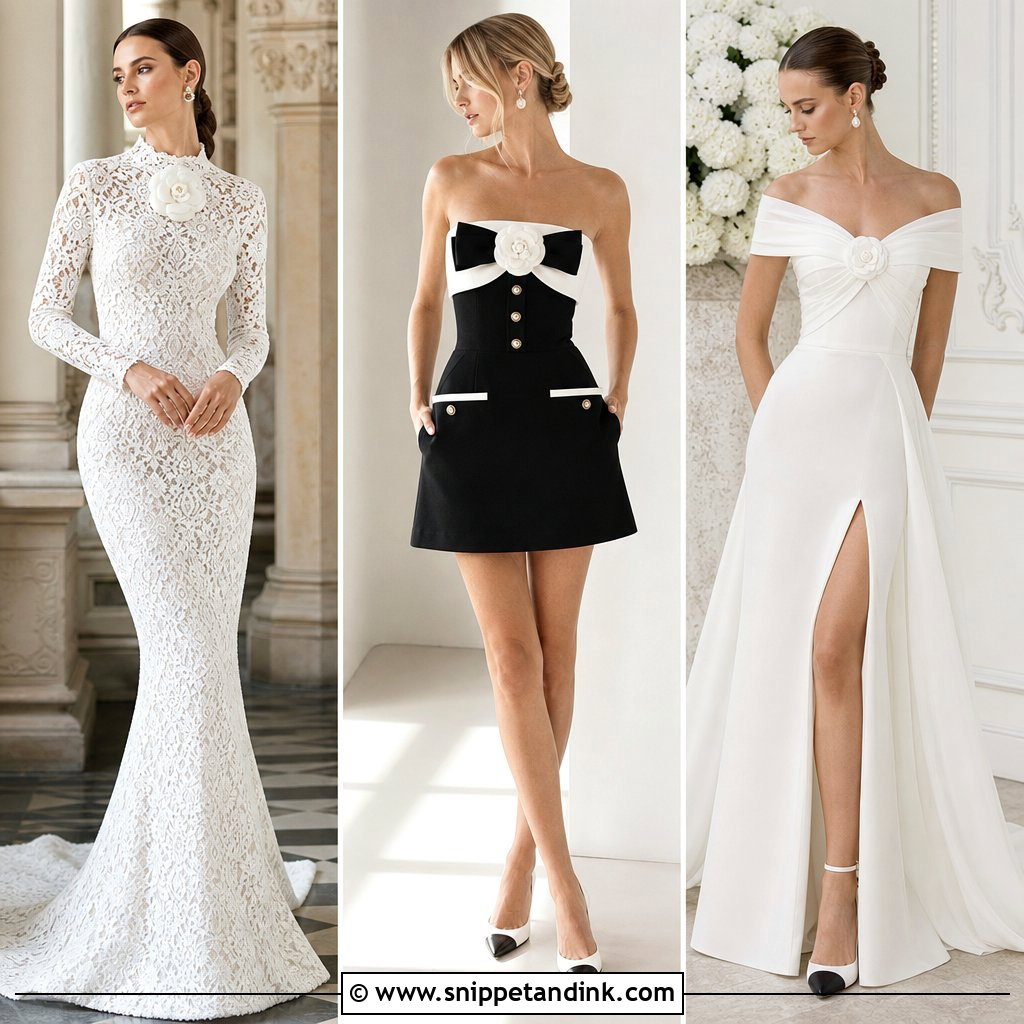
The off-shoulder shape works through a wrapped corset bodice, with soft drape across the bust and upper arms over a full but light skirt. Draped sleeves restrict how high you can lift your arms, which is why I like detachable shoulder straps: they add support and can come off for dancing. Wear a polished updo so loose strands don’t catch in the drape. Drop earrings, ivory slingbacks and a sheer veil set under the bun complete it. A necklace usually fights that strong horizontal line, so I’d leave it off unless it’s very fine.
6. Suzanne Neville Drop Waist Wedding Dress
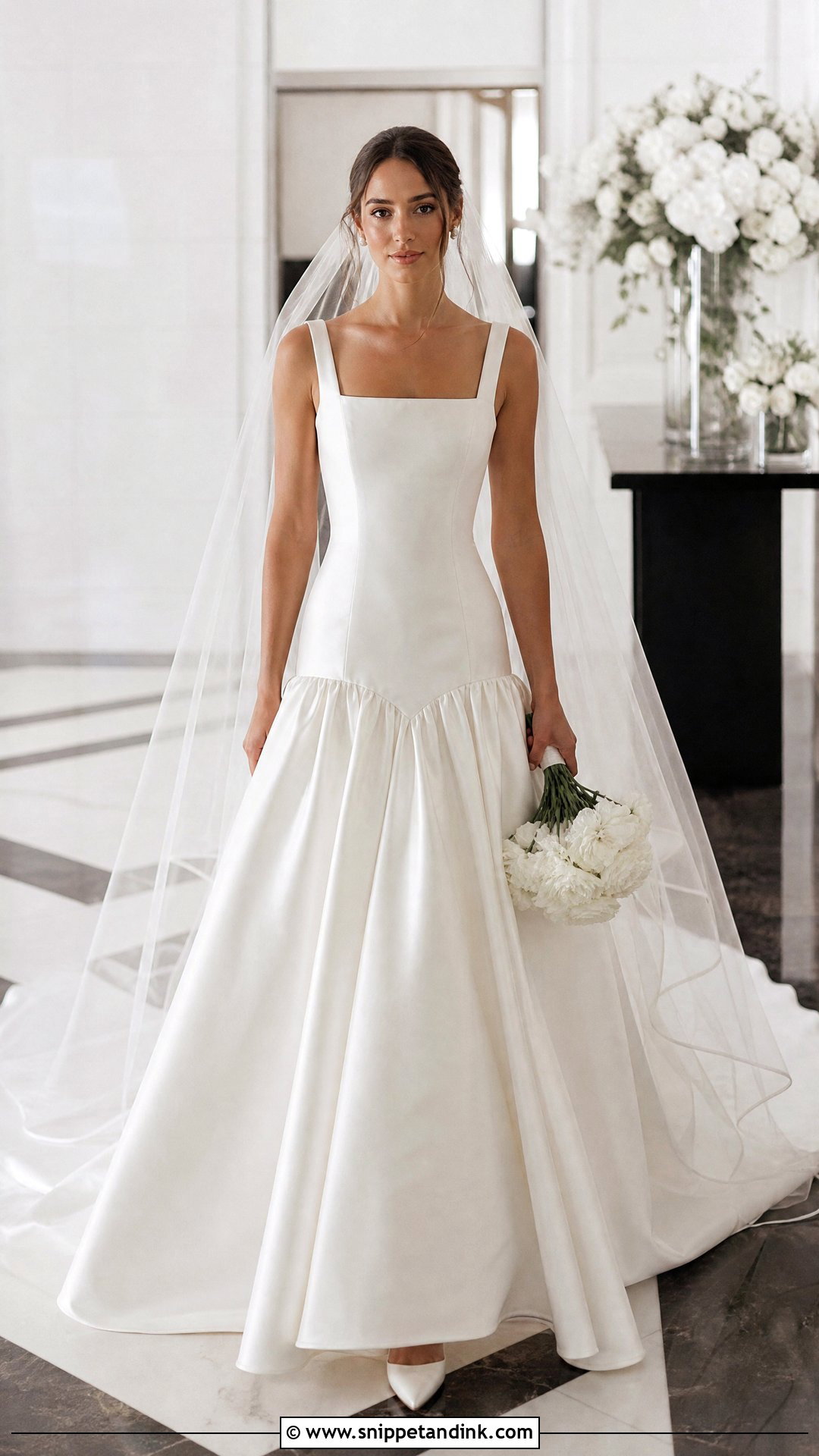
Drop waists lengthen the torso before the skirt opens out. The structure underneath matters: a corseted bodice, square neckline and wide straps keep the long line smooth instead of sagging. Smooth satin keeps it minimal; a lightly textured fabric adds depth on camera. The seam placement is the thing to get right with your seamstress. A drop waist that ends an inch too high or low on your hips changes the whole balance, and you should still be able to sit and bend comfortably. A long plain veil, pearl studs, pointed ivory heels and a sleek bun or soft half-up style suit it.
7. Suzanne Neville Long Sleeve Lace Wedding Dress
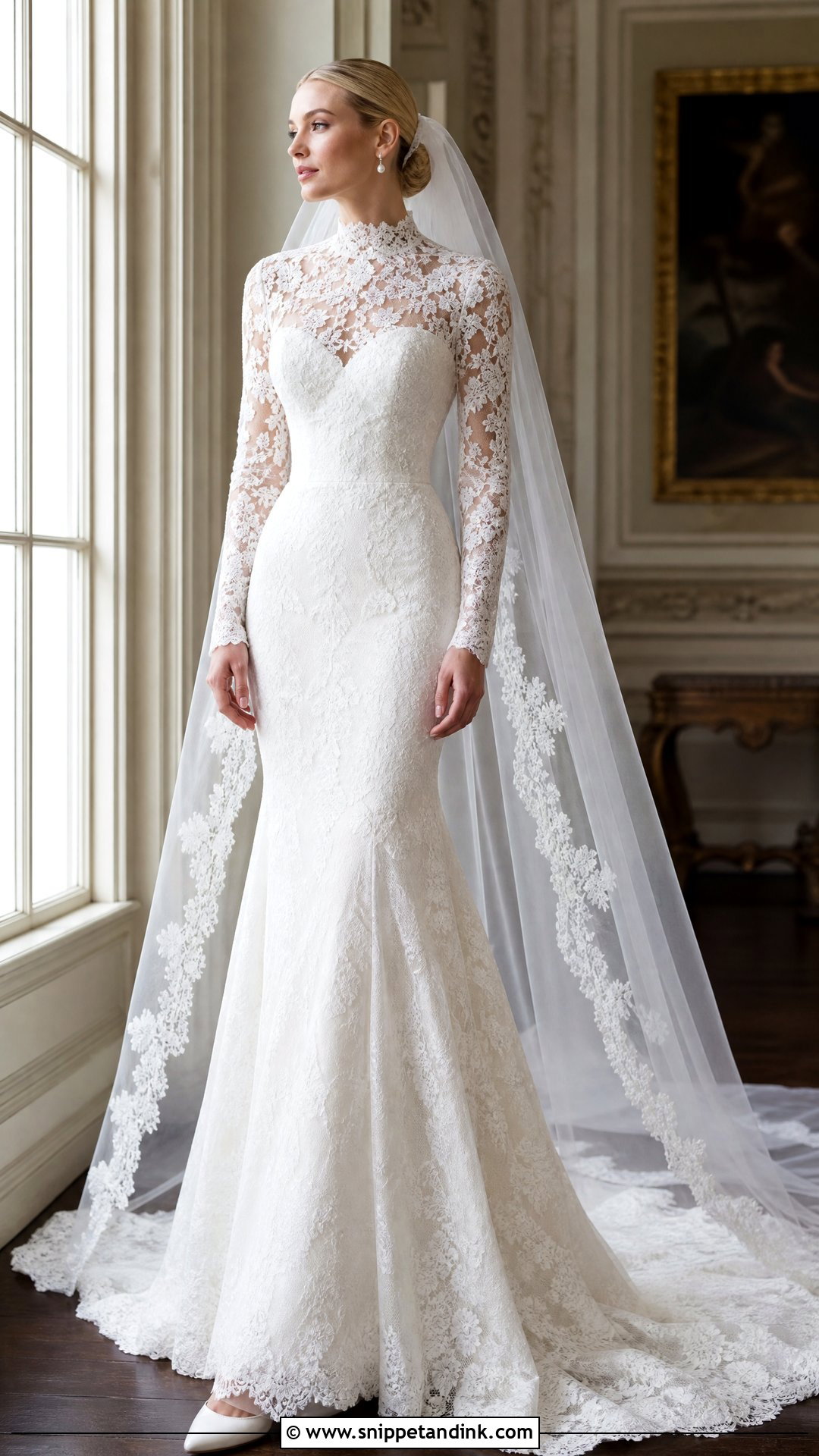
Removable lace sleeves give coverage for a religious ceremony and a strapless gown for the party. Under them, a strapless sweetheart base; on top, a high-neck or bateau lace overlay. Choose lace fine enough to lie flat across the shoulders, since a heavy lace bunches at the armhole. Pearl button earrings, closed pumps, a narrow lace-edged veil and a low bun suit the covered version. Check that the sleeve cuffs let you move your hands freely and don’t snag on a bracelet; I’d skip wrist jewelry altogether here.
8. Suzanne Neville Lace Overlay Wedding Dress
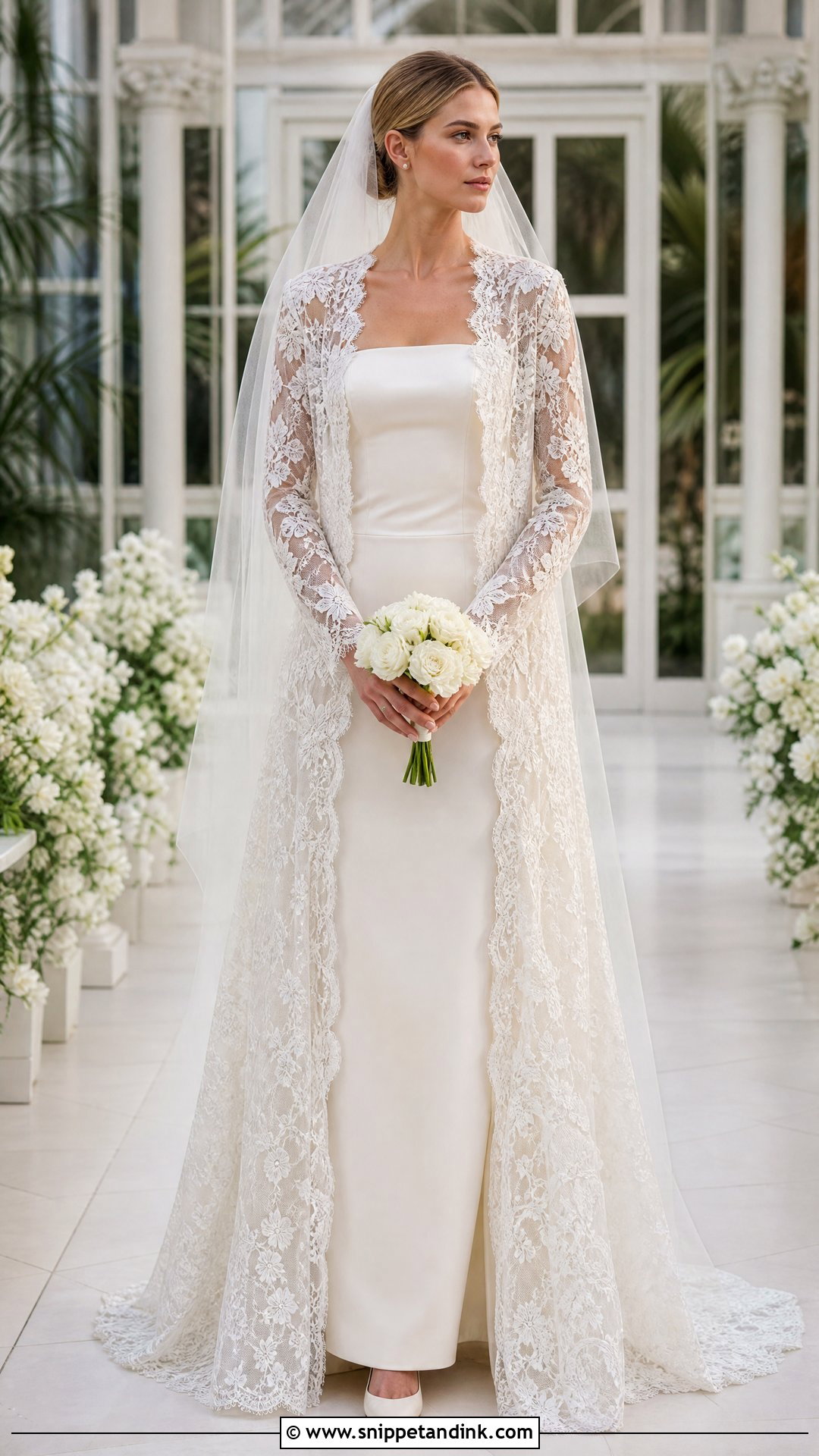
A floor-length lace overlay gives you two looks from one gown. Start with a sleek strapless column or a softly fitted A-line, then layer a sheer lace coat or overdress that closes neatly at the back. It balances clean structure with decorative texture, and it saves buying a separate reception dress. Wear the lace with a plain veil and pearl earrings for the ceremony, then remove both. During fittings I check two things: that the lace hem clears the floor in your shoes, and that its seams line up with the bodice seams beneath, because misaligned seams show through sheer lace.
9. Suzanne Neville A Line Wedding Dress
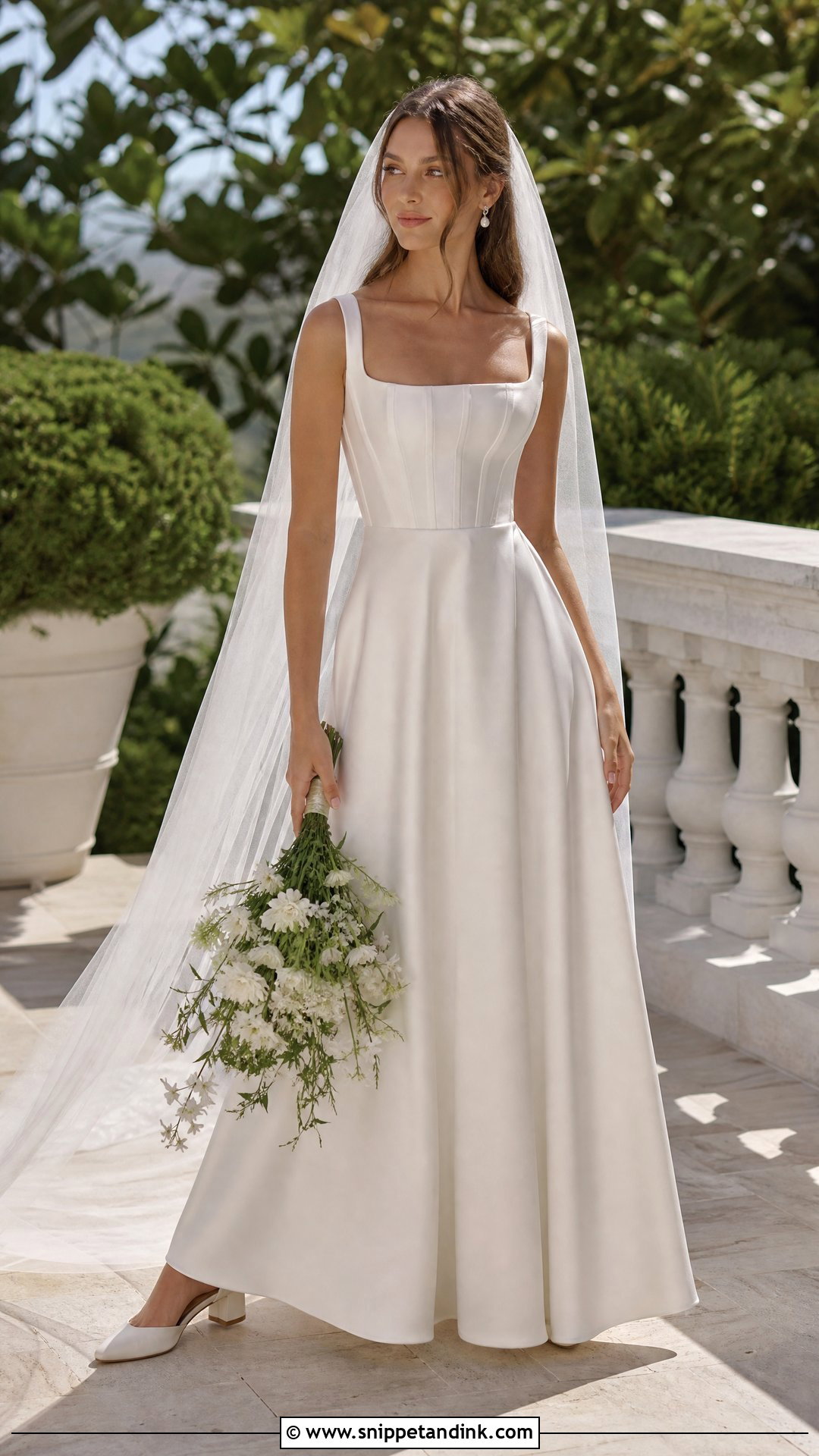
Could an A-line be the safest bet for your venue? Its fitted bodice and gently widening skirt look right in a small garden, a barn or a formal ballroom. A square or softly curved neckline with internal corsetry gives structure, and fluid satin lets the skirt move without bulk. Brides who want a more defined waist can ask for a slightly longer bodice or a narrower waist seam. Add a chapel veil, pearl drops and low block heels. Have the hem measured in your exact wedding shoes; half an inch either way changes how the skirt falls when you walk.
10. Suzanne Neville Floral Satin Wedding Dress
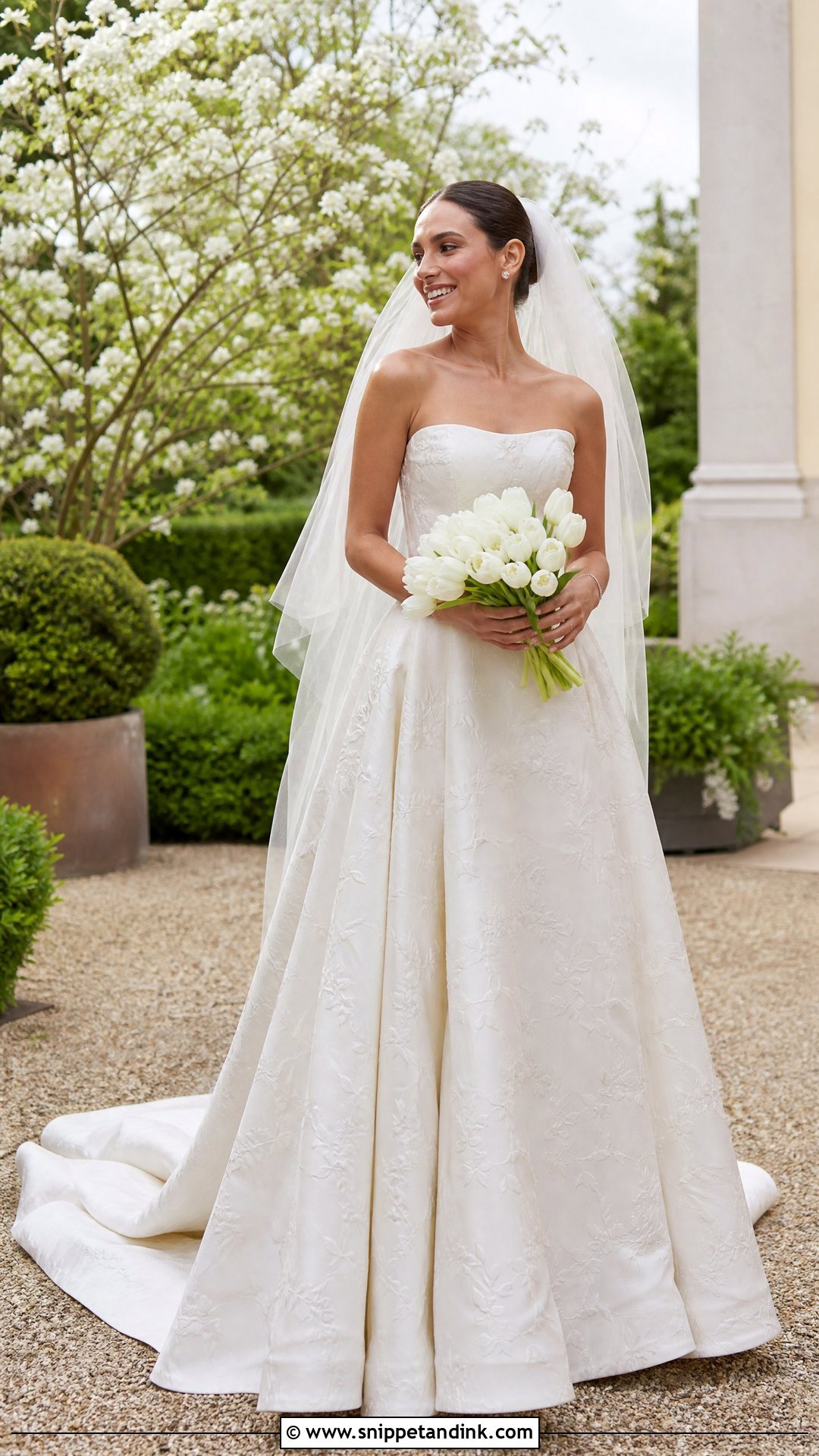
Printed or laser-cut floral satin gives a white gown texture while staying formal. A strapless corseted bodice over an A-line skirt gives the pattern room to show. It works in spring and summer, and it brightens a winter venue too. Keep everything else quiet: plain satin heels, small diamond studs, a sheer veil with no lace or beading, and a bouquet of one or two flower types. If the motifs are large, watch where they land across the bust and waist at your fitting. A flower sitting off-center on one side of the bodice is the thing every guest notices.
11. Suzanne Neville Sweetheart Wedding Dress
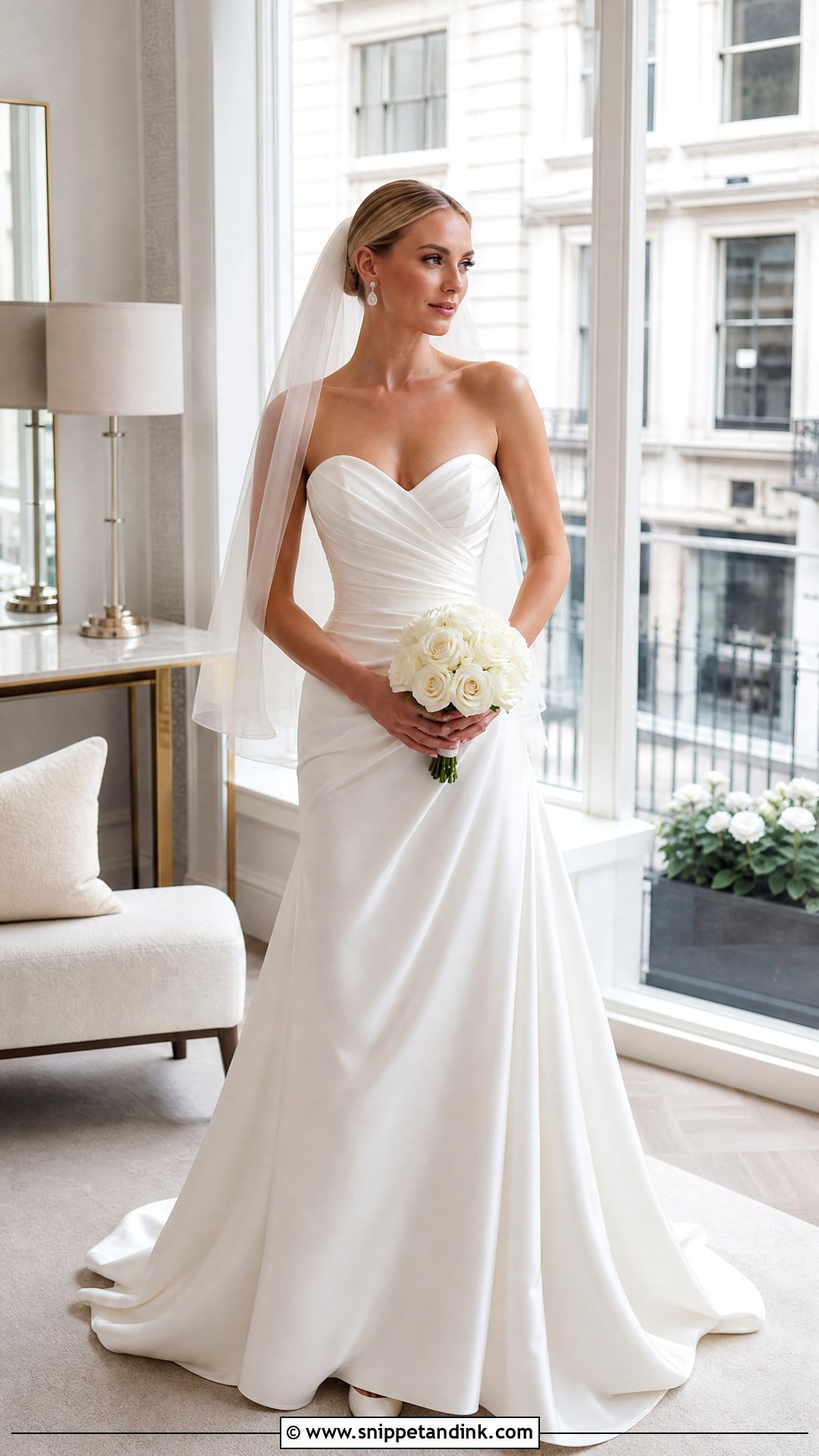
The sweetheart neckline gives an open, soft shape with corseted support underneath. I’d keep the curve gentle rather than an exaggerated plunge, especially on a fitted skirt. Ruching across the bodice softens the structure and defines the waist. Cup placement is where this neckline lives or dies: the curve must sit at your bust, not above or below it, so allow enough alteration time for the bodice to be reshaped around you. Ask about discreet removable straps for the reception. A shoulder-length veil, teardrop earrings, ivory pumps and a compact bouquet carried low suit it.
12. Suzanne Neville Crepe Wedding Dress
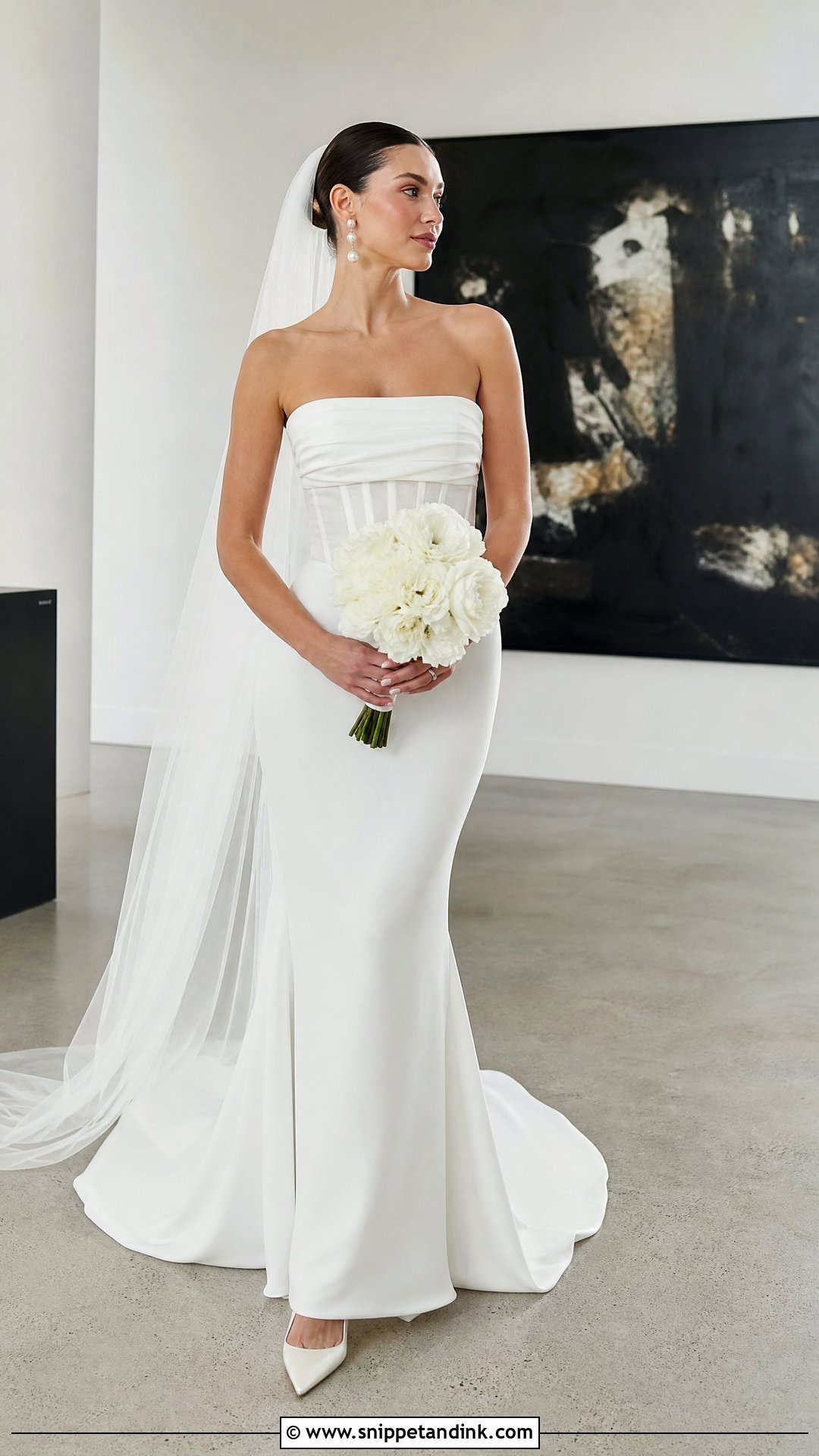
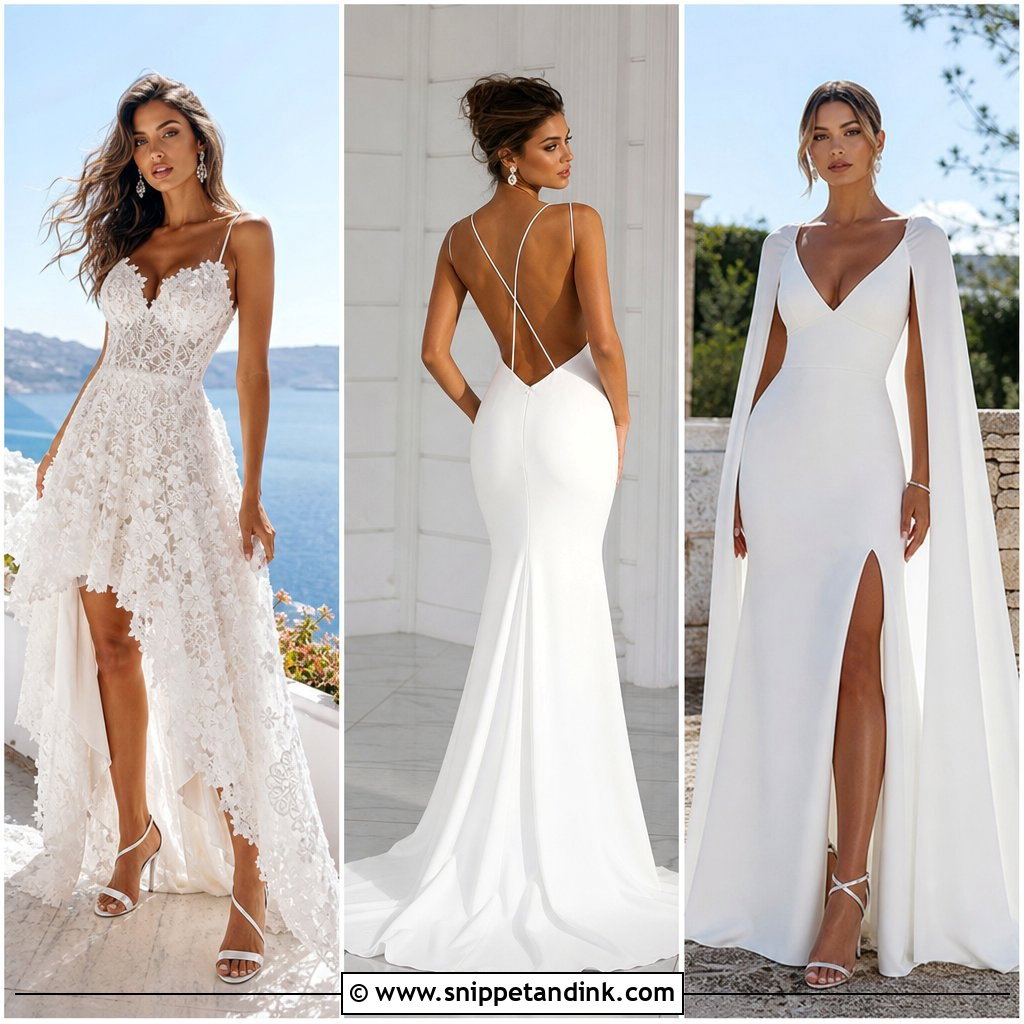
Crepe looks plain from across the room and beautifully cut up close. Its matte surface puts all the attention on the tailoring. A strapless ruched corset with a skirt that skims the hips and opens near the hem is the version I’d choose. Crepe follows the body closely, so smooth undergarments and careful alterations matter more than with almost any other fabric. Check it from the front, side and back in natural light; horizontal pull lines across the hips mean it needs letting out. A long plain veil for the ceremony, then statement pearl earrings for the reception.
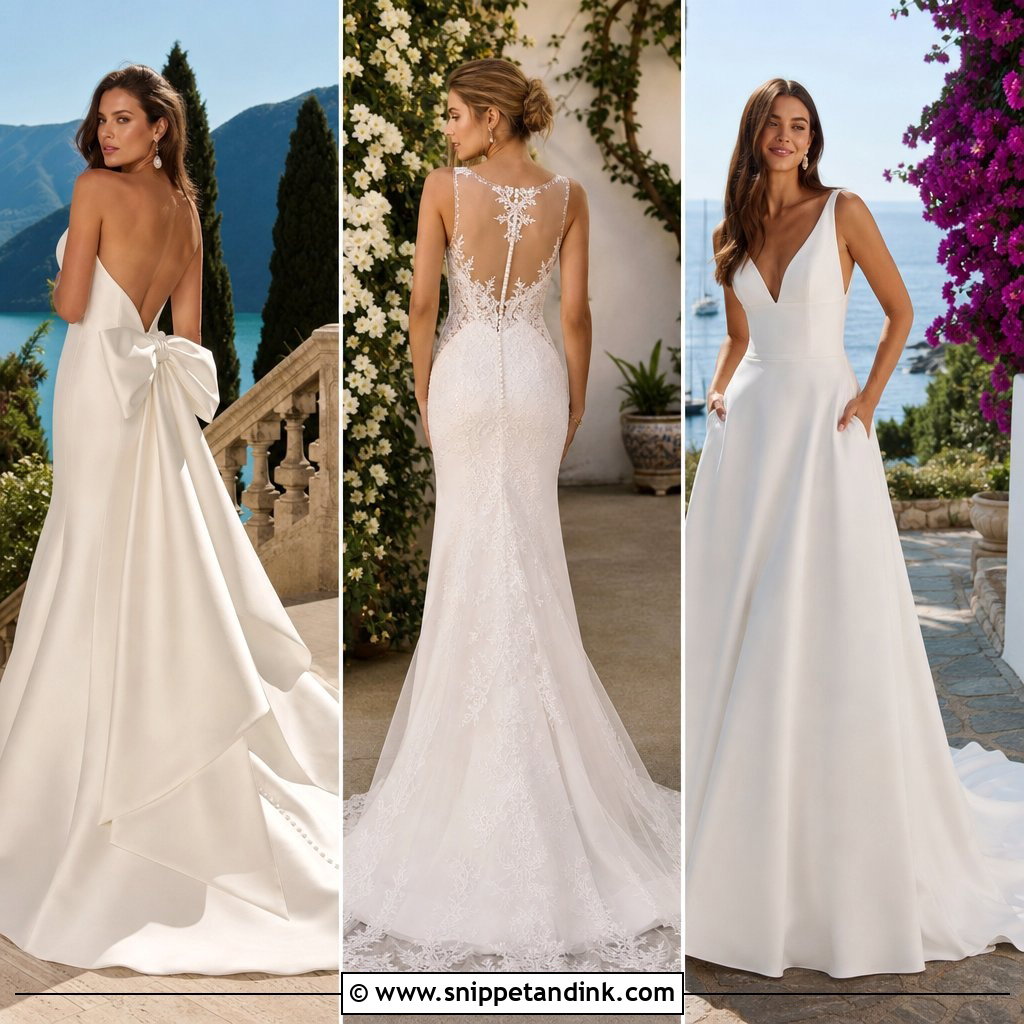
13. Suzanne Neville Corset Back Wedding Dress
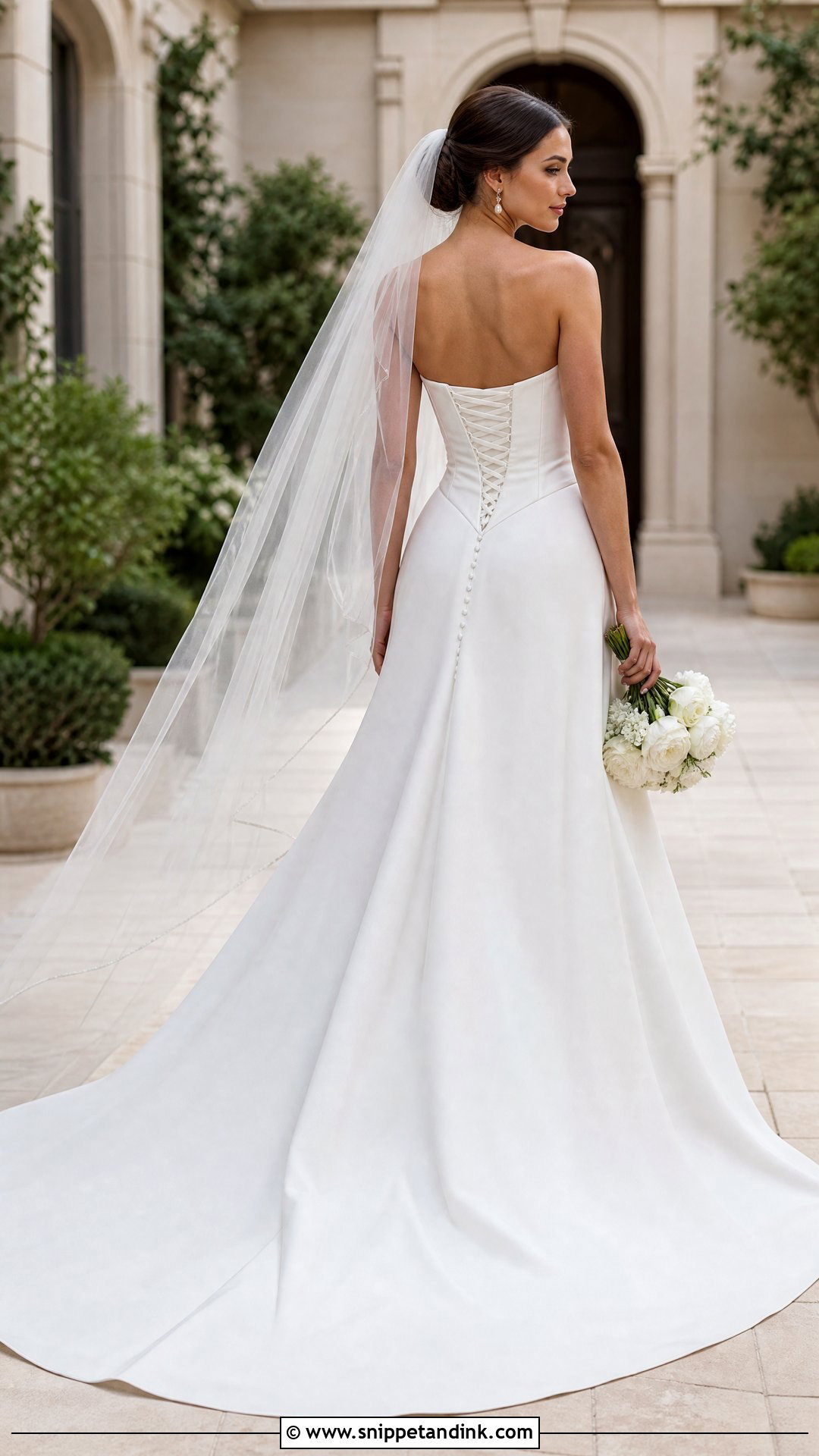
A corset back lets you fine-tune the fit on the day itself, which is handy if your weight changes in the final weeks. Pair it with an A-line or fitted crepe skirt so the lacing is the main detail, with covered buttons below continuing toward the train. Wear your hair up or swept to one side so the back shows. Have one person in the wedding party learn the lacing at your final fitting. The ties should be even and snug, not pulled as tight as possible; you still need to breathe, sit and eat.
14. Suzanne Neville Button Back Wedding Dress
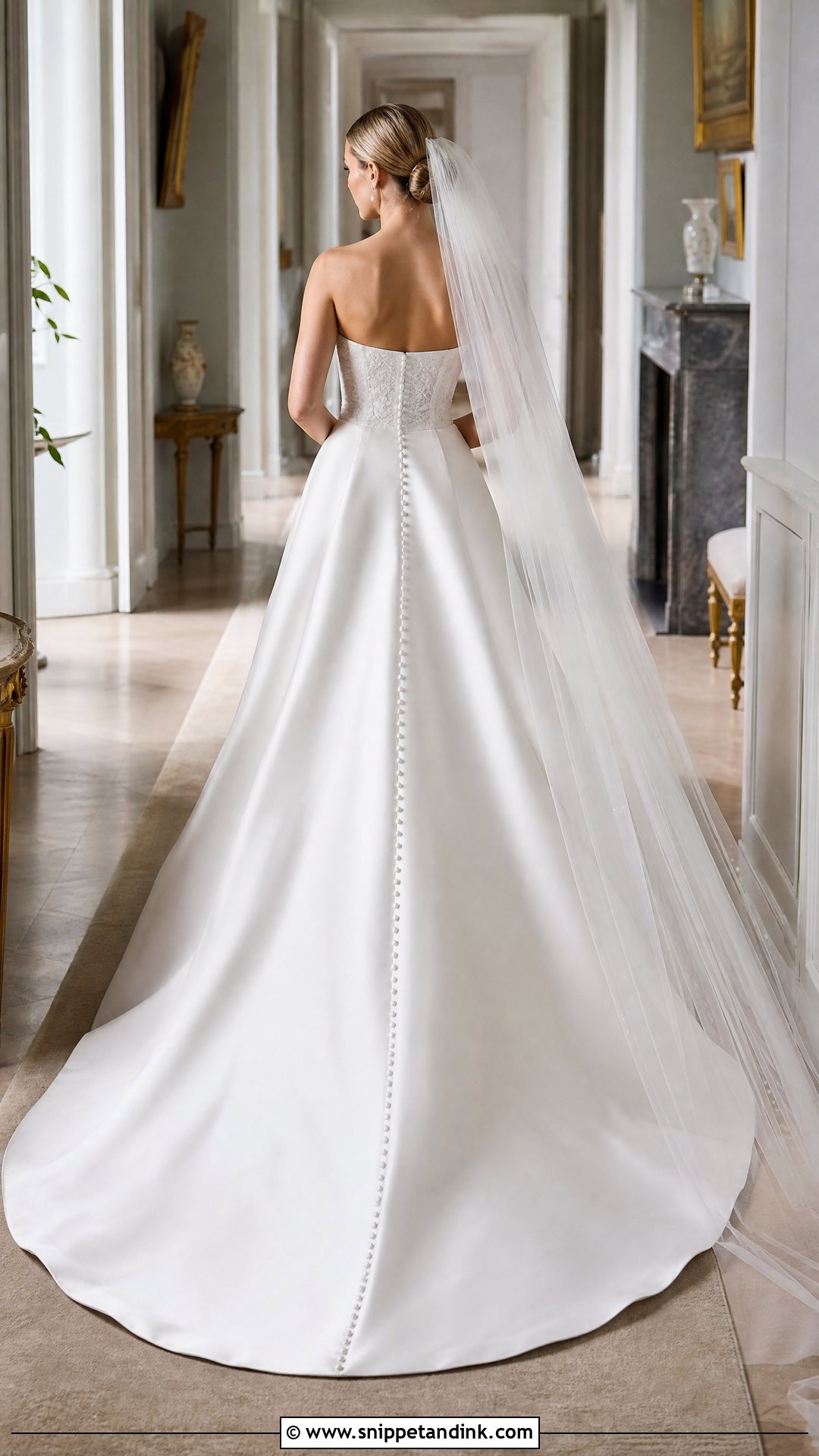
Rows of covered buttons give a clean gown a classic finish at the back. They look best on a strapless embroidered or laser-cut satin bodice with an A-line skirt, the buttons running from the corset down to the end of the train. A sheer cathedral veil keeps the line visible, with satin pumps, pearl earrings and a low bun. Covered buttons with fabric loops take time, so assign a helper, bring a button hook, and allow a good ten minutes in the getting-ready schedule. At alterations, make sure every loop closes easily and lies flat.
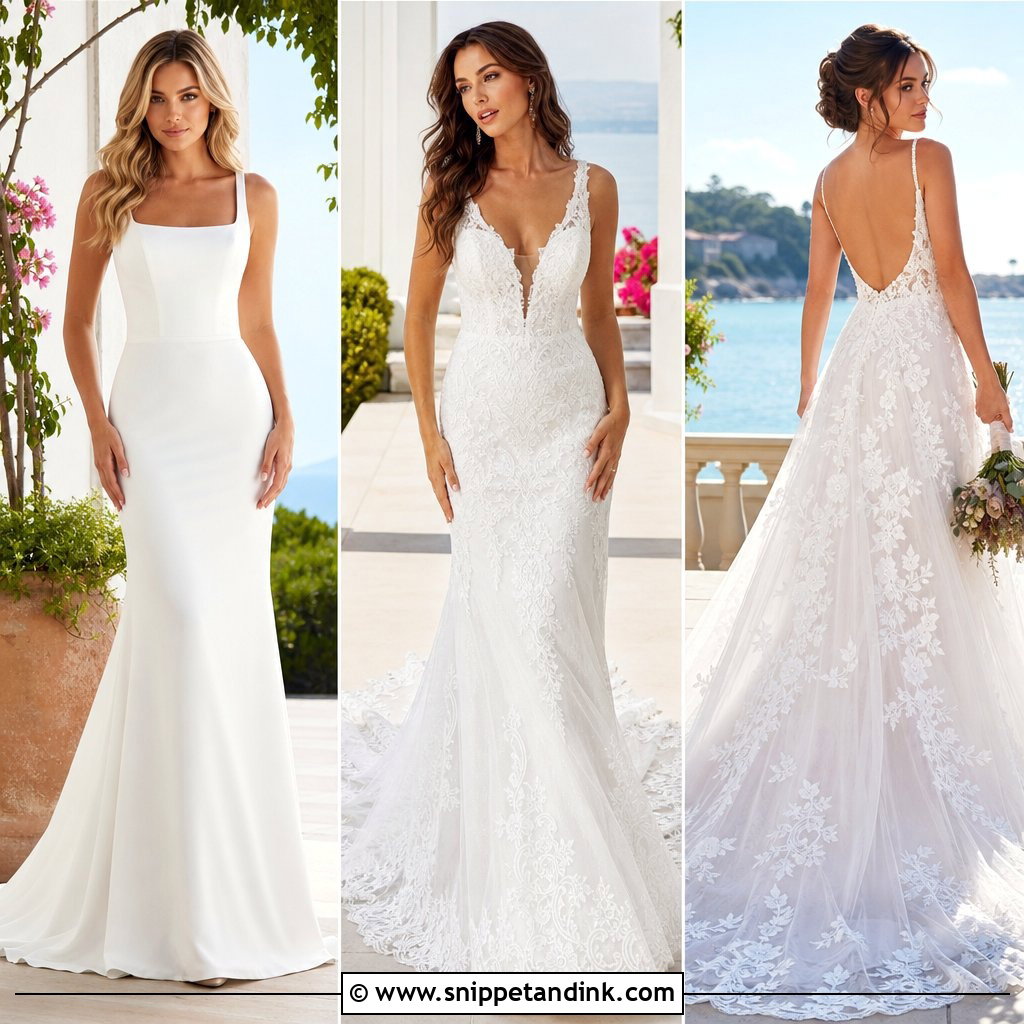
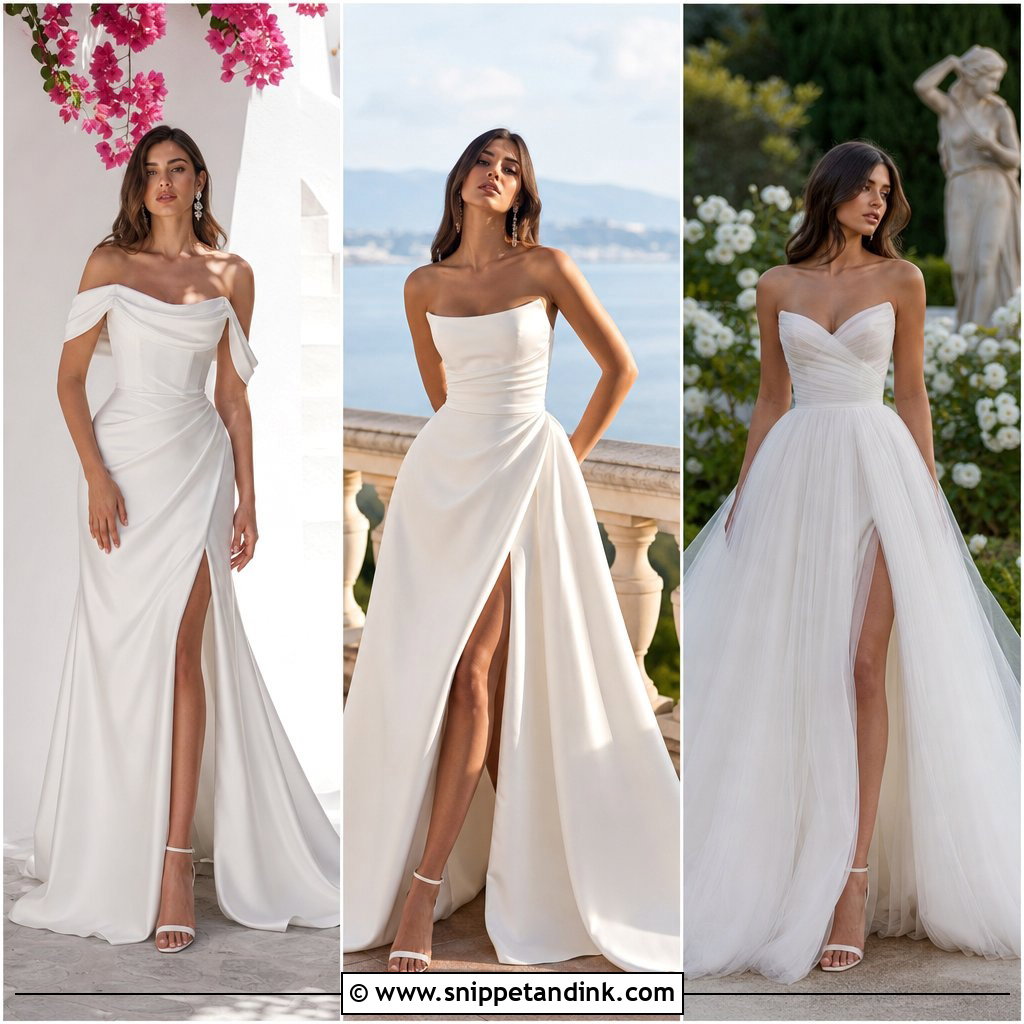
15. Suzanne Neville Ruched Bodice Wedding Dress
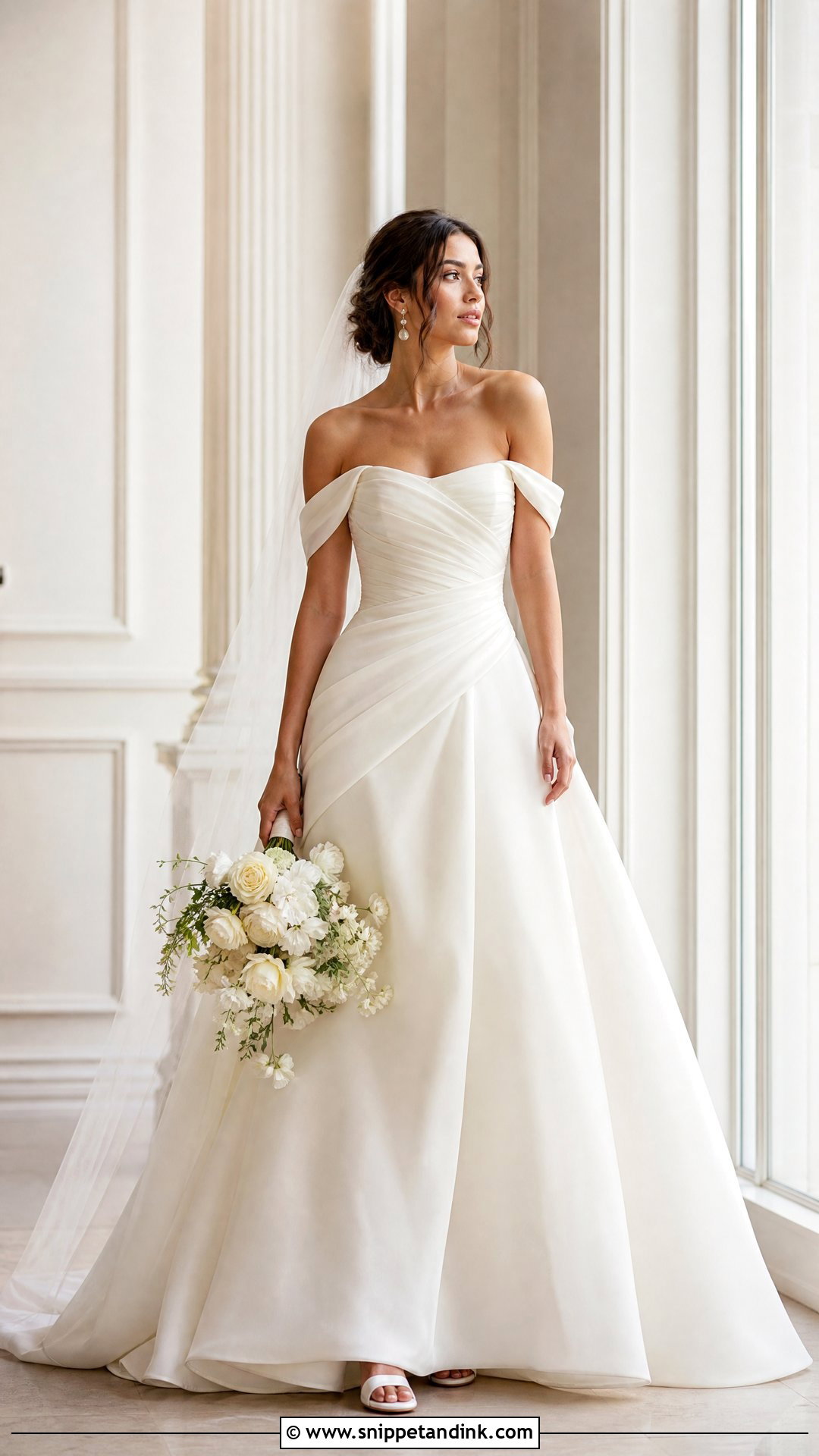
Ruching makes a structured bodice look softer and more forgiving. Diagonal or wrapped folds across the waist, with corsetry inside and a full satin or organza skirt, add dimension without any beading. An off-the-shoulder neckline suits the folds, and detachable straps help between ceremony and reception. The folds need to look deliberate rather than bunched; on a short torso, I’d ask whether the width or angle of the draping can be adjusted, since wide folds can swallow a short waist. Pearl drops, a plain chapel veil, ivory block heels and a loose bouquet with greenery suit it.
16. Suzanne Neville Organza Ball Gown Wedding Dress
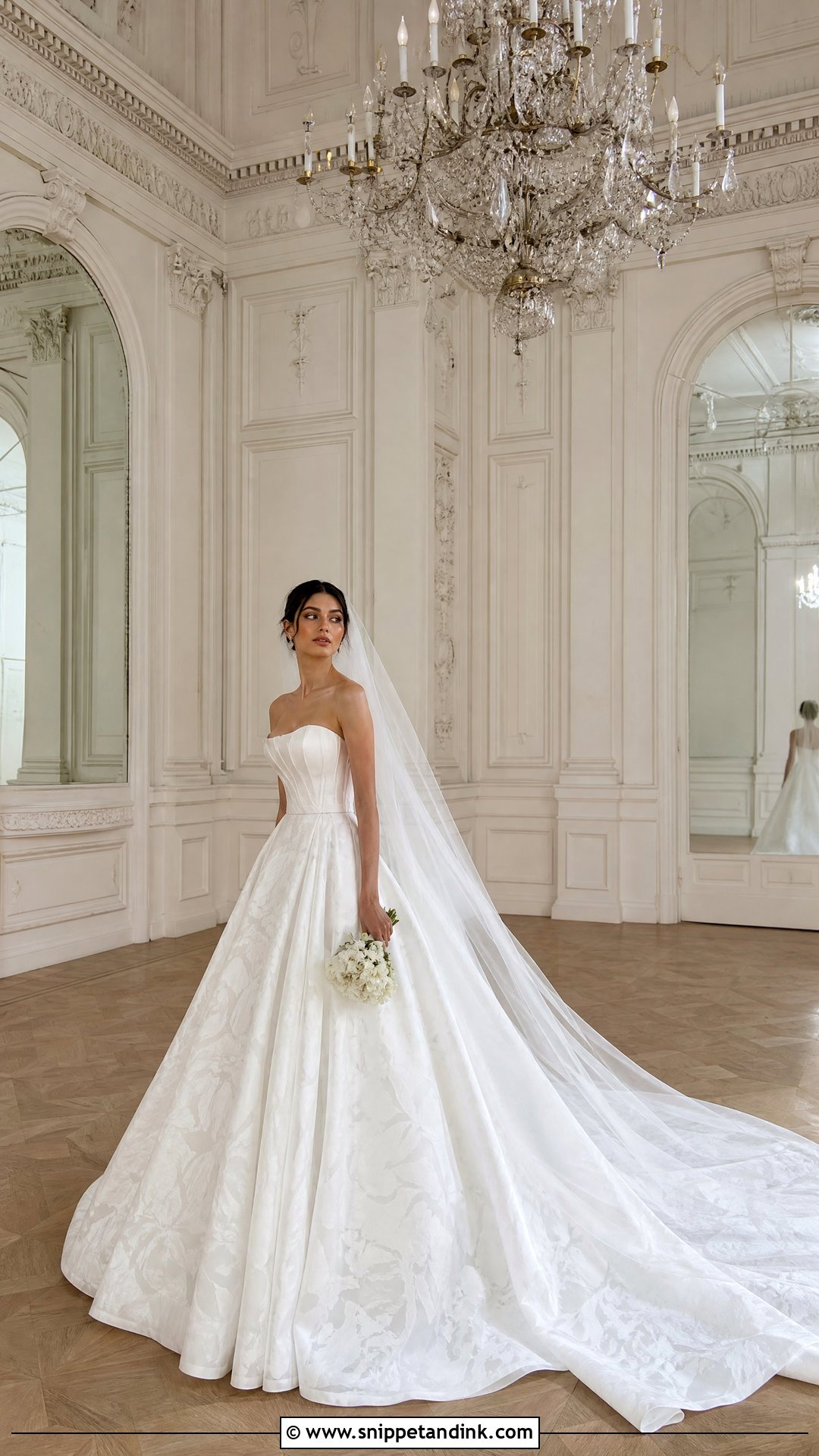
Organza catches the light differently with every step, giving a ball gown volume without the density of heavy satin. A printed satin-organza, a strapless corset, a pleated neckline and a full skirt with a long train make the full version. Ask how many skirt layers are included and whether any can be removed; one fewer layer can make a big difference to weight and warmth. A narrow cathedral veil, crystal studs, classic ivory pumps and a smooth updo with a little height are enough. Practise turning in the fitting so you learn how the train follows you.
17. Suzanne Neville Minimalist Satin Wedding Dress
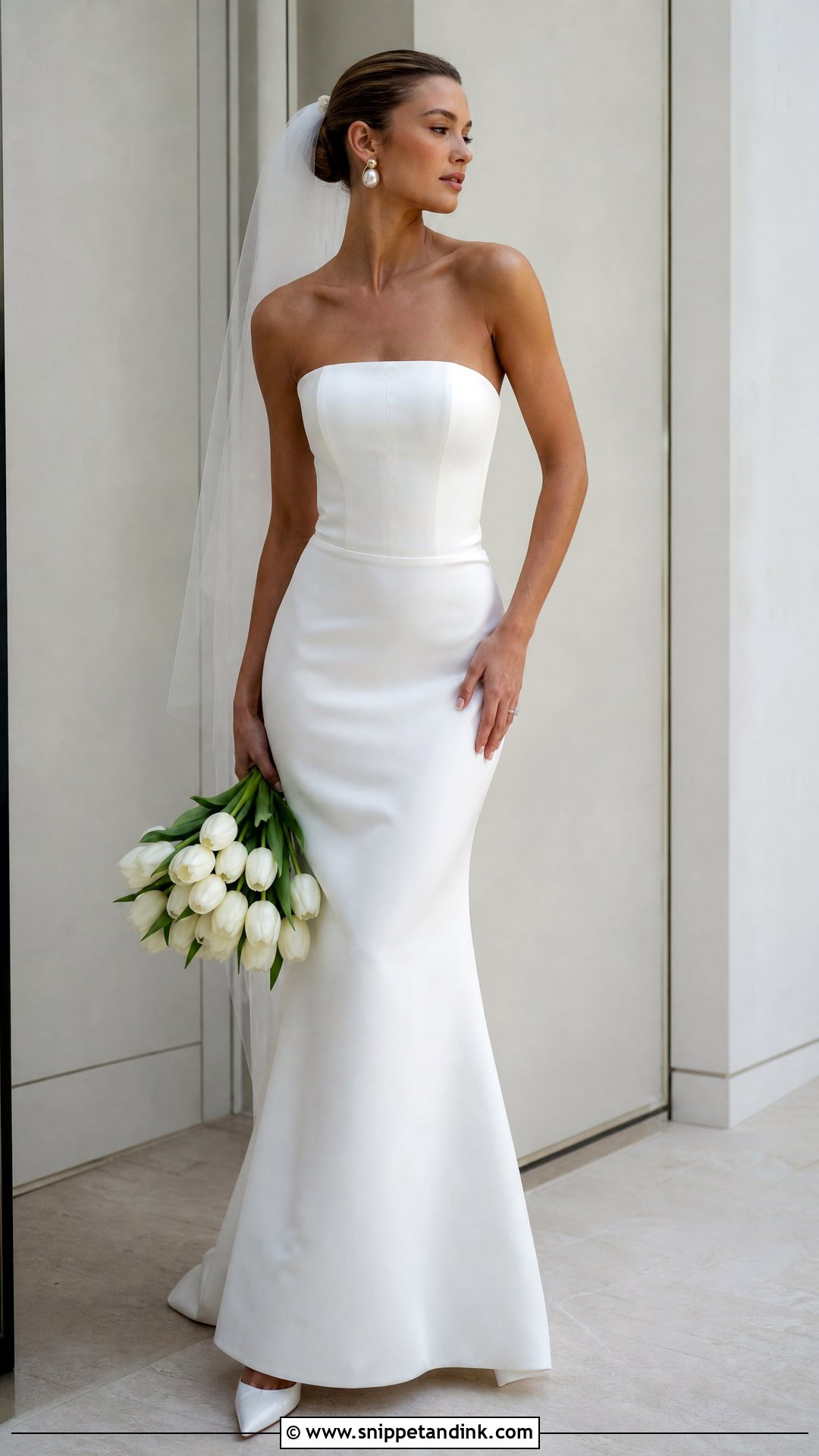
Minimal satin puts every seam on display. A straight strapless neckline, fitted corset and gently flared skirt is the shape, with nothing added. The tailoring checks I make: the neckline sits evenly on both sides, side seams run straight down, and the skirt doesn’t pucker at the hips when you walk. Sculptural pearl earrings, pointed satin heels, a single-layer veil, a sleek bun and white tulips keep it modern. For the evening, swap the veil for a short satin cape or gloves.
18. Suzanne Neville Cutout Bodice Wedding Dress
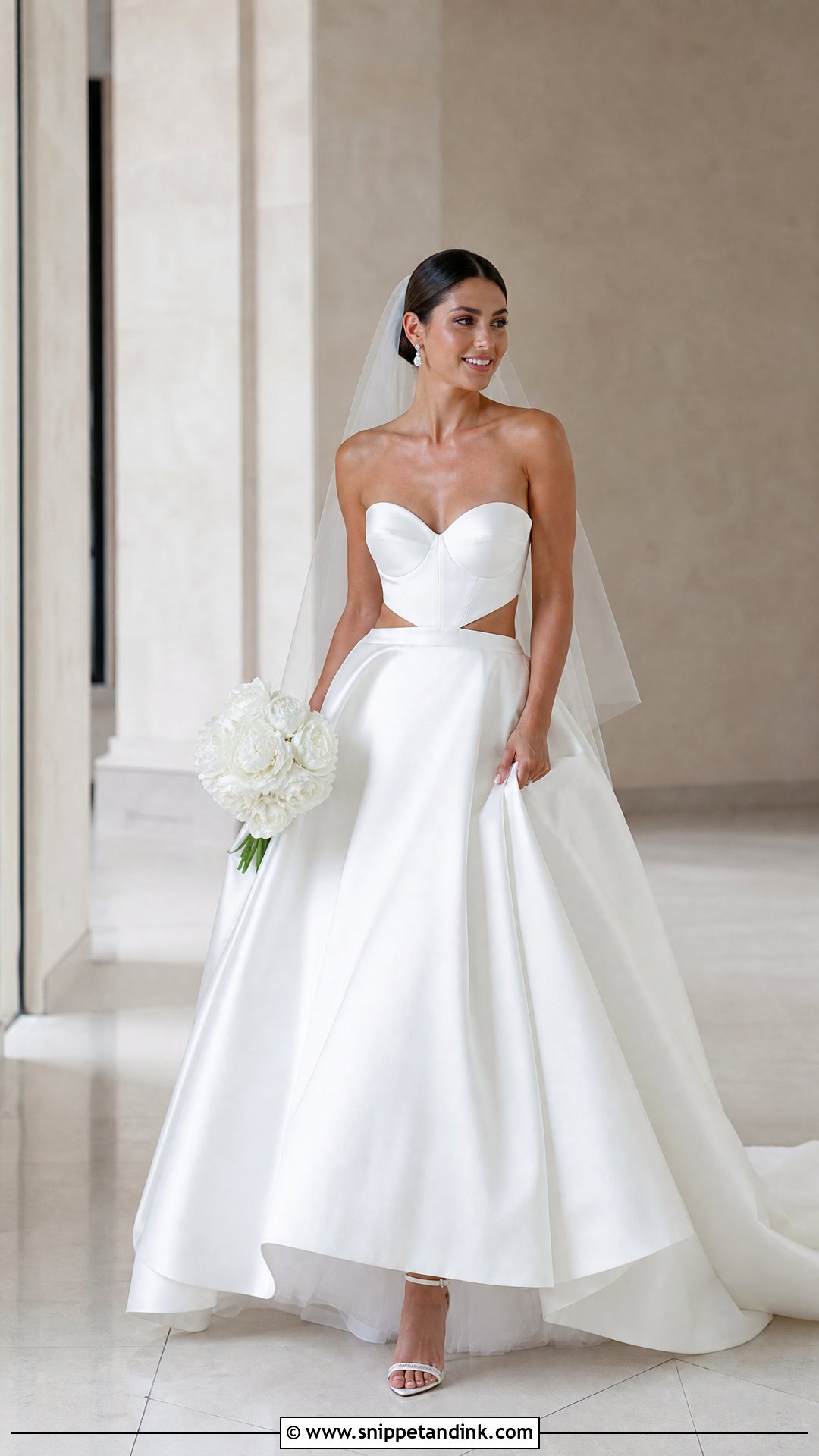
Small symmetrical cutouts near the waist or neckline make a corset look modern; large sheer panels tend to look less bridal and move more. Balance the cutouts with a full satin skirt. When you sit and twist at the fitting, the cutouts should stay flat and not shift off-center. Ask about lining options in a closer match to your skin tone if you want the effect softened. A plain fingertip veil, small diamond earrings, ivory ankle-strap heels and a center-parted low bun suit the architecture. Skip the necklace and any heavily decorated veil.
19. Suzanne Neville High Neck Wedding Dress
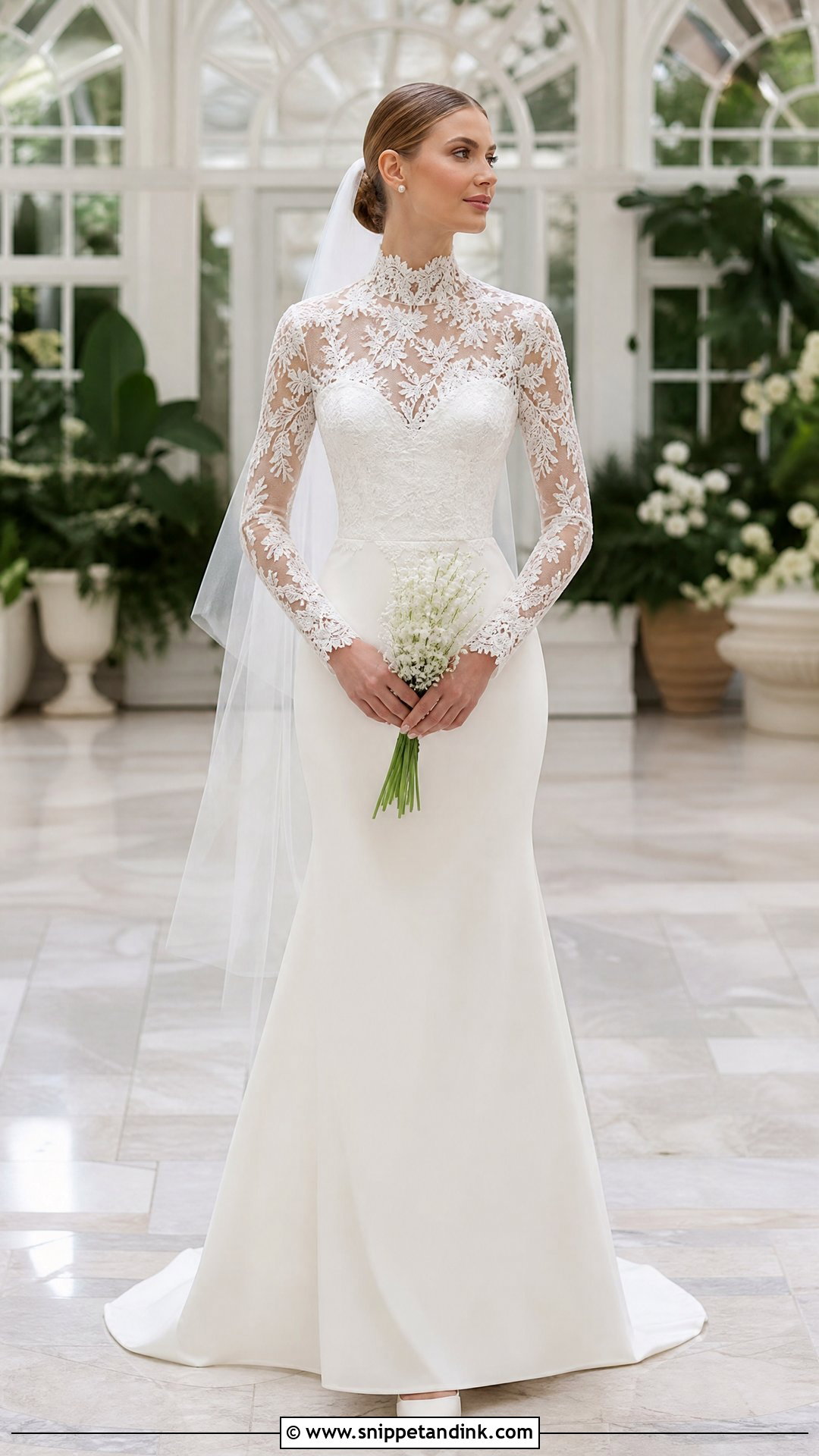
High necks stay light when the fabric is sheer. Start with a fitted corseted base, then add a sheer lace collar and long sleeves, over a softly fitted or gently A-line skirt. I always have the bride sit down and turn her head both ways; a collar that’s fine standing can press on the throat when seated. A low bun keeps the lace collar visible, tiny pearl studs replace dangling earrings, and a plain veil sits beneath the bun. If the neckline detaches, removing it after the ceremony gives a relaxed strapless look for the party.
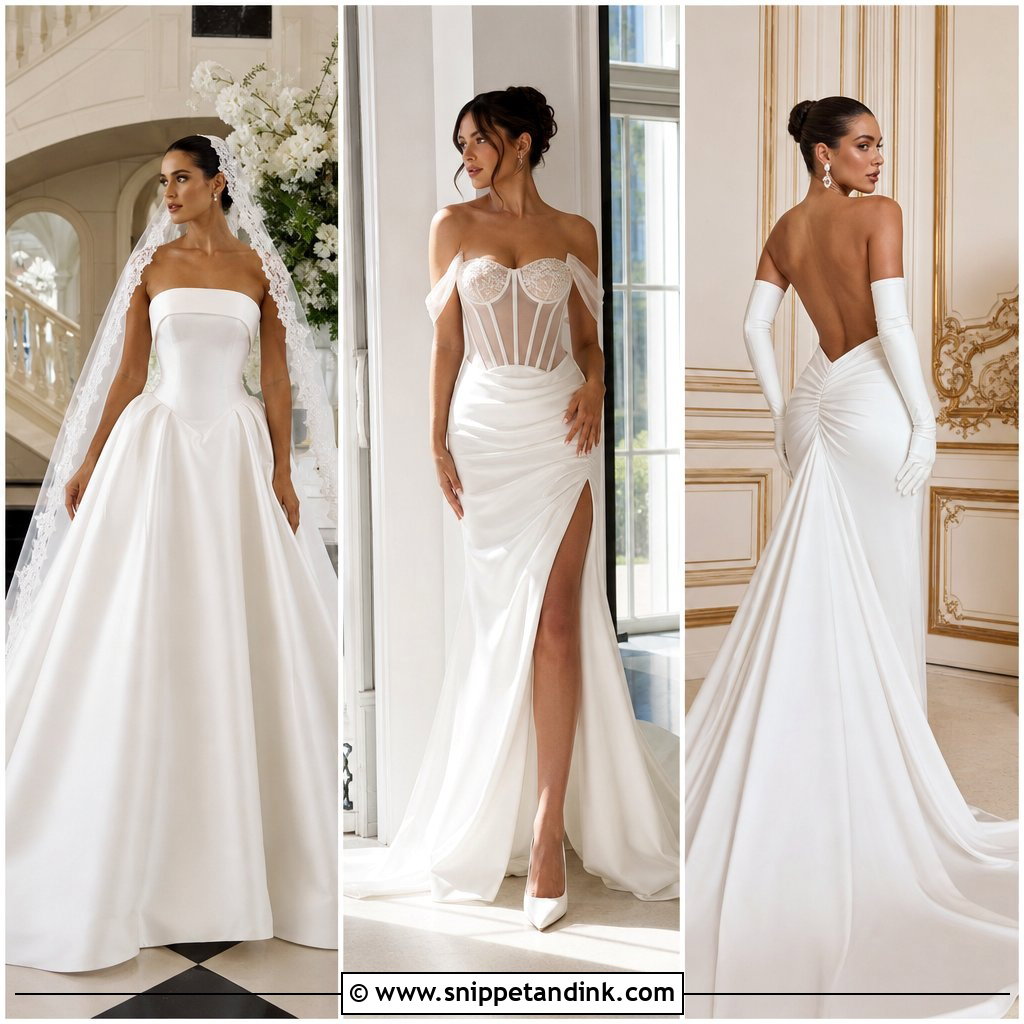
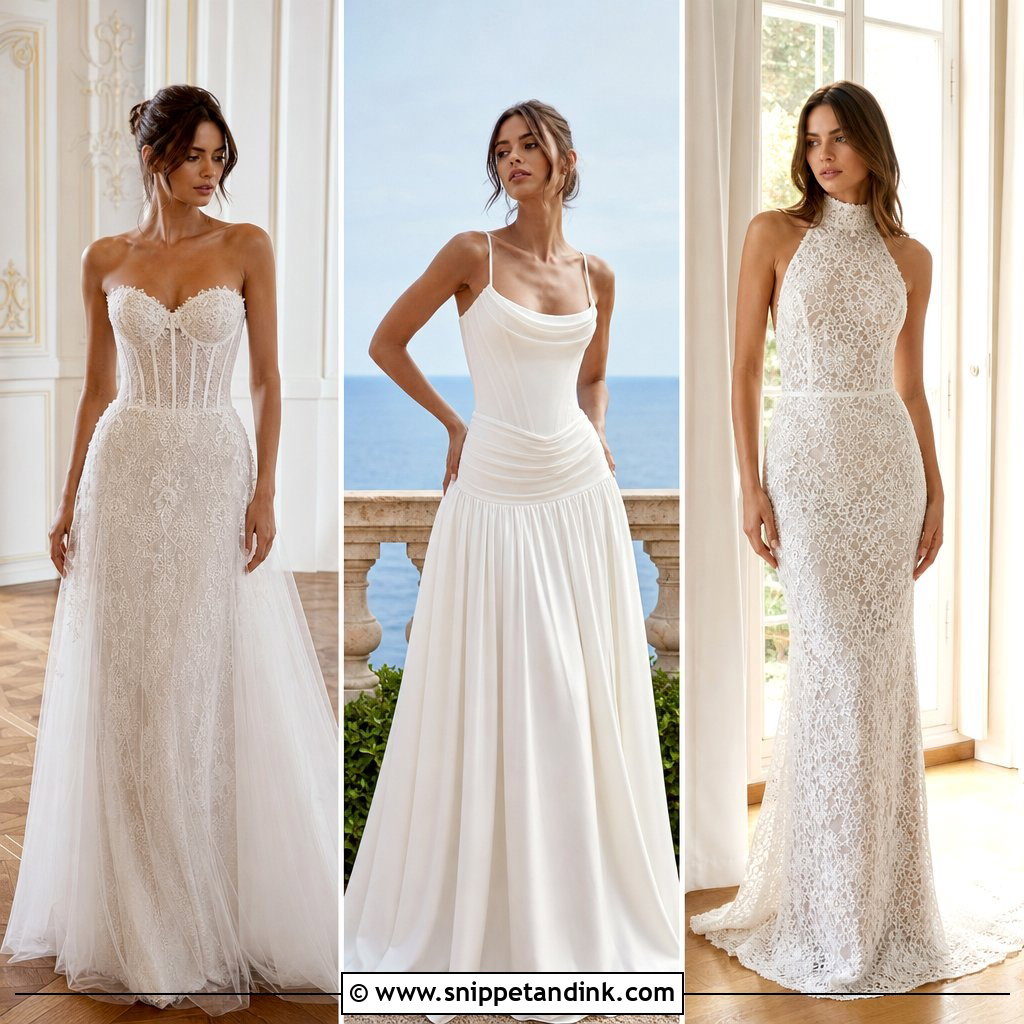
20. Suzanne Neville Detachable Sleeve Wedding Dress
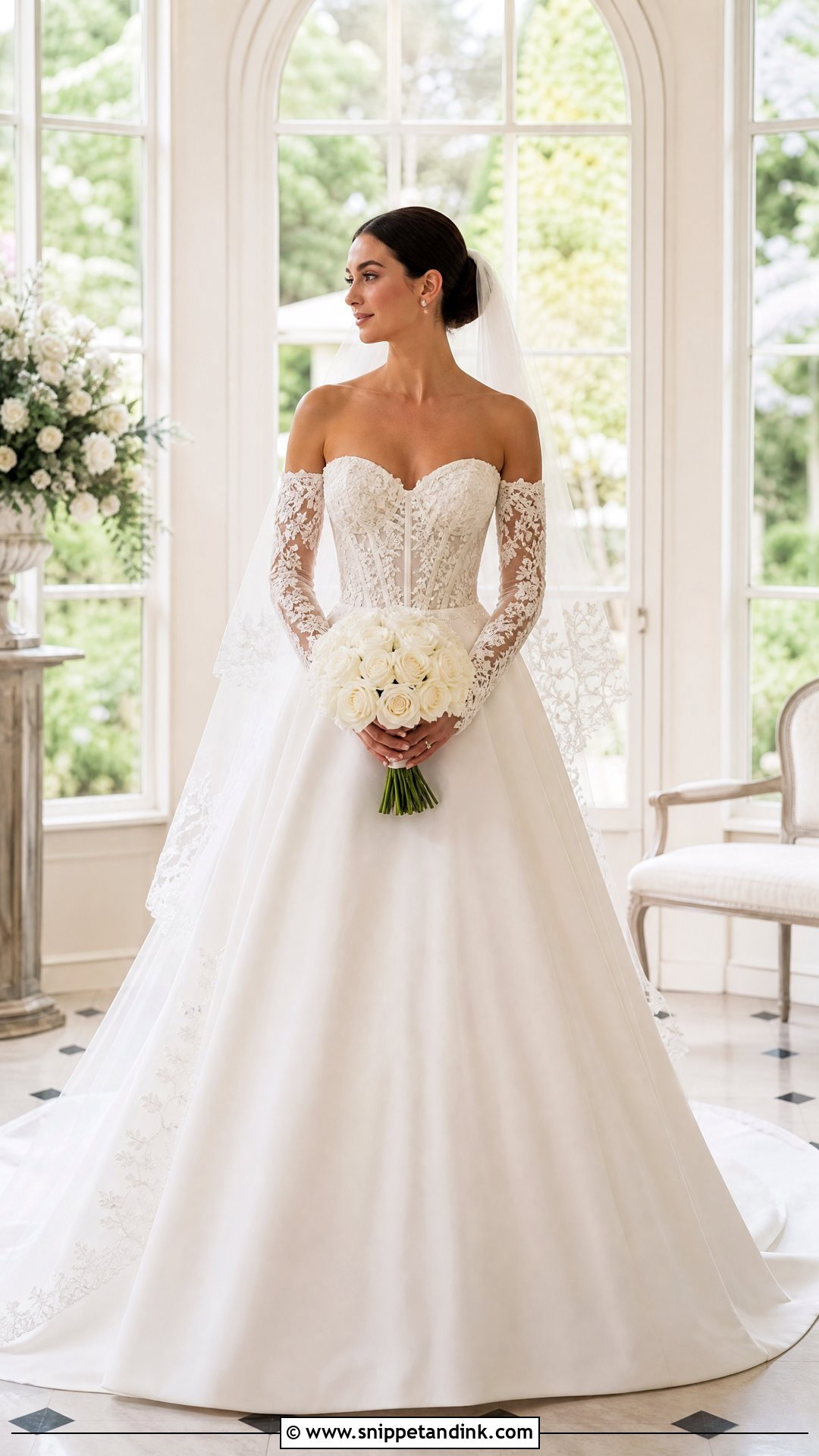
Detachable sleeves are the simplest way to turn one gown into two. A strapless sweetheart corset with a flowing A-line skirt is the base, and fitted lace sleeves attach for the ceremony with no visible gaps or bulky fastenings. A lace-edged veil, pearl studs and closed pumps complete the covered look; later, swap to statement earrings and a slim bracelet. Practise removing the sleeves with your helper before the day. Afterwards, store them flat in a labeled bag away from beaded or metal pieces, because fine lace snags easily.
How Many Months a Made-to-Order Designer Gown Takes
Designer gowns are usually made to order once you place your order, not taken off a rail. Production times vary by boutique and by season, but they are often several months, and alterations then need their own time on top. As a rough plan, I suggest brides start trying on about a year before the wedding and order roughly eight to ten months ahead, which leaves space for delays and a calm series of fittings. Ask the boutique for its own order cut-off date, as some won’t accept orders past a certain point.
Short on time? Ask whether any sample gowns are for sale or whether a rush order is possible, and what it costs. Sample gowns can be a good option if the size is close, as a skilled seamstress can adjust a boned bodice within limits.
Once the gown arrives, store it in its breathable bag, hung by the inner loops rather than the shoulders, so the weight of the skirt doesn’t pull the bodice out of shape. Collect it shortly before the wedding and ask for a final press on the day, or bring a handheld steamer for the train.
Fit Is What Makes a Structured Gown Work
Every gown above relies on the same thing: careful construction, whether it’s a minimal satin shape, a romantic lace overlay or a full organza ball gown. Start by narrowing down the neckline, fabric and skirt shape you feel comfortable in, then think about veil, sleeves, shoes, jewelry and hair. Bring your real undergarments and your shoe height to every fitting. Take photos from several angles, and pay just as much attention to how easily you can sit and walk. A well-altered gown that suits your shape will always look better than one chosen for the name on its label.
You'll Like These Ideas:


Leave a Reply