
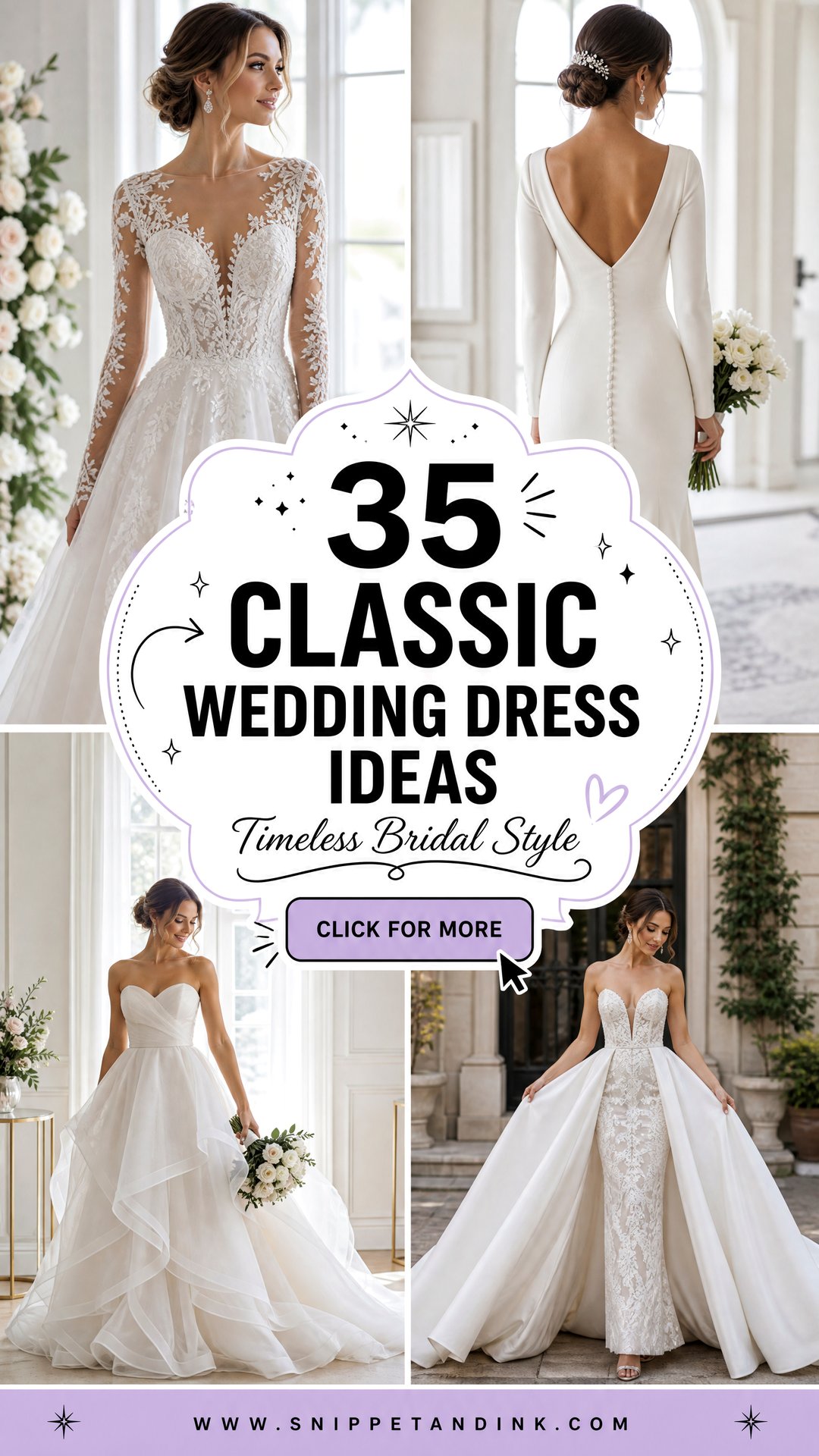
Classic doesn’t mean plain. When a bride tells me she wants a timeless dress, what she usually means is that she wants to look at the photos in twenty years and see herself, not the trend of that season. That comes down to clean lines, good fabric, a silhouette that suits her, and detail placed with restraint. The gowns below run from satin ball gowns and lace sleeves to columns, tea lengths and pearl details. For each, I’ve noted how it’s built, how it moves, and who I’d suggest it to.
What Dates a Wedding Gown and What Doesn’t
When I look back at wedding photos from past decades, the gowns that still look right have a few things in common. The ones that look dated usually have one detail that was fashionable for a short time and pulled the whole dress into that year.
- Fabric quality outlasts decoration. Good satin, mikado, crepe and silk look as right now as they did decades ago.
- Fit at the waist and shoulders matters more than the neckline. A well-fitted dress always looks deliberate.
- Oversized decoration dates faster: very large flowers, heavy crystal, or a very specific trend colour.
- Proportion matters. A gown in proportion to your frame, not overwhelming it, looks classic.
My rule: choose one feature to carry the dress, a neckline, a fabric or a detail, and keep the rest simple. That’s what gives a gown a long life in photos.
I also ask brides to try at least one silhouette they think won’t suit them. Pictures online rarely show how a skirt moves or how a bodice sits on a real body, and a surprising number of brides who arrive certain they want a mermaid leave in an A-line, or the other way round. Ten minutes in a shape you’d ruled out is the cheapest research you’ll do.
1. Satin Ball Gown Wedding Dress
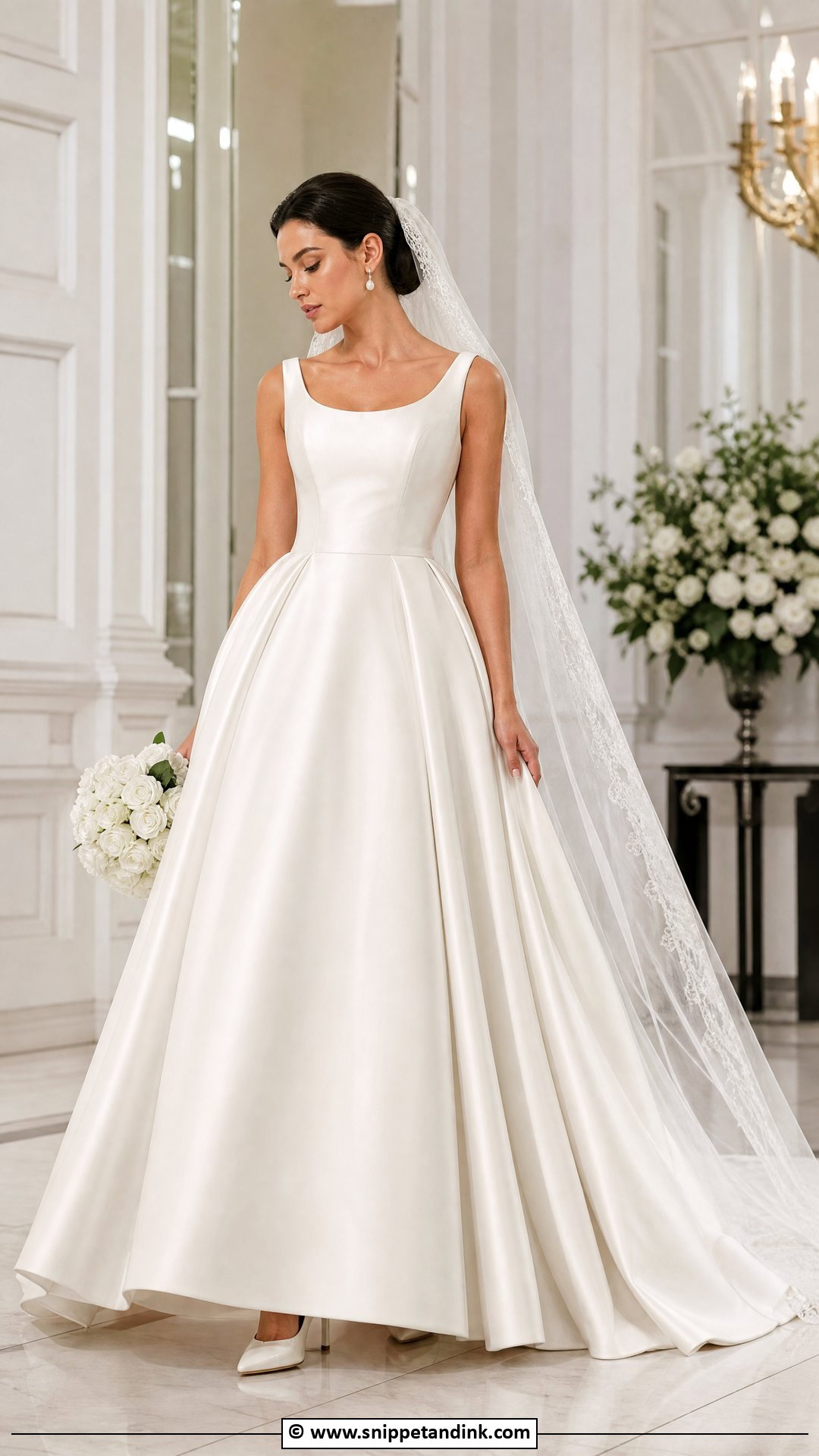
A satin ball gown gets its shape from what’s underneath: a structured bodice and a skirt supported by layers of tulle or a light crinoline. Without that, satin collapses into folds. I look for a fitted bodice at the natural waist and soft pleats or box pleats at the skirt seam, which give volume without bulk at the hip. A chapel-length veil, pearl earrings and closed-toe satin pumps finish it. Ballrooms, historic estates and hotel weddings give it the space it needs.
2. Lace Sleeve A-Line Wedding Dress
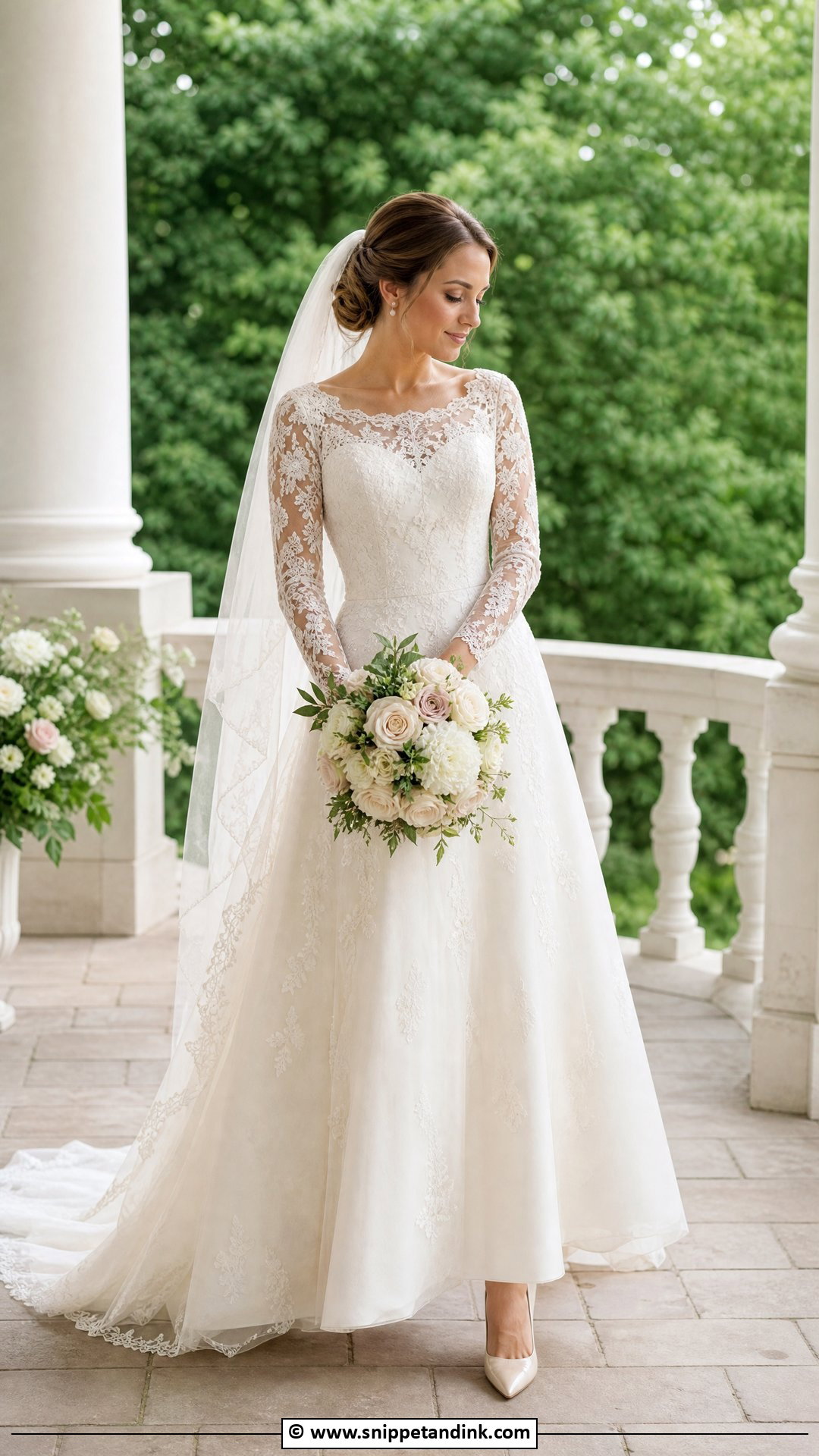
The A-line skirt is the most forgiving shape in bridal: it defines the waist and falls away from the hips, so it suits more figures than any other. Long lace sleeves add coverage, and I always check how the lace is cut at the cuff, because a scalloped edge at the wrist looks far more finished than a hemmed one. Delicate floral lace on a lightly lined bodice keeps it refined. Pearl studs, a low bun and ivory heels suit garden venues, formal halls and cooler-season weddings.
3. Off The Shoulder Wedding Dress
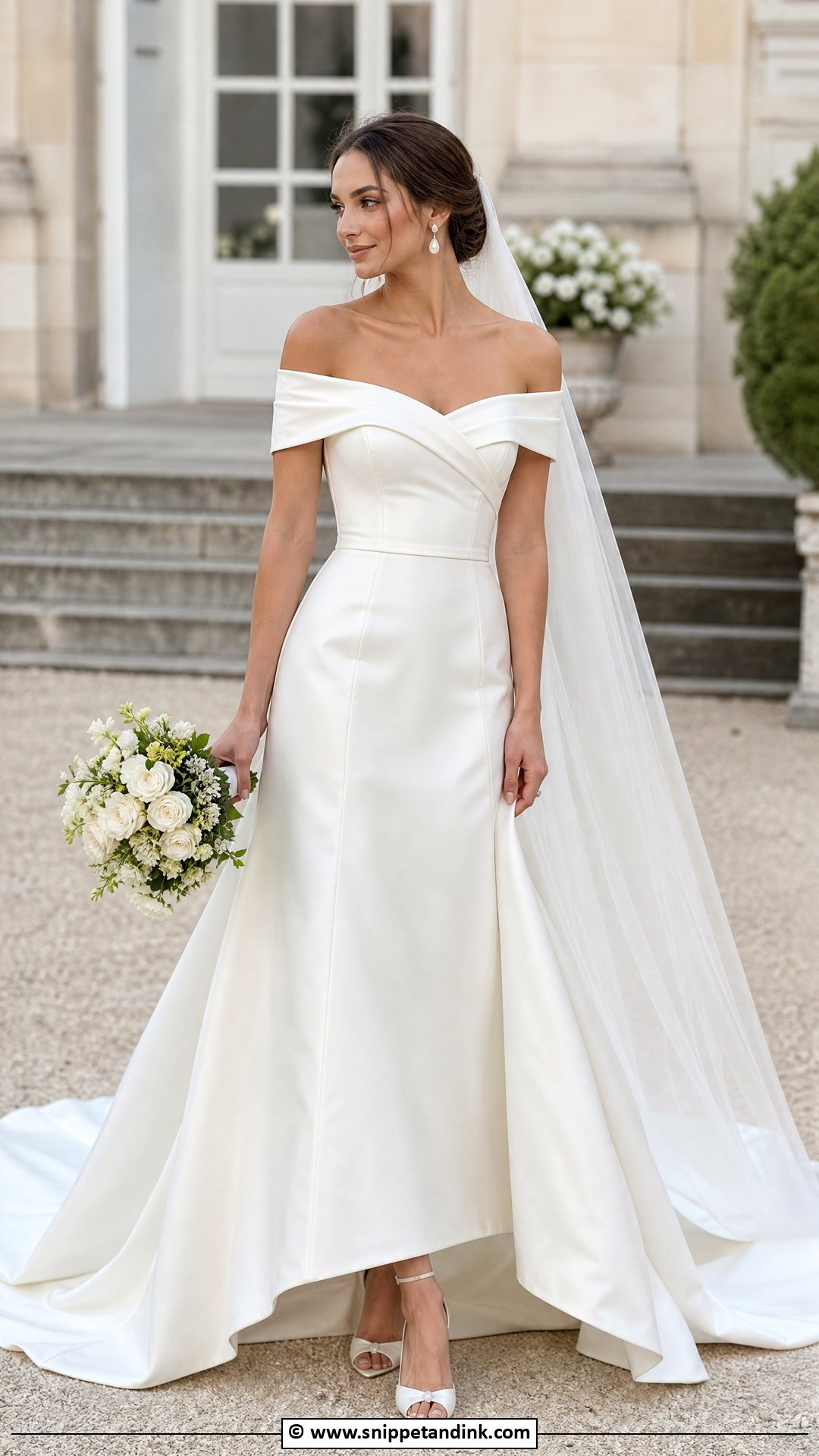
Off-the-shoulder gowns frame the collarbone and shoulders, and they need careful fitting so the neckline doesn’t slide down when you raise your arms to dance. Satin, mikado, crepe and lace all hold this neckline, with mikado the most stable. A fitted bodice with a gently flared skirt is the classic version. Drop earrings, a smooth veil and a neat updo keep the shoulders in view. I’d suggest it for brides who like the shape of a strapless gown but want something to hold the neckline, and it suits formal weddings, estate ceremonies and indoor receptions.
4. Strapless A-Line Wedding Dress
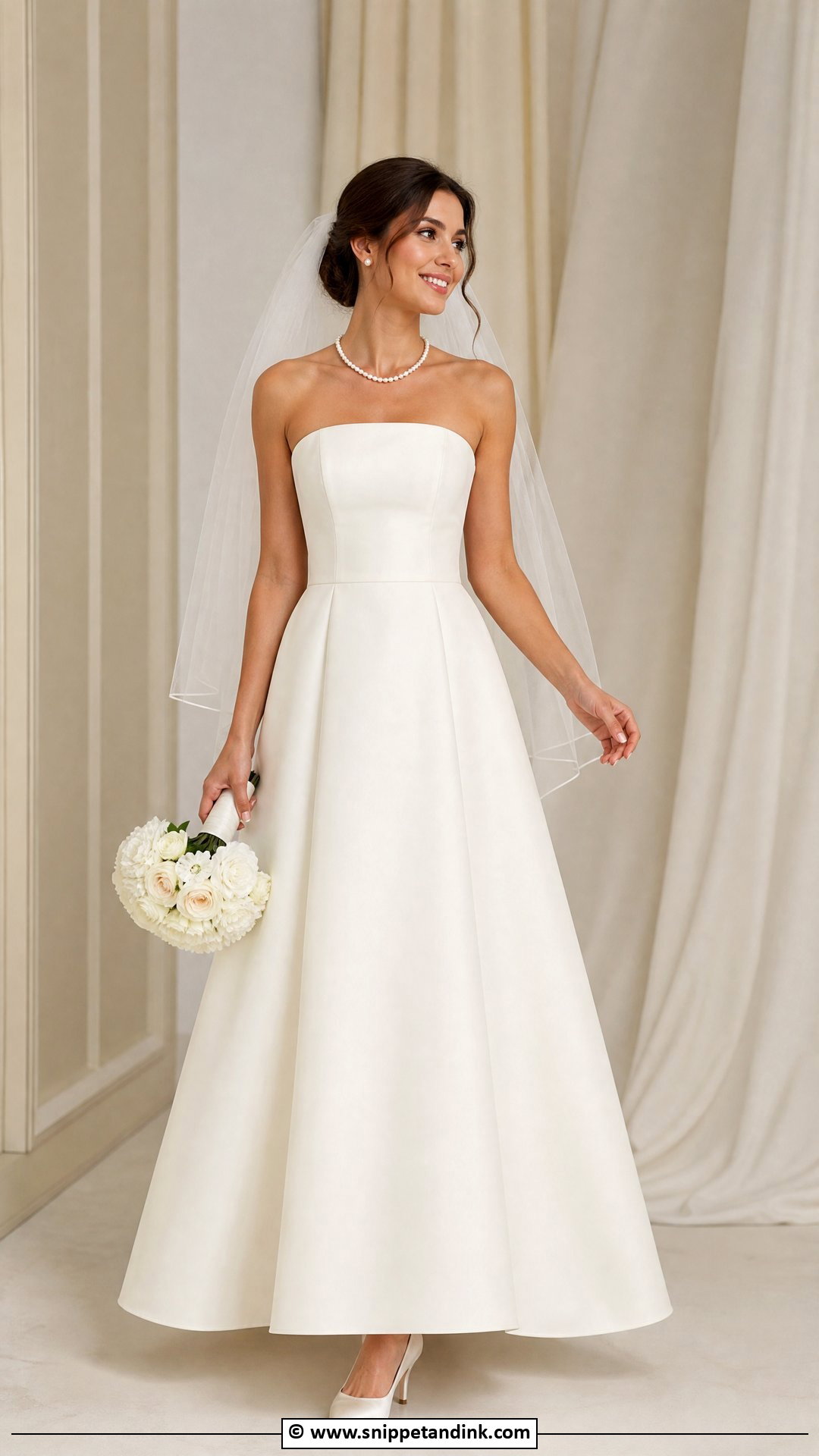
Strapless A-lines rely entirely on inner construction. A good one has boning, a waist stay and often a built-in corset, so the bodice holds itself up instead of relying on tightness. I test it with the bride bending, sitting and lifting her arms before I approve the fit. Satin reads formal, tulle softer, lace more romantic. A fingertip veil, a pearl necklace and ivory heels finish it, and it’s light enough for dancing all evening.
5. High Neck Lace Wedding Dress
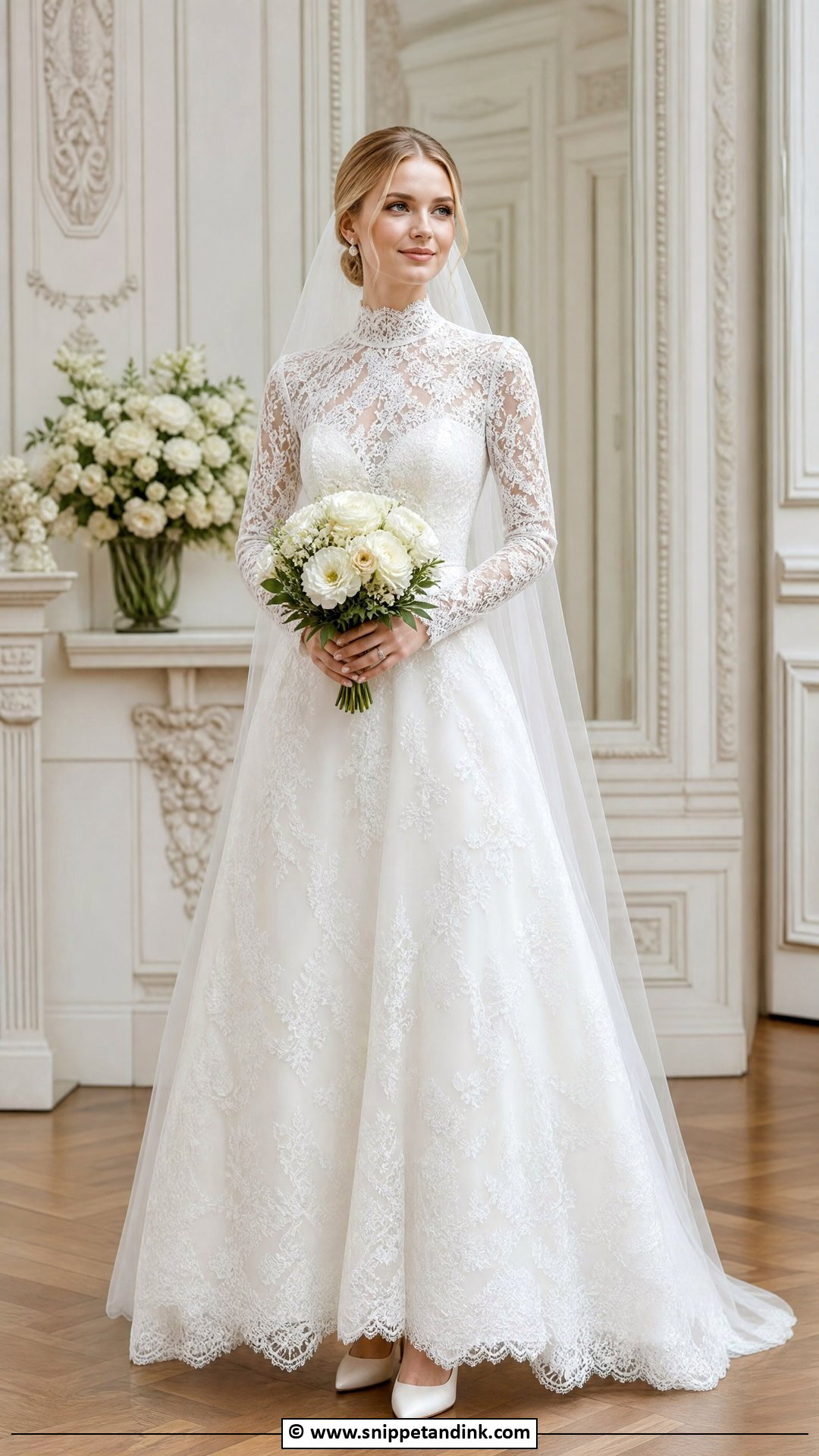
High-neck lace draws the eye to the face, which is why it photographs so well in portraits. I look for lightweight lace with a subtle lining so the dress feels delicate rather than stiff, and I check the collar doesn’t press on the throat when you turn your head. Long sleeves with a fitted bodice and a soft A-line or sheath skirt keep it elegant. A simple veil, small pearl earrings and sleek hair balance it, and it suits formal venues and brides who prefer modest bridal fashion.
6. Crepe Column Wedding Dress
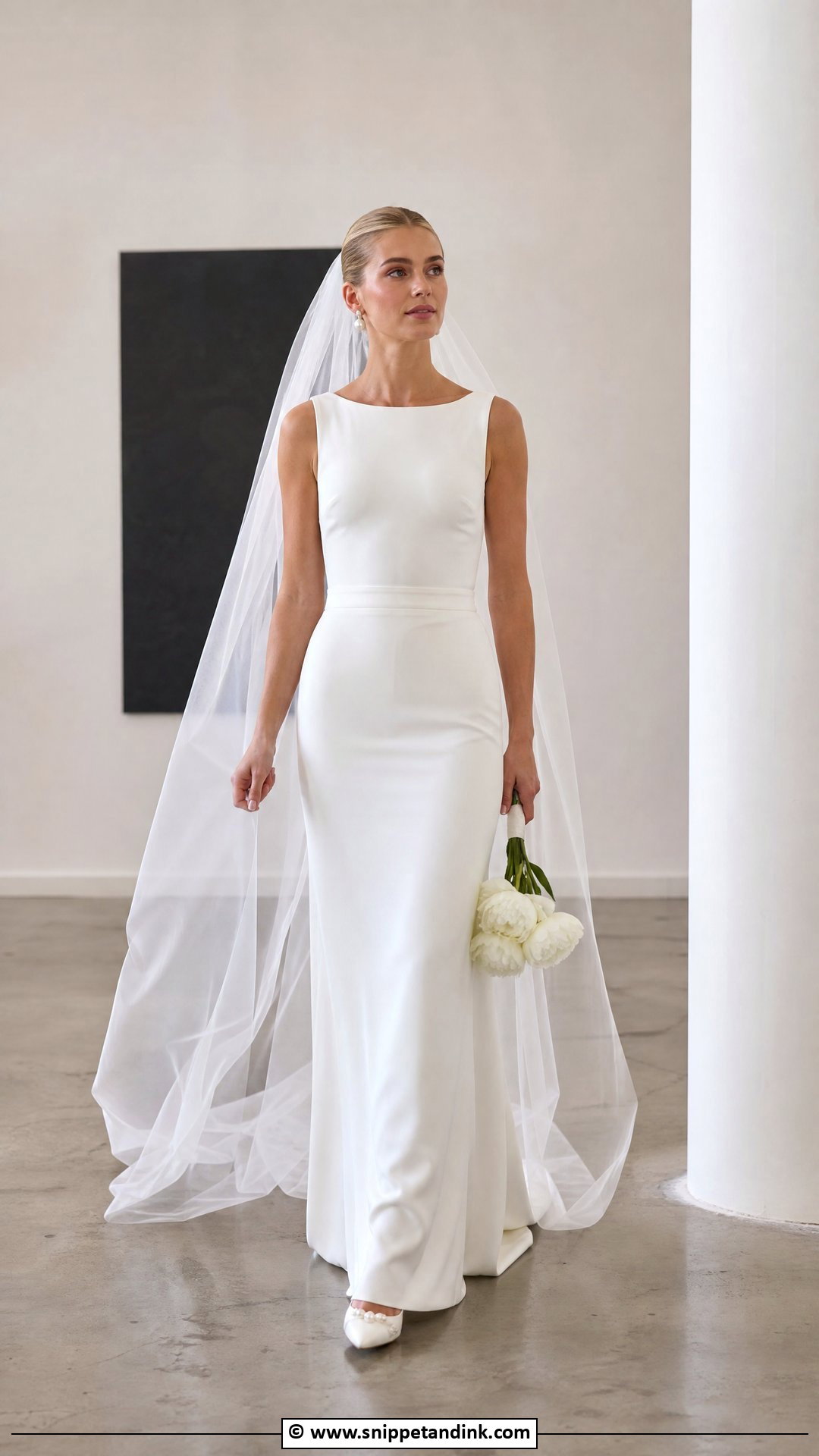
A crepe column wedding dress works because crepe has the weight to smooth the body and still move. The column falls straight from the shoulder or hip with no skirt volume, so fit is everything. I fit it at the hip first, then set a back slit or vent so you can walk. A bateau, square or strapless neckline suits it. Pointed heels, a structured veil and minimal jewelry make it modern classic, for city weddings, galleries and intimate receptions.
7. Long Sleeve Satin Wedding Dress
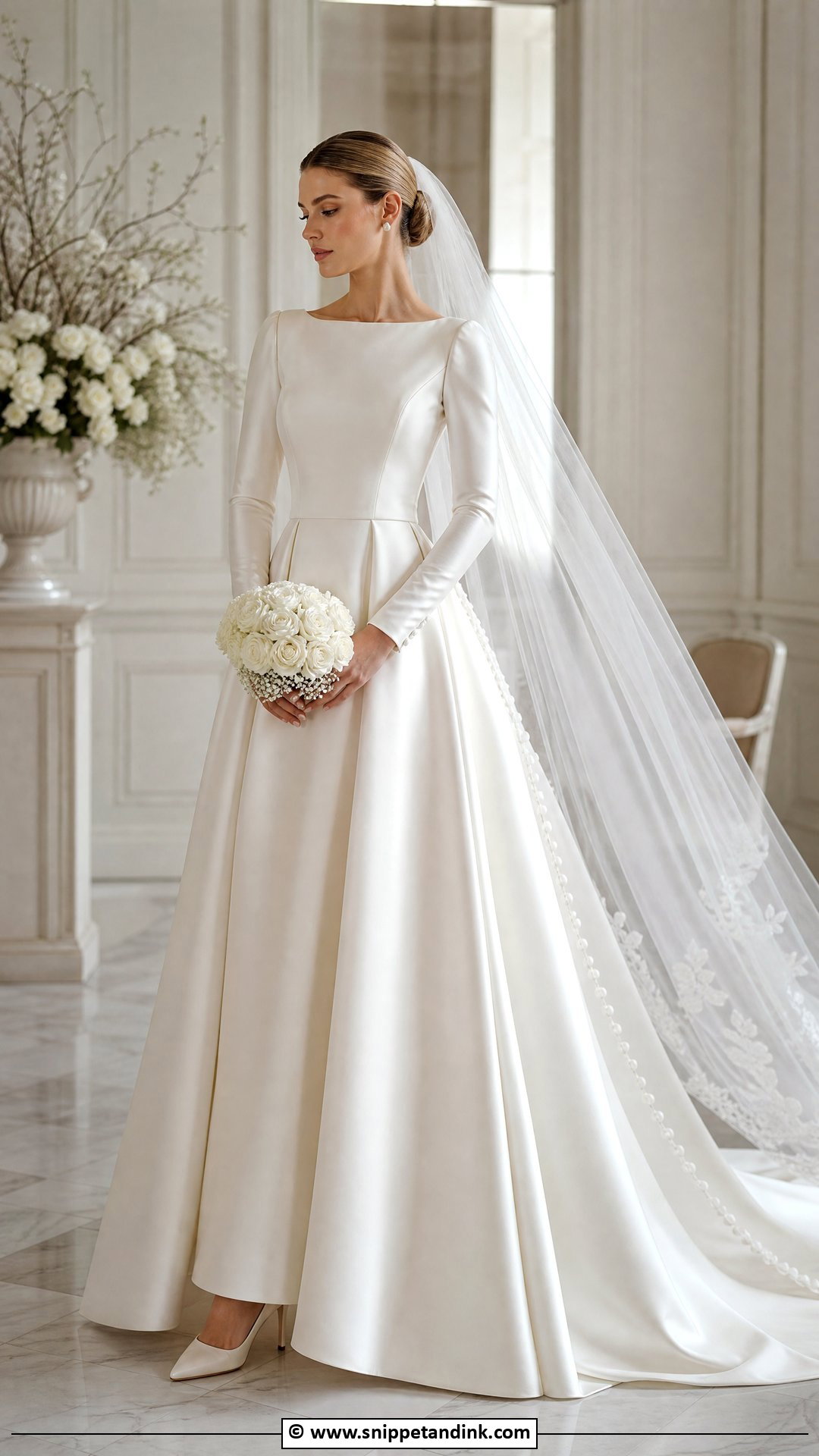
Long-sleeve satin is formal and quietly grand. Satin sleeves need to be cut with enough room at the elbow; too tight and they crease into permanent lines by evening. A fitted waist with a full or A-line skirt balances the sleeves. For a lighter look I’d choose slim sleeves and minimal seaming; for drama, covered buttons, a long train and a cathedral veil. Pearl studs, satin heels and a low chignon complete it for fall, winter and evening weddings.
8. Sweetheart Neckline Wedding Dress
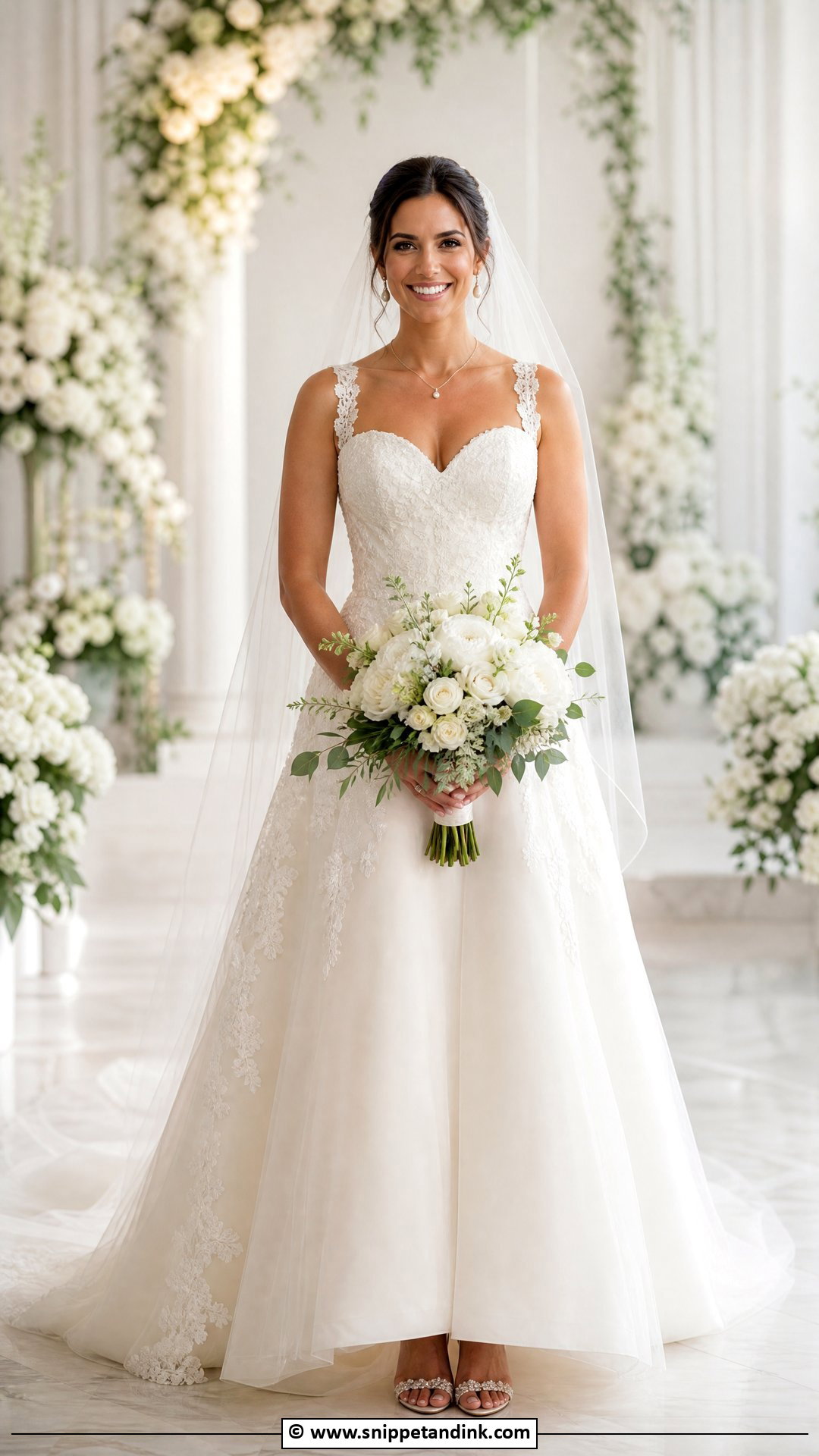
A sweetheart neckline curves over the bust and softens the bodice, flattering most upper bodies without feeling revealing. I look closely at how deep the dip is: a shallow sweetheart suits a smaller bust, a deeper one balances a fuller bust. It works with strapless gowns, lace straps or detachable sleeves, on an A-line skirt in satin or lace applique. A simple pendant, pearl earrings and a soft veil are plenty for a ballroom, garden or traditional reception.
9. Mikado A-Line Wedding Dress
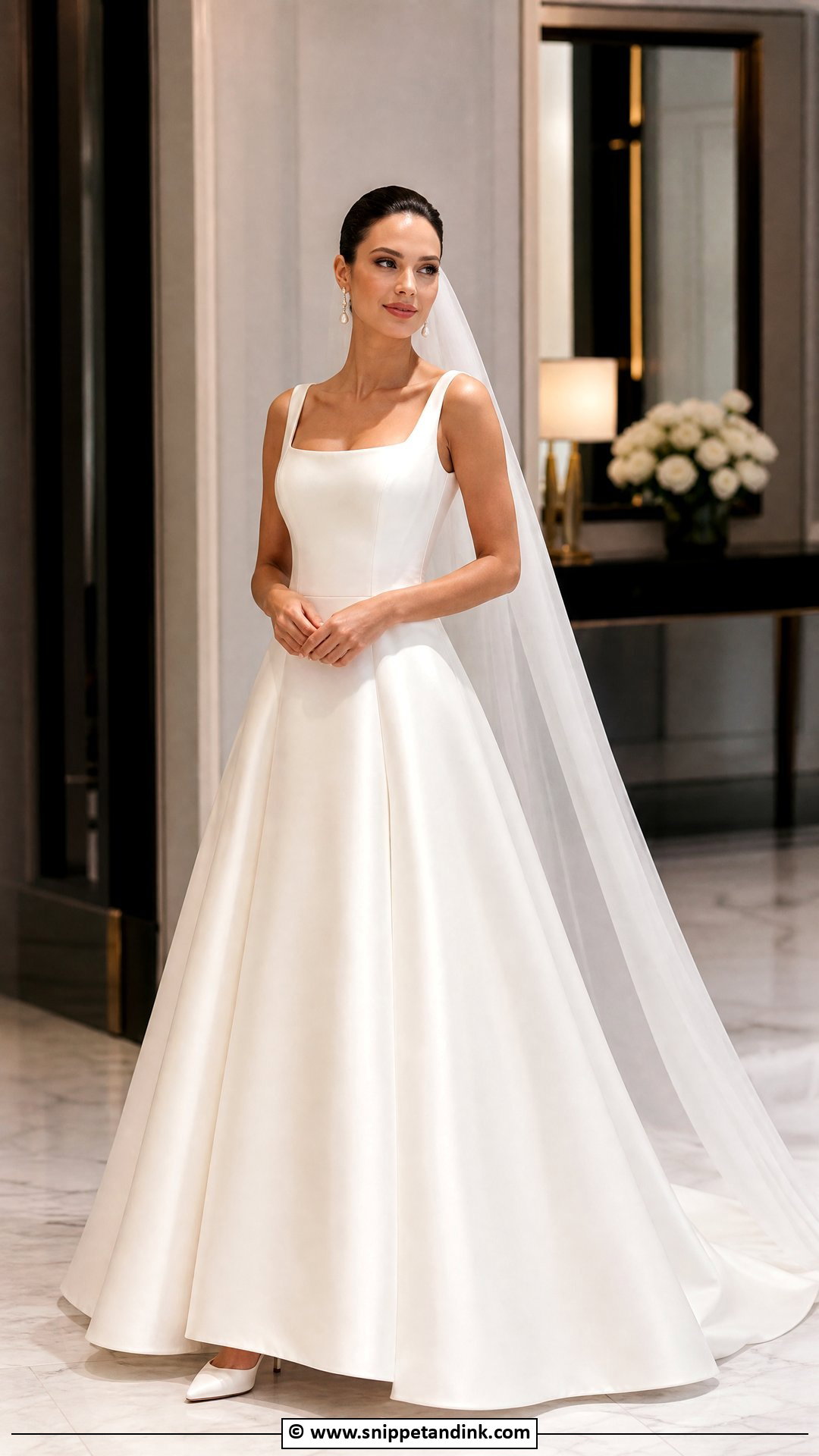
Mikado is a heavy silk or silk-blend with a subtle sheen and enough body to hold a skirt’s volume without layers of tulle. That’s why mikado A-lines look so clean and sculptural. It also creases less than satin, which helps on a long day. A square, strapless or off-shoulder neckline suits the fabric. Keep styling sharp with a smooth veil, pearl drops and classic pumps. When a bride asks for classic with a slightly modern edge, this is the fabric I pull first.
10. Bateau Neck Wedding Dress
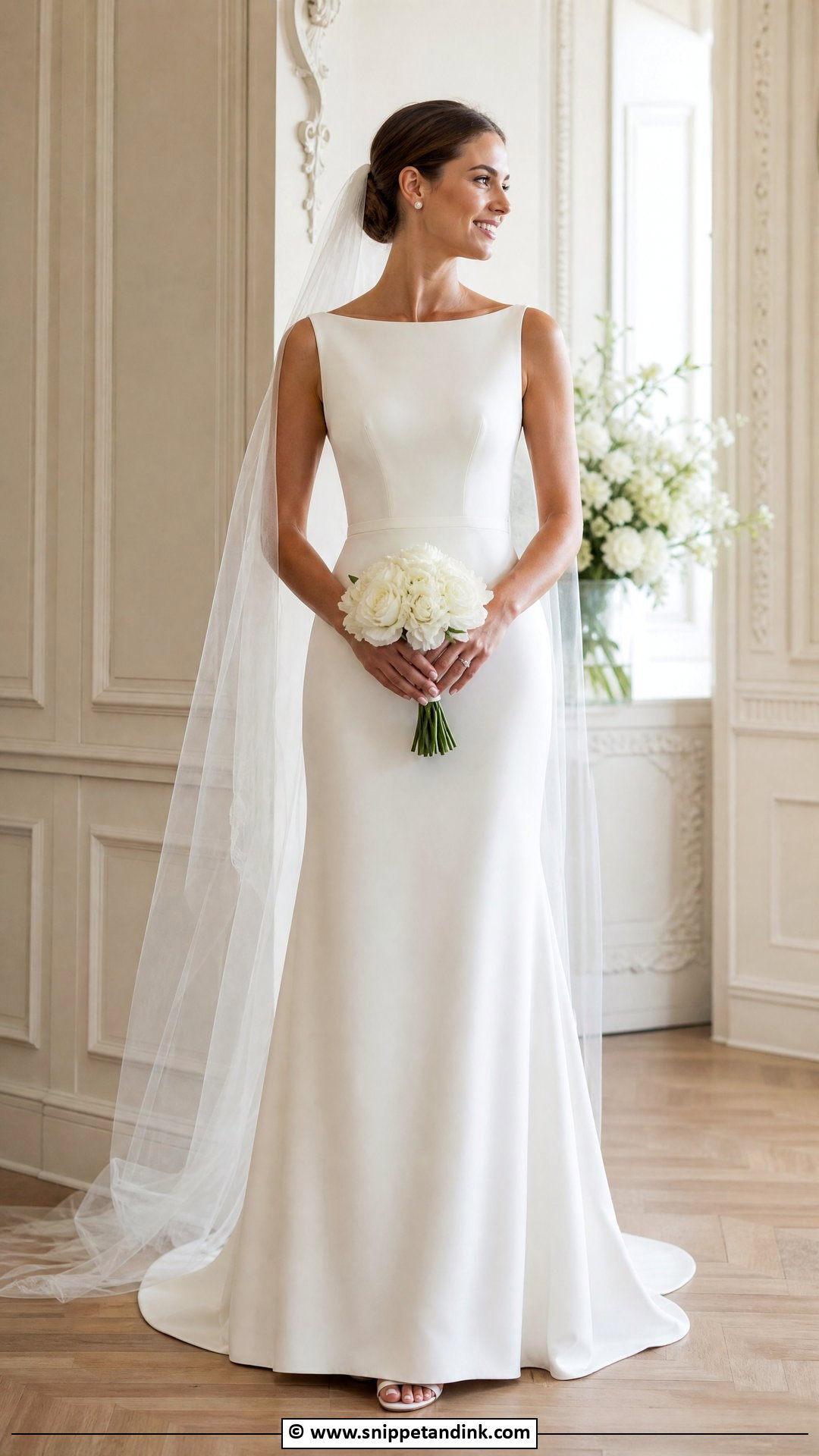
A bateau neckline runs across the collarbone from shoulder to shoulder, giving coverage without closing in the neck. It suits narrow shoulders particularly well, since the horizontal line widens them a little. Fitted sleeves, cap sleeves or sleeveless all work. A crepe sheath feels sleek; a satin A-line more traditional. Keep jewelry minimal and tuck the veil under a bun so the neckline stays clear for a formal indoor ceremony.
11. Pearl Embellished Wedding Dress
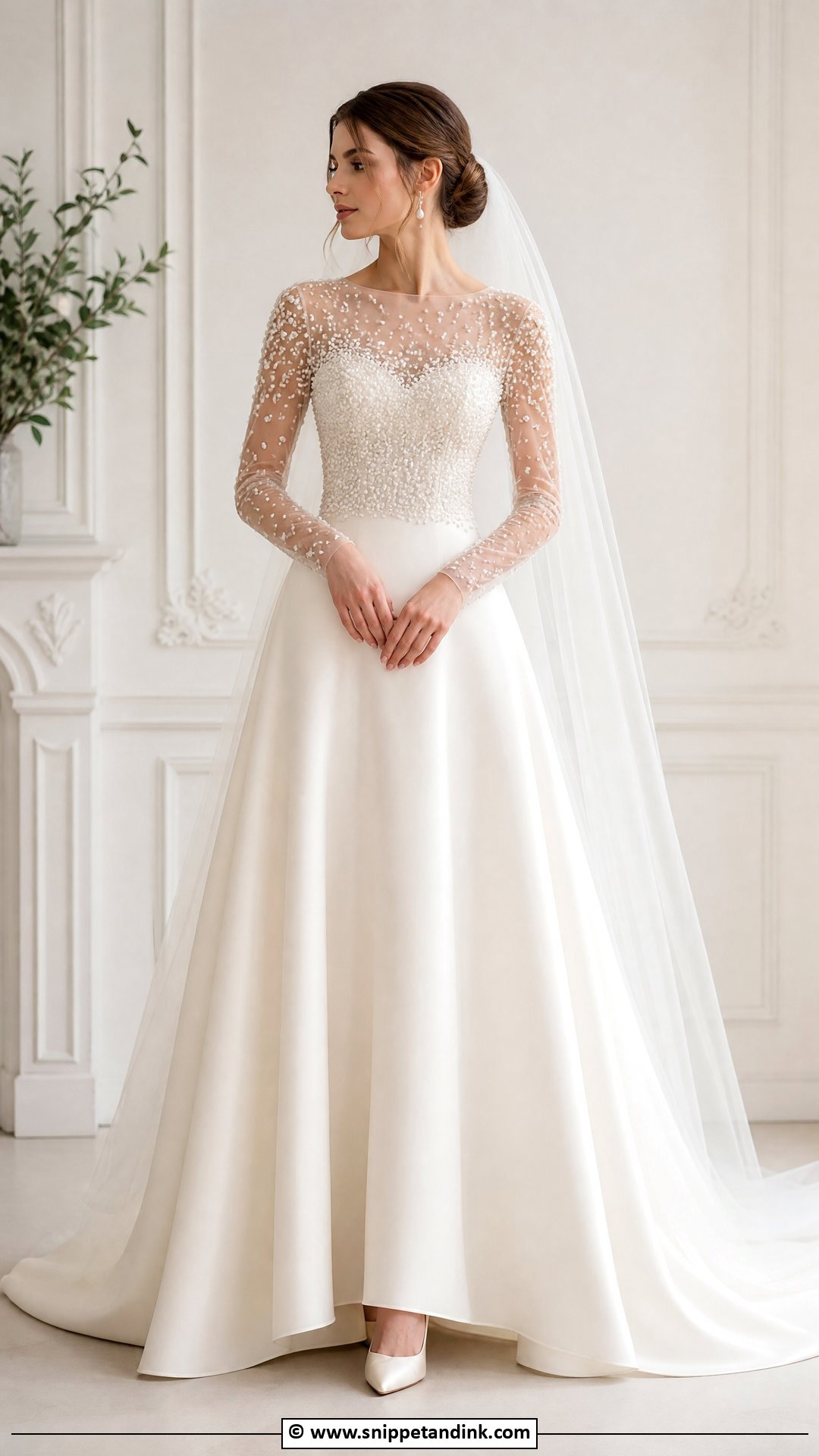
Pearls add texture without the hardness of crystal. Placement is everything: along the neckline or sleeves they frame the face; scattered across the skirt they catch light as you walk. Heavy pearl work adds real weight, so I check the shoulders and straps can carry it. A simple column, A-line or fitted crepe gown keeps the pearls refined. Pearl earrings, satin heels and a clean veil finish it.
12. Square Neck Wedding Dress
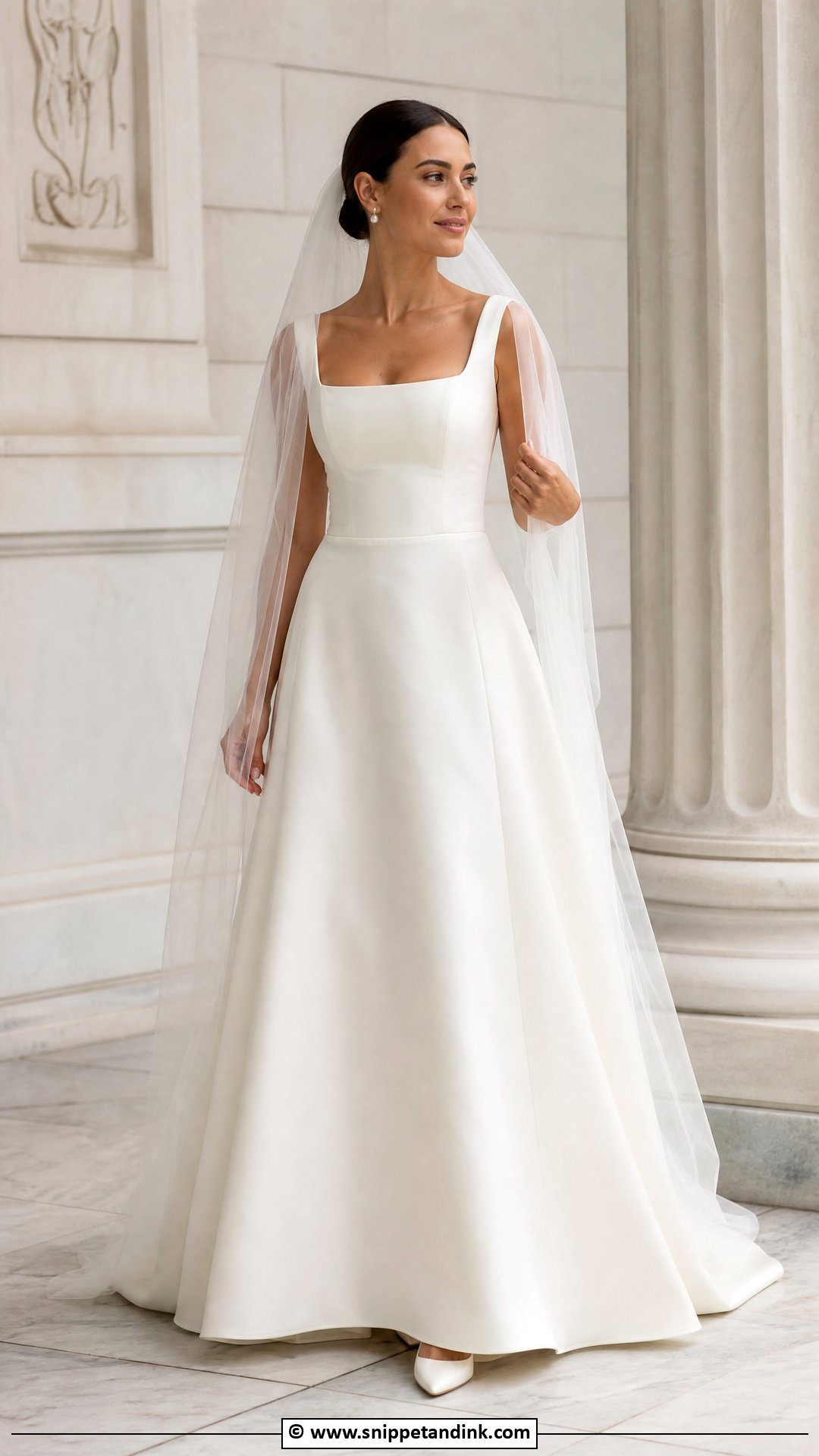
Square necks have become a modern classic because they’re structured without dating quickly. The straight line frames the collarbone and works with wide straps, fitted sleeves or sleeveless. I check the corners stay flat against the skin when you lean forward. It looks vintage in lace and sleek in satin or crepe. A low bun, small earrings, a fingertip veil and simple heels keep it refined.
13. Tea Length Wedding Dress
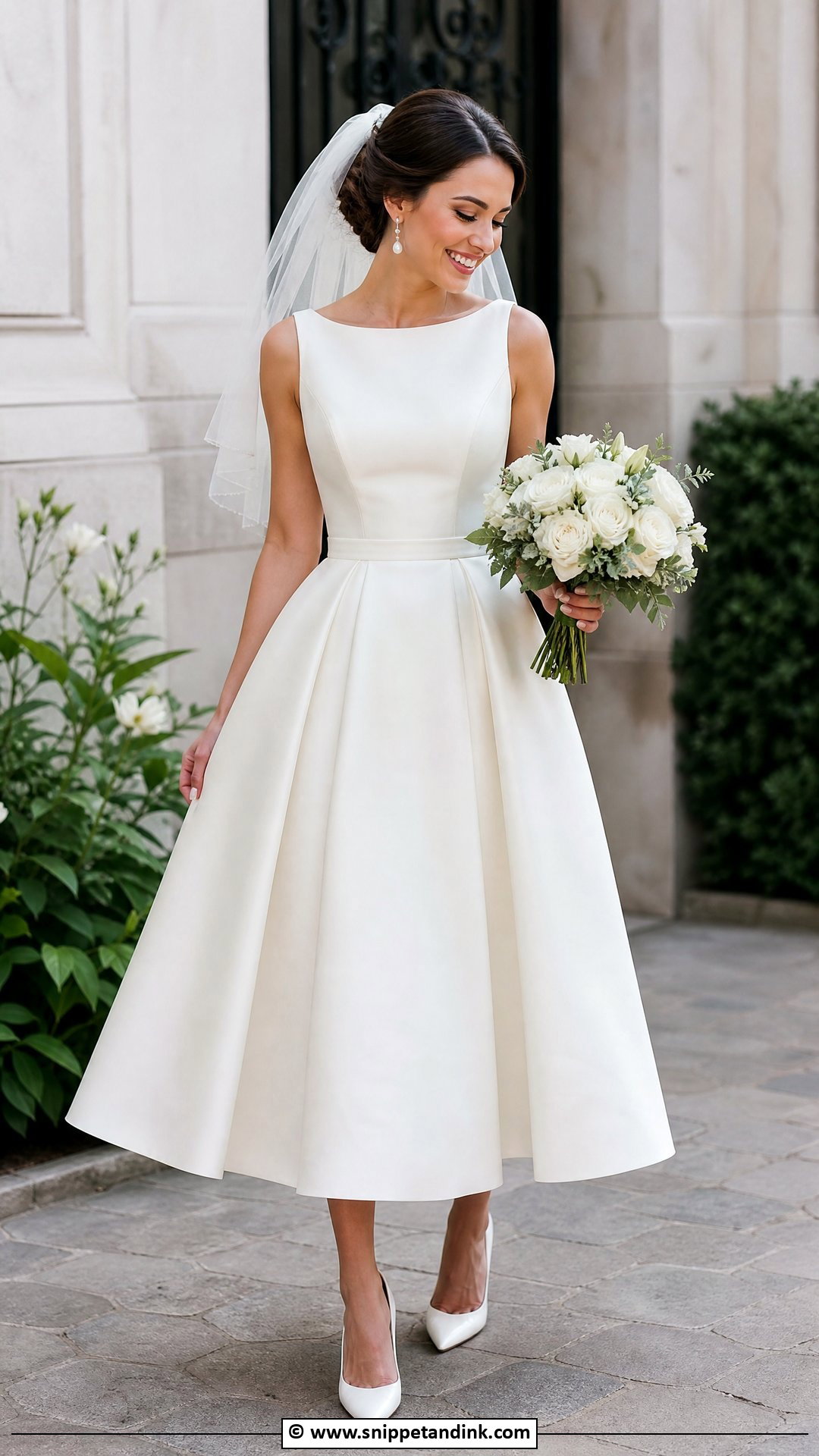
A tea length wedding dress shows your shoes, so they become part of the look. I set the hem at the narrowest part of the calf, as a hem at the widest point shortens the leg in photos. A fitted bodice, defined waist and softly flared skirt in satin, tulle, lace or organza is the classic shape. Pointed pumps, pearl earrings and a short veil or bow finish it for courthouse, garden or brunch weddings.
14. Drop Waist Wedding Dress
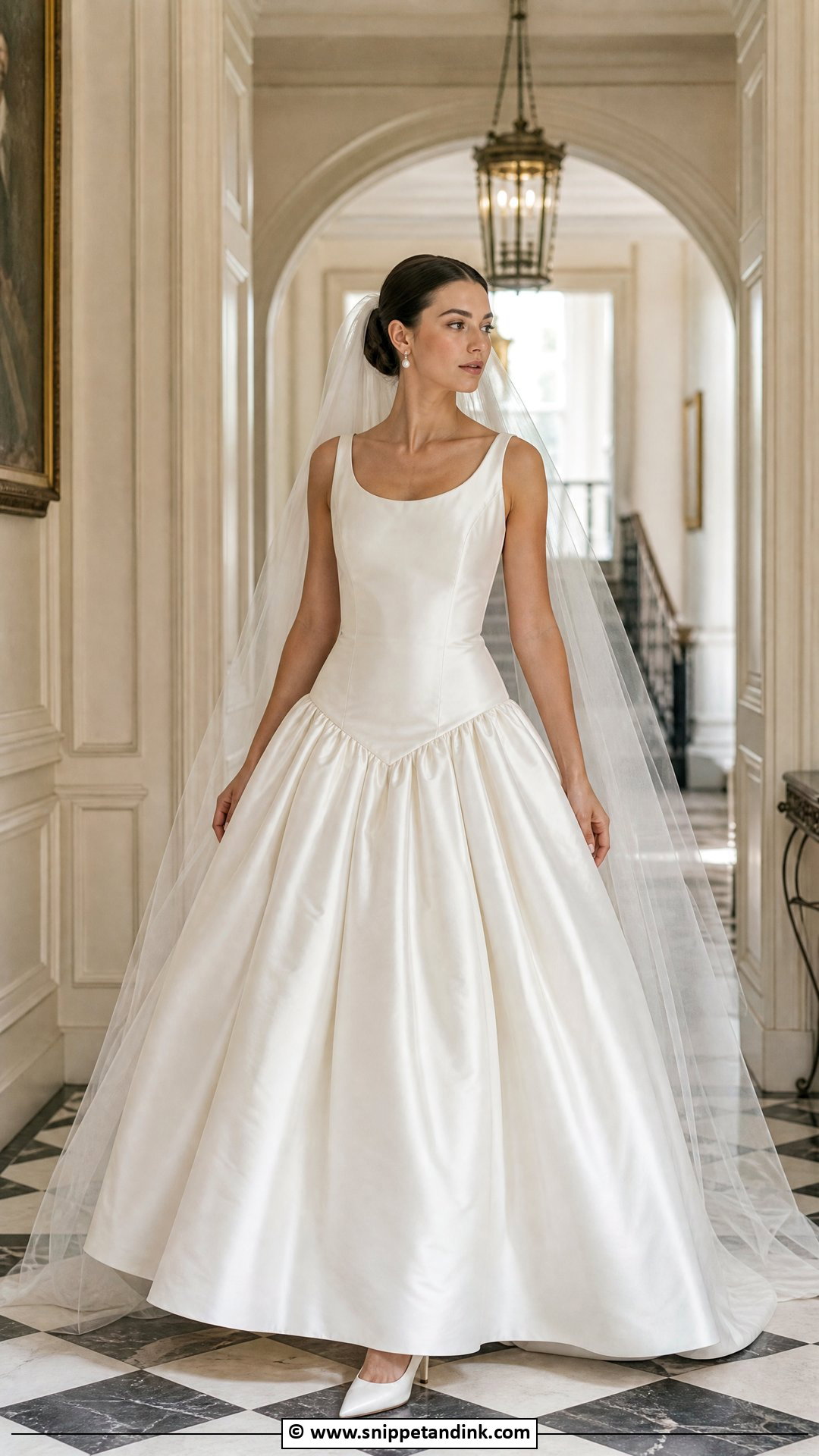
Drop waists extend the bodice below the natural waist before the skirt starts, which lengthens the torso. They suit straighter figures and longer torsos best; on a short torso the line can make the legs look shorter. Satin, lace or structured mikado all hold the shape. A full skirt adds drama, a softer skirt is more relaxed. A long veil, pearl earrings and simple heels complete this old-world look.



15. Corset Bodice Wedding Dress
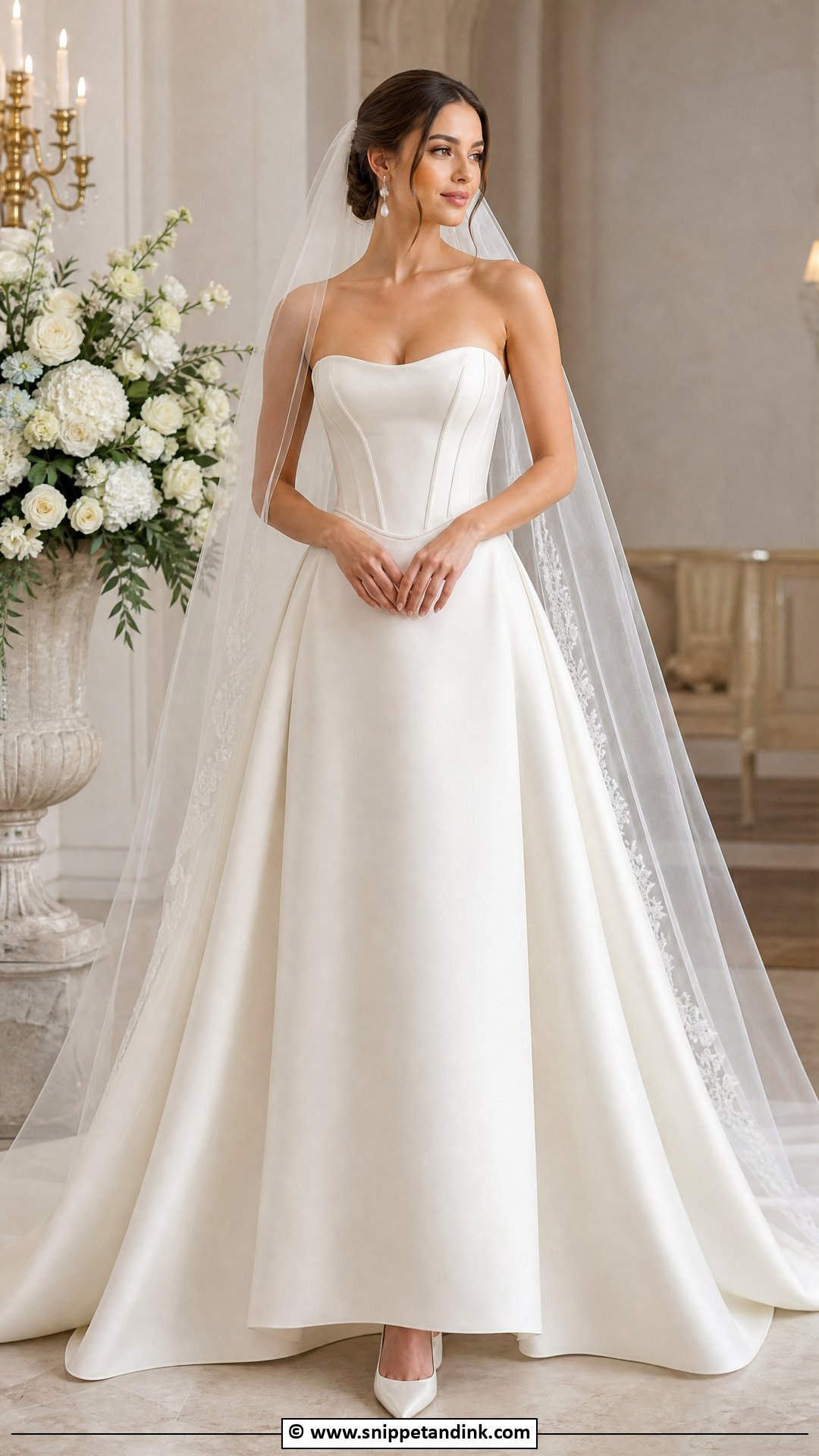
A corset bodice gives support that many brides appreciate on a long day, but it needs to fit precisely. I check it seated as well as standing, since boning that’s too long digs into the hip when you sit. For a classic effect, choose covered boning, satin, soft lace or a smooth basque waist. An A-line, ball gown or fit-and-flare skirt suits it. A long veil, pearl drops and classic pumps complete it.
16. Basque Waist Wedding Dress
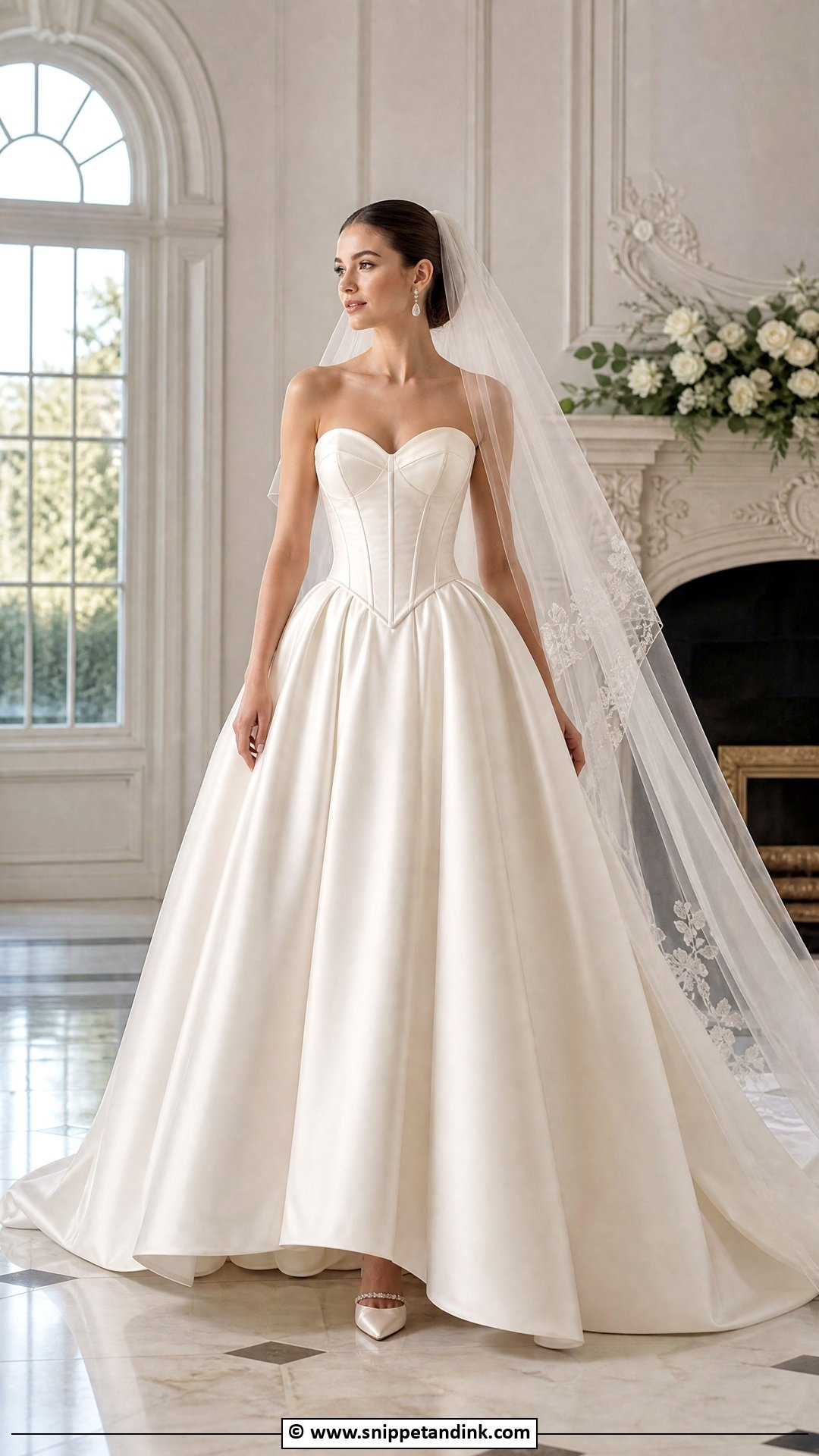
The basque waist dips to a point below the natural waistline, which lengthens the torso and narrows the waist visually. It’s the shape of most princess-style gowns. I make sure the point sits centred and flat; if the bodice is even slightly long, the point buckles when you sit. Full skirts, satin and lace bodices suit it. A cathedral veil, delicate earrings and satin heels for estate weddings and grand ballrooms.
17. Fit And Flare Wedding Dress
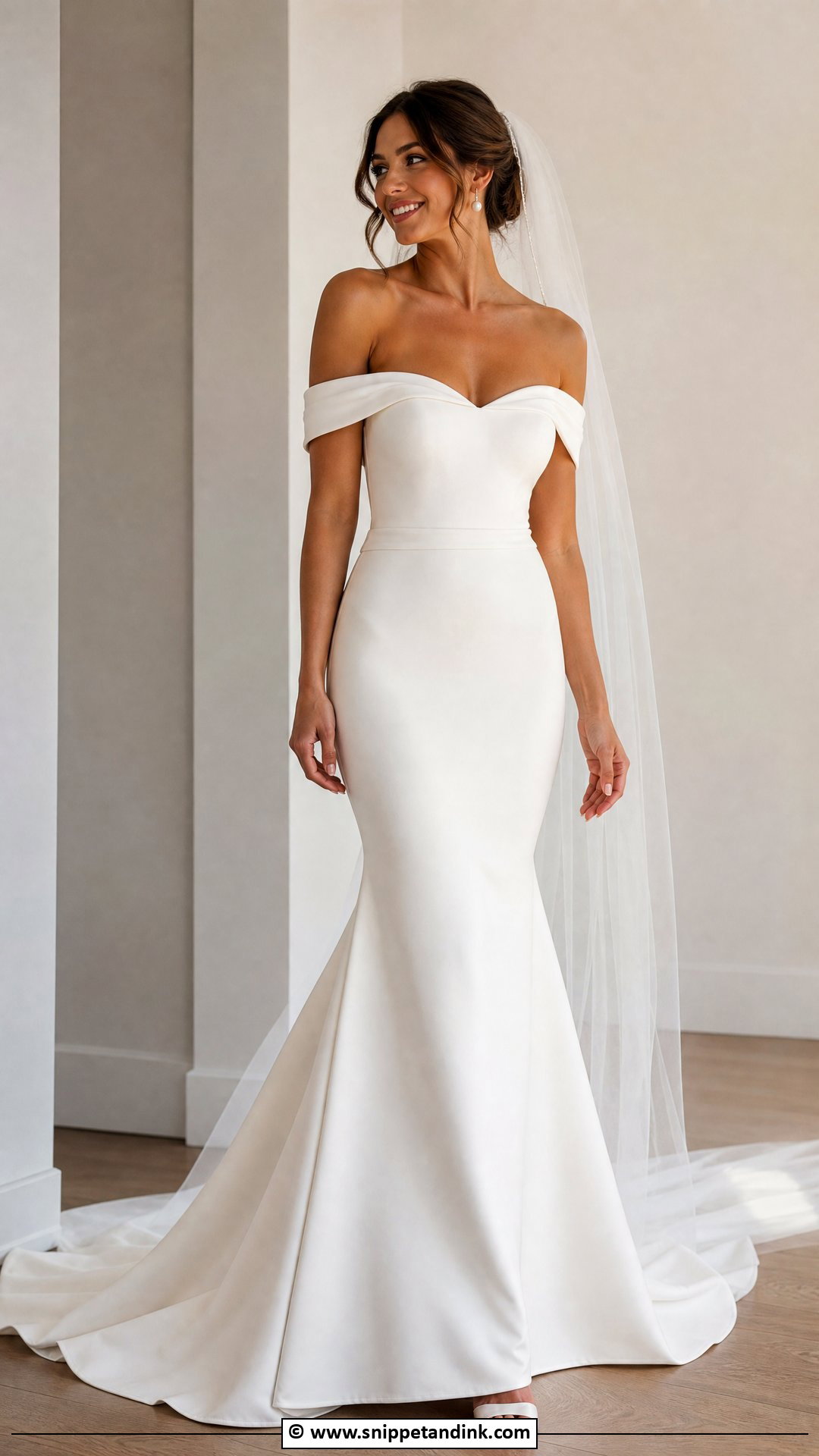
Fit and flare dresses are fitted through the bodice and hips and open below them. Where the flare starts changes everything: just below the hip is easy to walk in, while lower moves toward a mermaid. Crepe looks sleek, lace romantic, satin formal. A sweetheart, bateau or off-shoulder bodice all work. A long veil, simple earrings and comfortable heels suit evening receptions and brides who want shape without volume.
18. Mermaid Lace Wedding Dress
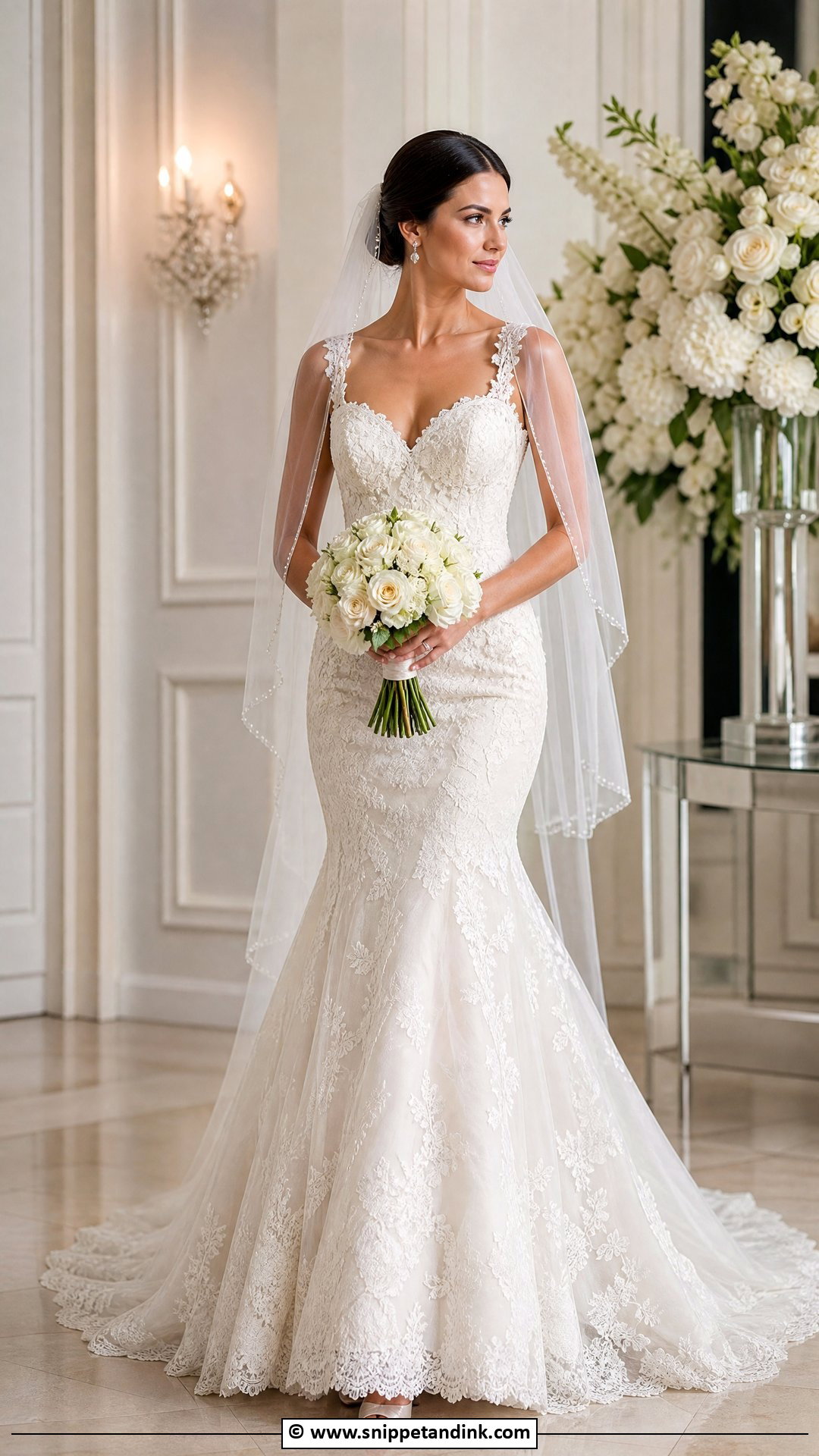
Mermaids flare at or near the knee, which makes walking and sitting harder than any other silhouette. I always have brides take stairs and sit in a mermaid before committing. Lace softens the shape; a lined bodice and manageable train keep it balanced. A sheer veil, pearl earrings and simple heels suit formal evening weddings. If you love the shape but want to dance, a detachable train or bustle helps.
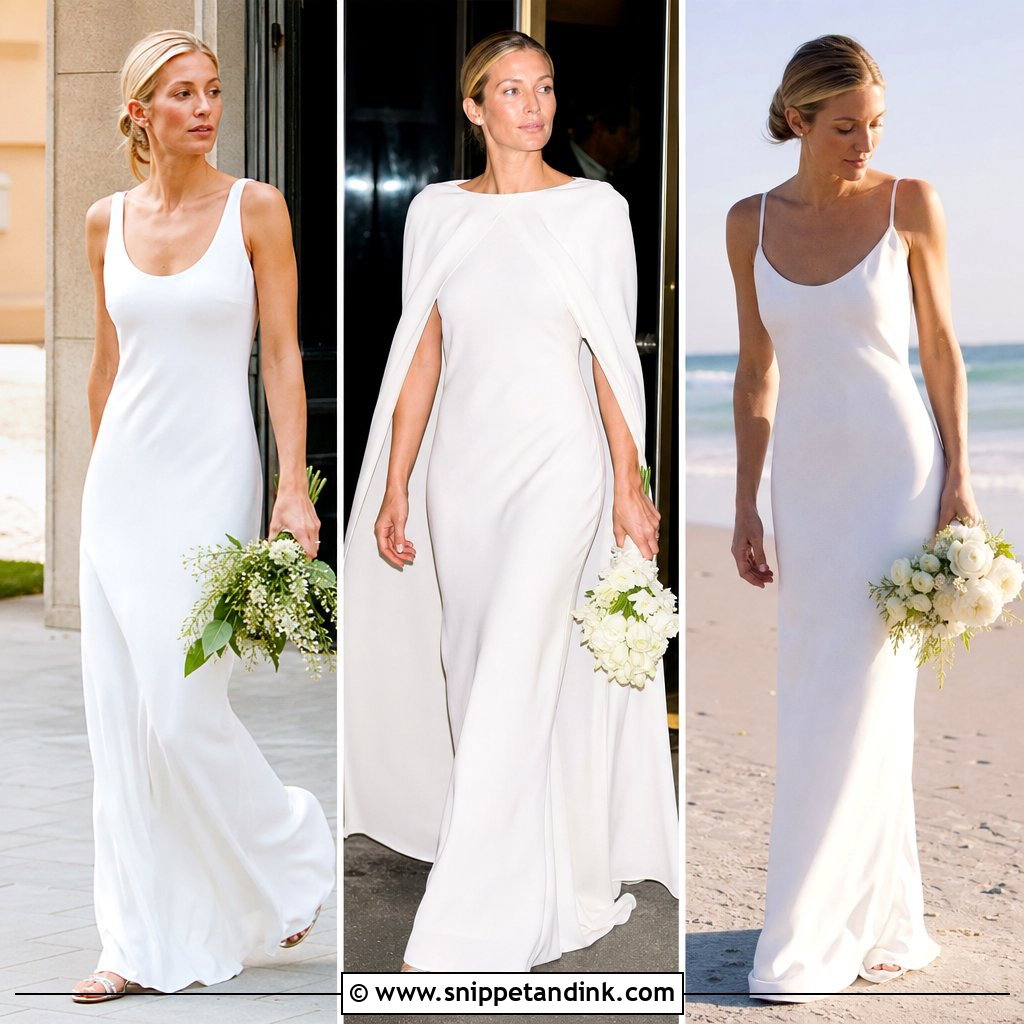
19. Simple Slip Wedding Dress
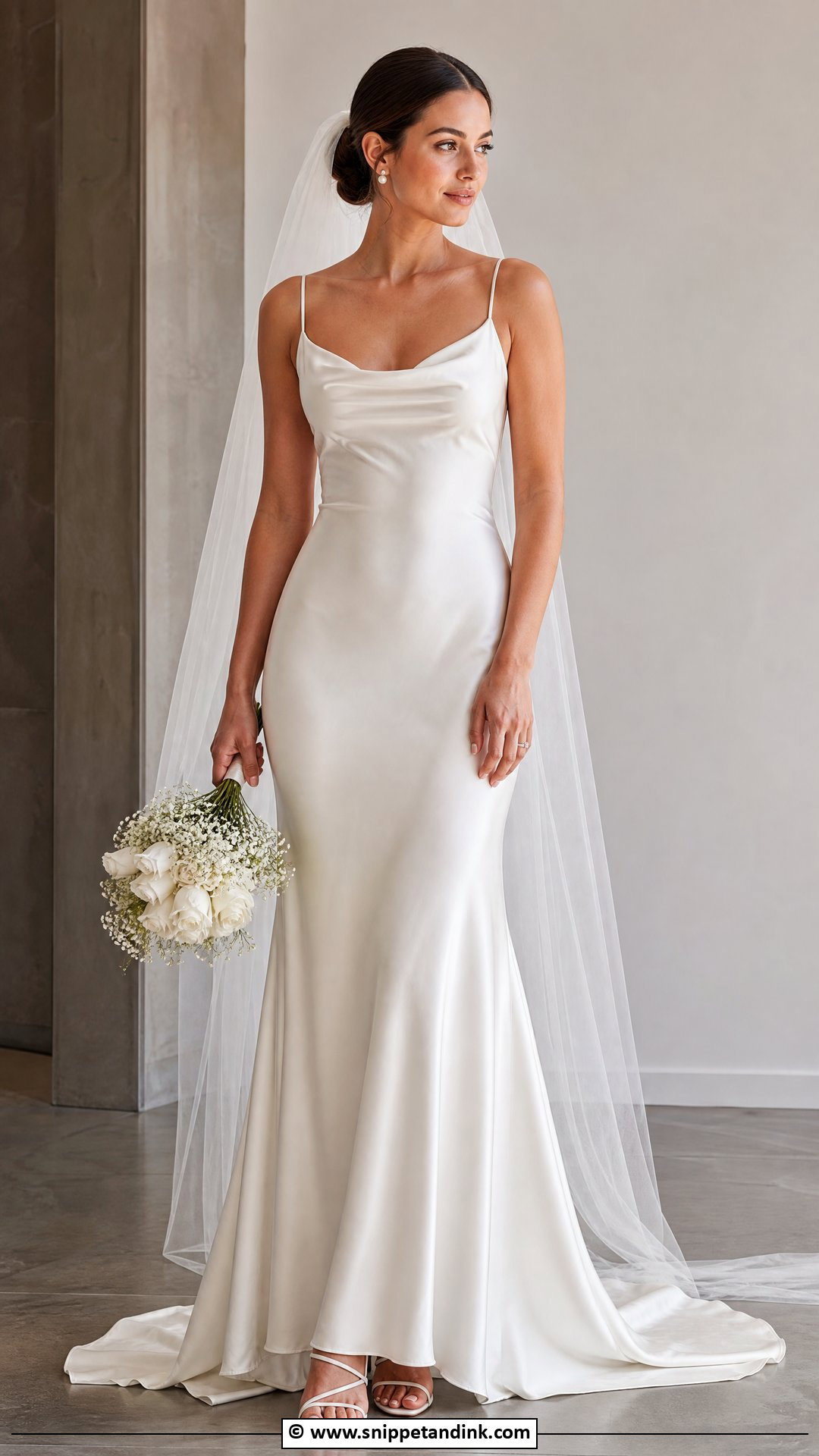
A slip is classic in a quiet way, but it’s honest about everything underneath. Silk, satin or charmeuse cut on the bias gives the best movement, and the lighter the fabric, the more carefully the underwear has to be chosen. Strappy heels, pearl studs, a smooth veil and polished hair complete it. City weddings, beaches, elopements and intimate dinners suit it, if you want ease of movement.





20. Vintage Lace Wedding Dress
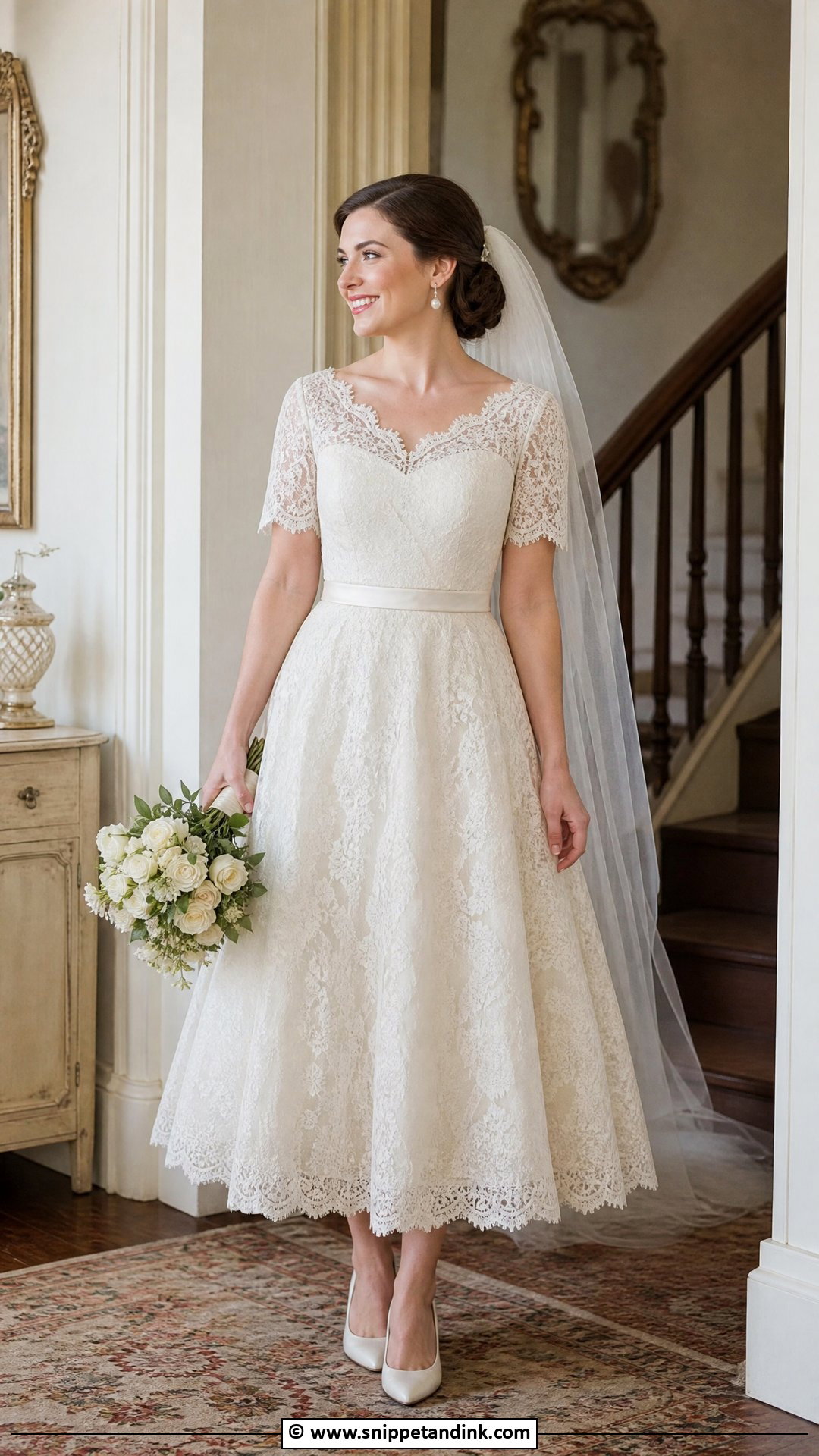
A vintage lace wedding dress can mean a genuinely old dress or a new one in an older style. With real vintage, I check underarm stains, fragile seams and zips, and budget for careful restoration. Floral lace, scalloped edges, illusion sleeves or a high neck are typical details. Choose a silhouette that suits your body, keep the rest simple with pearl earrings and ivory shoes, and it suits historic homes and gardens.
21. Cap Sleeve Wedding Dress
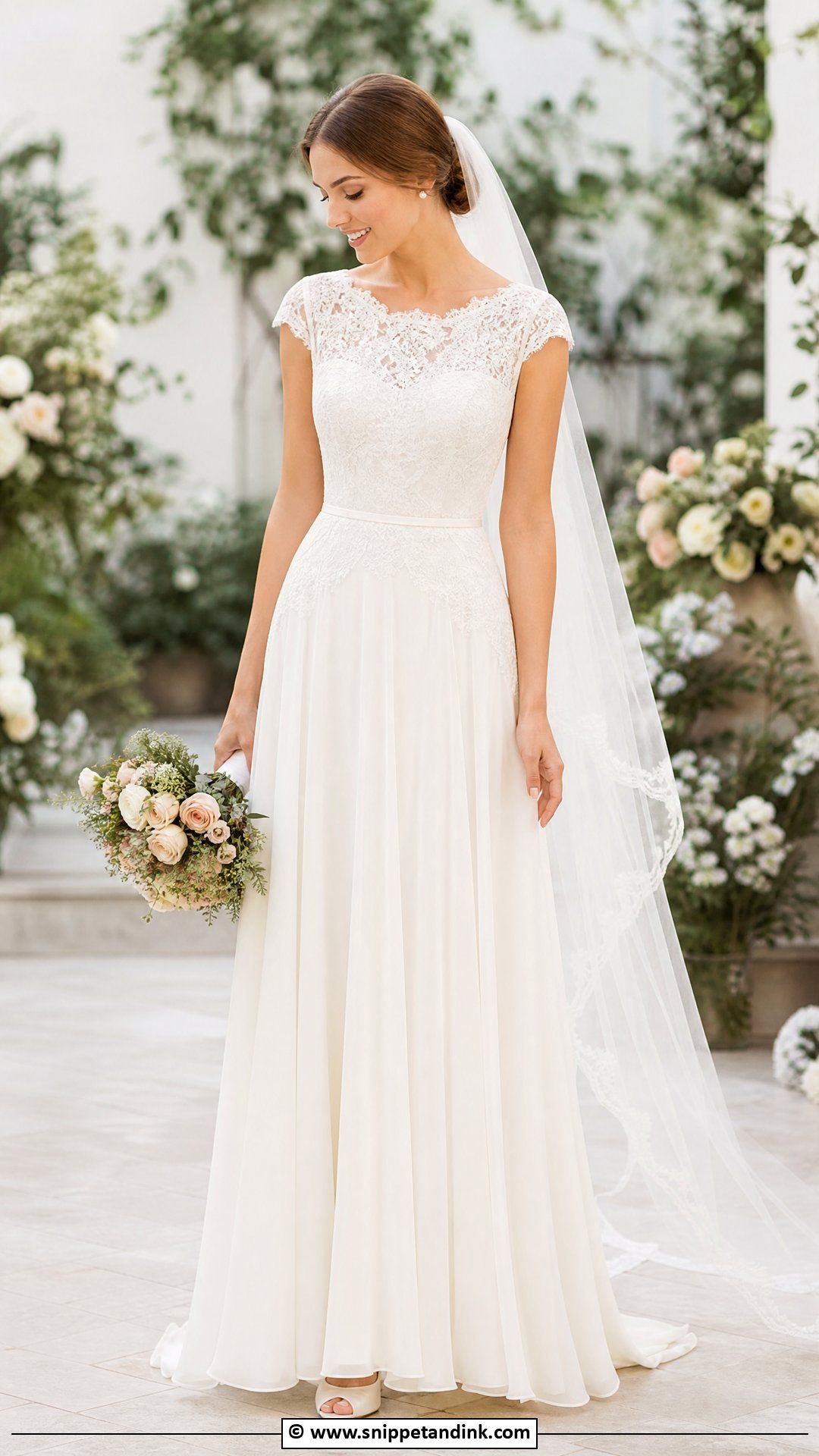
A cap sleeve wedding dress covers just the top of the shoulder, which softens the upper body without warmth. Cap sleeves can narrow broad shoulders, but if they’re too tight they cut into the arm, so check the sleeve opening. A cap-sleeve A-line feels romantic; a sheath feels cleaner. A fingertip veil, pearl studs and low or mid-height heels suit spring and summer.
22. Illusion Neckline Wedding Dress
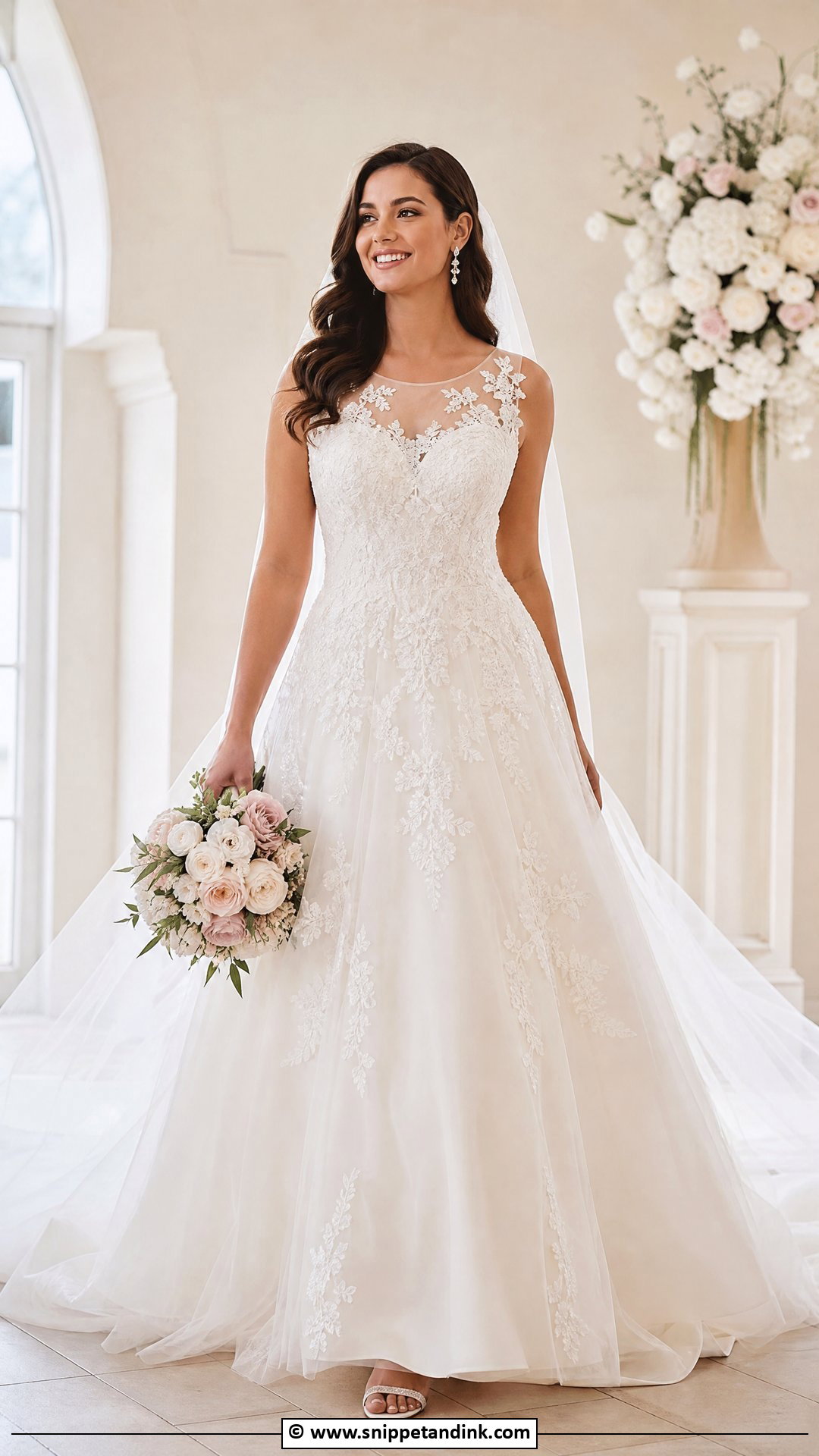
Illusion necklines use sheer mesh to hold lace or embroidery in place, giving the look of a high neck with less coverage. The mesh should match your skin tone; mismatched illusion mesh shows clearly in flash photos. I’d keep the lace placement soft. An A-line or fit and flare skirt balances it, with small earrings, a soft veil and simple shoes.
23. Button Back Wedding Dress
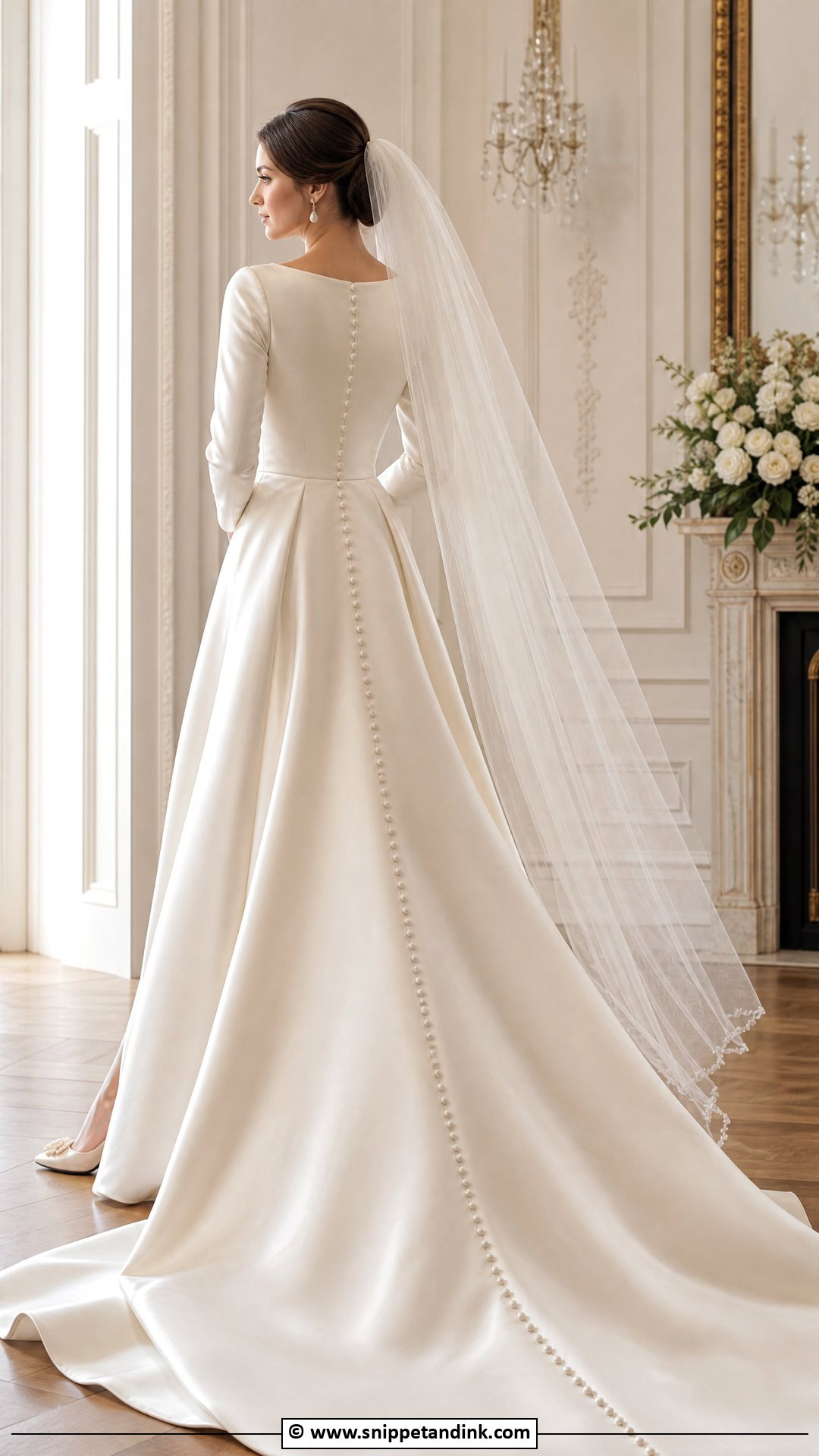
Covered buttons down the back make a simple gown special and draw a long line through the back. Many are decorative over a hidden zip, which I recommend because doing up thirty real buttons takes time. They work on satin, crepe, lace and mikado. Keep the front plain if you want the back to stand out. A low bun, sheer veil and pearl earrings complete it.
24. Tulle A-Line Wedding Dress
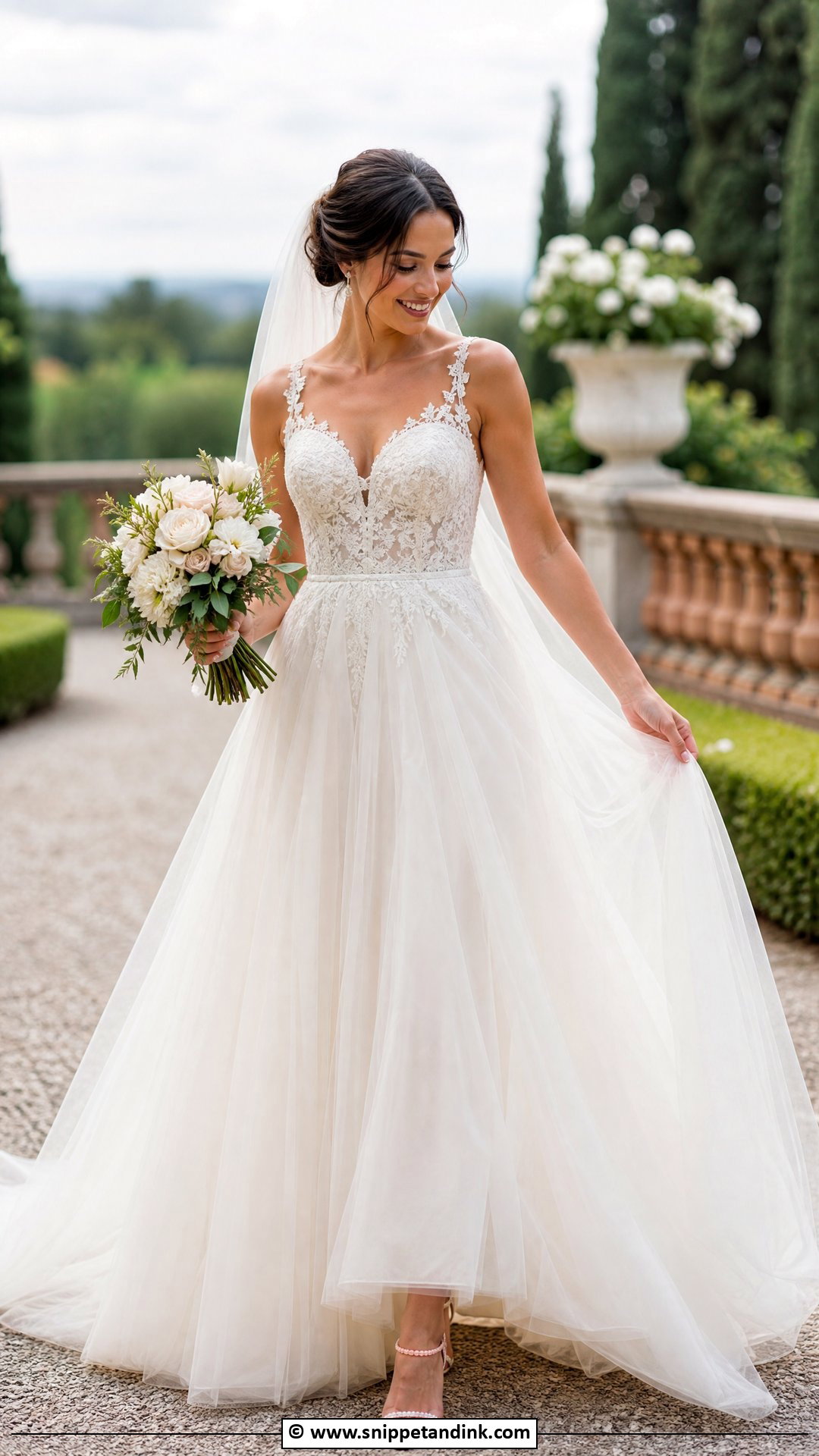
Tulle A-lines are light and soft. A fitted bodice balances the airy skirt. Tulle snags on jewelry and rough surfaces, so I check bracelets and bouquet wire. Lace applique, a simple satin bodice or subtle beading suit it. A veil with a fine edge, pearl earrings and delicate heels finish it for garden, estate and spring weddings.


25. Organza Wedding Dress
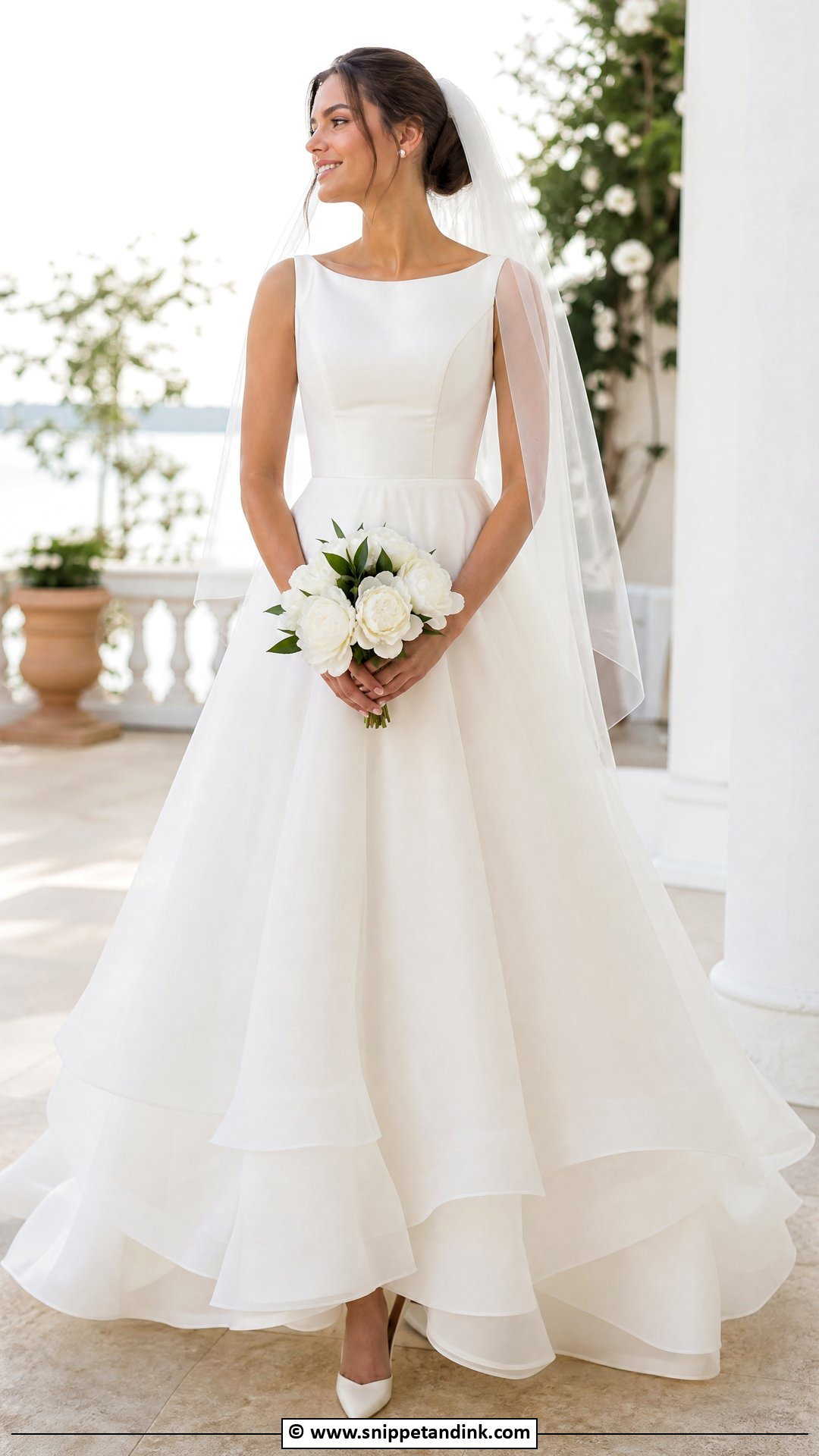
Organza is crisp and sheer, giving volume without weight. It creases more easily than people expect, so I steam it on the day. It suits A-line gowns, ball gowns and layered skirts. A simple bodice lets the fabric show; subtle floral applique softens it. A sheer veil, pearl earrings and ivory heels complete it for warm-weather weddings.
26. Silk Wedding Dress
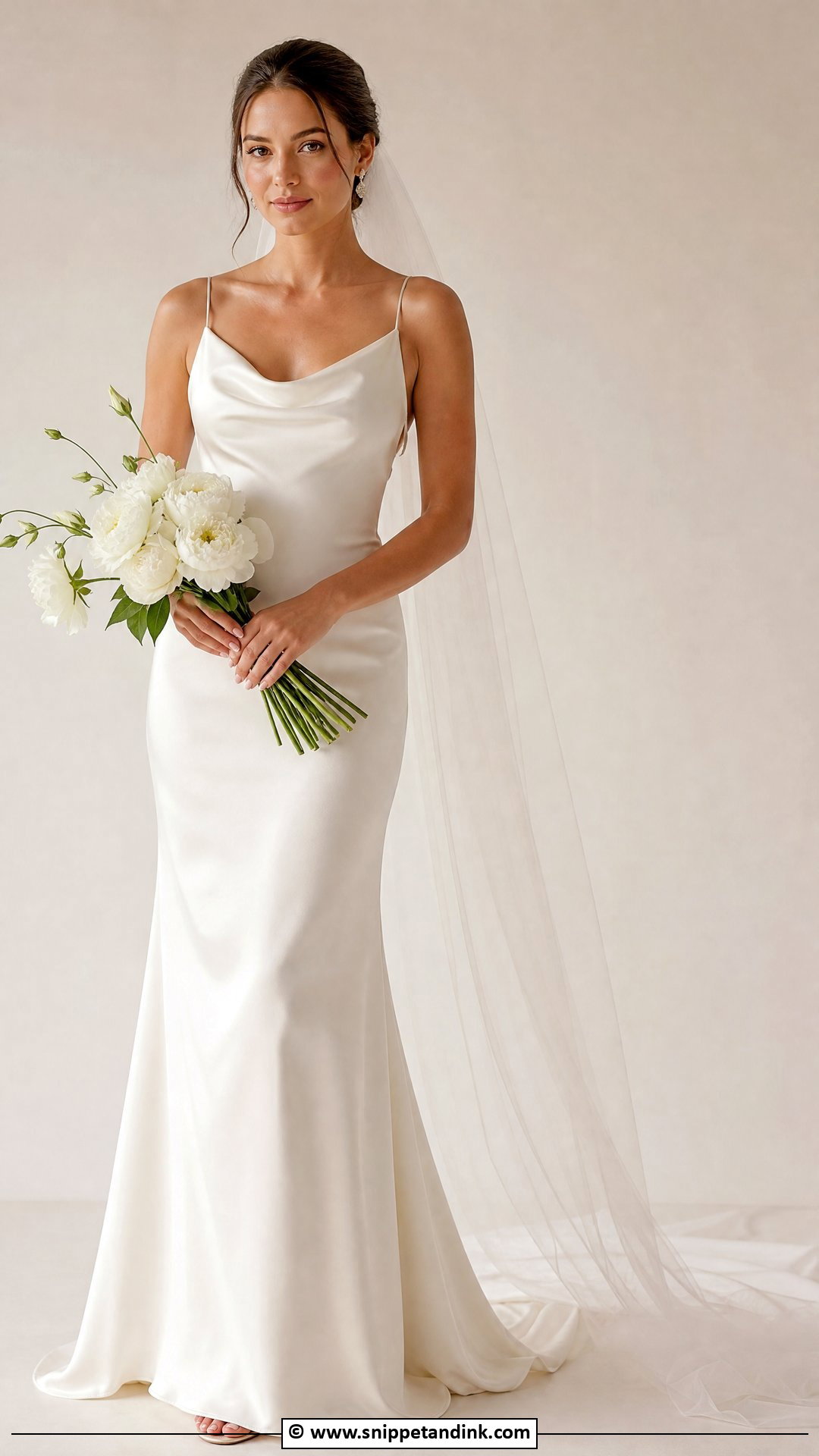
Silk drapes and glows naturally, and it needs little decoration. It also shows water marks, so I keep tissues and a dry cloth for blotting. A silk slip, A-line or long-sleeve sheath all look classic when well tailored. Delicate earrings, satin or silk shoes and a simple veil finish it for intimate weddings, city ceremonies and destination celebrations.
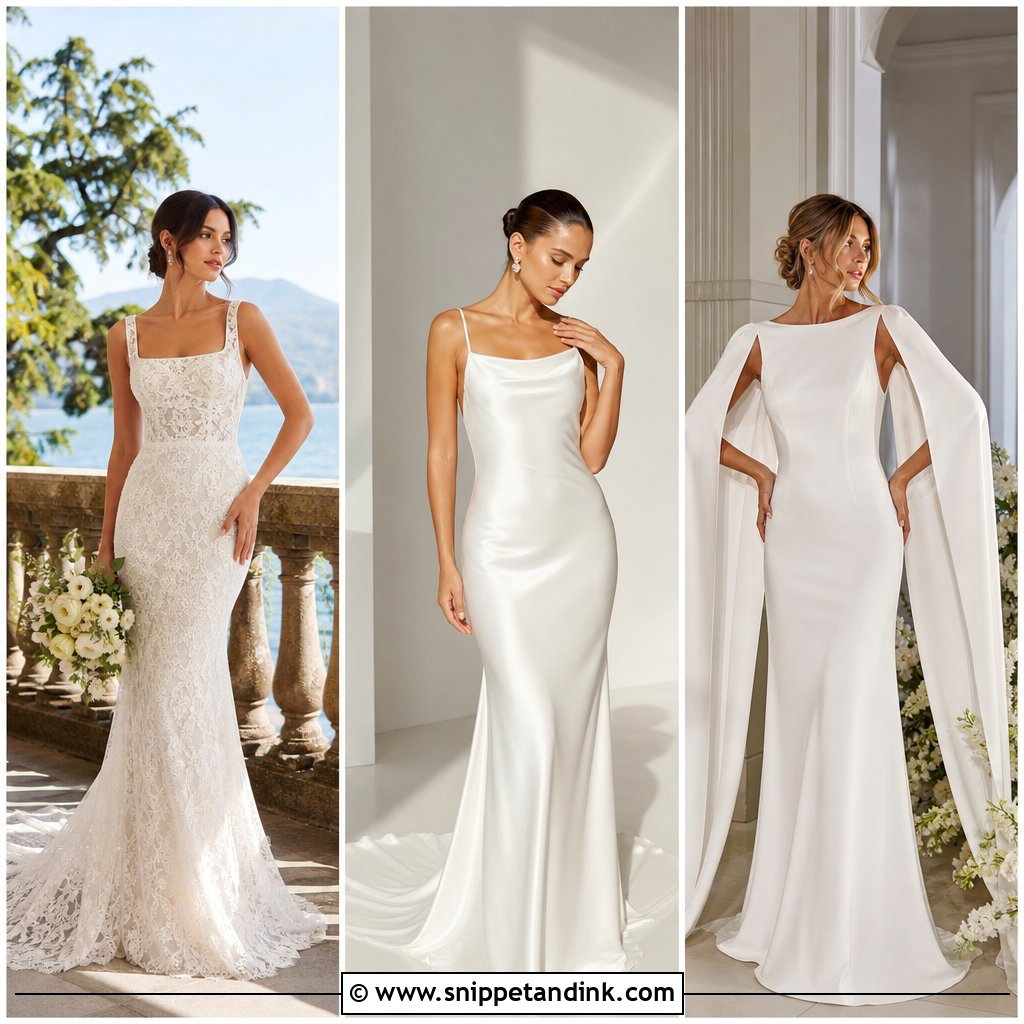
27. Minimalist Satin Wedding Dress
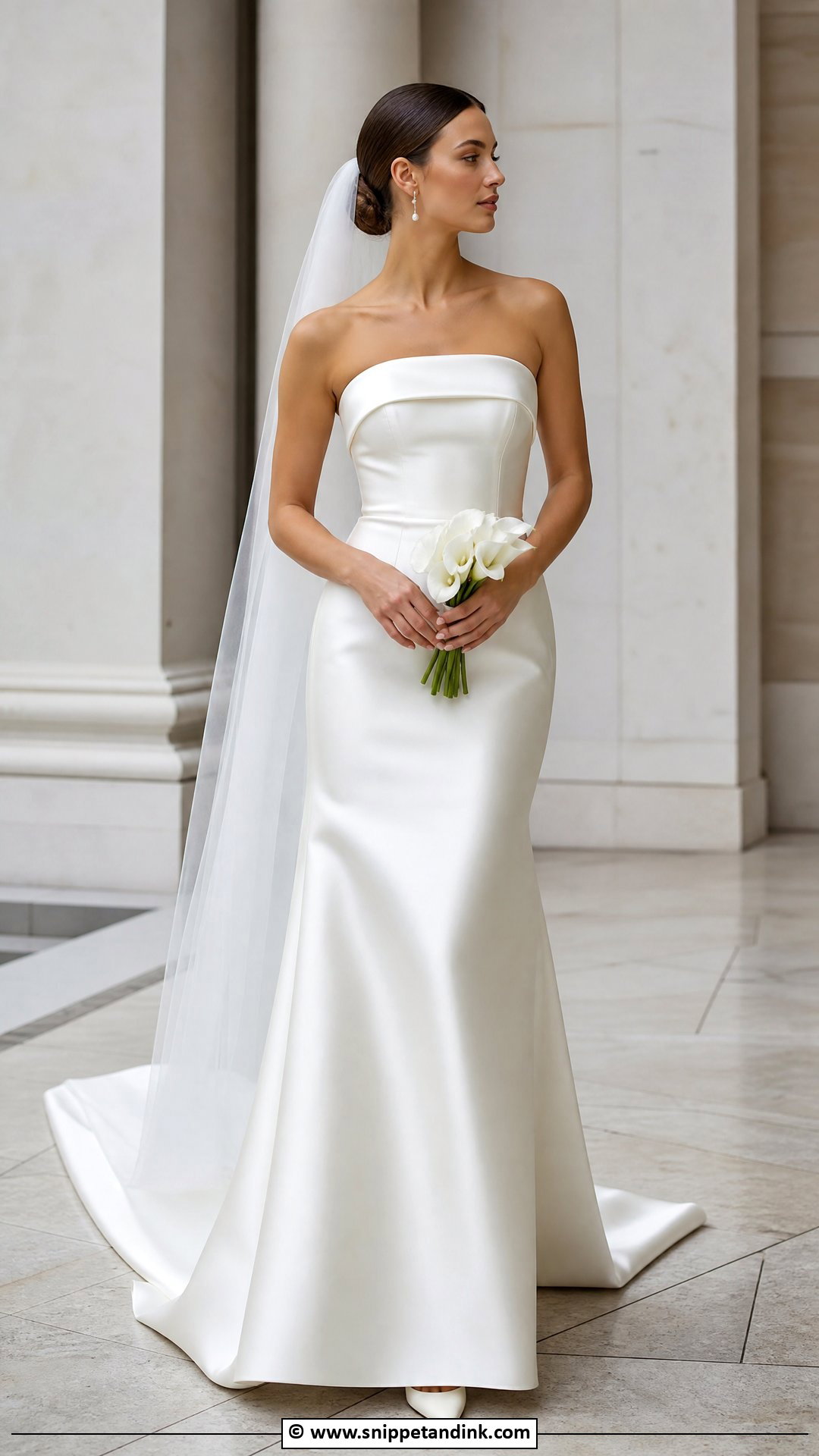
Minimalist satin gowns are about fabric and fit. Seams have to be perfectly straight, because there’s nothing to hide behind. A strapless, square-neck or slim long-sleeve bodice with a smooth skirt and a train sized to the venue works. Pearl earrings, sleek hair and simple pumps, with a plain veil, suit modern venues and formal city weddings.
28. Floral Lace Wedding Dress
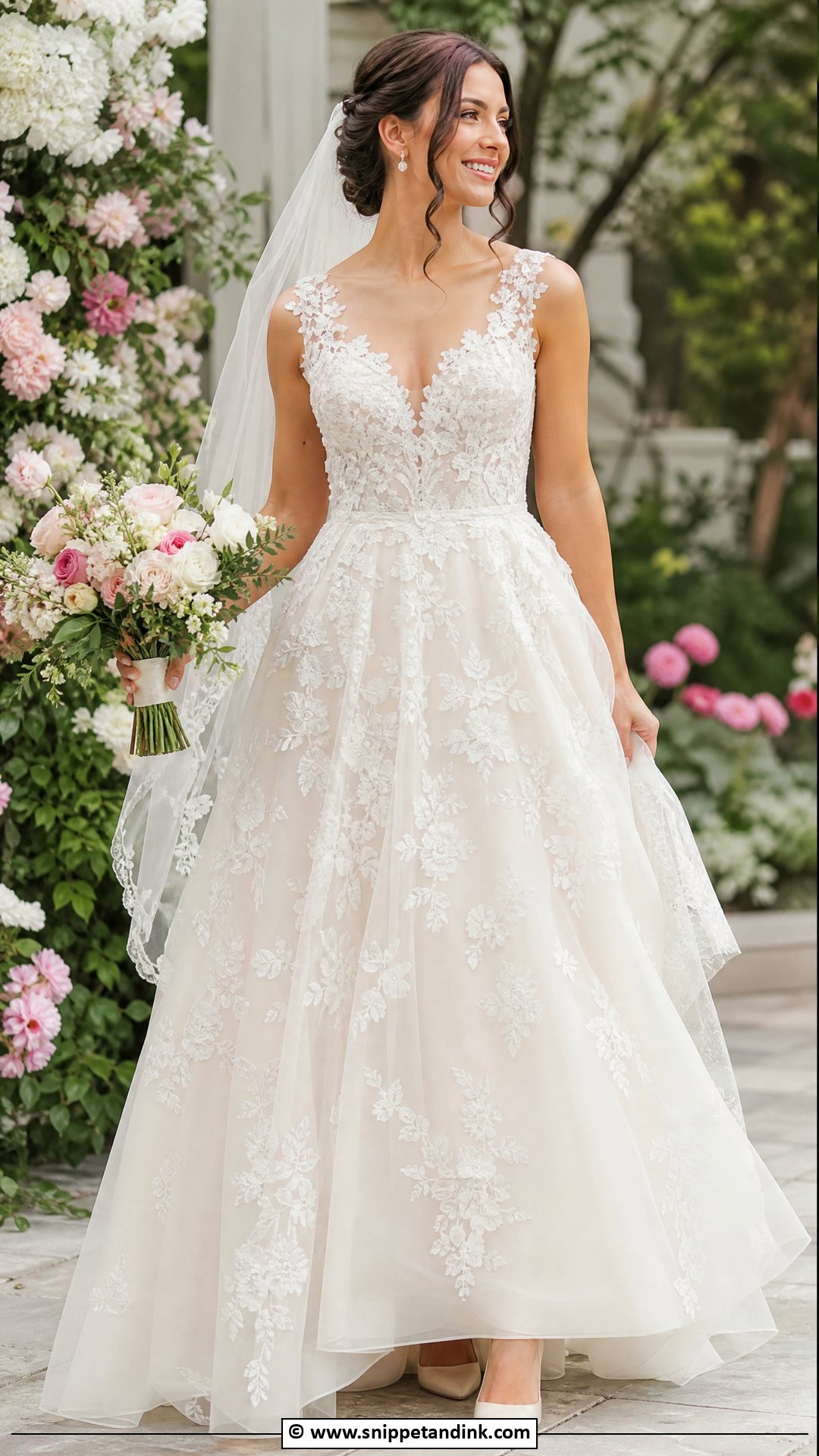
Floral lace stays classic when the motif is fine. Oversized flowers can date a gown faster than small, delicate ones. The motifs can sit on the bodice, sleeves, skirt or train. An A-line keeps it graceful; a fitted shape adds drama. A simple veil, pearl or diamond-look studs and ivory heels suit garden and estate weddings.
29. Long Train Wedding Dress
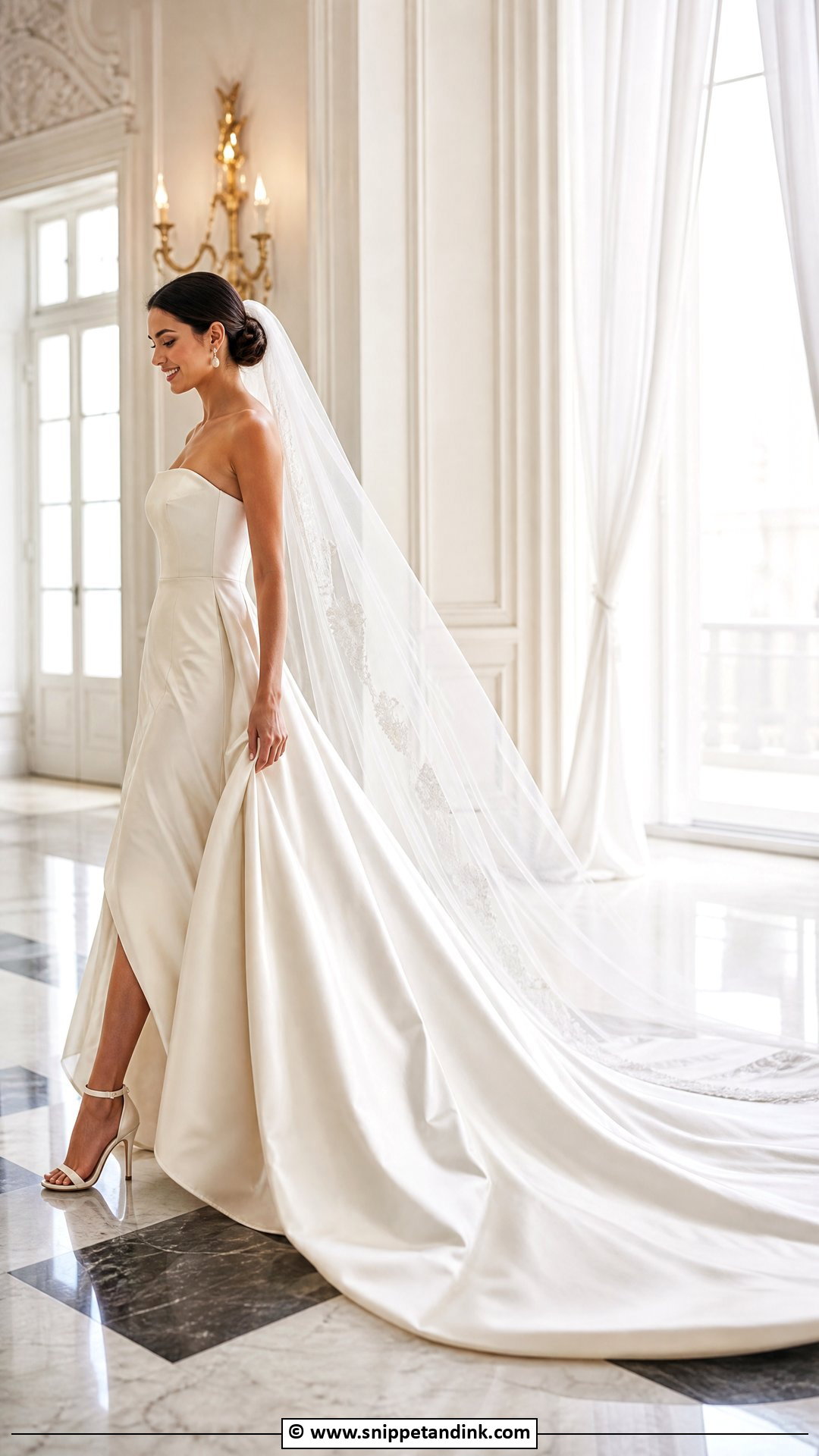
A long train makes an entrance, but you’ll need a bustle for the reception. A French bustle tucks the train under the skirt; an American bustle lifts it over. I teach the bustle to a bridesmaid at the final fitting so it’s not a puzzle on the day. Chapel or cathedral length depends on the venue. A veil matching the train’s formality and supportive heels complete it.
30. Short Sleeve Wedding Dress
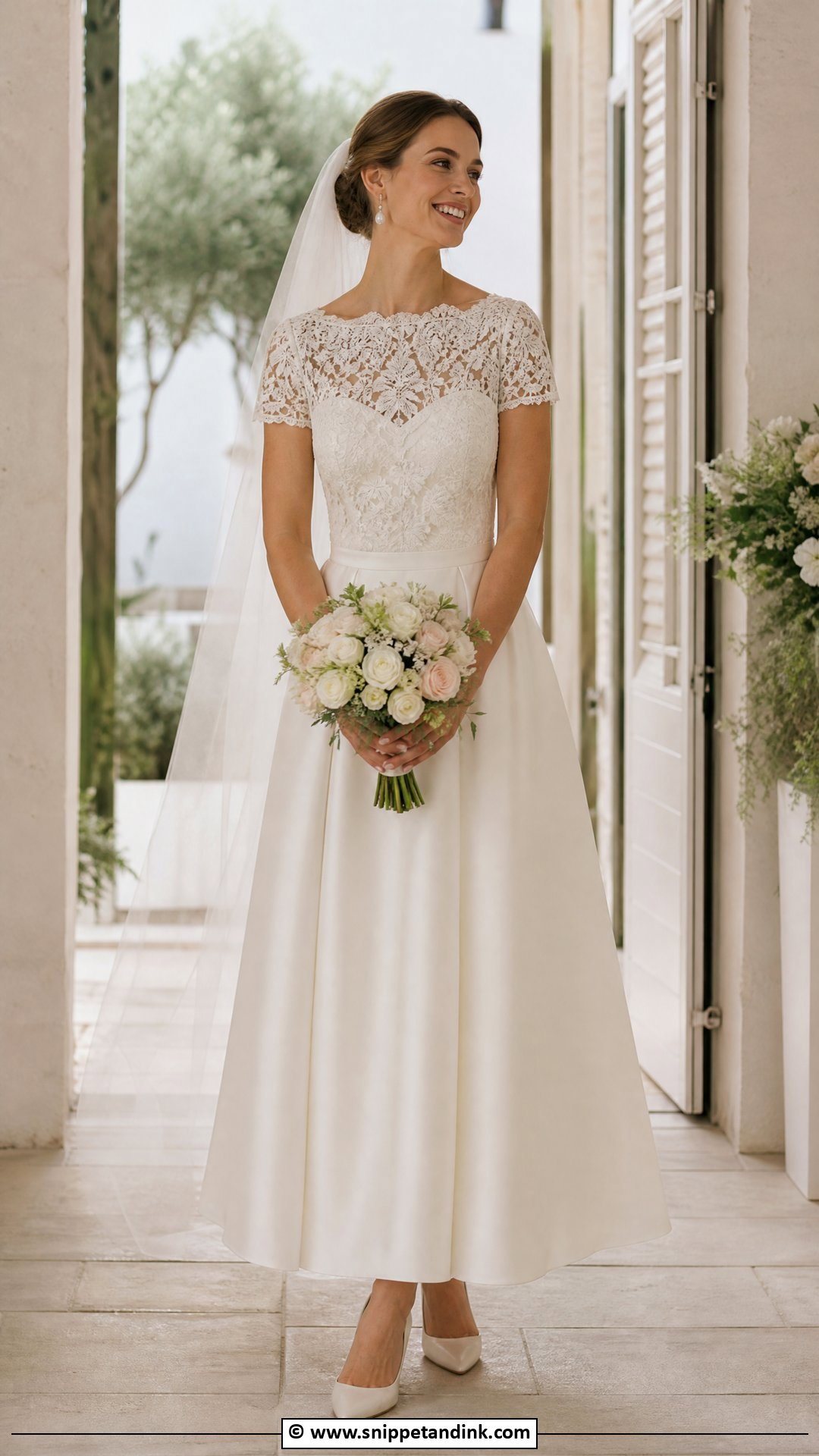
Short sleeves give more coverage than straps but stay lighter than long ones. Lace sleeves feel romantic, satin polished, crepe modern. I check the sleeve doesn’t restrict reaching up. A-line, sheath or tea length suits it. Pearl earrings, a simple veil and elegant pumps finish it for spring, summer and daytime weddings.
31. V Neck Wedding Dress
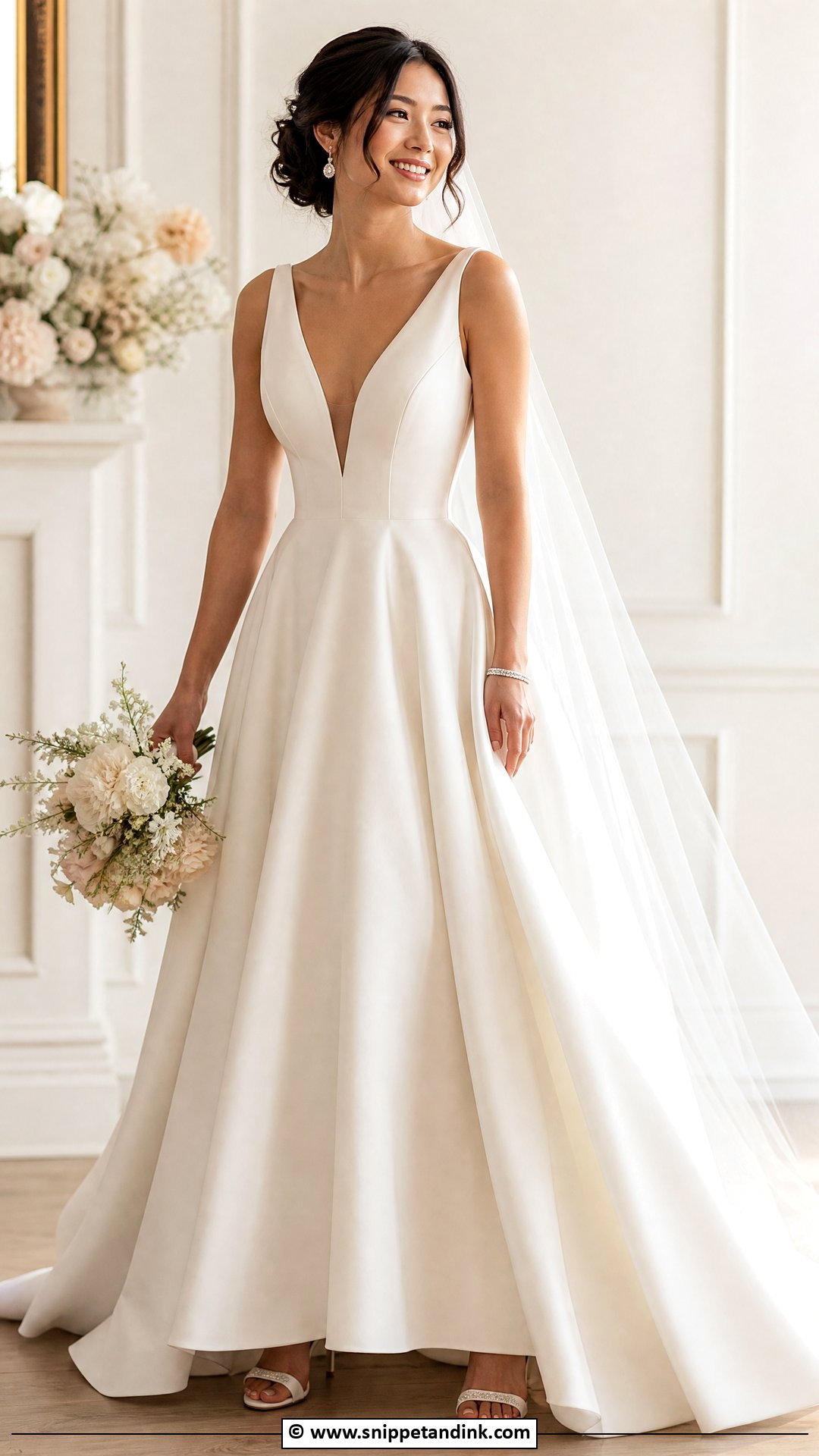
V-necks lengthen the neck and torso. The depth is a personal choice, but a deep V needs a secure fit at the bust, so I add tape or hidden mesh if needed. Wider straps, lace sleeves or a clean satin bodice keep it classic. An A-line skirt is romantic; a crepe column sleek. Delicate earrings and a simple bracelet suit it.
32. Sheath Lace Wedding Dress
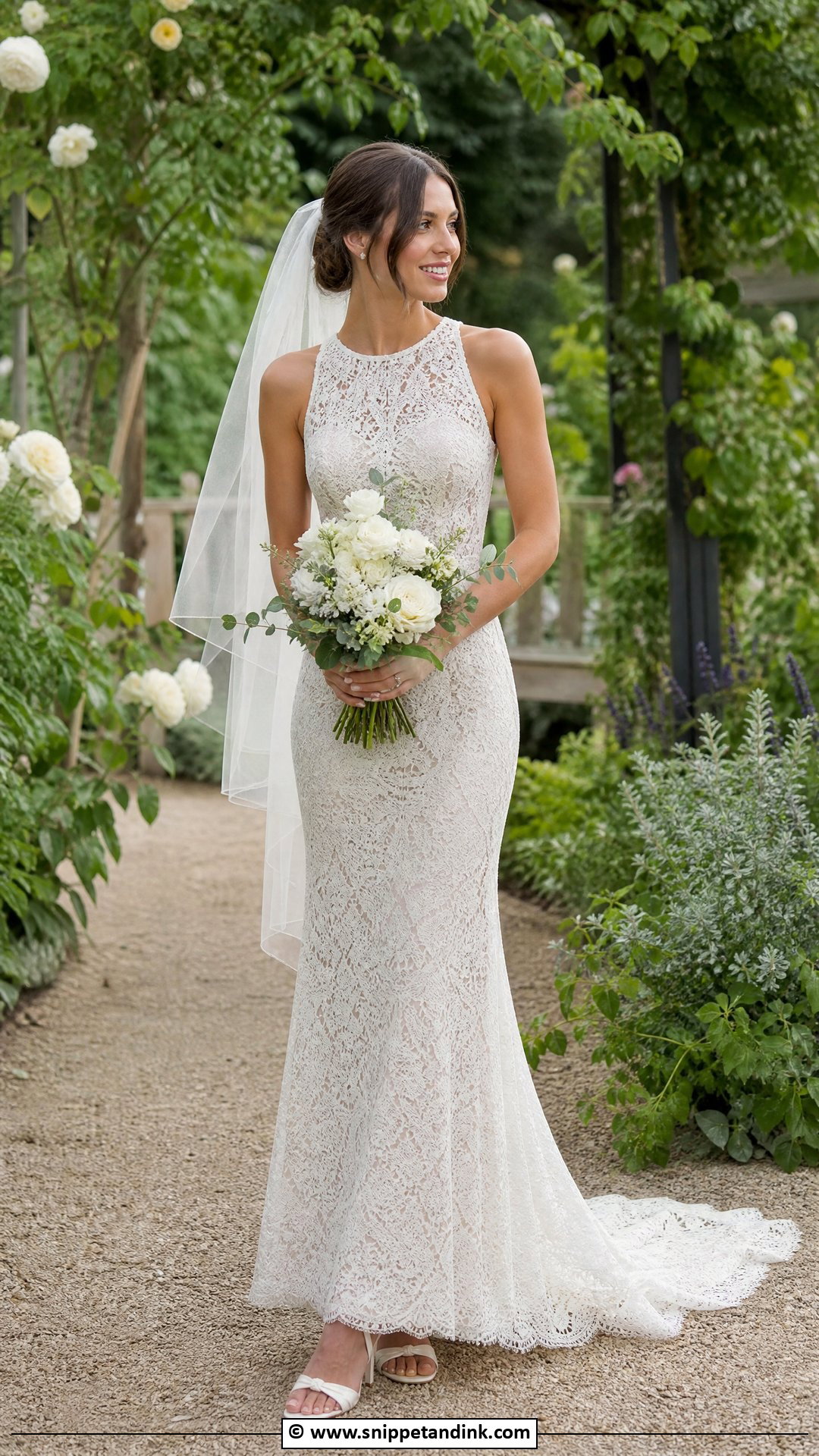
Lace sheaths follow the body’s line without a dramatic skirt. Comfortable lining matters, because lace over a stiff lining can feel scratchy over a long day. A gentle train and a neckline that supports your shape keep it balanced. A light veil, pearl studs and simple heels suit garden ceremonies and smaller venues.
33. Detachable Overskirt Wedding Dress
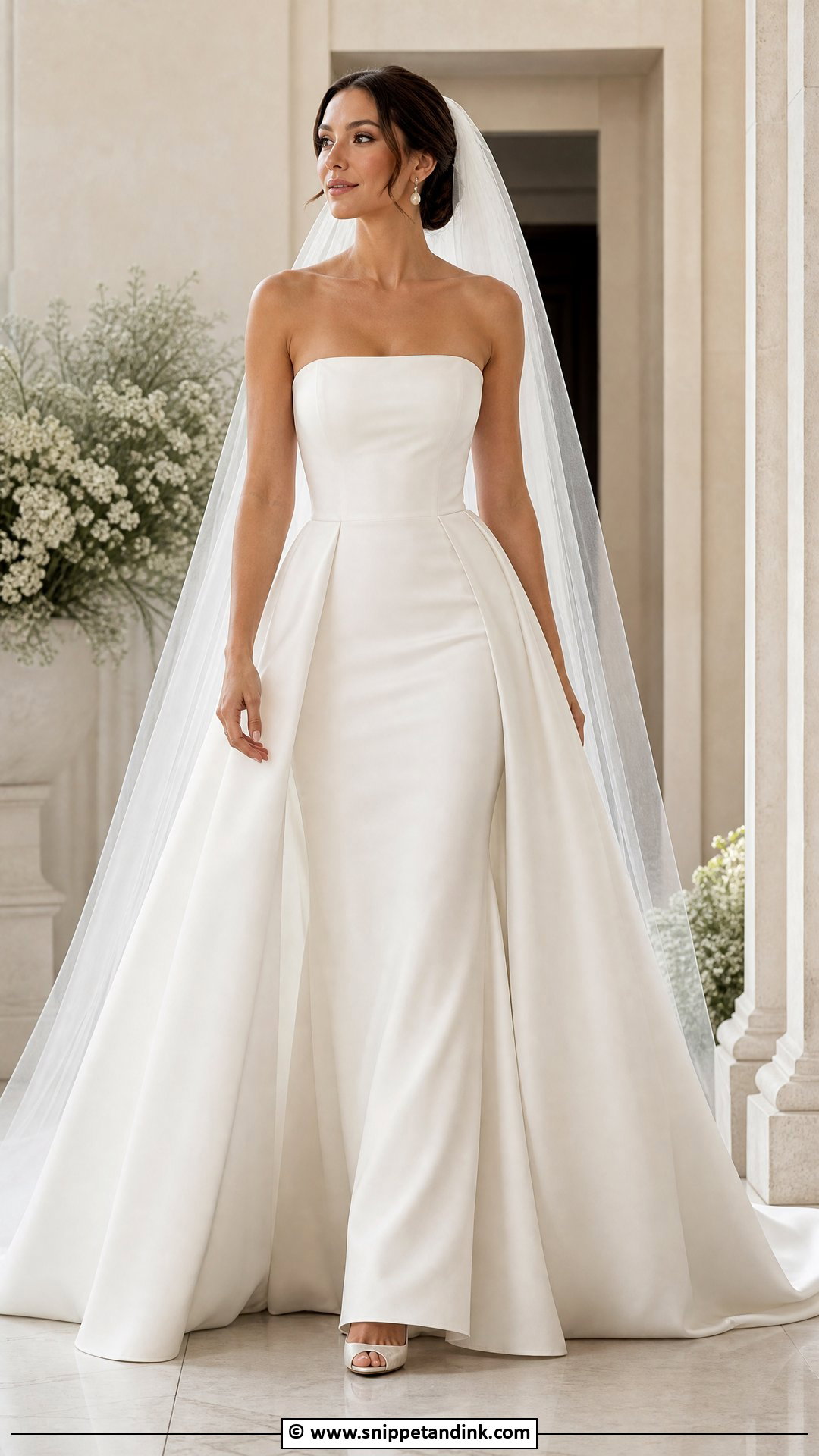
A detachable overskirt gives you a formal ceremony silhouette and a slimmer dress for dancing. The fastening is the detail I check most: hooks or a hidden band at the waist should hold the weight and come off in under a minute. Match the overskirt fabric to the dress so the join is invisible. A long veil, pearl earrings and classic heels for the ceremony; a shorter veil or hair accessory later.
34. Elegant Courthouse Wedding Dress
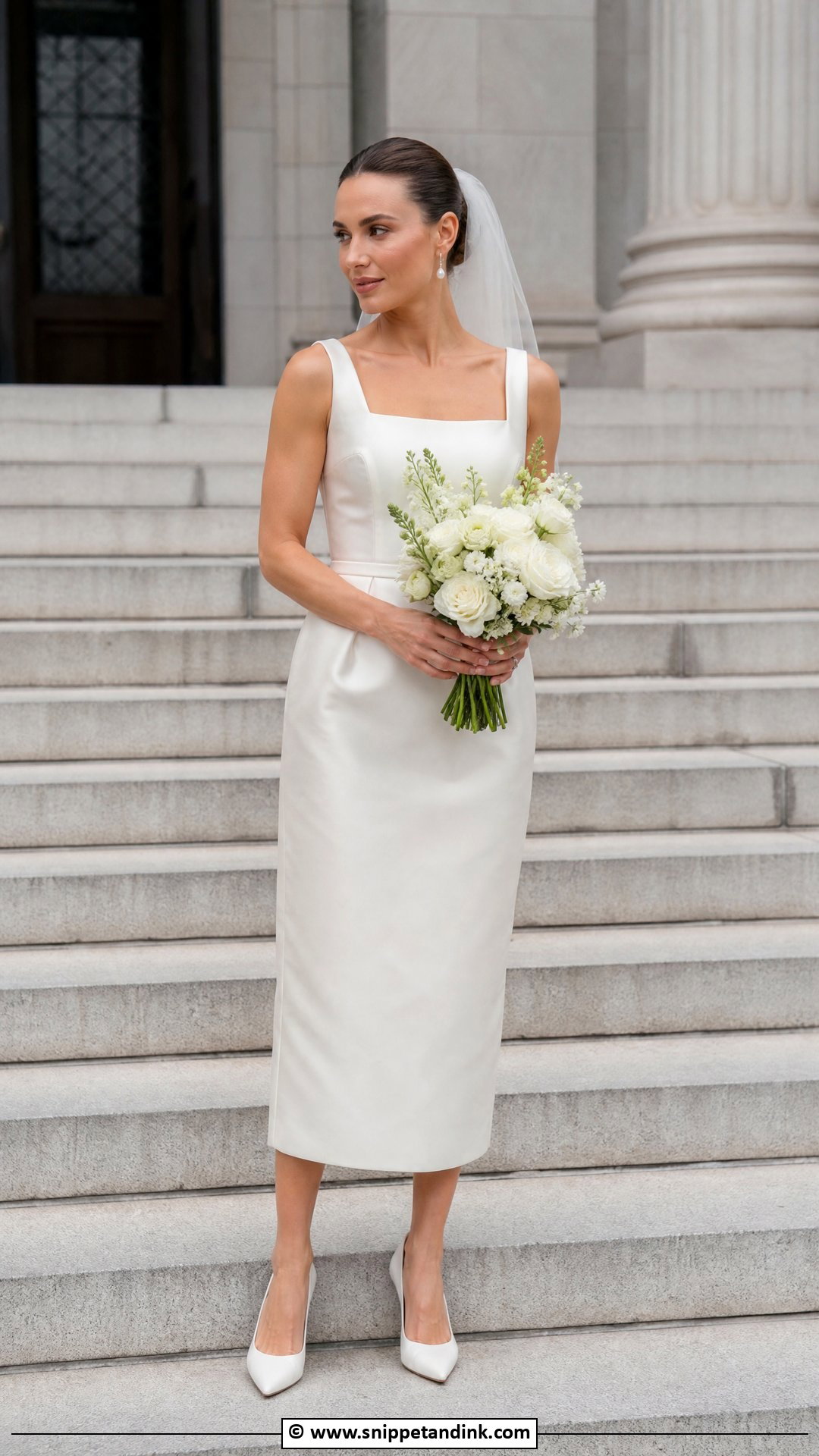
A courthouse dress can still be properly bridal with refined styling. A knee-length or tea-length dress, tailored sheath or satin midi all suit a civil ceremony. Ivory pumps, pearl earrings, a small veil or bow and a structured bouquet finish it. Long sleeves or a square neck add a classic feel. Simple doesn’t mean ordinary when the fit is right.
35. Classic Reception Wedding Dress
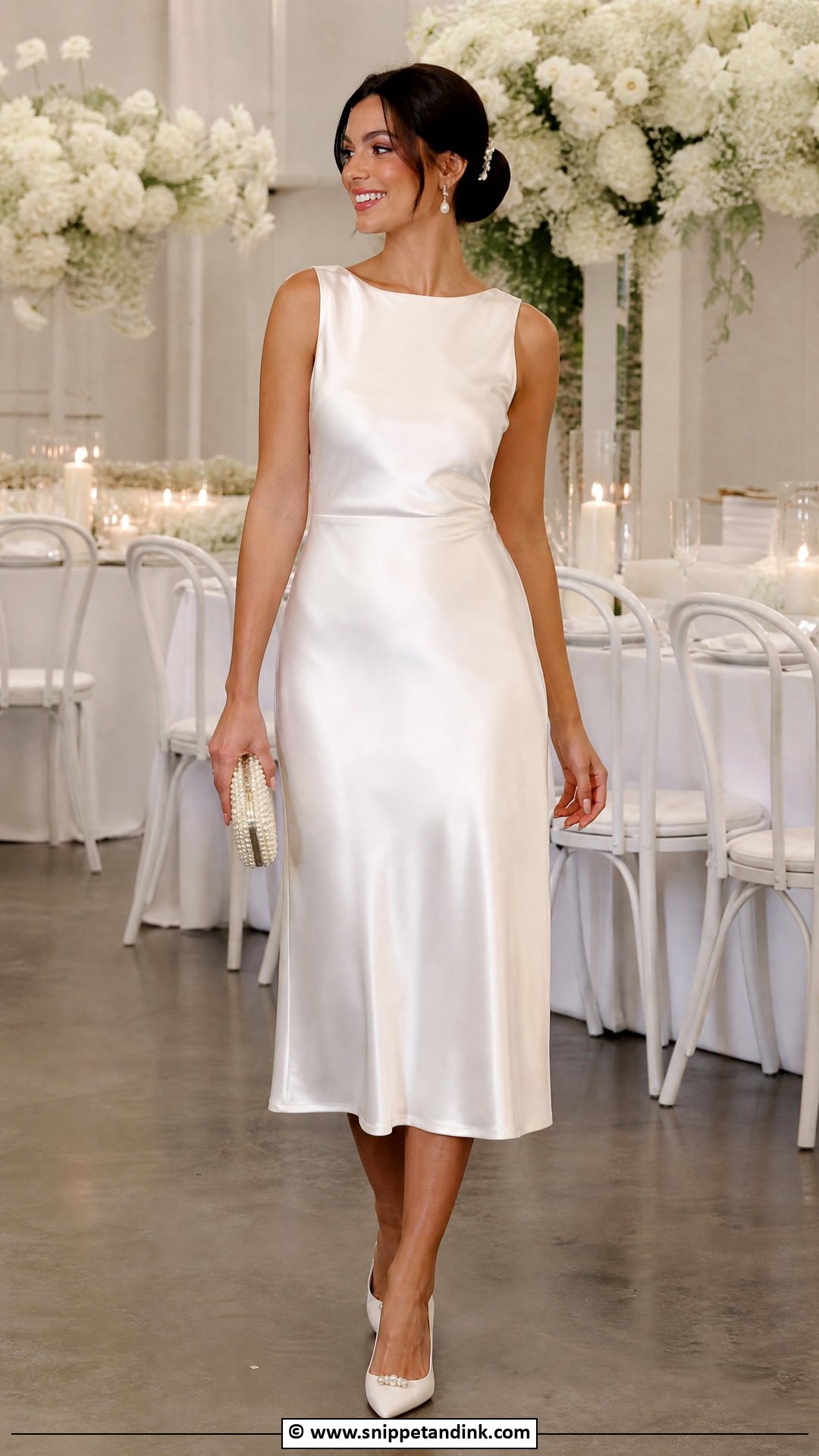
A second dress for the reception lets you dance freely. A satin midi, a clean mini, a simple sheath or a tea-length dress with clean lines works. I’d match the shade of white to the ceremony gown so both looks belong together. Pointed heels, pearl earrings and a small hair accessory keep it bridal without the train.
From First Appointment to the Aisle: A Formal Gown’s Calendar
Formal gowns take longer than most brides expect. Timelines vary by designer and season, but this is roughly how I plan it.
- Start trying on about a year ahead if the gown is made to order. Many designers quote several months for production.
- Order with time to spare. Ask the salon for their delivery estimate in writing, and allow extra for shipping delays.
- Book fittings to begin a few months before the wedding. Most gowns need two or three fittings.
- Bring your shoes and underwear to every fitting, since the hem and bodice are set to them.
- Have a final fitting a couple of weeks before, and learn the bustle then.
After the wedding
Have the gown cleaned soon, even if it looks clean, since sugar and perspiration can yellow fabric later. Store it in acid-free tissue in a breathable box, away from light and damp, and check it every year or two. Avoid hanging a heavy gown for long periods, as the weight of the skirt can stretch the shoulders and seams.
Classic Is the Dress That Still Looks Like You
Classic style lasts because it doesn’t depend on one season’s trend. A timeless gown can be satin or lace, full or fitted, modest or minimal. What matters is the balance of silhouette, fabric and comfort, and how you feel moving in it. Start with the neckline and fabric you love, try the silhouettes that suit your body, and pick the dress you’d still be glad to see in photos decades from now.
You'll Like These Ideas:













Leave a Reply