
A detachable piece lets one gown do two jobs: a removable overskirt, train, sleeve, cape or bow carries the ceremony, then comes off so you can sit, eat and dance in the reception. In fittings I judge these dresses from the inside first. If the base gown does not stand on its own, the reveal falls flat, and if the attachment at the waist, shoulder or back is clumsy, everyone will see it the moment the layer is gone. Below are thirty ways to build that change, with notes on where each one tends to go right or wrong.
Hooks, Snaps and Buttons Under the Waistband
Every detachable piece is only as good as what holds it on, and that is the part most brides never see in a sample photo. Before falling for a style, ask the shop how the layer attaches and who will make the attachment fit your body.
The common fastenings
- Hook-and-bar closures are flat and strong, which is why I trust them for heavy overskirts and ball gown skirts.
- Snaps release quickly, so they suit capes, sleeves and bows that someone else will remove for you.
- Buttons and loops look neat but take time; a hidden zip with buttons laid over it gives the look without the wait.
- Ties are pretty yet tend to rotate or loosen, so they should always have a hidden hook behind them.
Bring the detachable piece to every fitting, not just the last one. Hems, waist height and the way the base gown sits all change with alterations, and a layer fitted to the dress in its first state can end up crooked by the final appointment. If the dress has been ordered from one maker and the add-on from another, plan an extra fitting just for the join.
1. Detachable Overskirt Wedding Dress
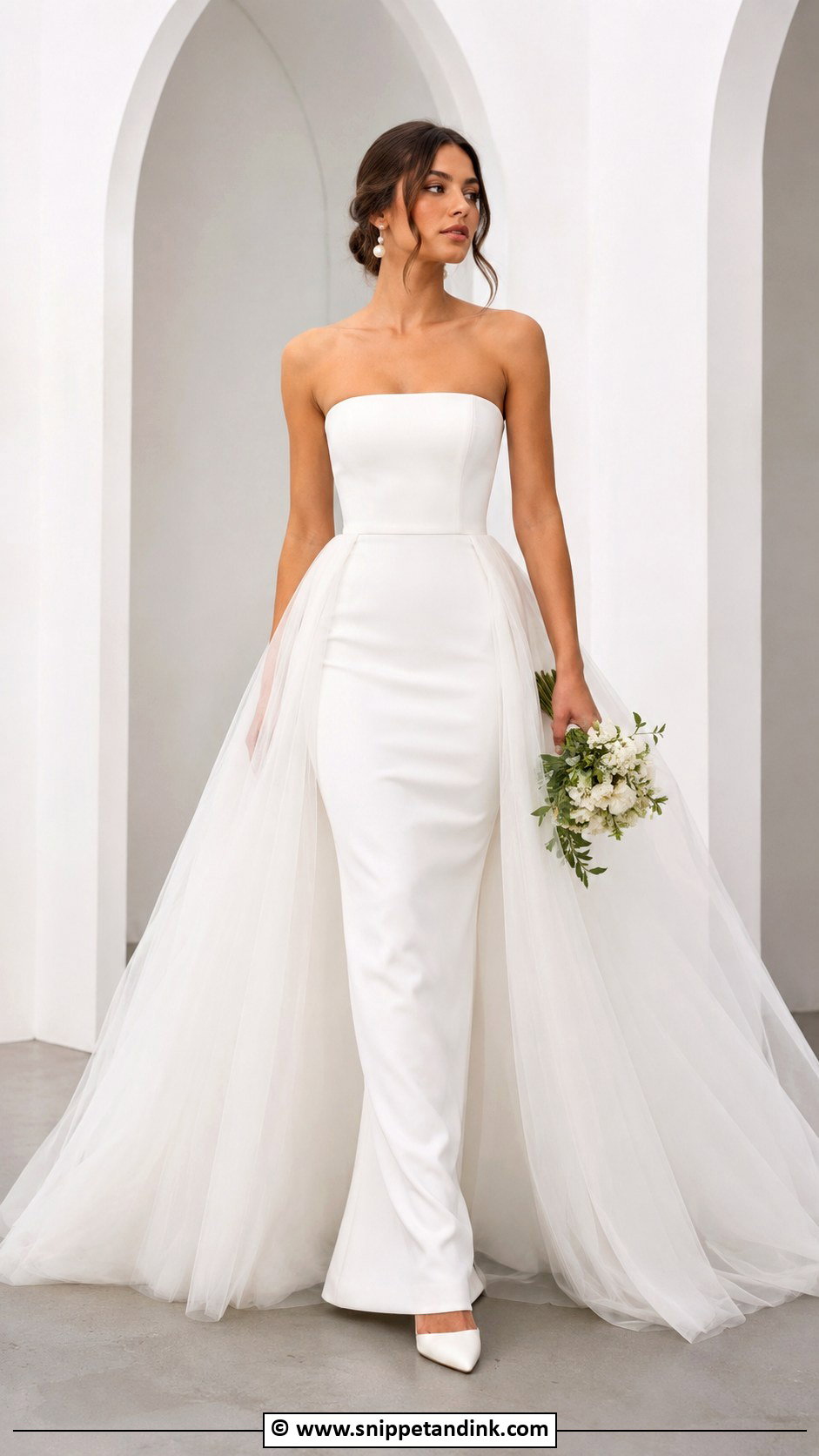
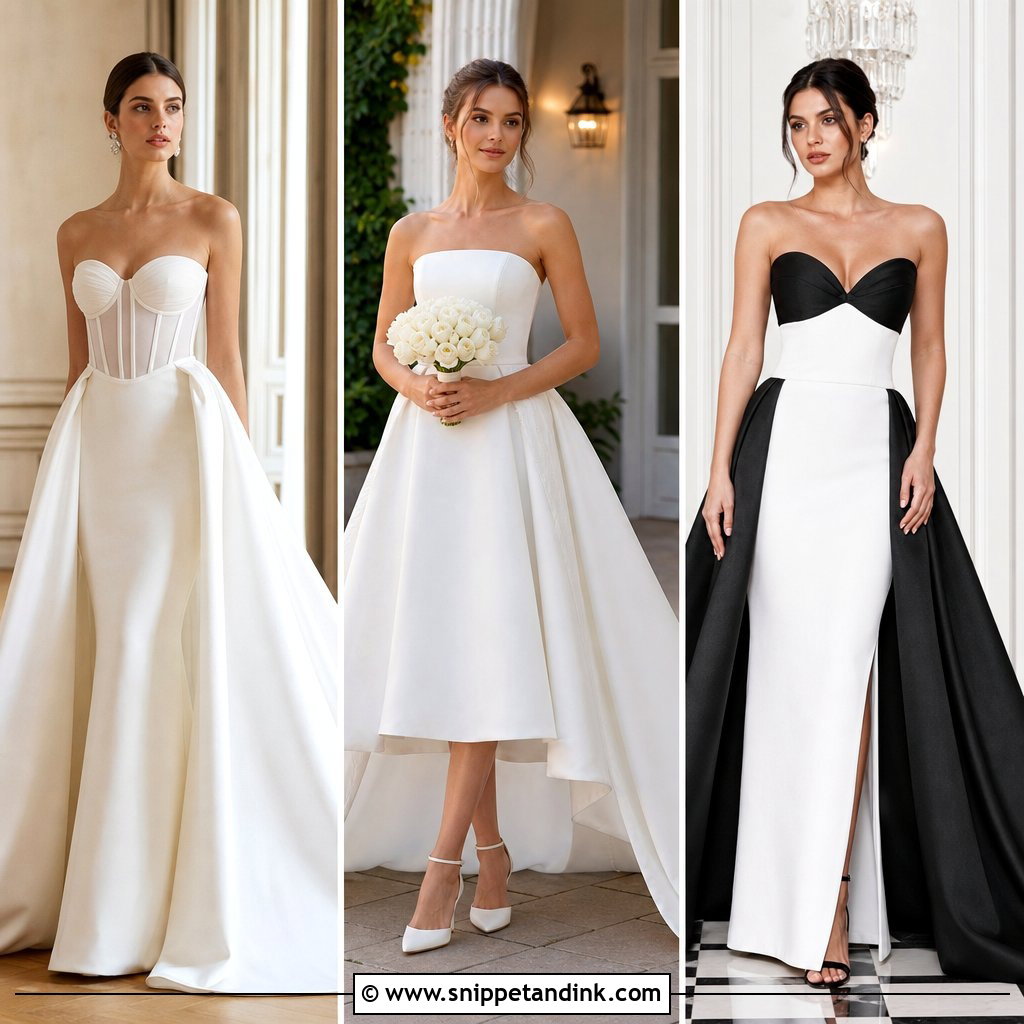
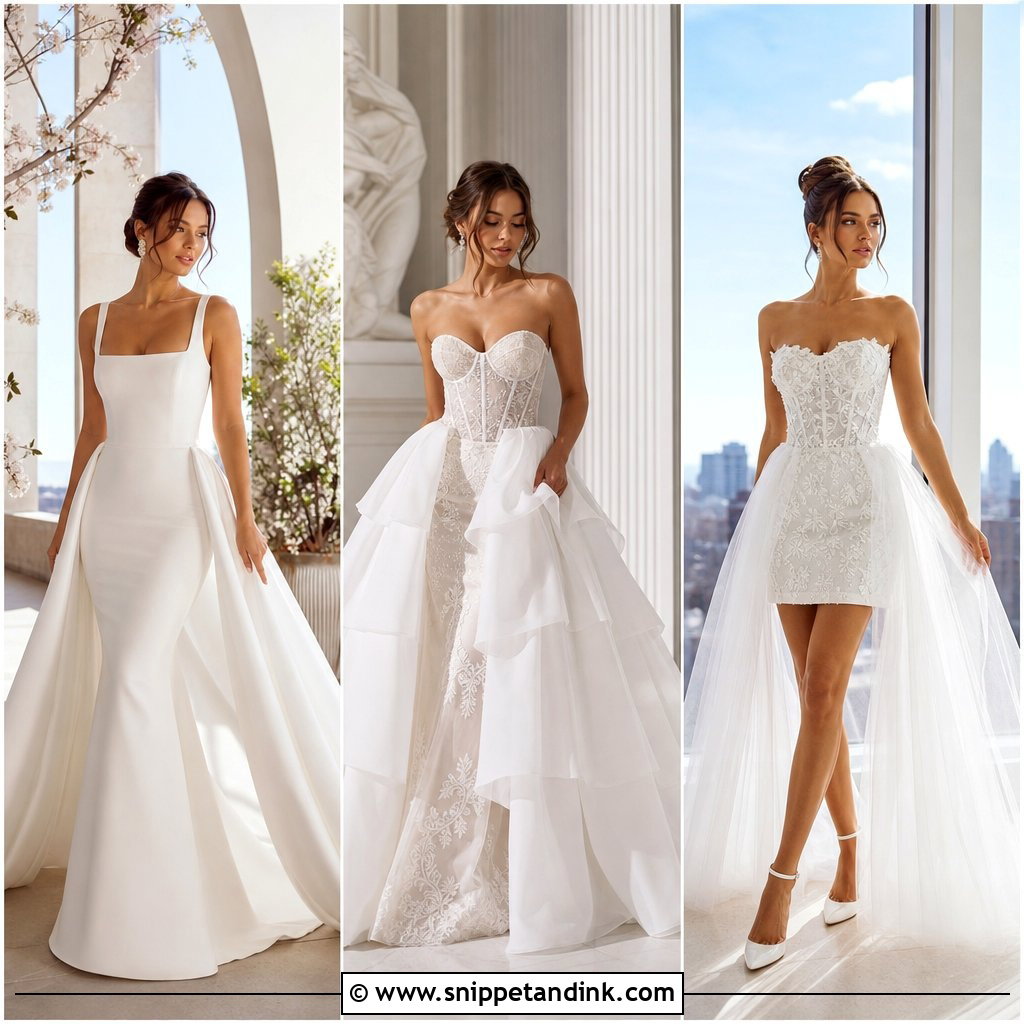
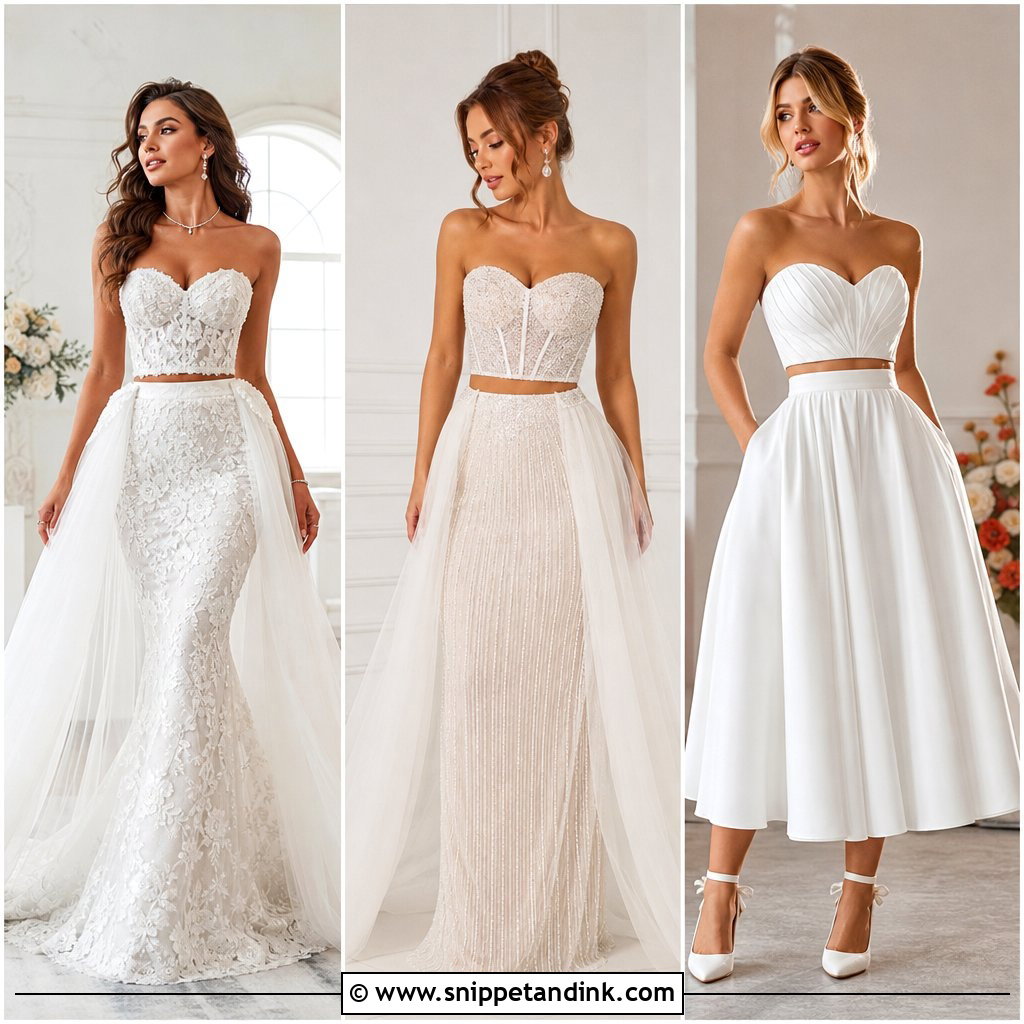
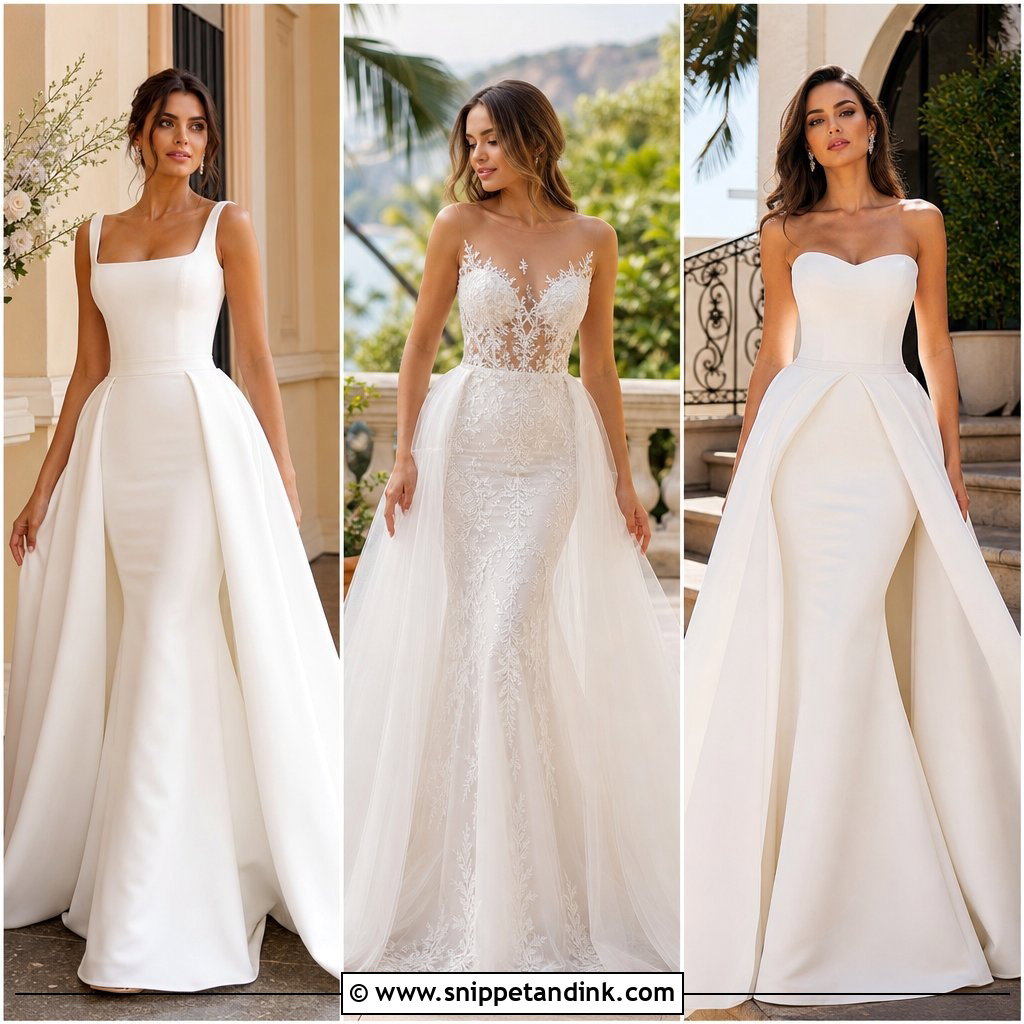
This is the classic convertible, and the one I fit most often. The overskirt brings ceremony volume, while the gown underneath can be a fitted crepe gown, a lace sheath or a satin slip. What I check first is the waistband: a wide, flat band with hooks hidden under a fabric flap sits far better than a drawstring, which gathers and leaves a ridge across the stomach. Pin the hem of the overskirt about a centimetre longer than the base dress so the inner gown never peeks out as you walk.
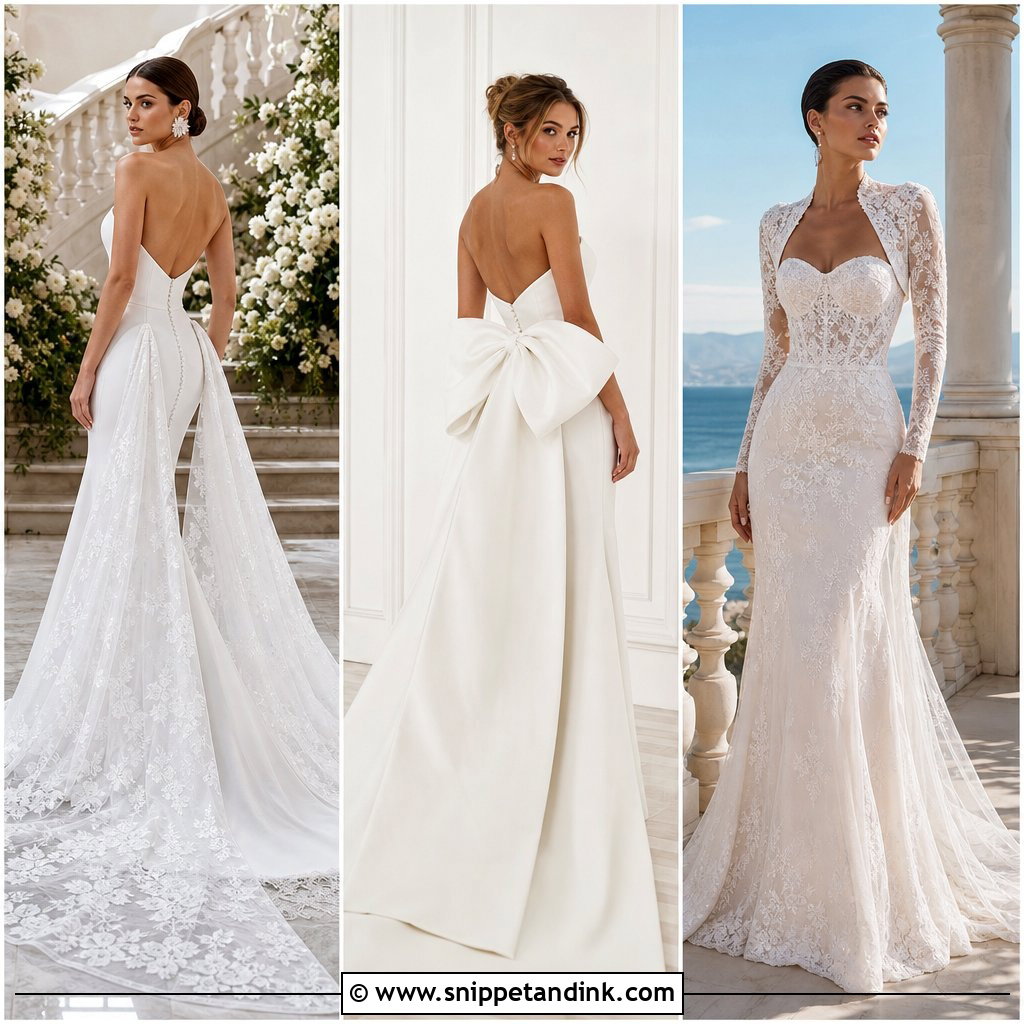
2. Detachable Train Wedding Dress
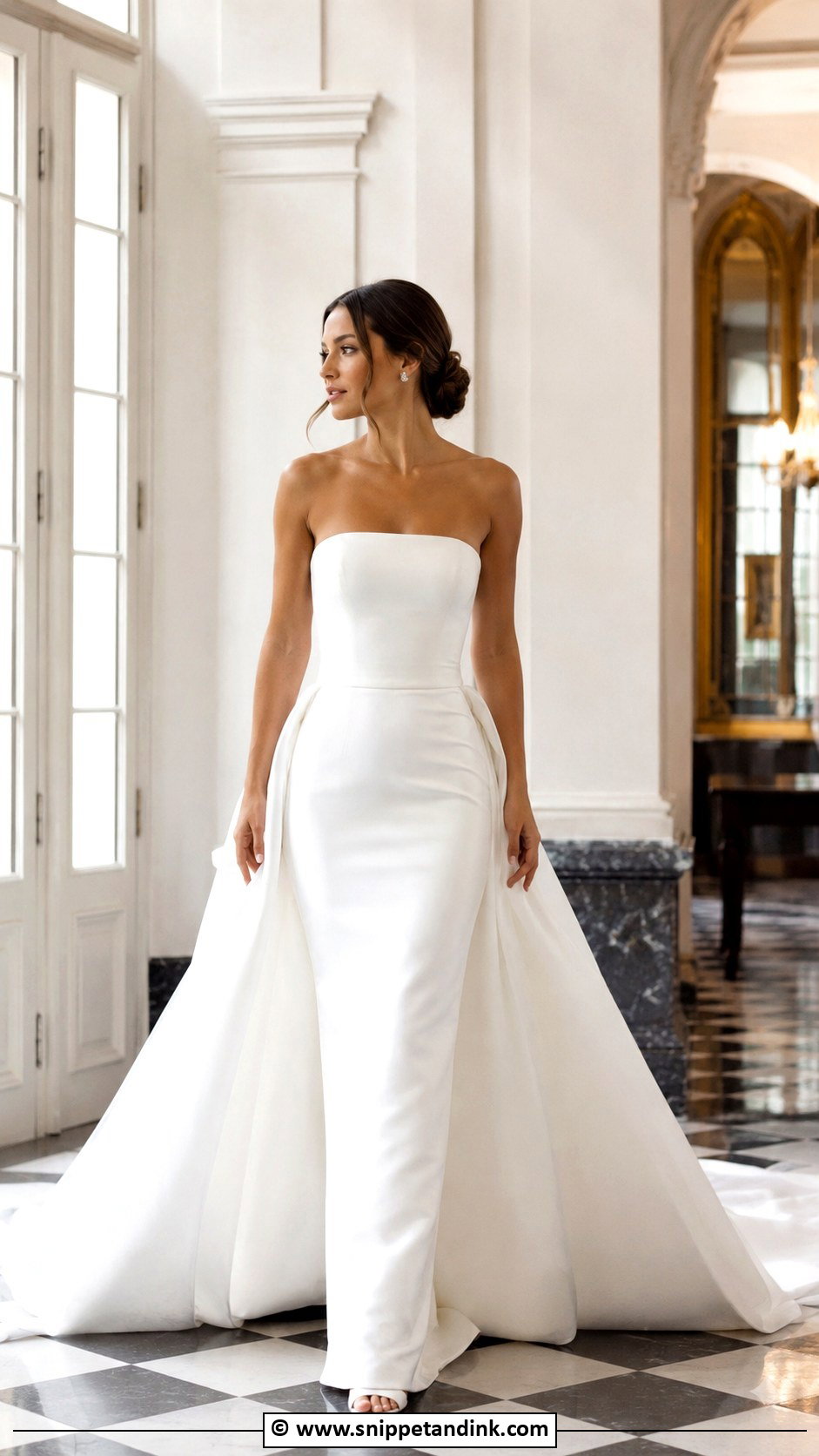
A detachable train gives you the long aisle shot without dragging yards of fabric past the dinner tables. It can anchor at the waist, lower back or shoulders, and that choice changes everything. Shoulder trains pull backward on the neckline, so the bodice needs to be firmly fitted or the front lifts every time you step. On mermaid and column gowns I prefer a waist anchor hidden under a button row. When the train comes off, look in a three-way mirror: the base dress should still have a finished back, not a row of bare snaps.
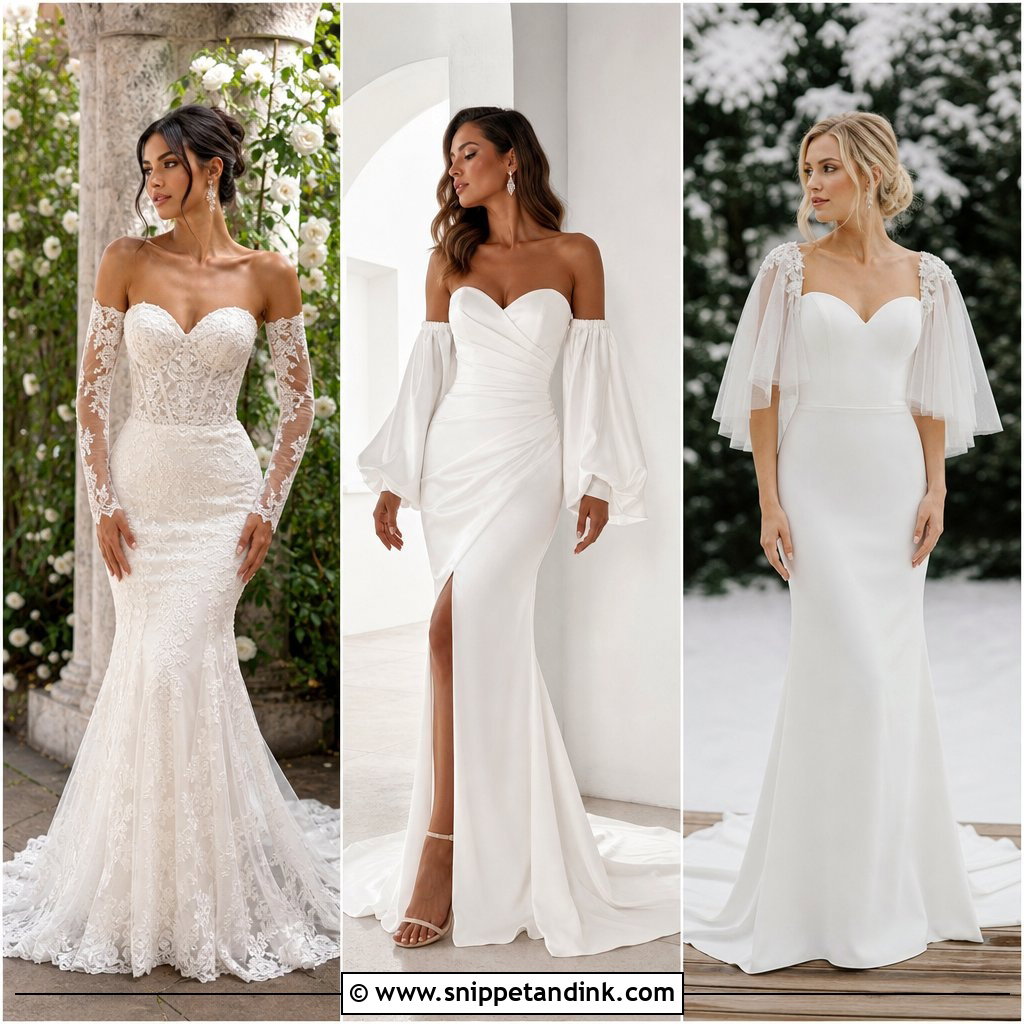
3. Detachable Sleeves Wedding Dress
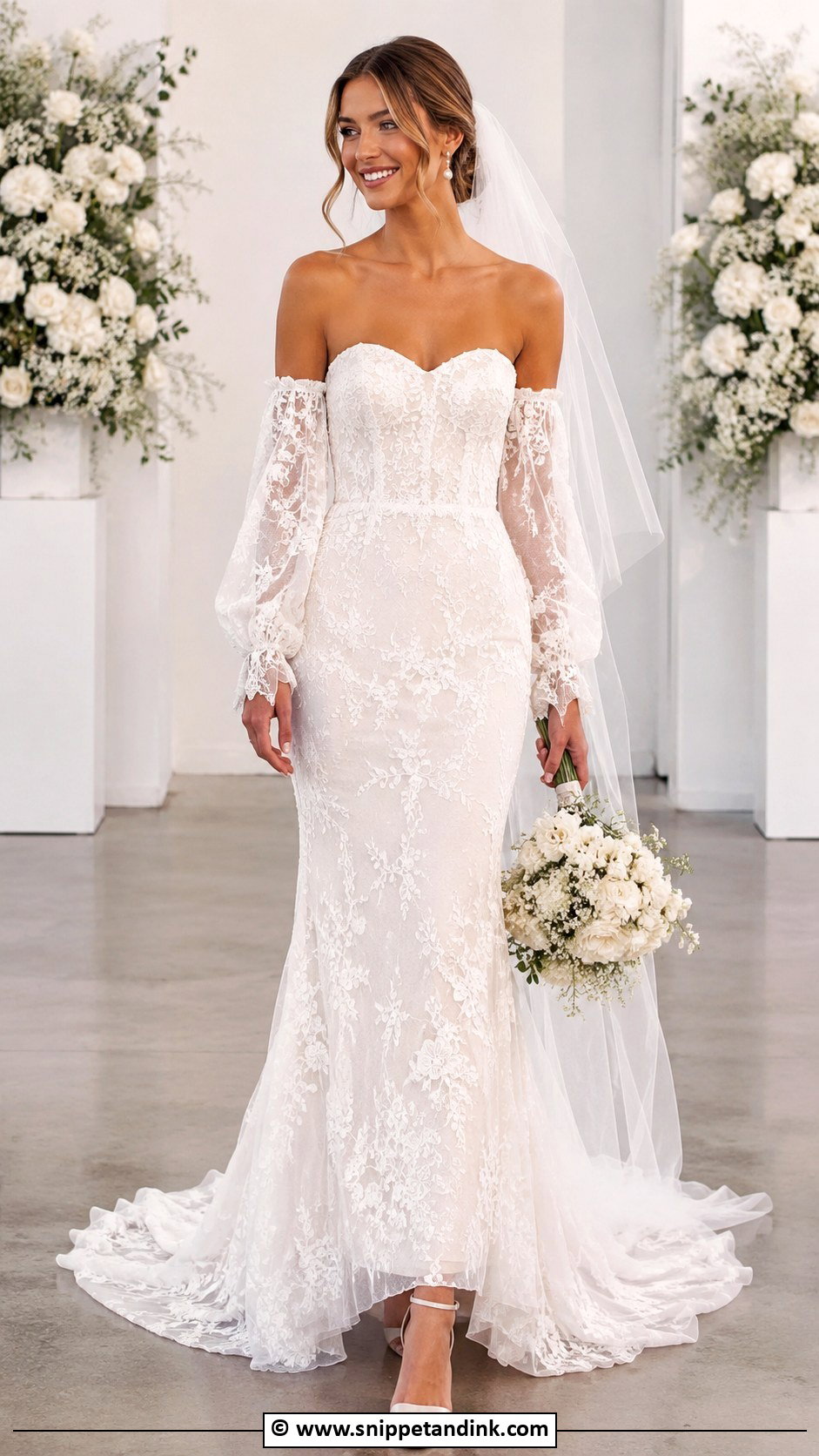
Sleeves are the simplest way to cover up for a religious ceremony and cool down afterward. Long lace, sheer tulle, puff or bishop sleeves can all be added to a strapless or sleeveless bodice. The weak spot is the join. Sleeves tied or snapped onto a strapless bodice tend to slip down the arm unless they connect to a thin elastic band that runs across the back, so ask your seamstress about that band at the first fitting. Lift your arms, hug someone and sit down during the test; if the sleeve drags the bodice, the anchor point is wrong.
4. Detachable Cape Wedding Dress
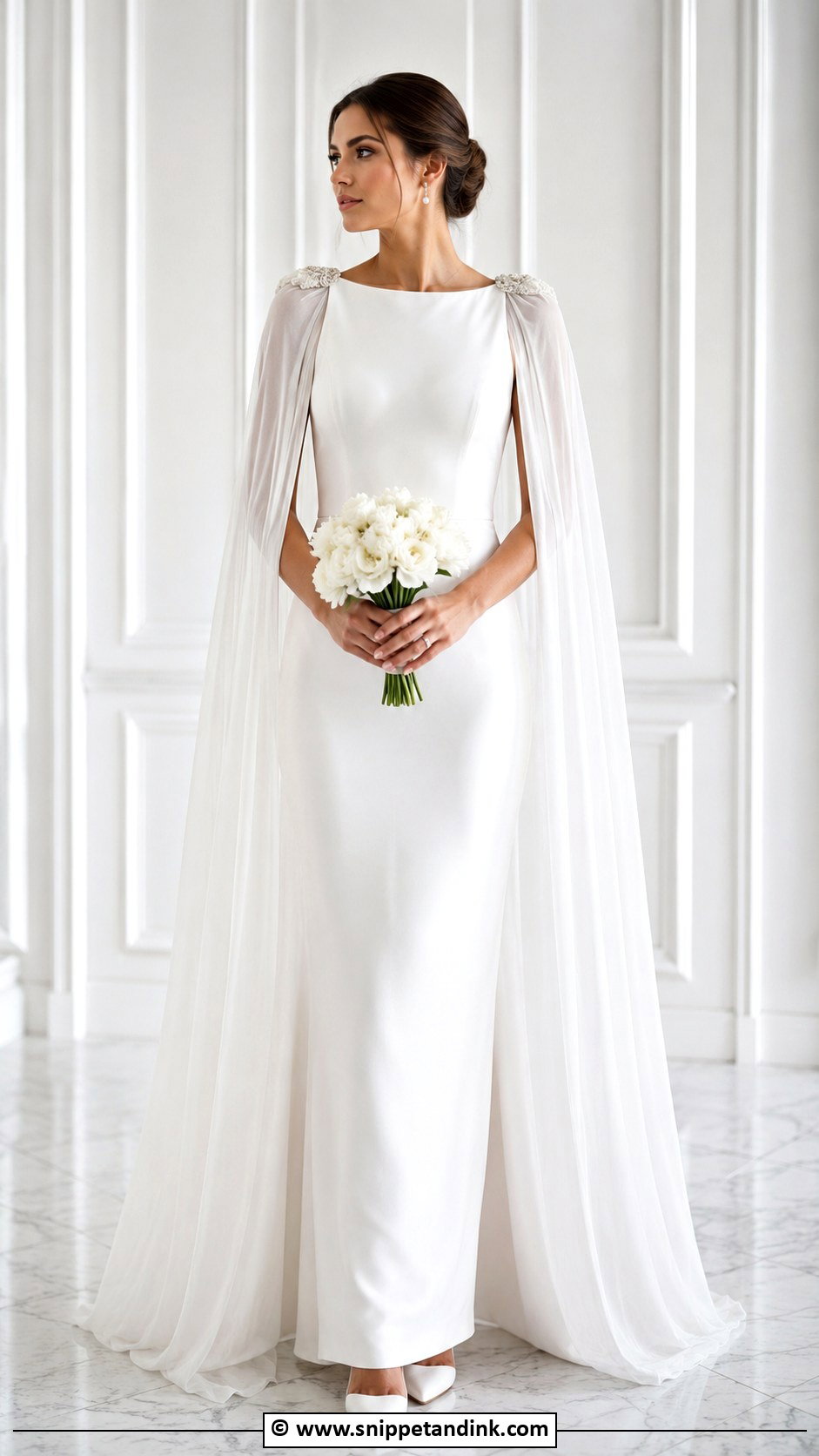
A cape gives you veil-like movement without anything pinned into your hair, which is why brides with heavy updos often prefer one. It can hang from the shoulders, neckline or back. Sheer tulle, lace, chiffon and organza all behave differently: tulle floats, chiffon swings, organza holds a crisp edge. I usually fasten capes with small snaps under the shoulder seam rather than hooks, because snaps release with one pull when your planner takes it off. Keep jewelry quiet so the cape reads as the main event.
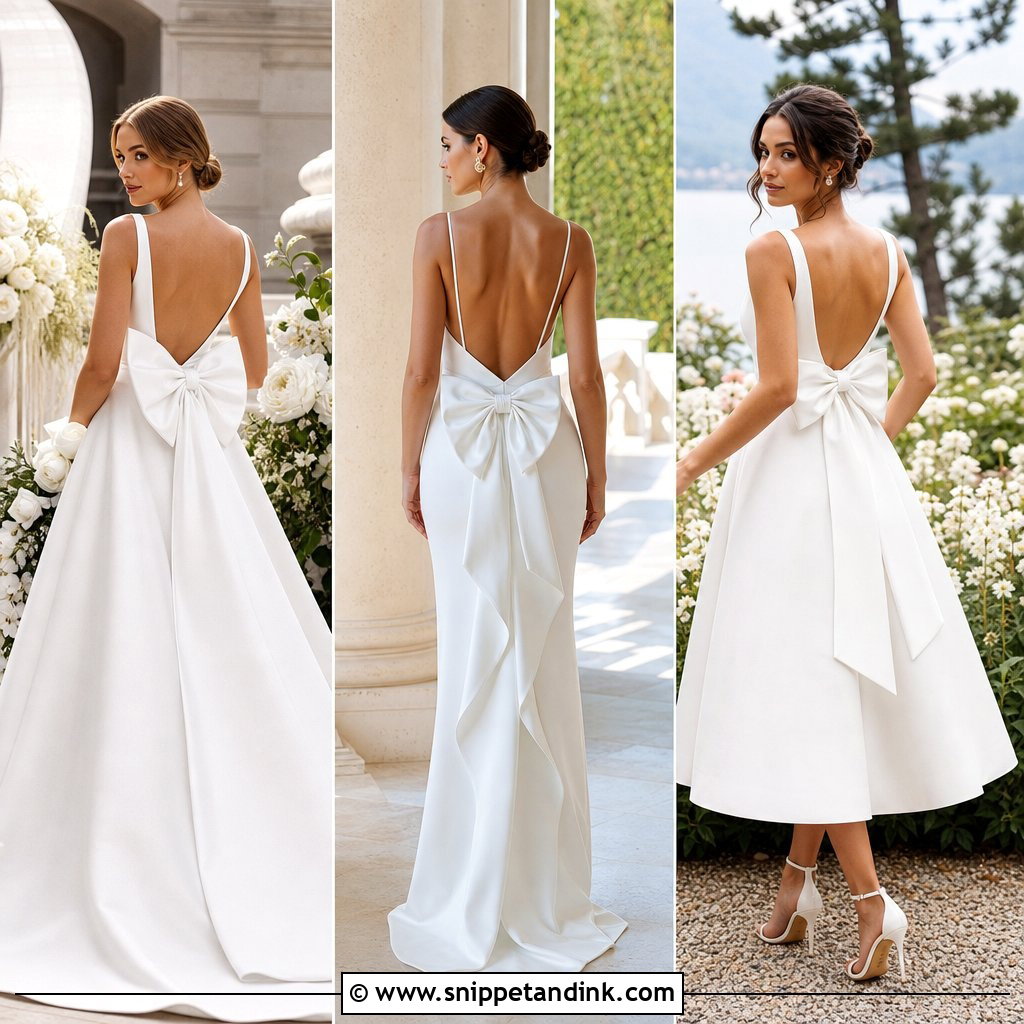
5. Detachable Bow Wedding Dress
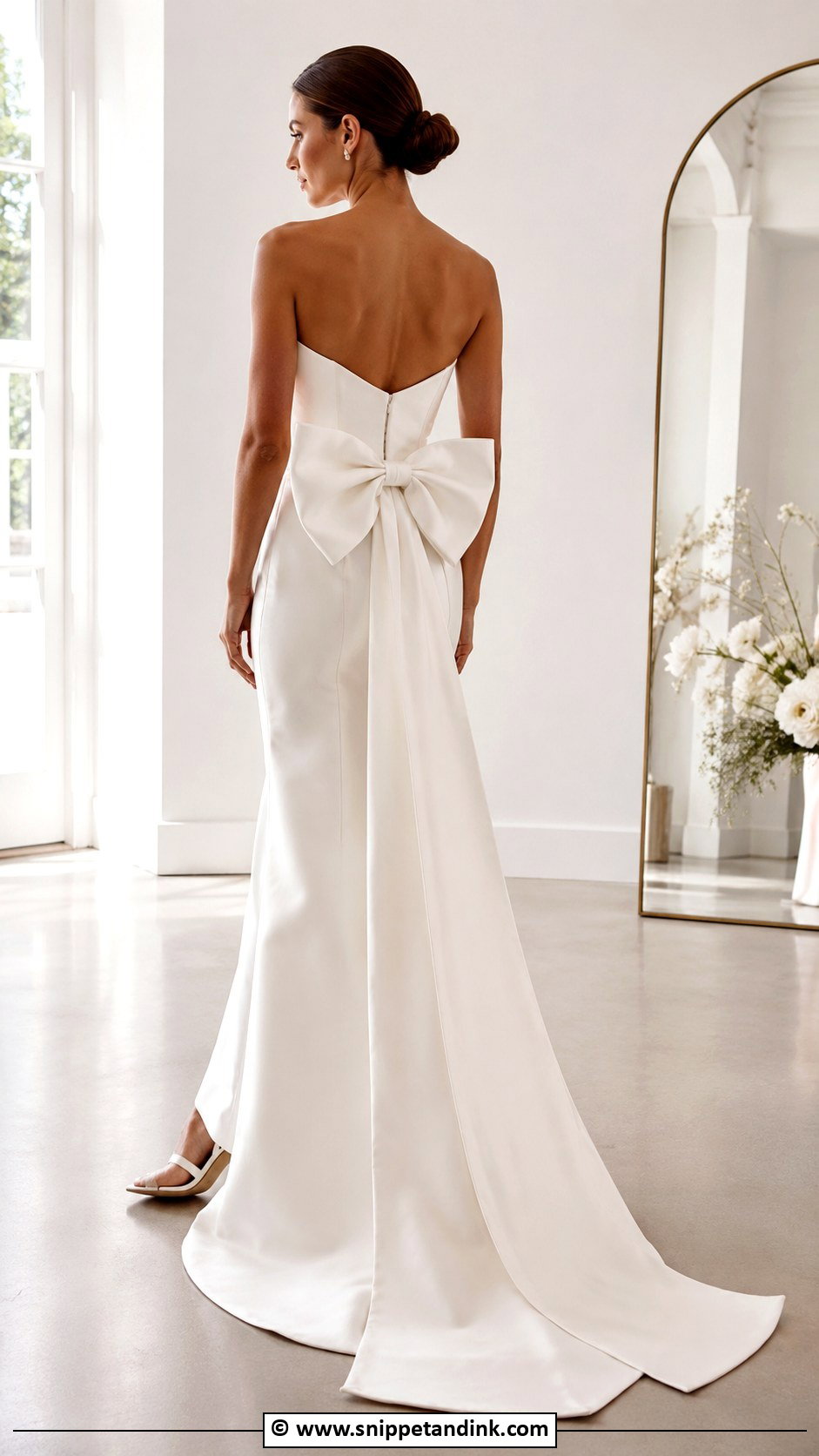
A bow reads from the back of the room, which is exactly where most guests sit during the ceremony. It can sit at the back waist, shoulder, hip or where a train attaches. Satin, mikado and taffeta hold a bow upright; soft crepe bows tend to droop by the second hour unless they have an interfacing layer inside. A large bow at the back waist also makes sitting awkward, so this is a piece I expect brides to take off before dinner. Long ribbon tails look softer, while a clean oversized bow feels more graphic.
6. Detachable Lace Jacket Wedding Dress
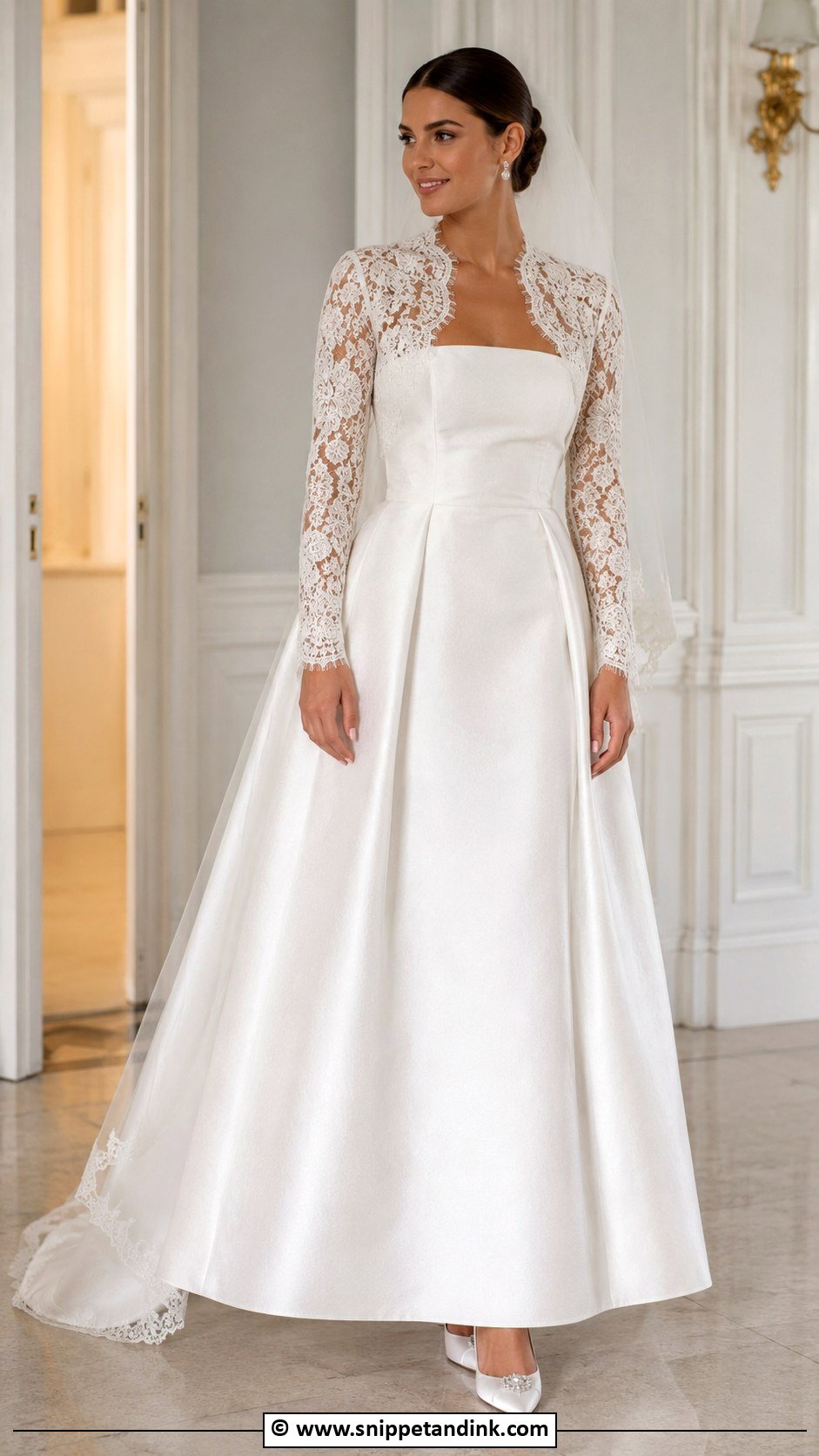
A lace jacket covers shoulders and arms for the ceremony, then leaves a strapless or sleeveless gown underneath for the party. Long sleeves, a high neck, scalloped edges and tiny buttons are the usual details. Fit is everything here. The jacket should skim the bodice without bunching at the underarm, and the lace should coordinate with the gown even if it does not match it. Tiny fabric-covered buttons are pretty but slow, so if your timeline is tight, I would ask for a hidden zip with decorative buttons over it.
7. Detachable Tulle Skirt Wedding Dress
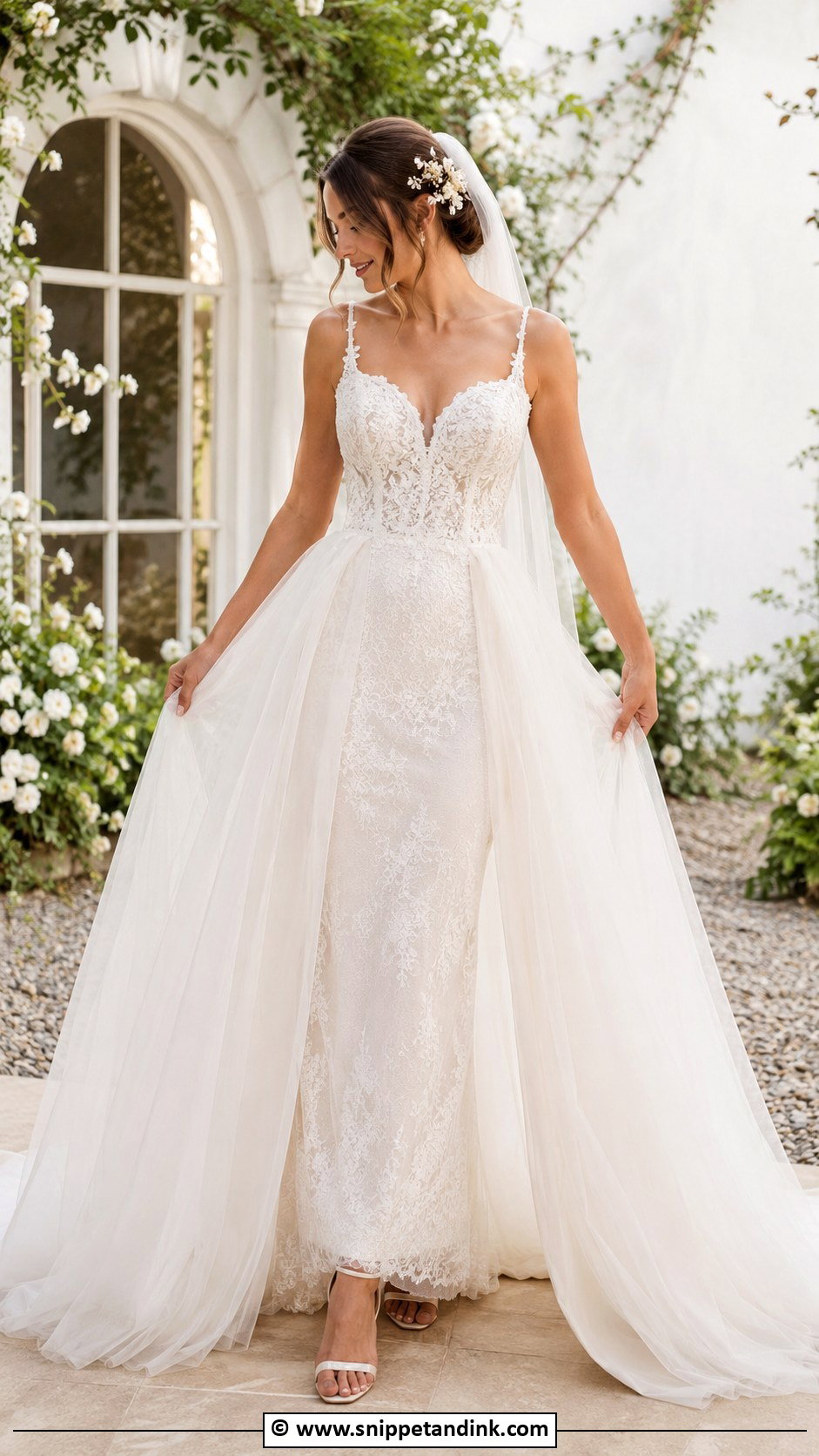
Tulle adds volume without the weight of satin or mikado, so a removable tulle skirt is kind to warm garden ceremonies. The base dress can be fitted or lightly beaded; the tulle creates a floating shape on top. Watch the count of layers. Four or five fine layers look soft, while more gathered layers give a princess shape but also add bulk at the waist, which shows when the skirt sits over a slim gown. Ask for a bottom layer of softer tulle against the base dress so it does not scratch or catch on beading.
8. Detachable Satin Overskirt Wedding Dress
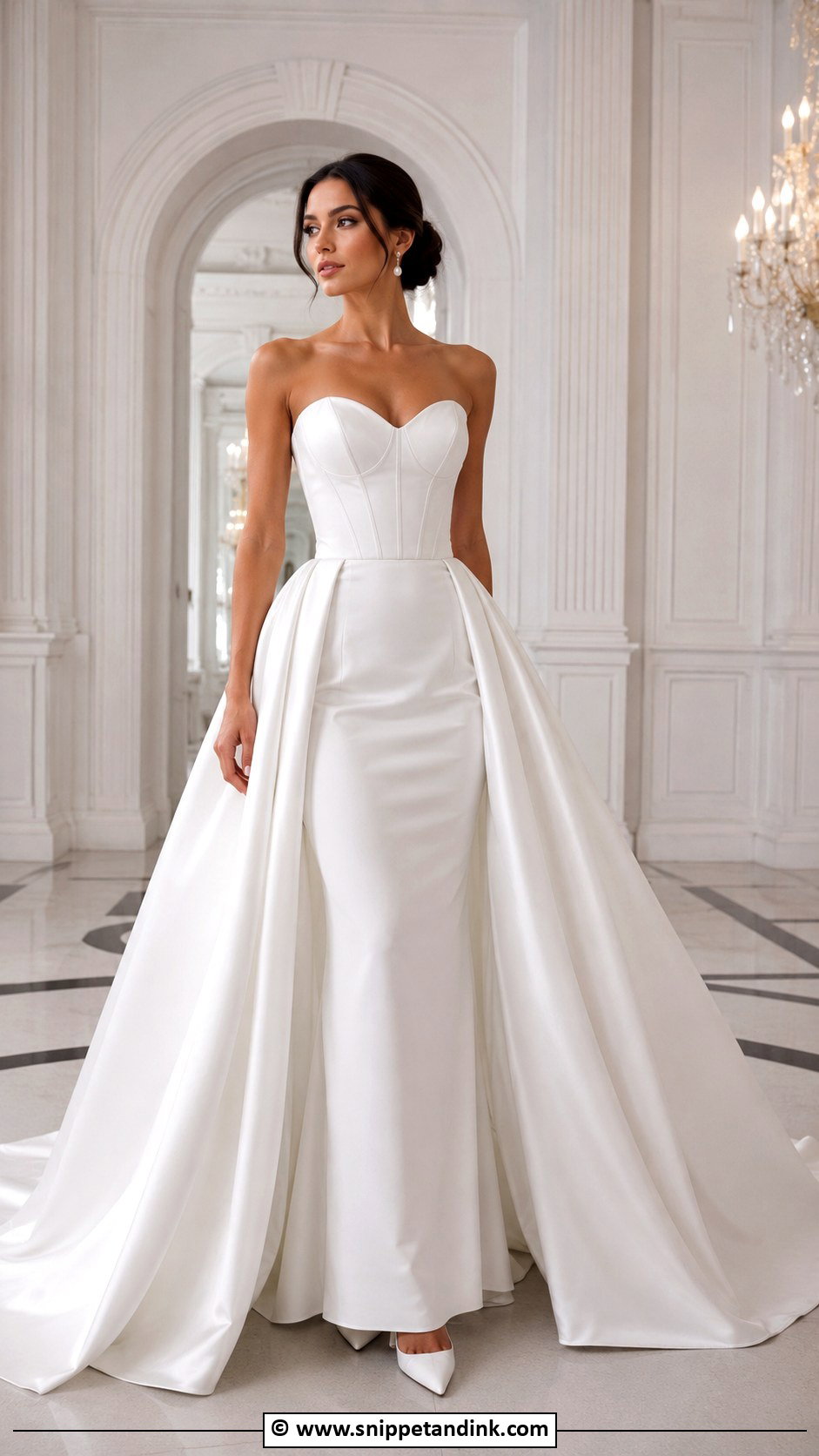
Satin brings a smooth sheen and a formal presence that suits ballrooms and hotel venues. It pairs well with structured bodices, corset tops and sleek crepe base gowns, and it can turn a slim dress into an A-line or ball gown effect for the ceremony. Satin is heavy, though. A full satin overskirt can drag the waistband down at the back, so I ask for a grosgrain stay inside the band. Match the weight of the satin to the gown underneath, or the two pieces will crease and shine differently in photos.
9. Detachable Organza Overskirt Wedding Dress
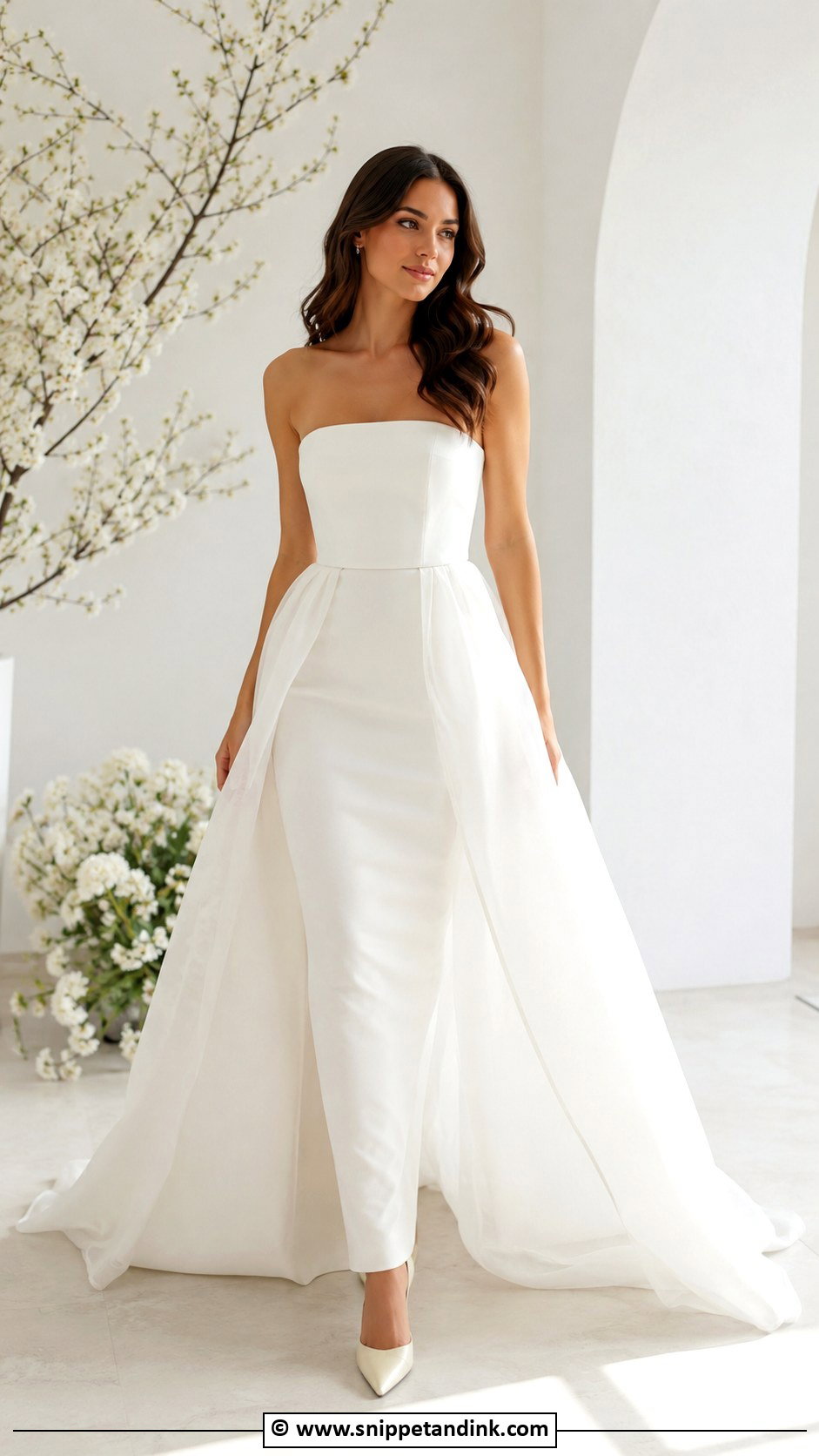
Organza holds shape better than tulle, so you get a sculpted skirt without much weight. It suits fitted gowns, minimal dresses and floral appliqué designs, and it stays crisp in spring and summer heat. It can be plain, pleated or tiered, and a little horsehair braid at the hem gives it a confident curve. The trade-off is creasing: organza marks wherever it is folded or crushed in a car, so it needs to hang in a garment bag right up to dressing time. Once it comes off, the base gown looks streamlined.
10. Detachable Ruffle Skirt Wedding Dress
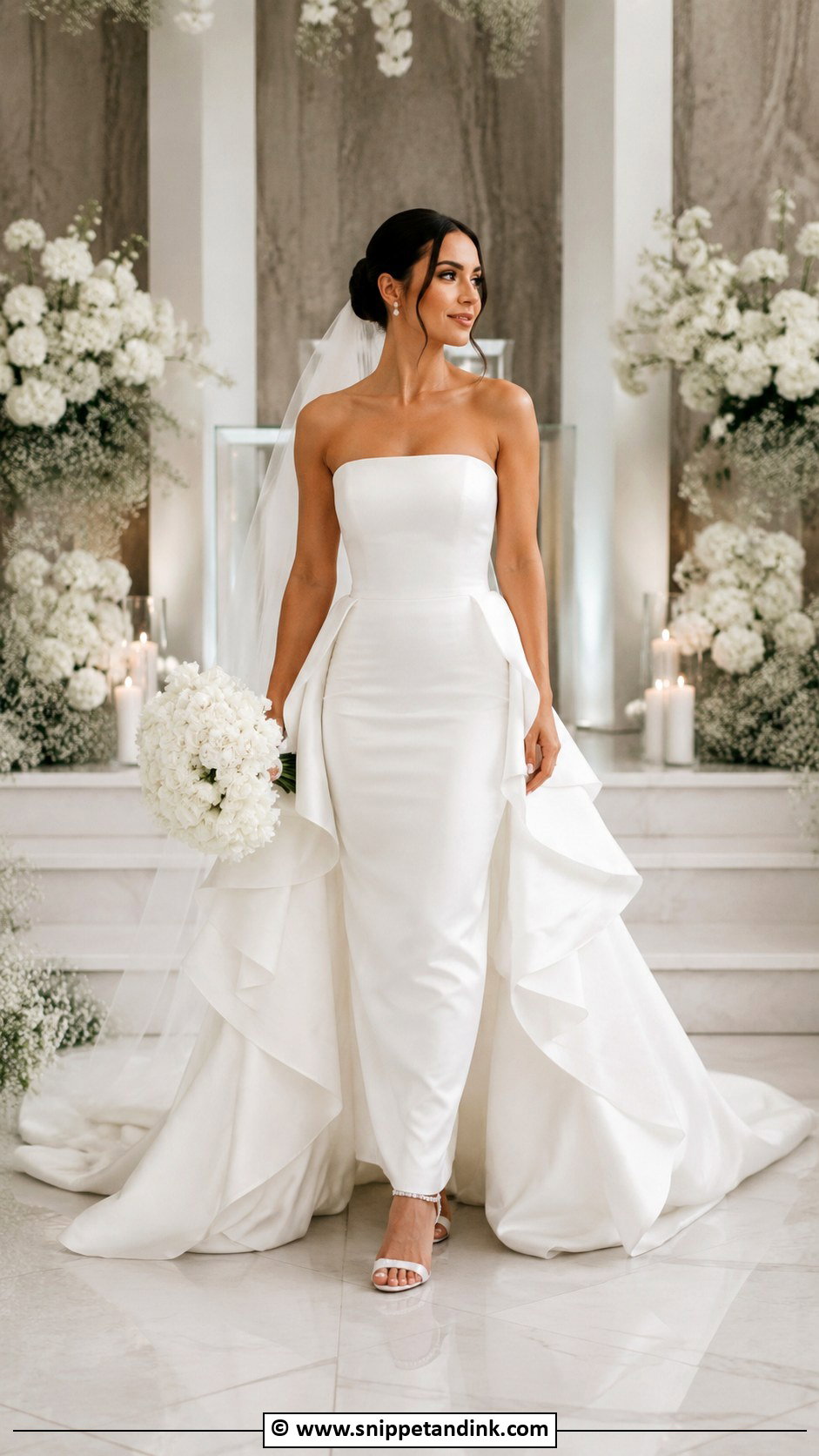
Ruffles turn the overskirt into the whole statement, so the gown underneath should be plain. Depending on fabric and size, they can read soft or editorial. Scale matters most. On a petite frame, I keep the ruffles small or angled, because deep tiers can swallow the figure from hip to hem. For high drama, cascading ruffles with a longer train work well, but each tier adds weight at the waist. After the ceremony the clean base dress feels almost like a different outfit.
11. Detachable High Low Skirt Wedding Dress
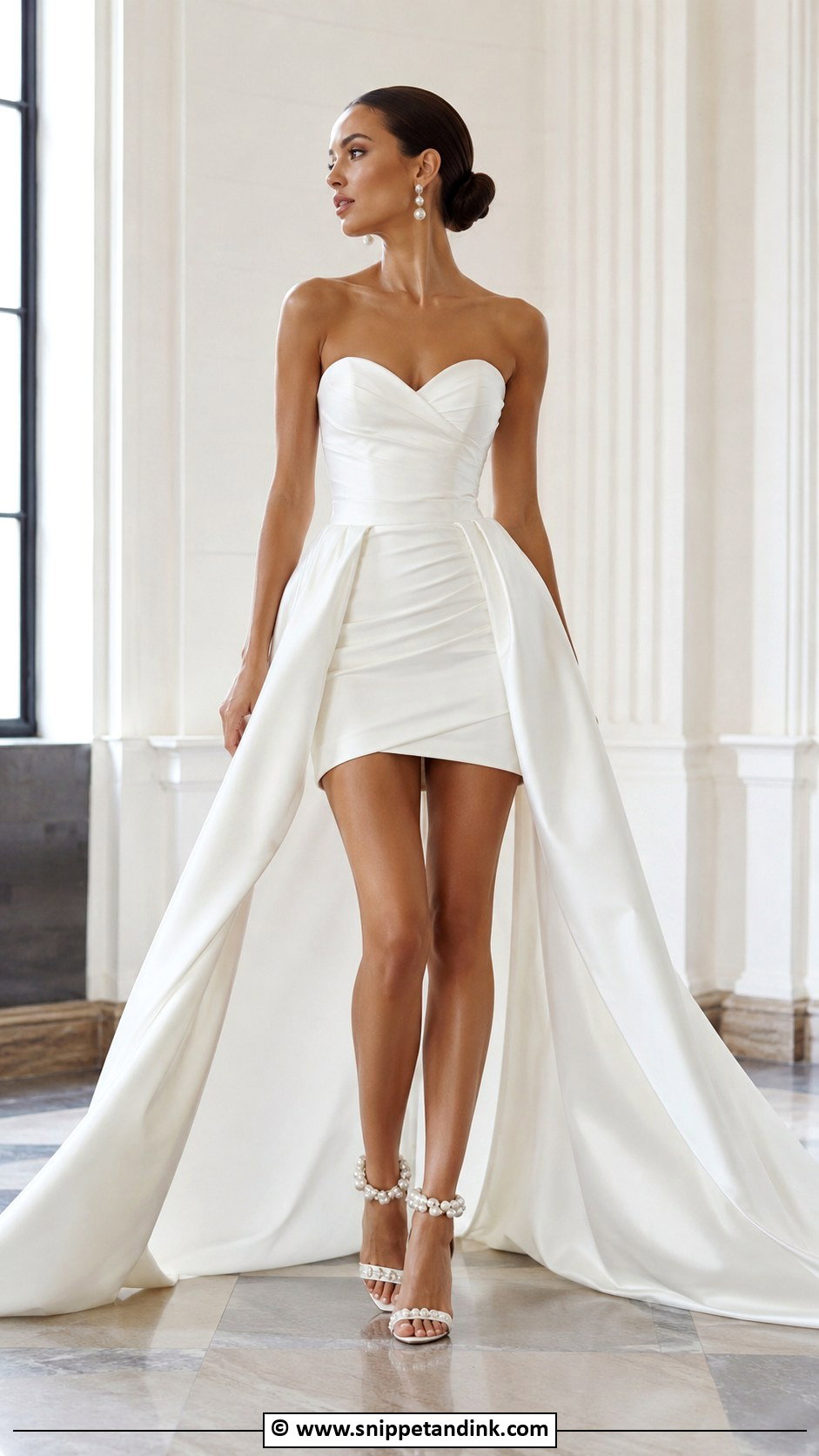
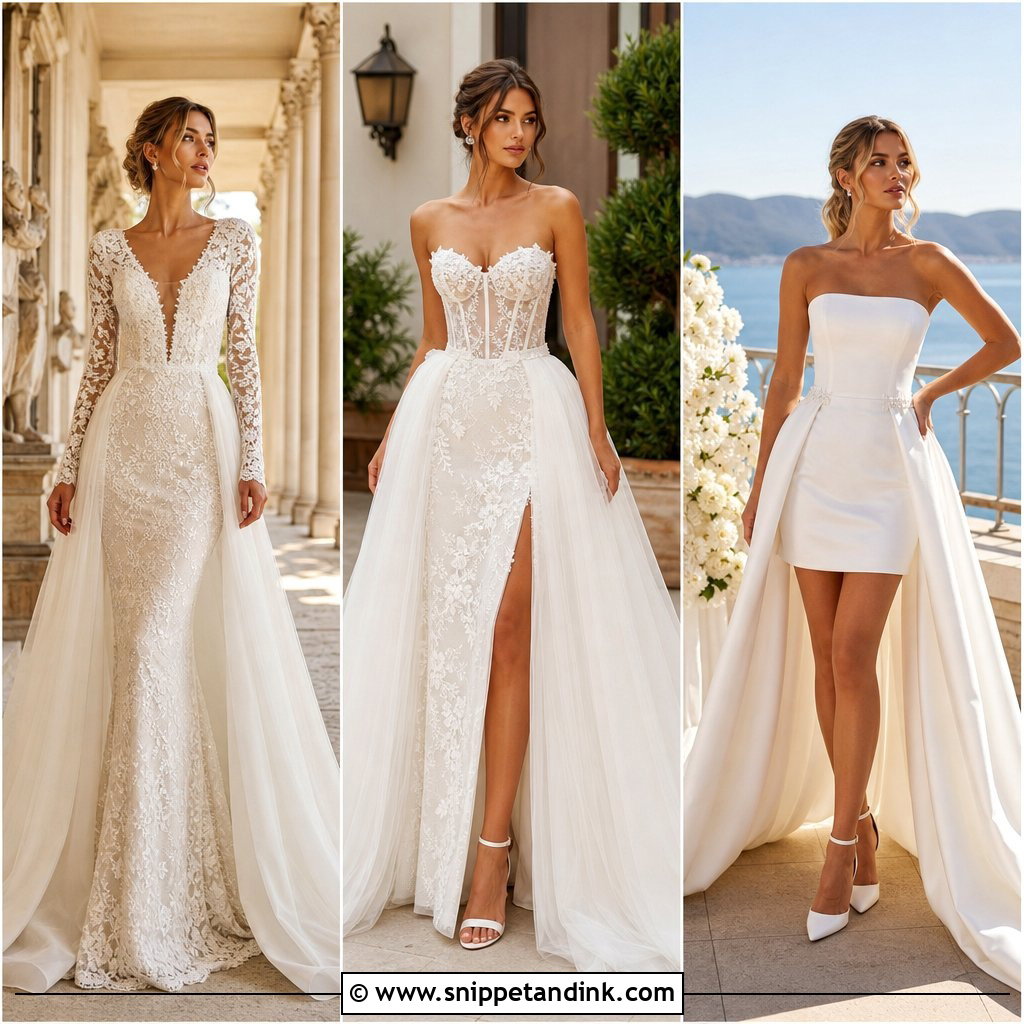
A high low overskirt opens at the front to show the base gown and your shoes, while the back still trails like a train. It pairs with fitted minis, tea-length dresses and slim floor-length gowns. Because the front edge sits right in the camera line, the hem finish matters more than on a full skirt; a rolled or horsehair edge looks cleaner than a raw cut. Choose shoes you are happy to have photographed, because this shape puts them on show from the first step.
12. Detachable Ball Gown Skirt Wedding Dress
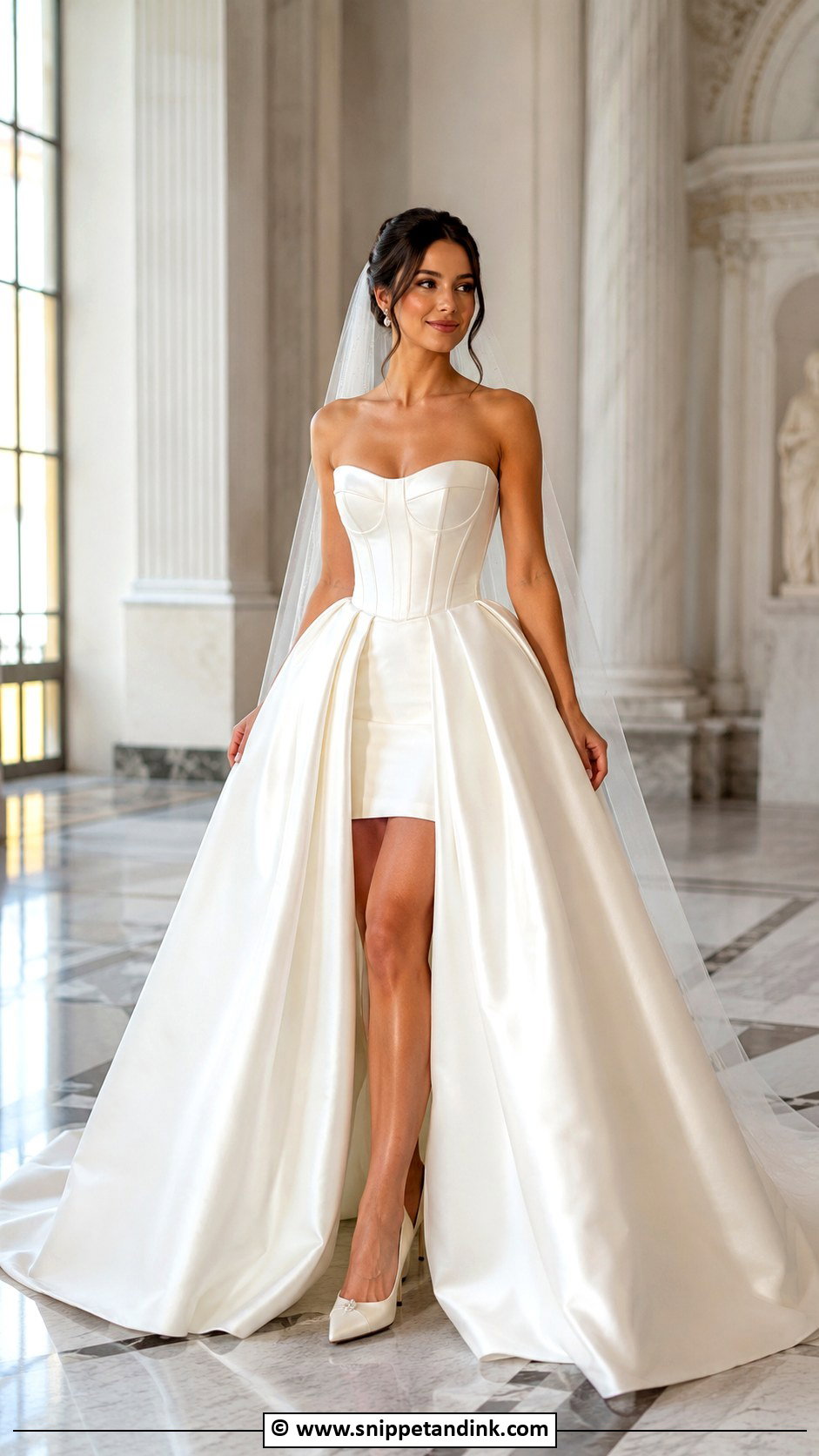
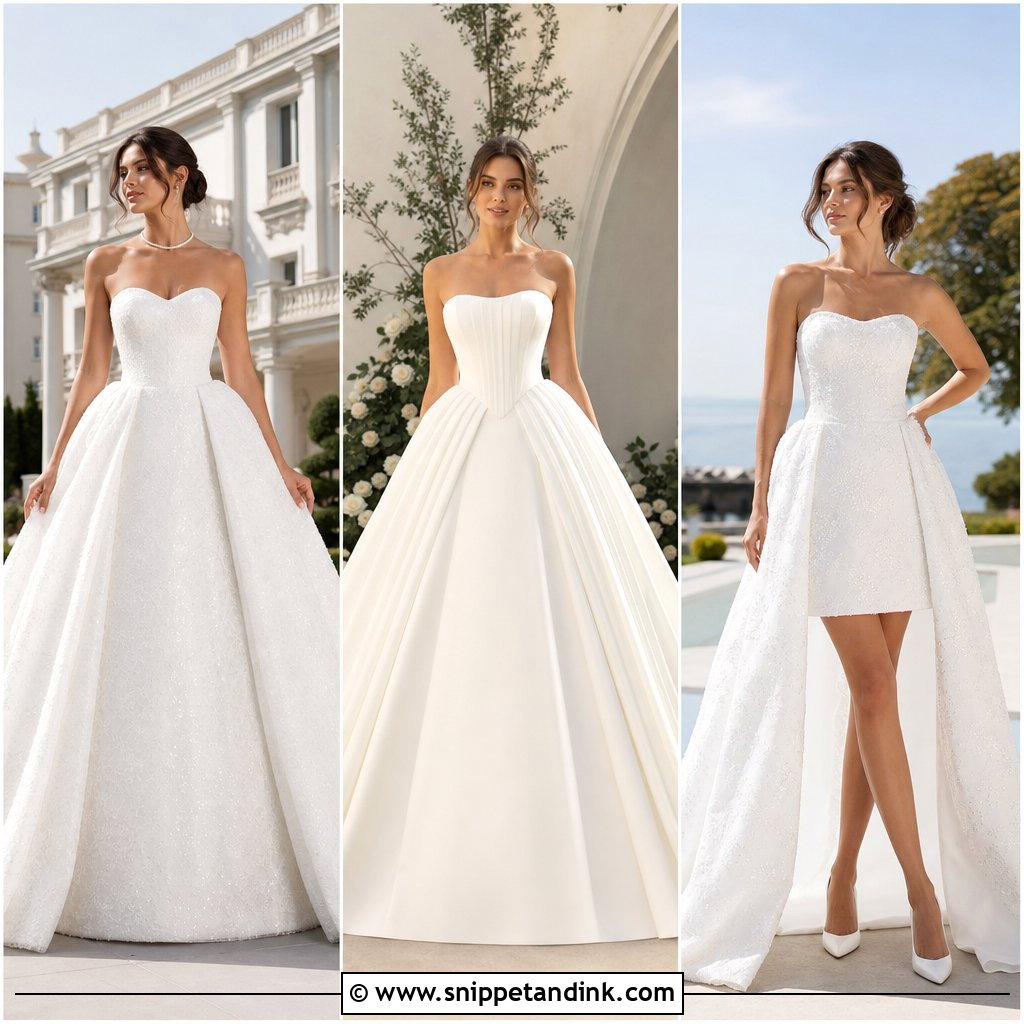
Here a full ball gown skirt sits over a mini, a fitted dress or a sleek column gown, so you get princess volume at the aisle and freedom later. The removable skirt is usually the heaviest piece in this list, so I check how it fastens before anything else: a wide waistband with a hook-and-bar closure, plus a couple of hidden snaps, keeps it from rotating as you walk. A crinoline belongs to the skirt, not to the base dress, or the reception look will still stand out stiffly at the hip.
13. Detachable Mermaid Overskirt Wedding Dress
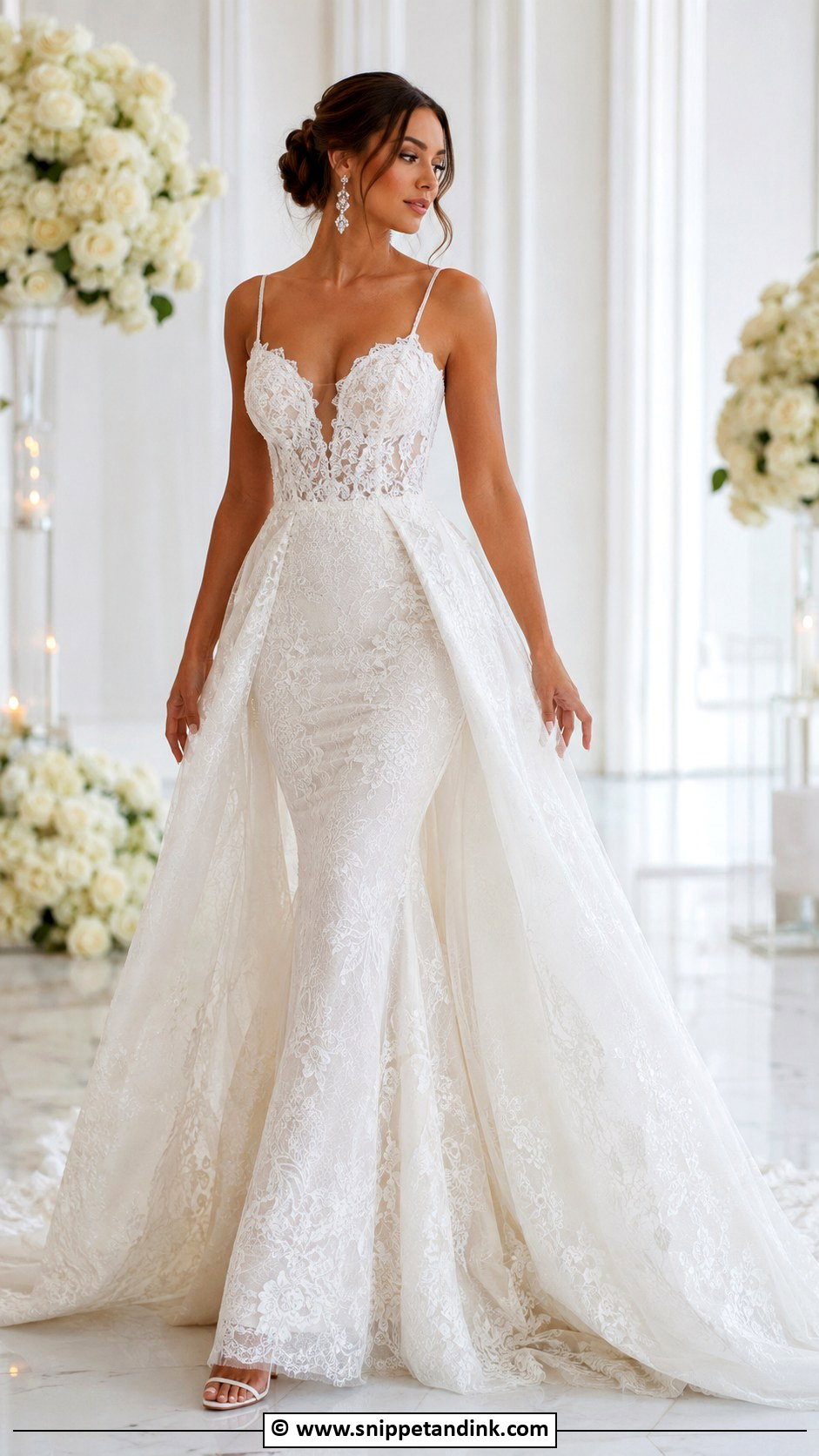
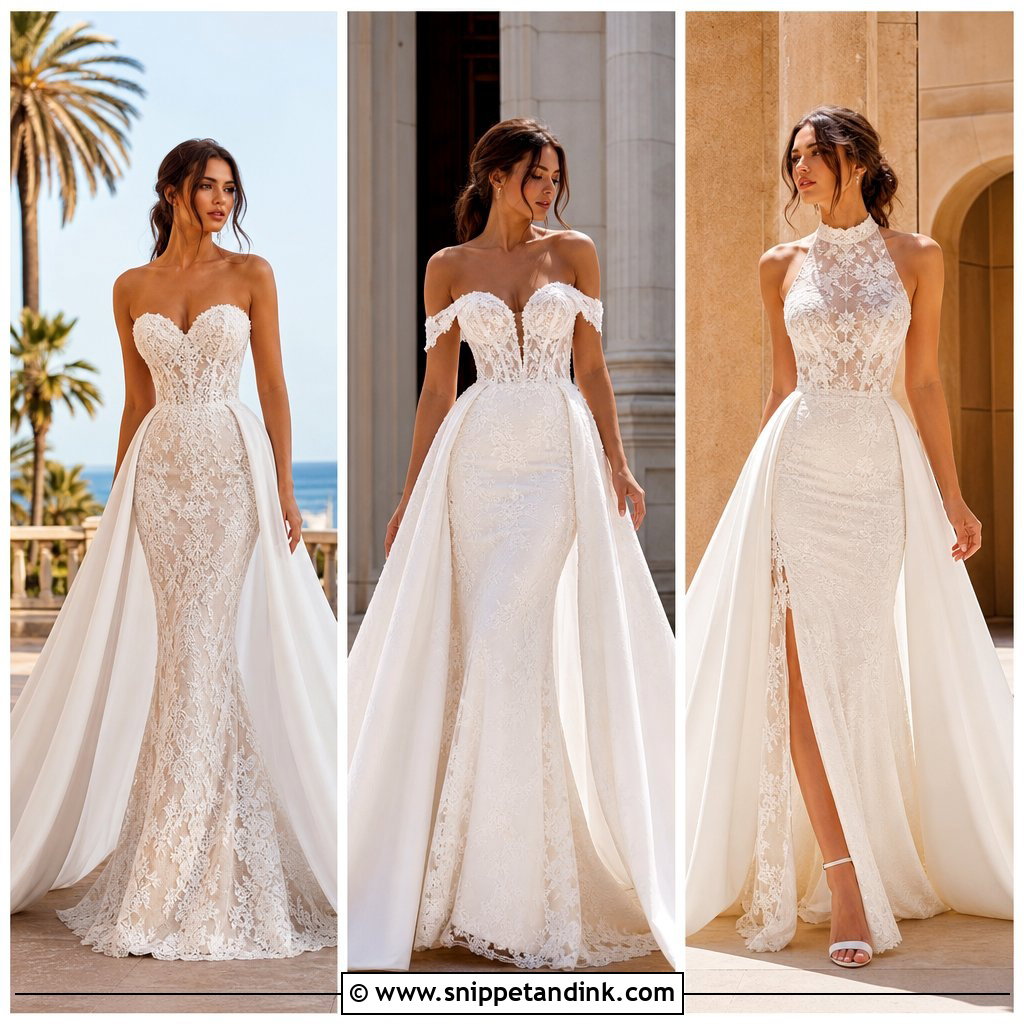
The base gown follows the body and flares near the knee, and the overskirt adds volume from the waist or hip. Proportion is the tricky part. If the overskirt opens at the front, the mermaid line still shows and the two shapes work together; if it closes completely, you lose the shape you paid for. Lace, beading, crepe and satin all work as the base. Walk away from the mirror and check the back view, because overskirts can bunch over the flare where the knee bends.
14. Detachable A Line Overskirt Wedding Dress
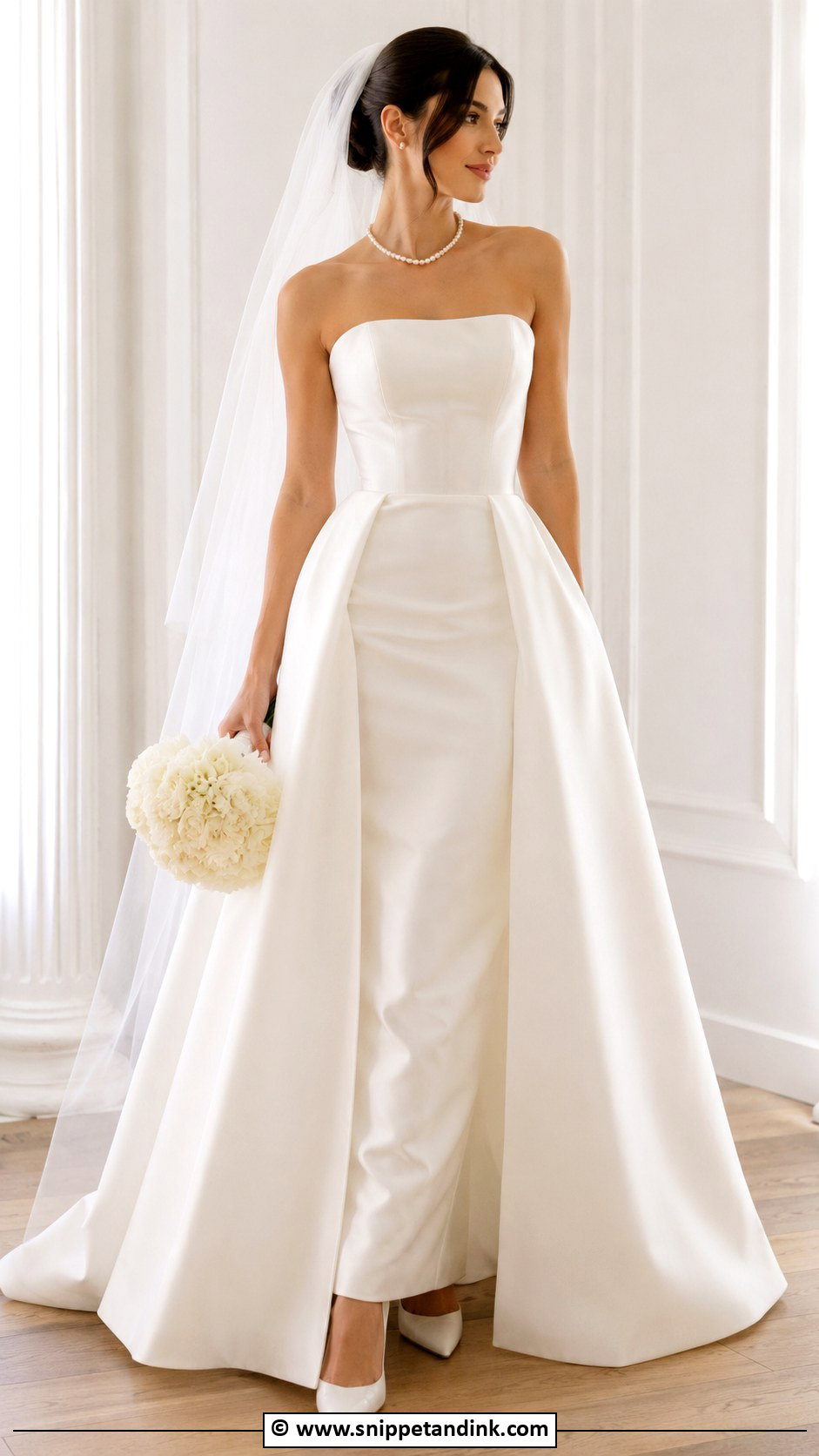
An A-line overskirt is one of the most wearable convertible pieces I see. It defines the waist and flows away from the hips, so it suits many body types without becoming heavy. Underneath, a sheath, slip or fitted gown gives you the reception look. Soft tulle, satin, organza and lace all hold this silhouette. The one thing to test is the waistline height: if the overskirt sits even slightly above or below the base dress seam, a line shows through lighter fabrics.
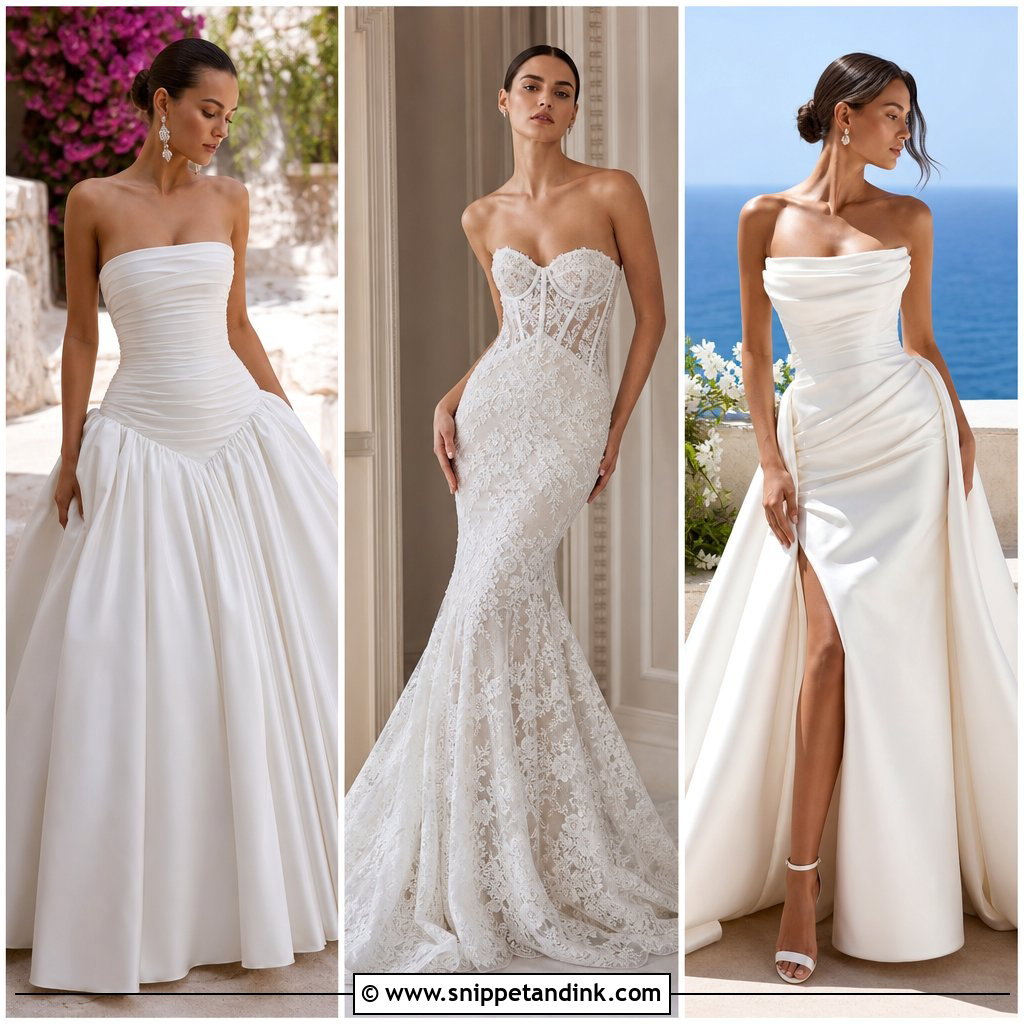
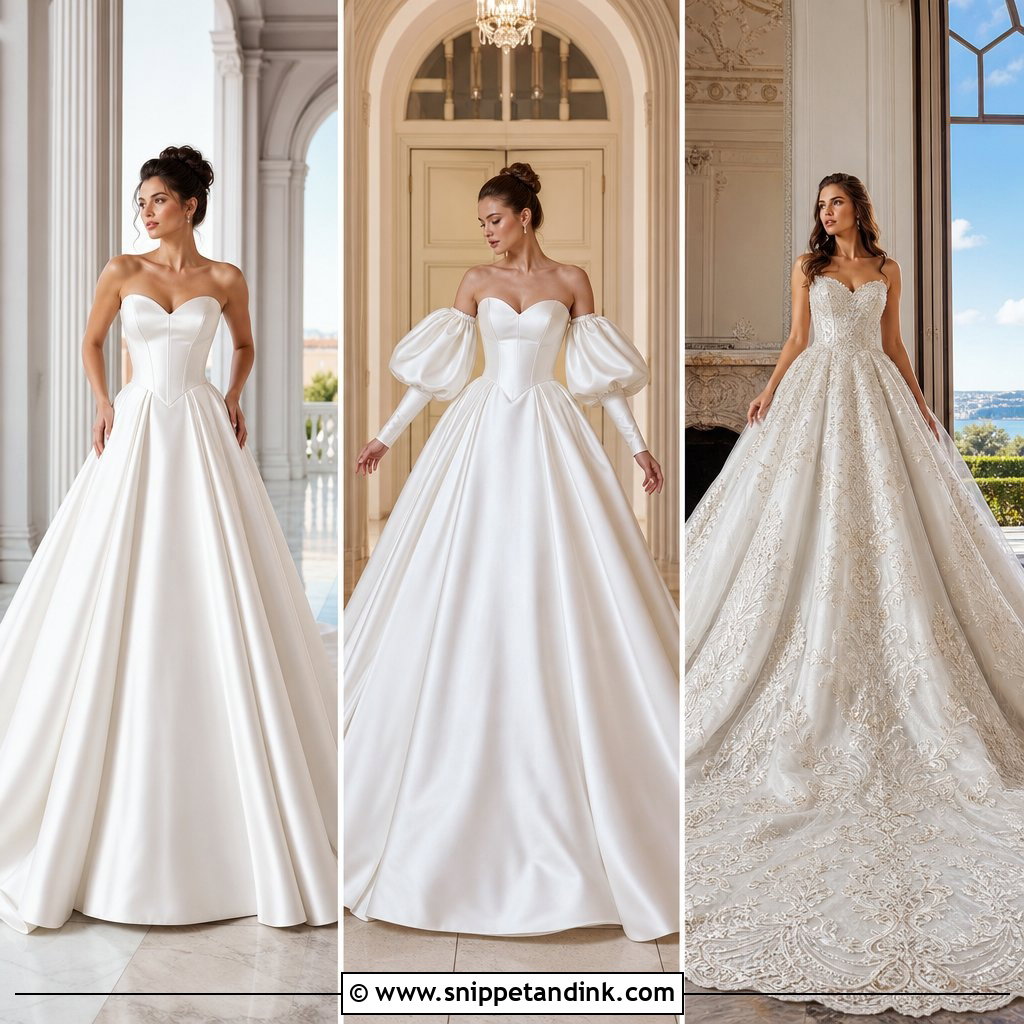
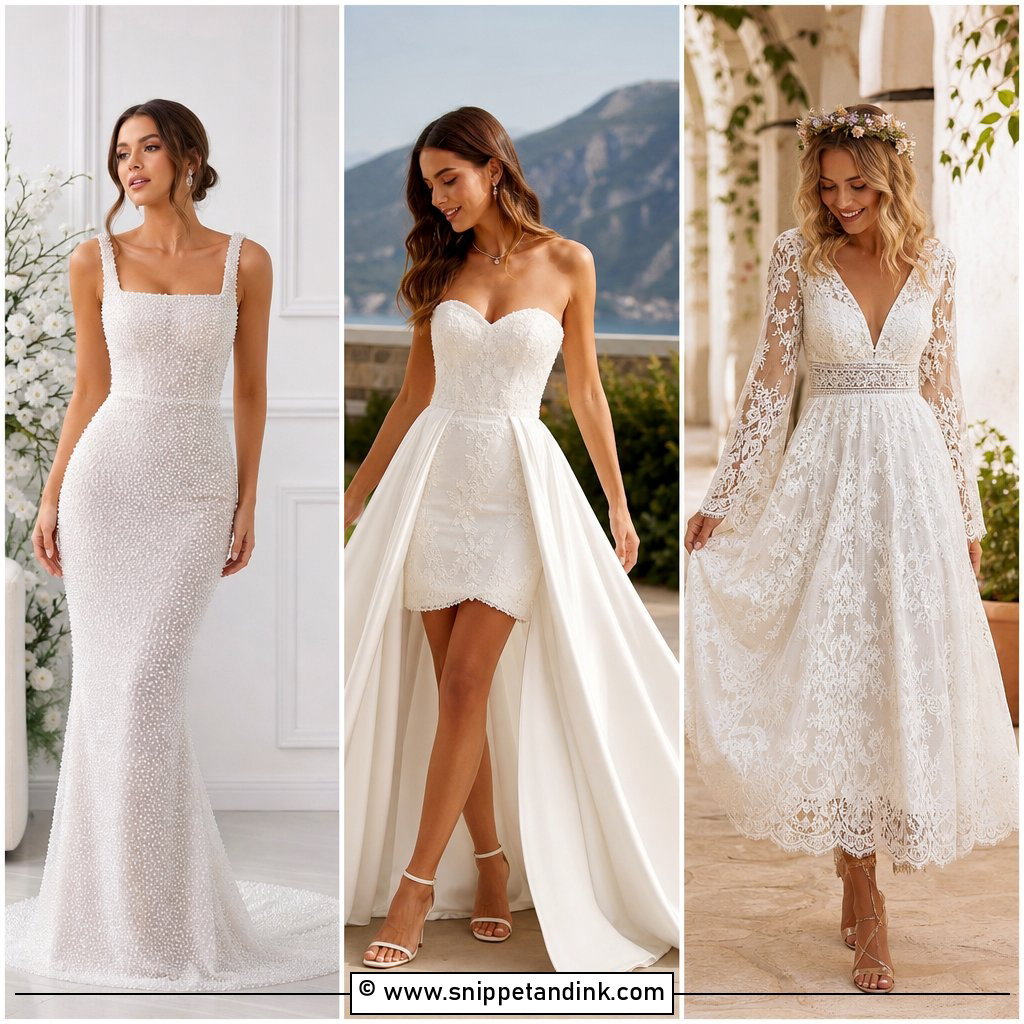
15. Detachable Mini Wedding Dress Skirt
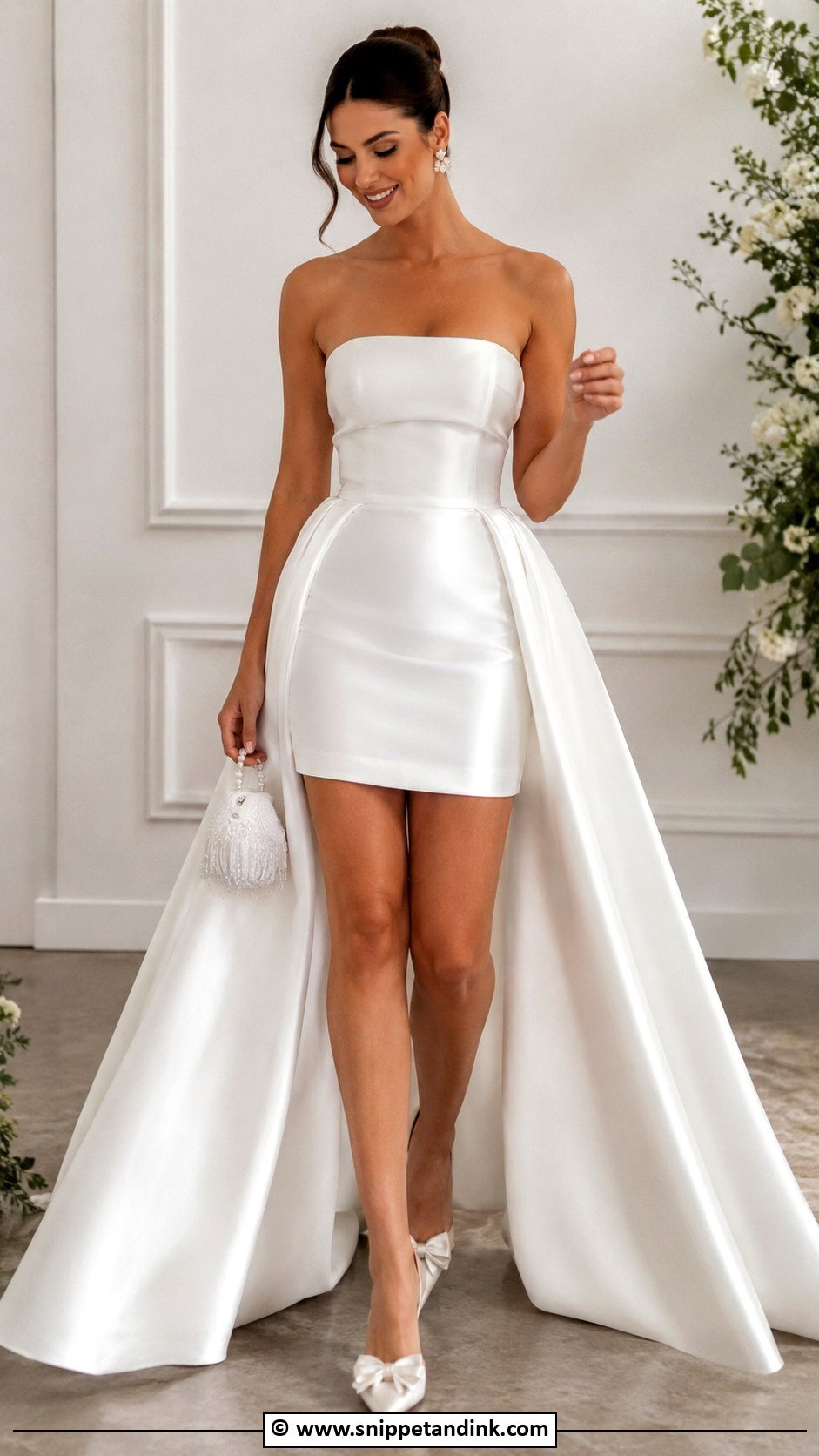
A short reception dress hidden under a full-length overskirt or train gives you a traditional aisle look and a fun party outfit. It suits city weddings, courthouse ceremonies and late after-parties. The base mini can be satin, crepe, lace or beaded. Keep the overskirt lightweight, because a heavy one will crush a structured mini at the waist, and that crease stays visible all evening. I also check the mini length while seated; what looks right standing can ride up quickly at a dinner table.
16. Detachable Corset Wedding Dress
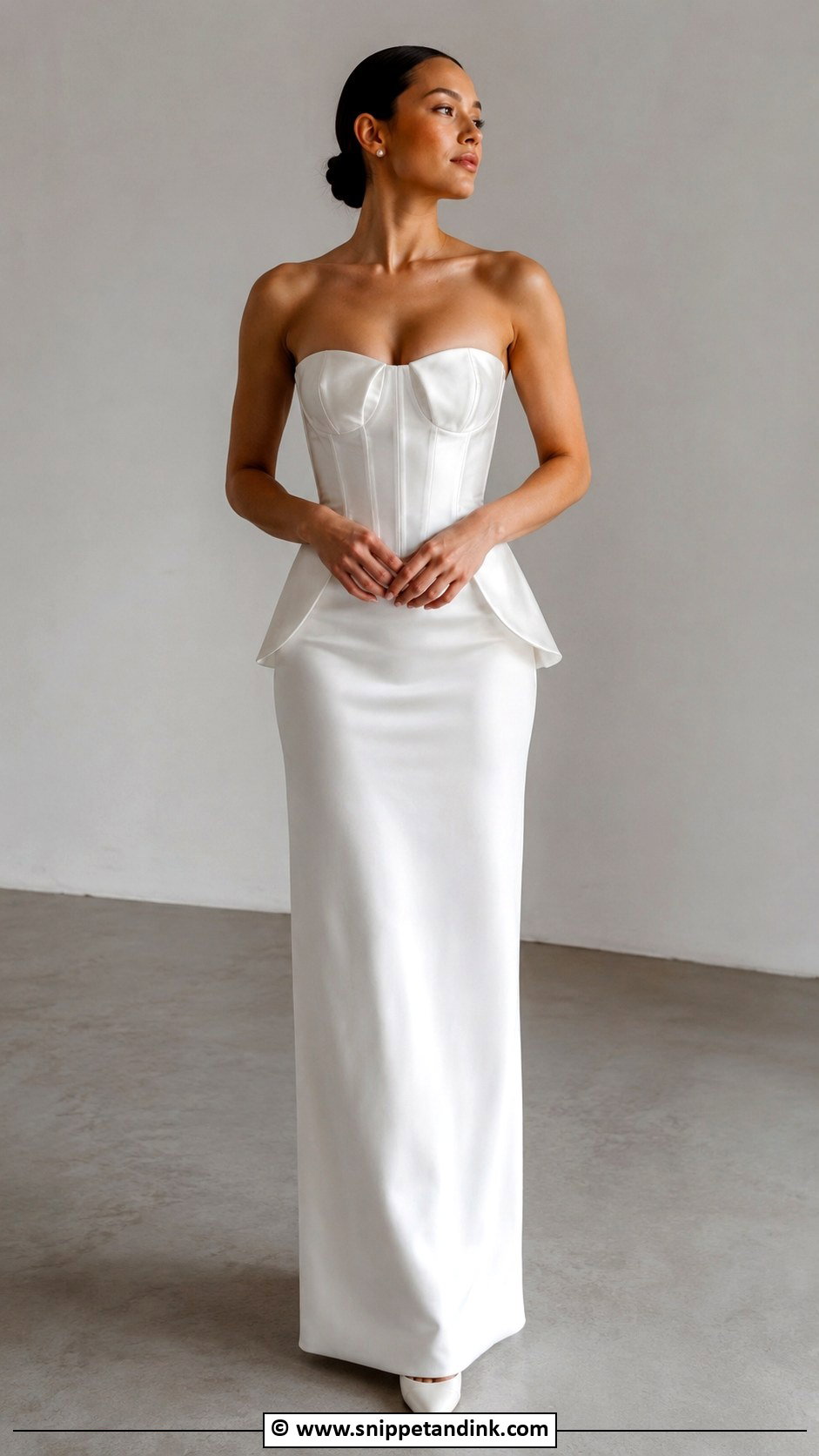
A corset can be worn over a simple gown, or built as removable panels and straps that change the neckline. For the ceremony it adds shape and definition; removing it softens the dress. Clean fabrics like satin, mikado and crepe work best because the boning becomes the detail. I always fit a corset with you seated, since a top that feels fine standing can dig into the ribs at dinner. Look for visible lines under the base fabric too, as boning channels sometimes print through thin satin.
17. Detachable Bolero Wedding Dress
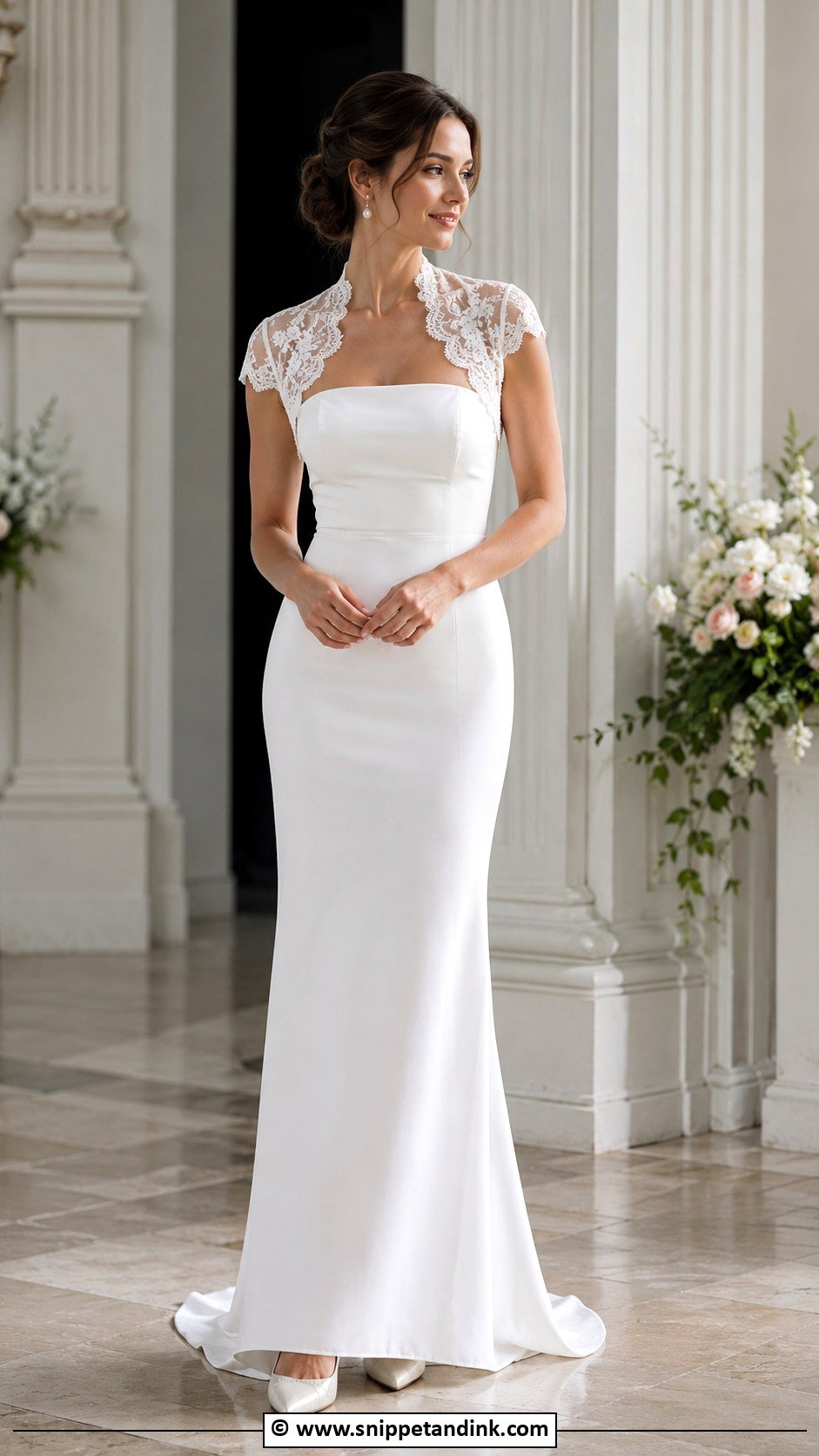
A bolero is shorter than a jacket and usually ends above the waist, so it sits neatly over fitted, A-line and ball gown silhouettes. Lace looks romantic, satin feels classic and sheer tulle stays light. The detail I watch is the neckline: a bolero with a rounded opening over a sweetheart bodice can create two curves fighting each other, so match the lines where you can. It is useful for cool churches and formal ceremonies, and the gown underneath feels very different once it comes off.
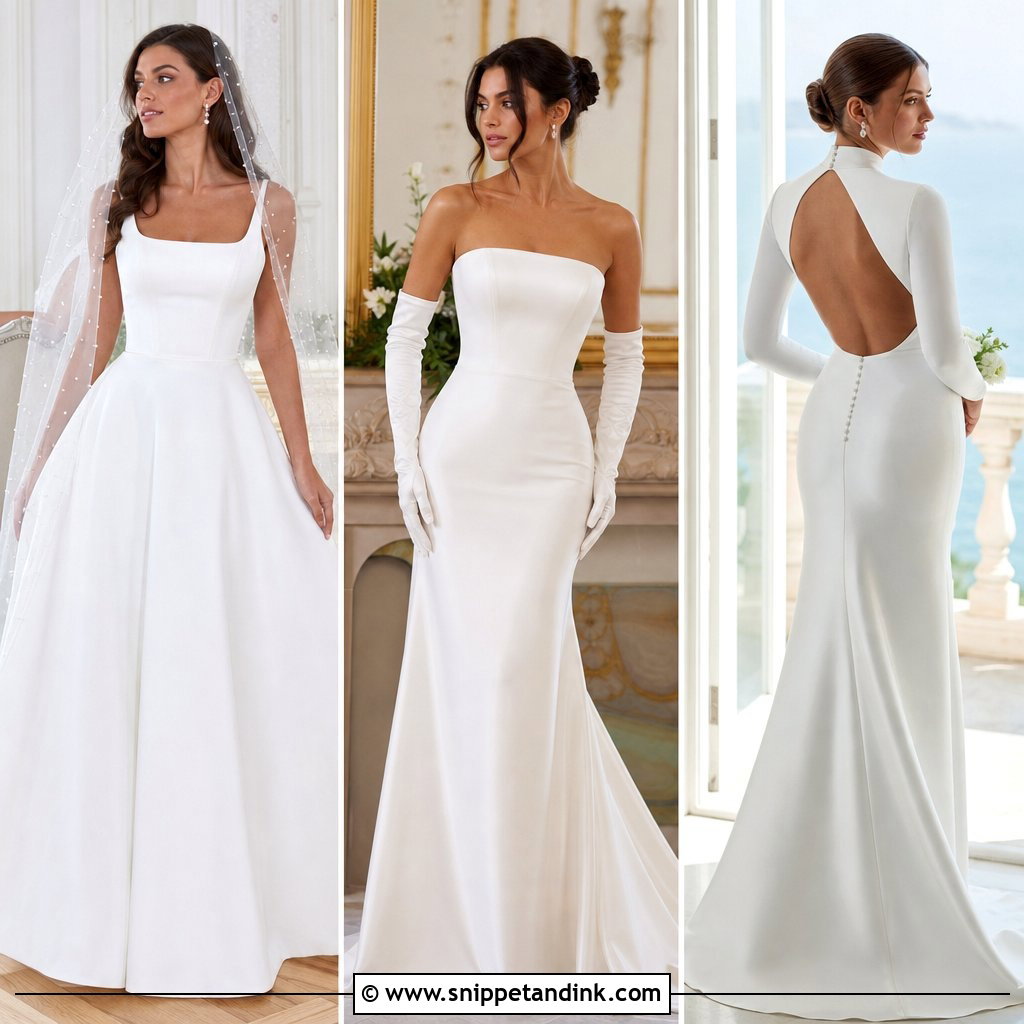
18. Detachable Bridal Gloves Wedding Dress
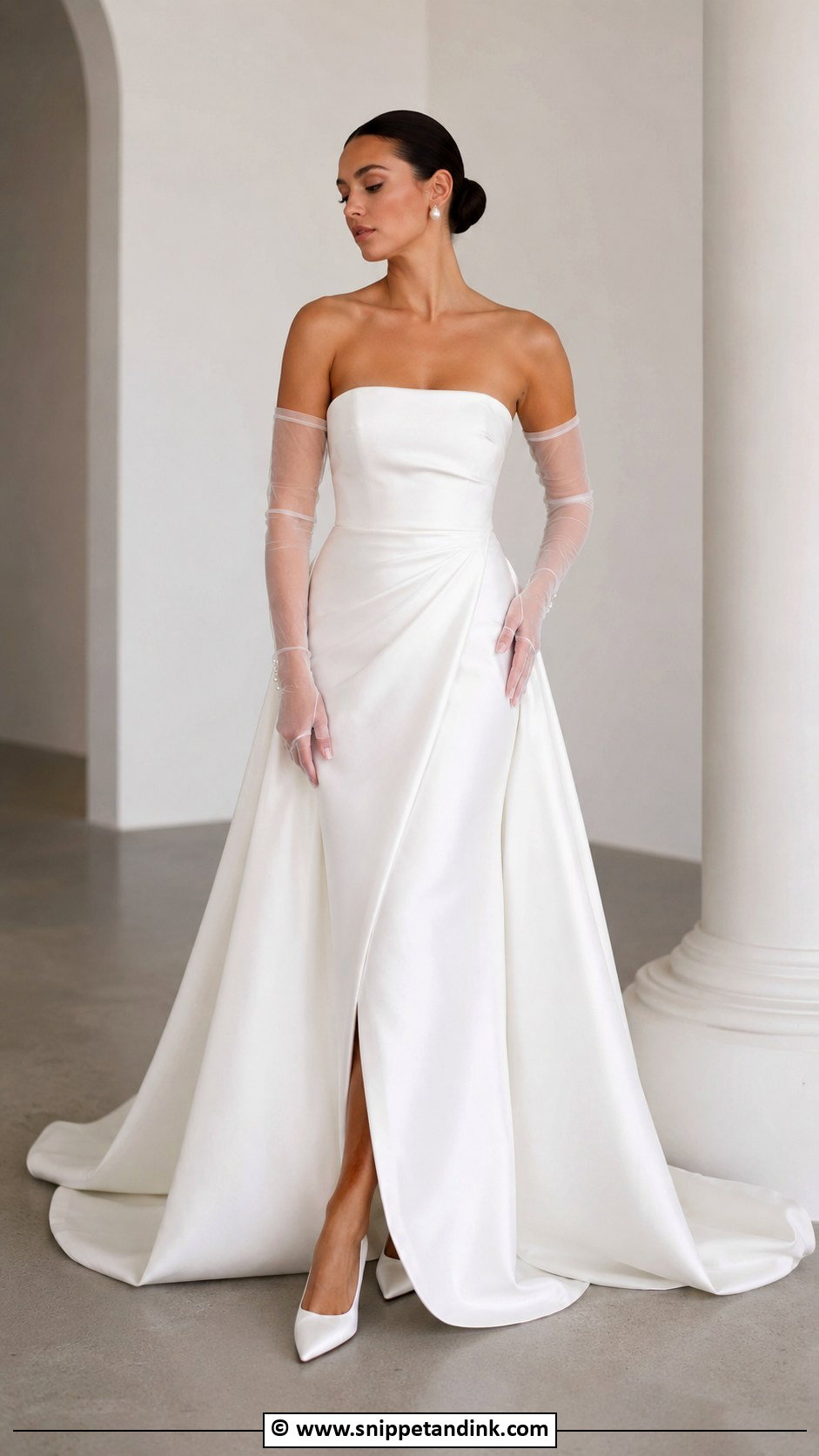
Gloves change the feel of a strapless or sleeveless dress without touching the gown itself. Sheer, lace and satin versions are common, sometimes with pearl buttons at the wrist. Opera-length gloves look formal but have a practical cost: you will need to take the left one off, or open a finger seam, for the ring exchange, so plan who holds it. With a heavily beaded dress, keep the gloves plain. On a minimalist gown, the gloves can become the main styling detail.
19. Detachable Shoulder Strap Wedding Dress
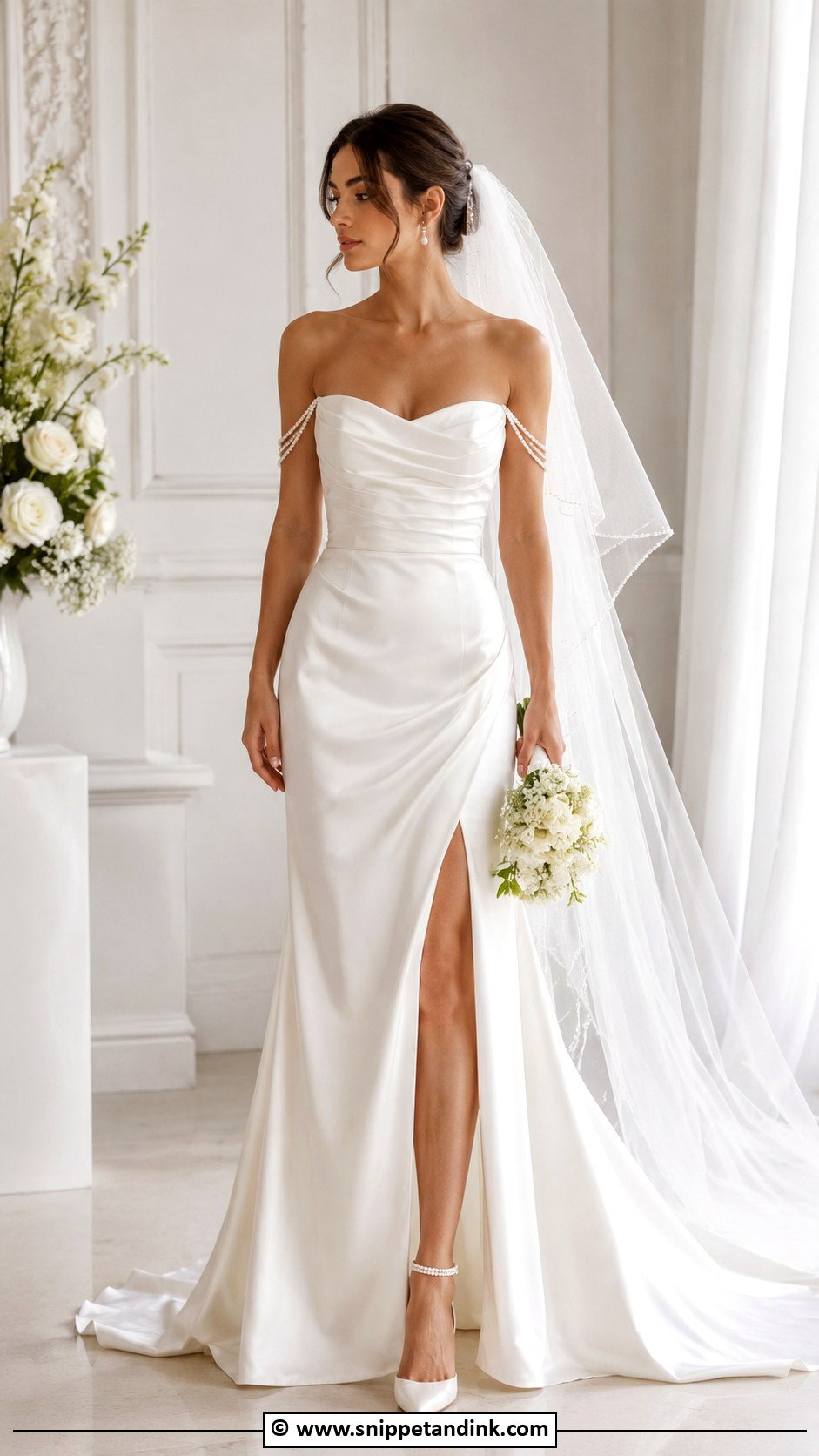
Straps are the smallest change on this list, but brides who are nervous about strapless gowns love them. Wear them for walking, hugging and photos, then remove them for a strapless reception look. They can be plain satin, pearl-beaded, lace or bow-tied. The bodice has to be built to stand alone, though; straps should only be extra reassurance, not the thing holding the dress up. Ask your tailor to sew small loops inside the bodice so the fastenings disappear and the neckline looks clean both ways.
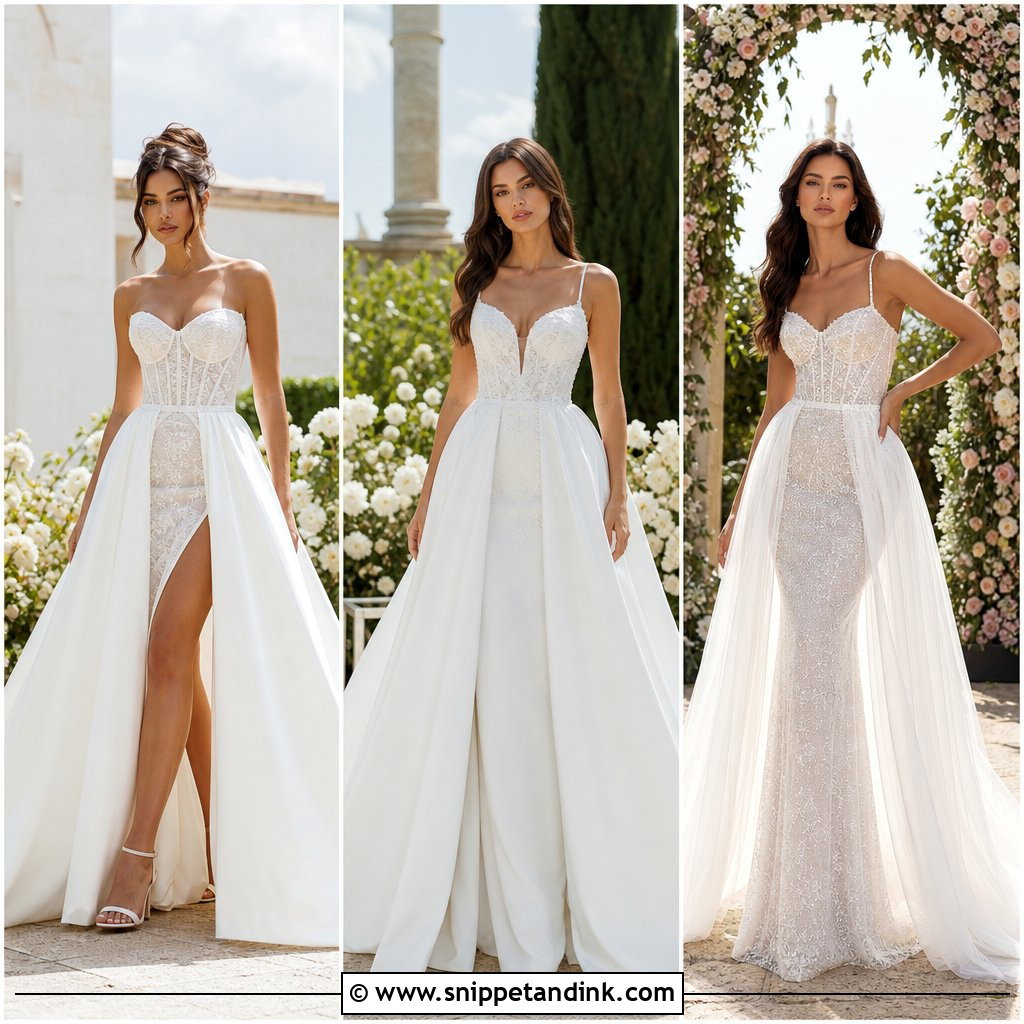
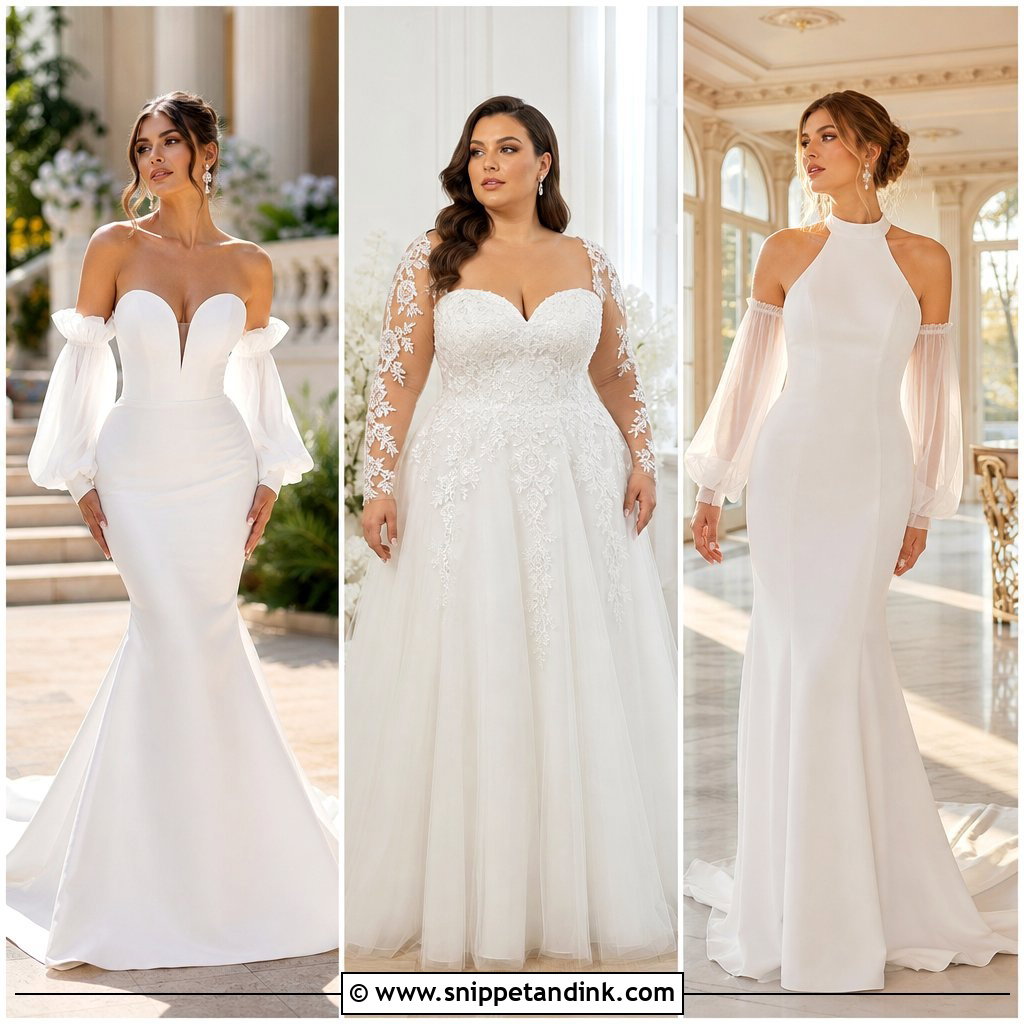
20. Detachable Off Shoulder Wedding Dress
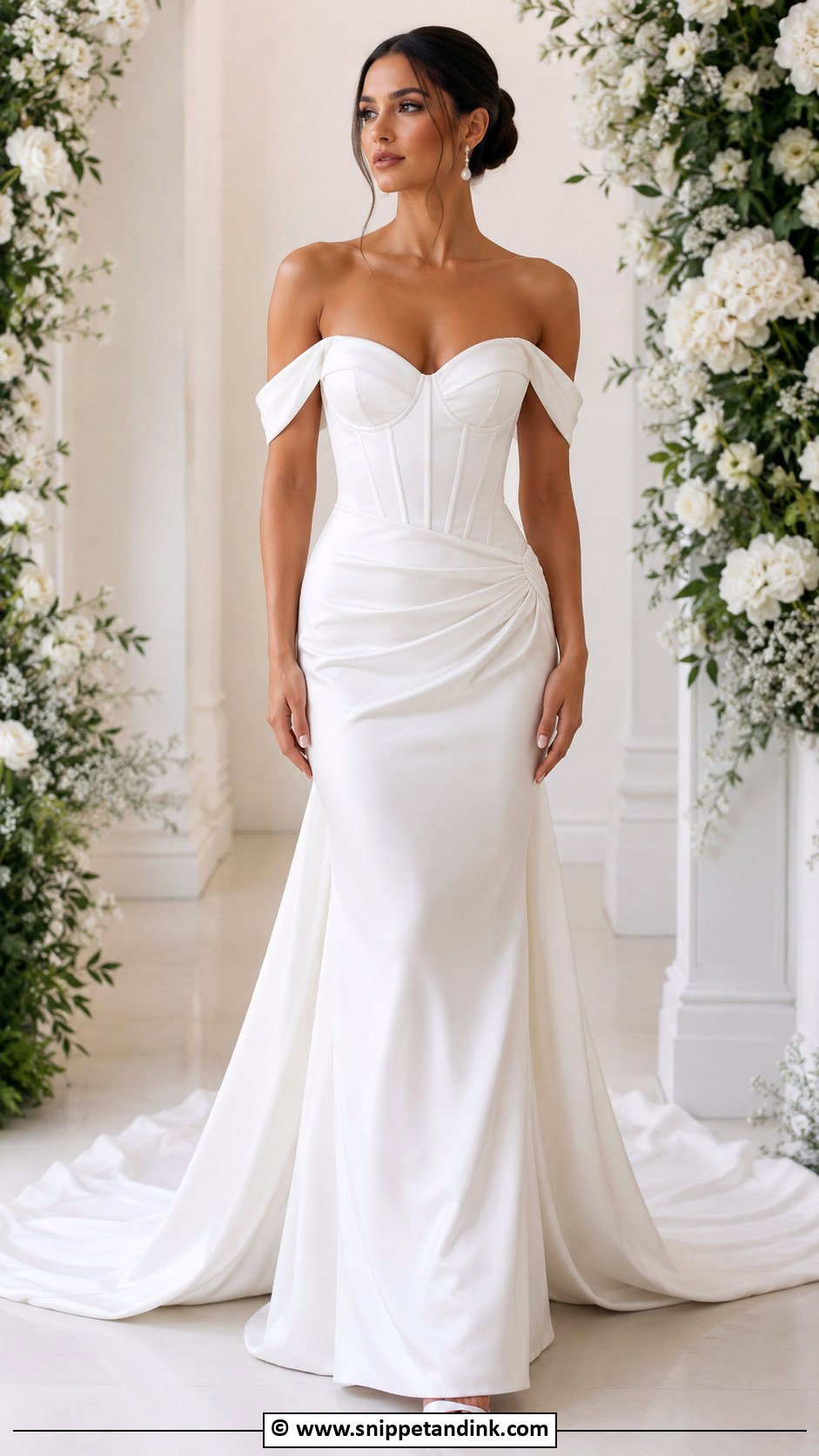
Off-shoulder bands frame the collarbone for the ceremony and come off to leave a strapless, sleeveless or spaghetti-strap bodice. They can be tulle bands, satin drapes, lace sleeves or structured folds, and they pair well with updos and pearl earrings. Comfort is the catch. Off-shoulder bands limit how high you can raise your arms, so test by lifting your bouquet and reaching for a hug at the fitting. If the bodice rises when you move, the bands are too tight across the upper arm.
21. Detachable Puff Sleeve Wedding Dress
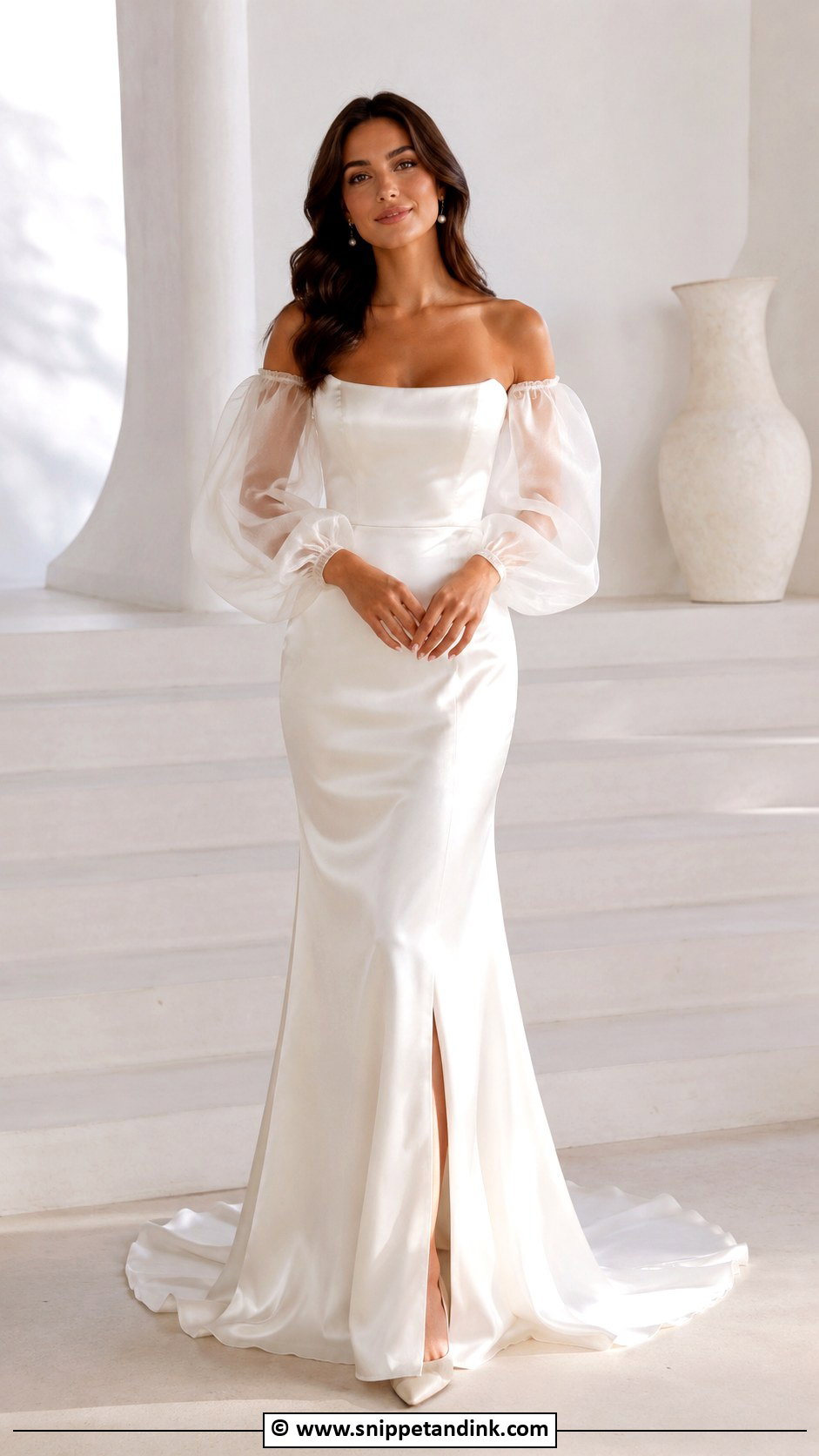
Puff sleeves bring a slightly fashion-forward volume to square necklines, corset bodices and simple satin gowns. Small puffs read romantic; large ones are dramatic. Organza and tulle give a soft cloud, while structured satin holds a bolder shape. Puffs need support inside, usually a layer of net, or they collapse after an hour of hugging. Because they widen the shoulder line, I would steer a bride with broad shoulders toward a smaller, softer puff.
22. Detachable Long Sleeve Wedding Dress
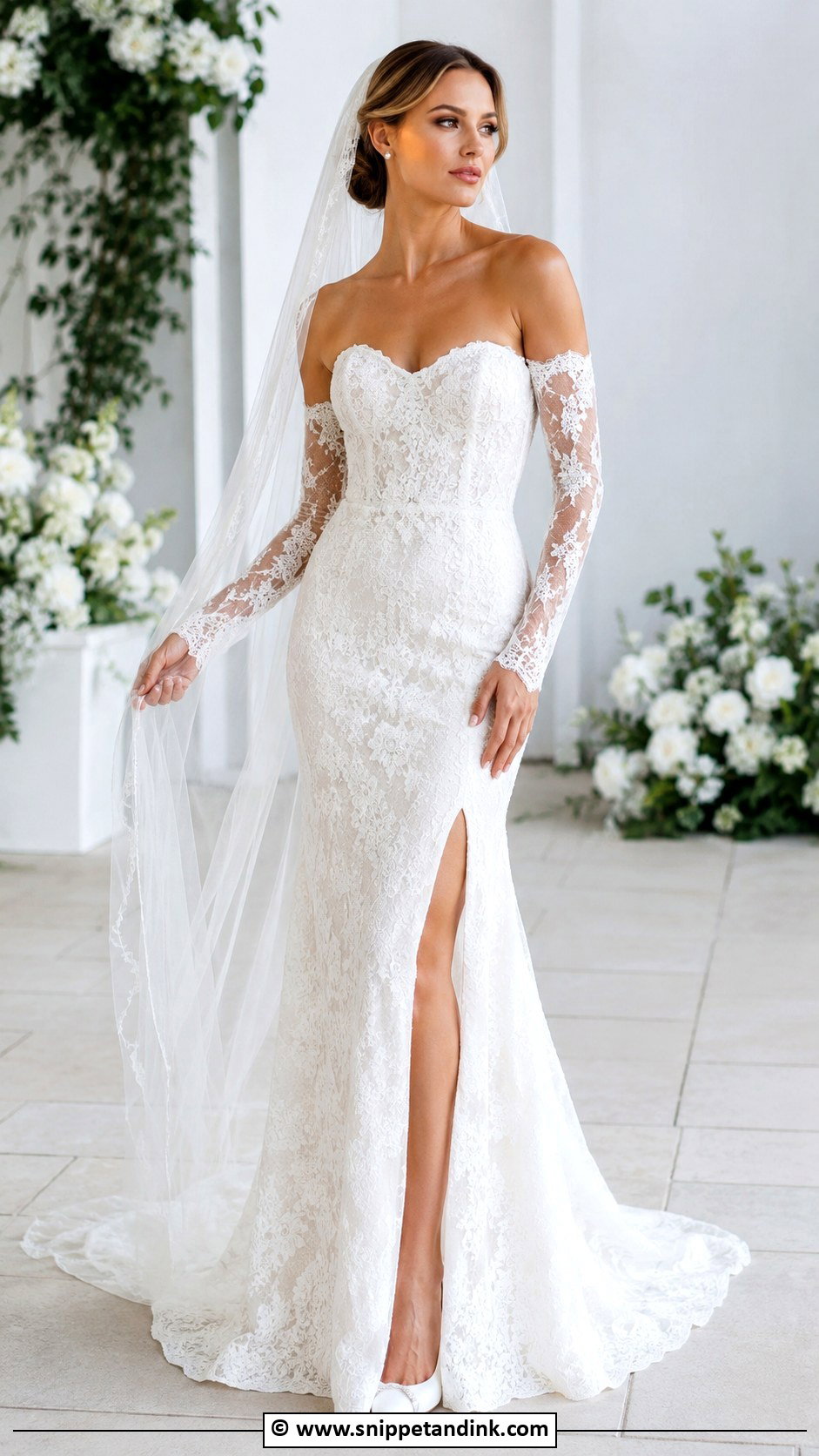
Long sleeves add classic coverage for the ceremony, especially in cool seasons or formal venues, and the gown opens up afterward. Lace, crepe, satin and illusion fabrics all work. Sleeves made for your specific gown attach far more cleanly than generic add-ons, because the armhole curve is already matched. I check two things: the cuff should allow you to bend your elbow comfortably, and the shoulder join should sit flat whether the sleeve is on or off.
23. Detachable Sheer Top Wedding Dress
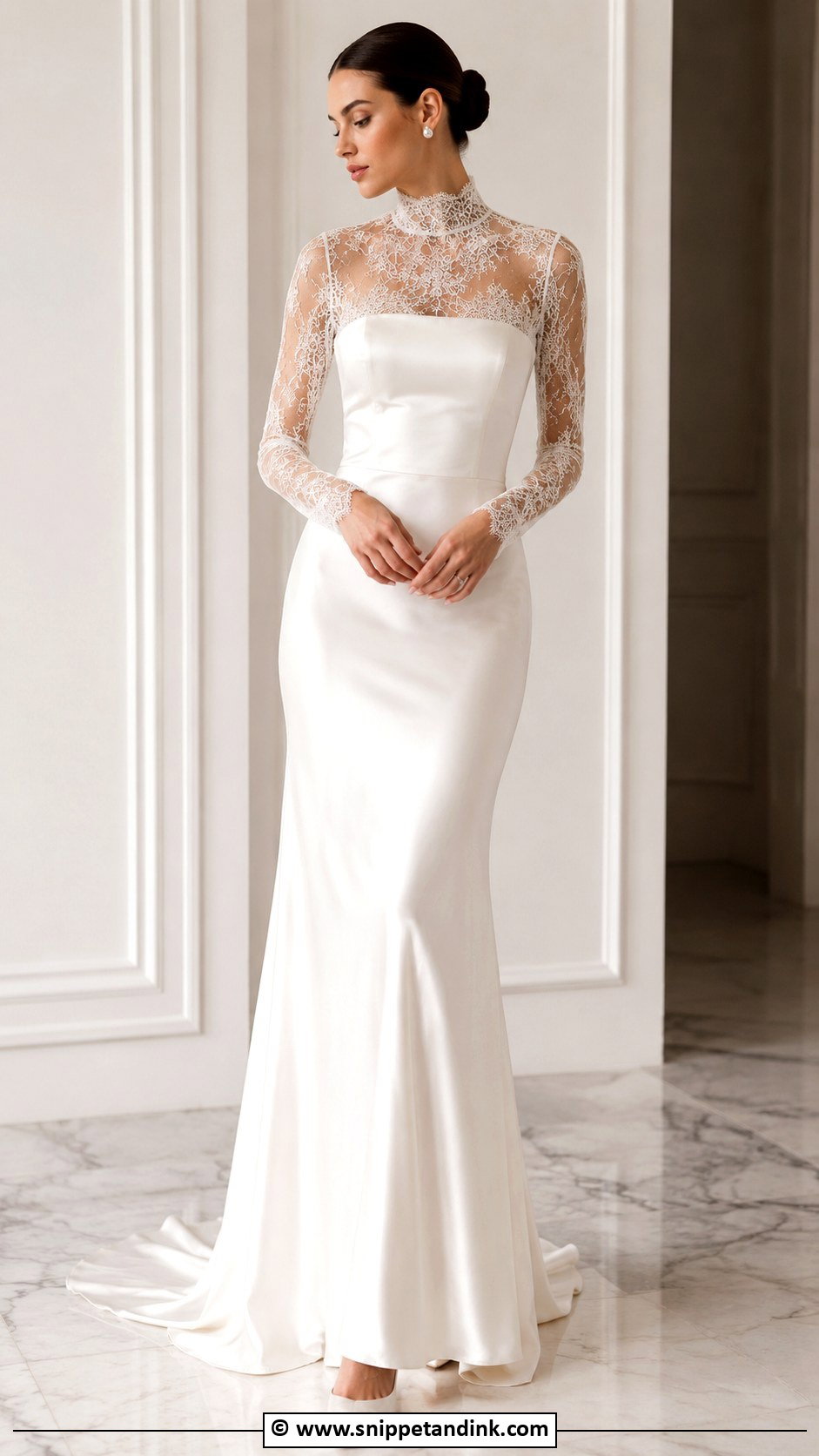
A sheer top sits over a strapless or sleeveless gown and adds coverage without hiding the dress. It may have long sleeves, a high neck, lace appliqué, pearls or tiny buttons. This suits brides who need modesty for the ceremony but want a modern gown for the party. The top should be lightweight and closely fitted, since a loose sheer layer bunches at the waist and shows every fold in flash photos. Ask for skin-tone tulle if you want the appliqué to look like it floats on bare skin.
24. Detachable Bridal Coat Wedding Dress
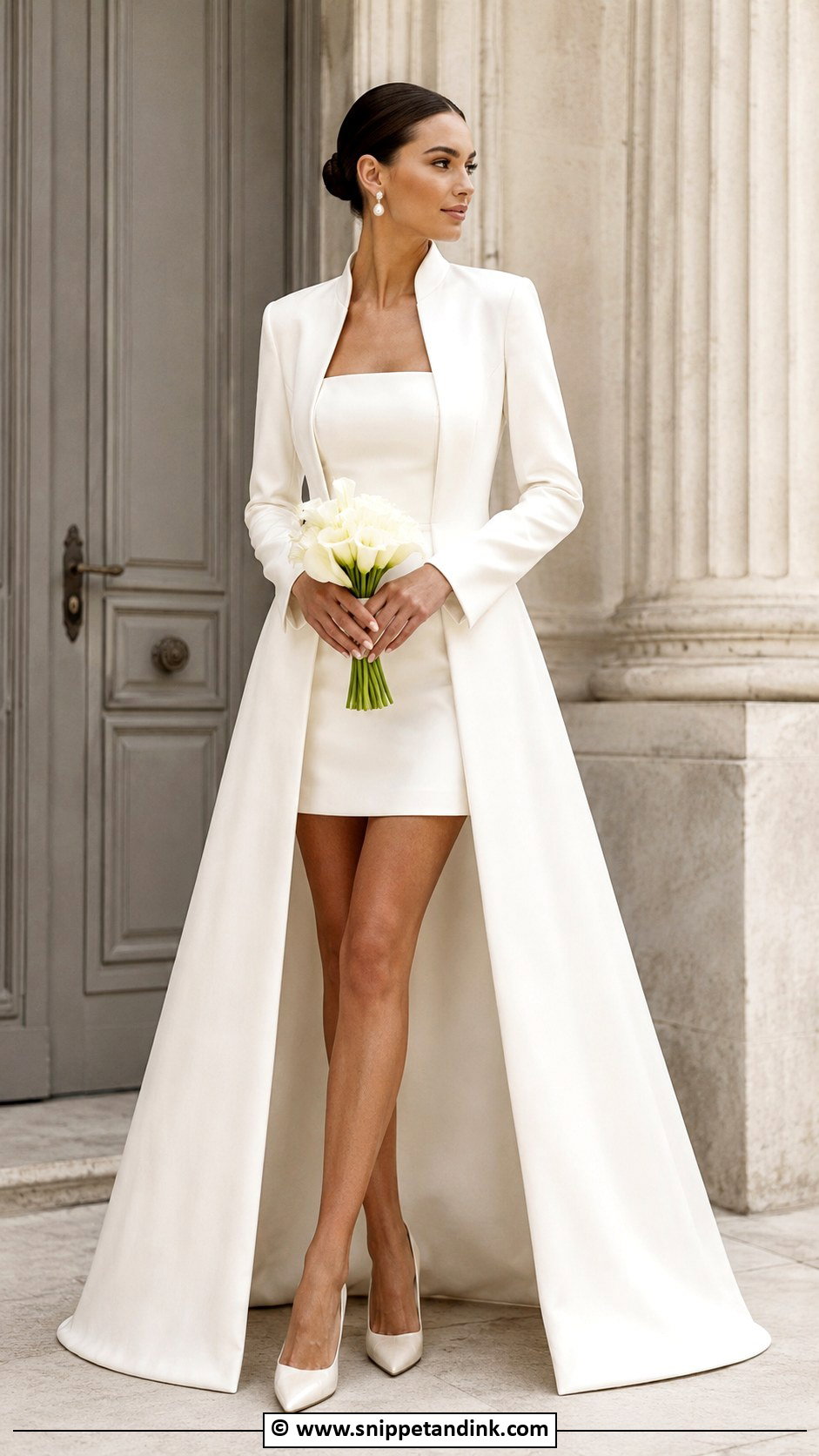
A long bridal coat makes an unexpected entrance and gives the outfit a tailored outer layer. It works over minis, slip gowns, column dresses and simple strapless gowns. In cold months it also adds real warmth for outdoor portraits. Clean fabrics like mikado, satin, crepe or a wool-blend bridal cloth suit this idea best. Keep the coat tailored to your shoulders, not boxy, and check that it sits flat over the base dress at the waist when buttoned.
25. Detachable Peplum Wedding Dress
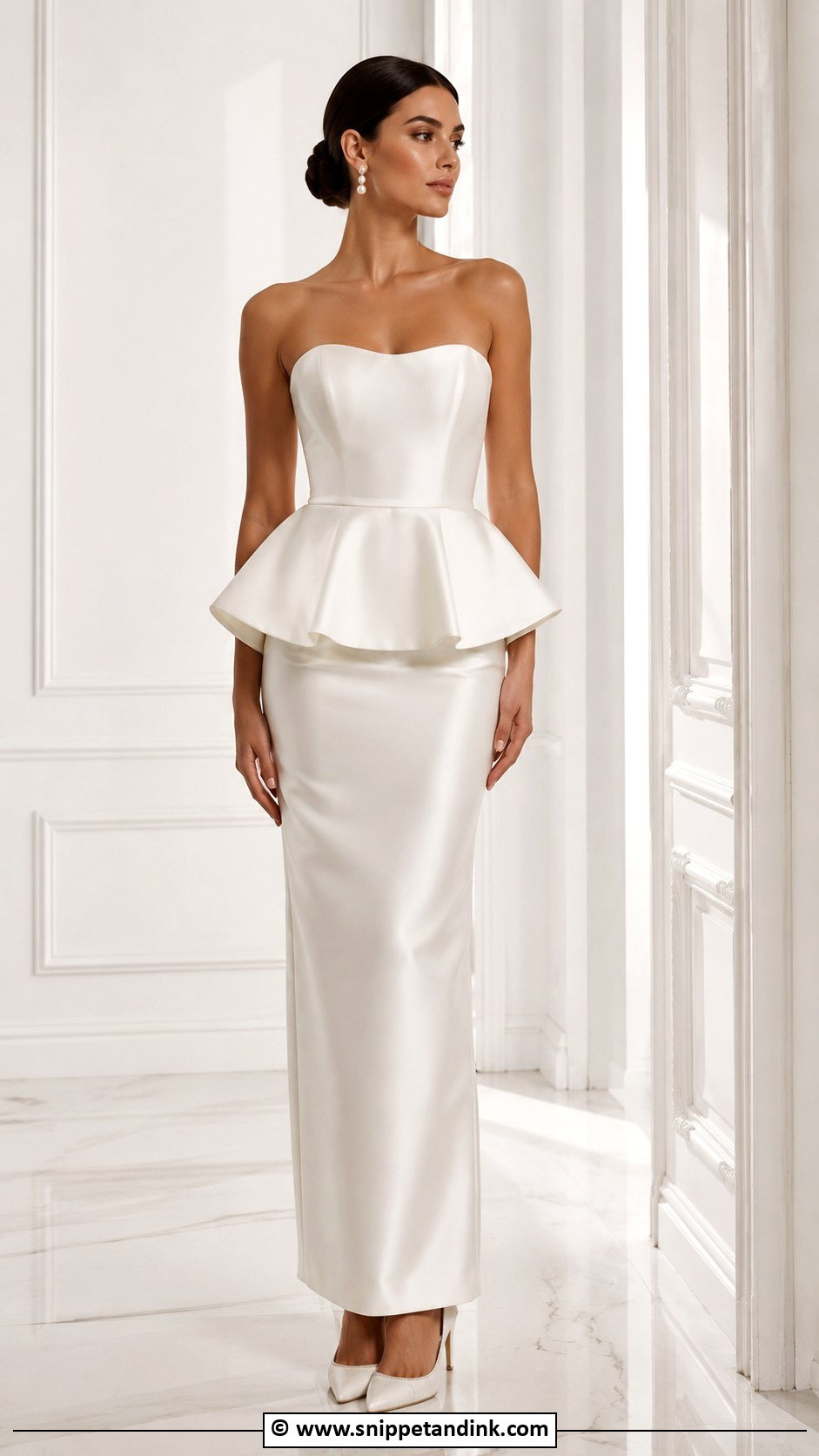
A removable peplum changes the waistline and can neatly hide the seam where an overskirt meets the bodice. It suits fitted column gowns, trumpet dresses and sleek satin silhouettes. Once it is removed, the gown underneath becomes smoother. A peplum looks expensive only when it sits exactly on the natural waist and matches the gown fabric closely; a slightly different white is very obvious at that junction. I would not pair it with a dropped-waist gown, since the lines compete.
26. Detachable Floral Applique Wedding Dress
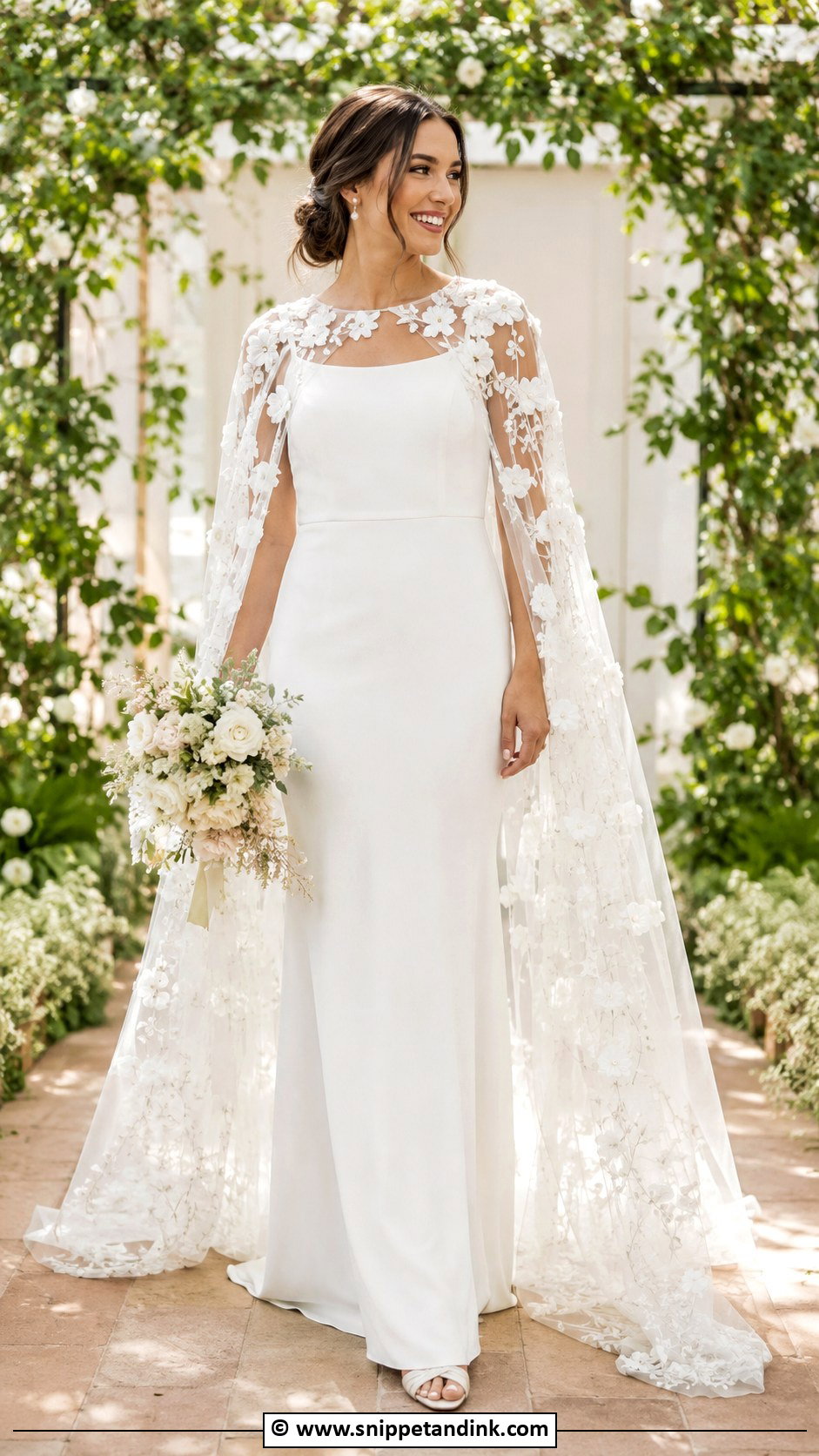
A floral layer can live on a cape, overskirt, sleeves, topper or train, adding texture for the ceremony and leaving a cleaner dress afterward. Three-dimensional flowers look bold; flat lace appliqué feels delicate. 3D flowers are often hand-tacked and can catch on each other when the piece is folded, so it should hang, not sit in a bag, while you change. I like this option for brides who adore floral detail but feel it might be too much for a full evening.
27. Detachable Beaded Overlay Wedding Dress
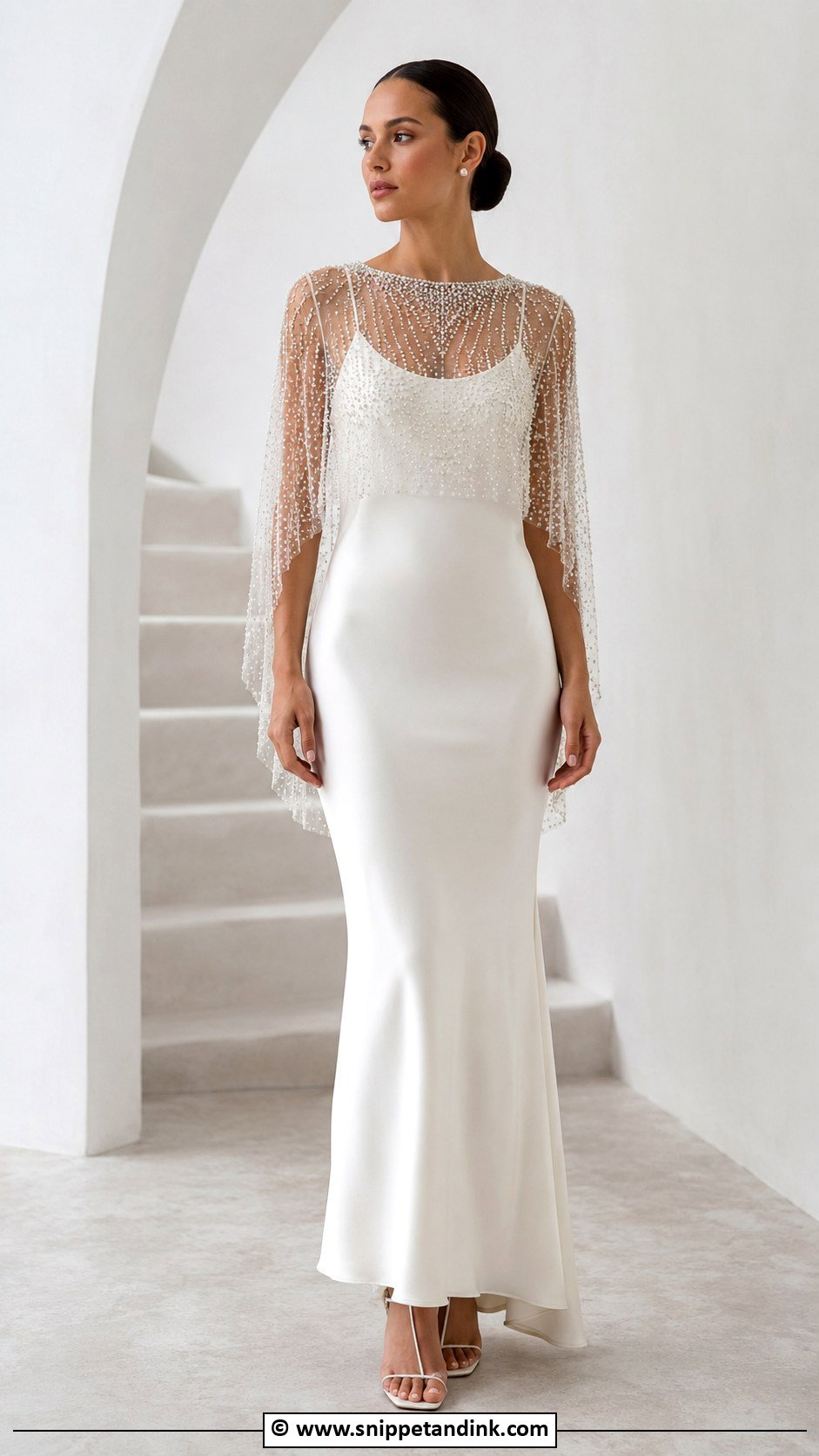
A detachable beaded overlay gives you sparkle under bright ceremony lighting without committing to a fully embellished gown. It can be a sheer beaded top, capelet, skirt layer or removable train. Beading has two practical issues: weight and snagging. A heavy beaded layer pulls on its fastenings, and bare bead edges can catch on satin or tulle underneath. A smooth lining between the two layers stops that, and it also protects the base gown for the reception.
28. Detachable Wrap Skirt Wedding Dress
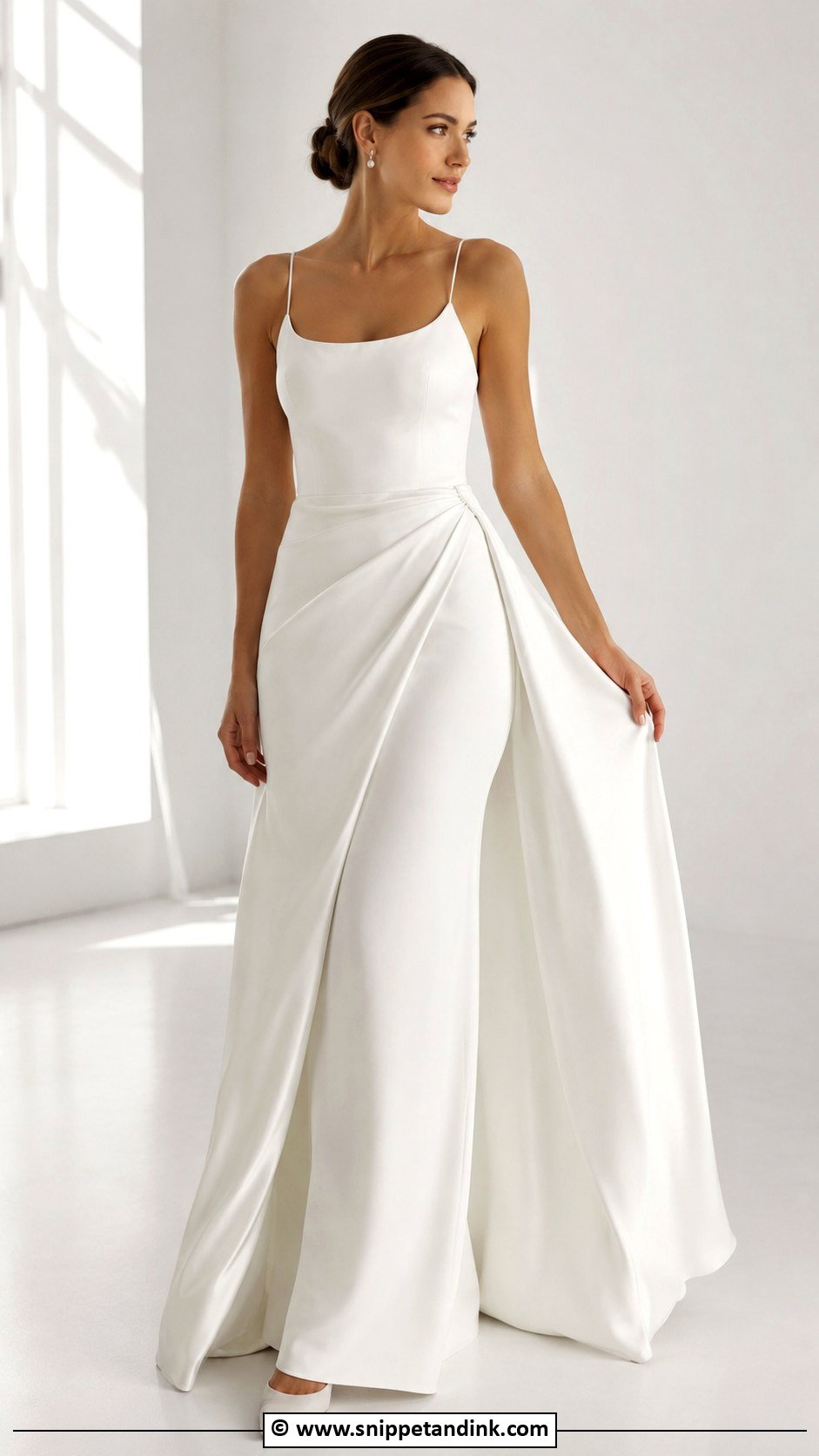
A wrap skirt ties or fastens at the waist and creates an overlapping shape over the base dress. It can be satin, crepe, chiffon or organza, and it adds a soft train effect for the ceremony. The wrap line defines the waist nicely. The risk is shifting: a skirt held only by a tie tends to rotate as you walk, so I add hidden hooks under the knot. A slim, plain base gown keeps the wrap from fighting with other details.
29. Detachable Chiffon Cape Wedding Dress
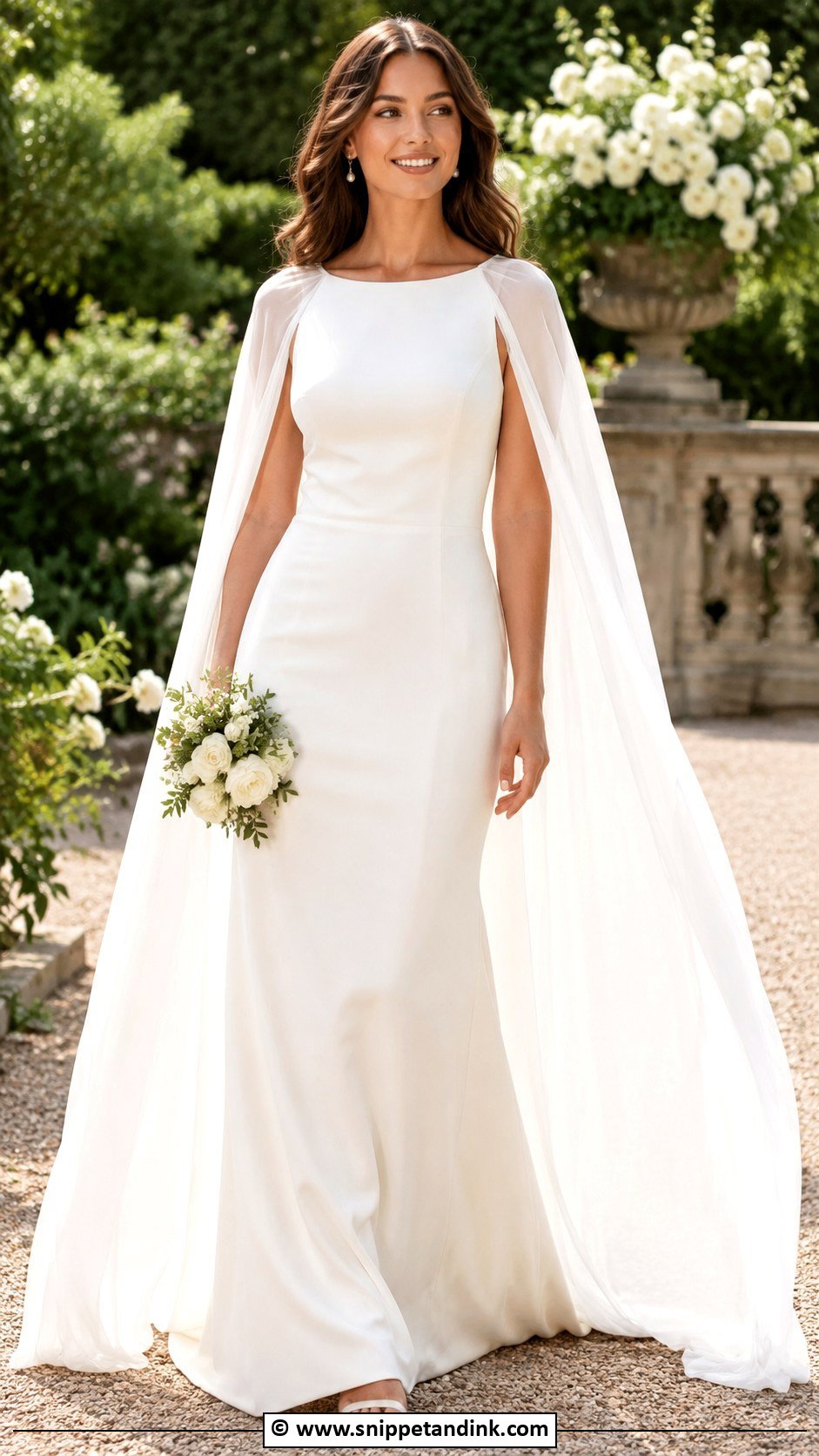
Chiffon moves with every step, which makes a chiffon cape good for outdoor, beach and garden venues. It attaches at the shoulders or neckline and falls behind the dress like a light train, with none of the weight of an overskirt. It pairs well with slip dresses, sheath gowns and minimal satin. Chiffon also catches wind, so on an exposed clifftop or beach I suggest a cape that ends at the floor rather than a long trailing one. Choose the length based on the ground your venue has, since sand and grass soil chiffon quickly.
30. Detachable Reception Wedding Dress
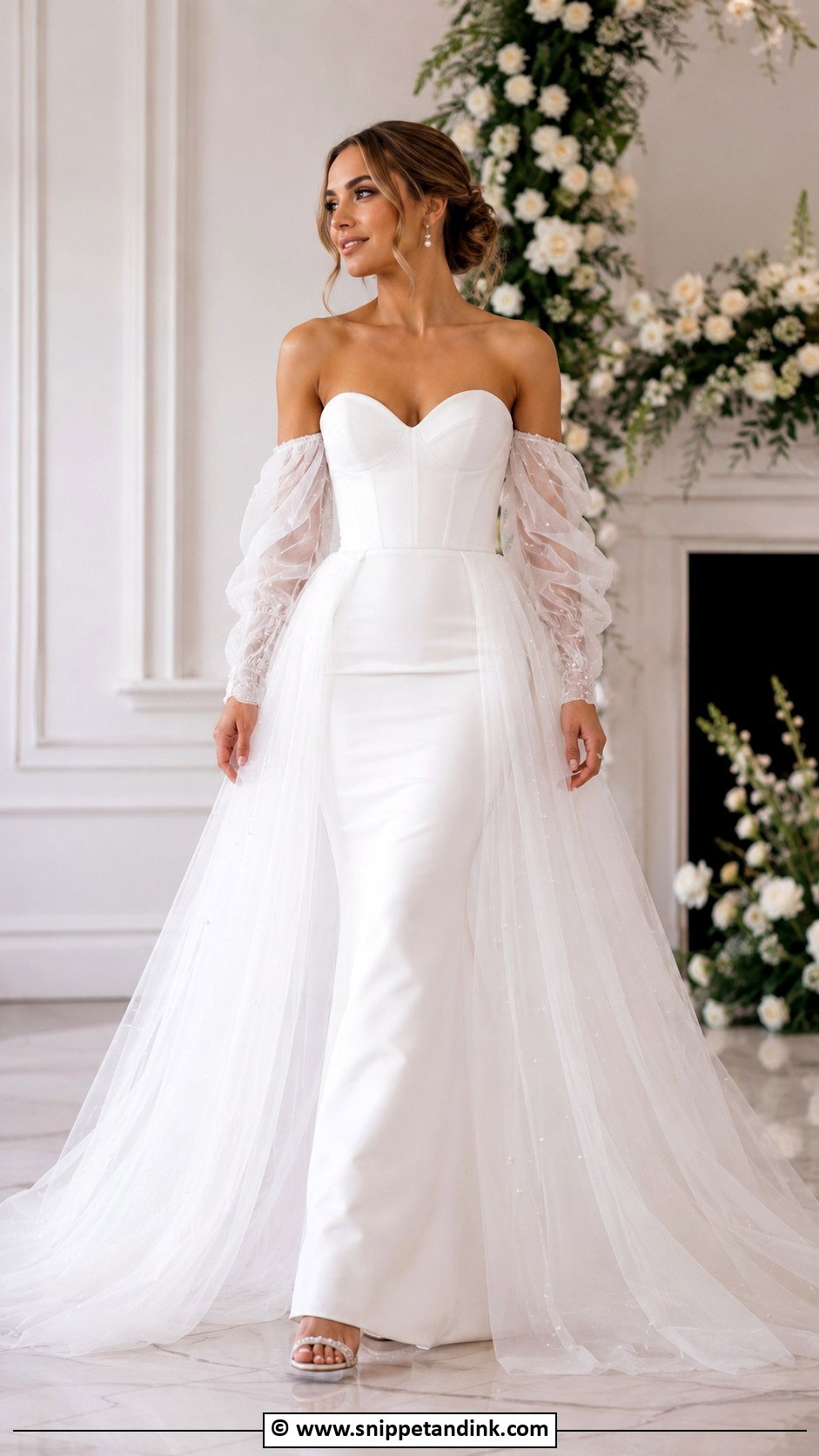
This idea is designed around the whole wedding day: an overskirt, cape, sleeves, jacket or train for the ceremony, and a lighter reception dress underneath. It gives you a grand entrance, portraits and a comfortable evening without buying a second gown. Decide when the piece comes off before your final alterations. Some brides remove it after portraits, others right before the first dance. Then test the full change at your last fitting, with the dress fully on and fully off, including sitting, walking and lifting your arms.
The Ten Minutes Between Ceremony and Party
The change itself is quick if someone has practised it. I ask brides to name one person, usually a bridesmaid or the planner, who comes to the last fitting and removes the piece while I watch. That person should know which fastening goes first, which goes last and how to lift the layer without pulling it over your hair.
Where to do it
Find a private room near the reception space with a clean floor and a hook or rail. A hotel bathroom works in a pinch, but a damp tile floor will mark satin and chiffon. Have a garment bag and a padded hanger waiting so the removed layer goes straight onto it.
What happens to the piece afterward
Someone should take it home that night, not leave it in a venue cloakroom. When the wedding is over, have both parts cleaned together by a specialist, because sweat and spills can yellow a base gown at a different rate from its overskirt. Store them flat or folded with acid-free tissue in a breathable box, away from plastic, and keep the fastenings closed so the hooks cannot snag the fabric while it rests.
Two Looks, One Gown, and a Plan for the Switch
A convertible dress works when both versions look finished. The ceremony gives you volume or coverage, and the reception gives you room to move. Whatever you pick, the work happens in fittings: fabric weight, fit, attachment points and how the base dress stands on its own. A detachable design should never feel like a compromise. Done well, it gives you two bridal moments from a single gown.
You'll Like These Ideas:



Leave a Reply