
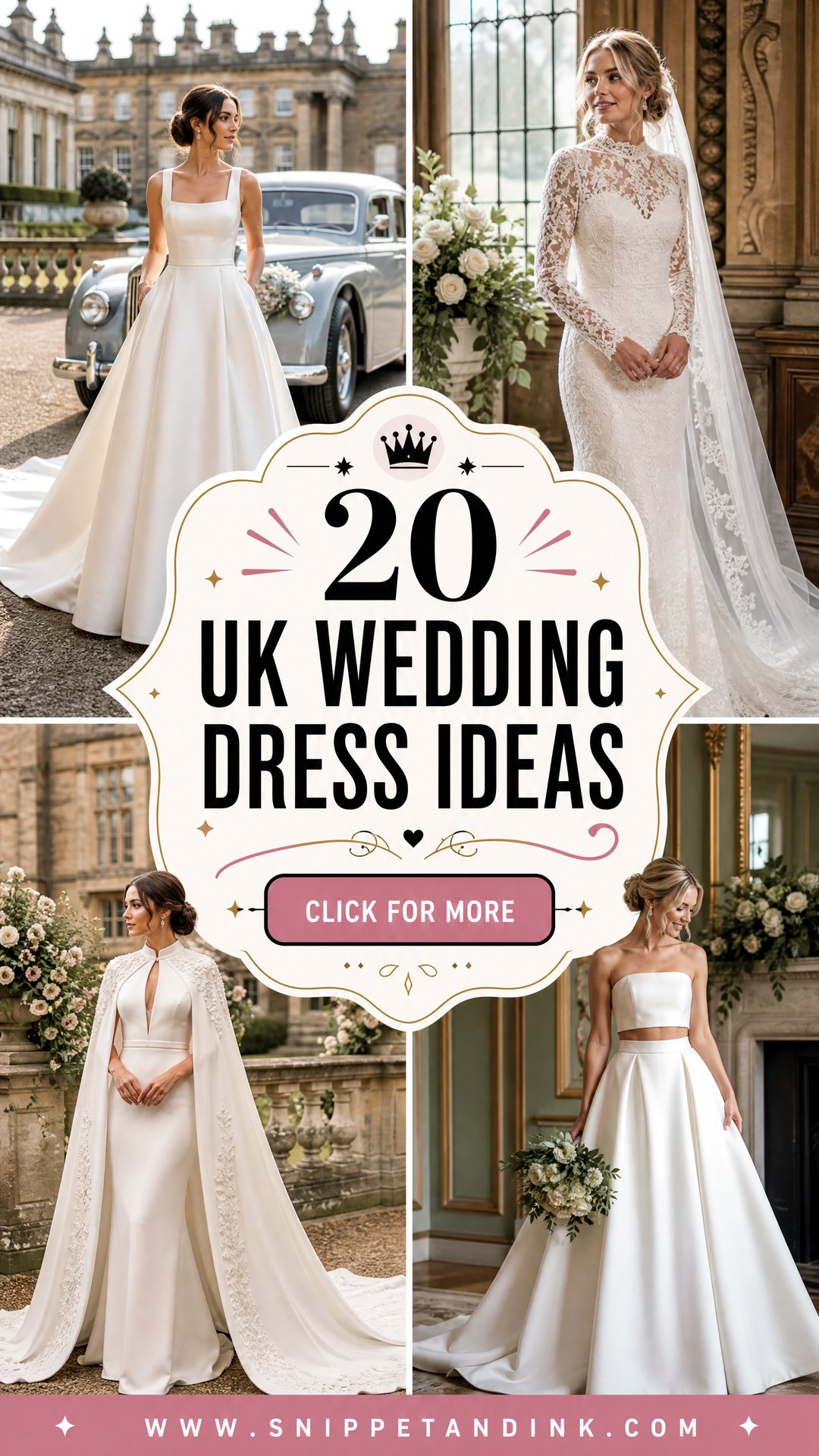
A British wedding asks a lot of one dress. It has to look right in a cold stone church at noon, survive a gravel drive in drizzle, and still feel comfortable at a ceilidh at eleven. British bridal style has always mixed the formal and the personal, from structured satin and vintage lace to short registry dresses and relaxed countryside silhouettes, and this season’s rails add boat necklines, silk minis, soft ruffles and sharp tailoring. Below are twenty dresses I’d genuinely put in front of a bride, each with the shoes, veil and layers I’d style with it, plus the honest note on who it doesn’t suit.
Planning a Gown Around British Weather, Even in July
I plan every UK bride’s outfit as if it might rain, because it often does. That doesn’t mean picking a heavy dress. It means knowing how your fabric reacts to wet grass, cold stone and a sudden downpour between the church and the car.
- Silk and crepe water-mark easily. If your photos are outdoors, ask whether the fabric can be treated or keep a large clear umbrella in the car.
- Long trains pick up mud on country lawns. A bustle with sturdy loops lets you lift the skirt for drinks reception photos on grass.
- Old churches stay cold even in summer. Sheer sleeves, a cape or a cropped jacket keep you warm without hiding the dress.
- Marquees heat up fast once the dancing starts. Avoid heavy linings if your evening is under canvas in June or July.
Bring the venue into your first appointment: show your stylist photos of the aisle, steps and garden so she can see where the hem and train will actually travel.
1. Satin A-Line Wedding Dress
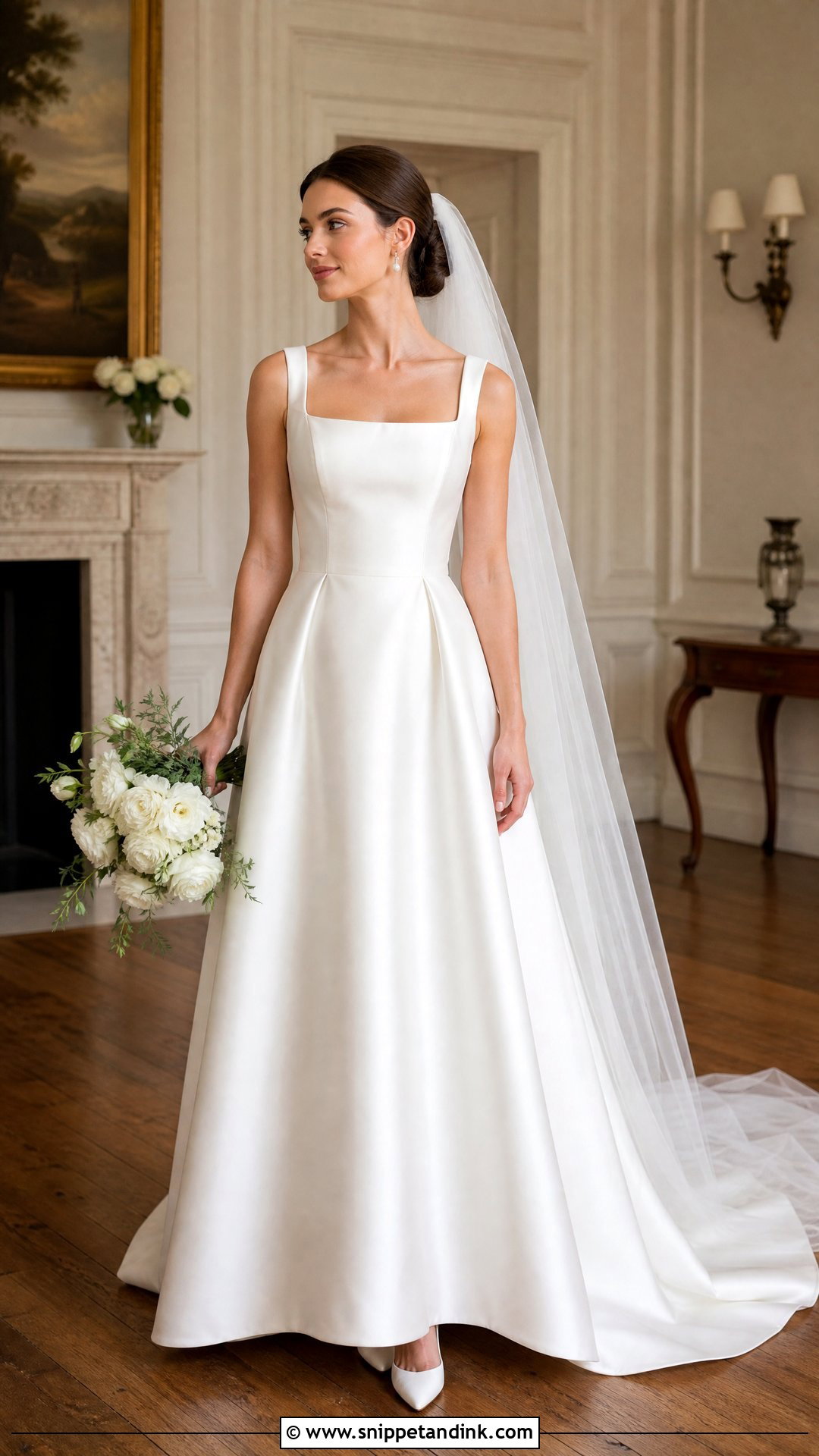
Satin A-lines are what I pull first for a manor house or a formal hotel, because the shape forgives a lot and the fabric holds a crisp line all day. Look for a structured bodice, a square neckline with proper straps, and a skirt that flares gently rather than balloons. Ivory satin reads warm and soft on camera, though it does show creasing after a long car journey, so I tell brides to stand in the car if they can or lay the skirt flat across the seat. Pointed ivory heels, pearl drops and a medium tulle veil with a cut edge finish it, and a cropped wool jacket covers the outdoor shots in cooler months.
2. Long Sleeve Lace Wedding Dress
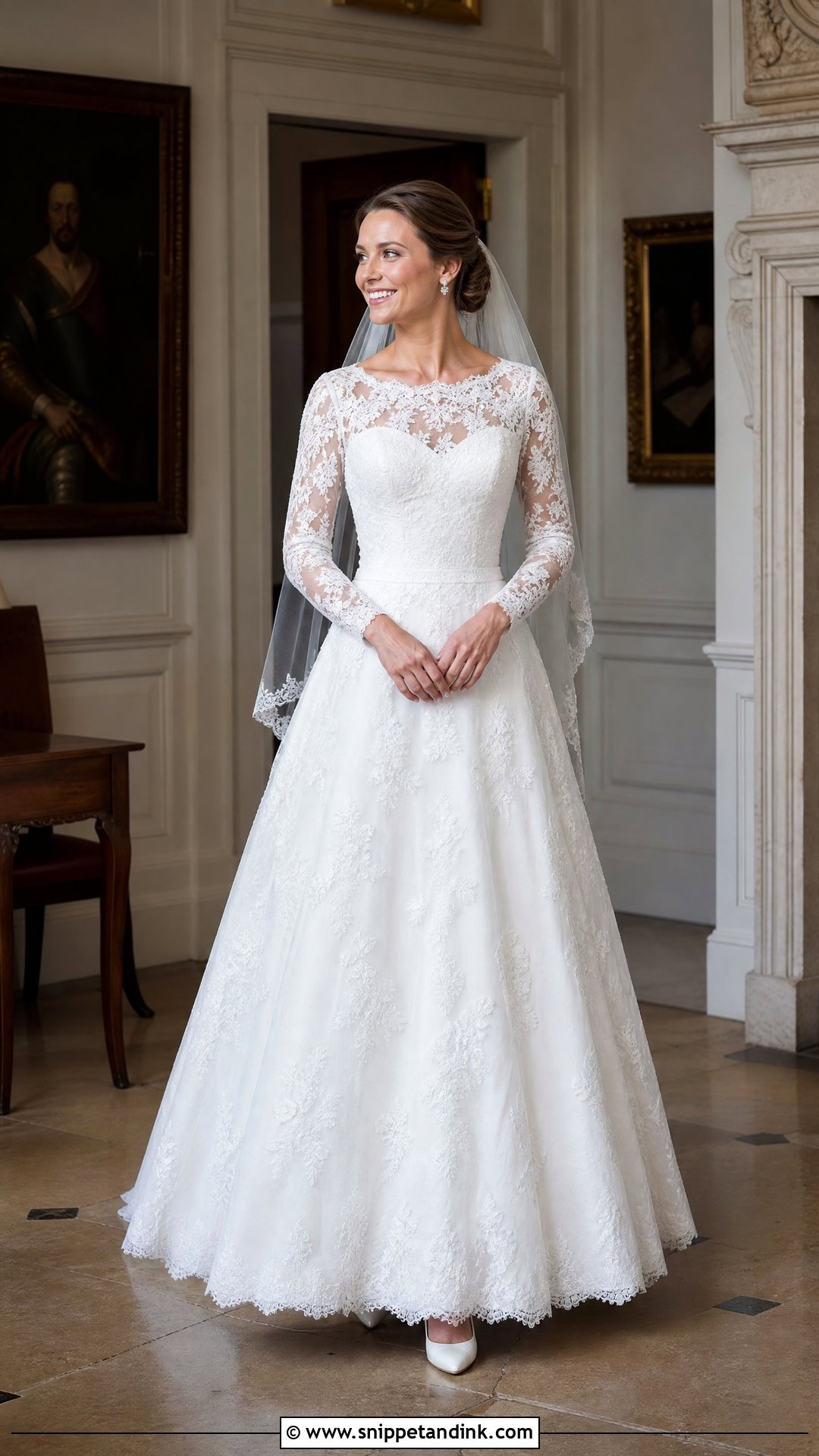
Sheer lace sleeves solve the British problem of a cold church without hiding the dress under a cardigan. I prefer a fitted lace bodice with a lightly lined front and an A-line or soft column skirt below. A high neck feels formal; a V-neck relaxes it. The thing I check first is the sleeve seam at the armpit: lace with no stretch will pull when you hug people, so raise your arms in the fitting room. Keep the bag and headpiece plain if the embroidery is busy, and choose a fingertip veil so the lace on the back stays visible.
3. Boat Neck Wedding Dress
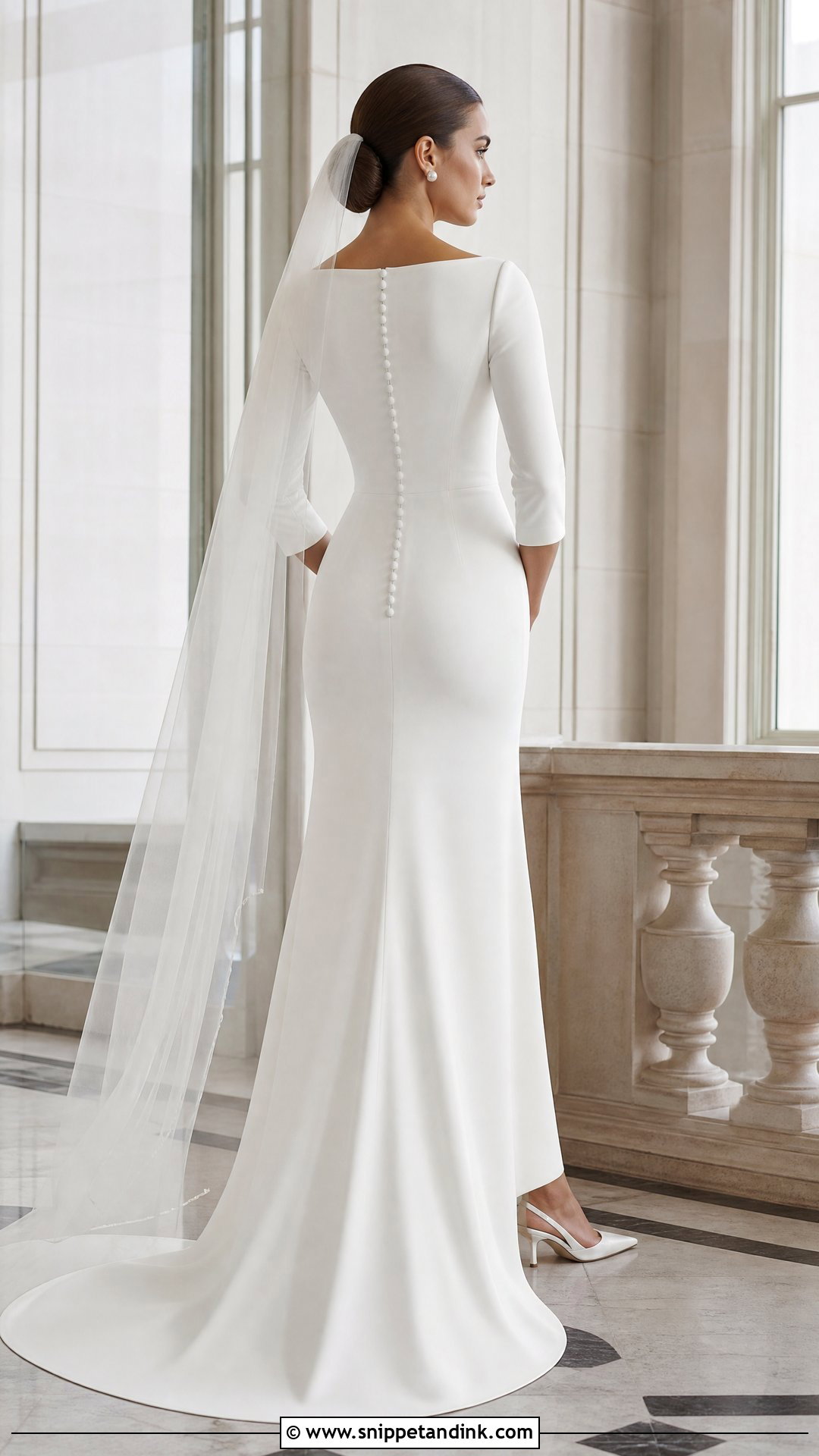
A boat neck runs almost straight across from shoulder to shoulder, so it frames the collarbone and leaves no room for a necklace. I like it on fitted crepe or heavier mikado, which hold that horizontal line; on soft chiffon it tends to slip and gape. Three-quarter sleeves give it a classic feel, bare arms make it lighter for summer. Pearl studs, pointed slingbacks and a narrow veil tucked under a polished bun are all it needs, and covered buttons down the back add detail for the ceremony, when guests are mostly looking at your back anyway. If you have narrow, sloping shoulders, try it on before ordering, as the neckline can slide wide.
4. Square Neck Wedding Dress
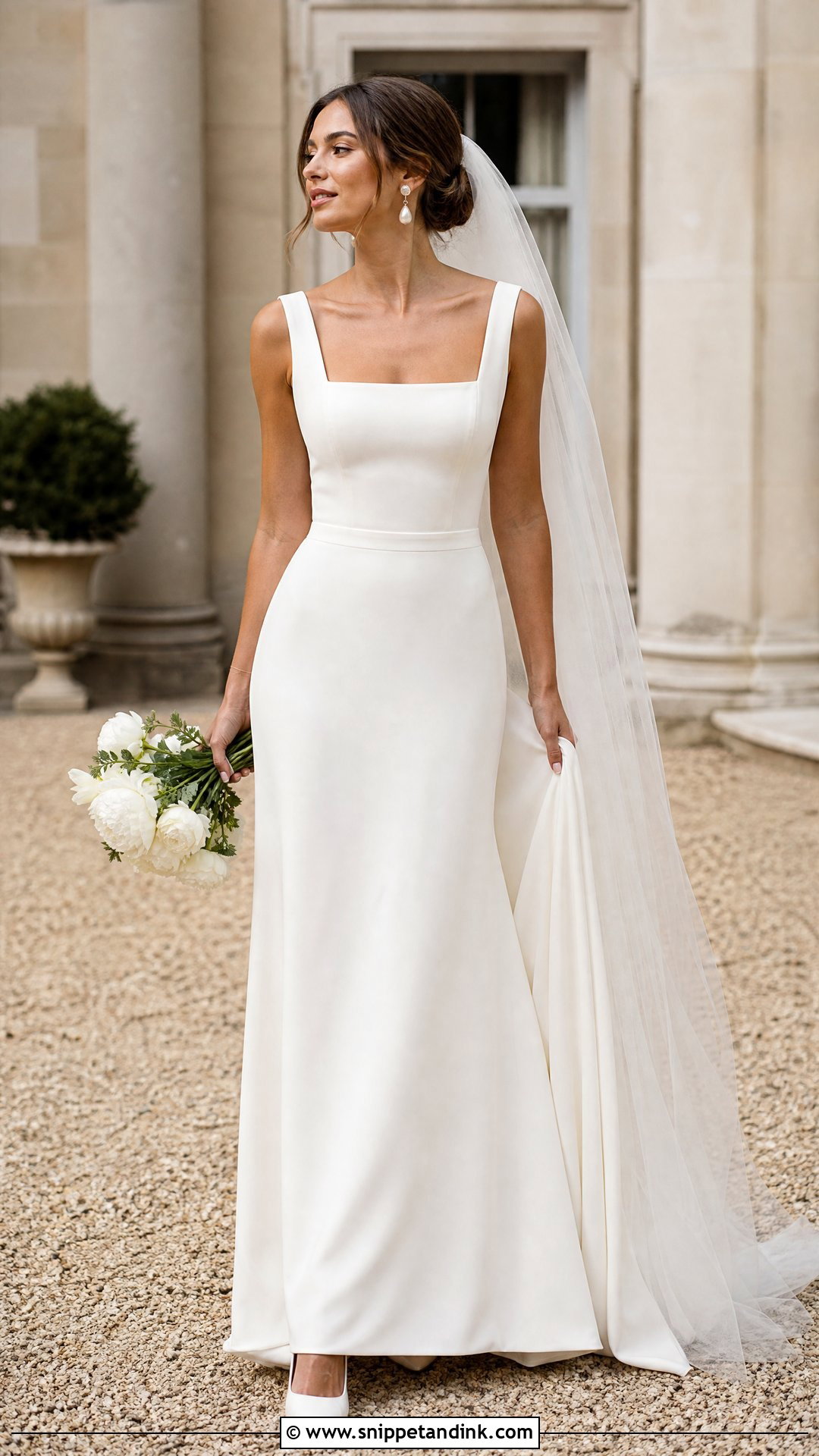
Square necklines suit brides who want something modern without going minimal. Wide straps, a defined waist and either an A-line or a column skirt work best; matte crepe looks current, satin looks more formal. Fit is the whole story here: if the bodice is even slightly loose, the corners of the square collapse and the line goes soft, so ask your seamstress to fit it with your chosen bra or cups in place. Leave the neck bare, wear sculptural pearl earrings, and pair it with block heels for a long day on your feet. A cropped tailored jacket echoes the shape outdoors.
5. Off Shoulder Ball Gown Wedding Dress
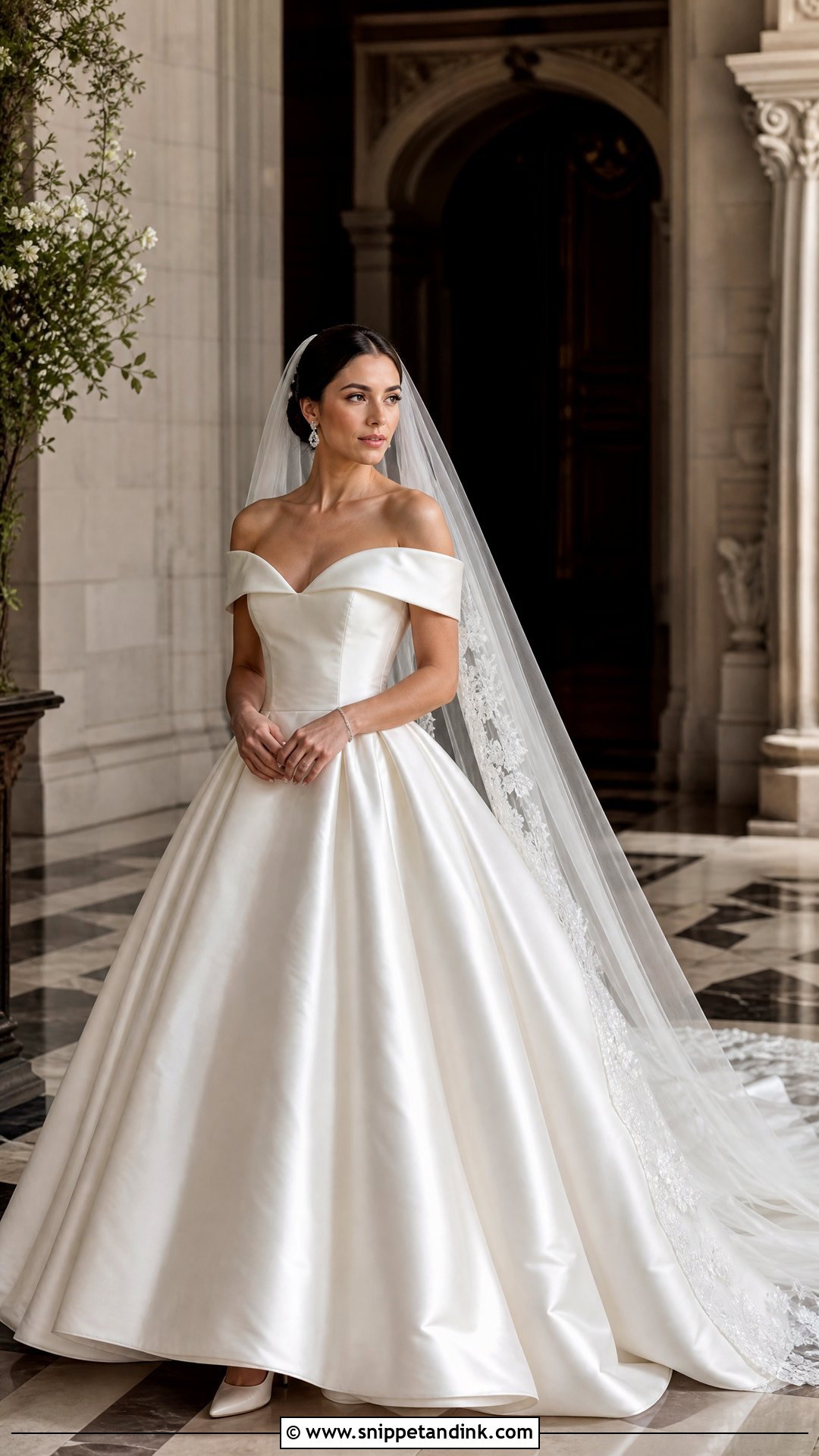
A full ball gown with folded satin across the shoulders belongs in a castle or a grand hotel ballroom, where the room is big enough to carry it. Off-the-shoulder bands are only comfortable if the bodice is built to hold itself up, so look for proper boning and a corset-style back; otherwise you’ll spend the day hitching it. Ivory, soft white and pale champagne all suit the shape. I’d skip the necklace, add crystal drops and a cathedral veil anchored behind a smooth bun, and have the hem taken up to your exact heel height. Bring the actual shoes to every fitting, because an inch of excess skirt is what trips brides on stairs.
6. Floral Embroidered Wedding Dress
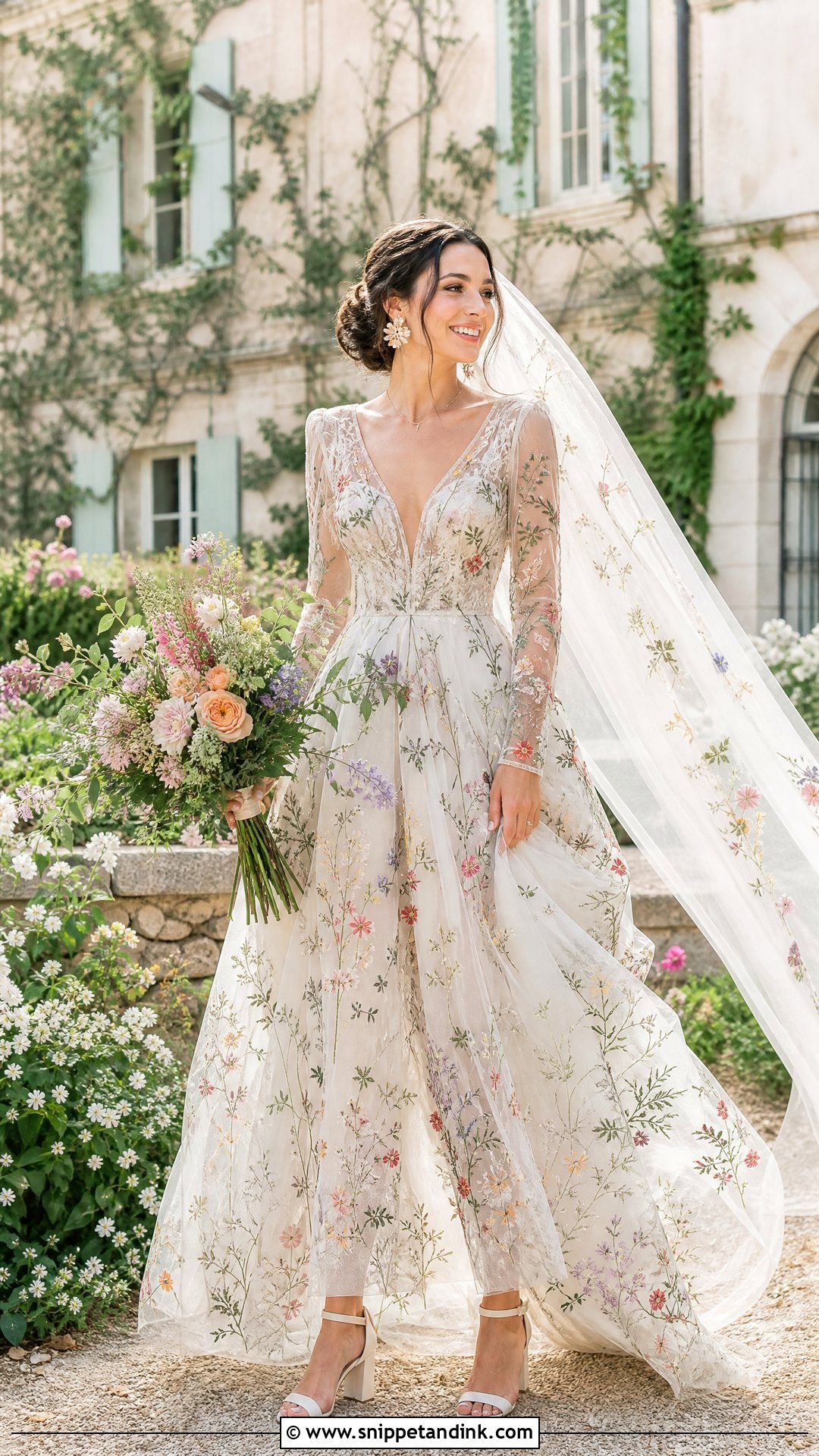
Botanical embroidery is my favourite route for a country house wedding when a bride finds traditional lace too formal. The best versions scatter flowers across a fitted bodice and sheer sleeves, then fade out into a plain tulle skirt. Pastel threads add a hint of colour, ivory-on-ivory stays quiet. Because the dress is already doing the decorating, keep jewellery to floral studs and let the hair fall in loose waves or a textured low bun. Satin flats or block heels cope with lawns better than stilettos, and a ribbon-tied bouquet suits the garden feel. Ask how the embroidery is attached; appliqué that is only tacked at the centre can lift at the edges after a day of hugging.
7. Minimalist Crepe Wedding Dress
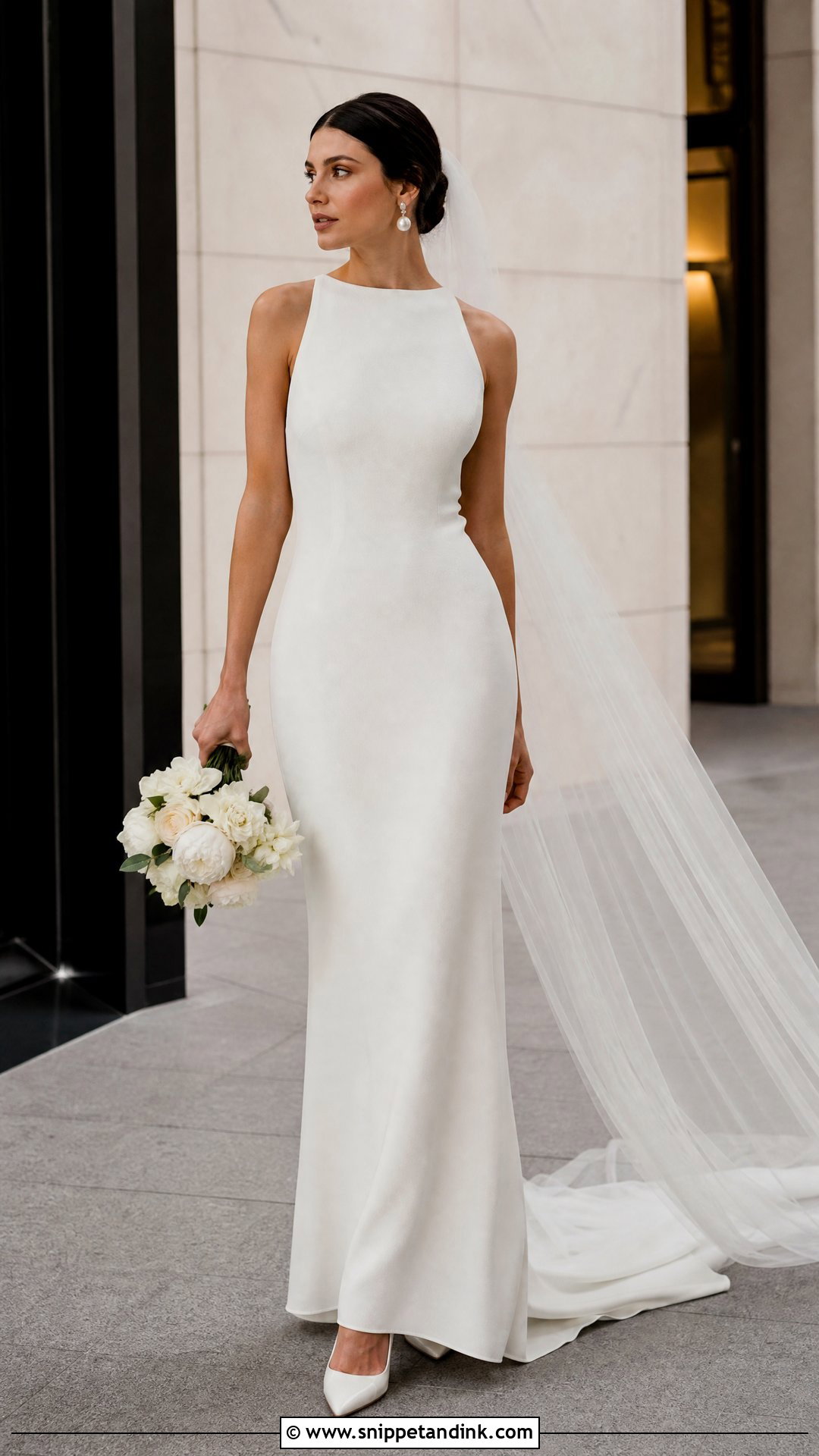
Crepe is unforgiving in a good way. A fitted column with a high neck, square back or narrow V shows tailoring and nothing else, so the cut has to be perfect, and I always book an extra fitting for this style. It also shows underwear lines, so bring what you’ll actually wear. A plain tulle veil gives the ceremony some drama, then comes off for the reception to show the clean back. Pointed leather pumps, bold pearl earrings and a sleek bun keep it sharp, and a long ivory coat looks smart for arrival photos in winter. This is the dress I’d send to a modern London venue or a registry office.
8. Vintage Tea Length Wedding Dress
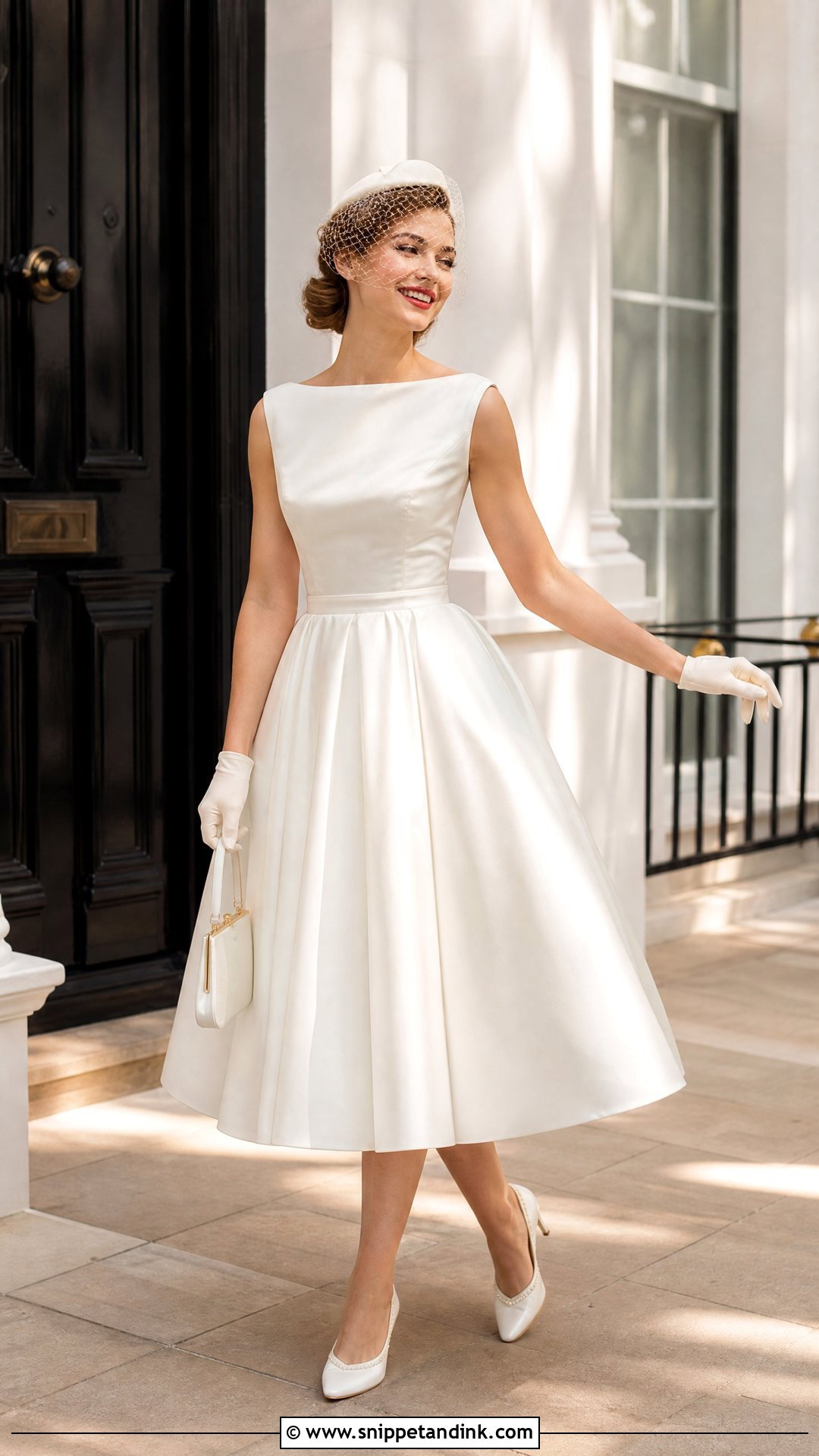
Tea-length dresses, ending between the knee and ankle, bring a 1950s feel to a registry ceremony or an afternoon party. A fitted bodice with a bateau or sweetheart neckline and a full skirt is the classic shape; crisp satin holds the bell, lace softens it. Since your shoes are fully on show, treat them as part of the dress: ivory slingbacks, pearl-trimmed pumps or a low block heel. Short gloves, a birdcage veil or a neat bow headband, and a waved bob finish the period look. One honest warning: if you want a full petticoat under the skirt, it adds bulk when you sit, so check how it behaves on a chair.
9. Silk Slip Wedding Dress
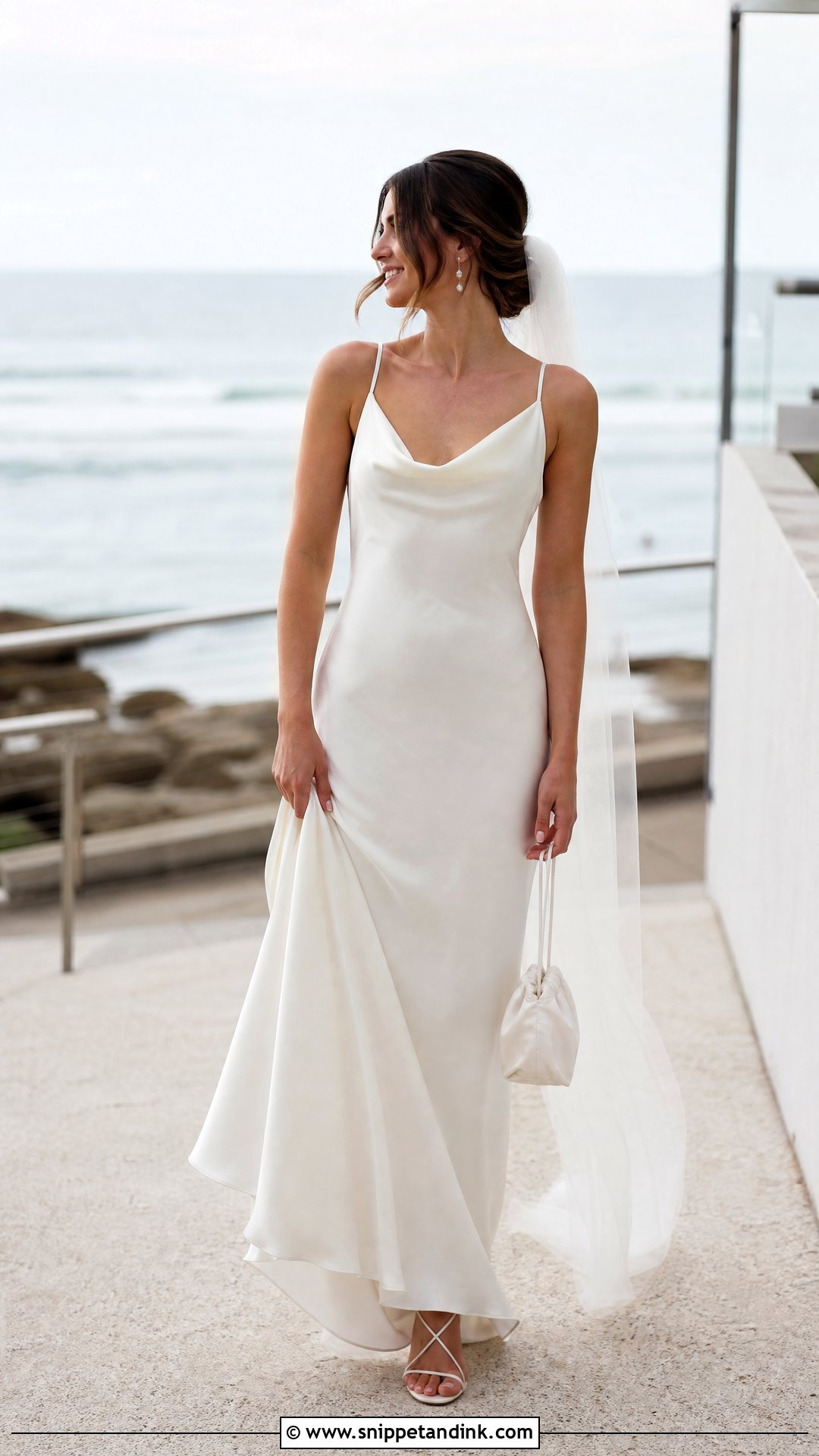
Silk slips look simple and are anything but. For a city ceremony, a coastal venue or a small countryside party, choose heavyweight silk cut on the bias, so it skims instead of clinging, with a softly draped neckline and narrow straps. Lightweight silk shows every seam and every water mark, which is why I steer brides toward a heavier weight even if it costs more. Invisible, laser-cut underwear is non-negotiable here. A sheer long veil gives the gown bridal presence, and a fine cashmere wrap or cropped silk jacket covers your arms when the evening cools.
10. High Neck Wedding Dress
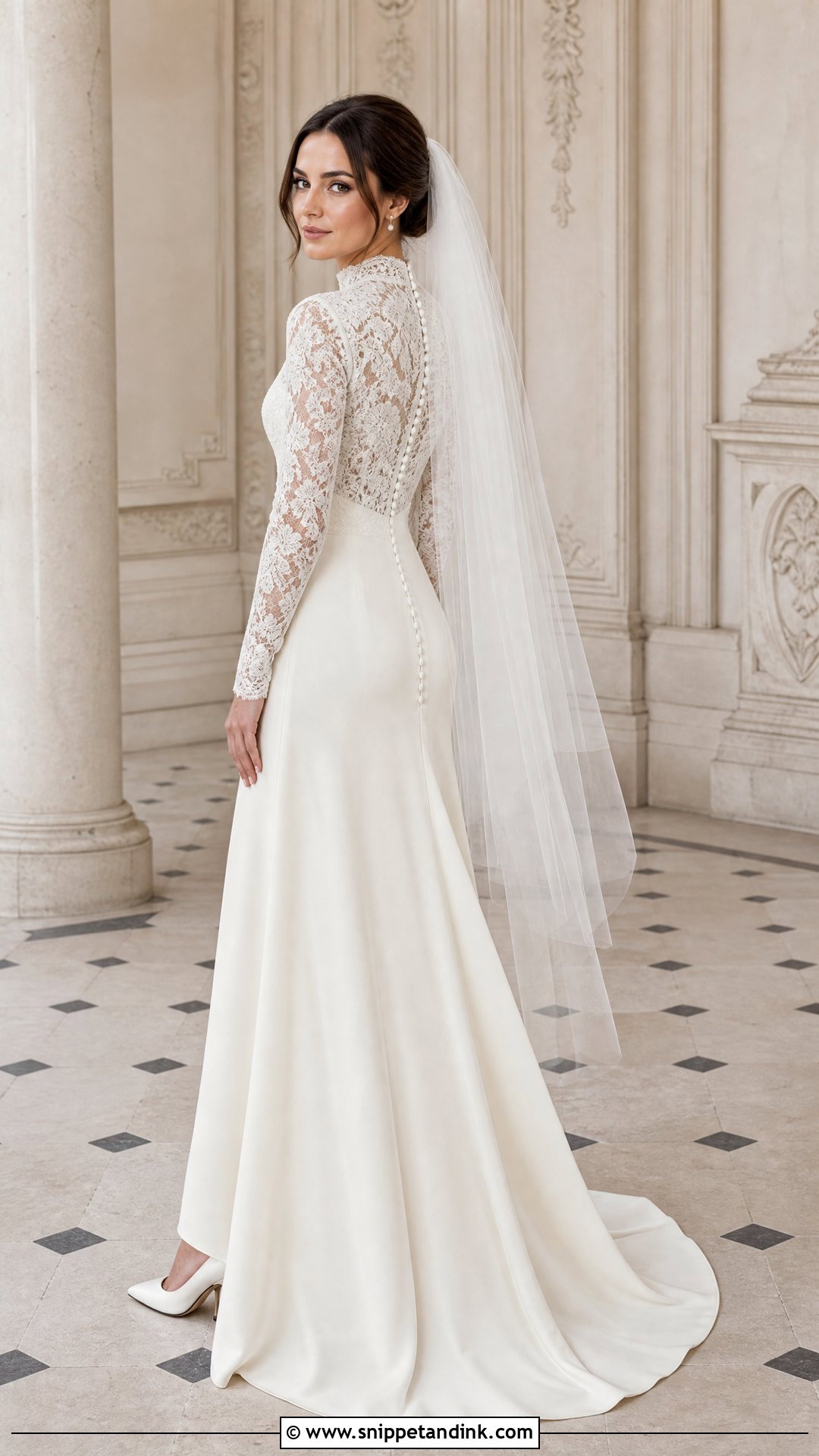
High necklines give coverage that still looks regal, especially in lace or crepe with long sleeves and a flowing skirt. To stop it looking severe, I look for a keyhole back or a line of covered buttons. Because the neck is already finished, wear small studs, not a necklace, and fix the veil beneath a low bun so the comb doesn’t fight the collar. Match the veil to the bodice: lace edging for an ornate dress, plain tulle for a detailed one. A high collar can feel warm in a packed reception room, so check the fabric is breathable, and an ivory cape covers outdoor photos in autumn.
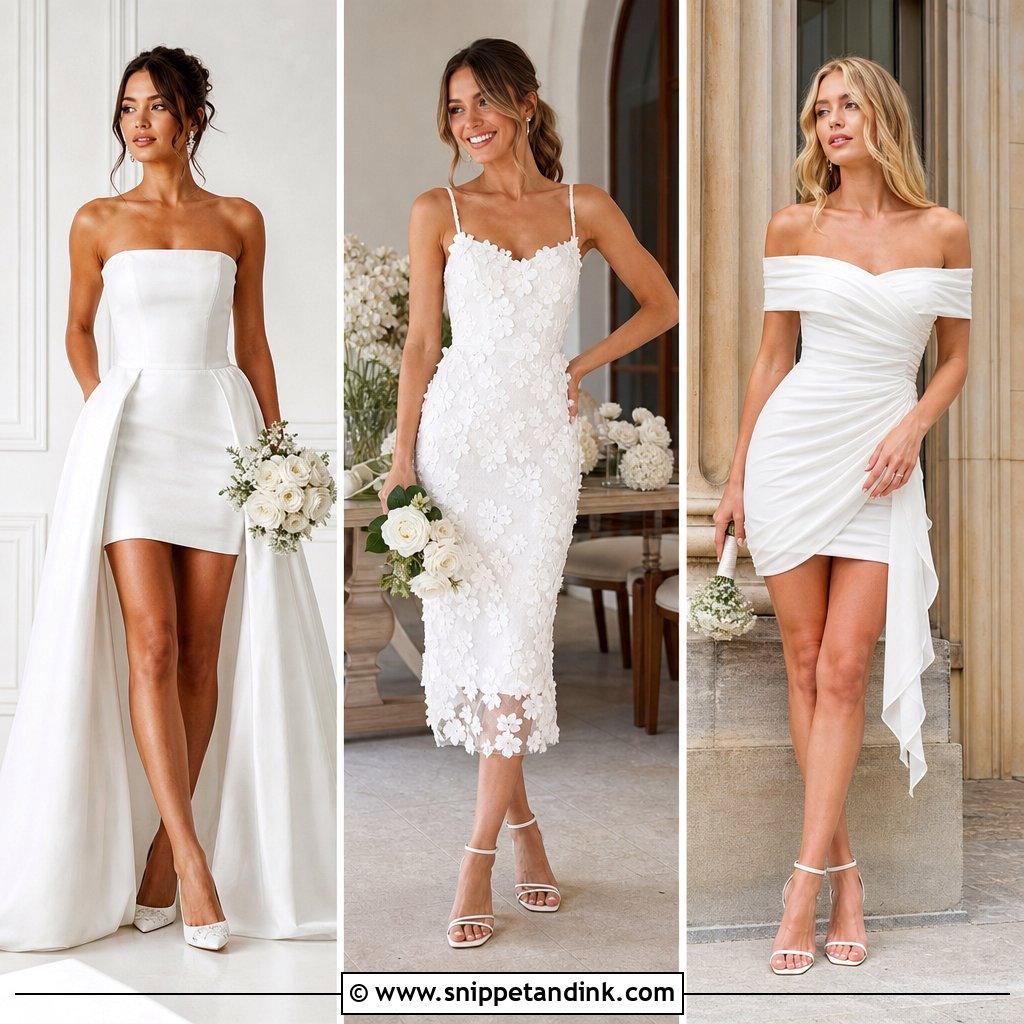
11. Short Registry Wedding Dress
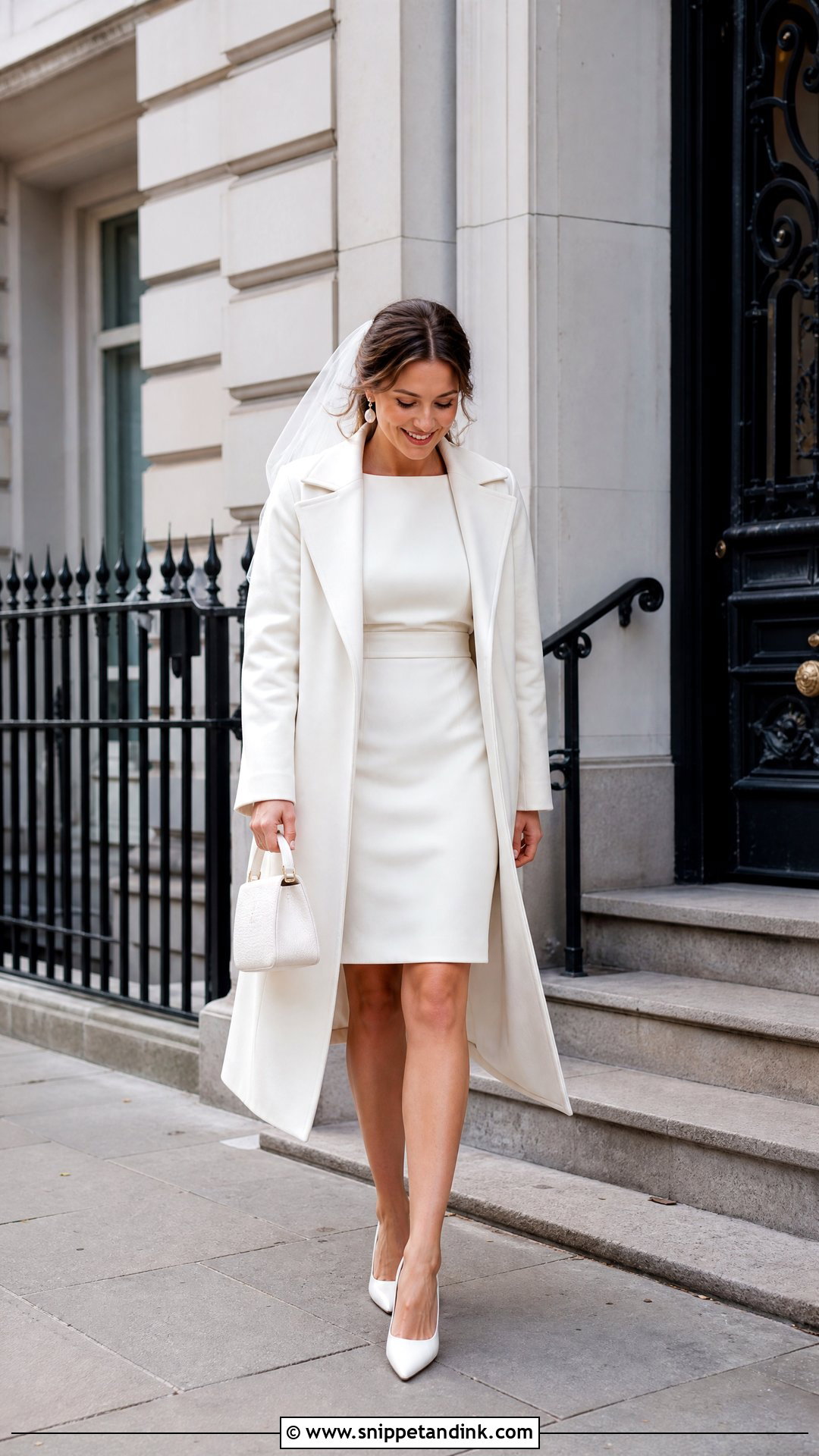
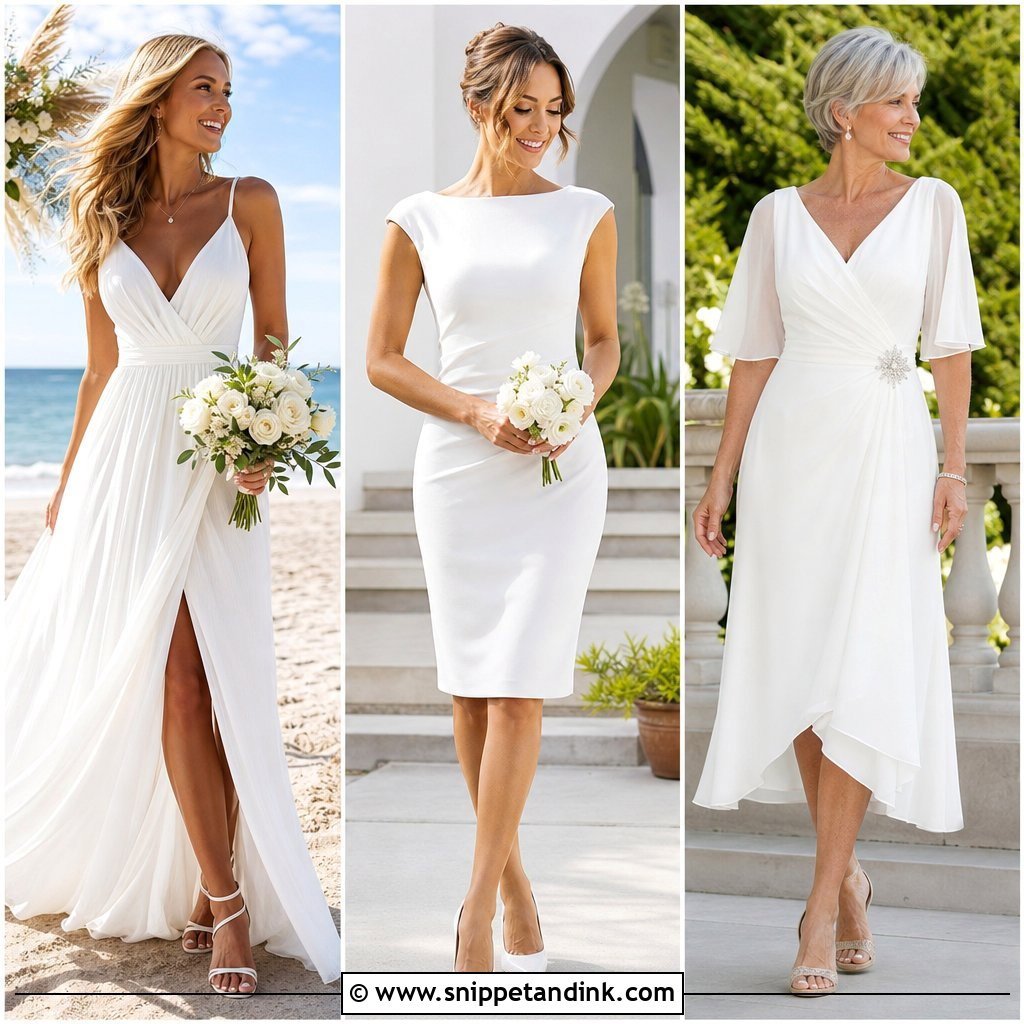
A short registry wedding dress works best when you style it head to toe, because there’s less fabric to carry the bridal feel. I look for a tailored mini or knee-length dress with a structured waist and either long sleeves or a sculpted neckline. A pearl headband, short veil or oversized bow makes it obviously bridal. Your shoes carry more weight than usual, so pick a comfortable refined pair, and wear sheer tights in cool weather. A long ivory coat that falls below the hem looks polished for outdoor photos on the steps and doubles as a layer for a restaurant reception.
12. Bridal Trouser Suit Wedding Dress
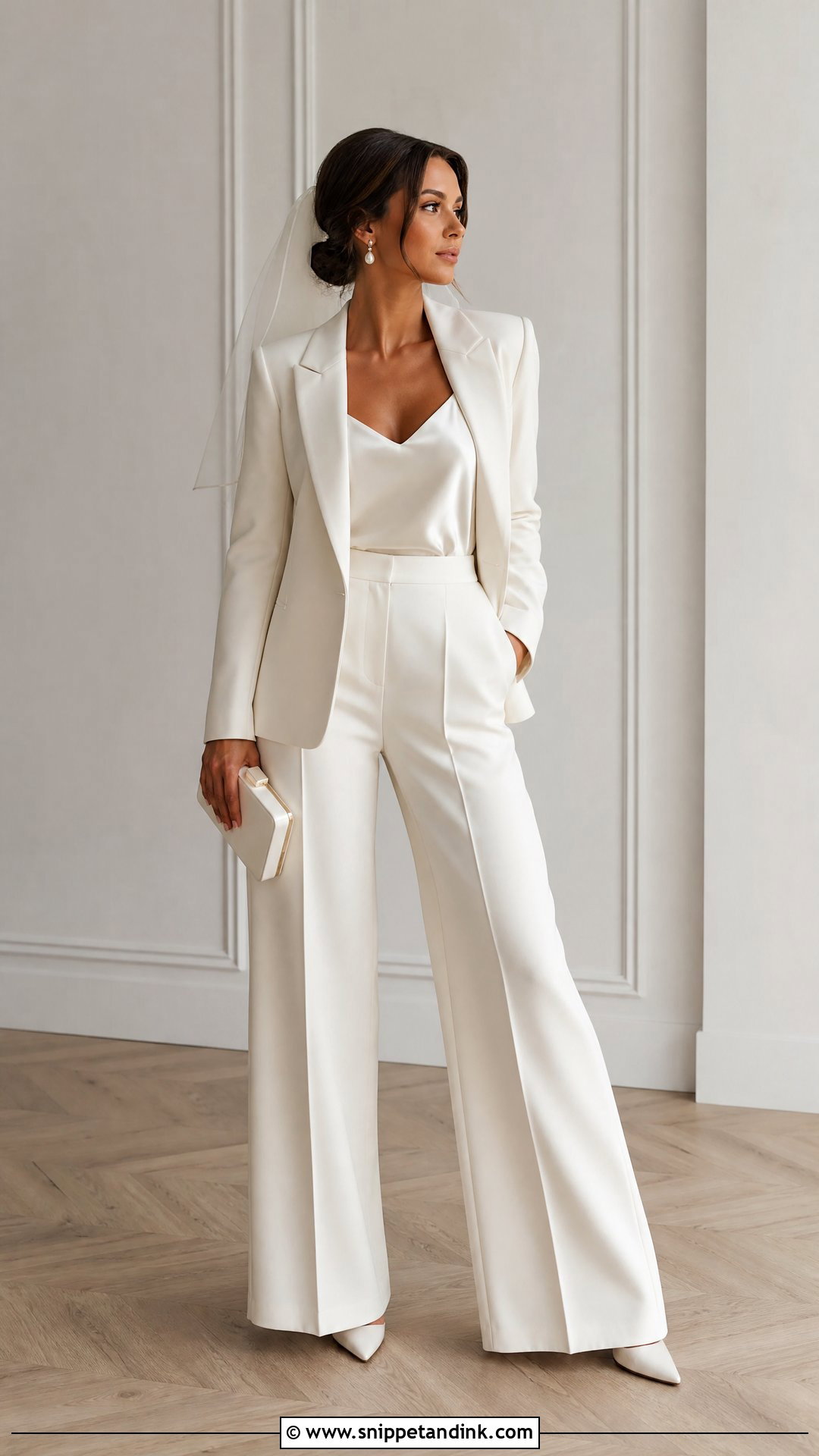
A bridal trouser suit needs ivory crepe in matching dye lots for jacket and trousers, because two slightly different whites look obvious in daylight. High-waisted wide-leg trousers and a single-breasted blazer are the shape I fit most often. Underneath, a silk camisole, corset top or lace bodysuit adds texture. Have the trousers hemmed so they just touch the shoe, not the floor, and fitted while you wear the actual heels. A wide-brimmed hat gives it a British occasion feel, or a short tulle veil softens the tailoring. Take the blazer off later and you have a relaxed reception look.
13. Corset Wedding Dress
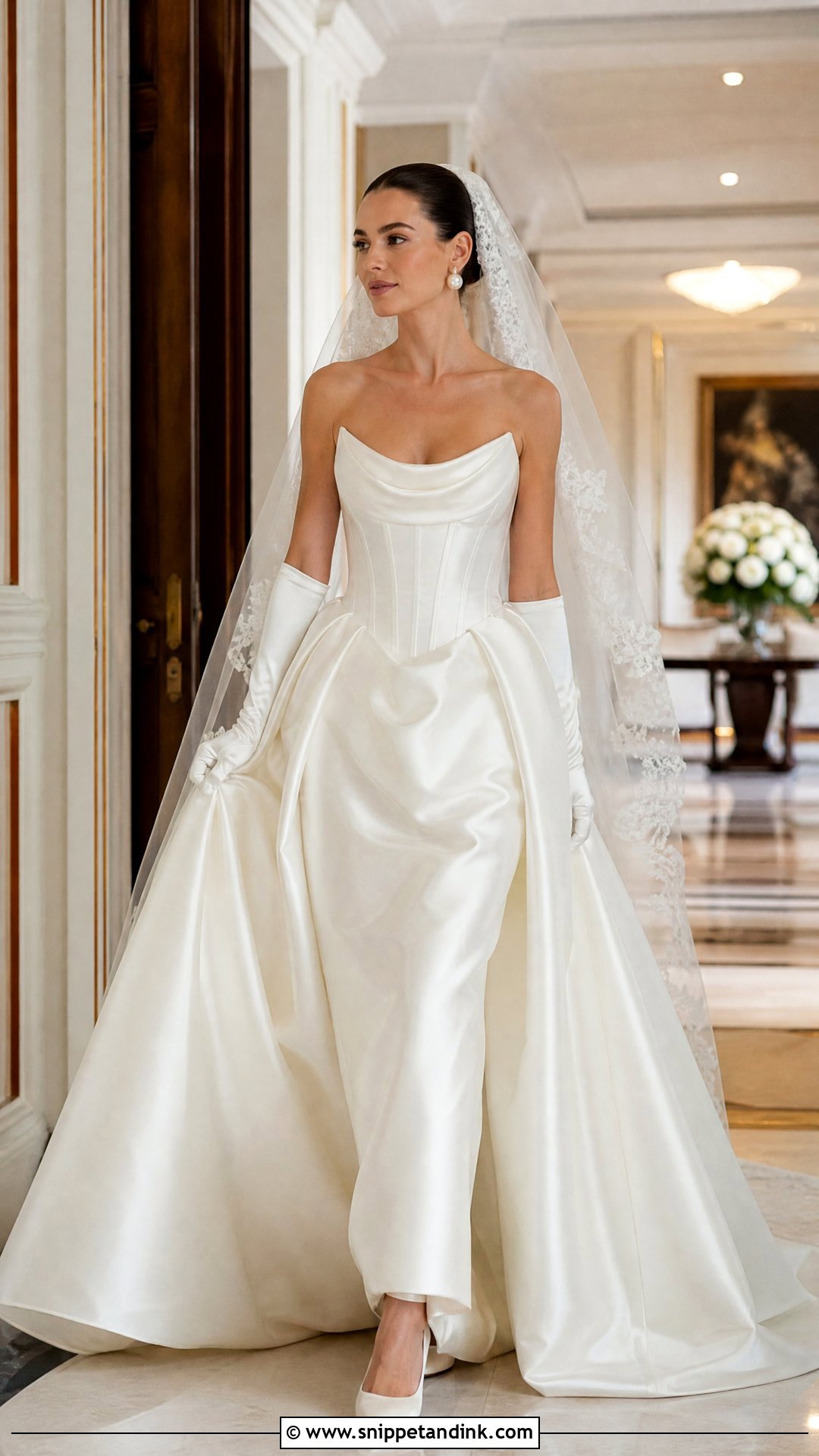
Corset bodices give real support and a defined waist, but only when the internal construction is solid. I look for visible seaming, a gently curved neckline, and steel or spiral boning rather than flimsy plastic, which bends and dents after a few hours of sitting. A full satin skirt makes it formal, a chiffon skirt lets it move. Long gloves extend a strapless line, and removable off-shoulder sleeves cover you for a church ceremony. Proper fitting matters most here: you should be able to take a full breath and sit to eat without the top edge digging in.
14. Drop Waist Wedding Dress
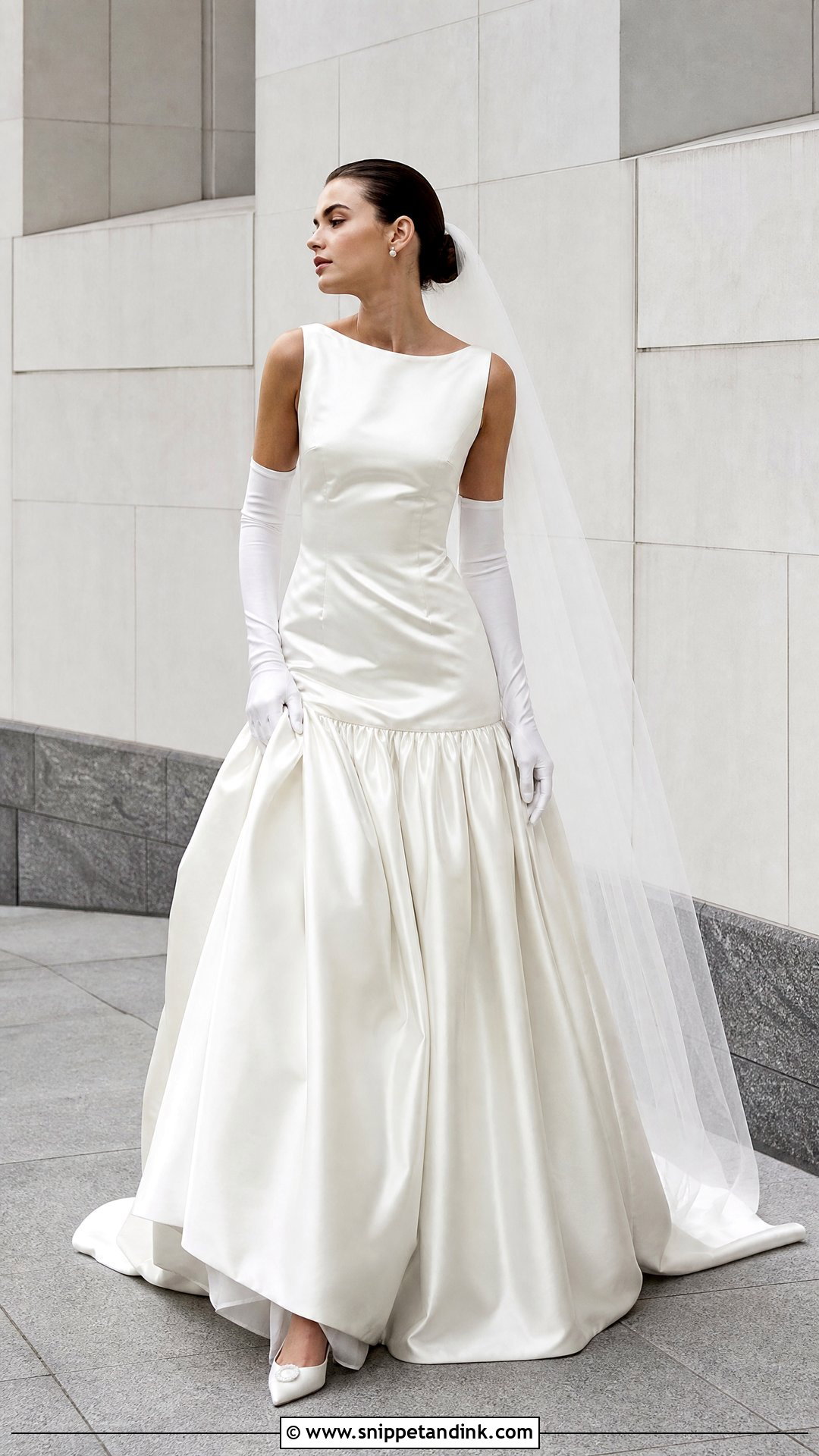
Drop waists start the skirt a few inches below your natural waist, which lengthens the body and gives a more fashion-led shape than a classic ball gown. Smooth satin makes it sculptural, a subtle jacquard adds texture. I’m honest with brides about who it suits: if you’re short-waisted or want your waist defined, it can make the torso look boxy, so try one before ordering. Skip belts and busy bodice beading, as the proportions are already doing the work. Pointed heels, simple earrings, a long veil and opera gloves for an evening ceremony all keep the vertical line.
15. Puff Sleeve Wedding Dress
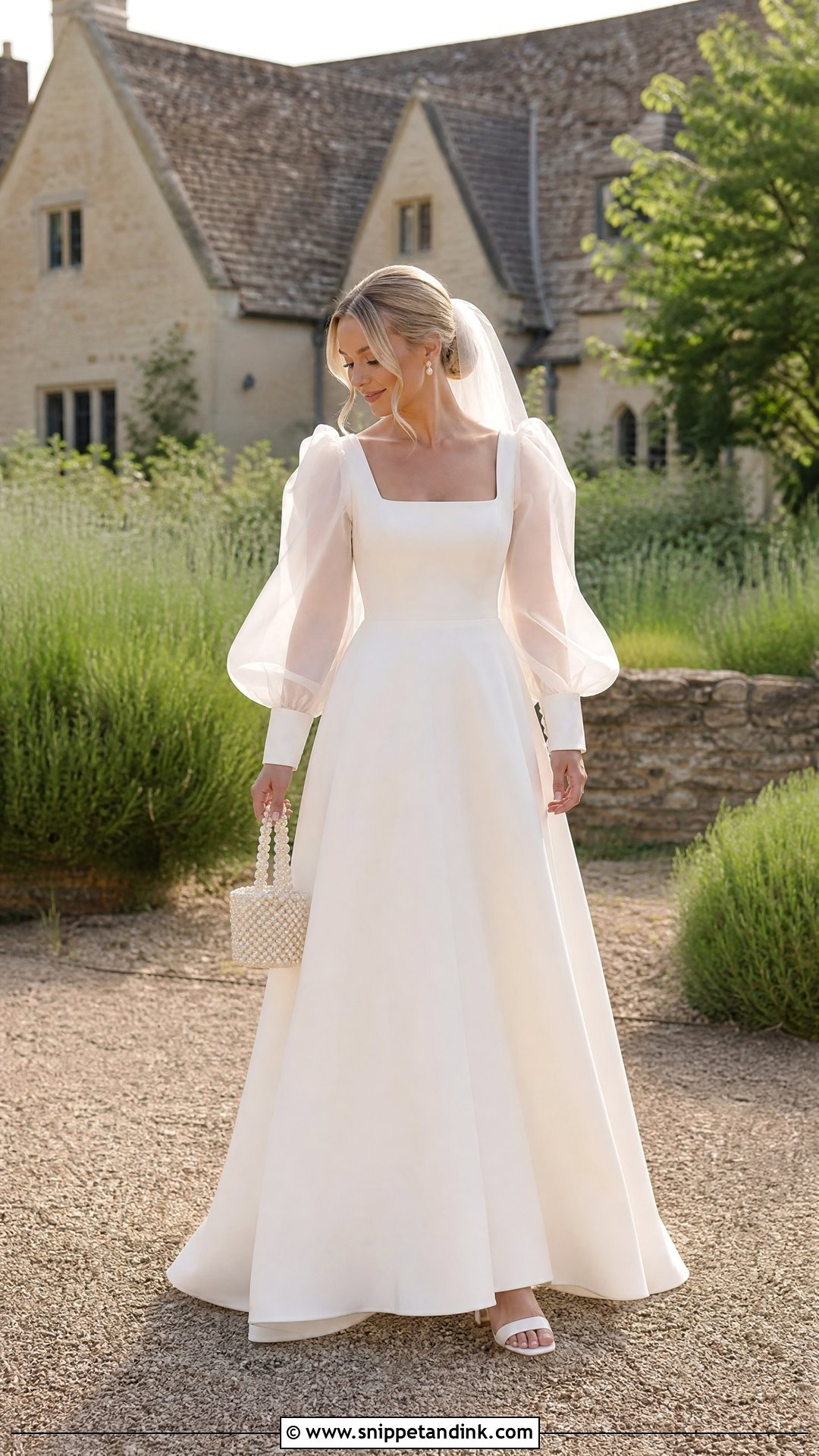
Soft puff sleeves put the focus on your shoulders and arms, so the rest of the dress should calm down. I prefer sheer organza sleeves with a fitted cuff, a square or sweetheart neck, a defined waist and a plain A-line skirt. Organza holds volume well but crushes under a coat or seatbelt, so plan how you’ll travel and ask your stylist to bring a steamer. Detachable sleeves give you two looks: on for the ceremony, off for the evening. Delicate drop earrings, low block heels and a fine tulle veil below a relaxed updo are enough.
16. Ruffle Wedding Dress
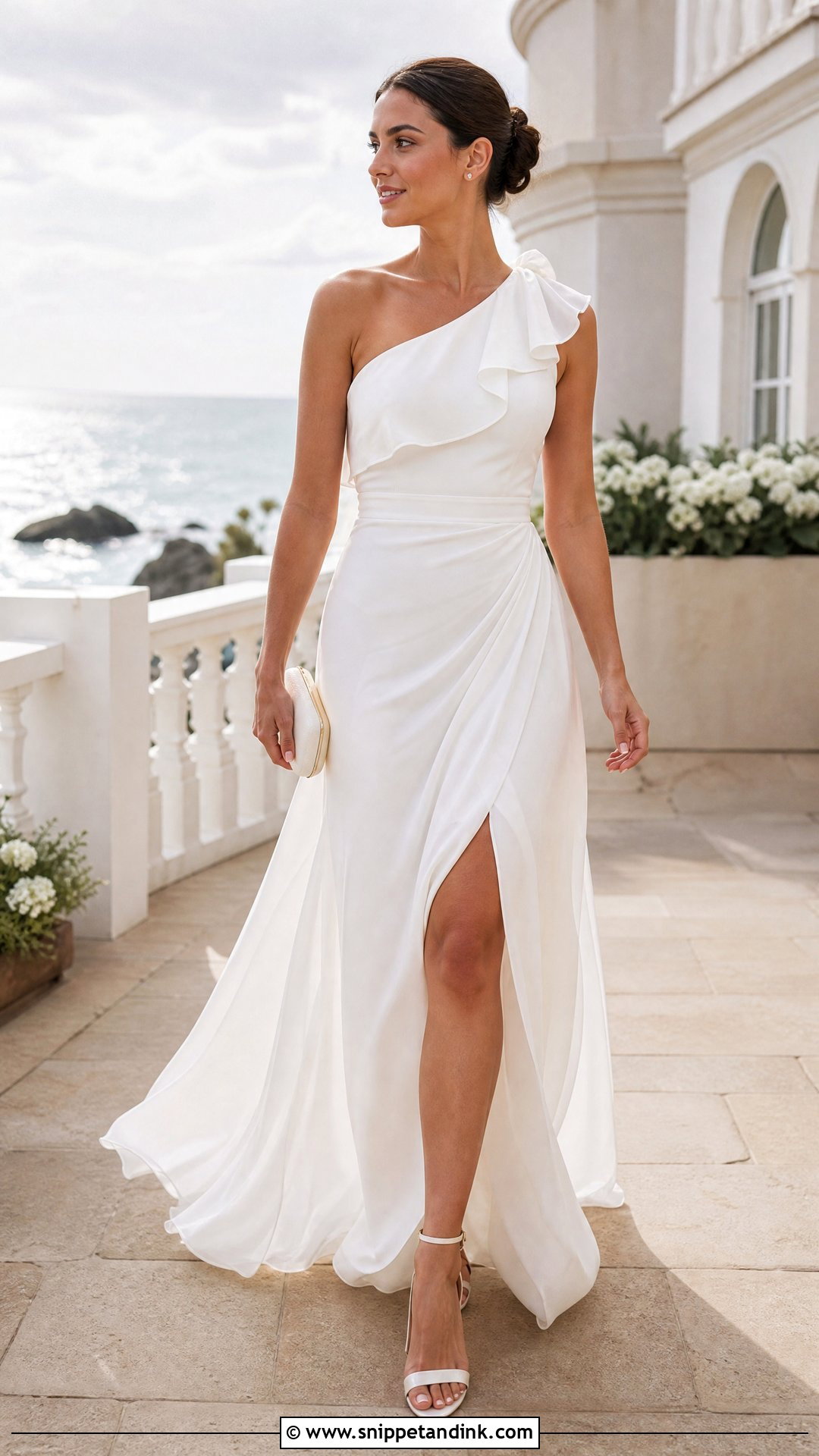
Ruffles work when there’s one clear ruffle idea, not five. A one-shoulder ruffle, a layered skirt or a cascade along the neckline is plenty, with the rest of the fabric kept smooth. I balance the volume with a sleek ponytail or tidy bun and plain satin sandals, and often suggest no veil at all. The fabric choice depends on the venue: soft organza or chiffon moves in a coastal breeze, structured taffeta holds its shape in a formal hotel. A compact clutch with a clean outline stops the outfit getting fussy.
17. Bridal Cape Wedding Dress
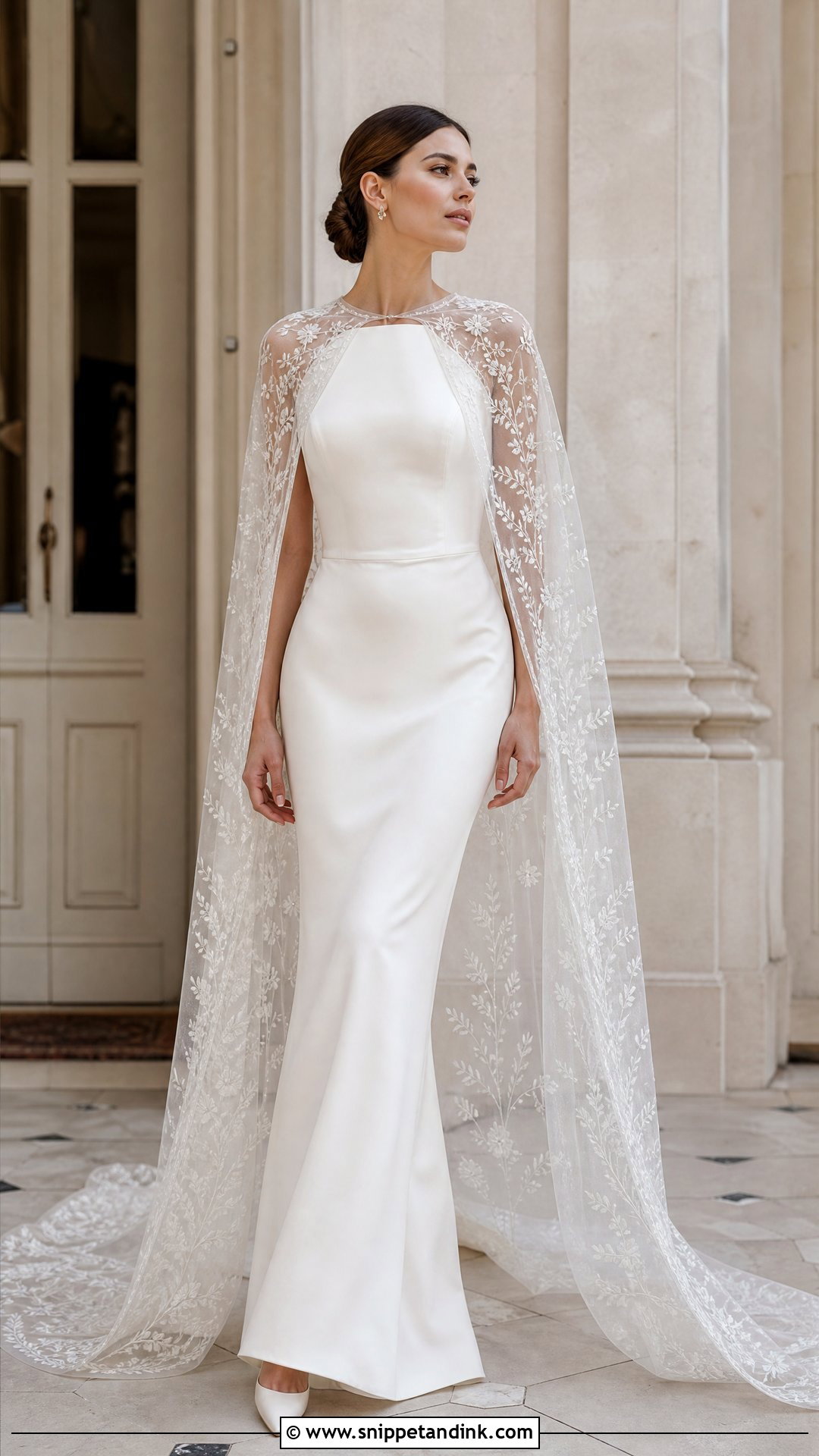
A floor-length cape gives drama and coverage without hiding the dress beneath it. Start with a simple column, A-line or fitted satin gown, then add a cape in sheer tulle, crepe or embroidered lace. High-neck capes feel regal, shoulder-fastened ones feel lighter. I usually tell brides to skip the veil, because the cape already gives length behind you. For winter, choose a lined cape heavy enough to work as real outerwear. Practise sitting in it: a long cape catches under chair legs and tugs at the neck, so ask your seamstress for a discreet wrist loop or snaps.
18. Two Piece Wedding Dress
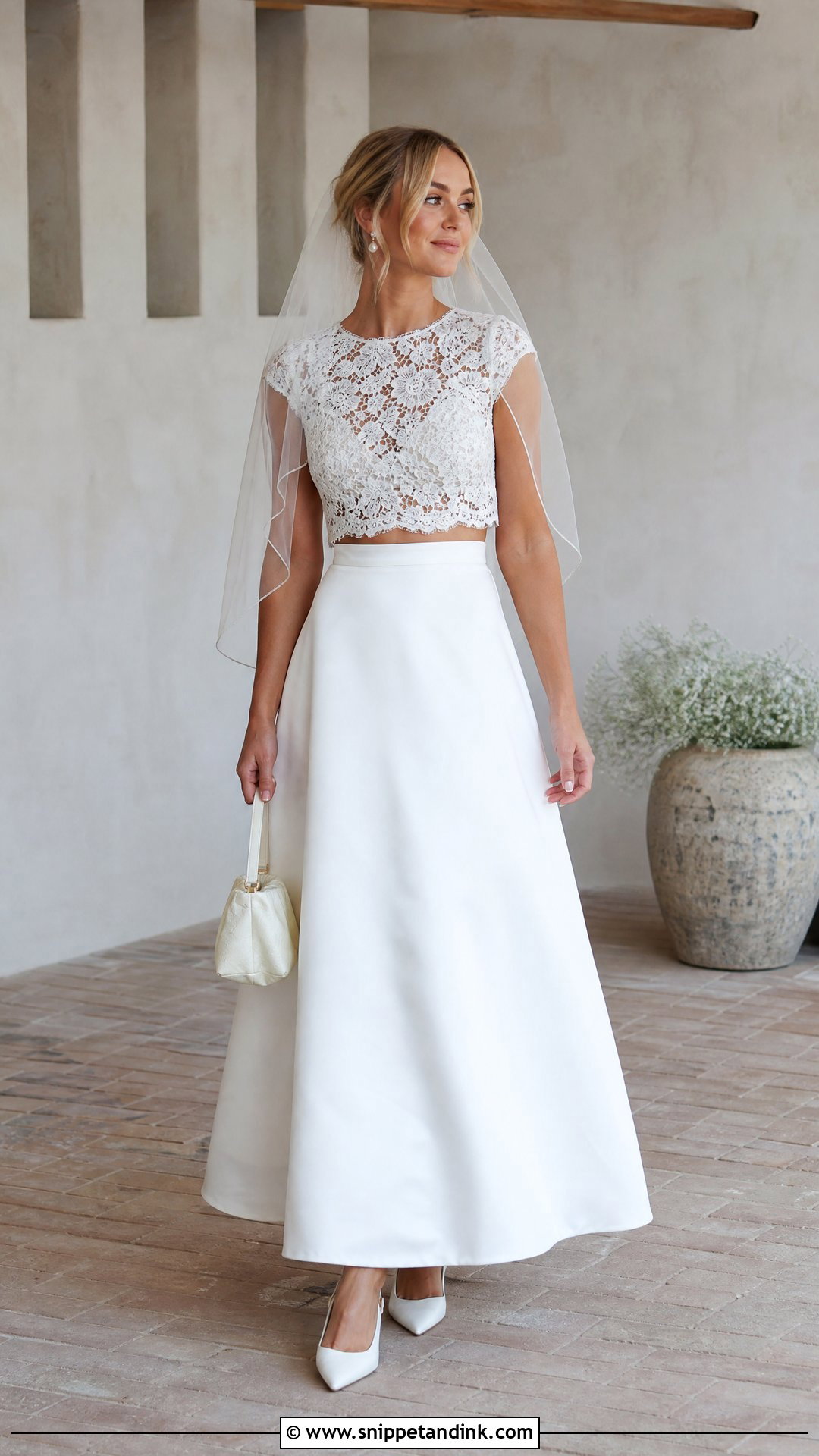
A two-piece wedding dress lets you mix pieces to suit your shape and plans. A cropped lace top with a high-waisted satin skirt feels romantic; a structured corset over a clean A-line feels modern. I keep the gap at the midriff very small, a sliver at most, so it still looks ceremony-ready when you raise your arms. The trickiest part is matching whites: bring both pieces into daylight together, since ivory satin and ivory lace often differ. Swap the skirt for tailored trousers later and keep the same top for a second look.
19. Boho Lace Wedding Dress
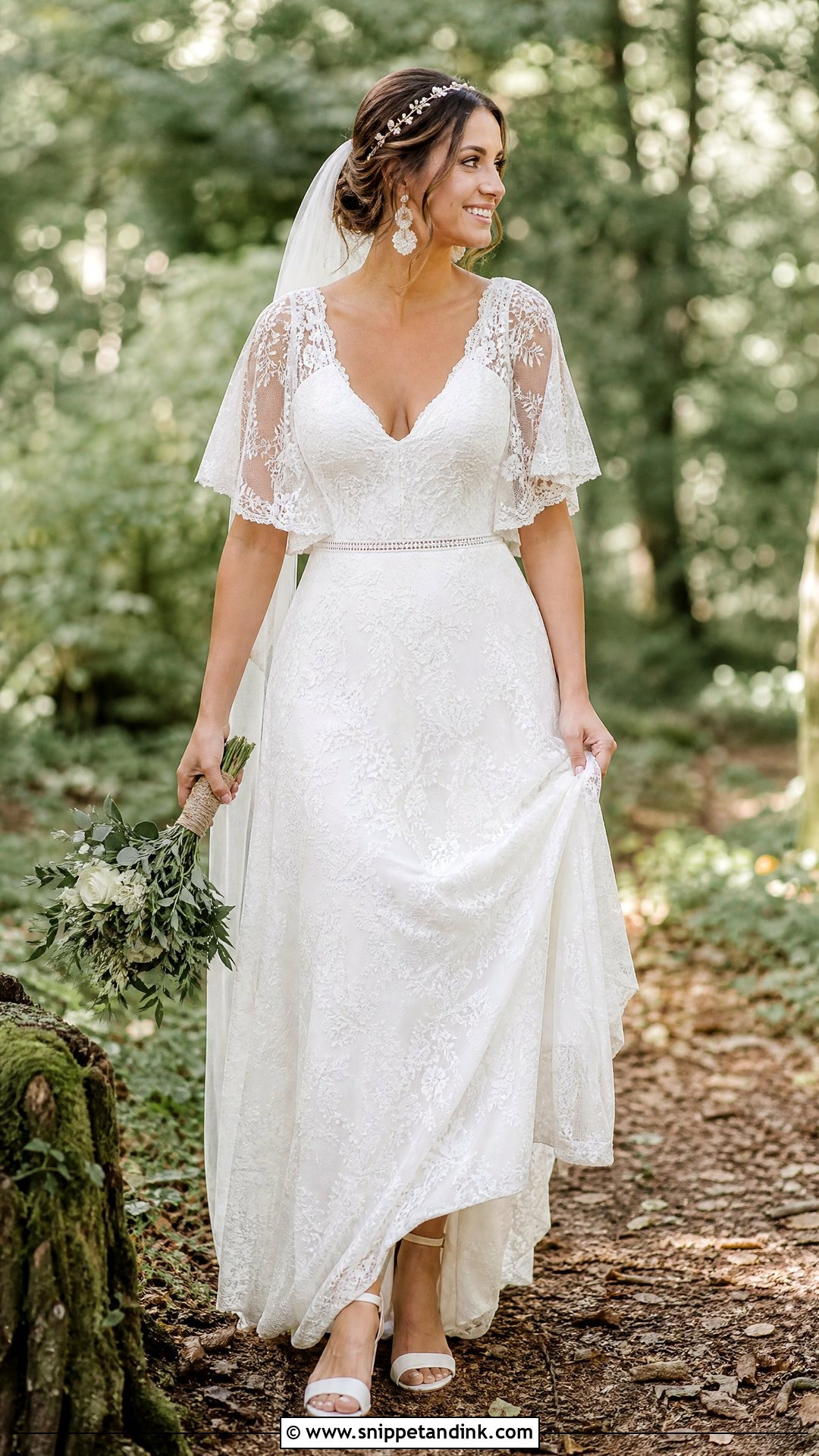
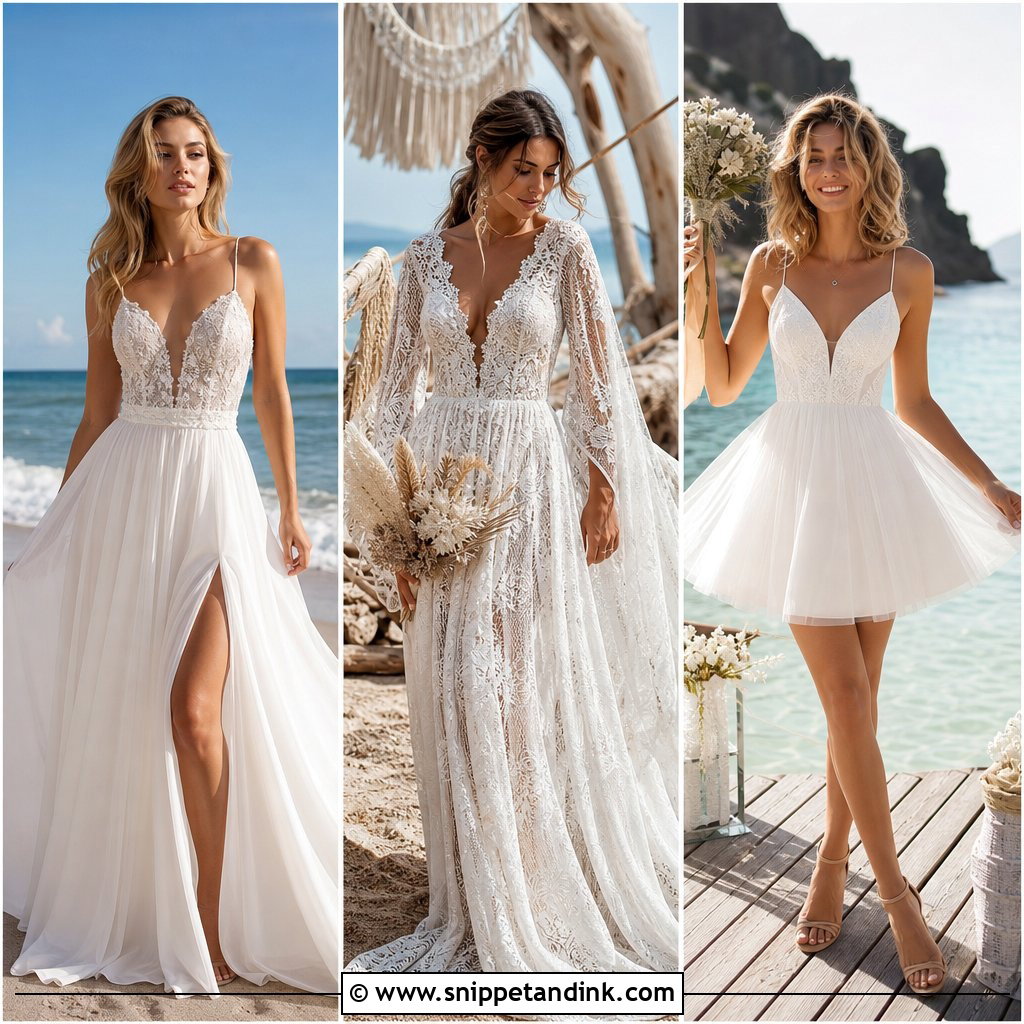
Boho lace suits woodland, coastal and countryside venues where a stiff gown would feel overdressed. I look for soft crochet-style lace, a lined bodice that’s comfortable all day, and a skirt with no rigid underskirt, so it falls naturally. Flutter sleeves, a low back or a gentle V-neck keep it relaxed. Block-heel sandals or flats manage grass and uneven paths. Be warned that open crochet lace catches on bark, brambles and Velcro, so keep the hem slightly off the ground for a woodland ceremony. Loose waves or a soft braided updo, a narrow hair vine and an ivory wrap for the evening finish it.

20. Pearl Embellished Wedding Dress
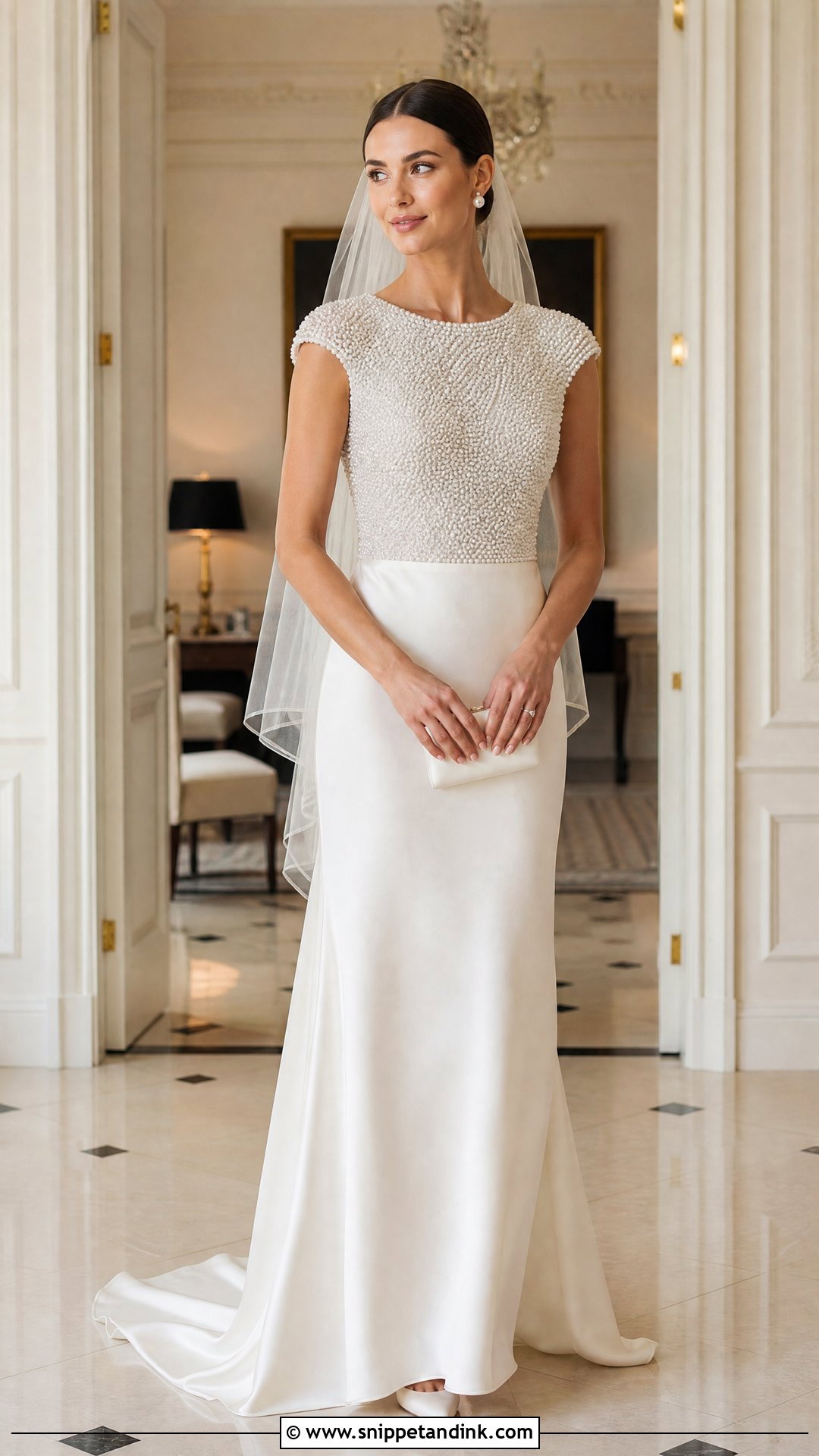
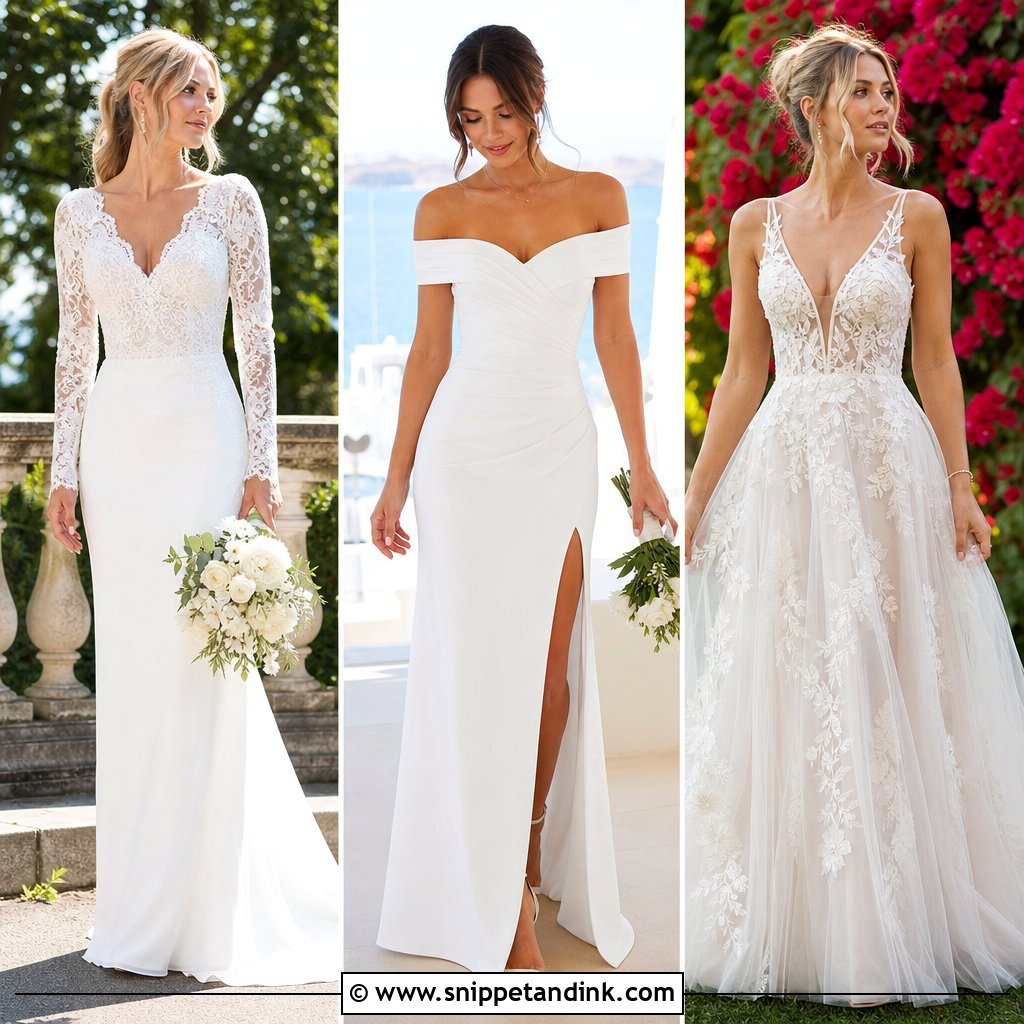
Pearls give a soft glow rather than the hard sparkle of crystals, which I find suits British daylight better. A sheer pearl-covered bodice with a lined front, satin with scattered pearls, or a tulle skirt with tiny beads all work. Keep the shape simple so the texture leads, and keep jewellery to pearl studs. Before you buy, tug gently on a few pearls: glued pearls can pop off when you hug, while hand-stitched ones stay put. Check that your bracelet or bag clasp won’t snag the beading, and finish with satin heels and a plain veil.
How Long a UK Wedding Dress Takes From Order to Final Fitting
Most made-to-order gowns from UK bridal shops take around four to six months to arrive after you order, sometimes longer for heavily embellished or overseas designs. Alterations add another two to three months on top. That’s why I encourage brides to start trying on dresses nine to twelve months ahead if they can.
- Order the gown and confirm the delivery date in writing with your bridal shop.
- Book your first fitting roughly eight to ten weeks before the wedding, wearing your shoes and underwear.
- Expect two or three fittings in total, with the last about two weeks before the day.
- Collect the dress steamed and bagged, and store it hanging in a cool, dark room.
Shorter timelines are possible. Off-the-rail sample dresses, registry minis and trouser suits can often be bought and altered within a few weeks, which is worth knowing if your wedding is coming up quickly.
What Your Seamstress Needs to See at Each Fitting
A fitting goes better when you bring the right things. I always ask for the exact shoes, the bra or shapewear you’ll wear on the day, and any jewellery or headpiece that sits near the neckline. Without the shoes, a hem can’t be set correctly, and without the underwear, a bodice can’t be fitted properly.
During the fitting, test real movements. Sit down as if at dinner, take a few dancing steps, raise your arms for a hug, and climb a step or two. If something pinches, gapes or drags, say so then, not on the morning of the wedding. Small changes now save a lot of stress later.
Matching the Dress to Your British Venue and Season
The dress that works is the one that suits your venue and lets you move. Try on a few silhouettes before you fall for a detail, then build the shoes, veil and coat around the shape you feel best in. In every fitting, sit, walk and lift your arms, not just stand in front of the mirror. In a city registry office, a country church or a barn by the coast, a dress chosen for how you’ll live in it will look right in every photo.
You'll Like These Ideas:




Leave a Reply