
Tuscany is kind to almost any wedding dress in photographs and hard on most of them in person. The light is warm, the stone is golden, and the ground is gravel, cobbles and lawn that slopes. When I style a bride for a villa or vineyard there, I’m thinking about two things at once: how the gown looks against old walls and olive trees, and whether she can walk, sit and stay cool in it from a late-afternoon ceremony to dancing after midnight. Lighter fabrics, an easy silhouette and shoes that grip carry the day. Soft drop waists, layered skirts and vintage-leaning lace fit the old-world setting especially well. Here are twenty dresses, from a countryside estate to a Florence palazzo, with the practical notes I’d give at a fitting.
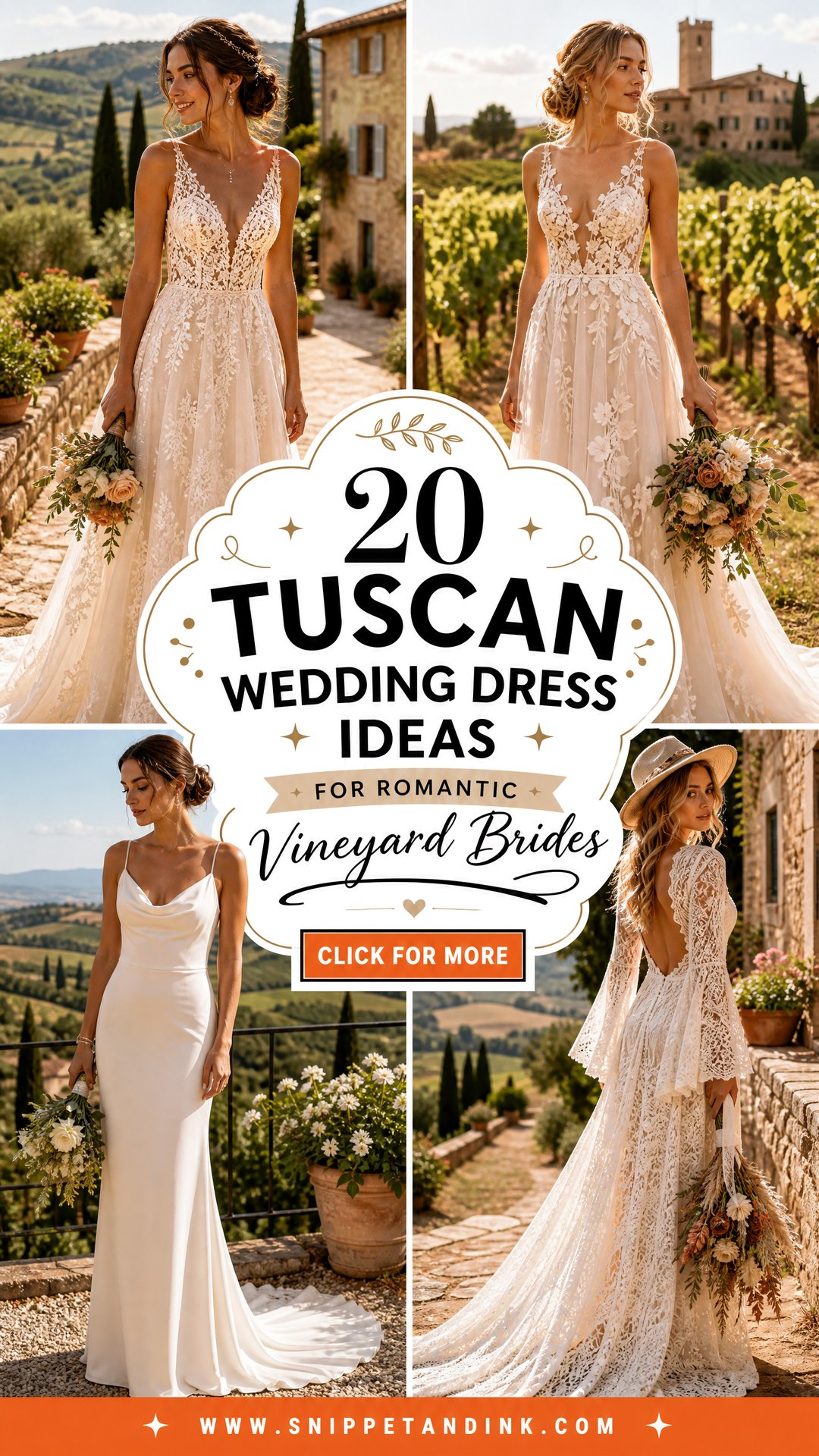
Gravel, August Heat and Church Rules
Every Tuscan wedding I style involves the same three practical questions, and I ask them before we look at a single silhouette.
What is underfoot? Villa drives and courtyards are usually loose gravel, old town centres are cobbled and vineyard ceremonies are on grass that is often sloped. A long train drags dust and pale grit into the hem within minutes, and a delicate lace edge will snag. If your venue is mostly gravel, a floor-length hem with a short sweep train or a bustle you’ll use straight after the ceremony is the sensible choice.
Which month? High summer in Tuscany regularly runs above thirty degrees in the afternoon, and many ceremonies start around five or six to catch softer light. Fabric choice matters more than style here. Chiffon, organza and light crepe breathe; heavy satin, layered tulle and long lace sleeves are better left for spring and autumn, when evenings in the hills turn cool quickly.
Is there a church? Catholic churches in Italy commonly expect shoulders to be covered, and some are strict about it. Ask your planner or the parish directly. A lace bolero, a sheer cover-up or a long veil worn over the shoulders lets you keep a strapless or off-the-shoulder gown for the rest of the day.
1. Lace A-Line Tuscan Wedding Dress
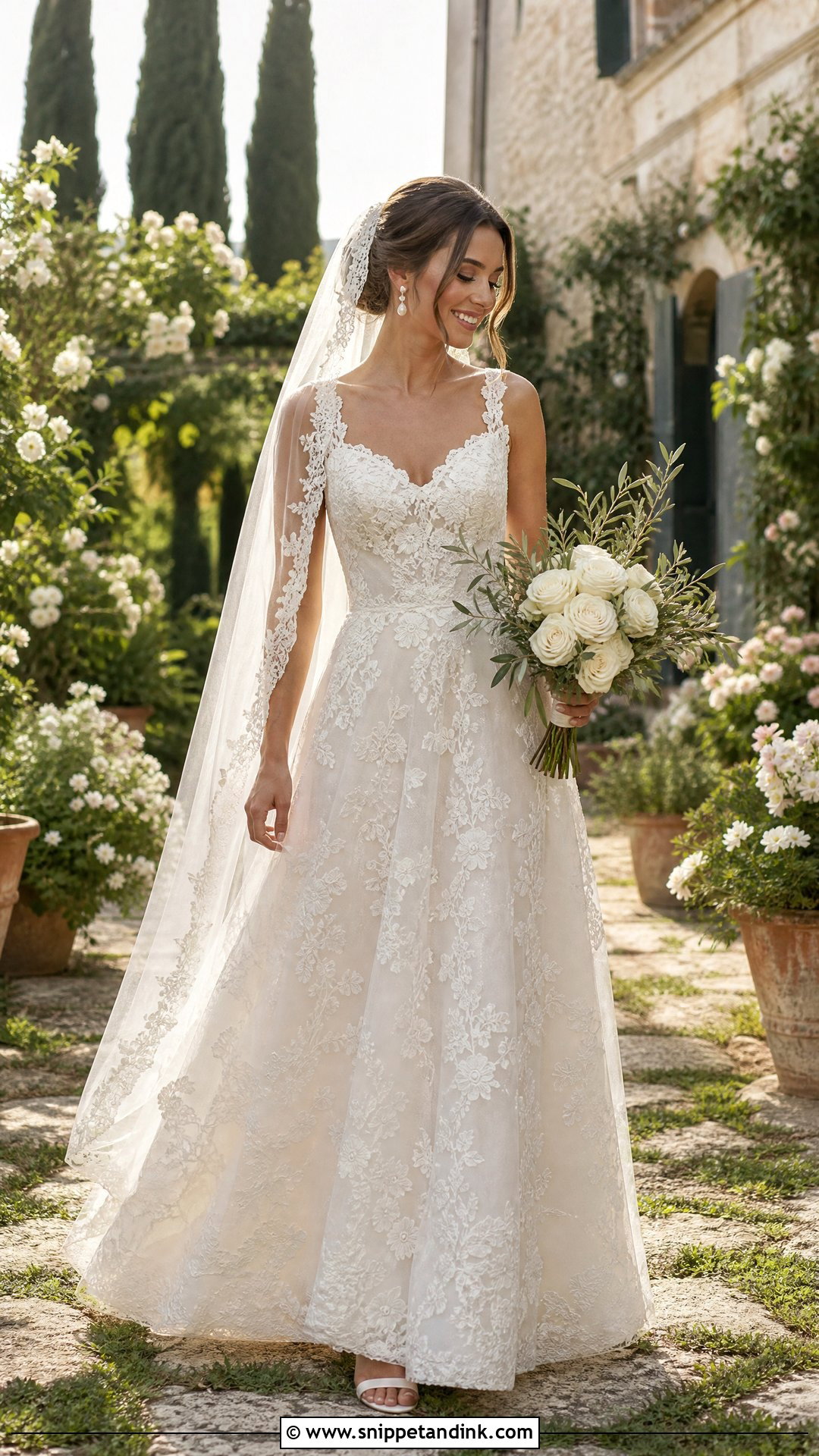
Lace A-lines are the dress I see most often on Tuscan terraces, and with good reason: they flatter a wide range of figures and they don’t wrinkle the way silk does after a long drive to the venue. Ask for lightweight floral lace over a soft ivory lining rather than heavy corded lace, which gets warm fast in summer. Pair it with a fingertip veil edged to match, pearl drops and ivory block-heel sandals. The block heel is not optional on villa gravel; a stiletto sinks between the stones within three steps. A small bouquet of garden roses and olive sprigs finishes it without hiding the lace.
2. Silk Slip Tuscan Wedding Dress
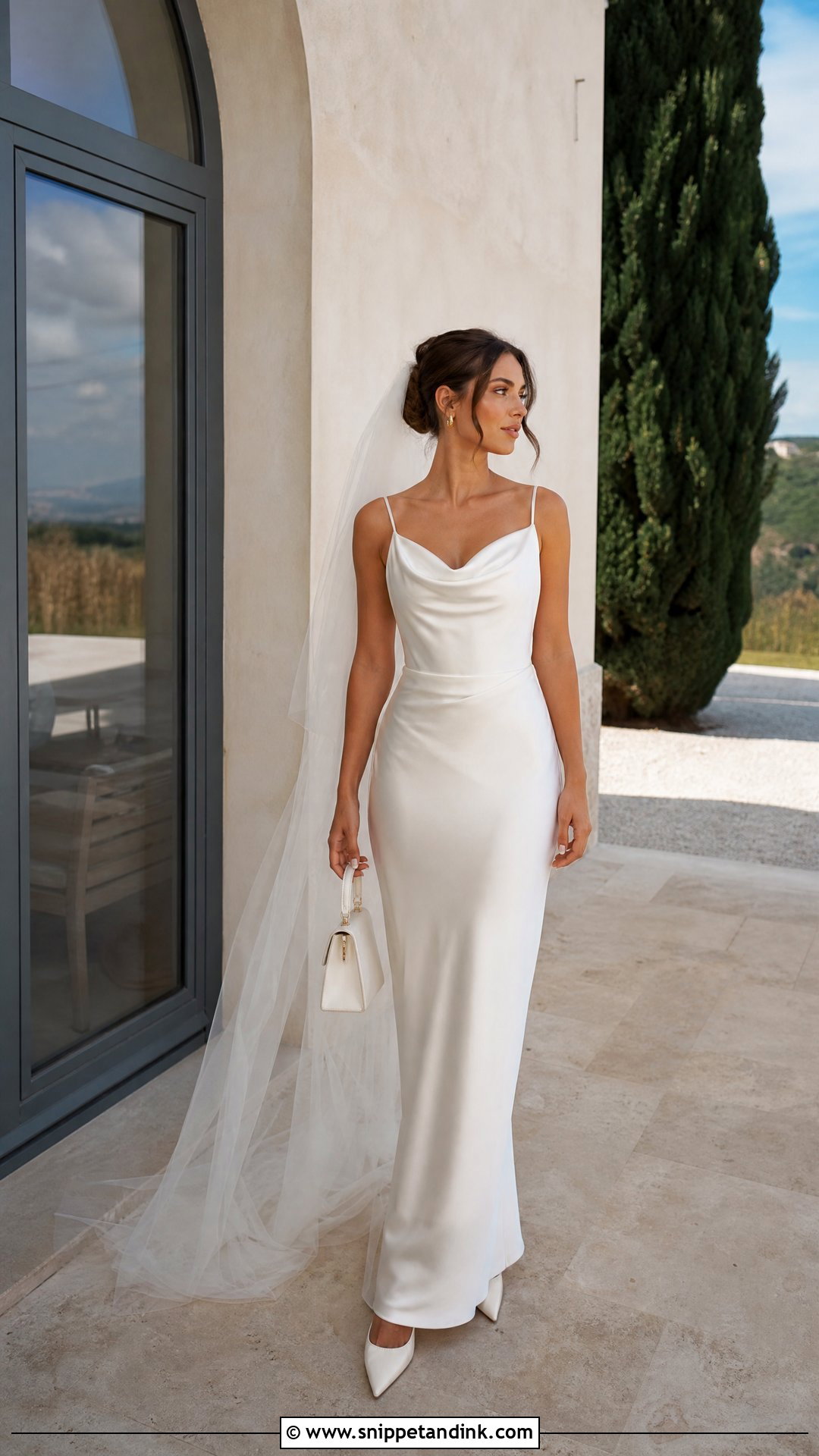
Silk slips look effortless and are, in fact, the most demanding dress to fit. A bias cut moves with you, which is why it feels so good in the heat, but it also shows every line underneath, so plan smooth, no-line underwear at the first fitting, not the last. Insist on a full lining; unlined silk turns translucent against low evening sun. Sleek slingbacks, small gold earrings and a polished bun keep the look modern. I’d also pack a travel steamer, because silk satin creases in a suitcase and a slip has no structure to hide it. Against terracotta walls, the simplicity is the point.
3. Off-The-Shoulder Tuscan Wedding Dress
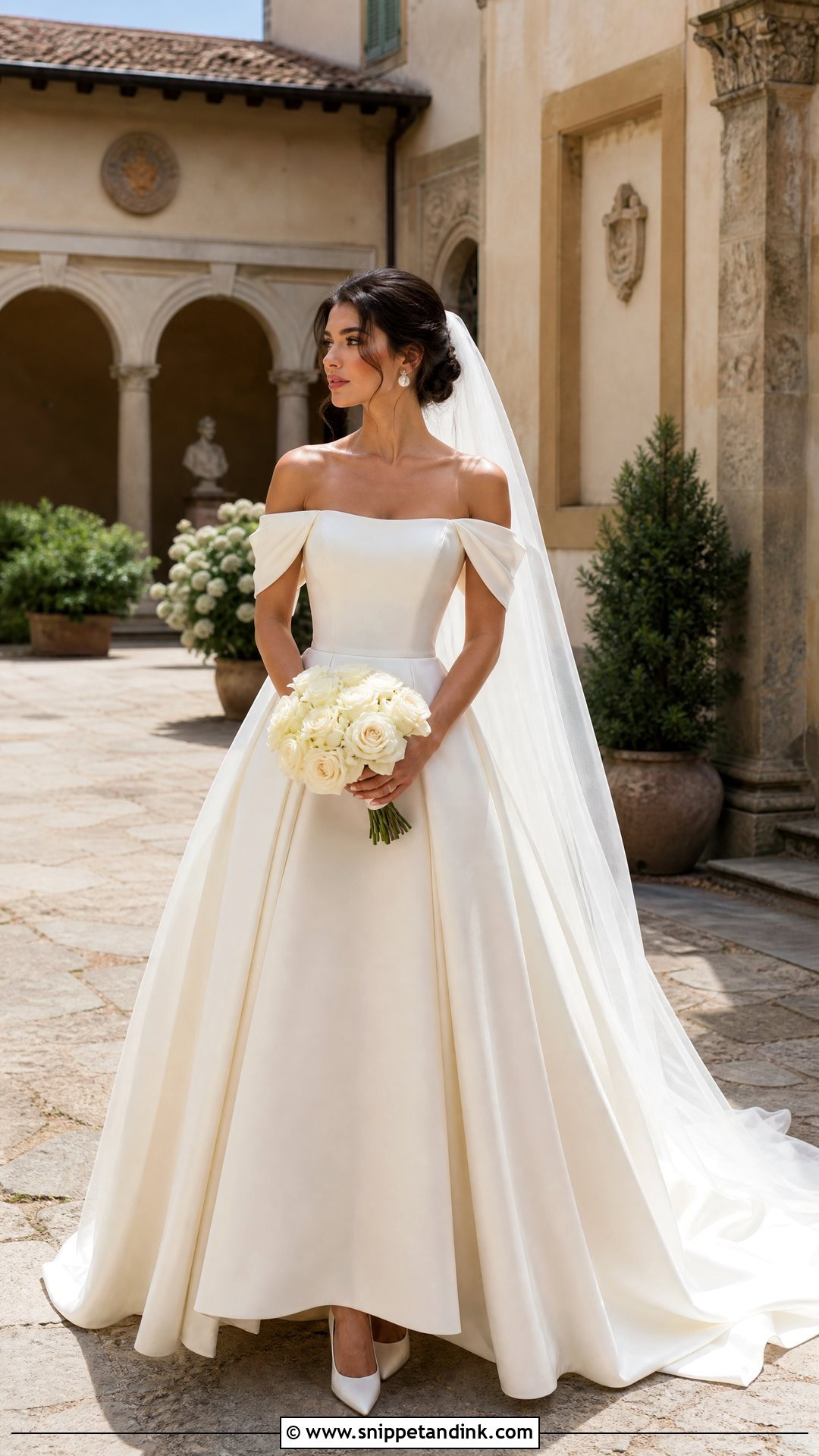
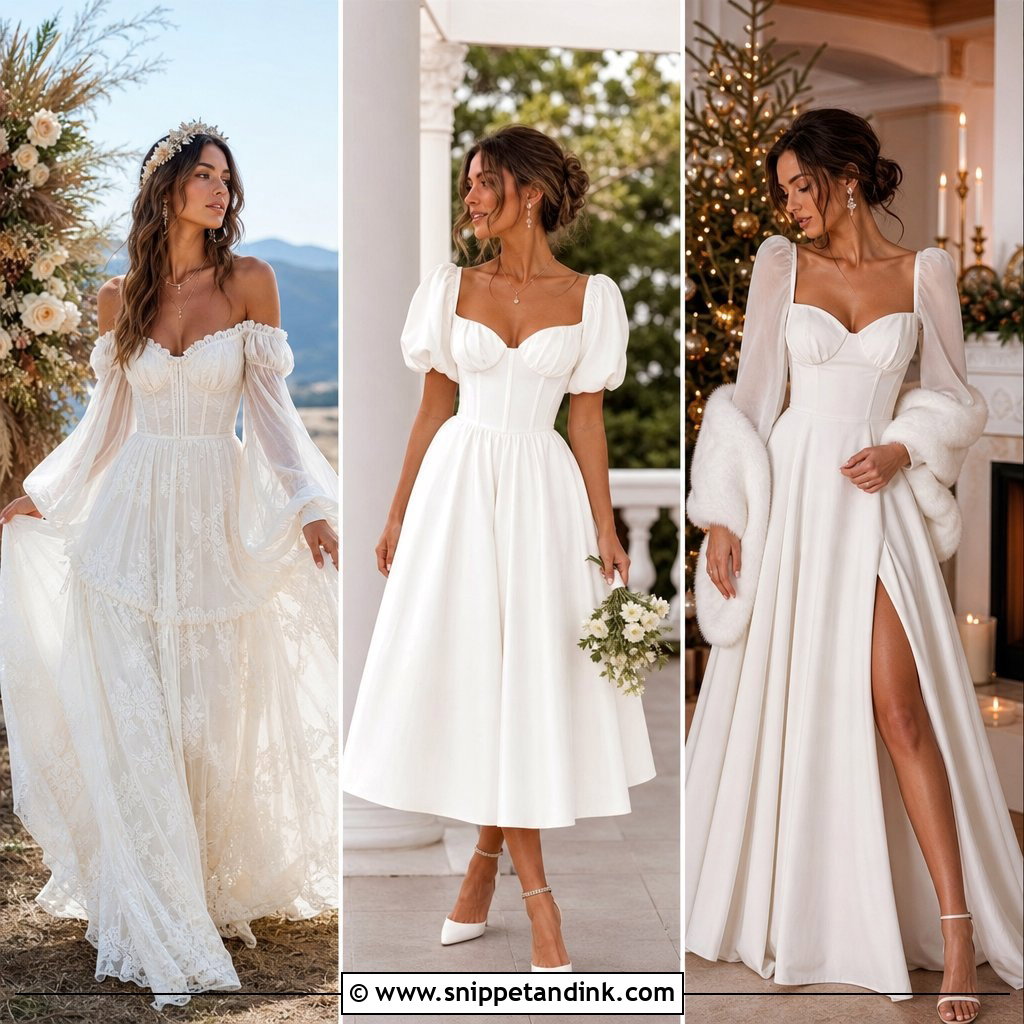
Off-the-shoulder sleeves give a Renaissance softness that suits a villa staircase entrance. The fitting issue is arm movement: if the folded sleeve band is too tight, you won’t be able to lift your bouquet or hug anyone. I ask brides to raise their arms to shoulder height before I sign off. Choose a structured bodice so the band has something to anchor to, then a flowing A-line or full satin skirt. A long plain veil, pearl-and-gold earrings and pointed pumps complete it. If your ceremony is in a church, bring a lace bolero; many Italian churches expect covered shoulders inside.
4. Long-Sleeve Lace Tuscan Wedding Dress
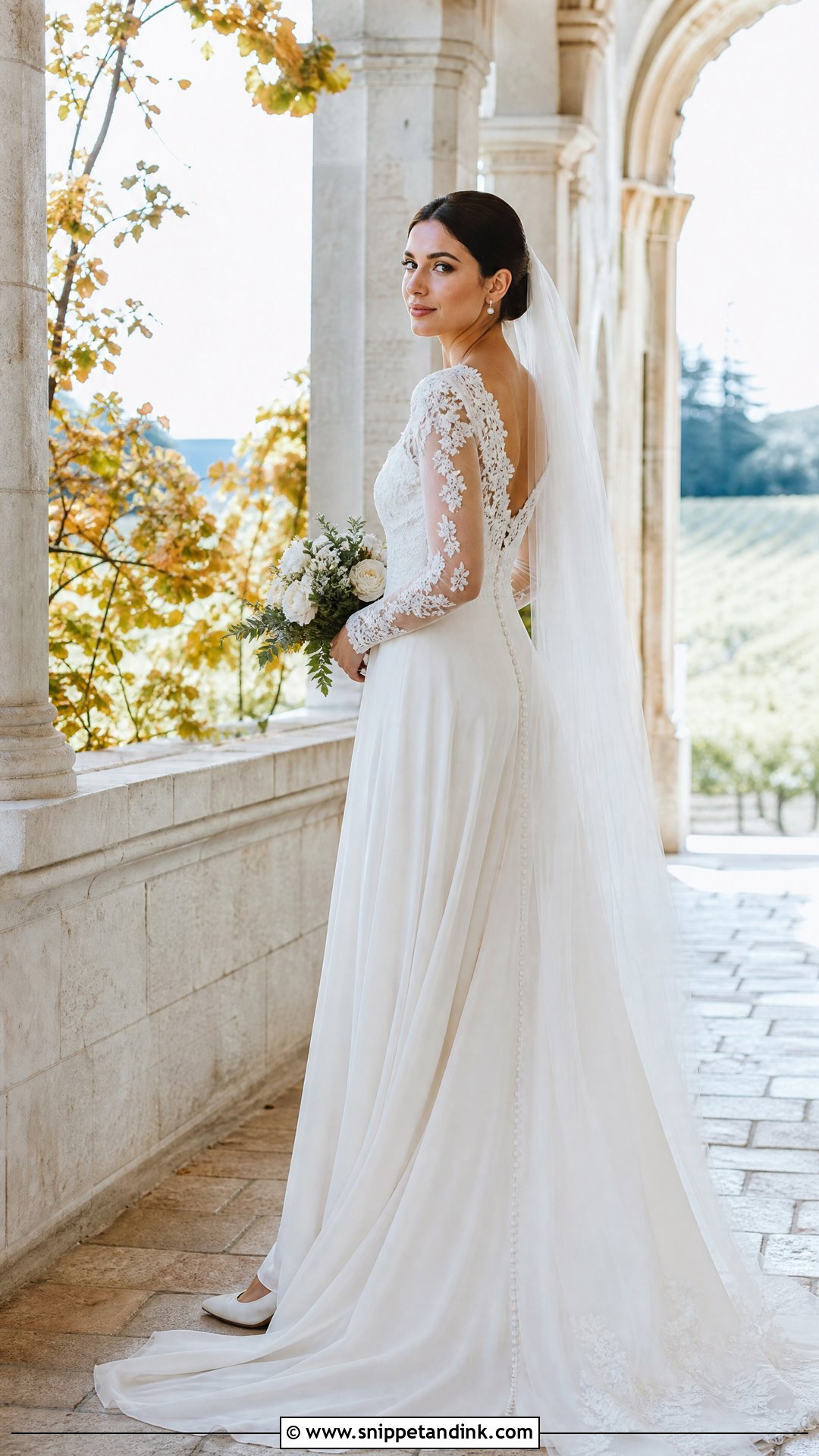
Long lace sleeves make sense for the cooler shoulders of the Tuscan year, April or late October, when evenings drop quickly once the sun goes behind the hills. Choose illusion sleeves with placed appliqués rather than solid lace, which traps heat and restricts the elbow. A defined waist and fluid skirt keep the dress light; covered buttons down the back add the classic touch. Kitten heels, a chapel veil and pearl studs suit it, along with a loose braided bun. I’d still pack an ivory cashmere wrap for the outdoor dinner, draped rather than buttoned so the sleeves stay visible.
5. Drop-Waist Tuscan Wedding Dress
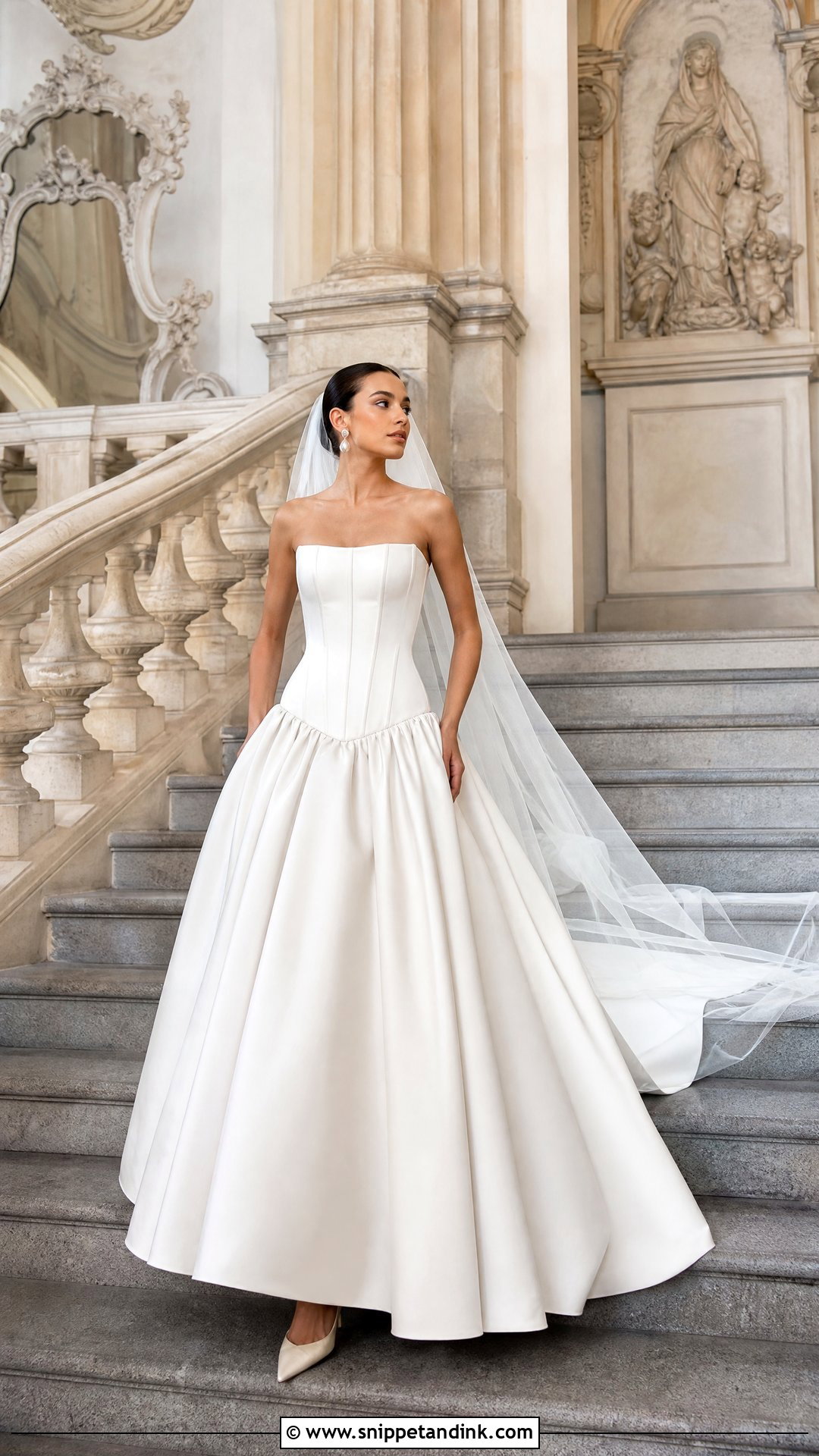
A drop waist stretches the bodice down toward the hips before the skirt opens, and in a grand villa interior that long line looks statuesque. It needs a fabric that holds its shape, so matte satin, silk faille or light taffeta rather than chiffon. Be honest about the seated test. A long fitted bodice can dig in at the hip bones during a three-hour Italian dinner, which is why I have brides sit for ten minutes in it before alterations finish. Keep jewellery to sculptural pearl earrings, pair it with a simple cathedral veil and a sleek bun, and let the waistline lead.
6. Floral Appliqué Tuscan Wedding Dress
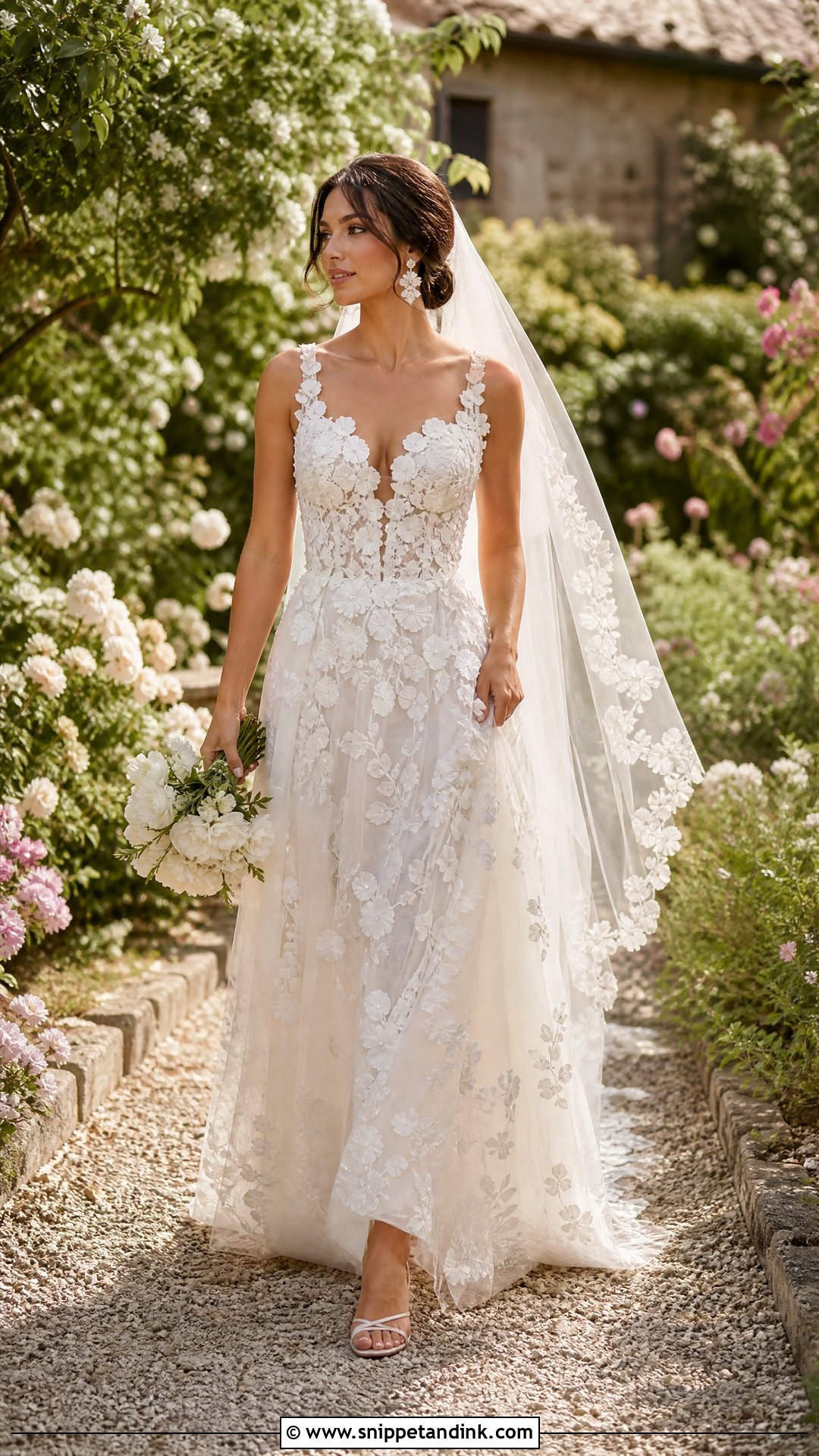
Three-dimensional flowers on a gown echo a garden ceremony better than almost any other detail. I prefer designs where the appliqués are densest at the bodice and fade out across the skirt; scattered evenly from neck to hem they can make a petite bride look busy. One practical warning for outdoor venues: raised appliqués near the hem catch on gravel and dried grass, so ask whether the lower ones are stitched on firmly or simply tacked. Barely-there sandals, floral pearl earrings, a veil with a few matching flowers and loose waves keep it fresh. Spring, with the gardens in bloom, suits it best.
7. Square-Neck Tuscan Wedding Dress
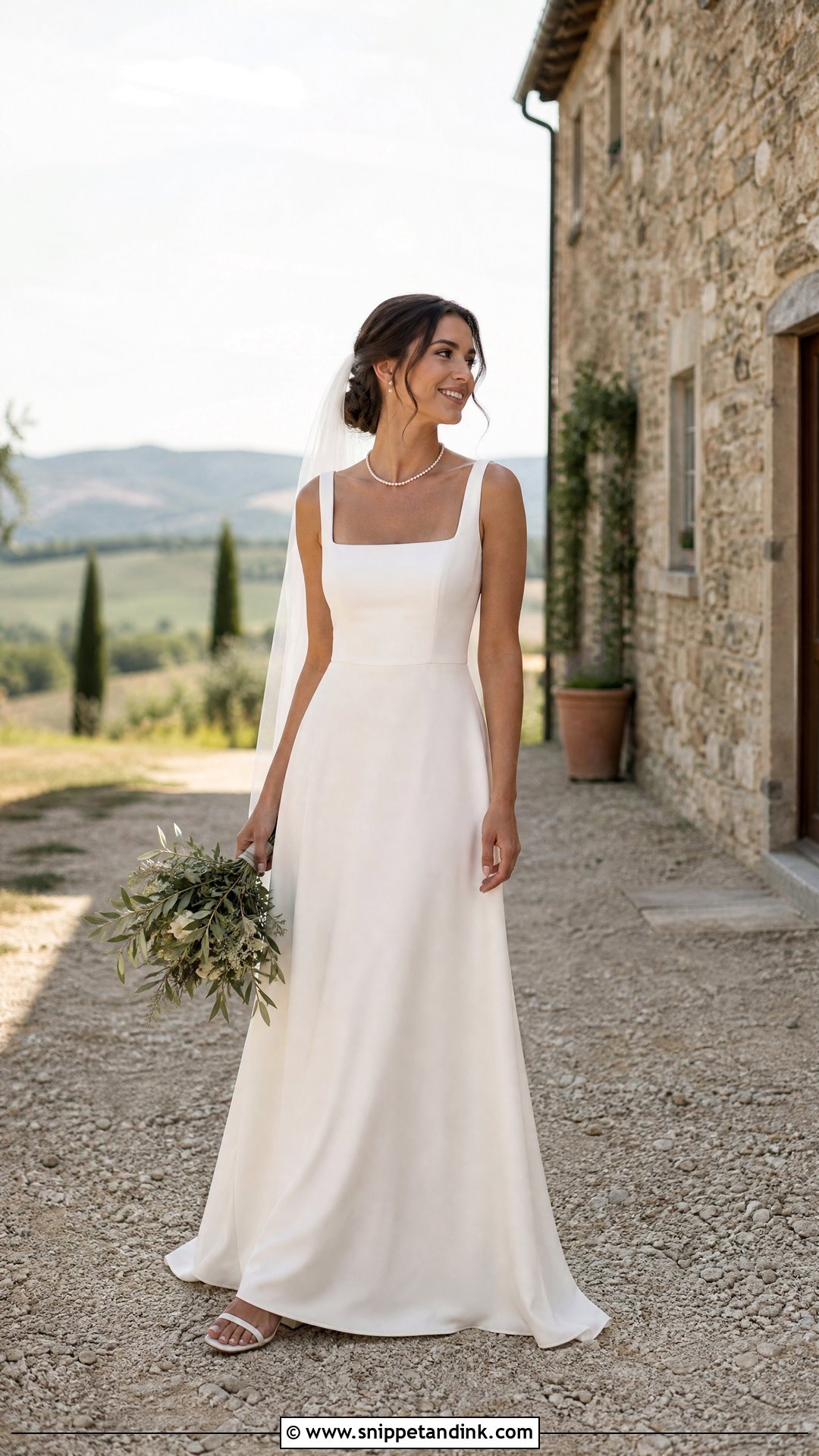
Square necklines borrow a little from Renaissance portraits, which makes them feel at home in Tuscany without being literal. The wide straps give real support, a help for fuller busts who want something other than strapless. Crepe, silk or matte satin keep the line crisp. This is one of the few necklines here where I’d encourage a short pearl strand or small pendant, since the open square leaves space for it. Low block heels, a medium veil and a soft updo with a few face-framing pieces suit a farmhouse ceremony as easily as a villa dinner under a pergola.
8. Corset Bodice Tuscan Wedding Dress
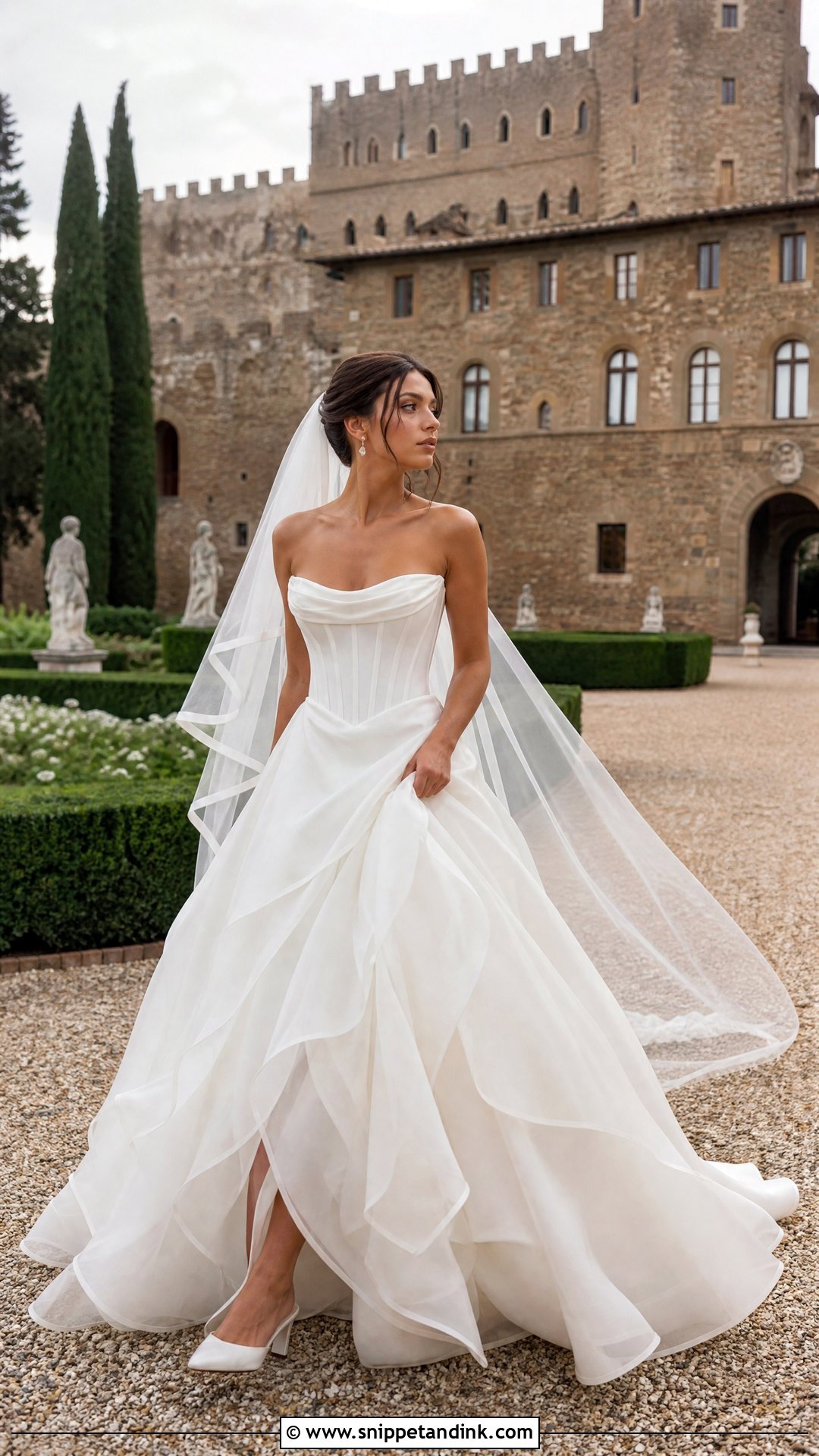
A corset bodice over a flowing skirt is the look many brides picture when they imagine an Italian destination wedding. The construction is what separates a good one from a painful one. Real boning and a waist stay should hold you up without squeezing; if you can’t take a full breath at the fitting, it will feel worse after dinner in summer heat. Organza or layered tulle keeps the skirt manageable outdoors. Pearl drops, pointed block heels and a long veil under a soft bun suit it, and a ribbon-edged veil echoes the bodice seams nicely. Medieval estates and formal gardens give it the right backdrop.
9. Chiffon Tuscan Wedding Dress
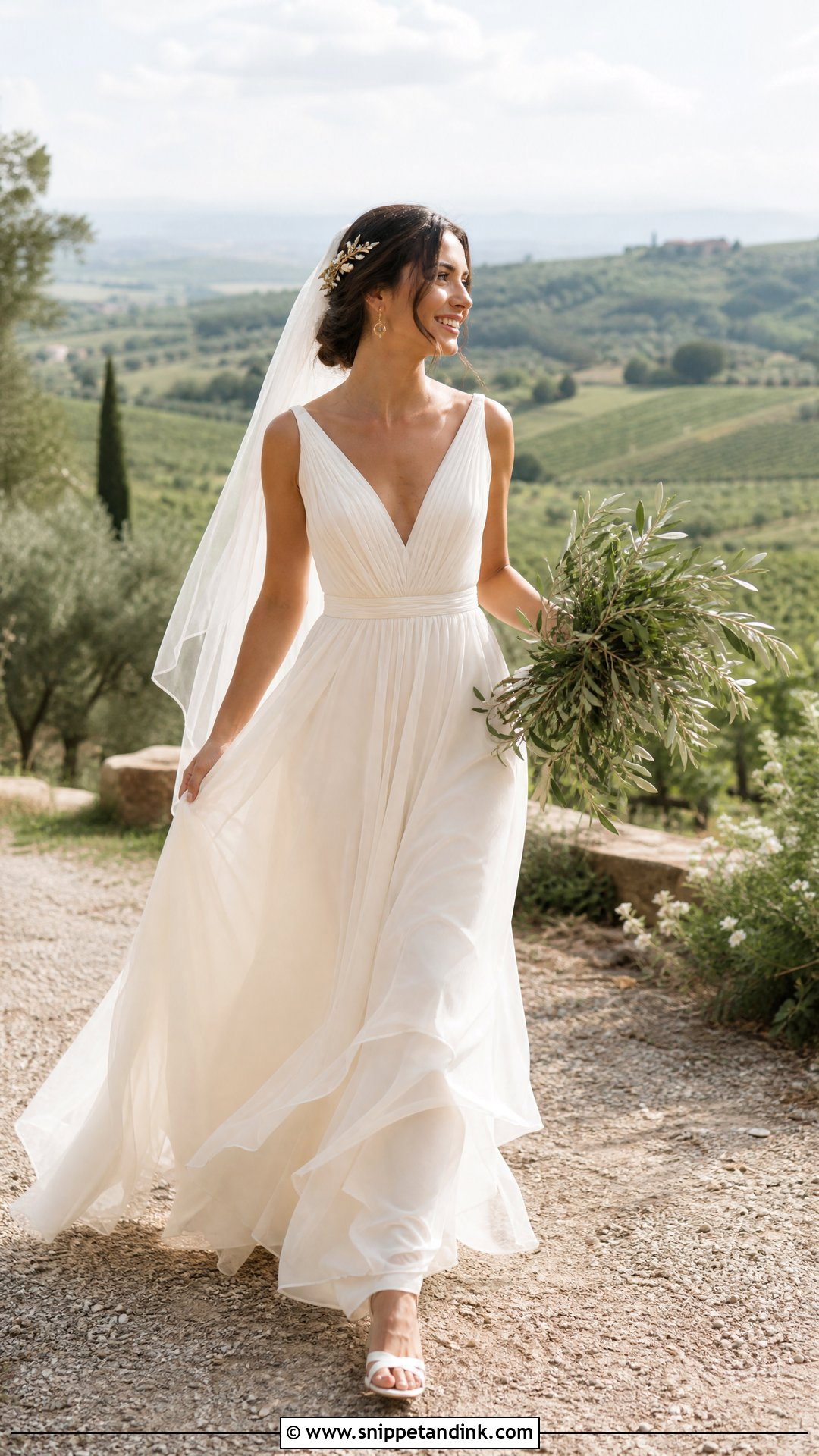
Chiffon is the fabric I recommend most for a July or August wedding in Tuscany, when afternoons are hot and there’s often no breeze in a walled garden. An A-line or empire-waist design with several fine layers over a secure lining moves beautifully and lets air through. The drawback is that chiffon snags. A rough stone wall or a rose thorn can pull a thread, so watch where you lean for portraits. Low supportive sandals, a small comb and a light fingertip veil suit it. Put the hair up, loosely; hair on the neck is miserable at thirty degrees.
10. Crepe Column Tuscan Wedding Dress
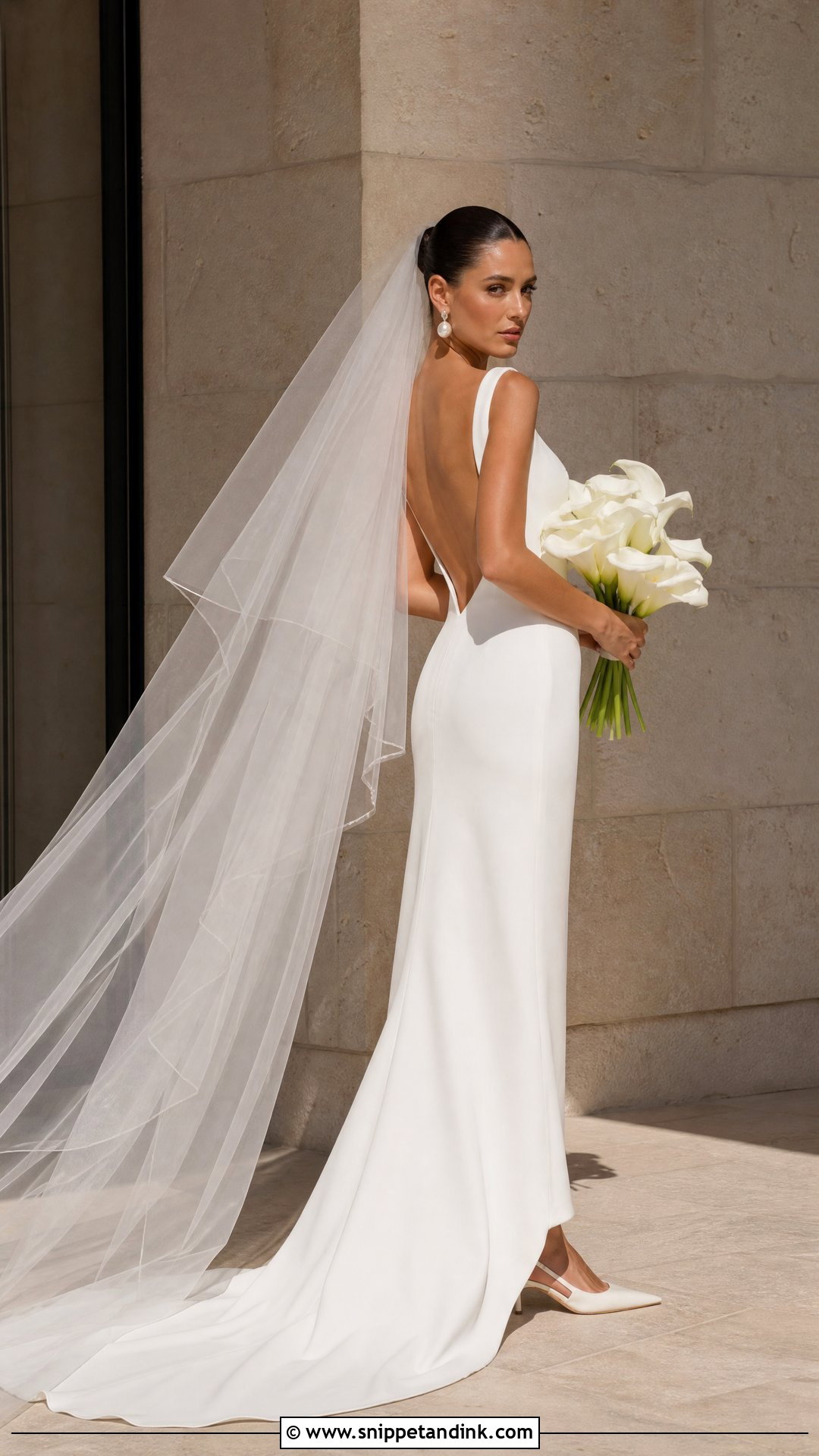
A crepe column is what I suggest to brides marrying in a contemporary villa or a city venue, where the architecture already provides the drama. The narrow silhouette depends on tailoring, so look for a crepe with a little stretch, and a short train with a bustle you can manage yourself. This is also the easiest gown on the list to travel with: crepe resists creasing, has no layers to crush and fits in a garment bag without fuss. Pointed slingbacks, statement pearl earrings, a clean cathedral veil and a slick low bun keep it minimal. A row of covered buttons adds detail if you want it.
11. Satin Ball Gown Tuscan Wedding Dress
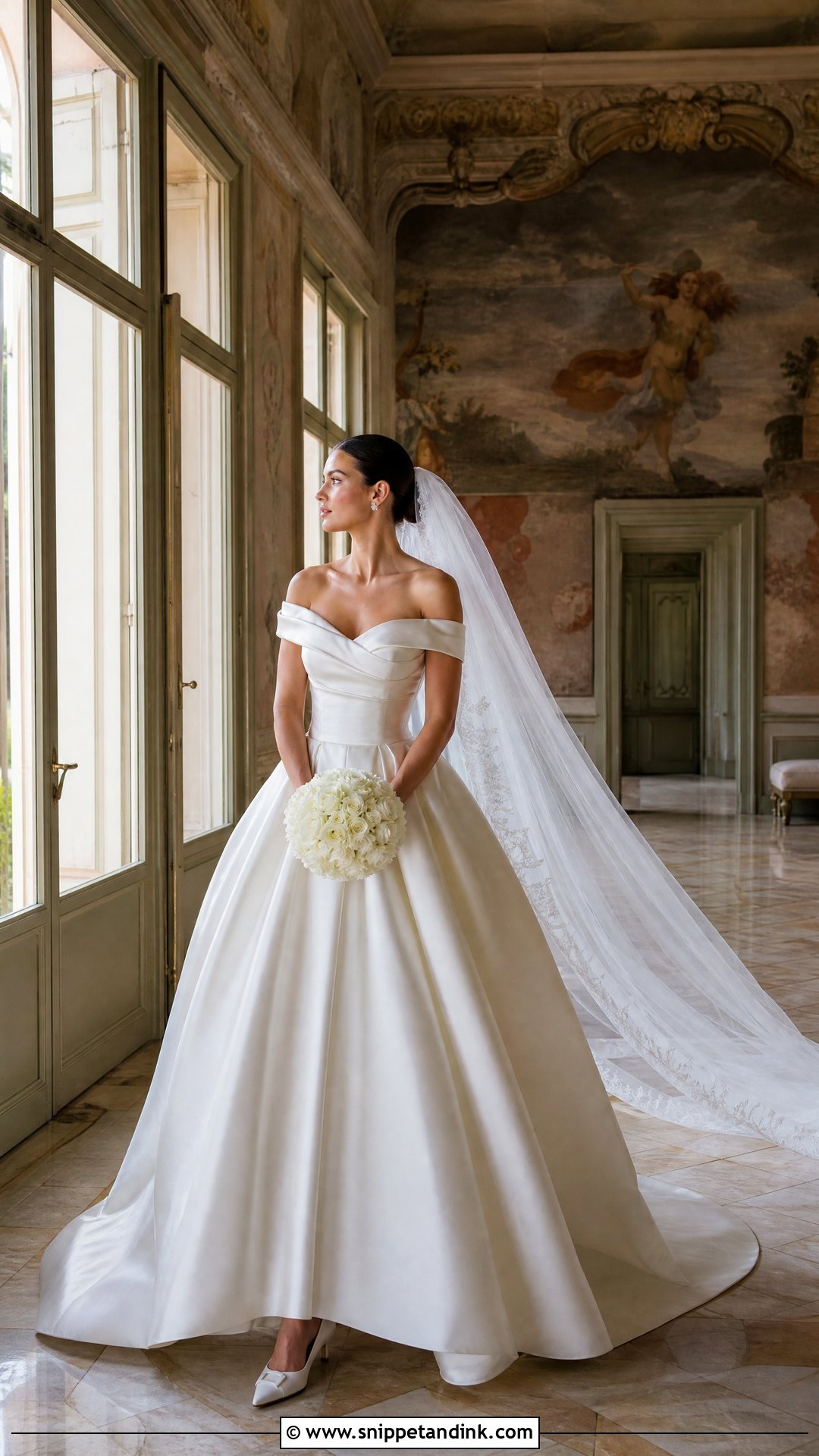
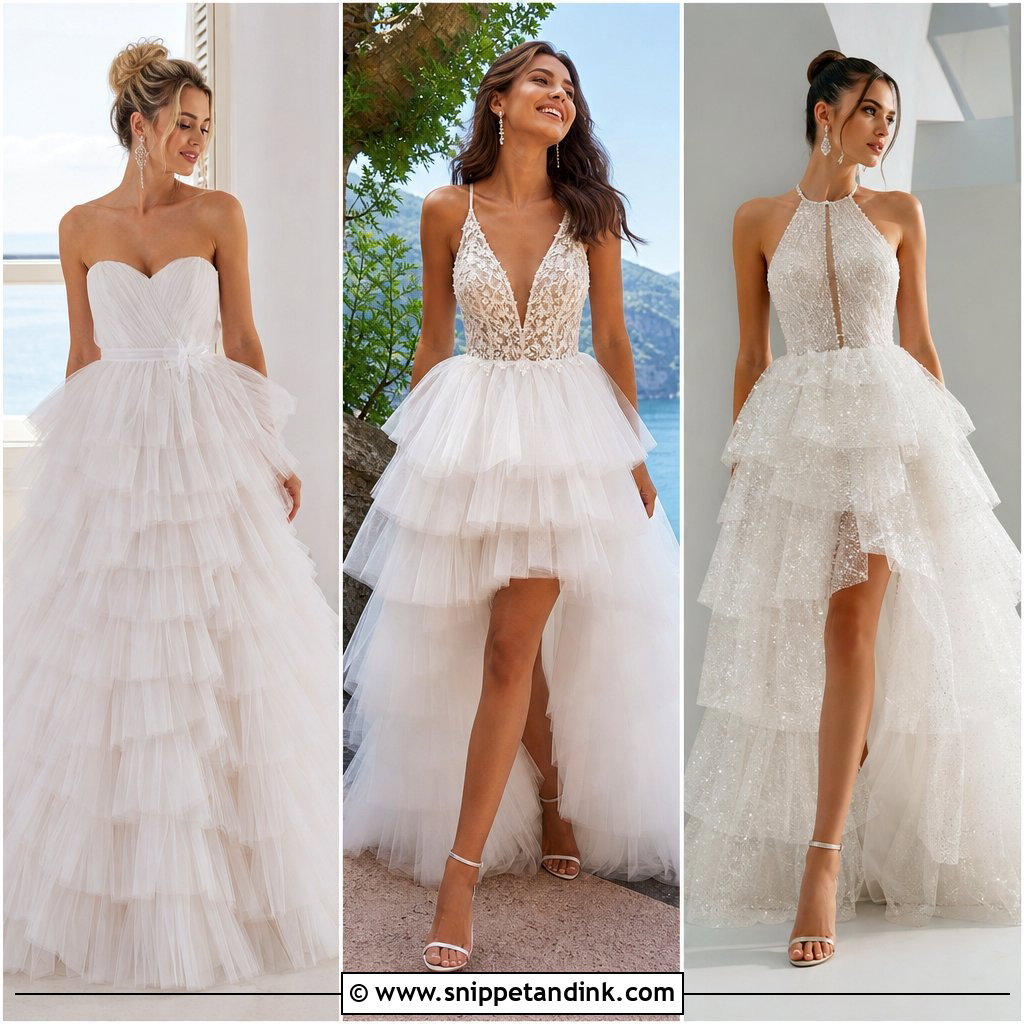
Satin ball gowns belong in the grand estates with frescoed rooms and wide stone staircases, where a full skirt has room to move. Pick clean pleating over heavy embellishment; in that setting the shape is enough. Before you fall for one, measure your aisle and ask about doorways. Some historic villas have narrow passages between rooms, and a wide skirt plus a train can turn a procession into a squeeze. Classic pumps, a cathedral veil, crystal studs and a sleek bun balance the volume. A removable overskirt gives similar drama and frees you up after dinner.
12. Boho Lace Tuscan Wedding Dress
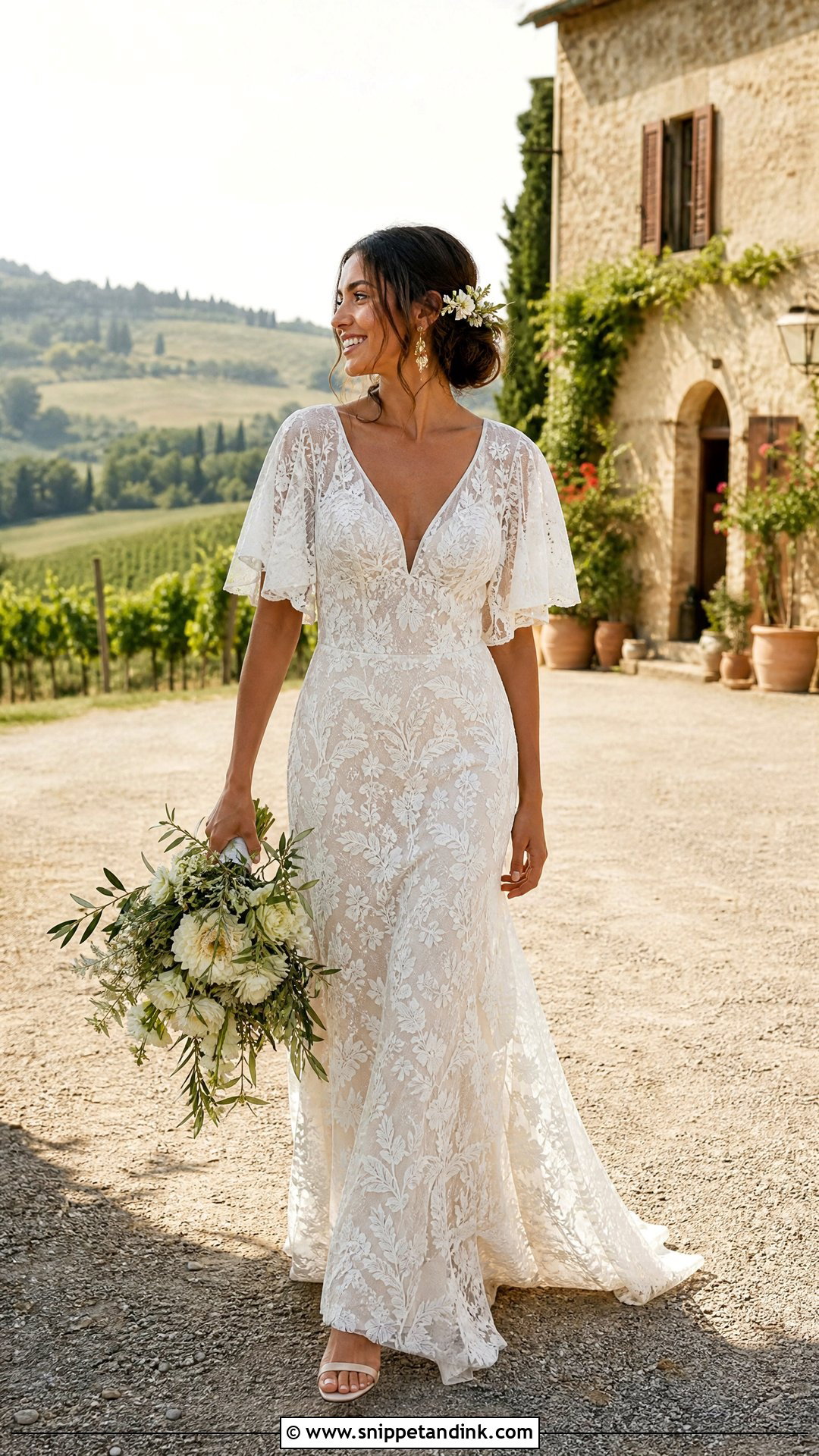
A farmhouse wedding with long tables and string lights calls for something relaxed, but I’d still keep the lace refined so it reads as bridal. Soft botanical or geometric lace over a fitted lining, a skirt that catches the breeze, and details such as Flutter sleeves or a modest open back give it personality. Loose waves or a softly braided updo suit it. I’d steer you away from an oversized wildflower bouquet here; a controlled bunch of cream blooms, olive branches and a little dried texture looks more considered against the lace.
13. One-Shoulder Tuscan Wedding Dress
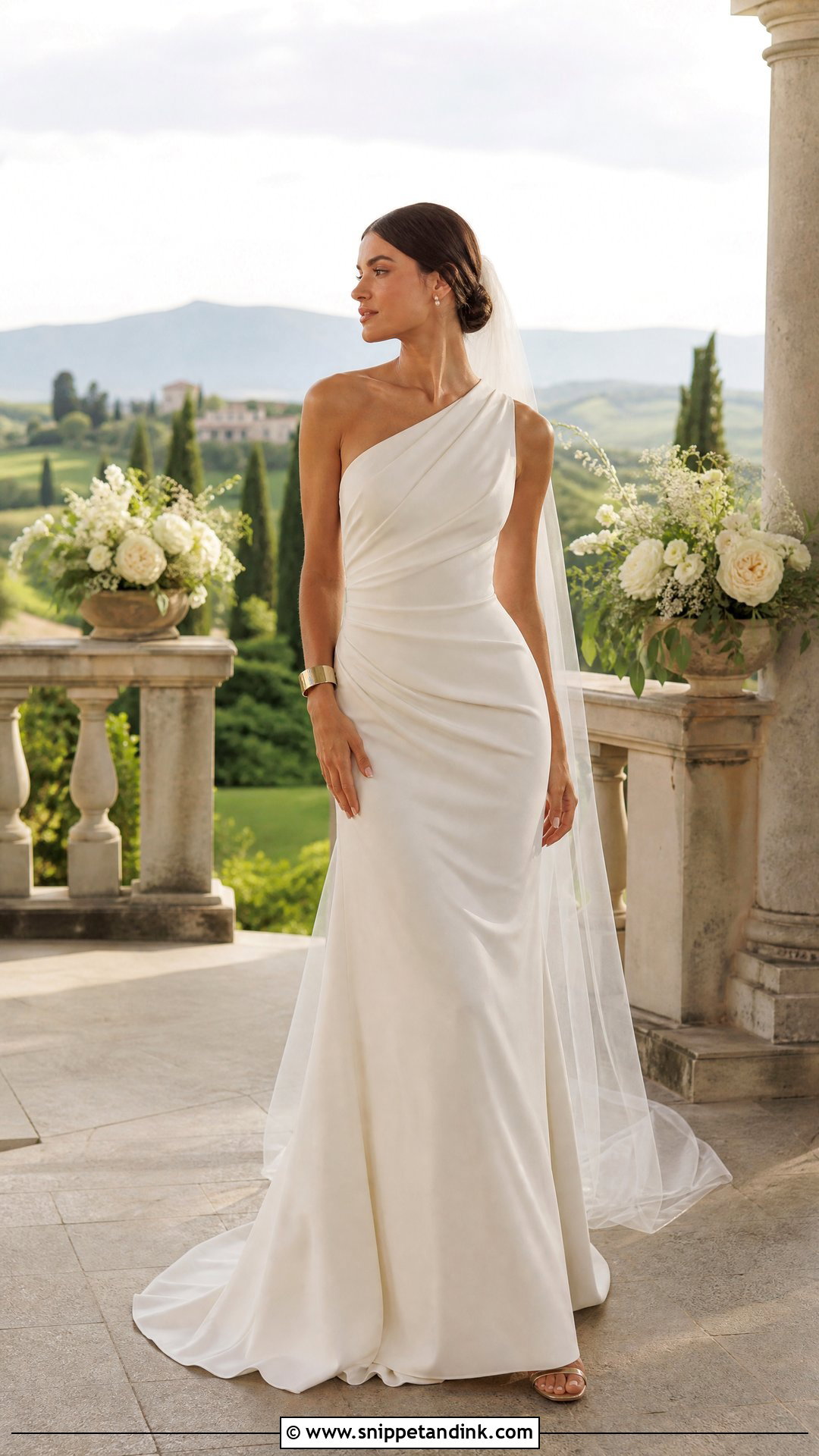
One-shoulder gowns recall the draped figures in Italian sculpture, and that classical line suits a sunset terrace. Soft crepe or silk falls cleanly from the shoulder; stiffer fabrics stand away from the body and look boxy. My first check is the single strap: it carries the whole bodice, so it must be cut to stay put when you raise the other arm. A column skirt looks sleek, while an A-line is easier on uneven ground. Skip the necklace, add a sculptural cuff on the bare arm and set a low side bun on the side opposite the strap for balance.
14. High-Neck Tuscan Wedding Dress
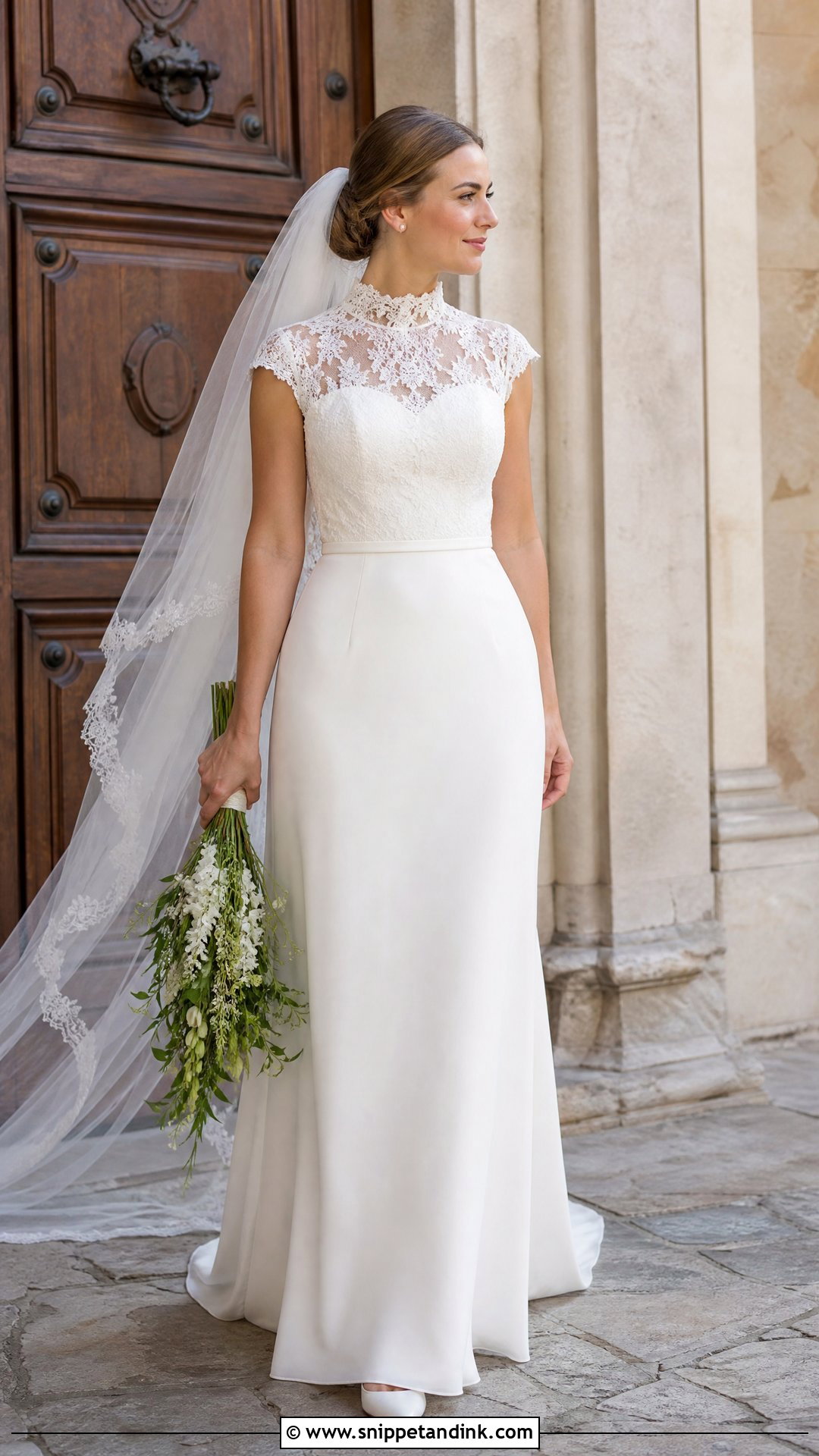
High necks are a practical answer for church ceremonies, where coverage is expected, and they still look soft when the collar is illusion lace. Balance the covered bodice with a fluid crepe or chiffon skirt. In summer I’d choose a sleeveless or cap-sleeve version, because a high neck plus long sleeves in August heat is hard going. Pearl studs, low closed-toe heels and a veil set beneath a neat chignon are all it needs; a necklace would only fight the lace. Because the coverage is built in, you can walk straight from the church to an outdoor reception without changing anything.
15. Tea-Length Tuscan Wedding Dress
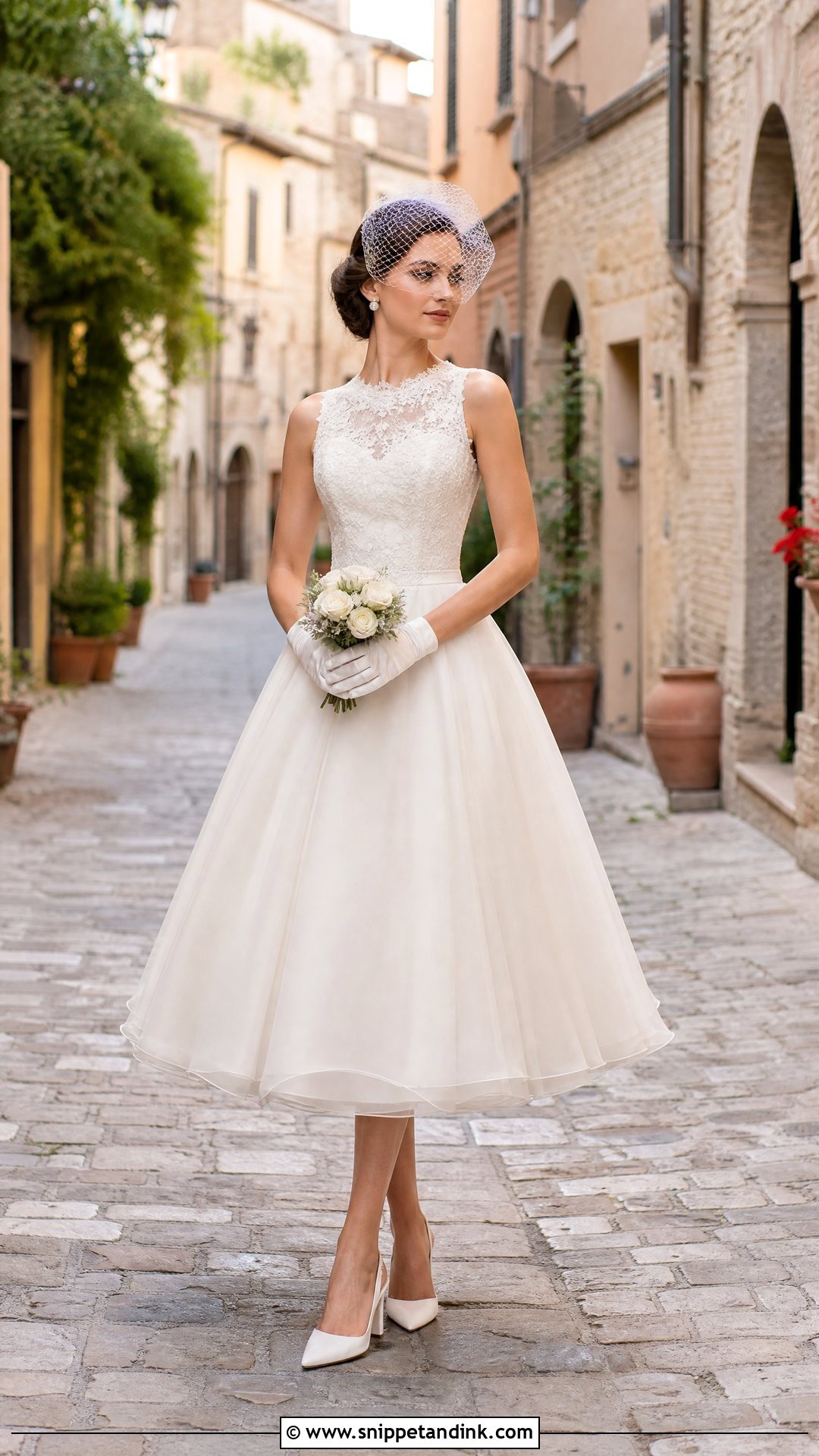
Tea length is the most practical hemline on this list for cobbled streets and garden paths, and it lets you wear shoes worth showing. A fitted bodice and a gently flared skirt in lace, organza or structured satin give it a vintage feel. Ivory slingbacks, pearl earrings, short gloves and a birdcage or shoulder-length veil complete the look, with a polished ponytail, smooth bun or softly curled bob. I’d steer petite brides toward a hem just below the knee rather than mid-calf, which can shorten the leg. It suits a town hall ceremony and doubles well as a dinner dress.
16. Strapless Tuscan Wedding Dress
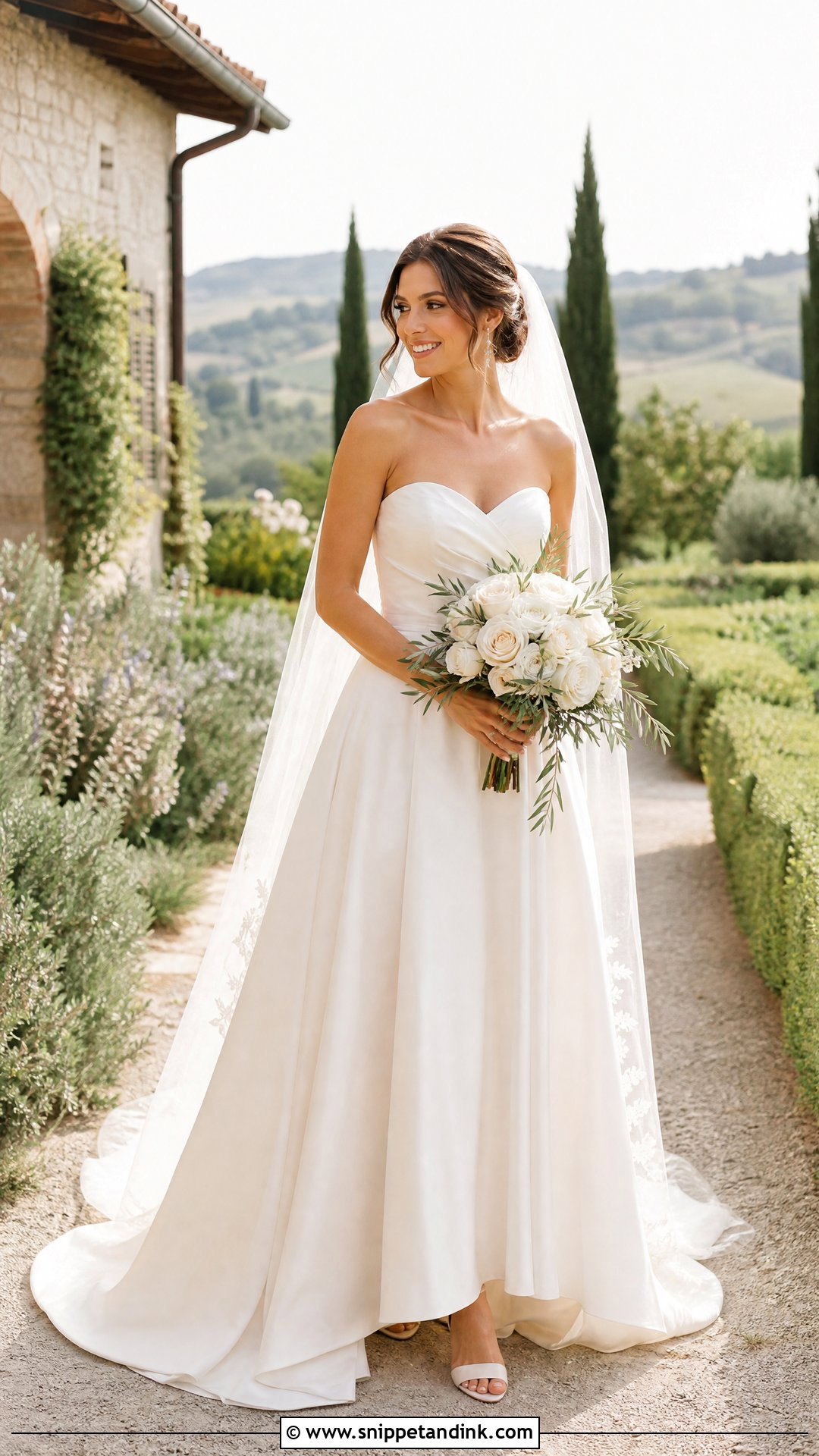
Strapless is the classic for warm weather, but it lives or dies on its internal structure. A good strapless bodice is built on boning and a firm inner band and stays up on its own; if you’re hitching it at the fitting, you’ll be hitching it all night. Choose the neckline for your shape: a straight cut for a small bust, a soft sweetheart for a fuller one. A flowing A-line suits gardens, a structured satin skirt suits a grand villa. Bring a lace topper or silk wrap for a church ceremony, and watch your shoulders in the midday sun before the photos.
17. Cape Sleeve Tuscan Wedding Dress
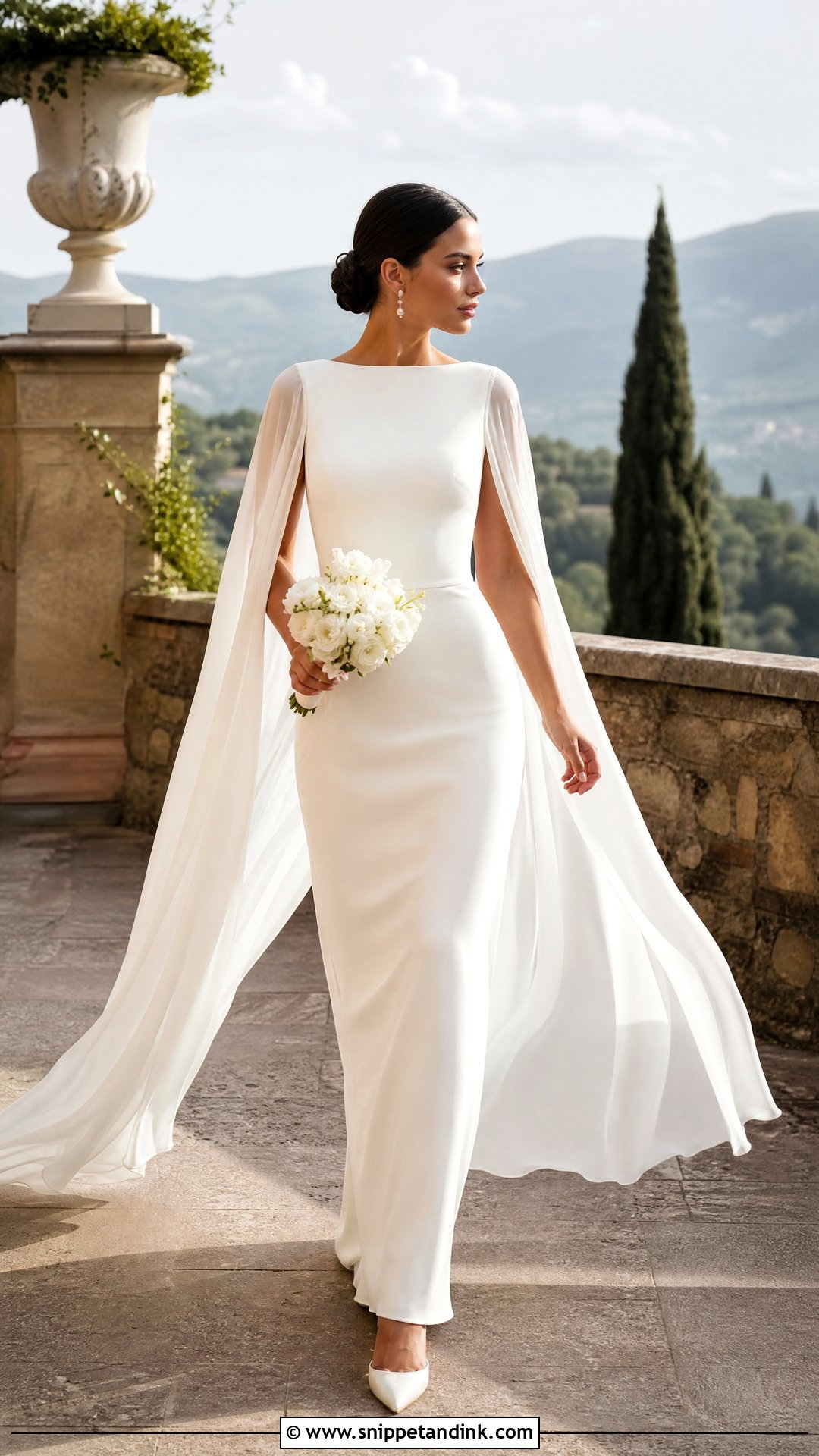
Cape sleeves give movement in outdoor photographs without the weight of an embellished gown, and they add a little coverage for the ceremony. On a hilltop, though, wind becomes part of the styling. A long chiffon cape can wrap around you in a gust, so I’d keep the length to a short cape or ask for small weights sewn into the hem. A column or softly flared base dress keeps the cape the main detail. You probably won’t need a veil; a small comb in a sleek low bun is enough. Ivory pointed heels and a compact white bouquet complete it.
18. Detachable Overskirt Tuscan Wedding Dress
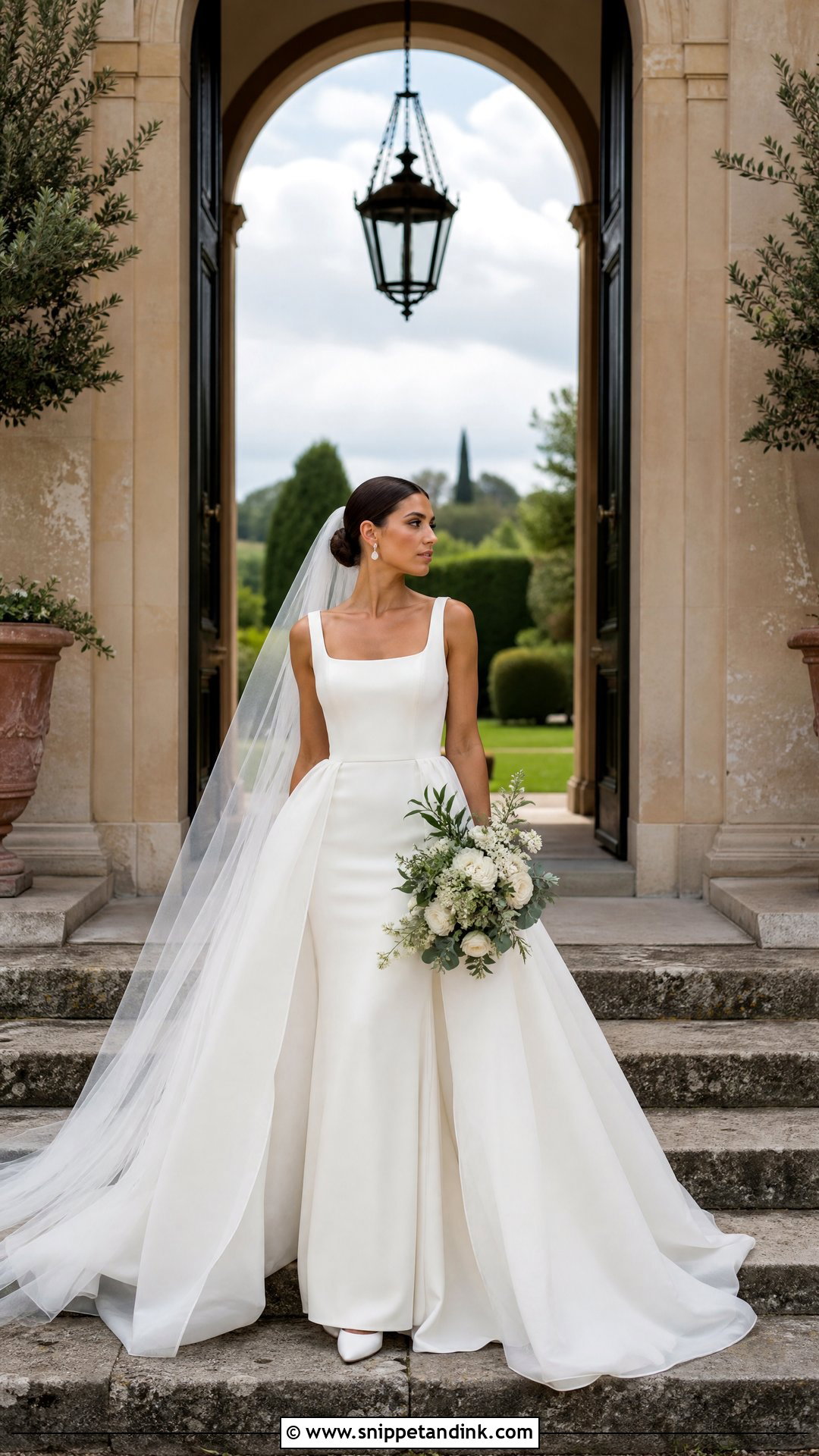
A detachable overskirt gives you a grand processional and an easy reception without a full change. Under it, wear a fitted crepe, lace or satin dress; over it, voluminous tulle or organza for the aisle and portraits. The fastening is where I spend time. It should lie smooth at the waist and come off in under a minute with one helper, so practise before you travel. Remember the removed skirt needs somewhere clean to go, ideally a hanger in your getting-ready room. Block-heel pumps, pearl earrings, a cathedral veil and a low bun work with both versions.
19. Puff-Sleeve Tuscan Wedding Dress
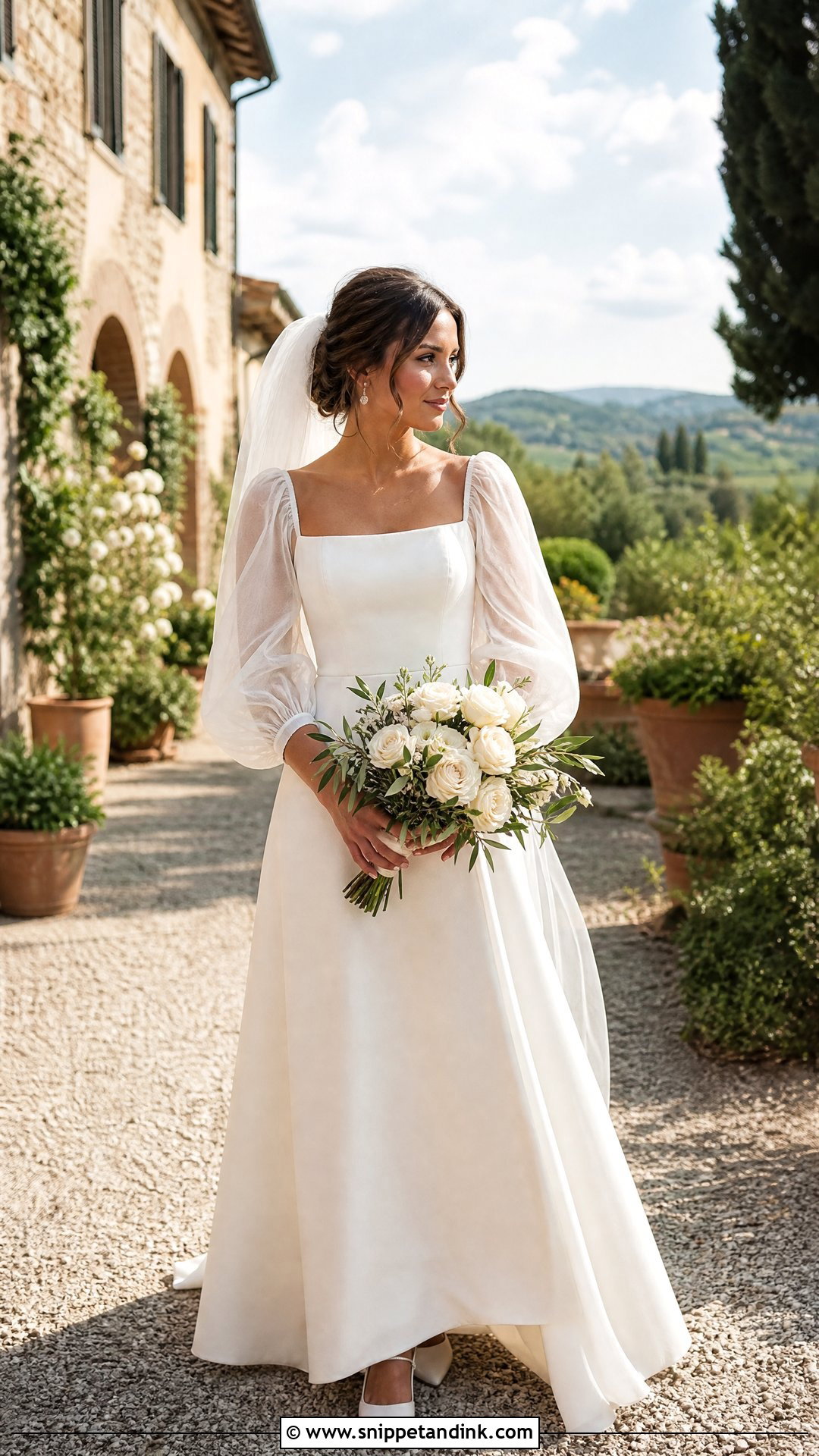
Soft puff sleeves bring a countryside sweetness that fits a restored farmhouse. Keep them sheer, organza or fine tulle, so they hold their shape without trapping heat. The risk with this look is tipping into costume, which is why I pair the sleeves with a plain fitted bodice and a simple A-line skirt. A centre-parted low bun or relaxed ponytail keeps the sleeves visible, along with pearl hoops and low heels. If you can, find a style with removable sleeves; by the time the dancing starts, most brides are glad to take them off.
20. Bridal Mini Tuscan Wedding Dress
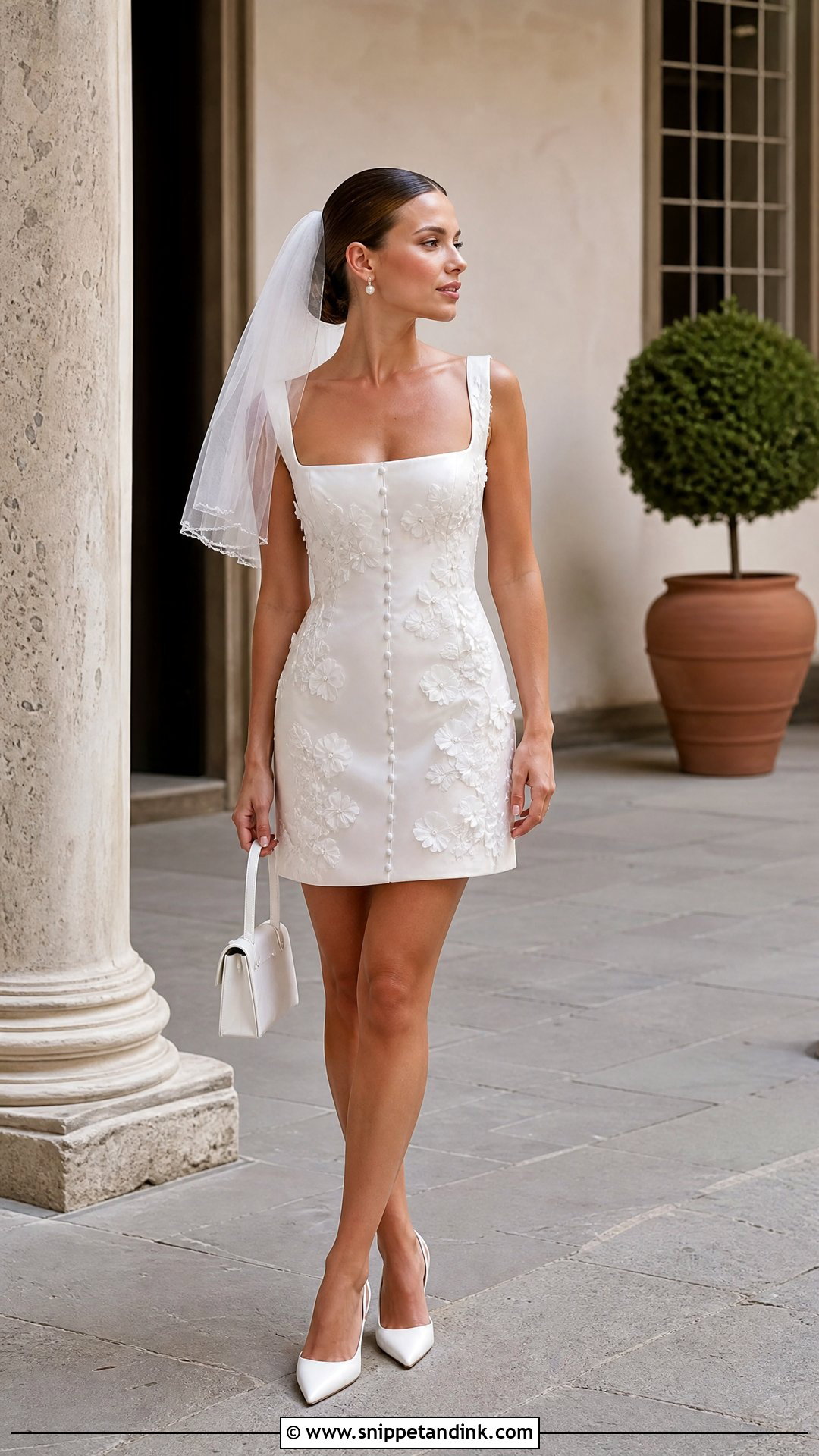
A bridal mini is a smart choice for an elopement, a welcome dinner or a late-night change. To keep it unmistakably bridal, lean on details: a square neckline, floral appliqués, satin buttons or a detachable bow. Pointed slingbacks, pearl earrings and a short veil balance the length, and a small top-handle bag holds essentials. Choose the hair to suit the neckline, a smooth bun, soft bob or high ponytail. For evenings, a cropped ivory jacket helps. One practical note: Florence’s cobbled streets are uneven, so leave the stilettos for the dance floor.
Flying the Dress to Italy in One Piece
A destination gown travels better than most brides fear, provided you plan it rather than improvise at the gate. This is the routine I give clients.
- Call the airline weeks ahead and ask how they handle a wedding dress in the cabin. Some will hang it in a closet if there’s room, but that’s never guaranteed, so assume it goes in the overhead bin.
- Ask your bridal shop to fold it with acid-free tissue between the layers and pack it in a breathable garment bag. Never put it in checked luggage.
- Book a steaming service through your planner or venue for the day you arrive, not the morning of the wedding. Silk and satin need careful handling; crepe and lace usually just need hanging overnight.
- Pack a small kit in your hand luggage: a stain pen, white chalk for marks on lace, double-sided fashion tape, and the bustle instructions written down.
- Keep the veil separate in its own tube or flat box, since tulle crushes easily under a heavy dress.
If your gown is a big satin ball gown, consider shipping it ahead with a tracked courier and insurance, and confirm someone at the villa will receive and hang it. Smaller, layer-light dresses are much easier to carry yourself.
Matching the Gown to the Villa, the Season and the Walk
The dresses that work best in Tuscany are the ones chosen with the venue in mind. Romantic lace and soft chiffon sit naturally in a vineyard; structured satin belongs in a frescoed villa. Start with your month, because July heat and October evenings call for very different fabrics. Then check whether a church is involved and what it expects, and how far you’ll walk on gravel or cobbles between ceremony, portraits and dinner. Build the rest around that: shoes that grip, a veil that suits the wind, jewellery kept in proportion. The landscape will do plenty of the work; your job is to be comfortable enough to enjoy it.
You'll Like These Ideas:





Leave a Reply