
Romantic vintage isn’t a costume. When a bride brings me that brief, what she usually wants is softness and a sense of history that still looks current in twenty years of photographs. The ingredients are familiar: lace, pearl buttons, corset bodices, basque and drop waists, heirloom veils, tea-length skirts and sleeves with some air in them. Designers right now are pulling from the 1920s, 1930s, Victorian and Edwardian years, the fifties and the nineties, and toning each era down enough to wear. The thirty dresses below are complete looks, and each comes with what I’d check before saying yes to it.
A Realistic Calendar From First Appointment to Final Fitting
Romantic gowns with lace, corsetry and covered buttons take longer to make and longer to alter than plain ones. Lead times vary a lot by designer and season, so treat these as a general shape and ask your shop for its own numbers.
- Around nine to twelve months out: start trying on, and try several eras rather than one. Many made-to-order gowns need several months to arrive.
- Once ordered: buy shoes and the main undergarments, so every fitting is done with the real height and shape.
- Two to three months out: first alteration fitting. Lace and corset bodices usually need the most work here.
- Four to six weeks out: second fitting for hem, bustle and fine adjustments.
- One to two weeks out: final fitting and collection. Bring whoever will bustle you on the day.
Rush orders exist, but they narrow your choices and often cost extra. If your date is close, ask to see sample gowns sold off the rack, where you skip the wait completely.
Keep some money aside for alterations from the start. Taking in lace means unpicking and re-placing motifs by hand, and adding bustle points to a long train is fiddly work, so the bill on a romantic gown is usually higher than on a plain one. Ask for a written quote at the first fitting.
1. Lace Long Sleeve Wedding Dress
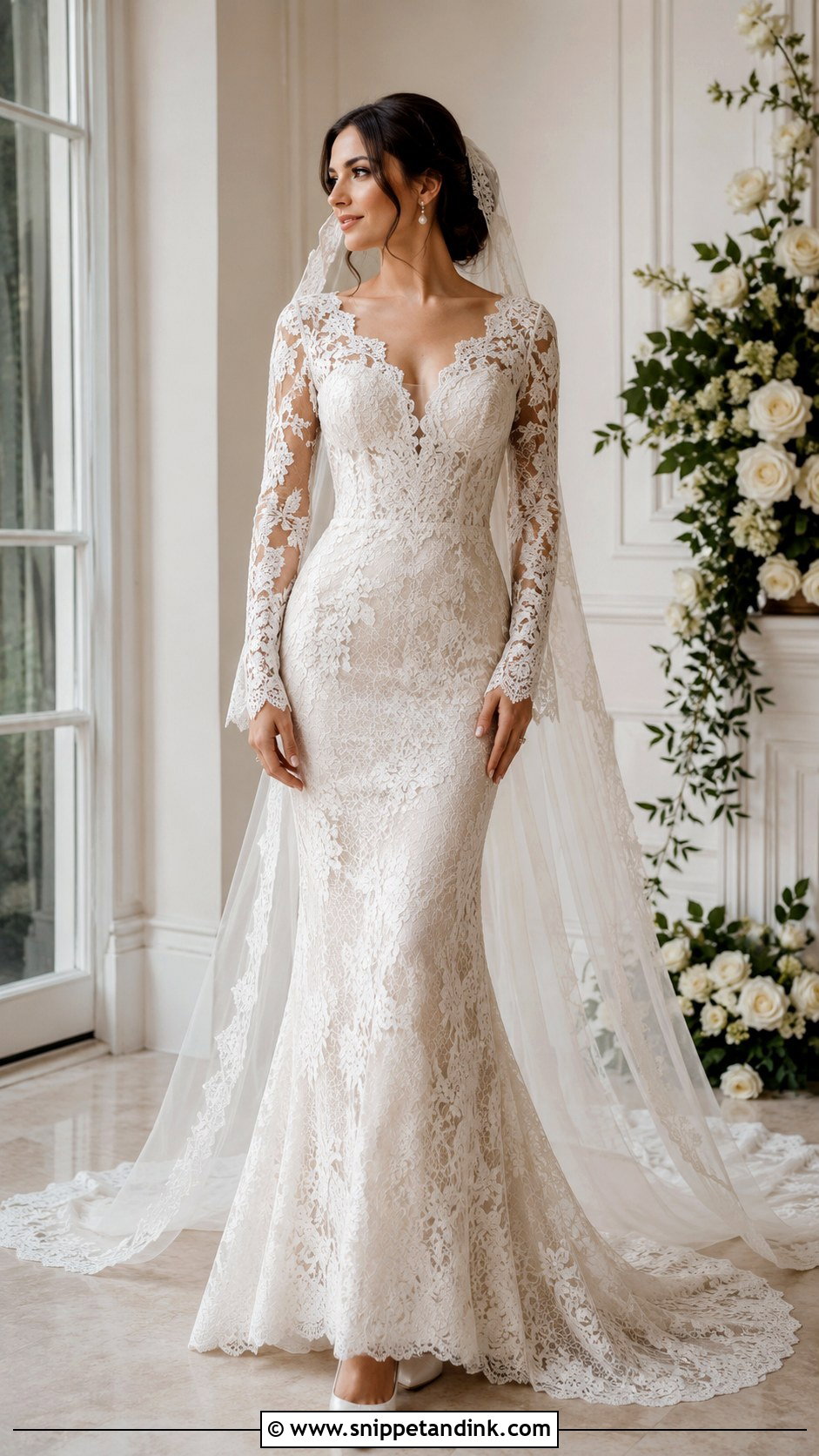
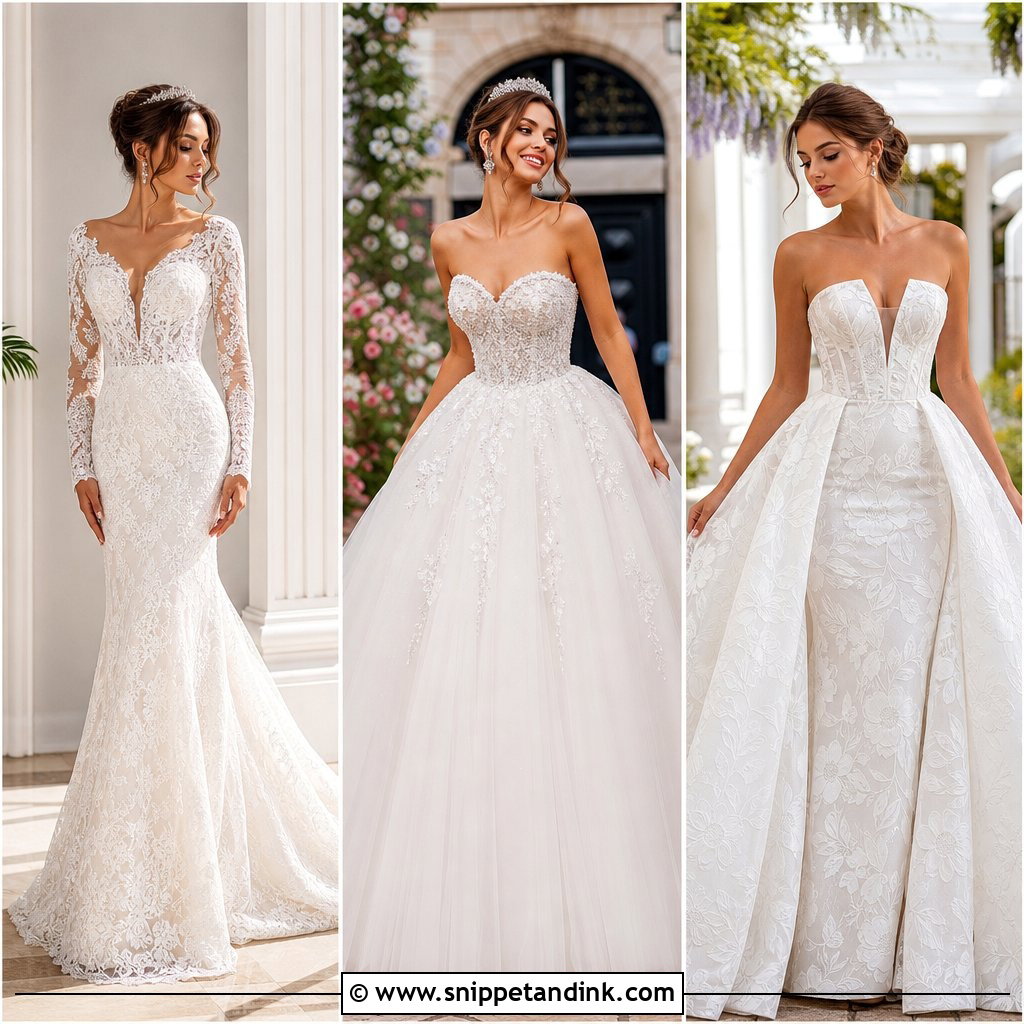
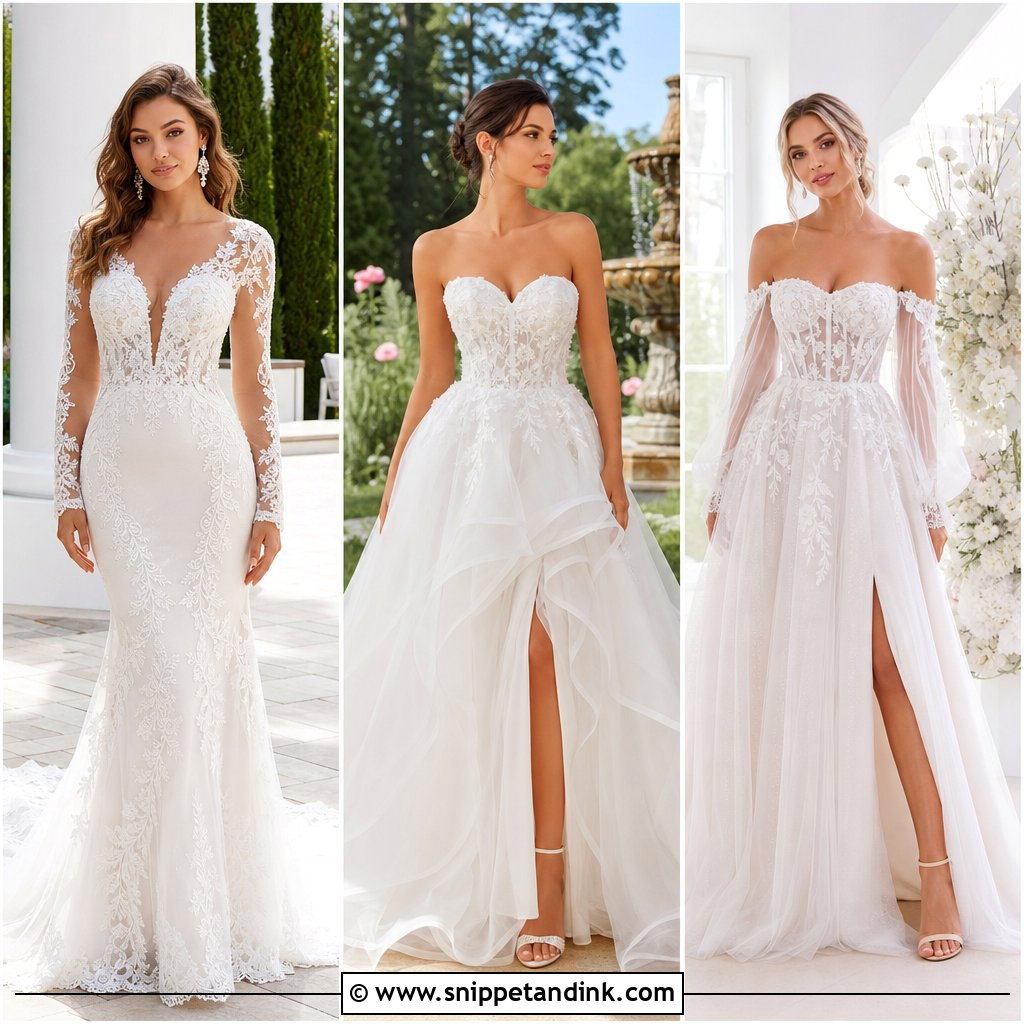
Sheer or softly fitted lace sleeves give coverage without weight, and that’s why they’re a winter and autumn favourite. Scalloped cuffs are the detail to look for; they finish the sleeve neatly at the wrist instead of ending in a hard seam. A lightly structured bodice over a slim A-line or gentle fit-and-flare keeps the outline classic. Pearl drops, soft waves and slingback heels suit it, and a fingertip veil with a narrow lace edge echoes the dress without fighting it.
2. Basque Waist Wedding Dress
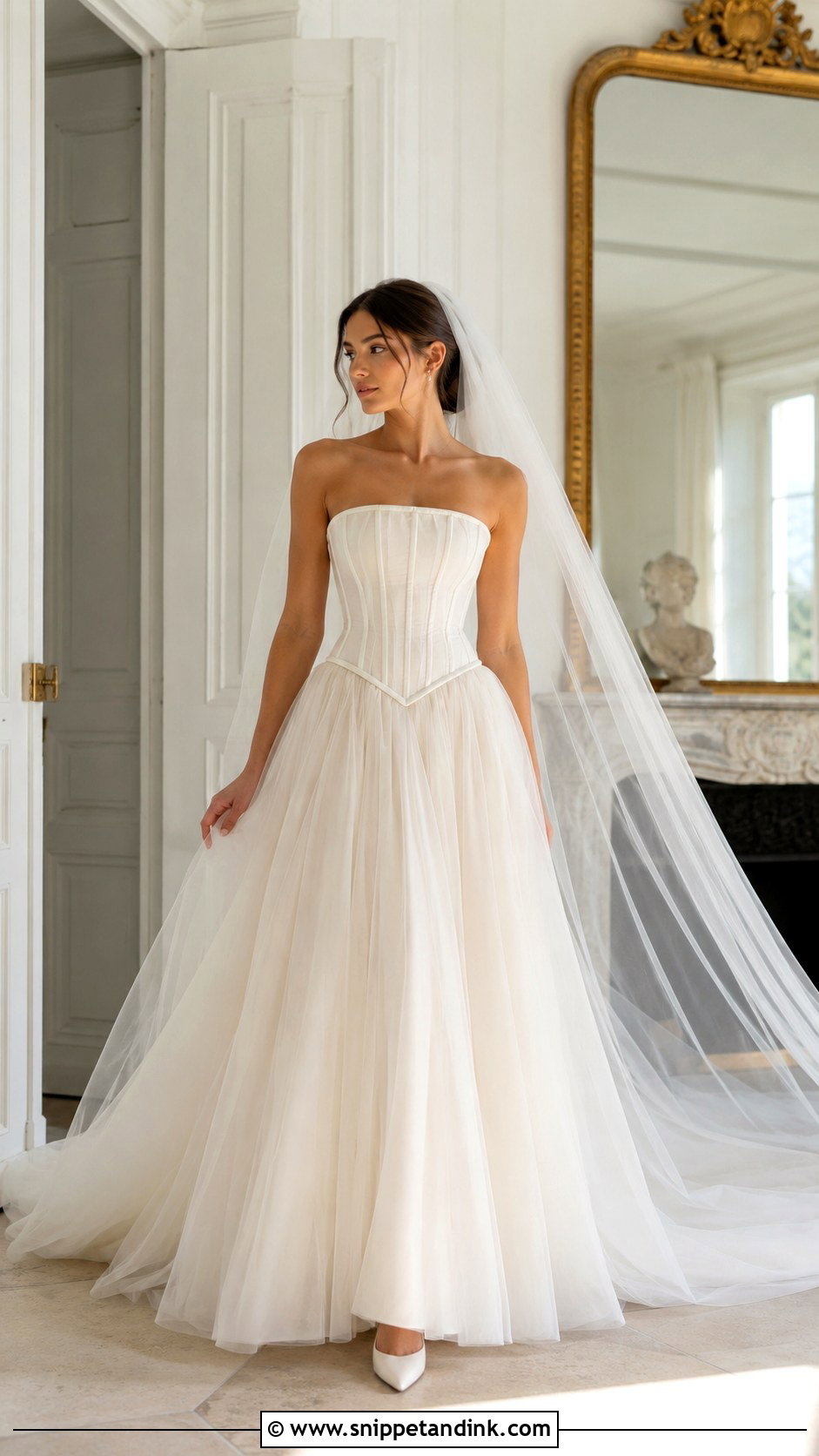
The basque waist dips to a point below the natural waist, so the torso looks longer and the skirt looks fuller. It’s the shape I’m asked for most this year. Lace, satin or tulle over a corset-style bodice keep it romantic. My one caution: on a short torso, a deep dip can cut the body awkwardly, so ask for a shallower point. A cathedral veil softens all that structure. Pearl studs, a smooth low bun and satin heels keep attention on the waistline.
3. Drop Waist Wedding Dress
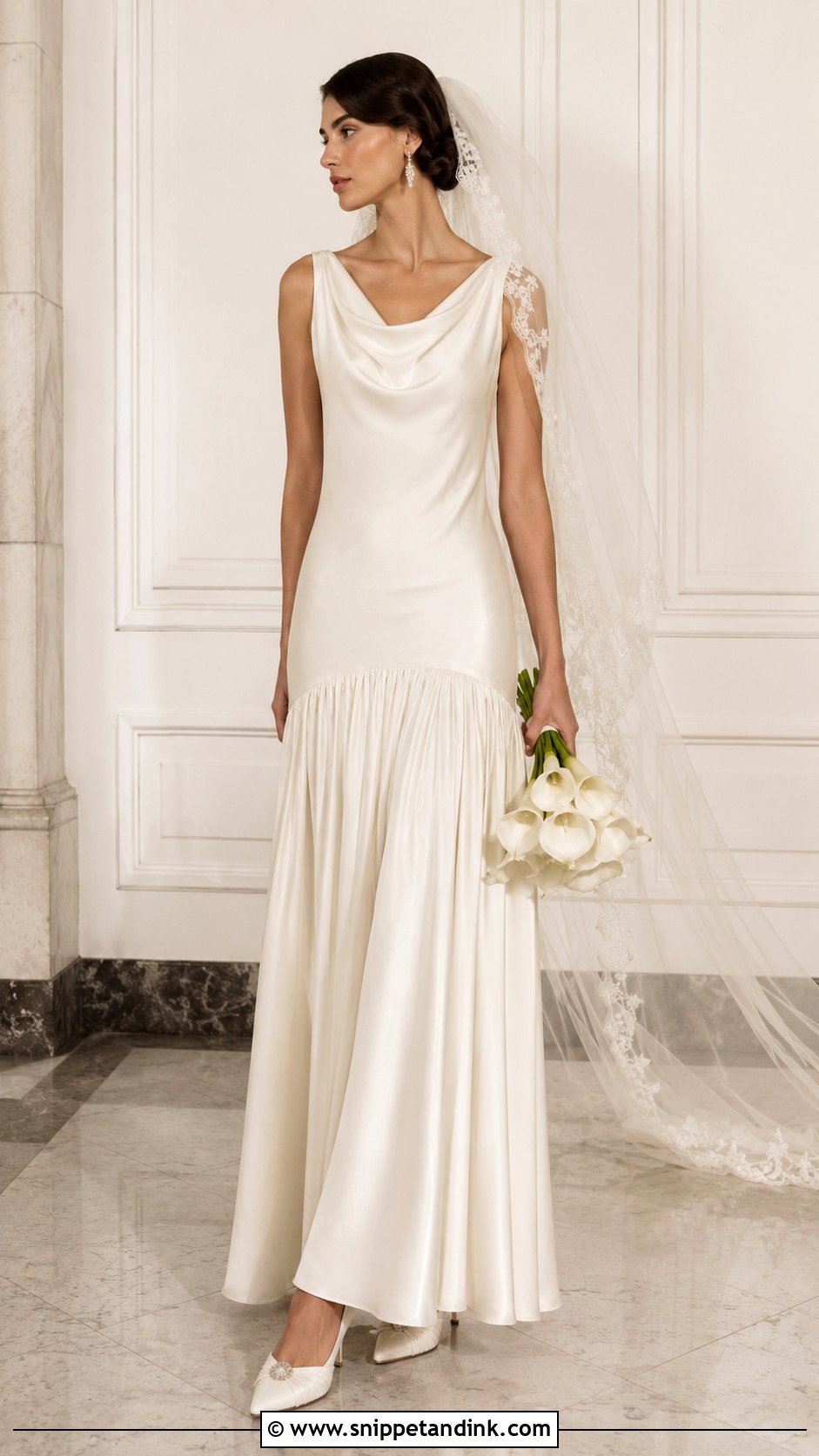
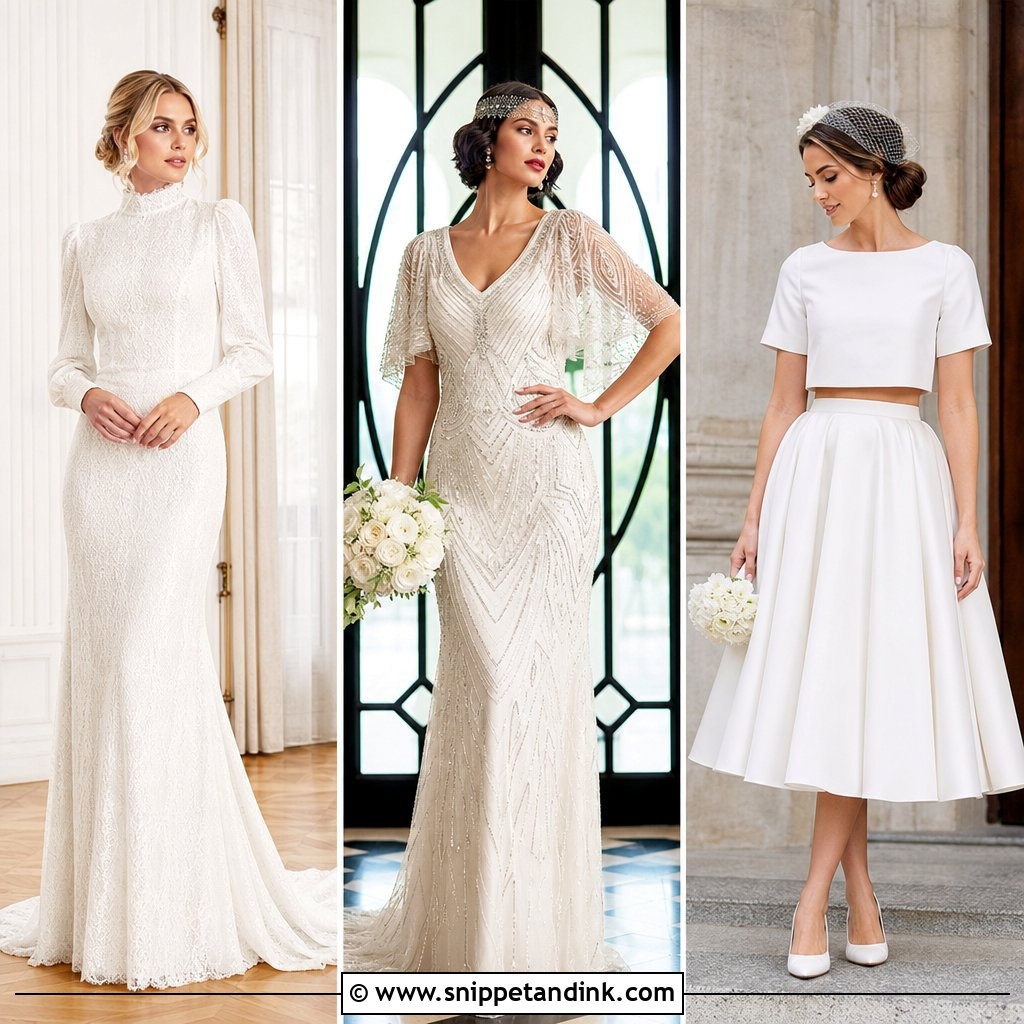
Drop waists are subtle. The seam sits on the hip, creating a long fluid line that comes straight from the 1920s and 1930s. Satin and crepe feel sleek, lace and soft tulle feel gentler. I’d pair it with a simple veil, period earrings and low pointed heels. It’s an understated choice and suits an Art Deco room, a city hall or a small dinner where people will see the dress up close rather than from the back of a big church.
4. High Neck Lace Wedding Dress
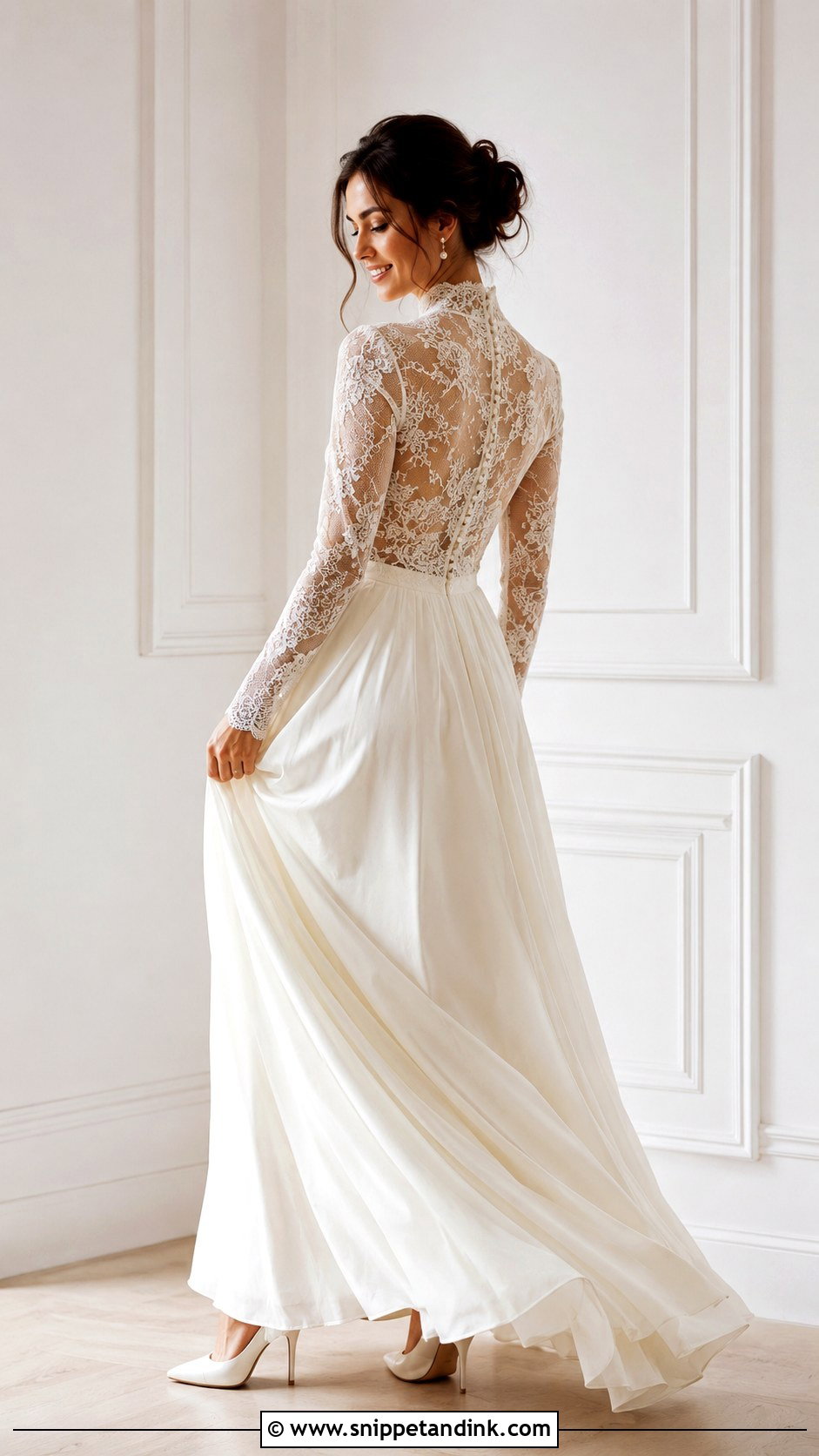
A high lace neck brings Victorian and Edwardian influence into a modern dress. What keeps it soft is sheer lace rather than solid fabric at the throat. Back buttons, long sleeves and a fitted bodice over a flowing skirt complete it. Wear a sleek bun or soft updo to show the collar, and keep jewellery to small pearl earrings or a slim bracelet. The collar should never touch your chin when you look down at your bouquet; I check that at every fitting.
5. Tea Length Wedding Dress
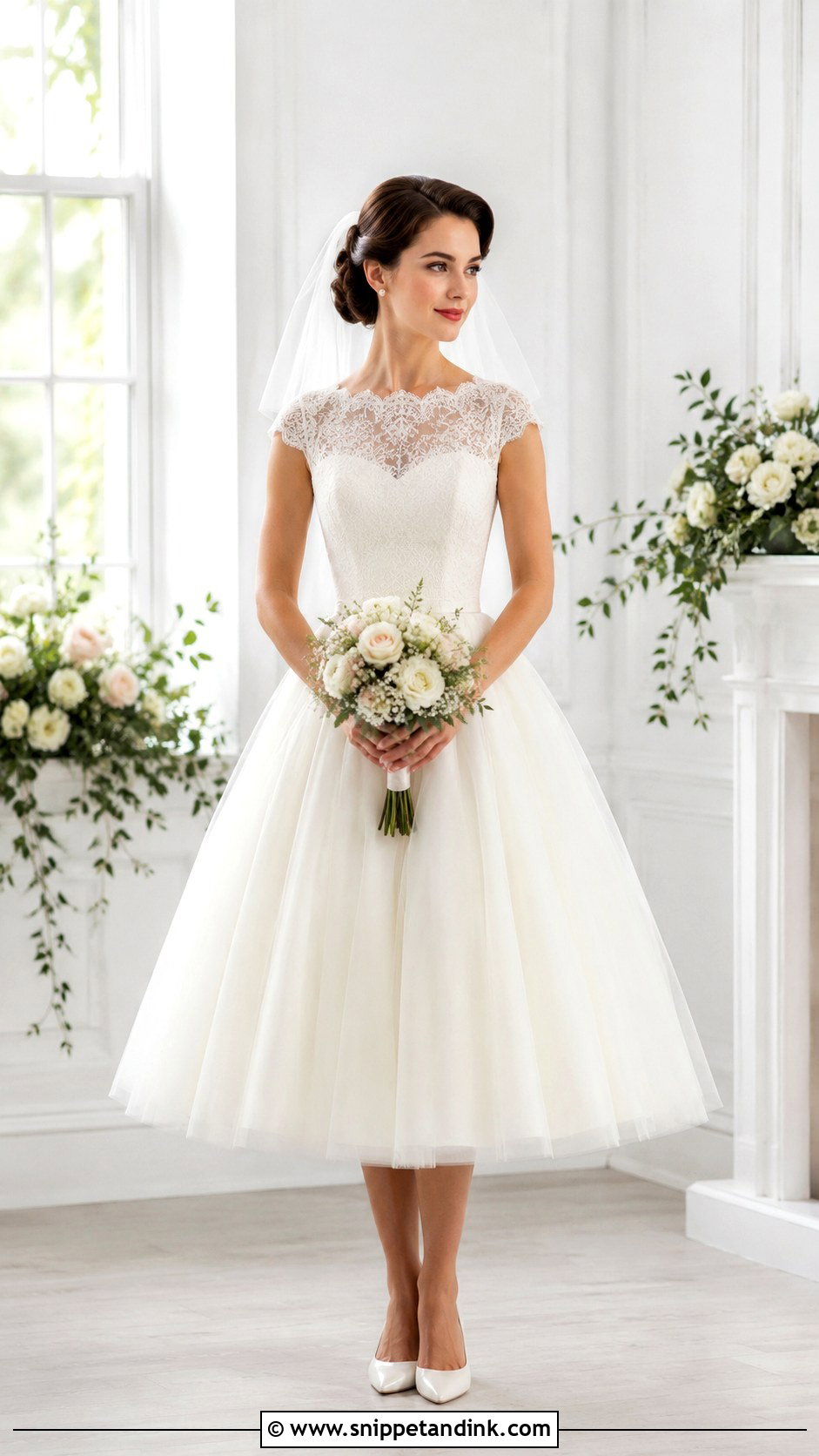
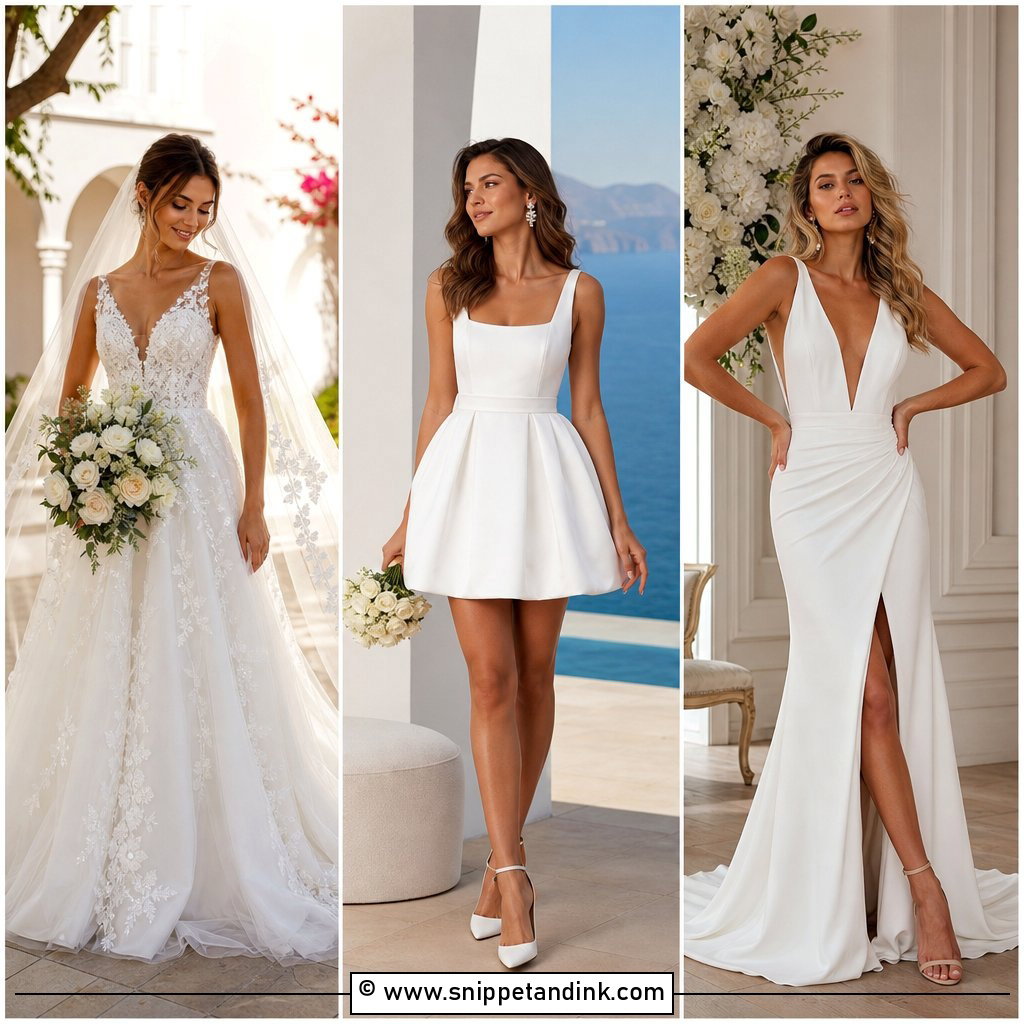
A tea length wedding dress is the practical romantic. The hem lands between knee and ankle, a fifties silhouette with a fitted bodice and full skirt, and you can walk, dance and climb into a car without a helper. Lace, satin, organza and tulle all hold the shape. Because your shoes are fully visible, choose them early and break them in. Pointed pumps, pearl earrings and a short veil or bow keep it charming for a courthouse, a garden or a brunch reception.
6. Satin Slip Wedding Dress
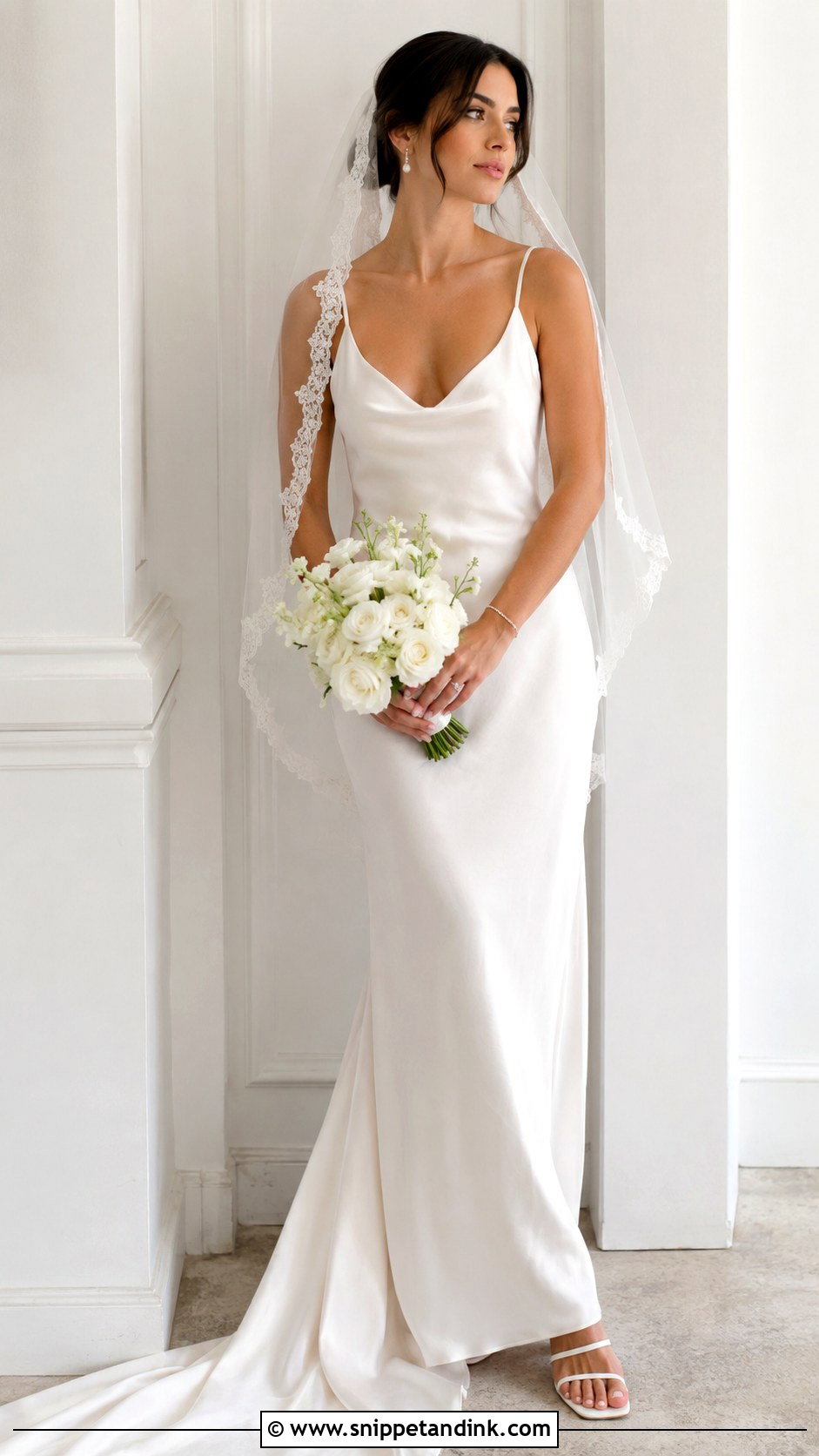
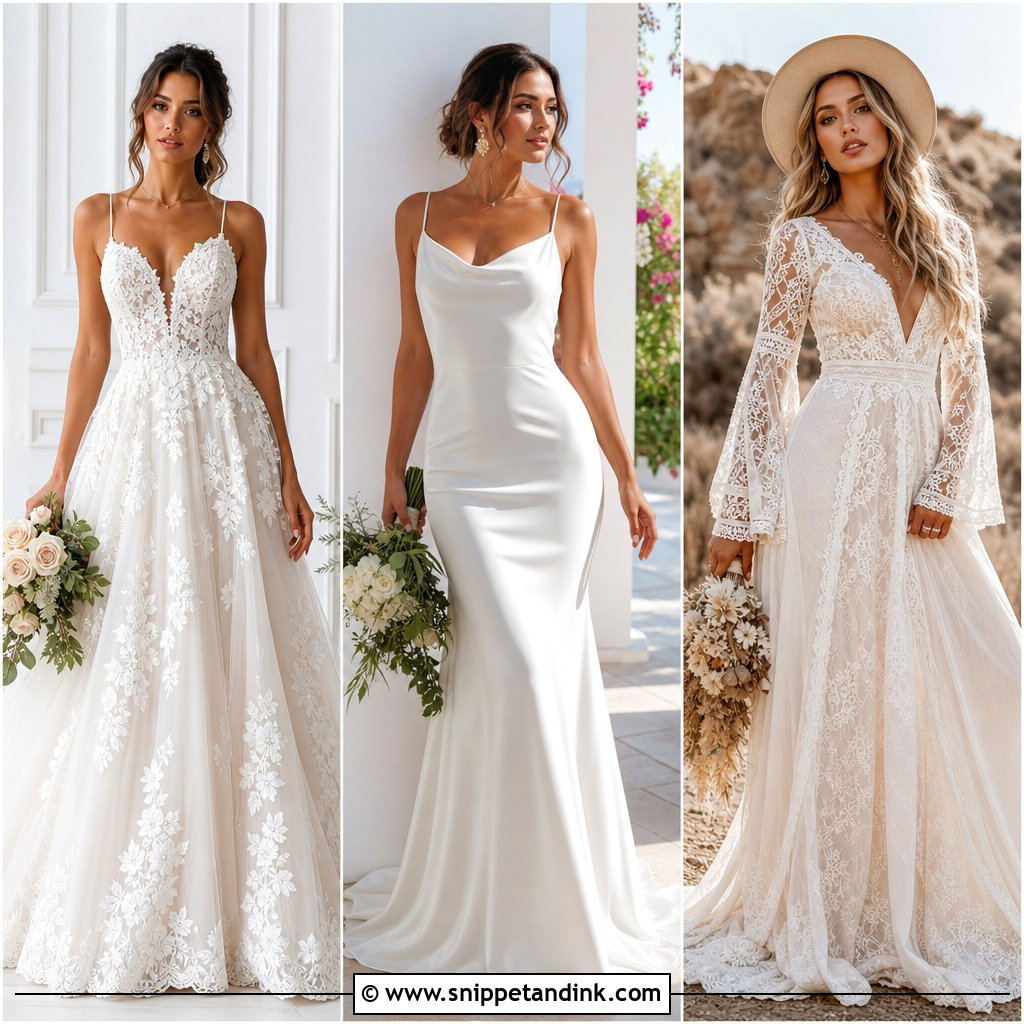
A satin slip draws on two eras at once: 1930s bias-cut gowns and 1990s minimal bridal. Soft ivory satin with a cowl neck, thin straps or a low back is all it takes. Plain satin shows every line beneath it, so smooth, edge-free underwear is not optional. A lace-edged veil and pearl earrings turn it bridal rather than evening wear. For a cool day, a faux fur wrap or lace bolero adds cover. City weddings, destination trips and small dinners suit it best.
7. Corset Wedding Dress
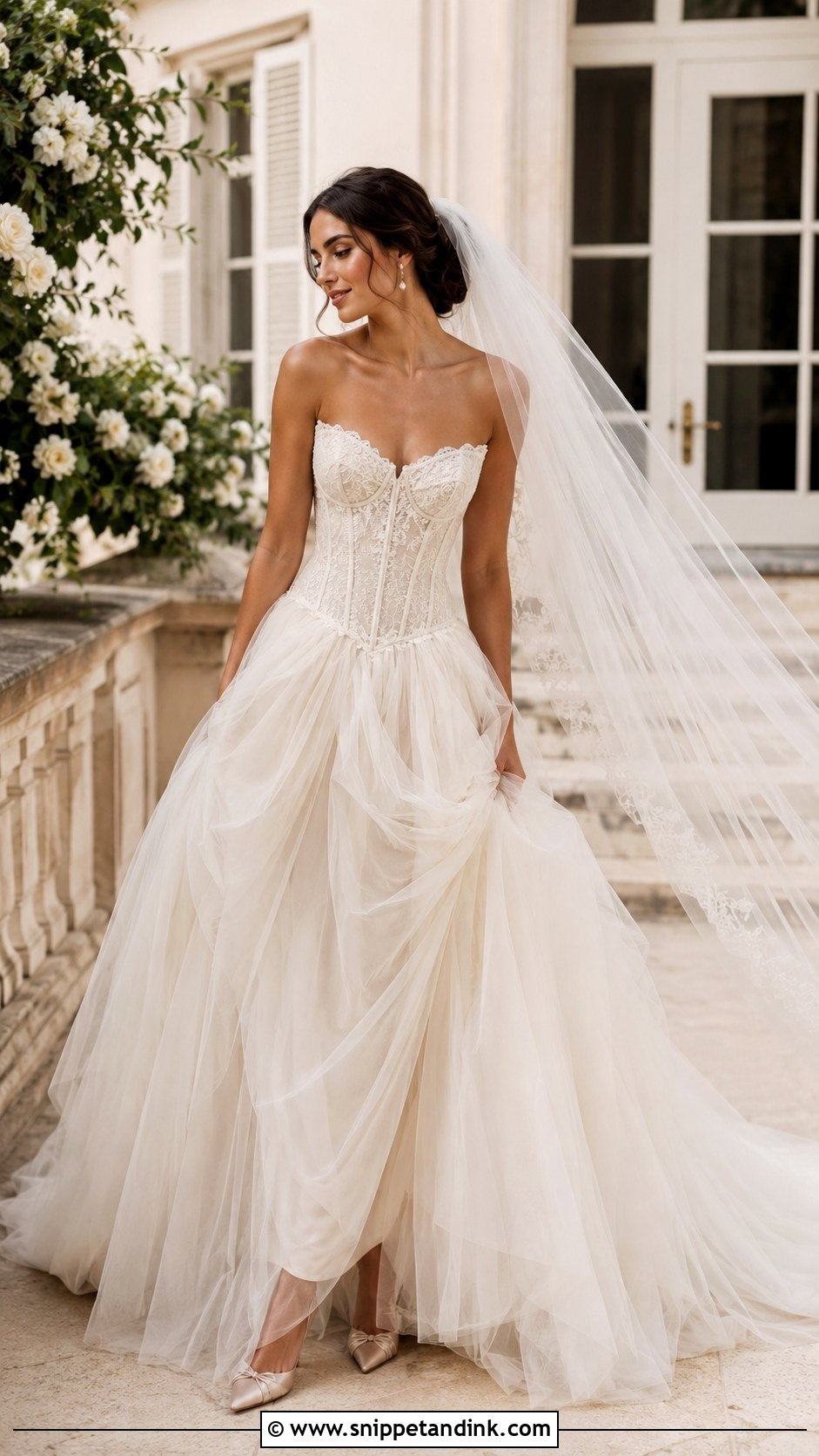
Corset bodices give romance real shape. The bodice can be fully covered, lace-trimmed or lightly boned for a modern finish. I’d pair it with tulle, lace or satin below, never something stiff, and add a basque or natural waist for an heirloom feel. Fit is the whole game; a corset that’s even a centimetre off either gapes or digs, so plan for at least two alteration visits. Soft curls, a long veil and refined heels finish it.
8. Off Shoulder Wedding Dress
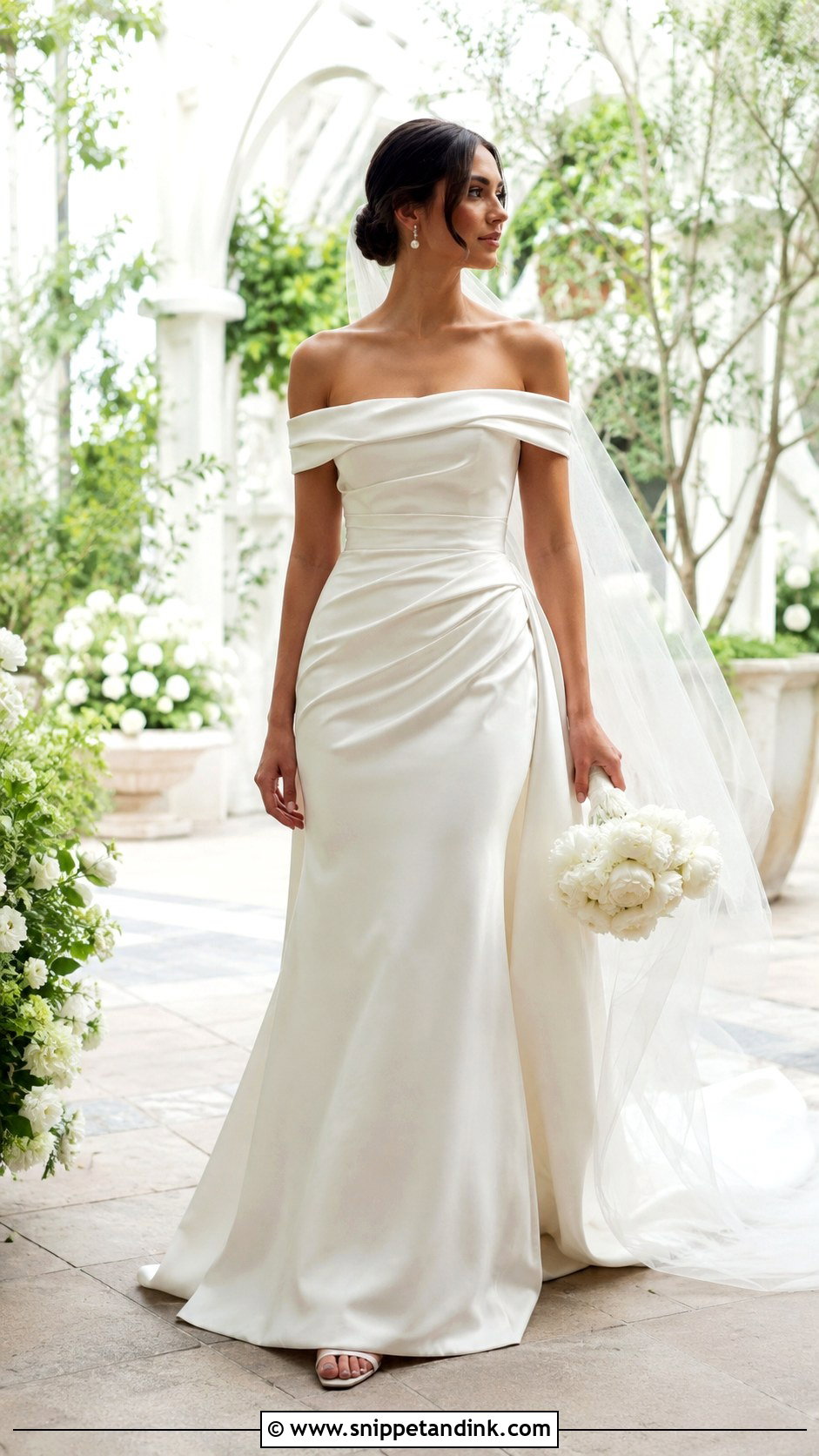
An off-shoulder neckline frames the collarbone and draws the eye upward, which flatters a wide range of figures. Lace, satin, tulle and brocade all work. For a vintage feel, go for soft draped sleeves, a fitted bodice and a full skirt. A low chignon keeps the shoulders clear. Add a long veil with a clean edge for more ceremony. My test: hug your mother in it at the fitting. If the sleeves ride up, they need anchoring to the bodice.
9. Pearl Button Wedding Dress
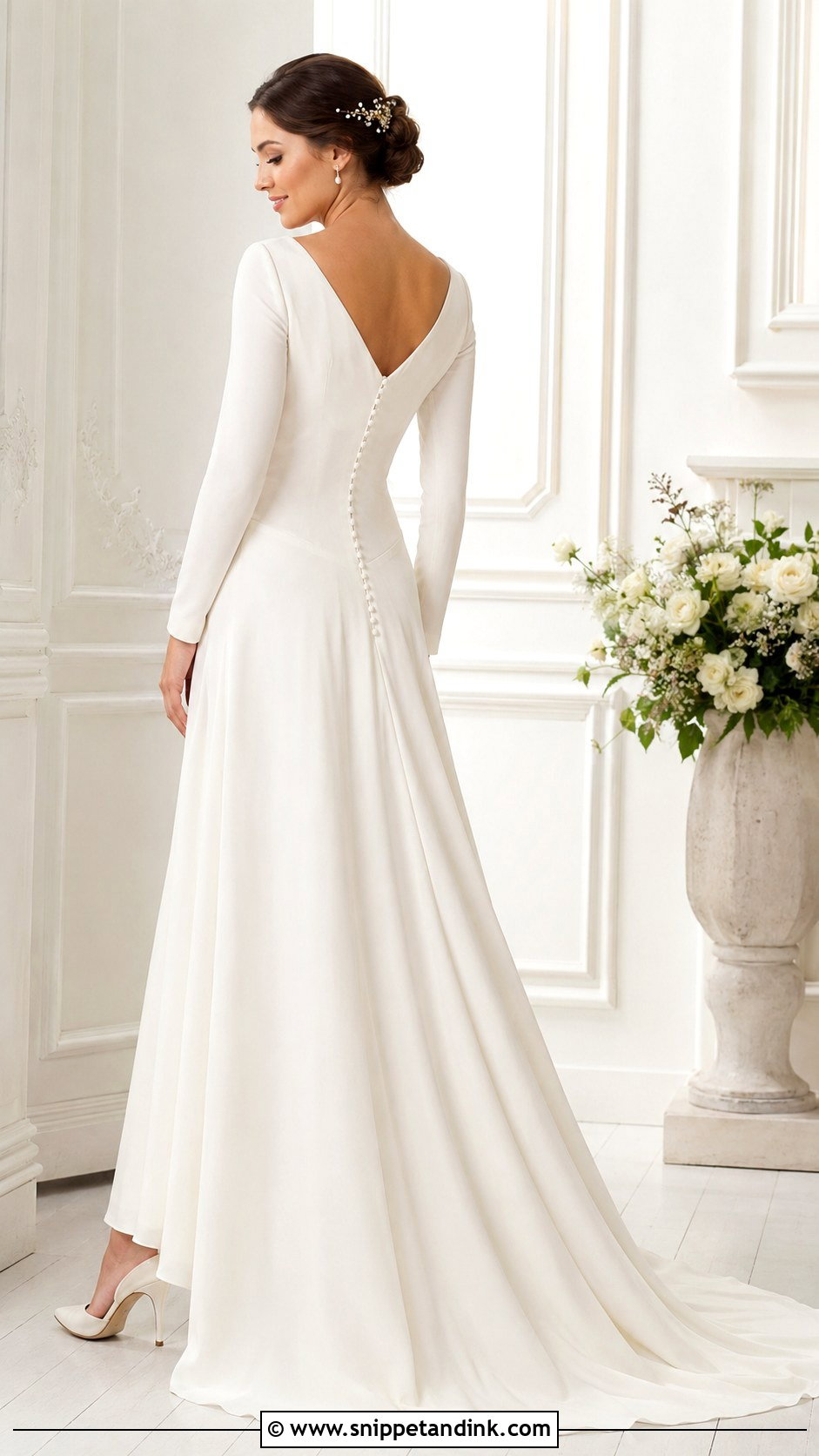
Pearl buttons are a small detail that changes how a dress reads from behind. They can run down the back, along the cuffs or through the bodice, on lace, satin, crepe or tulle. A row of them on a fitted long-sleeve gown is about as classic as bridal gets. Ask whether they’re sewn through to the lining or only stitched to the surface, because surface-stitched pearls pop off. A pearl hair pin and small earrings are enough; skip the rest.
10. Floral Lace Wedding Dress
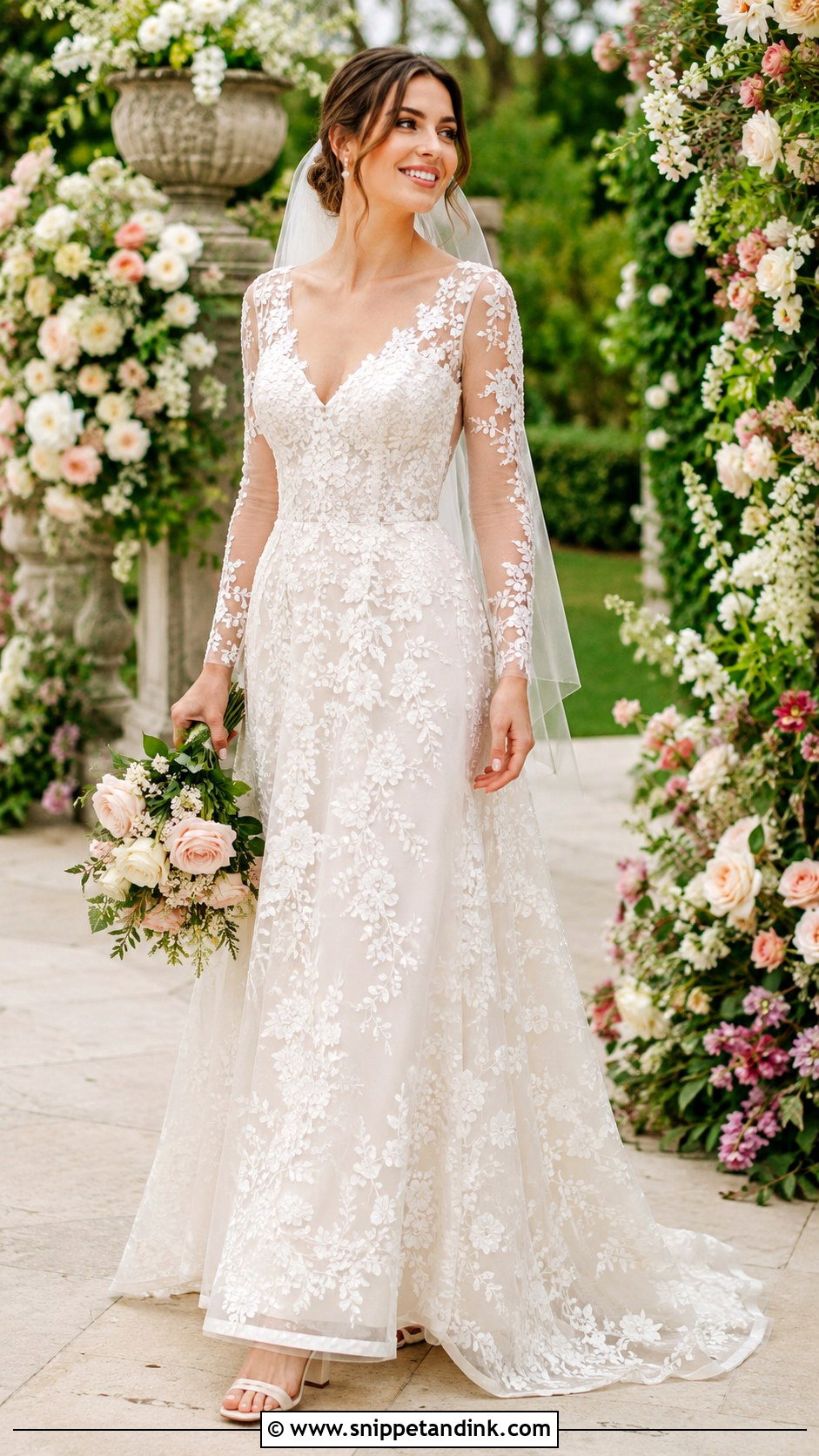
Floral lace leans garden. Large motifs read boldly from the aisle; tiny botanical patterns feel delicate. A sheer sleeve, sweetheart neck or A-line skirt keeps it light. If you add an embroidered veil, hold the two side by side in daylight first, as two different flower patterns can look busy together. Soft waves, pearl studs and ivory block heels make sense for spring and summer gardens or estate lawns.
11. Juliet Cap Veil Wedding Dress
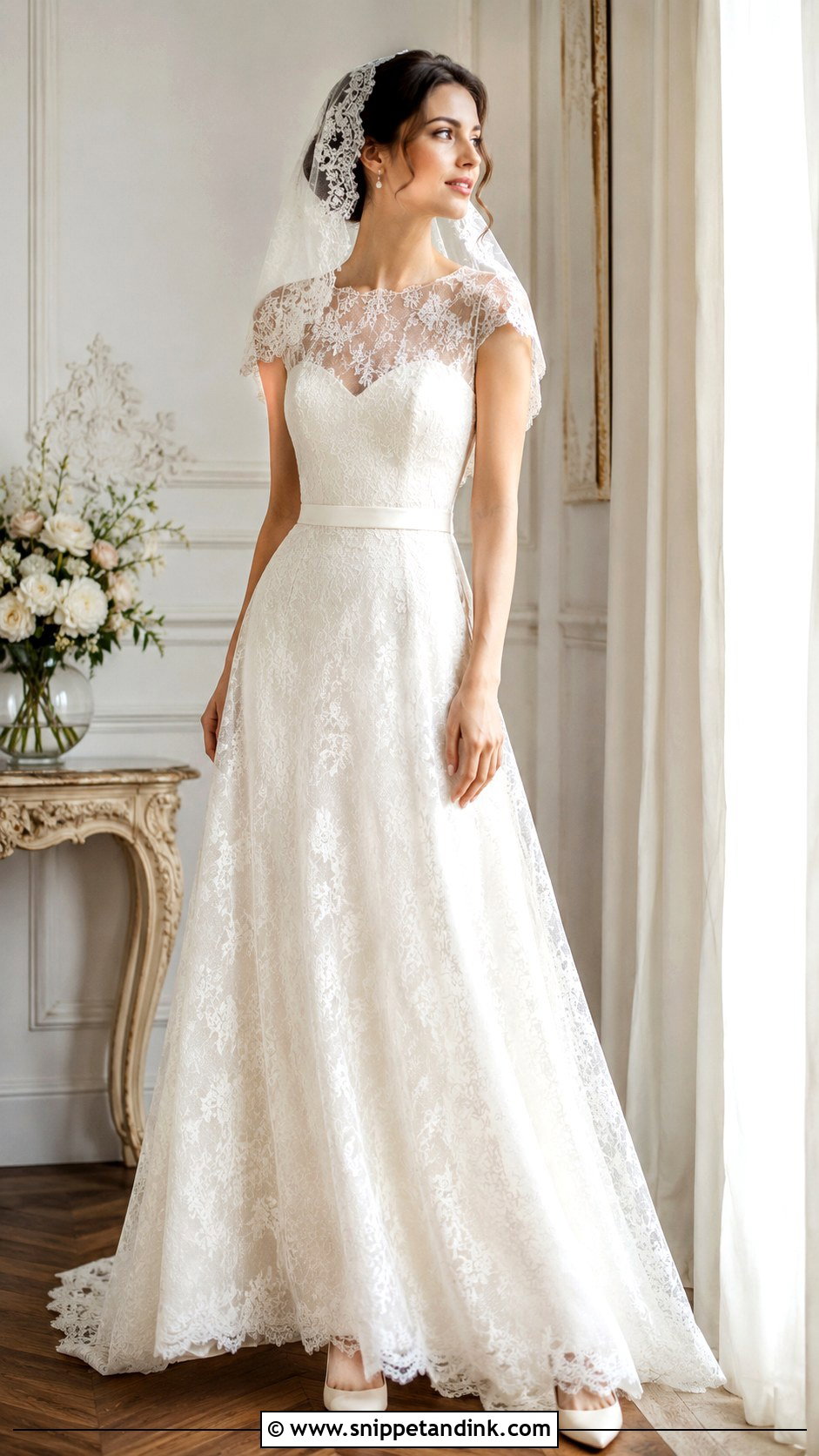
The Juliet cap veil sits close to the head, sometimes with a band across the forehead, and it’s one of the most poetic looks in bridal. It pairs with lace gowns, satin slips and soft A-lines, especially 1920s, 1930s and boho-inspired ones. Hair matters more than the dress here: the cap needs a smooth, low base to grip, so loose curls on top won’t work. Pick a gown with a simple neckline so the veil has room. Pearl earrings and soft makeup are enough.
12. Puff Sleeve Wedding Dress
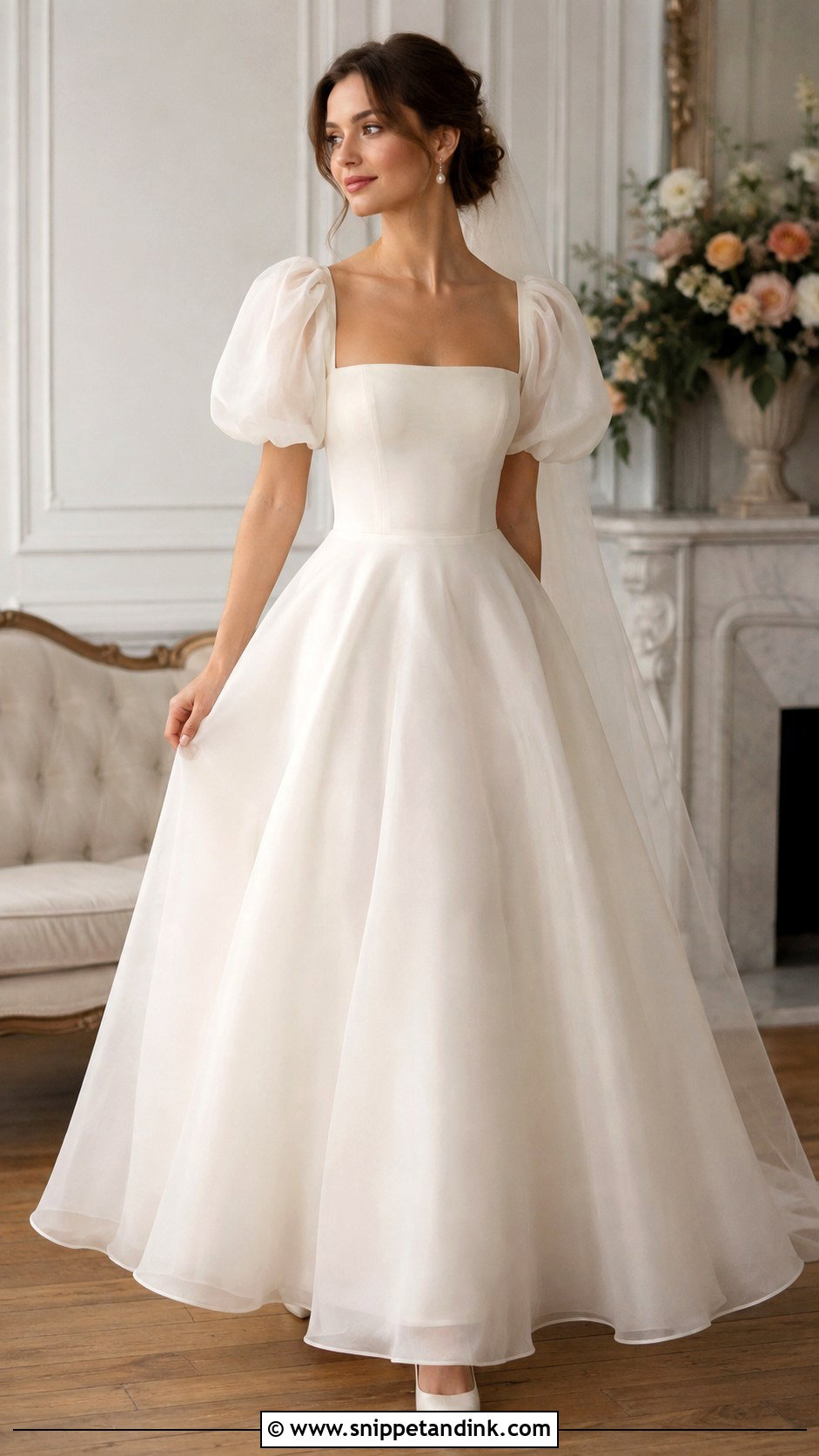
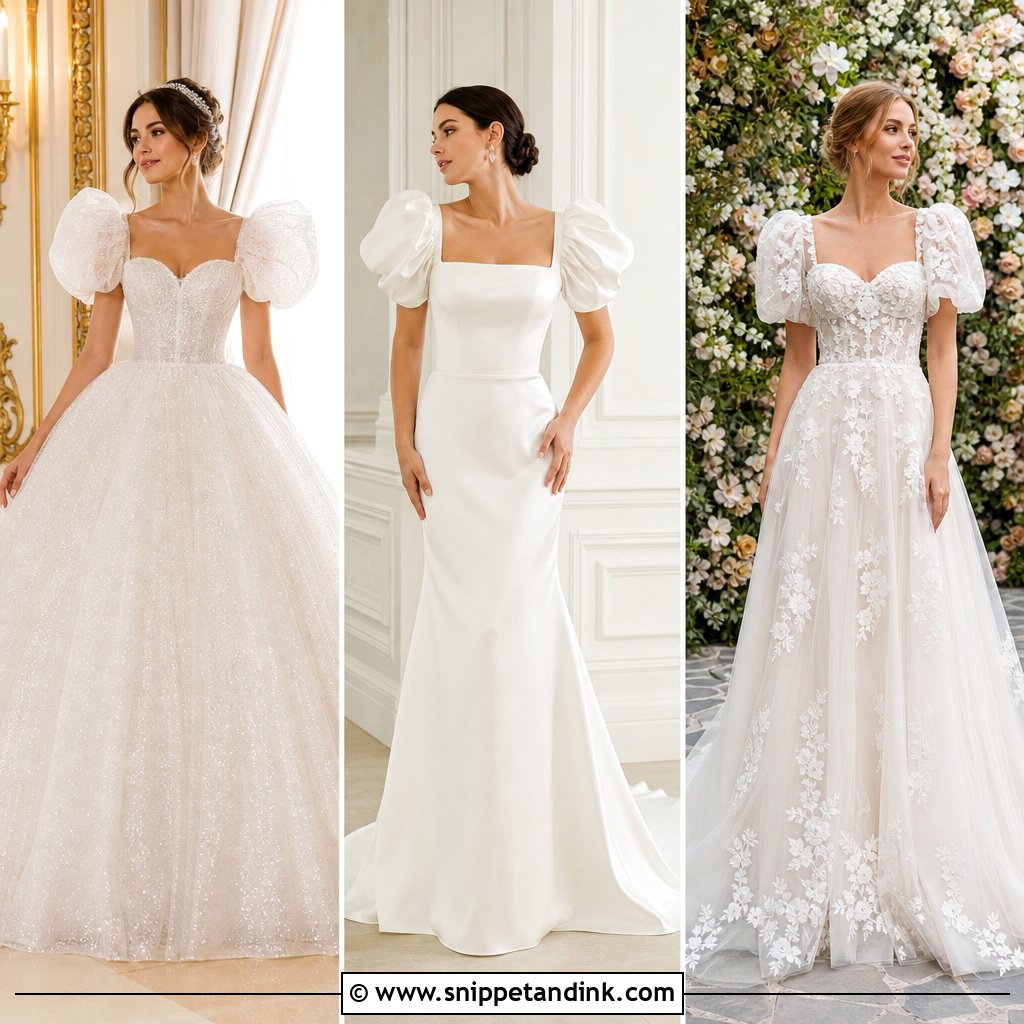
Puff sleeves read romantic only when the volume is soft. I mean delicate organza, lace puffs or short gathered sleeves over a clean bodice, with an A-line, tea length or softly full skirt for balance. Dramatic sleeves rule out a heavy necklace; let a clean veil and a neat bun do the work. The inspiration might be Victorian, eighties or cottage, but the finish should be modern. Check the sleeves from the side in a mirror, since a big puff widens the shoulder more than you see face-on.
13. Victorian Wedding Dress
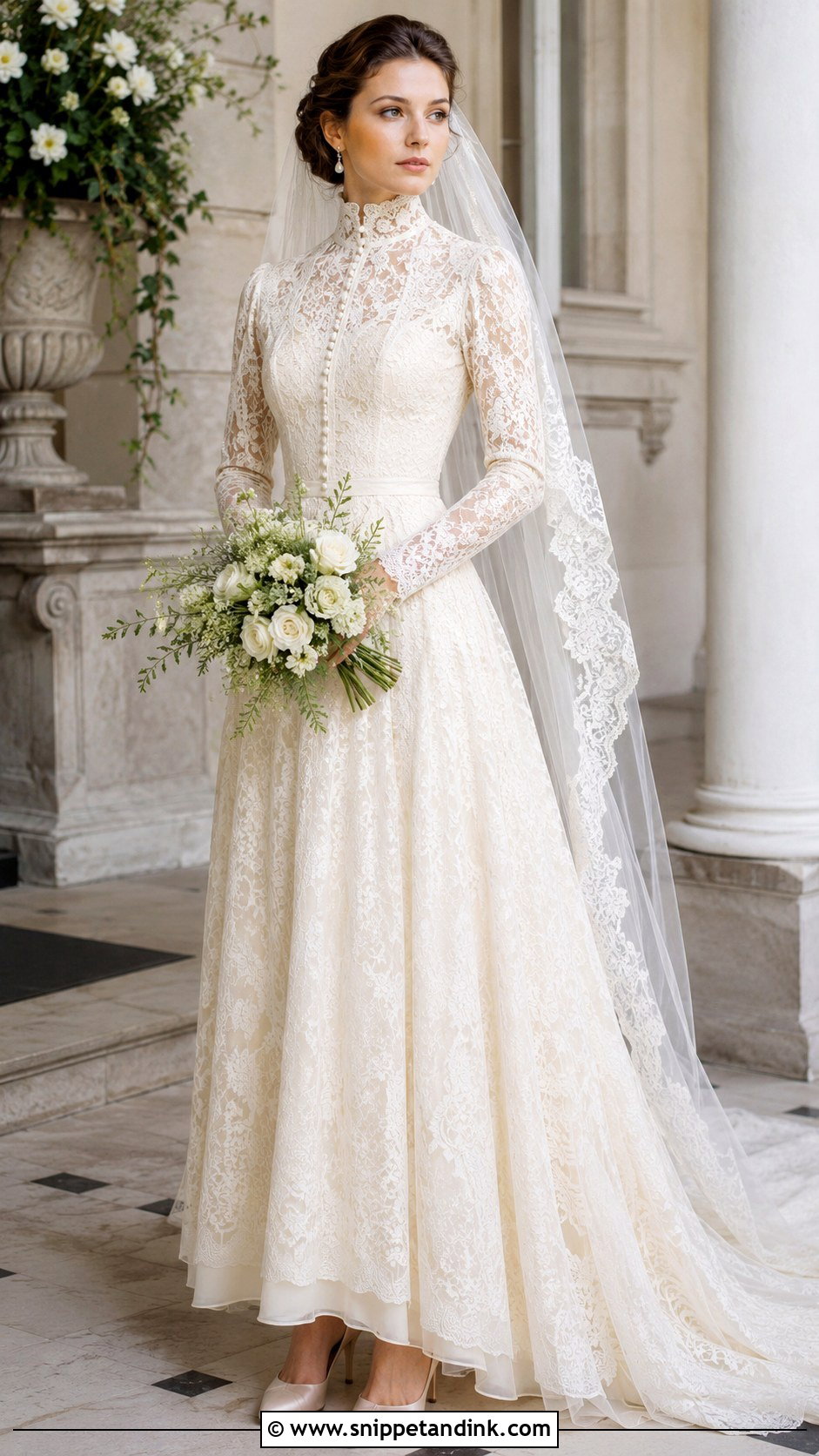
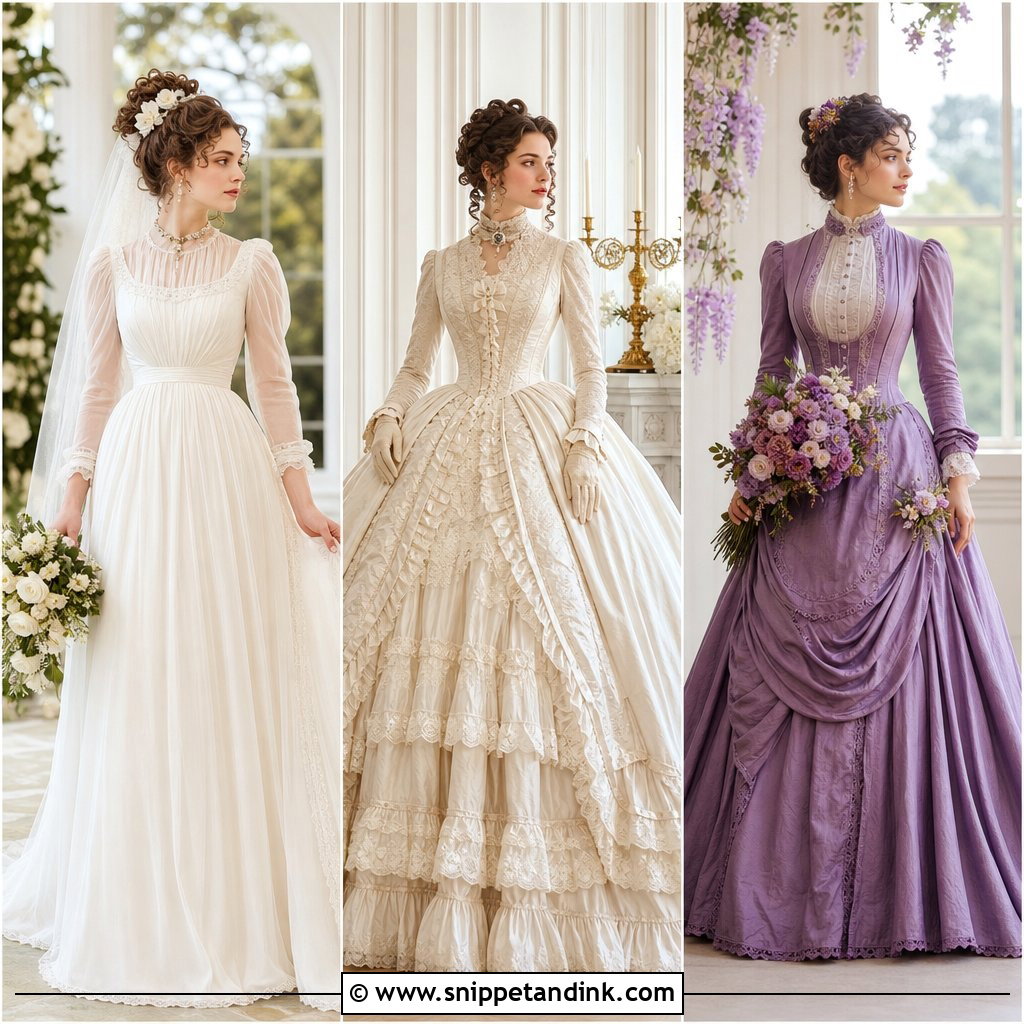
Covered necklines, lace, buttons and long sleeves define the Victorian look, and the challenge is stopping at refined rather than theatrical. A high lace collar, fitted bodice and flowing skirt are enough. Soft ivory looks more authentic than stark white, which can make old shapes look brand new. Pair it with pearl earrings, a smooth updo and a lace-trimmed veil, and keep shoes simple. It belongs in a formal venue, a historic house or a cool-weather wedding.
14. Edwardian Wedding Dress
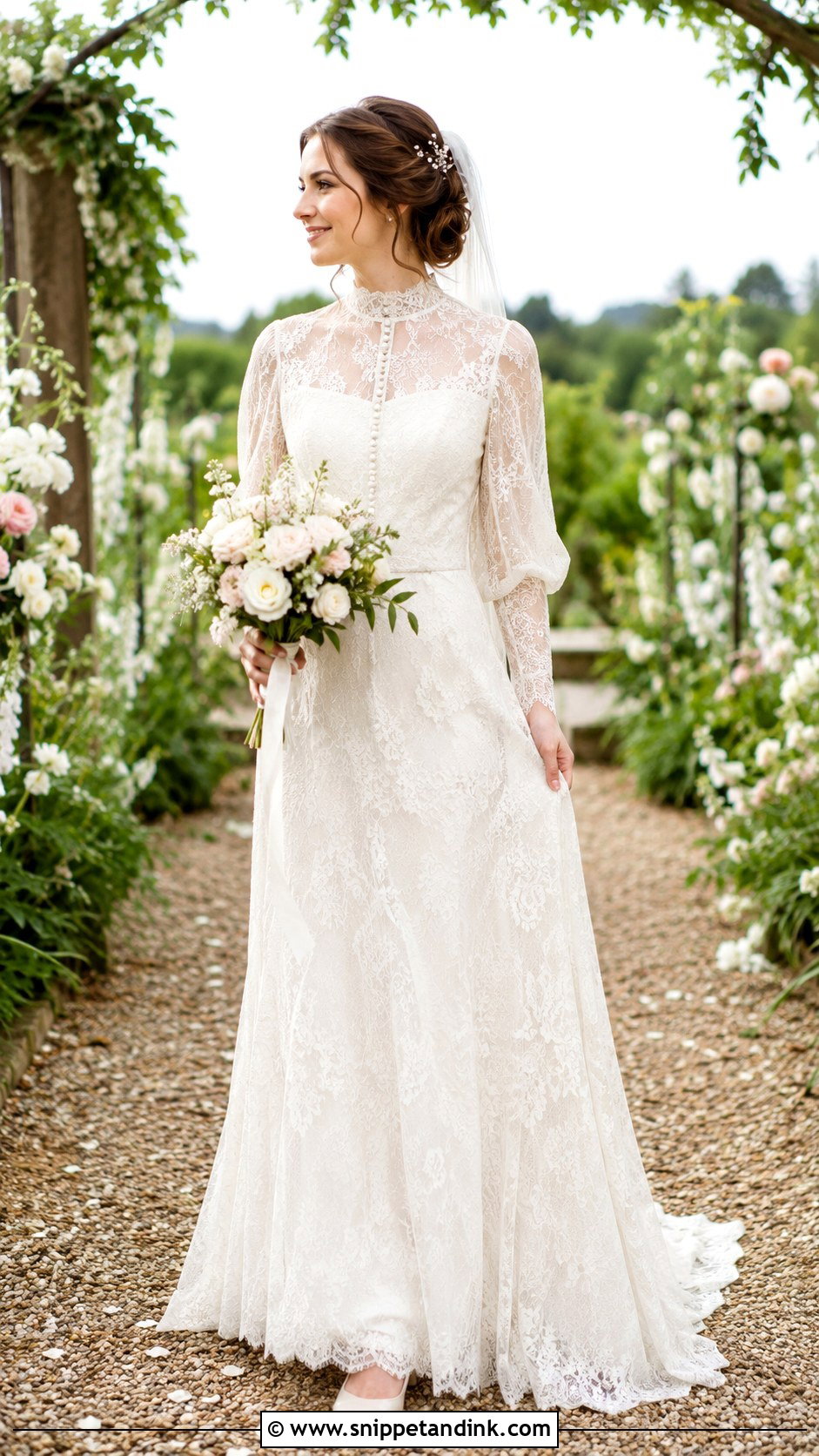
An Edwardian wedding dress is the easy-going relative of the Victorian. Soft lace, high necks, light sleeves, tiny buttons and relaxed skirts mean less boning and more breath. Cotton lace, silk chiffon and soft tulle give the gentlest finish. A loose updo with pearl pins, low ivory heels and a narrow veil or lace headpiece complete it. I suggest it for gardens and outdoor ceremonies where you’ll be on your feet for hours.

15. 1920s Beaded Wedding Dress
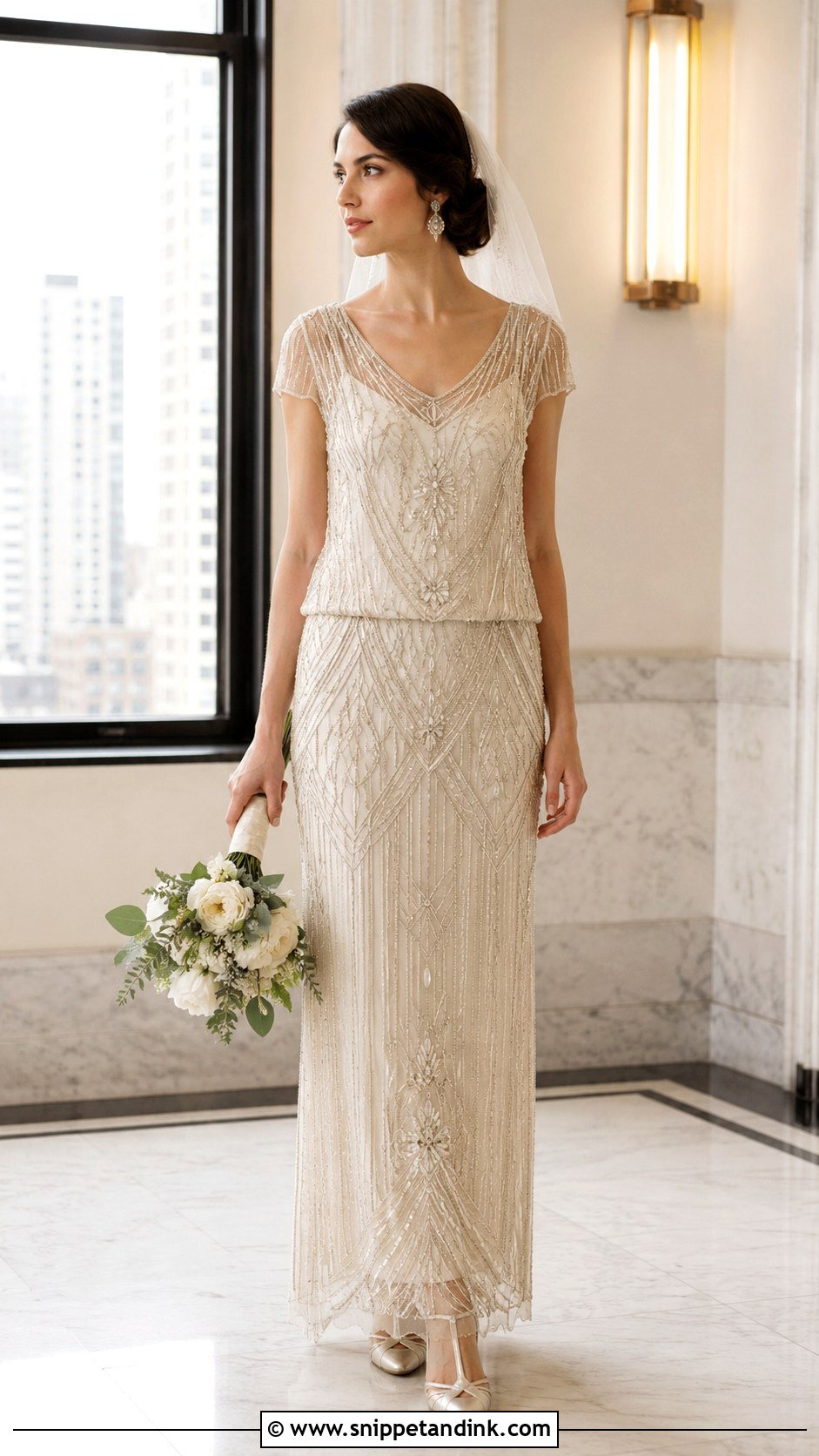
A 1920s beaded wedding dress gets its movement from beading, sequins and geometric embroidery rather than a big skirt. The shape is straight, slightly dropped or column-like. These gowns can be heavy, so try sitting and walking before choosing, and make sure the straps are reinforced. A short veil, Deco earrings and ivory or metallic heels suit it. Keep the bouquet small. City hotels and evening receptions are where it shines.
16. 1930s Bias Cut Wedding Dress
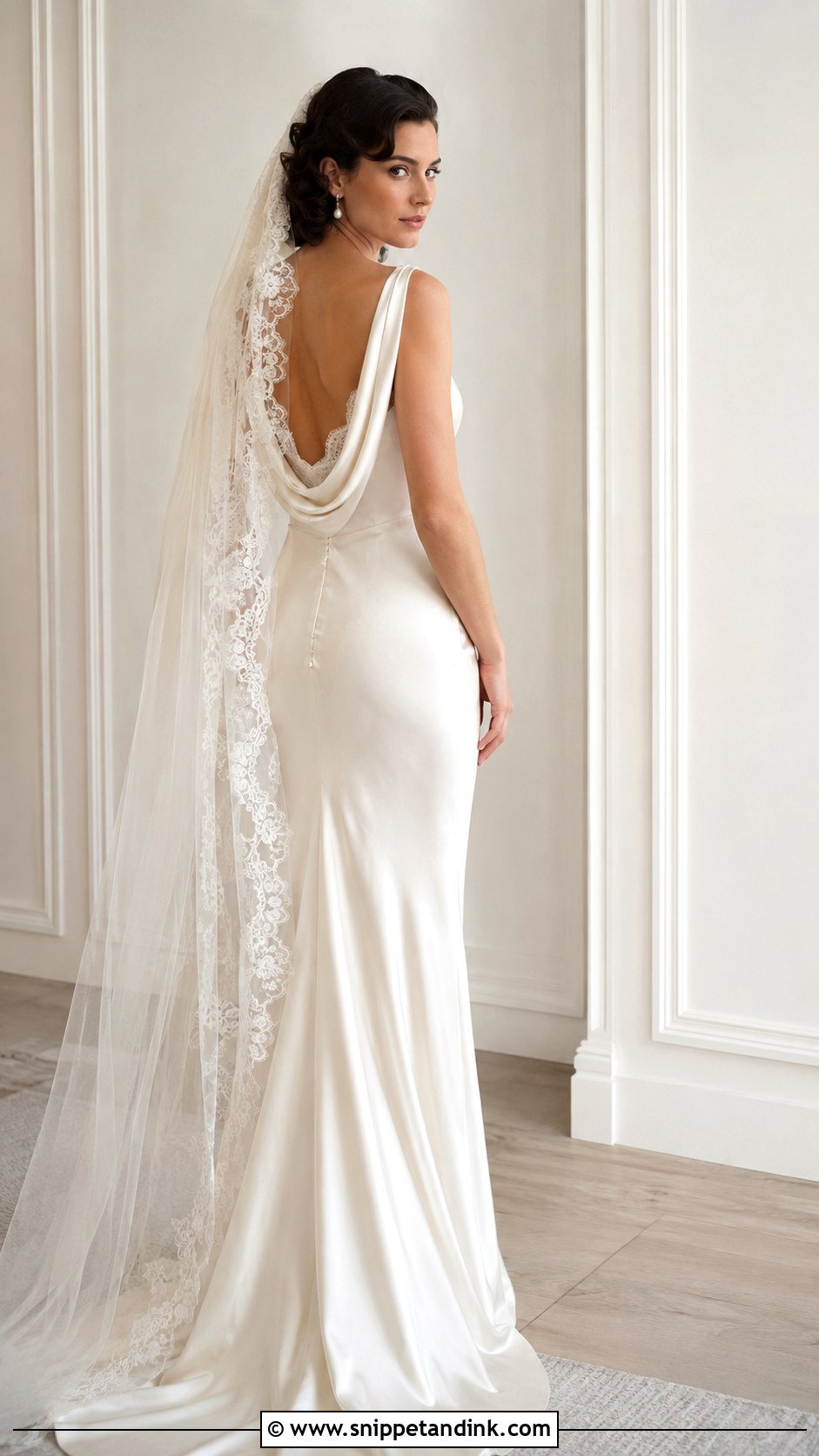
A 1930s bias cut wedding dress is cut on the diagonal of the fabric, which lets it skim and flow instead of cling. Satin, silk and crepe are the right fabrics. A cowl neck, low back, flutter sleeve or covered buttons add period detail. Bias cuts stretch slightly once hung, so a good seamstress will let the gown rest on a hanger before setting the hem. Soft waves, pearl earrings and a lace veil or capelet complete it.
17. 1950s Full Skirt Wedding Dress
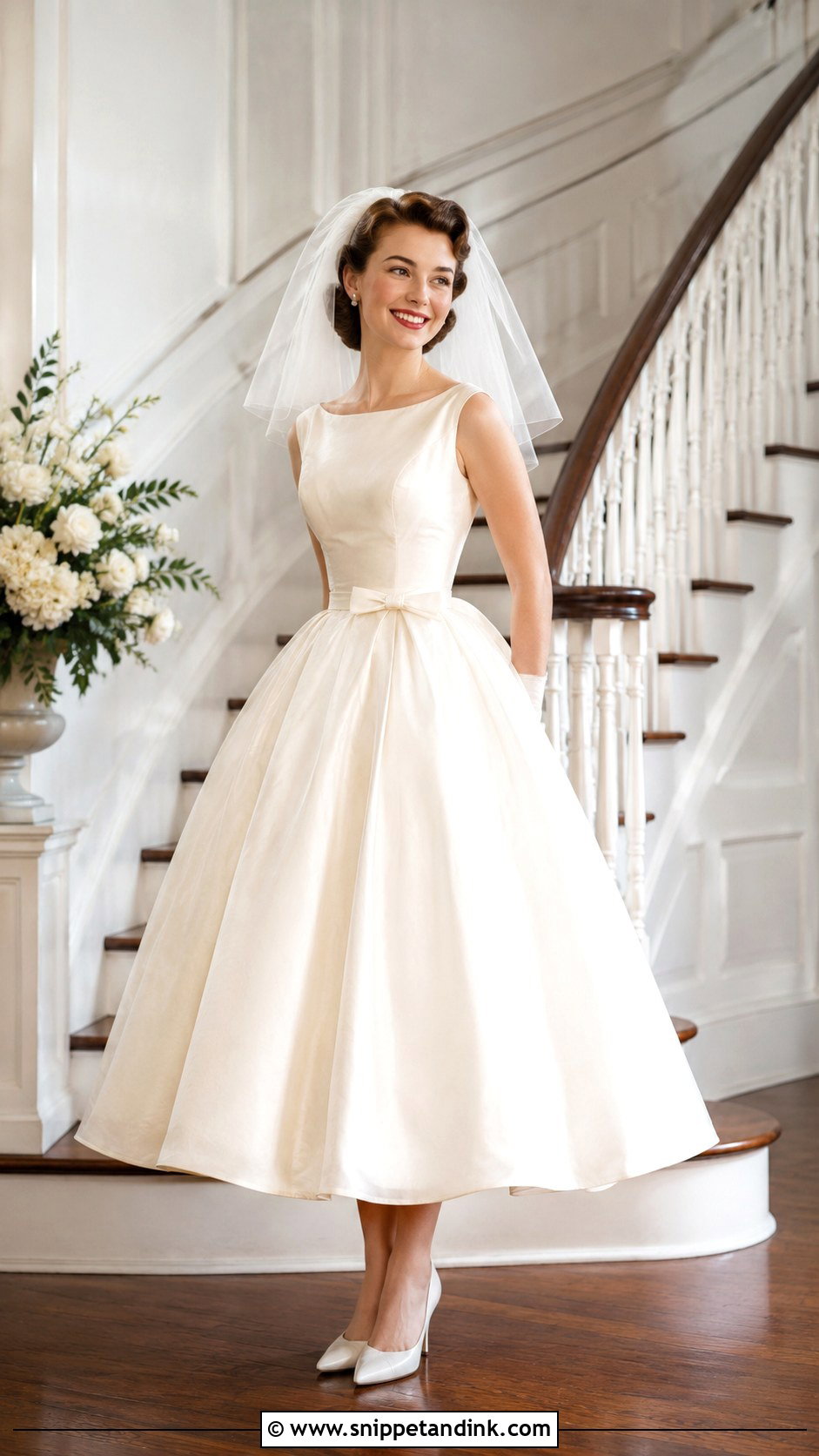
Full skirts and fitted bodices make the fifties hourglass. Satin, tulle, lace and organza hold that volume, in tea length or floor length depending on formality. The petticoat underneath decides how full it looks, so try with and without. A thin belt or bow can mark the waist. Pointed pumps, pearl earrings and a short veil keep it cheerful. It gives you movement and structure at once.
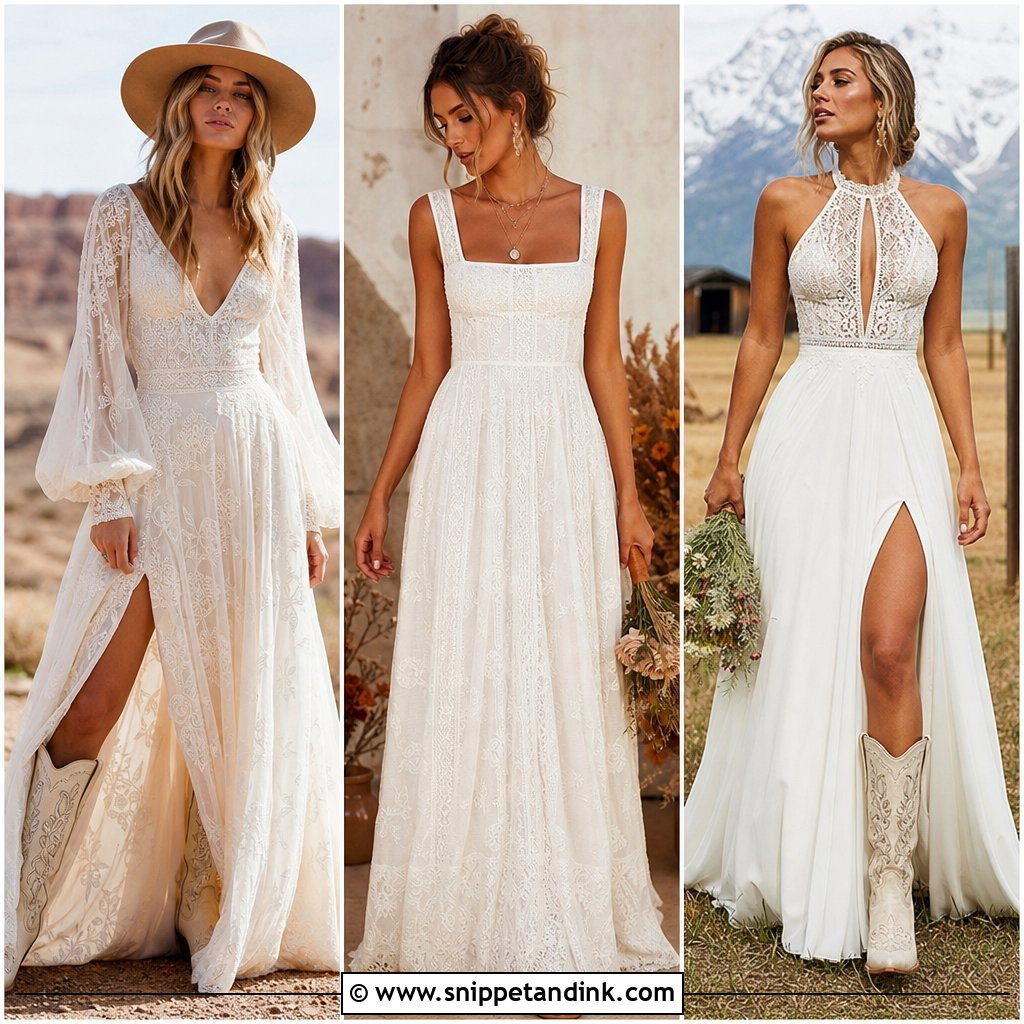
18. 1970s Boho Wedding Dress
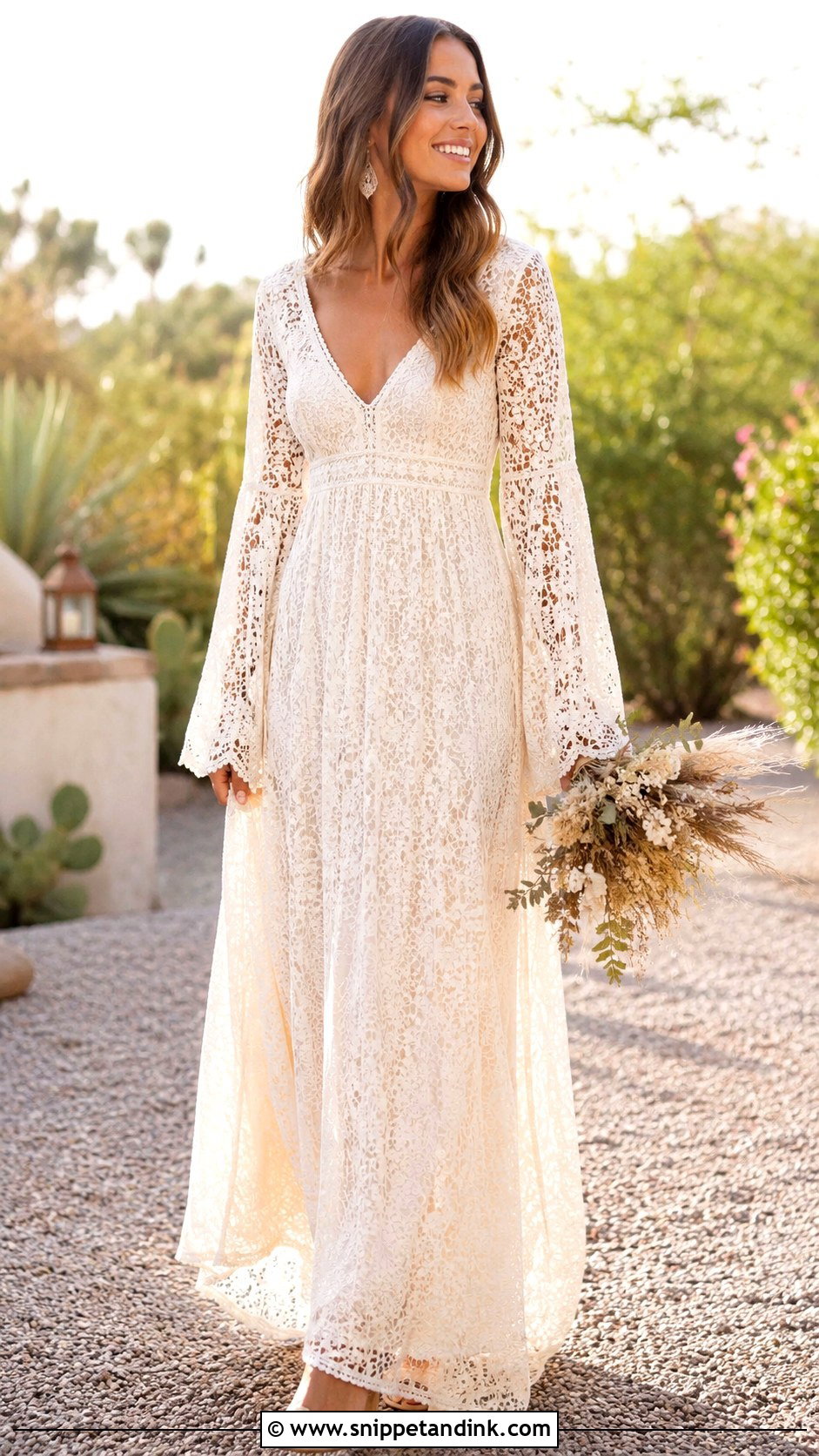
A 1970s boho wedding dress is all texture: crochet lace, bell sleeves, empire waists and flowing ivory skirts. The best versions look natural rather than themed, so I’d skip fringed accessories and keep one flower pin at most. Bell sleeves get in the way when signing the register, which is worth a quick rehearsal. Loose waves and sandals or low block heels suit a desert, beach or garden. It’s the most comfortable dress on this list for long outdoor days.
19. 1990s Minimal Wedding Dress
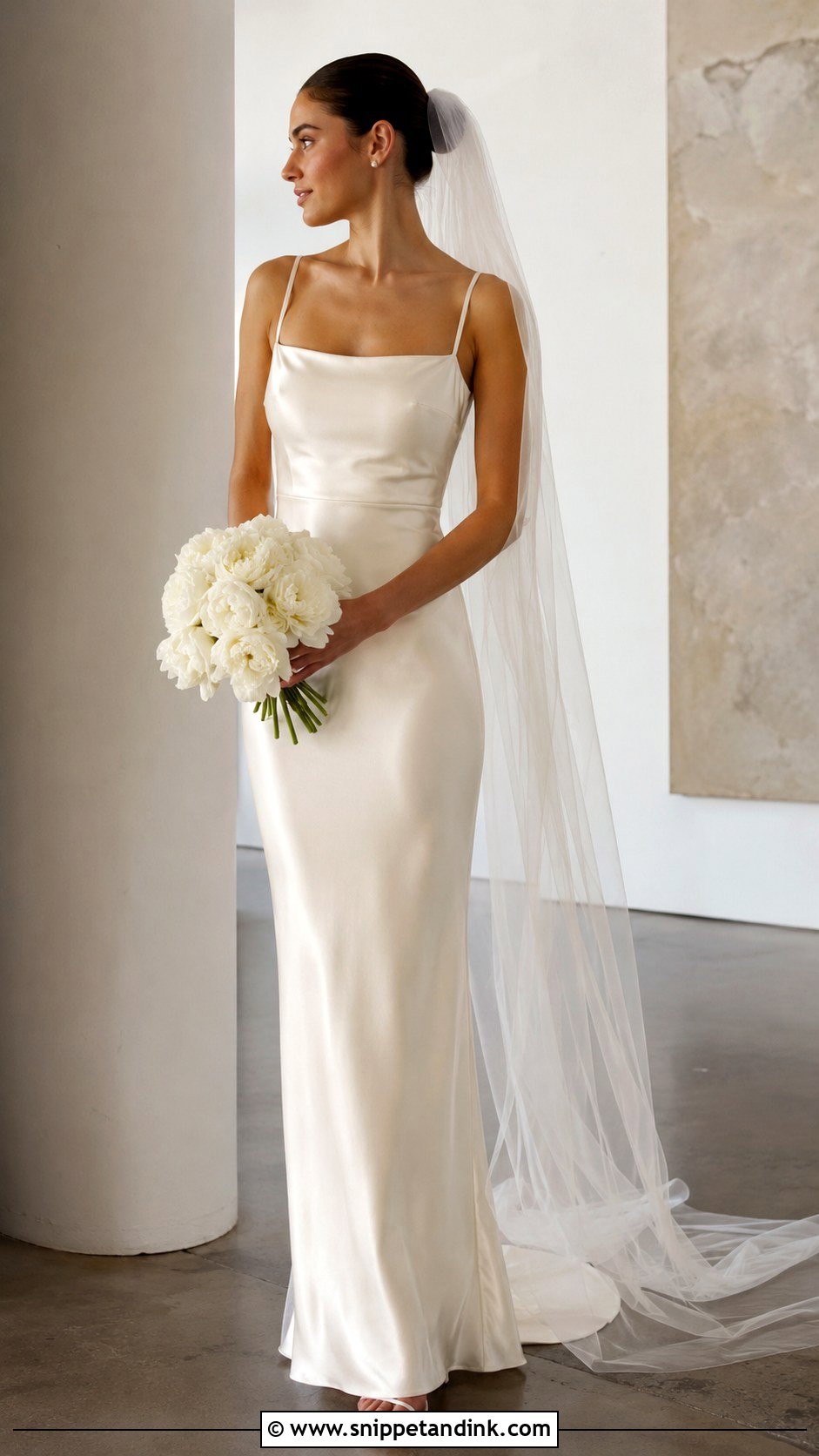
Restraint is the nineties signature: sleek satin, straight neckline, spaghetti straps, column shape or slip outline. With no decoration, fit and fabric quality carry everything, so I’d spend the budget there. A long sheer veil, pearl studs and slim strappy heels suit it, with a neat bun or smooth blowout. Galleries, rooftops and city venues are its home.

20. Lace Cape Wedding Dress
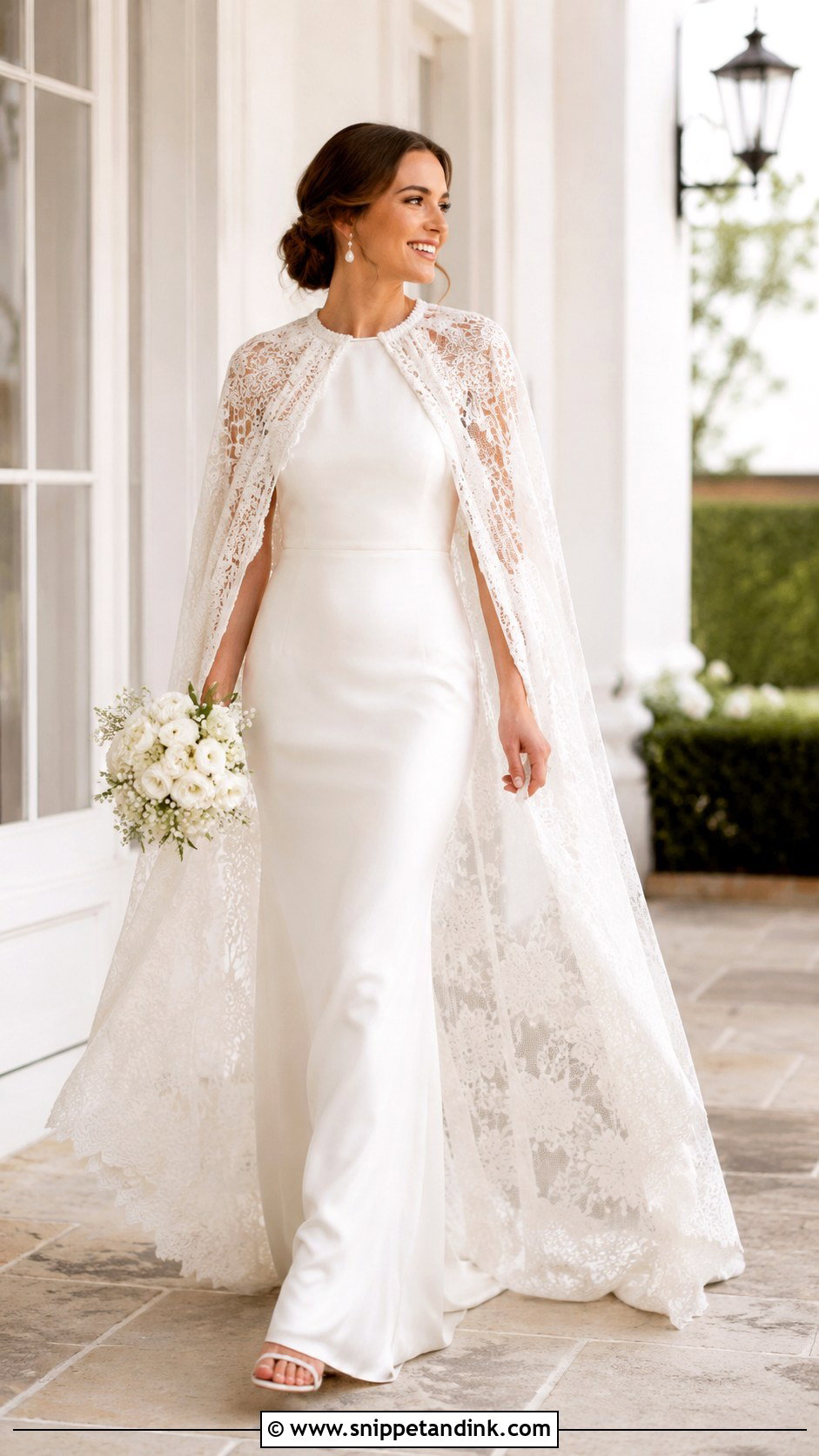
A lace cape can stand in for a veil or layer over a simple gown, adding movement as you walk. It works over satin slips, crepe columns and strapless gowns. Delicate lace, pearl accents or scalloped edges keep it vintage. A cape gives arm coverage without fitted sleeves, which some brides find more comfortable. Make sure it attaches at the shoulders, not only at the neck, or it will pull. Simple earrings and polished heels keep the cape the focus.
21. Lace Bolero Wedding Dress
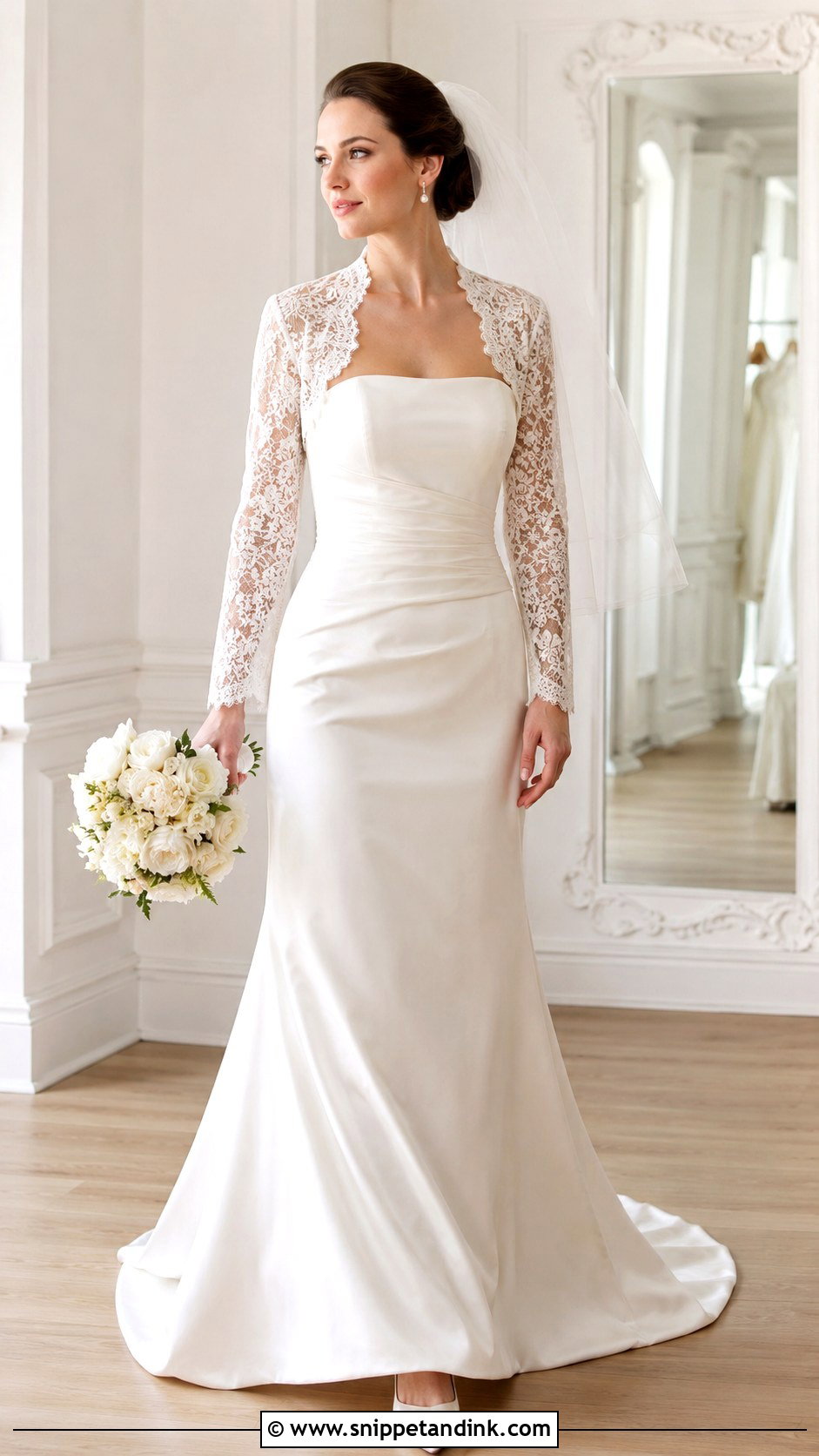
Two outfits from one gown: wear a lace bolero for the ceremony, take it off for the party. It suits strapless satin, simple A-lines and clean sheaths. Choose long sleeves, cap sleeves or a high neck to match the dress shape. I always have the bolero fitted at the same appointments as the gown, because one bought separately tends to sit at the wrong point on the back. Pearl earrings, a soft bun and ivory heels finish it.
22. Square Neck Wedding Dress
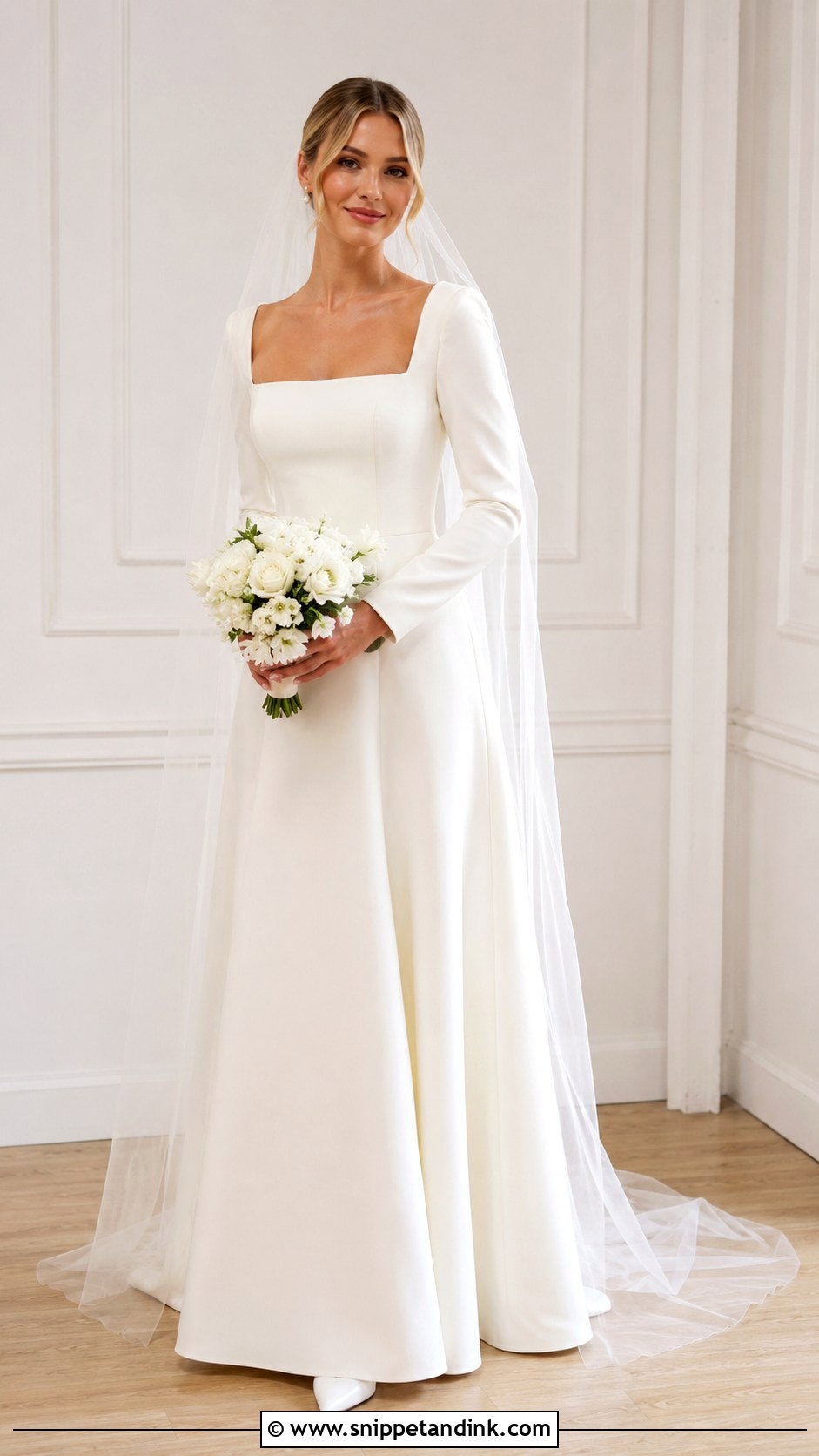
Square necks work across many eras, from Renaissance-inspired to nineties minimal, depending on the fabric. For romance, I’d choose lace, satin or crepe with a fitted bodice and soft A-line skirt. Straps, long sleeves or caps all pair with it. The neckline frames the collarbone well, so a necklace is optional. Corners should lie flat; if they lift when you sit, they need a small dart. Pearl studs, a low bun and satin pumps complete it.
23. Sweetheart Neckline Wedding Dress
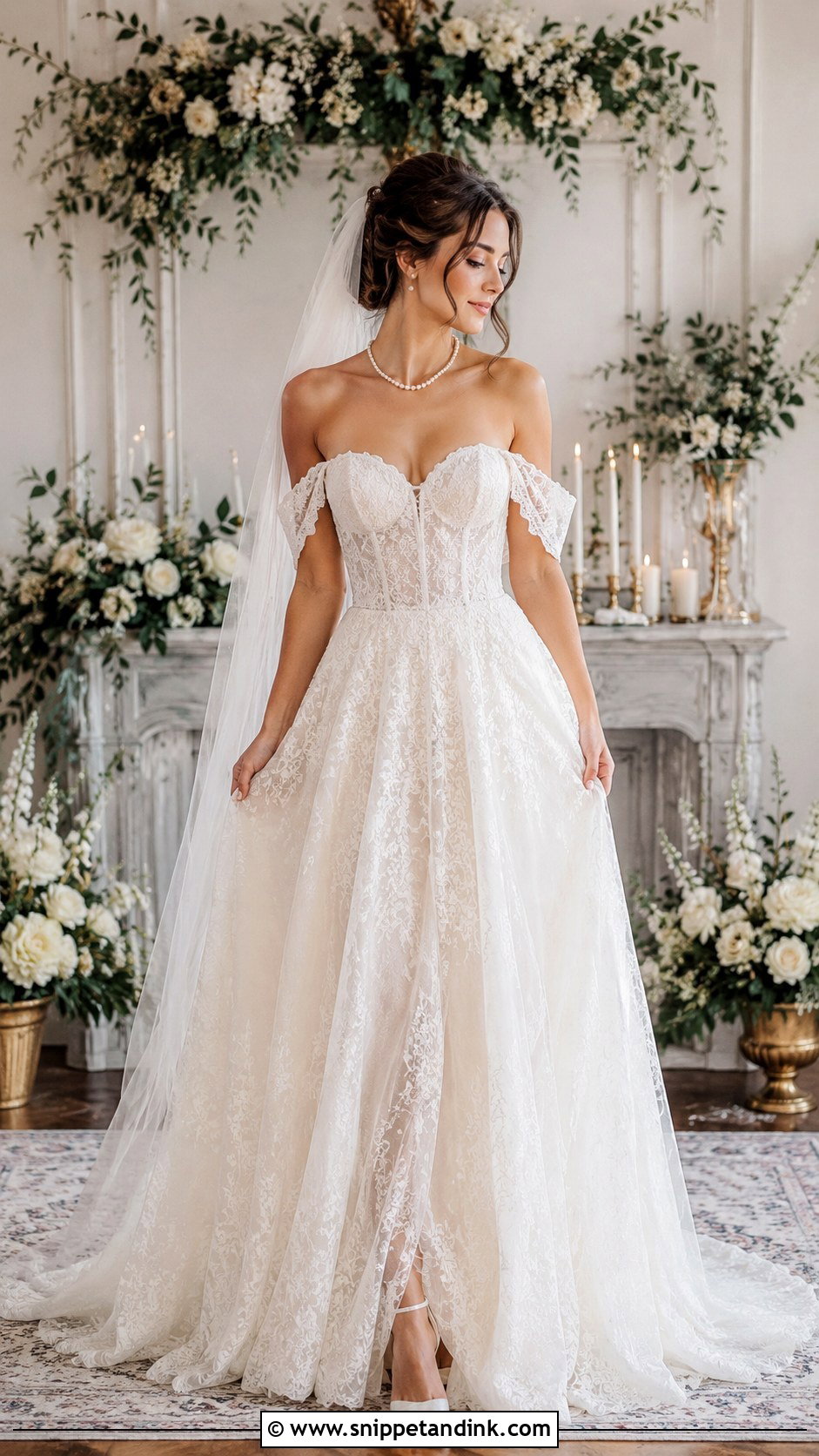
A sweetheart neckline curves over the bust and softens the whole bodice. It suits lace, satin, tulle and corset construction. A basque waist, lace overlay or off-shoulder sleeve pushes it vintage. Strapless sweethearts need excellent internal structure, and I’d want to see boning and a grip strip inside. Add a pearl necklace if the dress is plain, small earrings if it’s detailed, and a long veil for a traditional finish.
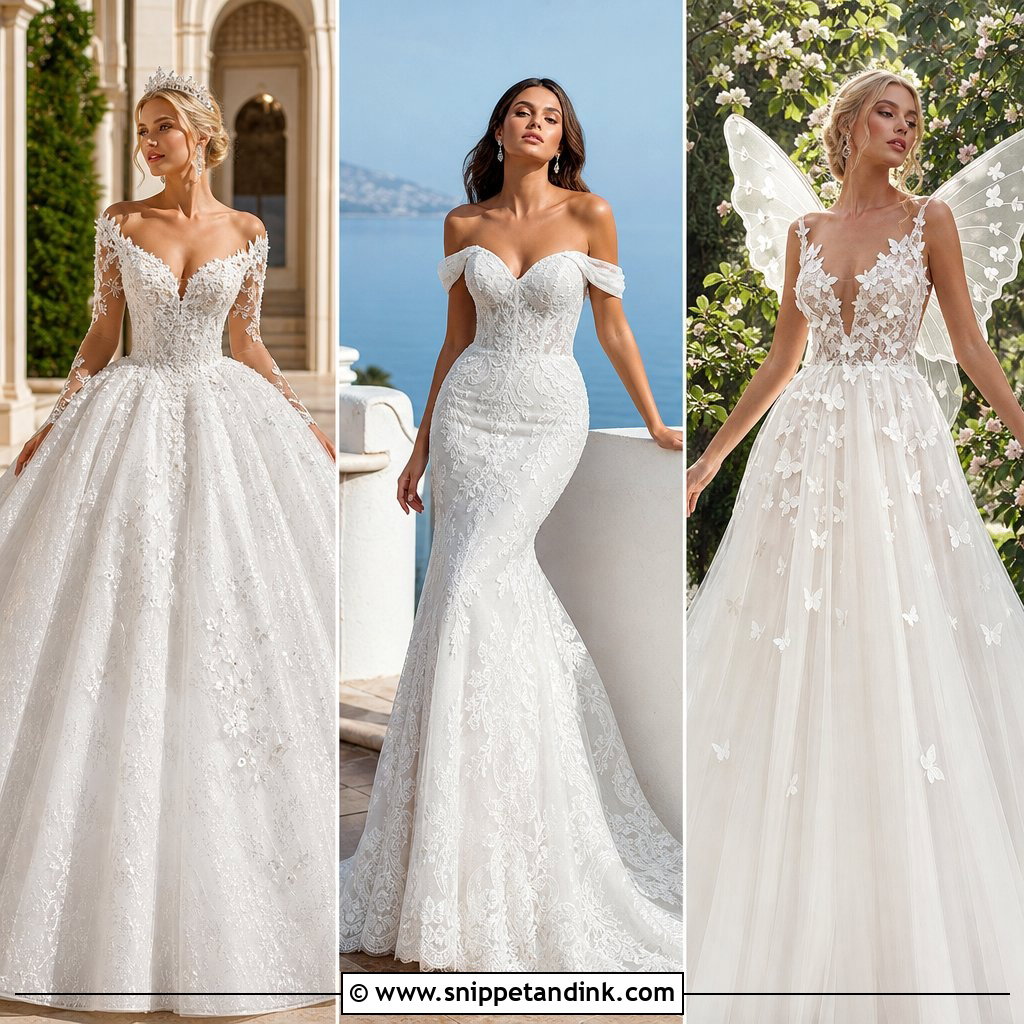
24. Ball Gown Wedding Dress
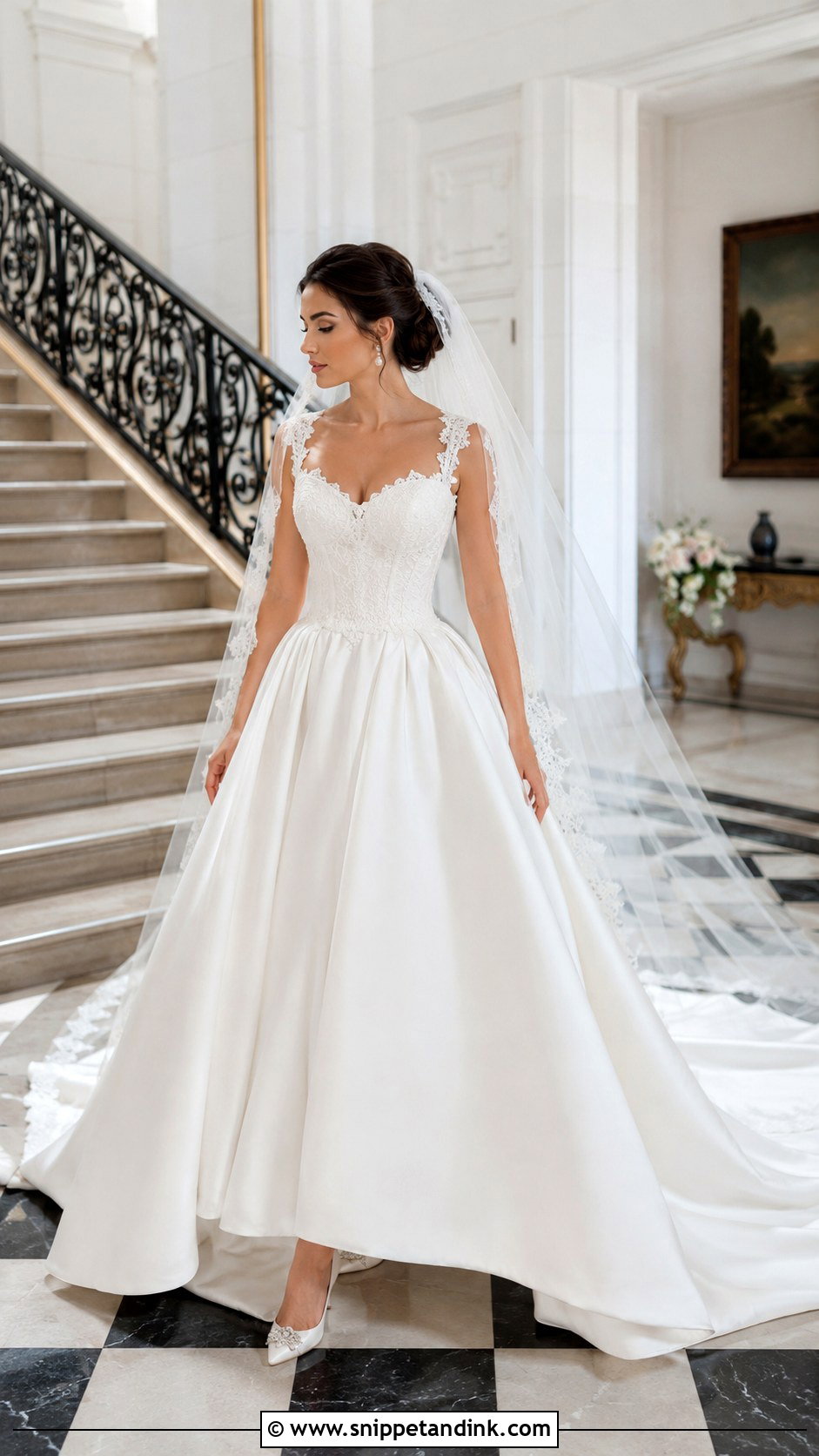
A ball gown turns romantic through its details: lace bodices, basque waists, satin skirts, covered buttons or delicate floral appliqué. The full skirt brings drama and the vintage touches keep it from feeling plain. A cathedral veil, pearl earrings and a bun, waves or a polished half-up style suit it. It belongs in a formal venue or grand hall. Plan ahead for the practical side: wide doorways, a car with room and someone to help in the bathroom.

25. A Line Lace Wedding Dress
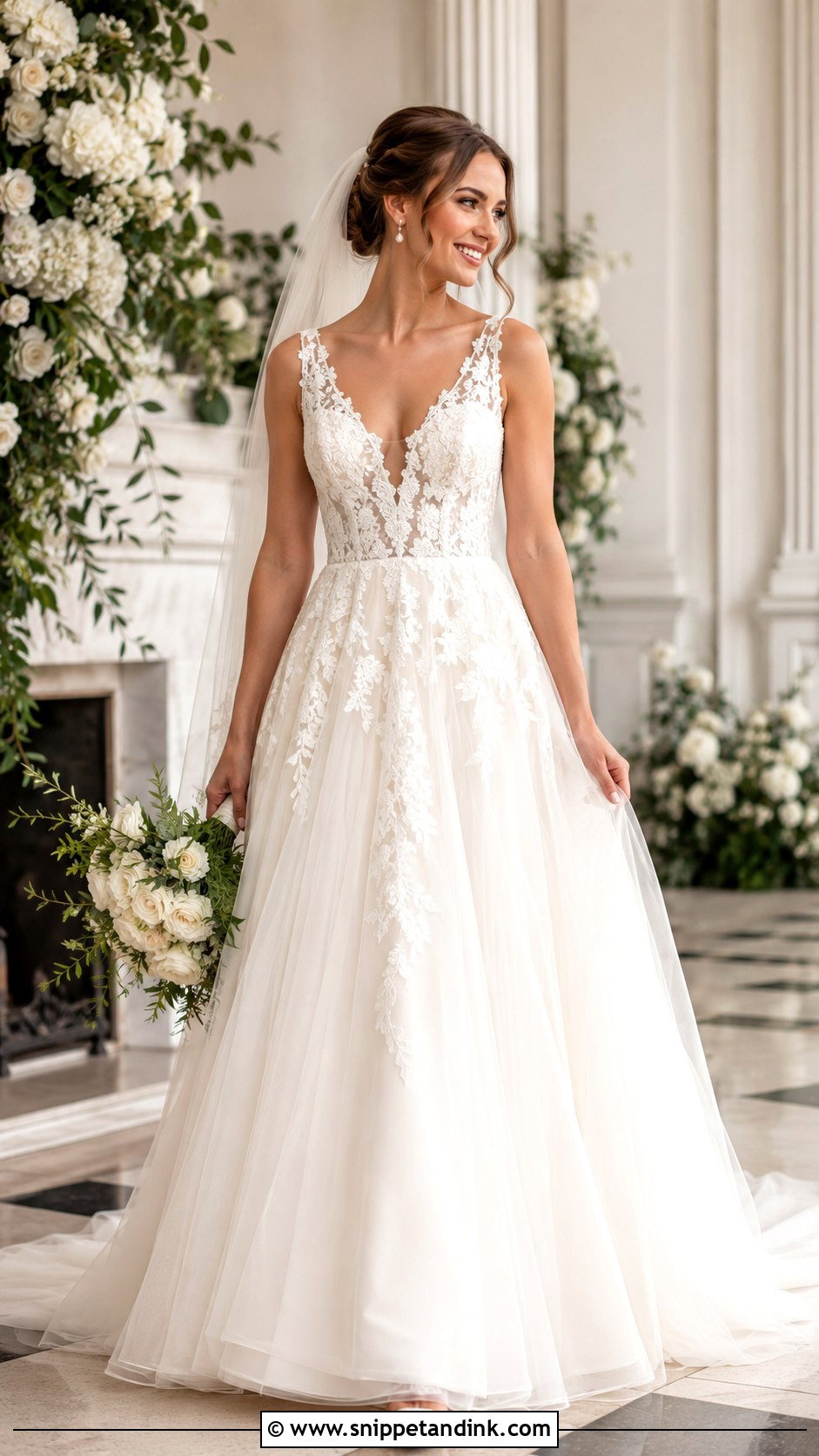
The A-line in lace is the most wearable dress here. Fitted through the bodice and flowing from the waist, it flatters most figures without restricting. Choose allover lace, lace sleeves or a lace bodice over soft tulle. Ivory heels or bridal flats both work under it. Gardens, ballrooms and everything between suit it. If you’re torn between several silhouettes, I’d try this one first and use it as your benchmark.
26. Sheath Lace Wedding Dress
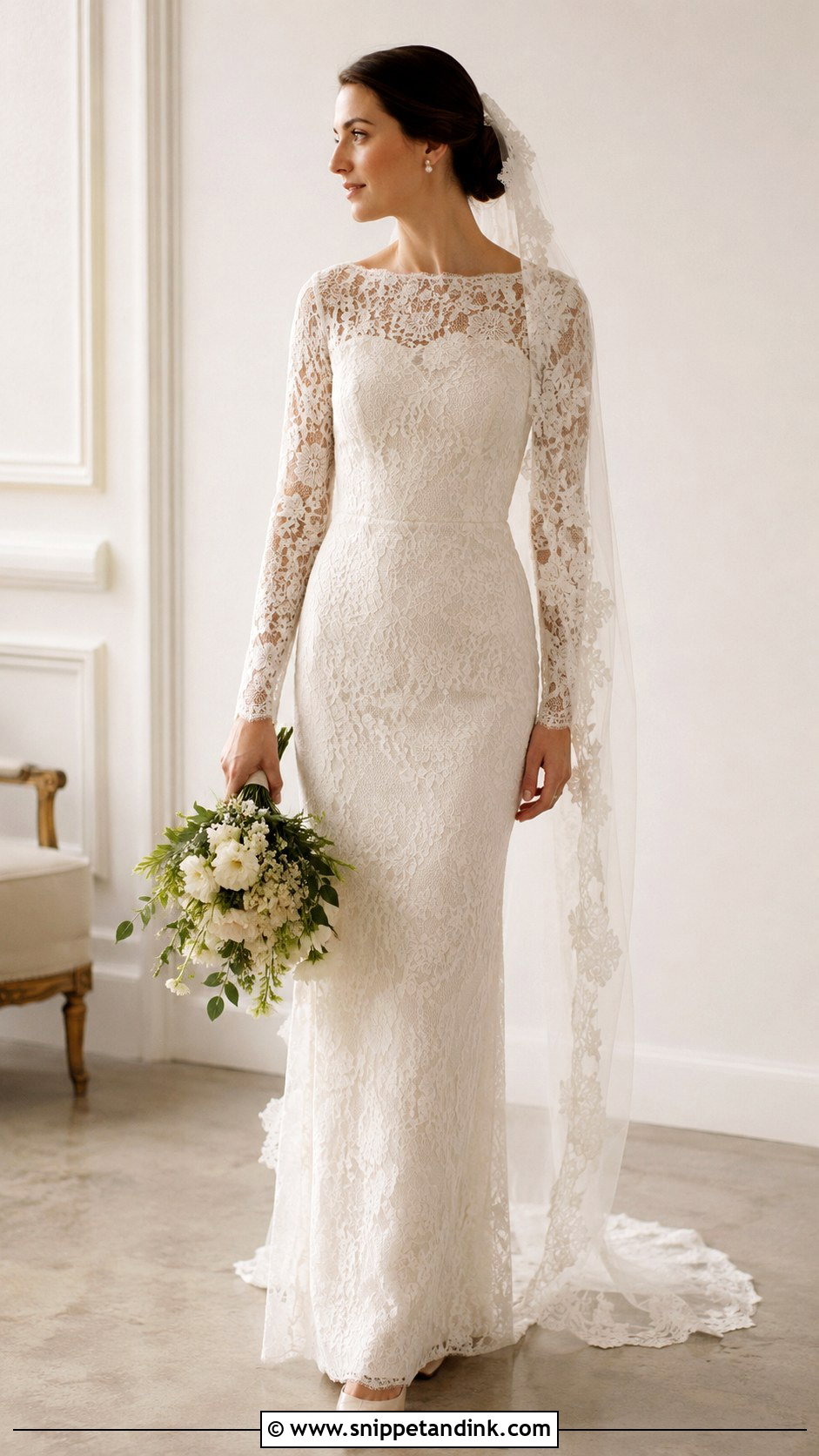
A lace sheath follows the body with no extra volume, so it’s light to wear and easy to travel with. Delicate lace, long sleeves, a bateau neck or pearl buttons give it a classic finish. Lace sheaths can ride up when you walk if they’re lined in a slippery fabric; a matte lining helps. A lace veil, low heels and small pearl earrings suit it. It’s a strong option for small venues, gardens and destination weddings.
27. Bridal Dress With Bow
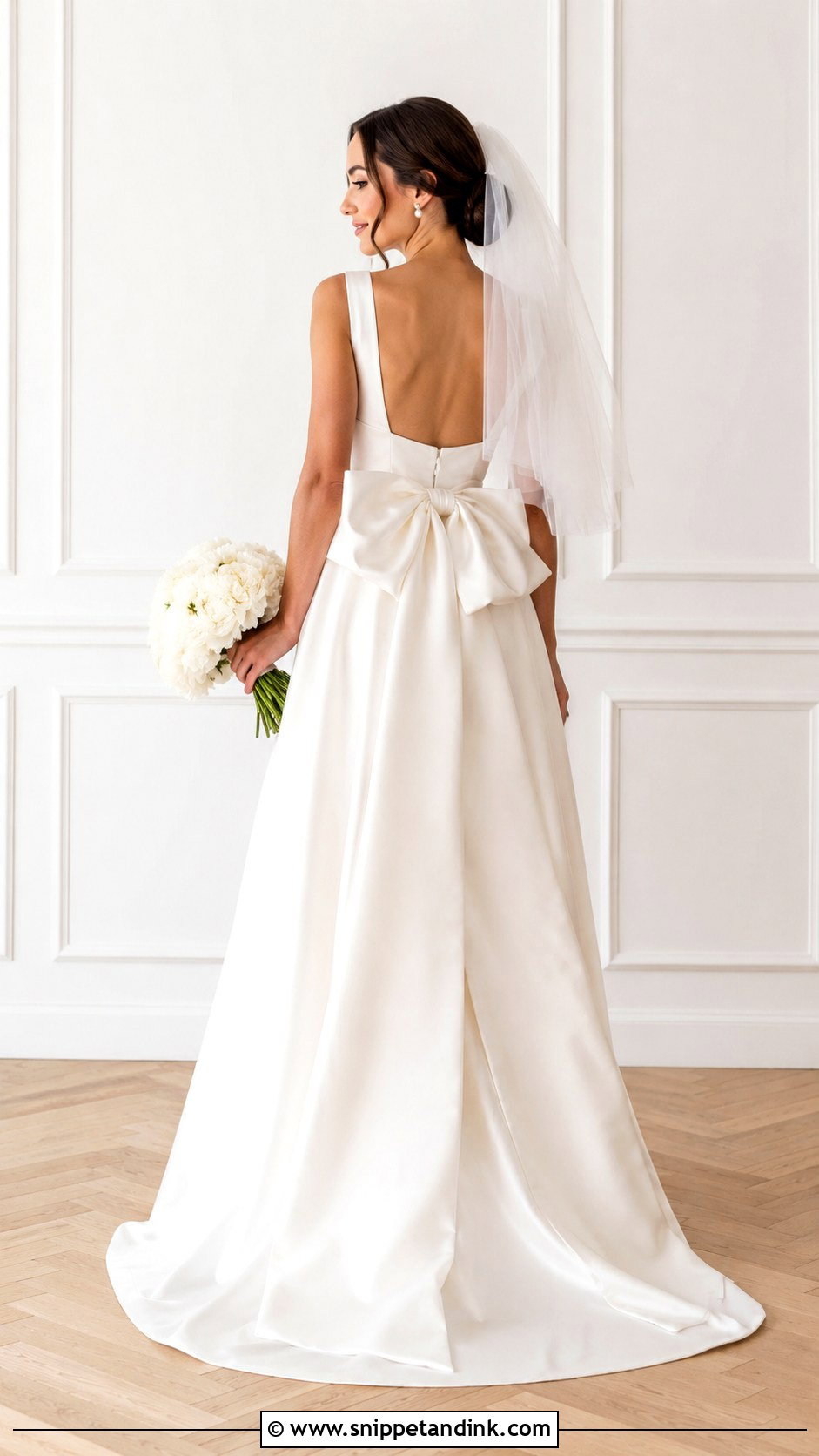
A bow can sit at the waist, shoulder, neckline or back, and it adds sweetness without lace or beading. Satin, taffeta and organza hold a bow crisply; softer fabrics let it droop by evening. A bow at the back of a simple gown is the classic placement. Pearl studs, soft makeup and classic pumps keep it grown-up, and a plain veil stops the details piling up.
28. Embroidered Tulle Wedding Dress
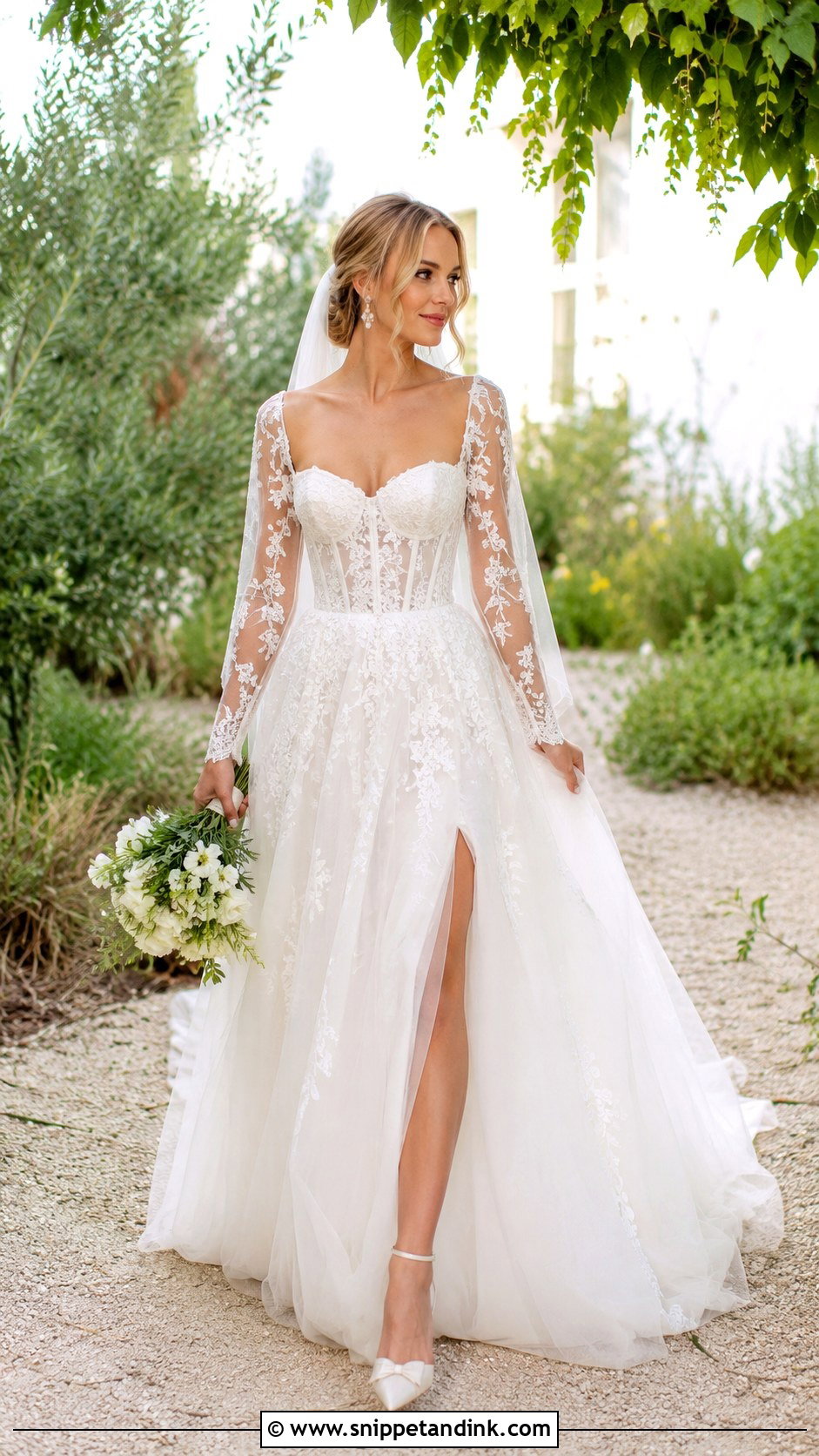
Embroidered tulle feels light because the decoration is stitched onto sheer net rather than built up in beads. Florals, vines or scattered motifs across the bodice and skirt all work. Sheer sleeves, a soft A-line or a corset bodice suit it. A plain veil is usually best, since the dress already has texture. Tulle is delicate, so watch out for bracelets, rough walls and bouquet wire. Loose waves and ivory heels make it right for a garden or outdoor ceremony.
29. Vintage Courthouse Wedding Dress
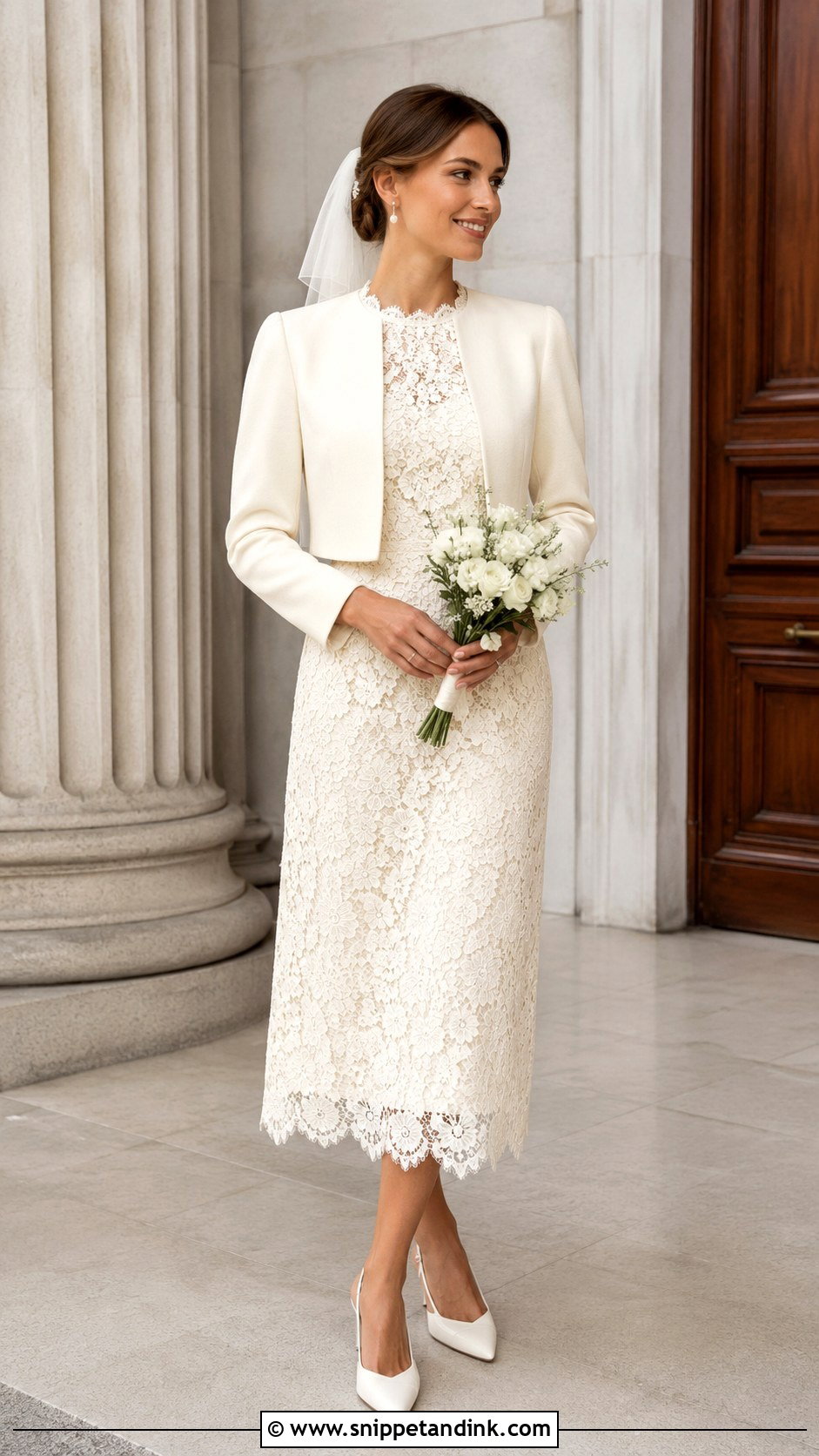
For a courthouse, I want a dress that looks considered but moves easily: a tea-length lace dress, a satin midi, a structured mini or a slip dress. Pearl earrings, a short veil, slingback heels and a small bouquet bring the romance. A lace bolero or cropped jacket adds coverage if the building is cold, and many are. Small civil ceremonies are quick, so the outfit should look complete the moment you walk in.
30. Vintage Reception Wedding Dress
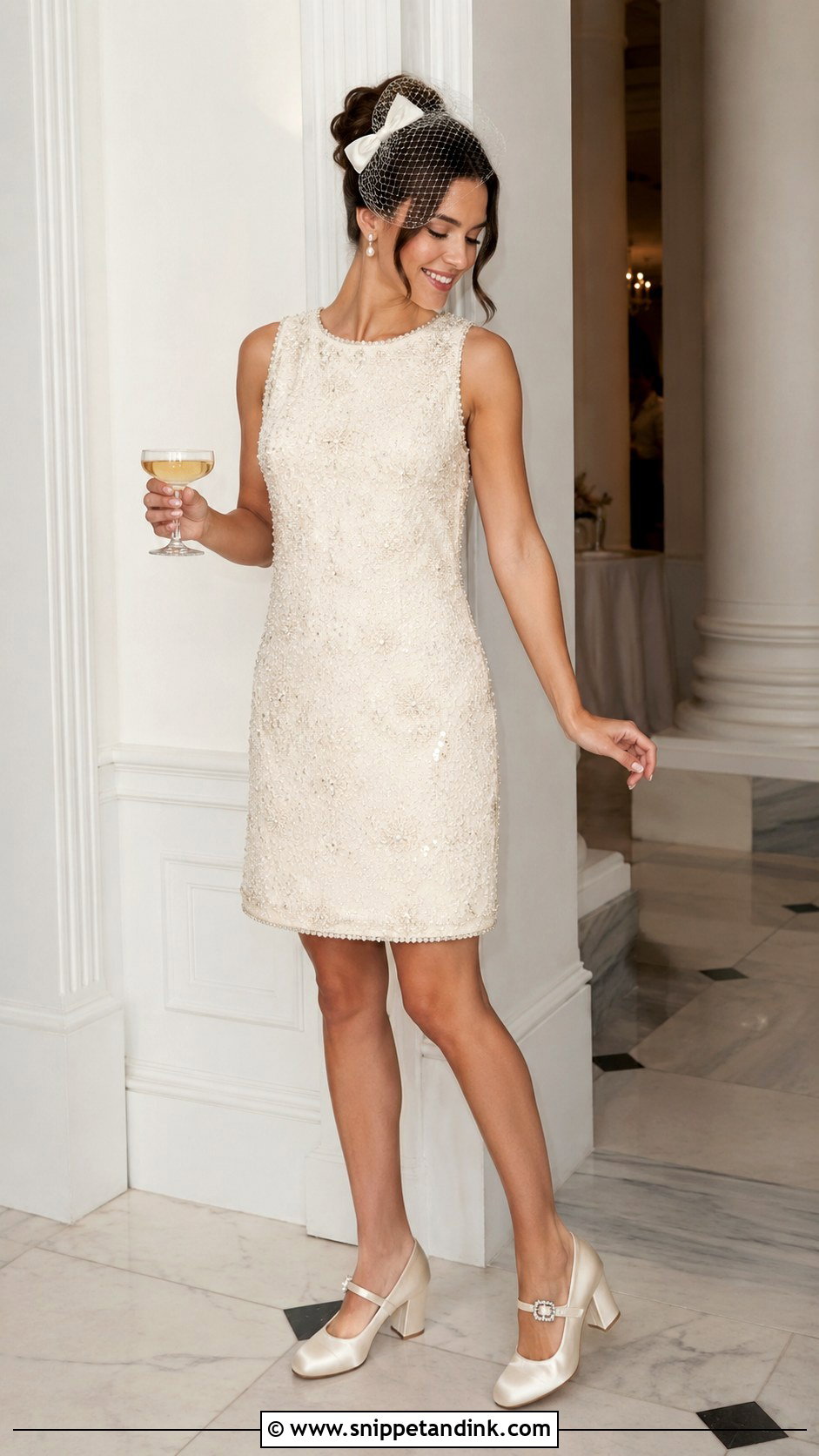
A vintage reception wedding dress gives you a second mood without losing the thread. A beaded twenties mini, tea-length satin, a lace midi or a restrained feather hem are all good options. It should be easier to move in than the ceremony gown and still clearly bridal. Comfortable heels, pearl earrings and a hair bow or small clip complete it. It makes most sense when the ceremony gown is full-length or formal.
How Ivory, Satin and Tulle Look Under Sun, Candles and Flash
A dress you love in the shop can read differently on camera. I always tell brides to look at their gown in more than one light before the day.
Colour
Bright white can look blue in shade and very harsh under flash. Ivory and soft champagne look warmer and are kinder to most skin. Very pale blush can look like plain white in strong sun, so if you chose it for the colour, ask your photographer how they’ll keep it.
Fabric
Satin reflects light. In direct midday sun it shines and shows every crease, while in soft window light it looks rich. Tulle and lace scatter light and look softer, though dark lining under sheer lace can show through on camera. Stand by a window and then under a lamp in the dress at your last fitting, take a phone photo in each, and you’ll know what to expect.
Romance Lives in the Small Details
A romantic gown feels timeless without looking old-fashioned when the details carry it: lace sleeves, pearl buttons, a soft veil, a sculpted waist, a skirt that moves. You can go dramatic with a basque-waist ball gown, quiet with a satin slip, playful in tea length or delicate in embroidered tulle. Whatever you pick should suit your venue, your comfort and how you want to feel walking in. Build the outfit from the dress outward, and stop adding before it feels finished.
You'll Like These Ideas:






Leave a Reply