
Couture is less about the label and more about a gown being built around one body. The twenty looks below pair classic shapes with the details bridal houses keep returning to: structured corsetry, dropped waists, raised flowers, textured fabric, capes and second looks for the reception. None of it is worth wearing just because it’s current. I start with the bride’s proportions, the venue, the season and how much structure she can tolerate for a full day, and only then talk about decoration. The veil, shoes, jewelry and bouquet need the same care, because a couture gown with careless accessories looks unfinished. Lace, satin, sharp tailoring or runway-inspired volume can all be adapted to suit you.
What Separates Couture From a Gown That Is Simply Expensive
Brides use the word couture loosely, and so do shops, which makes it hard to know what you’re paying for. In practice there are three levels, and they differ in how much of the gown is made for you.
- Made to order: a standard design cut in your nearest size, then altered. Most bridal gowns are made this way.
- Made to measure: the same design, but the pattern is adjusted to your measurements before cutting, so less altering is needed.
- Bespoke or couture: the pattern is drafted for you, usually tested first in a plain cotton mock-up called a toile, and adjusted over several fittings.
The signs of real couture are mostly inside. Look for hand-finished hems, lace motifs placed by hand around seams instead of cut across them, internal corsetry built into the lining, and beading sewn on rather than glued. If you’re paying a couture price, ask to see the inside of a sample. A good atelier is happy to show it.
1. Corset Ball Gown Wedding Couture
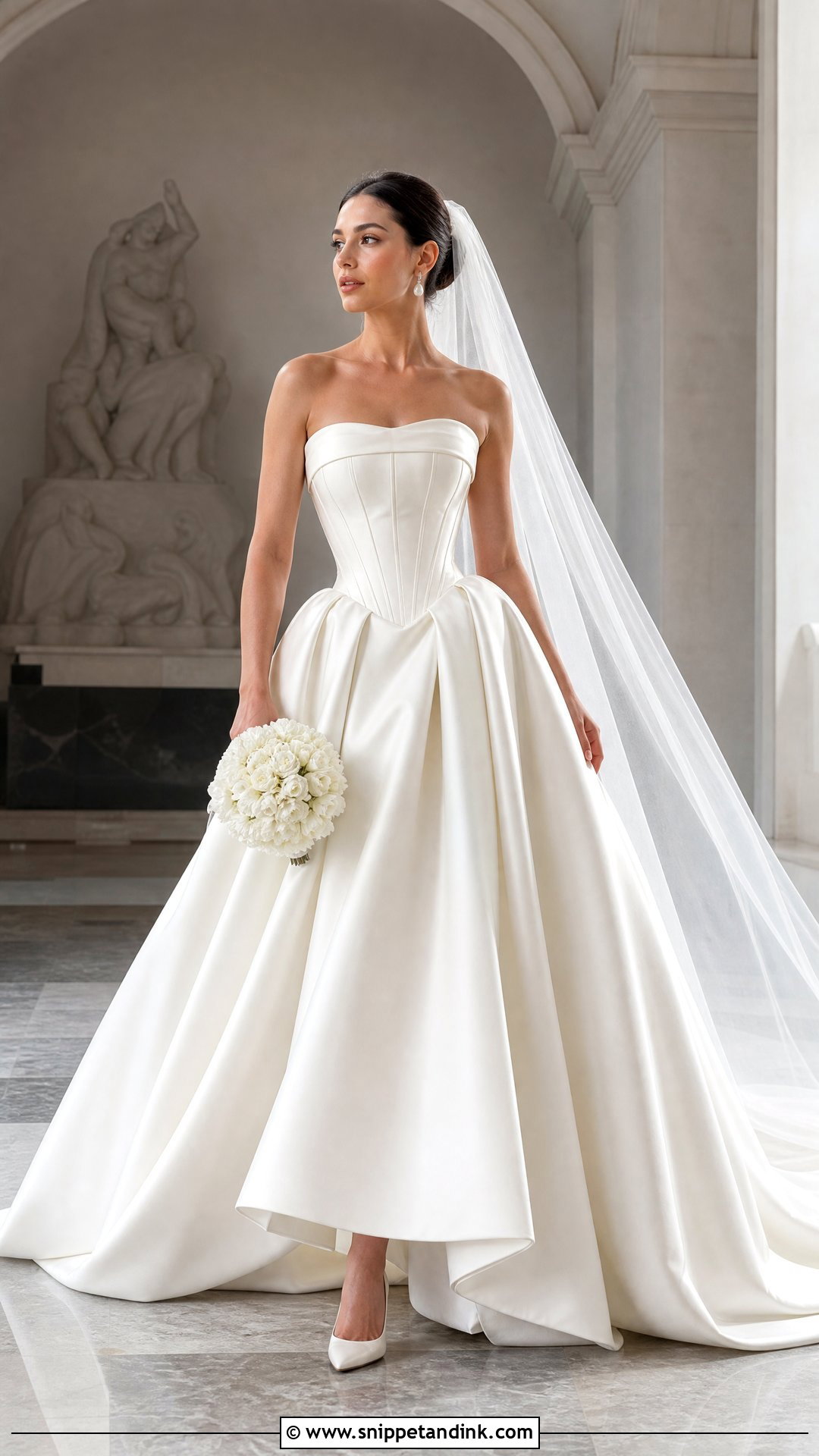
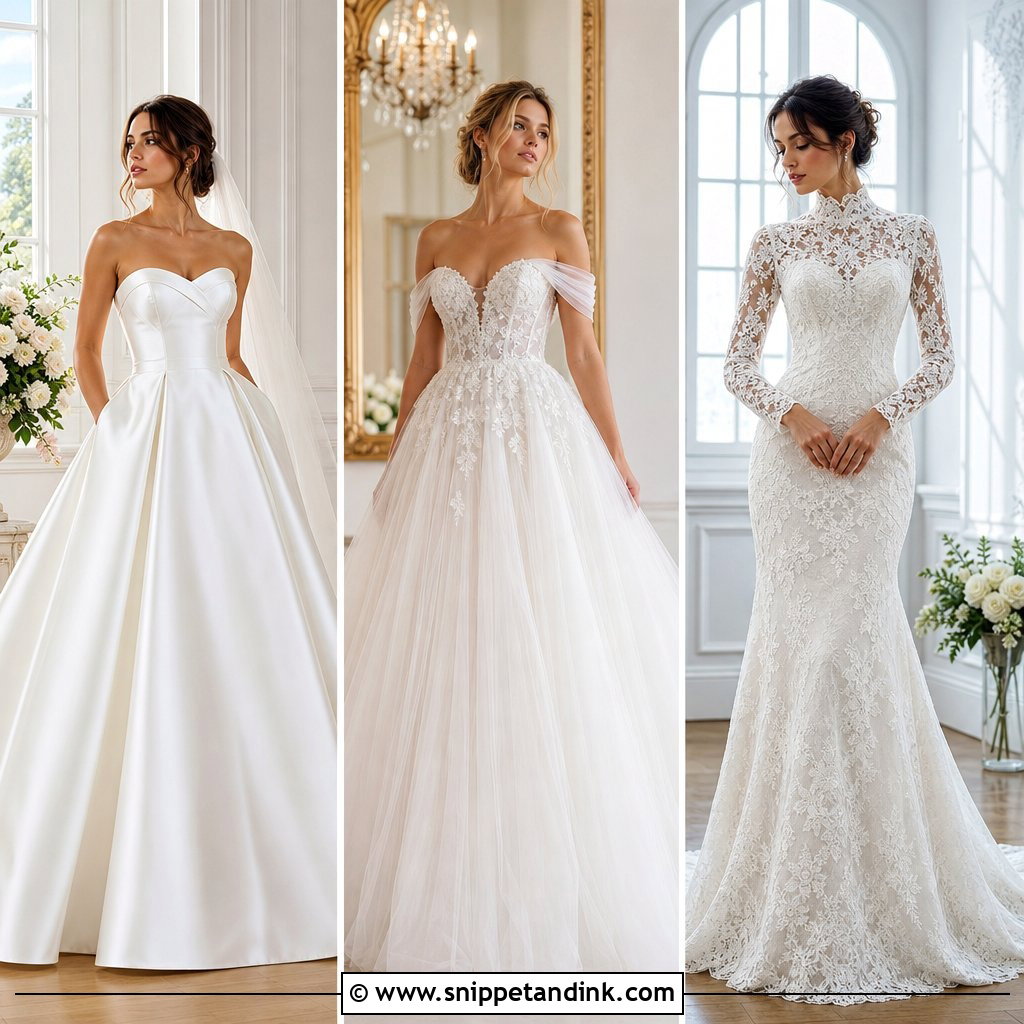
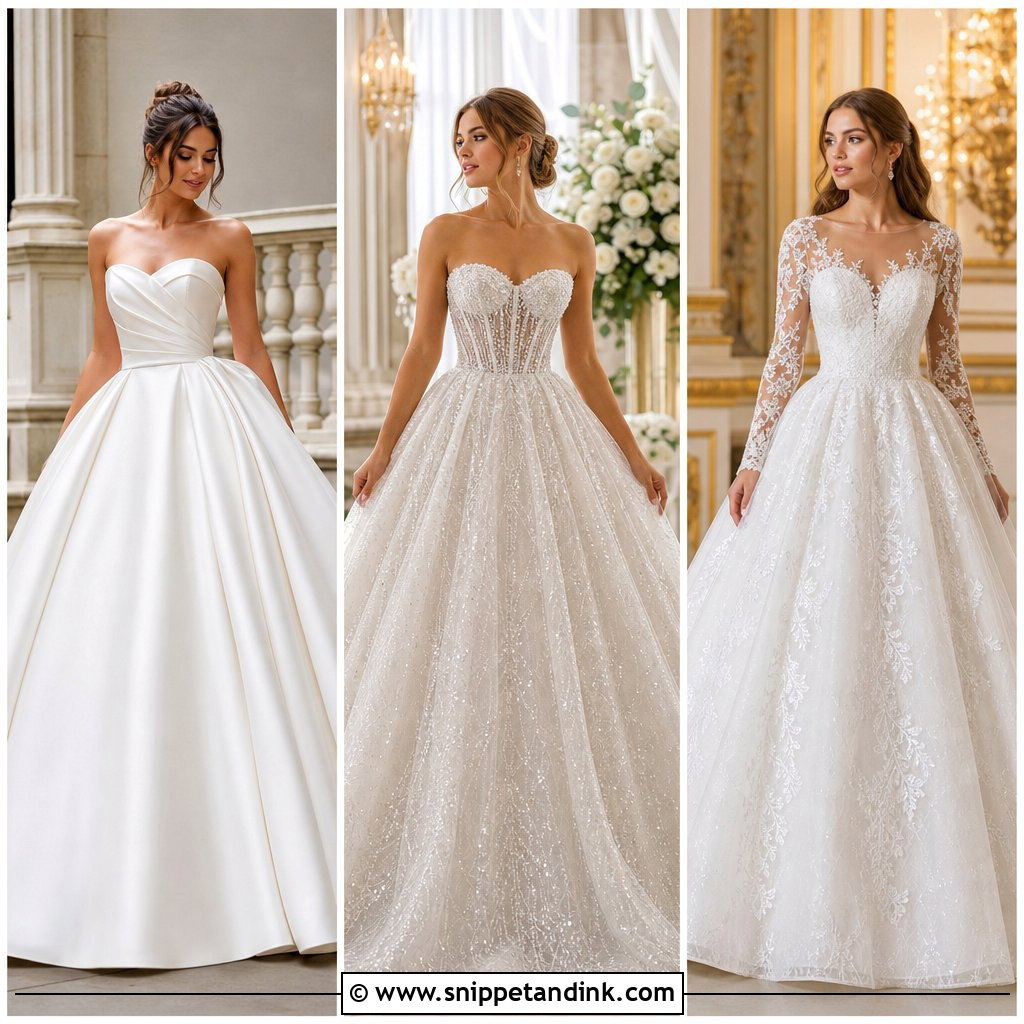
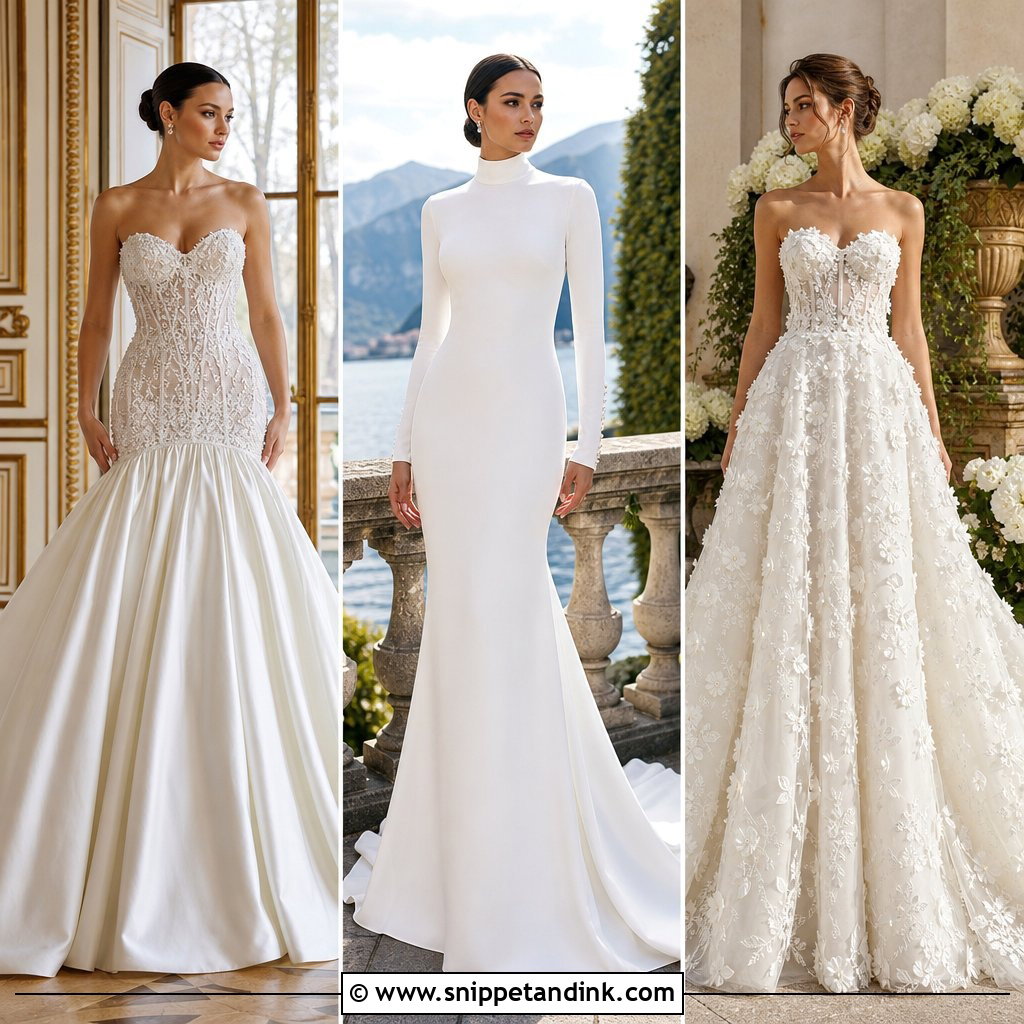
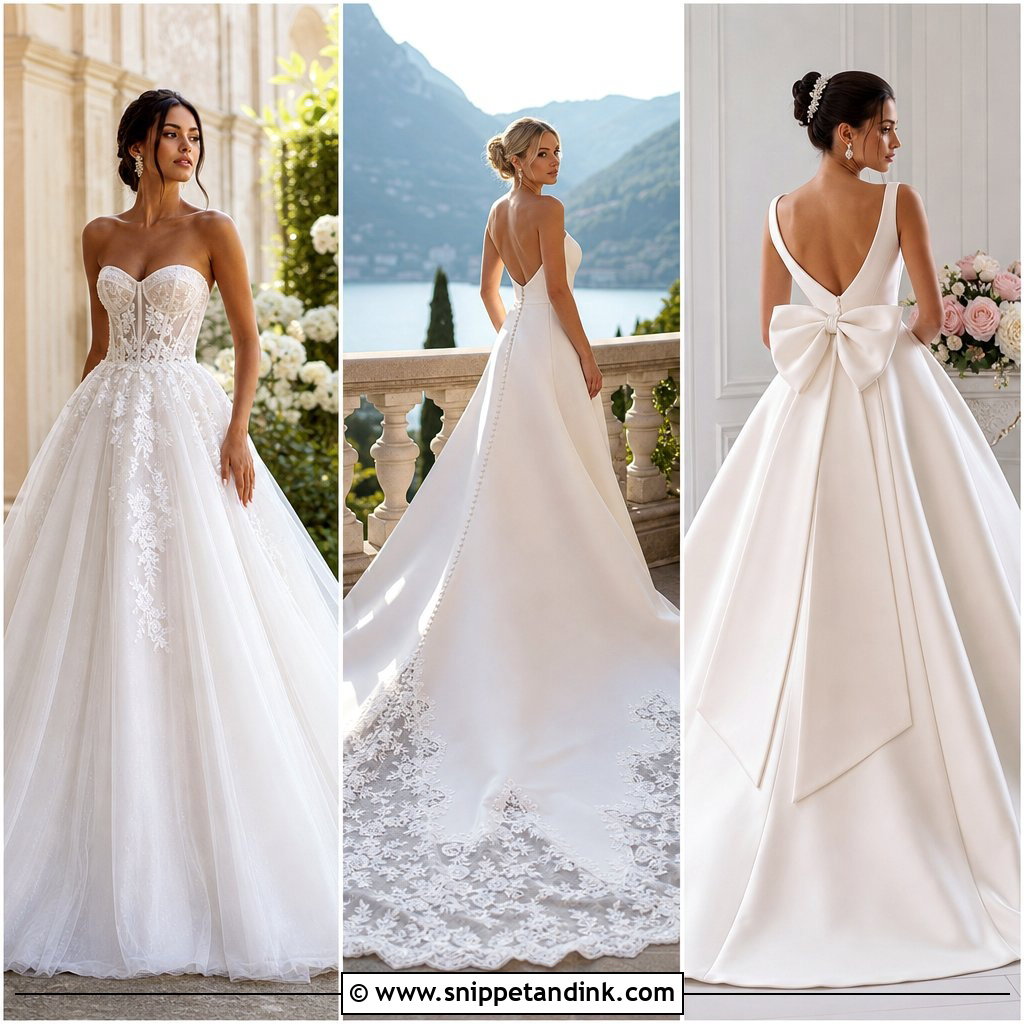
The corset ball gown is the shape most people picture when they hear the word couture. Visible seaming on the bodice, a softly dipped neckline and a full silk or mikado skirt are the classic recipe. Good internal construction shapes the waist without stopping you breathing, and you can tell at the first sit-down whether it was done well. Fuller busts are often more comfortable with wider straps or an illusion neckline. On a petite frame I’d ask the atelier to scale the skirt down, since a full-volume skirt can swallow a smaller bride. A cathedral veil, pearl drops, comfortable pointed pumps and a compact bouquet finish it, with a low bun keeping the neckline clear.
2. Drop Waist Wedding Couture
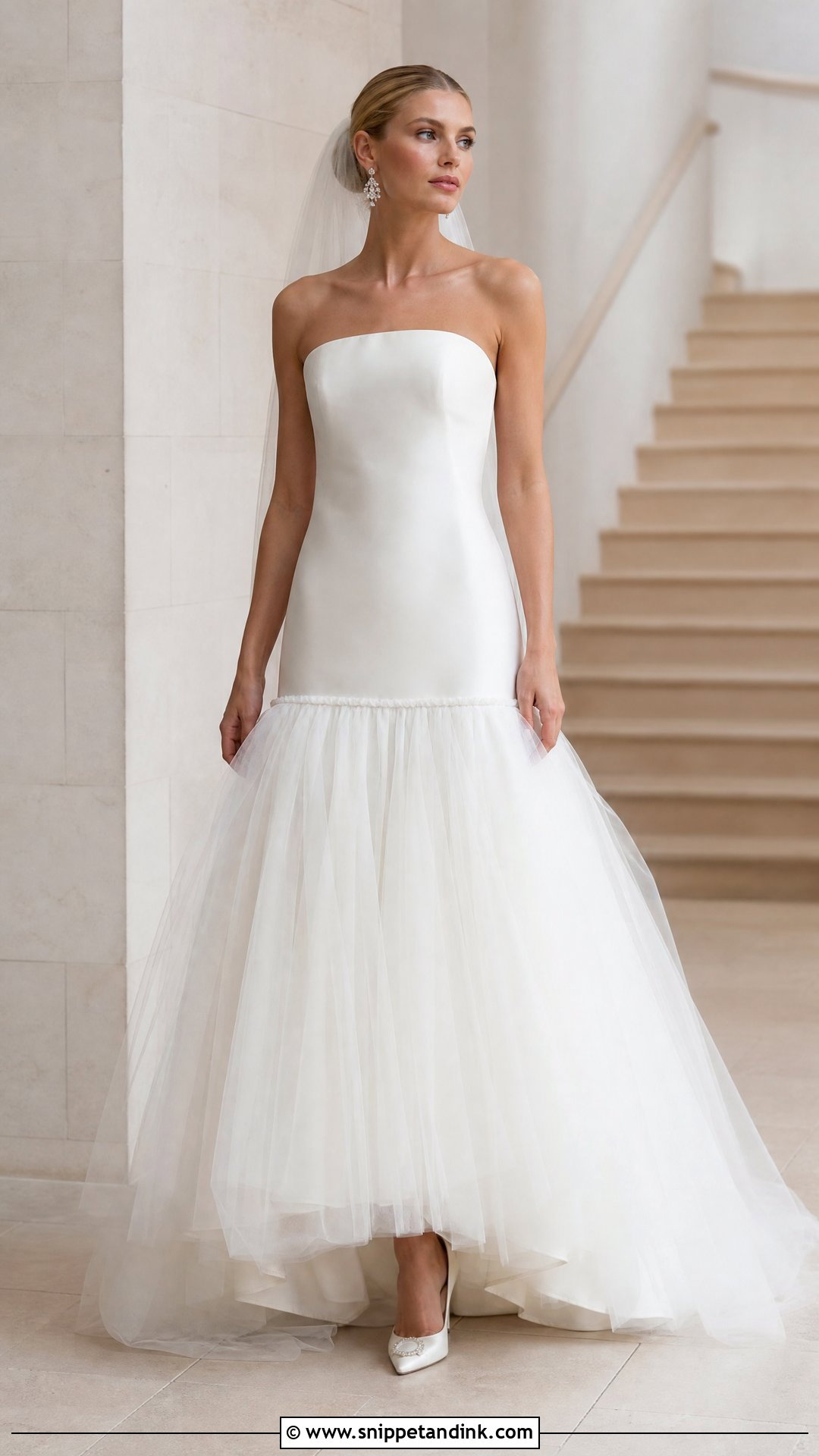
Placement is everything with a drop waist. The bodice runs below the natural waist before opening into tulle, organza or textured silk, and if the seam lands at the wrong spot it shortens the legs instead of lengthening the torso. I’d have it set to your own body at the fitting rather than to the sample’s measurement. Keep the neckline simple, a strapless scoop or a clean square, so the long line stays the focus. Slim crystal earrings, a fingertip veil, sleek ivory heels and a smooth chignon suit its modern proportions. Detachable off-shoulder straps or a sheer overlay can add coverage without breaking the silhouette.
3. Floral Appliqué Wedding Couture
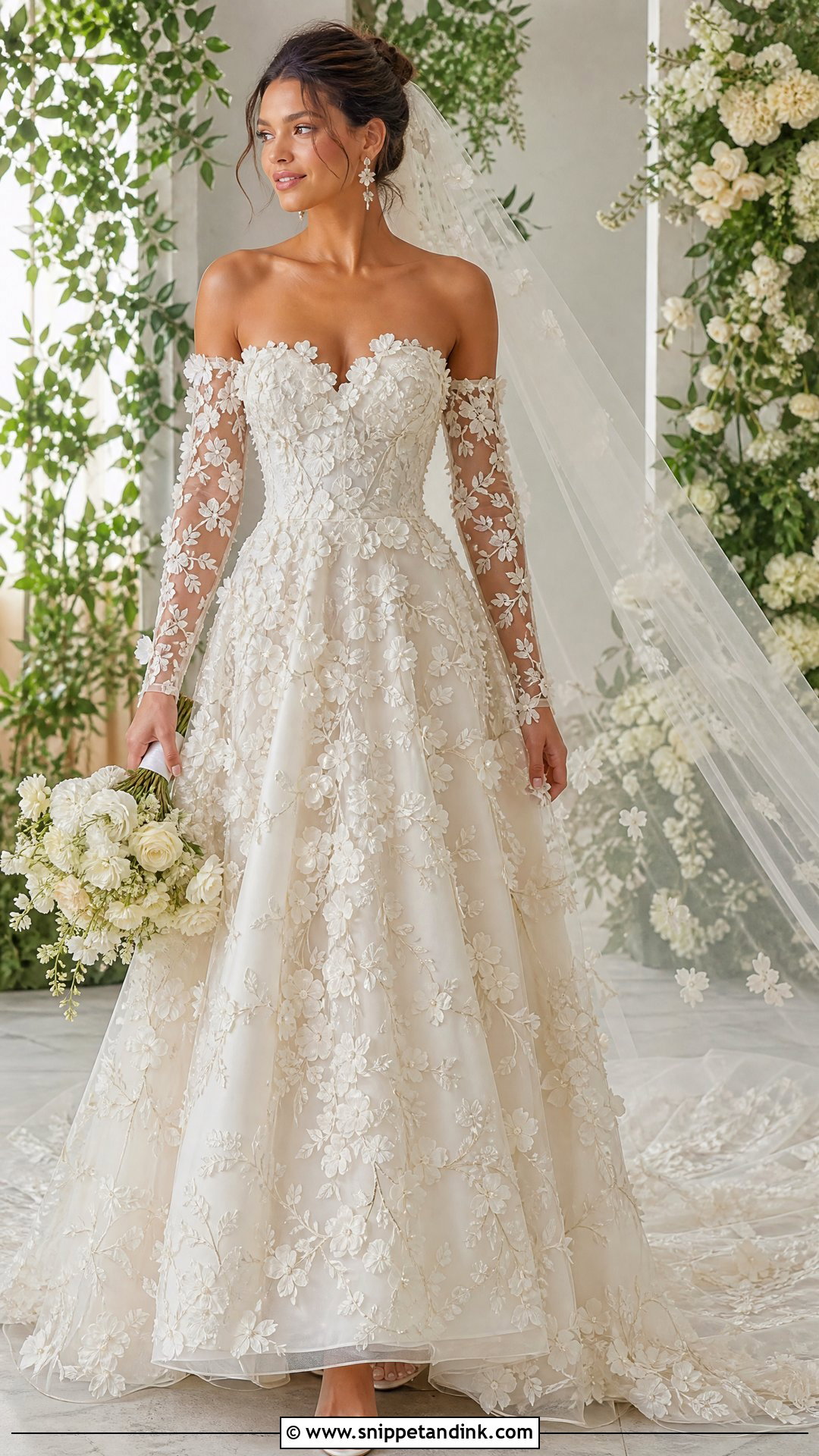
Raised floral appliqués are hand-placed, which is part of what you pay for in couture. The version I like best starts with small blossoms on the bodice that grow larger as they move down an A-line or ball gown skirt. Graduating them keeps a smaller bride from being covered in flowers. Floral earrings, plain satin sandals and a sheer veil with a lightly appliquéd edge are enough. Echo one or two of the dress’s flowers in the bouquet rather than copying them all. For less texture, keep appliqués to the bodice and train; for more, carry them onto detachable sleeves. Soft waves or a loose bun suit the mood.
4. Long Sleeve Lace Wedding Couture
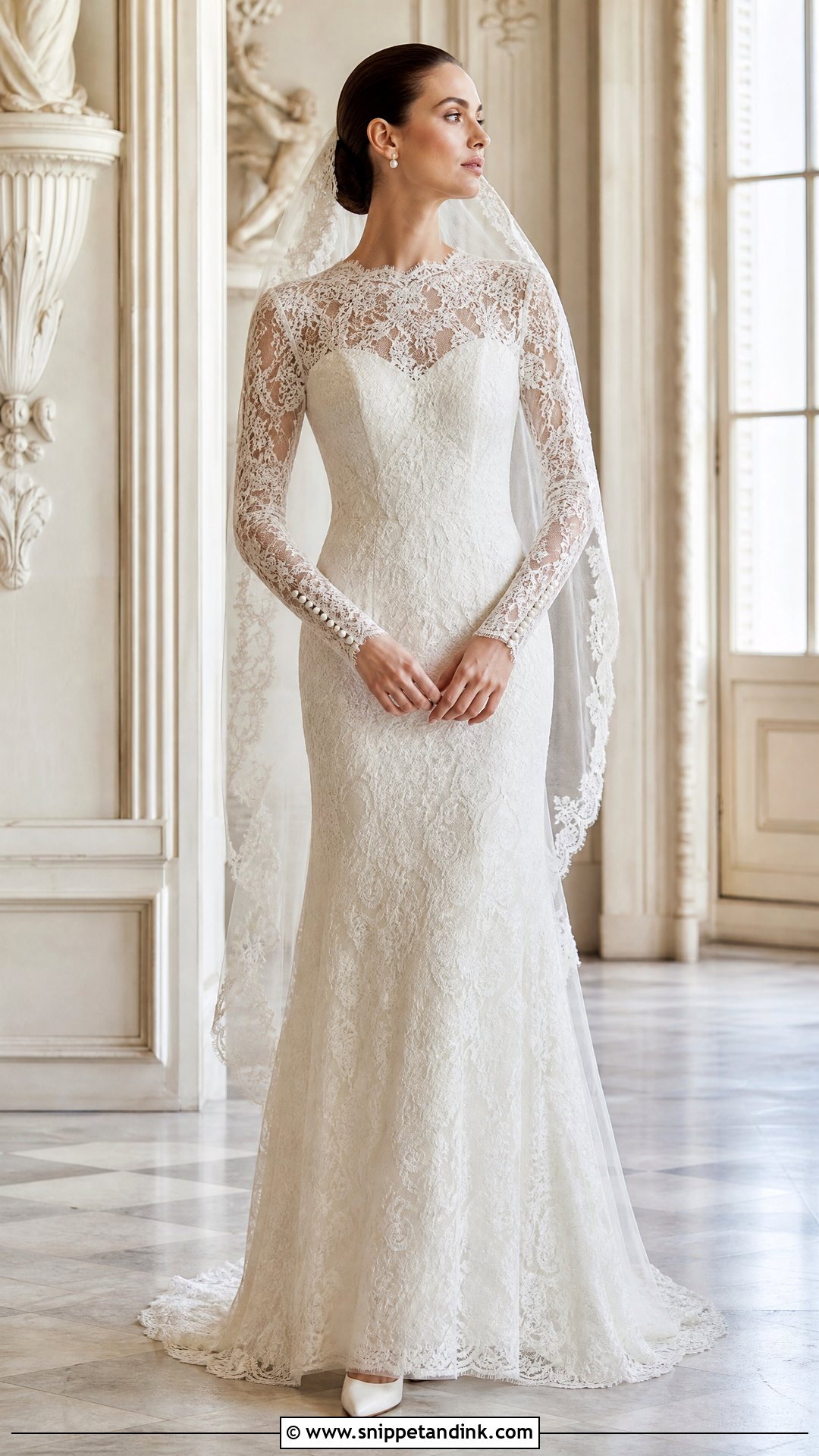
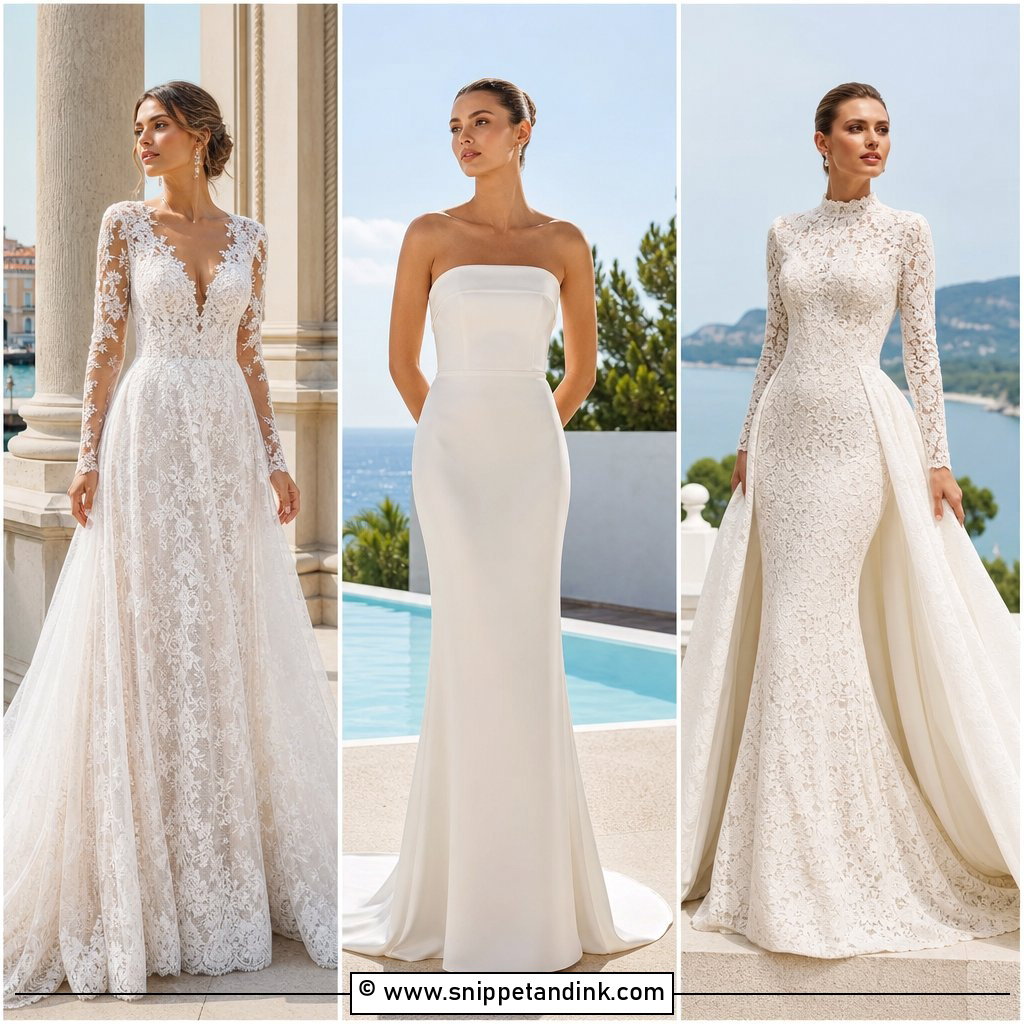
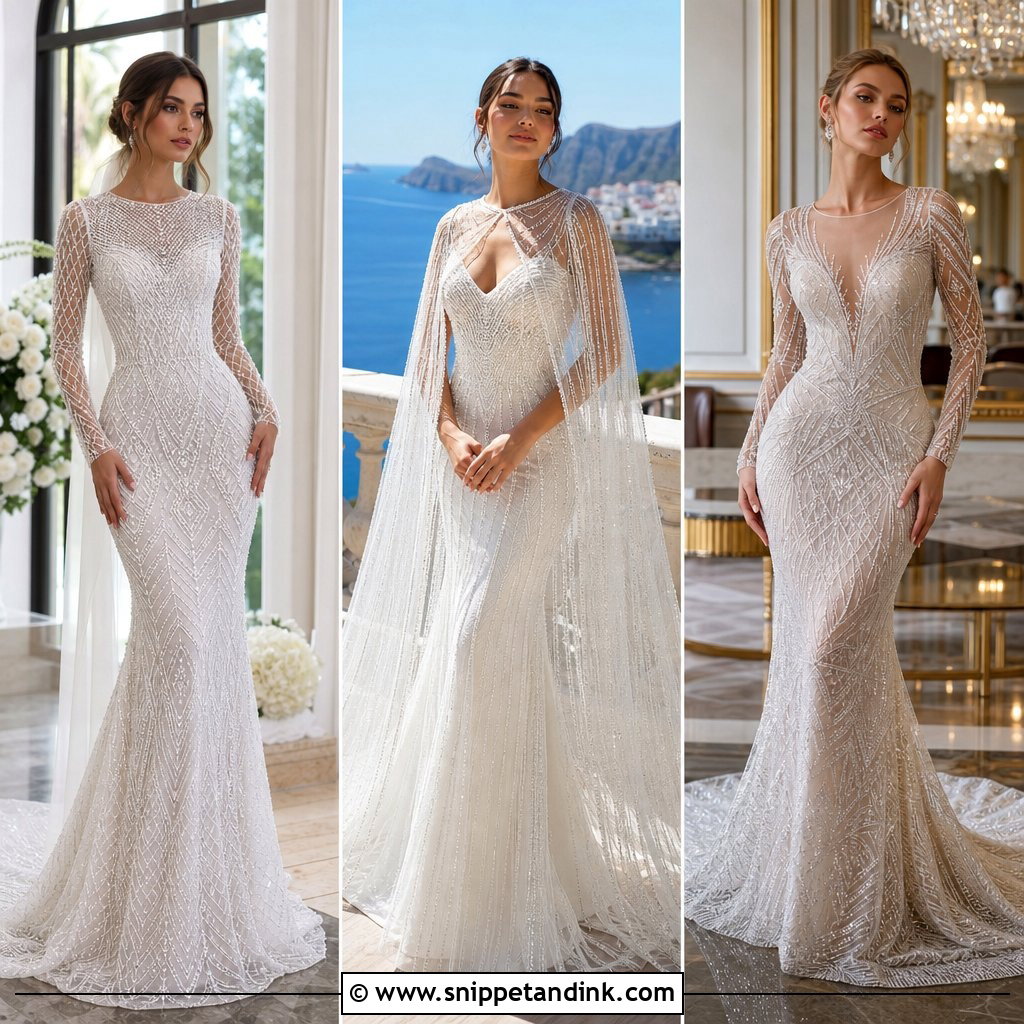
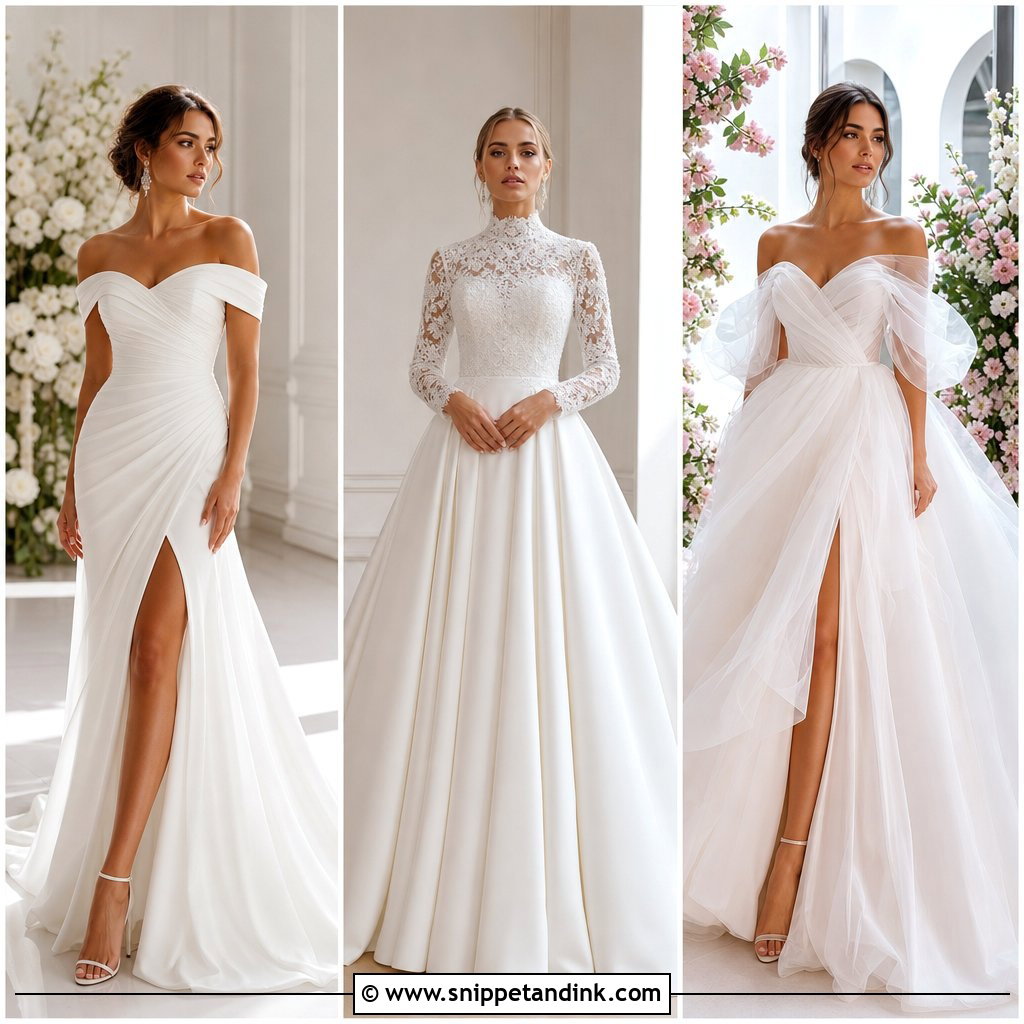
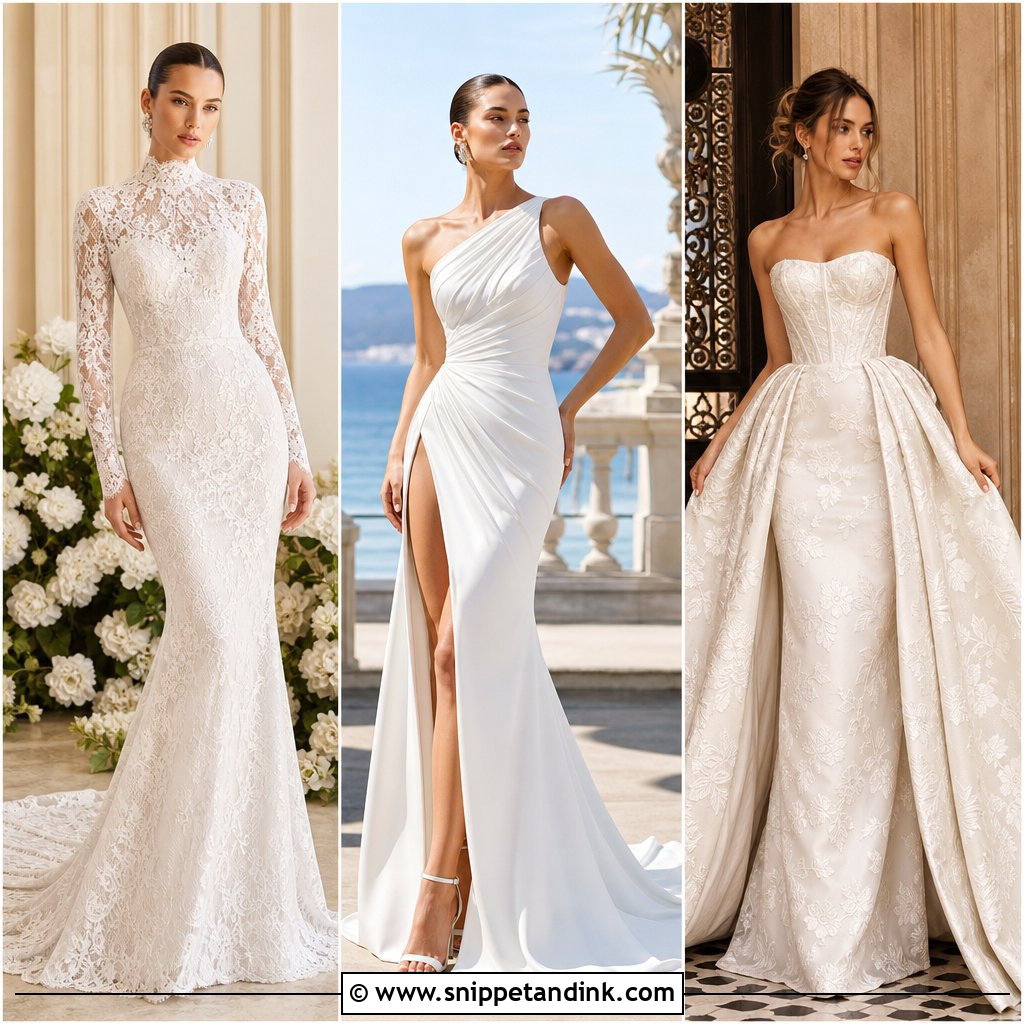
Lace sleeves give coverage and still look light, provided the lace is placed rather than cut from a flat bolt. On a well-made gown you’ll see motifs positioned around the shoulder and wrist, not chopped off at the seam. Sheer sleeves with covered buttons at the wrist over an opaque bodice give a smoother, more wearable finish. Pearl studs, closed pumps and a lace-edged chapel veil suit it, with a low bun or pinned waves showing the shoulder detail. In summer, ask for light lace on a breathable silk lining; in winter, denser embroidery and a removable satin cape. Hug someone in it at the fitting: lace sleeves have no stretch.
5. Satin Column Gown Wedding Couture
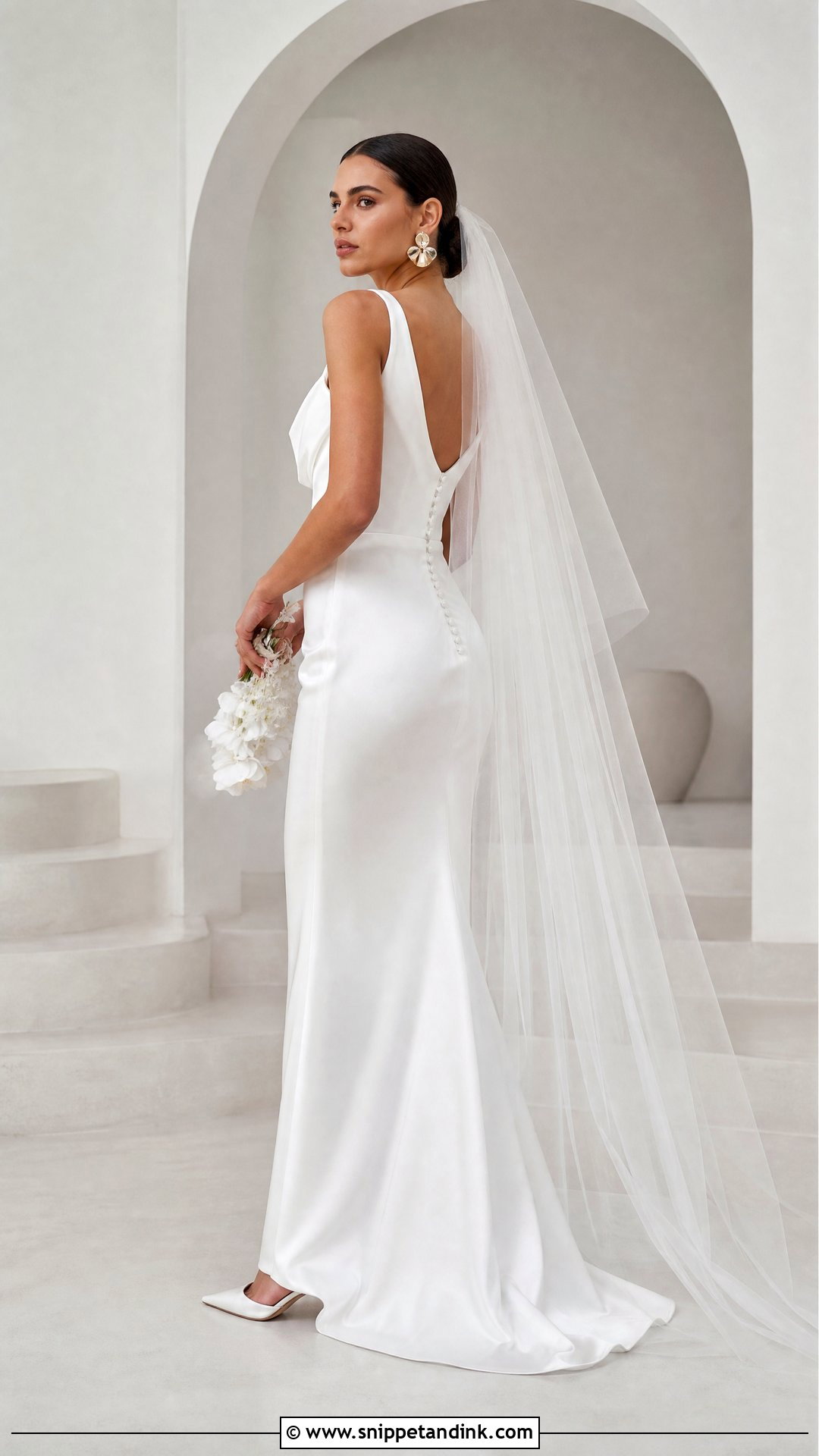
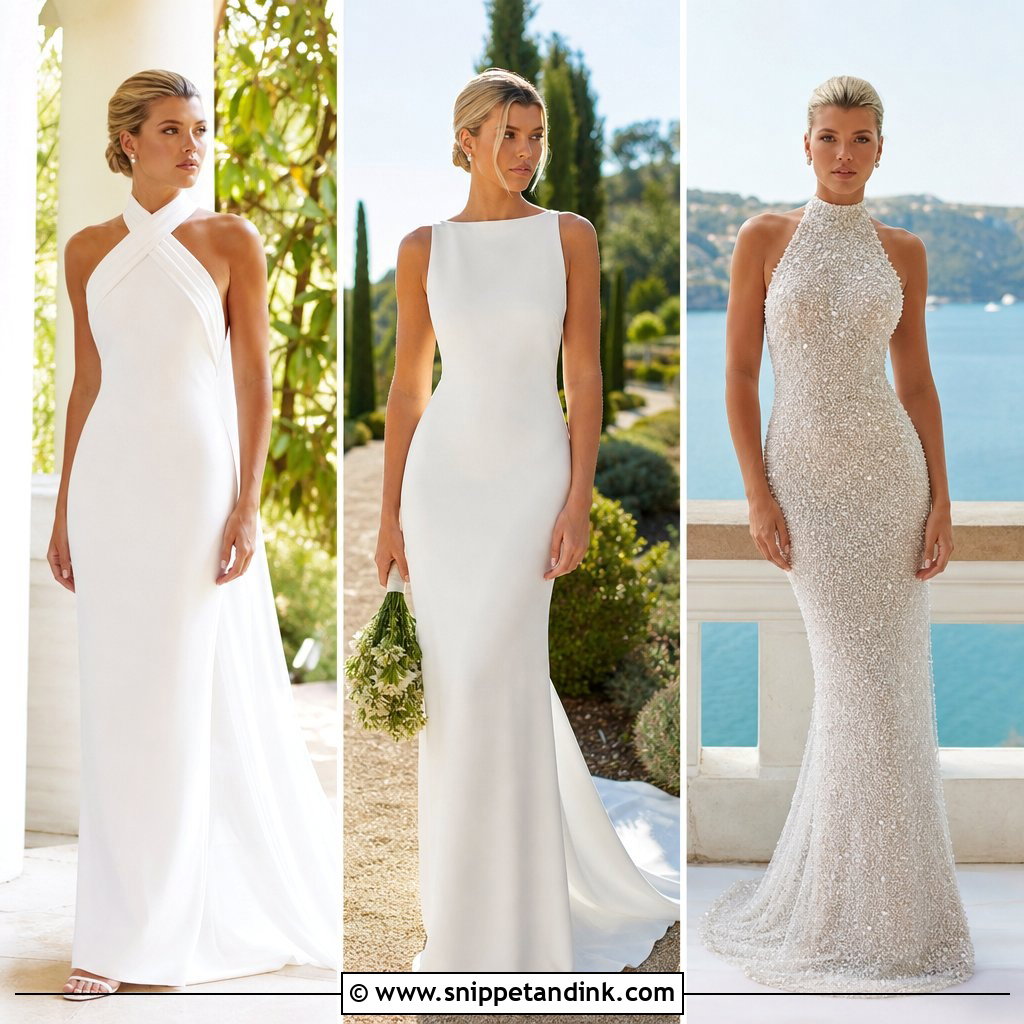
Plain satin is the least forgiving fabric in bridal. With nothing to distract the eye, every pull at the seams and every ripple at the waist shows, so the fit has to be close to perfect. Choose a heavy silk satin or crepe-backed satin that falls rather than clings, cut into a column with a softly draped neckline and a shaped waist. Sculptural earrings, pointed slingbacks, a long sheer veil and a single cuff are all it needs. A low back or a row of covered buttons gives interest from behind. Ask about a discreet back slit or detachable train if you want to move easily, and keep the hair and bouquet just as clean.
6. Off-Shoulder Mermaid Wedding Couture
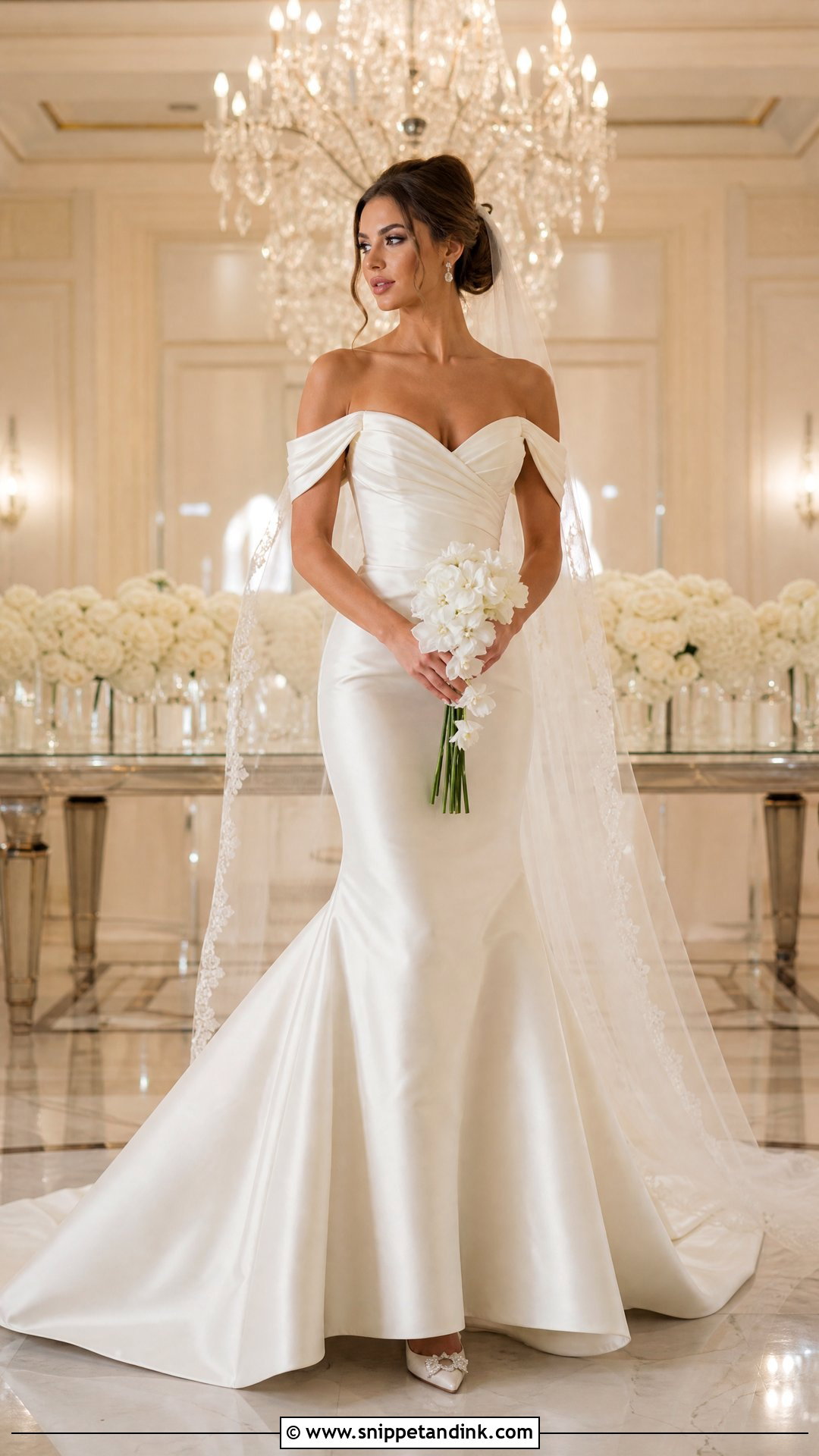
A mermaid gown lives or dies by where the flare starts. Too low and you shuffle; too high and the shape loses its drama. For most brides I like it at or just above the knee. Off-shoulder sleeves soften the strong silhouette, and the bodice must follow the torso and hips closely. Draped satin gives a clean finish; lace or beadwork makes it more ornate. The open neckline frames a short necklace or statement earrings well. Pointed heels, a fingertip veil and a slim bouquet keep the line visible. Detachable off-shoulder straps are worth asking for if you want to raise your arms on the dance floor.
7. Cape Veil Wedding Couture
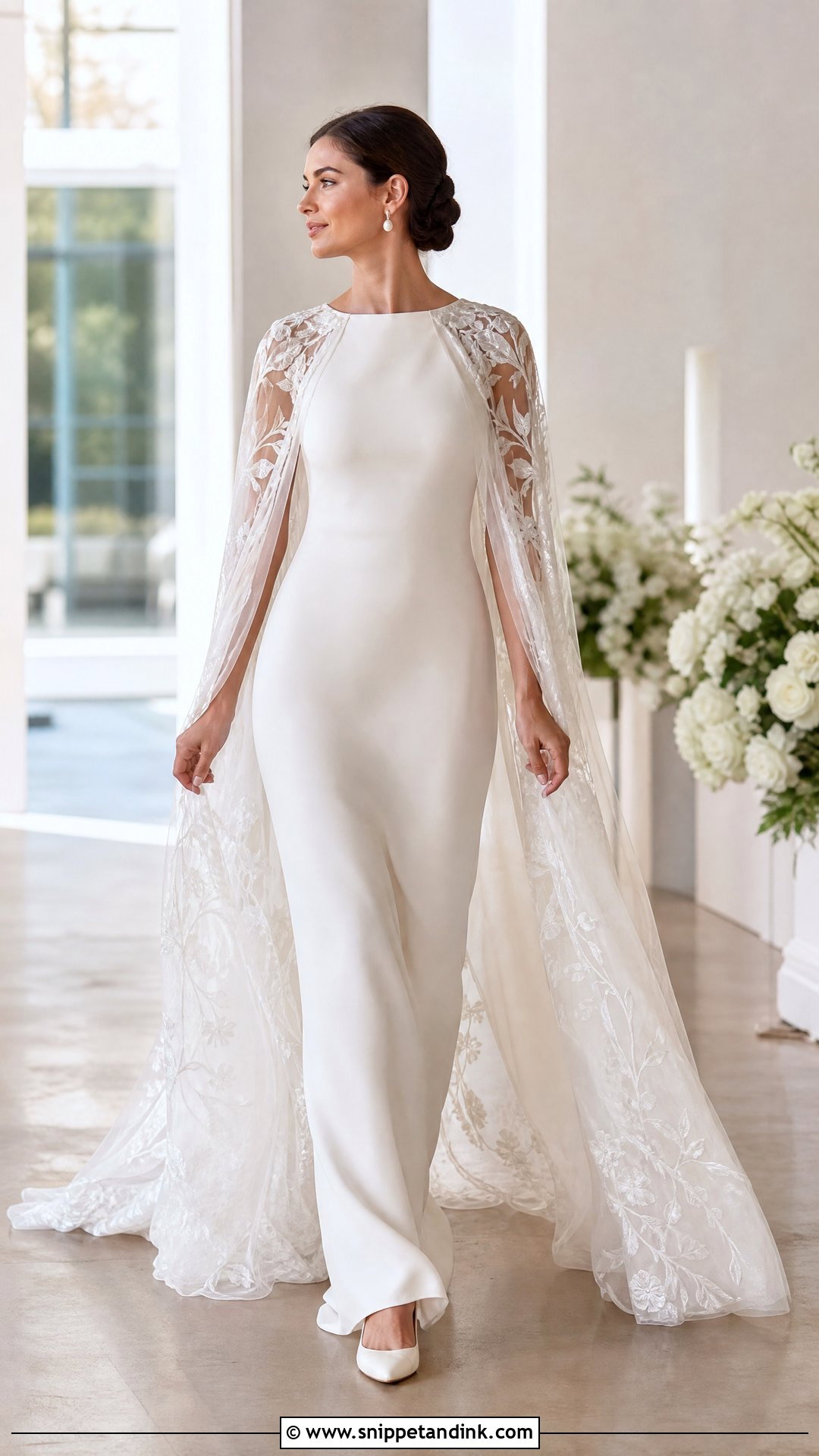
Cape veils look modern and move beautifully, but they’re heavier than a standard veil, so the attachment matters. Pair a long sheer cape with a streamlined crepe gown, fitted satin or a simple A-line. It should fasten firmly at the shoulders and fall past the train without hiding the back of the dress. Pearl earrings, closed heels and a smooth bun or ponytail keep the upper body clean, so skip the necklace. Embroidered edges, scattered crystals or small floral motifs add detail. Make it removable for the reception, and take it outside before the day: in wind, a long cape becomes a sail and needs someone ready to settle it.
8. High Neck Wedding Couture
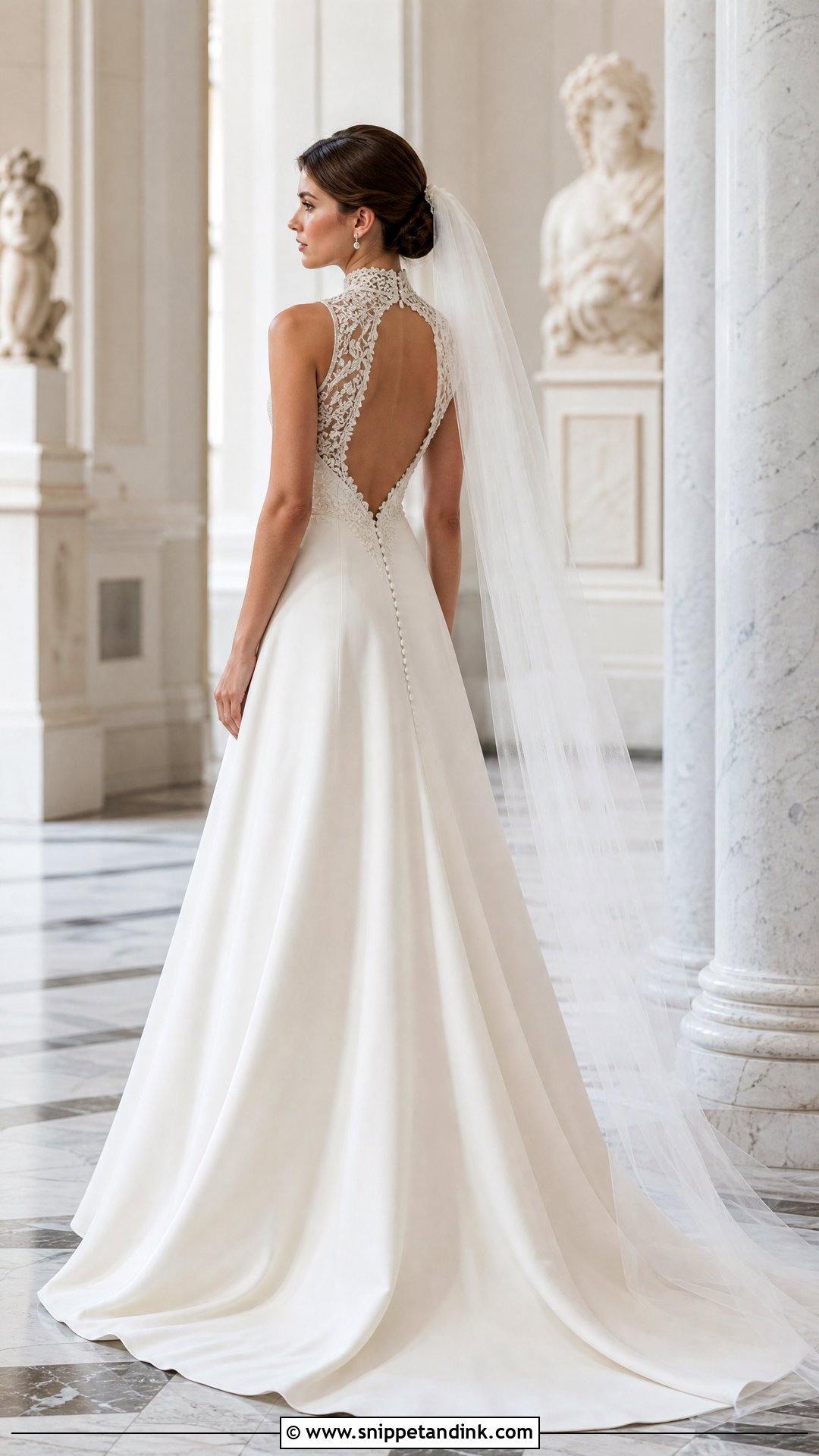
High necklines feel regal without needing much decoration. A fitted lace bodice, a silk halter or a sheer embroidered yoke over a flowing A-line skirt is the classic version. An open back, defined waist or sleeveless cut keeps the covered front from feeling heavy. Small earrings, refined pumps and a veil set below a polished updo are enough, and the necklace stays home. Open-spaced lace reads softer than a dense pattern. If your neck is shorter, ask for the collar lowered slightly or a narrow keyhole at the front, which makes a real difference to how the neck looks in photos.
9. Pearl Beaded Wedding Couture
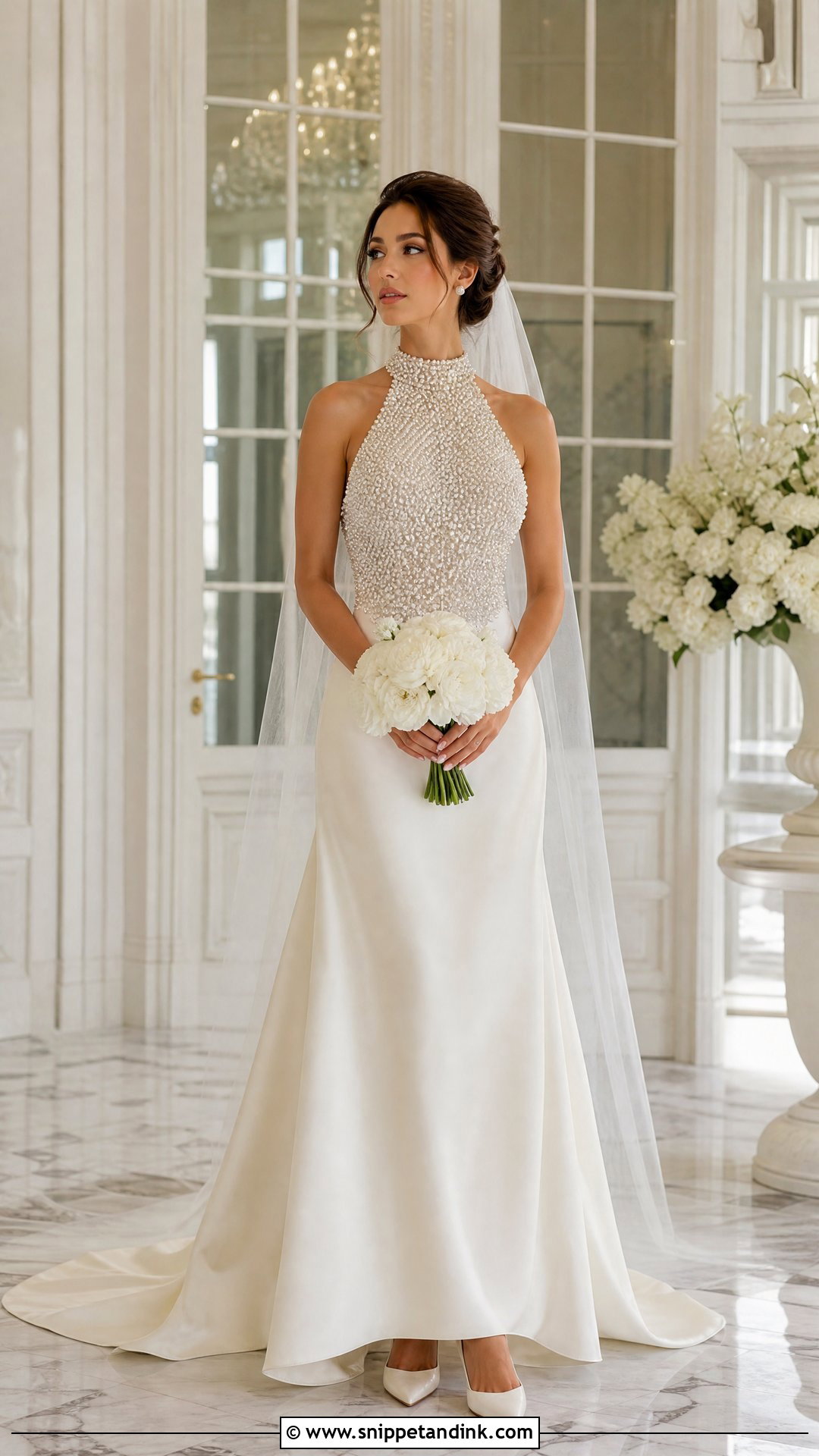
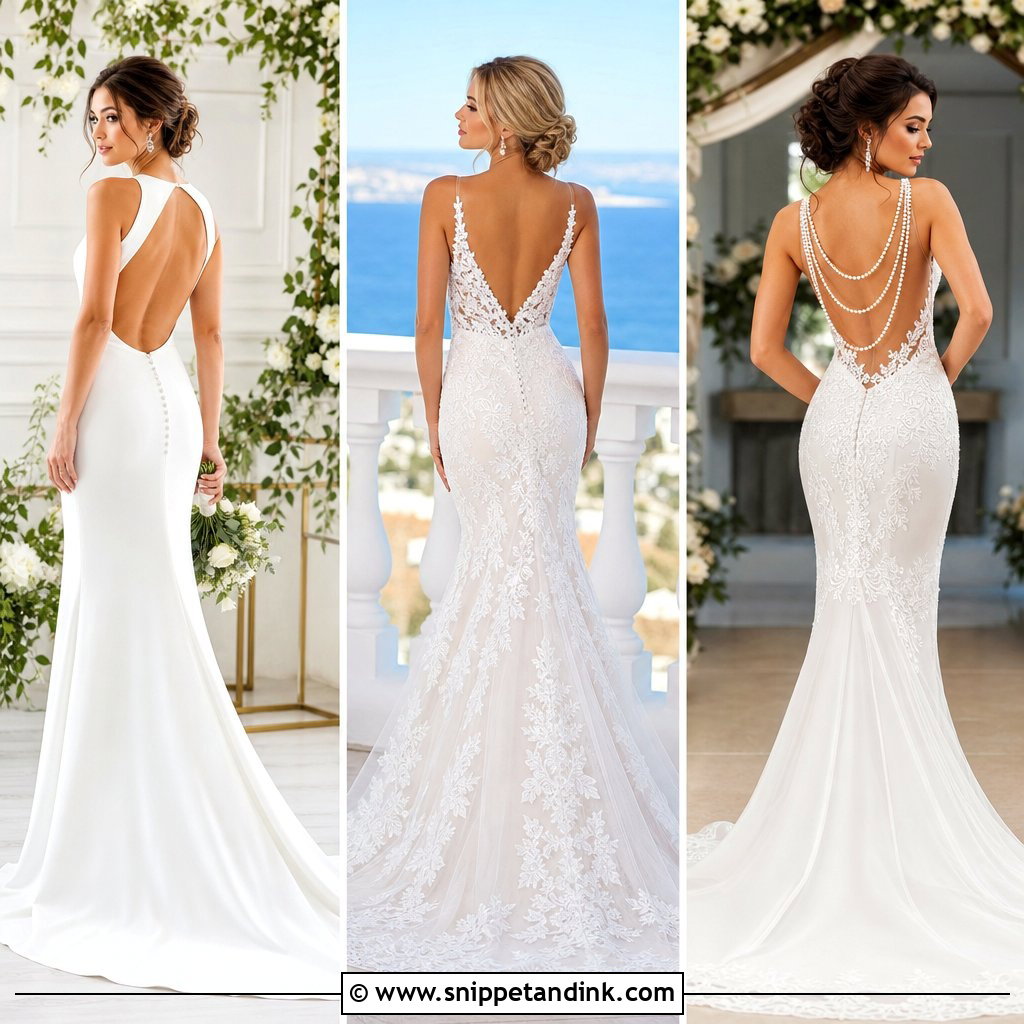
Pearls glow where crystals sparkle, which is why I suggest them to brides who find crystals too flashy. A pearl-covered bodice flowing into a plain silk skirt is the formal version; pearls scattered across tulle are lighter. Pearl studs, satin pumps, a plain-edged veil and a compact, mostly single-color bouquet keep the focus on the gown. Ask how the pearls are attached. Hand-sewn pearls can be removed and replaced during alterations; glued ones can’t. Heavily pearled gowns are also heavy, so if you want something lighter, concentrate the work at the neckline, waist and cuffs.
10. Basque Waist Wedding Couture
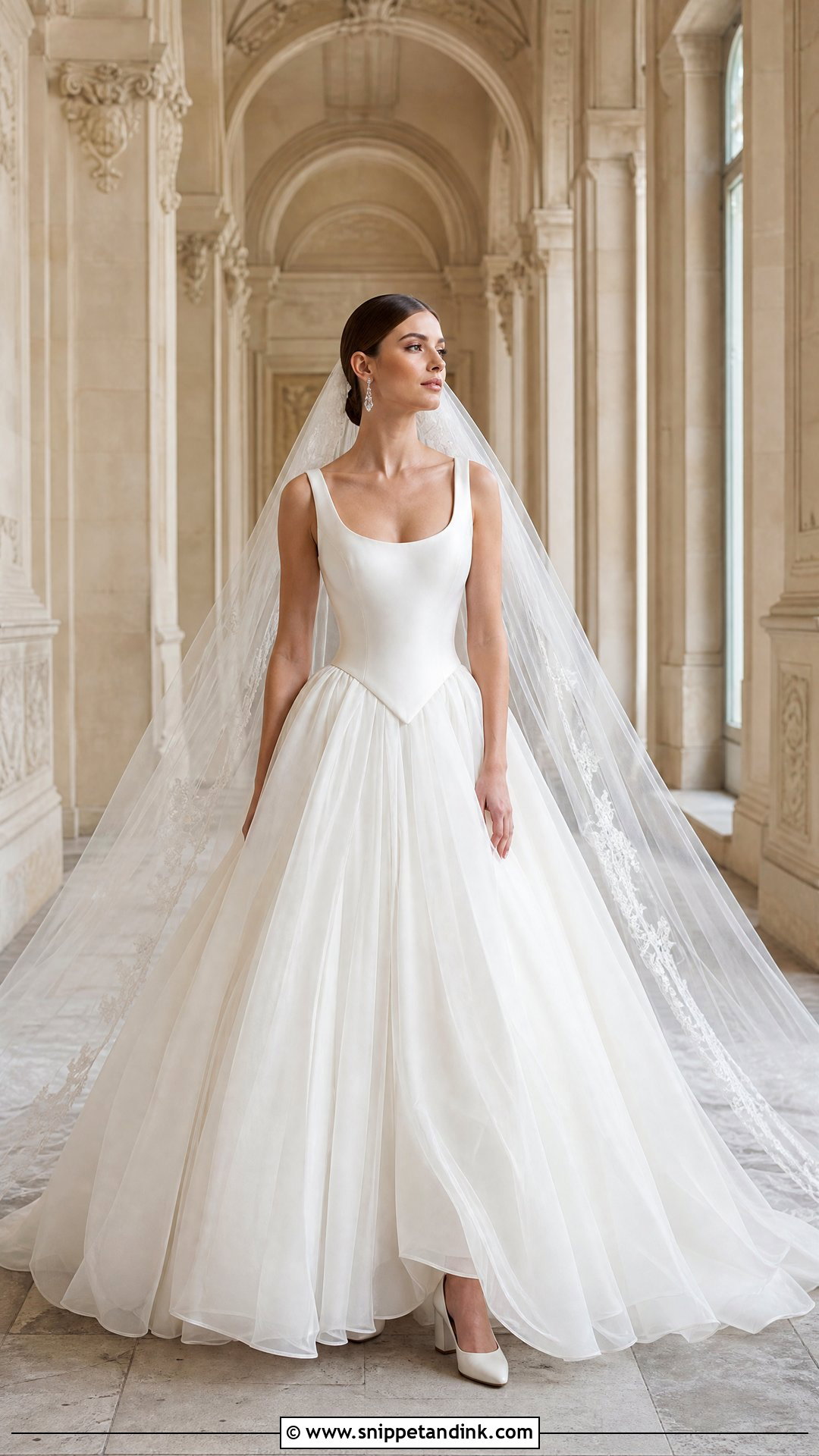
A basque waist points down at center front, defining the waist before the skirt opens out. With a scoop neck, firm corsetry and layers of silk organza or tulle, it feels traditional but not dated. The point can be moved up or down at fittings, and that adjustment is what makes it flatter a long or short torso. A cathedral veil, delicate drop earrings and comfortable block-heel pumps under the skirt complete it, and a rounded bouquet softens the strong lines. Never put a wide belt across the point. A neat updo keeps the bodice in view.
11. Pleated Tulle Wedding Couture
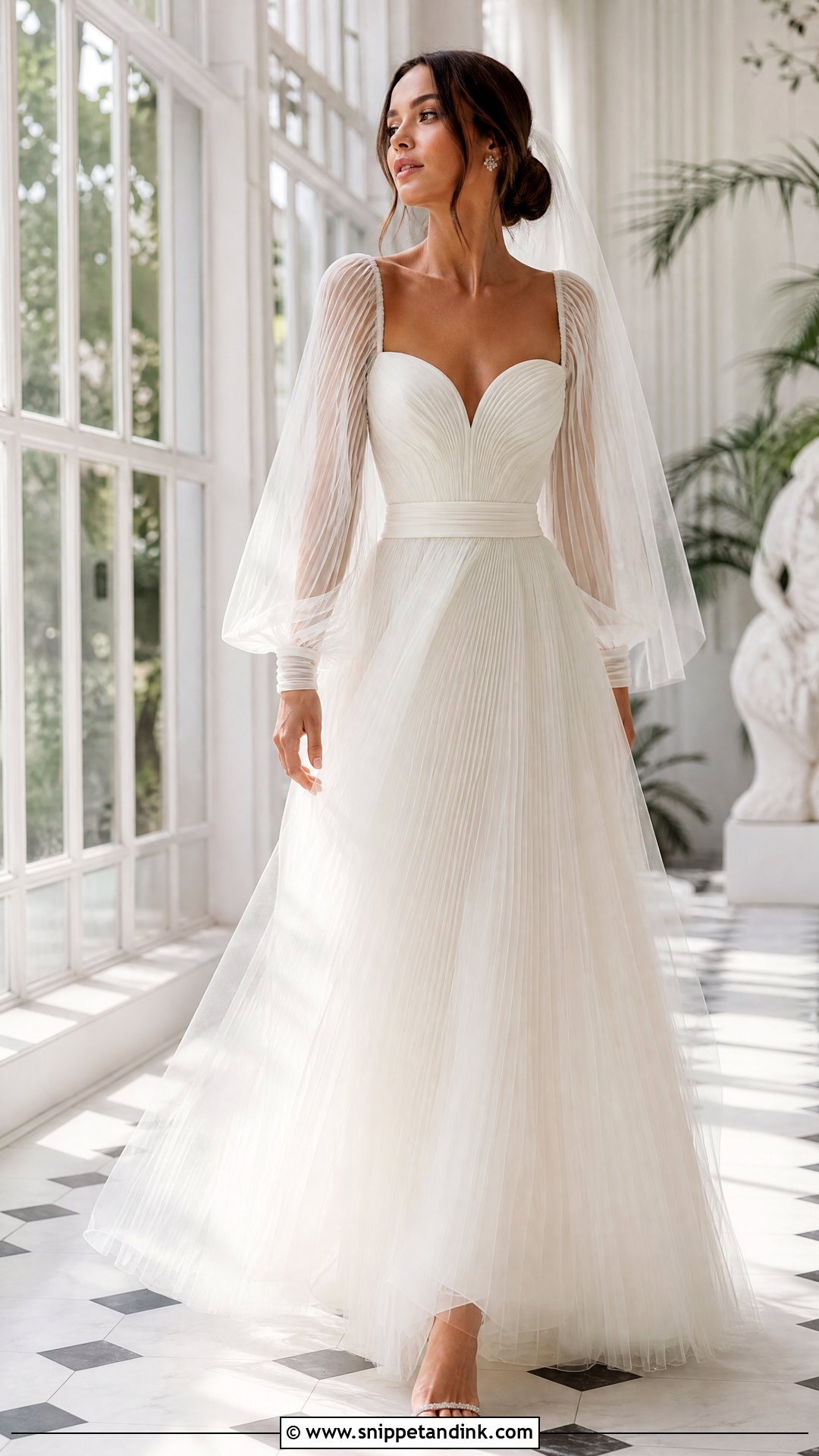
Fine accordion pleats give a tulle gown texture without any beading at all. A fitted bodice, softly gathered sleeves and a pleated, layered skirt is the shape, with a defined waistband so the volume doesn’t swamp you. Crystal studs, ivory or metallic sandals, a light veil and a soft bun suit its airy feel. Pleat size and direction change how the gown sits on the body: vertical pleats lengthen, wide pleats add bulk at the hip. If a full pleated skirt feels like too much, use the pleating only on detachable sleeves or an overskirt. Pleated tulle is light to dance in, which brides appreciate by midnight.
12. Bridal Pantsuit Wedding Couture
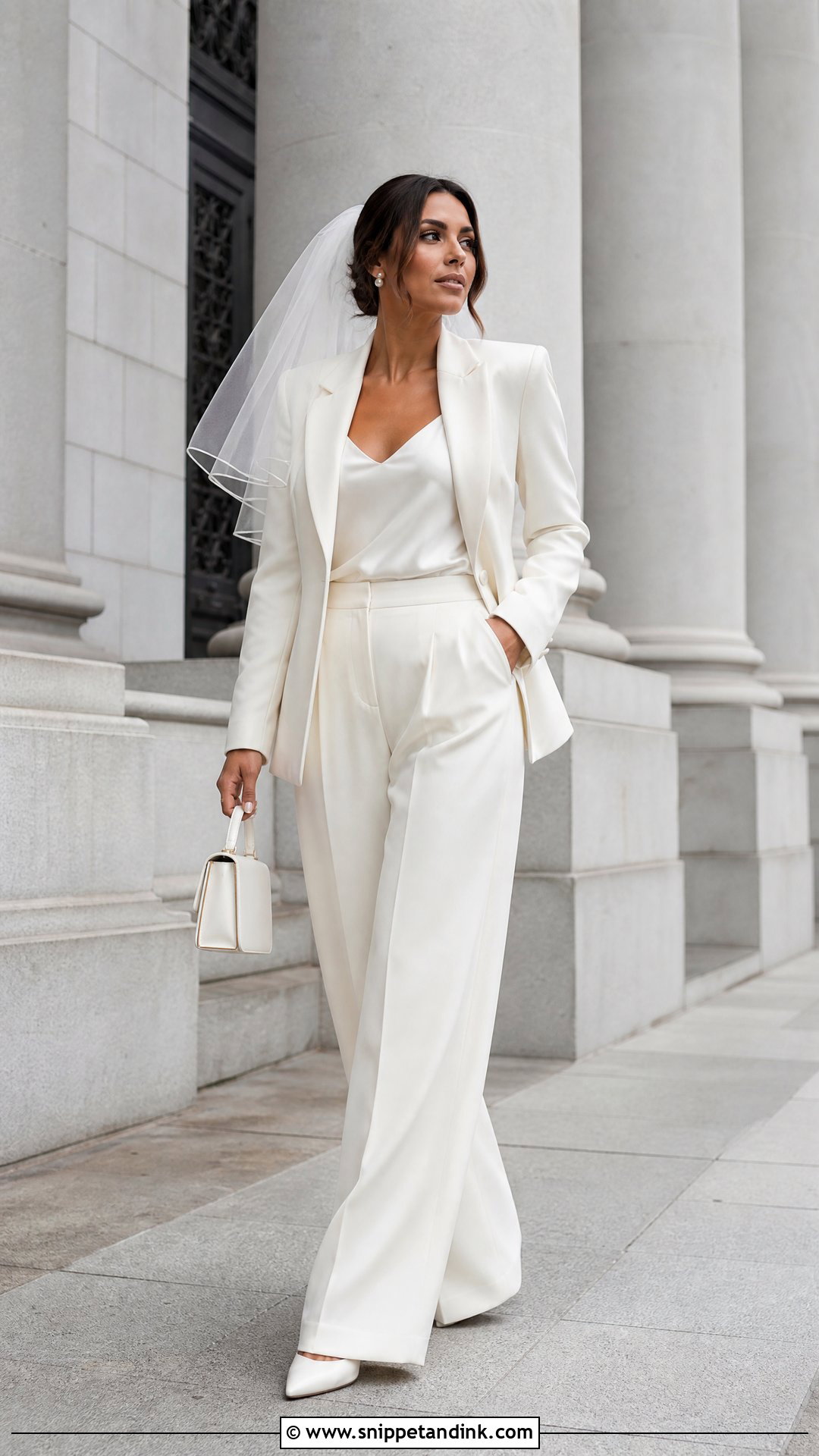
A bridal pantsuit is sharp, and couture tailoring is what keeps it from looking like office wear. Look for a sculpted blazer with a defined waist and matching high-rise trousers that skim without pulling. Underneath, a silk camisole, corset top or lace shell sets the level of coverage. Pointed pumps, a structured mini bag, pearl earrings and a birdcage or fingertip veil finish it, with a sleek ponytail or low bun. Hem the trousers to the wedding shoes, not your everyday heels. A removable train or shoulder cape attached to the blazer adds ceremony drama, and it works well as a second look.
13. Bridal Jumpsuit Wedding Couture
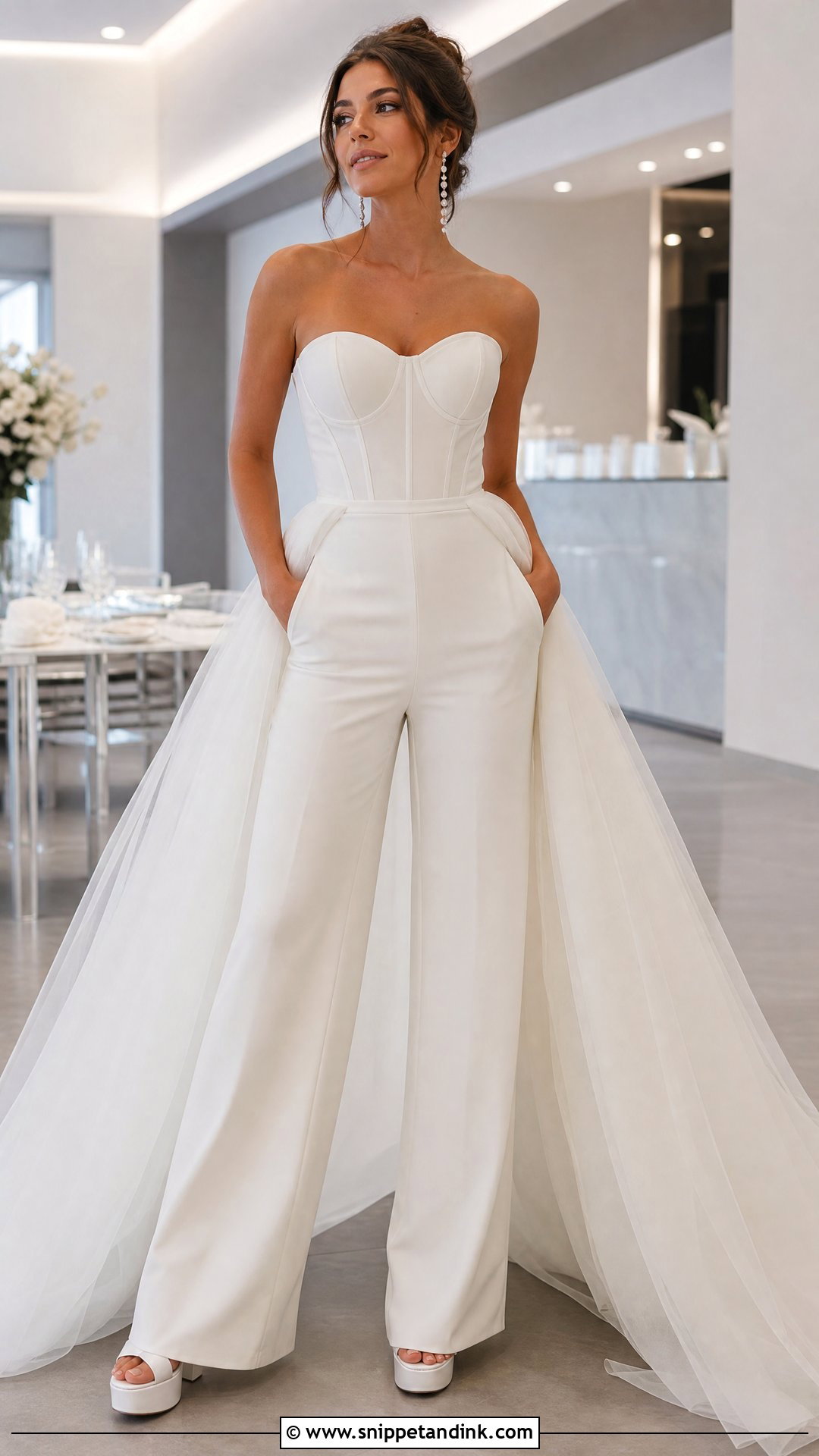
A bridal jumpsuit can be every bit as formal as a gown when the fabric and tailoring are right. Choose a fitted corset bodice with wide-leg crepe trousers or a draped one-piece with a defined waist. For the ceremony, a removable tulle overskirt gives you the entrance; take it off and you’re ready to dance. Platform heels, long earrings and a compact clutch complete it. Torso length is the fitting point people miss. If the jumpsuit is even slightly short in the body, it pulls when you sit, so test that early. Boning or wider straps add support, and a polished bun keeps it streamlined.
14. Two-Piece Wedding Couture
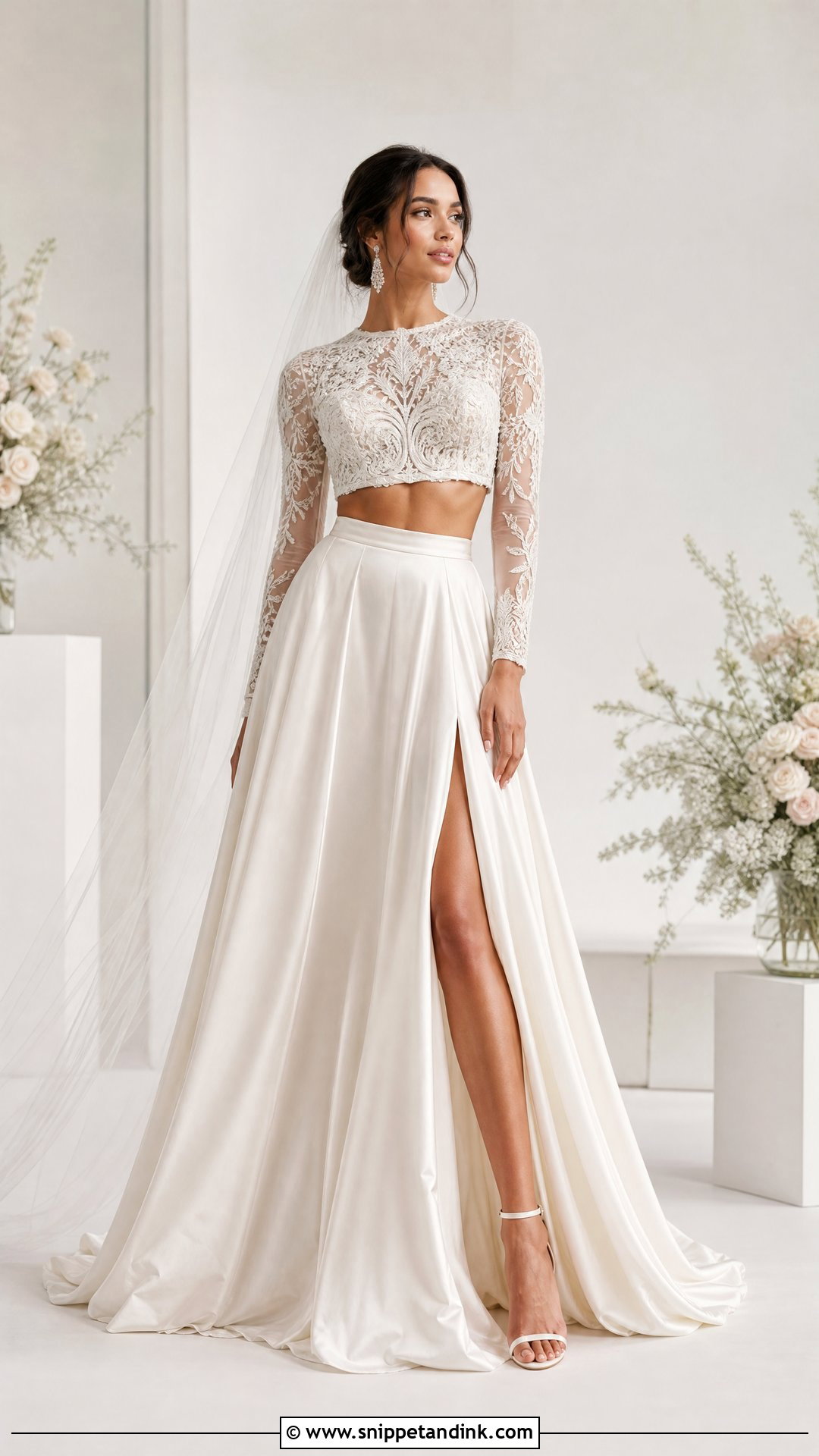
Separates let you mix textures and fit top and bottom independently, which helps if you’re a different size above and below the waist. A structured corset with a full silk skirt, or an embroidered long-sleeve blouse with a smooth column skirt, are both strong options. Stay in the same ivory or white family unless contrast is the point, because two slightly different whites look like a mistake. Sleek heels, refined earrings and a veil that visually links the pieces finish it. A narrow strip of waist looks modern; an overlapping top covers more. Ask for hooks joining the two so they don’t drift apart.
15. Mini Dress Wedding Couture
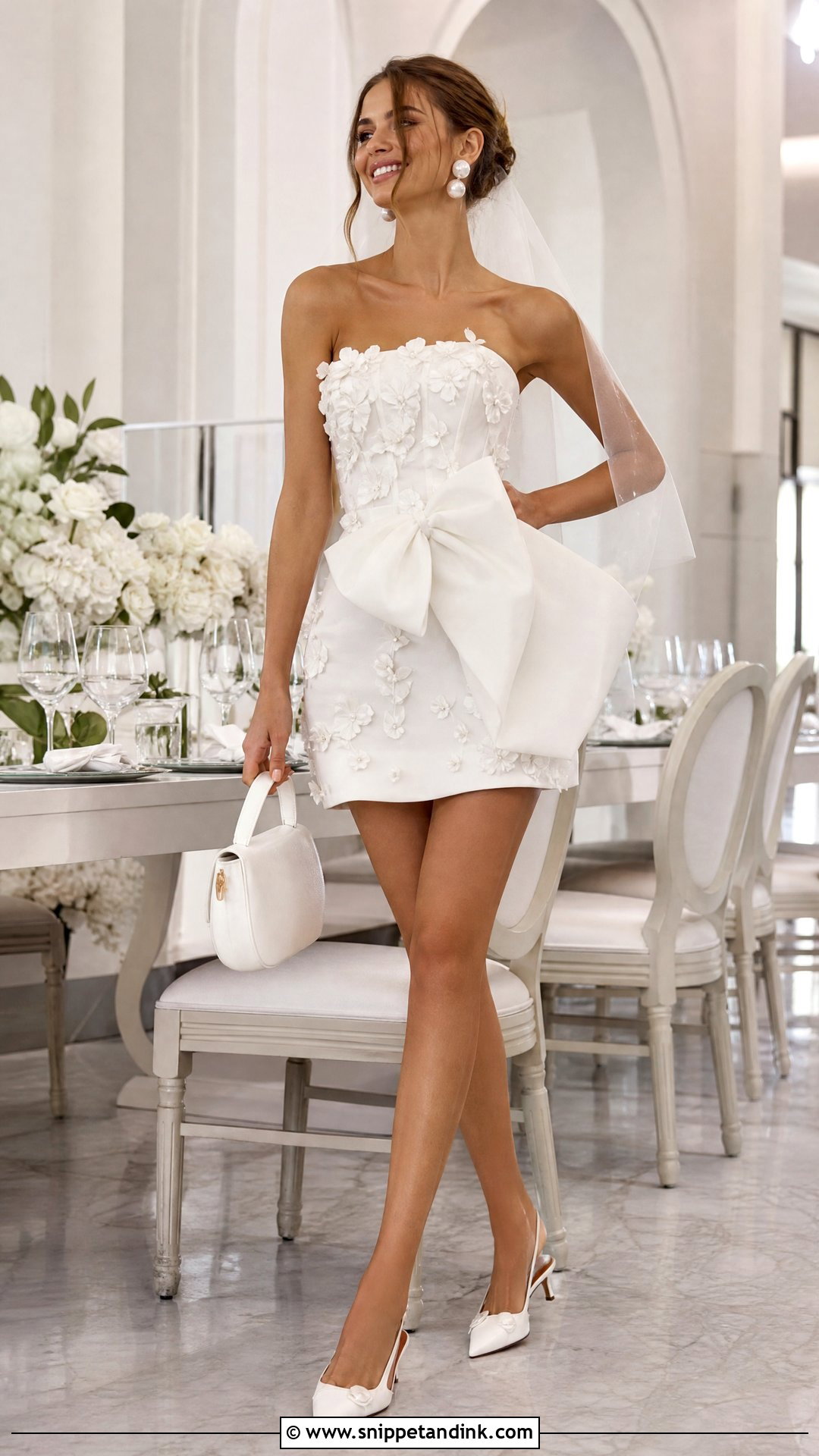
Short doesn’t mean casual when the construction is couture. A structured mini with a fitted waist, a sculpted neckline and one handmade detail, such as appliqués, pearls, feathers or a big bow, suits a reception or a small ceremony. Elegant slingbacks or crystal block heels balance the short hem. Add statement earrings, a small top-handle bag and a short veil or decorative headband. Sit and dance in front of a mirror during fittings, since a structured skirt rides up differently from a soft one. Sheer tights work in cold weather, and a removable overskirt gives you a longer ceremony look.
16. Blush Wedding Couture Gown
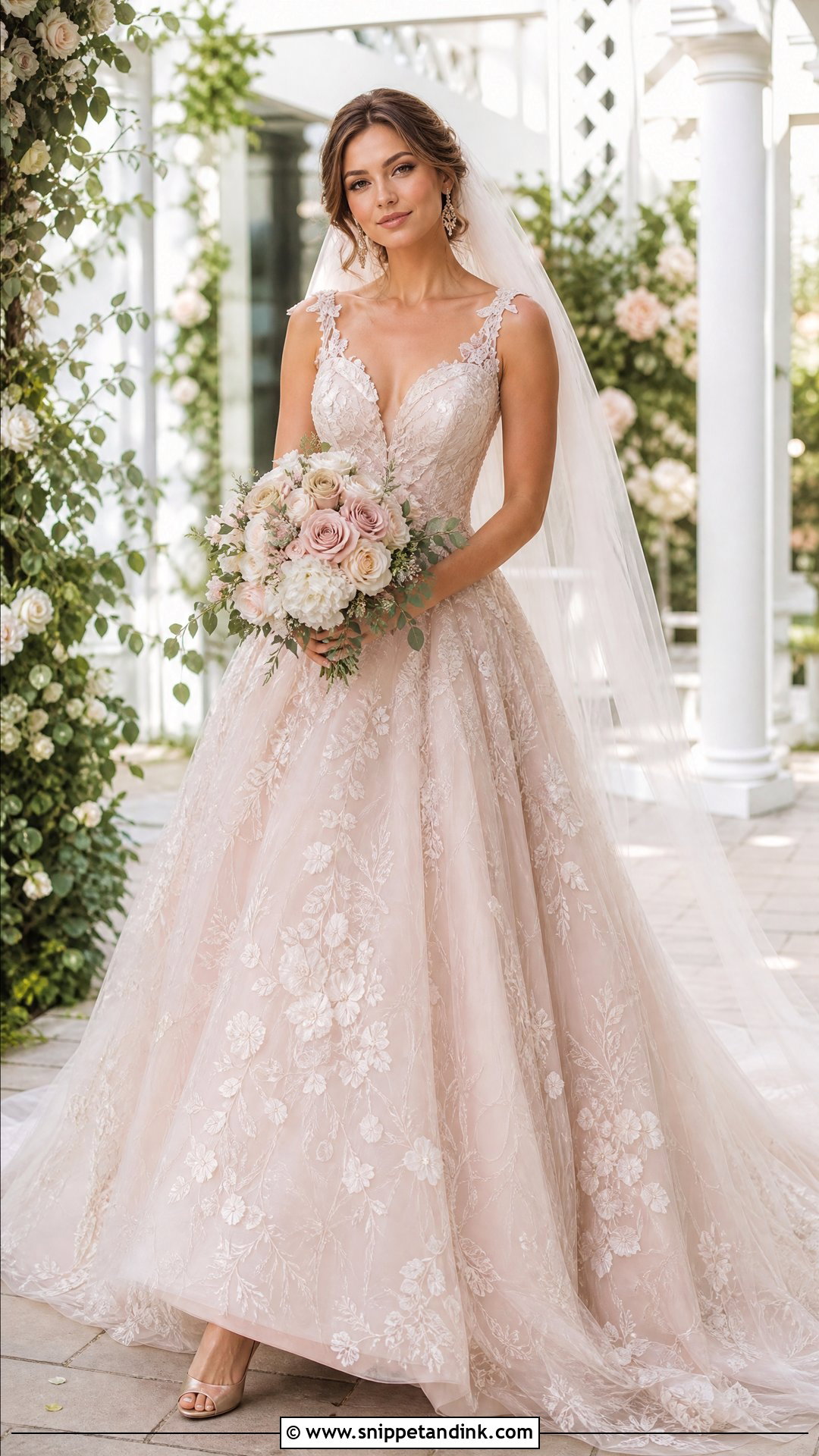
Blush works best layered. A soft rose, shell pink or barely-there nude lining under ivory tulle or lace gives a gentle color and makes raised embroidery stand out. Champagne heels, rose-gold earrings and a sheer ivory veil keep it bridal, with cream flowers and muted pink in the bouquet. For a subtler hint, keep the blush to the lining, a sash or a detachable train. Look at it under daylight and warm indoor light before committing, because pale pinks can photograph as skin-colored under some lighting. Softly pinned hair and understated makeup support it.
17. Metallic Embroidery Wedding Couture
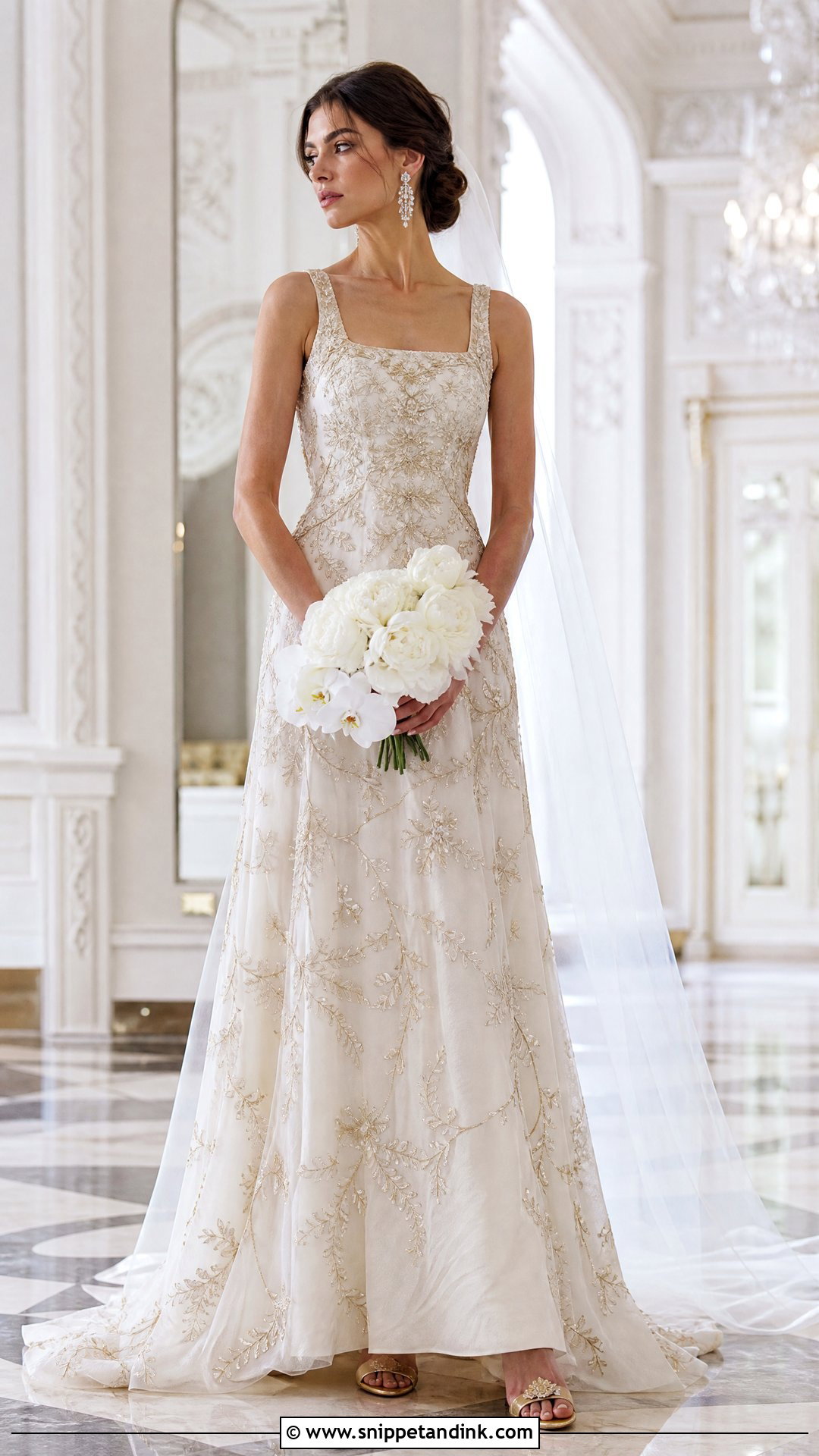
Metallic thread catches the light differently with every movement, which is what gives these gowns their glow. Silver, pale gold or champagne embroidery on a fitted bodice, thinning out down the skirt, keeps it elegant. A neutral lining stops it from looking like costume. Simple metallic sandals, small diamond or crystal earrings, a plain veil and a clean white bouquet let the embroidery lead. Think about the venue lighting: warm evening light makes gold thread look richer, while daylight favors silver. For a quieter version, put the metallic work only at the neckline, waist or train, and keep the hair smooth.
18. Detachable Overskirt Wedding Couture
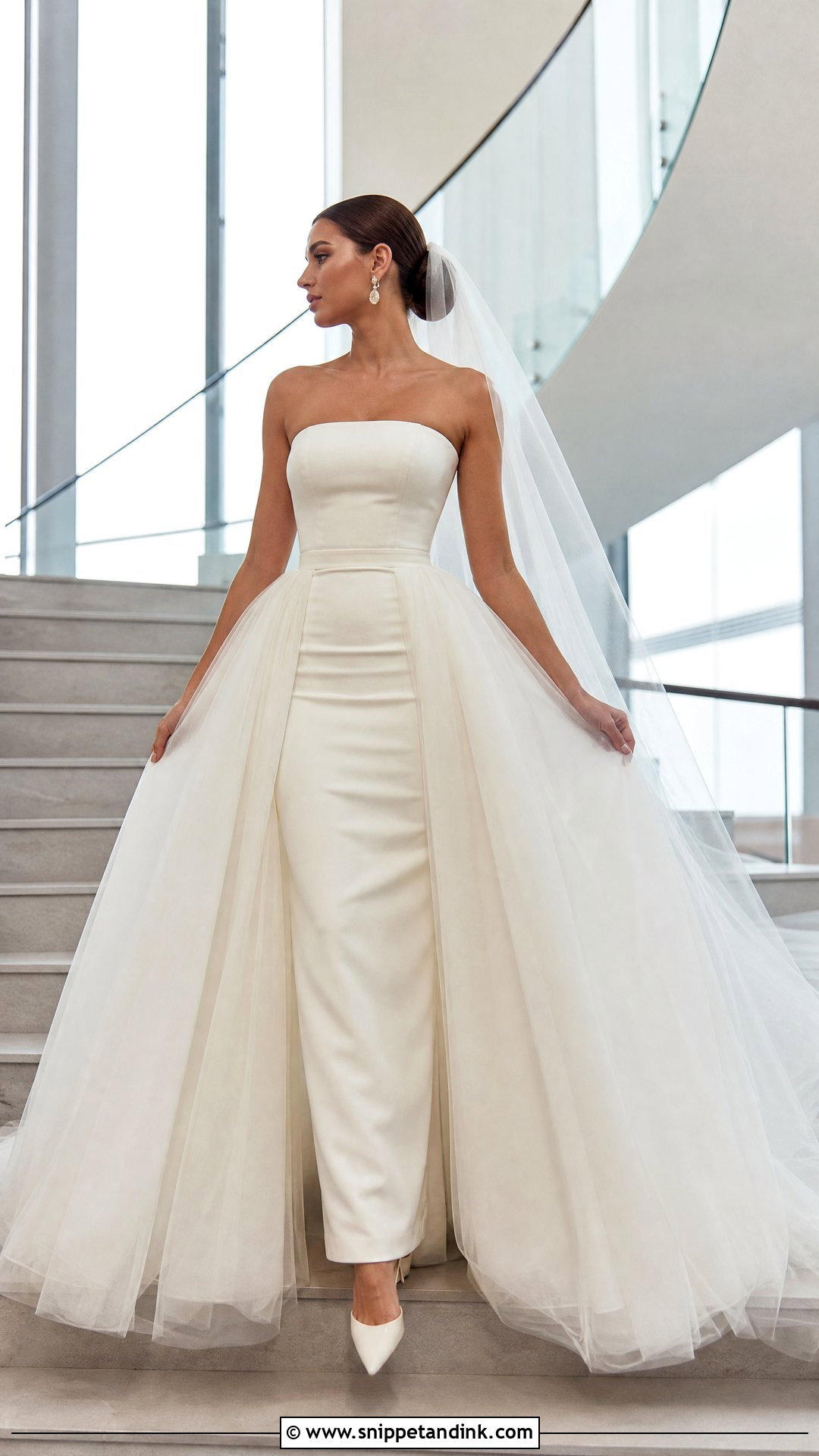
With an overskirt, you get two silhouettes without leaving the room to change. Start with a fitted column, mermaid or mini dress, then add a full tulle or satin overskirt for the ceremony. The attachment should sit flat at the waist under a narrow belt or decorative seam. Pair it with a long veil, drop earrings and pointed pumps, then take the overskirt off after the formal photos. The dress underneath must look finished on its own, with neat seams and balanced proportions, because it will be seen up close on the dance floor. A low bun works for both versions.
19. Dramatic Back Wedding Couture
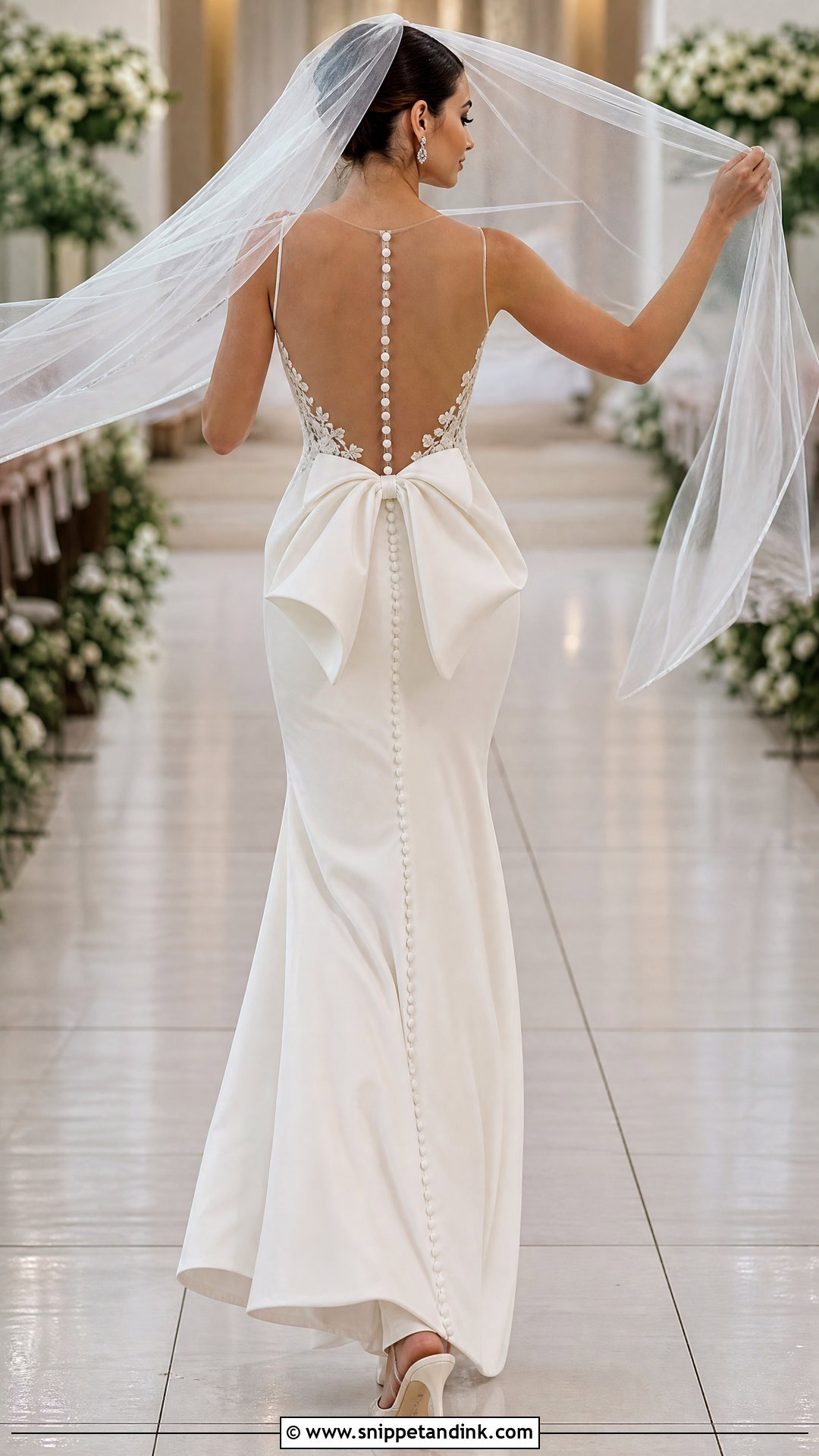
A dramatic back is the part guests see for the whole ceremony, so I give it as much attention as the front. An open V, an illusion lace panel, a covered button trail, an oversized bow or sculpted draping all work. Keep the front simple so there’s one focal point. A low hairstyle, long earrings, pointed heels and a sheer veil that lifts away from the back finish it. An open back means the bust support has to be built into the gown, so raise undergarments at the first fitting. Illusion mesh matched to your skin tone adds coverage, and a crepe skirt or clean A-line frames it.
20. Sculptural Sleeve Wedding Couture
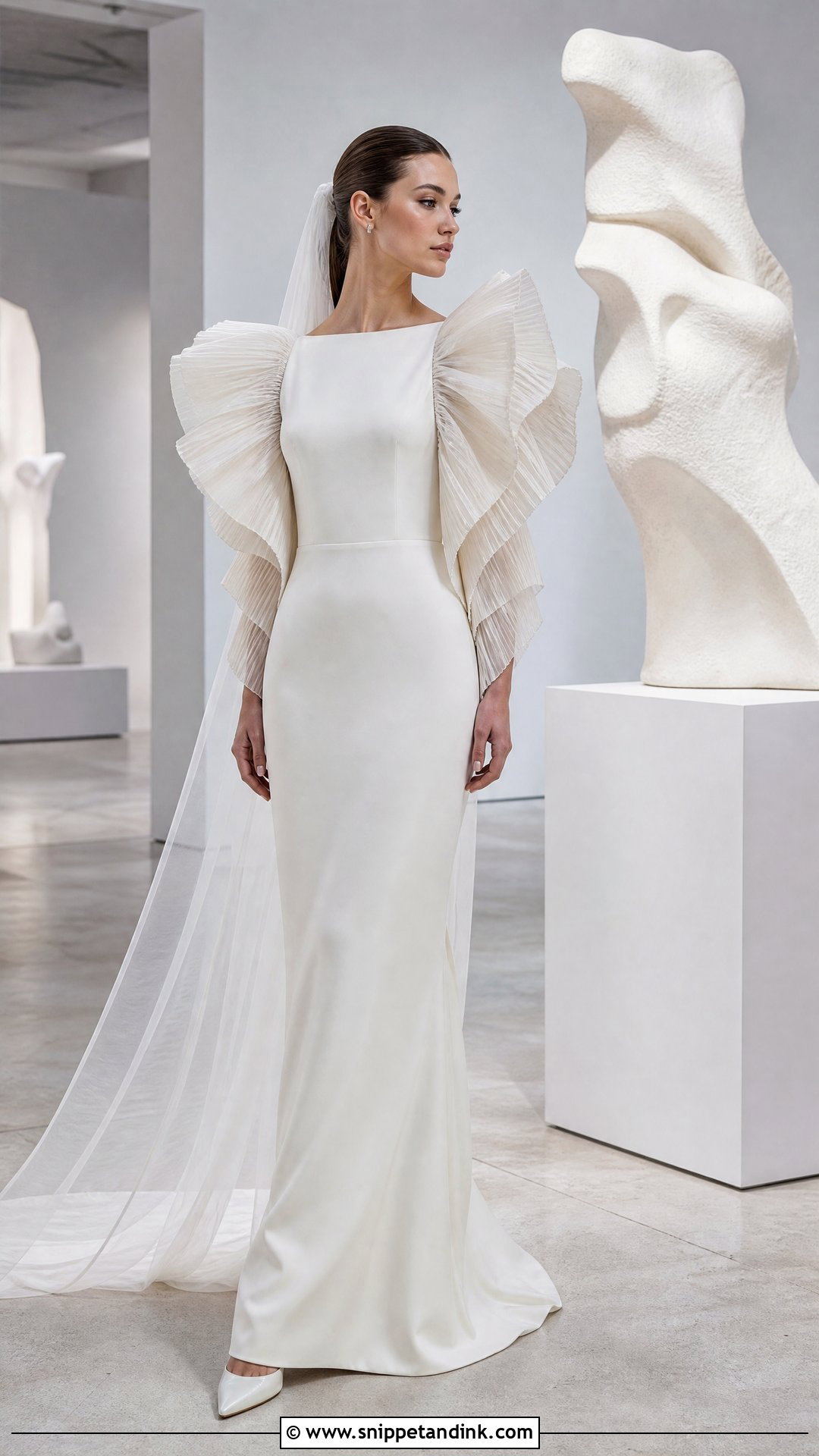
Sculptural sleeves can turn a plain gown into something that looks custom. Puffed organza, folded satin shoulders or pleated detachable sleeves pair best with a clean column or softly flared skirt, since big sleeves and a big skirt together look heavy. Small earrings, sleek pumps, a minimal veil set under the hair and a polished bun or ponytail keep the construction visible. Check that you can still lift your bouquet and hug people without the sleeves crushing. Detachable sleeves give you freedom for dinner and dancing, along with a second look.
A Realistic Fitting Calendar for a Custom Gown
Couture takes longer than most brides expect, and handwork can’t be rushed. Every atelier works differently, so treat these as rough windows and ask your maker for their own schedule.
- Nine to twelve months out: design consultation, measurements and fabric choices.
- Seven to nine months out: the toile fitting, where shape, neckline and waist placement are fixed.
- Four to six months out: the first fitting in the real fabric, with embellishment placement agreed.
- Six to eight weeks out: the near-final fitting with your shoes and underwear.
- Two to three weeks out: the last fitting and a bustle lesson for whoever will help you.
Moving a Heavy Gown From Hanger to Aisle
A full couture gown can be surprisingly heavy, and getting it to the venue in good condition takes planning. Carry it laid flat across the back seat in a breathable garment bag, never folded into a boot. Ask the venue for a hook high enough that the skirt hangs without touching the floor, and plan for a steamer on site, since silk and mikado crease in transit.
Pick one person to be in charge of the dress all day. They should know how the bustle works, carry a small sewing pouch with thread in the gown’s color, and be ready to fluff the train before you walk in. Bustling a large skirt can take several minutes and two pairs of hands, so practice it at the final fitting rather than in a corridor at the reception.
Let the Fittings Make the Final Call
Real couture shows its quality in the craft and in how the gown feels after hours of wear. Start with a silhouette you love being in, then add corsetry, embroidery, flowers, sleeves or a detachable layer. Look at the whole outfit from the front, side and back, and make sure the shoes, jewelry, hair, veil and bouquet support the gown. Above all, leave enough time for fittings and movement tests before anything is final. Any of the ideas above can be adapted to your body, venue, season and budget, so the look holds together from the ceremony right through the reception.
You'll Like These Ideas:


Leave a Reply