
A Norse-themed wedding gives a hairstylist more to play with than almost any other: plaits laid along the scalp, twisted ropes, crowns stacked two braids high, and metal cuffs that clip straight onto the hair. It also asks more of your hair than a classic chignon does, because braids use up length and show every thin patch. Below are twenty looks I’d actually put on a bride, from the quiet halo to the full warrior ponytail, with notes on the hair each one needs and how it copes with a long day of hugging, dancing and weather.
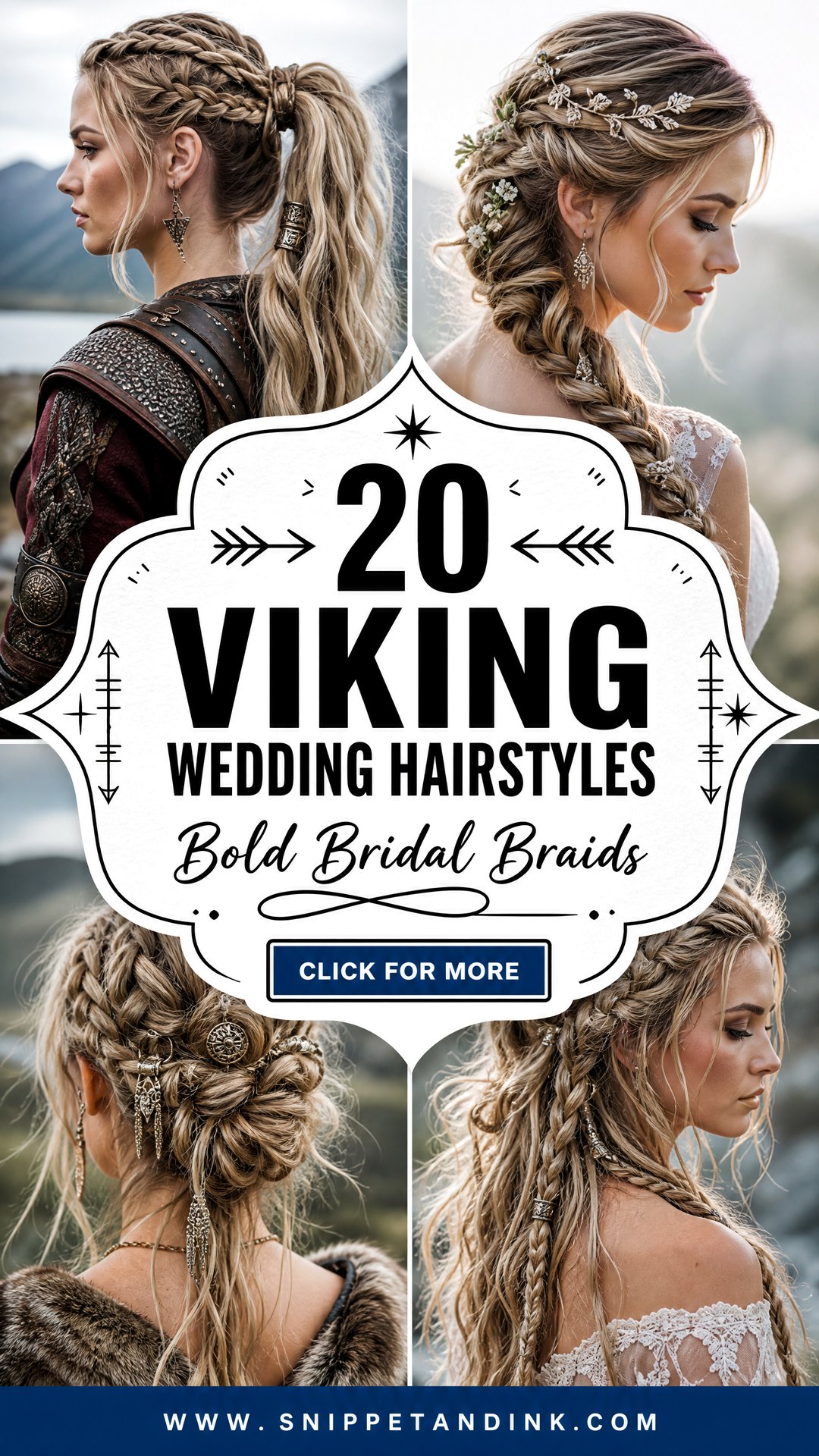
Shoulder Length, Curly or Fine: Making Braids Work Anyway
Most Viking pictures show waist-length, thick hair. Very few brides have that, and almost every style below can be adapted if you know which way to bend it.
Shorter hair
At shoulder length I work with braids that start at the hairline and finish behind the ears: two small Dutch braids, a half halo, twists joined at the back. Full crowns and long hanging braids need clip-ins. If you’re growing your hair out for the wedding, tell me at the trial, because a style planned six months ahead can be booked around the length you’ll actually have.
Curly and coily hair
Curls make braids look fuller and hold far better than straight hair does. I braid on stretched, moisturised hair rather than forcing it smooth, and let the texture show at the ends. A blow-dry on the day is rarely needed. Ask your stylist whether they braid textured hair often; it’s a different skill from straight-hair updos.
Fine hair
Fine hair braids thin and slides. I use a texture spray before braiding, braid looser than looks right, then pull the edges wider. One clip-in weft, braided right into the plait, often doubles the look without showing.
1. Viking Halo Braid for Brides
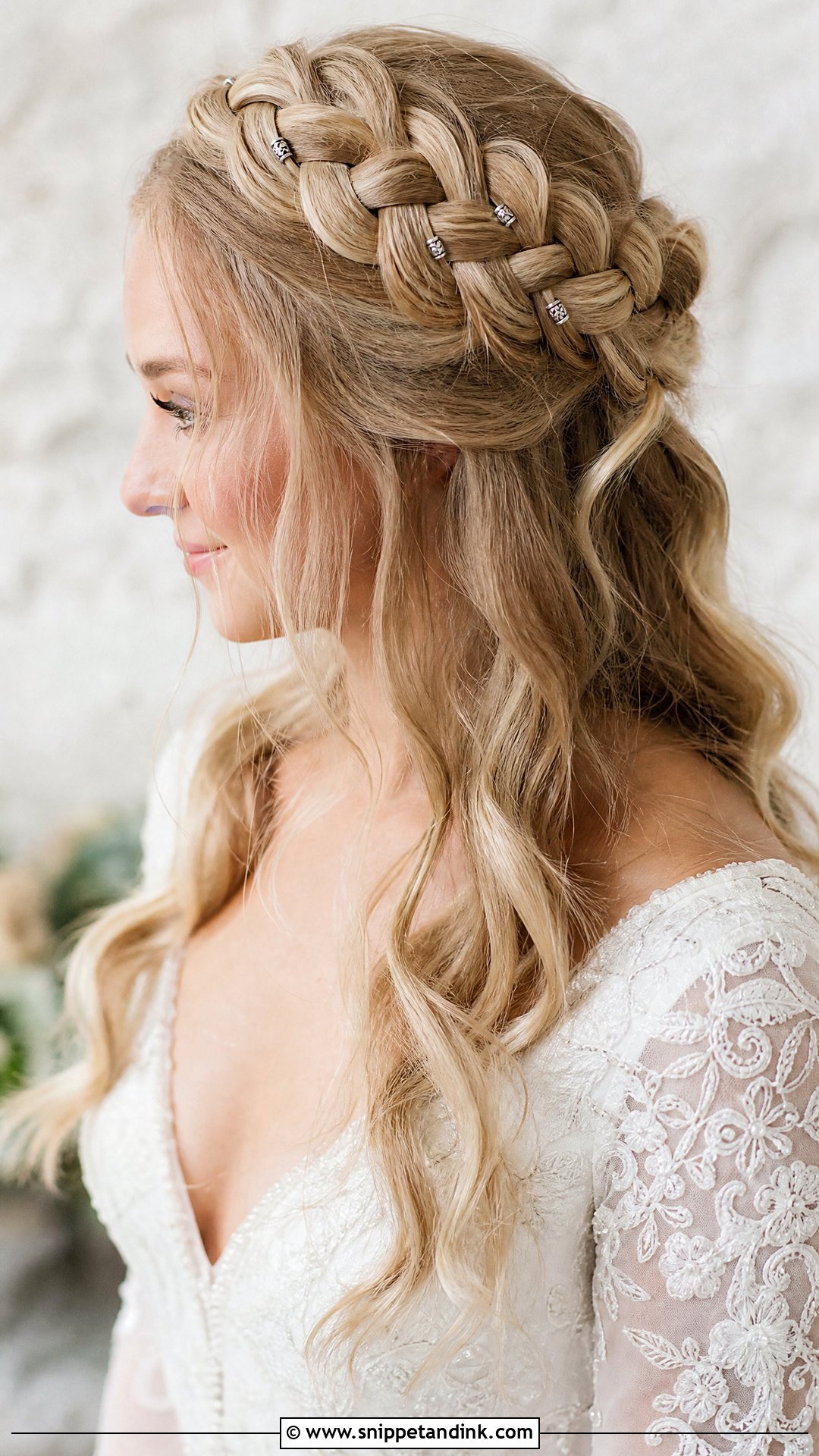
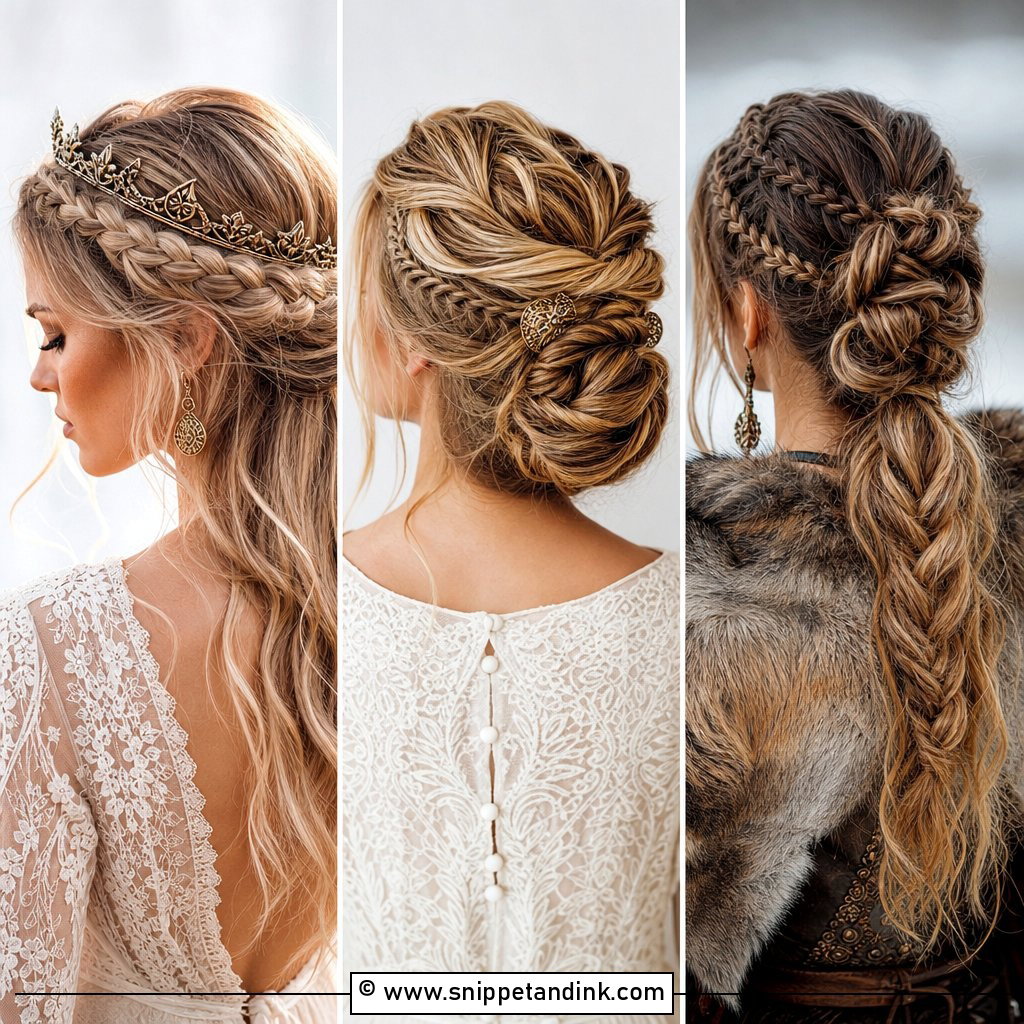
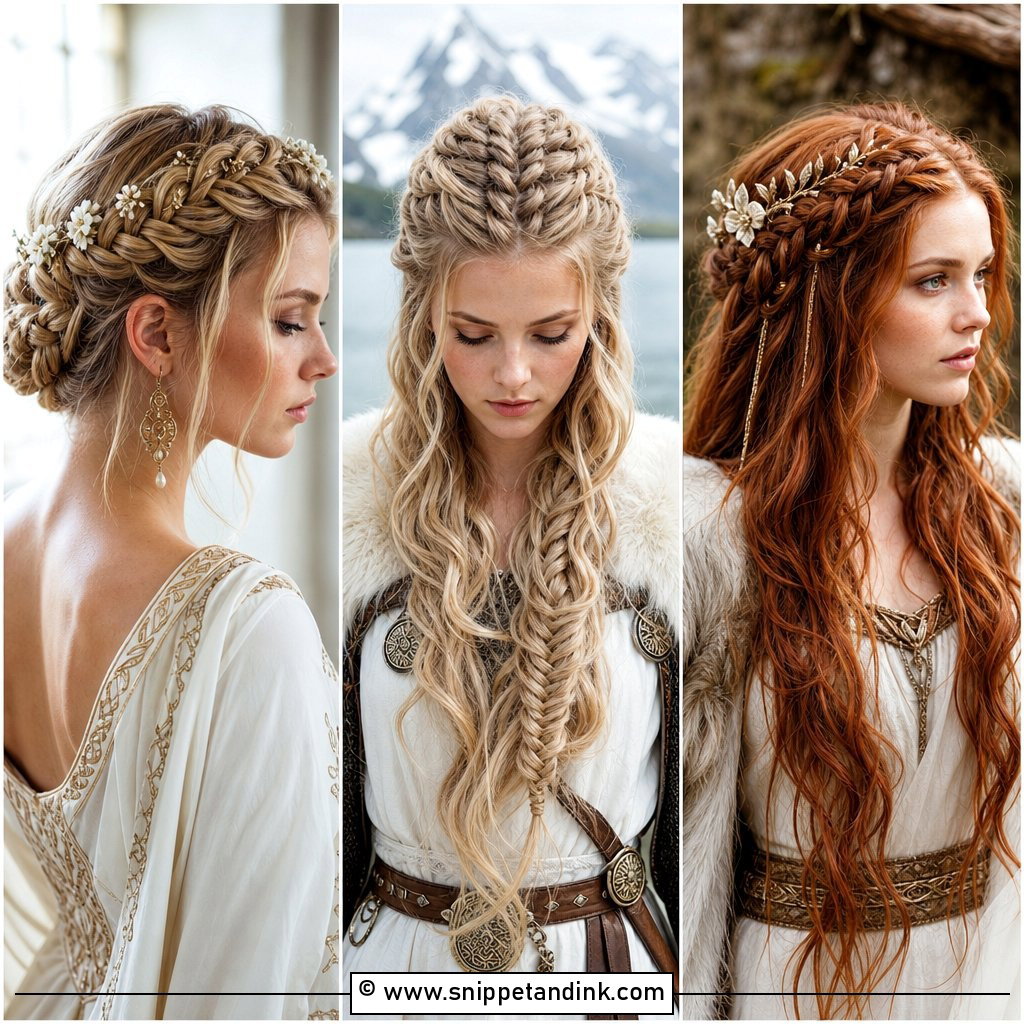
If I could only offer one Norse style, it would be this. A halo braid runs from one temple around the head and back to the start, framing the face and keeping every strand off it until midnight. It’s the look most Viking brides bring to their first consultation, and for good reason: it sits flat, so a veil comb tucks neatly under the back section. I keep it tight for a formal ceremony and pancake it a little for a barn or forest. Tiny silver rings slide onto the outer loops without pulling the braid out of shape.
2. Warrior Braided Ponytail
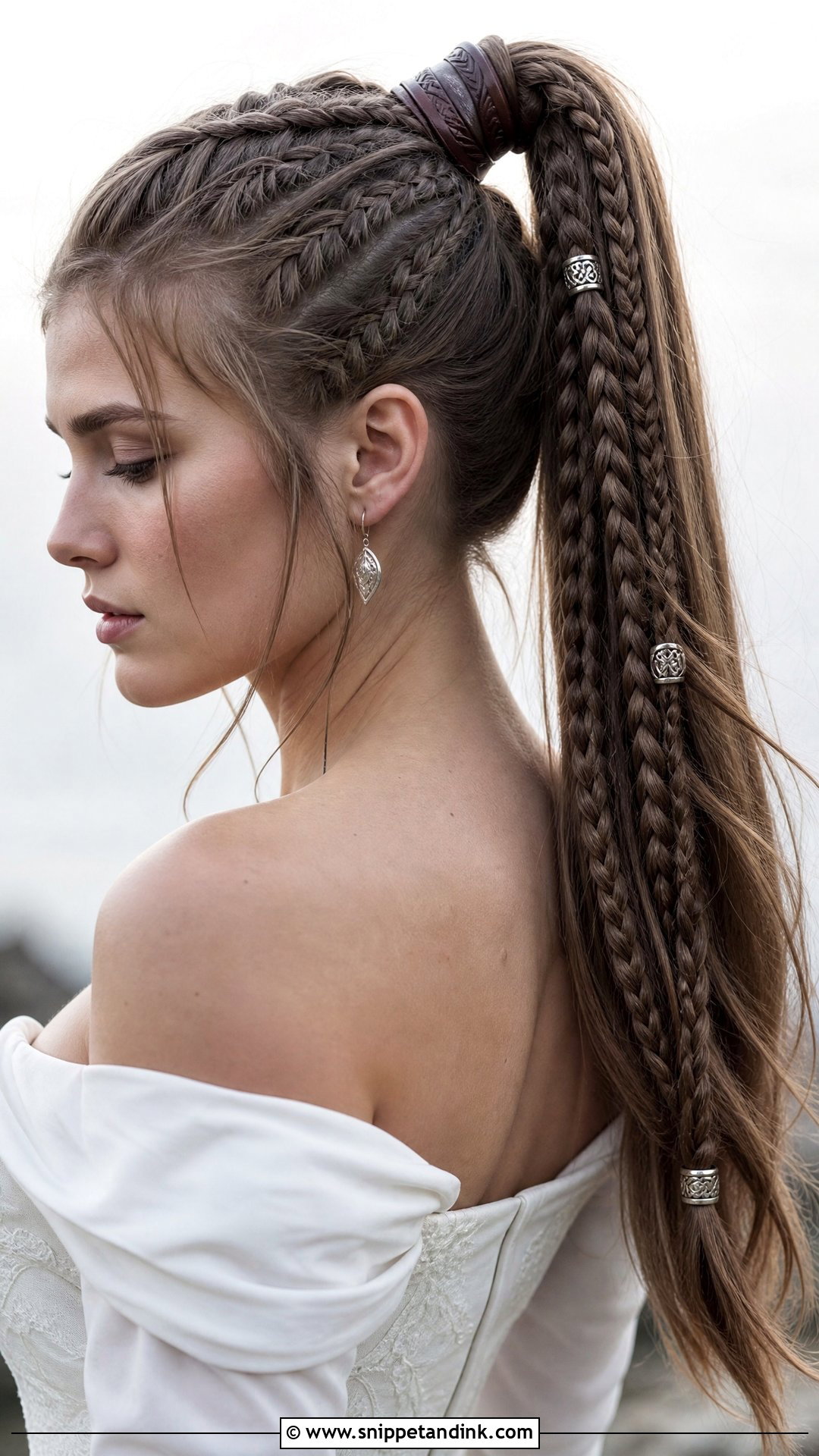
This is the style for a bride who wants her hair to move. Braids run tight from the hairline into a high tail, then the tail is left free to swing. Clasps, leather wraps and small beads all sit well on the length. What I check first is how heavy your hair is, because a long, thick ponytail placed high can drag on the scalp by early evening. A few pins criss-crossed under the base spread that weight out. Leave a couple of soft pieces at the temples and the look reads bridal rather than gym.
3. Fishtail Braid Wedding Style
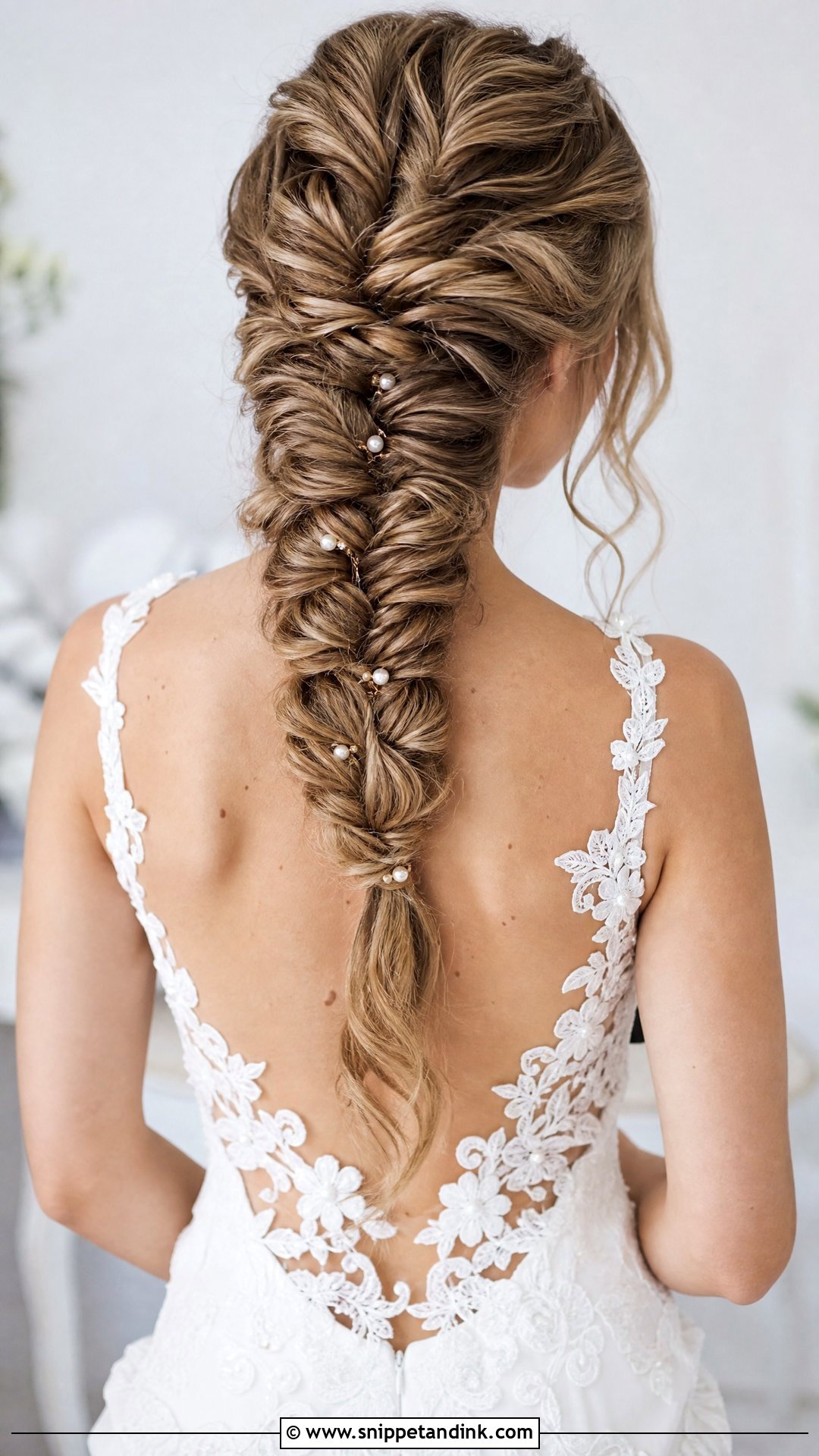
A fishtail gives a fine, almost woven texture that reads clearly in close-up photos. It’s often described in themed weddings as a fertility or prosperity symbol, though I’d treat that as modern storytelling rather than recorded history. Practically, it’s a forgiving braid: you can wear one down your back or join two or three into a thicker plait. Pulling the edges loosens it into something softer. Stop before it splits on fine hair, and slip pearl pins or a few small flowers into the loops instead.
4. Braided Crown Updo
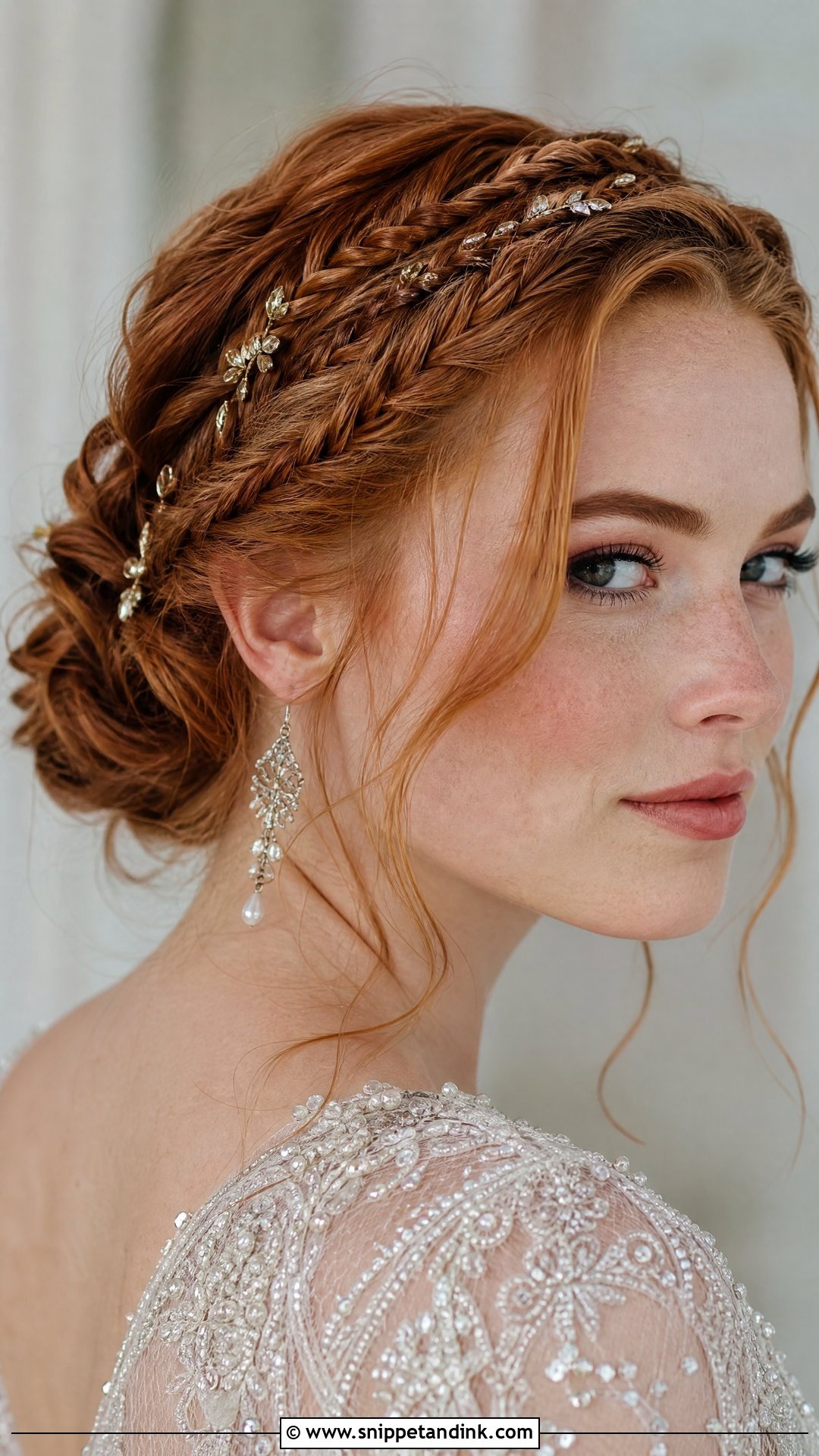
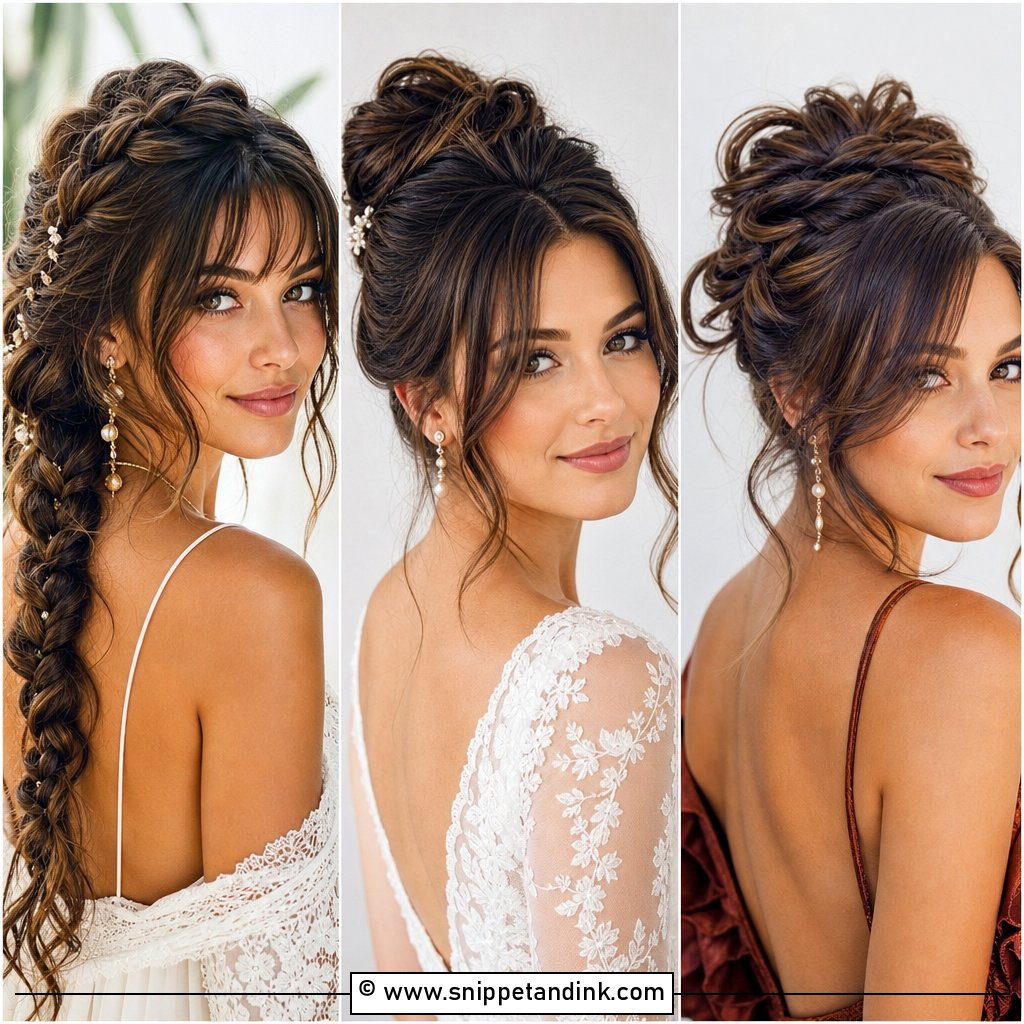
Several thin plaits wound around the top of the head build a crown with real height. It’s the most structured look in this set and the one I’d pick for a heavy gown, because nothing touches the neck or catches on beading. The fine braids take patience to lay evenly, so allow extra chair time. Metal accents or fresh blooms slot into the gaps, and with the neck clear, statement earrings get their moment.
5. Half Up Half Down Viking Braids
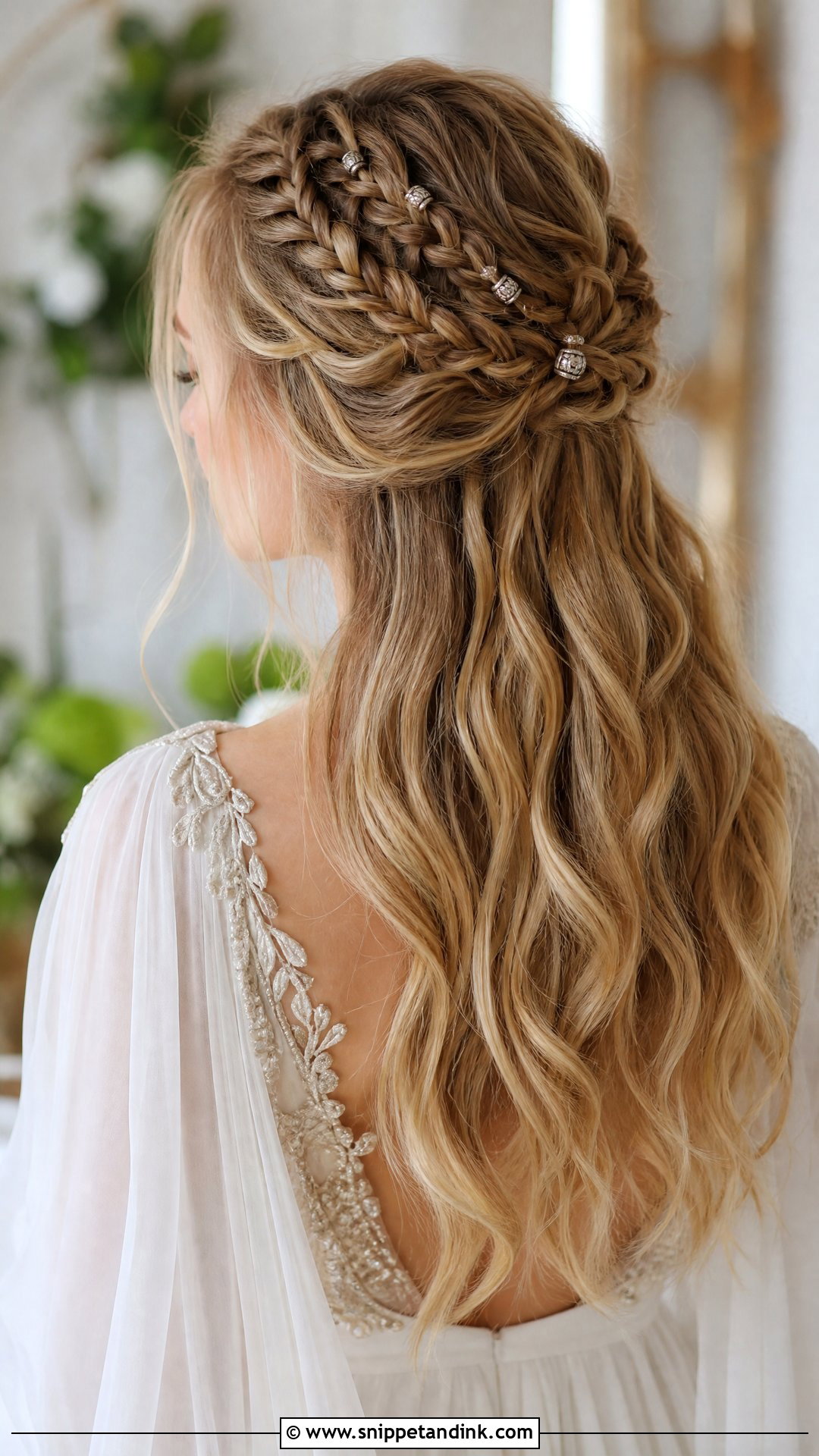
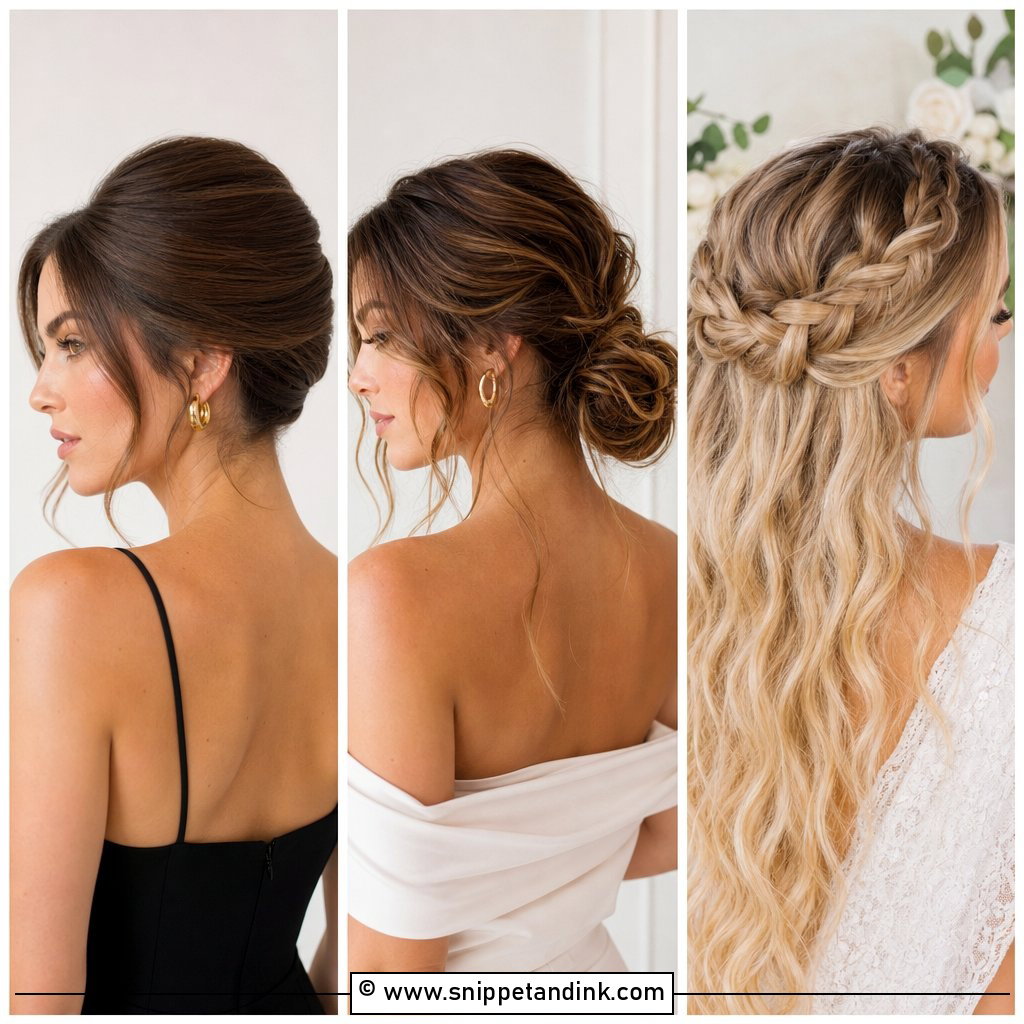
Undecided between up and down? Braid the top section, leave the rest in waves, and you have half of each. The braids lift hair from your face, which helps the photographer catch your cheekbones, while the loose length softens the warrior detail. The risk is in the waves, not the braids. Very straight hair can fall flat within hours, so I curl in small sections and let each one cool pinned before touching it. Beads or rings go on the braided portion where they’ll stay put.
6. Dutch Braid Bridal Look
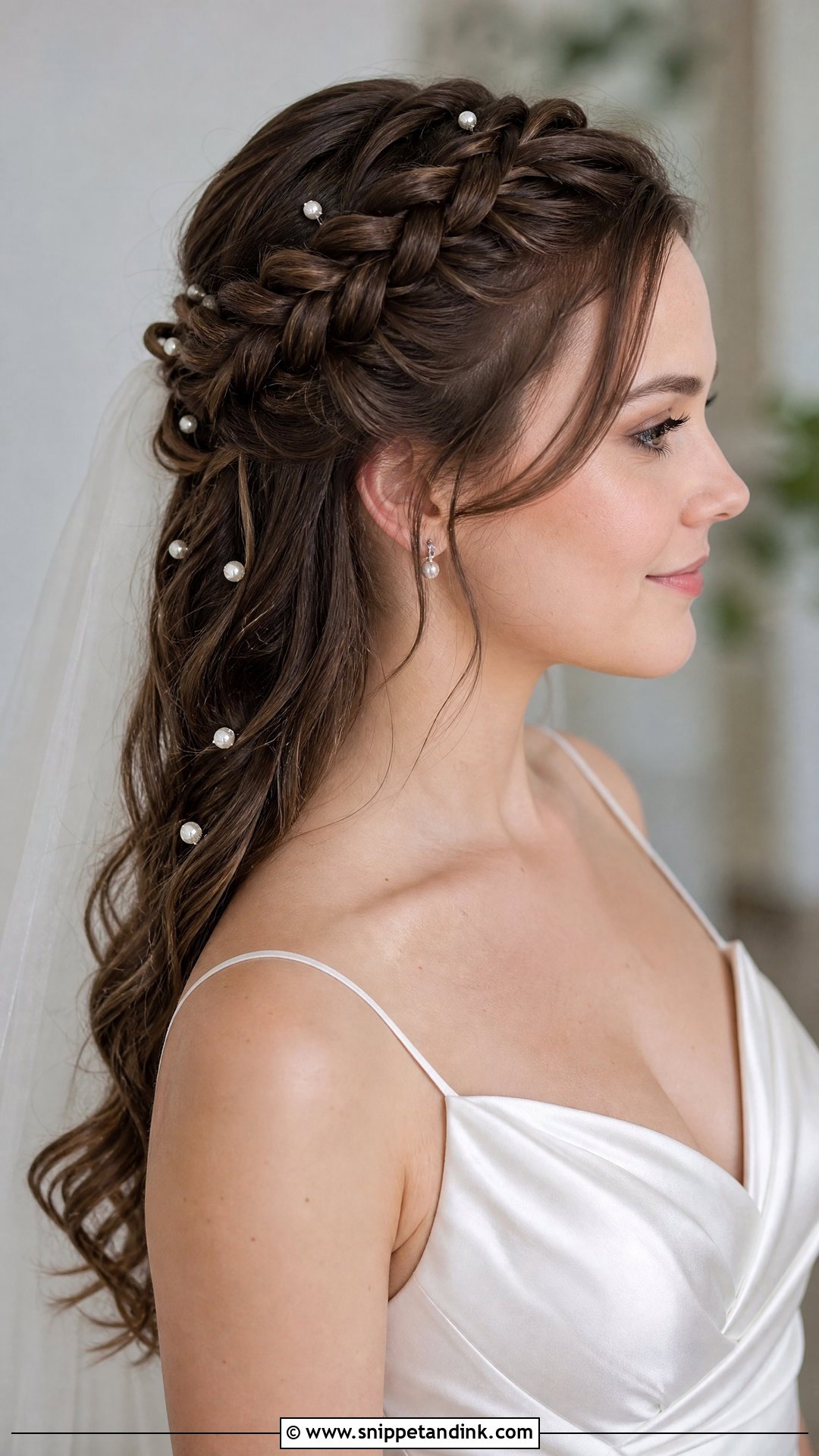
Dutch braids are plaited by crossing strands under rather than over, which makes the braid stand up off the head instead of lying in it. That raised ridge is what gives Norse looks their sculpted edge. The classic arrangement is two Dutch braids running back from the forehead, finished in a low bun, a ponytail or loose waves. On fine hair I pull the outer edges gently to make each braid look wider. Leather cords or silver beads on the tails are enough decoration.
7. Twisted Rope Braid Style
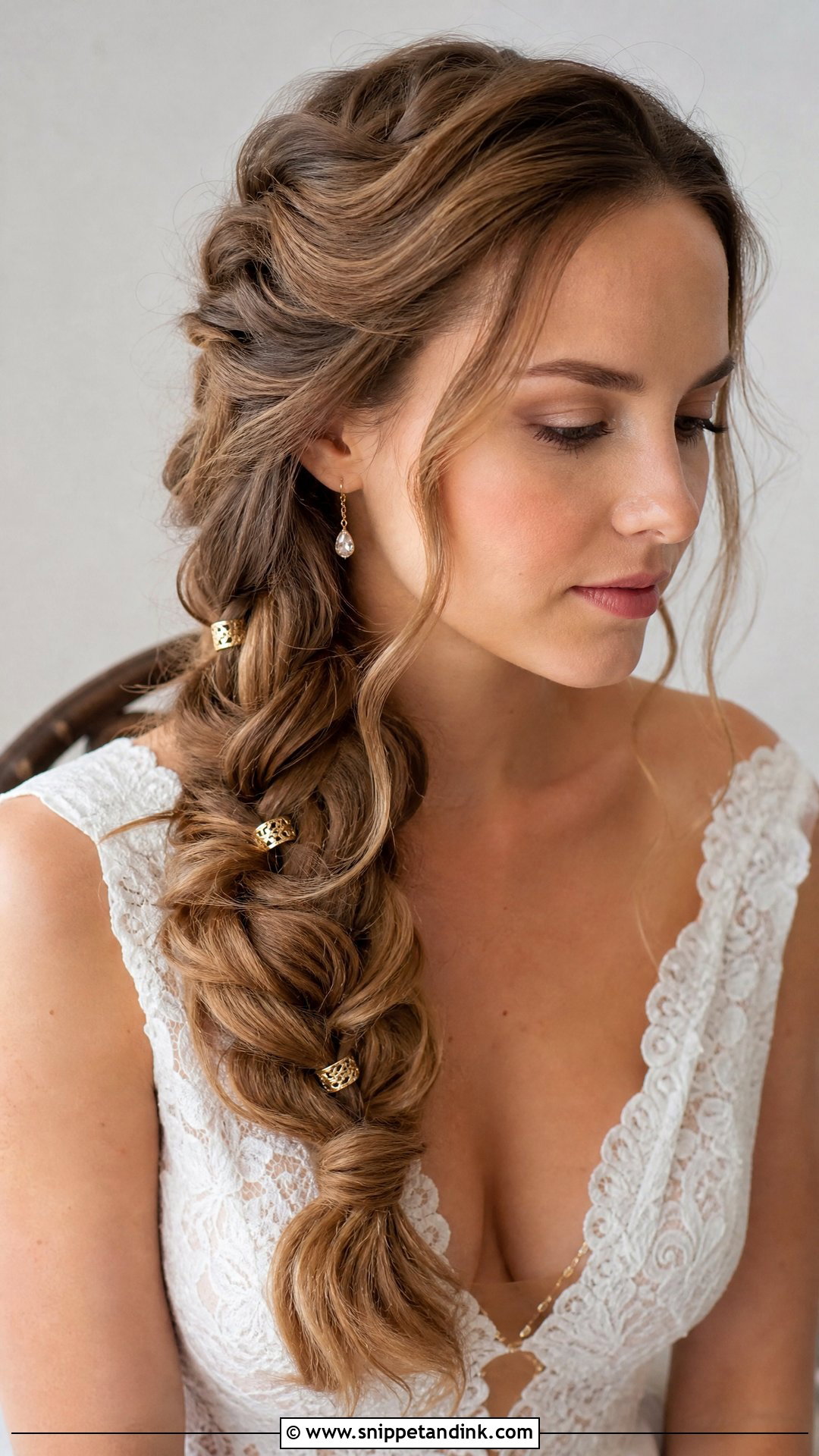
Two sections twisted the same way, then wrapped around each other in the opposite direction: that’s a rope braid, and it’s quicker to make than it looks. Get the twist directions wrong and it unravels within the hour, which is the most common mistake I see in home attempts. Done properly, a rope braid can wrap around the head as a crown or fall over one shoulder. Its chunky texture holds beads, cuffs or tiny flowers well. It’s a good option for a bridesmaid who wants to match the bride with less time in the chair.
8. Viking Braided Bun
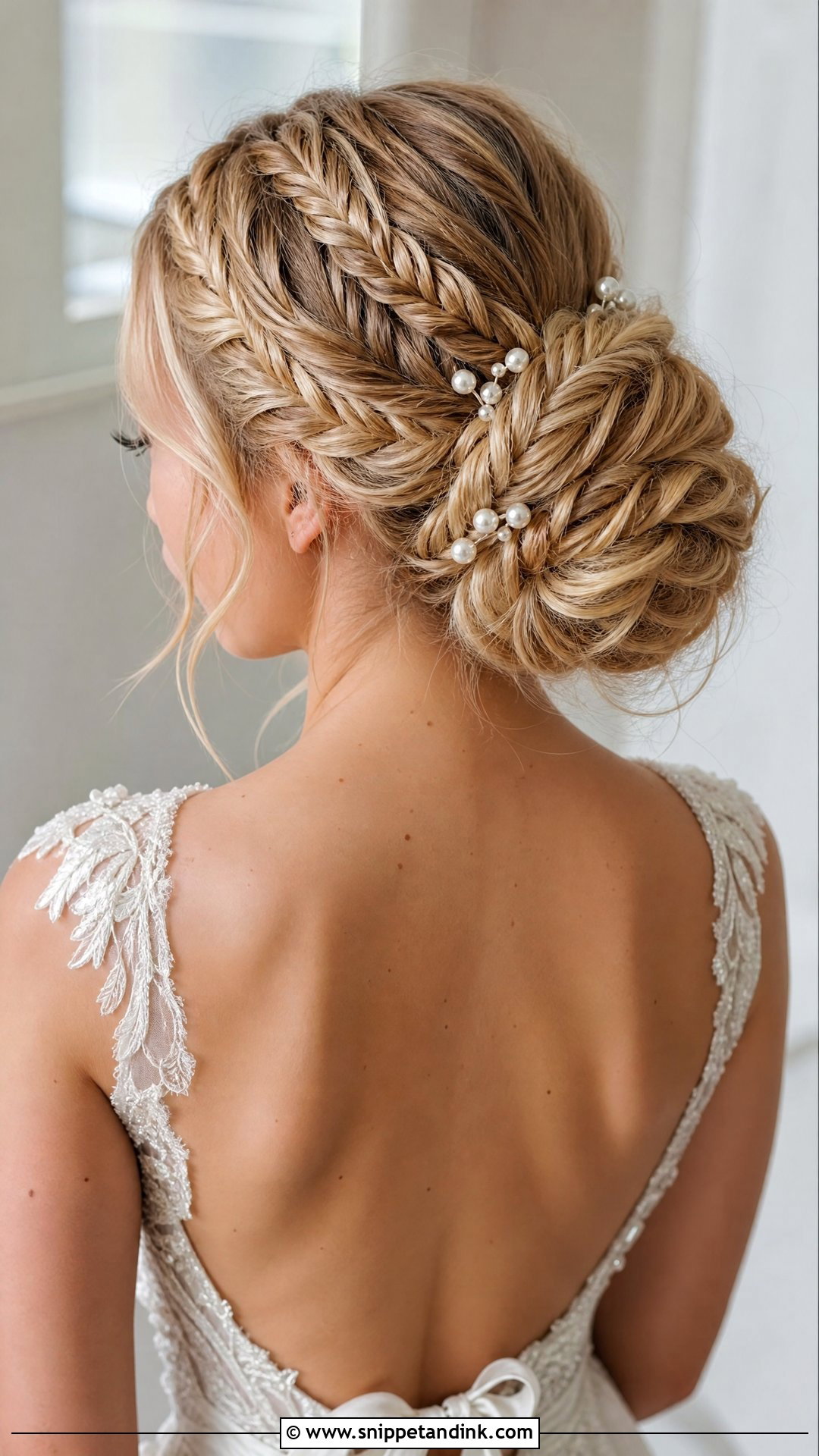
Braids wound around a coiled bun lift the hair clear of your shoulders and show off a low back or a necklace. Fishtail and French versions both suit a Norse theme. Pin each braid as you wrap it, not at the end, or the bun can loosen from the centre as you move. I place it at the nape under a cathedral veil and higher with a circlet. Pearl pins, metal accents or small blooms can go in afterwards.
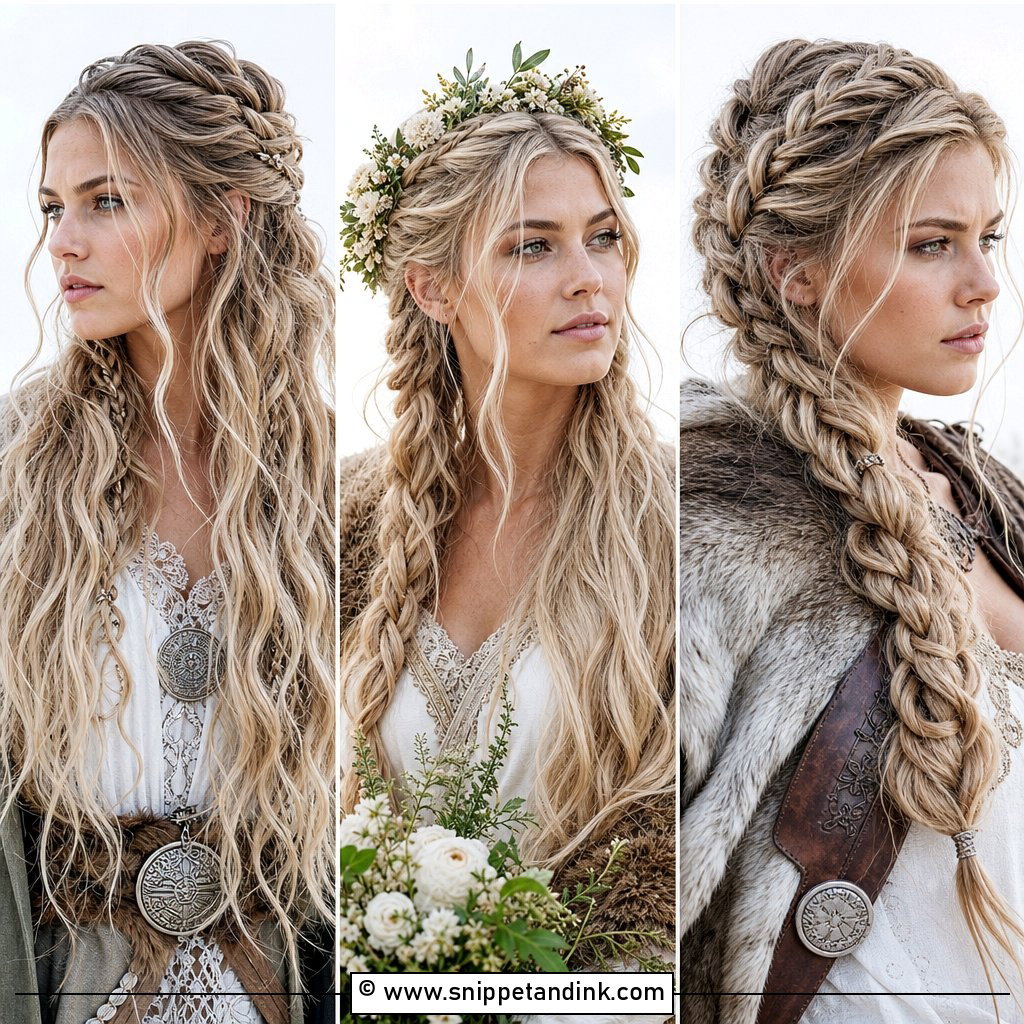
9. Side Swept Braid for Brides
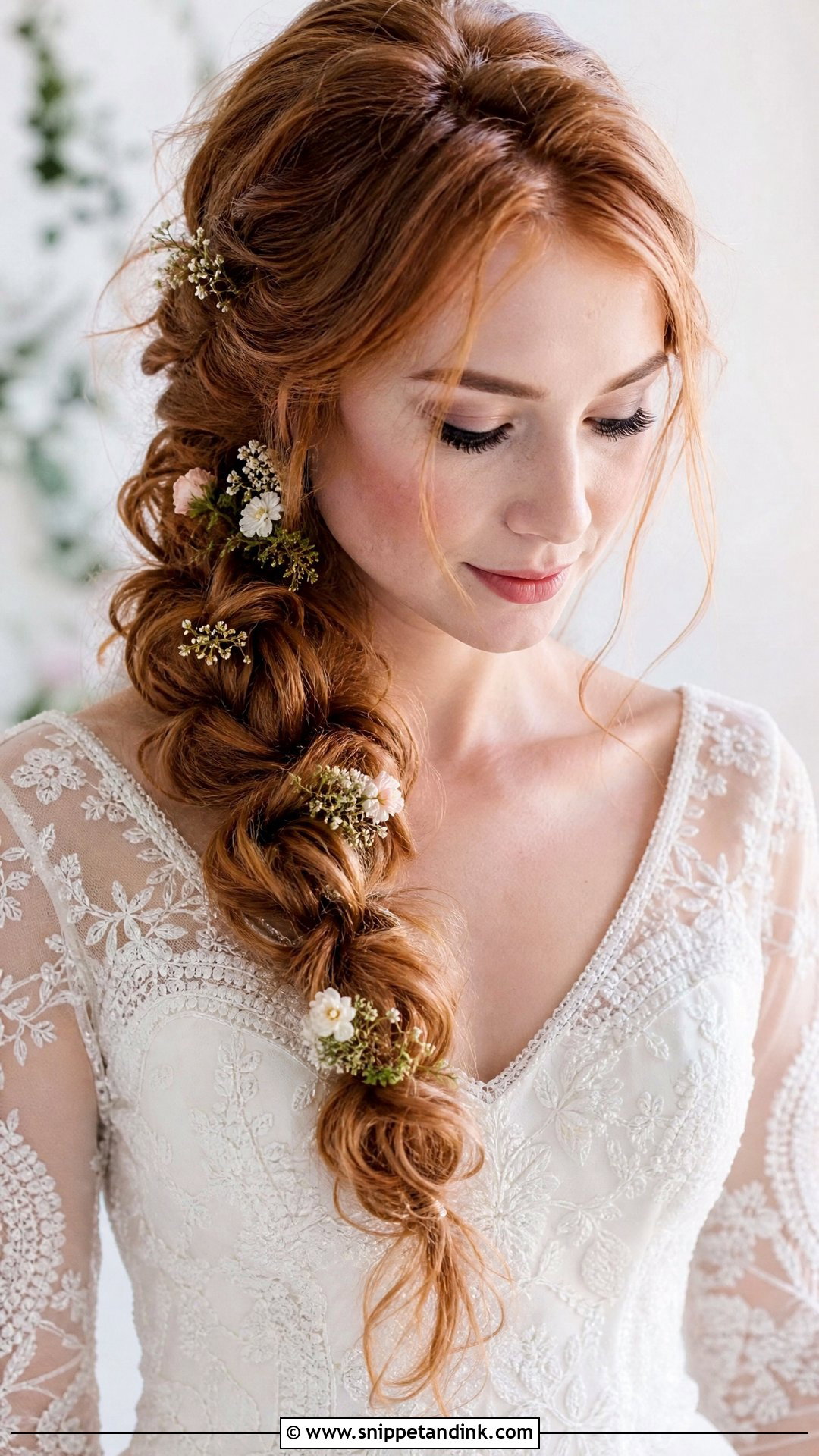
Gather everything to one side, braid it loosely and let it fall over the shoulder. Fishtail, Dutch or a plain three-strand all work, and the choice changes the texture more than the shape. The side braid relies on volume, so on thinner hair I backcomb lightly at the roots before braiding. Pull a few strands free around the face. It suits outdoor and rustic weddings, and it’s the easiest style here to keep comfortable when you’re seated for a long dinner.
10. Cornrow Inspired Viking Braids
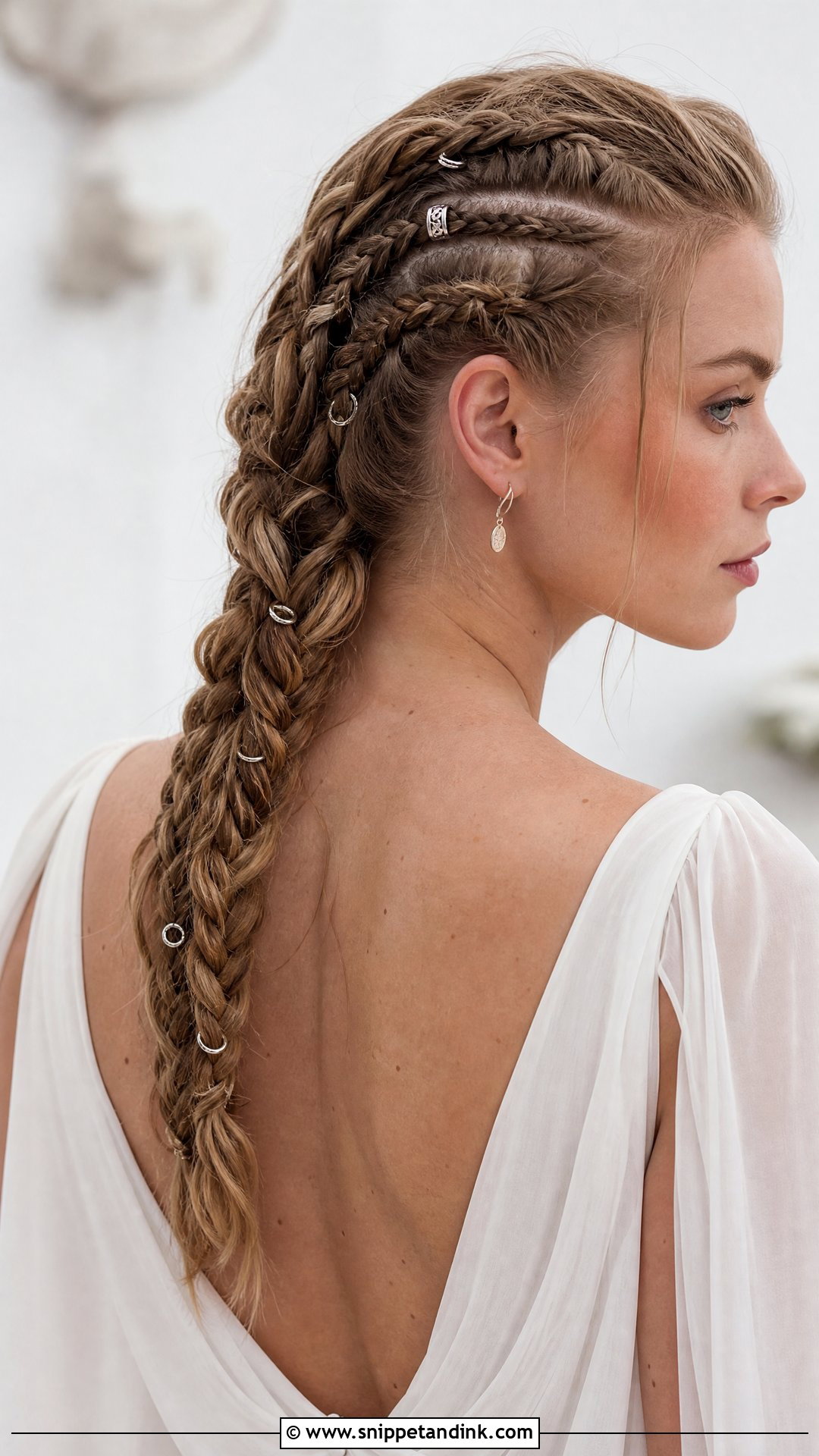
Cornrow-inspired plaits are tight rows braided flat to the scalp in clean lines. The technique itself comes from African and Black braiding traditions, so it’s fair to see this as a Norse styling borrowed onto it rather than an old Scandinavian look. I’d mix a few thin rows at the sides with a looser braid or waves behind. The rows need no pins and won’t budge all night. Ask for them firm but not tight at the hairline, where repeated tension does the most damage. Small metal rings at the ends finish them.
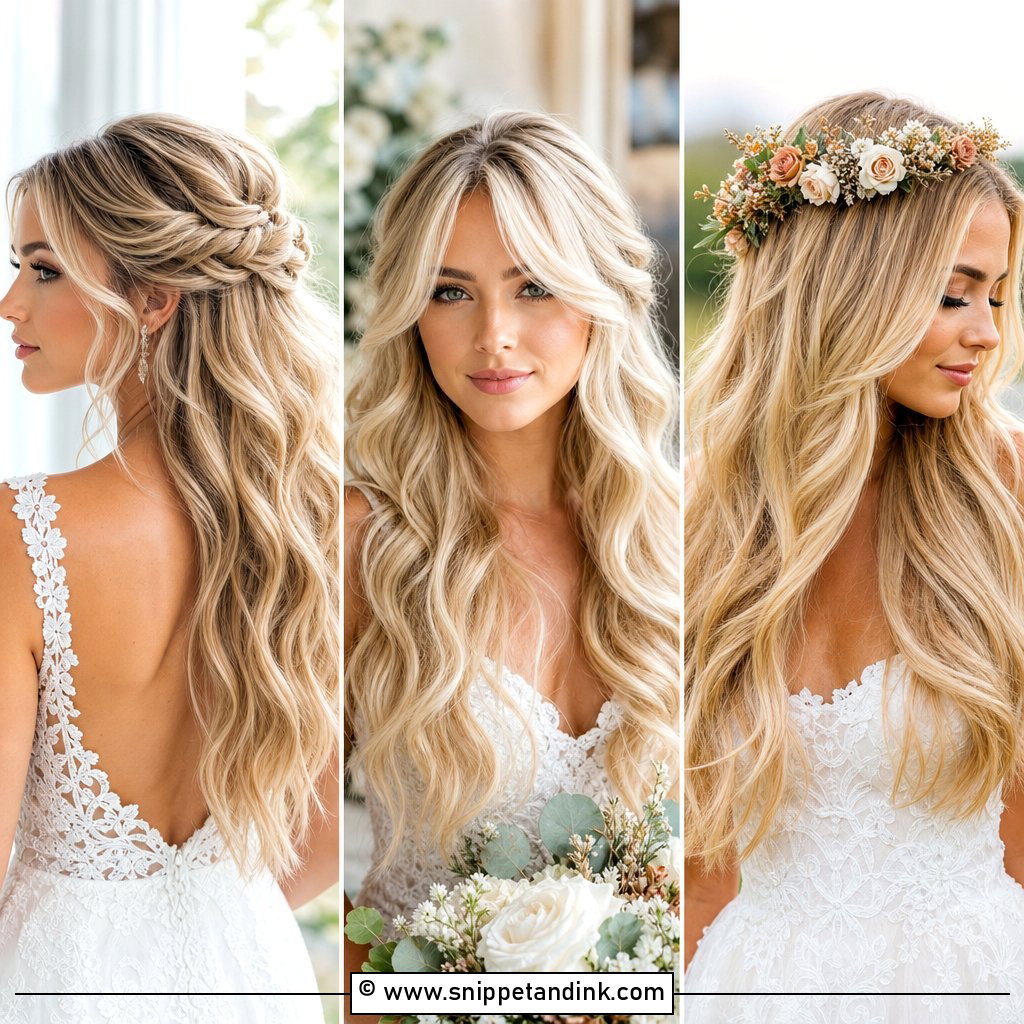
11. Viking Braid With Loose Waves
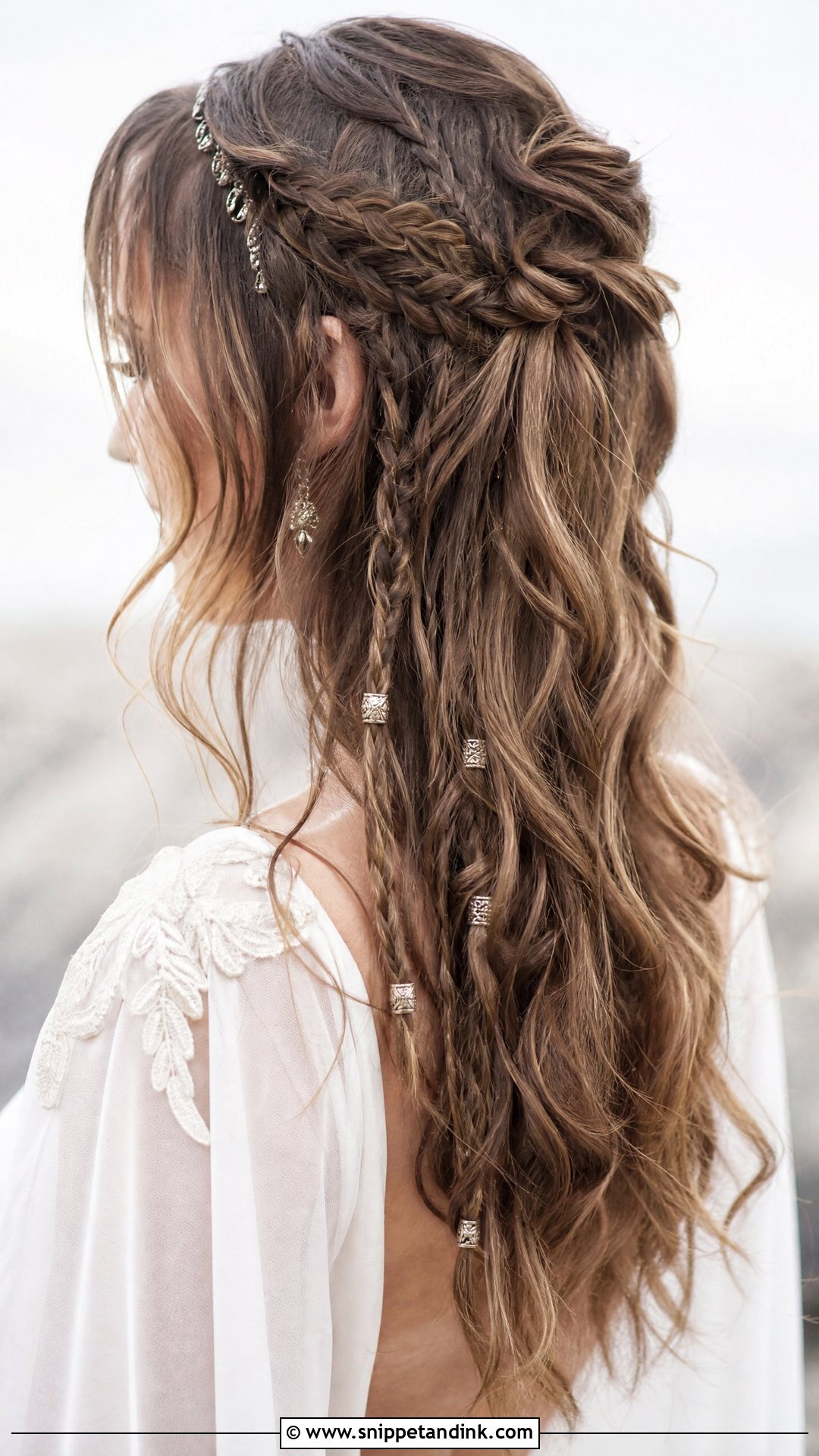
Waves with a few thin braids running through them is the softest look here. One or two plaits at the sides, or a single one threaded across the crown, is all it takes. Because so much hair is loose, humidity is the enemy, so I set the waves well and use a light, flexible spray rather than anything sticky. It moves as you walk and dance, which makes candid shots look natural. Small beads on the braided sections add a little weight that helps them stay in place.
12. Double Braided Crown
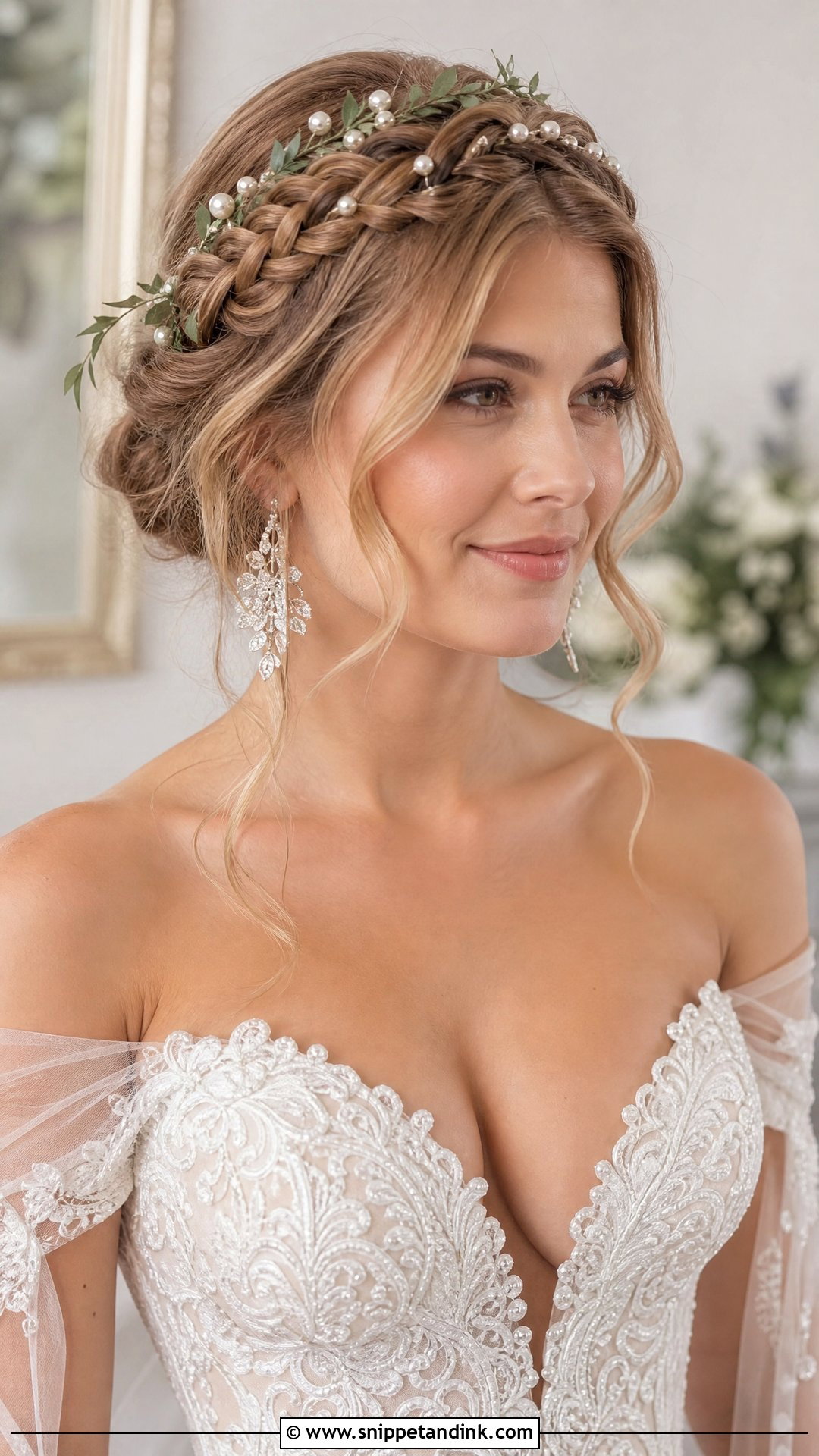
Where a single crown braid frames the face, two stacked braids give it volume and a more formal outline. The lower braid sits along the hairline and the second rides just above it, so the silhouette reads well even from the back of a large hall. It does take a lot of hair; if yours is fine, I’d rather pad the second braid with a matched clip-in than stretch it thin. Pearls, metal accents or greenery go between the two layers, and earrings show off nicely with everything lifted.
13. Braided Low Ponytail
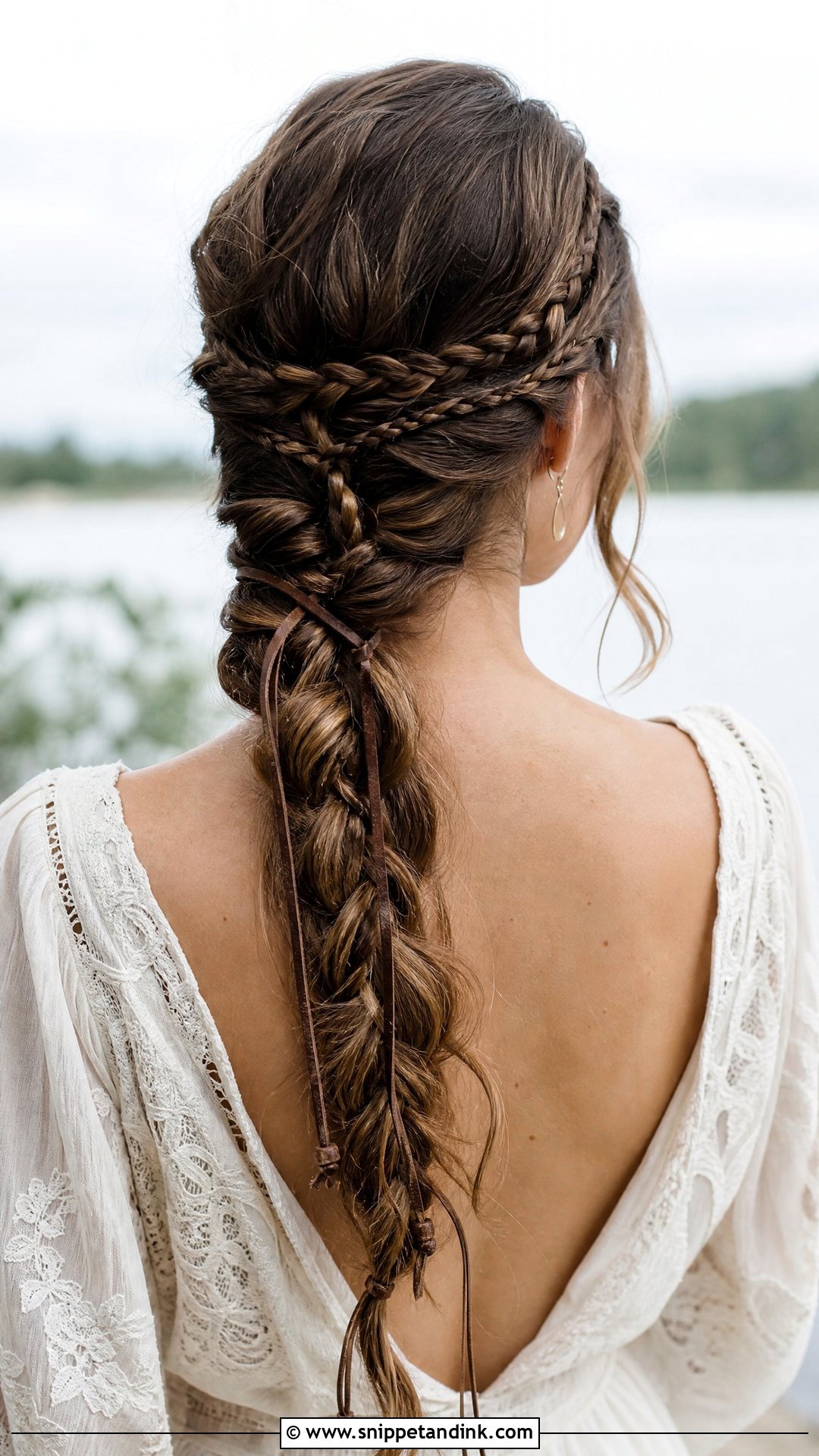
The low braided ponytail is my answer for a bride who wants something calm. Hair is gathered at the nape and braided down the back, with optional thin side braids feeding into it. It’s comfortable under a veil and won’t fight a high-neck dress. I loosen the main braid a touch for width, and wrap the elastic in a strand of hair. Beads, leather cords or small flowers can dress it up, but it holds its own plain.
14. Viking Braids With Flowers
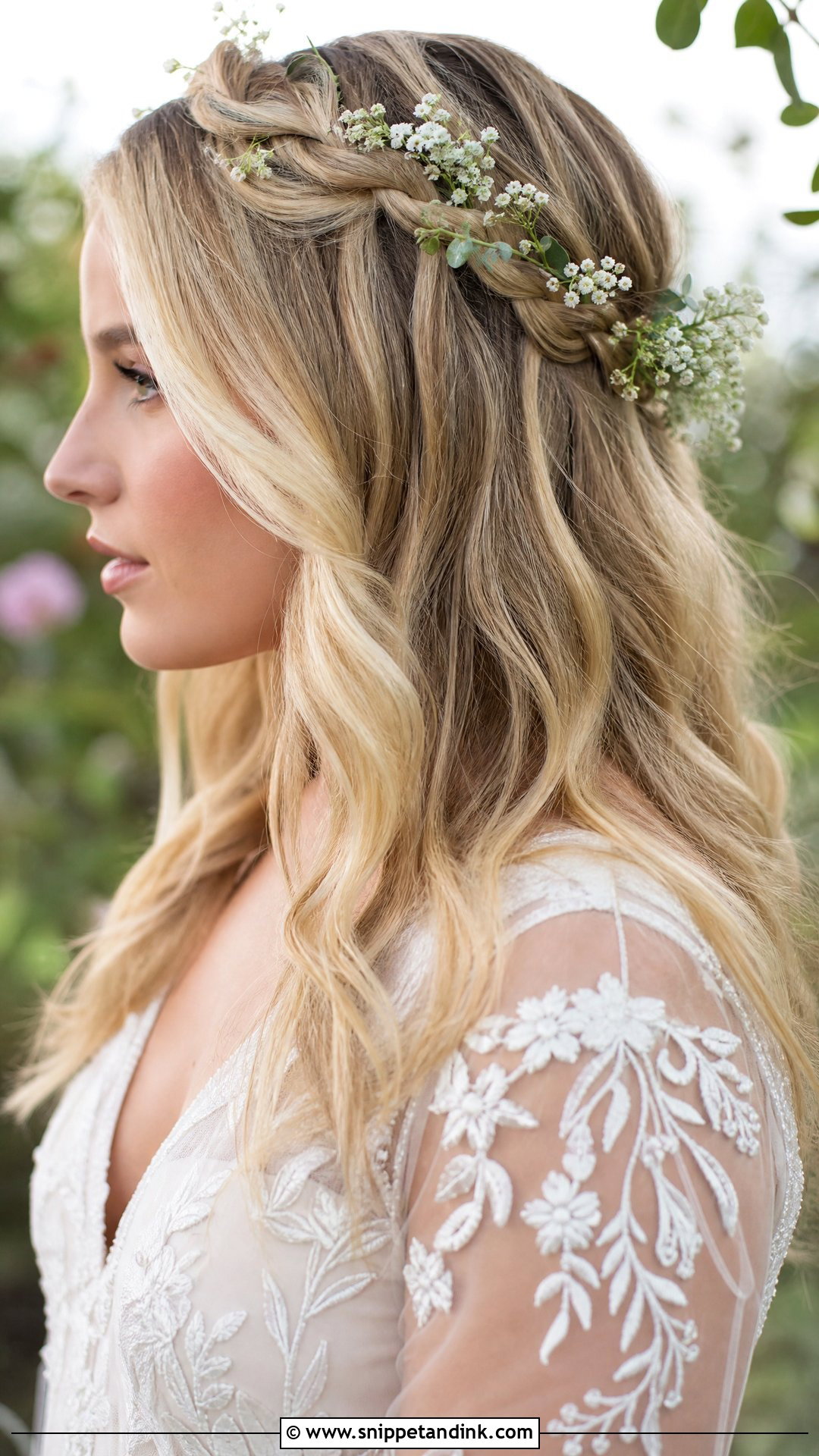
Flowers soften warrior braids faster than anything else. Small wildflowers, baby’s breath or spray roses tuck into a crown braid or side braid, and the colour pulls your bouquet into the hair. Choose with heat in mind: delicate petals bruise and wilt quickly out of water, while waxflower, gypsophila and small foliage hold up for hours. I ask the florist to wire and tape stems so they slide into the braid without scratching. Spring and summer gardens suit this look best.
15. Knotted Viking Updo
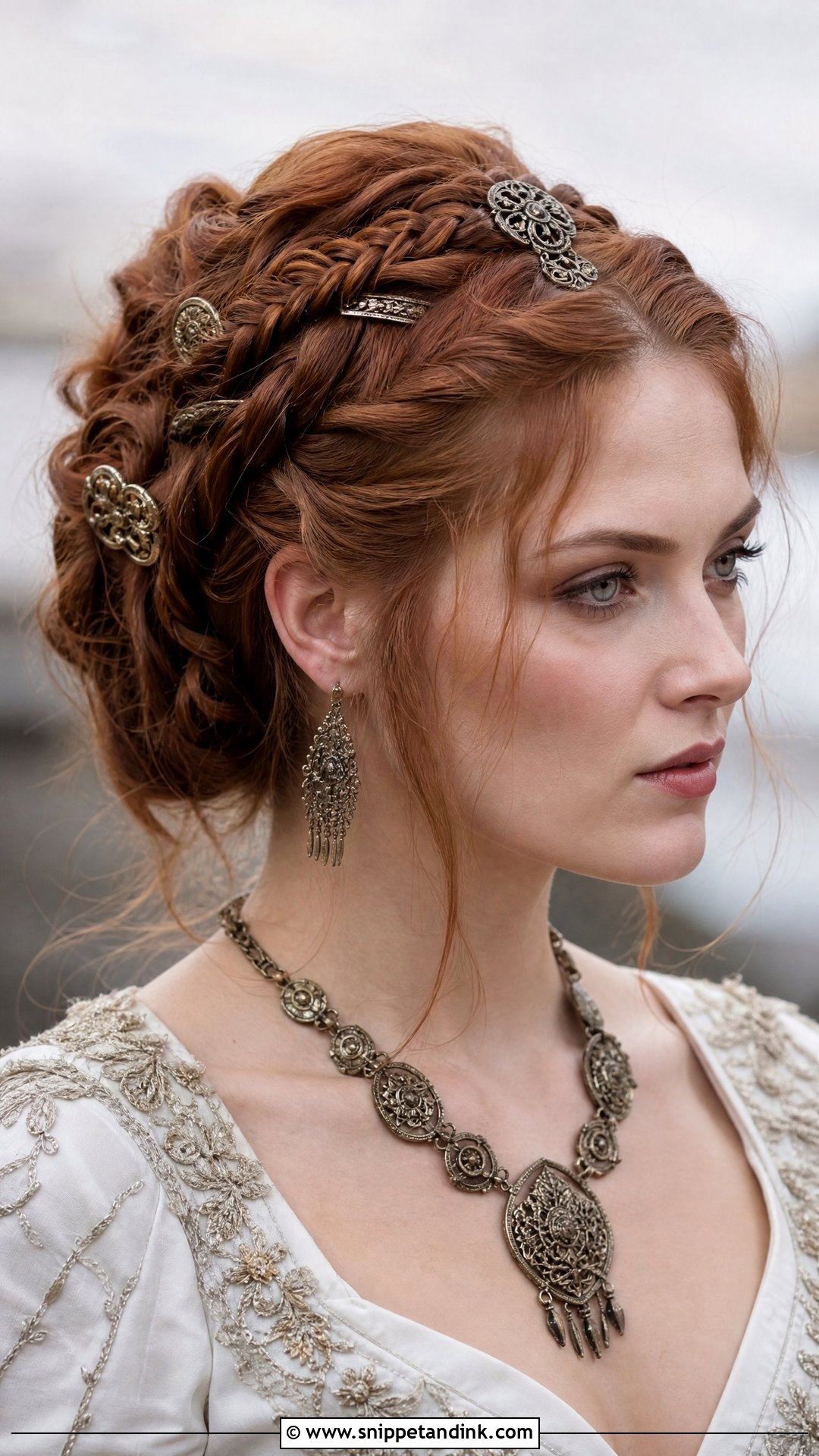
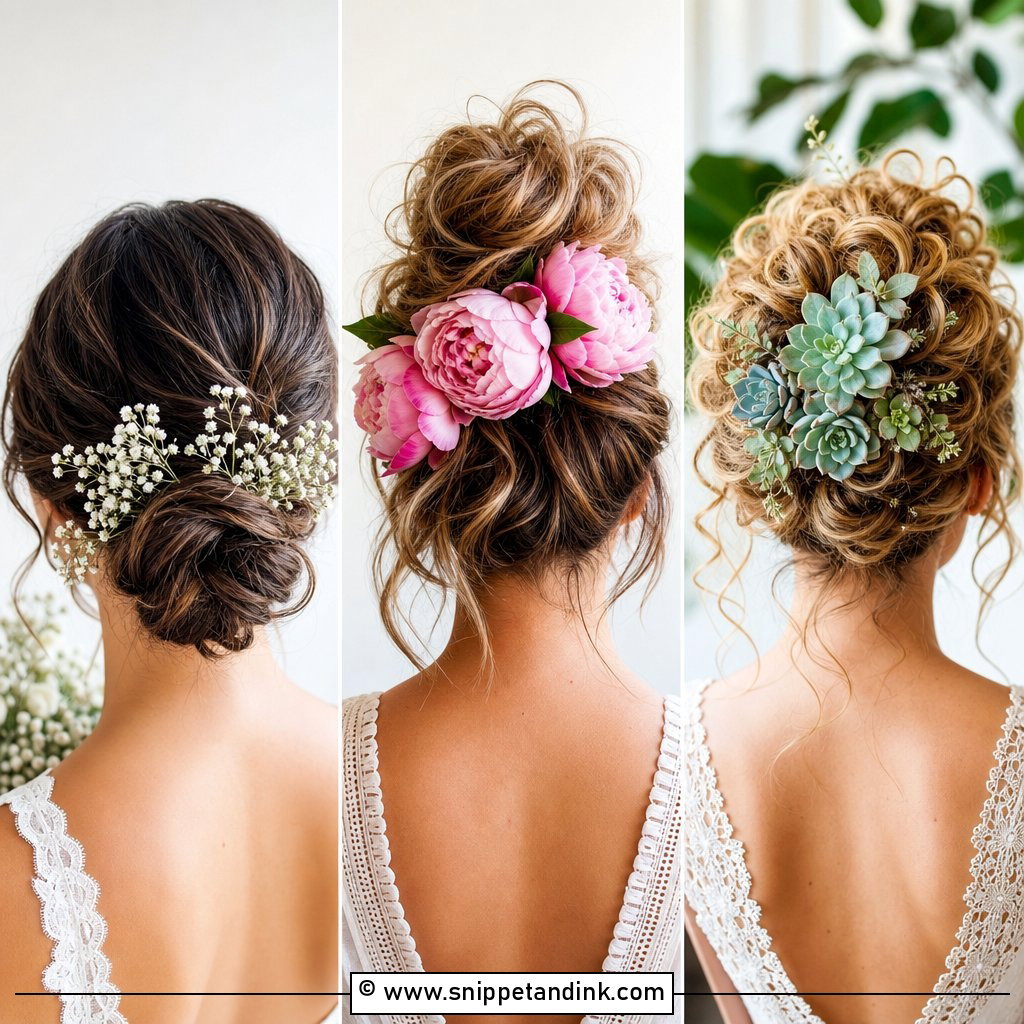
Knots and braids looped together into a sculptural updo give the most textured result in this list. Every knot eats length, so this one really needs long hair, and freshly washed hair will slide. I use a texture spray before starting and secure each knot as I go. The neck stays bare, which is good news for warm weather and for anyone wearing a bold necklace. Metal pins or a few small blooms sit naturally in the folds.
16. Long Flowing Viking Braids
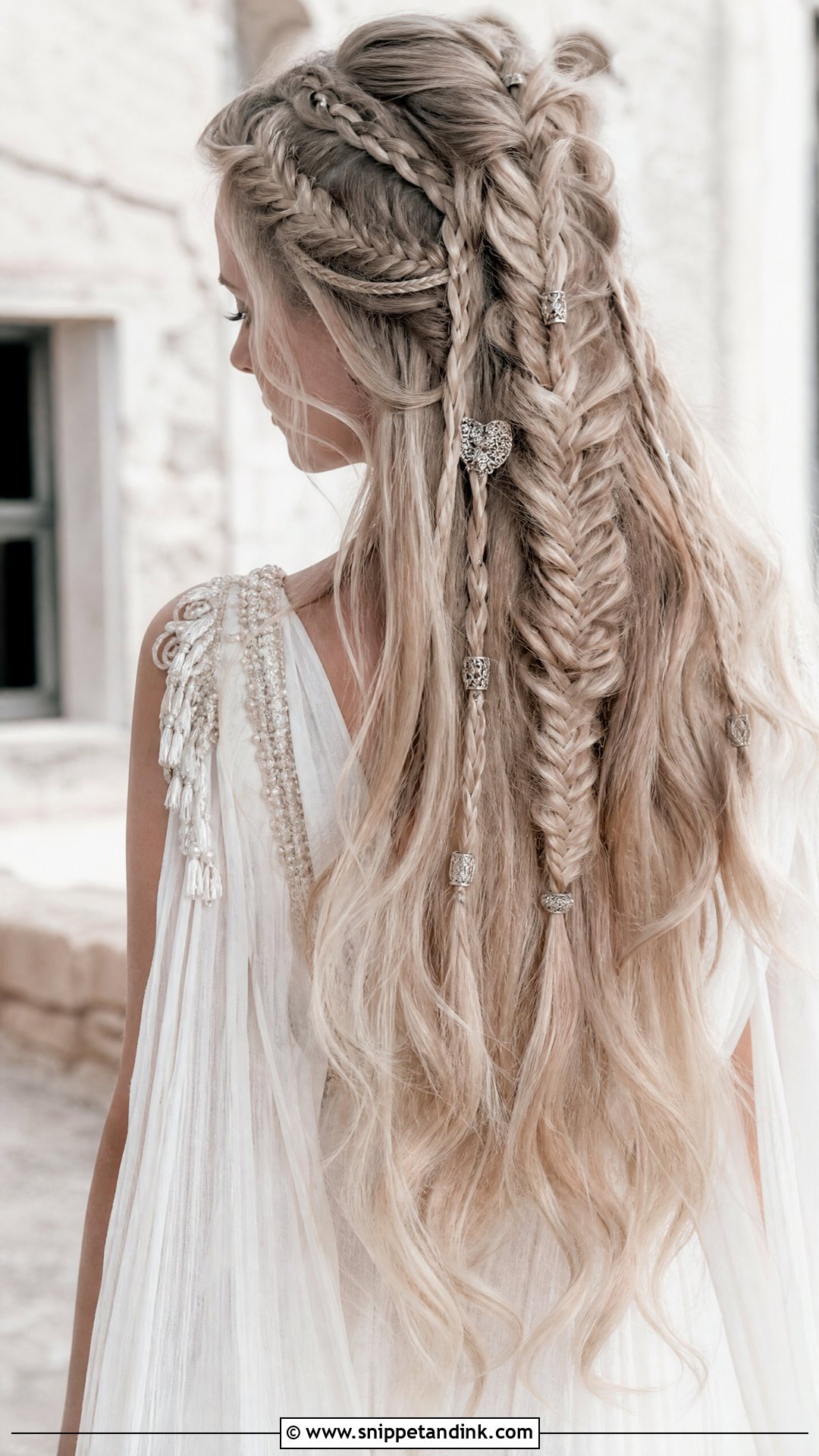
Long braids hanging the full length of your back are the closest this list gets to dramatic Nordic beauty in the old-saga sense. One braid or several, mixed fishtail, Dutch and rope for variety, with some loose hair left between them for movement. It’s only an option if you have the length; extensions can help but long braided wefts need careful blending at the top. Expect the braids to catch on a lace back or a bouquet; I tell brides to flick them forward before the processional. Beads, rings or cords finish the ends.
17. Messy Braided Viking Style
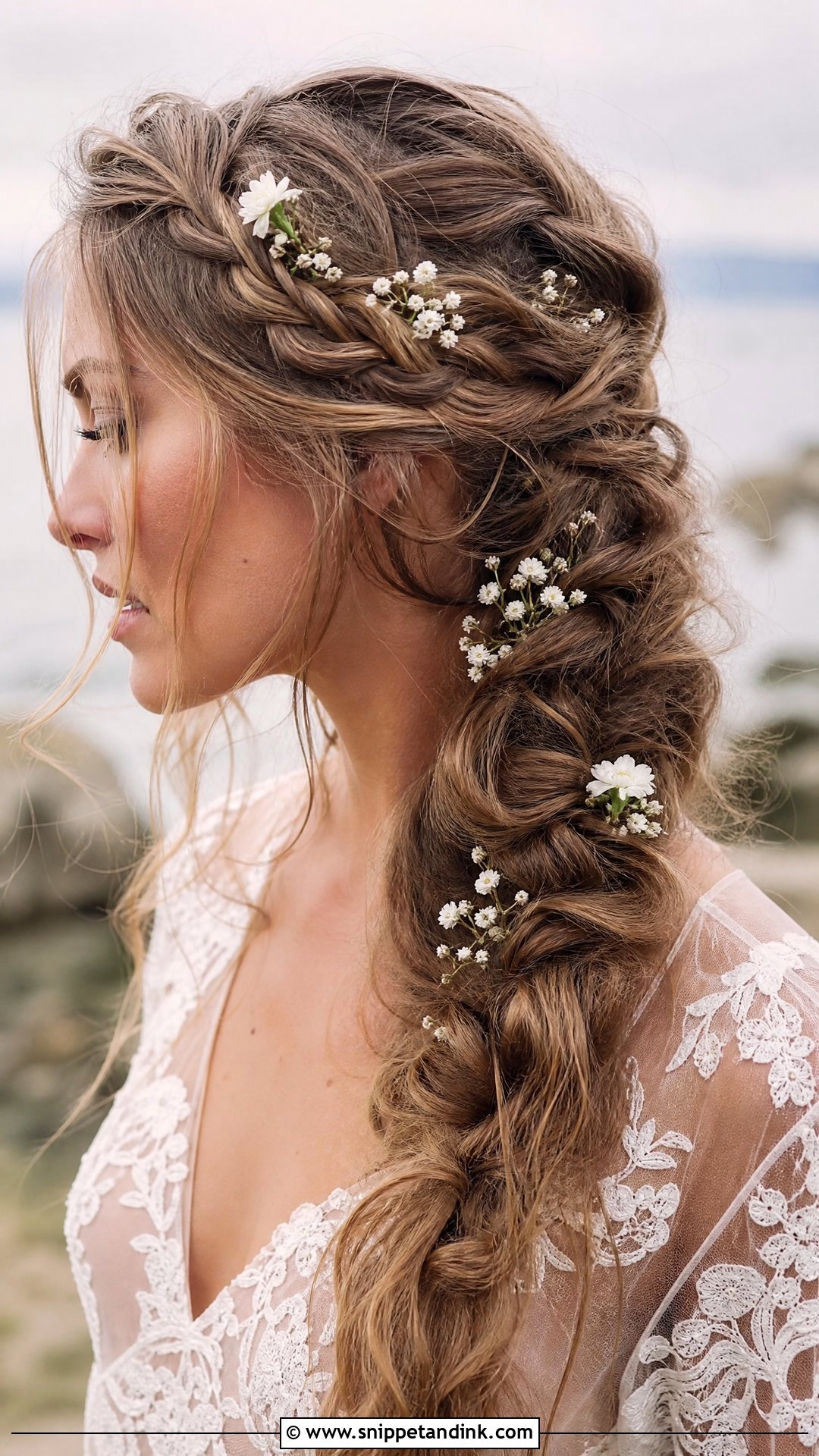
Not every Norse look has to be neat, and the messy braid is the proof. Braids are woven loosely and then pulled at random so the finish looks lived in. A crown, side braid or half-up shape all work. It forgives cowlicks, layers and uneven regrowth better than any sleek style. The trap is overdoing it at the start: if the hair looks messy at 10am, it will look undone by the reception. I build it slightly neater than the final look and let the day loosen it. Small flowers or beads keep it bridal.
18. Viking Braid With Veil
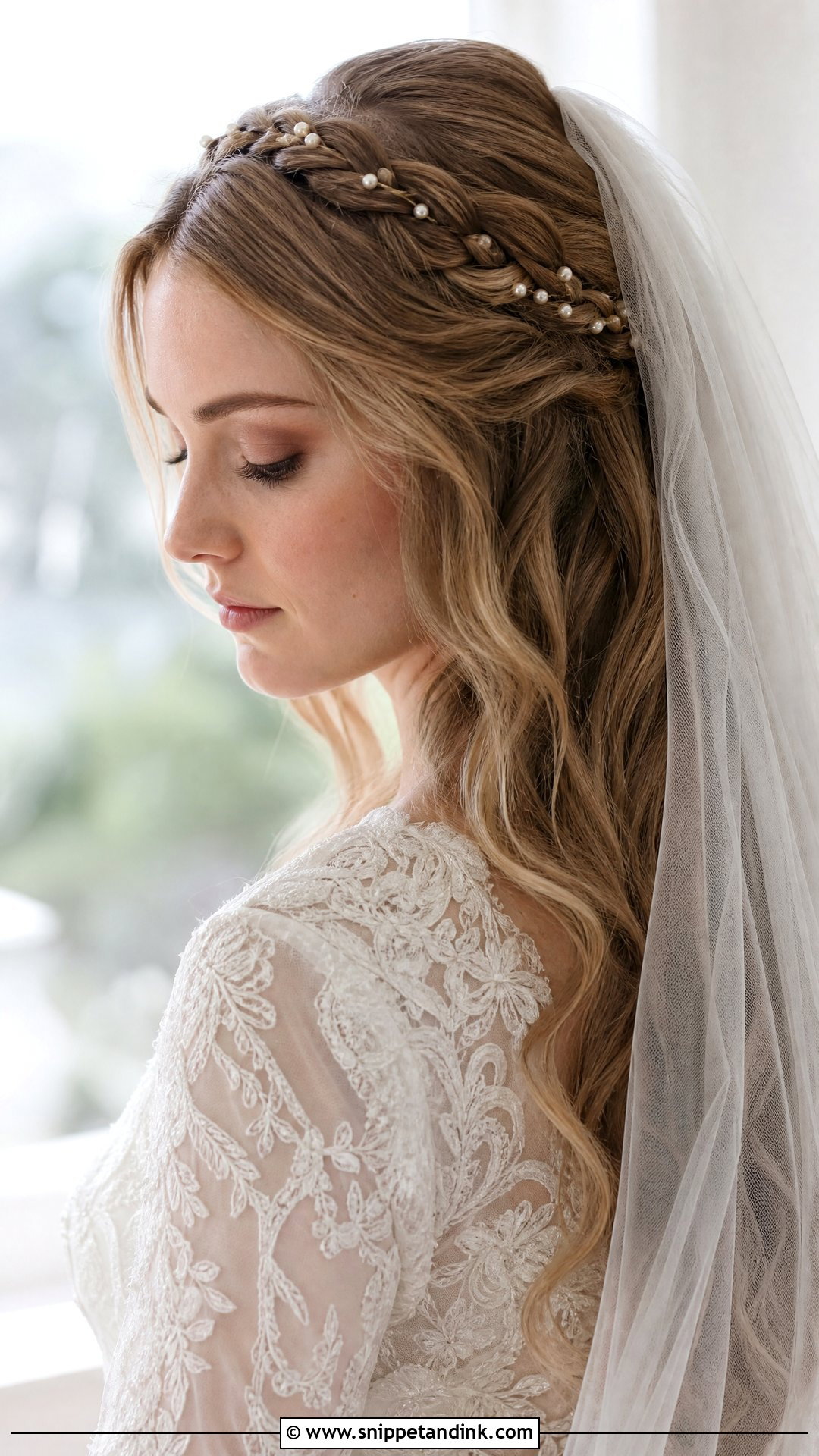
A veil and Norse braids can sit together happily if you plan where the comb goes. With a crown braid, I slide the comb under the back of the braid so the braid holds it like a clip. With half-up styles it goes just below the join. A simple edge lets the braids show through; heavy lace hides the work you’ve paid for. Small beads or pearls in the braid can echo any beading on the veil.
19. Twisted Half Up Viking Look
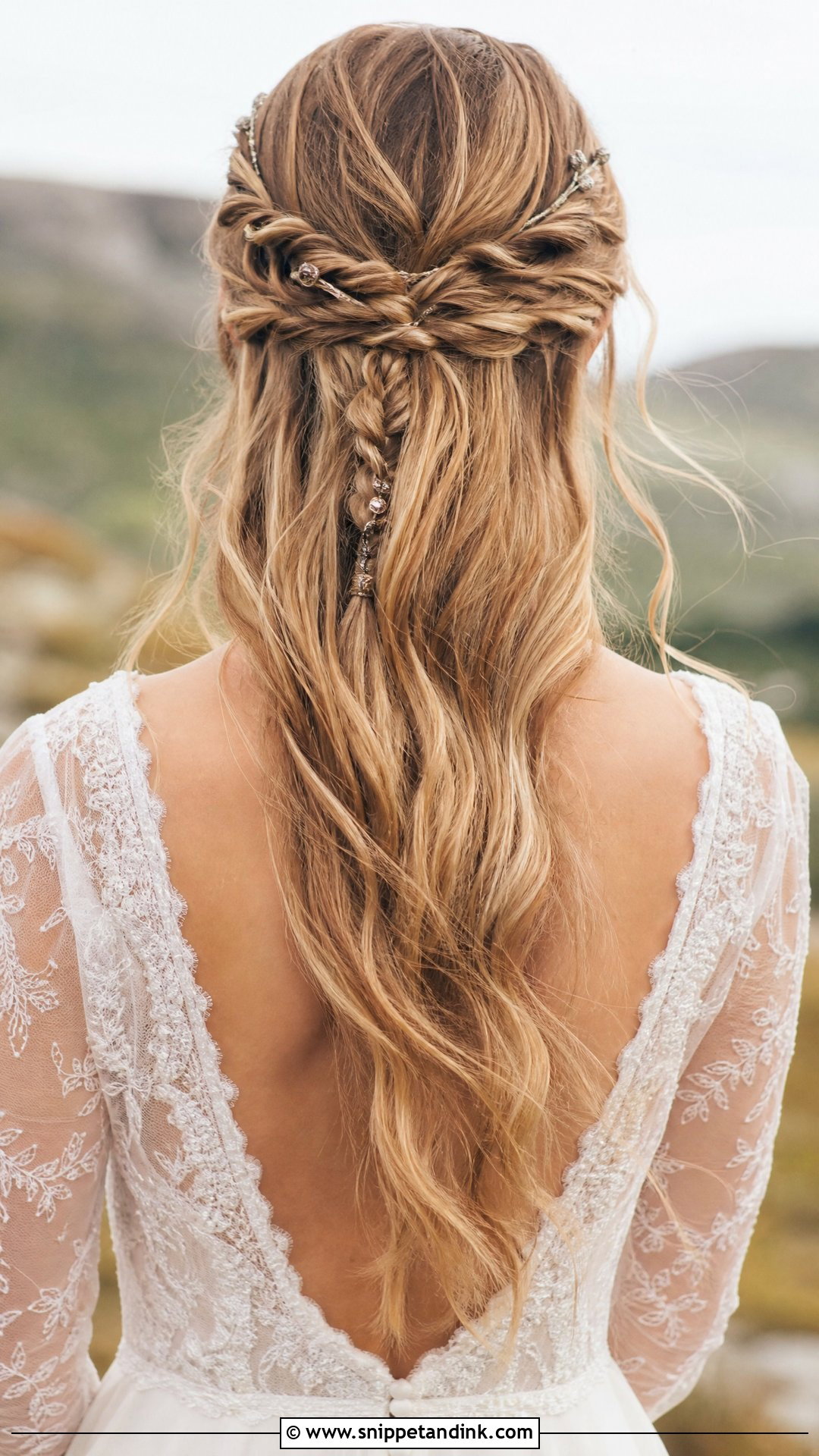
Twists are a gentler version of braiding and easier to take down at night. The top section is twisted back from each side and joined behind, with the rest left in waves. I’d suggest it for shorter hair, since twists need less length than braids to reach the back of the head. The weak spot is the join, where twists can untwist if pinned loosely; I lock it with crossed pins and a tiny clear elastic. Small beads or pins can mark the meeting point.
20. Viking Braids With Hair Cuffs
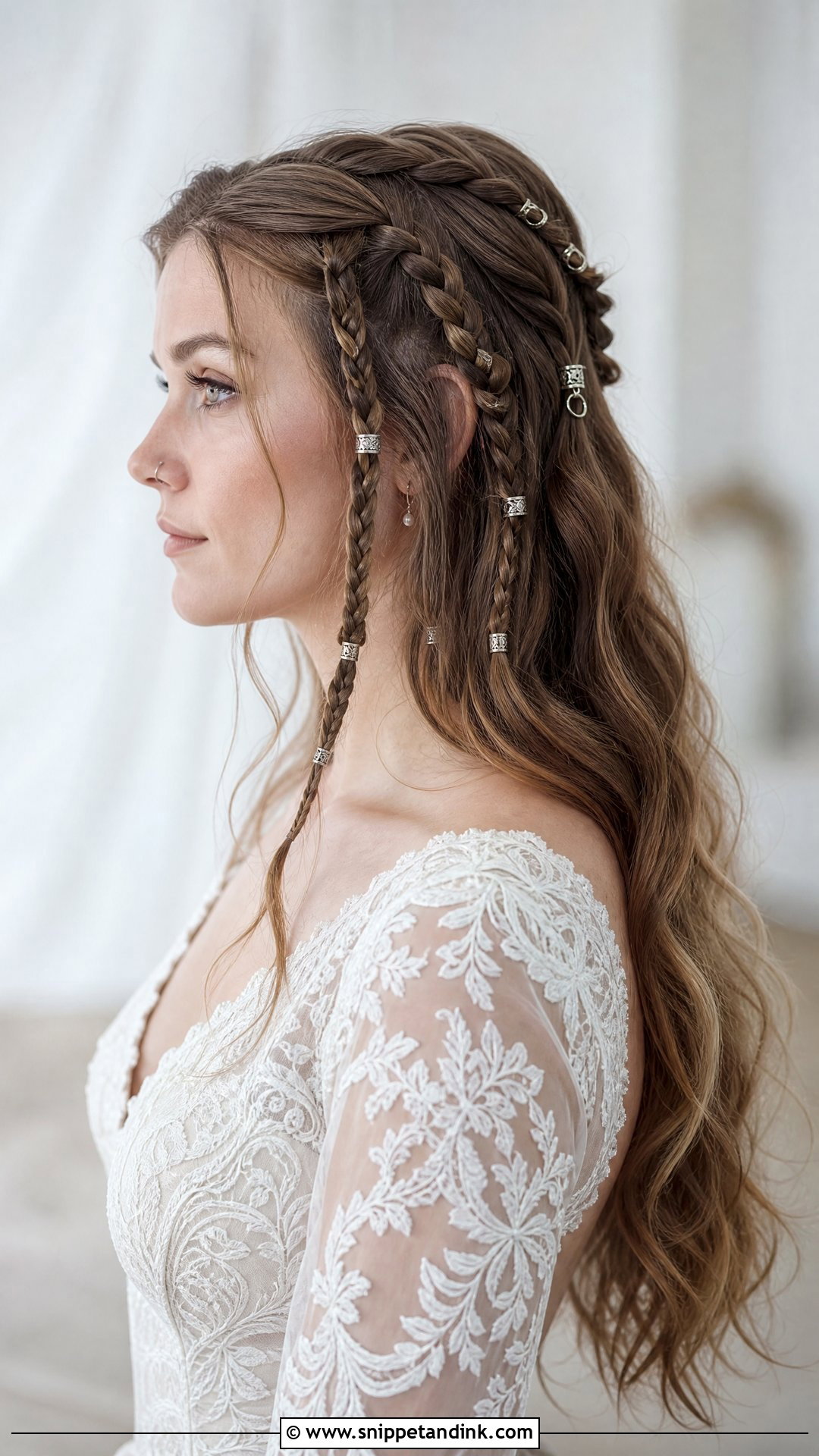
Rings, cuffs and beads clipped onto plain braids are the fastest way to make any style read as Norse. Silver or gold, they catch the light and add shine to the plait. They’re often said to stand for strength and union in Viking tradition; whatever their history, they make a personal detail to choose together. Cuffs suit a crown braid, side braid or warrior ponytail. Weight is my main concern, so I keep heavier cuffs close to the scalp, where the braid is anchored, and light beads at the ends.
Unbraiding at Midnight Without Snapping Your Hair
Nobody thinks about the take-down until they’re standing in a hotel bathroom, tired, pulling at pins. Braided styles hold a lot of hardware, and rushing it is how hair breaks.
- Take out every pin and accessory first, starting at the top. Count them if you can; your stylist will know roughly how many went in.
- Unbraid from the end towards the scalp, a few crossings at a time, never by pulling the braid apart from the middle.
- Spray the lengths with a little leave-in conditioner or water before you brush, and use a wide-tooth comb from the ends up.
- Expect some shedding. Hair that would normally fall out across the day has been held in the braids, so a handful in the comb is normal.
If you’re leaving early the next morning, sleep in a loose plait or on a silk pillowcase instead of brushing out completely. The crimp from the braids gives easy waves for a second day, and I’d honestly rather you kept them than fought them with heat.
Bride or Costume? Getting the Balance Right
The thing that tips a Norse look into fancy dress is usually stacking: braids, cuffs, a horned circlet, fur and heavy eye makeup all at once. I pick one strong element in the hair and keep the rest simple. If the braids are elaborate, skip the metal; if the cuffs are the feature, keep the braid plain. Your dress and makeup artist should hear about that choice early, so the whole look agrees with itself.
Which Norse Braid Fits Your Dress and Your Hair Today
Most brides arrive with a picture and leave with a slightly different style, adjusted to their hair and their dress, and that’s how it should be. Look at the halo braid if you want calm, the warrior ponytail if you want movement, and the knotted updo if you want sculpture. These styles borrow from Nordic heritage, but the details make them yours: beads, cuffs, cords or flowers. Bring two or three photos to your trial, including the back view, and be honest about how long your hair is today.
You'll Like These Ideas:



Leave a Reply