
A Maharashtrian bride’s hair has to share space with a lot of tradition. There’s the mundavalya tied across the forehead, the nath, the weight of a Nauvari or Paithani pallu, and a ceremony where guests shower rice over your head. So when I plan a Marathi bridal style, the first question isn’t which bun looks nicest. It’s what the hair has to hold. Many brides go for a classic ambada with gajra, and others want a long braid, soft curls or a modern bun for the reception. Below are fifteen options, with my notes on which ones survive the rituals and which belong to later in the evening.
Fitting the Mundavalya Around Your Hairstyle
The mundavalya changes how I style the front of the hair more than anything else in a Marathi wedding. It’s a band of pearl or flower strings tied across the forehead, with strands hanging down each side of the face, and it’s usually knotted at the back of the head. Every style below has to leave room for it.
- The hairline needs to be smooth. Any bump or teased section at the front pushes the band up and it sits crooked.
- Face-framing tendrils and pearl strands don’t mix. They tangle every time you move your head, so I either skip the loose pieces or keep them well behind the ear.
- The knot at the back should land just above the bun, not on it, otherwise it presses into the bun and spoils its shape.
- Tie it snug but not tight. A band pressing across the temples for hours gives a lot of brides a headache by the second ritual.
I always fit the mundavalya myself at the end of the hair, with the bride sitting the way she’ll sit during the ceremony. If the strands hang well when you’re upright but swing into your eyes when you bend forward, it’s better to know that before the guests arrive.
1. Marathi Bridal Ambada Hairstyle
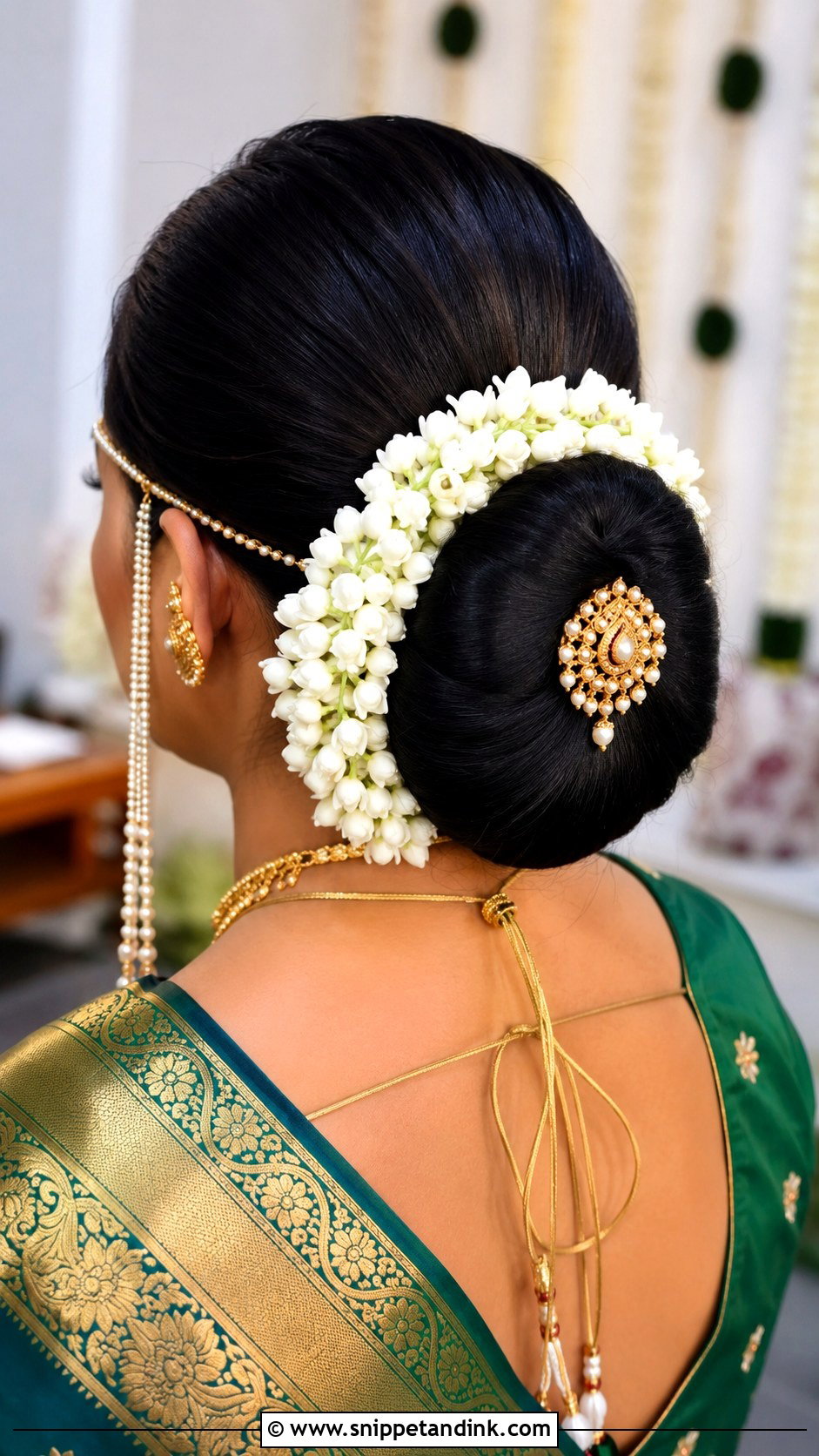
The ambada is the bun most people picture with a Nauvari saree: hair gathered into a neat, rounded shape low at the back of the head. It keeps the neckline clear for a thushi or pearl necklace, and it gives the mundavalya ties somewhere solid to sit above. I build it around a small padded doughnut on medium hair so it stays round all day instead of flattening. A gold ambada pin or a ring of jasmine finishes it. Of all the styles here, it’s the one I’d trust most through a long ceremony.
2. Marathi Bridal Bun With Gajra
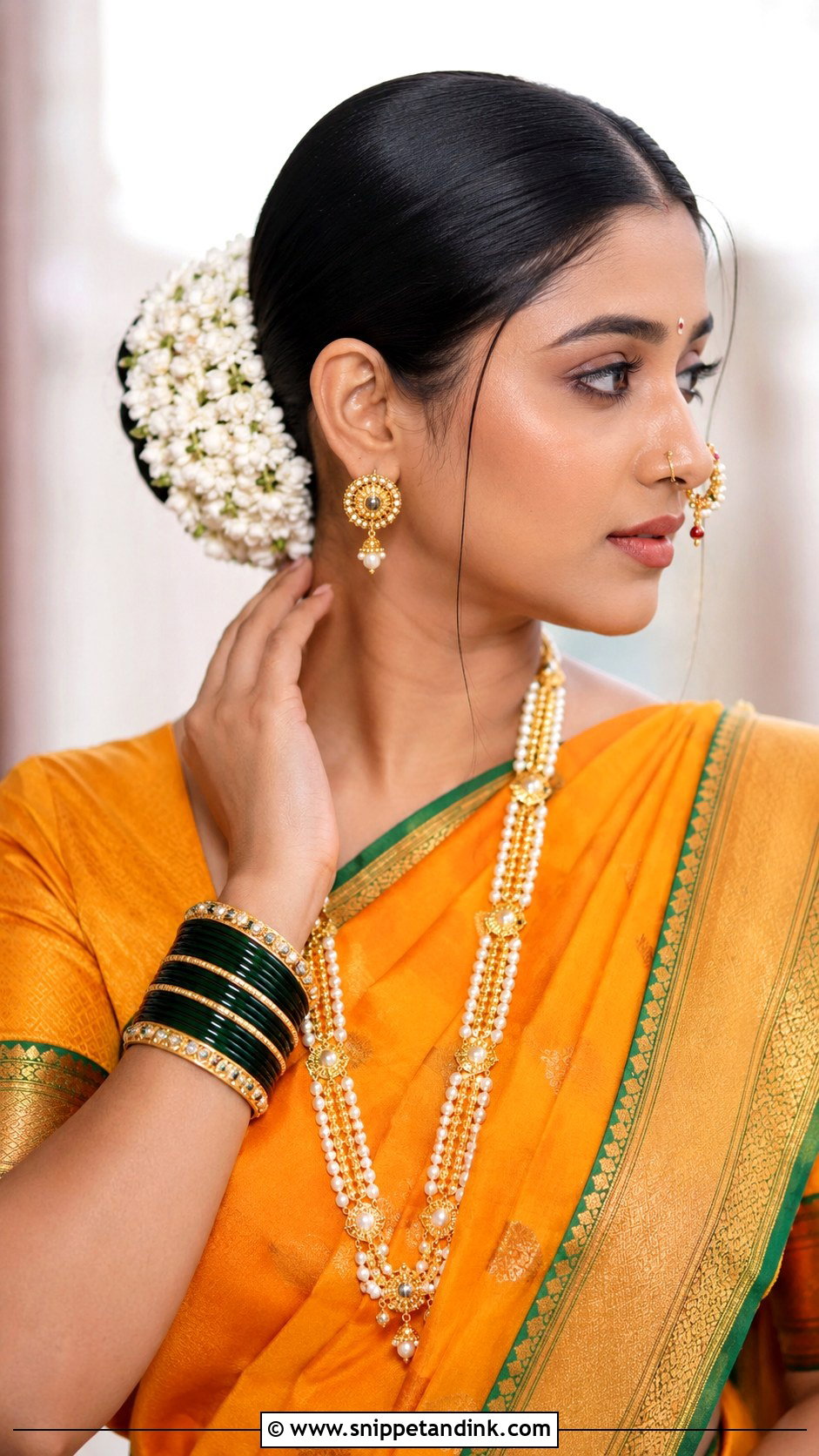
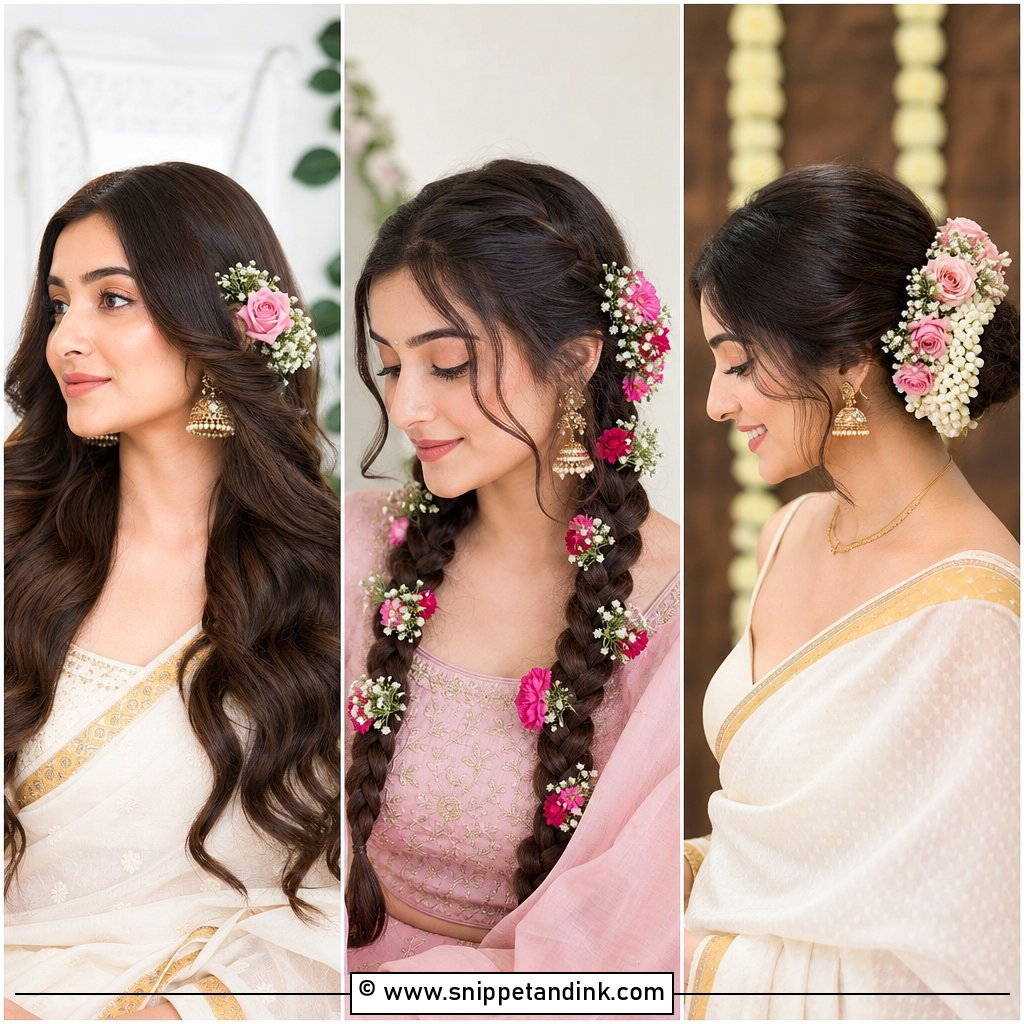
Jasmine changes the whole feel of a bun. Wrapped around a smooth or slightly textured base, the gajra adds fullness, so even shoulder-length hair can carry a proper bridal bun once it’s padded underneath. White flowers stand out against yellow, green, purple or red Paithani sarees. I pin the gajra on after the bun is sprayed and set, with a U pin every few centimetres, so it doesn’t slide when you bend for the rituals. A center part keeps the front traditional; a couple of loose pieces by the face read softer.
3. Marathi Bridal Braided Bun
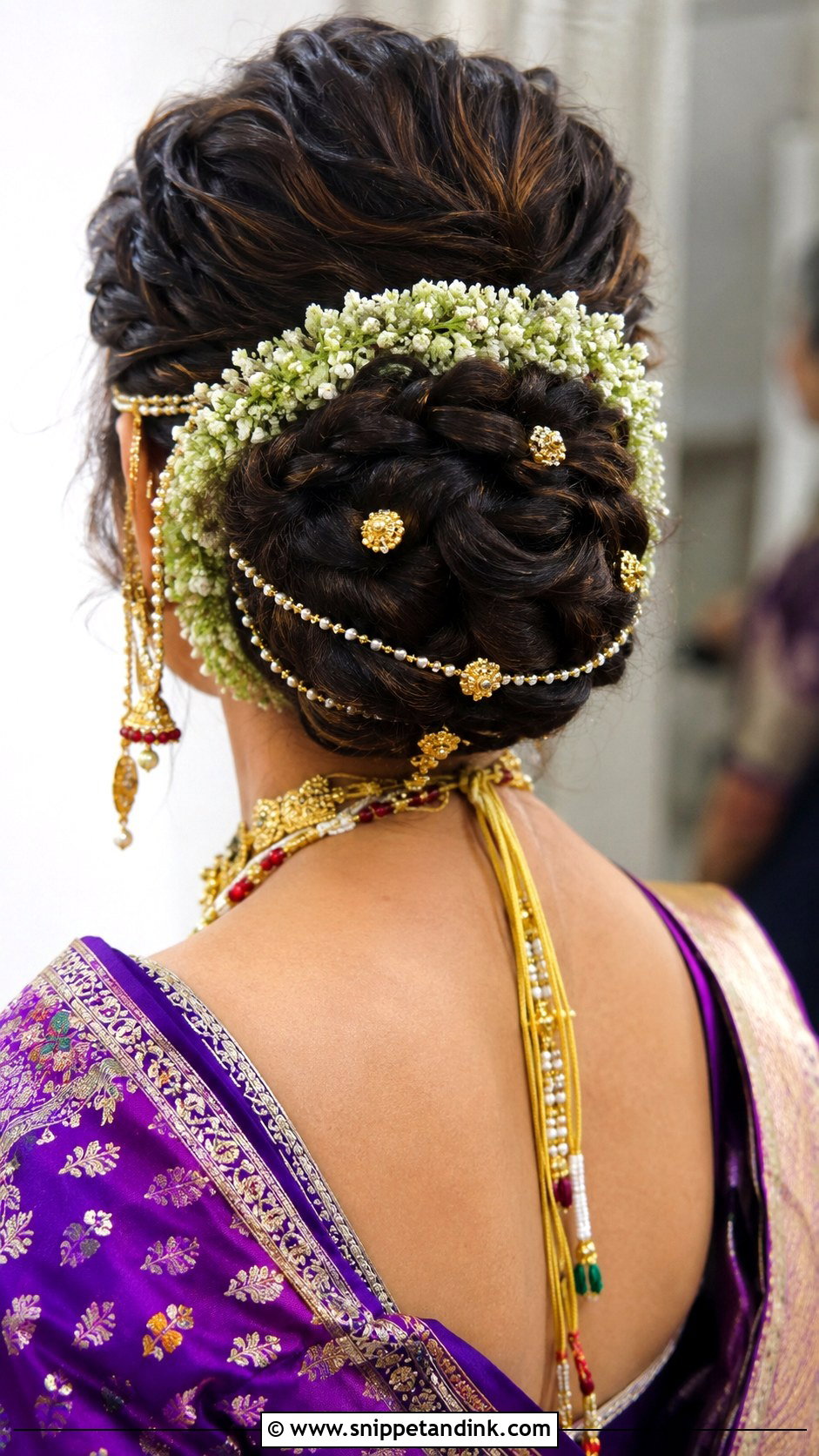
Braiding the hair before coiling it into a low bun gives the ambada a fuller shape and more grip. The ridges of the braid hold pins far better than smooth twisted hair, which is why I like it for anyone worried about the bun drooping by the afternoon. Gold pins, pearl strings, a veni phool or a small floral ring all sit neatly in the braid’s gaps. Thick hair does it naturally. Fine or short hair needs a clip-in extension, because a thin braid coils into a small, tight bun that looks lost behind heavy jewelry.
4. Marathi Bridal Khopa Hairstyle
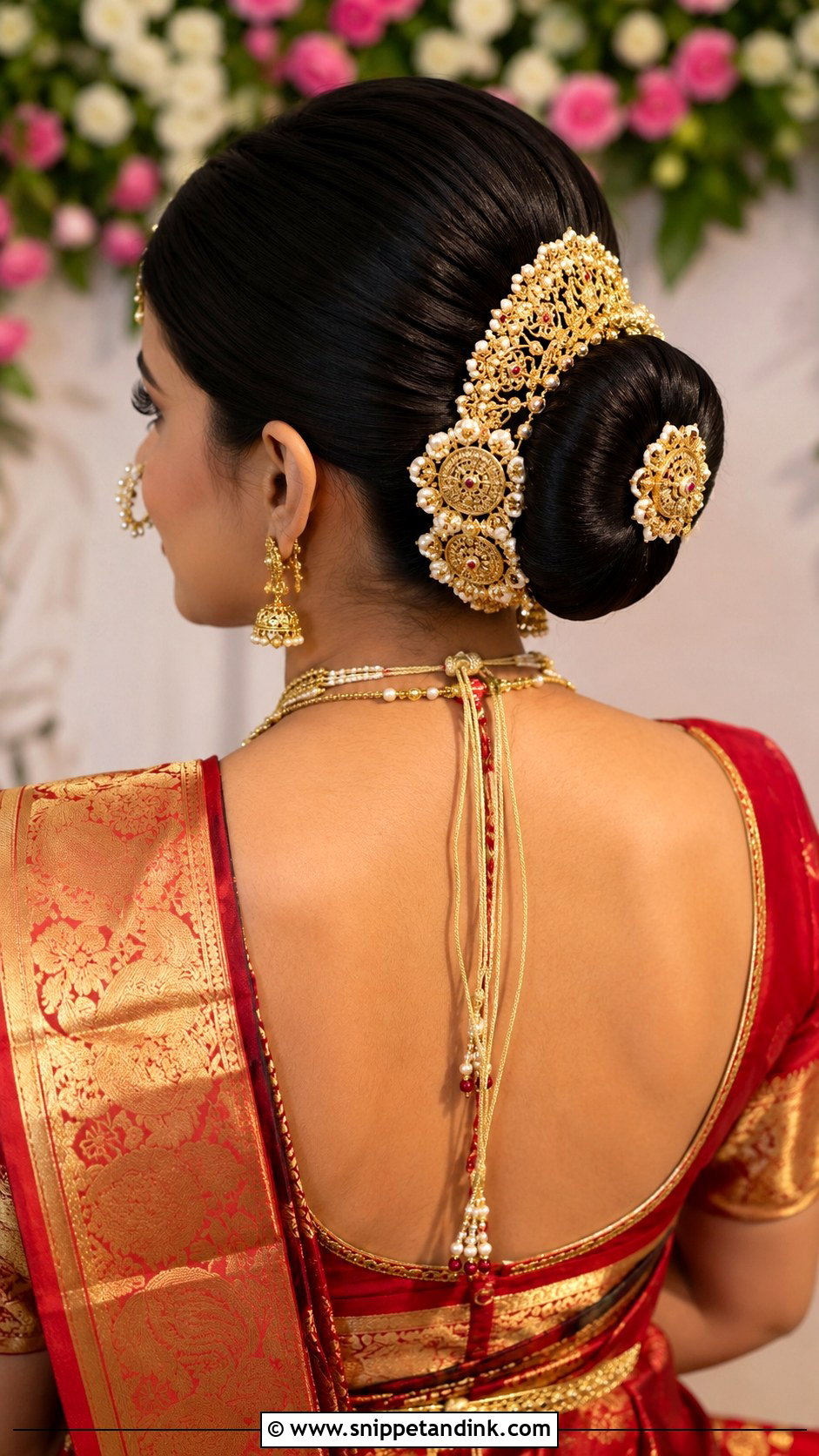
The Marathi bridal khopa hairstyle has an old-fashioned charm I love: a structured, rounded bun decorated with traditional ornaments. Gold khopa pins, pearl accents or a floral border all suit it. I keep the front clean with a center part so the mundavalya can sit level across the forehead without a bump under it. The khopa is heavier than it looks once all the ornaments go in, so the base needs to be anchored at two points, not one. With a Paithani saree and heavy jewelry, it completes the outfit in a way softer styles don’t.
5. Marathi Bridal Juda With Flowers
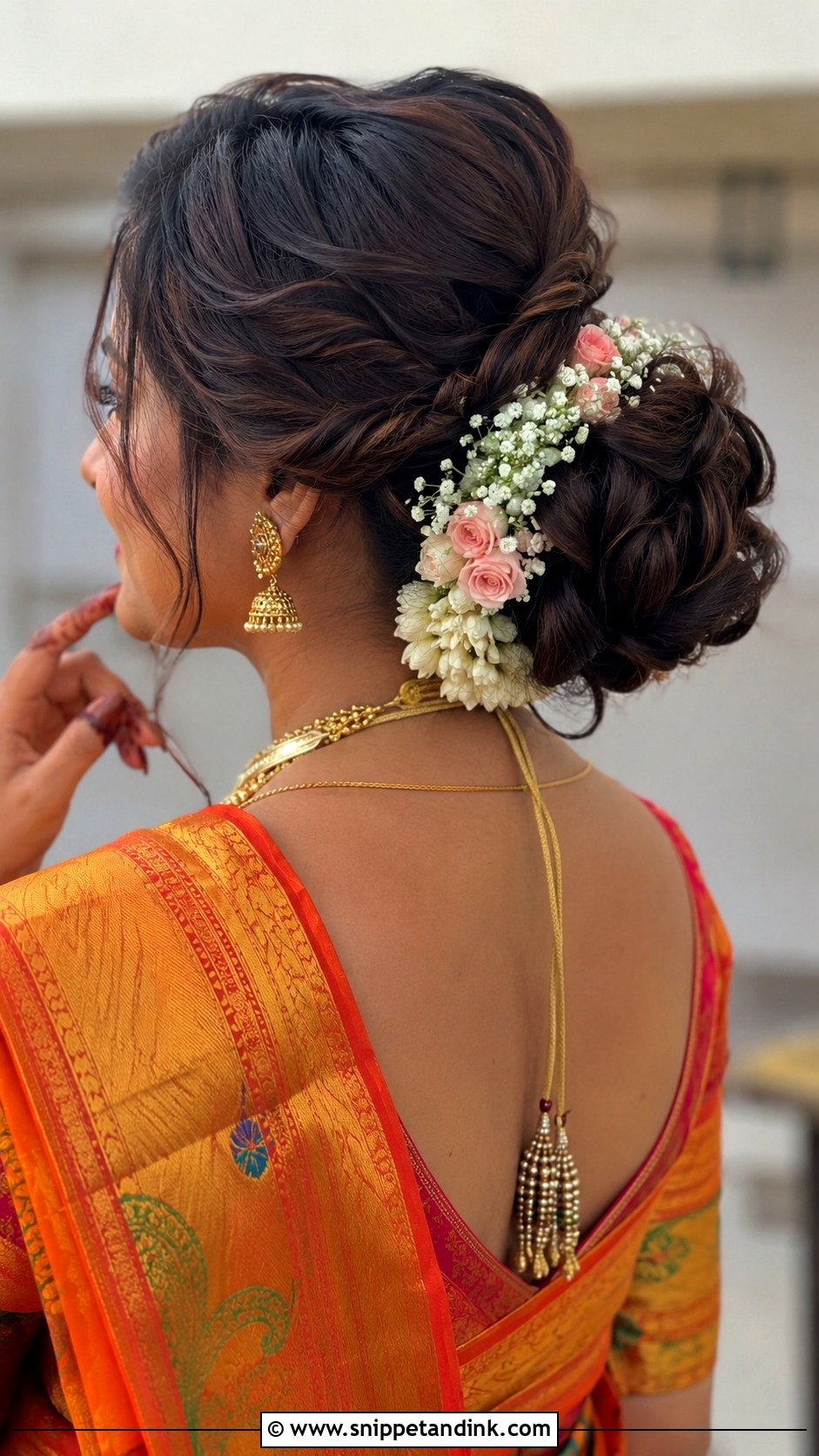
A Marathi bridal juda with flowers is softer and more festive than a khopa. The juda itself can be sleek or full, and I’d decide that by the saree: a stiff silk drape suits a sleeker juda, while a lighter fabric can take more volume. Jasmine, roses or baby’s breath can go around the bun or cluster to one side. Clustering flowers on one side is less traditional but photographs well from three-quarter angles. It moves easily from the main ceremony to a family reception.
6. Marathi Bridal Long Braid
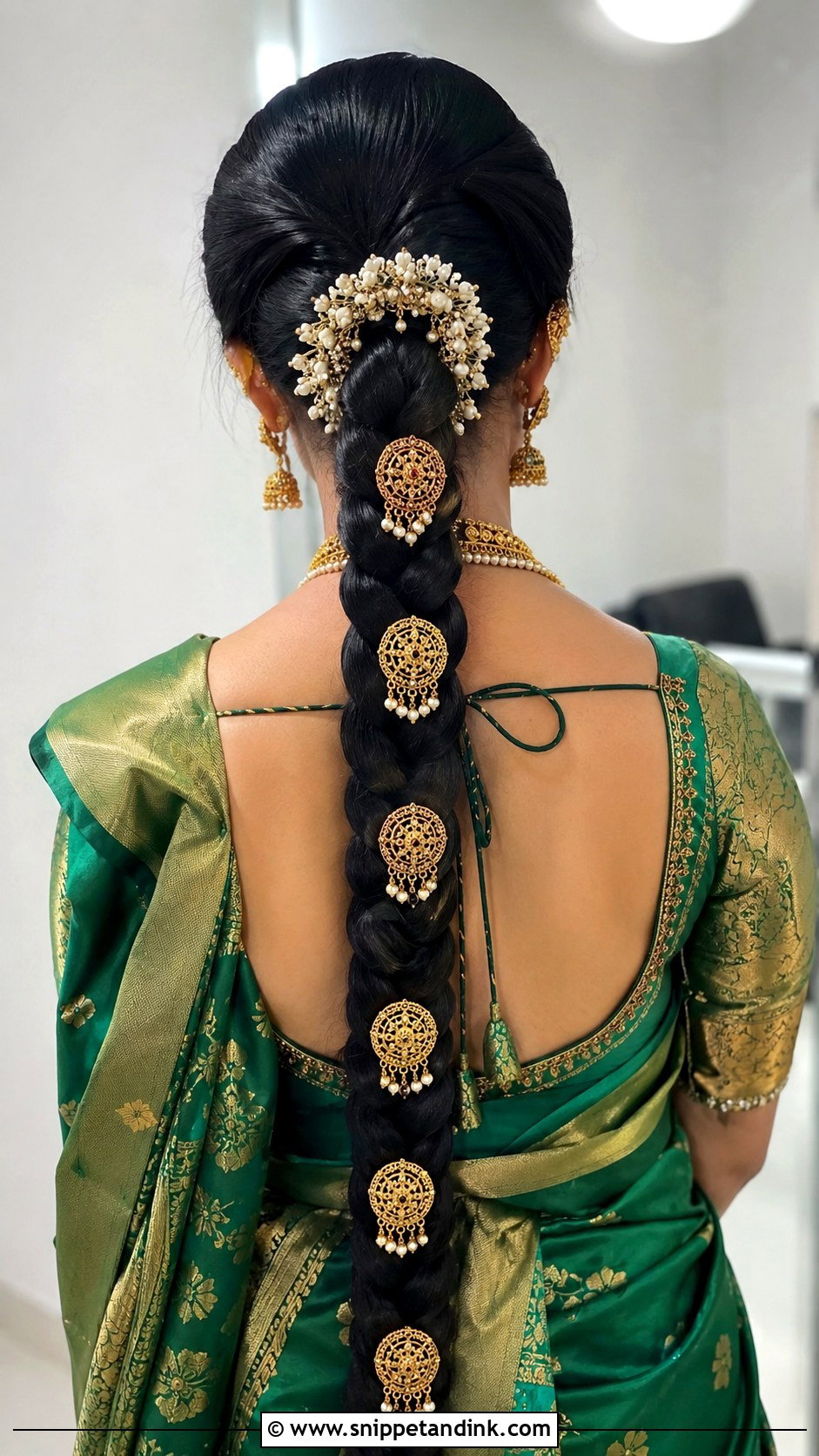
A long braid follows the vertical line of a Nauvari drape, which is why the two look so right together. It can be plain and neat, or fuller with the edges pulled out a little after it’s tied. Gold accessories, flowers, pearl strings or a braid ornament can go down its length. If your hair stops above the shoulder blades, extensions give the length, but I’d match them to your hair under daylight. The weight of ornaments drags a braid down over the day, so I anchor the top firmly at the crown before decorating it.
7. Marathi Bridal Braid With Gajra
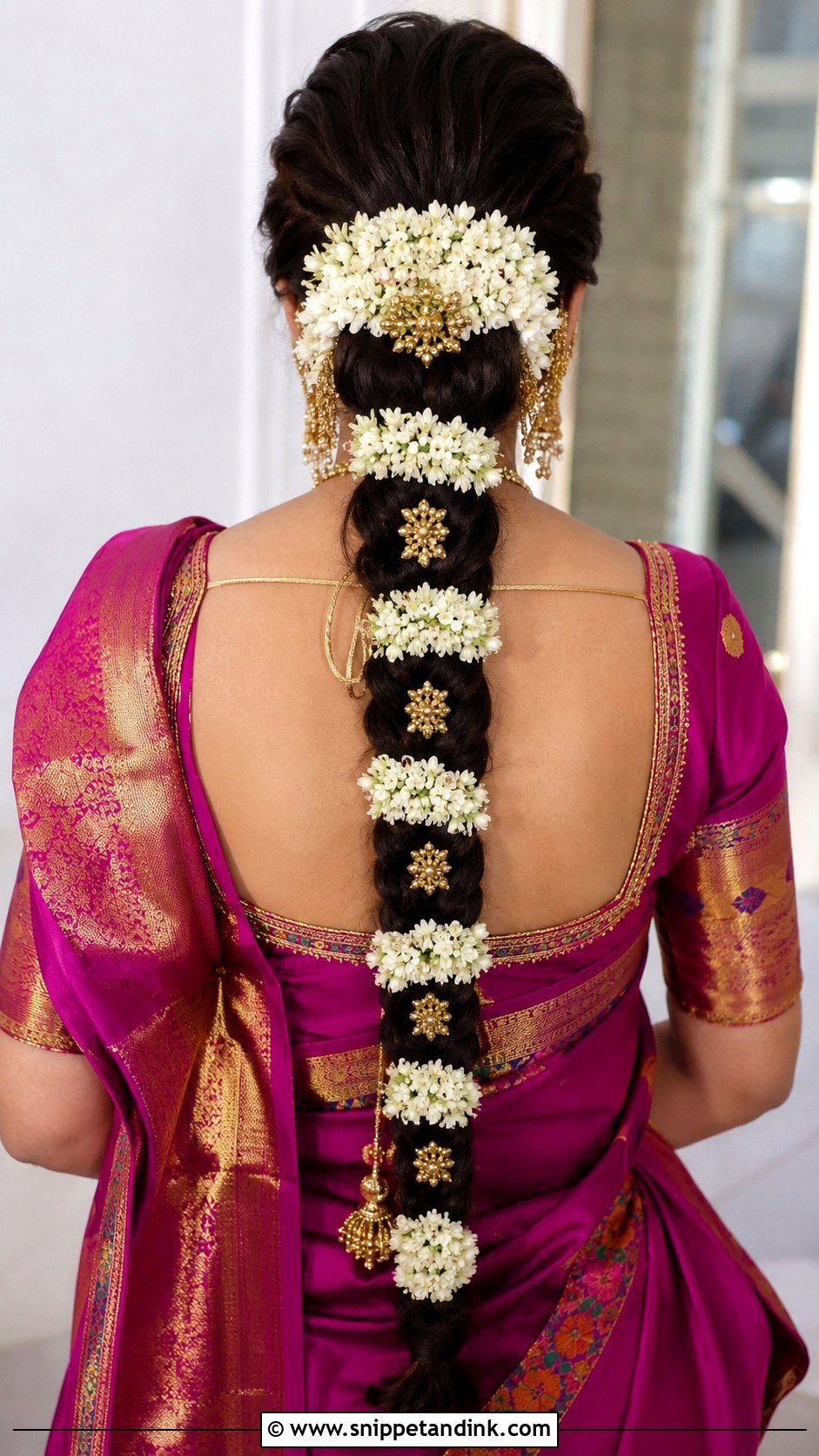
Instead of flowers only at the bun, here the jasmine runs along the braid, either wrapped around it or placed in sections from top to bottom. It gives the back view a lot of movement in photographs and suits daytime and outdoor weddings, where white flowers look bright in natural light. Gold braid pins or pearls can add richness. It’s helpful with long, thick hair because it controls the length while still showing it off. In real heat, jasmine browns within a few hours, so keep a spare string in a damp cloth for later photos.
8. Marathi Bridal Bun With Veni Phool
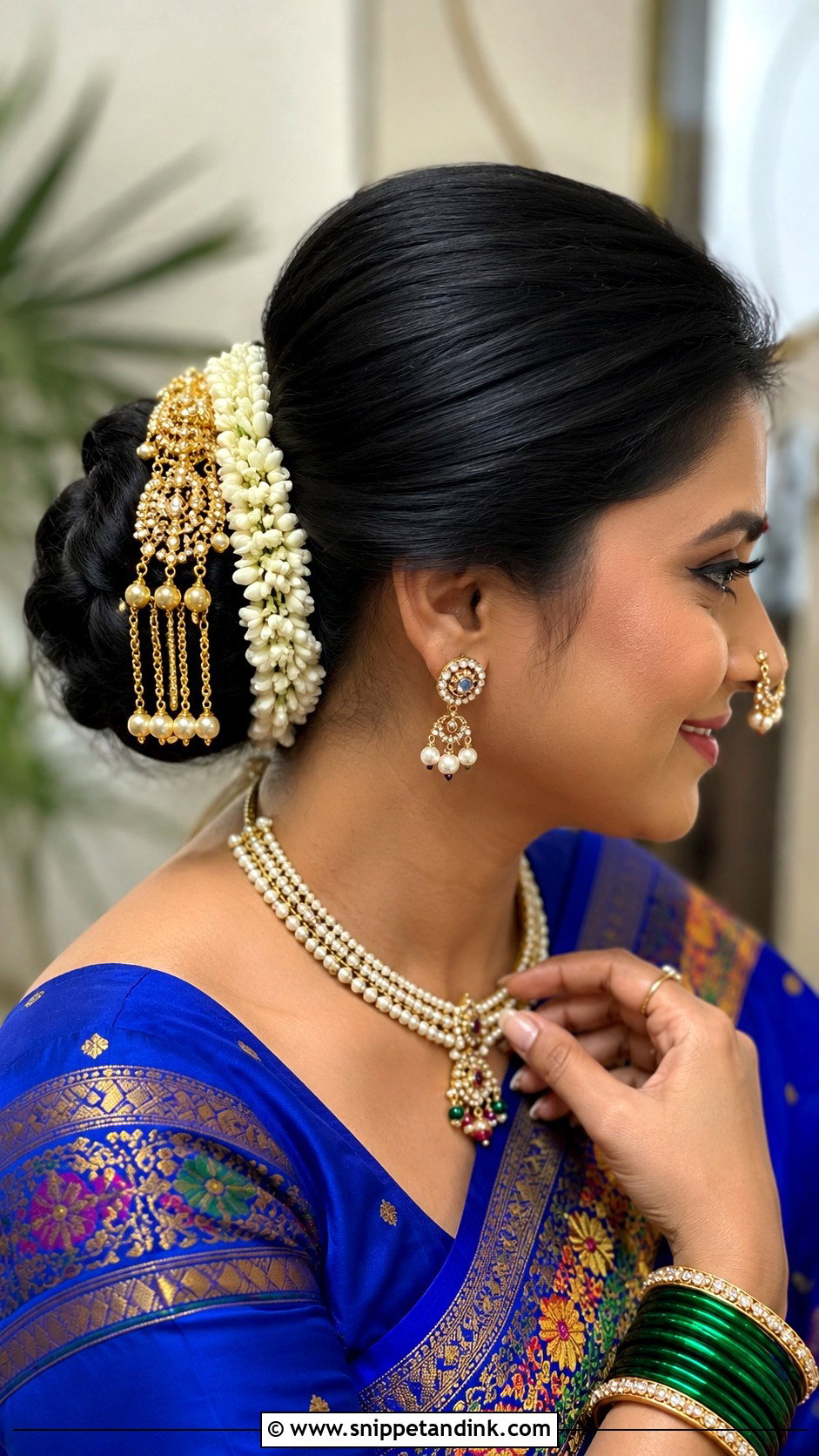
A Marathi bridal bun with veni phool gets its character from the ornament. The veni phool, a gold or floral piece set around or near the bun, makes even a plain bun look ceremonial. The bun underneath can be sleek, braided or full, depending on how much detail the rest of the outfit already has. It pairs naturally with pearl jewelry, a Maharashtrian nath and a rich Paithani. Gold ornaments have weight, so I pin the veni phool into the base of the bun rather than its surface; pinned only to the top layer, it tilts by the end of the rituals.
9. Marathi Bridal Low Bun
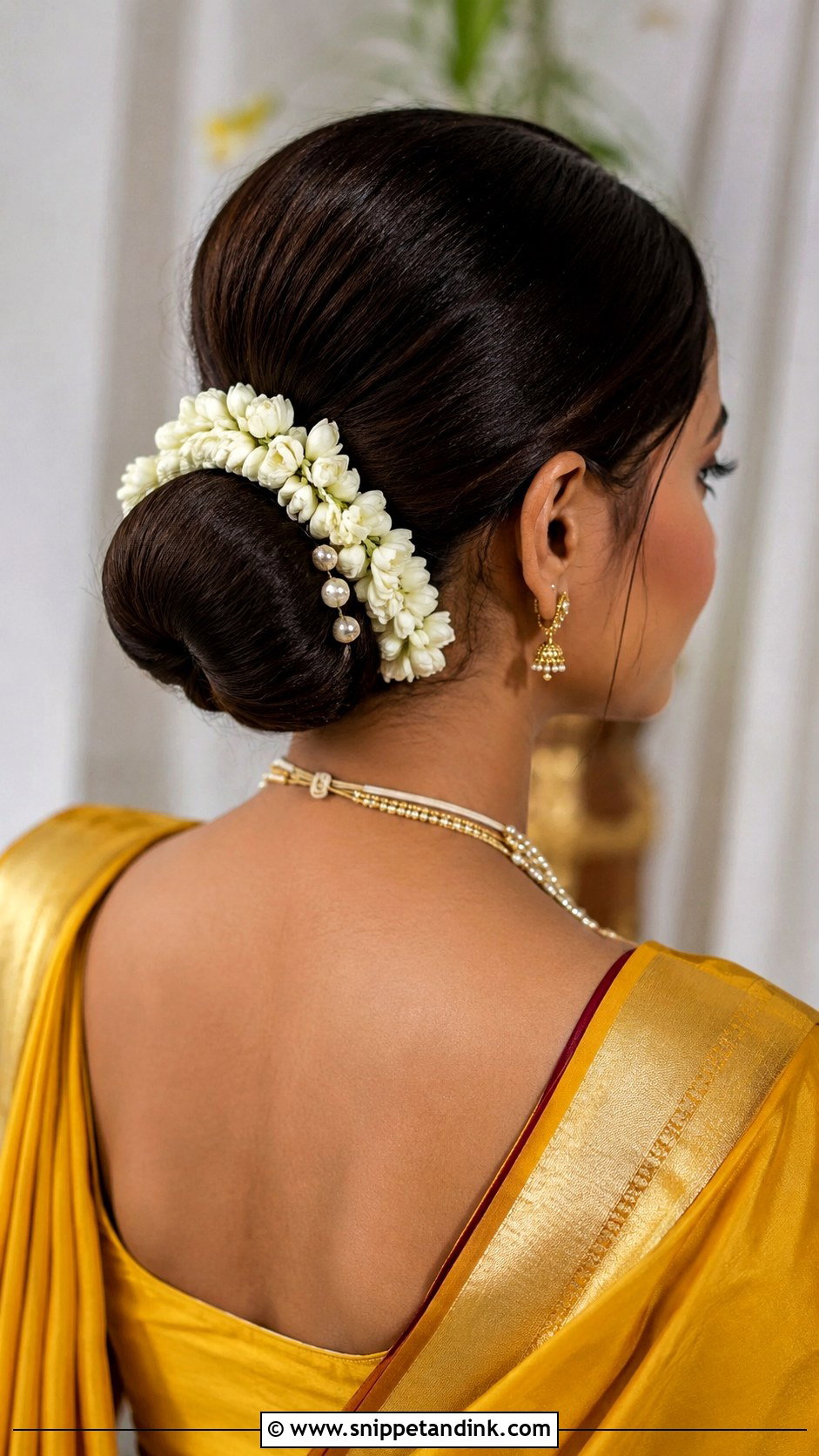
Keeping the bun close to the nape leaves the crown smooth, and that’s what lets the mundavalya frame the face clearly. I recommend this one to brides who don’t want height or volume. Jasmine, pearl pins, gold accessories or small roses all dress it up. A low bun is also the most comfortable under a pallu draped over the head, because there’s nothing at the crown for the fabric to tent over. It suits the ceremony and the family portraits alike.
10. Marathi Bridal Messy Bun
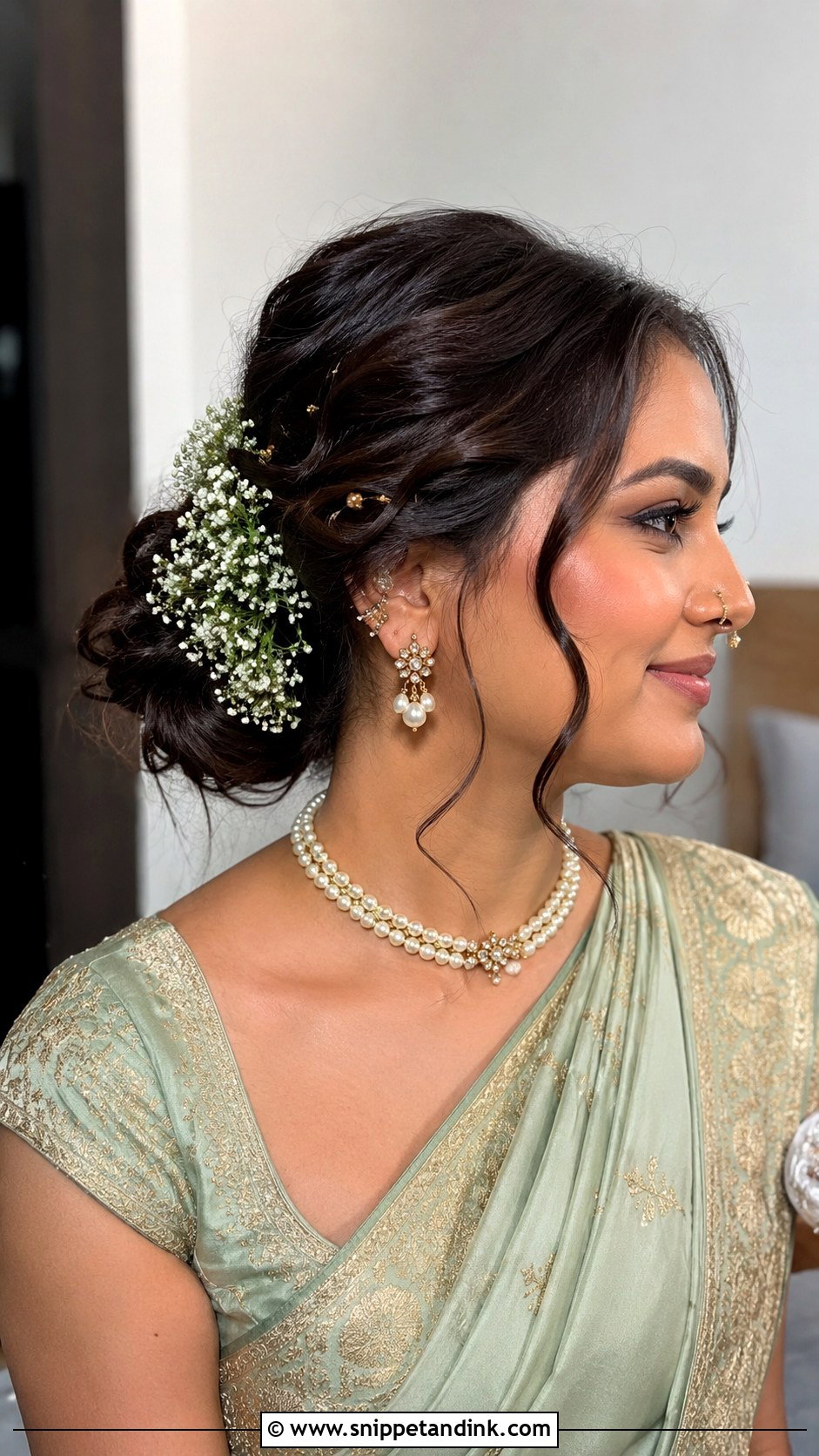
A softer, textured bun keeps the hair up and secure but leaves loose pieces and natural volume. It looks romantic and modern, and a small gajra, gold pins or baby’s breath keep it bridal. The word messy is misleading, though. A good textured bun has more pins than a sleek one, because every loose-looking section has been placed on purpose. Soft front pieces flatter oval, round and heart-shaped faces. I’d use it for the engagement, haldi or reception; for the main ceremony, the loose pieces tend to tangle with the mundavalya strands.
11. Marathi Bridal Bun With Roses
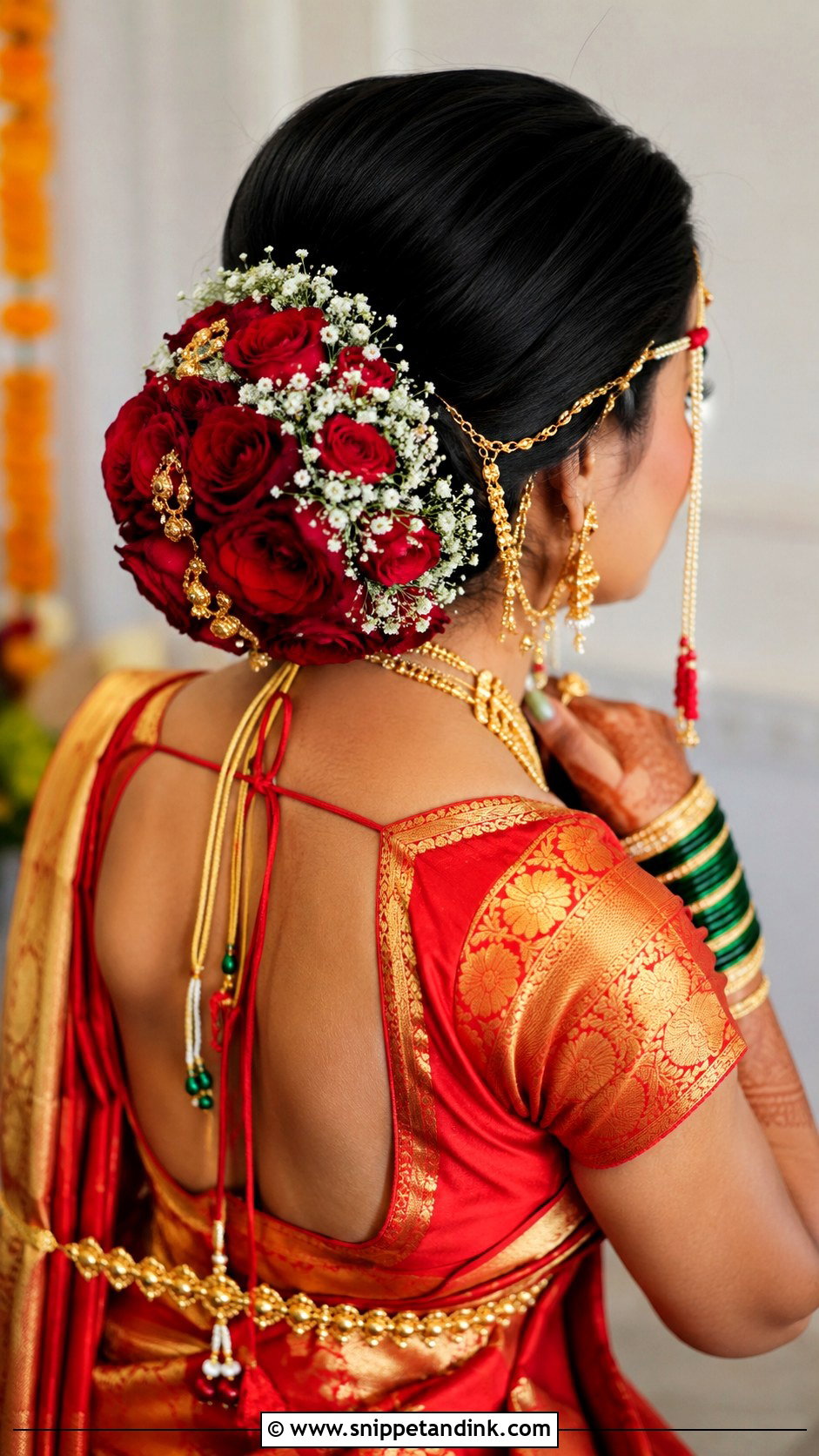
Roses bring colour, and red, pink or orange ones pick up the borders of a Paithani beautifully. They can circle the bun, tuck to one side, or mix with jasmine for contrast. Roses also add bulk, so the bun looks fuller from every angle. Sleek underneath reads royal; slightly textured reads softer. Ask for roses that are just opening rather than fully open, because fully open blooms drop petals by the reception. And place them so they don’t crush against the pallu when it’s draped over your shoulder.
12. Marathi Bridal Open Curls
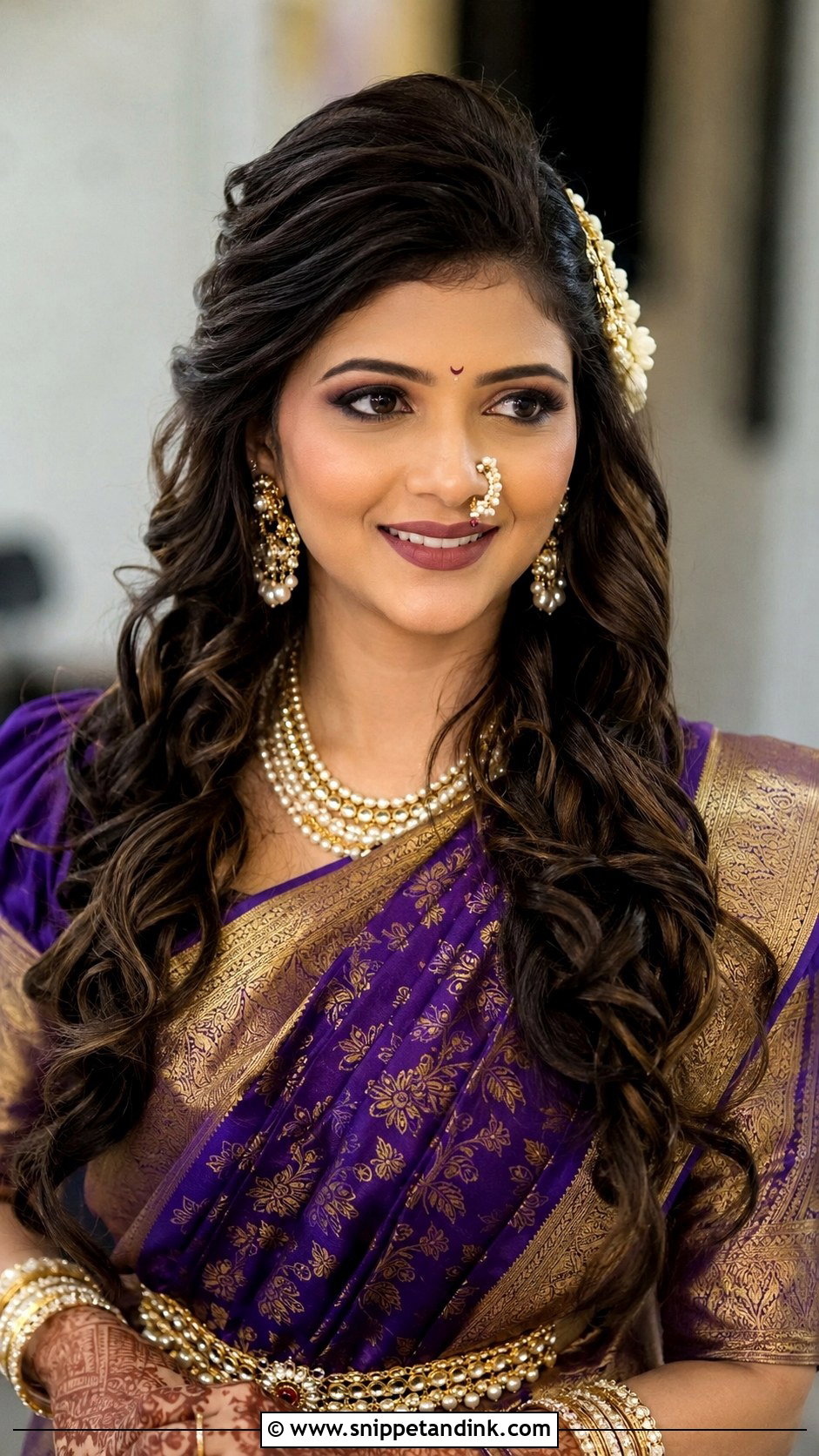
Not every Marathi bride wants a full bun, and open curls make a lovely choice for pre-wedding events and receptions. The hair is styled in soft curls or waves, with one side pinned back by gold accessories, pearls or fresh flowers. I keep a little volume at the crown and the curls polished rather than loose. You can wear a mundavalya with this for a fusion ceremony look, but be warned: the pearl strands catch in loose curls constantly. For the main ritual, I’d save open curls for the evening.
13. Marathi Bridal Half Up Hairstyle
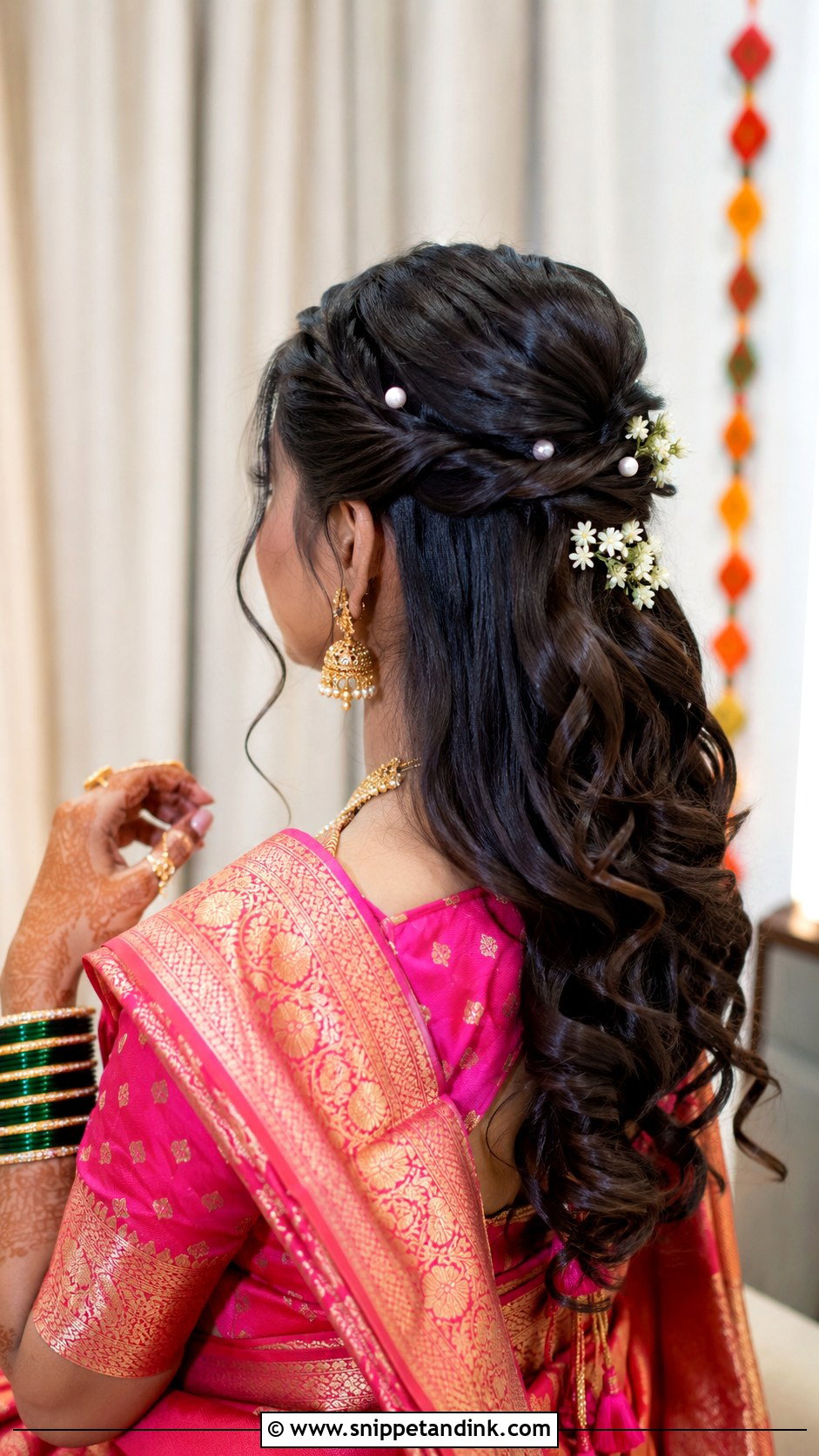
Pinning or twisting the top section back gives you the softness of open hair with a secure crown. The rest falls in waves or curls. Small jasmine flowers, pearl pins or a gold clip at the join tie it to traditional Maharashtrian styling. It suits the engagement, sangeet or reception. On medium-length hair it adds fullness without the weight of a bun, especially if the lower curls are set with a larger barrel so they don’t shrink up too short.
14. Marathi Bridal Side Braid
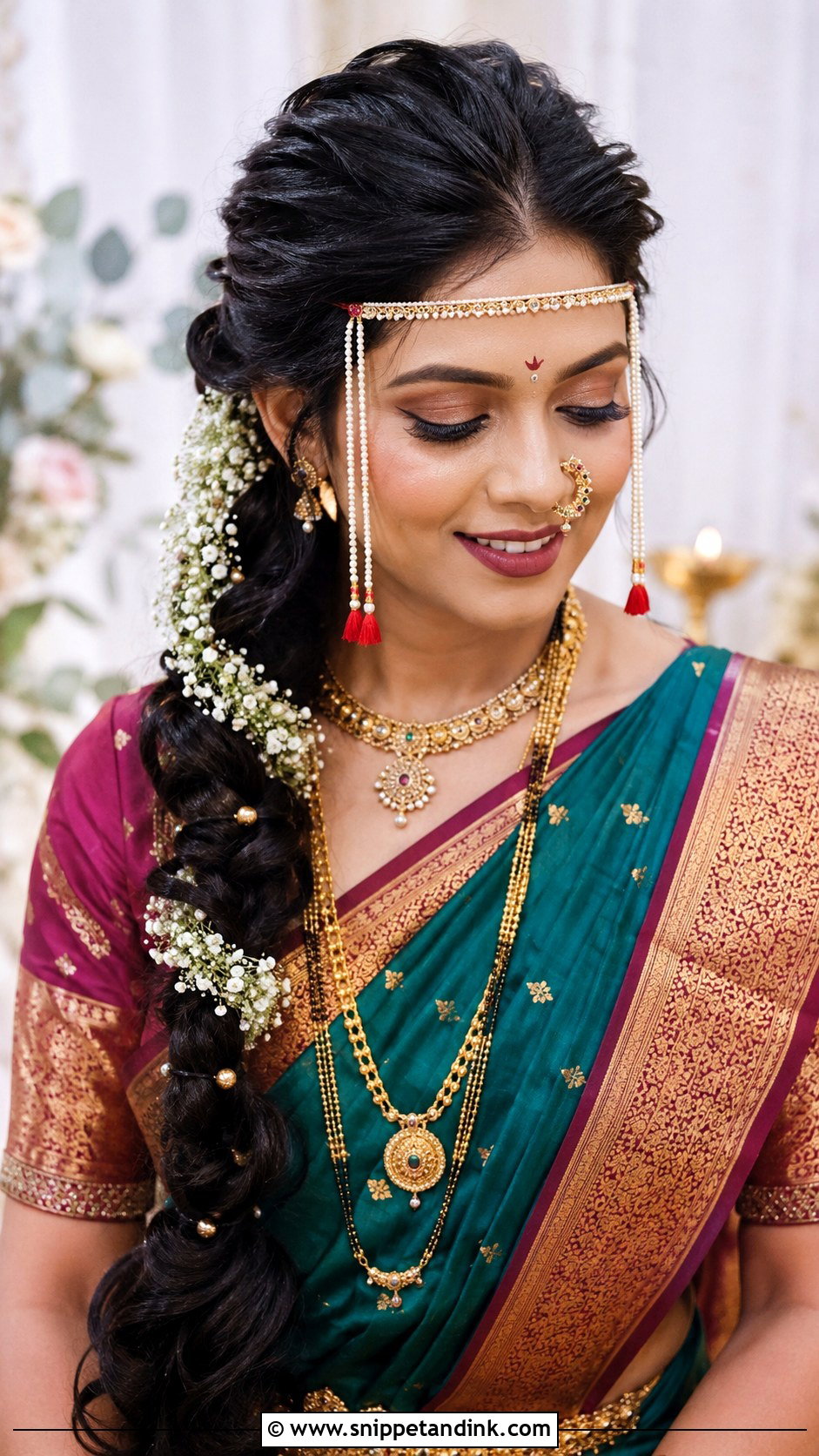
Bringing the braid over one shoulder puts it in every front-facing photo, which a back braid can’t do. It can be sleek and neat, or fuller with pulled-out sections. Jasmine, pearls, gold clips or small roses can match it to the saree. It keeps the back of the neck cooler, which is worth thinking about at a warm afternoon ceremony. The one catch with a Nauvari: the pallu crosses the same shoulder on many drapes, so decide with your saree draper which side the braid should go before your hair is done.
15. Marathi Bridal Reception Bun
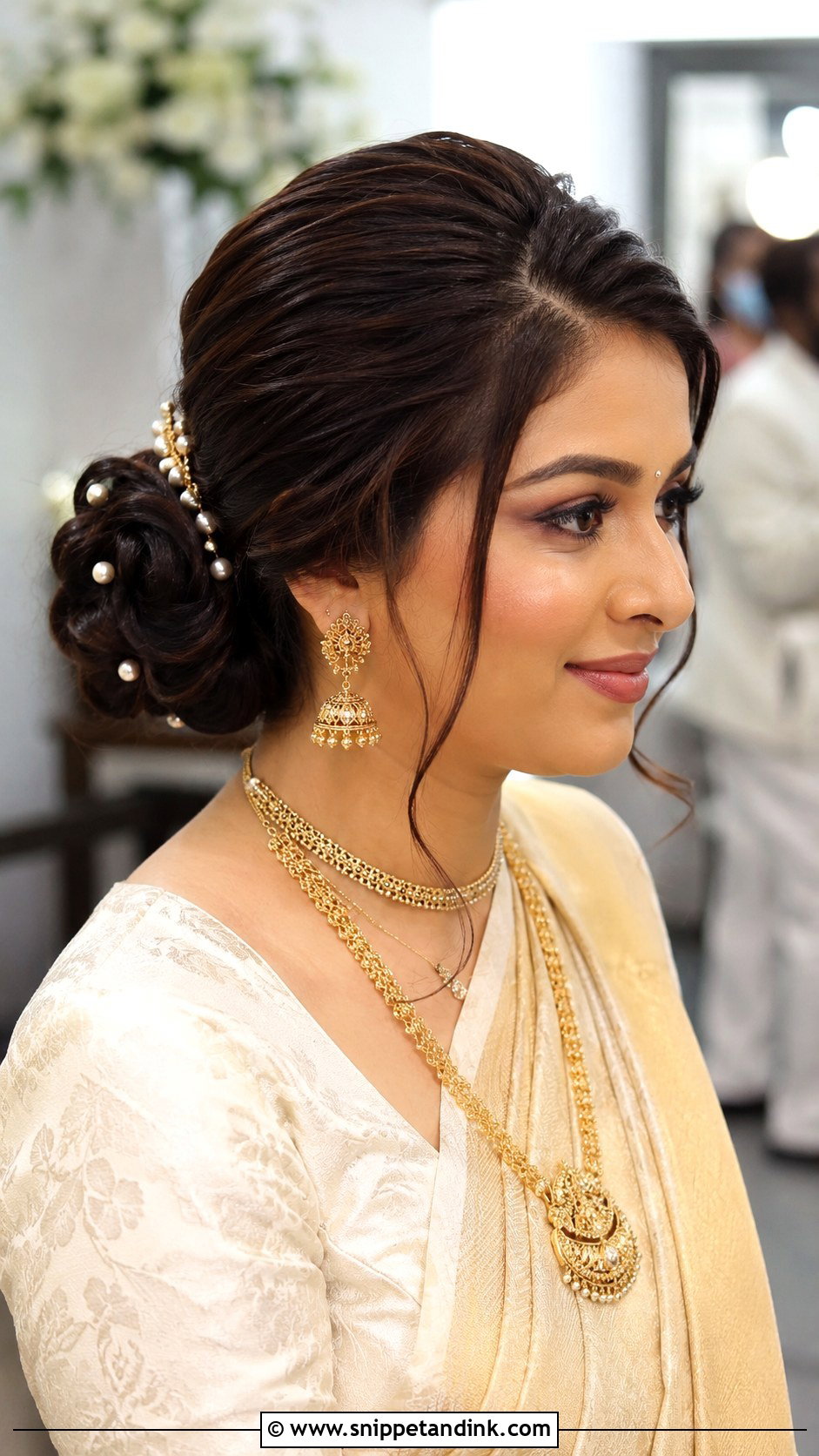
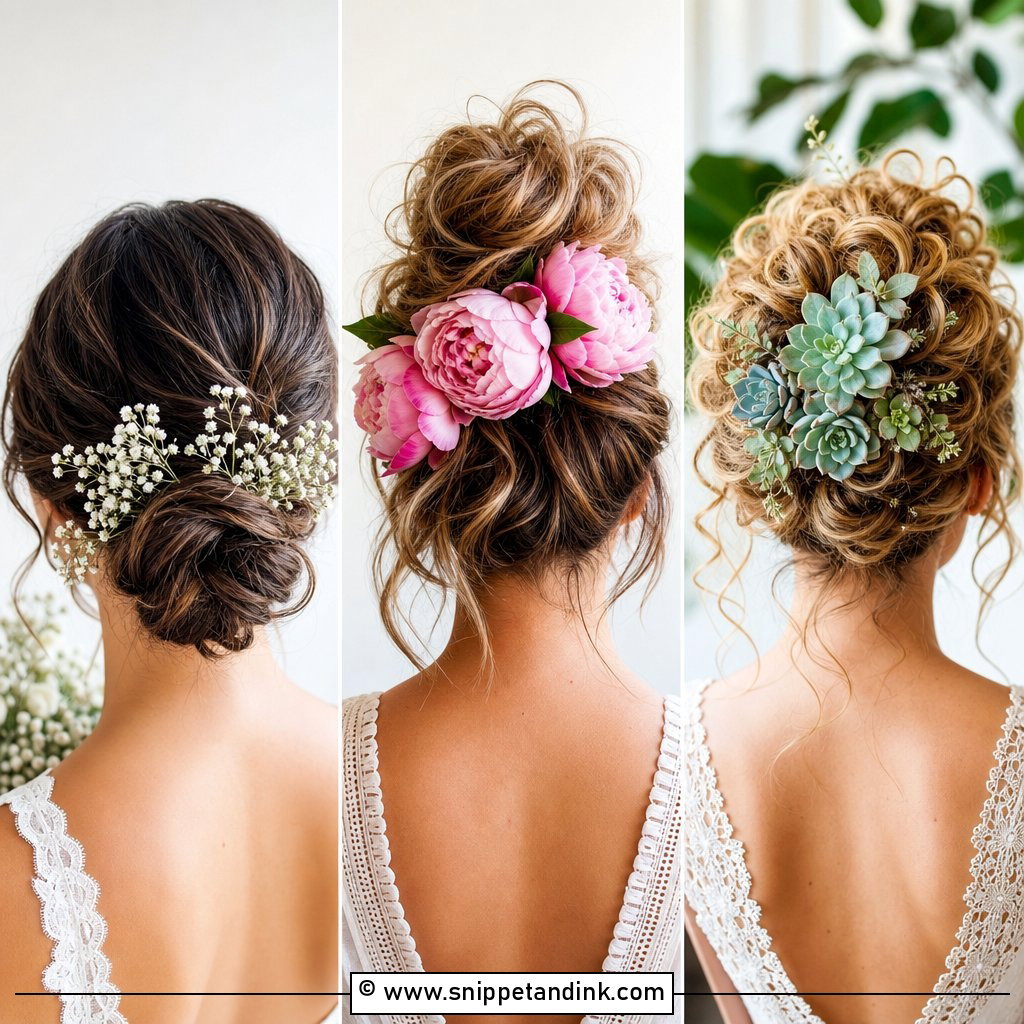
The reception is where I’d change the mood. A smooth low bun, a soft side part, a lifted crown or a textured bun with lighter accessories all work here. Many brides swap heavy flowers for pearl pins, crystal accents or a single gold hairpiece. It pairs well with a silk or designer saree or a reception lehenga, and it keeps the face open for earrings and portraits. If the ceremony look was very traditional, a reception bun gives you a second look in the same day without starting from scratch.
Rice Grains, Mangalashtak and the Reception Change
During the mangalashtak, guests throw akshata over the couple again and again. It’s a joyful moment and a real nuisance for hair. Rice grains lodge in gajra, slip between braid sections and settle into textured buns, where they stay until someone picks them out. Sleek buns shed most of it. Heavily textured styles hold on to almost every grain.
Ask a bridesmaid or cousin to check the back of your head once the ceremony ends, before the family photos. Gentle fingers work better than a comb, which drags through the gajra. A small hand mirror helps you check the parting and front yourself.
Moving from ceremony hair to reception hair
If you want a different look for the evening, plan for it in the morning. I use less spray on the ceremony bun when I know it’s coming down later, because heavily lacquered hair is stiff and full of pin dents once released. Allow a decent stretch of time for the change, longer if the ceremony style involved a lot of ornaments. Keeping the same parting for both looks saves time; switching from a center part to a side part on hair that has been set for hours rarely sits flat.
Your Saree Drape Sets the Hairstyle
Marathi bridal hair carries both culture and your own taste. The ambada, khopa, juda and gajra bun look deeply traditional, while curls, half-up hair and reception buns bring something more modern. What decides between them is practical: your saree drape, how heavy the jewelry is, your hair length, and which event it’s for. Try it with the mundavalya, nath, earrings and pallu all on at the trial, since a style that looks right bare can feel crowded once everything is in place. A firm base and fresh flowers do the rest, and your hair will hold up as well as the rest of your Marathi bridal look.
You'll Like These Ideas:



Leave a Reply