
A French manicure is still the set I paint most for brides, and the reason is practical: it reads as clean in a ring close-up and never fights the dress. What changes from bride to bride is the detail. The width of the white, how deep the smile line curves, the shade of the base and whether anything sits on top all decide whether it looks crisp or dated. Current bridal nail trends keep the classic tip but play with it through micro lines, pearl chrome, soft ombré, lace art and small 3D accents. Below are 25 versions I’d actually paint, from plain to detailed, with notes on which hands and which weddings each one suits.
Where Your Smile Line Should Sit (and Why It Changes the Whole Set)
The smile line is the curve where the white meets the base. Most bad French manicures fail here, not in the colour. Before I paint anything, I look at where your natural free edge starts and how deep your nail bed is, because the line has to follow your nail rather than a template.
- Short nail beds: keep the white thin and the curve shallow. A deep curve on a short bed makes the pink part look tiny.
- Long nail beds: you can take a deeper curve, which looks graceful on almond and oval.
- Wide nails: bring the line in slightly at the sides so the white doesn’t run wall to wall and flatten the nail.
- Extensions: ask for the line to sit where your natural edge would be, not right at the end of the tip, or the nail looks fake in close-ups.
Bring your ring to the trial. A white tip next to a yellow gold band reads differently than next to platinum, and an ivory or pure white tip can make the metal look warmer or cooler. I also photograph the set on your phone in daylight, because white gel can look perfect under salon lamps and slightly blue outdoors.
1. Classic White French Tip Wedding Nails
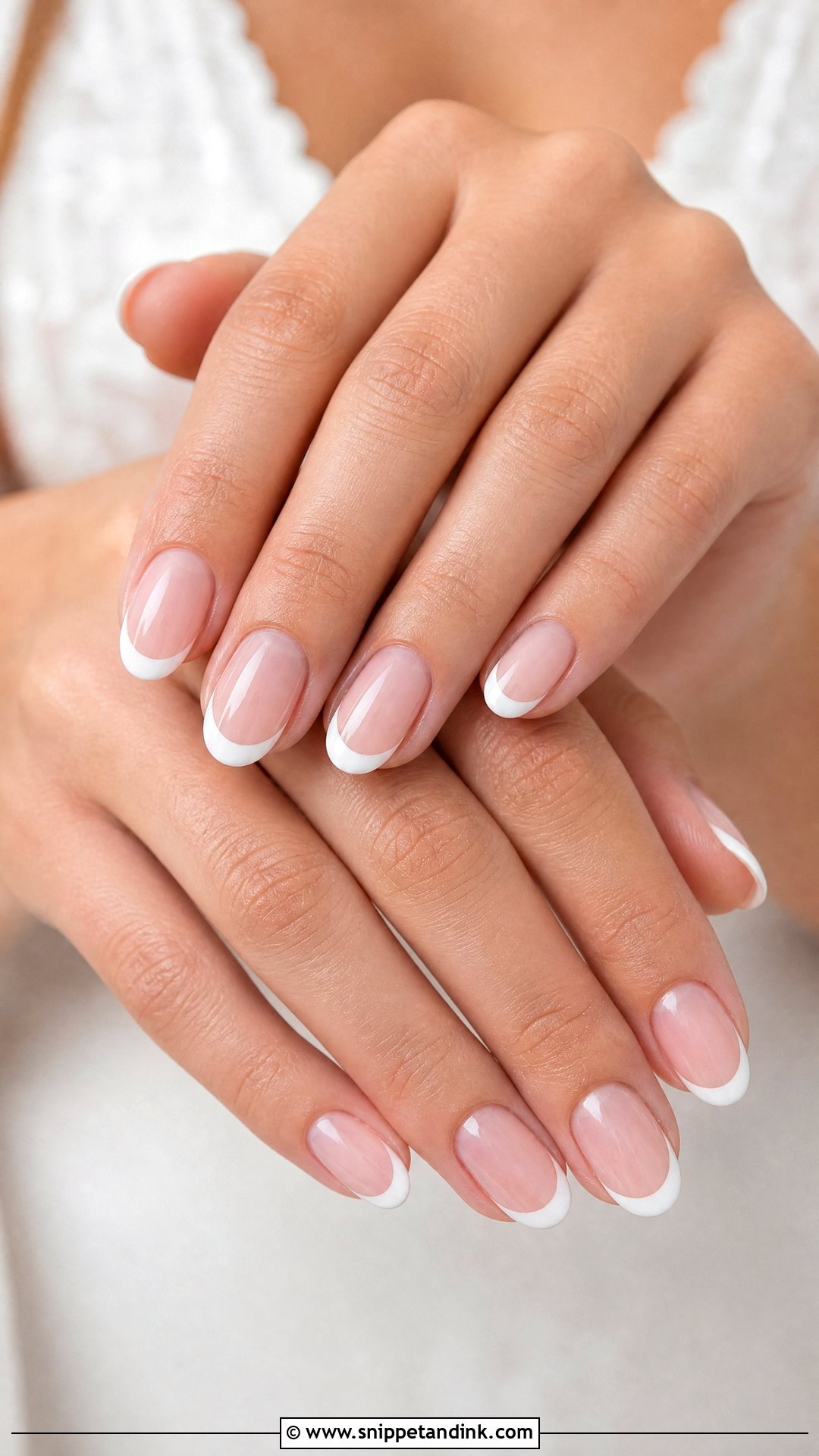
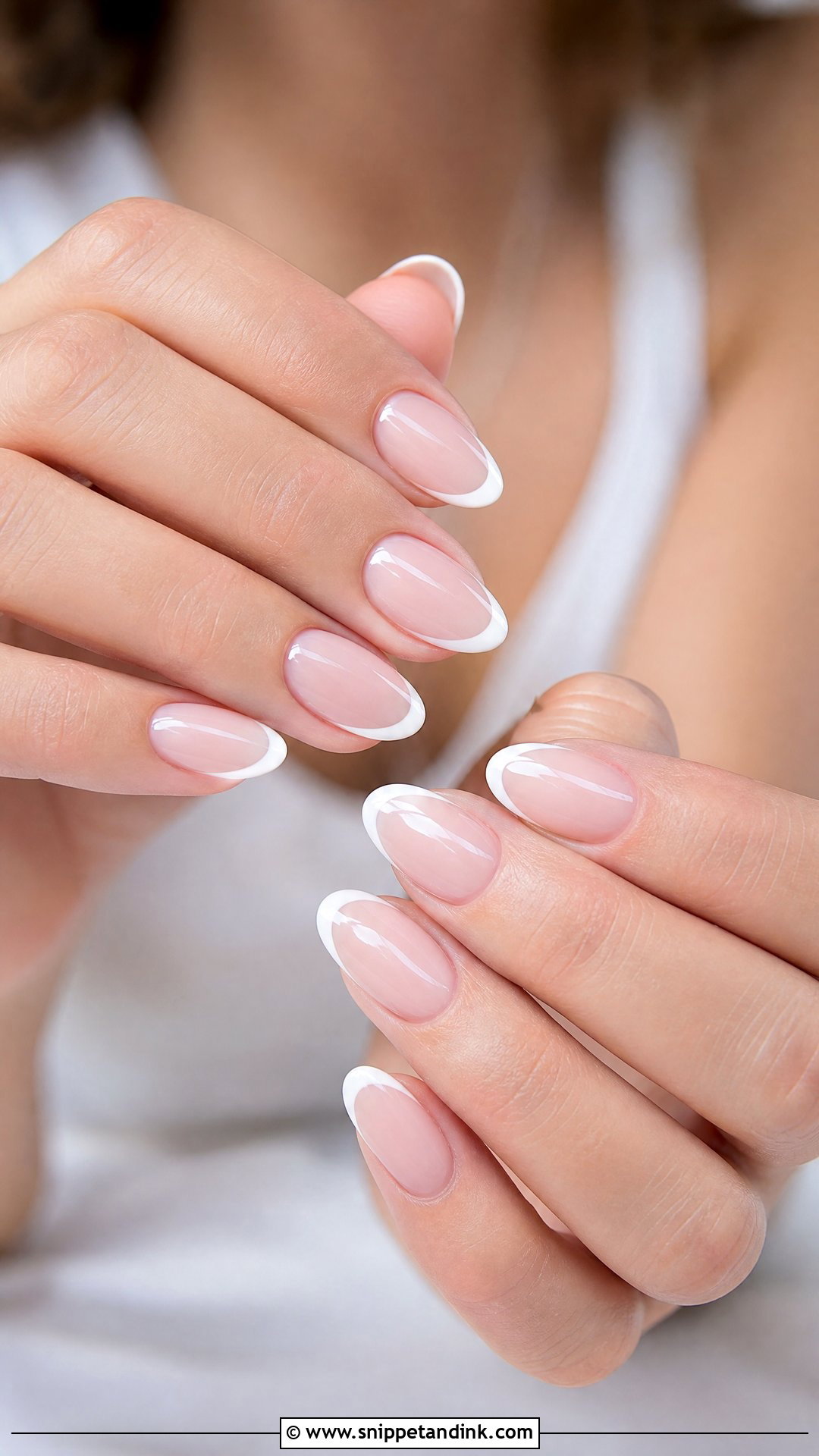
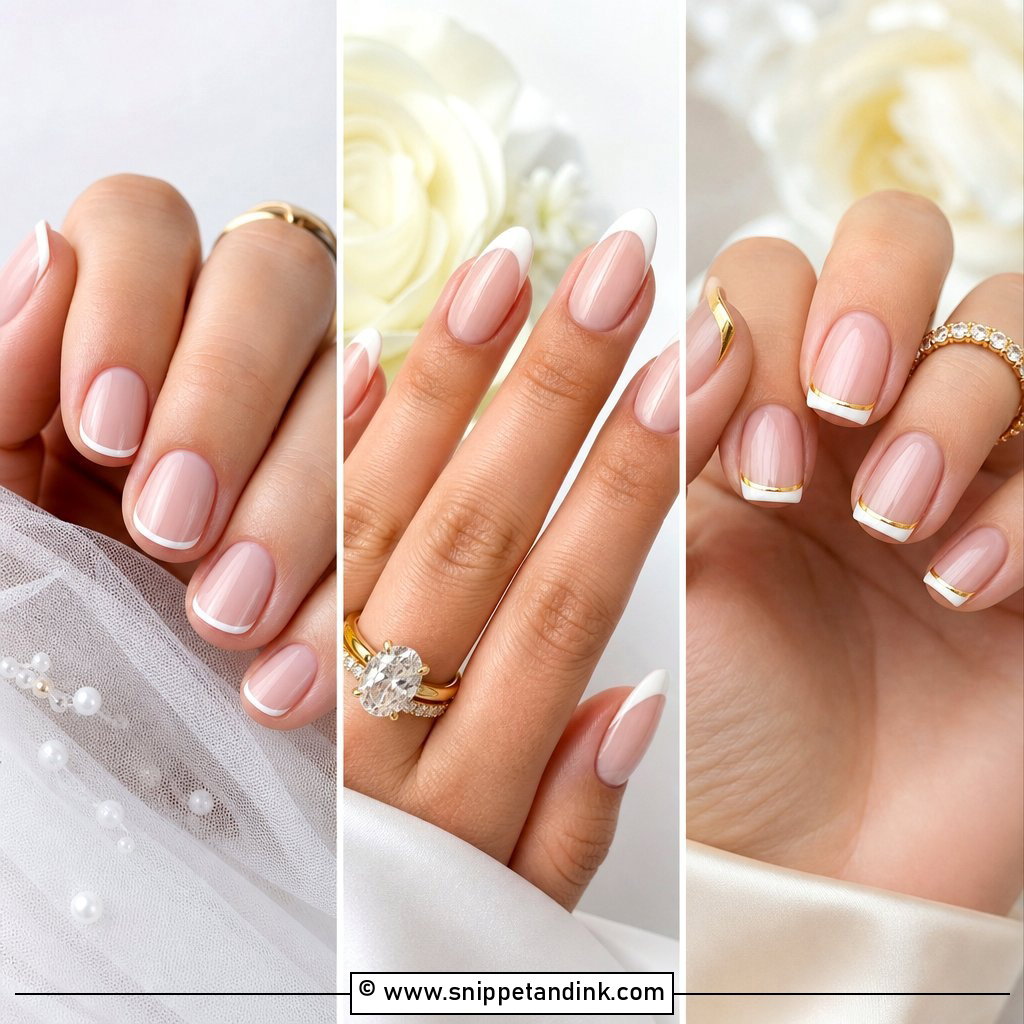
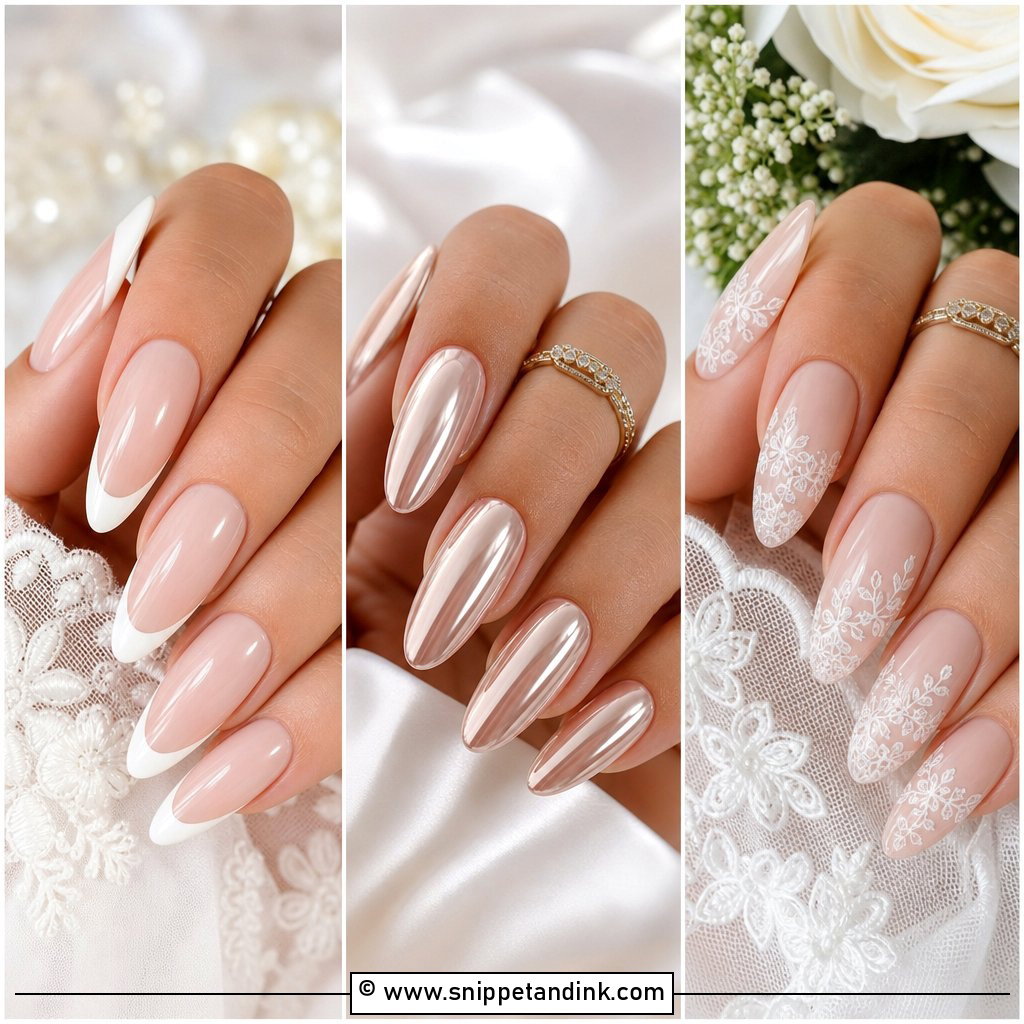
The classic white tip over a sheer pink base is the version I trust most for nervous brides, because nobody looks back at it in ten years and winces. The trick is the white itself. Pure white gel is heavily pigmented and goes streaky if it’s laid on thick, so I build it in two thin coats and clean the smile line with a brush before curing. Ask for a slightly softer curve than the thick, flat band from older manicures. Oval flatters most hands here, and a gloss top coat finishes it.
2. Micro French Tip Wedding Nails
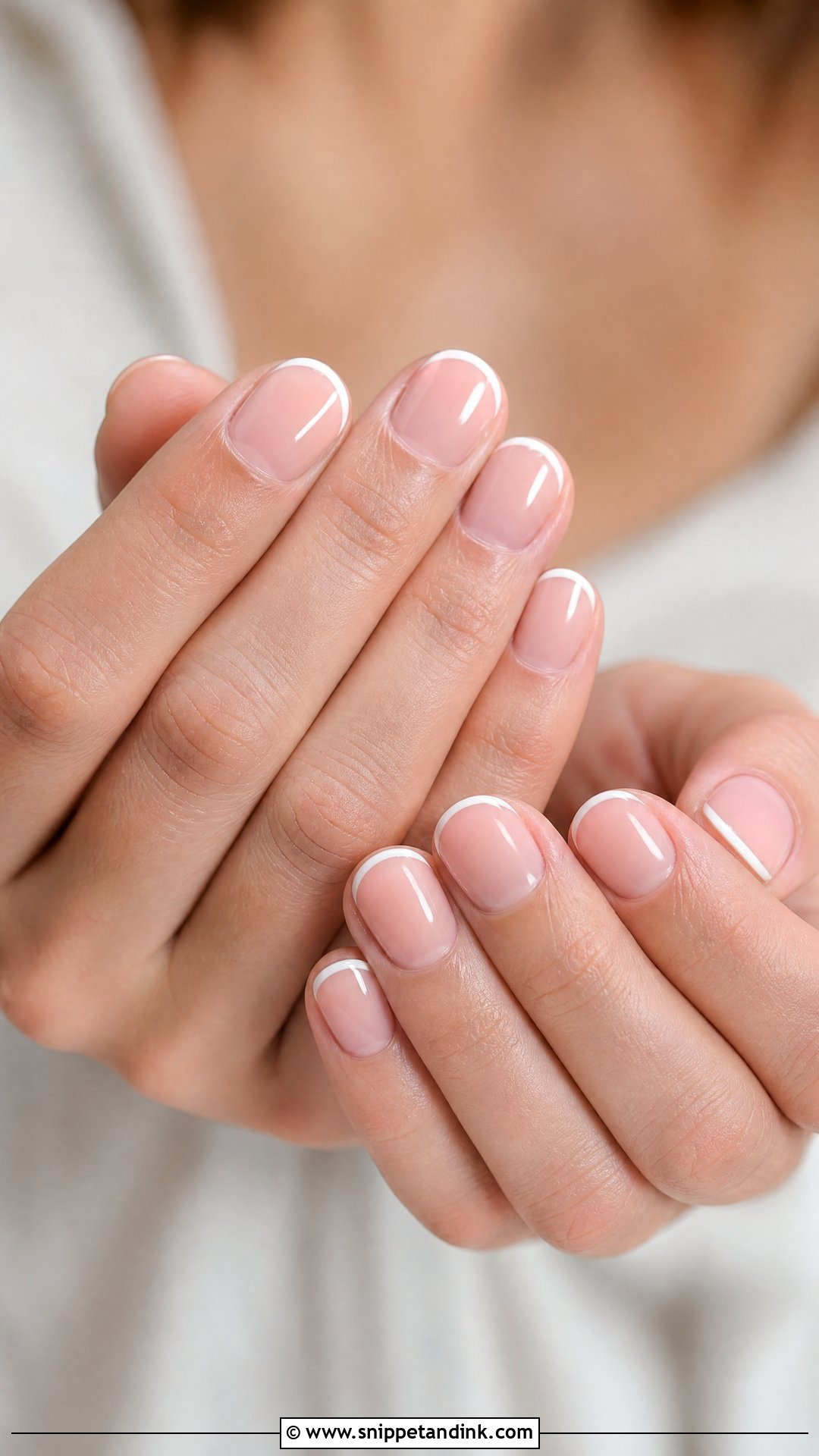
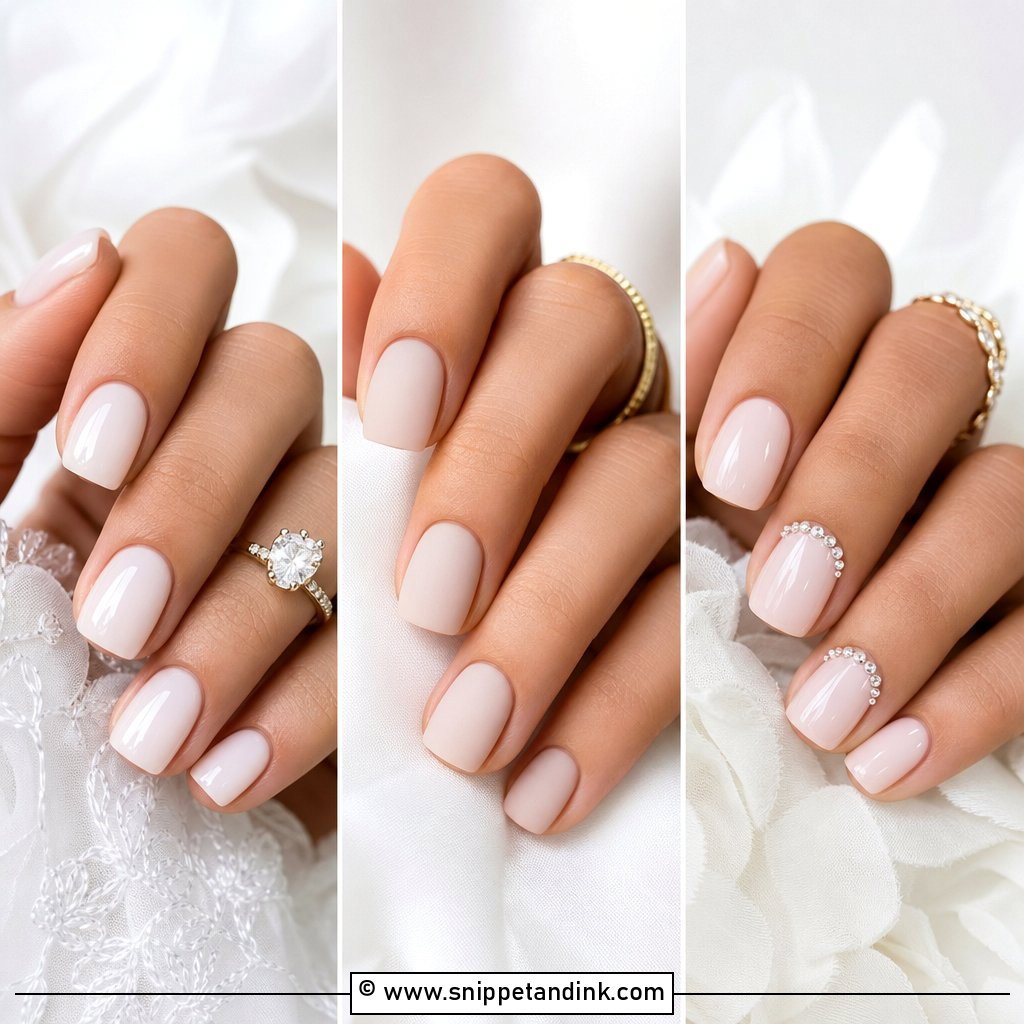
A micro tip is a hairline of white along the free edge, barely a millimetre deep. It makes natural nails look healthy rather than decorated, which is why I suggest it to brides who never wear polish and feel odd in anything bolder. It’s my default for short nails, since a thick tip on a short nail eats the whole free edge. The hard part is keeping the line even on all ten fingers. Bring your base shade to match your skin, sheer pink on cool tones and a soft beige on warm, and keep the finish high gloss.
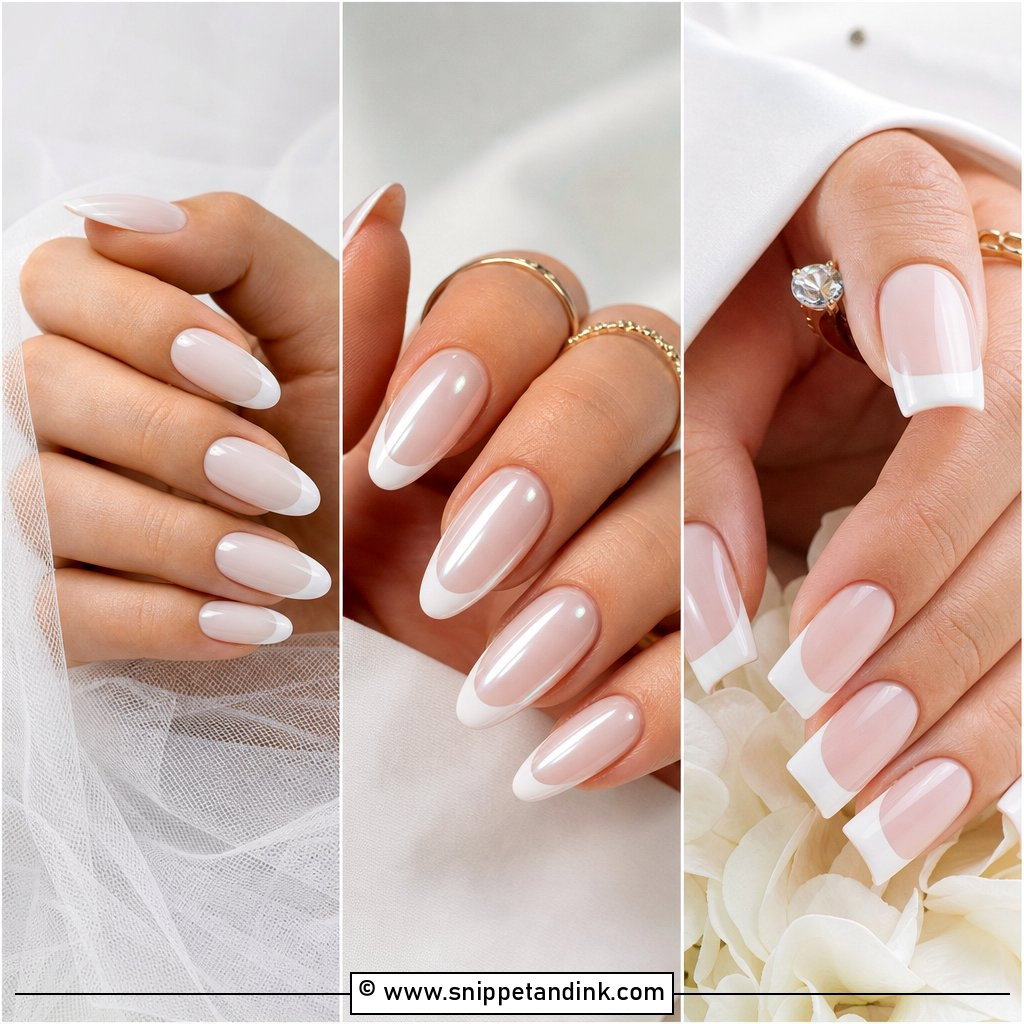
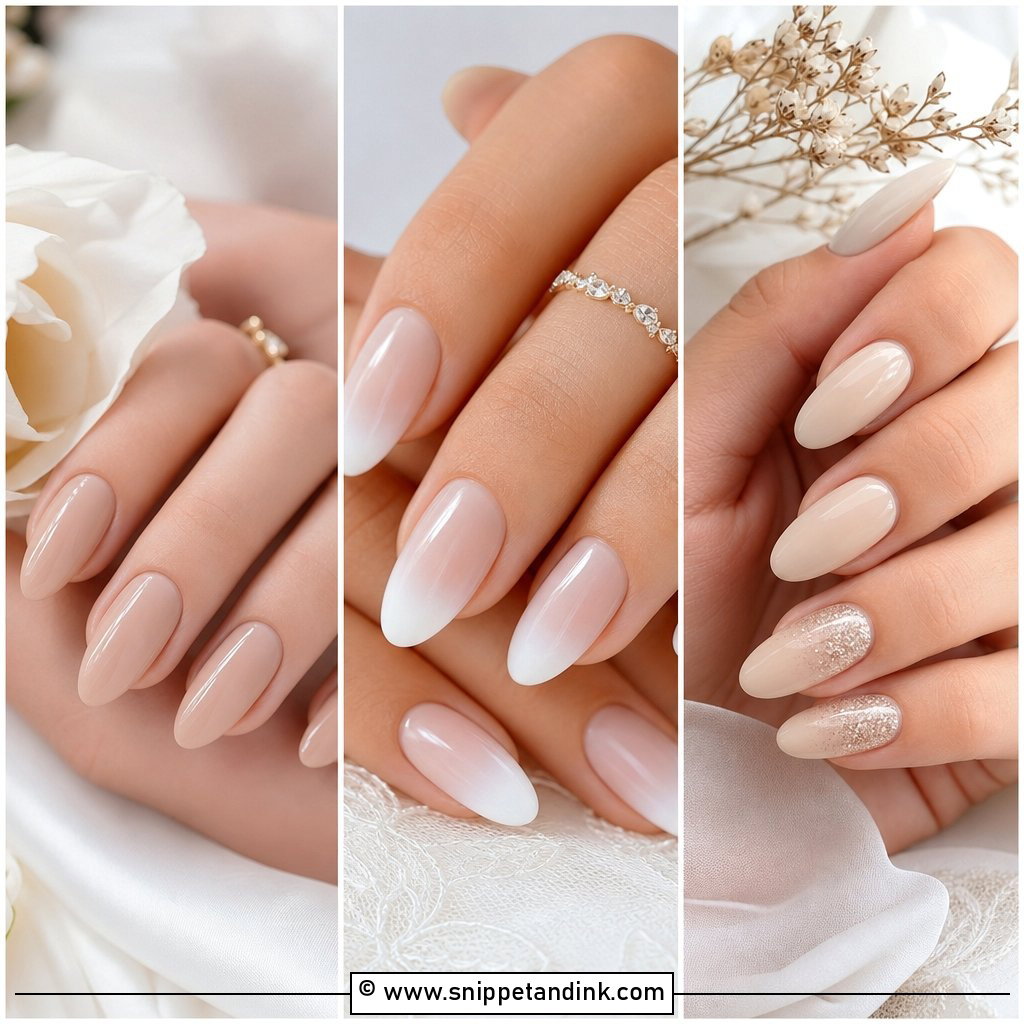
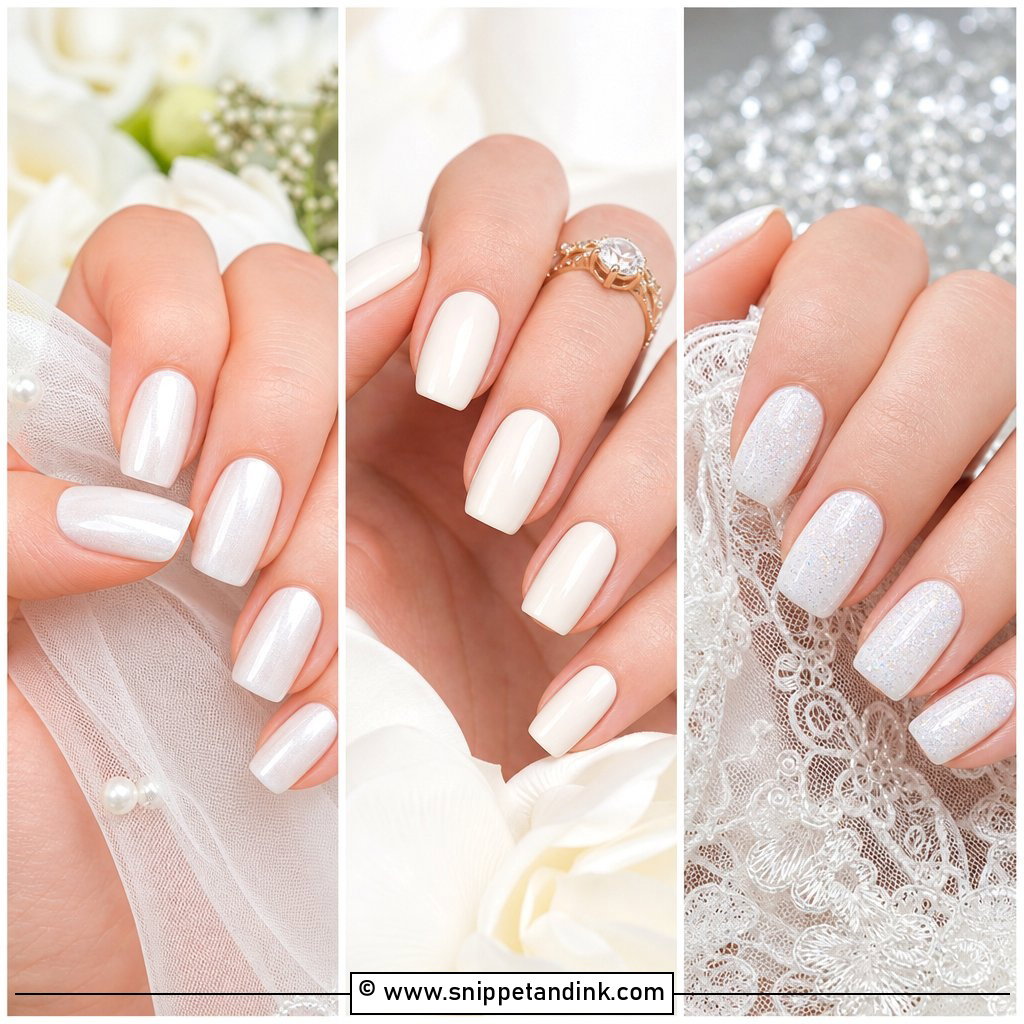
3. Milky White French Tip Wedding Nails
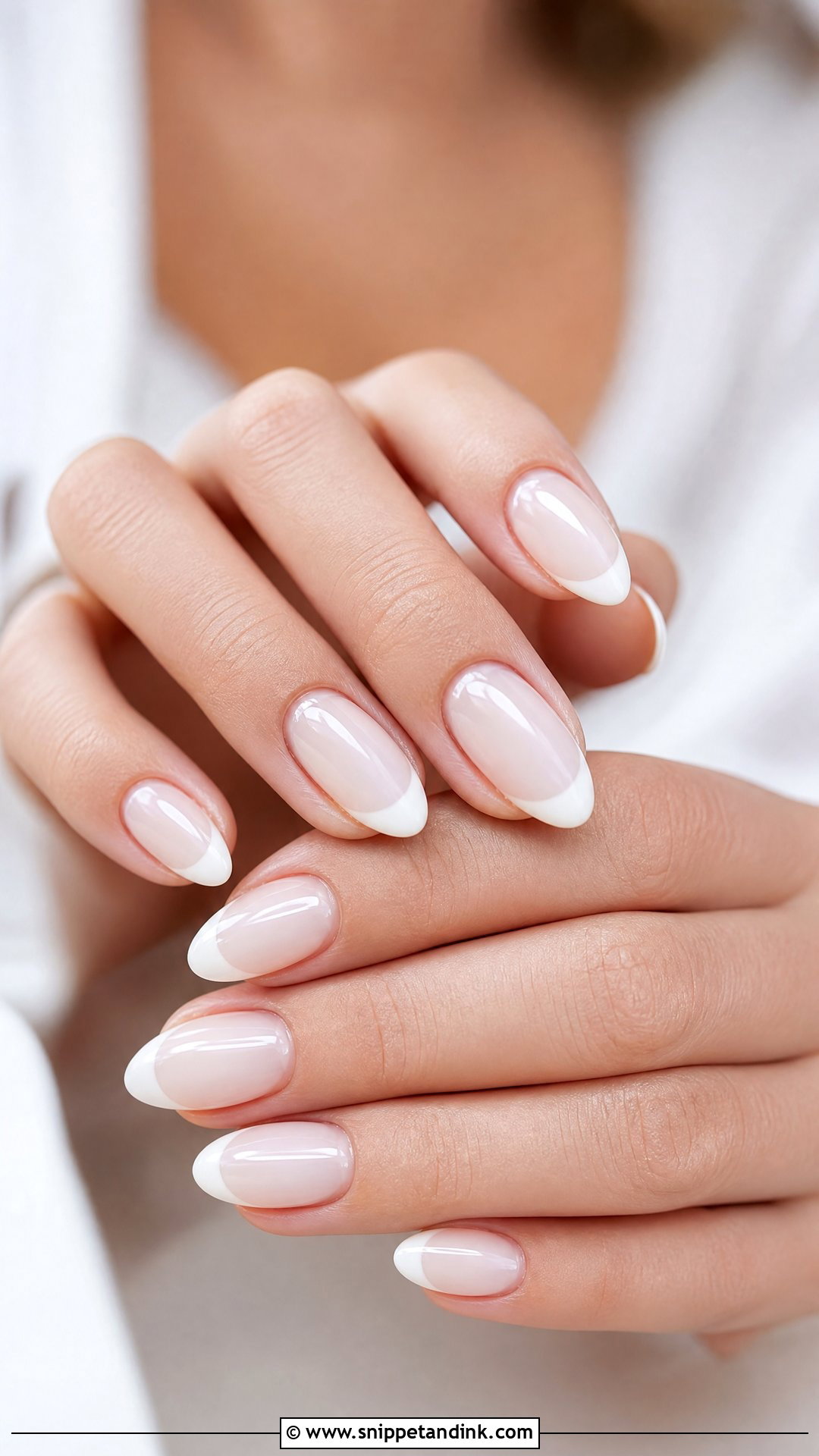
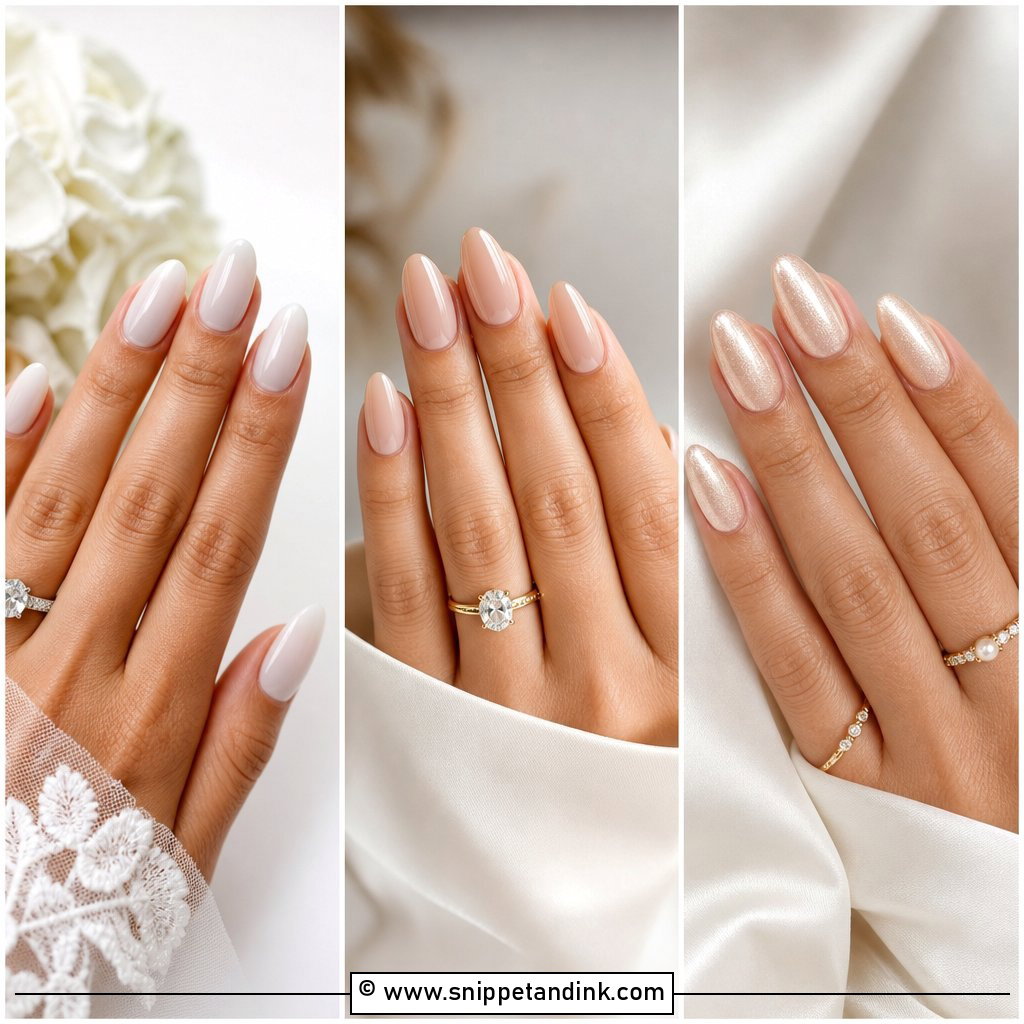
Milky bases are the ones brides fall for in photos and then find streaky in real life if the technician rushes. I lay the milky white in two or three thin coats so the cloud evens out, then paint the tip over it. Because the base scatters light, it blurs ridges and small cuticle flaws, which helps in close-up ring shots. Pair a bright white tip with it for contrast, or a cream tip if your dress is ivory and you want the two to melt together.
4. Pearl Chrome French Tip Wedding Nails
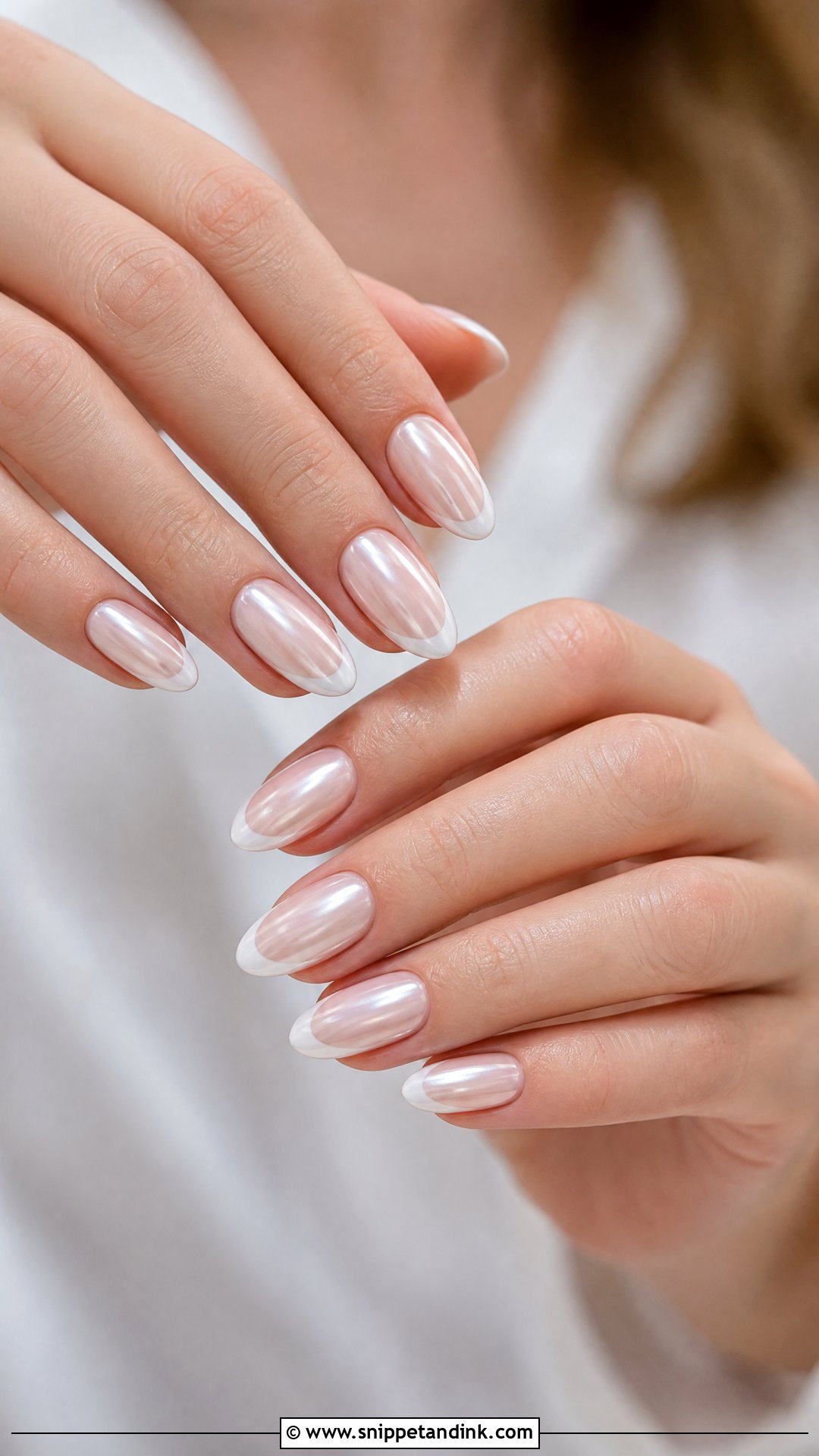
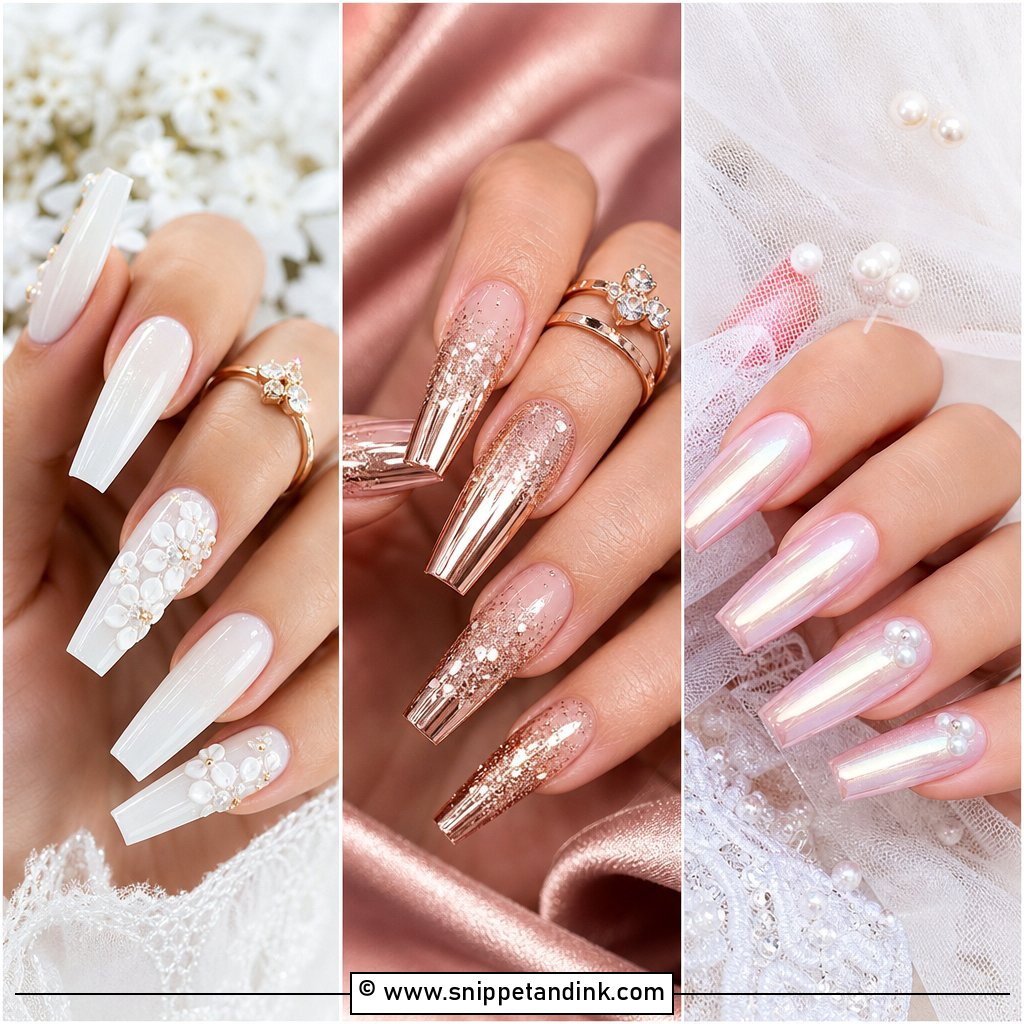
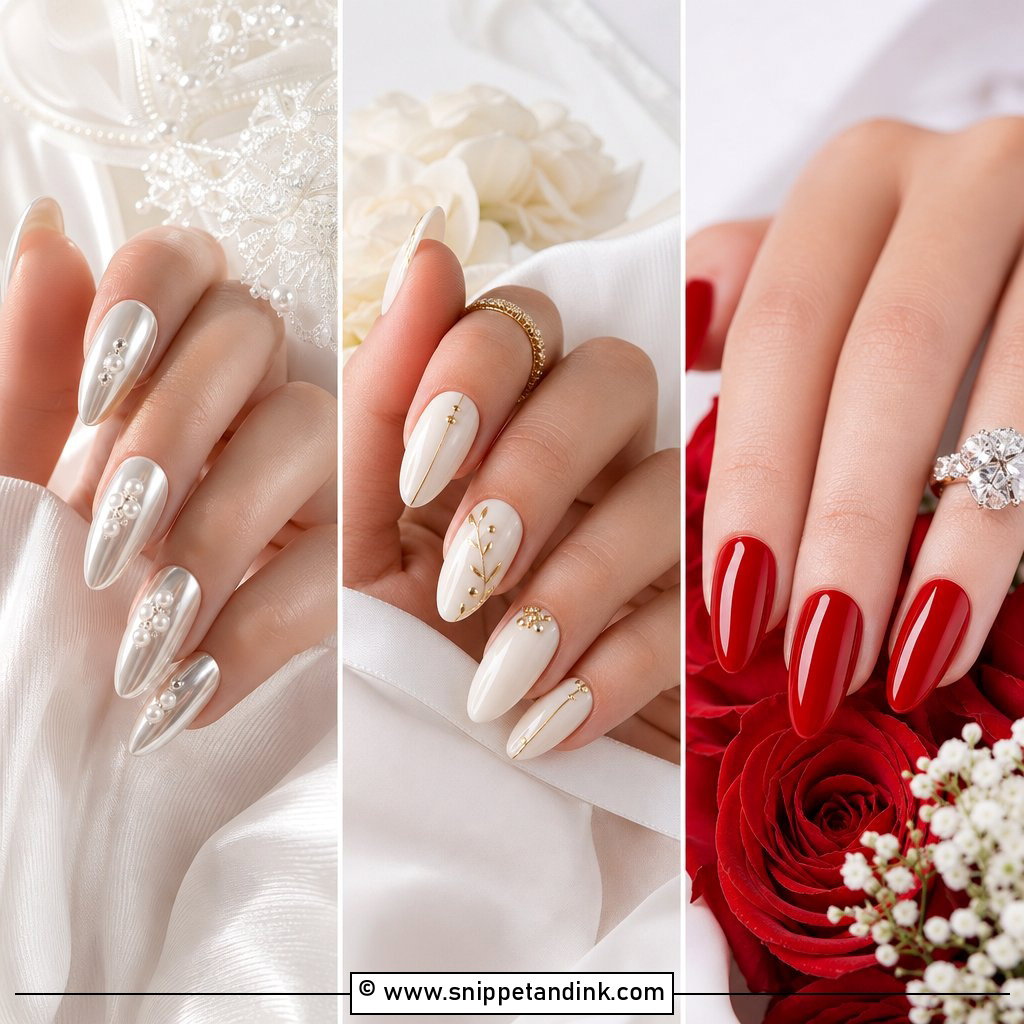
Pearl chrome is a powder rubbed onto a cured no-wipe top coat, so it sits over the French tip like a sheen rather than replacing it. I keep the rub light. Pressed too hard, it turns mirror-bright and starts to look like a party set instead of a bridal one. It suits gowns with pearl beading or satin shine, and it shifts nicely as your hand moves in the ring shot. One honest caution: chrome can wear at the very tip first, so I seal and cap the free edge carefully.
5. Glazed French Tip Wedding Nails
Glazed finishes take the chrome idea and dial it right down. A sheer pinkish glaze over the base and tip gives a wet, lit-from-within look without any metallic edge. I reach for it with brides who like chrome on other people but feel it’s too much on their own hands. Watch the balance: if the glaze goes on heavy, the white tip disappears. Medium almond nails show it off best, and it sits comfortably next to satin, crepe or organza.
6. French Ombre Wedding Nails
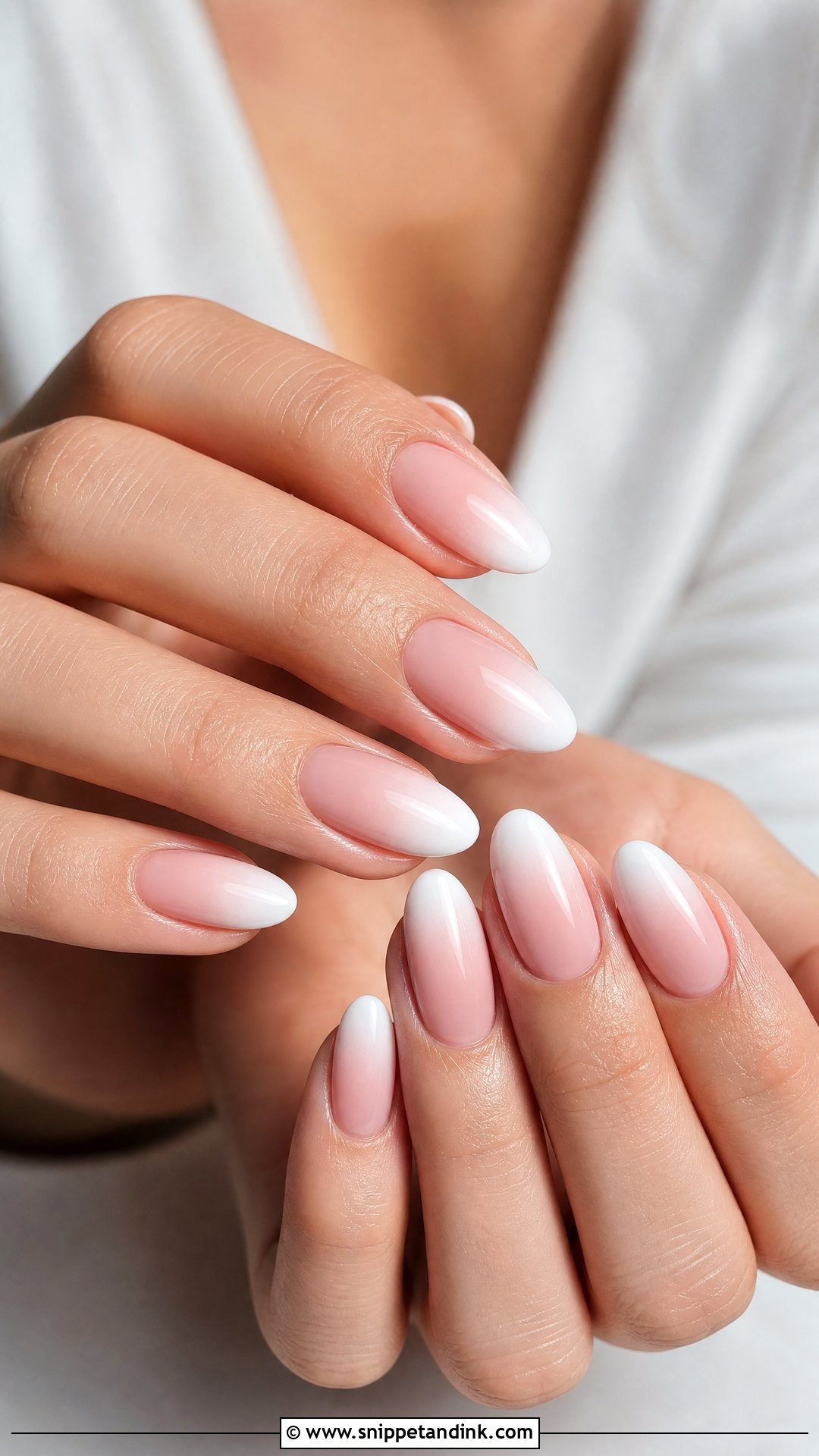
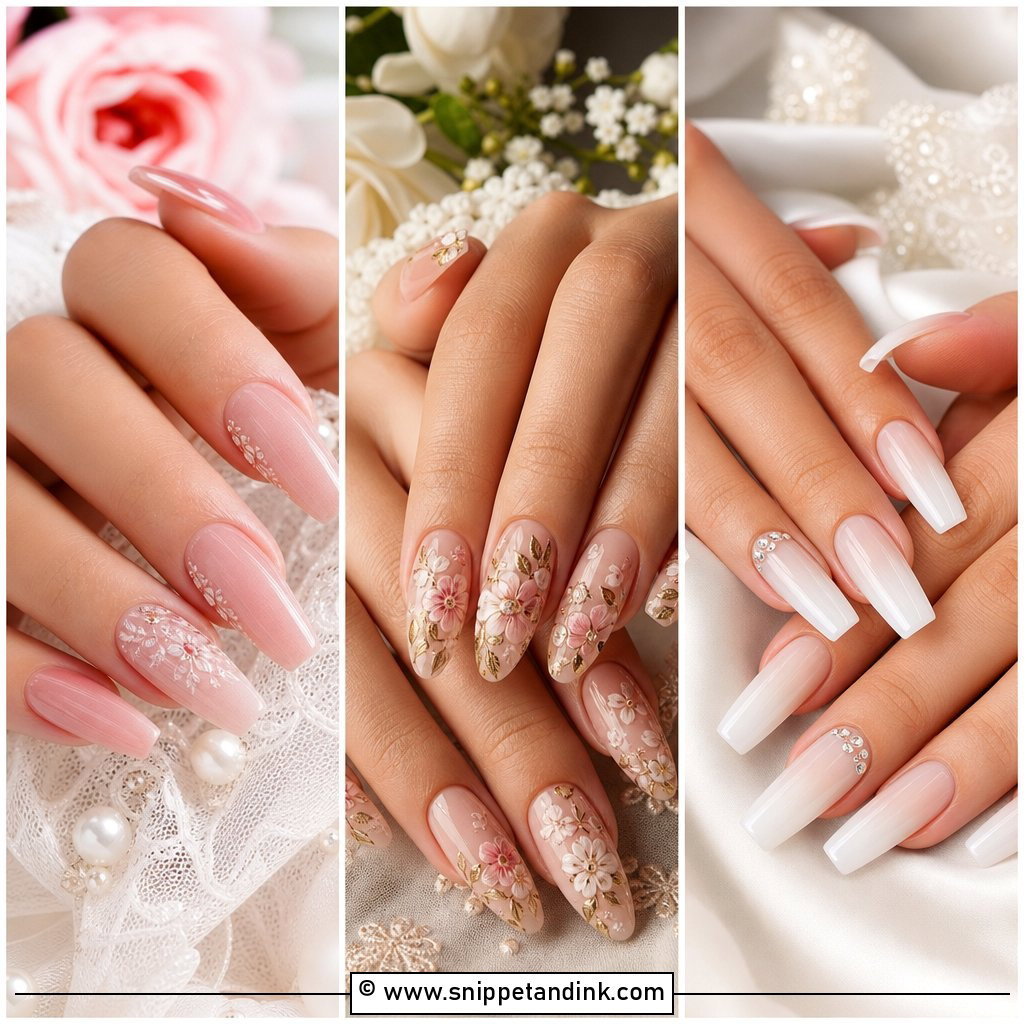
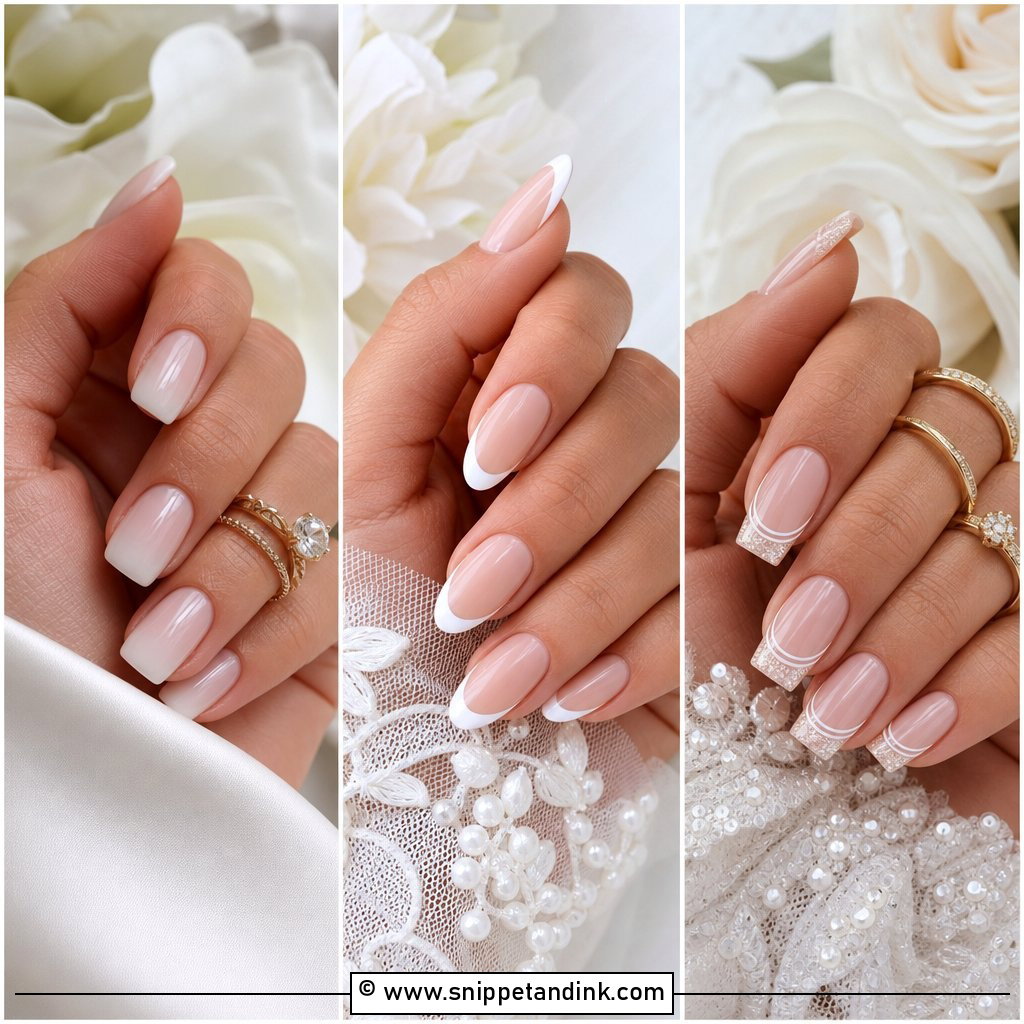
Baby boomer, or French ombré, fades the white into a pink or nude base with no hard line. I build it with a sponge or by blending gel with a brush, and the blend has to be smooth on every nail or the set looks patchy. It’s forgiving in two ways. The fade makes nails look longer, and grow-out at the cuticle is far less obvious than with a crisp French, which helps if your appointment lands several days before the wedding. Finish with gloss for tradition or a pearl sheen for more glow.
7. Almond French Tip Wedding Nails
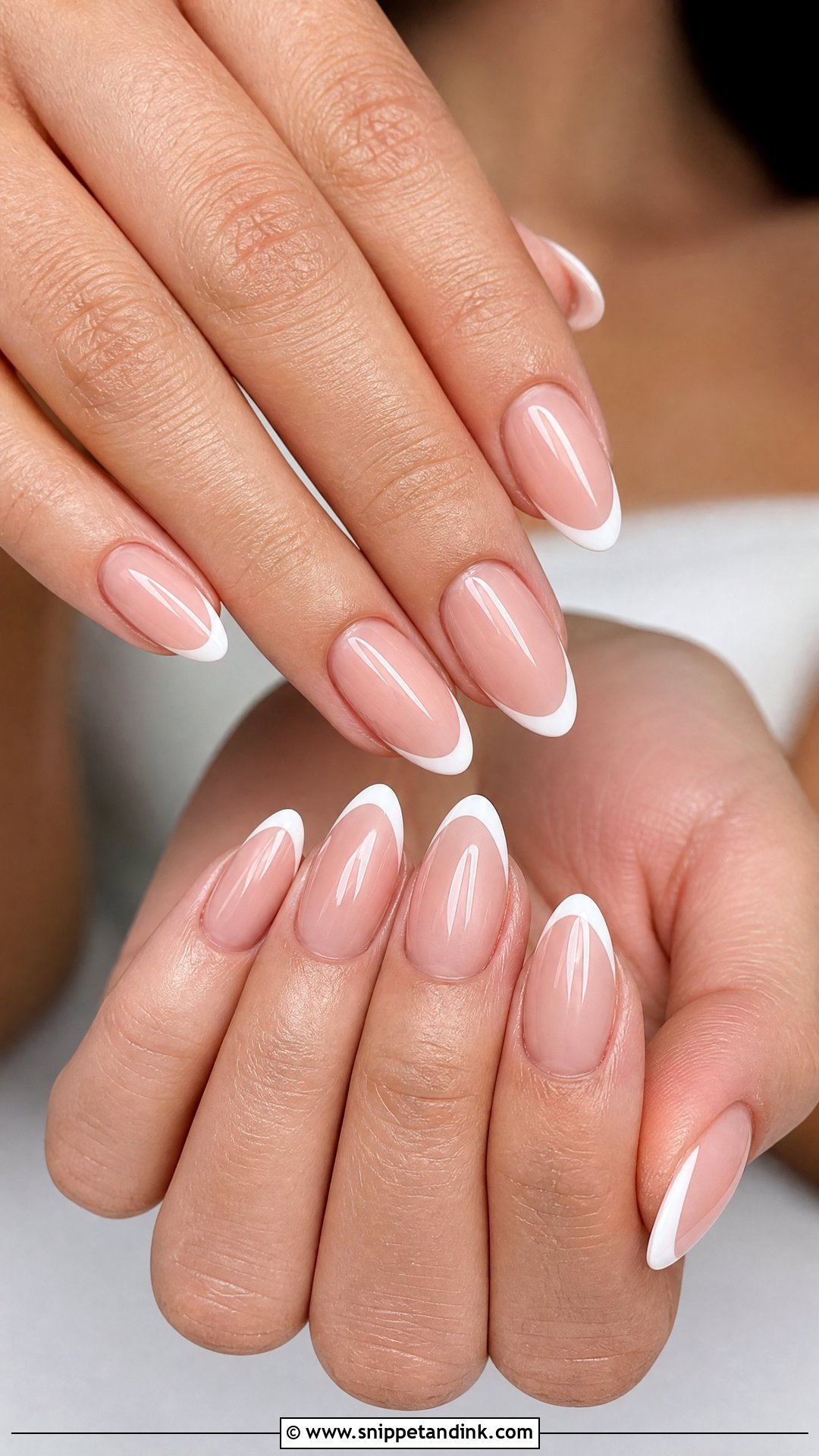
Almond French tip wedding nails lengthen the fingers because the tapered sides draw the eye up to a soft point. When I file almond, I keep the sidewalls straight for the first few millimetres past the finger so the nail doesn’t look pinched. The shape leaves room for a small detail like a pearl or a fine glitter line. Keep the length modest. You’ll be holding a bouquet, gathering a skirt and fumbling with a ring box, and long almond tips make all three harder.
8. Short French Tip Wedding Nails
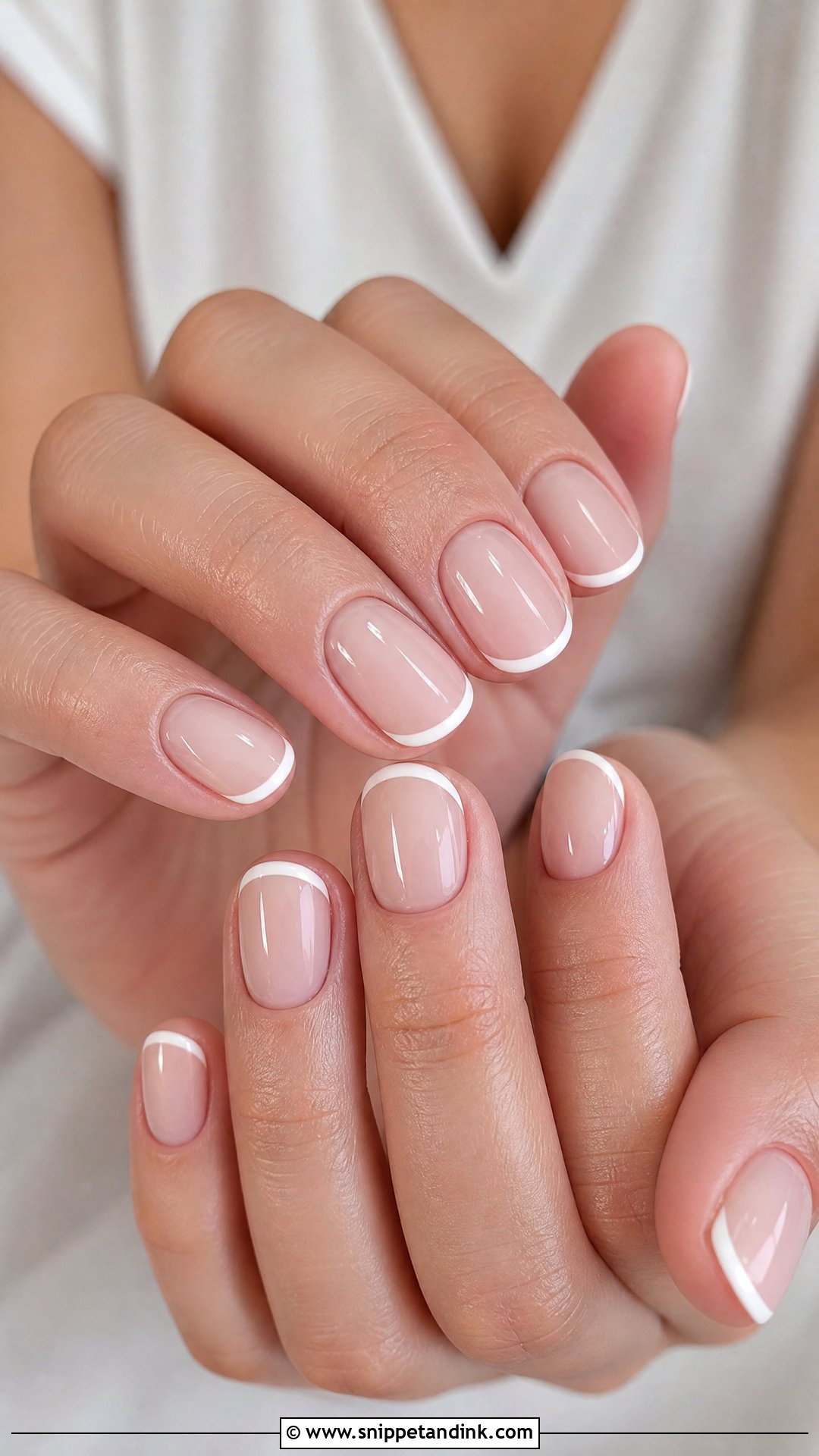
Short nails need a thinner tip than most people expect. A thick white band shrinks the visible nail bed, so on short lengths I paint a micro or gently curved tip and keep it close to the free edge. A soft oval or rounded square shape suits short fingers well. This is the set I recommend to brides who type all day, play an instrument or hate the feeling of length, and it survives a busy honeymoon far better than extensions. Add one tiny pearl only if you want a single bridal detail.
9. Square French Tip Wedding Nails
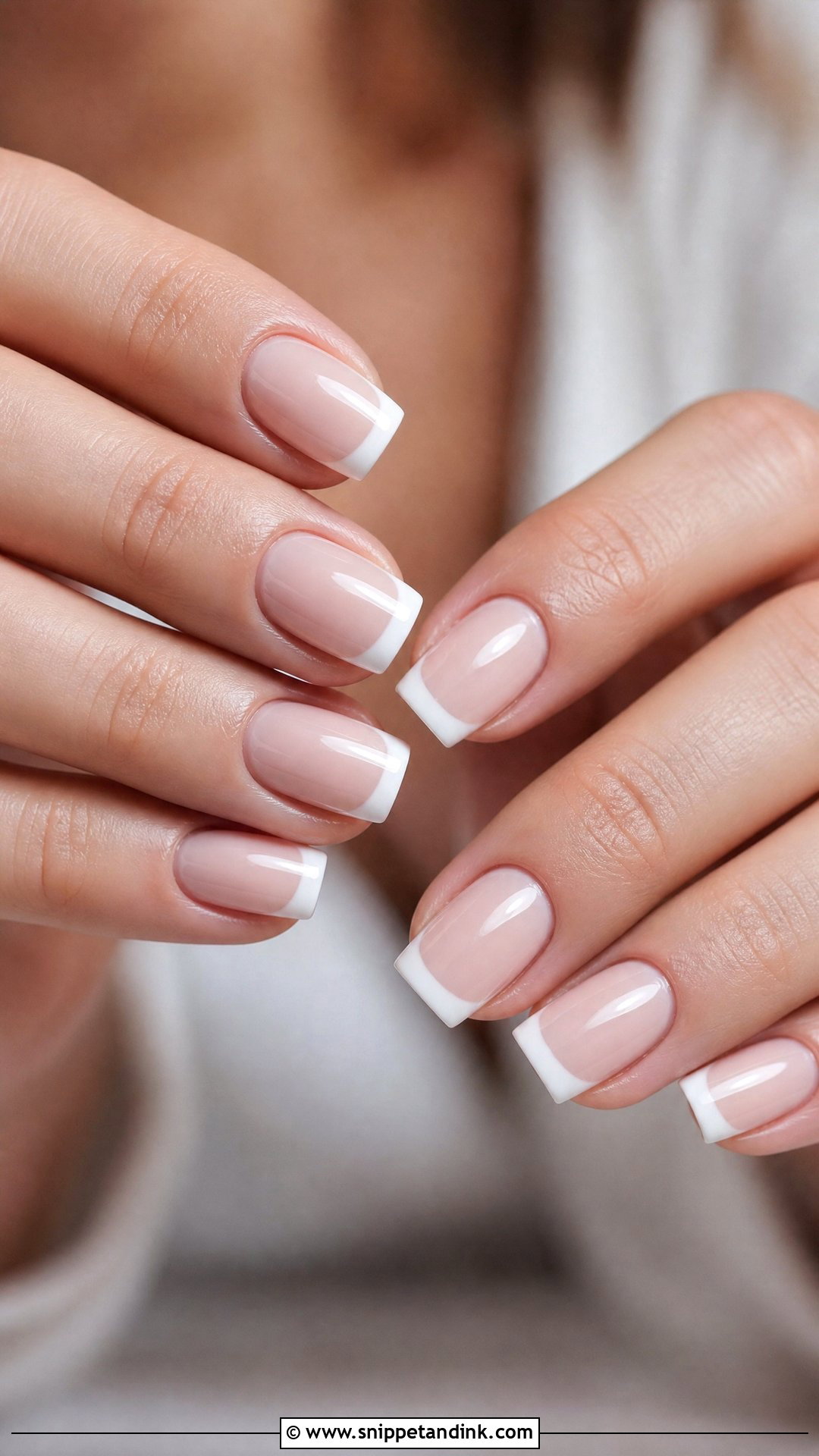
Square gives the sharpest canvas for a white tip because the free edge is straight. That precision is also its weakness: sharp corners snag tights and lace, and they chip first. Most brides are happier with a soft square, where I round the corners just enough to stop them catching. Short-medium length is the sweet spot. A blush base with bright white works with tailored suits and clean modern gowns, and spotless cuticles matter more here than with any rounded shape.
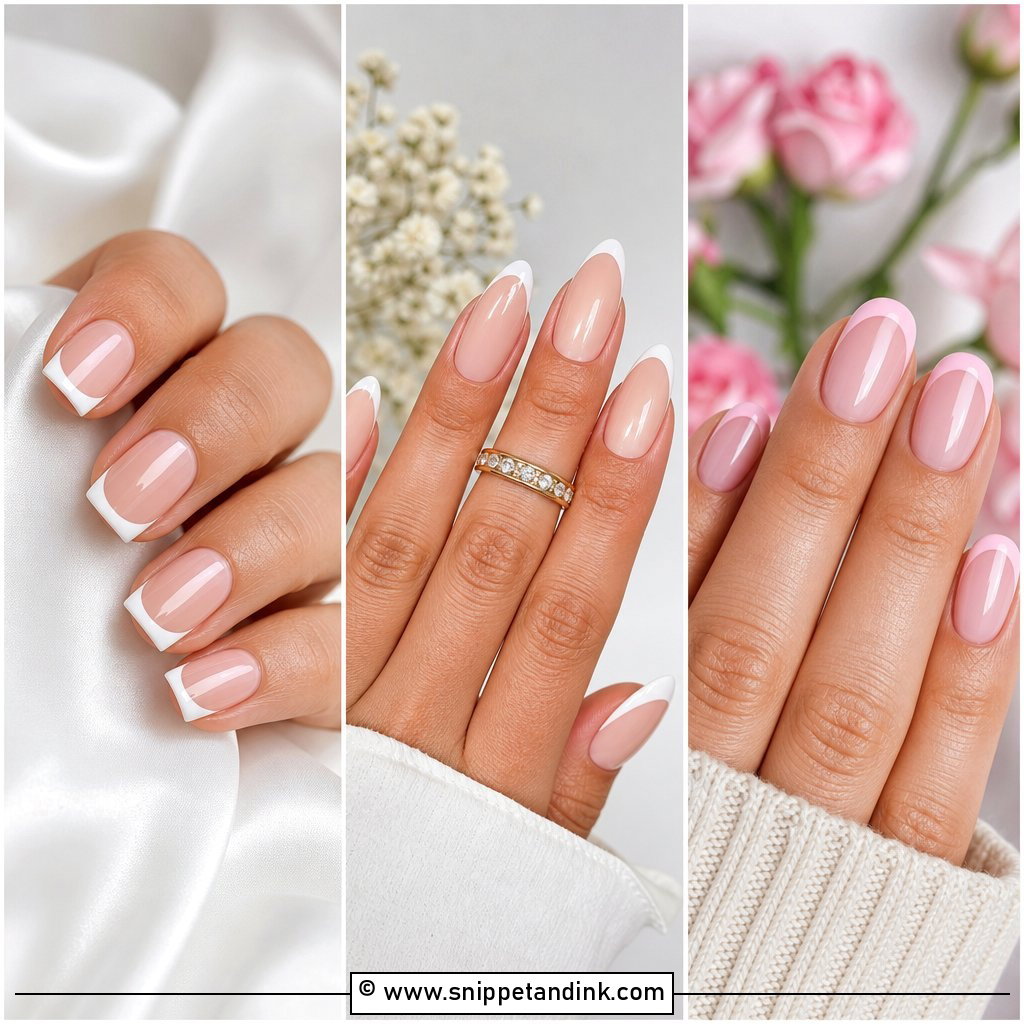
10. Oval French Tip Wedding Nails
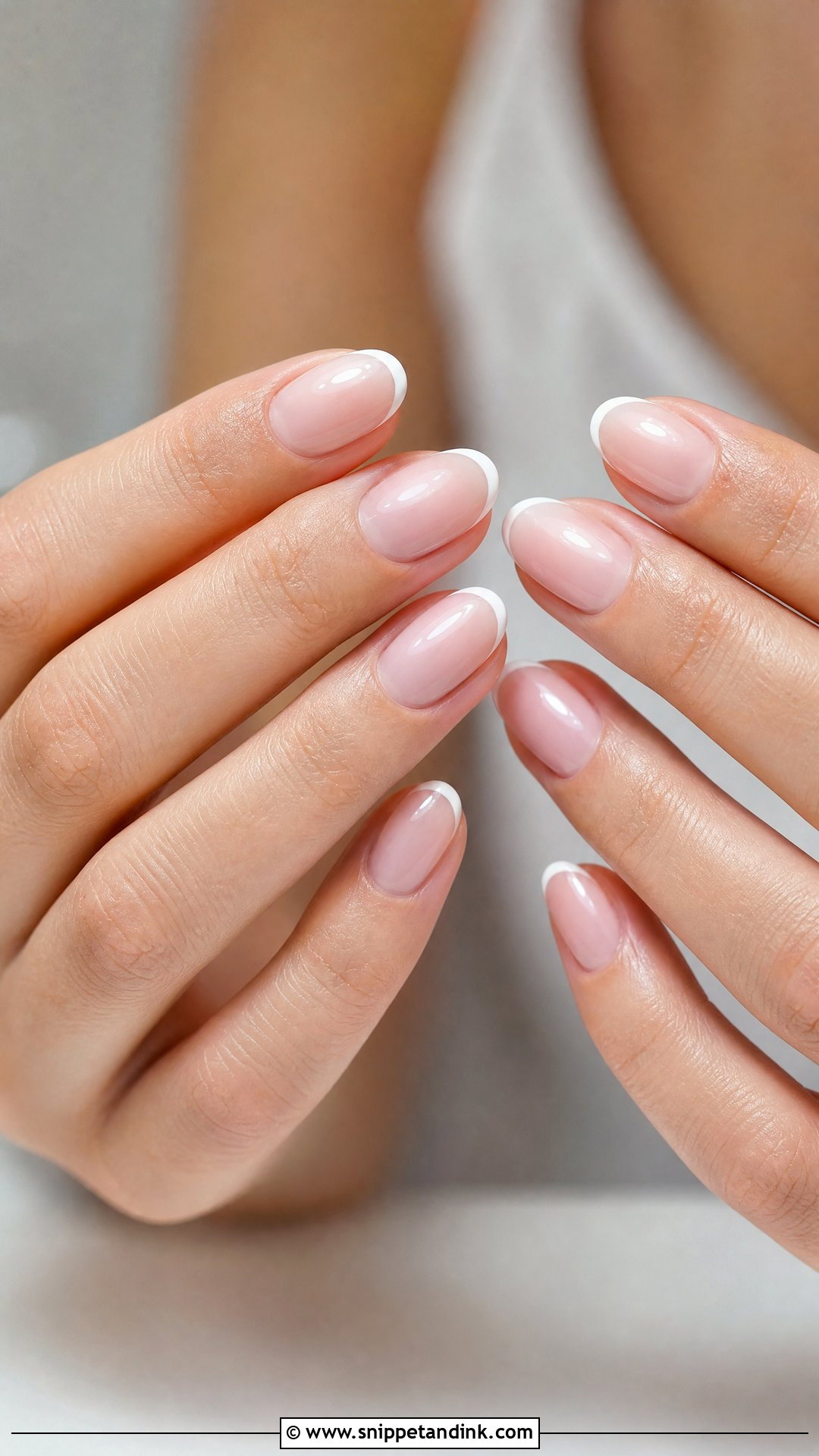
Oval follows the curve of the fingertip, so the tip looks gentle instead of geometric. It’s the shape I default to when a bride can’t decide, because it suits short natural nails and medium extensions equally. Pale pink with soft white is the traditional pairing, and a milky base with a pearl topcoat brings it up to date. Romantic fabrics like chiffon and floral embroidery sit especially well beside it.
11. Coffin French Tip Wedding Nails
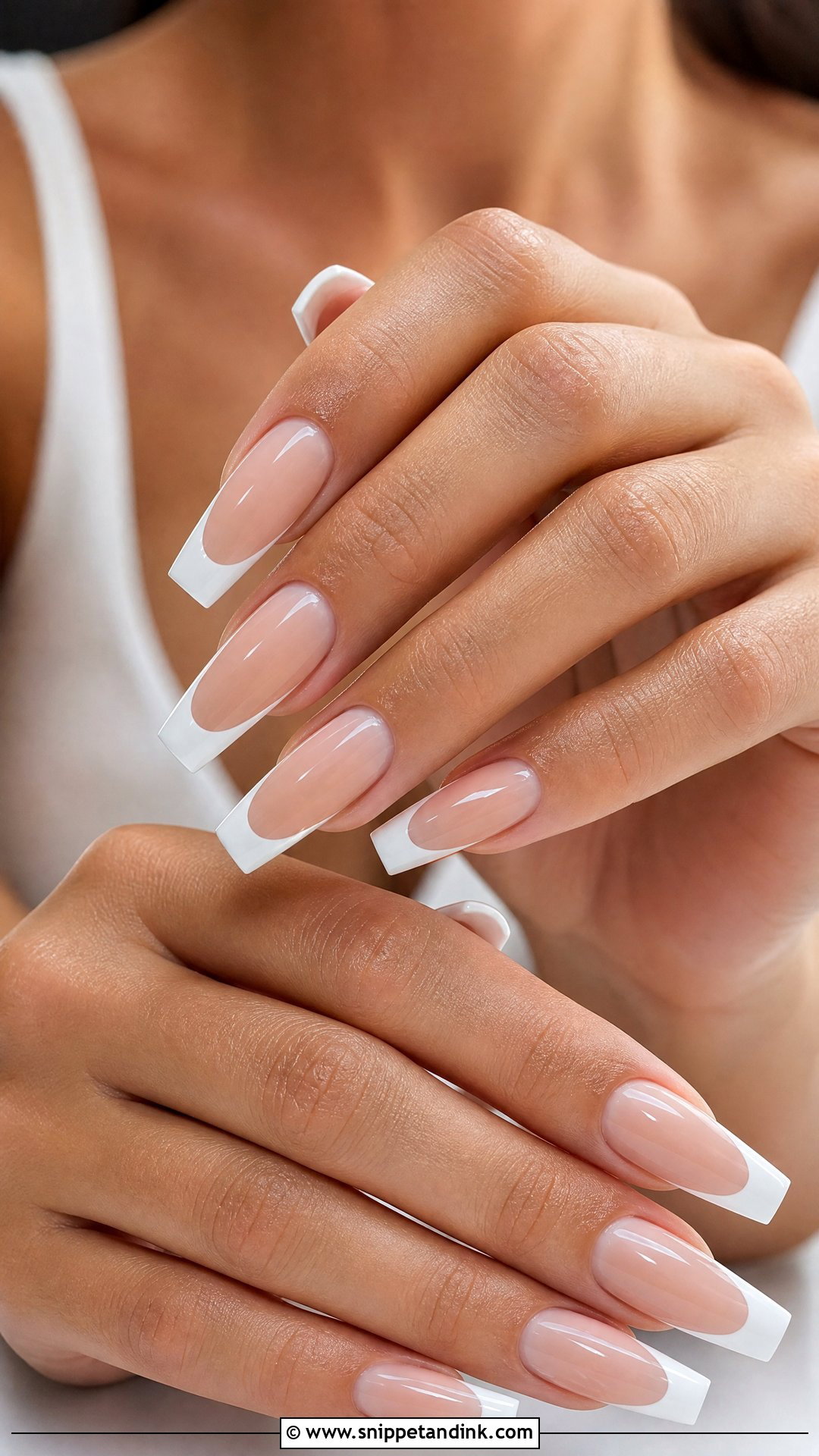
Coffin needs length to look right, so it’s usually an extension set. The tapered sides and flat end make a strong silhouette, and the risk is a heavy white band that turns it brash. I paint the tip thinner than on oval, or switch to a soft ombré fade so the flat edge doesn’t look blunt. A fine shimmer over the top softens it further. I’d only steer you here if you’re comfortable wearing length day to day already, because a new bride in long coffins tends to catch them on everything.
12. Pink French Tip Wedding Nails
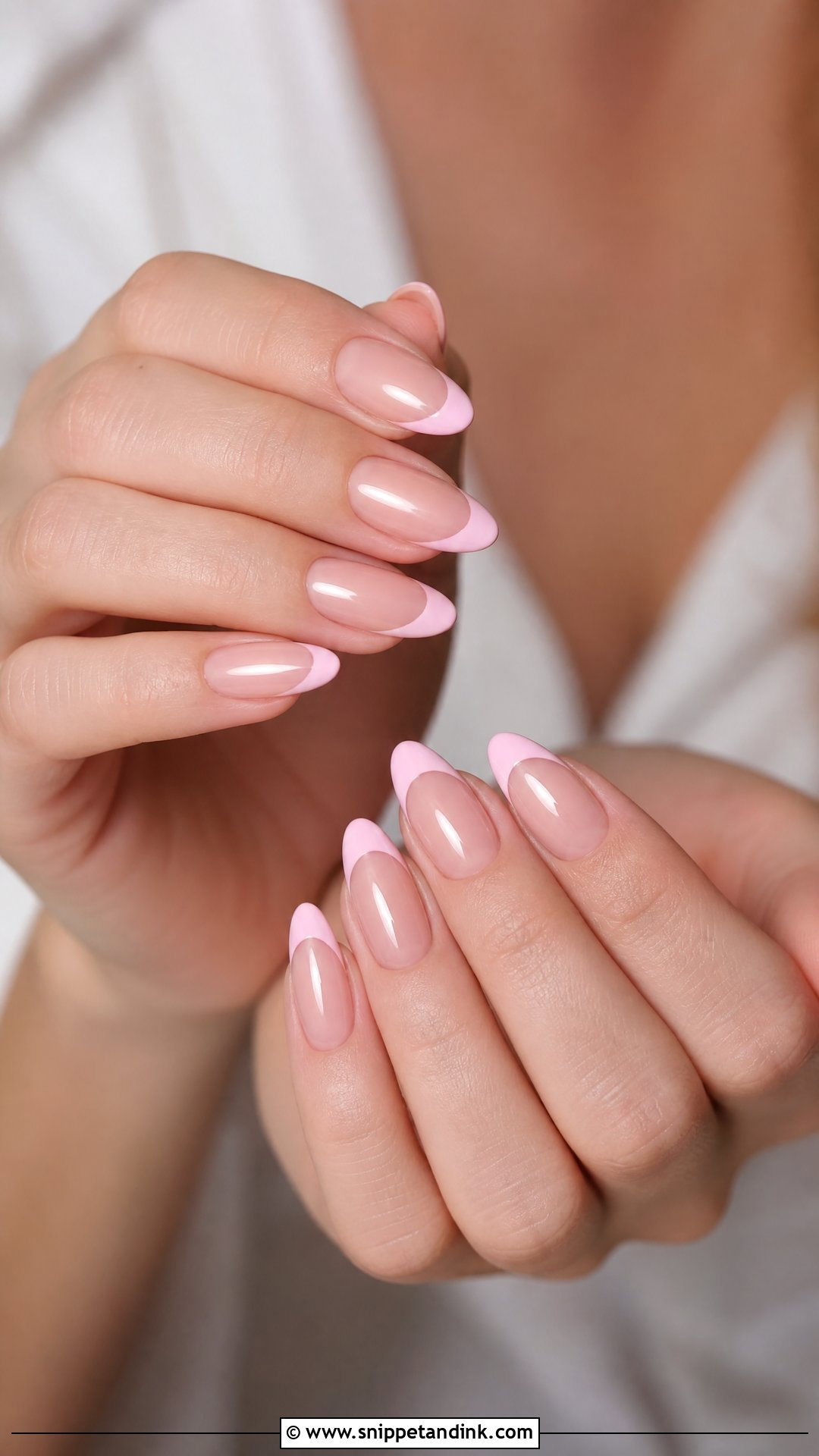
A pink tip swaps the white for pale or blush pink over a sheer nude base, so the definition is there but the contrast drops. I mix the tip shade at the trial against the bride’s skin, since a cool baby pink can look chalky on warm skin and a peachy blush suits it better. Gloss keeps it classic, glaze makes it glow. It sits well with rose gold rings and blush flowers. Keep the tip slim, because a wide pink band starts to read as a colour manicure rather than a French.
13. Nude French Tip Wedding Nails
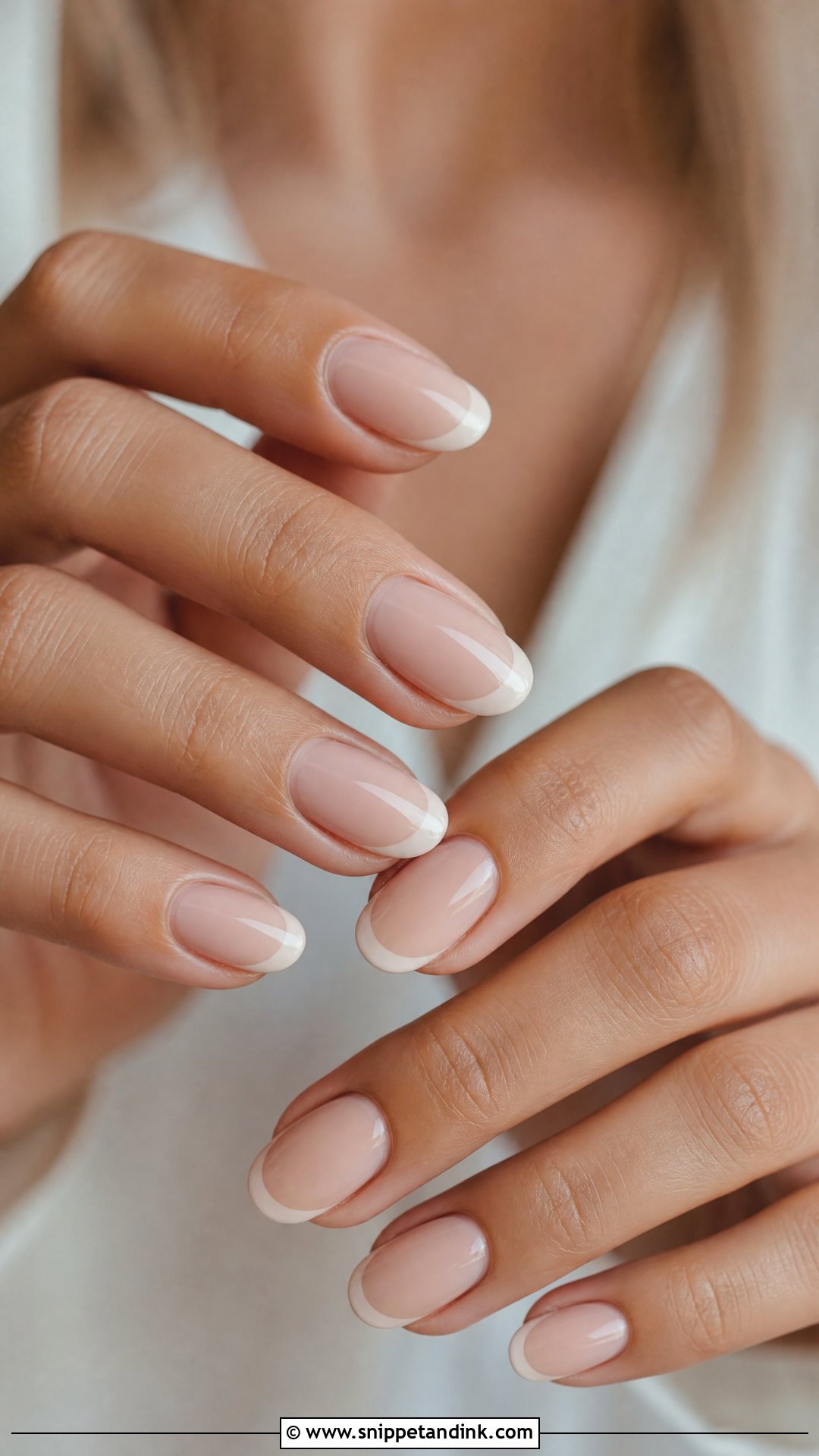
Here both the base and the tip are neutral, with the tip a shade lighter and creamier. The contrast is low, so the set looks expensive and quiet and lets the ring do the talking. Shade matching is everything. On fair skin I lean toward soft beige pink, on medium skin a warm nude, and on deeper skin caramel, cocoa or a rosy brown base so the nail doesn’t go ashy against the hand. I test the base on one nail in daylight before committing.
14. Ivory French Tip Wedding Nails
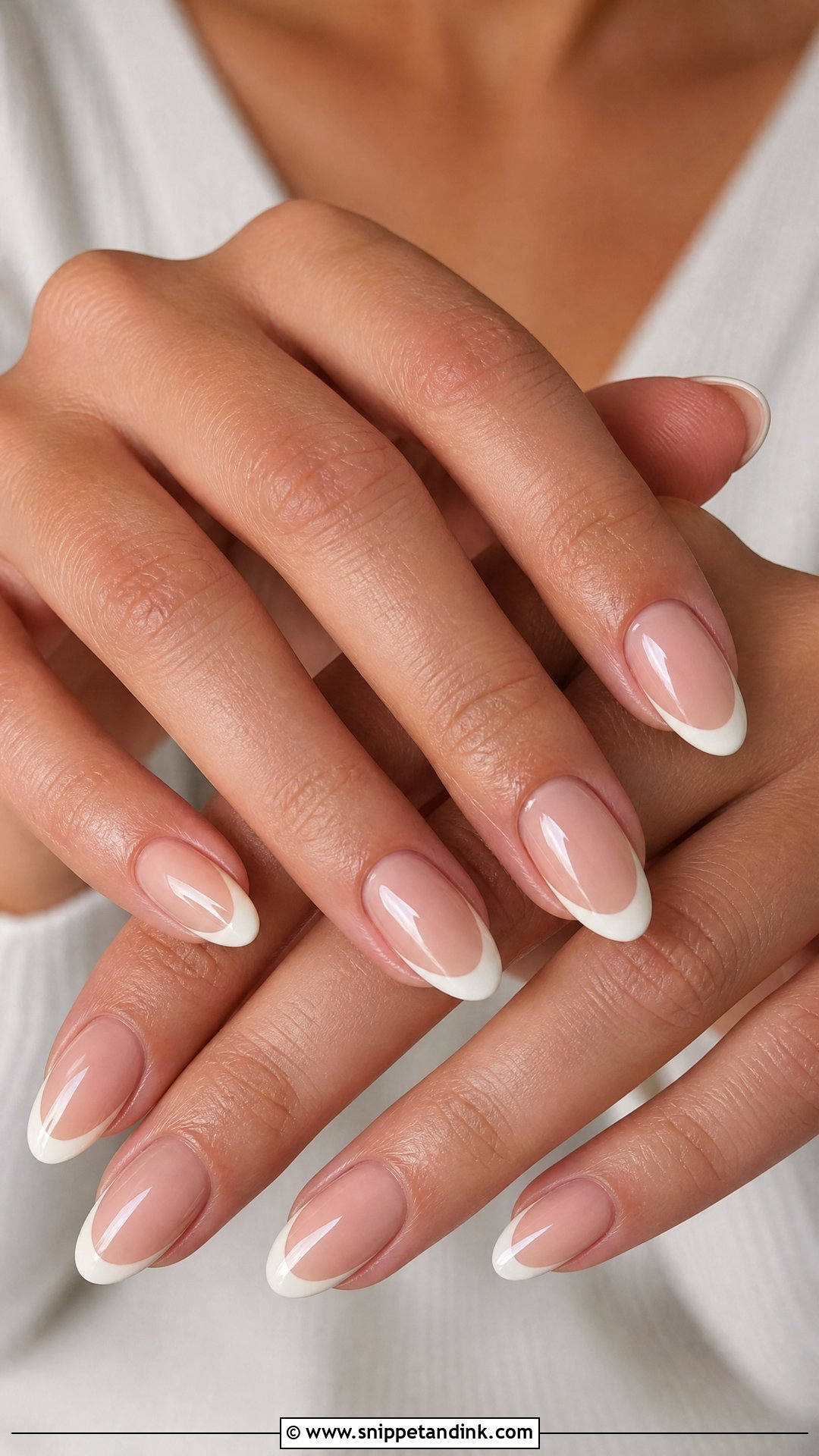
Ivory tips solve a problem I see often: a bright white French next to an ivory or champagne gown makes the dress look yellow. A cream edge removes that clash and blends the whole set. It flatters warmer skin and gold jewellery, and it pairs well with vintage lace or pearl detailing. Put it over a sheer beige or milky base. Shape-wise, oval, almond or soft square all hold it nicely.
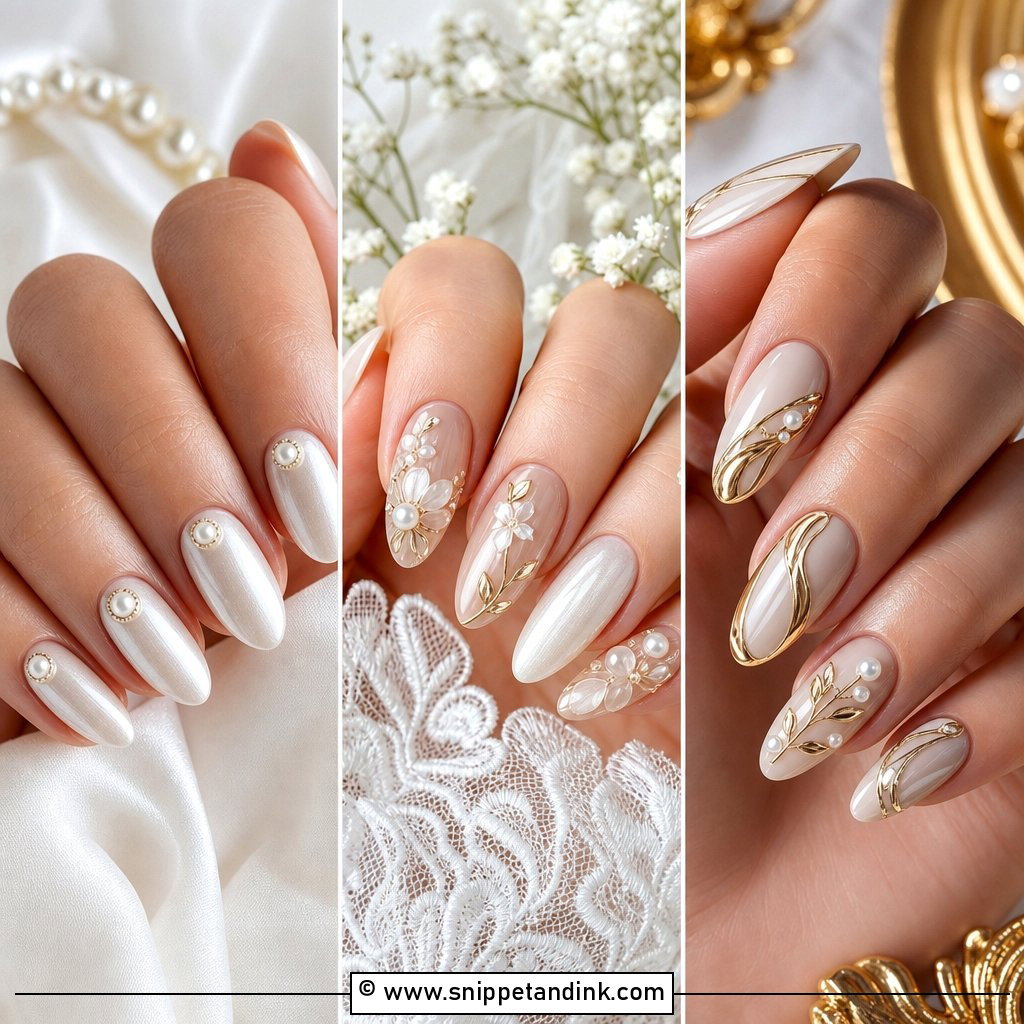
15. Gold French Tip Wedding Nails
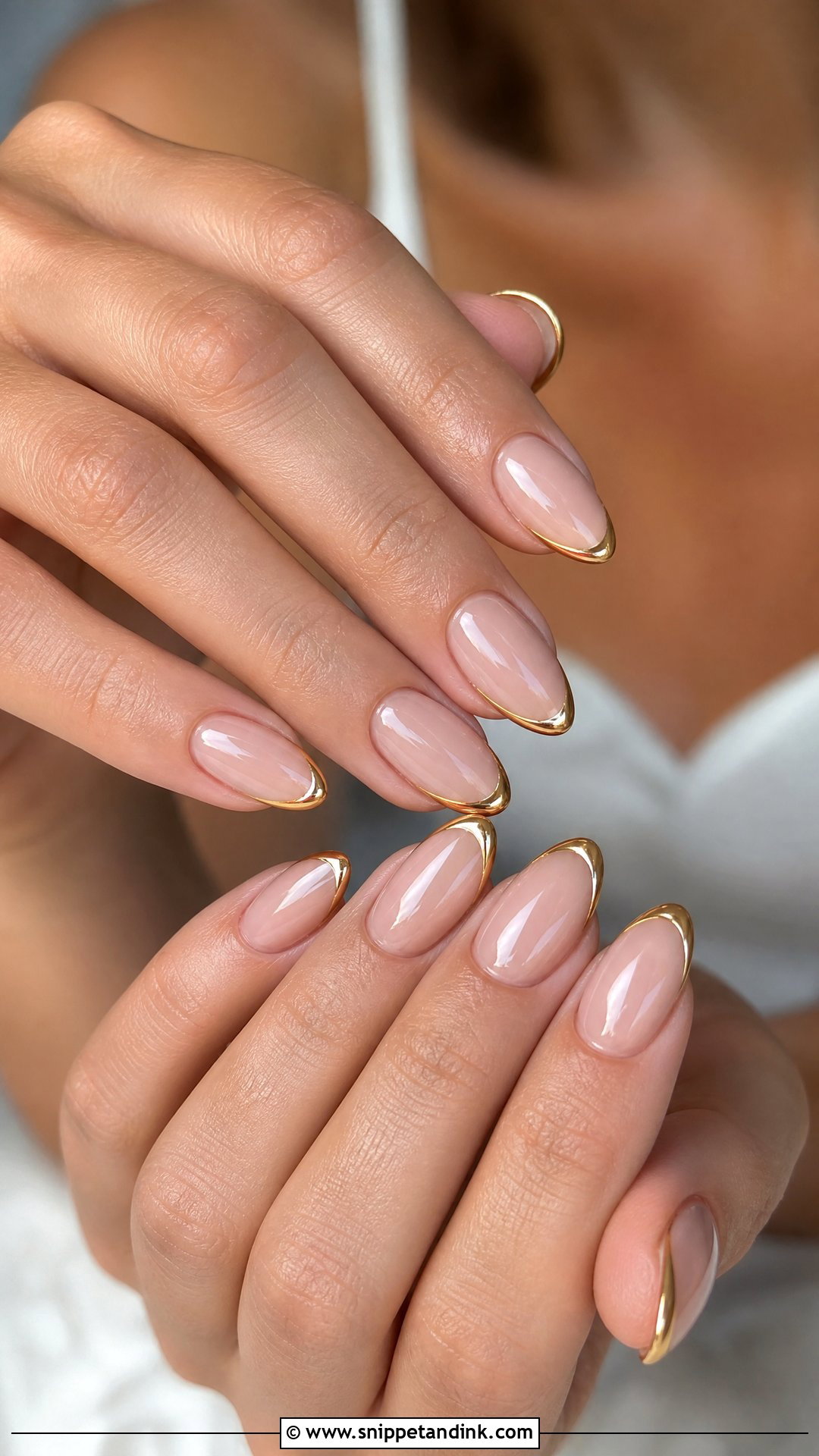
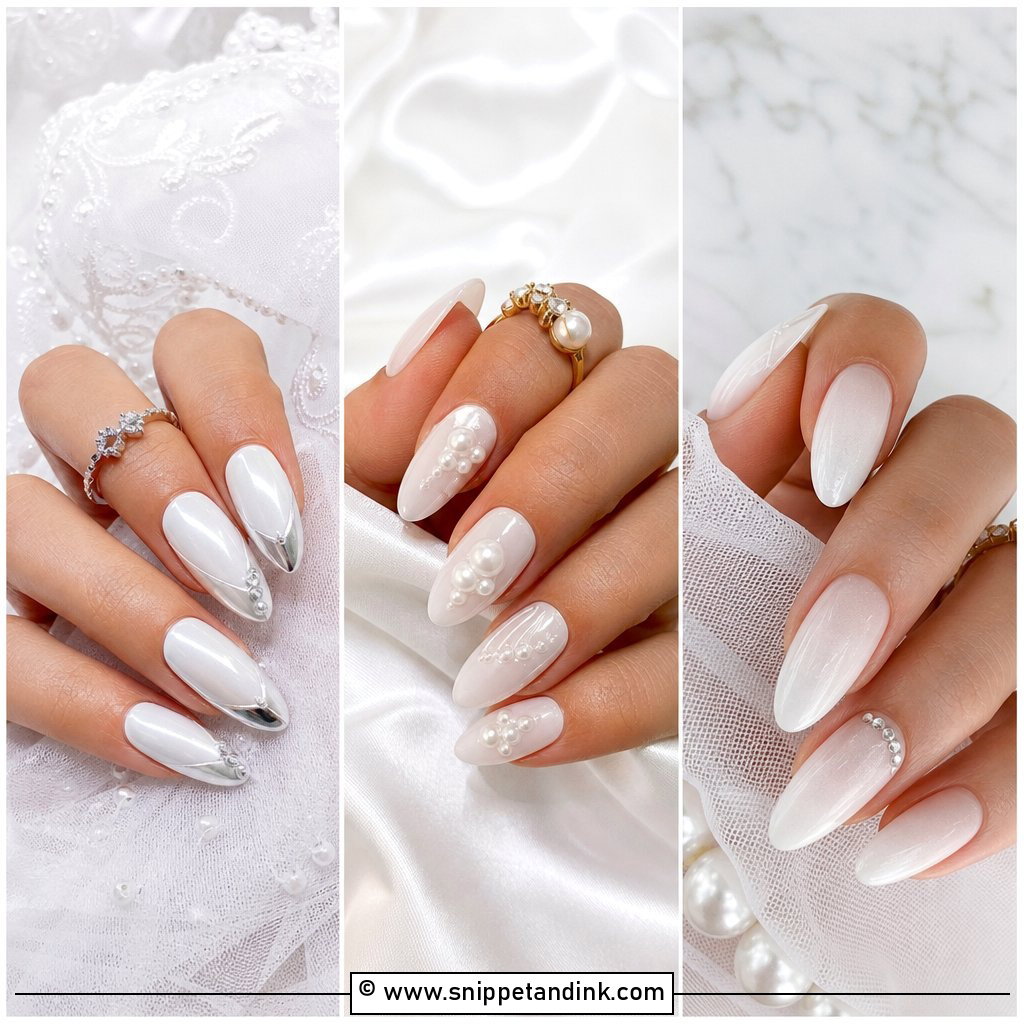
Gold can be a hairline over a white tip or a fine metallic edge on its own over nude. For brides I use a gold foil gel or striping gel rather than loose glitter, because it lays flatter and doesn’t feel gritty. Keep it thin and smooth; a chunky gold band tips the manicure into costume territory. It reads warmest beside yellow gold rings and champagne fabrics, and medium almond nails give the line the most room to curve.
16. Silver French Tip Wedding Nails
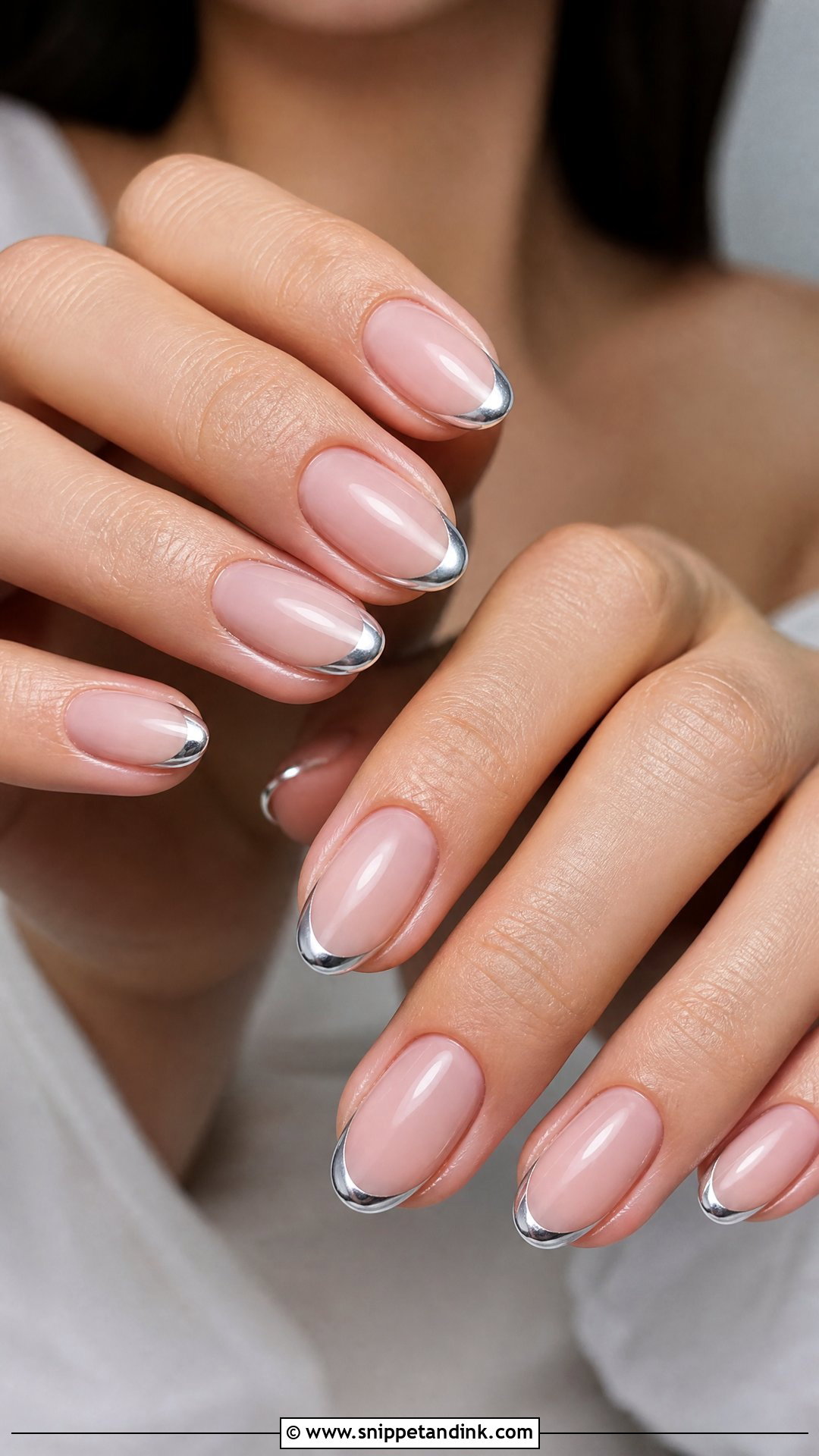
Silver is the cool-toned answer to gold, and it makes sense if your band is platinum or white gold. A fine silver tip over sheer pink gives a quiet sparkle. Layered as a hairline under a white tip, it adds definition without anyone clocking it as metallic. It looks right with crystal hair pins and beaded gowns. The skill is restraint: a silver line wider than about a millimetre starts to look mirrored rather than refined. A glossy or glazed topcoat smooths the edge.
17. Glitter French Tip Wedding Nails
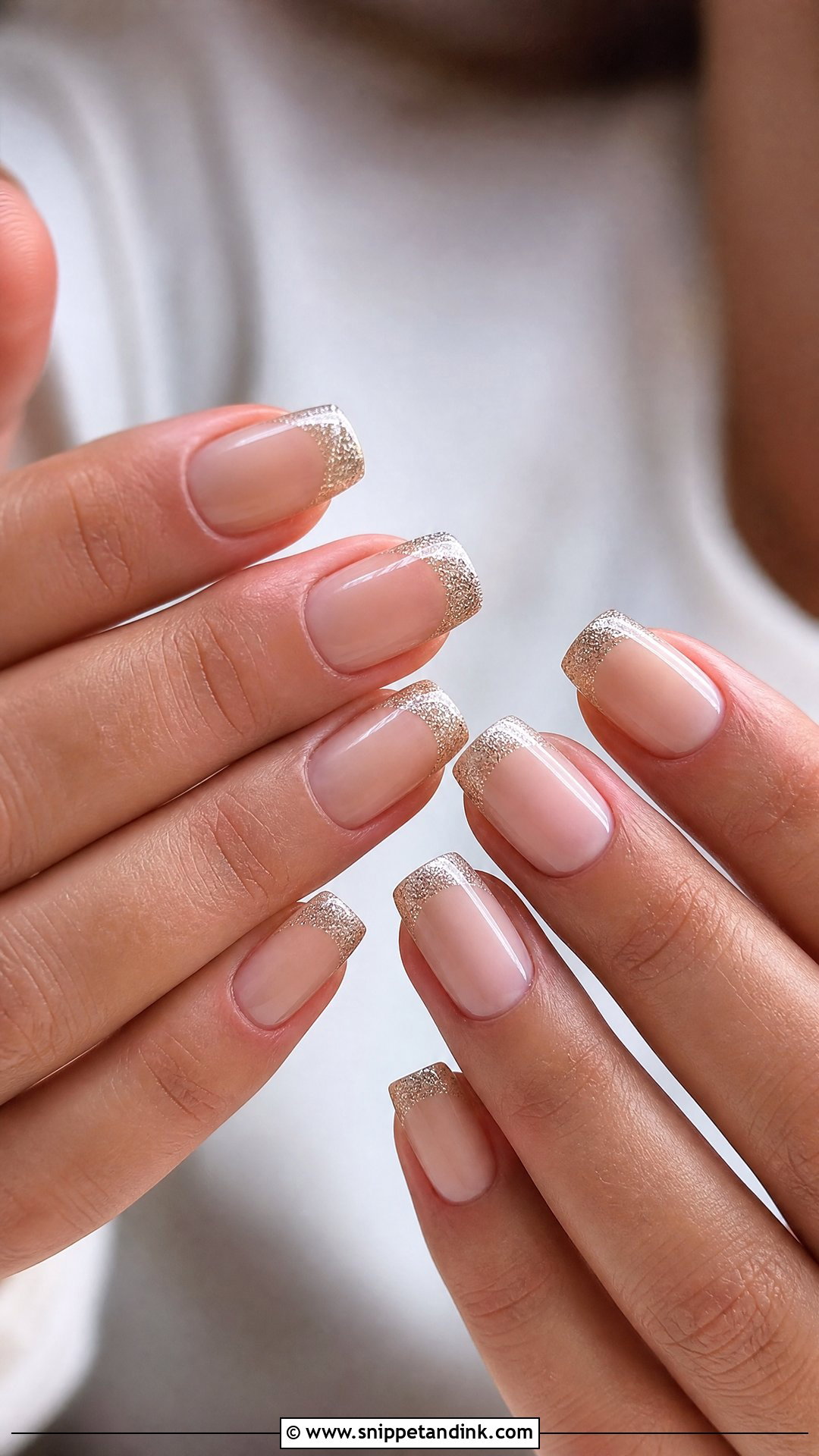
Glitter that stays mostly on the tip gives sparkle in a controlled way, and it has a hidden benefit: glitter hides small chips at the free edge better than any flat colour. I use fine glitter only. Chunky flakes look rough under a macro lens and can leave the top coat lumpy. Champagne or soft silver suits most brides. A full glitter tip, a fade or a thin glitter line above white all work. For evening and ballroom weddings this is often my first suggestion, and it needs a generous top coat so it feels smooth to the touch.
18. Pearl Accent French Tip Wedding Nails
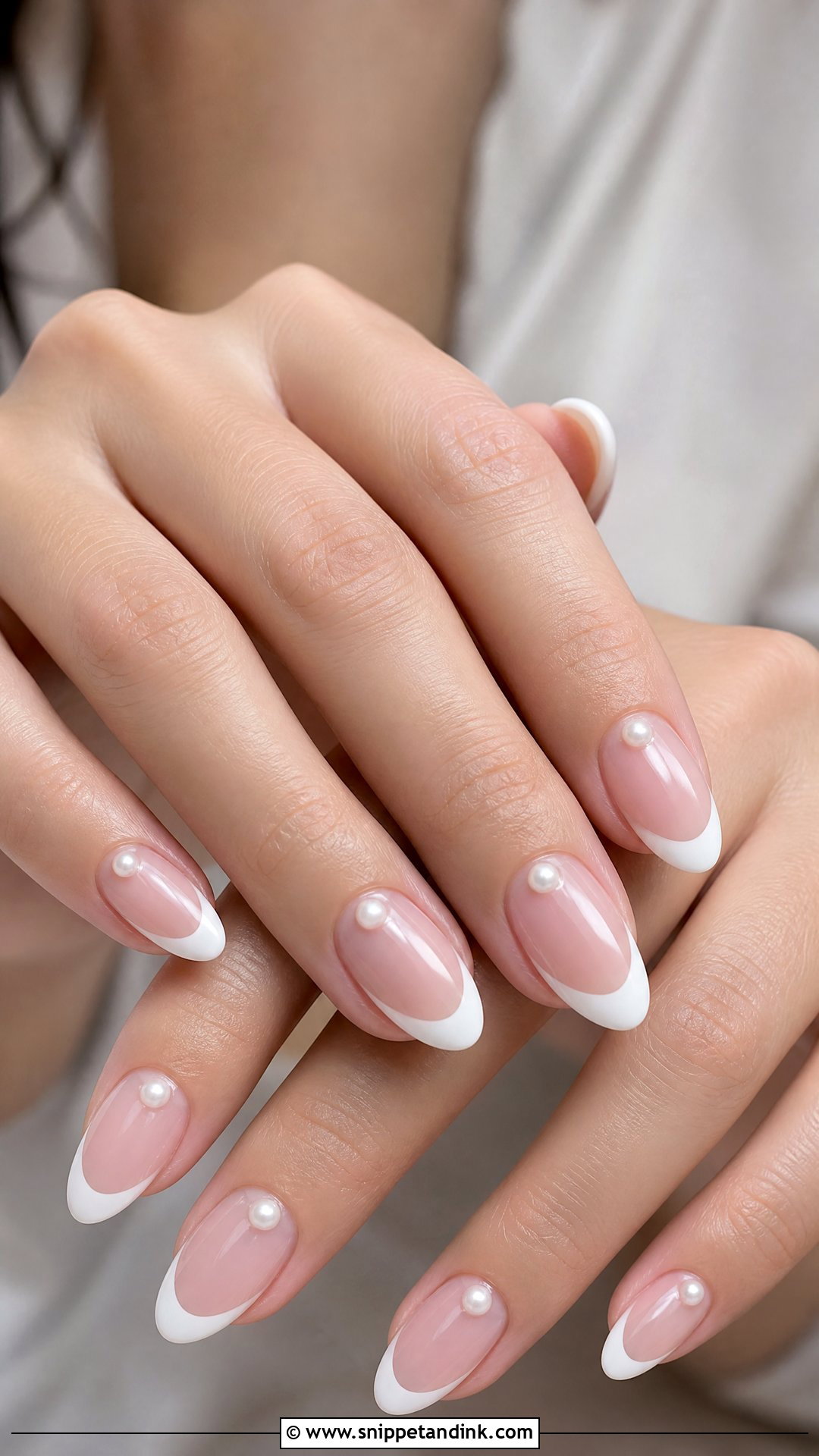
Pearls are where I ask brides to show restraint. Tiny flat-backed pearls placed at the cuticle, along the smile line or on one or two accent nails feel romantic; big ones look clumsy and catch on hair and fabric. I set them in builder gel so they hold rather than relying on top coat alone. The pairing with pearl earrings or a pearl-edged veil is obvious and it works. Almond and oval shapes echo the round shape of the pearl better than square.
19. Rhinestone French Tip Wedding Nails
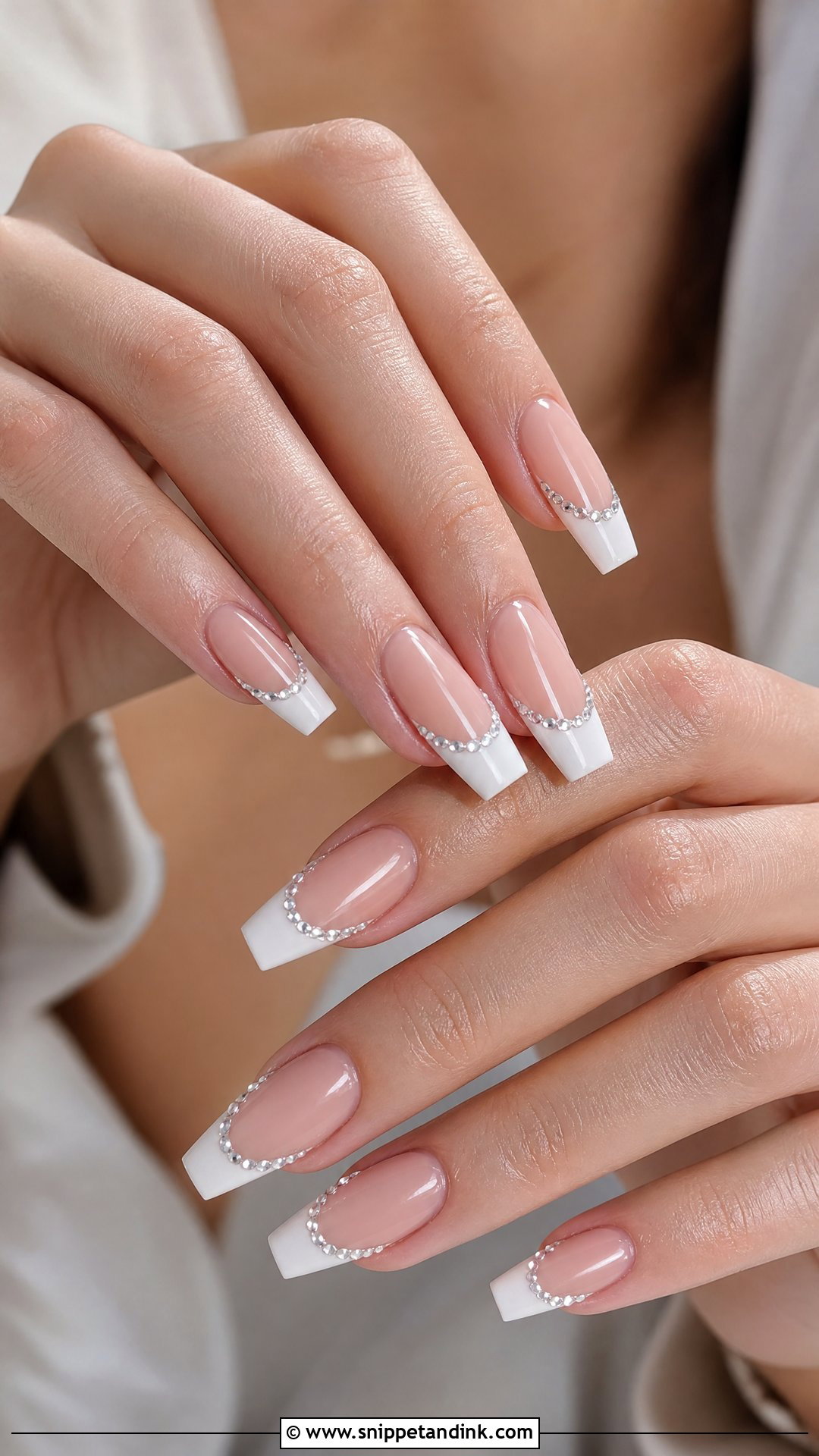
Rhinestone sets look dressy, and the risk is snagging. A thin row of small clear stones under the tip, a single crystal at the cuticle or one accent nail gives the sparkle without turning your hands into hooks. I set stones low and seal around them, then run a pair of tights over each nail at the trial to find any edge that catches. Skip oversized gems if your veil is fine tulle. Medium almond, oval or coffin nails give the detail enough space.
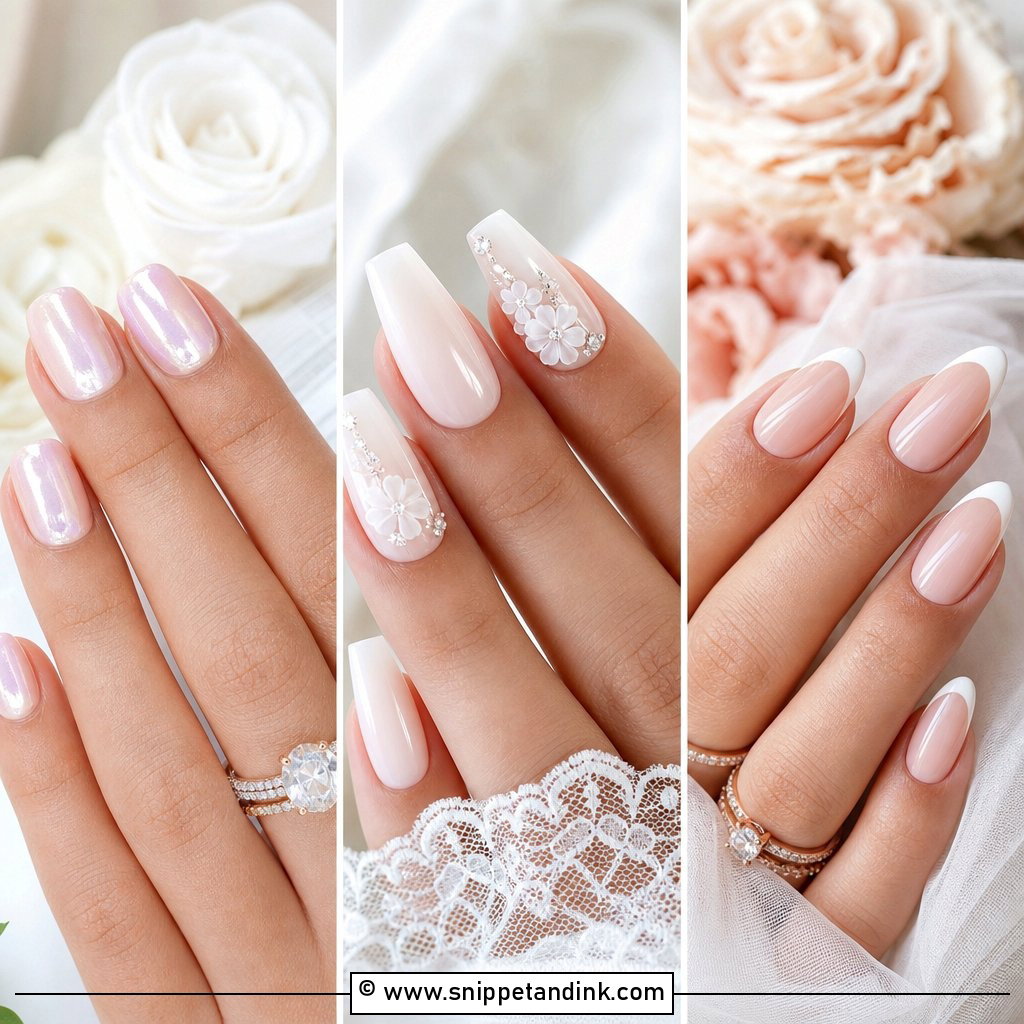
20. Lace French Tip Wedding Nails
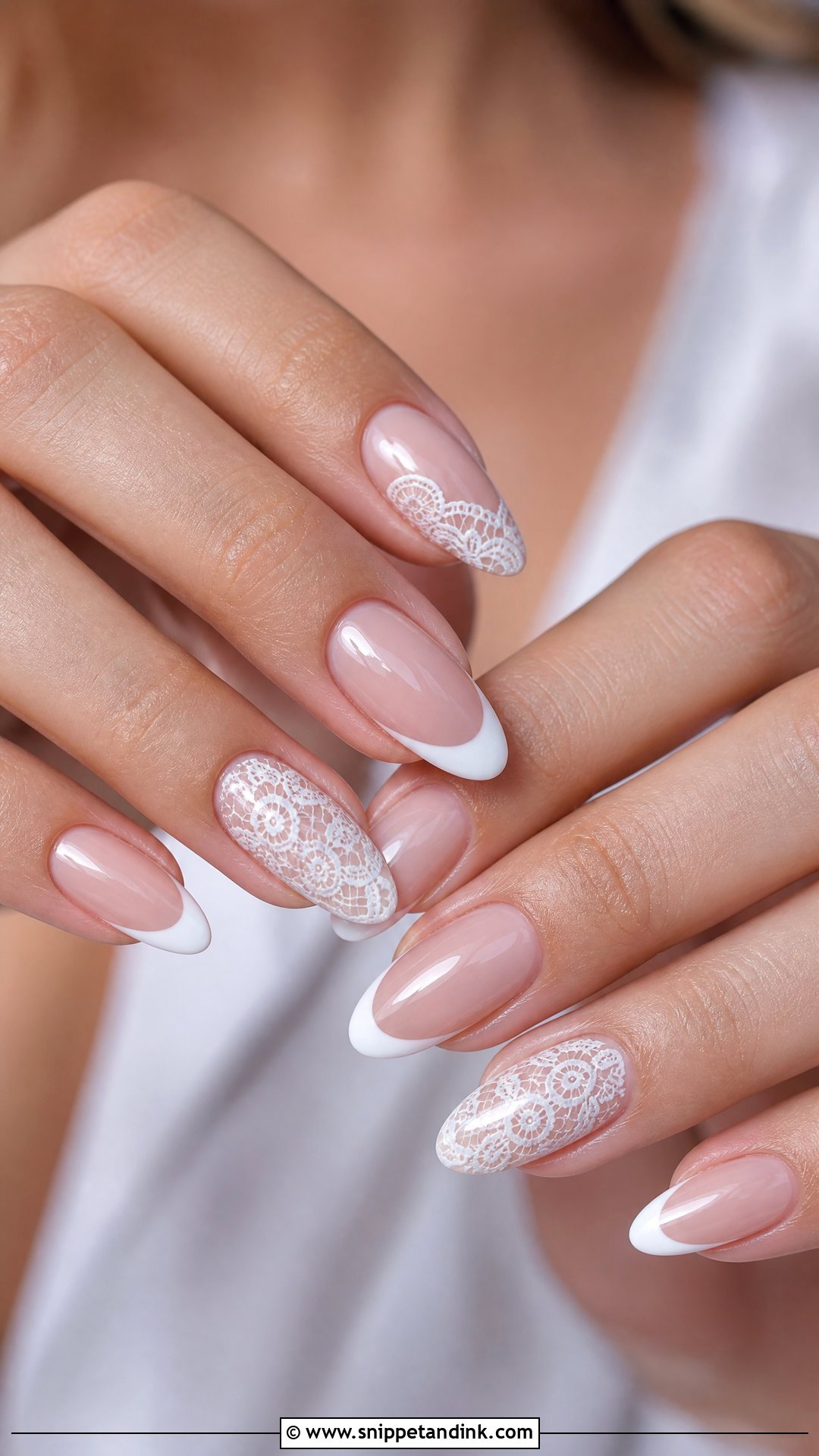
Lace art echoes the dress, so I always ask brides to bring a fabric swatch or a close photo of their lace to the appointment. The linework is painted with a very fine liner brush in white gel over a classic or milky French, and it has to stay sparse or it turns into a white smudge from a few feet away. One or two accent nails are usually enough. Matte top coat makes the lace look soft and fabric-like; gloss looks more traditional.
21. Floral French Tip Wedding Nails
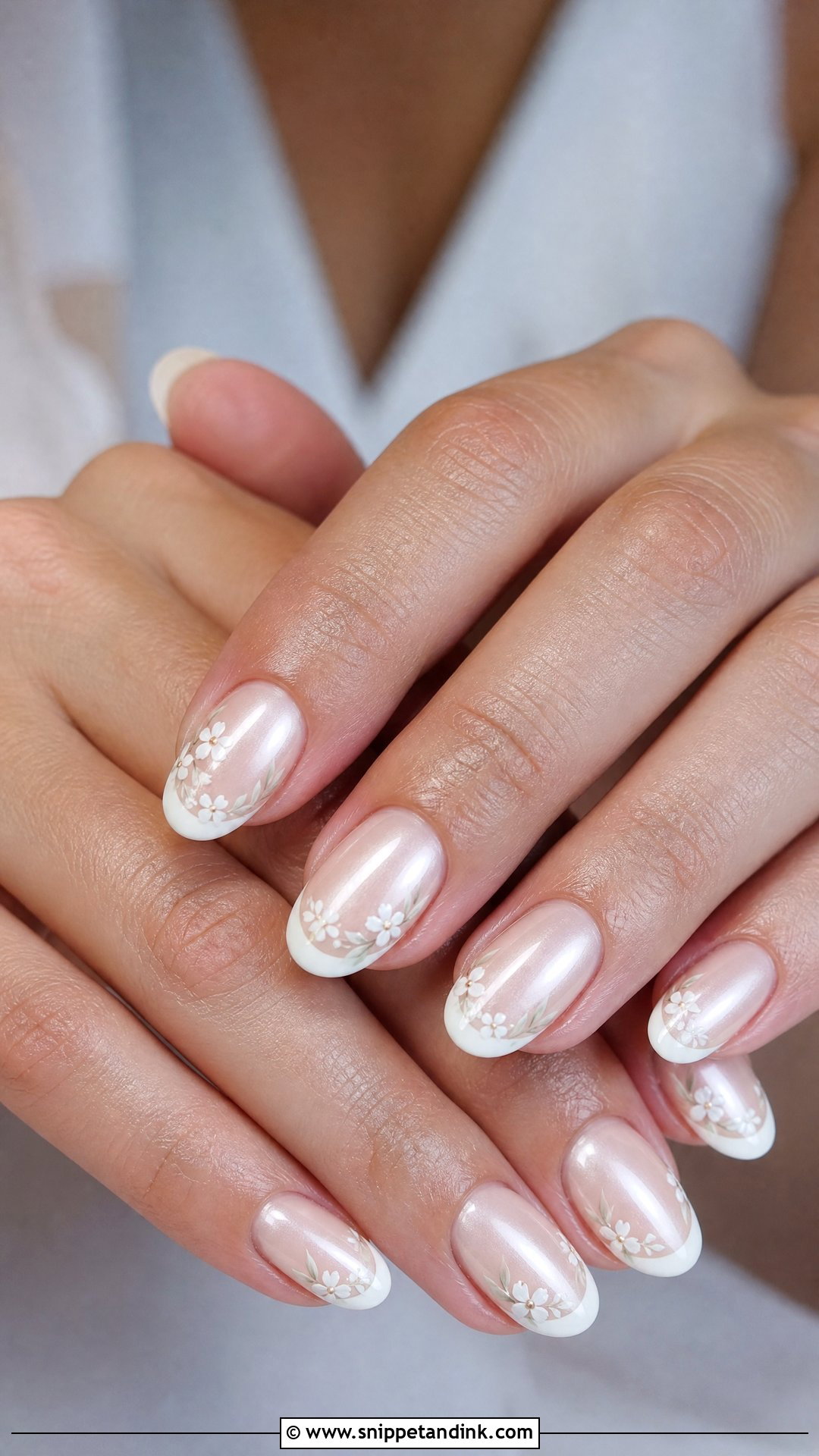
Small painted flowers on a French base suit spring and garden weddings, though they work year-round if they’re tiny. I keep florals to one or two accent nails and use dots, a few fine petals and a leaf or two rather than large painted blooms, which look childish at bridal scale. White, blush or nude flowers sit best. Oval and almond nails give the petals enough room without crowding the tip.
22. Double French Tip Wedding Nails
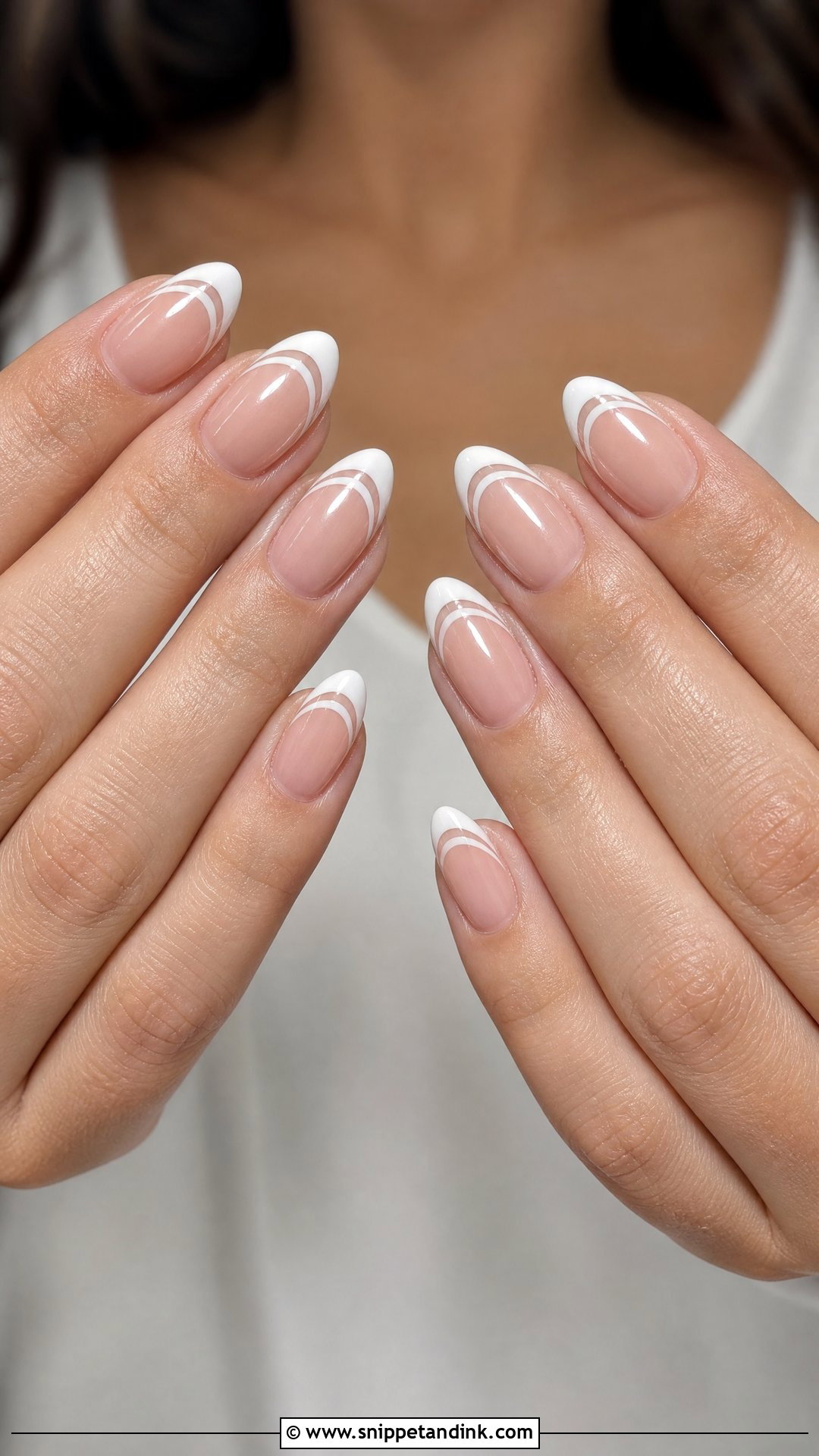
The double French adds a second fine line, usually just below the tip or near the cuticle, in white, pearl, silver, gold or soft pink. It’s a small change that makes a plain set feel designed. Both lines need to be thin and parallel, which takes a steady hand and a striping brush; uneven spacing is the first thing you notice in a close-up. A sheer nude base keeps both lines visible. Almond, oval and square all carry it.
23. V French Tip Wedding Nails
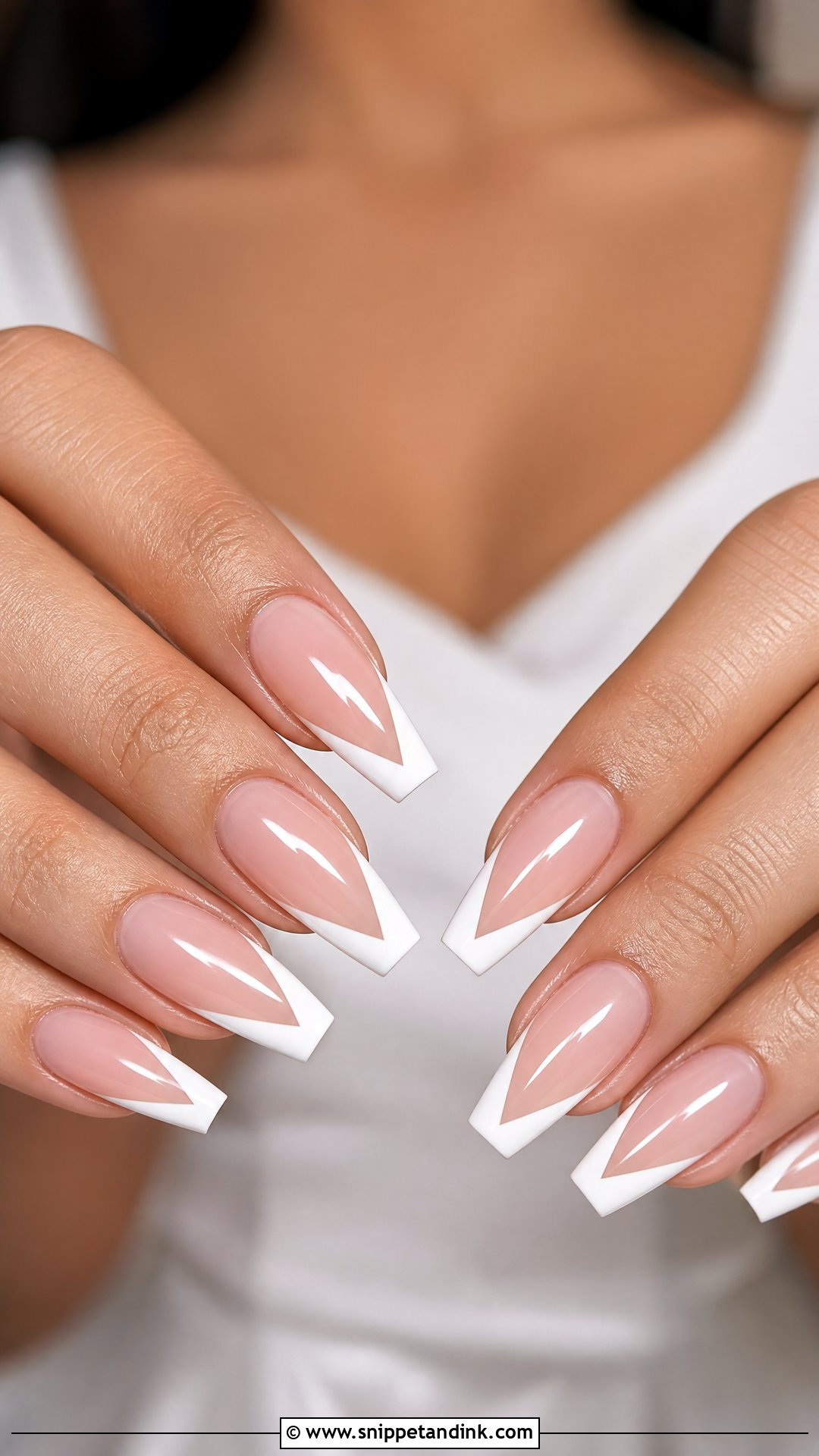
V French tip wedding nails replace the curved smile line with a soft point aimed at the centre of the nail. The angle draws the eye down the finger, so it sculpts almond, coffin and stiletto shapes in particular. For a wedding I keep the V shallow; a steep chevron looks fashion-week rather than aisle. White over sheer pink is the starting point, and pearl chrome over the top softens it. Sleek gowns and minimal styling suit it best.
24. Side French Tip Wedding Nails
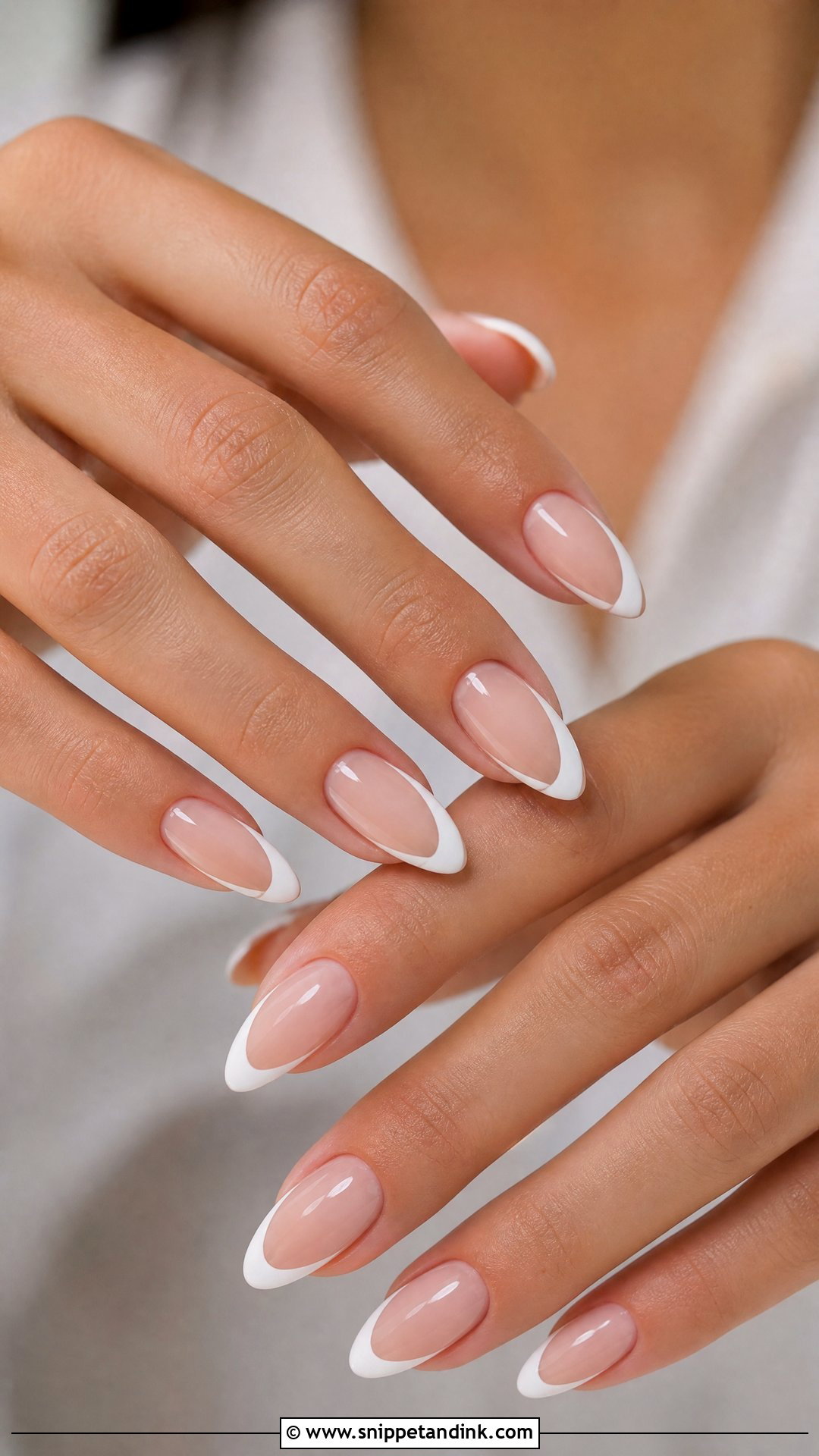
A side French curves the tip along one corner of the nail instead of straight across, which creates a diagonal that makes the fingers look longer. I paint the curve so it follows the same direction on every finger of a hand; mirrored on the other hand, it looks deliberate rather than accidental. It’s an easy step away from a classic French that still photographs clean. White, ivory, pearl or champagne all work for the tip, almond and oval suit the curve, and a gloss coat finishes it.
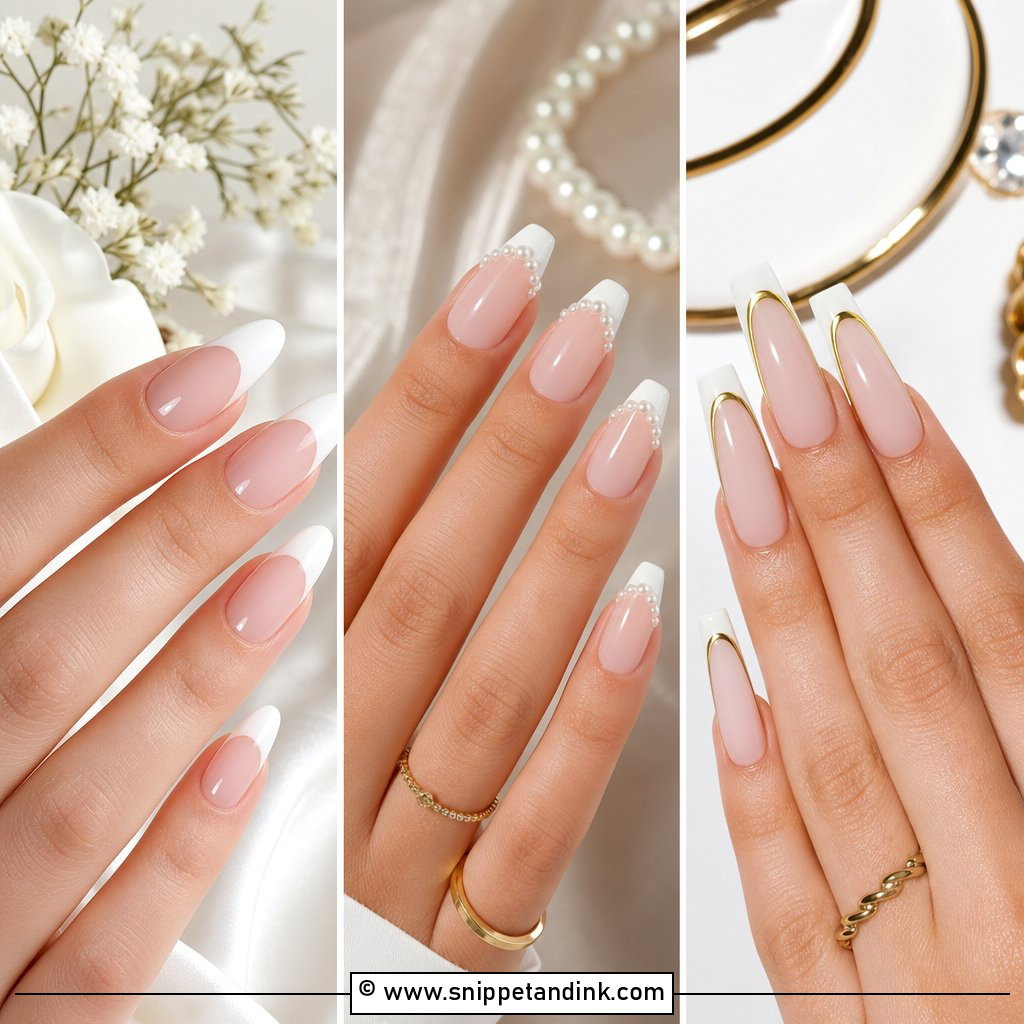
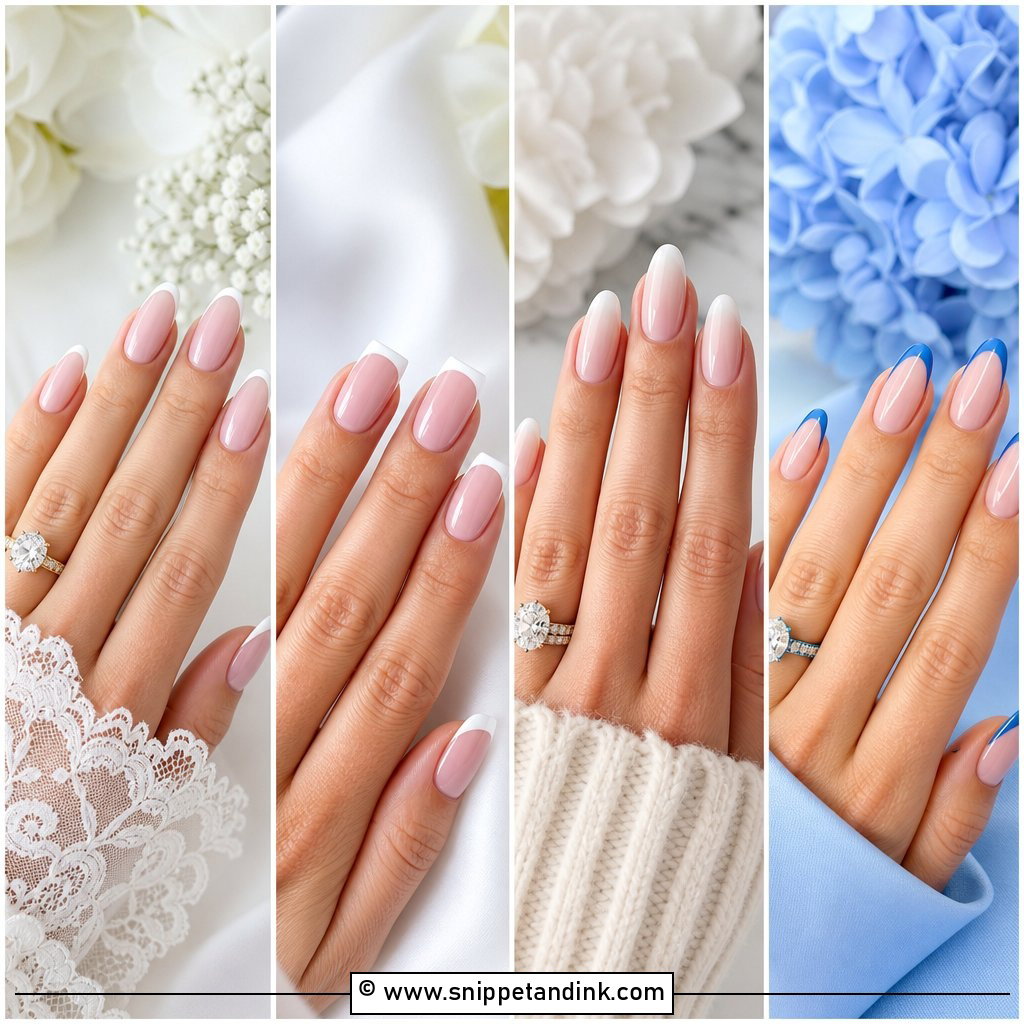
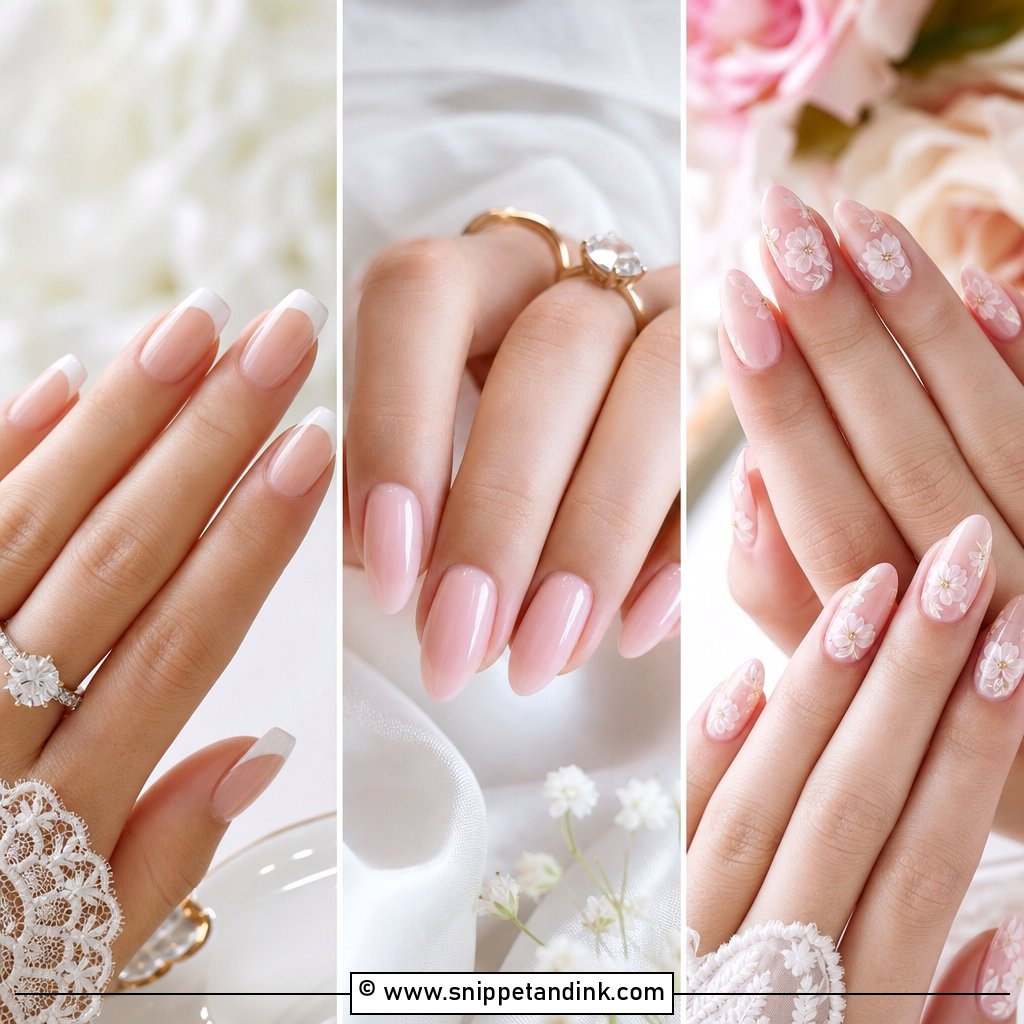
25. 3D Flower French Tip Wedding Nails
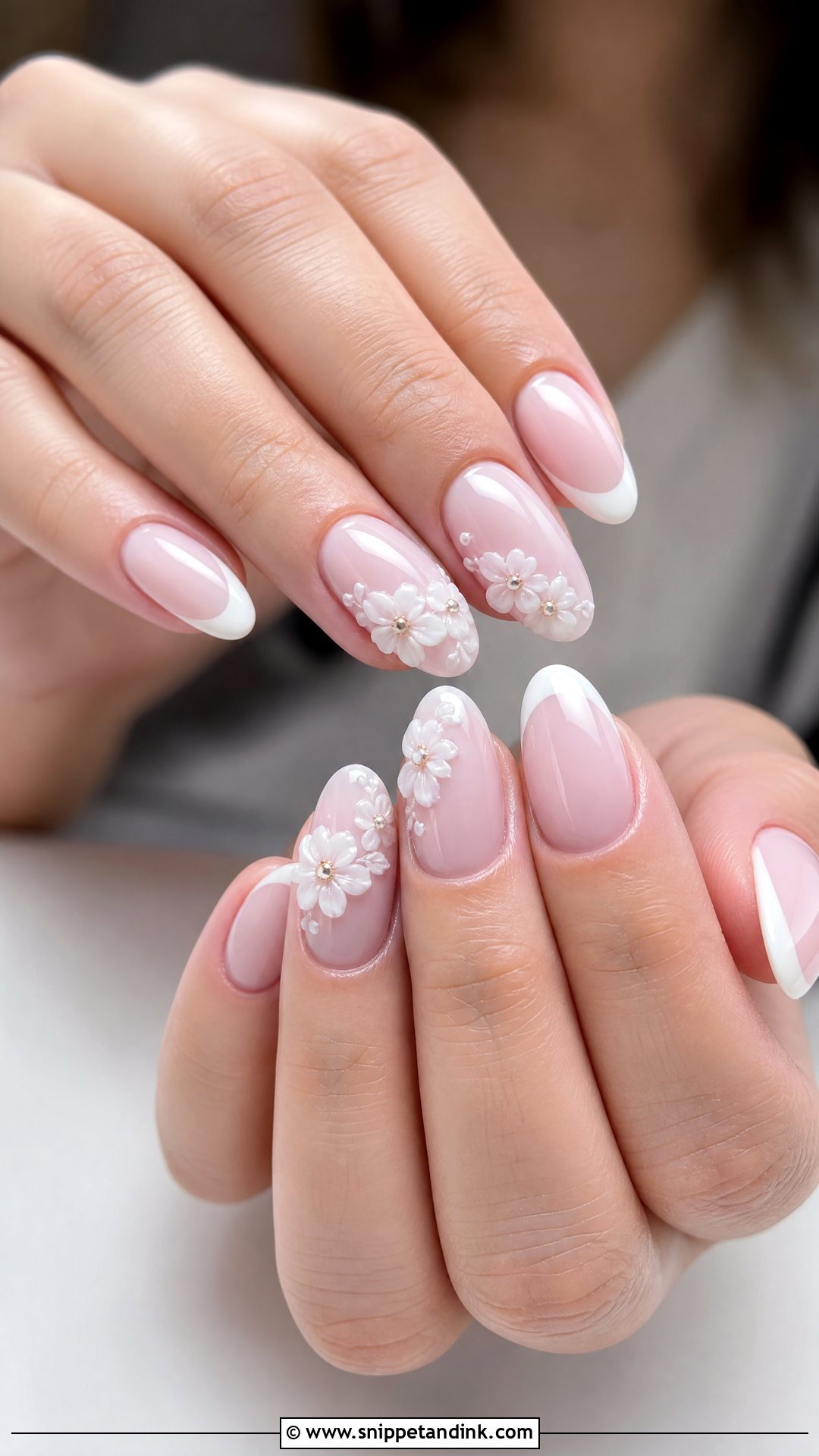
Raised 3D flowers are sculpted from builder gel or acrylic and set on one or two accent nails. Done small and low, they’re romantic; done tall, they snag lace, catch on tulle and feel strange every time you touch your face. I keep them under a couple of millimetres high and seal the base so there’s no lip. White, ivory or blush flowers are the bridal choices, and a milky base helps them blend in. They pair naturally with floral appliqué gowns and garden ceremonies.
Spray Tan, Lace Sleeves and Other Things That Spoil a White Tip
White and milky gels show every stain, so the order of your beauty appointments matters. Do your spray tan or self-tanner before your manicure, never after. Tanning solution soaks into the cuticle and grabs the edge of a fresh white tip, leaving it orange. If the tan must come later, wear gloves when you apply it and wipe each nail with a damp cotton pad straight afterwards.
Hair dye does the same thing, and so does turmeric at a haldi ceremony. Wear thin gloves for both if your set is already done.
Timing the appointment
I book bridal gel sets one to three days before the wedding. Gel normally holds two to three weeks, so that window covers the honeymoon while keeping cuticle grow-out invisible in the ring photos. Have the trial about a month out so there’s time to change shape or length. If you’re growing your own nails, a strengthening builder base under the French helps the free edge stay intact.
If a tip chips on the day
Ask your nail artist for a tiny bottle of the exact top coat and a nail file for your emergency kit. A small chip on the white can be filed smooth and sealed with top coat in a minute, and nobody will see it. Don’t pick at a lifting edge, because peeling gel takes a layer of nail with it.
A White Tip Is Only as Good as Its Smile Line
French tips can go classic, soft, sparkling or detailed, and the right version is the one that sits comfortably on your hands next to your dress and ring. If you want low risk, stay with classic white, micro, milky or baby boomer. If you want detail, look at pearl accents, lace art, floral tips or a soft chrome. Book a trial whenever the shape, length or artist is new to you, and plan the final set so it still looks fresh at the last dance.
You'll Like These Ideas:


Leave a Reply