
A Walima gown has a different job from the Barat outfit. By the reception you’ve already carried the heavy red, the long rituals and the weight of a full lehenga, so most brides I dress want something lighter that still reads clearly as the bride on the stage. That usually means a floor-length gown with controlled embroidery, a softer color and fabric that moves when you walk between tables. Capes, sculpted sleeves, short trails and East-West fusion details all turn up in current Walima design, but I’d start with your venue and how many hours you’ll be on your feet before falling for a sleeve. Each look below is styled head to toe, with the shoes, clutch, hair and makeup that make it hold together.
Planning the Walima Look Against Your Barat Lehenga
Most of my Walima brides have worn a heavy red or deep-toned lehenga the day before, often with jewelry that weighs more than they expected. The reception outfit should feel like a second chapter, not a repeat. I start by laying the Barat photos next to fabric swatches so the two looks contrast in color and in weight.
- Shift the palette. If the Barat was red or maroon, a pastel or metallic reads instantly as new in the family album.
- Drop the weight. A gown with embroidery concentrated at the bodice, cuffs and hem is far easier after a late Barat night than an all-over worked lehenga.
- Change the hair. A Barat usually ends in a full bun under a dupatta; a sleek low bun or open waves makes the Walima feel distinct even in a similar color.
- Reuse jewelry selectively. Heirloom earrings can come back, but a different necklace, or none, stops the two looks merging in photos.
If your family expects the dupatta over your head for the entrance or in front of elders, plan the hairstyle around that from the first trial. Pins placed to anchor a cape won’t hold a draped dupatta, and a high bun pushes the fabric into an awkward peak.
1. Blush Pink Embroidered Walima Gown
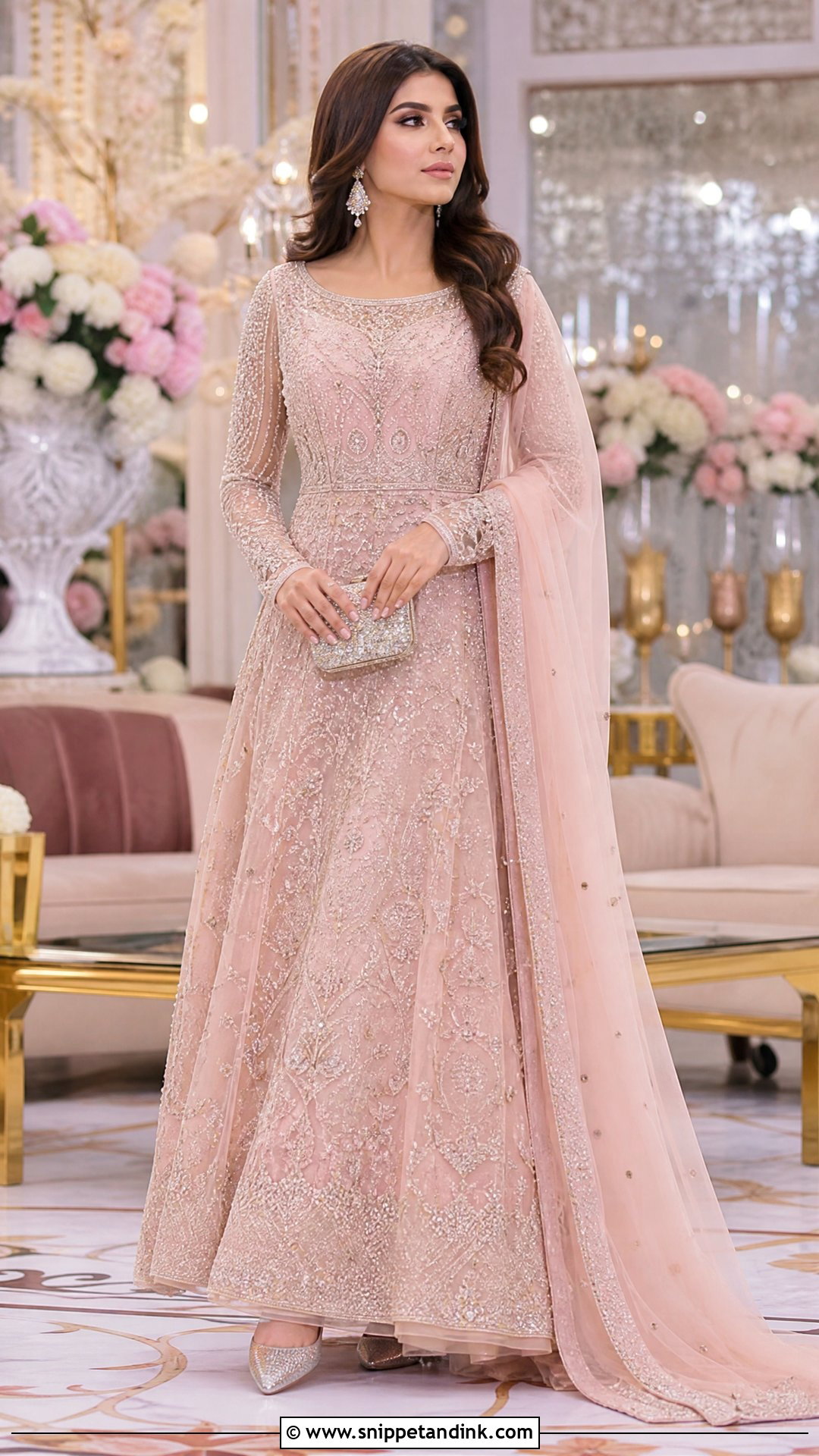
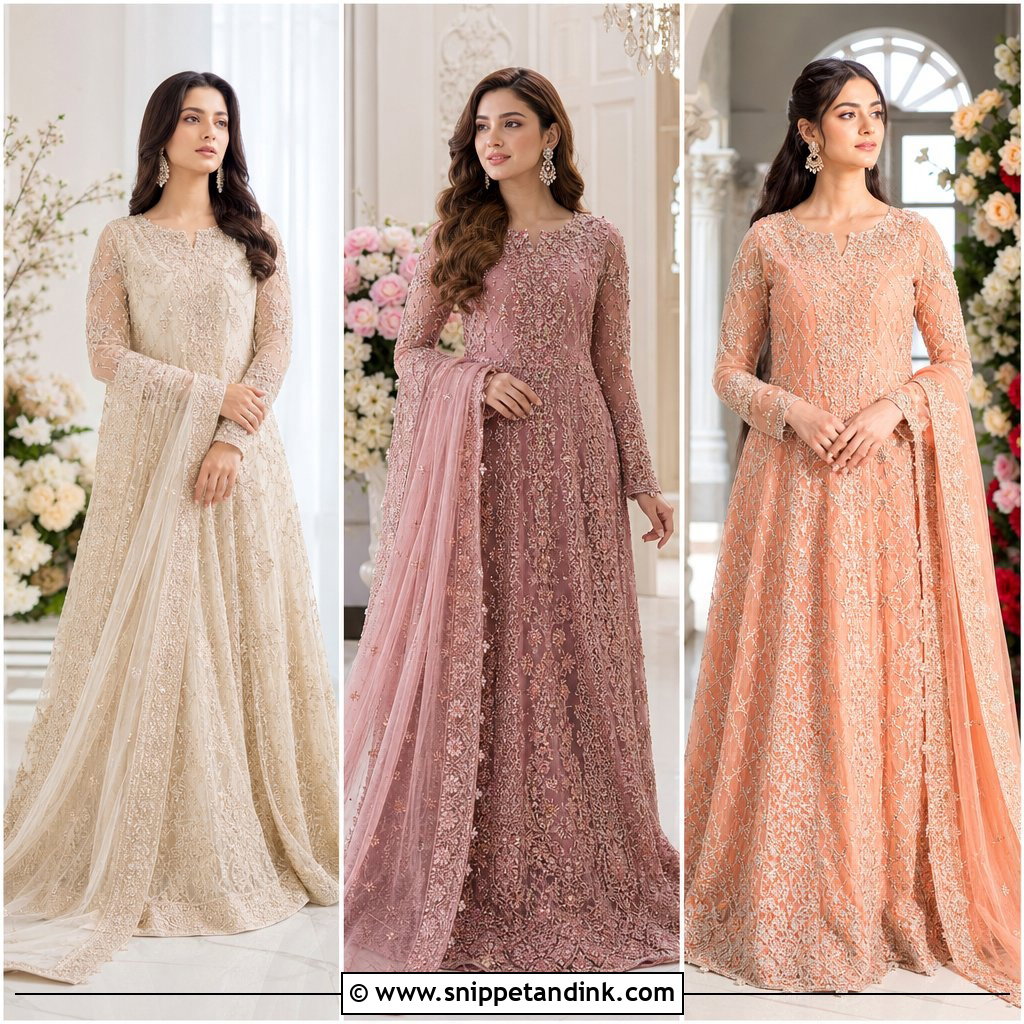
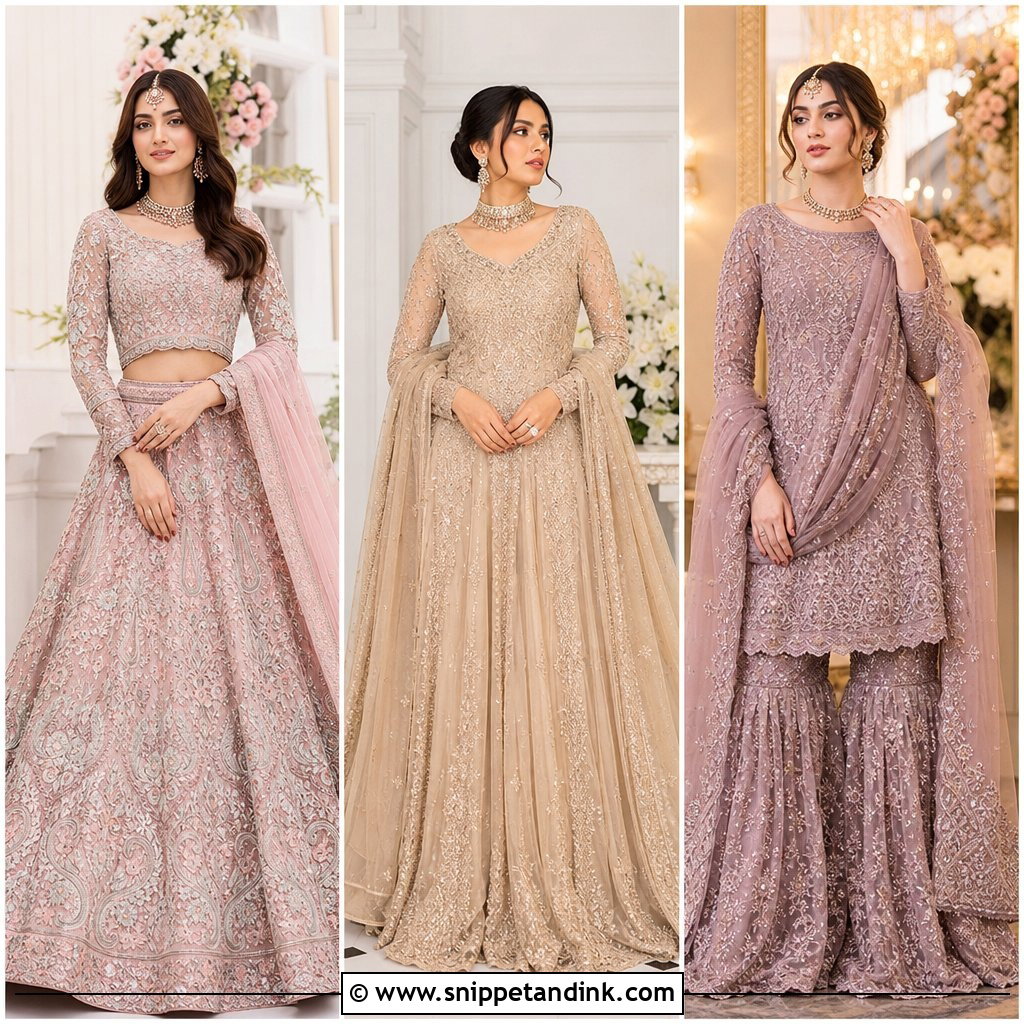
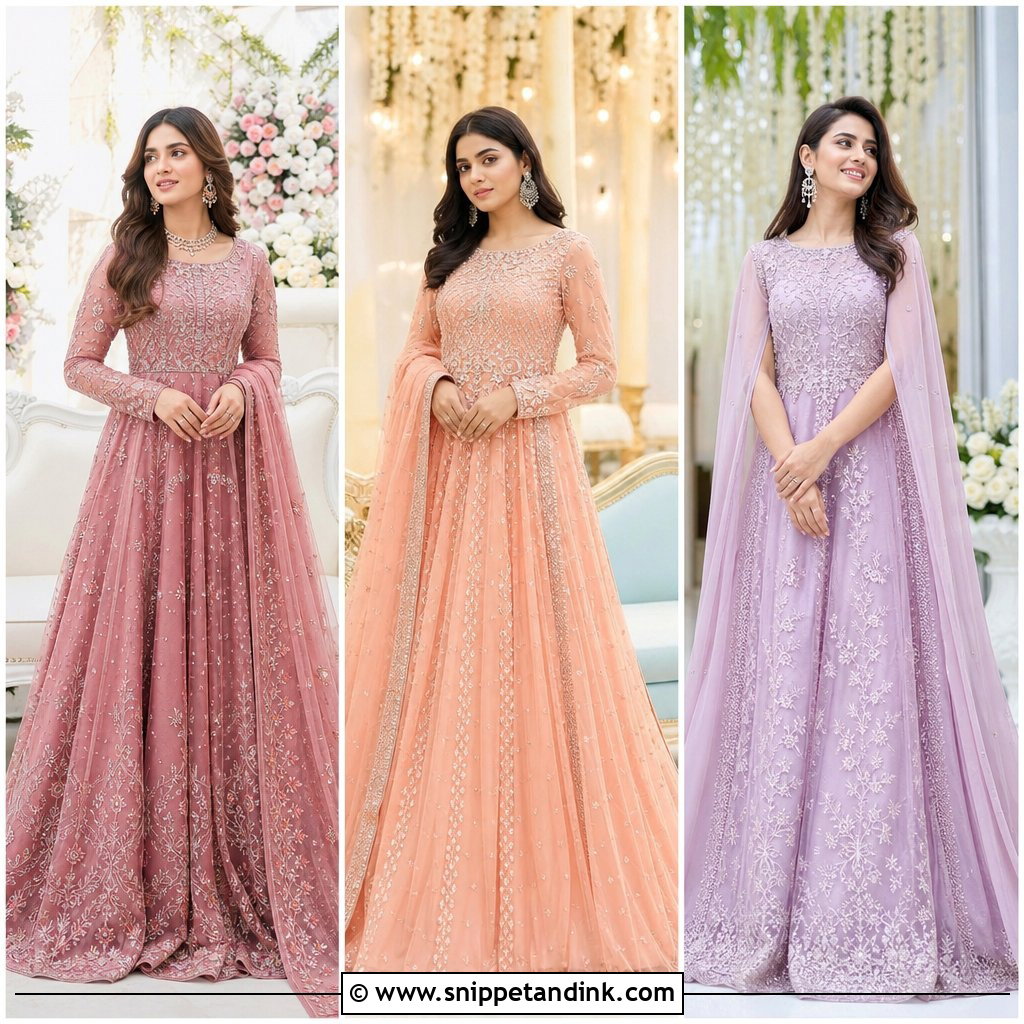
Blush is the shade I reach for most when a bride wants romance without weight. An A-line with a fitted bodice and a defined waist lets the skirt swing as you move around the room, and tonal floral embroidery in silver thread or pearls adds texture without breaking the soft palette. Check the blush against your skin in daylight before you commit: on warm or olive skin, a blush that leans grey can drain the face. Full sheer sleeves keep the motifs visible while giving coverage. I’d add silver pointed heels, a small crystal clutch, diamond-look drops, a low textured bun and a light dupatta over one shoulder, which suits a daytime reception as well as an evening one.
2. Ice Blue Cape Walima Gown
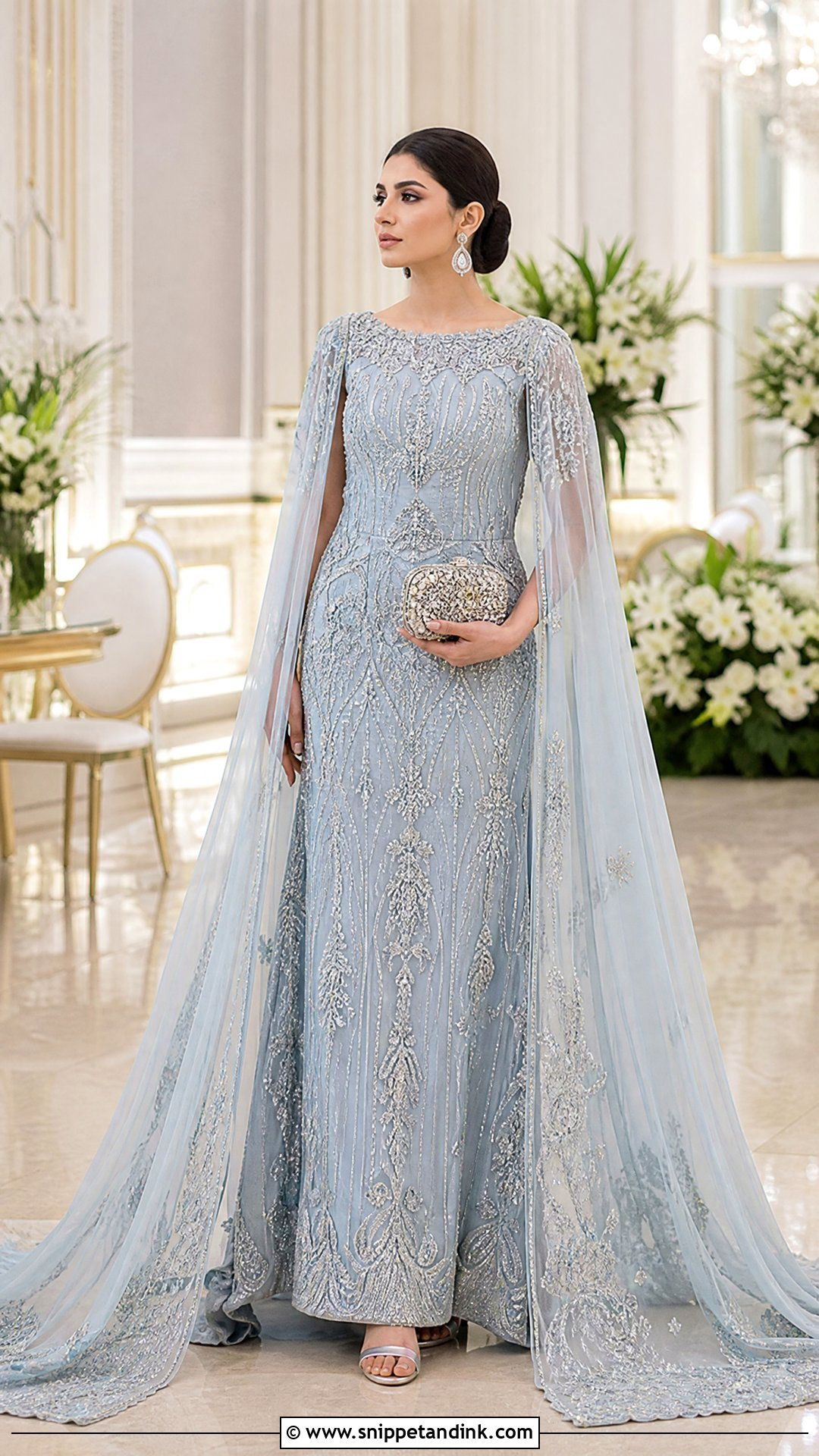
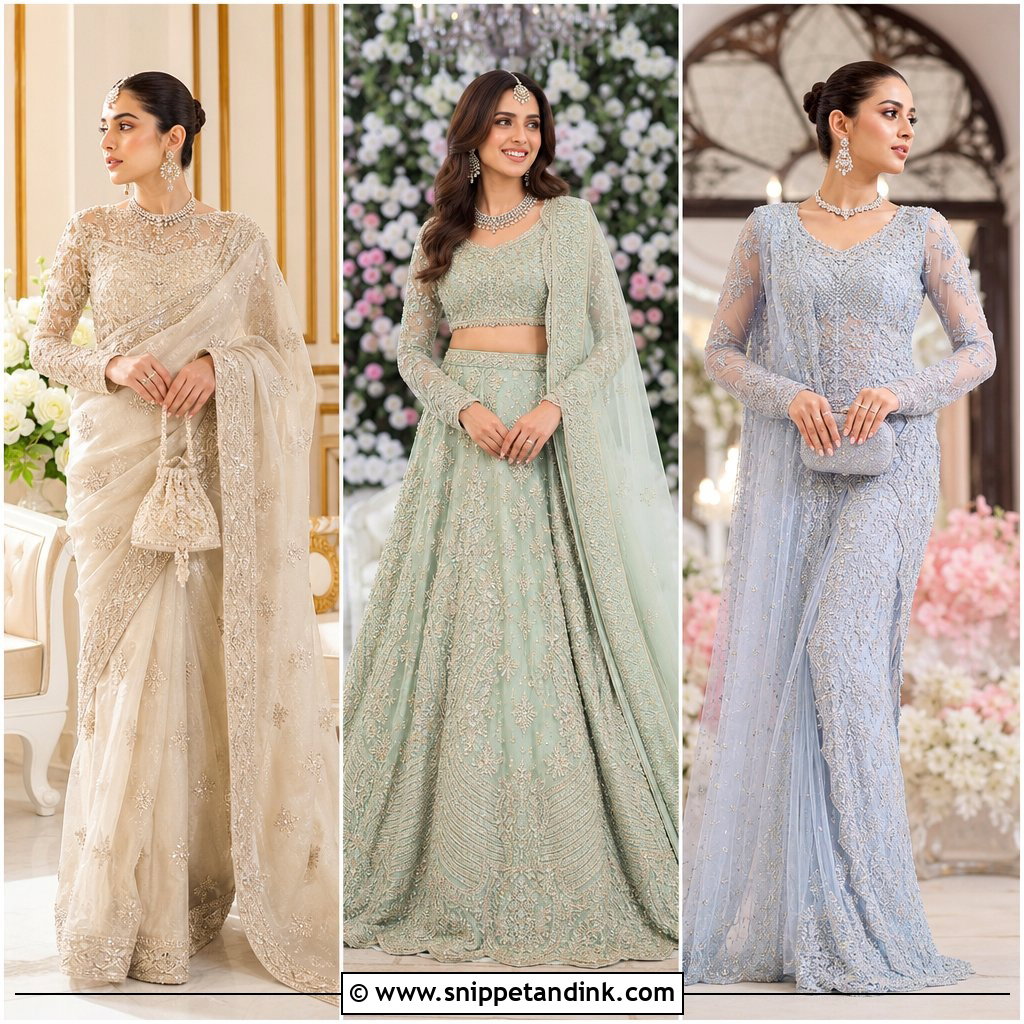
Ice blue glows under soft light, and a sheer floor-length cape attached at the shoulders gives it the movement a dupatta would, without the constant re-pinning. Ask for a structured inner bodice so the cape has something firm to hang from; on a soft bodice, the weight of a long cape drags the neckline backwards. Keep the sparkle scattered rather than solid. Silver heels, a beaded box clutch, teardrop earrings and a sleek middle-parted bun leave the shoulder line clear, and cool-toned makeup with a soft pink lip suits a grand ballroom where modesty and formality both matter.
3. Champagne A-Line Walima Gown
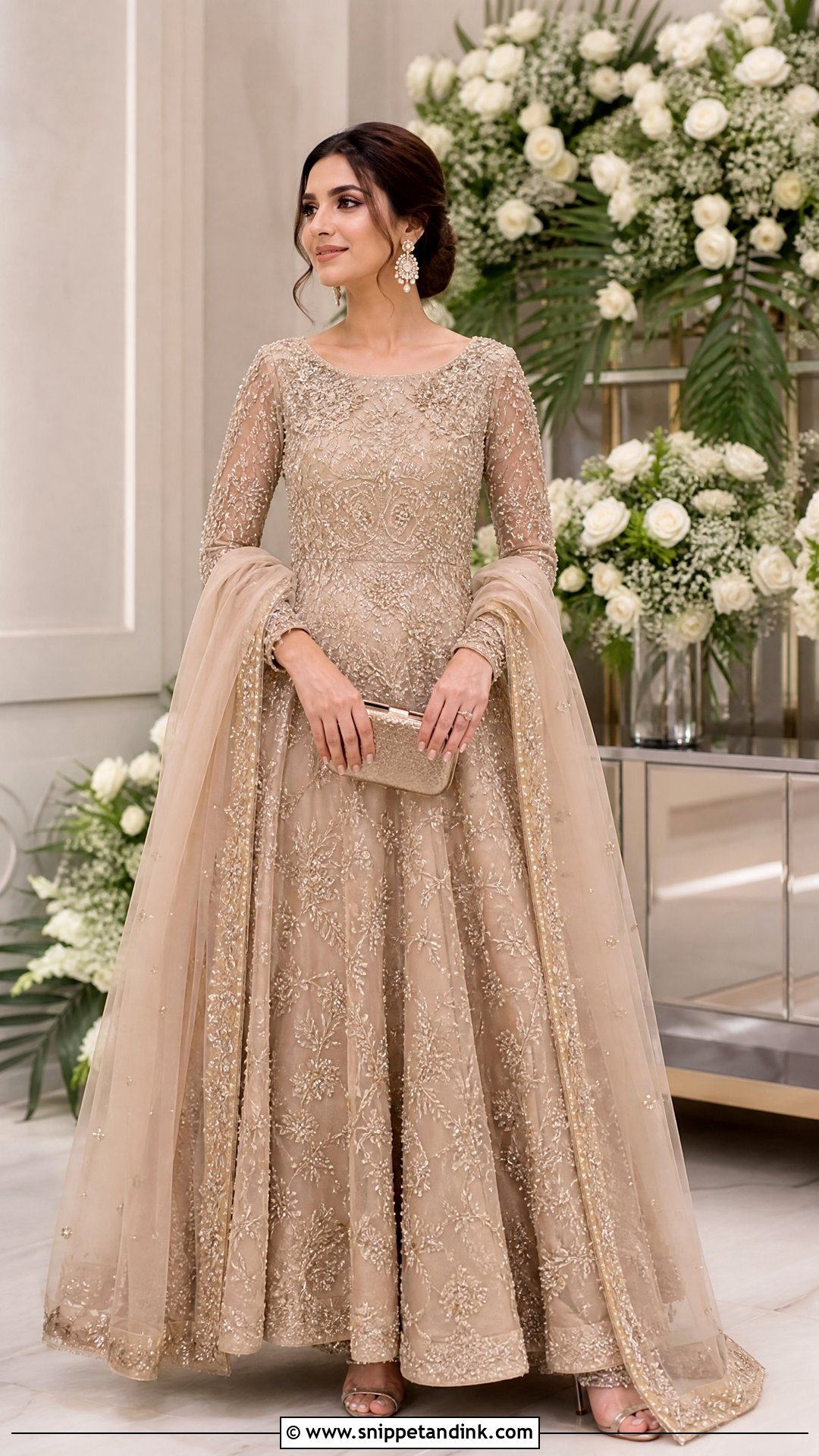
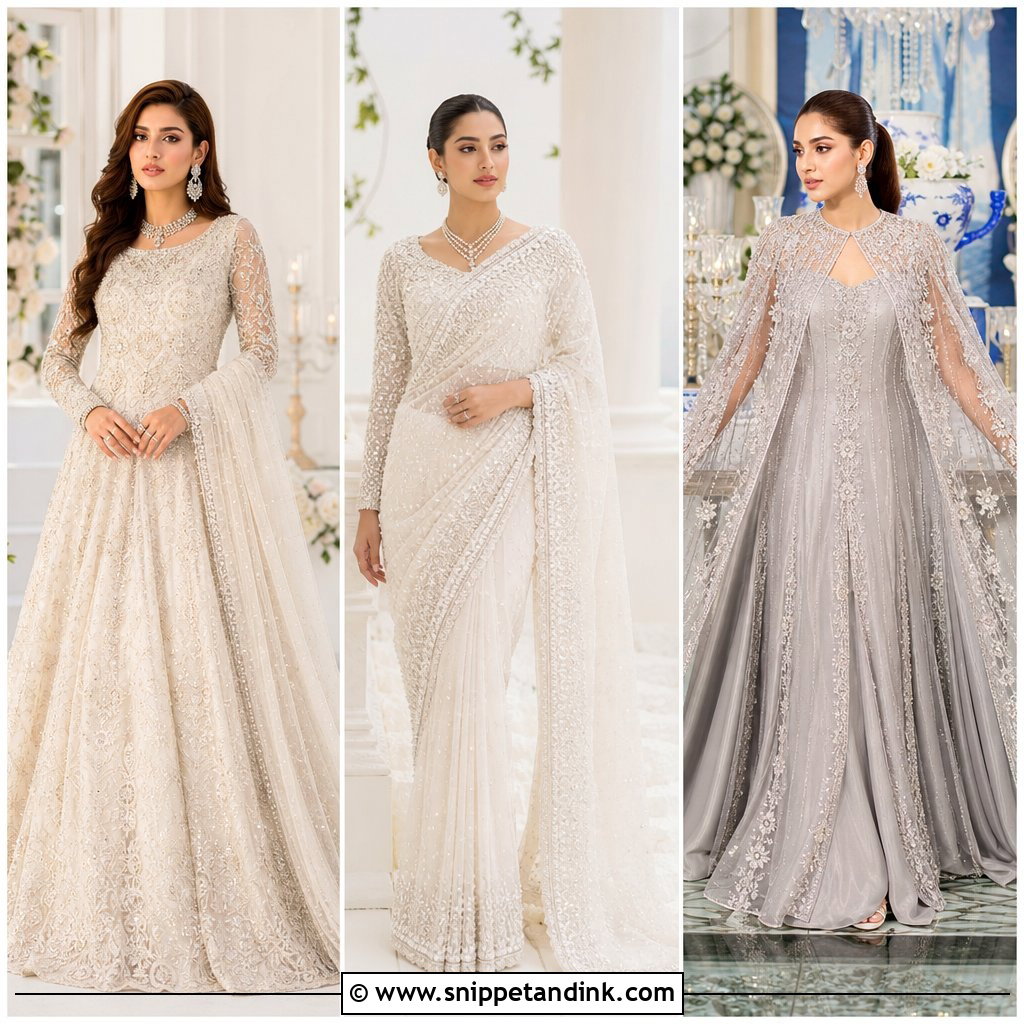
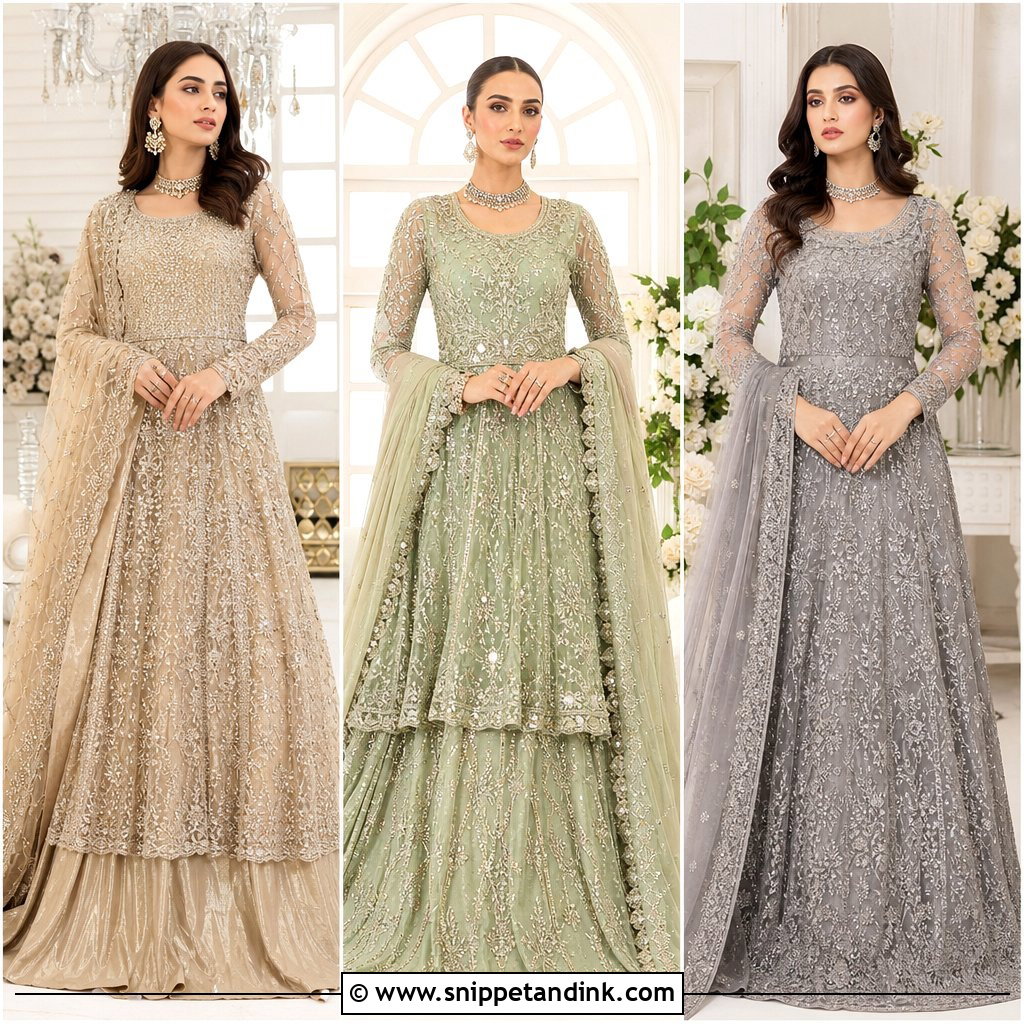
Champagne is the neutral I suggest when ivory feels too close to a Western bridal look and gold feels too loud. Its risk is flatness: a plain champagne skirt can vanish against beige venue walls. That’s why I place antique gold embroidery, pearls or fine crystal vines at the neckline, waist and hem, so the eye has somewhere to land. Champagne heels, a structured metallic clutch and pearl drops keep everything in one tone, and a side-parted bun with a few face-framing strands softens the A-line. If you want a dupatta, choose sheer organza with a narrow border and let it rest loosely over the arms. Warm neutral makeup and a muted rose lip finish it.
4. Silver Metallic Walima Gown
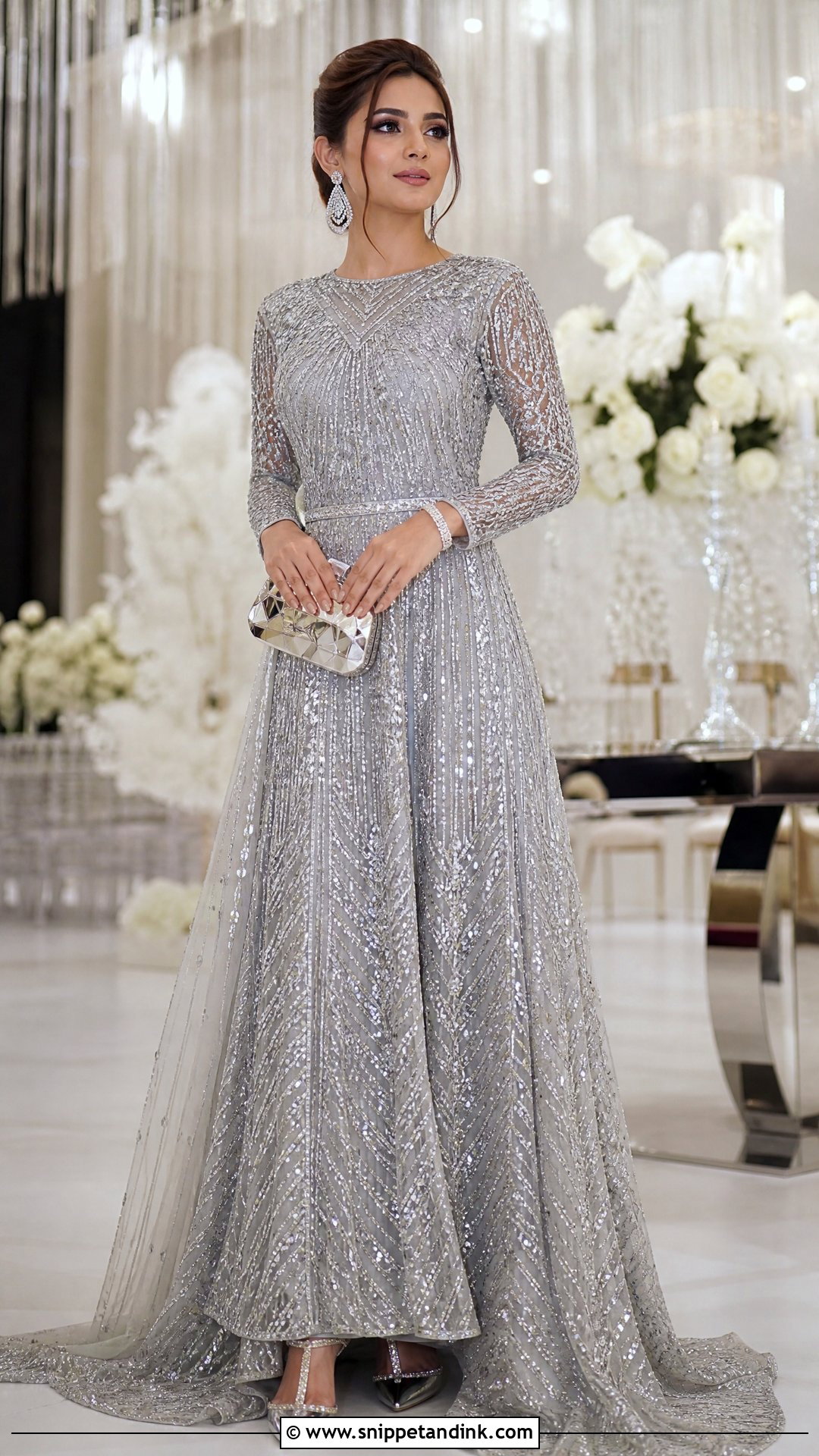
Silver metallic belongs at an evening Walima where you’re happy to be seen across the room. The version that wears best pairs a softly structured bodice with a fluid skirt. All-over sequins on a stiff base make a gown move like armour and show every crease once you’ve been seated, so I ask for threadwork, sequins and bugle beads over grey or cool ivory instead, with long fitted sleeves to calm the shine. With a mirrored clutch and pointed silver heels, crystal earrings are usually enough. A low bun or smooth waves tucked behind the ears, cool-toned eyes and a neutral lip let the fabric lead.
5. Sage Green Organza Walima Gown
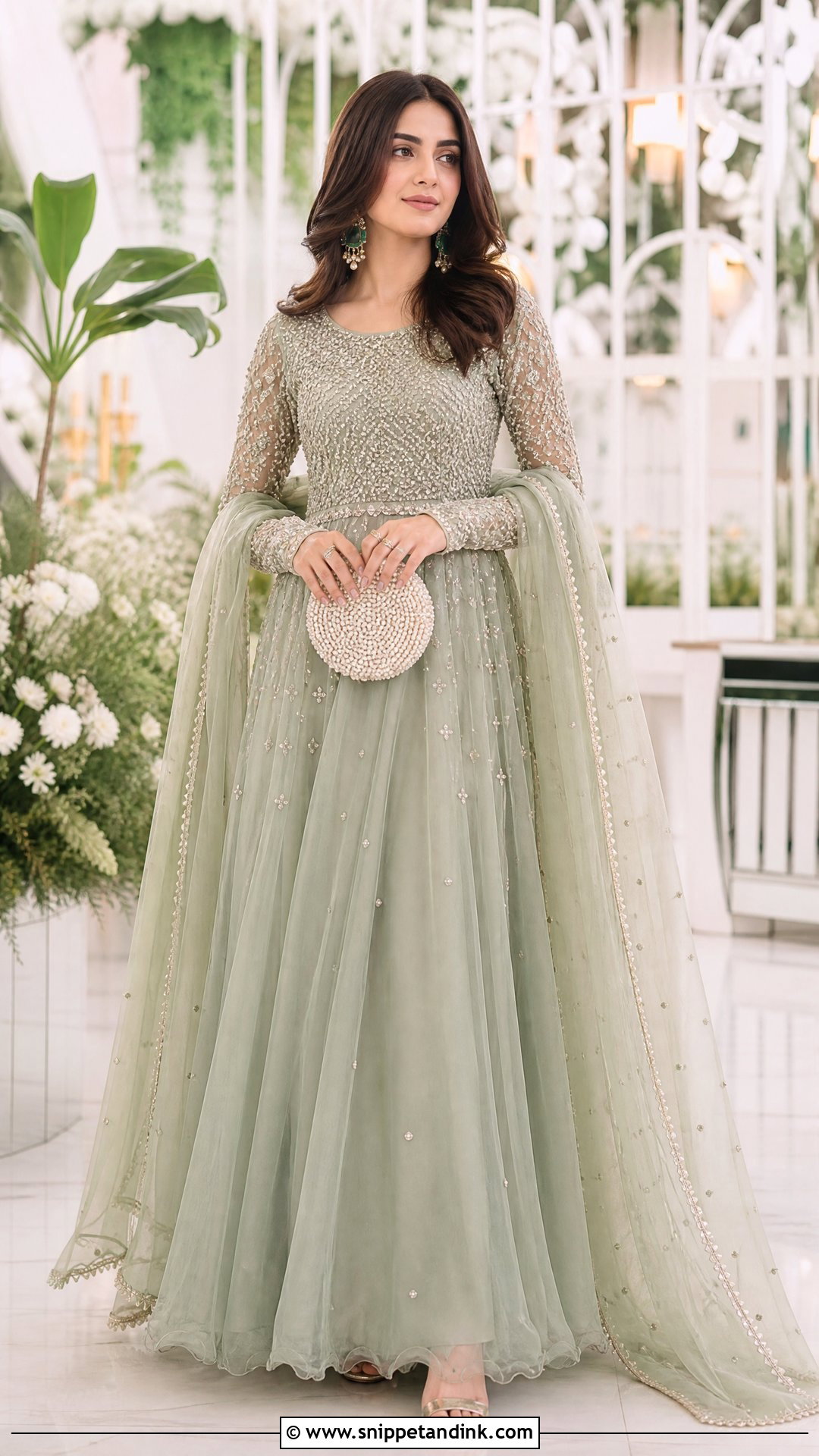
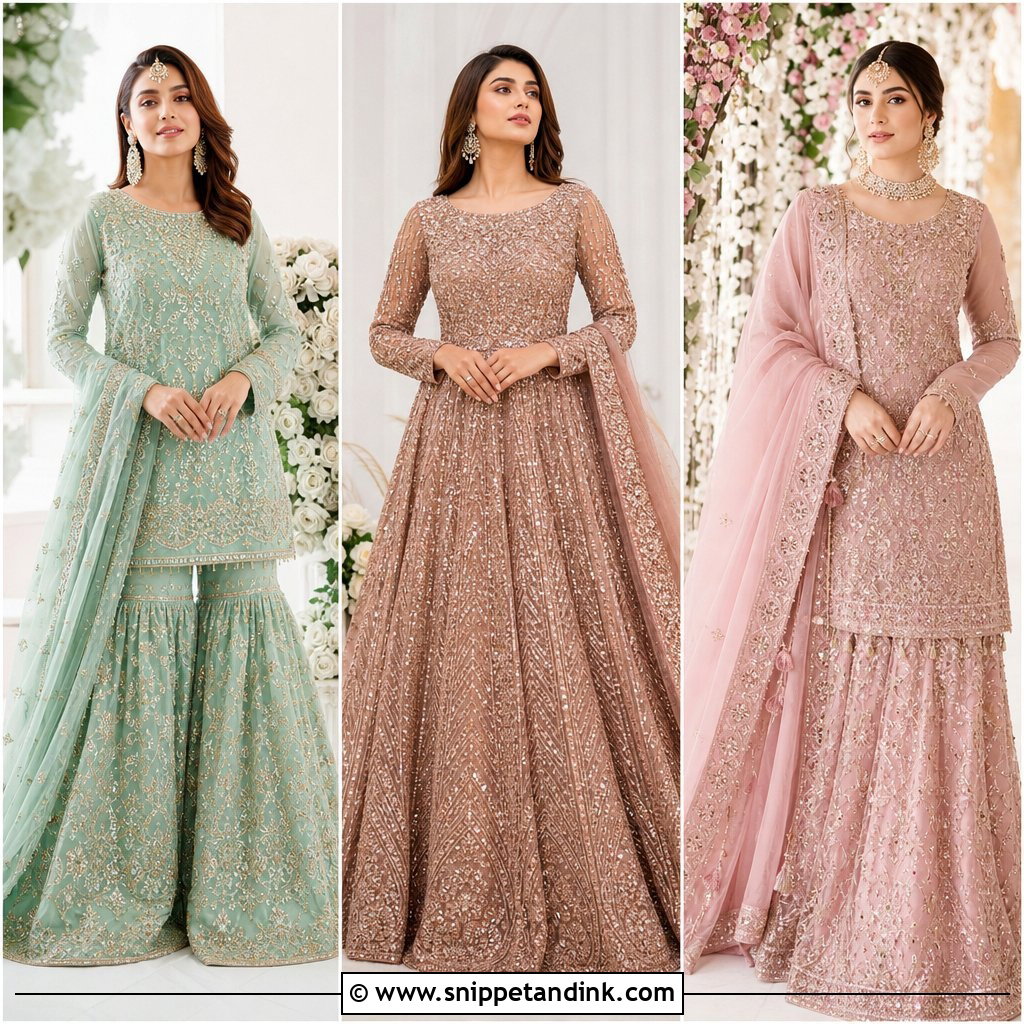
Sage reads calm and slightly unexpected, and organza gives it volume without weight. I build it over a fitted inner layer so the outer skirt floats instead of clinging, then keep the embroidery tonal with ivory pearls and pale gold. Organza creases sharply when it’s packed tight, so have it steamed at the venue rather than the night before. A square neckline with sheer sleeves feels current and still modest. Pale gold heels, a pearl clutch and earrings with green stones suit it. Add a sage dupatta only if it doesn’t hide the bodice, and warm the skin with peach blush and a nude-pink lip so the green doesn’t make you look tired.
6. Lavender Layered Walima Gown
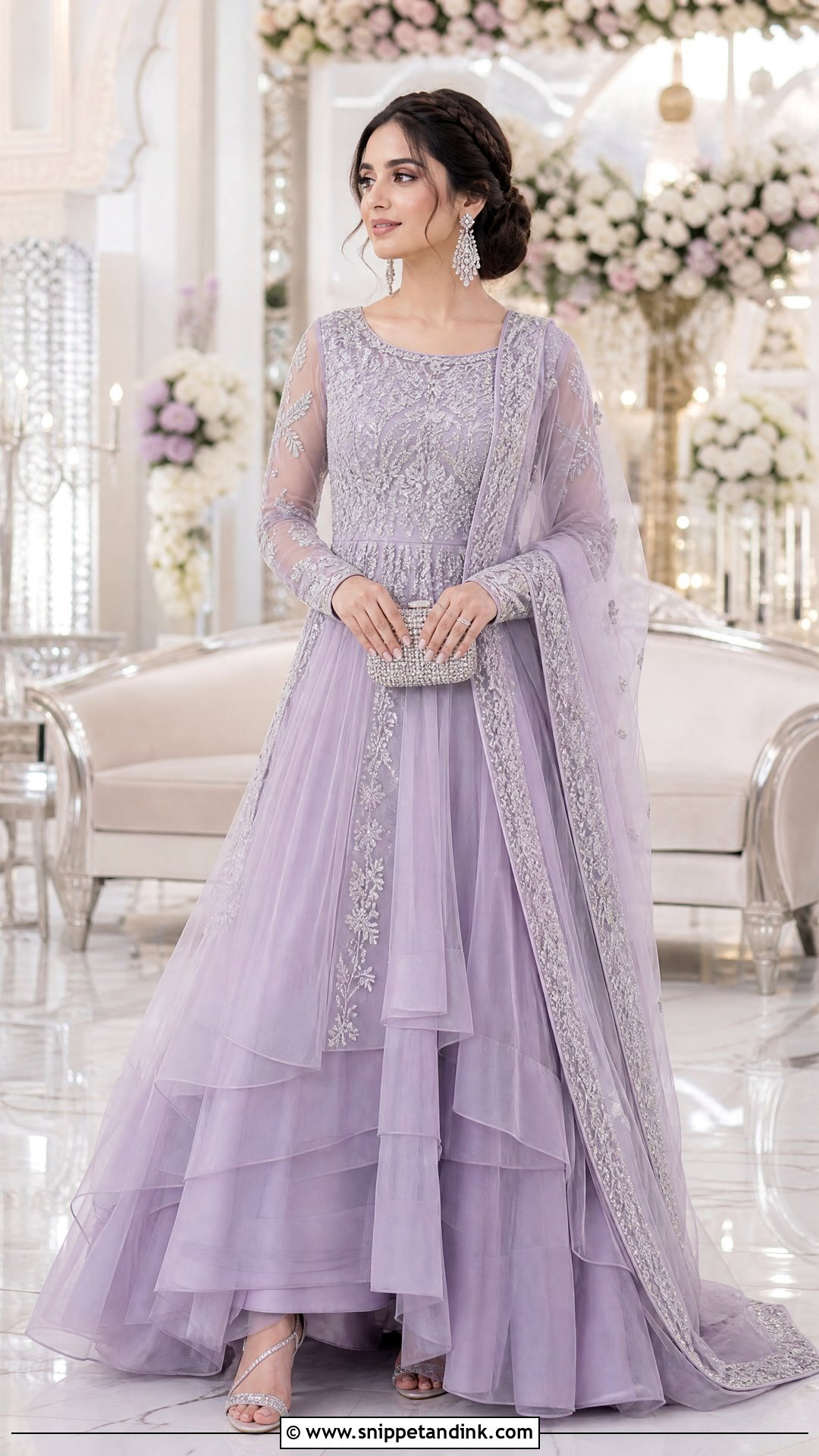
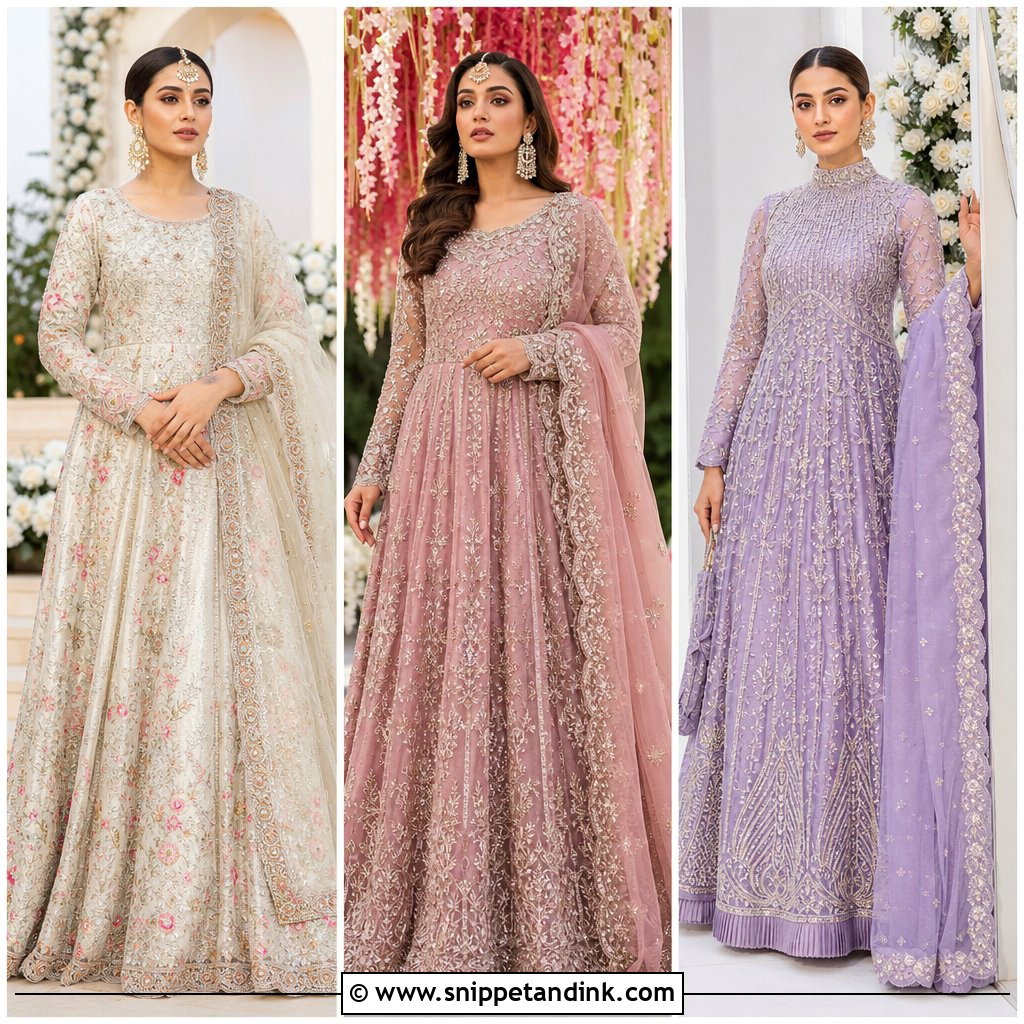
Lavender layers are lovely in motion, but I limit them to two or three soft tiers. Any more and the skirt starts to look like a costume and doubles in bulk when you sit. A defined waist holds the shape. Silver embroidery, pearl vines or small crystal flowers can travel from the bodice onto the sleeves, and a scalloped neckline means you can skip the heavy necklace. Silver or pale lavender heels, a crystal clutch and chandelier earrings carry the sparkle. A low braided bun keeps the upper detailing on show, and a sheer lavender dupatta can sit over one arm. Pair it with mauve eye makeup, fresh skin and a muted berry-pink lip.
7. Ivory Pearl Walima Gown
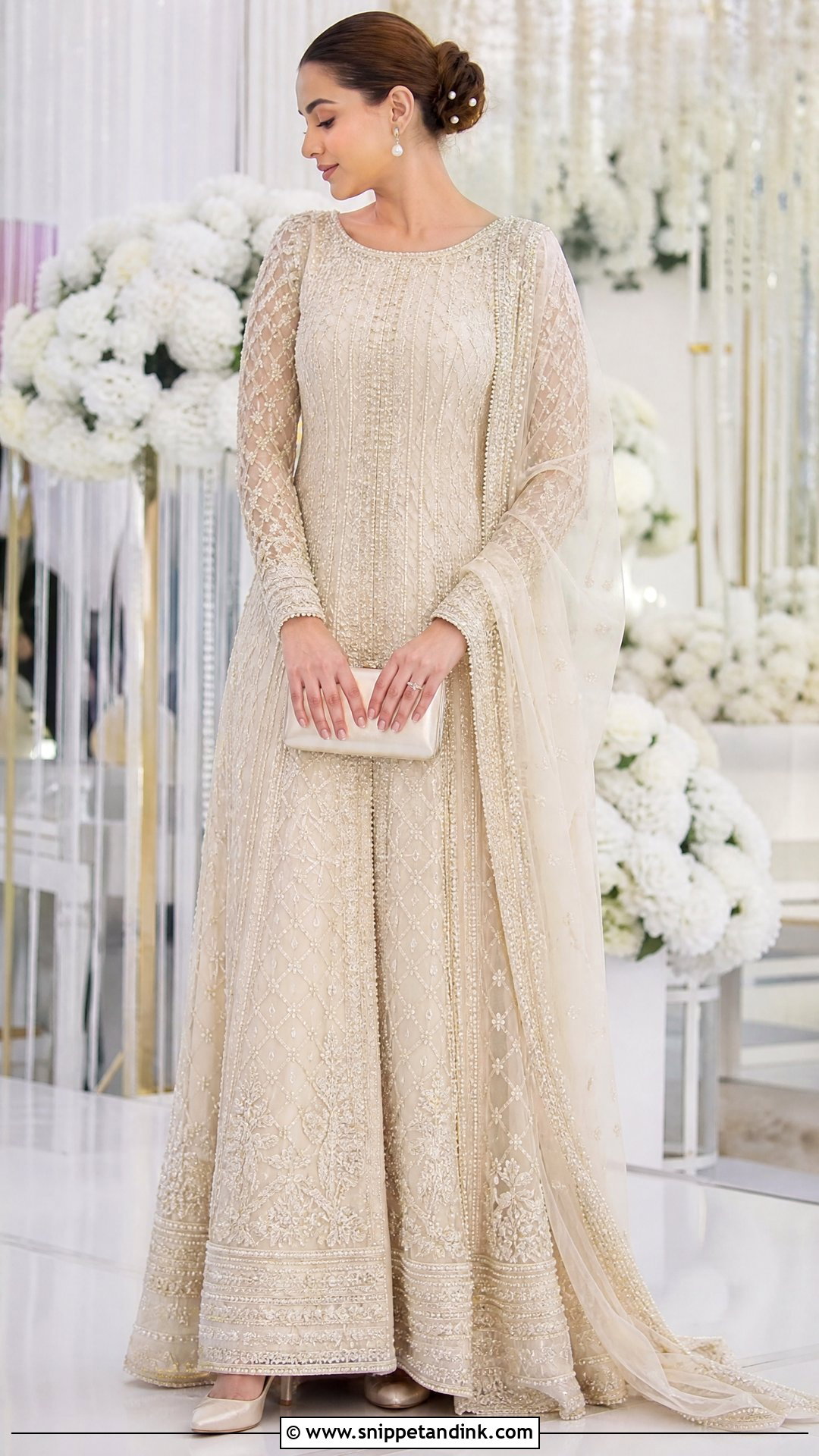
Ivory with pearls depends on texture more than color. I mix pearl sizes across the bodice and cuffs so the embroidery has depth, and keep the rest of the floor-length gown plain enough to let it show. Talk to your family first: some households are happy with ivory bridal wear and others see it as too Western, and an embroidered dupatta with clearly bridal accessories helps it read as a Walima outfit. Closed-toe ivory heels, a satin clutch and pearl-and-crystal earrings stay in the same family, while pearl pins in a smooth bun echo the gown. Skip the oversized necklace if the neckline already carries pearl work. Luminous skin, brown liner and a rose-nude lip are all it needs.
8. Dusty Rose Trail Walima Gown
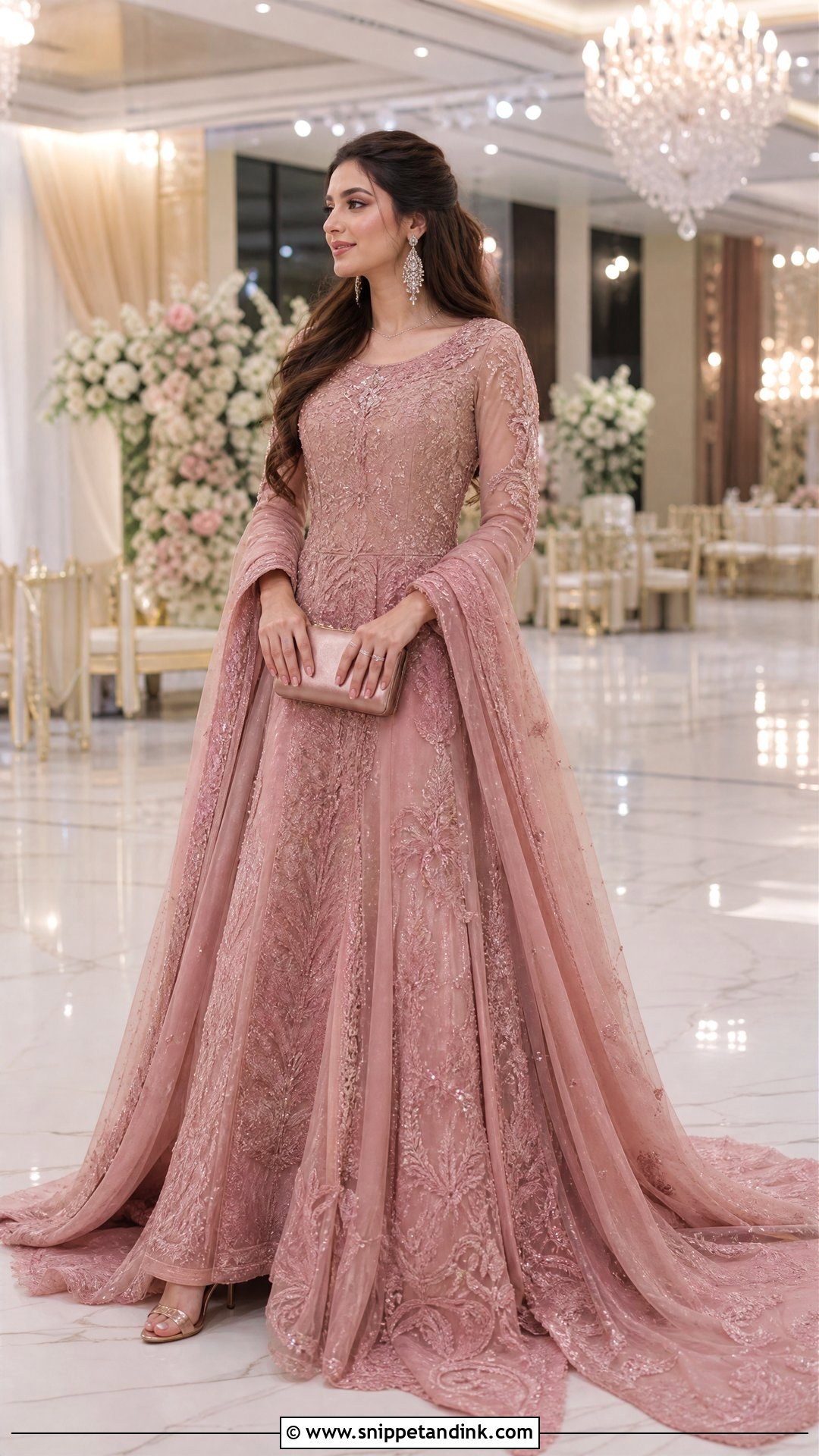
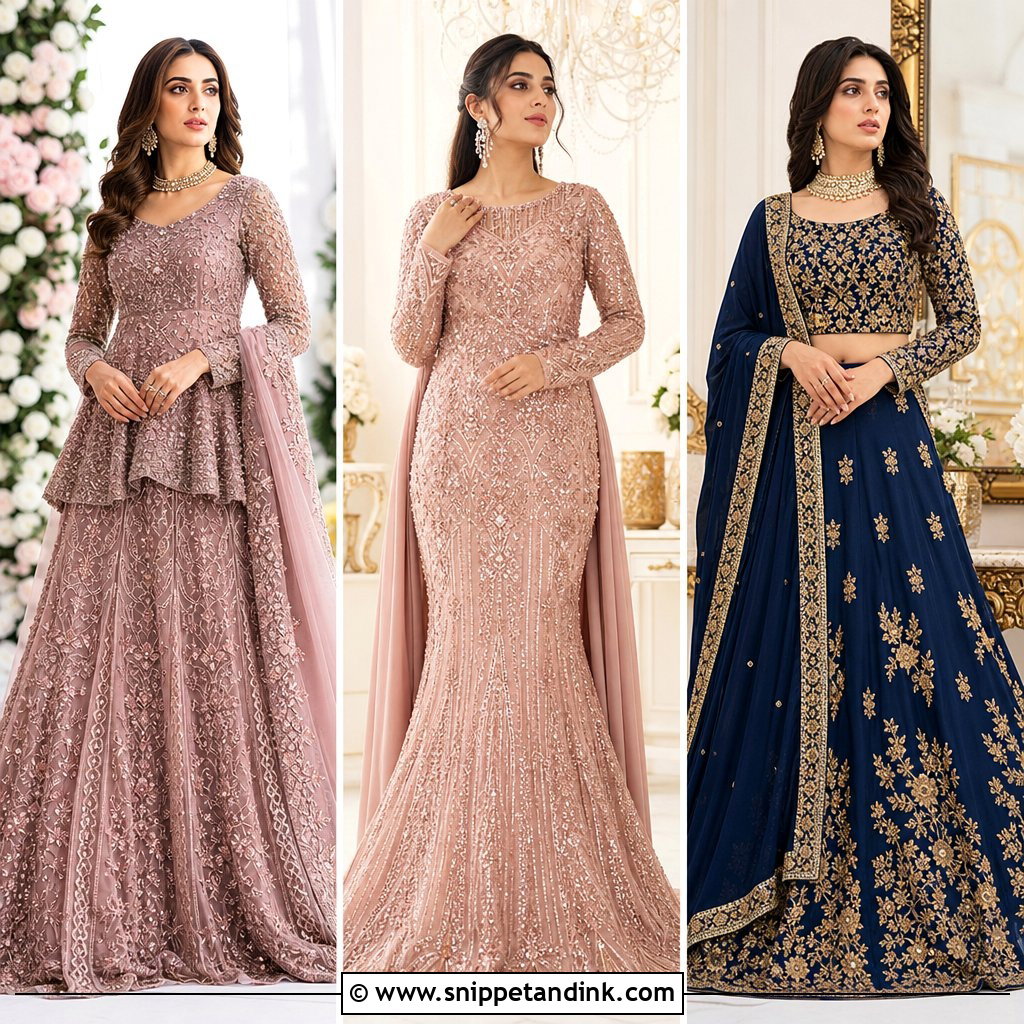
A trail gives you an entrance, but at a Walima you’ll also be climbing to a stage, posing with relatives and moving between tables, so I keep it controlled: floor length at the front, extending just far enough behind to pool in photos. Anything longer needs a bustle or a wrist loop and someone assigned to straighten it. A fitted bodice, natural waist and paneled skirt give the trail a clean shape, with tonal florals and touches of silver or rose gold at the neckline and hem. Rose gold heels, a satin clutch and sparkling drops suit it, and a low chignon keeps the profile tidy. Drape the dupatta over the arms, never across the trail, where it will be stepped on. Dusty pink lips and softly smoked eyes finish it.
9. Mint Green Pishwas Walima Gown
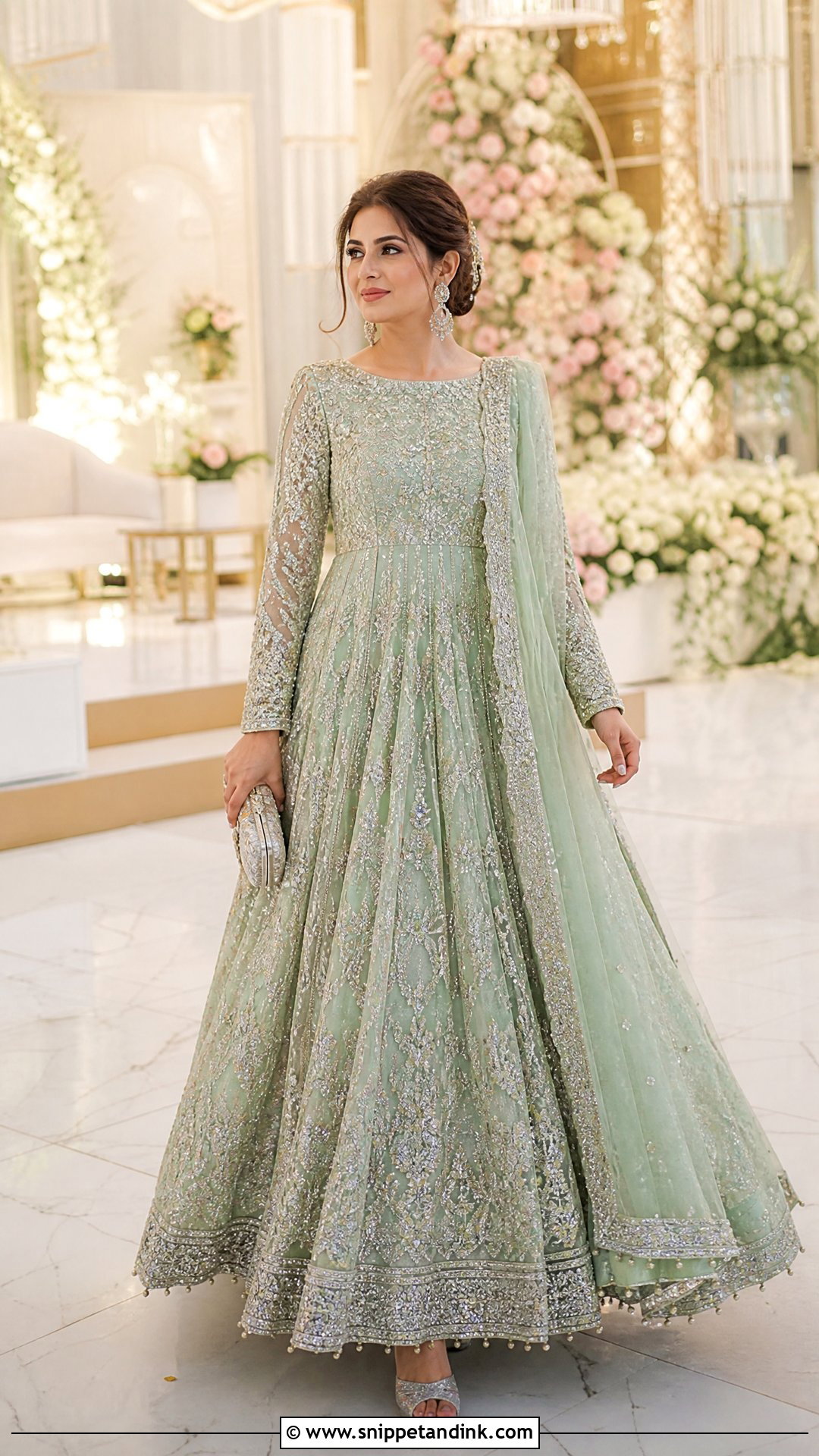
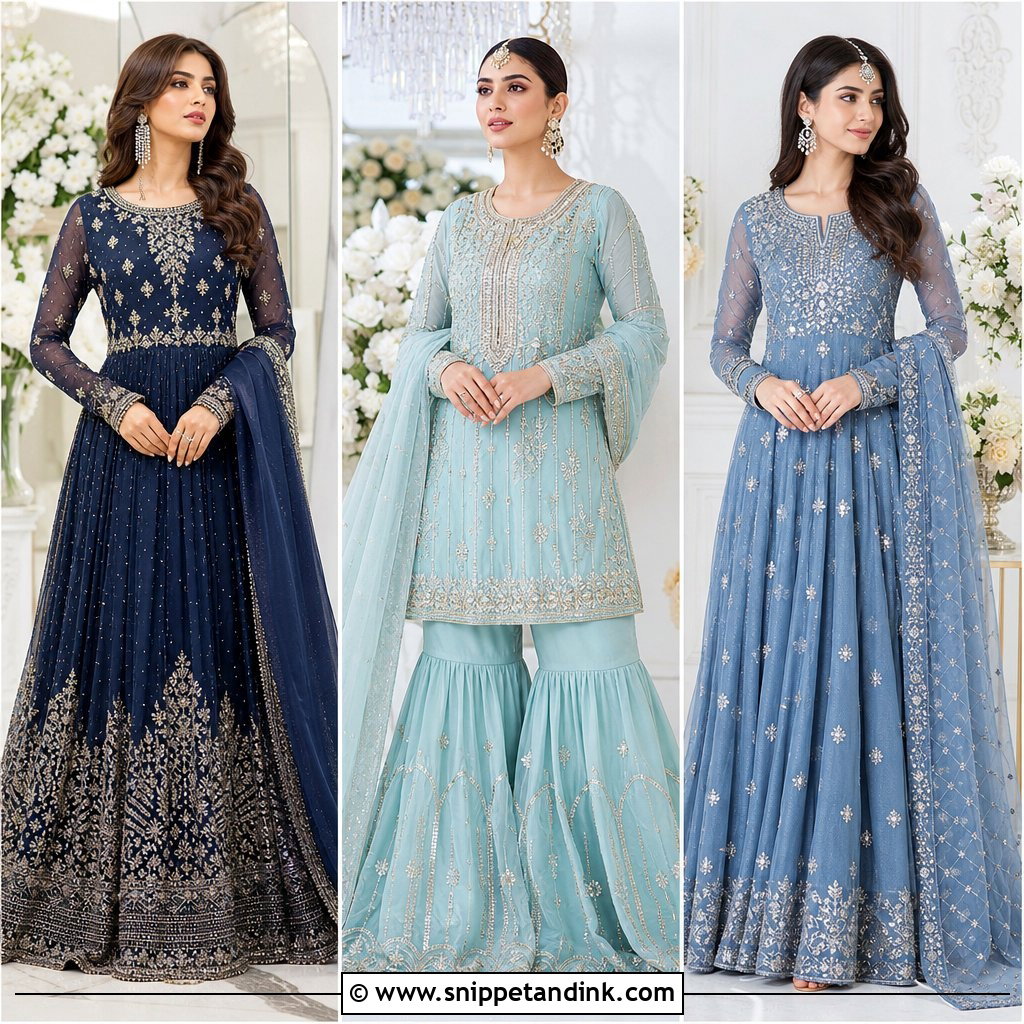
A mint green pishwas Walima gown keeps the traditional high-waisted shape while giving you real movement. The panels are the point: the more kalis in the skirt, the wider it flares as you walk, but also the heavier it gets once embroidered borders run along the hem. I ask for silver work, small sequins and pearl borders kept light. Full sleeves and a rounded neckline give a modest base for statement earrings. Silver heels, a beaded clutch and a sheer mint dupatta pinned at one shoulder and falling behind the gown complete it. A center-parted bun with small pins, pink blush and a cool rose lip keep the face bright against the mint.
10. Powder Blue Jacket Walima Gown
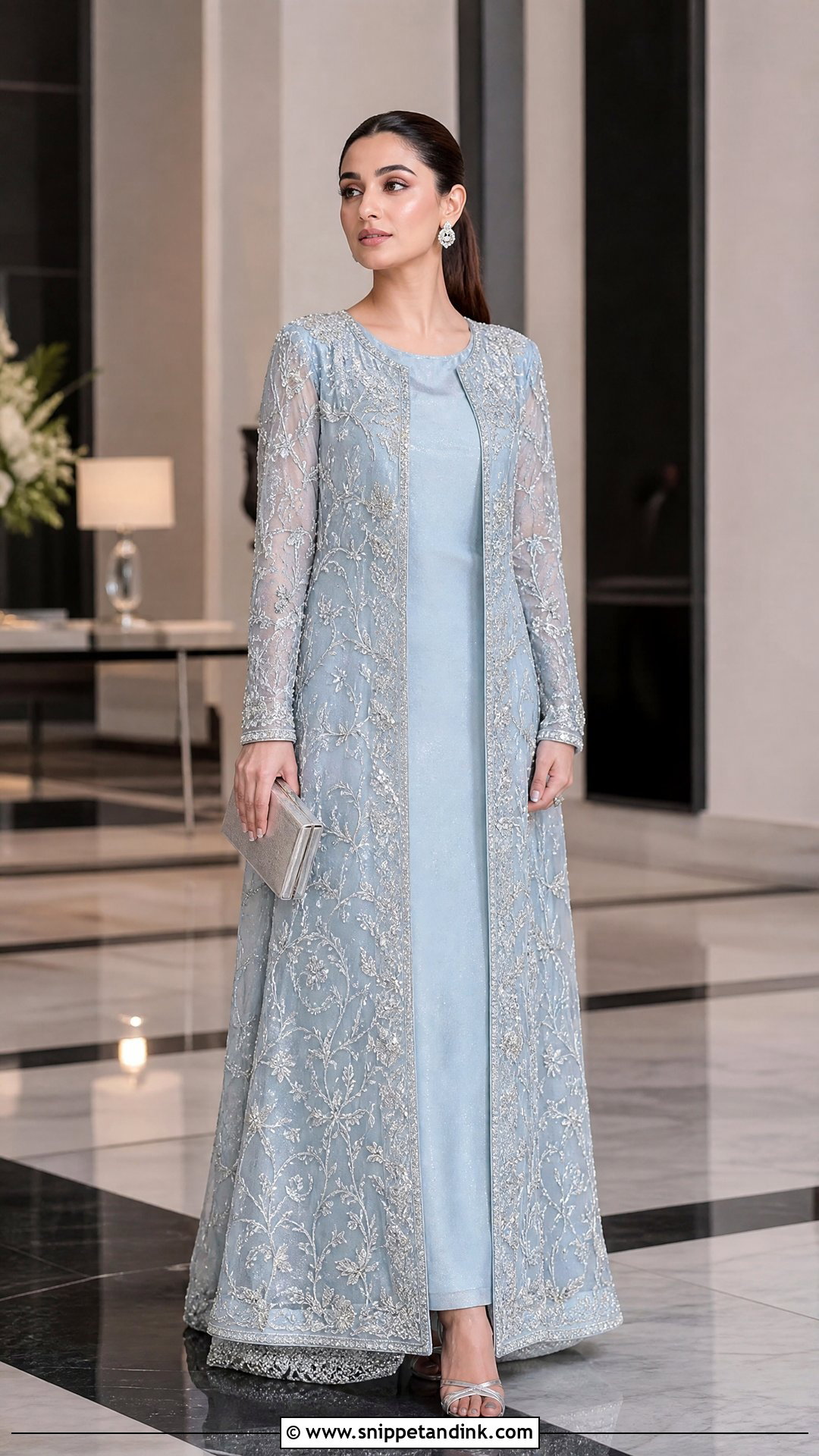
Powder blue with a jacket is the fusion look I suggest to brides who feel fussy in a dupatta. Start with a plain inner gown in matching satin, crepe or chiffon, then layer a floor-length sheer jacket with silver embroidery, pearl edging and defined shoulders. The open front draws one long vertical line. Have the jacket fitted over the gown, never on its own, because a sheer layer cut to bare measurements pulls at the shoulders once there’s fabric underneath. Silver heels, a narrow clutch and earrings that sit close to the face suit the neckline. A sleek low ponytail or bun, grey-blue shadow and a pink-nude lip finish it, and you won’t need a separate dupatta.
11. Rose Gold Mermaid Walima Gown
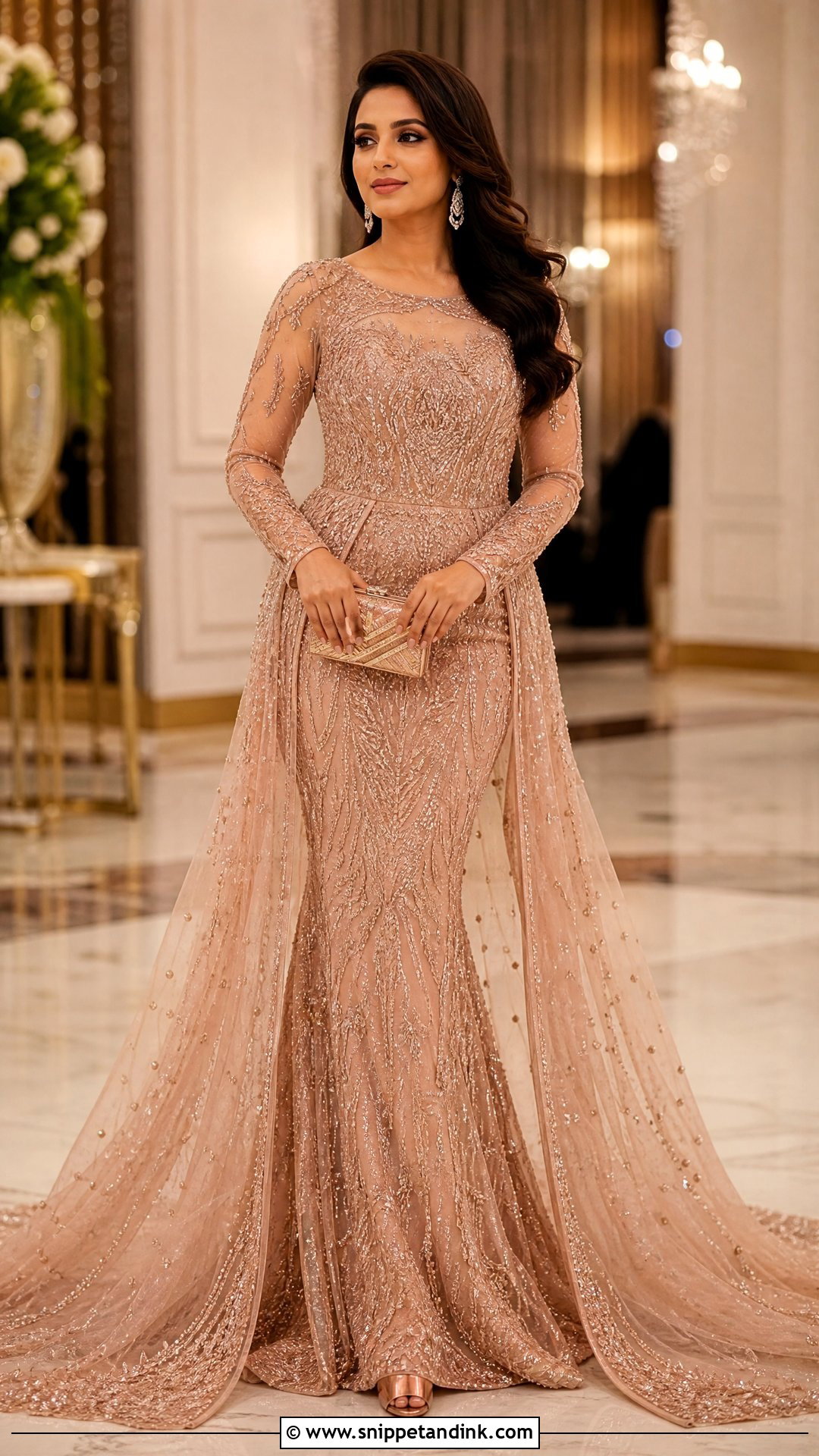
Rose gold in a mermaid cut is the most glamorous gown here and the least forgiving. It should skim the bodice and hips and open at the knee, not grip you, because you’ll spend long stretches on a stage sofa and on your feet greeting guests. At fittings I have brides sit, climb a step and hug someone before I approve the hip line. Flexible fabric with vertical embroidery lengthens the body, and plain sheer sleeves balance the rose gold sequins and beadwork. Rose gold heels, a structured clutch, drop earrings and side-swept waves or a low bun finish it, with warm neutral eyes and a rose lip. A detachable sheer overskirt adds volume for the entrance and comes off afterwards.
12. Mauve Velvet Walima Gown
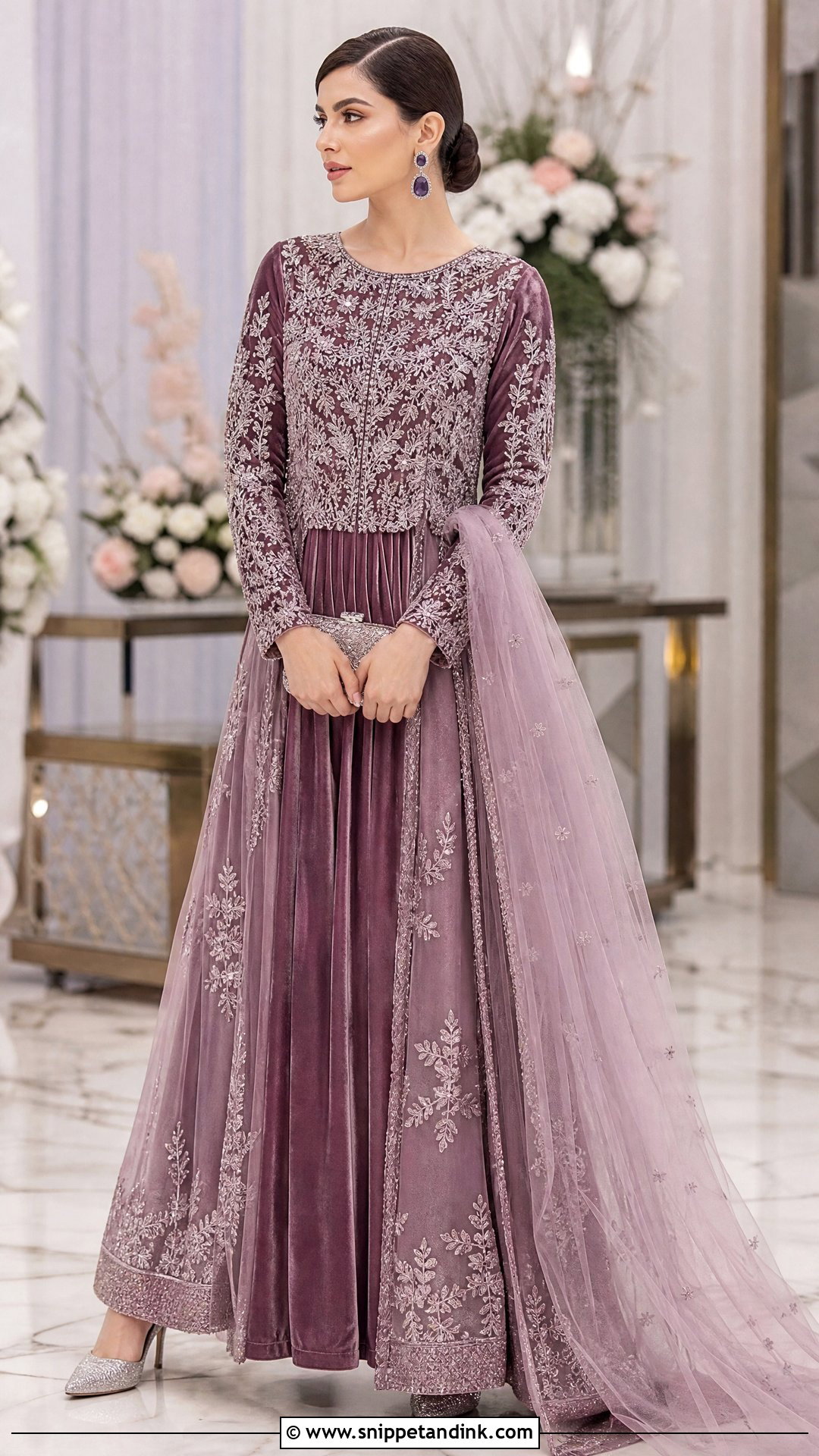
A mauve velvet Walima gown belongs at a winter reception. Velvet is warm and heavy, so I use it on the bodice and upper skirt and switch to chiffon, net or organza panels below; a full velvet skirt can feel like carrying a coat by the end of the night. It also keeps pressure marks, so don’t leave it folded in a suitcase. Antique silver embroidery around the neckline, sleeves and waist gives the muted color depth, and a gentle flare moves more easily than a rigid ball gown. Silver closed-toe heels, a beaded clutch, amethyst-toned earrings and a side-parted bun suit the fabric. Choose a light net dupatta with scattered motifs rather than a second velvet layer, then tie the face in with soft plum eyes and a mauve-pink lip.
13. Peach Floral Walima Gown
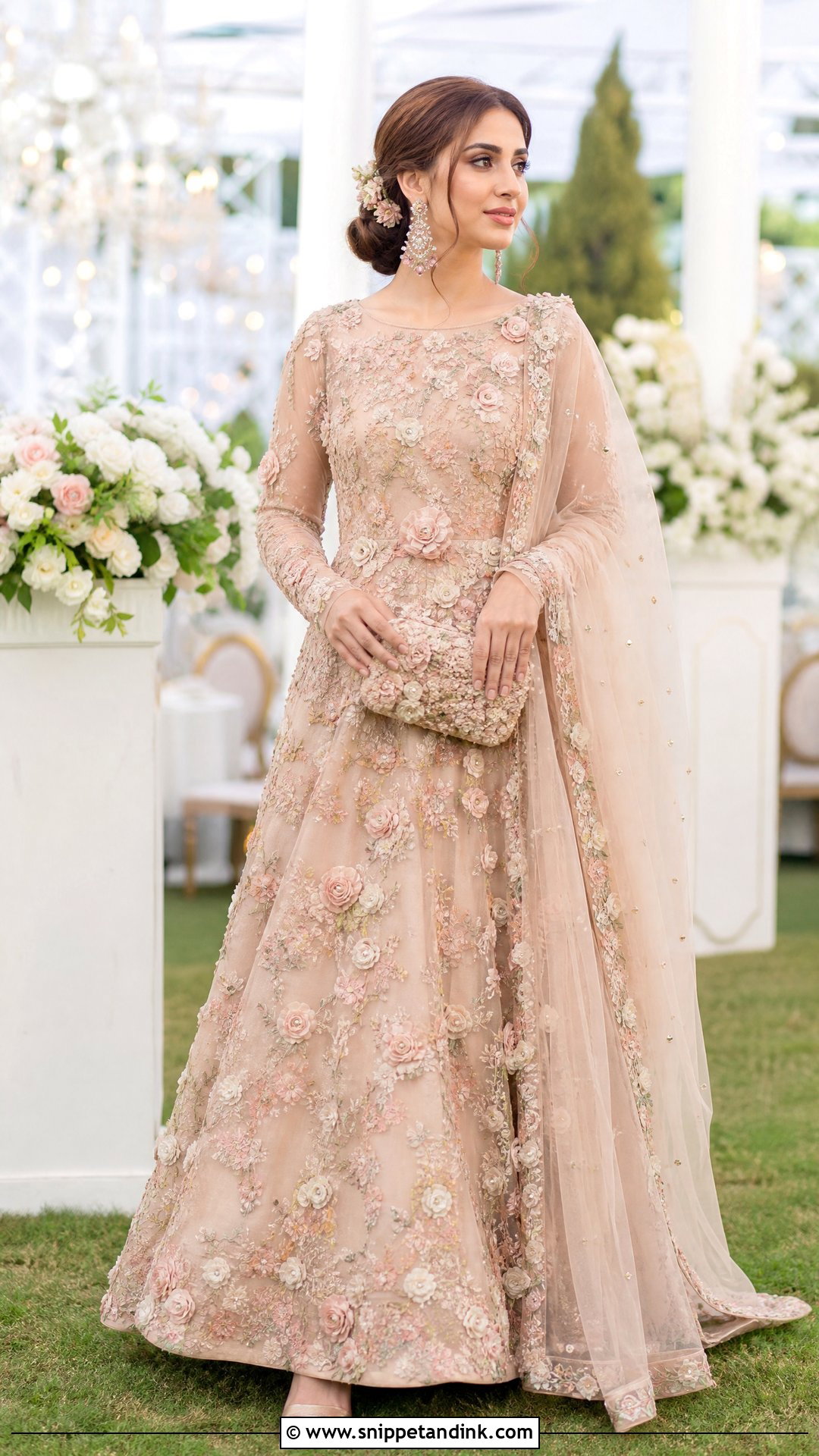
Three-dimensional flowers on a peach gown look fresh, but they need restraint. I cluster them at the bodice, waist and cuffs and keep the skirt lighter, since appliqué blooms on the lower skirt get crushed when you sit and snag on chair legs. Mixing peach, blush, ivory and pale gold petals adds depth without harsh contrast. Champagne heels, a floral-beaded clutch and small crystal drops are enough. A loose low bun with a couple of floral pins repeats the theme, and a sheer peach dupatta with embroidered corners keeps things airy. Peach blush, brown liner and a rosy nude lip suit it at a garden reception or in a bright hall.
14. Gray Beaded Walima Gown
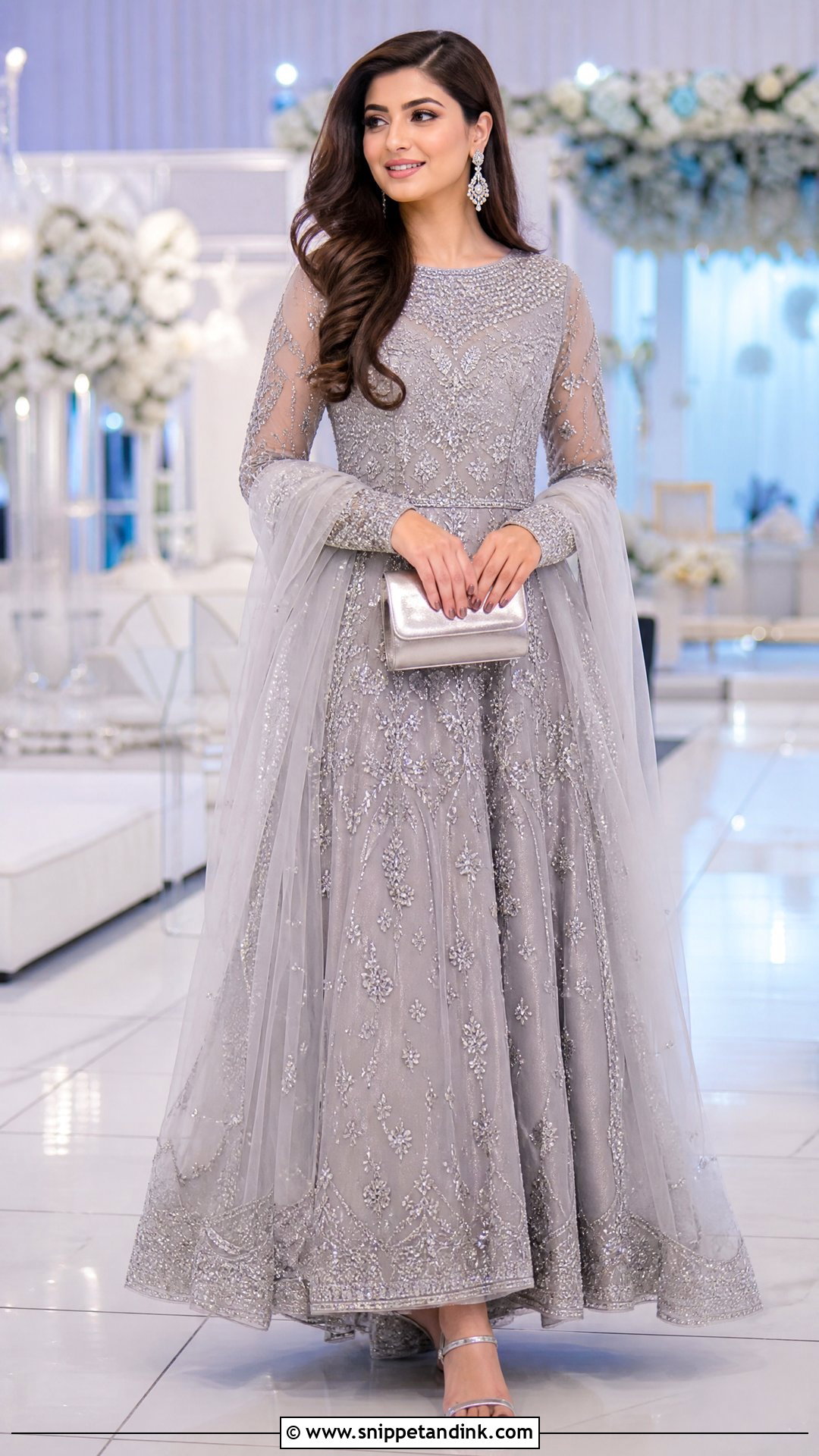
A gray beaded Walima gown is a quiet alternative to the usual pastels, but the exact shade matters. Dove or pearl grey reflects light; flat charcoal absorbs it and can look like guest wear in a lineup of relatives. An empire or natural waist and a flowing skirt give the beadwork room, with silver beads, clear crystals and blue-grey stones across the bodice and sleeves. Pair it with silver heels, a satin grey clutch and diamond-look earrings, and decide on a necklace only once you see the finished neckline. Smooth waves or a low side-parted bun, a sheer grey dupatta with silver edging, cool pink blush and a rose lip stop the palette from washing you out.
15. Teal Long Sleeve Walima Gown
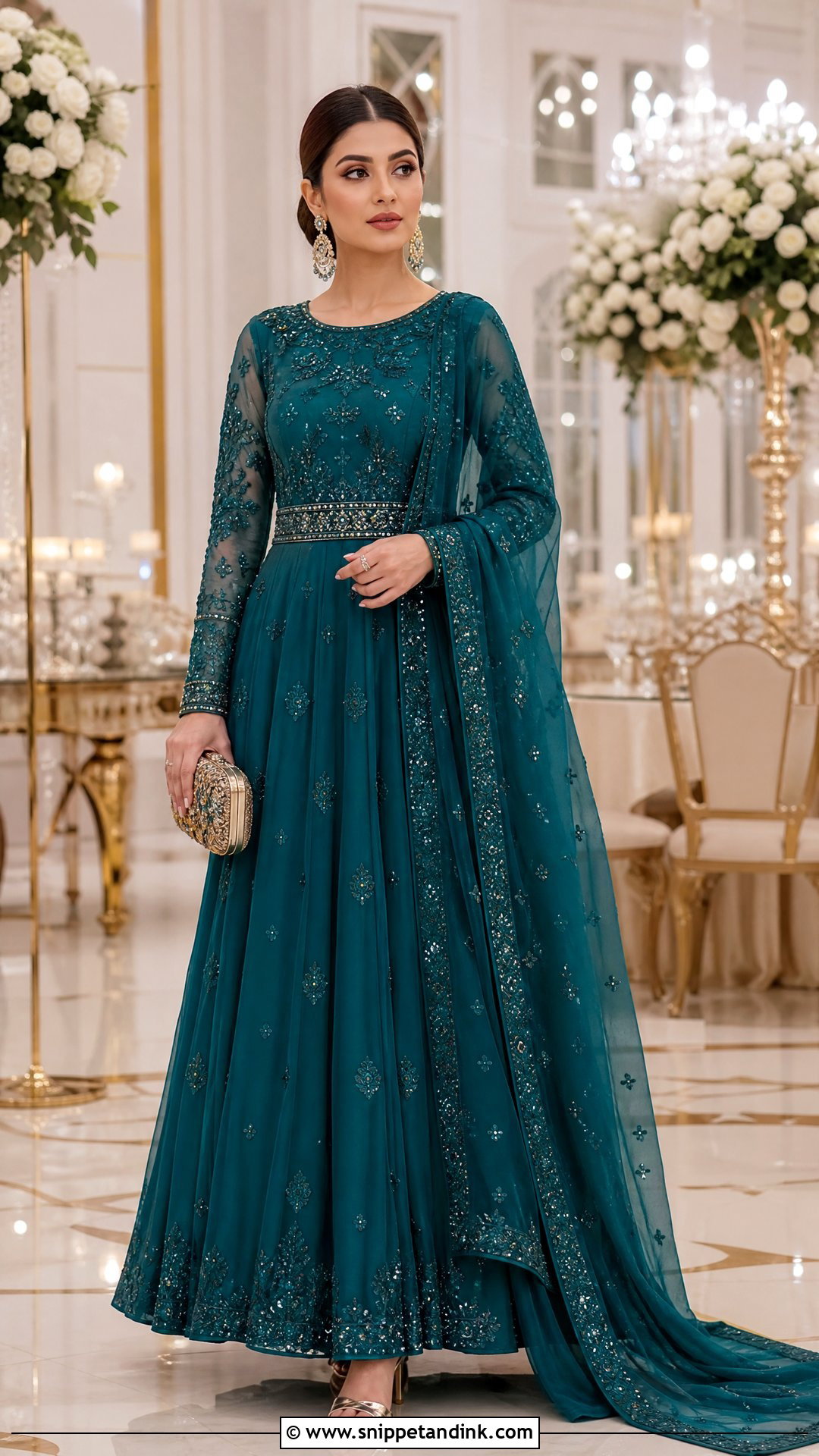
Teal brings real color to an evening Walima. Pick a true jewel tone with a fitted waist and a fluid skirt; in a rigid shape, teal looks heavy on a stage. Long sheer sleeves with tonal embroidery keep the coverage light, and silver, pale gold or crystal embellishment lifts the deeper base. Metallic heels, an embroidered clutch and earrings with clear or teal stones suit it, along with a center-parted low bun and a light matching dupatta over one shoulder. With a color this strong I keep the makeup balanced, softly defined eyes, warm blush and a neutral rose lip, so your face doesn’t get lost next to the fabric.
16. White And Gold Walima Gown
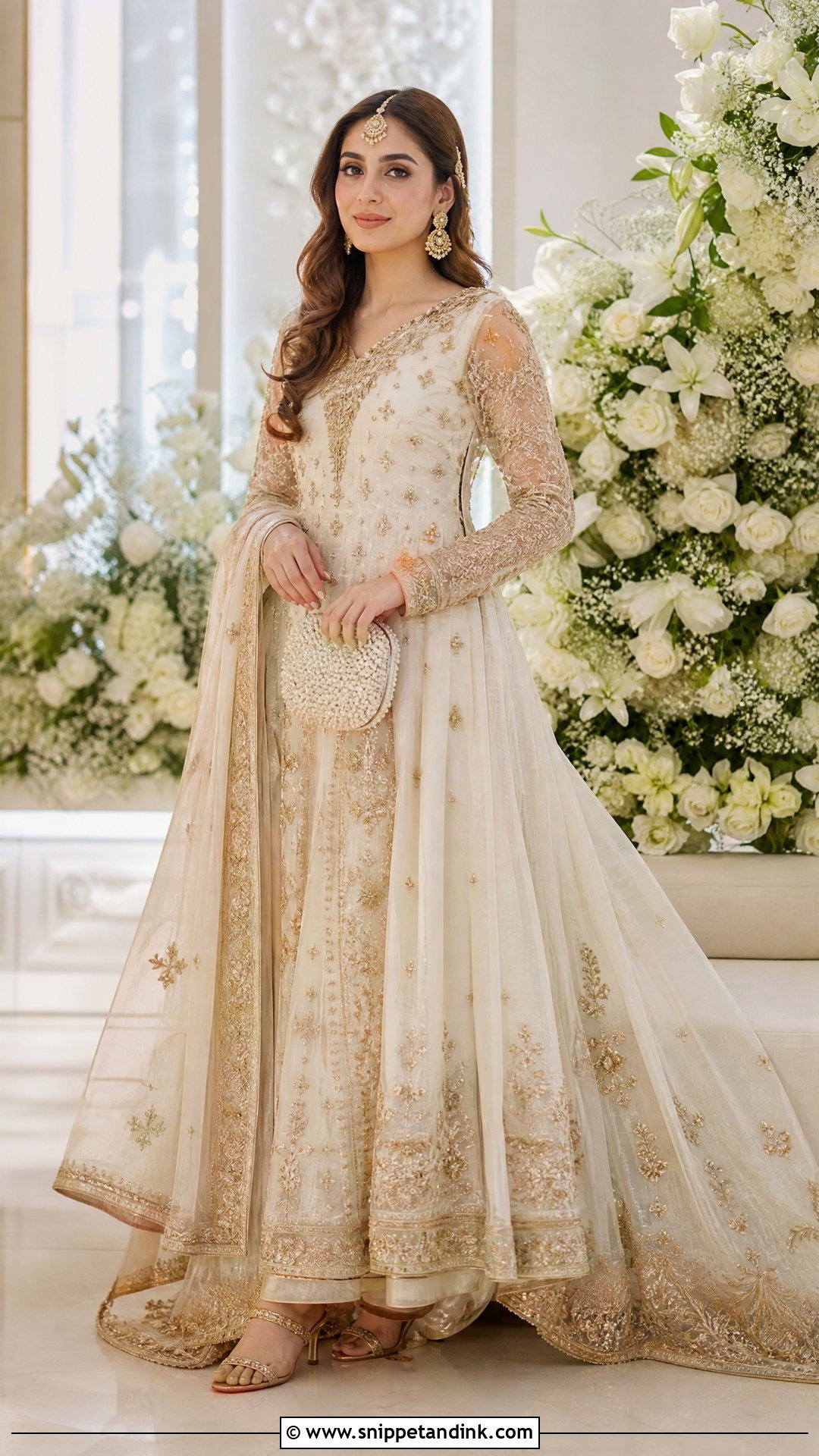
White and gold carries strong traditional appeal, and the work is keeping it from looking like a Western wedding dress. Antique gold embroidery in borders, vines or geometric patterns over off-white does that, along with a fitted long-sleeve bodice and an A-line skirt. I steer brides toward off-white rather than bright optical white, which tends to read cold and slightly blue next to warm gold in flash photos. Muted gold heels, a pearl clutch and gold earrings with clear stones work, plus a delicate headpiece if your family likes one. A sheer white dupatta with a fine gold edge can go over the head or shoulders. Keep the gold soft, the bun smooth and the makeup brown-gold with a muted rose lip.
17. Lilac Ruffle Sleeve Walima Gown
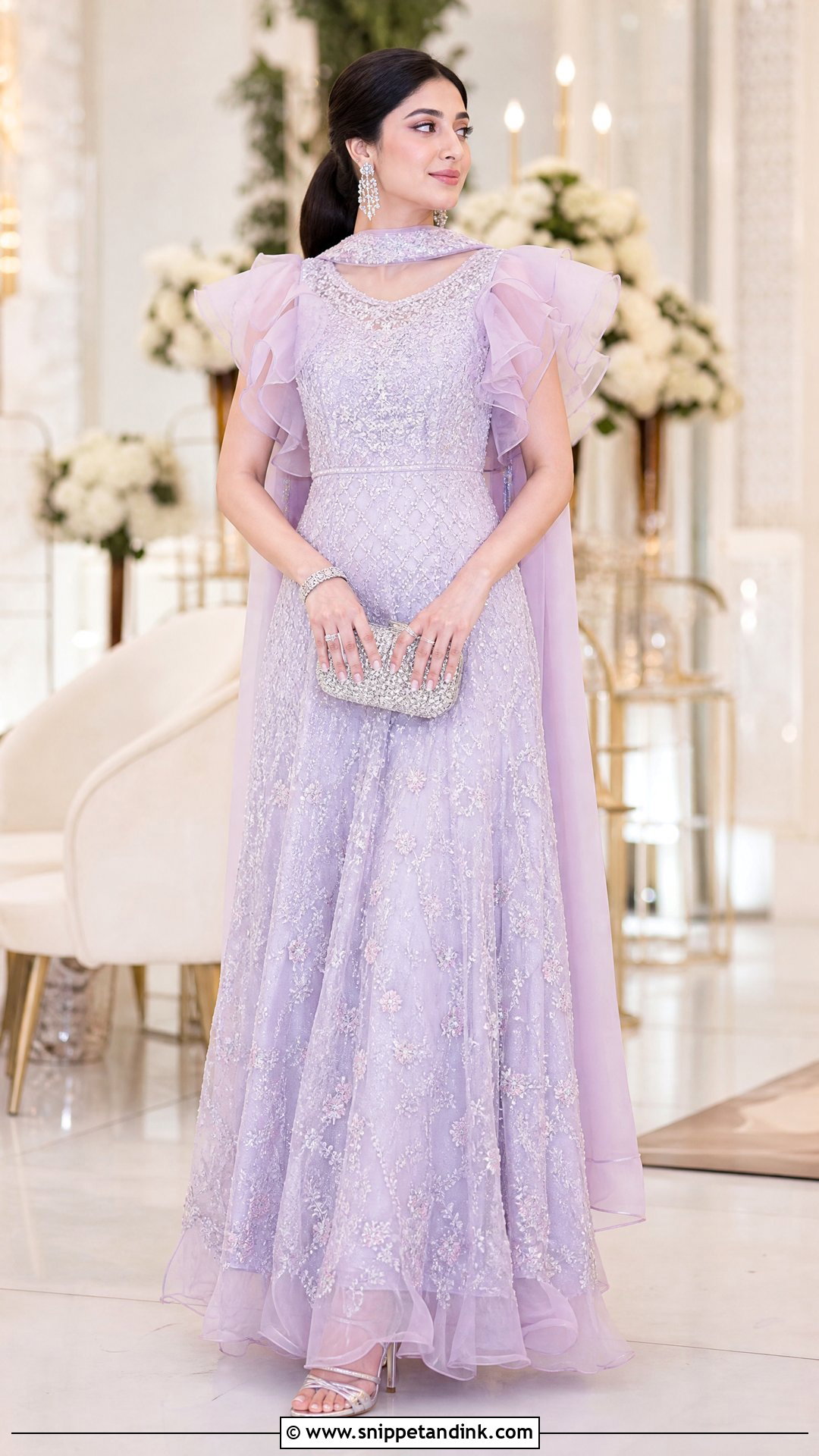
Ruffle sleeves add movement without adding a single layer to the skirt, which is why I like them for petite brides who’d be swamped by volume below. Keep them controlled. Organza flutter sleeves or layered cuffs work; oversized frills hide your shape and brush your plate at dinner. A fitted bodice and a gentle flare balance the arms, while silver threadwork, pearls and tiny crystals at the neckline and waist should leave plenty of lilac showing. Silver heels, a small clutch and delicate drops are enough, with hair in a low bun or soft ponytail so the sleeves stay the feature. A dupatta, if you add one, should be narrow and sit behind the shoulders. Lavender-grey shadow and a soft mauve lip complete it.
18. Navy Blue Walima Gown
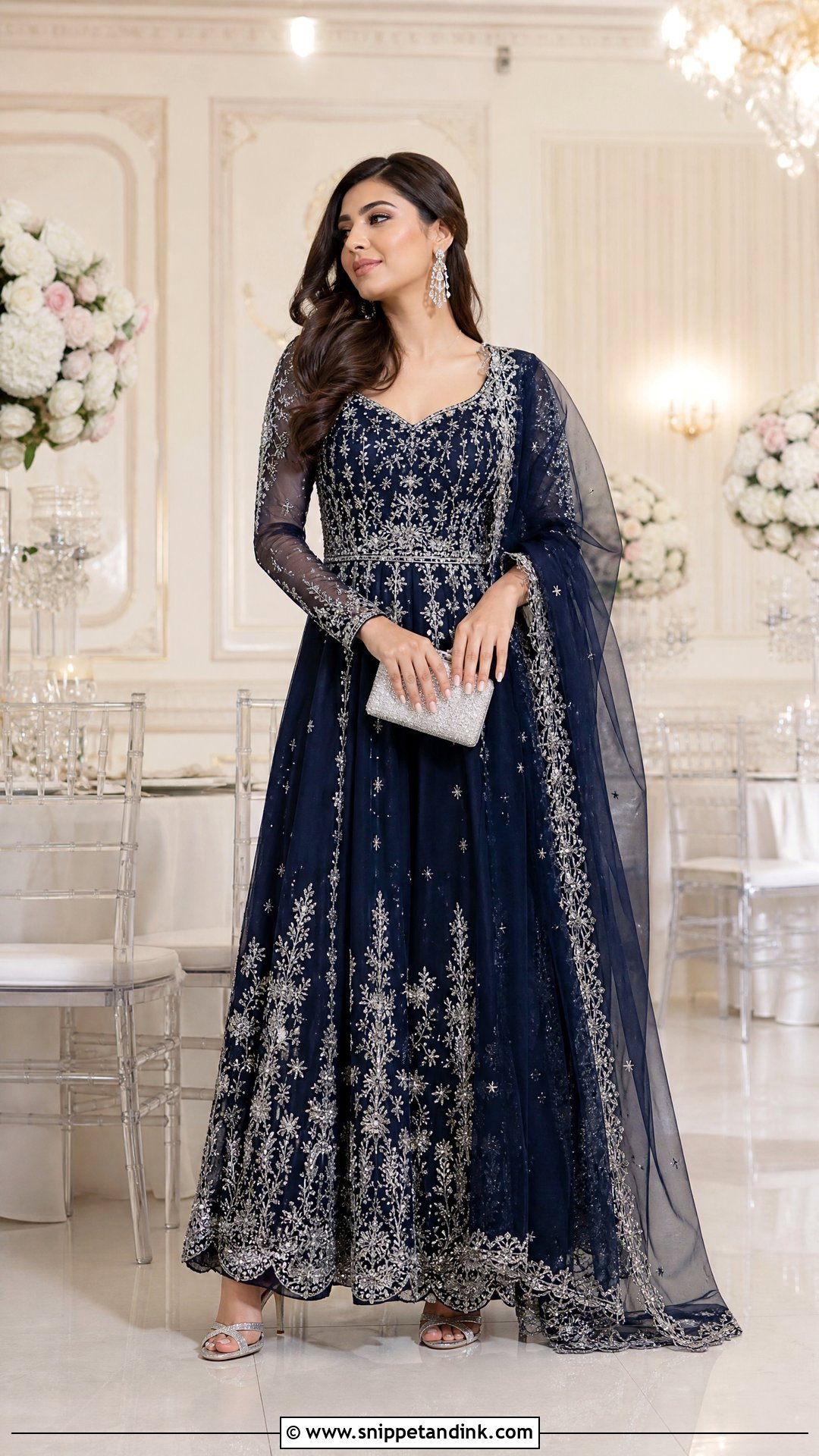
Navy is dramatic at a nighttime Walima, and under dim reception lights a plain navy can tip into black. Silver embroidery, crystal constellations or scattered beads catch the light and keep it reading as blue. A structured bodice, defined waist and fluid skirt soften the depth, and sheer sleeves with an illusion neckline give coverage without heaviness. Silver pointed heels, a crystal clutch and statement earrings are plenty; skip the heavy necklace on a detailed bodice. Add a polished bun or glossy side-swept waves, a light navy dupatta edged in silver, cool rose lips and softly smoky eyes.
19. Pastel Ombre Walima Gown
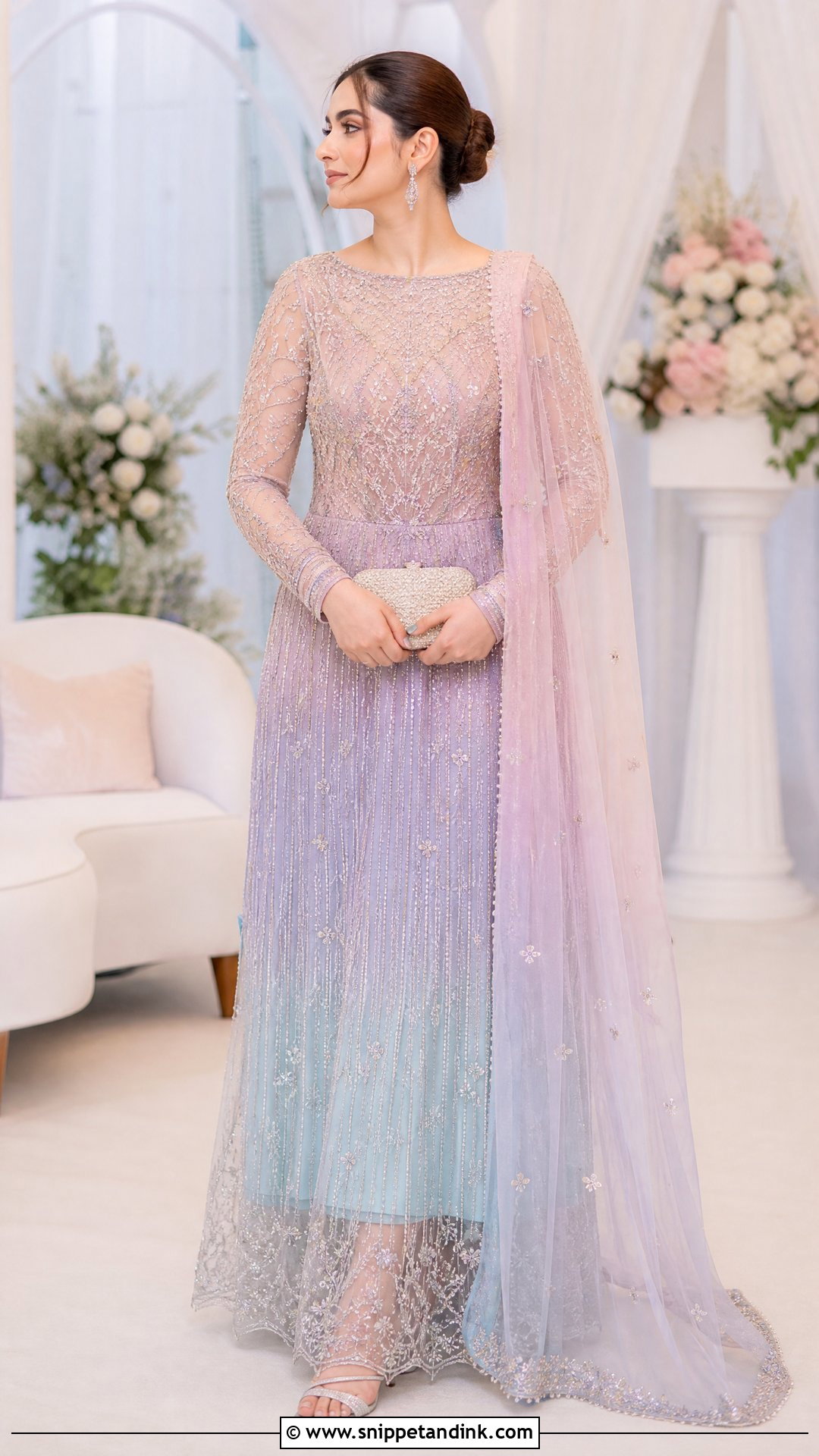
Can’t settle on one pastel? An ombre gown can blend blush, lavender, blue, or mint into a single outfit. The fade needs to be gradual, either vertical or from bodice to hem, and dyed into the fabric rather than pieced from panels, which leaves visible stripes at every seam. Keep the shape simple, a fitted top over a flowing skirt, and use scattered crystals, fine silver embroidery or pearl edging instead of dense work that would hide the color change. Silver heels, a neutral beaded clutch, delicate crystal earrings and a smooth low bun keep attention on the gradient. Pick the dupatta in the lightest shade, then finish with soft pink makeup and subtle eye definition.
20. Burgundy Contemporary Walima Gown
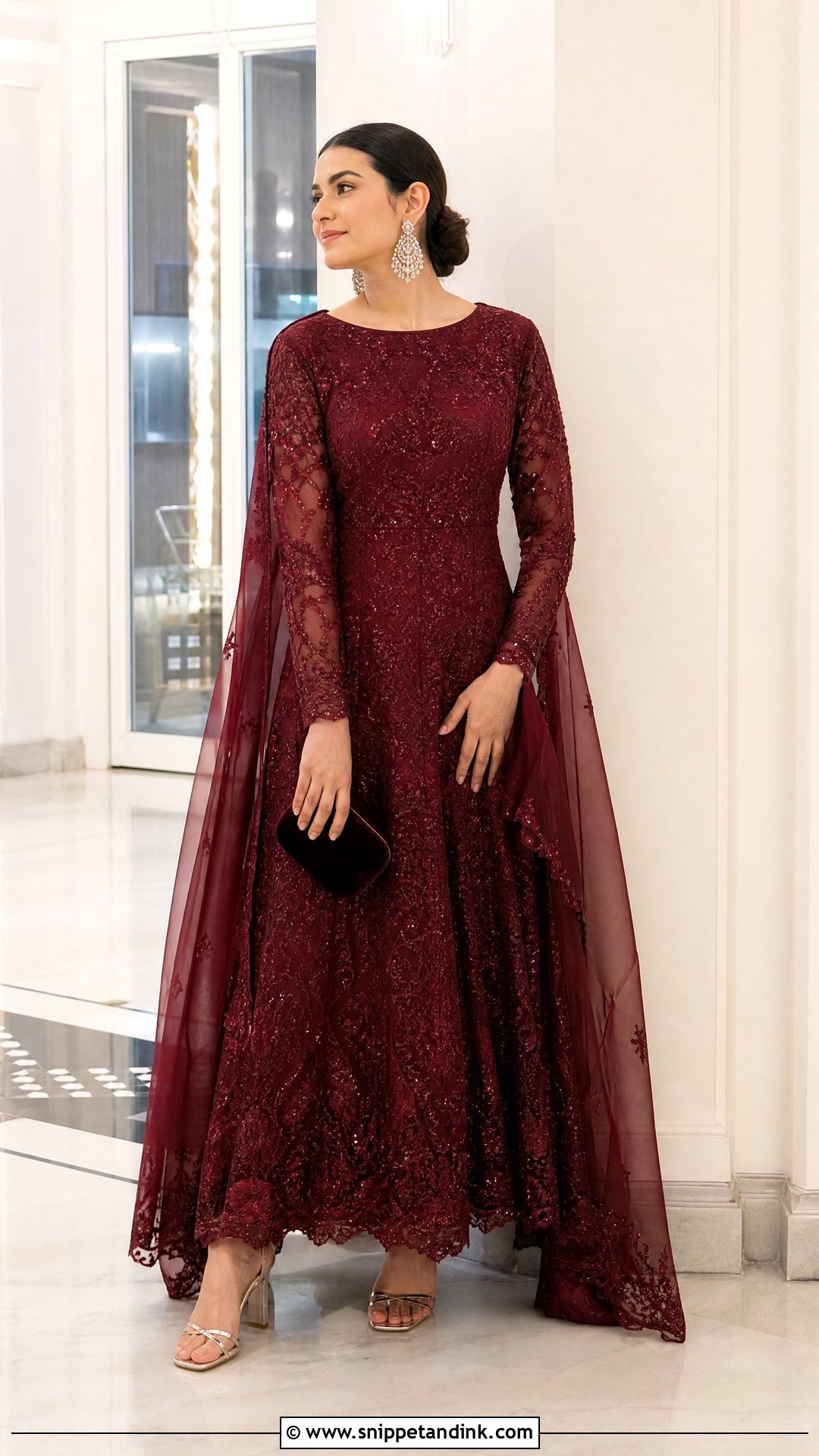
Burgundy suits the bride who would rather wear rich color than another pastel, and it’s my pick for a winter evening. Keep the silhouette elongated: fitted bodice, full sleeves, moderate flare. Dark shades flatten in photos, so tonal beadwork mixed with antique silver or muted gold gives the fabric dimension. A square, boat or soft curved neckline keeps it modern. Metallic heels, a compact velvet clutch and earrings with clear stones work well, with a sleek bun framing the face. A sheer burgundy cape or light dupatta adds movement without weight. Softly smoked eyes, warm blush and a rose-brown lip finish it.
How Pastels and Silver Work Behave Under Hall Lighting
Reception halls are often lit with warm uplighting and colored stage lights, and that changes pale fabric more than brides expect. Ice blue and mint can pick up a green cast, lavender can slide toward grey, and champagne in front of a gold-lit backdrop can look beige. Silver thread, on the other hand, reflects whatever color the lights are throwing at it.
Before I sign off a shade, I ask the bride to photograph the swatch under warm indoor bulbs, once with the phone flash on and once with it off. Ask your decorator for the stage backdrop color too. A blush gown in front of a blush floral wall disappears in the wide shots, and a slightly deeper version of your pastel, or a contrasting backdrop, fixes it.
A Realistic Timeline for a Hand-Embroidered Gown
Hand work such as zardozi, dabka and pearl embroidery is slow, and most designers want the order placed months ahead. Timelines vary a lot by atelier and by wedding season, so treat these as rough guides and get your dates confirmed in writing.
- Four to six months out: settle the design, color and fabric, and approve a sample of the actual embroidery, not just a sketch.
- About three months out: first fitting, ideally in the shoes you’ll wear, so the hem is cut to the right length.
- Six to eight weeks out: second fitting with the inner layers and the dupatta, cape or jacket in place.
- Two weeks out: collect it, do a full try-on with your jewelry, then store it hanging in a breathable cover.
Ordering from overseas adds several weeks for shipping and customs, so keep a local tailor booked for last adjustments. Embroidered seams are hard to let out, which makes accurate measurements at the start worth more than any later fix.
The Fitting Test I Give Every Walima Gown
Pastels give a soft daytime reception look, while navy, teal, burgundy and metallics carry an evening hall. Whatever shade you land on, judge it moving. Walk in it, sit in it, raise your arms as if you’re hugging an aunt, and check that the sleeves stay comfortable for hours. Let jewelry follow the neckline instead of fighting the embroidery, and make the dupatta or cape, the shoes, hair and makeup point in one direction. A gown you feel like yourself in will always look better on that stage than one carried by embellishment alone.
You'll Like These Ideas:


Leave a Reply