
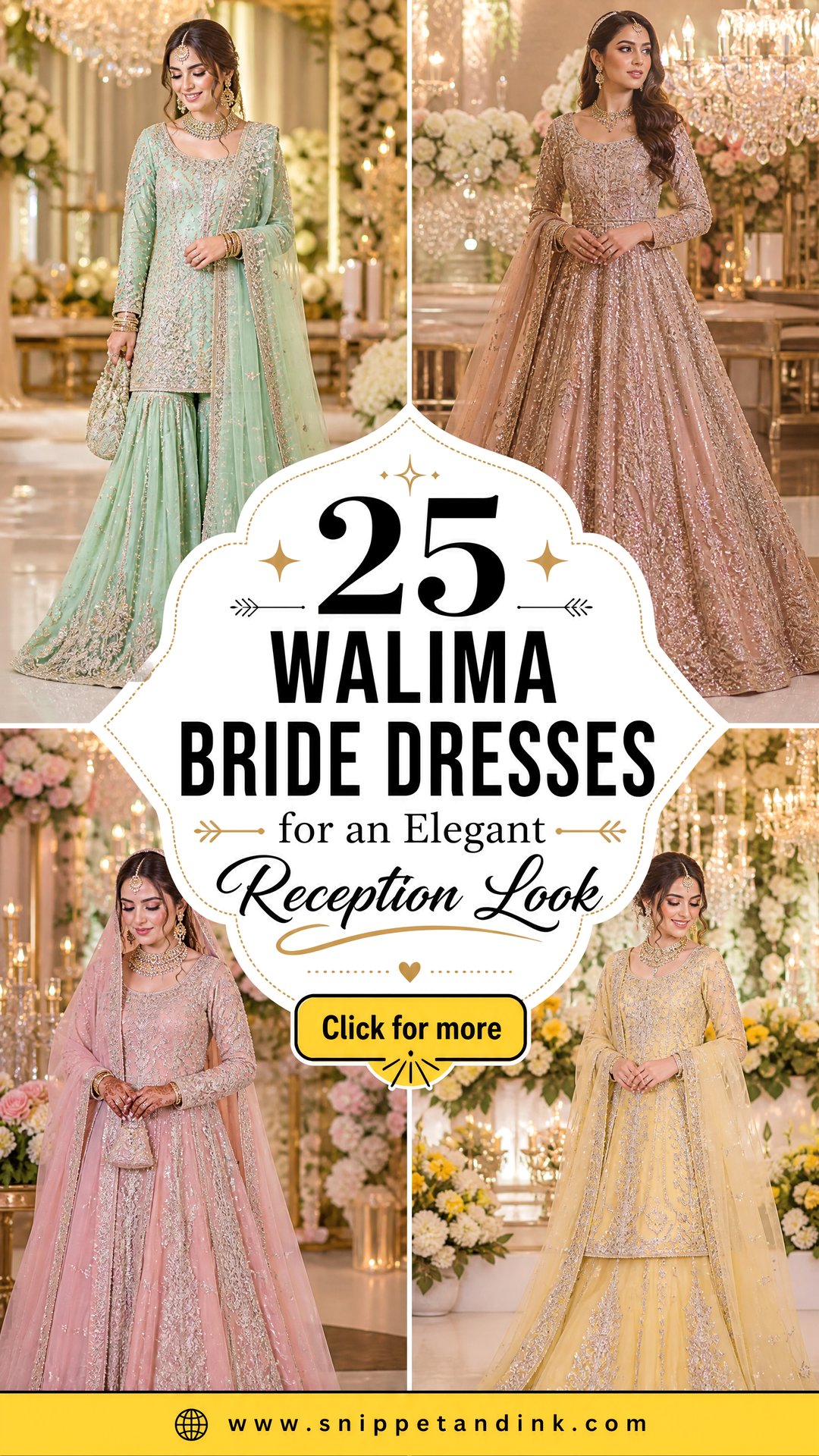
The walima is the day a bride finally gets to breathe. After the deep reds and heavy work of the baraat, the reception gives you room for pastels, metallics, ivory and lighter embroidery, and most of the brides I dress are relieved by that. Maxis, pastel lehengas, ghararas, shararas and open gowns all belong here, along with fusion cuts that still feel rooted in tradition. What I care about most is how the outfit behaves over a long evening of greetings and stage photos, not only how it looks on the hanger. The 25 outfits below run from champagne gowns to mint shararas, each styled from dupatta to shoes.
Planning the Walima Outfit Alongside Your Baraat Look
Most brides plan the baraat first and squeeze the walima in later. I’d plan them as a pair. The two outfits appear side by side in albums for decades, so they should feel like two distinct chapters rather than a light and dark version of the same dress.
- Change the colour family, not just the depth. A red baraat followed by a pale pink walima can read as the same outfit faded.
- Change the metal. Heavy gold and kundan on the baraat makes silver, pearl or polki feel fresh the next day.
- Change the silhouette if you can. A lehenga at the baraat makes a gown, gharara or sharara feel new.
- Keep one link, such as a family tikka or the same bangles, so the two days still belong together.
Embroidered bridal outfits are often made to order, and handwork plus fittings can take months. Timelines vary widely between designers and seasons, so give your tailor the walima date at the same time as the baraat date. A walima outfit rushed in the last two weeks usually shows it at the seams.
1. Champagne Walima Bridal Maxi Dress
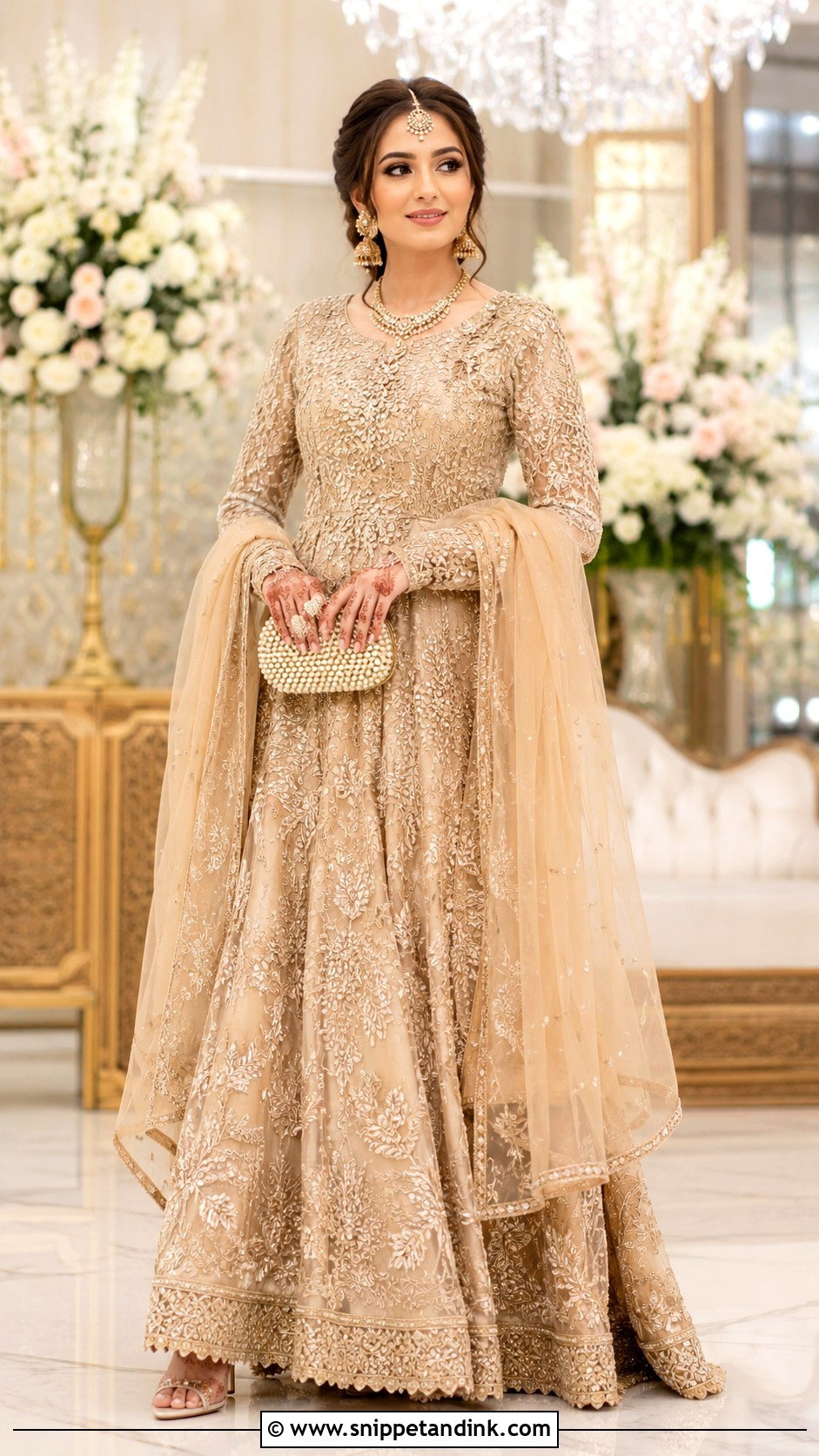
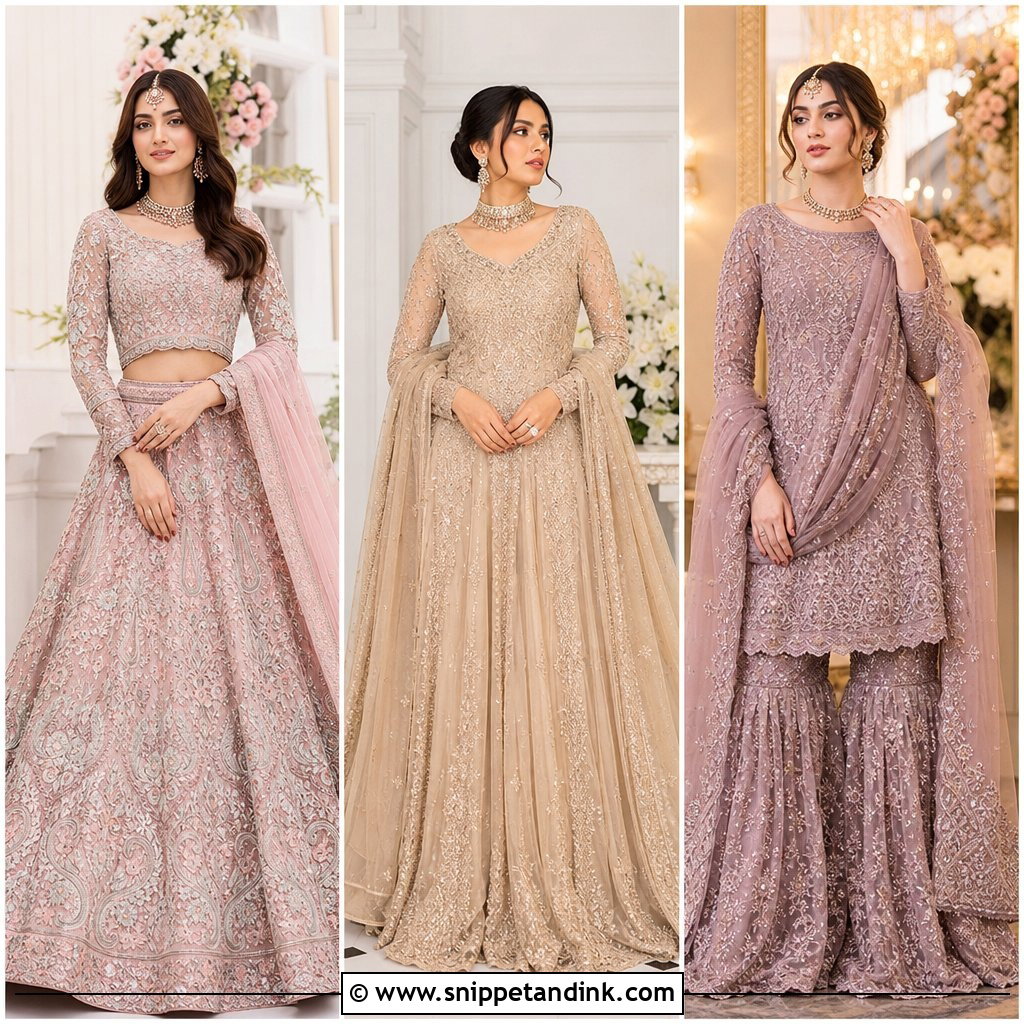
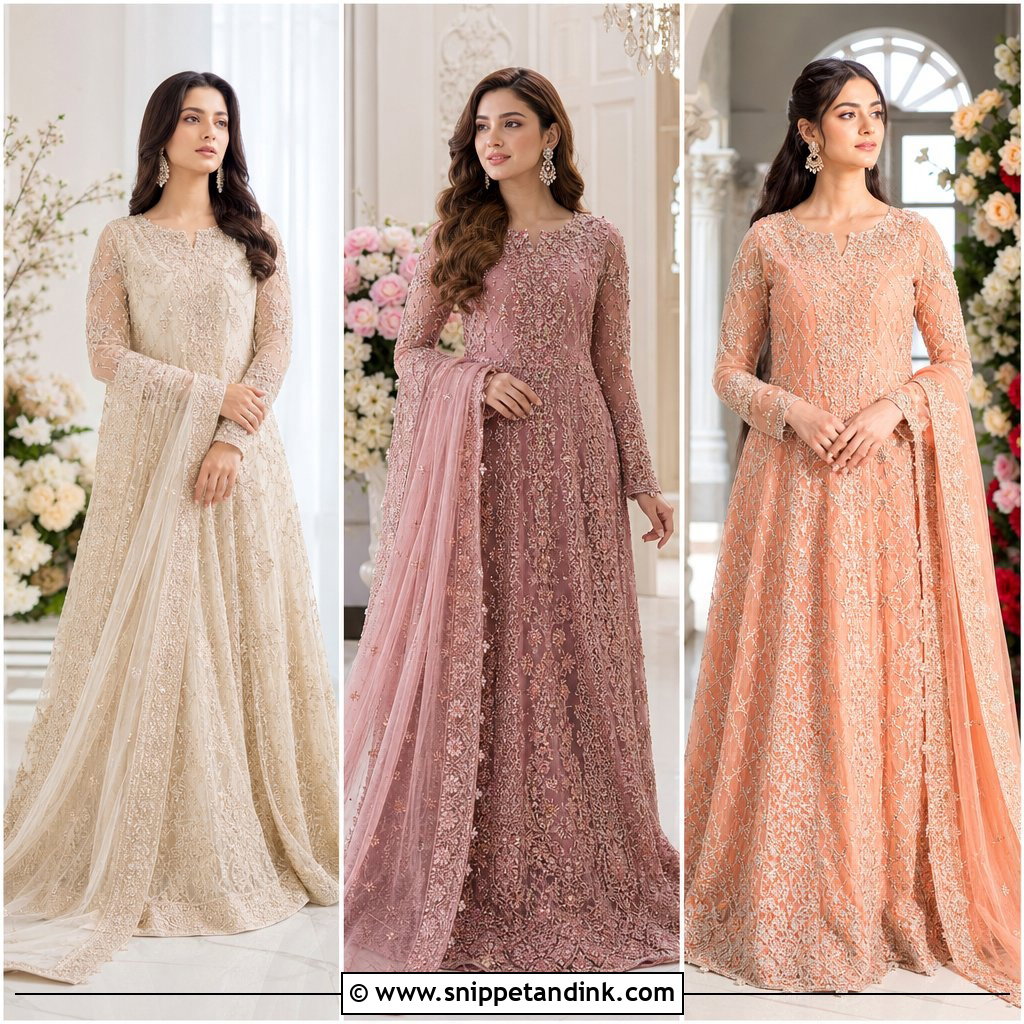
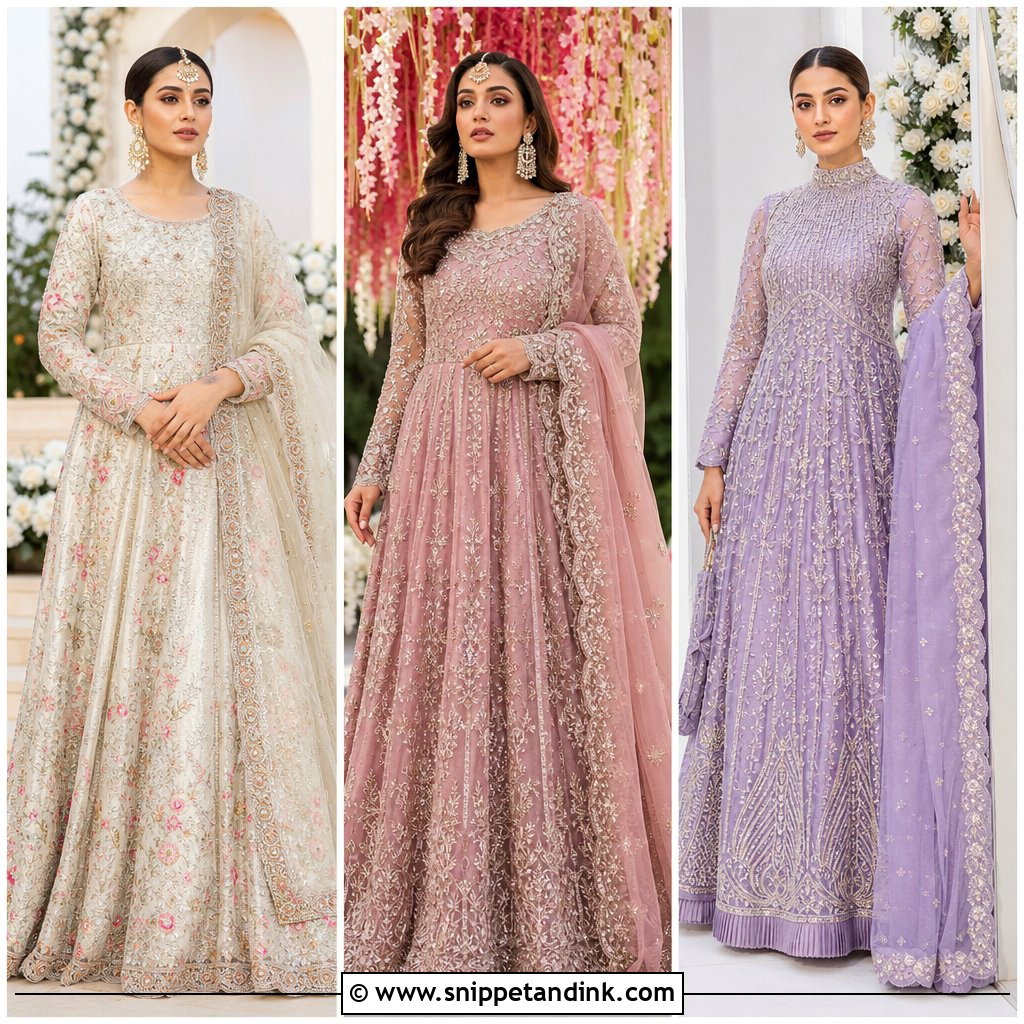
Champagne is the shade I reach for when a bride wants something bridal that doesn’t compete with her baraat. A floor-length maxi with a fitted bodice and a light flare, worked with zardozi or dabka at the neckline, sleeves and hem, carries it. The scalloped organza dupatta matters more than people expect, because it frames the face in every stage photo. Champagne can turn slightly flat under cool white lighting, so warm rose gold jewelry and glowing skin help it keep its warmth. Soft curls and a nude lip are enough.
2. Blush Pink Walima Lehenga Dress
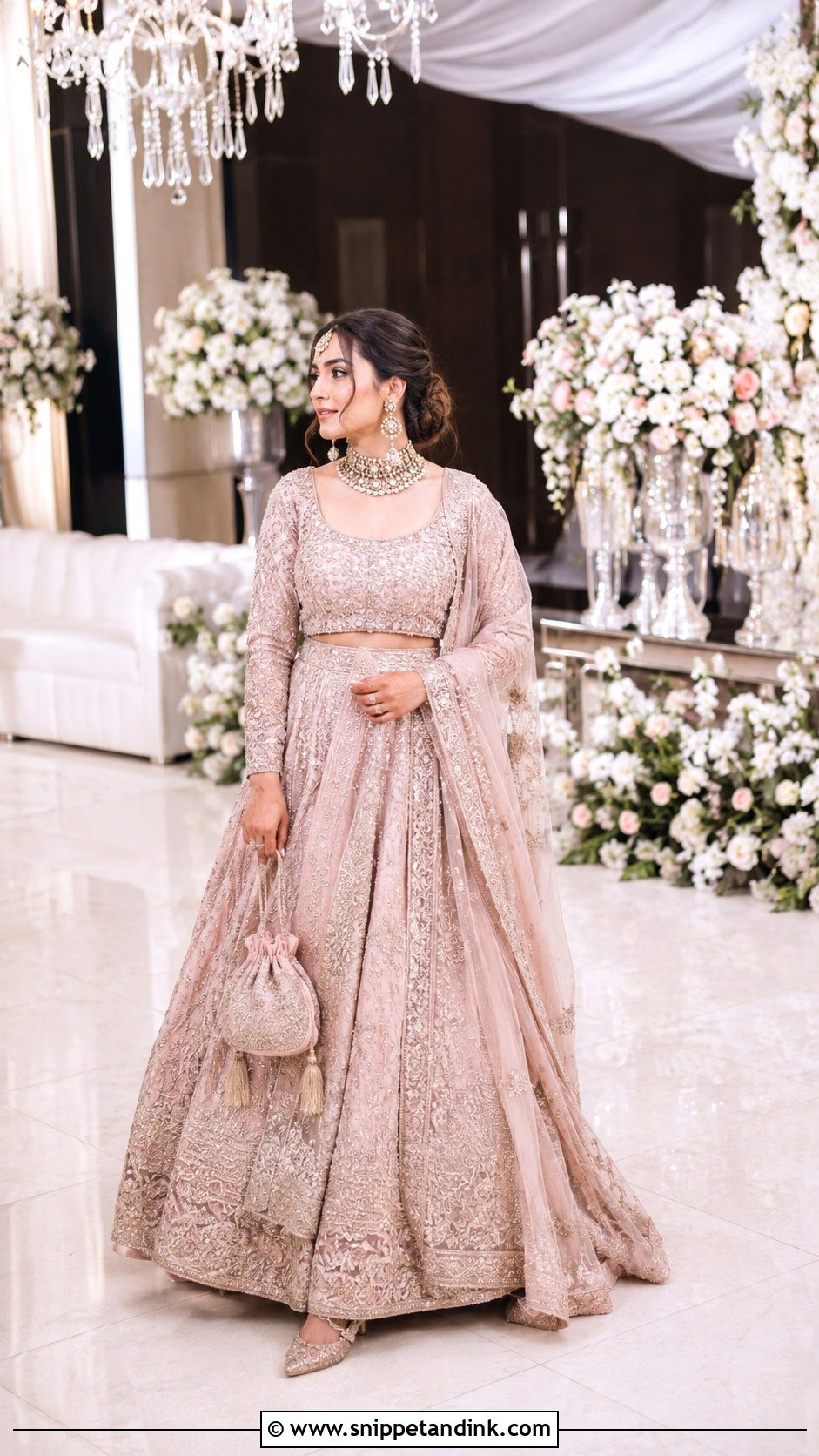
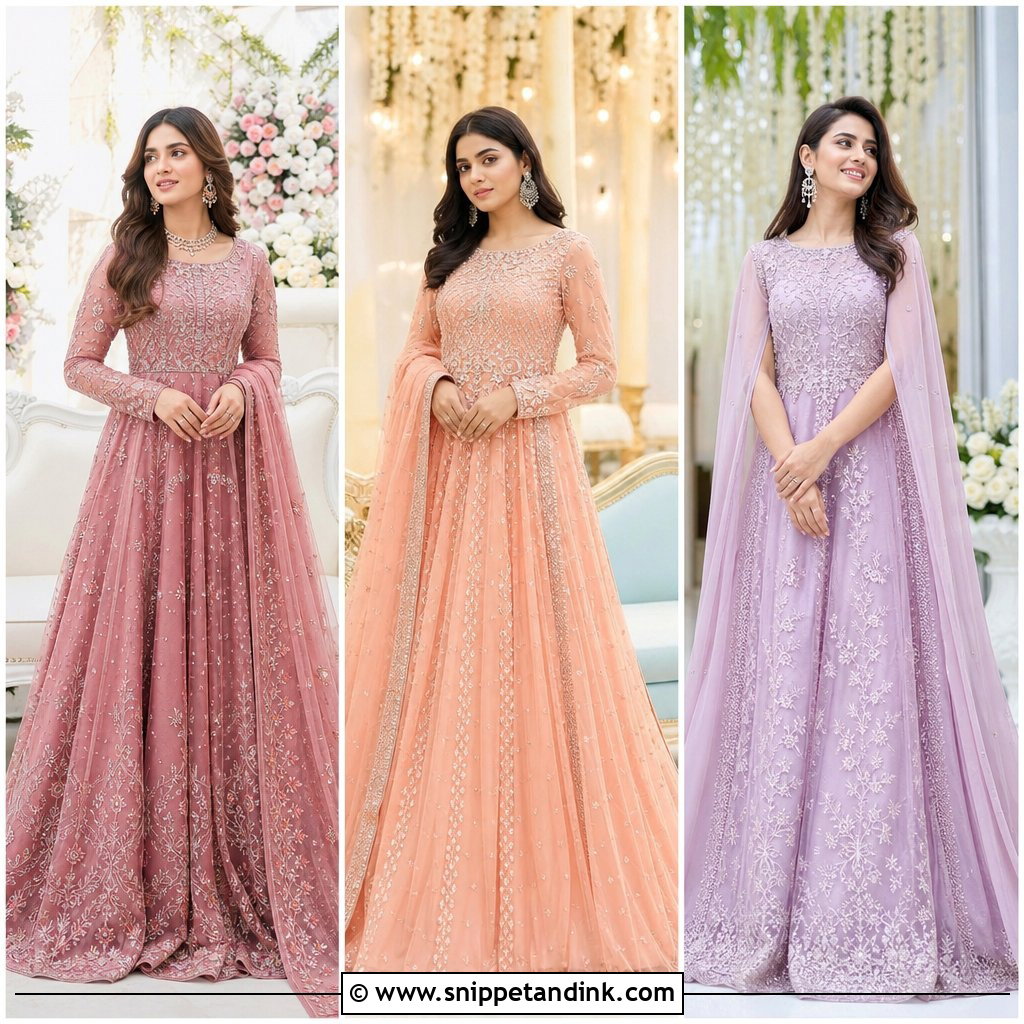
Blush flatters in daylight and under bright reception lights alike, which is rare for a pastel. I like it with silver, pearl or rose gold handwork rather than heavy gold, which can make blush look muddy. Keep the lehenga skirt soft rather than stiff with can-can, so it moves when you walk onto the stage instead of swinging like a bell. A structured choli holds the shape up top. Kundan jewelry, a neat bun or loose waves and a blush potli bag finish it.
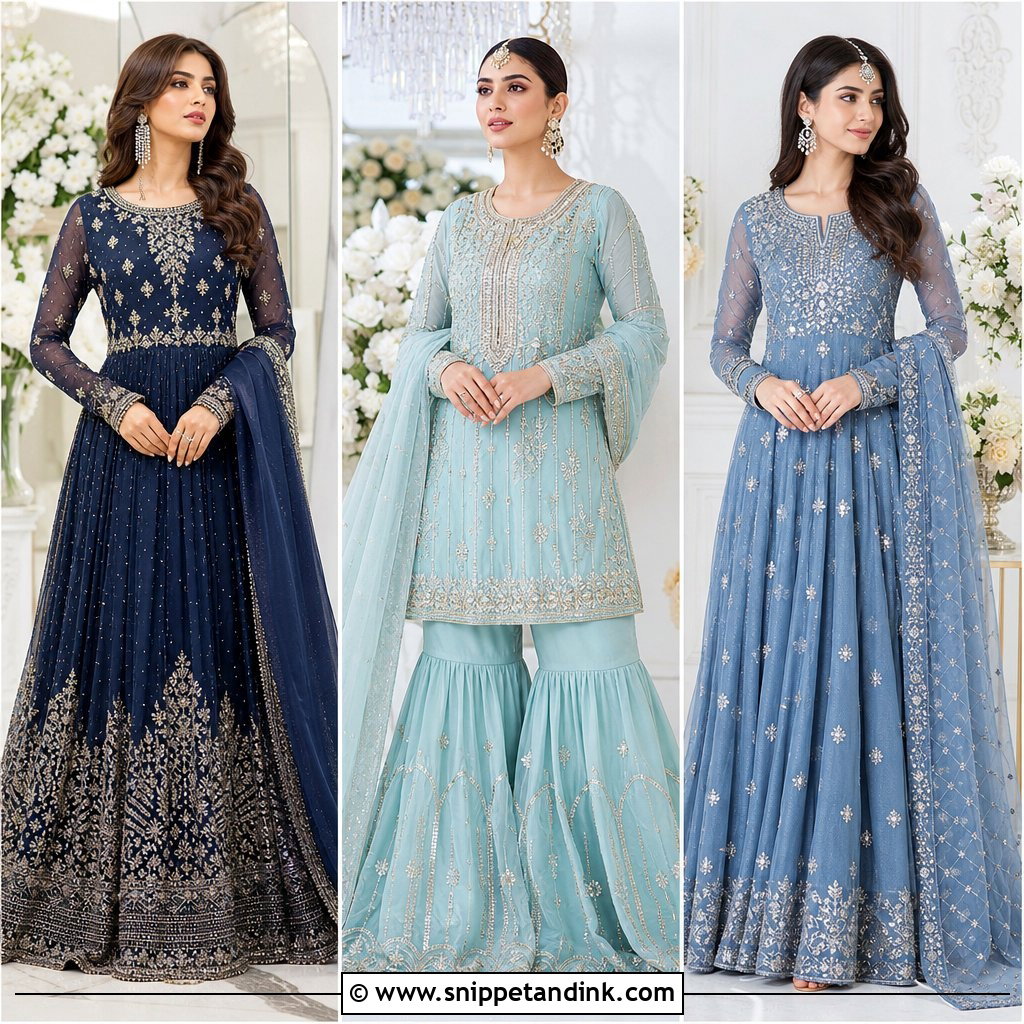
3. Mint Green Walima Sharara Dress
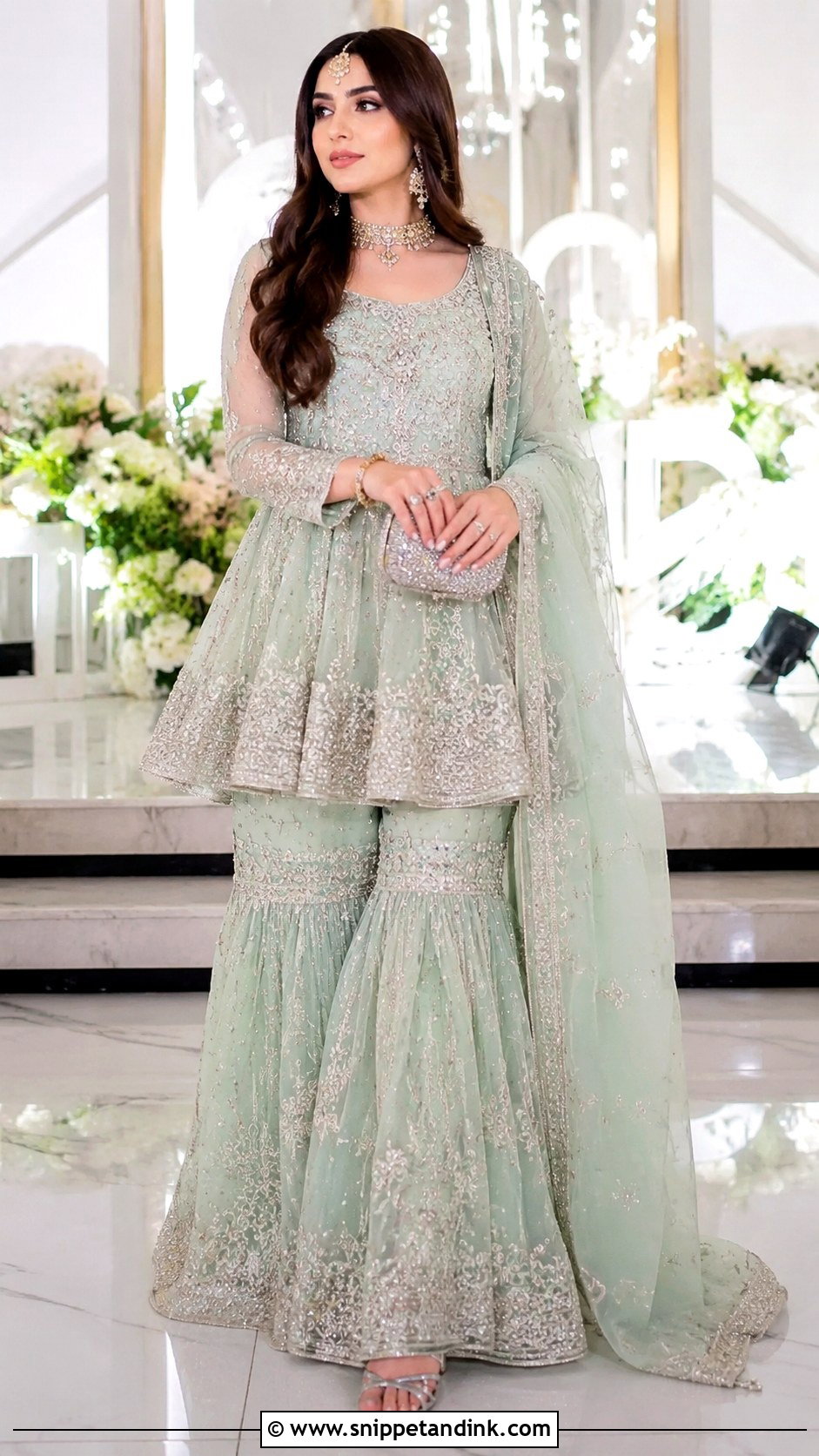
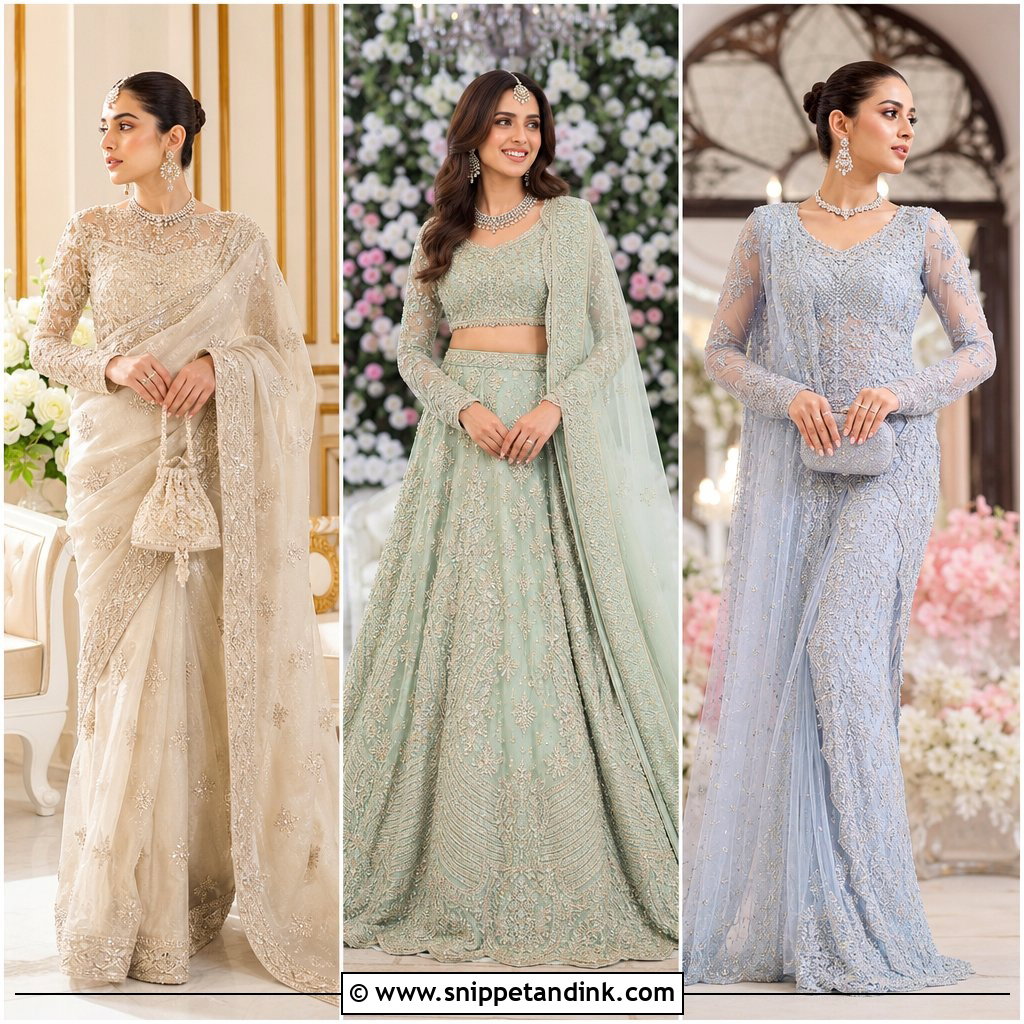
A mint green walima sharara dress gives you a traditional silhouette in a fresh colour. The wide legs move gracefully, though they need the right length: I hem shararas with the bride standing in her actual heels, because a sharara that pools on the floor gets stepped on every time she rises from the stage sofa. A short peplum or a long kameez balances the volume. Organza or tissue keeps it airy. Silver jewelry, crystal heels and peach-toned makeup suit the cool green.
4. Ivory Walima Gown Dress
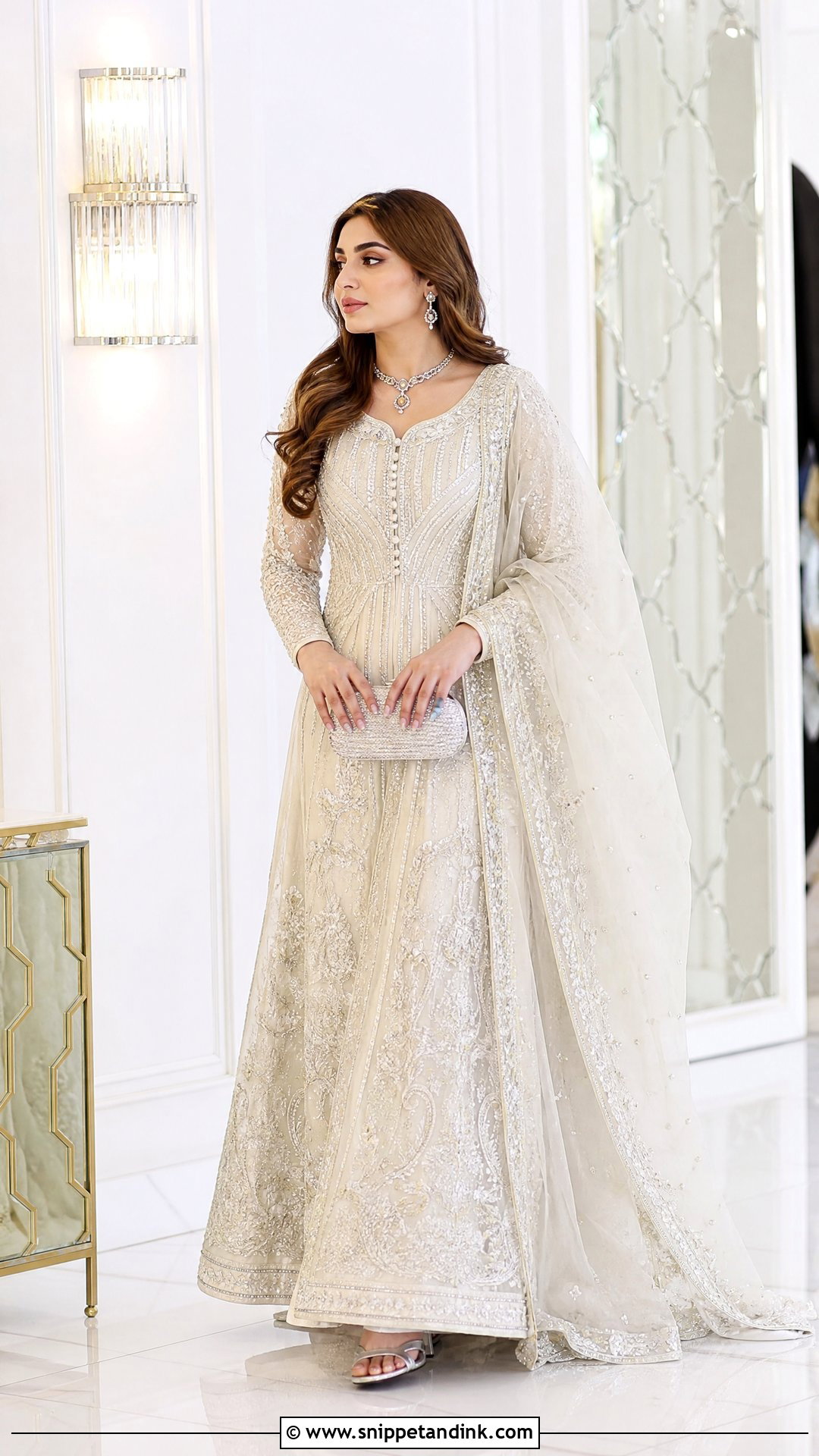
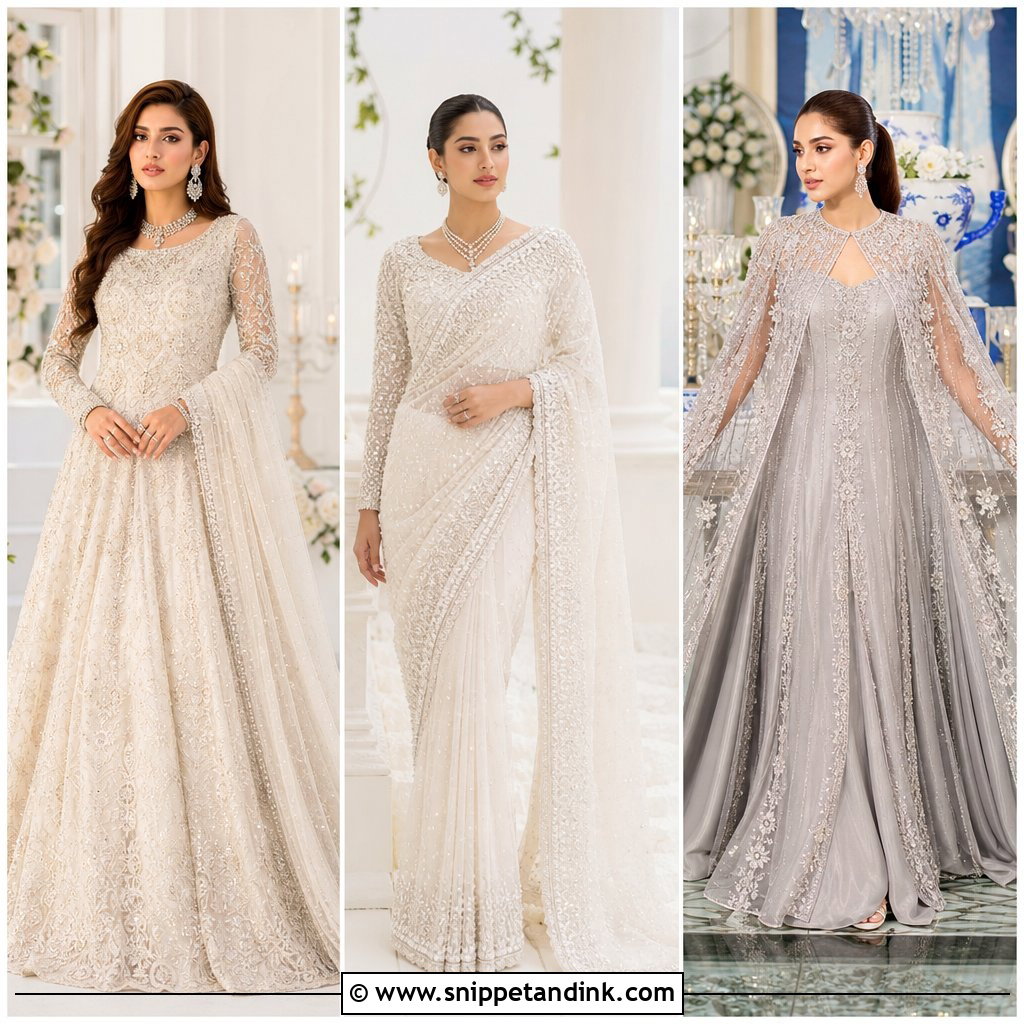
Ivory with tonal embroidery is refined and quietly luxurious, and pearl, silver or crystal work shows up clearly on it without needing contrast. A fitted bodice over a flowing skirt is the usual shape, with a sheer dupatta or a cape-style veil for a South Asian touch. Ivory has one practical risk: foundation transfers onto the neckline during hugs, so I ask makeup artists to set the jaw and neck well and I tuck a clean tissue into the clutch. Silver heels, a structured clutch, a sleek bun, fresh skin and soft brown eyes keep it modern.
5. Powder Blue Walima Bridal Dress
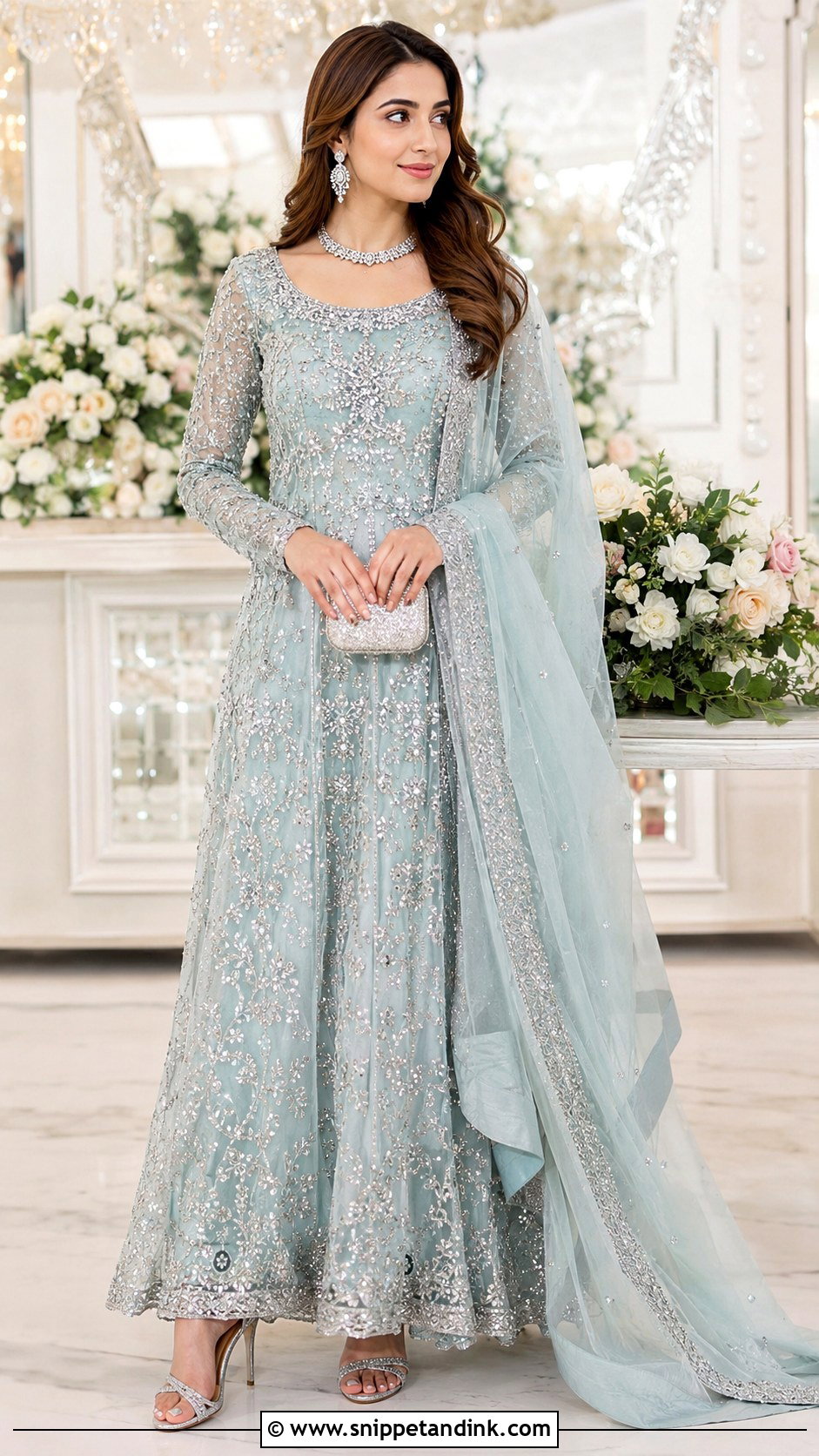
A powder blue walima bridal dress reads cool and calm, and it pairs naturally with silver, pearl or crystal embroidery. A long pishwas, maxi or lehenga in this shade can feel regal without bulk. Powder blue is sensitive to warm stage lights, which push it slightly toward grey, so look at the fabric under yellow bulbs before you finalise. A sheer organza dupatta with a framing border, silver heels and white-stone jewelry keep the palette clean. Luminous skin and soft pink cheeks stop it looking cold.
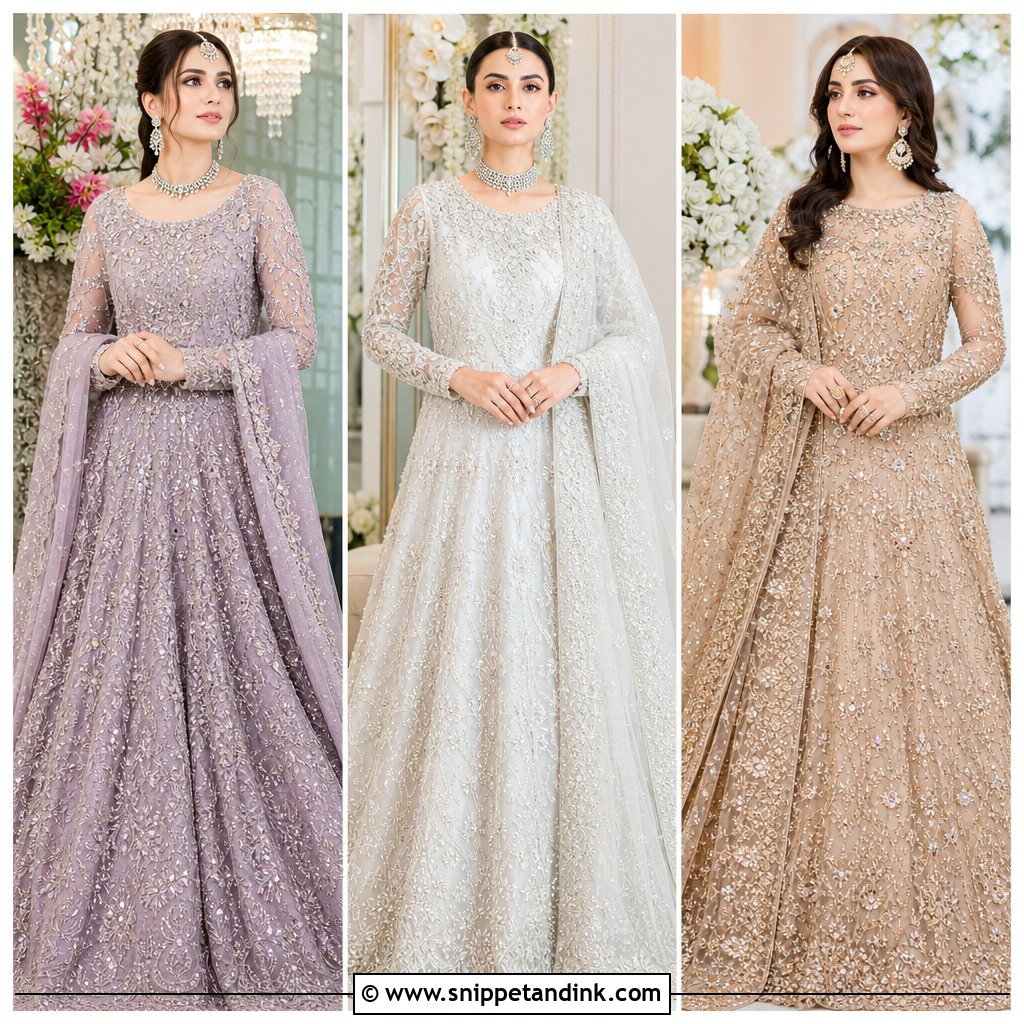
6. Lilac Walima Lehenga Dress
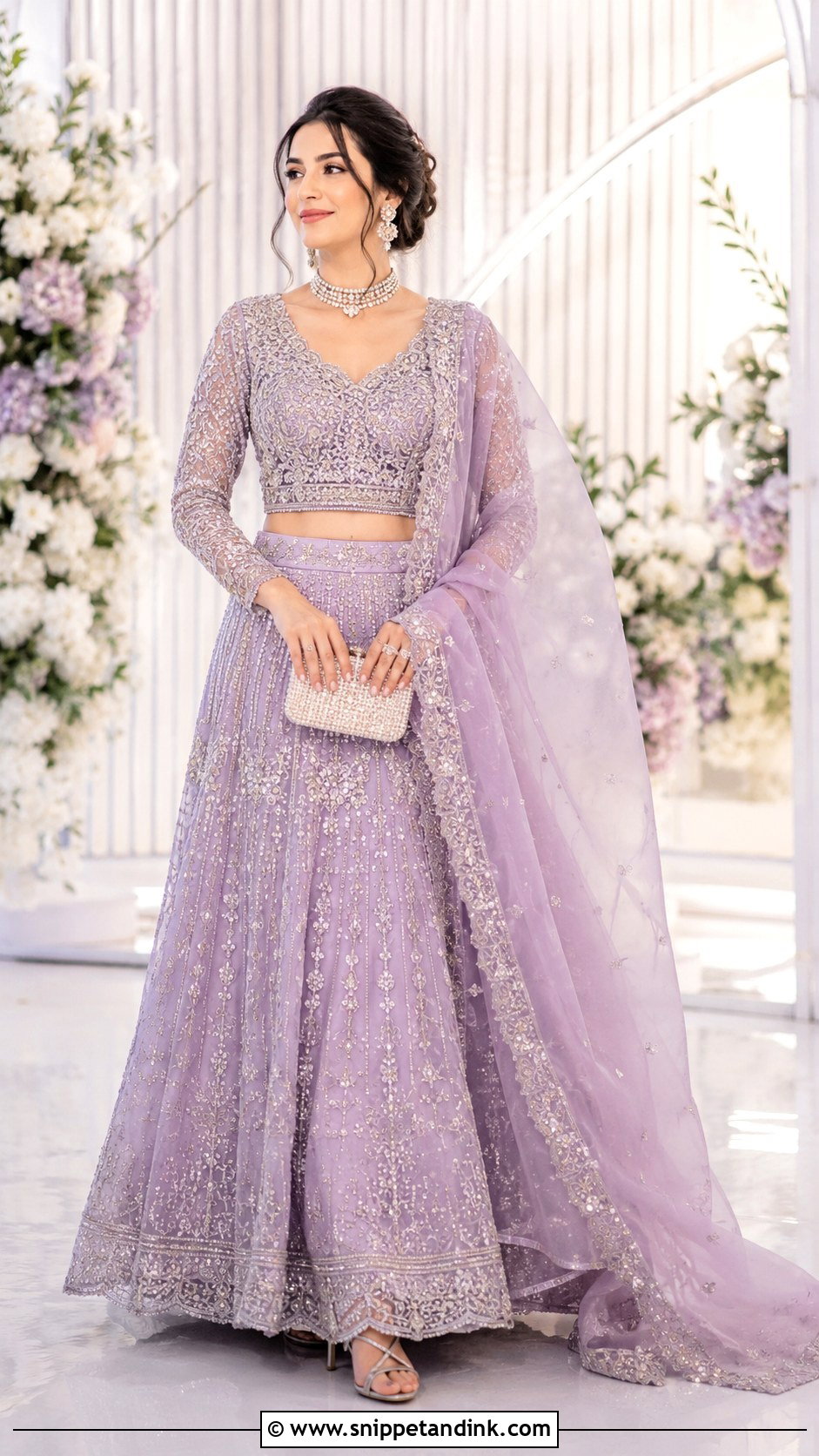
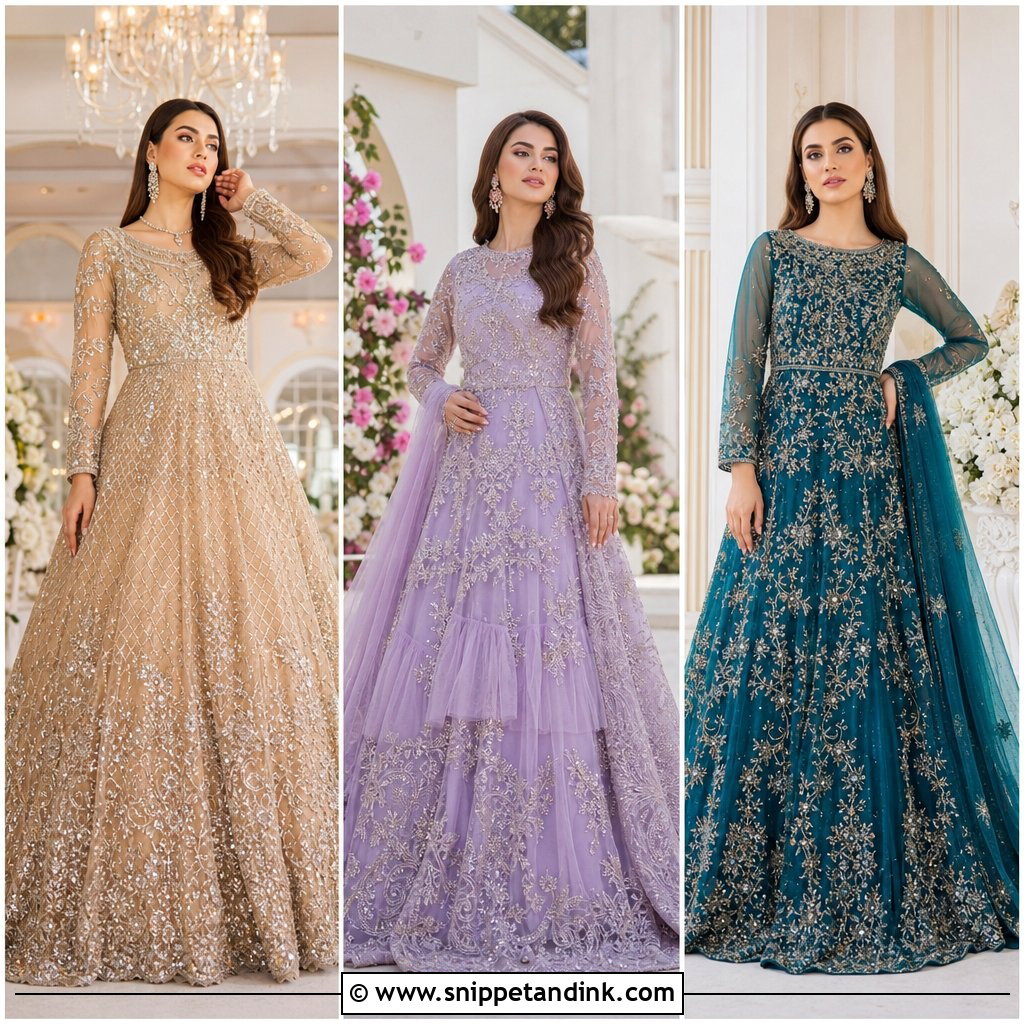
Lilac gives you a pastel that isn’t the usual pink or ivory. It works with silver, pearl or light gold embroidery, and a flowing lehenga with a slightly structured blouse balances it well. The dupatta here can carry more work than the skirt: small motifs across the body with a heavier border. Lilac is less forgiving on very warm skin tones, where a bluer lilac can look chalky, so try a warmer, pinker version if that’s you. Silver sandals, pearls and soft mauve makeup bring it together.
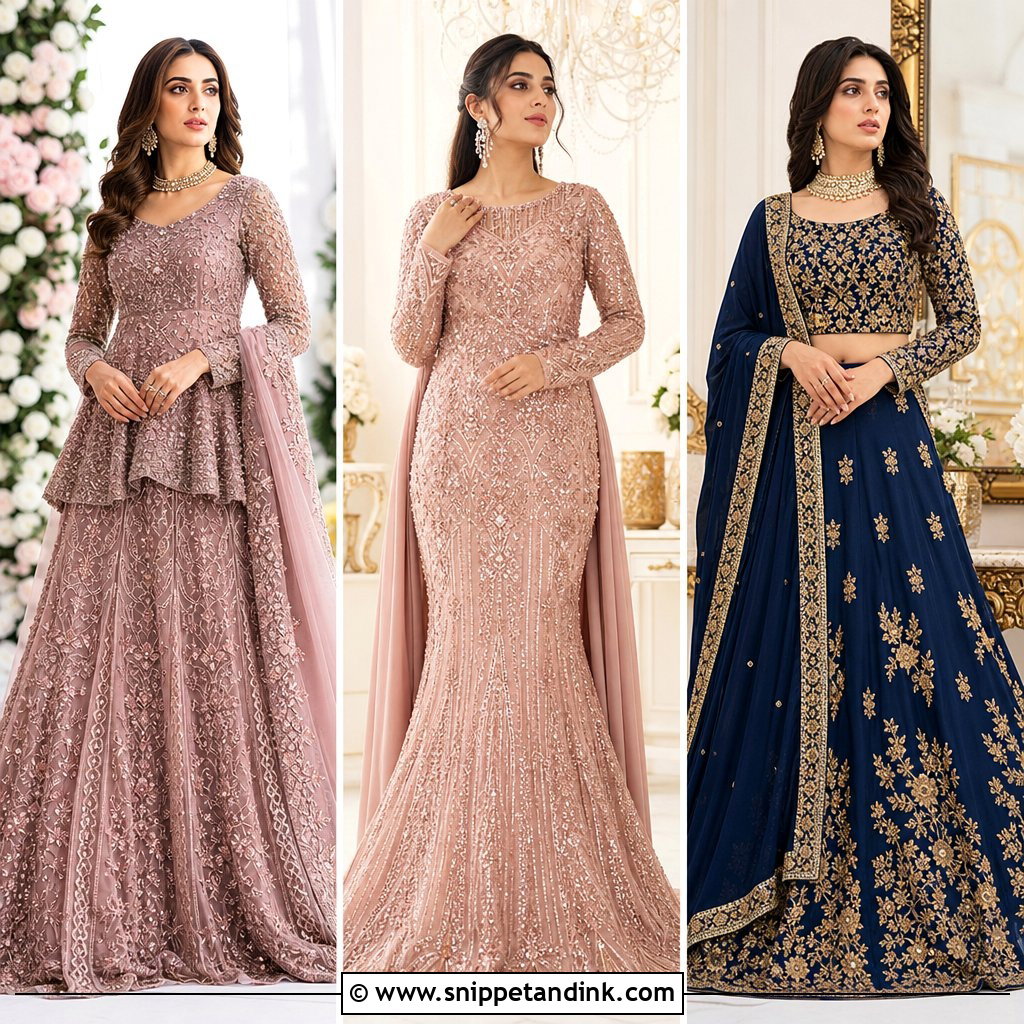
7. Rose Gold Walima Gown Dress
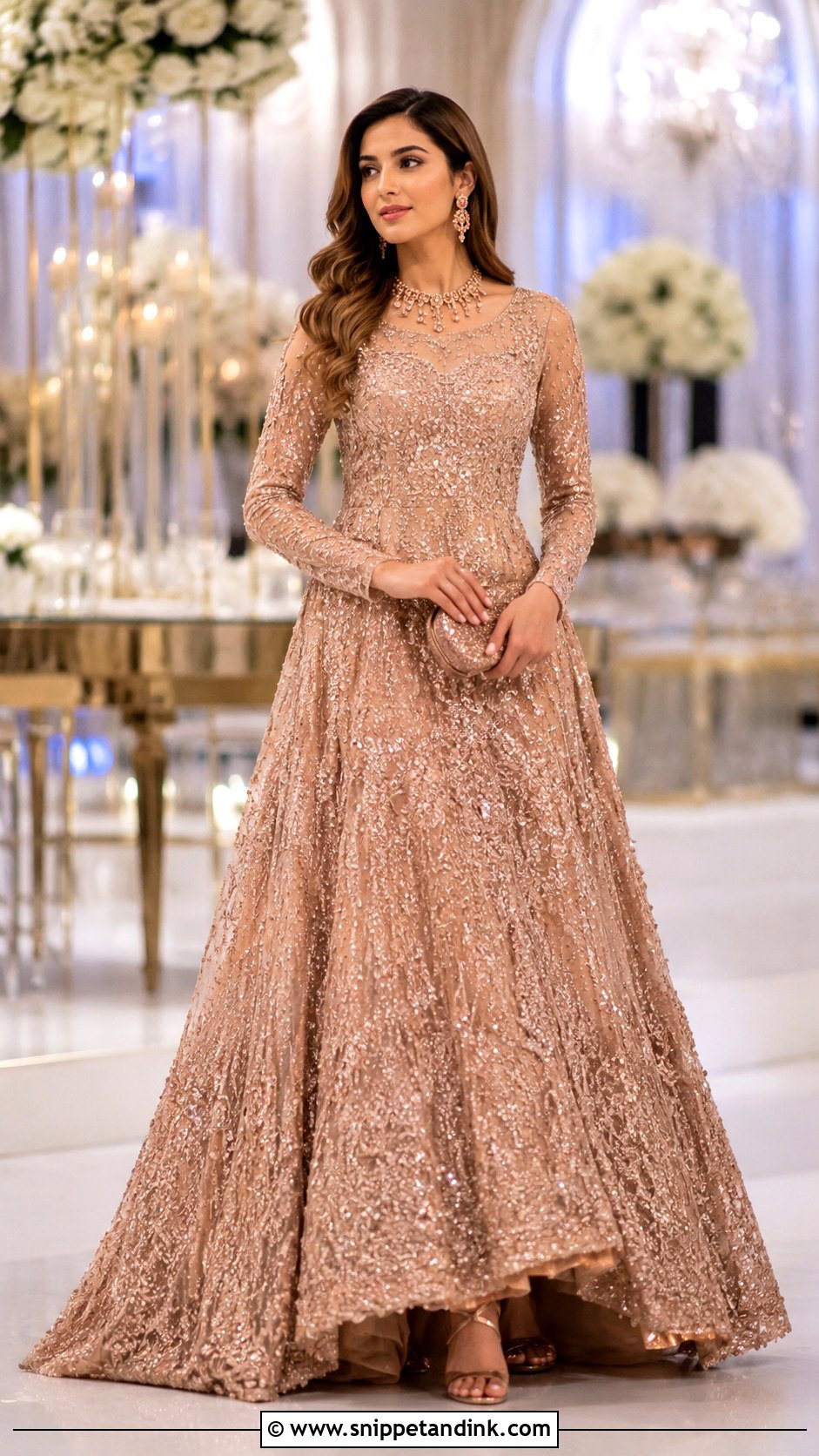
Rose gold is festive without the weight of baraat colours. A floor-length gown with subtle shimmer, fitted sleeves and a flared skirt suits it, and I prefer embroidery that blends into the fabric over heavy contrast work. Metallic fabrics can be scratchy at the underarm and stiff at the seams, so ask for a soft lining before the final fitting. Rose gold heels, champagne stones and a soft updo keep the tones consistent. It belongs at an evening walima where the lights will catch the shimmer.
8. Peach Walima Pishwas Dress
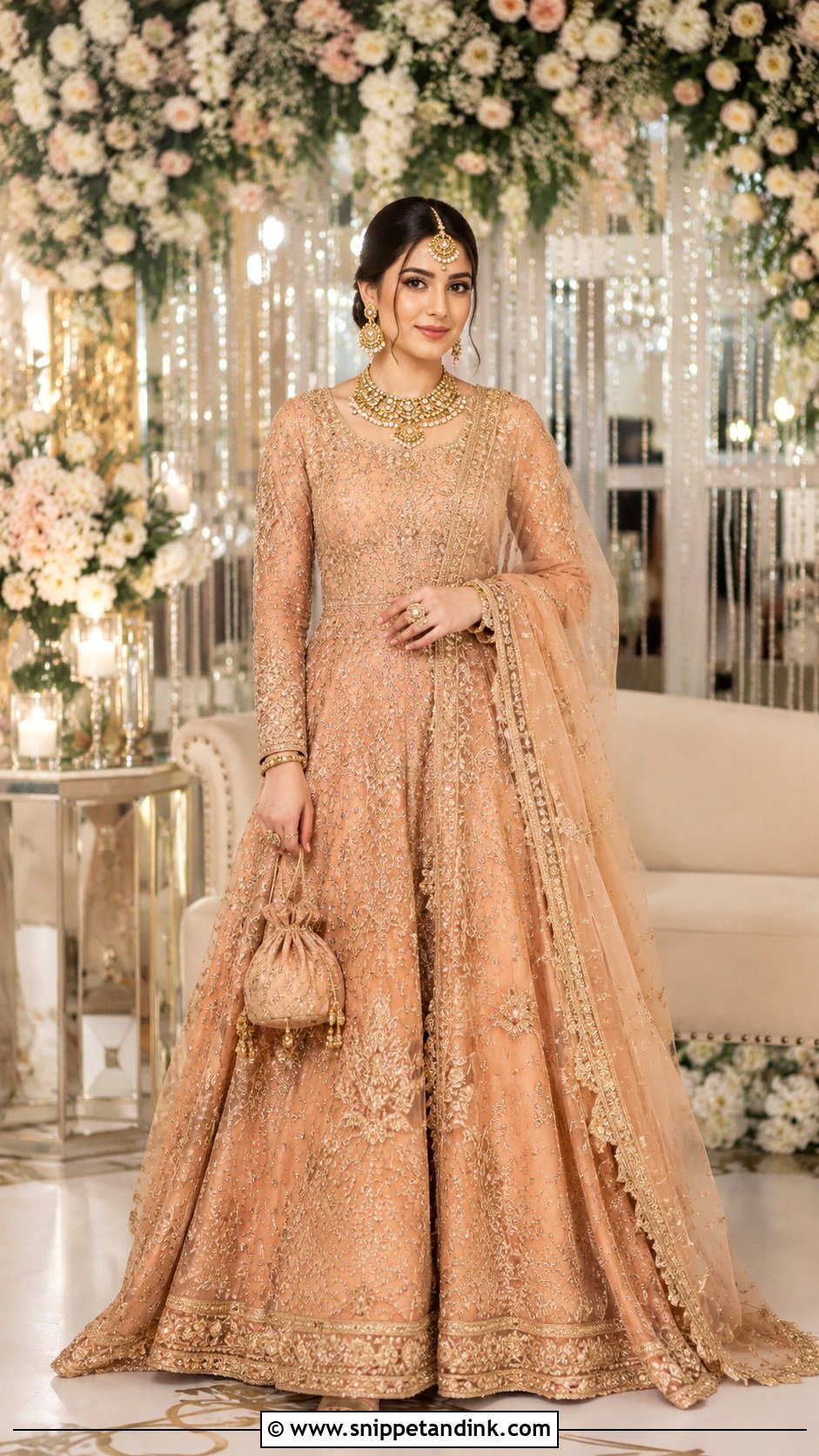
The pishwas is one of the most traditional Pakistani silhouettes, and peach suits it well. The long flared skirt gives a royal shape and is far easier to carry than a heavy lehenga. Gold, pearl and subtle silver embroidery all sit well on peach. My one fitting note: the bodice seam of a pishwas should sit right under the bust, not lower, or the flare starts too late and the shape looks heavy. A matching organza dupatta, gold heels, kundan or pearl jewelry and a centre-parted bun finish it.
9. Silver Walima Bridal Gown
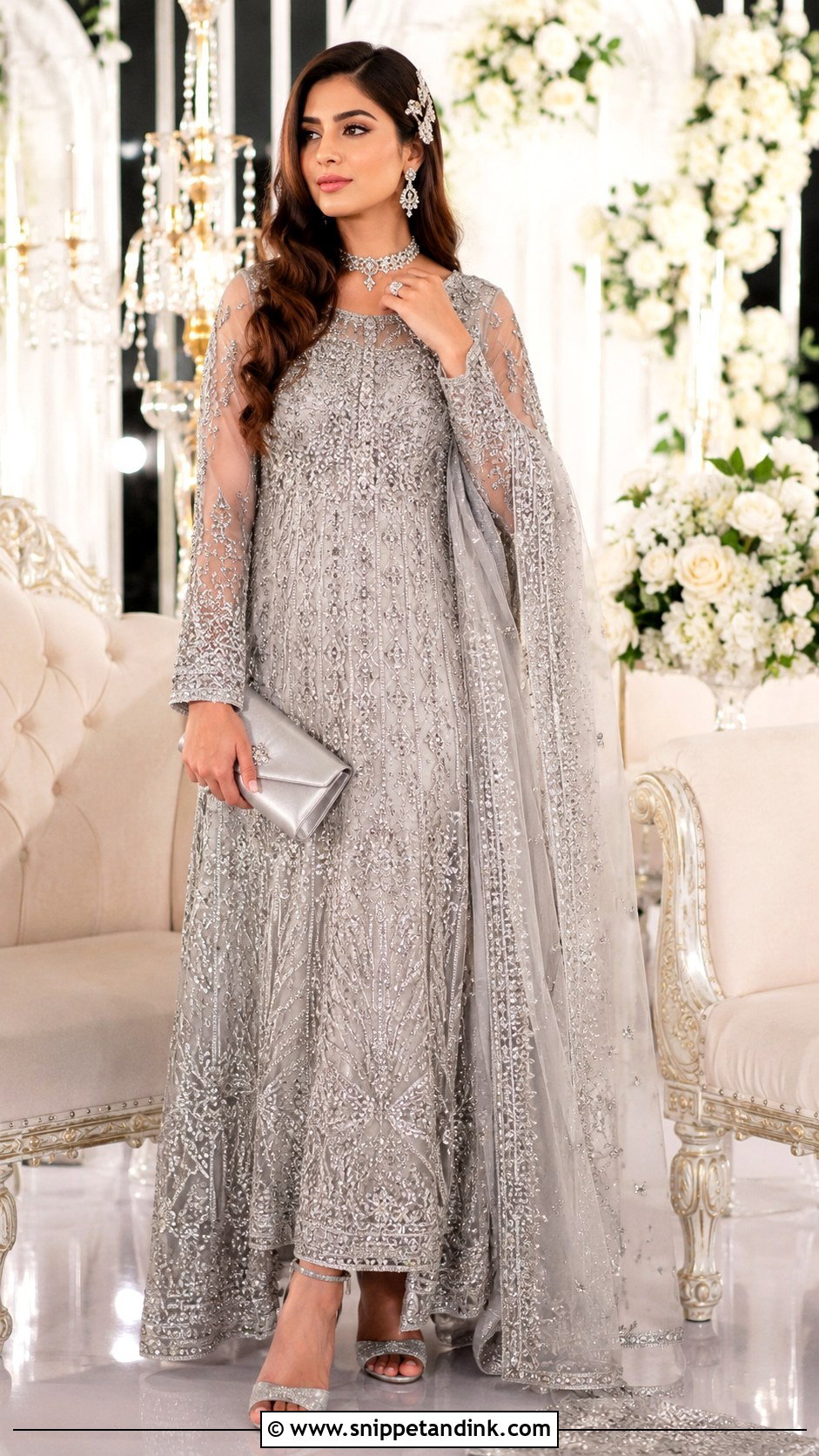
Silver is cool-toned and striking at a formal evening reception. Light crystal work, sequins or thread embroidery catch light without shouting. Silver under camera flash can bounce too much light back, so I prefer a softer, slightly matte silver over high-shine lamé. A fitted bodice over a flowing skirt suits most figures, and a sheer dupatta or long veil keeps a traditional element. Silver heels, diamond-style jewelry and a sleek clutch match it. Defined eyes and a nude pink lip keep the face from fading.
10. Pista Green Walima Maxi Dress
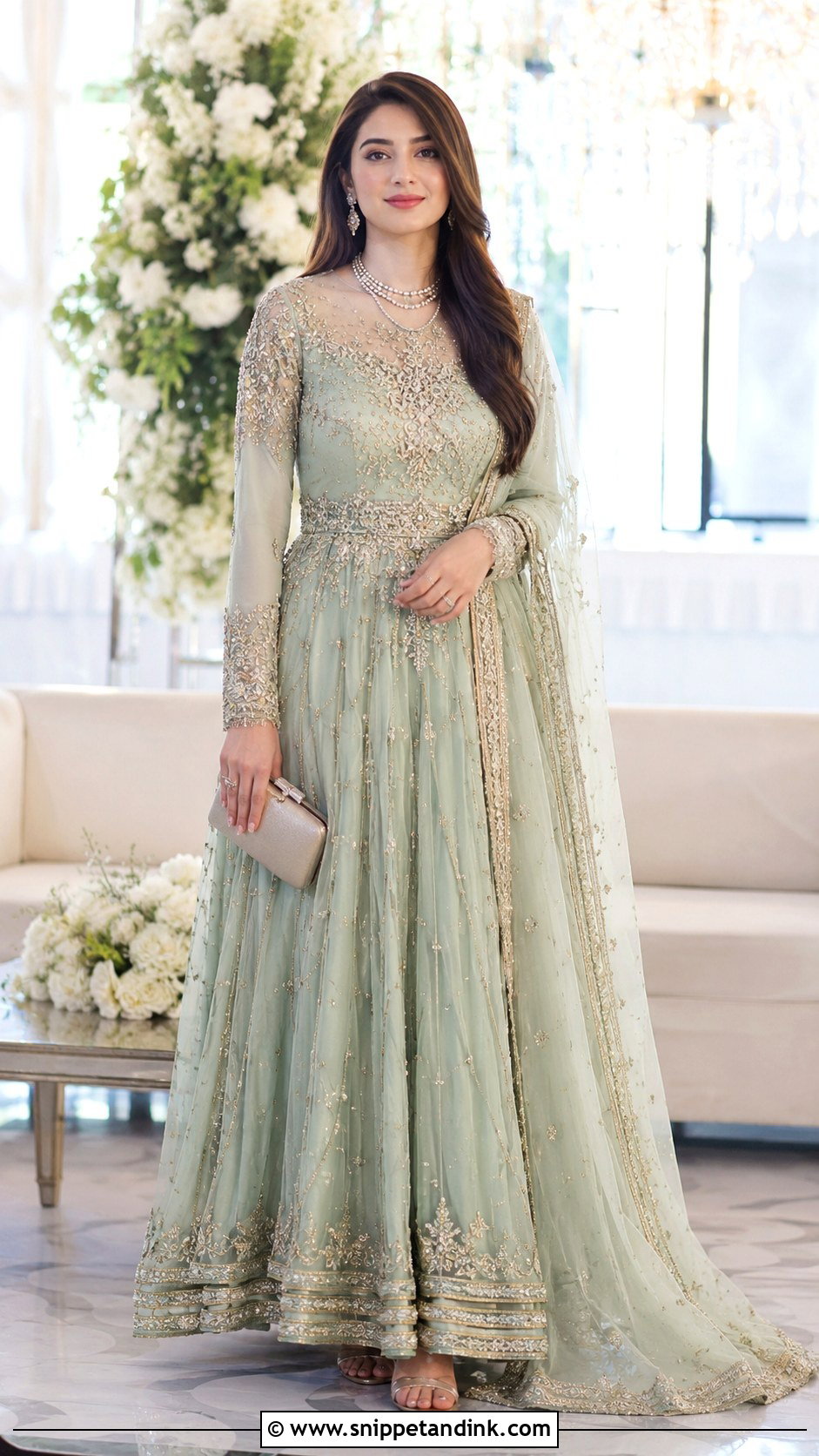
Pista green is a calm, soft traditional shade. It works with champagne, silver or pearl details on a long maxi with a light flare and embellished sleeves. Keep the dupatta border subtle so the whole outfit stays in balance. Pale green can make some complexions look sallow in daylight, which is why I like warm peach makeup with it and a bit more glow on the cheekbones. Pearl jewelry, metallic heels and soft waves are enough. Spring and daytime receptions suit it best.
11. Beige Walima Gharara Dress
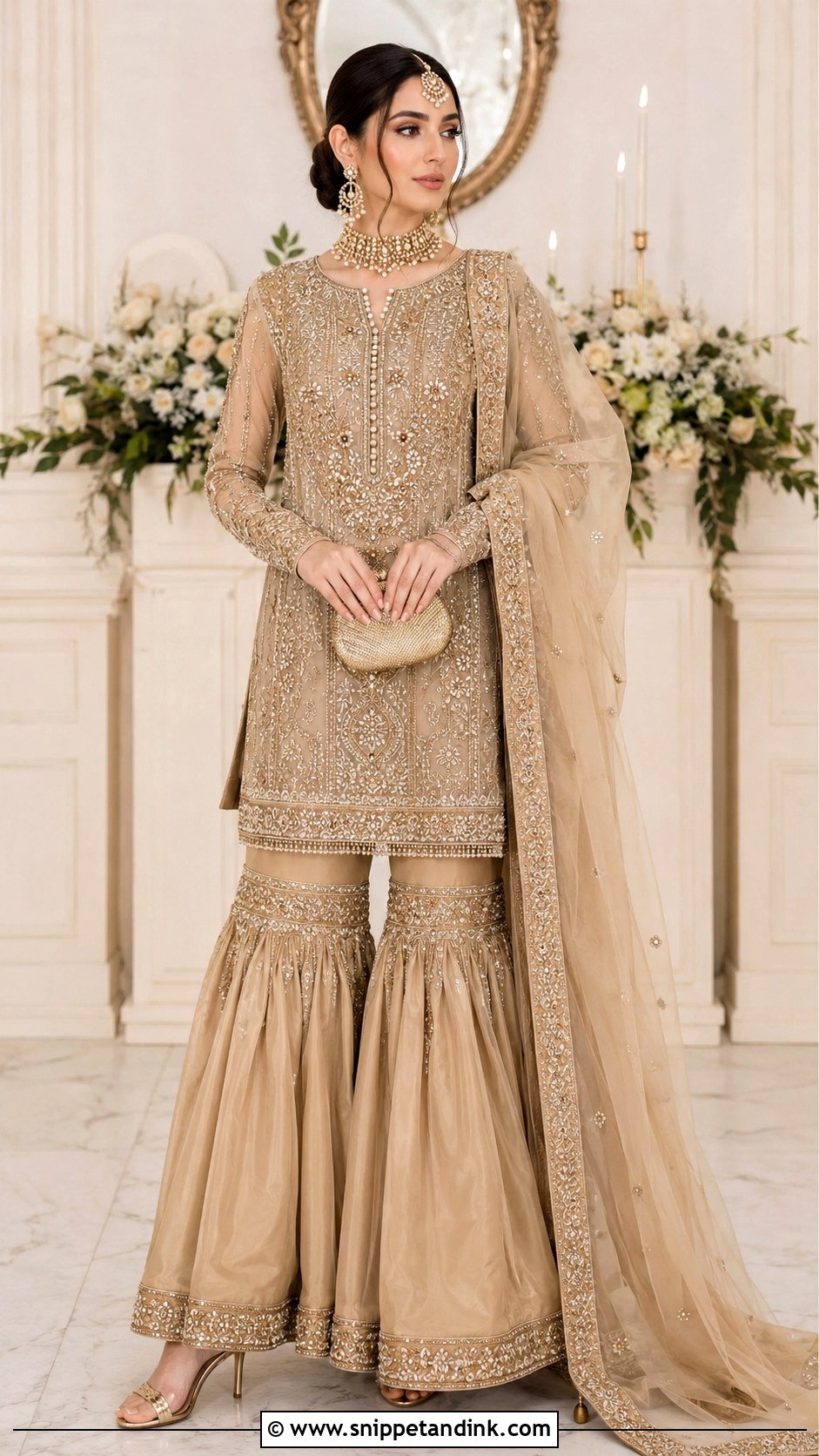
The gharara brings heritage and drama, and beige keeps it calm. A long shirt with embroidery at the neckline, sleeves and hem sits over a gharara with worked knees and a soft flare. The knee panel, the gota or embroidered band where the gharara is gathered, has to land at your actual knee, so stand straight for that measurement. Champagne, antique gold or pearl embroidery suits beige. Wear gold heels, a matching dupatta and traditional jewelry: tikka, earrings and choker. A neat bun keeps the neckline clear.
12. Dusty Pink Walima Bridal Dress
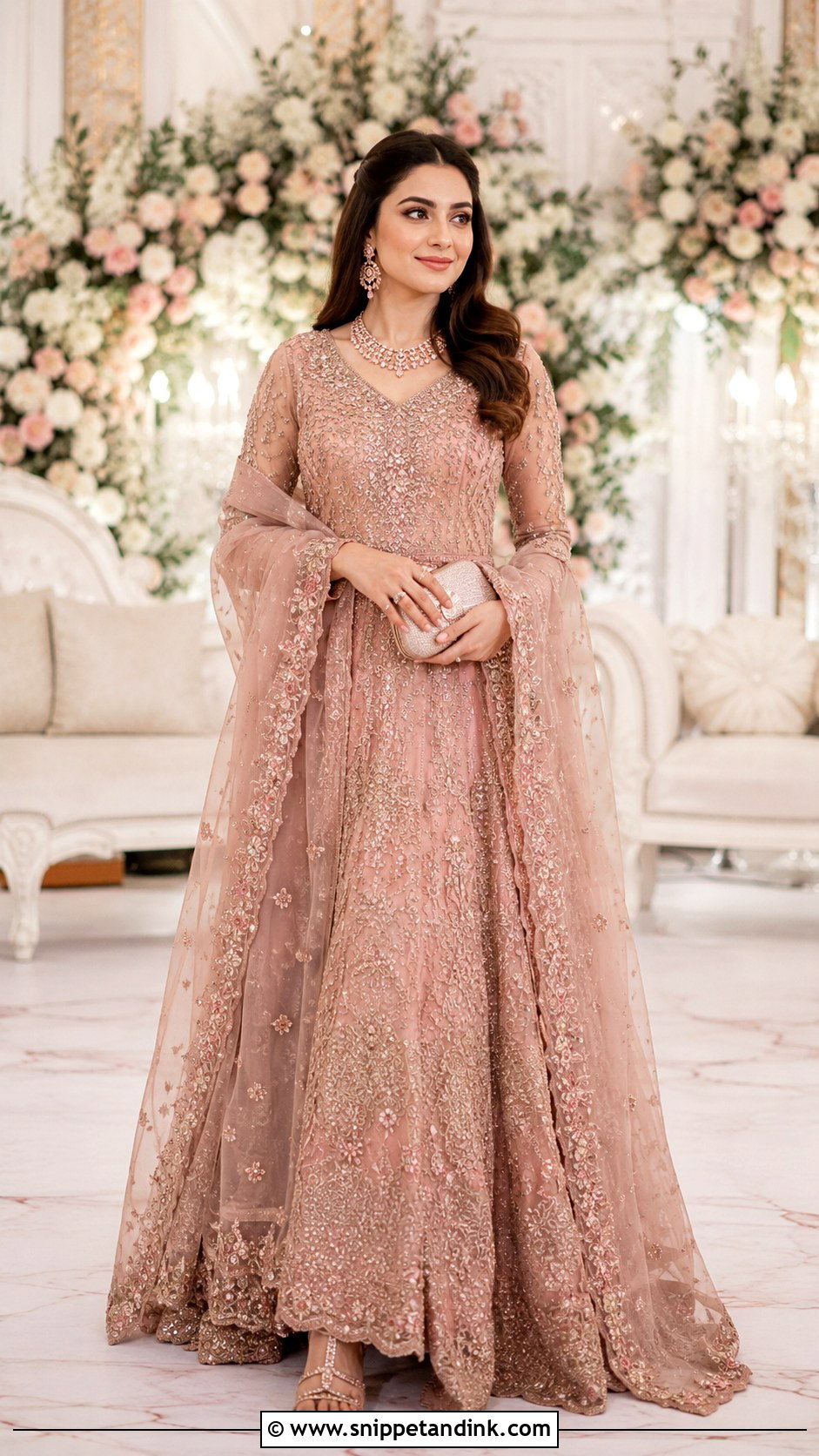
Dusty pink feels more grown-up than baby pink and softer than hot pink. A maxi, lehenga or pishwas with tonal embroidery and organza or net overlays gives it depth. Dusty shades photograph truer than bright ones, which is one reason I suggest them to brides worried about colour shifting in pictures. Rose gold jewelry, embellished sandals and a small clutch suit it. Pink-brown eyes, rosy cheeks, a muted lip and a low bun with delicate hair accessories finish it.
13. Gold Walima Lehenga Dress
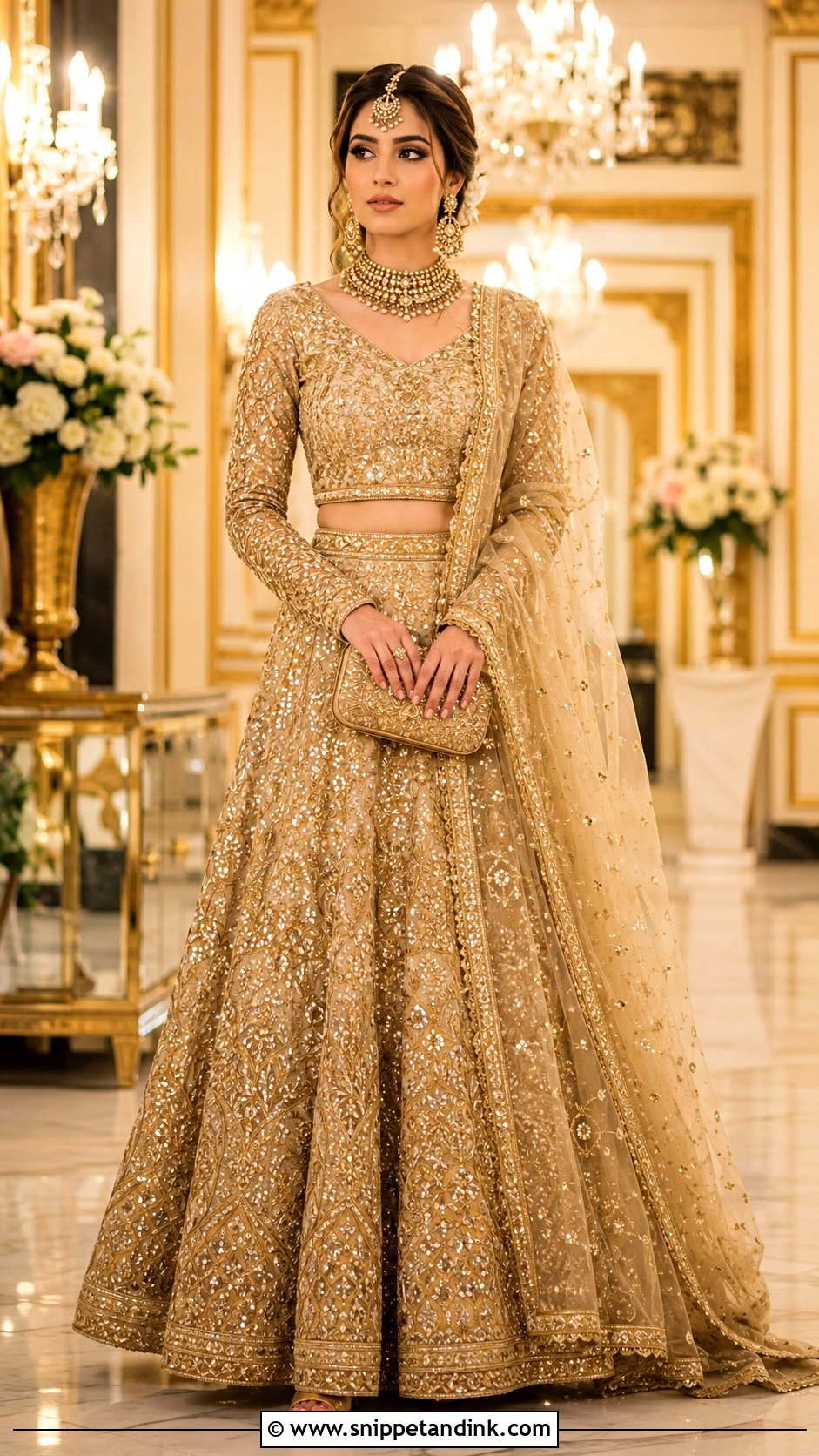
Soft gold gives a walima lehenga more shine while staying easier to wear than deep yellow gold. Delicate zari, sequins or dabka on the lehenga, a structured blouse and a sheer dupatta keep it light. Light is the operative word here. Real zari and heavy dabka add weight quickly, and on a reception with long greetings you’ll feel every extra kilo by the end. Ask the designer to keep heavy work to the border and leave the body of the skirt lighter. Gold heels, kundan jewelry, warm bronzed cheeks and a soft nude lip suit it.
14. White Walima Bridal Maxi Dress
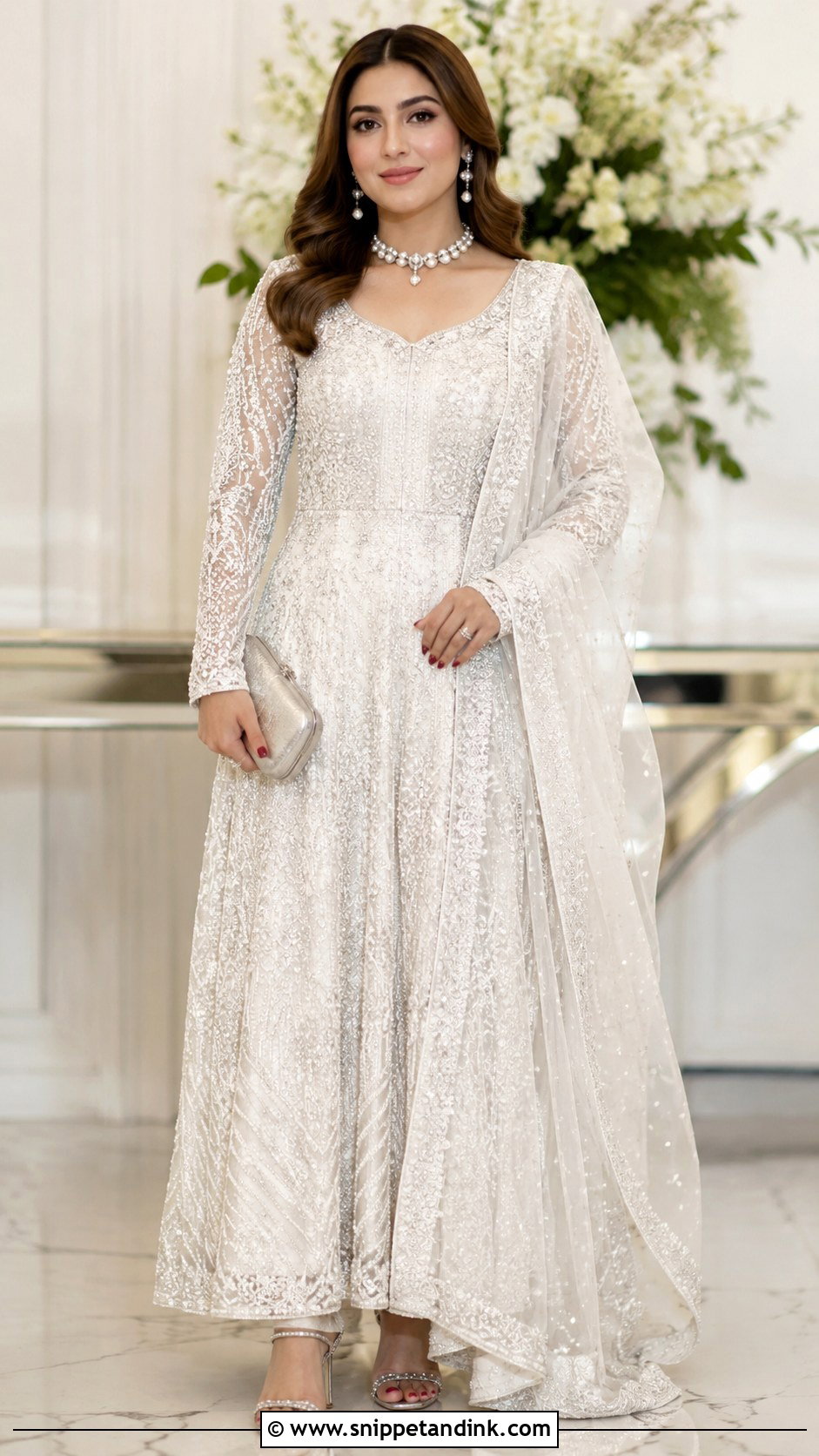
White carries a ceremonial feeling at a Pakistani walima, especially with pearl, silver or crystal embroidery. A full-length maxi with long sleeves, a fitted bodice and a flowing skirt makes a modest, refined look. Pure white can look stark beside darker skin under flash, so I often swap to an off-white with a hint of warmth that reads white in photos but doesn’t glare. An organza dupatta with a fine border, silver heels and pearl jewelry finish it. Keep makeup luminous with defined eyes.
15. Lavender Walima Sharara Dress
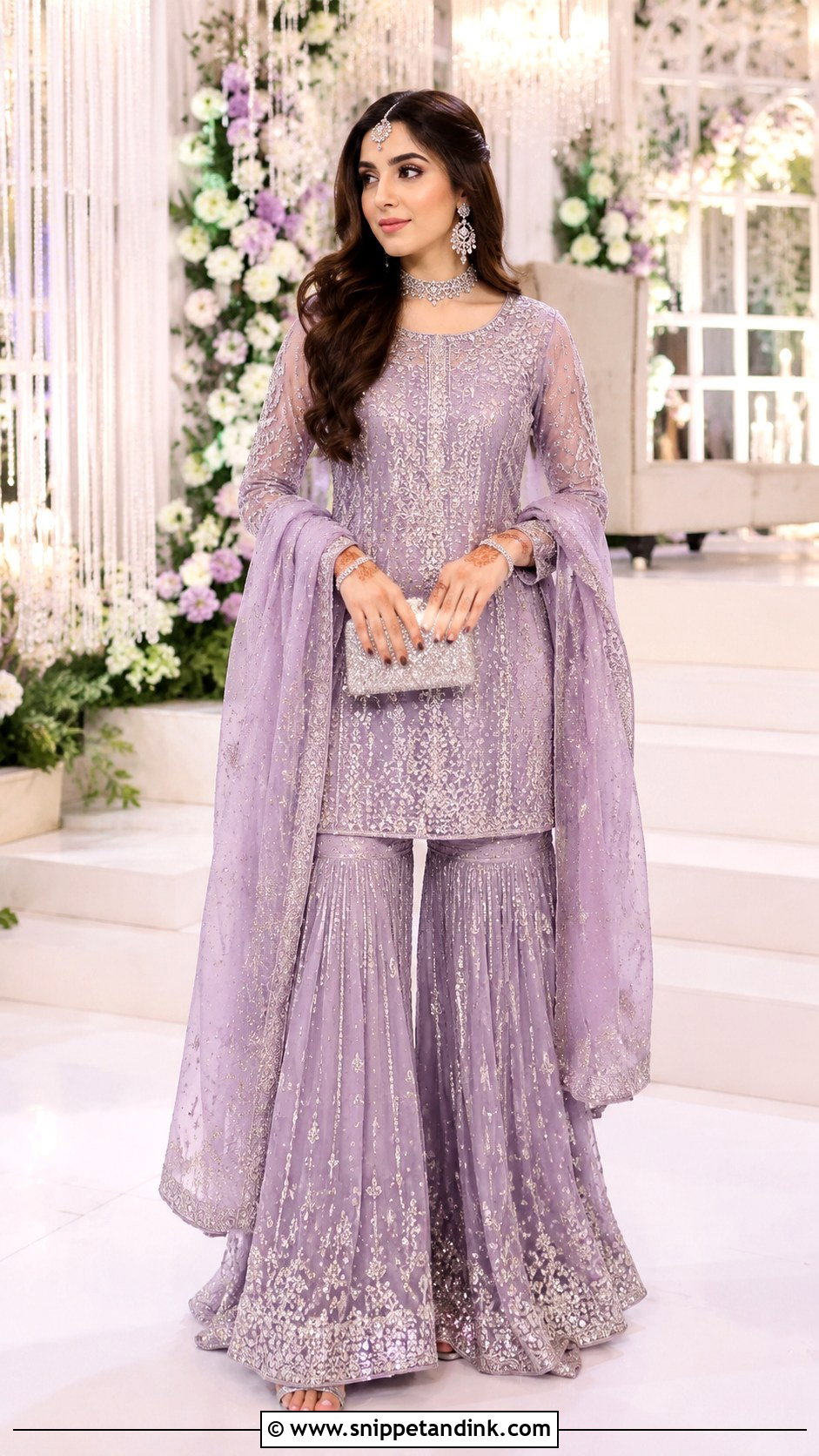
A lavender walima sharara dress is gentle but still stands out in group photos. A short embroidered kurti over a flared sharara gives a youthful balance. Silver or pearl embroidery keeps the cool tone. Shararas are one of the most comfortable options for a long evening, because you can sit cross-legged on a stage sofa and stand again without wrestling a full skirt. A dupatta with small motifs and a neat border, silver heels and lilac eyeshadow with pink blush tie it together.
16. Sea Green Walima Gown Dress
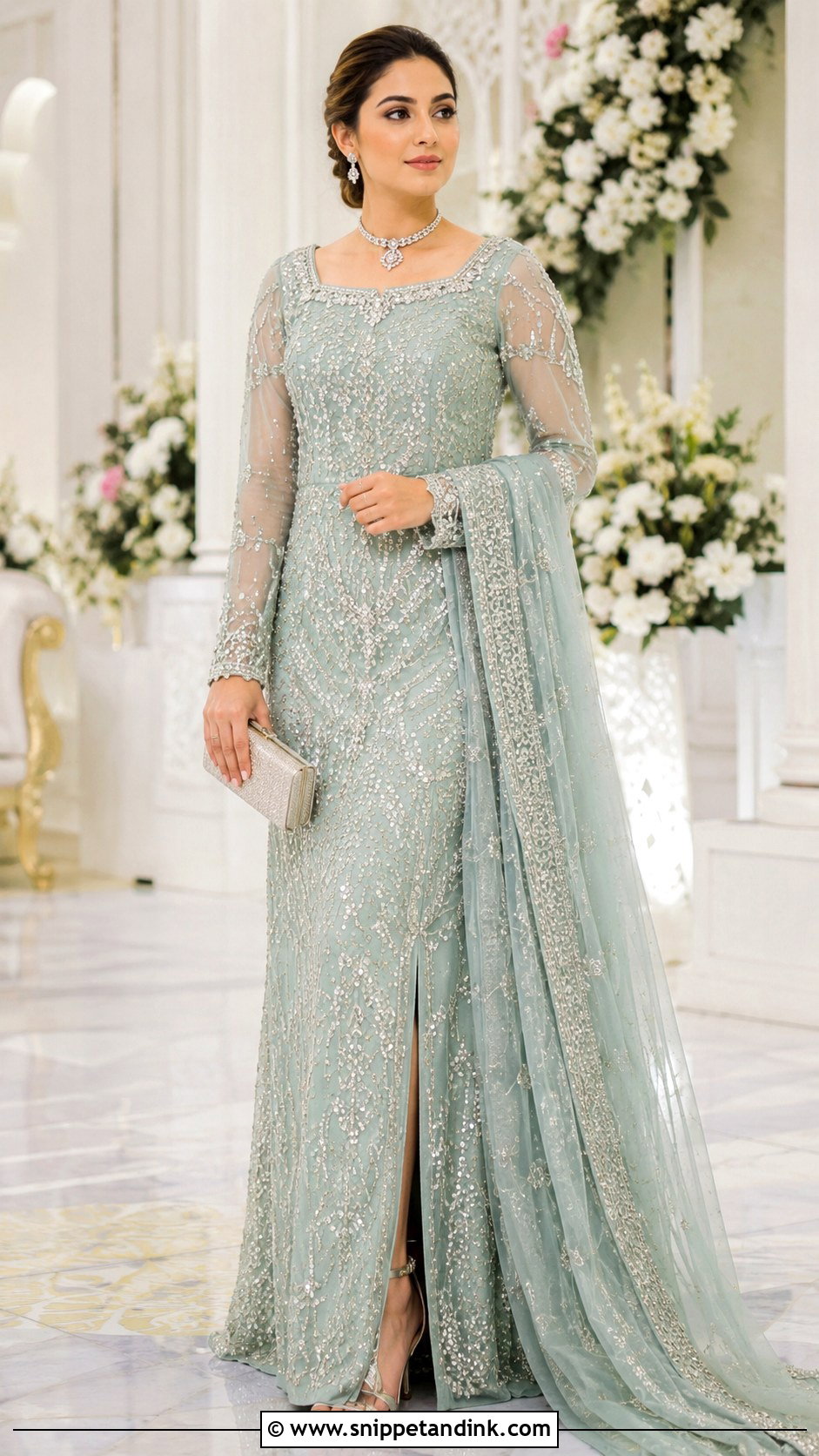
Sea green sits between blue and green and handles bright reception lights well. A gown with a fitted bodice, sheer sleeves and a wide skirt gives an elegant bridal shape. Silver, pearl or light gold embroidery keeps it soft. The dupatta can go over one shoulder or neatly over the head; if it goes on the head, pin it at the crown and behind each ear, since a head-draped dupatta slides back every time you look down at guests. Metallic heels, pale stones and soft eyeliner finish it.
17. Mauve Walima Lehenga Dress
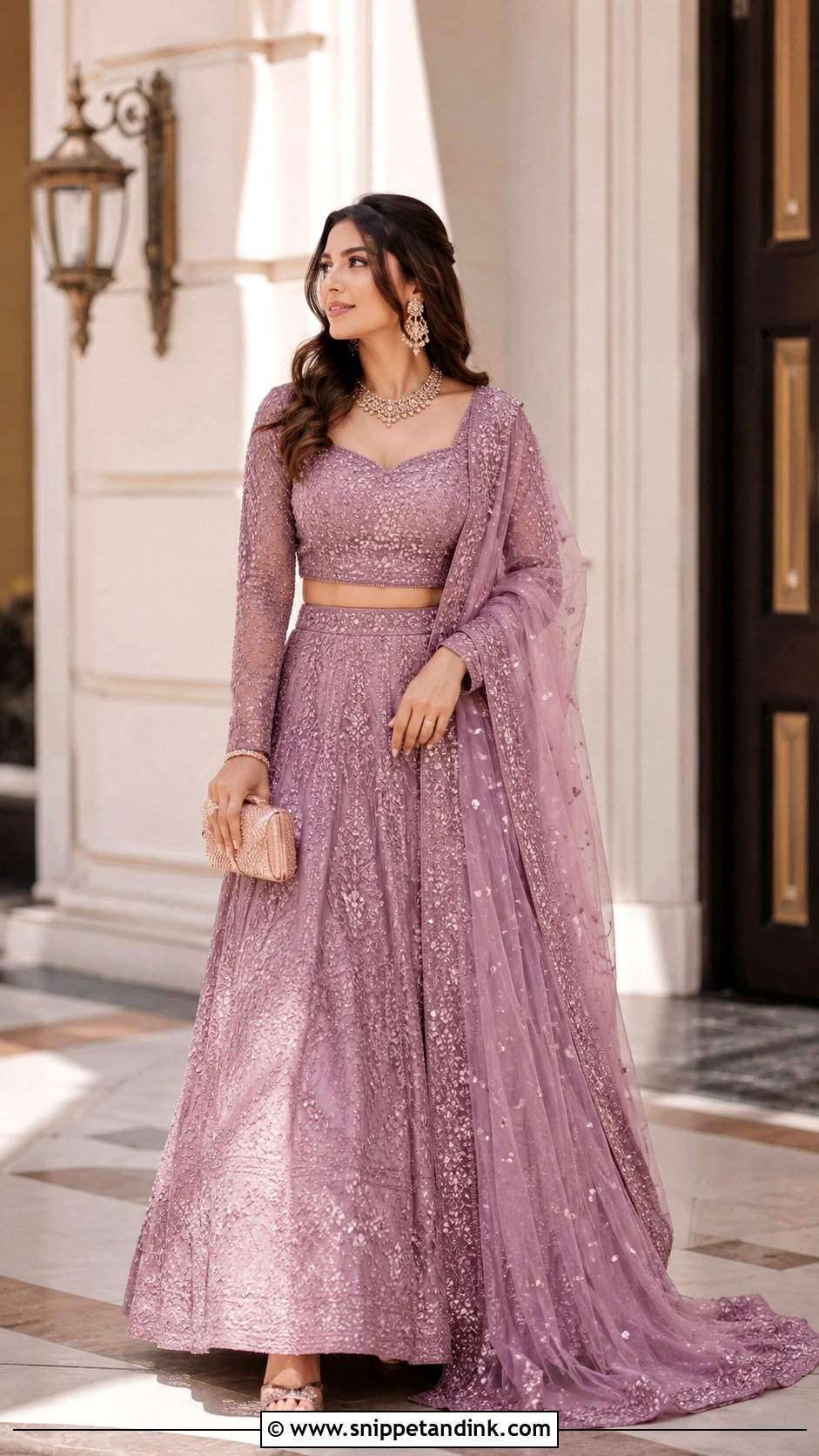
Mauve is a deeper pastel with enough richness to feel formal. A lightly embellished lehenga, matching blouse and sheer dupatta in tonal embroidery, pearls or light sequins make a complete look. Mauve fabrics vary in undertone, some leaning grey, some leaning pink, and that decides the metal. Grey-leaning mauve wants silver; pink-leaning mauve suits rose gold. A mauve lip, soft brown eyes, embellished heels and a compact clutch finish it.
18. Tea Pink Walima Pishwas Dress
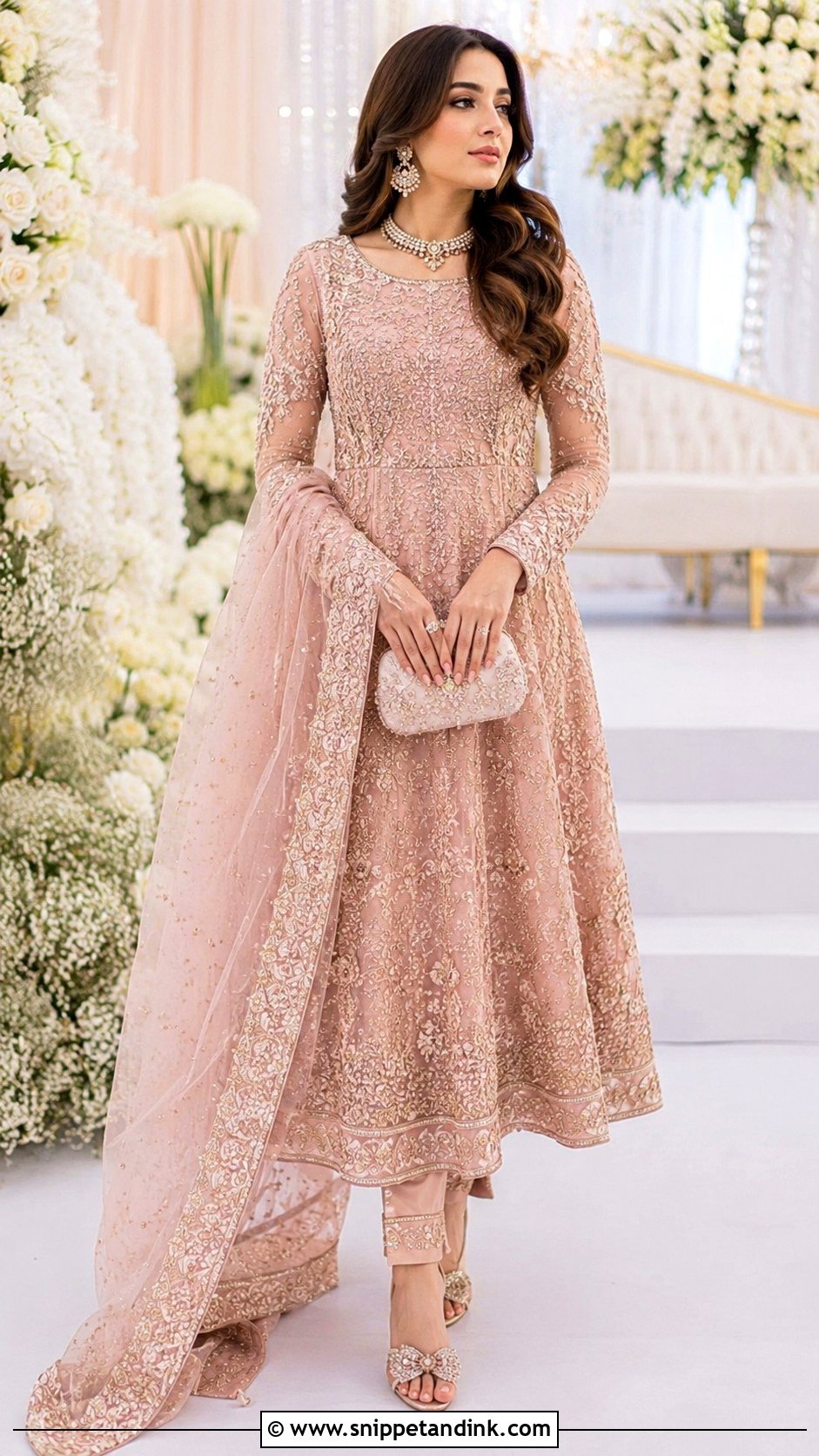
Tea pink has a slightly vintage softness, and in a flared pishwas with fine embroidery at the bodice and hem it looks romantic without loud colour. Pair it with a matching churidar or slim trousers and a sheer dupatta with a worked border. Churidar gathers need to sit neatly at the ankle, so get them fitted with the shoes you’ll wear. Pearl or kundan jewelry, delicate bangles, comfortable heels and soft curls or a low bun complete it.
19. Light Grey Walima Bridal Dress
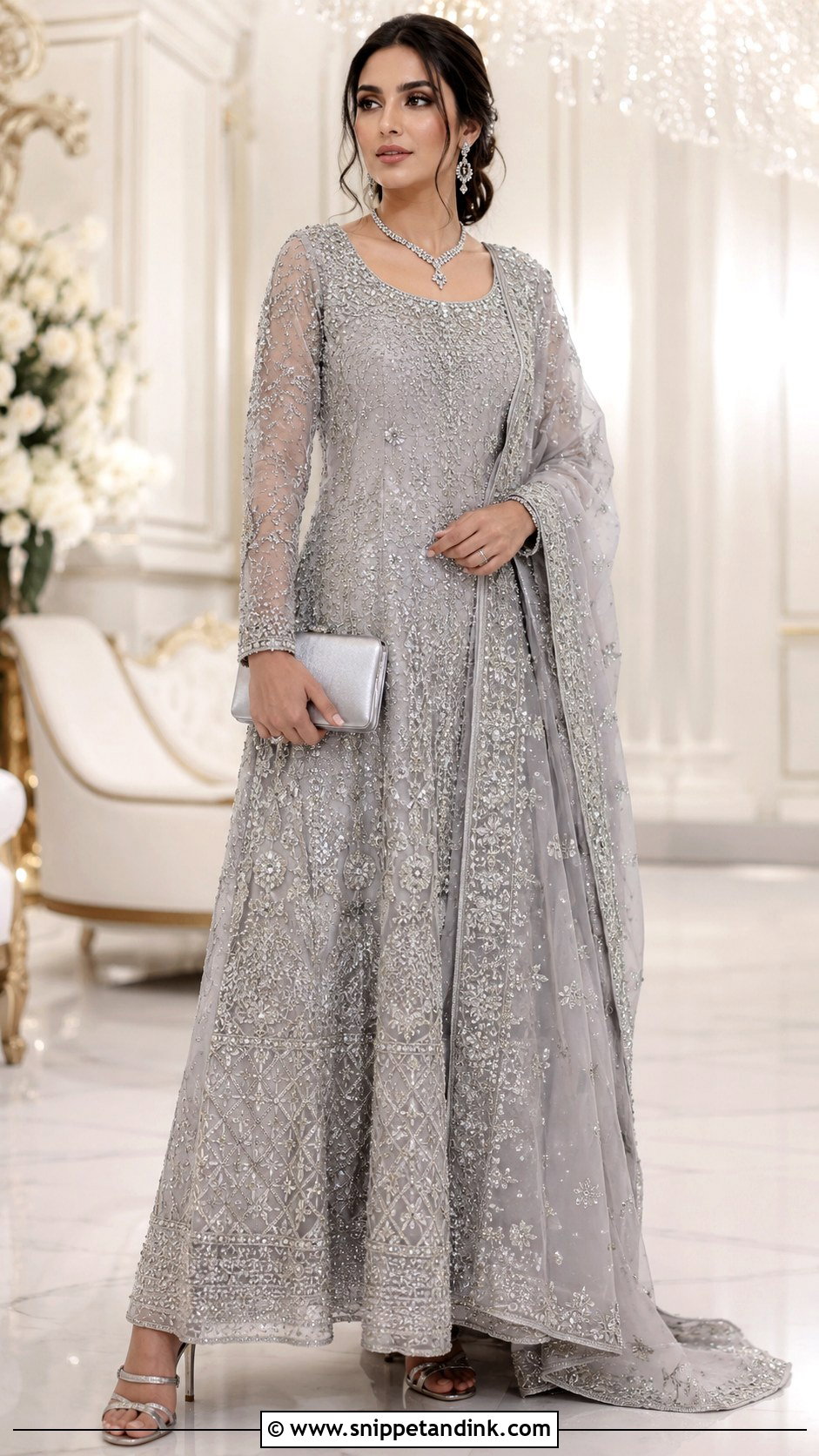
Light grey is the most modern colour on this list, and it can look luxurious with silver, crystal and pearl embellishment. A maxi, gown or lehenga with soft shimmer and clean tailoring suits it, with a sheer grey or silver organza dupatta. Grey is honest about makeup. Too little and the face fades into the fabric, so I always brief for bright skin, soft contour and a pink nude lip. Silver heels, diamond-style jewelry and a satin clutch keep it sleek for an evening reception.
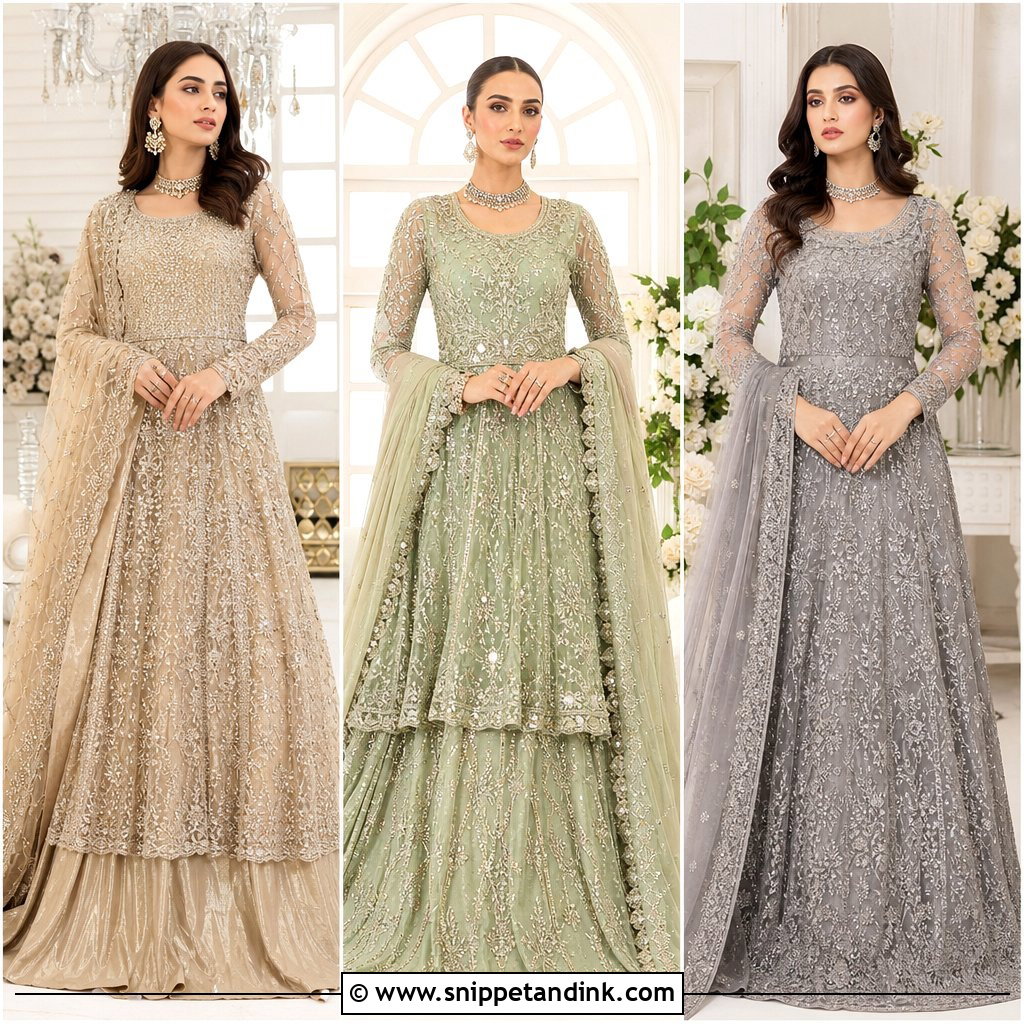
20. Aqua Walima Bridal Maxi Dress
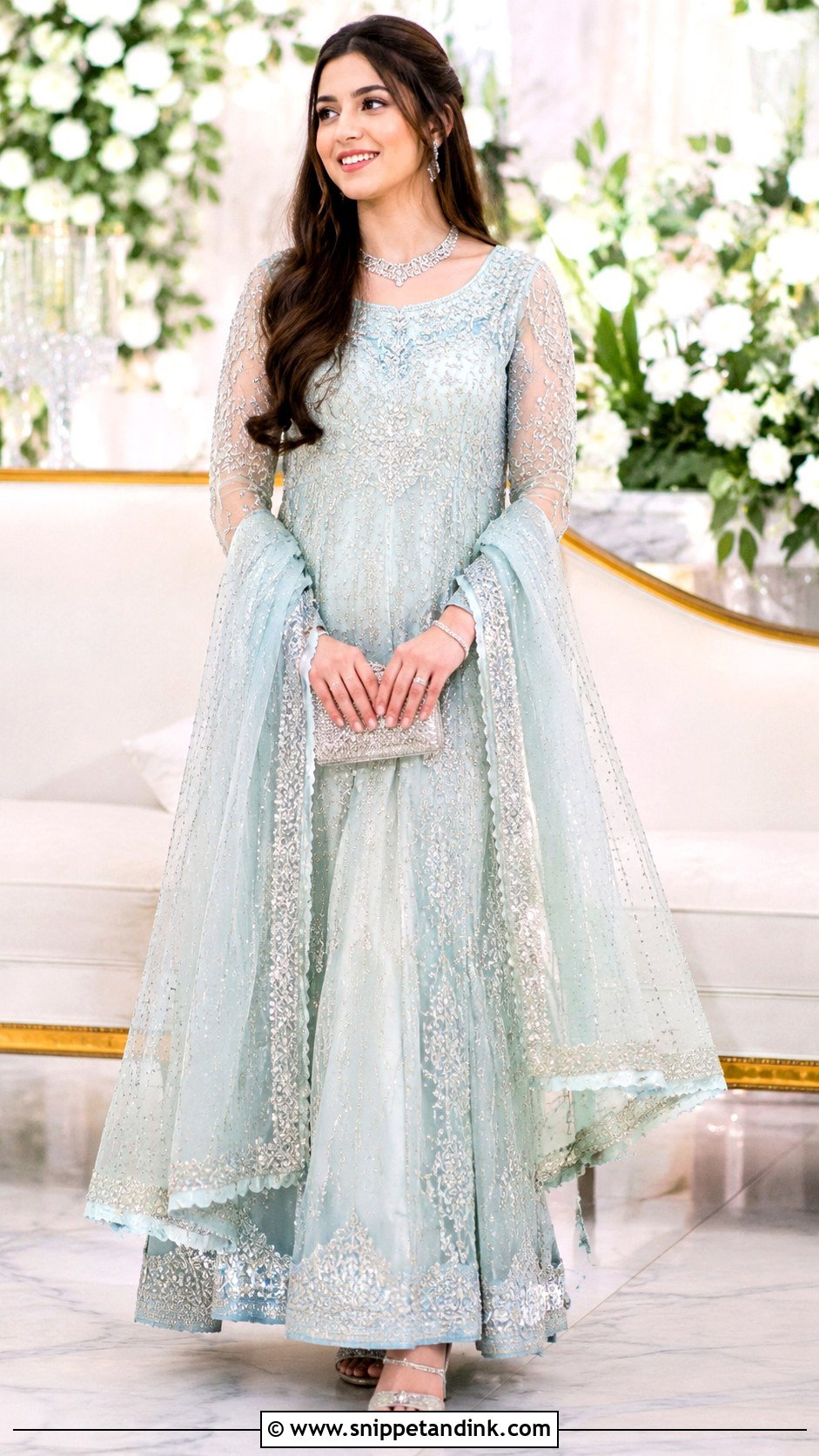
Aqua is brighter than powder blue but still soft enough for bridal wear. A full-length maxi with delicate silver embroidery, sheer sleeves and a flared skirt gives plenty for stage photos, and a light dupatta with small scattered motifs adds a traditional finish. Aqua brightens noticeably in sunlight, so it’s a lovely pick for a daytime walima in spring or summer. Crystal heels, silver jewelry, peach blush and defined lashes are enough.
21. Champagne Gharara Walima Dress
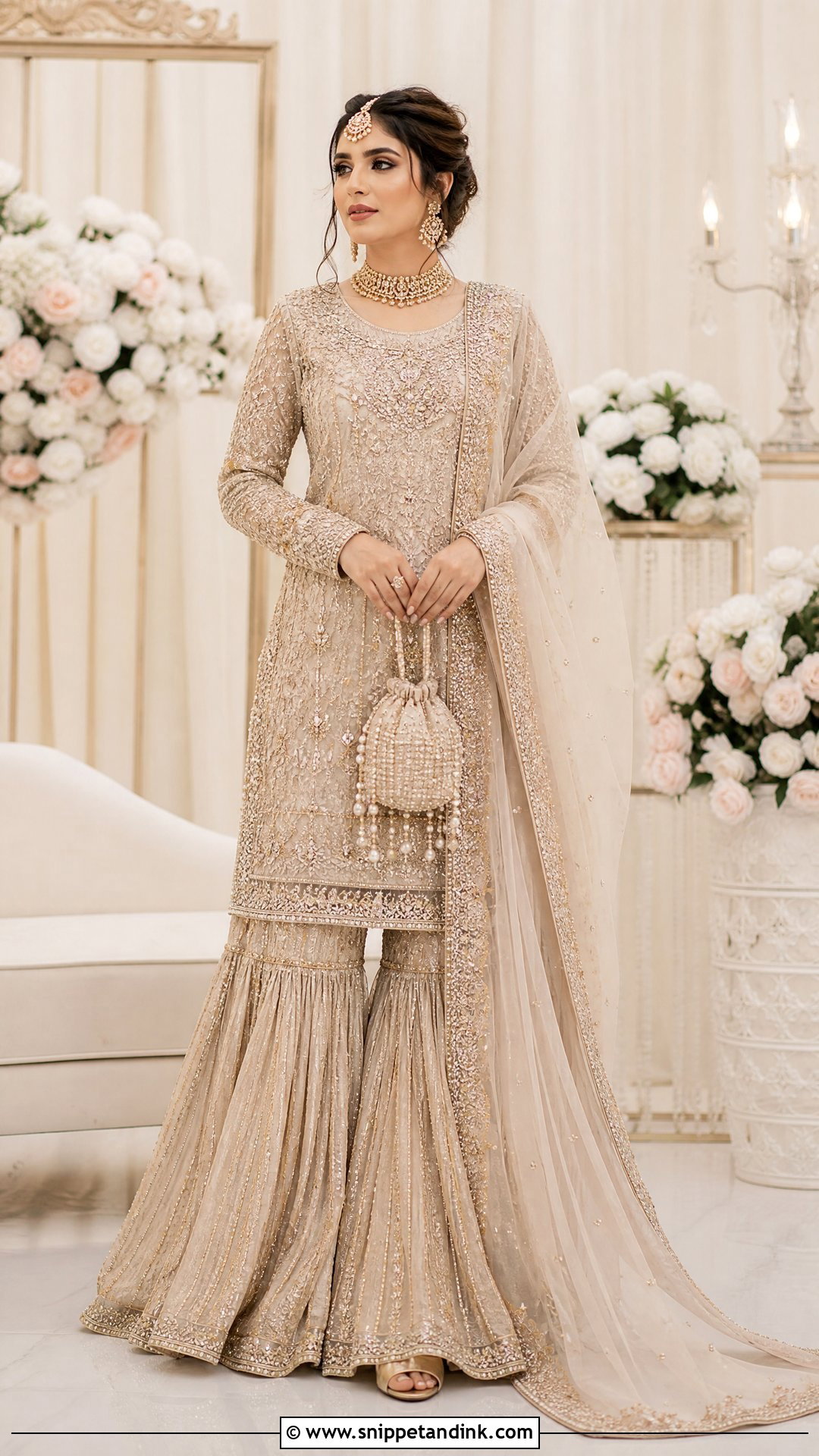
The gharara carries cultural richness, and champagne keeps it luminous. A long embroidered shirt with worked borders sits over a gharara with detailed knee panels and a soft flare. A sheer dupatta with sequins or pearl accents adds reception sparkle. Gharara fabric needs enough flare to walk in: if the skirt below the knee band is too narrow, steps get short and stairs onto a stage get awkward. Champagne heels, a pearl potli, rose gold or kundan jewelry and a sleek bun balance it.
22. Pastel Yellow Walima Dress
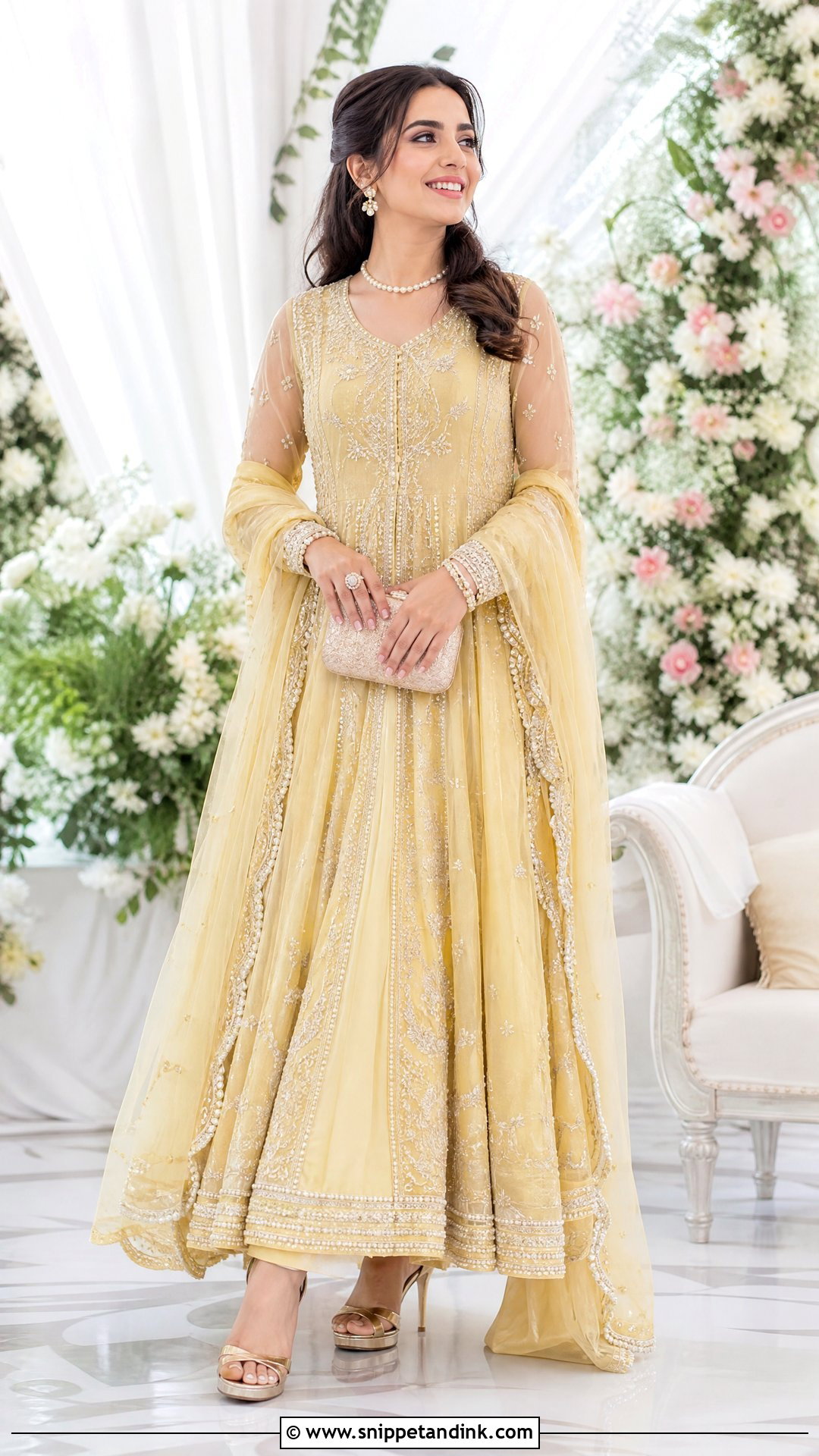
Pastel yellow is the unexpected one. It’s nothing like bright mehndi yellow and feels gentle with pearl, silver or light gold embroidery. A pishwas, lehenga or maxi in this shade looks fresh, especially in daylight. Organza, chiffon or net keeps it delicate. Pale yellow is the hardest pastel to match across fabrics, so if you’re combining a dupatta and a shirt from different bolts, check them side by side in natural light. Gold heels, pearls and peachy makeup suit it.
23. Soft Blue Walima Lehenga Dress
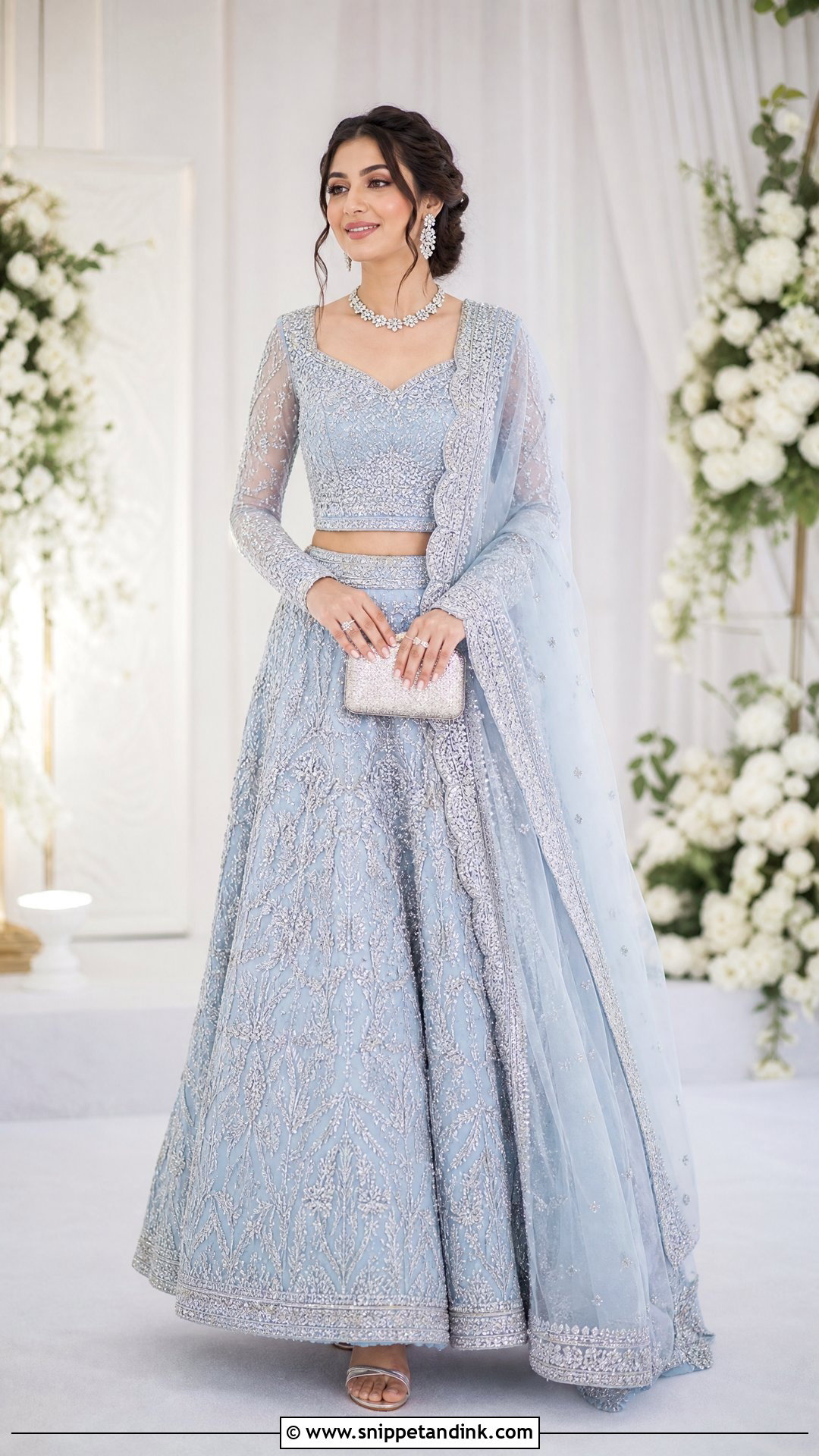
Soft blue is serene and easy to style with silver or pearl embroidery. The lehenga should be light enough to move in but detailed enough to look bridal. A structured blouse with sheer sleeves adds a modern touch and a soft organza dupatta keeps it traditional. On a lehenga this light, I’d weight the dupatta border slightly so it doesn’t fly up outdoors. Silver sandals, a crystal clutch, white-stone jewelry, fresh pink makeup and soft waves finish it.
24. Nude Walima Bridal Gown
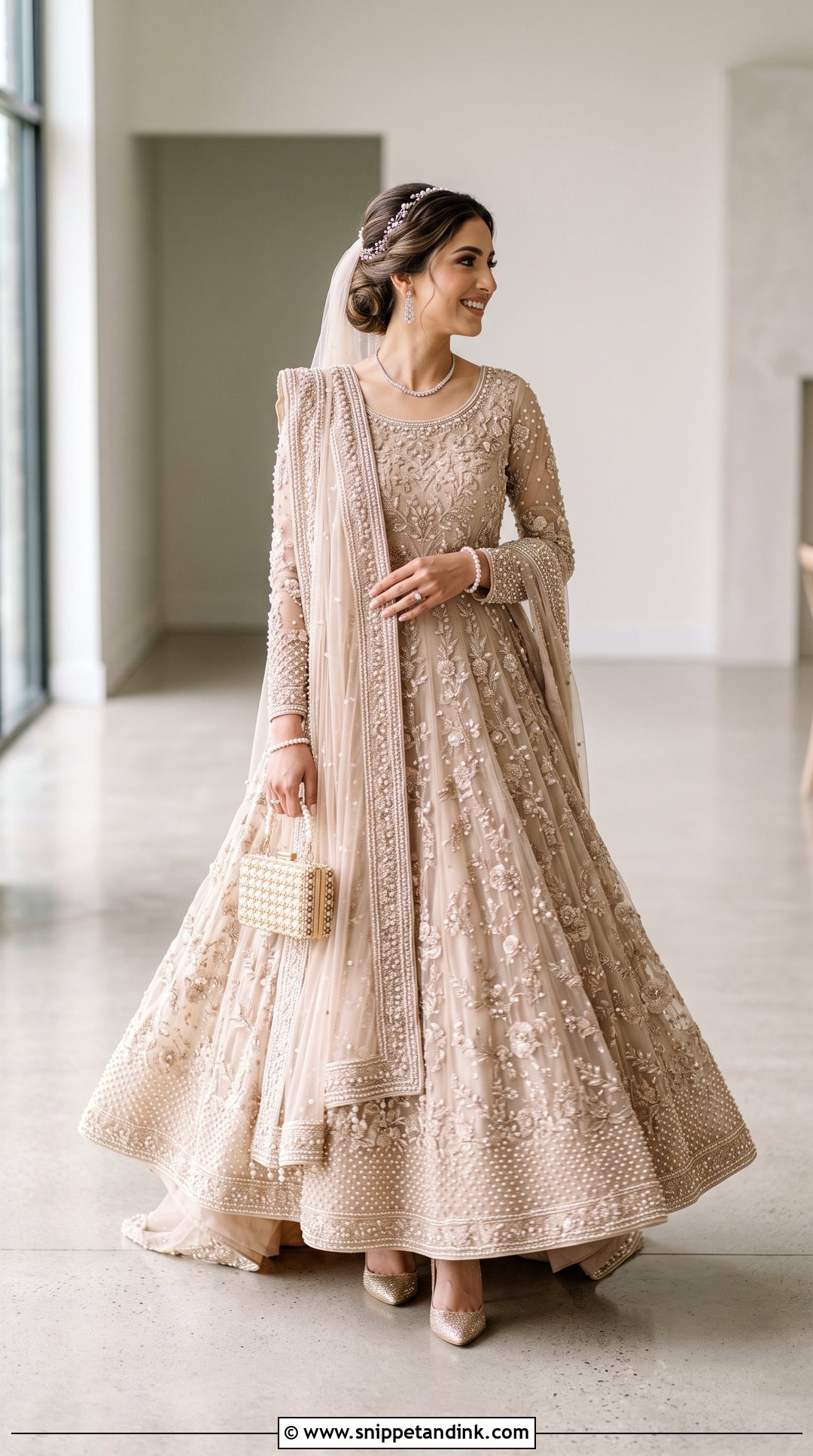
Nude only works when it’s matched to the skin, whether the shade leans beige, blush or champagne. Too close to your own tone and the dress disappears in photos; a shade lighter or darker gives definition. Tonal embroidery, pearl detailing or soft crystal work keeps it from looking plain. A flared skirt and fitted bodice create a flattering silhouette, and a sheer dupatta adds a Pakistani bridal touch. Metallic heels, a structured clutch and warm, defined makeup stop the face fading against the neutral fabric.
25. Pastel Open Gown Walima Dress
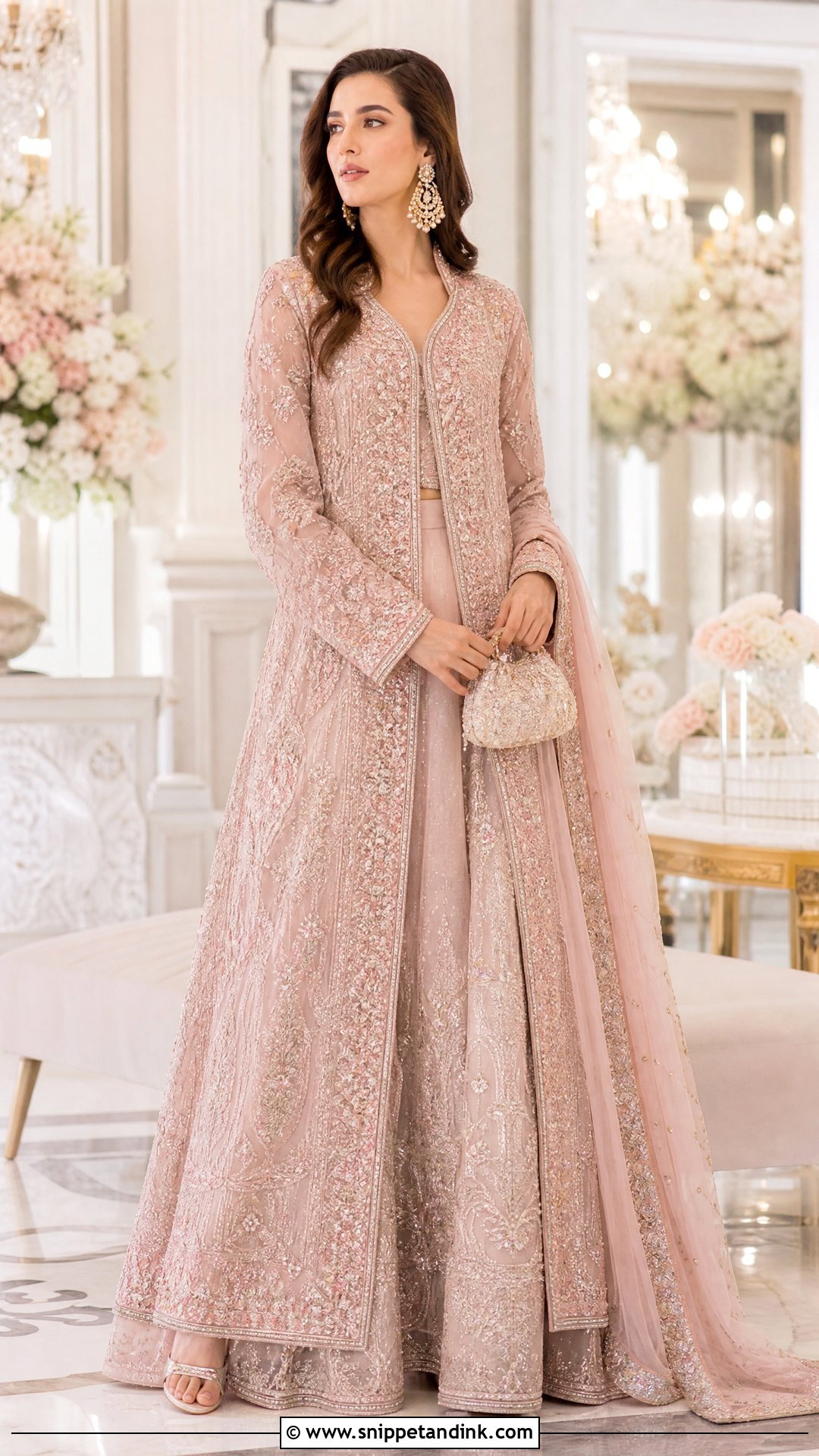
A pastel open gown walima dress suits a fusion look. The open gown goes over a lehenga, sharara or slim inner dress, and the layering gives depth when you walk. Blush, mint, ivory, lilac and powder blue all work. Embroidery along the front panels, sleeves and hem frames the inner layer. Because two layers mean twice the warmth, I suggest a lighter fabric for the inner piece in summer. A matching dupatta draped lightly, or a cape-style layer instead, plus statement earrings and a sleek hairstyle finish it.
Three Hours on the Stage in a Pastel Outfit
The walima stage is where outfits are tested. You’ll sit, stand for every family photo, lean in for hugs and hold your dupatta in place for most of the evening. Pastels show every mark, so a bit of planning goes a long way.
- Pin the dupatta at three points: the crown, behind one ear and at the shoulder seam. Use safety pins with the heads hidden under embroidery.
- Ask your makeup artist to set the neck and jaw, since foundation on a pale neckline is the most common walima stain.
- Lay a light cloth or napkin across your lap during dinner. Oil from curries shows instantly on mint, blush and ivory.
- Give one cousin a small pouch with pins, blotting papers, a stain pen tested on a scrap of the fabric, and spare earring backs.
Putting the outfit away afterwards
Air it out overnight before packing anything. Take it to a dry cleaner who handles embroidered bridal wear rather than washing at home, and point out any stains. Store it folded in a cotton bag or muslin with acid-free tissue between the layers of embroidery, never sealed in plastic, where trapped moisture can tarnish metallic thread and yellow pale fabric.
A Reception Look That Still Feels Like You at Midnight
The right walima outfit balances beauty, comfort and tradition in a way that suits you. Pastels, soft metallics, gowns, maxis, lehengas, ghararas and shararas all feel lighter than the baraat look, which is exactly what the reception asks for. Match the outfit to your venue, season, jewelry and makeup, and to how many hours you’ll be on stage. Ivory, blush, mint or champagne: the reception outfit you’ll remember fondly is the one you could still move and laugh in when the last guests left.
You'll Like These Ideas:


Leave a Reply