
After the deep reds and heavy gold of a Baraat, blue is the color I most often see brides choose for the Walima, and it suits the shift in mood. In Pakistani bridal fashion it covers a wide range, from icy pastels to jewel tones, metallic tissue and ombré. The looks below include lehengas, gowns, pishwas, shararas, ghararas, sarees and modest options, each with notes on embroidery, dupatta, jewelry, shoes, hair and makeup. What I want for a Walima bride is an outfit that still reads bridal but lighter than the night before, so she can greet a long line of guests without carrying the weight of her Baraat joda all over again.

Hand Embroidery Takes Months, So Order the Walima Early
Brides tend to plan the Baraat outfit first and leave the Walima until later, then discover the designer’s workshop is full. Hand tilla, dabka and zardozi are slow, and a heavily worked bridal piece is usually quoted in months rather than weeks. I’d place the Walima order at the same time as the Baraat one.
- Settle the color by seeing fabric swatches in daylight and under warm bulbs. Blues shift more than reds between the two.
- Ask the designer to show you a finished sample of the embroidery density you’re ordering, not a photograph.
- Plan two fittings: one with the bodice basted, one finished. Wear the actual shoes to both, since heel height changes the hem.
- Give yourself at least two weeks between the final fitting and the wedding for any last correction.
- Weigh the outfit in your hands at the final fitting. If it feels heavy after a minute, it will feel much heavier after four hours.
1. Ice Blue Walima Lehenga
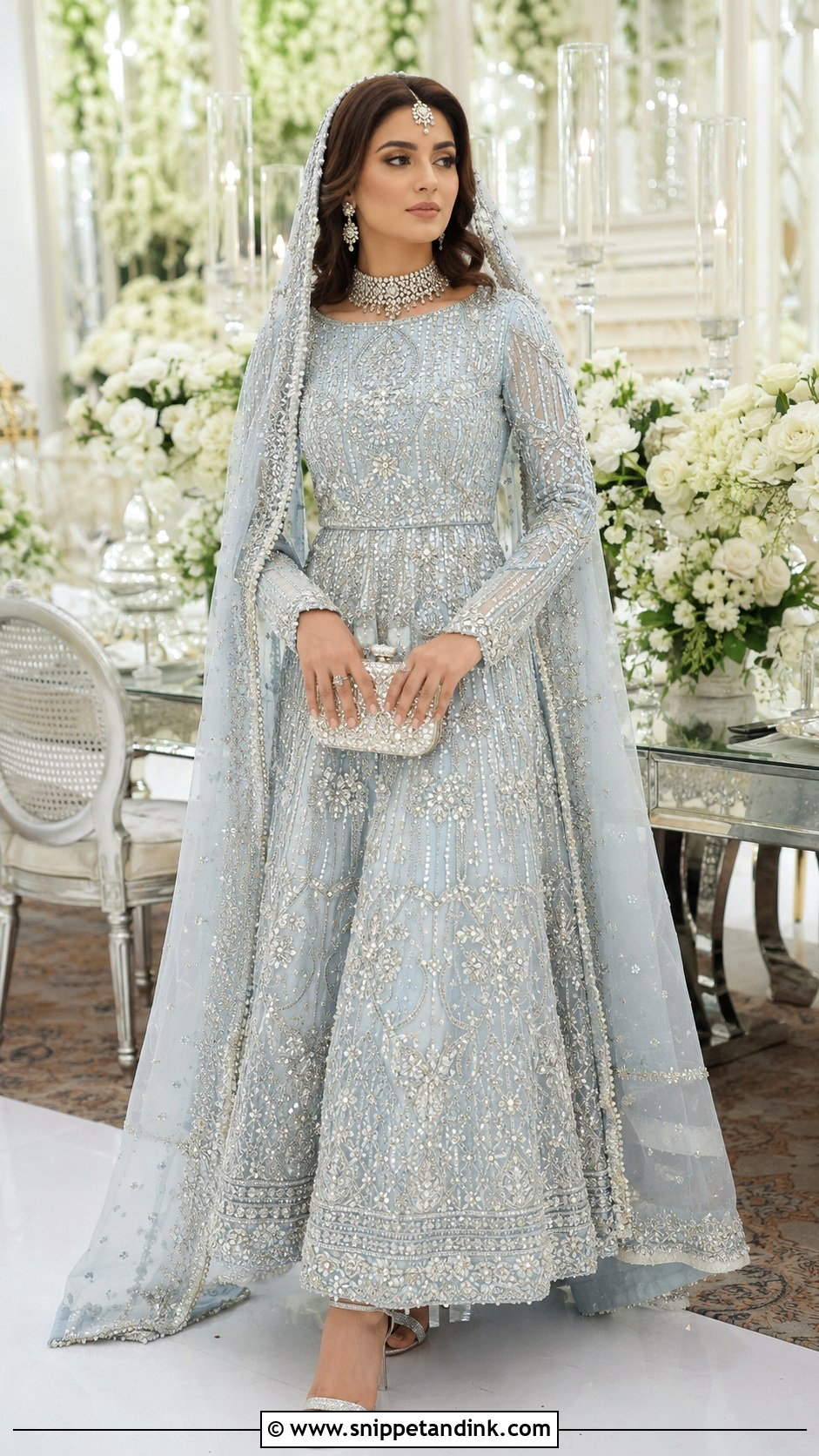
Ice blue is the palest shade here, and it needs one adjustment most brides don’t expect: warmer makeup. On organza or net with silver threadwork, sequins, pearls and a scattering of crystals, the skirt glows, and a structured full-sleeve blouse keeps the volume in check. Drape the sheer embroidered dupatta over one shoulder or neatly over the head. Silver heels, a crystal clutch and pearl-polki jewelry hold the cool palette. A low textured bun with small crystal pins finishes the hair. Ask your makeup artist for a little more warmth in the cheeks and lip than usual, otherwise pale blue can make the face look gray in photos.
2. Powder Blue Walima Gown
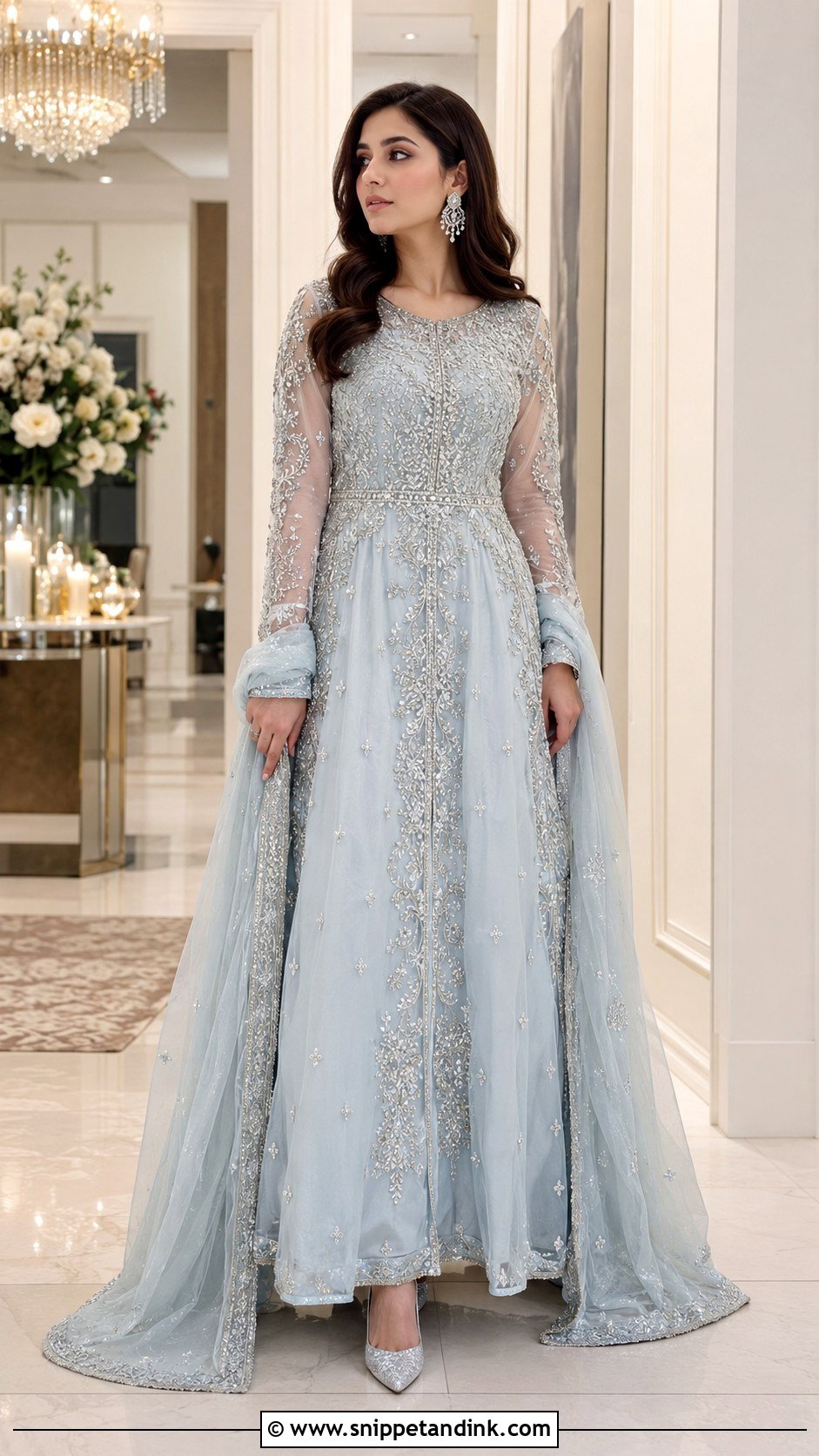
A powder blue Walima gown gives a Western shape with Pakistani handwork, and for many brides it’s easier to move in than a lehenga. I look for a fitted bodice, a defined waist and an A-line skirt, with tonal resham, silver vines, pearls and fine sequins doing the bridal work. Long sheer sleeves and a modest neckline add coverage. A light matching dupatta, pointed silver pumps and drop earrings are better here than a big necklace, which crowds the bodice embroidery. Soft waves or a half-up style suit the shape. It’s well suited to a hotel ballroom.
3. Royal Blue Walima Sharara
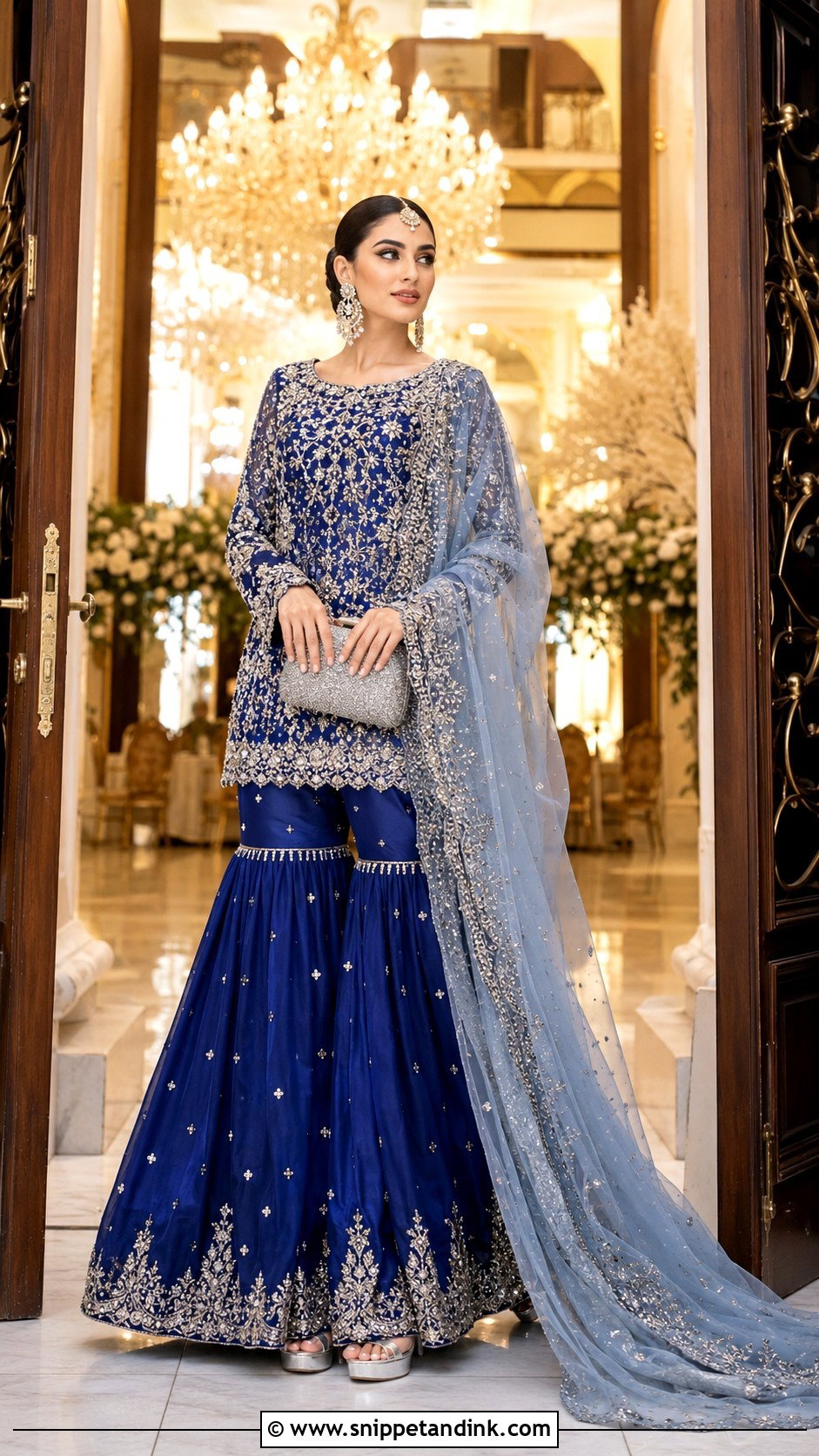
Royal blue is for the bride who wants presence, and a sharara lets her have it with very easy movement. A short embellished shirt over a sharara with a strong flare below the knee is the base; silver dabka, crystal beading and a little muted gold give depth without fighting the blue. I’d drape a lighter blue organza dupatta over one arm to soften it. Silver platforms, a structured metallic clutch and statement polki earrings, with a sleek center-parted bun and defined liner. Shararas need practice on stairs: lift from the side of the flare, not the front, or you’ll step on the hem.
4. Navy Blue Walima Maxi Dress
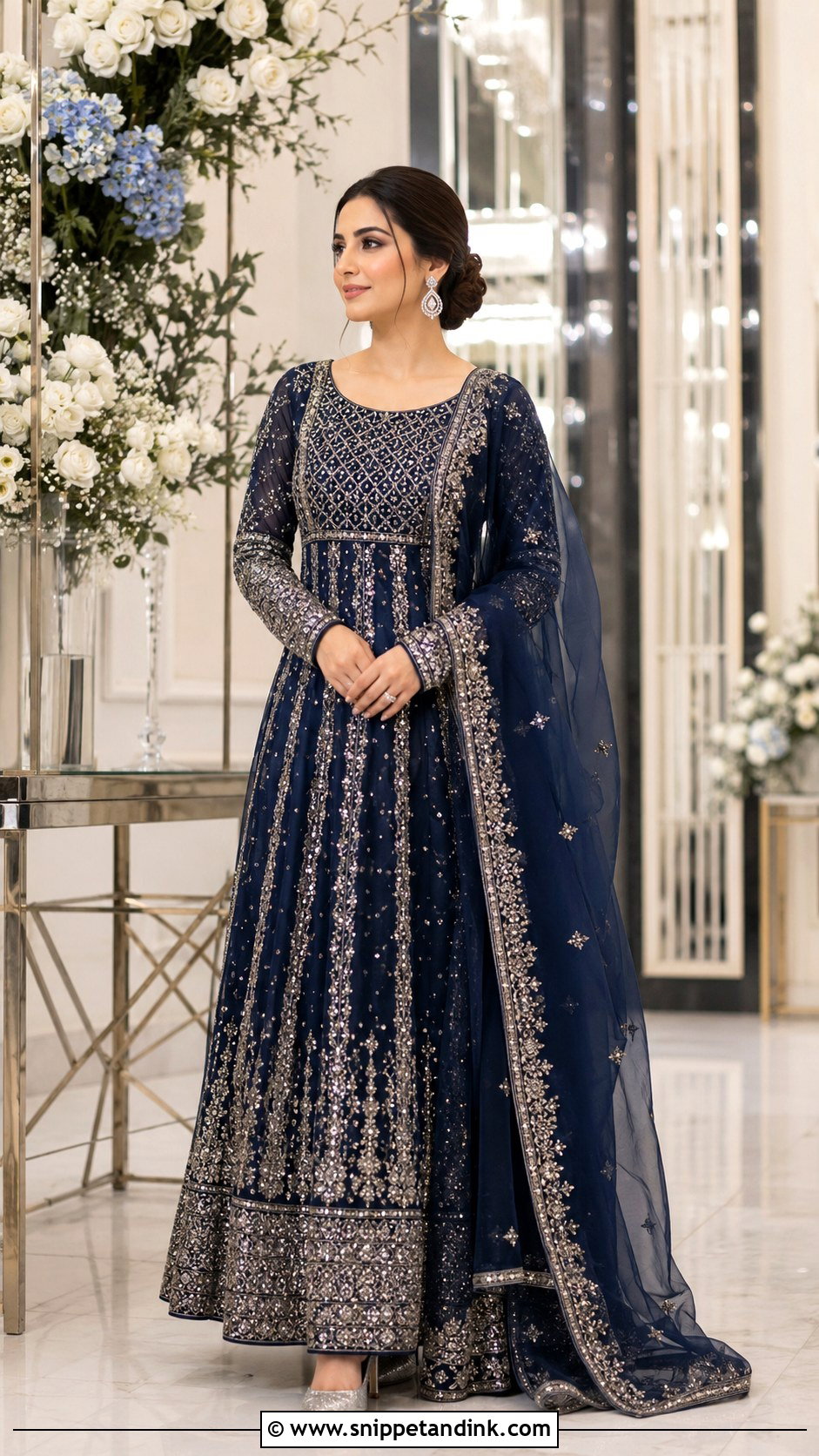
Navy reads formal and handles a winter evening in a large indoor hall very well. I’d choose a paneled maxi with a fitted bodice, full sleeves and a generous flare, worked in silver tilla, sequins and crystals that show up clearly against the dark ground. A sheer navy dupatta with an embellished border, closed-toe metallic heels and diamond-style jewelry complete it. Keep the accessories silver, not dark; navy plus dark stones swallows the bride in a dim venue. A low bun with face-framing strands and a soft nude-pink lip balance smoky eyes.
5. Sky Blue Walima Pishwas
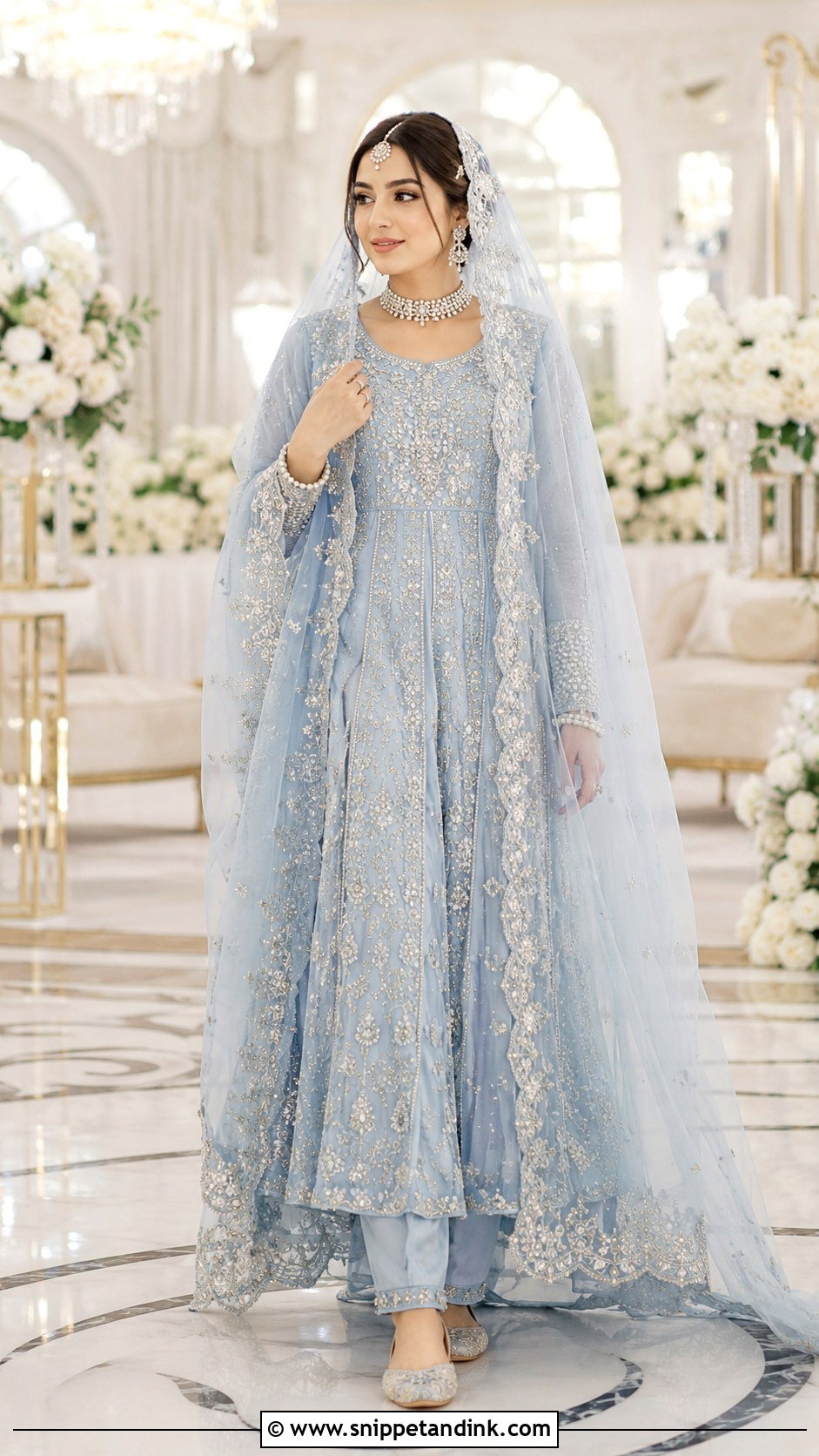
A pishwas is cut with many panels, which is why it swirls so well, and also why the waist has to be fitted. Without that, the skirt swamps a smaller frame. In sky blue chiffon or organza with silver and pearl embroidery on the bodice, sleeves and hem, it looks traditional and fresh. Straight trousers or a churidar go underneath. Pin a matching scalloped dupatta over the head and let it fall down one side. Embroidered khussas, a pearl choker, earrings and slim bangles complete it, with loose curls or a braided low bun.
6. Dusty Blue Walima Saree
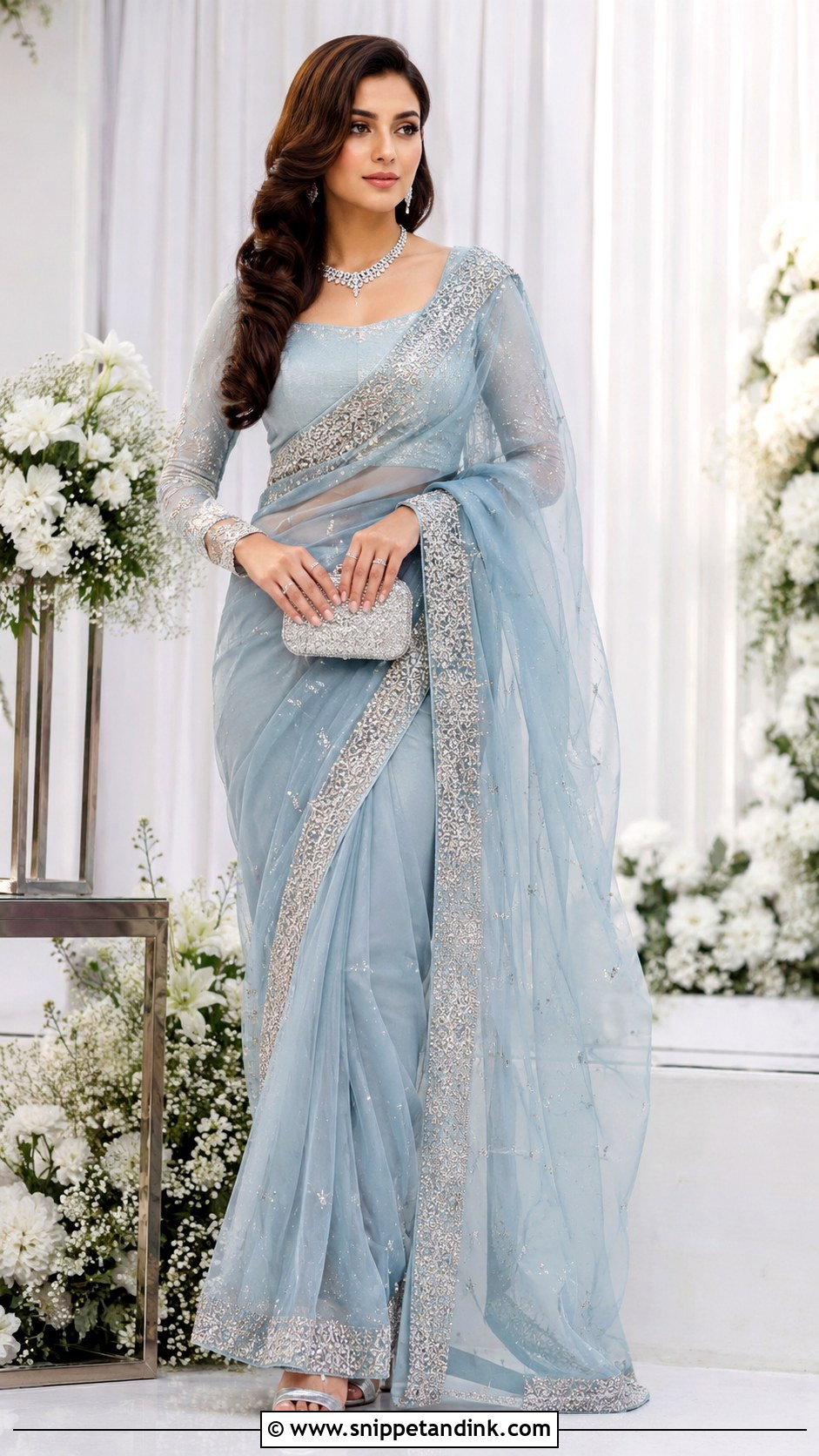
A saree is still unusual at a Walima, and that’s partly why it’s memorable. A dusty blue Walima saree in tissue, organza or light silk with tonal embroidery and a silver border looks modern next to the lehengas. Pair it with a structured, fully embroidered blouse with long sleeves or a square neckline. Have it draped by someone experienced and pinned firmly; you’ll stand for hours of greetings, and an unpinned pallu slips each time you hug someone. Silver slingbacks, a crystal clutch and a fine diamond-style necklace, with side-swept waves or a low bun.
7. Steel Blue Peplum Lehenga
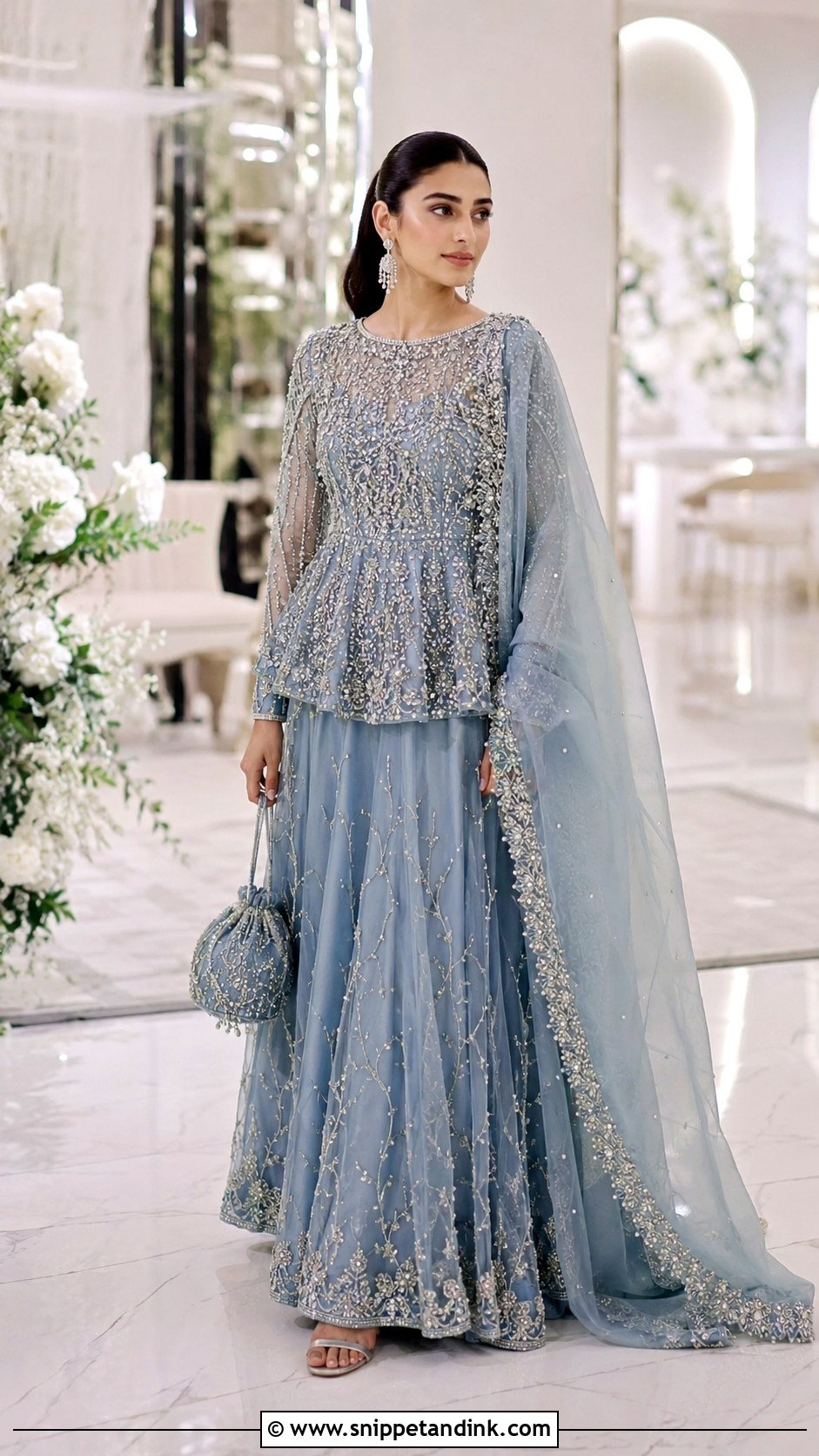
The peplum does the shaping in this outfit, so its length matters more than anything else. I want it to end just below the hip bone; too long and it shortens the legs, too short and it looks like a blouse that grew. Pair it with a lightly flared net or organza skirt, silver embroidery with geometric motifs, pearls and crystals, and a soft gray-blue dupatta for contrast. Metallic heels, a small silver potli and medium polki earrings, and keep the necklace simple. A sleek low ponytail or smooth bun shows the peplum neckline.
8. Aqua Blue Walima Gharara
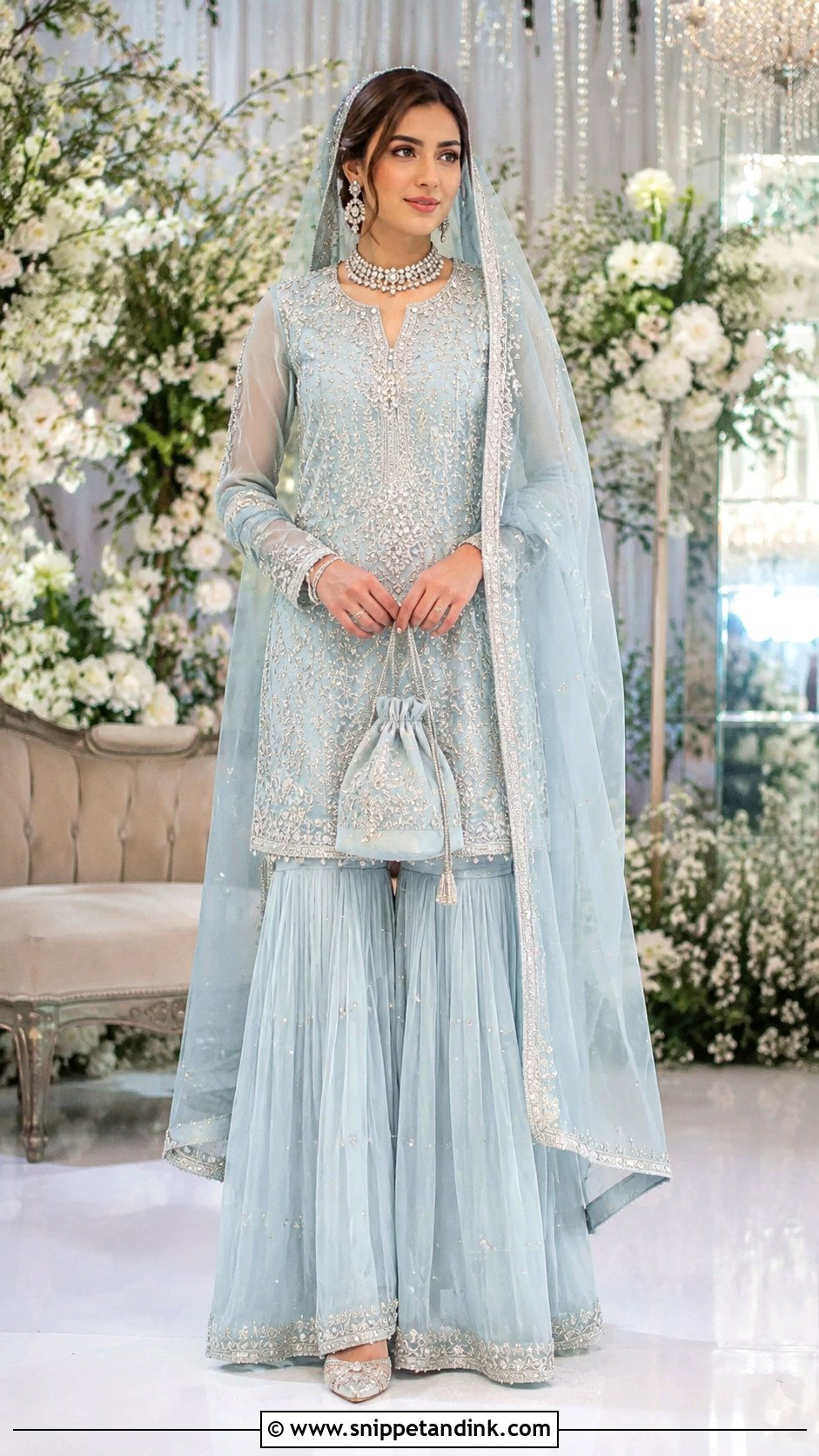
Aqua is bright and cheerful, best on fabrics that move: chiffon, jamawar or organza. Wear the gharara with a knee-length straight shirt with embroidered cuffs and a worked neckline, then drape a sheer aqua dupatta with a silver border over the head or across both arms. Pearl earrings, a slim choker and silver embroidered khussas, plus a small potli rather than a handbag. A soft bun with loose tendrils and pink-toned makeup bring warmth to the cool shade. Aqua shows water marks and sweat more than dark colors, so I’d keep this for a cool venue or an evening event.
9. Slate Blue Walima Anarkali
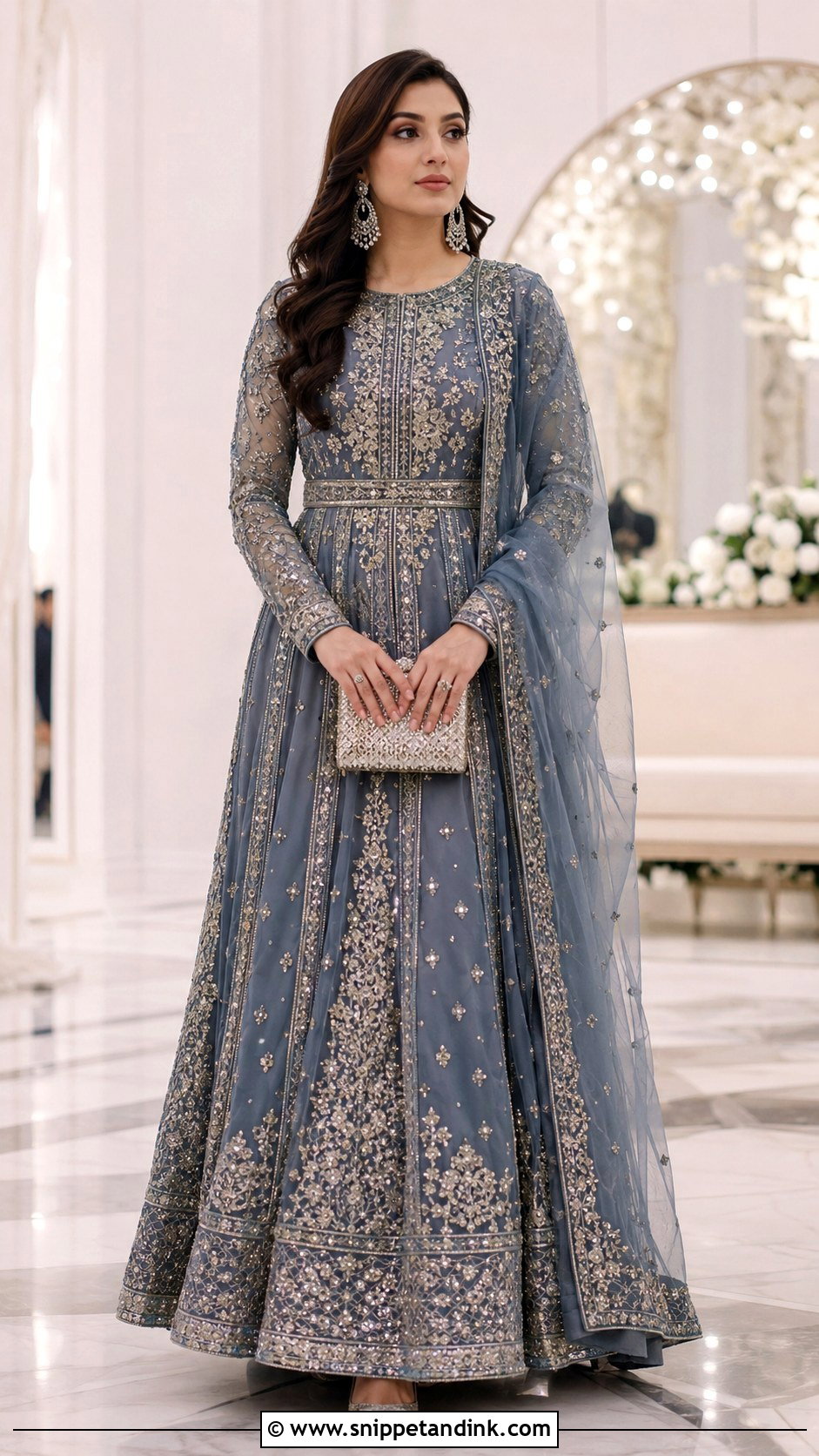
Slate blue gives a classic Anarkali dress a quieter, slightly modern feel. I’d choose floor length with a fitted bodice and evenly distributed panels, worked with antique silver embroidery, muted crystals and tonal blue thread. Full sleeves and a higher neckline suit a winter Walima. A narrow embroidered belt helps if your waist gets lost in the flare. Silver pumps, chandelier earrings and a matching clutch, a side-parted low bun, softly smoked eyes and a mauve lip, with a sheer slate dupatta over everything.
10. Cobalt Blue Walima Lehenga
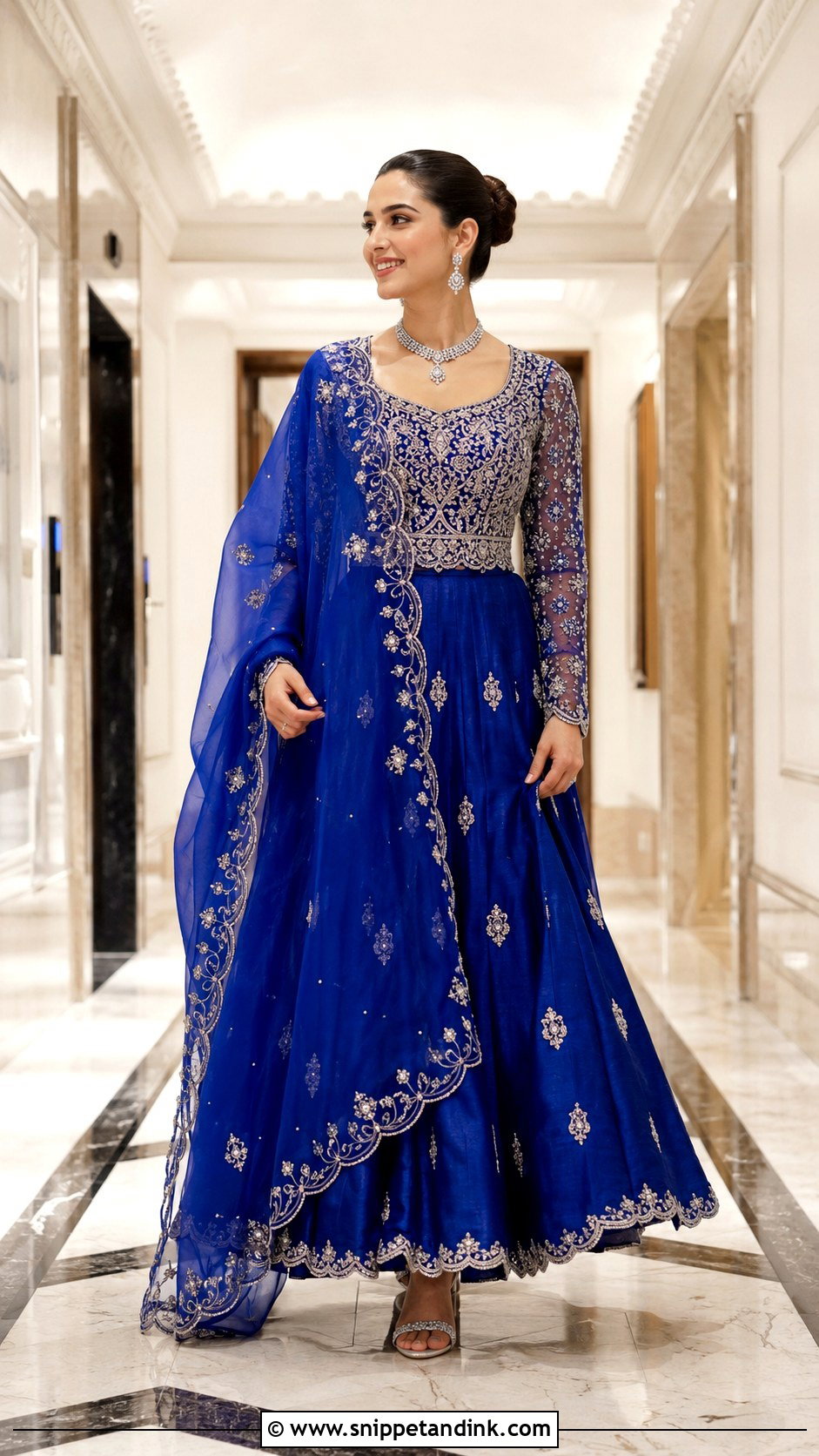
Cobalt has so much color that I’d never bury it under solid embellishment. A silk or raw silk lehenga with spaced silver motifs lets the blue show, and that’s what makes it look expensive rather than busy. Pair it with an embroidered blouse and a sheer cobalt dupatta with a scalloped silver border pinned at one shoulder. Crystal earrings, a delicate necklace and silver open-toe heels are plenty. Raw silk creases where you sit, so stand for your portraits before you take your seat on the stage.
11. Pastel Blue Walima Trail Gown
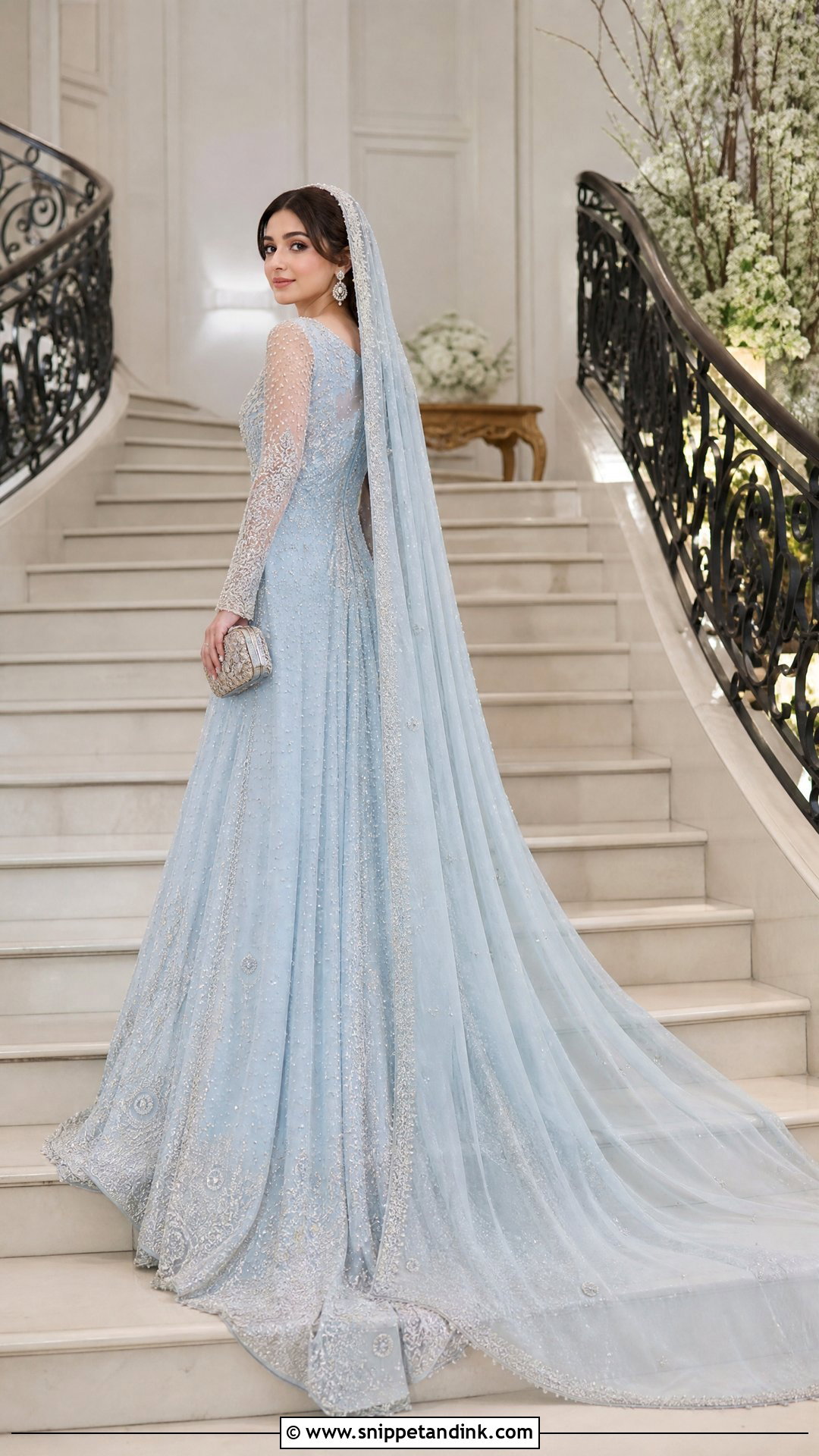
A trail looks wonderful on the entrance and becomes a nuisance by the second hour, so I always plan how it will be managed. Ask for a bustle loop or a hidden wrist loop, and assign someone to arrange it whenever you stand. The gown itself should be fitted at the bodice with a gently flared pastel blue skirt and a controlled train, with fine silver embroidery running vertically to lengthen the figure. Sheer sleeves and pearl buttons add detail. Keep the dupatta narrow and over the head so it doesn’t tangle with the train. Concealed platforms and a low sculpted bun finish it.
12. Teal Blue Walima Angrakha
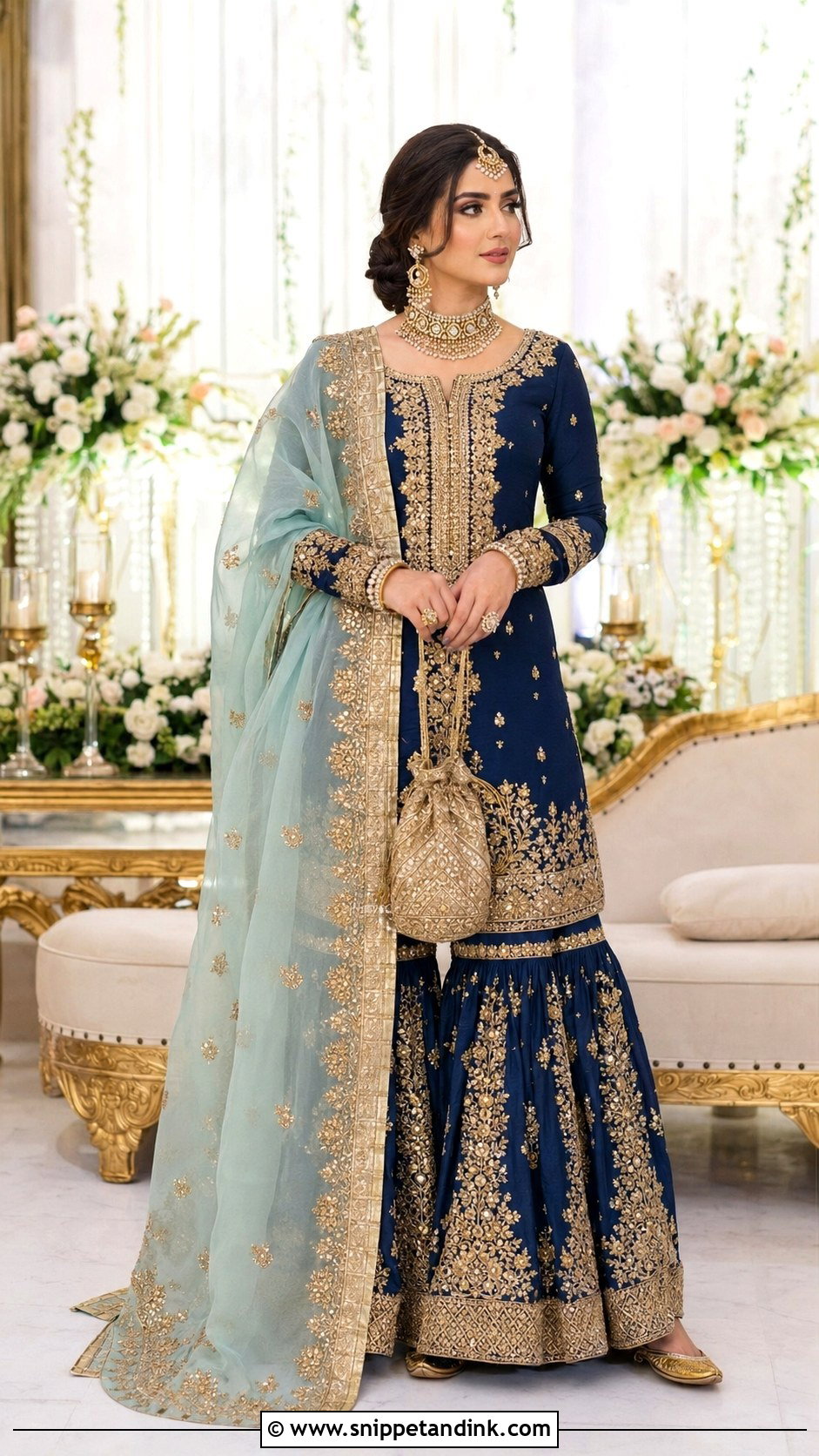
Teal takes antique gold as happily as silver, which gives you more jewelry options than most blues. An Angrakha has a wrapped, overlapping bodice and a flared skirt; the overlap is flattering on most figures because it creates a diagonal line across the torso. Choose chiffon or silk with worked borders on the neckline, sleeves and hem, and a matching dupatta with lighter teal accents. Antique gold heels, a coordinating potli and polki with clear stones, plus a center-parted bun. The wrap needs an inner tie or hook so it doesn’t open when you sit.
13. Silver Blue Tissue Lehenga
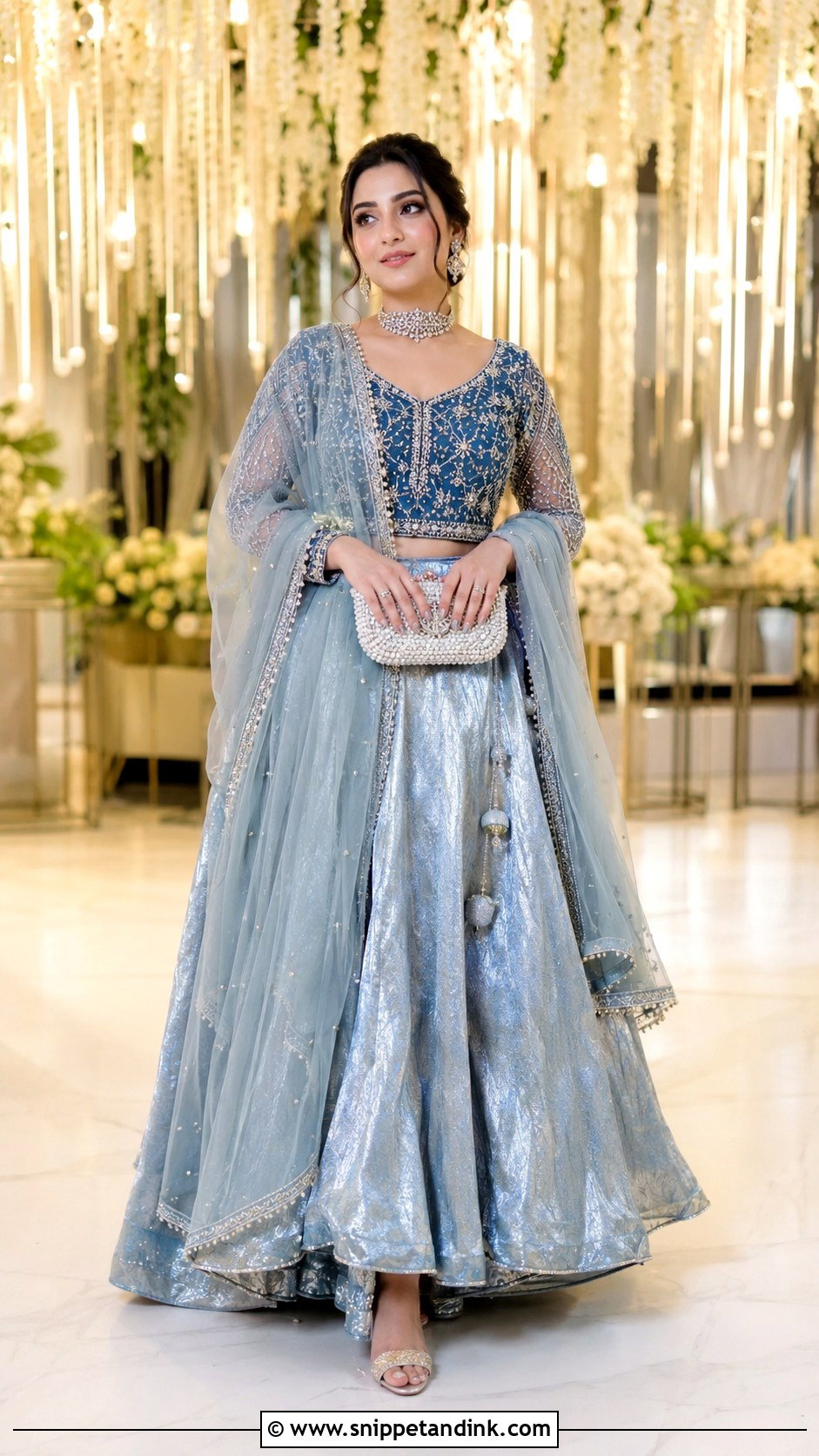
Tissue is woven with metallic yarn, so it shimmers without heavy crystal work, and it photographs very well under bright indoor lights. I’d pair a softly flared silver blue tissue skirt with an embroidered blouse a shade deeper, using pearls, silver tilla and small sequins at the neckline and sleeves, and a plain organza dupatta with an embellished border. Silver block heels, a pearl clutch, and a choker with matching earrings. Tissue is crisp and can scratch the inner arm, so the blouse sleeves should be lined.
14. Midnight Blue Velvet Walima Gown
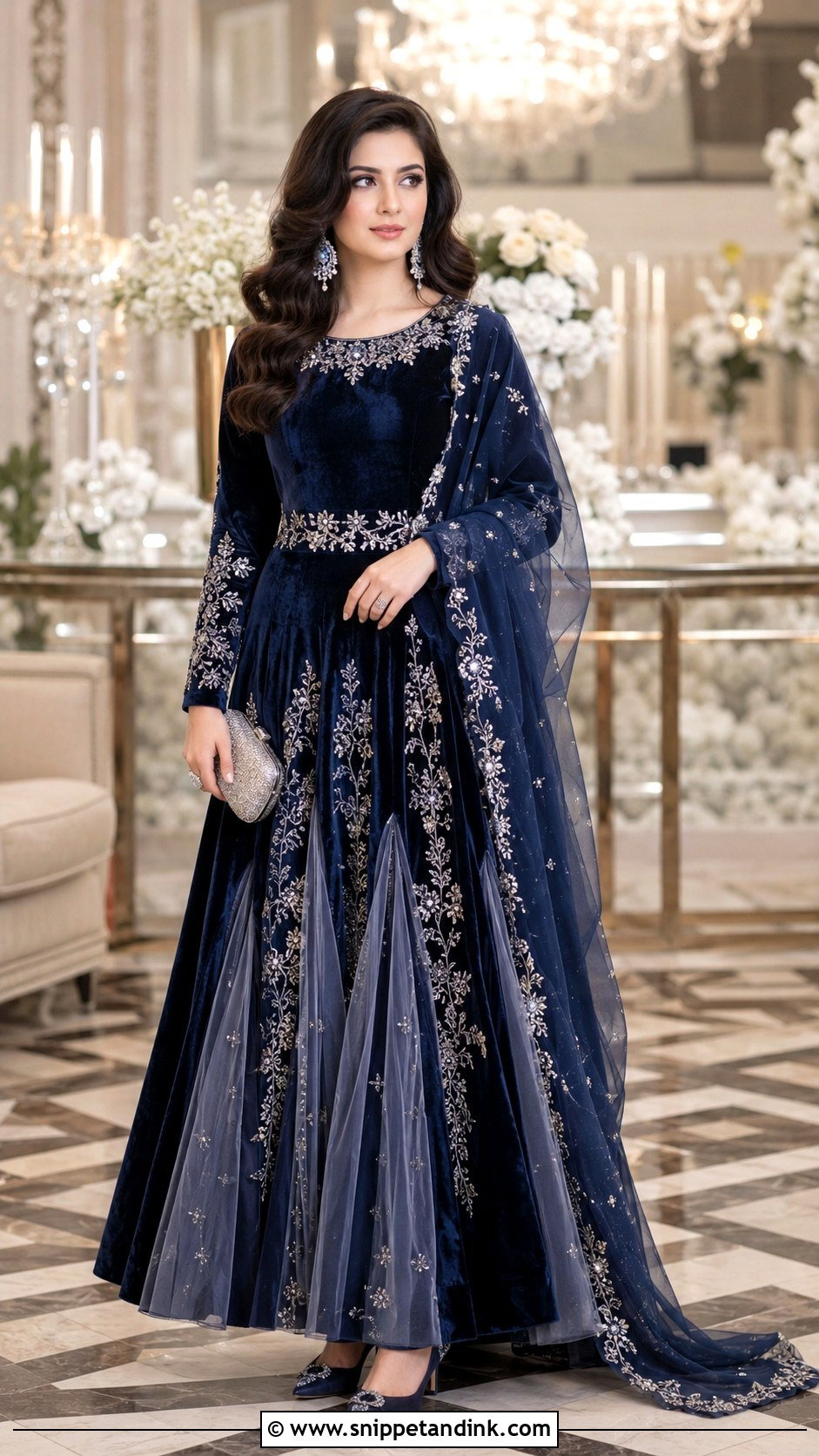
Velvet is warm, and in a heated hall it gets hot quickly, so I only suggest a midnight blue velvet gown for a properly cold-weather Walima. The trick is to use velvet on the bodice and upper skirt and switch to net or organza near the hem, which cuts the weight without losing the richness. Silver floral embroidery around the neckline, waist, cuffs and train stands out sharply on the dark pile. A light net dupatta, not another layer of velvet. Closed-toe silver heels, crystal drops and a compact clutch, with a smooth low bun and a muted berry lip.
15. Blue And Silver Cape Dress
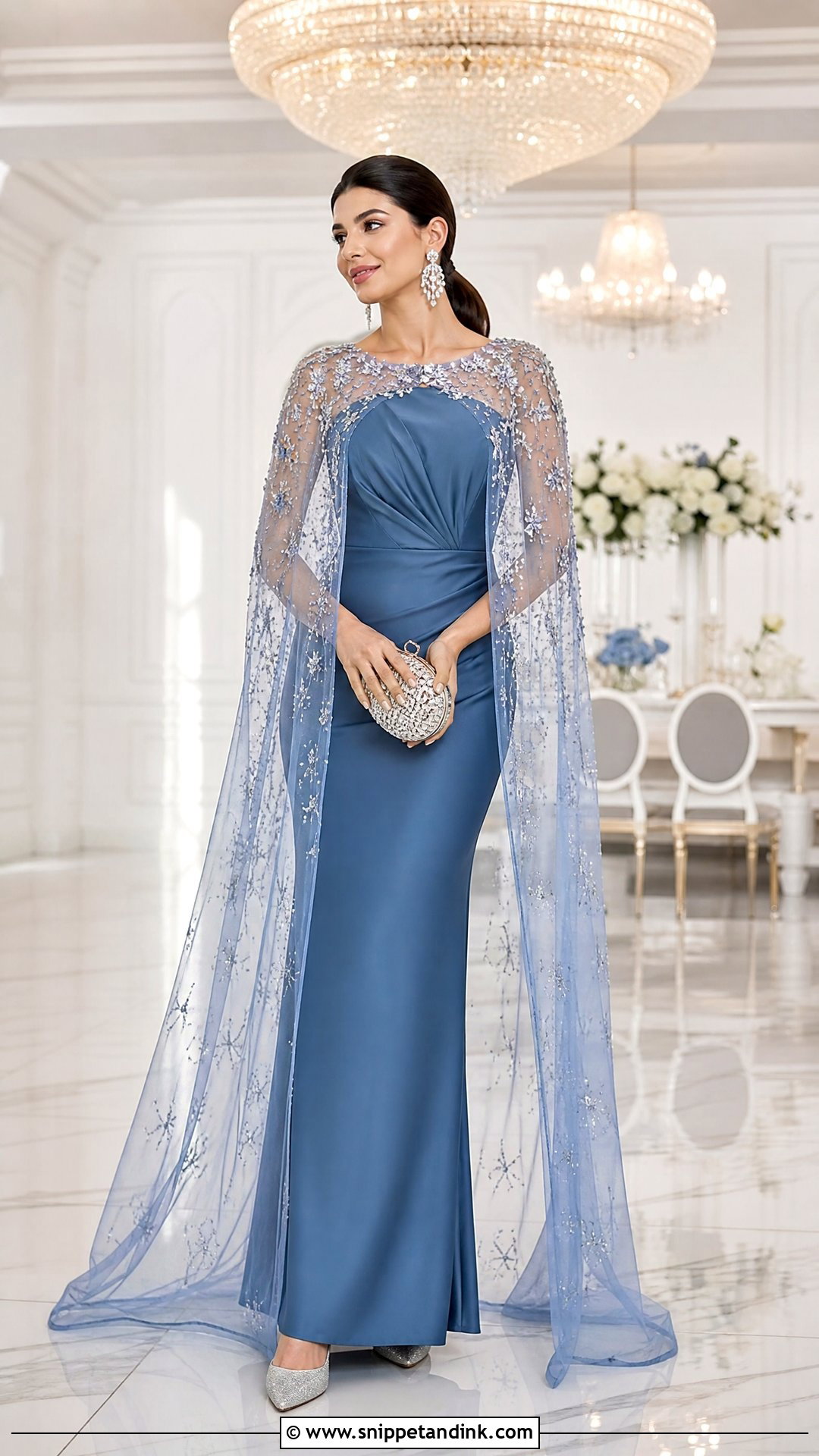
A cape takes the place of a dupatta, which means no adjusting it all evening and one less thing to manage in the receiving line. Start with a fitted, floor-length blue dress and add a sheer embroidered cape from shoulder to hem, with silver vines, scattered crystals and pearl edging. Keep the dress underneath streamlined so the layers stay balanced. Silver pointed pumps, a crystal minaudière and statement earrings, and skip the necklace if the cape neckline is worked. A low ponytail keeps the shoulder detail in view. Check that the cape is fixed at the shoulders with snaps, not just draped, or it slides back when you raise your arms.
16. Blue And Gold Farshi Gharara
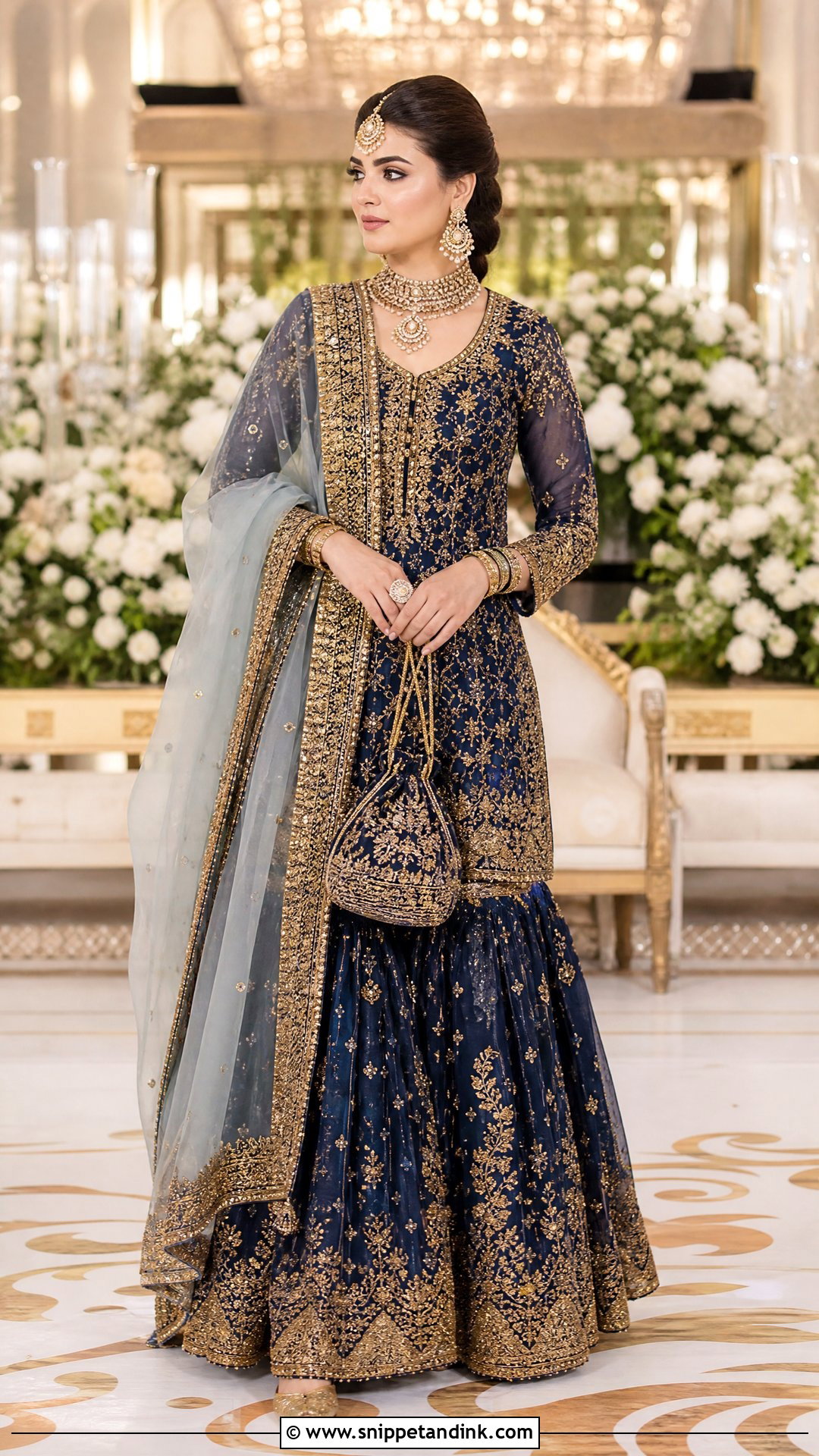
A farshi gharara is cut long enough to trail on the floor, which is where its name comes from and why it needs practice. A blue and gold Farshi gharara in a medium or deep blue with antique gold work concentrated at the knee joint, flared hem and shirt borders looks grand. Pair it with a fitted knee-length kameez with full sleeves, and a lighter blue organza dupatta with small gold motifs to soften the heavy lower half. Gold khussas, a structured potli and polki finish it, with a low braided bun. Walk in it at home on the floor surface you’ll have at the venue, and kick the hem slightly forward with each step.
17. Ombré Blue Walima Gown
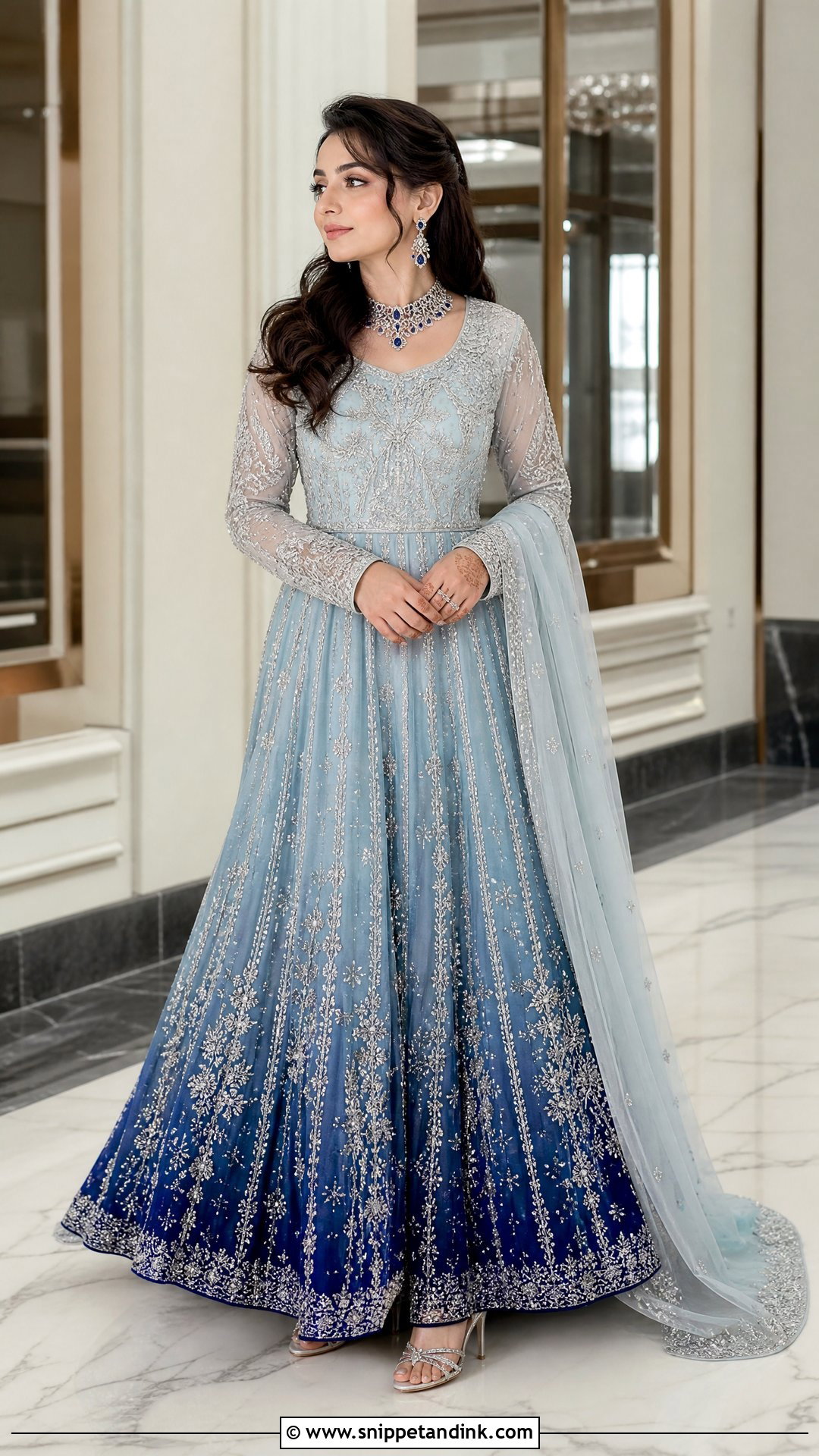
Ombré is dyed, and the quality of the dyeing is what separates a good one from a cheap one. The change from pale blue at the bodice to navy or sapphire at the hem should be gradual, with no visible line. Vertical silver embroidery helps connect the shades and lengthens the figure. Choose a fitted waist, a flowing skirt and sheer full sleeves, then a pale blue dupatta, silver heels and sapphire-accented jewelry to echo the gradient. Loose side-swept waves suit it. I ask to see the fabric in daylight before ordering, because screen colors flatten ombré.
18. Blue Floral Organza Lehenga
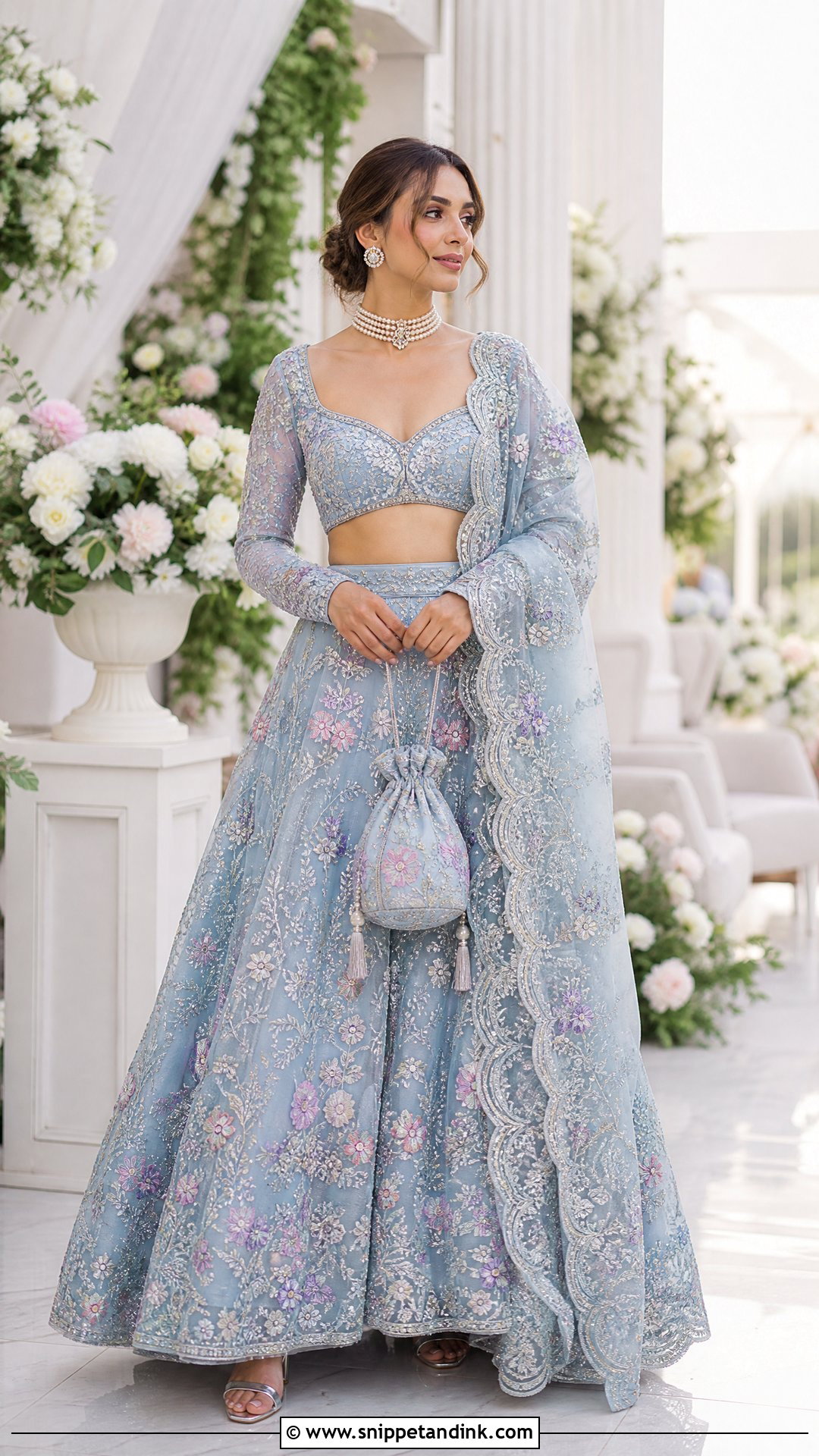
Floral embroidery is softer than geometric work, and on blue organza it gives a garden feel without being childish. I’d pick a pale or medium blue base with silver, white, lavender and muted pink flowers, repeating the motifs on the blouse neckline and sleeves. The skirt should have enough volume to show the pattern clearly. A sheer blue dupatta with scattered flowers and a narrow scalloped border, pearl earrings, a dainty choker, silver heels and a pastel potli. I’d use pearl pins in the bun rather than real flowers here; colored blooms compete with the embroidered ones.
19. Blue Hijab Walima Dress
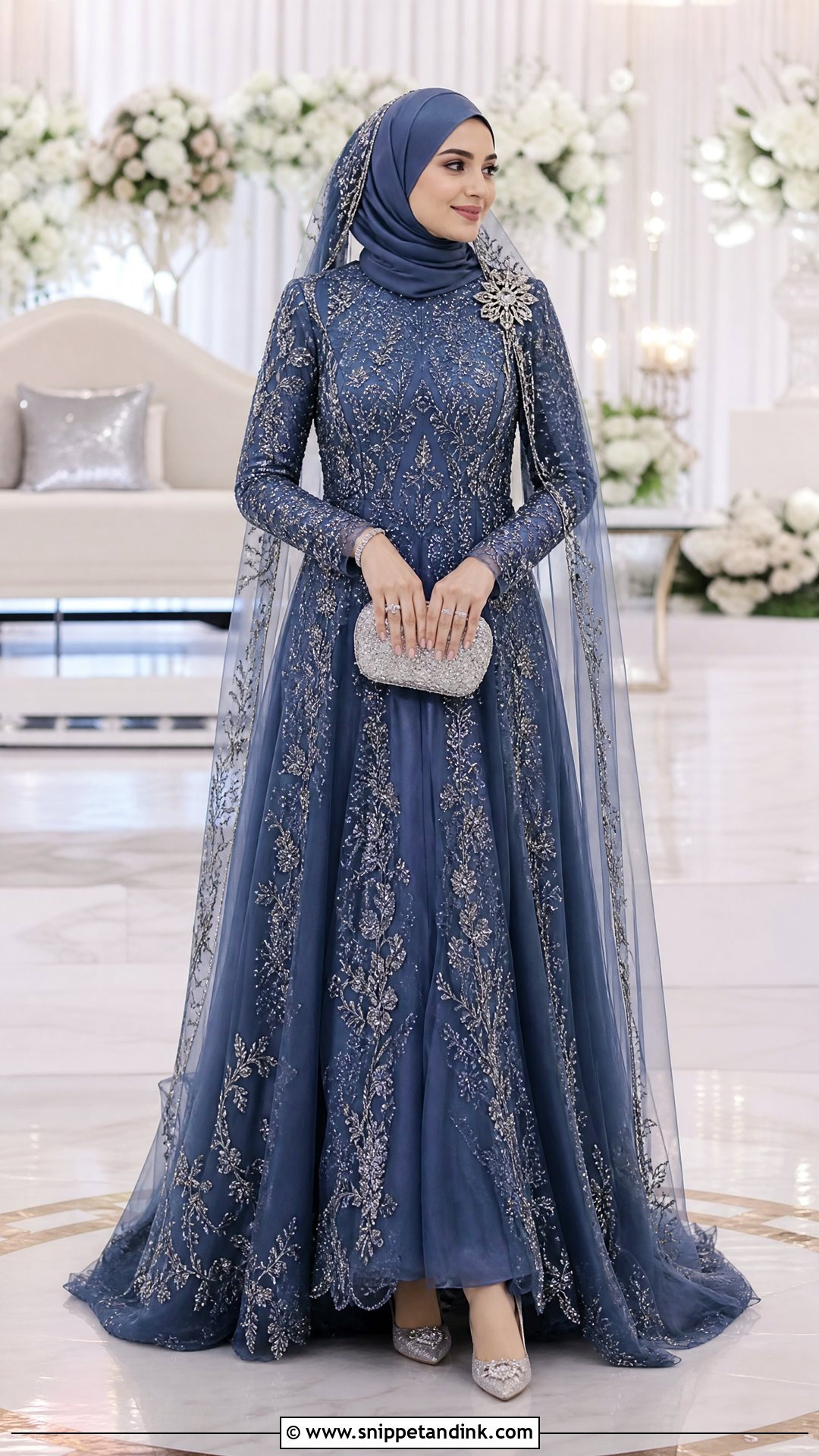
For a hijabi bride, I plan the hijab fabric with the dress, not after it. A floor-length A-line gown with a high neckline, full sleeves and a fitted but comfortable bodice, worked in silver at the shoulders, cuffs, waist and hem, gives structure. Satin or chiffon hijabs both work, but chiffon grips better and needs fewer pins over a long day. Wrap it smoothly with as few layers as possible, and add a sheer embellished veil on top for the entrance. Pointed silver heels, a small crystal clutch and a brooch at one shoulder. With the neckline covered, put the sparkle into a bracelet and rings.
20. Plus Size Blue A-Line Walima Gown
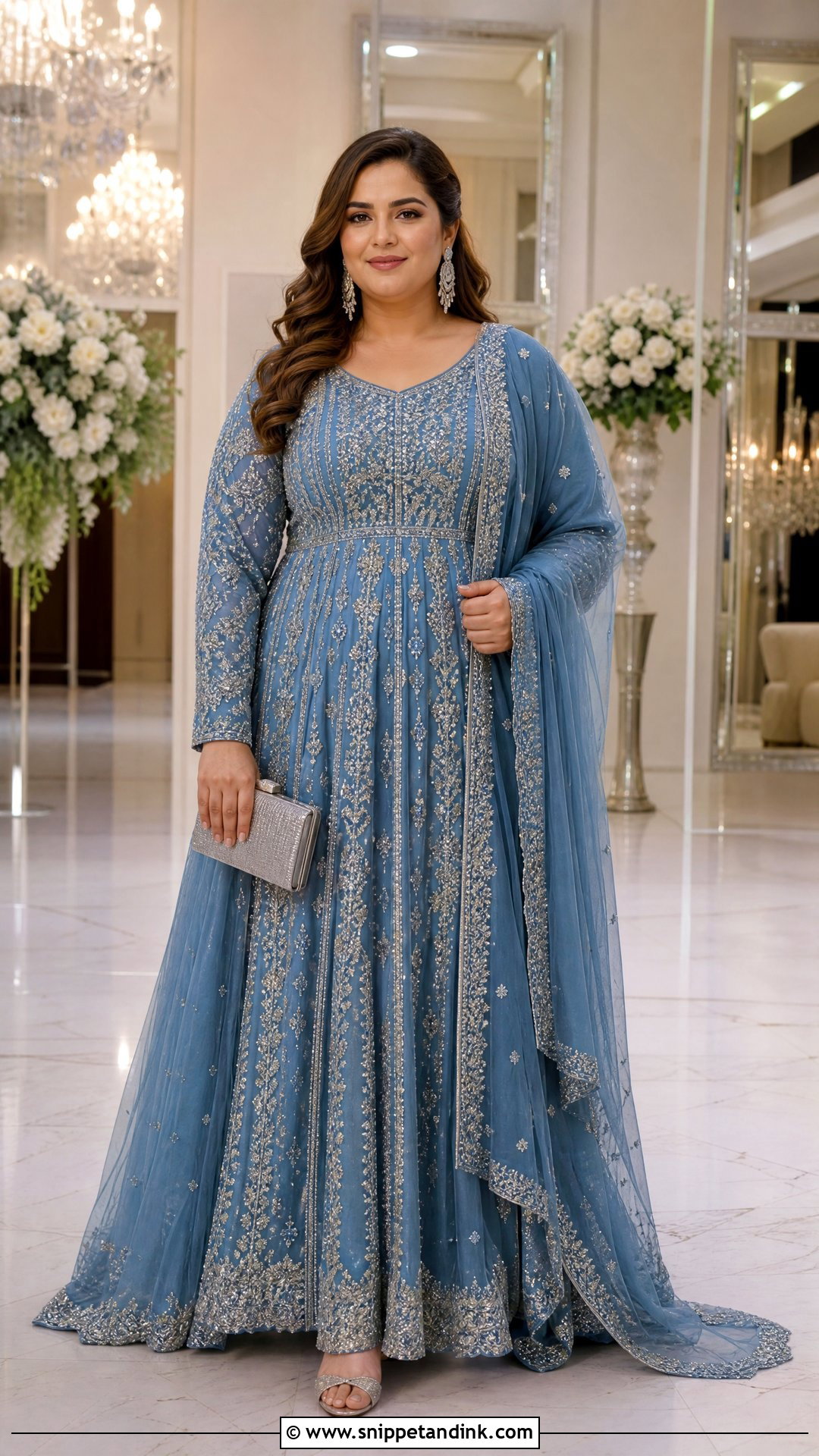
For plus-size brides, structure inside the dress matters more than any style choice. A properly built bodice with boning or a sewn-in support layer lets the A-line skirt fall from a natural waist instead of pulling at the bust. Any shade from powder blue to navy works; choose the one you feel best in. Vertical embroidery down the center, sleeves and side panels draws the eye along the whole length. Drape a light dupatta from one shoulder rather than wrapping it across the front, which adds bulk. Block heels, a structured clutch and medium earrings, with a soft updo or side waves depending on the neckline.
Red to Blue in Under a Day
The Walima often falls the day after the Baraat, so the bride changes not just her outfit but her whole palette within twenty-four hours. A few practical things help.
- Tell your makeup artist the Walima color in advance. Makeup built for a red and gold joda, warm and heavy on the lip, can look too much next to icy or powder blue.
- Keep the Walima outfit hung in its garment bag, not folded in a suitcase, in a different room from the Baraat chaos. Steam it on the morning, lightly, from the inside.
- If you’re reusing jewelry, silver and polki move across far more easily than red-stone kundan.
- Plan your hair to suit a dupatta pinned over the head if you’ll wear one. A high bun under a draped dupatta creates an odd bump in photos.
Silver Thread Tarnishes If You Store It Wrong
Metallic embroidery darkens with moisture and air, and blue fabric shows that dullness more than gold-on-red does. After the event, let the outfit air out flat for a day, then wrap it in a clean cotton or muslin sheet, never a plastic bag, which traps humidity. Put acid-free tissue between folds, change the fold lines every few months, and keep perfume away from the embroidery: spray it on your skin before you dress. Have the outfit dry cleaned only by someone who handles bridal wear, and point out any stains so they treat them before cleaning.
Lighter Than the Baraat, Still Every Bit a Bride
Pale blues give a soft, luminous Walima; royal, teal, navy, and midnight blue bring more drama. Before you commit, think about the venue lighting, the season, the shape you’re comfortable in for hours, and how much embroidery weight you can actually carry after a Baraat the night before. Plan the dupatta, shoes, jewelry, hair and makeup together, not one by one. From traditional ghararas to cape dresses, the outfit that works is the one you can greet, sit and eat in without fuss.
You'll Like These Ideas:


Leave a Reply