
I always ask a Walima bride the same thing first: how do you want to feel when you walk in? Graceful, modern, traditional or quietly glamorous, the answer narrows things fast. Walima dressing usually leans toward luminous pastels, fluid fabrics, careful tailoring and finer embellishment, a deliberate contrast with the heavier baraat look. Powder blue, blush pink, champagne, silver, ivory and lavender all sit well here, and gowns, lehengas, sarees and peshwas each give a different shape. Crystals, pearls, metallic embroidery and a statement dupatta can add grandeur without crowding the outfit. Below are twenty full looks, with my notes on jewelry, shoes, proportion and how each one copes with a long evening.

Planning Around the Groom, the Lights and the Stage
A Walima outfit is never seen alone. Before you fall for a color, I’d check three things that decide how it will actually look on the night.
- The groom’s outfit. Most couples coordinate, and pastel against a black suit reads very differently from pastel against an ivory sherwani. Agree on one shared tone, such as silver or champagne, and repeat it in both outfits.
- The venue lighting. Halls lit with warm yellow bulbs flatten cool pastels like mint and powder blue, while daylight and white lights flatter them. Ask the venue, or look at photos taken there in the evening.
- The stage backdrop. If the flowers and drapes are white and gold, an ivory outfit can vanish into them in photographs. Ask the decorator for the color plan before you finalize fabric.
None of this means you can’t wear the color you love. It tells you where to add contrast, through a darker dupatta border, stronger jewelry or a warmer lip.
1. Powder Blue Walima Bridal Gown
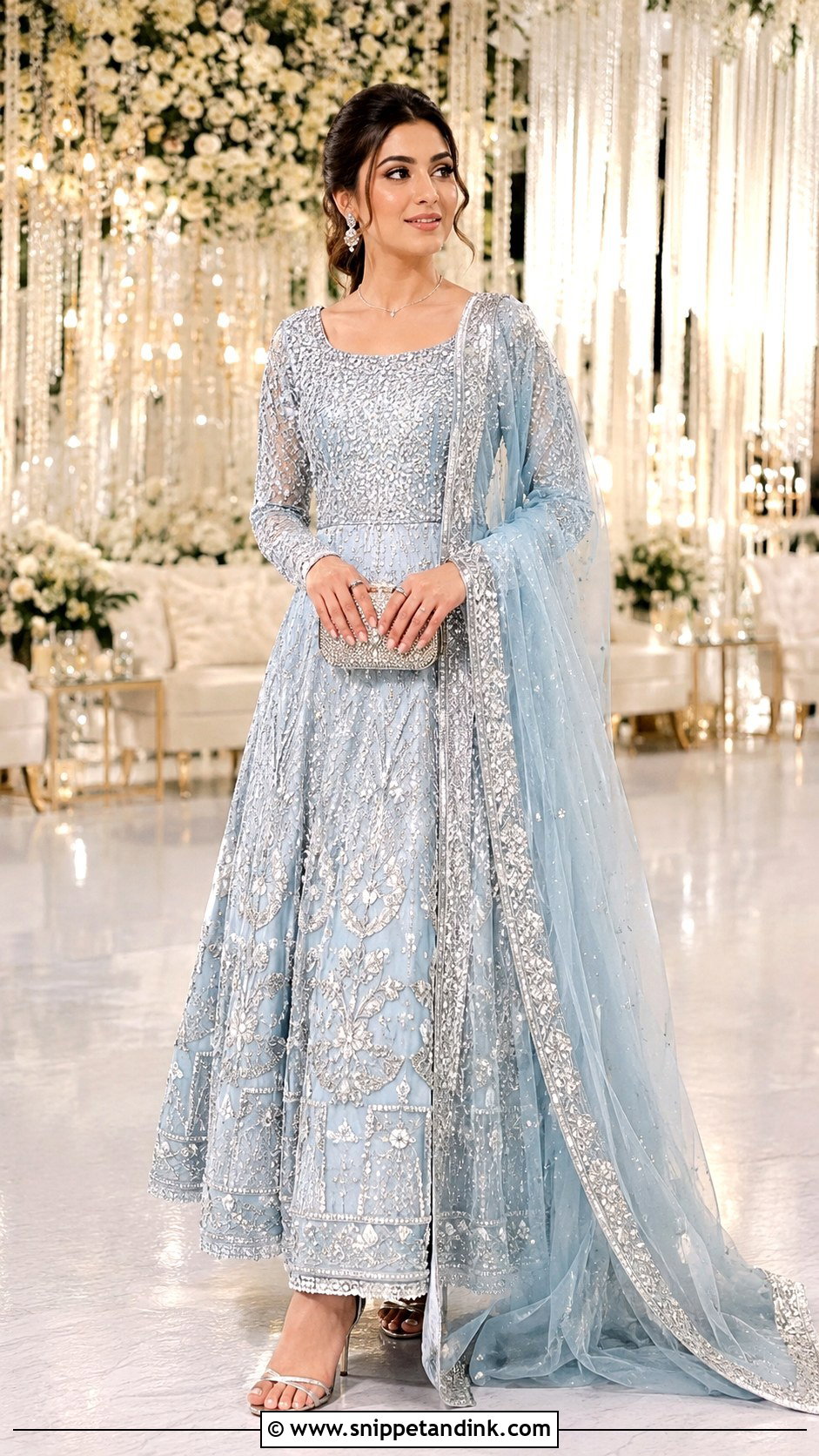
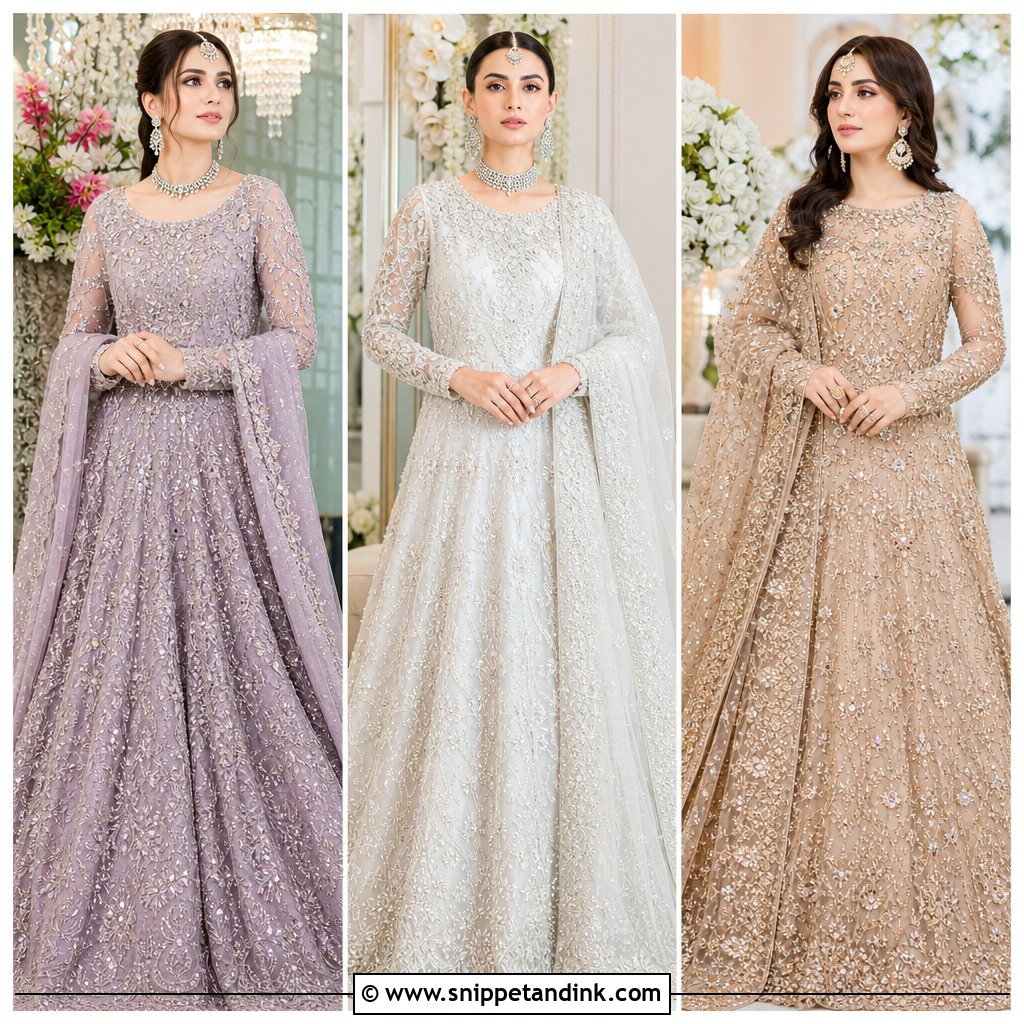
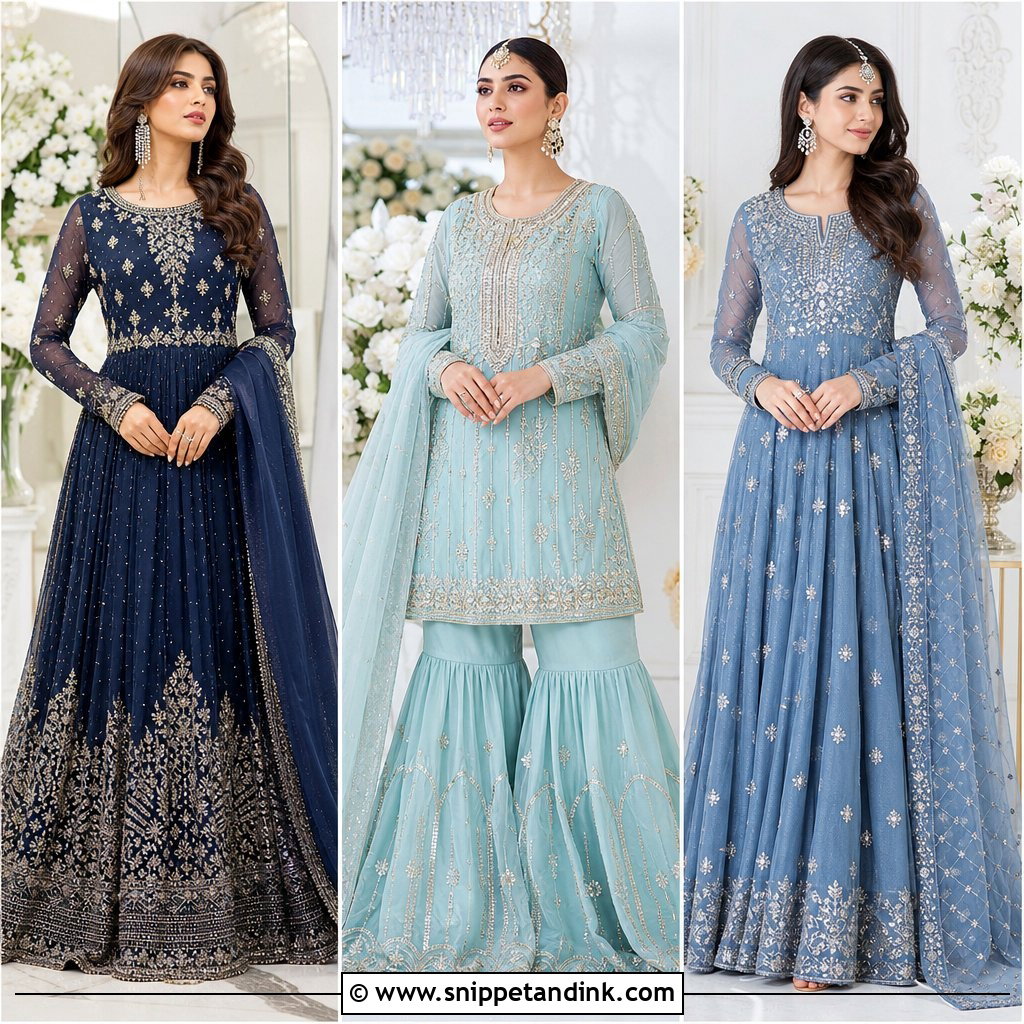
Powder blue changes more under lighting than almost any pastel, so I always look at the fabric under warm bulbs before approving it; some blues turn almost grey at an evening hall. In bright reception lighting, though, it reads cool and luminous. A structured bodice with a flowing A-line skirt defines the waist without restricting movement. Silver threadwork, crystals, pearls and fine cut-dana add sparkle, but cut-dana is glass and heavy, so keep it to the bodice and border. A sheer embroidered dupatta over one shoulder stays manageable. Silver heels, a crystal clutch and diamond or zircon jewelry finish it. On broader shoulders, a V-neckline with a lighter flare balances the frame. Keep the bun sleek, the makeup rosy and the eyes softly highlighted.
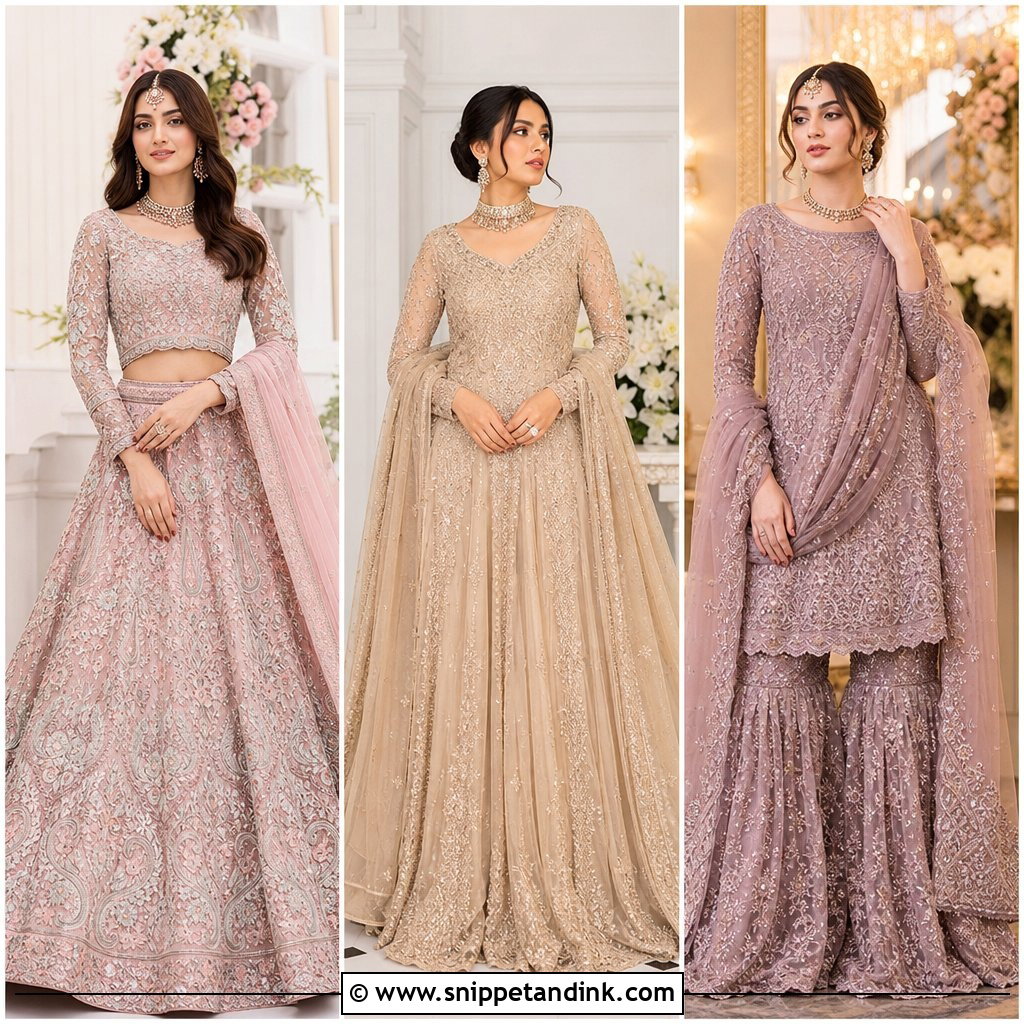
2. Blush Pink Walima Bridal Lehenga
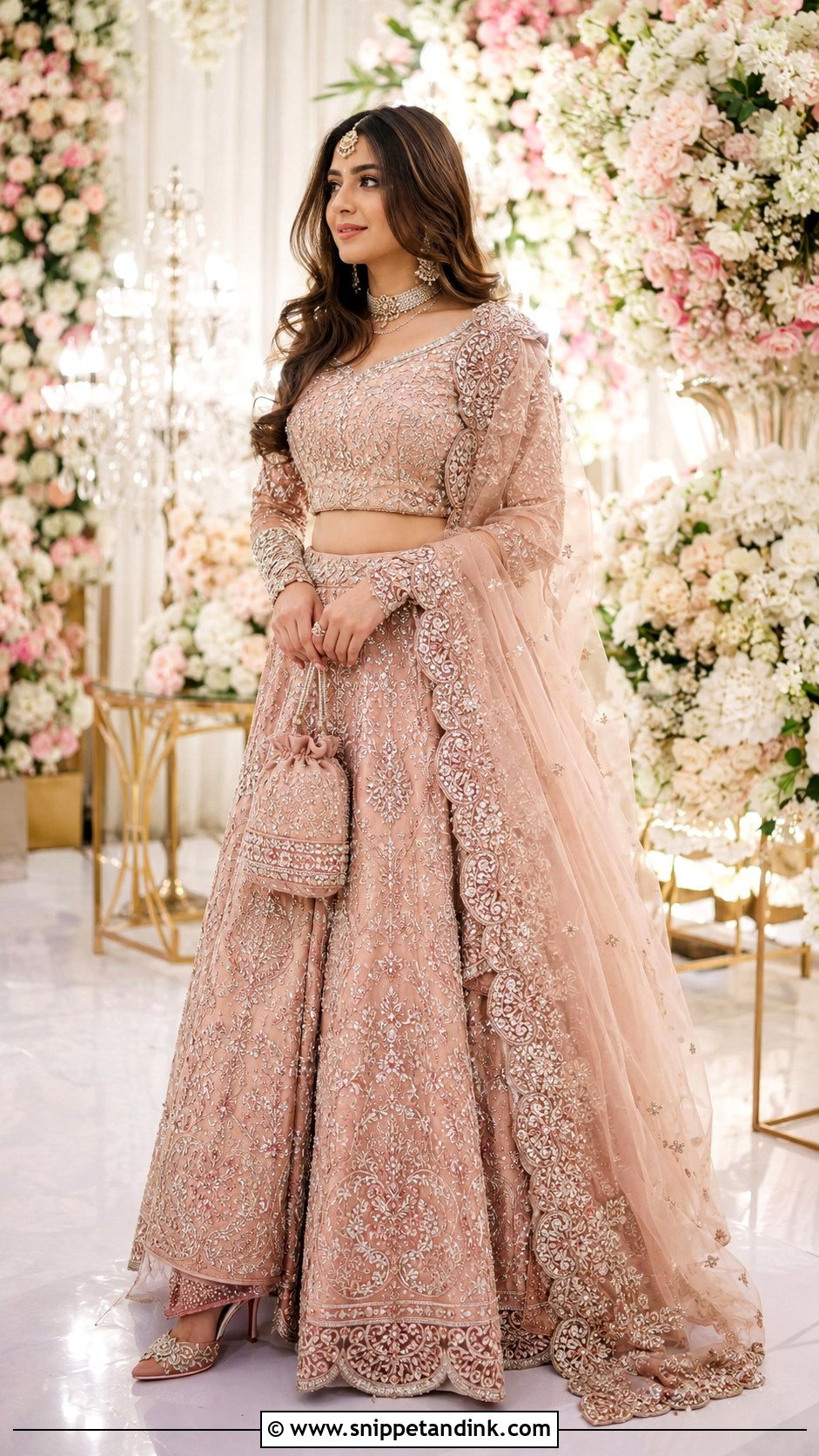
Blush pink gives you a lehenga that is unmistakably bridal without repeating the deep reds of the earlier events. I’d choose a high-waisted, paneled skirt, since the panels let it flare without extra bulk at the hips, paired with a fitted blouse and a scalloped net dupatta. Silver, pearl and pale gold embroidery blend into the pastel. The high waist lengthens the lower body, and a blouse ending right at the waistband keeps the line clean. Add a delicate choker with matching earrings, embroidered heels and a small potli. Makeup stays fresh: pink blush, defined lashes, a rose lip. For coverage, go for elbow-length sleeves and pin the dupatta across the front at the shoulder and waist so it doesn’t slide when you hug relatives.
3. Silver Walima Bridal Maxi Dress
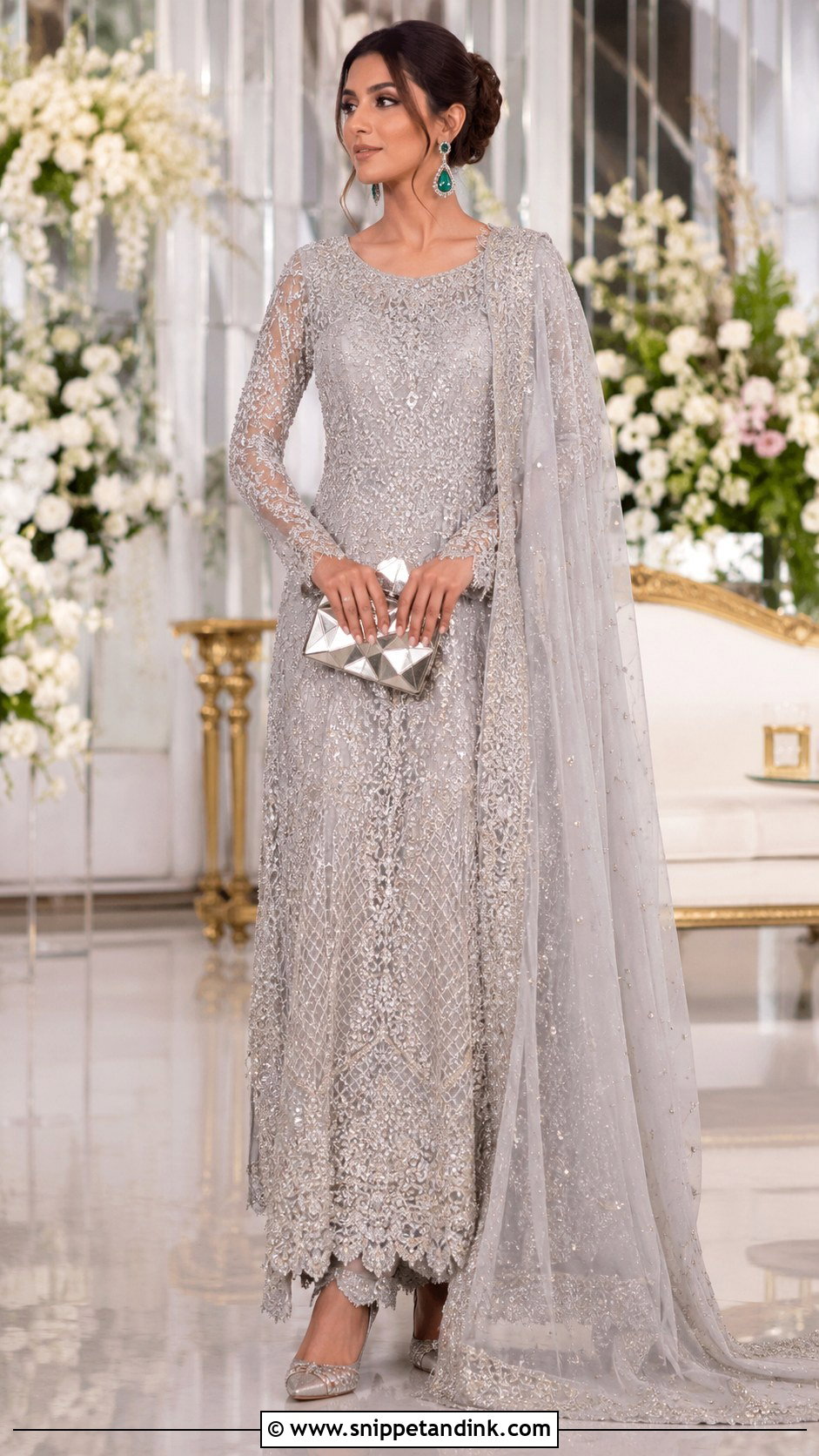
Silver suits the bride who wants real glamour but no strong color. A floor-length maxi with vertical embroidery makes the body look longer, especially over a fitted waist and gently flared skirt. Look for crystal, sequin and pearl work spaced in floral or geometric patterns. I’d steer you away from covering every inch; fully worked silver gets heavy, scratchy at the underarms, and in photos it flattens into one glare. A light grey or silver dupatta with an embellished border, pointed silver heels and a structured clutch complete it. Emerald earrings give contrast, or clear stones keep it monochrome. A center-parted bun and cool-toned makeup let the dress do the shining.
4. Champagne Walima Bridal Peshwas
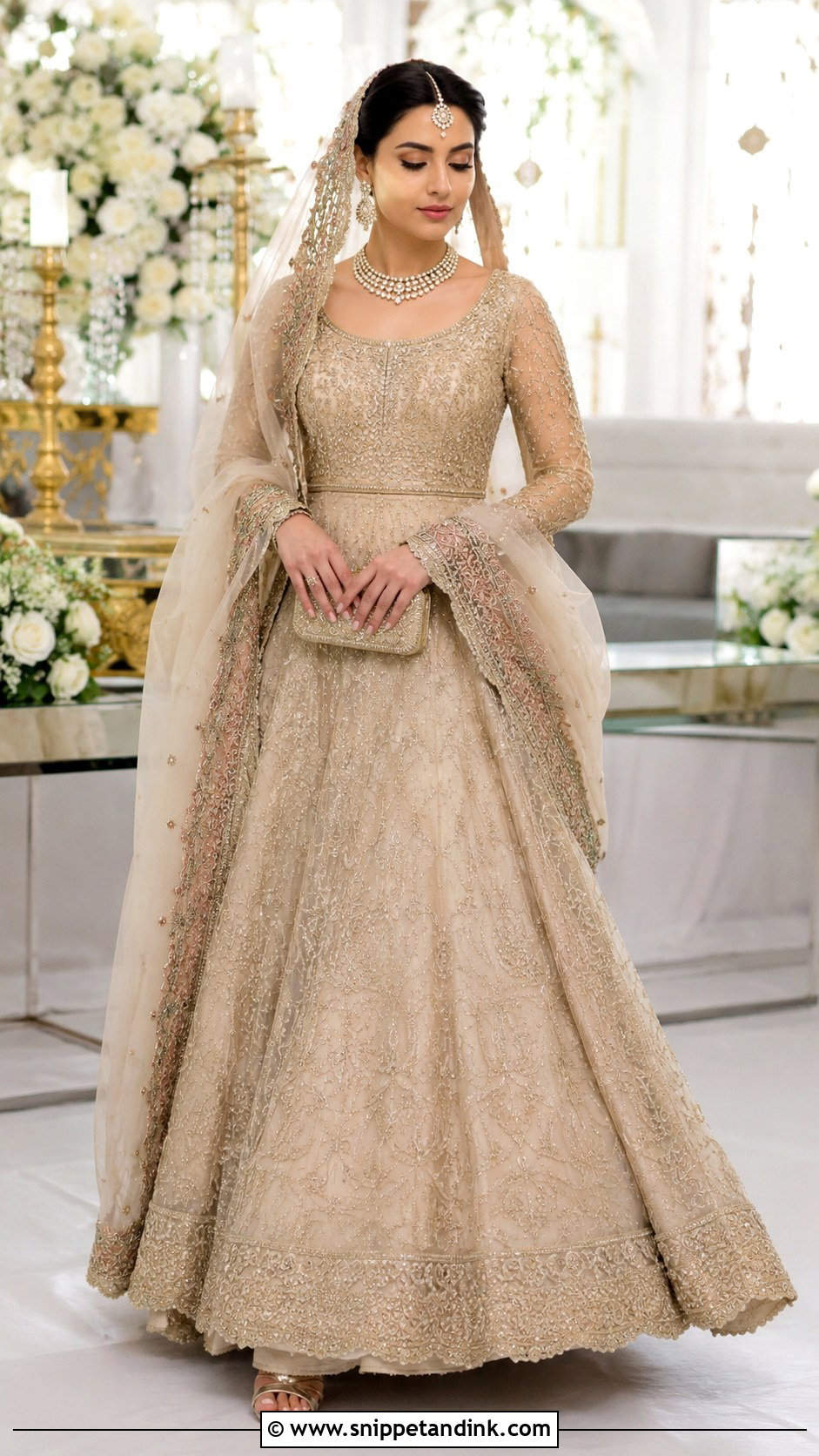
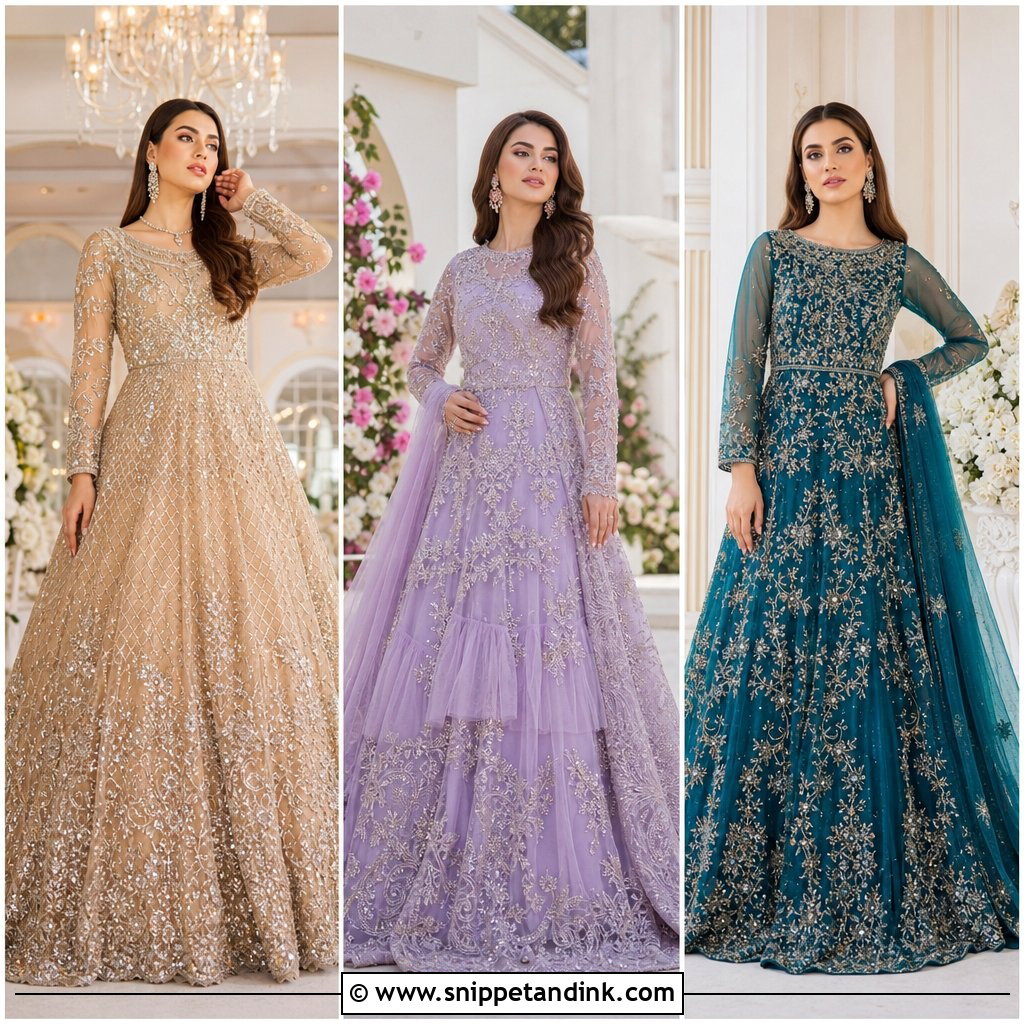
A peshwas moves like nothing else at a reception. Its fitted bodice and generous flare swing with every step, which suits a bride who loves a regal, flowing silhouette. In champagne, the risk is flatness: neutral fabric under warm lights can disappear against skin. Antique gold embroidery, pearls and small rose-gold accents give it definition. Choose silk, organza or soft net over a comfortable lining, a slightly raised waist to lengthen the legs and a wide hem border to anchor the skirt. Champagne heels, a pearl-studded clutch and layered kundan in soft gold suit it. I like one lightly embroidered dupatta over the head and a second drape over the arm for portraits.
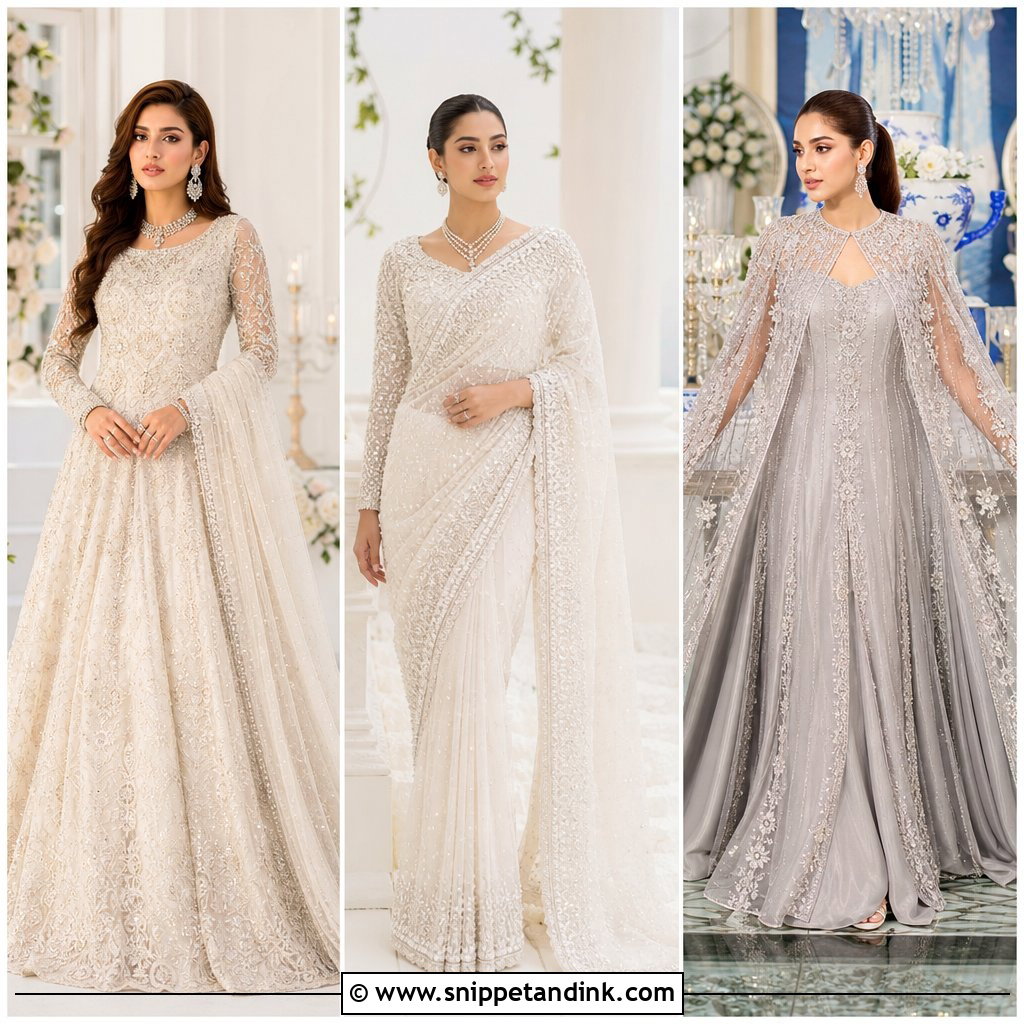
5. Ivory Walima Bridal Saree
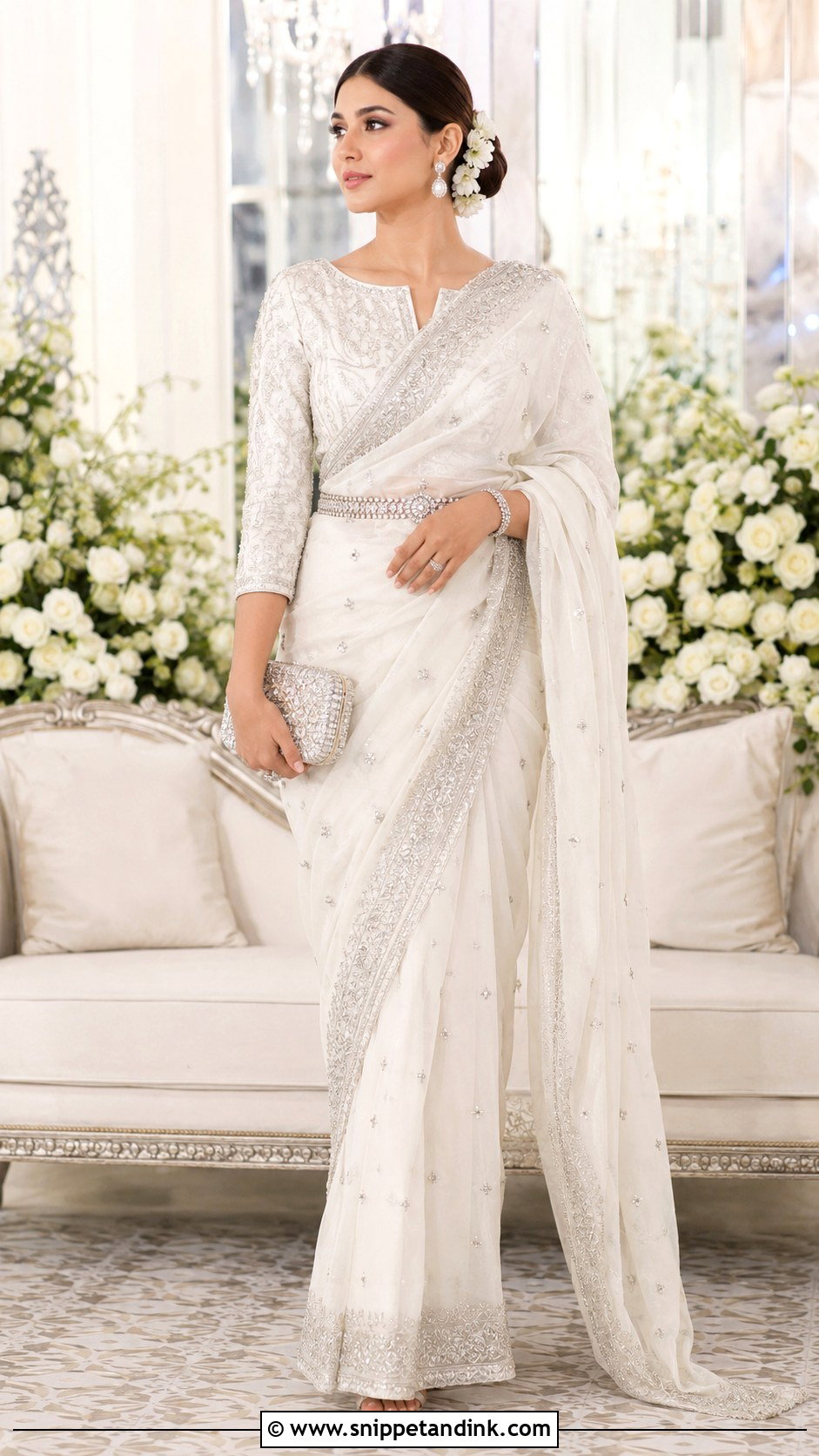
Sarees reward practice. If you aren’t used to wearing one, have it draped by someone experienced on the day and walk around in it for an hour at your fitting, because pleats that aren’t pinned firmly at the waist will loosen during greetings. Ivory silk, chiffon or organza with a silver embroidered border and scattered pearls feels formal without the volume of a flared outfit. A structured blouse with full or three-quarter sleeves adds coverage. Silver heels, pearl earrings and a crystal clutch keep the palette light, and an embellished belt at the waist adds definition and holds the pleats. Finish with a smooth bun, softly sculpted makeup and fresh white flowers in the hair. It reads clearly different from the baraat lehenga.
6. Lilac Walima Bridal Trail Gown
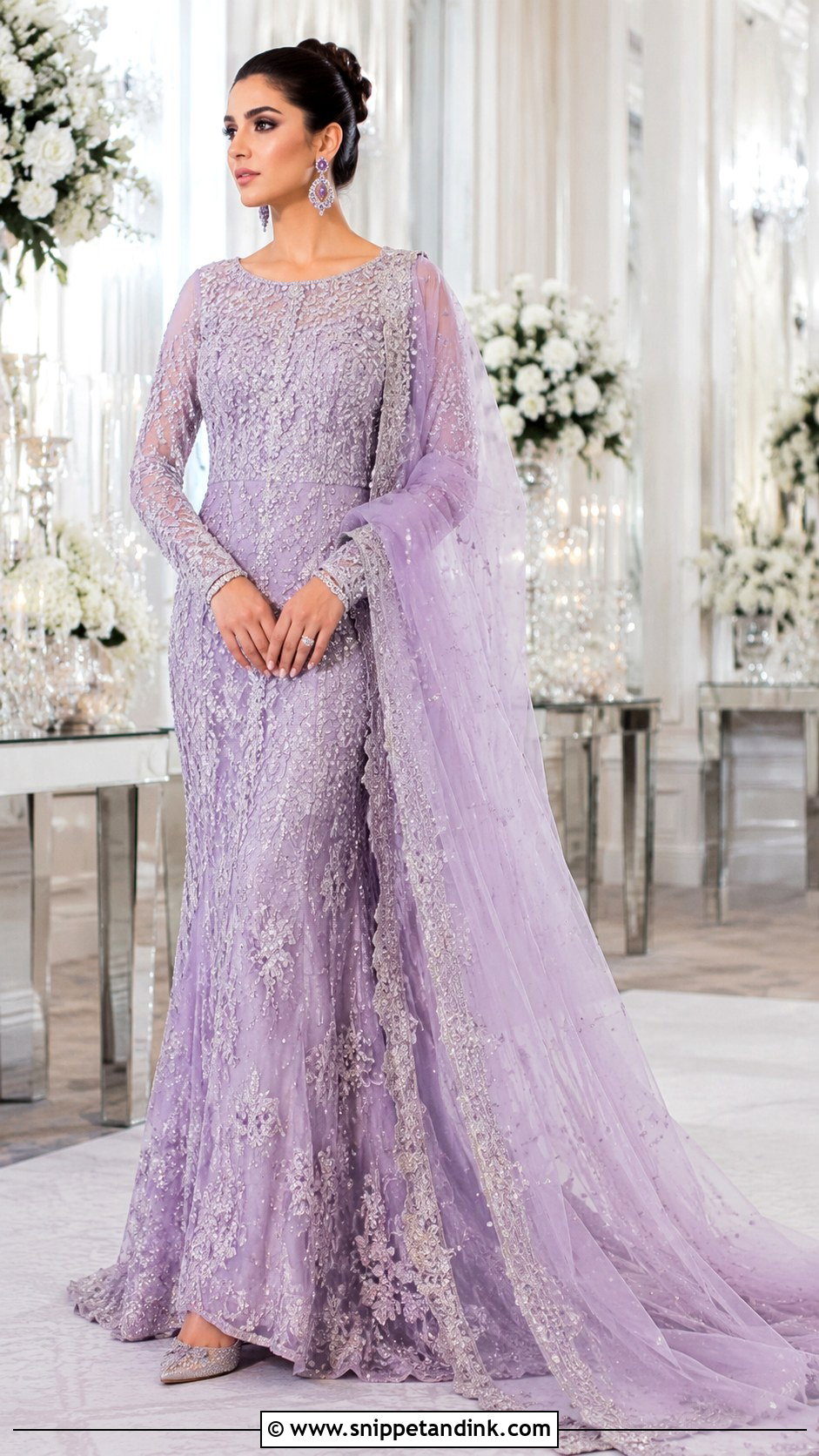
Trains look grand at the entrance and become a logistics problem the moment you sit on the stage. In a lilac gown, I’d keep the train long enough for portraits and short enough that you can turn without help. The bodice is fitted with a defined waist, and the embroidery gets richer toward the hem, where silver vines, crystal flowers and pearl clusters show up clearly against lilac. A light net dupatta, silver pumps and lavender-toned stones complete it. With a fuller bust, a supportive square or modest V-neck bodice is far more comfortable than a strapless cut. Keep the hair lifted so the neckline and earrings stay visible.
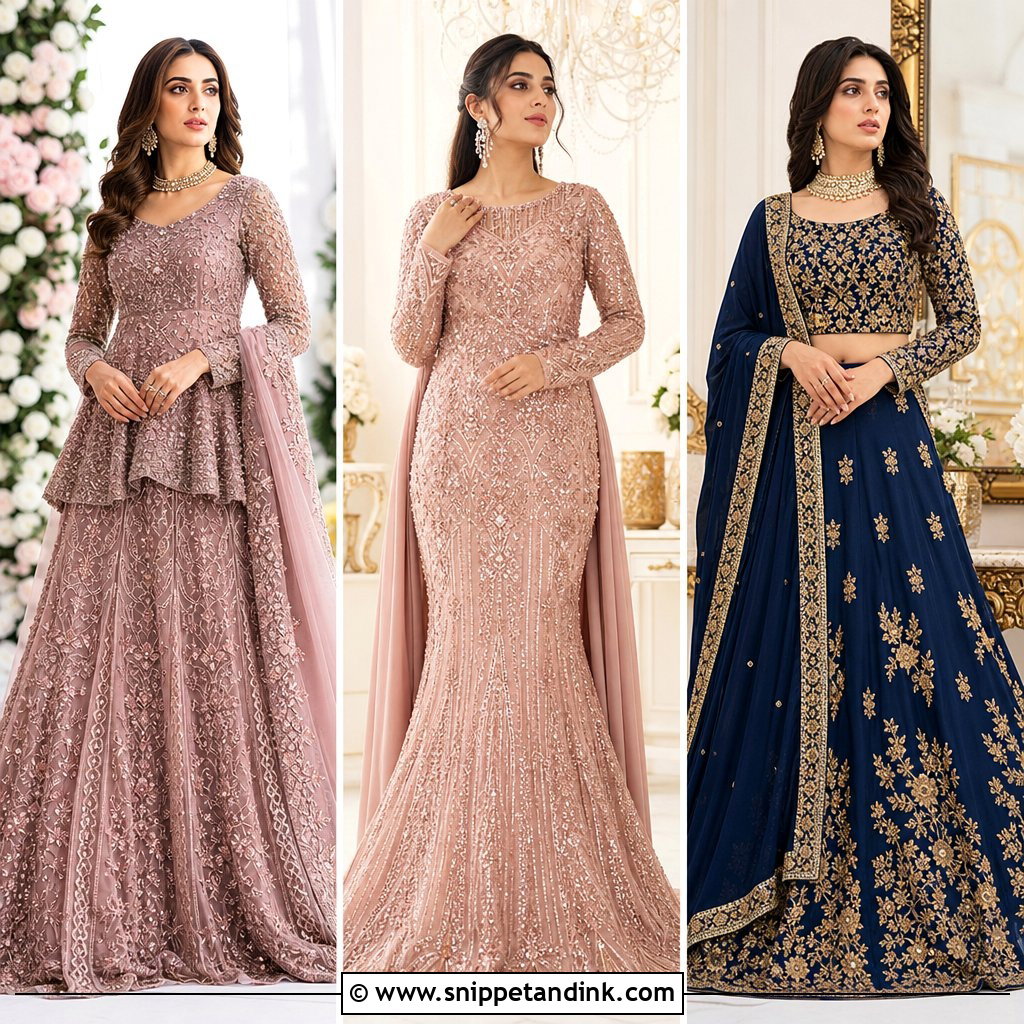
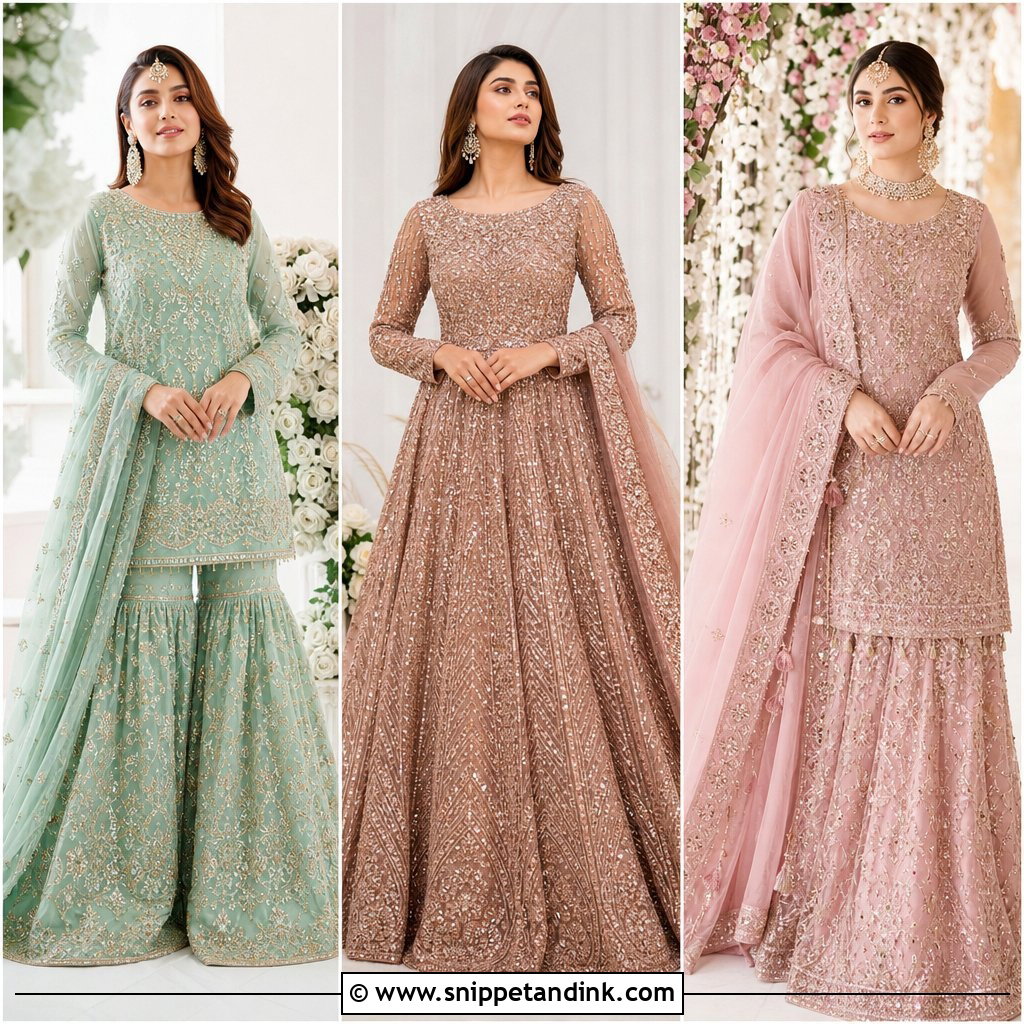
7. Mint Green Walima Bridal Lehenga
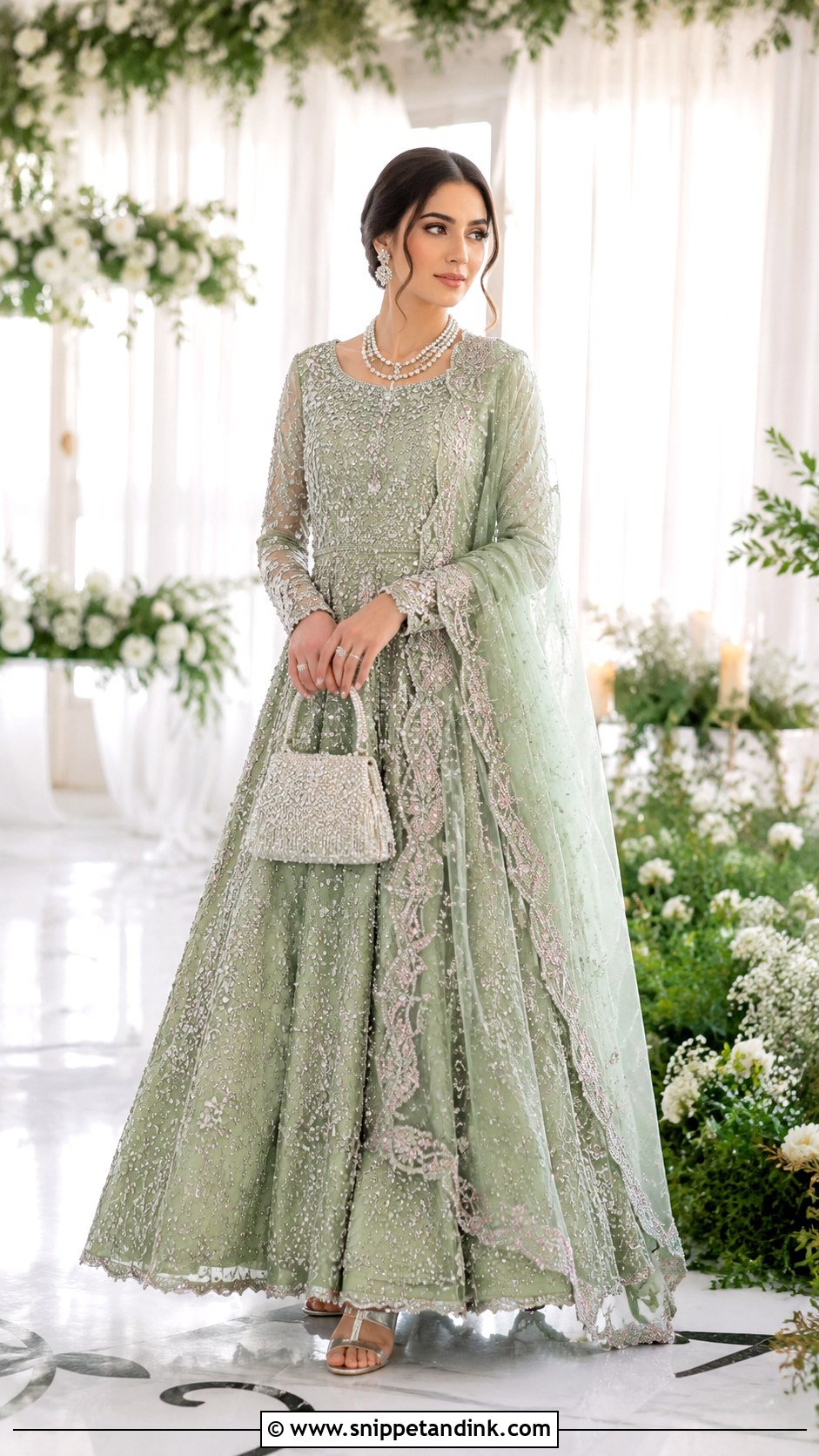
Mint green belongs to daylight and spring. Under strong yellow bulbs it can look washed out, so I save it for brides with an afternoon or garden Walima. Build it around a flowing lehenga, fitted blouse and sheer dupatta with a finished scalloped edge, with pearl white, silver and pale gold embroidery to brighten the color gently. A longer blouse gives coverage; a short structured one looks more current. Pearl drops, a matching maang tikka, neutral metallic heels and a small embellished bag finish it. Peach, rose and champagne makeup warms the cool green. Outdoors, pick organza or chiffon and skip a long train that drags through grass.
8. Rose Gold Walima Bridal Peplum Gharara
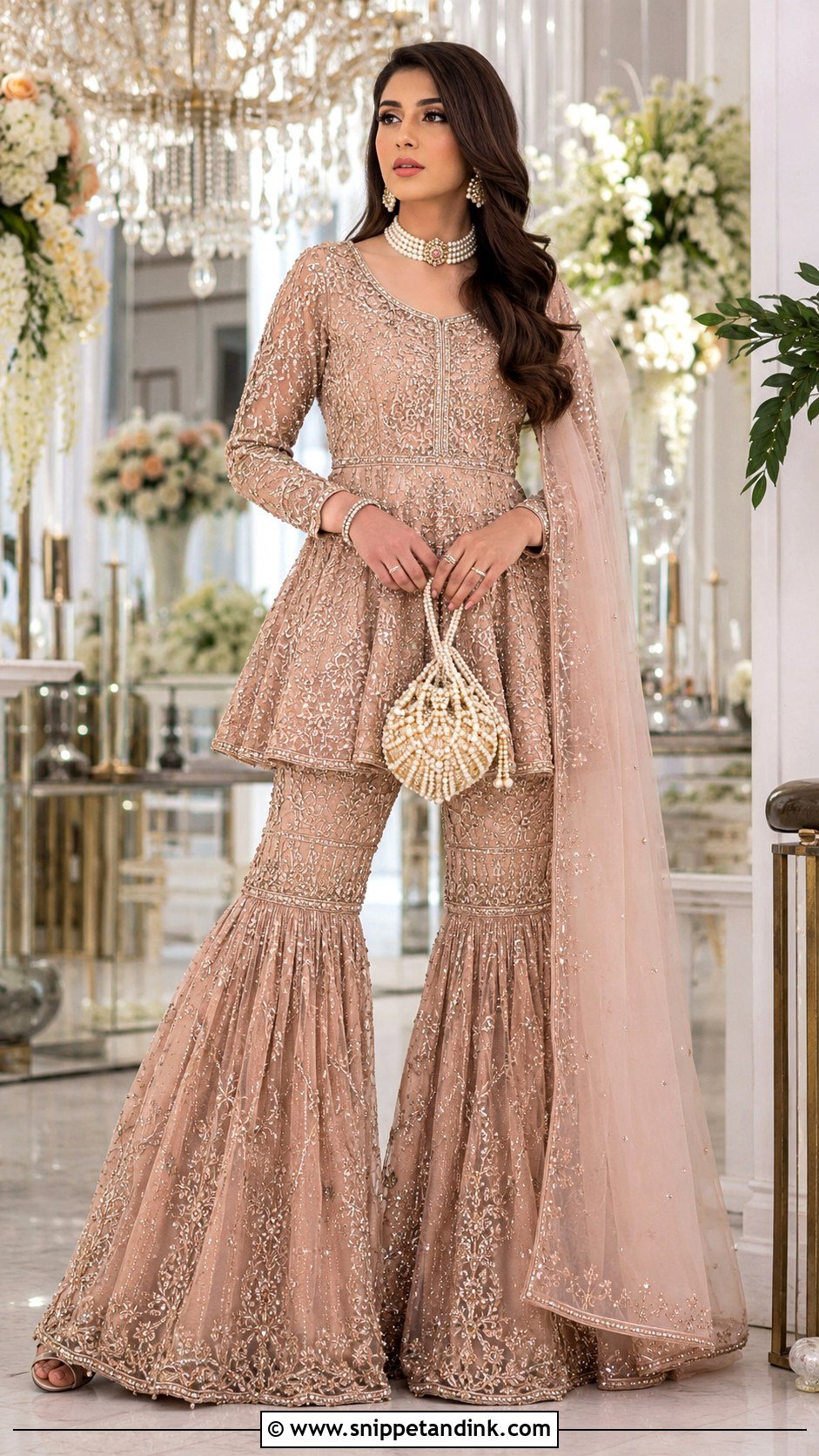
A peplum over a gharara is one of the most flattering structured shapes I fit. The peplum ends at the upper hip and defines the waist, while the gharara’s flare from the knee leaves the legs free to walk and climb stage steps. In rose gold, embroidery in antique silver, blush and champagne sits naturally on the metallic base. A net dupatta with a narrow border keeps the upper body from feeling heavy. Rose-gold heels, a pearl potli and a choker with matching earrings complete it. For a longer line, take the peplum a little shorter and keep the gharara smooth above the knee band so the eye travels down before the flare starts.
9. Dove Gray Walima Bridal Fishtail Maxi
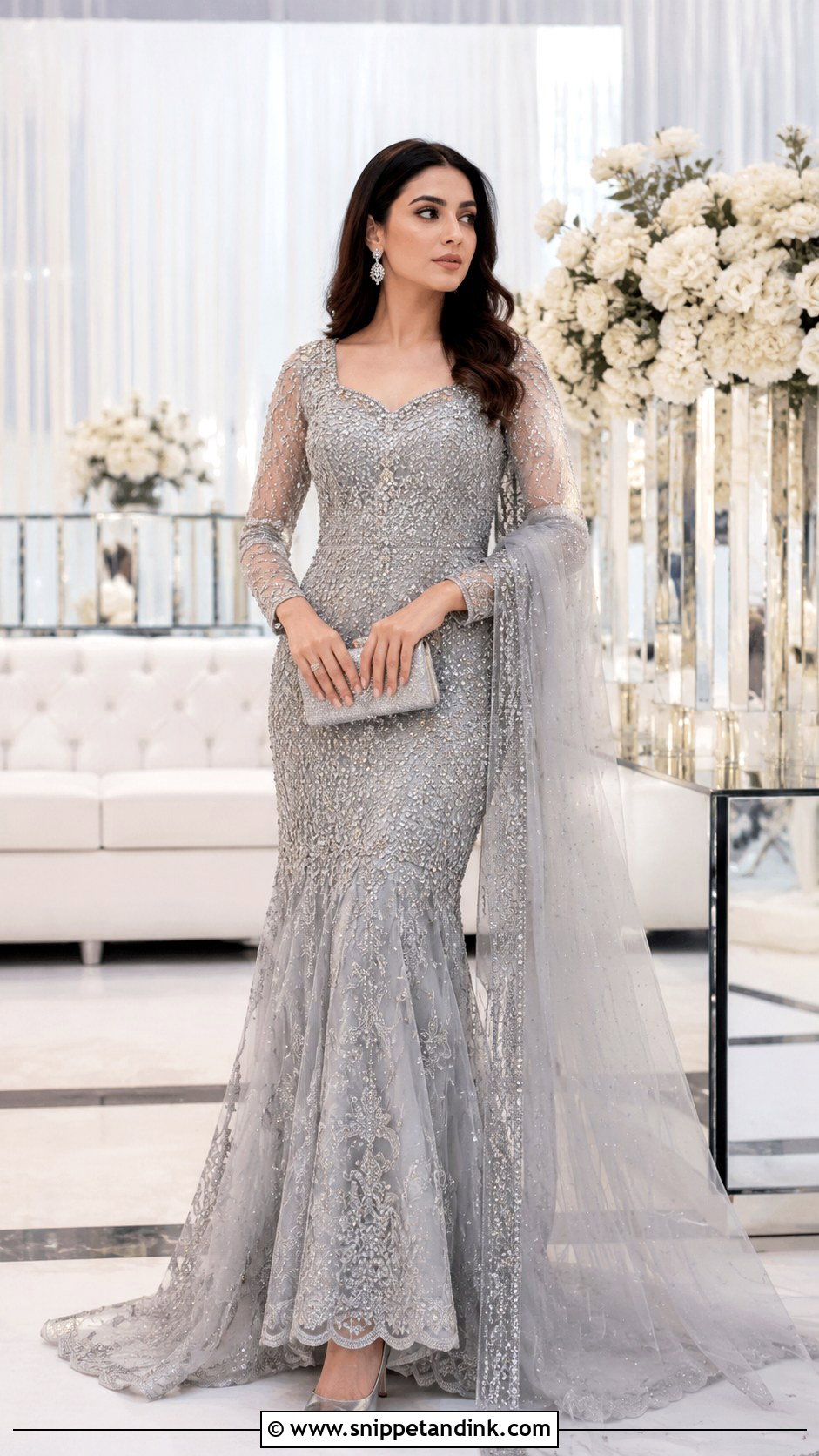
Fishtails are the shape I’m most careful with at a Walima, because you will be sitting for long stretches. The skirt follows the body to the knee before widening, which looks sharp in formal portraits but needs stretch lining or a gentler inner construction so sitting and stairs stay possible. Dove grey benefits from silver crystals, pearls and vertical beadwork that stretch the line. A detachable overskirt or short train adds drama for the entrance only. A sheer grey dupatta, pointed heels and diamond-style jewelry keep the palette disciplined. Grey can drain the face, so cool pink makeup is not optional here. Soft side-parted waves or a clean low bun finish it.
10. Dusty Pink Walima Bridal Sharara
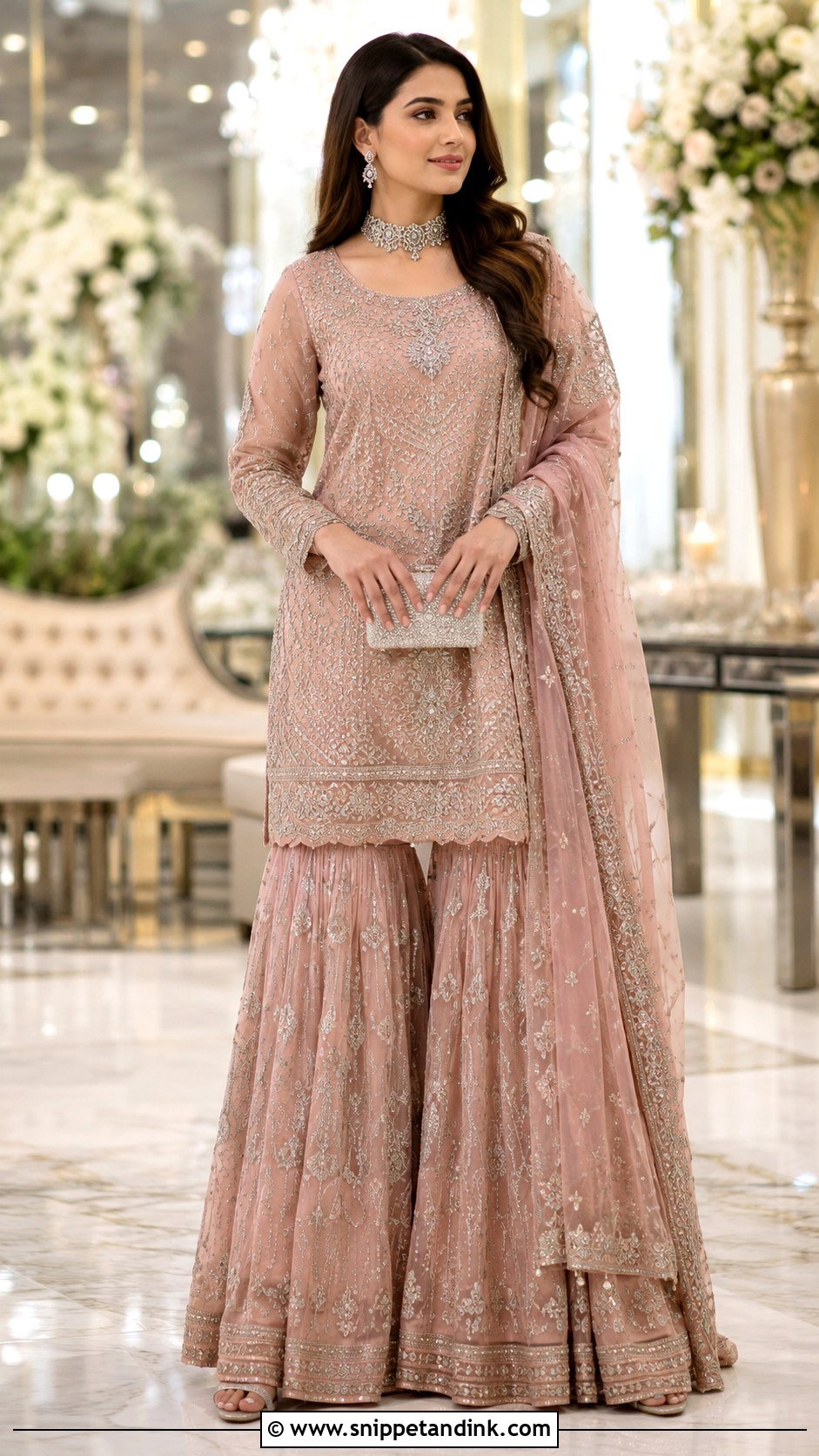
If you’d rather wear separates than a gown, a sharara is the comfortable choice: wide flared pants that move like a skirt but never tangle around your ankles. Pair it with a knee-length shirt with a fitted upper section and side slits. Length matters here. The shirt must balance the sharara’s volume without hiding its flare. Silver zari, pearls and muted gold threadwork suit dusty pink. Drape a light embroidered dupatta over one shoulder, or over the head for the entrance. Block-heel sandals, a jeweled clutch and a coordinated choker set finish it, with a middle-parted bun and rose-toned makeup for a long celebration.
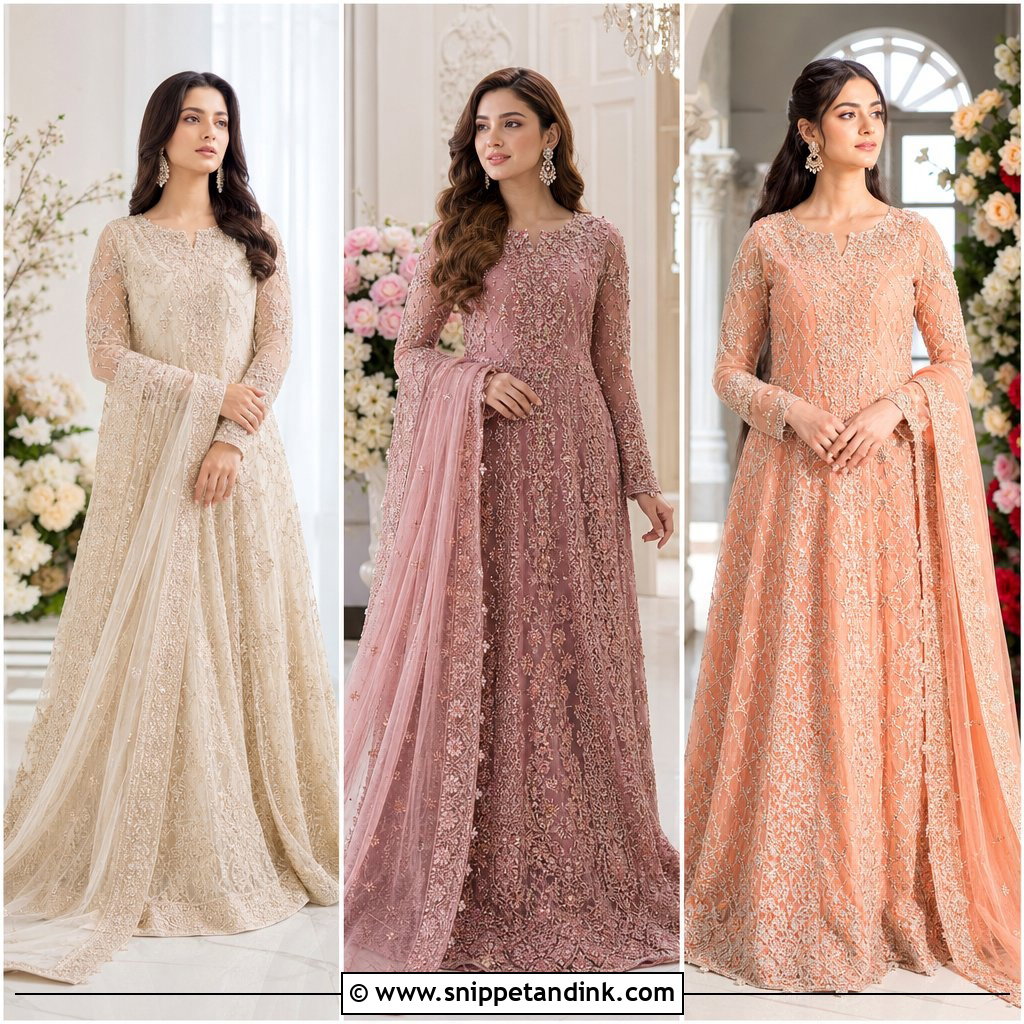
11. Pearl White Walima Bridal Anarkali
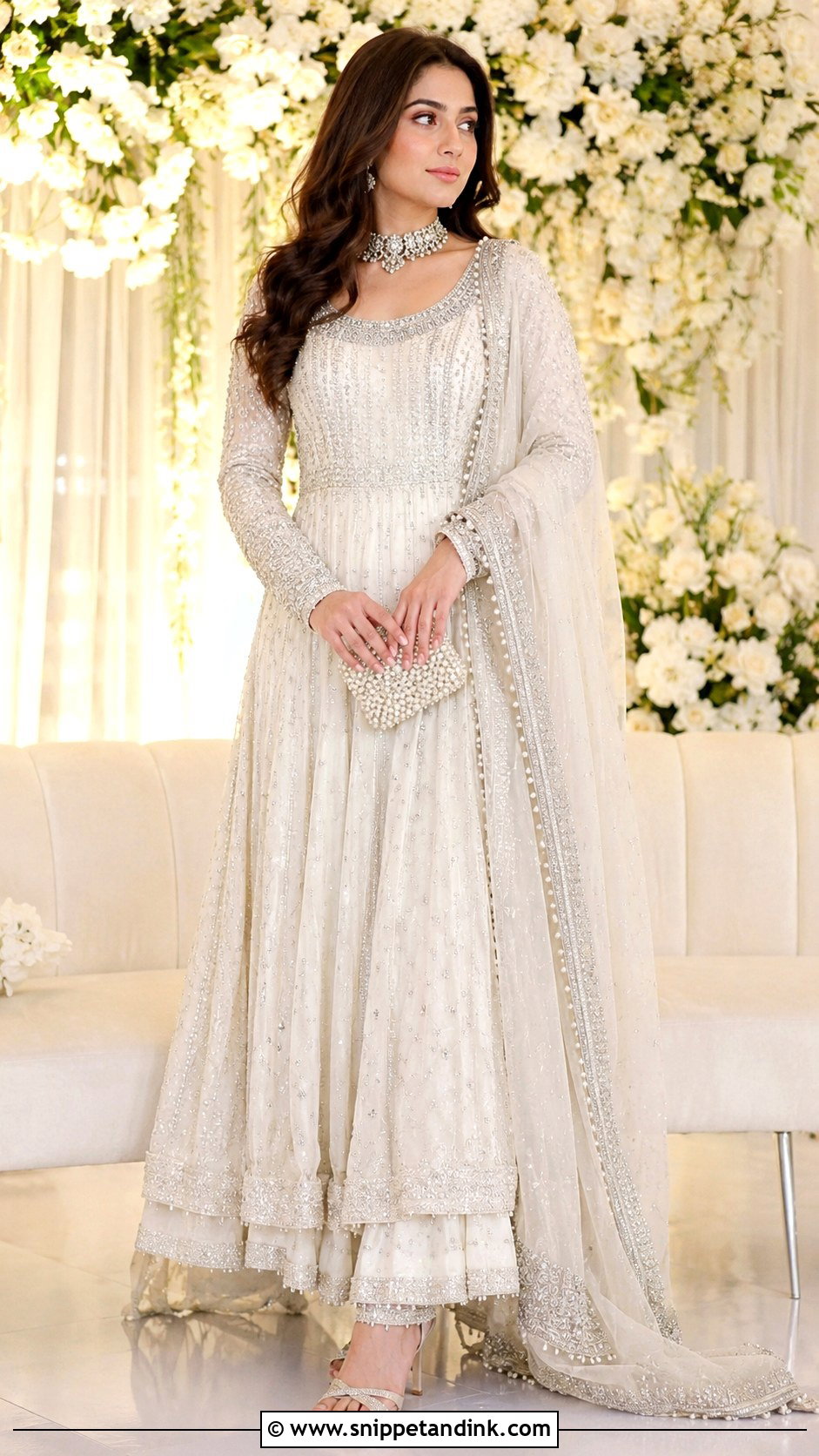
White is the hardest color to match across fabrics. Pearl white chiffon, net and organza each pick up a slightly different tone, so I check every layer of an Anarkali together in daylight before embroidery begins. The shape is a fitted bodice over a full layered skirt, and silver embroidery with scattered pearls emphasizes the flare while keeping it light. A round or sweetheart neckline takes a statement choker, and fitted sleeves give structure. Add a silver-bordered dupatta, ivory heels and a pearl-covered clutch. If bright white feels stark against your skin, choose off-white or oyster. Fresh skin, a rosy lip and well-defined eyes keep a neutral palette from going flat.
12. Ice Blue Walima Bridal Saree Gown
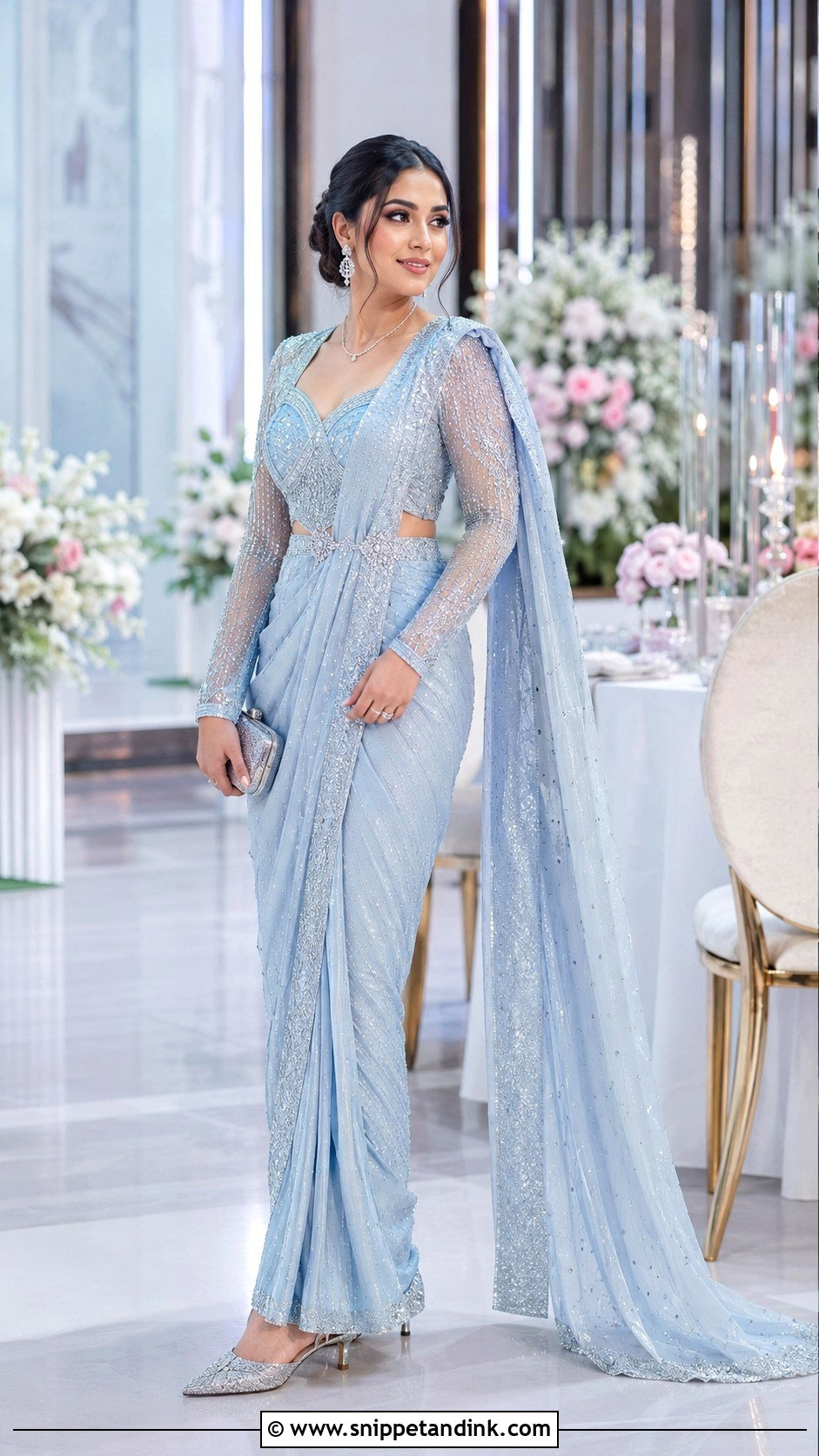
An ice blue saree gown solves the problem I mentioned with traditional sarees: the drape is stitched in place, so there are no pleats to fix through the reception. It combines an asymmetric draped skirt, structured blouse and attached pallu edged with silver crystals or pearls. A defined waist keeps all that fabric from swallowing a petite frame. Silver stilettos or kitten heels, a crystal clutch and drop earrings are enough, with perhaps a slim bracelet. Wear a low bun or one-sided waves, cool rose makeup and a luminous highlighter. Ask the tailor to weight the pallu end slightly so it hangs straight when you walk.
13. Mauve Walima Bridal Cape Gown
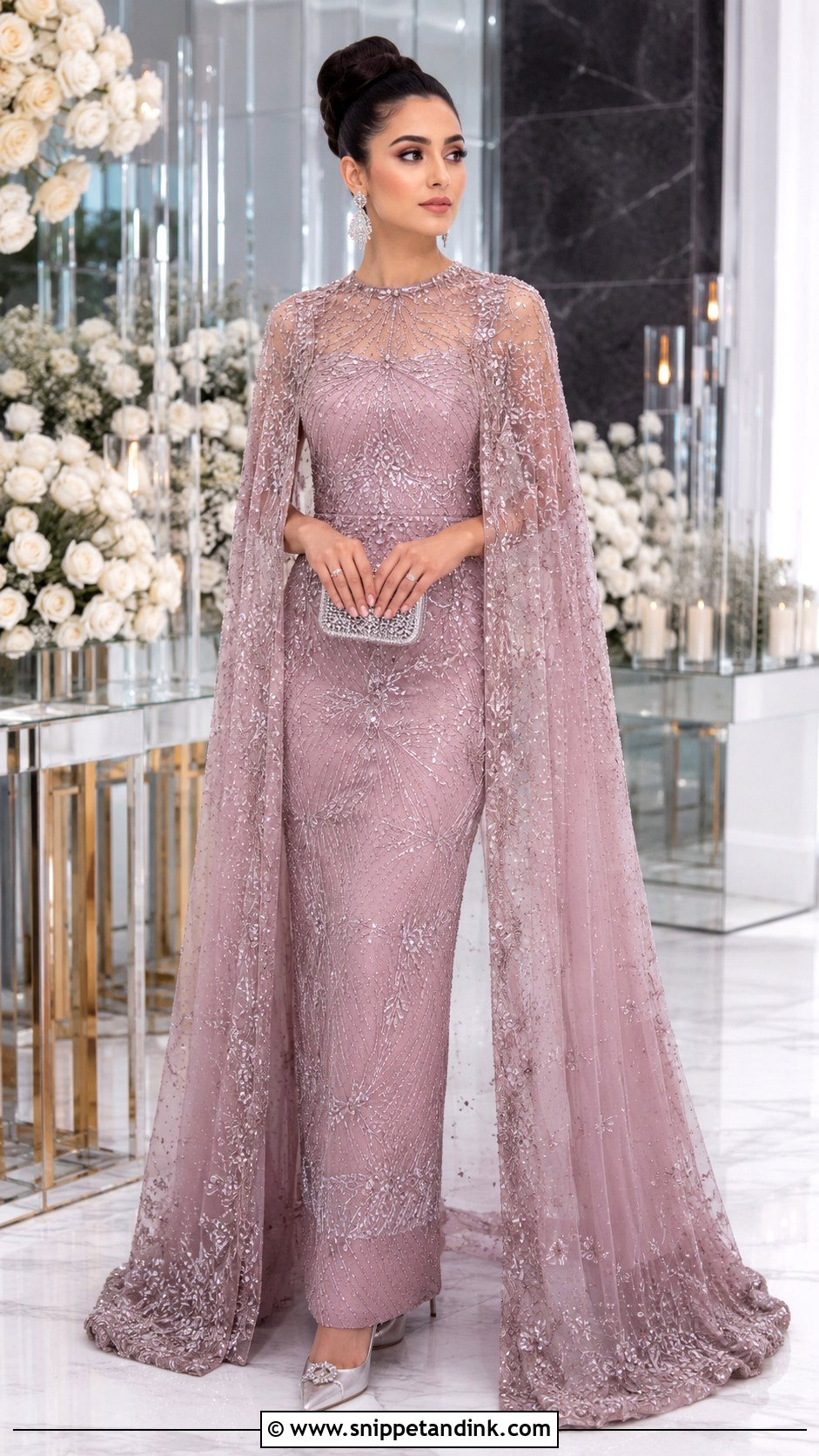
Capes give arm coverage without sleeves, which is why I suggest them to brides who find long fitted sleeves hot and restricting. Here a fitted mauve inner gown sits under a sheer or lightly embroidered cape falling from the shoulders. The cape can replace the dupatta, though a narrow matching veil works for the entrance. Silver beadwork, tonal embroidery and scattered crystals give the muted color depth. Keep the waist defined underneath so the outline doesn’t turn into a tent. Pointed metallic heels, a compact clutch and statement earrings instead of a heavy necklace, plus a high bun that shows the shoulders, suit an indoor evening reception.
14. Sage Green Walima Bridal Shirt And Lehenga
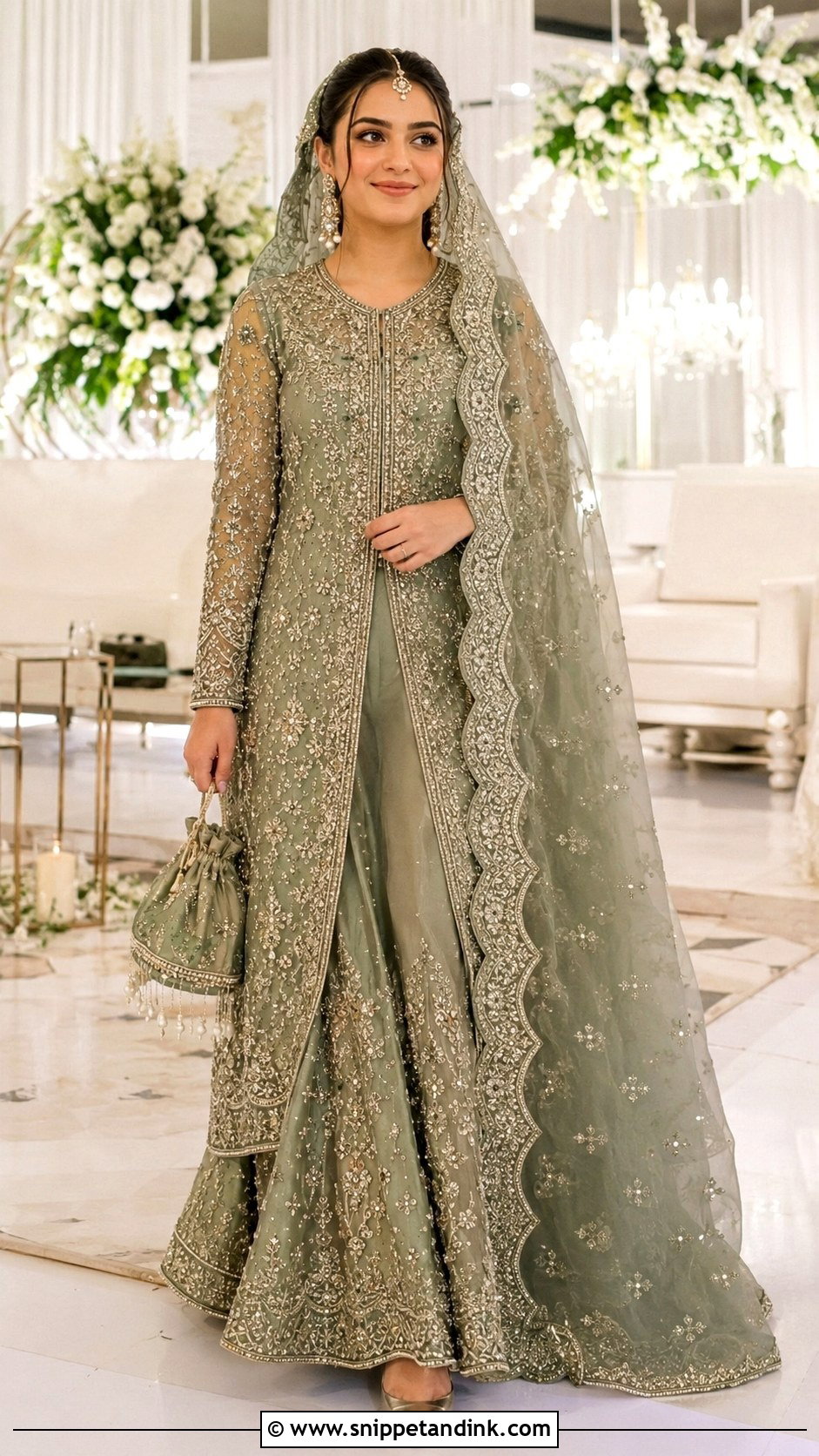
Sage green is quiet, which is the appeal and the danger. Under indoor lighting it can look dull unless the makeup is warm and the embroidery has some brightness. A long straight embroidered shirt over a lightly flared lehenga, visible through front or side slits, gives coverage and still keeps bridal volume. Concentrate the silver, pearl and champagne work at the neckline, cuffs and hem rather than spreading it evenly. A sheer sage dupatta with a scalloped border can sit over the head and fall behind the shoulders. Pearl earrings, a delicate tikka, metallic pumps and a matching potli complete it, with smooth hair and softly warm makeup.
15. Peach Organza Walima Bridal Peshwas
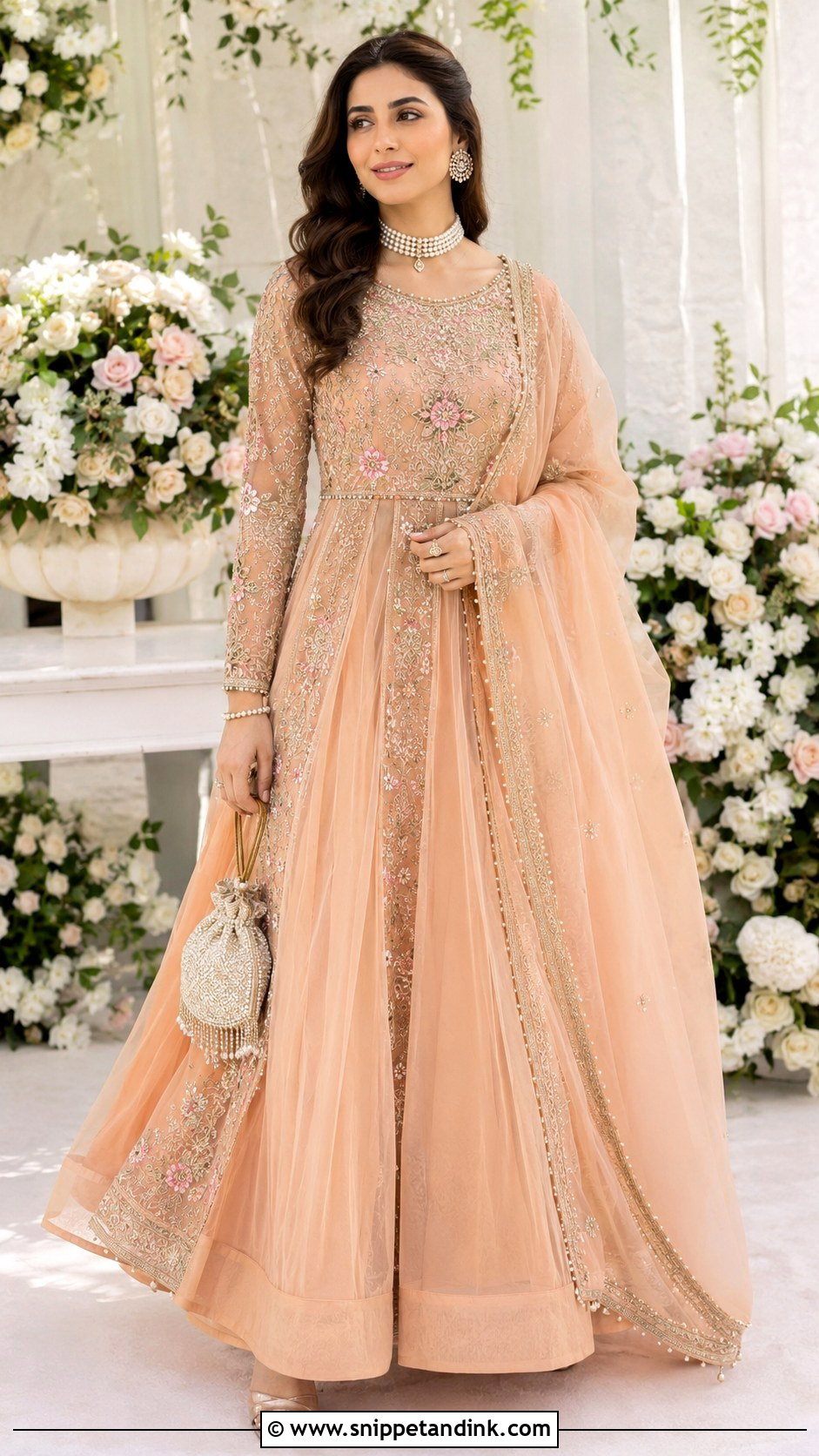
Organza holds its own shape, so a paneled peach peshwas gets real volume from layers without a rigid can-can underneath, which makes sitting much easier. Peach catches daylight gently, so it suits a bright daytime reception. Floral embroidery in champagne, silver, ivory and muted pink keeps it balanced. I concentrate the work at the neckline and border and scatter it lightly through the middle so the skirt stays airy. Add a sheer peach dupatta, neutral heels, pearl jewelry and a small embroidered bag. Shorter brides should keep the hem border narrow, since a wide band cuts height. Finish with a textured low bun, peach blush, soft eyes and a rose-nude lip.
16. Gold Tissue Walima Bridal Lehenga
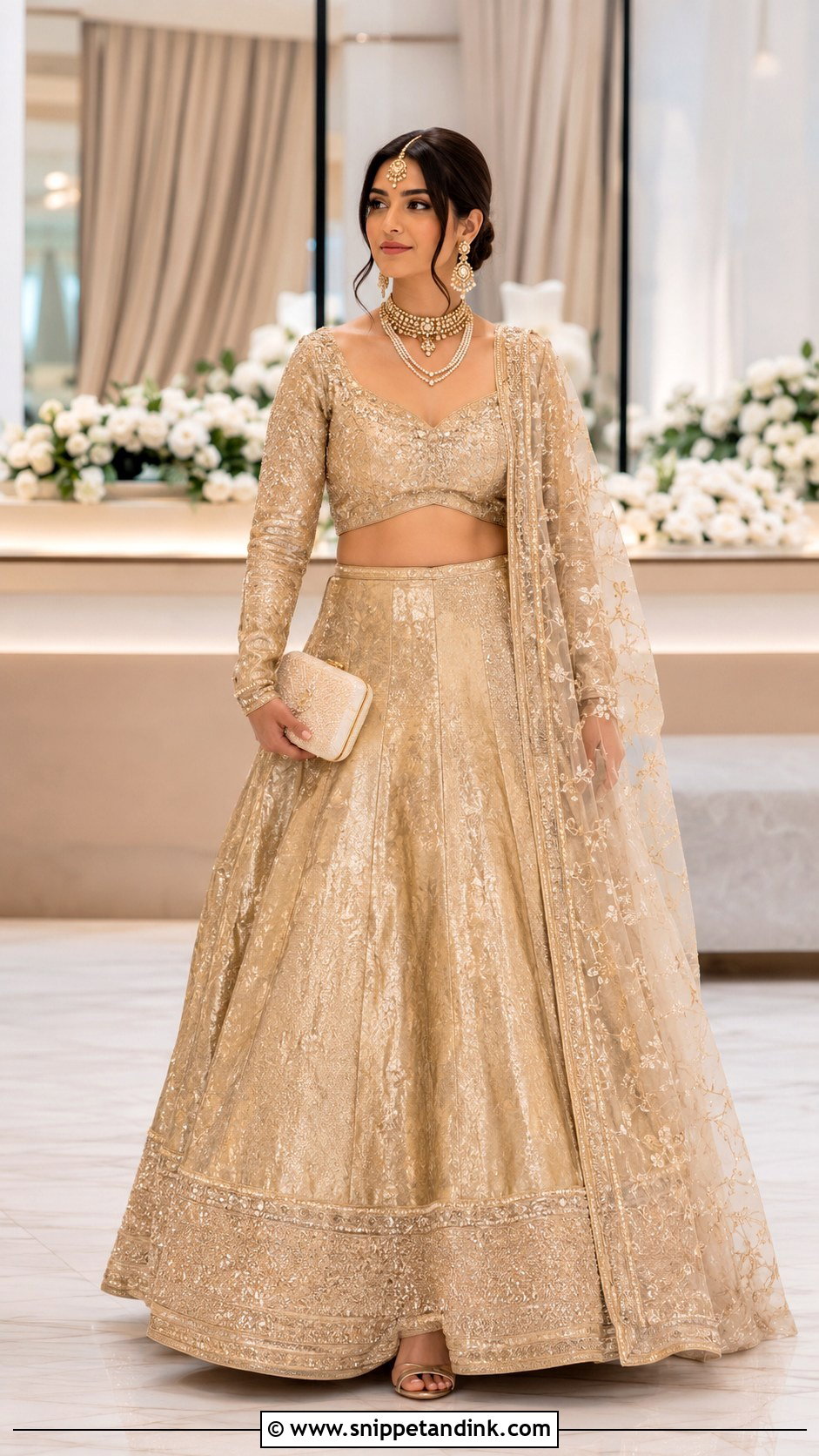
Tissue is woven with metallic yarn, so it shines on its own and creases easily. That’s why I’d keep embroidery on a soft gold lehenga fine and floral rather than dense. Pair it with a tailored blouse and an ivory or champagne dupatta for gentle contrast, plus pearls and antique metallic details that tone down the glare. A paneled skirt gives movement and a fitted waistband holds the shape. Muted gold heels, an ivory clutch and traditional jewelry in pearls or pale stones finish it. Don’t stack bright gold accessories; the fabric already supplies the shine. A neat bun, bronzed neutral makeup and a soft pink lip keep it from turning ornate.
17. Lavender Walima Bridal Jacket Dress
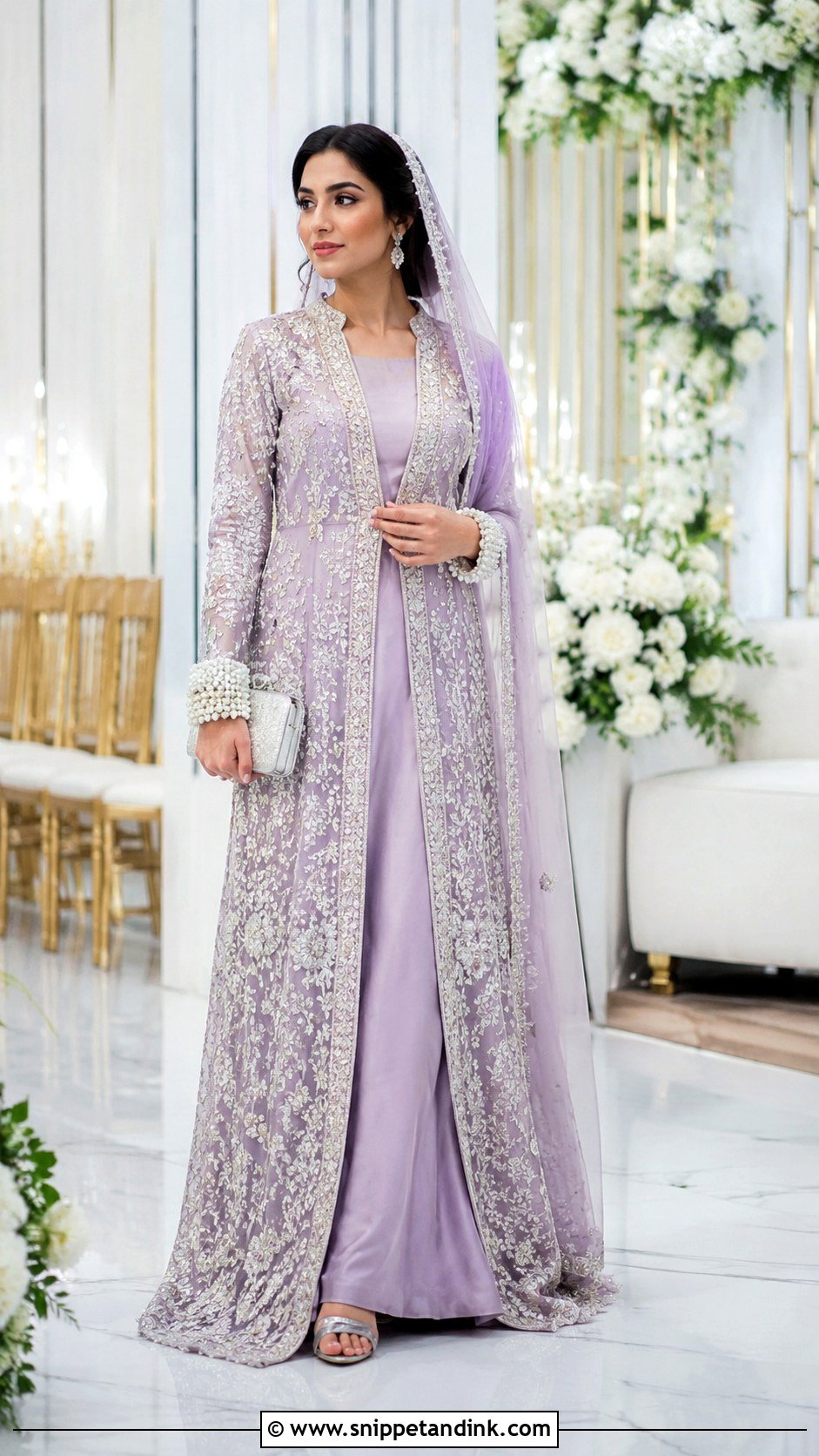
The jacket dress is my practical pick for brides who run hot or want to change their look mid-evening without a full outfit change. A simple floor-length inner dress goes under a long embroidered jacket, open at the front or fastened discreetly at the waist, with silver floral motifs, crystal borders and pearl-covered cuffs. Keep the inner layer lightly worked or the two compete. Lavender or silver heels, a structured clutch and drop earrings are enough. A slim head veil for the entrance comes off later. Curvier brides will be happier in a softly tailored jacket that follows the body than a stiff boxy cut. Polished waves and mauve-pink makeup finish it.
18. Pastel Floral Walima Bridal Lehenga
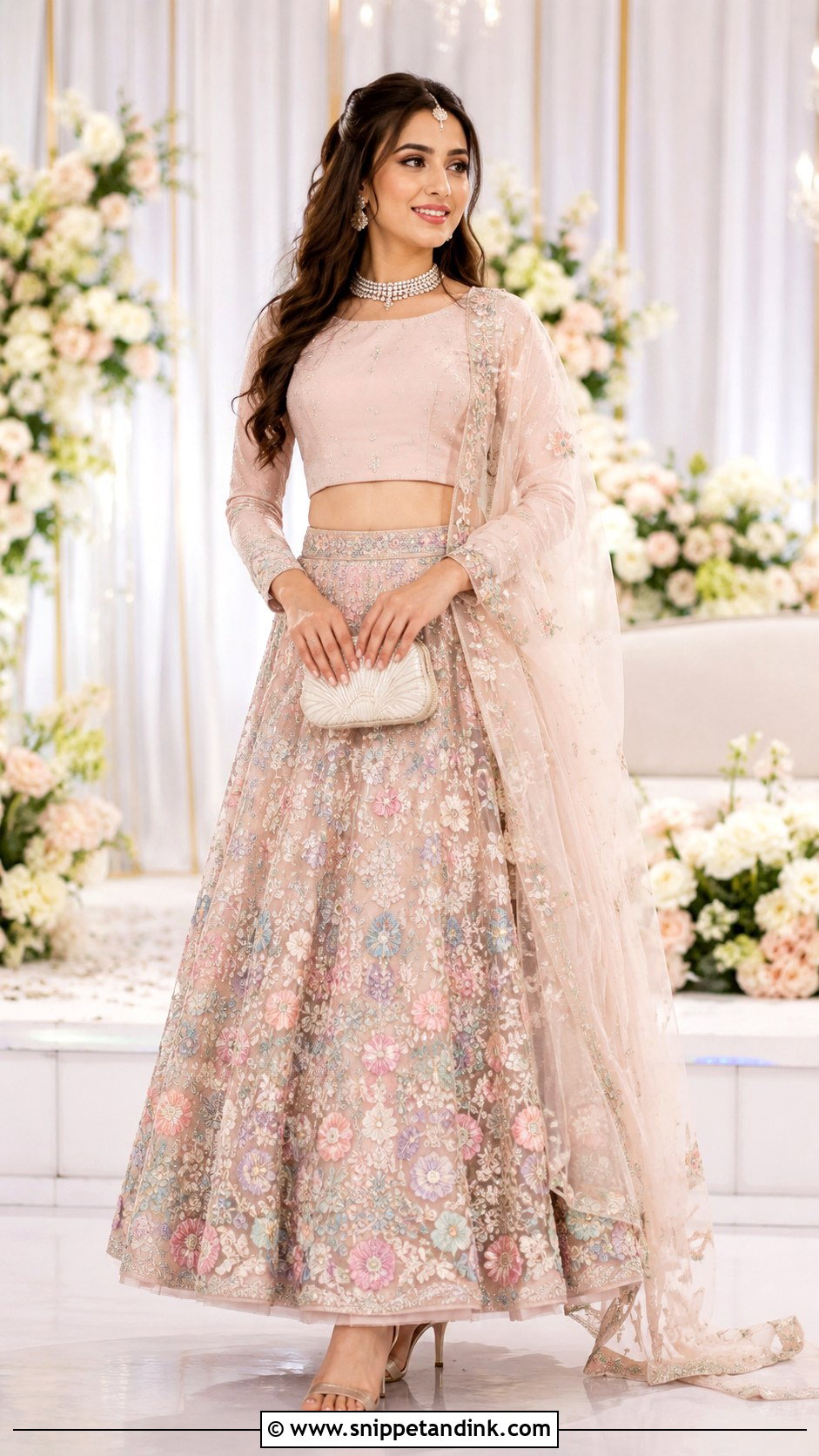
Do you want color without committing to one shade? A pastel floral lehenga can carry blush, mint, lilac, ice blue and ivory together. Insist on embroidered motifs rather than a printed fabric; print reads as daywear in photos. Take the solid blouse color from one of the flowers and choose a sheer neutral dupatta. Then stop adding. Pearl earrings, a delicate necklace, nude metallic heels and an ivory clutch are enough with that much color. When the karigar lays out the motifs, ask to see the larger flowers positioned around the skirt before stitching, so they don’t cluster on one side. Soft curls, pink makeup and a few fresh flowers in the hair keep it romantic without feeling themed.
19. Midnight Blue Walima Bridal Gown
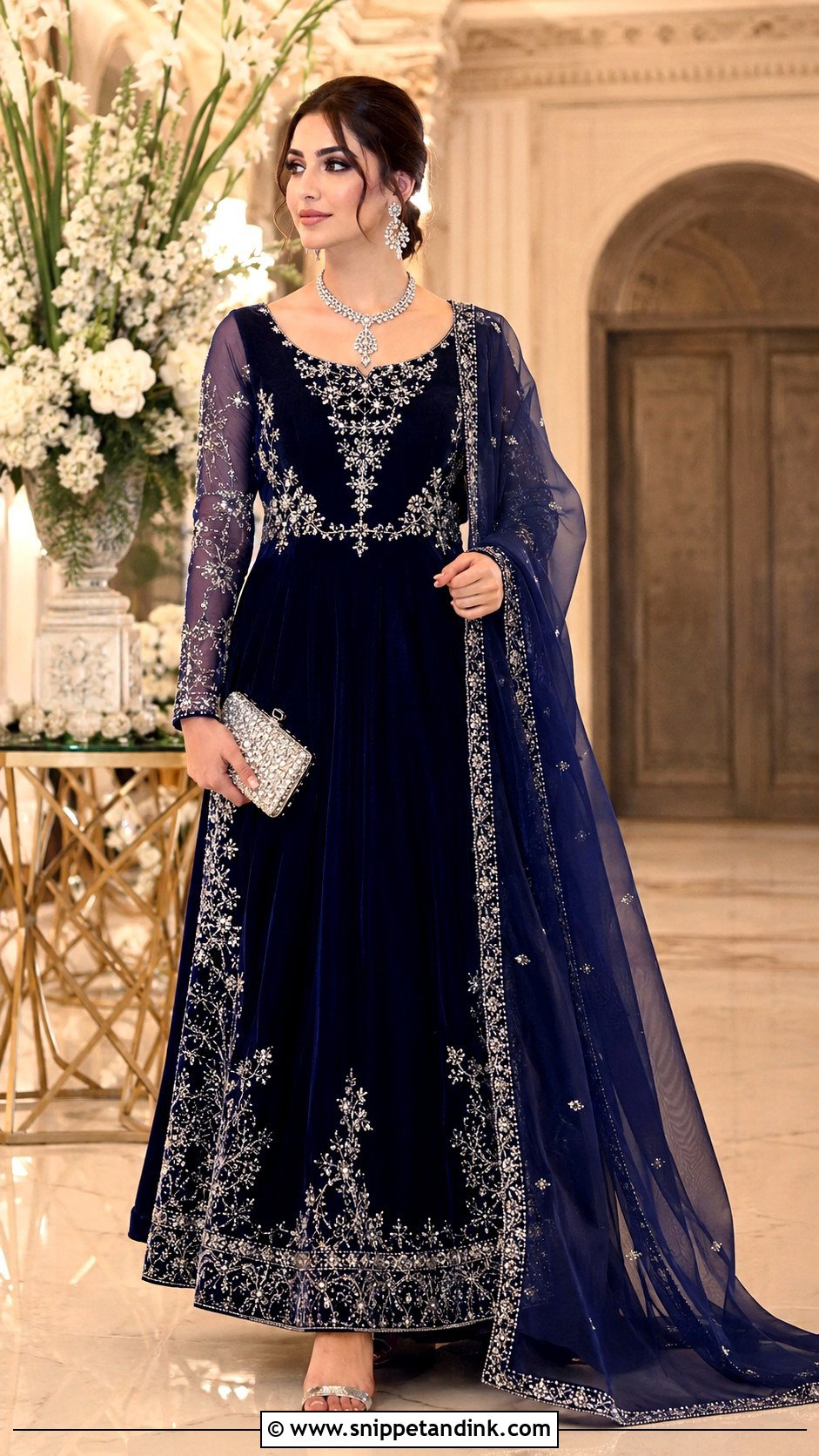
Pastels aren’t compulsory. A midnight blue gown gives rich evening glamour and makes particular sense for a winter Walima, especially in velvet. Velvet is warm and heavy, though, so I’d only choose it for a cool indoor venue. Silk or layered fabric works too, with a fitted bodice and full skirt. Silver embroidery, crystals and deep blue beadwork sparkle against the dark base, and a sheer navy dupatta with a silver border softens it. Silver heels, a crystal clutch and diamond-style jewelry finish the look. Keep the makeup luminous with rosy cheeks and a berry-pink lip rather than dark tones everywhere. A sleek bun or polished side waves keep the embellished neckline in view.
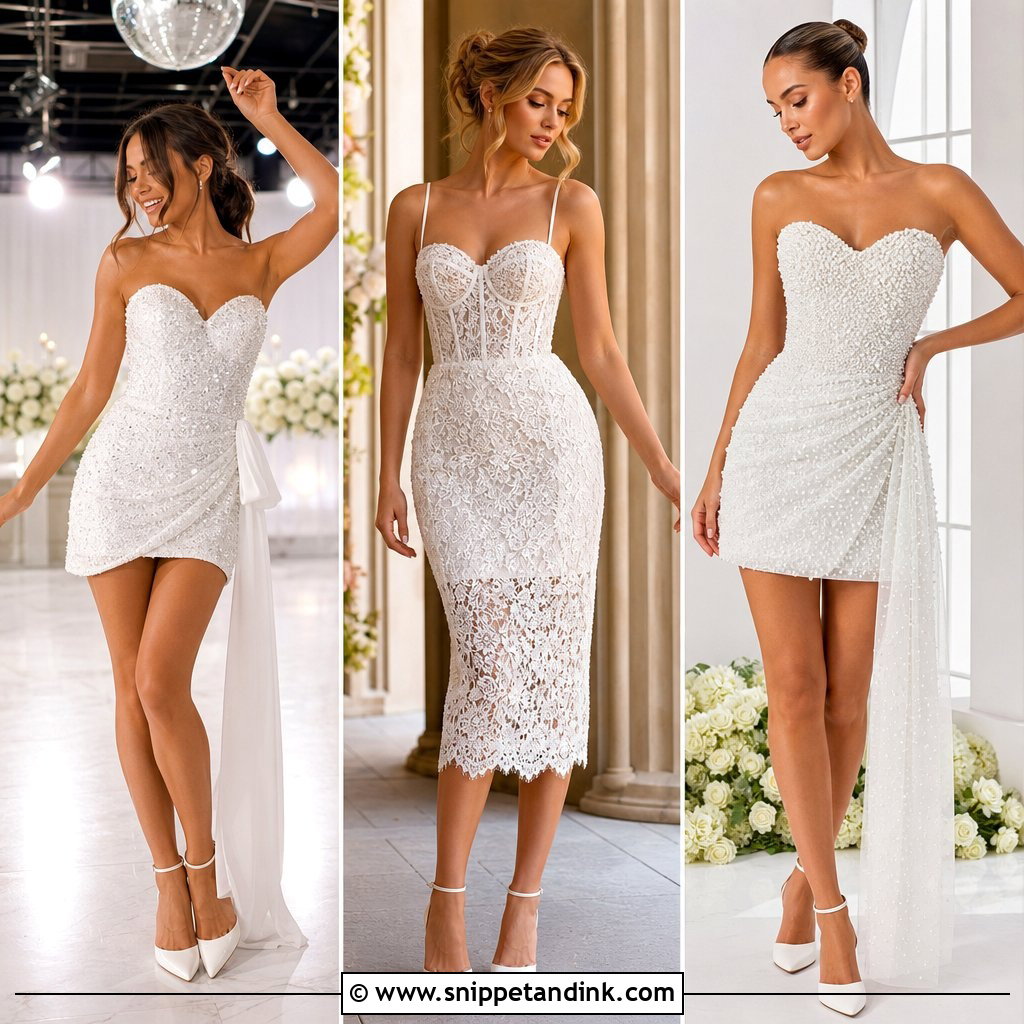
20. White And Silver Walima Bridal Trail Maxi
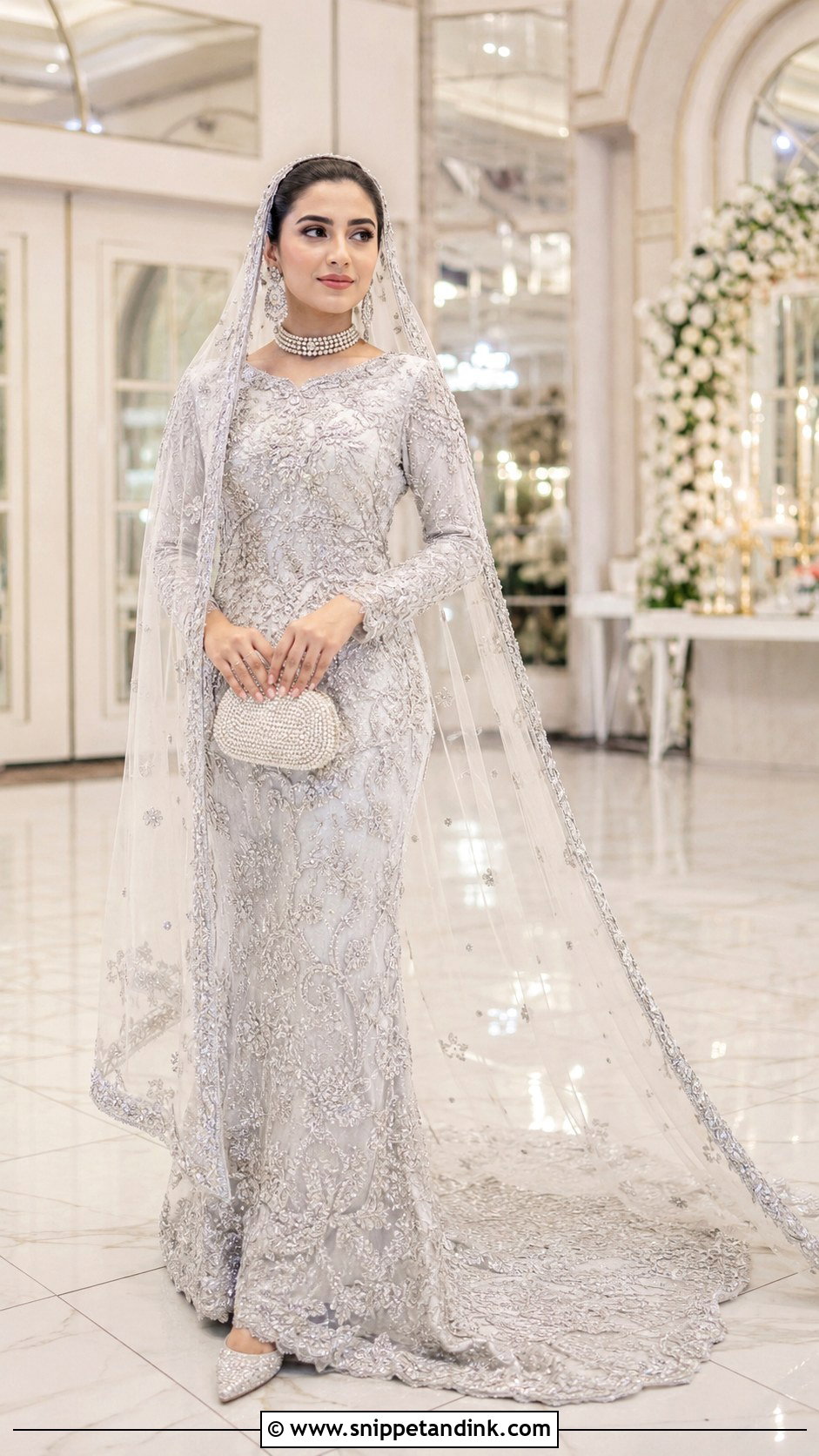
For a regal finale, white and silver is hard to beat, provided the white is softened to off-white if bright white looks sharp against your skin. Silver embroidery runs through the bodice, sleeves and lower skirt, and a fitted waist opens gradually into a manageable train. Choose a matching veil with a narrow embellished border so it frames the outfit instead of hiding it. Silver pumps, a pearl clutch, a delicate choker and coordinating earrings finish it. I often build in flexibility here: removable sleeves, a detachable overskirt or a lighter second dupatta for later in the evening. Soft grey eye makeup, pink lips and a smooth bun keep everything balanced.
How Much Time Hand Embroidery Really Needs
Hand-embroidered bridal work is slow, and the Walima outfit often gets ordered last, after the baraat and mehndi. That is how brides end up with rushed fittings. Lead times vary a lot between designers and tailors, but for a custom piece I plan backward like this:
- Several months ahead: finalize the design, fabric swatches and color, and see the embroidery sample on the actual base fabric.
- Six to eight weeks ahead: first fitting, with the shoes you’ll wear and the jewelry weight in mind.
- Two to three weeks ahead: final fitting, dupatta setting practice and any changes to blouse length or sleeves.
- The week of: collect it, hang it in a breathable cover, and try the full look on once more.
Ready-to-wear outfits shorten this a lot, but still allow time for alterations, especially on blouses and peshwas bodices.
Surviving Hours on the Stage Sofa
Most of a Walima is spent seated, posing and greeting, often under hot lights. Heavy lehengas pull down at the waist as the evening goes on, so ask the tailor for a firm waistband with inner hooks or a drawstring you can tighten later. Sit in the outfit at your fitting and check whether the blouse cuts in or the skirt bunches. Keep a small pouch with safety pins, a few bobby pins, blotting papers and a spare dupatta pin with whoever sits beside you. If the hall runs warm, a lighter fabric matters more than an extra layer of embroidery.
Dress for the Third Hour, Not Only the Entrance
The right Walima outfit feels special and still lets you move, greet guests, sit and eat. Across lehengas, peshwas, gowns, sarees and fusion separates, the order I’d follow is the same. Start with a color that suits your complexion and the venue lighting, then choose a shape your body is comfortable in for hours. Use embroidery, jewelry, shoes and the dupatta to build one coordinated look rather than picking each piece separately. And book a full fitting with your shoes and jewelry on before the event. Pastel, silver, deep winter blue or pearl white, the proportions are what make it feel like yours.
You'll Like These Ideas:


Leave a Reply