
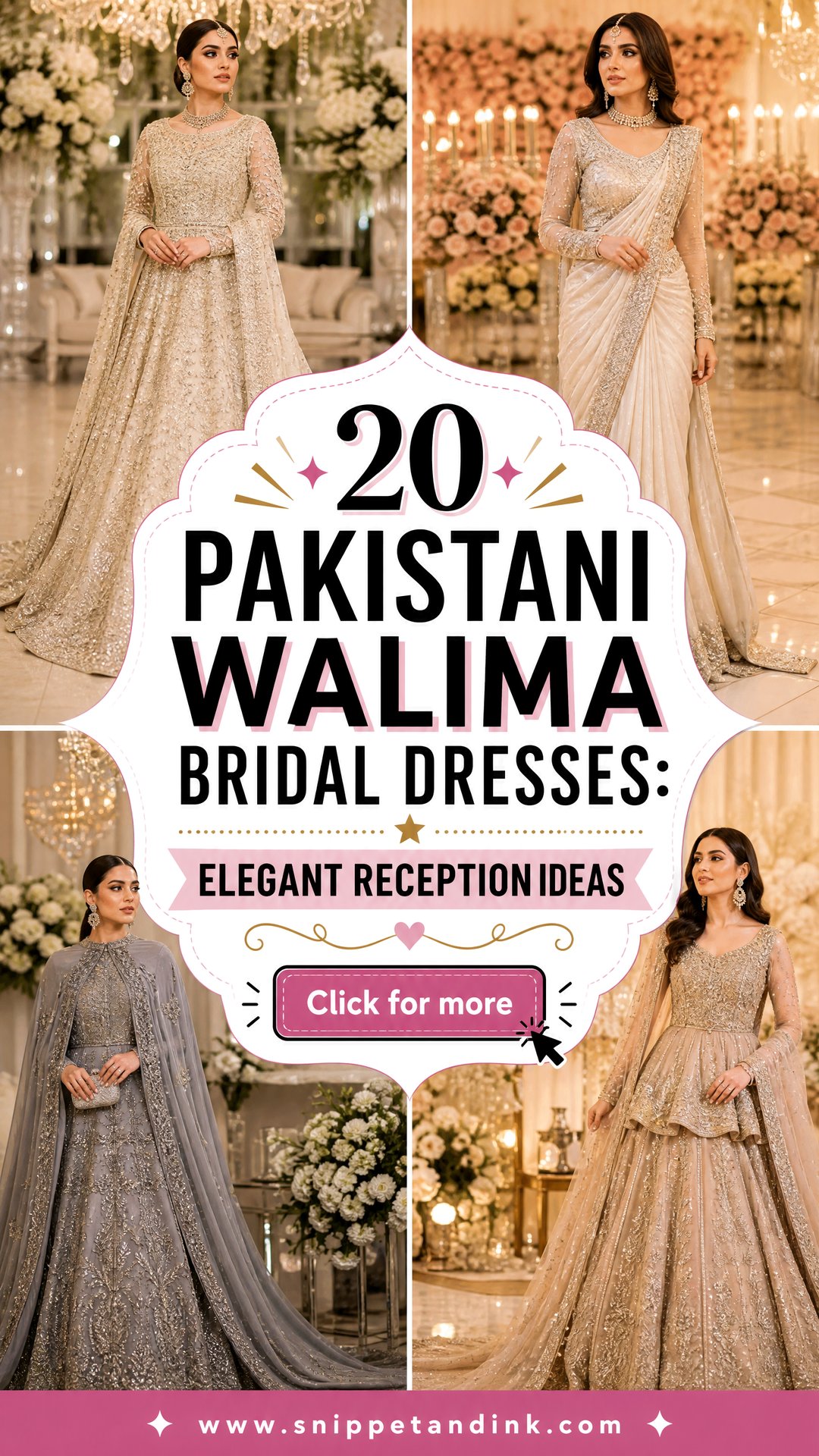
The walima is the one wedding function where a Pakistani bride gets to change the mood completely. After a red or maroon barat, most brides I dress want something lighter, and right now that usually means champagne, ivory, silver, blush, mint or ice blue finished with tonal embroidery. Pakistani Walima bridal dresses range from gowns and maxis to lehengas, pishwas, saris, shararas and ghararas. What I care about most at this stage is that you can greet three hundred guests, sit for portraits and eat your own dinner without wrestling the outfit. The looks below are complete, from dupatta to shoes.
Why Some Pastels Turn Grey Under Reception Lights
Most walimas happen in the evening, indoors, under warm bulbs and strong photography flash. Pale fabrics react to that light in ways you won’t notice in a showroom.
- Cool pastels like mint, ice blue and lavender can look greyish under yellow hall lighting. If your venue is warm-lit, pick a slightly deeper version of the shade than you think you need.
- Ivory and champagne stay true under almost any light, which is why they’re the safest choice if you don’t know the venue well.
- Silver and rose-gold embroidery can bounce flash back at the camera. Work that sits a little apart, with base fabric visible between motifs, keeps its detail in photographs.
- Pale outfits can wash out the face. Plan on slightly more blush and a lip with some color, even if you prefer a bare look.
My test is simple: take a swatch, or the outfit if you can, and photograph it with a phone flash in a dim room, then again under a warm lamp. If the color holds in both, it’ll hold at the reception.
Plan the Jewelry Around the Metal of the Embroidery
Silver work wants diamond-style or polki set in white metal. Gold and antique-gold work want warm metals. Champagne and rose gold are the two that can take either. Many brides re-wear barat jewelry at the walima to save money; that works if the barat set is gold and the walima outfit has gold or champagne embroidery, but heavy gold jadau next to silver work tends to look borrowed.
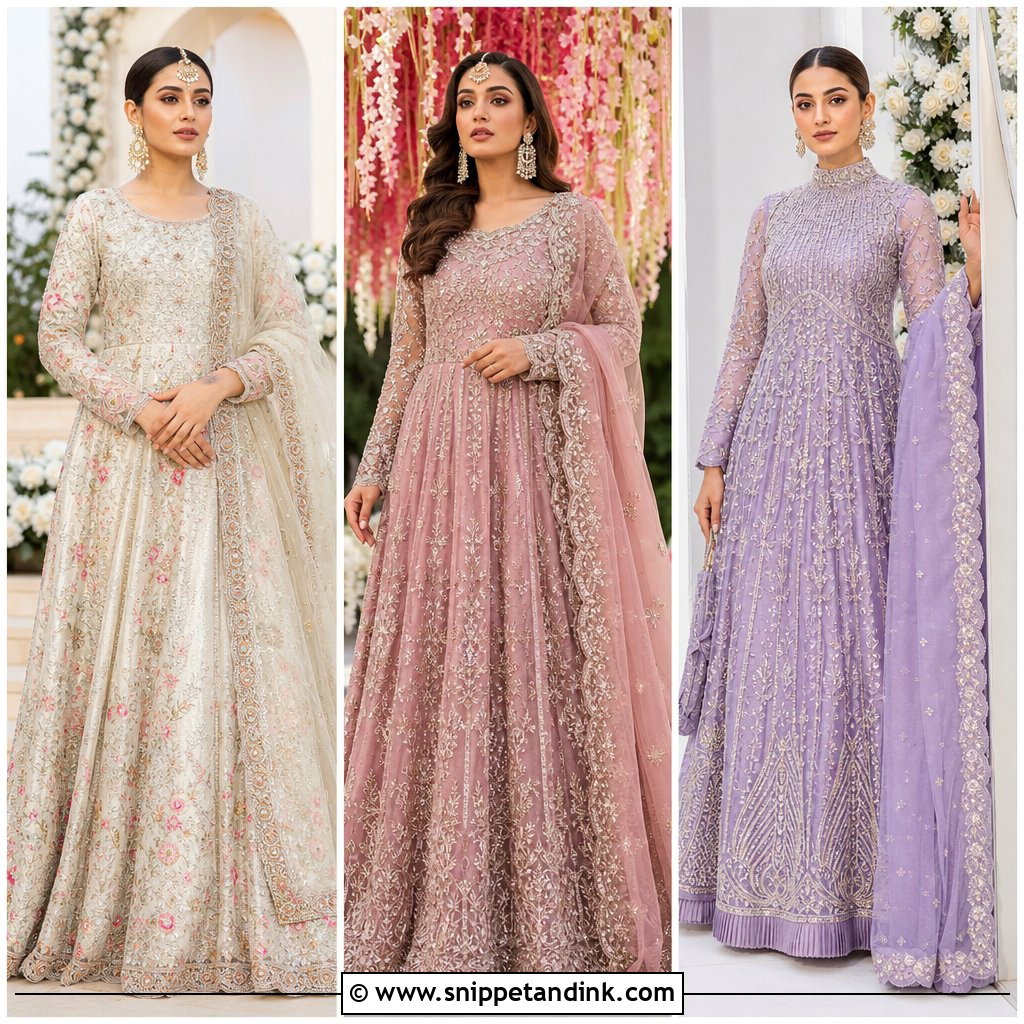
1. Ivory Pakistani Walima Bridal Gown
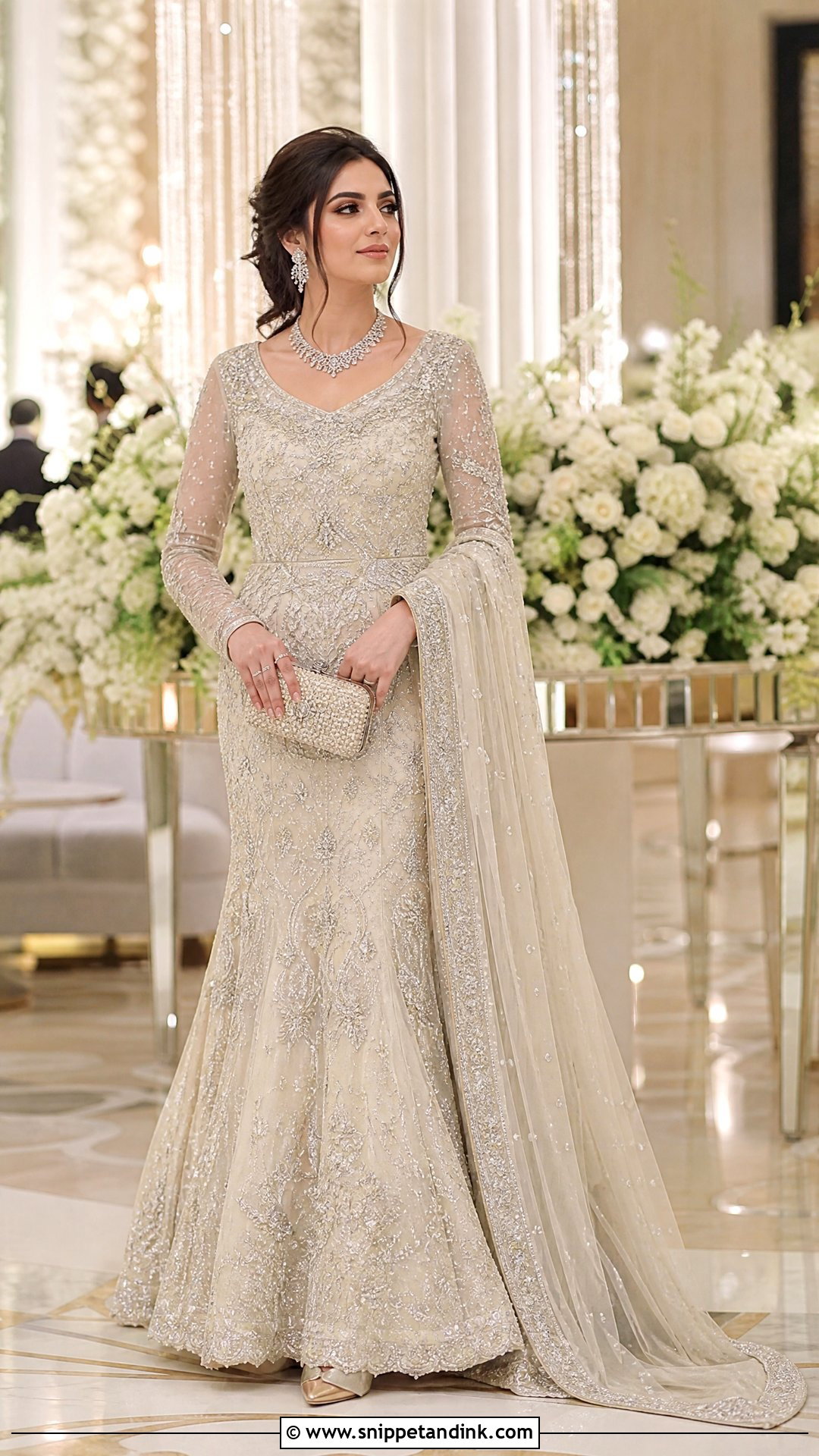
Ivory gowns are the cleanest walima look there is, and they suit ballroom, marquee and garden receptions equally. I’d keep the shape simple: fitted bodice, gently flared skirt, delicate silver embroidery. On pale fabric, pearls and fine threadwork give dimension, while big crystal clusters can start to look busy. A sheer organza dupatta with a narrow border can sit over one shoulder or lightly over the head. Diamond-style jewelry, an ivory clutch and silver heels hidden under the hem keep everything in one tone. The thing I check at the fitting is the hem: ivory shows every scuff, so it should just clear the floor.
2. Silver Pakistani Walima Bridal Lehenga
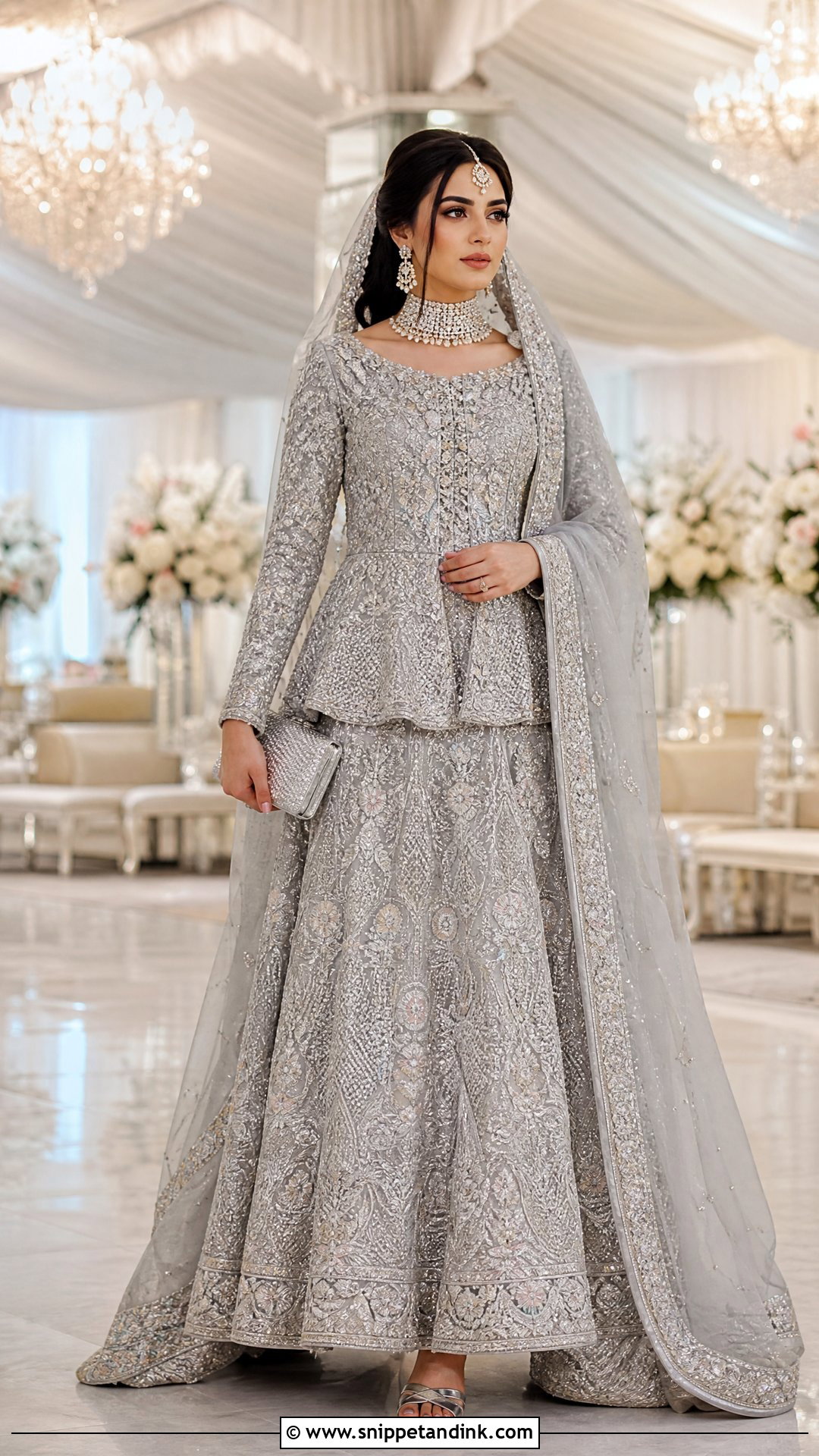
Silver earns its place because it reads so differently from a red barat outfit; your two sets of photos won’t blur together. A structured peplum blouse over a full lehenga gives shape at the waist without losing bridal volume. Look for antique silver embroidery and dabka in balanced floral or geometric patterns rather than solid sequin coverage. All-silver can look harsh, so I soften it with a grey net dupatta worn over the head, one side falling across the arm to show the border. Crystal earrings, one statement necklace and cool pink lips are enough. Keep the skin luminous, not frosty, or the whole look turns metallic on camera.
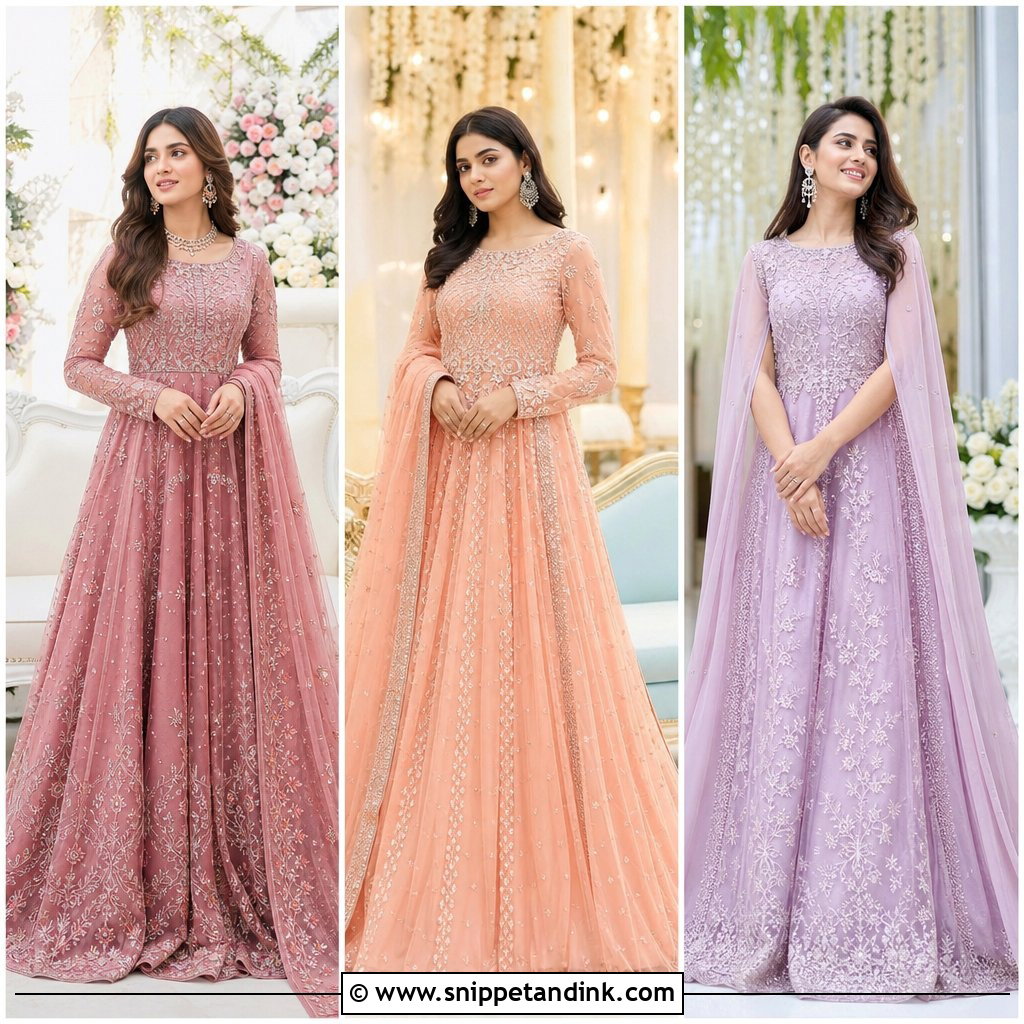
3. Blush Pink Pakistani Walima Bridal Maxi
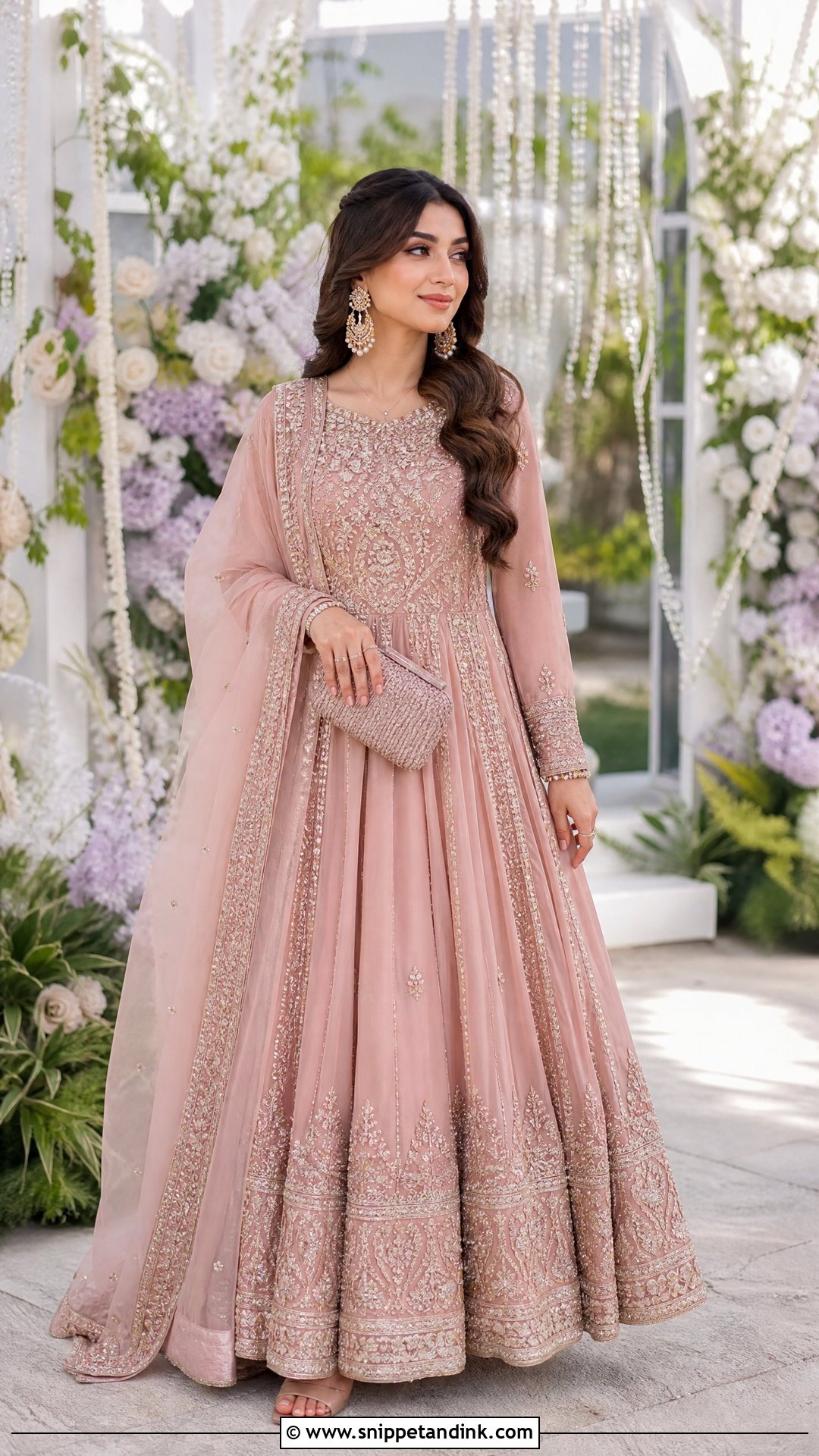
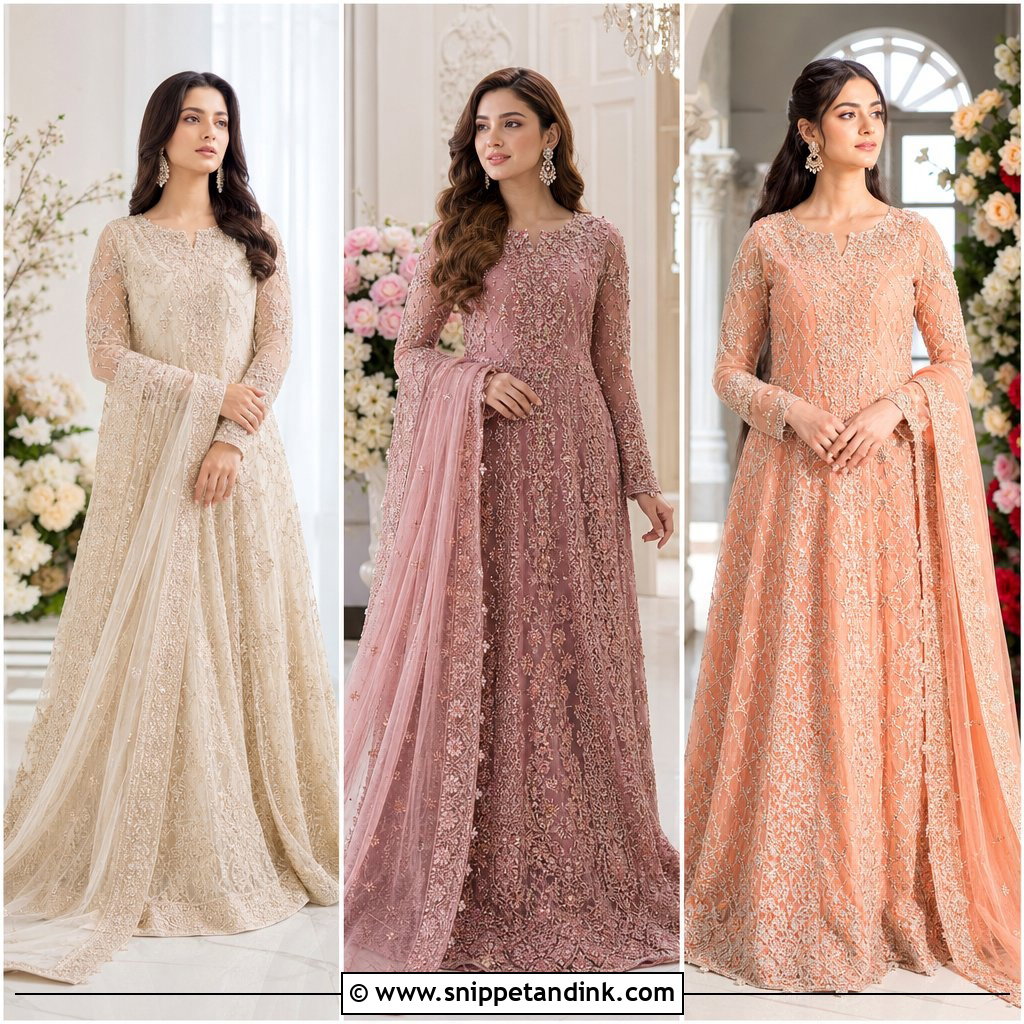
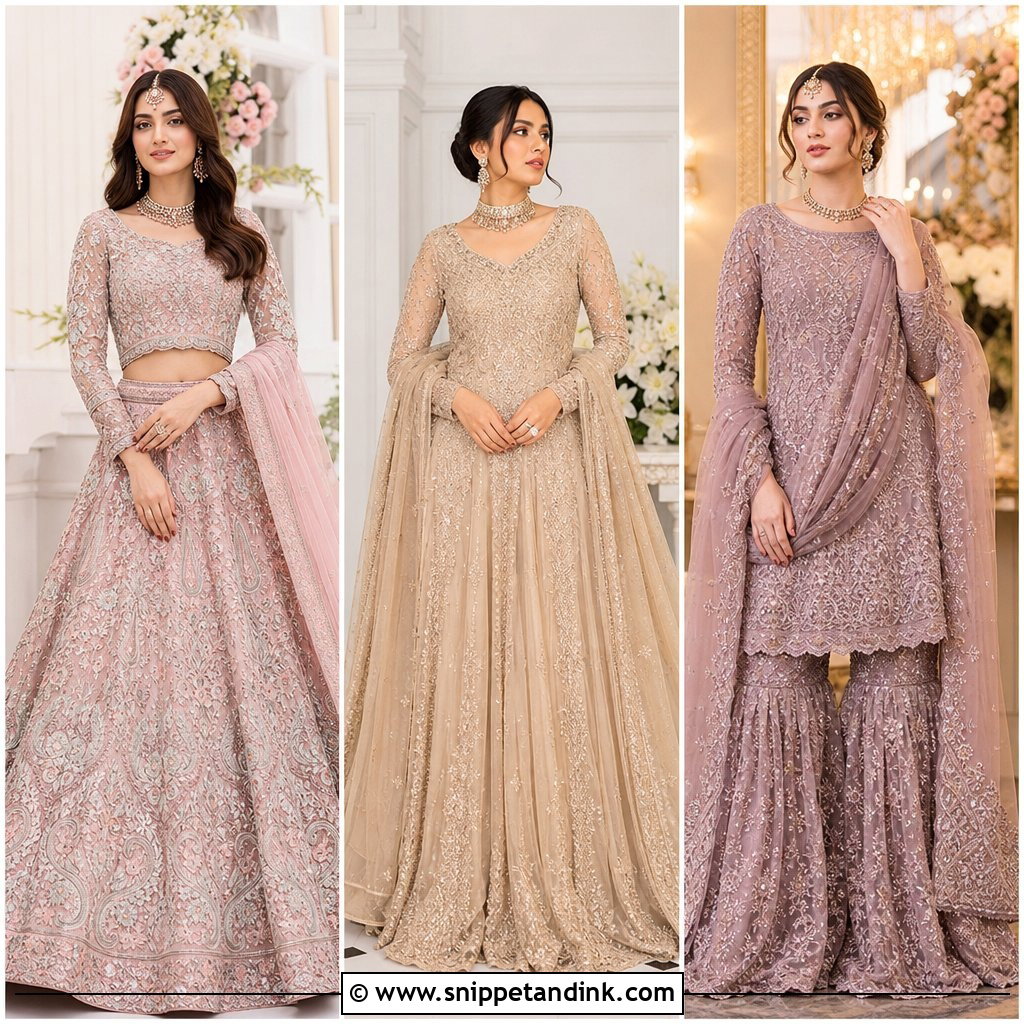
Blush is the color I get asked for most for walimas, and it’s easy to see why after days of strong reds and greens. Choose a long bridal maxi with a defined waist, fitted sleeves and a skirt wide enough to walk in. Tonal threadwork with a little rose gold keeps the shade soft. The trap with blush is skin tone: on fair skin it can melt into the face, on deeper skin it can look chalky. I always hold the fabric up to the bride’s face in daylight before ordering. A net dupatta with scattered motifs, rose-gold or pearl jewelry, nude heels and a sleek centre-parted bun finish it.
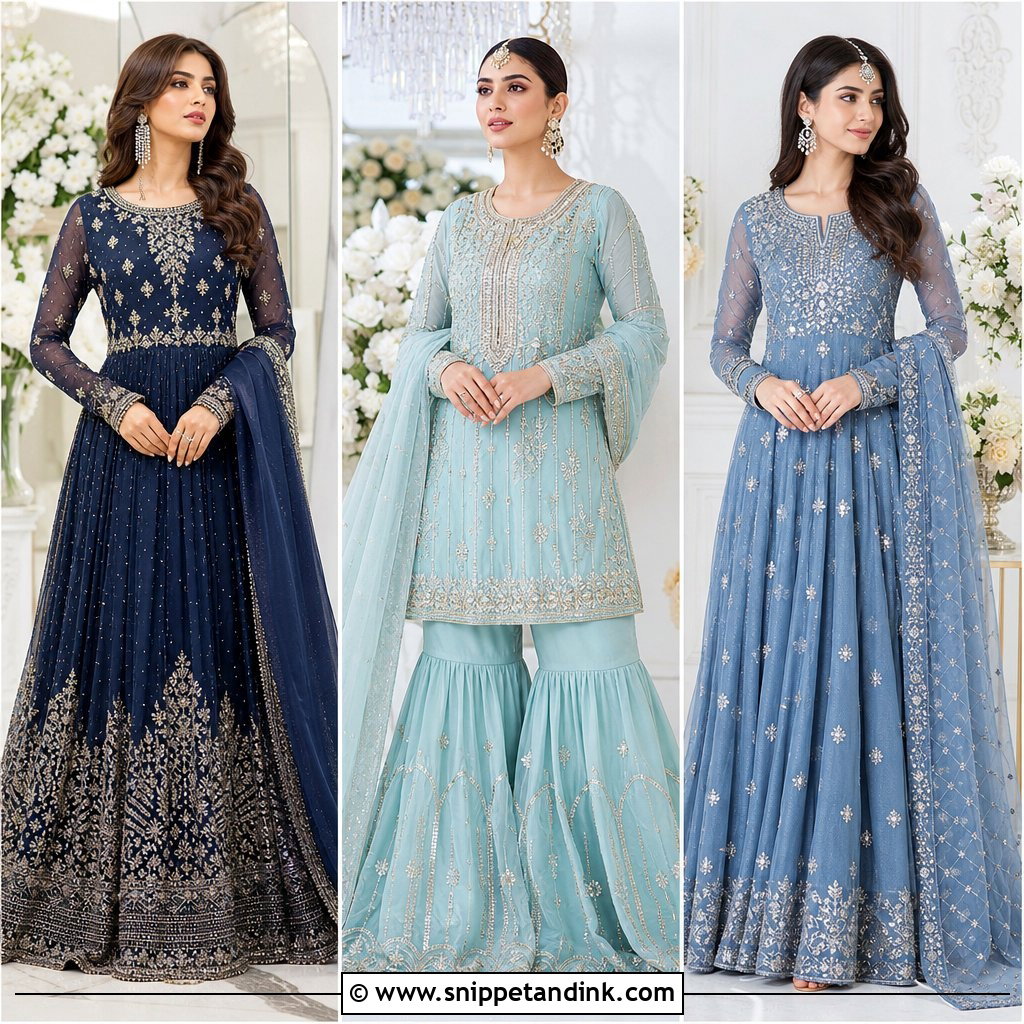
4. Ice Blue Pakistani Walima Bridal Pishwas
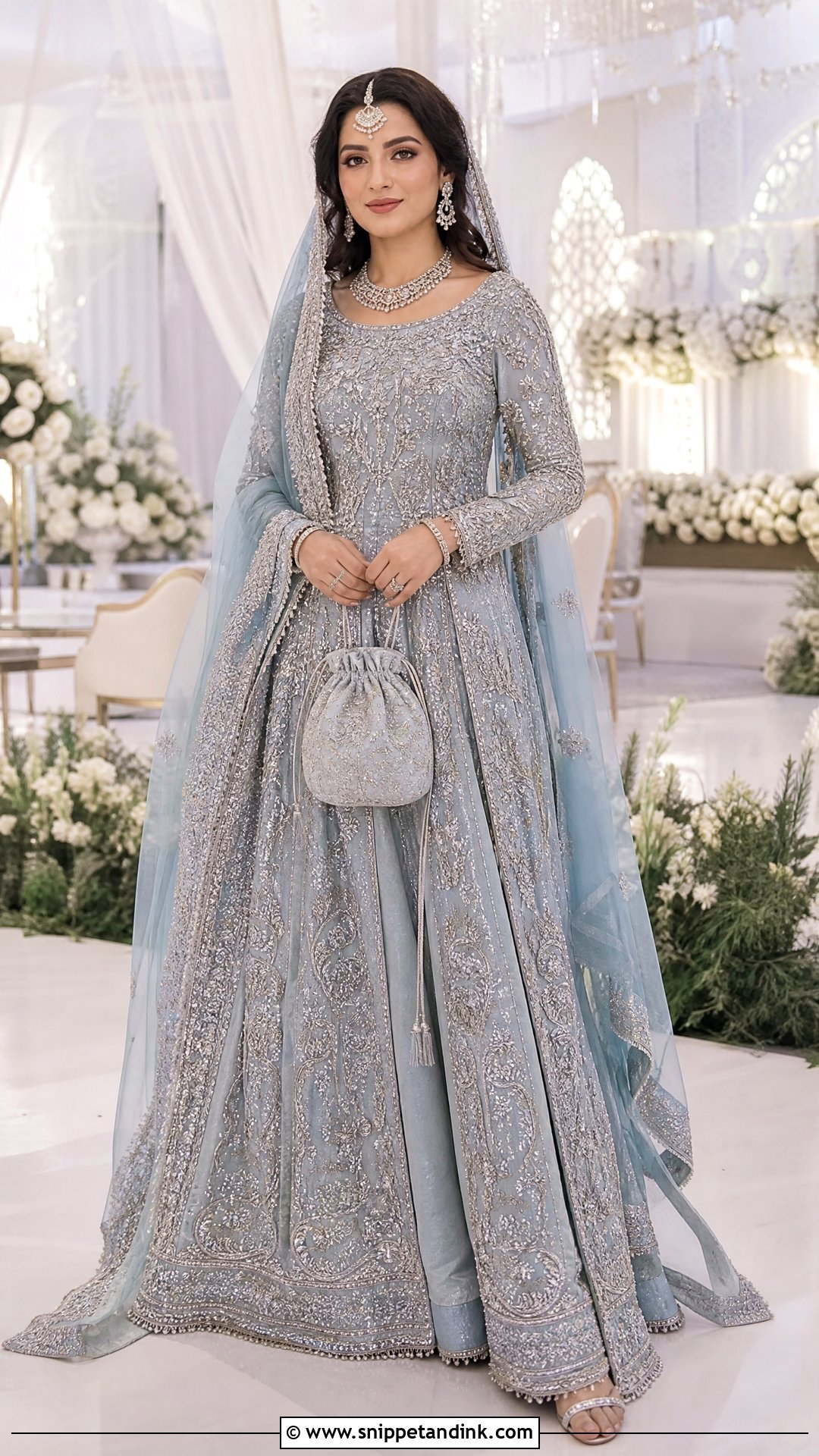
A pishwas is fitted through the bodice and then breaks into dozens of panels, so it swings when you walk instead of standing stiff like a can-can lehenga. Ice blue suits that movement. Silver embroidery, crystal and fine resham work sit naturally on the cool base, and a tissue border adds definition at the hem and sleeves. Drape the matching dupatta over the head and gather one end at the wrist. Diamond-style jewelry, silver heels and a pale blue potli coordinate without fuss. Ice blue can drain color from the face in photographs, so I’d add more blush than you’d normally wear.
5. Champagne Pakistani Walima Bridal Gown
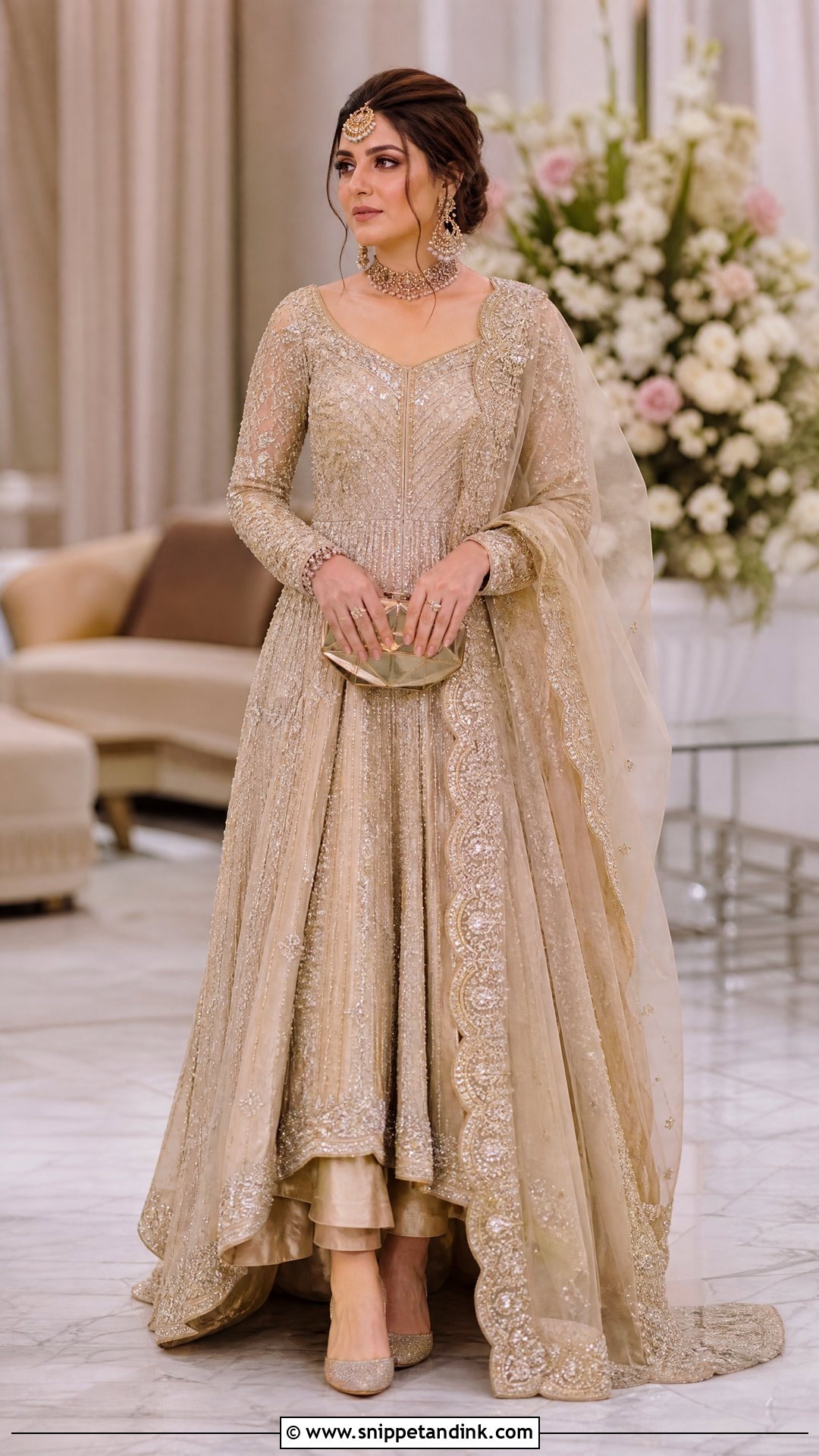
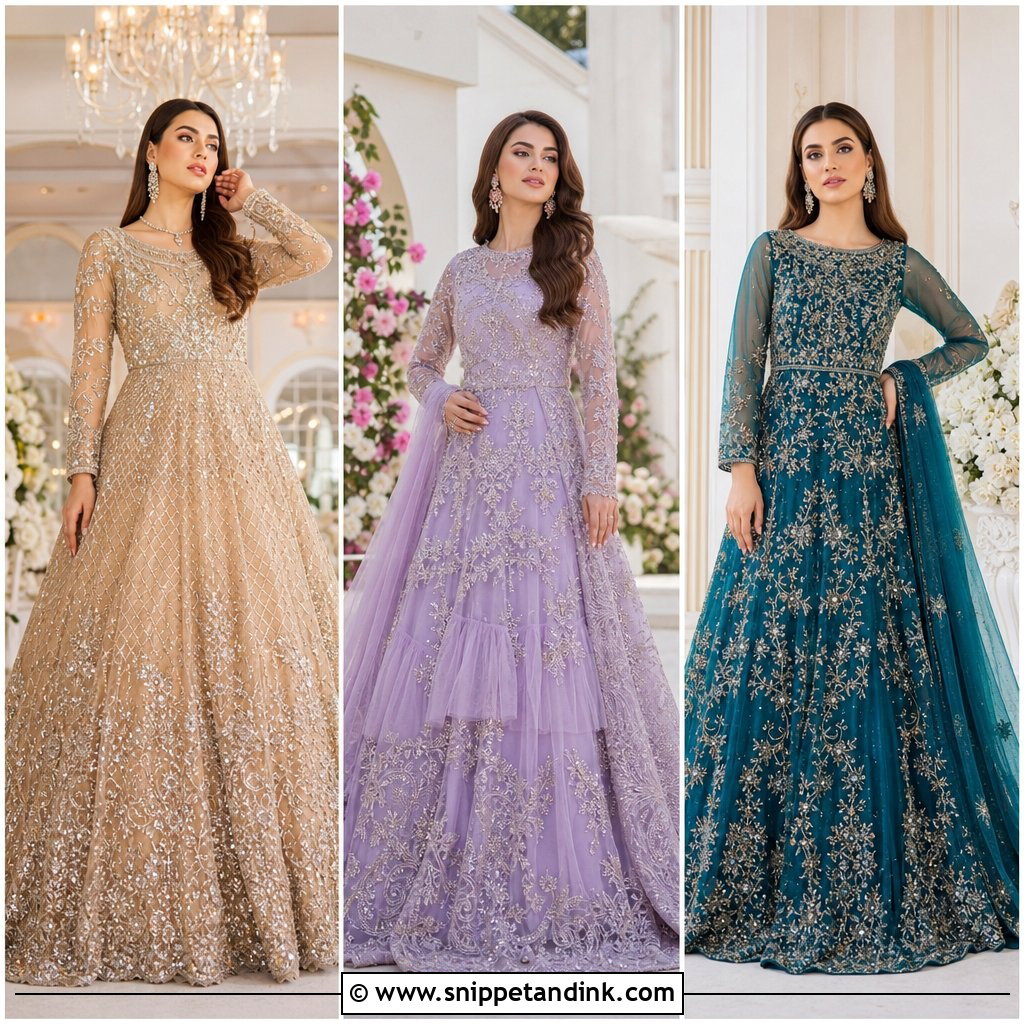
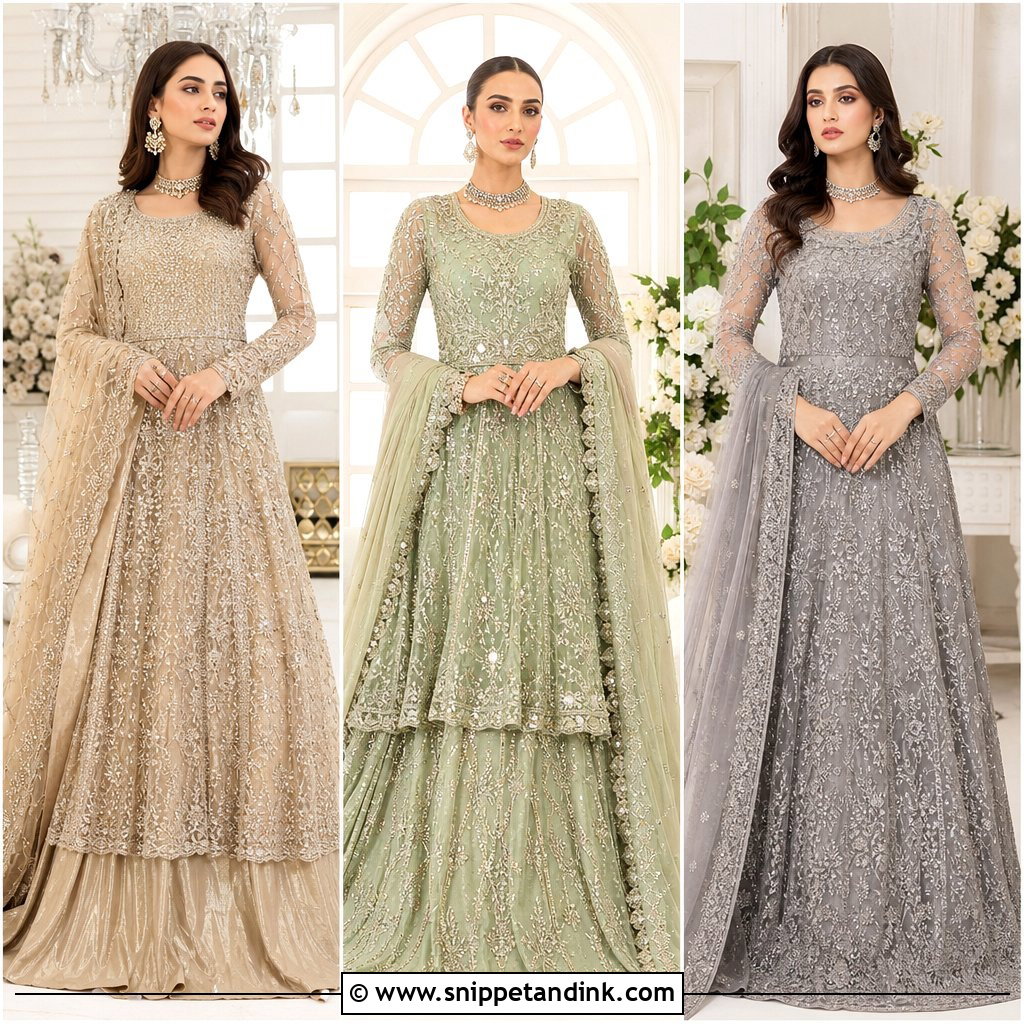
Champagne sits between ivory and gold, and it’s forgiving under almost any lighting: warm hotel bulbs, cool LEDs, daylight through a marquee. A structured bodice with a layered skirt makes the gown formal. Ask for tonal zardozi with pearls and muted gold rather than bright yellow-gold, which fights the base color. A sheer dupatta with a scalloped border is what makes the gown read as Pakistani bridal rather than Western. Match the jewelry to the embroidery metal. Closed-toe embellished heels support your feet through a long evening, and a softly waved bun keeps it relaxed. It’s the shade I’d pick for an evening hotel or ballroom walima.
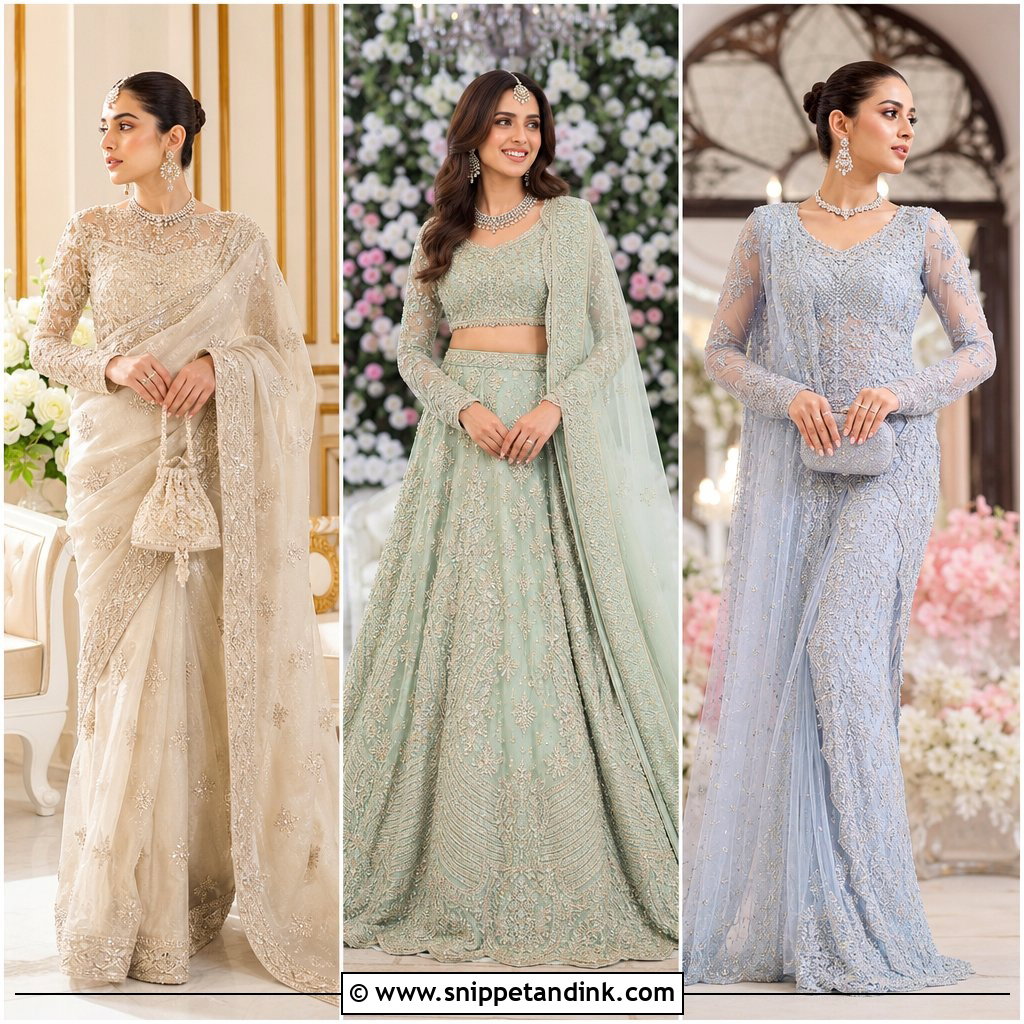
6. Mint Green Pakistani Walima Bridal Lehenga
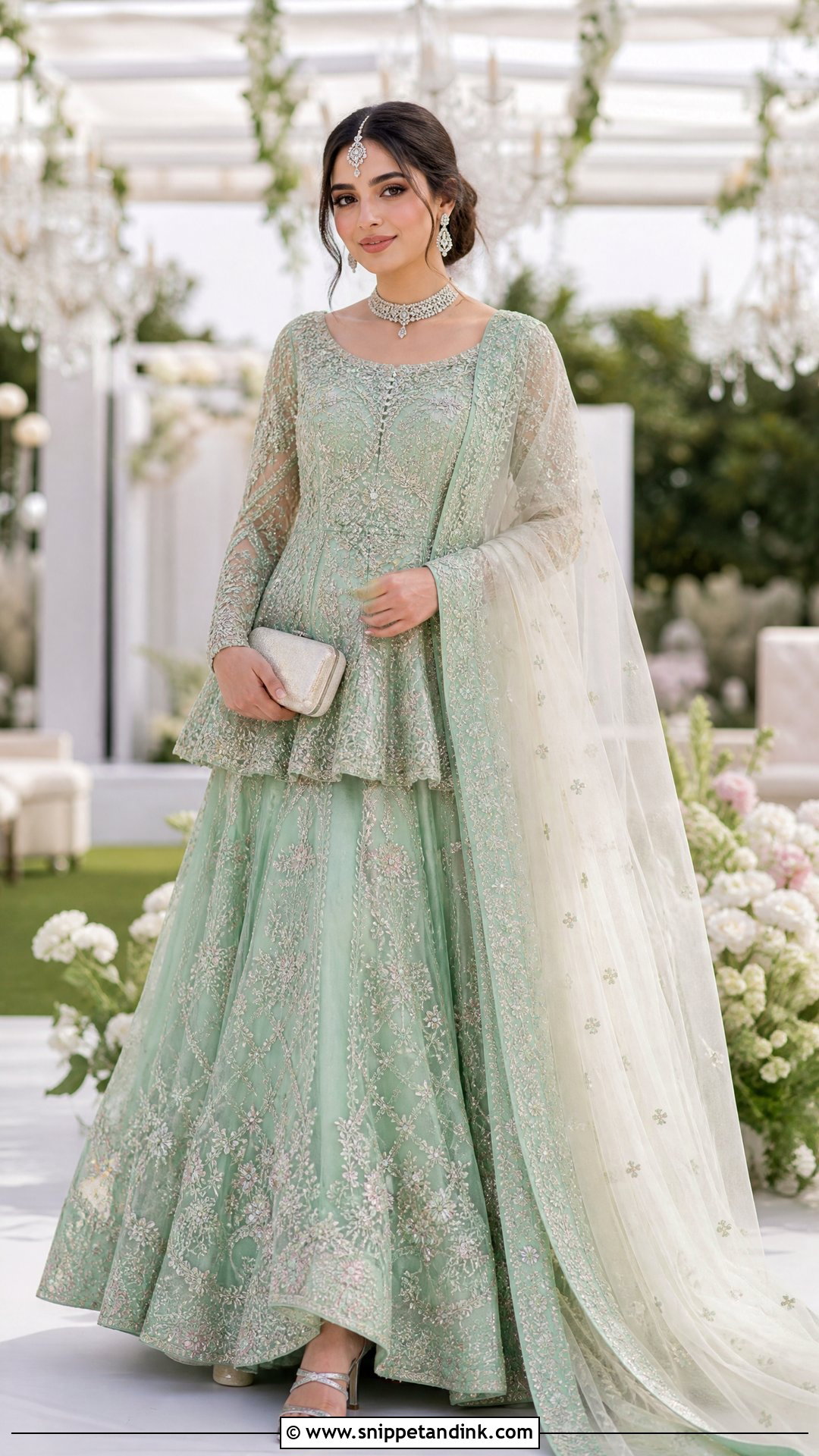
Mint works best in daylight. In a garden or a bright marquee it looks fresh; under yellow hall lighting it can drift toward grey, so I’d think twice for a late-night venue. Choose a fitted long blouse or a short peplum with a coordinated full skirt, and mix silver, pearl and pale gold carefully. For contrast, an ivory dupatta with mint edging lifts the whole outfit. Diamond-style earrings, a slim choker and a matching tikka are plenty against such a light color. Silver heels, a mint or ivory clutch and soft peach makeup to warm the complexion, with a neat bun so the neckline shows.
7. Lavender Pakistani Walima Bridal Maxi
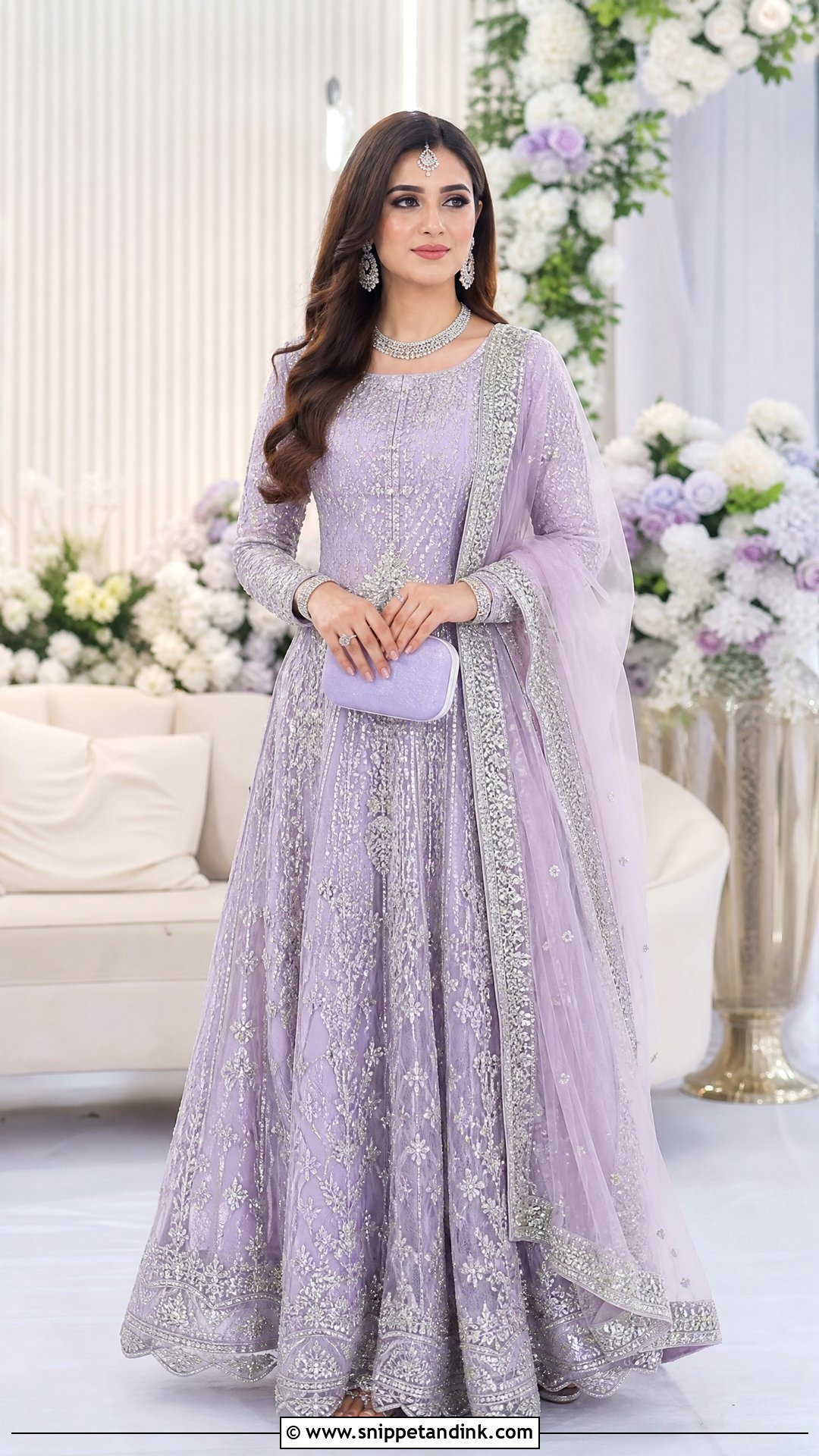
Want a pastel that isn’t pink or ivory? Lavender stands out in a crowded hall without being loud. A paneled or A-line maxi with a fitted bodice and full sleeves is the classic shape. Keep the embellishment silver-toned: floral embroidery with tiny sequins gives shimmer at the neckline and skirt. Give the net dupatta a defined border so it doesn’t disappear in photos, since lavender net can look almost transparent against a light wall. Silver jewelry, crystal heels and a structured clutch finish it. Cool pink makeup and a low bun with small pearl pins suit the color.
8. Powder Blue Pakistani Walima Bridal Sharara
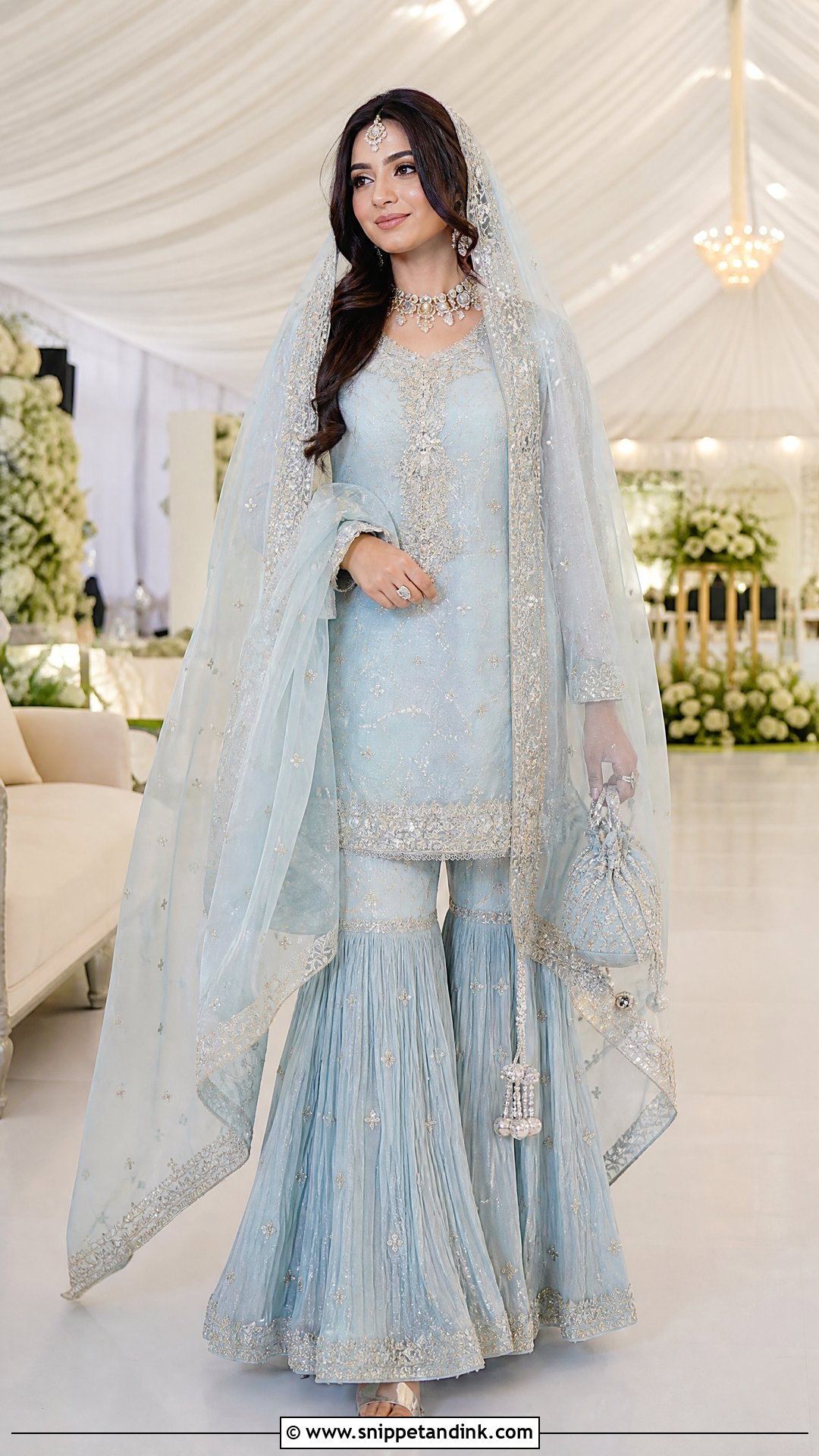
If you hated managing a huge lehenga at the barat, this is your outfit. A powder blue sharara with a knee-length embellished kameez gives you grandeur below the knee and freedom to walk. The key is tailoring the top closely so the volume below looks intentional. Silver dabka, sequins and fine thread embroidery give the pale fabric a bridal finish. Place the organza dupatta over the head with one side falling straight down; that vertical line lengthens you. Crystal jewelry, a small tikka, silver heels and an embellished potli complete it. Have the sharara hemmed in your heels, not flats, or it drags.
9. Dusty Rose Pakistani Walima Bridal Lehenga
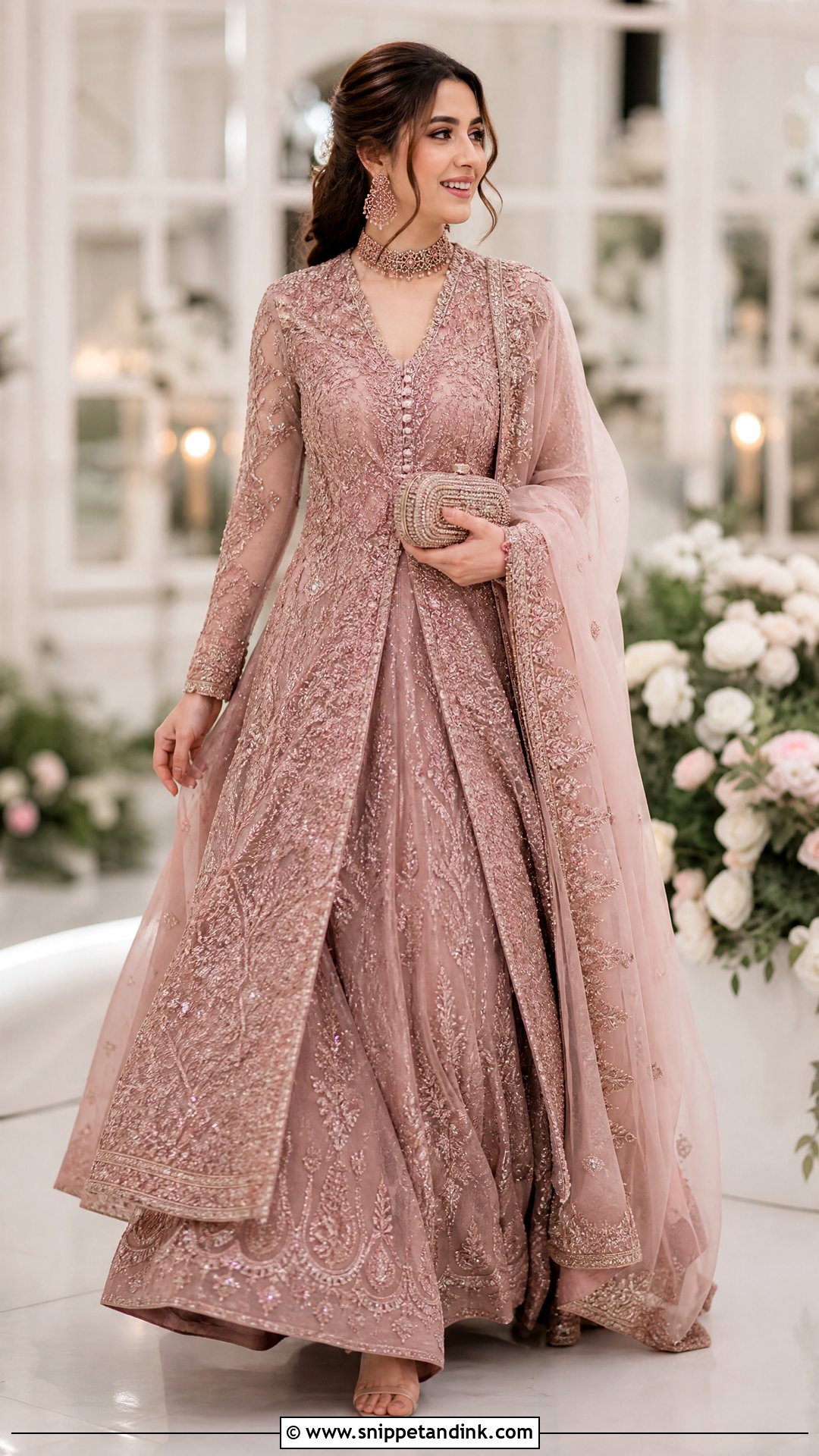
Dusty rose has more depth than blush, and I find it suits brides who want soft but not sugary. Build it around a full lehenga with a fitted blouse and a slightly longer embroidered jacket or peplum. Rose-gold embellishment with muted sequins and pearls blends into the base color. A lighter pink dupatta keeps it from going flat and monochrome. A rose-gold choker, matching earrings and a delicate tikka if the neckline allows. Defined eyes and a dusty pink lip give it a mature finish, and it holds up well at both afternoon and evening walimas.
10. Pearl White Pakistani Walima Bridal Saree
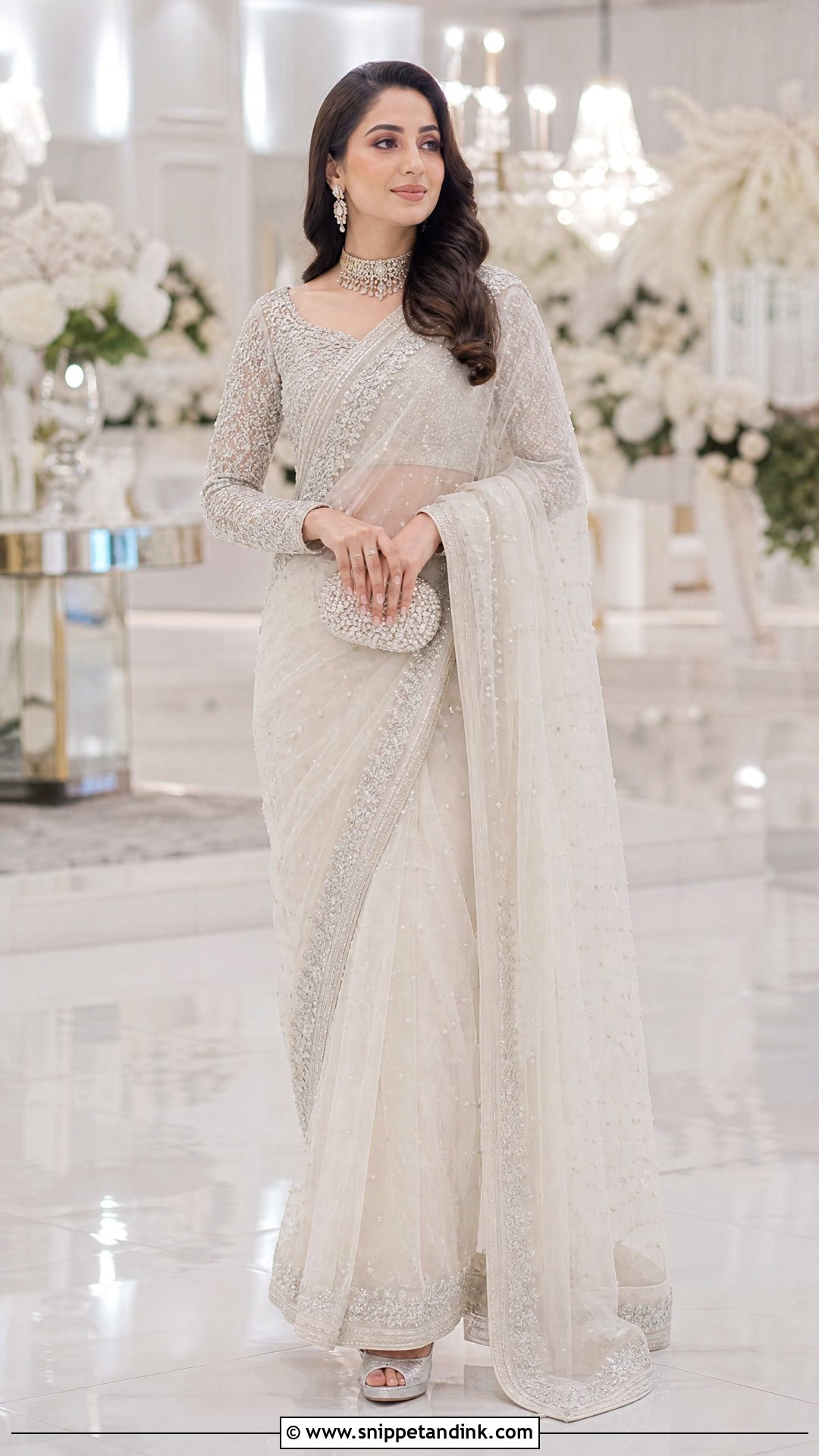
A pearl white sari is for the bride who’d rather have a clean drape than a voluminous skirt. Choose organza, tissue or soft net with a heavily worked border and evenly spaced pearls. Organza holds pleats crisply, net is lighter but slips more, so I’d have the pleats stitched in place if you’re nervous about re-tucking. Pair it with a modest structured blouse with full sleeves, a high back and silver embroidery. Drape the pallu over the shoulder so the border is visible from the front. A diamond-style choker, drop earrings, silver heels and a pearl clutch suit it, with a sleek bun to keep the drape tidy.
11. Peach Pakistani Walima Bridal Gharara
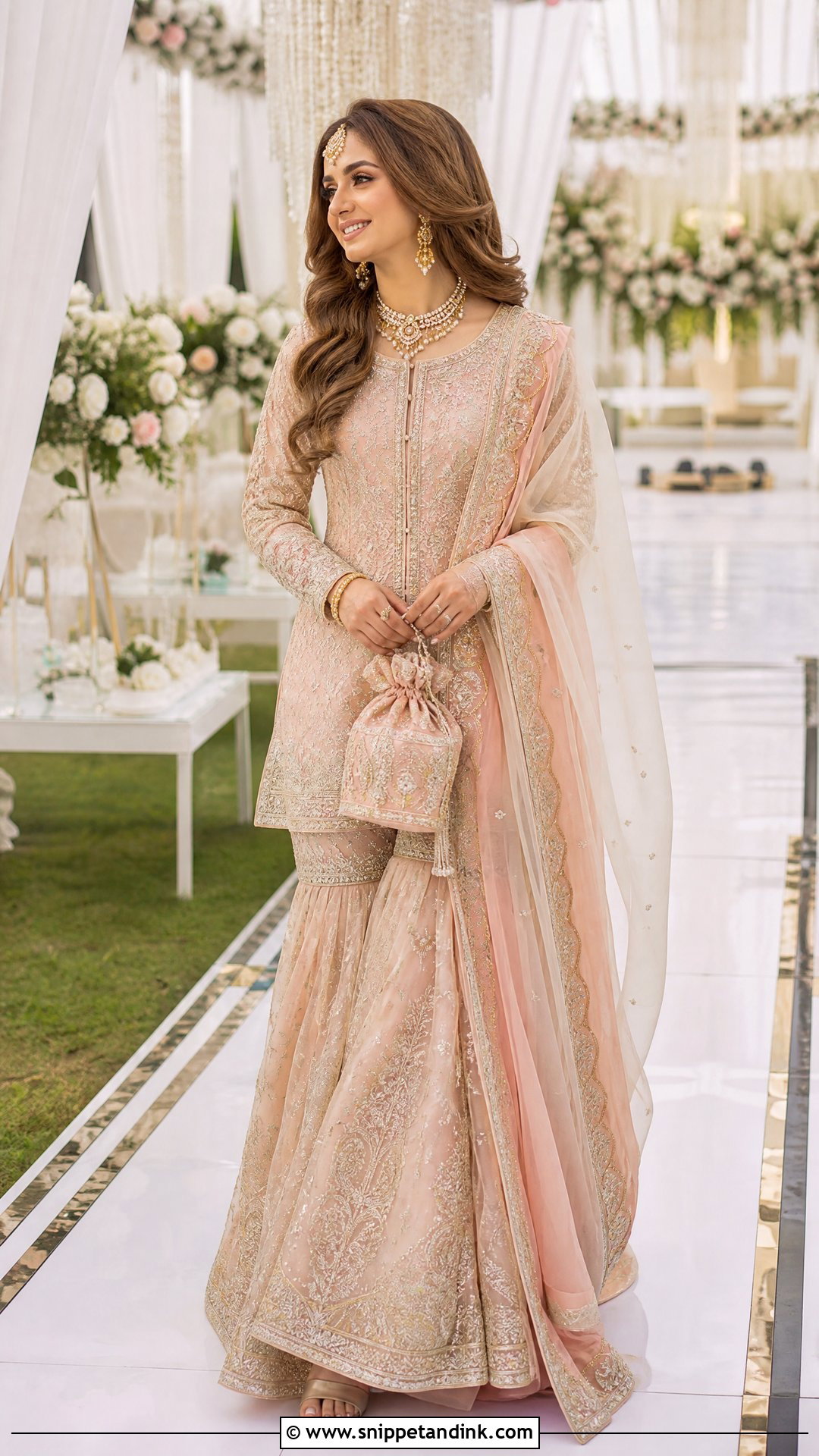
Peach warms the face, which makes it one of the kindest walima colors on camera. A traditional gharara outfit pairs a fitted short kameez with dramatically flared pants and a light dupatta. I like to repeat the kameez motifs at the gharara jor, the band at the knee where the flare starts, so the top and bottom feel connected. An ivory organza dupatta with peach borders brightens everything. Pearl-and-gold jewelry, an understated tikka and nude heels finish it. Because it’s three separate pieces, a gharara is easier to alter than a gown, which helps if your fitting is close to the date.
12. Rose Gold Pakistani Walima Bridal Maxi
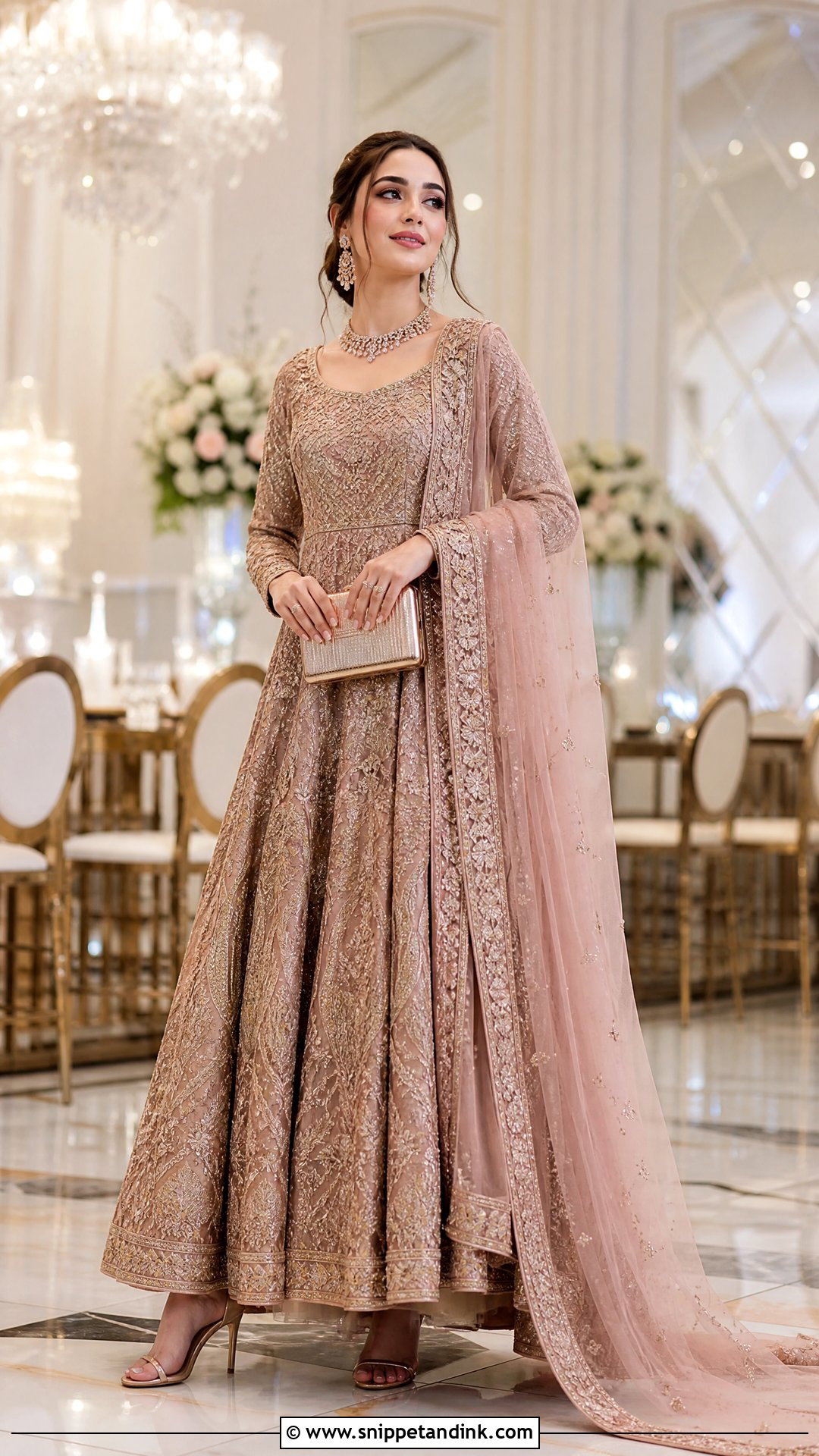
Rose gold is warmer than silver and softer than traditional gold, but it’s also very reflective. Under flash, a fully worked rose gold maxi can bounce light straight back at the camera and lose its detail. That’s why I put the heavier embroidery on the bodice, cuffs and hem and leave the middle of the skirt quieter. A pale pink or champagne net dupatta with rose-gold edging softens it. Coordinate jewelry in the same metal and don’t stack: one necklace, balanced earrings and a refined headpiece. A polished bun, softly smoked eyes and a neutral rose lip are enough with this much shine already in the fabric.
13. Sage Green Pakistani Walima Bridal Pishwas
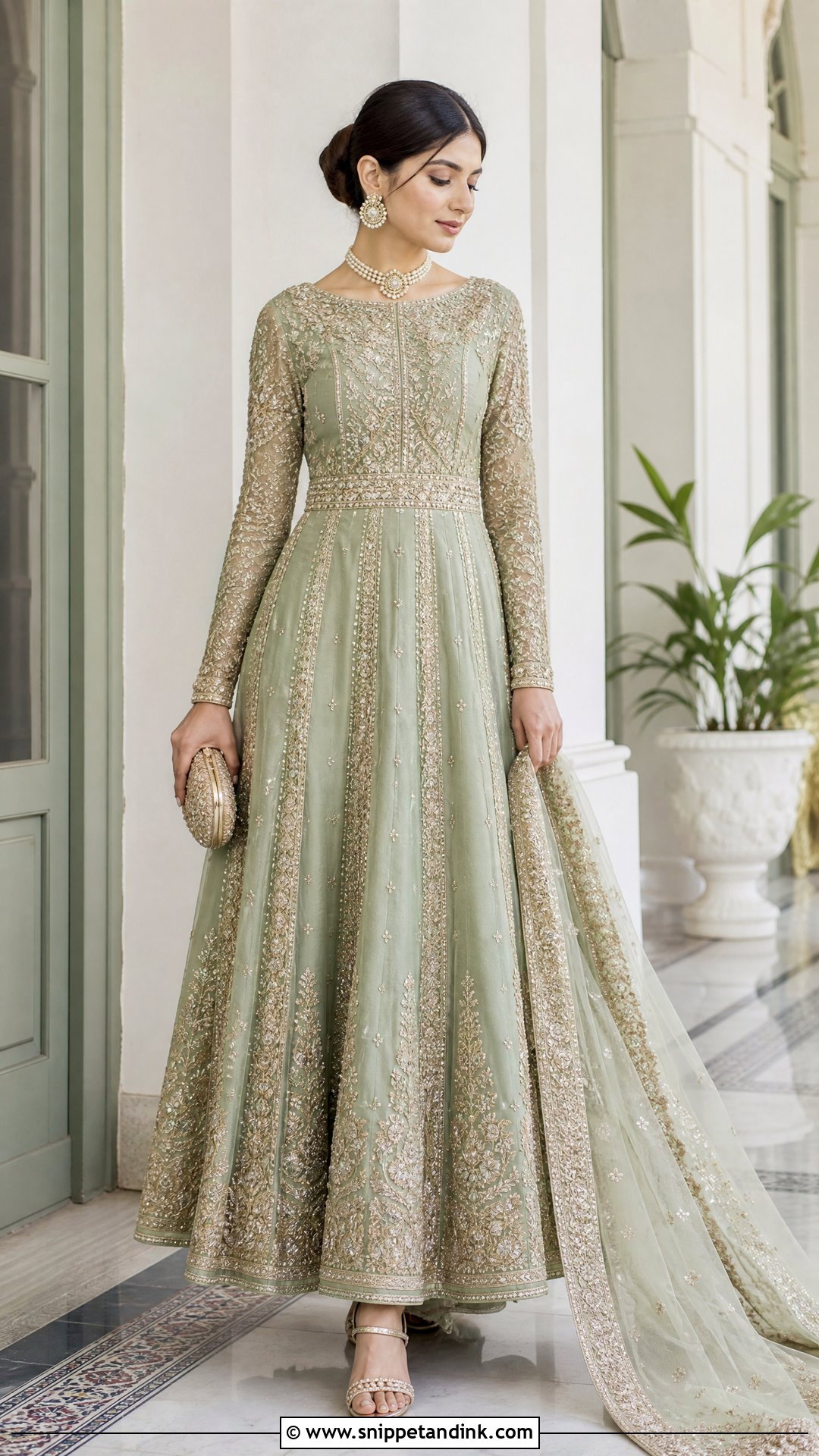
Sage is the muted cousin of mint and emerald, and it’s my choice for brides who like understated color but still want real traditional volume. A long pishwas with fine panels flows nicely, and an embroidered waistline gives shape. Pick the embellishment metal to match your jewelry: antique silver, champagne or pale gold. A sage organza dupatta with an ivory border frames the outfit and keeps the delicate color visible. Pearl jewelry and champagne heels suit it. Makeup in peach, taupe and soft brown adds warmth, since green can make the face look sallow if you go too cool.
14. Ivory Pakistani Walima Bridal Jacket Lehenga
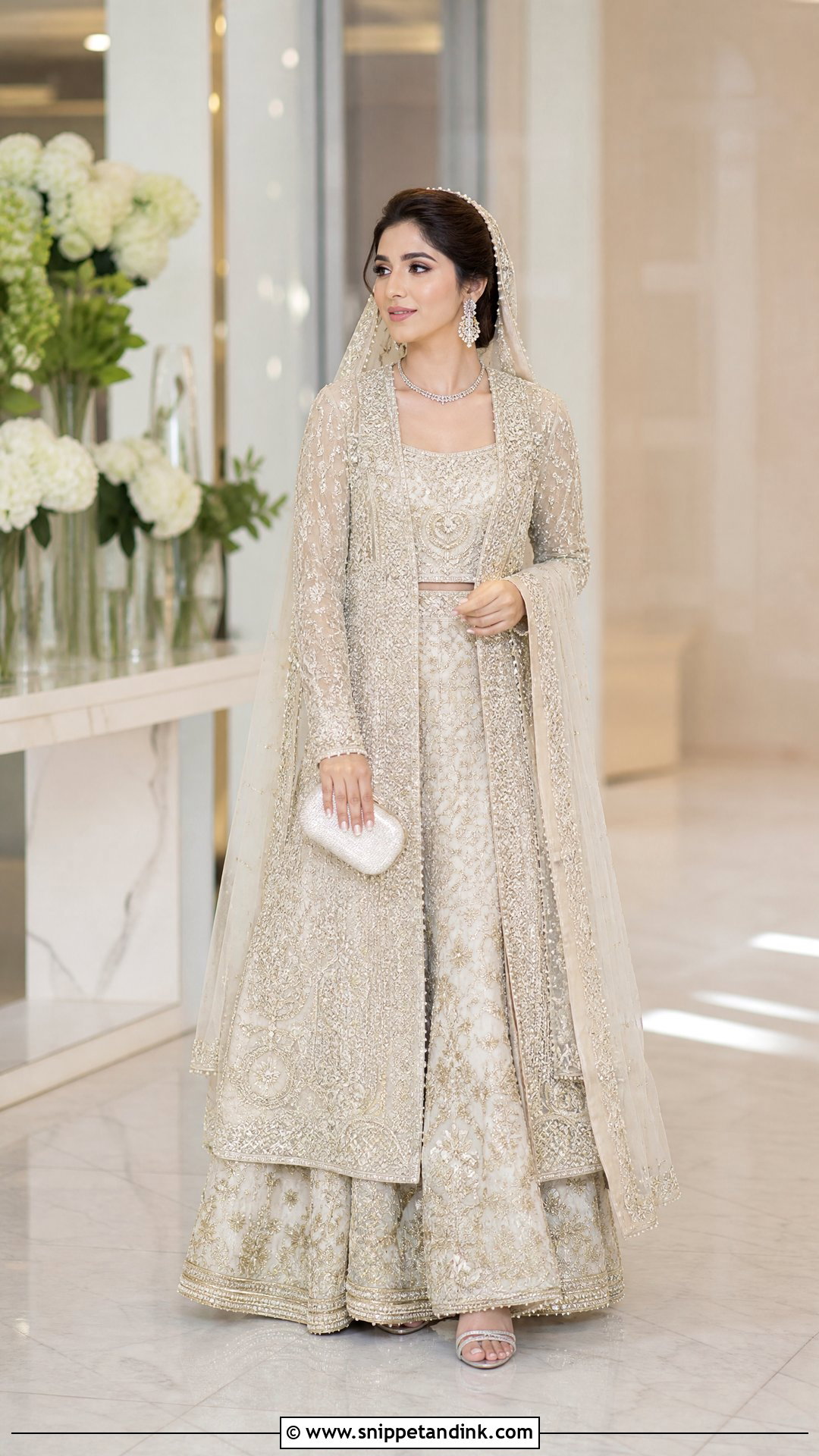
A floor-length jacket over a lehenga gives you strong vertical lines and extra coverage without hiding the shape. Start with an ivory lehenga and fitted inner blouse, then add a front-open jacket reaching close to the hem. Leave some base fabric showing between motifs; a jacket covered edge to edge gets heavy and pulls at the shoulders. With the jacket doing so much, the dupatta should be light, pinned over the head or across one arm. Diamond-style earrings, a slender necklace, silver heels and a smooth bun keep it clean. I’d suggest it most for contemporary venues where the entrance is a long walk.
15. Lilac Pakistani Walima Bridal Lehenga
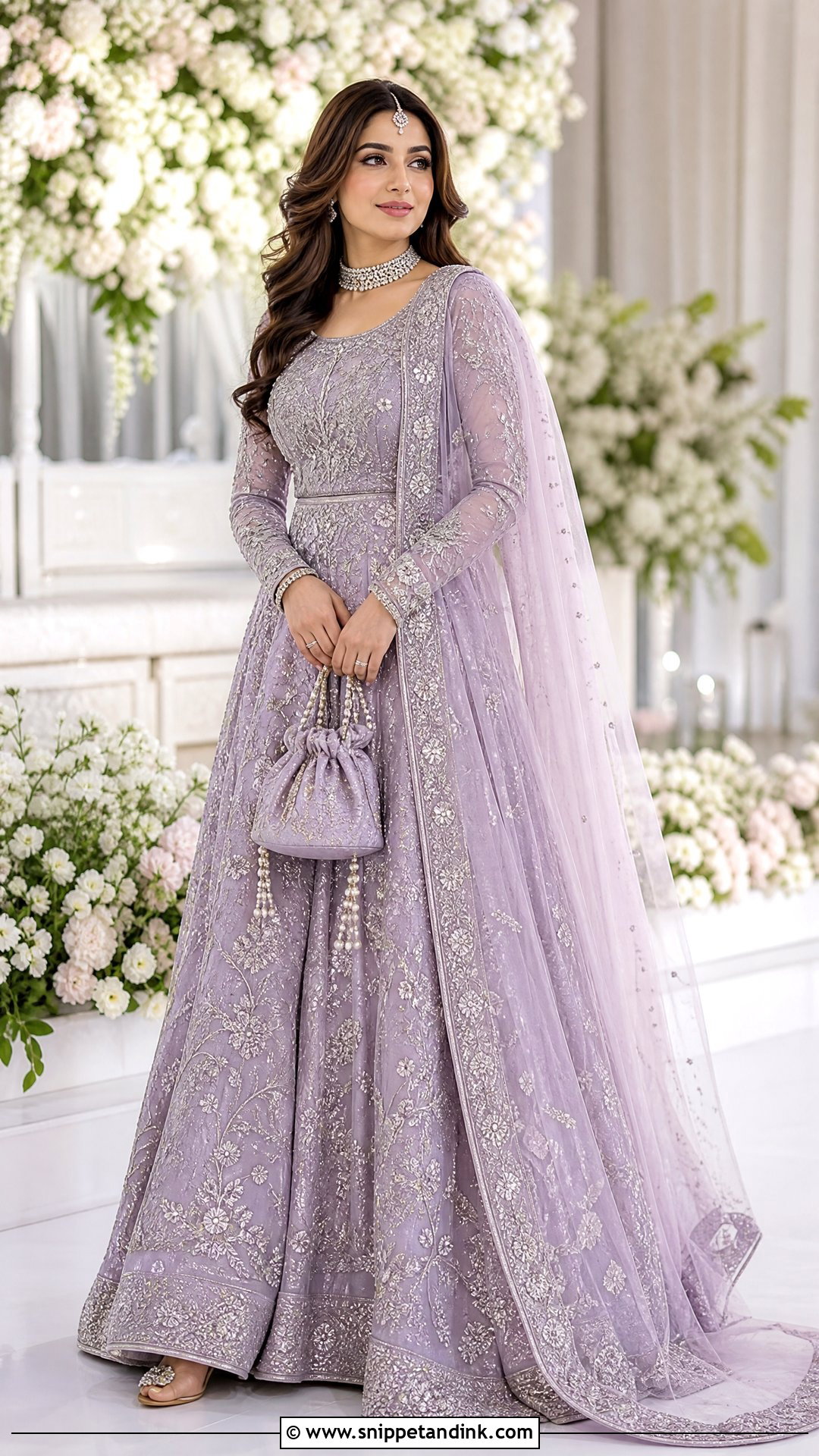
Lilac has enough color to stay distinct in bright photographs while still reading as pastel. A high-waisted lehenga with a fitted blouse and an airy net or organza dupatta is the base. Silver floral embroidery with pearl clusters can sparkle without hiding the lilac. For more coverage, choose full fitted sleeves and a modest neckline. A silver choker, earrings, a petite tikka and crystal heels finish it. A low textured bun is my pick here for a practical reason: the texture gives your dupatta pins something to grip, so it stays put through the whole reception.
16. Soft Gold Pakistani Walima Bridal Anarkali
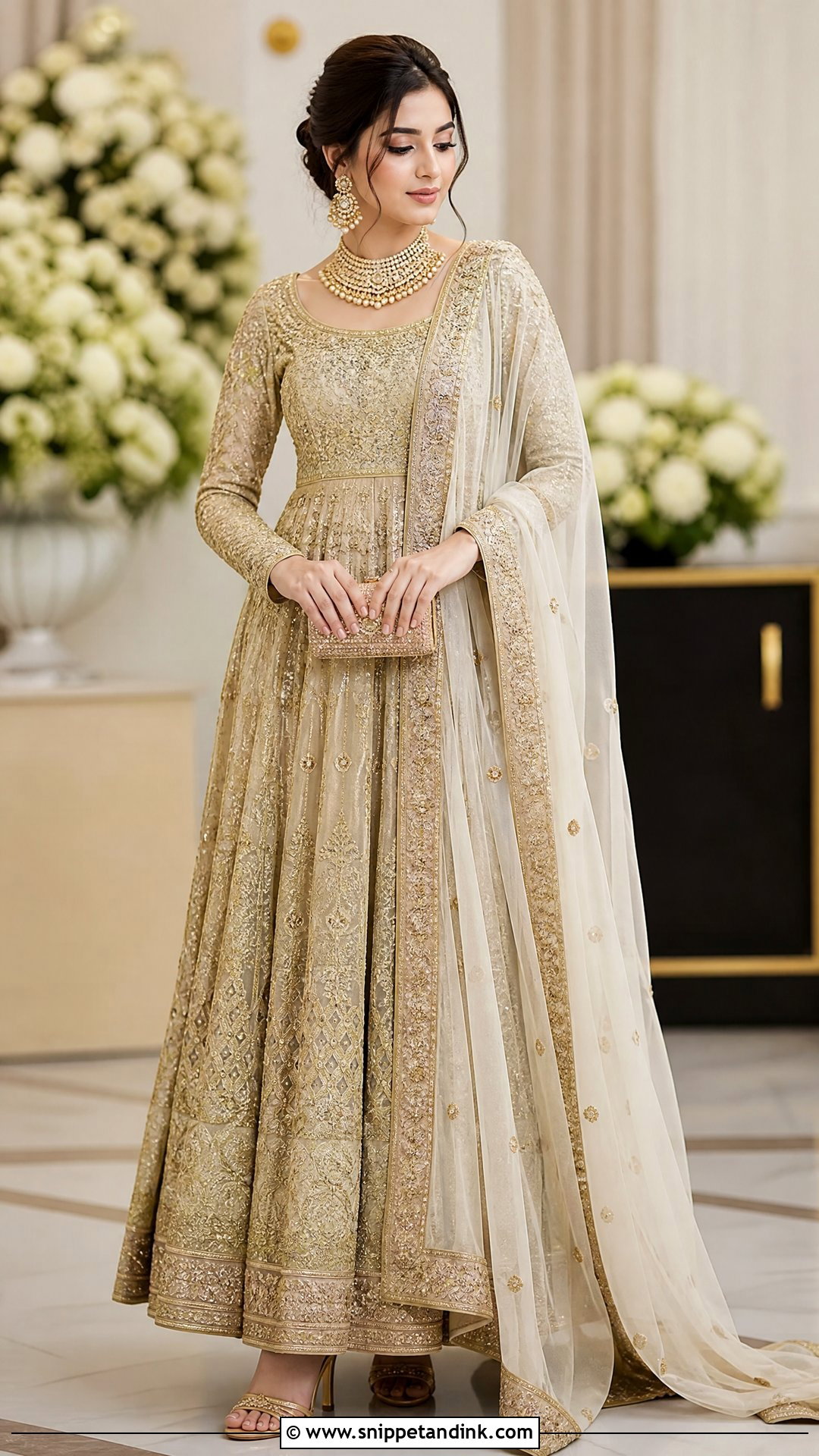
Soft gold gives an Anarkali a bridal finish without the intensity of bright yellow-gold. Choose a long paneled design with a fitted bodice, full sleeves and a controlled flare. Tonal embroidery and antique-gold dabka at the neckline and lower panels give texture. A sheer ivory dupatta tempers the metallic color. Antique-gold earrings, a statement necklace and gold heels are enough. Keep the makeup neutral with softly defined eyes, because the dress already reflects plenty of light onto your face. It’s at its best in a warm-lit evening reception.
17. Gray Pakistani Walima Bridal Cape Gown
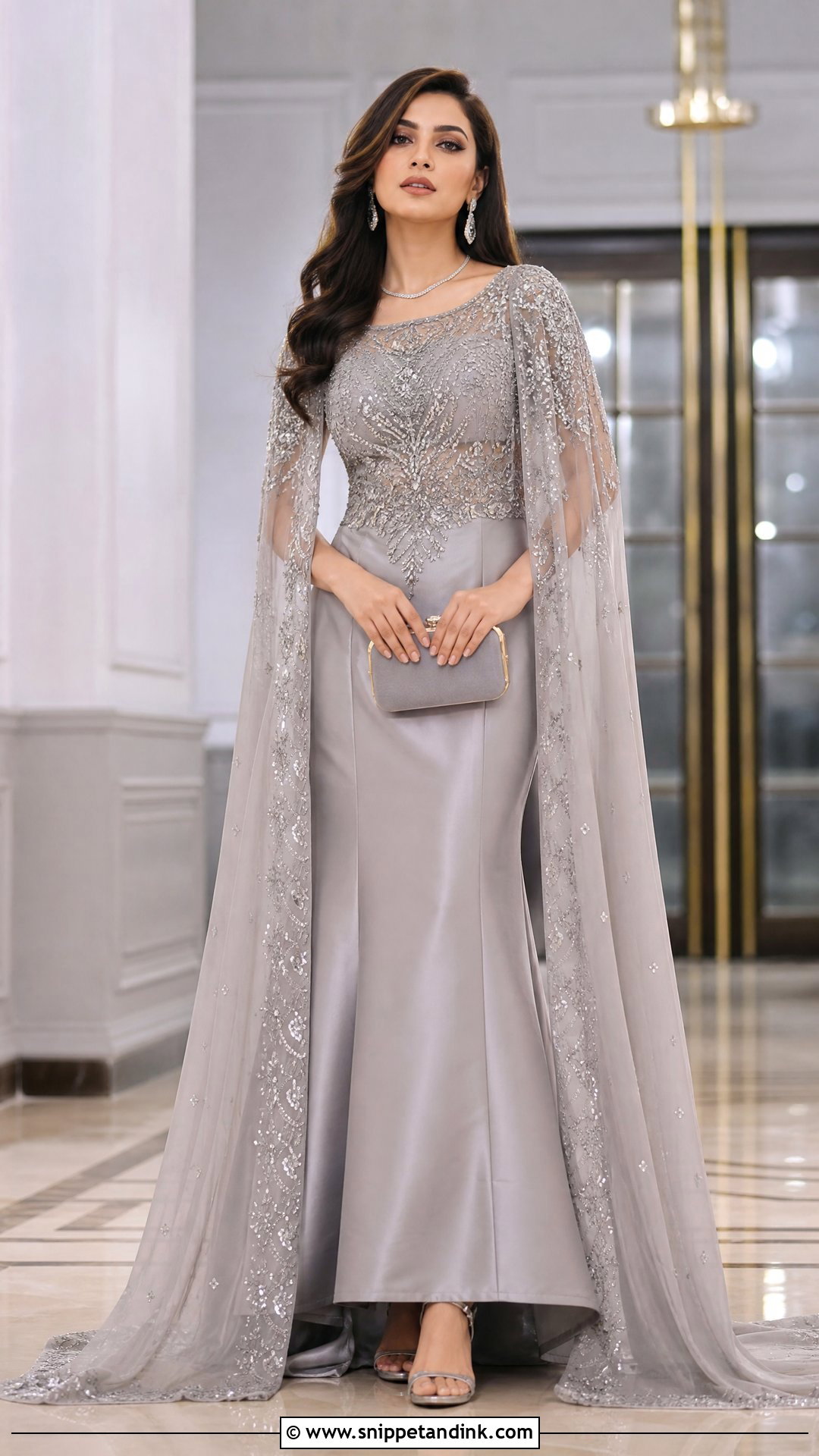
A pale grey gown with a cape is the most contemporary look here. The gown needs a tailored bodice and a long, clean skirt; the cape brings the movement. Put silver threadwork and pearls on the shoulders, cuffs and hem rather than covering every inch. If the cape replaces your dupatta, check at the fitting that it’s anchored properly behind the arms, because a loose cape slides forward every time you reach for a guest’s hand. Diamond-style earrings, a slim necklace and a structured grey clutch suit it, with a smooth low bun and cool-toned makeup. Brides who want a gown silhouette with Pakistani embellishment will feel at home in it.
18. Tea Pink Pakistani Walima Bridal Farshi Gharara
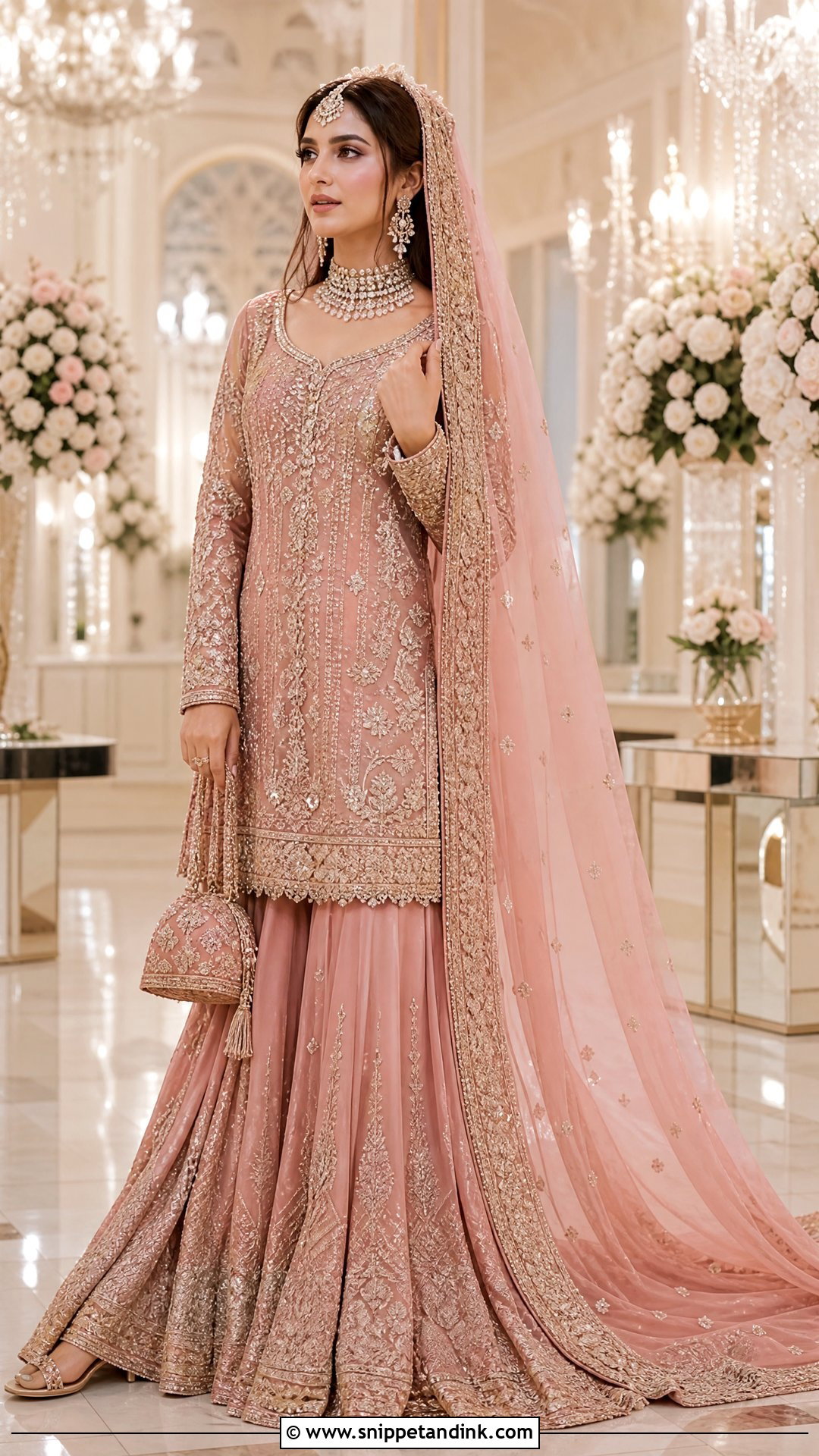
A tea pink farshi gharara only works if the train is handled properly, and that’s a team job. Pair a fitted short kameez in delicate silver or pearl work with a gharara that flares from the knee and sweeps out behind you. Pin the sheer dupatta securely at both shoulders, because you can’t adjust it easily while managing a train. Choker, drop earrings, tikka and a coordinated potli complete it. Before the day, practise walking forward, turning and sitting down in it, and show a sister or cousin how to lift and spread the train for portraits. Rosy neutral makeup and a sleek bun keep it formal.
19. Ivory And Blue Pakistani Walima Bridal Lehenga
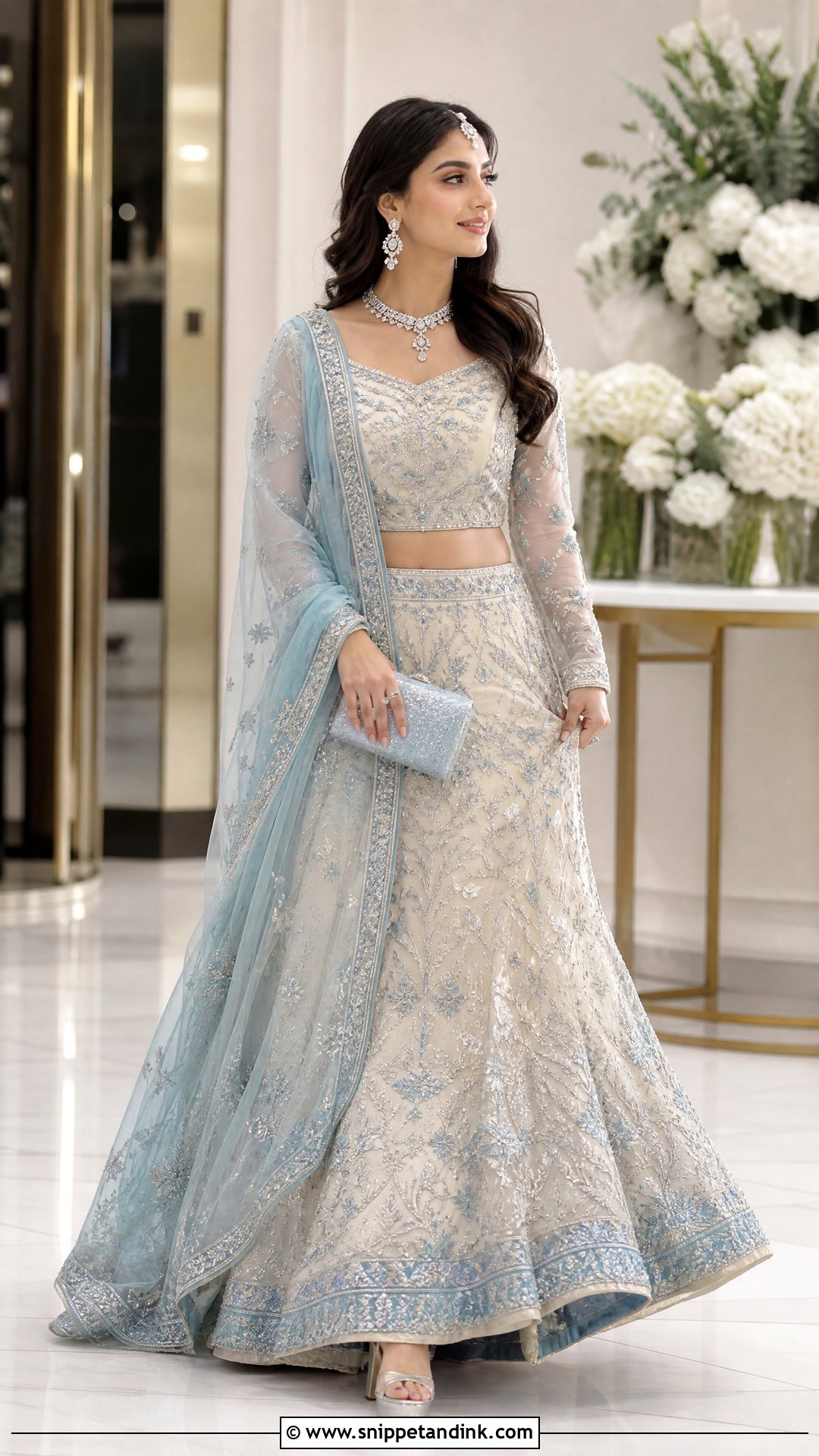
Two tones can stop a pastel Walima outfit from feeling too plain. Go ivory with powder blue floral embroidery, or reverse it with a blue skirt and ivory detailing. A sheer blue dupatta framed in an ivory and silver border pulls the two colors together. Don’t add a third color through jewelry or bags; diamond-style pieces, silver heels and a pale blue clutch are enough. A centre-parted bun and softly defined makeup finish it. This is the one I suggest when a bride finds single-color outfits dull but doesn’t want the heaviness of a dark reception dress.
20. Champagne Pakistani Walima Bridal Peplum Lehenga
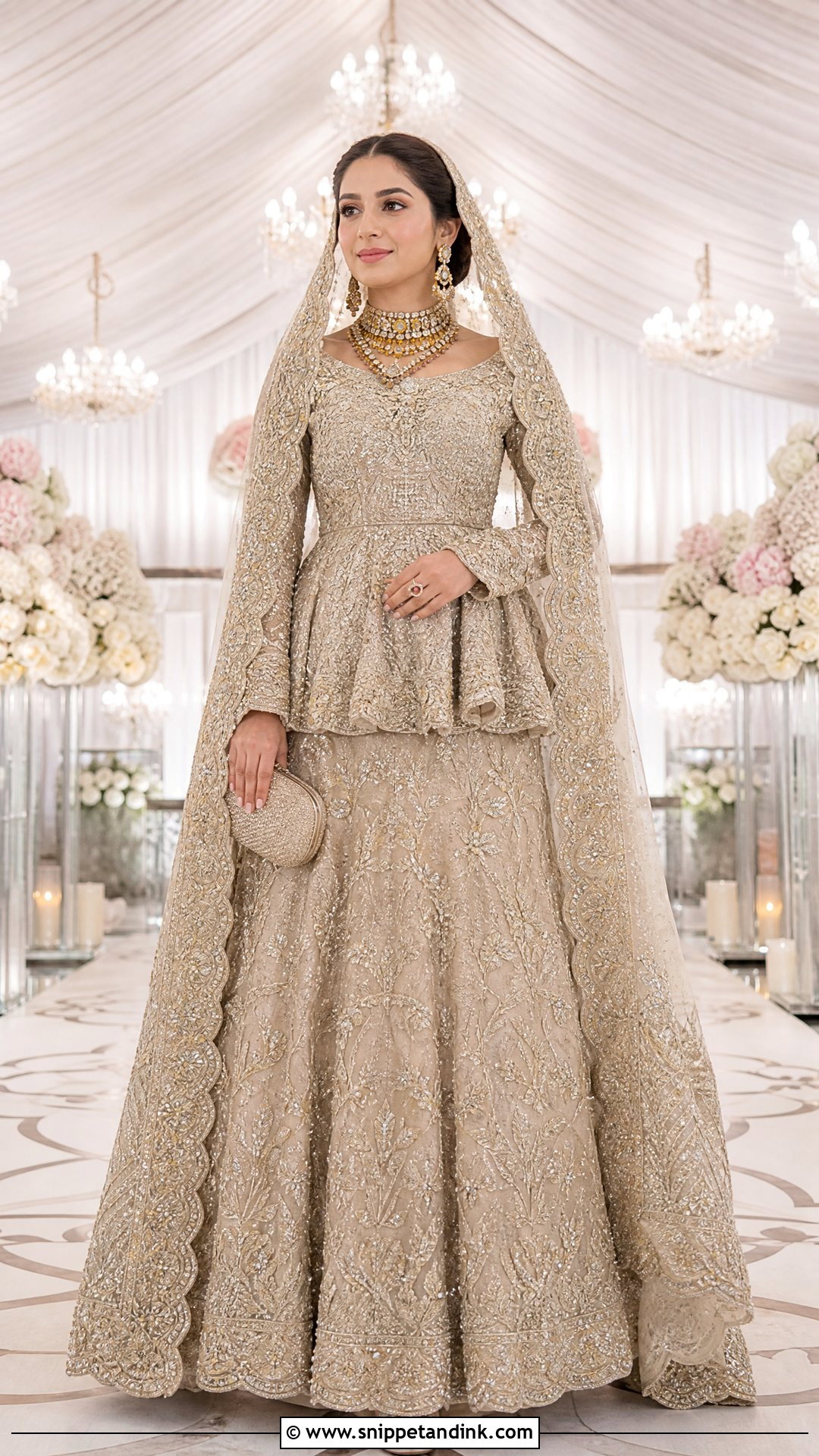
A champagne peplum with a lehenga defines the waist and keeps the full bridal skirt. The peplum should finish just below the waist and the skirt should flare evenly. I place the heaviest silver-gold embroidery on the bodice and let it fade toward the hem, which keeps the weight up top where the blouse supports it and lets the skirt move. A lightweight champagne dupatta with a scalloped border goes over the head and along one arm. Mixed-metal jewelry works here because champagne bridges silver and gold. Soft brown eyes, a peachy lip and luminous skin finish it, and it photographs cleanly from every side during a long portrait session.
Silver Thread Tarnishes, So Store the Outfit Properly
Once the wedding is over, your walima dress usually goes straight into a suitcase, and that’s where damage starts. Metallic threads like dabka and zari darken when exposed to air and moisture over months, and heavy embroidery can crush or crack if it’s folded tightly.
- Air it first. Hang the outfit for a day or two after the event so any sweat and perfume can dry out before you pack it.
- Spot-treat stains quickly with a dry cleaner who handles embroidered bridal wear; don’t scrub at food stains yourself on tissue or organza.
- Wrap it in soft cotton or muslin, never sealed plastic, which traps humidity and speeds up tarnish.
- Fold with acid-free tissue between the layers and around the embroidered areas, so metal work never rubs against metal work.
- Refold every few months along different lines. Permanent creases form where the same fold sits for years.
Store it somewhere dark and dry rather than in a damp storeroom. Many brides later restyle a walima lehenga or gharara for a sister’s or cousin’s wedding, and it can only be reworn if the embroidery has survived the cupboard.
Start With Your Barat Photos and Work Backward
A walima outfit is easier to settle once you’ve decided on silhouette, color and how much comfort you need on the third night of a wedding. Gowns and maxis feel like a formal reception; lehengas, pishwas, shararas, saris and ghararas each show a different side of Pakistani bridal dress. Look at your barat outfit first and pick something that contrasts with it, usually a pastel or pale metallic. Then get the practical things right: embroidery placement, tailoring, a dupatta that’s pinned securely and shoes you can stand in. Try the full look under lighting close to your venue’s, and choose jewelry only once the dress is finished.
You'll Like These Ideas:


Leave a Reply