
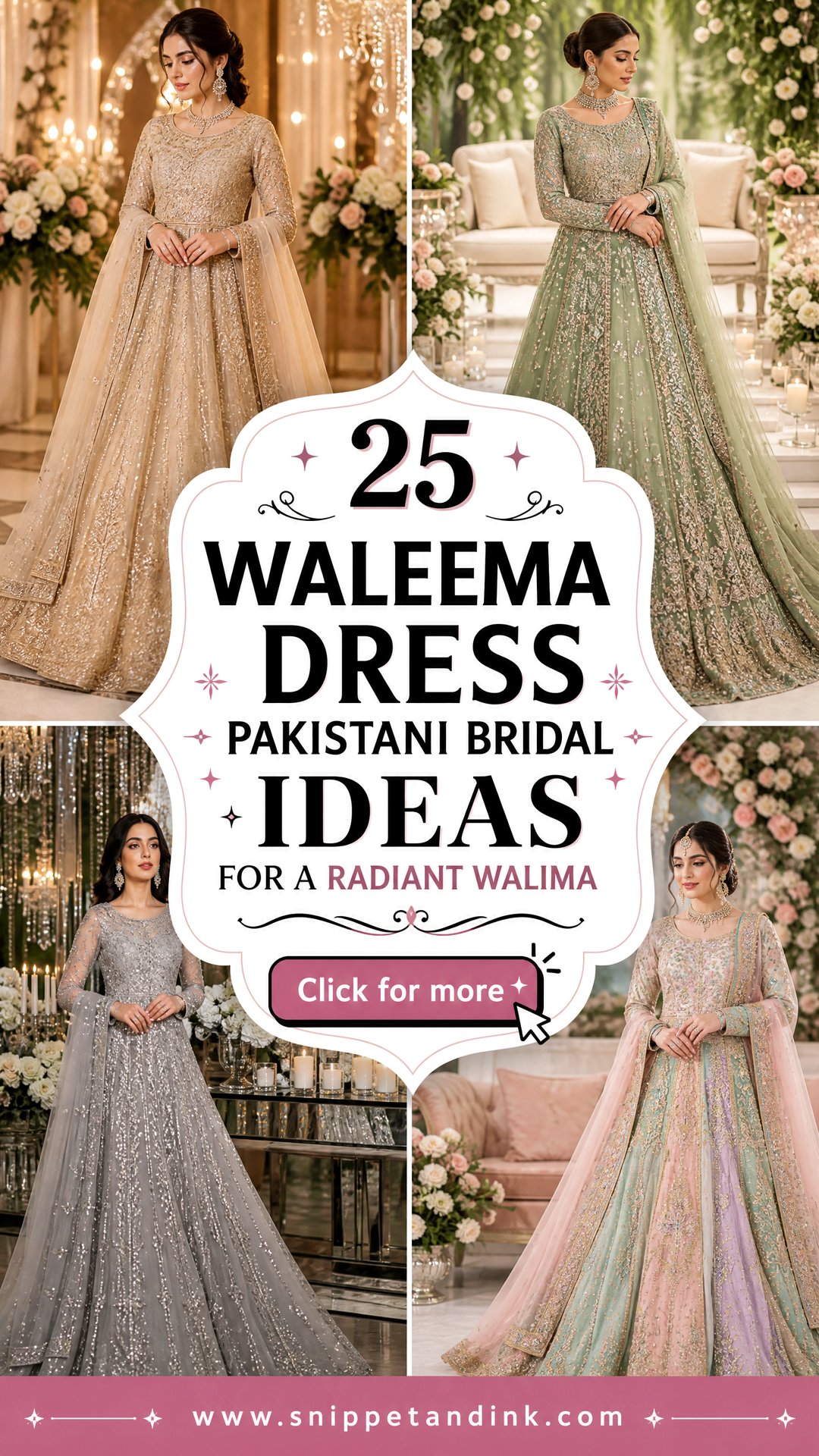
The Walima is the day a bride finally gets to breathe. After the weight and colour of the baraat, most of the brides I dress want something lighter that still reads as bridal from across a hall. Right now Pakistani bridal fashion is full of pastels, ivory, champagne, mint and ice blue, with pearl work, lighter dupattas, structured shararas and gowns. Pale colours let your face and jewellery do more of the talking. Below are 25 outfits, from lehengas to maxis and farshi ghararas, with the practical notes I’d give you at a fitting.
Ordering a Walima Outfit When the Baraat Is Already Taking Your Time
Most brides plan the baraat outfit first, and the Walima gets squeezed. Heavy handwork takes time, so I’d order both in the same season if you can.
- Lead time: designer bridal wear with zardozi or dabka often takes several months, and longer in the main wedding season. Ready-to-order pret moves faster. Ask the studio for a firm date, then allow a few weeks extra for alterations.
- Measurements: give them once, carefully, ideally with the heels you’ll wear. A lehenga or gharara hem cut for flats will drag in heels.
- Colour: pastels vary hugely from dye lot to dye lot. Ask for a fabric swatch and look at it by a window and under warm indoor bulbs. If a shade only works in one, it may not work at your venue.
- Weight: ask how heavy the finished outfit will be. A designer can usually lighten a lehenga by changing the lining or reducing net layers without changing how it looks.
Have at least one trial with the full outfit, jewellery and dupatta together. That’s the only time you’ll see whether the dupatta border fights the necklace or whether the tikka sits under its edge.
1. Pastel Waleema Dress With Lehenga
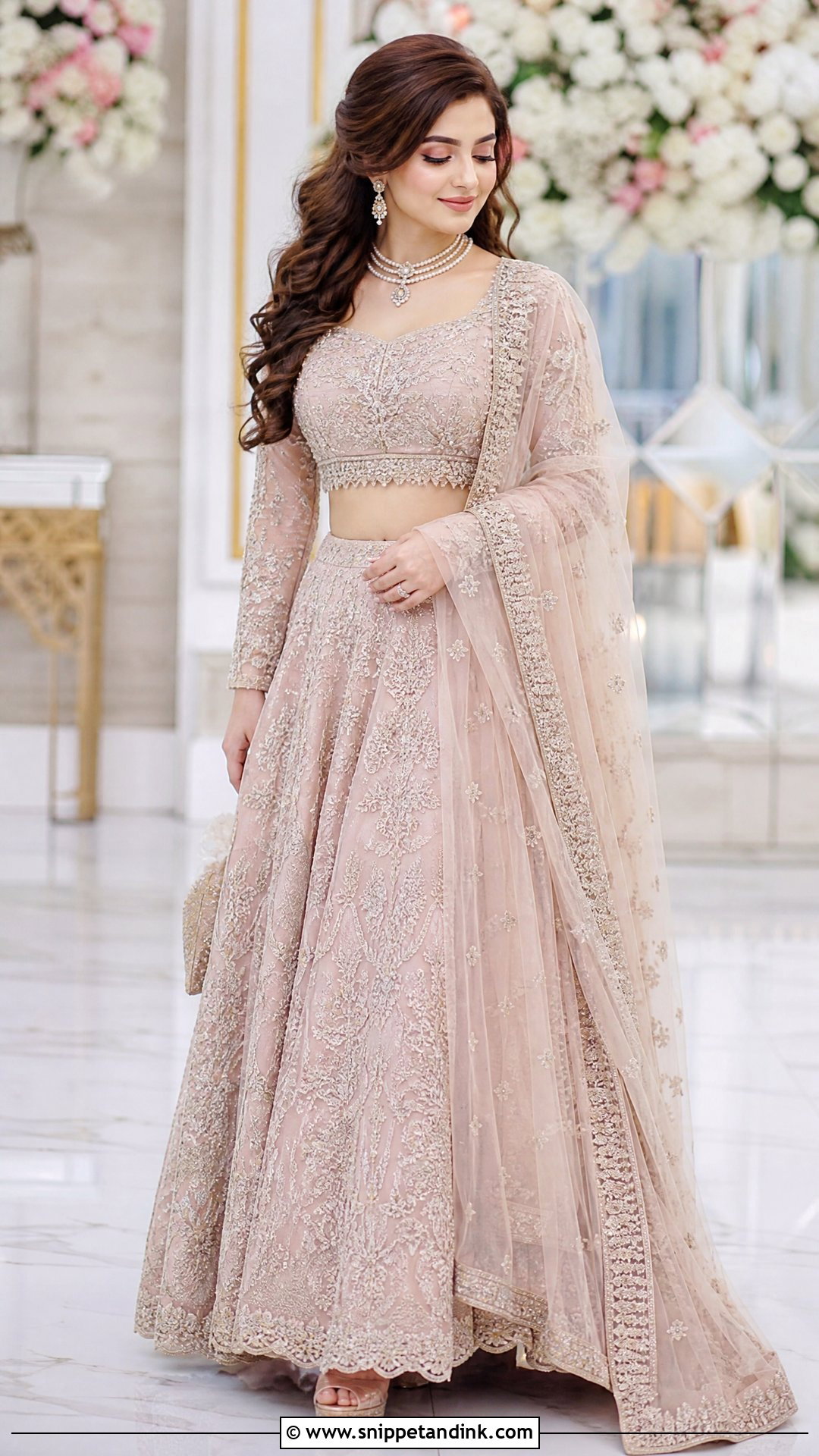
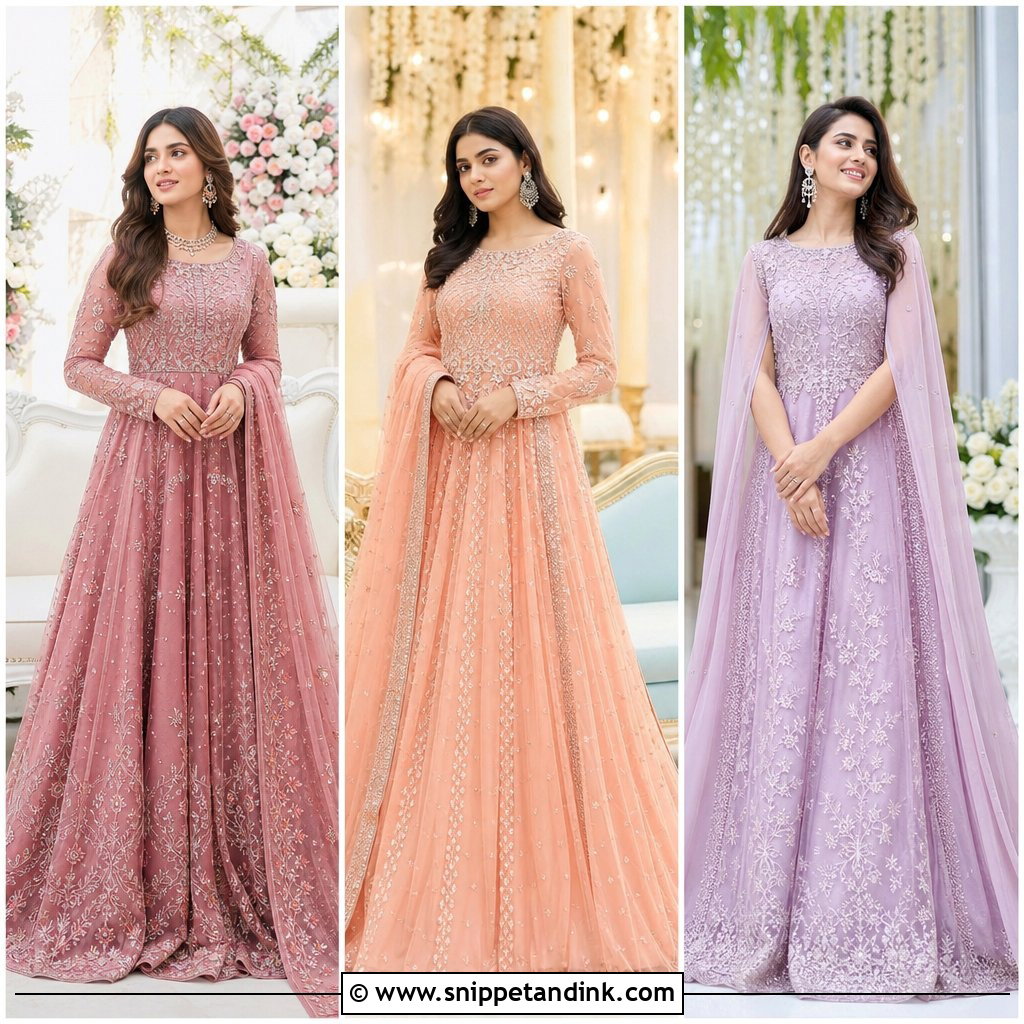
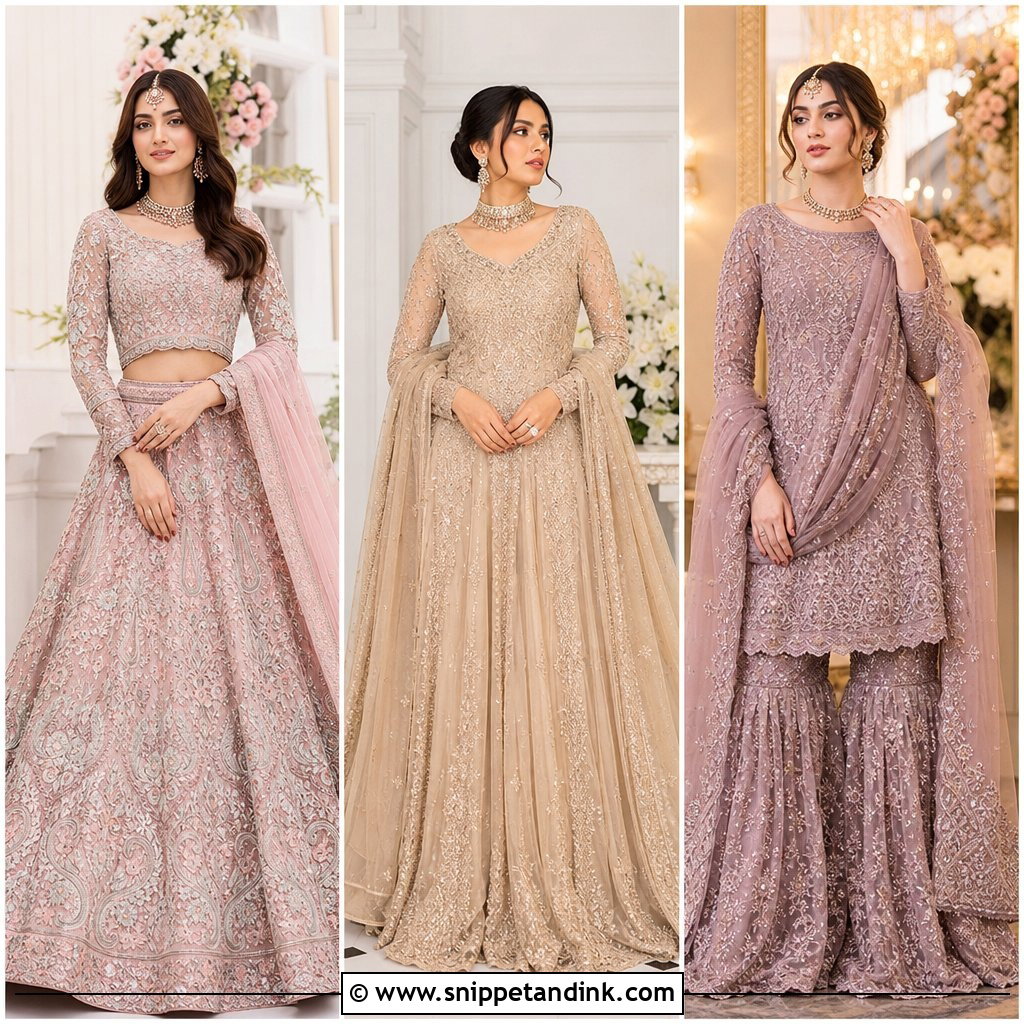
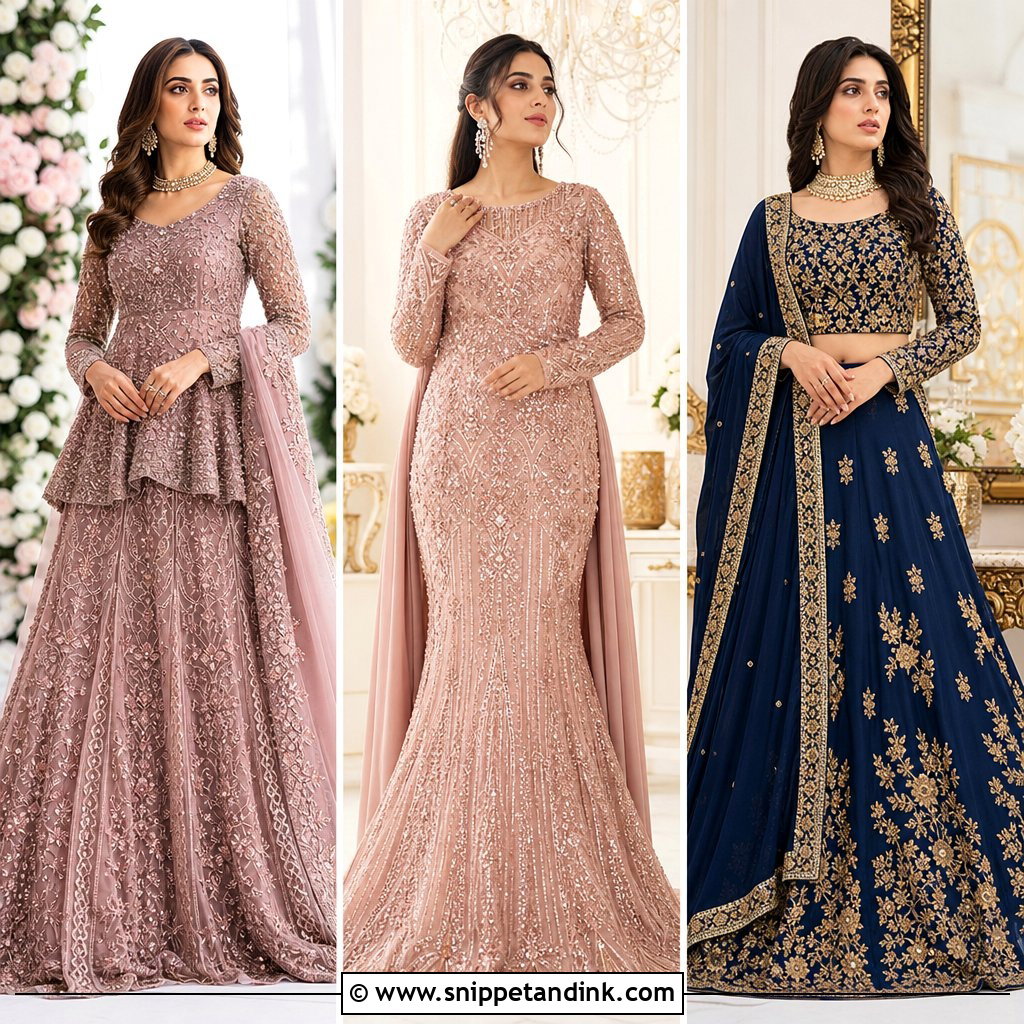
A pastel Waleema dress with lehenga is the outfit I’m asked for most, and it’s easy to see why. Blush, powder peach, misty lavender or light mint with silver or champagne embroidery looks soft without looking plain. The thing I weigh, literally, is the lehenga. A wide flare with heavy can-can underneath gets tiring by the third hour of greeting relatives. Ask for a lighter lining and fewer layers of net. A fitted choli or short kameez, a sheer dupatta, pearls and soft curls finish it.
2. Ivory Waleema Dress With Gold Work
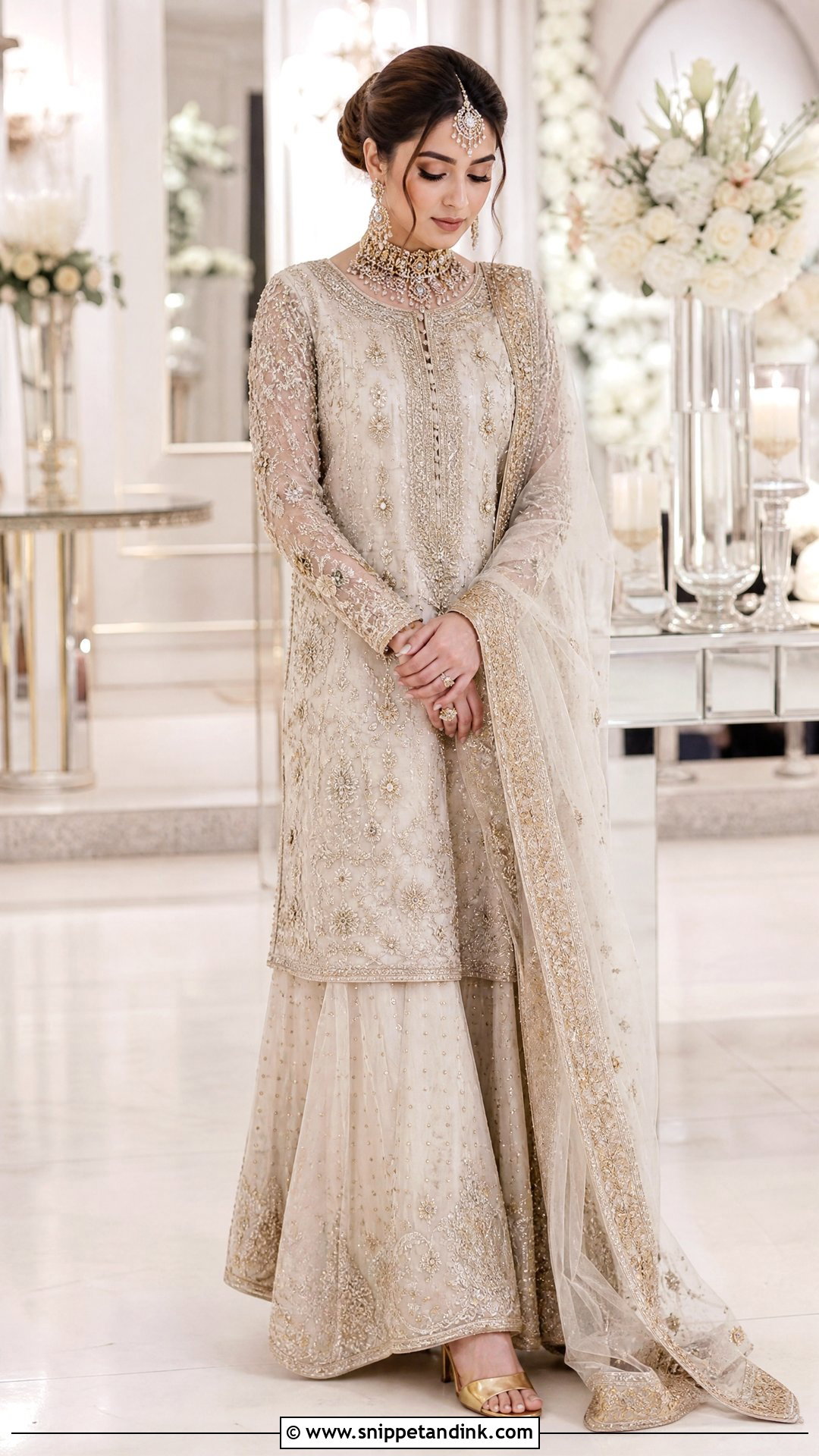
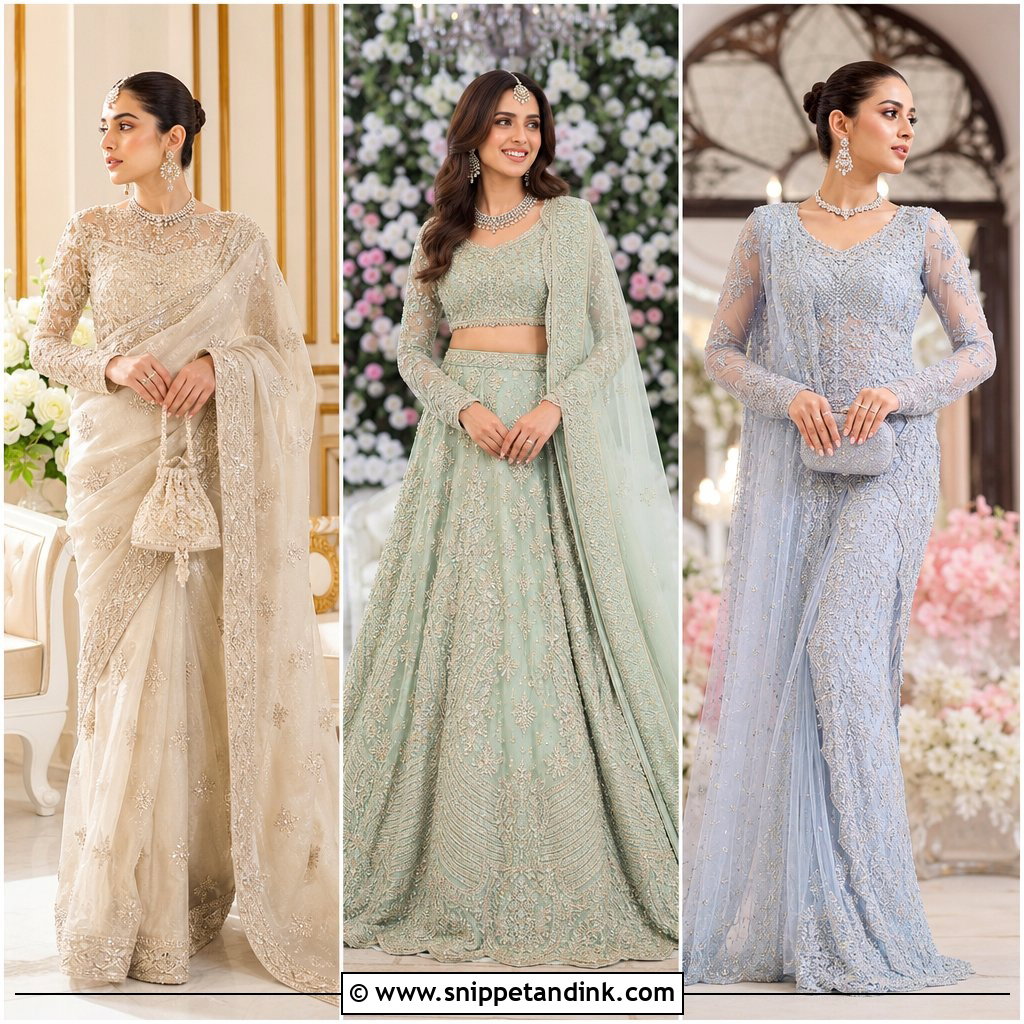
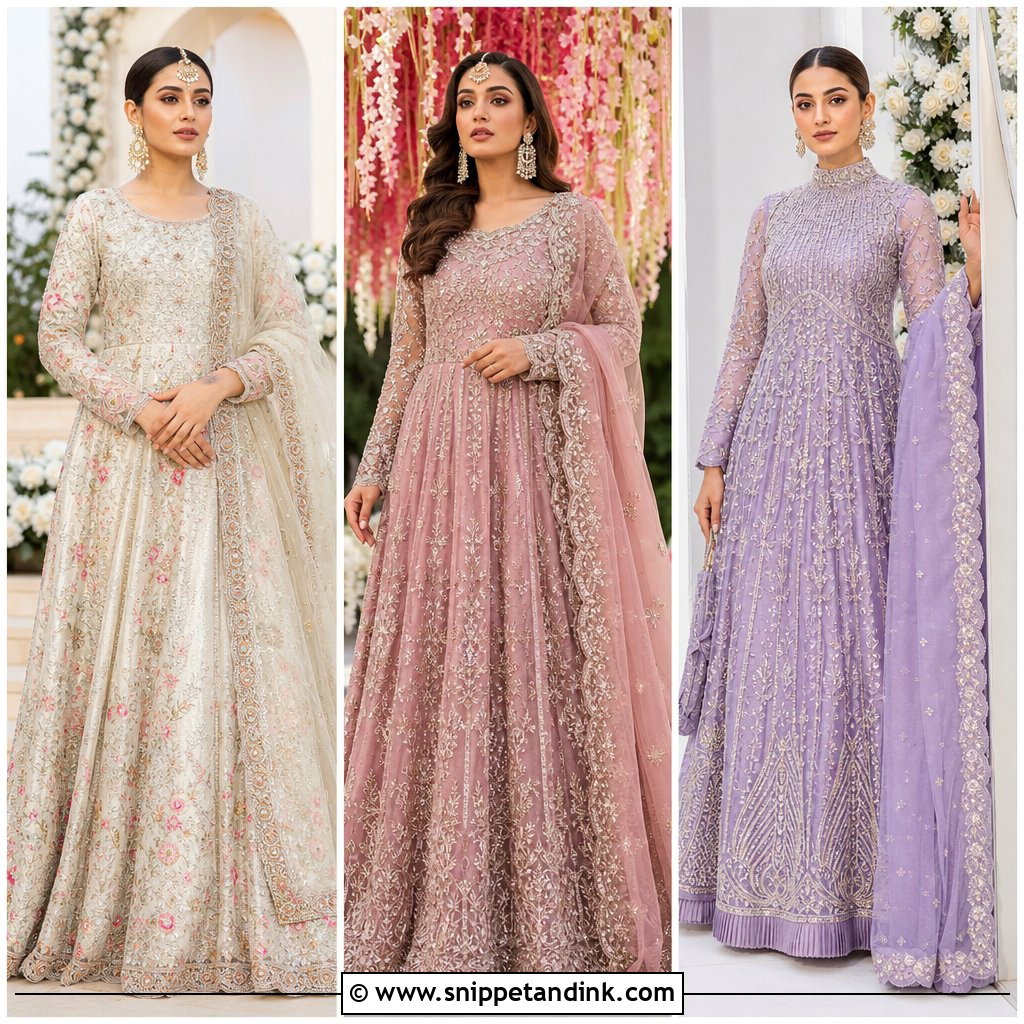
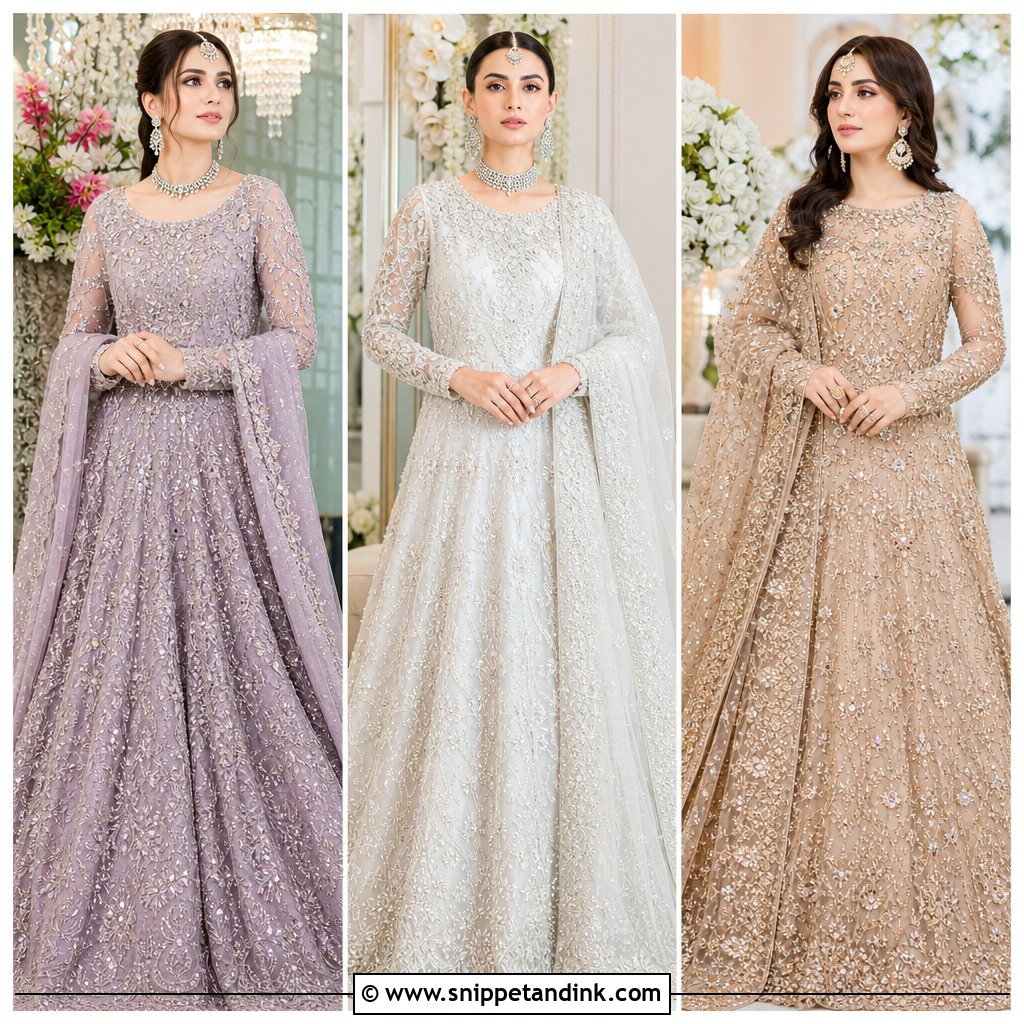
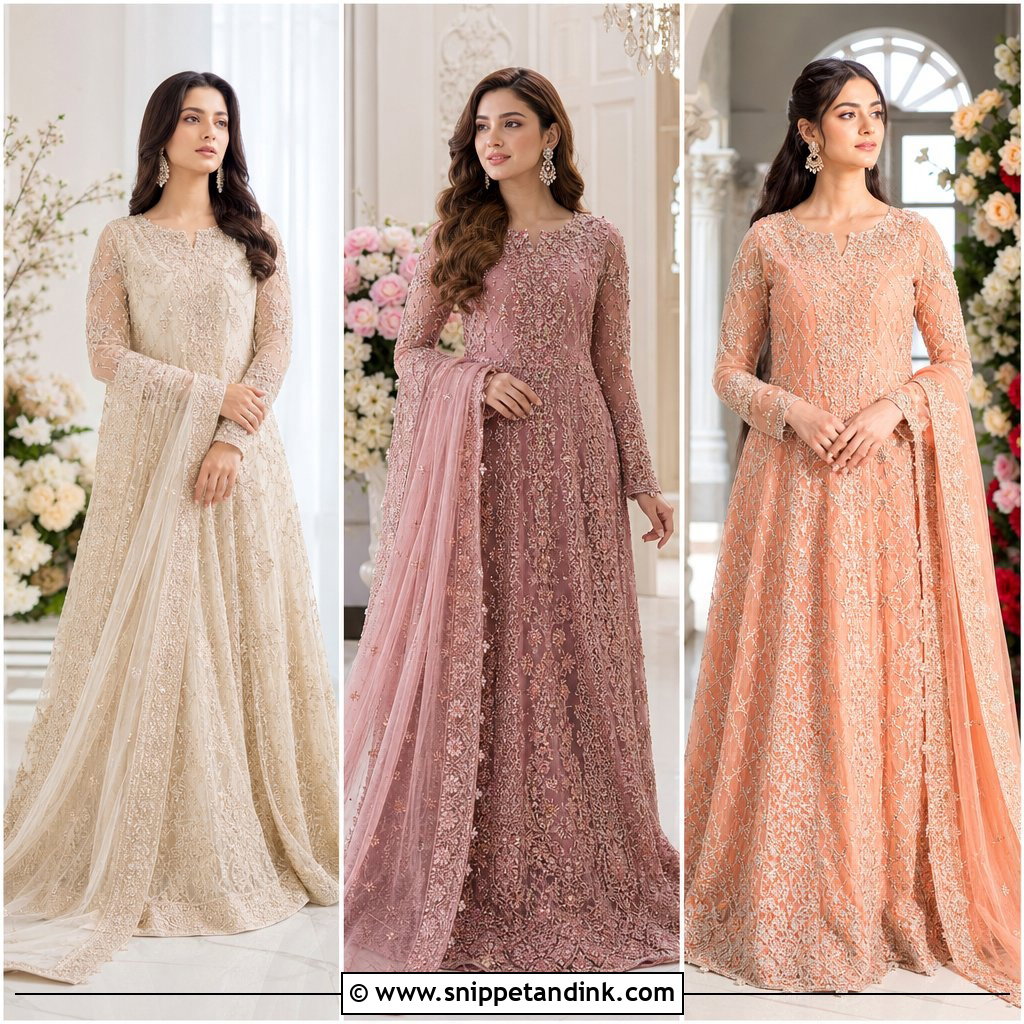
Ivory with gold work looks fresh under bright reception lights and still feels festive. A long shirt with lehenga, a pishwas or a flowing maxi all suit the palette. I’d choose zardozi, dabka, sequins or resham in a soft gold rather than a high-contrast antique gold, which can look brassy against ivory on camera. A matching dupatta with a worked border, plus polki or kundan, gives you the regal finish.
3. Champagne Waleema Dress With Maxi
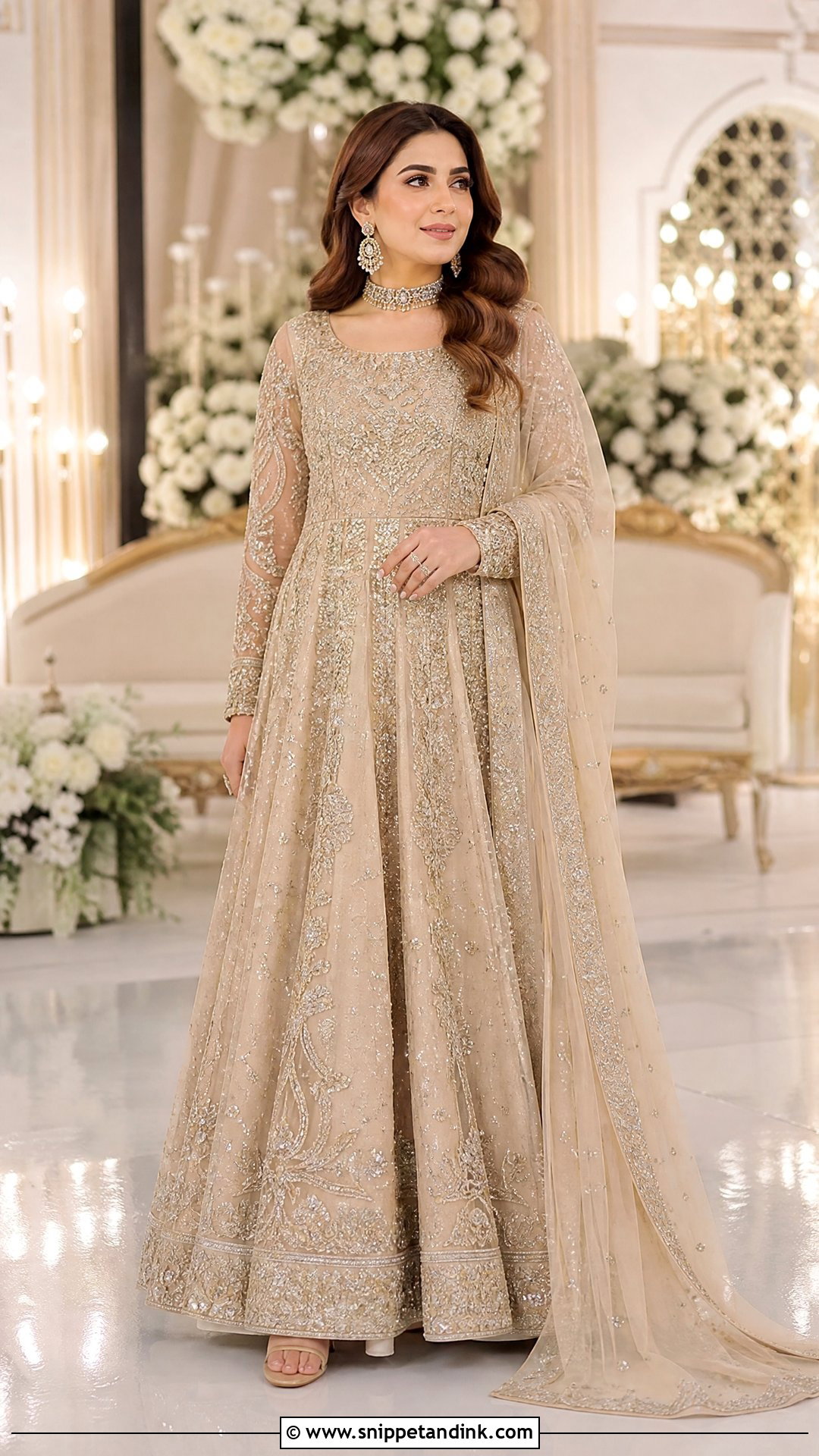
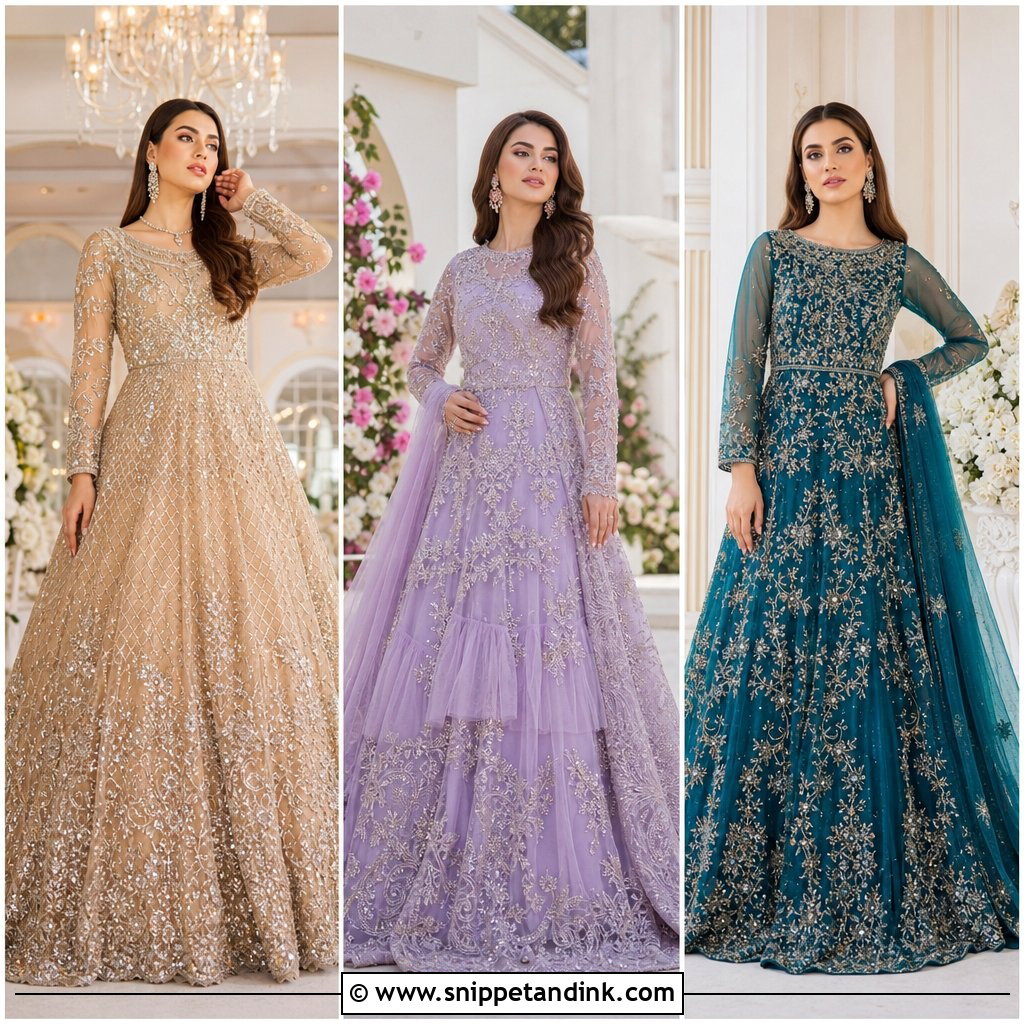
Champagne sits between beige, gold and nude, so it warms the skin without shouting. A floor-length maxi with a defined waist, embroidered bodice and gentle flare is the shape I’d pick. The one trap with champagne: on very fair or very warm skin it can blend in, so hold the fabric to your face in daylight before ordering. Crystal, pearl or antique gold detail adds depth. Drape a sheer dupatta over one shoulder or pin it lightly on the head, then keep jewellery to a choker, earrings and a tikka.
4. Ice Blue Waleema Dress With Silver Embroidery
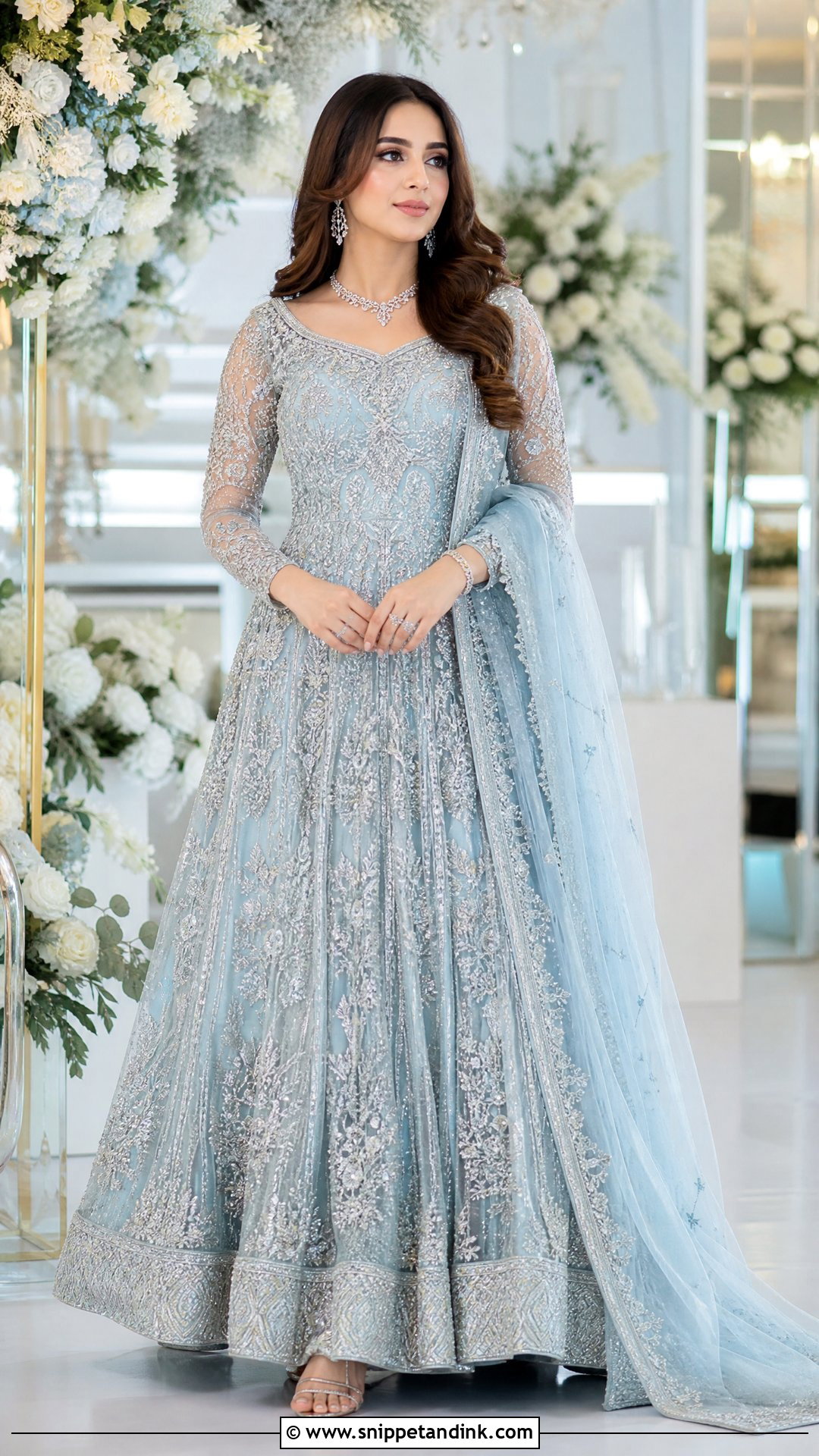
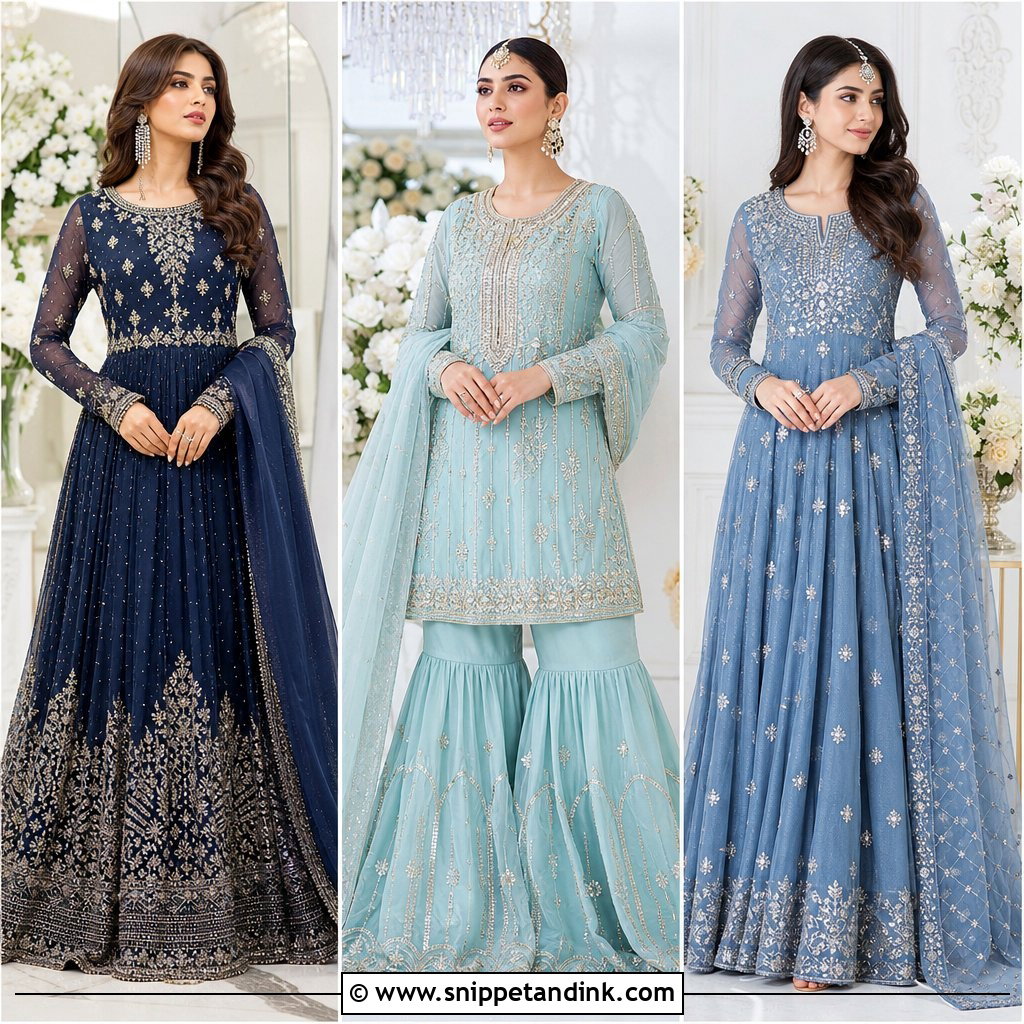
Ice blue is the colour for a bride who’s done with pink. Silver threadwork, pearls, crystals and soft sequins on a lehenga, gown or long frock keep it cool and clean. Keep the dupatta sheer so it stays airy. Diamond-style jewellery, silver heels and dewy makeup suit it. One thing I always warn about: pale blue can turn slightly grey under warm yellow hall lighting, so ask your photographer how the venue is lit and check the fabric under similar bulbs.
5. Blush Pink Waleema Dress With Gharara
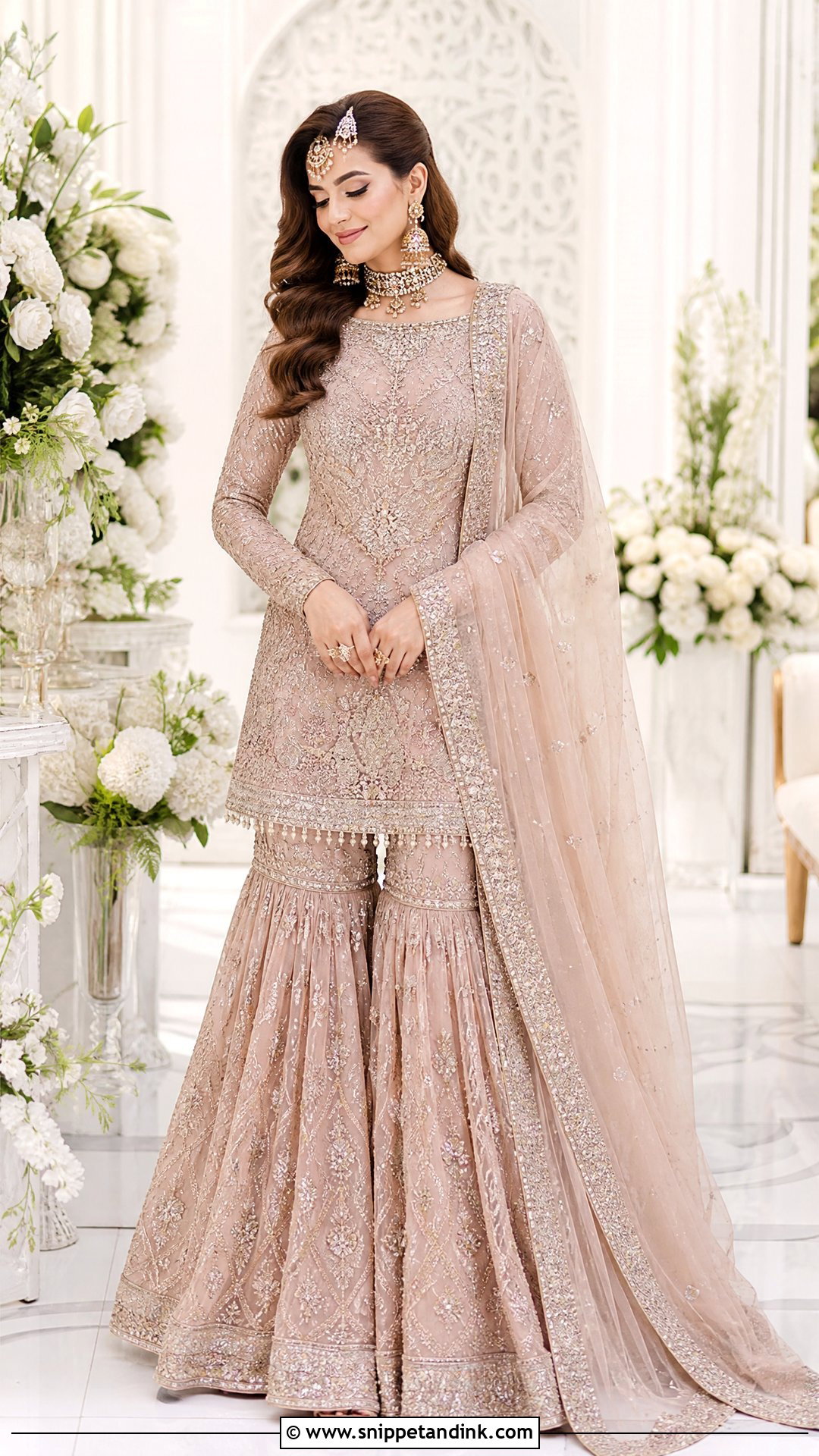
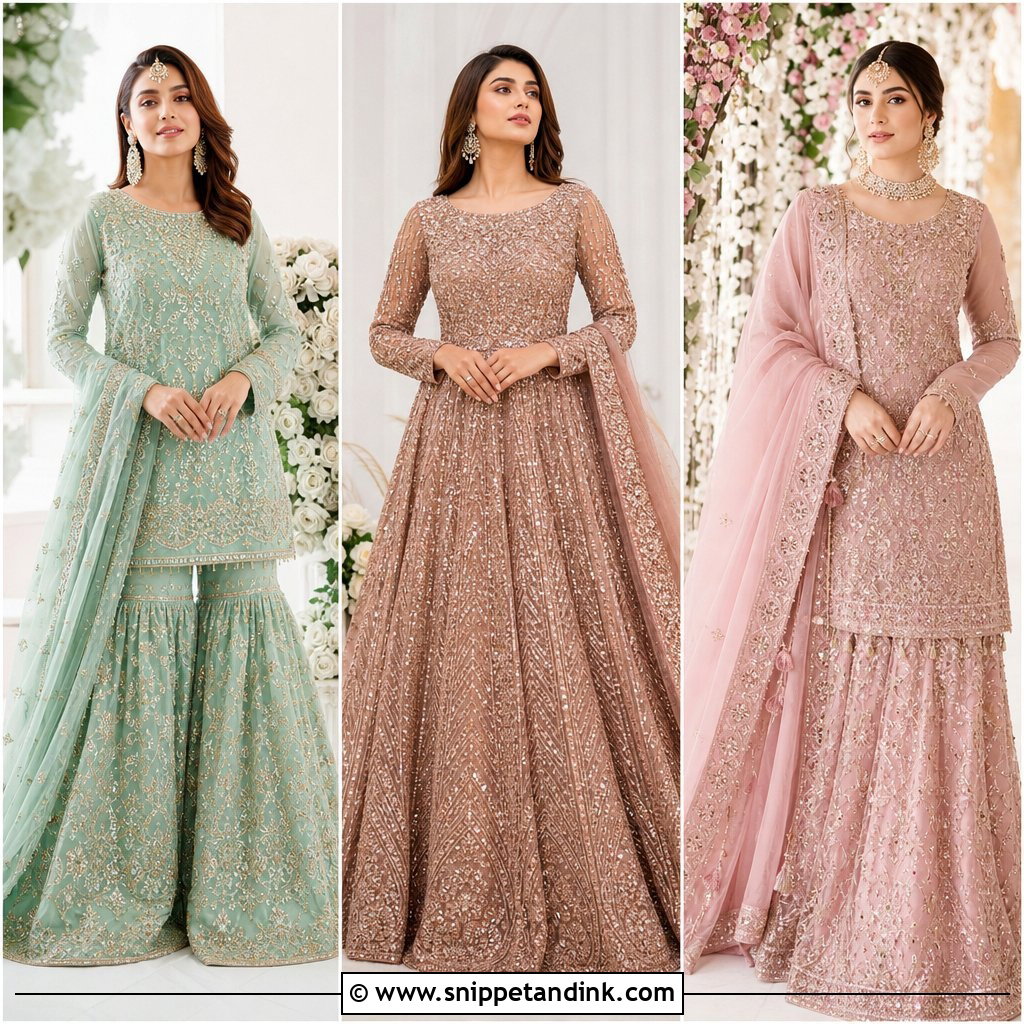
A short or mid-length kameez over a wide gharara is a classic Pakistani balance, and blush pink keeps it gentle. Tonal embroidery with pearls, sequins and touches of gold looks refined. The gharara’s gathers at the knee are where the volume comes from, so the kameez length matters: I like it ending just above that joint so the flare shows. A bordered dupatta over the head or one shoulder, a kundan choker and jhumkas complete it.
6. Mint Green Waleema Dress With Sharara
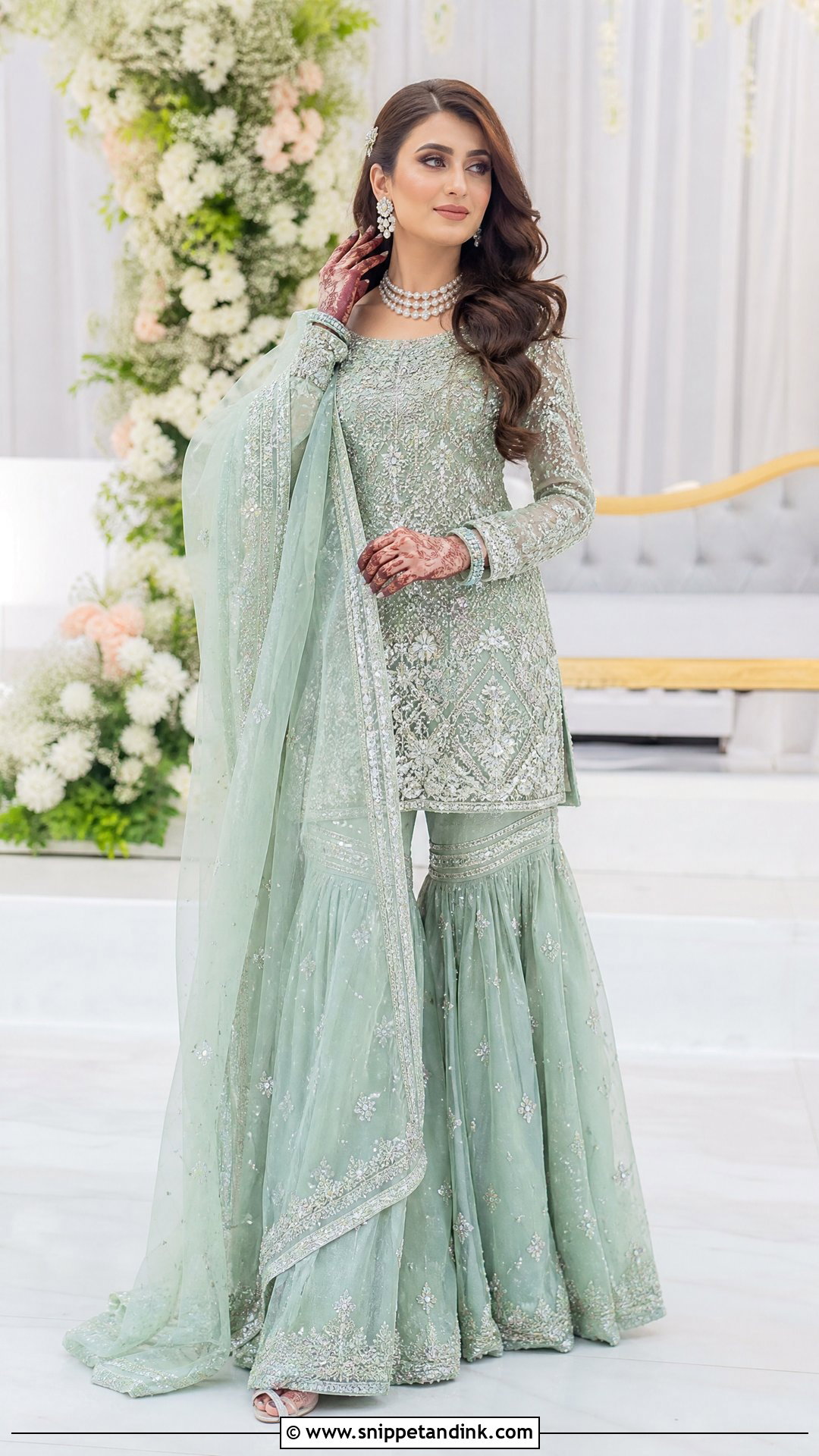
Mint has been picked up by more Walima brides lately, and it suits both daytime and evening. A structured sharara with a short kameez gives a regal shape, with fine silver, pearl or champagne work for detail. Organza or net keep the dupatta moving. Pair it with pearls, soft waves and glowing skin. For an evening event, I’d add a little more shimmer to the embroidery, since flat mint can look washed out once the sun is down.
7. Powder Blue Waleema Dress With Pishwas
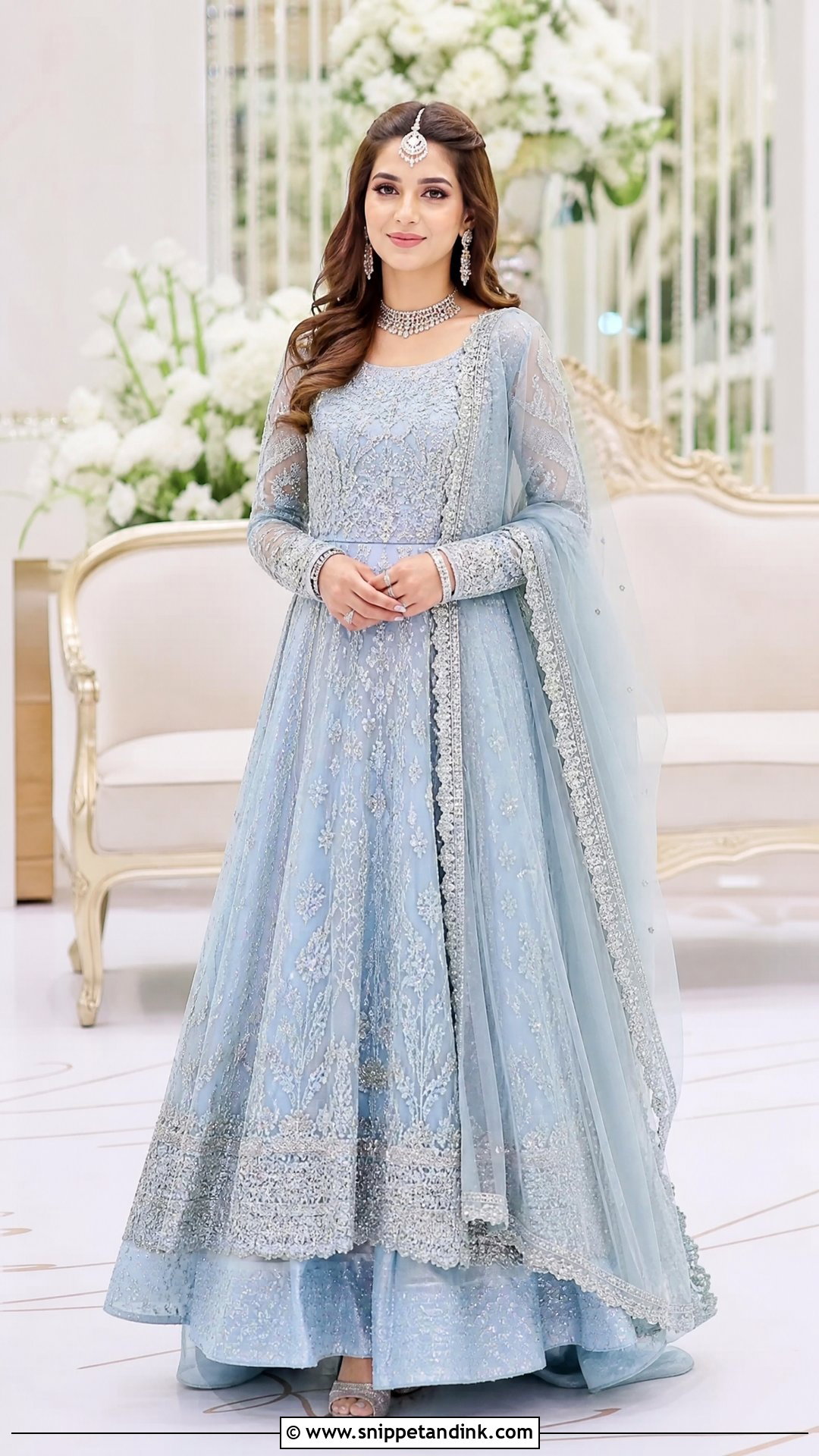
A pishwas flares from a fitted bodice into a full, floor-length skirt, which gives coverage and lots of movement. It’s one of the most comfortable shapes for a long reception because nothing is tight below the waist. Powder blue looks lovely with silver, white or pearl work. Add a matching lehenga or churidar underneath for volume. Pin the dupatta neatly over the head or across both shoulders, then a tikka, drop earrings and silver heels.
8. Lavender Waleema Dress With Net Dupatta
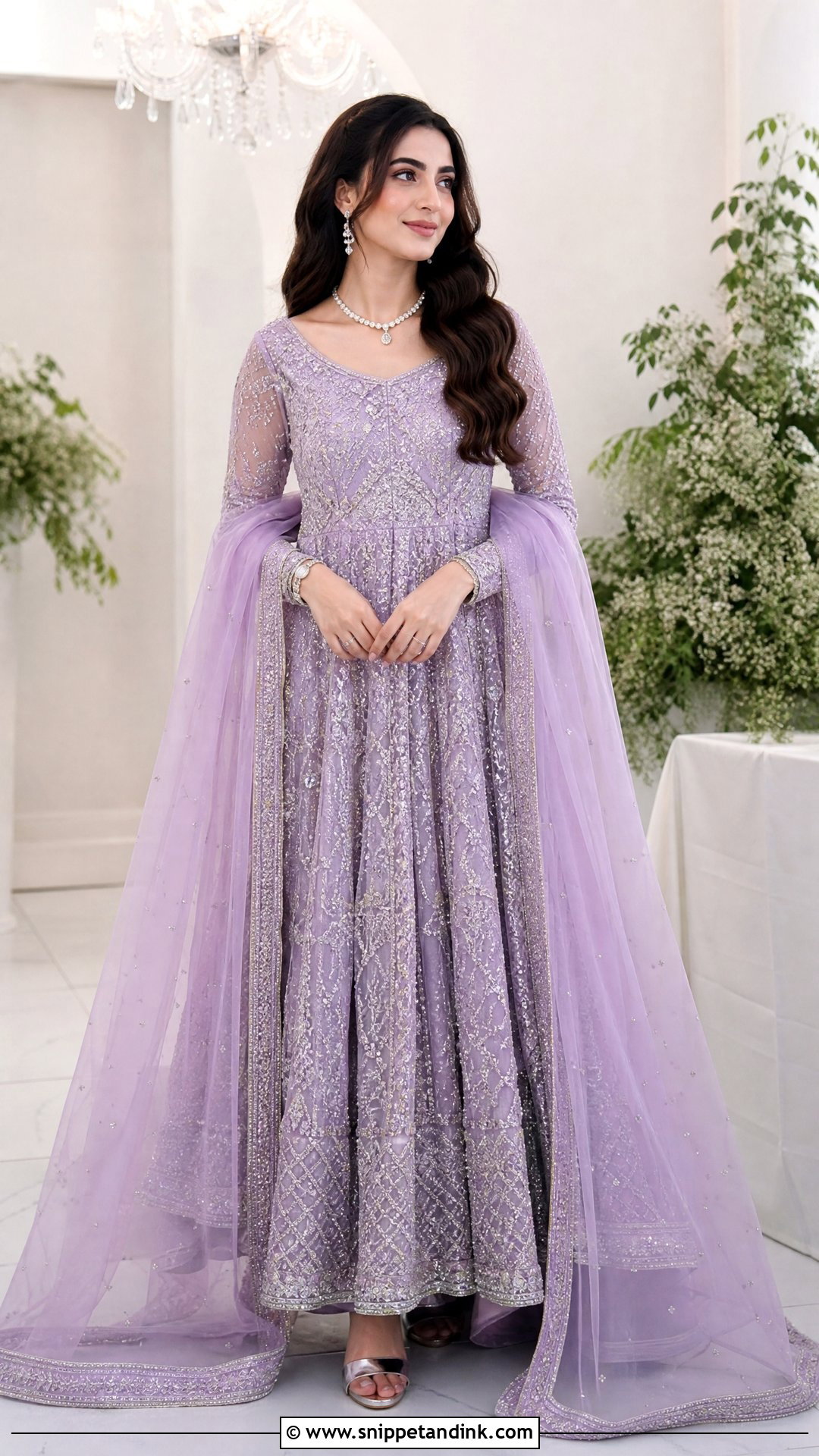
Lavender is soft but definite, a good alternative to blush or ivory. A lavender maxi, lehenga, or pishwas takes silver, pearl or pale gold embroidery well. With a net dupatta, I’d keep the detail to a thin border or scattered motifs, because net snags on heavy embroidery when you move. A rosy lip, soft makeup and crystal or pearl jewellery are enough.
9. Peach Waleema Dress With Organza Dupatta
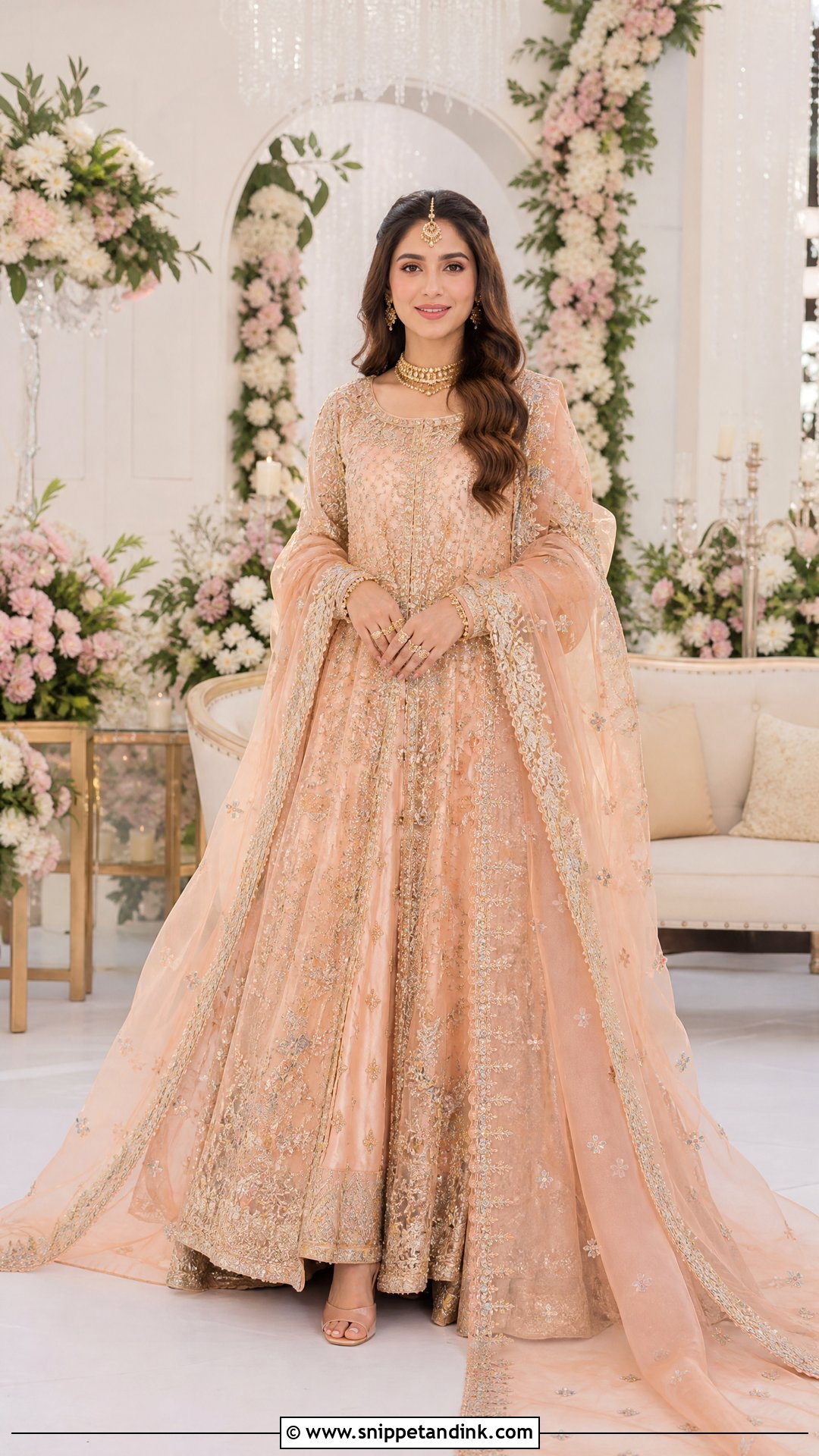
Peach is one of the most forgiving shades I work with, since it flatters a wide range of skin tones and stays softer than coral. Long kameez with lehenga, a flared gown or a pishwas all suit it. Gold, champagne or pearl embroidery gives a gentle finish. An organza dupatta holds a bit of shape around the face while staying light. Soft gold jewellery, nude heels and fresh makeup keep the warmth in front.
10. Silver Waleema Dress With Long Trail
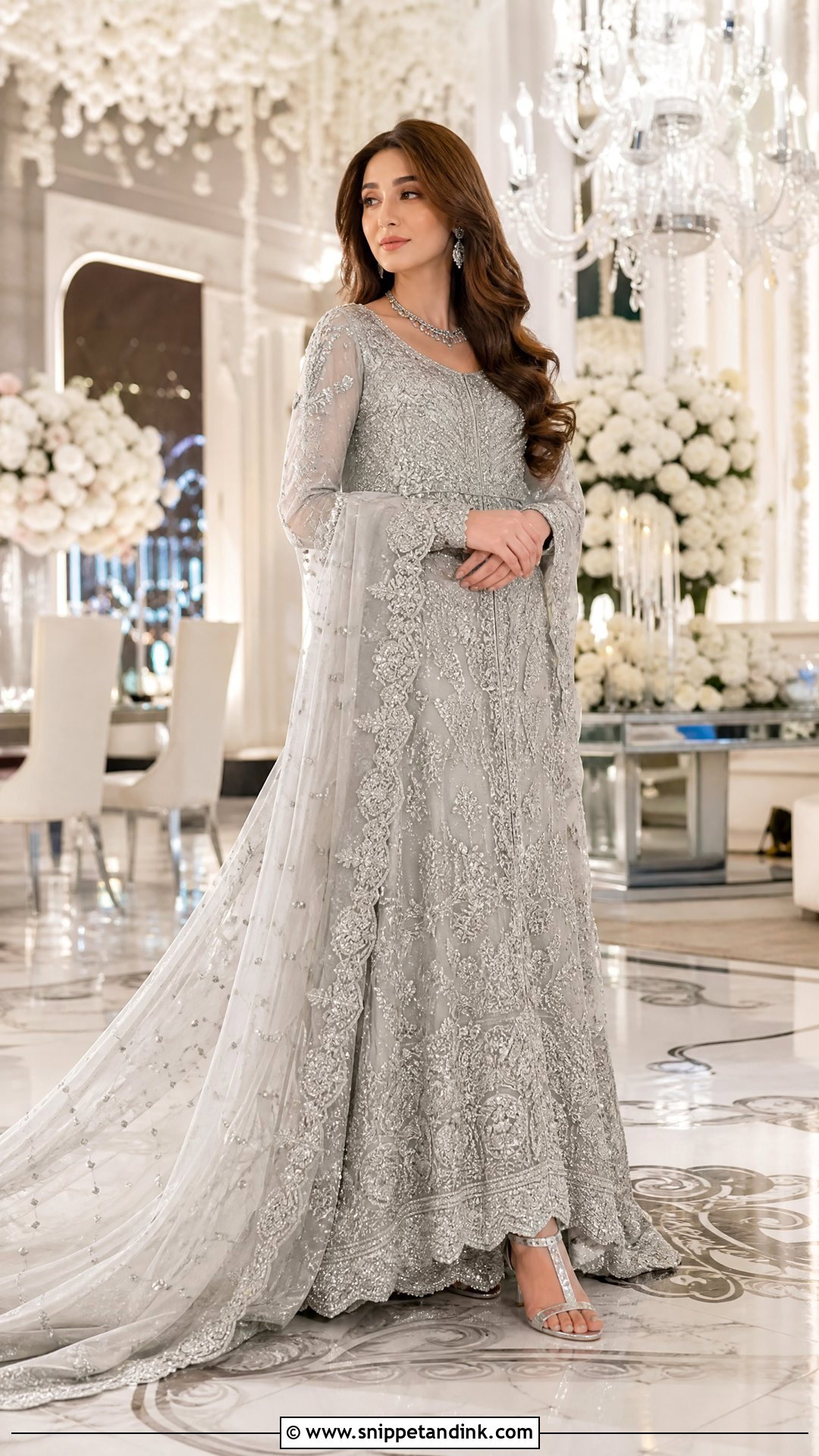
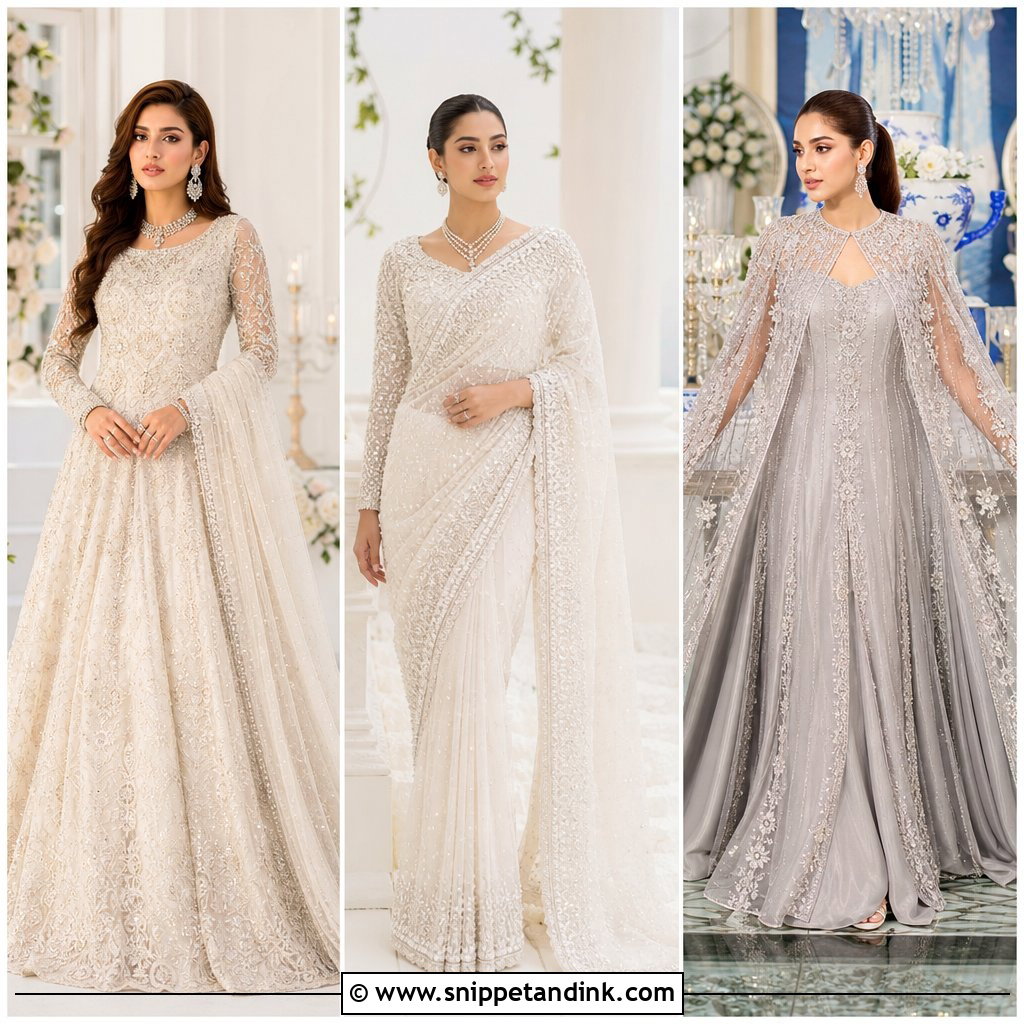
A silver outfit with a long trail is for the bride who wants a formal entrance. A fitted bodice over a flowing maxi or lehenga-style gown carries the trail best. Keep the embroidery tonal with silver sequins, crystals and threadwork so it looks rich but not heavy. A sheer dupatta or cape layer adds drama. Sleek jewellery, soft waves and defined eyes complete it. A trail needs someone to arrange it each time you stand, so give that job to a cousin before the event.
11. Rose Gold Waleema Dress With Bridal Gown
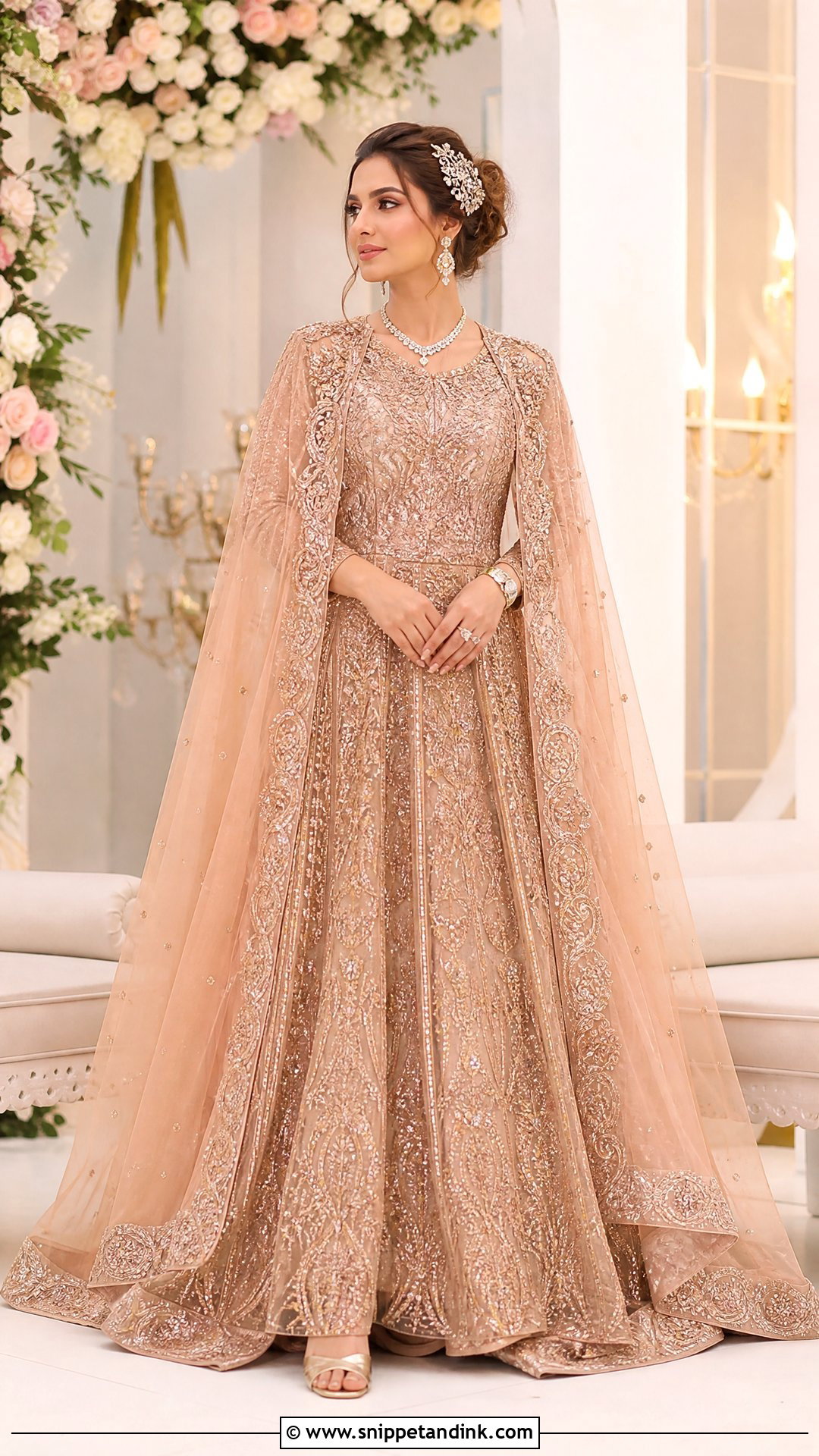
Rose gold brings warmth and a metallic shine without going full gold. A gown with a fitted bodice, gentle flare and delicate embroidery, plus crystals, sequins and pearls, gives depth. On a Western-cut gown, a light dupatta or sheer cape is what makes it read as Pakistani bridal. I mix pearls with kundan or crystals for the jewellery, rose-toned makeup and gold heels. Metallic fabric reflects flash strongly, so a matte powder on the T-zone keeps your face from competing.
12. Beige Waleema Dress With Heavy Dupatta
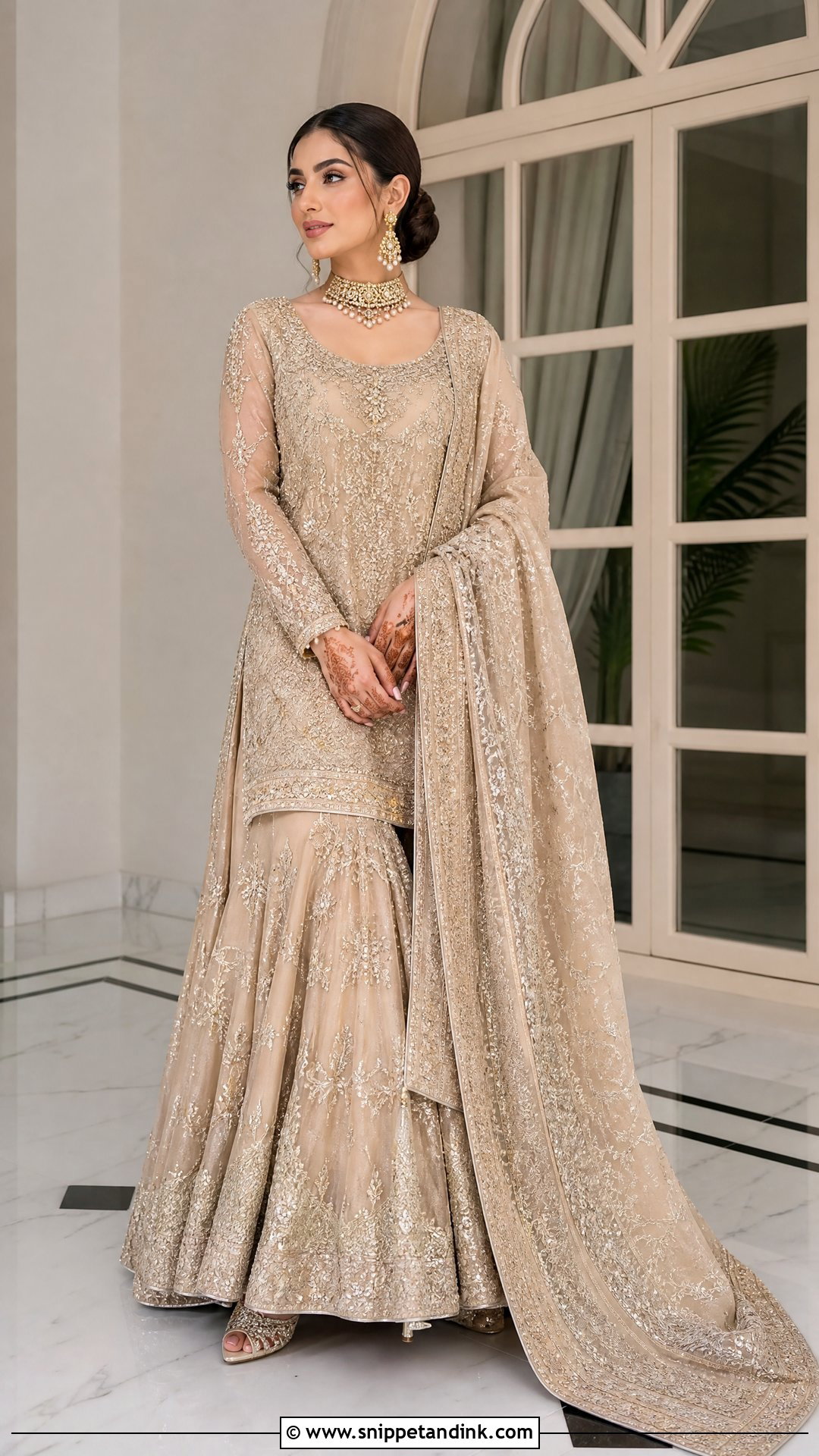
Beige with a heavy dupatta is a clever split. The outfit stays soft and minimal (a long shirt with lehenga, gharara or straight trousers), while a richly worked dupatta with borders, sequins or zari carries the bridal drama. The catch is weight on your head. I’d always pin a heavy dupatta at several points, not just the crown, so it doesn’t drag your hairstyle back. A statement choker and earrings, with a neat bun or soft waves.
13. White Waleema Dress With Pearl Work
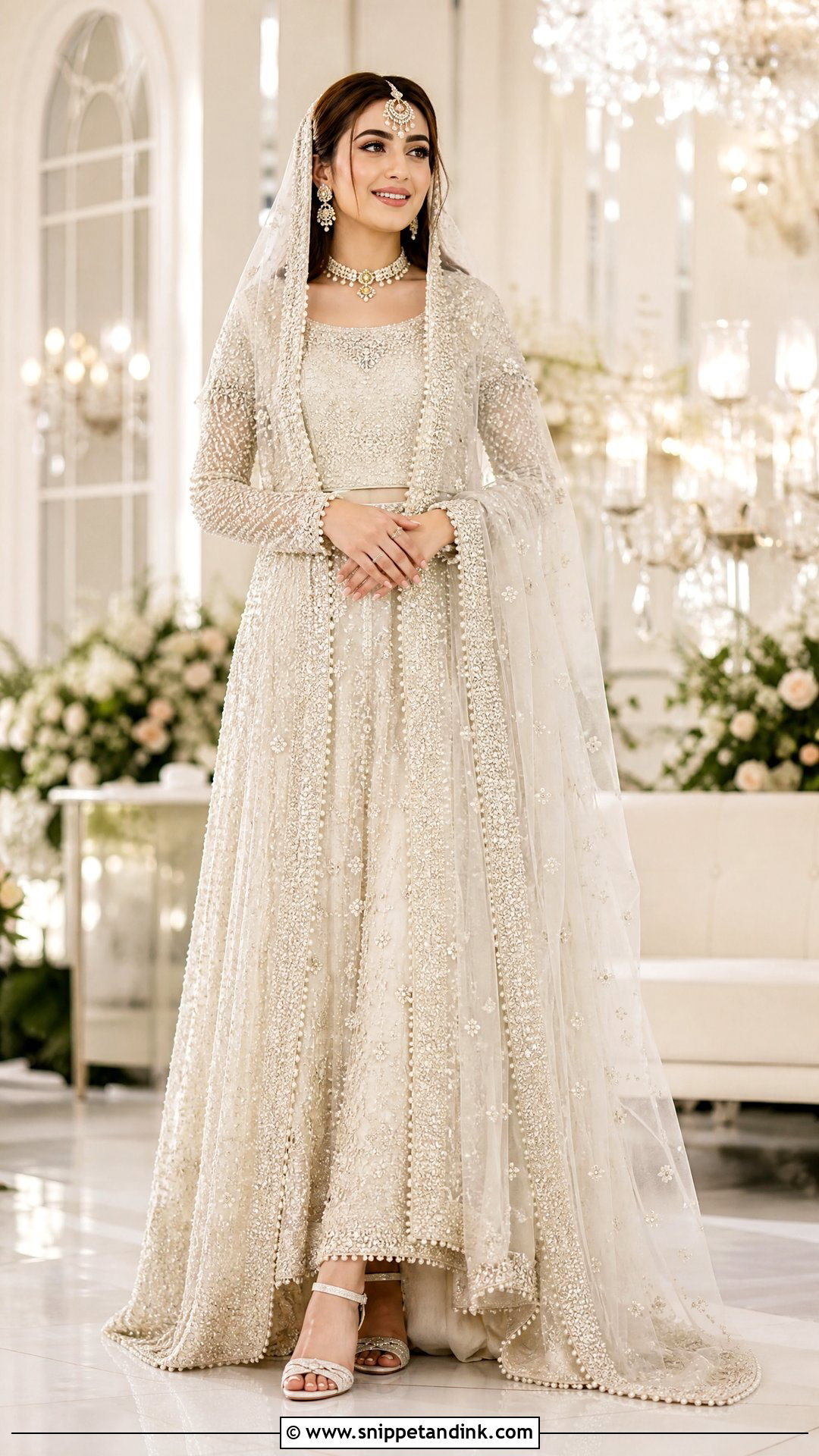
White with pearl work looks fresh and refined, but it needs real embellishment to look bridal. Plain white can read as a guest outfit under hall lights. Choose a white maxi, lehenga or pishwas with pearl detail, silver accents and a rich dupatta. Pearl jewellery, a soft tikka and glowing makeup complete it. White shows every mark, so I pack a stain pen and baby wipes in the emergency kit for this one.
14. Dusty Pink Waleema Dress With Kundan Jewelry
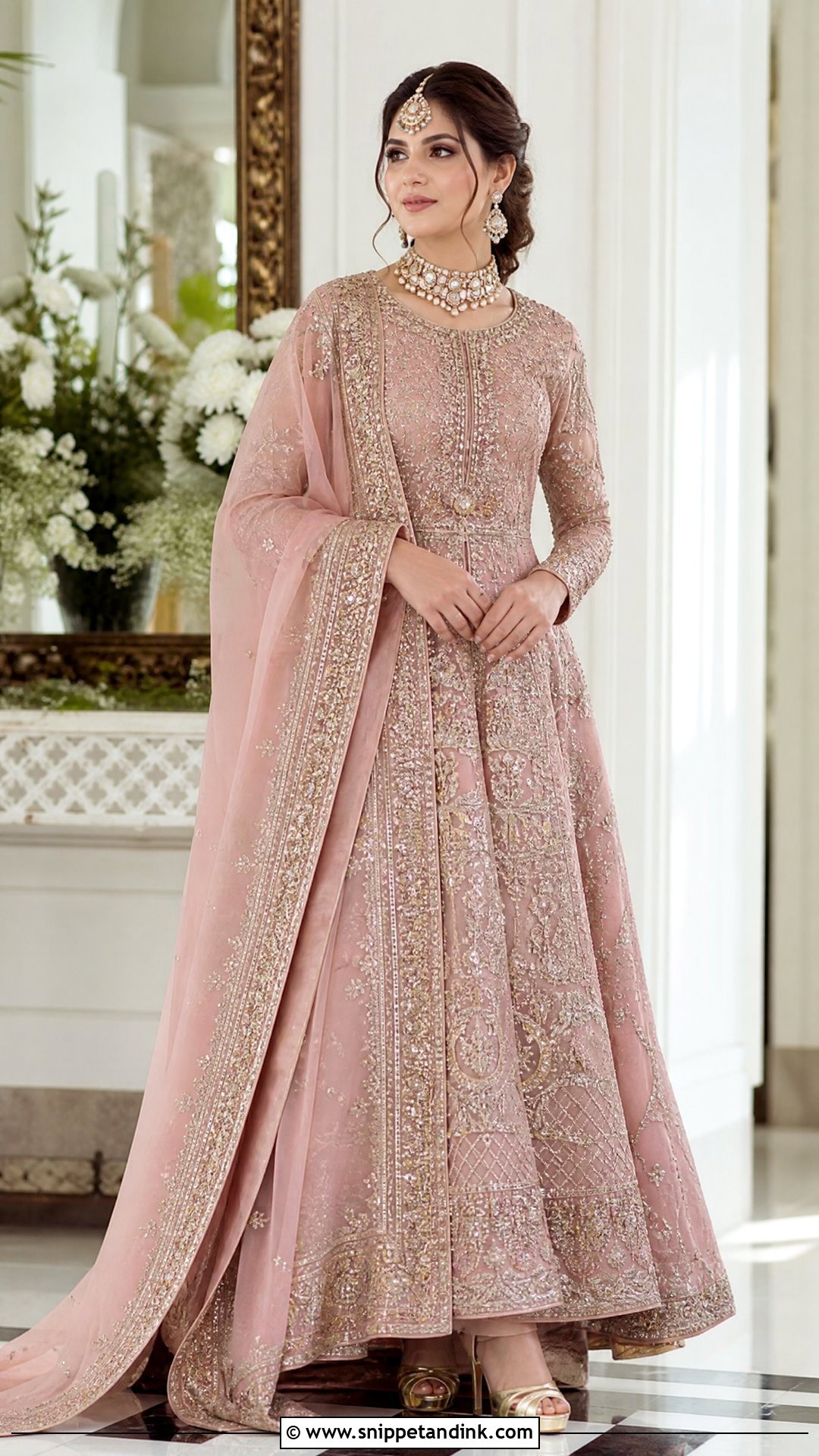
Dusty pink is the grown-up version of pink, less sugary than baby pink and well suited to evening. A long shirt with lehenga or a flowing pishwas, embroidered in antique gold, silver or champagne thread, works. Kundan jewellery makes it feel complete. Keep the dupatta delicate, with a border and scattered motifs. Soft brown eyes, a pink lip and embellished heels you can stand in for hours.
15. Lilac Waleema Dress With Silver Jewelry
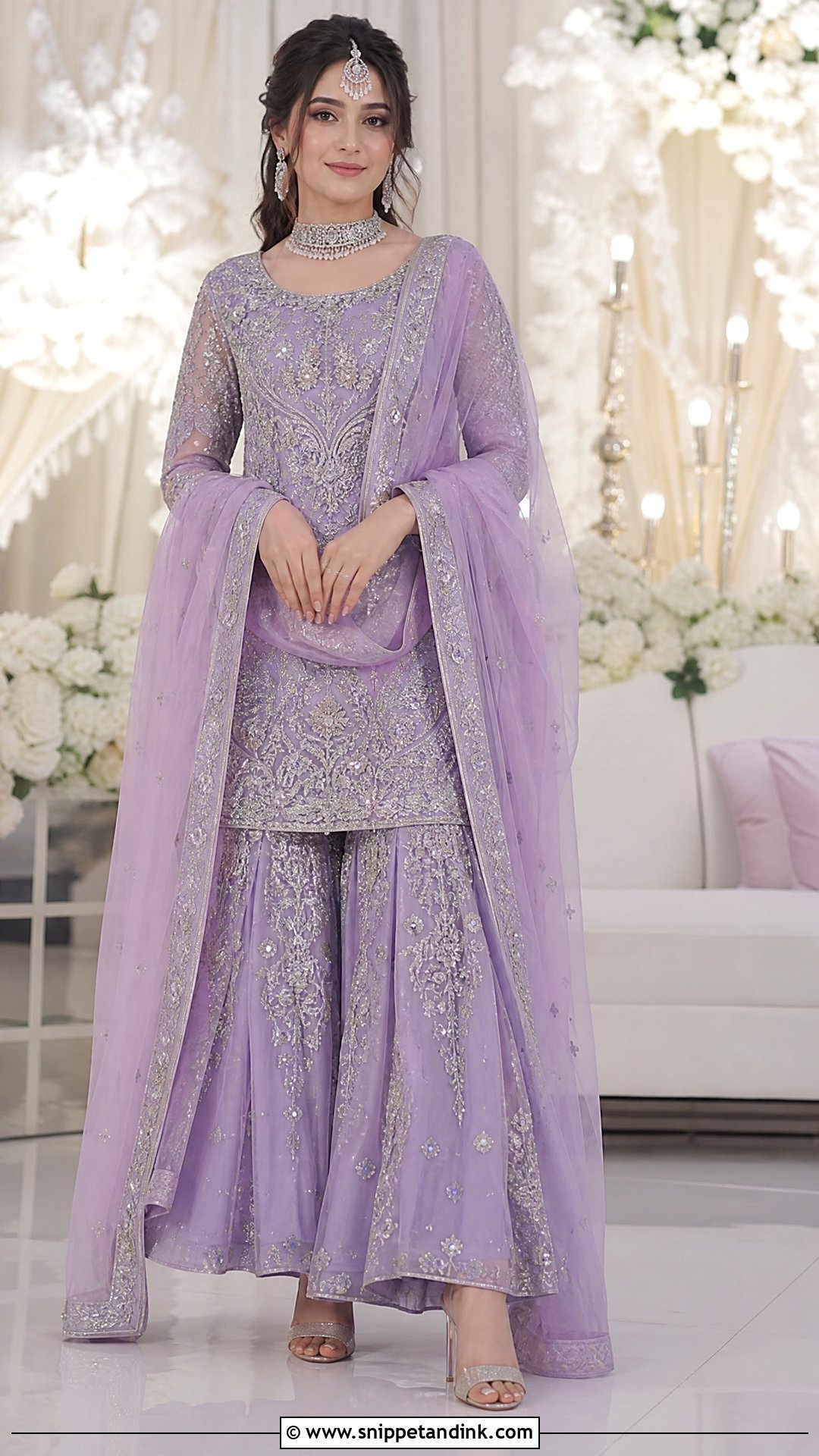
Lilac reads young but polished. A flared maxi, lehenga or sharara set in lilac, with silver zari, crystals and pearls, stays bright. Silver jewellery ties it together, especially a choker with matching earrings and a tikka. A sheer dupatta softens the face. Lilac is one of the pastels I’d test on camera before ordering, because some dyes lean blue and others pink depending on the light.
16. Sage Green Waleema Dress With Lehenga
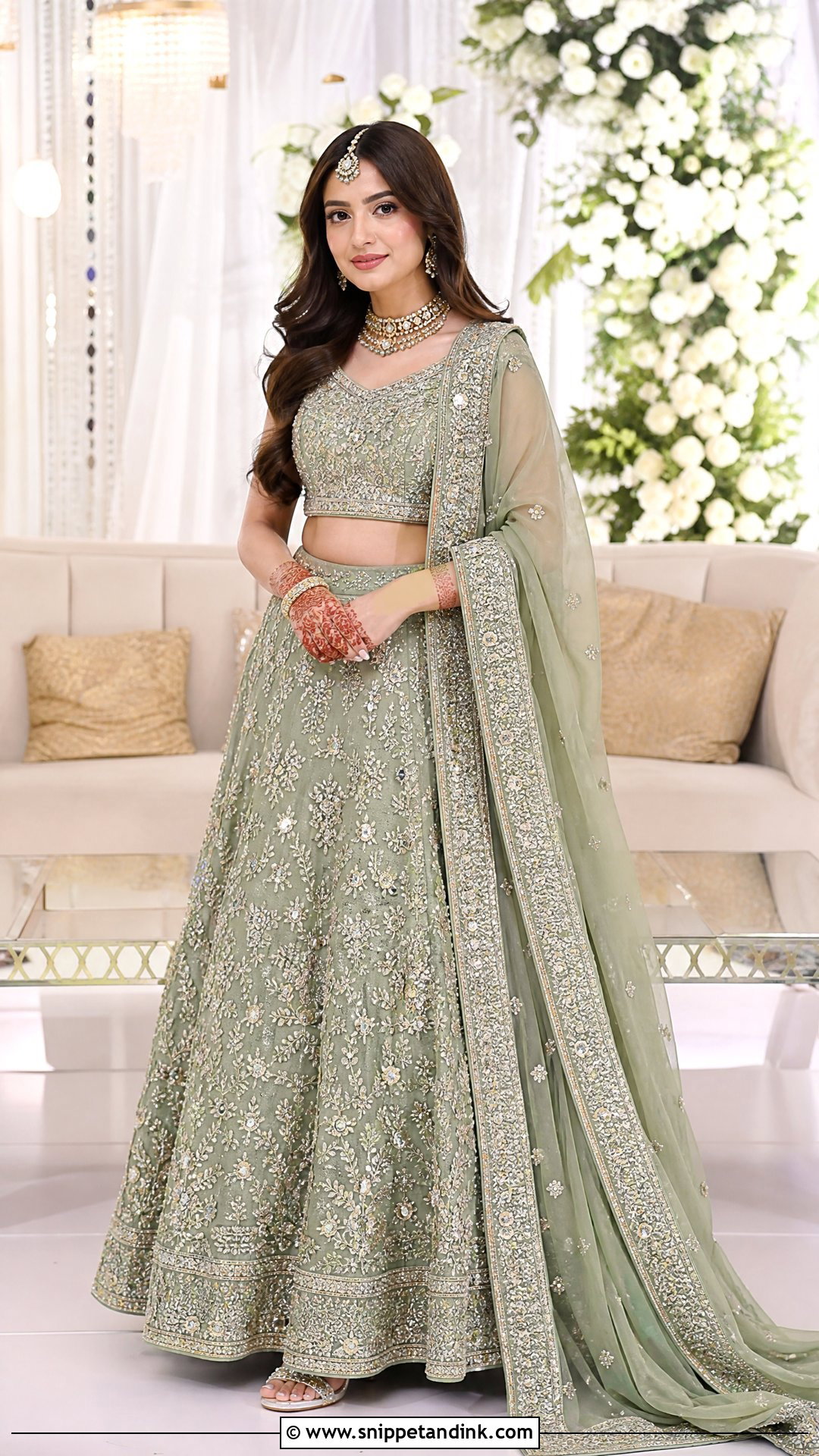
Sage green is calmer and more muted than the usual pastels, and it looks rich without being loud. A sage lehenga with a short blouse or long kameez takes silver, gold or pearl embroidery. A matching dupatta with soft border work keeps it unified. Polki, neutral makeup and soft waves suit it. Earthy greens can pull sallow on cooler skin, so I’d try it in daylight first.
17. Pistachio Waleema Dress With Short Shirt
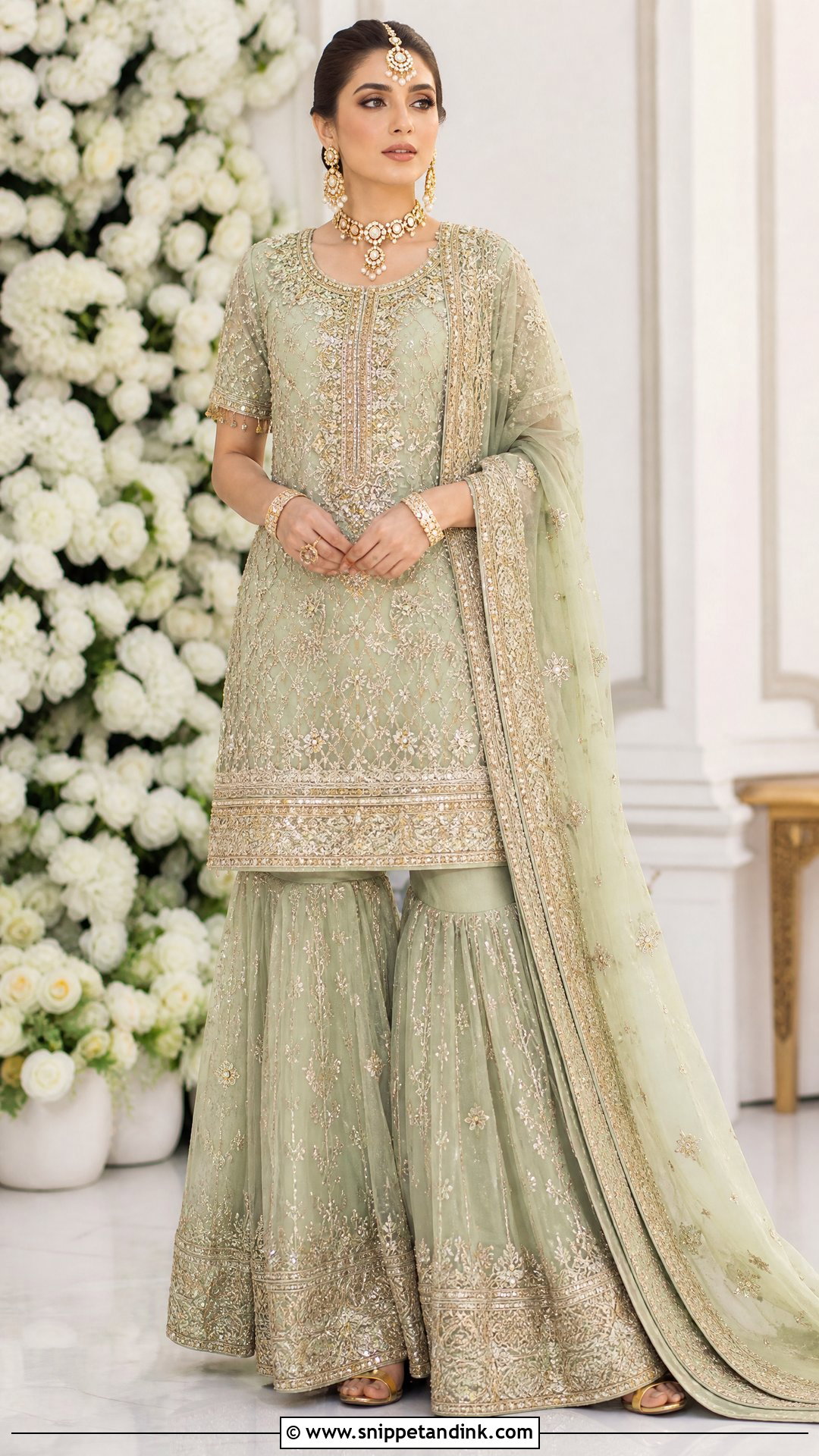
A short shirt suits a gharara, sharara, or wide lehenga, because it shows off the volume below. Pistachio is softer than bright green, which keeps the look calm. Delicate gold, silver or pearl embroidery suits a reception. Drape a sheer bordered dupatta over the head for a classic finish. A short shirt shows the waistband, so check how the lehenga or gharara sits when you sit and stand, and have the drawstring replaced with a hook if it bunches.
18. Mauve Waleema Dress With Embroidered Cape
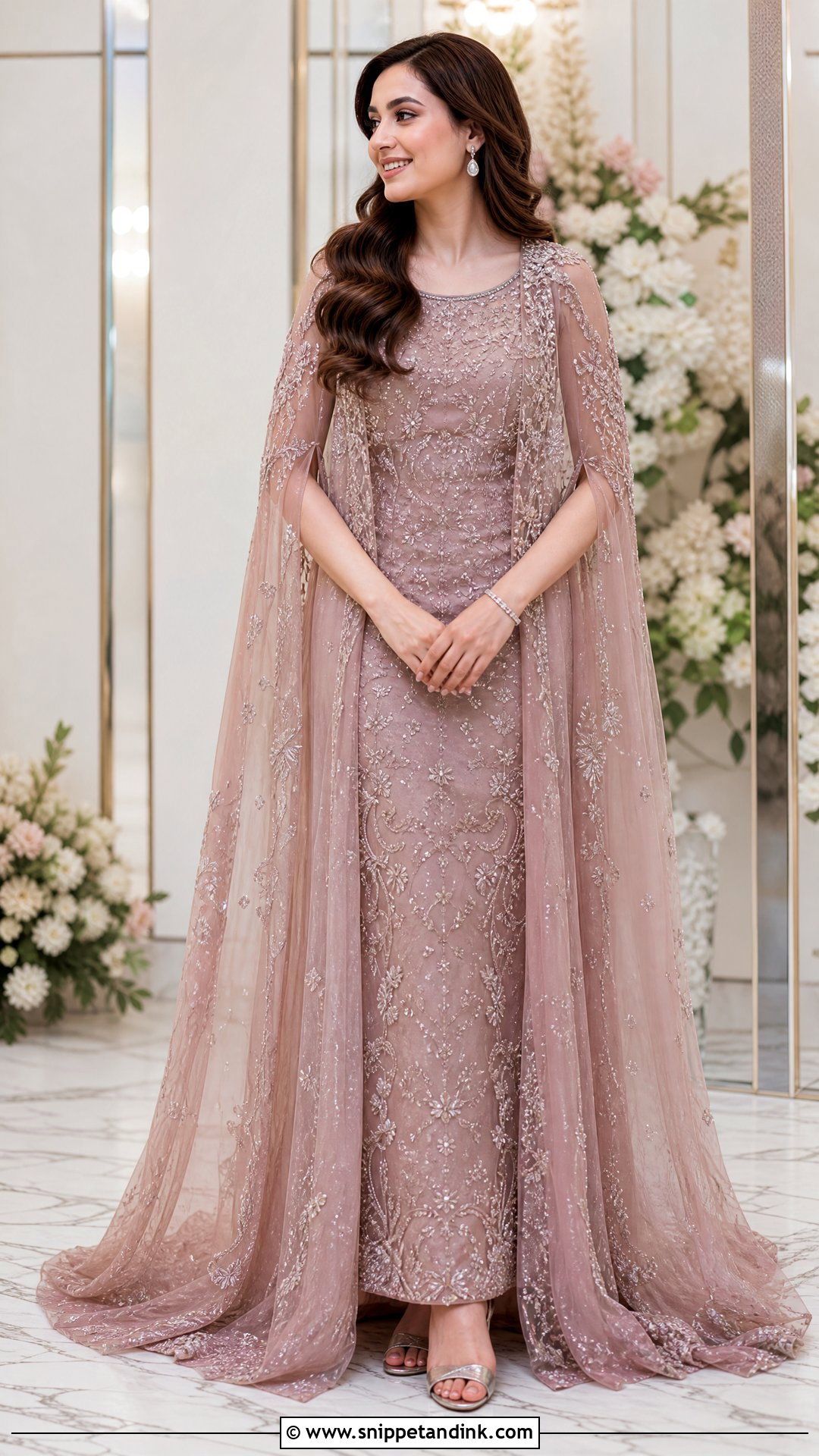
Mauve is deeper than lavender but still soft enough for a reception. Layer a sheer embroidered cape with pearls or crystals over a fitted gown or lehenga set and you get movement without a heavy dupatta. Keep jewellery simple so the cape leads. Soft curls, a sleek bun or half-up hair can all work. I like a cape for brides who find dupattas fiddly, since it stays put and frees both hands for greeting guests.
19. Light Gold Waleema Dress With Farshi Gharara
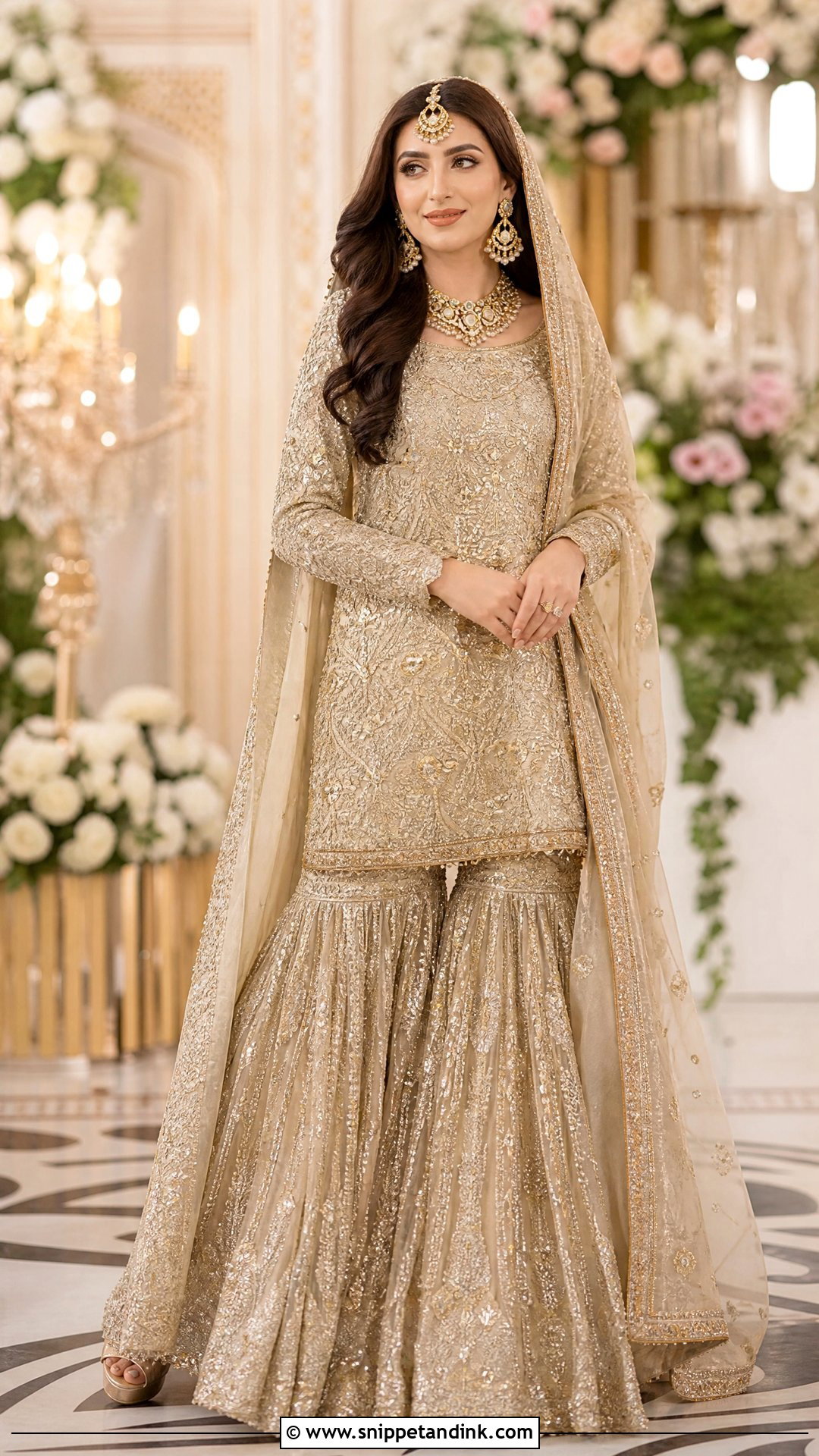
The farshi gharara sweeps the floor and trails slightly behind, so it feels royal the moment you stand. In light gold it stays regal without darkening. A short kameez with detailed embroidery balances the wide hem. Matching dupatta borders, then kundan, polki or pearls. Fair warning: a farshi gharara is hard to walk in quickly and needs lifting on stairs, so plan your entrance route and keep your shoes low.
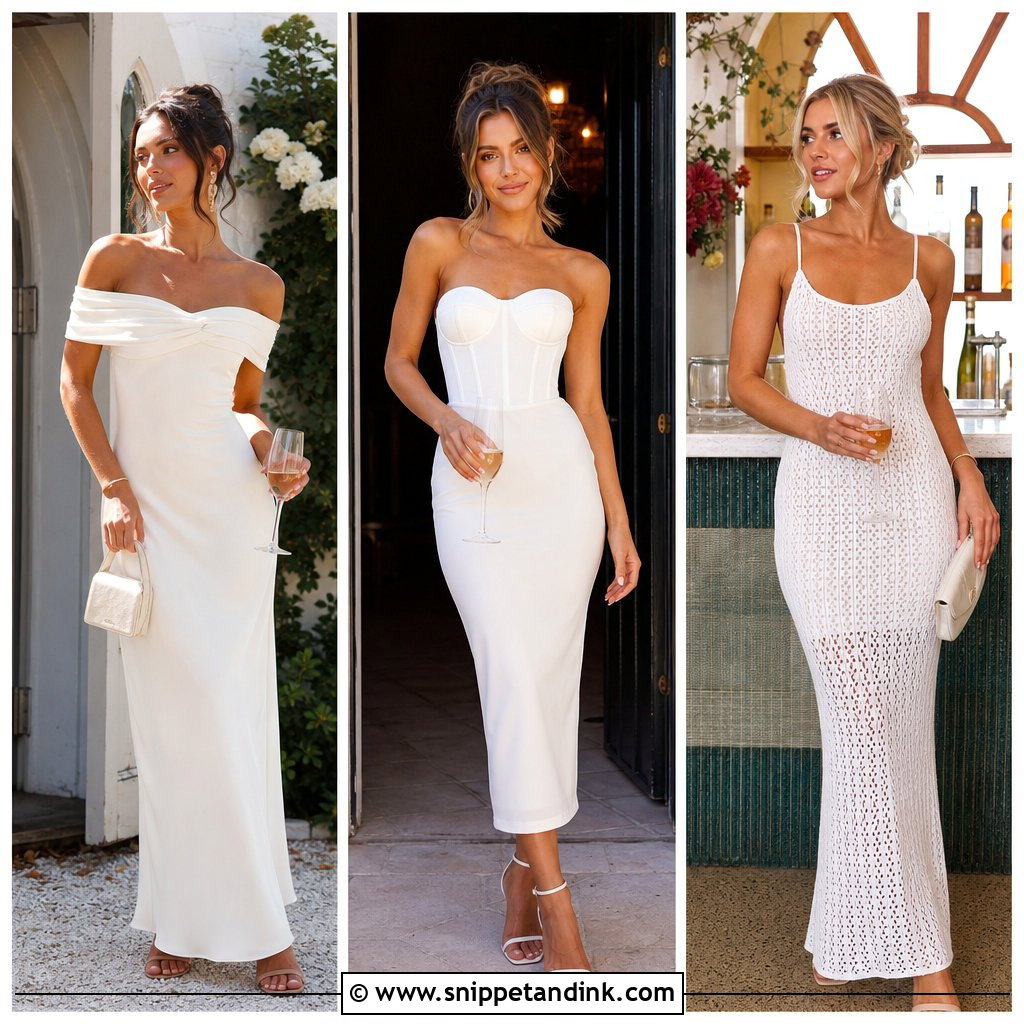
20. Powder Pink Waleema Dress With Long Shirt
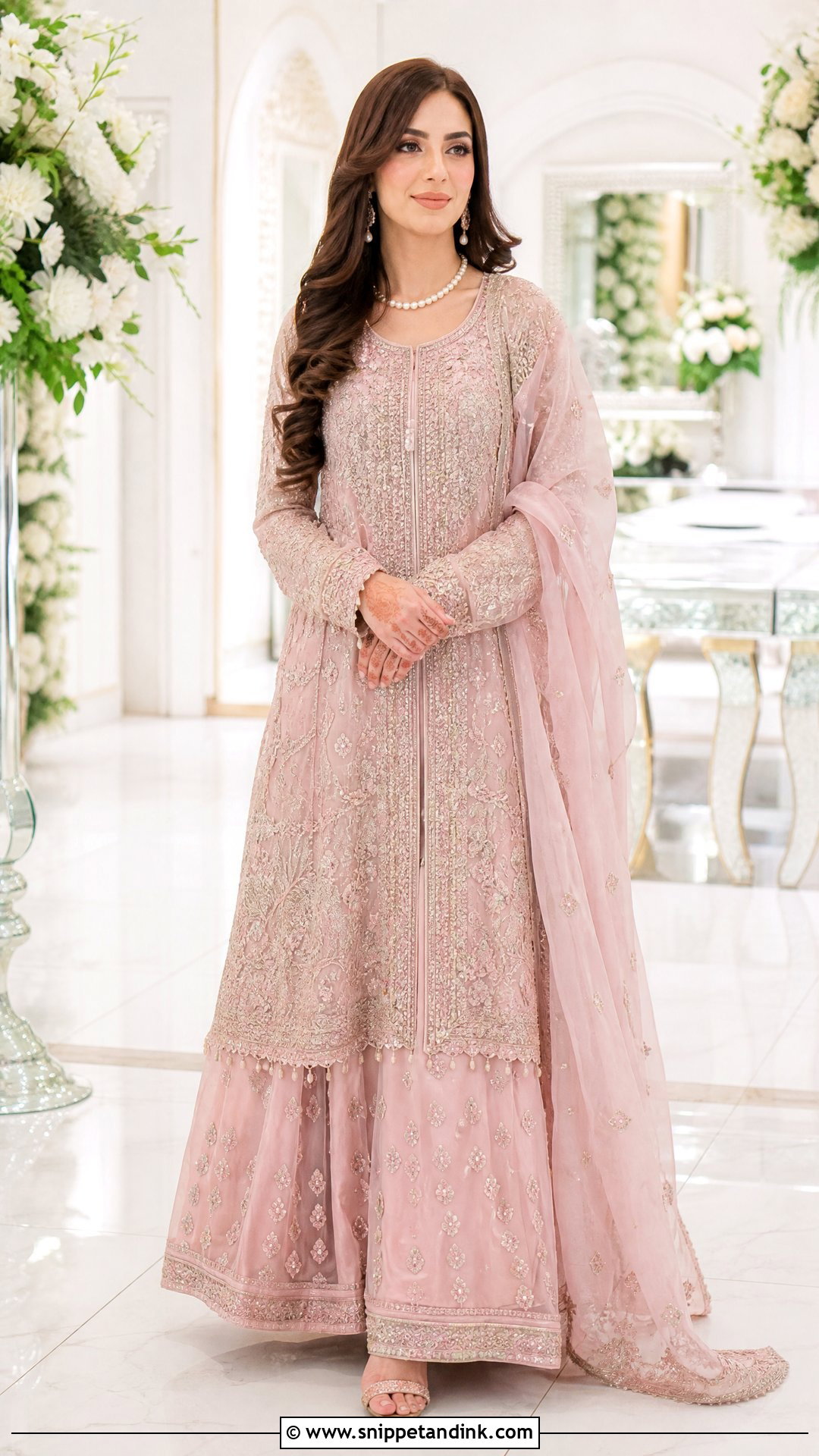
A long shirt is the easiest silhouette to style and to wear for hours. Pair it with a lehenga, straight pants or a gharara depending on how much volume you want. Powder pink keeps it soft; silver, pearl or champagne embroidery adds the richness. A matching dupatta with light borders frames it. It’s a good pick if you prefer coverage, and long shirts hide a slightly loose waistband if you’ve lost weight since measuring.
21. Aqua Waleema Dress With Crystal Work
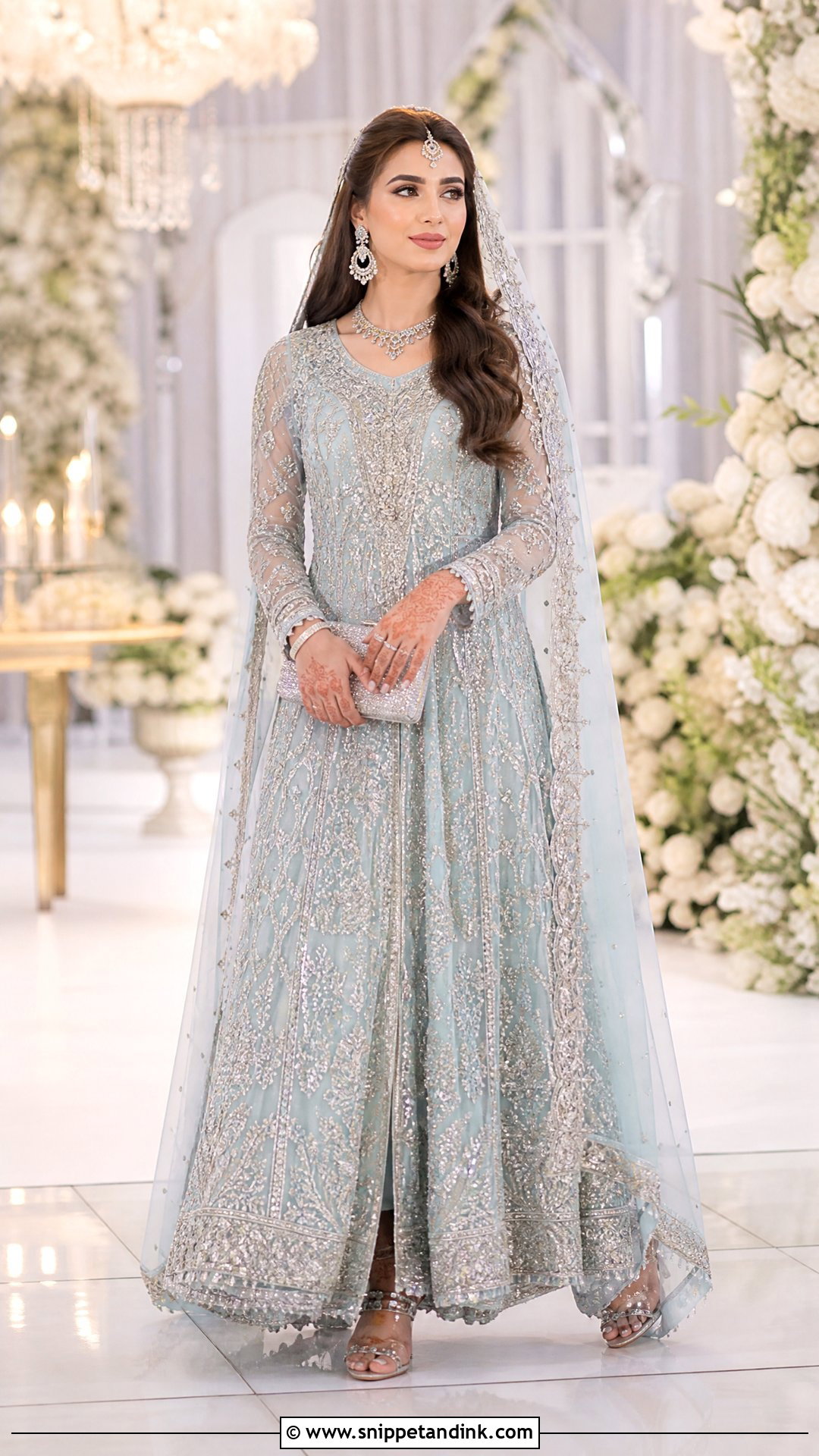
An aqua Waleema dress with crystal work feels cool and luminous. A maxi, lehenga or pishwas in aqua with crystals, sequins and pearls catches the light every time you move. Keep the dupatta airy in net or organza. Silver jewellery is the obvious partner, with glossy makeup, soft eye definition and a neat hairstyle. Crystal work can scratch a net dupatta, so I ask tailors to back the stones on the bodice where the dupatta rubs.
22. Tea Pink Waleema Dress With Zardozi Work
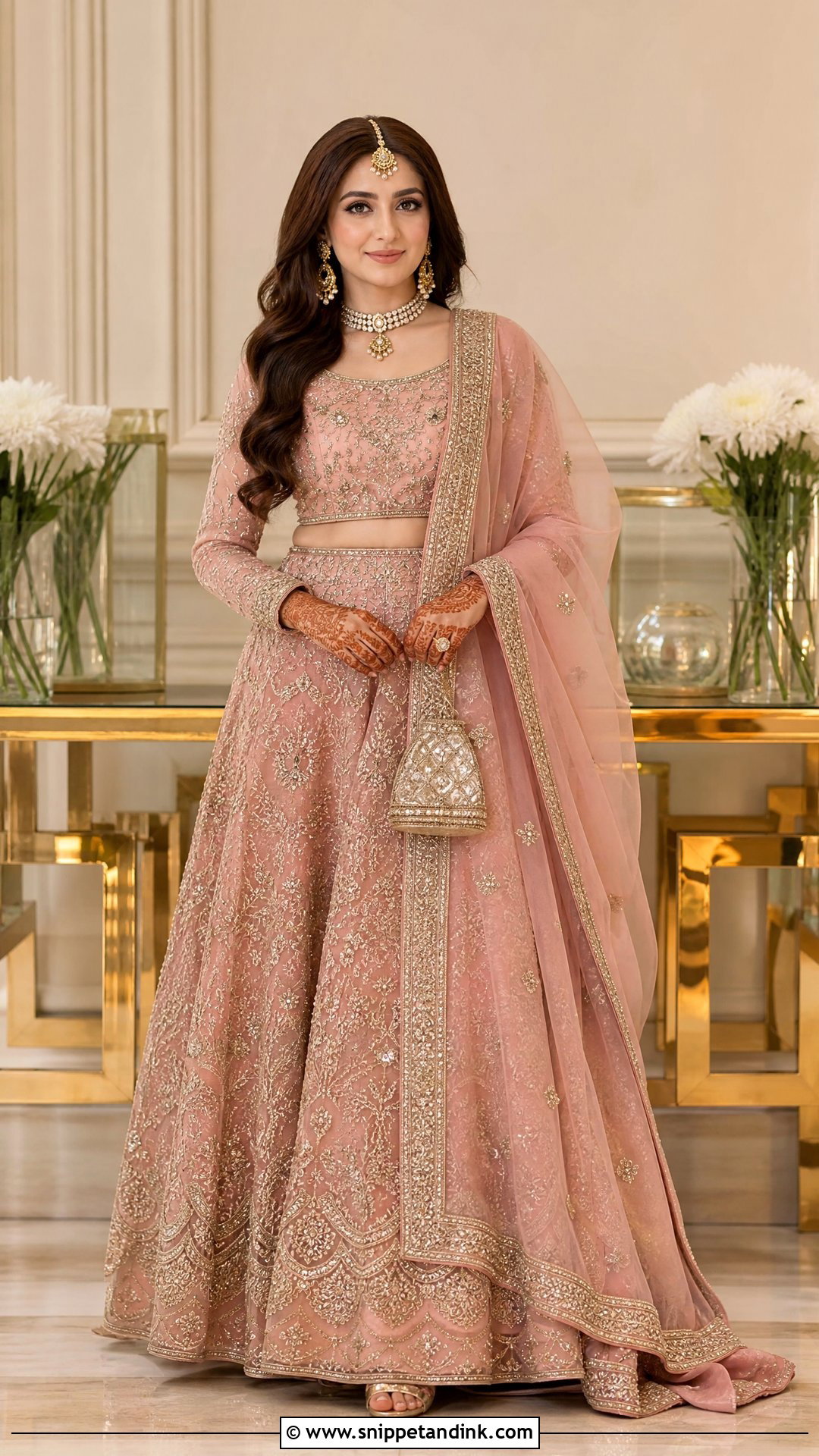
Tea pink is warm and muted, more grown-up than bright pink, and it loves antique gold zardozi. Pearls and subtle sequins finish the work. A lehenga choli, long shirt or pishwas all suit it. Zardozi is raised metal thread, so it’s heavy and can catch on lace or net. Keep the dupatta coordinated with a border rather than all-over work. Kundan, soft makeup and gold heels.
23. Grey Waleema Dress With Sequin Work
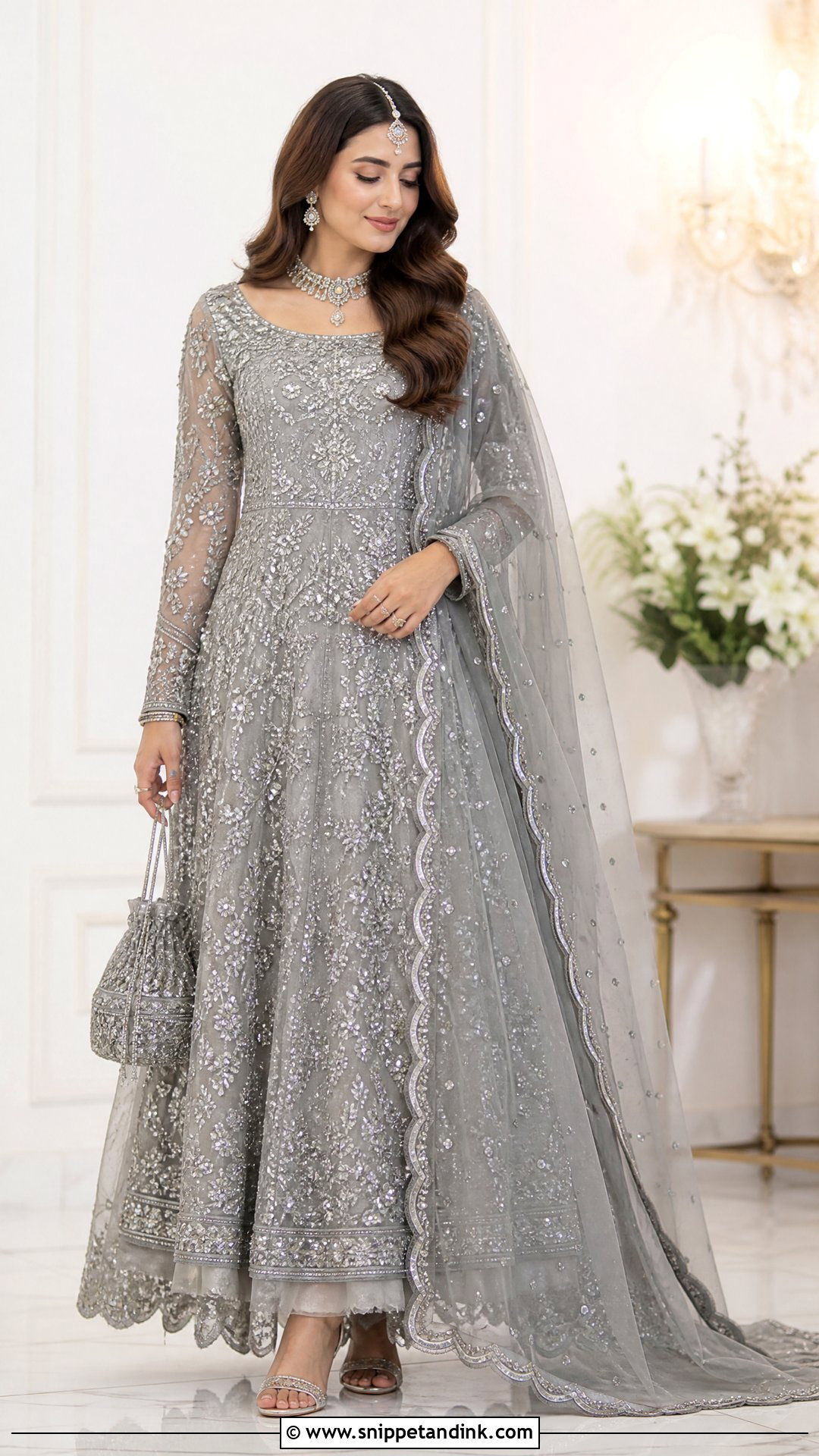
Grey sounds unbridal until you see it with tonal sequins, crystals and pearl embroidery. Soft grey, dove grey or silver-grey on a structured gown, lehenga or maxi looks chic in the evening. Refined embellishment is what stops it looking plain. I’d always choose a warm-leaning grey for the bride’s face, because a cool one can make skin look tired under hall lighting. Silver jewellery, a sheer dupatta and a soft lip.
24. Fawn Waleema Dress With Traditional Dupatta
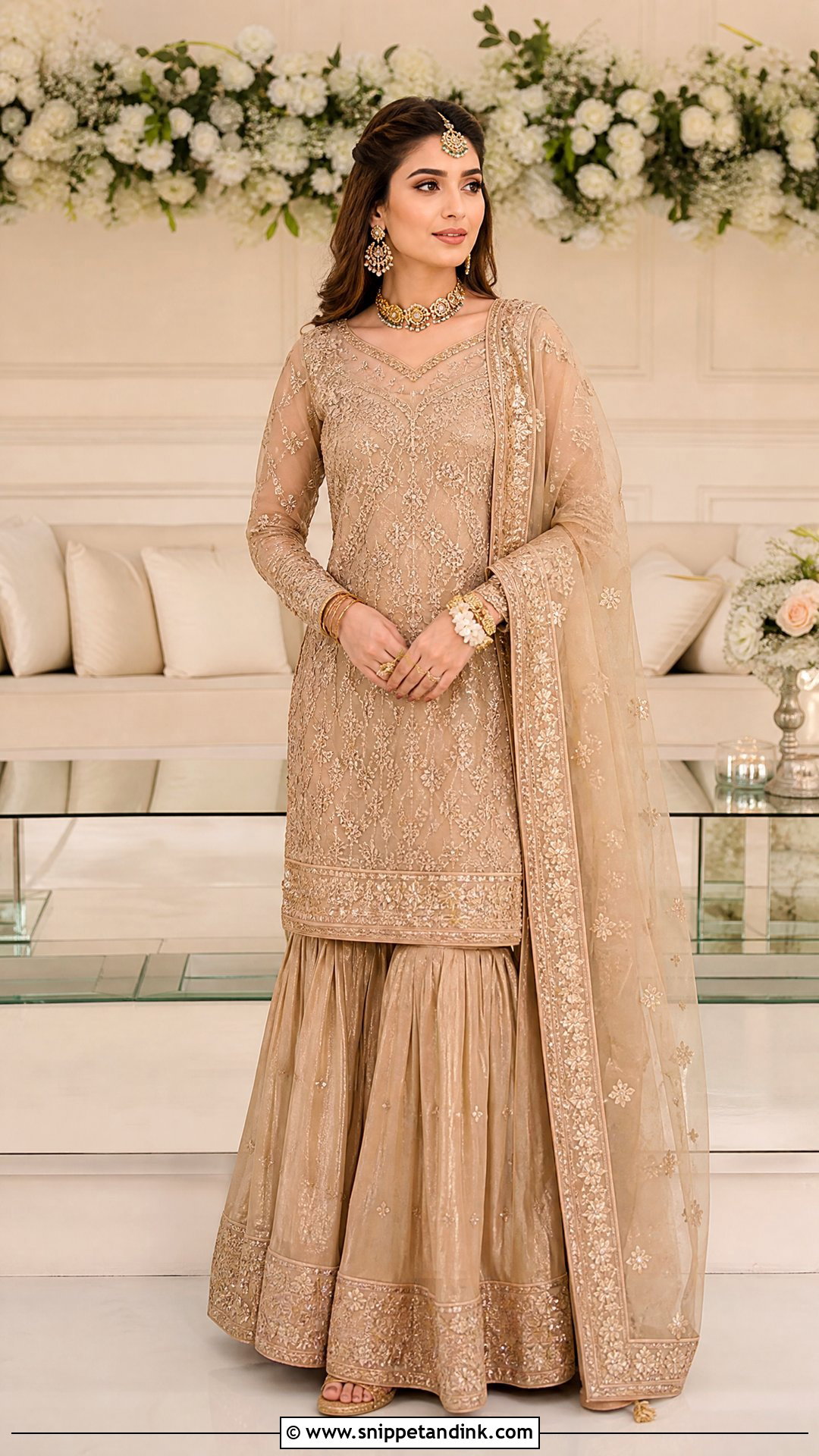
Fawn has a soft beige-brown warmth that works with gold, champagne or pearl embroidery. A long kameez with lehenga or gharara gives a traditional shape, while the dupatta carries the statement with detailed borders, small motifs or light kamdani. Antique gold jewellery, glowing makeup and a neat hairstyle complete it. Fawn suits a bride who likes quiet luxury, but bring a brighter lip so the face doesn’t fade into the outfit.
25. Pastel Multi Color Waleema Dress
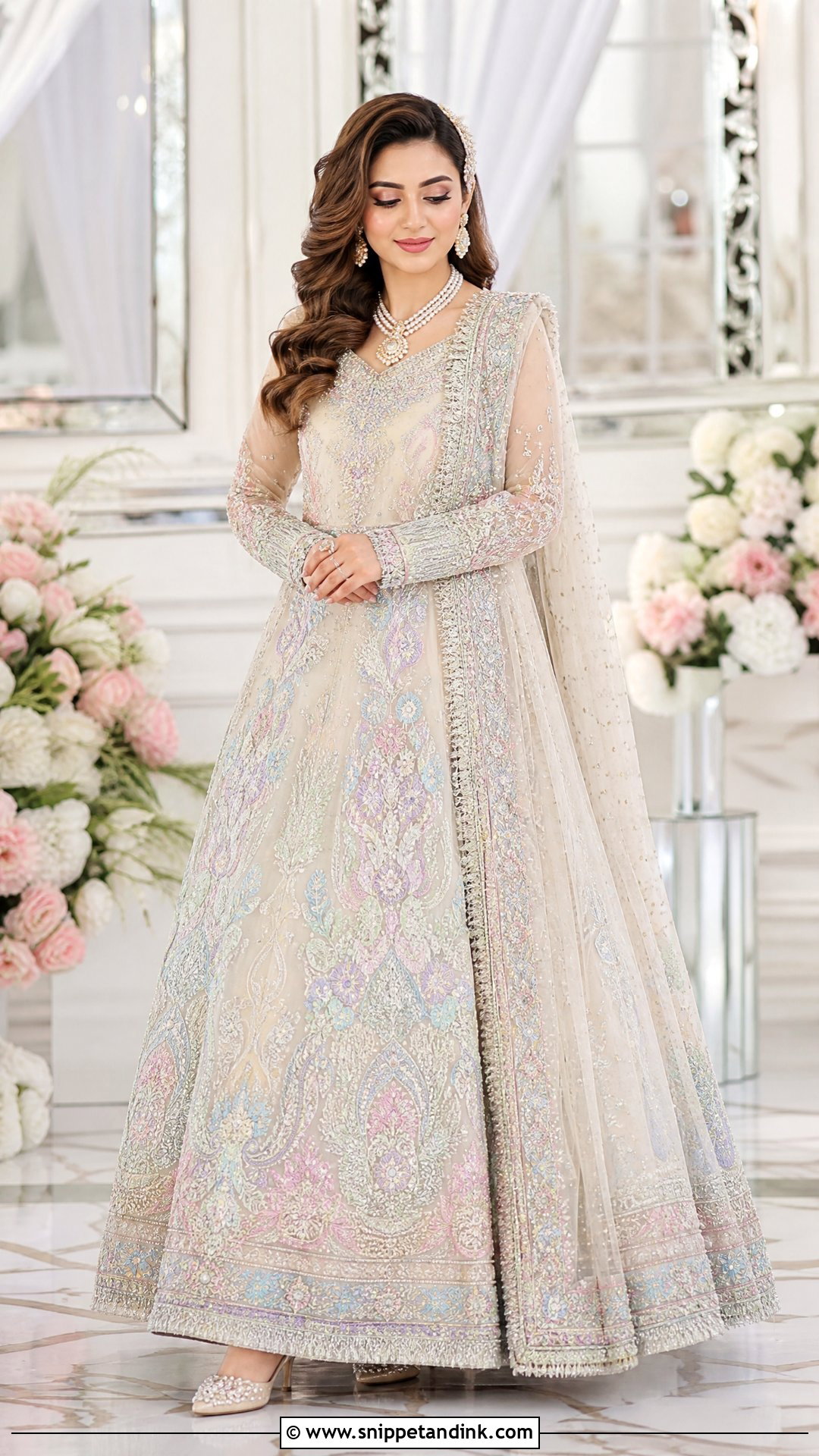
A multicolour pastel outfit is for the bride who can’t settle on one shade. It works only when there’s one clear base: ivory with blush, mint, powder blue and lavender worked into embroidery or panels. A lehenga, pishwas or maxi can carry it. Skip bold contrasts. Pearl or kundan jewellery, a soft dupatta and simple heels. I’d keep the dupatta in the base colour, otherwise the whole thing starts to look like a sample card.
How a Pastel Outfit Holds Up Over Hours on the Stage
Walima receptions involve long stretches on stage or at a sofa, greeting family and posing for group photos. That changes what matters.
The dupatta
I secure a head dupatta with small hairpins at the crown and both sides, and a brooch or pin at the shoulder, so it survives repeated hugs. Net slips more than organza, so it needs more pins. Bring spare safety pins in the dupatta’s colour.
Sitting for photos
Pale fabrics show creases sharply in photos. When you sit, have someone spread the lehenga or gharara around you before each group shot. A long trail should be laid out in front of the sofa, not bunched beside it.
After the event
Pastels and ivory show makeup marks and food spots quickly. Take the outfit to a dry cleaner who handles embroidered bridal wear, and point out every stain. Store it folded in a muslin or cotton cloth, not plastic, with the embroidery padded by tissue so metallic threads don’t crush or tarnish. Refold along different lines every few months to stop permanent crease marks.
Light Colours, Lighter Fabric, Same Bridal Presence
A good Walima outfit should feel light enough to wear for hours and still look like you’re the bride. Pastels, ivory, champagne, mint, ice blue and soft pinks suit receptions because they photograph well and sit lighter than baraat reds. Whichever shape you pick, a lehenga, a maxi, or pishwas, gharara, sharara, or cape outfit, let the embroidery, dupatta, jewellery and makeup support one another. Test the colour in the right light, weigh the outfit in your hands, and plan the dupatta before the day.
You'll Like These Ideas:


Leave a Reply