
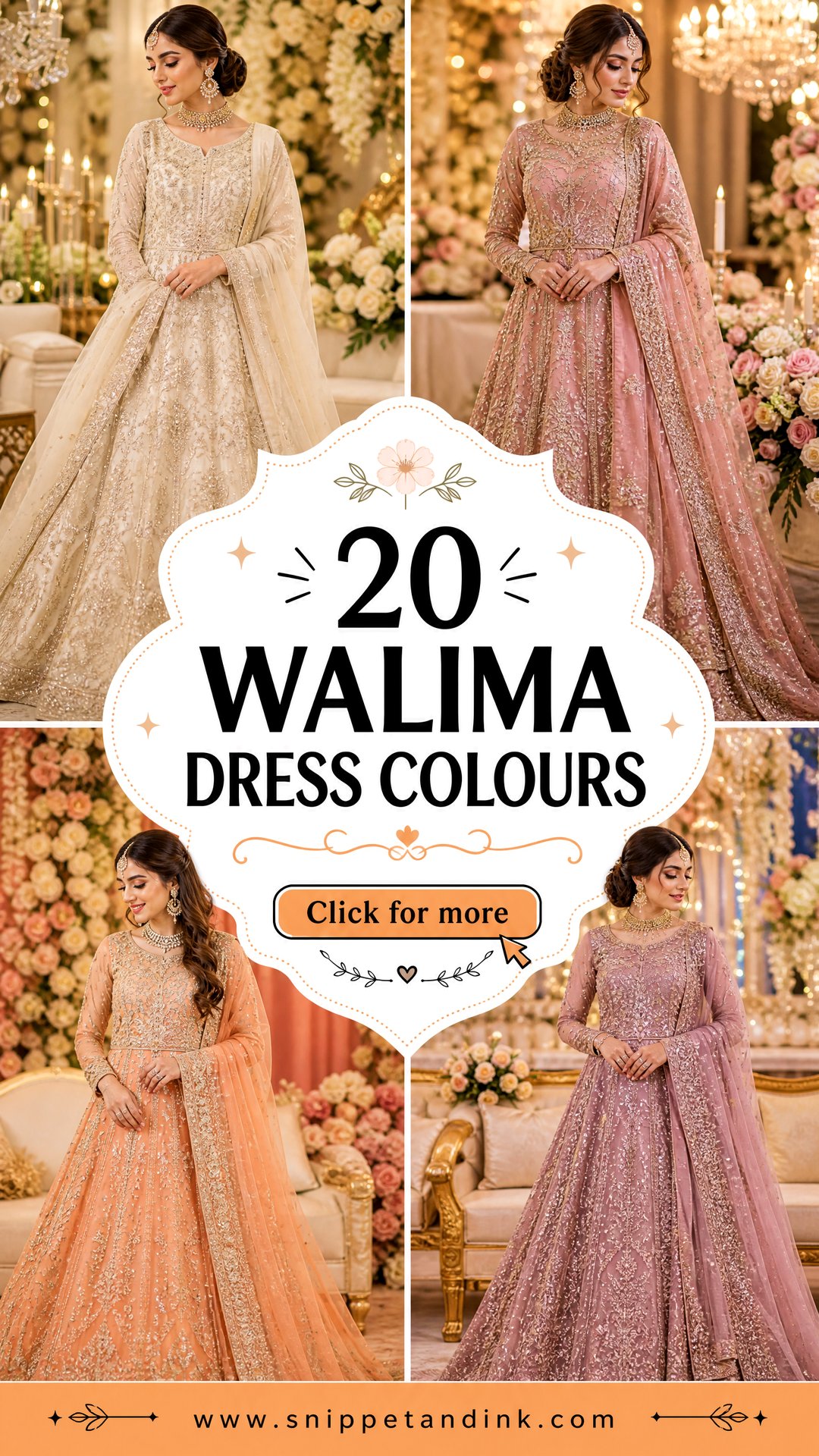
The Walima is where many brides finally get to wear the color they actually love, after the red of the Barat. The shades below run from soft neutrals and pastels to deep jewel tones, each styled as a full look with silhouette, embroidery, dupatta, shoes and jewelry. When I help a bride decide, I weigh four things together: her undertone, the venue lighting, the metal of the embroidery and what she wore at the Barat. Fabric changes everything as well. Velvet swallows light and deepens a color, satin throws it back, and organza lets a pale shade glow through layers.
Holding Swatches Under Your Chin Before You Commit
A color that looks wonderful on a mannequin can drain the life from a bride’s face. The fastest test I know takes ten minutes, needs no makeup and saves a lot of regret later.
- Wash your face, pull your hair back and stand by a window in daylight.
- Hold each fabric swatch right under your chin. Watch your skin, not the fabric: do shadows deepen, or does your face brighten?
- Lay a gold piece of jewelry and a silver one against your wrist. Whichever looks livelier usually tells you whether warm or cool embroidery suits you.
- Repeat the best two swatches under warm indoor bulbs, then photograph them with flash on your phone.
I also put the Barat outfit beside the shortlist. Most brides want contrast between the two events in photos, so a deep maroon Barat pairs naturally with an icy or pastel Walima, while a pink Barat might call for green, gold or blue.
1. Ivory Walima Dress
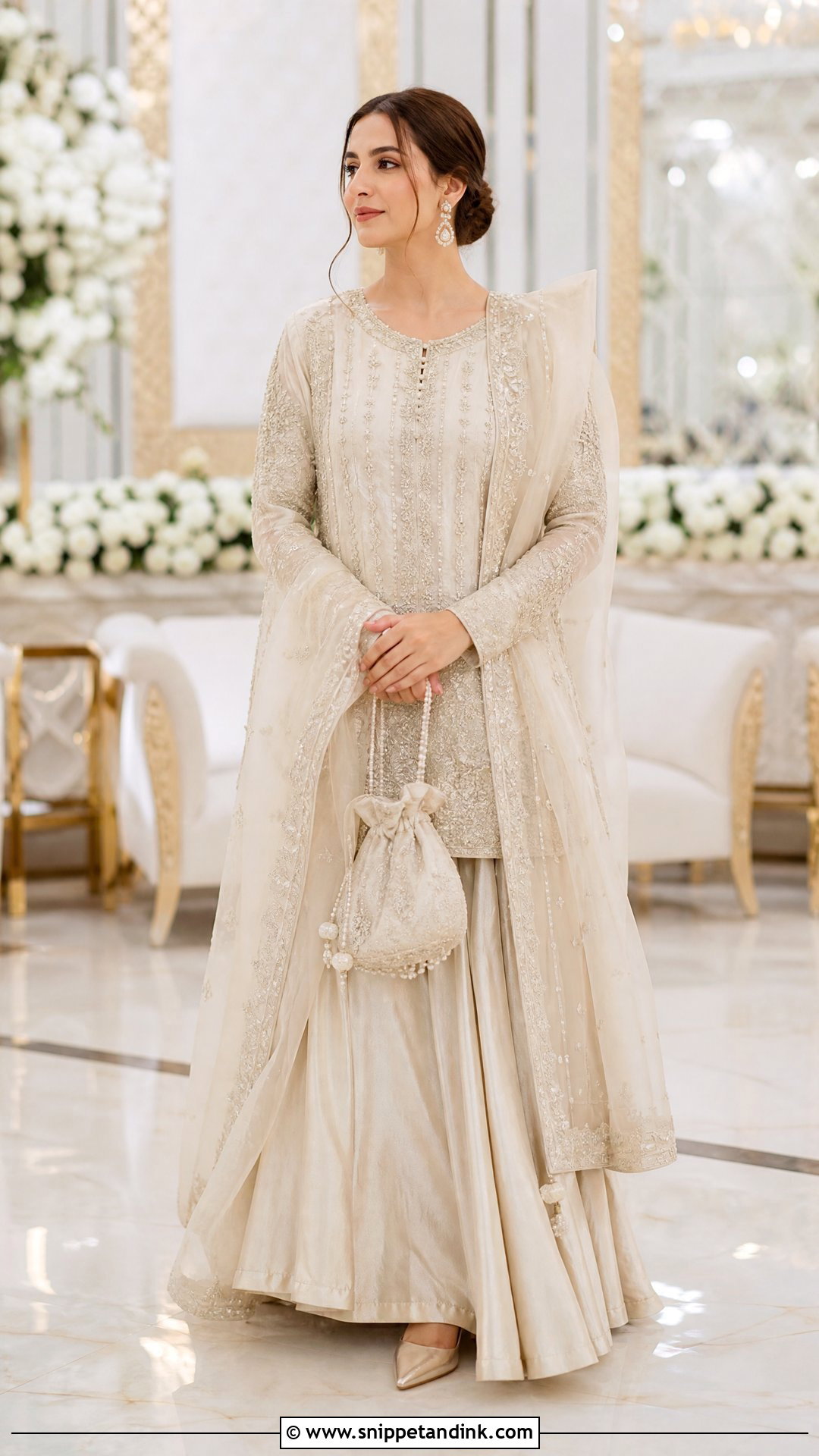
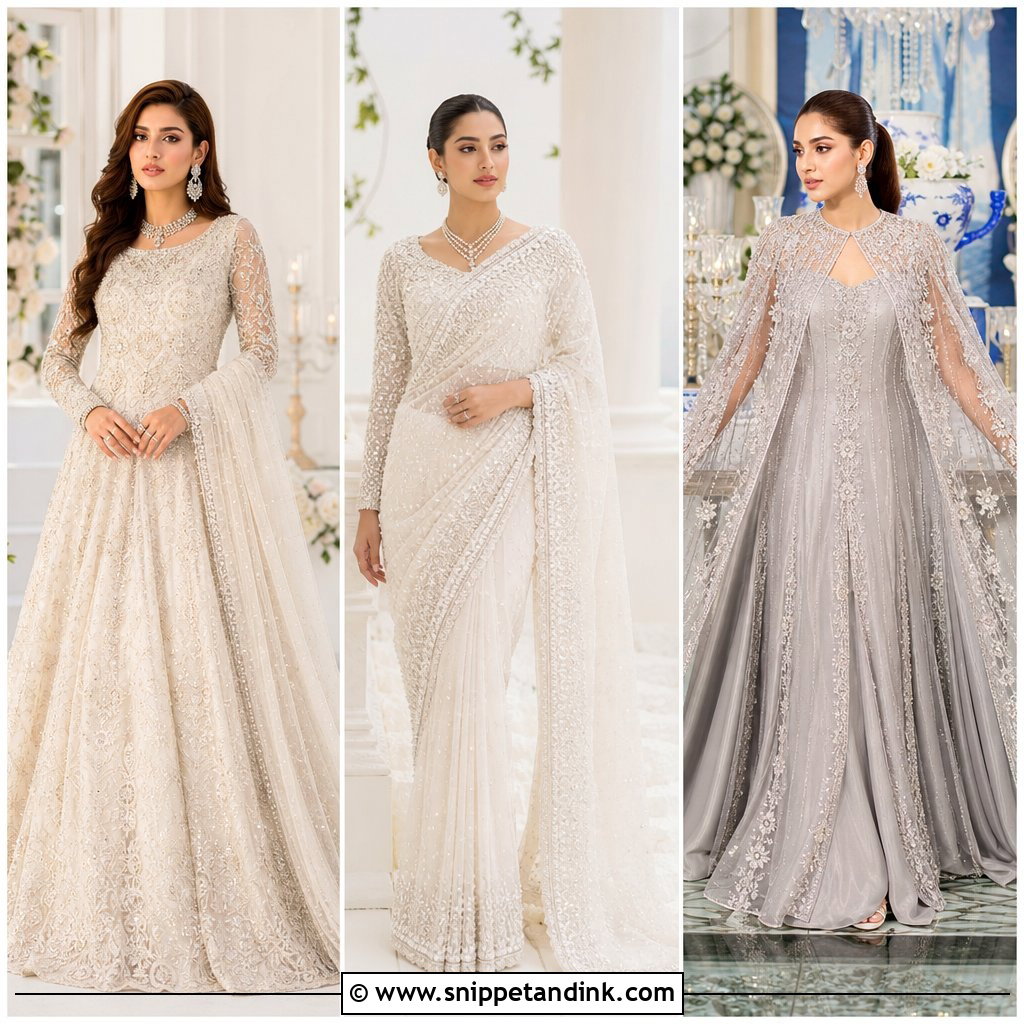
Ivory reads clean and bridal without the hard glare of optic white under hall lights. Raw silk or tissue in a flowing lehenga, with tonal threadwork, pearls and a little silver, keeps it soft; a fitted long shirt or peplum adds shape. I match the ivory to the skin first: creamy ivory for warm undertones, a brighter shade for cool ones. Rose makeup stops the face looking washed out. Before ordering, hold the fabric next to your actual jewelry under warm bulbs, because pearls and ivory silk can turn yellow beside each other.
2. Champagne Walima Dress
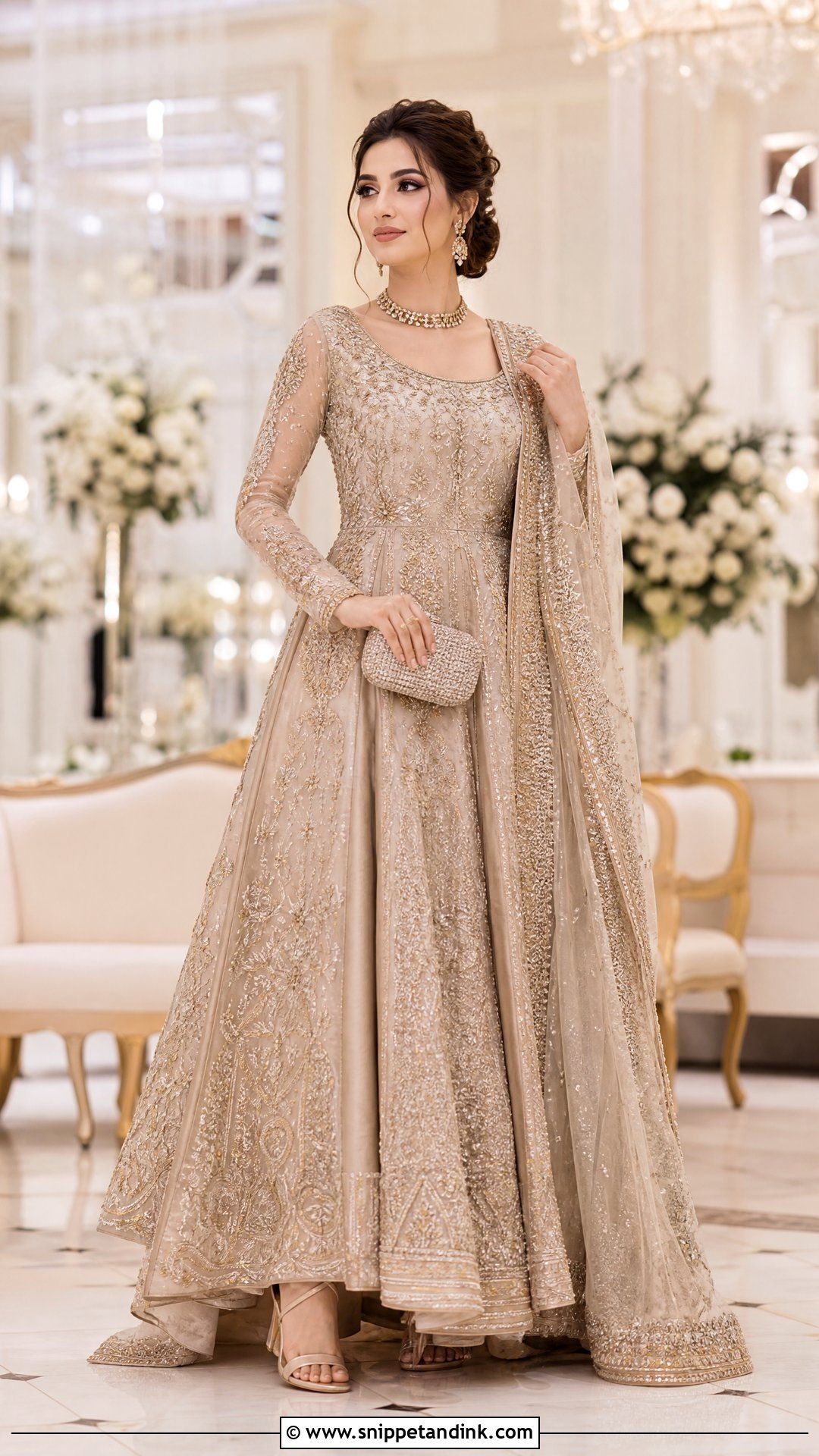
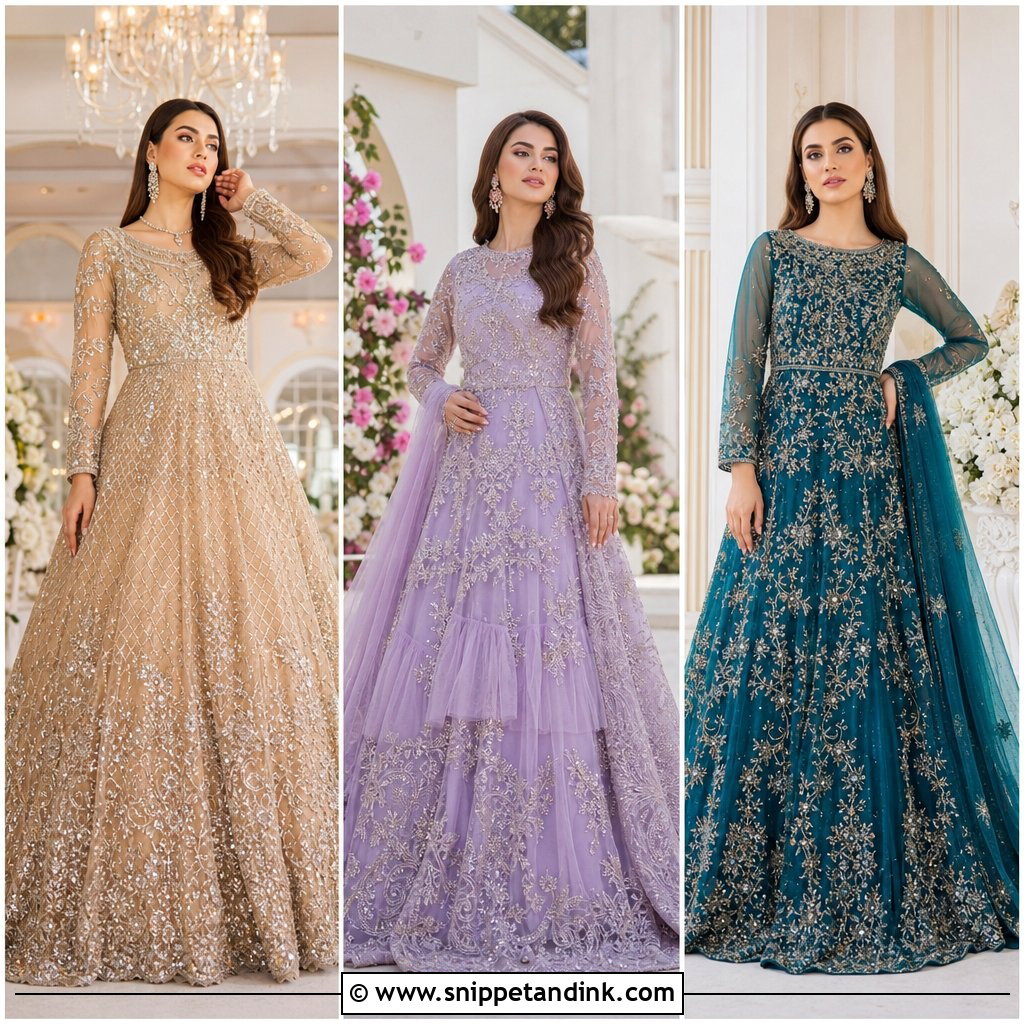
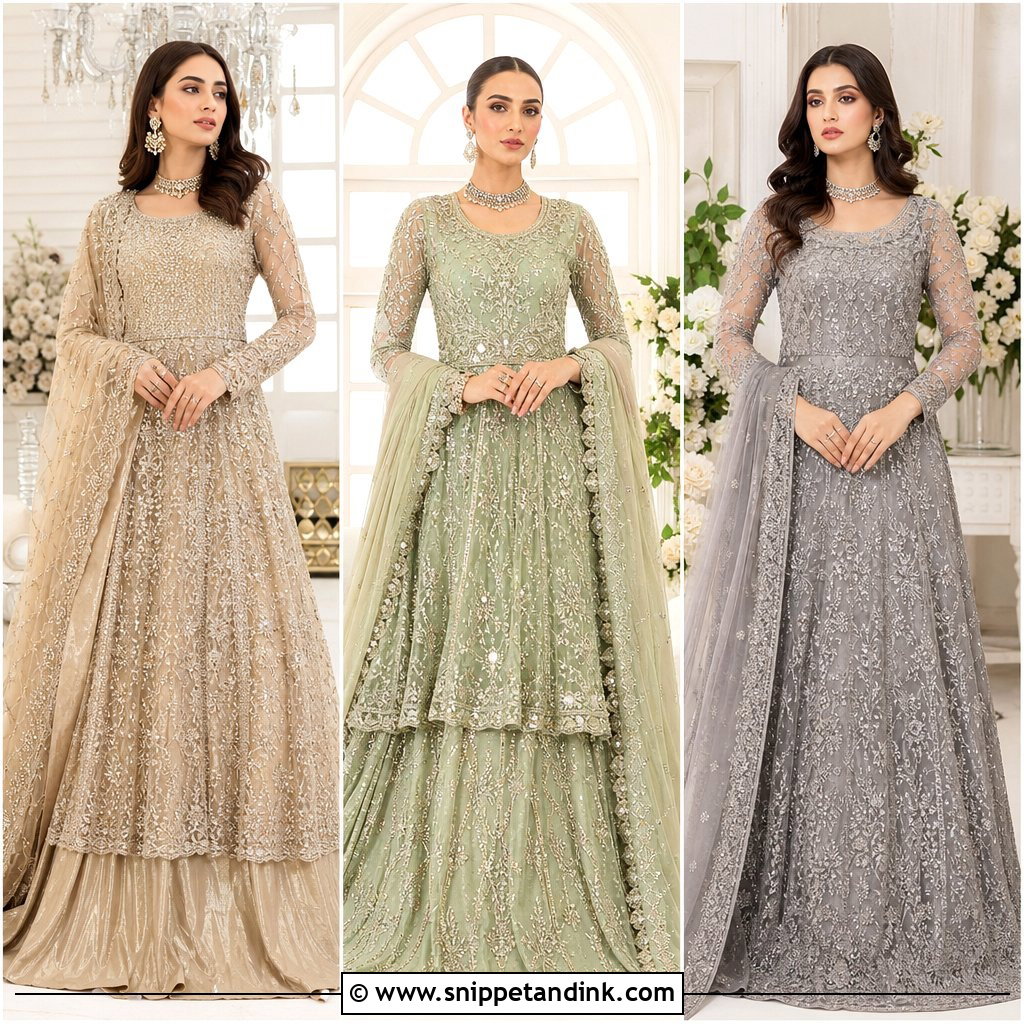
Champagne is a neutral with a pulse. On a paneled gown, maxi or lehenga in silk, tissue or lightly sparkling net, it picks up the ballroom chandeliers without blinding the camera. Decide your metal early: antique gold embroidery warms it, silver crystal work cools it, and the jewelry has to follow whichever you choose. A sheer champagne dupatta with a narrow border keeps the bodice visible. Bronze eyes and a muted rose lip suit it. I’d keep sequins to the bodice and border; sequins on every layer stop looking bridal and start looking like a stage costume.
3. Silver Walima Dress
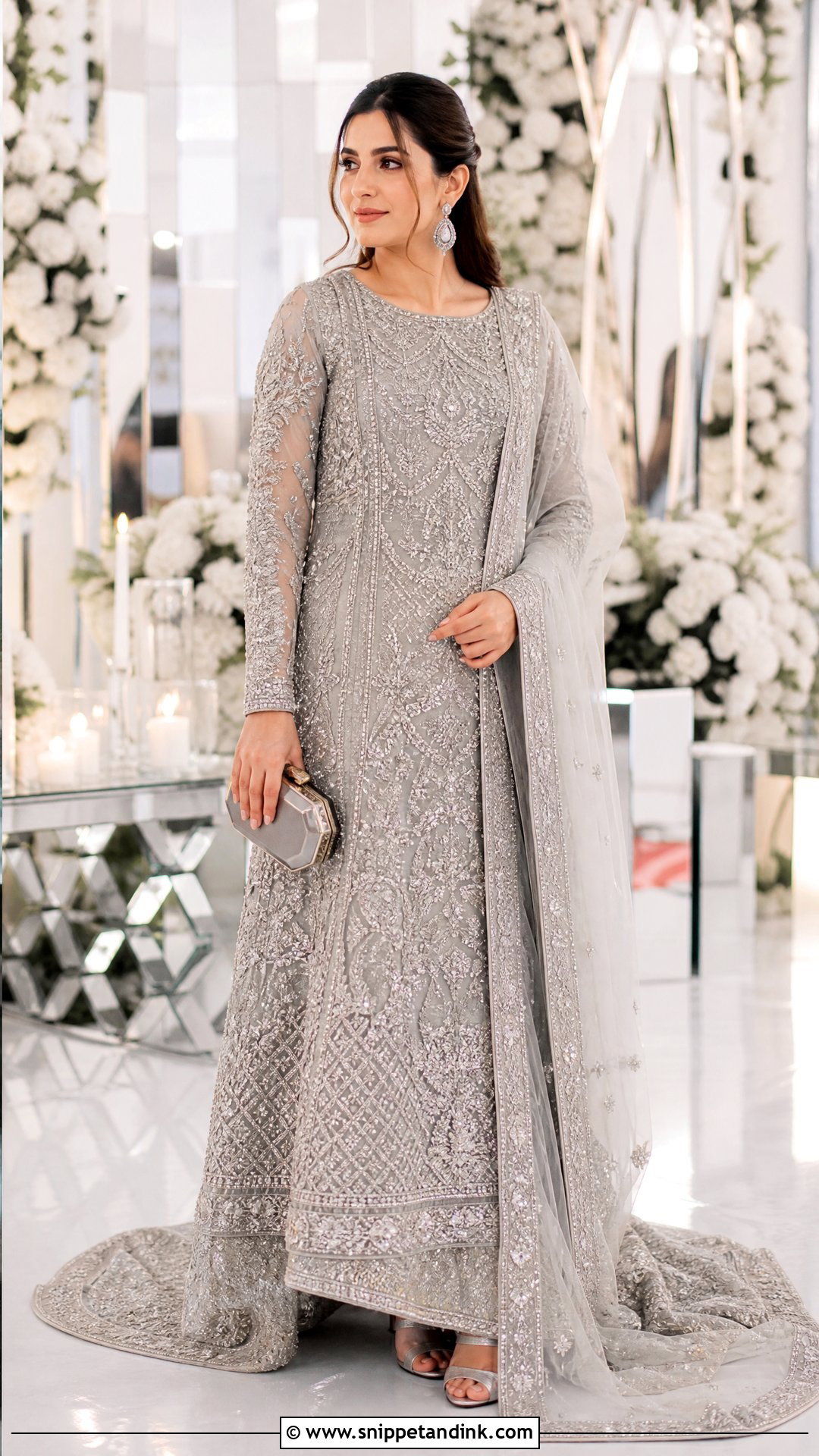
Silver works best as texture rather than one flat metallic surface. A pearl-gray base worked with silver zardozi, crystals and fine thread has depth; solid lamé just reflects. A fitted gown with a soft trail feels modern, while a silver lehenga with a long embroidered jacket stays traditional. Use a light net dupatta if the outfit is already heavy. Flash photography bounces hard off metal thread, so I always ask the designer to break up the embroidery with matte panels. Charcoal liner and a pink-nude lip keep the face soft.
4. Ice Blue Walima Dress
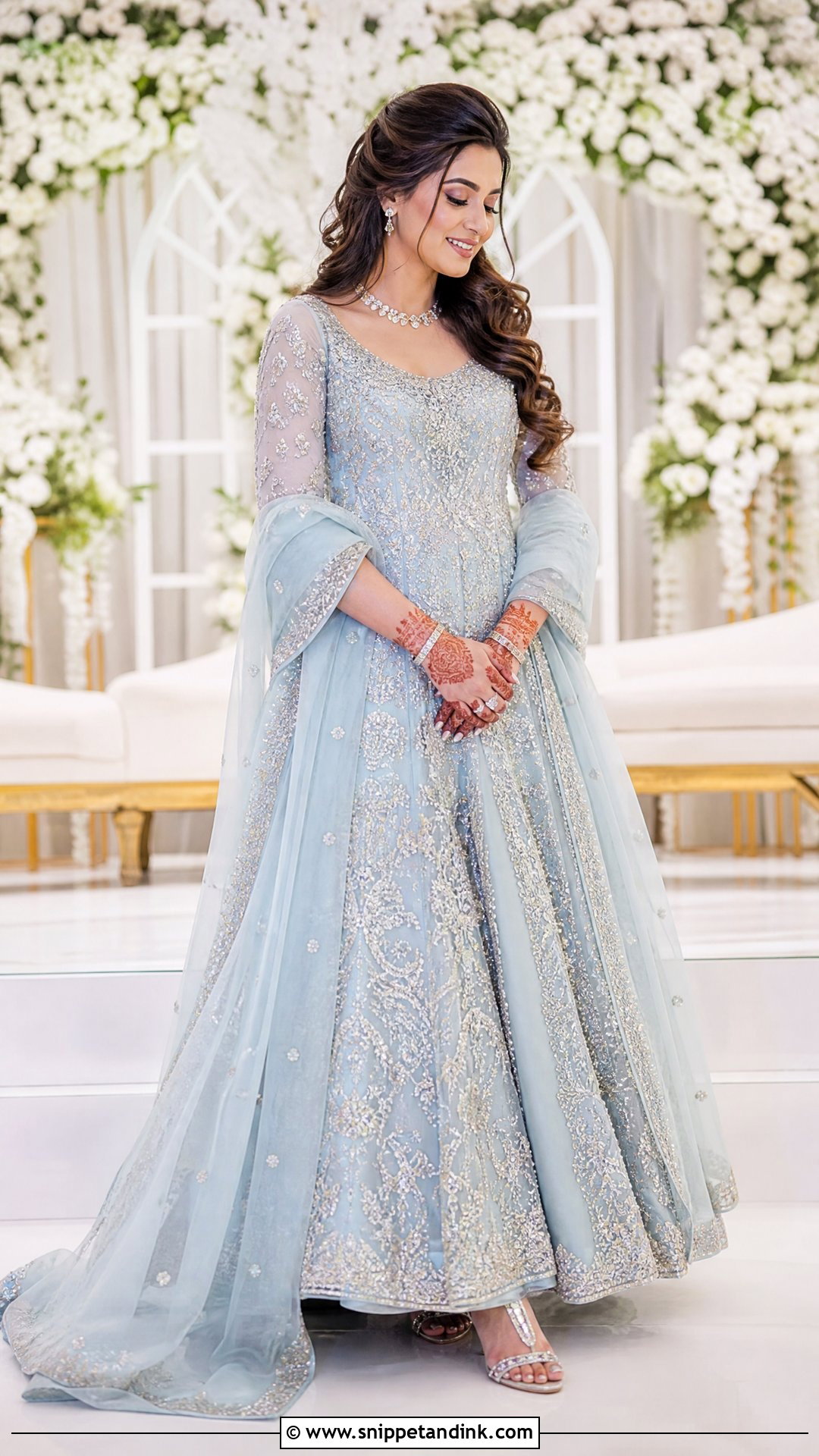
Ice blue is the sharpest contrast to a red or maroon Barat, which is why so many brides choose it. An embroidered maxi with a fitted bodice and subtle silver work, plus an organza dupatta with crystal droplets or scalloped edging, keeps it airy. My worry with ice blue is that it can turn almost white on camera and almost gray in a dim hall. A deeper blue border or embroidery thread gives it a defined edge. View the actual fabric in daylight and under warm artificial light before you approve it.
5. Powder Blue Walima Dress
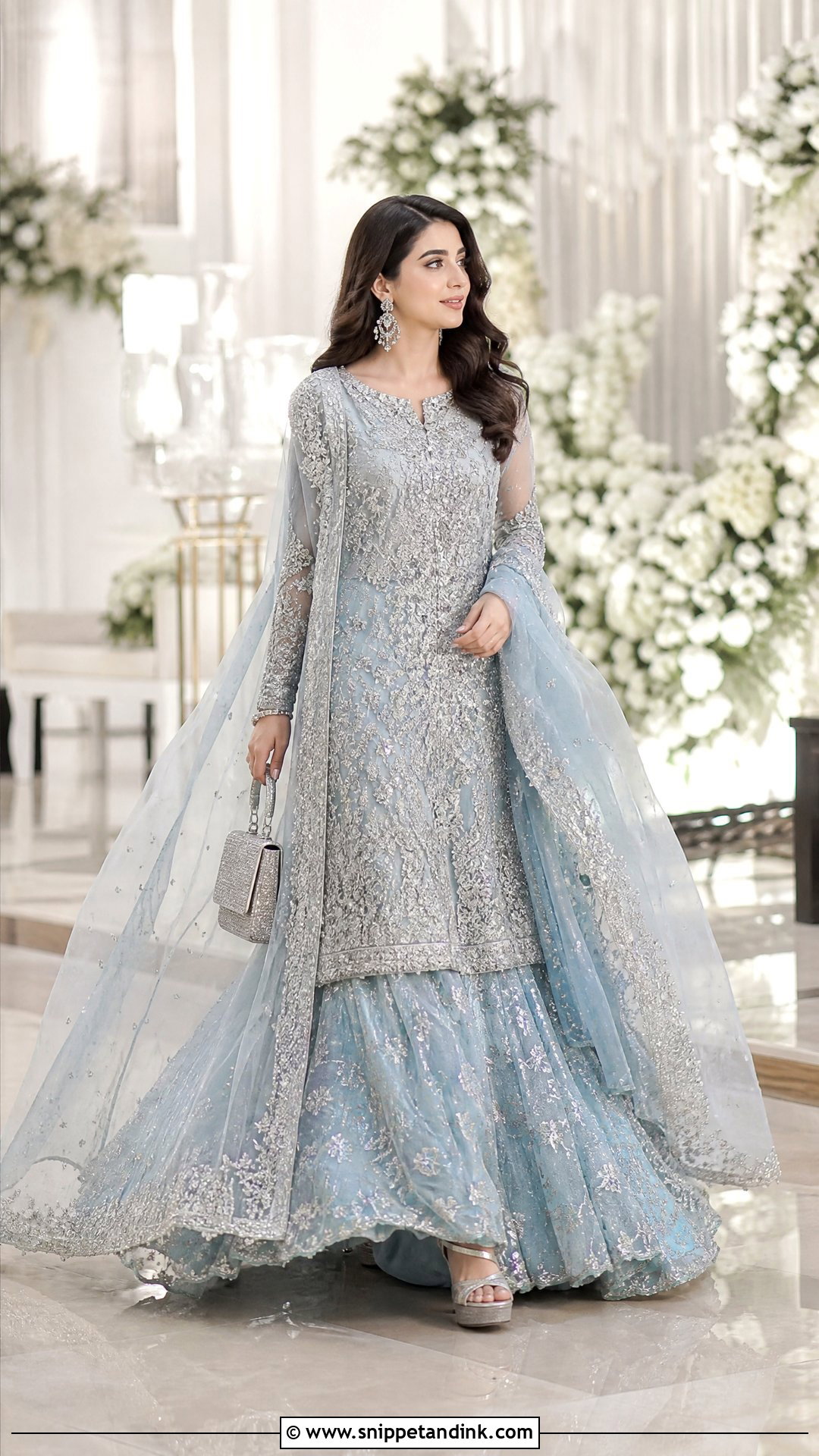
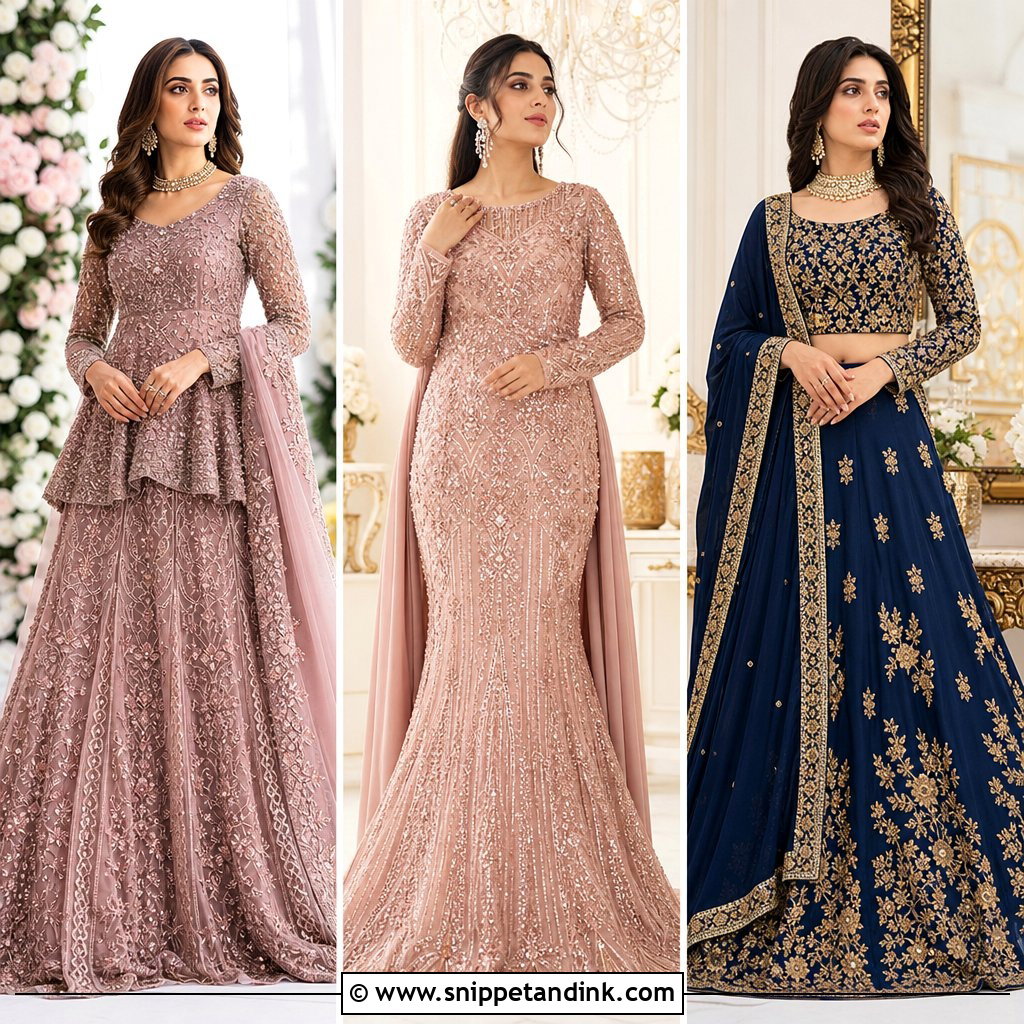
Powder blue has more body than ice blue, so it holds its color in photos. A powder-blue lehenga under a long, heavily worked shirt gives a regal shape without a dark shade. Pick silver, pearl or pale gold embellishment to suit your undertone. I’d drape the dupatta over one shoulder so the sleeve embroidery shows. For an evening reception, a few navy or steel-blue threads in the embroidery outline the panels, which the camera picks up far better than tone-on-tone work.
6. Blush Pink Walima Dress
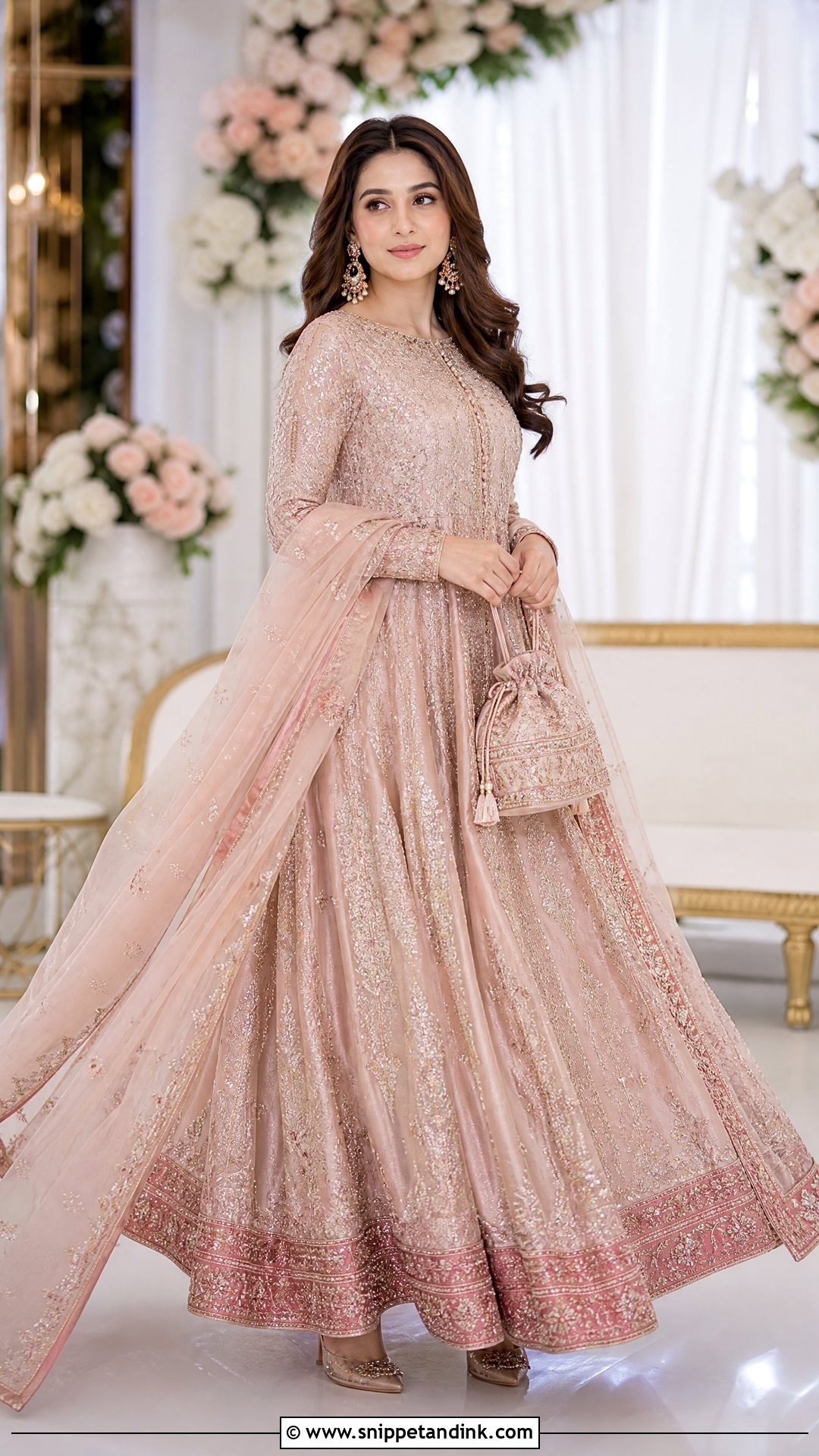
Blush is the shade most likely to vanish into the skin. A blush lehenga, gown or floor-length pishwas with pearls, crystals and rose-gold thread is lovely, but I always add a slightly deeper pink border so the outfit has an edge in photos. Rose-gold jewelry sits well with it; pearls are quieter. Keep the makeup defined with brown liner, peachy-pink cheeks and a clear rose lip. Compare several blush fabrics before ordering, because some lean beige and others obviously pink. The right one brightens your face rather than matching it.
7. Dusty Rose Walima Dress
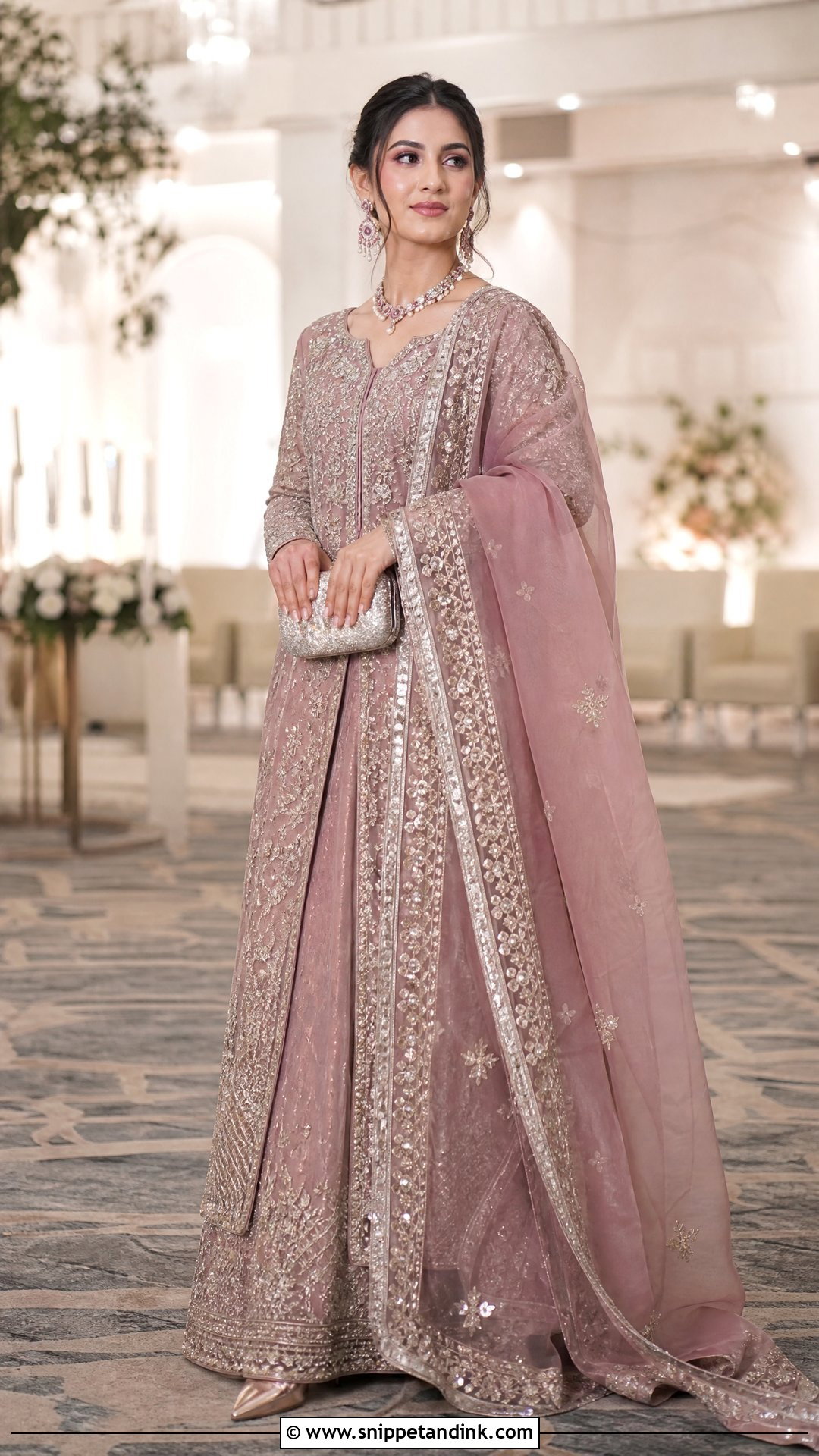
Dusty rose carries a gray undertone, so it looks grown-up rather than sweet. In winter I like it as a long velvet jacket over a lehenga; in warm months, layered organza is cooler to wear. Antique silver, muted gold and tonal pink thread all suit it, as does kundan with pale pink stones. Muted shades can look flat at the face, so I ask for the brightest crystals at the neckline and cuffs, where they bounce light up. Mauve blush and a rose-brown lip complete it.
8. Peach Walima Dress
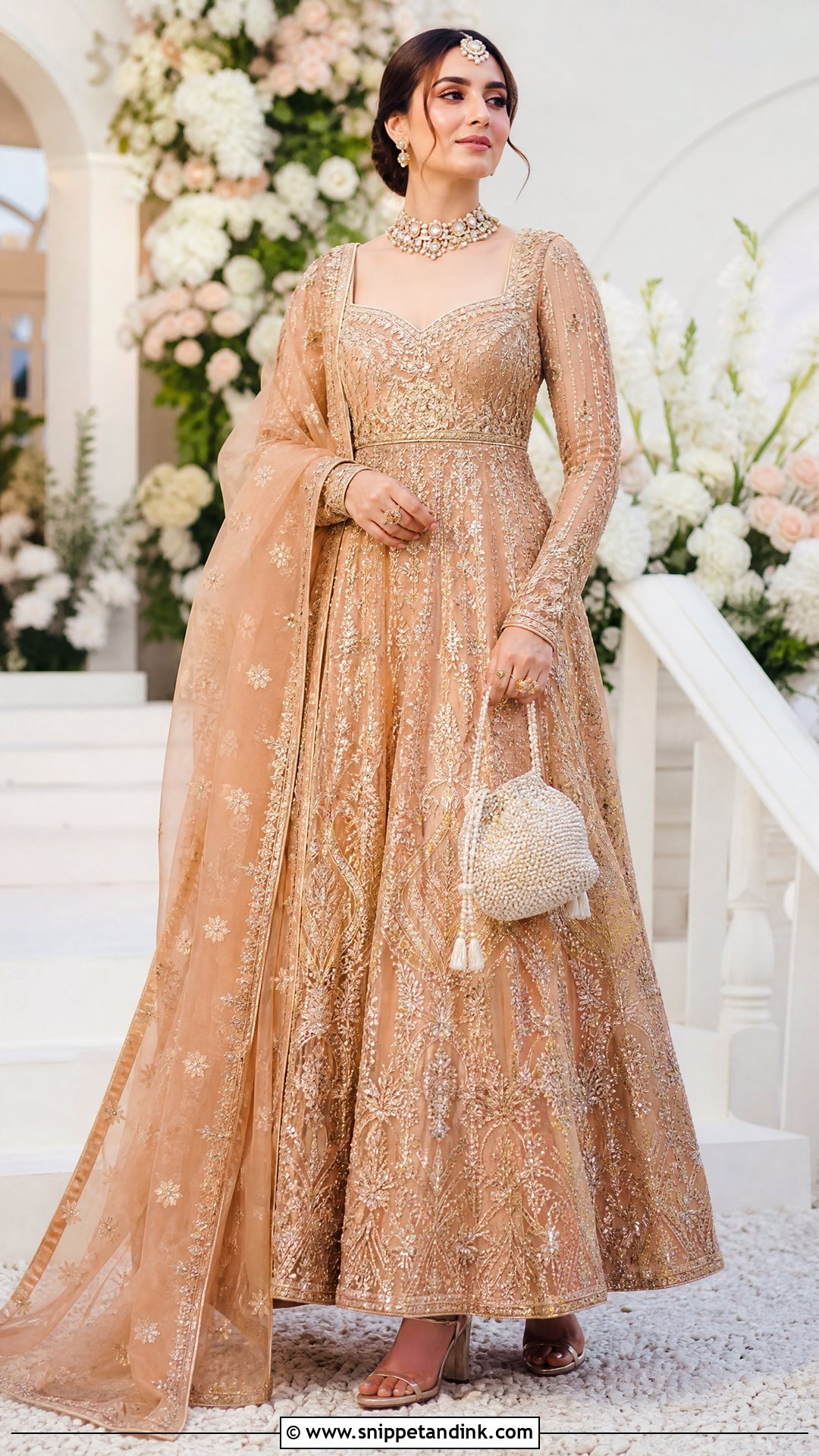
Peach sits between pink and orange, and it flatters a wide range of skin tones. A peach gown with a structured bodice, or a lehenga under a long shirt with a net dupatta, works with champagne, ivory or rose-gold embroidery. The danger is choosing a peach too close to your own skin. On warm complexions, very pale peach disappears in photos, so I bring in coral borders, gold appliqué or deeper peach thread for separation. Polki or champagne stones and a pink-peach lip finish it.
9. Lavender Walima Dress
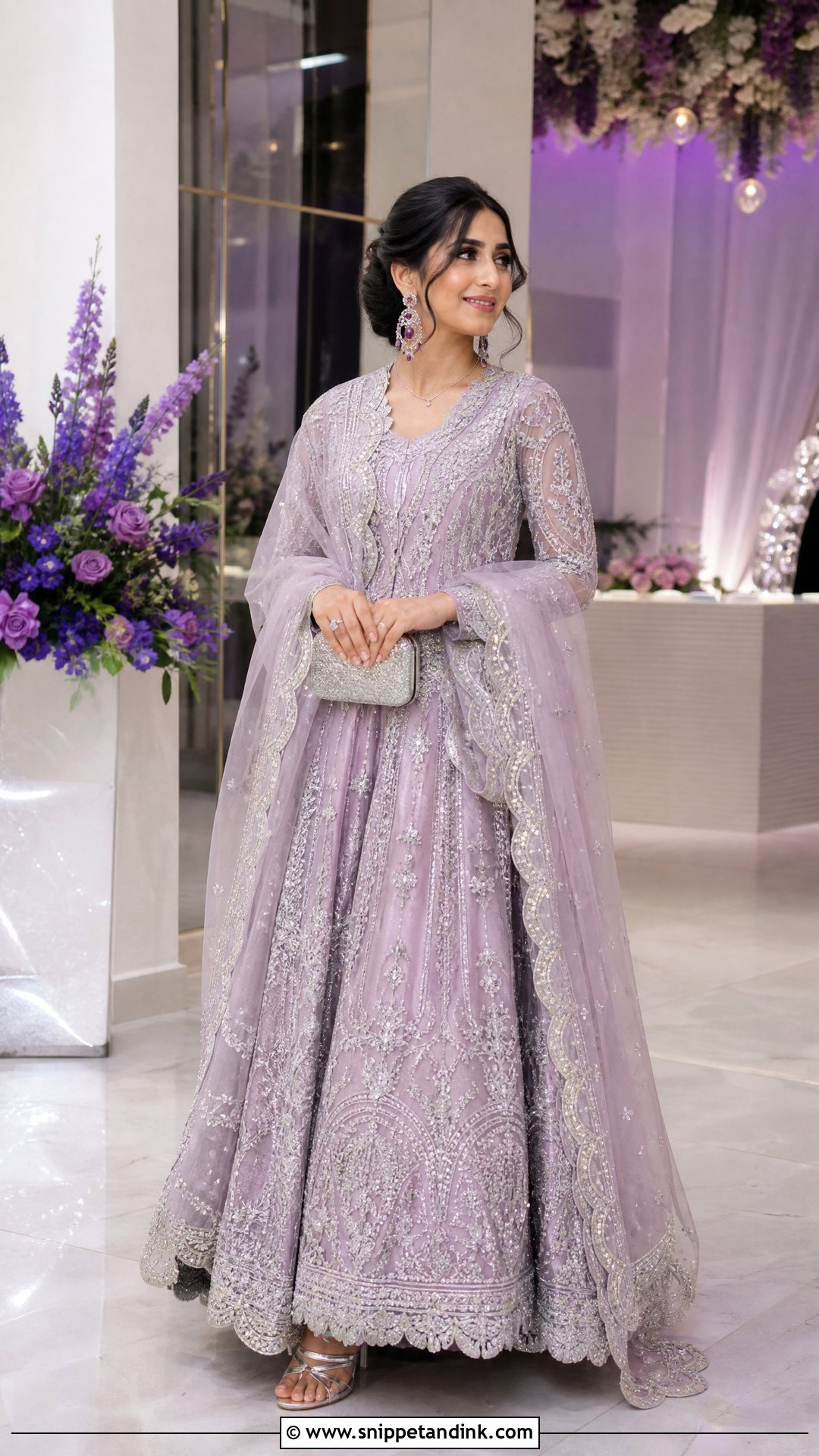
Lavender is cooler than pink and softer than blue, and it suits a voluminous pishwas, an embroidered maxi or a lehenga with a fitted blouse. Silver crystals, pearls and lilac thread give a tonal finish; gold only in small touches if you want warmth. Lavender goes gray in dim halls, which catches brides out. I counter that with reflective embroidery across the bodice and sleeves, and sometimes a slightly brighter lavender dupatta. Amethyst-toned earrings tie it together.
10. Lilac Walima Dress
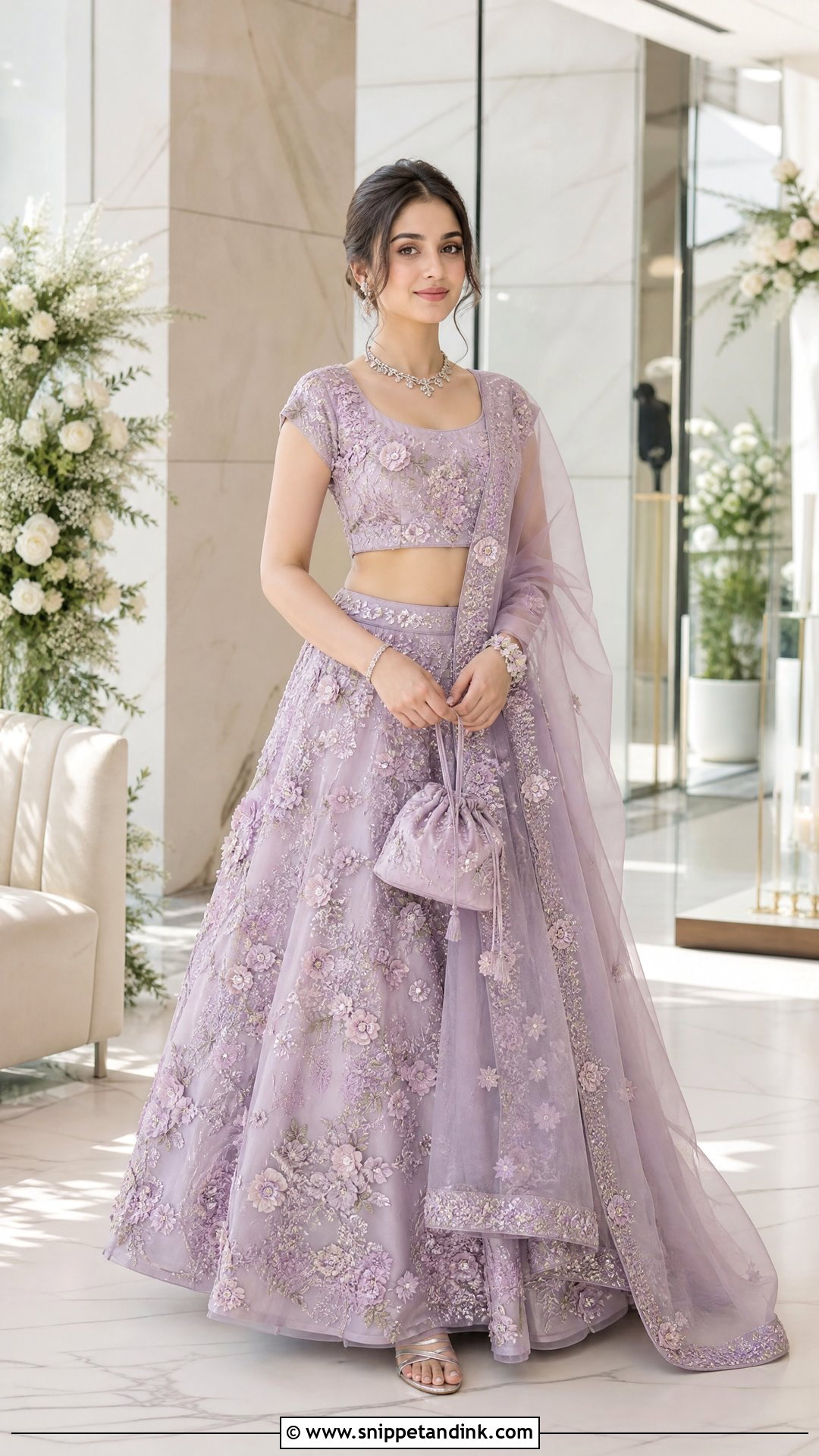
Lilac is brighter and pinker than lavender, so it reads younger. A lilac lehenga with raised floral embroidery and a draped organza dupatta, finished with silver sequins and clear crystals, keeps it cool. For a more regal line, swap the blouse for a long paneled shirt. Lilac can flatten the complexion, which is why I lean on pink-toned makeup, defined lashes and a berry-nude lip. Keep other colors out; tonal purple flowers or a narrow silver border give enough interest.
11. Mint Green Walima Dress
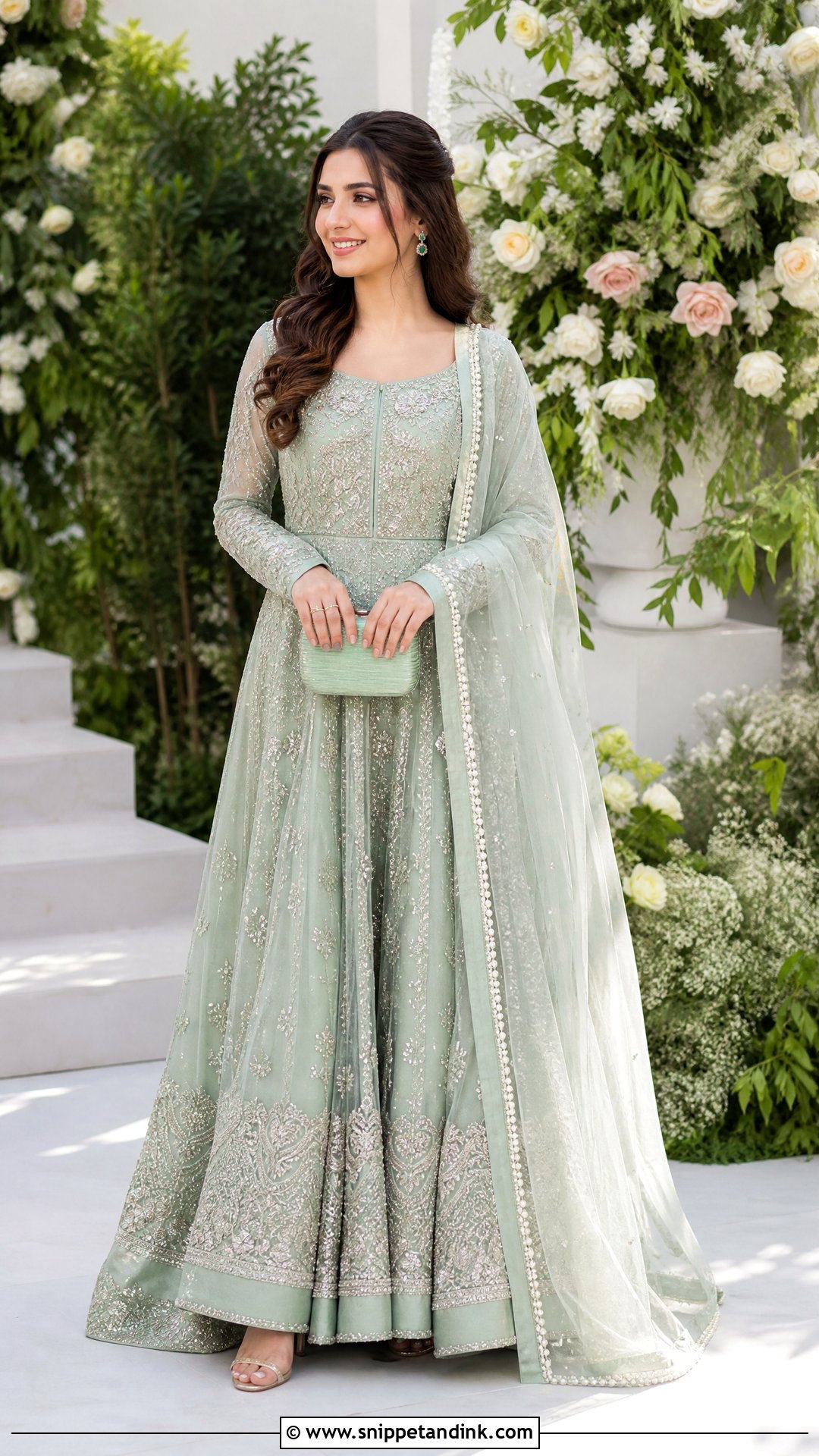
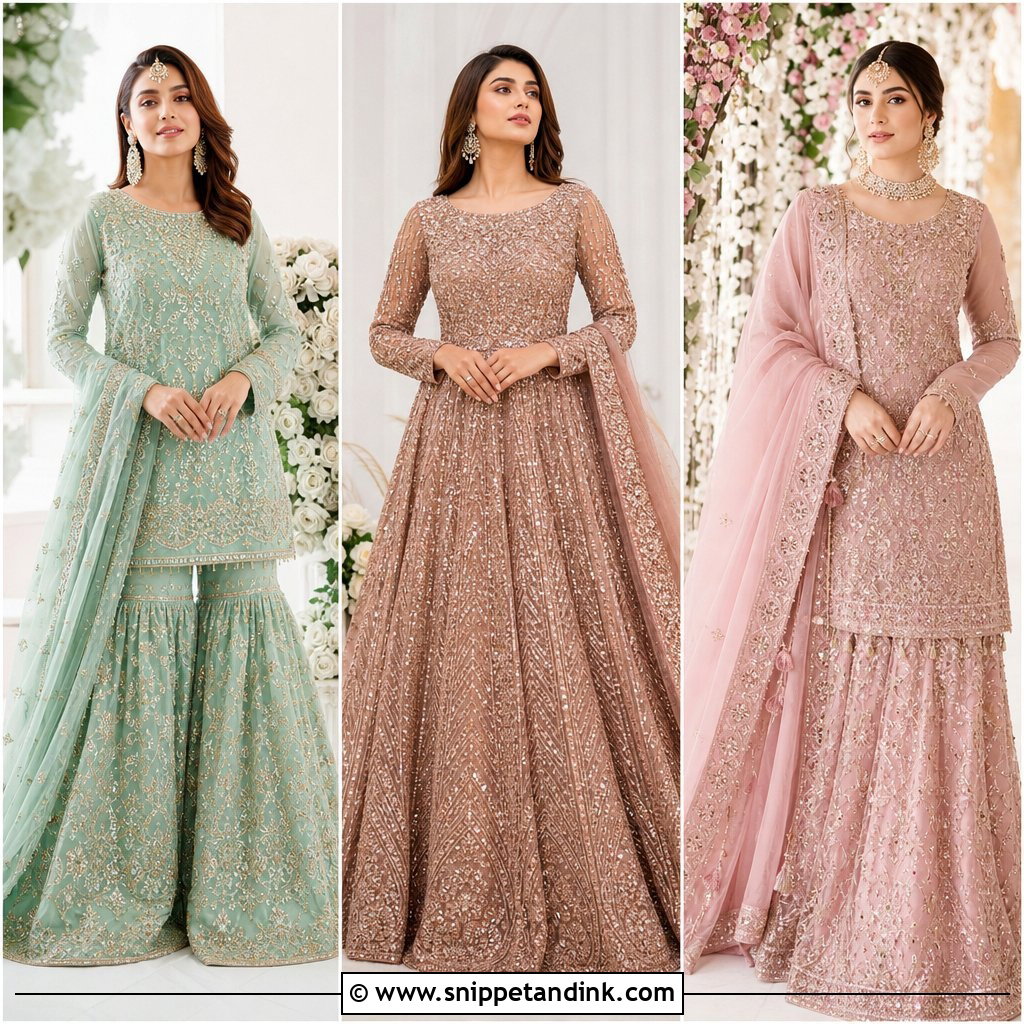
Mint belongs in daylight. A mint pishwas with silver embroidery and a wide hem moves well at a garden reception, or try a mint lehenga under an ivory or matching shirt. Pearl-edged dupatta, silver heels, and small emerald accents if you want contrast. Mint ranges from blue-green to yellow-green, and the wrong one turns sallow against some skins, so I hold swatches under a bride’s chin by a window before she orders. The right mint looks clear and lively, never gray.
12. Sage Green Walima Dress
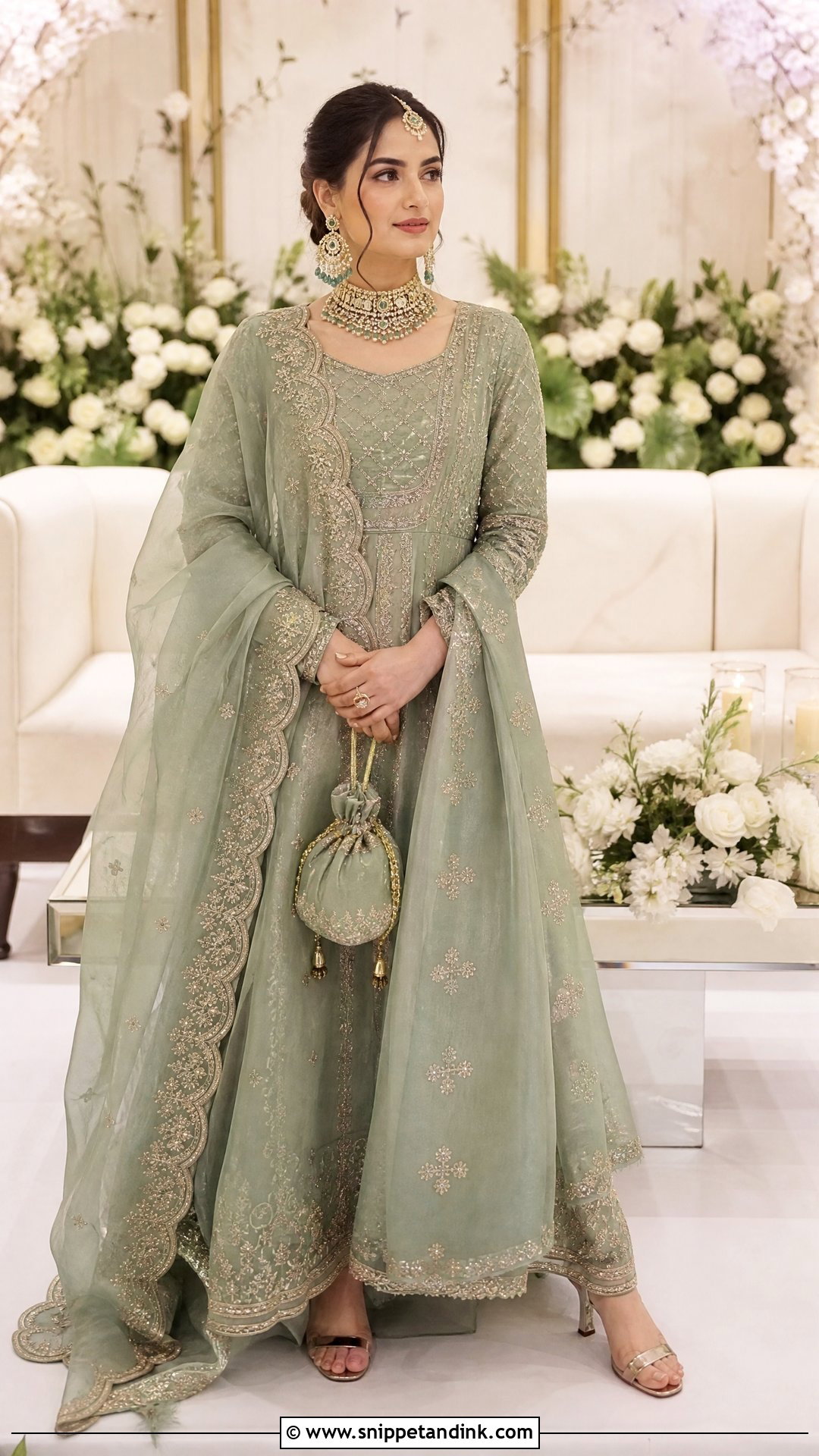
Sage is the muted green I suggest when a bride wants something quieter than a pastel yet livelier than a neutral. It suits a paneled silk gown, a traditional gharara set or a long shirt over a full lehenga. Antique silver, pearl or soft gold embellishment keeps its character. Sage absorbs far more light than mint, so in an indoor hall it can look dull; I place crystals deliberately at the neckline, cuffs and borders to bring it back. Kundan with pale green stones and bronze eyes give it warmth.
13. Pistachio Green Walima Dress
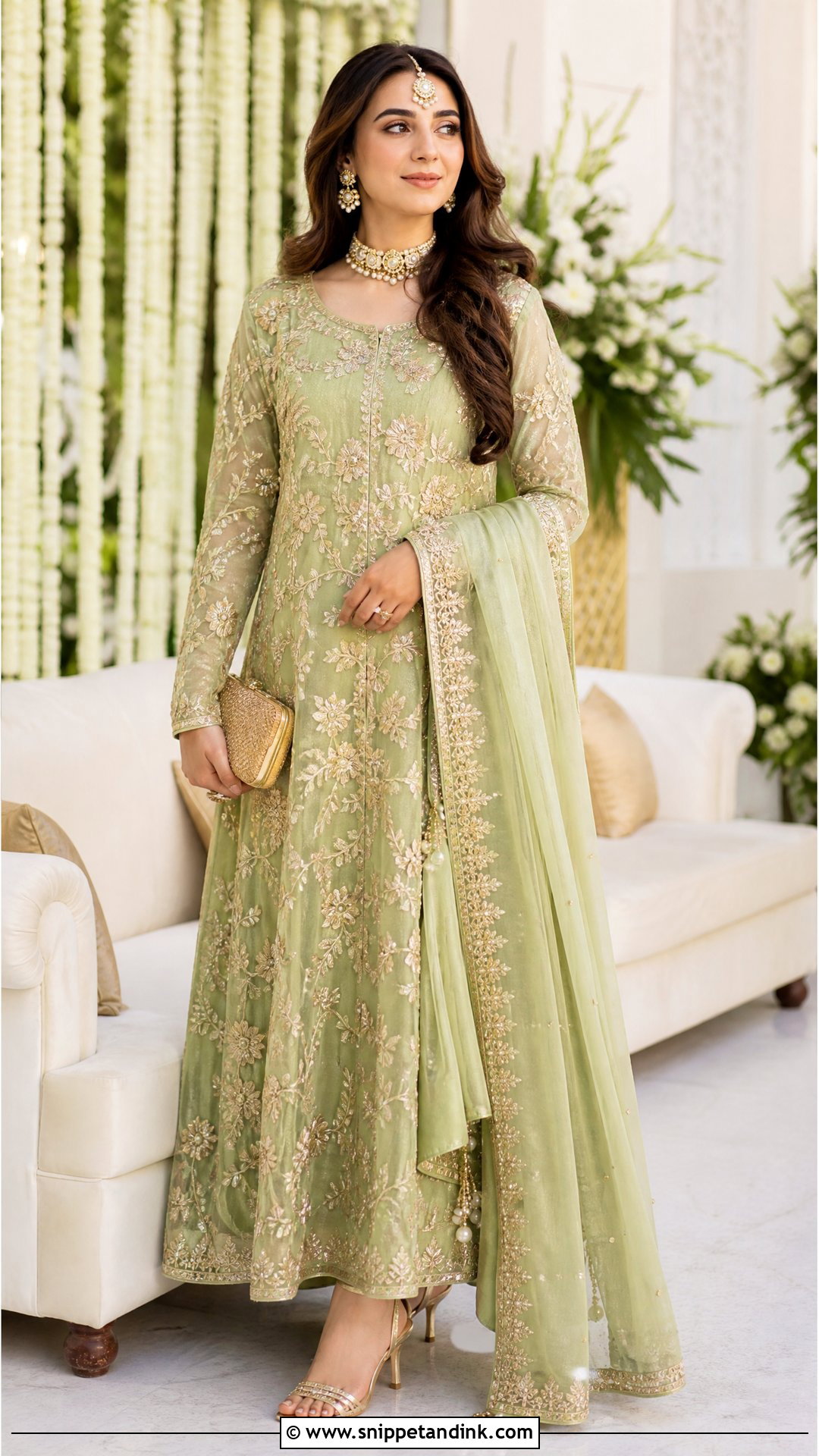
Pistachio has a yellow undertone that makes it warmer than mint, which suits brides who find cool greens draining. A long maxi with gold floral embroidery, or a pistachio lehenga under an embellished tissue shirt, with pearl tassels on the dupatta, keeps it coordinated. Gold clutch, champagne heels, kundan or pearls. Avoid mixing several bright greens, which reads more Mehndi than Walima. I define the design with cream, pale gold or tonal thread instead. Coral blush and taupe eyes balance the face.
14. Pastel Gold Walima Dress
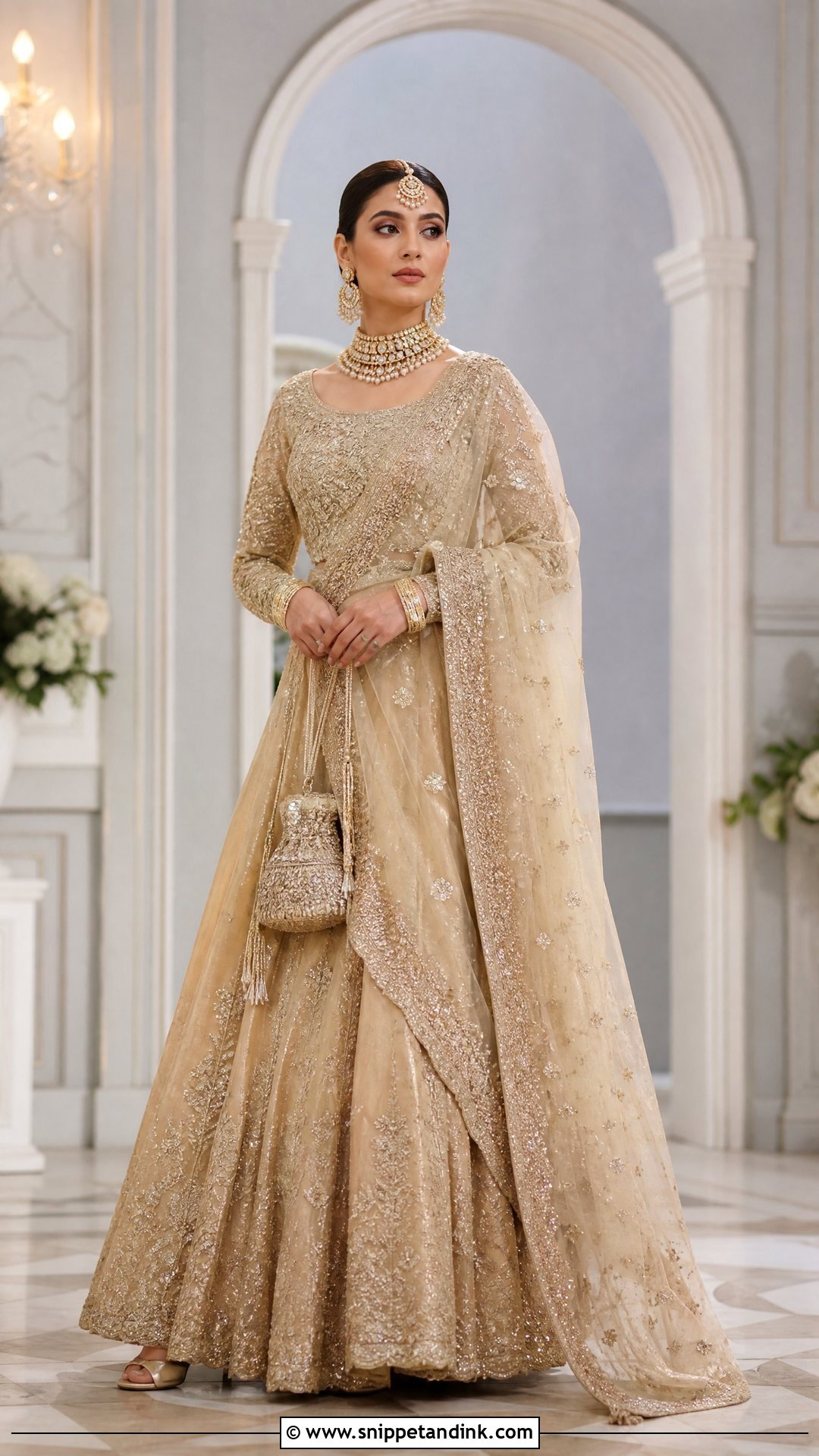
Pastel gold gives richness without the weight of deep antique gold. A tissue lehenga, a flowing gown or a structured jacket outfit in a soft beige-gold base looks more graceful than an intensely yellow metallic. A sheer gold dupatta with scattered crystals softens the shine. With a single color head to toe, texture does the work, so I combine matte silk, translucent organza and reflective embellishment. Test everything under flash; tissue in particular can bloom into a white glare in photos.
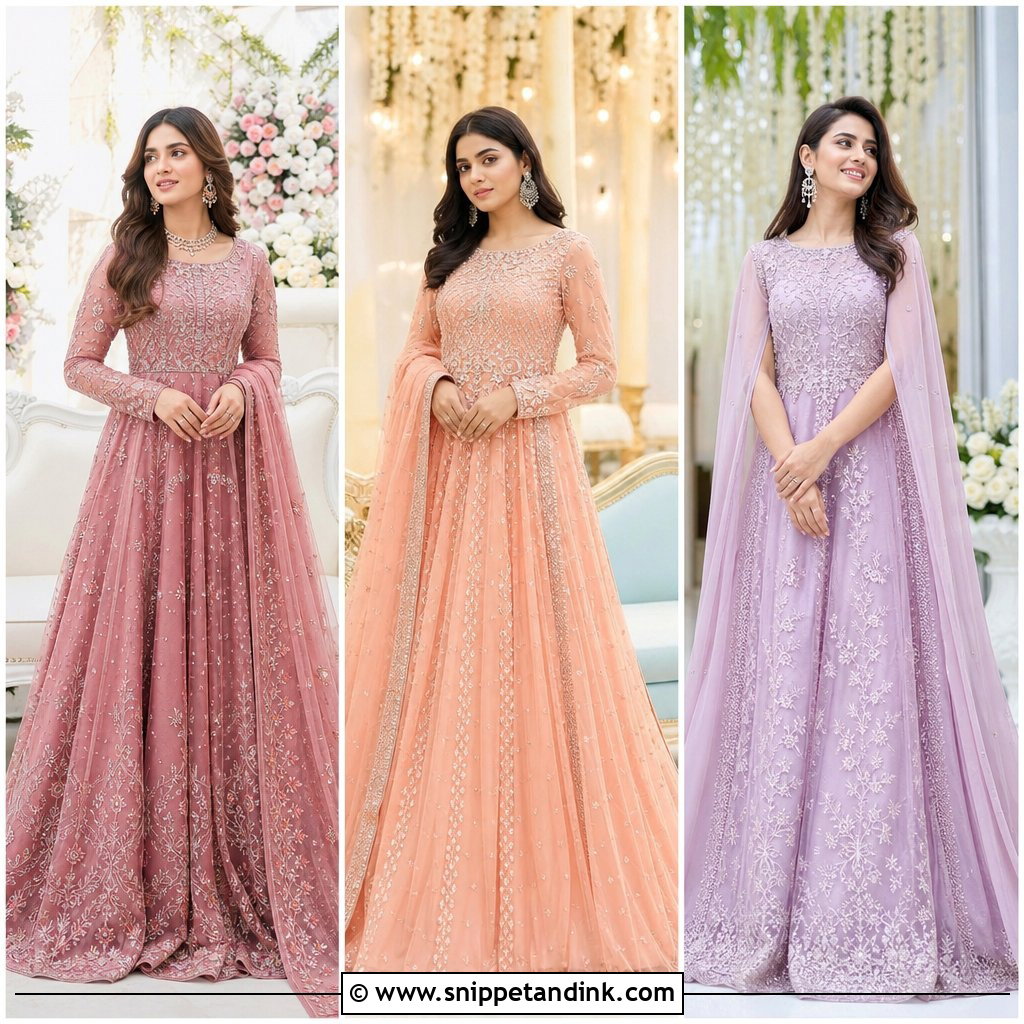
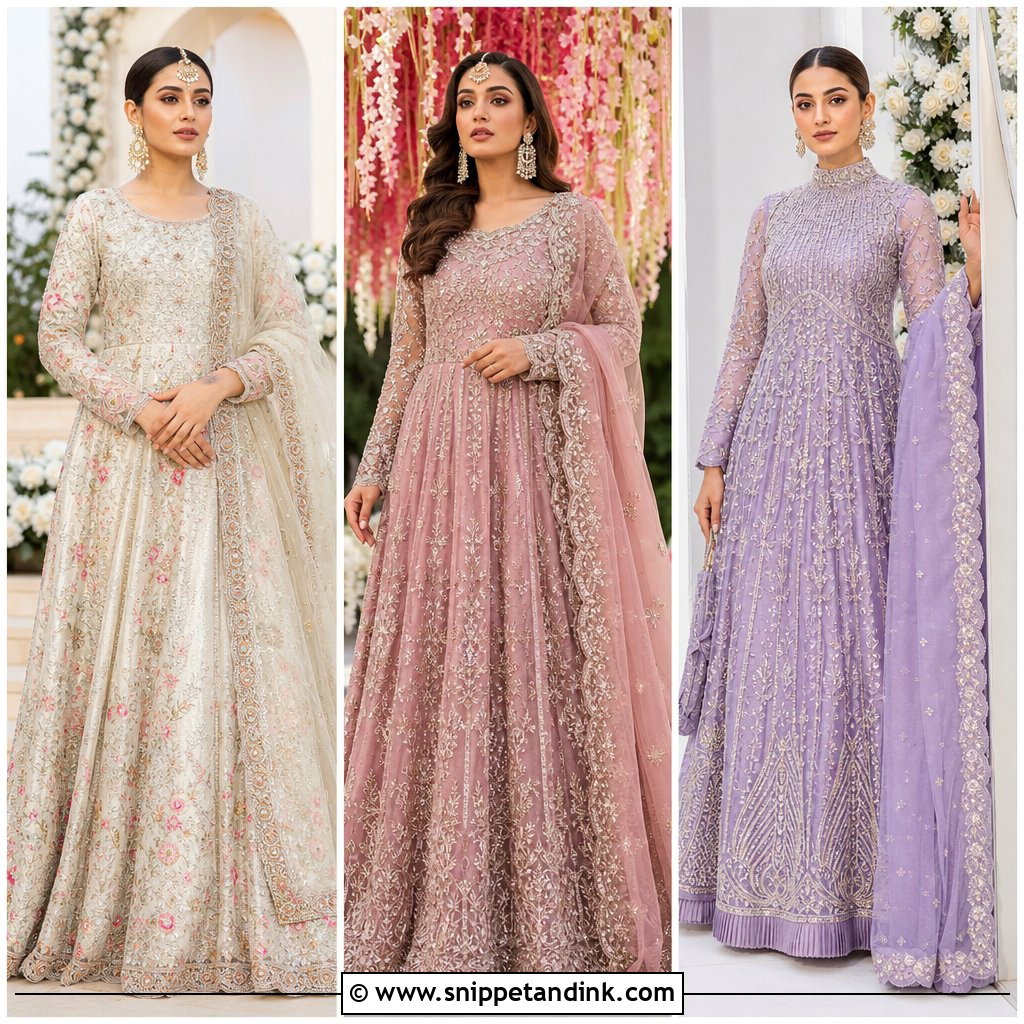
15. Rose Gold Walima Dress
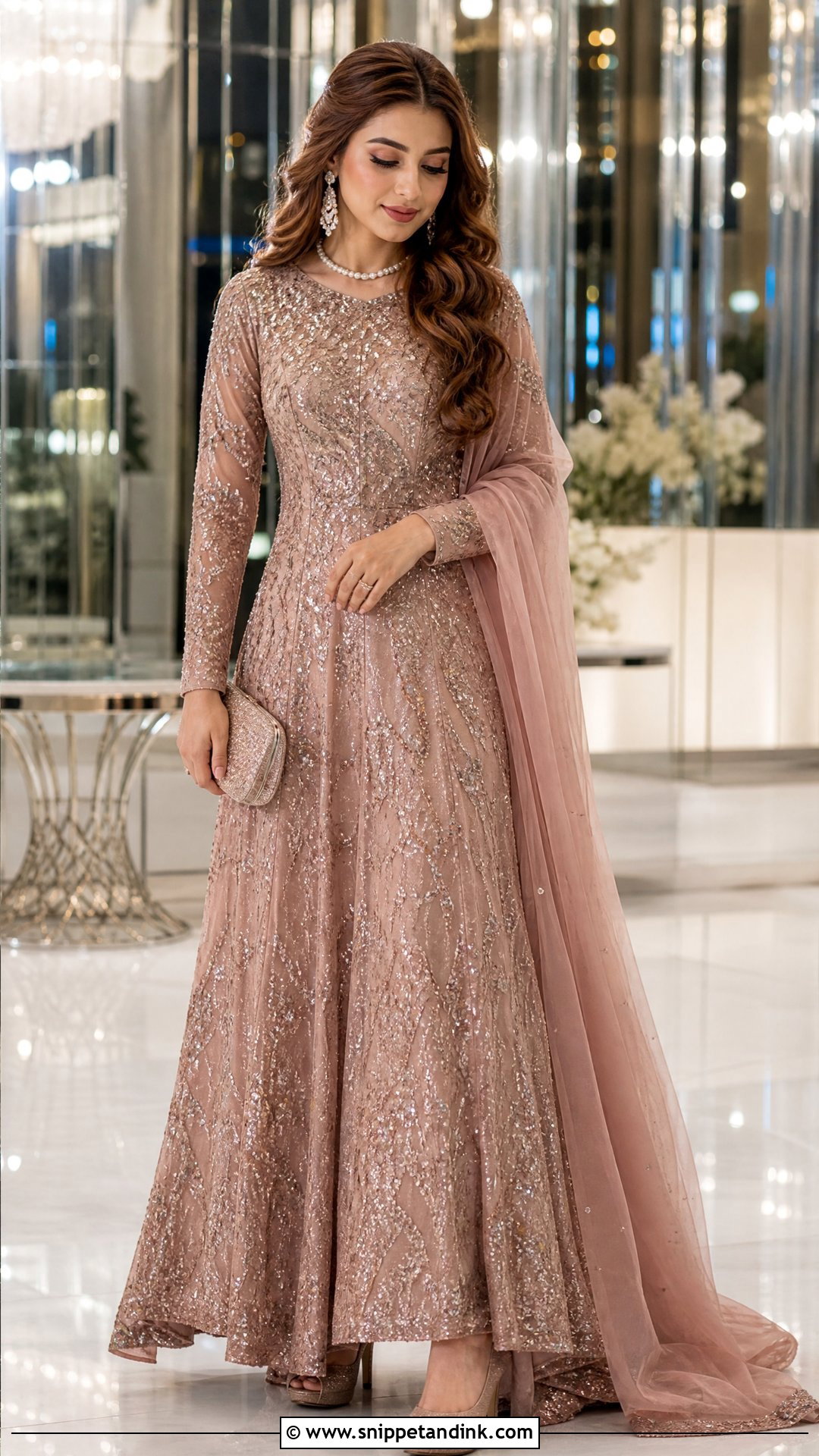
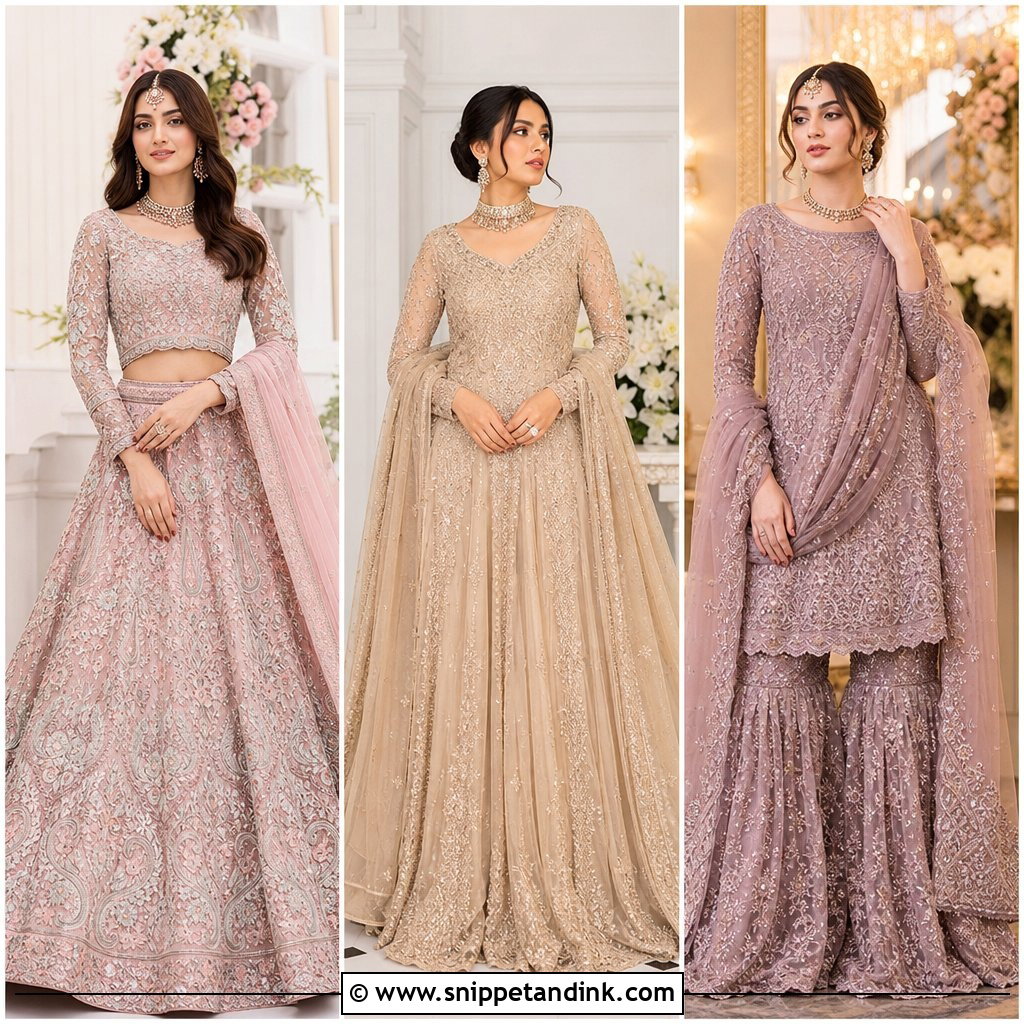
Rose gold mixes pink warmth with metallic glamour. A dusty pink base with rose-gold sequins, crystals and fine metallic thread, in a fitted bodice and gently flared skirt, shows the work well. Keep the net dupatta plain or the outfit overloads. My firm rule with rose gold is one metal family only. A copper-leaning bangle or an icy silver earring next to it looks accidental. Pearls soften the shine, and a mauve-pink lip suits it.
16. Mauve Walima Dress
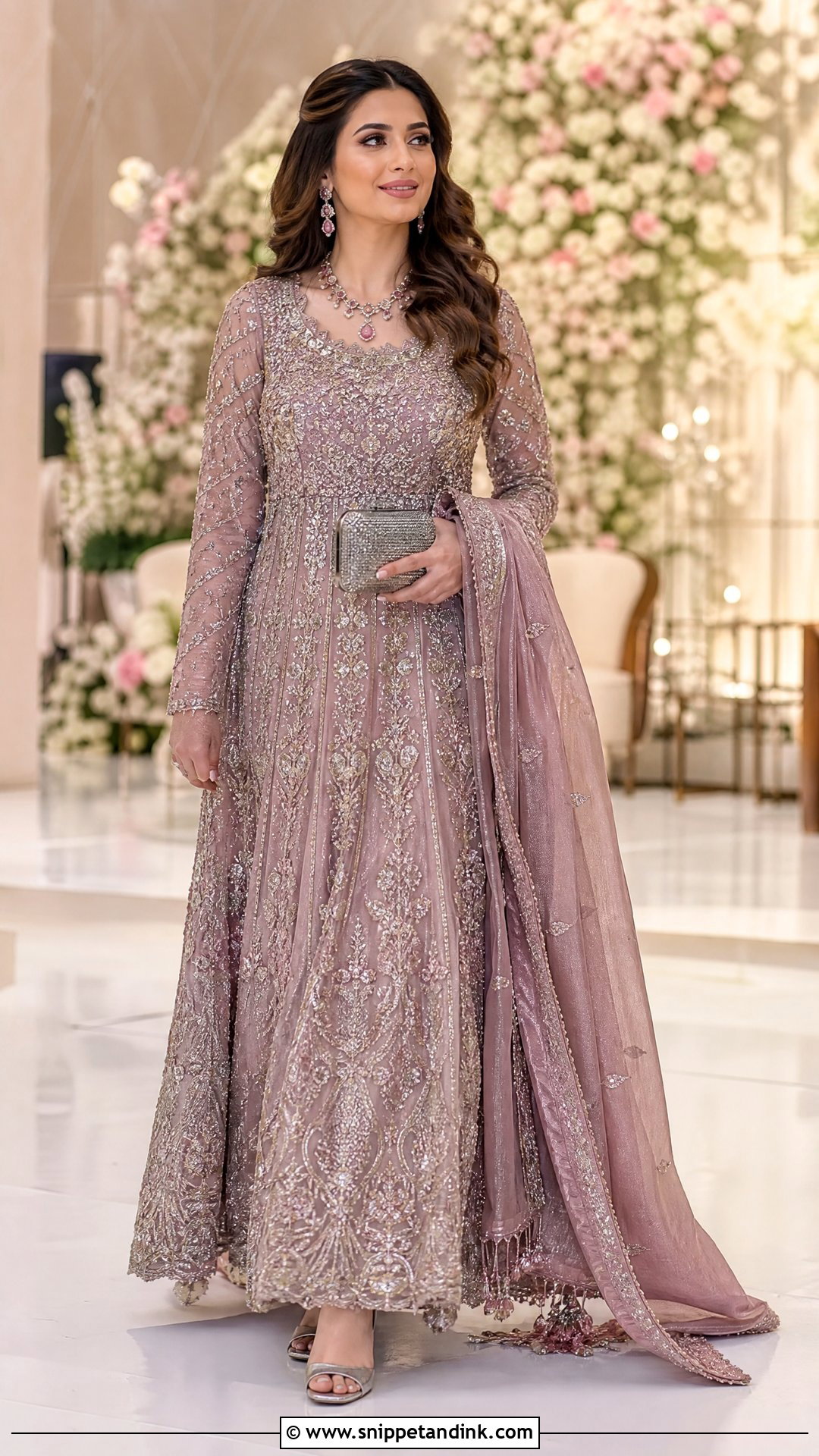
Mauve has more depth than blush or lilac but stays softer than a jewel tone. A floor-length gown with crystal embroidery, a long shirt over a lehenga or a gharara set all suit it. Silver keeps it cool, antique gold draws out its warmth. Fabric changes mauve more than most colors: in velvet it reads close to plum, in organza nearly pink. I choose the fabric by season and then adjust the shade, not the other way round. Plum eyeshadow and a pink-brown lip balance it.
17. Pearl Gray Walima Dress
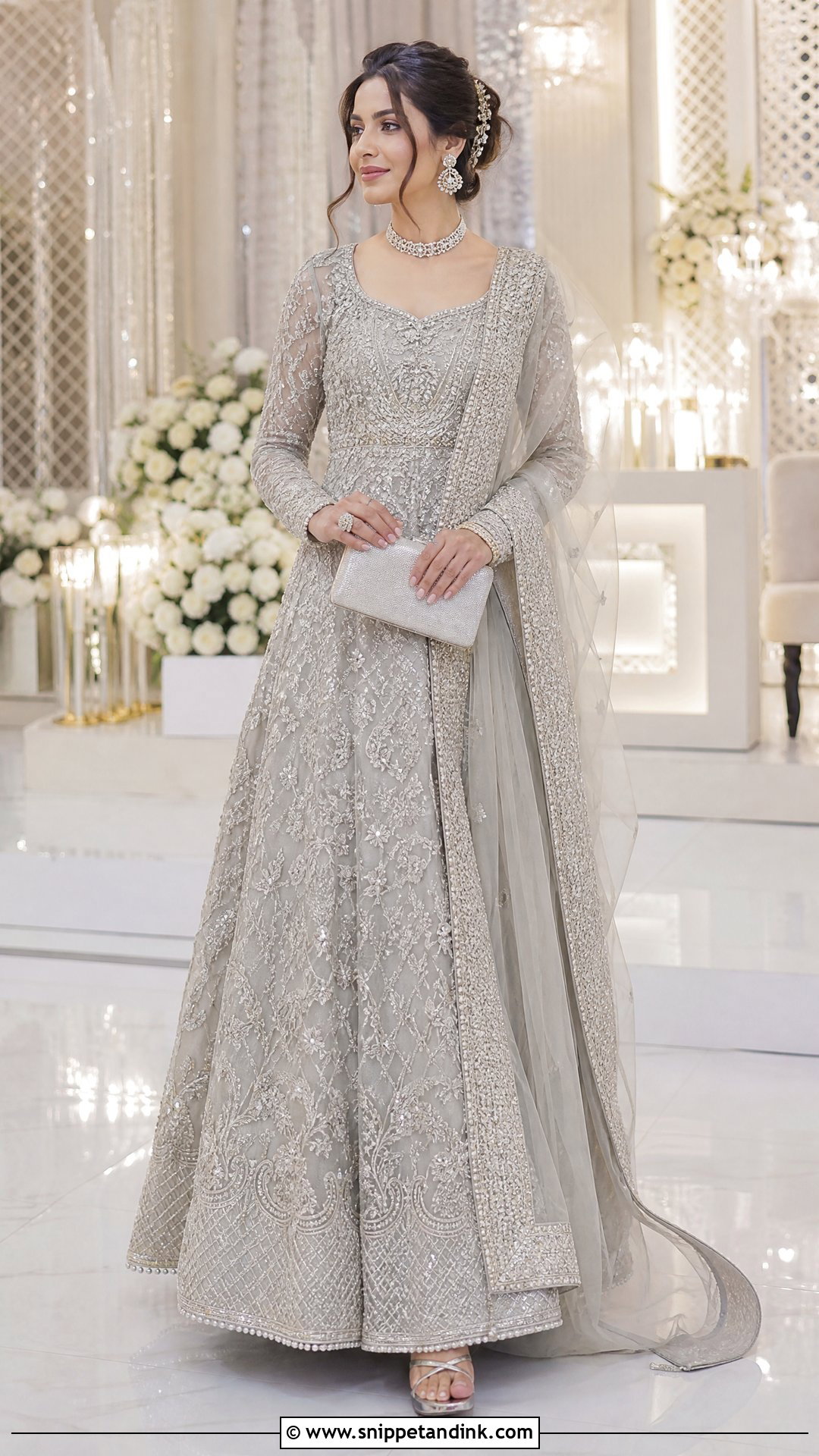
Pearl gray is a calm, modern base that lets detailed embroidery stand out. A soft gray gown or lehenga with pearl beading, silver thread and clear crystals keeps the reception feeling light, so skip charcoal accents. Gray shifts in a room: under some lights it goes blue, under others greenish. I check swatches in at least three settings and often add a little ivory embroidery to warm it. Pink blush and a rose lip stop the face from looking cold.
18. Teal Walima Dress
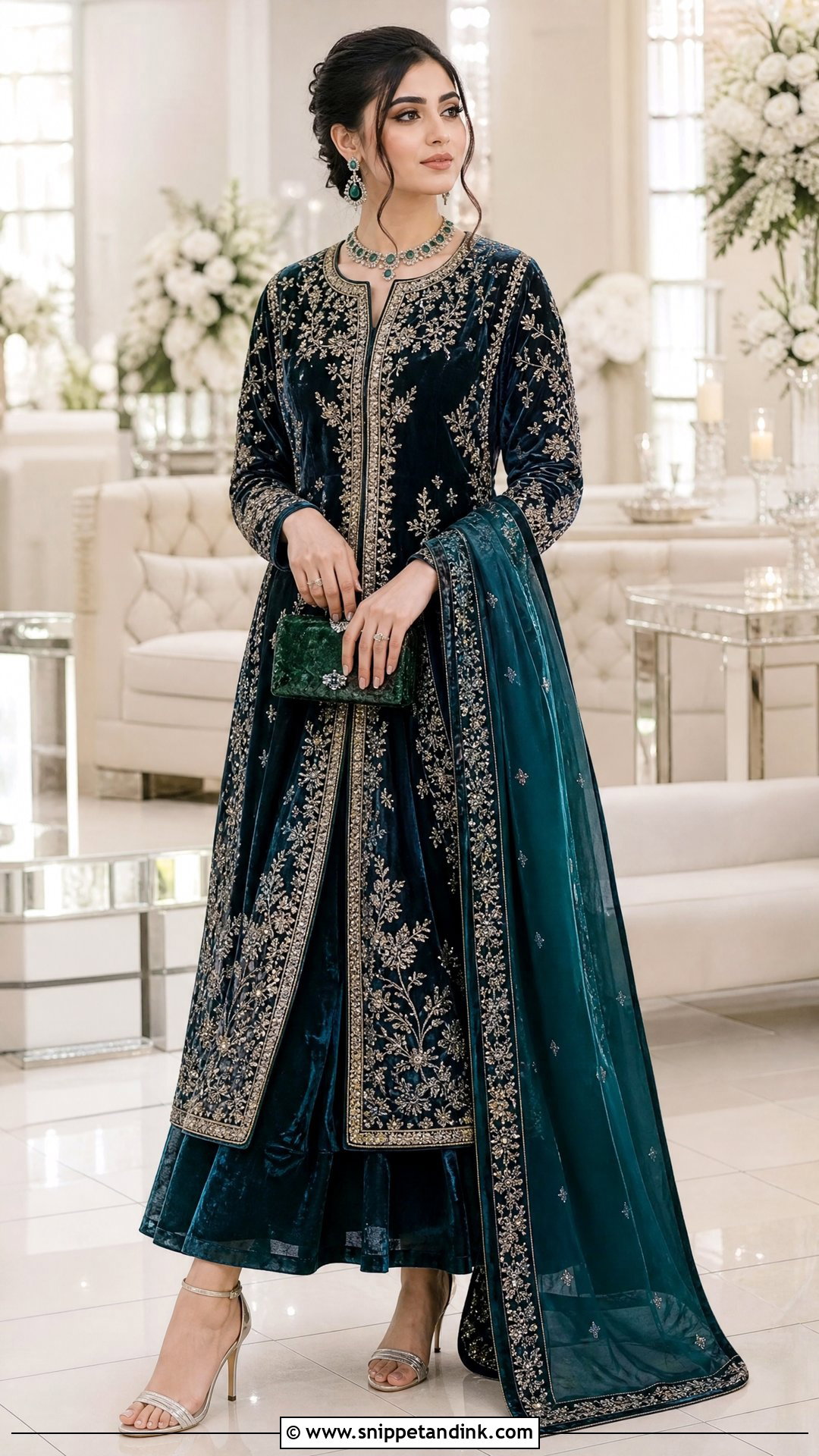
Teal is rich and confident, and it stands well apart from the reds of the other events. It belongs at an evening or winter Walima. A teal velvet lehenga with a long embroidered jacket, or a silk gown with antique silver and turquoise detail, carries real presence. Pick one stone family for jewelry: emerald, turquoise or diamond-style, not all three. Teal can feel heavy, so I concentrate the densest embroidery at the bodice and borders and leave open fabric between, which lets both the color and the handwork breathe.
19. Emerald Green Walima Dress
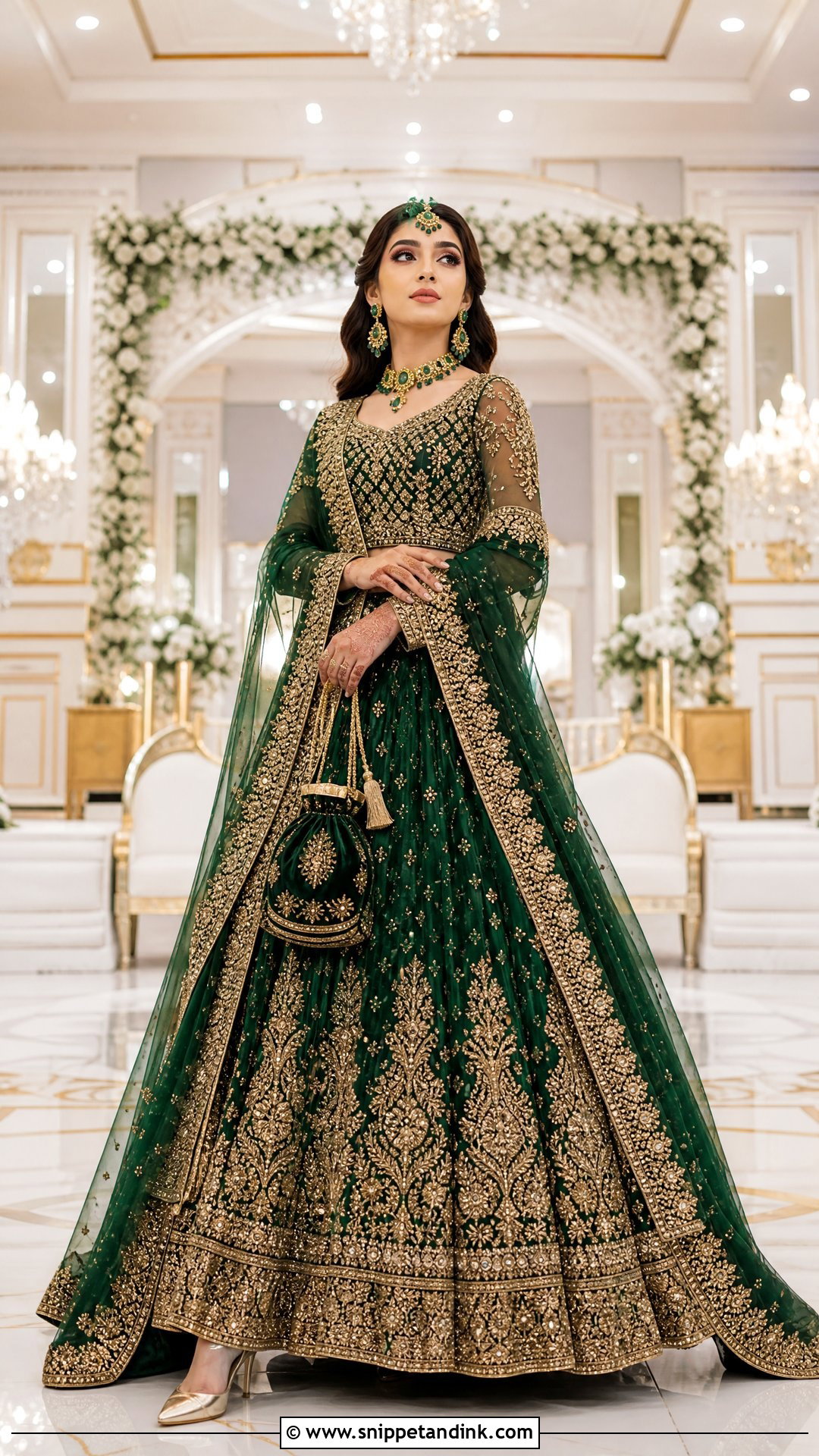
Emerald brings drama, and it asks for confidence. A full emerald lehenga with antique gold embroidery feels traditional; a fitted velvet gown with crystal work feels modern. A sheer dupatta with a worked border lightens the color around the shoulders. Gold heels and kundan with emerald stones complete it. I’d add nothing else bright; ivory pearls or restrained gold are plenty. Emerald velvet photographs especially well when matte pile sits next to reflective embroidery, which gives depth without glare.
20. Navy Blue Walima Dress
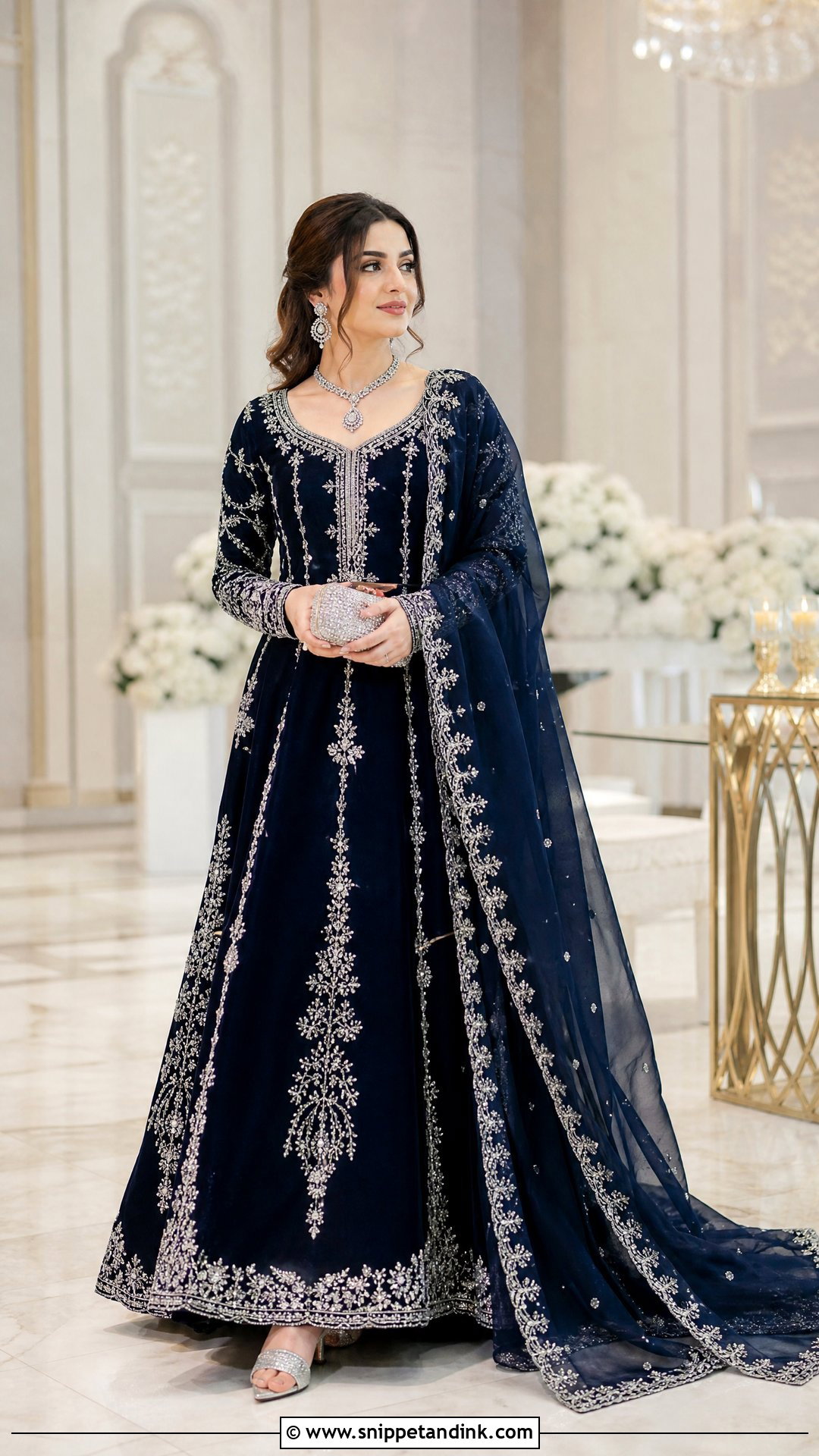
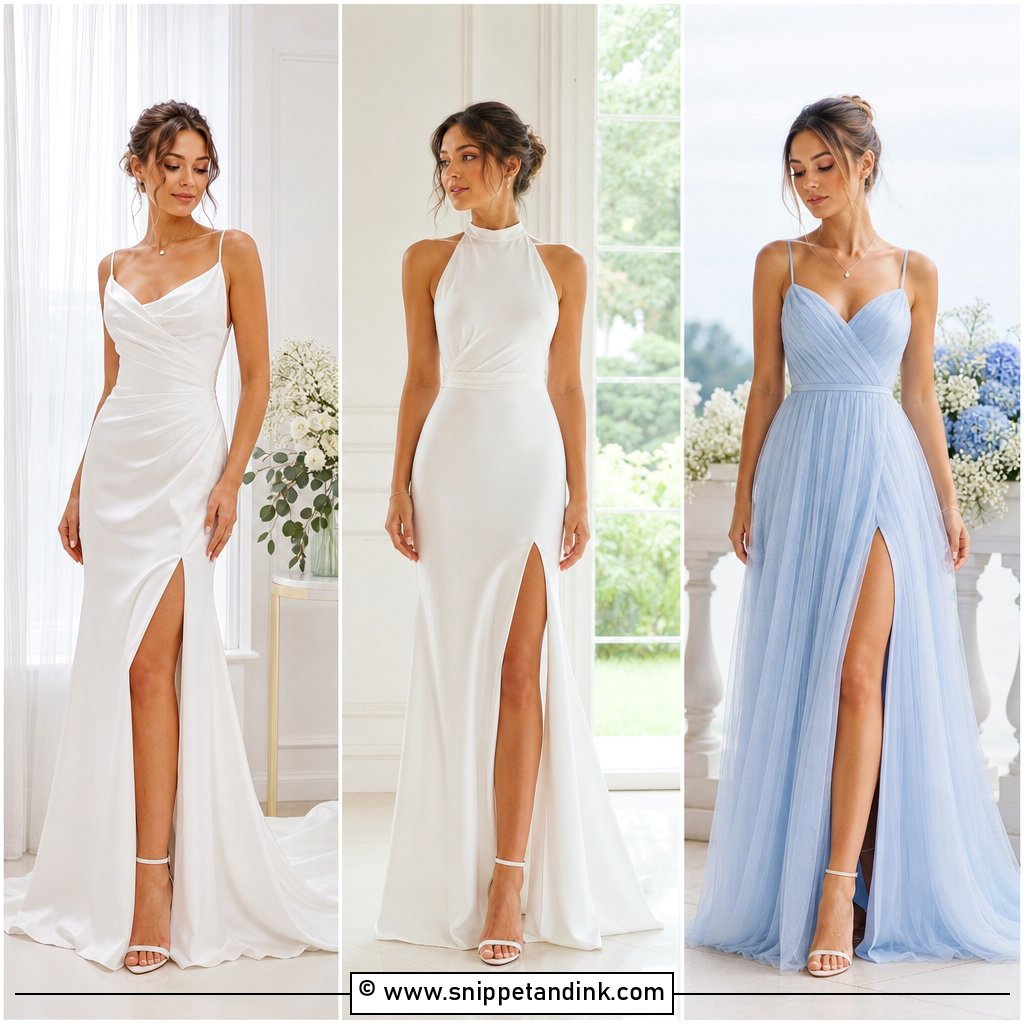
Navy is formal and gives silver, crystal or antique gold embroidery a dark stage to show off on. A fitted gown with a flowing skirt, a velvet lehenga with a long jacket or a paneled maxi with a modest trail all work. A lighter blue or sheer navy dupatta stops the upper body looking too dark. Silver and diamond-style jewelry suit cool embroidery; gold works only if the thread is warm. Dim ballroom lighting is navy’s weakness, so I ask for reflective work at the neckline and sleeves to keep light on the face.
Lead Times for Hand-Embroidered Walima Outfits
Hand embroidery can’t be rushed. Zardozi, dabka and pearl work are stitched by hand panel by panel, and a custom bridal outfit from a designer often needs several months from measurements to final fitting. Many ateliers ask brides to order three to six months ahead, and longer in peak wedding season, though it varies by workshop and how heavy the work is.
- Approve a dyed fabric sample before the embroidery starts. A pastel can come out a shade off, and it can’t be fixed once the work is on it.
- Ask for at least two fittings, one before the final finishing, so the lehenga waist and shirt length can still change.
- Plan where the outfit will be stored before the day. Heavy embroidery should lie flat or hang from a padded hanger, never on a thin wire hook.
- Collect it early enough to try it on with your jewelry and shoes at home.
Coordinating With the Groom Without Twinning
The groom’s Walima outfit is usually a suit, a prince coat or a sherwani, and the photos look best when the two outfits talk to each other without matching. I ask both sides to share fabric swatches early. A navy or charcoal suit sits well beside nearly every pastel. If the groom wears a sherwani, echo one thread color from your embroidery in his, or pick up your dupatta shade in his pocket square. Matching the bride’s color exactly tends to flatten the couple into one block in photographs.
Swatches, Daylight and One Honest Mirror
The right Walima color is one you’ll feel like yourself in, not just the shade of the season. Neutrals, pastels, metallics and jewel tones each suit different complexions, seasons and halls. View swatches in daylight, under indoor bulbs and with camera flash, and compare them with your embroidery, jewelry, dupatta and the groom’s outfit. A finished look balances color with silhouette and texture rather than piling on embellishment. Ivory, mint, mauve or emerald, styled consistently, any of them can carry the evening.
You'll Like These Ideas:


Leave a Reply