
A scarf is the accessory I suggest when a bride wants softness around the face but finds a veil too traditional or too fussy. It moves like a veil, it comes off in seconds, and it can change a plain gown more than a necklace ever will. The catch is proportion. A scarf that’s too wide swallows a neckline, one that’s too short looks like an afterthought, and a slightly different white can make an ivory dress look dingy. Below are scarf pairings for different gowns and seasons, with what I check on each before a bride walks out of the fitting room.
Length, Shade and Edge: Settle These First
I sort three things before I even think about how a scarf will be draped.
Length
Hang a tape measure from the back of your neck to where you want the ends to land. For a scarf that wraps once and trails, add the distance around your neck. A floor-length trailing scarf looks dramatic in photos but steps under your heels on stairs, so for most brides I suggest ending around mid-calf.
Shade
Bridal whites range from bright optic white to ivory, champagne and blush-toned silk. Shop with a fabric swatch from your dressmaker, and compare the two by a window, not under the shop’s warm spotlights. Silk and tulle can be dyed to match if you can’t find the right tone, but leave a few weeks for it.
Edge
A raw tulle edge is light and invisible. A narrow rolled hem gives silk and chiffon a neat finish. A satin-bound or pearl-trimmed edge adds weight, which helps a scarf hang straight in wind but also pulls more on the shoulders.
1. Wedding Dress Scarf With Strapless Satin Gown
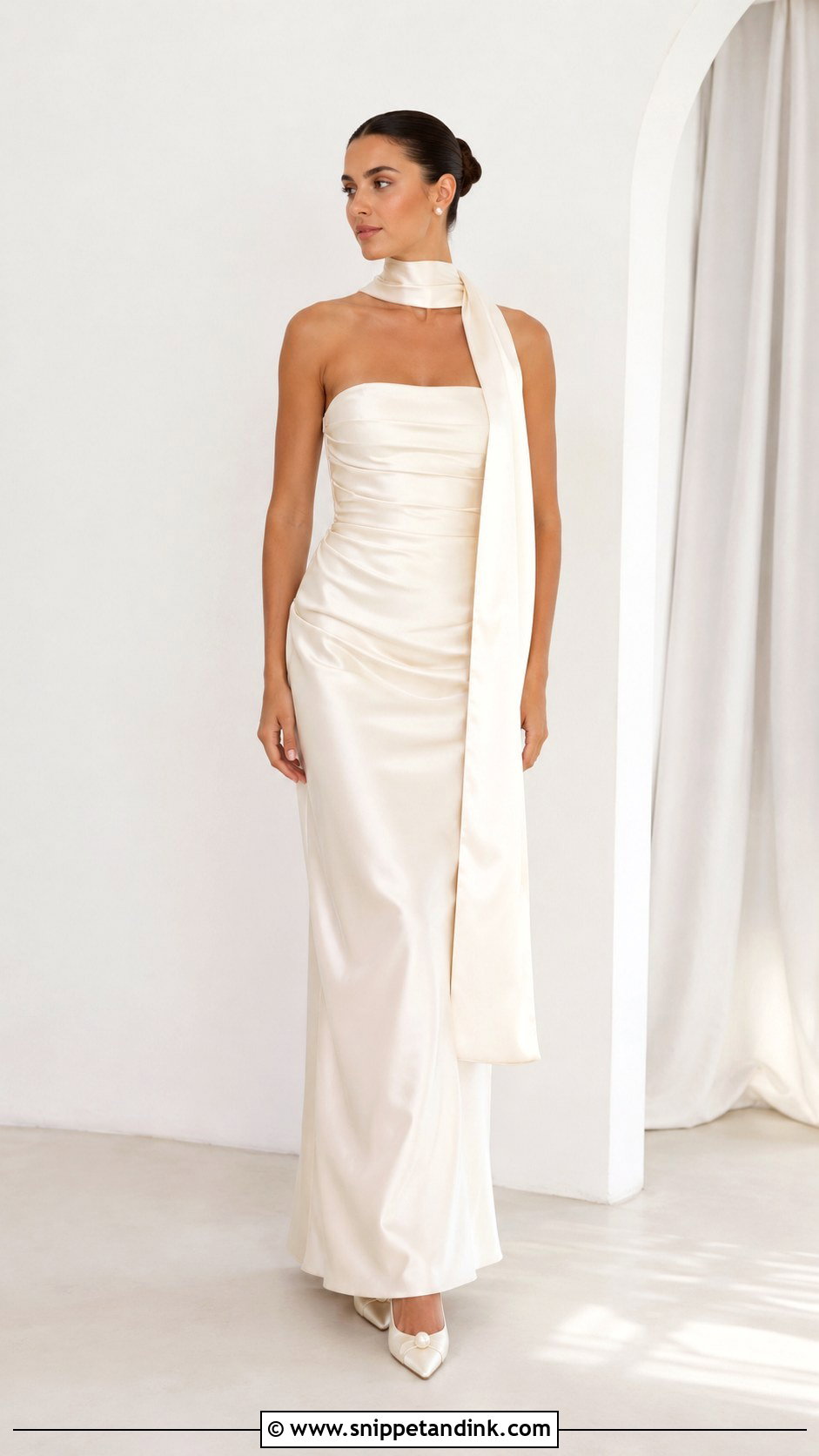
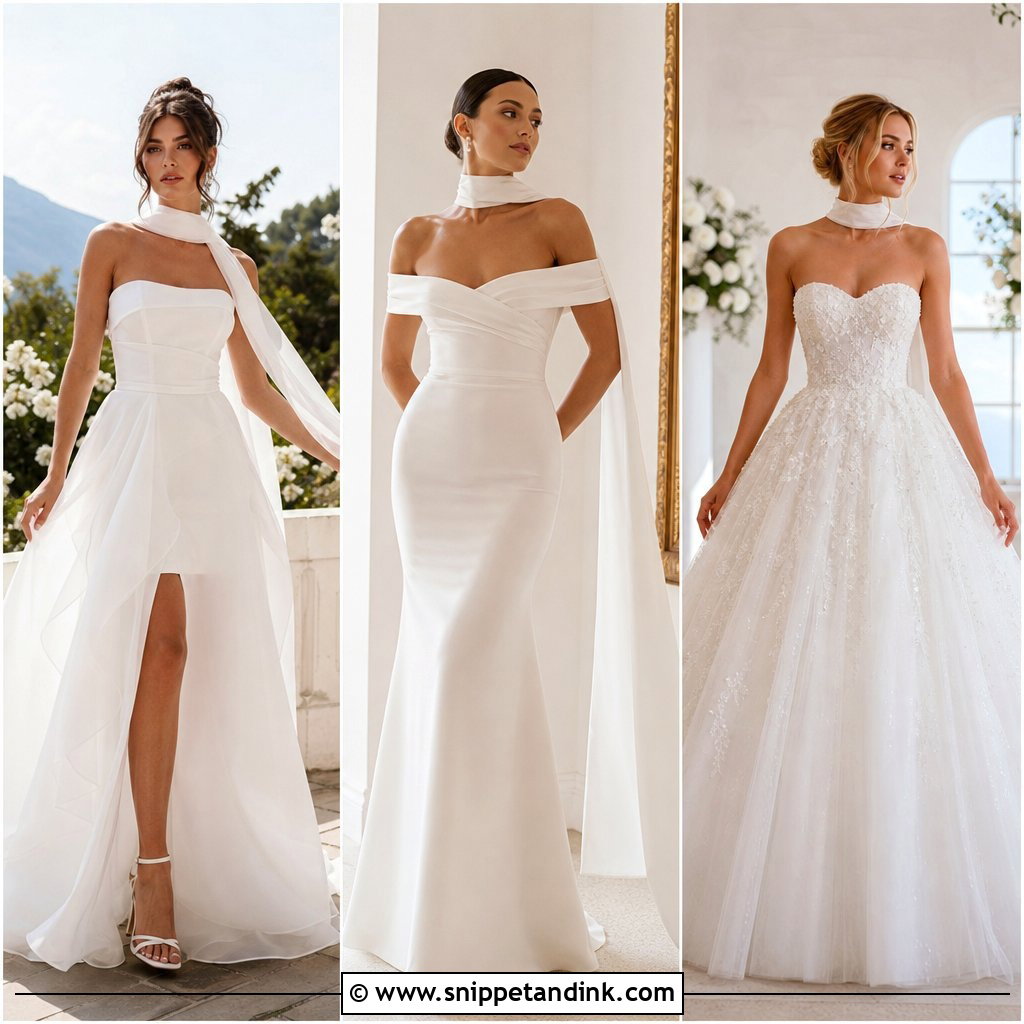
Strapless satin is the easiest starting point, because nothing competes with the scarf at the neck. I match sheen to sheen: a long ivory silk or satin scarf on satin, never a matte chiffon that looks flat beside it. Draped once around the neck with both ends falling down the back, it gives an old-Hollywood line and replaces a necklace altogether. Fitted gowns can take a scarf that reaches the hem; on a full skirt I keep it narrower so the skirt still reads as the main shape.
2. Wedding Dress Scarf With Off Shoulder Gown
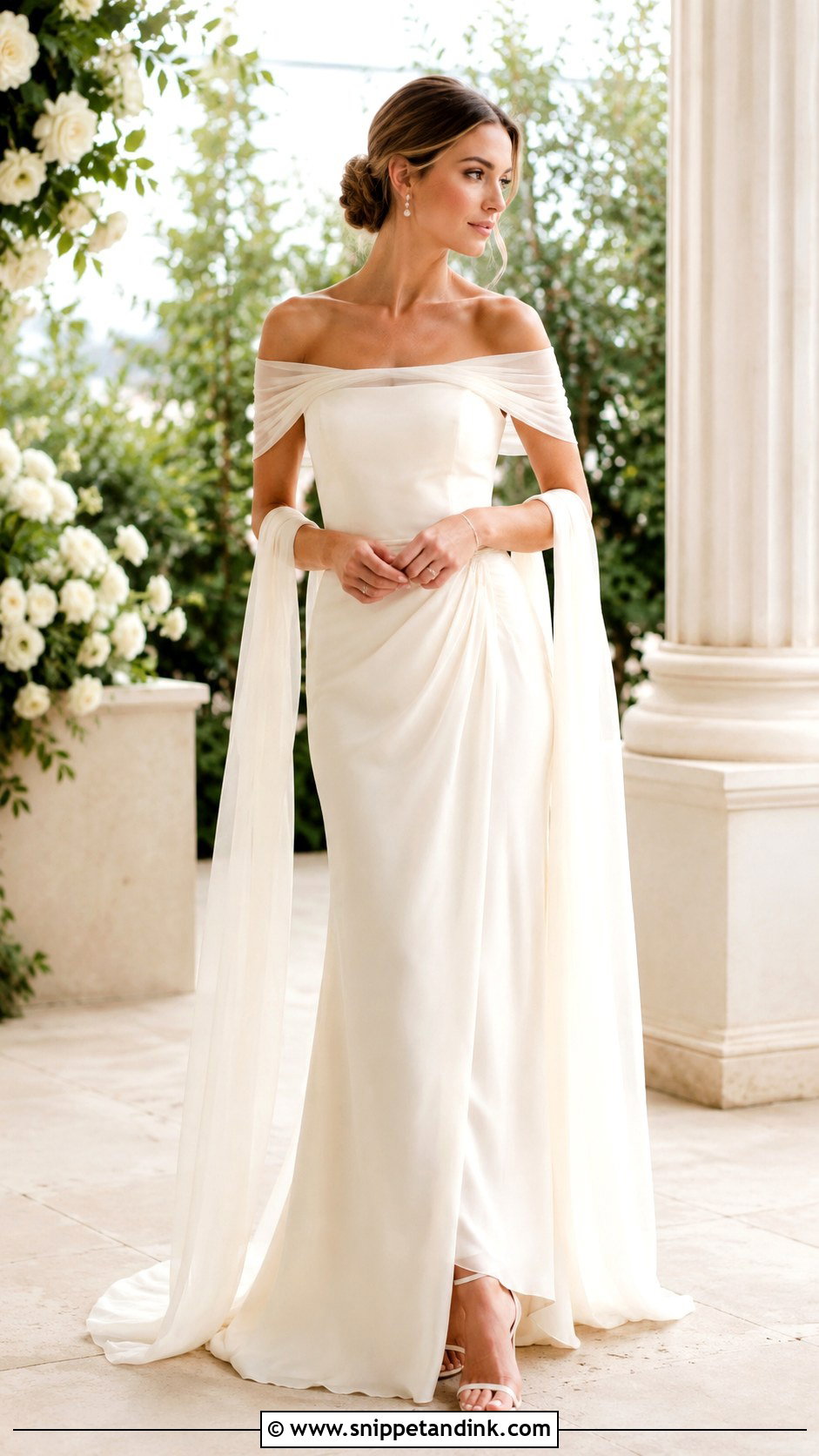
The off-shoulder neckline is the dress’s best feature, so the scarf has to stay out of its way. Sheer tulle or chiffon resting just above the collarbone, with one end trailing longer, keeps the shoulder line visible. Heavier fabrics slide down the bare shoulders all evening, which is the main complaint I hear about this pairing. A low chignon helps by keeping hair off the scarf. Match the colour closely; on bare skin, any difference in white is easy to spot.
3. Wedding Dress Scarf With Lace Gown
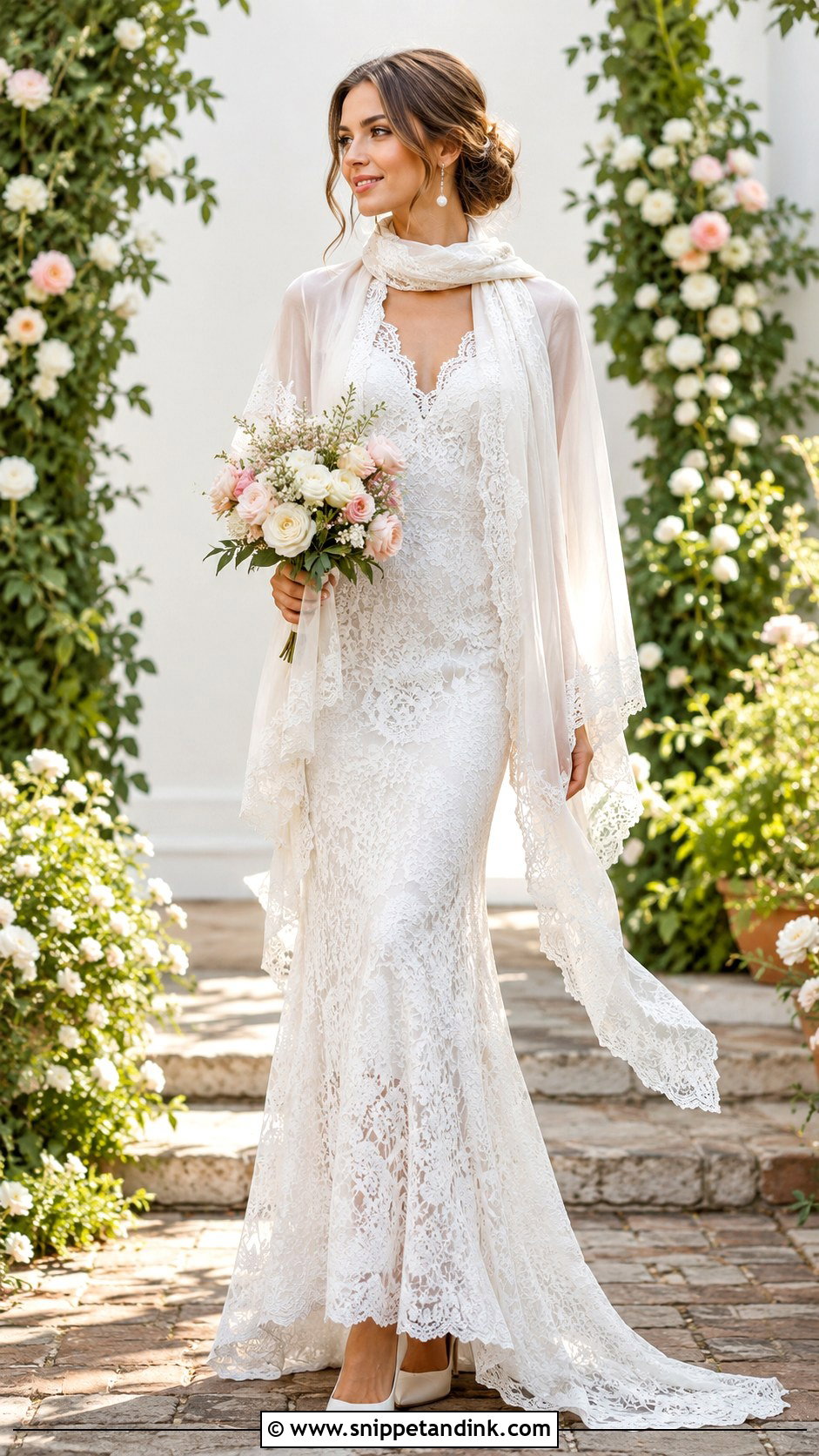
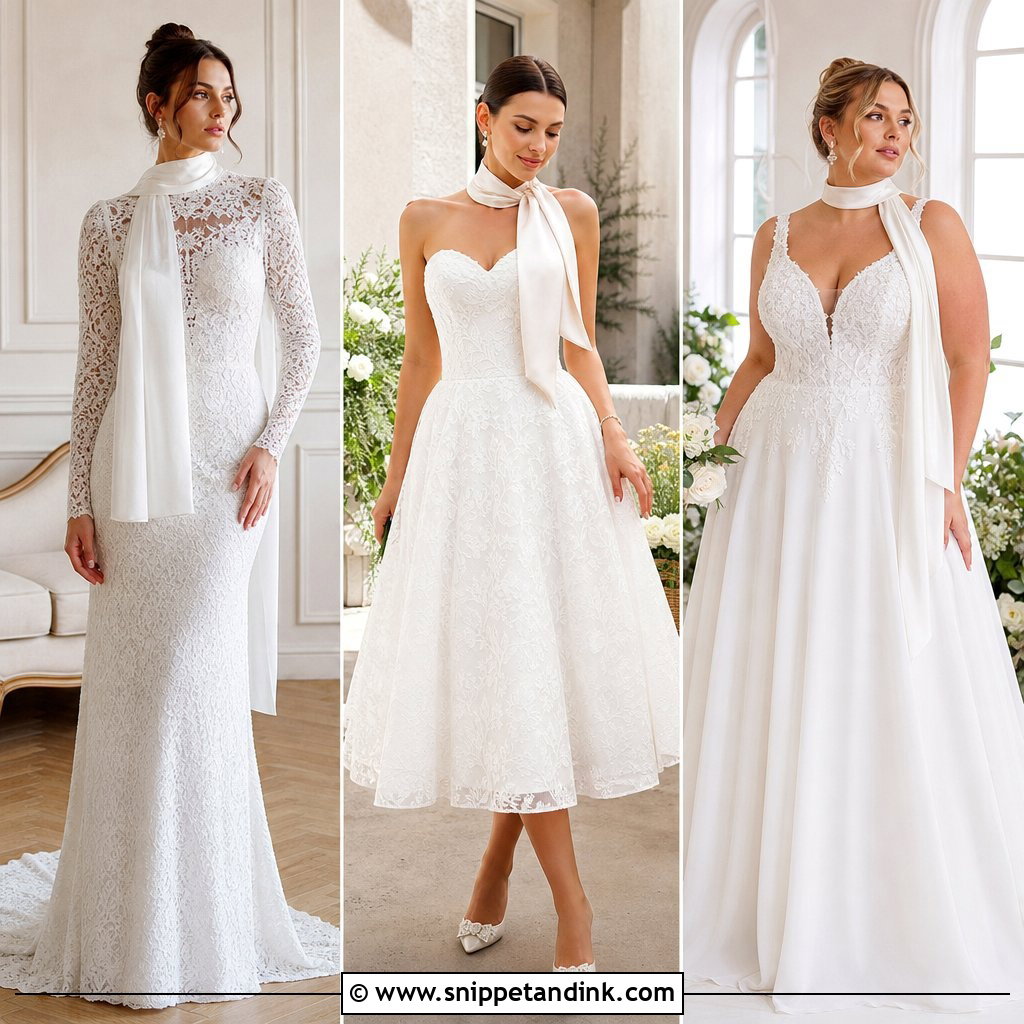
Lace and a lace scarf together usually fight. I’d rather pick one motif from the gown and repeat it in a narrow lace trim on a plain sheer scarf. Worn like a shawl for the ceremony and wrapped at the neck for portraits, it works as two looks. Bring a swatch of the dress lace when you shop, because bright white lace next to warm ivory shows the difference instantly in photographs, even when it seems close in the shop.
4. Wedding Dress Scarf With Simple Crepe Gown
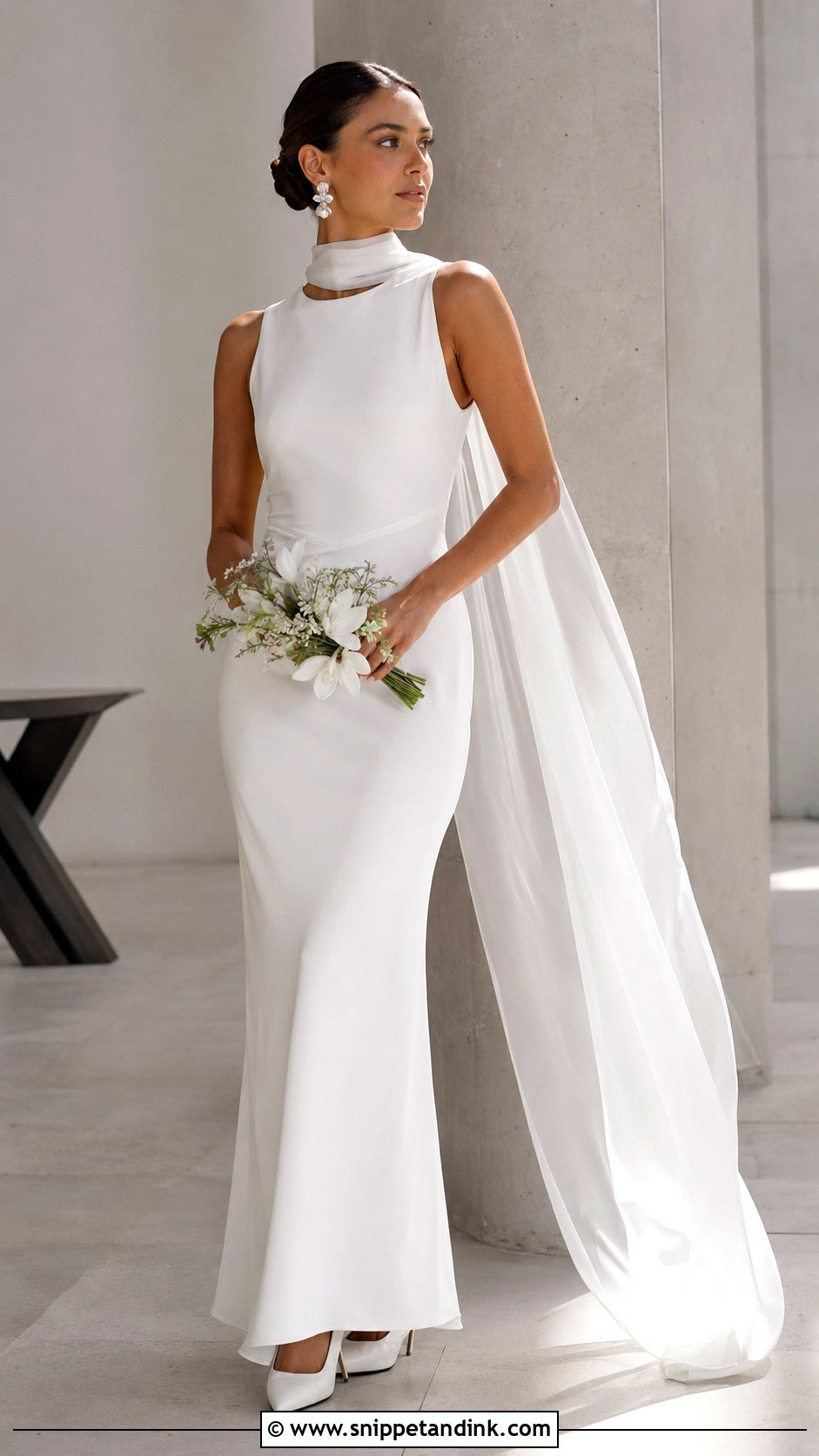
Crepe is plain and matte, which leaves room for a scarf with a bit of body. A long organza scarf holds its shape around the neck, crosses neatly at the front and trails behind like a slim train. Thick wraps undo the whole point of a crepe dress, which is its clean line. Sculptural earrings and a sleek updo keep everything else quiet.
5. Wedding Dress Scarf With Ball Gown
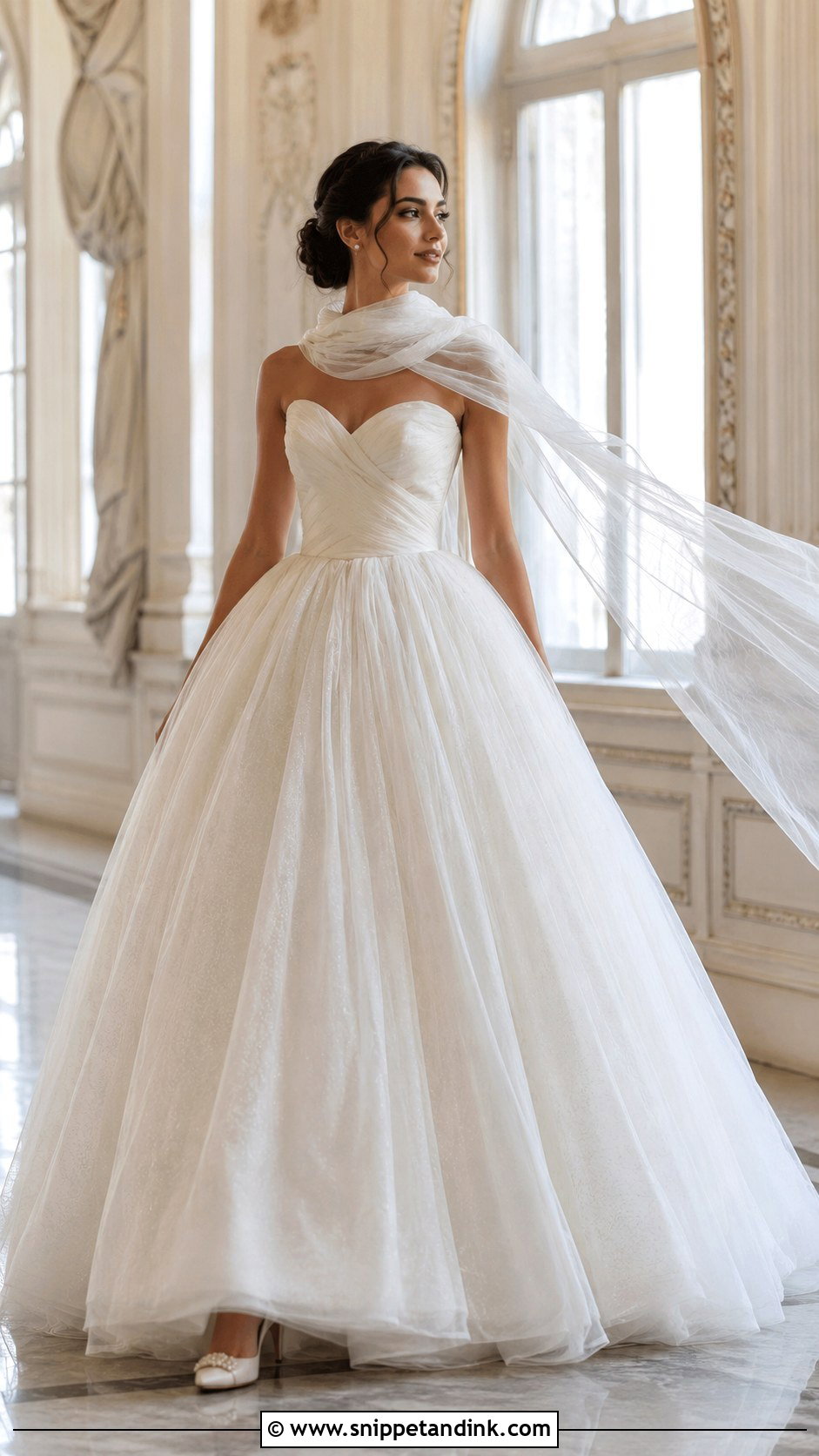
Ball gowns already have plenty of width, so I use the scarf to add height instead. Light tulle worn loosely at the neck with the ends falling behind the shoulders lifts the eye upward and leaves the skirt to do its thing. If the bodice is heavily embellished, the scarf should be plain; on a simple bodice, a pearl-edged tulle scarf gives the detail the dress is missing. Keep accessories small: studs, a bracelet, and heels that show when you walk.
6. Wedding Dress Scarf With Mermaid Gown
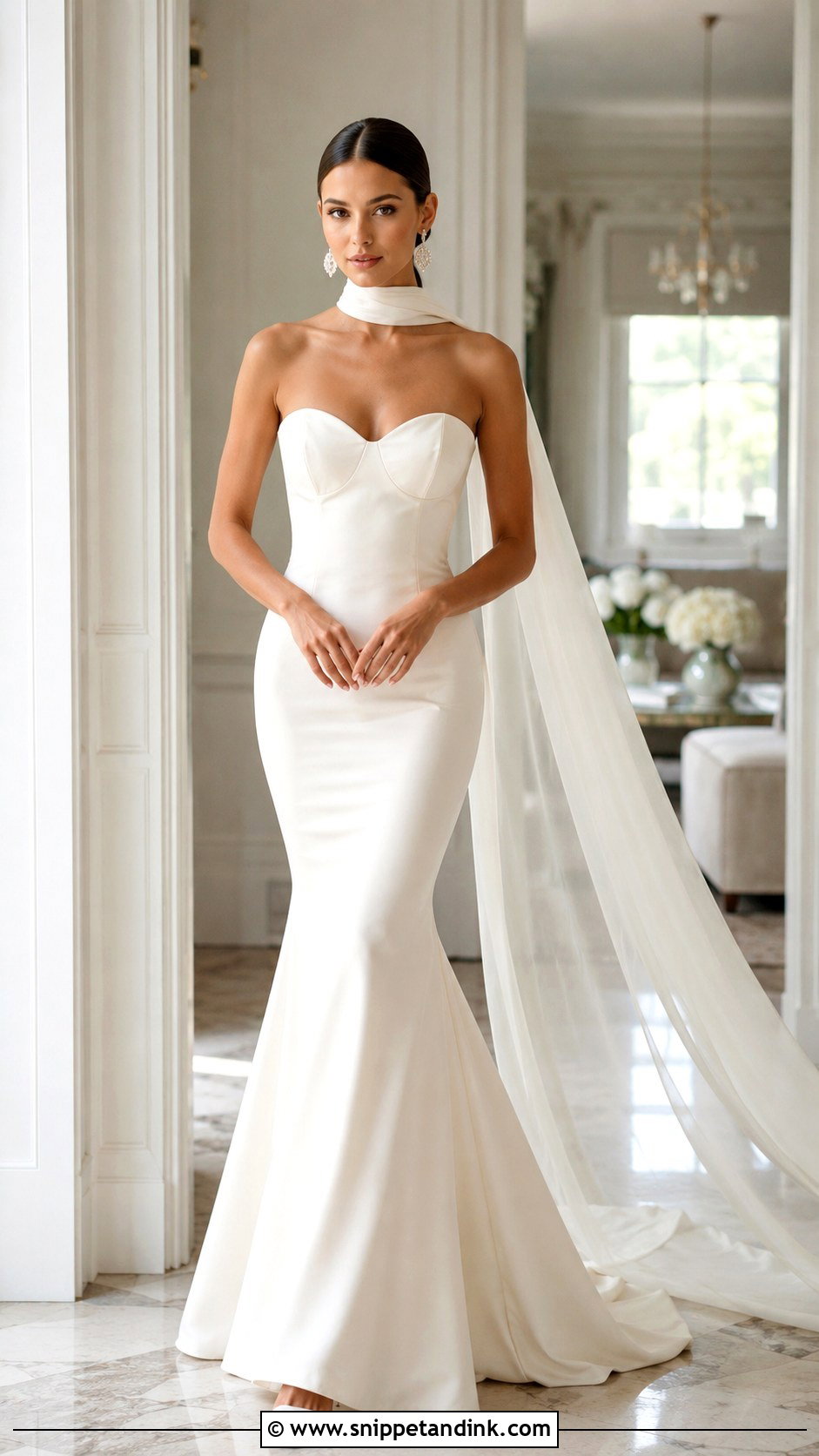
Vertical lines suit a mermaid gown, and a slim chiffon or silk scarf hanging straight down the back gives exactly that. It works best with a sweetheart neckline, a strapless bodice or a square neck. A shawl breaks up the curve the dress was cut to show, so I avoid anything wide here. Smooth hair matters too, since textured waves catch on silk and pull it sideways.
7. Wedding Dress Scarf With A Line Gown
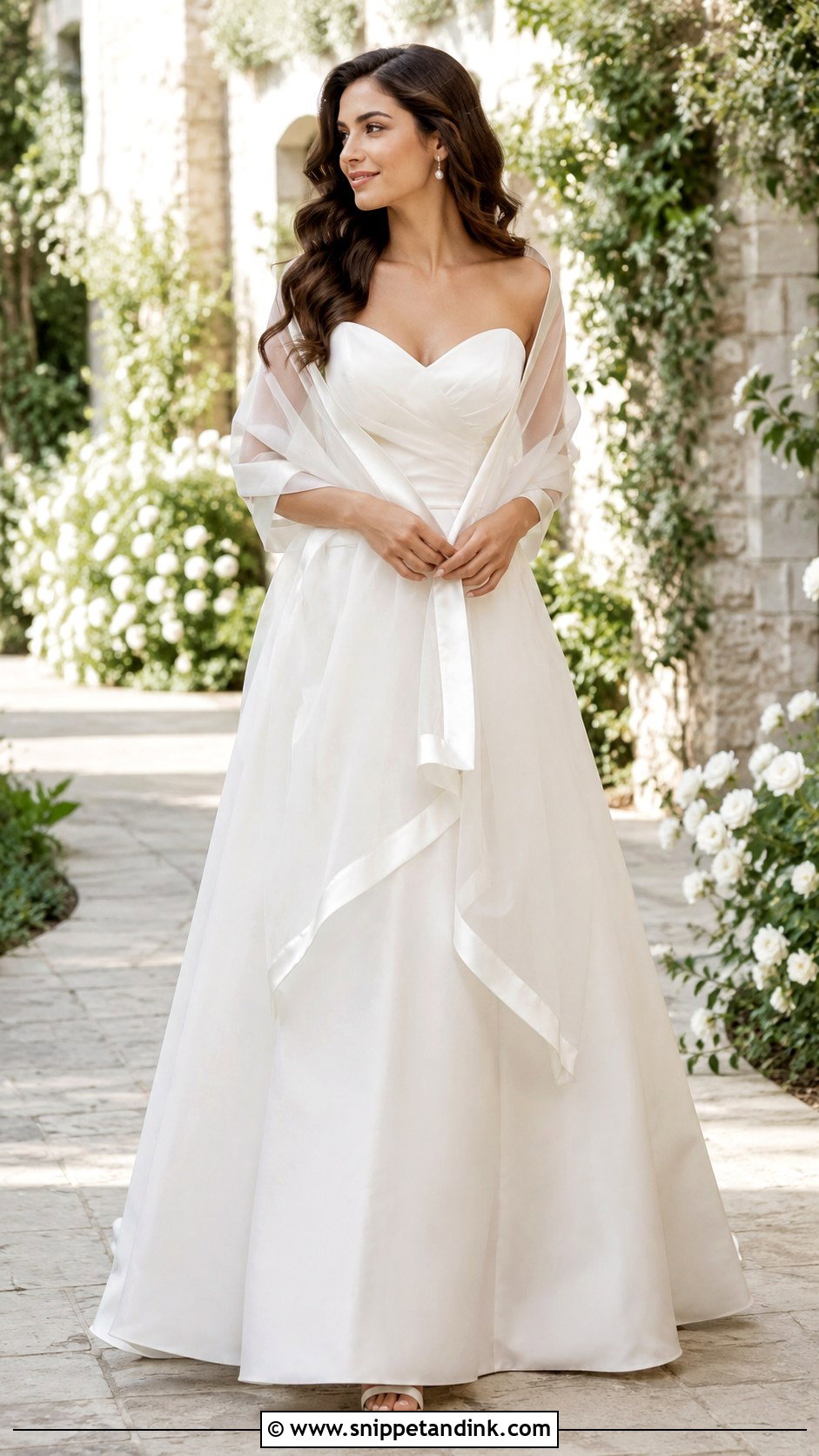
An A-line dress is a calm base that lets the scarf add personality. Sheer ivory with a satin-bound edge is my default because the binding gives the scarf weight and stops it twisting. Shoulders for the ceremony, loosely knotted at the neck for portraits. A detailed bodice calls for a plain scarf; a simple dress can take light embroidery or seed pearls along the edge.
8. Wedding Dress Scarf With Slip Dress
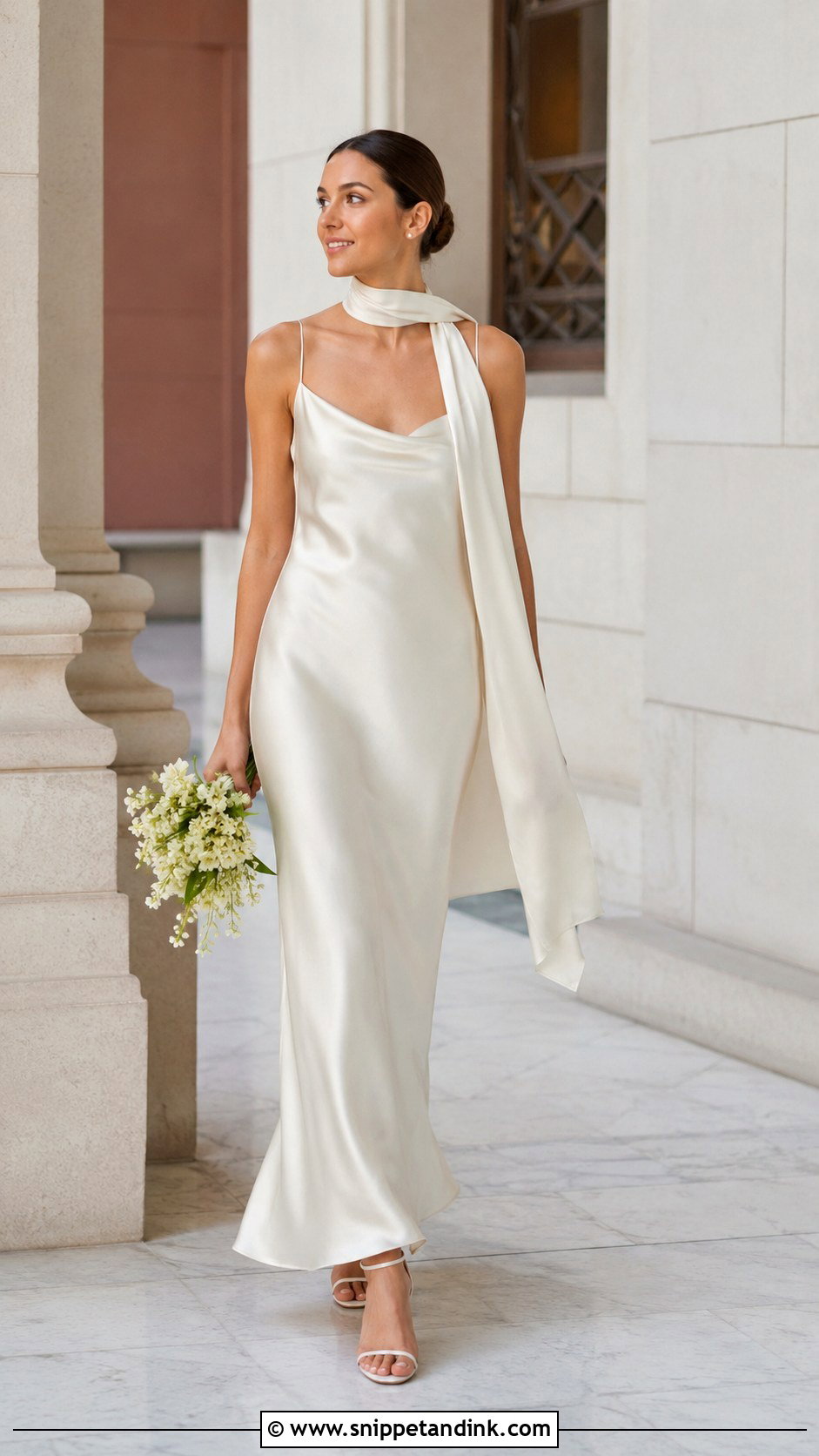
Slip dresses and long silk scarves were made for each other. Same shade, same fabric family, falling from the neck to the waist or below, and the look reads like a single garment. Thin straps are the weak point: a heavy scarf drags them off the shoulder, so I keep it featherweight. Strappy heels and a smooth bun suit the clean line, especially at city weddings and courthouse ceremonies.
9. Wedding Dress Scarf With High Neck Gown
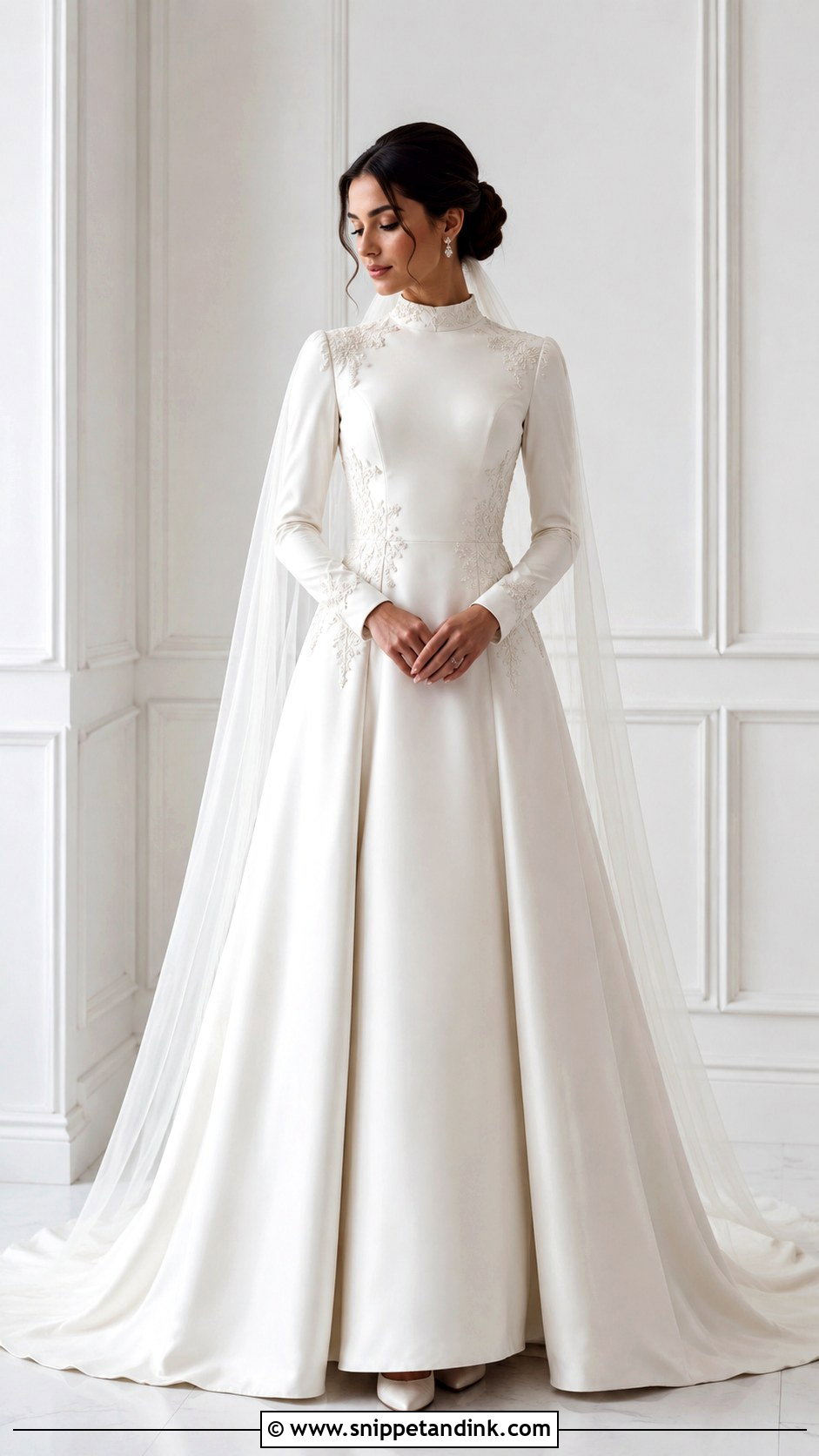
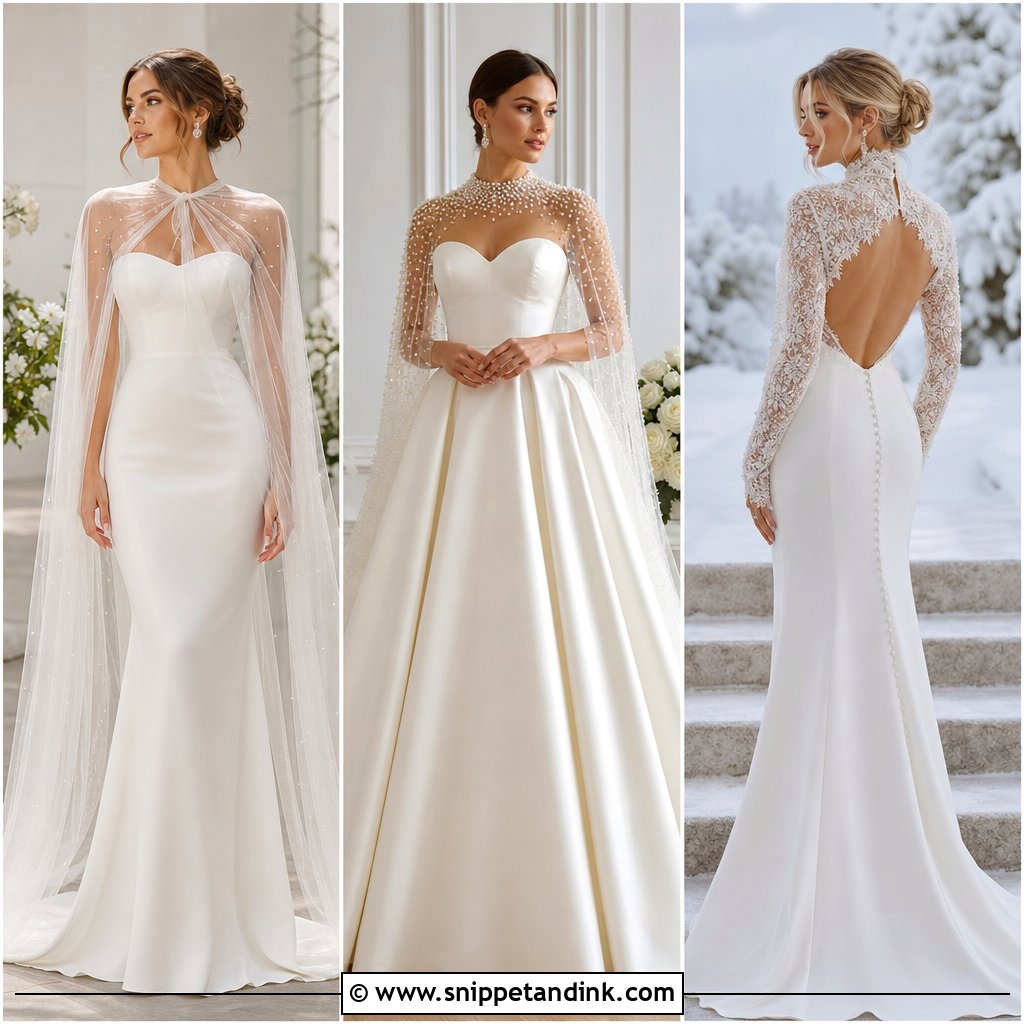
A high neckline doesn’t need anything more at the throat. I lay a long sheer scarf over the shoulders and let it fall down the back like a cape, which gives movement without crowding the collar. Organza, tulle or very light chiffon keep it soft. A neat updo and plain earrings stop the area around the face getting busy. If the gown has sleeves or beading, a narrow scarf is safer than a wide one.
10. Wedding Dress Scarf With Square Neck Gown
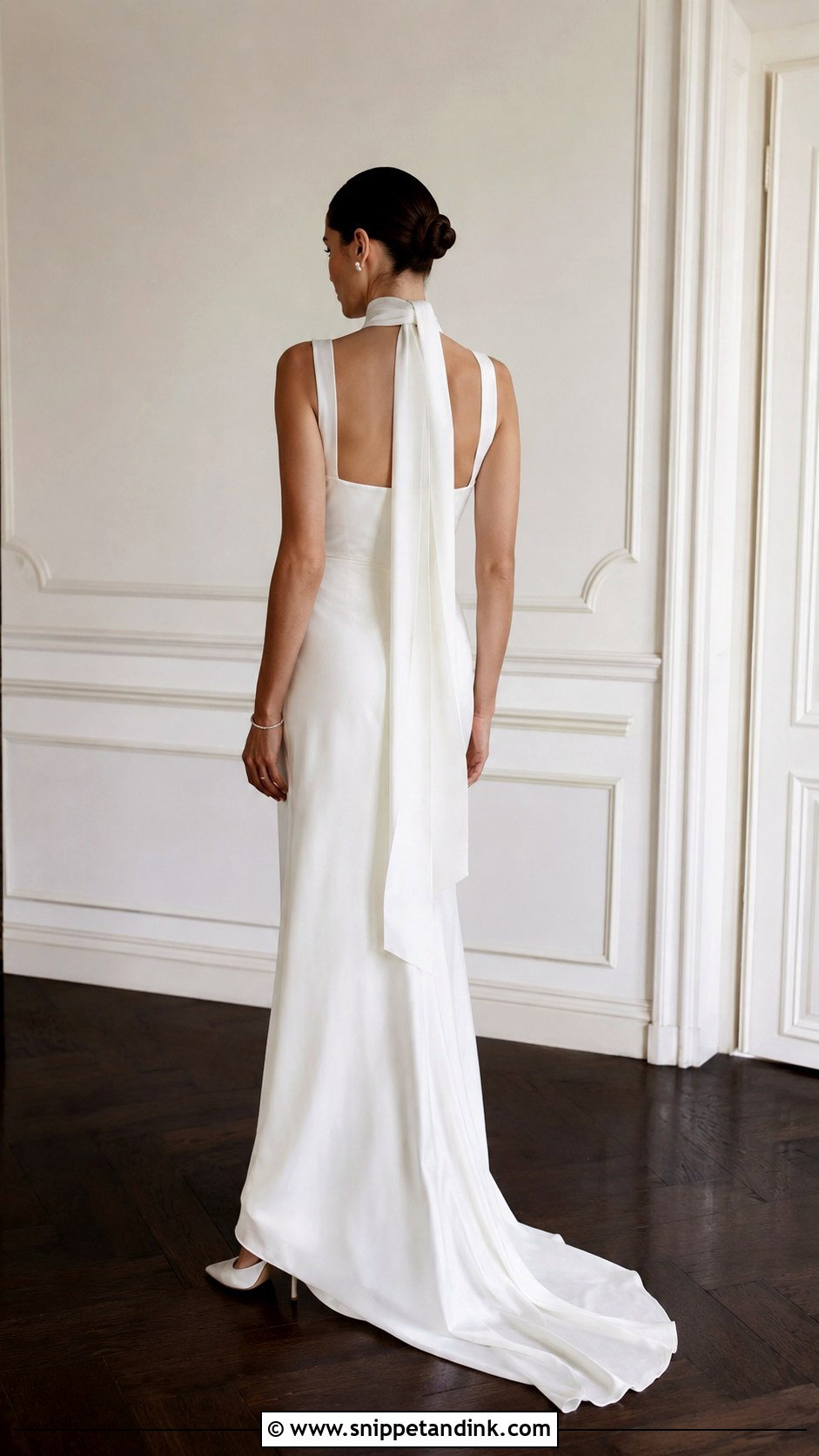
Square necklines are crisp at the front, so I move the scarf’s drama to the back. A narrow silk scarf tied loosely at the nape with long ends running down the spine leaves the neckline fully open. That rear view matters during the ceremony, since guests spend most of it looking at your back. Thick wraps at the shoulders cover the corners of the neckline and lose the shape, so skip them.
11. Wedding Dress Scarf With Long Sleeve Gown
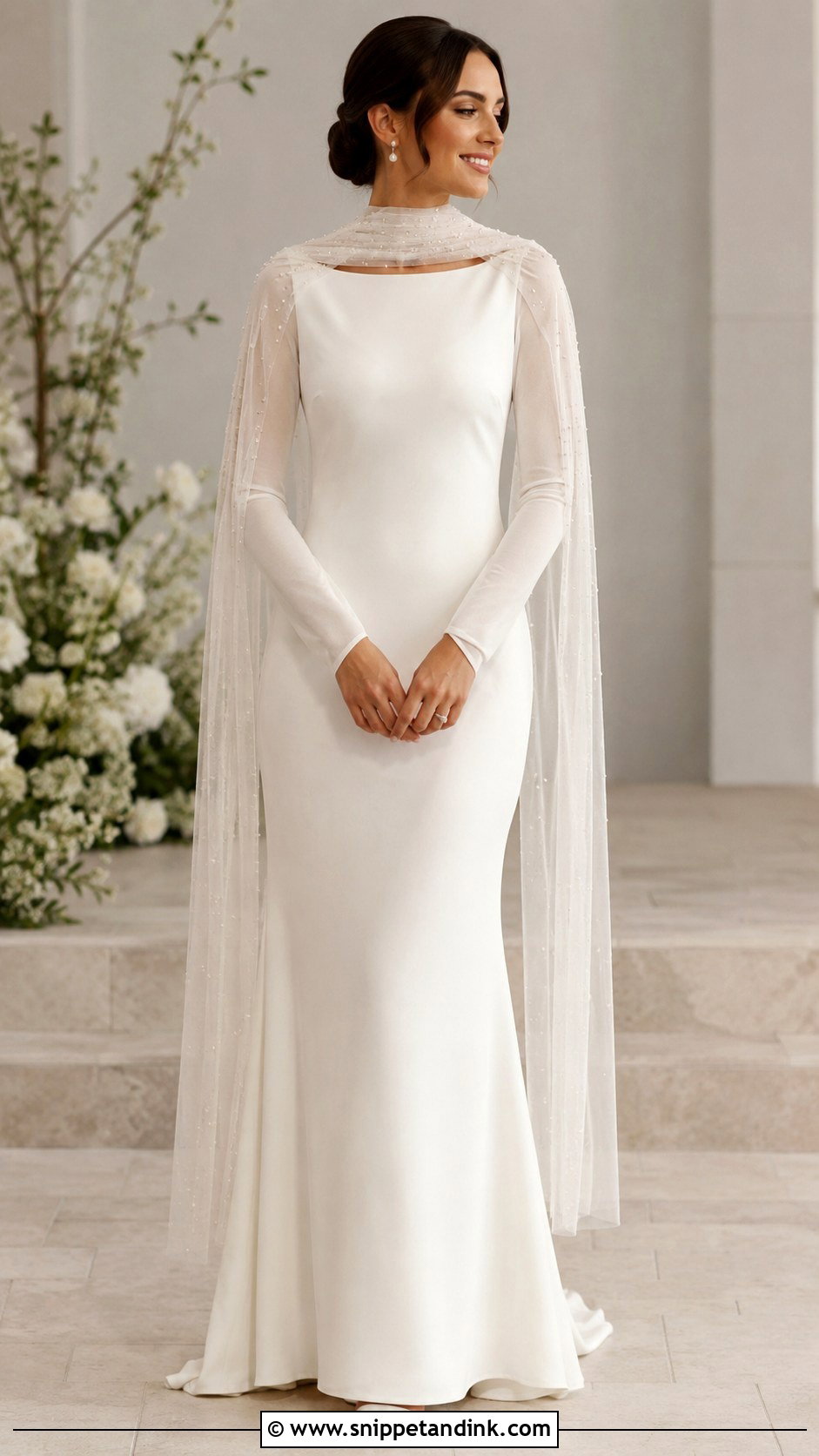
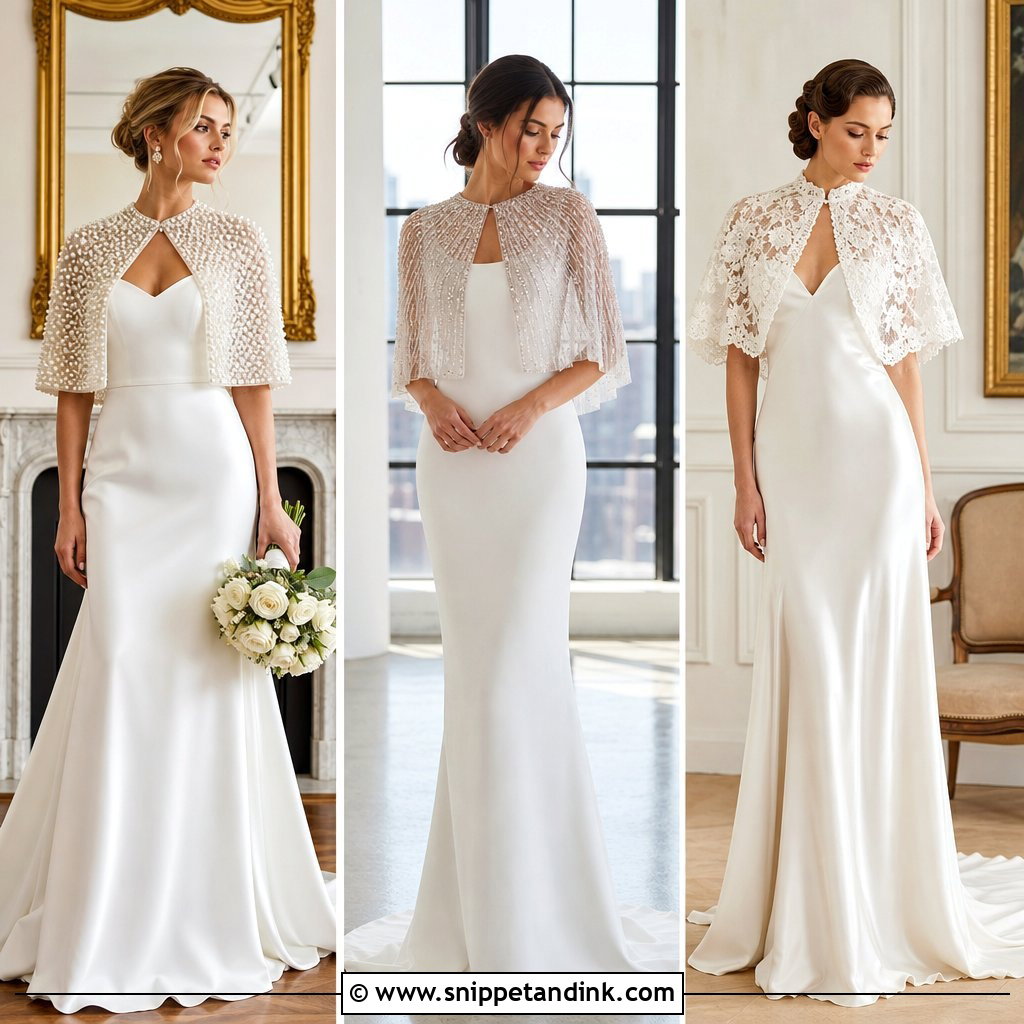
With long sleeves, the scarf only needs to soften the shoulders. A sheer scarf behind the neck and over the shoulders does that without hiding the sleeves. Plain sleeves can take a few pearl accents on the scarf; lace or beaded sleeves call for clean chiffon. I’d still keep it lightweight in cooler months, because sleeves plus a heavy scarf get warm quickly in a heated room.
12. Wedding Dress Scarf With Short Sleeve Gown
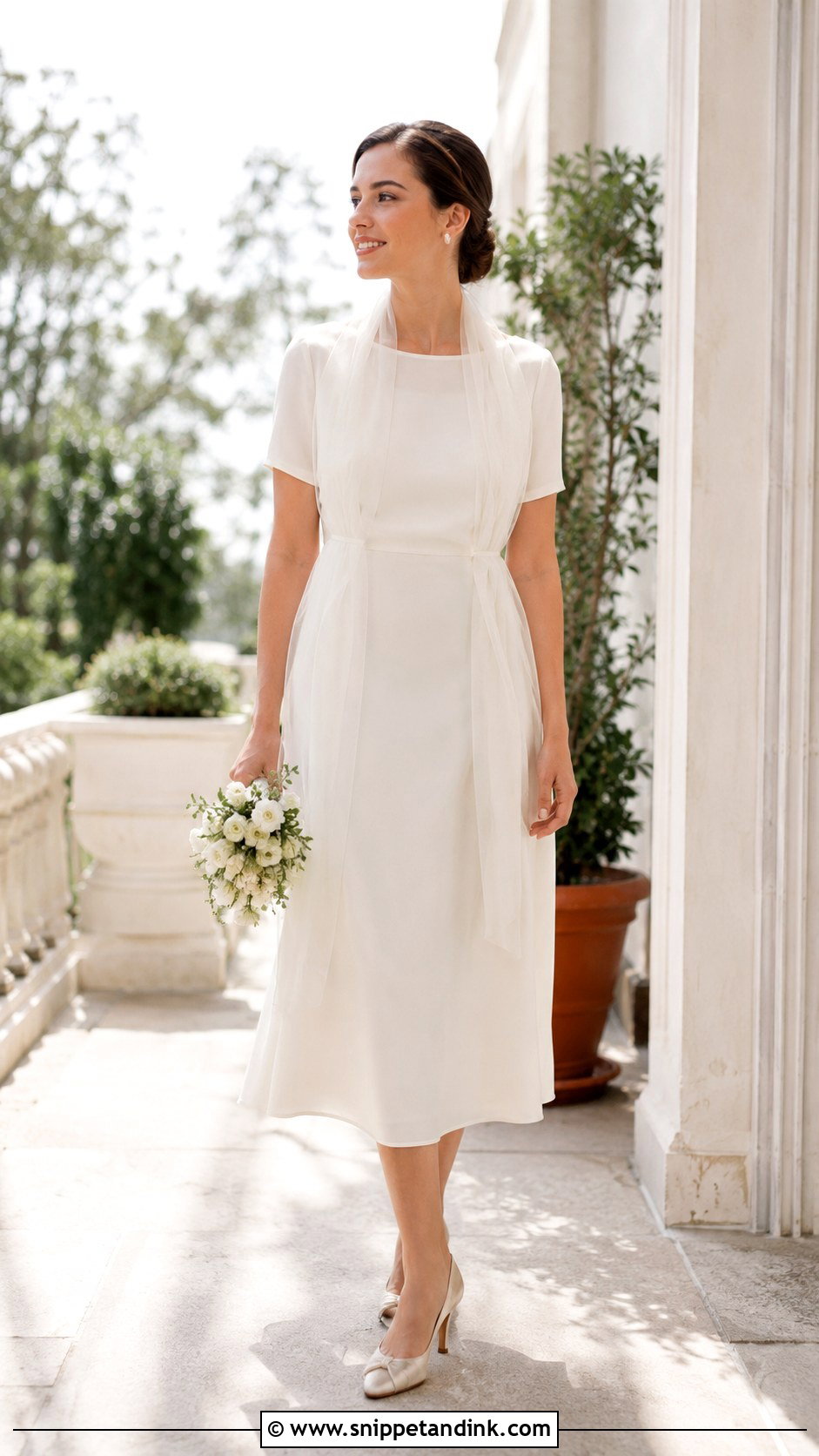
Short sleeves can tip sweet or vintage, and a semi-sheer scarf at the neck falling over the bodice nudges them toward elegant. It’s a good halfway point if you want some coverage but not a full shawl. I trim the two ends to the same length for a tidy finish on tea-length or simple skirts, and mid-height heels keep the proportion relaxed.
13. Wedding Dress Scarf With Tea Length Dress
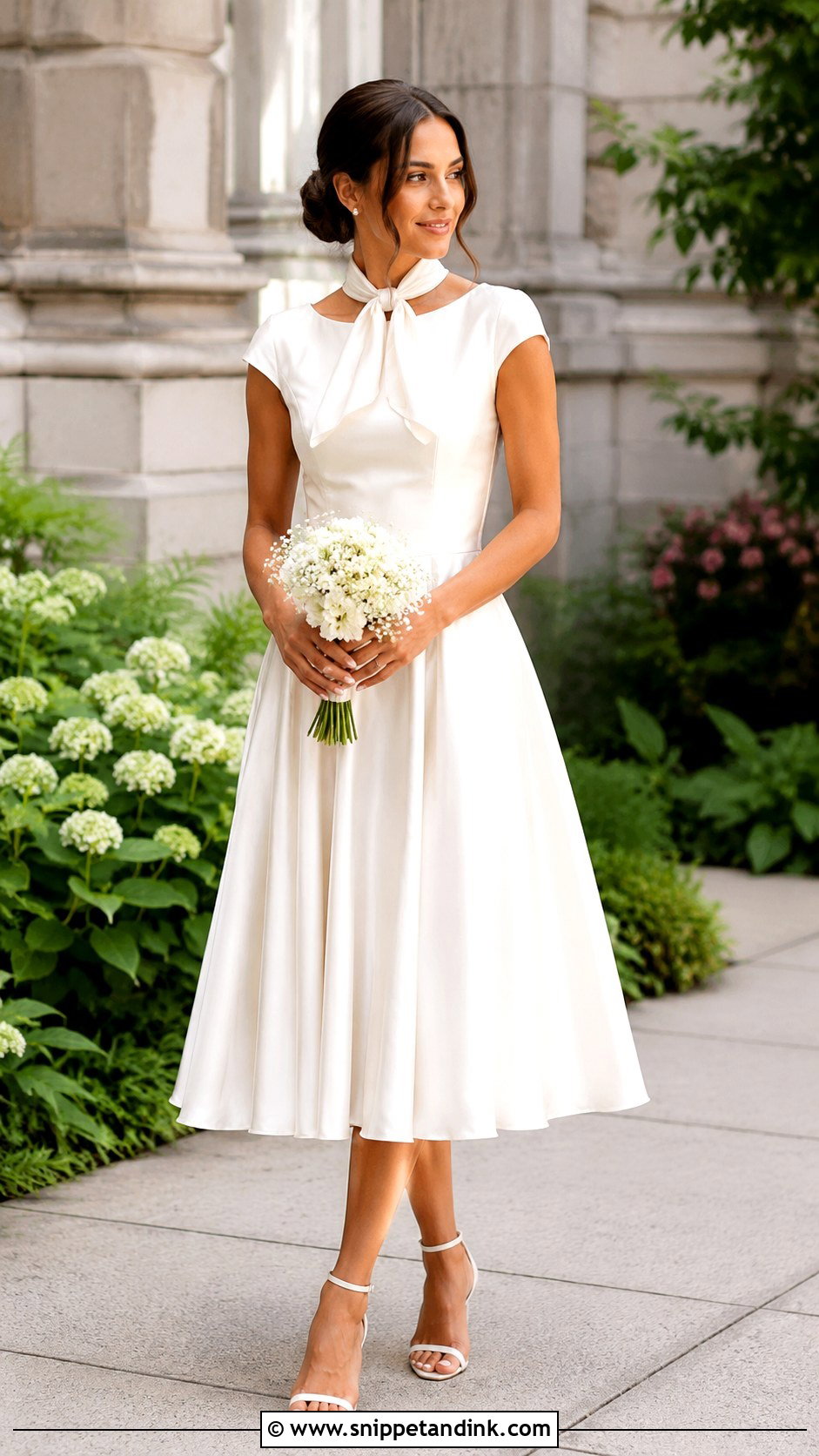
Tea length is lighthearted, so a short silk scarf tied softly at the neck fits the mood. Tied in a small knot slightly off-centre, it reads vintage without becoming costume. A full skirt needs a narrow, tidy scarf; a simple dress can take a satin sheen or a tiny bow. Ankle-strap heels and a small bouquet keep the whole look easy to move in at a courthouse or garden reception.
14. Wedding Dress Scarf With Pearl Detail Gown
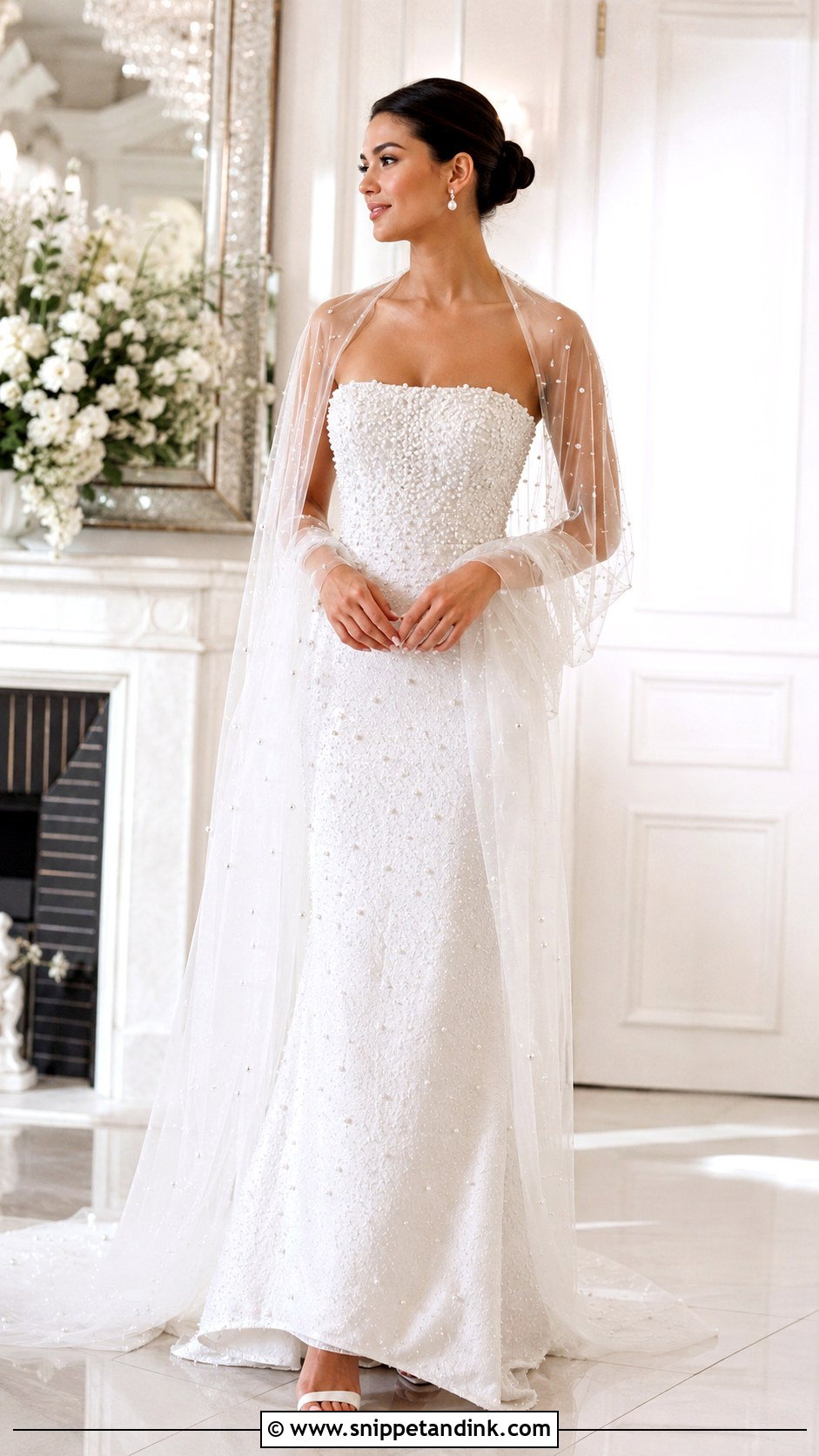
Pearl scarves only work when the pearls agree with the dress. I compare sizes and tones side by side: big glossy pearls on the scarf next to tiny matte ones on the bodice look mismatched, and cream pearls against bright white ones read as two different shades. A sheer tulle scarf with a pearl-trimmed edge or a light scatter is enough. With a heavily beaded gown, choose the plainest pearl scarf you can find; with a simple one, it becomes the main detail.
15. Wedding Dress Scarf With Beaded Gown
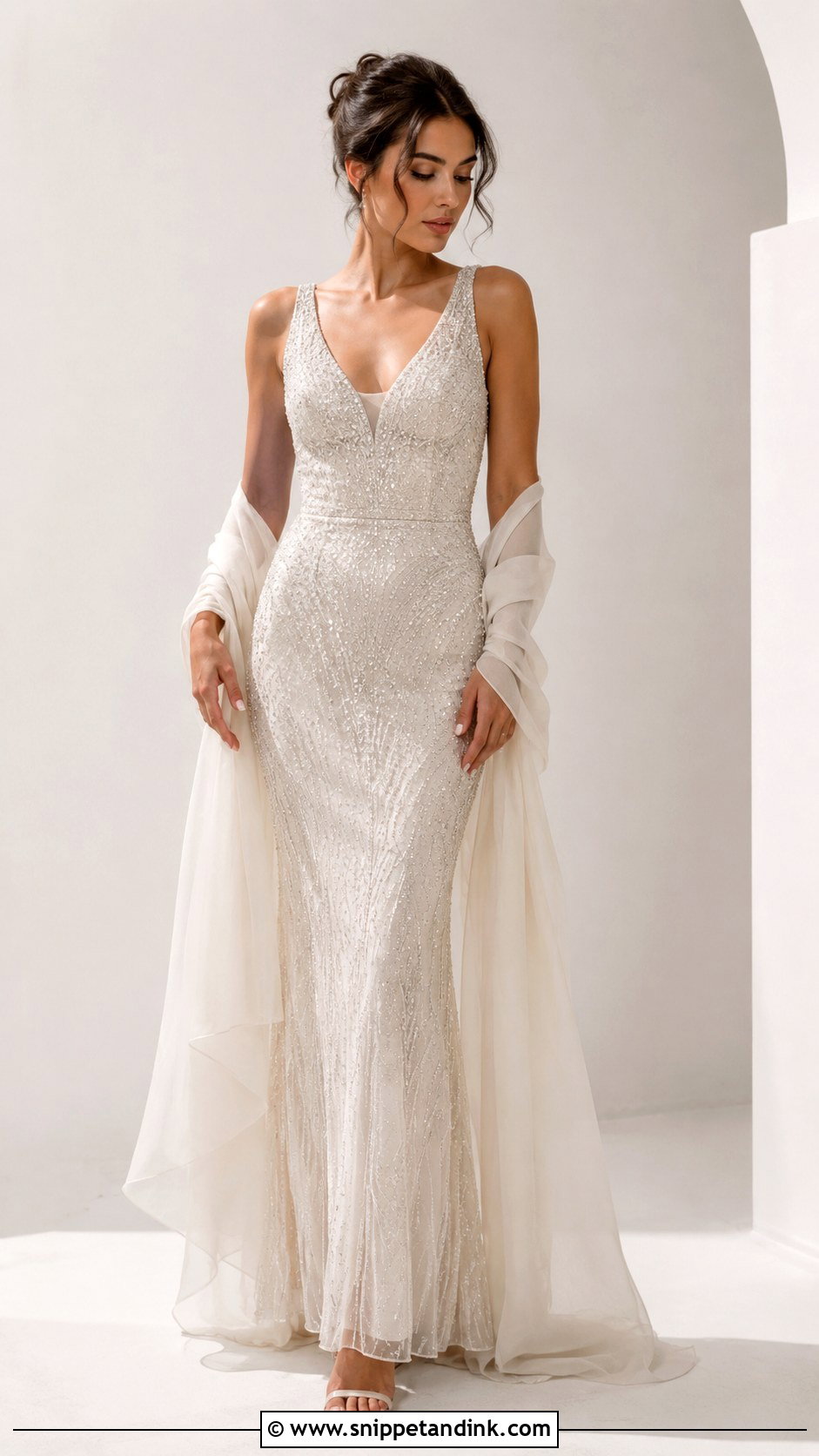
Beading catches light everywhere, and a plain chiffon scarf calms it down. Ivory, champagne or soft white chiffon over the shoulders frames the bodice; worn behind the neck it leaves the front clean. Fine chiffon catches on sharp beads and sequins, so I run a hand over the bodice edge and check for anything rough where the scarf rests. Embellished scarves on beaded gowns tend to clash rather than coordinate.
16. Wedding Dress Scarf With Floral Applique Gown
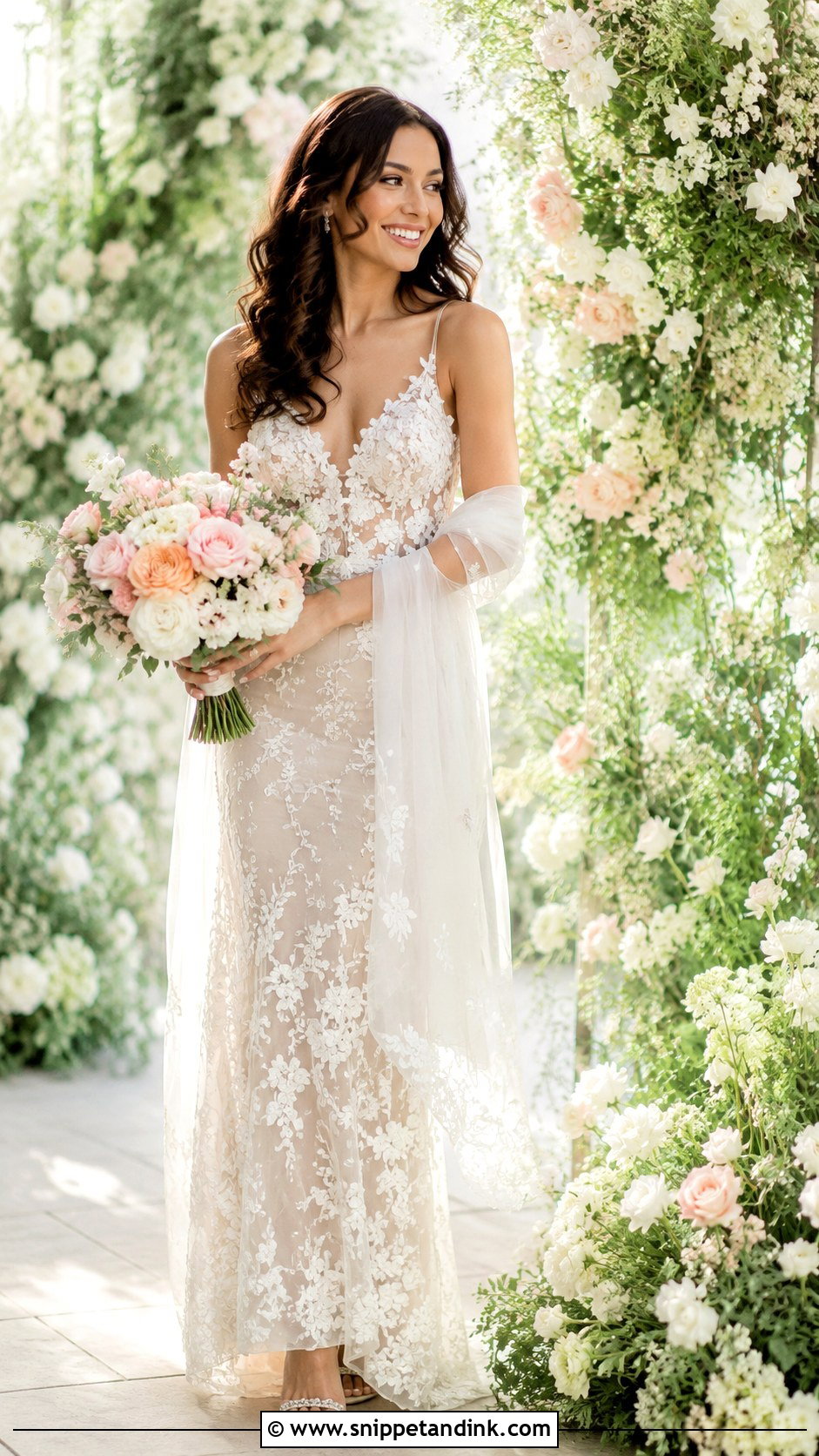
Floral appliqué gowns already have texture, so the scarf should whisper rather than repeat the shout. Large appliqués call for plain tulle; small scattered flowers can take a lightly embroidered border. Draped across the shoulders for portraits and let trail for movement, it suits spring and summer weddings. Soft curls and delicate earrings keep the look gentle.
17. Wedding Dress Scarf With Corset Bodice Gown
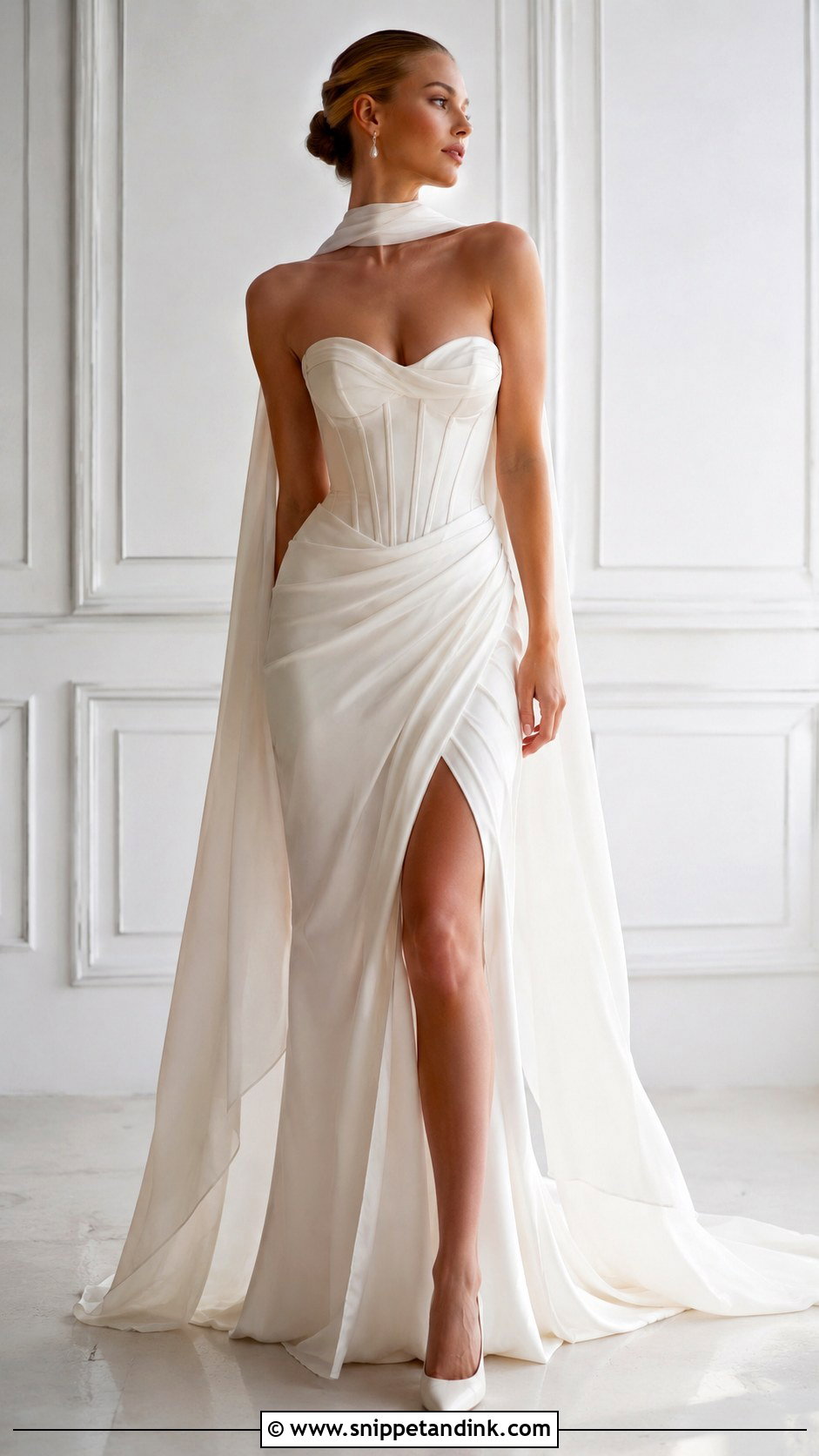
Corset bodices are built to be seen. A long chiffon or silk scarf worn loosely at the neck contrasts their structure, as long as the ends fall behind the shoulders. If the boning is visible, wrapping the scarf across the front hides the very detail you paid for. Pointed heels and drop earrings keep the look polished.
18. Wedding Dress Scarf With Halter Gown
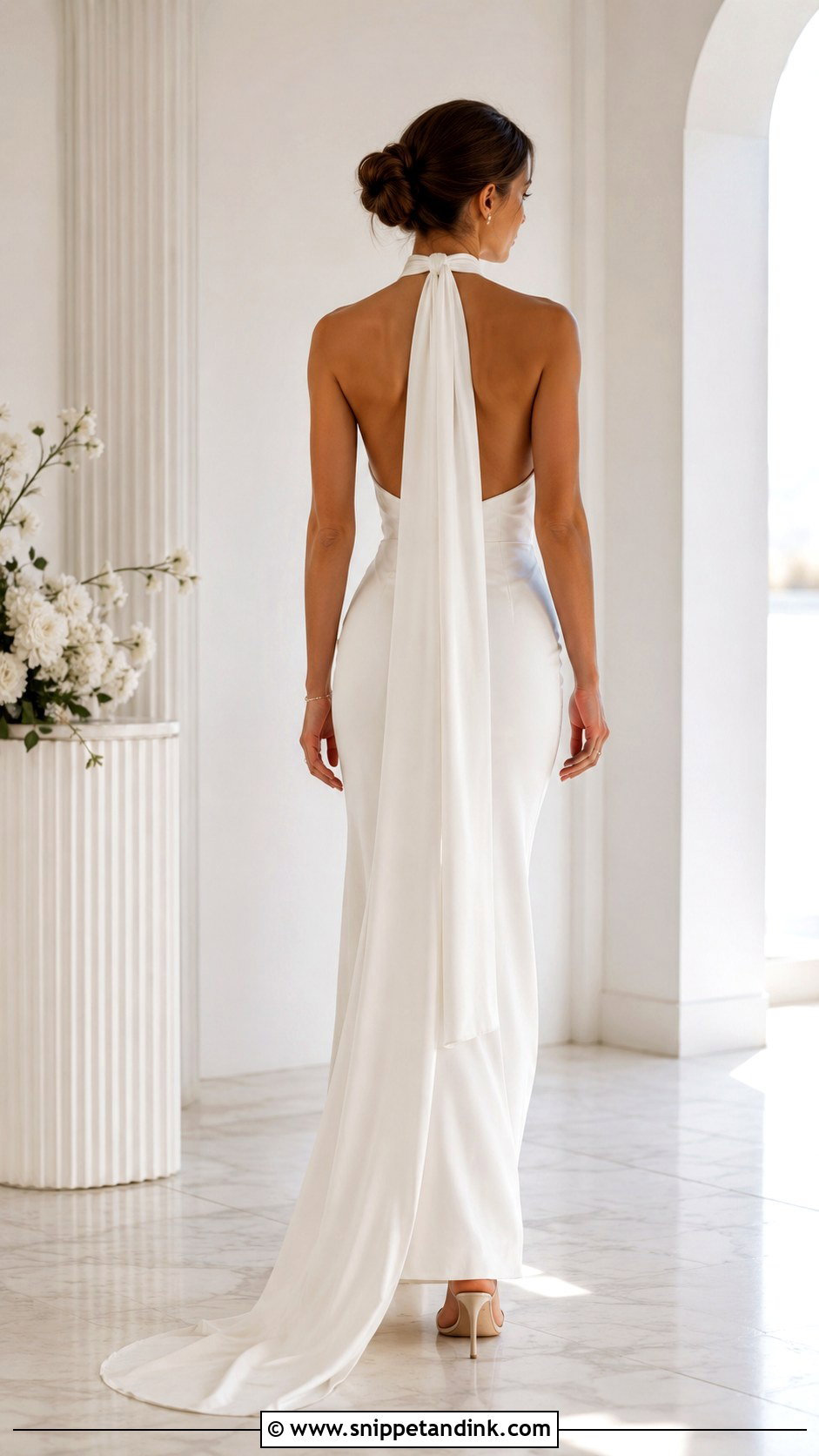
Halter necklines already frame the throat, so anything extra at the front crowds them. A narrow scarf knotted or tied in a small bow at the back of the neck, with the ends trailing down the back, creates a striking rear view. It suits satin, crepe and silk halters. I’d test the knot over the halter tie itself, since two knots stacked at the nape can press uncomfortably after a few hours.
19. Wedding Dress Scarf With One Shoulder Gown
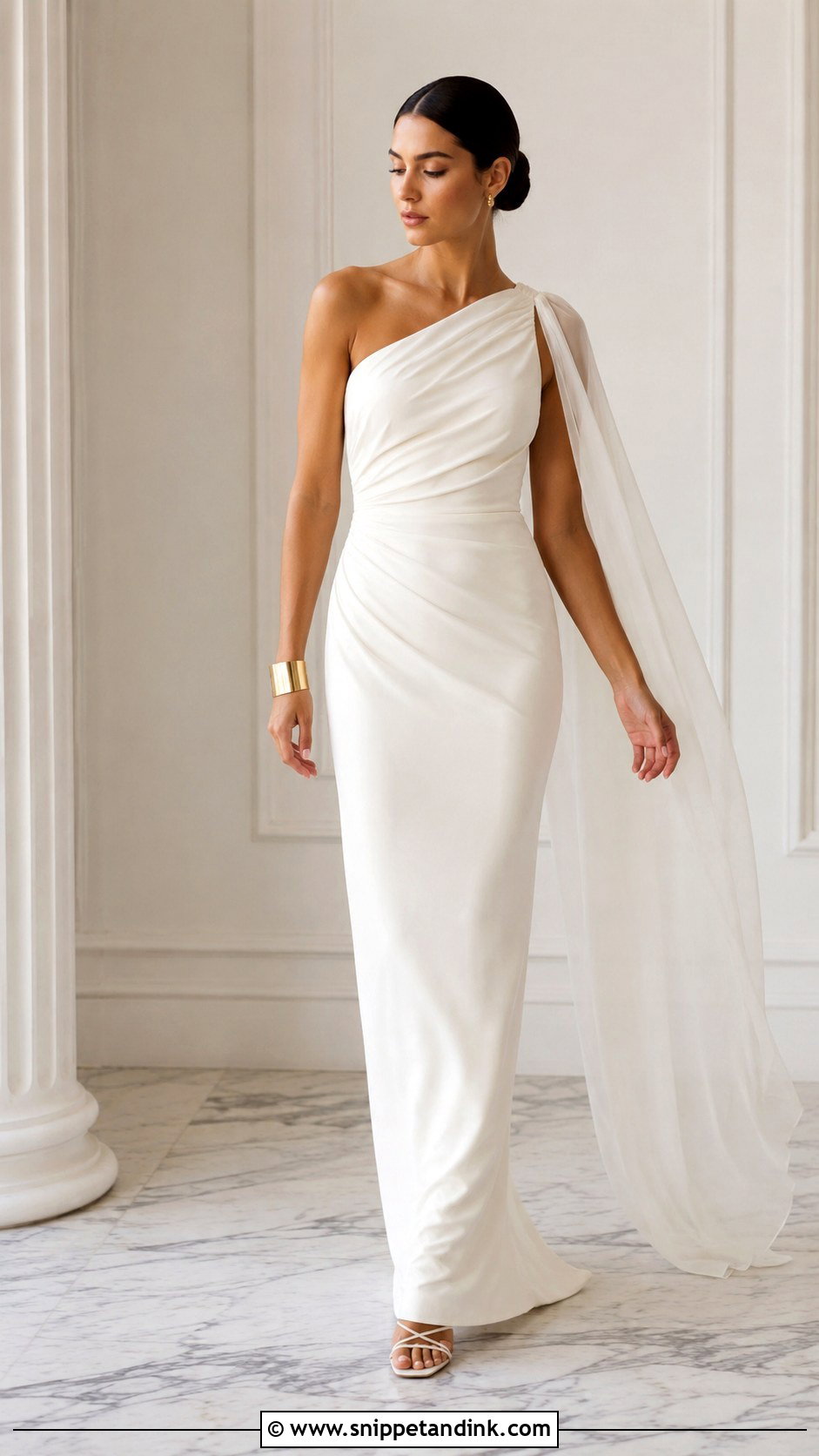
One-shoulder gowns are asymmetric, and the scarf should follow that rather than fight it. I drape a sheer scarf from the bare shoulder across the back, or wear it loosely at the neck with one end noticeably longer. A cuff on the opposite wrist balances the line. If the shoulder strap has a big bow or ruffle, a plain scarf leaves it room.
20. Wedding Dress Scarf With Backless Gown
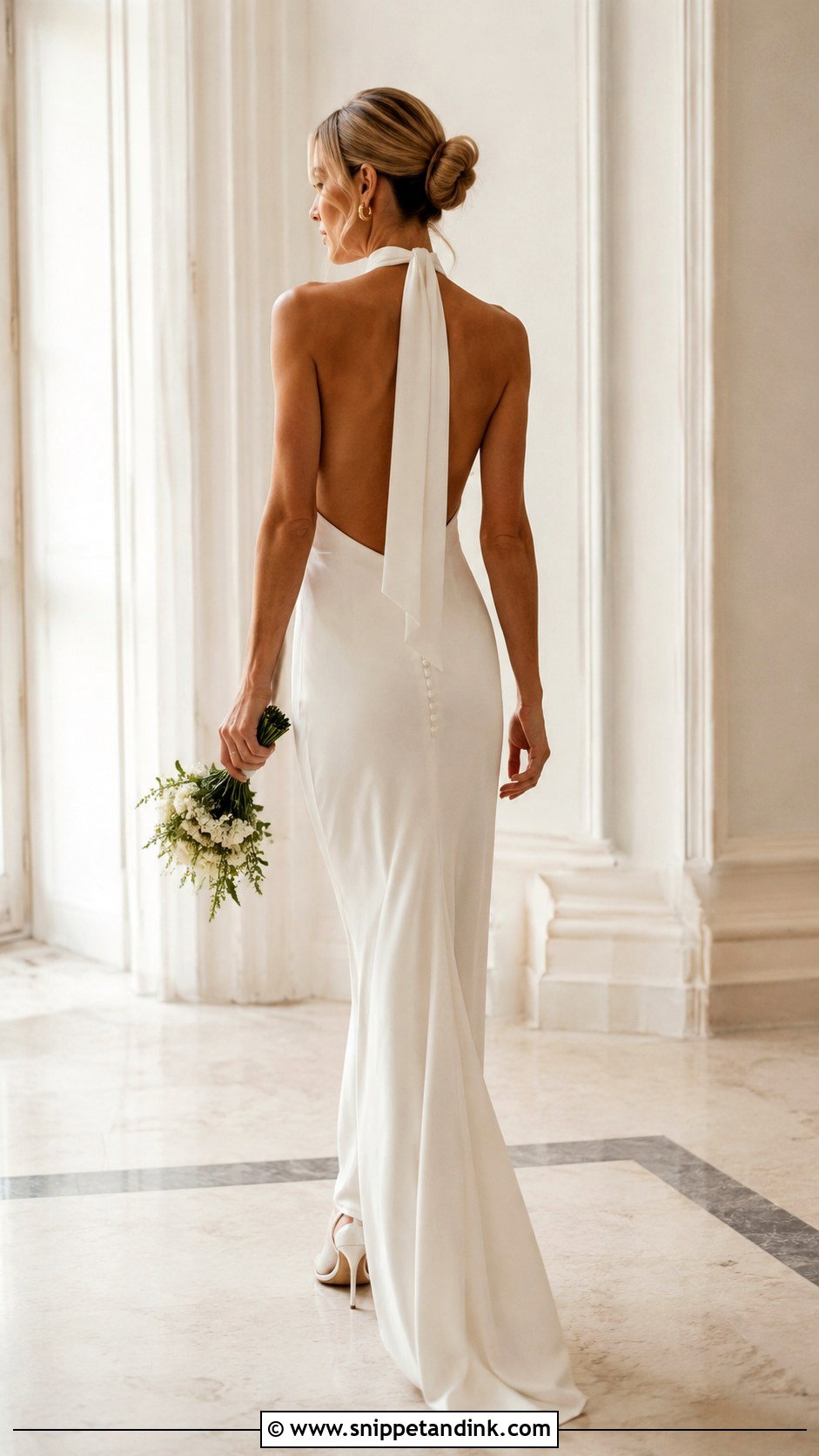
A backless gown pairs well with a scarf that runs down the open back instead of covering it. A slim silk or chiffon scarf tied softly at the neck draws a line down the spine and moves with every step. An updo keeps the back clear. Since the fabric rests directly on skin, I choose a soft, fine weave over scratchy tulle, and I check the edge is properly finished so it doesn’t drag across your back all night.
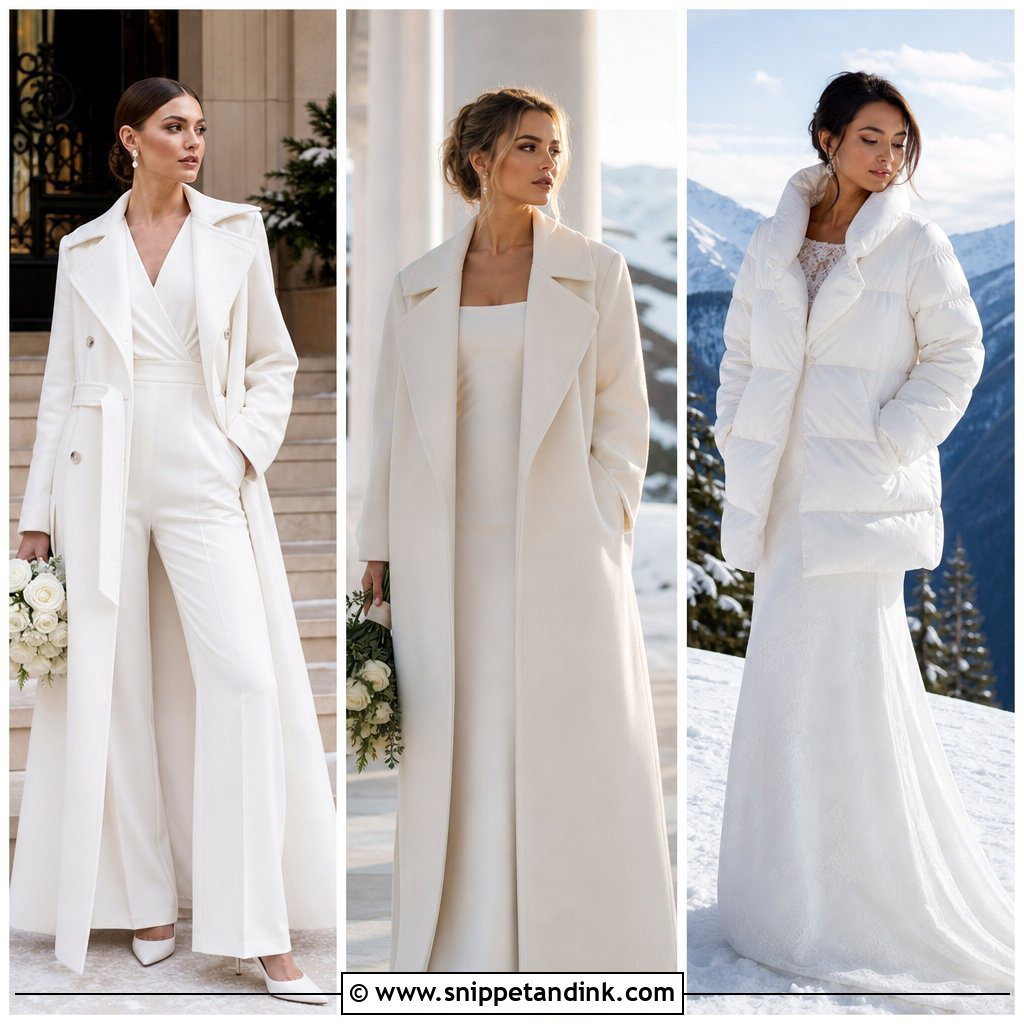
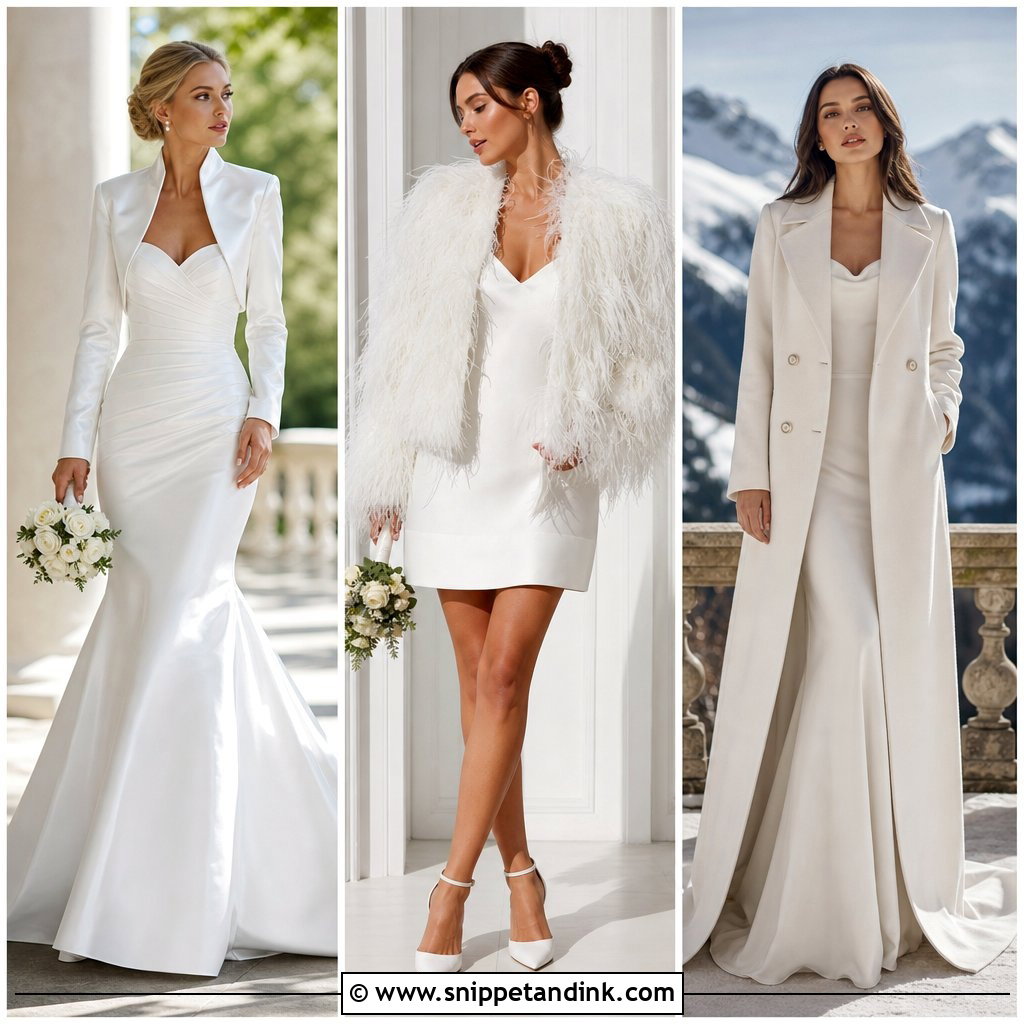
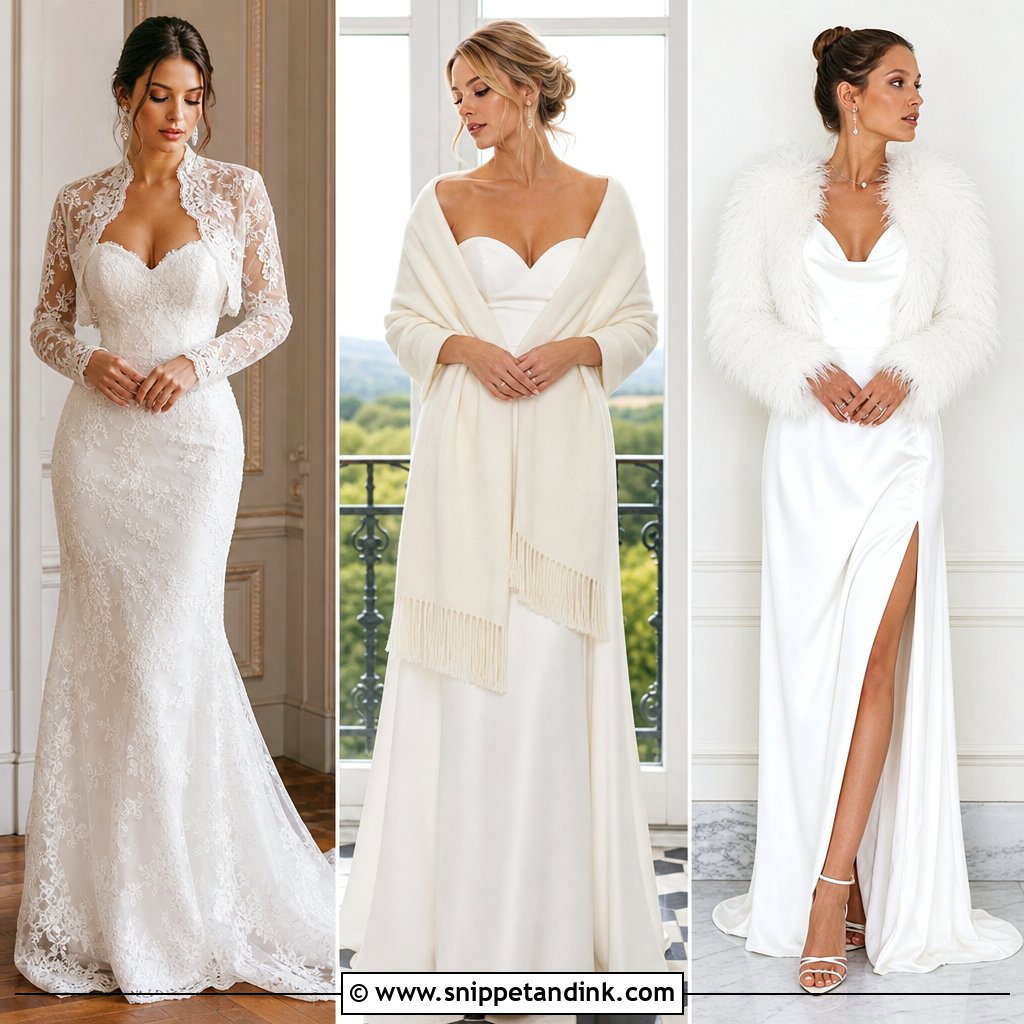
21. Wedding Dress Scarf With Winter Gown
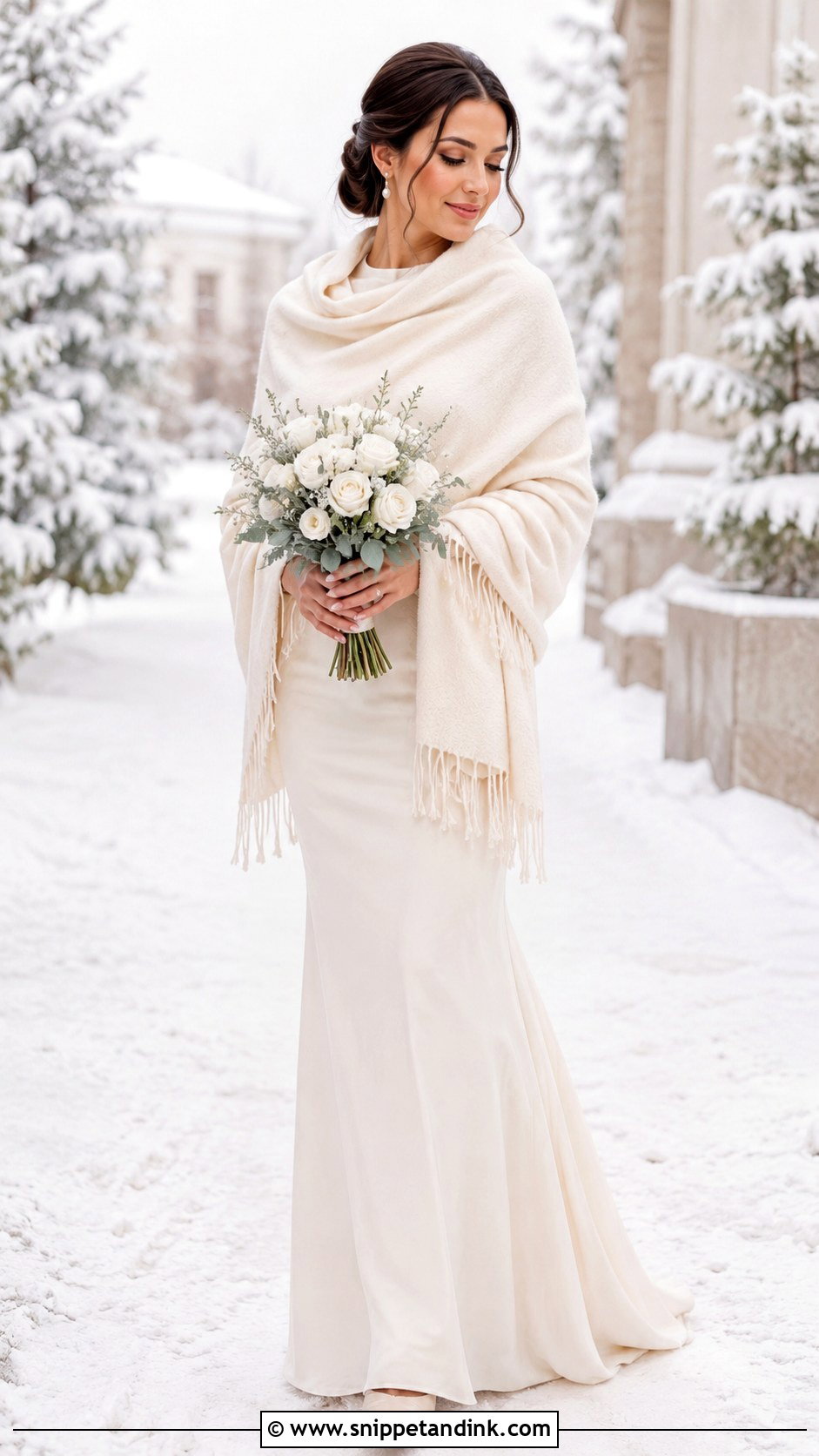
In winter a scarf earns its place twice. A soft cashmere, faux fur or thick satin wrap keeps you warm for outdoor portraits and comes off indoors so the bodice and sleeves can be seen. Ivory, cream, soft beige and pale champagne sit well with most bridal whites. Bulky knots hide the dress, so I wrap loosely and pin rather than tie. Faux fur sheds onto dark suits, so keep a lint roller handy for the partner’s jacket.
22. Wedding Dress Scarf With Summer Gown
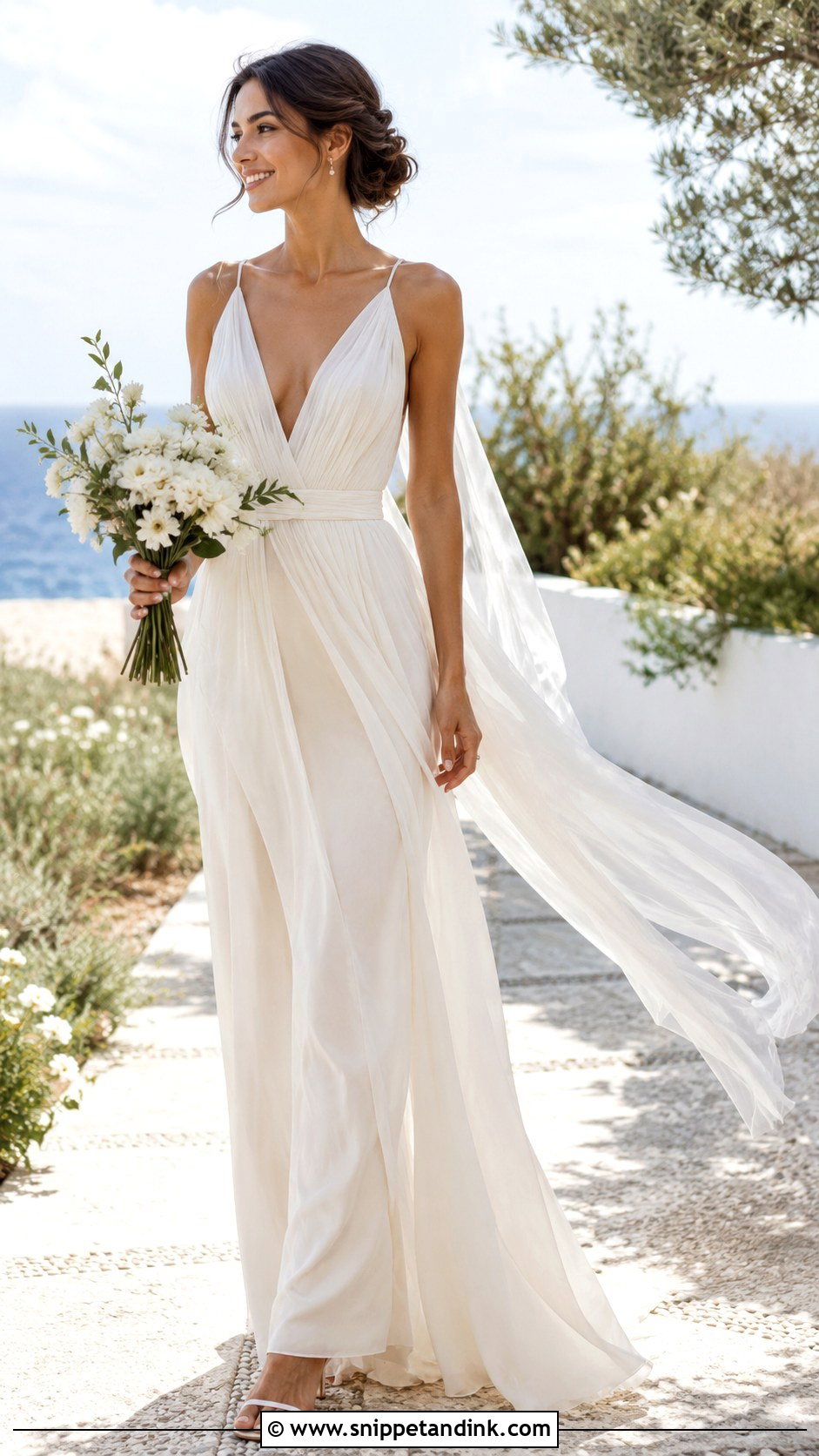
Summer scarves have to breathe. Chiffon, silk gauze and fine tulle in soft ivory are light enough to wear through a warm ceremony. Loosely around the neck with one end trailing, or draped over the arms, keeps air moving. Thick satin and heavy lace trap heat and show sweat marks, so I’d leave them for cooler months. Sandals, small earrings and soft waves suit the relaxed mood.
23. Wedding Dress Scarf With Reception Dress
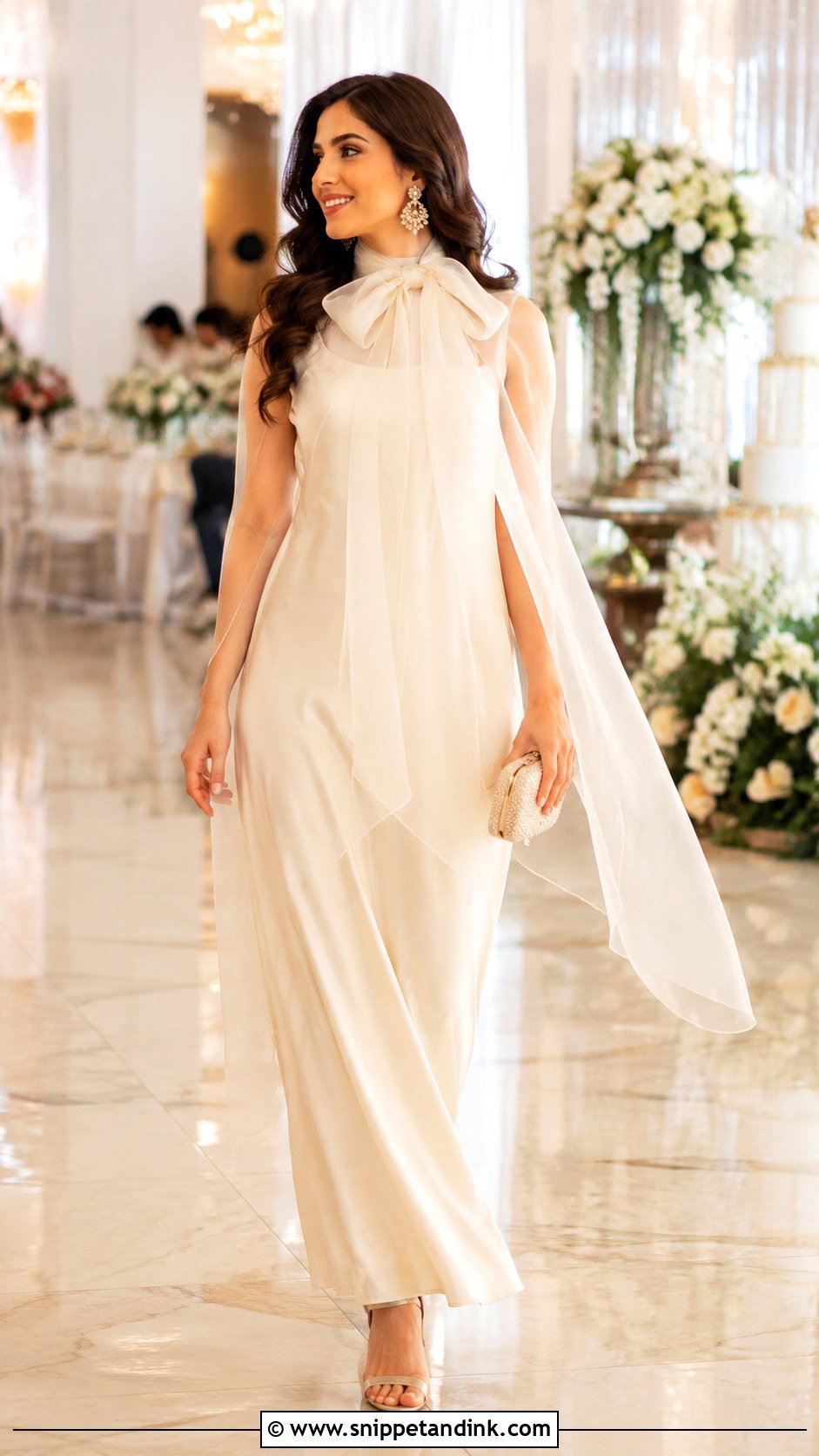
A scarf is a quick way to give the reception look a lift without another full change. Matching silk, chiffon or organza works with a shorter dress, a slip or a simple column. Tie it at the neck, let it trail, or drape it over the shoulders for your entrance. A removable scarf comes off the moment dancing starts, which is when it would otherwise get stepped on.
24. Wedding Dress Scarf With Courthouse Dress
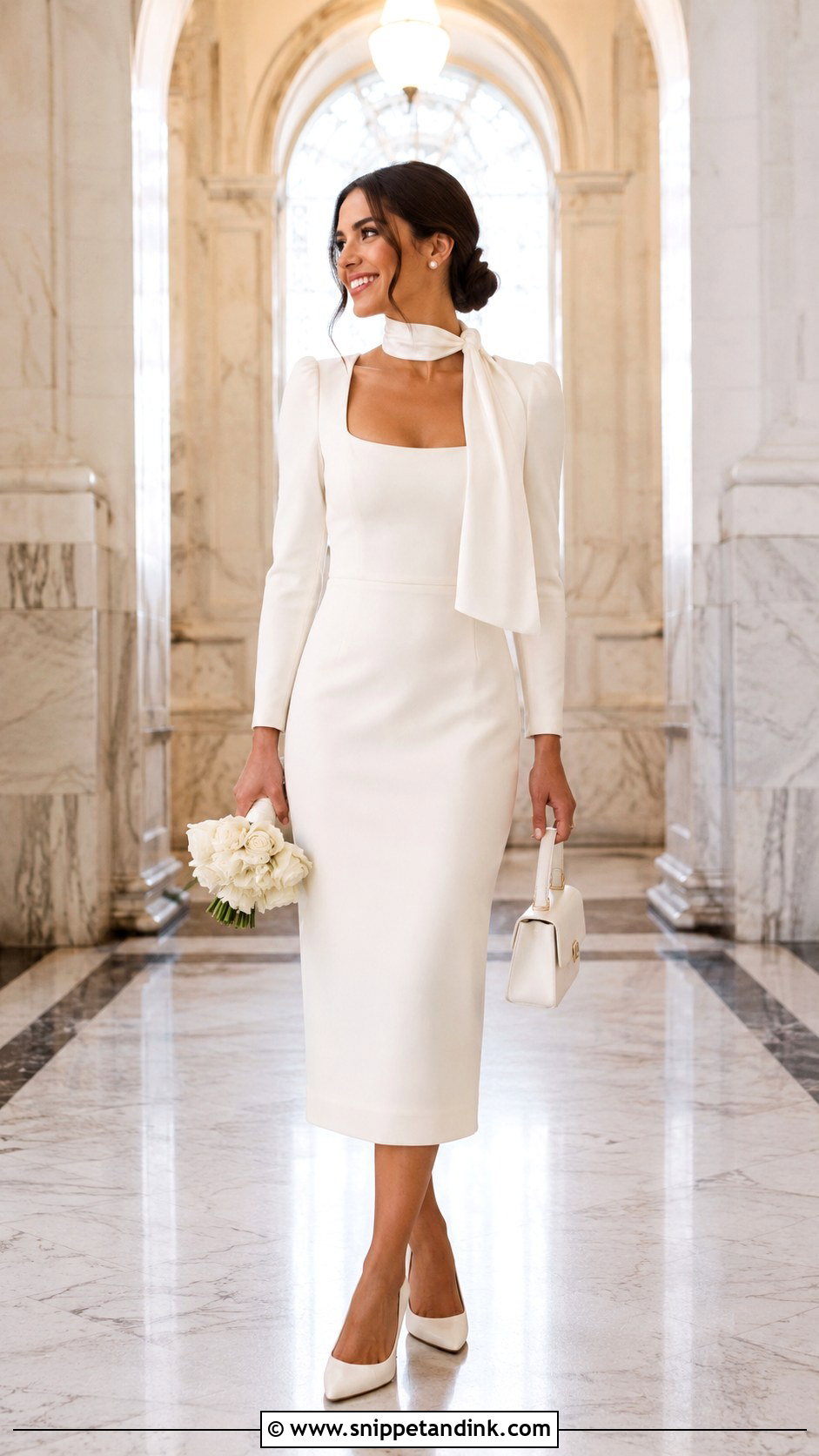
Courthouse dresses tend to be simple, and that’s exactly where a scarf earns its keep. A tailored midi or sleek column with a narrow silk scarf tied at the neck or laid over the shoulders feels deliberate. Without a veil, it gives photos some movement. Pointed pumps, pearl studs and a structured mini bag finish the look. I’d keep the colour close to the dress; ivory silk, soft white chiffon and pale champagne organza are the easiest.
25. Wedding Dress Scarf With Dupatta Inspired Look
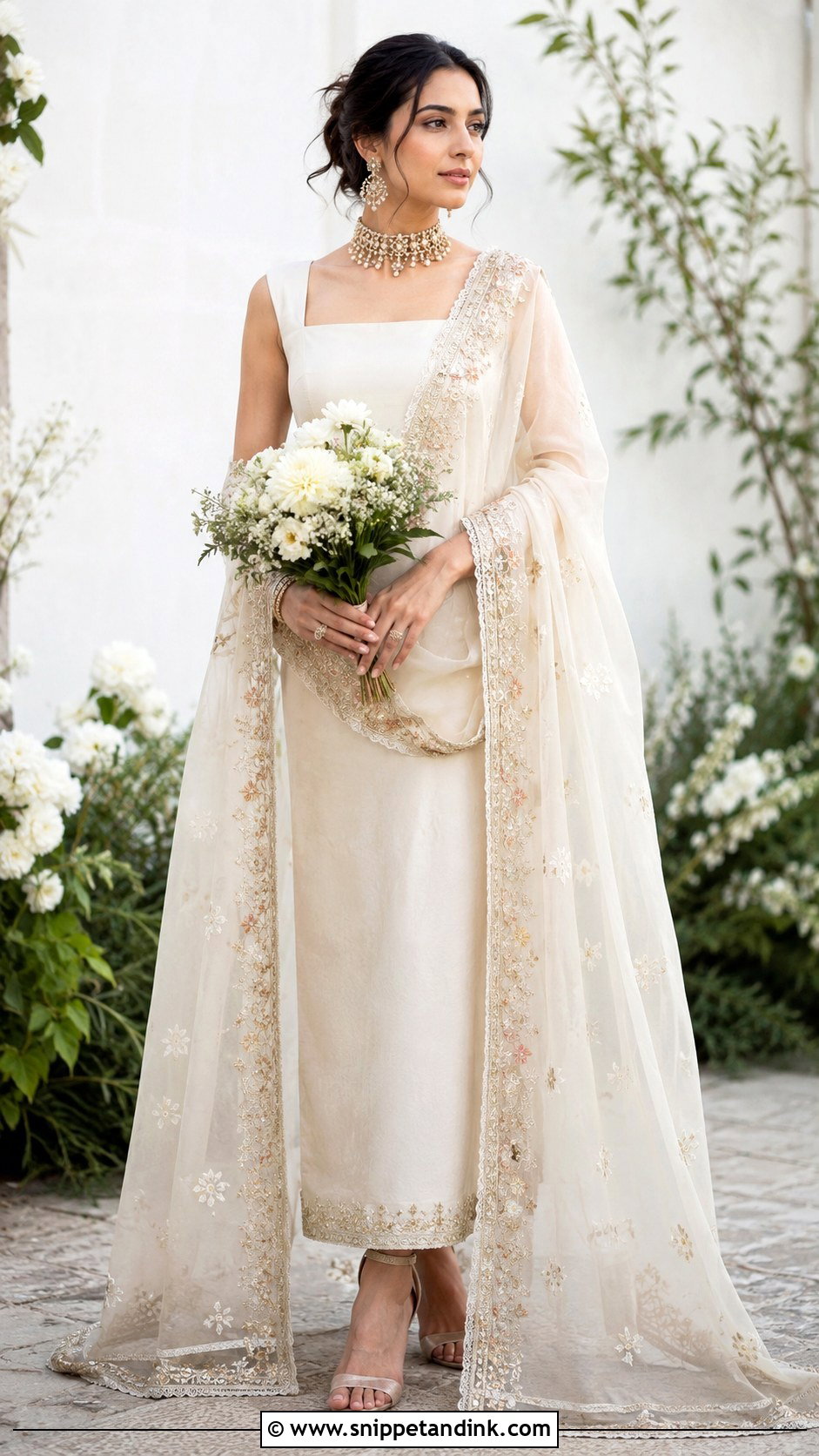
A dupatta-inspired scarf should be long and sheer enough to drape well: embroidered, edged in lace or pearls, or lightly shimmered. Over one shoulder, across the arms, or over the head and shoulders, it can carry real cultural meaning for some families, so I ask how it will be worn before choosing the fabric. A clean bodice lets the scarf’s work show. Draping over the head needs pinning to the hair at two or three points, or it slides back the first time you look up.
Pins, Tape and Tacks That Stop a Scarf Wandering
Silk is slippery. Left alone, a scarf migrates toward one shoulder within the first hour. My small kit for this is cheap and fits in a clutch:
- Fine silk pins or small safety pins, pushed through the scarf and the dress lining only, never the outer fabric, so no hole shows.
- Double-sided fashion tape on skin for scarves resting on bare shoulders or an open back.
- A couple of hand stitches at the nape to tack the scarf to the bodice lining. A seamstress can do it in minutes, and it snips out cleanly.
- Small hair clips or bobby pins for scarves worn over the head or tucked under an updo.
Practise the drape at home in the full outfit, then take a photo of the finished look so whoever helps you dress on the day can copy it.
When the Scarf Should Come Off
Long, trailing scarves are a hazard in a few predictable moments. I tell brides to slip them off or tuck the ends away for the first dance and any fast dancing, around candles on tables and cakes, when getting in and out of a car, and in tight doorways. Sitting down is the other trap: it’s easy to sit on the trailing end and feel your neck jerk when you stand. Hand the scarf to a bridesmaid at these points and put it back on for the exit photos.
Matching a Scarf to the Shape of Your Dress
A scarf works when it suits the gown’s fabric, neckline and silhouette, and when it’s easy to take off. It can stand in for a veil, add warmth, give modest coverage or refresh a reception look in seconds. Start with proportion: slim gowns take slim, trailing scarves, while fuller dresses need airy fabrics. Match whites in daylight, and try the scarf with your hair, jewellery and bouquet before the day so nothing surprises you in the photos.
You'll Like These Ideas:


Leave a Reply