
Most guests start with the dress and work backwards. I do it the other way round: the invitation, the venue, the season and the ceremony time tell me what the outfit has to survive before I think about color. The twenty looks below run from relaxed garden gatherings to formal evening events, and each one comes with the shoes, accessories and extra layer I’d actually put with it. Two rules hold across all of them. Stay away from white and anything that reads bridal unless the couple has asked for it, and dress for the whole day, because a ceremony means standing, walking, sitting in a pew or on a folding chair, and posing for group photos as the temperature shifts.
The Venue Says More Than the Dress Code Line
Dress codes are vague on purpose, so I read the rest of the invitation like a set of clues. The ceremony location tells me about coverage and footwear, the time tells me about fabric and length, and the reception venue tells me whether a guest will need a second layer or a change of shoes.
Places of worship
Churches, temples, mosques and gurdwaras often expect covered shoulders, and some expect covered knees or a covered head. If the outfit is sleeveless, plan the cover-up as part of it rather than grabbing whatever cardigan is nearby. A wrap in the same color family as the dress, or a cropped jacket, looks deliberate. If you are unsure, ask someone in the couple’s family; nobody minds the question.
Ceremony time and the hemline
- Before about 4pm, midi and tea lengths, lighter fabrics and prints feel right, even for a dressy wedding.
- From early evening onward, longer hems, satin, velvet and deeper colors start to make sense.
- Formal or black tie means floor length or a sharply tailored suit, regardless of the hour.
- Cocktail attire is the widest band: knee to midi length, a jumpsuit or a dressy two-piece all qualify.
What’s underfoot
Lawn, sand, gravel, cobblestones and old stone steps each rule out a different shoe. I’d always choose the shoe for the ground first and the dress second, because a guest wobbling across grass in stilettos is far more noticeable than a guest in elegant flats.
1. Floral Midi Wedding Ceremony Outfit
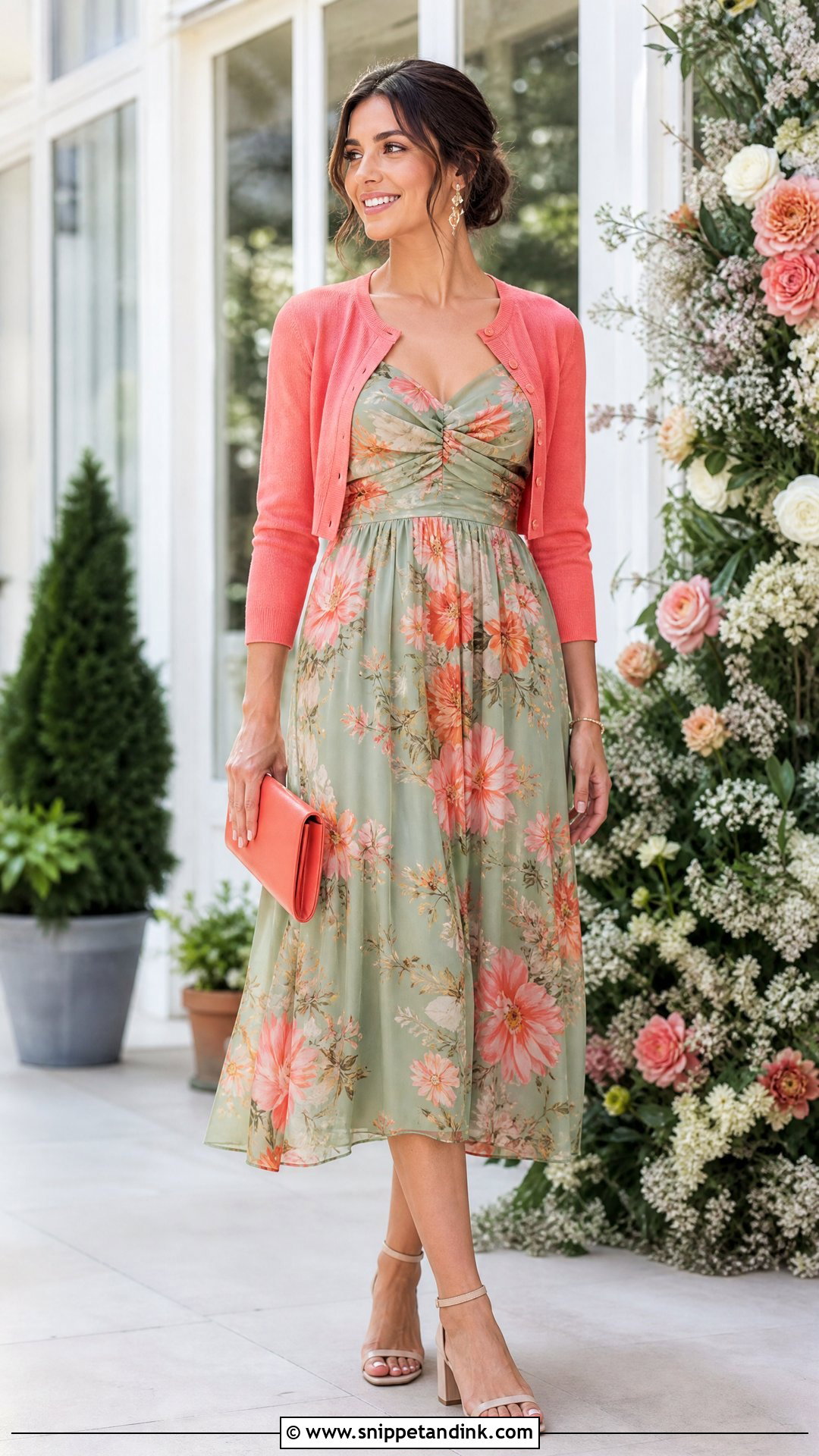
A floral midi is the outfit I reach for first for a daytime garden ceremony, and the print is where people go wrong. Pick one with a clear ground color like navy, sage, blush or soft blue; a print that is mostly white with a few flowers reads ivory from ten feet away and will look pale beside the bride in photos. A defined waist and a fluid skirt move well when you sit. Wear block-heel sandals so you don’t sink into the lawn, then pull the clutch color straight out of the print. A cropped cardigan or a tailored wrap covers you if the evening turns cool, and a low bun or loose waves keeps the whole thing from tipping into overdressed.
2. Satin Slip Dress Wedding Ceremony Outfit
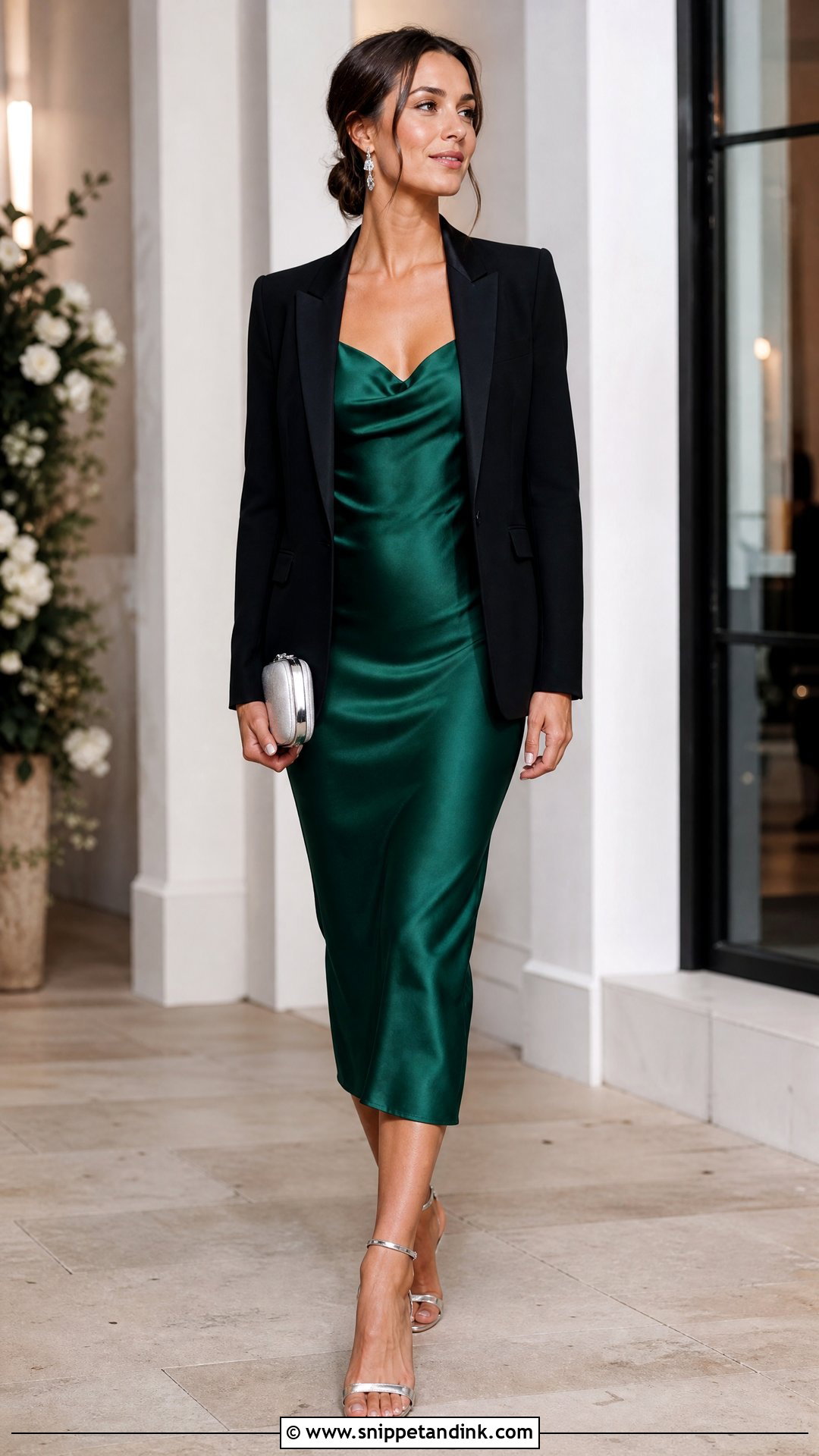
Satin is the fabric I warn people about most, because it shows everything. A bias-cut midi-length slip dress in emerald, copper, dusty rose or navy needs no embellishment, but bias cut clings, so smooth, no-show underwear matters more here than with any other dress on this list. It also creases the moment you sit in a car. Steam it at the venue if you can, or at least just before you leave, and carry a tailored blazer or fine shawl rather than folding a jacket over your lap. Slim-strap heels, a small metallic clutch and drop earrings finish it for a cocktail or dressy evening invitation.
3. Tailored Jumpsuit Wedding Ceremony Outfit
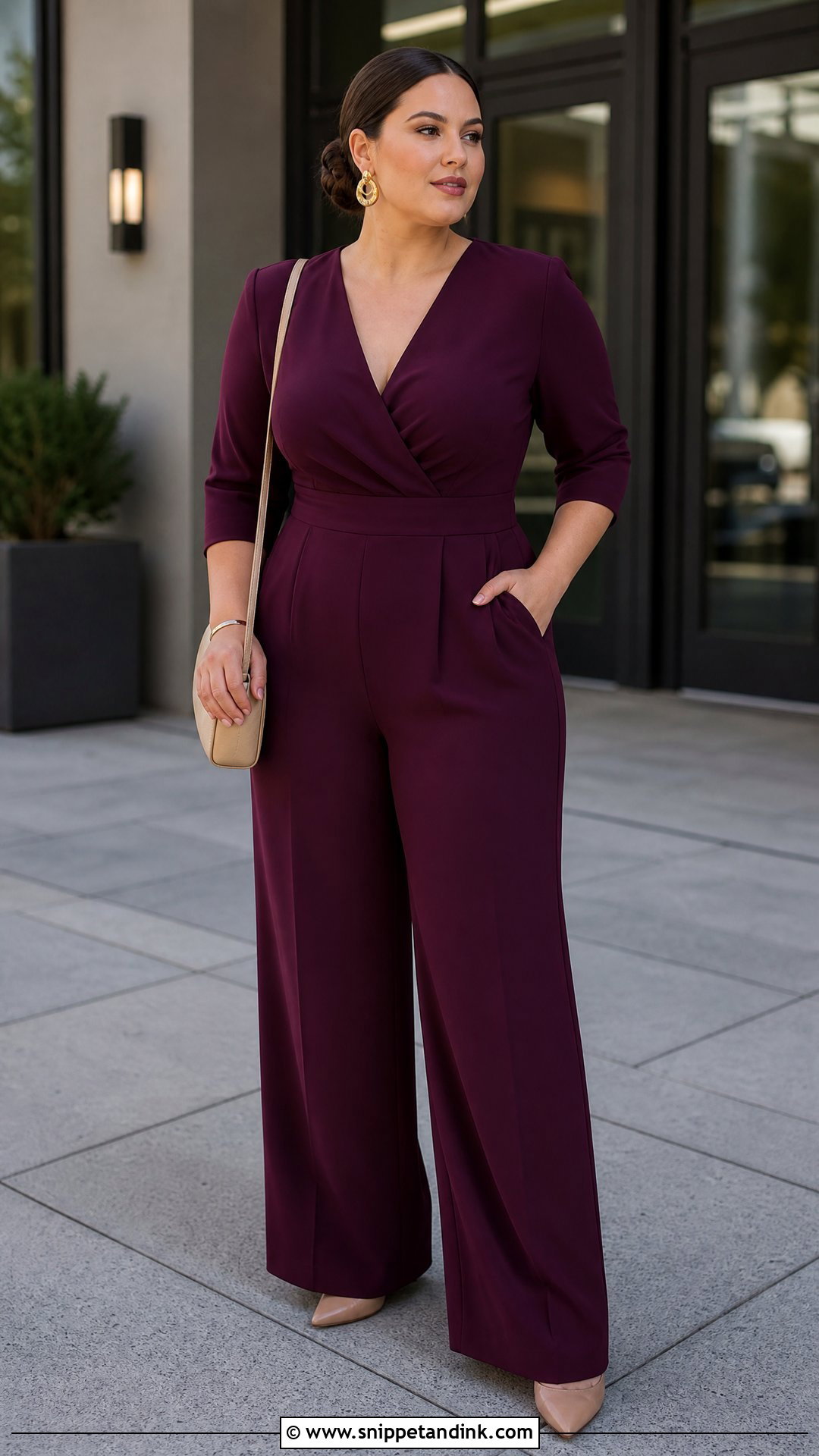
Some guests simply don’t feel like themselves in a dress, and a tailored jumpsuit is just as correct at most cocktail and semi-formal ceremonies. The fit check I’d insist on is the torso length: if it is even slightly short, it pulls at the crotch and shoulders every time you sit, and you’ll spend the ceremony adjusting it. Look for a defined waist, straight or wide legs and a neckline that stays put. Jewel tones and deep neutrals hold their own in group shots without competing with the wedding party. Pointed pumps lengthen the leg, a cropped blazer covers the arms without hiding the waist, and yes, do a practice run with the zip, because you will need the restroom at some point.
4. Pleated Maxi Wedding Ceremony Outfit
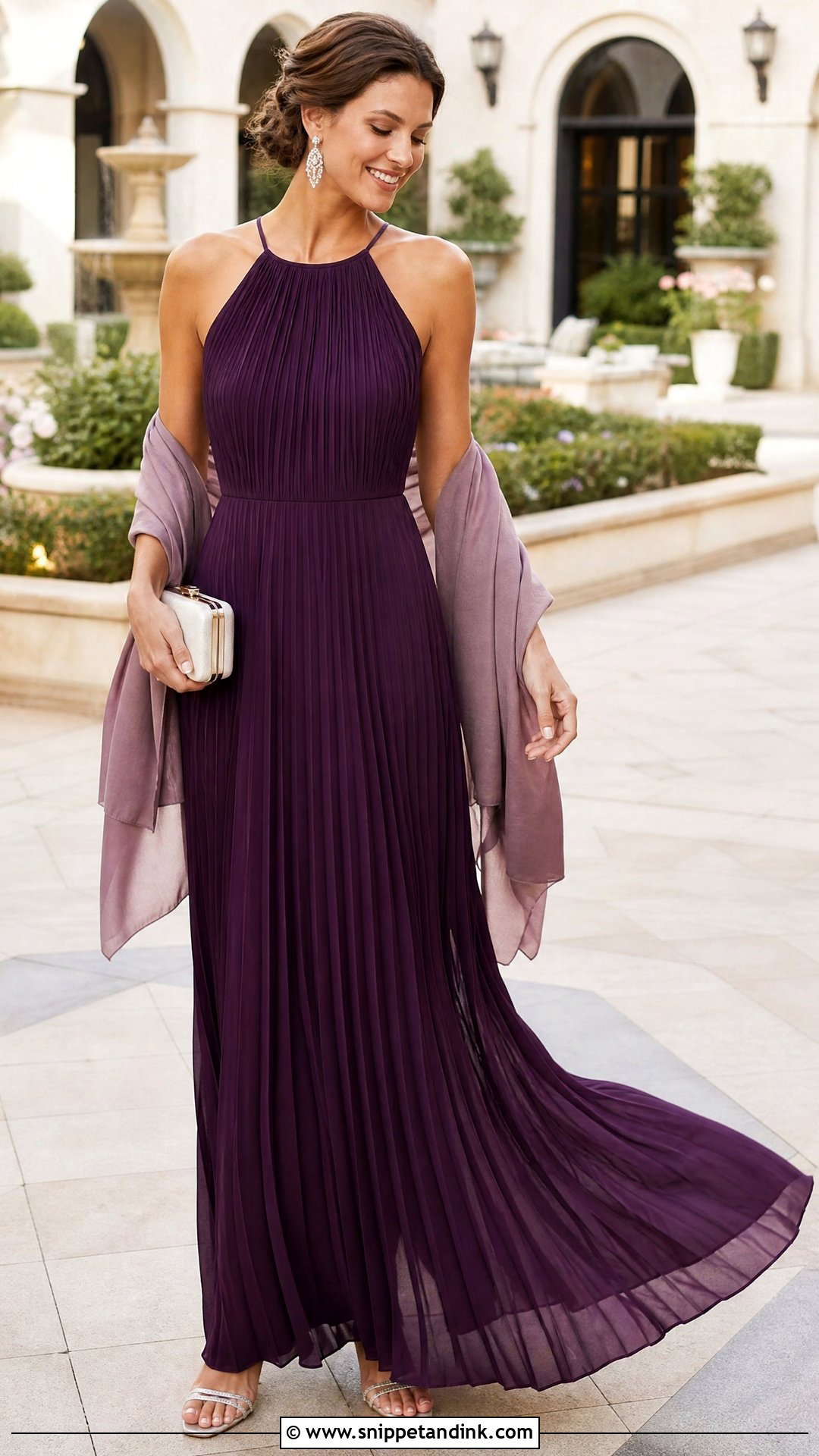
Fine pleats do a lot of the work for you, so this is the dress where I tell people to put the jewelry down. Choose a fitted bodice and a hem that just clears the floor in the shoes you’ll actually wear; pleats that drag on stone steps fray quickly and catch heels. Soft blue, plum, forest green and muted terracotta give depth without drifting toward bridal shades. Stable heeled sandals and a small box clutch are enough. With a sleeveless bodice, bring a coordinating wrap for a church or temple ceremony. Then walk up and down a staircase at home in the full outfit, since a pleated skirt behaves very differently on stairs than it does in a mirror.
5. Wrap Dress Wedding Ceremony Outfit
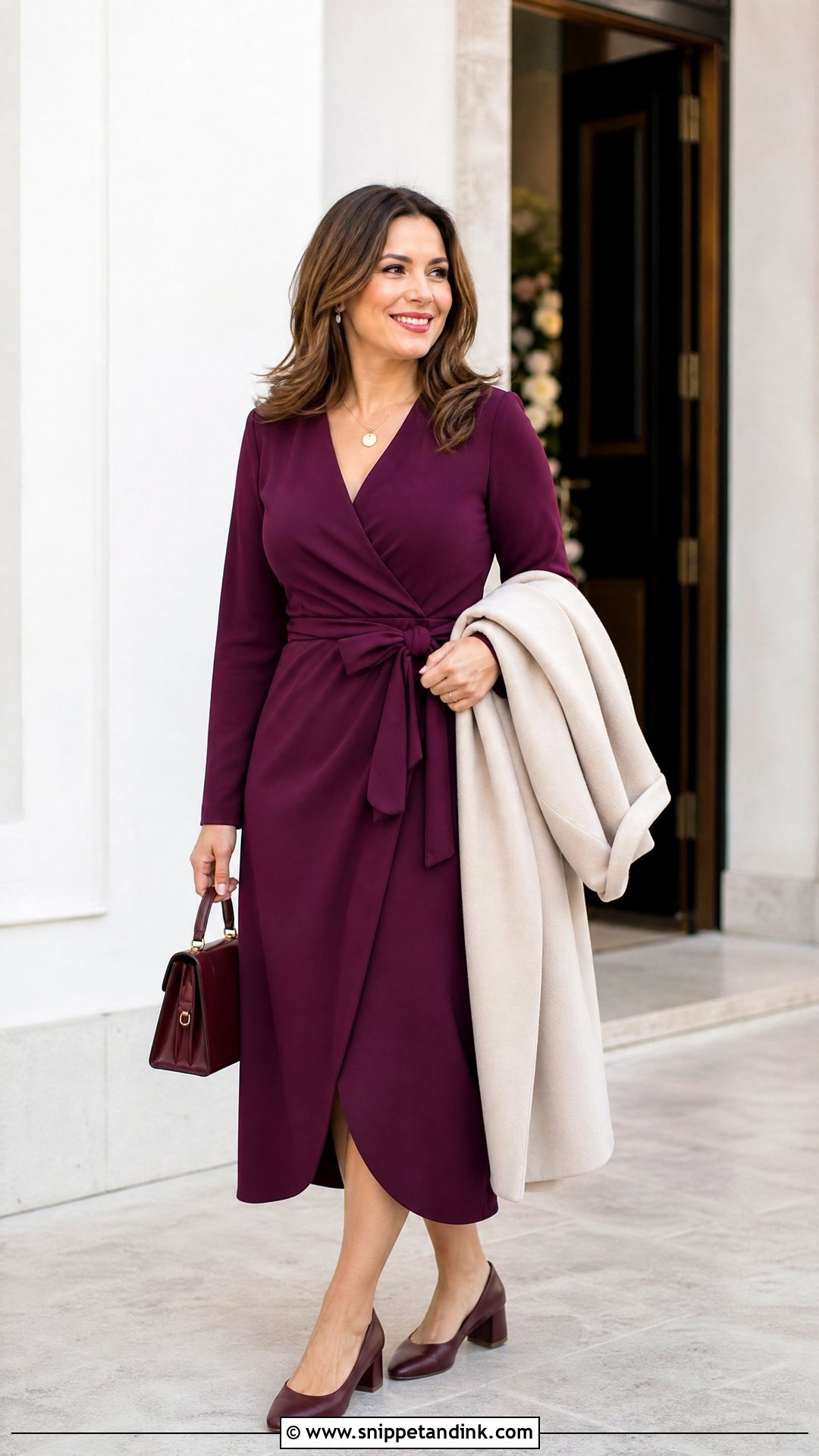
I like a wrap dress for anyone whose bust, waist and hips sit in different sizes, because you set the fit yourself. The catch is the neckline: a true wrap loosens as the day goes on, especially once you’ve hugged forty relatives. Fashion tape or a hidden snap at the cross point solves it. Go for crepe or a heavier chiffon over thin jersey, which clings and shows every line. A berry solid, a botanical print or deep blue carries across seasons. Low block heels, a structured bag and a short pendant that sits inside the V are all it needs, with a longline coat for winter or a pashmina when the weather is mild.
6. Wide-Leg Pantsuit Wedding Ceremony Outfit
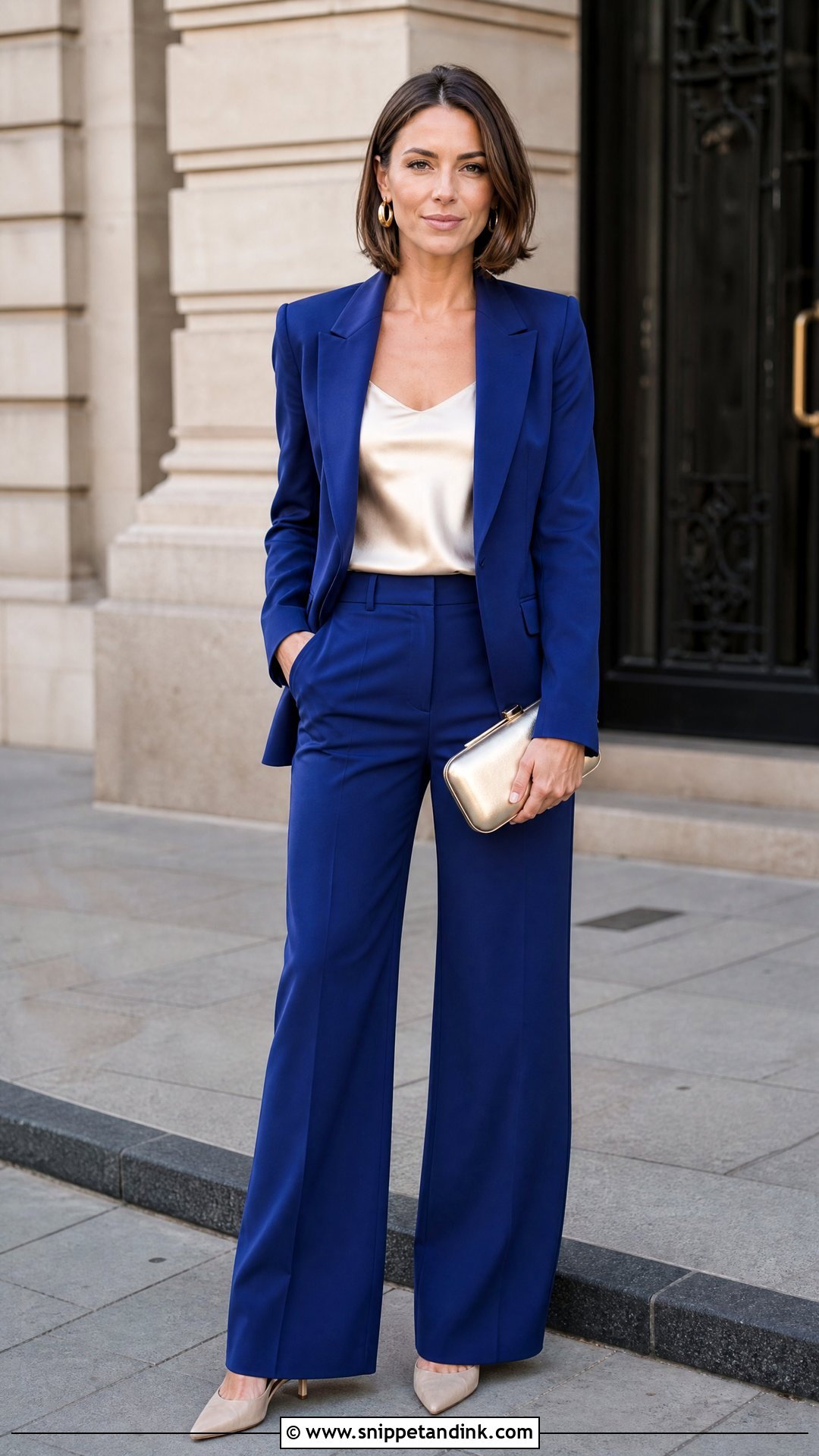
A coordinated pantsuit is my answer for city ceremonies and dressy indoor weddings, but only if it is tailored. Off the rack, wide-leg trousers are nearly always too long, and a hem pooling on the floor makes the suit look borrowed. Take the exact shoes to the alterations appointment and have the hem set to just skim the top of the foot. Cobalt, burgundy, forest green and dusty pink all read as celebration rather than office. Under the blazer, a satin shell or draped blouse with a secure neckline lets you take the jacket off at the reception. Pointed heels or slingbacks keep the wide leg from looking heavy, and one statement ring is plenty.
7. Chiffon Midi Wedding Ceremony Outfit
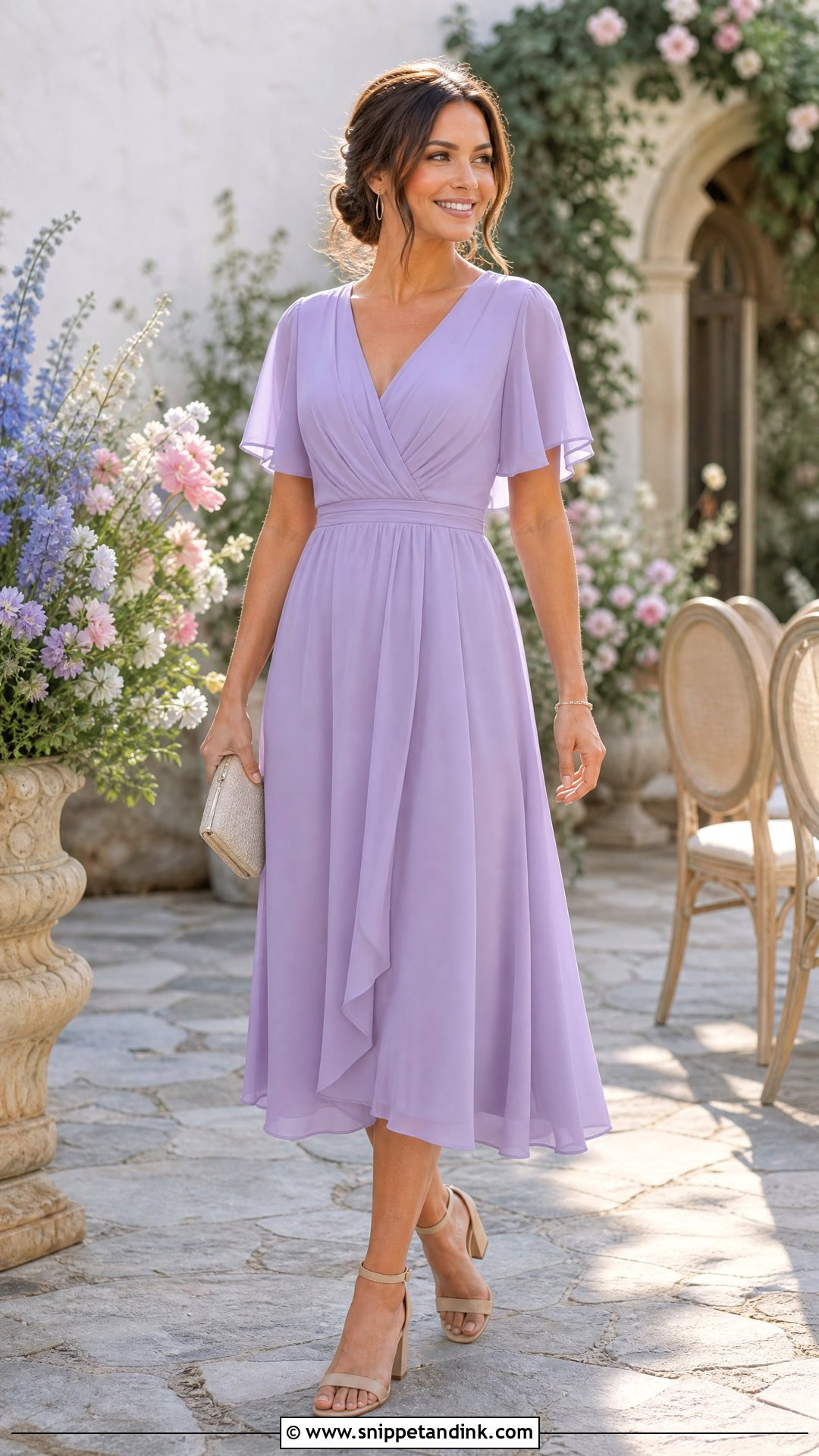
Chiffon is lovely in spring and summer, until it meets direct sunlight and turns see-through. Hold any chiffon dress up to a window before you buy it; if you can see your hand through the skirt, it needs a full lining. Lavender, coral, teal and small floral prints are safe distances from bridal pale. Flutter sleeves and a gathered waist suit the fabric’s movement. If there is a long walk from parking to the ceremony site, dressy flats beat heels. Add a compact clutch and fine hoops, and keep the hair in a sleek ponytail or low twist so it doesn’t tangle with the sleeves. Pack a light wrap anyway, since air-conditioned reception rooms feel cold in something this thin.
8. One-Shoulder Midi Wedding Ceremony Outfit
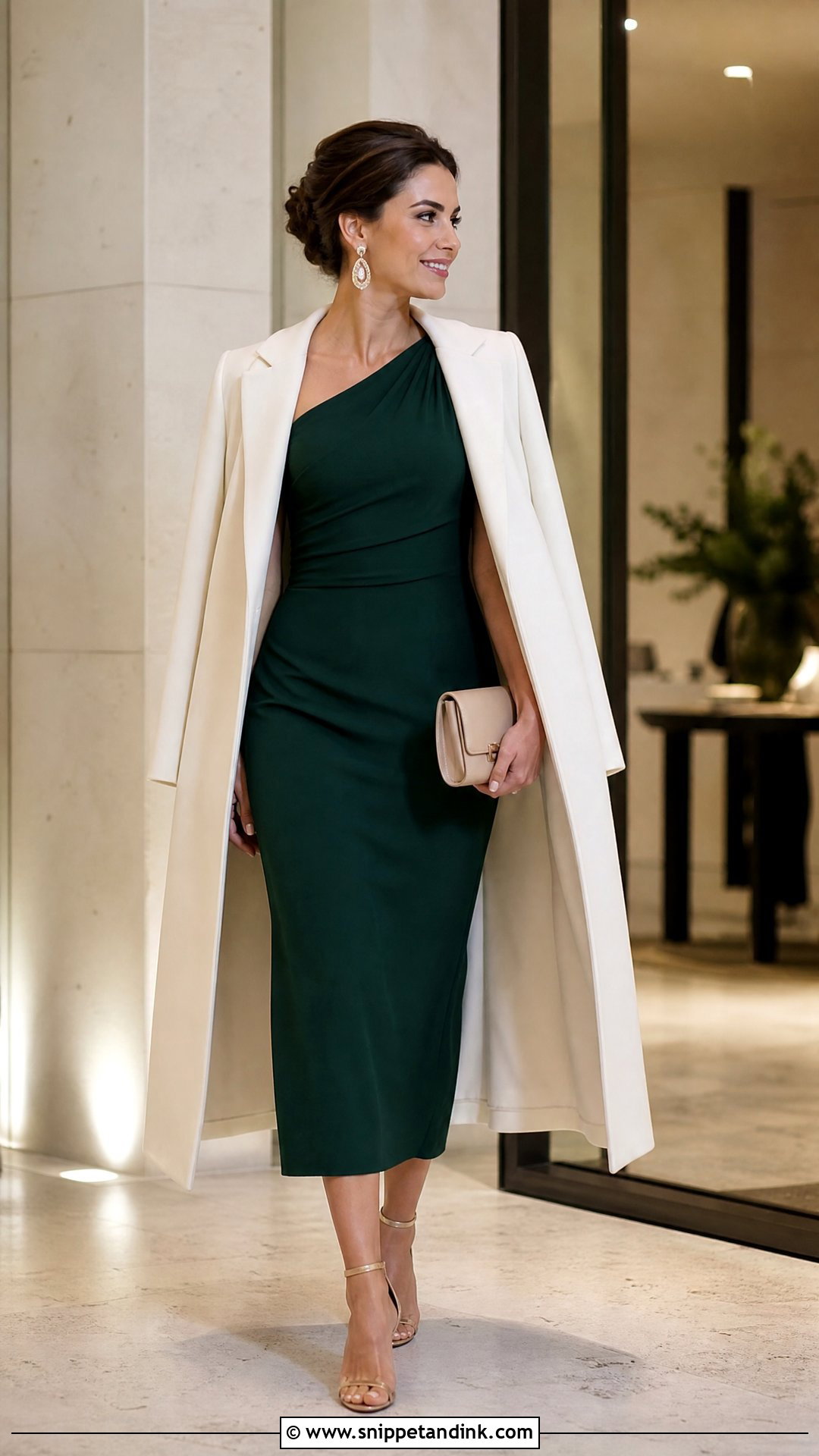
One bare shoulder is a strong line, which means the accessories have to back off. Skip the necklace entirely and wear earrings instead. Crepe or structured jersey in magenta, deep green, navy or burnt orange holds the asymmetry better than flimsy fabric, which slides off the shoulder and keeps you tugging all evening. At the fitting, lift both arms above your head as if you were waving at the couple; if the bodice shifts, it needs a stay or silicone grip tape on the inside. Hair up or swept to the opposite side keeps the line visible. In cold weather a tailored coat works better over this neckline than a cardigan, which bunches over the strap.
9. Tea-Length Dress Wedding Ceremony Outfit
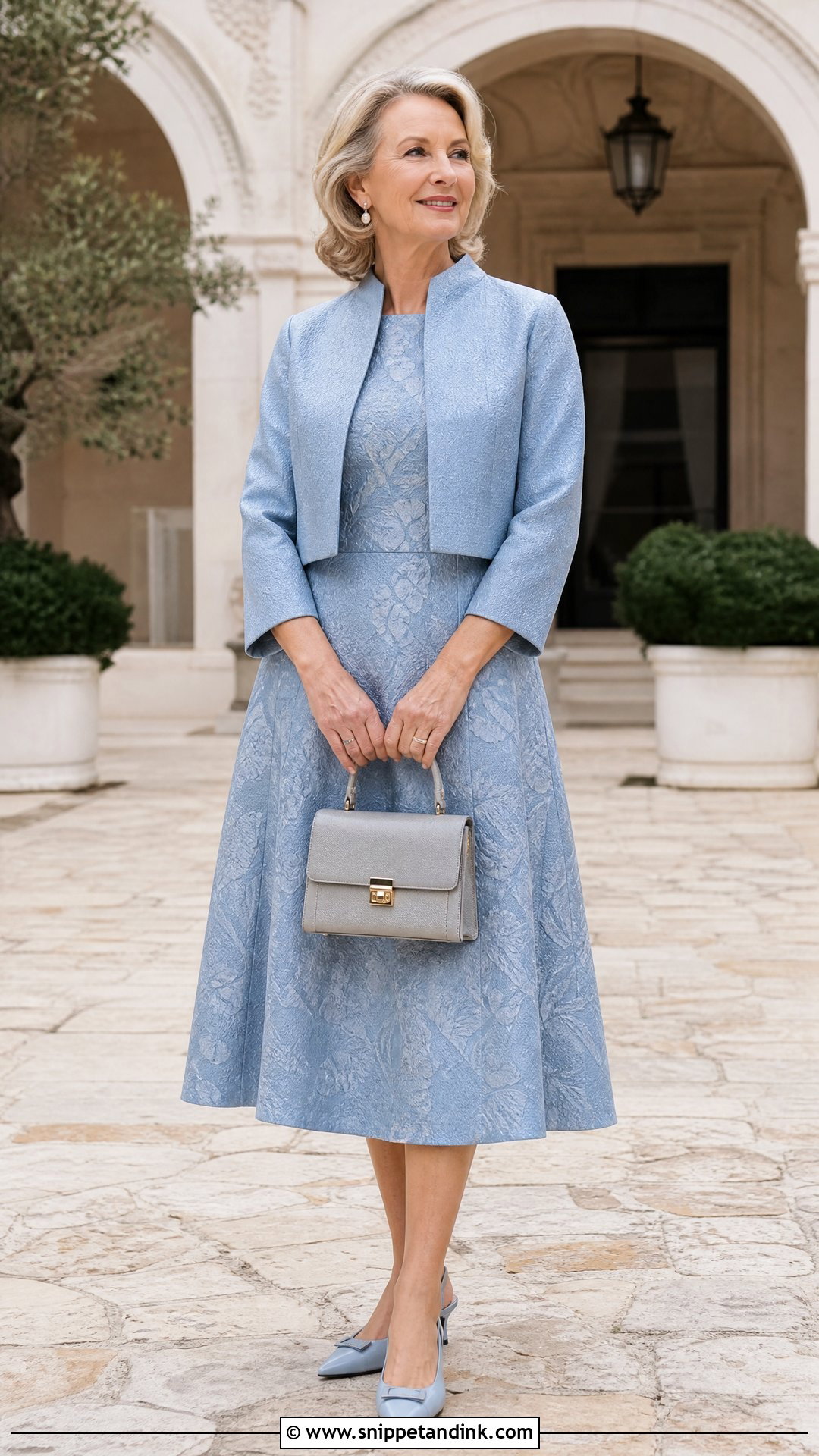
Tea length sits between the knee and the ankle, and it is one of the most forgiving hems for a daytime ceremony at a historic venue. Because it shows the lower leg and the whole shoe, the shoe becomes part of the outfit, so I’d rather see a clean slingback pump than a strappy sandal that cuts the leg in half. A fitted bodice with a gently flared skirt in jacquard, crepe or printed cotton sateen keeps the proportions balanced. Pair it with a top-handle bag and pearl or crystal studs. A cropped jacket keeps the waist visible when you need warmth. It feels dressed up without reaching the formality of a floor-length gown.
10. Long-Sleeve Maxi Wedding Ceremony Outfit
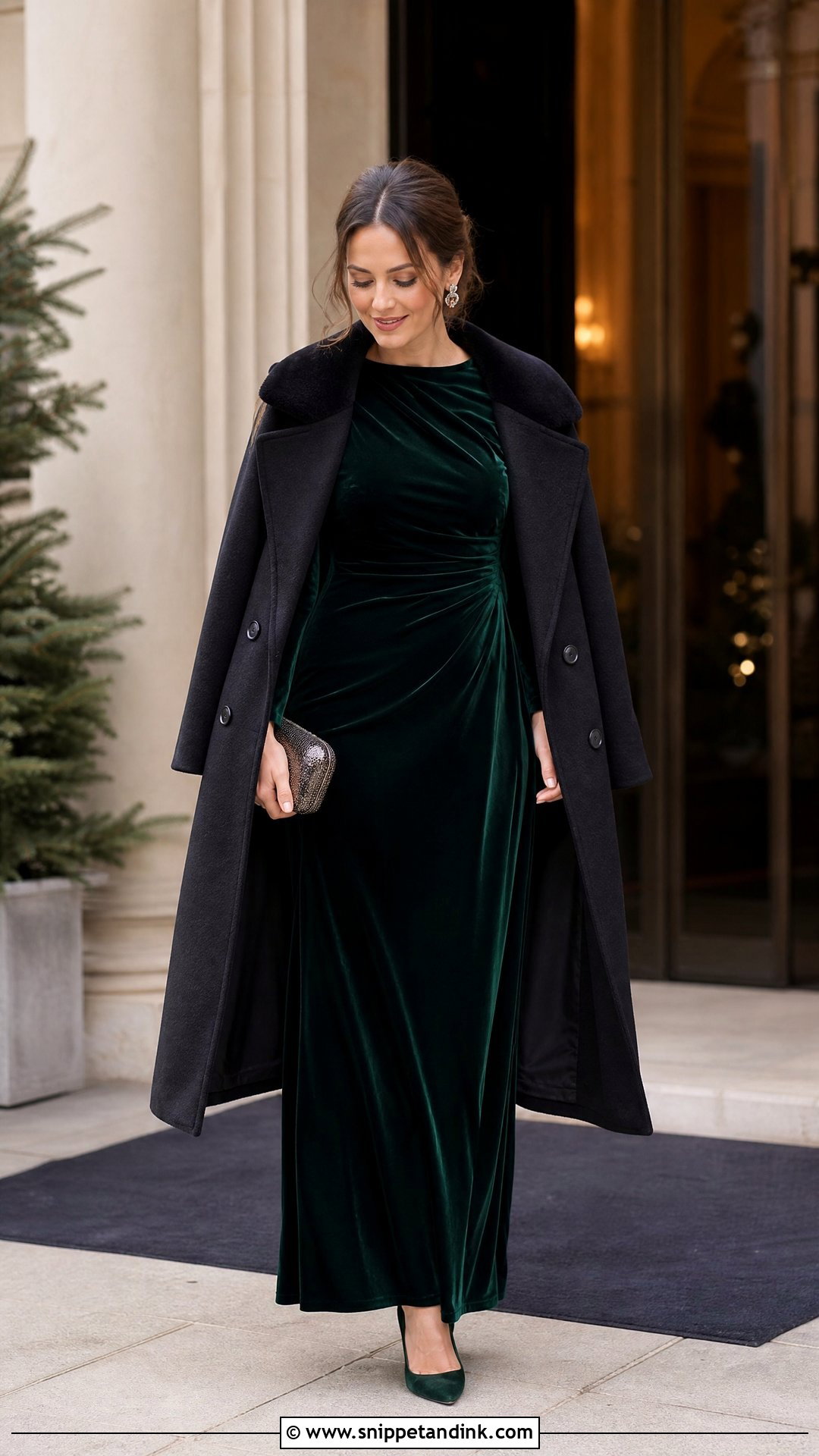
For a winter or late-autumn ceremony, I want guests warm first and formal second. A long-sleeve maxi in velvet, crepe or lined chiffon covers the arms while keeping a formal shape. Velvet is the warmest of the three, but it marks easily, so hang it rather than folding it into a bag. Closed pumps or heeled ankle boots can disappear under a floor-length hem. Put a structured coat over it; a puffer turns any formal dress casual. With a high neck or a busy print, swap the necklace for a bracelet. Sheer tights add warmth as long as the skirt hides the waistband when you sit, and test the sleeves by reaching forward, because tight long sleeves pull across the back.
11. Blazer And Midi Skirt Wedding Ceremony Outfit
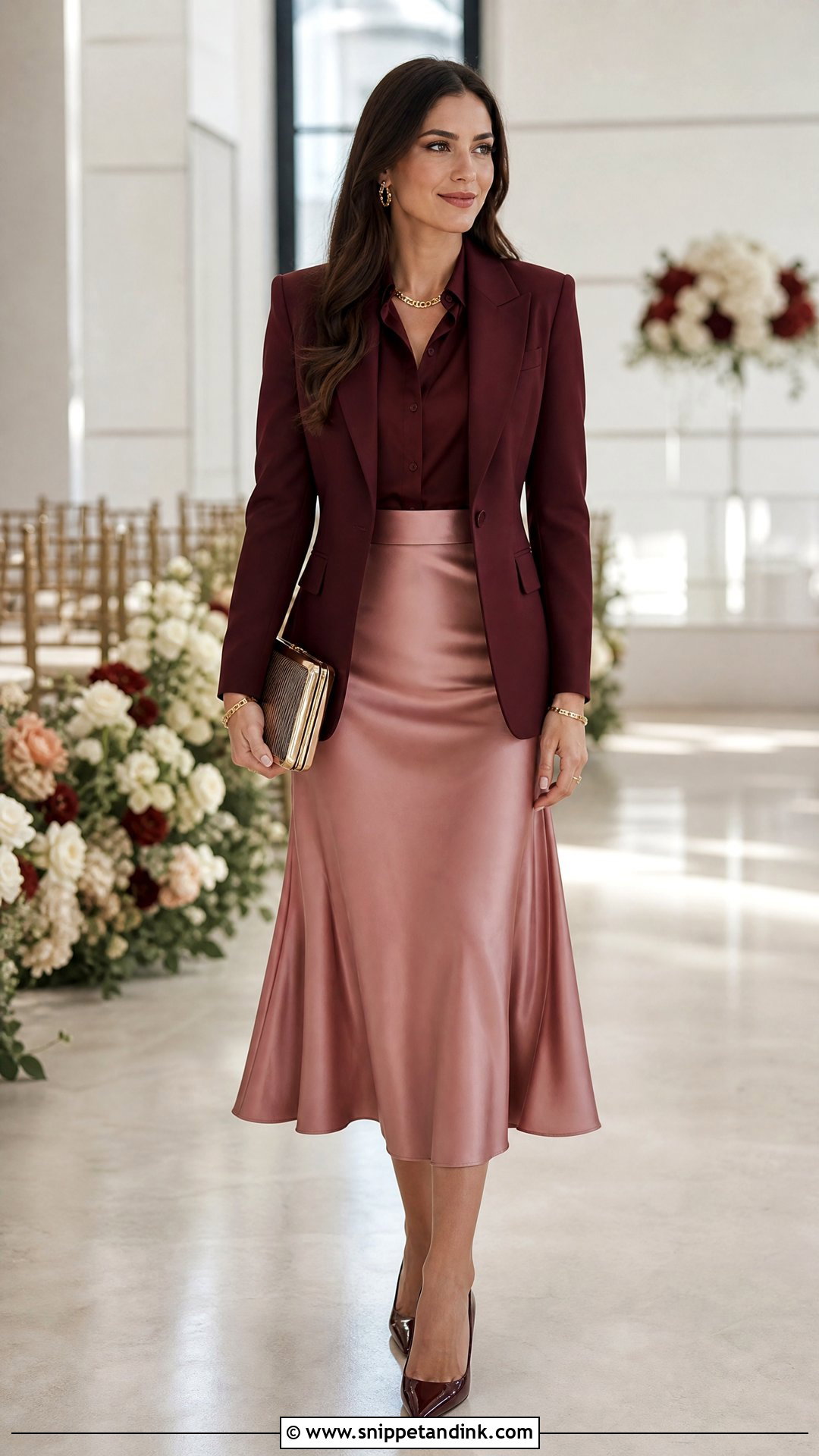
Separates look intentional when the fabrics are clearly occasionwear, and that is the line between this and a work outfit. Start with a satin or softly pleated midi skirt, tuck in a fitted blouse and add a tailored blazer that ends above the fullest part of the skirt. Tonal pairs like burgundy with rose or navy with blue look planned. Pointed pumps, a structured clutch and simple metal jewelry finish it; leave the everyday tote at home. The practical advantage is real at a long wedding: the blazer comes off after the ceremony and the blouse and skirt still stand as a complete outfit for dinner and dancing.
12. Halter Maxi Wedding Ceremony Outfit
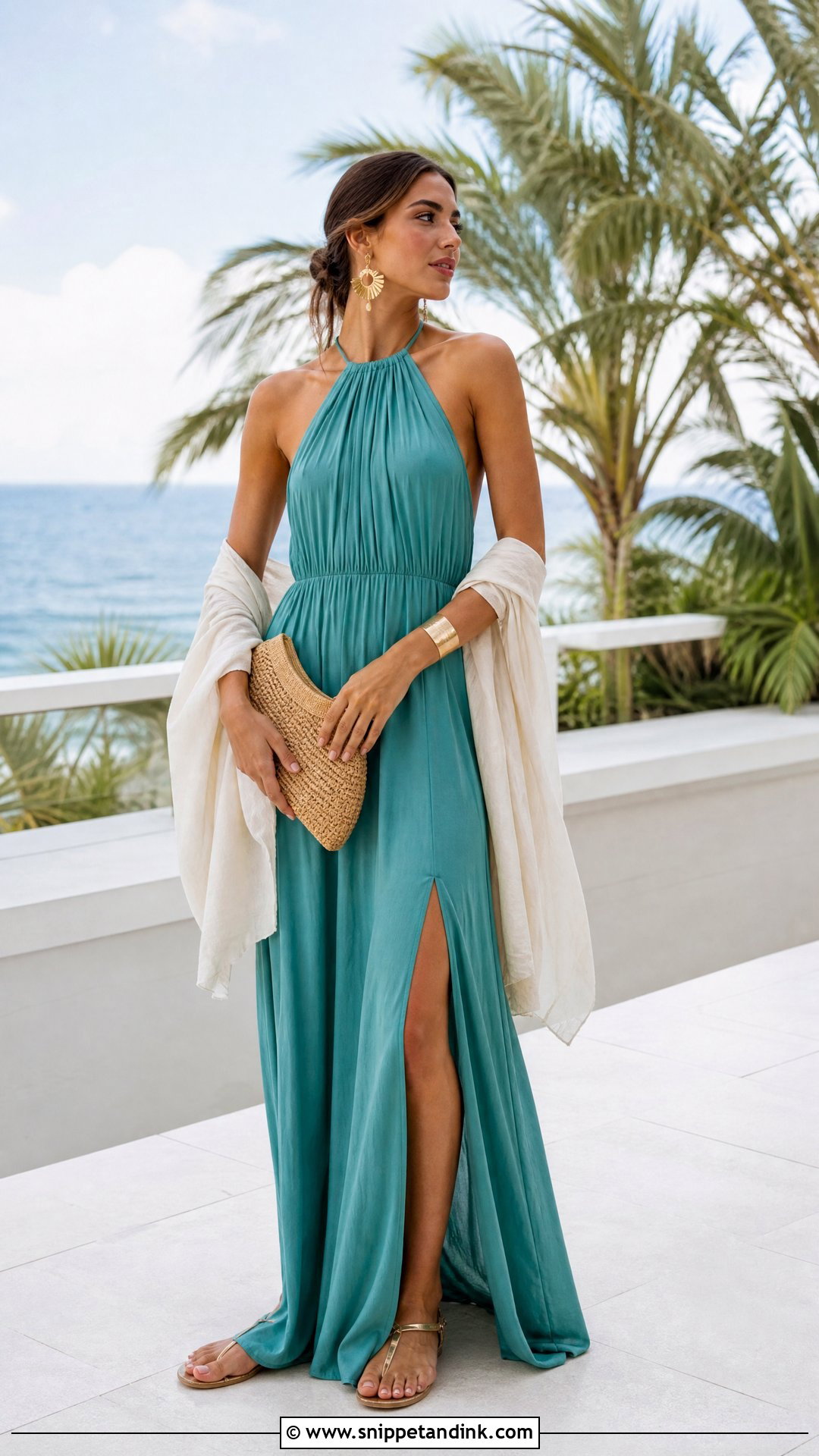
A halter maxi suits destination and resort ceremonies, but the neckline has to support you on its own. If you’d normally need a strapless bra under it and the fit isn’t snug enough to stay put, keep looking. Chiffon, crepe or lightweight satin in tropical colors, abstract prints or deep ocean tones read as dressed without looking like beachwear. On sand or decking, flat metallic sandals are safer than any heel; on a terrace, a stable block heel is fine. Keep the neck bare and put the interest in statement earrings and a slim cuff. A low bun or polished ponytail shows the shoulders, and a wrap covers them once the sun drops.
13. Dressy Palazzo Pants Wedding Ceremony Outfit
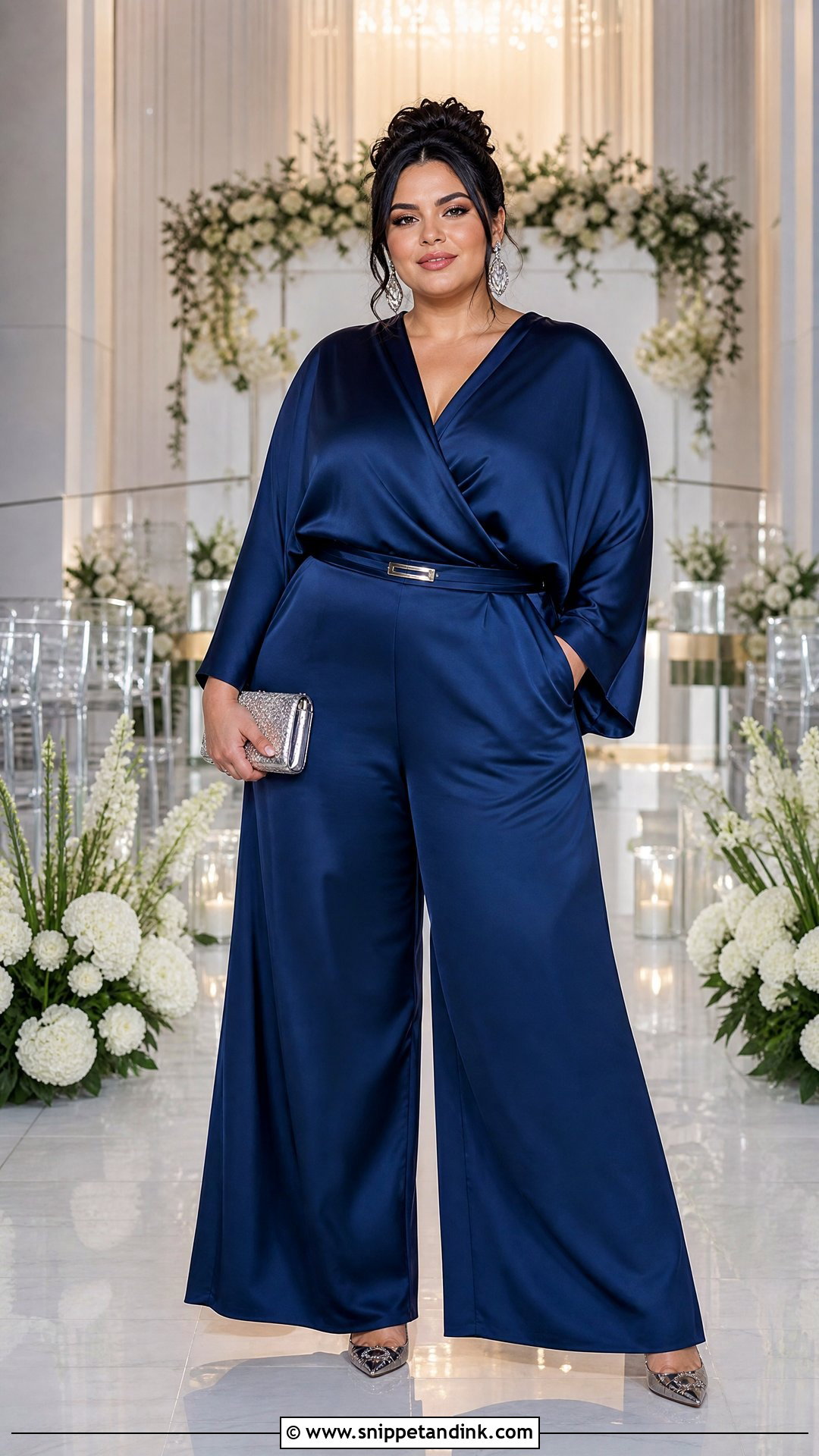
Palazzo pants give you the sweep of a maxi skirt with none of the worry about wind or getting in and out of cars. A high rise matters, since a low waistband on a wide leg shortens the body. Choose satin, crepe or a finely pleated fabric and add a fitted blouse or draped sleeveless top. A matching set makes one long column of color, while a tonal top adds some depth. The hem is everything here: have it taken up for the exact heels you’ll wear, because an inch too long and you will step on it walking up to the receiving line. A slim belt helps if the waistband needs definition, and a small clutch keeps the outline clean.
14. Garden Wedding Ceremony Outfit
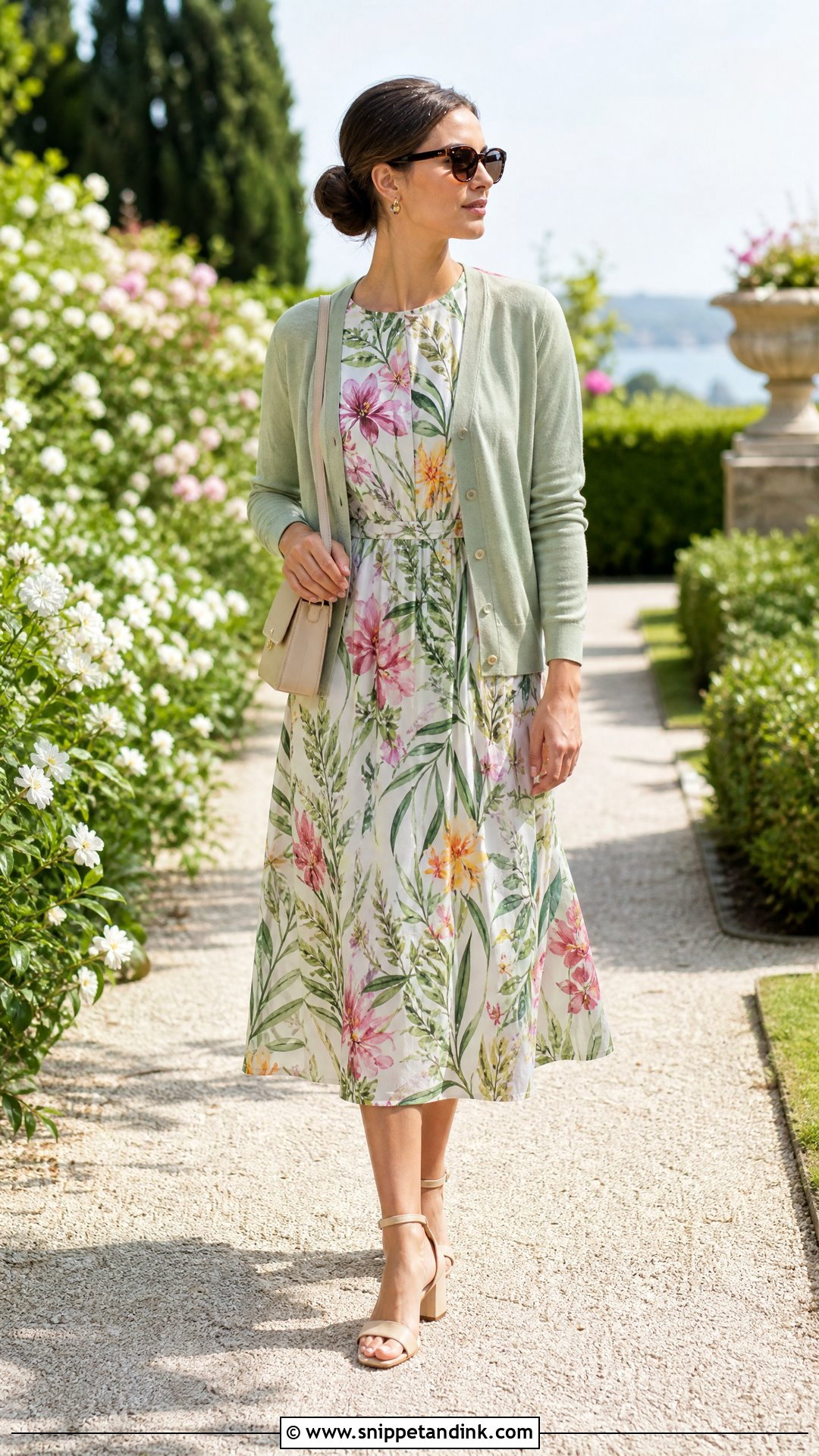
Garden ceremonies are hard on clothes in ways people don’t expect: damp grass, gravel paths, low sun in your eyes and wind across an open lawn. Wear a botanical-print midi dress with a defined waist and enough skirt to move in, and choose a print built on green, blue, yellow, coral or purple rather than a white background. Stilettos sink and pick up turf, so I steer people to block heels, wedges or smart flats. A small crossbody keeps your hands free for a drink or an order of service. Bring sunglasses for arrival, and if the skirt is light, small dress weights sewn into the hem stop it lifting during the vows.
15. Beach Wedding Ceremony Outfit
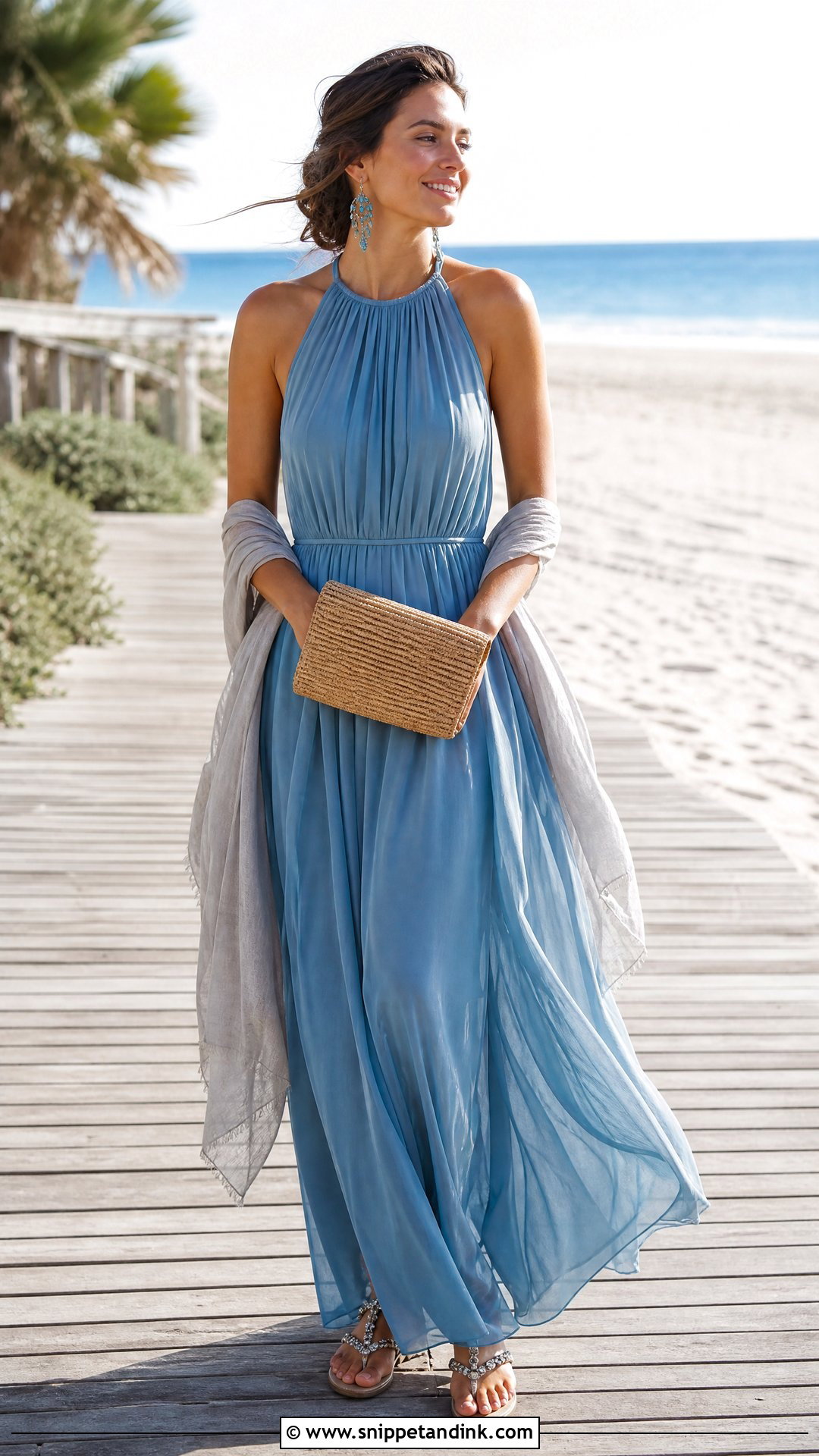
Sand ruins hems and heels faster than anything else, so for a beach ceremony I plan from the feet up. Embellished flat sandals or bare-friendly slides are the only shoes I’d wear on loose sand. A colorful chiffon or linen-blend maxi with a softly defined waist should be lined and weighty enough not to blow sideways in a sea breeze. Take it up so it clears the ground by a finger’s width; a dragging hem collects wet sand and darkens by the end of the ceremony. Skip trains, narrow heels and wide-brim hats that need a hand to hold. A woven clutch, light statement earrings, a soft wrap and a secure braid or bun keep you looking dressed for a wedding, not a holiday.
16. Black Cocktail Dress Wedding Ceremony Outfit
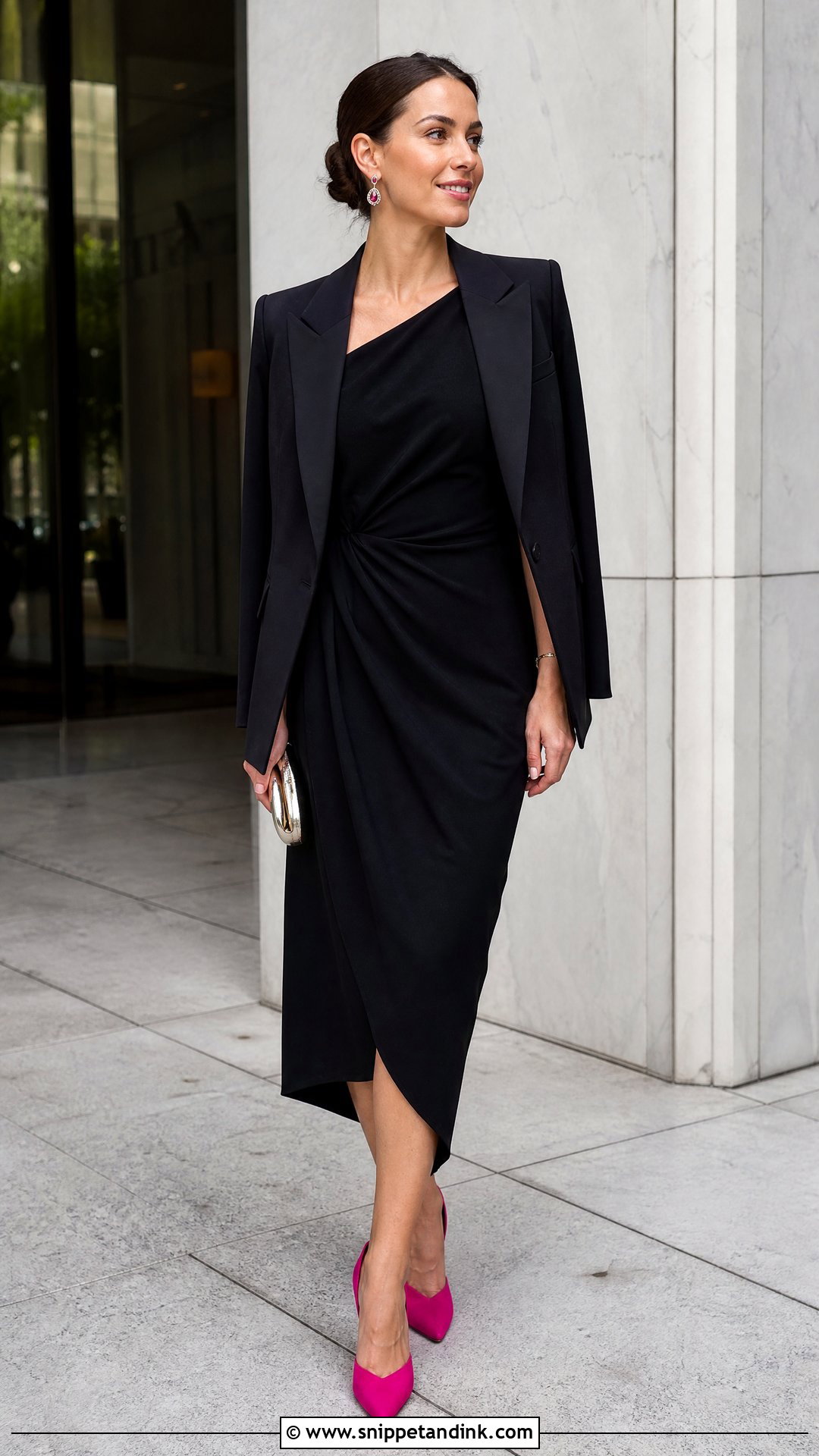
Black is fine at most evening and city weddings now, but I check two things first: the couple’s dress code and the culture of the ceremony, because at some weddings black still reads as mourning. If it’s appropriate, choose a midi or knee-length dress with some interest in the cut, like draping, texture or an asymmetric neckline. Then add color on purpose with jewel-toned heels, a metallic clutch or gemstone earrings so the outfit doesn’t go head to toe black. Avoid casual cotton or stiff suiting fabric. A sleek blazer or tailored coat covers you for a cool evening, and a little shine in the makeup and hair keeps it festive.
17. Formal Evening Gown Wedding Ceremony Outfit
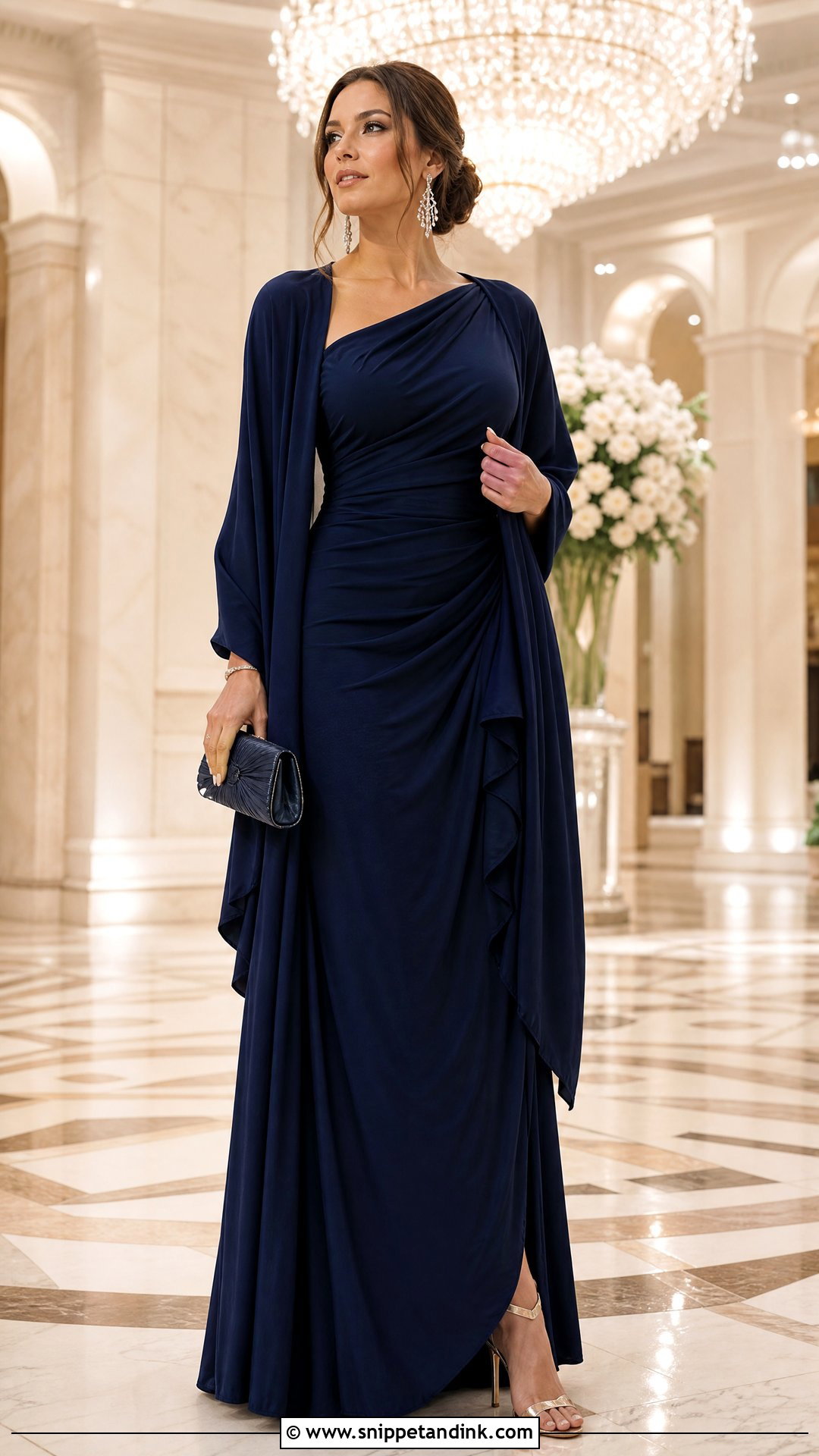
When the invitation says black tie or formal evening attire, a floor-length gown is the safe answer, and the order you buy things in matters. Shoes first, then the gown, then alterations, because the hem has to be set to the heel height or you’ll trip on the way to your seat. Column, A-line or softly draped shapes in satin, crepe, chiffon or velvet all suit the occasion. Sapphire, emerald, plum and bronze feel rich without approaching ivory. Pick one focal piece of jewelry, chandelier earrings or a polished cuff, not both. A formal wrap or slim coat beats a knit cardigan, and evening makeup can go a step stronger than daytime.
18. Puff-Sleeve Midi Wedding Ceremony Outfit
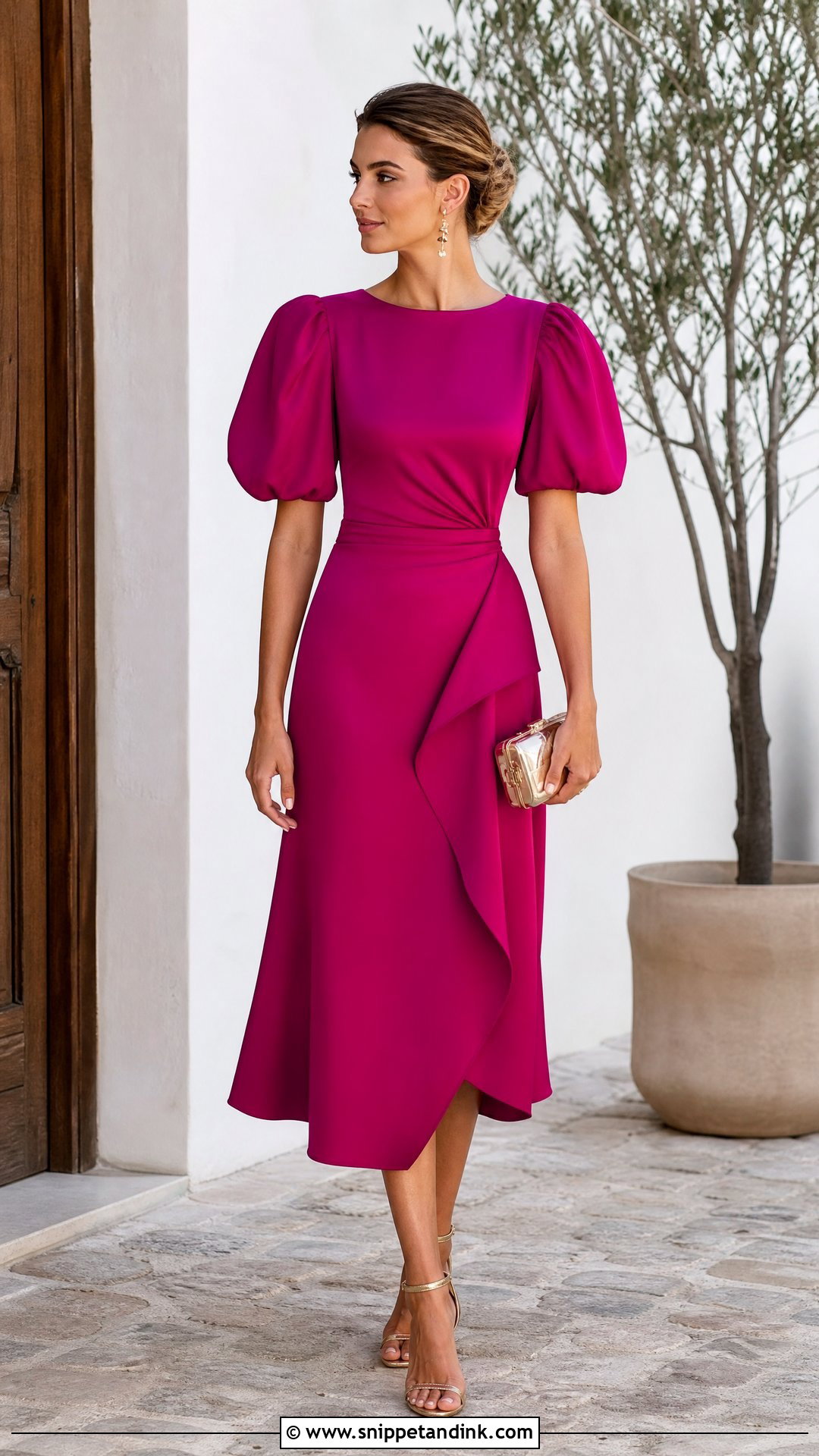
Puff sleeves give upper-arm coverage, which is why so many guests ask me about them, but volume needs control. Choose sleeves that stop short of your shoulder width; if they sit wider than your hips, the whole silhouette turns boxy. A neat bodice through the waist balances them. Solid jewel tones or textured fabric suit daytime and semi-formal ceremonies. Keep the shoes streamlined and leave off the necklace if the neckline is gathered. Hair worn up or tucked behind the shoulders stops it crowding the sleeves, which matters in photos taken from the side during the ceremony.
19. Matching Two-Piece Wedding Ceremony Outfit
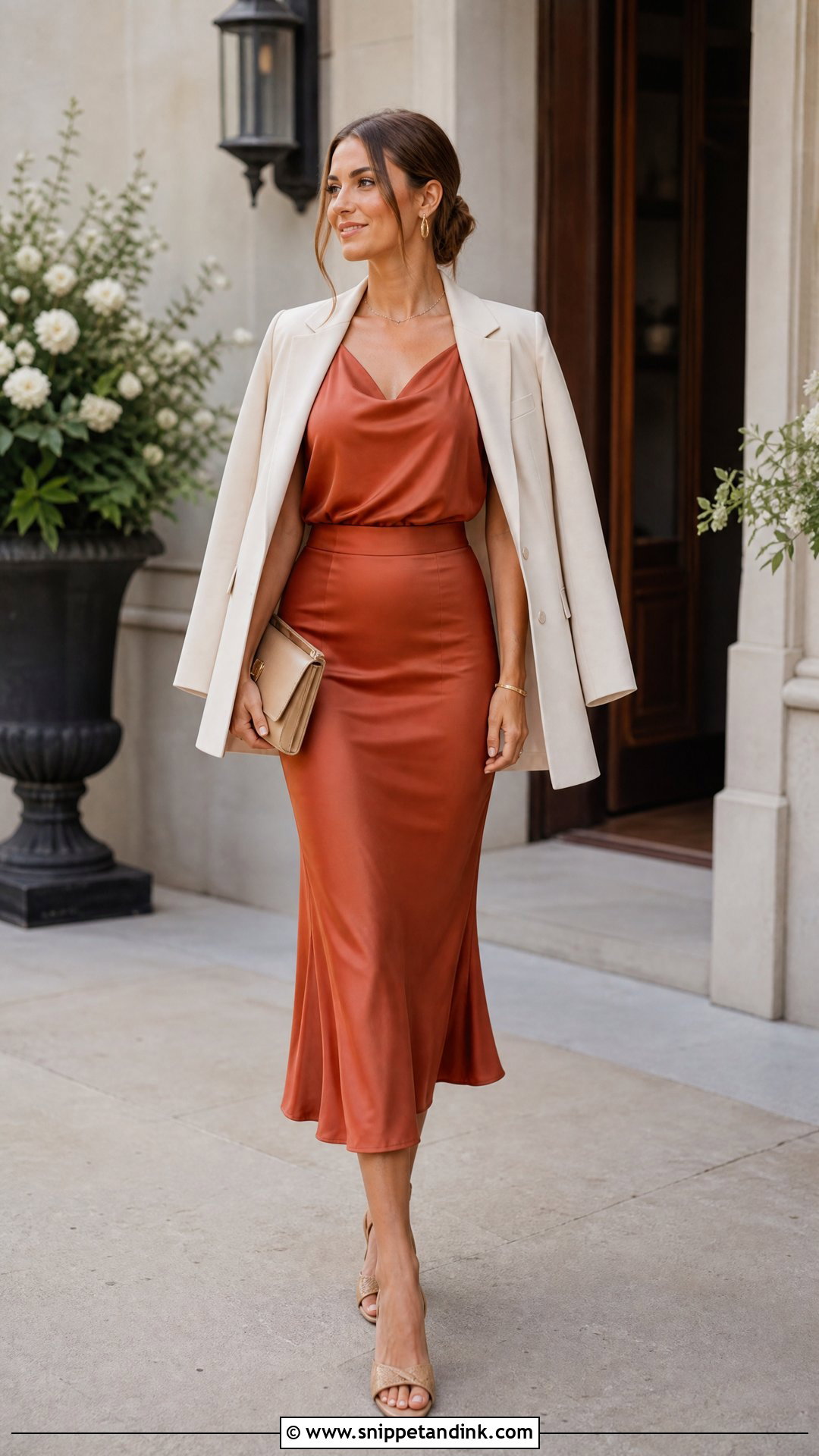
A matching two-piece set gives you the pulled-together look of a dress plus the option of mixing pieces later. The risk is the gap at the waist. Sit down in front of a mirror before you commit: a crop top that meets a high-rise skirt standing up can show several inches of midriff once you sit or lift your arms, and in a pew that isn’t the look most people want. A fitted camisole underneath fixes it. Satin, crepe, jacquard and soft pleats read as occasionwear. Heeled mules or pointed pumps, a structured clutch and a matching or neutral blazer for the ceremony keep the color story clean.
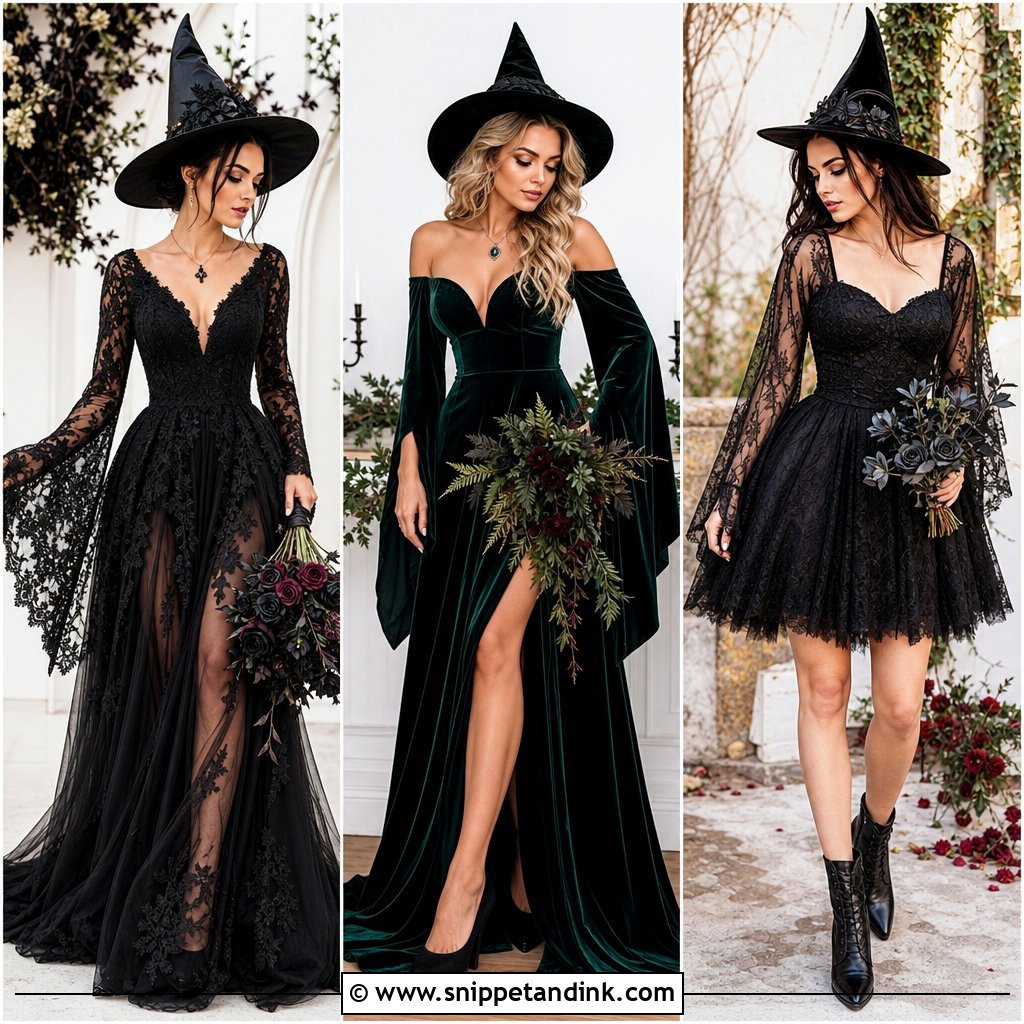
20. Modest Maxi Wedding Ceremony Outfit
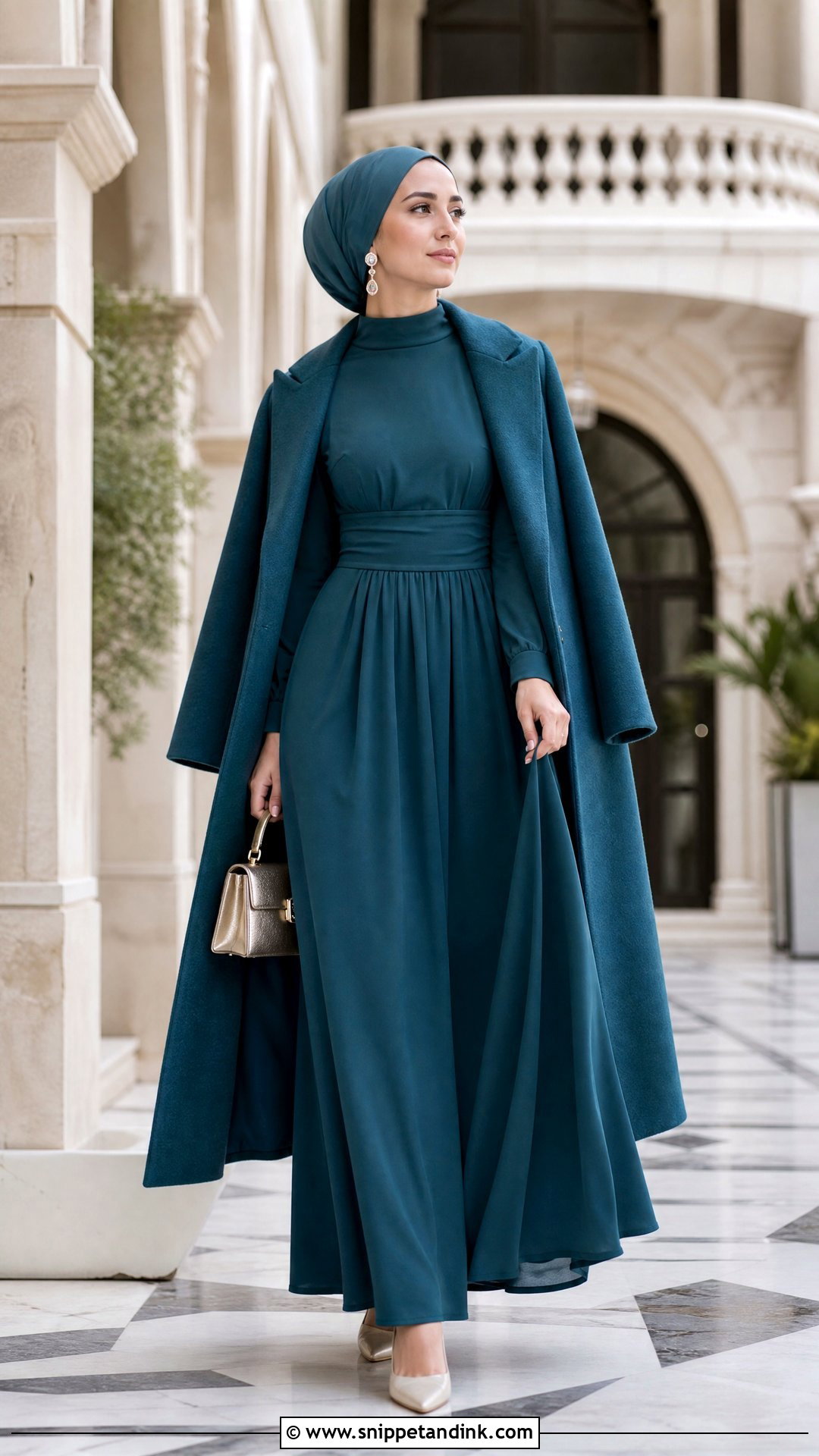
A modest maxi only looks frumpy when the proportions are off, and that’s a tailoring problem rather than a coverage problem. Look for long or elbow-length sleeves, a higher neckline, a defined waist and a fluid skirt; then have the sleeves and waist taken in so the fabric follows you instead of hanging. Rich solids, watercolor florals and geometric prints all hold interest. Check every layer in daylight, including the sleeves, since unlined chiffon sleeves can be sheer. Pointed flats or low block heels, a structured bag, refined earrings and a light scarf or tailored coat adapt it to family, religious or cultural expectations at almost any ceremony.
Colors That Quietly Compete With the Wedding Party
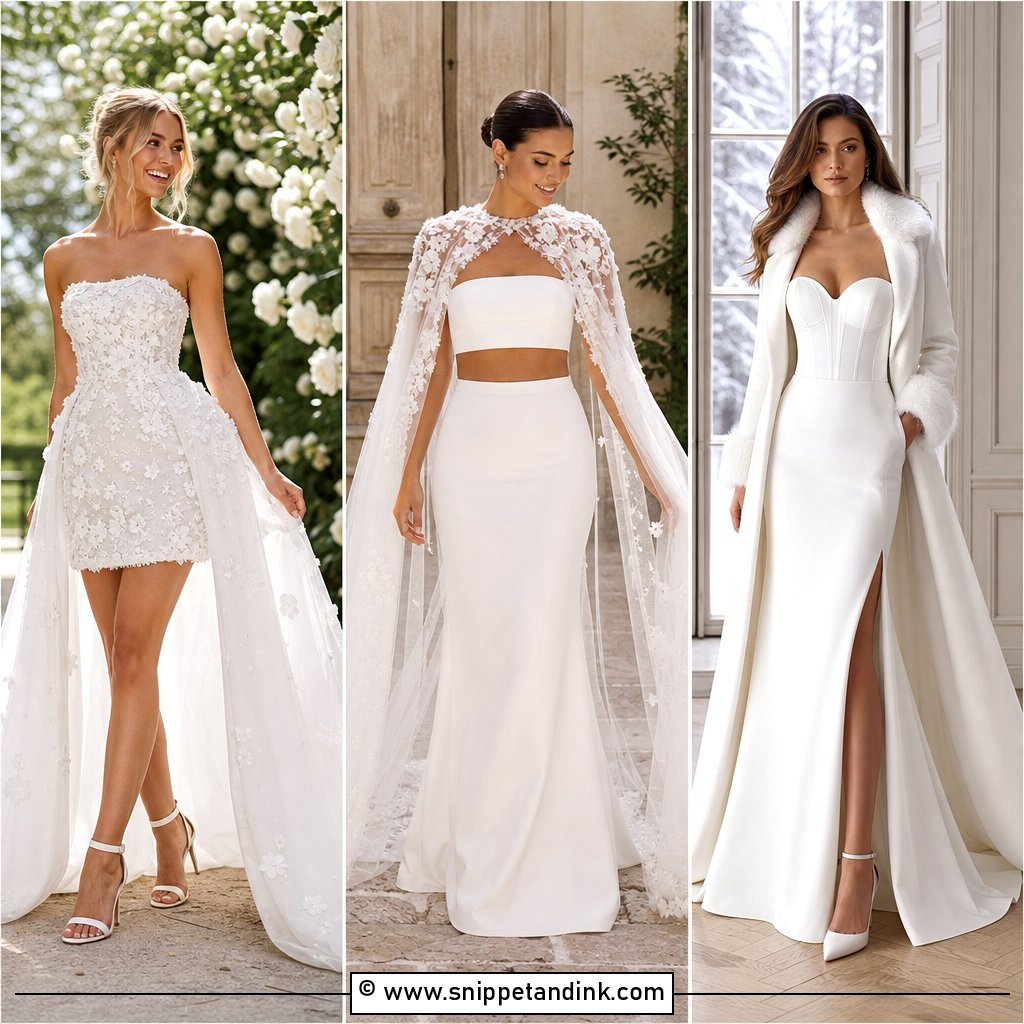
White is the obvious one, but it isn’t the only shade that causes trouble. Ivory, champagne, pale blush and very light silver all photograph close to white in bright light or on a phone camera, so I treat them as off limits unless the couple has invited them. Prints count too: a dress that is mostly white with a scattered pattern reads as white in a group shot.
It is also worth asking what the bridesmaids are wearing. Turning up in the exact sage or dusty blue of the bridal party isn’t a disaster, but it can make you look like a missing member of it in the family photos. Some cultures carry their own color meanings as well. Red is the bride’s color at many South Asian and Chinese weddings, and black is still avoided at some traditional ceremonies. A quick message to the couple or a close relative settles it.
A Full Rehearsal in Your Hallway the Week Before
Most of the problems I see on wedding days could have been caught at home with ten minutes of trying things on properly. Put on everything, including underwear, shoes, jewelry and the layer you plan to carry, and run through the day.
- Sit in a low chair for five minutes, then stand and check the back of the skirt for creases and the neckline for gaping.
- Raise both arms as if hugging someone taller than you; straps and one-shoulder bodices show their weak points here.
- Walk up and down stairs, then walk on grass or gravel if the venue has it.
- Check fabric against a bright window for sheerness.
- Pack a tiny repair pouch: fashion tape, safety pins, blister plasters and a stain wipe.
If something fails, there is still time to fix it. A tailor can shorten a hem or add a strap stay in a few days, and a new pair of shoes can be worn in around the house. On the morning itself, the only option left is to put up with it.
Dressing for the Pew, the Lawn and the Dance Floor
A good guest outfit respects the invitation and still lets you move for twelve hours. Start with the dress code, then the ceremony time, the venue, the weather and what you’ll be walking on. Spend money on fit before fabric: a well-altered high-street dress, jumpsuit or suit looks better than an expensive one straight off the hanger. Keep clear of bridal colors unless the couple has said otherwise, bring one layer you’d be happy to be photographed in, and do the sit, walk and arm-raise test at home. Any of the twenty ideas above can work for you, as long as it suits both the wedding and the way you normally like to dress.
You'll Like These Ideas:




Leave a Reply