
I start every gown appointment with questions about the room, not the dress: where is the ceremony, what season, how long is the aisle, and how formal does it feel? Those answers narrow the field faster than scrolling. The looks below run from classic gowns to modern shapes, textured fabrics and convertible designs, for grand venues, gardens, beaches, courthouses and small gatherings. Each comes with shoes, veil and jewelry so you can see the whole outfit. Whatever fabric you love, the dress you end up in should let you breathe, sit and walk, and still feel like you rather than a costume.
What a Ceremony Asks of a Gown That a Party Doesn’t
A ceremony is the part of the day when you stand still, in one place, with everyone looking at your back. That changes what I check on a dress before anything else.
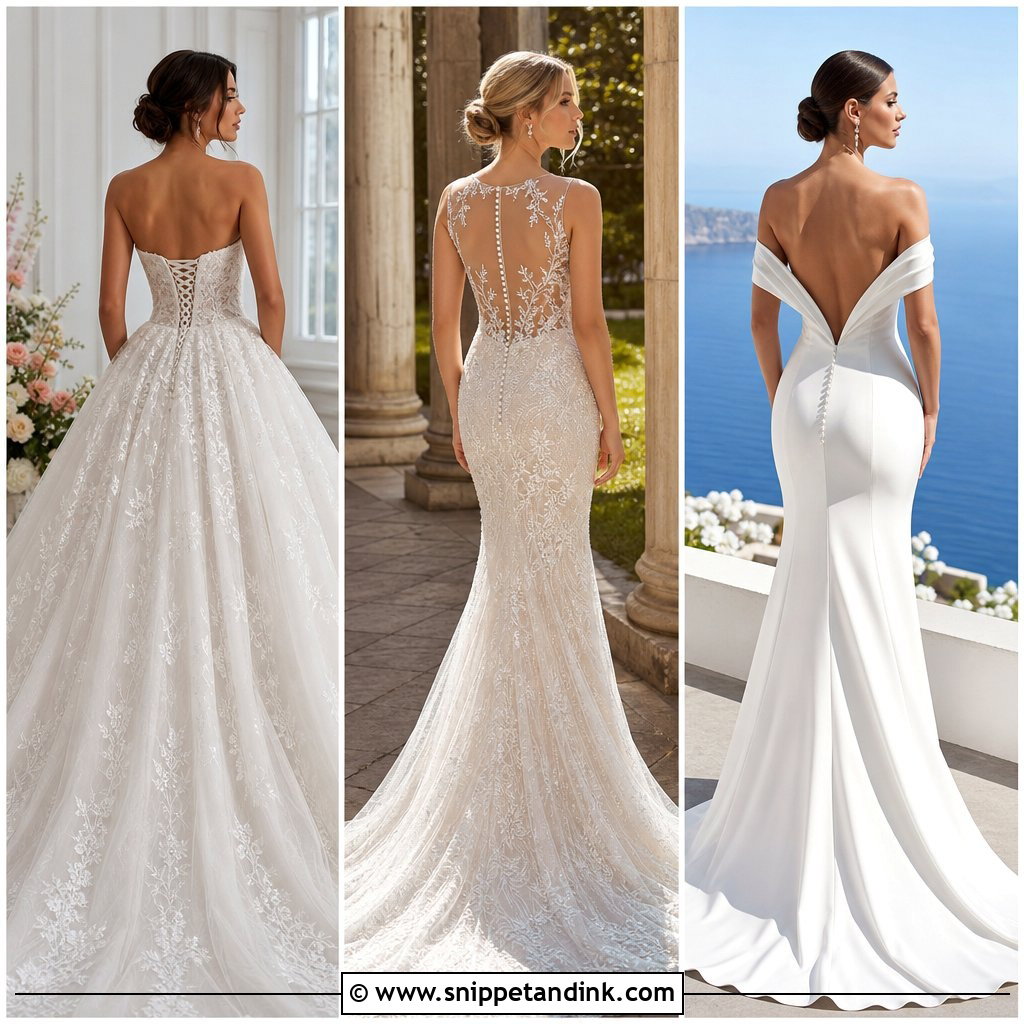
The Back View
Guests see your back for the length of the service, sometimes far longer in a religious ceremony. Look at the gown from behind in a three-way mirror: buttons, zipper line, how the veil falls and whether the bodice gapes when your arms are forward holding flowers.
Kneeling, Sitting and Steps
Many ceremonies involve kneeling, sitting on a low seat or climbing a few steps to an altar or mandap. Try each one in the shop. A mermaid or column skirt that won’t let you kneel needs a different cut, not courage on the day.
Coverage Rules
Some houses of worship ask for covered shoulders or arms. Ask early. A matching bolero, a sheer jacket or a cape keeps a strapless gown possible for the reception.
Aisle Length and Floor
A long aisle shows off a cathedral train; a short one in a small room makes the same train bunch at your feet when you stop. Grass, sand, gravel and old stone floors all catch hems differently, so I ask brides what they will walk on and set the hem and train length to match.
1. Satin Ball Gown Wedding Ceremony Dress
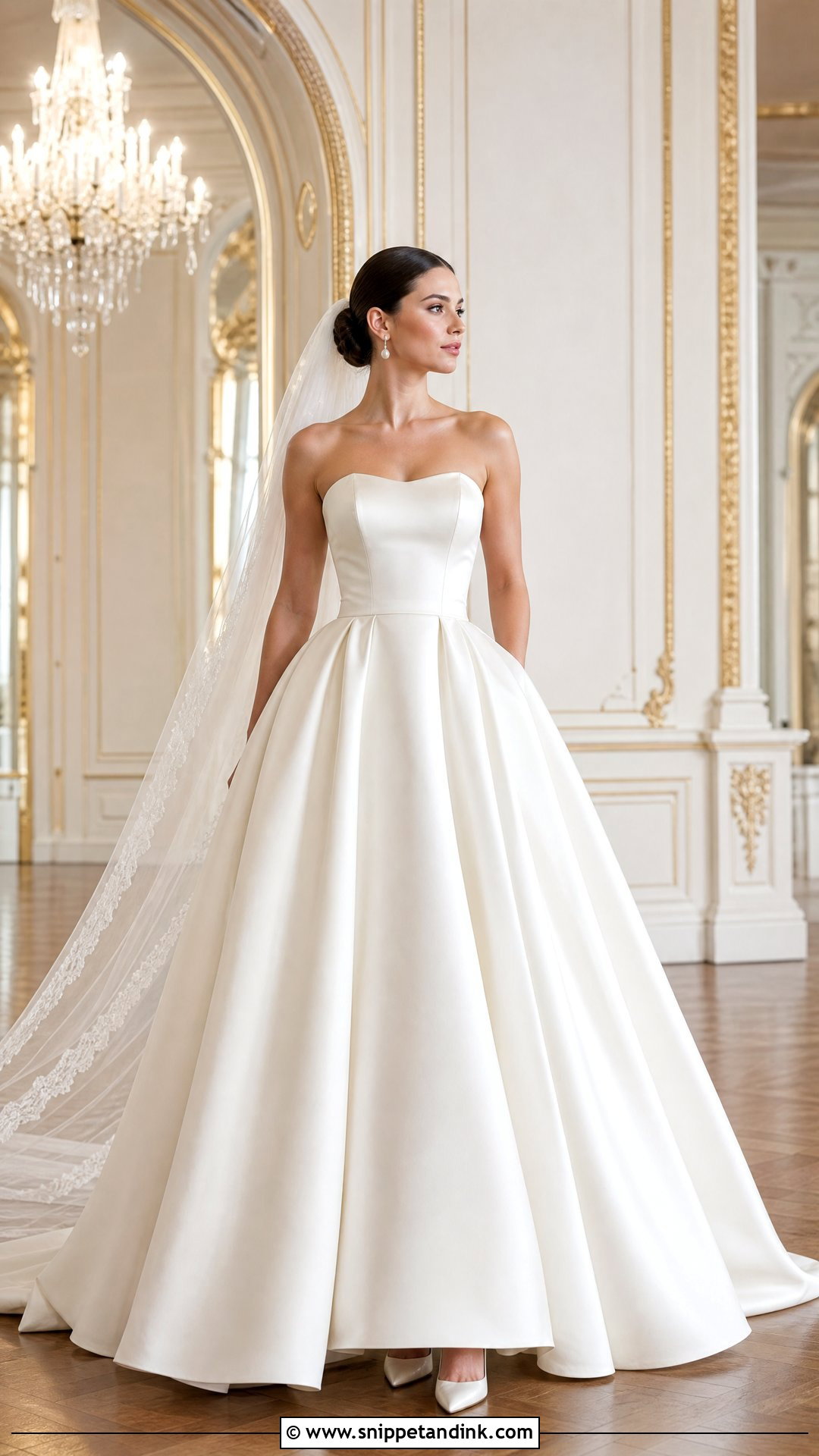
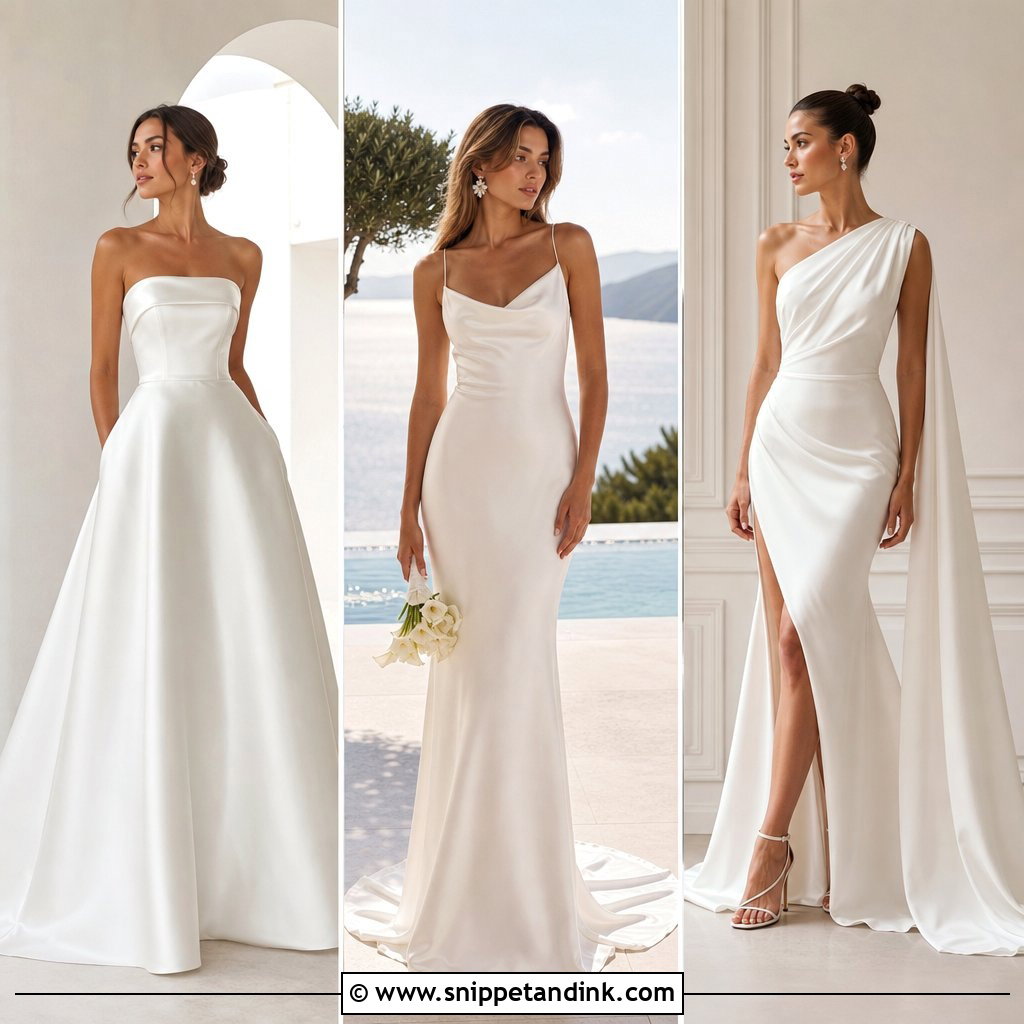
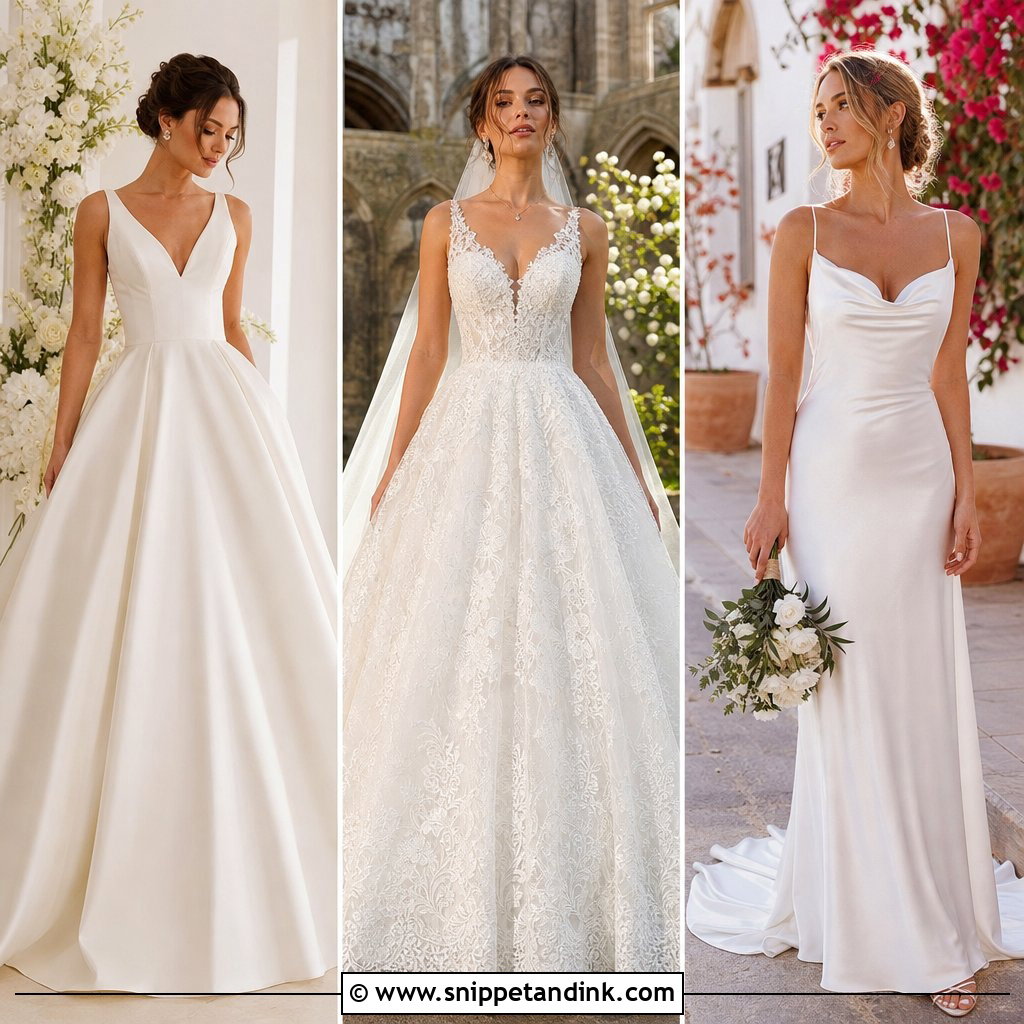
Nothing says ceremony like a satin ball gown. I balance the volume with a structured bodice and a softly curved neckline, and keep the satin plain, since its surface does the work. Satin creases where you sit, so if there’s a long car ride, ask the shop for a garment bag that hangs full-length and stay standing until the last minute. Pointed satin pumps, pearl drops and a cathedral veil with a narrow ribbon edge; a low bun shows the neckline and holds the veil. Ask about a bustle you can manage after the vows. It needs a big room: ballrooms and historic estates.
2. Lace A-Line Wedding Ceremony Dress
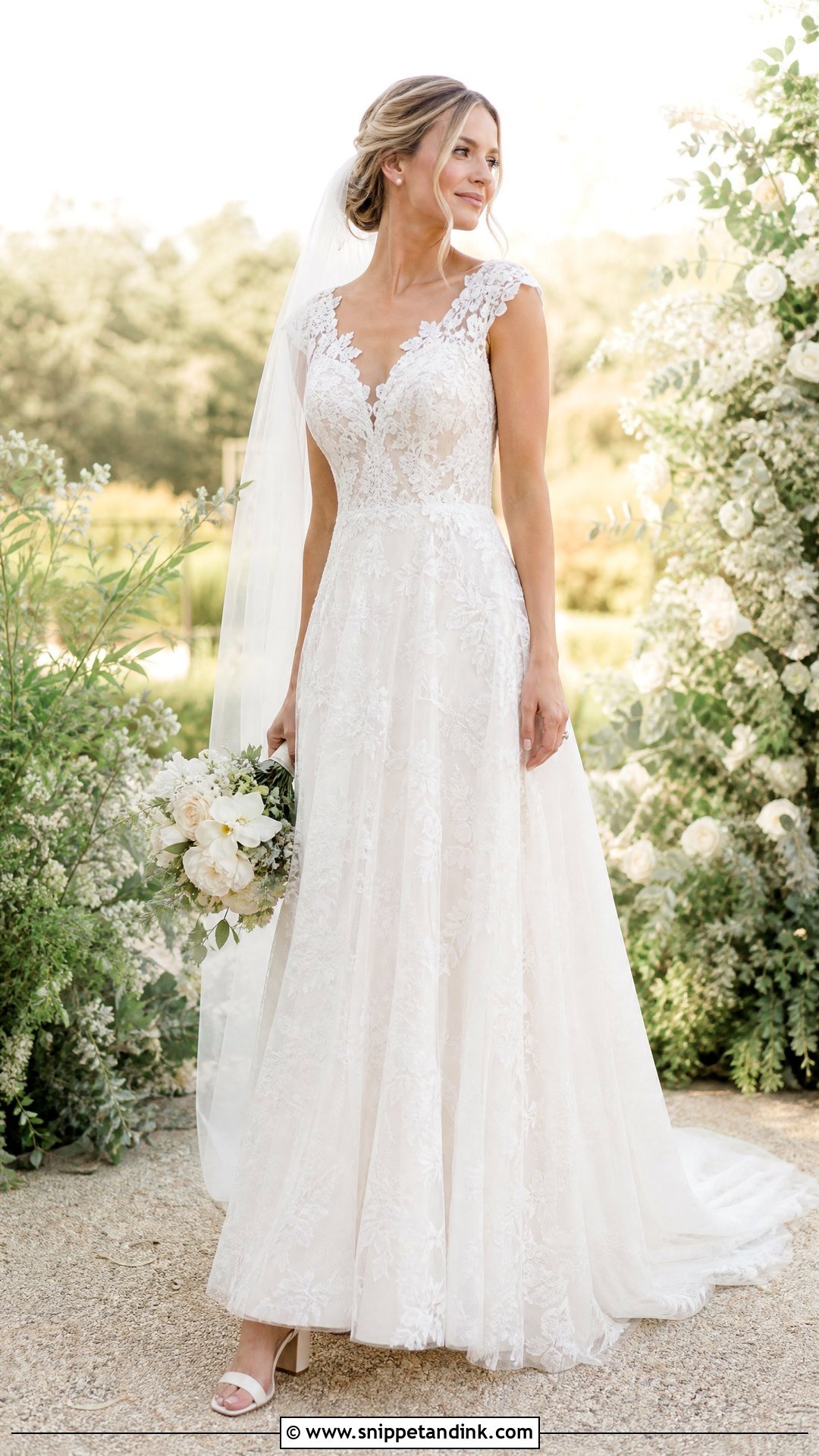
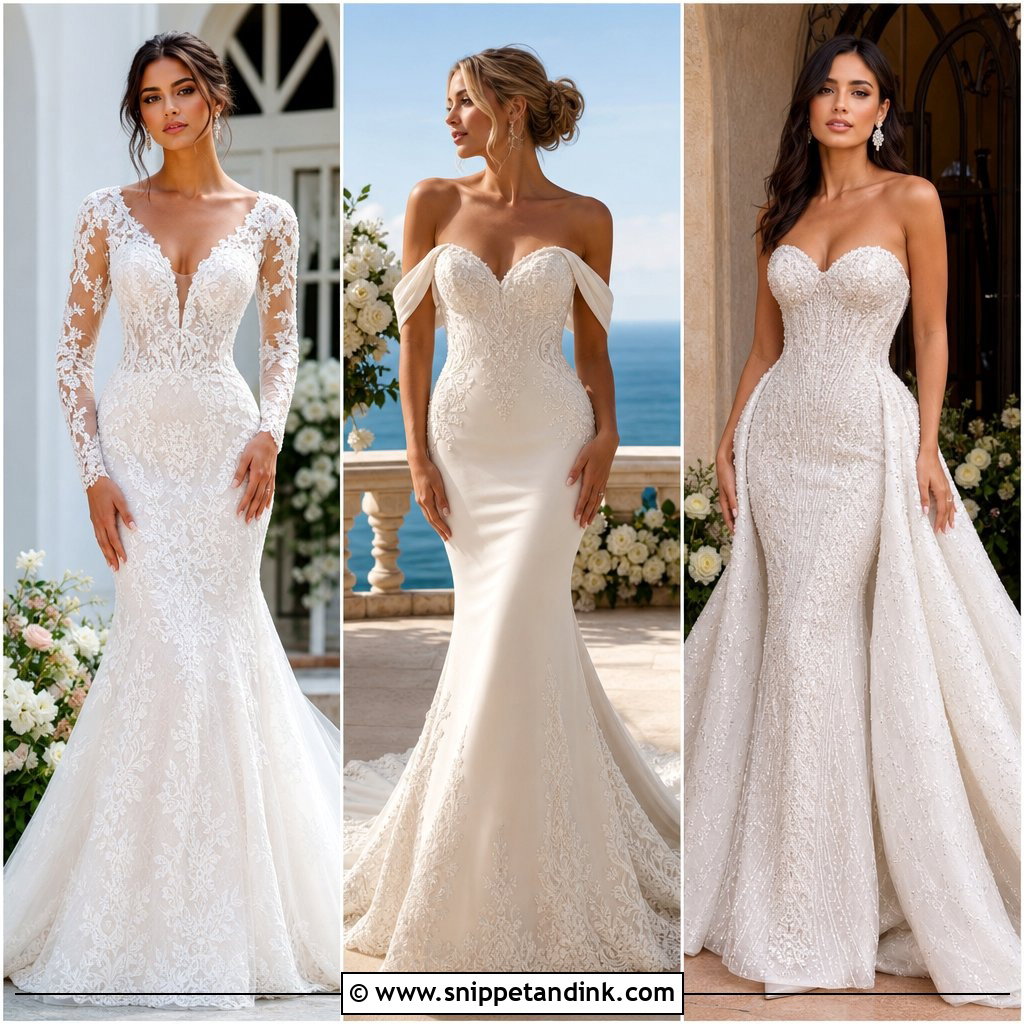
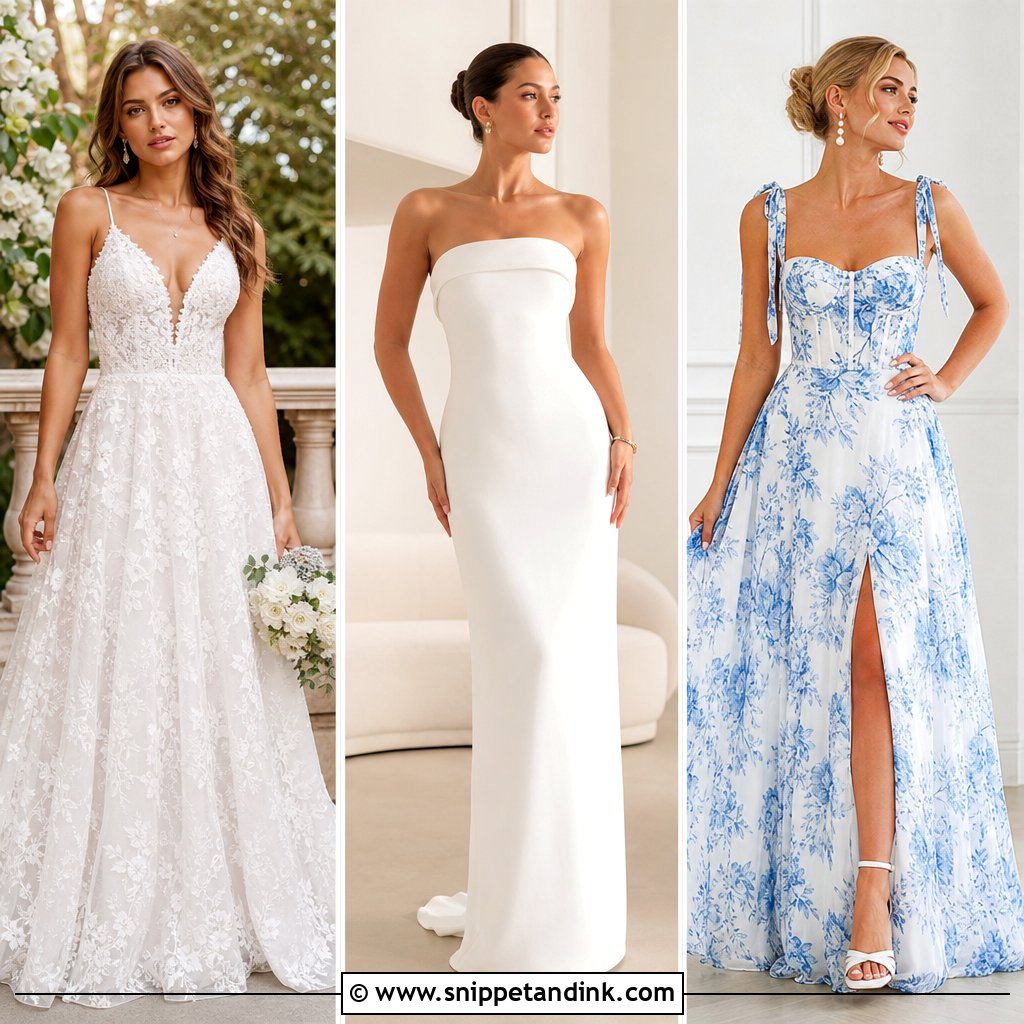
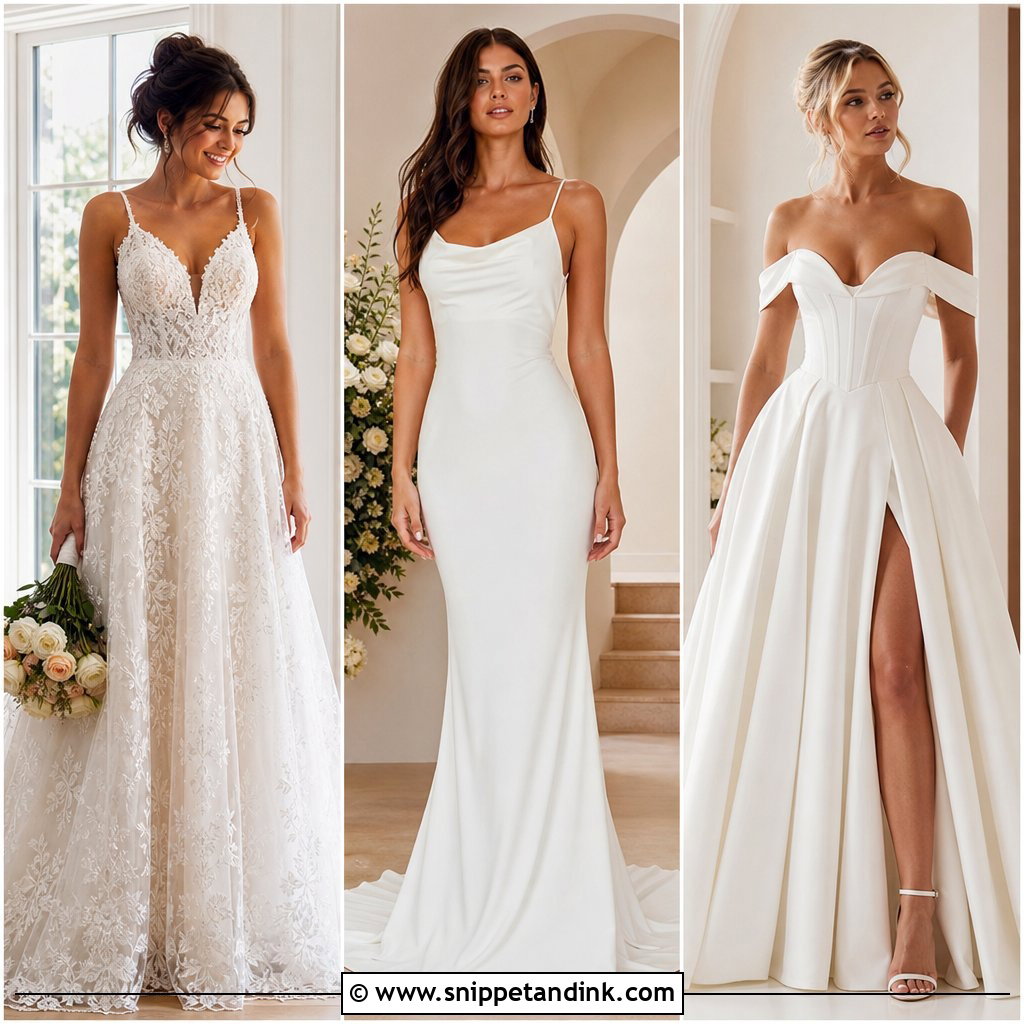
Lace on an A-line skirt gives the romance of a ball gown at half the weight. A fitted bodice opening gradually into the skirt defines the waist, and floral lace over a light ivory lining gives depth. For a modern look, I pick lace with a clear, well-spaced motif; dense all-over lace reads more traditional. Block-heel sandals sink less into lawns than stilettos, which matters at a vineyard. Pearl studs, a fingertip veil that doesn’t compete with the pattern, and a loose chignon or soft waves. The skirt moves easily, which suits gardens and outdoor estates.
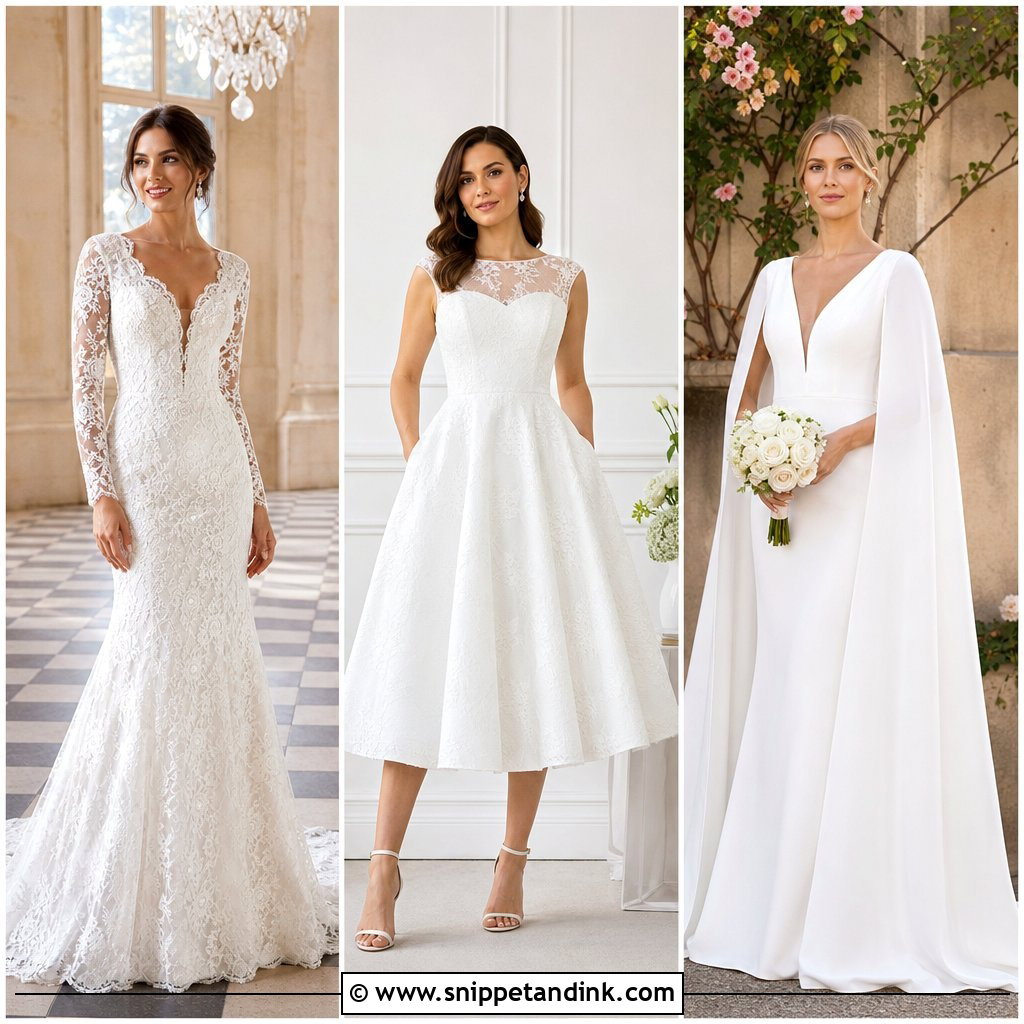
3. Long-Sleeve Crepe Wedding Ceremony Dress
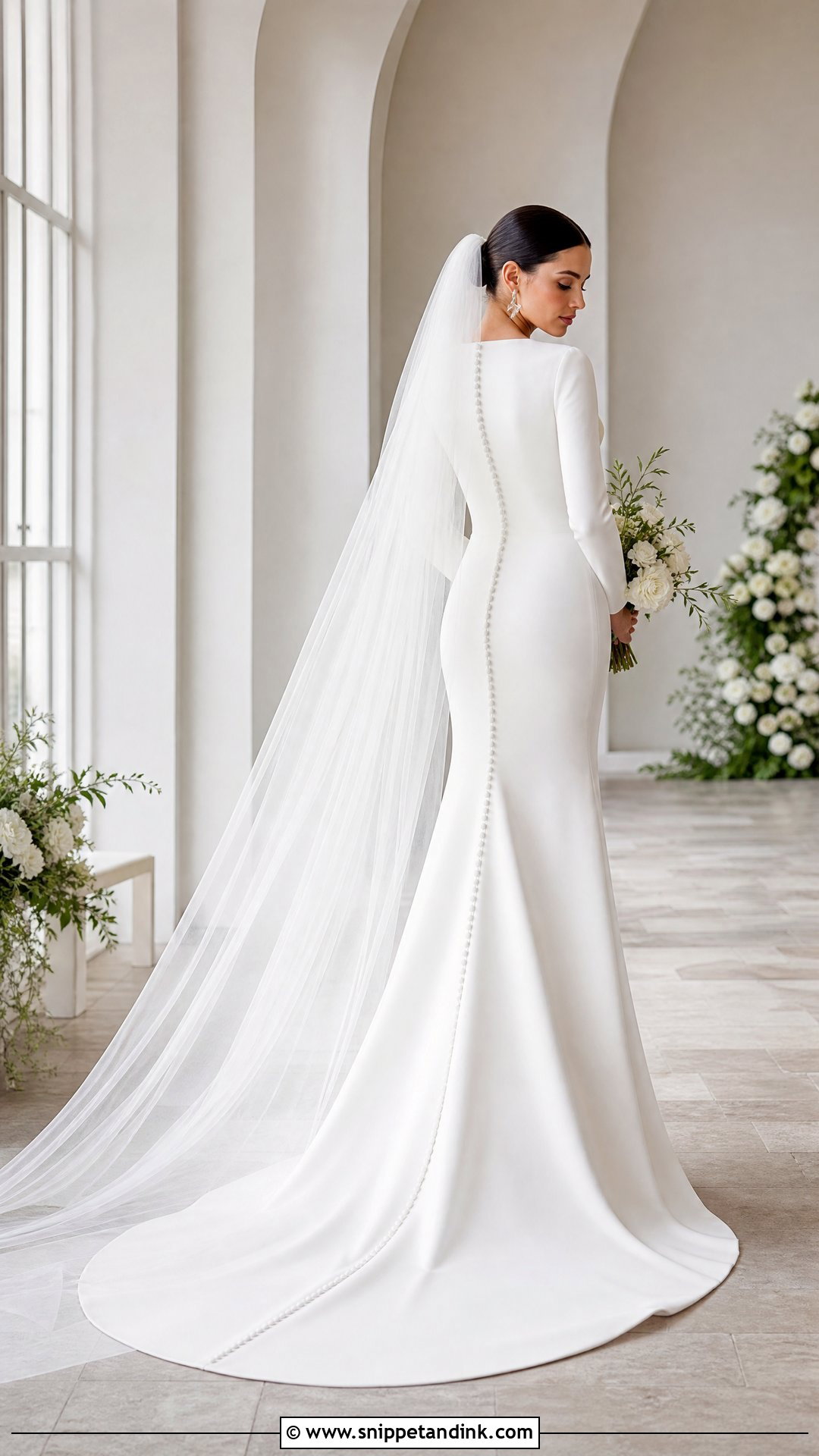
Crepe is honest fabric: it skims or it clings, nothing in between, so weight matters. I look for a crepe heavy enough to fall away from the hips, in a fitted silhouette with a bateau, V or rounded neck. Covered buttons down the back add detail without breaking the clean front. Closed-toe ivory pumps, sculptural earrings, a smooth chapel veil and a sleek bun or ponytail. Lightweight crepe works all year; heavier crepe is better in fall and winter. A square or open back contrasts nicely with long sleeves.
4. Strapless Drop-Waist Wedding Ceremony Dress
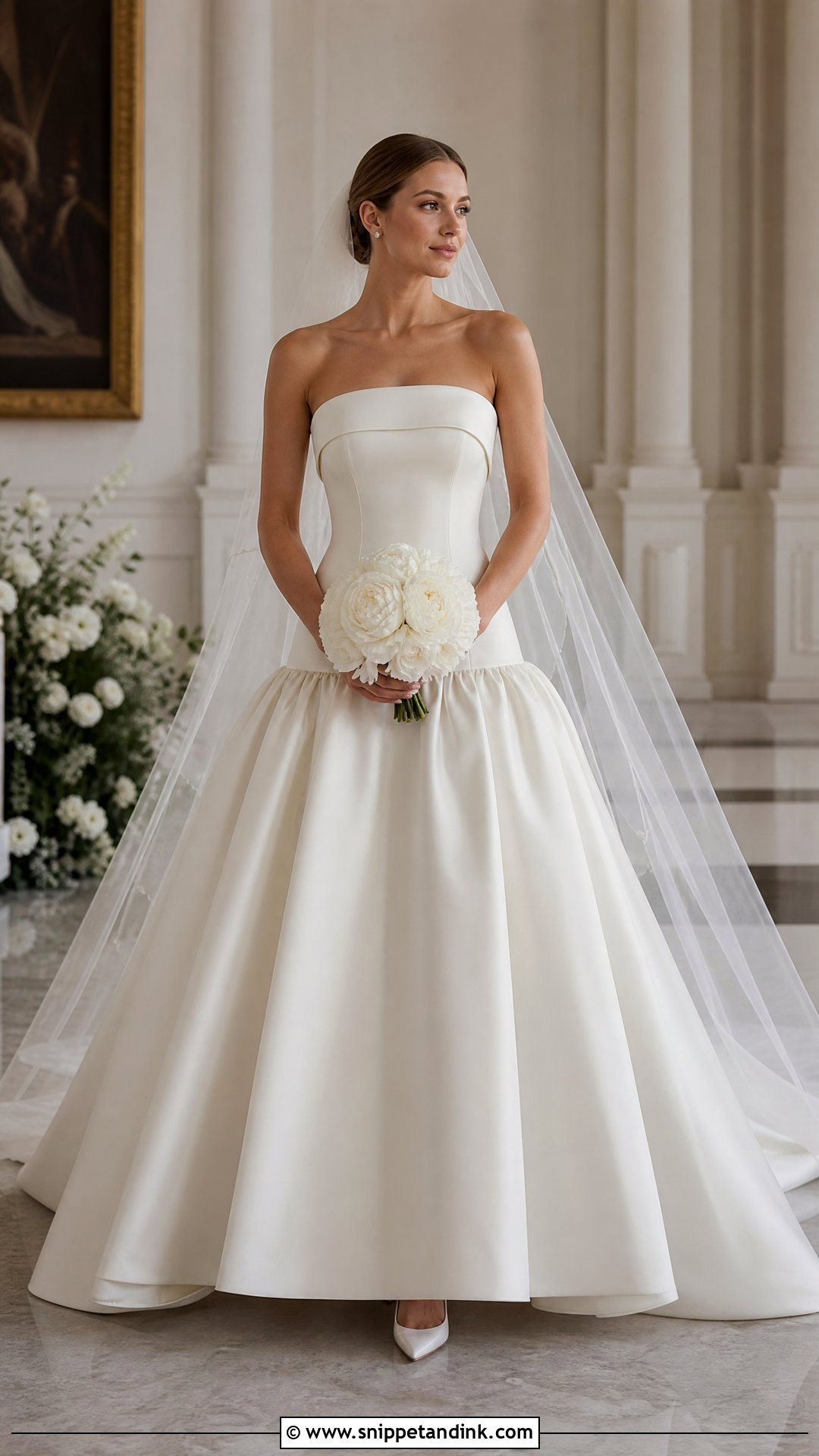
A strapless drop-waist gown carries the bodice below the natural waist before the skirt opens out, which lengthens the torso. Duchess satin or mikado holds that shape and the skirt volume. With no straps, everything depends on the bodice fit; I want internal boning and a waist stay, and I have brides lift their arms and bend at fittings so nothing slips. Pearl or crystal studs, pointed pumps and a long sheer veil. A bare neck looks more modern than a necklace. Low twist or waves behind the shoulders. Best in formal, large spaces.
5. Square-Neck A-Line Wedding Ceremony Dress
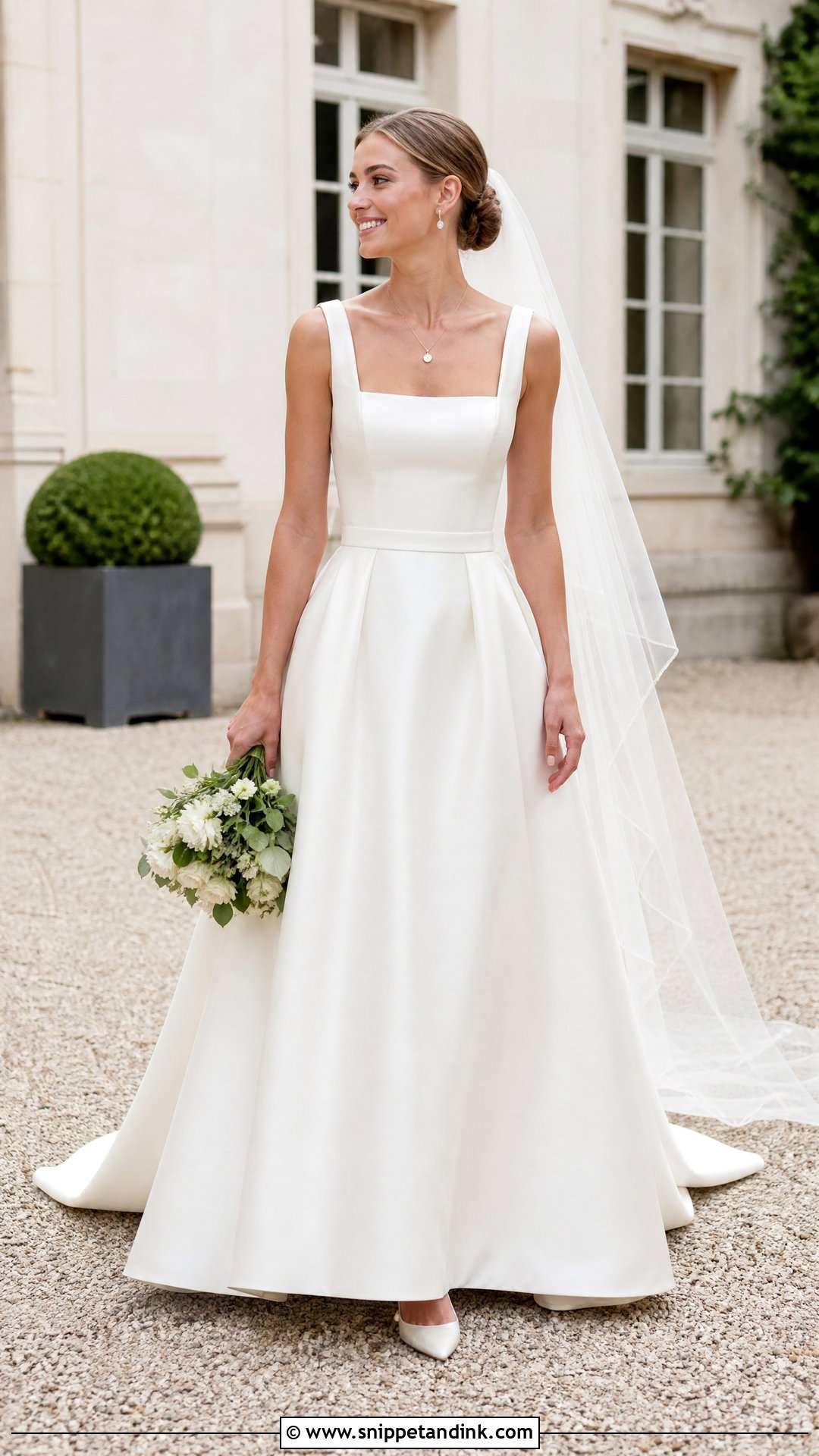
Square necks flatter most shoulders and look fresh on a classic A-line. Wide straps frame the shoulders, the bodice defines the waist and the skirt stays comfortable. Matte satin keeps it minimal; embroidered fabric adds detail. The fitting check here is the strap width: too narrow and they dig in, too wide and the neckline looks boxy. A simple pendant, small drops and low block heels for a long ceremony. Attach a chapel veil under a polished bun so the neckline stays clear. A slightly lower back adds interest. It suits most seasons and venues.
6. Off-Shoulder Wedding Ceremony Dress
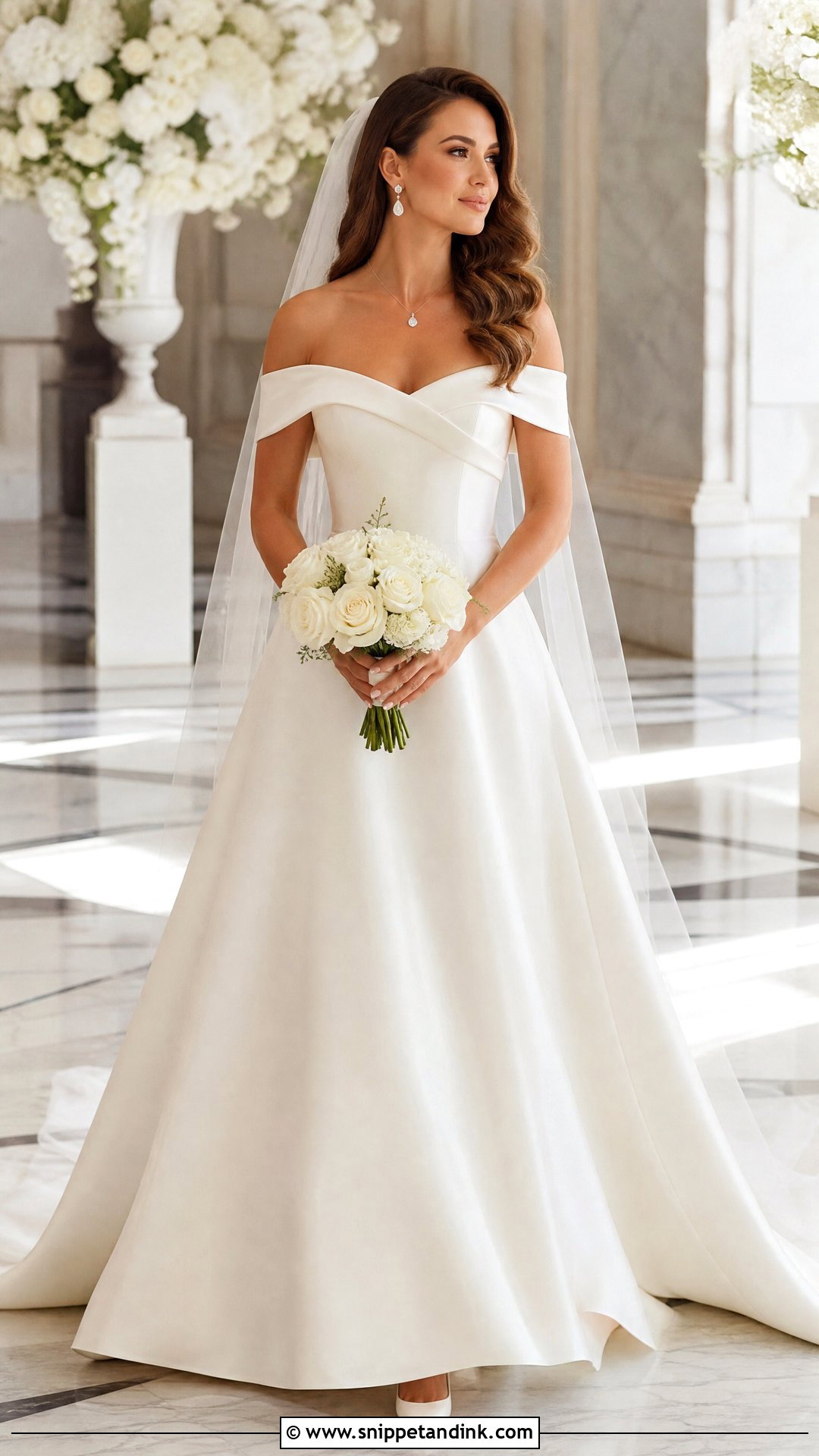
Off-shoulder gowns frame the collarbone, and they also limit how high you can lift your arms, which matters when you hug guests or toss a bouquet. Look for a folded satin neckline, lace-trimmed sleeves or a drape with an elastic or silicone grip inside so it stays put. A fitted bodice with an A-line or ball skirt balances it. A fine pendant, pear-shaped earrings and ivory pumps. Keep hair in a loose low bun or swept to one side, off the neckline. Cathedral veil for formal, fingertip outdoors. Test sitting, walking and raising your arms before the final alteration.
7. Basque-Waist Wedding Ceremony Dress
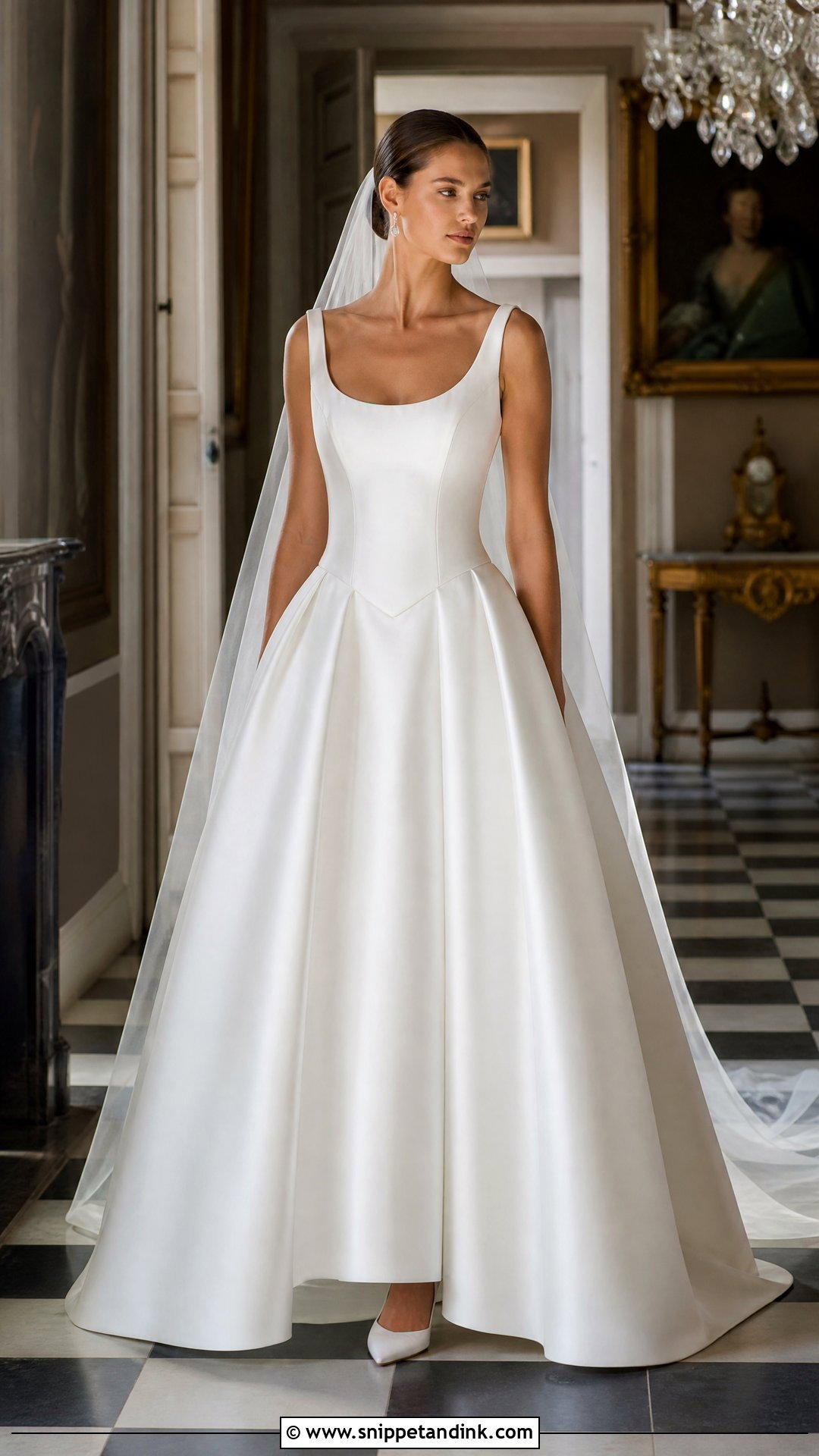
A basque-waist gown has a pointed bodice dipping below the natural waist, which defines the shape strongly. Satin, brocade or structured mikado hold the point. The V should point straight down at center front; if it twists when you walk, the bodice needs taking in at the side seams. A scoop or strapless neck keeps the top clean. Pointed pumps, pearl earrings, a long plain-edged veil and a smooth updo. Keep accessories restrained, since the bodice and skirt already make plenty of impact on the processional.
8. High-Neck Lace Wedding Ceremony Dress
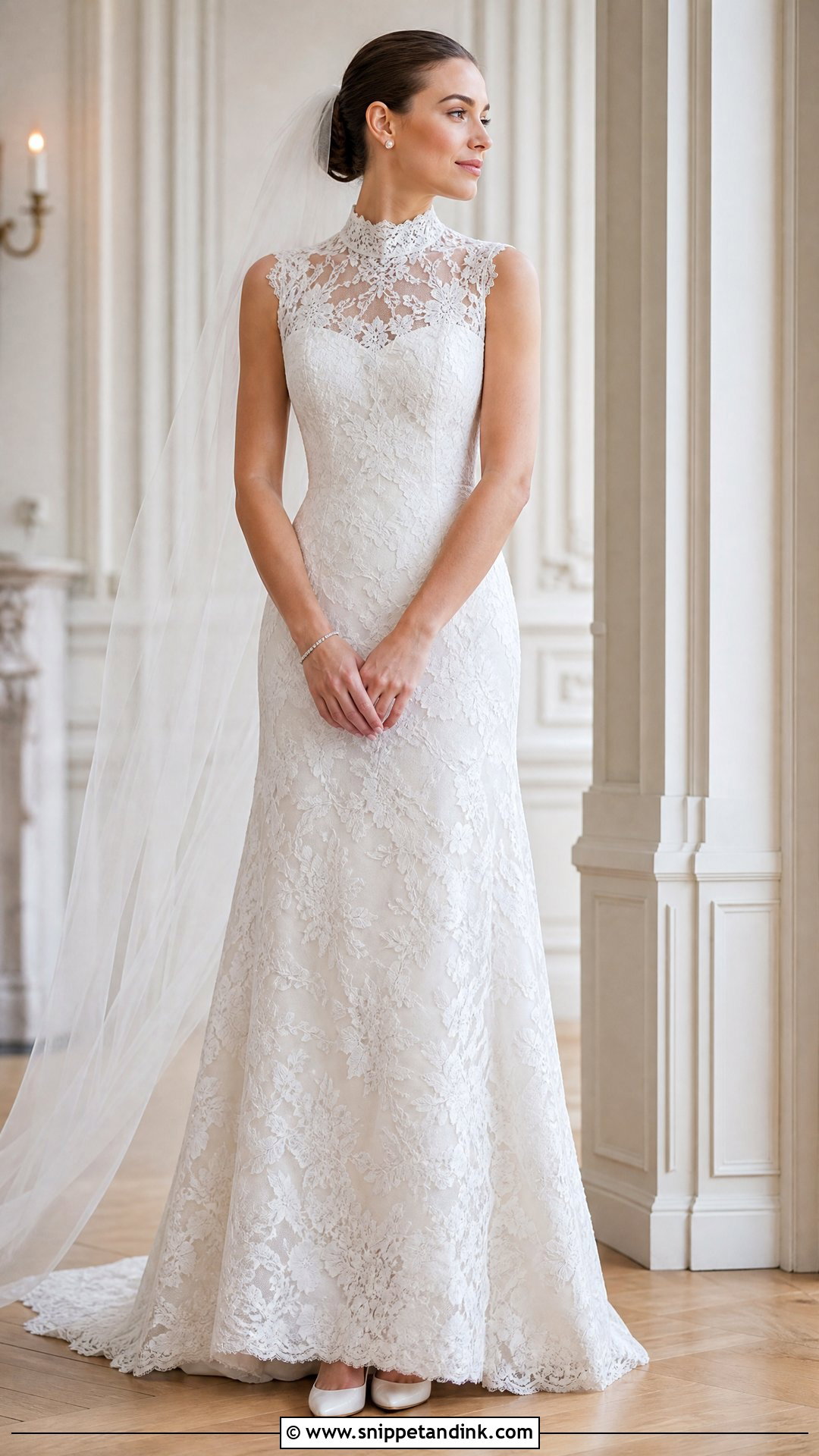
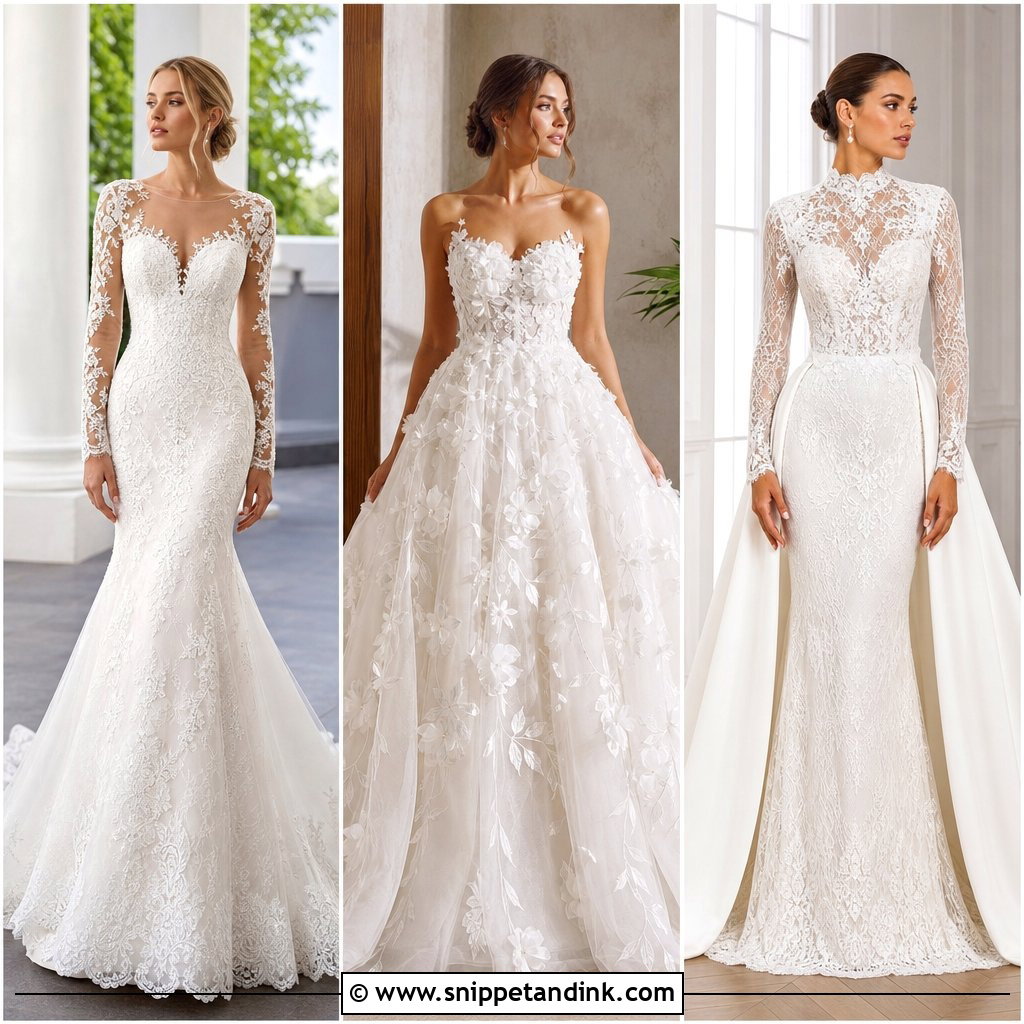
High-neck lace gives coverage with delicate detail. Choose a lined bodice with sheer lace over the collarbone or sleeves, a softly fitted waist and a flowing skirt. Comfort at the neck is what I test: stiff lace can scratch, so turn the collar out in the shop and feel the inside edge. It should be finished smoothly. Pearl studs, a small bracelet, closed-toe pumps or low heels. Skip the necklace and wear the hair up. A plain tulle veil gives contrast. It suits cooler seasons and traditional or formal indoor ceremonies.
9. Halter Column Wedding Ceremony Dress
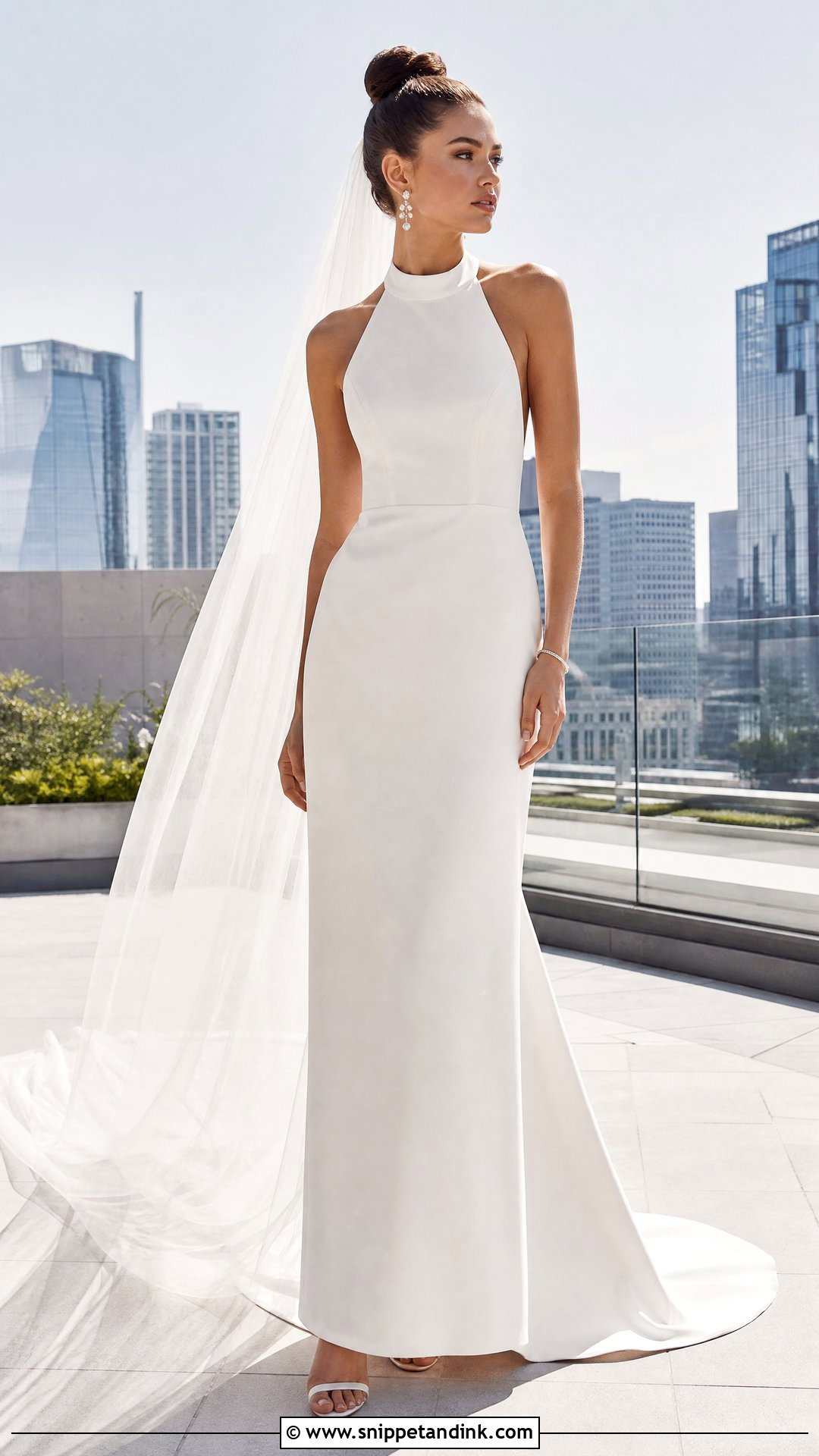
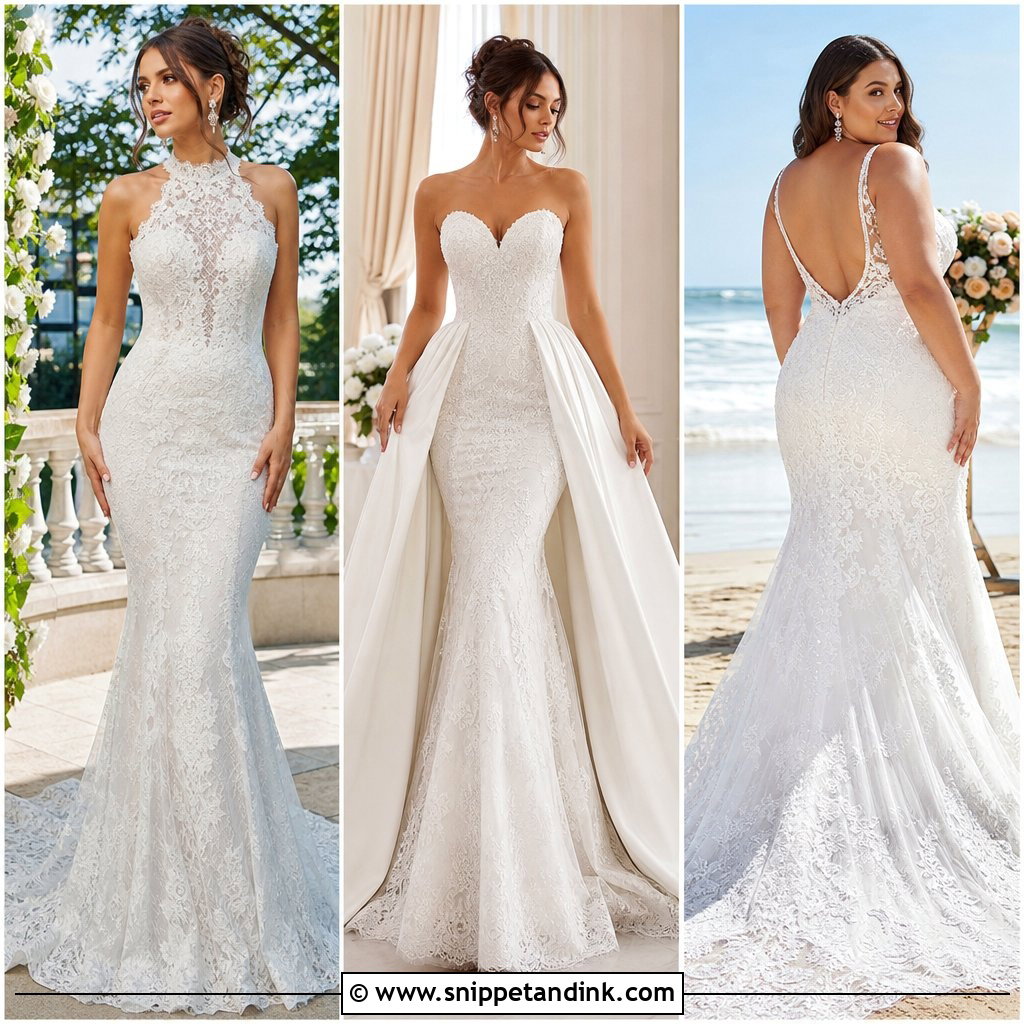
A halter column gown draws the eye up to the shoulders while the straight skirt keeps one long line. Silk crepe, satin or charmeuse gives it finish without bulk. Small statement earrings, metallic or ivory sandals and a narrow bracelet; no necklace. A high bun, braided bun or sleek ponytail keeps the shoulders visible. Add a detachable chapel veil for the ceremony. The skirt must have a back vent or a little flare; a column that feels fine standing still can turn the walk down the aisle into a shuffle. Rooftops and destination weddings suit it.
10. Corset Tulle Wedding Ceremony Dress
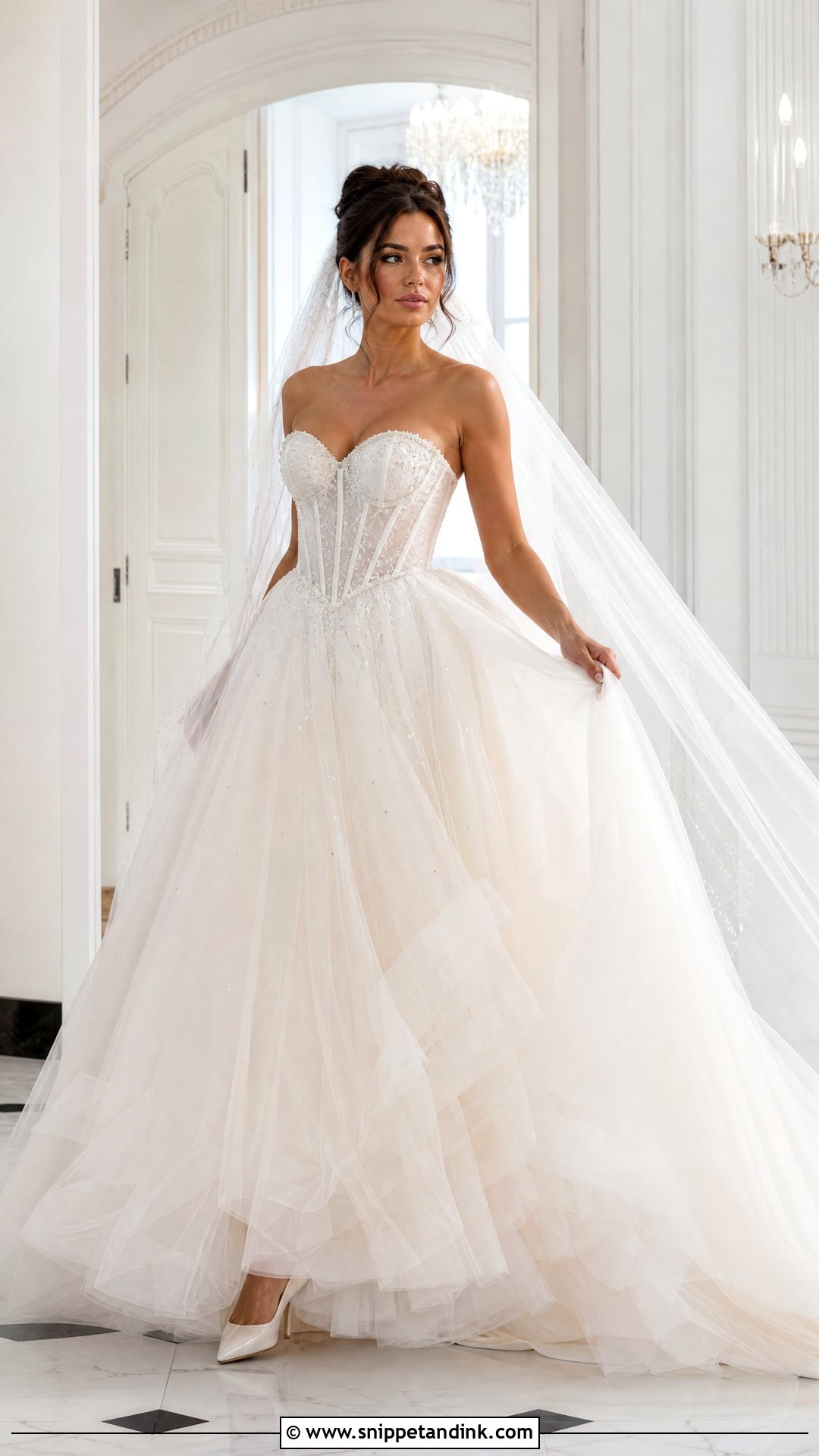
A corset tulle gown pairs structure with light movement. Look for visible seaming, well-placed boning and enough lining for the coverage you want, then layers of soft tulle in an A-line or full skirt that weighs far less than satin. During alterations, I have brides take a deep breath and sit down in the corset. If either is uncomfortable, it will be unbearable by the speeches. A hidden inner closure under decorative lacing adds security. Crystal studs, satin pumps, a sheer cathedral veil and a soft updo with a few loose pieces. Works in grand rooms and gardens.
11. 3D Floral Wedding Ceremony Dress
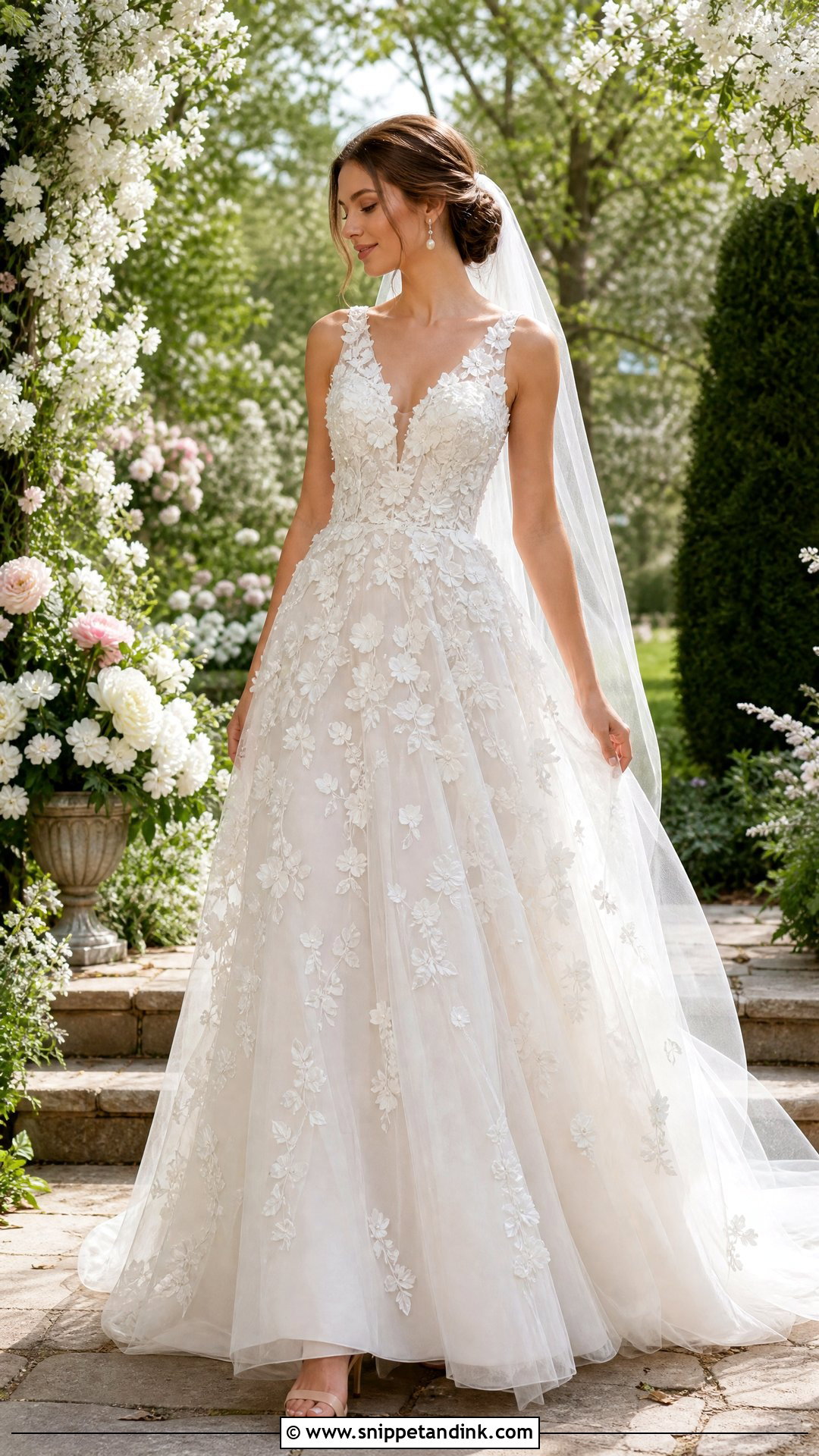
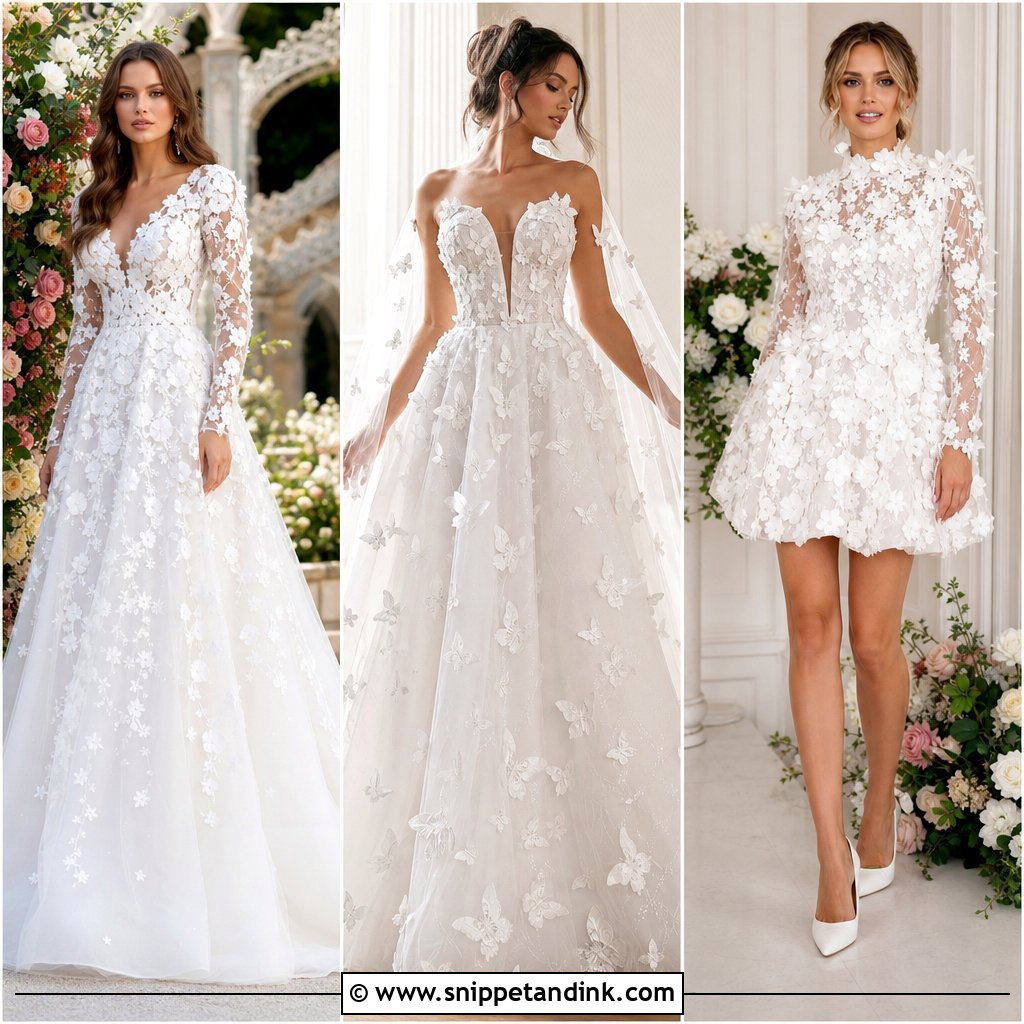
Raised floral appliqués add texture and movement without sparkle. On an A-line base, I prefer the decoration heaviest on the bodice and thinning toward the hem; even coverage head to toe makes the skirt look stiff. Three-dimensional petals also crush, so the gown should travel hanging, not folded. Simple pearl earrings, ivory heels and a plain tulle veil. A relaxed bun or half-up style suits it. Keep the bouquet simple so it doesn’t compete. White, ivory and pale blush appliqués give depth. Spring gardens and conservatories are its home.
12. Pearl-Beaded Wedding Ceremony Dress
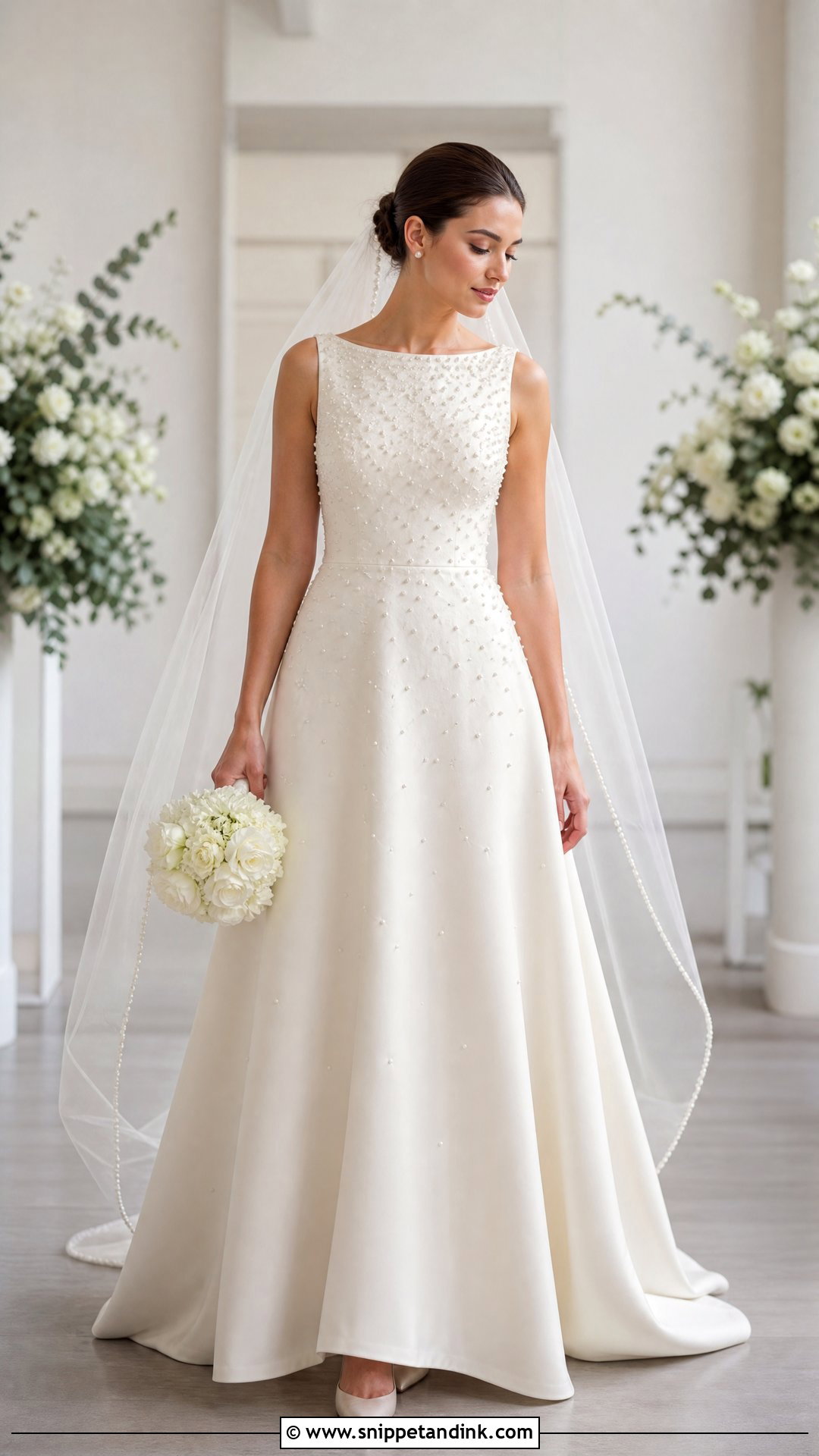
Tiny pearls catch light softly across a sheer overlay, along the neckline or concentrated on a fitted bodice. A streamlined A-line or column keeps the beading from looking heavy. Before buying, I run a hand along the waist and underarm seams, where arm movement rubs, because hand-applied pearls loosen there first. Ask the shop for spare beads for any last-minute repair. Pearl studs, satin shoes and a veil with a subtle pearl edge, all in one pearl finish rather than mixed sizes. A sleek bun or waved bob. It suits formal day and evening ceremonies.
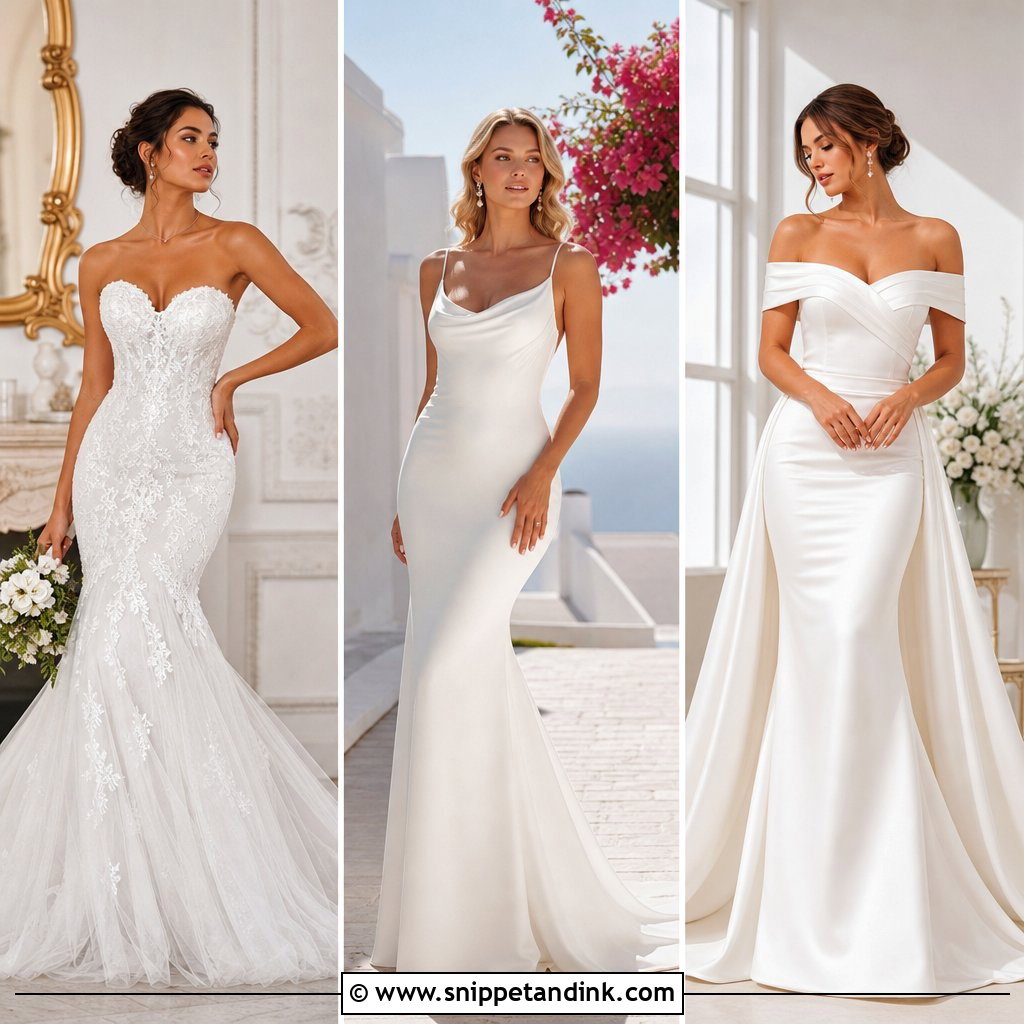
13. Minimalist Slip Wedding Ceremony Dress
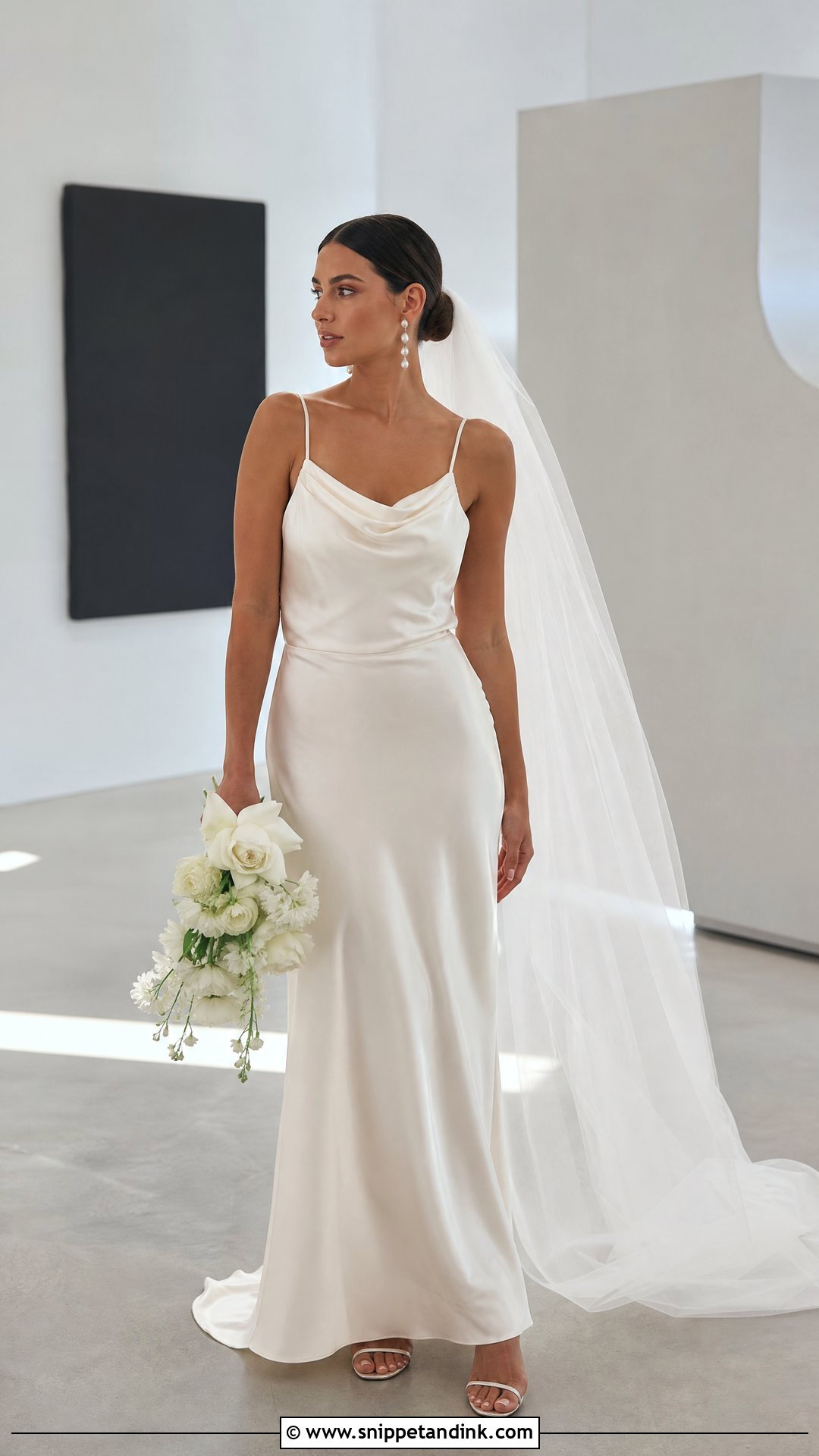
A silk slip relies on fabric and cut alone, so there’s nowhere to hide a poor fit. Choose a bias-cut design that drapes smoothly with a cowl, scoop or soft square neck, following the body without restricting it. Good lining helps with comfort and coverage, and smooth, no-line underwear is essential. Bias cut also drops over time and the hem can go uneven, so I have it hemmed after it has hung for a while, and checked with your actual shoes. Slender sandals, drop earrings and a long sheer veil. A silk scarf, light cape or tailored coat makes a good entrance layer. It suits beaches, galleries and courthouses.
14. Tea-Length Wedding Ceremony Dress
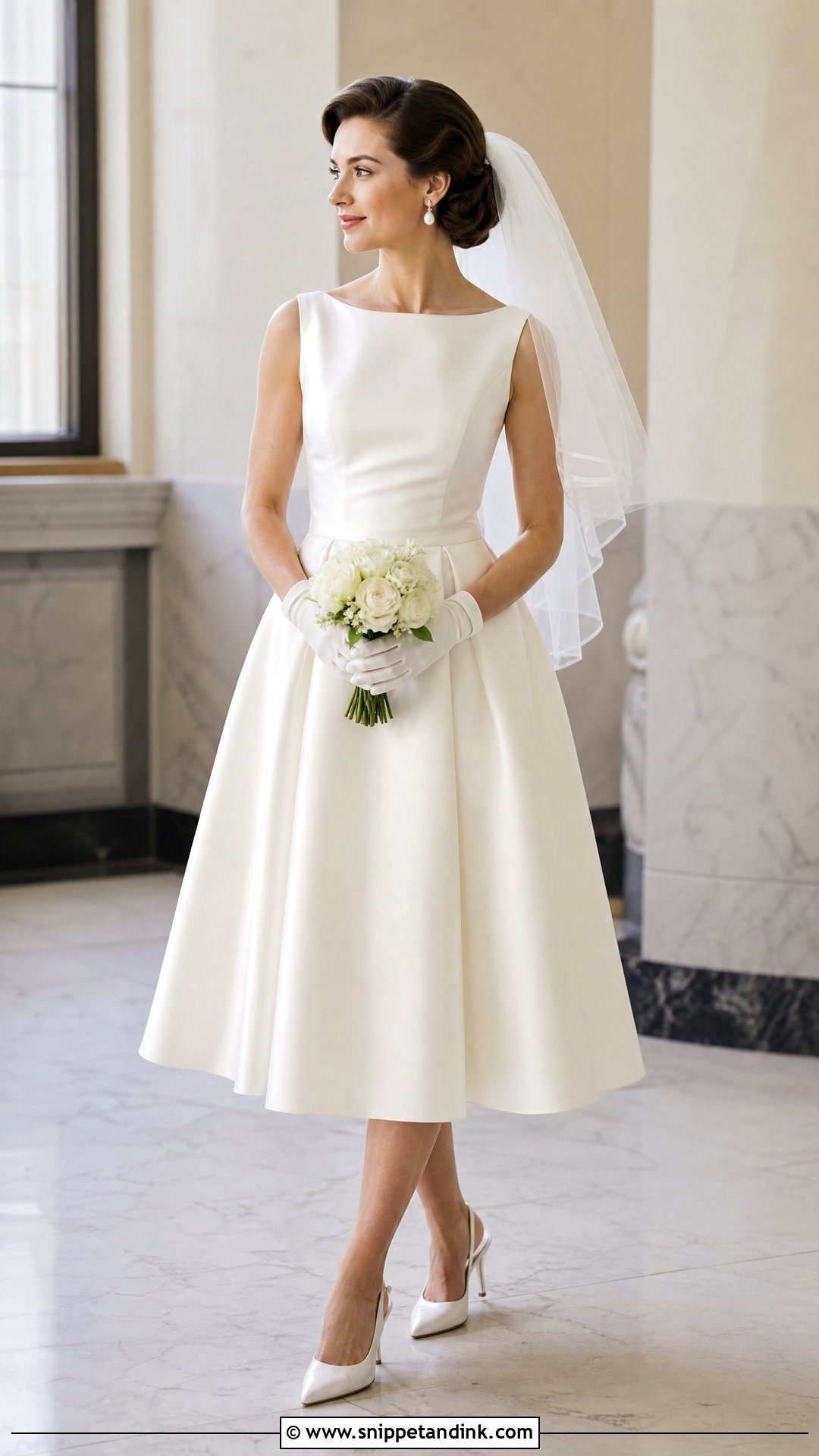
A tea-length gown ends between knee and ankle, so the shoes are on show the whole time and earn as much thought as the dress. Choose a fitted bodice and flared skirt in satin, organza or embroidered lace, with pointed slingbacks, low pumps or ankle-strap heels. The exact hem point matters: I mark it at the narrowest part of the calf, which flatters almost everyone more than mid-shin. Pearl earrings, short gloves and a birdcage or shoulder veil give a retro feel. It suits courthouse and daytime weddings. A defined waist and a simple bouquet keep the proportions right.

15. Cape-Sleeve Wedding Ceremony Dress
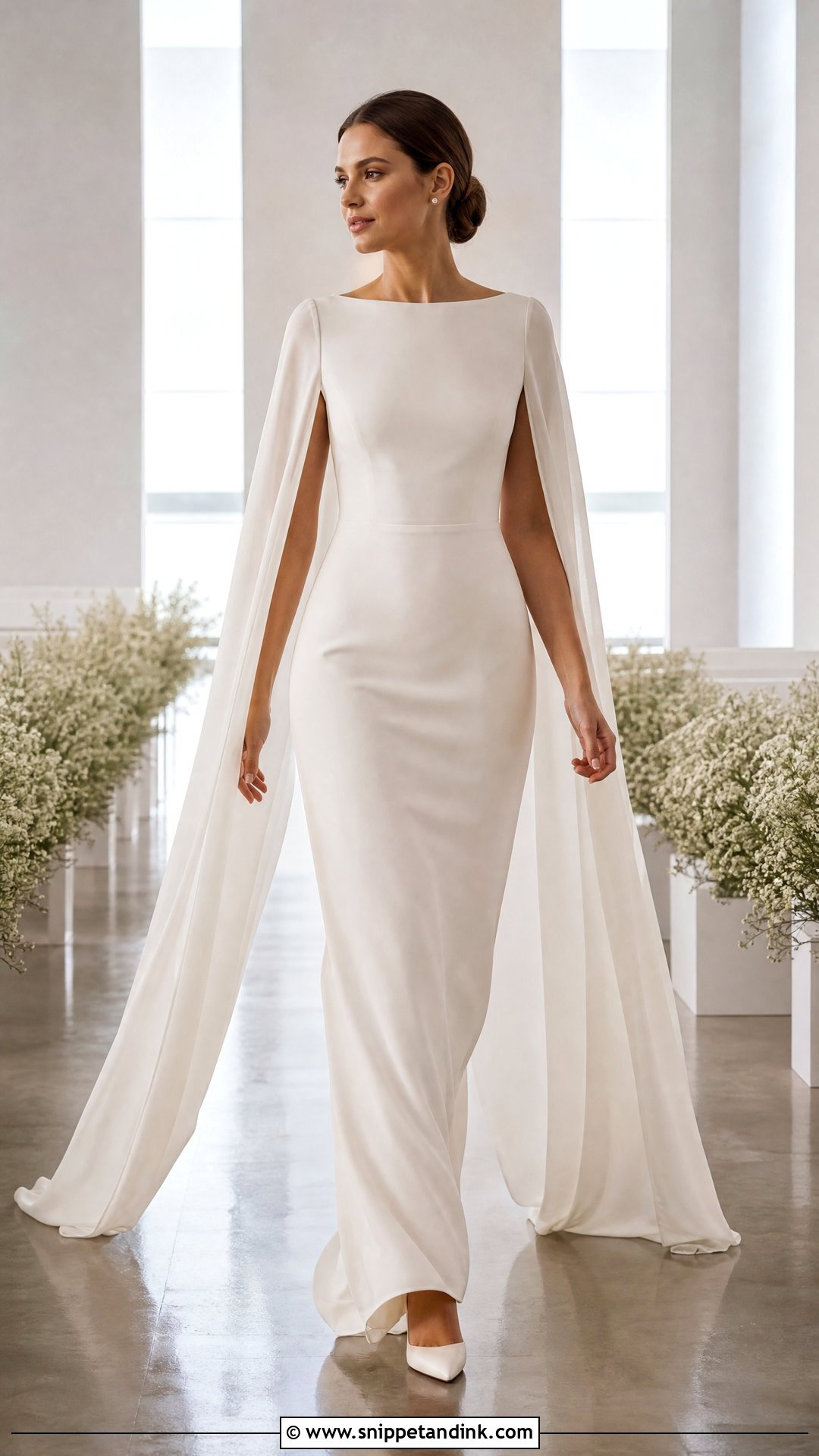
Cape sleeves add movement and light coverage across the shoulders and arms, over a column, sheath or narrow A-line that lets the cape lead. Chiffon floats; crepe holds a sharper line. Outdoors, chiffon capes blow over the face and into the bouquet, so I have small weights or discreet hand loops sewn in after an outdoor test. Pointed pumps, delicate studs and a low bun. If the cape runs into a train, you may not need a veil at all; a short simple one suits a shoulder-length cape. It looks especially striking on the walk up the aisle.
16. Detachable Overskirt Wedding Ceremony Dress
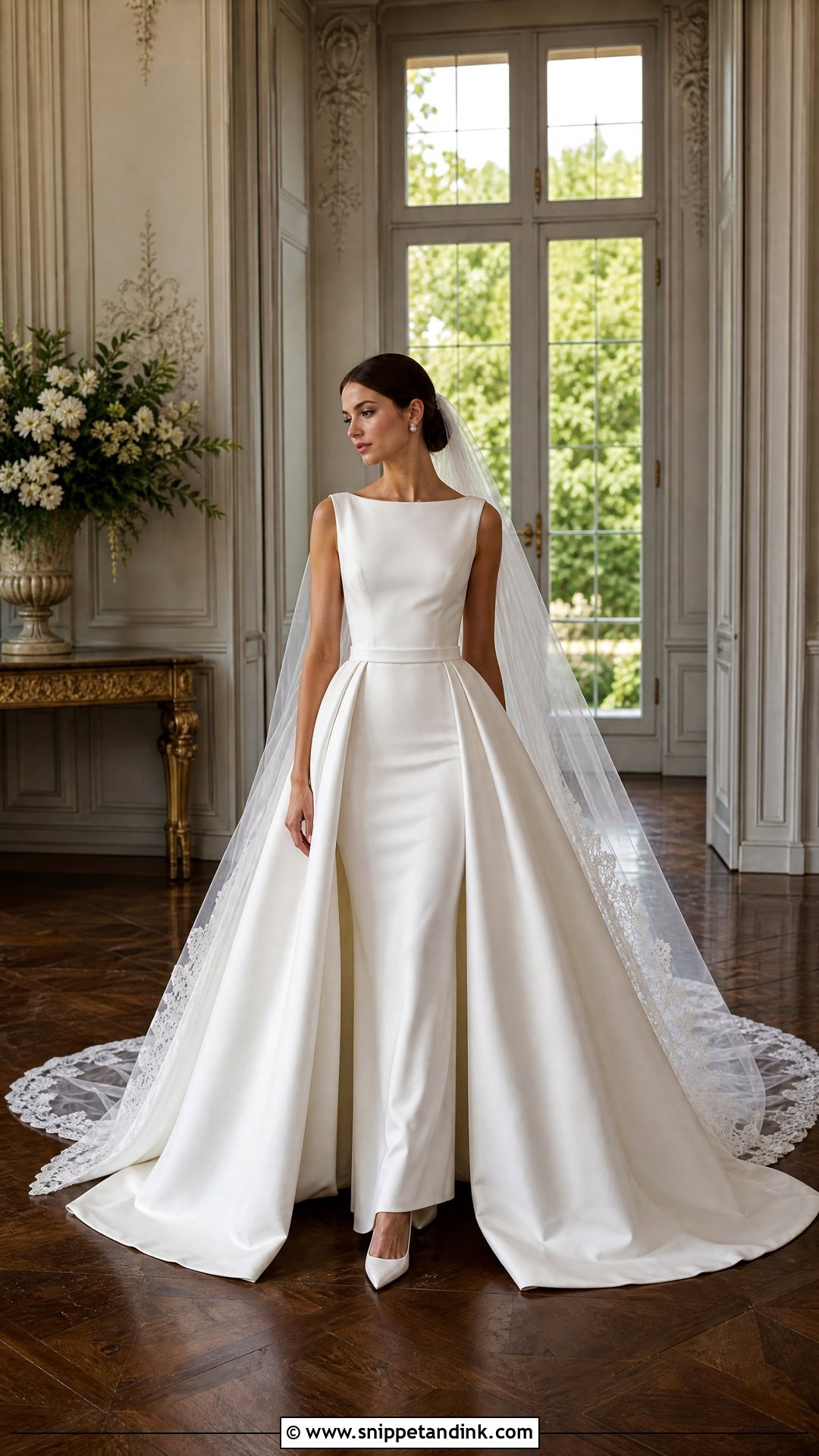
A detachable overskirt turns a fitted gown into a ball gown for the ceremony. Start with a column, sheath or slim A-line base, then add a full layer of satin, tulle or organza at the waist, with a fastening hidden from front and back. Hooks and snaps are quicker than buttons for a fast change. Cathedral veil, pearl earrings and classic pumps for the vows; afterward, unhook it for dancing. Have one attendant practice removing and folding it at a fitting, and bring a large garment bag to store it.
17. Bow-Back Wedding Ceremony Dress
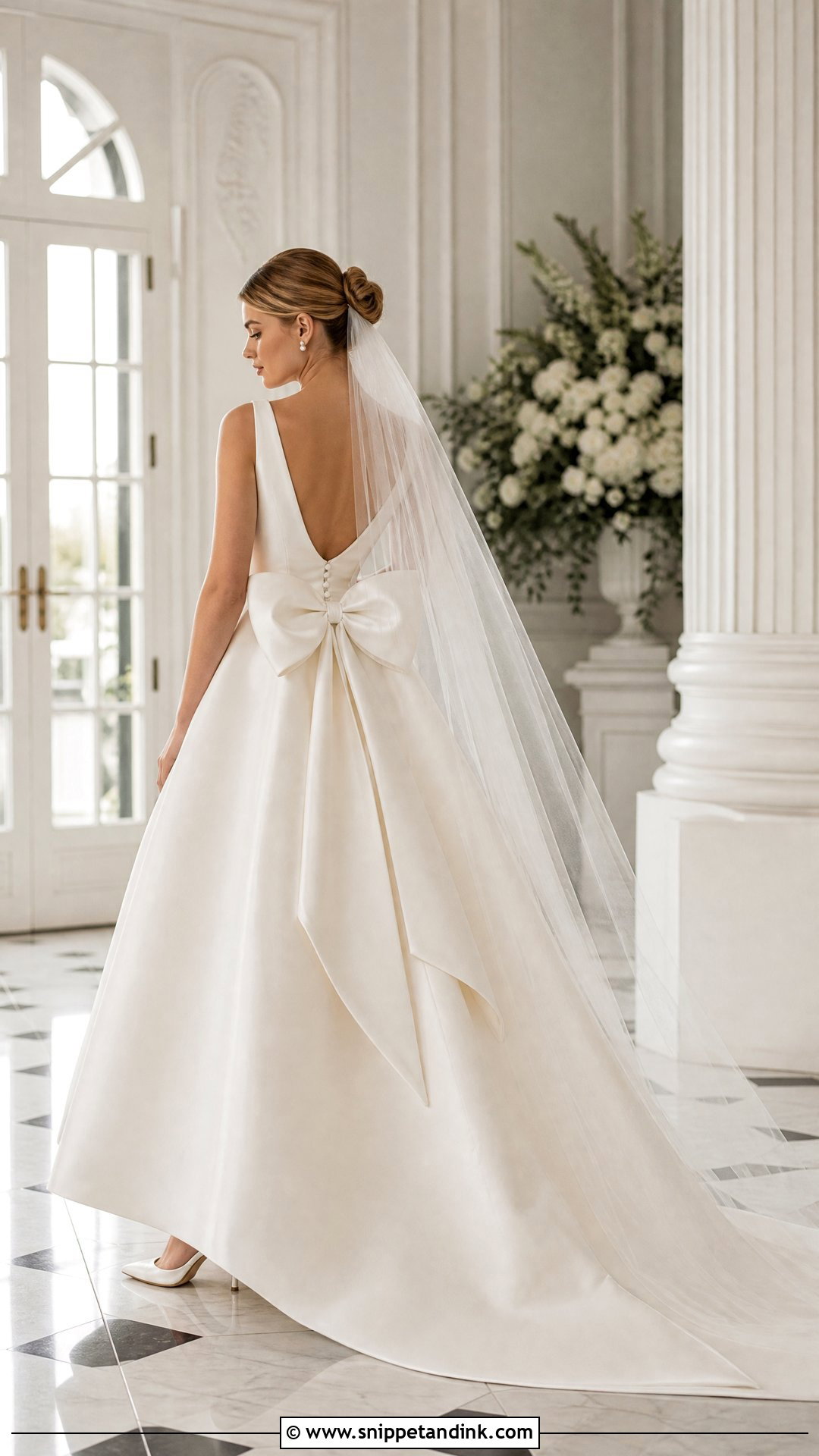
A statement bow makes the back of a simple gown the view guests remember, and they see the back for most of the ceremony. Choose a structured satin bow at the waist, soft organza with long tails, or a detachable one. Large structured bows can crush when you sit, so I test them on a chair at fittings and ask whether it can be unhooked for dinner. A clean A-line or column keeps the bow in balance. Small pearl earrings, pointed shoes and a plain veil placed above or below the bow. Hair up so the bow stays visible.
18. Modest Long-Sleeve Wedding Ceremony Dress
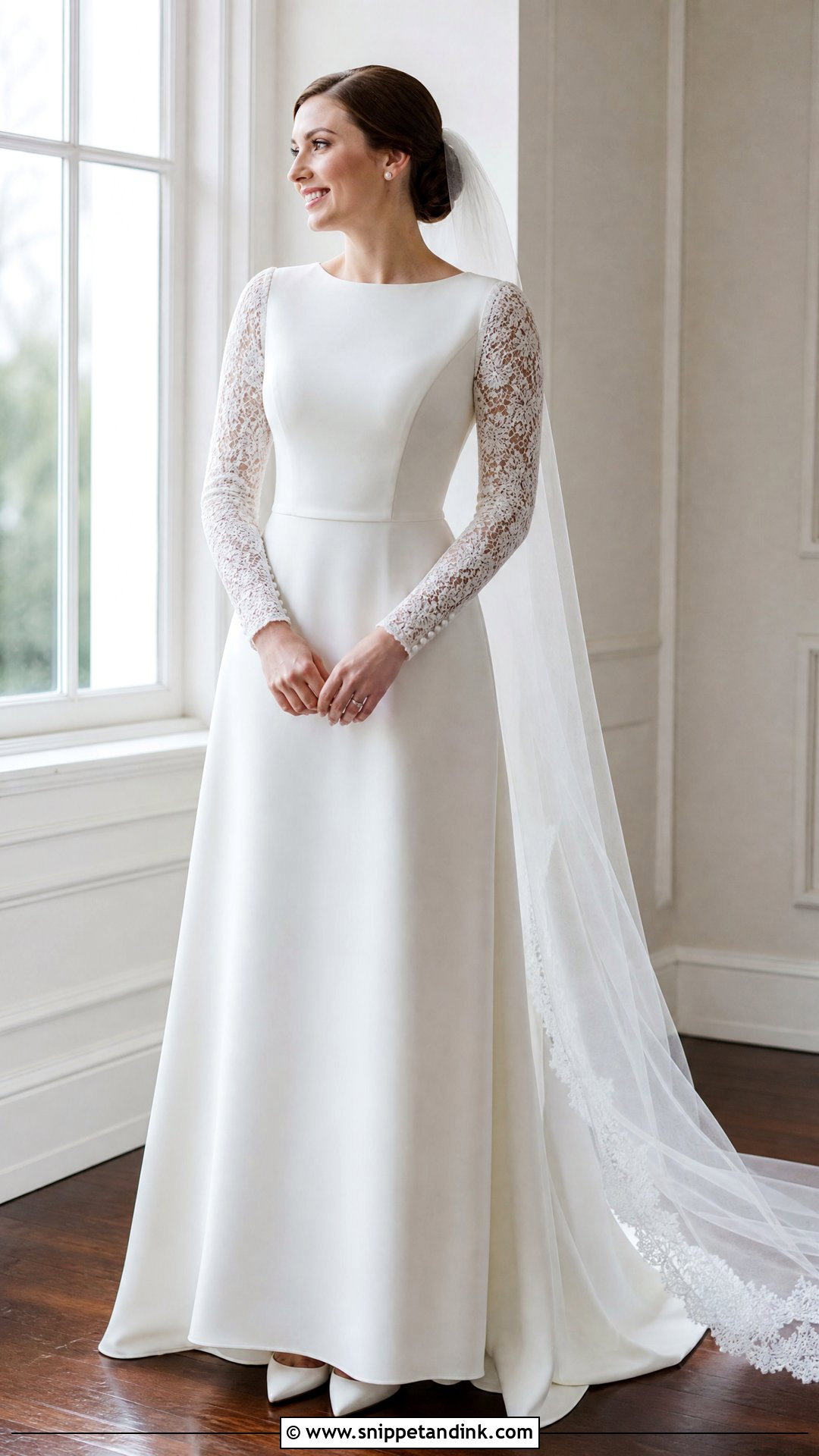
Full coverage can still look light and current. I like an opaque crepe bodice with a bateau neck, lined lace sleeves and an A-line skirt that moves. Covered buttons, narrow cuffs or a little embroidery add detail without exposing the shoulders or back. Match fabric weight to the weather: light lining for warm days, satin-backed crepe for cold ones. Sleeves need movement; tight lace sleeves stop you lifting a bouquet or hugging, so I check the armhole height, not just the sleeve width. Closed-toe pumps, pearl studs, a chapel veil and a low chignon.
19. Blush Tulle Wedding Ceremony Dress
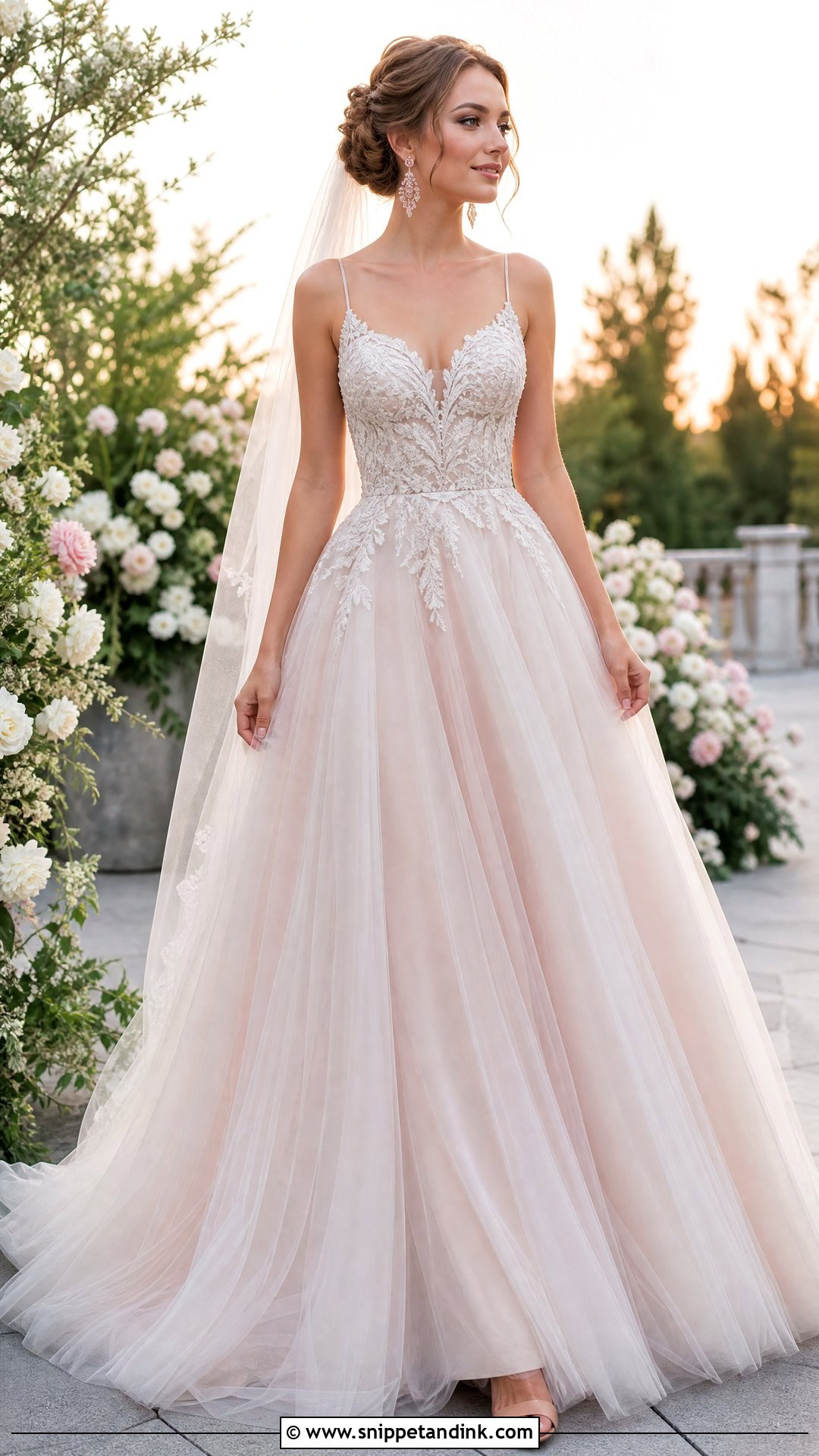
Blush tulle brings gentle color: pale pink, champagne blush or a warm nude lining under ivory tulle for depth rather than a strong statement. A fitted bodice and flowing A-line keep it refined. Blush is the trickiest shade I work with, because it shifts with light and skin tone. Under warm venue lights it can go peach, and against fair skin it may read white in photos. Compare the fabric by a window and under indoor light before ordering. Neutral heels, rose-gold earrings and a light ivory veil matching the top layer. Soft waves or a half-up style suit it.


20. Floral Jacquard Wedding Ceremony Dress
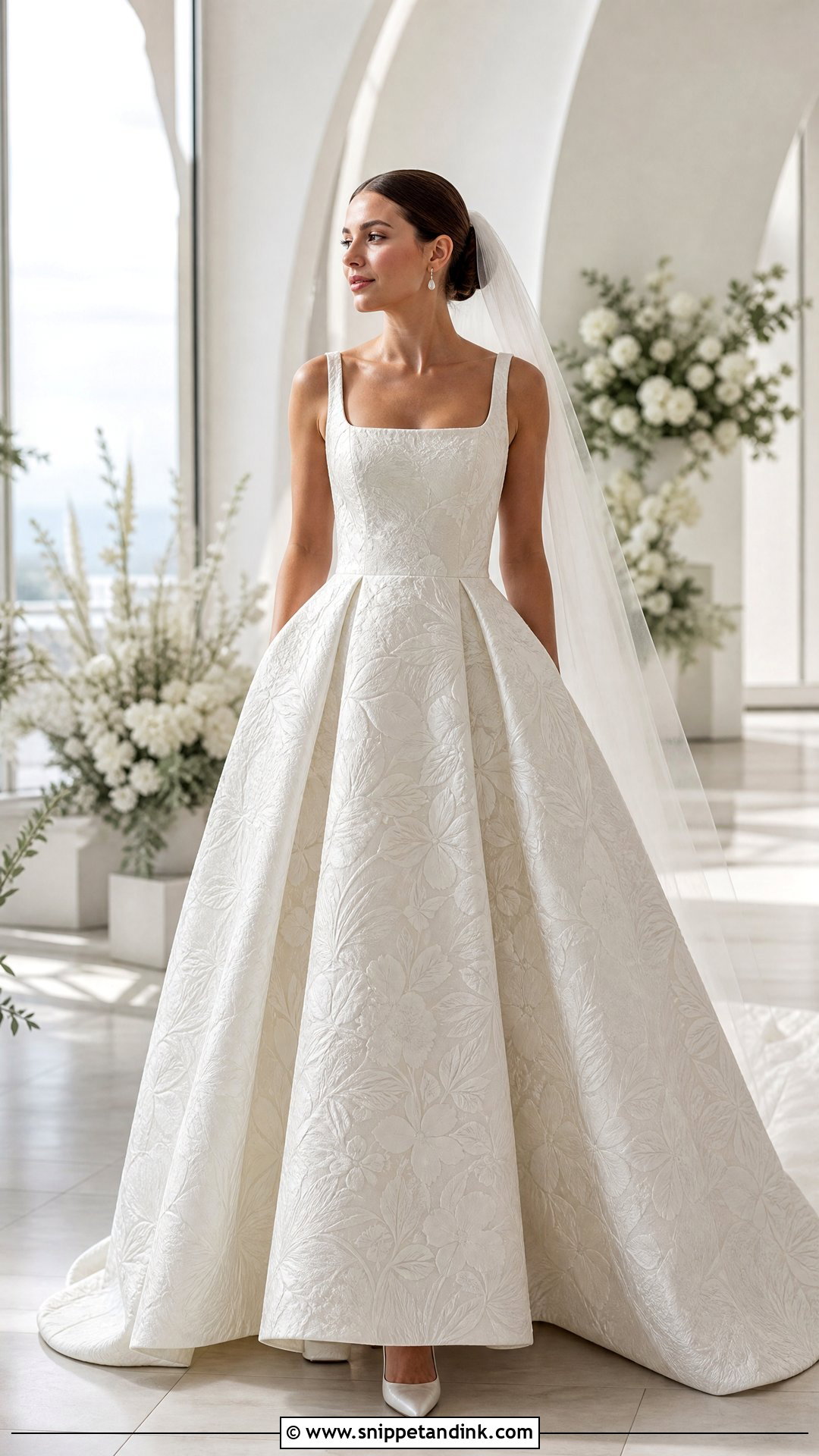
Floral jacquard gets its interest from the weave, not from lace, beads or appliqués. A structured A-line or ball gown shows the raised pattern clearly and gives the fabric room to hold its shape. Choose a strapless, square or scoop bodice according to the support you need. Jacquard is heavier than plain satin, so I always ask for the gown’s weight and test the bustle before the last fitting; a weak bustle on heavy cloth tends to fail during the first dance. Simple earrings, satin pumps, a plain sheer veil and a smooth bun. It suits formal daytime events and clean-lined indoor venues.
The Gown Calendar, Counted Back From Your Date
Bridal timelines vary by designer and season, so treat these as the rough windows I plan with, and confirm the real dates with your shop.
- Order the gown: around eight to ten months ahead. Made-to-order dresses often take several months to arrive, and rush fees are common.
- Buy shoes and undergarments: before the first fitting, since hem length and bodice fit depend on both.
- First fitting: roughly two to three months out. Most gowns need two or three fittings.
- Final fitting: one to two weeks before. Bring whoever will bustle the dress and have them practice.
- Collection: within the final week, with the gown hung in a breathable bag, away from sunlight.
Sample and off-the-rack gowns shorten the front end of that list to a few weeks, but alterations still need their time, so I’d start those no later than six weeks out.
The Dress That Carries You Through the Vows
A ceremony gown has to suit your comfort, your venue and your taste, in that order more often than people admit. The range here runs from satin ball gowns and lace A-lines to bias slips, blush tulle and detachable overskirts. Start with the shape and fabric that fit the setting, then work through neckline, sleeves, train, shoes, veil and jewelry together. Book alterations early, and at every fitting sit, walk and lift your arms. Trends can give you ideas, but the dress you’ll be glad of is the one that feels secure and recognizably yours.
You'll Like These Ideas:






Leave a Reply