
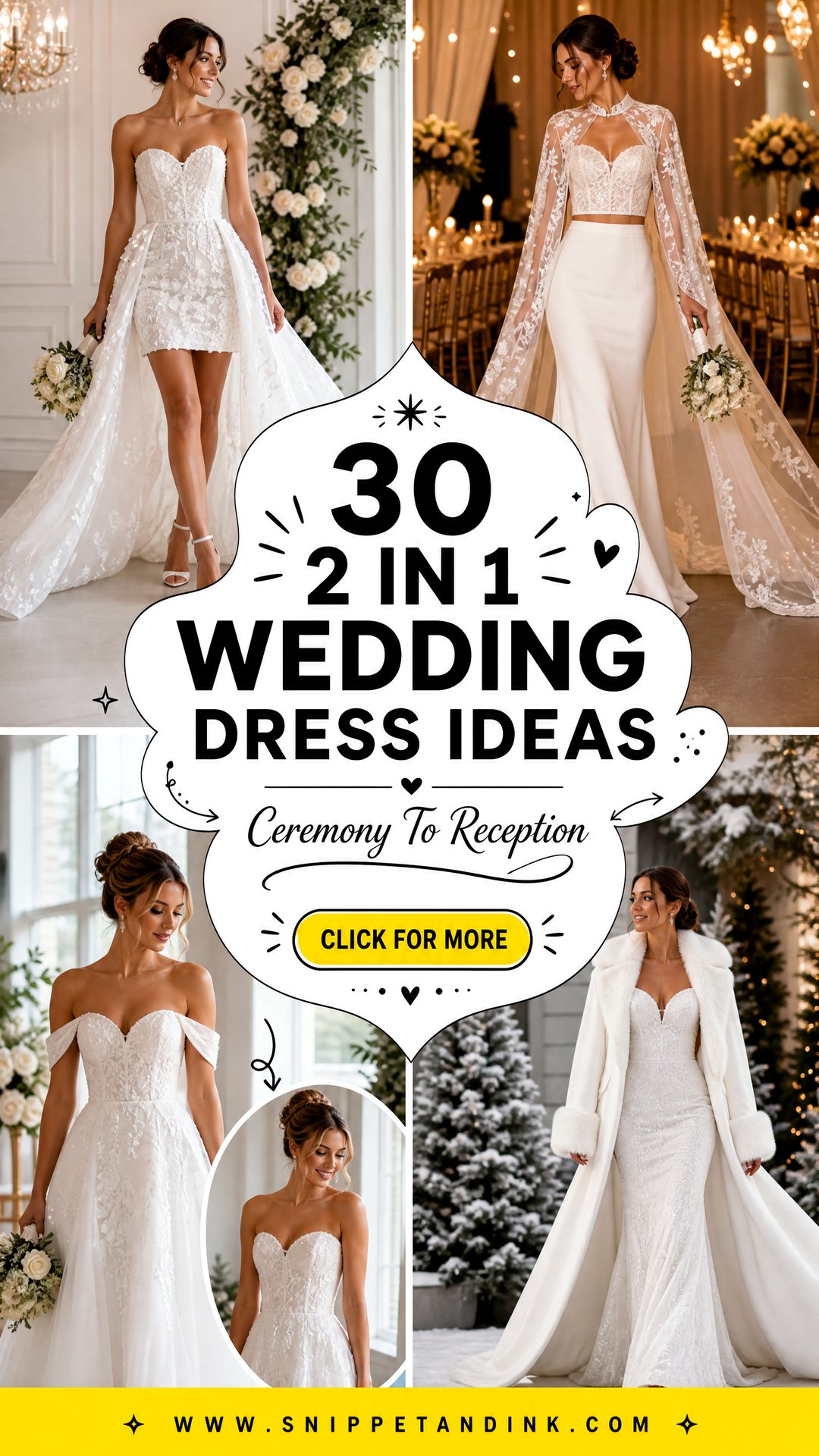
One dress, two jobs. A convertible gown gives you a full ceremony entrance, then a lighter version for dancing, walking and eating, without changing into a second dress. The removable parts vary: overskirts, sleeves, capes, boleros, trains, bows, jackets and layered skirts that turn the same base gown into a new look in minutes. It’s often easier on the budget than buying two complete dresses, although the extra pieces do add to alteration time. I’ve gathered thirty versions below, from classic and modest to modern and destination-ready, with notes on what each change actually involves.
How the Pieces Actually Attach, and Which Fastenings Hold
Every convertible dress depends on fastenings hidden at the waist, shoulders or back. They decide how fast the change happens and whether anything slips while you dance. When I look at a two-in-one gown, I turn it inside out before I study the front.
- Hooks and bars: flat, strong and almost invisible, the best choice for heavy overskirts and trains. They take a minute to undo, so they suit a planned change rather than a rushed one.
- Hidden zips: common on overskirts with their own waistband. Fast and secure, though the zip adds a little bulk where it overlaps the base dress.
- Snaps: quick for sleeves, bows and capes. Under weight they can pop open, so I don’t rely on them alone for anything heavier than a light cape.
- Buttons and loops: pretty on the outside, slow to undo with nervous fingers. Fine for a jacket you’ll unbutton yourself.
- Ties and wrap bands: good for light chiffon overskirts on a beach. The knot has to be tied flat and tucked, or it shows as a lump at the waist.
- Hook-and-loop tape: I’d keep it away from tulle and lace entirely, because it snags fine fabric the moment the two touch.
Ask the shop to show you the attachment working on the dress itself. Then try it on with every piece in place and do a full sit, a turn and an arms-up hug. Anything that shifts in the fitting room will shift more by the tenth song.
1. Detachable Overskirt Wedding Dress
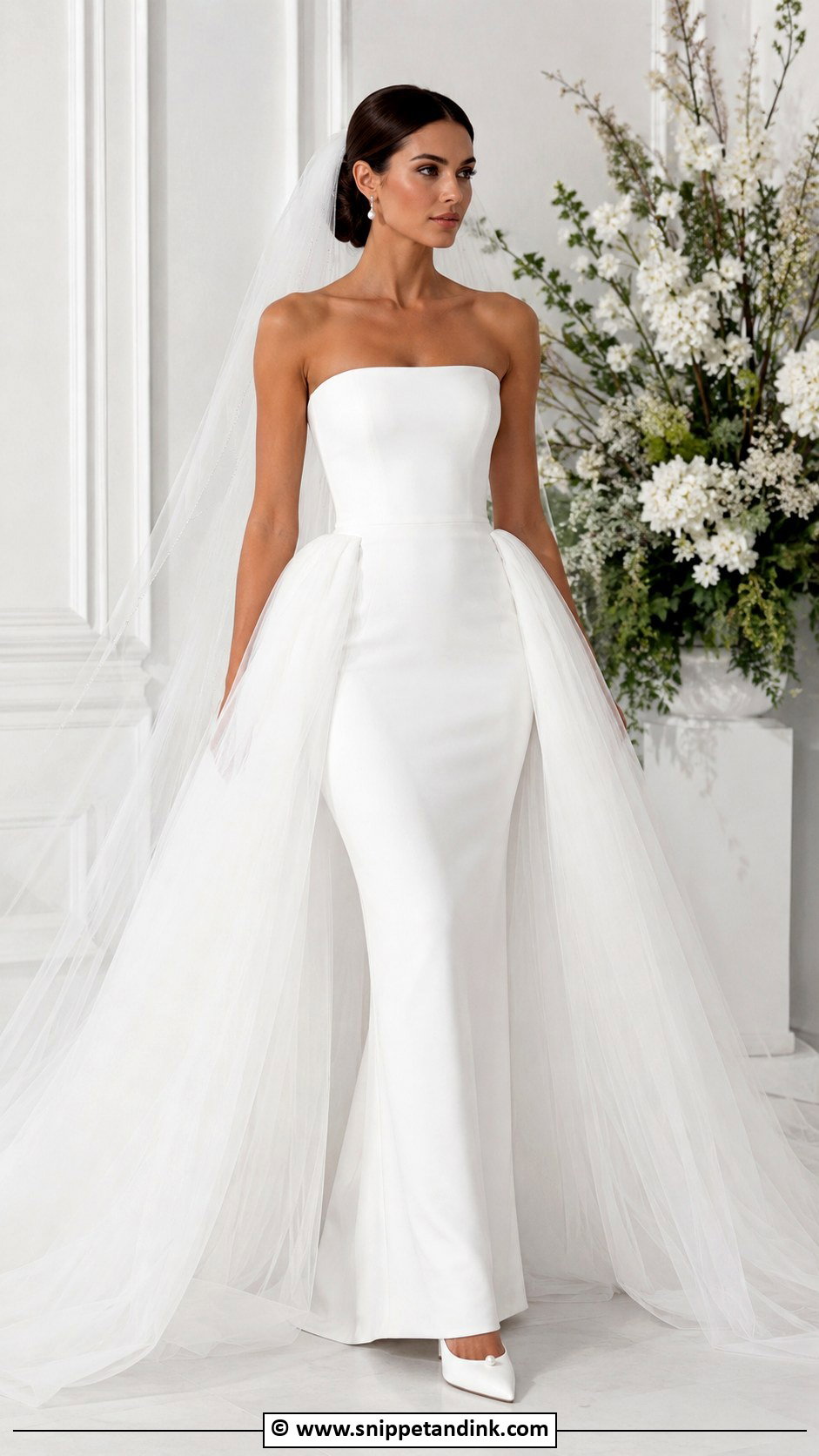
This is the most common way to get two looks from one gown. The overskirt brings volume and a formal aisle moment; underneath sits a fitted crepe gown, a lace mermaid, a satin column or a simple sheath. After portraits it comes off, and you’re in something you can sit and dance in. I always have the base gown fitted first and the overskirt second, because the overskirt’s waistband sits on top of the base dress and any extra bulk shows. Long veil for the ceremony, statement earrings later.
2. Mermaid Wedding Dress With Detachable Skirt
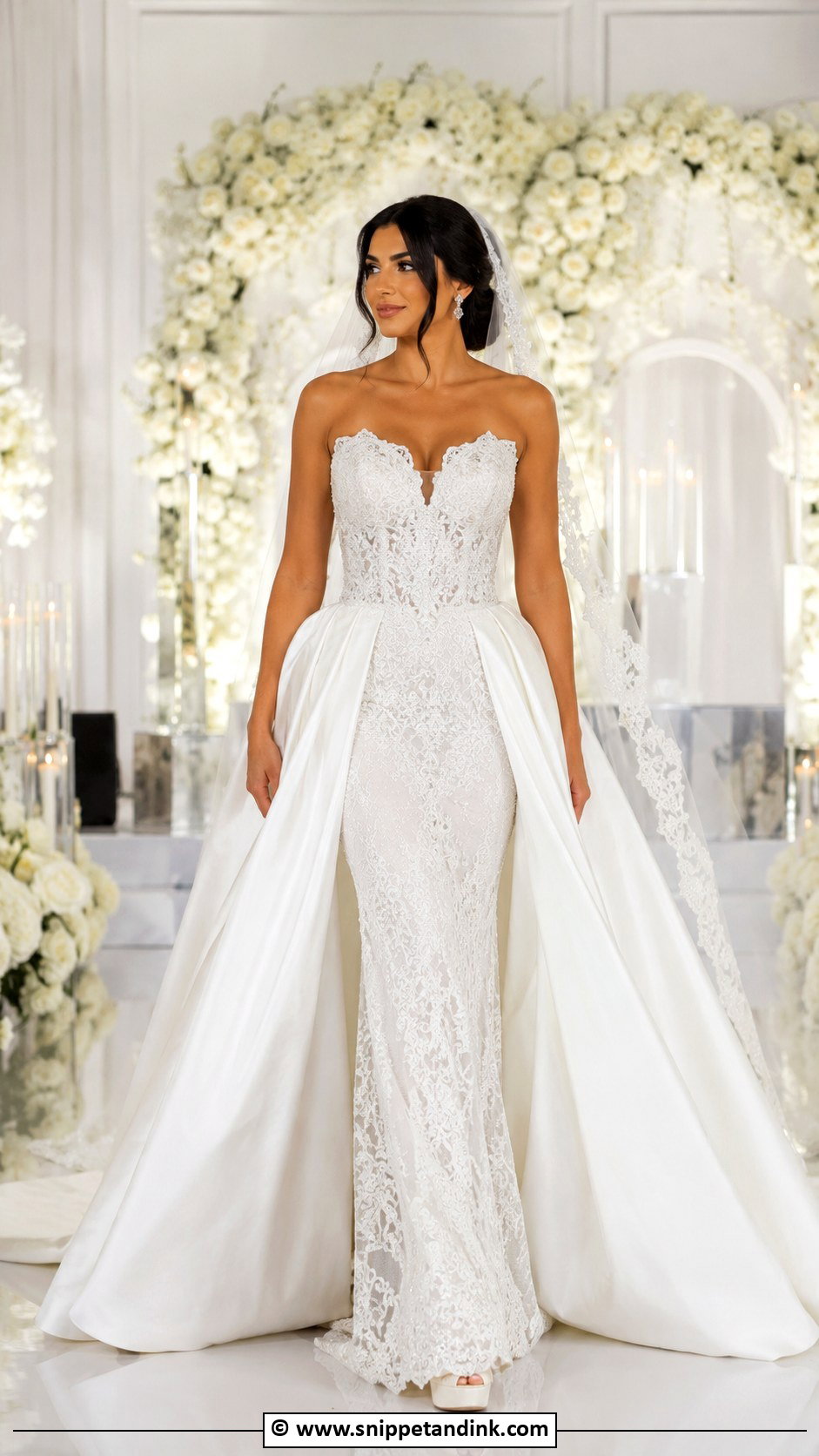
The fitted mermaid shows the waist, hips and curves, and the removable skirt turns it into a full gown for the ceremony. Lace, satin and crepe all suit it. Where the skirt meets the base dress is the make-or-break detail. A mermaid has no gathers to hide a waistband, so I ask the seamstress for a flat hook-and-bar closure and a band cut from the same fabric as the dress. Cathedral veil first; then skirt off, with a slim bracelet or sparkly drops.
3. Ball Gown Wedding Dress With Removable Skirt
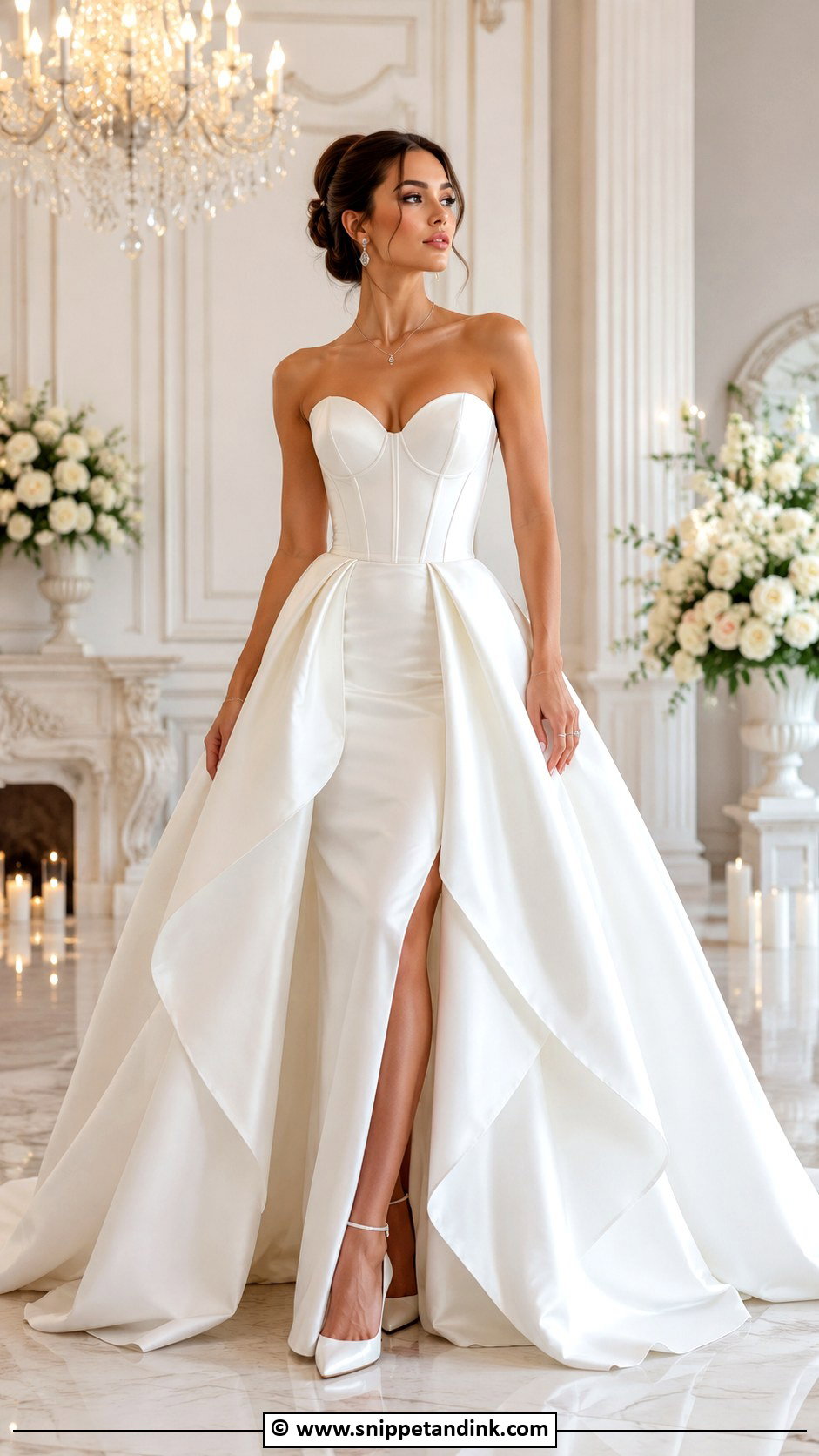
Do you love the classic princess look but dread carrying a heavy skirt all day? A removable outer skirt in tulle, organza, mikado or satin gives you the full ceremony shape, while the dress underneath can be a fitted mini, a slim A-line or a column. Big tulle overskirts weigh more than people expect and fold into an enormous bundle, so decide in advance who carries it off and where it hangs. Keep ceremony accessories classic with a veil and a fine necklace, then switch to comfortable heels for the reception.
4. Sheath Wedding Dress With Detachable Train
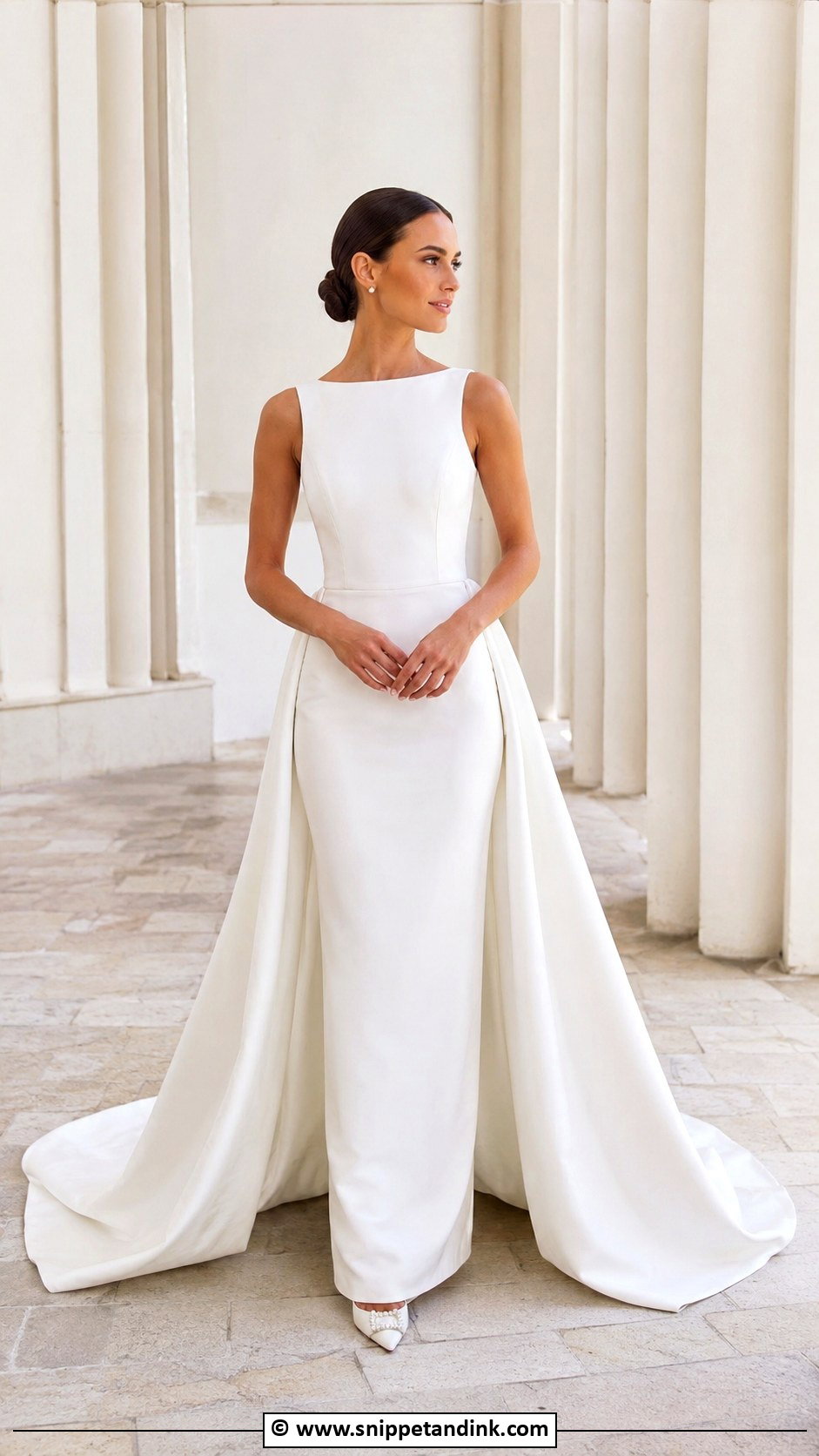
The base stays slim and light, and the removable train supplies the long, flowing back many brides want for the aisle. It suits minimal brides who don’t want volume at the hips. A detachable train can clip at the back, wrap around the waist or attach as a soft panel. I prefer it fixed at the waist seam or higher; a train clipped low on the back pulls the whole dress down with every step. Smooth crepe or satin, pointed heels, pearl studs and a low bun keep it modern.
5. Strapless Wedding Dress With Detachable Sleeves
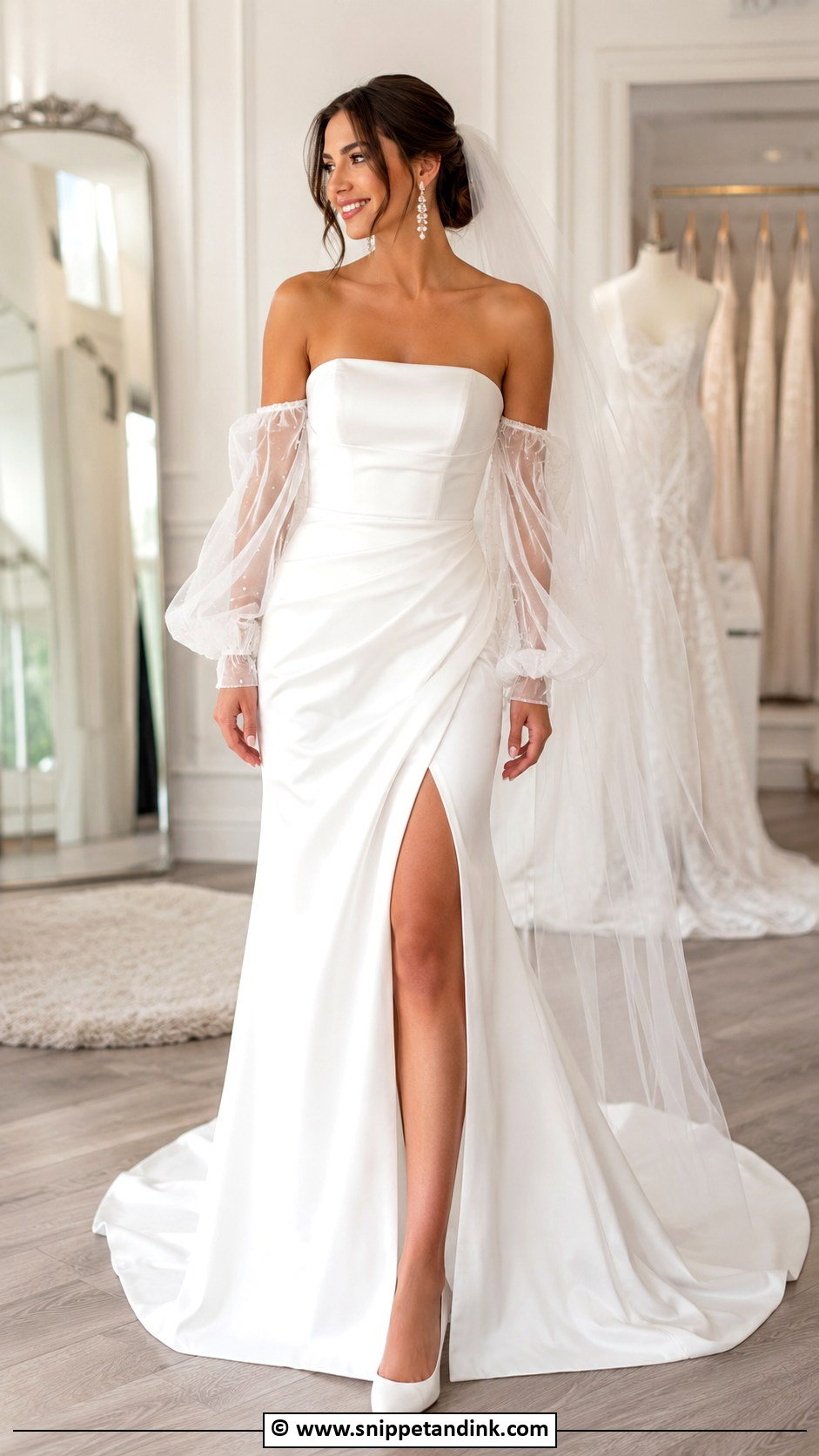
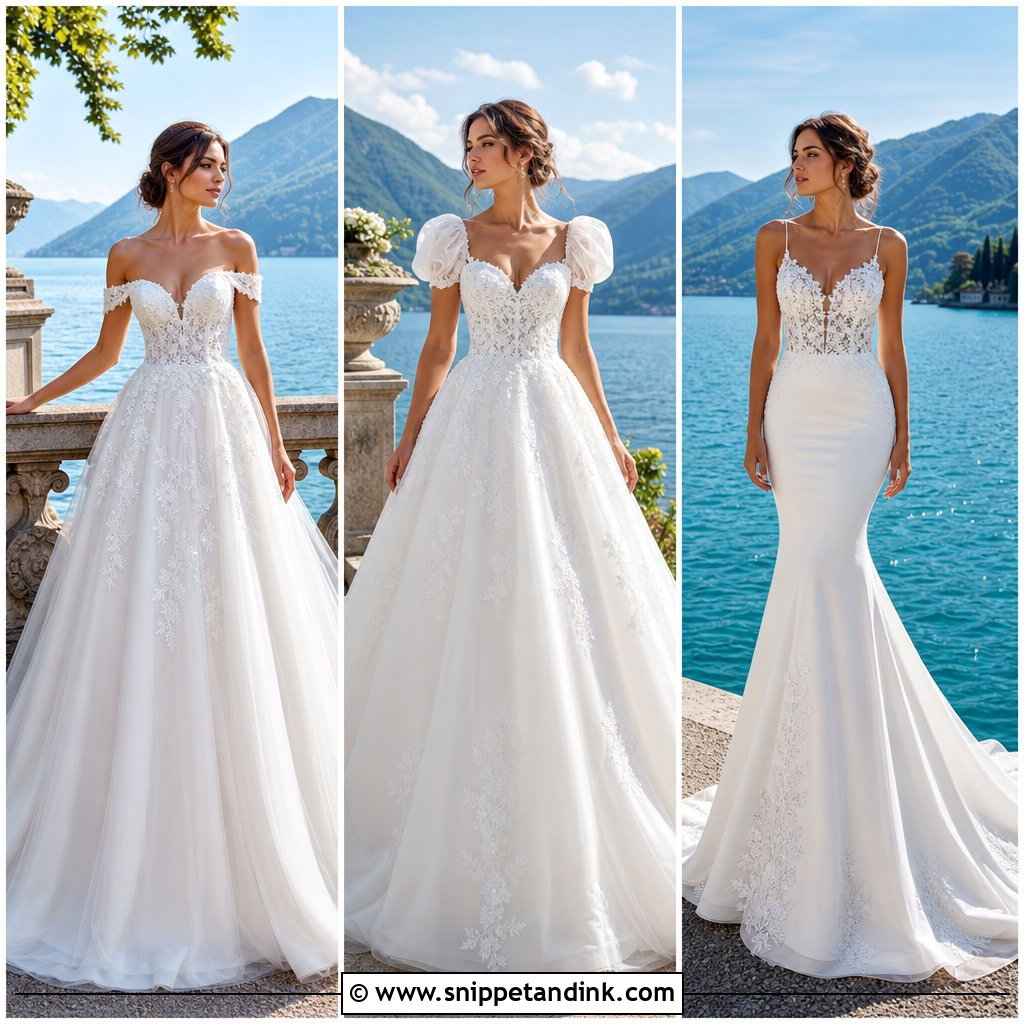
Removable sleeves give you coverage for the ceremony and freedom afterward. They can be off-the-shoulder, puffed, fitted lace, bishop-style or sheer tulle, and they change the mood without changing the gown. What I watch is grip. Off-shoulder sleeves rest on the arm with nothing holding them up, so they need elastic or a silicone strip inside the top edge, fitted to your arm at the same appointment as the bodice. Soft veil first, then bare shoulders and bolder earrings for the party.
6. Long Sleeve Wedding Dress With Removable Sleeves
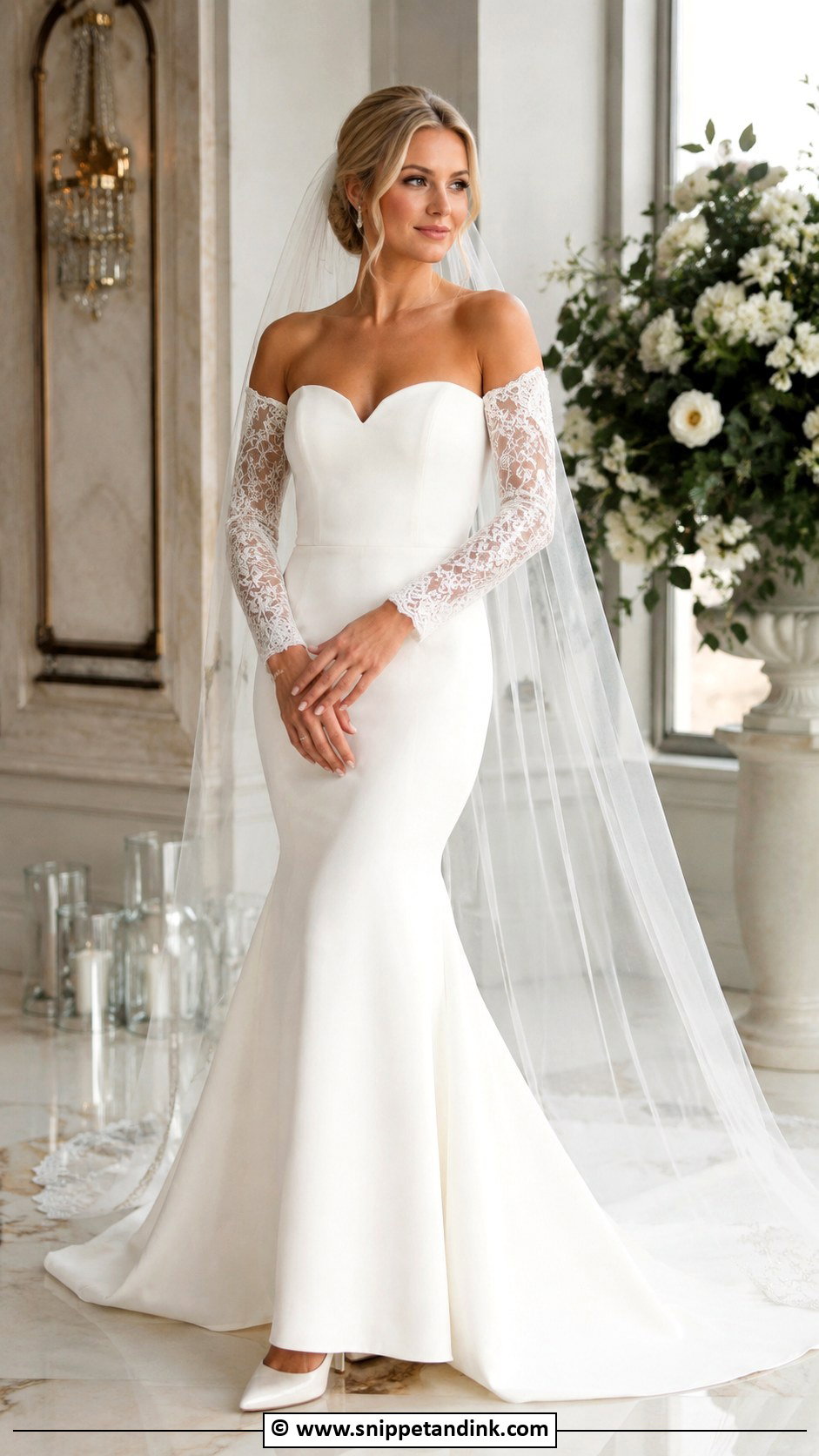
Long sleeves suit fall, winter and formal ceremonies, and being able to remove them saves you from feeling restricted all night. The base may be strapless, spaghetti strap or sleeveless, with sheer lace or tulle sleeves attached separately. Once they’re off, the gown feels lighter and the neckline opens up. Delicate lace is romantic; smooth satin is cleaner. Sleeves that button at the wrist are slow to take off, so if the change has to be quick, ask for a hidden zip or fewer buttons. Keep bracelets minimal.
7. Wedding Dress With Detachable Puff Sleeves
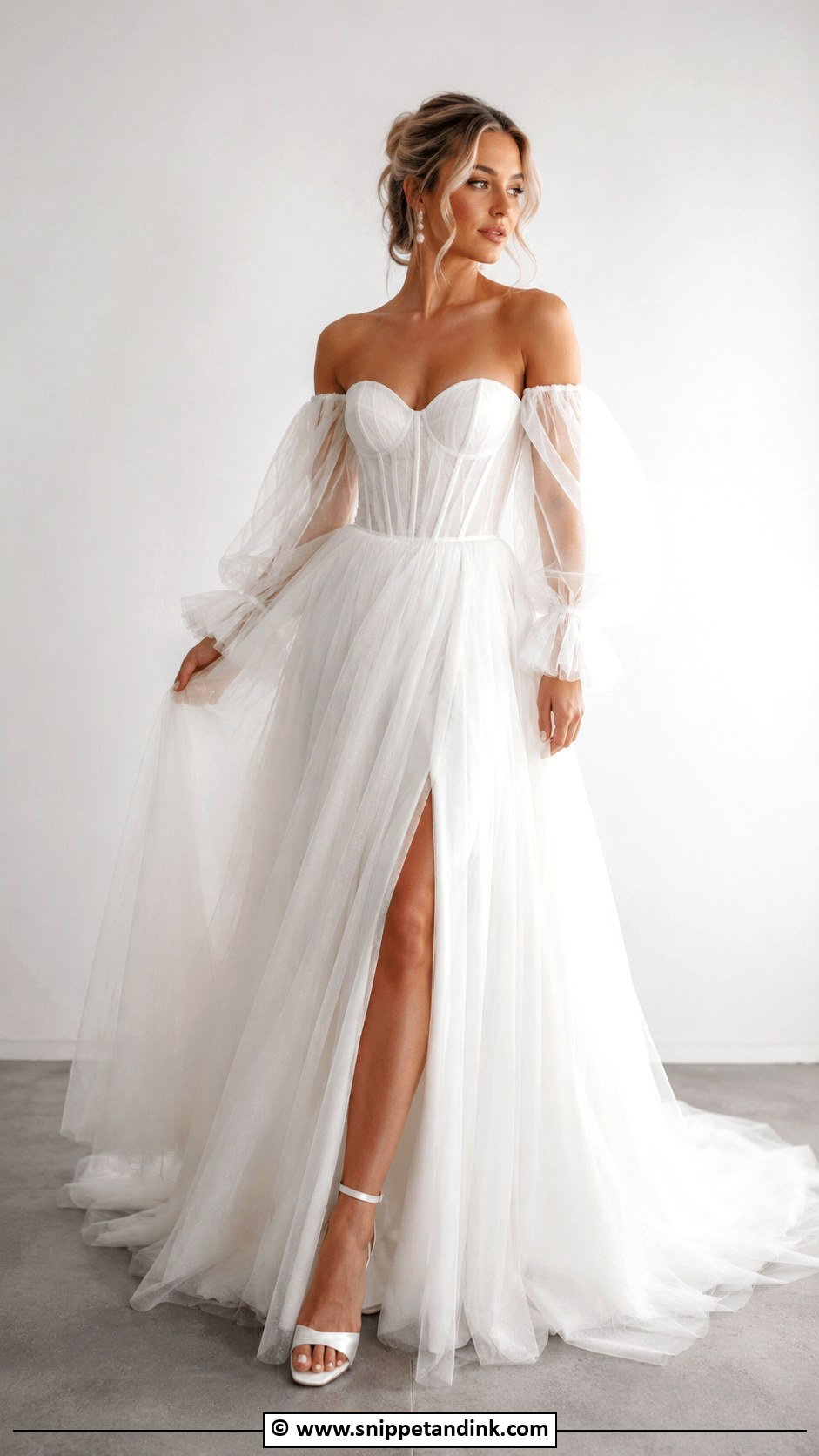
Detachable puffs make a simple gown feel current without committing to the volume all evening. They sit well with square necklines, strapless bodices, corset tops and simple A-line skirts, and they frame the face in portraits. Balance them with a fitted waist or a streamlined skirt. Puffs crush easily, so once they’re off, store them flat in tissue rather than stuffing them into a bag; you may want them back for late portraits. Soft waves, small pearl earrings and shoes you can dance in finish it.
8. Wedding Dress With Detachable Cape
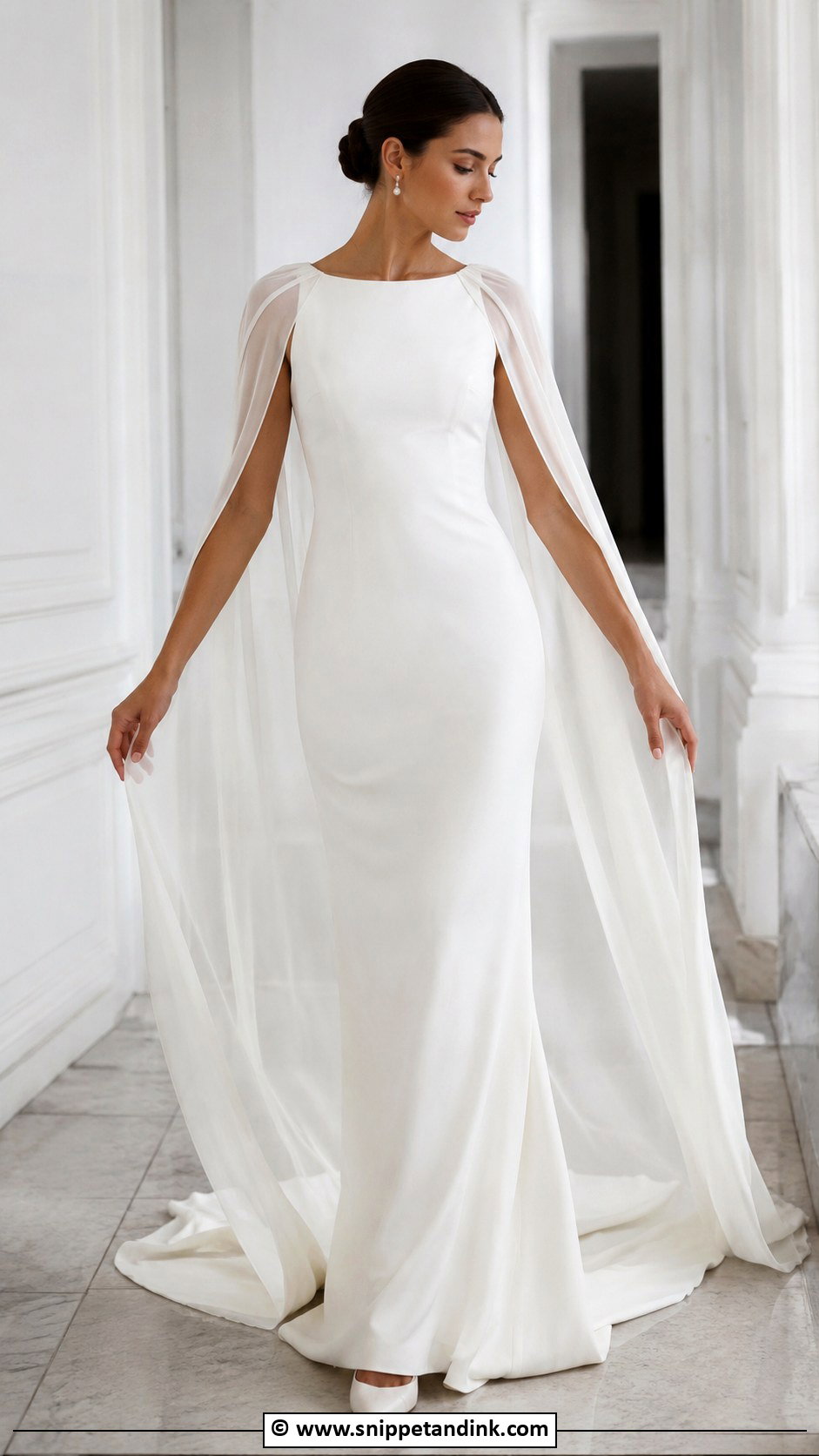
A detachable cape gives drama without a traditional veil. Sheer, lace, satin, beaded or floor-length, it moves well down the aisle and covers the shoulders, then comes off so the dress underneath reads cleaner. It suits outdoor ceremonies and minimal gowns that need one standout layer, and the back view is where it shows best. A floor-length cape fastened only at the neck tugs hard in a breeze, so for outdoor ceremonies I add small hidden snaps at the shoulders. Keep everything else simple.
9. Wedding Dress With Removable Cape Sleeves
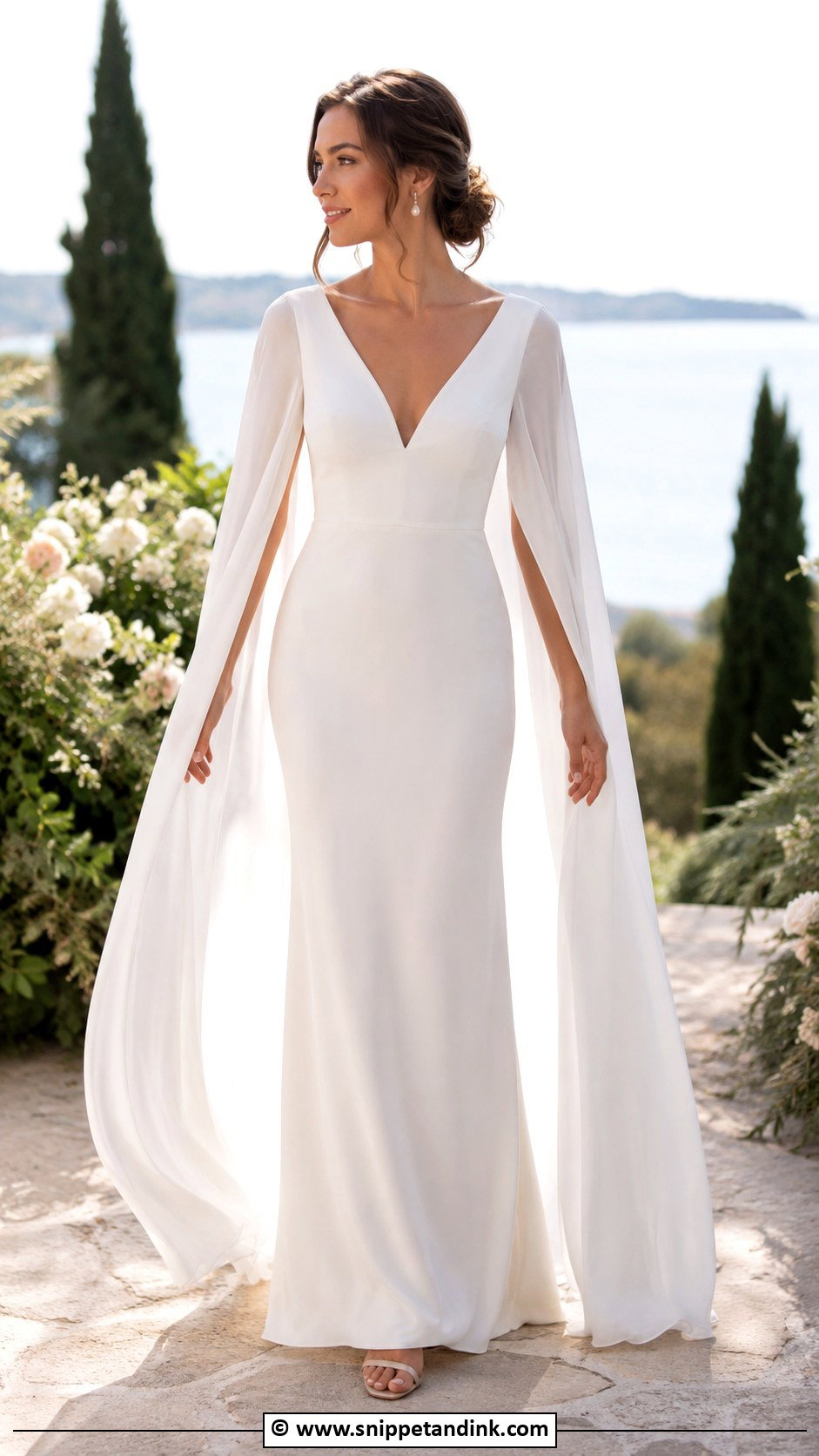
Cape sleeves attach at the shoulder or upper arm and fall in flowing panels, softer than sleeves and easier to manage than a full cape or long train. They add movement and coverage for the ceremony and come off to leave a light, open gown. Warm beach and garden weddings suit them, with a relaxed updo, delicate sandals and a simple veil for a classic touch. Long sheer panels catch on chair backs and bouquet stems, so I’d keep them to mid-calf if you’ll be seated through a long ceremony.
10. Lace Wedding Dress With Detachable Lining
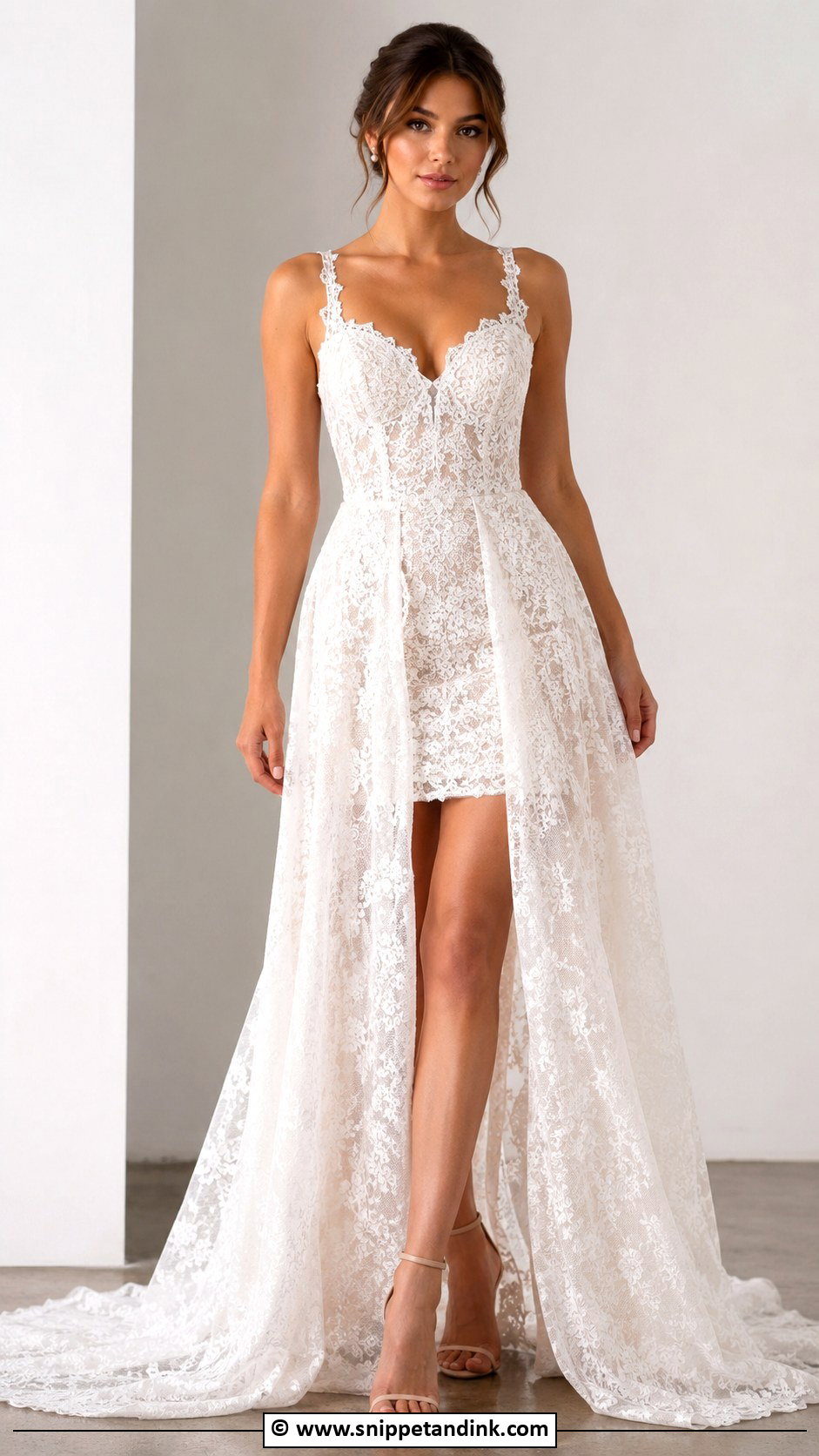
A detachable lining is a quieter conversion: more covered and traditional for the ceremony, then lighter or more sheer for the reception, depending on how the dress is built. It works best with nude, ivory or champagne under-layers that still look bridal. Ask exactly how the lining attaches and how long the change takes. A lining held in with rows of small hooks inside a lace bodice can take two people several minutes. Classic heels and soft makeup finish it.
11. Satin Wedding Dress With Detachable Bow
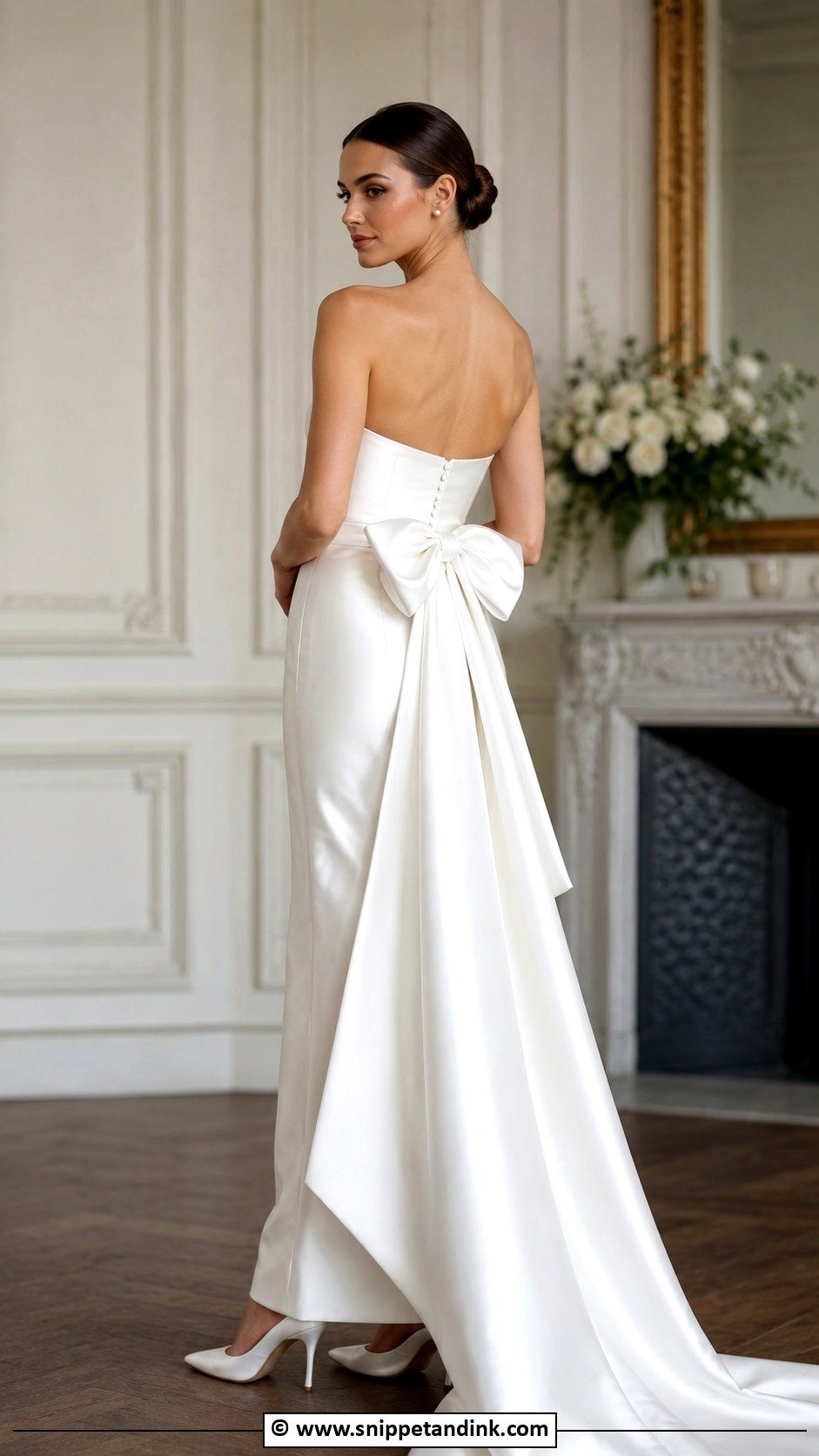
A big satin bow adds structure and charm to a simple dress for the entrance, and removing it afterward leaves a sleeker gown. It can sit at the back waist, shoulder, neckline or hip, and it suits strapless satin, mikado A-line gowns and modern columns. Large bows are often fixed with a bar pin or snaps. Check that taking it off leaves no marks, since satin can show pin holes. Pearl studs or a fine tennis bracelet are all the jewelry it needs.
12. Minimal Wedding Dress With Overskirt
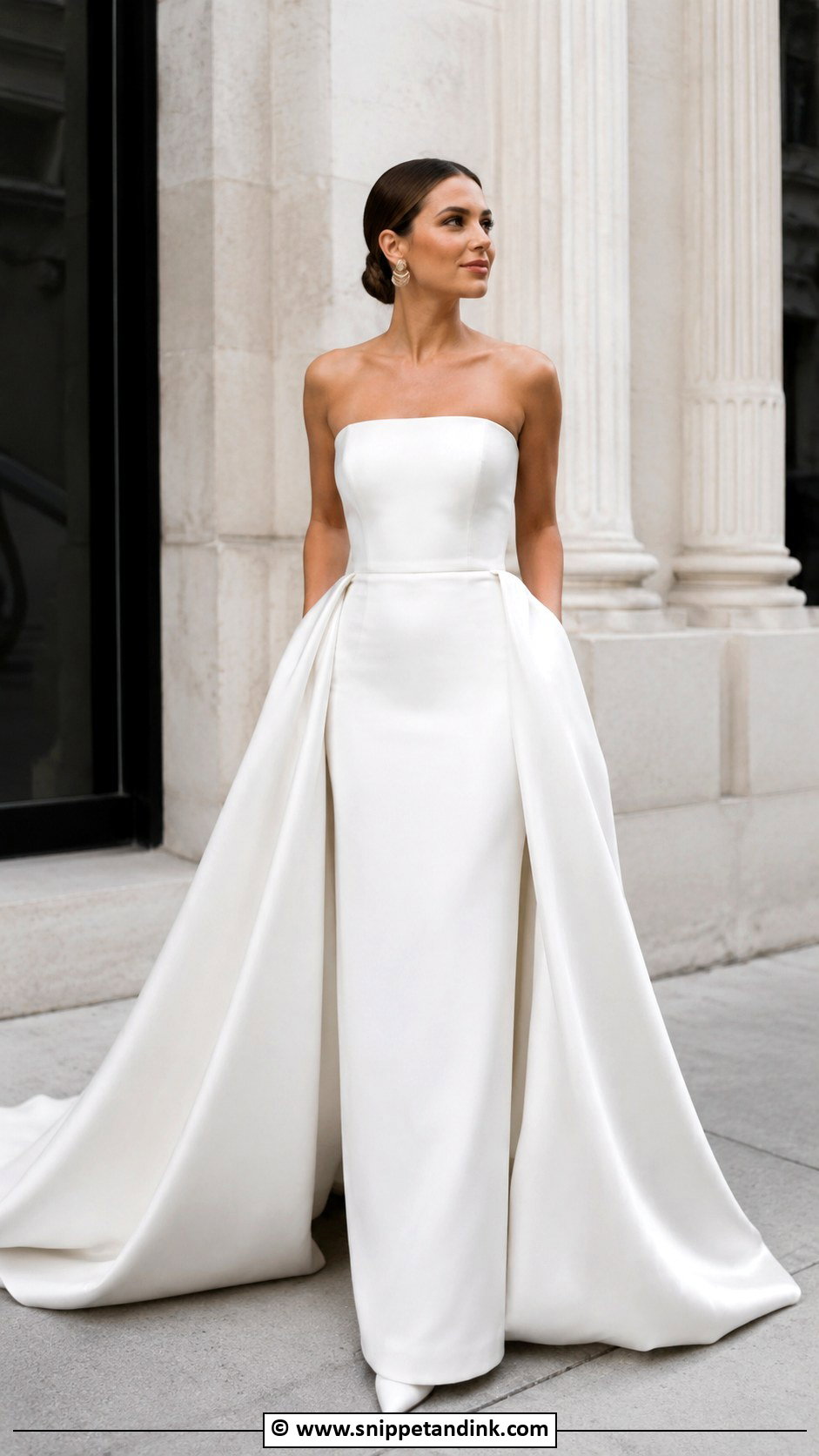
Clean lines first, ceremony reveal second. The base can be a plain crepe sheath, a satin slip or a structured column, and the overskirt adds volume only for vows and portraits. Once it’s off, the dress underneath looks calm and modern, which suits city weddings and gallery venues. A slip needs extra thought, because its thin fabric can’t carry a heavy overskirt. I ask for an overskirt with its own waistband that sits over the slip rather than hooking into it. Sleek hair, sculptural earrings and pointed pumps finish it.
13. Corset Wedding Dress With Detachable Skirt
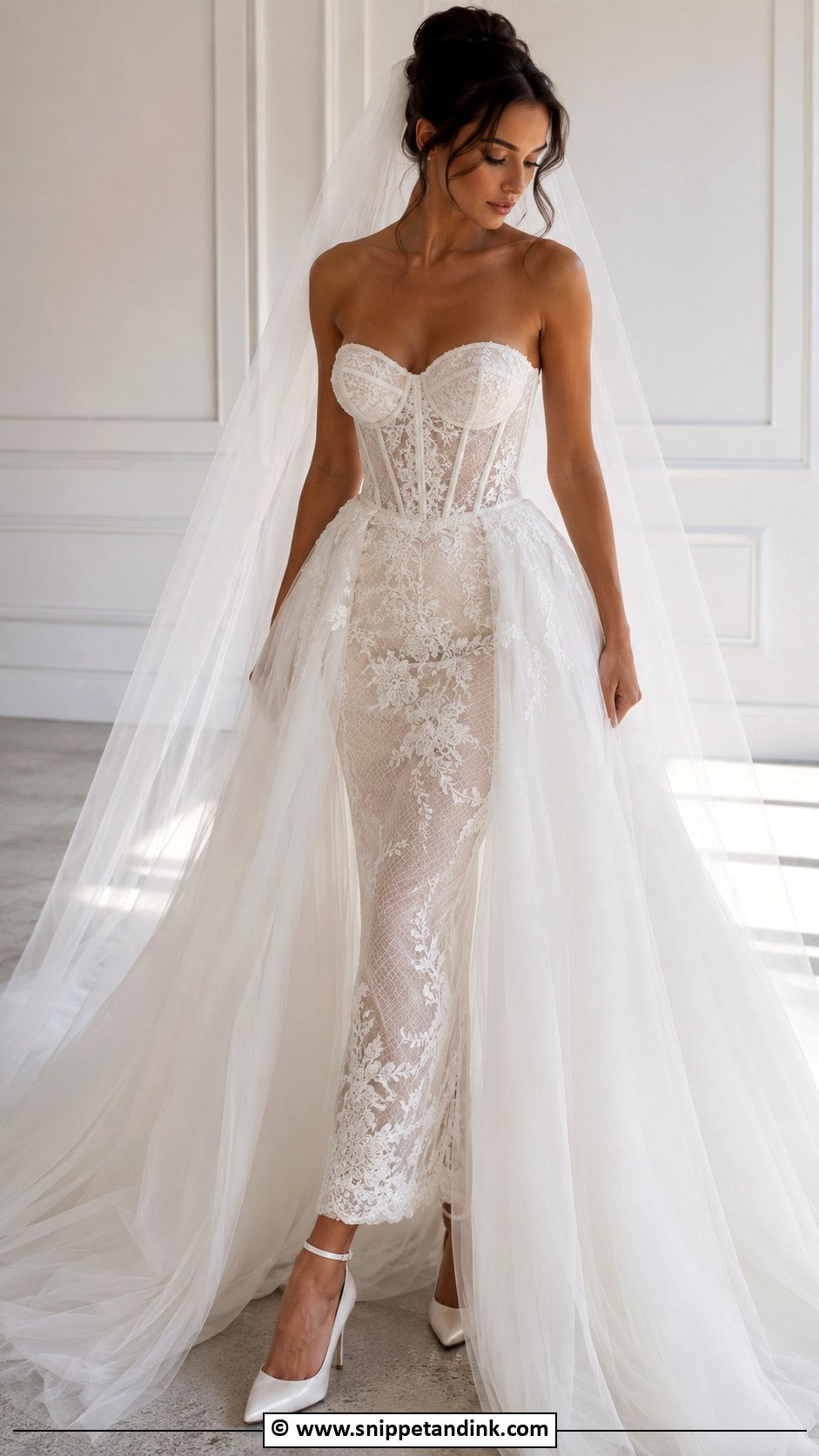
A corset bodice gives a defined waist and a firm base for a removable skirt, which makes this one of the most secure combinations here. Underneath, the dress may be fitted, mini or a slimmer A-line. Lace corsets feel soft and vintage; satin or mikado ones look cleaner and more architectural. The skirt must sit neatly so it doesn’t break the corset’s lines, and I like the waistband tucked slightly under the corset’s point. Veil for the ceremony, sparkling earrings afterward.
14. A Line Wedding Dress With Removable Sleeves
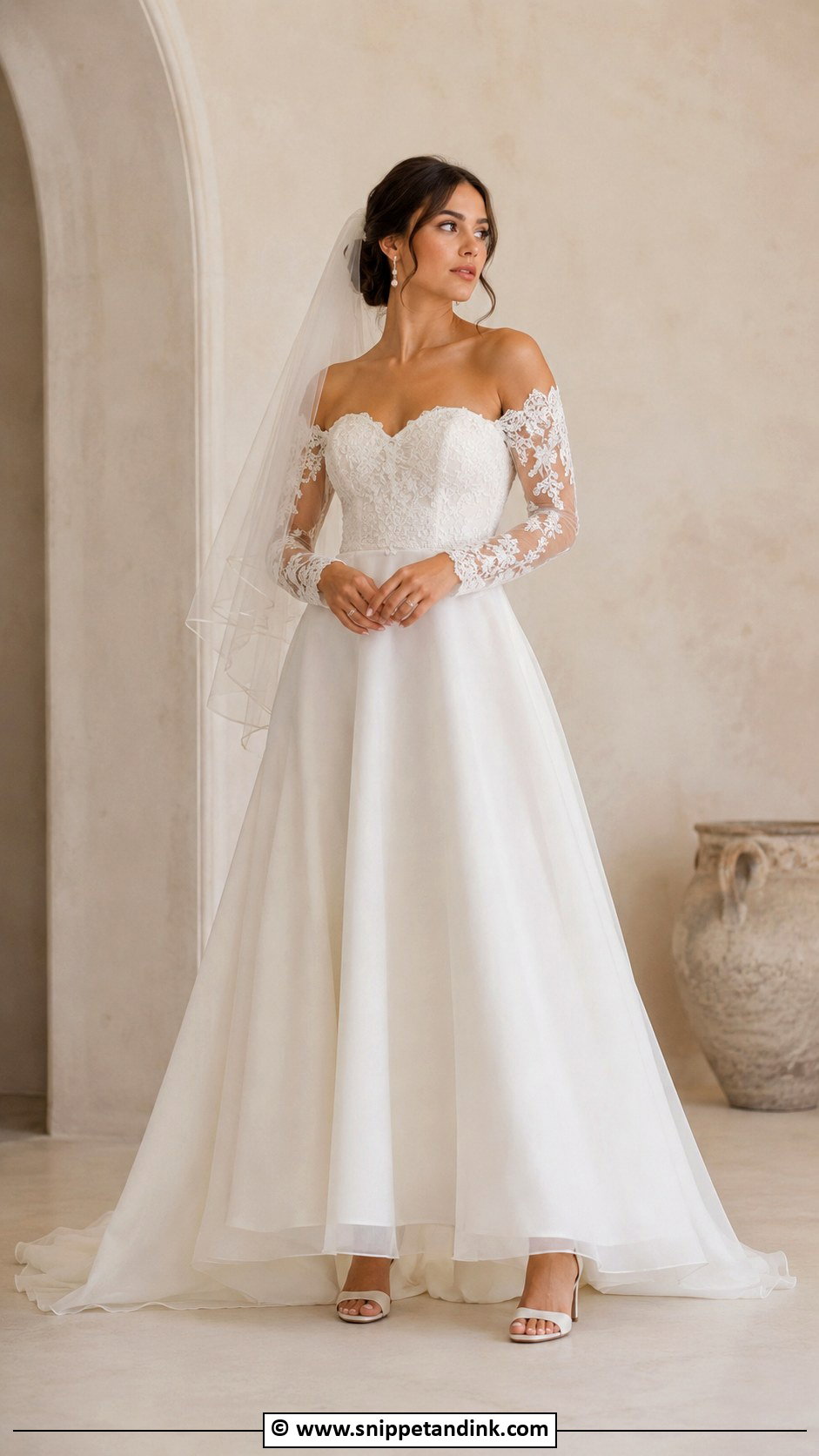
A-line moves softly without heavy volume and suits most figures, while detachable sleeves let you change only the top half. Lace sleeves give a classic feel; tulle or satin look softer and more modern. Comfortable block heels, a medium-length veil and a simple pendant or pearl earrings balance it. Check that the bodice looks finished once the sleeves are gone. Some designs leave visible loops or snaps at the shoulder, which a seamstress can hide under a narrow band of lace.
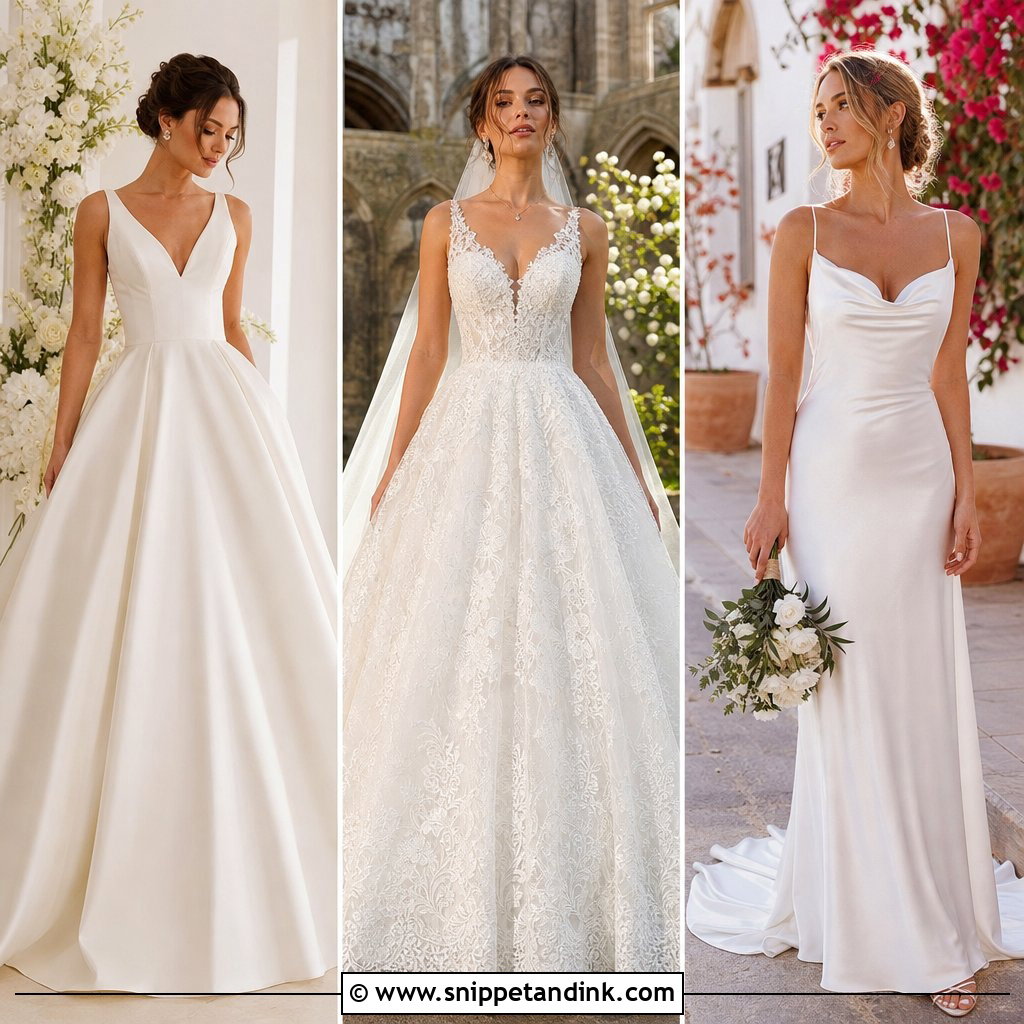
15. Column Wedding Dress With Detachable Overskirt
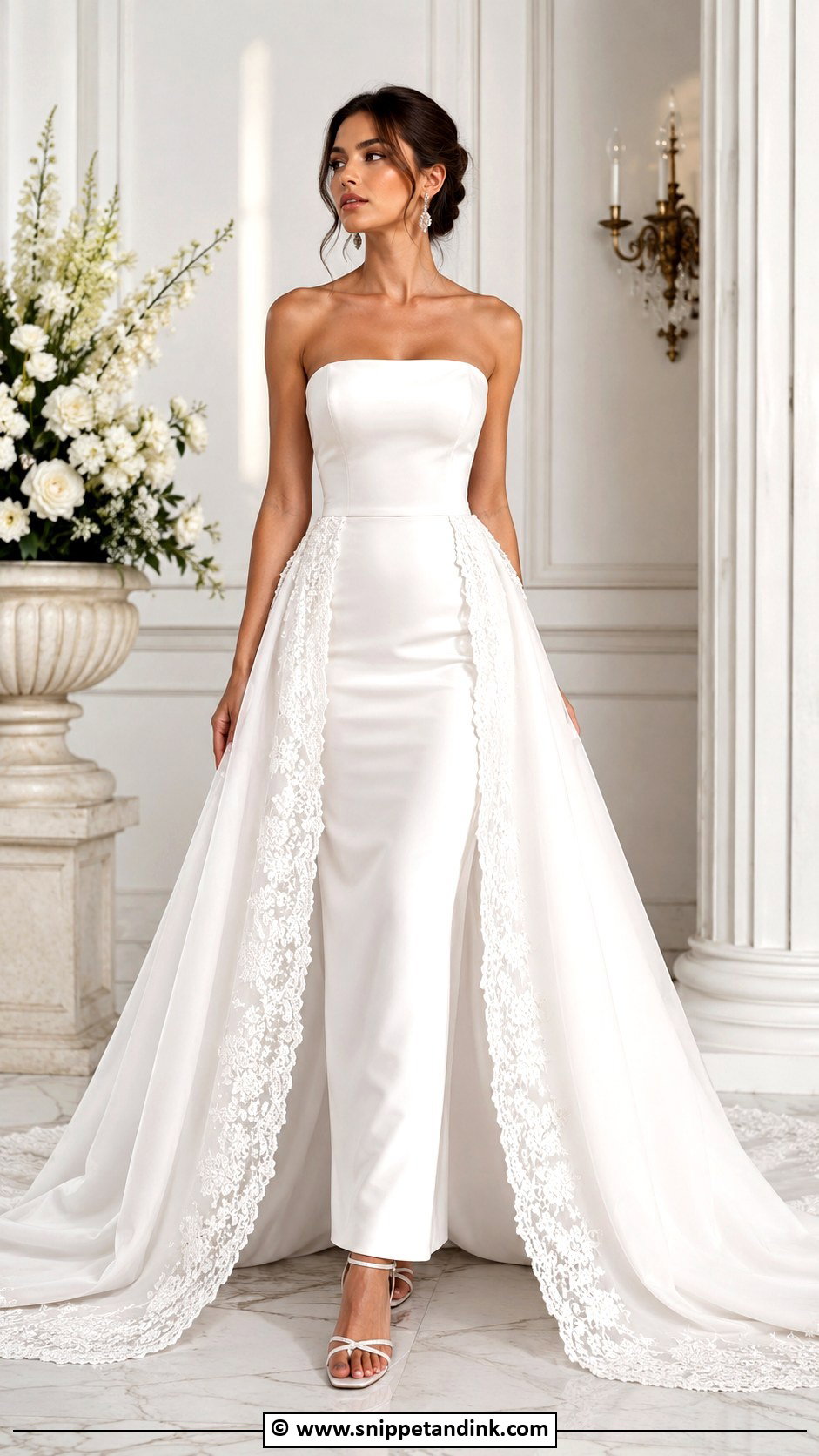
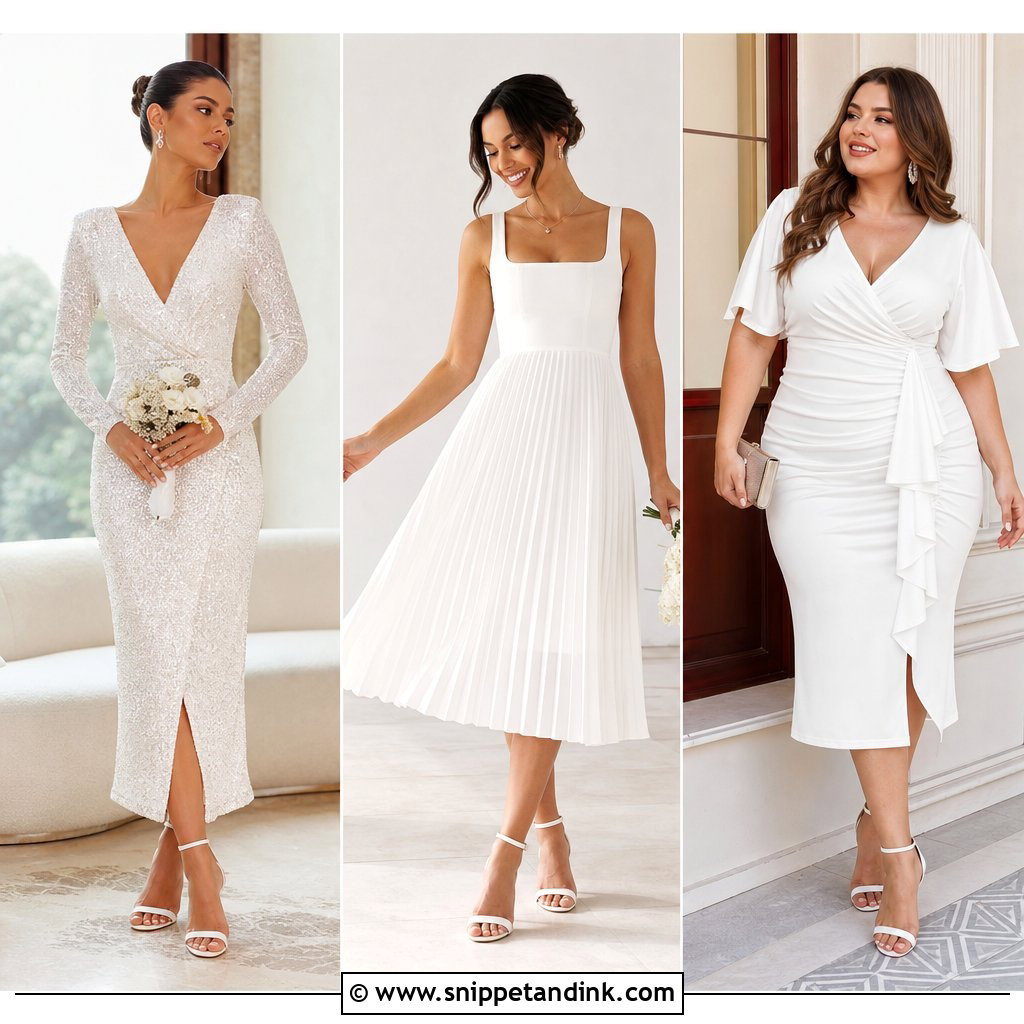
A column underneath gives a long, straight line that’s easy to move in, and the overskirt adds volume for the aisle without changing that clean base. Plain satin over it looks refined; lace and tulle soften it. After the change, the column suits dinner and dancing with strappy heels and a small clutch. Have the overskirt hemmed at the same length as the column or a touch longer, so the base never peeks out underneath during the ceremony.
16. Mini Wedding Dress With Detachable Train
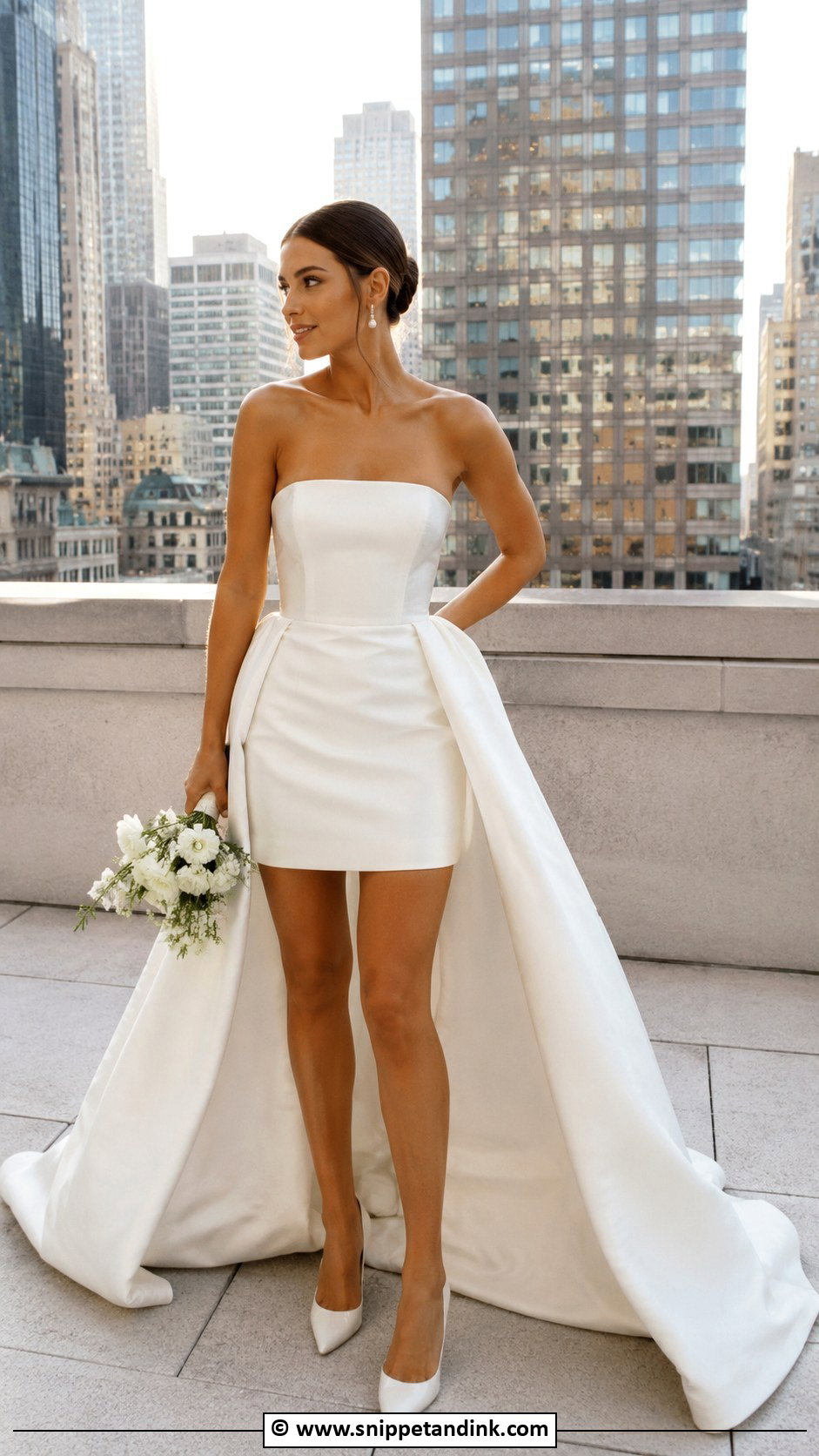
This is the biggest transformation on the list. With the train attached, the back view reads as a long formal gown; without it, you’re in a mini for the reception. Courthouse weddings, rooftops and after-parties suit it, and a structured mini with clean tailoring keeps it bridal. A tulle, satin or organza train adds drama without completely hiding the short hem. Since a mini rides up when you sit, I check the hemline in a chair before settling the length. Pointed heels, pearl earrings and a sleek updo finish it.
17. Wedding Jumpsuit With Detachable Skirt
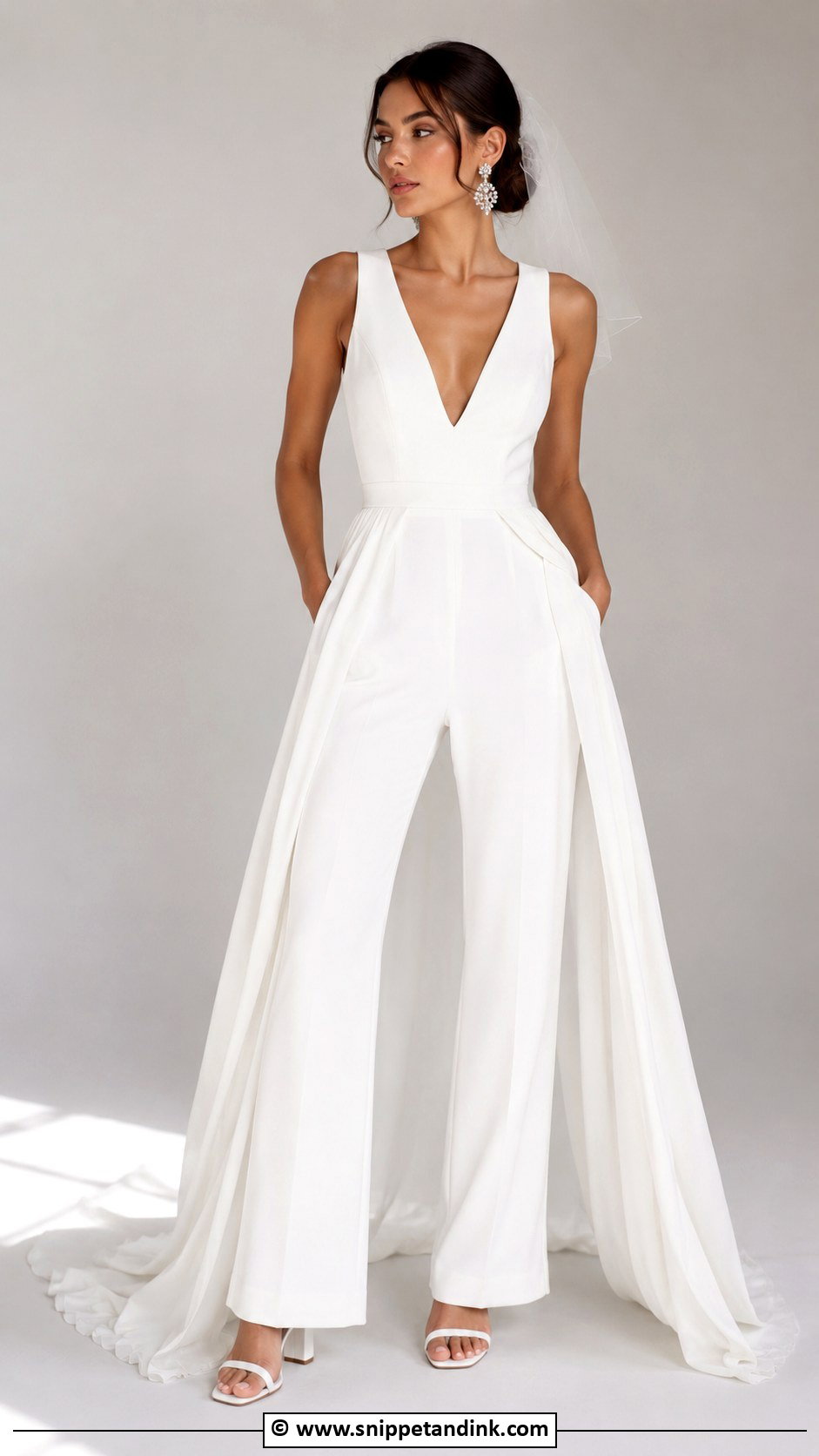
With the skirt on, a jumpsuit looks like a full gown for the ceremony, especially in satin, chiffon or tulle. Take it off and you’re in tailored, comfortable separates for dancing. Wide-leg styles give the longest line. Add a veil for the ceremony if you want a traditional note, then statement earrings and sleek heels later. One practical point nobody mentions in the shop: a jumpsuit makes bathroom trips harder, since you usually have to step out of the top half. Make sure the back zip reaches low enough to manage on your own.
18. Two Piece Wedding Dress With Removable Topper
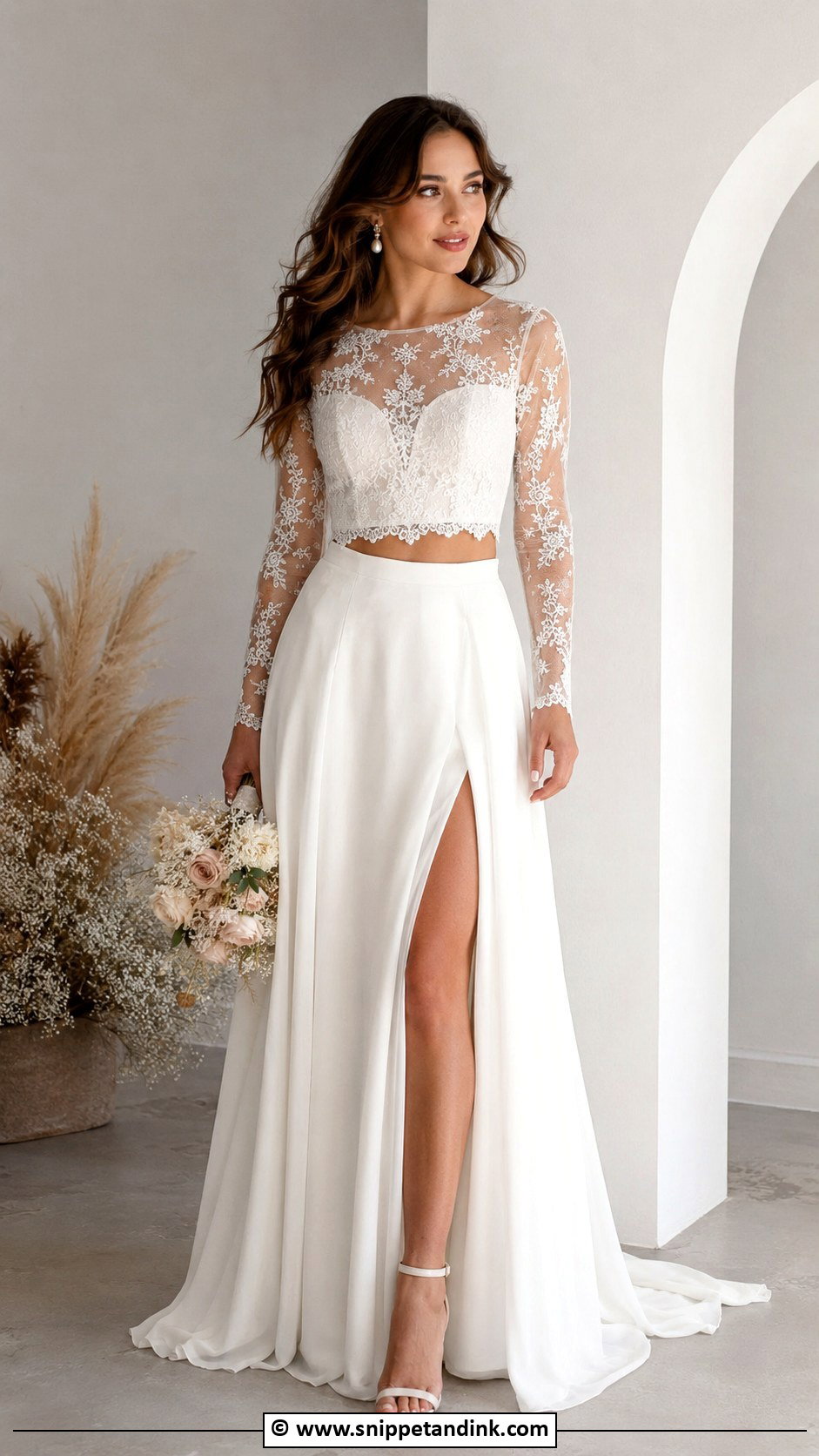
A topper gives you options within one outfit. The base might be a bridal crop top and skirt or a simple dress under a lace, tulle or satin topper that adds sleeves, neckline detail or coverage for the ceremony. Remove it for a lighter reception look. Match the topper’s ivory to the dress carefully; shades vary between fabrics and a mismatch is obvious in daylight. Soft curls, comfortable heels and delicate jewelry complete it.
19. Wedding Dress With Detachable Bolero
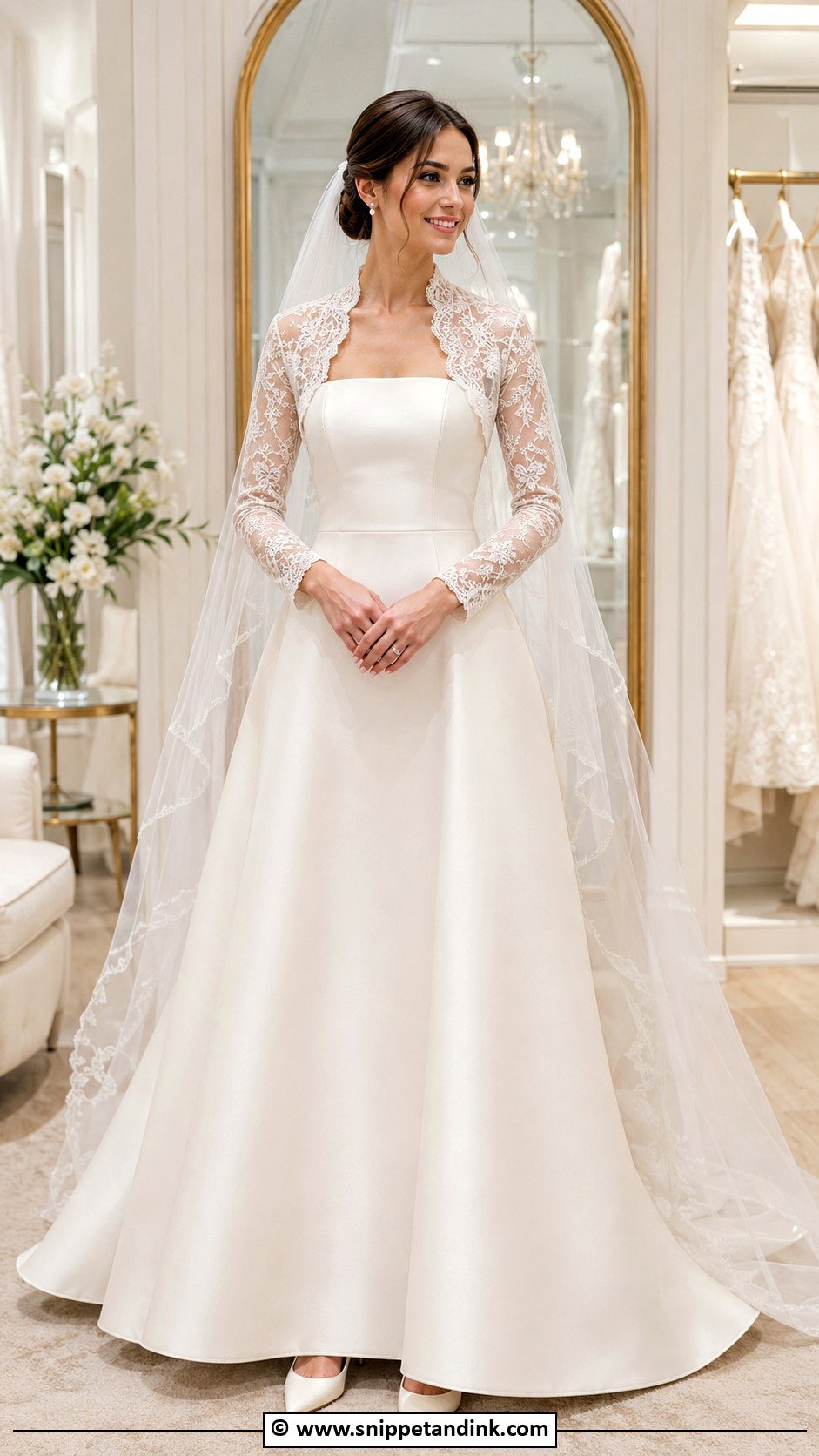
A bolero is the classic way to add coverage without changing the gown. In lace, satin, crepe, beading or sheer fabric, it sits over strapless, sleeveless and spaghetti-strap dresses and comes off after the ceremony to reveal the original neckline. It’s useful in formal settings, cooler weather and religious ceremonies with coverage expectations. Keep it tailored and light so it doesn’t feel bulky, and end it at or above the waist so the dress’s shape still shows. Pearl earrings are enough.
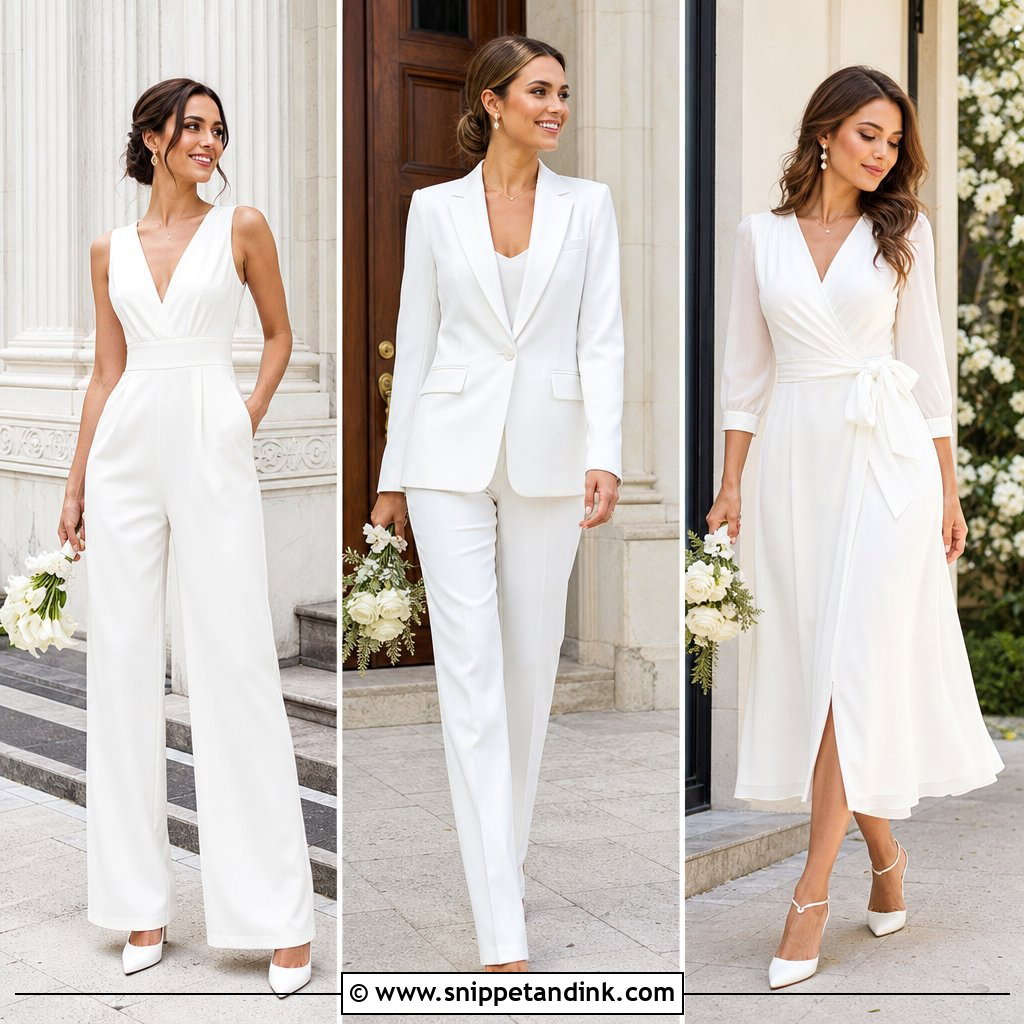
20. Wedding Dress With Detachable Jacket
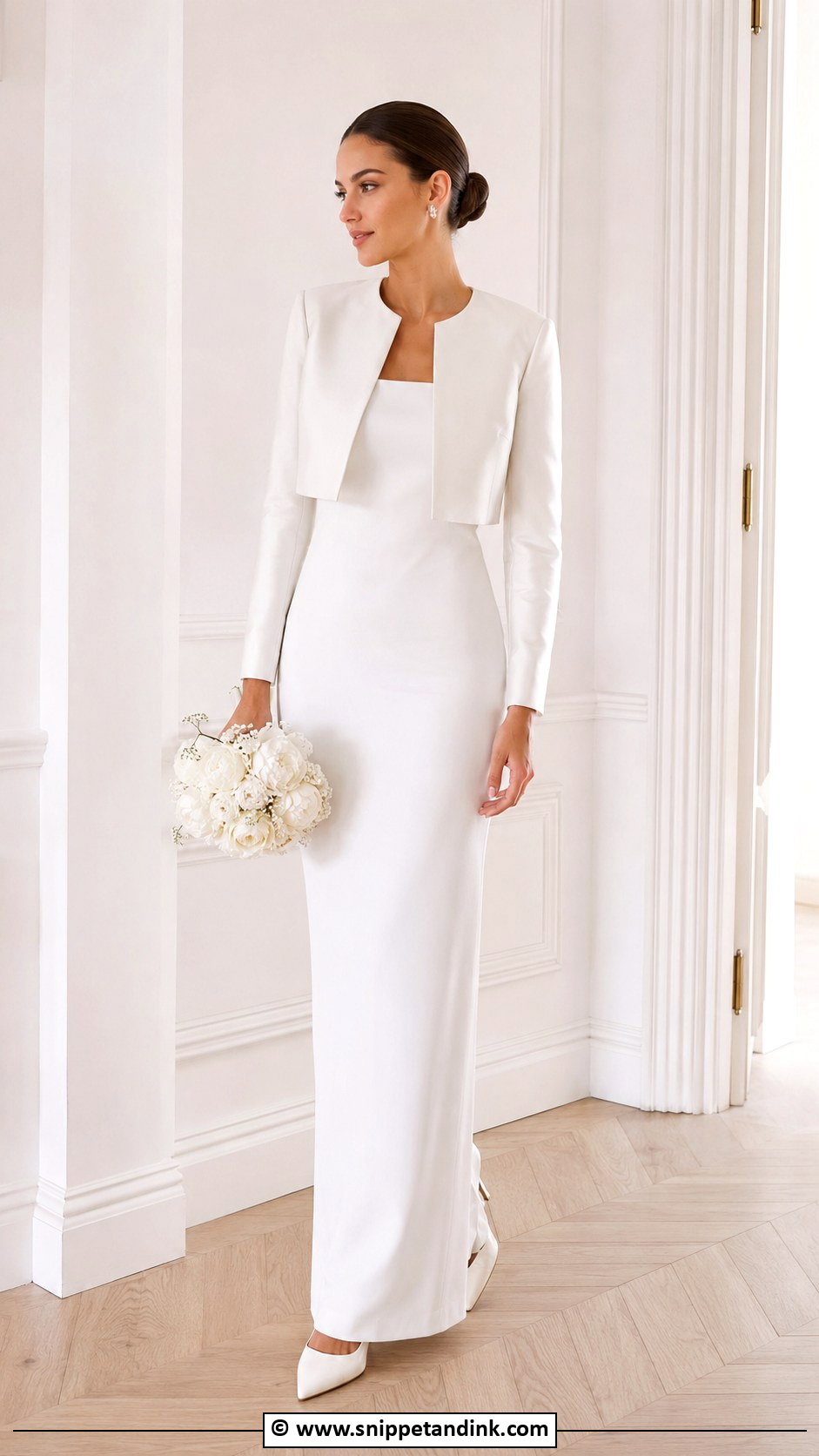
A detachable jacket gives a simple gown more structure and a designed look for the ceremony. Cropped, tailored, lace, satin or sheer, it suits city weddings and courthouse ceremonies. A cropped jacket pairs with A-line or column gowns; a longer one feels editorial. Have the jacket fitted over the dress, never on its own, so the shoulders and sleeves sit correctly over the bodice. Sleek hair, small hoops or pearls and refined bridal shoes finish it.
21. Off Shoulder Wedding Dress With Detachable Straps
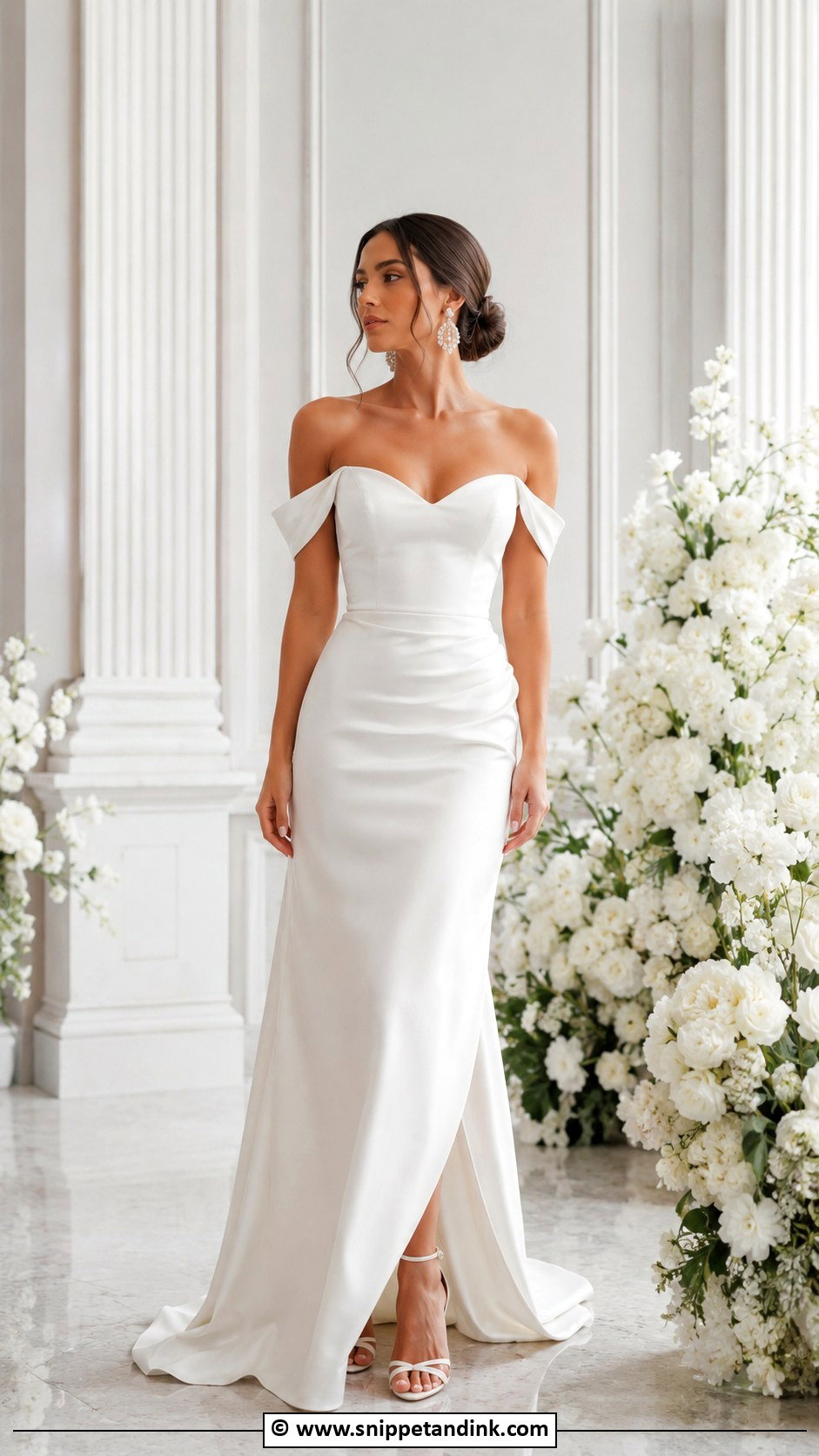
The straps sit across the arms for the ceremony, then come off to leave a strapless bodice for the reception. That solves the biggest complaint about off-shoulder necklines, which is restricted arm movement. Lace, satin, crepe and tulle all suit it. The bodice has to be fitted to stay up on its own from the very first appointment, since you’ll be relying on it without straps later. A low bun shows the shoulders, and bolder earrings can go on once the straps are off.
22. Square Neck Wedding Dress With Detachable Sleeves
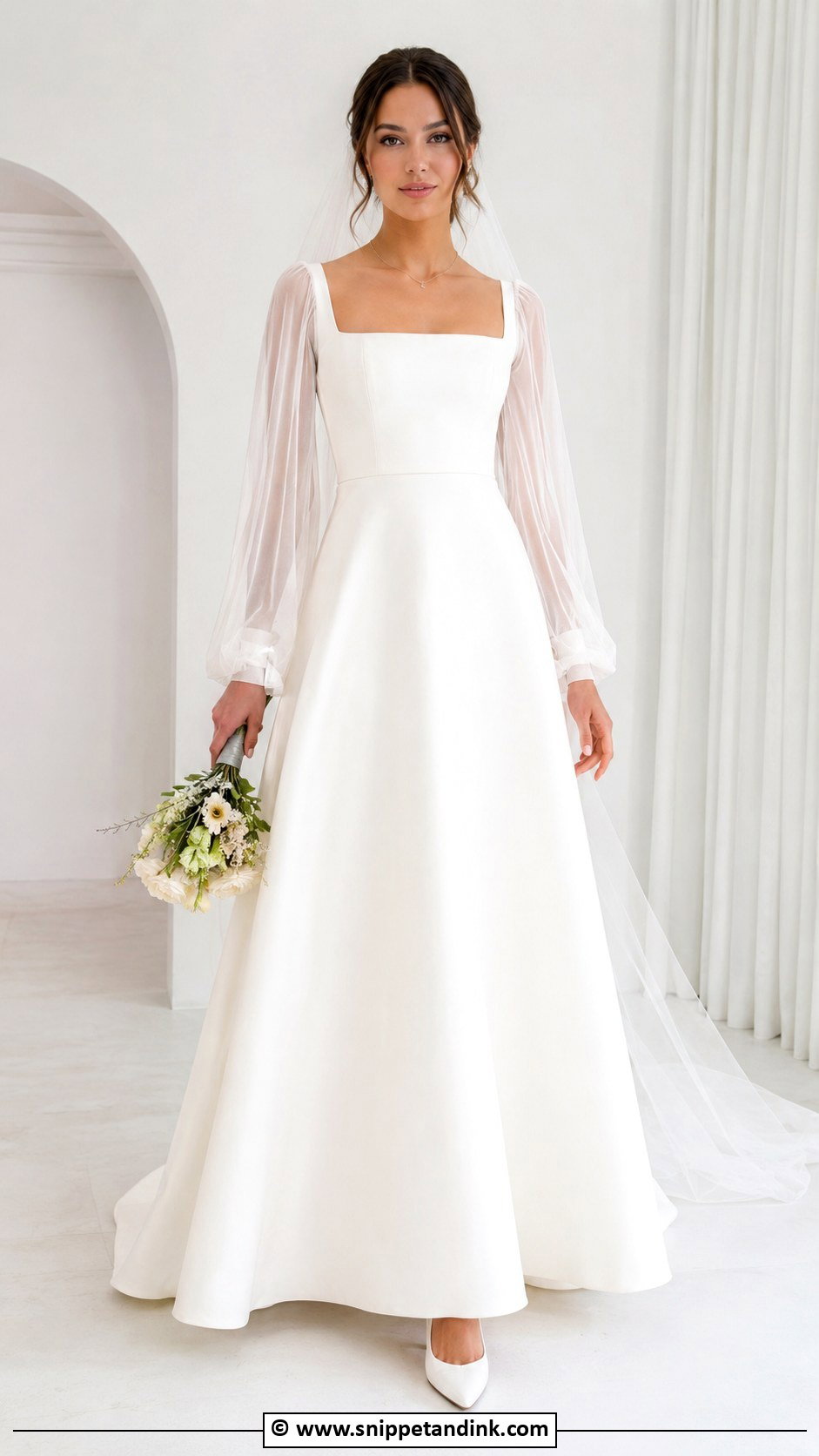
A square neckline frames the collarbones, and detachable sleeves add versatility. Sheer long sleeves or soft puffs make the ceremony look romantic; removing them pulls attention back to the neckline. It suits A-line skirts, fitted crepe and structured satin. Wear a smooth bun, a simple veil and a delicate necklace, then pare down to earrings later. Make sure the sleeves attach behind the corners of the neckline, not on them, or the square edge loses its crisp line.
23. High Neck Wedding Dress With Removable Overlay
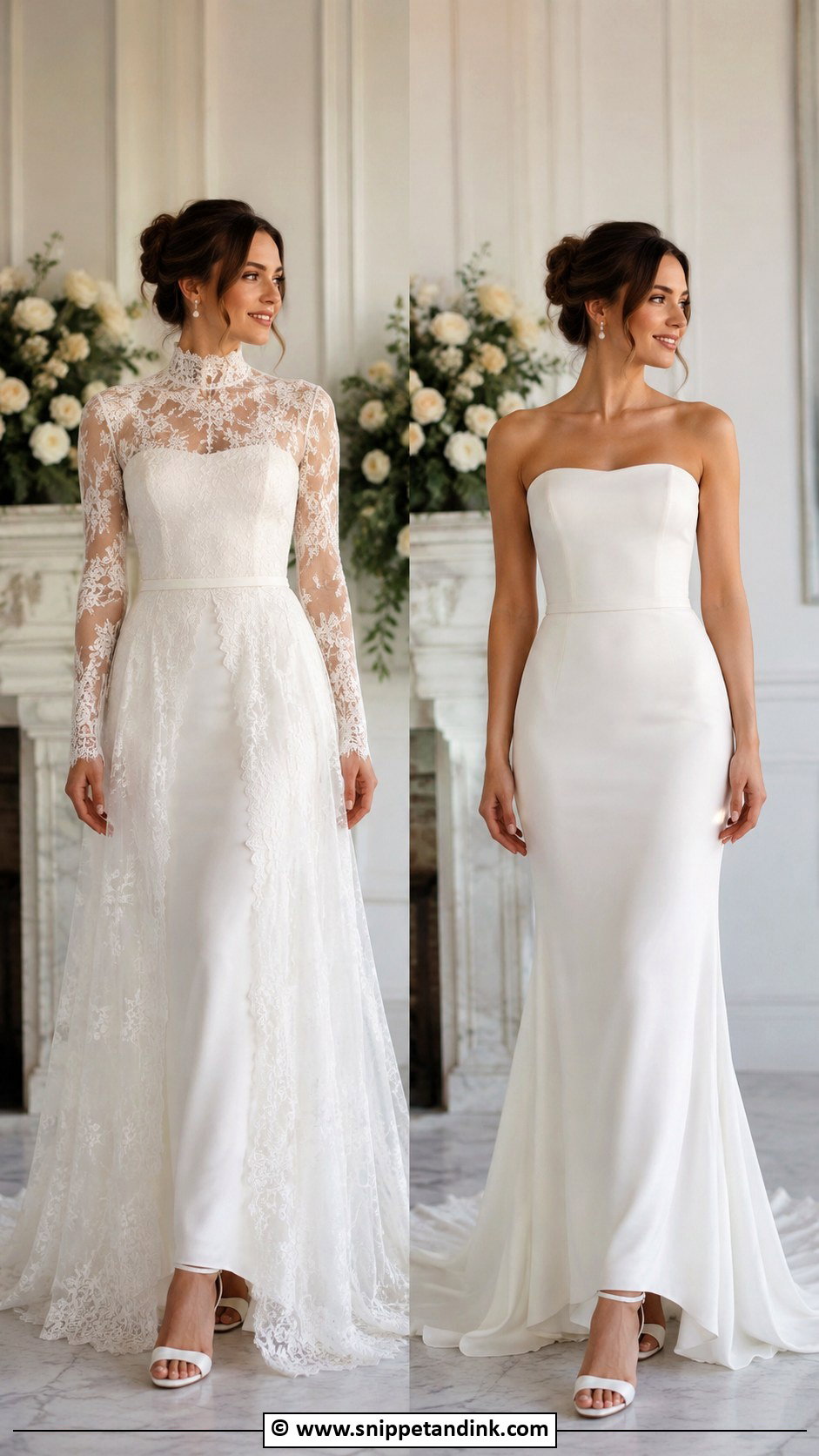
The overlay, in lace, sheer tulle, beaded mesh or organza, gives you a high, modest neckline for the vows over a strapless or sleeveless base. Remove it and the dress becomes simpler and easier to wear. Lightweight fabric matters so the overlay sits smoothly without bunching at the waist. Most overlays go over the head or fasten down the back, so I put them on before hair and veil are finished, and take them off with someone holding the hair clear. An updo, small earrings and classic heels complete it.
24. Beach Wedding Dress With Detachable Skirt
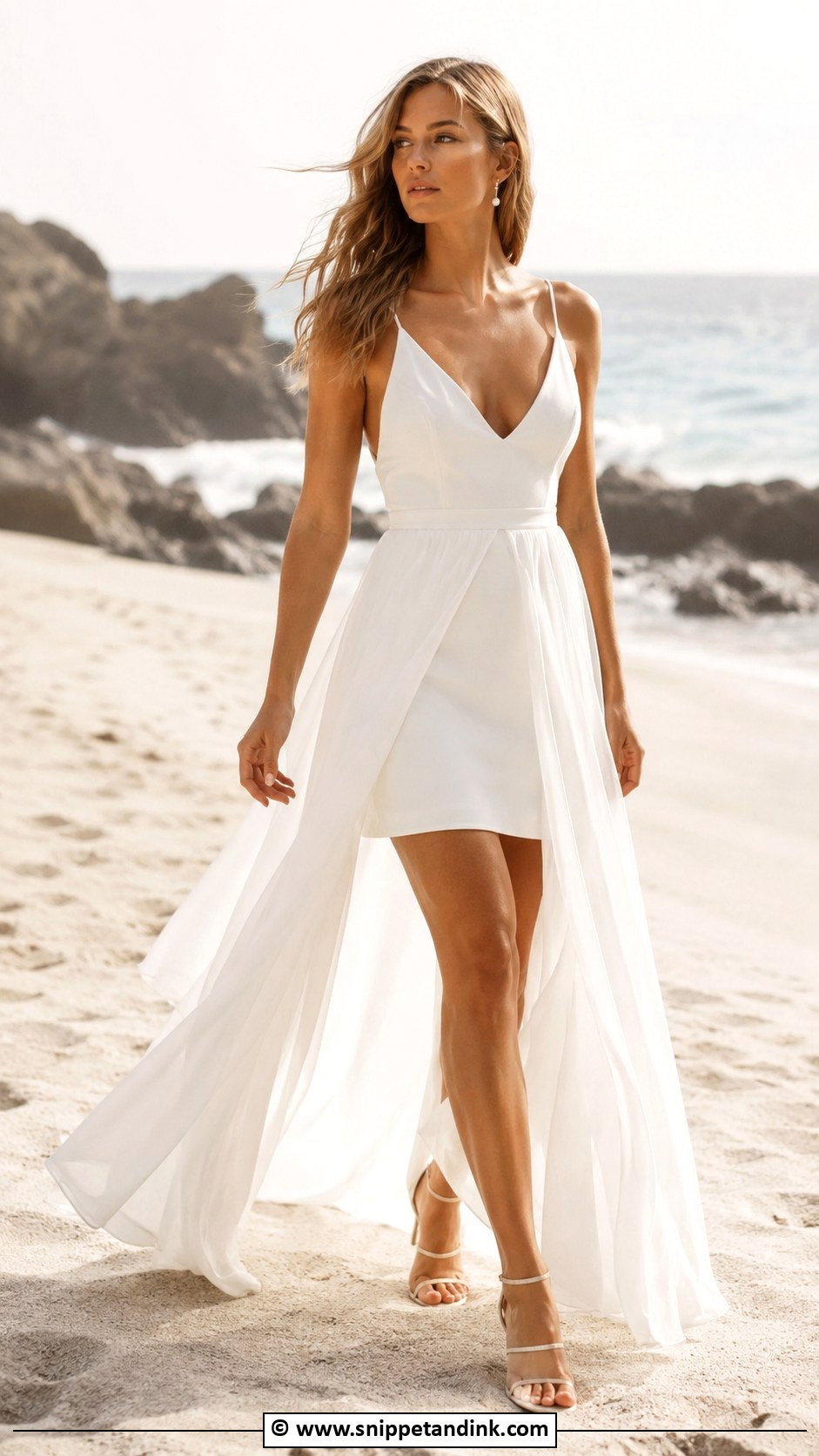
On sand, light wins. A soft chiffon or tulle overskirt moves in the wind for the ceremony, and a slim gown, slip or shorter hem underneath keeps you comfortable for the reception. Avoid stiff fabrics, which look out of place by the water and catch the wind like a sail. Sandals, low heels or barefoot styles suit it, with simple earrings and soft waves. Humid sea air softens tulle, so a slightly firmer weight holds its shape better on a beach than a very fine one.
25. Garden Wedding Dress With Removable Cape
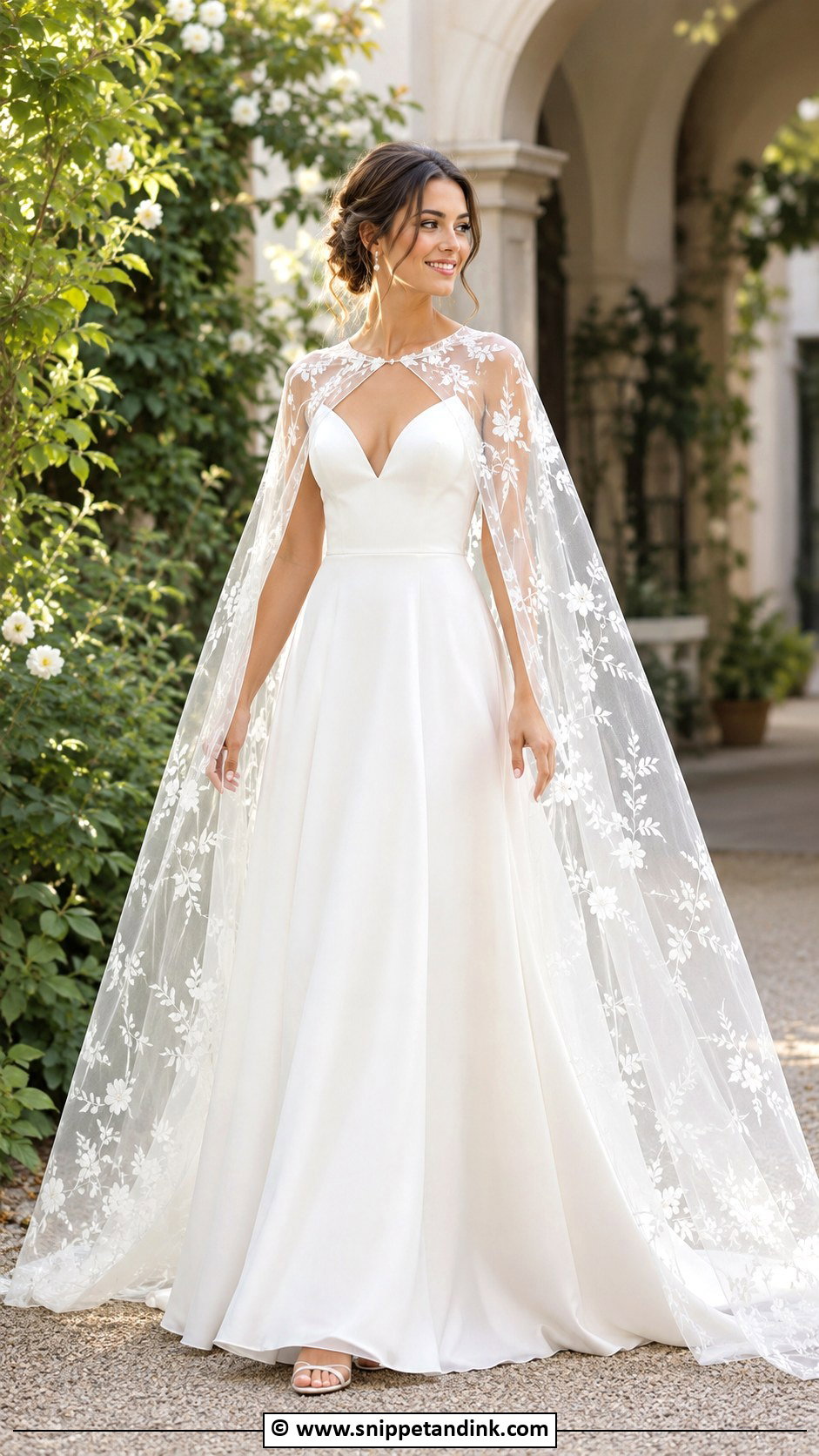
A cape floating behind the dress in a garden adds movement without the weight of a train. Sheer tulle, floral lace and embroidered organza all suit the setting, and once the cape is off, the dress underneath is easier for mingling and dinner. It pairs with A-line, sheath and simple satin shapes. Pearl earrings, soft makeup, delicate heels and a loose updo or half-up style keep the cape visible. Outdoors, a cape drags through grass, so I’d choose one that ends at the dress hem or slightly above it.
26. Winter Wedding Dress With Detachable Coat
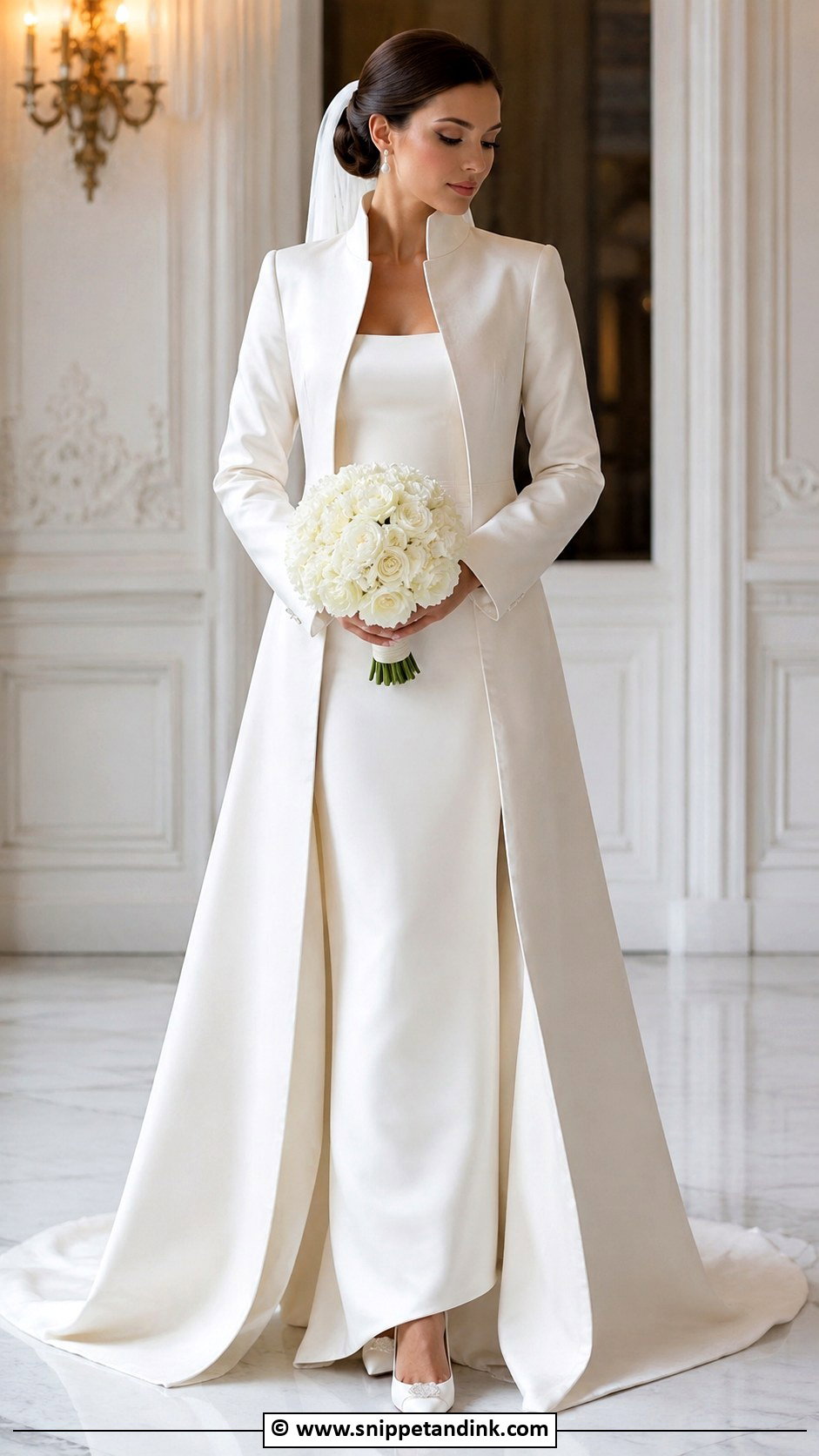
A detachable coat keeps you warm for outdoor entrances and cold-weather photos, then comes off indoors to reveal the dress. Satin, crepe, faux fur trim, wool-blend bridal fabric or structured mikado all work over fitted gowns, simple A-lines or columns. Choose a coat that complements rather than overwhelms the gown. Long coats feel formal; cropped bridal jackets feel more playful. I fit the coat over the dress so the skirt isn’t crushed flat underneath. Closed-toe heels, pearl earrings and a neat updo finish it.
27. Plus Size Wedding Dress With Detachable Overskirt
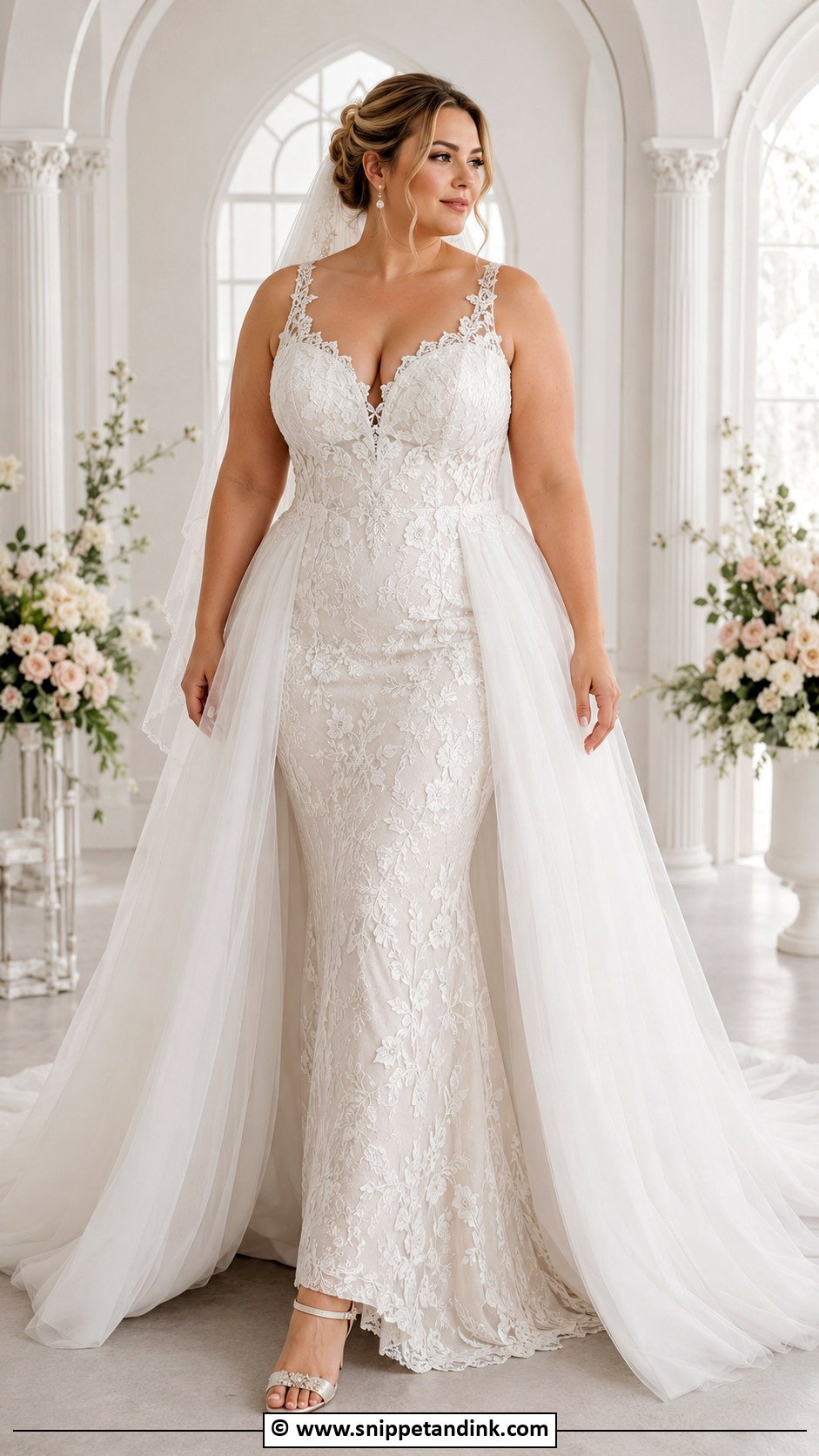
Start with the base gown. It needs real support, smooth structure and a waistline that feels secure, because that’s what you’ll wear for most of the day. A fitted crepe gown, lace mermaid or supportive strapless all work underneath, and the overskirt adds ceremony drama without making you carry the volume all night. Ask for alterations that keep the skirt attachment flat, since a waistband stacked on a structured bodice can leave a visible ridge. Comfortable heels, supportive undergarments and balanced jewelry finish it.
28. Modest Wedding Dress With Removable Sleeves
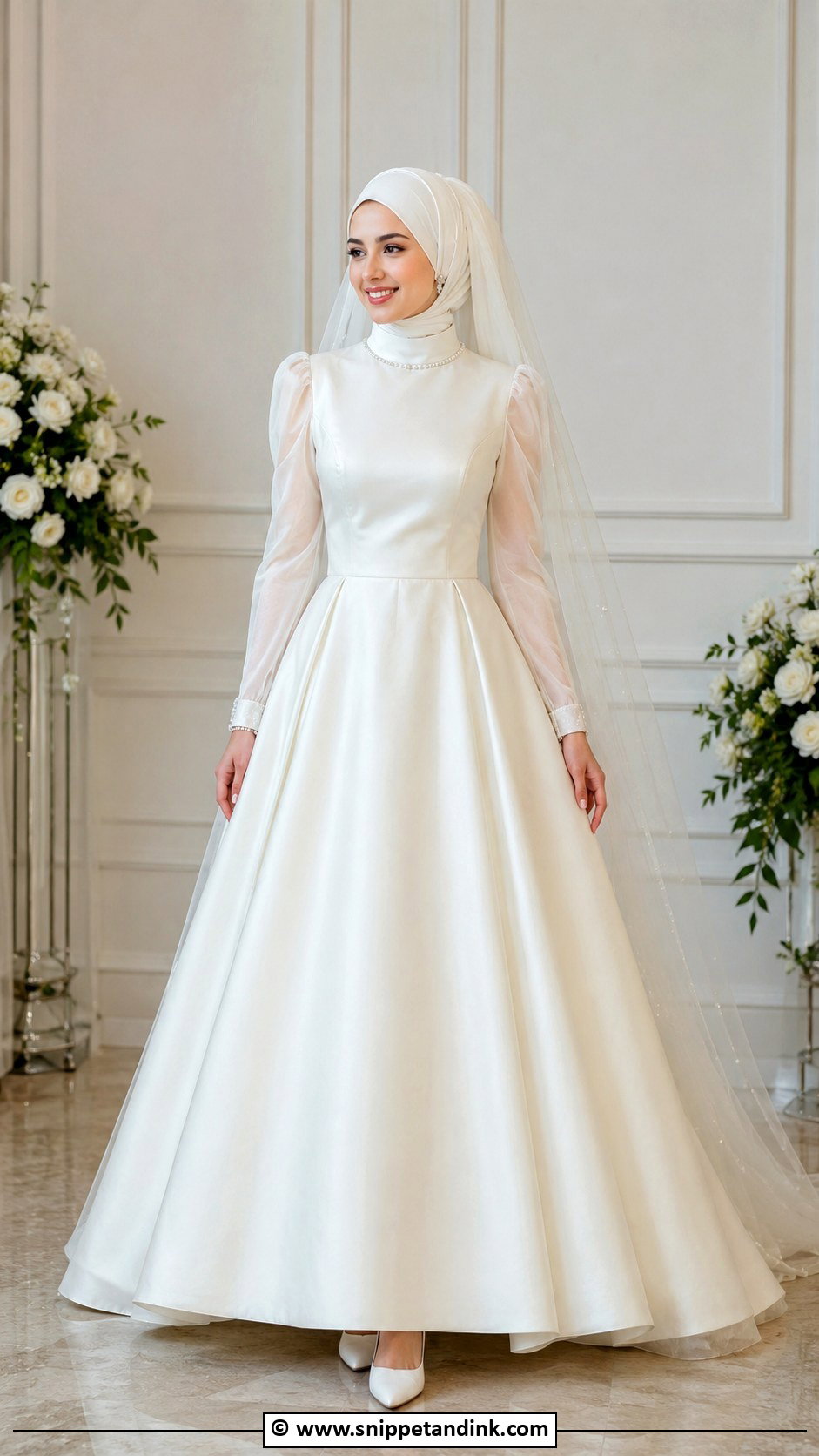
This suits brides who want coverage for part of the day, especially when the ceremony and reception carry different expectations. The dress may have a higher neckline, fuller skirt or simple bodice, and the sleeves make the change: long lace, sheer bishop or fitted satin. Once removed, the gown feels softer and more open. Secure attachments matter more here than anywhere, because a sleeve slipping during a religious ceremony is exactly what you’re trying to avoid. Classic pumps, a veil and understated pearls finish it.
29. Reception Wedding Dress With Detachable Train
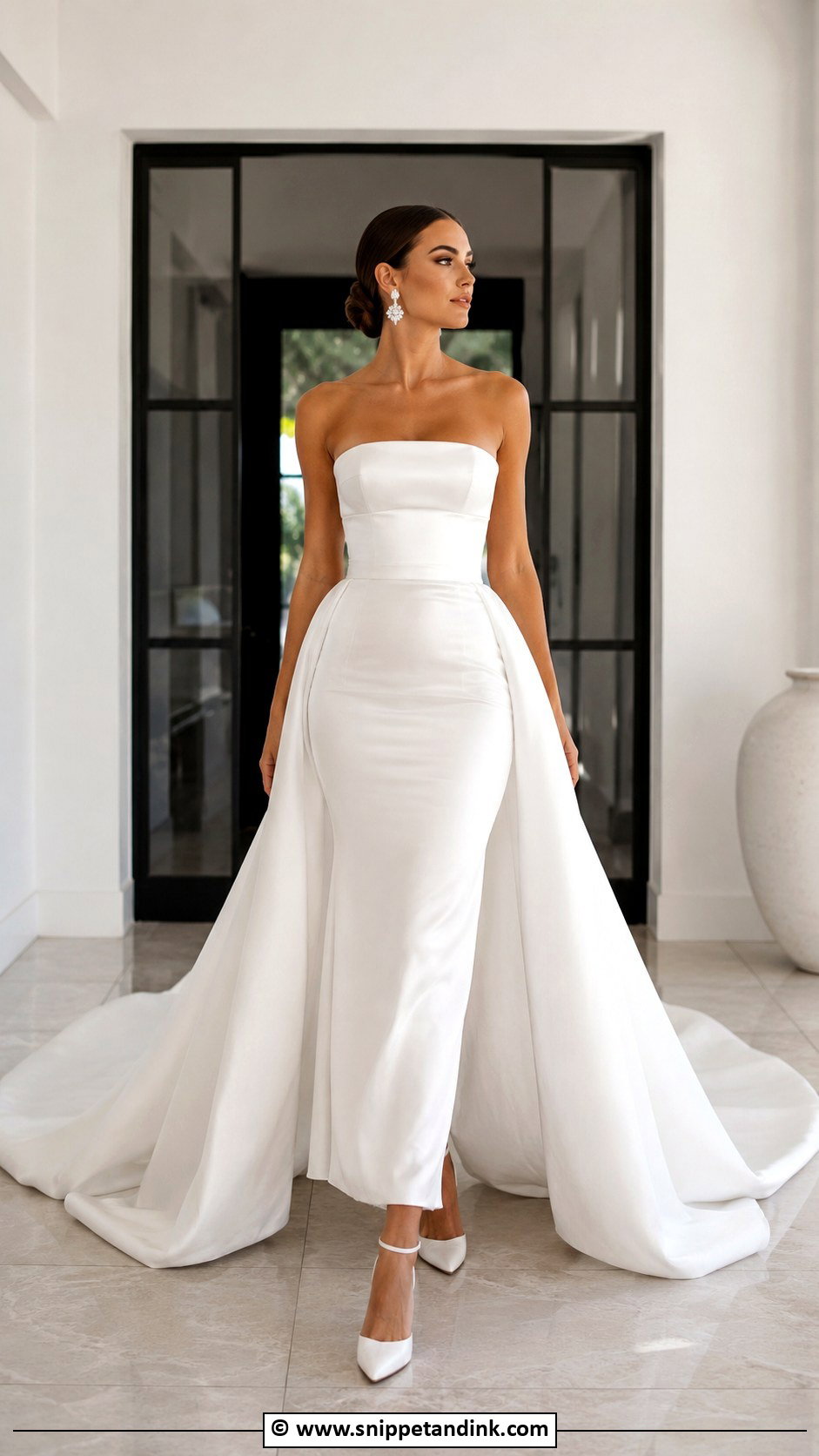
Drama first, comfort later. A detachable train finishes the ceremony look, particularly in photos from behind, then comes off so the dress is easy to walk and dance in. Unlike a bustle, which pins the fabric up, a detachable train is removed completely, so nothing can drag or come unhooked on the dance floor. It works with fitted gowns, satin and minimal silhouettes. Choose a train that attaches neatly at the waist or a back seam. Veil for the first look, statement earrings for the second.
30. Simple Wedding Dress With Removable Accessories
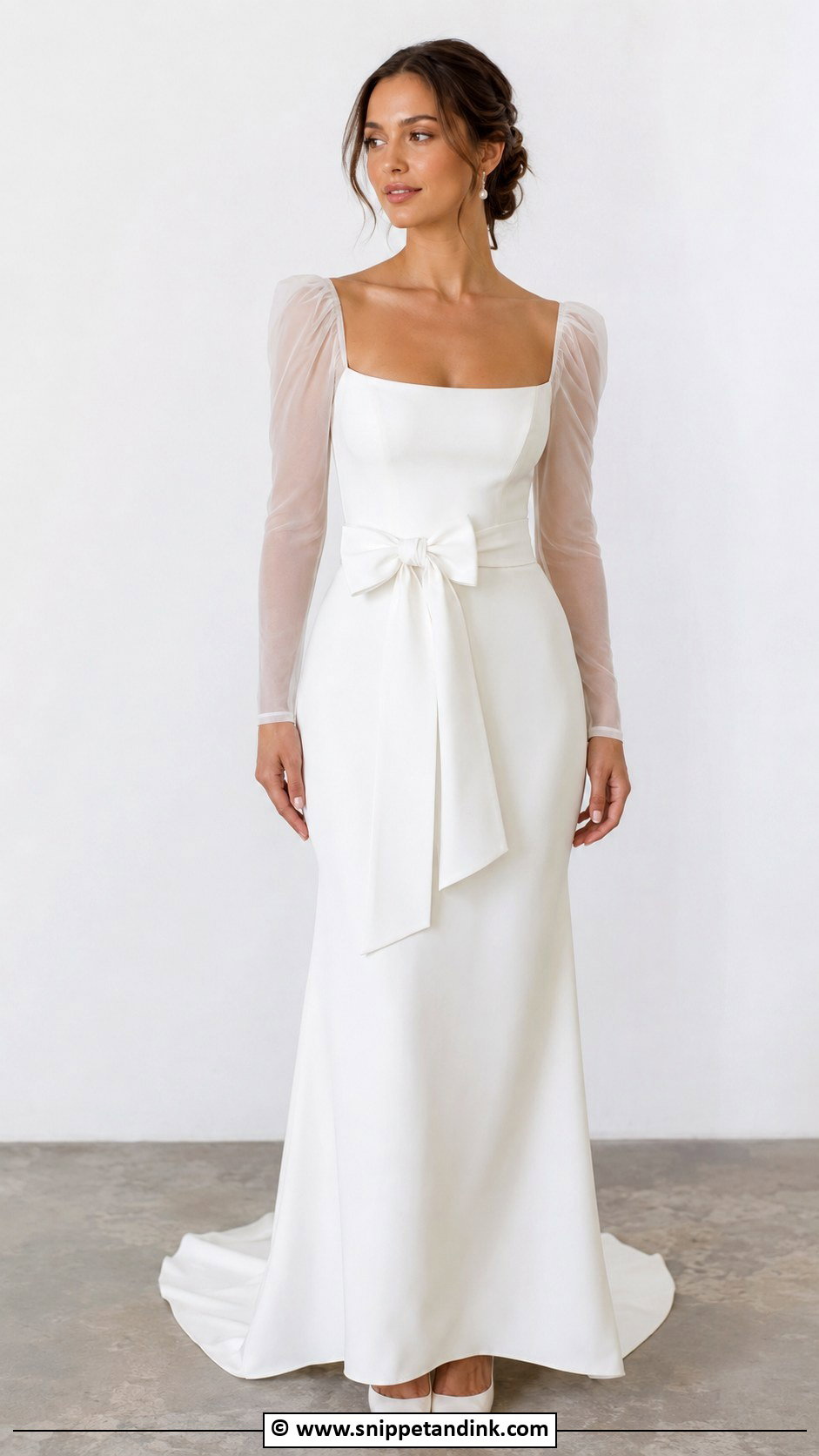
The simplest conversion of all starts with a clean gown in satin, crepe, chiffon or mikado, then adds removable pieces such as sleeves, a bow, a cape, a scarf, a topper or an overskirt. You personalize the dress without buying a heavily detailed one. The extras make the ceremony look fuller and more formal, and the plain dress underneath feels fresh for the reception. If the pieces come from a different maker than the dress, take a fabric swatch when you shop, since satins differ in sheen even when the color matches.
Planning the Quick Change on the Day
The change is a small event inside your timeline, and it goes wrong mostly when nobody has planned it. These are the arrangements I make with every bride wearing a convertible gown.
- Choose your helper. One bridesmaid or relative learns the change at the final fitting and practices it at least once. Fastenings that are easy for a seamstress can baffle someone seeing them for the first time.
- Choose your moment. Most brides change after portraits and before the reception entrance, or straight after the first dance. Tell your planner and photographer, so the reveal can be captured if you want it.
- Choose your room. You need a private space with a mirror close to the reception, not a corridor or a bathroom stall.
- Allow fifteen minutes, even if the change itself takes five, so hair and lipstick can be touched up before you walk back in.
- Decide where the pieces go. Overskirts and capes are bulky; bring a hanger with loops, a garment bag and one named person who takes them home.
Leave a small bag in that room as well: safety pins, fashion tape, a hand steamer if the venue allows one, and whatever reception jewelry or shoes you’re switching into.
Drama, Coverage or Something Modern?
A convertible bridal look is more than a trend. It gives you freedom, comfort and more wear from one dress. Your venue, season, figure, how much you’ll move and your personal style should decide which version you choose. For drama, look at an overskirt, cape or train. For coverage, detachable sleeves, a bolero or a topper. For something modern, a jumpsuit, a mini or a tailored jacket. Whatever you pick, test how every piece attaches, moves and comes off well before the wedding, so both looks feel finished.
You'll Like These Ideas:



Leave a Reply