
A long sleeve changes how a gown feels more than how it looks. It decides whether you can lift your arms for a first dance, how warm you get by the third hour, and how the bodice sits when you reach for a glass. The ideas below run from lace ball gowns and plain crepe columns to airy chiffon and contemporary dresses with detachable sleeves, plus newer details like basque waists, sculptural draping, pearls and square necklines. When I pull sleeved gowns for a bride, I judge every one on fabric weight and arm movement before I let anyone fall for the neckline. That habit shapes all twenty notes that follow.
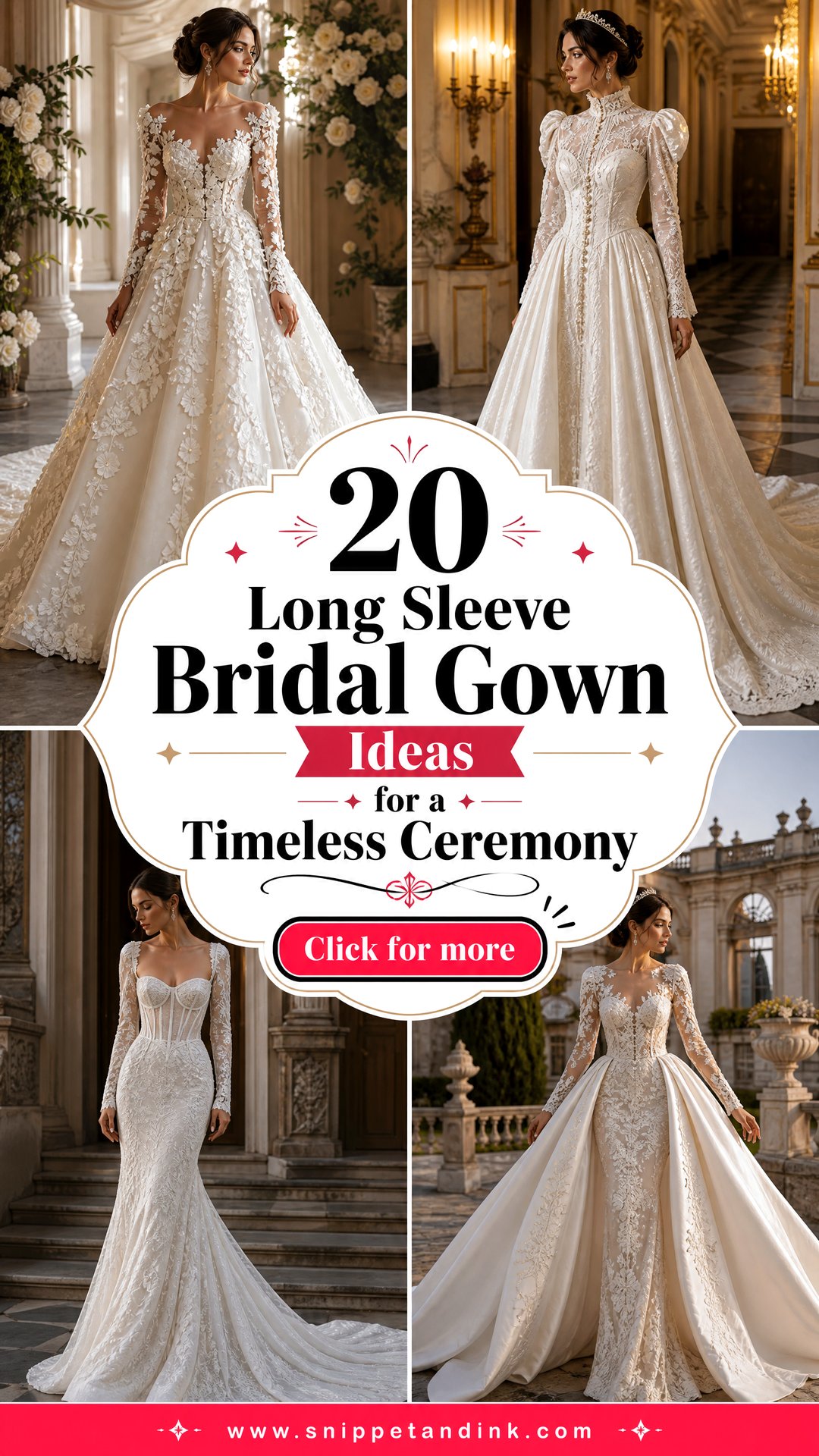
How a Sleeve Is Cut Decides Whether You Can Hug Anyone
Two gowns can have identical lace sleeves and feel completely different, and the reason is almost always the armhole. A high, close armhole lets the arm lift without dragging the bodice up with it. A low, generous armhole looks comfortable on the hanger but pulls the whole gown upward the moment you reach for someone. When I fit sleeves, I spend more time on that seam than on the sleeve itself.
Fabric matters next. Stretch lace and stretch crepe forgive a lot. Non-stretch satin, Mikado and most beaded tulle do not, so those sleeves need a little ease built in or you will feel them at the elbow every time you bend.
Four movements I ask for in the fitting room
- Wrap both arms around someone as if greeting a grandparent, then check whether the neckline lifted or the back gaped.
- Hold a bouquet at waist height for a full minute; tight sleeves tire the forearms faster than you’d expect.
- Raise one arm above your shoulder like a first dance hold and see if the waist seam rides up.
- Sit down and reach forward for a glass. If the sleeve cuts into the inner elbow, it will hurt by dinner.
On length, I mark the cuff at the wrist bone with your arms relaxed. Lace points or finger loops can extend over the hand, but a plain sleeve that covers the knuckles usually looks like a sizing mistake in photos.
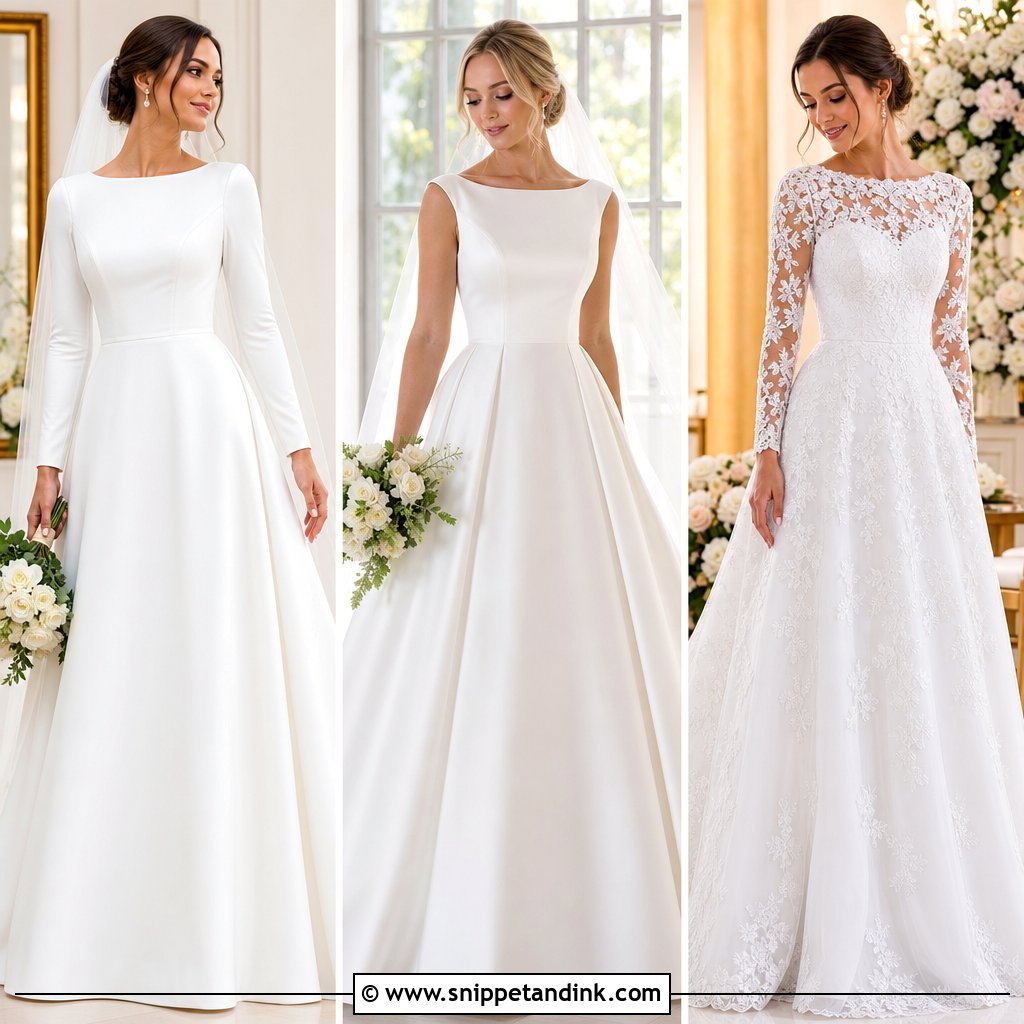
1. Lace A-Line Long Sleeve Bridal Gown
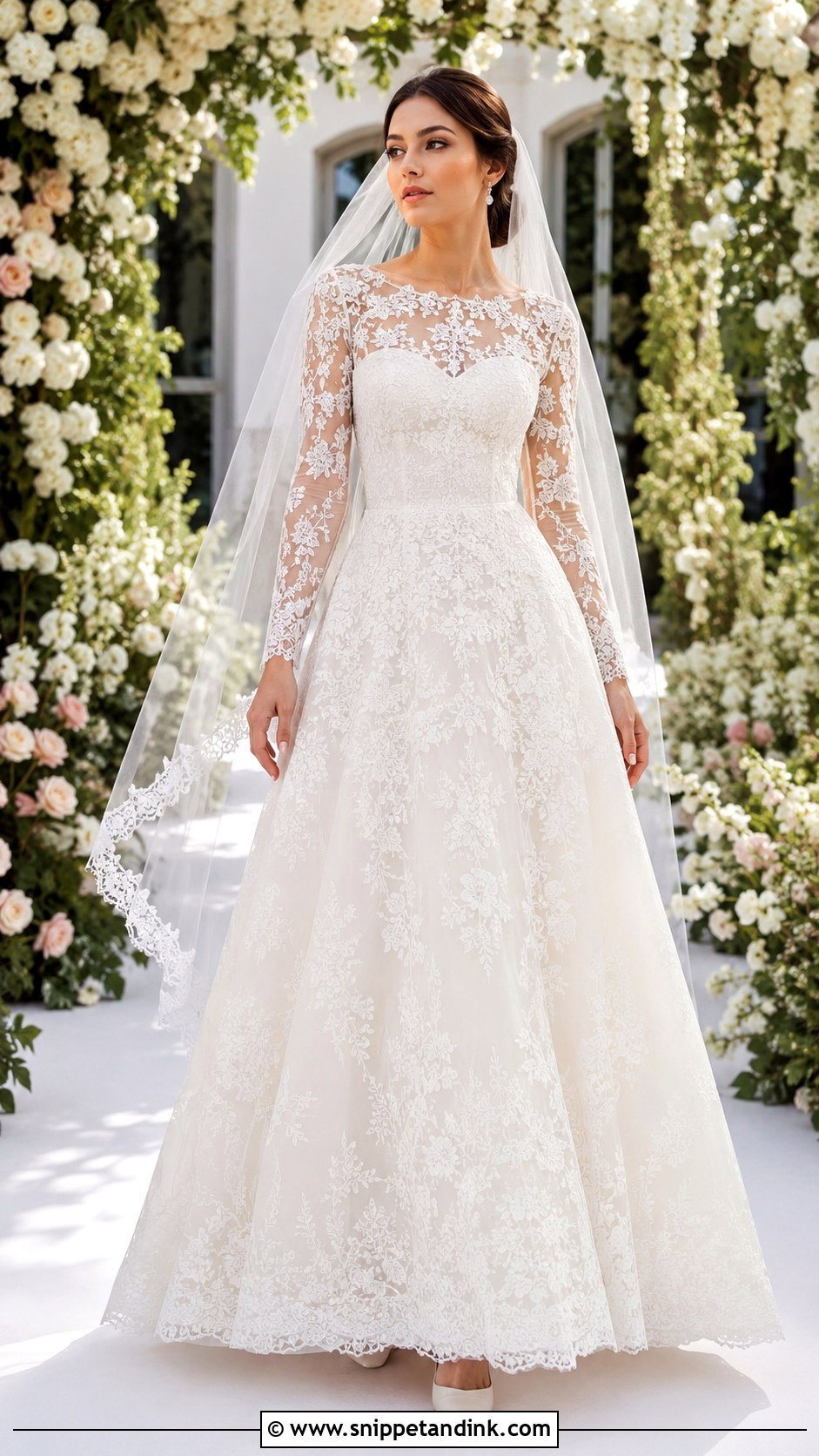
This is the gown I hand over first when a bride isn’t sure sleeves are for her, because the A-line skirt asks nothing of her hips and the lace sleeve reads as texture rather than coverage. Look for a fitted bodice, a true natural waist and a skirt that moves without dragging. Floral lace on the arm lets a little skin show between motifs. A bateau or soft V frames the face without fighting the pattern. I’d pair it with pearl drops, a fingertip veil and pointed ivory pumps, and keep the hair in a low chignon so loose strands don’t snag on the lace at the shoulder.
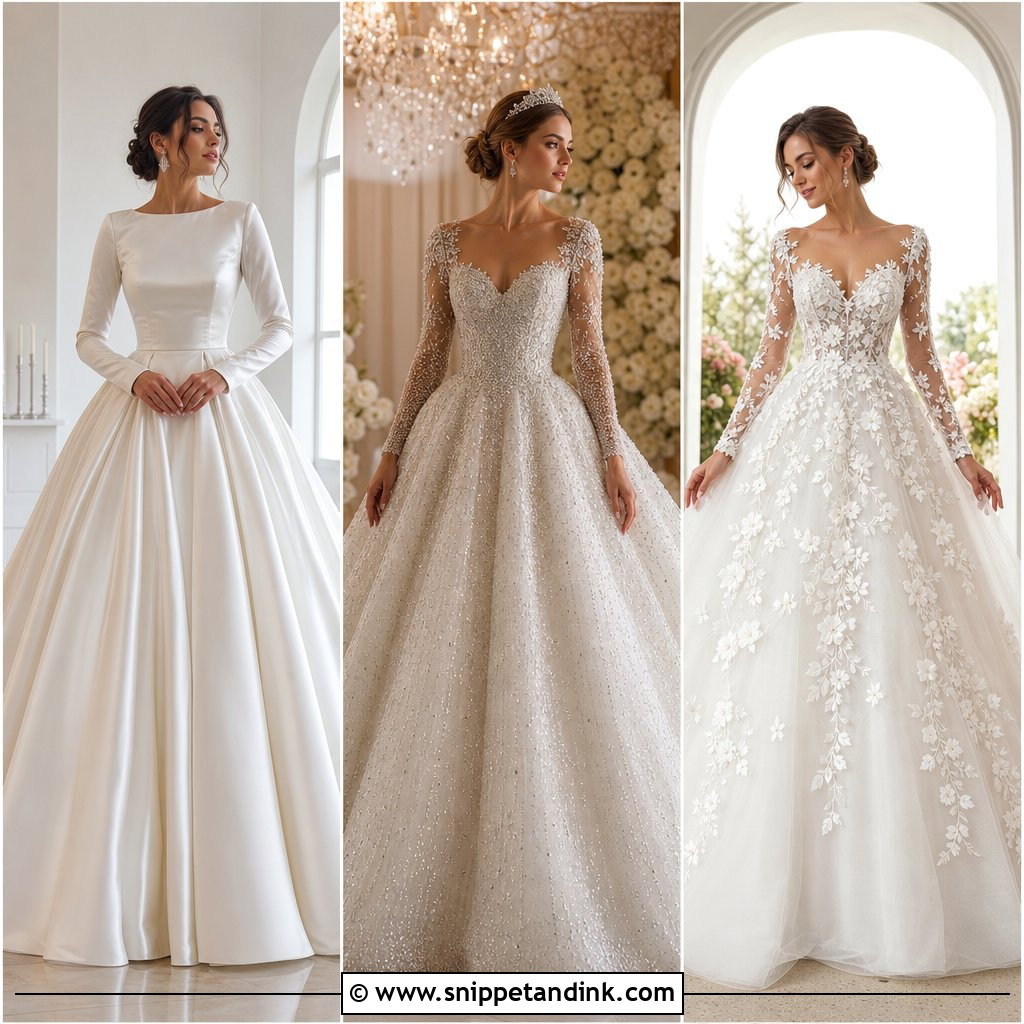
2. Satin Ball Gown With Long Sleeves
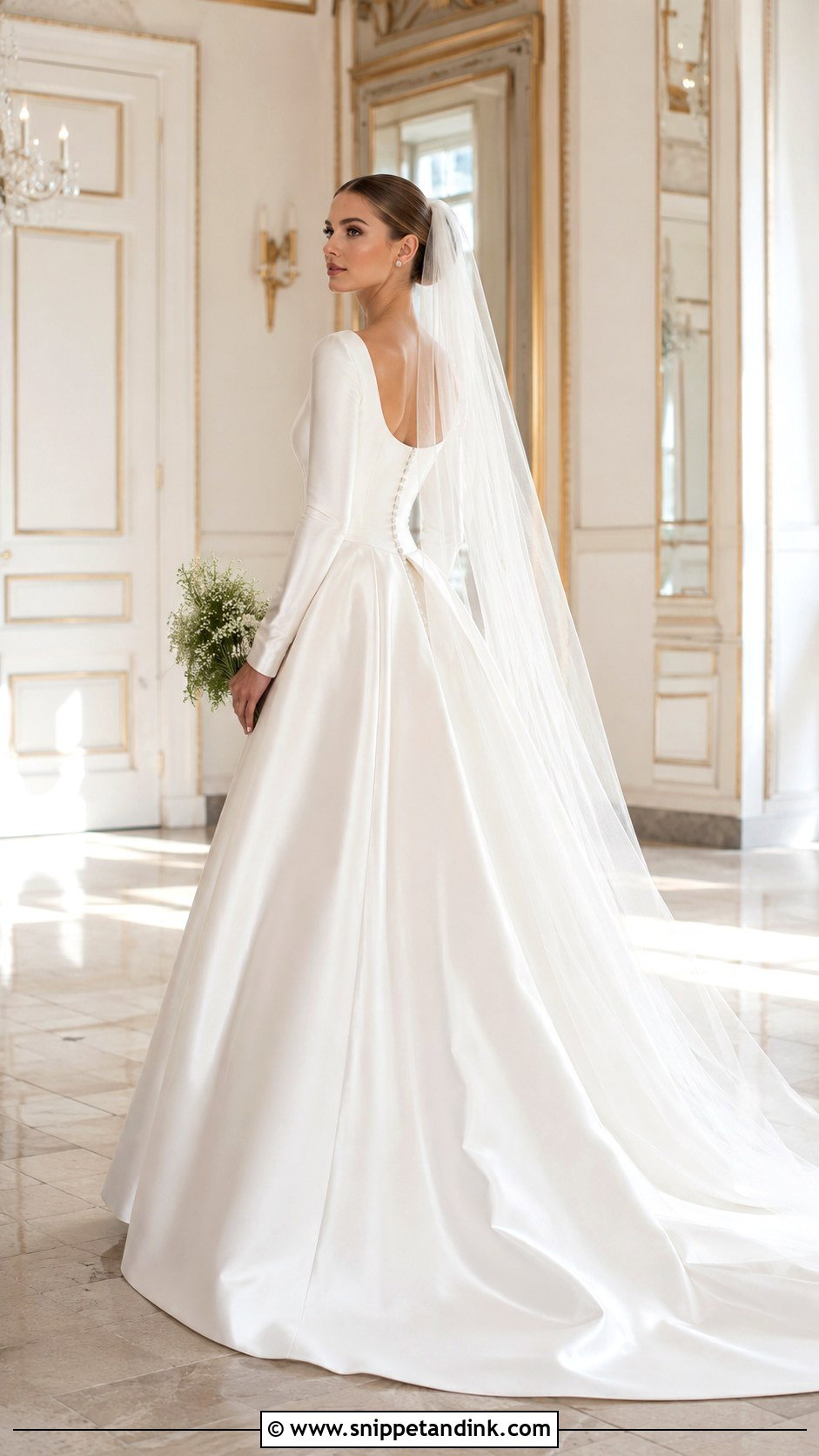
Satin hides nothing, so the cut has to be right. A structured bodice and full skirt pull the waist in, while a fitted sleeve keeps the top half narrow against all that volume. Satin-covered buttons down the back finish it without any beading. Watch one thing at the fitting: satin sleeves wrinkle at the inner elbow every time you bend, and those creases show in close portraits, so I ask for a sleeve cut with a touch of ease rather than skin-tight. Crystal studs, a plain cathedral veil and closed satin heels are enough. With a skirt this big, a neat bun or brushed-out waves does more than an elaborate updo. Ballrooms, old estates and cold-season dates suit it best.
3. Square Neck Crepe Long Sleeve Bridal Gown
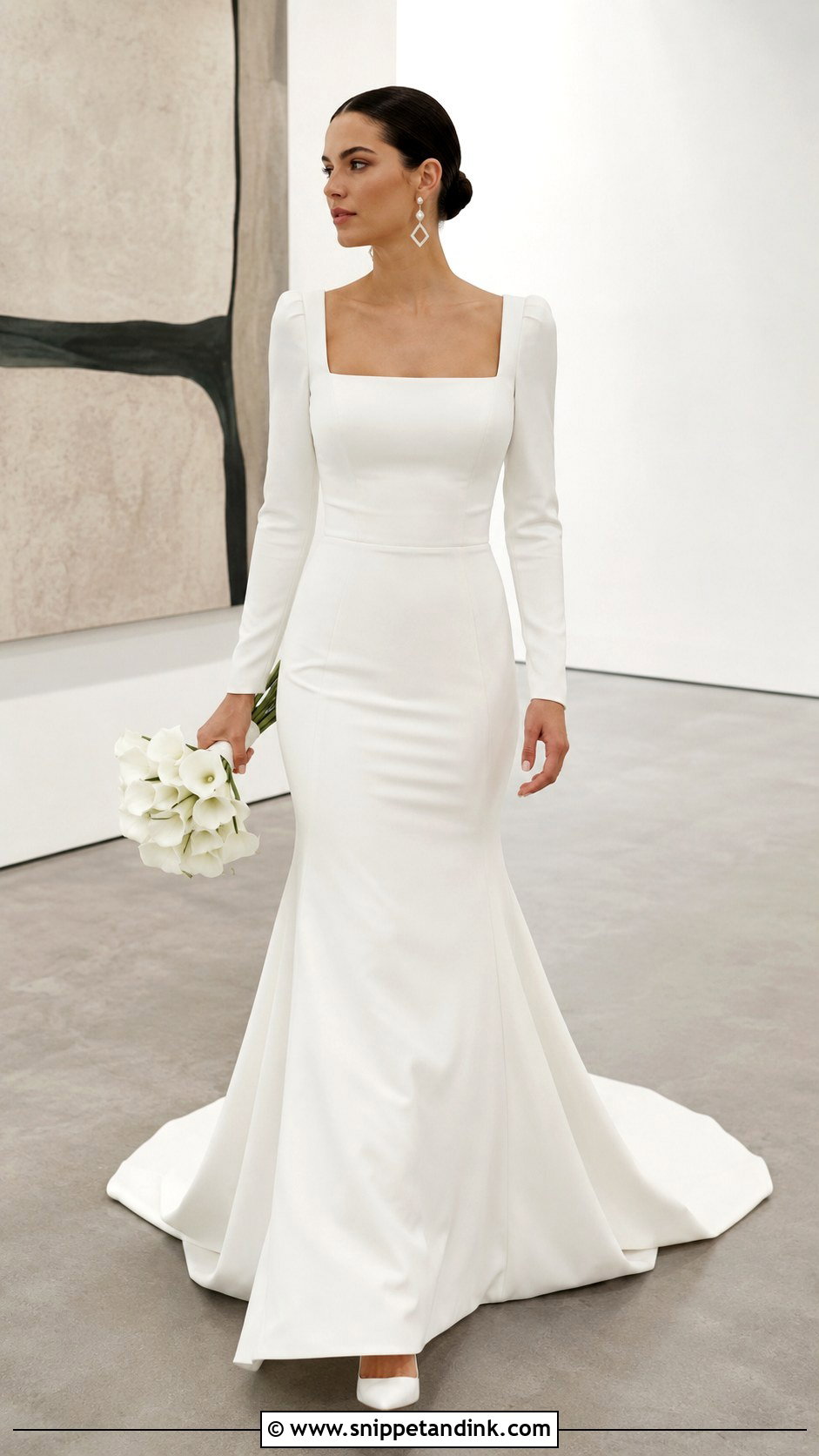
Stretch crepe is the most honest fabric in a bridal salon. It follows the body and shows every seam, bra line and uneven hem, so buy the heaviest crepe the designer offers. The square neckline opens the collarbone and the sleeves frame the bodice in clean lines. A fit-and-flare skirt adds shape; an A-line gives more room through the hips. Wide square necks have a habit of sliding off the shoulder once sleeves are attached, so I always have the seamstress check shoulder placement with your arms raised. Geometric pearl earrings, pointed pumps, a structured bouquet and a center-parted low bun keep it modern for a gallery or city venue.
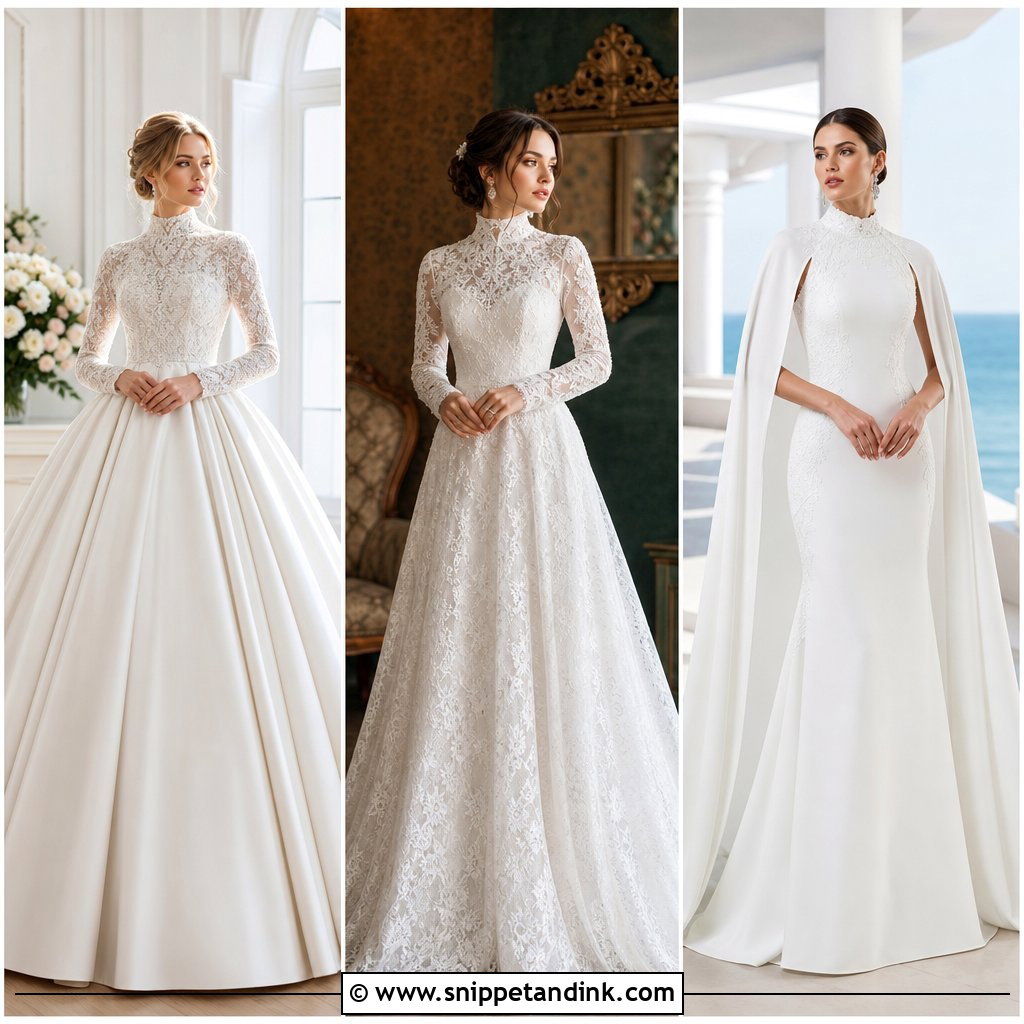
4. High Neck Lace Long Sleeve Bridal Gown
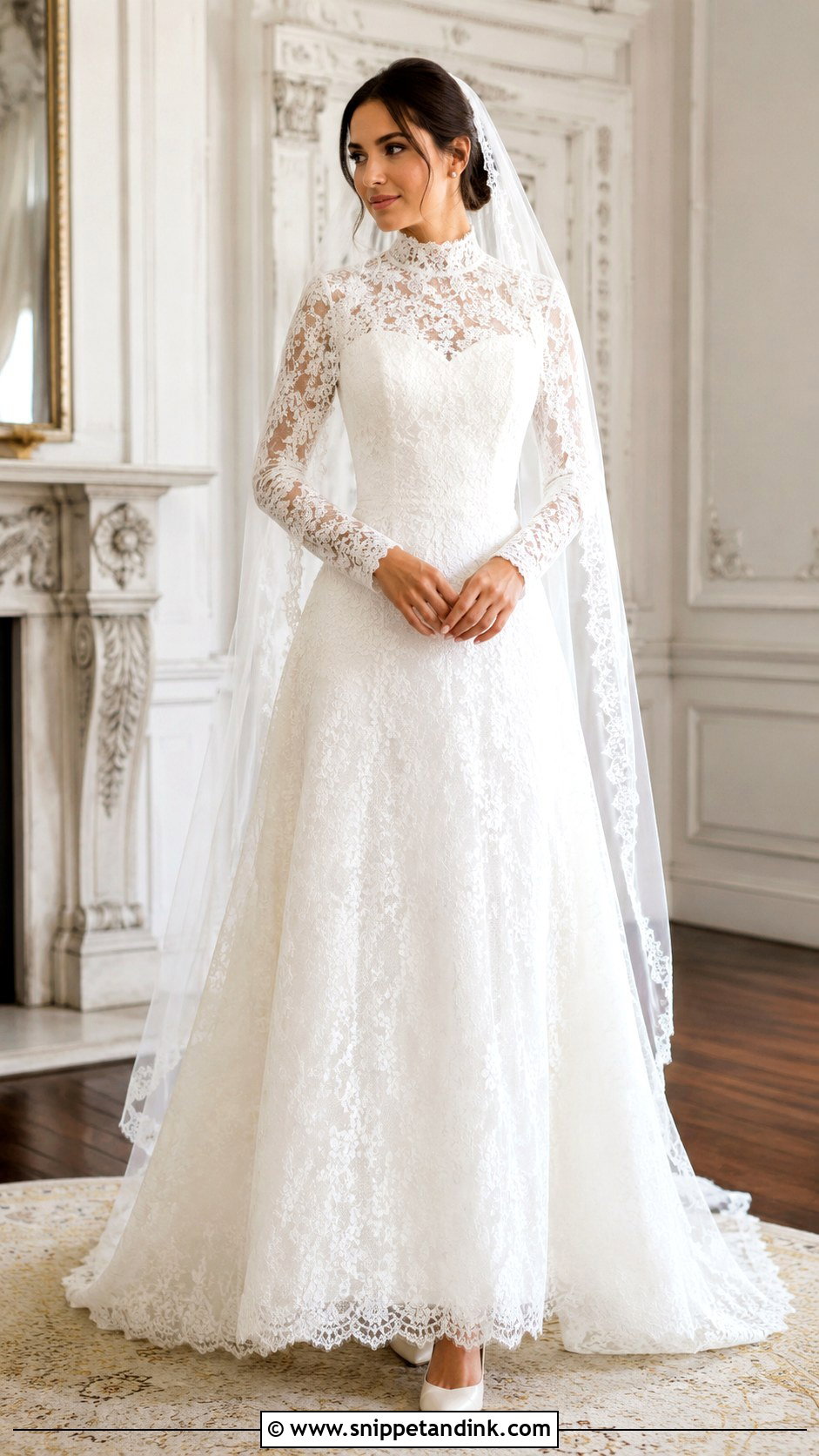
High necks feel heavy only when the lace runs solid to the chin. Sheer lace at the collar over a lined sweetheart or straight bodice keeps the coverage while letting the neck breathe. The appliqués on the sleeve should be placed so the pattern travels from shoulder to wrist without a visible break at the seam; that hand placement is a sign of a well-made gown. A gathered A-line skirt balances the closed neckline. I’d go with small pearl studs, low ivory heels and a lace-edged veil that repeats the gown’s lace instead of adding a second pattern, then lift the hair so the collar and back can be seen. It belongs at formal traditional ceremonies, winter weddings and historic venues.
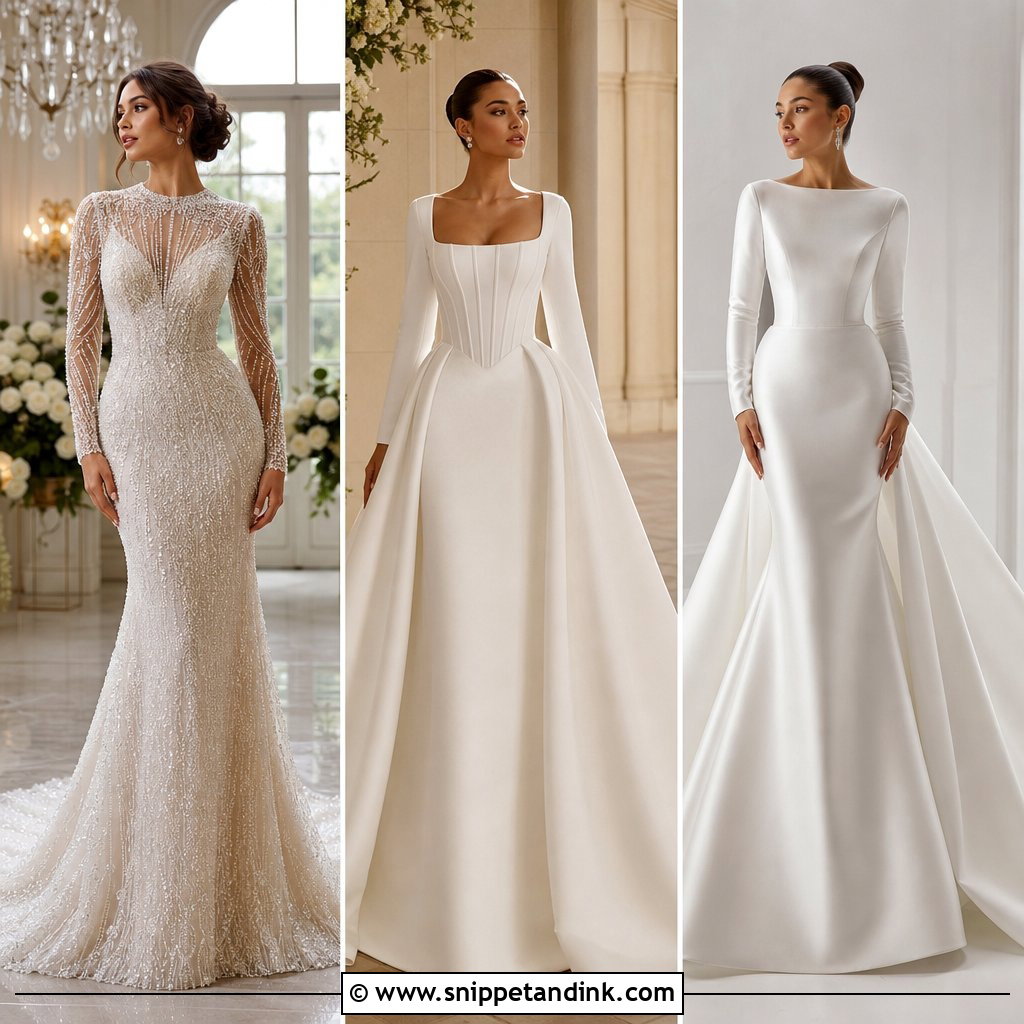
5. Illusion Sleeve Mermaid Bridal Gown
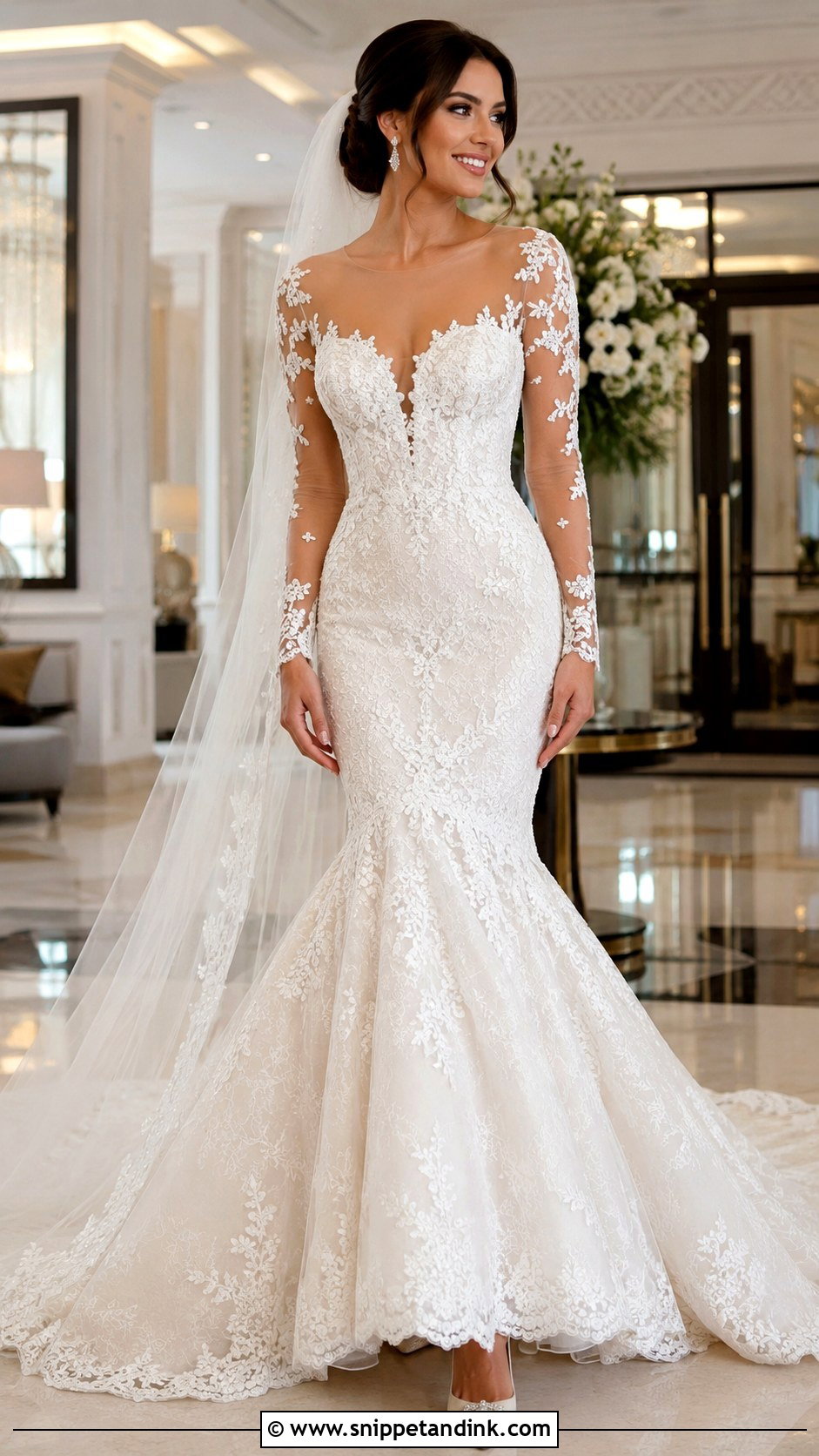
Mermaid gowns live or die at the knee. An illusion sleeve mermaid gown should fit smoothly through the waist and hips and flare low enough to look dramatic but high enough that you can still take a normal stride. Tulle sleeves dotted with lace appliqués give the floating effect, and the tulle has to match your skin tone or it reads as a grey film in photos, so I hold swatches against the inner wrist in daylight before ordering. A narrow chapel veil, crystal earrings, soft side-parted waves and comfortable pointed heels hidden under the flare finish it. Practice sitting and climbing a step at every fitting, because a mermaid needs precise tailoring. Ballrooms and evening hotel receptions are its natural setting.
6. Chiffon Bishop Sleeve Bridal Gown
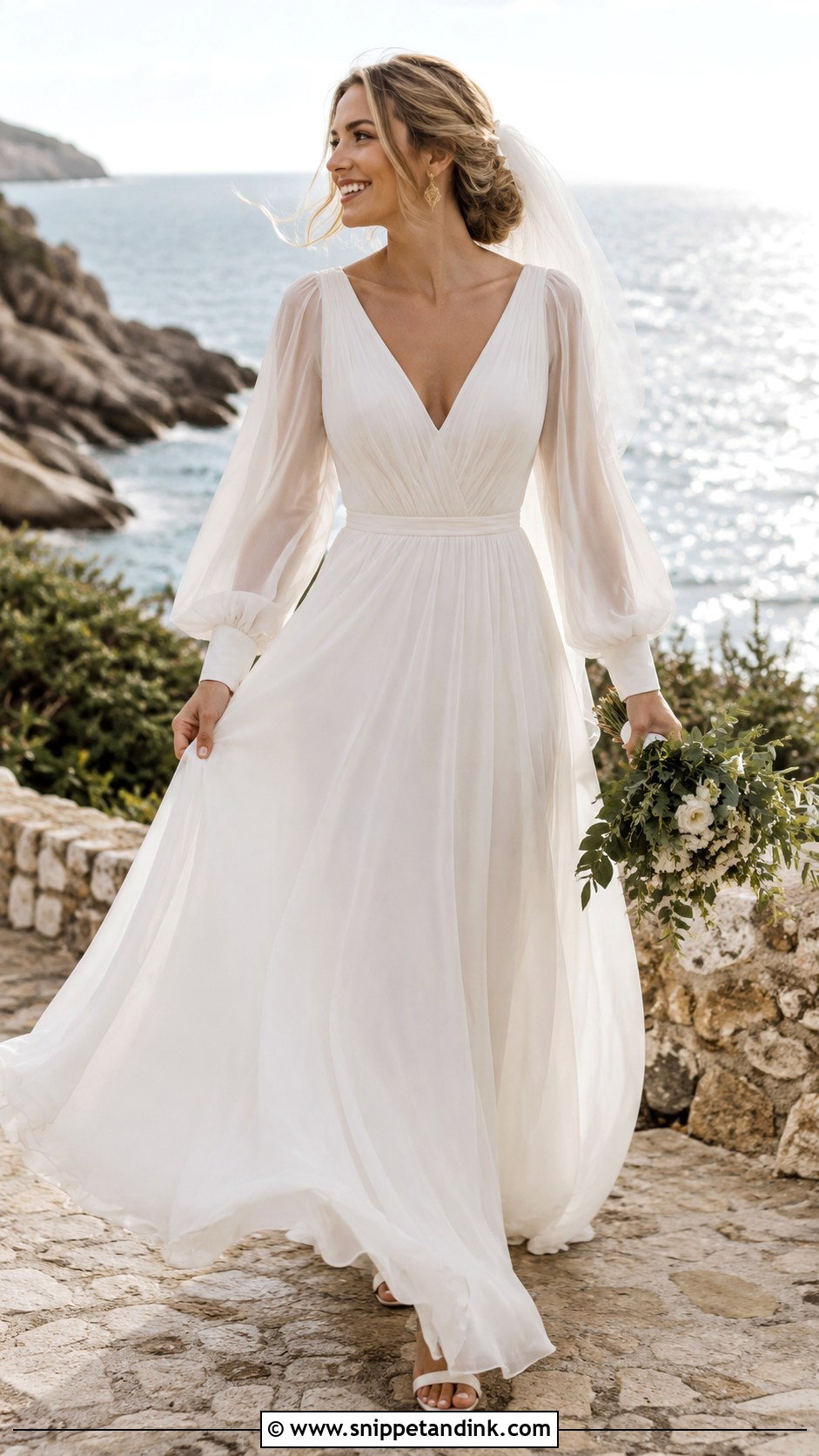
Chiffon bishop sleeves billow, then gather into a fitted cuff, so the volume sits at the forearm and never at the shoulder. That is why they flatter brides who worry about broad shoulders. Pair them with a simple V-neck bodice and a flowing A-line or empire skirt. Chiffon is slightly sheer, so I check the lining through the body under strong window light before anything else. Delicate gold earrings, block-heel sandals, a loose low bun with small pins and a light veil keep everything in the same airy weight. For a beach or a summer garden, breathable chiffon sleeves are far kinder than dense lace or layered synthetics.
7. Detachable Sleeve Bridal Ball Gown
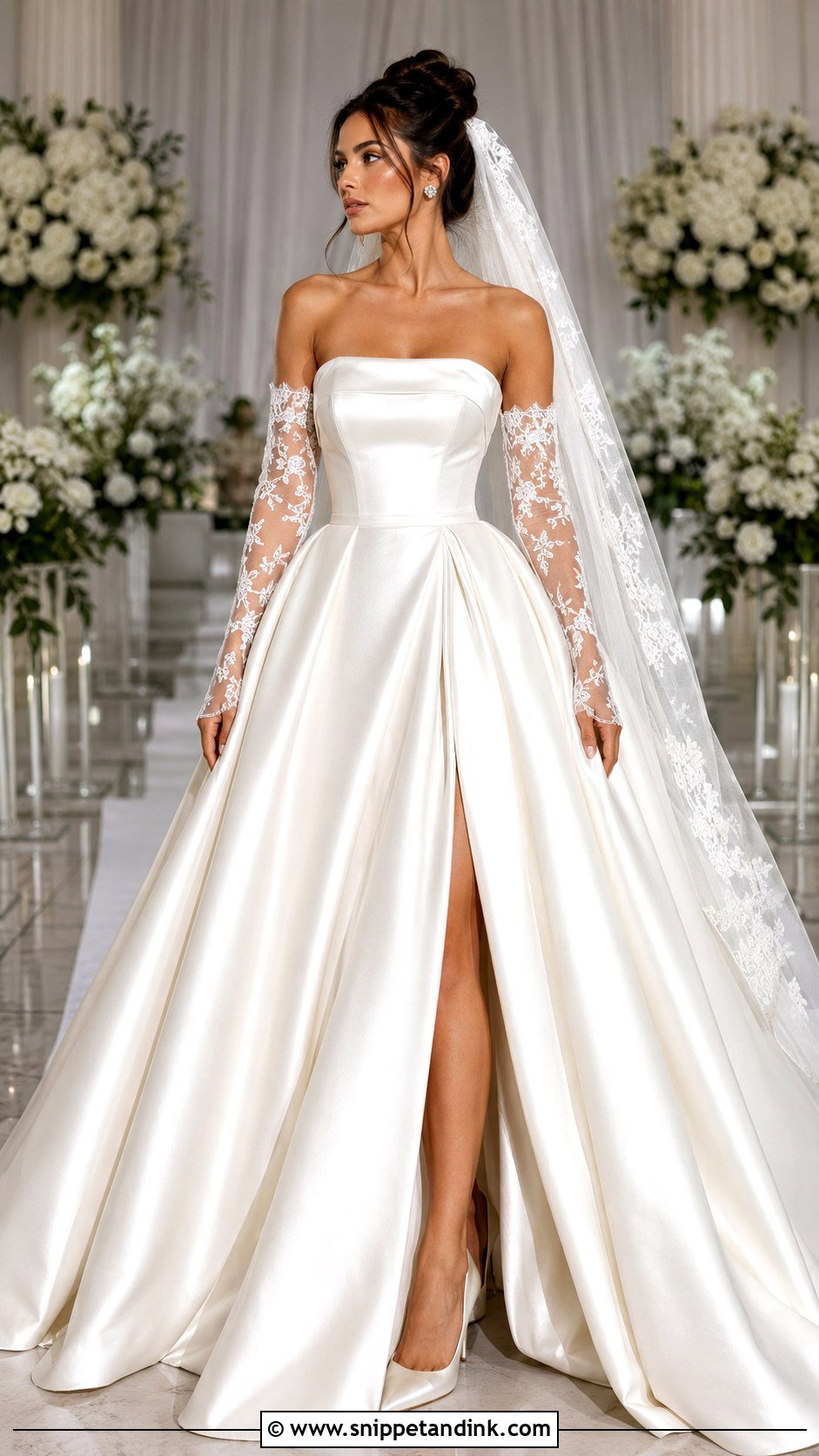
Removable sleeves give you two looks from one gown, and designers are offering them more often alongside detachable overskirts. Start with a strapless or sleeveless ball gown whose bodice stays up on its own; if it relies on the sleeves for support, taking them off will undo the fit. Add fitted lace, draped satin or sheer tulle sleeves for the ceremony, then remove them for dancing. Ask exactly how they attach. Snaps and elastic edges can peek out in side shots, and I like to see the sleeves taken off and put back on in the fitting room by whoever will help you on the day. Wear a cathedral veil, crystal studs and satin pumps for the ceremony, then switch to statement earrings or a shorter veil. It saves buying a separate reception dress.
8. Basque Waist Satin Long Sleeve Bridal Gown
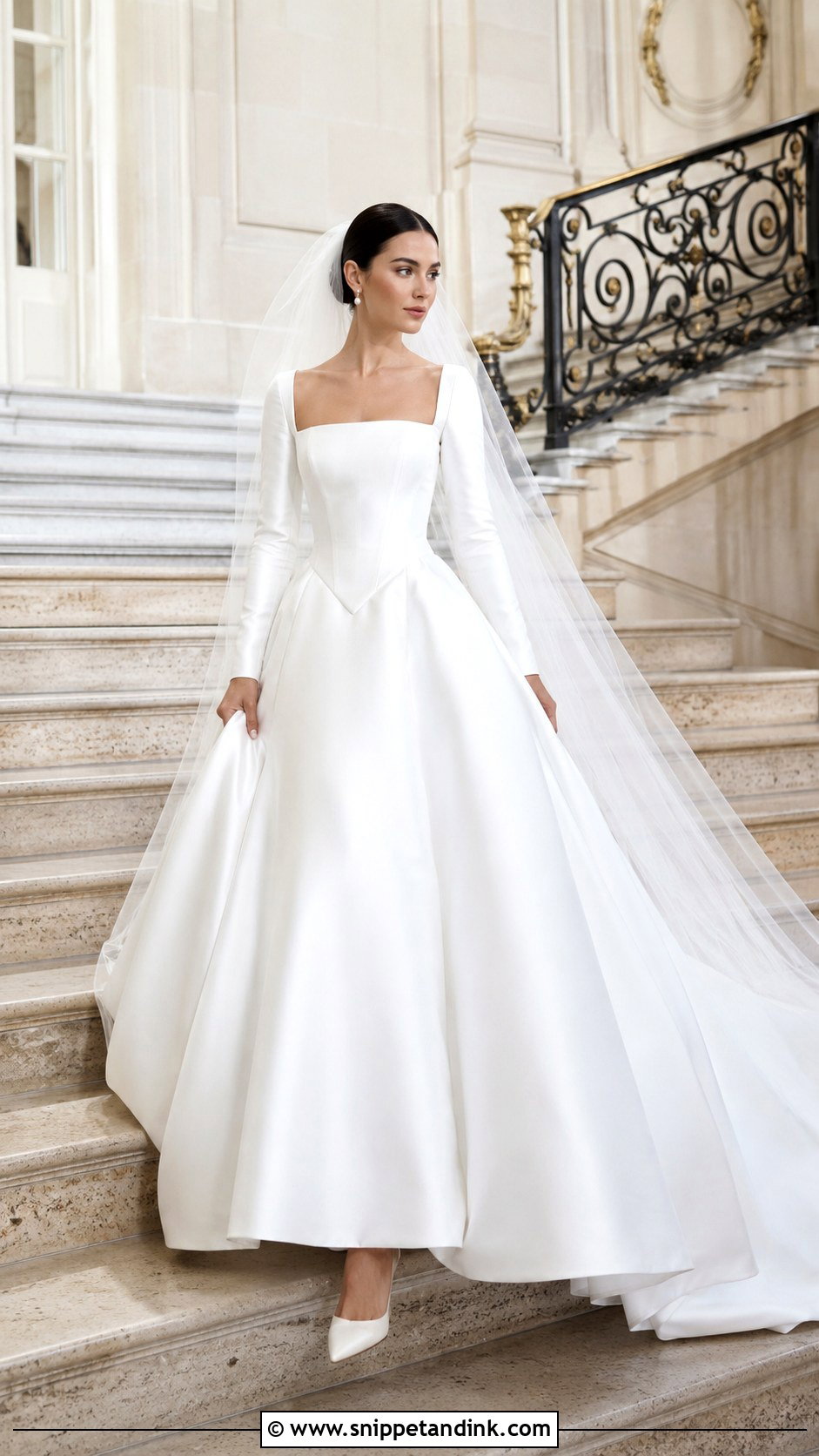
The dropped V of a basque waist satin gown lengthens the torso and sharpens the waist, and long fitted sleeves keep the full skirt from looking top-light. Structured satin or Mikado holds the point all day; softer satin buckles at the V once you’ve been sitting. A scoop or square neckline softens the shape. Pearl earrings, a long plain veil and pointed satin heels are plenty, and I skip necklaces here because the neckline and waist already give the eye two places to go. Shorter torsos should try a shallow basque against a deep one at the fitting, while taller brides can carry a longer point. Formal indoor and evening venues show it off best.
9. Boho Floral Lace Long Sleeve Bridal Gown
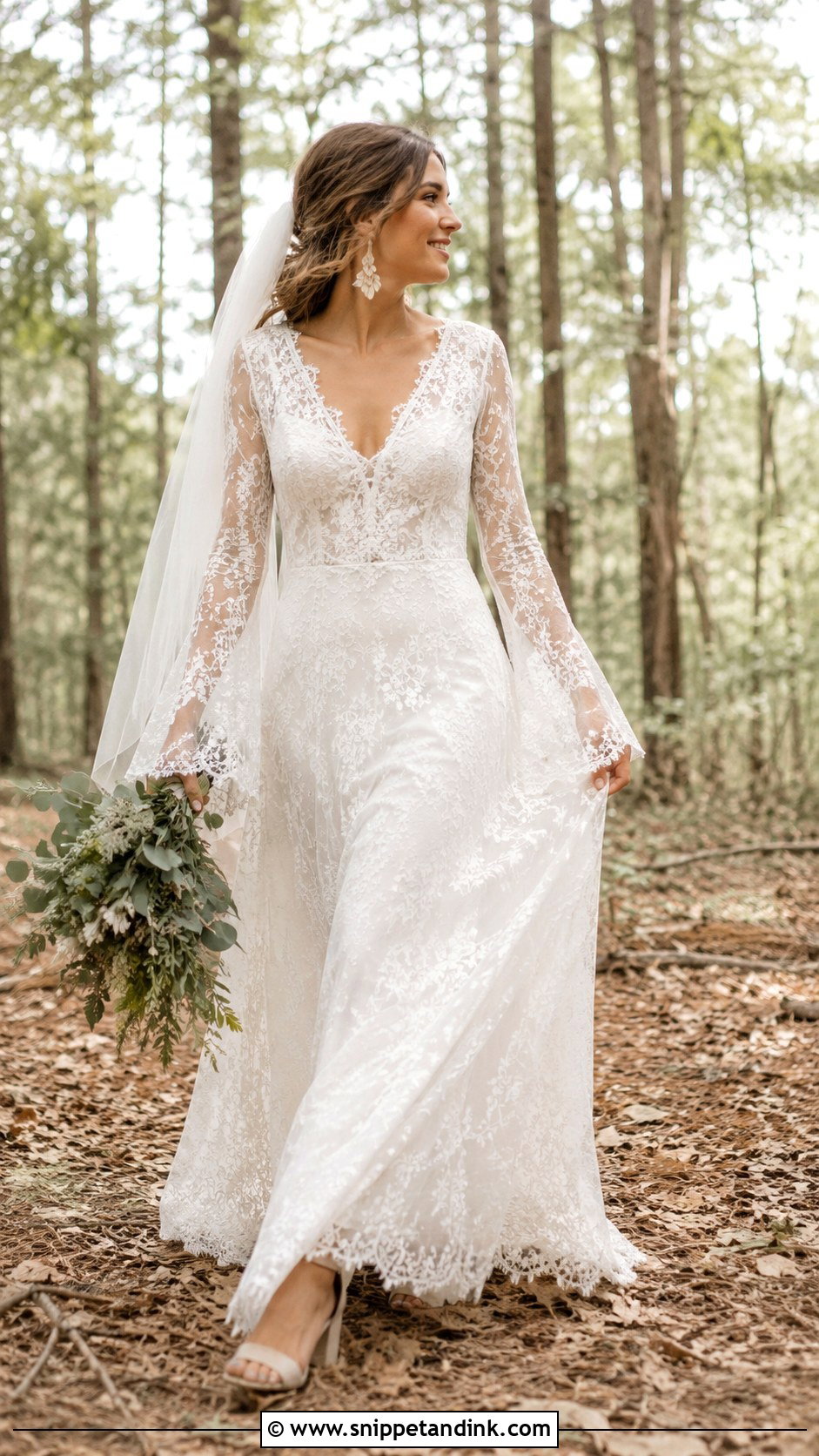
Large floral lace gives a relaxed bohemian mood that still feels like a bride and not a guest. Keep the silhouette light, a soft A-line or sheath, because a heavily structured skirt fights the loose lace. Bell or flared sleeves suit the mood, but I check that they end above the knuckles; a sleeve that covers your hands will end up in the cake and the bouquet stems. Low block heels, textured earrings, a loose bouquet with greenery and waves, a braided updo or a small floral piece complete it, with a plain tulle veil so the lace stays visible. Woodland, desert and coastal ceremonies are where it makes the most sense, anywhere you need to walk on uneven ground.
10. Minimalist Column Long Sleeve Bridal Gown
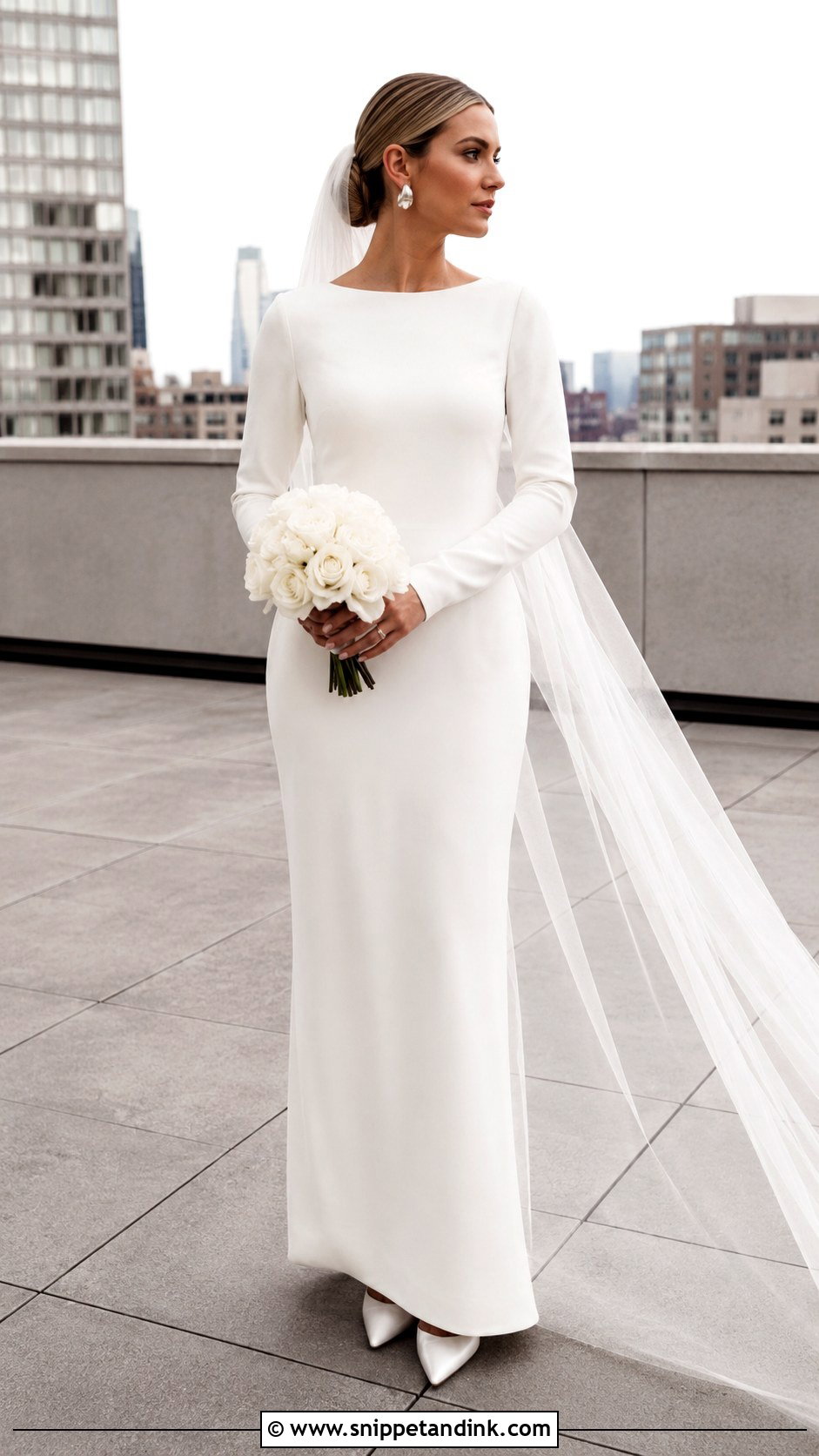
A plain column proves a sleeve doesn’t need lace to carry a gown. Smooth crepe, silk or matte satin with exact seams and a close but comfortable fit is the whole design. A high bateau front can pair with a low back for contrast. Here’s my honest warning: simple fabric exposes poor tailoring faster than anything else, so this is not the gown to buy from a store with rushed alterations. Supportive undergarments matter as much as the seams. Sculptural earrings, sleek pointed pumps, a compact bouquet, a long plain veil and a smooth bun or tucked waves keep the line clean for a hotel, rooftop or gallery wedding.
11. Pearl Long Sleeve Bridal Gown
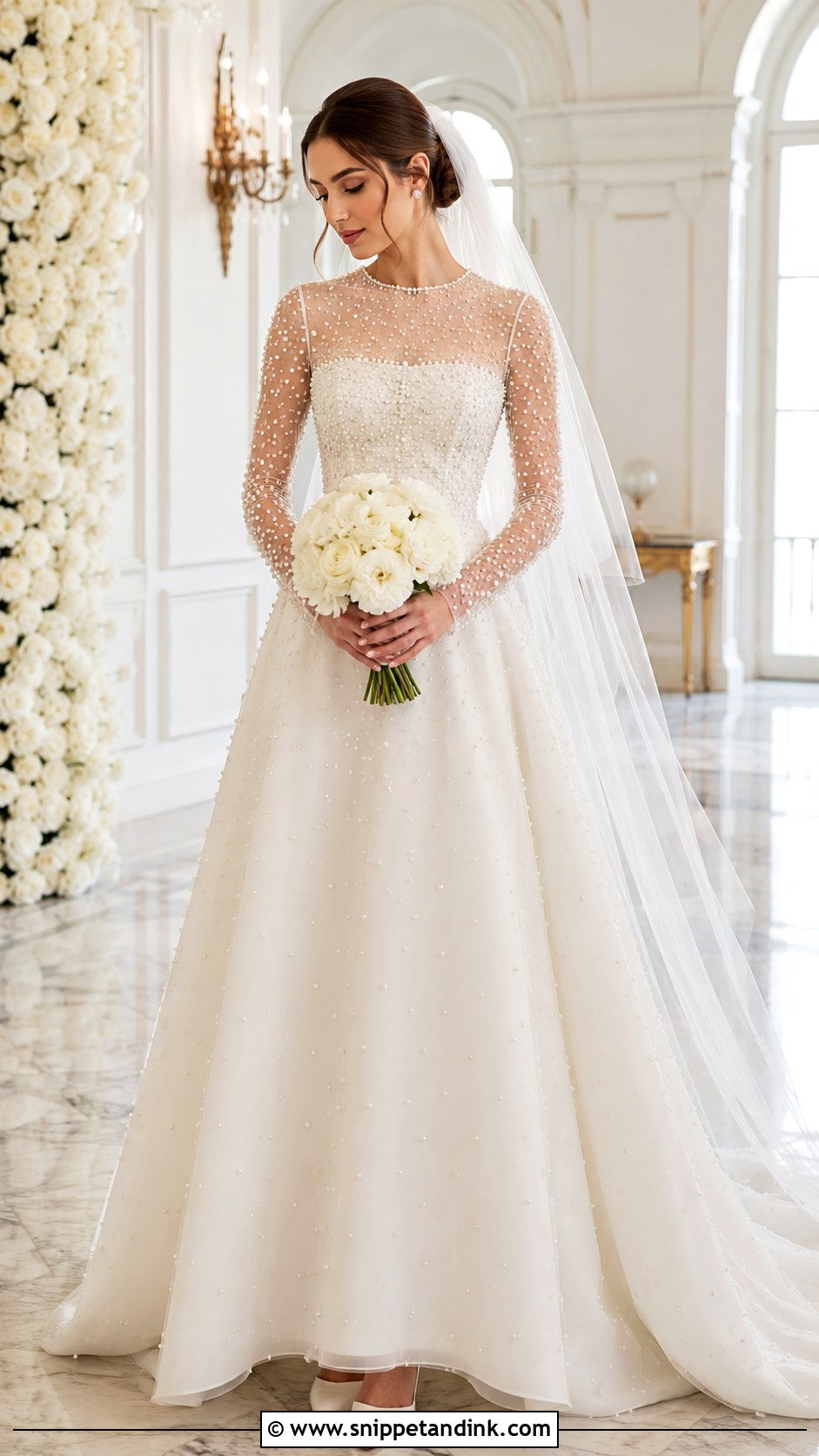
Pearls glow rather than sparkle, which is why I suggest them to brides who find crystals too sharp. Scattered pearls across sheer sleeves and the bodice look light; a denser pattern turns decorative fast. An A-line skirt keeps the embellishment as the focus. Pearl studs, not a necklace, especially with a detailed neckline. Ivory pumps, a plain chapel veil, a structured white bouquet and a neat updo finish it, and the updo matters because loose hair tangles around raised beads. Before you buy, pull gently at a few pearls on the sleeve and ask whether spares come with the gown. Sewn pearls on a moving arm are the first thing to come loose.
12. 3D Floral Long Sleeve Bridal Gown
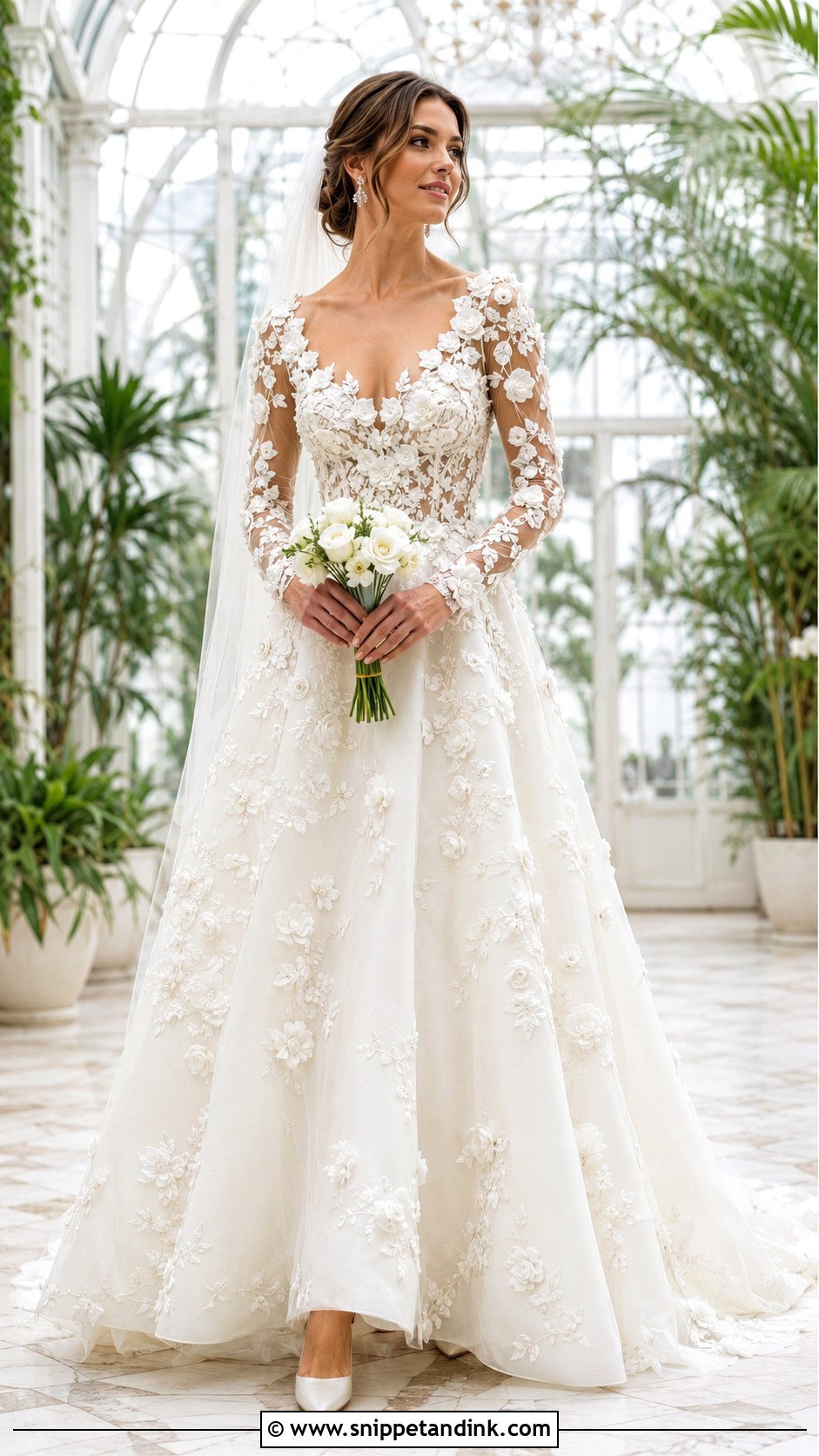
Three-dimensional flowers need restraint. The balance I look for is dense appliqués at the bodice thinning out toward the sleeves and skirt, so the gown reads as one piece instead of a costume. A fitted A-line or gentle ball gown gives the texture room. Keep the rest quiet: small crystal earrings, satin pumps, a plain veil, a smooth low bun and a simple bouquet rather than one full of competing colors. Have someone watch you walk with your arms at your sides, because raised petals on the inner sleeve rub against the bodice and can flatten or snag a veil. Botanical venues, conservatories and spring gardens give it a fitting backdrop.
13. Victorian Long Sleeve Bridal Gown
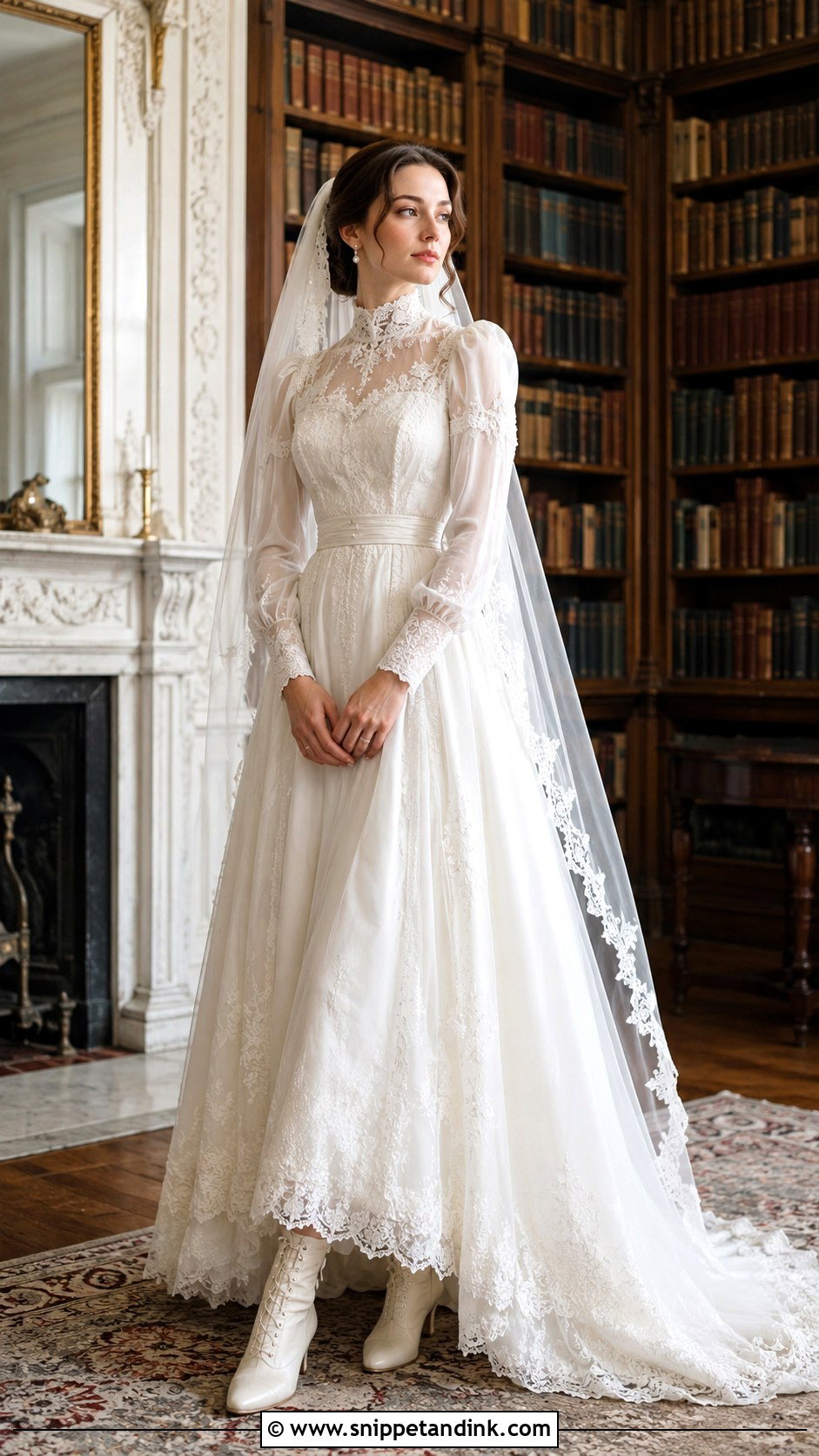
Victorian styling combines a high neck, a defined waist and full sleeves, and it tips into costume the moment ruffles take over. Choose delicate lace, covered buttons and softly gathered shoulders, and keep the A-line skirt’s volume controlled. Pearl earrings, a lace-edged veil and buttoned ivory boots or closed pumps fit the period feel, with a braided low bun or pinned curls. Vintage-style lace is often thin, so I want to see modern lining and real support built underneath before a bride commits. Historic houses, libraries, garden estates and autumn venues with old architecture suit it.
14. Mock Neck Long Sleeve Bridal Gown
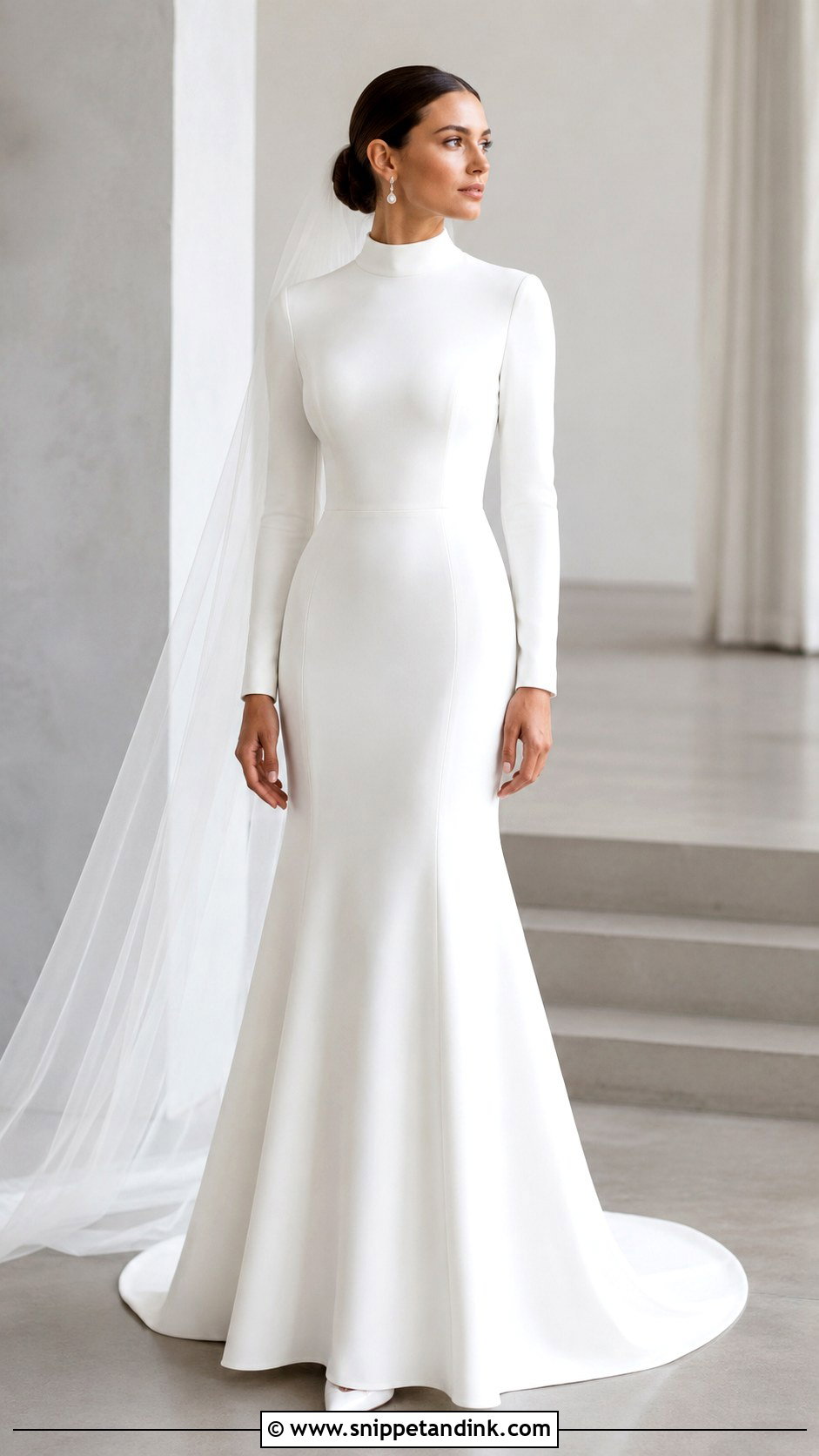
A mock neck gown gives coverage without the decoration of a traditional lace collar. In crepe it looks minimal; in stretch lace it softens. Shaped bodice seams and a skirt that releases below the hips keep it from looking like a turtleneck. An open or keyhole back lightens the front, but confirm the back closure is strong enough to anchor the sleeves, or they’ll ride up whenever you hug someone. Drop earrings, a long veil fixed below a sleek bun and pointed closed shoes are all it needs, with no necklace. The collar must sit flat without pulling, and that is a five-minute alteration only if the gown was ordered in the right size. Winter dates and contemporary venues suit it.
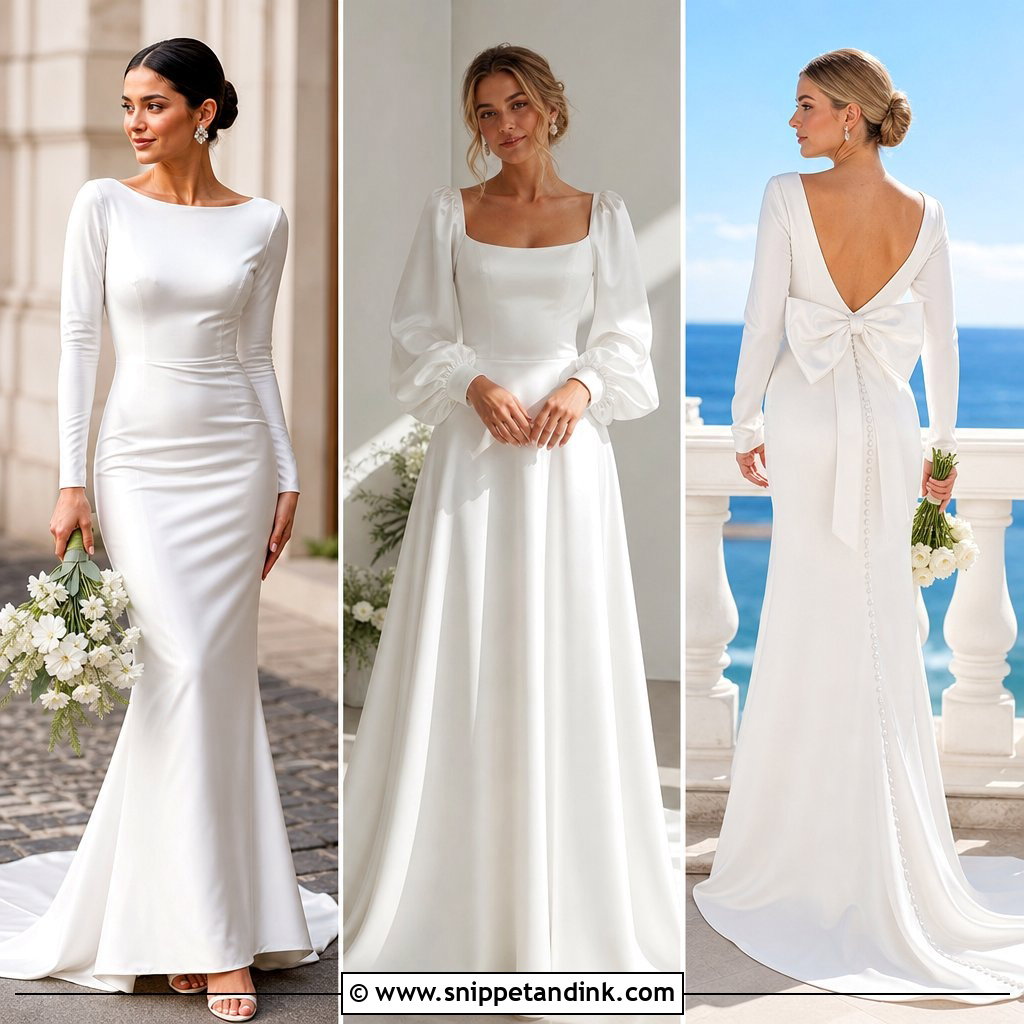

15. Open Back Lace Long Sleeve Bridal Gown
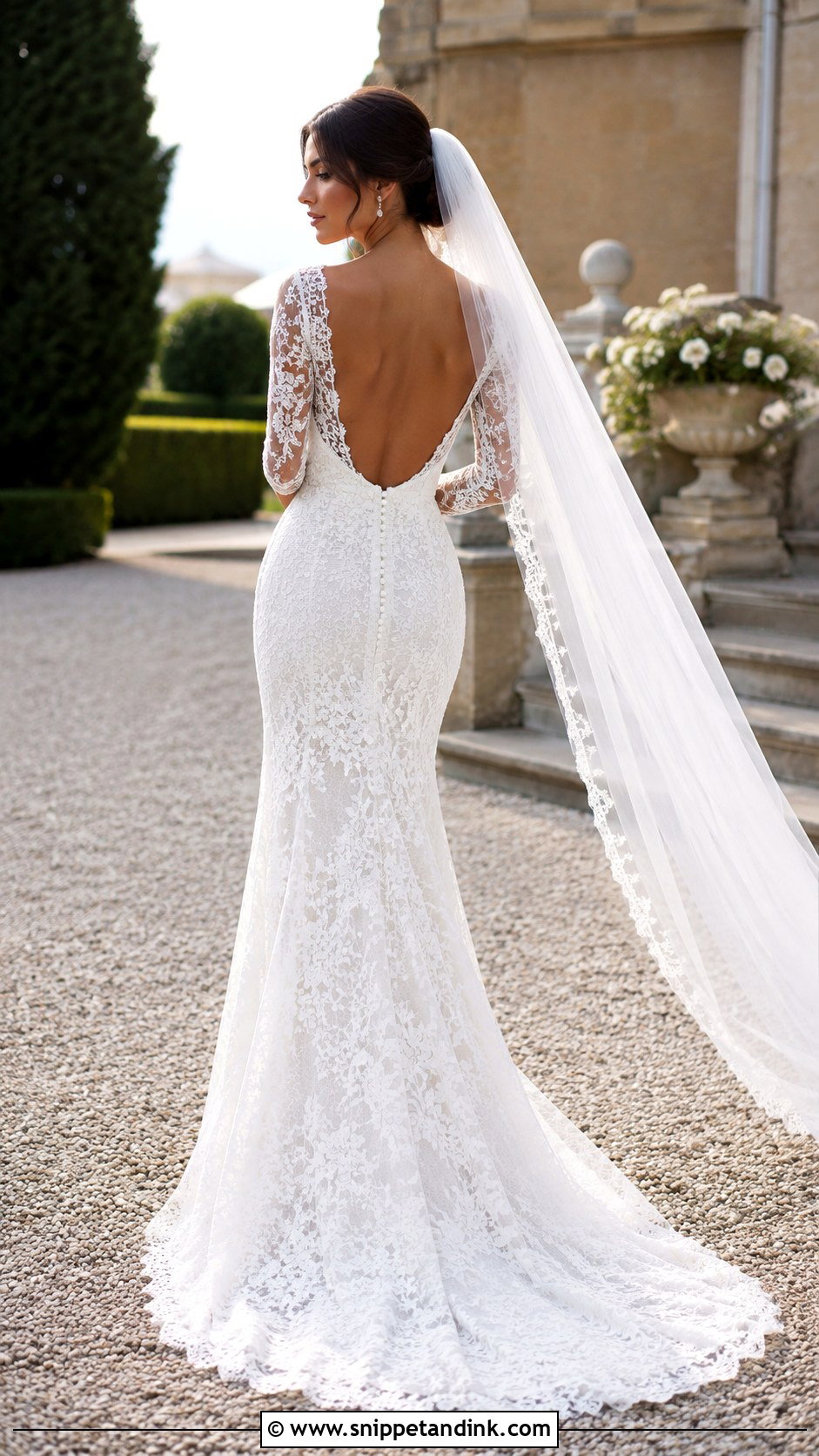
An open back is the surprise in a lace gown with full sleeves, and it only works if the opening stays put when you lift your arms. Rounded, V-shaped or illusion-trimmed openings can all hold, provided the sleeves are attached so they don’t drag the back edges outward. Covered buttons below the opening can lead into the fitted waist. Since the back is the feature, wear an updo or a side-swept style, small earrings, a fingertip veil and low heels. I prefer the veil anchored underneath the hair so it can come out at the reception without disturbing the lace. Ask about sewn-in cups early, because a standard bra will show. Aisle walks and outdoor portraits make the most of it.
16. Corset Long Sleeve Bridal Gown
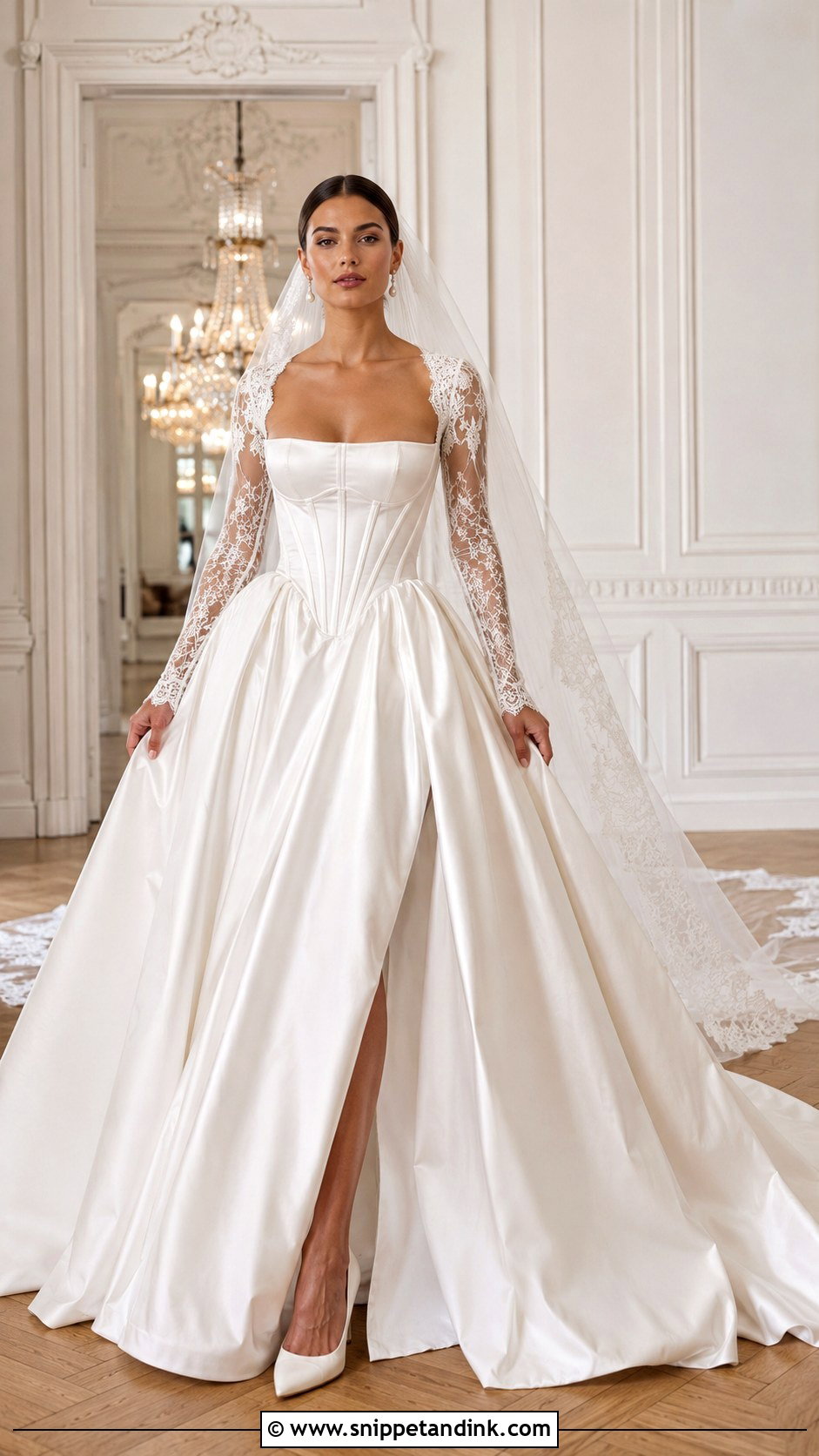
Corset bodices do the supporting so you don’t need a separate bra, and long lace sleeves take the hard edge off the boning. Covered internal boning or subtle visible structure looks more bridal than a fully sheer corset. A satin ball gown skirt beneath lace sleeves gives a strong fabric contrast. Finish with a cathedral veil, pearl drops, pointed ivory heels and a softly textured bun. At each fitting I have the bride sit, raise both arms and breathe in deeply. A corset that feels tight standing still will feel worse after dinner, and sleeves set too far back will pull across the shoulders. It suits formal evening receptions and grand indoor venues.
17. Plus Size A-Line Long Sleeve Bridal Gown
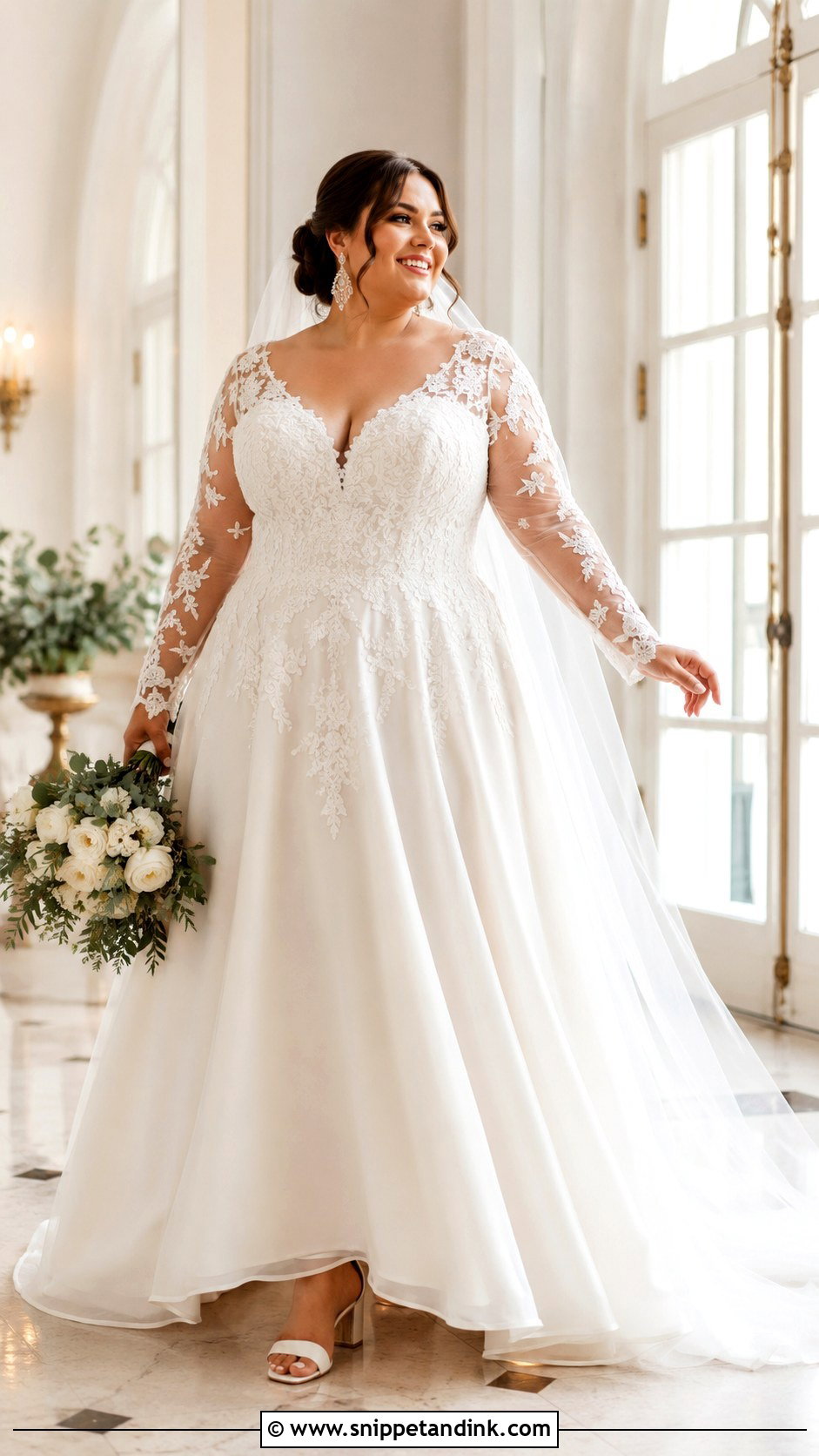
Comfort and support come from construction, not from size. In a plus size A-line I look for a structured bodice, a secure neckline and a waist seam placed where it feels right to you rather than where the pattern defaults. Long illusion lace sleeves add detail without the weight of fully lined fabric, and a skirt that skims the hips leaves room to walk and sit. Supportive block heels, statement earrings, a light veil and a defined updo or polished waves finish it. Ask the salon for a sample in your size before you shop there; judging proportion while clipped into a smaller sample is guesswork. Most of all, find an alterations specialist who regularly adjusts sleeves and builds in support.
18. Petite Sheath Long Sleeve Bridal Gown
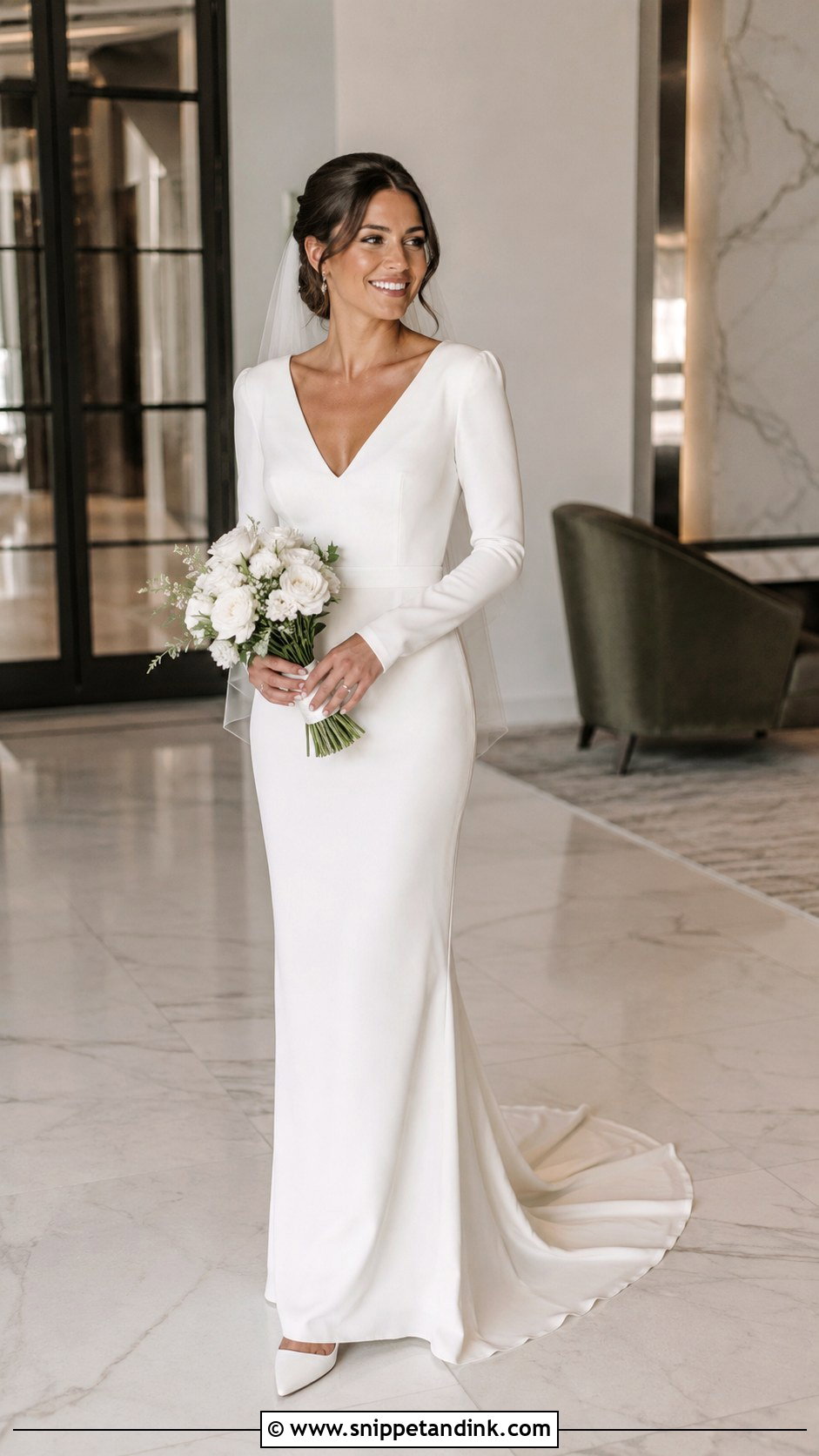
On a petite frame, a sheath makes one unbroken line from shoulder to hem. Light crepe or soft lace keeps the scale right; dense fabric swallows a small body. Fitted sleeves, a modest V and a waist seam set slightly higher all add length. Keep the train manageable, such as a sweep or short chapel length. Pointed heels, delicate earrings, a narrow veil without a heavy border and a low bun or tucked waves keep proportions tidy. The giveaway on a petite bride is a sleeve that bunches past the wrist bone, which makes the gown look borrowed, so I have sleeves shortened from the shoulder when the pattern allows rather than at the cuff. Precise hemming and shoulder work make the fit look intentional.
19. Long Sleeve Bridal Gown With Overskirt
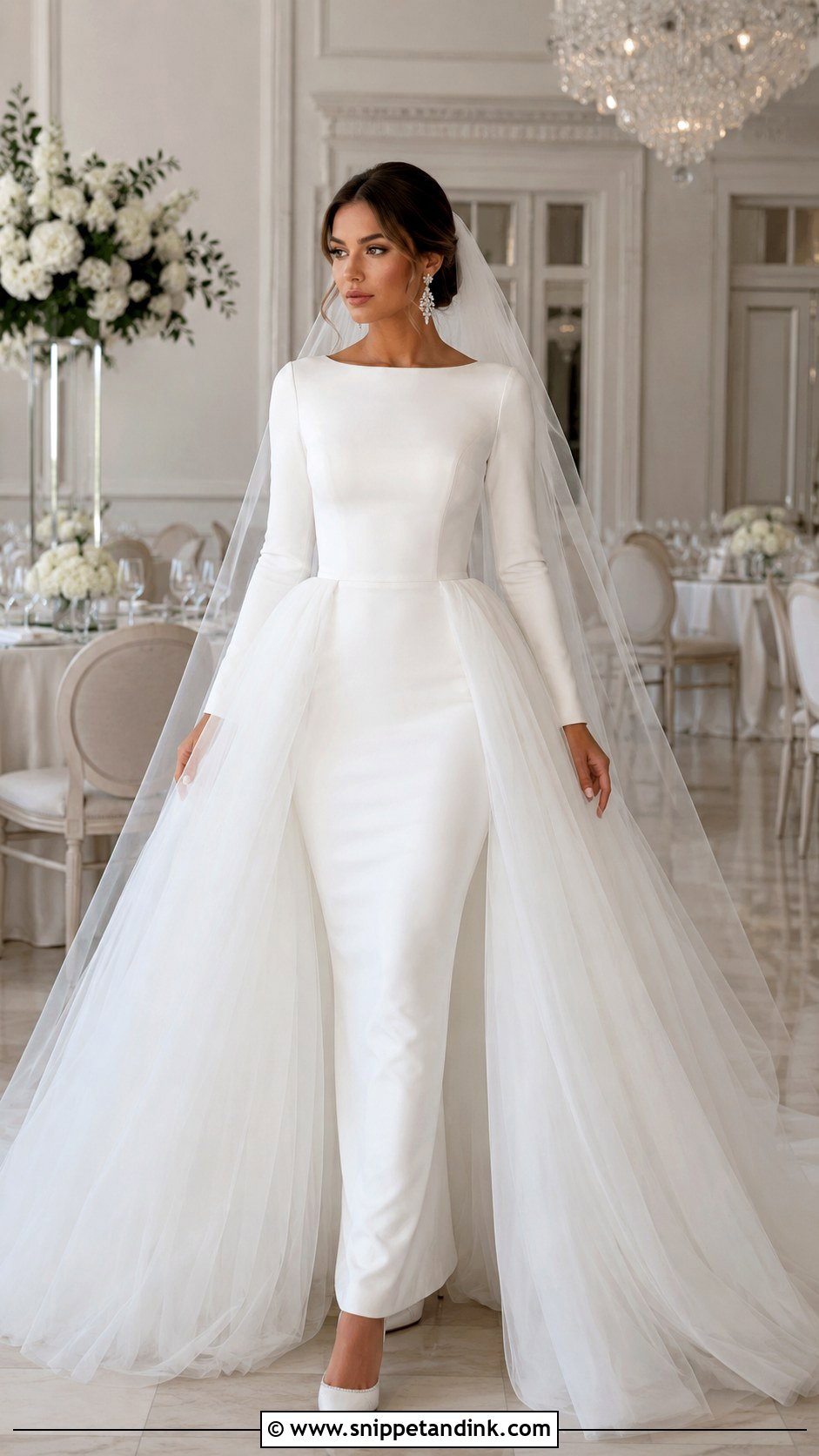
A detachable overskirt gives you ceremony drama and a fitted gown underneath. Start with a crepe, satin or lace sheath that fits cleanly through the waist and hips, then add a full tulle or structured satin overskirt at the natural waist for the entrance and formal portraits. The closure has to hold through a long walk; I’ve learned to test it by having the bride walk the full length of the salon and turn sharply. A long veil, crystal earrings and pointed pumps carry the ceremony look. Later the overskirt comes off and you can move. If both layers have trains, ask your tailor to bustle each one, and practice the switch with whoever will do it.

20. Tea Length Long Sleeve Bridal Gown
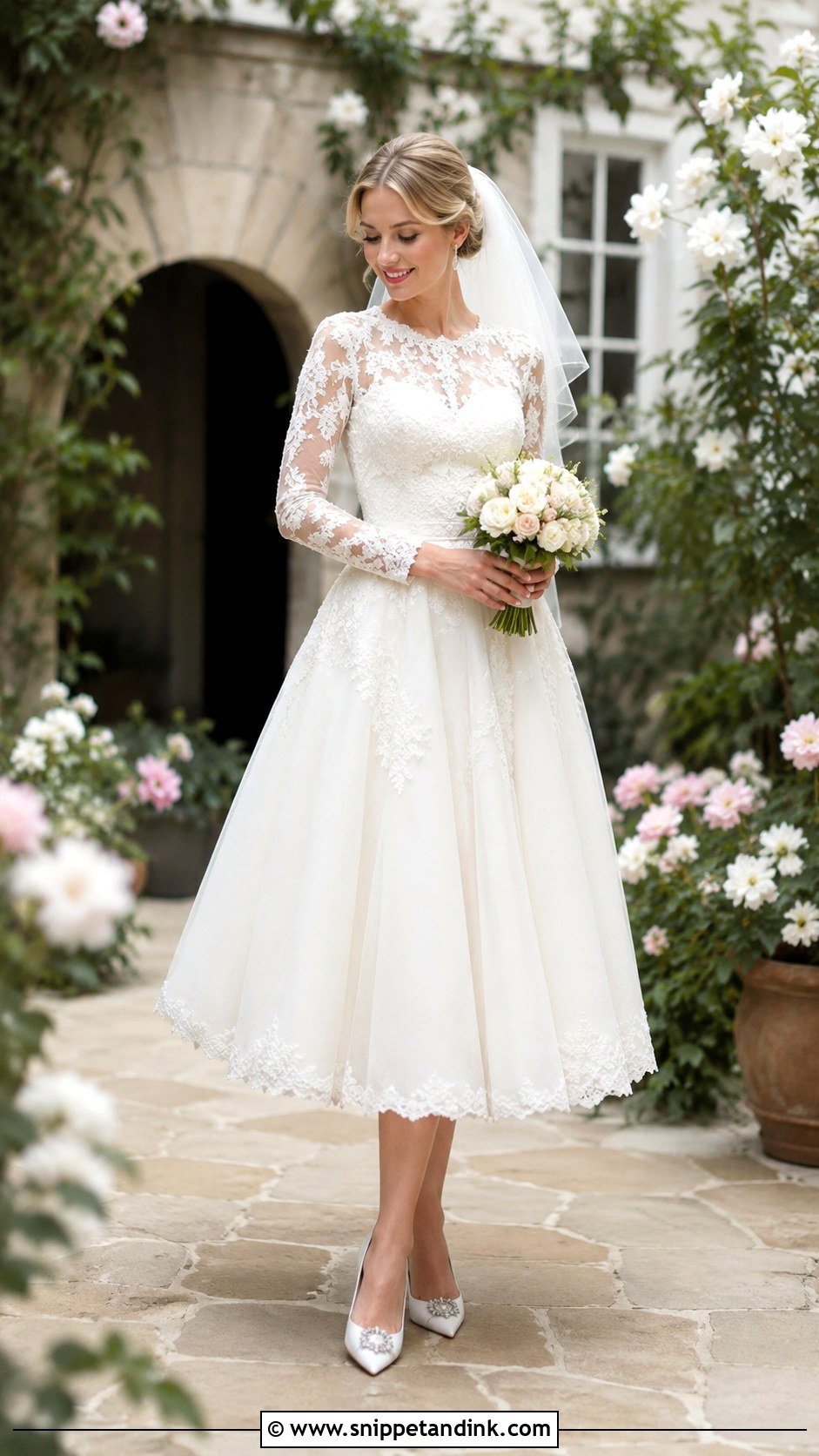
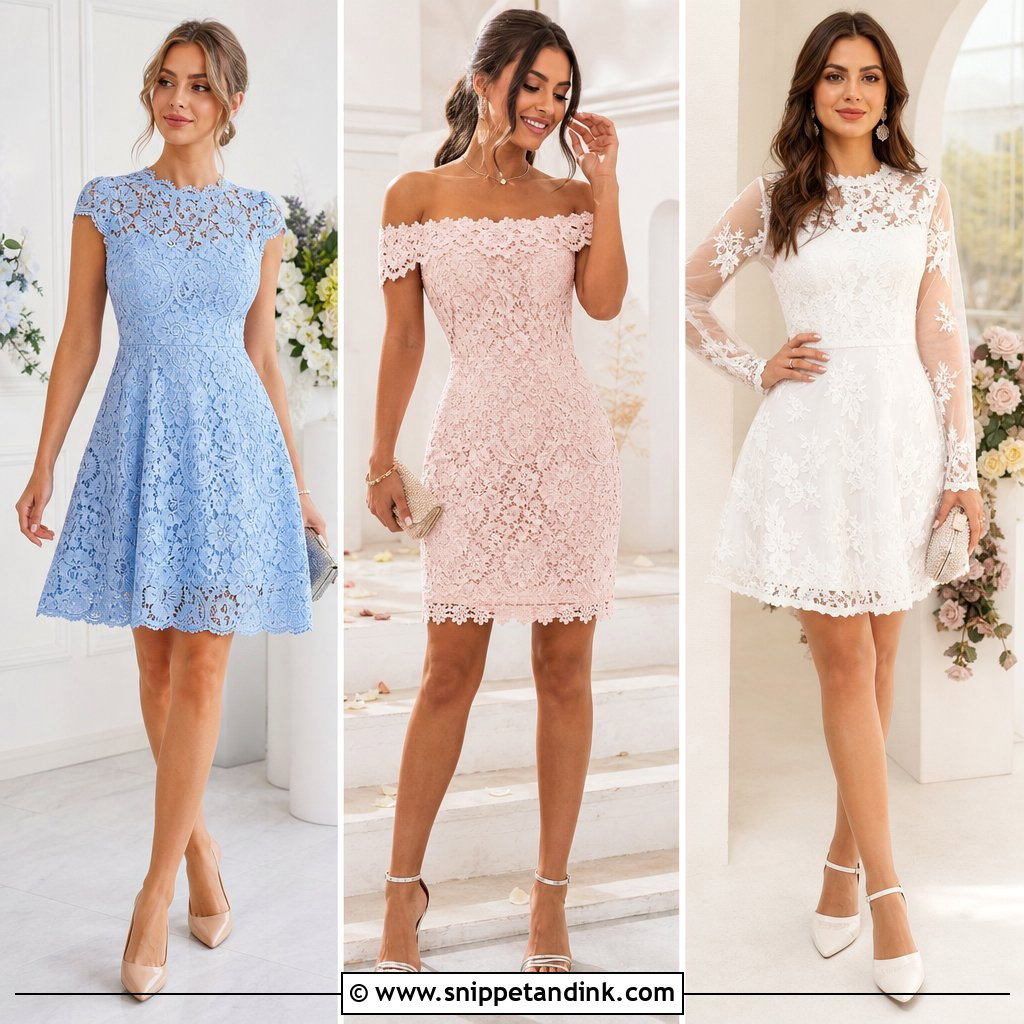
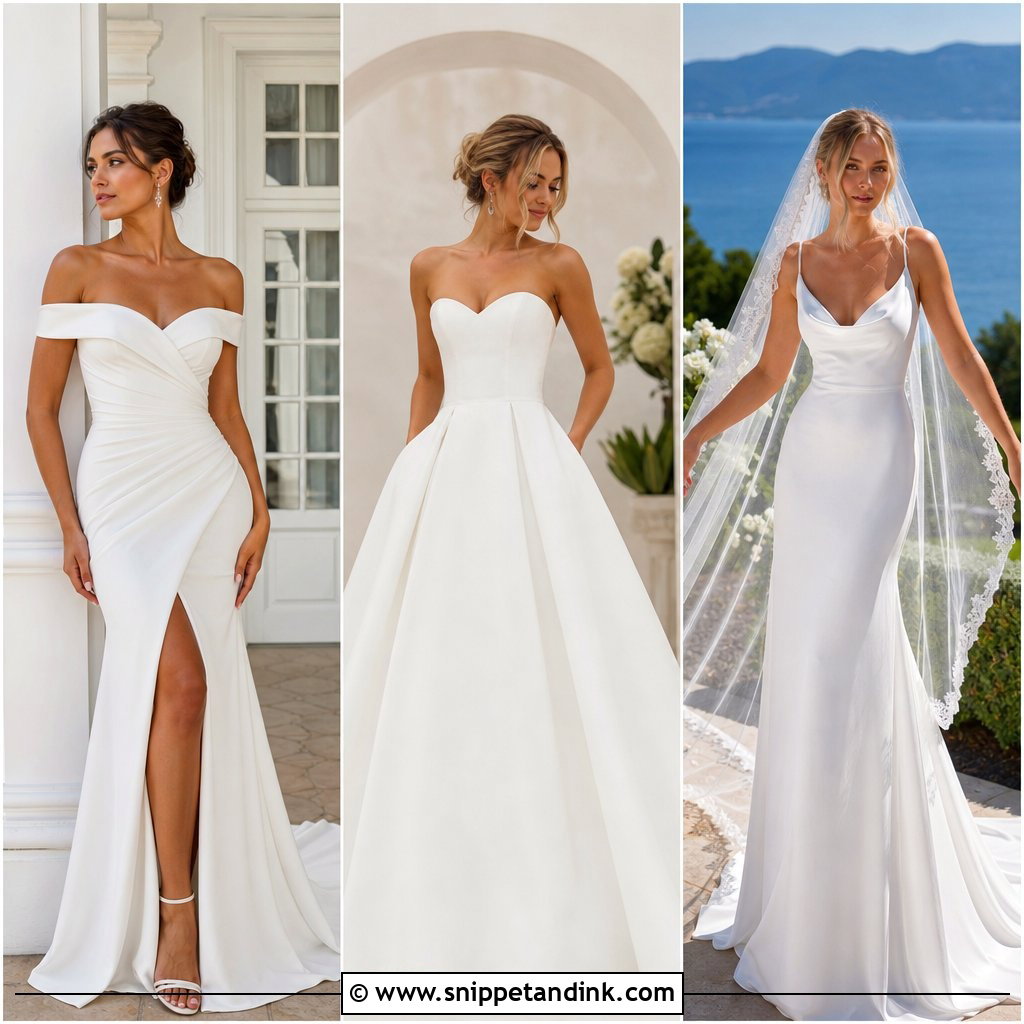
Tea length lands between the knee and ankle, which puts your shoes on show, so choose them as carefully as the gown. A fitted lace bodice, full sleeves and a softly flared skirt give a vintage feel. Pointed pumps, embellished flats or ankle-strap heels all work, with pearl earrings, a short veil and a compact bouquet to keep proportions balanced. A polished bun or a curled bob suits the shorter line. The hem is everything here: I mark it in the bride’s actual shoes and keep it clear of the widest part of the calf. Courthouse ceremonies, garden parties, restaurant receptions and daytime weddings suit it.
Summer Heat, Drafty Churches and Which Fabrics Cope
Sleeves add warmth, and a gown that feels perfect in an air-conditioned salon can be a different experience at an outdoor July ceremony. The difference comes down to what sits against the arm. Unlined chiffon, silk organza and open lace breathe. Lined satin, Mikado and heavily beaded tulle trap heat, and beading adds real weight that you carry all evening.
For a warm-weather date, I steer brides toward sheer or lightweight sleeves and away from double-layered lace. For a cold church or a winter evening, a lined satin or crepe sleeve is a gift, and you can skip the wrap that hides the gown in photos.
Sleeves Make Alterations Slower Than You’d Guess
Hemming a skirt is routine. Taking in a lace sleeve often means lifting appliqués off by hand, adjusting the sleeve underneath and stitching the motifs back so the seam disappears. Shortening a sleeve with a scalloped or beaded cuff is similar work. That takes time, and good seamstresses book up in peak season.
- Order the gown early. Many designers quote several months of production, and timelines vary, so ask for the expected delivery date in writing.
- Plan the first fitting roughly two to three months before the wedding, with two or three appointments after it.
- Bring the exact shoes, bra or shapewear and any jewelry worn at the wrist to every fitting.
- Ask at the first appointment whether the sleeves can be altered at the shoulder, the cuff or both; the answer changes what is possible.
If a gown needs heavy sleeve work and the date is close, I’d rather a bride choose a different gown than gamble on a rushed alteration.
A Sleeve You Can Forget You’re Wearing
The right long sleeve gown is the one you stop noticing by the speeches: you can sit, hug, eat and dance without tugging at a cuff. Use the venue and season to narrow the field, then judge each gown on arm movement, fabric weight, neckline support, train length and how much altering it will need. Bring your real shoes and undergarments to every fitting so the whole silhouette is adjusted at once. Vintage lace or plain crepe, the gown should look finished and still let you live in it all day.
You'll Like These Ideas:




Leave a Reply