
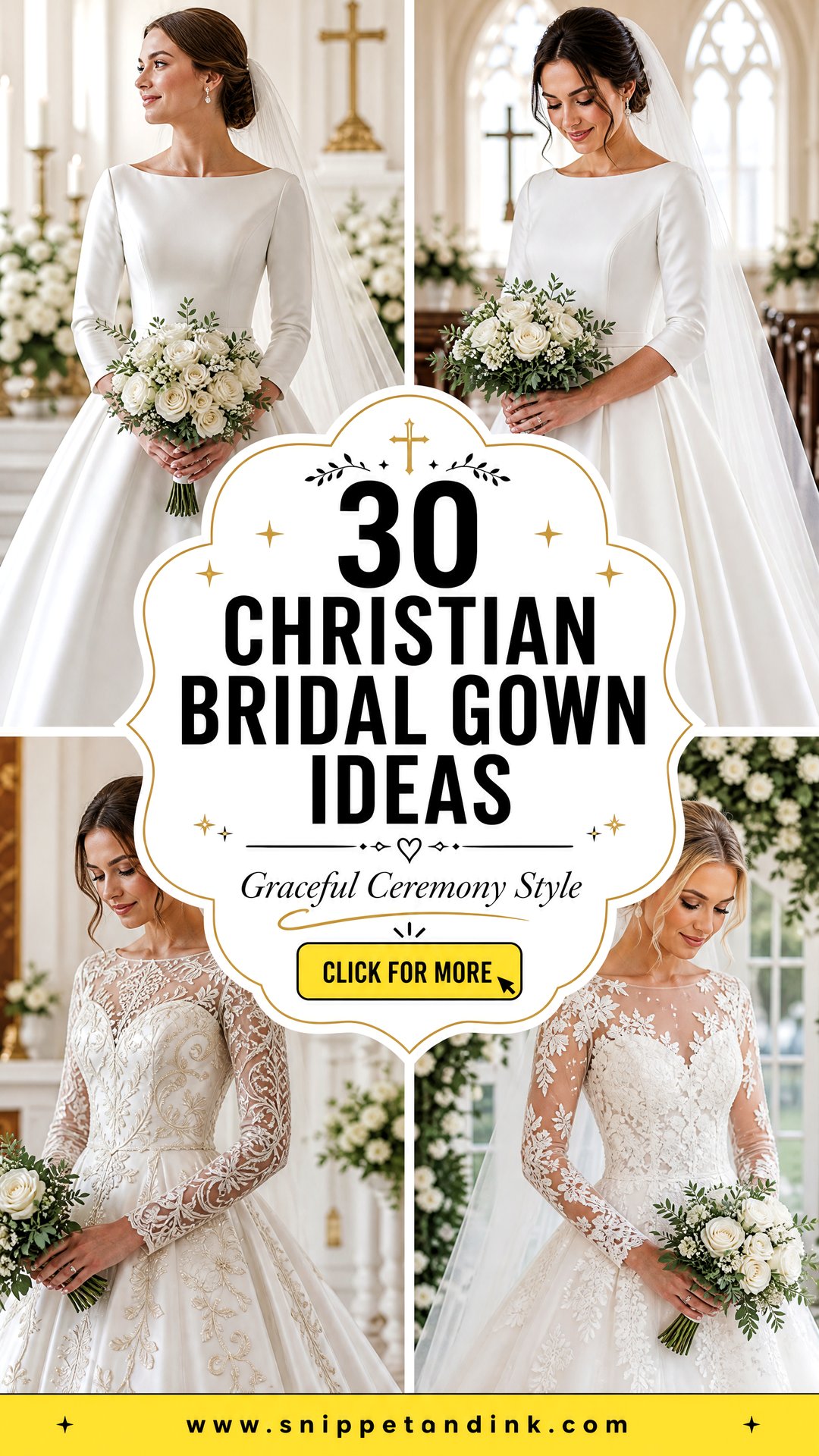
Brides marrying in a church usually come to me with two lists: what the parish or family expects, and what they personally love. The work is making those lists agree. Coverage at the neckline, shoulders or back is common, and it doesn’t have to look dated; long lace sleeves, clean satin ball gowns, high necks and chapel trains can all feel current. The thirty gowns below are chosen with that balance in mind. For each, I’ve added what I check in the fitting room, because a modest gown still has to let you kneel, sit, hug and move through a long day.
Ask Your Parish About Dress Expectations Early
Church dress expectations vary widely between denominations and even between parishes. Some ask only for covered shoulders during the service. Some Orthodox churches expect covered arms and a head covering. Many churches have no formal rule at all. Ask your officiant or the church office before you start shopping, not after you’ve fallen for a strapless gown.
- Are shoulders and arms expected to be covered during the service?
- Is a veil or head covering expected?
- Will I kneel, and for how long? Is there a kneeler or cushion?
- How long is the aisle, and are there steps up to the altar?
- Are there restrictions on photography that affect where the train is arranged?
Kneeling is the one brides forget. When you kneel, the soles of your shoes face the congregation, and a fitted skirt can restrict you. Some brides add a small message to their shoe soles for that moment; others simply choose a skirt that allows an easy kneel.
1. Long Sleeve Lace Christian Bridal Gown
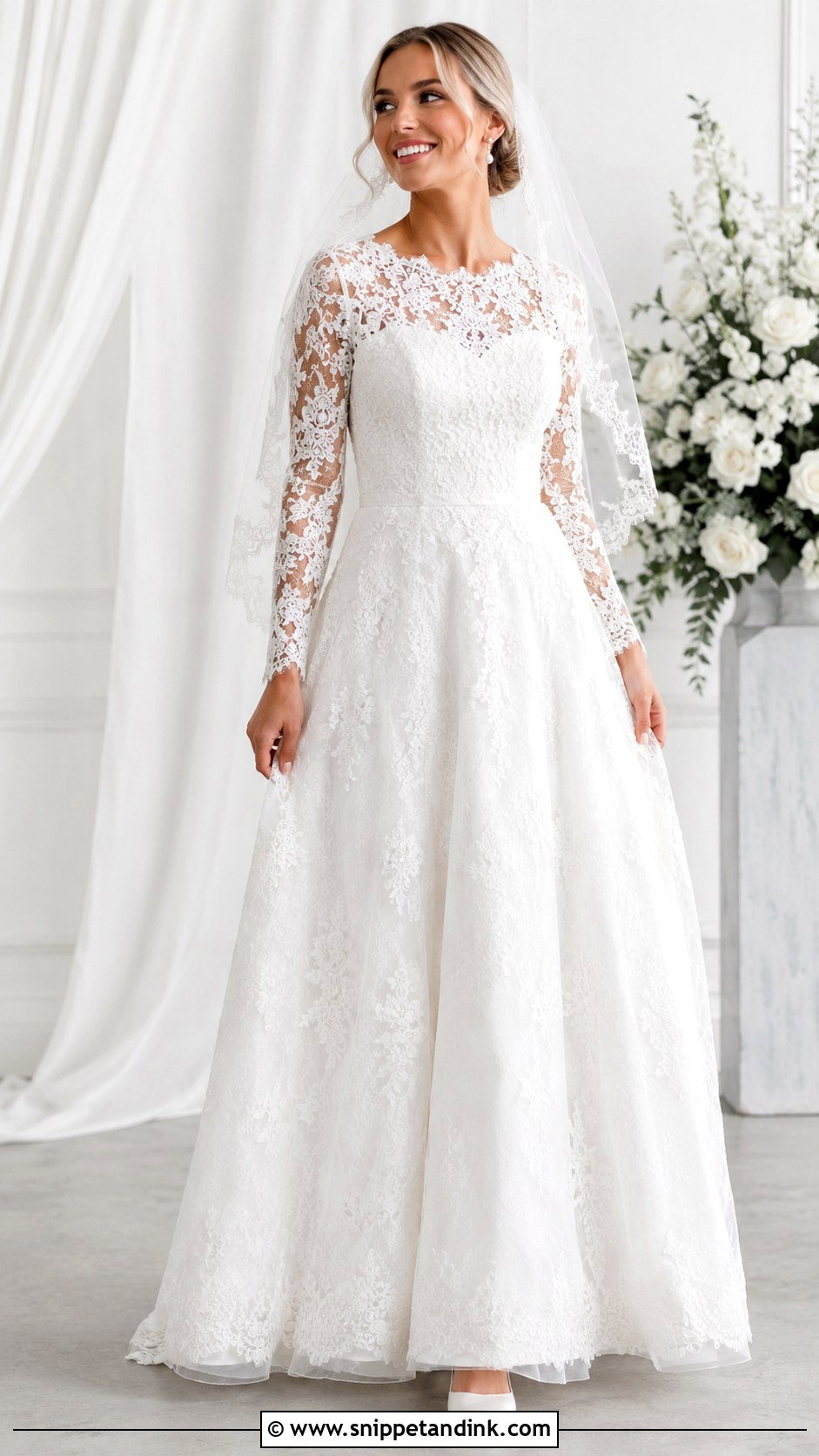
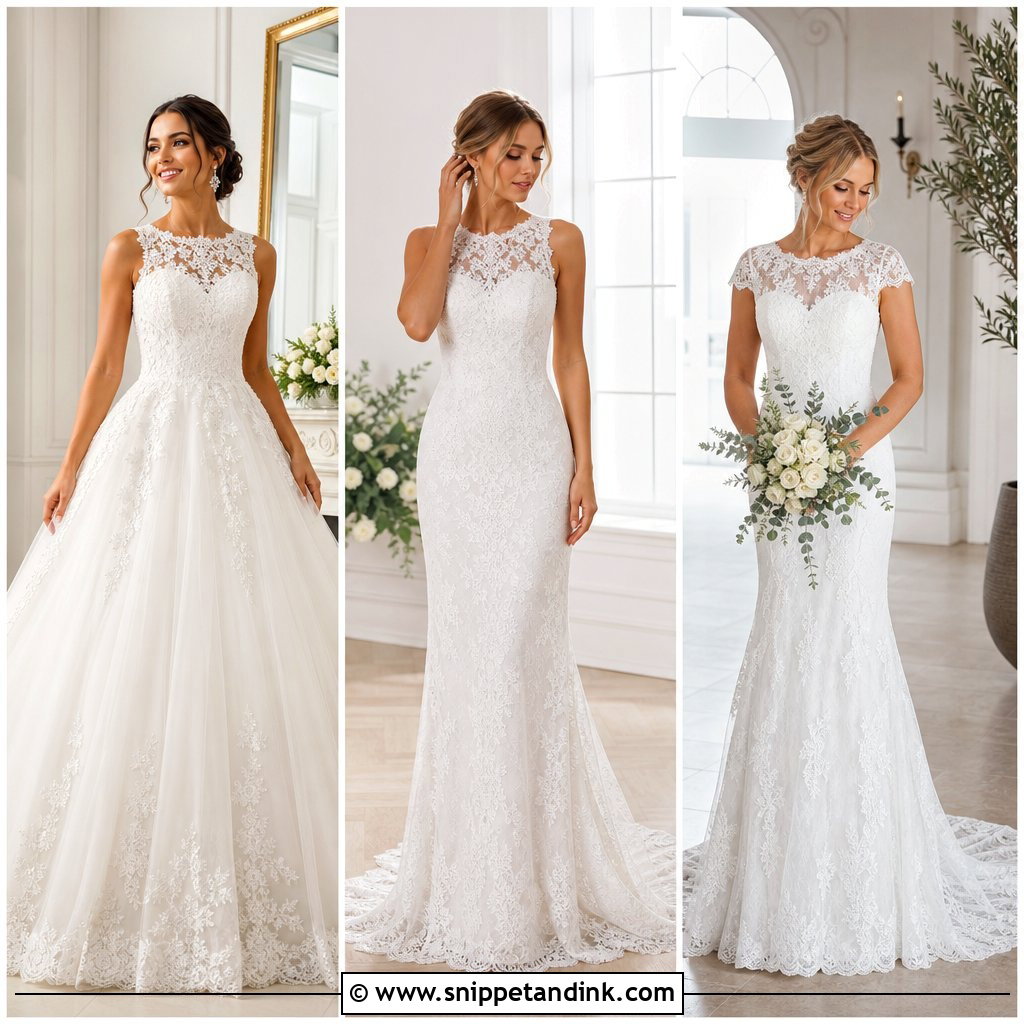
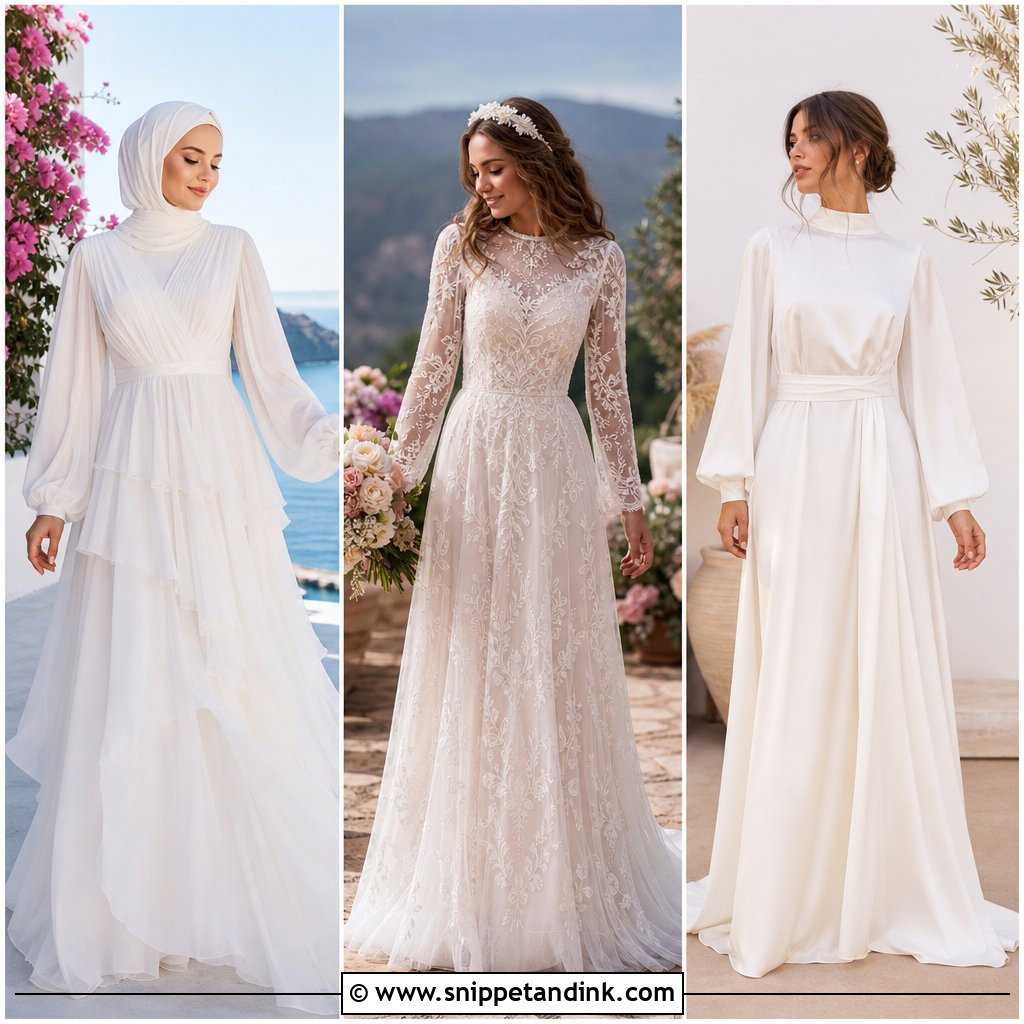
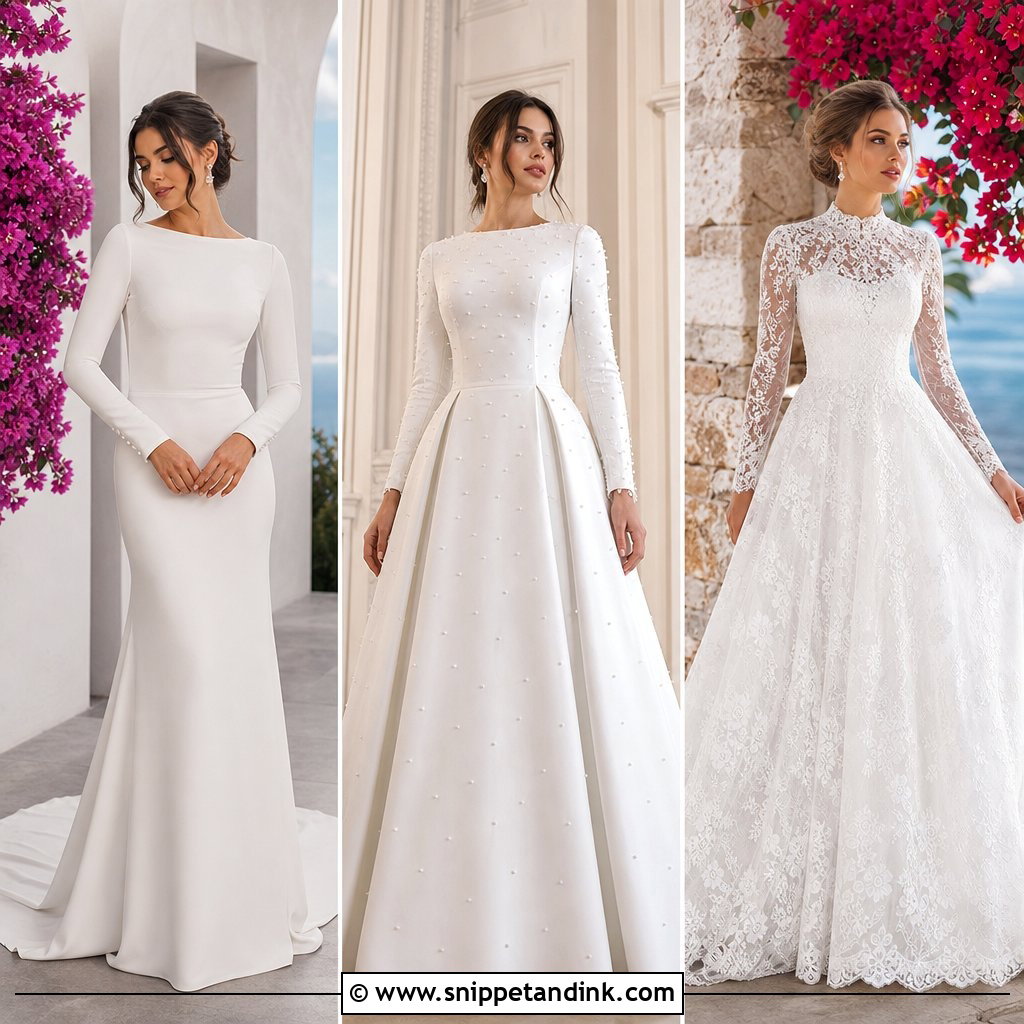
Long lace sleeves are the gown I see most often at church ceremonies, and for good reason: they cover without heat or bulk. The lace pattern matters. Small, dense lace reads traditional; larger open motifs feel more modern but can show more skin than expected, so I hold them to the light. A fitted bodice and soft A-line skirt with a chapel train look balanced from the pews. Jewel, bateau or soft scoop necklines keep it classic. Pearl earrings, a fingertip veil and closed-toe satin heels finish it.
2. High Neck Satin Christian Bridal Gown
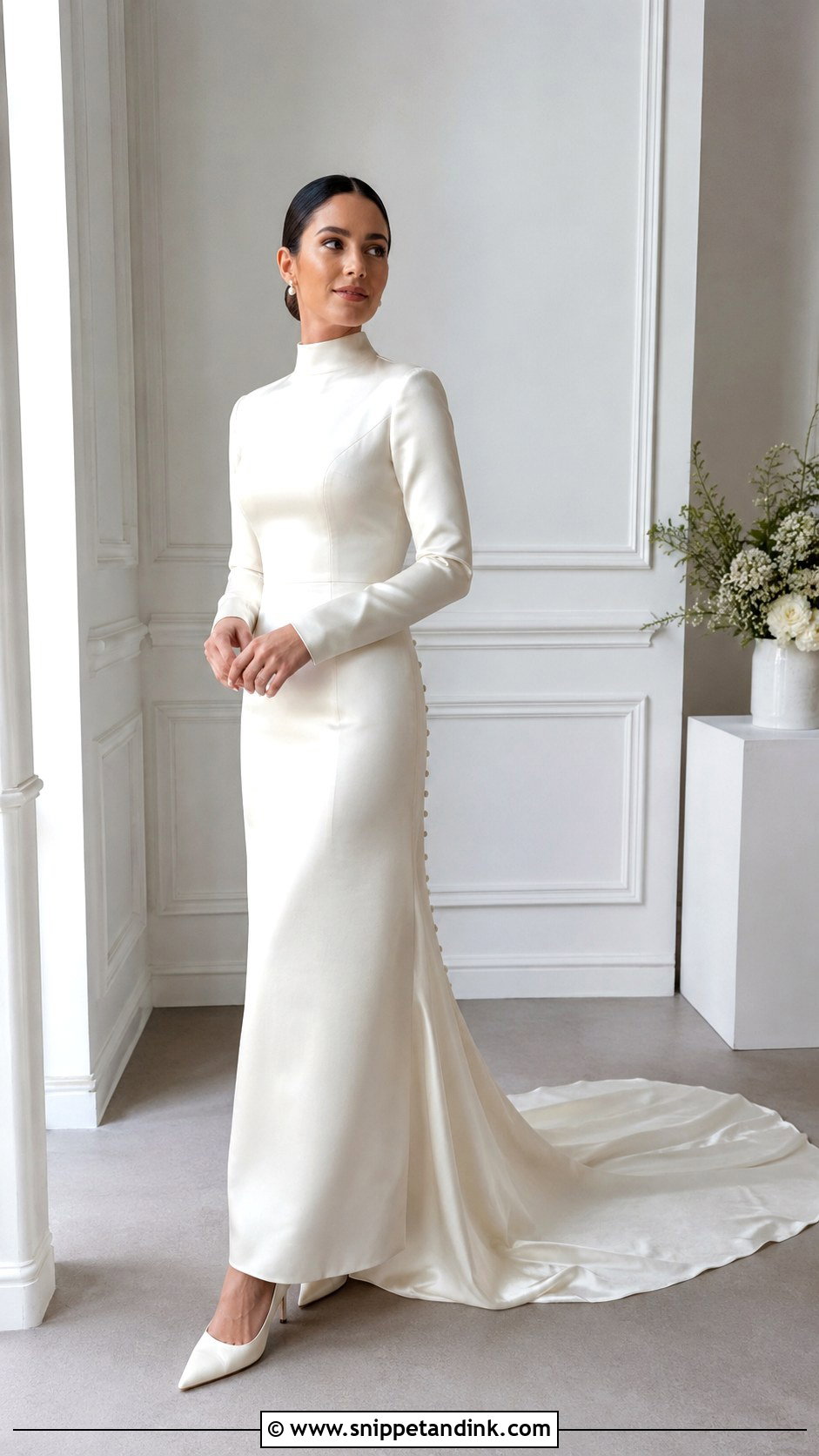
High-neck satin is quietly dramatic, and it depends completely on fit. Satin shows every pull at the bust and every ripple at the waist, so I budget more alteration time for this gown than for lace. A slim A-line or column lets the fabric glow without competing details. Covered buttons down the back look lovely walking away from the altar. A low bun and pearl studs keep attention at the neckline.
3. Modest Ball Gown Christian Bridal Gown
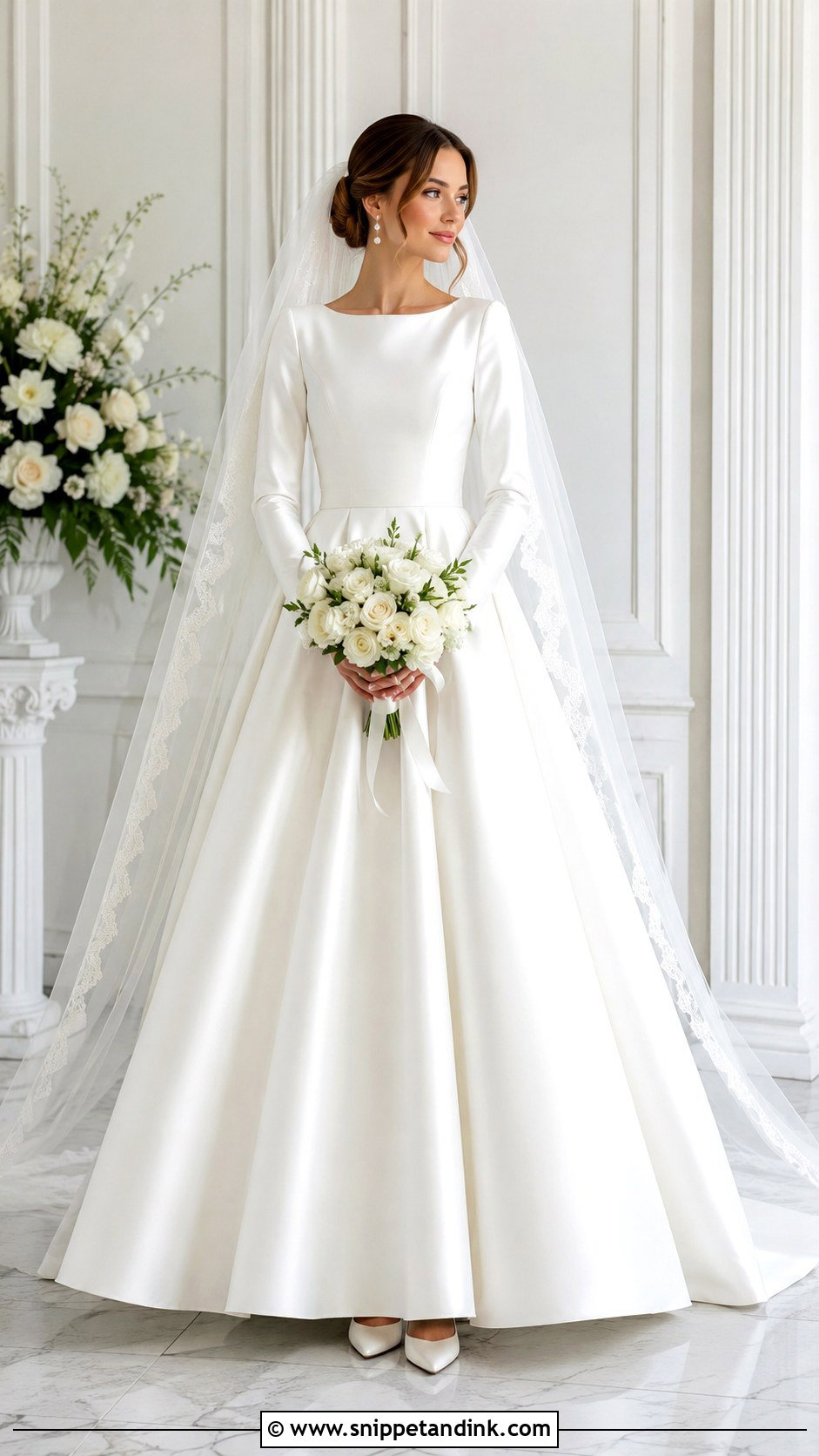
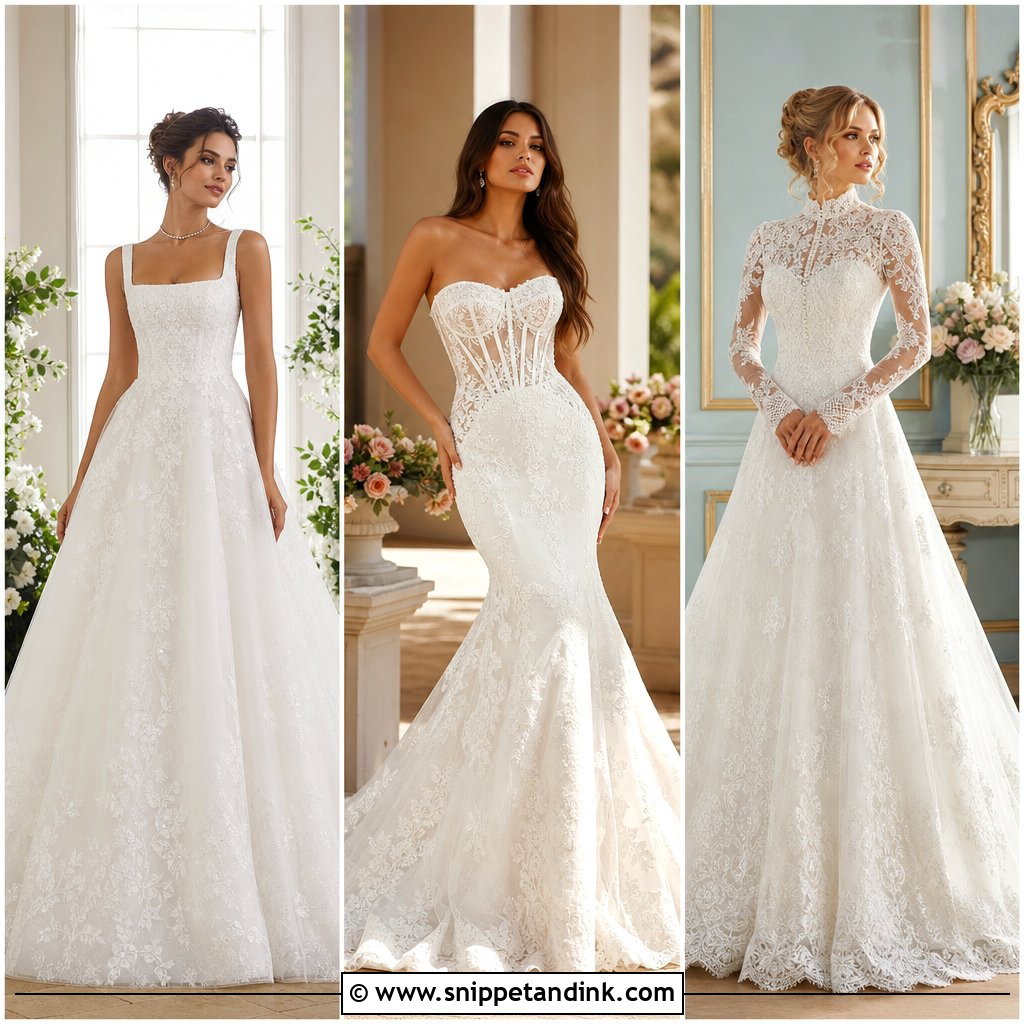
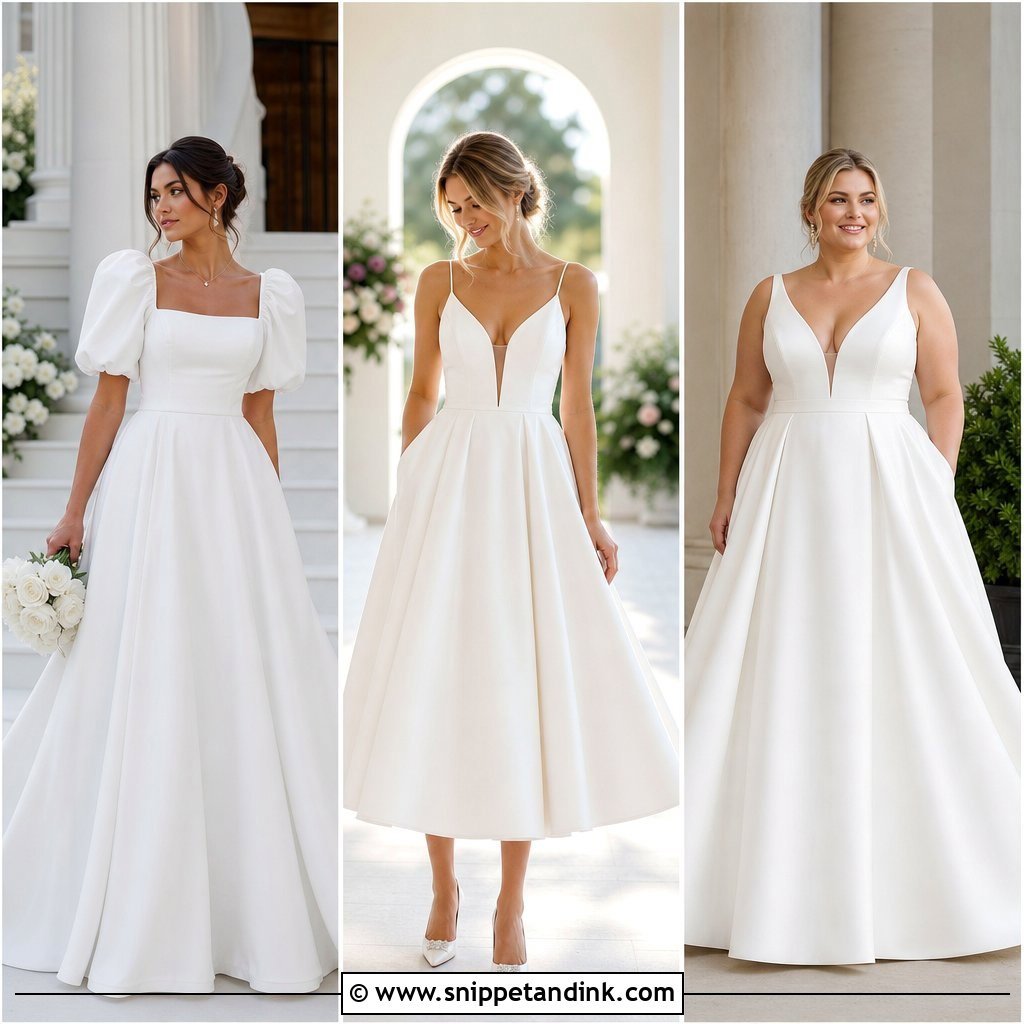
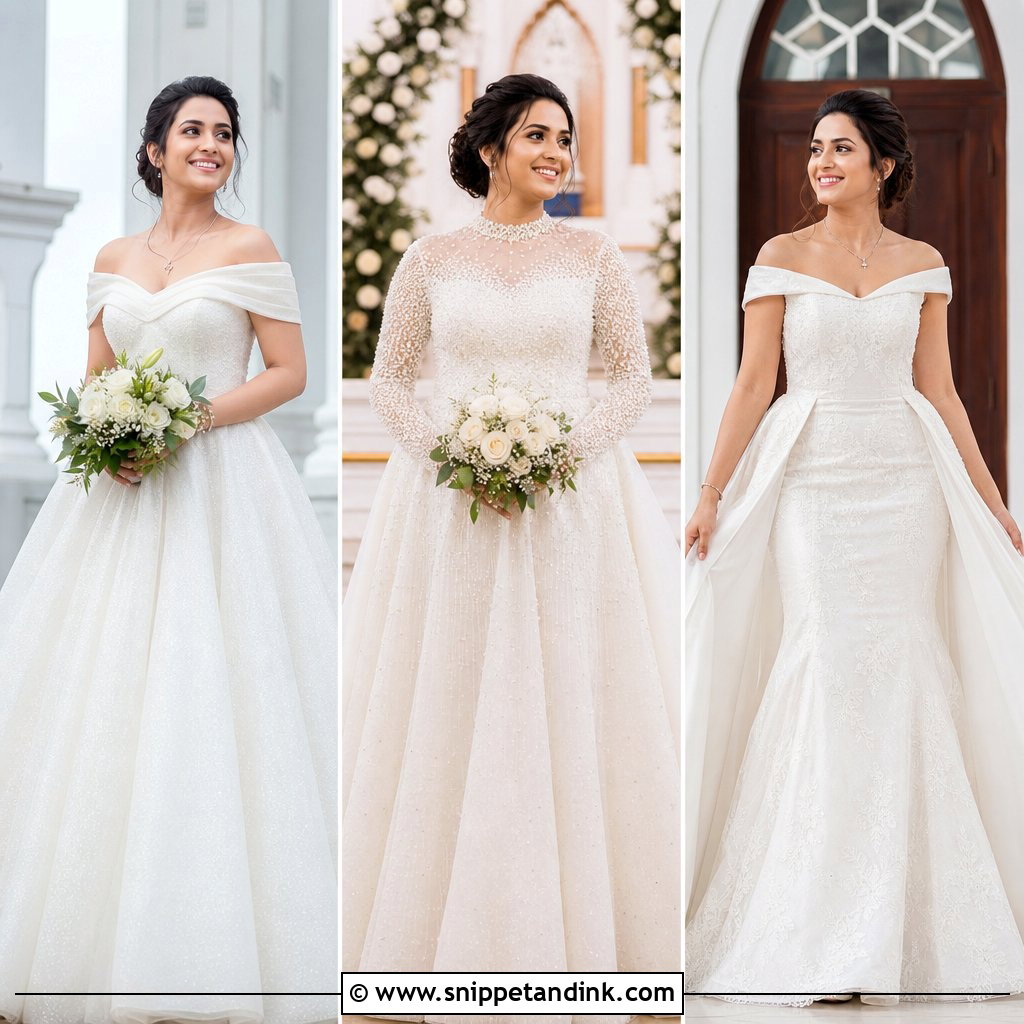
A modest ball gown has real presence in a long church aisle. Long sleeves, a bateau neckline or a high lace neck cover the top while the full skirt does the celebrating. Satin, mikado and layered tulle all hold the shape. My practical concern is kneeling: a wide skirt over a hoop can make kneeling at the altar awkward, so try it in the fitting room with a cushion on the floor. A cathedral veil and satin pumps complete the grand entrance.
4. A Line Crepe Christian Bridal Gown
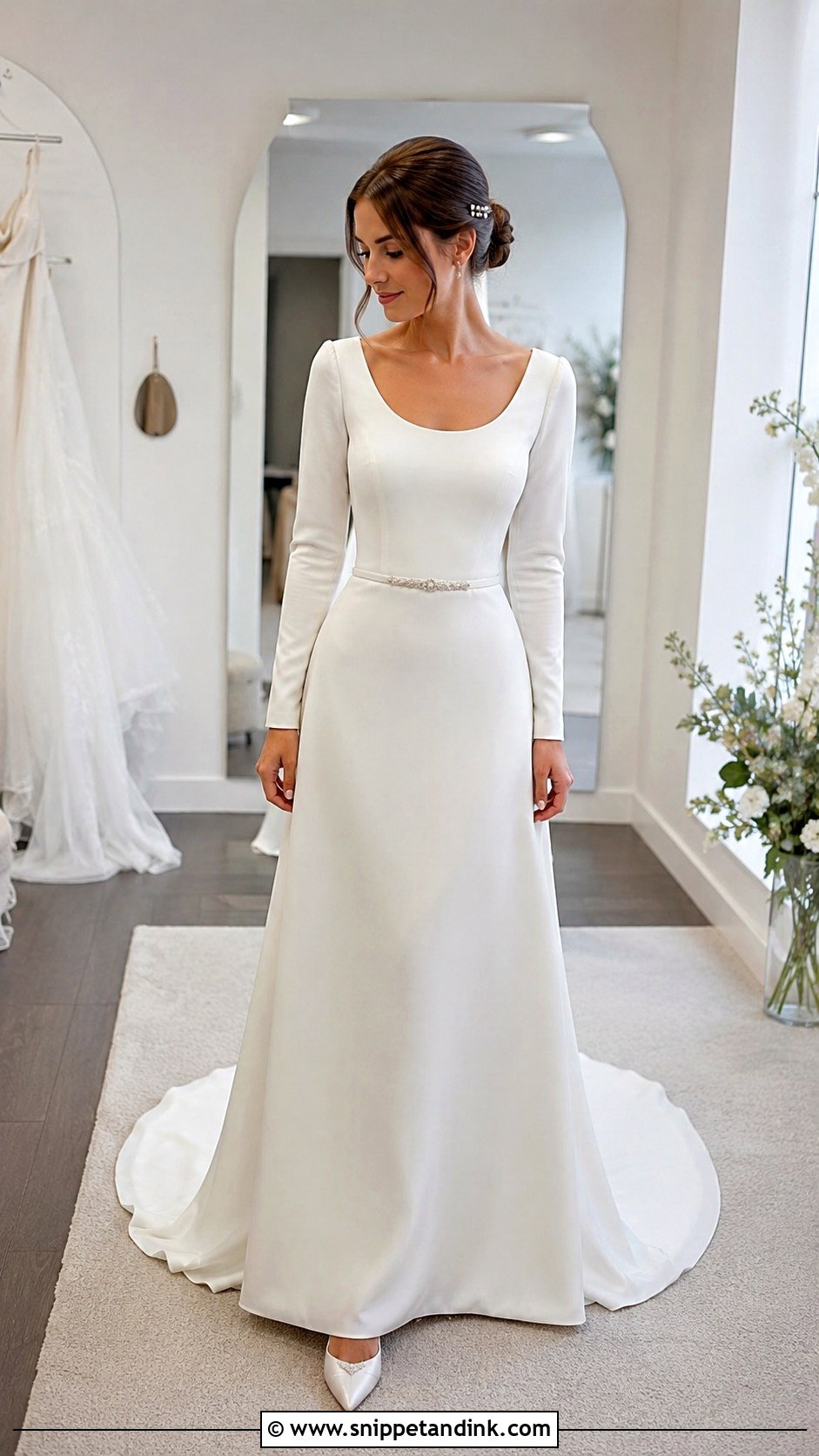
Crepe is the fabric I suggest to brides who want clean lines and comfort. It skims without clinging and doesn’t crease as quickly as satin, which helps during a long service. An A-line skirt lets you walk, sit and dance easily. Illusion coverage on a V-neck, long sleeves or a high scoop all suit. A narrow belt, pearl pins and pointed satin heels finish it without sparkle.
5. Lace Bodice Tulle Skirt Christian Bridal Gown
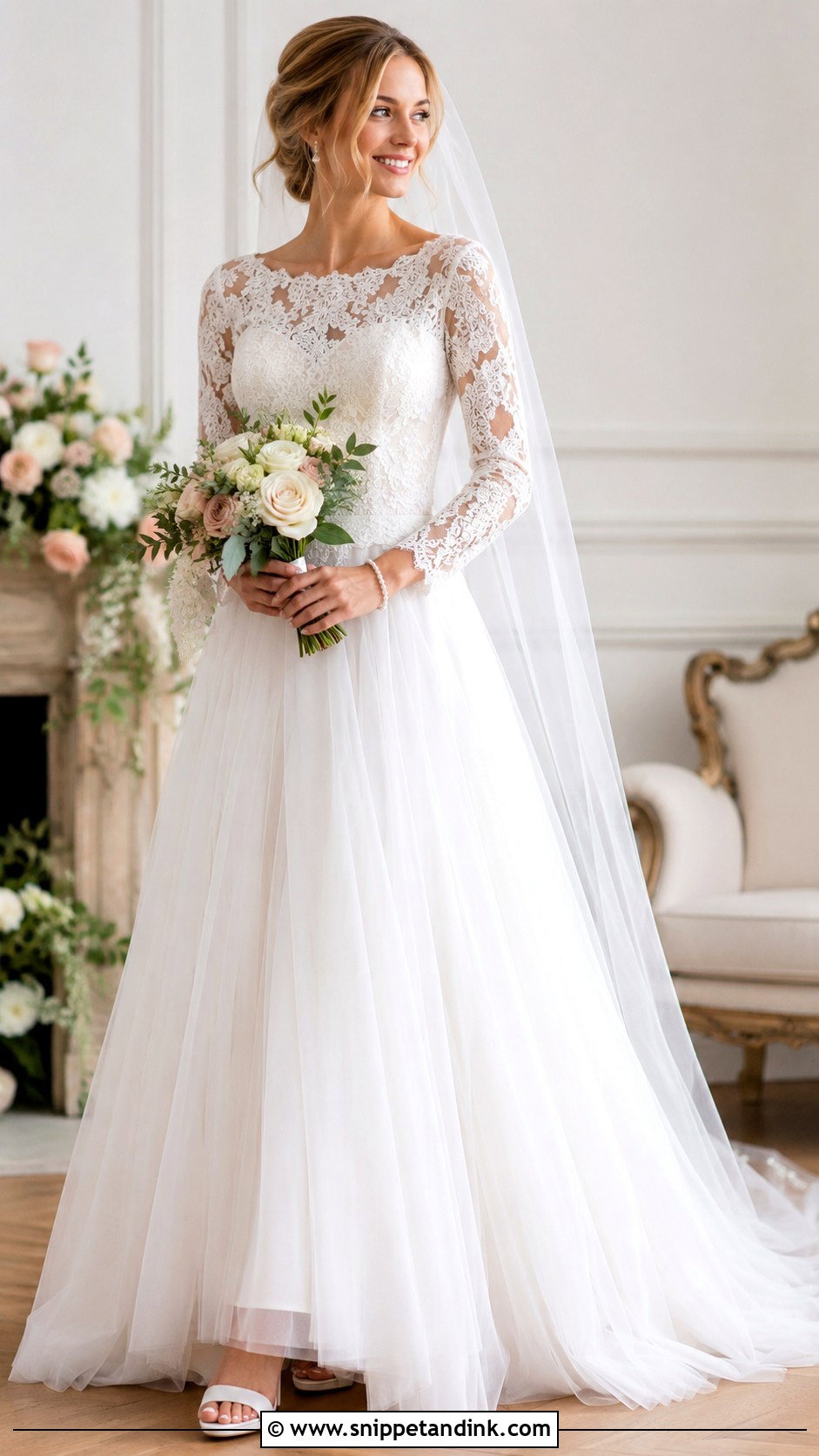
Lace over tulle is the softest pairing here: detailed on top, light below. Many lace bodices are built on a nude illusion base, which can read as bare skin from a distance, so if coverage matters to your church, ask for the bodice to be lined in an ivory layer. Long sleeves and a soft waist keep it graceful. A simple veil and low bridal heels suit it.
6. Simple Long Sleeve Christian Bridal Gown
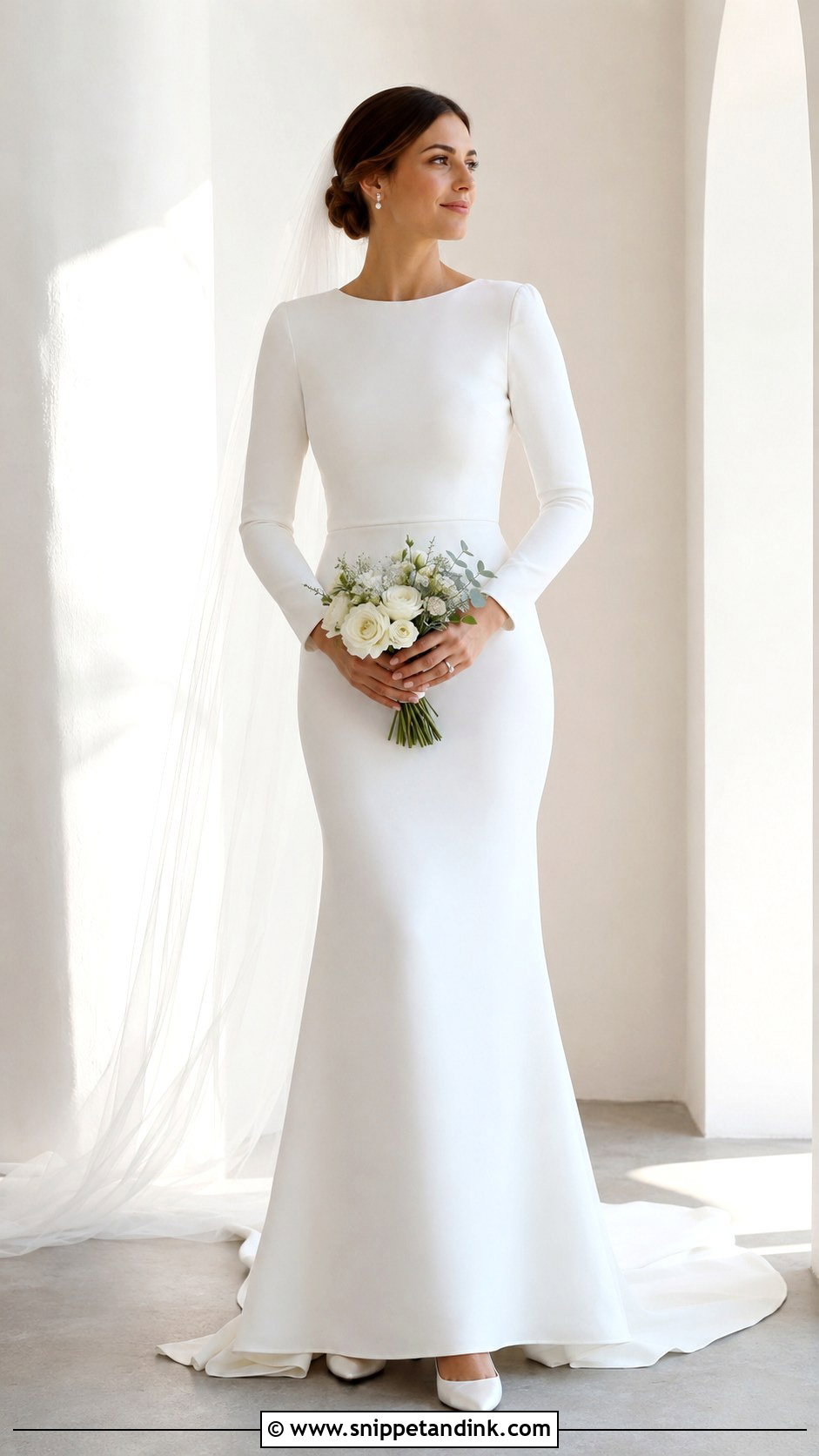
A simple long sleeve Christian bridal gown relies entirely on cut and fabric. Crepe, satin or matte mikado with a high scoop neck, fitted sleeves and a gentle train is all it needs. Fitted sleeves have to allow movement; I ask brides to raise their arms and hold a pretend bouquet to check the armhole doesn’t pull. A sleek bun, small pearls and a long veil add quiet drama.
7. Square Neck Christian Bridal Gown
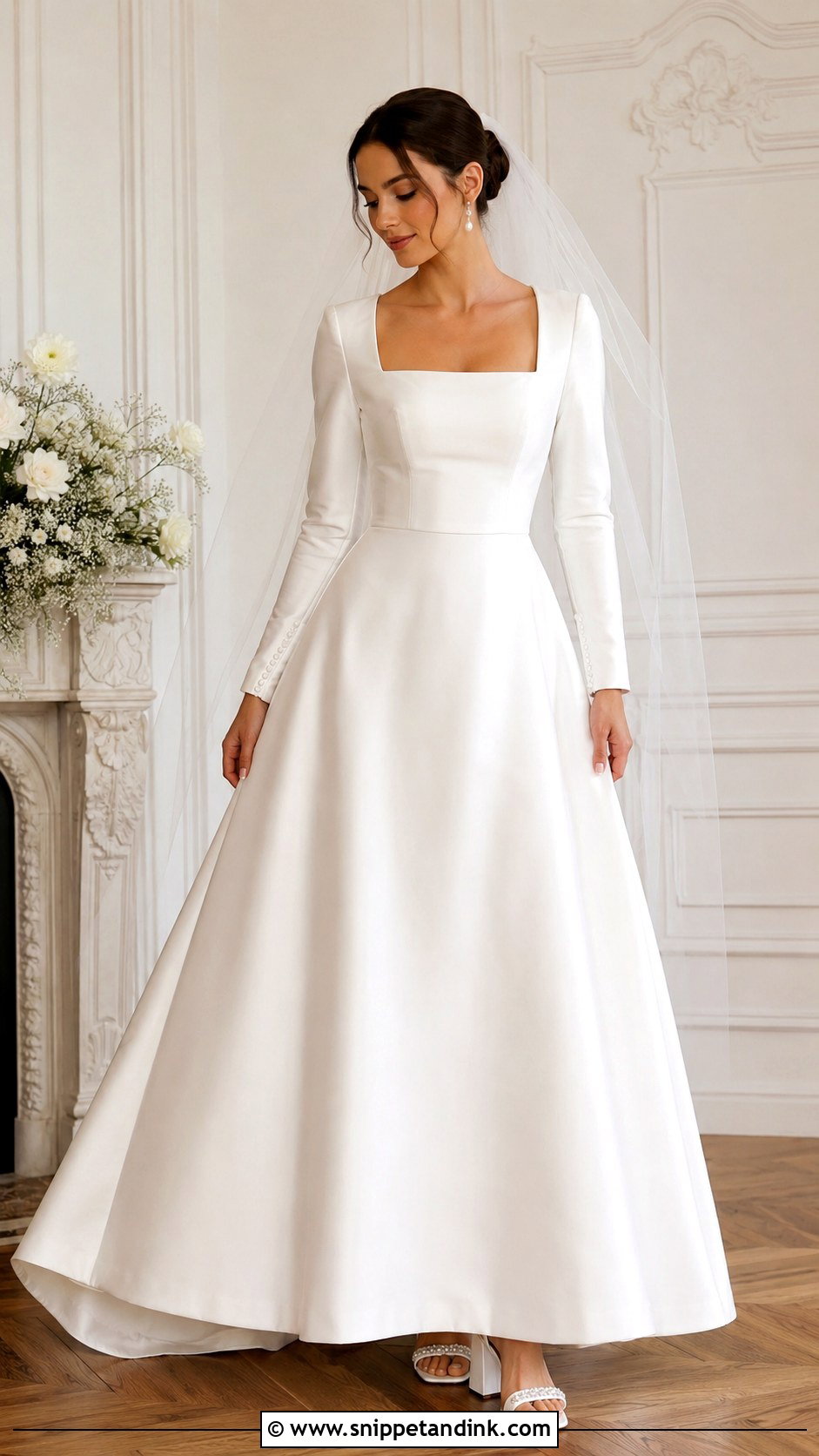
Square necklines give modest coverage with a crisp, modern shape. They frame the collarbone while staying high enough for most church dress codes. Long, cap or three-quarter sleeves all suit, depending on season. Check that the neckline corners lie flat; on some figures they gape when you lean forward. Lace trim or covered buttons add a vintage touch. Block-heel bridal shoes help on old stone floors.
8. Bateau Neck Christian Bridal Gown
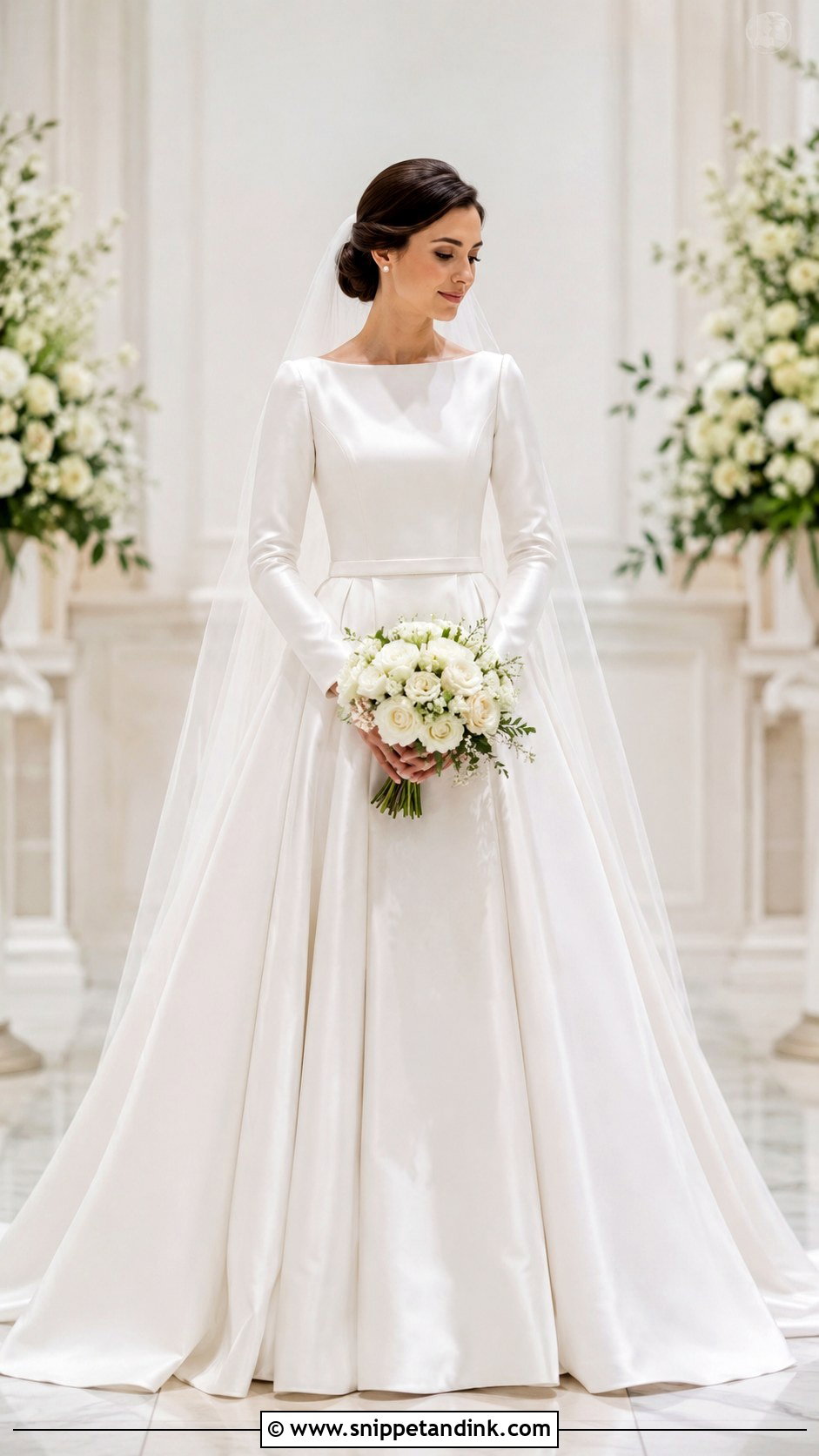
The bateau neck runs across the collarbone almost to the shoulders, covering the chest while showing the neck. It suits brides with narrower shoulders particularly well. Satin makes it formal; lace softens it. With such a strong neckline, I keep accessories very simple: pearl studs, a low chignon and a veil that falls behind the shoulders. Avoid a necklace entirely.
9. Cathedral Train Christian Bridal Gown
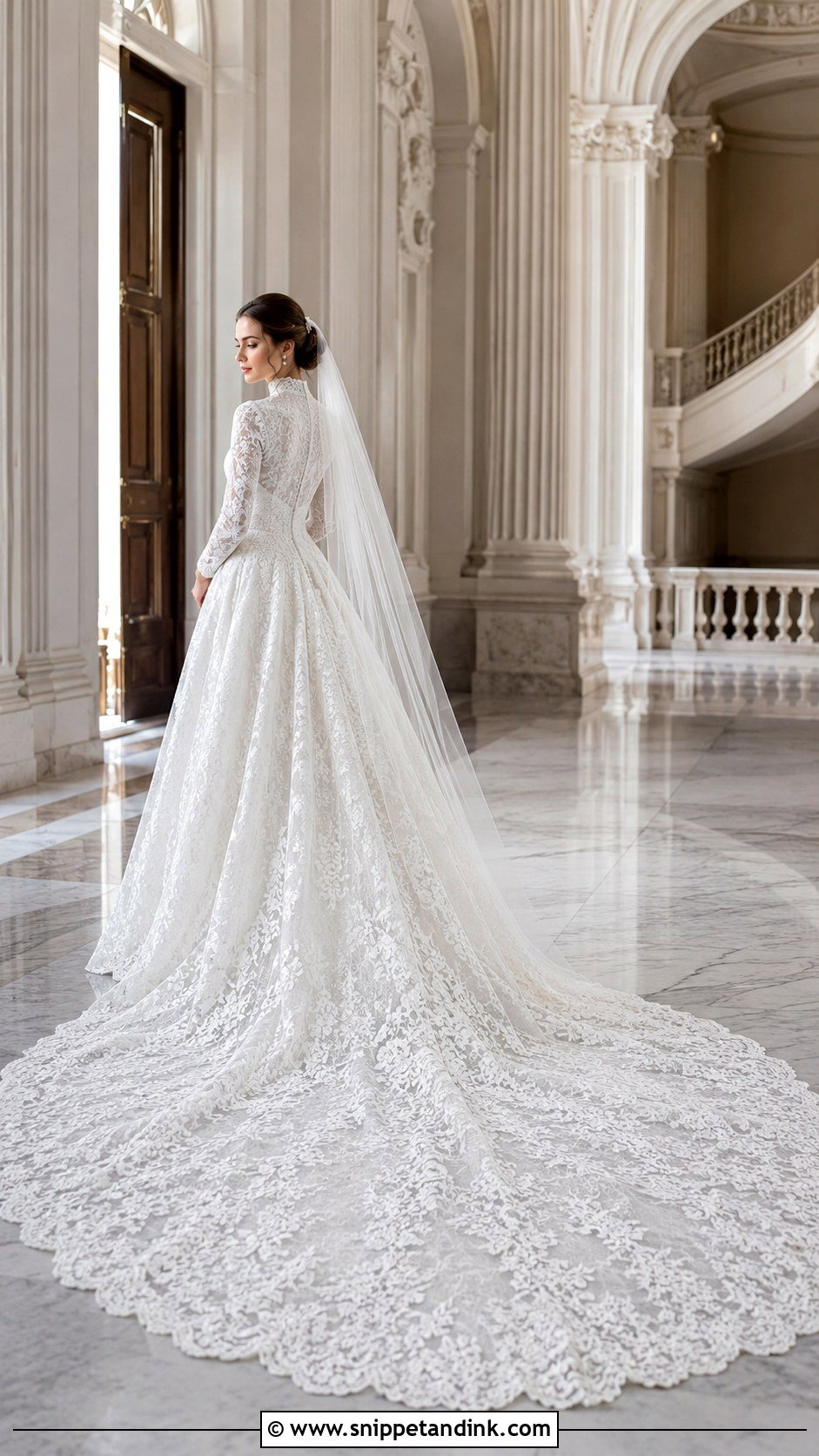
A cathedral train Christian bridal gown gives a church aisle its full moment without needing any skin on show. A modest bodice with long sleeves or a high neckline keeps it balanced. Cathedral trains need managing: someone should arrange it when you stop at the altar and again before you turn to leave. Make sure the bustle is planned at your final fitting, and keep the veil simple if the train is detailed.
10. Pearl Detail Christian Bridal Gown
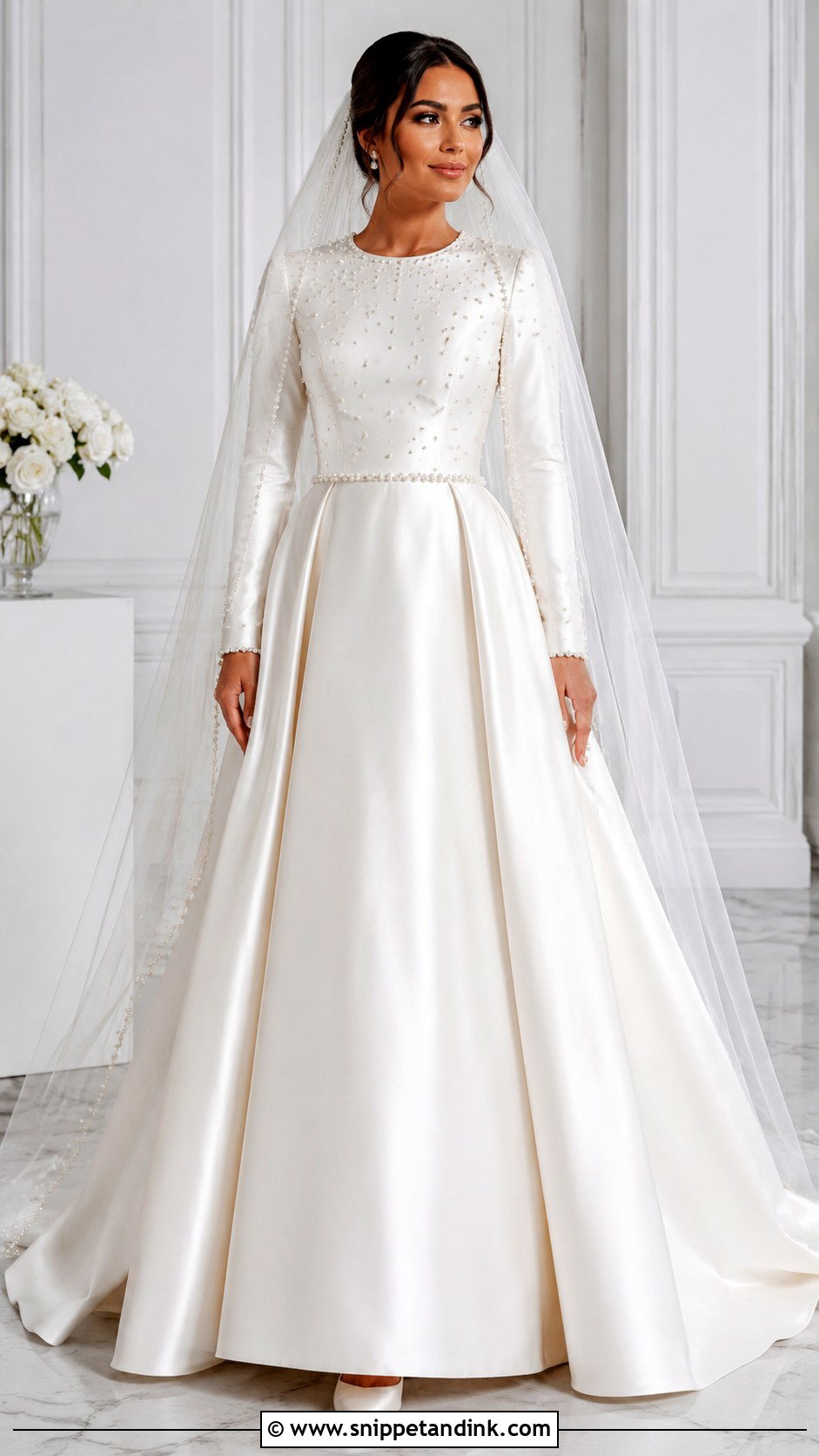
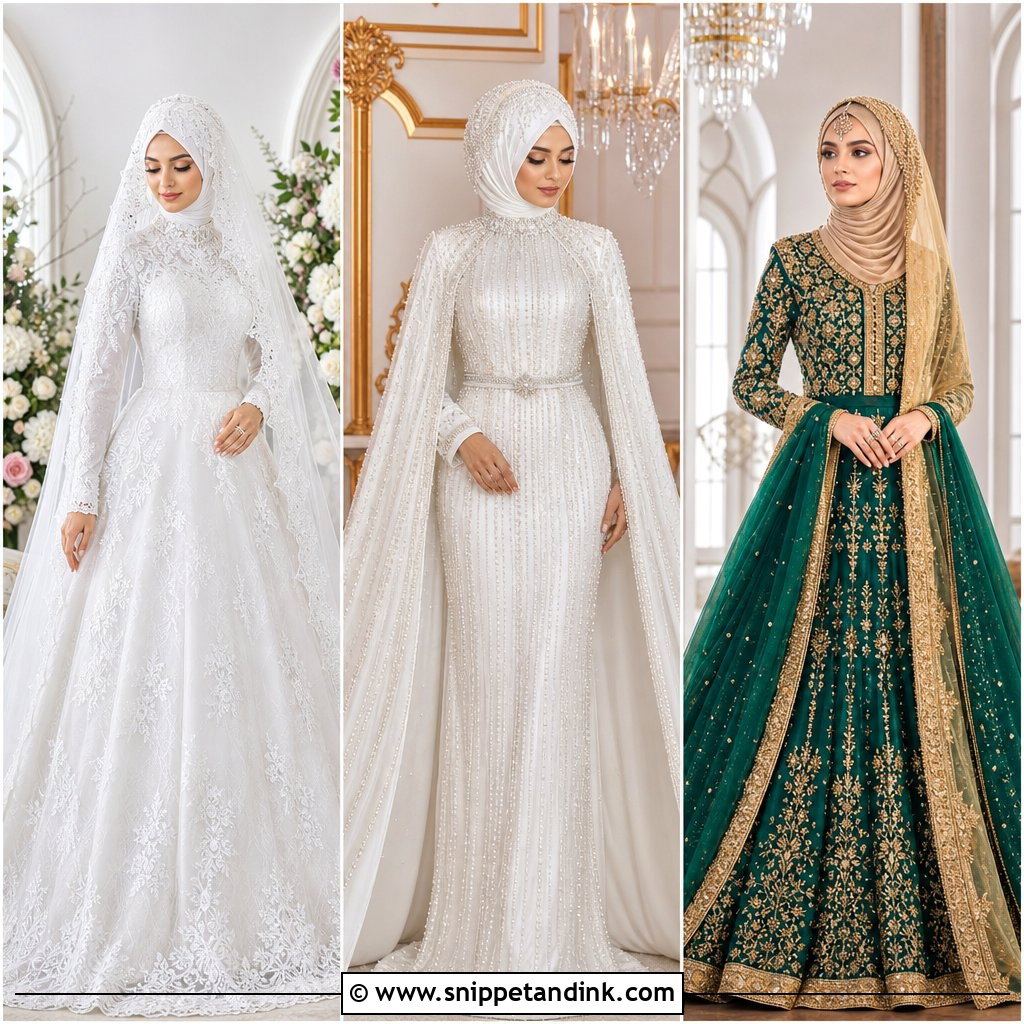
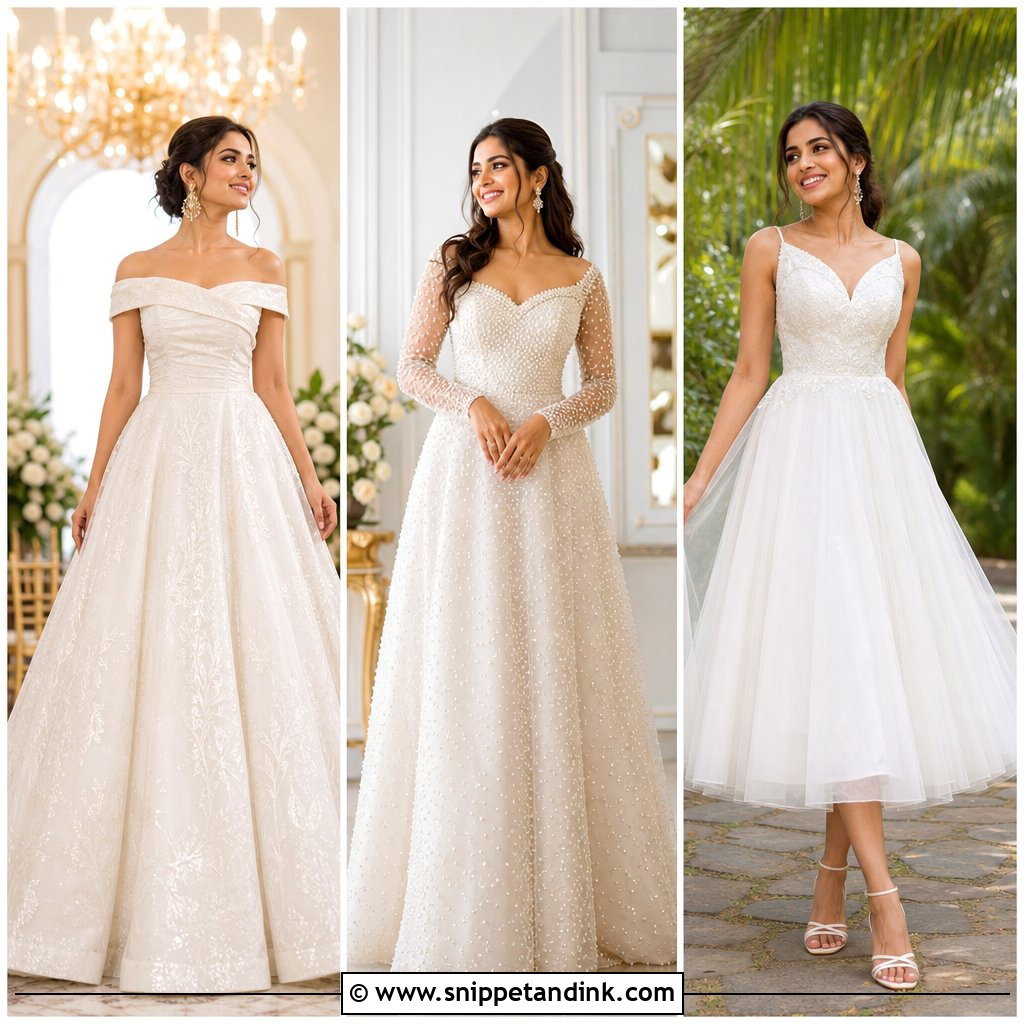
Pearls add texture without flash, which suits a church setting. They can trim the sleeves, bodice, waist, neckline or veil. Sewn pearls are heavier than they look, so a fully pearl-covered sleeve can pull the shoulder seam over a long day. Pick one or two areas rather than all of them. A pearl-trim veil and satin shoes tie it together.
11. Three Quarter Sleeve Christian Bridal Gown
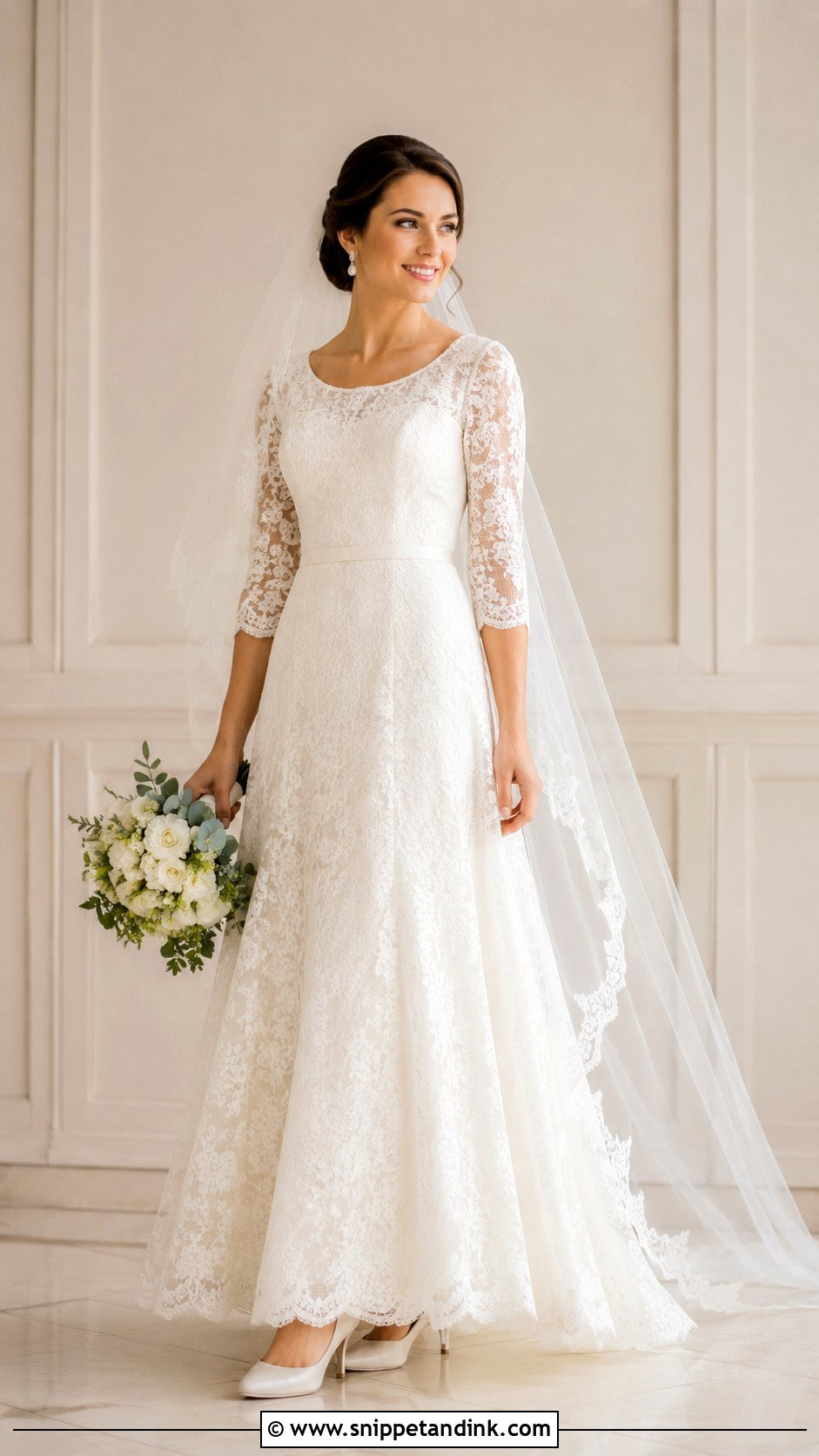
Three-quarter sleeves end between elbow and wrist, giving coverage with more freedom than full sleeves. They’re a good choice for warm churches and for brides who don’t like fabric at the wrist. Lace sleeves feel romantic; crepe or satin look cleaner. Pair them with a modest scoop, bateau or square neck. A slim A-line skirt keeps the shape simple.
12. Mock Neck Christian Bridal Gown
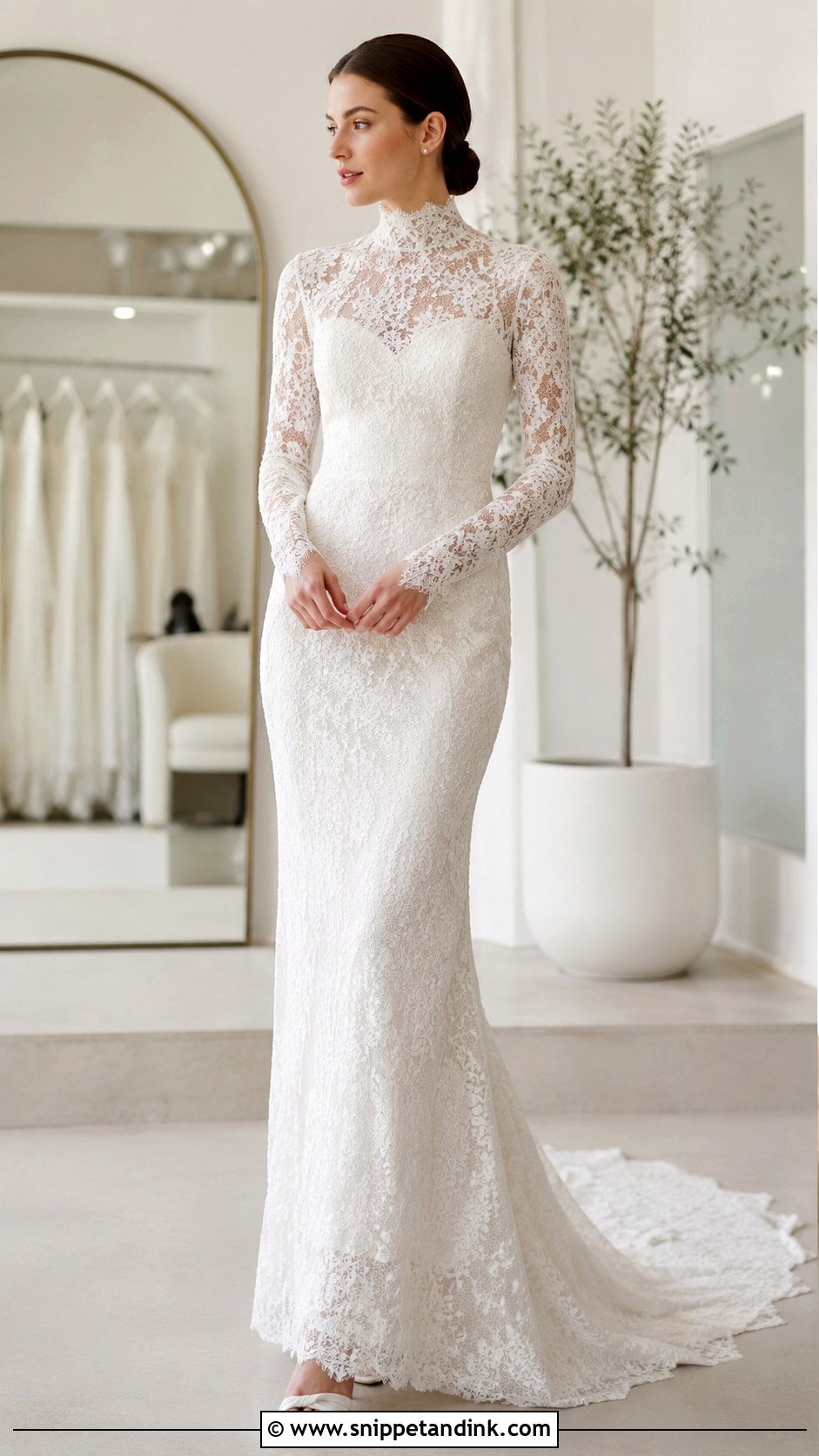
A mock neck sits higher than a crew neck but softer than a turtleneck. It’s modern and very covered. Stretch satin or crepe is most comfortable here; rigid fabric at the throat can feel tight after hours of talking and eating. Long sleeves and a slim skirt look sleek; an A-line softens it. Hair tucked back in a low bun shows the neckline.
13. Vintage Lace Christian Bridal Gown
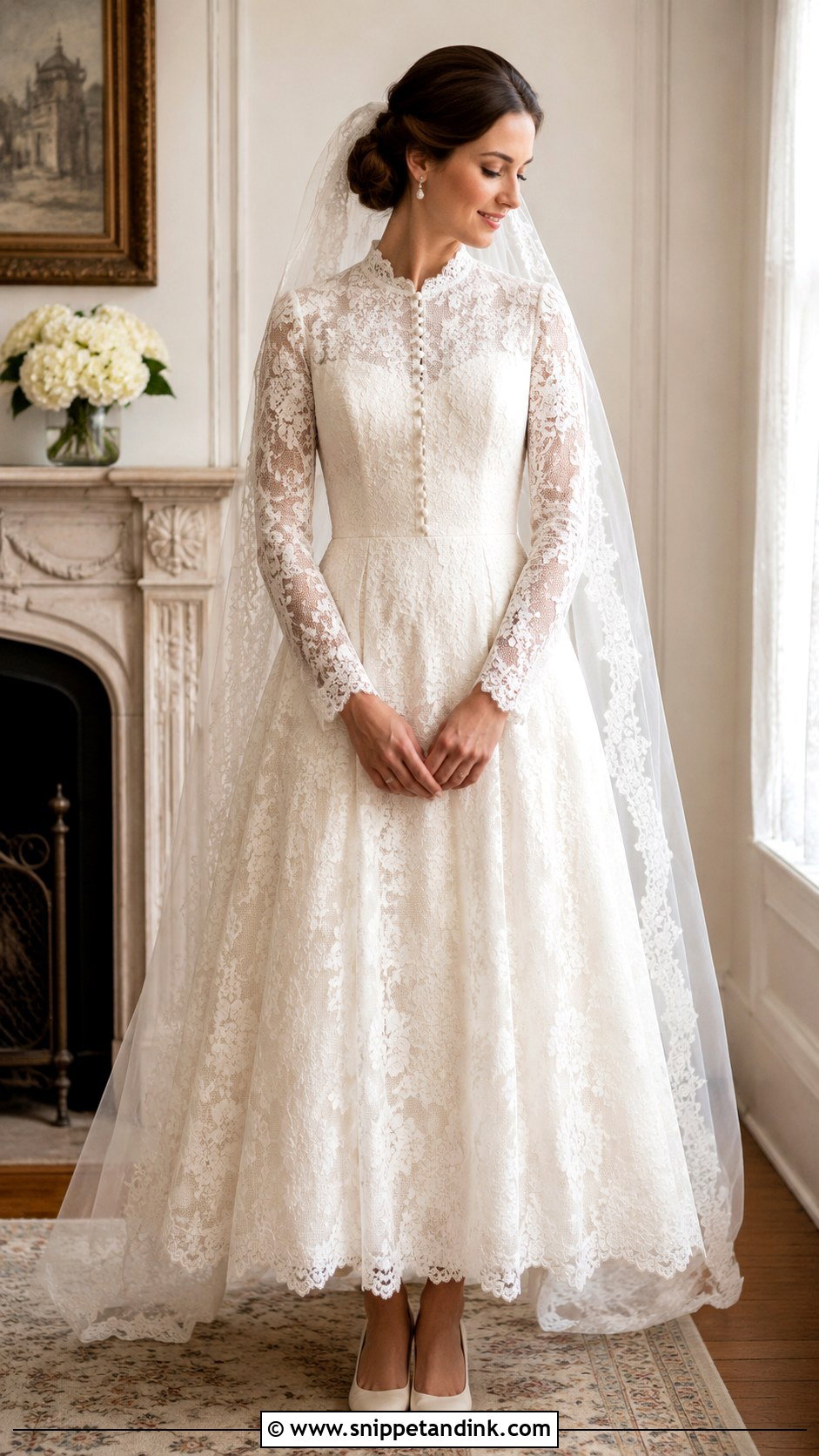
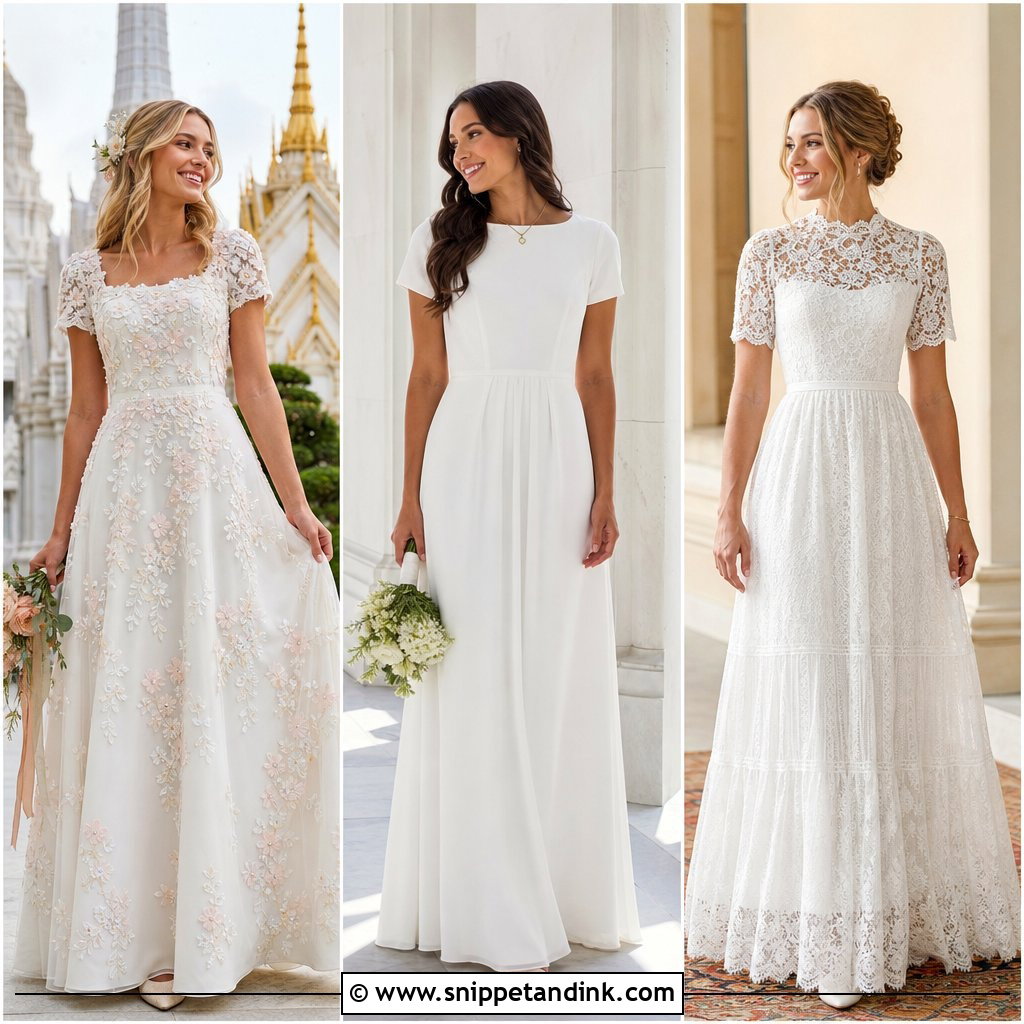
Vintage lace gowns carry floral lace, scalloped cuffs, covered buttons, a defined waist and a soft train. A-line, fit-and-flare and gentle ball gown shapes all work. A long row of covered buttons is pretty but takes time to fasten, so I tell brides to allow fifteen minutes and a patient helper, or ask the seamstress to add a hidden zip underneath. A lace-trim veil and classic pumps suit it.
14. Satin Ball Gown Christian Bridal Gown
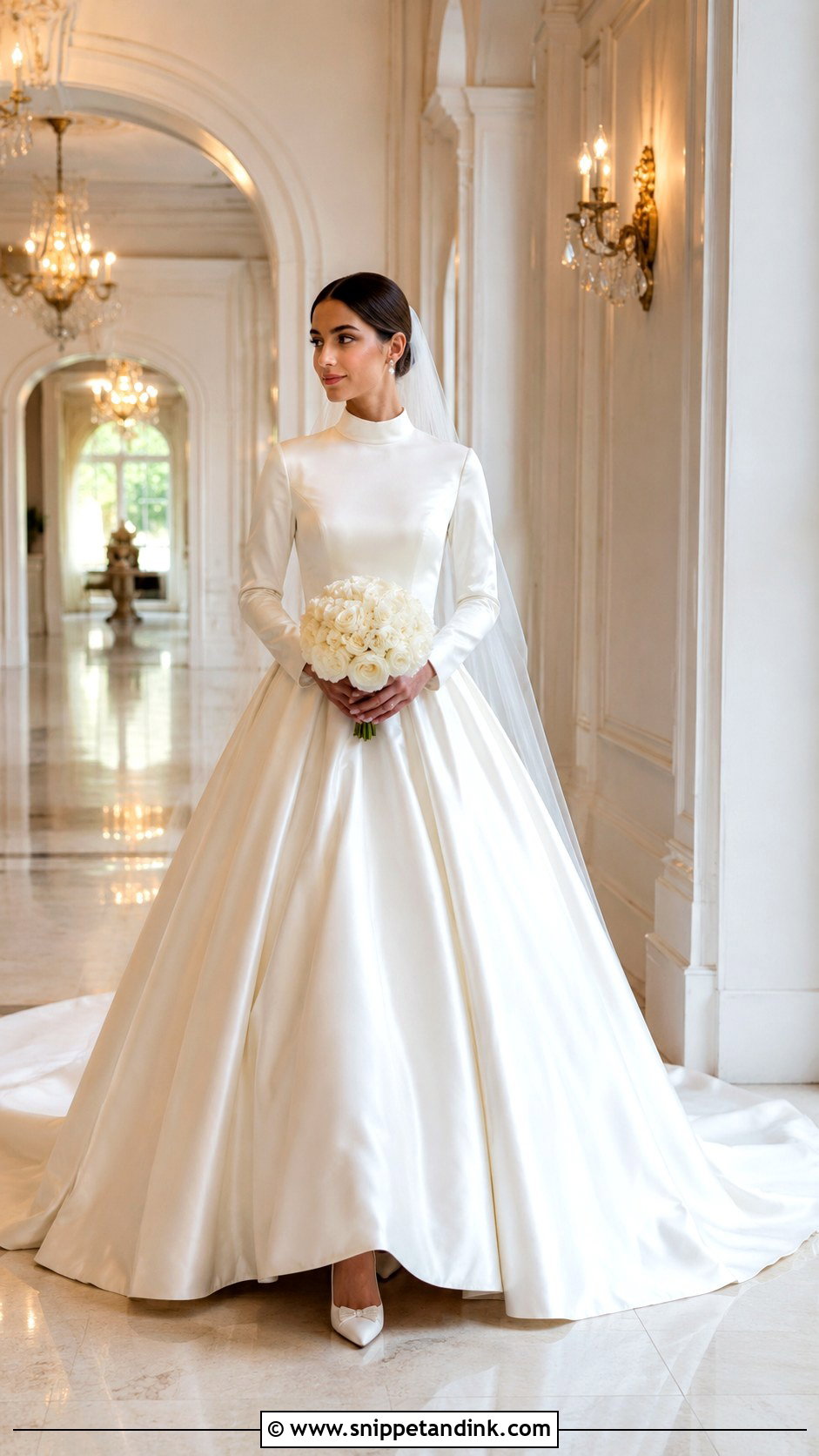
Satin ball gowns look formal and luxurious with almost no embellishment. A high or bateau neckline, or long sleeves, keeps it modest. The full skirt adds ceremony. Hidden pockets are worth asking for; a tissue and a lip balm during a long service are genuinely useful. Satin creases when you sit, so pews leave lines across the lap. A smooth veil and pearl studs finish it.
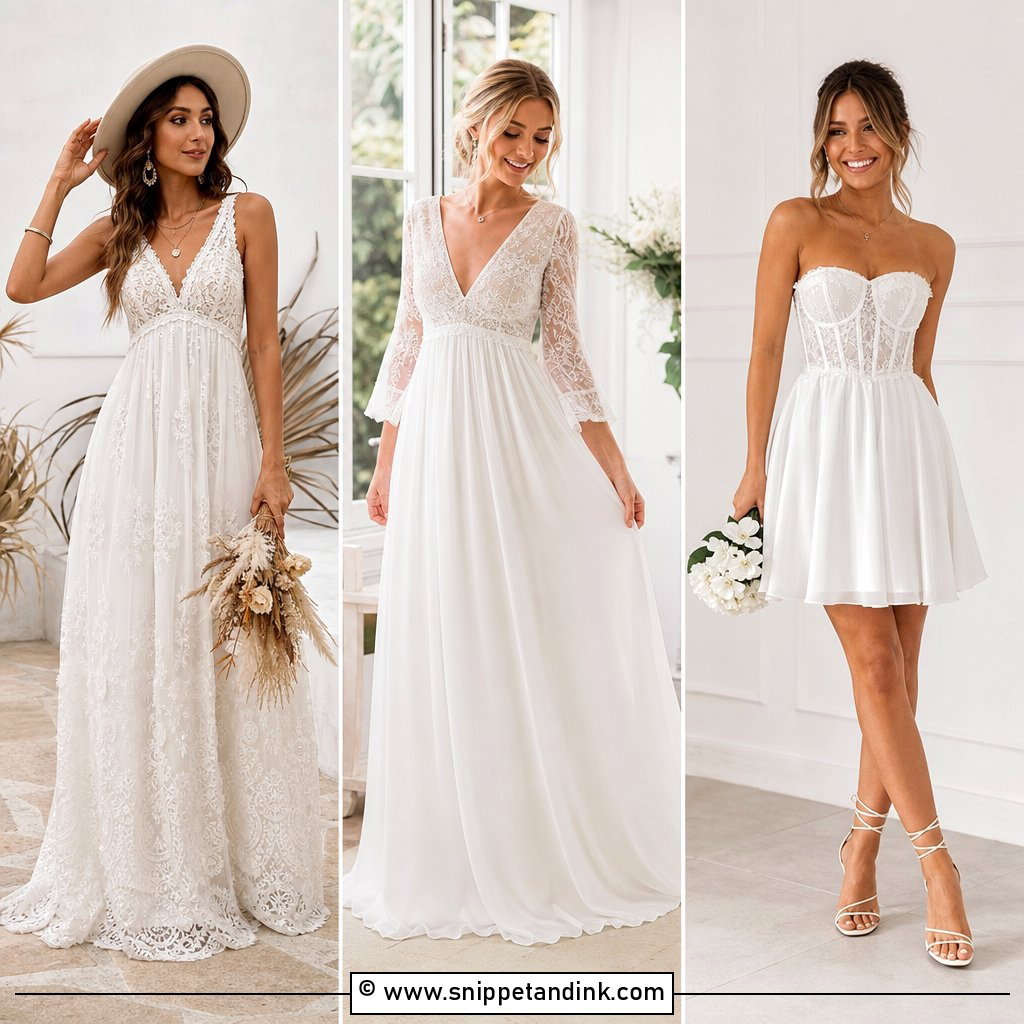
15. Illusion Sleeve Christian Bridal Gown
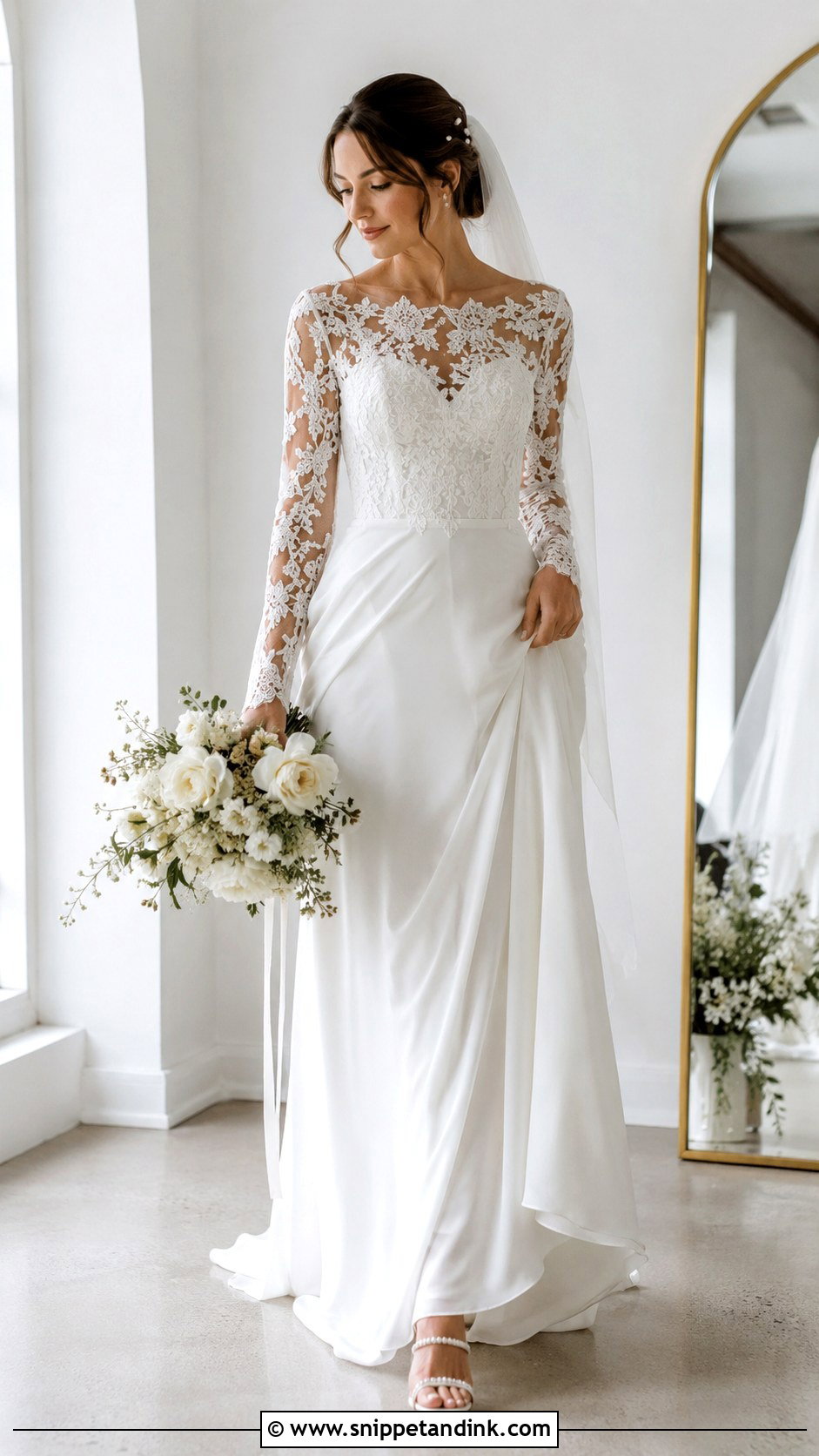
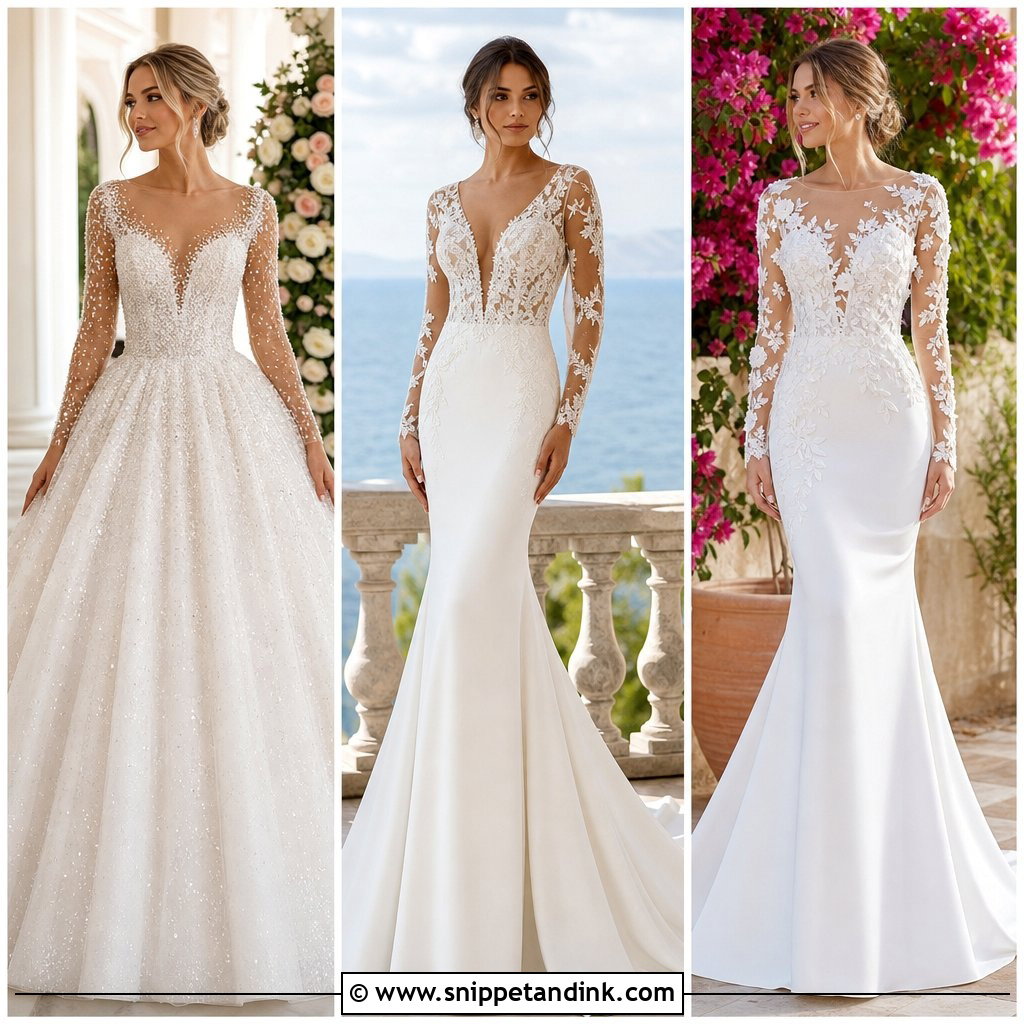
Illusion sleeves float lace over sheer mesh. For more coverage, ask for denser lace placement or a lined sleeve; standard illusion mesh can look like bare arms from the back of a church. They suit brides who want texture without full fabric sleeves. A lace bodice, crepe skirt or tulle A-line all pair well. Pearl pins and dainty heels keep it light.
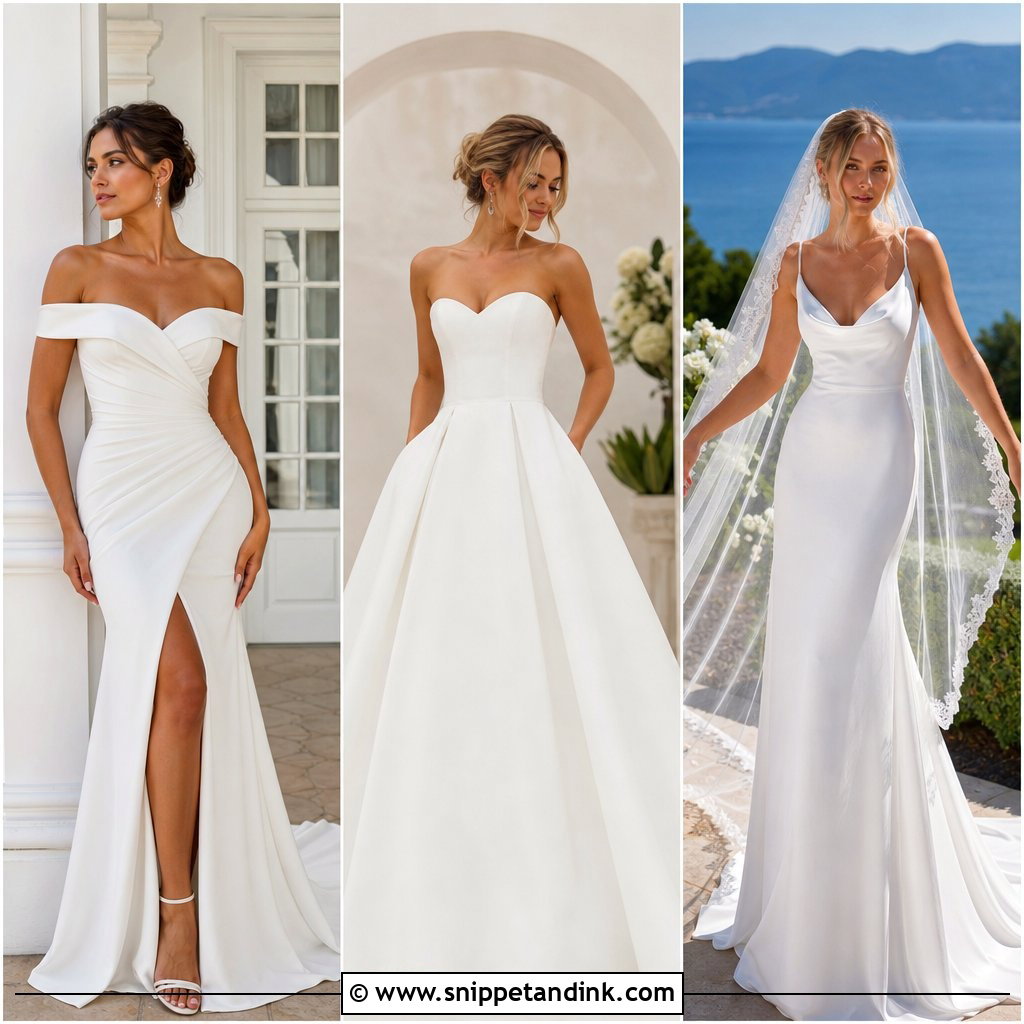
16. Modest Mermaid Christian Bridal Gown
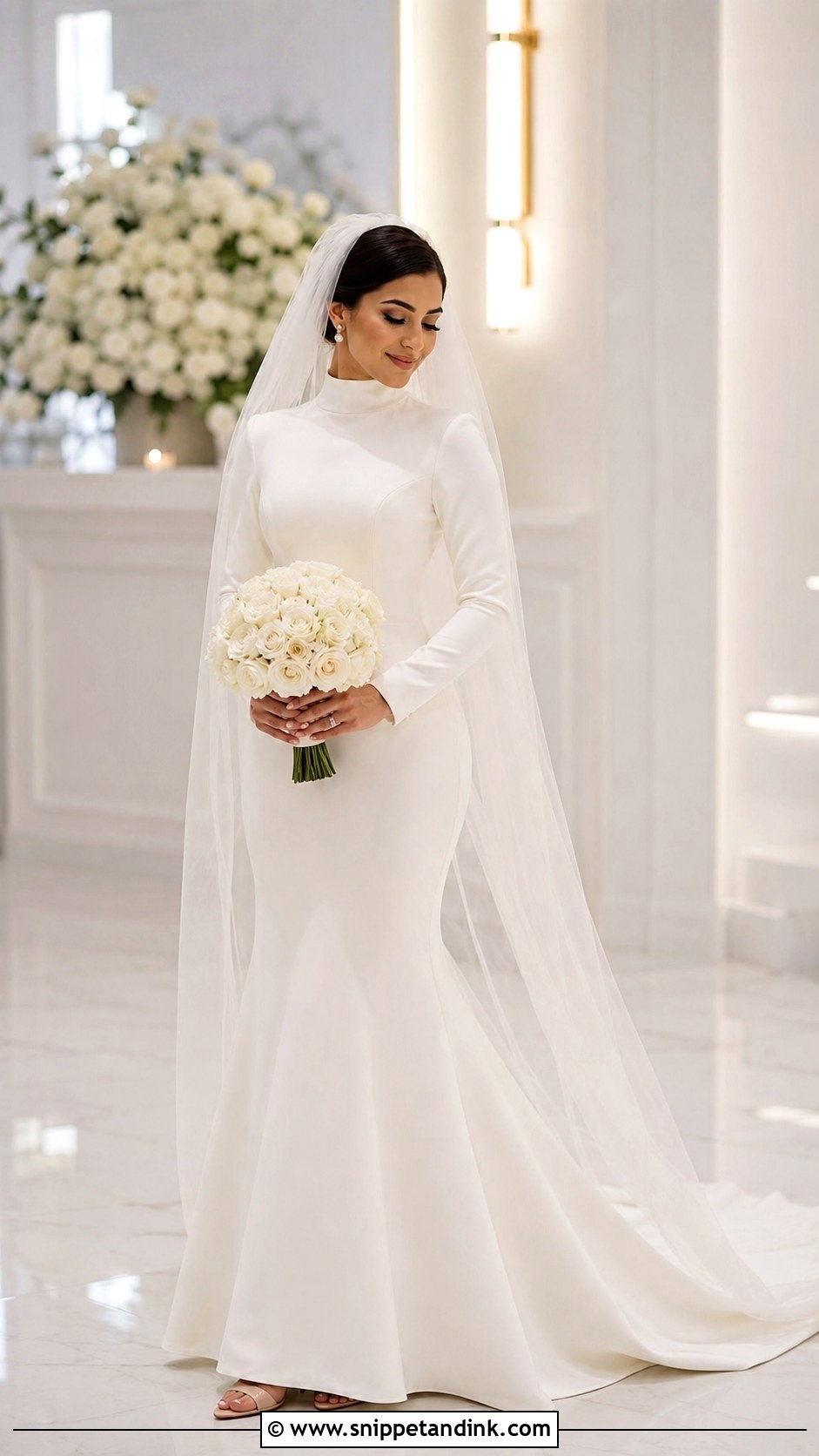
A modest mermaid needs careful fitting to stay appropriate. The skirt follows the hips and flares near the knees, so heavier crepe, lace or satin is better than thin fabric that clings. Long sleeves and a lined bodice balance the fitted shape. Kneeling is very hard in a true mermaid, so if your service includes kneeling, a softer trumpet that flares higher on the leg is the safer choice. A chapel train adds drama.
17. Cape Sleeve Christian Bridal Gown
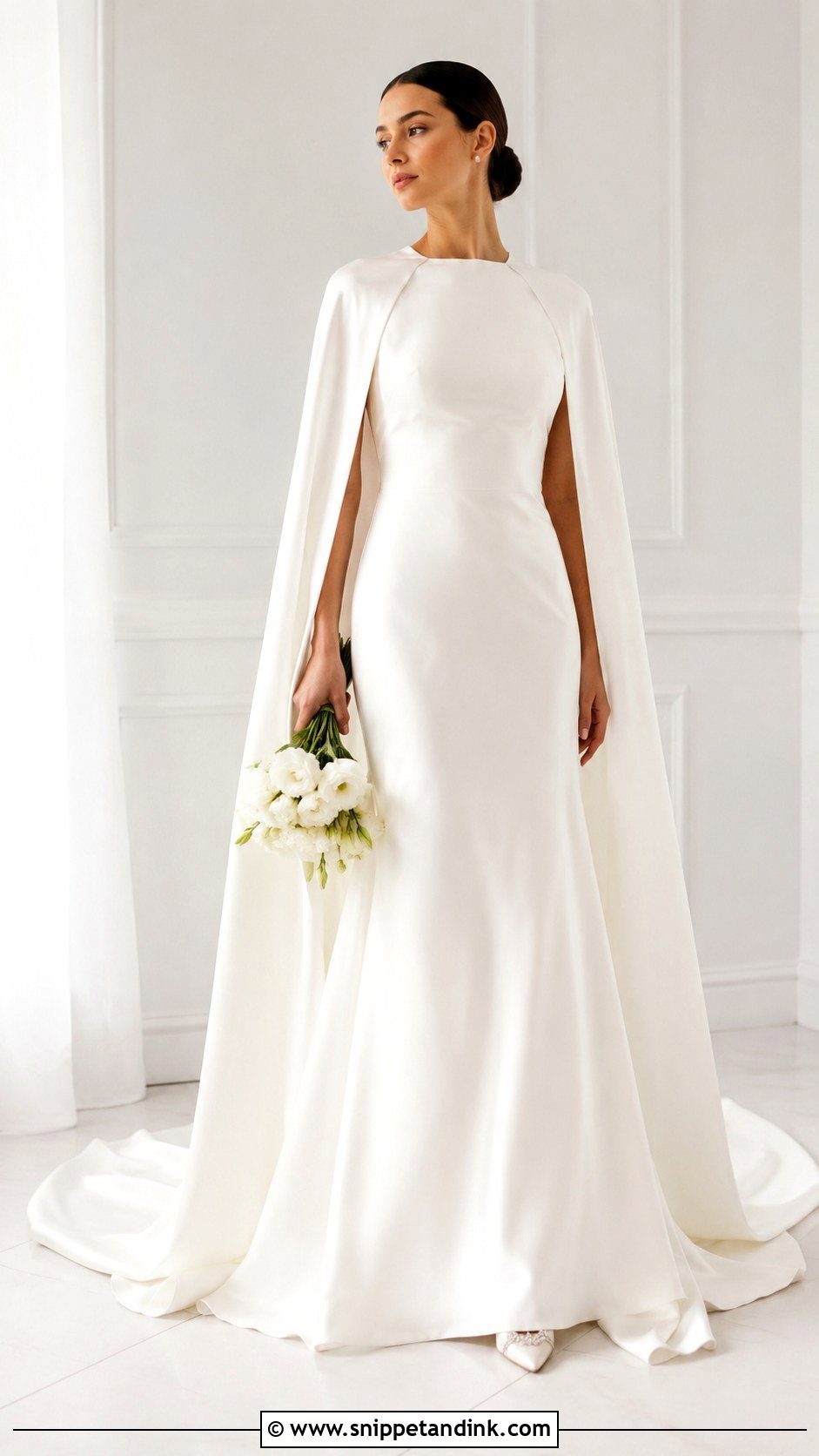
A cape covers the shoulders and back with a flowing layer instead of sleeves. It suits a simple satin or crepe gown underneath. High or square necklines keep it polished. A detachable cape lets you change the look for the reception. Check the attachment point; capes fastened only at the shoulders can pull the neckline backward when someone steps on the hem.
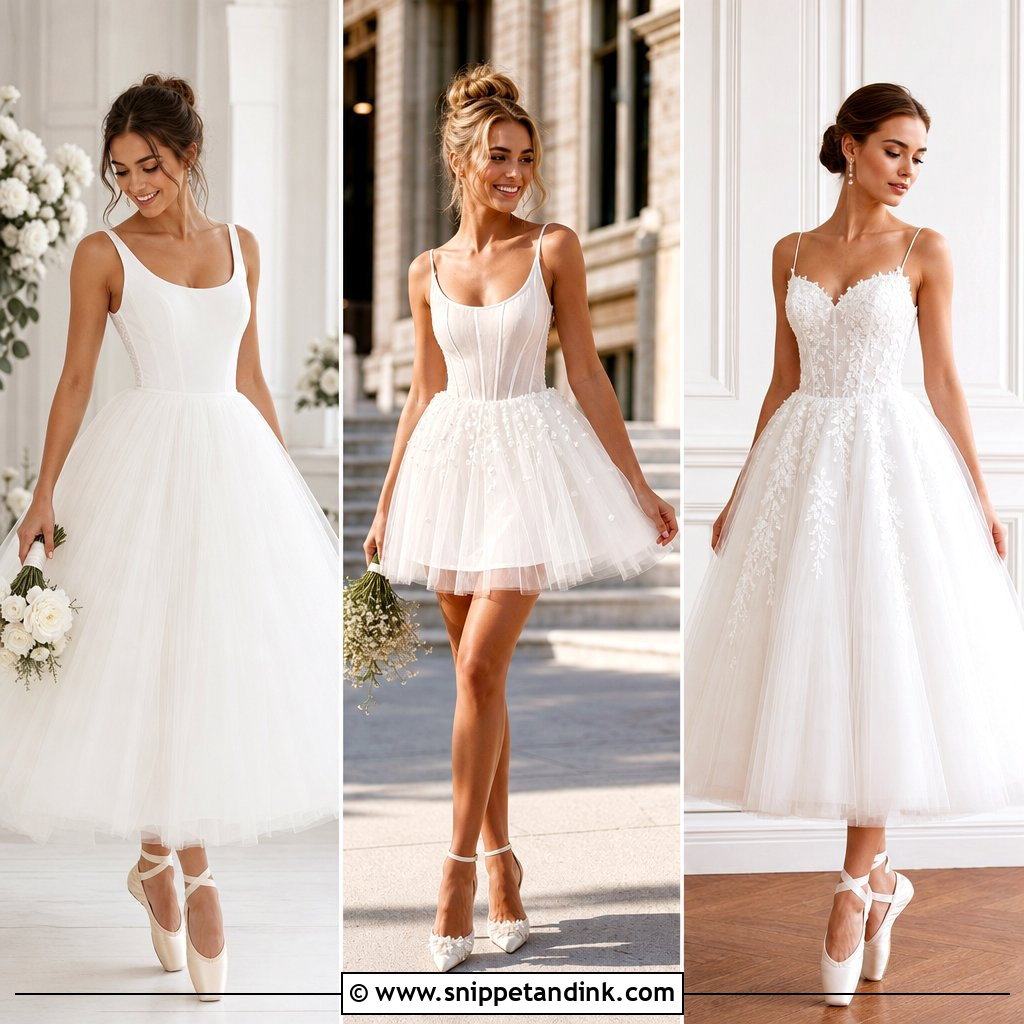
18. Tea Length Christian Bridal Gown
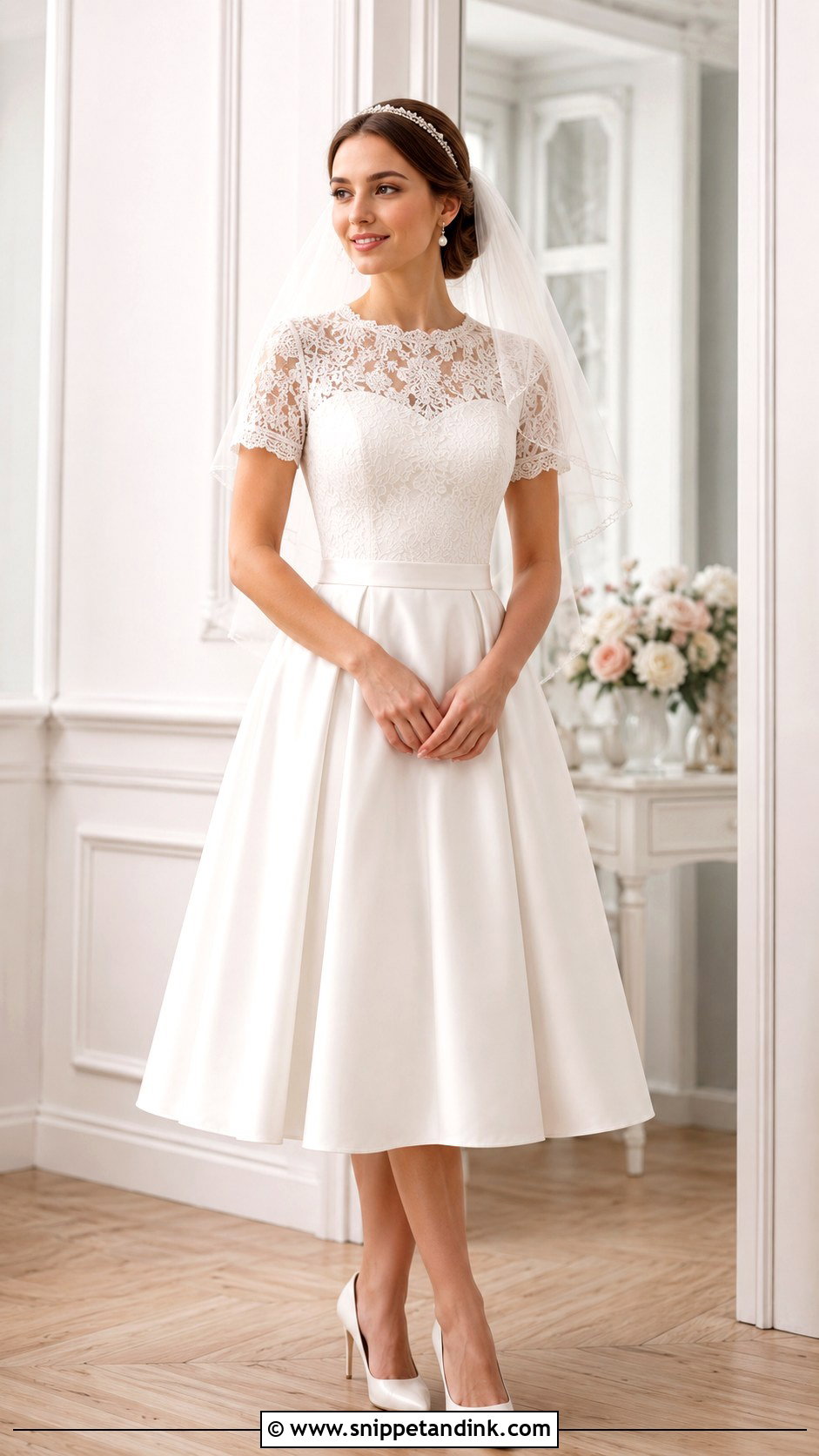
Tea length falls between knee and ankle, with a vintage feel and easy movement. A higher neckline, lace sleeves or a structured bodice keeps it bridal. Shoes are fully visible, so closed-toe heels, pearl flats or classic pumps need to be chosen as carefully as the gown. Some churches expect floor-length for the bride, so check before committing. A short veil or headband completes it.
19. Pleated Skirt Christian Bridal Gown
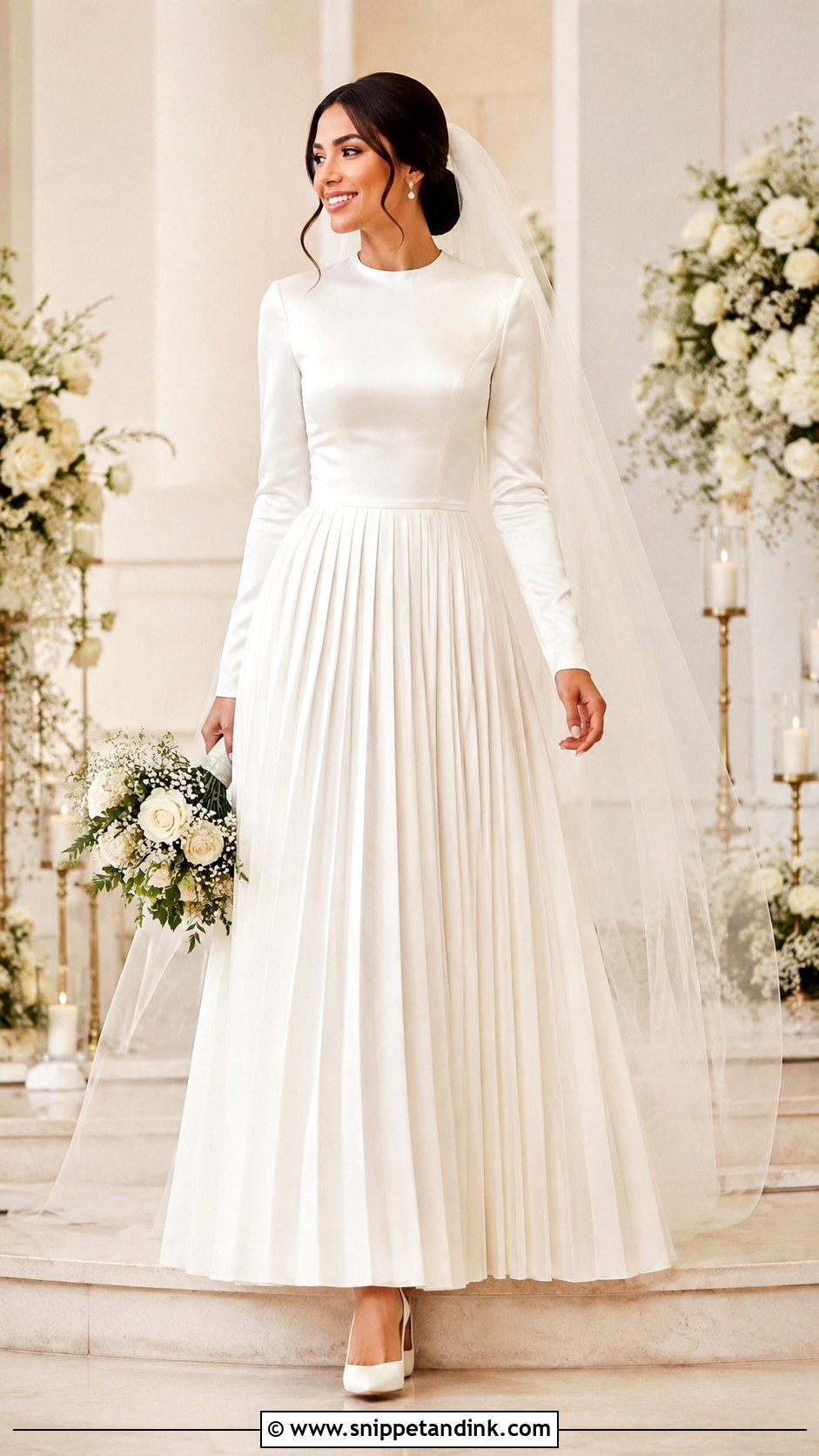
Pleats add movement and texture without sparkle or heavy lace. Satin, chiffon and soft crepe all pleat well. Fine pleats look delicate; wider box pleats feel structured. Pleated skirts can open and lose shape if the gown is packed tightly, so hang it upright in transit. A modest fitted bodice balances the skirt.
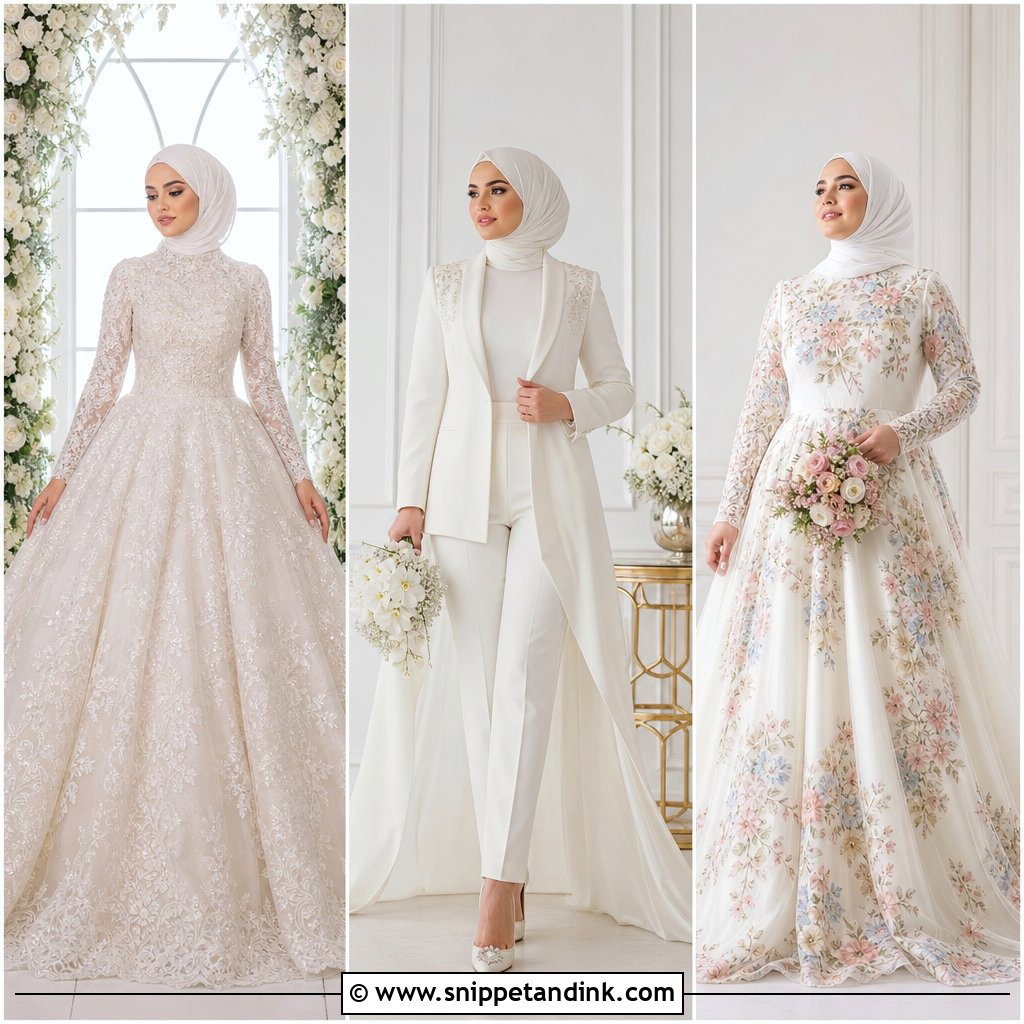
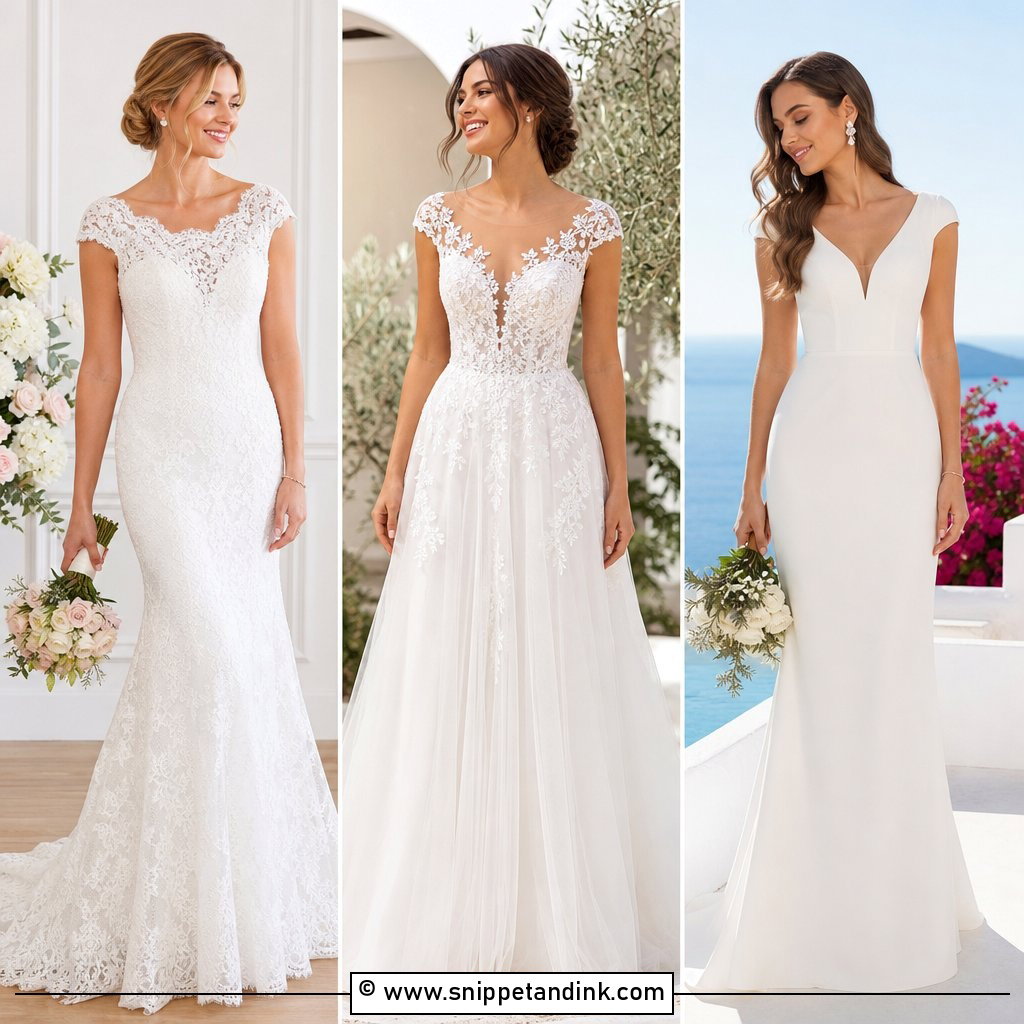
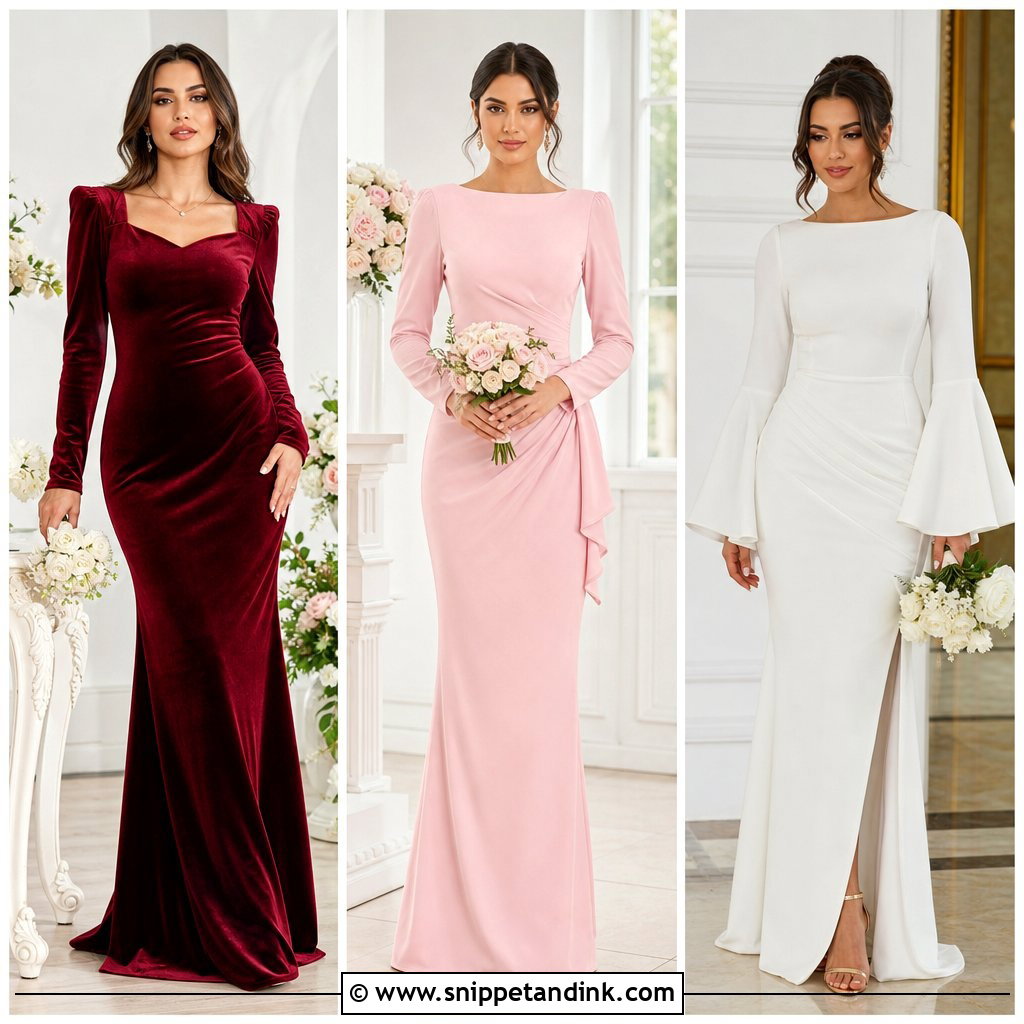
20. Chiffon Christian Bridal Gown
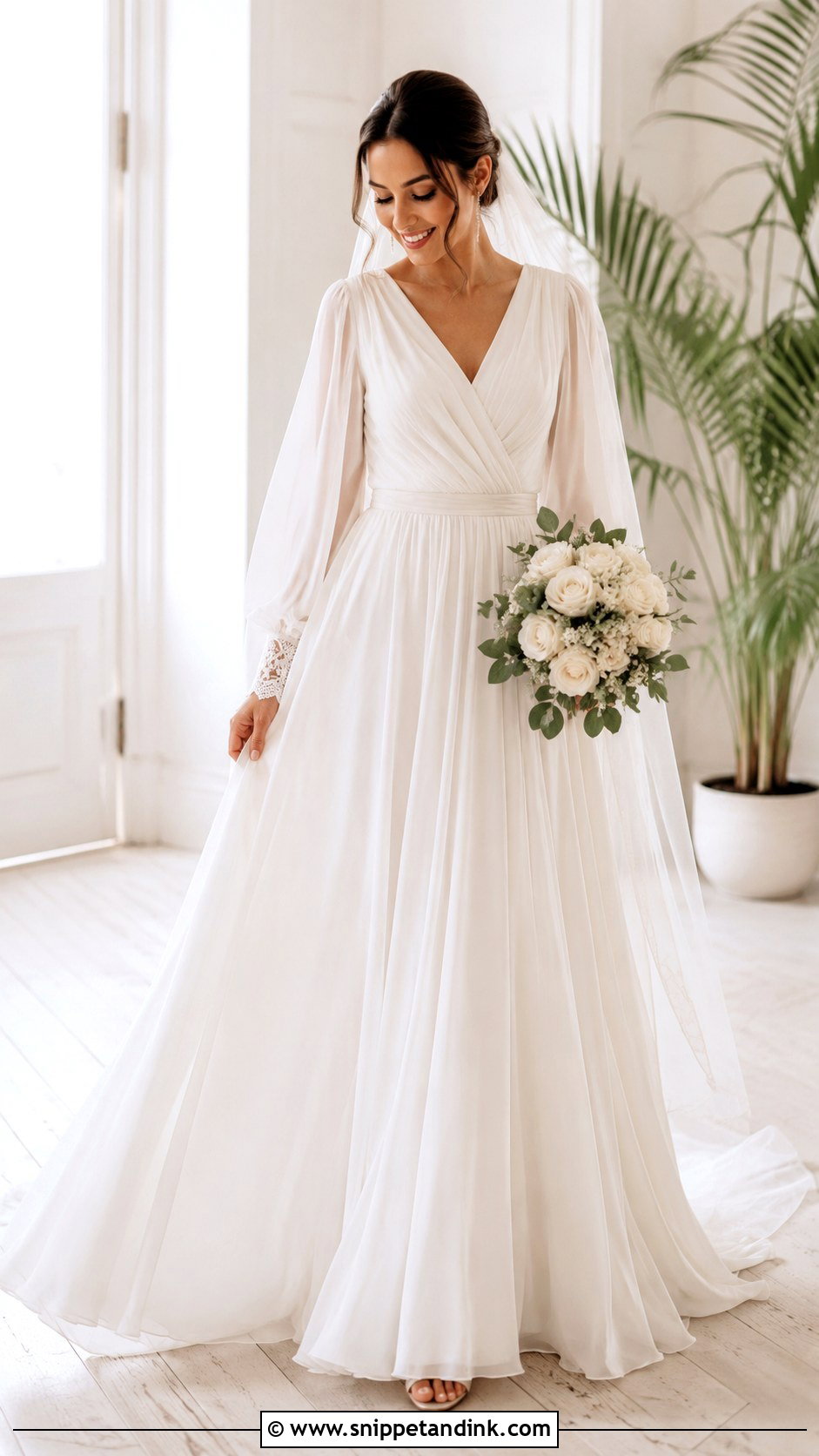
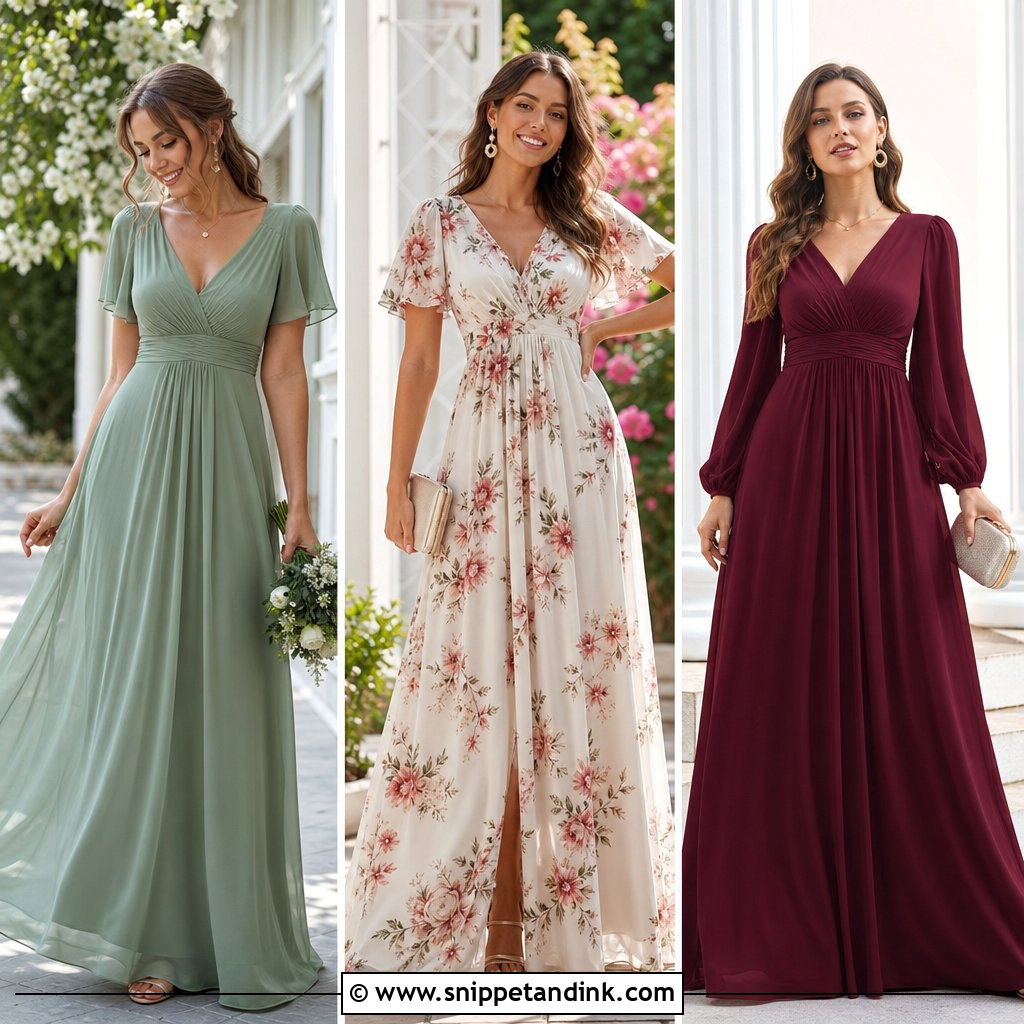
Chiffon is the lightest fabric in this list, so it suits summer churches with little air conditioning. It drapes with long sleeves, flutter sleeves or a wrap-style bodice. Chiffon is sheer, so a lined bodice and full skirt lining are essential for modesty; check it against a window. Lace accents at the cuffs or neckline add detail. Low heels keep it comfortable all day.
21. Beaded Bodice Christian Bridal Gown
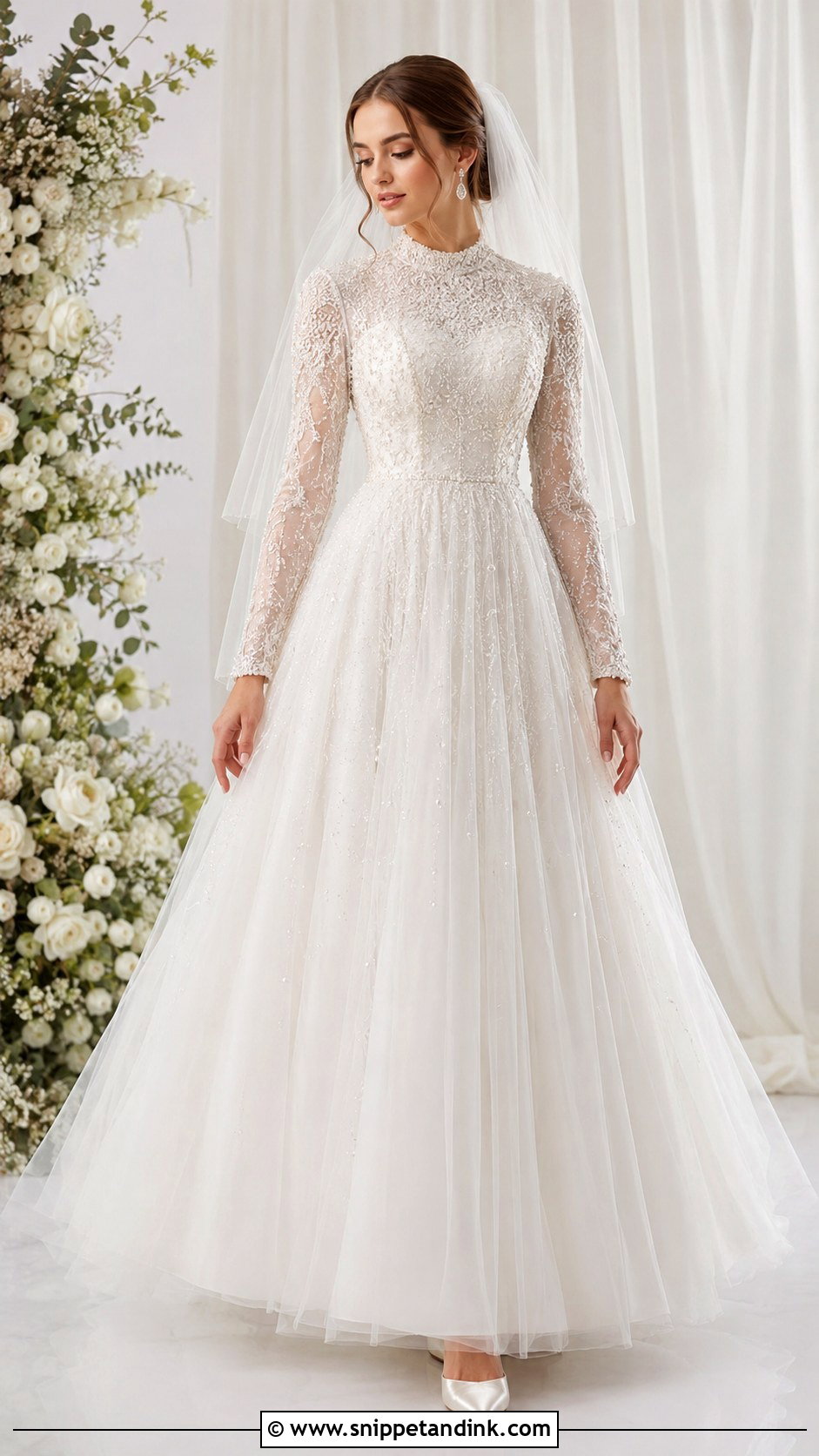
A beaded bodice Christian bridal gown puts sparkle near the face and keeps the skirt quiet. Tulle, chiffon or crepe skirts balance a decorated top. Pearl or crystal beading glows softly in church light. Beading on the inner arm can scratch and catch on a lace veil, so I check sleeve beading carefully. A plain veil and simple earrings avoid competing.
22. Embroidered Christian Bridal Gown
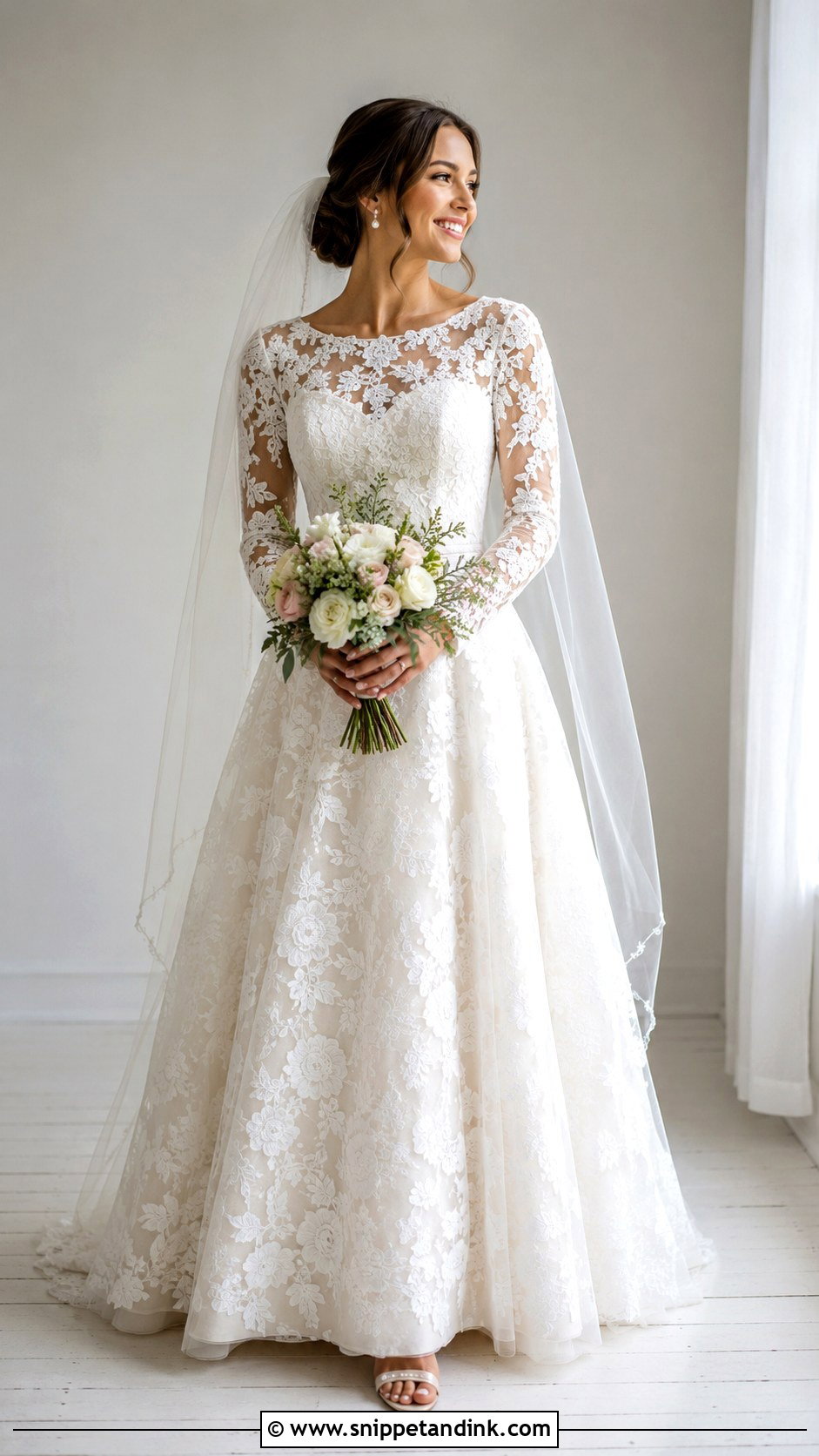
Embroidery adds a handmade quality: florals, vines or raised designs across the bodice, sleeves or hem. Tulle, lace and organza carry it well. Some brides have meaningful symbols or initials stitched discreetly inside the hem or bodice, which a skilled seamstress can do. A lined bodice and soft A-line keep it modest and let the work show. Pearl studs and a plain veil finish it.
23. Organza Christian Bridal Gown
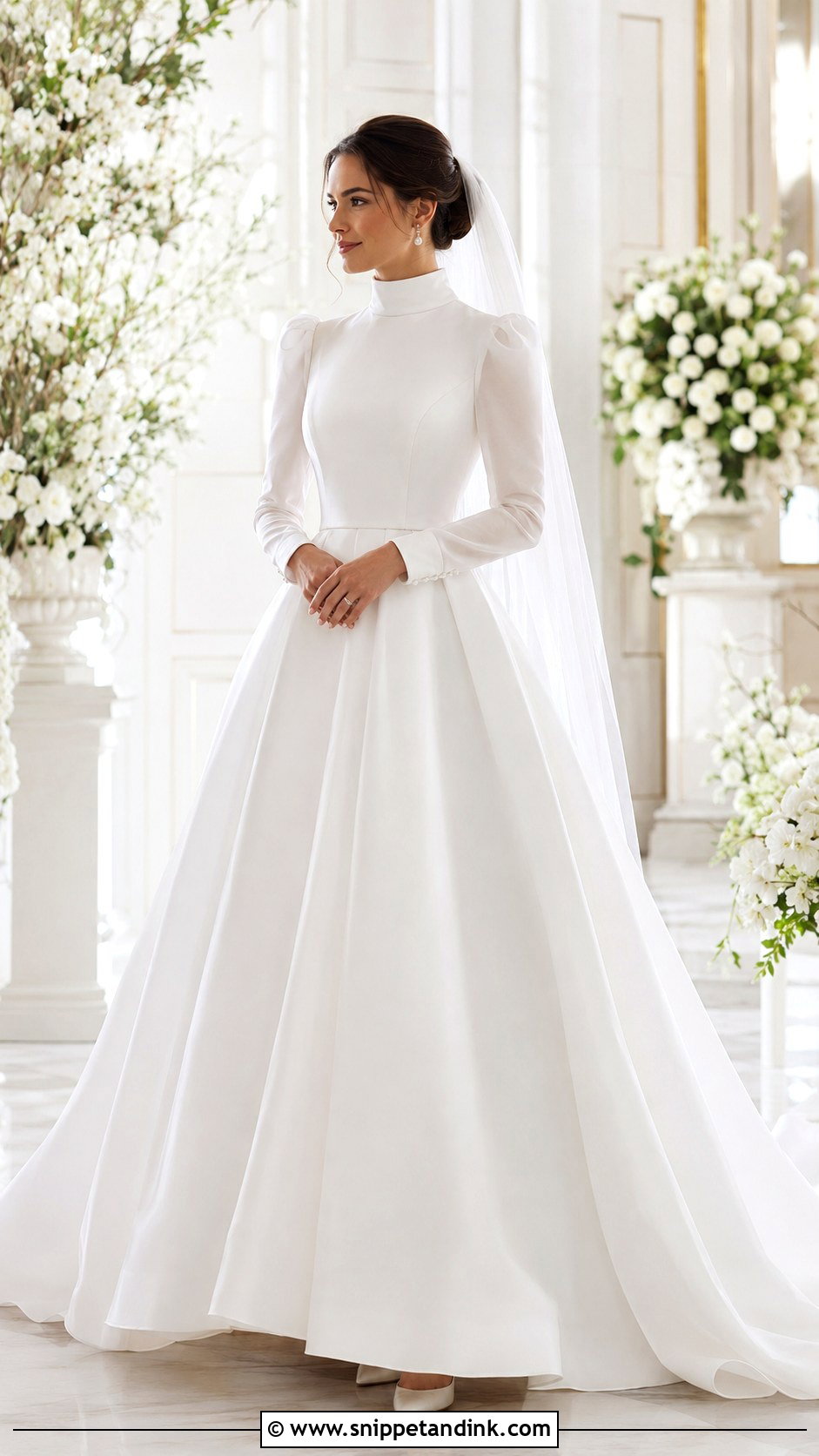
Organza has more body than chiffon but still looks airy. It builds volume in skirts and sleeves without much weight, which helps a formal gown stay comfortable. A high or bateau neckline gives a classic shape. Organza creases sharply when crushed, so a steamer at the church is wise. A simple veil and satin shoes complete it.
24. Basque Waist Christian Bridal Gown
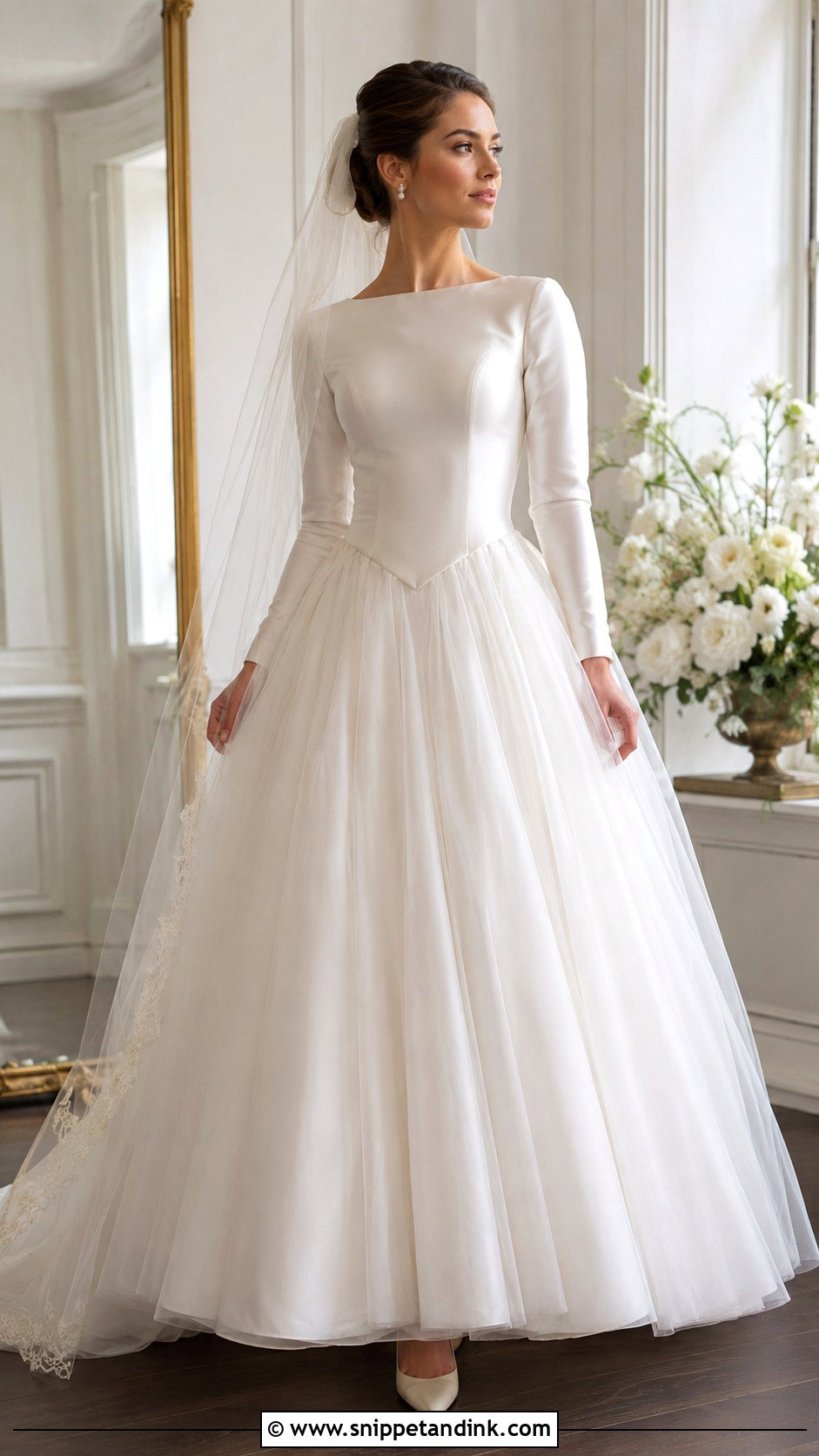
A basque waist Christian bridal gown dips into a soft point below the natural waist, lengthening the torso and pairing well with full skirts. It has come back strongly in recent bridal collections. Satin or lace with long sleeves and a modest neck suits it. The point needs precise fitting, since if it sits too low it can dig in when you sit. A chapel veil and pearl earrings keep focus on the waistline.
25. Detachable Overskirt Christian Bridal Gown
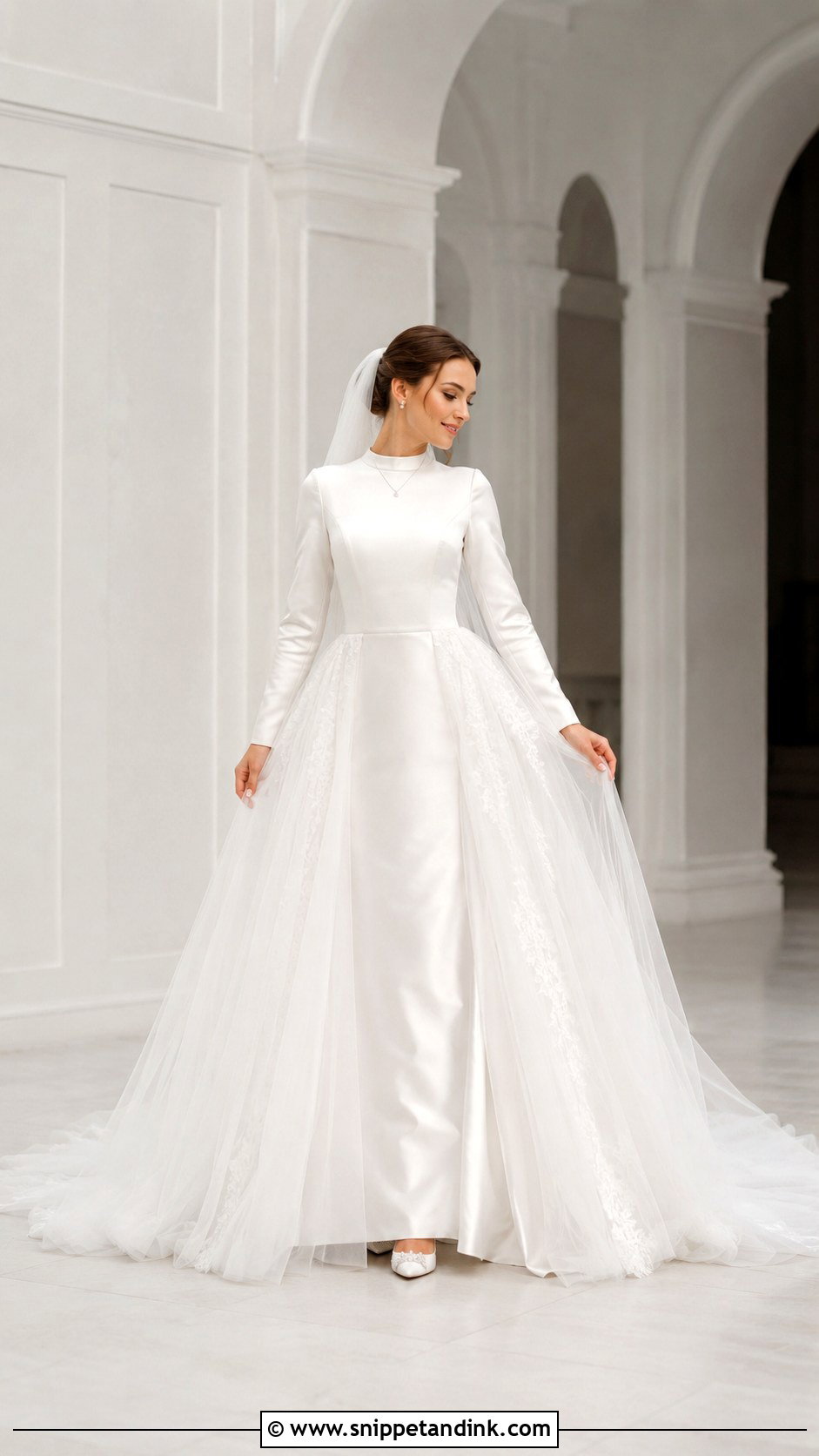
A detachable overskirt gives a formal shape for the ceremony and a slimmer gown underneath for later. Choose a modest base with sleeves, a high neck or covered back. The overskirt can be tulle, organza or satin. Practise removing it before the day; most fasten with hooks or buttons at the waist, and someone besides you should know how they work.
26. Covered Back Christian Bridal Gown
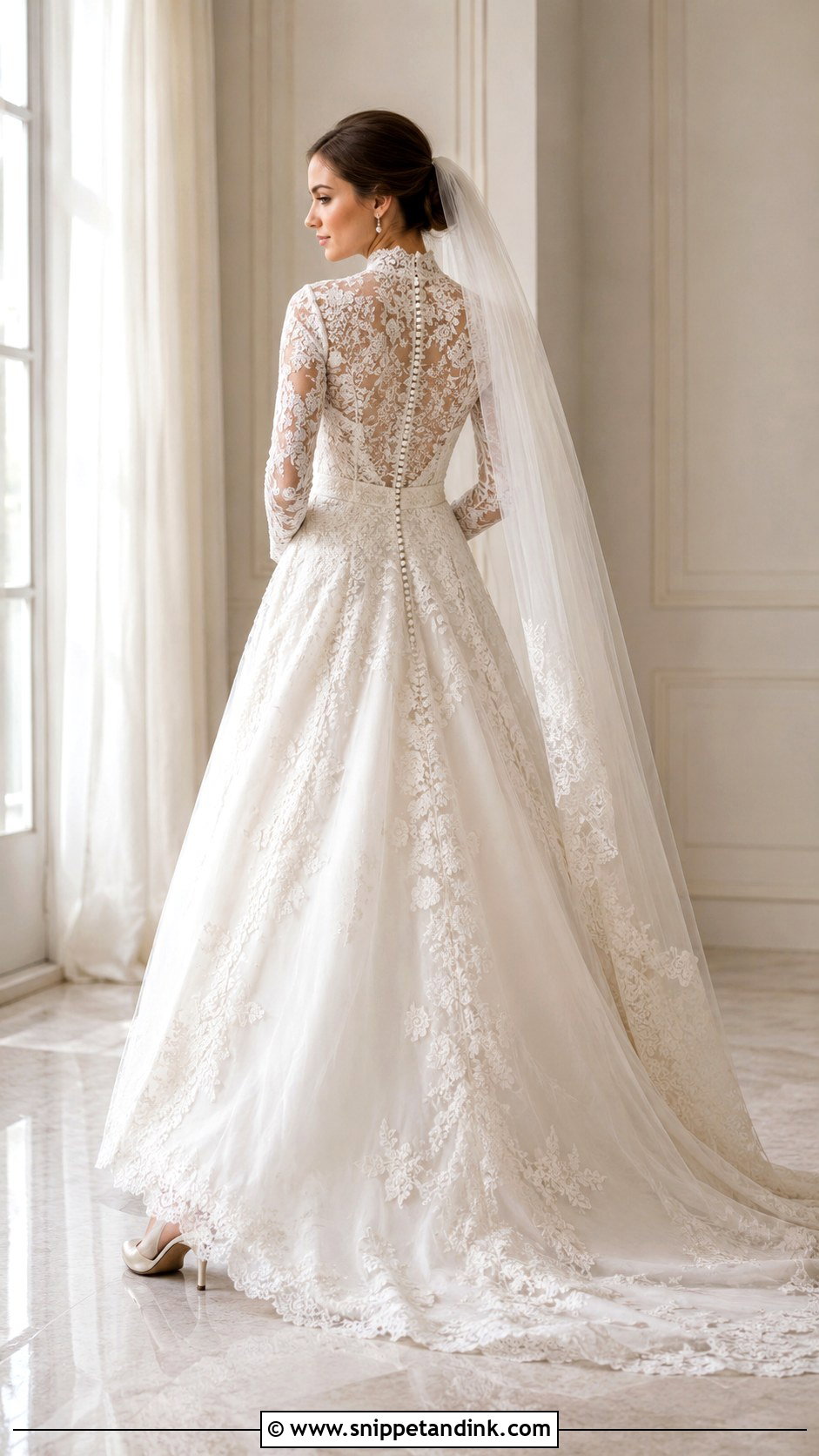
A covered back matters more at a church ceremony than brides expect, because guests watch your back for most of the service. Lace, satin, covered buttons or lined illusion all work. A covered back also gives the veil a smooth surface to fall over. Pair it with a modest front and sleeves for balance. Check the back fit while seated, since closed backs can pull at the shoulder blades when you lean forward.
27. Minimalist Satin Christian Bridal Gown
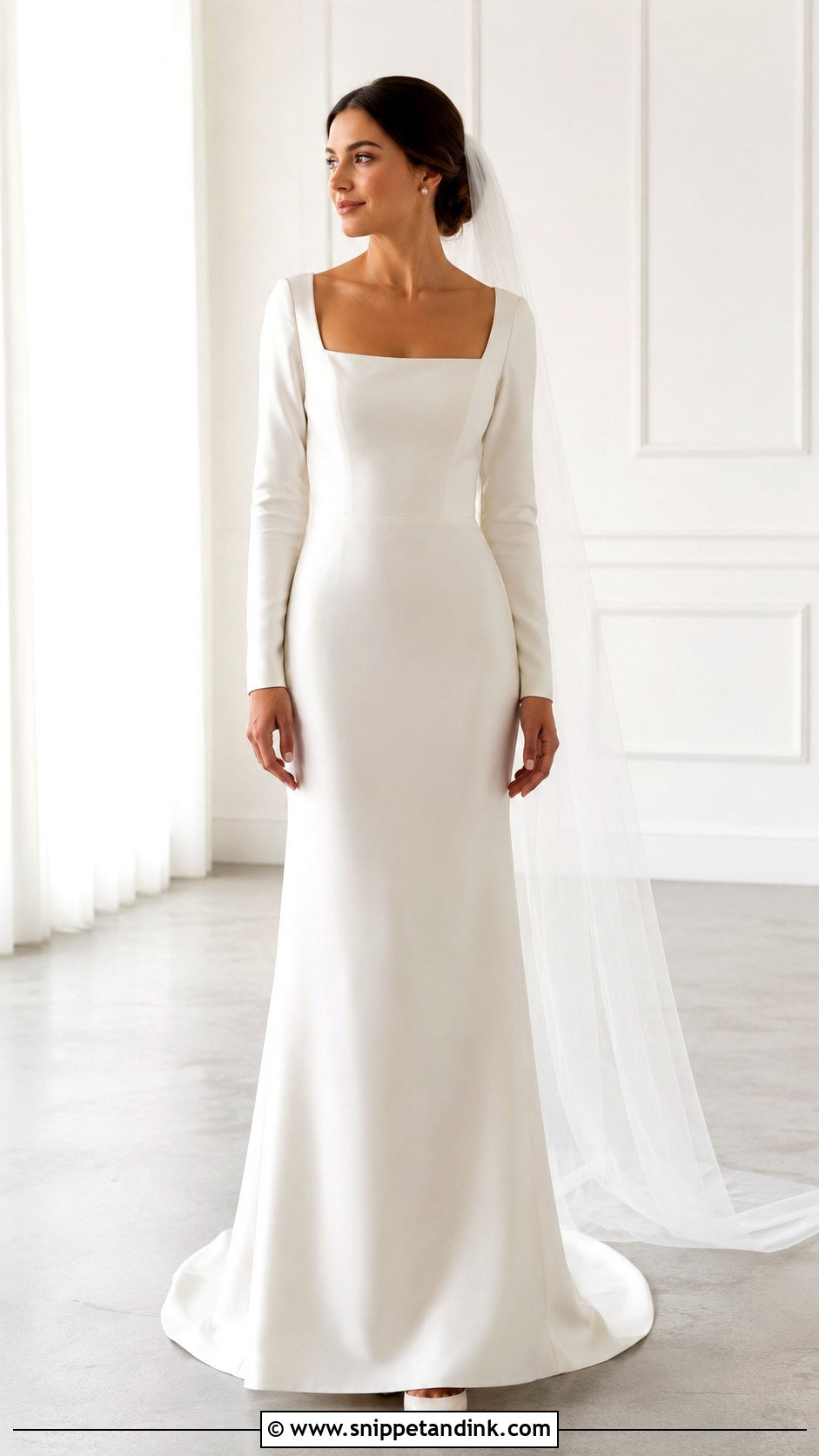
Minimalist satin depends on fabric, fit and silhouette, with nothing to distract from any of them. A high neck, long sleeves or a fully lined square neck gives modest coverage. A slim A-line or column keeps it modern. Excellent tailoring is non-negotiable; satin shows every fitting flaw. A smooth veil and satin heels finish it quietly.
28. Floral Lace Christian Bridal Gown
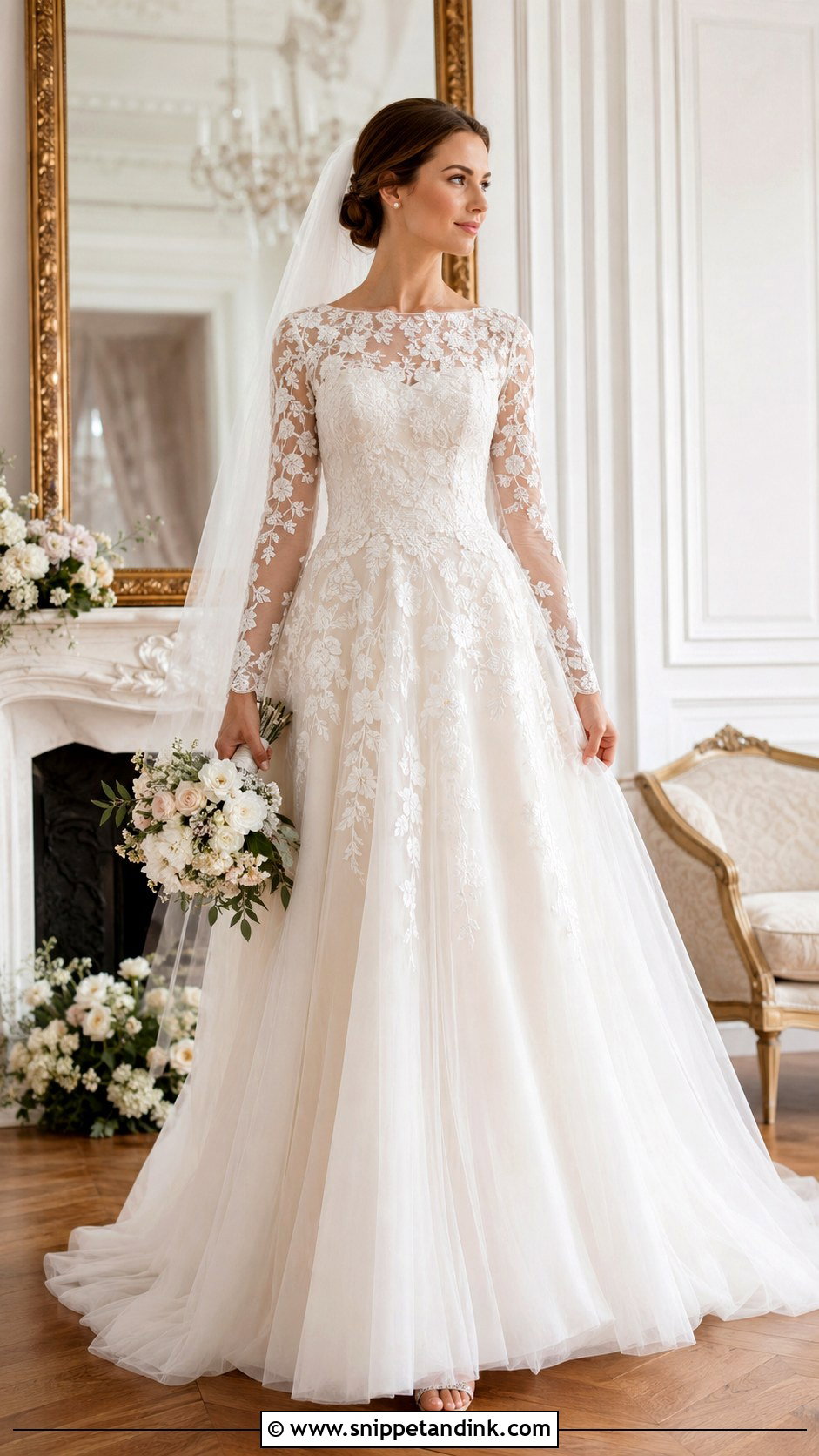
Floral lace scale changes the mood: large flowers feel modern, small ones feel traditional. Long sleeves, a lined bodice and an A-line skirt give balance. Lace along the hem, cuffs, neckline and train looks pretty, but lace-on-lace with a busy veil gets crowded. Choose a plain veil if the gown has lots of lace. A low bun and comfortable heels complete it.
29. Off White Christian Bridal Gown
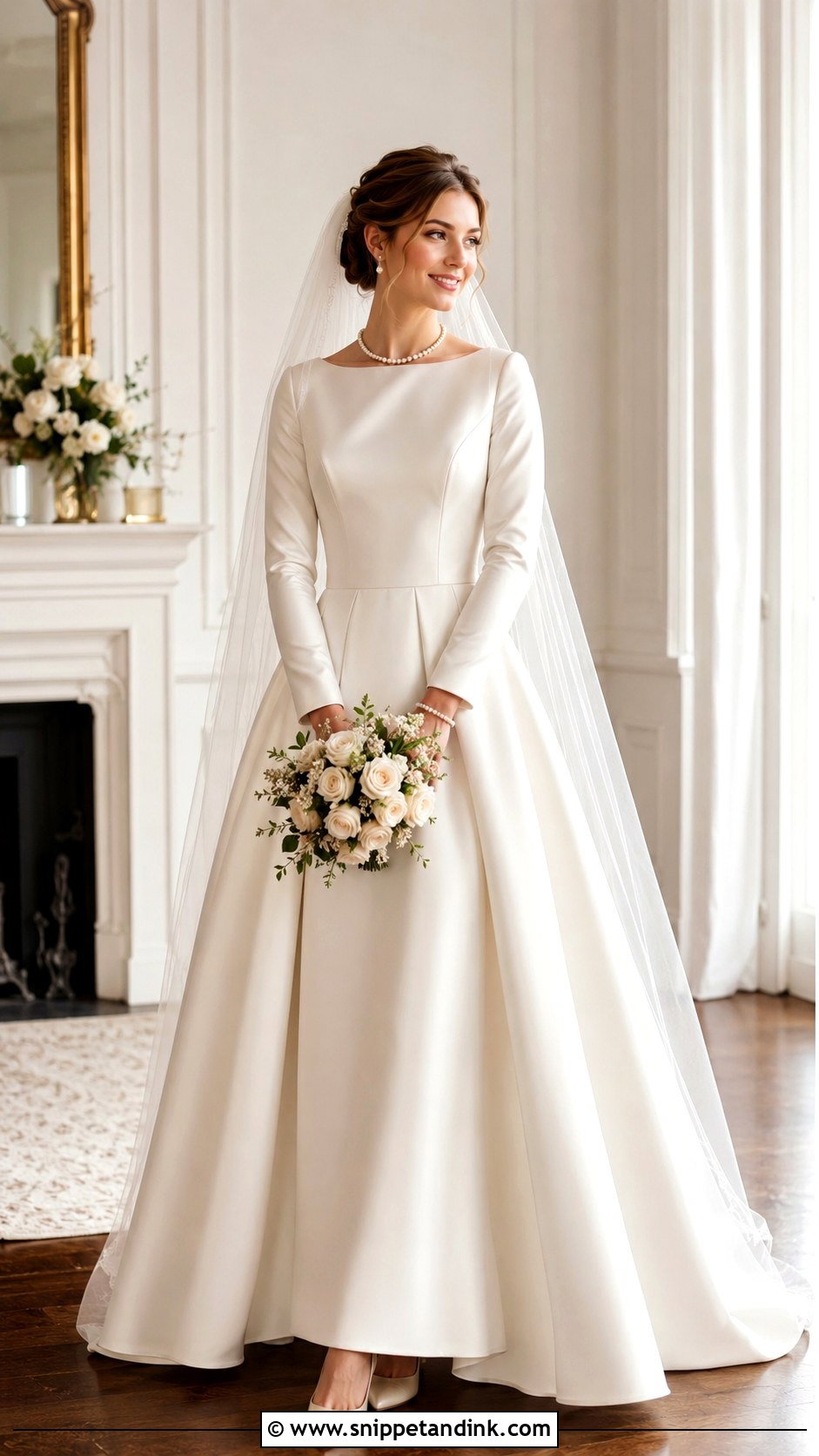
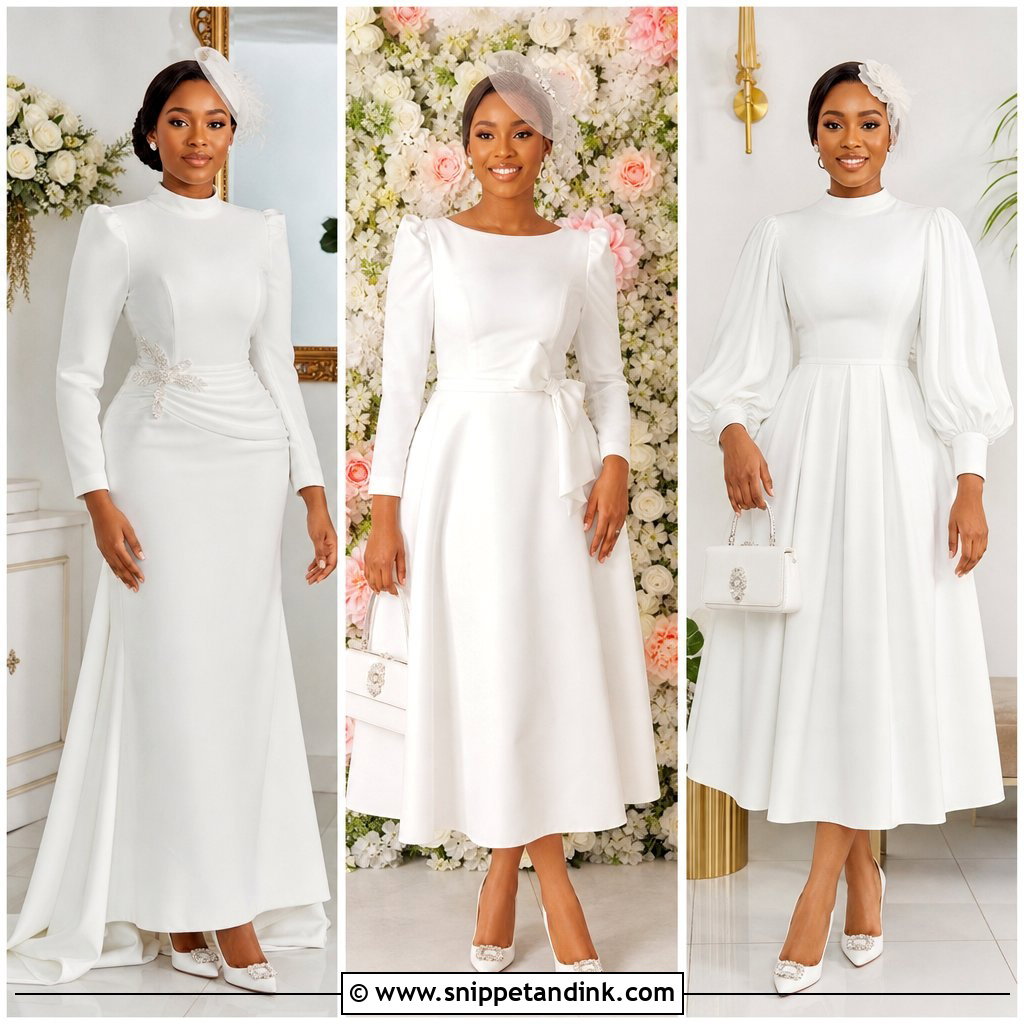
Off white covers a range: ivory, cream, pearl and soft champagne. These warmer tones flatter many skin tones and make lace and satin look richer. The trap is mismatched whites. A bright white veil beside an ivory gown can make the dress look yellowed, so match the veil, shoes and accessories to the gown’s undertone. Sleeves, a covered back or a higher neck keep it modest.
30. Modest Reception Christian Bridal Gown
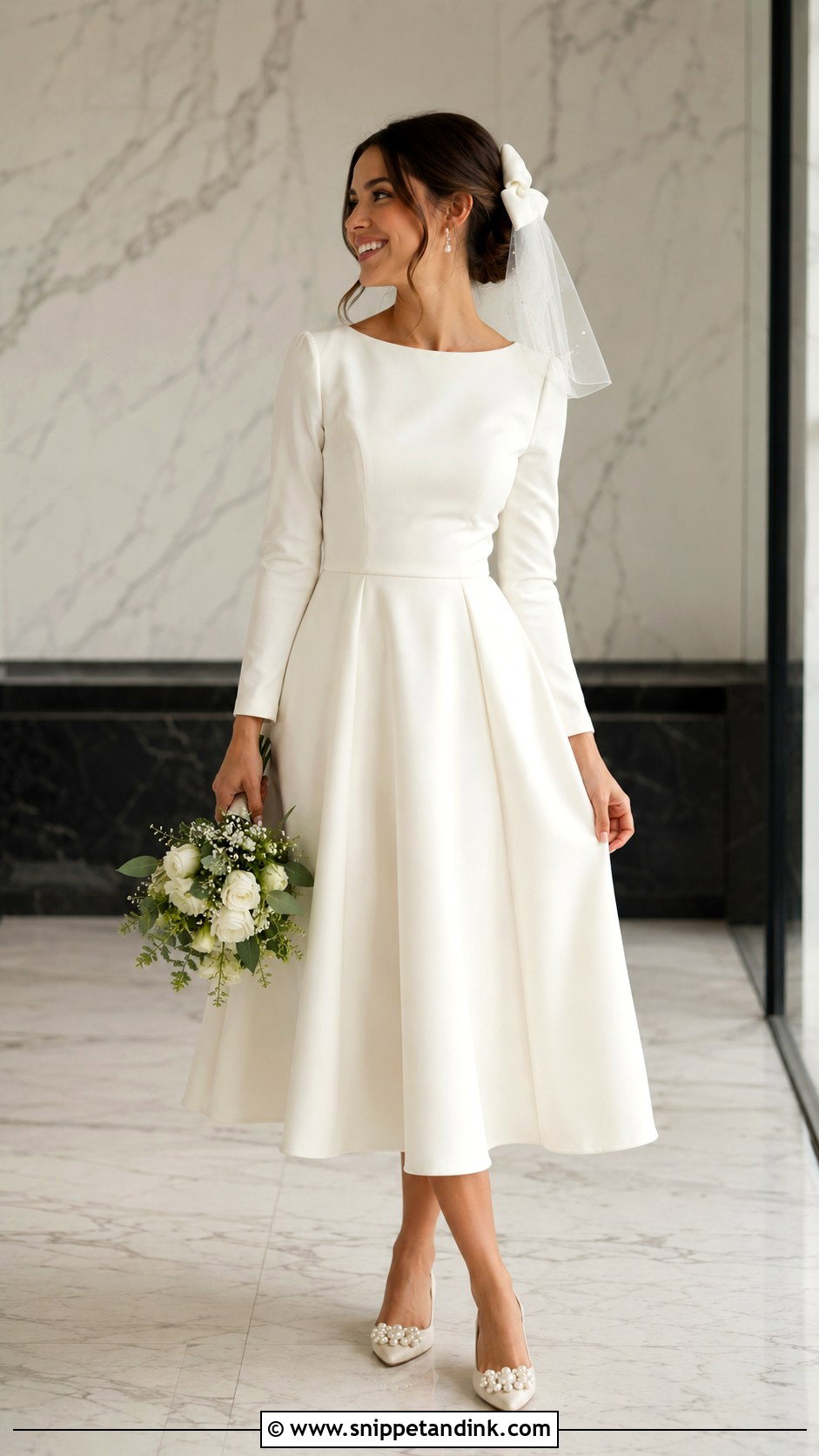
A second, lighter dress for the reception lets you move easily after a heavy ceremony gown. A tea-length satin dress, crepe midi or light A-line with sleeves keeps the same modest spirit. Keep the fabric polished so it still reads bridal. Pearl flats, a short veil or a hair bow freshen the look. Plan the change with a helper and time it before the first dance.
Adding Coverage to a Gown You Already Love
If you find a gown that’s perfect except for coverage, a good bridal seamstress can often solve it. Common modest alterations include:
- Lining an illusion bodice or back with ivory fabric so it no longer reads as bare skin.
- Adding cap, three-quarter or long sleeves made from lace or tulle matched to the gown.
- Raising a neckline with a lace or tulle insert.
- Making a separate bolero or cape for the ceremony that comes off for the reception.
Ask the shop whether extra fabric or lace from the manufacturer can be ordered. Matching lace from elsewhere is difficult, and an obvious mismatch looks worse than no sleeve. Give these alterations extra time; adding sleeves takes longer than a standard hem and take-in.
Start this conversation at your first fitting rather than your last. Sleeves and linings are built and fitted in stages, and the seamstress needs to see the gown on you before cutting any new fabric. If your church has a strict expectation, bring a note of it to the shop so everyone works toward the same standard.
A removable layer is often the best compromise: full coverage for the service, and a cooler gown for dancing.
A Gown That Can Kneel at the Altar
Modest gowns can be classic, modern, simple or dramatic depending on fabric, neckline, sleeves and silhouette. Long sleeve lace, satin ball gowns, crepe A-lines, high necks and covered backs all give coverage without losing style. Check your church’s expectations first, then try shapes you wouldn’t expect to like. Sit, kneel and lift your arms in every finalist. The right gown will feel respectful and still unmistakably yours.
You'll Like These Ideas:



Leave a Reply