
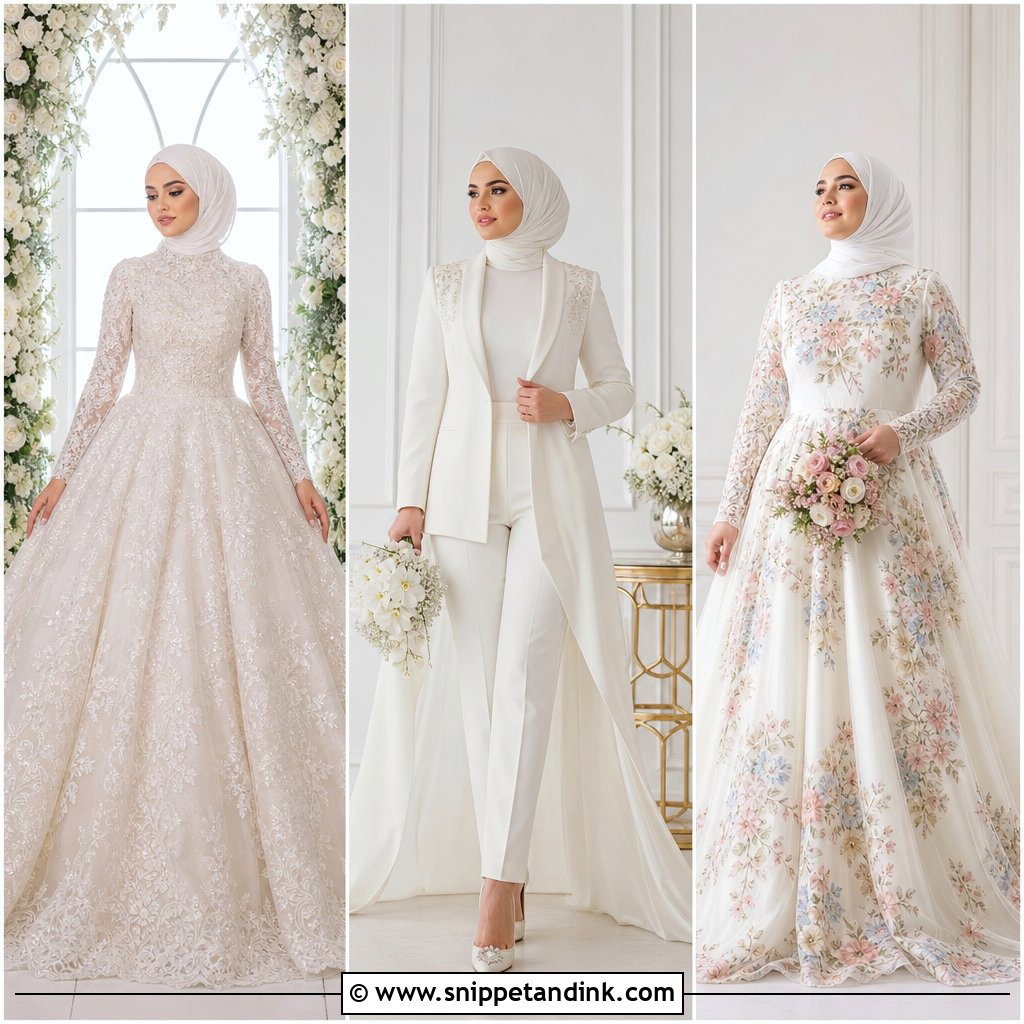
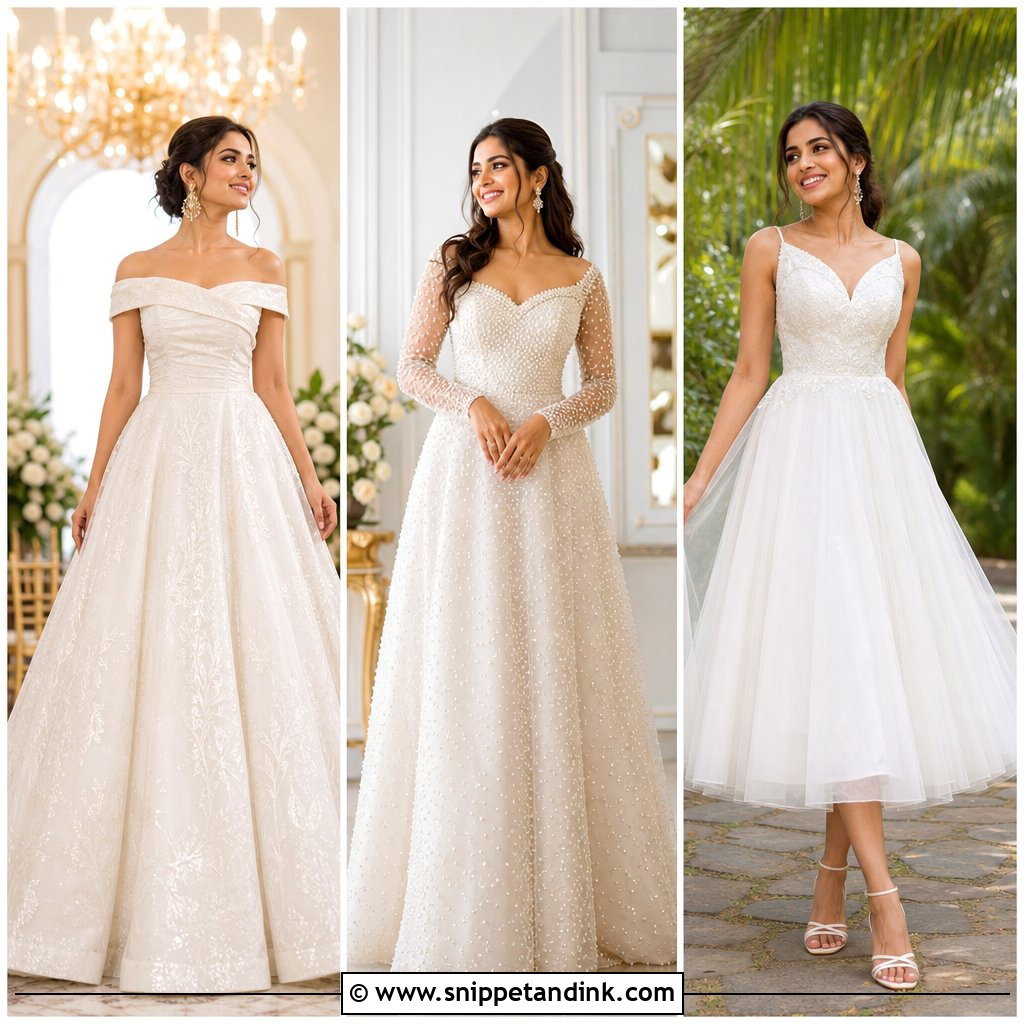
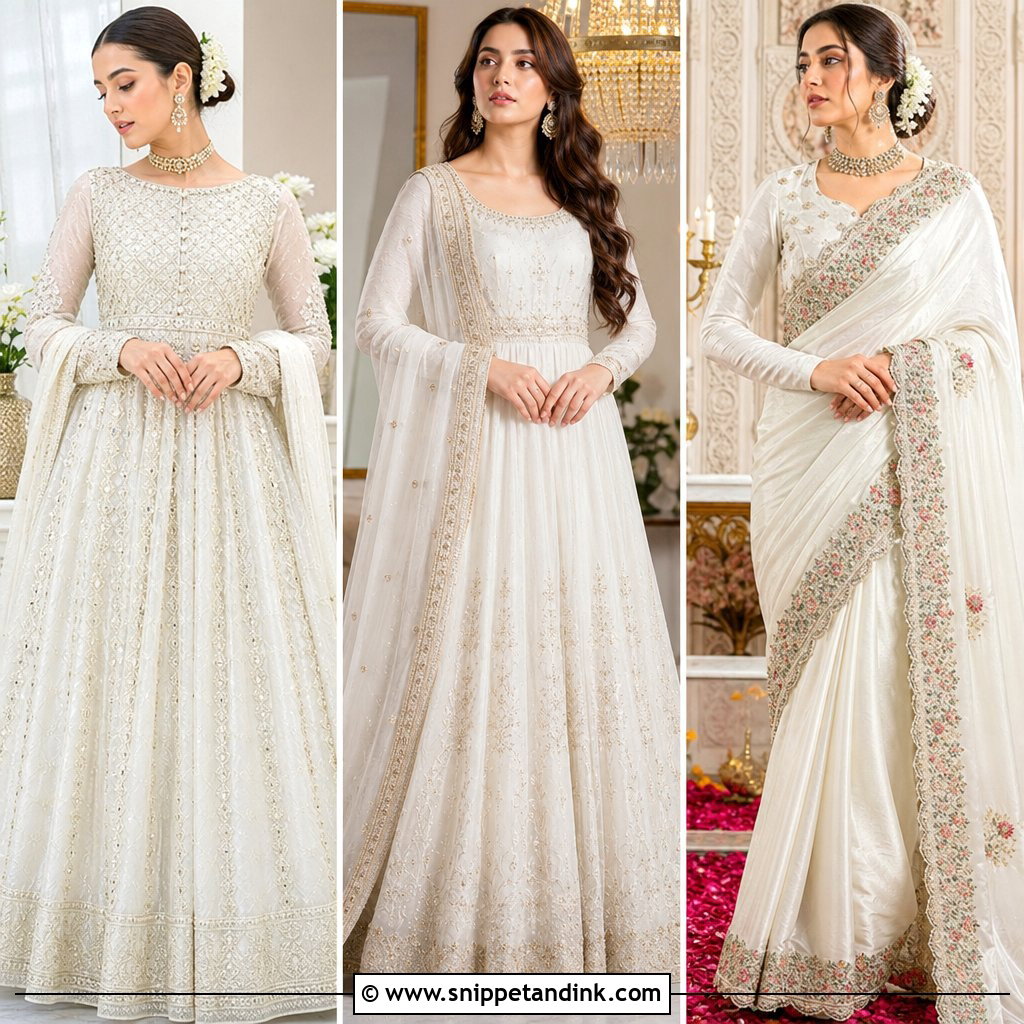
Modest doesn’t have to mean plain. The Christian bridal dress ideas below cover structured satin, lace, chiffon, crepe, pearls and embroidered tulle, with high necks, square necks, lined bodices, covered backs and proper sleeves. In a church fitting, my starting point is always the building and the service: how long the aisle is, whether you’ll kneel, and what the parish expects. Rules differ between denominations and even between churches in the same town, so check with your venue before you order or alter anything. After that, it’s a matter of finding the silhouette that feels like you.
What the Congregation Sees for Most of the Service
In a church ceremony, your guests see your face for a few seconds as you walk in. For the rest of the service they’re looking at your back. That one fact changes how I prioritise a church gown.
- The back deserves real detail: covered buttons, a lace panel, a train that lies flat. A plain back with a visible zip is what everyone stares at for forty minutes.
- Many services include kneeling. Kneel on a hard step at the fitting; a stiff bodice or tight mermaid skirt makes it awkward, and long trains need arranging behind you each time.
- Altar steps and kneelers are narrow. A hem set just off the floor in your actual shoes prevents tripping when you climb.
- Church lighting is often dim and warm. Bright white can look blue-grey in it, while ivory and soft white tend to photograph warmer.
- Long aisles reward long trains and veils; a short chapel aisle can be swamped by a cathedral train that never fully straightens out.
If you’re marrying in a historic church, visit at the time of day of your ceremony. How the light falls on the aisle tells you a lot about which fabric and shade will look best.
1. Long Sleeve Lace Christian Bridal Dress
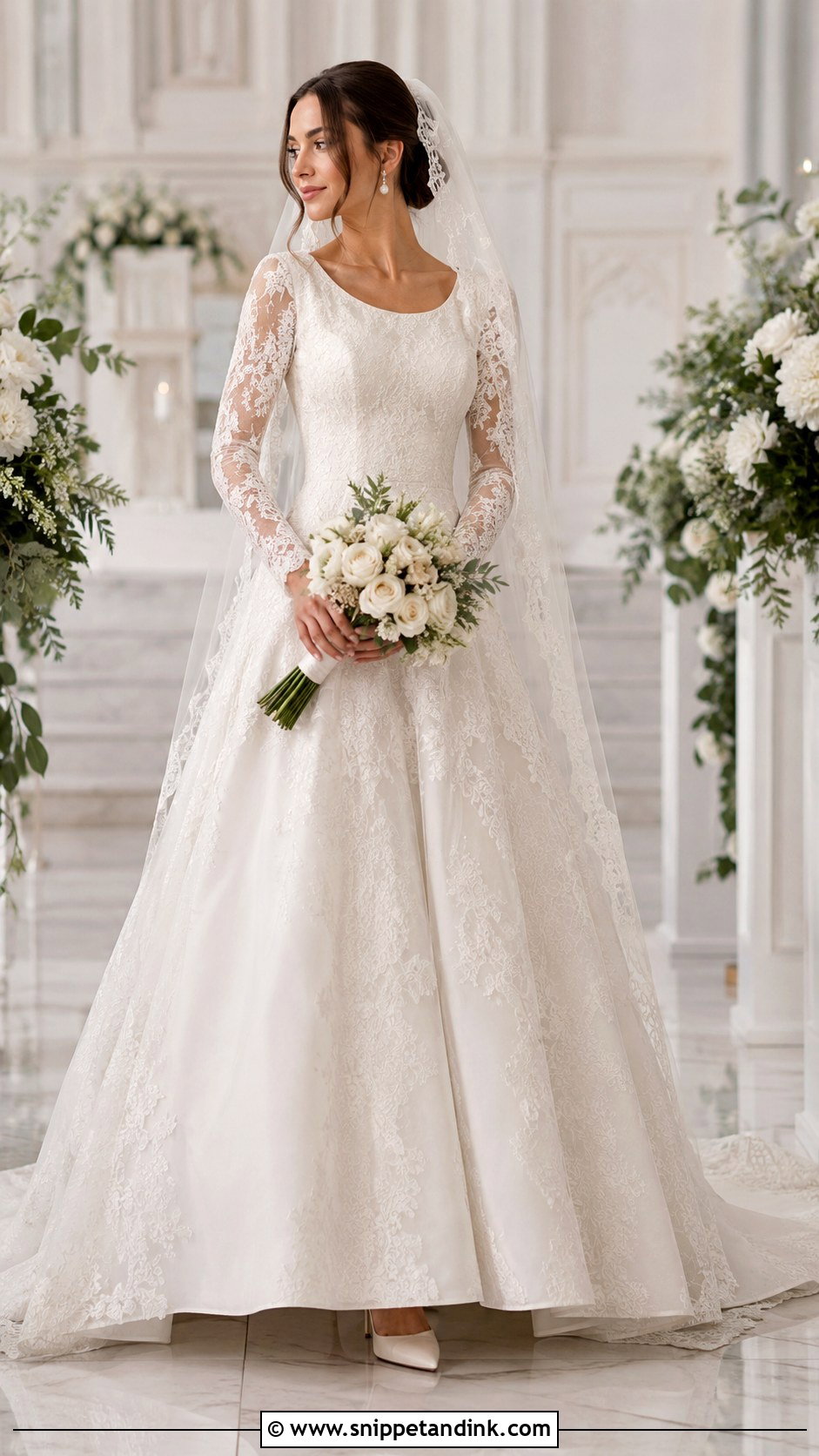
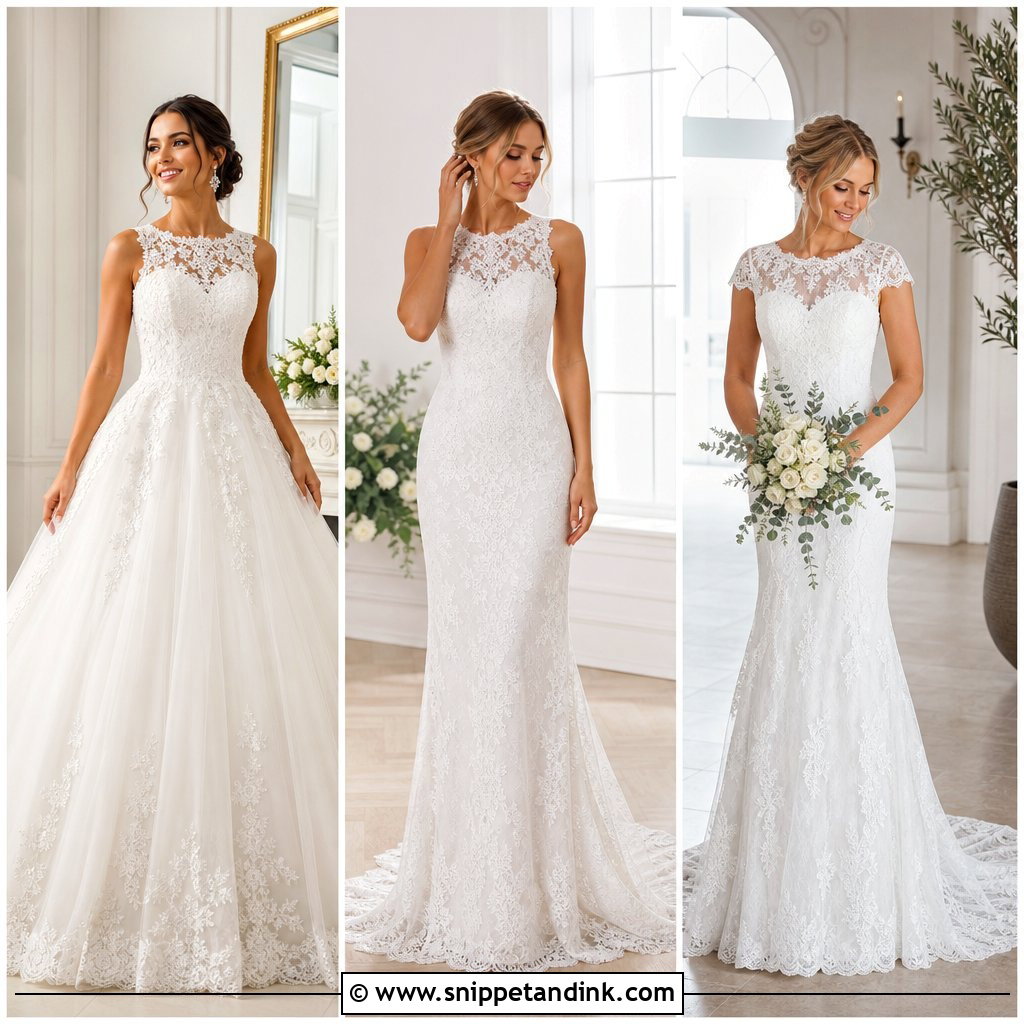
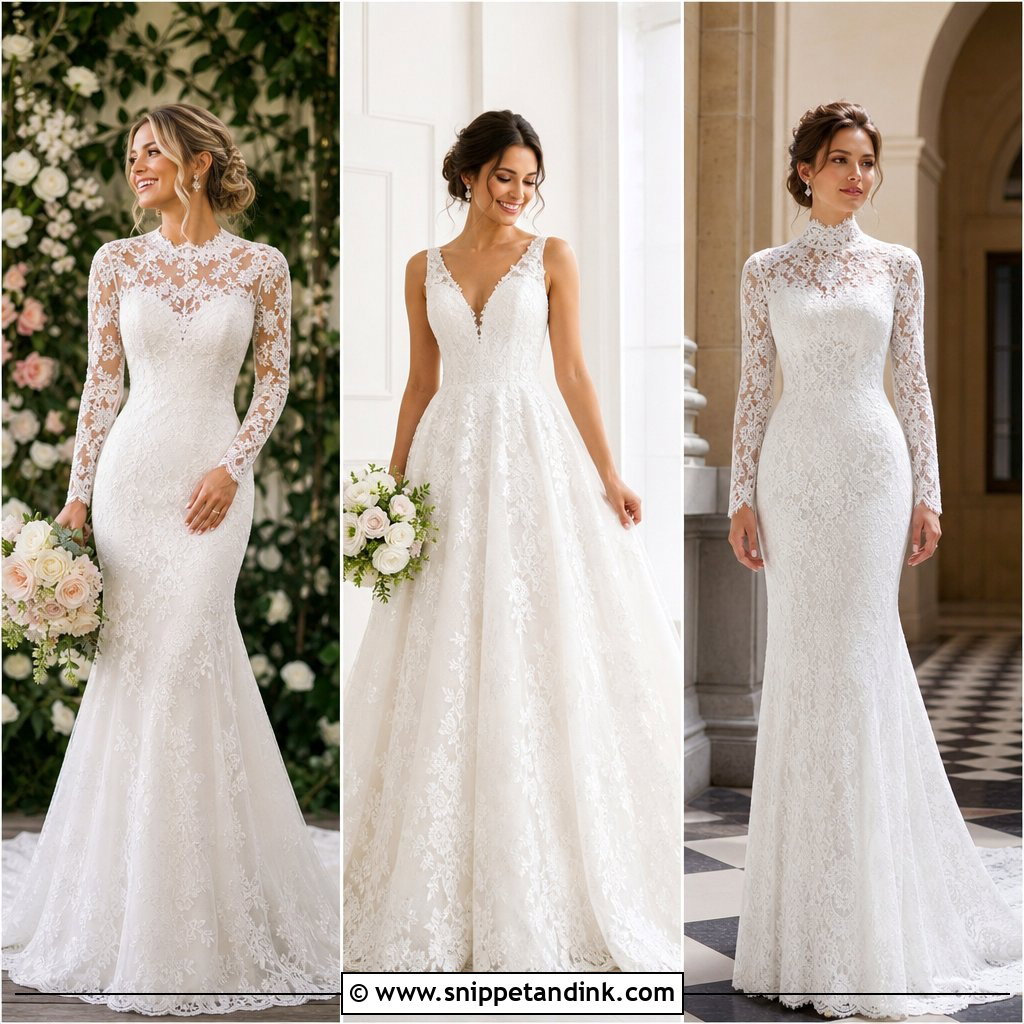
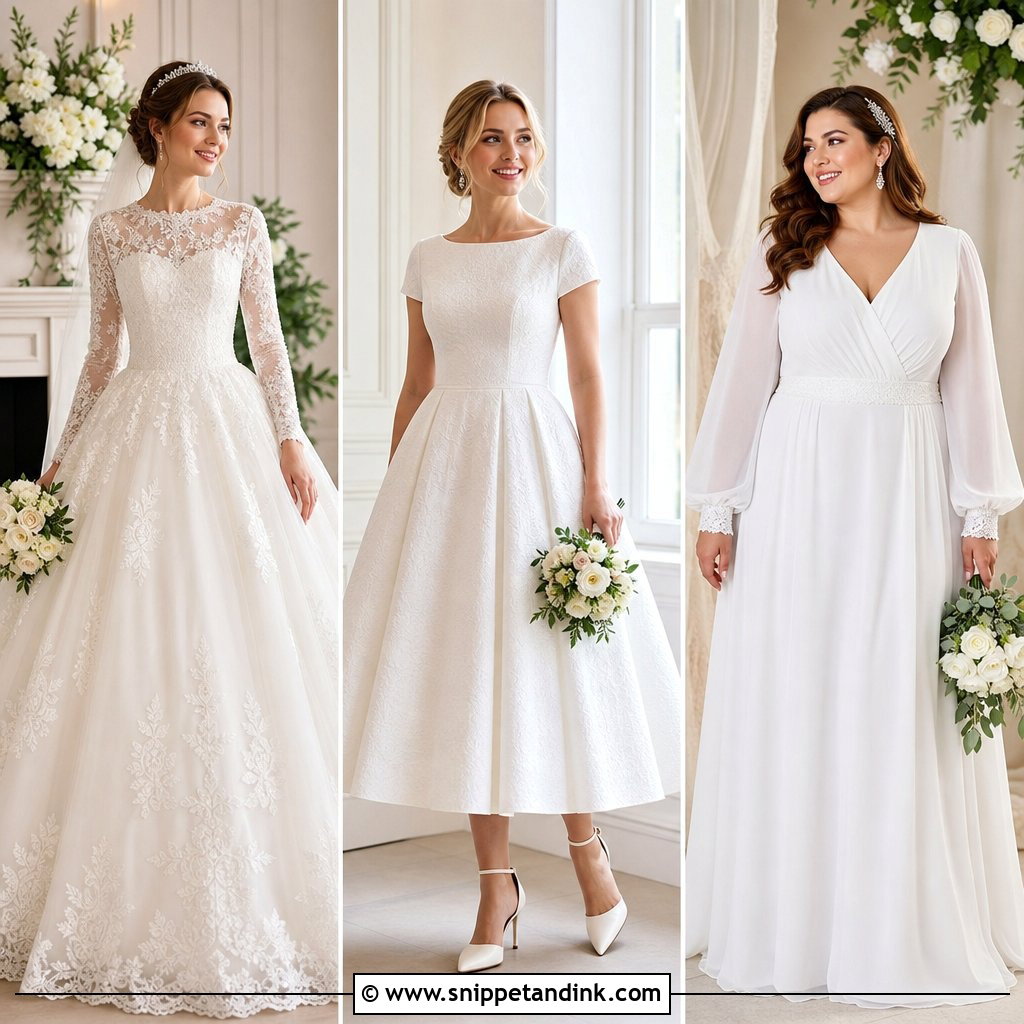
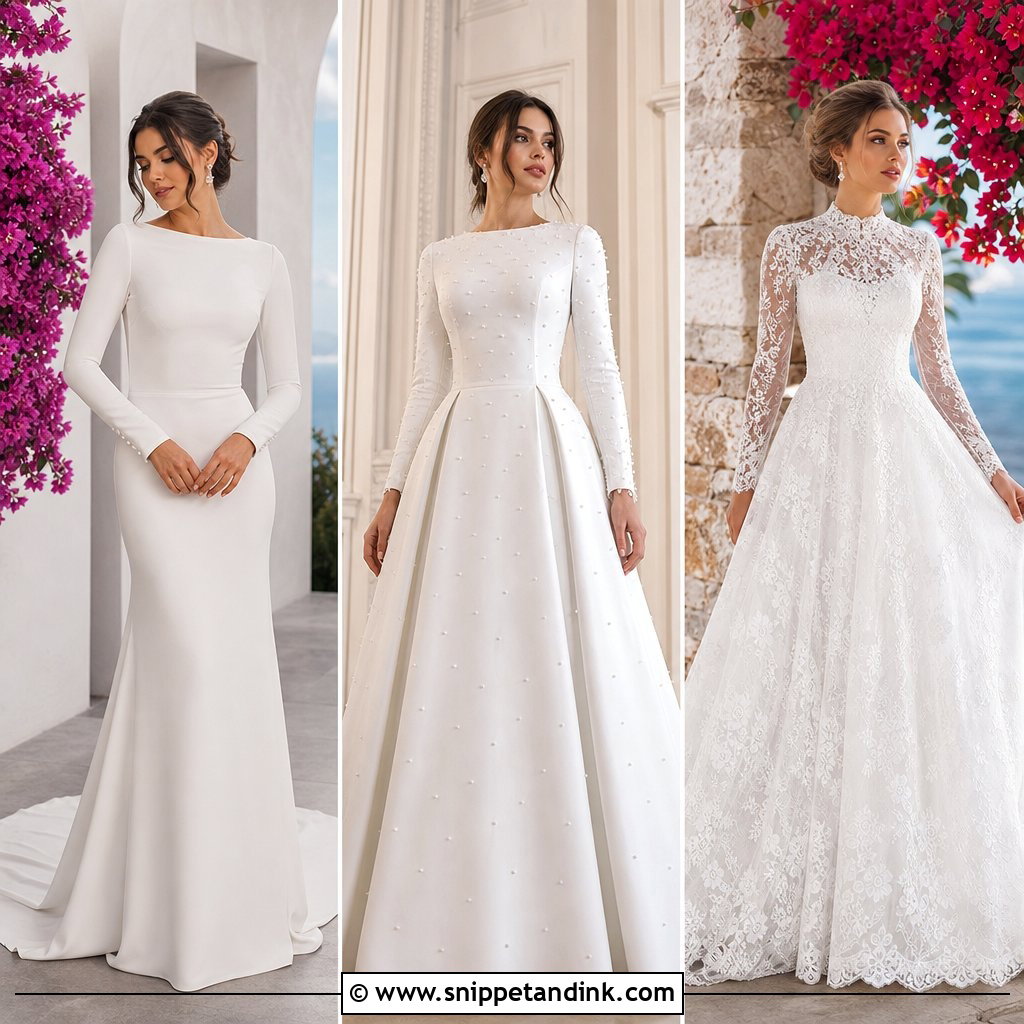
Lace sleeves on an ivory A-line are a classic for good reason: they cover the arms and still look soft. What I check on lace sleeves is the stretch. Corded or Chantilly lace with no give makes it hard to lift a hand for the ring or to hug people afterwards, so I ask brides to raise their arms over their head at the fitting. A fully lined bodice, modest scoop neck and a covered back with fabric buttons finish the gown. Pearl studs, pointed ivory pumps and a lace-edged fingertip veil keep it coordinated, with a low bun to show the neckline. It’s especially good for cooler months.
2. High Neck Satin Christian Bridal Dress
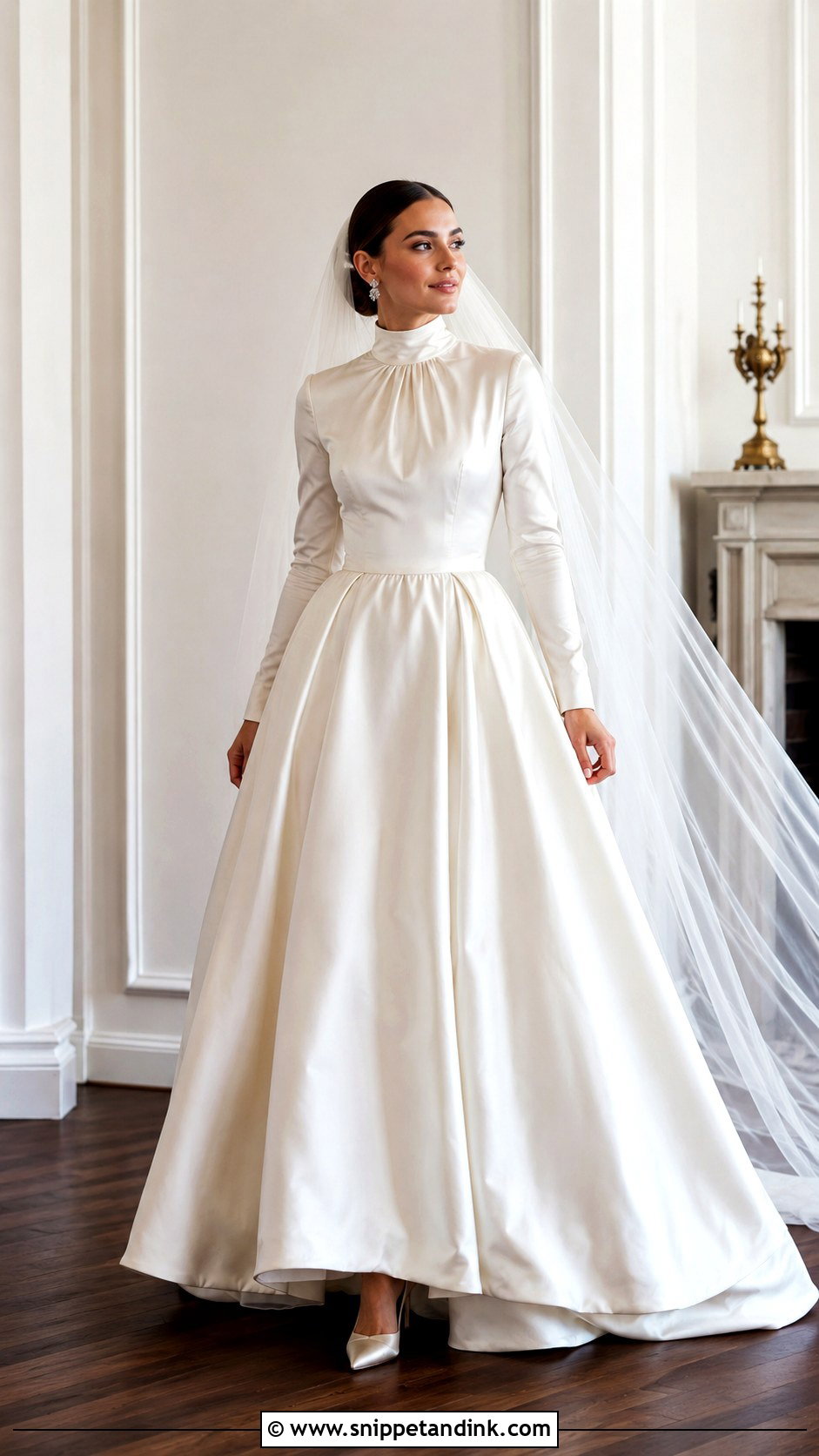
Satin is unforgiving, which is exactly why a high neck in satin looks so deliberate. Any pull across the shoulders or bust shows immediately as a diagonal crease, so this is a gown that needs a careful tailor. A gathered high neck, long sleeves, a natural waist and a full skirt with pockets make it practical as well as formal. Small crystal earrings, closed-toe satin heels and a plain cathedral veil under a sleek bun are all it needs. Covered buttons at the cuffs or down the back add detail that shows in close-up photos.
3. Square Neck A-Line Christian Bridal Dress
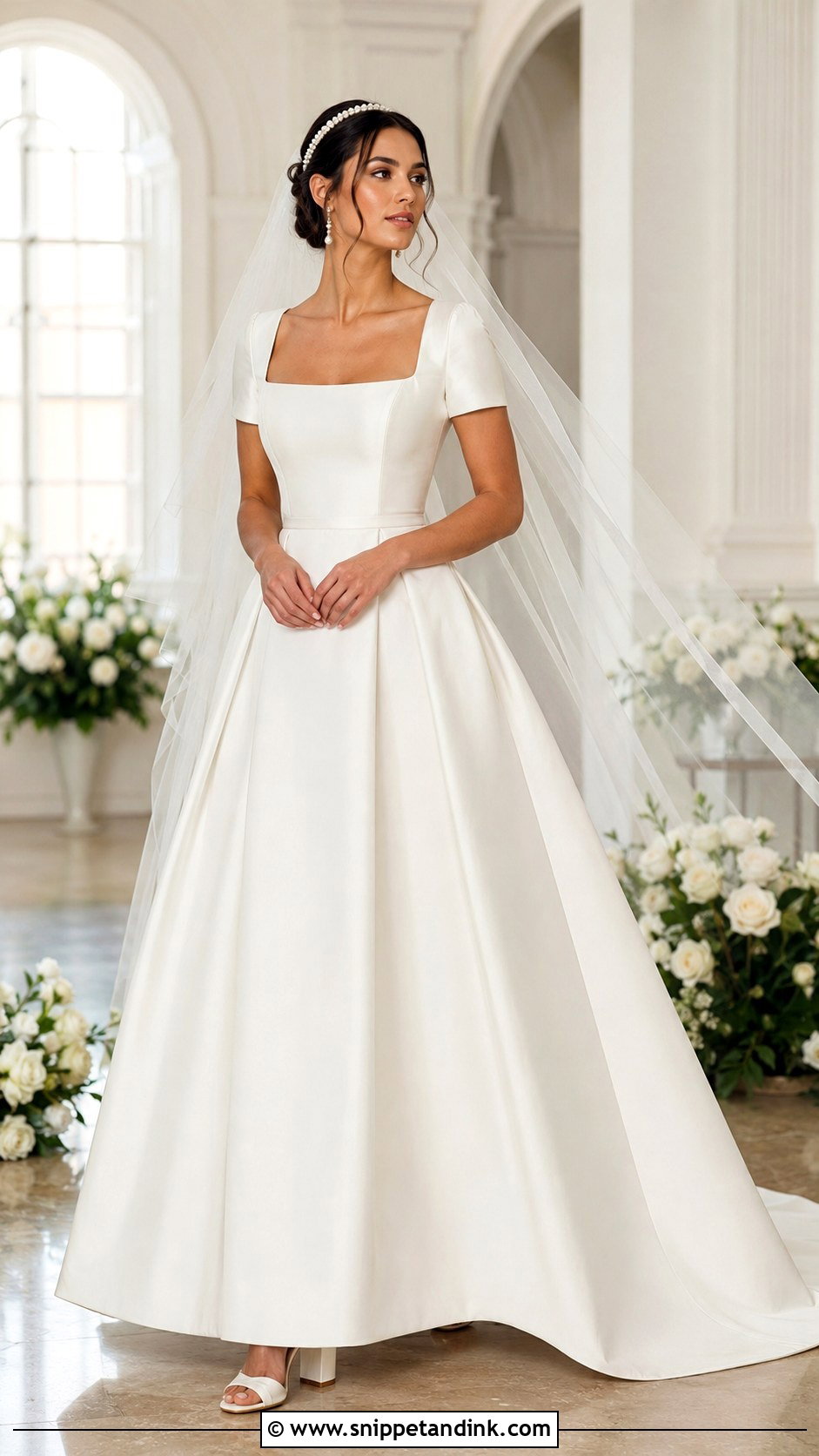
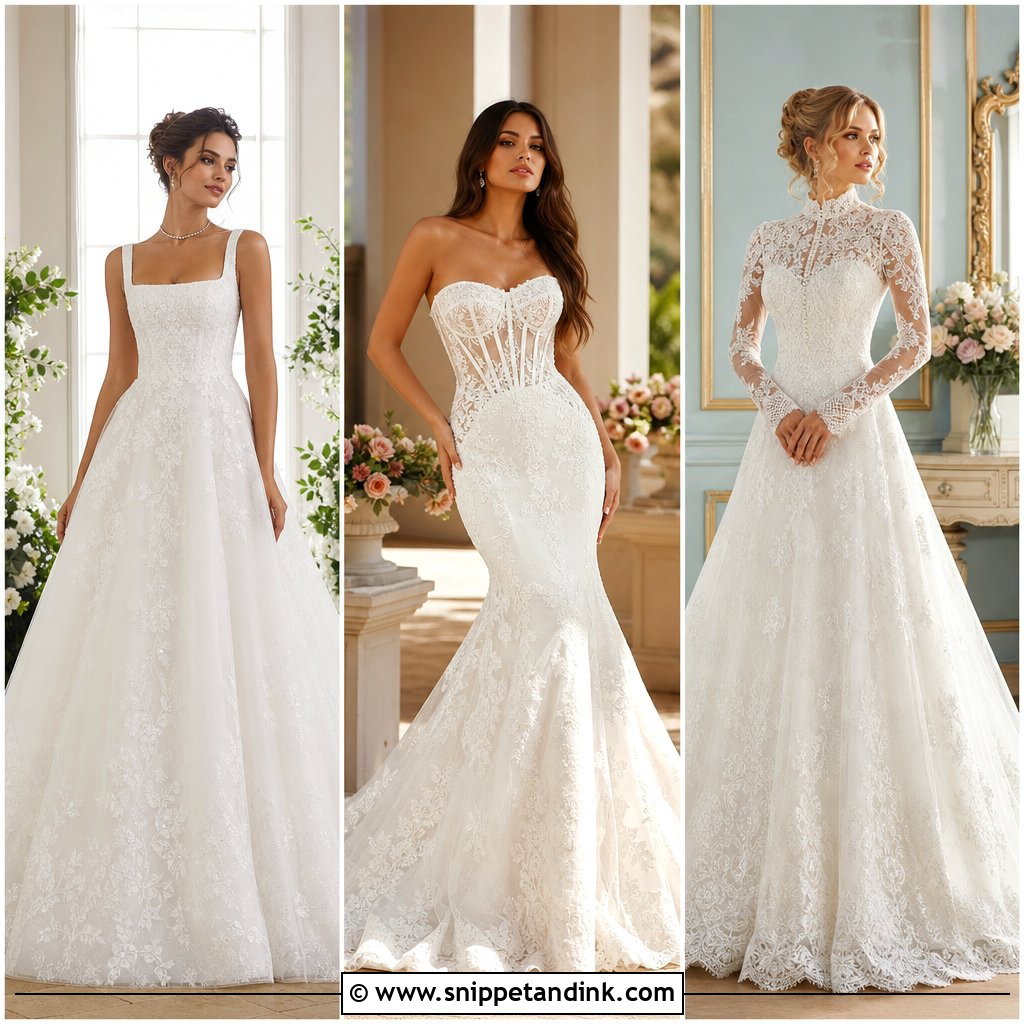
Square necks frame the collarbone and face while keeping the neckline modest. In Mikado or heavy satin, with short sleeves, princess seams and a defined waist, the skirt holds its shape for hours. I like this cut as a base because it alters well; sleeves can be added or the neckline raised slightly if your church asks for more coverage. A pearl headband, drop earrings, ivory block heels and a chapel veil with a satin edge complete it. Soft waves or a low twisted updo leave the neckline visible. No lace, no sparkle, just tailoring.
4. Bateau Neck Crepe Christian Bridal Dress
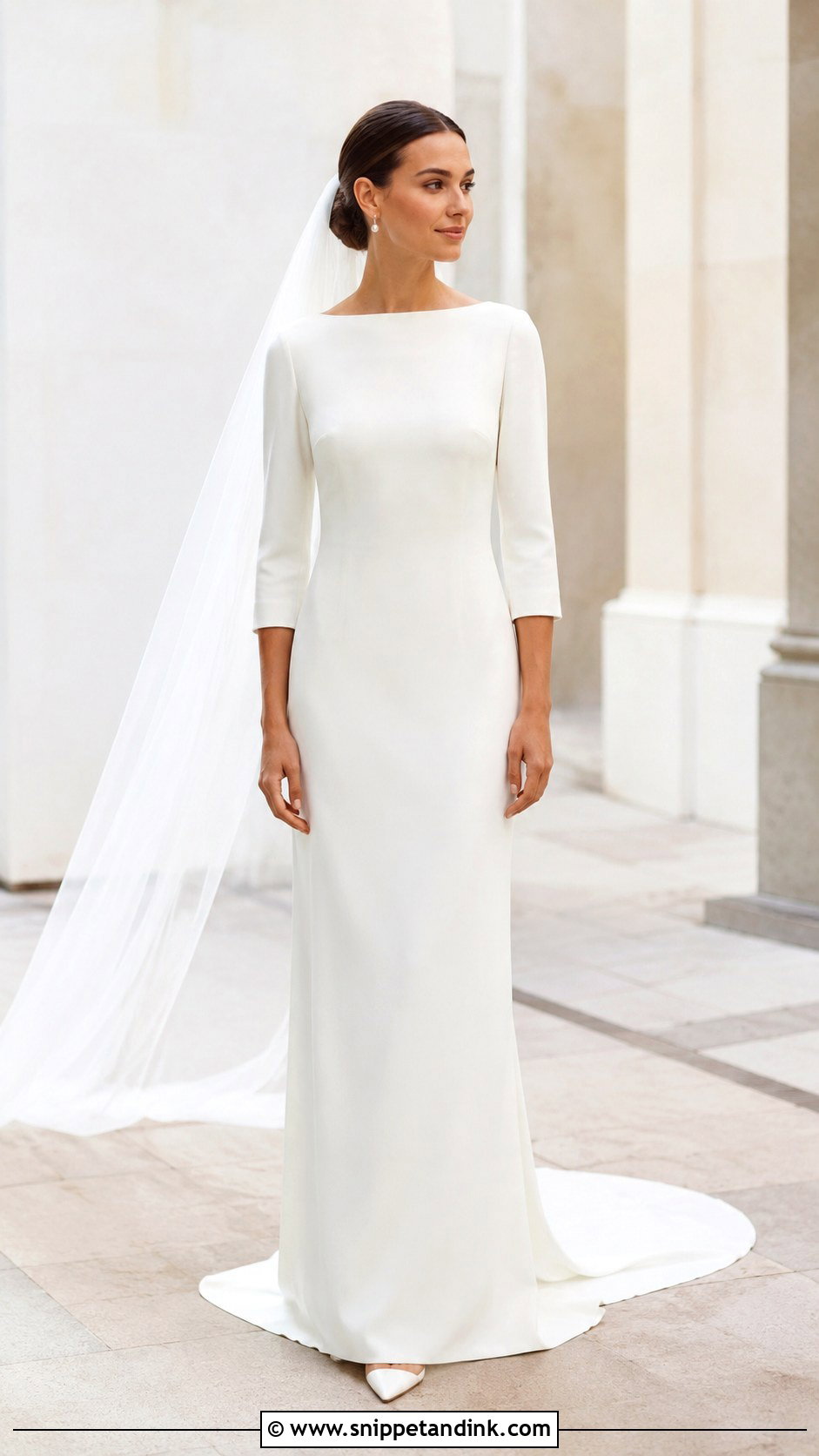
Could the simplest gown make the strongest impression? A bateau neck in matte crepe can. The neckline runs straight from shoulder to shoulder, which suits narrow shoulders and gives a clean line under a veil. Crepe skims the body and shows every bump in the lining, so the lining quality and the tailoring decide how this dress looks. A sheath or column shape with three-quarter sleeves, a covered back and a small train is enough. Pearl drops, pointed pumps, a plain veil and a small white bouquet keep it minimal, with a polished chignon.
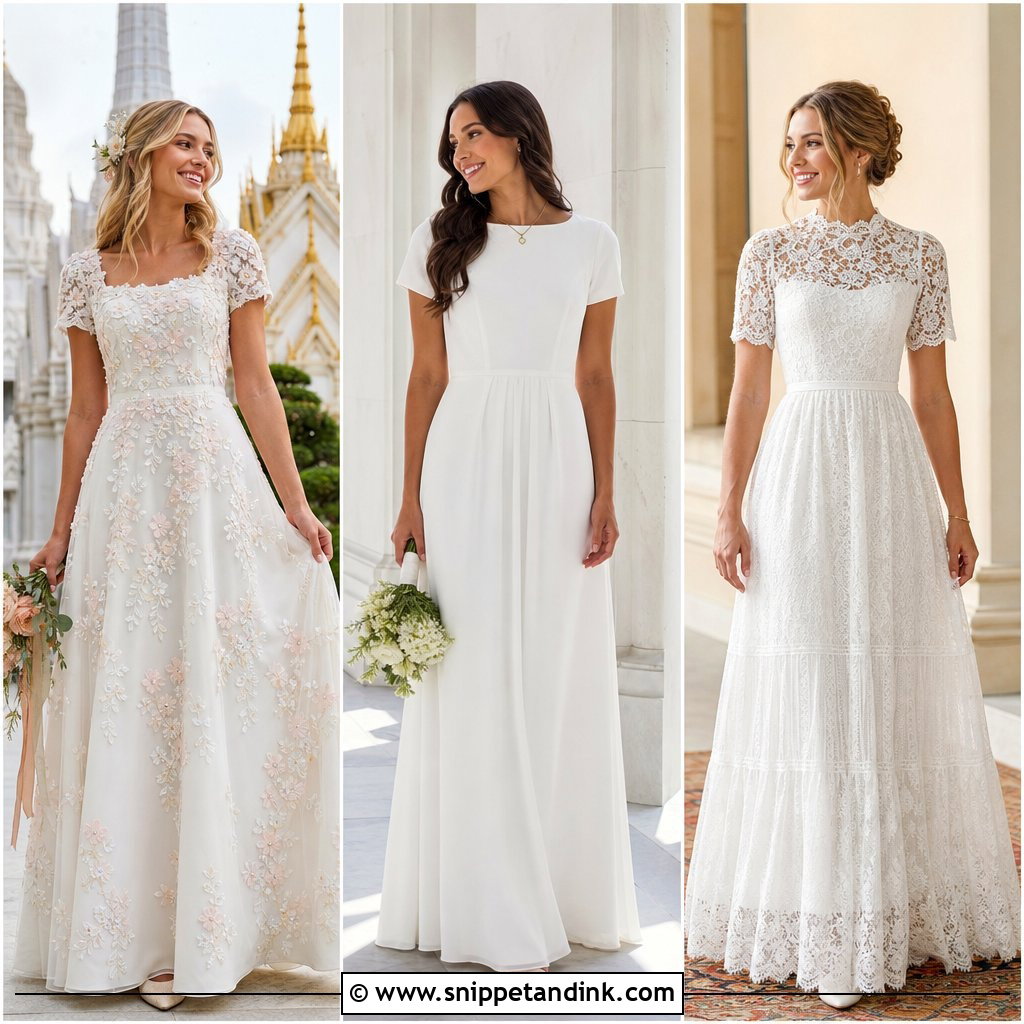
5. Cap Sleeve Lace Christian Bridal Dress
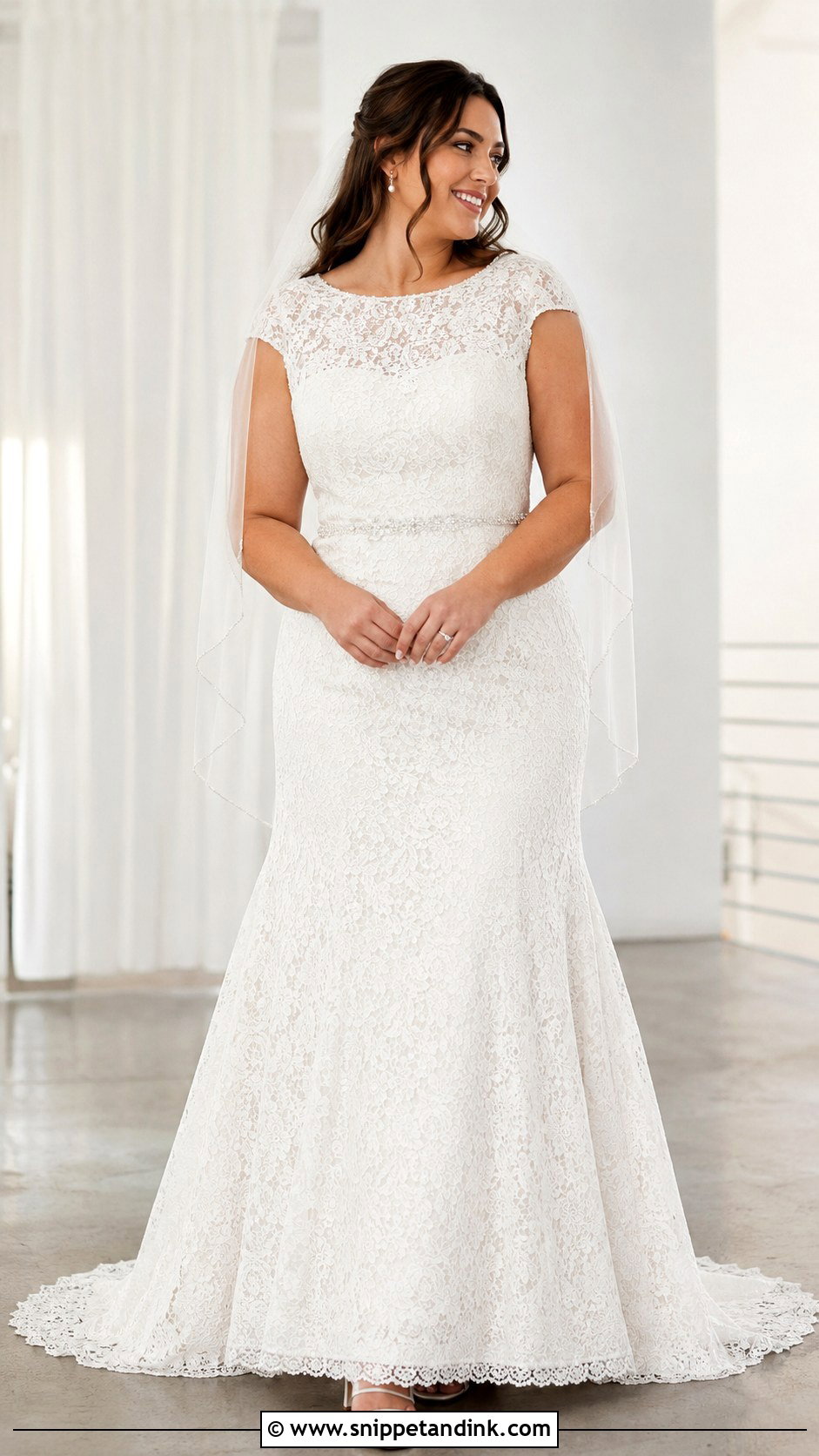
Cap sleeves give just a little shoulder coverage, so they’re a warm-weather choice. On a lace fit-and-flare with a sweetheart bodice under a modest scoop overlay, the lace should run continuously across the shoulders and back. Where the flare begins matters more than people think: above the knee you can walk and climb altar steps; below it you’ll shuffle. A narrow beaded belt, ivory slingbacks, pearl earrings and a plain fingertip veil finish it, with a half-up style. Brides with fuller busts may want added internal structure and a slightly wider cap, which holds everything securely without changing the look.
6. Puff Sleeve Organza Christian Bridal Dress
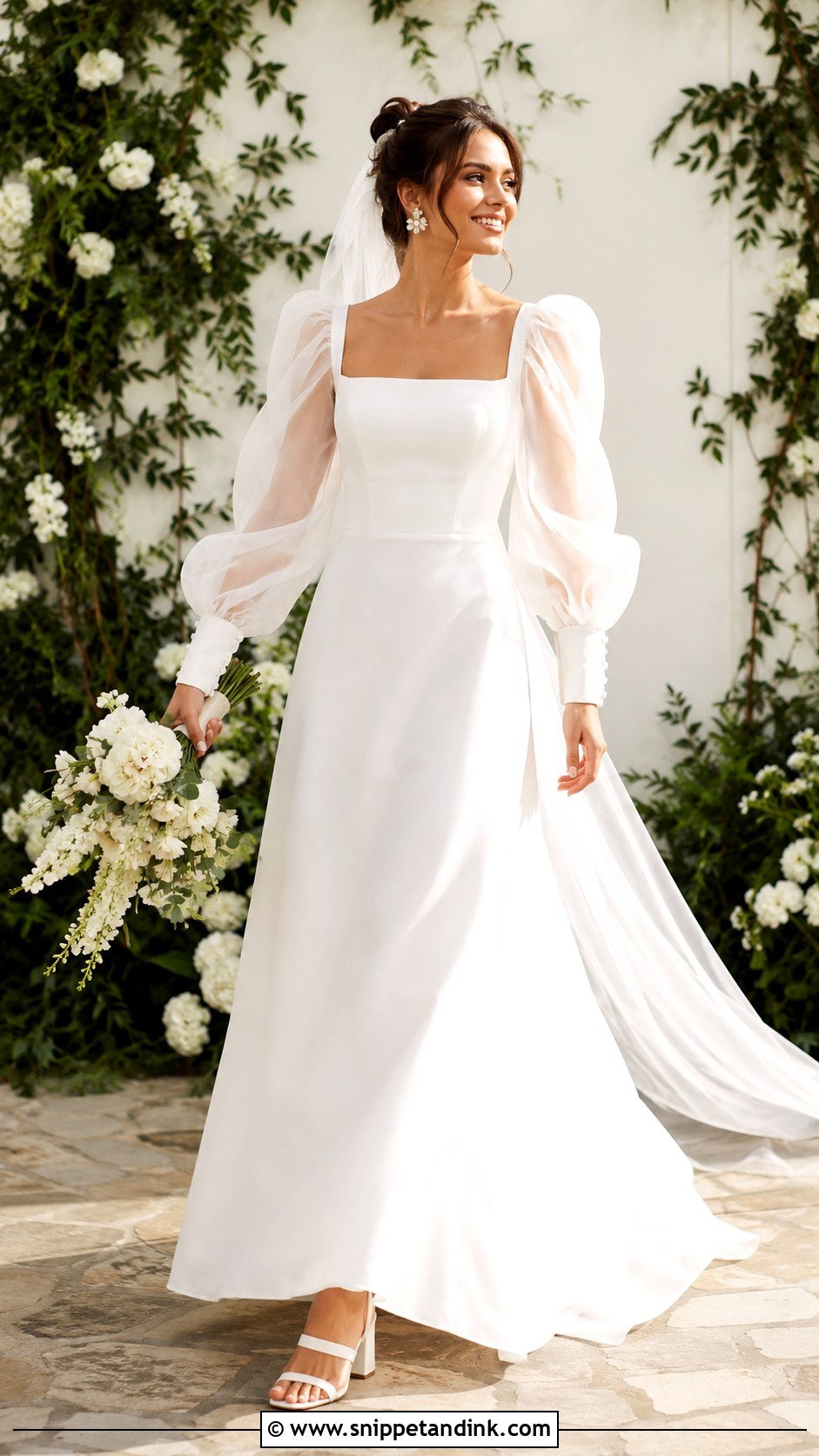
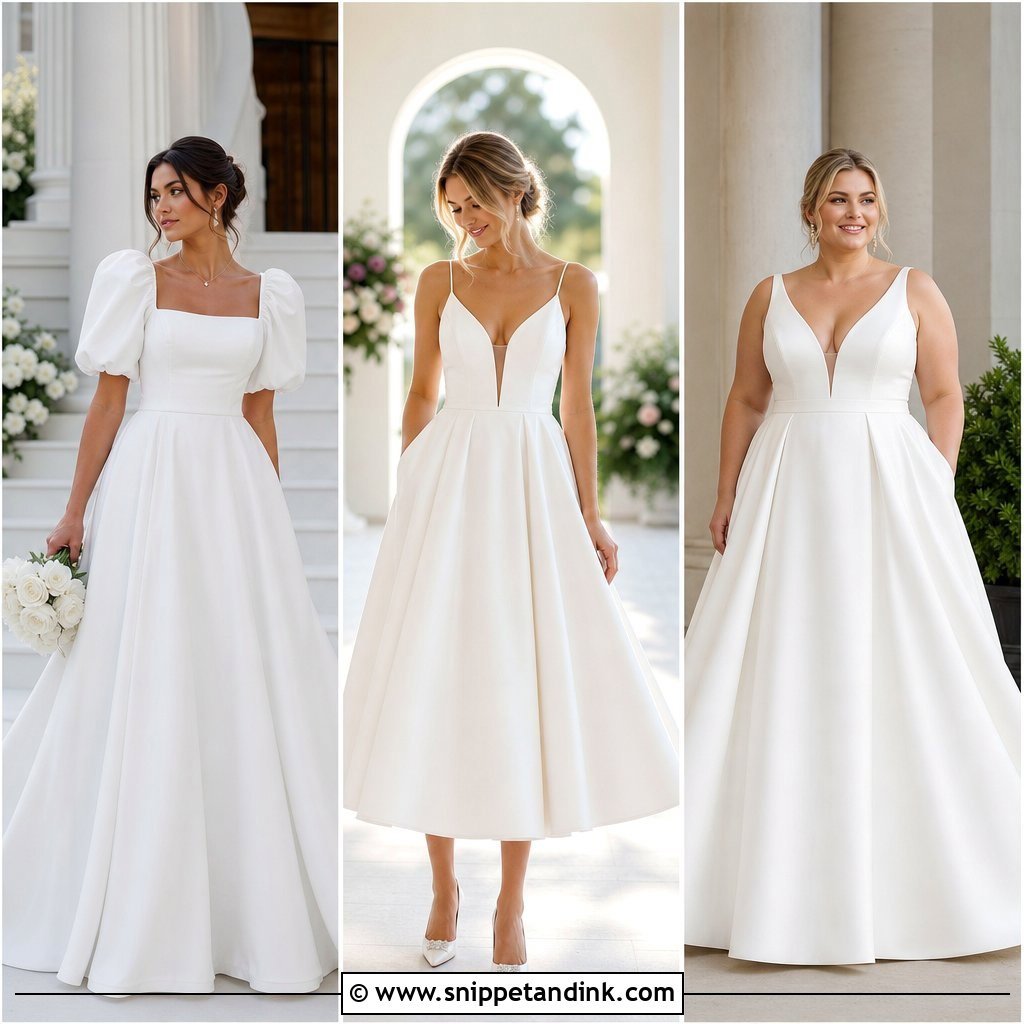
Puff sleeves in organza are lighter than they look, but they can tip into costume if the gathering is heavy. I prefer a light gather finished in a structured cuff. The base is an A-line with a lined square-neck bodice, fitted waist, smooth organza skirt, a chapel train and covered buttons down the back. Organza wrinkles when it’s crushed in a car, so ride to the church with the sleeves free and the skirt spread out. Small floral earrings, satin block heels and a plain sheer veil suit it, with a centre-parted low bun. If the sleeves are sheer and your church expects covered arms, ask for a lining.
7. Three-Quarter Sleeve Chiffon Christian Bridal Dress
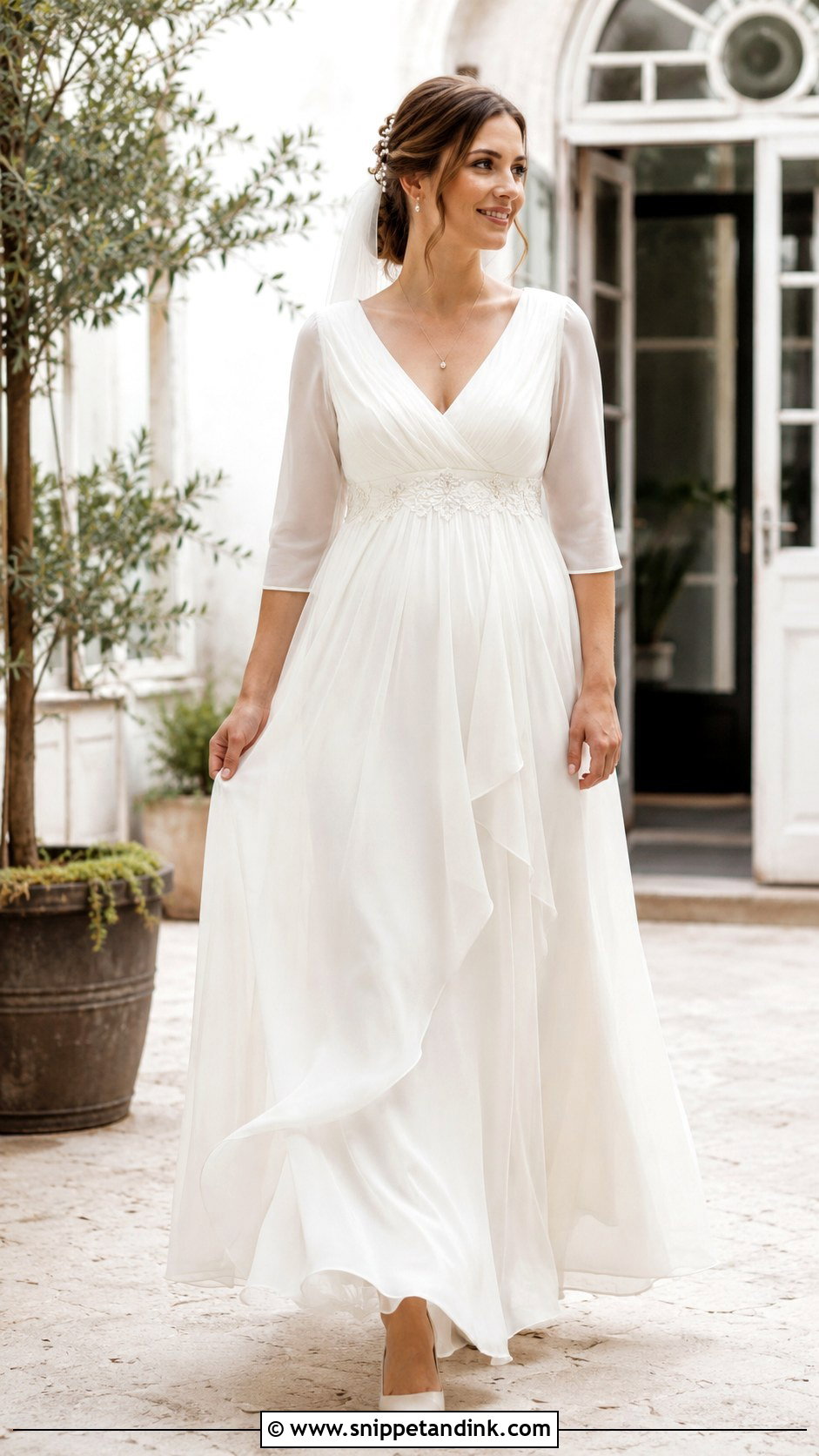
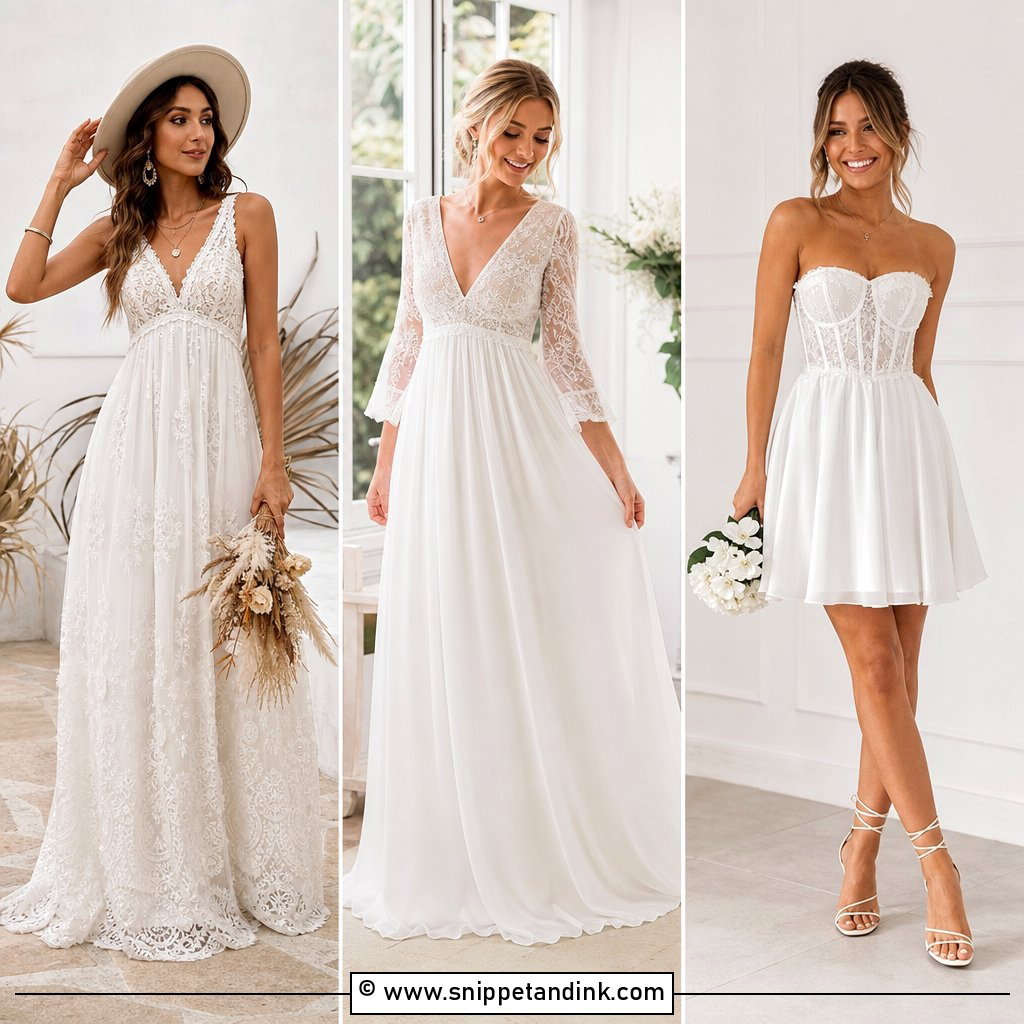
Chiffon is the lightest fabric here and the kindest for an outdoor or summer ceremony. An empire-waist Christian bridal dress with a modest V-neck, three-quarter sleeves, a lined bodice and a gathered skirt is comfortable for expectant brides or anyone who dislikes weight around the hips. A lace waistband adds shape without tightness. Low ivory heels, a delicate pendant, pearl pins and a light chapel veil suit it, with loose curls in a low ponytail. The thing to check is opacity: chiffon needs at least two layers plus a lining to stay opaque in bright sun and camera flash.
8. Floral Embroidered Christian Bridal Dress
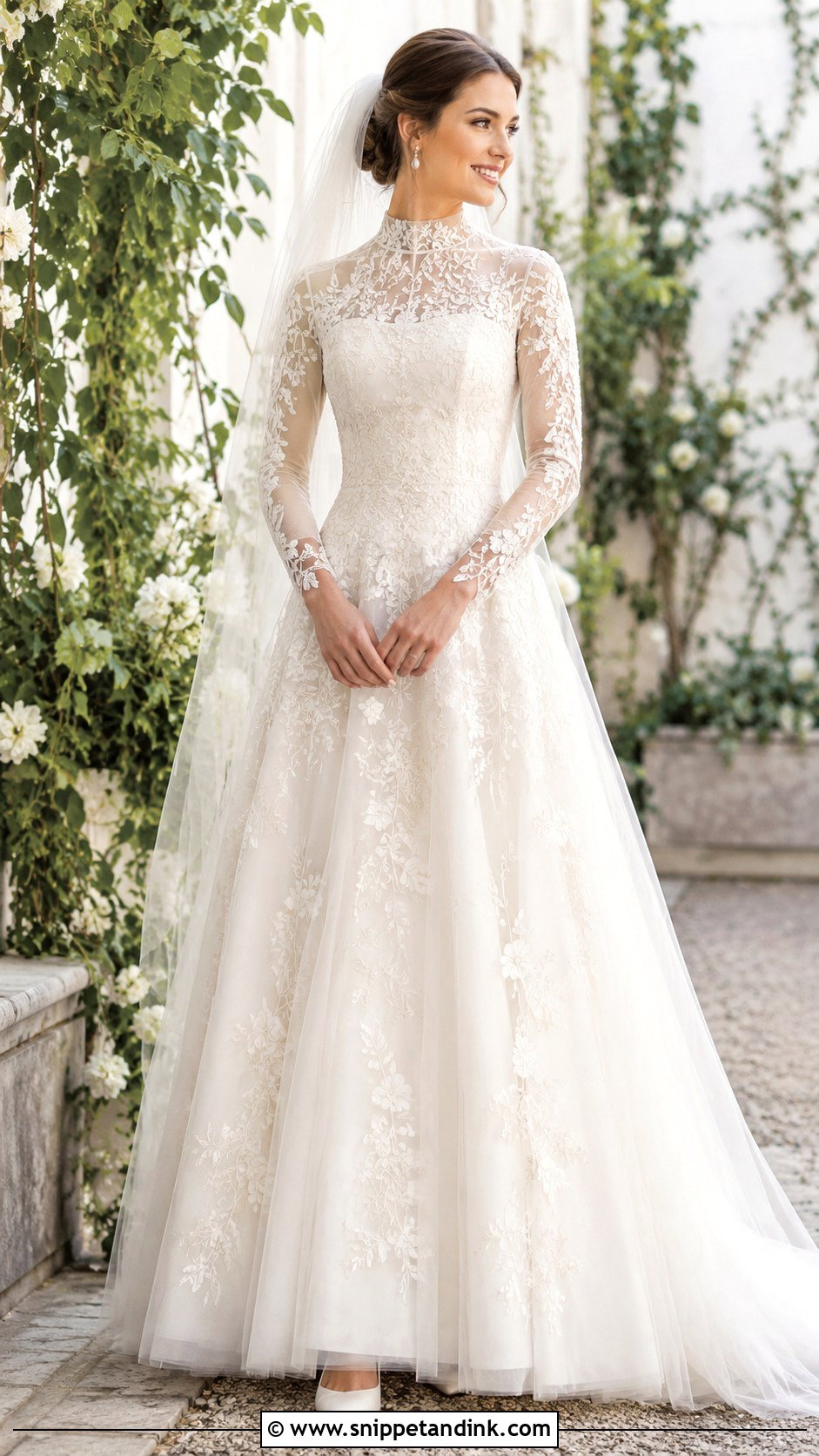
Small embroidered flowers give texture without the weight of beading. On an A-line with a high illusion neckline over a lined bodice and fitted long sleeves, scattered florals across the skirt look delicate. Tonal ivory thread keeps it cohesive; white appliqués on an ivory base can look patchy, so I always compare shades in daylight. Pearl earrings, closed-toe pumps and a plain tulle veil let the embroidery show. A low braided bun and a small, lightly textured bouquet suit spring ceremonies.
9. Pearl Embellished Christian Bridal Dress
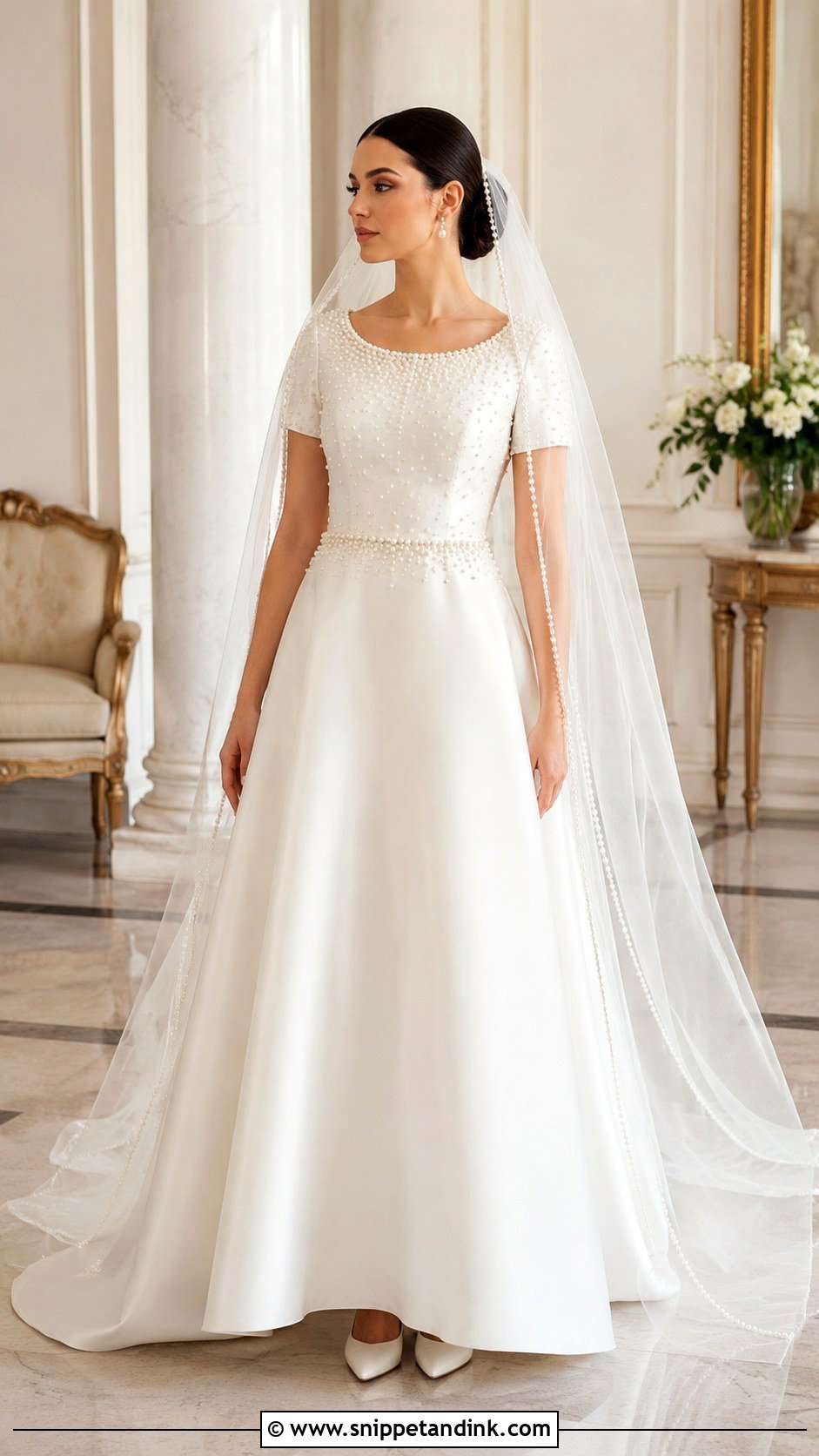
Pearls glow rather than sparkle, which suits a softly lit church. A satin A-line with a modest scoop neck, short sleeves and pearls clustered at the neck, cuffs or waist looks cleaner than one covered all over, and the skirt stays light. Pearl drops, a matching comb, ivory pumps and a plain veil with a fine pearl edge complete it, with a smooth low bun. Before the final alteration, I run my fingers over every pearl; loose ones should be resewn while the dress is in the workroom, not on the morning of the wedding.
10. Tea Length Christian Bridal Dress
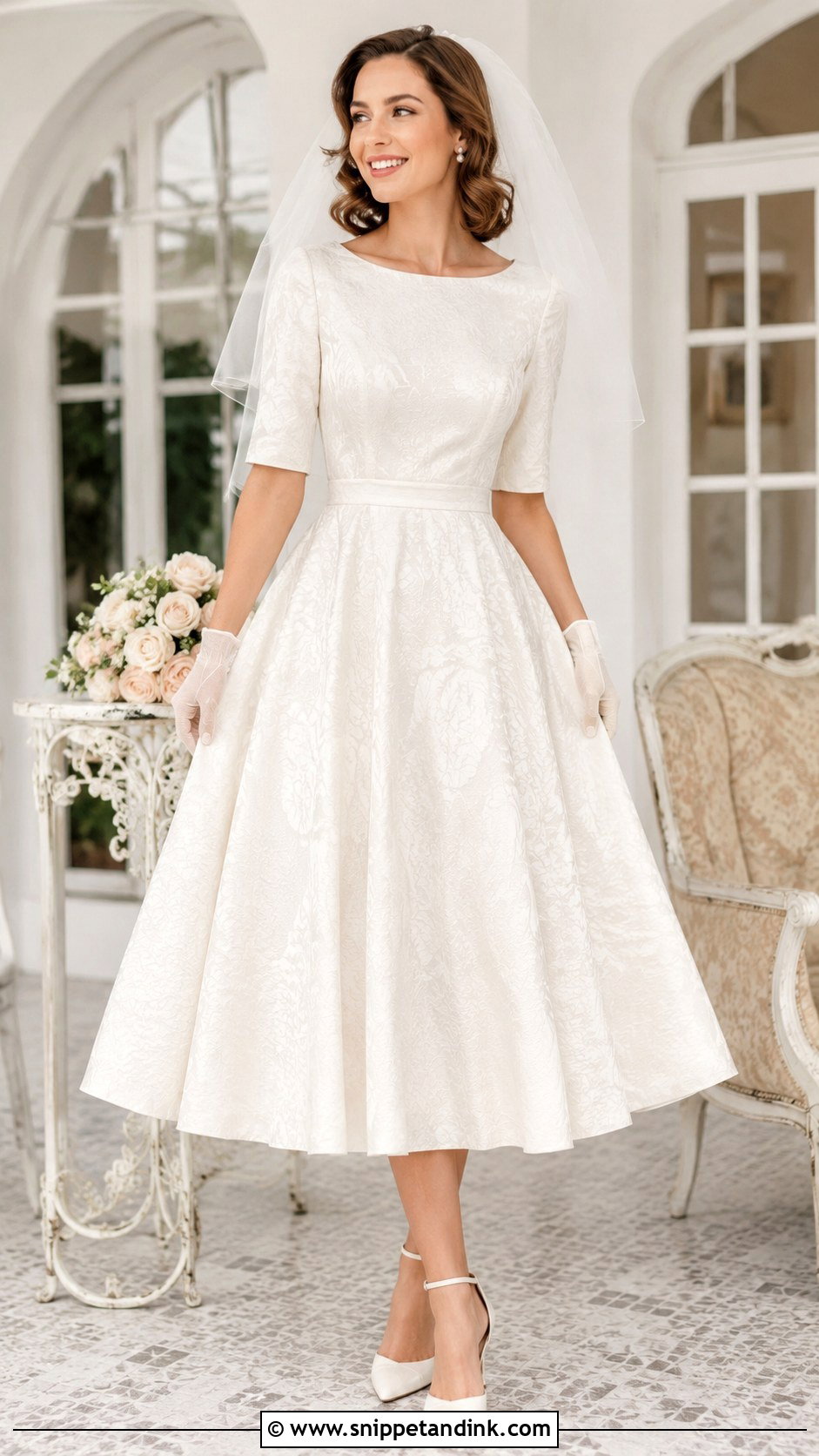
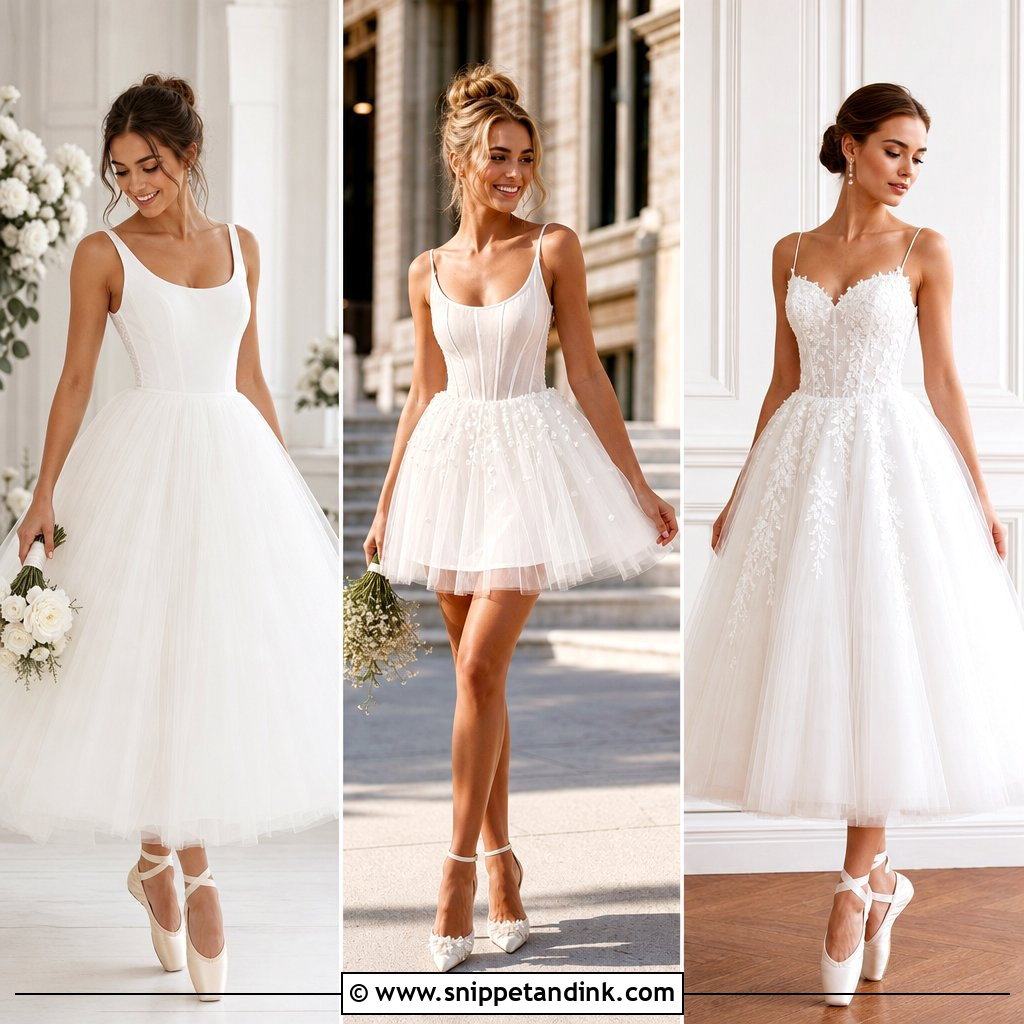
Tea length is the dancing dress. A bateau neckline, elbow sleeves, a fitted waist and a full skirt ending between knee and ankle give it a vintage feel; structured satin or floral jacquard holds the skirt out. Hem placement is the key fitting decision, since the narrowest point of the calf is usually the most flattering place for it to end. Ivory ankle-strap pumps, pearl earrings, short gloves if you like them and a shoulder-length veil suit it. Your shoes are fully visible, so break them in properly. It suits smaller ceremonies, courthouse vows and daytime celebrations.
11. Minimalist Column Christian Bridal Dress
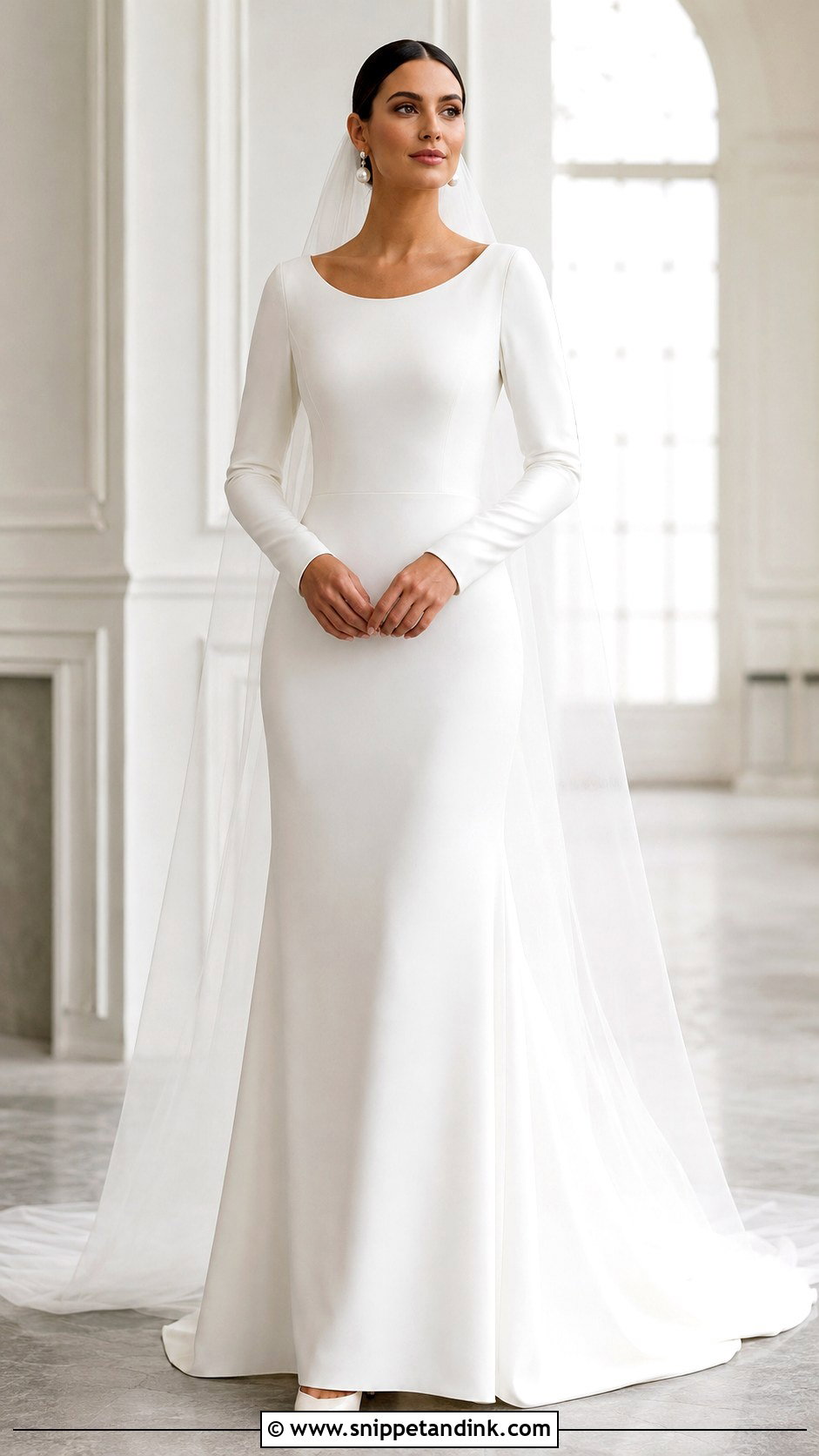
A matte crepe column can look every bit as ceremonial as lace. It has a shallow scoop neck, long fitted sleeves, subtle waist seams and a covered back; a detachable train or draped back panel adds drama for the walk down the aisle. With so little volume, there’s nowhere to hide uneven seams or a poor lining, so budget for precise tailoring. Architectural pearl earrings, pointed heels and an unembellished cathedral veil finish it. A sleek centre-parted bun and a structured bouquet keep it modern.
12. Basque Waist Christian Bridal Dress
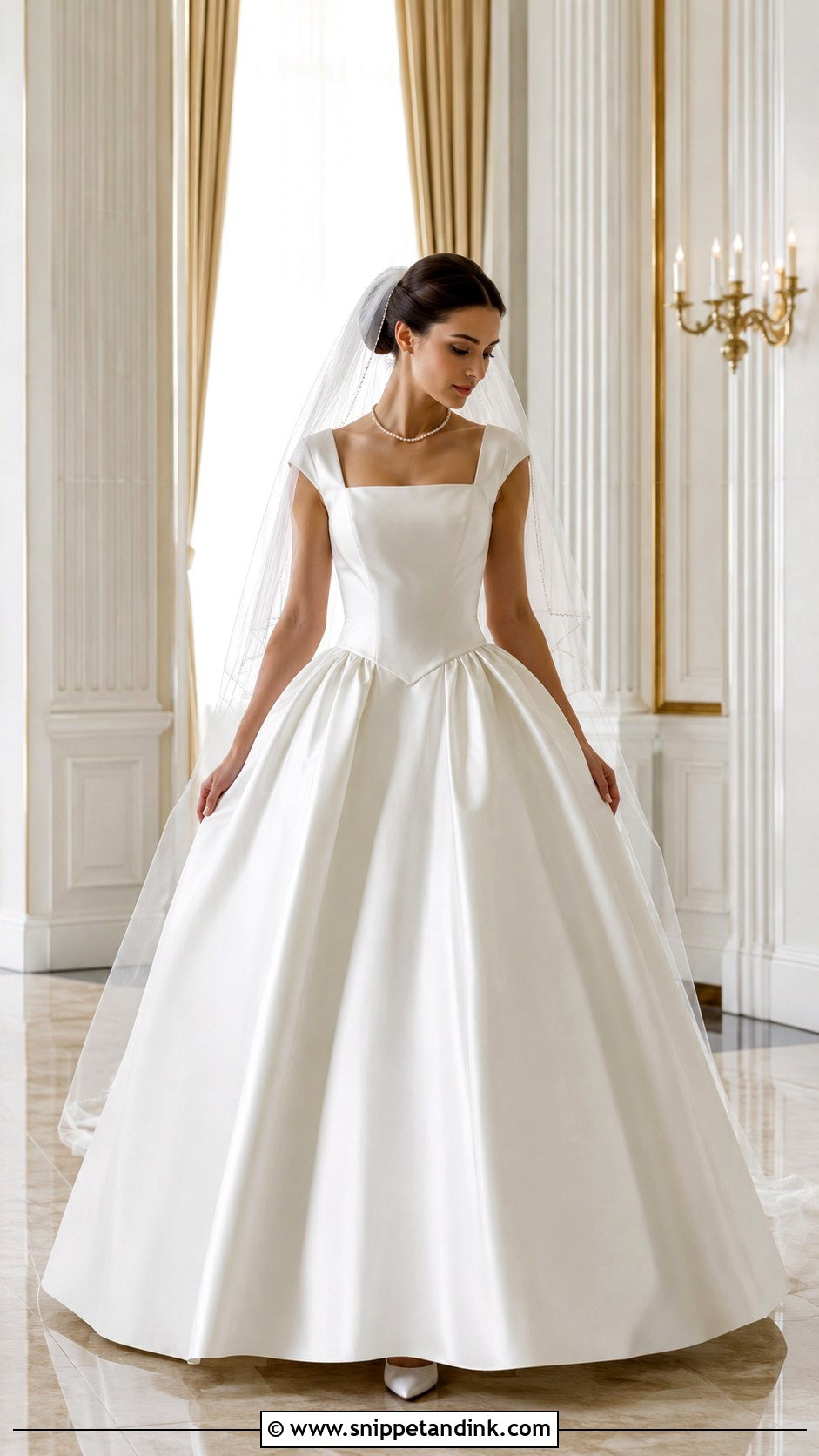
A basque waist dips into a shallow V below the natural waist and makes the torso look longer. On a satin ball gown with a modest square neck, cap sleeves and a full pleated skirt, it’s very princess. The point of the V presses into the stomach when you sit, which is why I always have the bride sit at every fitting for this cut. A narrow pearl necklace, matching earrings, low satin pumps and a fingertip veil on a clean updo suit it. A lace-trimmed veil can work if the trim is delicate.
13. Empire Waist Christian Bridal Dress
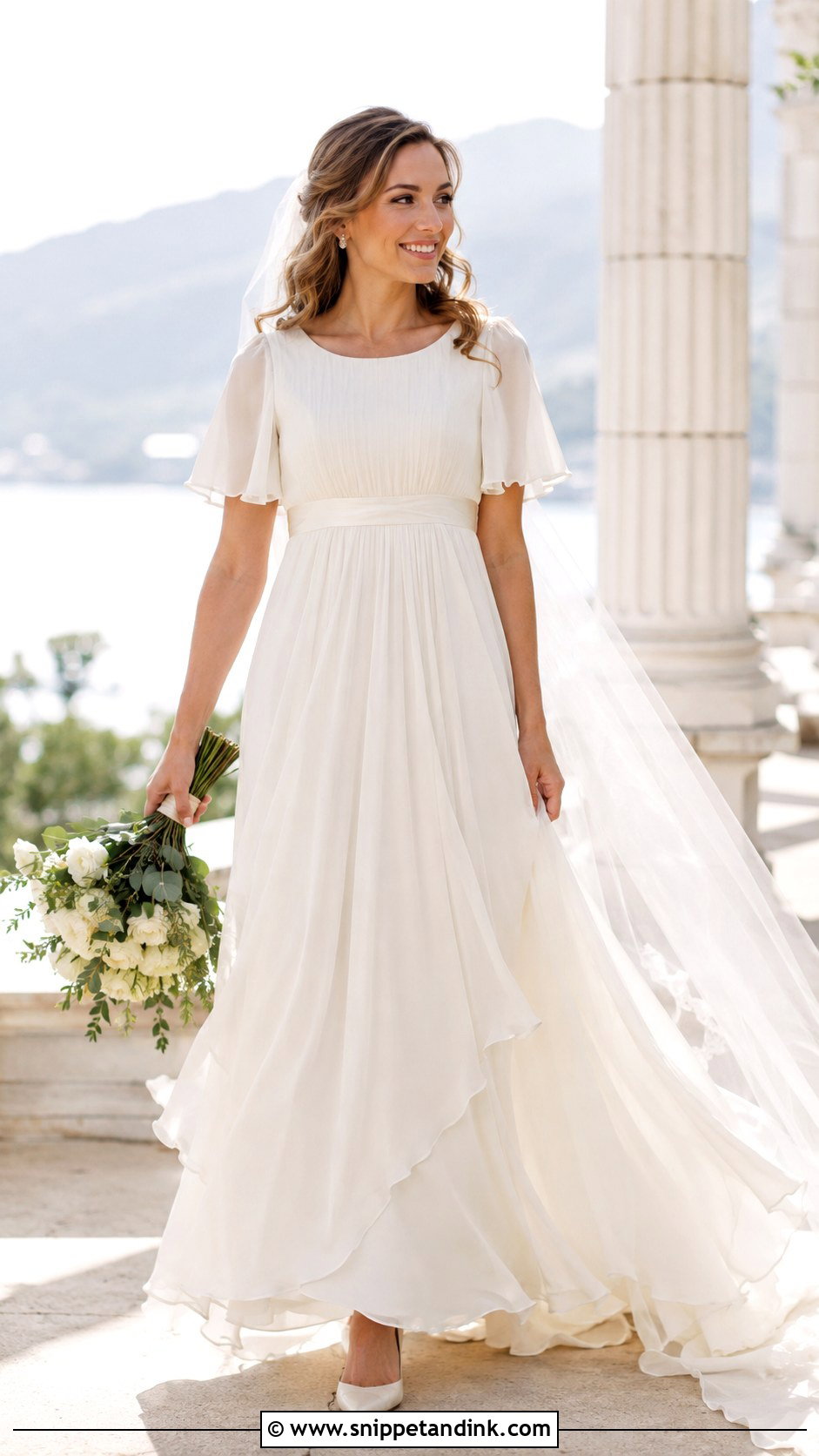
Empire waists rise to just under the bust and let the skirt fall freely, which is comfortable for long services and suits many figures. A chiffon gown with a modest round neck, lined flutter sleeves and a gathered skirt is the classic version, with a satin band or lace panel under the bust. Support is the weak point; a soft empire bodice often needs a built-in bra or cups added by the seamstress. Pearl studs, ivory kitten heels and a light veil that moves with the chiffon finish it. Make sure the skirt has enough layers to stay opaque outdoors.
14. Princess Ball Gown Christian Bridal Dress
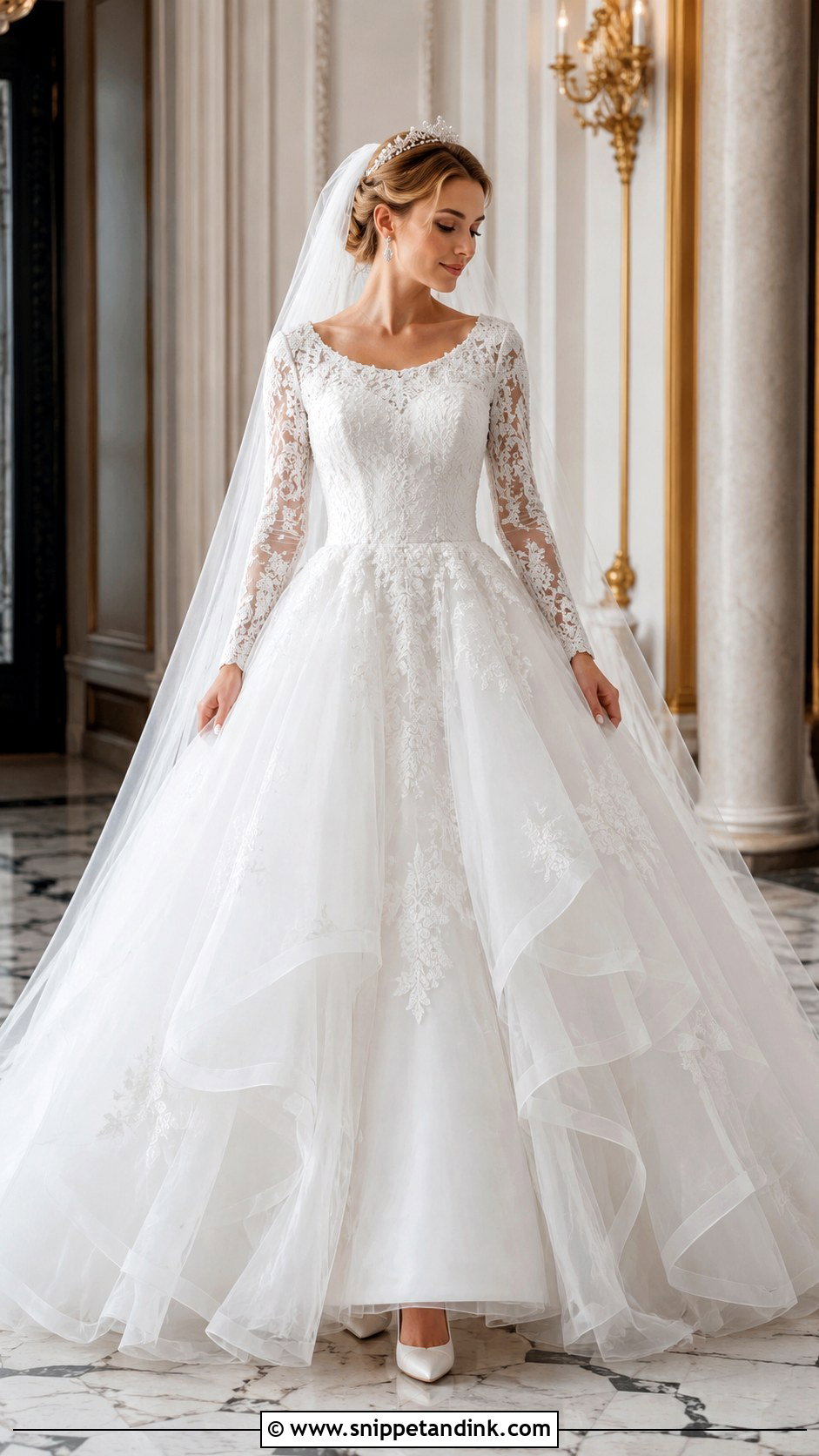
For a long church aisle, a ball gown makes the walk feel like an event. A lined lace bodice with a modest scoop neck, long sleeves, princess seams and a layered tulle skirt is the version I’d suggest. Add a small tiara or pearl headband, crystal studs, satin pumps and a cathedral veil, and skip the necklace. A secure updo is a must for a long day. Practise walking, turning and sitting before the final alterations. Tulle skirts catch on pew ends and church carpet edges, so a hem set just off the floor with a good petticoat underneath makes the volume much easier.
15. Modest V-Neck Christian Bridal Dress
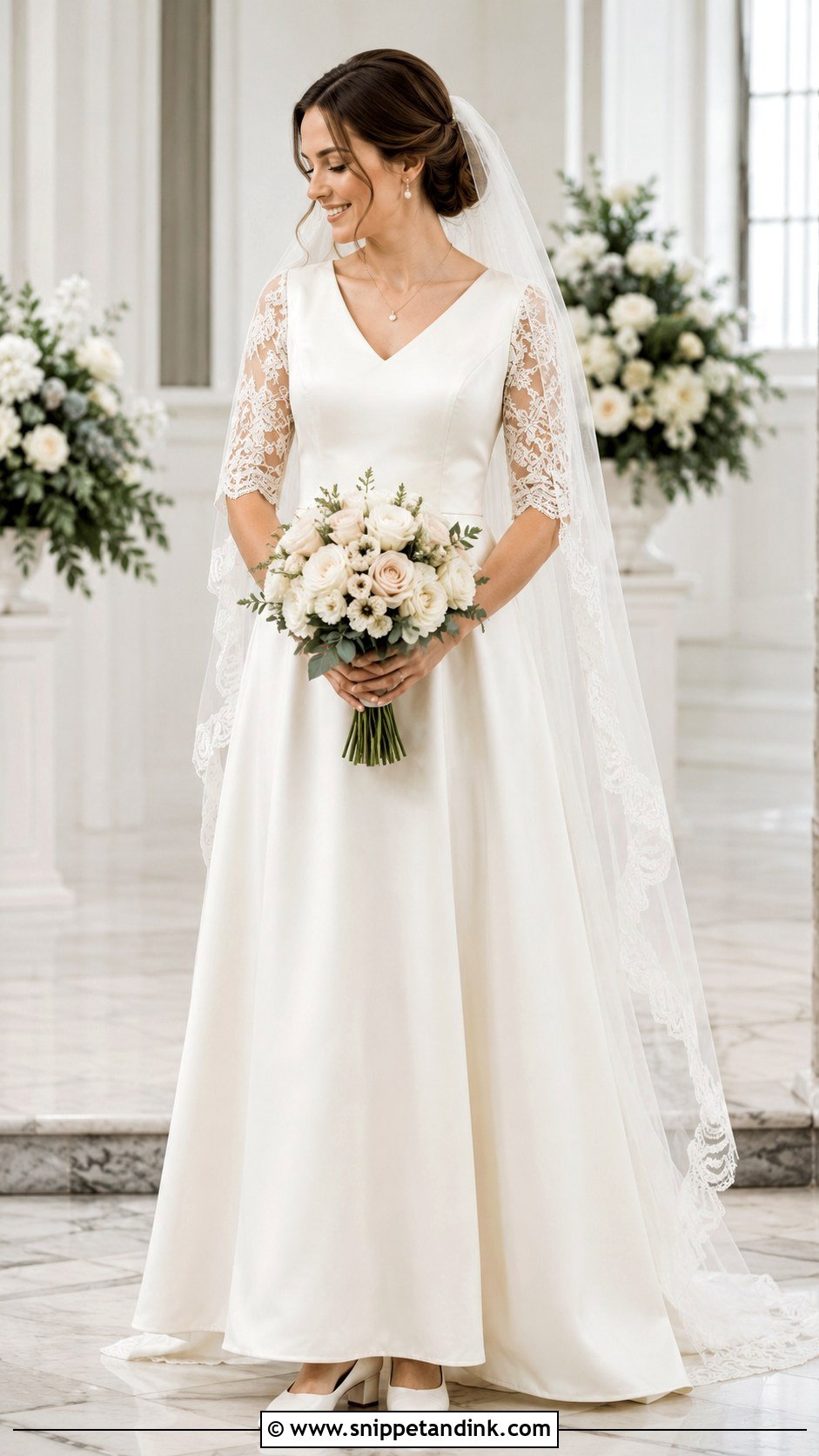
A shallow V-neck can still be modest when the bodice is lined and fitted. On an A-line with elbow-length lace sleeves, a covered back and a satin or chiffon skirt, it lengthens the neck without a high collar. During alterations, ask for the neckline to be tacked so it stays flat when you bend; V-necks gape most when you lean forward to sign the register. A delicate pendant that follows the V, pearl earrings, closed-toe block heels and a lace-edged chapel veil suit it. For extra coverage, a matching lace insert raises the point while keeping the V shape.
16. Detachable Bolero Christian Bridal Dress
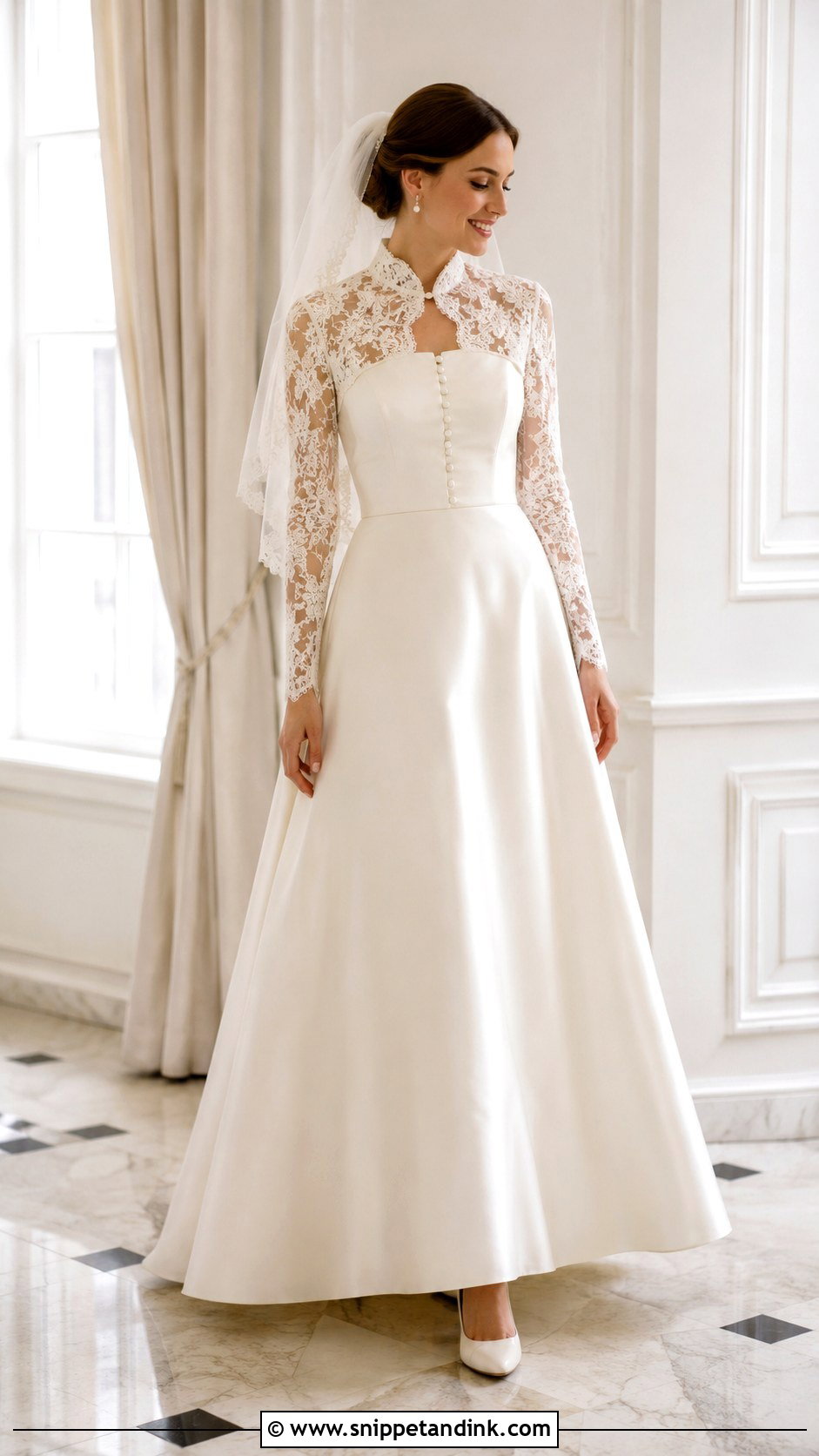
A bolero gives you two looks from one gown: covered for the ceremony, lighter for the reception. The dress is a simple satin A-line with a modest scoop neck and wide straps; the lace bolero adds long sleeves and covered buttons. Bring the bolero to every fitting so its neckline lines up with the dress. Ivory varies a lot between fabrics, and a lace bolero bought separately can look grey or yellow next to satin, so compare them side by side in daylight. Pearl earrings, ivory pumps and a plain fingertip veil finish it, with a low chignon.
17. Bridal Cape Christian Bridal Dress
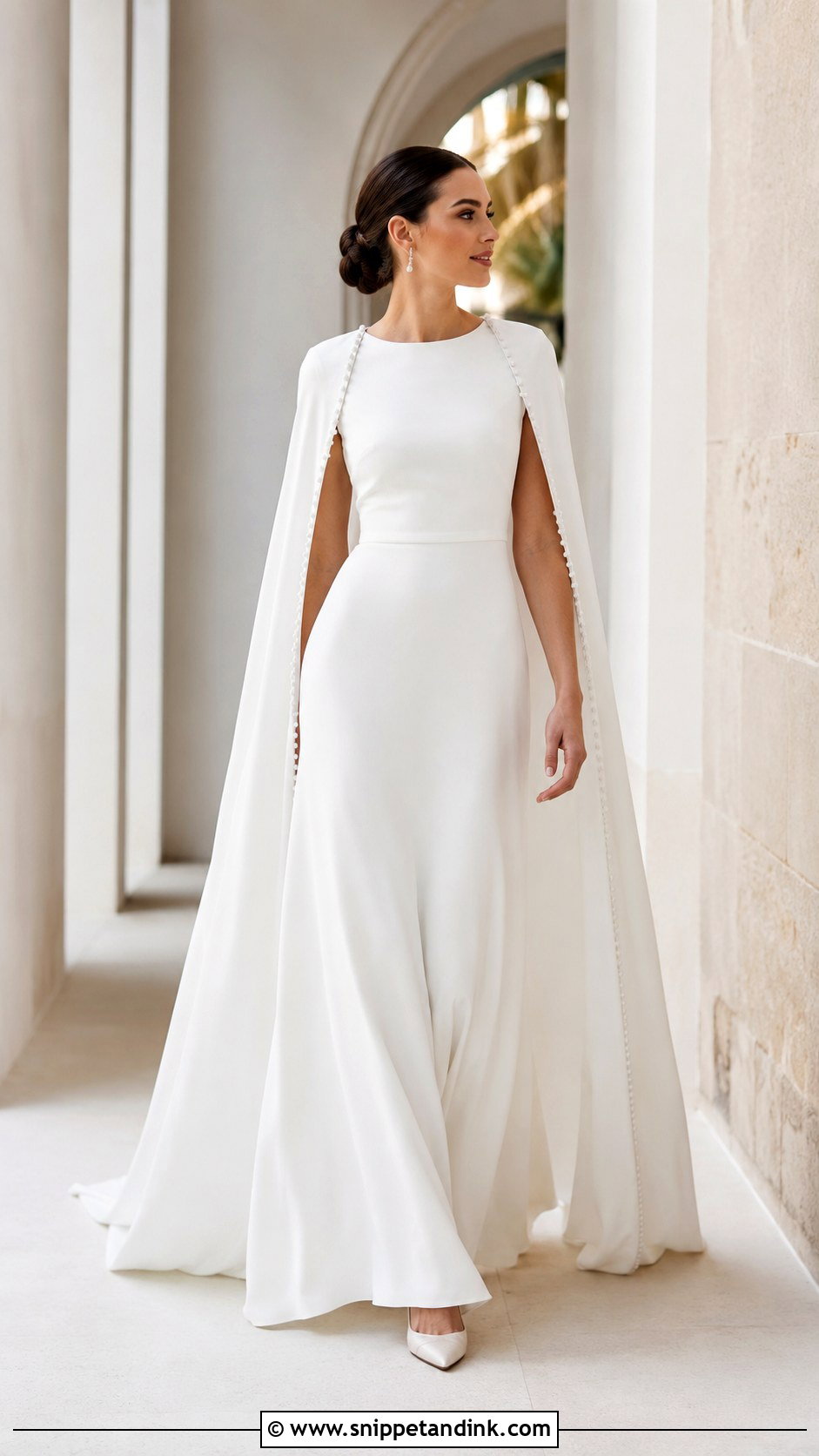
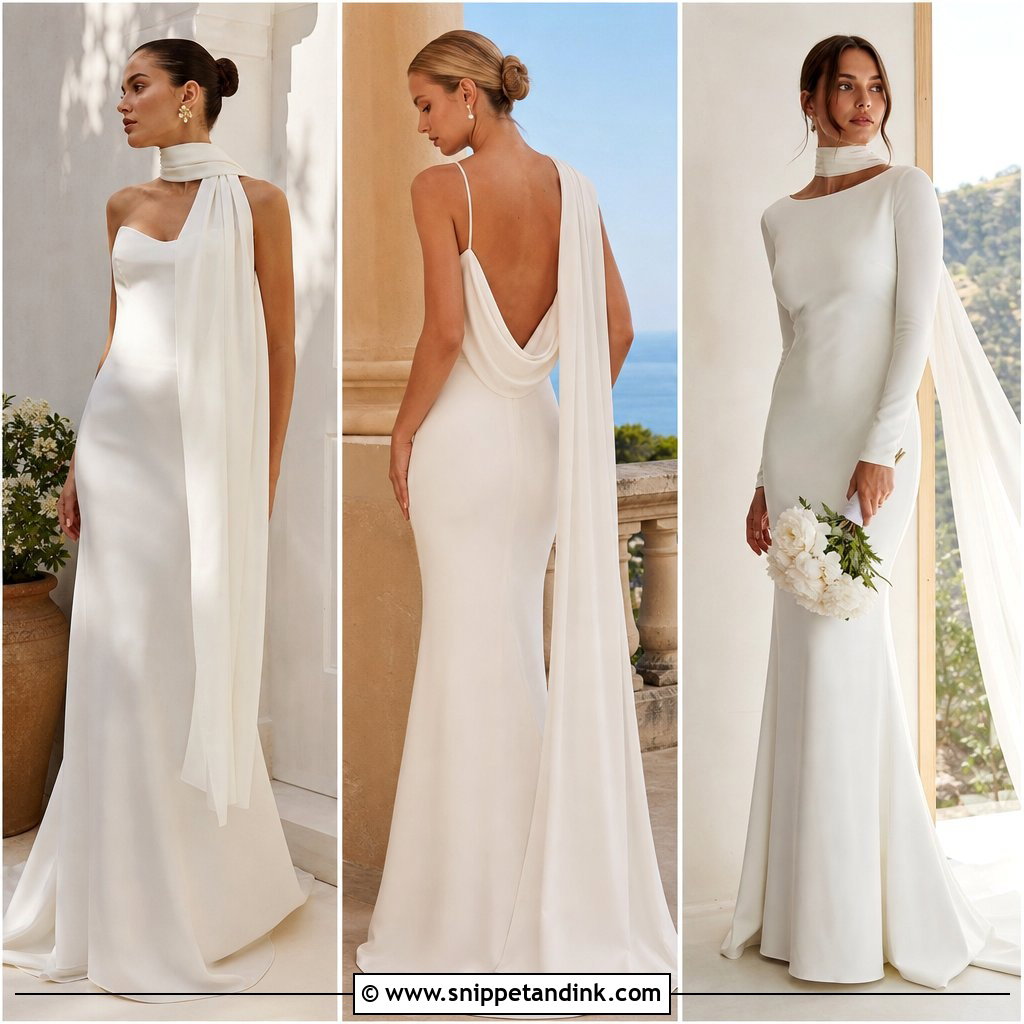
A cape covers the shoulders and back without sleeves, so it’s a graceful answer for churches that expect coverage. Pair a minimalist crepe gown with a high scoop neck, short sleeves and a soft A-line skirt with a light floor-length cape fastened near the shoulders. Sheer capes only add coverage visually, so the dress underneath has to meet the church’s expectations alone. I’d skip a long veil, which tangles with a cape, and use a small comb instead. Drop earrings, pointed ivory shoes and a sleek low bun complete it. Walk outside in it before the day; capes catch the wind.
18. Plus Size A-Line Christian Bridal Dress
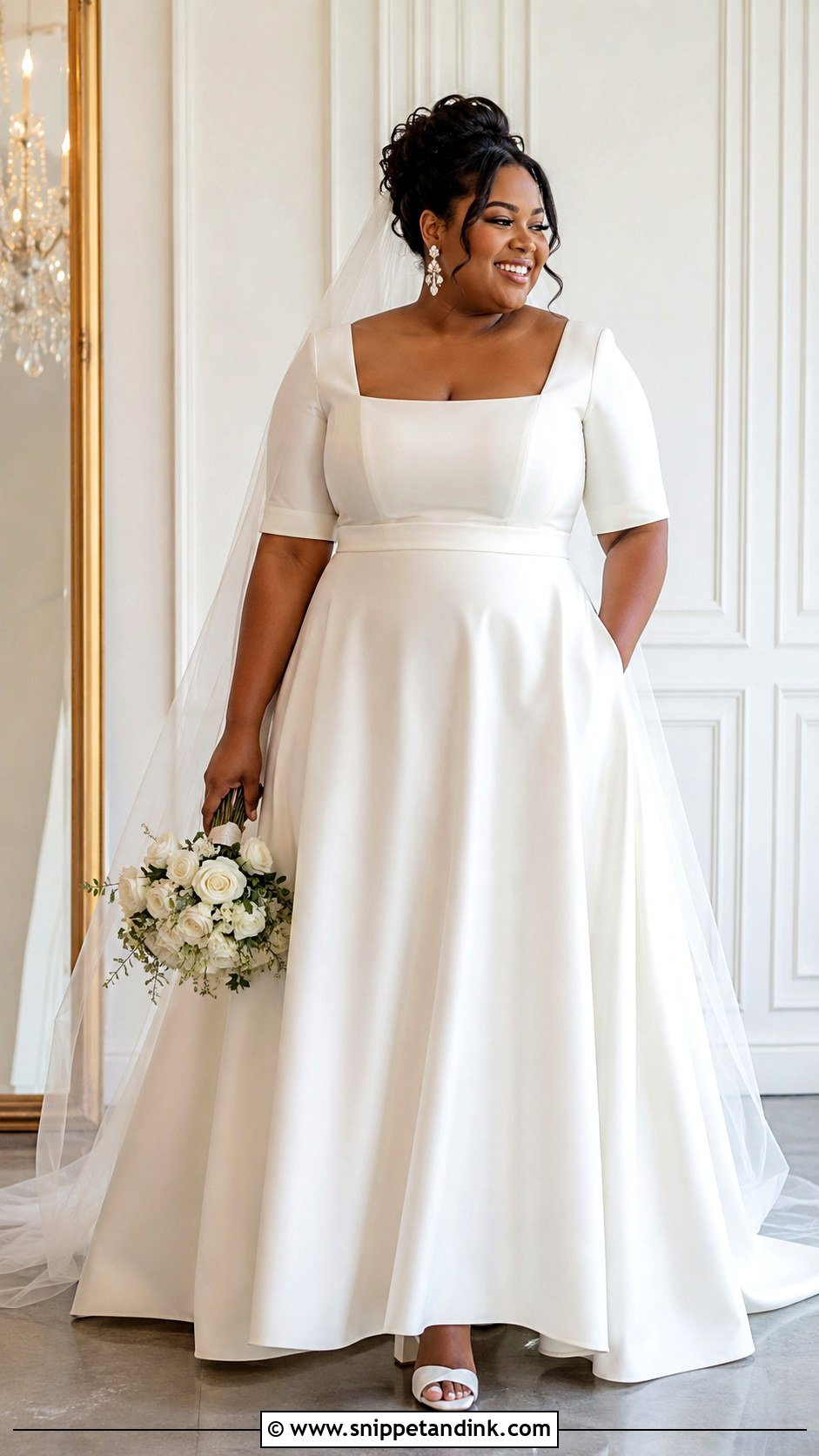
Support comes first in a plus-size gown, and it’s built in, not added later. I look for an A-line with a square neck, elbow sleeves, wide straps under the outer fabric and a structured bodice with secure boning. A smooth satin skirt should skim the hips before widening. Comfortable block heels, statement pearl earrings and a chapel veil under a textured updo finish it. Please don’t buy a smaller size as motivation; order for the body you have now and let an experienced bridal tailor take it in if needed. Taking a gown in is far easier than letting one out. You should be able to raise your arms, sit and breathe.
19. Petite Chapel Train Christian Bridal Dress
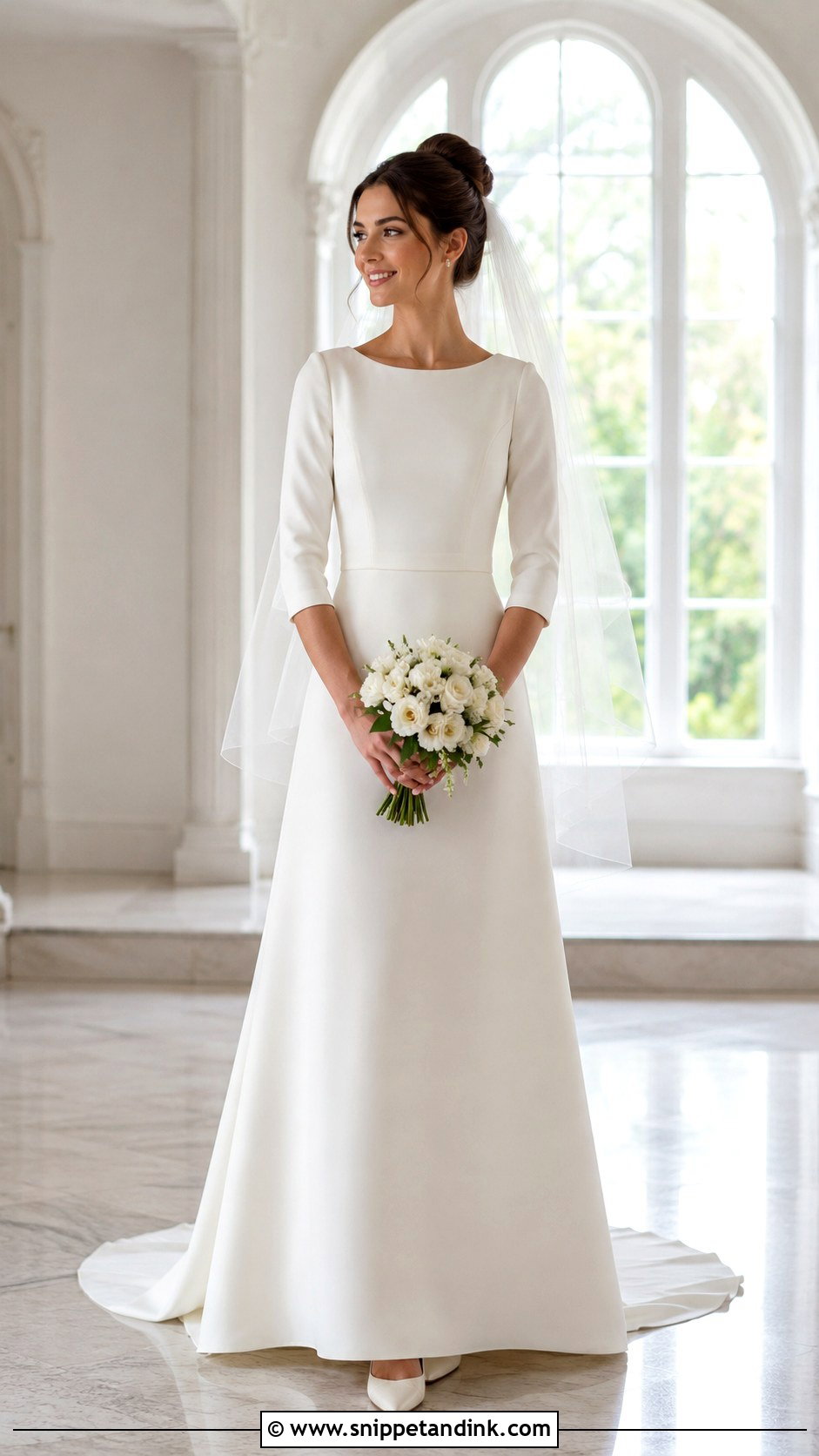
Petite brides can absolutely wear a train; the trick is keeping it narrow. A clean A-line with a raised scoop neck, fitted three-quarter sleeves, a natural waist and a short chapel train keeps the proportions in check. Vertical princess seams and minimal embellishment draw the eye up and down. Pointed heels, small pearl earrings and a fingertip veil rather than a cathedral one suit it, and a higher bun adds a little height. Ask for petite alterations, not just a shorter hem: shoulders, waist position, sleeves and bodice depth often all need moving.
20. Simple Ivory Christian Bridal Dress
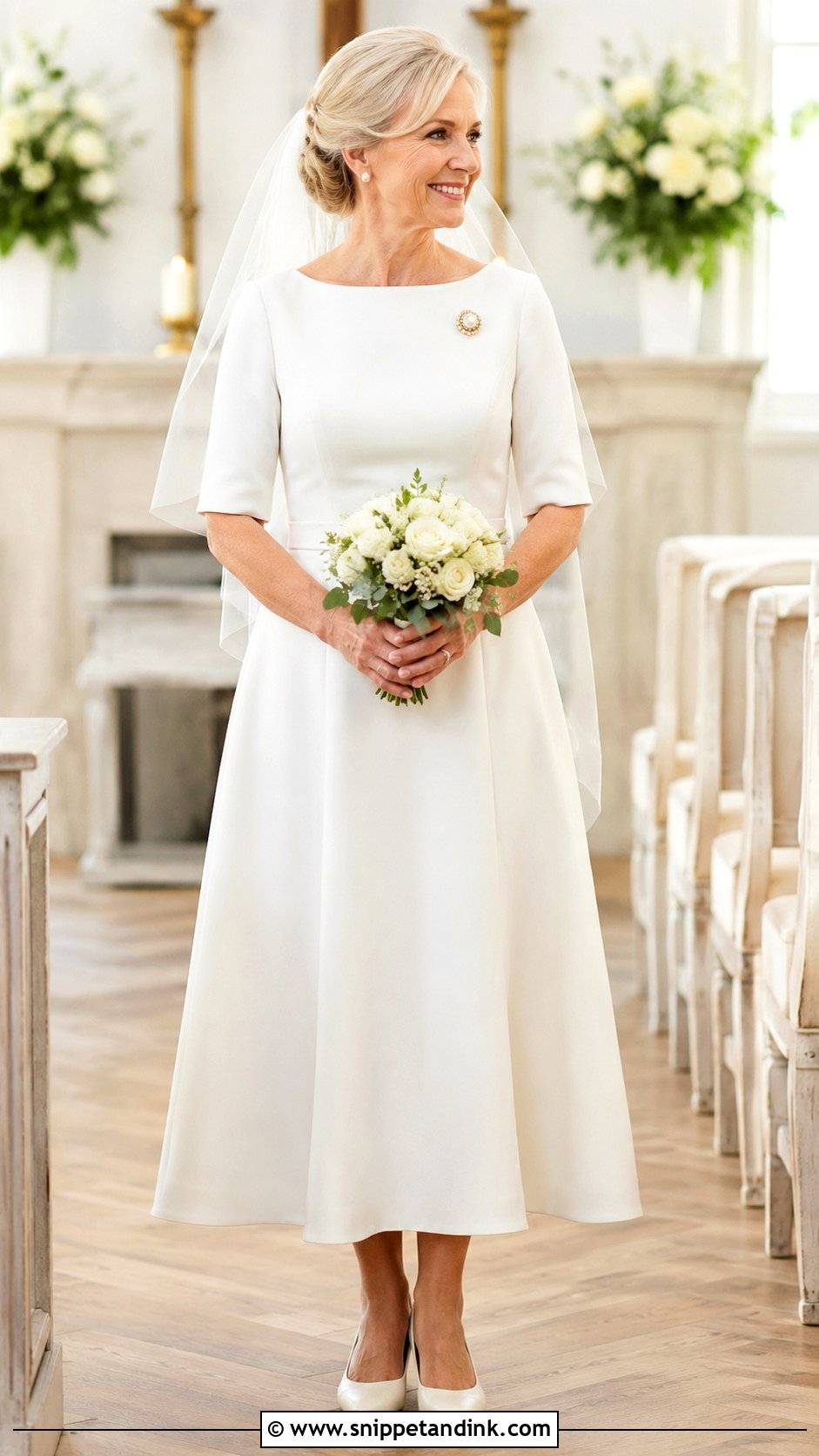
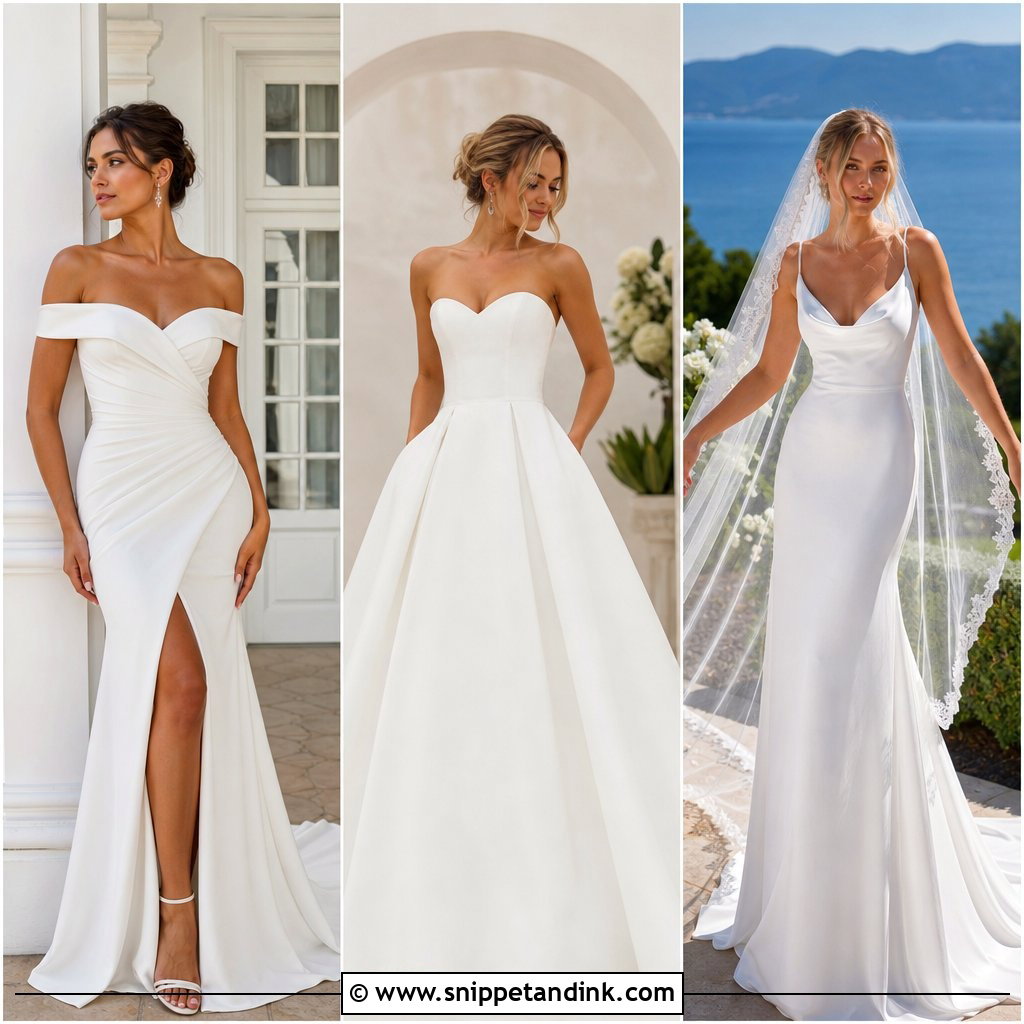
Ivory is softer than bright white and flatters more complexions, especially under warm church lighting. A simple gown with a bateau neck, elbow sleeves, a lightly shaped waist and a fluid A-line skirt in matte satin, crepe or a silk-like fabric needs no decoration. Pearl studs, comfortable ivory pumps, a clutch for the reception and a plain shoulder-length veil finish it, with a twisted updo or polished bob. It suits mature brides, second marriages, and small ceremonies. I love personalising a gown like this with a family brooch pinned at the waist or an embroidered veil edge rather than adding beading.
Church Rules, Kneelers and When to Lift the Blusher
Expectations vary widely. Some churches require covered shoulders in the sanctuary, some don’t mind strapless gowns, and some ask that the bride’s arms be covered during the service only. I always suggest a quick call to the church office or your officiant before shopping. Ask about the dress code, whether there’s kneeling, whether flash photography is allowed and how long the aisle is.
Veils in a church ceremony
A blusher, the short layer worn over the face, is traditionally lifted either by the person walking you down the aisle or by your partner before the kiss. Decide who lifts it and practise once, because a blusher snagged on a comb is a common rehearsal mishap. Long veils should be attached below the crown of the head so their weight doesn’t pull the style loose during a long service.
Leaving enough time
Made-to-order gowns often take several months to arrive, and alterations need a further couple of months on top, especially if you’re adding sleeves or raising a neckline. Starting your search about nine months to a year ahead gives you room. Adding coverage to a gown is skilled work and usually costs more than shortening a hem, so ask for a quote early.
Coverage That Still Feels Like You
Coverage, comfort and the setting decide most of this. Lace sleeves feel romantic, a satin ball gown looks regal and a crepe column looks modern, but every one of them depends on the same unglamorous details: a secure neckline, a covered back, a good lining, careful tailoring and shoes you can stand in through a full service. Confirm what your church expects before you buy, then test the gown by walking, sitting and raising your arms. If it passes those tests and still feels like you, it’s the right dress.
You'll Like These Ideas:



Leave a Reply