
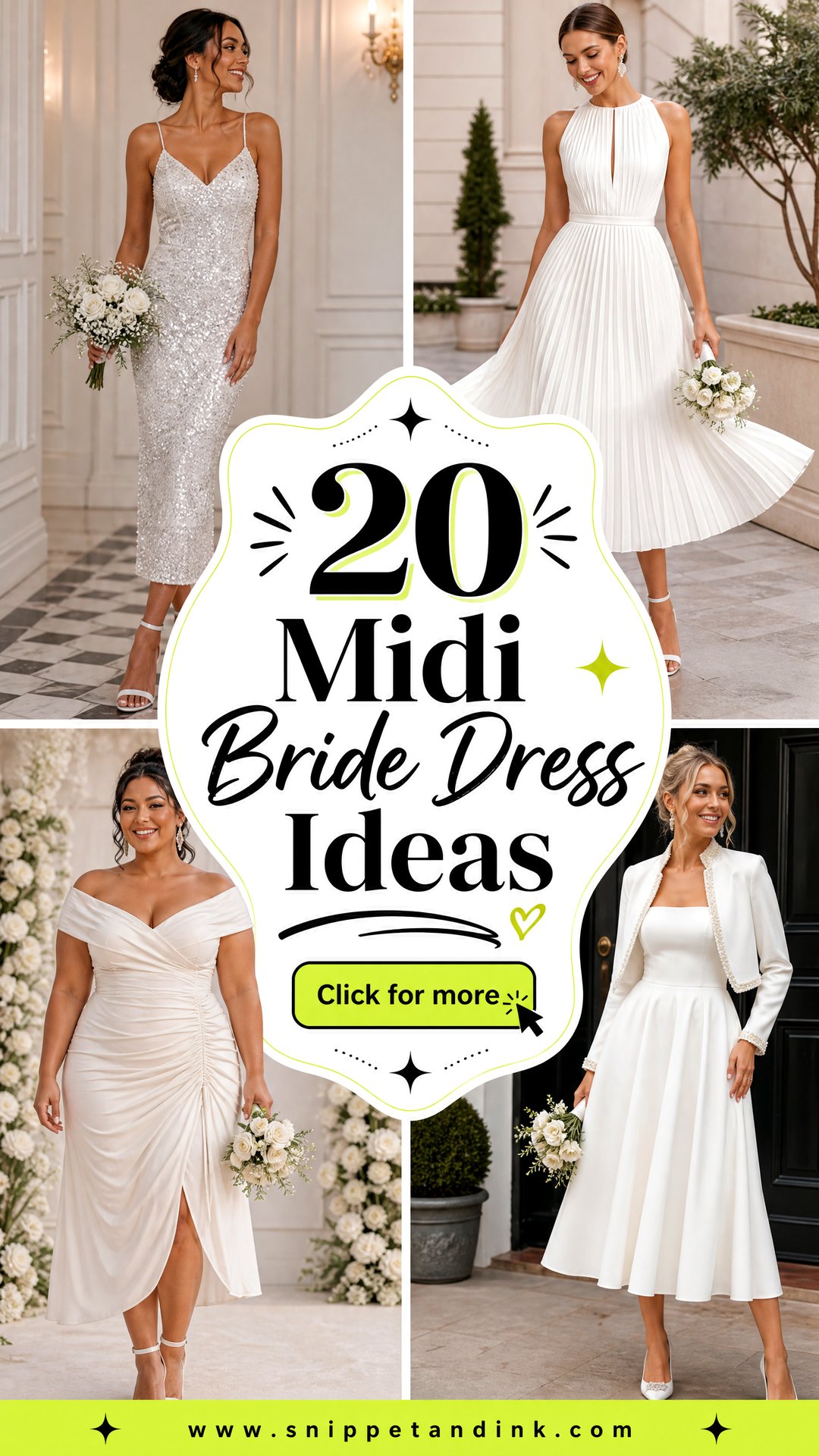
A midi hem sits somewhere between just below the knee and just above the ankle, and those few inches decide almost everything about how the dress looks on you. It’s a middle ground between a full gown and a mini: your shoes show, you can walk without lifting your skirt, and it still reads as a wedding dress with the right veil. Today’s bridal midis include sleek satin slips, lace, structured A-lines and sparkly reception dresses. I’ve styled each one below head to toe, with notes on fabric, support and exactly where the hem should fall, for ceremonies, courthouse vows, rehearsal dinners and receptions.
Where a Midi Hem Should Land on Your Leg
The most common midi mistake I fix isn’t the dress; it’s the hem. A skirt that stops at the widest part of the calf makes the leg look heavier and shorter, whatever your size. A hem that ends at a narrow point, just below the knee or above the ankle where the leg tapers, looks longer and lighter.
If you’re petite
Aim for just below the knee, or the slim point above the ankle with a pointed shoe that continues the line. Mid-calf hems swallow shorter legs, and so do full skirts with a dropped waist.
If you’re tall
You can carry true mid-calf and even a heavier, fuller skirt, but check the hem doesn’t stop at the calf’s widest point; an inch either way usually solves it.
Shoes change the measurement
Ankle straps cut the leg and make a midi look shorter, so pair them with hems near the knee. Low-cut pumps or slingbacks in a shade close to your skin tone extend the leg. Always pin the hem in the actual wedding shoes, since a two-inch heel change moves where the skirt lands.
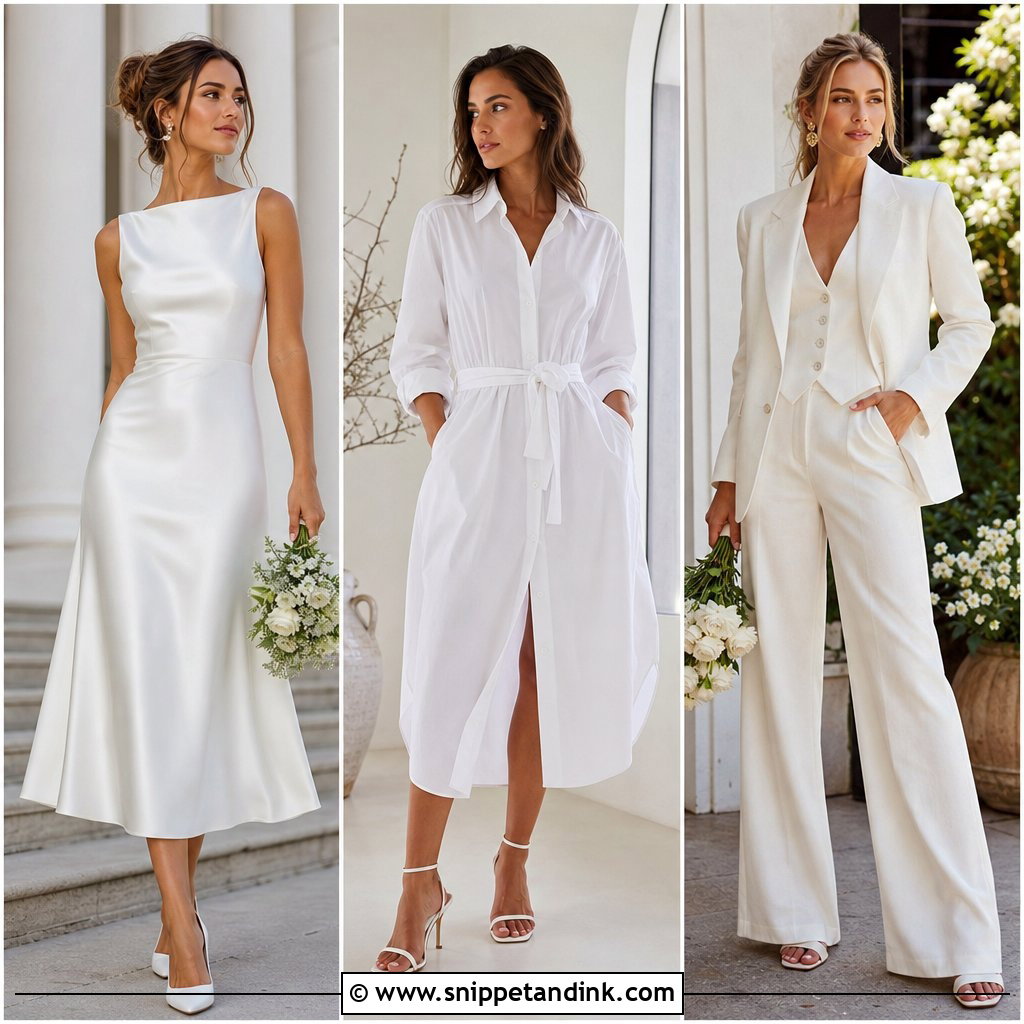
1. Satin Slip Midi Bride Dress
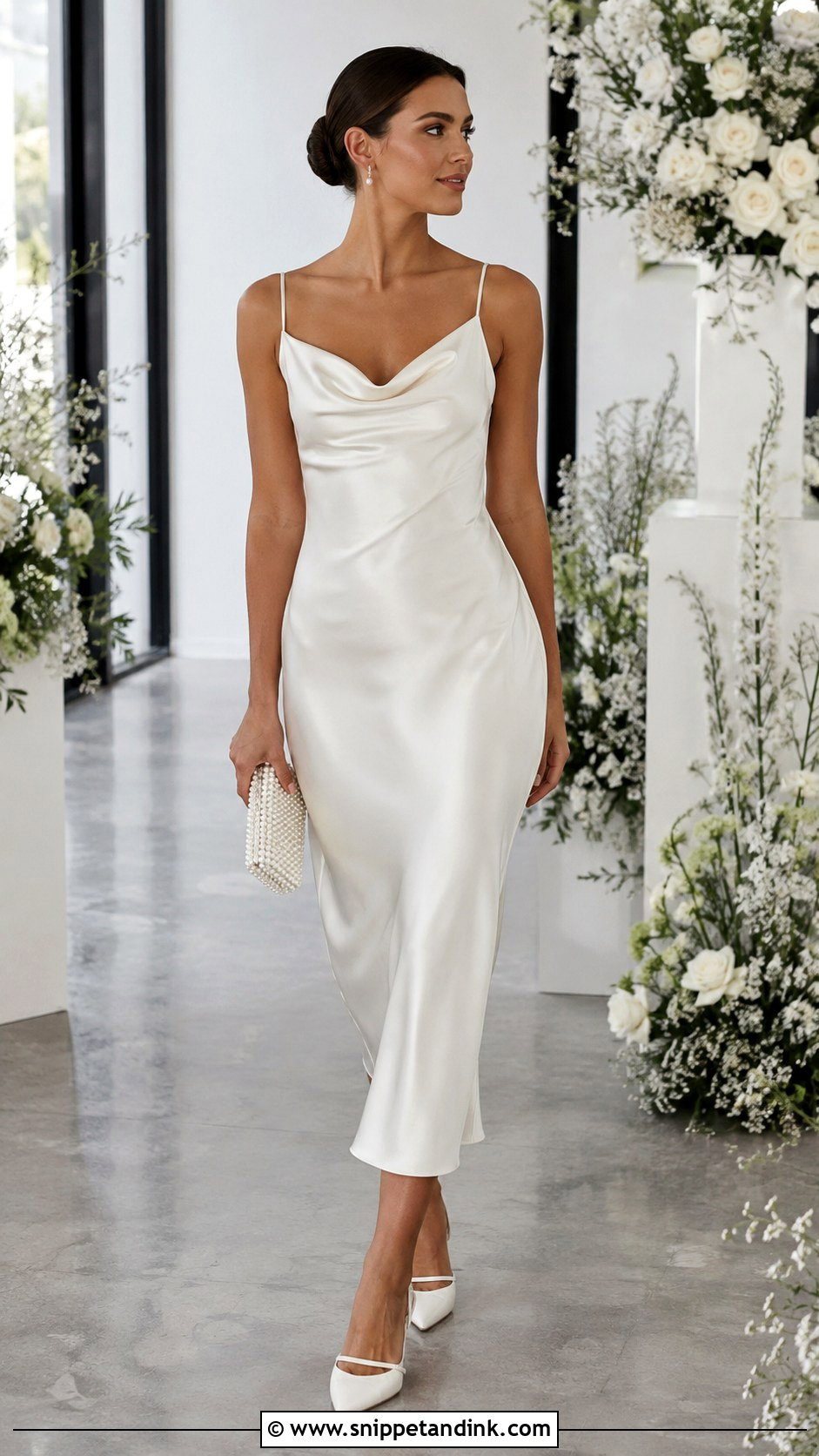
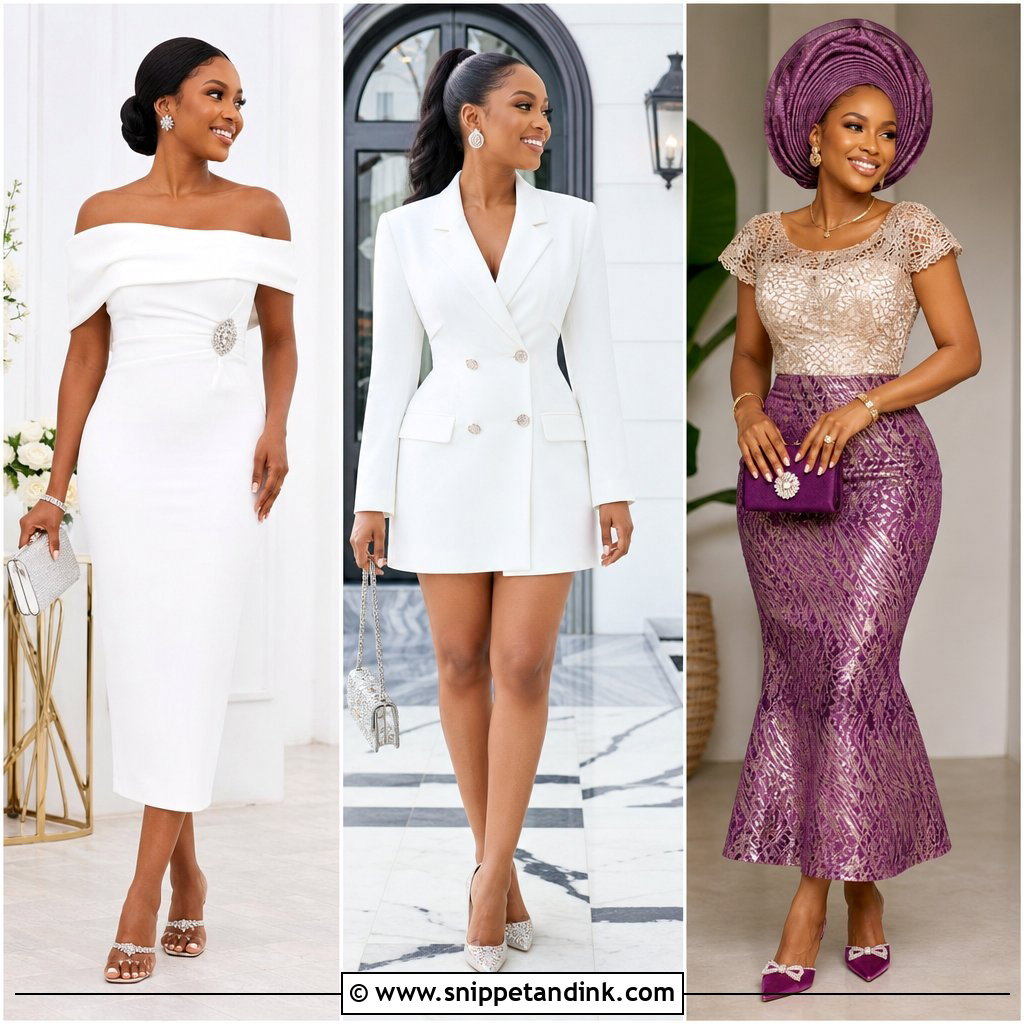
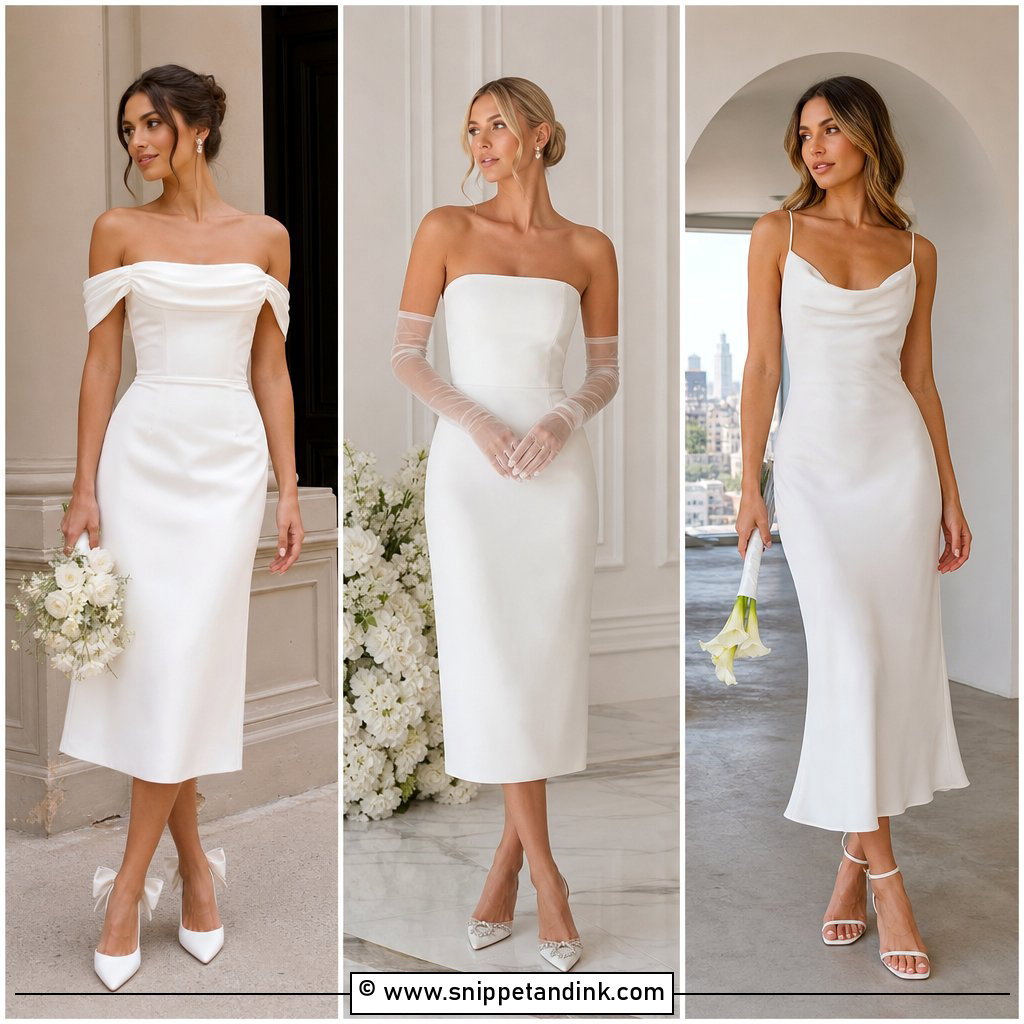
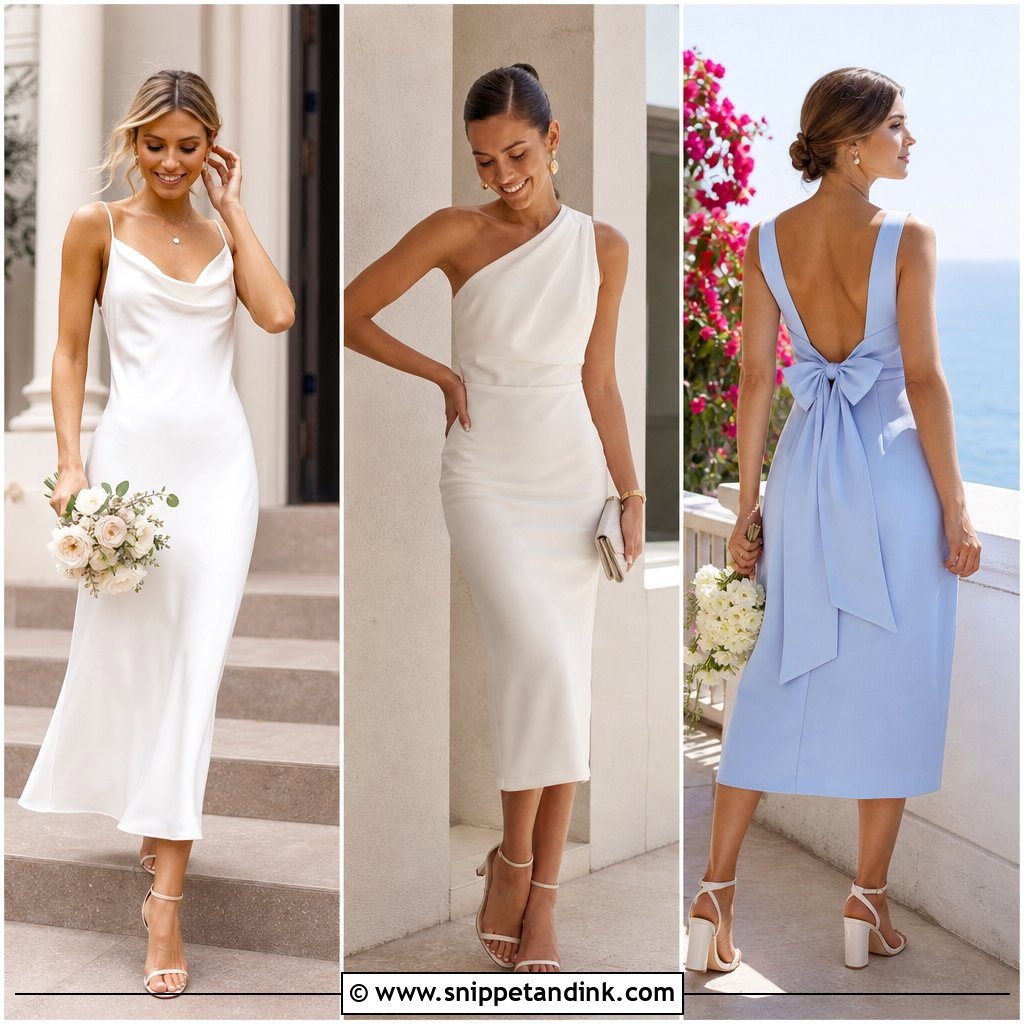
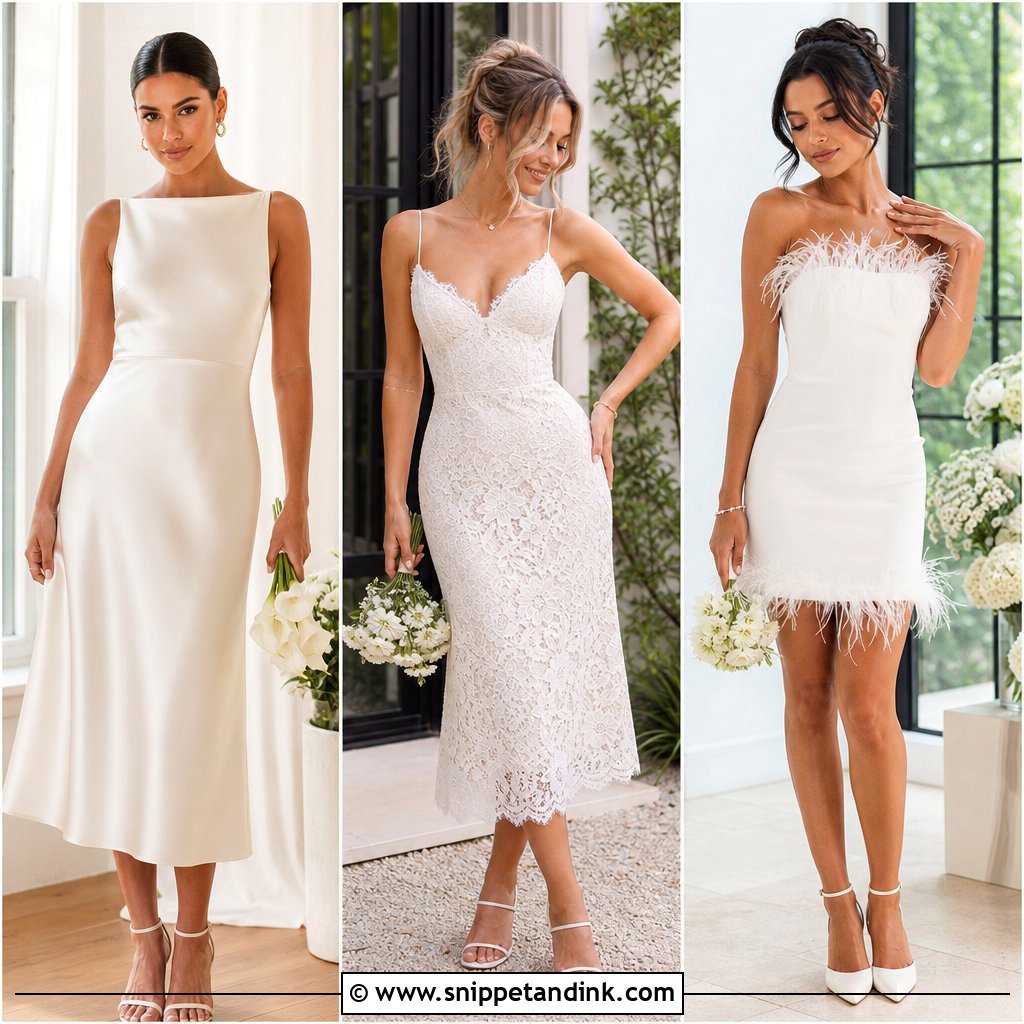
Ivory or pearl satin cut on the bias drapes close to the body and moves when you walk. The trouble with bias cut is that it shows everything underneath, so bring your actual underwear to the first fitting. A cowl neck softens the front, and wider straps hold up better over a long day than thin ones. Pointed slingbacks, fine drop earrings and a small pearl clutch keep it clean, with a low bun or polished waves. Petite brides look best with the hem just below the knee; taller brides can take it to mid-calf. Add a light tailored coat when it’s cold.
2. Lace Long Sleeve Midi Bride Dress
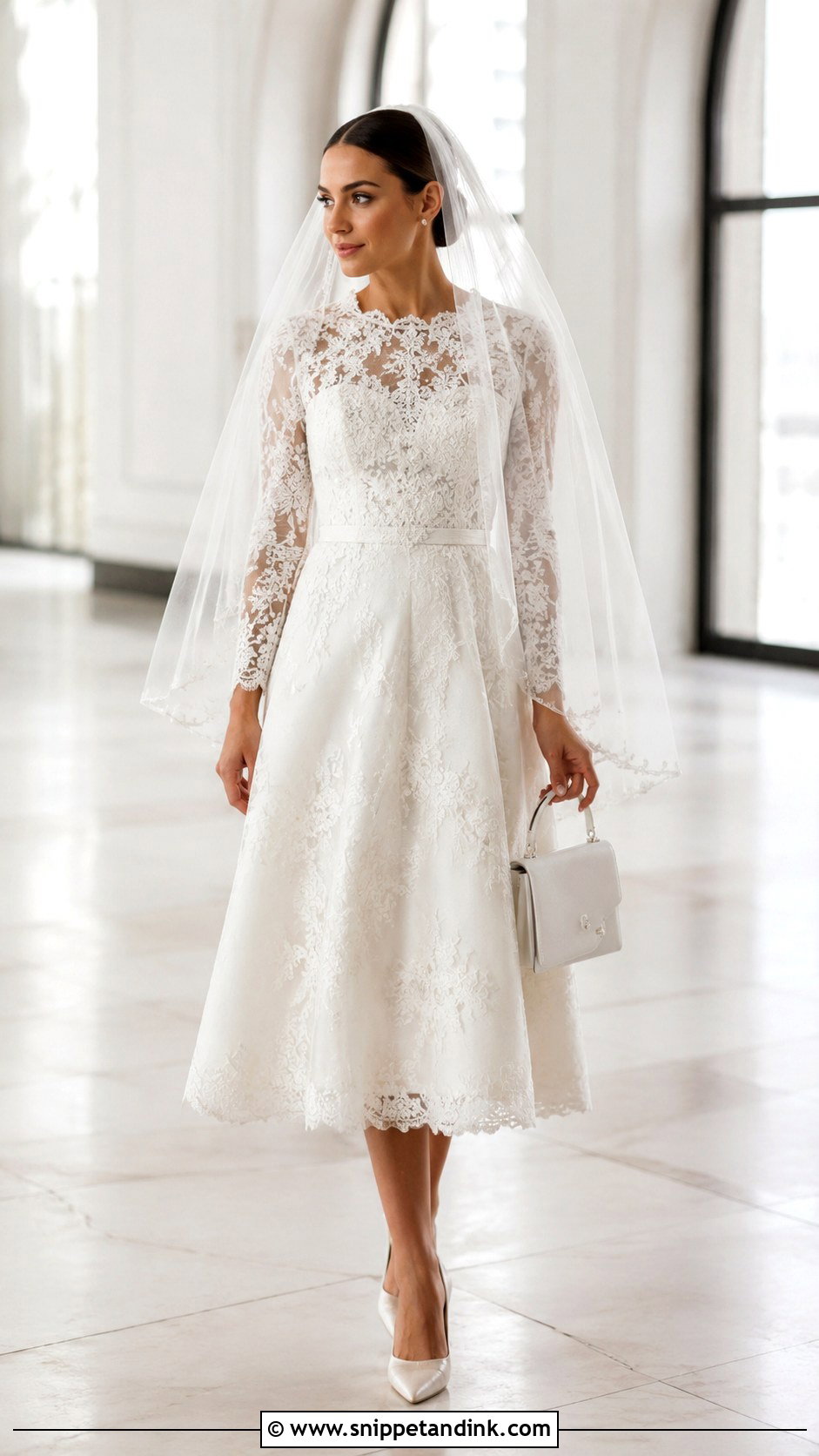
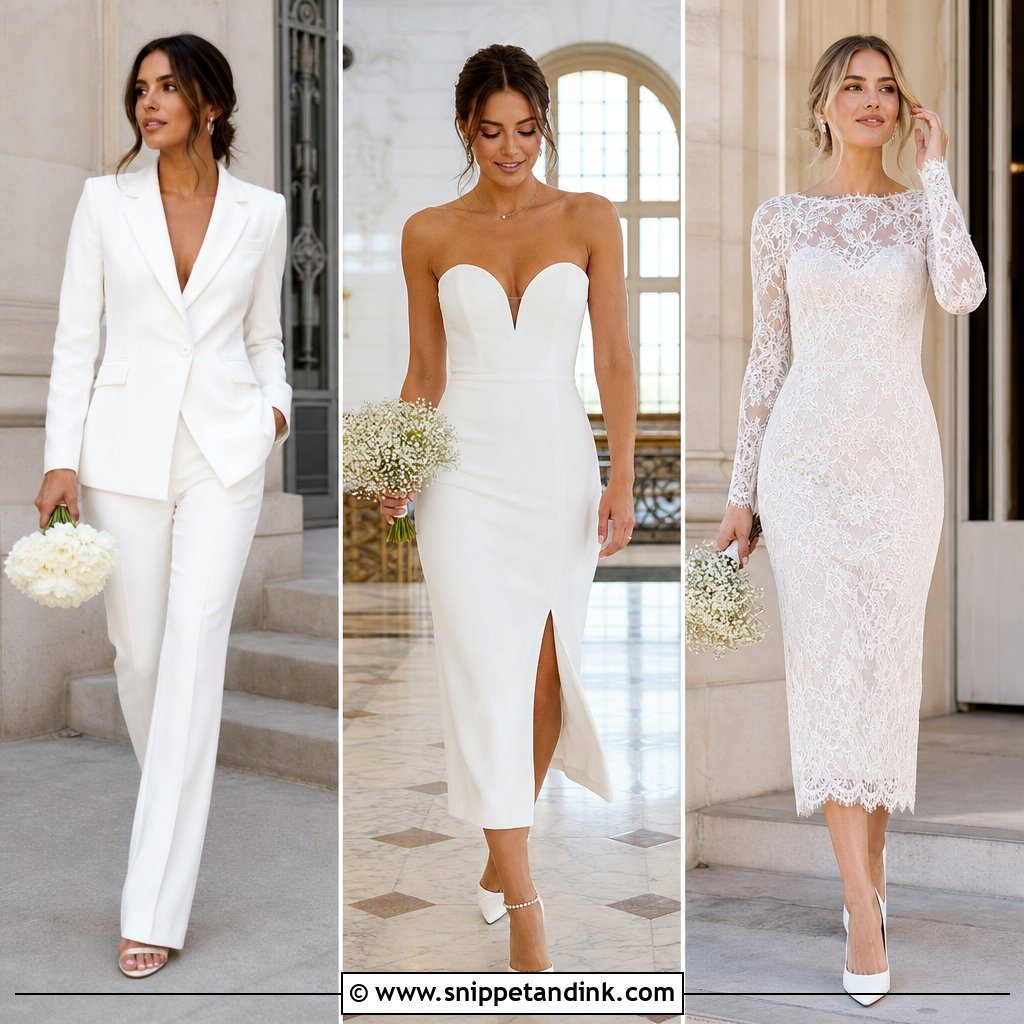
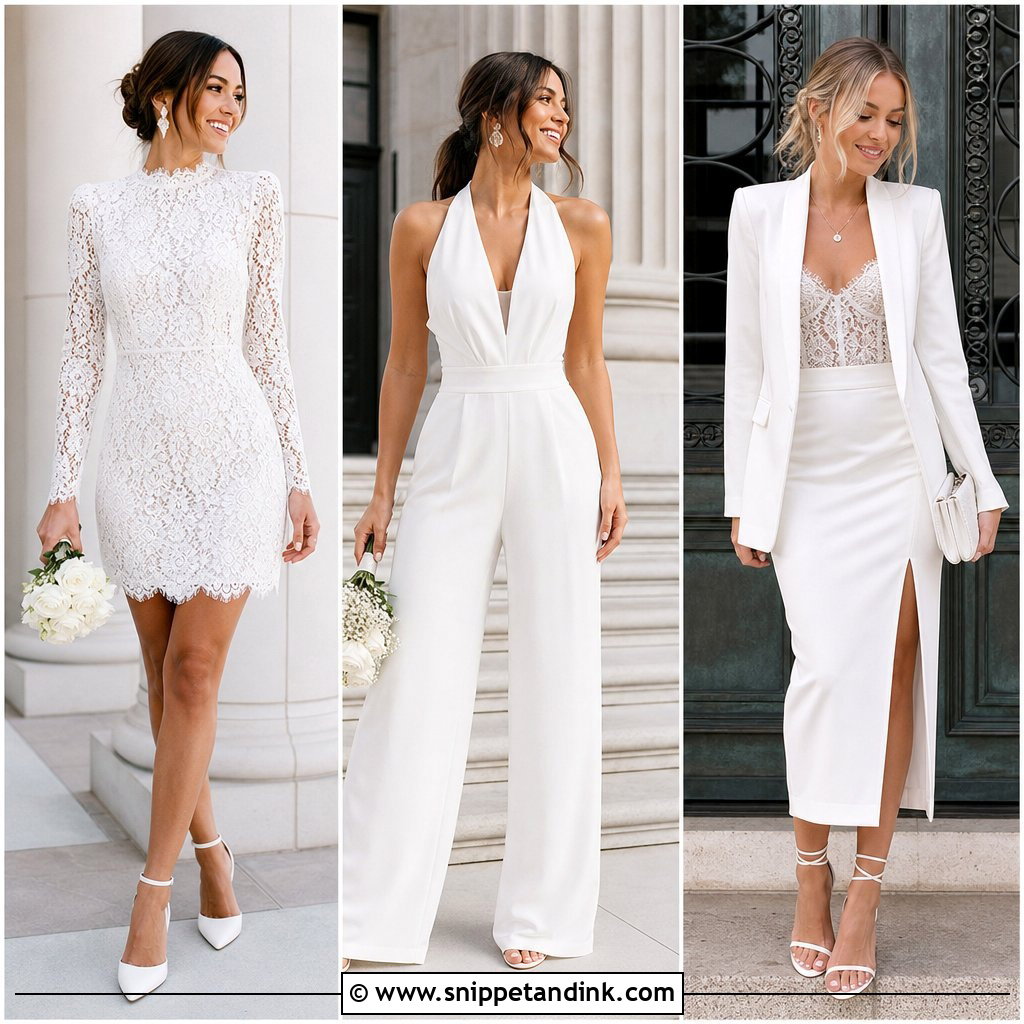
Long lace sleeves make a midi feel traditional without the weight of a gown. A fitted bodice, defined waist and light flare balance all that coverage at the top. Floral lace is soft and classic; geometric lace looks more current. Lining color changes the effect: nude lining makes the pattern pop, ivory lining softens it. Pearl studs, pointed ivory pumps and a structured mini bag suit it, with a fingertip veil for the ceremony or a pearl headband if you’d rather skip the veil. Lace has no give at the elbow, so bend and lift your arms in the fitting room before buying.
3. Strapless A-Line Midi Bride Dress
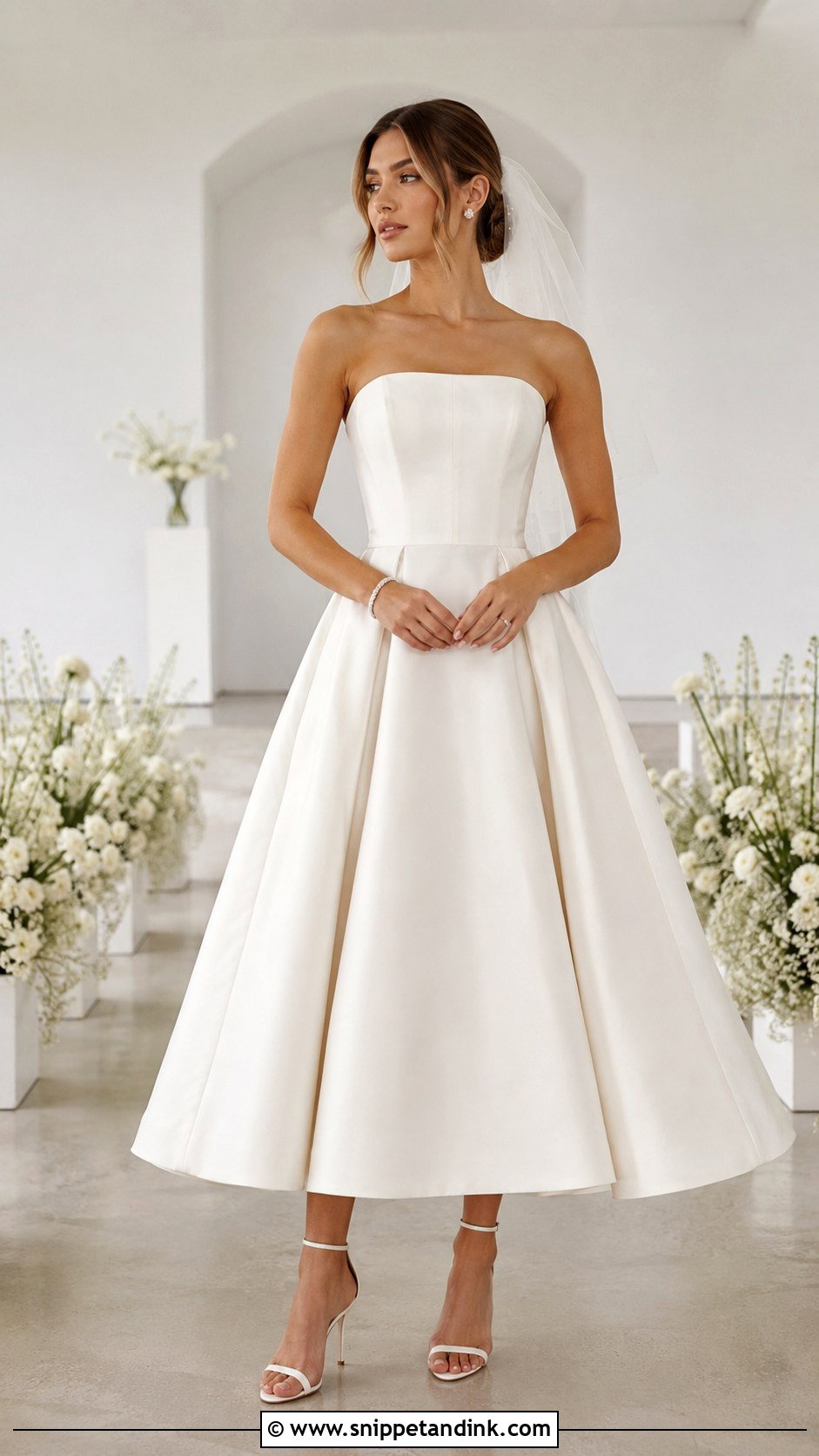
A strapless A-line is the most classic shape here, and it only works with real structure. Boning in the bodice holds it up, and a skirt that keeps its shape needs body in the fabric. Mikado, faille, and structured satin all hold a crisp line without any beading. The fitting rule I repeat most: the bodice should grip at the waist and ribcage, not squeeze across the bust, or it slides down every time you sit. Ankle-strap heels, a short veil, sparkling studs and a tennis bracelet keep the neckline clear. A removable organza wrap or cropped jacket adds coverage for the ceremony.
4. Square Neck Satin Midi Bride Dress
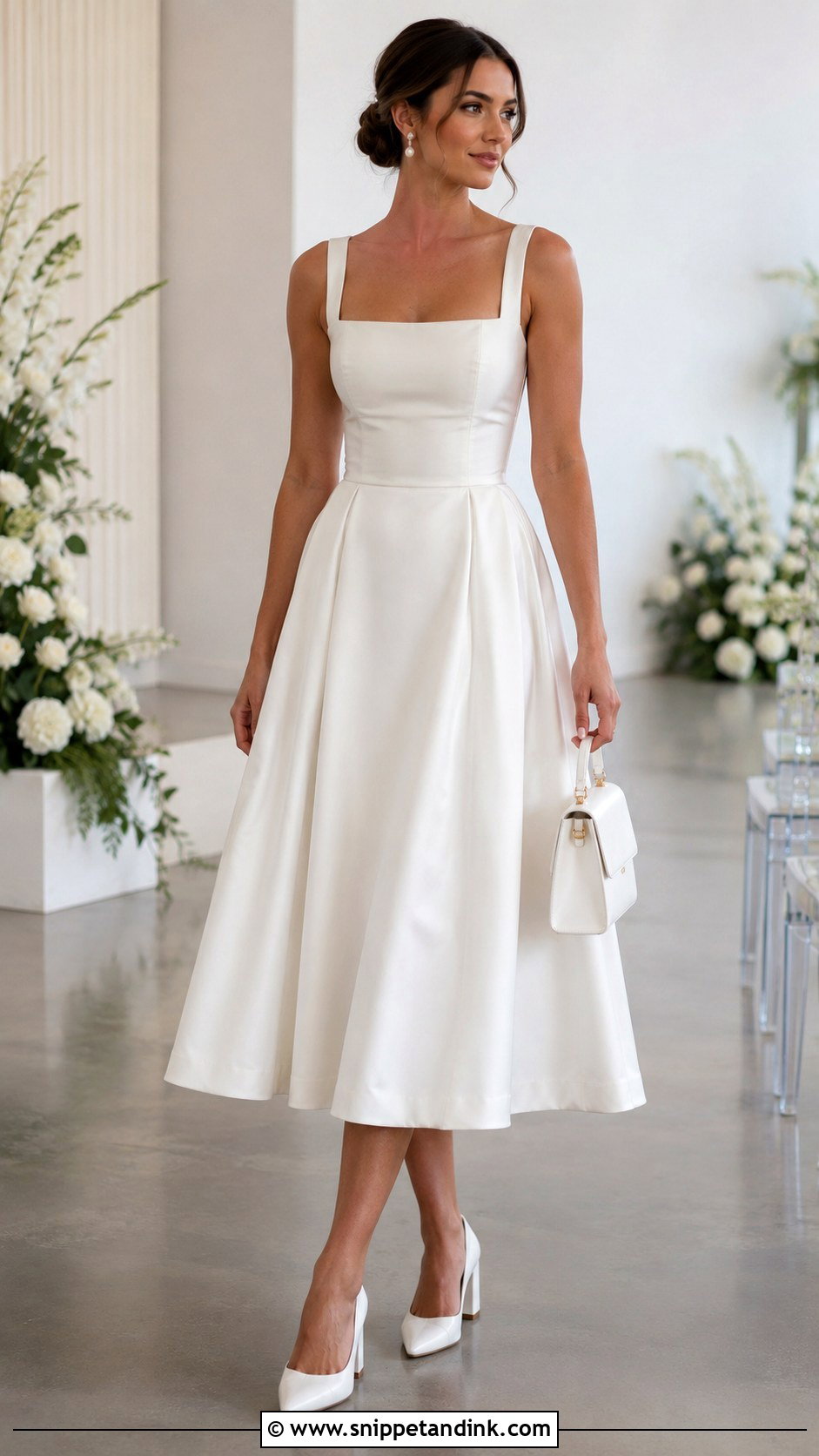
Square necks add quiet structure to a plain satin midi. The neckline frames the collarbone, and broad straps support the bust while squaring off the shoulders. Choose satin heavy enough to skim rather than cling; lightweight satin shows every crease after you’ve been sitting. A fitted waist works with either a soft flare or a fuller pleated skirt. Pearl drops, white block heels, a top-handle bag and a smooth chignon keep the geometry crisp. It carries through the year: alone in summer, with a cropped blazer in spring, under a clean wool coat in winter.
5. Off Shoulder Midi Bride Dress
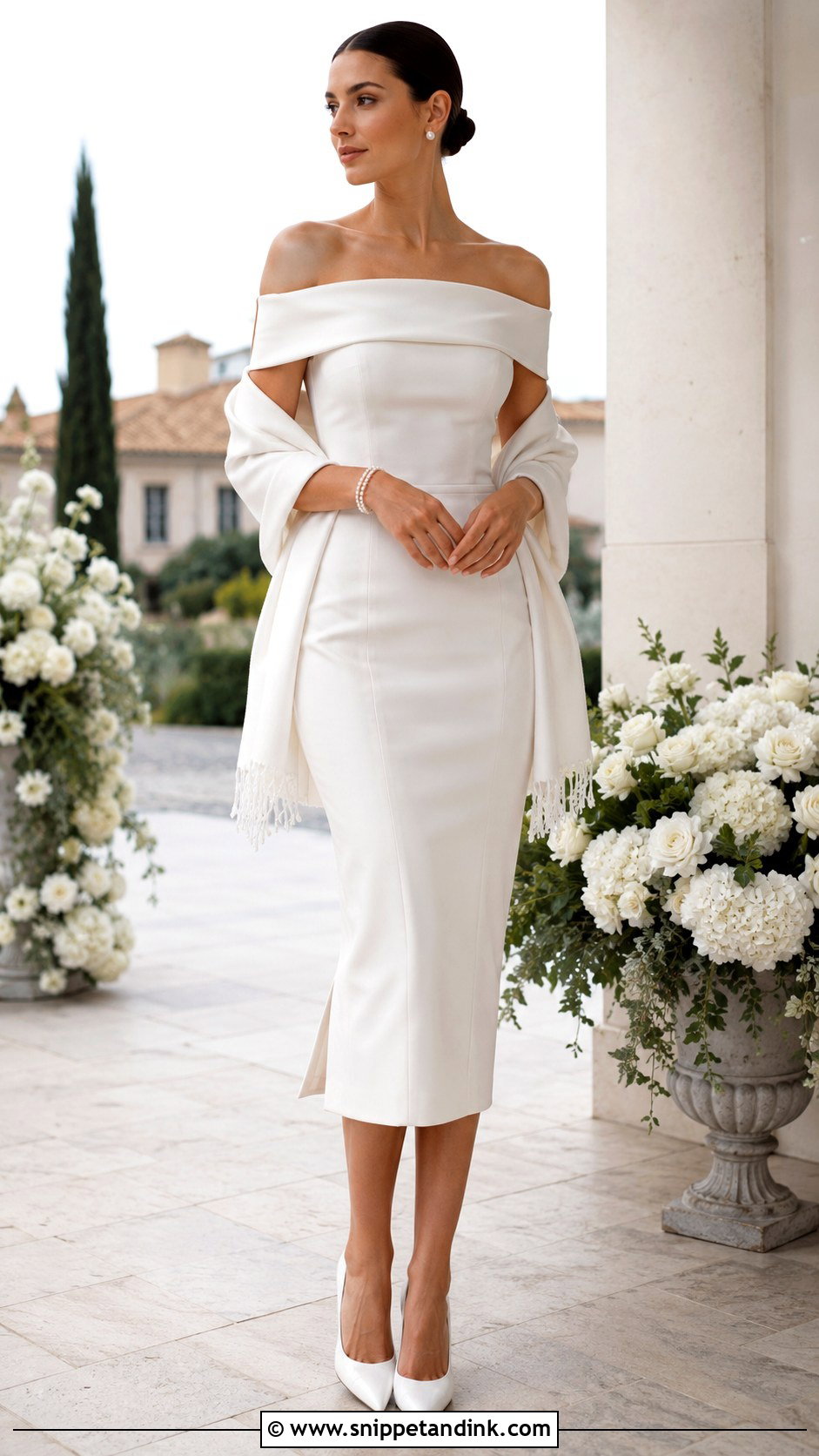
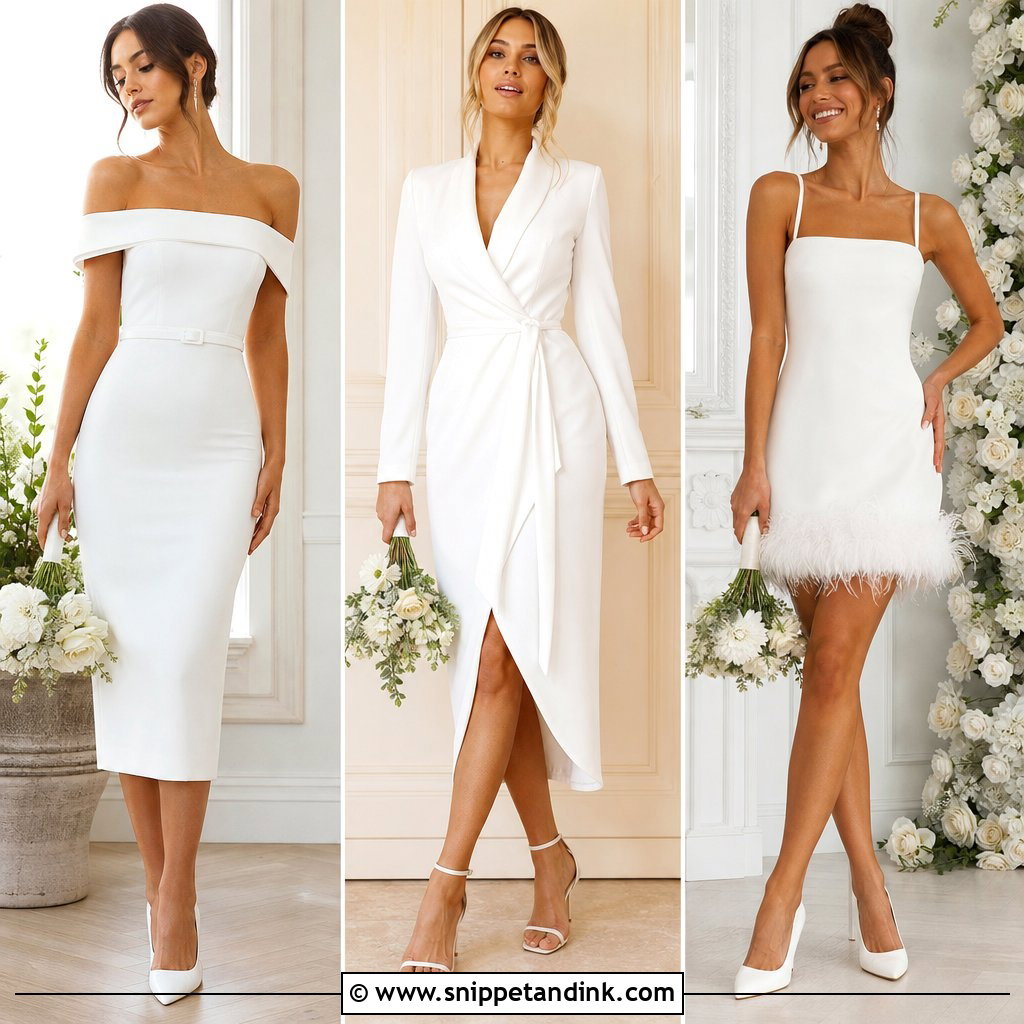
Off-shoulder midis put the neckline in charge. A folded satin band looks architectural; lace or tulle sleeves feel softer. Either way, the bodice needs its own support, because a band resting on the upper arms will slide every time you reach for a glass. Earrings that sit close to the ear and a pearl bracelet are better than a necklace, which just crowds the open neckline. Pointed pumps suit it, with a low bun, side-swept waves or a sleek ponytail. Narrow skirts need a back slit so you can stride, and a tailored wrap helps for outdoor photos.
6. Floral Applique Midi Bride Dress
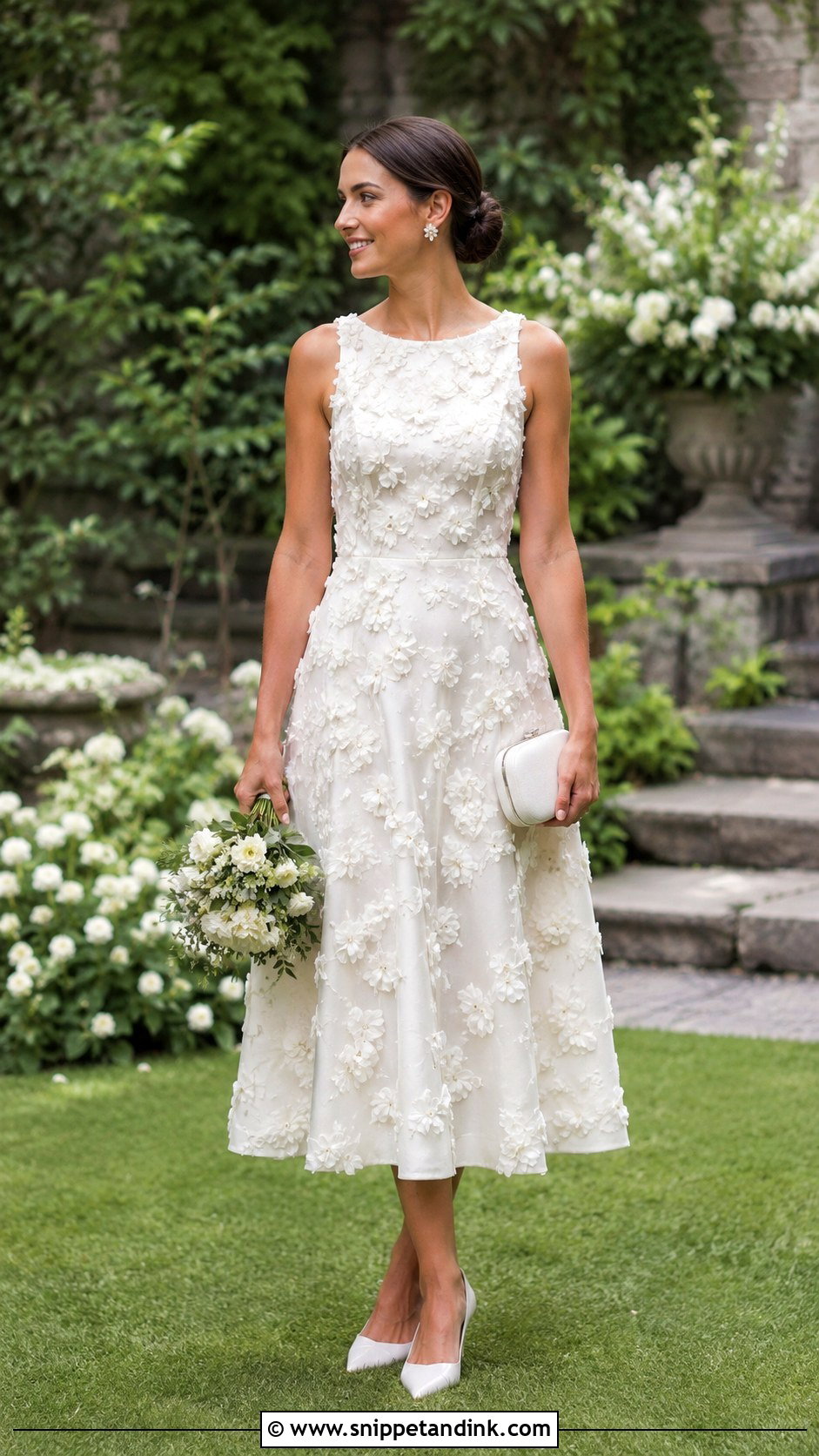
Three-dimensional flowers can carry an otherwise plain midi. I’d keep them to one zone, the bodice, the neckline or a scatter over the skirt, so the effect is controlled rather than heavy. A neutral lining keeps the flowers prominent while the overall color stays bridal. Simple ivory heels, small crystal earrings and a plain satin clutch are enough; embellished accessories fight with the texture. Outdoors, loosely tacked appliqués catch on shrubs and chair backs, so check each flower is stitched down properly. A bouquet of similarly shaped blooms in a restrained palette ties it together.
7. Tea Length Tulle Midi Bride Dress
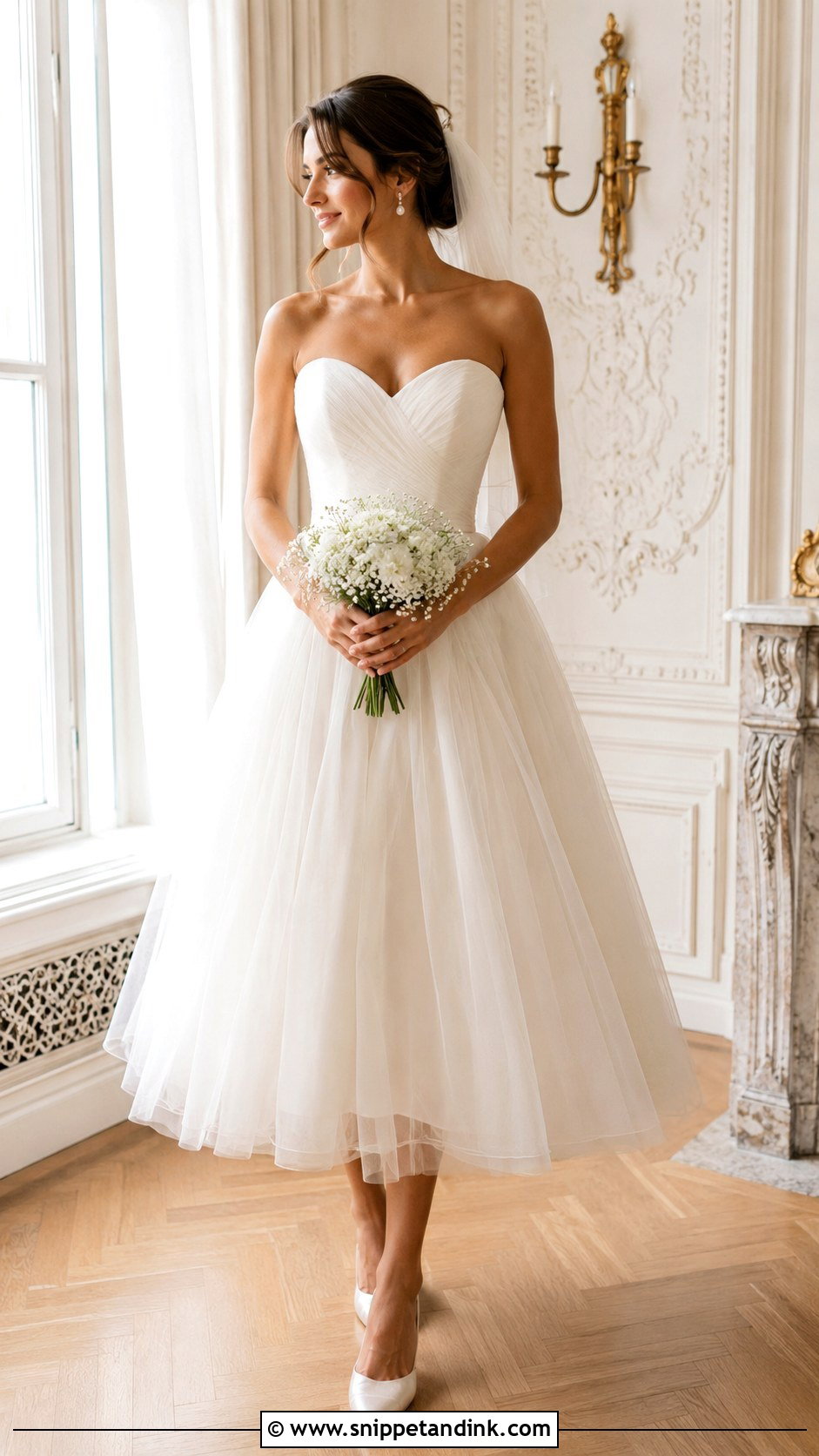
Tulle at tea length is pure bridal volume with your shoes on show. A fitted bodice keeps it in proportion, and you can choose a sweetheart, bateau, or scoop neckline depending on how much coverage you want. Satin pumps, a short veil and pearl earrings suit it. Gloves or a narrow belt add a vintage note, but keep them plain. Hem length matters more here than with any other skirt: a couple of inches up or down changes the whole silhouette, so stand in front of a full mirror while the tailor pins it. A soft petticoat adds fullness; stiff net makes the skirt bounce awkwardly when you walk.
8. Minimal Crepe Midi Bride Dress
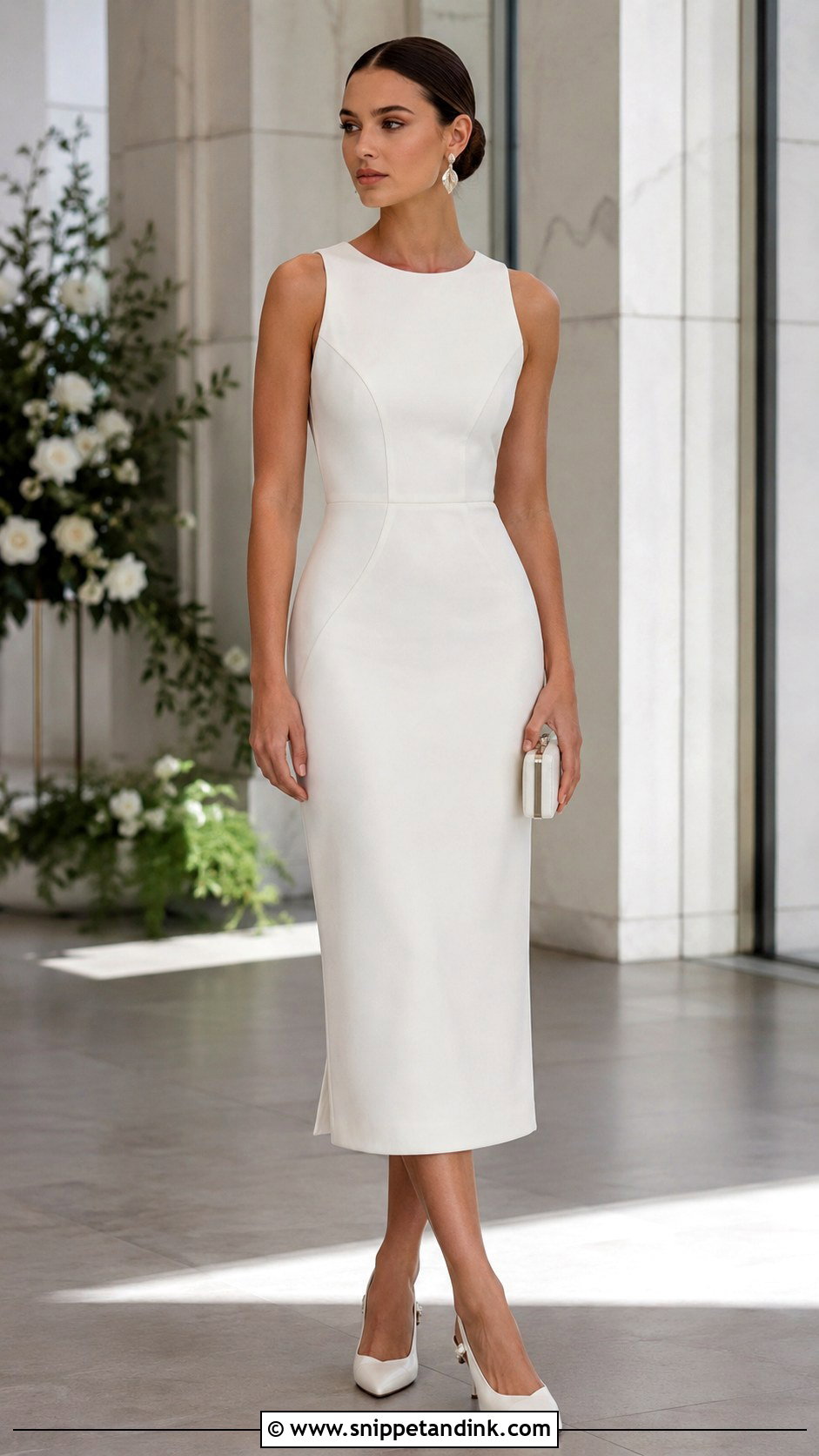
Plain crepe is the hardest fabric to cheat with and the best one when it fits. Look for shaping in the construction itself, curved seams, a defined waist or a little drape, rather than decoration. Heavier crepe skims the body and recovers from creasing better than thin crepe. Sculptural earrings, pointed slingbacks and a small box clutch suit the clean lines, with a sleek bun or tucked bob. Column shapes need a back vent or side slit so you can walk. Every seam on a minimal dress is visible, so tailor the straps, waist and hem until it looks right from the side and back too.
9. Puff Sleeve Midi Bride Dress
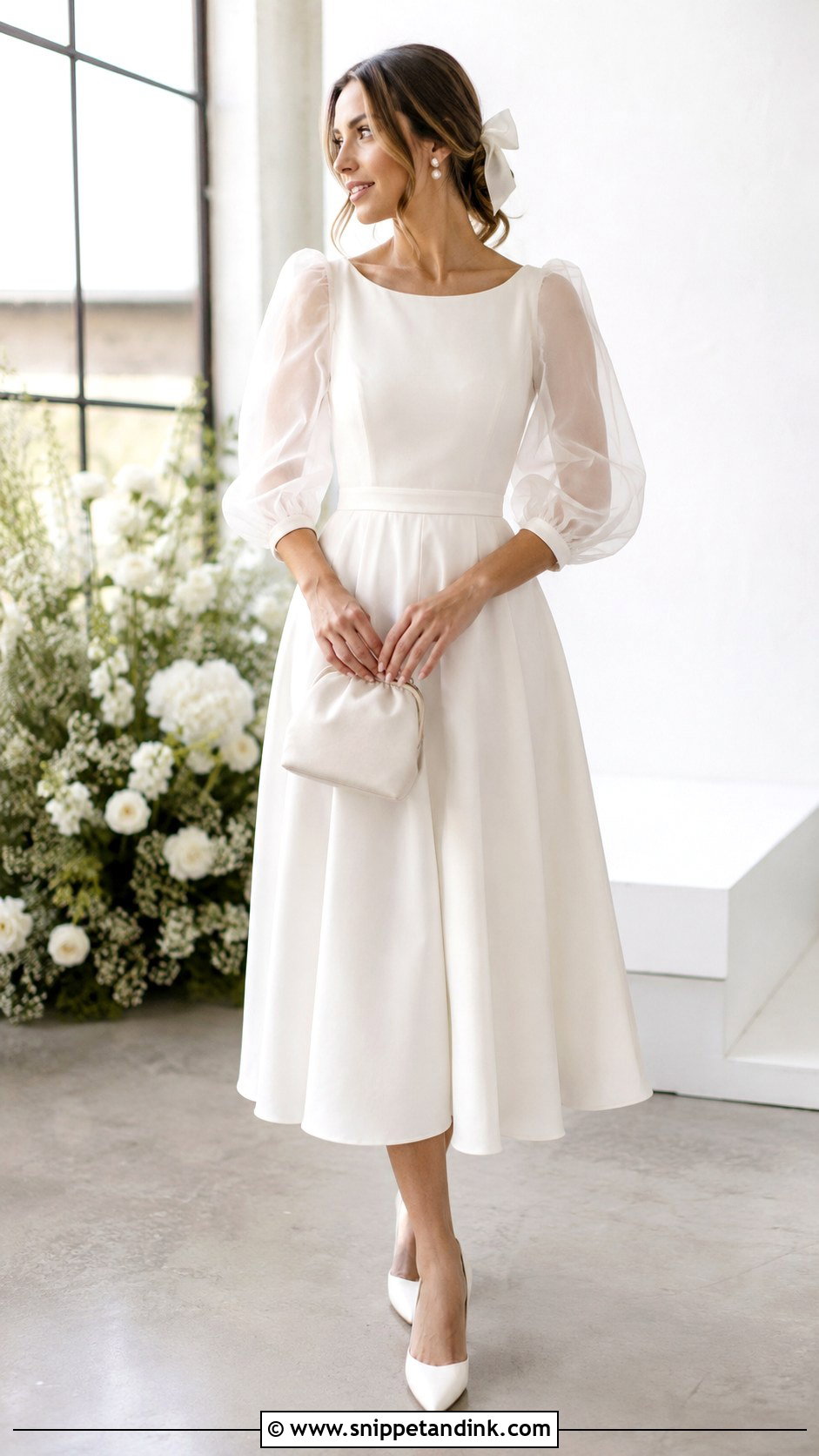
Puff sleeves give a midi personality without any beading. Organza puffs are light and hold their shape; gathered satin is more structured and heavier. A defined waist and an A-line or gently fitted skirt balance the shoulders. If your shoulders are broad, choose smaller puffs set slightly below the shoulder line; if you want more upper-body volume, go fuller. Check the elastic at the sleeve hem, since it leaves marks on the upper arm when it’s too tight. Plain pumps, pearl studs and a smooth mini bag keep it simple, with a delicate necklace or none, and a plain veil or hair bow.
10. Halter Neck Midi Bride Dress
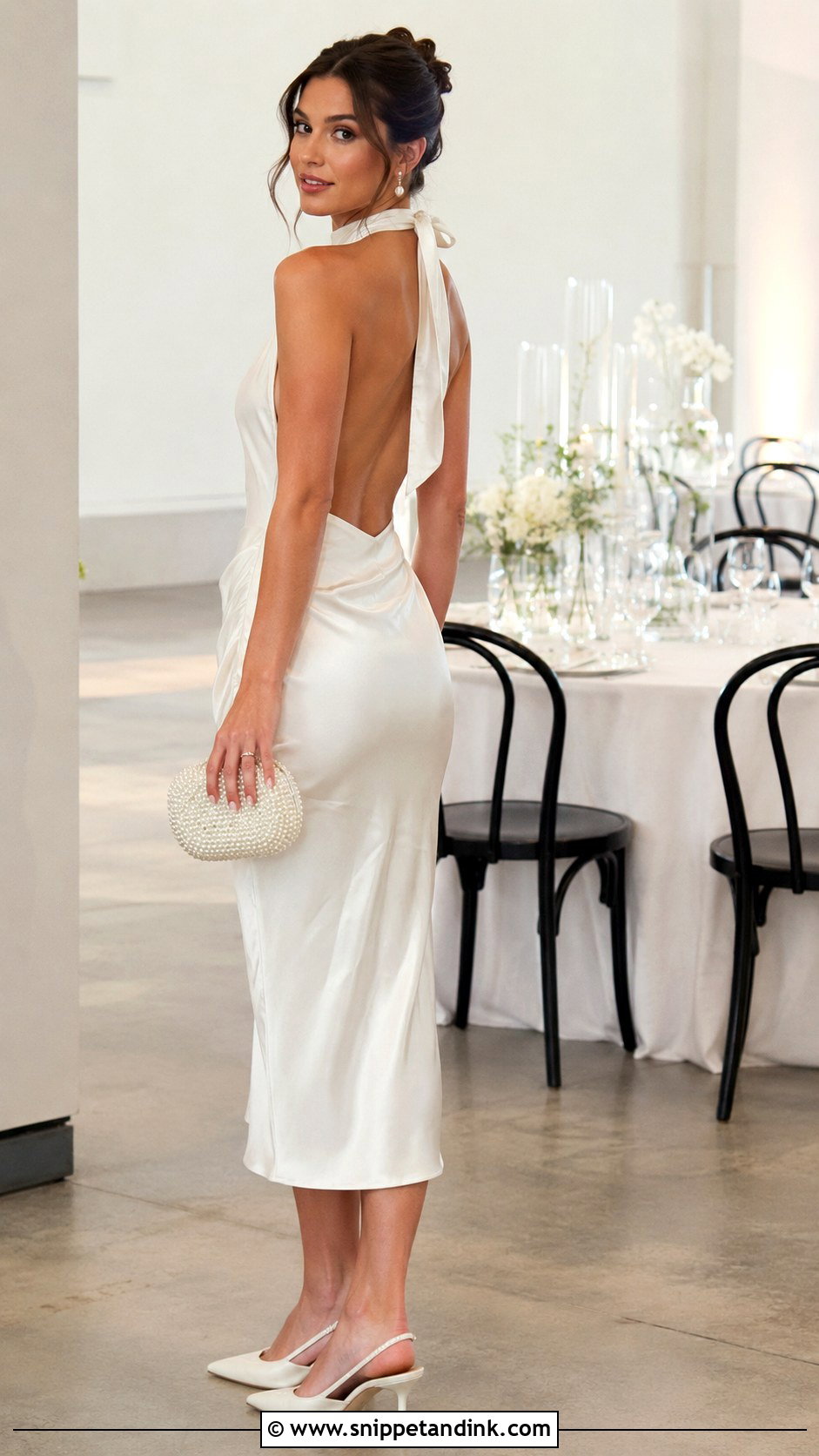
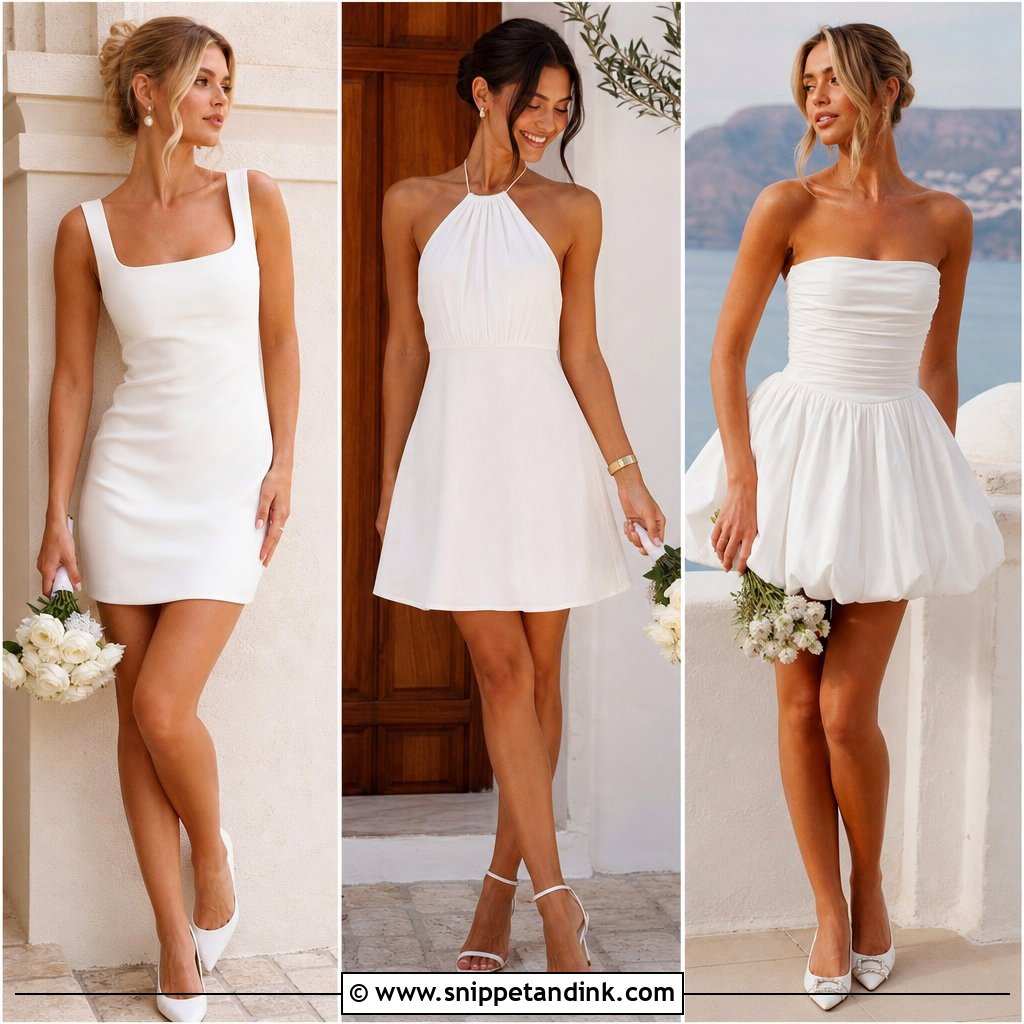
Halters show off the shoulders and give a long, clean line. Satin looks like evening wear; crepe or a firmer fabric gives a tailored finish. Check two things before buying: that the neckline doesn’t press on your neck, and that the back cut works with the bra you plan to wear, because many halters leave room only for stick-on support. Drop earrings, pointed heels and a metallic or pearl clutch suit it, with hair up to show the back. Skip a big necklace. A draped skirt is easier to move in; a pencil skirt looks sharper but shortens your stride.
11. Wrap Midi Bride Dress
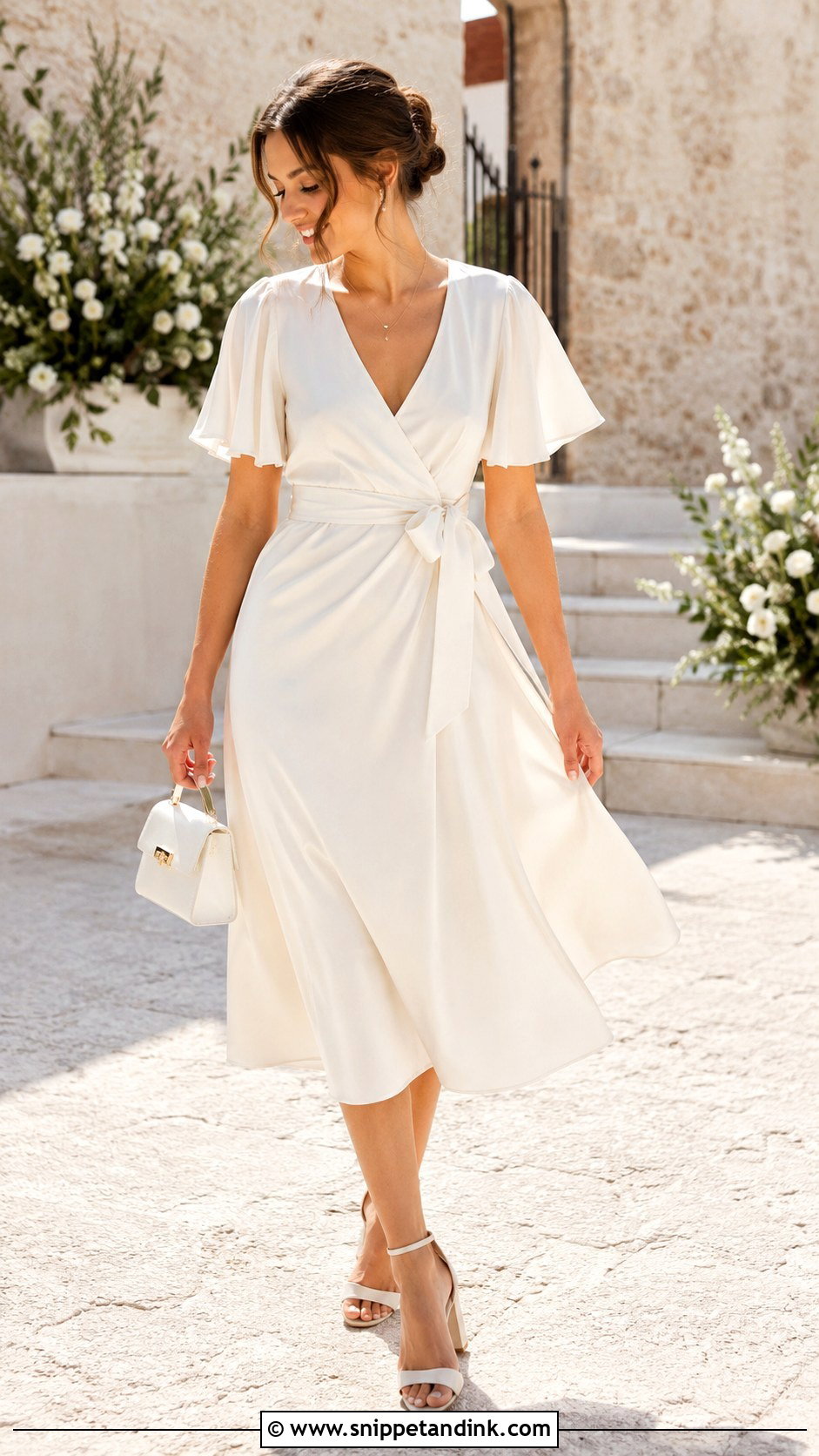
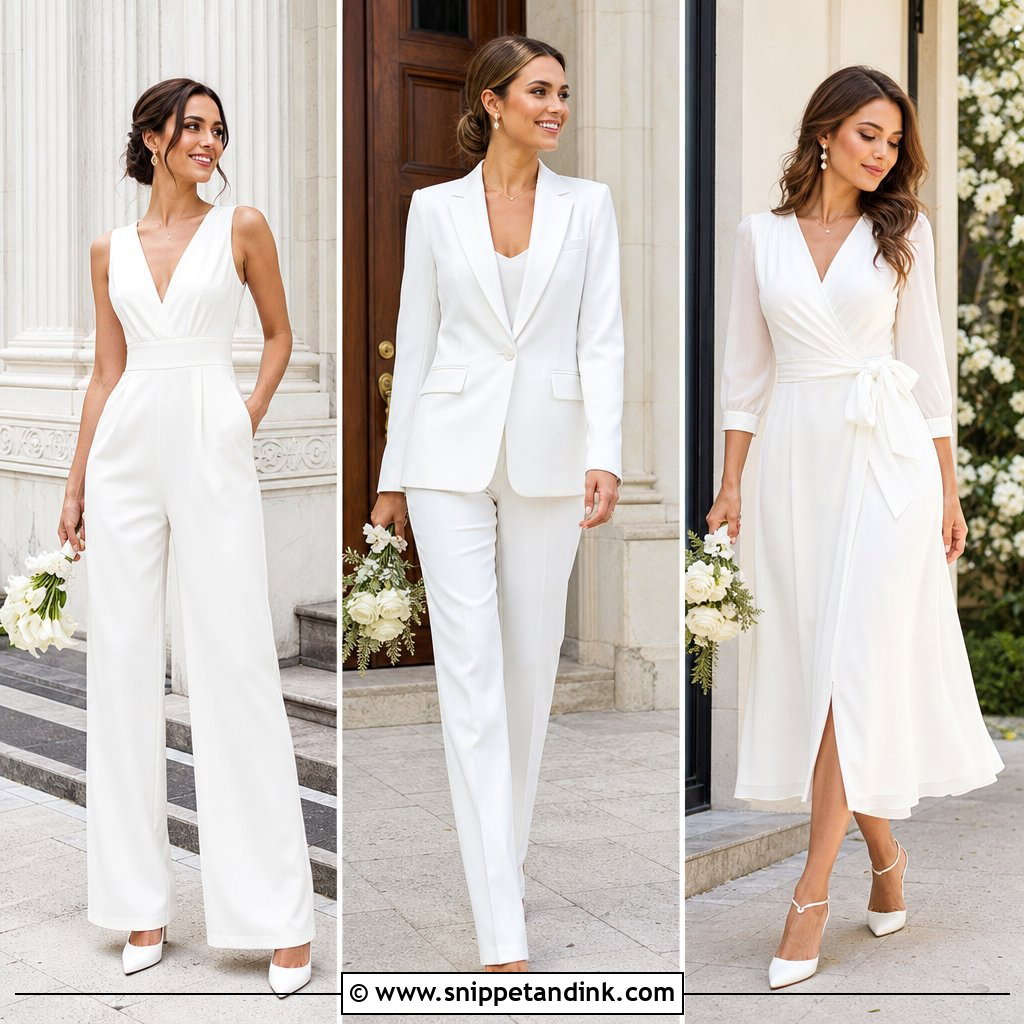
Wrap dresses are the most forgiving fit in this list, because you adjust the tie yourself. A true wrap gives more flexibility; a faux wrap stitched in place is more secure. Satin looks polished, crepe softer and matte. The neckline is the weak point, since a true wrap can open when you bend to hug someone, so add a hidden snap at the cross-over. Block-heel sandals, a pendant and a small structured bag suit it, with a low bun or soft waves. Flutter sleeves give light arm coverage. Tie the bow flat at the side so it doesn’t make a lump under the fabric.
12. Corset Bodice Midi Bride Dress
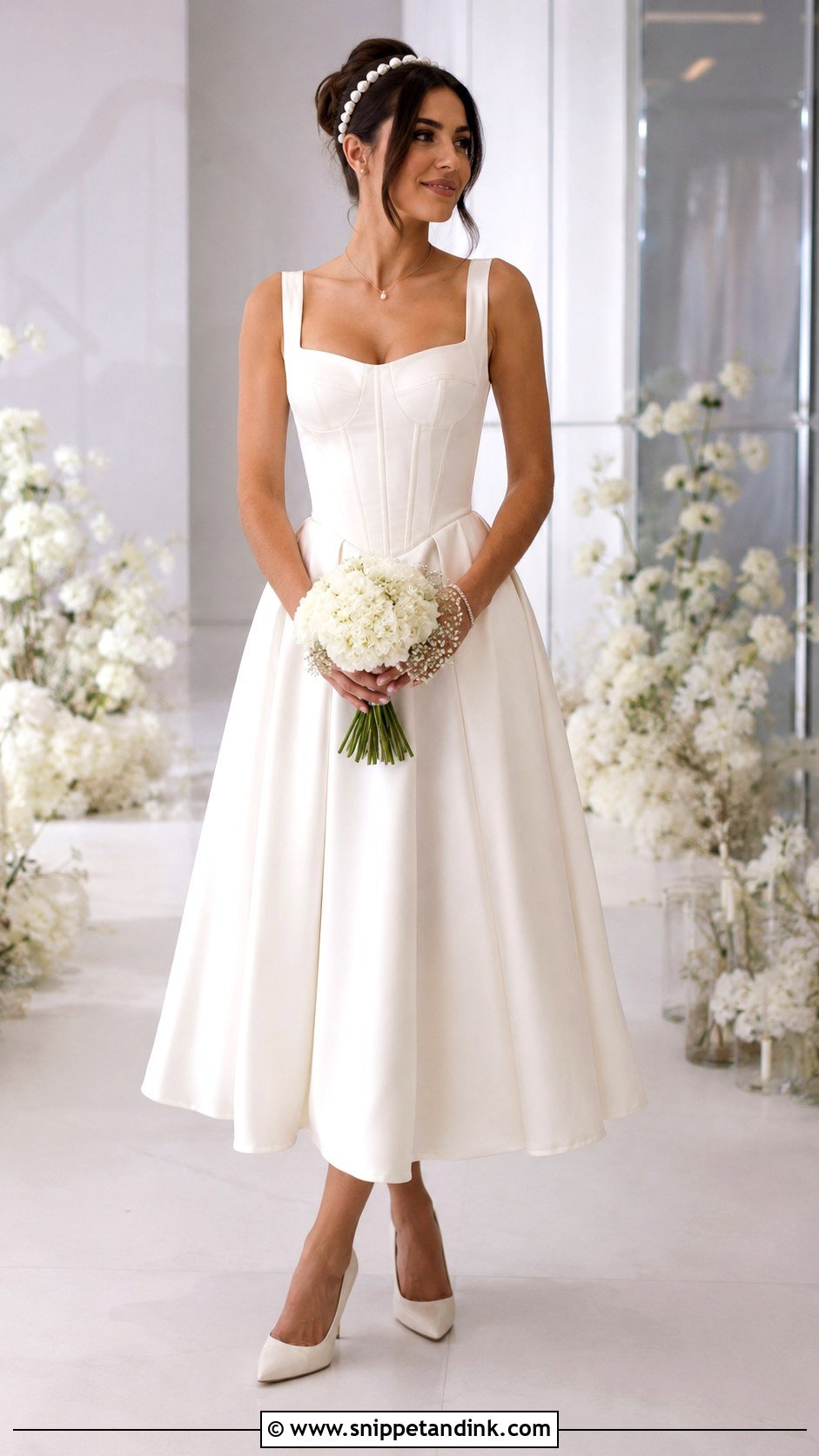
A corset bodice over a full skirt balances structure with movement. The good ones feel supportive rather than tight, with boning that follows the torso and cups sized to your bust, not just your waist. Pair the fitted top with a full satin, tulle or organza skirt. Pointed heels, a delicate pendant and a short veil or pearl headband keep it light, and a compact bouquet leaves the bodice visible. For more coverage, choose an opaque panel, broad straps or detachable sleeves. Sit down at the fitting: boning that’s fine standing can dig into your hips or ribs when seated.
13. High Low Midi Bride Dress
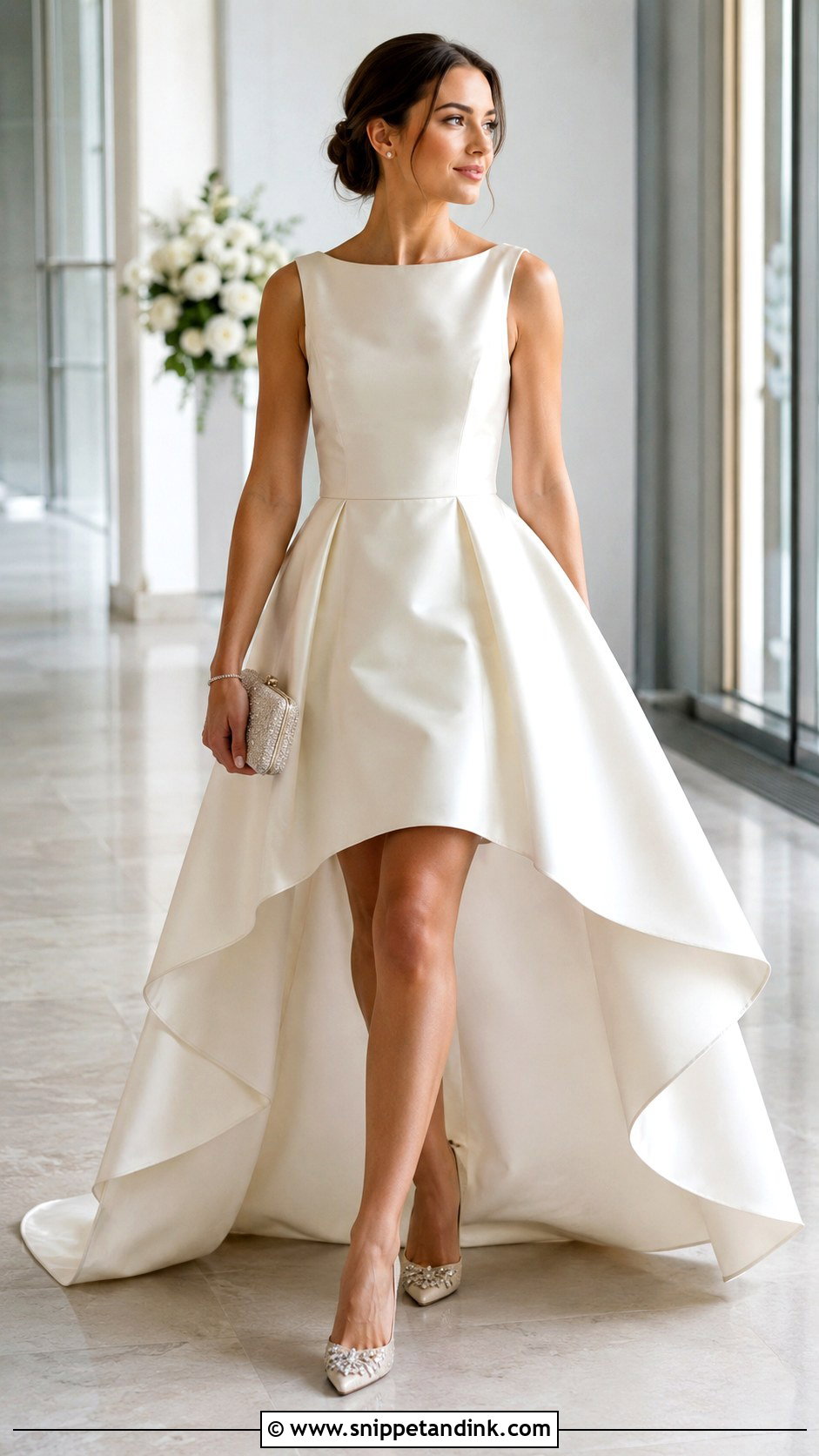
High-low hems give you a short front for walking and a longer back for drama. I’d keep the difference gentle; a steep drop looks dated quickly. Structured satin swings crisply, while chiffon and organza float. Because the front shows your shoes, choose them with care: embellished pumps or refined ankle straps. Stud earrings, a slim bracelet and a simple clutch are plenty, and a short veil sits better than a long one competing with the back hem. Try it on stairs and on different floors during alterations; the back should move freely without catching under your heel.
14. Sequin Midi Bride Dress
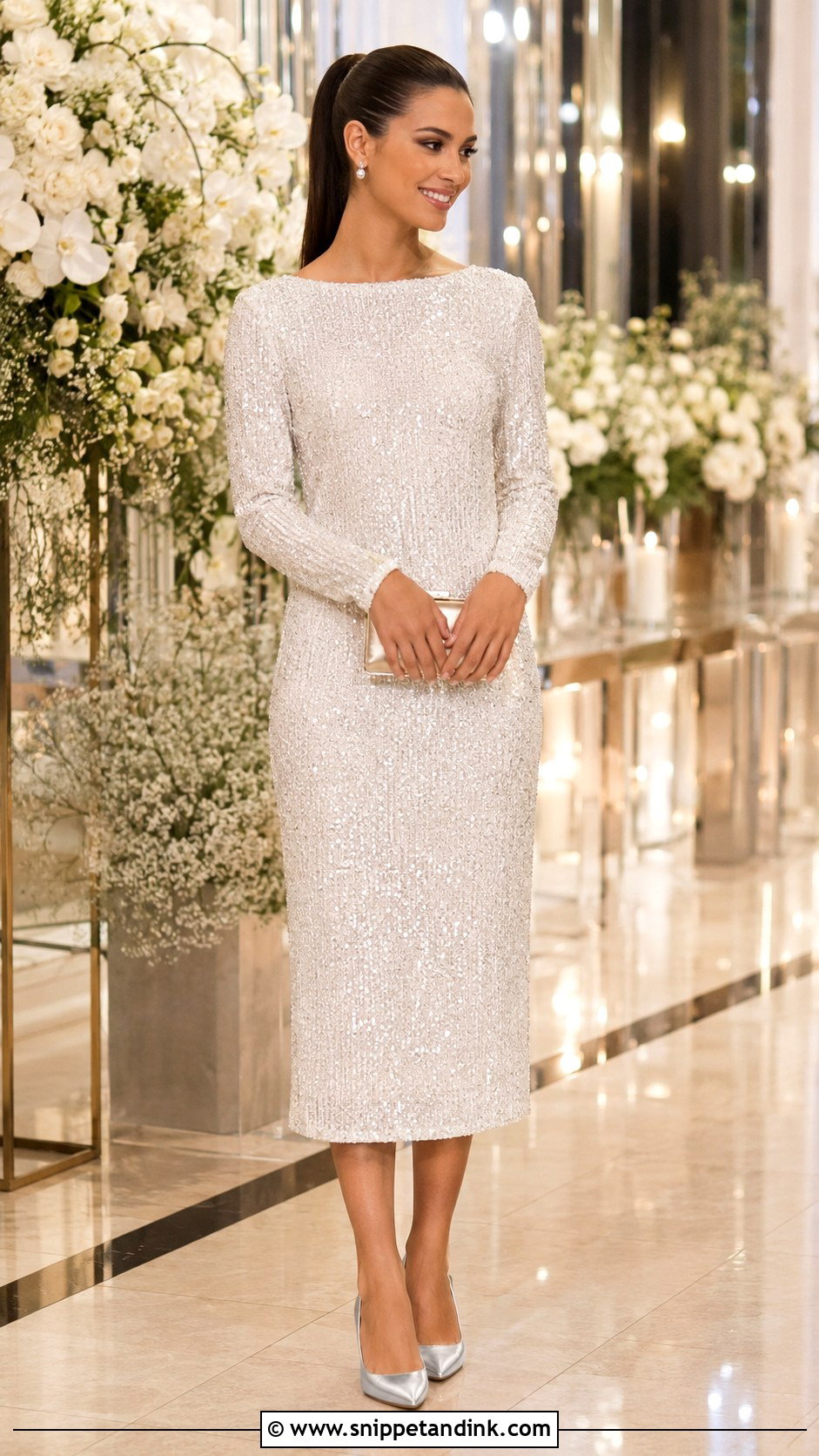
Sequins turn a midi into a reception dress that catches every light in the room. Ivory, pearl or silver-white sequins keep it bridal. A simple column, slip or long-sleeve cut stops the sparkle from overwhelming you. Sequins scratch at the armholes, neckline and hem unless they’re fully lined, so check those edges by hand. They also stiffen fabric, so test whether you can dance and sit comfortably. Smooth metallic heels, small crystal earrings and a plain satin clutch are enough, with a sleek ponytail or low bun. A blazer or coat over it during travel protects the sequins from snagging.
15. Feather Trim Midi Bride Dress
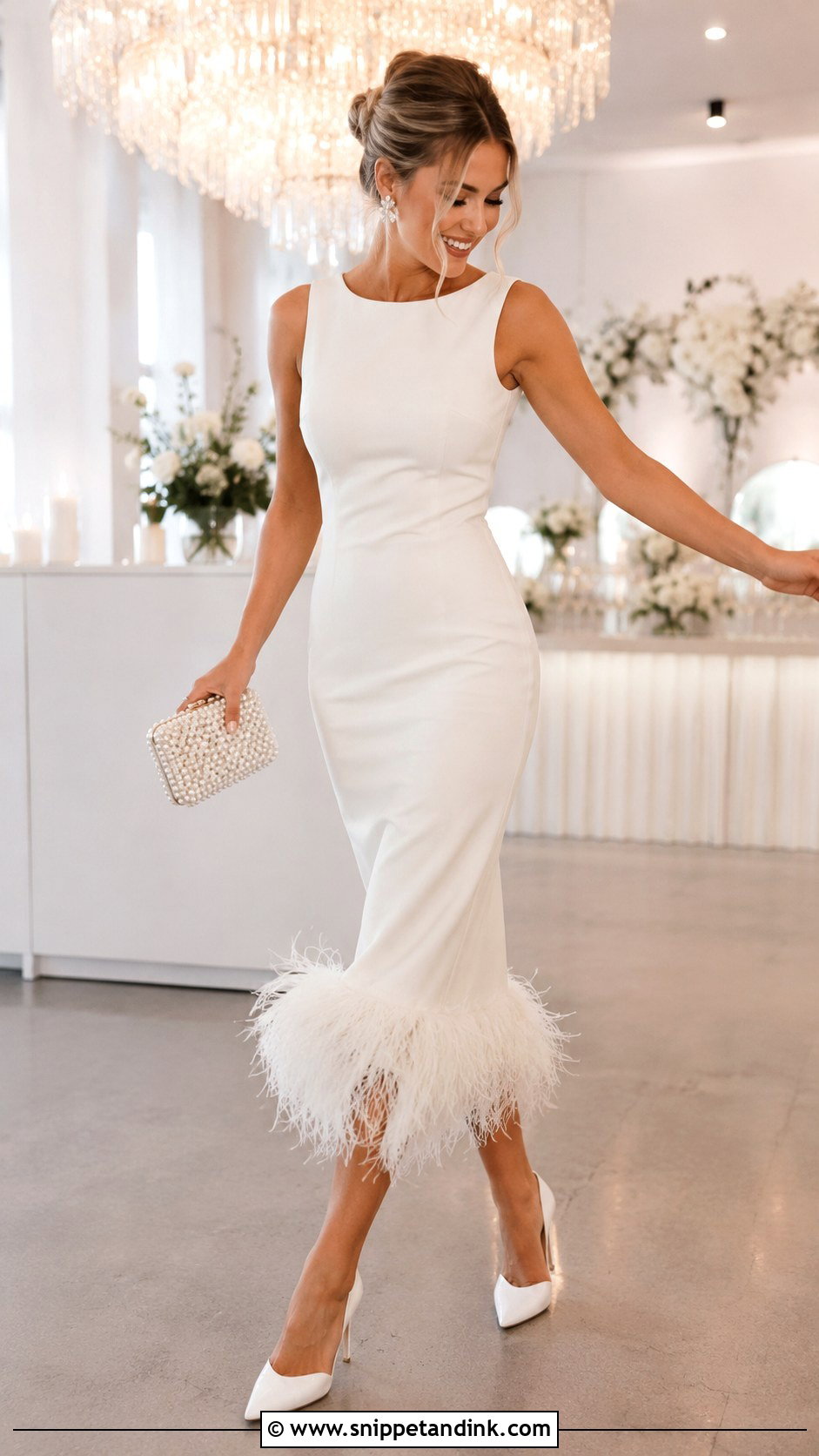
A feather trim midi bride dress adds playful movement for a reception or after-party. Keep the feathers to the hem, cuffs or neckline; all-over feathers swamp the shape. A fitted crepe or satin dress with a feathered hem pairs well with pointed pumps, statement earrings and a structured clutch in white, silver or pearl. Hair goes up if feathers trim the neckline, otherwise they catch in it. Check the trim is stitched on securely and doesn’t tangle with your shoes. Feathers flatten in a crowded closet, so store the dress hanging with space around it, and steam them back from a distance if needed.
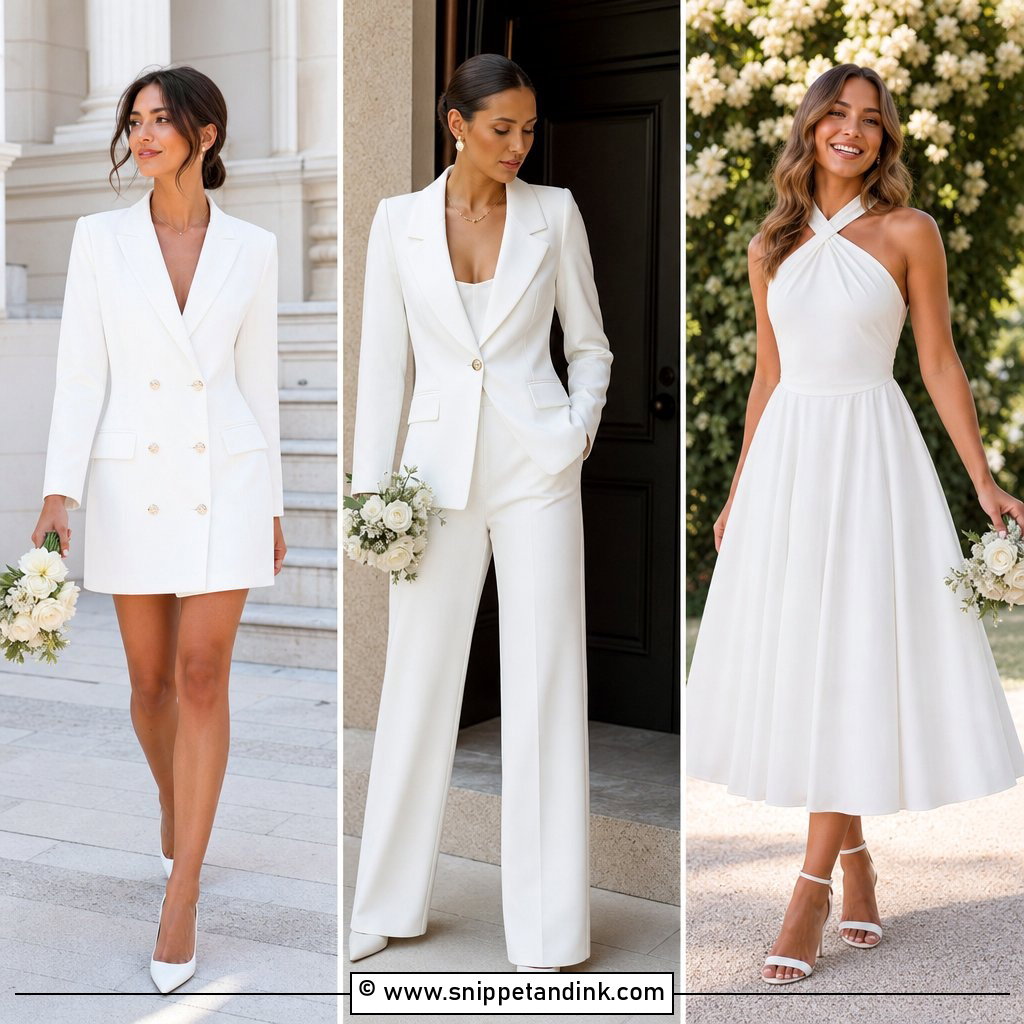
16. Blazer Midi Bride Dress
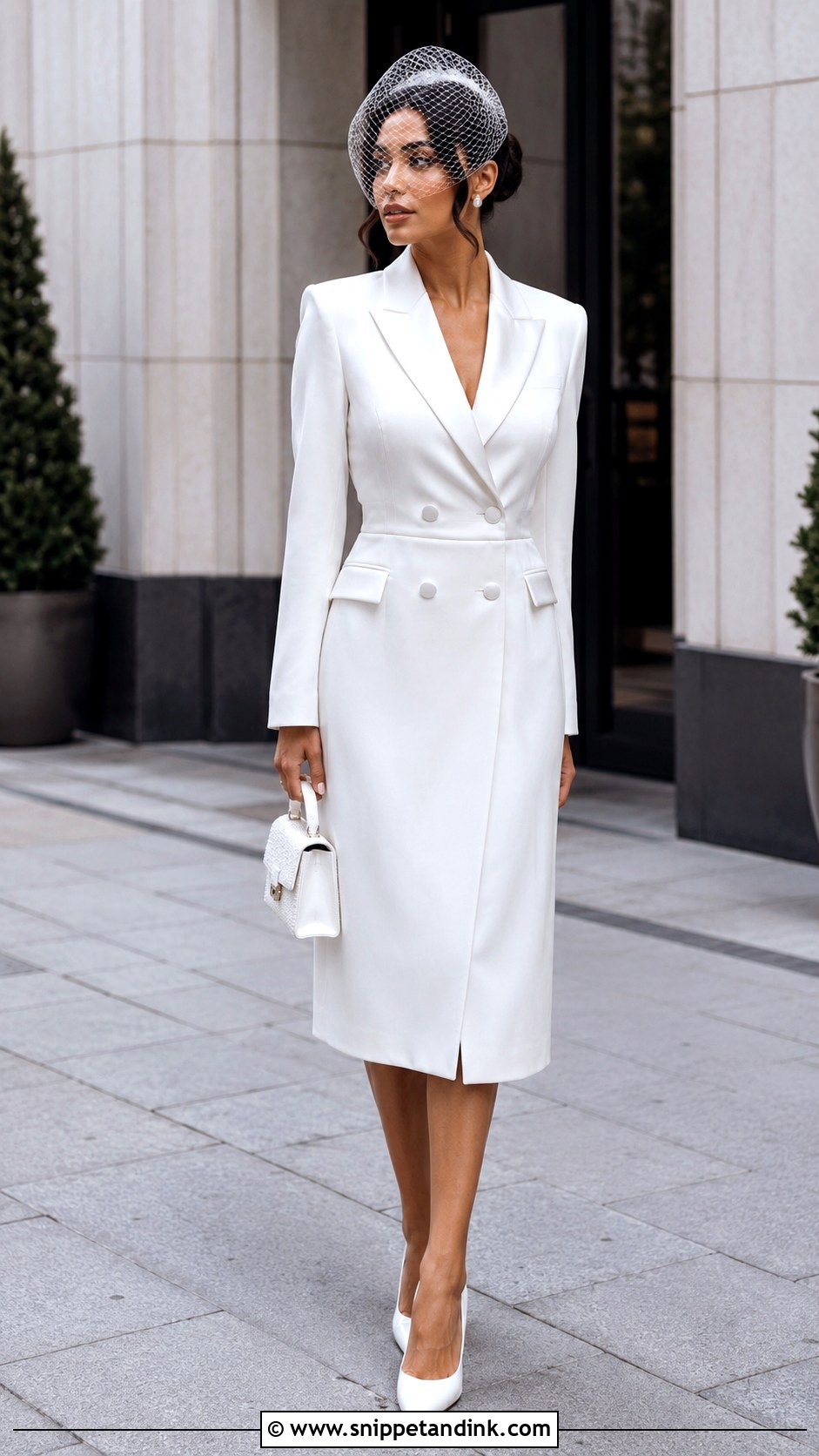
A tailored blazer dress is a sharp alternative to lace and tulle. Look for a double-breasted or wrap front, a defined waist and a hem below the knee. Crepe or suiting fabric gives structure, and satin lapels add polish. The fit check I care about is the back: if the fabric pulls across the shoulder blades when you reach forward, the jacket is too tight. Choose a neckline that stays closed when you sit, or wear a simple cami underneath. Pointed pumps, modern pearl earrings and a top-handle bag suit it, with a sleek ponytail. A birdcage veil, hair bow or floral pin softens the look.
17. Bow Back Midi Bride Dress
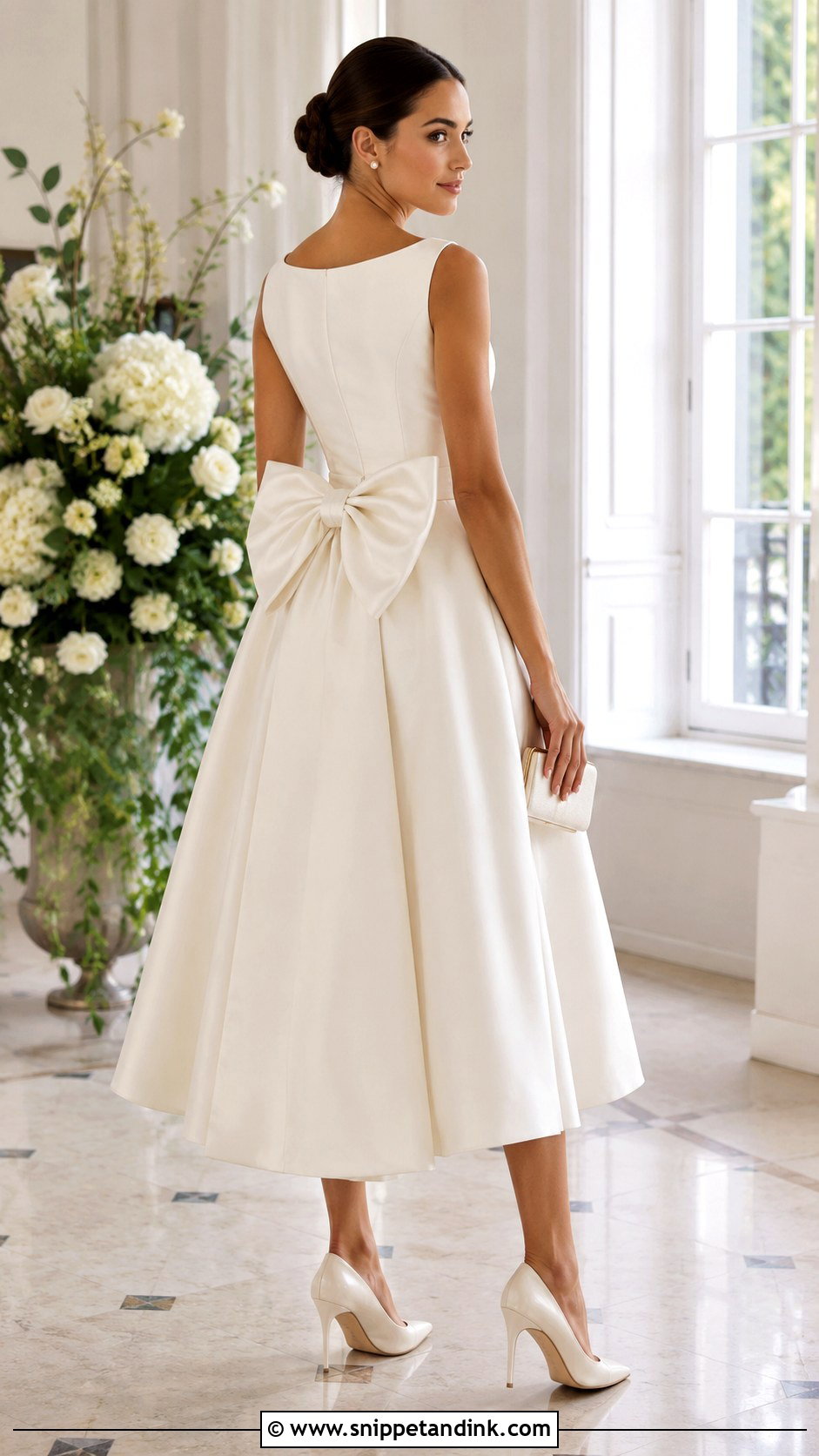
Put the drama on the back and keep the front almost plain. A structured satin bow gives crisp volume; long soft ties feel more relaxed. A bateau, square or straight neckline balances it. Sit back against a chair in the fitting room: a large bow can crush, poke you or drag the neckline backward when you lean. Pointed heels, pearl studs and a small clutch without more bows are enough, and an updo leaves the back visible in photos. If you wear a veil, it should end above the bow, not hide it.
18. Pleated Midi Bride Dress
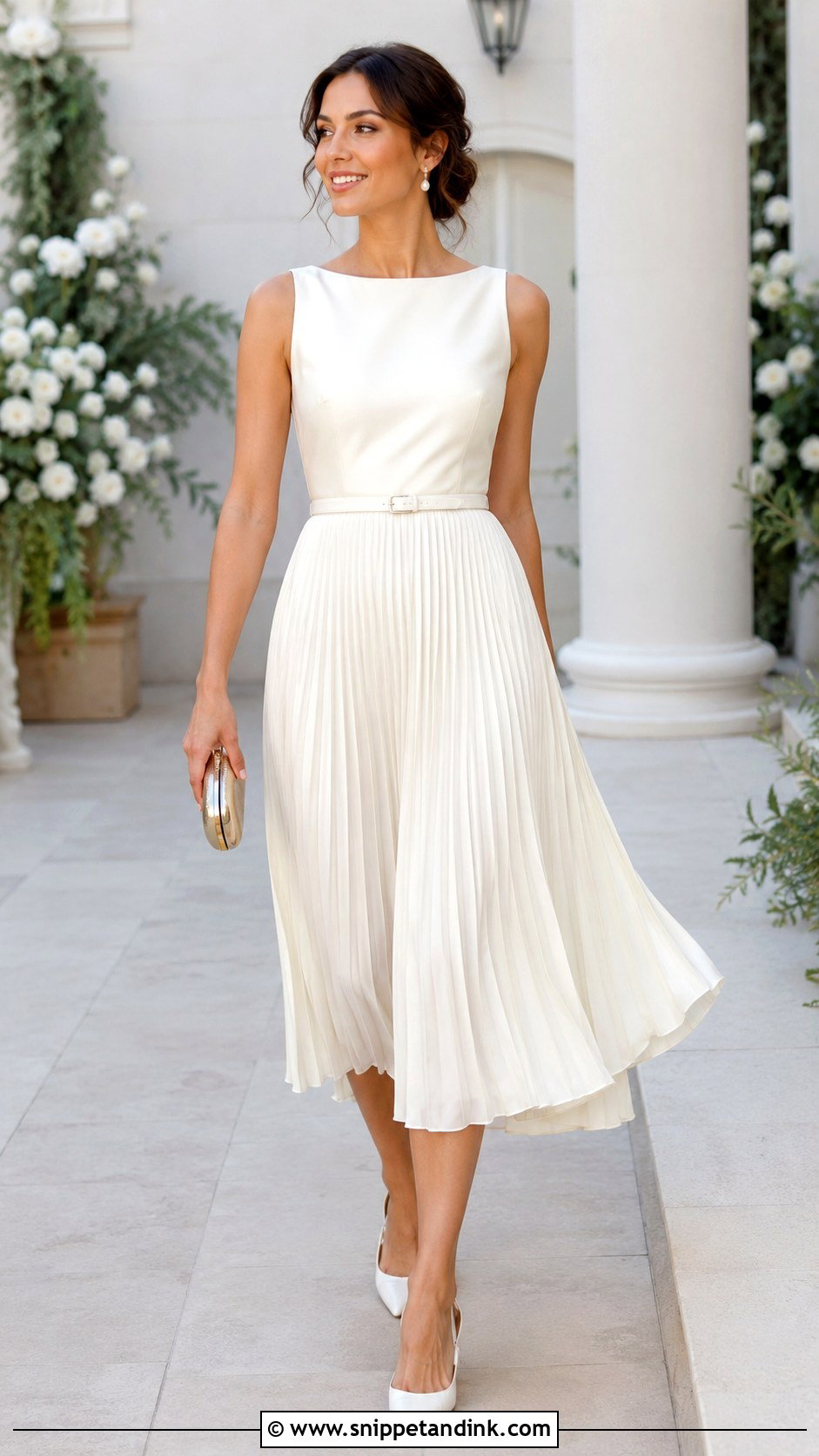
Pleats give a midi movement and a little structure at once. Fine accordion pleats are light and swing as you walk, while wider box pleats make a fuller, more architectural skirt. A fitted satin, crepe or chiffon bodice defines the waist. Pleats are easy to ruin: steam them hanging, never press flat with a hot iron, and follow the care label, because some heat-set pleats drop out permanently. Slingbacks, fine earrings and a small metallic clutch suit it. A thin matching belt marks the waist. Set the hem at the narrowest part of your lower leg and choose a slightly pointed toe.
19. Plus Size Ruched Midi Bride Dress
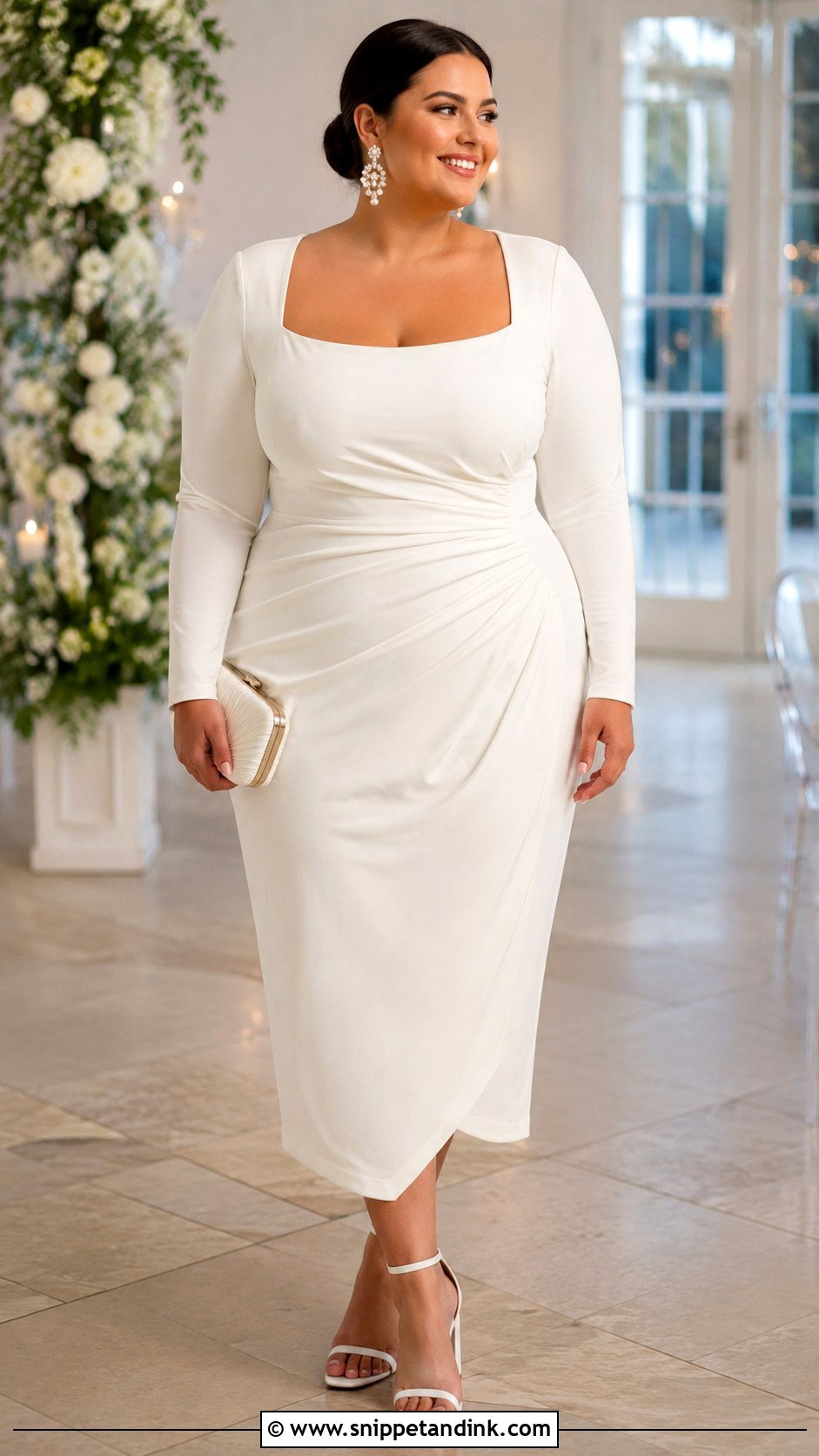
Ruching shapes a plus-size midi while letting you move. Diagonal or side ruching that follows the body smooths the line; random gathering adds bulk. Stretch crepe, lined jersey or soft satin give flexibility, but the fabric needs enough weight that the gathers lie flat instead of clinging. A V-neck, square neck or off-shoulder cut frames the face, depending on coverage. Buy for your real size and tailor it; going down a size for compression makes ruching pull into ridges. Supportive block heels, statement earrings and a structured clutch finish it. Walk, sit and lift your arms at the fitting.

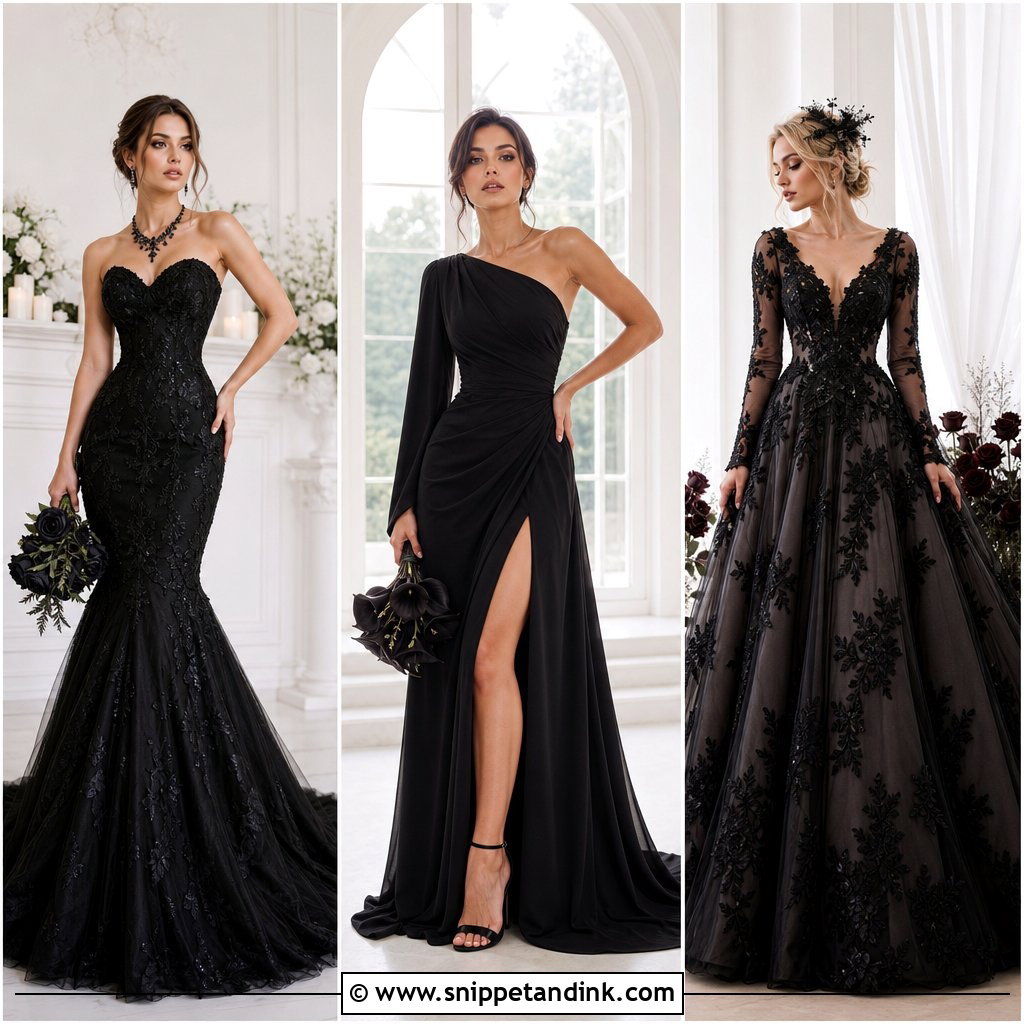
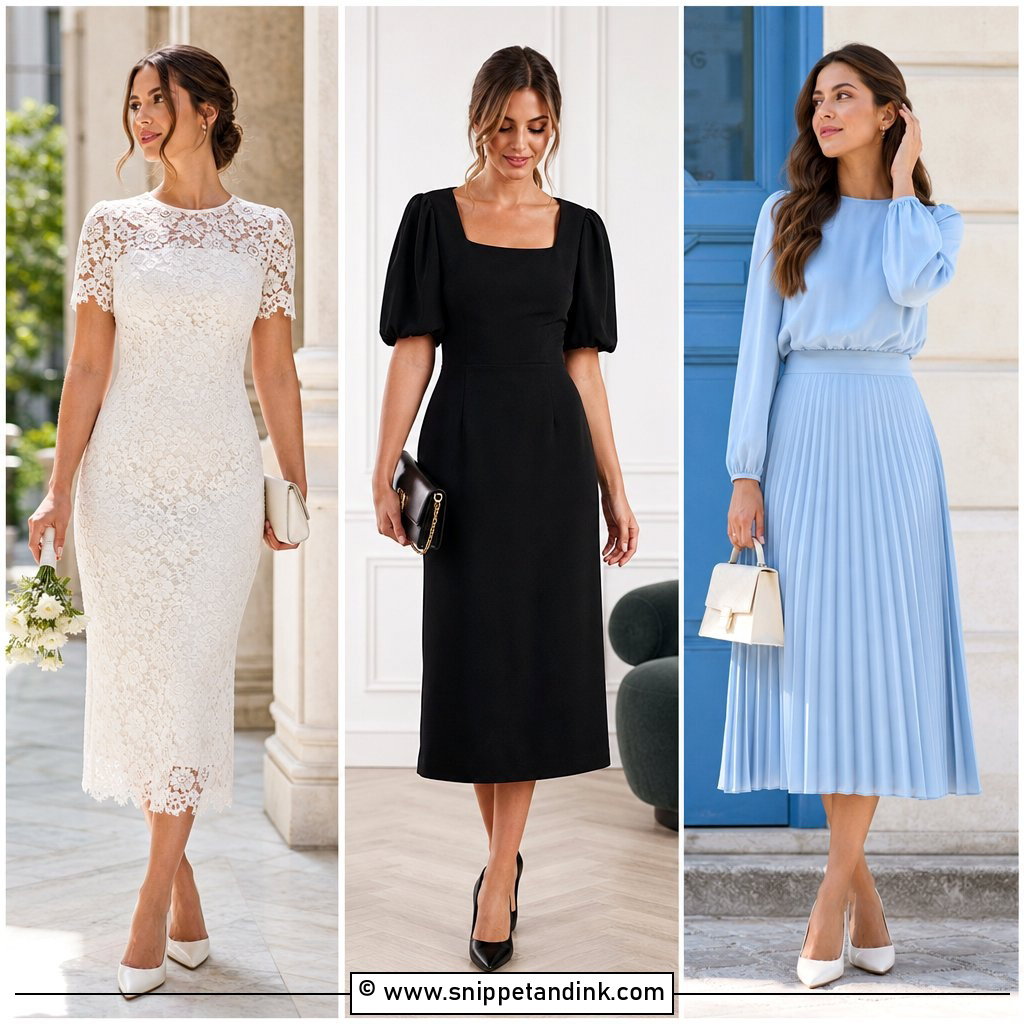
20. Midi Bride Dress With Jacket
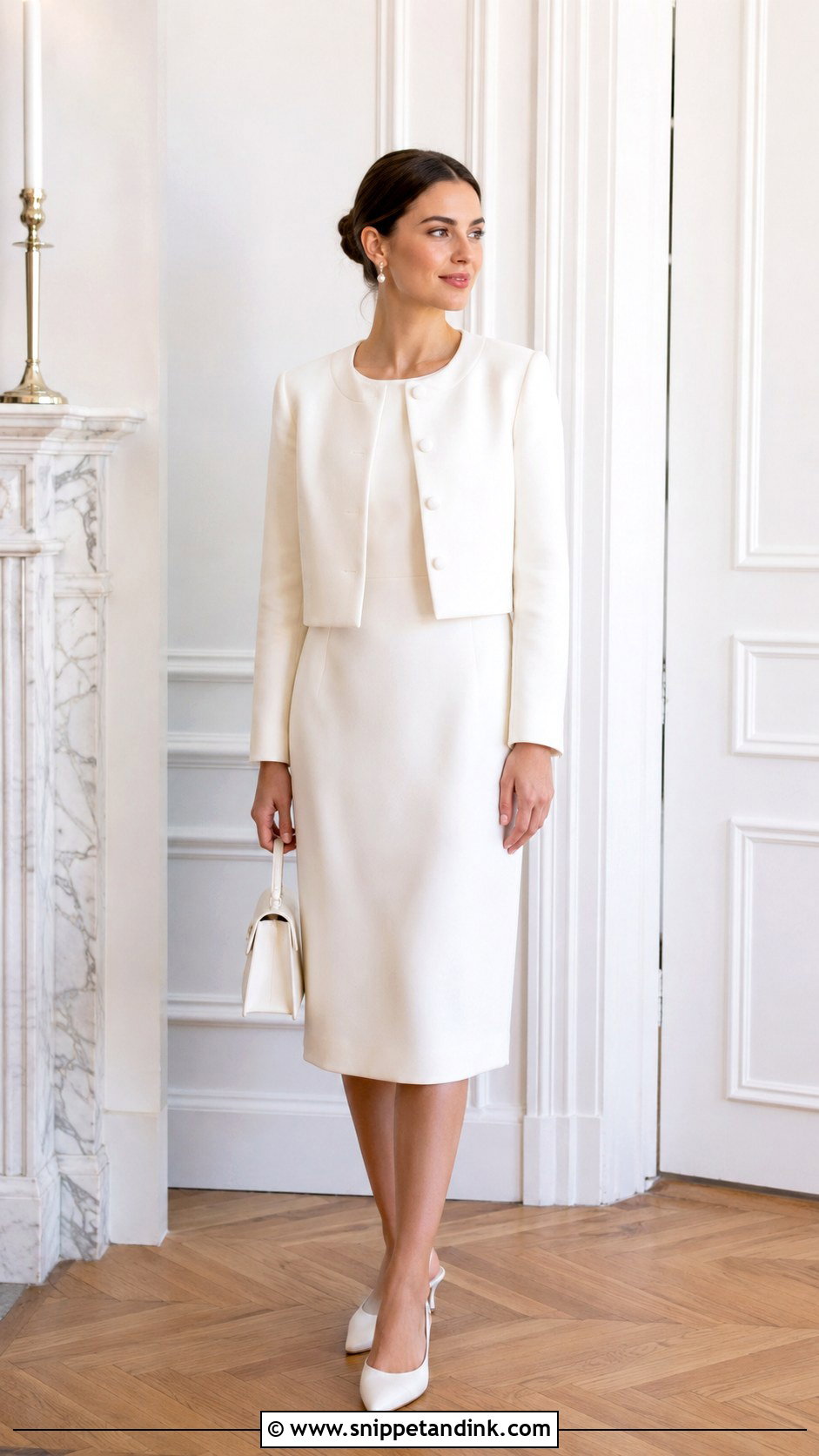
A matching jacket gives you coverage for the ceremony and a lighter dress for the party. Start with a sleeveless or short-sleeve midi and add a cropped lace jacket, a tailored crepe layer or a satin bolero. The jacket should end near your natural waist; one that stops at the hip shortens the legs. Low slingbacks, pearl earrings and a structured bag suit it. Match the whites carefully when the jacket and dress are different fabrics, because a soft ivory beside a bright white looks grubby in photos. Subtle beading or covered buttons on the jacket add detail.
Diamond White, Ivory or Champagne: Matching Every White You Wear
A short dress puts more whites next to each other than a gown does: shoes, a jacket, a veil, maybe tights. Bridal whites vary a lot, and two shades that look identical in a shop can look mismatched in daylight photos.
- Ask the shop what the dress shade is called and get a fabric swatch. Names differ by brand, so the swatch matters more than the label.
- Take the swatch shopping for the veil, shoes and any jacket, and compare them by a window, not under store lighting.
- Veil tulle is usually ordered by shade; match it to the dress, or go one step softer, never brighter.
- Bright white shoes beside an ivory dress make the dress look yellow. Ivory, nude or metallic shoes are safer.
- Different fabrics read differently even in the same shade: satin looks whiter than crepe or lace because it reflects more light.
When in doubt, put everything on together outside and take a phone photo. The camera shows a mismatch faster than the mirror does.
Where the Hem Falls Decides the Whole Outfit
Midis give you the bridal feel of a gown with the ease of a party dress. Satin slips, blazer dresses, lace, tulle and floral appliqué all have their place here. What I’d ask you to get right is the hem against your height and shoes, then the support inside the bodice, then the accessories, which should build on the dress’s strongest feature. Good tailoring turns a simple dress into an exceptional one. Pick the version you can walk, sit, celebrate and be photographed in, and it will look like you rather than like a costume.
You'll Like These Ideas:



Leave a Reply