
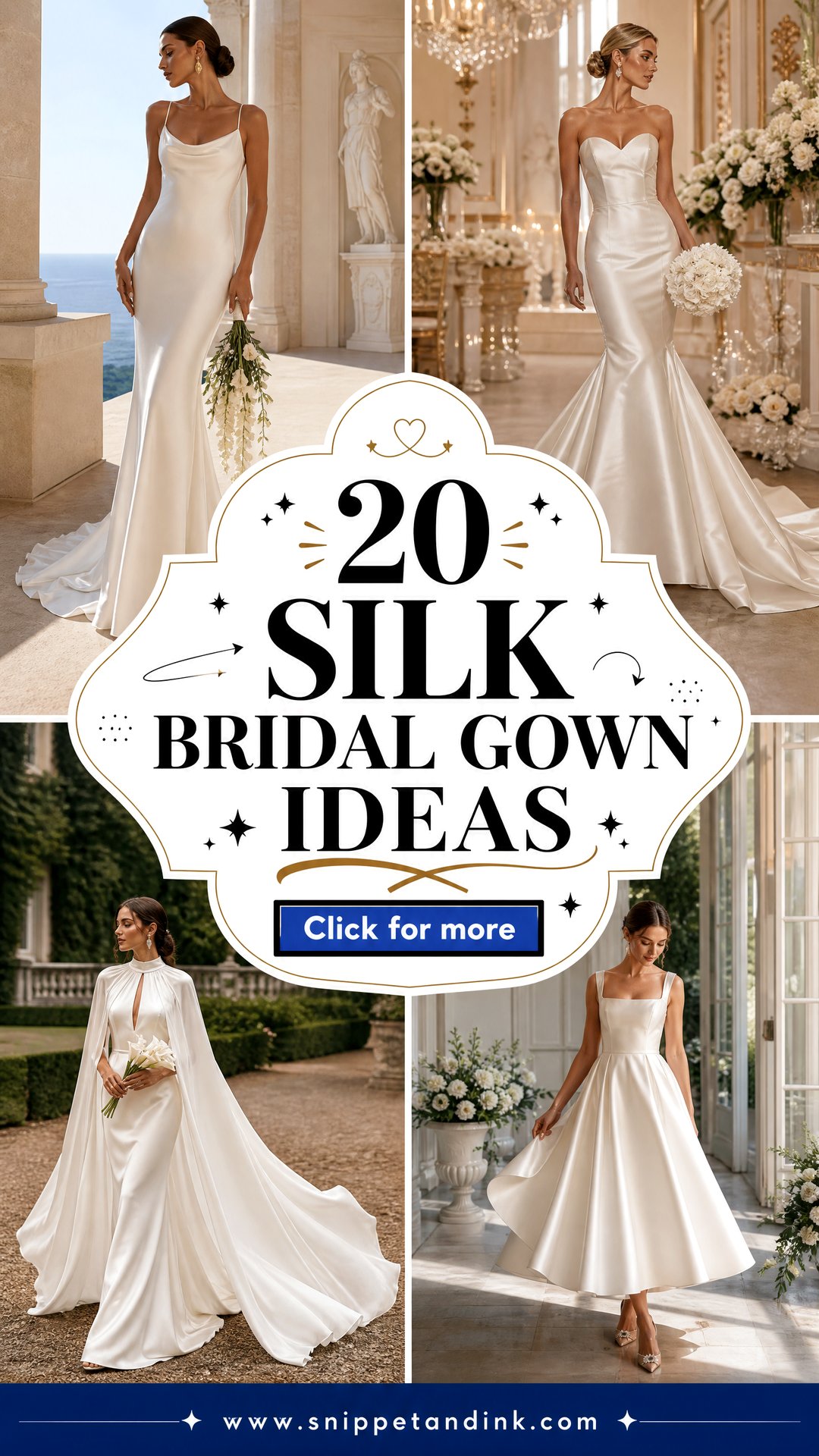
A silk gown can look like water, like folded paper or like a full traditional skirt, and the difference comes down to silhouette, neckline, fabric weight and what you wear with it. Designers right now are leaning into clean fabrics, sculpted waistlines, soft draping and square necklines. None of that matters if the dress fights your venue, your season or the way you need to move. When I style a silk bride, I look at the gown with the veil, shoes, jewellery and bouquet all in place, plus any layer she might remove later. The twenty looks below run from the simplest slip to a full ball gown.
Is It Really Silk? Reading the Label and the Hand
A lot of what is sold as a “silk-look” or “satin” gown is polyester. That isn’t automatically bad; polyester satin is cheaper, resists creasing and survives a rainy day. But it behaves differently, and if you are paying for silk you should know you are getting it.
- Read the fibre content, not the fabric name. Satin, crepe, mikado and charmeuse describe how the cloth is woven; the label should say 100% silk if it is.
- Hold it against your skin. Silk warms up to your body temperature within seconds, while polyester stays cool and slightly slick.
- Look at the sheen in different light. Silk has a soft, shifting glow; polyester satin tends to throw back a flatter, whiter shine, which is most obvious under camera flash.
- Ask about the lining. Plenty of gowns pair a silk shell with a synthetic lining, which is fine, but it affects breathability on a hot day.
I’m happy to put a bride in a good synthetic when budget or weather points that way. What I want is for her to choose it knowingly.
1. Minimalist Silk Slip Bridal Gown
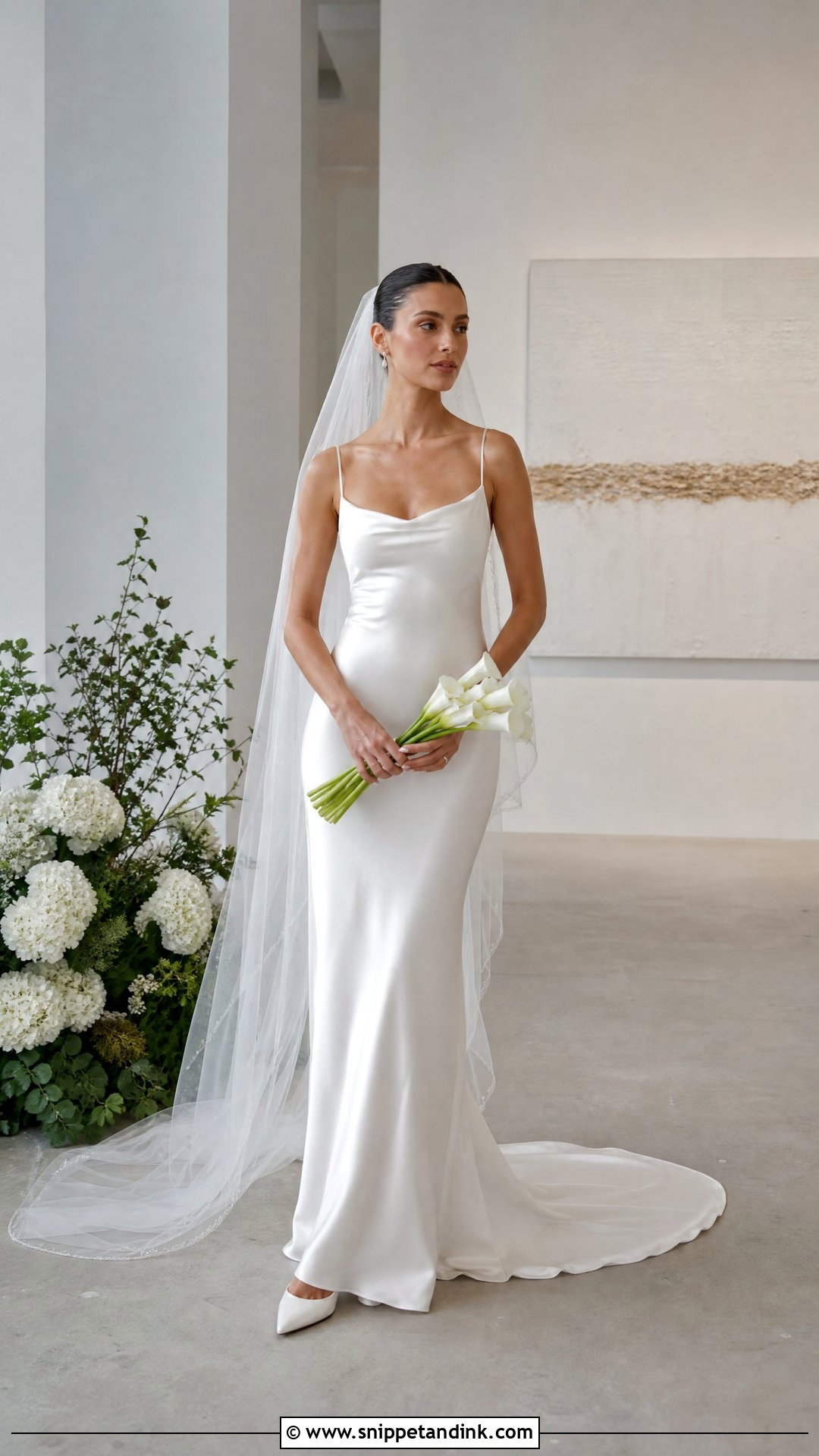
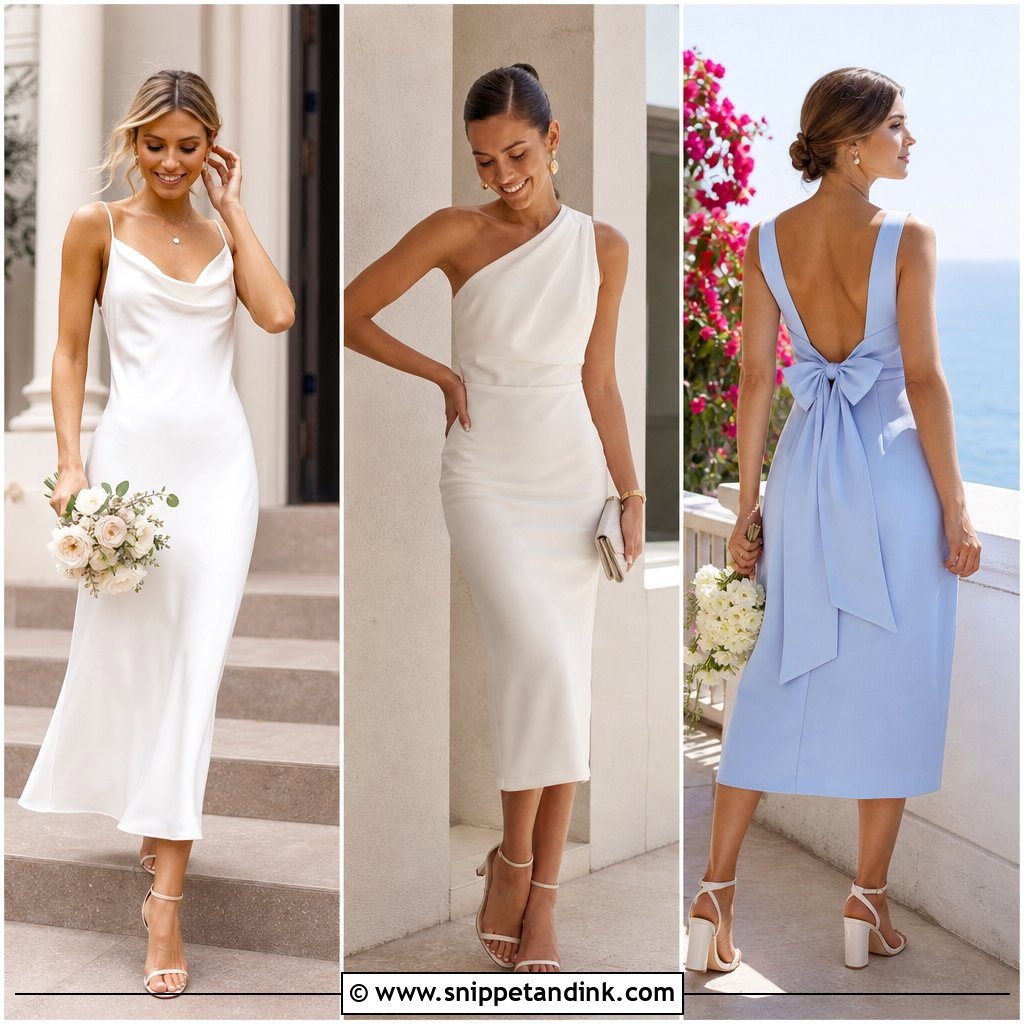
Nothing hides in a minimalist slip, which is exactly its appeal. A softly fitted floor-length shape with narrow straps and a gently draped neckline, made with bias-cut construction, lets the fabric follow you as you walk. I pick the shoe by the floor: pointed ivory pumps indoors, slim strappy sandals on grass or sand where a narrow heel sinks. Pearl earrings and a fine bracelet are plenty. A sheer chapel veil for the vows comes off for the party, and a small bunch of white calla lilies or roses keeps things quiet. It sits well in hotels, galleries, lofts and small outdoor ceremonies.
2. Silk A-Line Bridal Gown
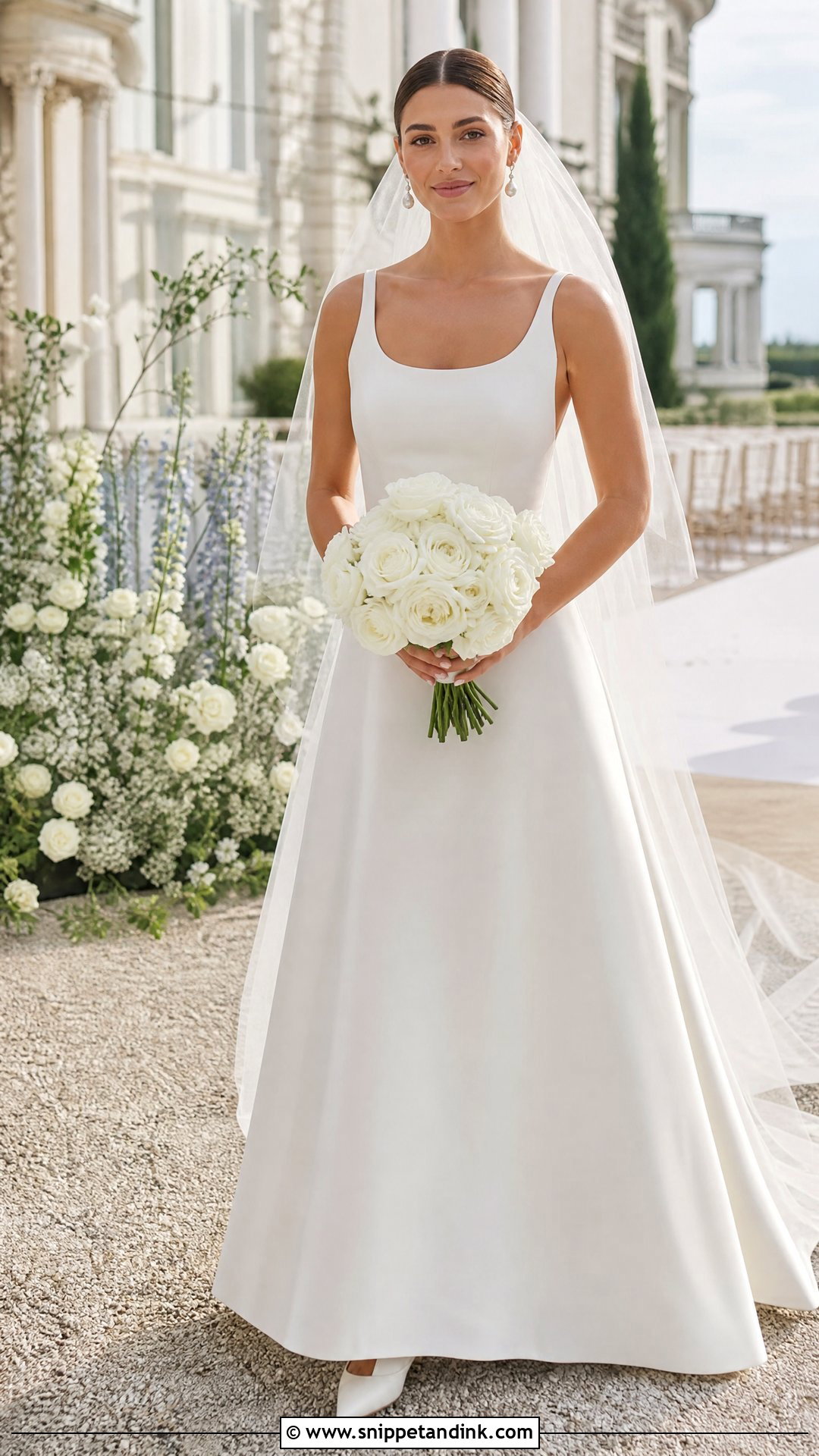
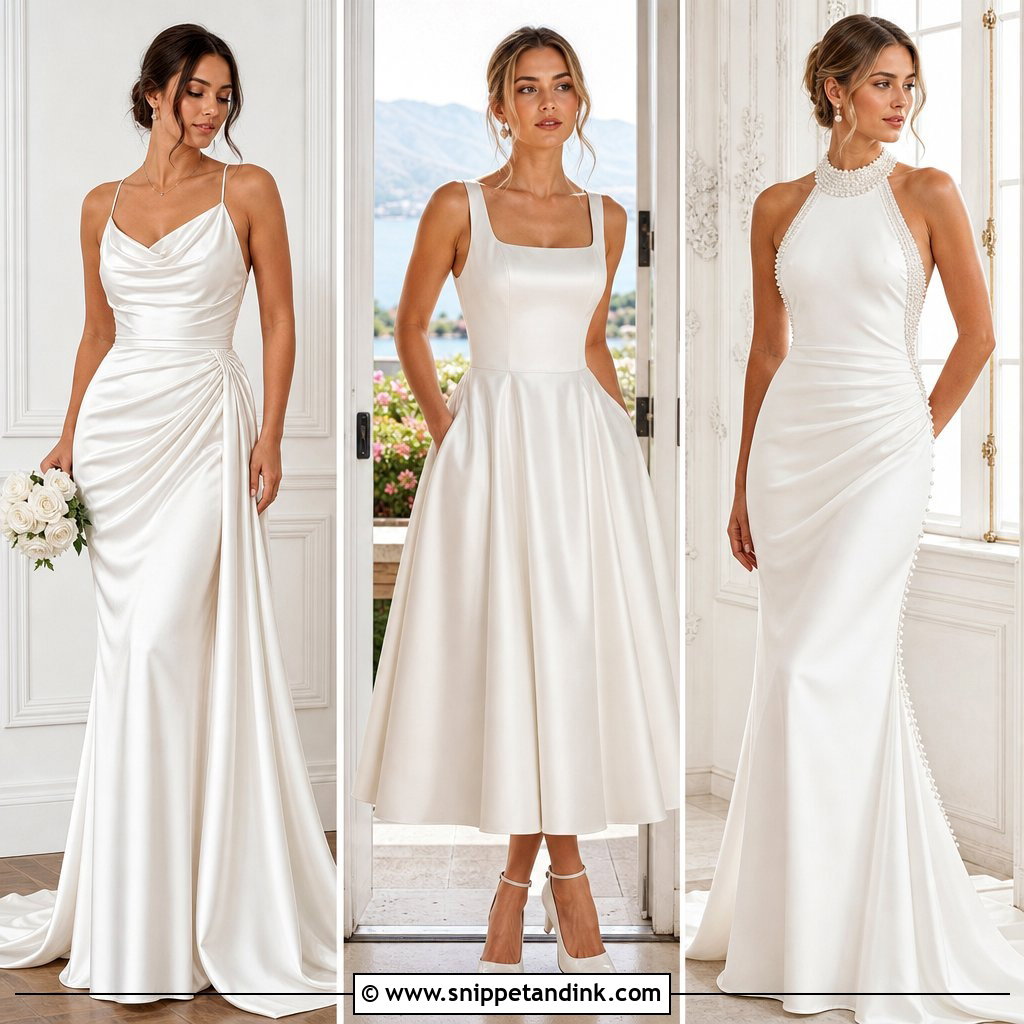
Comfort is the A-line’s strongest argument. The fitted bodice defines you, and the skirt widens gradually from the waist so you can stride, sit and dance without managing it. Pick a scoop, V-neck, or square neckline depending on how much coverage and structure you want. A fingertip veil suits this shape better than a cathedral one, which can swamp the clean outline. Pointed satin heels, pearl drops and a loose bunch of white garden roses with greenery finish it. I ask for pockets in nearly every silk A-line; set into the side seams, they don’t disturb the skirt at all.
3. Strapless Silk Ball Gown
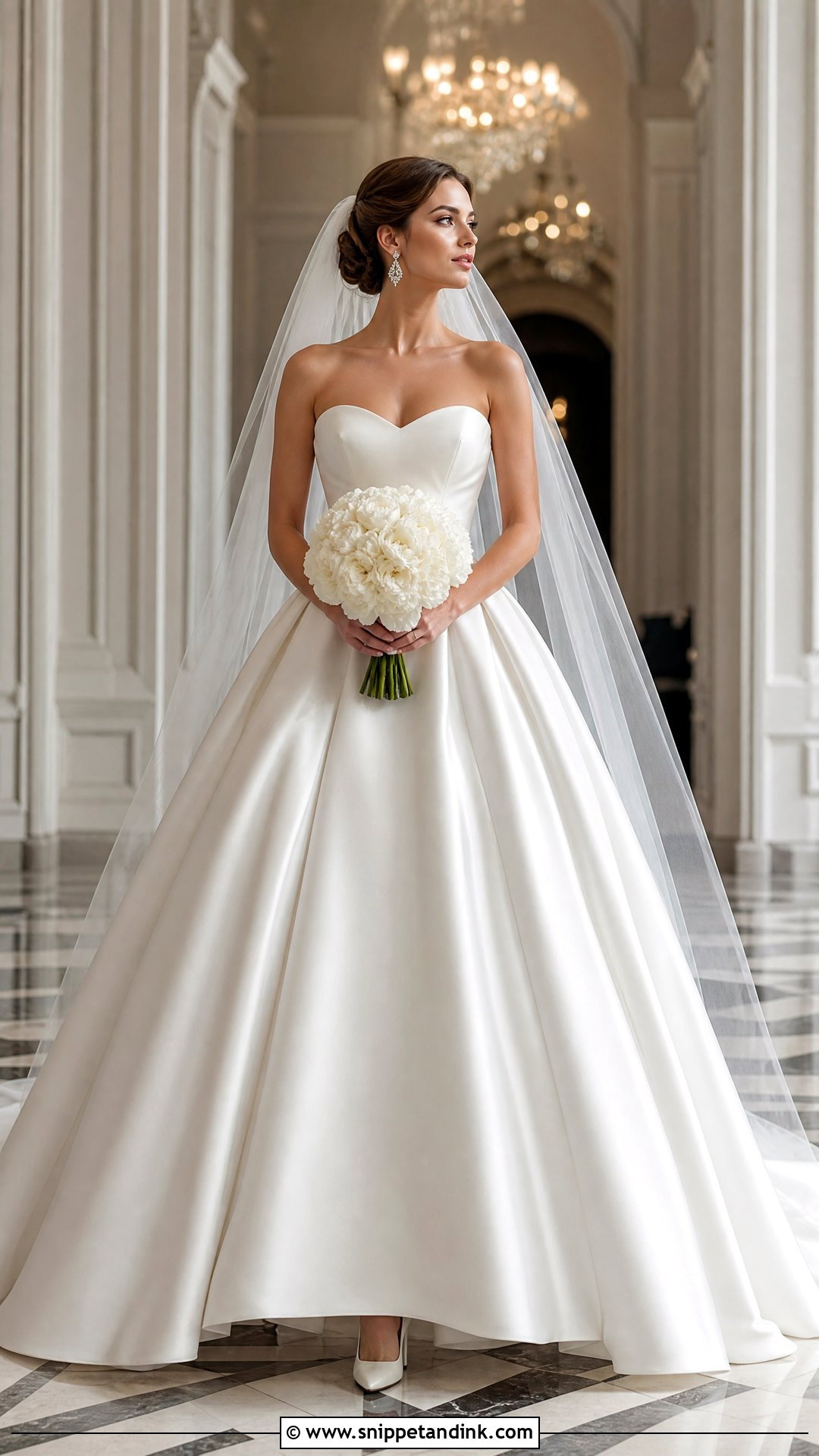
Duchess satin is what gives a strapless ball gown its weight and slight sheen, and that weight is why the bodice needs serious internal construction. Without it, the skirt drags the top down over the evening. A straight or softly curved neckline frames the shoulders cleanly. I’d keep jewellery to crystal studs and a fine tennis bracelet with a polished low bun, then add a cathedral veil if the aisle is long enough to show it off. Under all that skirt, wear block-heel pumps you can walk and dance in. Round white roses or peonies finish a look built for ballrooms, grand hotels, museums and estates.
4. Square Neck Silk Bridal Gown
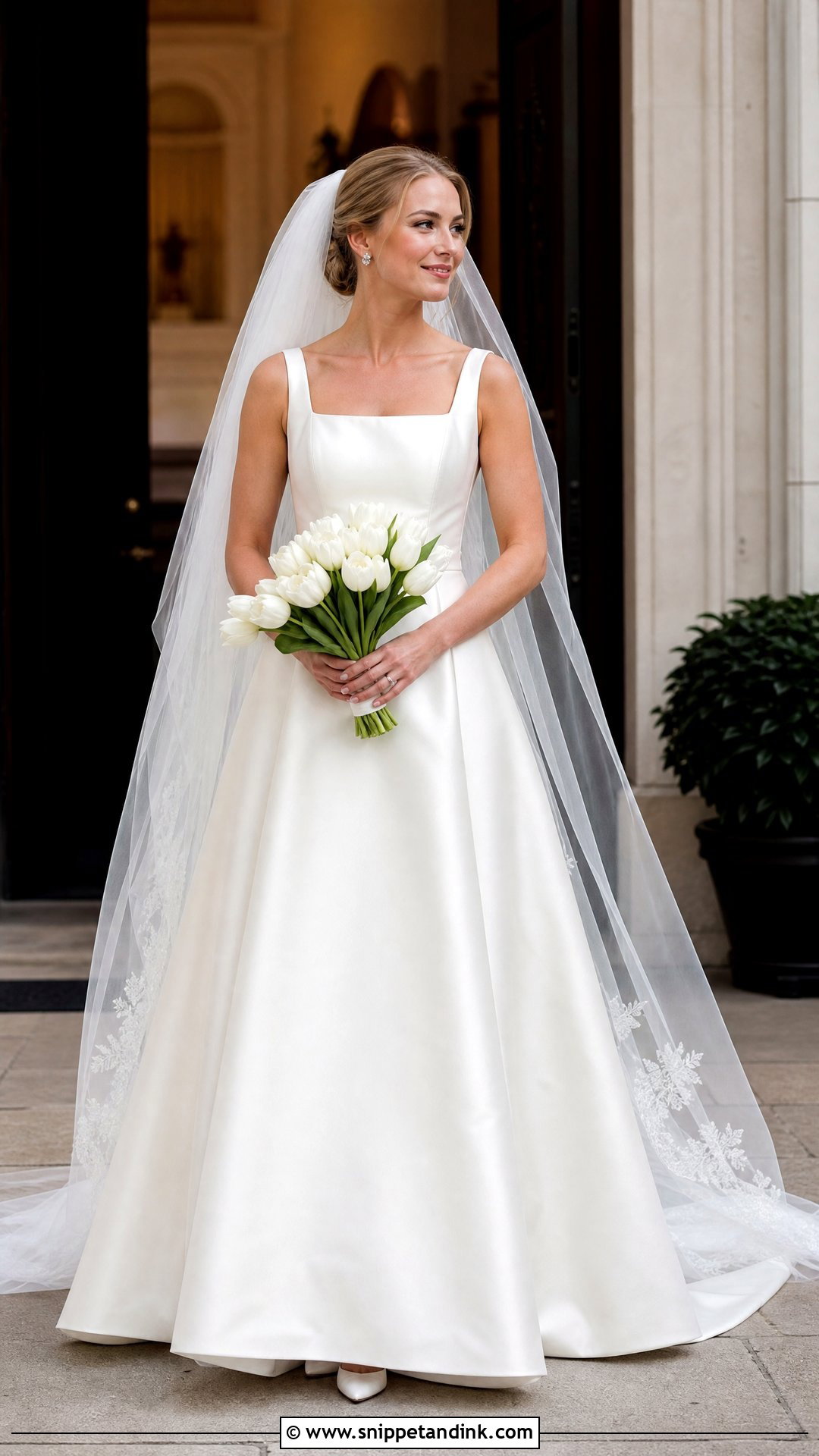
Square necklines are sharper than they look on a hanger. This one frames the collarbone and pairs well with wide straps, short sleeves or a sleeveless fitted bodice, over an A-line or lightly flared skirt. Leave the neckline bare and wear small diamond or crystal earrings. Hair matters here: a smooth bun or waves tucked behind the ears keeps the square visible, while loose hair over the shoulders hides its corners. Closed-toe ivory pumps, a sheer cathedral or chapel veil with minimal edging and structured white tulips carry the architectural feel. City venues and formal gardens both suit it.
5. Cowl Neck Silk Bridal Gown
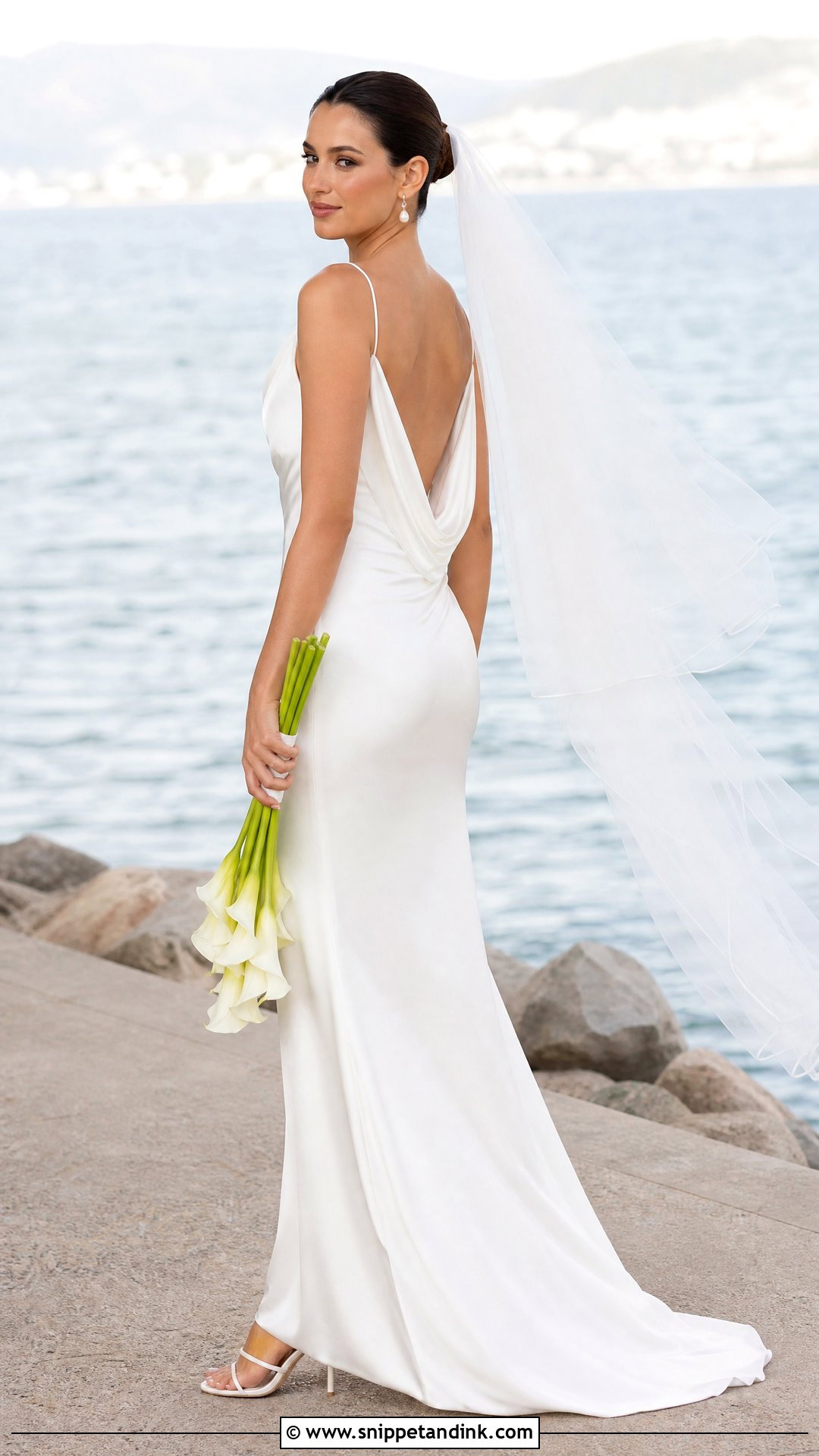
A cowl is draped fabric, so it needs a slim column or gently flared shape that leaves the silk free to fall. Thin straps look delicate; wider ones give support and coverage, and I recommend them for anyone with a fuller bust, because a cowl on thin straps can shift sideways. Pearl drops, a simple hair comb and barely visible strappy heels suit it, with a lightweight silk tulle veil that won’t add bulk over the folds. A narrow bunch of long-stemmed calla lilies keeps the line clean. Rooftops, destination weddings, hotels and waterfront venues all work. A low cowl back gives your guests something to look at during the processional.
6. Long Sleeve Silk Bridal Gown
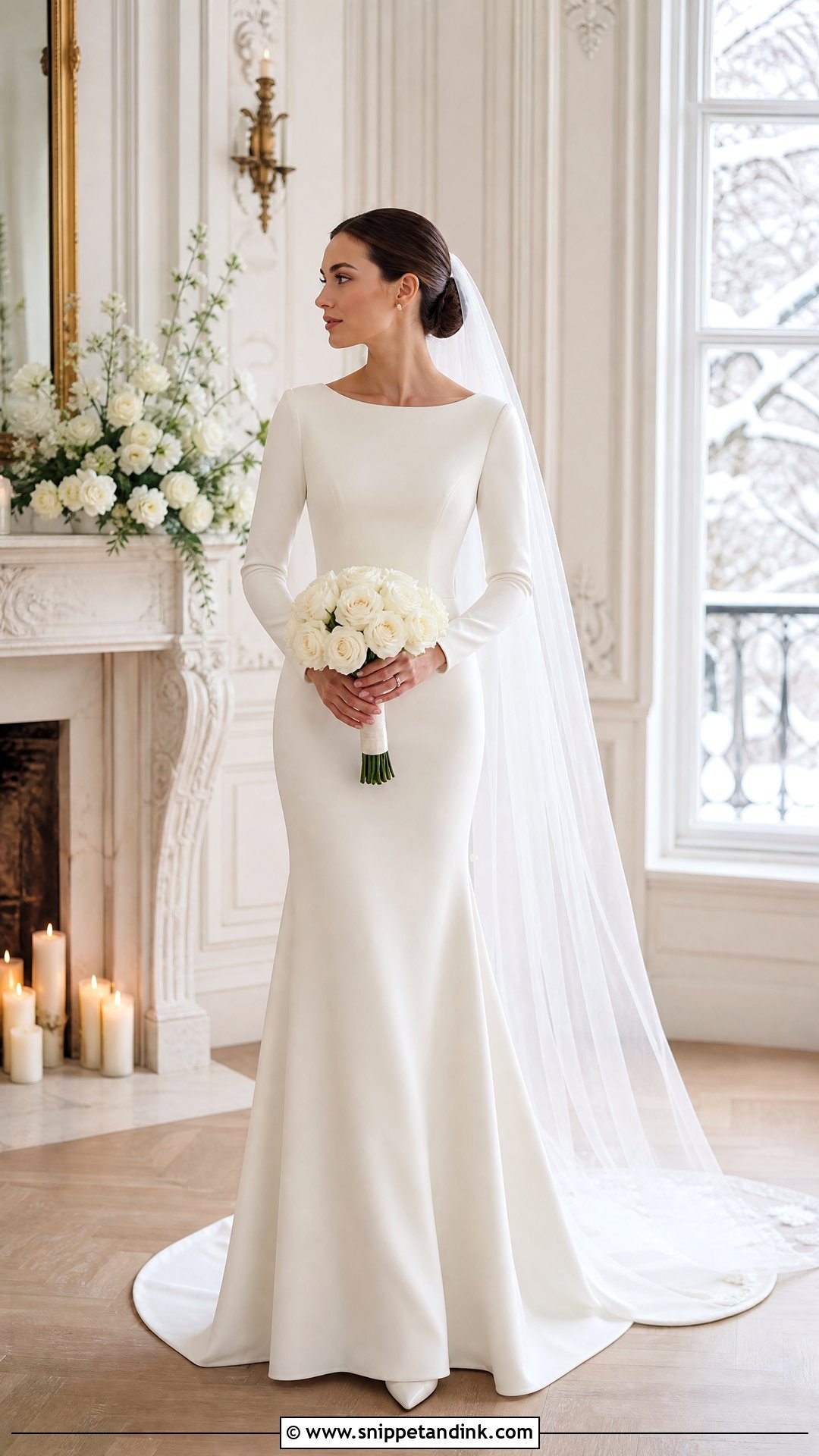
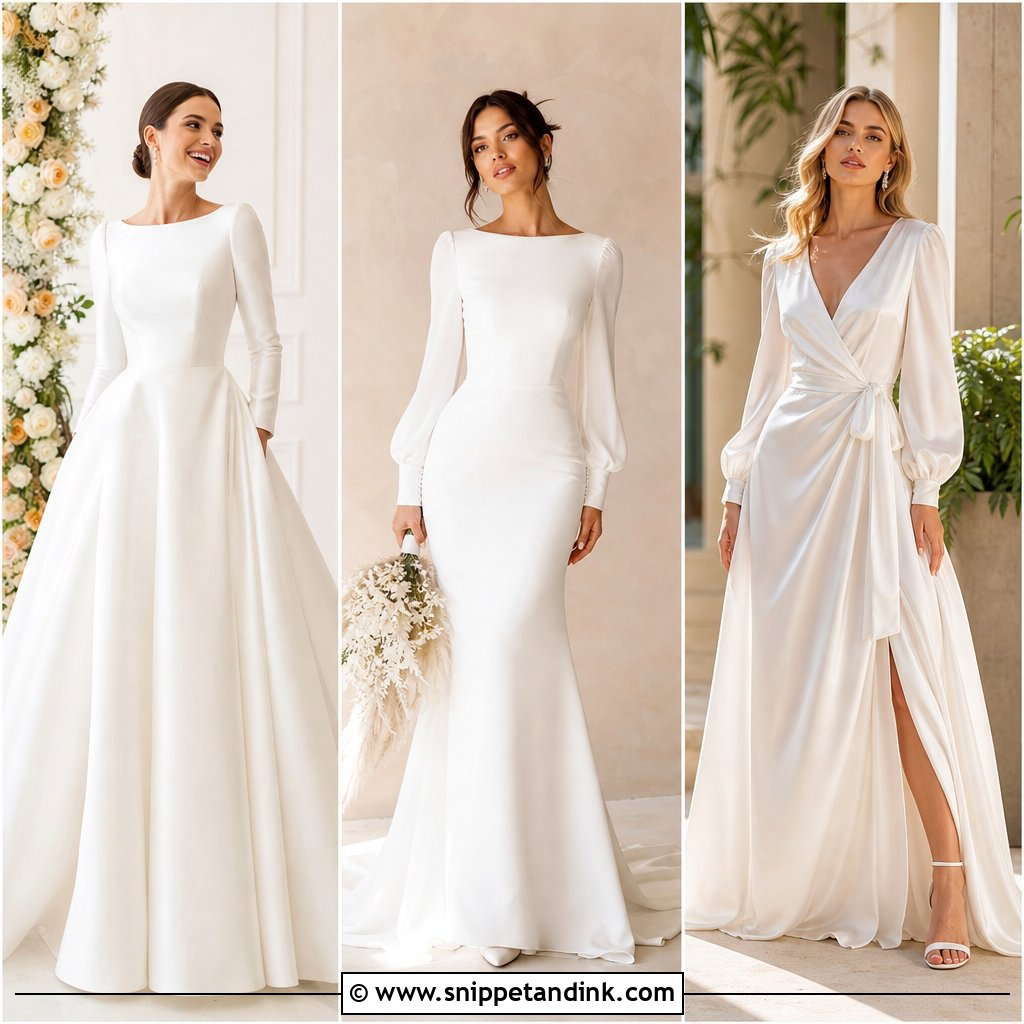
In cold months, long sleeves make sense, but they shouldn’t make the gown look heavy. I keep the sleeves fitted and choose a clean bateau, round or softly plunging neckline. Crepe gives a smooth, flowing result; structured satin makes it more formal. Closed-toe pumps, pearl studs and a neat chignon with a minimal pin keep the focus on the gown, and a long veil can fall from beneath the hair. White roses mixed with seasonal greenery add texture. Covered buttons at the cuffs and back are worth asking for. My check at fittings: raise both arms. If the bodice lifts with them, the sleeve head needs adjusting.
7. Off Shoulder Silk Bridal Gown
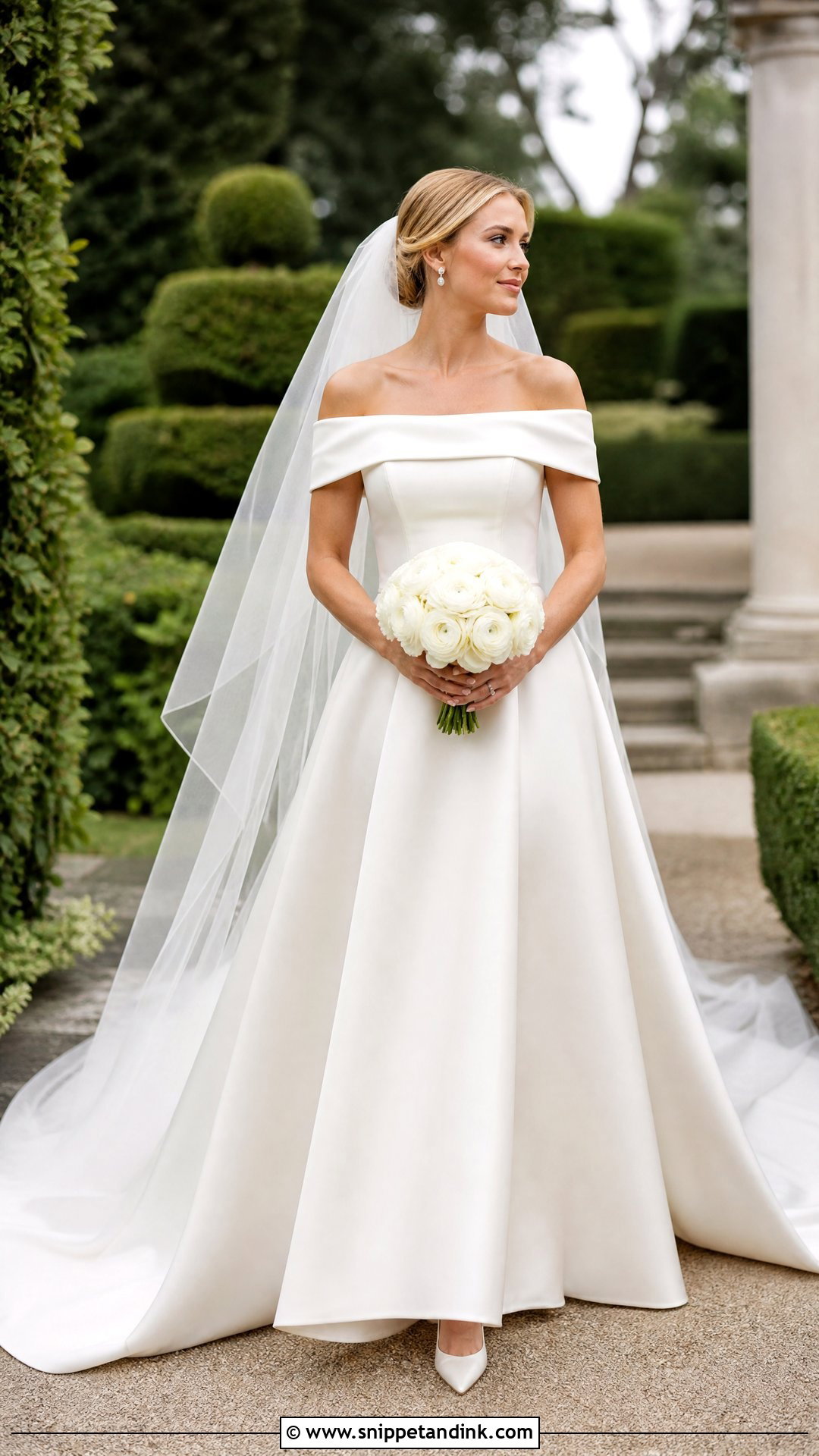
Off the shoulder frames the neckline and adds romance to an otherwise clean silk gown. A folded portrait collar or gently draped straps must sit securely on the upper arm; I’d test this by having you lean in for a hug, which is where portrait collars slip. A fitted waist with a flowing A-line keeps things balanced, and a mermaid skirt makes it more dramatic. Short drop earrings, a delicate bracelet and a low bun or swept-back waves leave the neckline visible. Pointed ivory heels and a cathedral veil complete it, with white roses, ranunculus and soft greenery in the bouquet. Detachable straps give reception freedom without a second dress.
8. Halter Neck Silk Bridal Gown
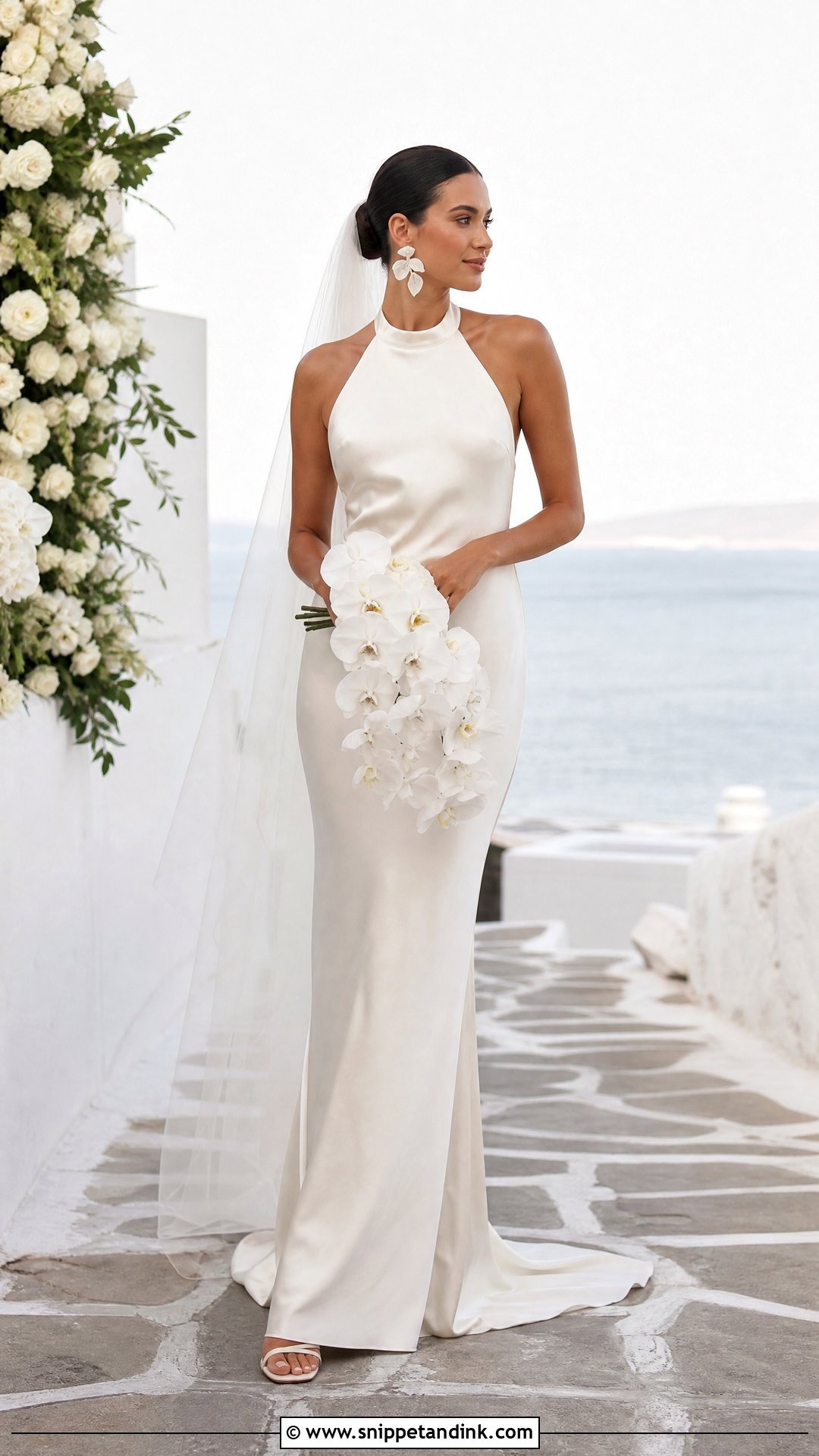
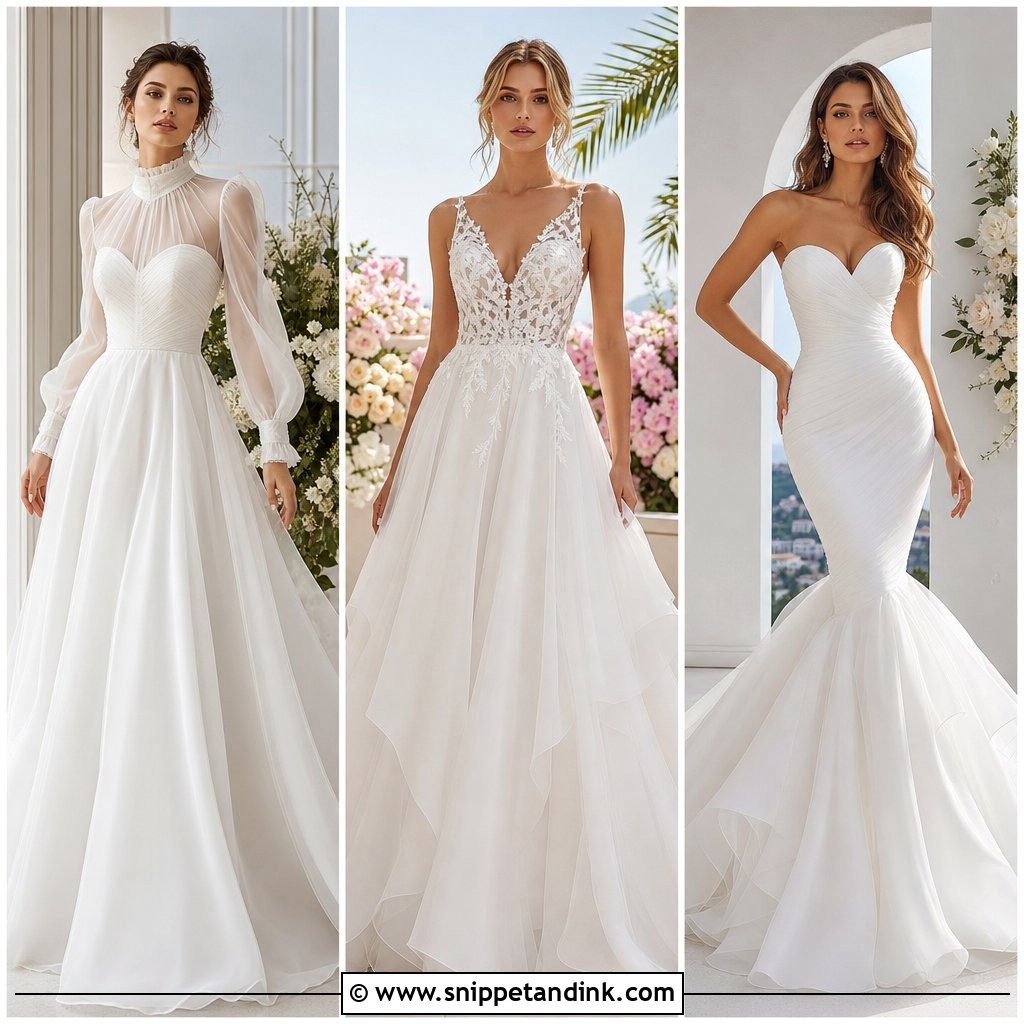
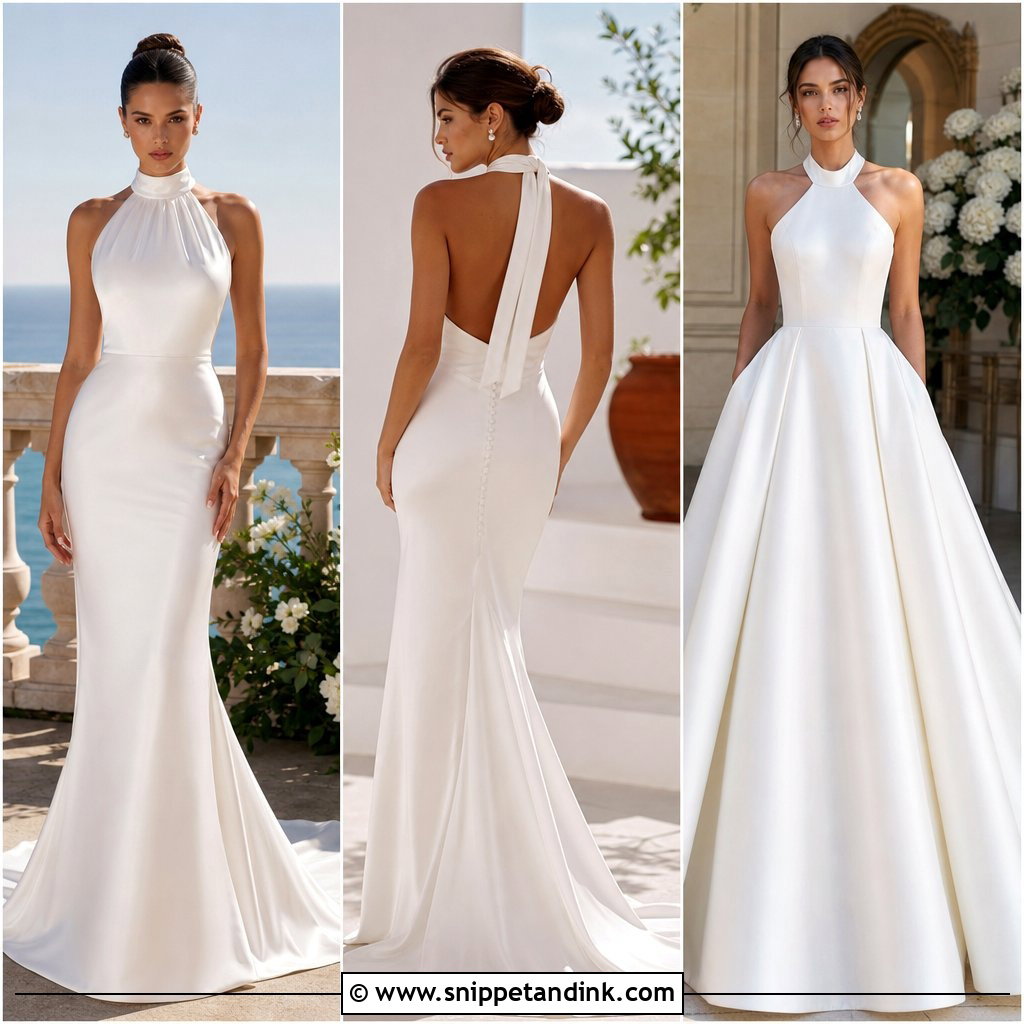
For a hot day, the halter is cool and confident. It can sit high for coverage or dip softly at the centre, over a column, bias-cut or lightly flared skirt that moves easily. Skip the necklace; sculptural earrings do the work. A sleek bun, braided updo or high ponytail keeps the neck clear, and that matters, because hair falling over a halter strap hides the whole point of it. Slim metallic or ivory sandals and a light veil tucked beneath the hairstyle suit it, with orchids or white calla lilies. Coastal resorts, rooftops, gardens and minimal indoor rooms all fit.
9. One Shoulder Silk Bridal Gown
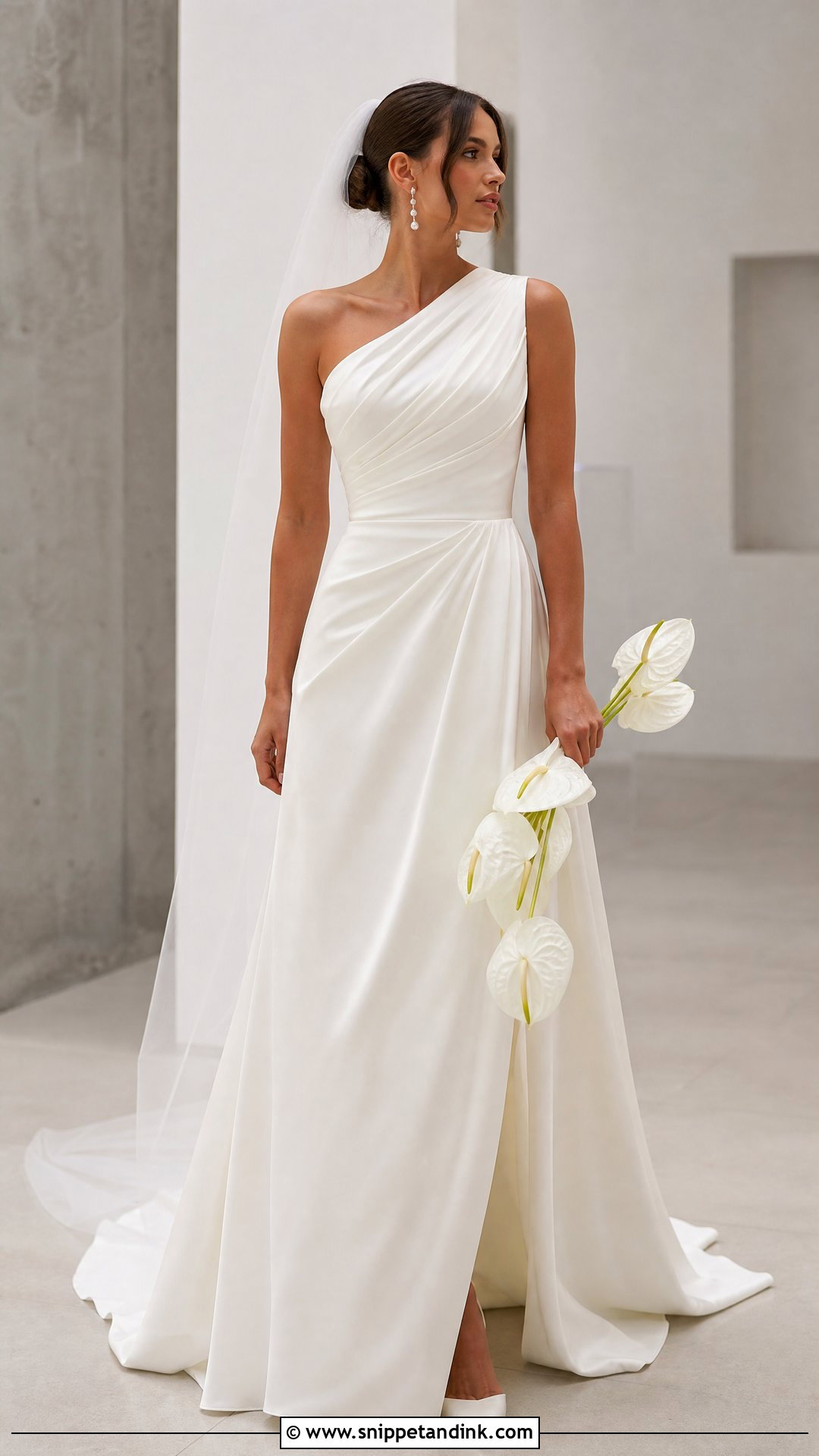
One shoulder covered, one bare: that asymmetry is the entire design, so everything else should be calm. I look for a softly draped neckline with one supportive strap and a fitted waist, then either a modern straight column or a more traditional A-line. One statement earring on the bare side, or a pair of small crystal drops, never a necklace. Sweep the hair away from the covered shoulder. Pointed pumps and a simple fingertip veil keep it sleek, and a small bunch of white anthuriums, orchids or roses gives a sculptural touch. Galleries, city venues and evening receptions suit it best.
10. Basque Waist Silk Bridal Gown
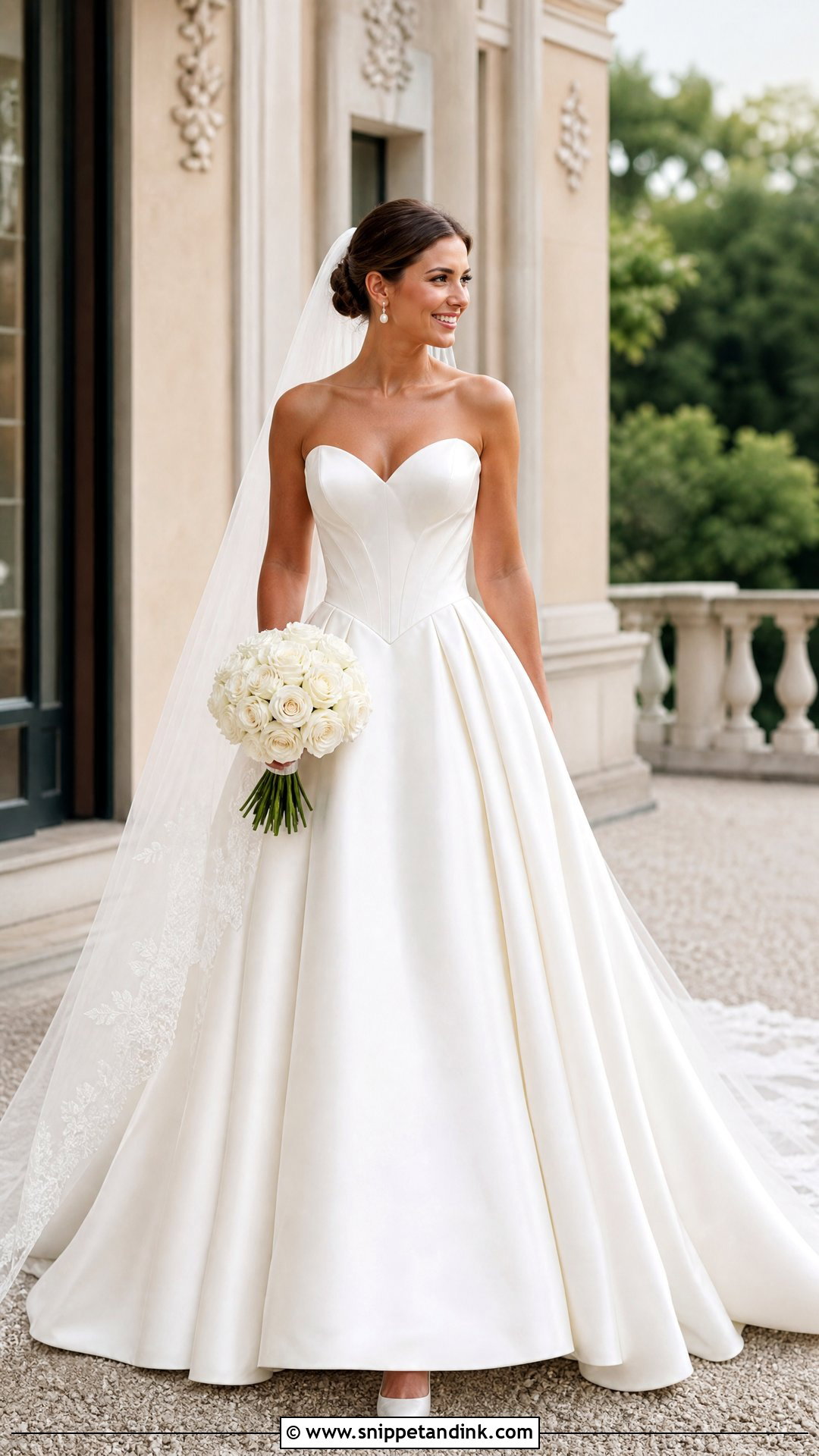
The basque waist dips below the natural waistline to a point, giving a full skirt a defined, romantic base. A strapless sweetheart shows the traditional structure clearly; a square neckline reads cleaner. Because the waist seam is the focal point, I keep belts and heavy necklaces out of the picture entirely. Pearl earrings, a fine bracelet and pointed satin pumps are enough, with a cathedral veil that falls past the waistline without hiding it. Choose a controlled, symmetrical bouquet of white roses, tulips or peonies, and a smooth bun or soft half-up hair. Estates, ballrooms and historic houses suit it.
11. Drop Waist Silk Bridal Gown
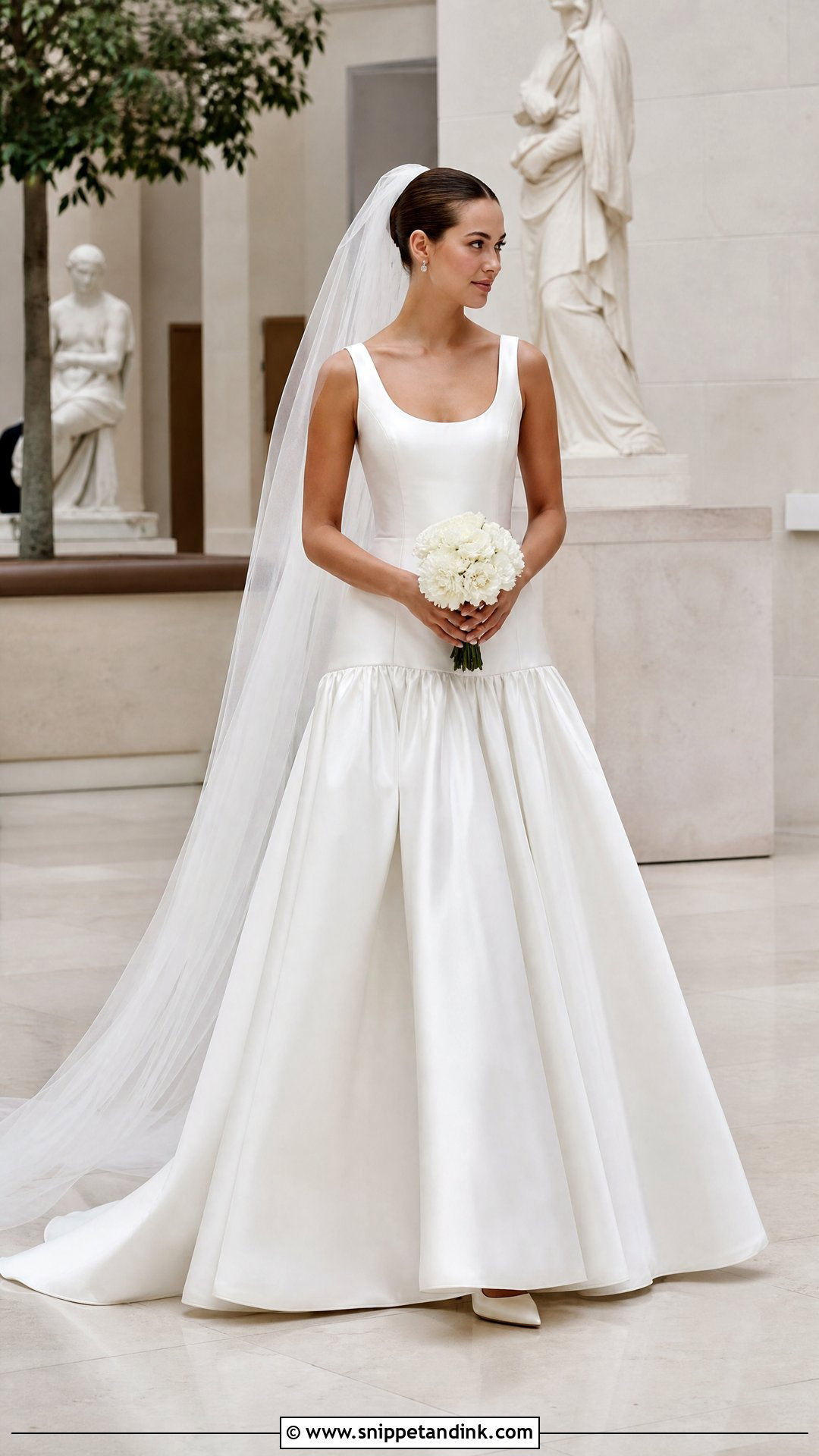
A drop waist extends the bodice below the natural waist before the skirt opens out, and the contrast between that long fitted torso and the sudden volume is what makes it dramatic. It can read modern or vintage depending on accessories. A scoop, cat-eye or strapless neckline suits it, with small crystal earrings and a polished updo. Pointed ivory pumps and a long plain veil keep the line going. Keep the bouquet compact. I’d be honest with short-waisted brides: a dropped seam can make your legs look shorter, so try it before falling for photos. Sit, walk and dance at every fitting, because a long bodice can dig in when you sit.
12. Bias Cut Silk Bridal Gown
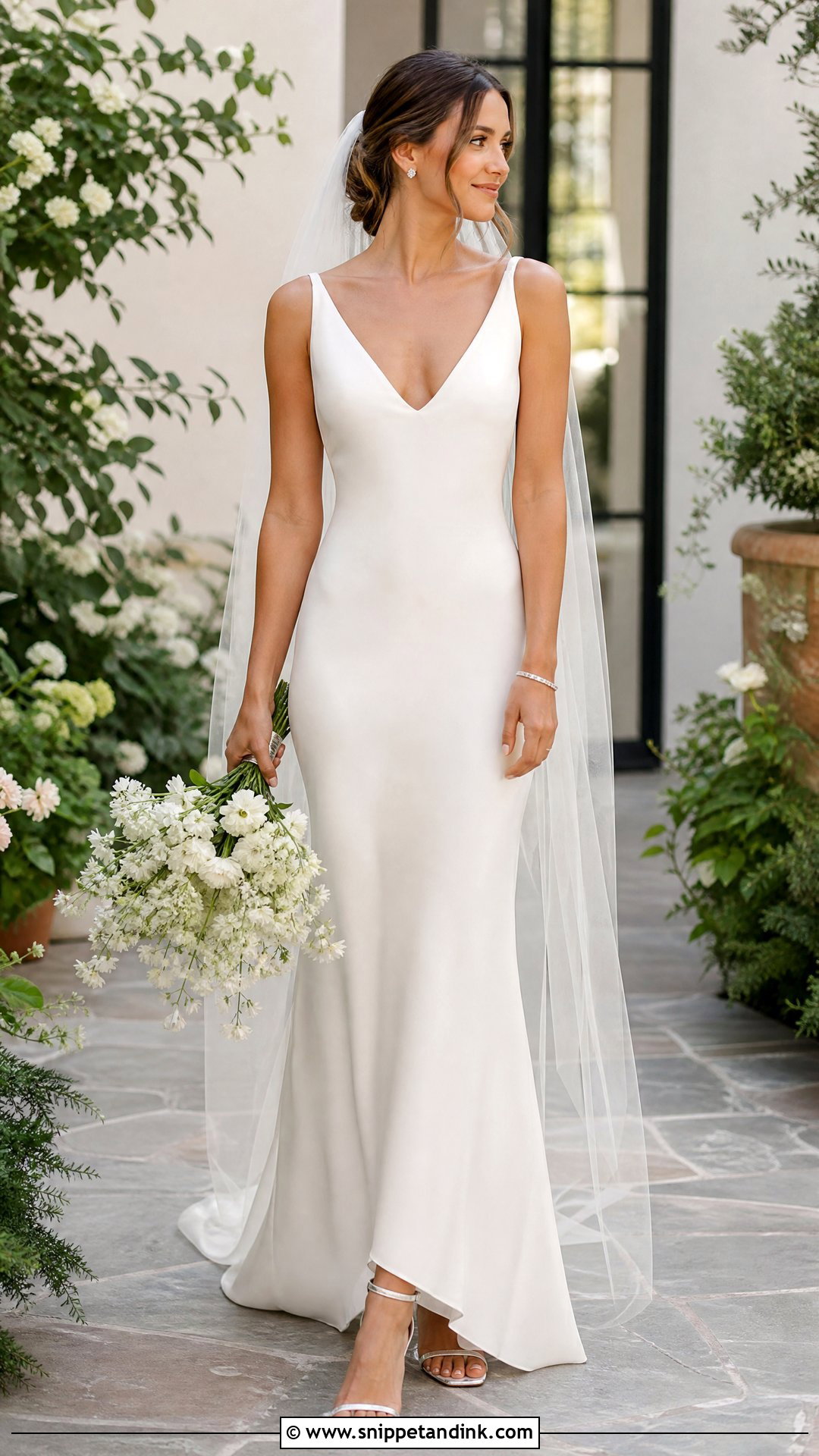
Cut diagonally across the grain, a bias gown moves with you and settles softly over the body. It looks most polished with a simple V, scoop or cowl neckline and a lightly flared hem. Bias silk shows everything under it, so underwear has to be chosen for this exact dress and brought to every fitting. Ankle-strap sandals, pearl or diamond studs and a slim bracelet keep it light; a sheer chapel veil adds ceremony without changing the relaxed mood. Carry loose white sweet peas, orchids or garden roses, and wear soft waves or a low knot. Beaches, small restaurants, gardens and destination weddings all suit it.
13. Silk Mermaid Bridal Gown
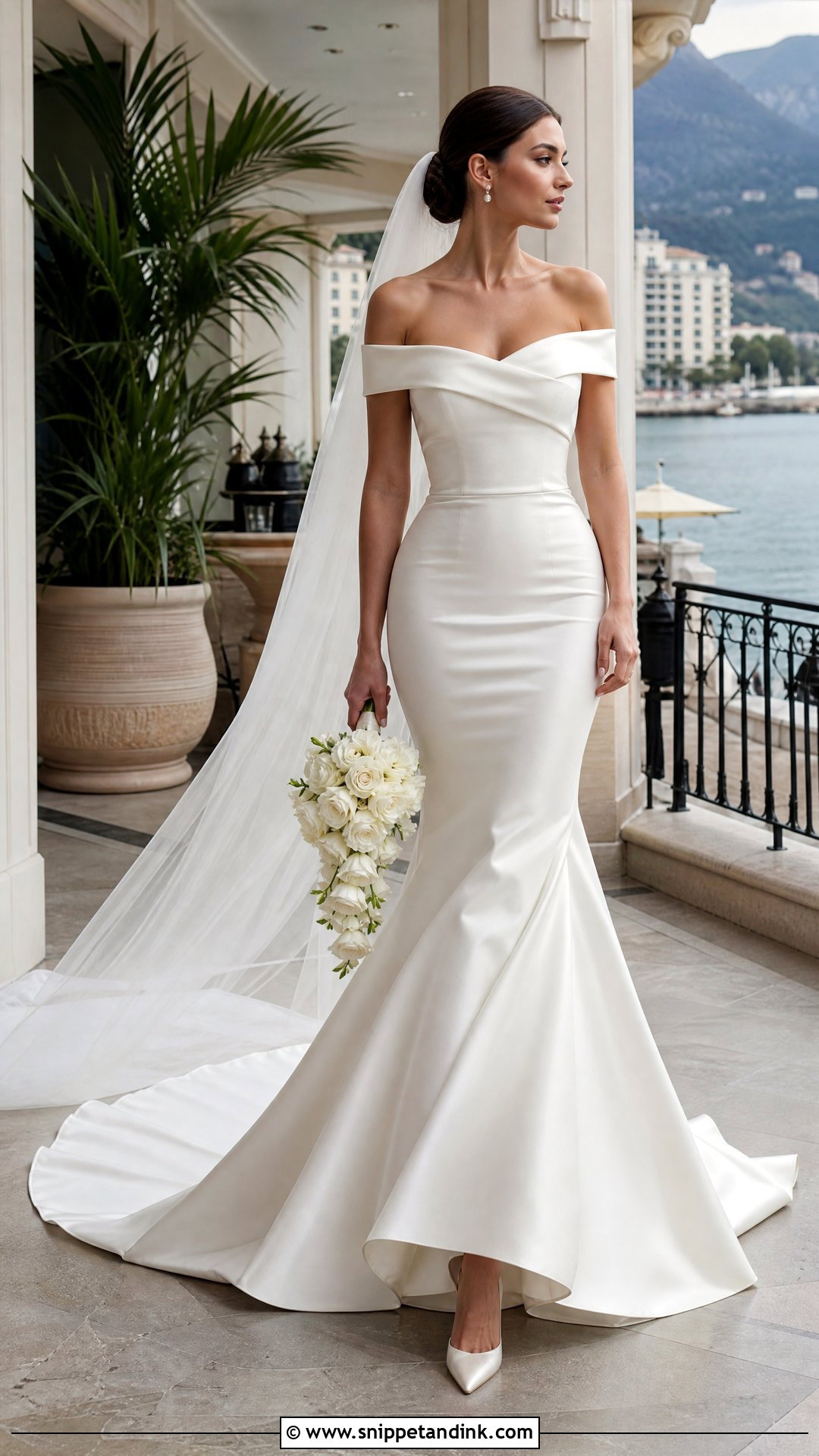
The mermaid is fitted through bodice, waist and hips and widens near the knee. In structured satin the shape is crisp and defined; in crepe it’s softer and more forgiving of movement. A strapless sweetheart bodice is the classic choice, and an off-shoulder neckline adds romance. I’d choose supportive pointed pumps, since a fitted skirt already shortens your stride and an unstable heel makes it worse. Pearl drops and a slim bracelet are enough. A long veil can run past the train, with a narrow cascade or a compact cluster of white roses. Confirm at alterations that you can climb a step and sit down.
14. Silk Column Bridal Gown
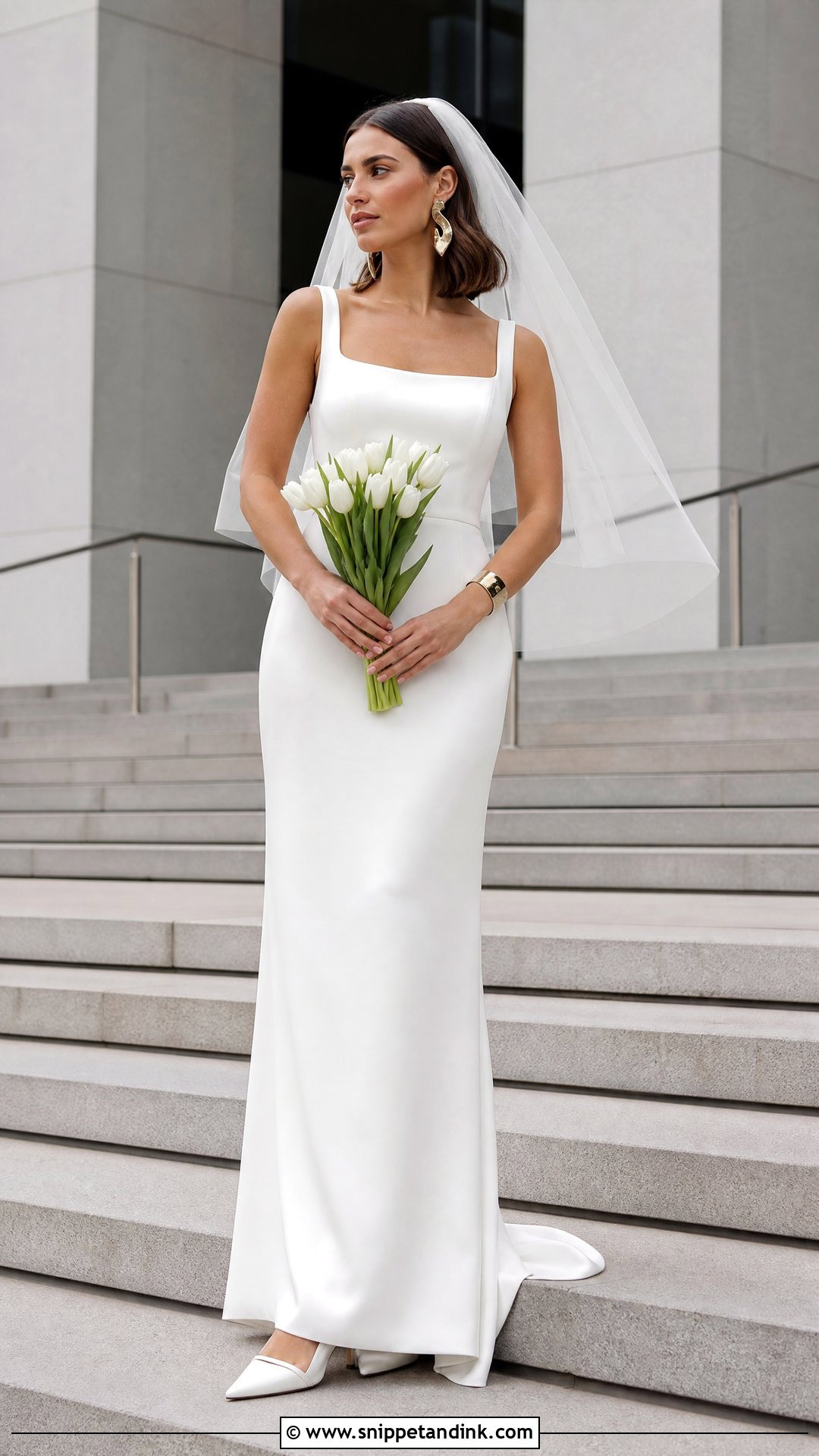
A column hangs fairly straight from the hip, so it is one of the easiest shapes to style. It suits square, bateau, halter and one-shoulder necklines, and pointed pumps or slingbacks extend the long line. Choose sculptural earrings and a smooth cuff rather than several competing pieces. A long veil gives ceremony drama, while a birdcage or shoulder-length veil looks more fashion-led. Narrow white tulips or calla lilies match the proportions. Courthouses, rooftops, hotels and galleries suit it. If you want more impact, add a removable train rather than changing the base dress.


15. Silk Bridal Gown With Bow
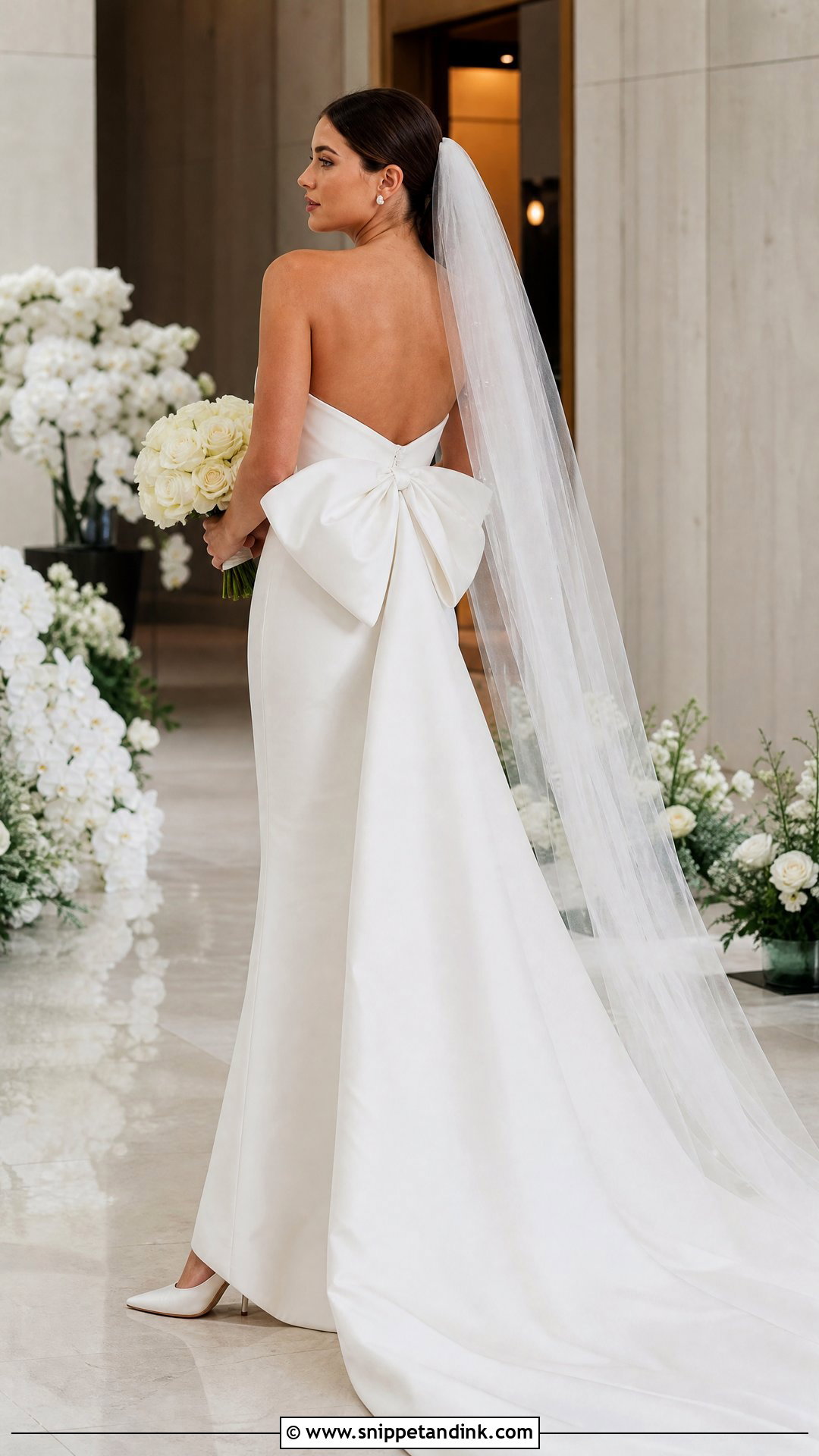
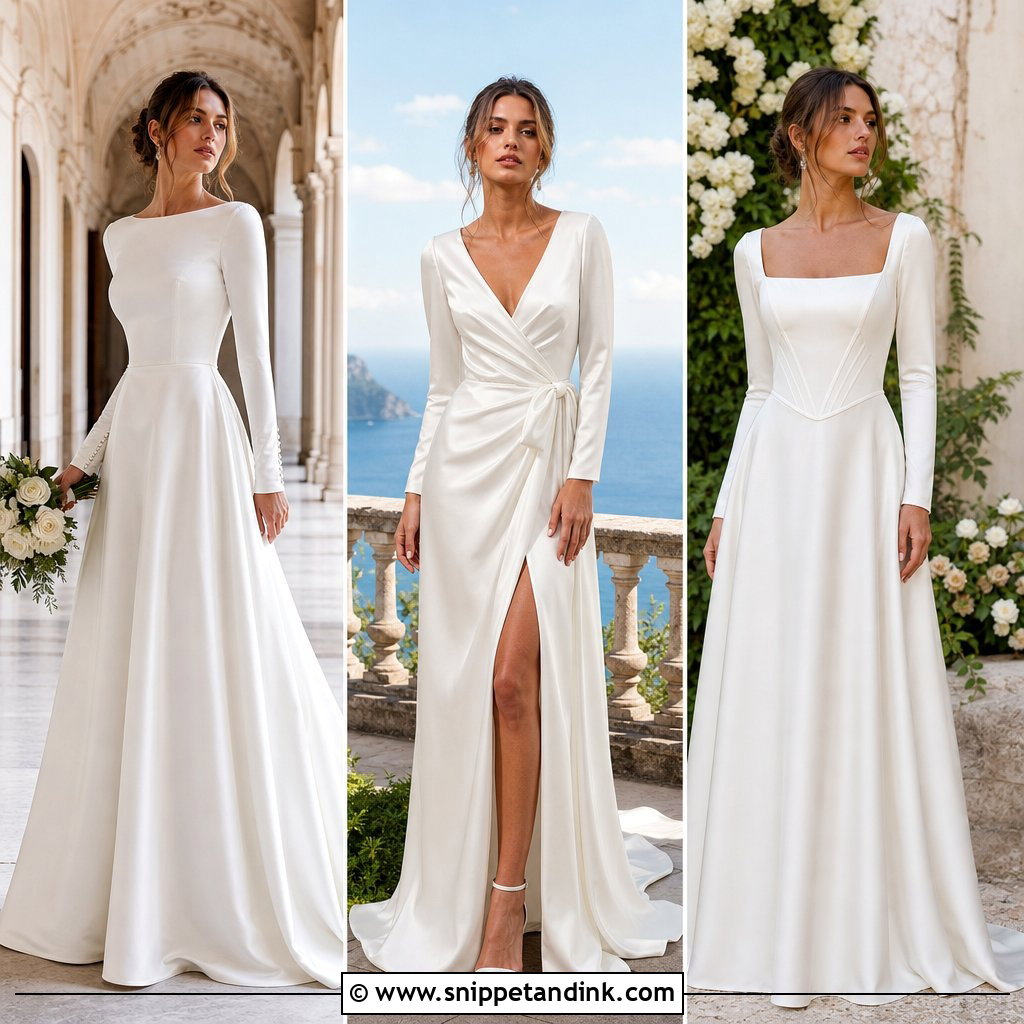
One bow, well placed, is a statement; two start to look crowded. I’d put it at the back waist, the shoulder, the neckline or the base of the train, over a structured A-line or column that leaves it room. Silk bows wilt without interfacing, so I check how the bow is built before anything else. Keep the rest restrained: pearl studs, a simple bracelet and pointed pumps. If the bow sits at the back, choose a sheer veil and a neat bun so the rear view stays clean. A compact bunch of white roses or tulips suits it. A detachable bow comes off before the dancing.
16. Silk Bridal Gown With Cape
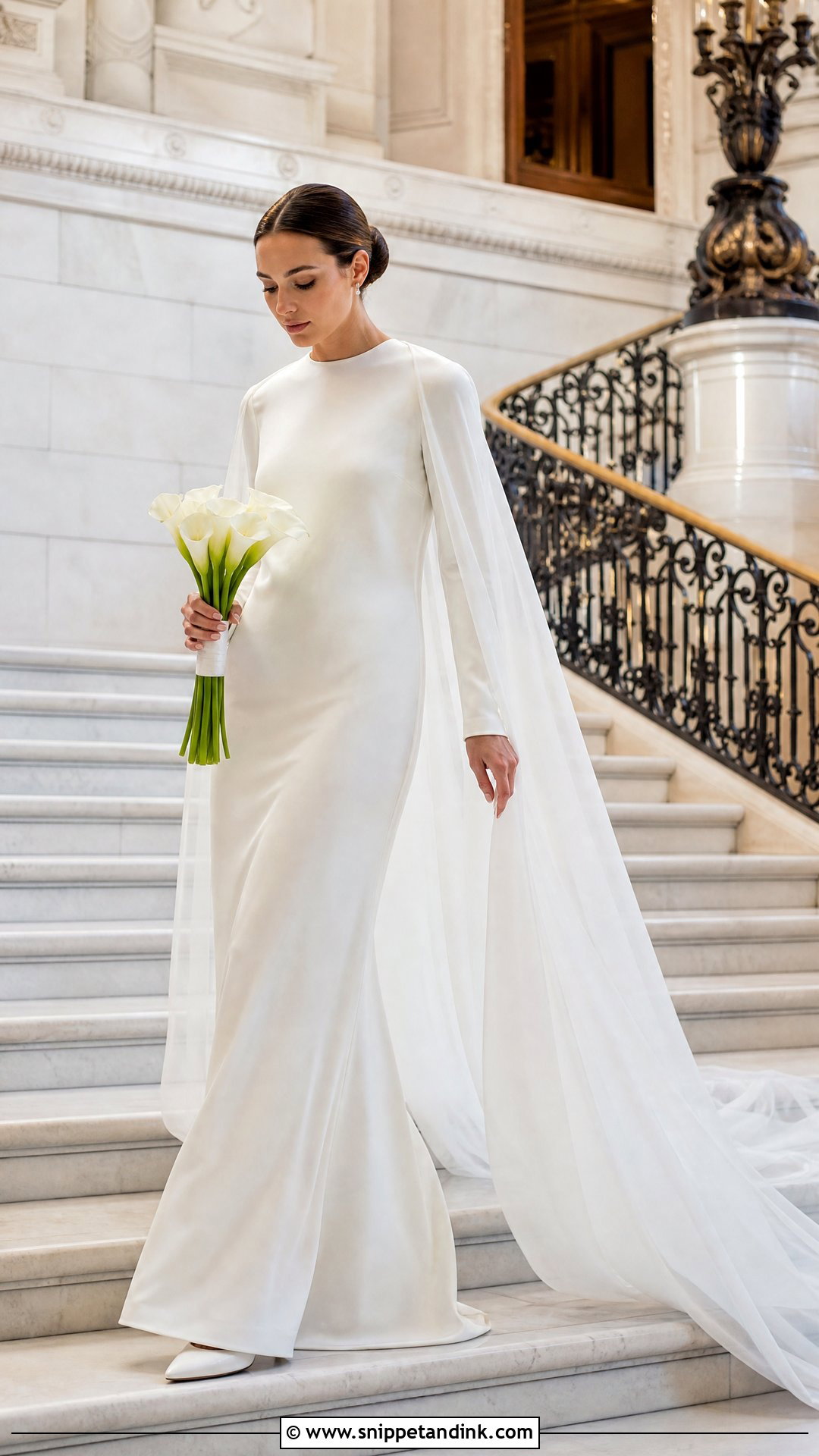
A cape replaces an elaborate veil and still gives you a dramatic entrance. Start with a simple column, A-line or fitted gown and add a sheer floor-length cape fixed at the shoulders or neckline. A light chiffon cape floats as you walk; a structured silk version looks more architectural but adds noticeable weight to the shoulders. Understated earrings, closed-toe pumps and a low bun suit it, and if the cape has a detailed collar or fastening, skip the necklace. Narrow calla lilies keep the vertical line. Take it off after the ceremony for a simpler reception look. Grand staircases and long halls show it off best.
17. Silk Bridal Gown With Overskirt
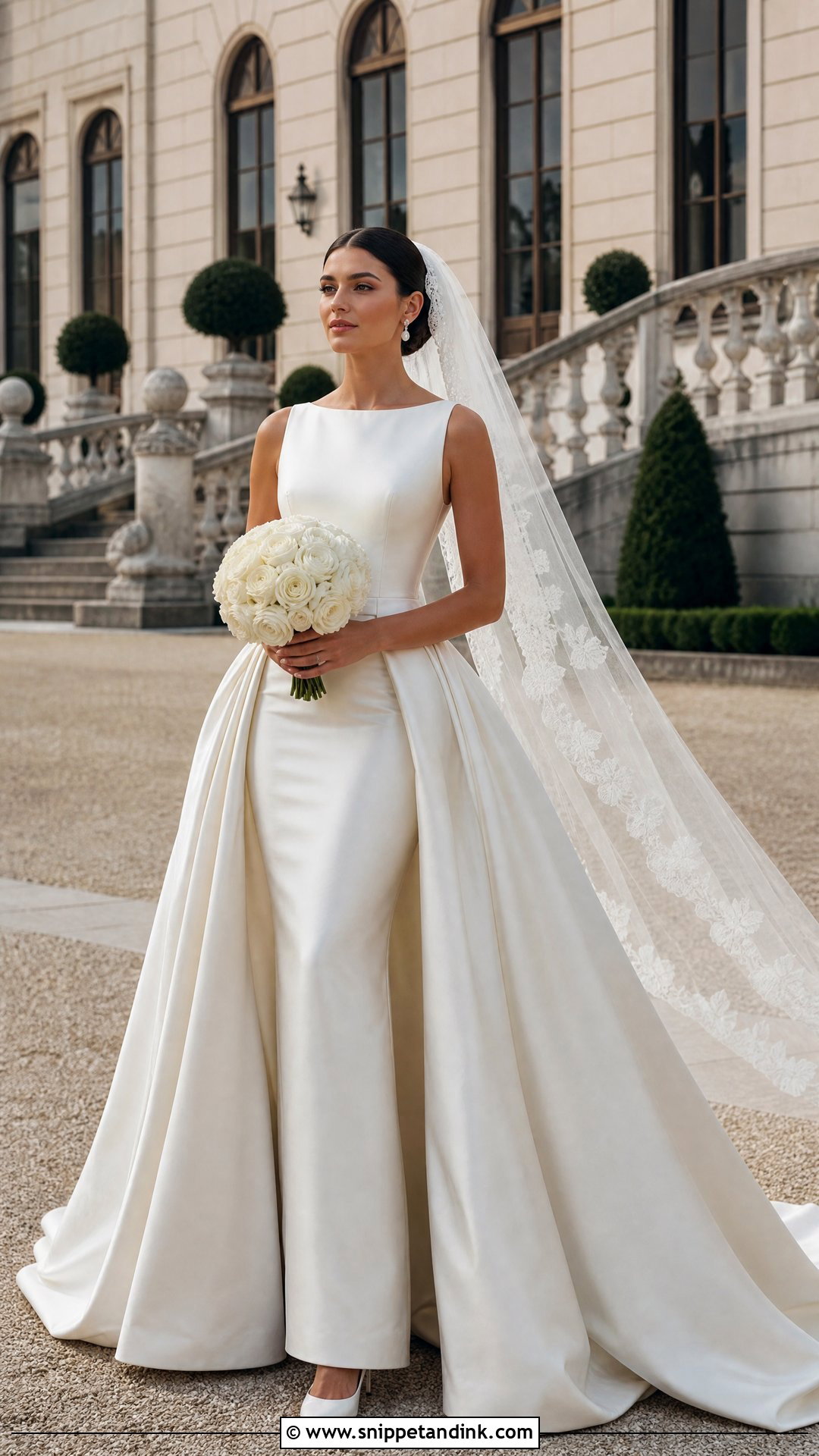
Could one dress give you two completely different looks? A silk bridal gown with an overskirt starts as a fitted column, mermaid or even a mini, with removable volume added for the ceremony. The overskirt must attach cleanly at the waist and match the gown in colour and sheen; I compare both under daylight and indoor light, since a mismatch shows in photos even when it’s invisible in the shop. For the formal version, wear a cathedral veil, pearl earrings and pointed pumps with round white roses. Afterwards, drop the overskirt and veil and switch to statement earrings or a bold hair piece for the reception.
18. Tea Length Silk Bridal Gown
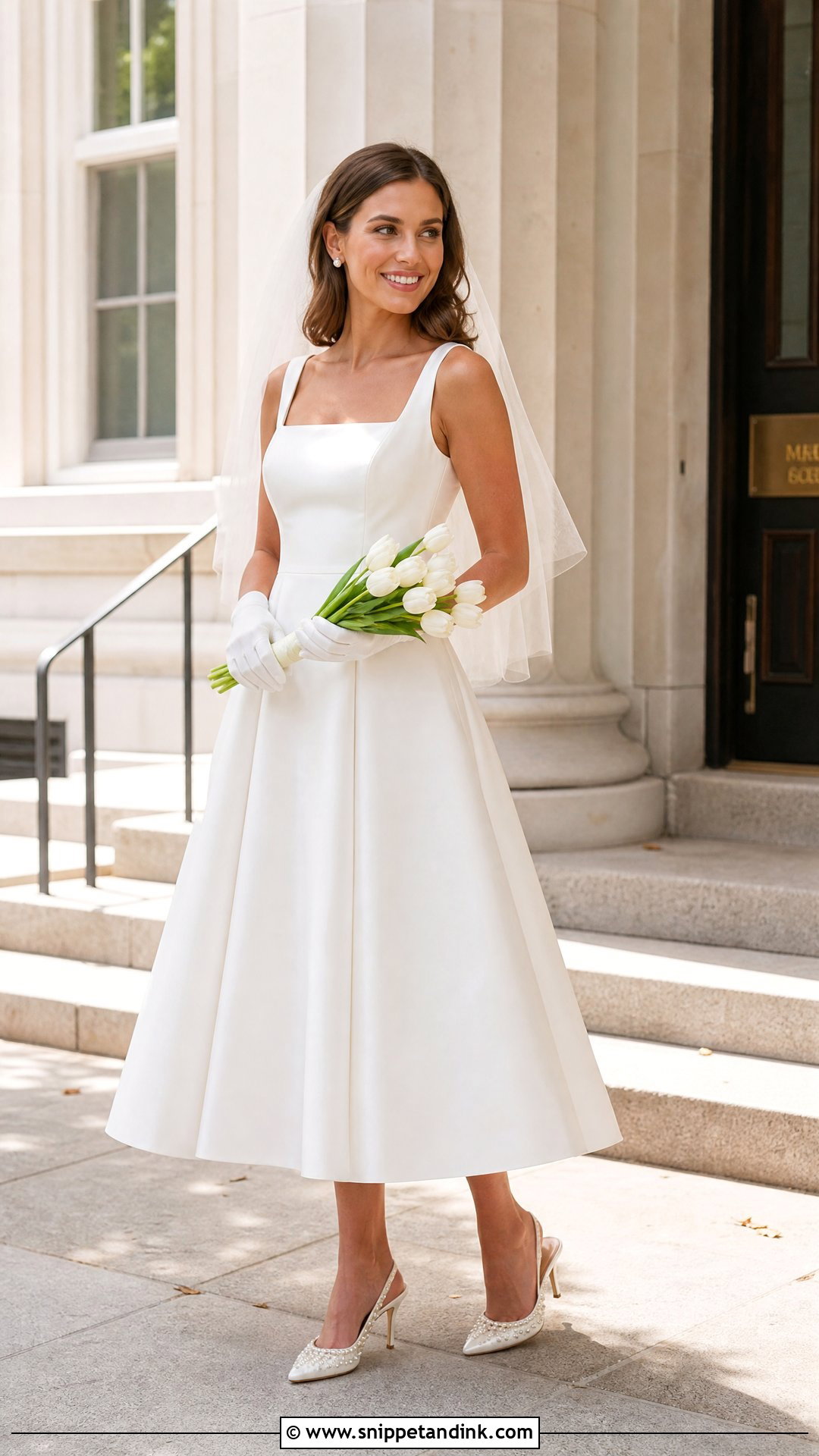
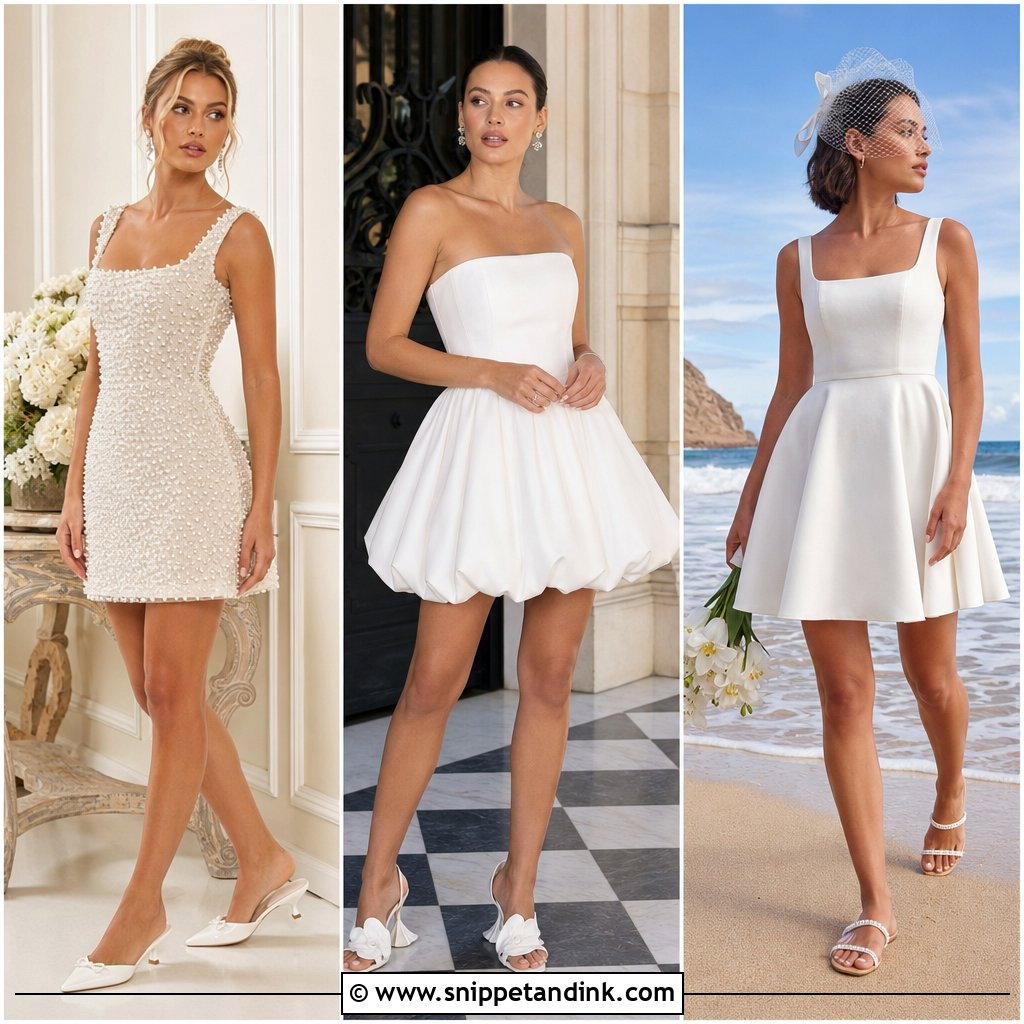
Tea length puts your shoes on display and gives the gown a light, vintage feel. The hem falls between knee and ankle, which makes walking and dancing easy. A fitted bodice with a square, bateau or off-shoulder neckline over a gently flared skirt is the classic build, and a structured silk keeps the shorter skirt from collapsing in photographs. Choose shoes worth seeing: pointed slingbacks, embellished pumps or polished block heels. Pearl studs, short gloves and a shoulder-length veil suit the mood, but stop there or it tips into costume. Carry small white tulips or roses with neat stems.
19. Backless Silk Bridal Gown
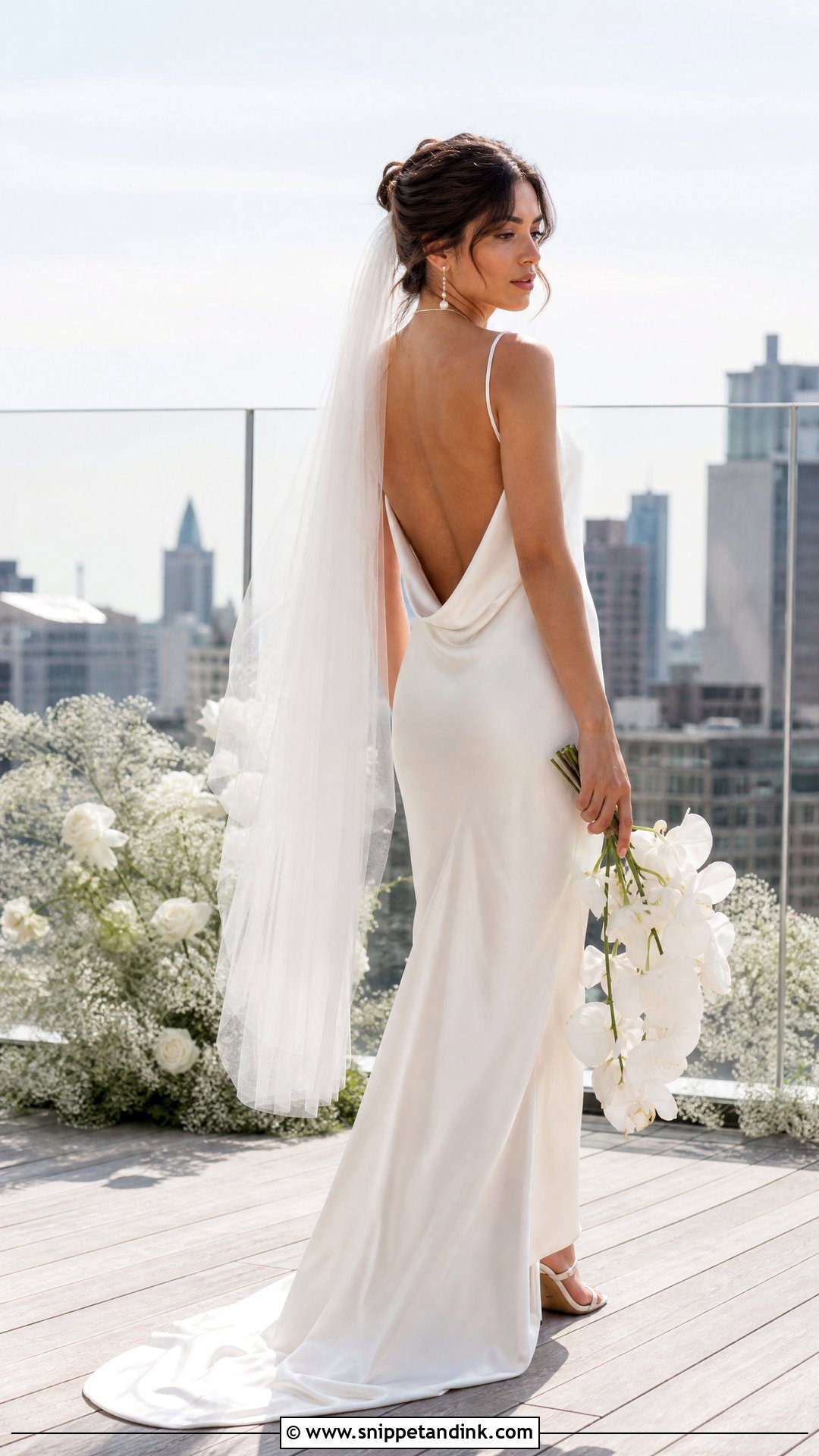
A bare back draws eyes from the processional to the last photo. Cowl, low-V and open square backs all work, as long as straps are secure and the internal structure carries the bust. A column or bias-cut skirt suits the open back without adding volume. Wear the hair in a bun, ponytail or side-swept waves so the design shows. Delicate drop earrings, a fine back necklace if you like, and slim ivory sandals complete it, with loose white orchids or calla lilies. A sheer veil can frame the back during the vows and come off later. In fittings I have you walk, sit and lift your arms, because an open back reveals any shifting instantly.


20. Silk Bridal Gown With Pearl Details
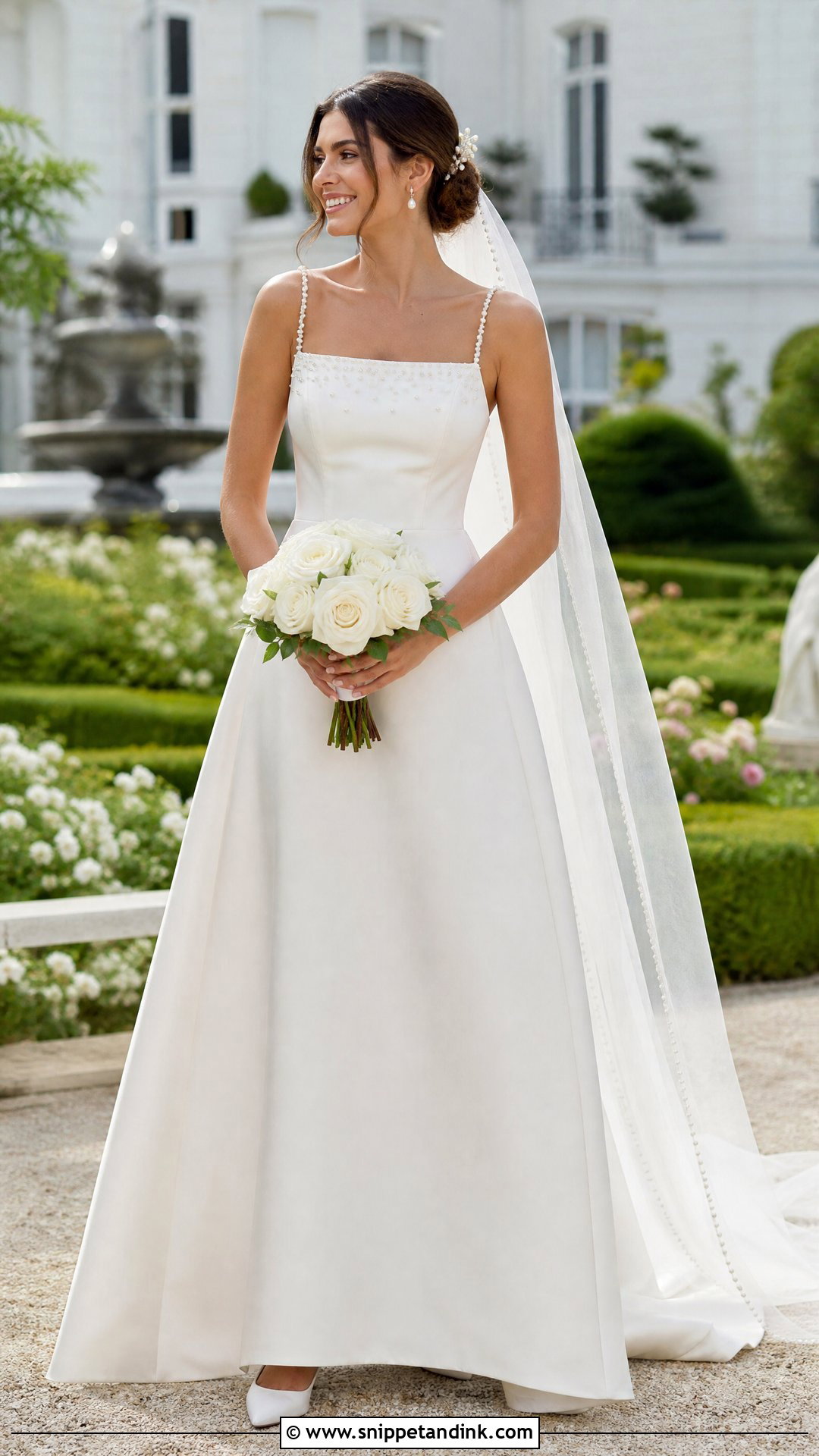
Pearls add dimension to silk without hiding its sheen. I prefer them scattered along the neckline, buttons, straps, waist or train, not covering the whole dress, on a simple A-line, column or fit-and-flare. Echo them lightly: pearl earrings and a single pearl hairpin, not several decorated pieces at once. Satin pumps and a sheer veil edged with a few pearls finish it, with white roses and fine greenery. One practical point: hand-sewn pearls can snag a lace veil or catch on a bracelet, so I check where they sit against your arms and hair. Ballrooms, garden estates and coastal venues all suit it.
Silk Remembers Every Pin, So Plan Alterations Carefully
The thing seamstresses warn about with silk is that it keeps a record. Needle holes and pin marks can stay visible, especially on satin, and an old seam line often shows after it’s been let out. That changes how I plan fittings.
Order closer to your larger measurement
Taking a silk gown in is routine. Letting it out is risky, because the original stitching line may show through on the face of the fabric. If you’re between sizes, order the larger one and let the tailor work down.
Give it extra time
Silk slips under the machine foot and is often hand-finished, so alterations take longer than on structured synthetics. I suggest starting fittings roughly two to three months before the wedding, with a final check about two weeks out, and leaving room for an extra appointment if the fabric needs re-pressing.
Bring the real pieces
Wear your actual shoes and undergarments to every fitting. A hem pinned with the wrong heel height has to be re-pinned, and every extra pin on silk is one more mark the seamstress must hide.
A Gown You Can Sit, Dance and Breathe In
A good silk gown looks right from every side and still lets you move, sit, walk and celebrate the way you plan to. You’ve seen slips, ball gowns, sculpted waists, removable layers and modern necklines here, and each suits a different venue and bride. Start by trying different silhouettes, including ones that look unpromising on the hanger. Then weigh fabric, support, alterations, shoes, veil length, jewellery and the season. If real silk matters to you, read the fibre content on the label, because satin is the name of a weave and can be polyester. Careful fittings and a light hand with accessories take care of the rest.
You'll Like These Ideas:




Leave a Reply