
Some brides walk into a fitting knowing they want a skirt with real volume. Others already suspect they’ll feel more like themselves in trousers and a jacket. Most of the people I dress sit somewhere in between, so the gowns and suits below sit side by side on purpose: classic silhouettes, bridal separates, short reception changes and tailored alternatives, each with the shoes and accessories I’d put with it. I always ask about the floor you’ll stand on, the season and how much you plan to dance before we look at a single hanger. And fit decides more than fabric ever will. A plain crepe dress that has been taken in properly looks more expensive than a heavily beaded one that gapes at the back.
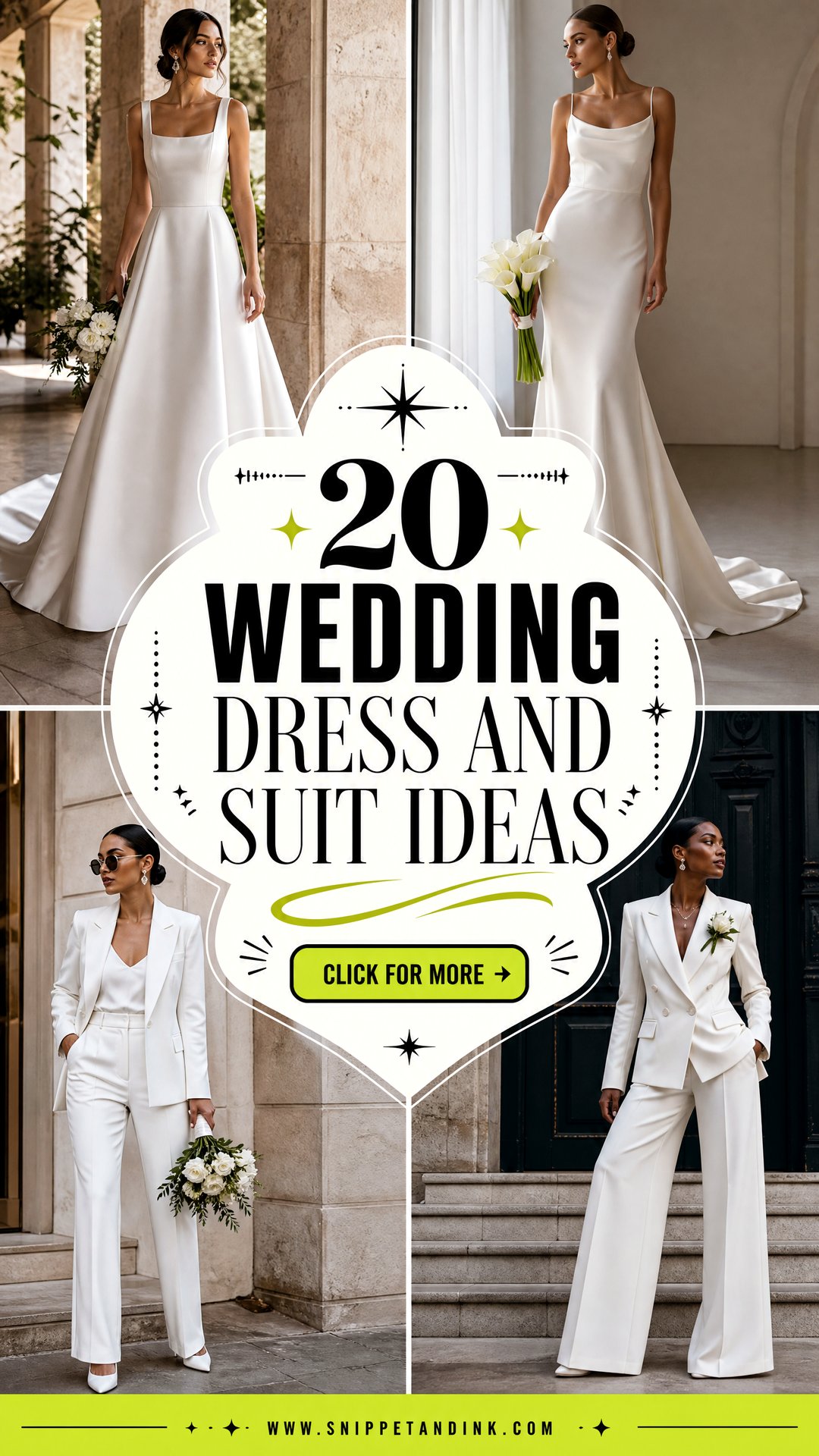
How Alterations Differ for a Gown and a Suit
A wedding gown and a wedding suit both need a tailor, but they are altered in very different ways, and the timing catches people out. A gown usually takes two or three fittings. I like the first one about two to three months before the wedding, once the dress has arrived, because boned bodices, bustles and lace hems take real hand work. A suit is quicker to adjust, but trousers can’t be hemmed until you’ve chosen your shoes, and jacket sleeves are only finished once the shoulders are right.
Bring the same things to every fitting, whatever you’re wearing:
- The exact shoes, or shoes with the same heel height. A half inch changes where a hem breaks.
- The bra, bodysuit or shapewear you’ll wear on the day. Swapping it later changes how the bodice or shirt sits.
- Your veil, cape or jacket if they layer over the main piece, so the fitter can check weight and attachment points.
- Someone who will be helping you dress, so they learn the bustle, the buttons and any hidden snaps.
Expect the last fitting about two weeks before the wedding. Weight shifts a little in the final month for most people, and a fitter would rather take in a seam than let one out at the last minute.
1. Strapless Satin Ball Gown Wedding Look
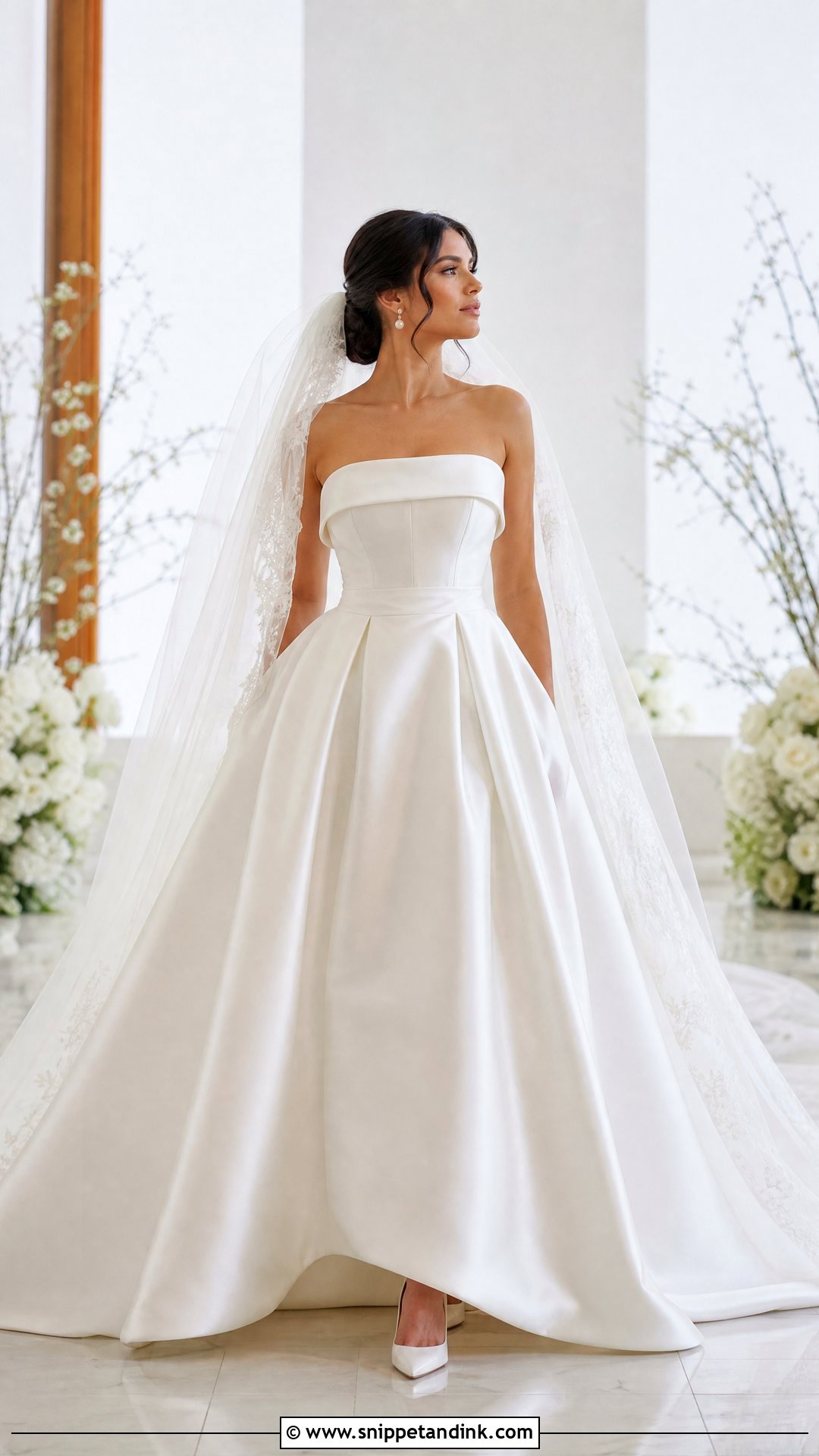
A strapless satin ball gown has presence the moment you walk in, but only if the bodice is doing the work. I check for internal boning and a waist stay, because a strapless top held up by tension alone slides down by the first dance. A natural or basque waist gives the skirt a clear starting point, and well-pressed pleats keep heavy satin from collapsing into folds. Pointed ivory pumps, pearl drops and a fingertip or cathedral veil suit it. If you want coverage for a religious ceremony, a removable bolero keeps the gown itself unchanged. Keep the hair low and polished so the neckline stays the focus.
2. Square Neck A-Line Wedding Dress
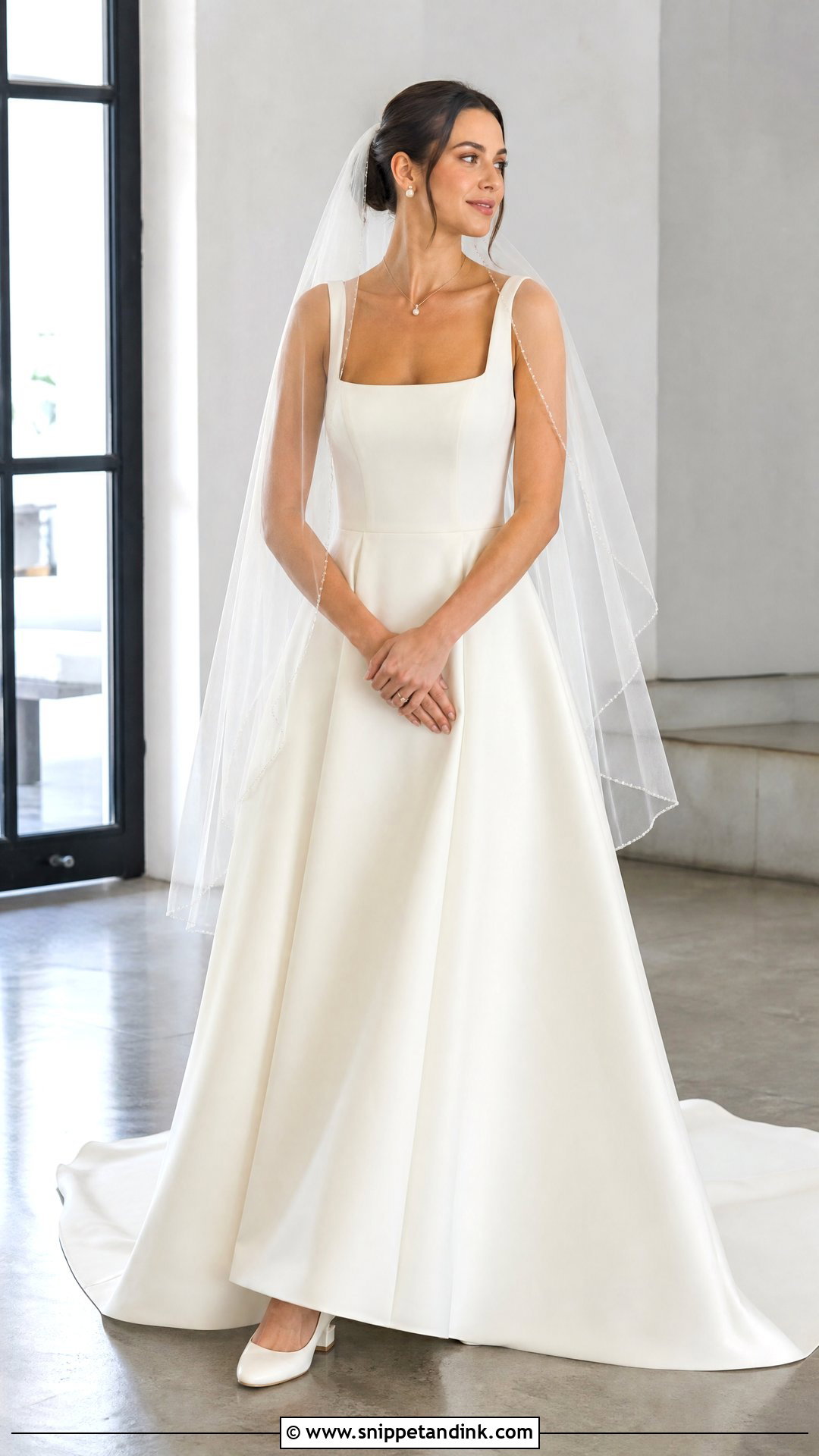
A square neckline frames the collarbone without exposing much, which is why I reach for it when a bride wants structure but not a corset feel. The bodice fits closely and the A-line skirt releases at the waist, so it never clings at the hip. Matte satin, mikado or crepe all hold the shape cleanly. I’d pair it with low block-heel pumps, small pearl studs and a chapel veil. For a cold month, a fitted long-sleeve topper sits over the bodice without hiding the line. Keep the bouquet compact here; an oversized cascade swallows such a clean neckline.
3. Long Sleeve Lace Wedding Dress
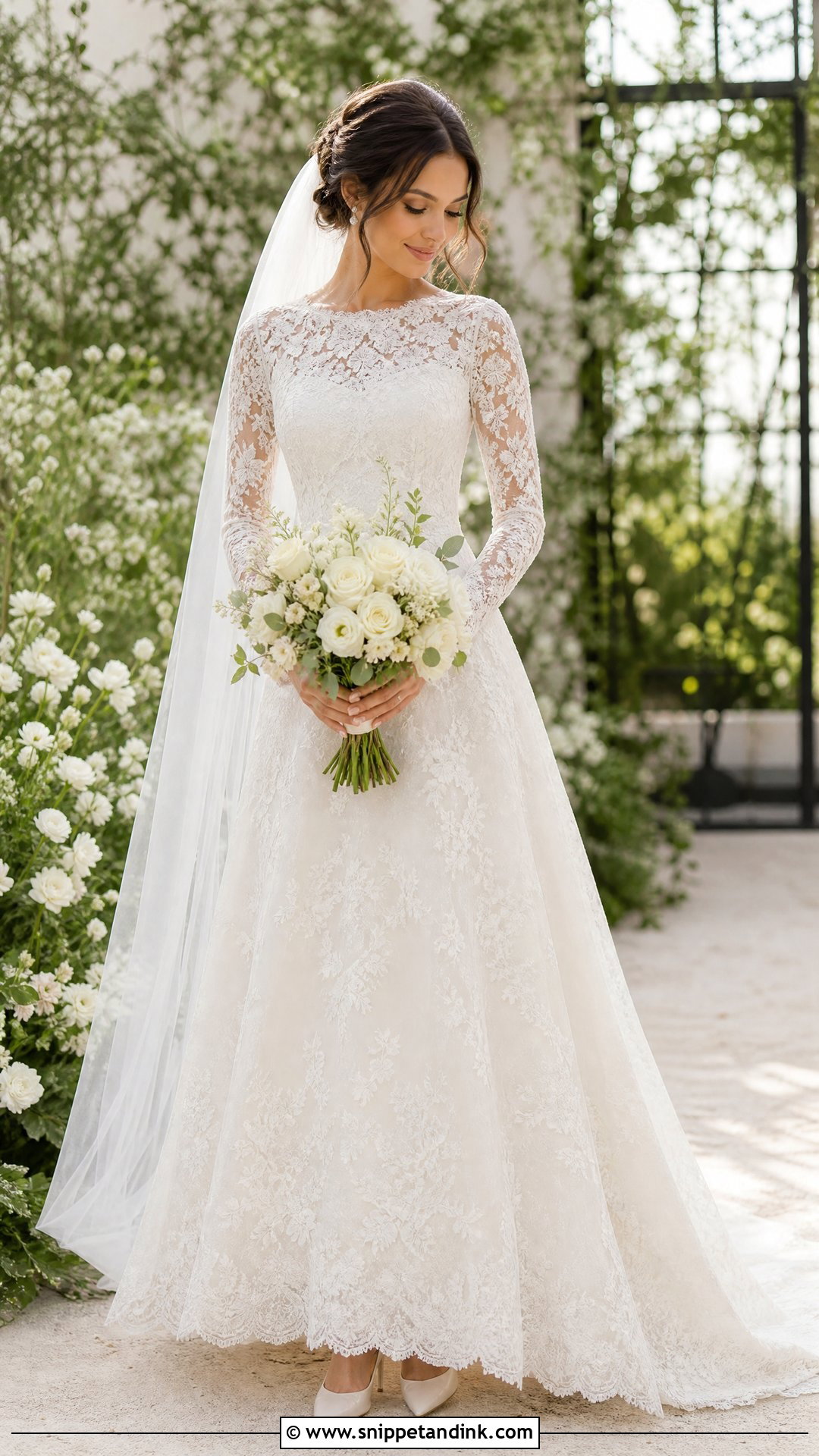
Lace already carries the detail, so a long-sleeve lace dress rarely needs extra sparkle. What I look at first is the sleeve: lift both arms over your head in the fitting room. If the lace pulls tight across the back or rides up the forearm, it needs more ease at the underarm, and that’s easier to fix before the hem is done. A lined bodice and an A-line or softly fitted skirt keep the pattern from looking busy. Closed-toe ivory heels, a simple comb and plain studs are enough, with a tulle veil that has a clean cut edge rather than a lace border competing with the dress. Illusion sleeves are a lighter option if full lace feels warm. Leave the cuffs and shoulders for the final fitting, because lace stretches slightly with wear.
4. Basque Waist Corset Wedding Dress
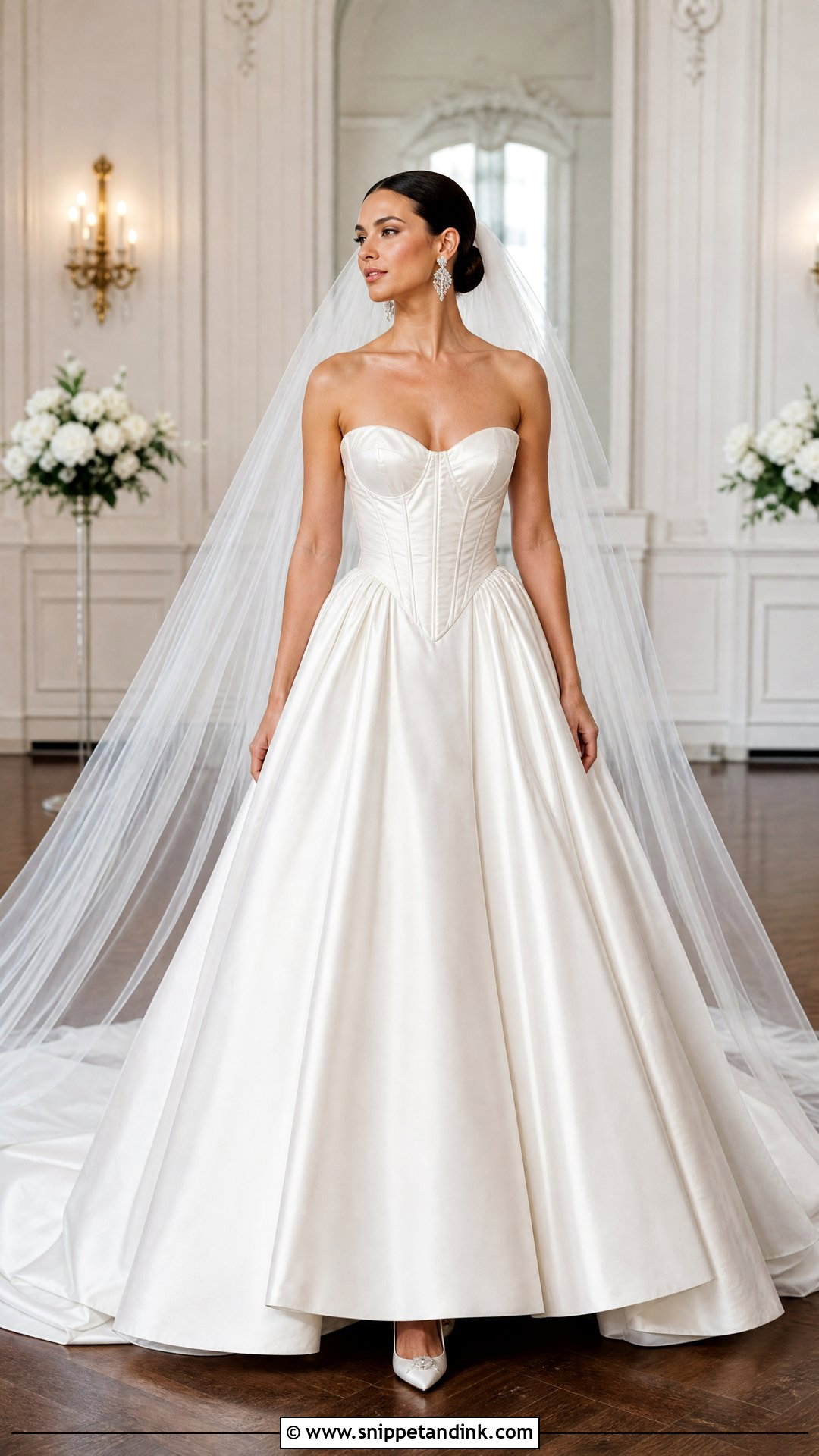
The basque waist dips to a point at the centre front, which visually lengthens the torso before the skirt opens out. It’s flattering on most shapes, but the corset has to be built properly. I want to see spiral steel or good synthetic boning, a smooth lining and enough flex to sit down and eat. If you can’t take a full breath in the fitting room, it’s too tight, no matter how small the waist looks. Satin pointed heels continue the long line, and small crystal earrings add light near the face. A cathedral veil works, or skip it and wear a low bun with a decorative comb.
5. Minimalist Crepe Column Wedding Dress
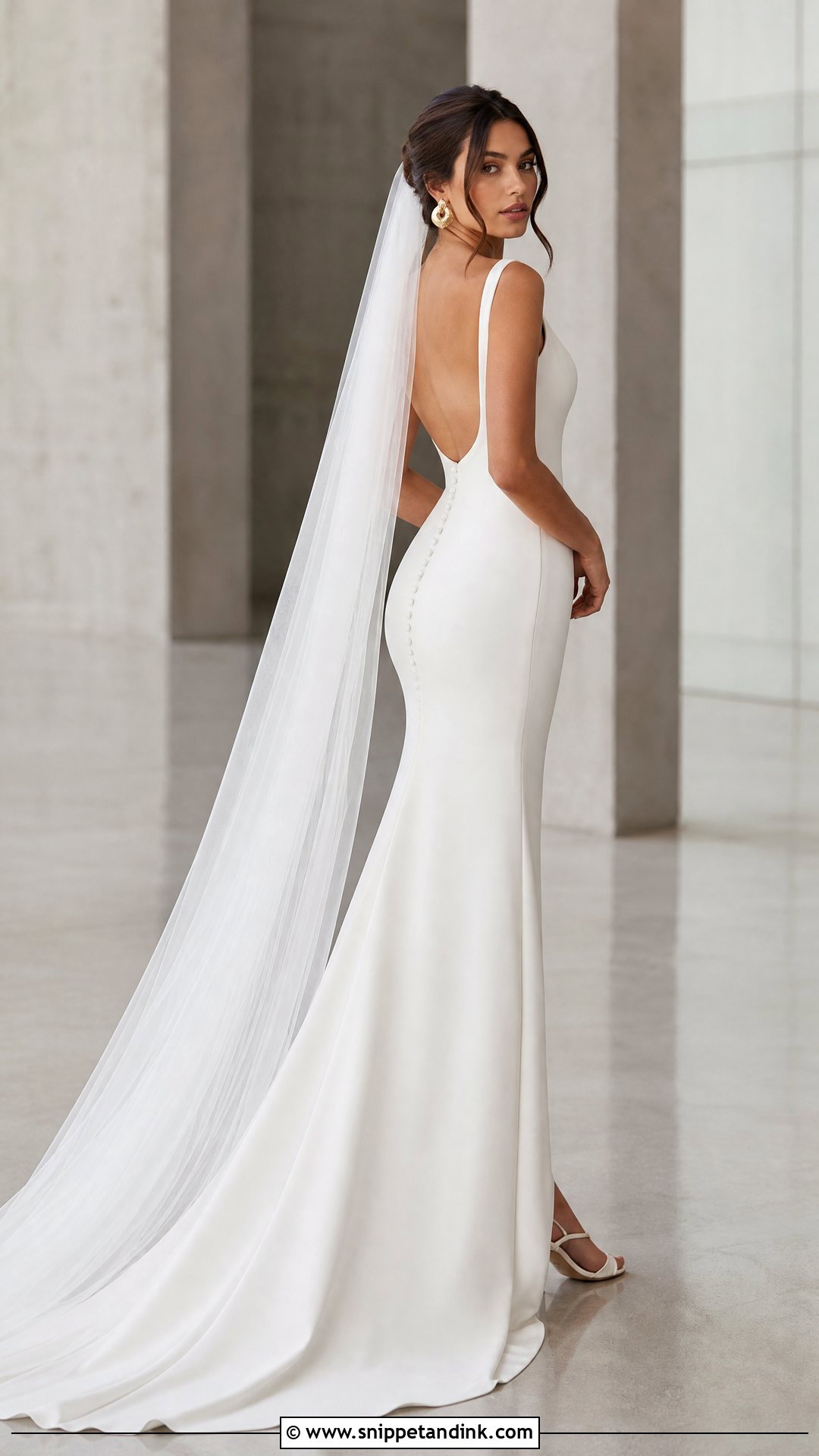
Crepe hides nothing. On a minimalist column dress every seam, every pressing mark and every undergarment line shows, so this is the gown where I’m strictest about tailoring and about smooth, skin-tone shapewear. A back slit or a slight flare at the hem matters more than people expect: without one, a true column only lets you take small steps on stairs. Bateau, scoop or high necklines all suit the clean construction. Slingbacks, sculptural earrings and a sleek low bun keep it modern, and a long unembellished veil gives it movement. If the back is open, a fine back necklace does more than a pendant at the front.
6. Off Shoulder Mermaid Wedding Dress
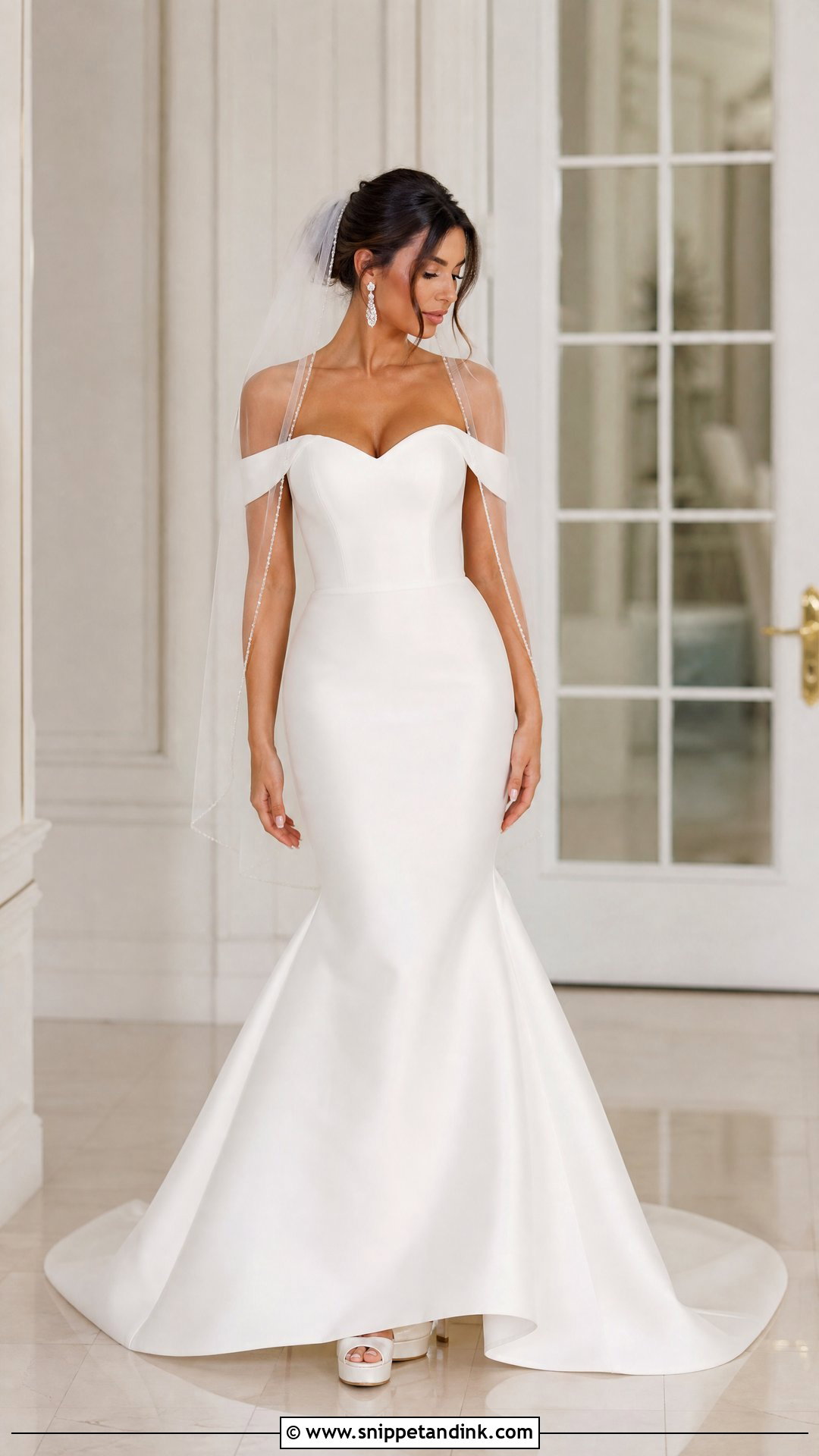
Mermaid gowns are the ones I see brides struggle to walk in, and almost always it’s because the flare starts too low. A skirt that opens around the knee gives you room to climb steps and sit at dinner; one that flares mid-calf locks your stride. The off-shoulder band should grip the upper arm securely while still letting you hug people. Platform heels add stability on a fitted hem, with sparkling drops and a comb above a low chignon. A plain fingertip veil stops the shape from looking crowded. Practise walking in the finished, hemmed dress, and ask for a hidden bustle so the train lifts cleanly for dancing.
7. Tea Length Wedding Dress
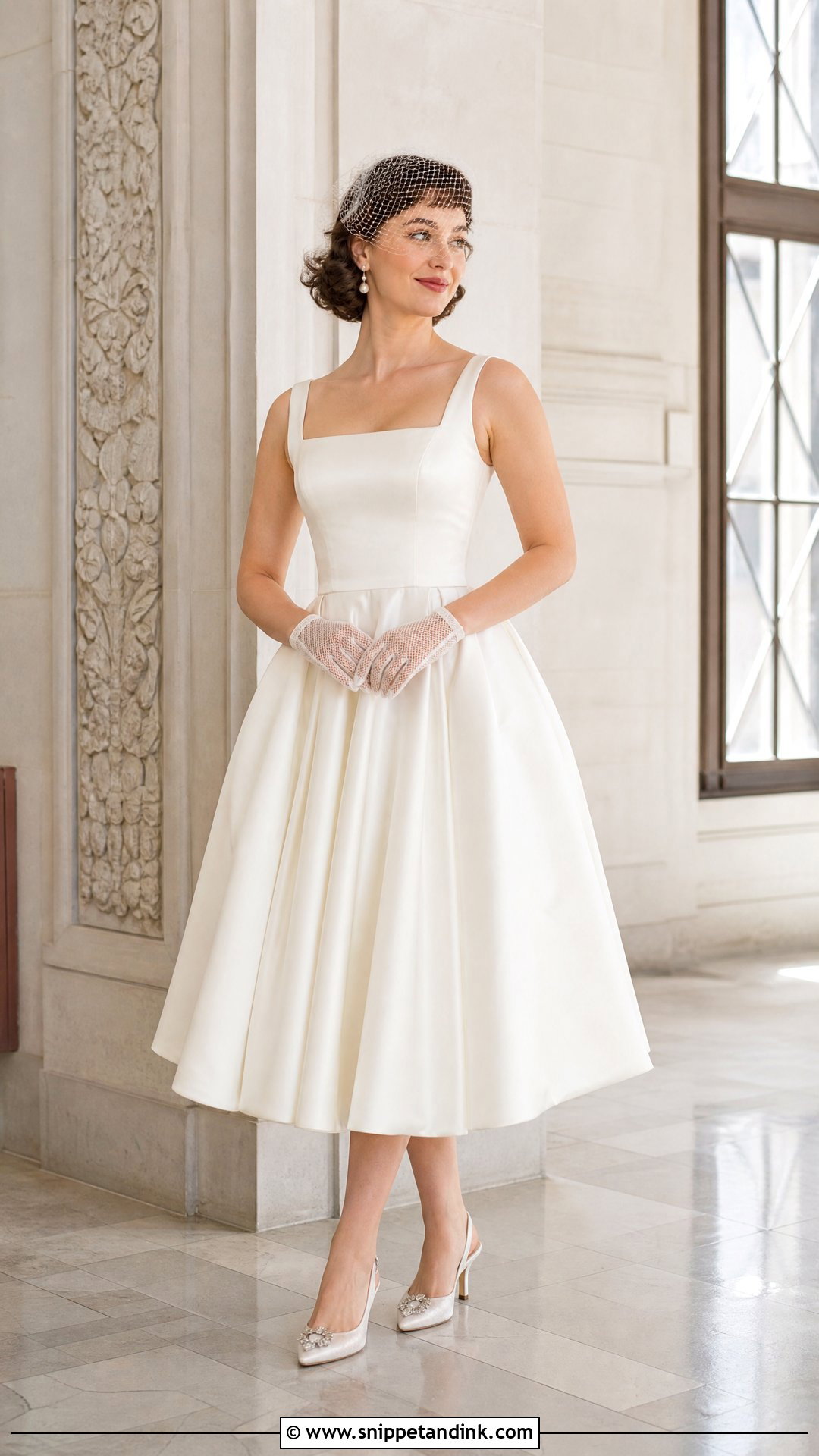
Tea length puts your shoes in every photograph, so I fit the hem only once the actual shoes are on. The skirt should land between the lower calf and the ankle with enough volume to move. Satin, organza and embroidered tulle all hold the shape. Pointed pumps or slingbacks suit a smooth floor; on grass or gravel, embellished block heels are the kinder option. Pearl earrings, short gloves and a birdcage veil take it toward the 1950s, while plain accessories keep it current. A cropped jacket adds coverage without breaking the defined waist.
8. Floral Appliqué Wedding Dress
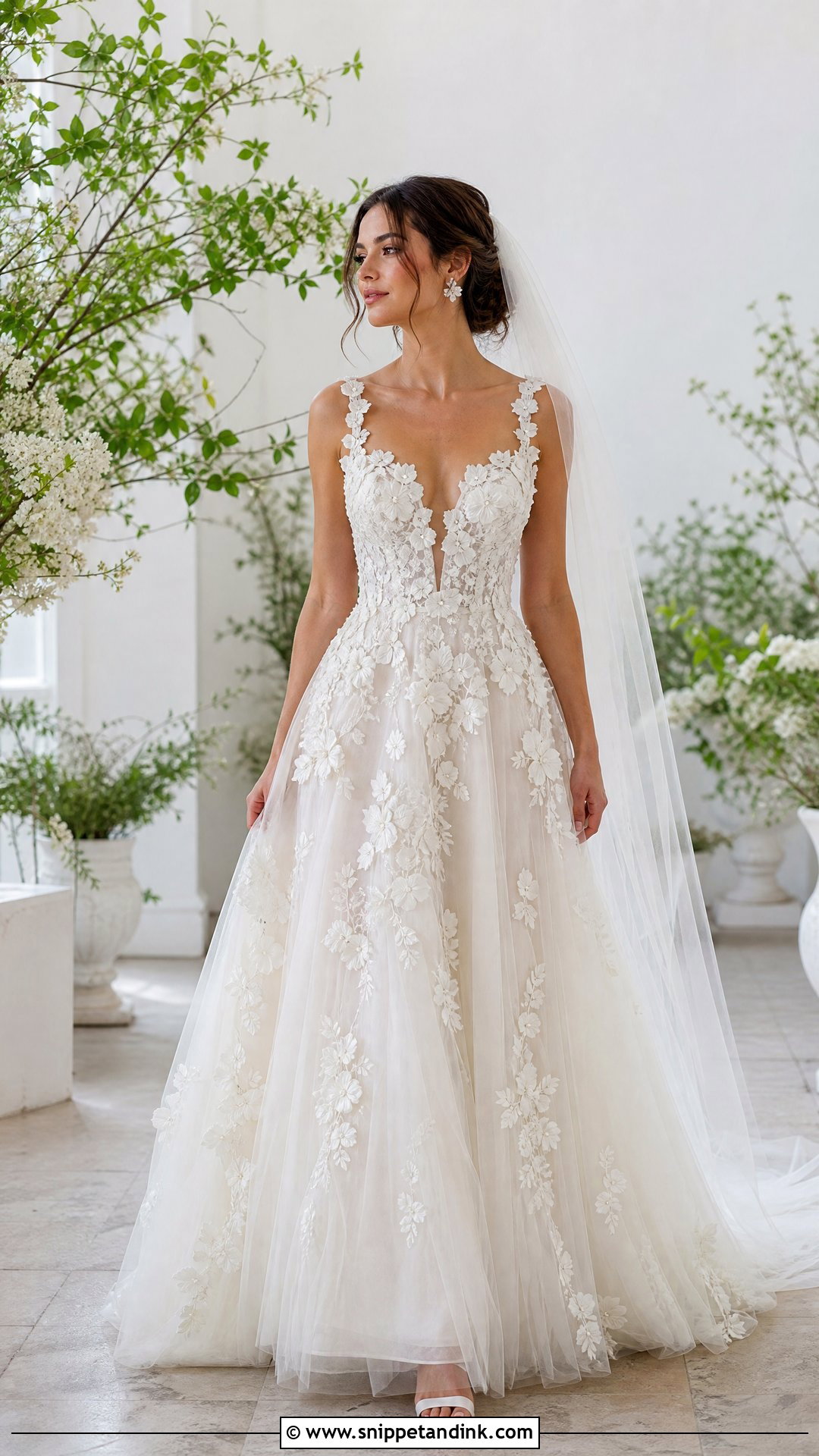
Three-dimensional flowers look best when they gather in one zone, such as the bodice, the sleeves or a trail down the skirt, instead of covering every inch. That restraint keeps the silhouette readable from across a room. The practical problem I watch for is snagging: raised petals catch on veil edges, bracelets and bouquet wire, especially at the shoulders and waist. Run your veil over the appliqué during the fitting. Simple satin heels, small floral earrings and a plain tulle veil are enough, and if the flowers carry beads, I’d keep other jewellery almost bare. Soft waves or a relaxed updo suit the mood better than a sleek bun.
9. Cape Sleeve Wedding Dress
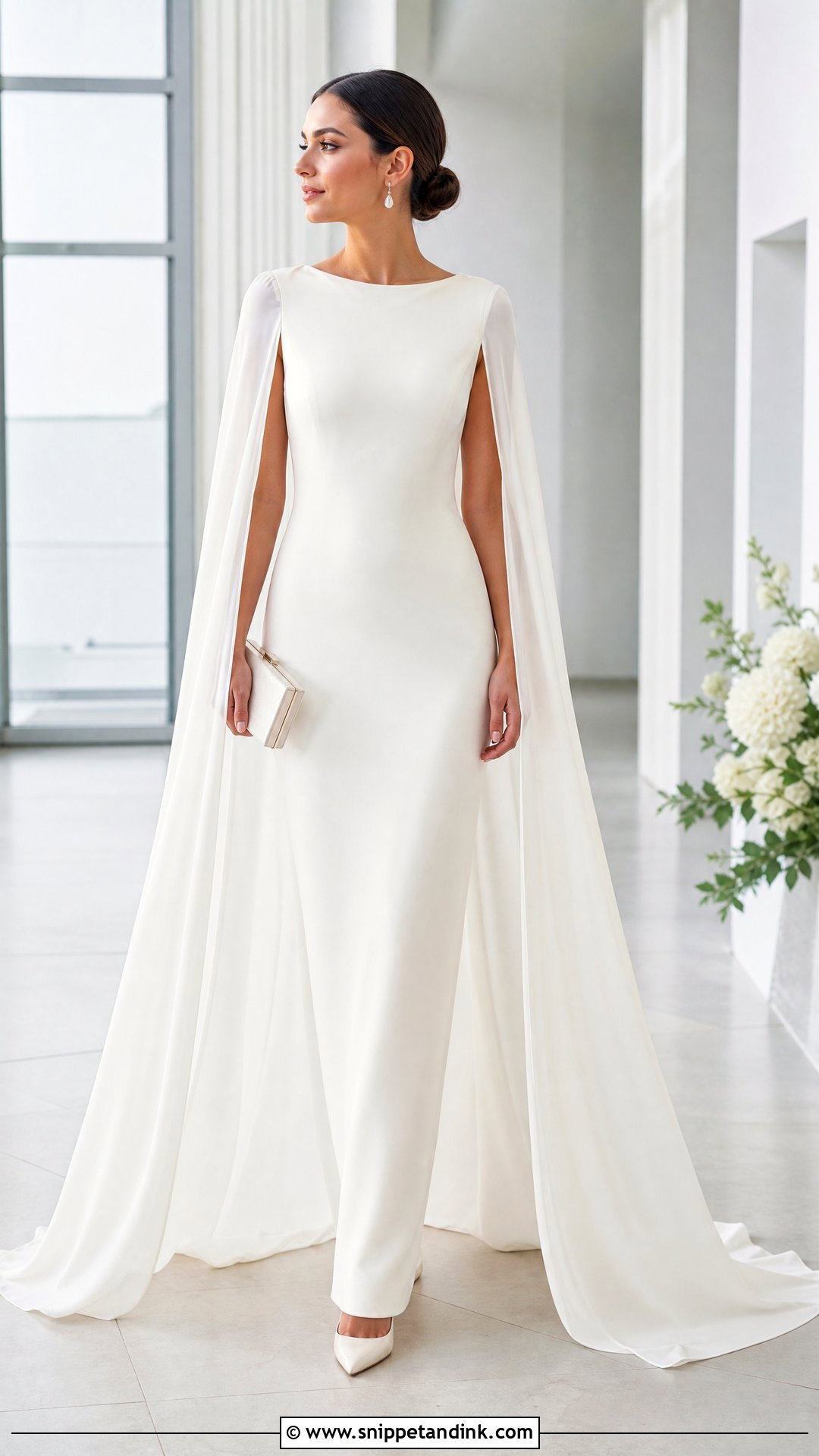
A cape sleeve gives coverage and movement at once, and it can replace a veil entirely. It needs a quiet base: a clean column, A-line or lightly fitted gown so the cape stays the main feature. Chiffon floats and moves in wind; crepe or satin holds a more sculpted line. I keep the hair low and tidy, because a high bun pushes the fabric into creases at the back of the neck. Pointed heels, sleek earrings and a structured clutch finish it. If the cape reaches the floor, plan how it detaches or hooks up before the reception, or someone will step on it.
10. Short Reception Wedding Dress
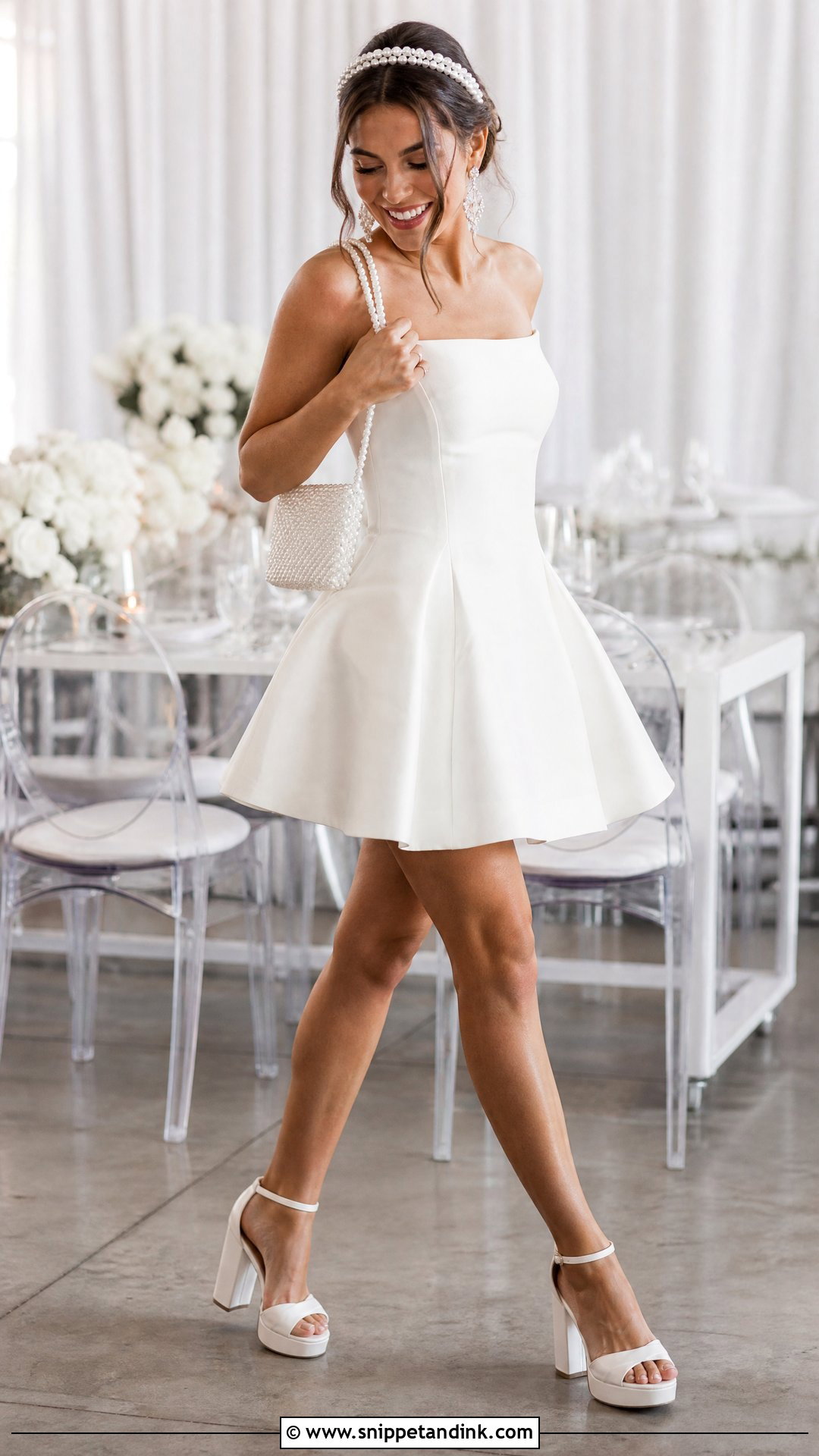
A short reception dress is about freedom: you can sit, dance and climb into a car without anyone holding your train. Secure straps and a supportive lining matter more here than on a long gown, since there’s nothing hiding a slipping strap. A fitted shift, a flared skirt or a feather-trimmed hem all read as bridal in white. Low platform heels, crystal earrings and a small shoulder bag keep it light, and a bow, short veil or pearl headband marks it as a wedding look. If the ceremony gown is dramatic, repeat one detail, such as satin, lace or pearls, so the two outfits feel connected. Fitted shorts underneath help on a dance floor, and a pair of flats in your bag saves the evening.
11. White Tailored Wedding Pantsuit
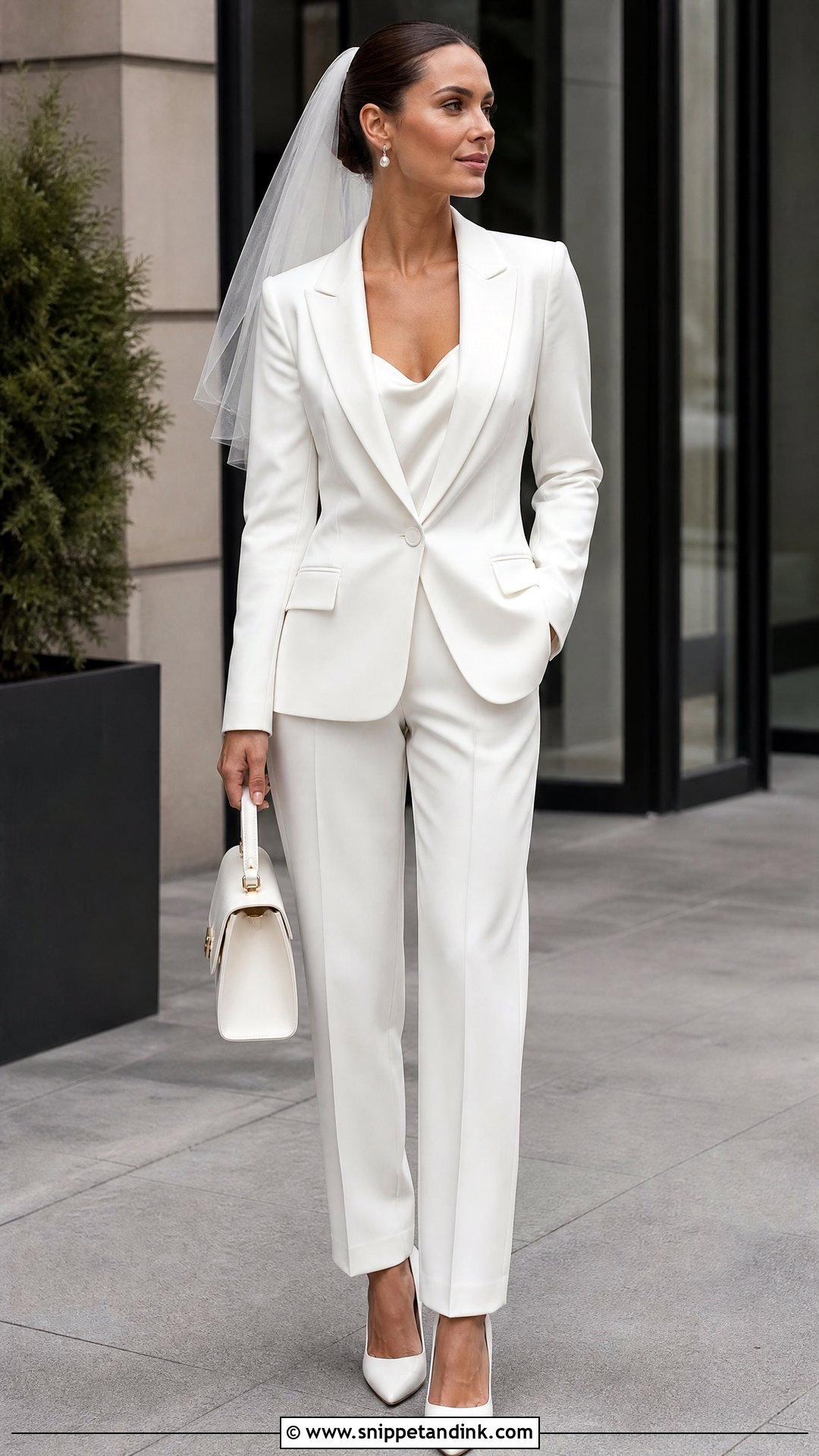
Crisp tailoring is what turns a white wedding pantsuit into a bridal outfit instead of office wear. I’d spend the alteration budget at the shoulders first, because a jacket that’s wrong there can’t really be fixed, then the waist, sleeves and trouser hem. Single-breasted with lightly defined shoulders is the easiest cut to wear. Straight legs read classic; a subtle flare moves more when you walk. Underneath, a silk camisole, bodysuit or buttoned waistcoat all work. Pointed pumps, pearl earrings and a top-handle bag keep it sharp, and a short veil or sleek ponytail makes it unmistakably a wedding look. Wear the jacket closed for the vows and open later.
12. Ivory Double Breasted Wedding Suit
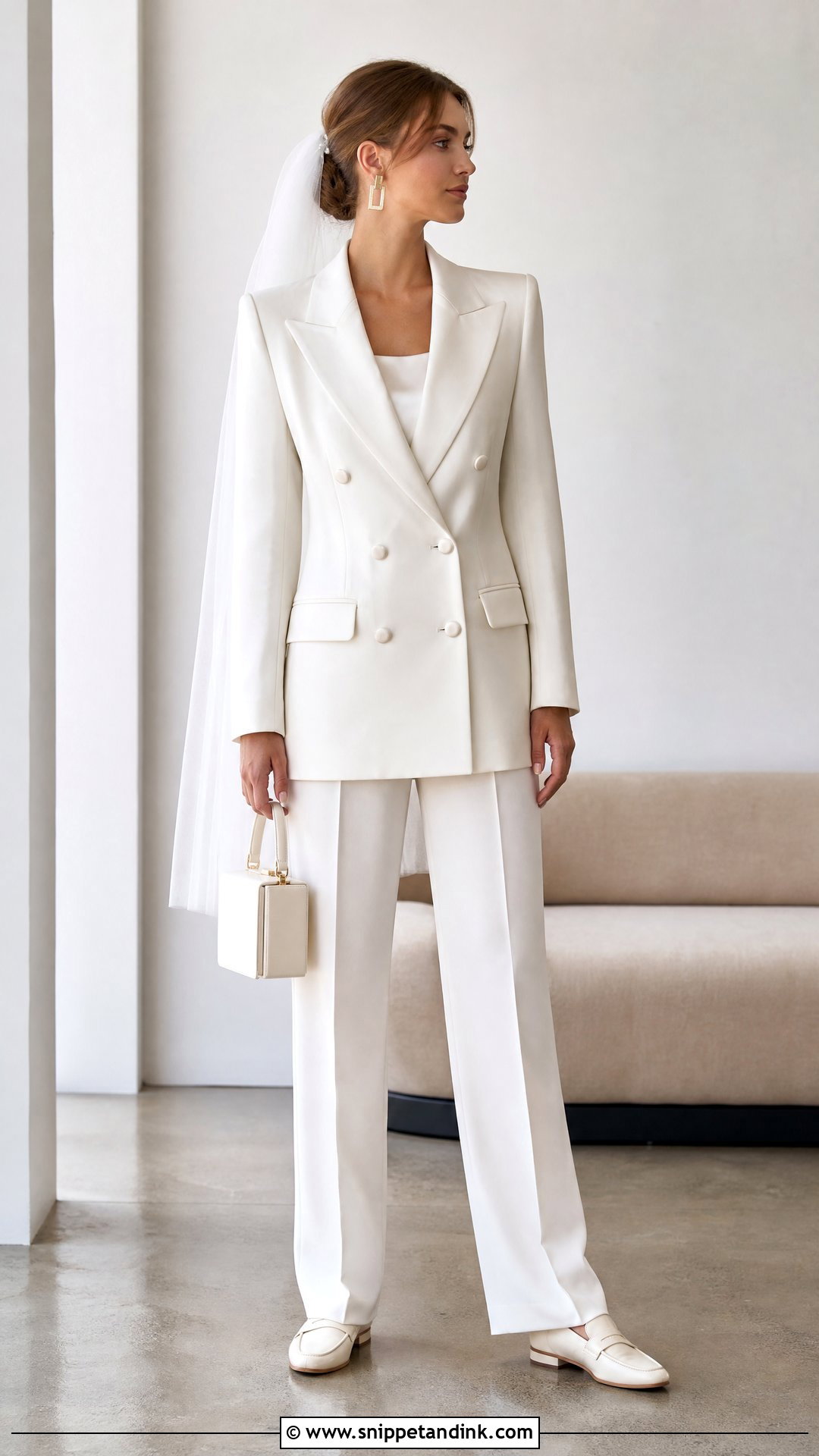
Double-breasted jackets are more formal and more structured than a relaxed blazer, but button placement makes or breaks them. Buttons set too wide make the torso look boxy; I look for a closing point at the natural waist. Straight or slightly tapered trousers and a satin shell in matching ivory keep the line long. Loafers ground it; pointed heels sharpen it. Geometric earrings, a small box bag and a low bun suit the mood, and a narrow tulle veil tucked under the bun softens it. Keep the trouser break minimal. If you buy pieces separately, hold them together in daylight, because ivories differ in undertone and the camera exaggerates the gap.
13. Satin Lapel Wedding Tuxedo
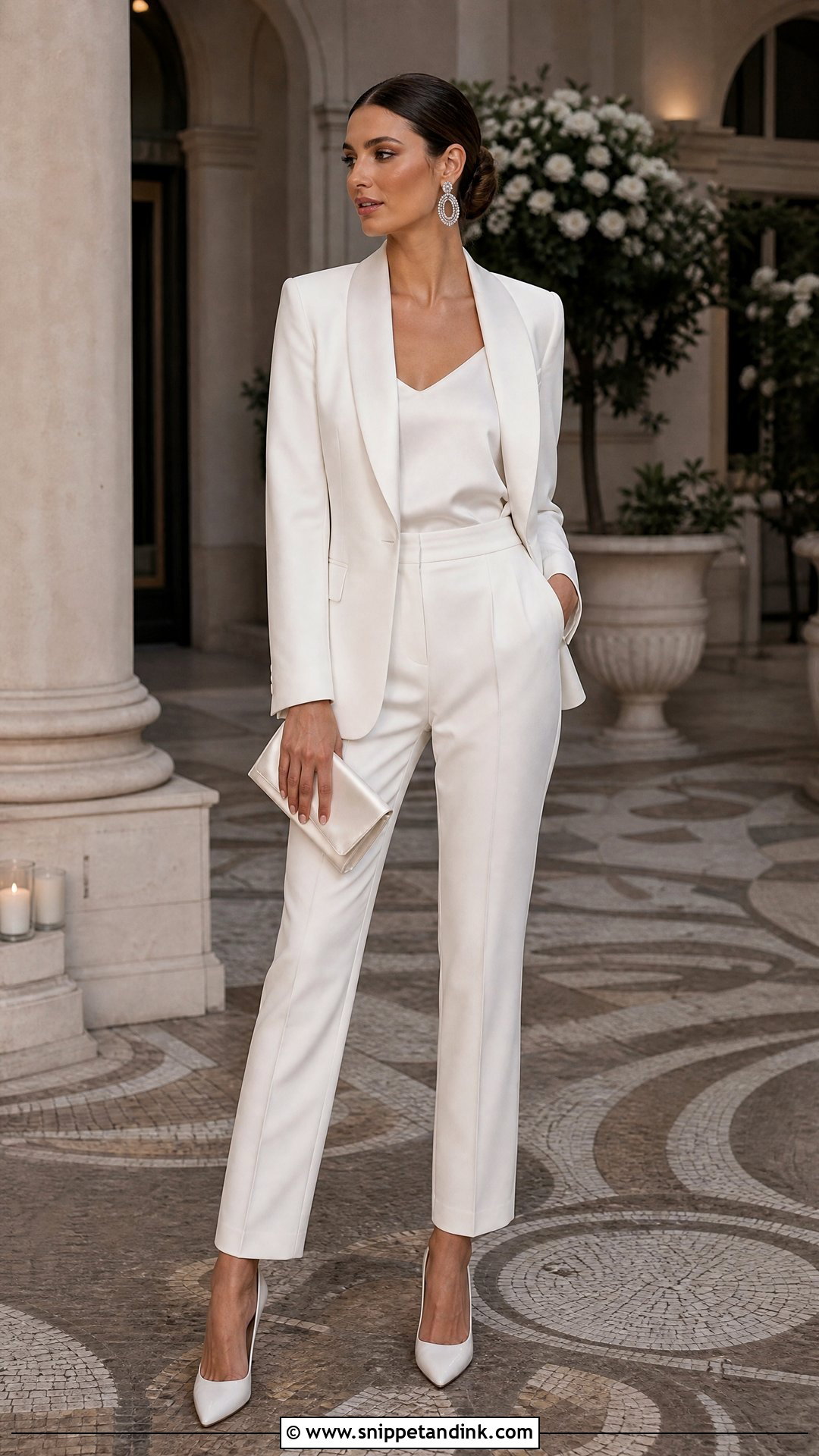
A wedding tuxedo with satin lapels is the most formal suit on this list, so it belongs at an evening reception or black-tie venue. Black, cream or tonal satin on a white or ivory jacket all work, with a clean satin side stripe on the trousers. A silk camisole underneath softens it; a crisp shirt and bow tie keep it traditional. The check I always do is the lapel: it should lie flat against the chest with the jacket buttoned. If it rolls or gapes, the jacket is pulling across the bust and needs letting out or a different size. Patent pumps, loafers or heeled ankle boots, one pair of statement earrings and a slicked bun finish it.
14. Wide Leg Wedding Suit
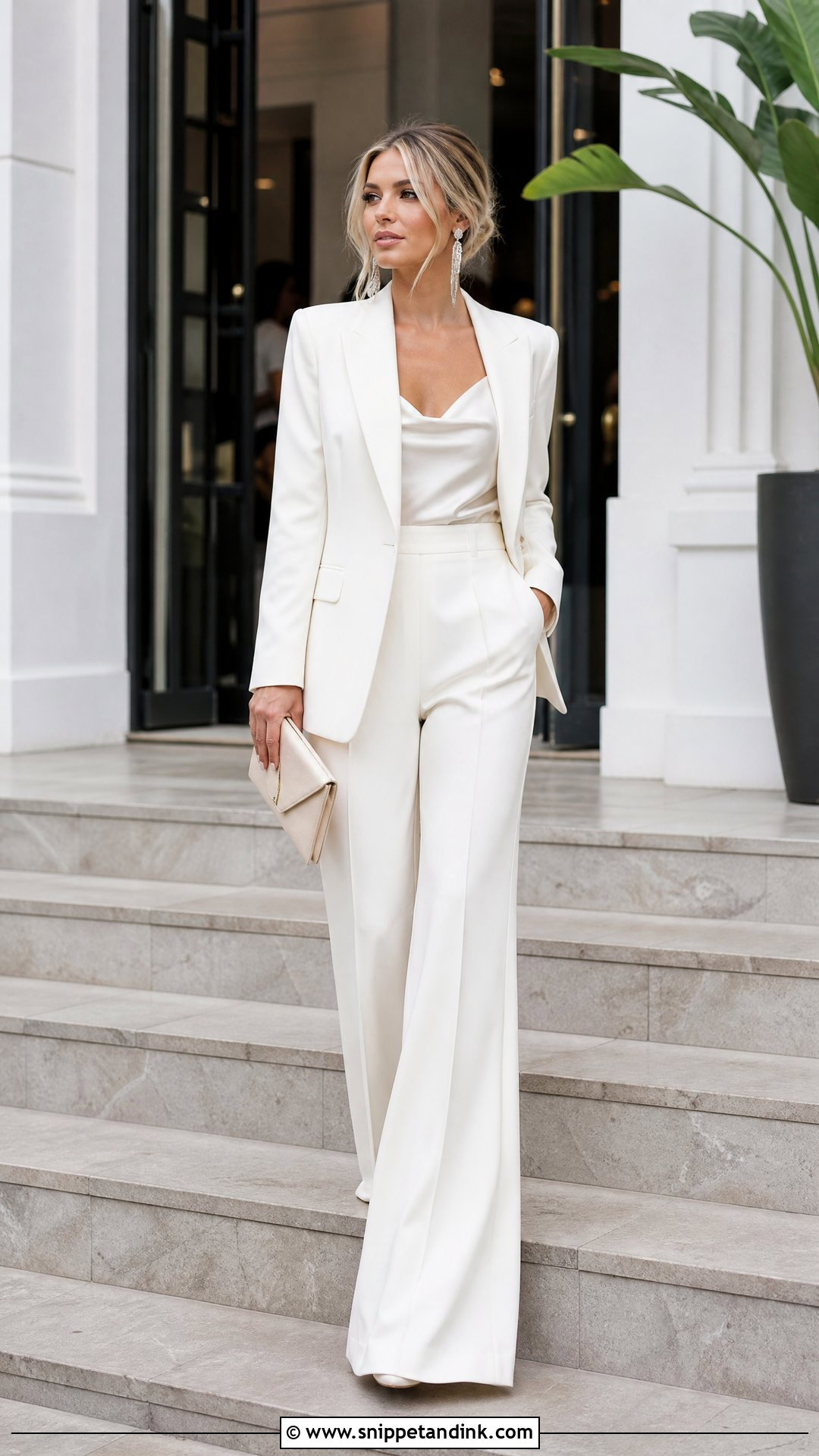
Wide legs are the most comfortable formal shape I fit, provided the rise is high enough. A wide-leg wedding suit should skim the waist and fall straight from the hip, with the hem almost touching the floor in your wedding shoes. That means platforms or heels must be chosen before the hem is cut. Balance the volume with a fitted blazer, cropped jacket or tucked silk top. Petite brides can wear this cut well once the rise, jacket length and hem are adjusted; it’s the off-the-rack proportions that swamp a smaller frame. Lightweight crepe moves; structured suiting holds a sharper crease. A sleek ponytail or low bun keeps the top half neat.
15. Vest And Trouser Wedding Suit
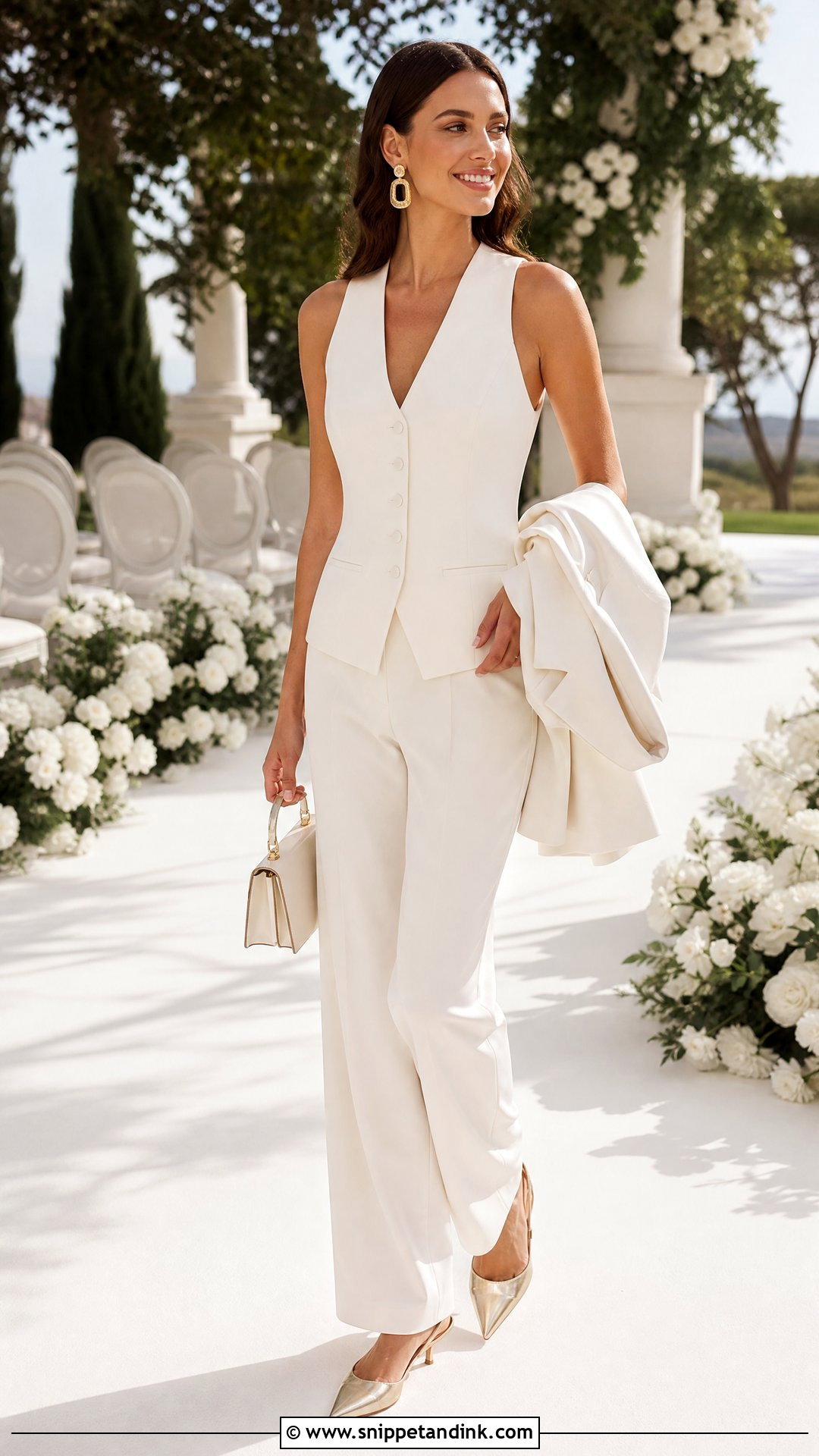
For summer heat or a change of outfit, a tailored vest and trouser wedding suit gives you sleeves-off comfort with a formal shape. I look at the armholes first: if they’re cut low, the side of your bra shows every time you raise a glass. A longline vest with a shaped waist and secure buttons sits best, paired with high-rise trousers. Metallic slingbacks, bold earrings and a structured mini bag suit it. Adding a blazer for the ceremony and removing it later gives you two looks from one outfit. Sit down in it during the fitting; a vest that pulls across the chest when seated needs more room. Fashion tape or small interior snaps keep the front flat.
16. Bridal Skirt Suit Wedding Look
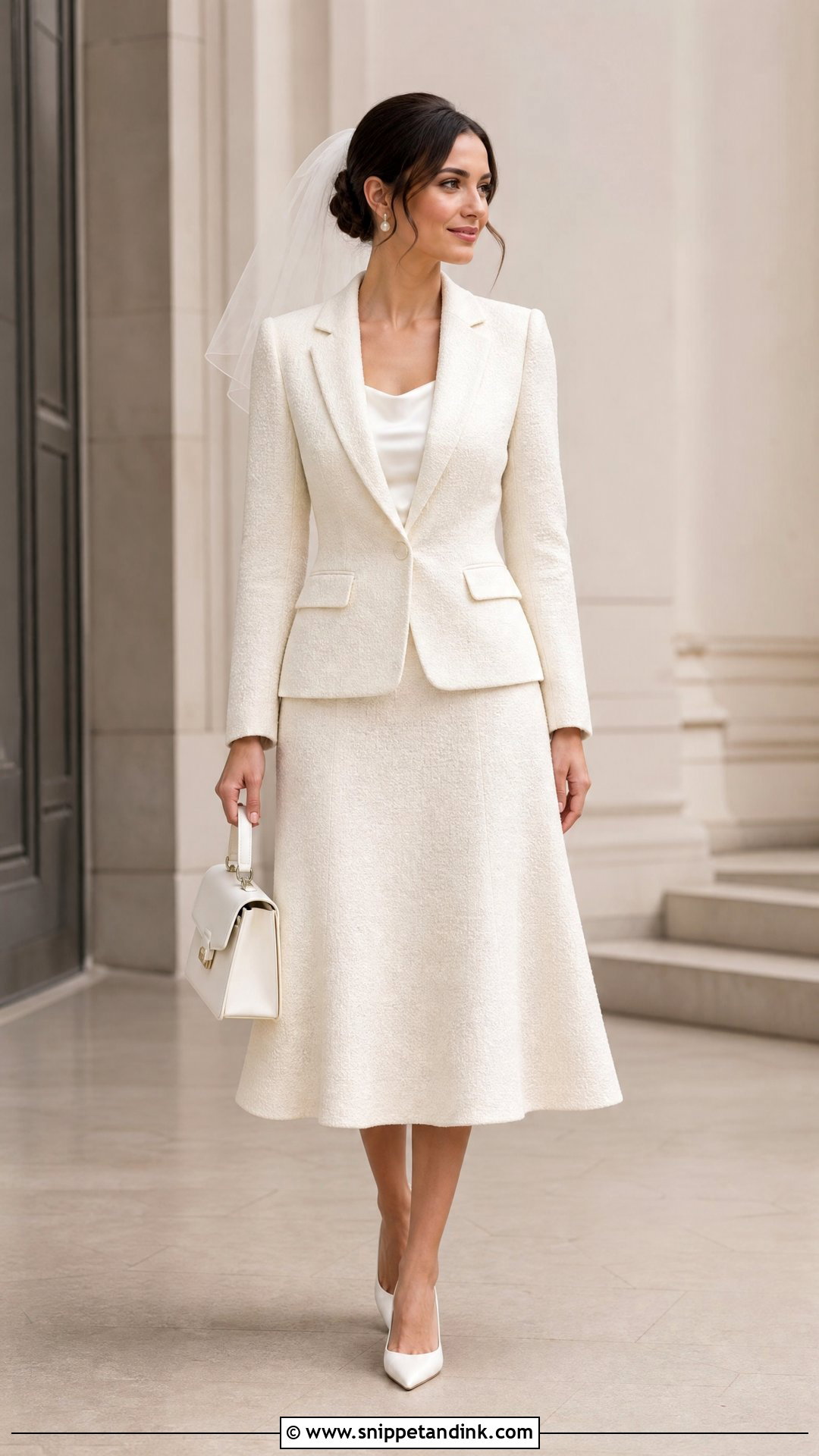
A skirt suit is quietly practical. It’s comfortable, it suits civil ceremonies and courthouse weddings, and many brides wear the jacket again. Proportion is the only tricky part: the jacket and skirt lengths should relate, or the body looks cut in half. A cropped jacket over a midi works; a hip-length jacket over a knee skirt works; a long jacket over a long skirt rarely does. Straight skirts look refined, while an A-line lets you stride. A silk shell, pointed pumps and pearl earrings keep it classic, and a small hat or short veil marks it as bridal. Bouclé softens it and crepe keeps it sleek; a belt is usually unnecessary.
17. Cropped Blazer Wedding Suit
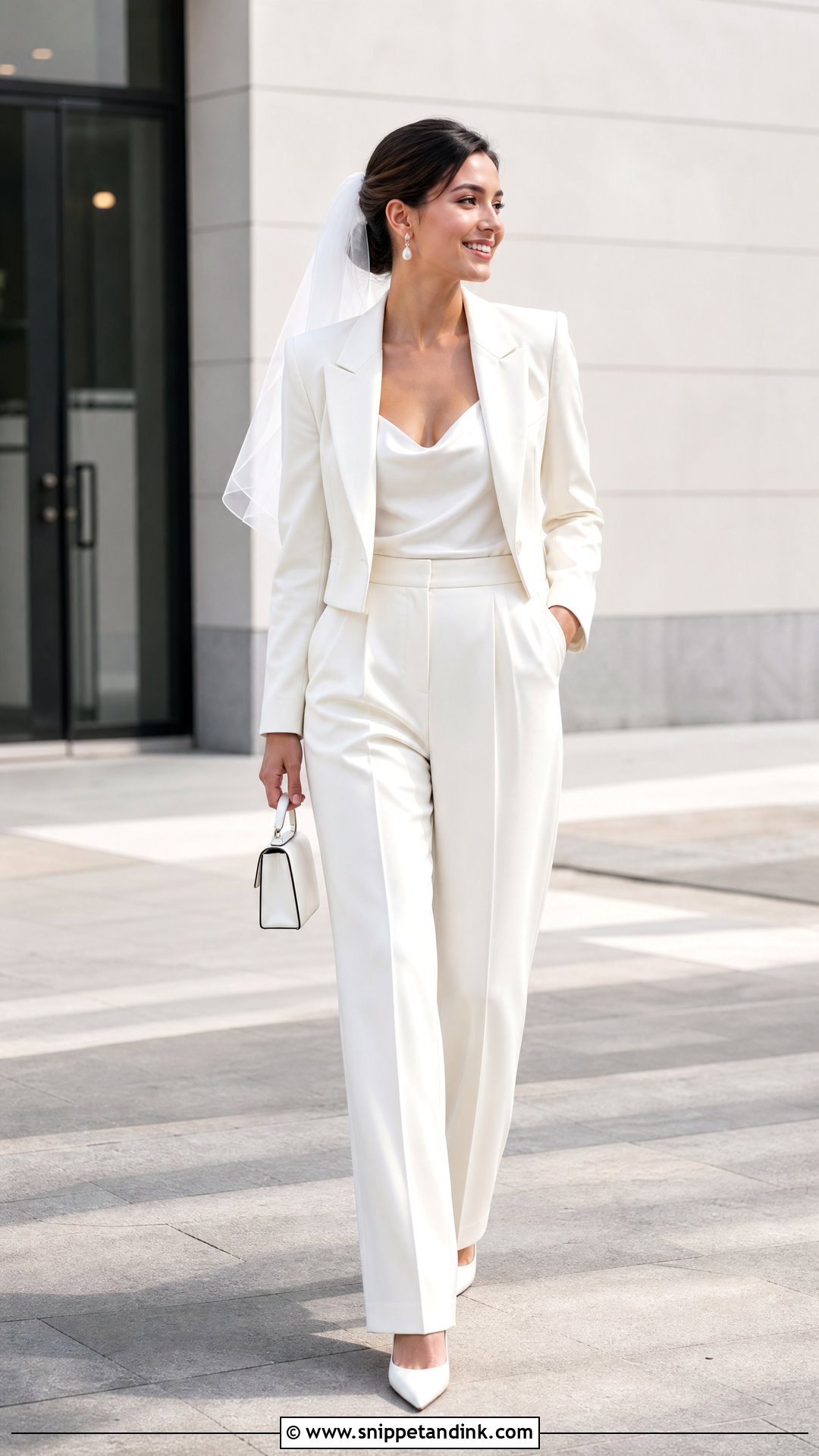
The cropped blazer draws the eye straight to the waist, so it only works with trousers that sit high. Low-rise pants leave a gap of skin or camisole between the pieces that reads as accidental. I’d have the jacket end at or just above your natural waist, with clean shoulders and sleeves cut to the wrist bone. Pleated wide-leg trousers give contrast; slim straight ones look streamlined. A fitted satin camisole covers the join, and pointed heels, a top-handle bag and modern pearls finish it. A short veil adds softness without hiding the short jacket. Jacket length is what makes it flatter different figures, so tailor that measurement carefully.
18. Lace Top Wedding Suit
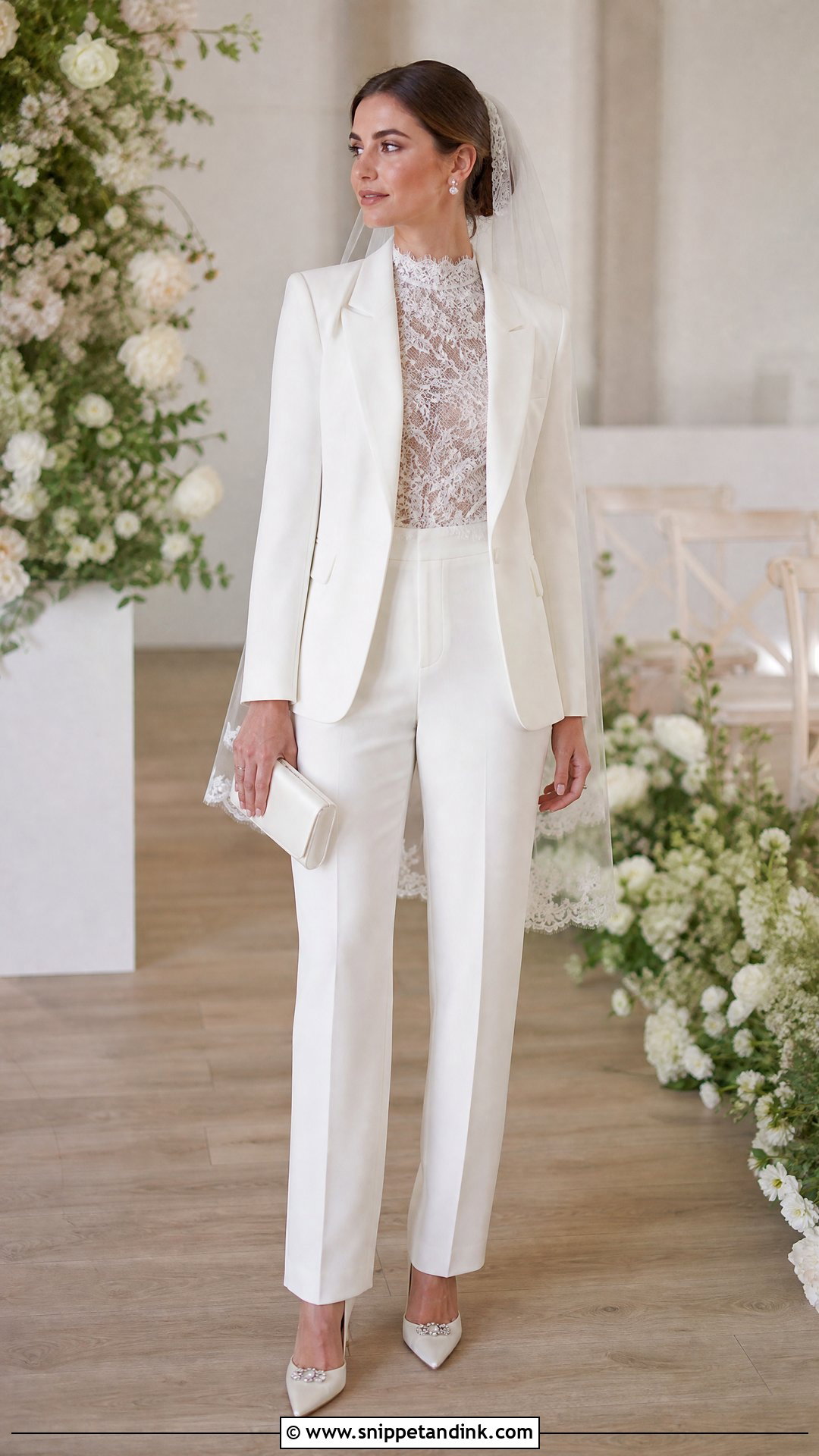
Lace under tailoring gives you romance without a skirt. The suit should stay plain so the lace pattern is the only detail. Choose a lined blouse, a fitted bodysuit or a high-neck shell that lies flat under the jacket. I always have brides put the jacket on over the blouse and bend their elbows: lace sleeves bunch inside a fitted sleeve and can twist the cuff. Raised beading at the shoulders catches on the lining and stops the blazer sitting properly. Straight trousers, a single-breasted jacket and pointed satin heels make the base, with small crystal earrings and a low textured bun.
19. Powder Blue Wedding Suit
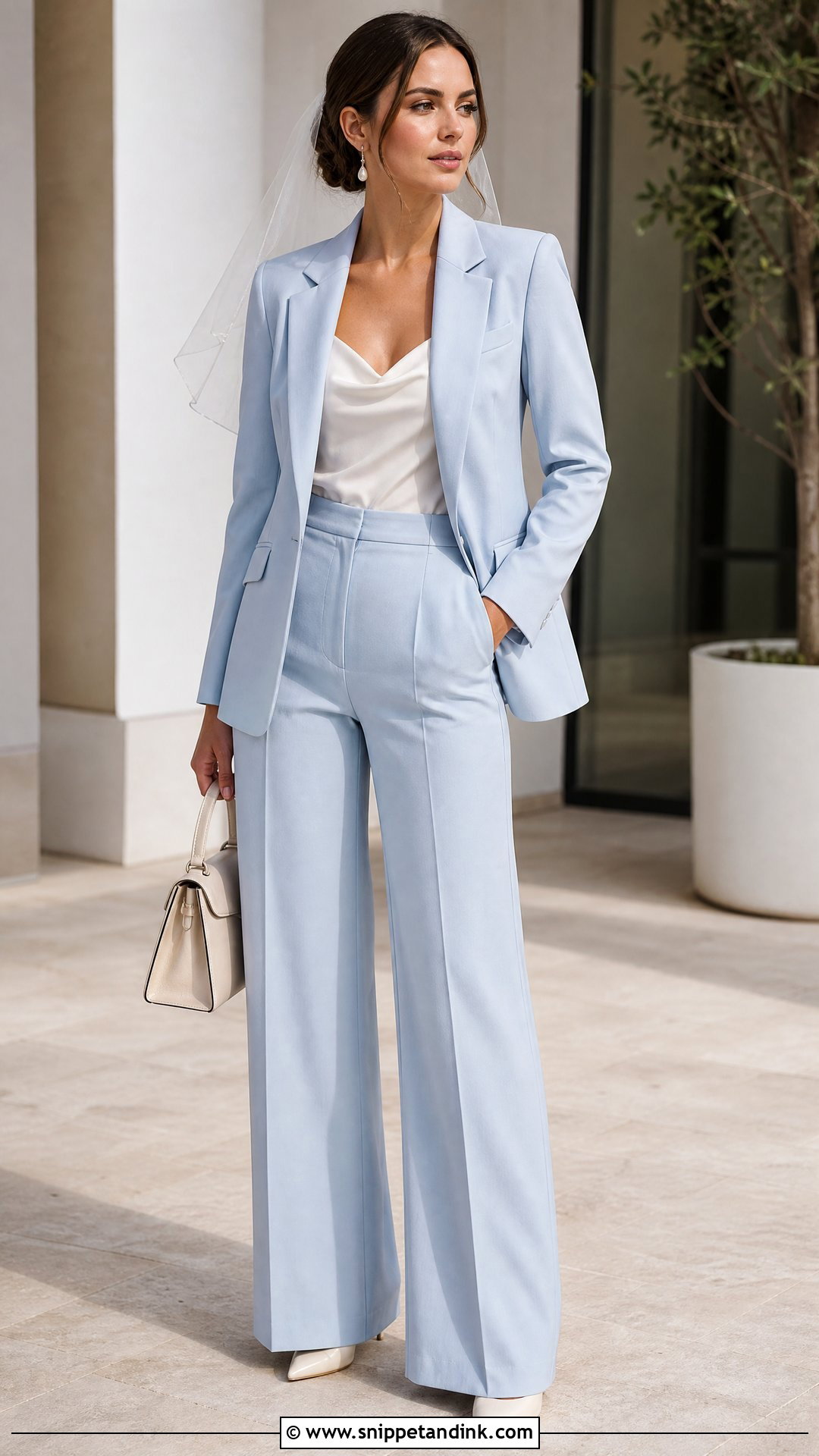
Colour photographs unpredictably, which is the thing I warn about first with a powder blue wedding suit. Pale blue can turn grey under warm indoor lights or almost white in full sun, so look at the fabric in both before you commit. A clear, cool pale blue paired with an ivory silk top keeps the bridal connection. A fitted blazer with wide-leg trousers looks contemporary; a waistcoat with tapered pants feels more traditional. Silver suits the cool undertone better than yellow gold. Ivory pumps, pearl drops and a cream structured bag stay neutral, and a short white veil makes it instantly bridal.
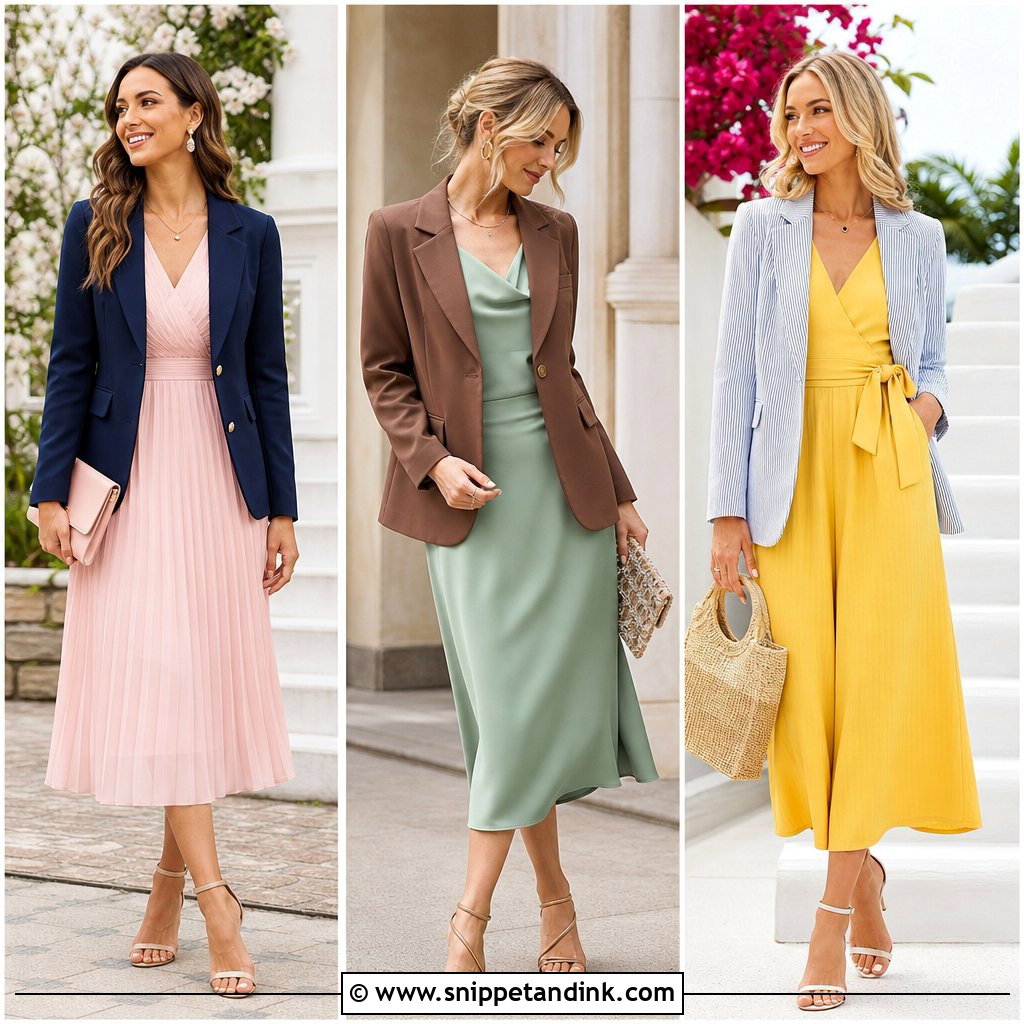
20. White Wedding Suit With Tulle Cape
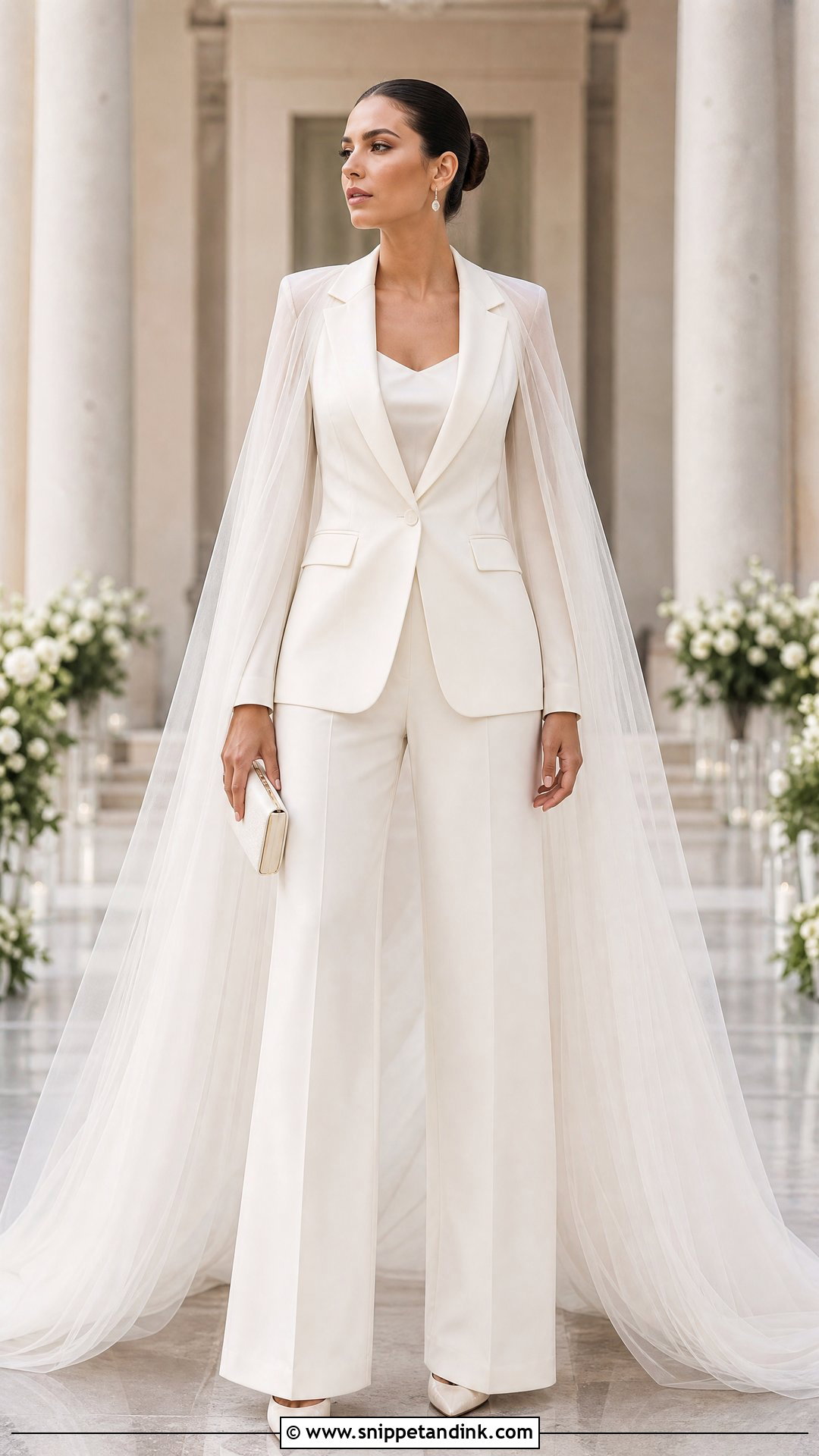
A tulle cape over a suit turns crisp tailoring into an expressive white wedding suit, but the suit fabric has to be heavy enough to carry it. Lightweight jackets get dragged backwards by a long cape, and the lapels pull open. Start with a fitted blazer and straight or wide-leg trousers in a substantial ivory, with a smooth camisole or waistcoat underneath. The cape can attach at the shoulders or neckline and fall to the wrist, calf or floor. Use soft, light tulle, and I’d always make it detachable with snaps or hidden hooks so you can take it off for dinner. A low bun keeps the attachment points visible and clean.
Dressing Two Partners So the Photos Look Planned
When two people stand next to each other at the altar, small mismatches become obvious in the pictures. I don’t believe couples need identical outfits. They need the same level of formality, compatible whites and one shared detail.
Whites and ivories
Bright white next to a warm ivory makes the ivory look yellow and the white look blue. Hold both fabrics together outdoors before ordering. If one partner wears a gown in champagne or ivory, a suit in the same warm tone, or in a darker colour entirely, sits better than a stark white jacket.
Formality and fabric weight
A cathedral-length ball gown beside a linen suit looks like two different weddings. Match the formality instead: satin gown with a satin-lapel tuxedo, crepe column with a sharp wool suit, tea-length dress with a lighter, shorter-cut jacket. Fabric sheen matters too, because a shiny satin and a matte wool photograph at very different brightness.
One repeated detail
Pick one thread to repeat: pearl studs and pearl cufflinks, a lace pocket square cut from the same lace as the sleeves, or a boutonniere taken from the bouquet. One echo looks intentional; four or five starts to look like a costume.
Gown, Suit or Both in One Day
Start with the silhouette you’d happily sit down in for three hours, then work out fabric, shoes and accessories around it. Gowns and suits both depend on alterations, so leave room for more than one fitting, and at each one walk, sit and raise your arms in the complete outfit. Look at every piece together in daylight before the final decision. A bride who changes from a ball gown into a short dress, or from a tuxedo into a vest and trousers, can have both moods in one wedding, as long as one detail ties the two looks together.
You'll Like These Ideas:


Leave a Reply