
Dressing as a couple for someone else’s wedding is mostly a balancing job. When I style a pair of guests, I almost never repeat one shade from head to toe; I connect the two outfits through a single thread, usually a color picked up in a tie or a texture both pieces share. Start with whichever garment carries the strongest color, often the dress, and build the suit around one quiet detail from it. Fit decides more than color does, so leave time for a tailor and for breaking in shoes. The twenty pairings below run from cool neutrals to jewel tones, with what I’d check on each before you leave the house.
Matching Formality Before Matching Color
Most guest couples I dress start by asking which colors go together. I start a step earlier, with formality, because a linen suit beside a sequined gown looks wrong in any shade. Read the invitation first, then make sure both outfits sit on the same rung.
- Fabric weight: wool or velvet pairs with satin, crepe or heavy lace; linen and cotton pair with chiffon or a cotton dress.
- Shoes: patent or polished Oxfords sit beside heels or dressy sandals, while loafers sit beside block heels or espadrilles.
- Length: a floor-length gown asks for a tuxedo or a dark suit, and a midi gives the suit room to relax.
- One shared detail: a color, a metal or a texture. Not all three at once.
If one of you already owns the outfit, start there and dress the other around it. It’s far easier to find a tie for a dress than a dress for a tie.
1. Navy Suit And Blush Pink Midi Dress
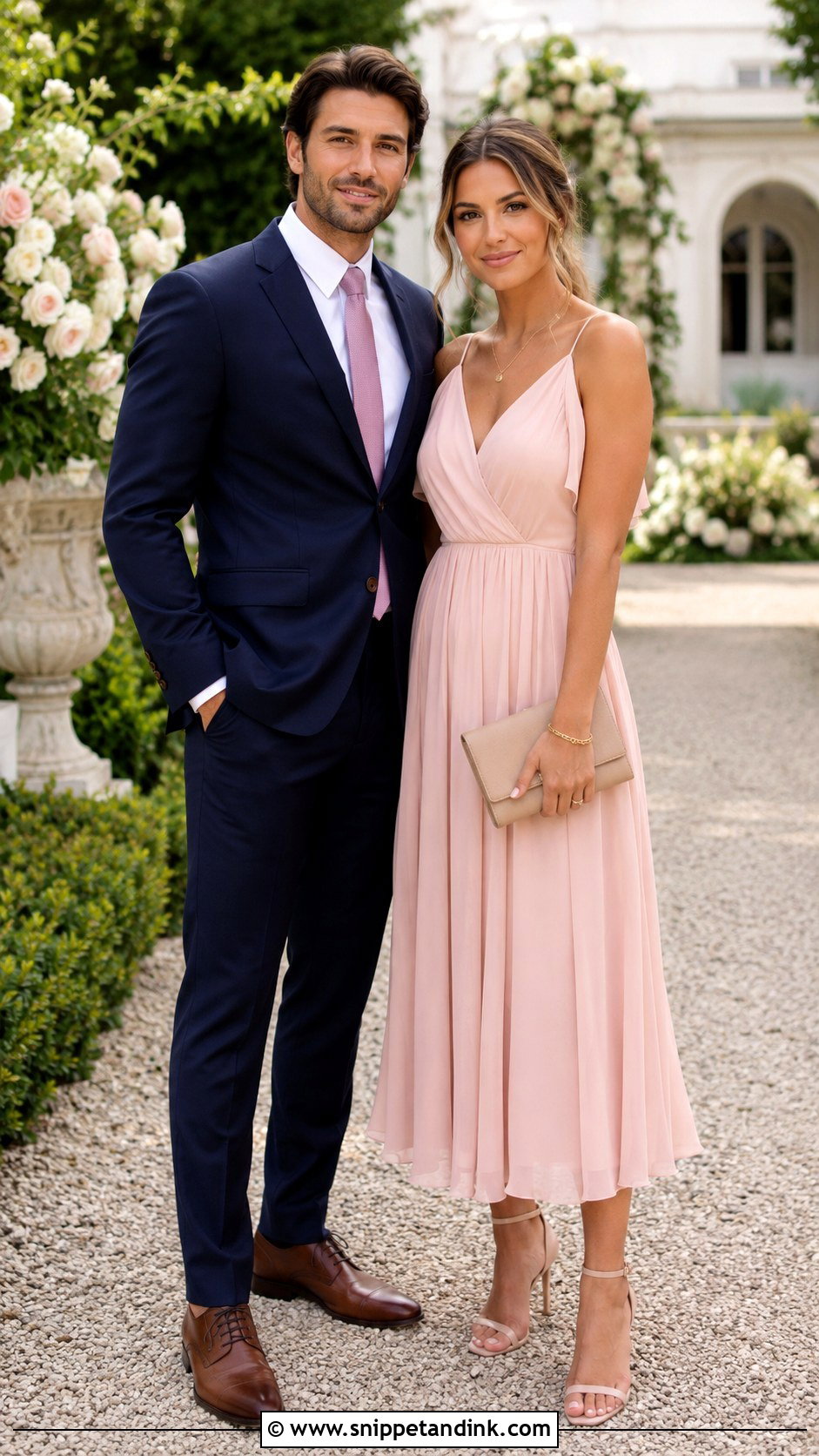
Navy and blush is the pairing I suggest most for daytime guests, because navy is formal enough for a church and blush keeps it from looking like a business meeting. Dress the suit with a crisp white shirt and a pale pink tie or pocket square, then soften it with brown loafers or lace-ups rather than black. For the dress, a chiffon or crepe midi with nude heels and a structured clutch keeps the line clean. Don’t chase an exact pink match between tie and dress. Two pinks a shade apart look intentional, while a near miss looks like a mistake. Delicate gold jewelry warms the whole thing in spring light.
2. Black Tuxedo And Emerald Green Gown
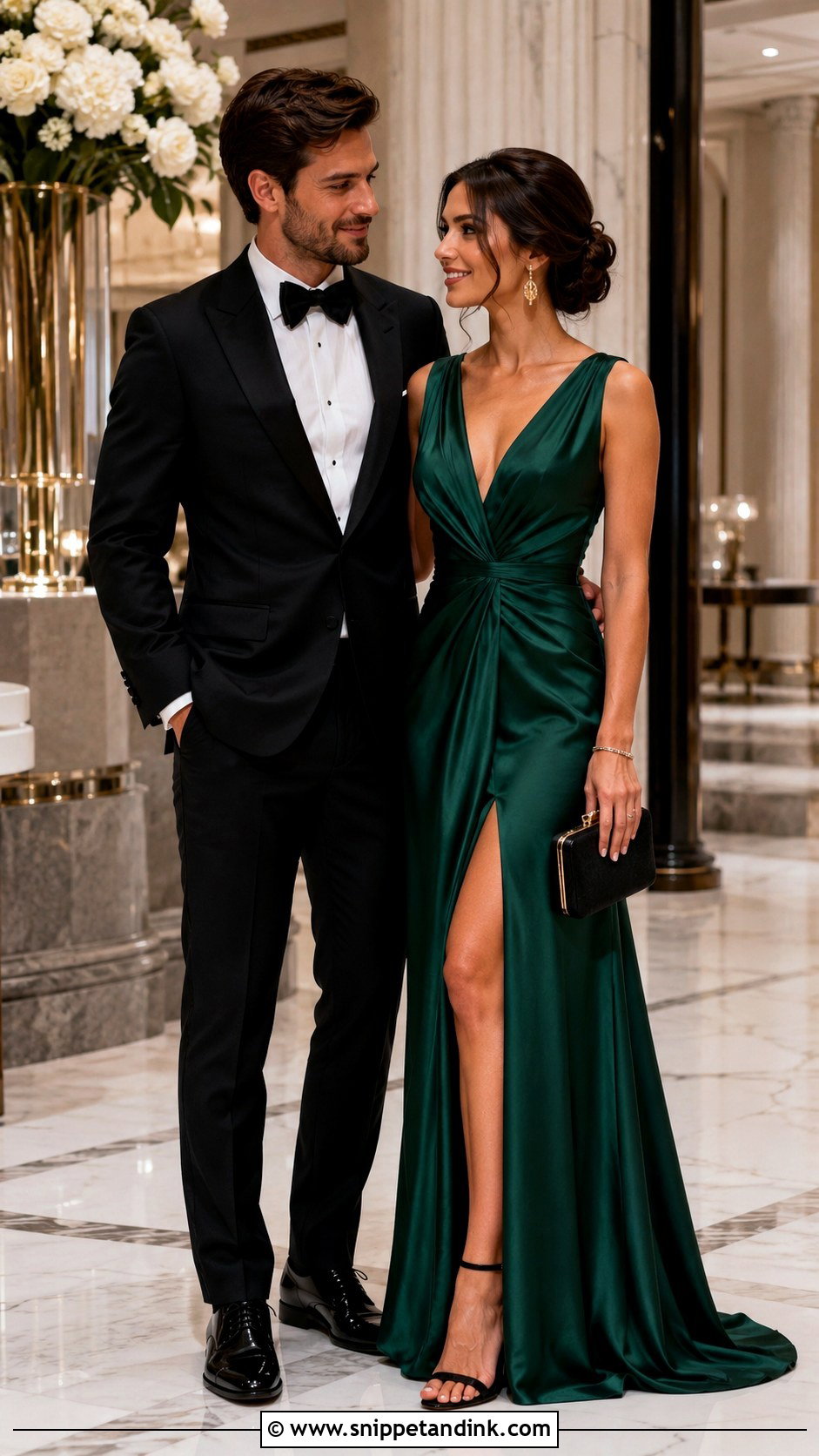
Emerald against a black tuxedo is a black-tie pairing that earns its drama. The tuxedo stays strict: white dress shirt, black bow tie, patent shoes, nothing else competing. The gown, in satin, velvet or a smooth crepe, does the talking. Velvet is the fabric I’d watch most closely, because it crushes where you sit and holds every press mark, so travel with it on a hanger rather than folded in a case. Black or metallic heels and simple gold or crystal jewelry finish it. If you add an emerald pocket square, keep it a darker green than the gown so the two don’t fight under ballroom lighting. Book the tuxedo shoulders and the gown hem with the tailor before anything else.
3. Charcoal Suit And Burgundy Dress
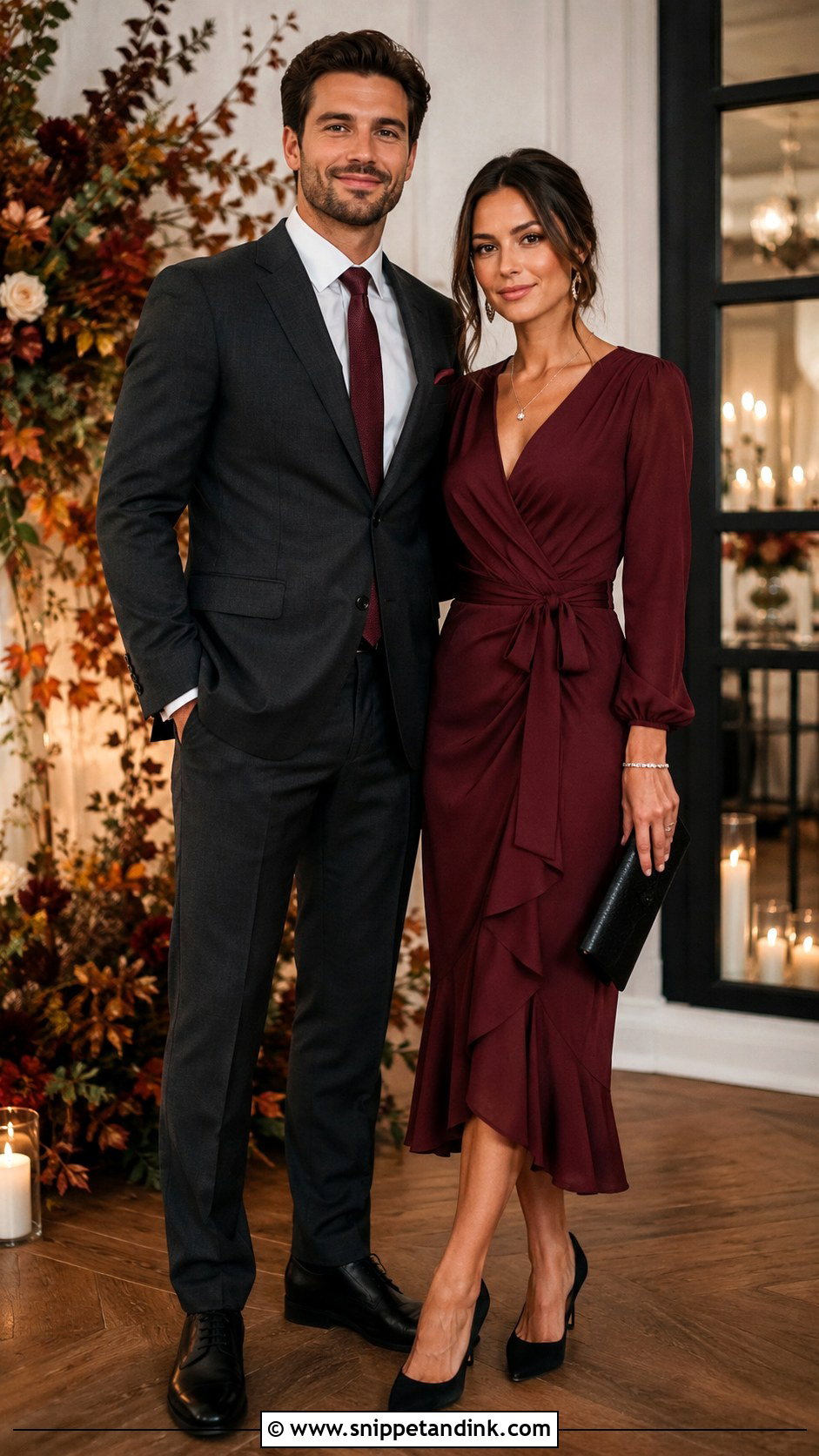
Charcoal and burgundy belong to cold weather. The charcoal suit takes a white shirt, a patterned burgundy tie and black shoes with a matching belt; the dress can be a wrap midi or a long-sleeve maxi in wine or deep berry. Wool suiting holds its press through a long evening, and crepe on the dress stays comfortable in a heated room. Where this goes wrong is when tie and dress are both saturated burgundy in different undertones, one leaning brown and one leaning blue. Hold the tie against the dress in daylight before you commit. If the dress is bold, let black pumps, a small leather clutch and silver earrings stay neutral.
4. Beige Linen Suit And White Maxi Dress
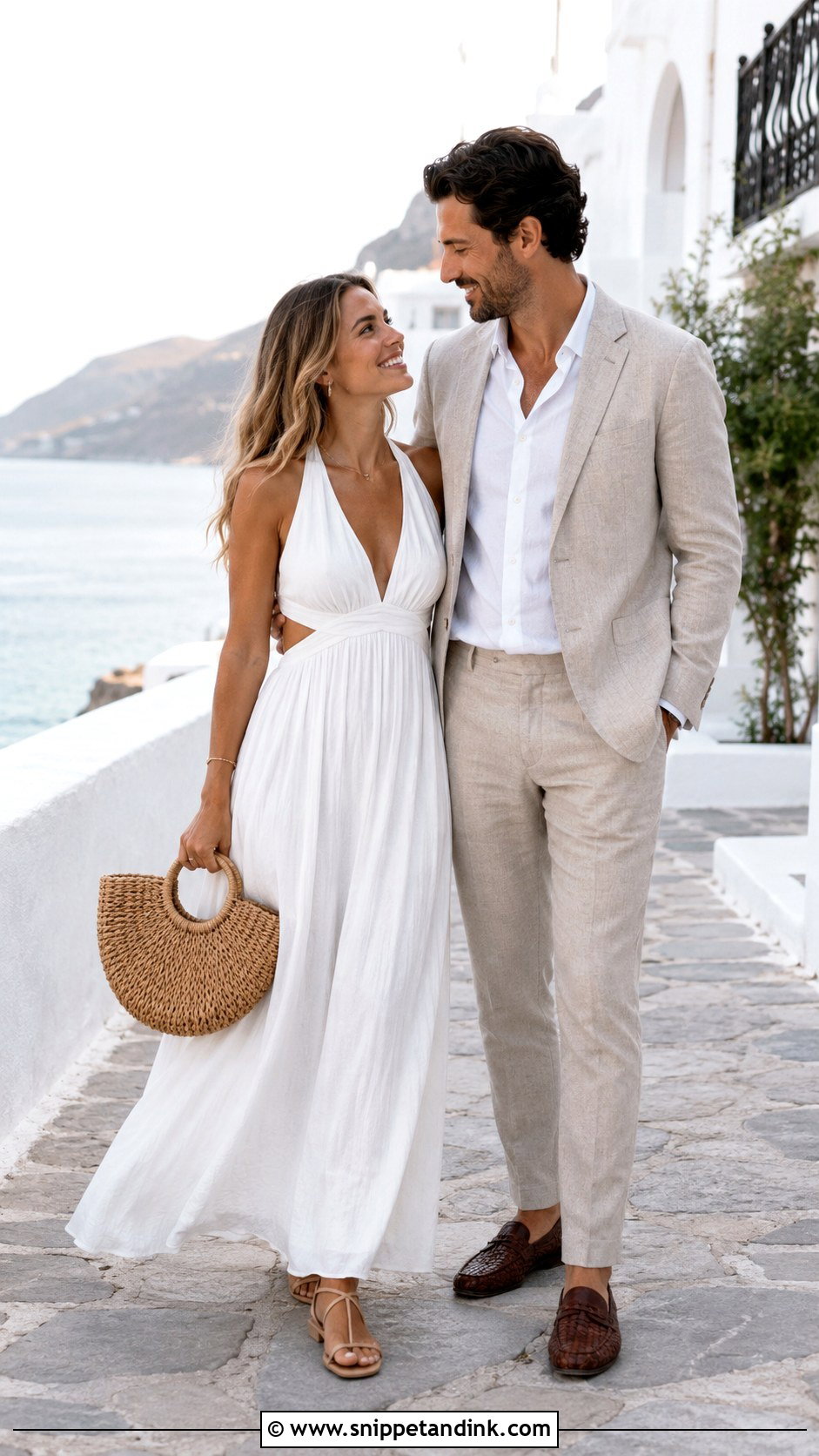
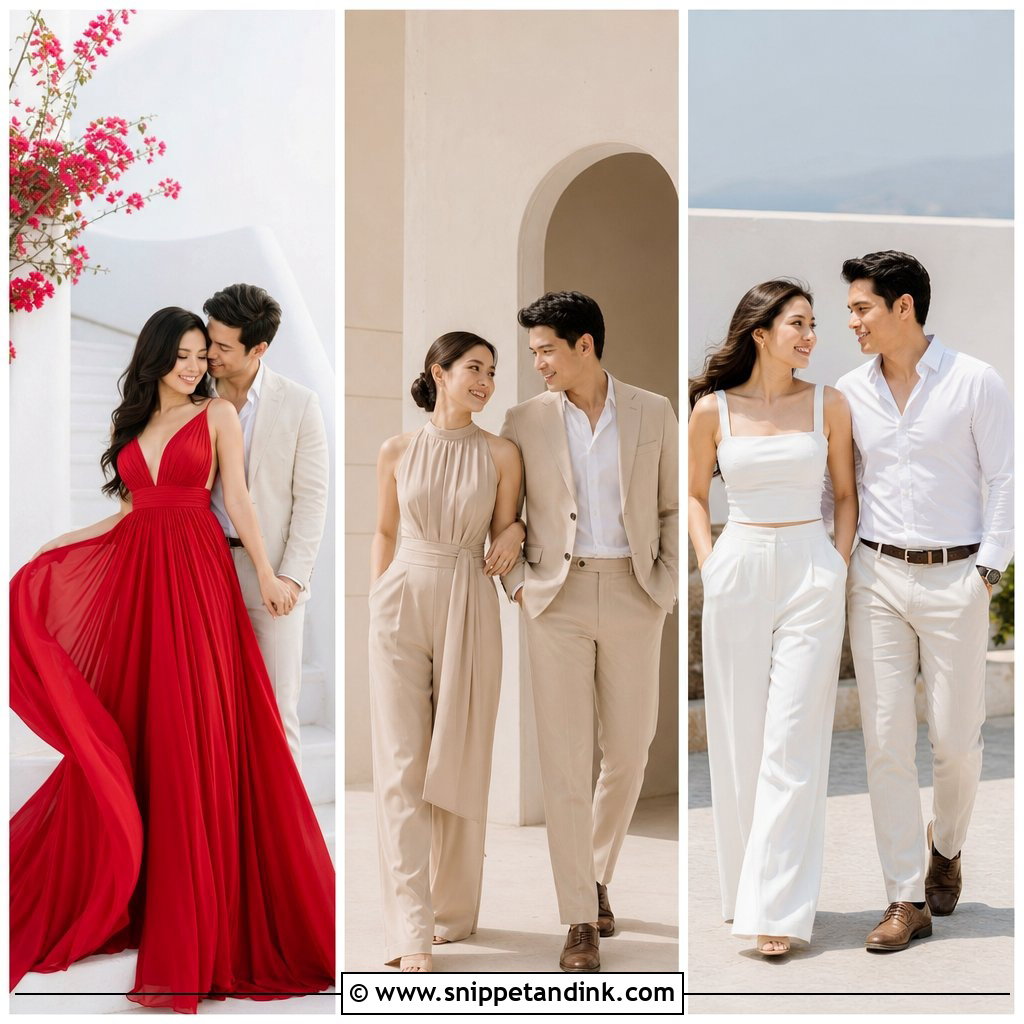
Beige linen with a white maxi belongs at an engagement shoot or a beach party for the couple themselves, and I’d say that firmly. As wedding guests, swap the white for pale blue or soft peach; even a cream can look like a bid for bridal territory in photos. The suit goes with an open-collar white shirt, woven brown loafers and no tie. Linen creases within an hour of sitting in a car, which is part of its charm, but steam both pieces that morning and hem the trousers to just touch the shoe so sand doesn’t collect in a long break. Tan sandals, a woven bag and small gold jewelry keep the dress relaxed.
5. Light Gray Suit And Dusty Blue Dress
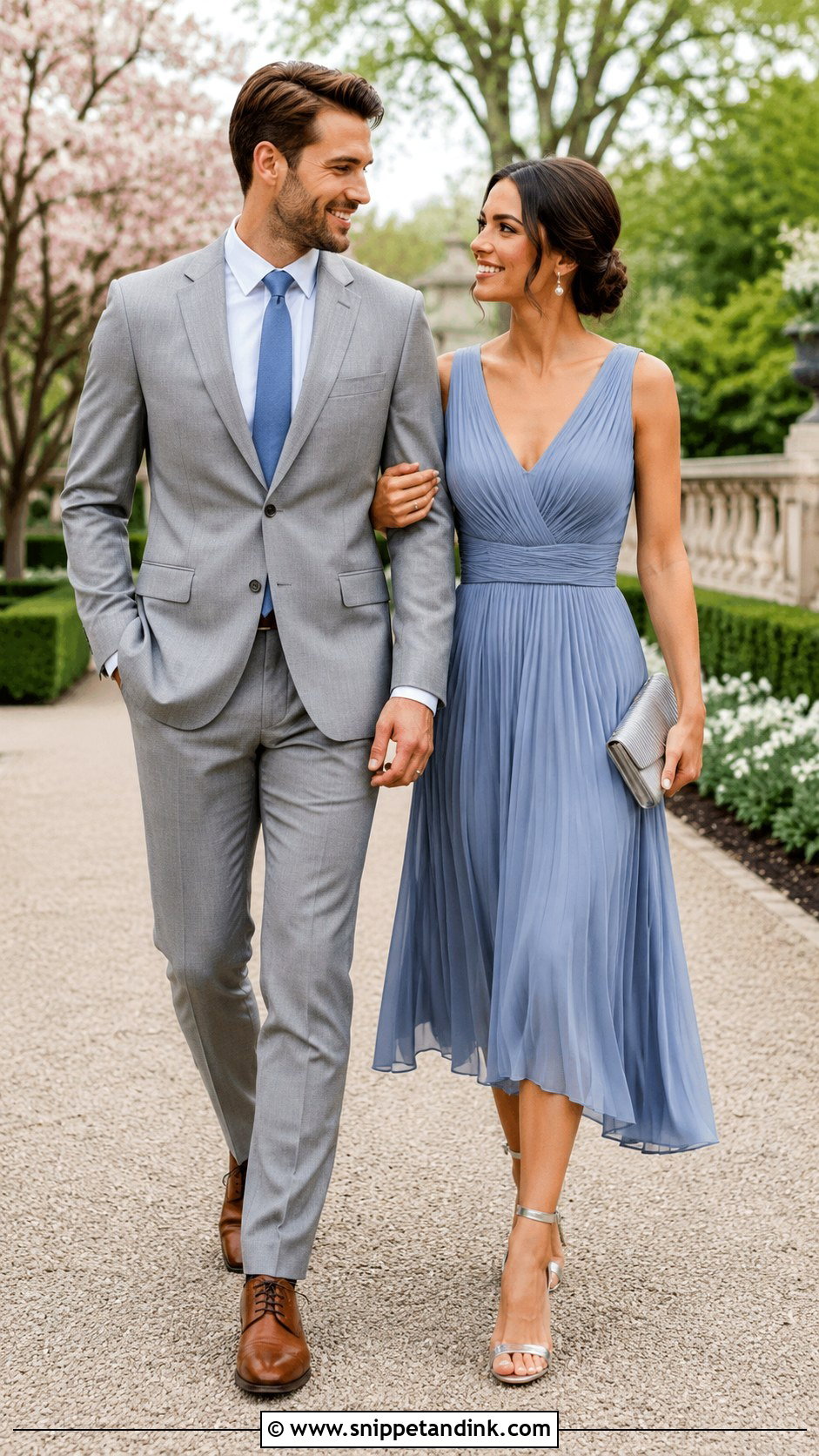
Light gray and dusty blue is a cool, quiet pairing that sits well against stone walls and greenery. Pair the suit with a white shirt, a dusty blue tie and brown shoes. The dress, a draped midi or maxi in muted blue, needs enough depth that it doesn’t wash out next to pale gray; if the two are too close in lightness, you both fade into the background in photographs. Silver heels, pearl earrings and a gray clutch hold the cool palette. Resist adding a third pastel. One extra color is usually where this combination starts to look unplanned.
6. Brown Suit And Sage Green Dress
Brown and sage make a warm, natural couple outfit that’s easy to wear well. A chocolate or mid-brown suit with an ivory shirt, sage pocket square and dark brown shoes sets it up, and the dress is a sage midi with a wrap waist or soft pleats. Sage is the trickiest green I work with because it leans gray in one fabric and yellow in another. Lay the pocket square directly on the dress by a window before the wedding, not under shop lights. Corded or wool suiting suits cold months, cotton blends the heat. Tan heels and brushed gold jewelry keep it from tipping too formal for a rustic barn or a fall garden.
7. Royal Blue Suit And Silver Dress
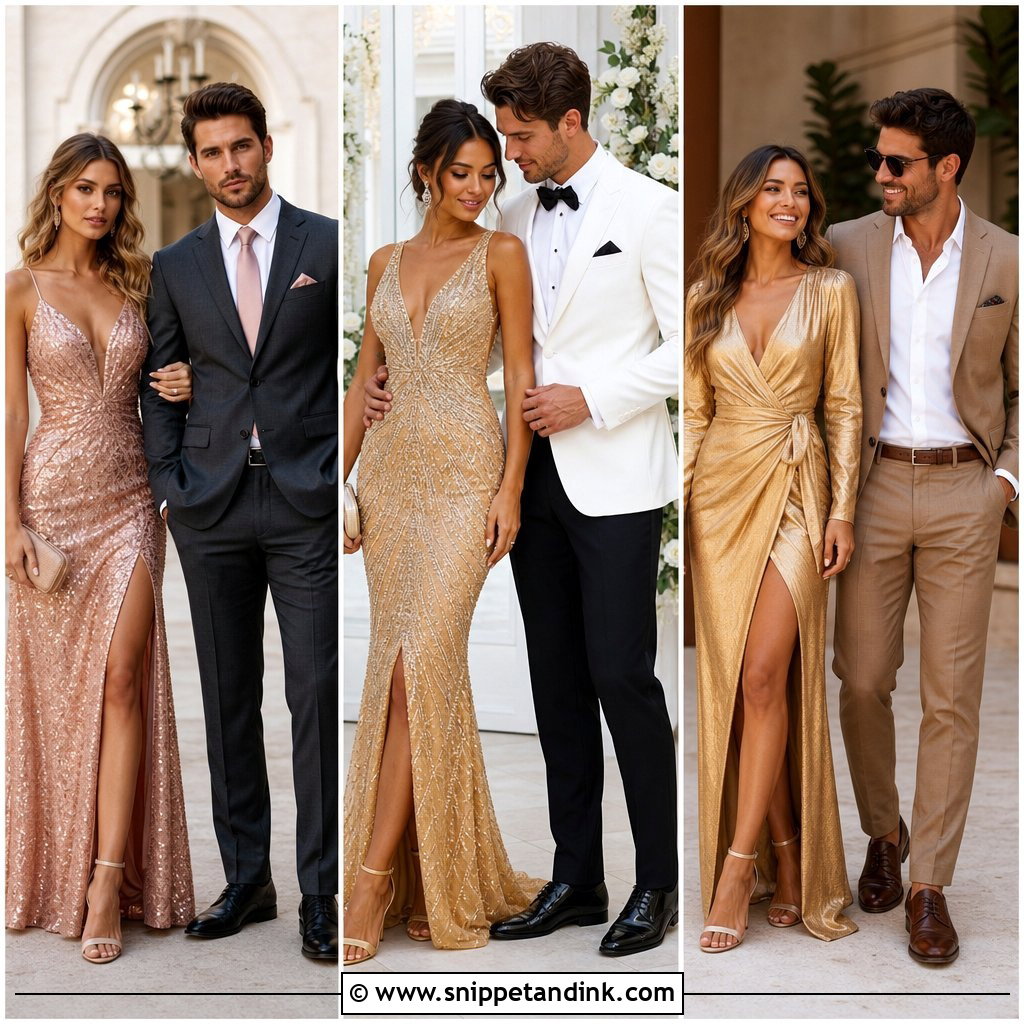
Royal blue and silver is a confident evening pairing, and the risk is doing too much. Keep the suit plain: white shirt, dark navy tie, silver cuff links, black shoes. The silver dress can carry subtle shimmer, sequins or metallic satin depending on the dress code, and that is where the sparkle should stop, because a big boutonniere or a loud tie will compete with it. I steer guests toward a deeper royal blue over an electric one, which tends to look cheap under flash. Sequins also snag on jacket buttons during a slow dance, so check the suit front for anything rough.
8. Cream Suit And Champagne Satin Dress
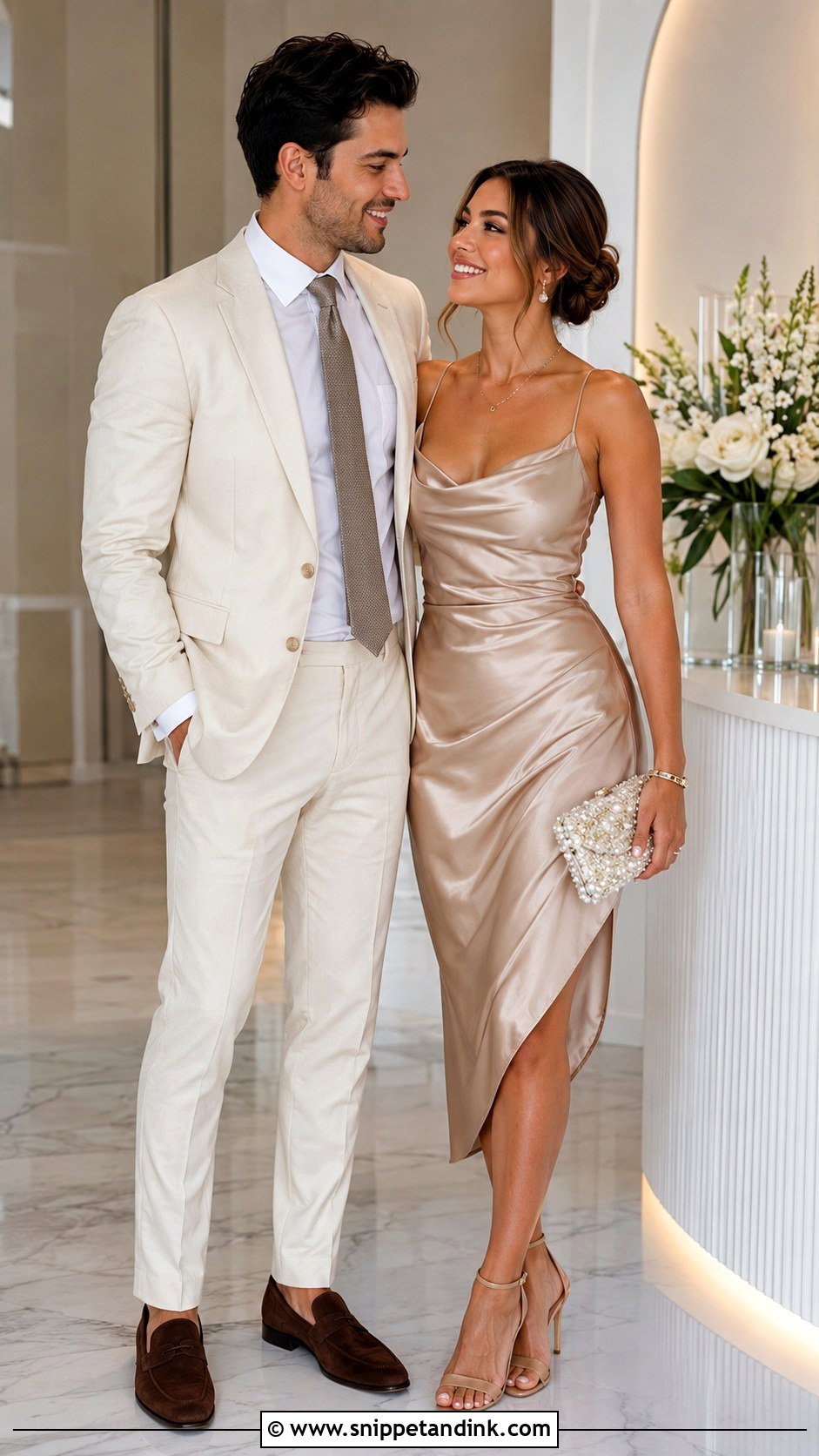
Cream and champagne look rich together, but I’d raise a flag first: as guests, confirm that a pale palette is welcome, because in candlelight and in photographs champagne can read as bridal. For engagement parties and rehearsal dinners it’s the safer use. The suit takes a white shirt, taupe tie and brown loafers; the satin dress can be a cowl-neck midi or a slim column with nude heels and a pearl-trimmed clutch. Separate the two with texture rather than color, a matte suit beside glossy satin, otherwise you blur into one pale shape. Satin also water-spots, so never dab a spill on it with a wet napkin.
9. Olive Suit And Terracotta Dress
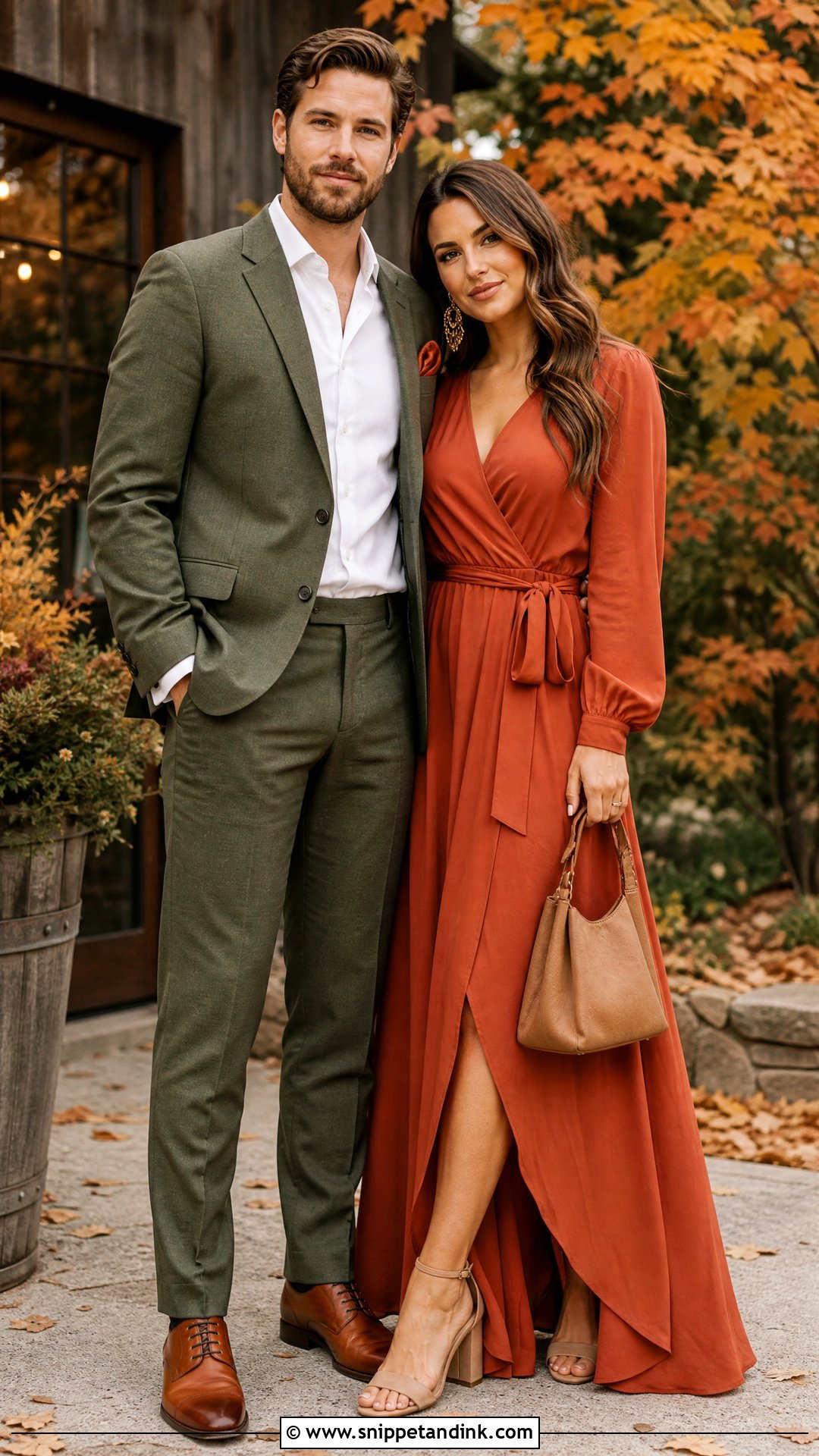
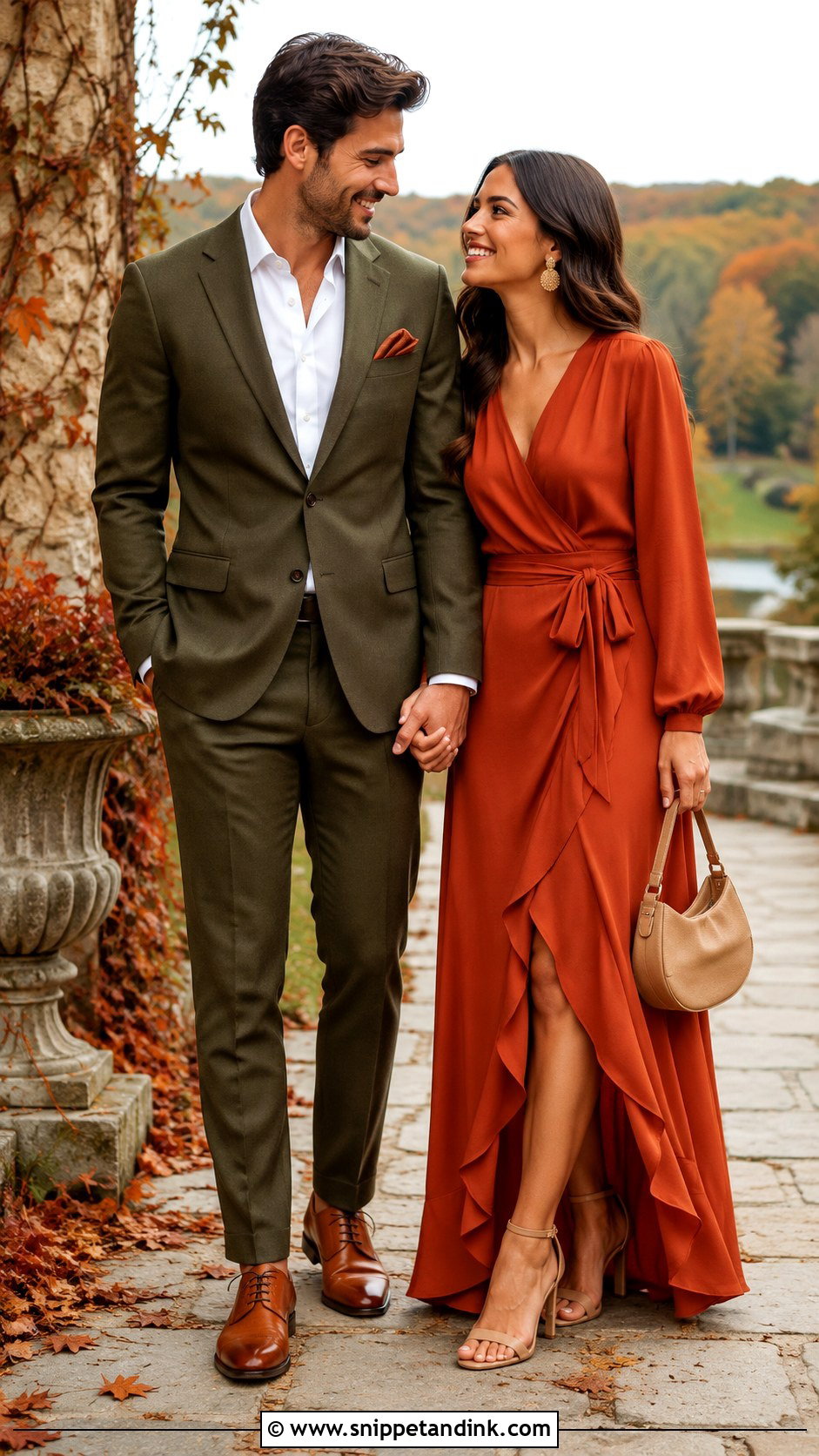
Olive and terracotta share the same earthy undertone, which is why they sit so comfortably together at vineyards and autumn venues. Style the olive suit with an ivory shirt, a rust pocket square and cognac shoes. A terracotta wrap or maxi dress gives contrast without breaking the palette. I lean on matte textures here, linen, suede, woven leather and crepe, because shine fights the earthiness. Keep prints off the accessories; two strong colors are already enough work for the eye. Neutral block heels make sense if the ceremony is on grass, and hammered gold jewelry suits the desert or a field of turning leaves.
10. White Dinner Jacket And Black Dress
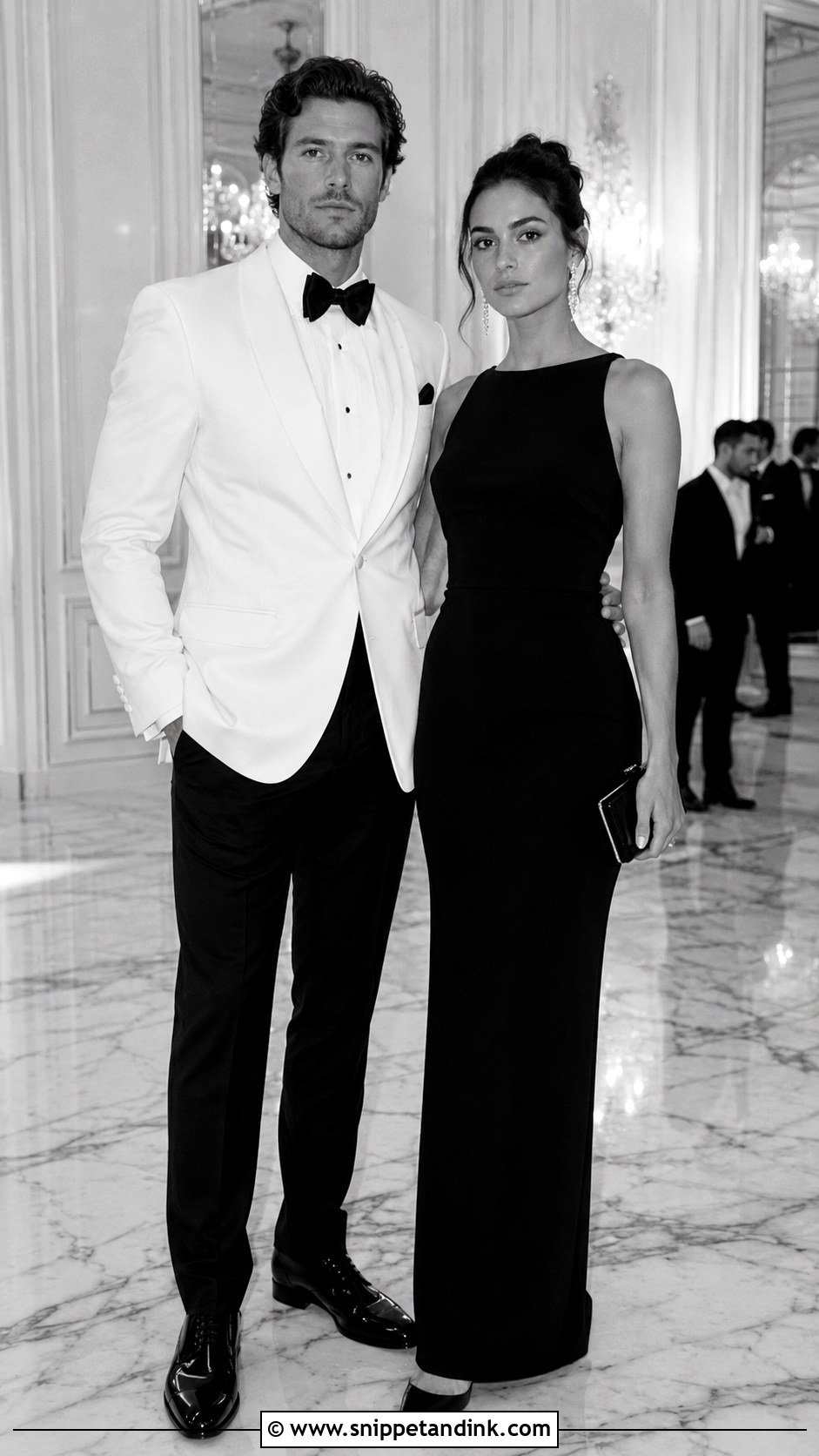
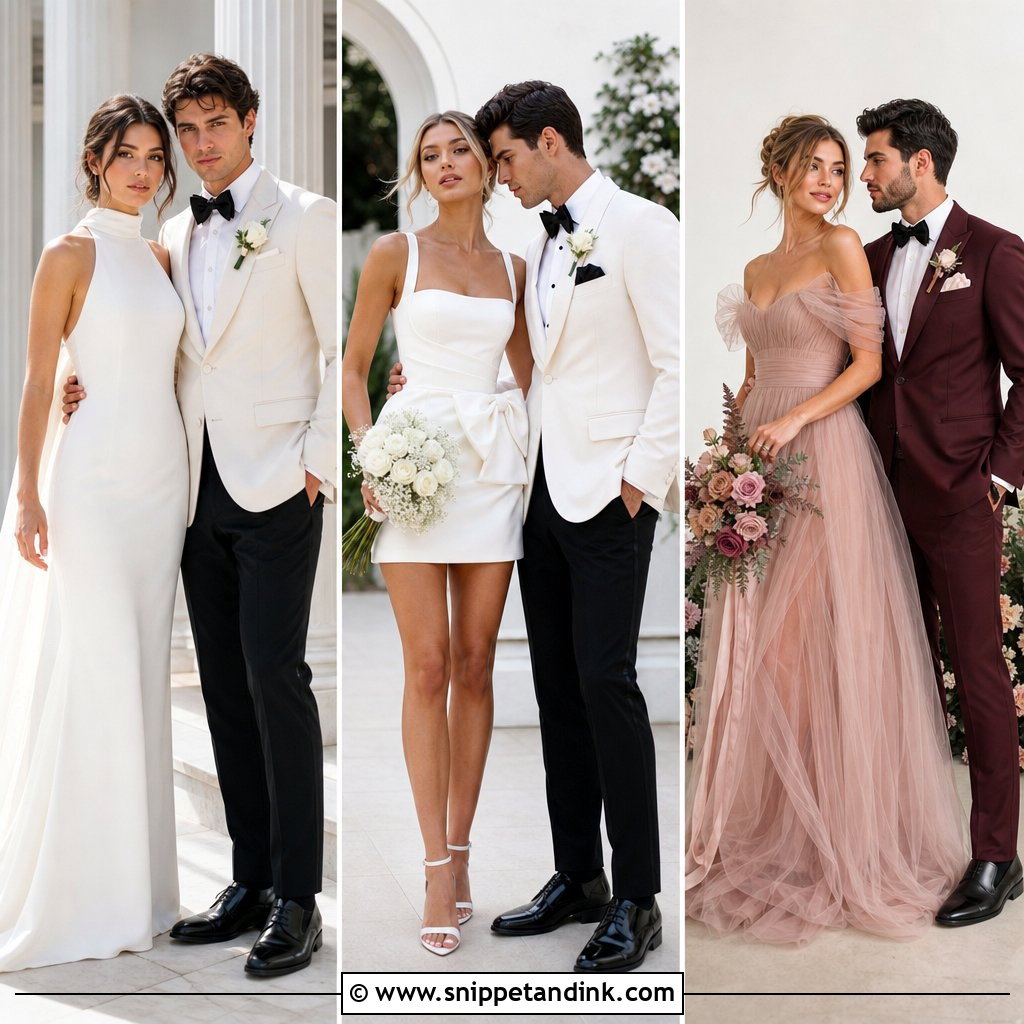
A white dinner jacket beside a sleek black dress is the classic I reach for at black-tie evenings. The jacket goes with black tuxedo trousers, a white shirt, a black bow tie and polished shoes. The details have to agree, satin lapels, covered buttons and a trouser stripe all from the same tuxedo vocabulary, or it drifts toward costume. An ivory jacket is kinder than bright white on most skin tones, and it gives the shirt underneath a little contrast. The black dress can be a fitted midi or a column gown, with pointed heels and silver jewelry. Watch that jacket at dinner, because red wine and tomato sauce are its natural enemies.
11. Tan Suit And Floral Midi Dress
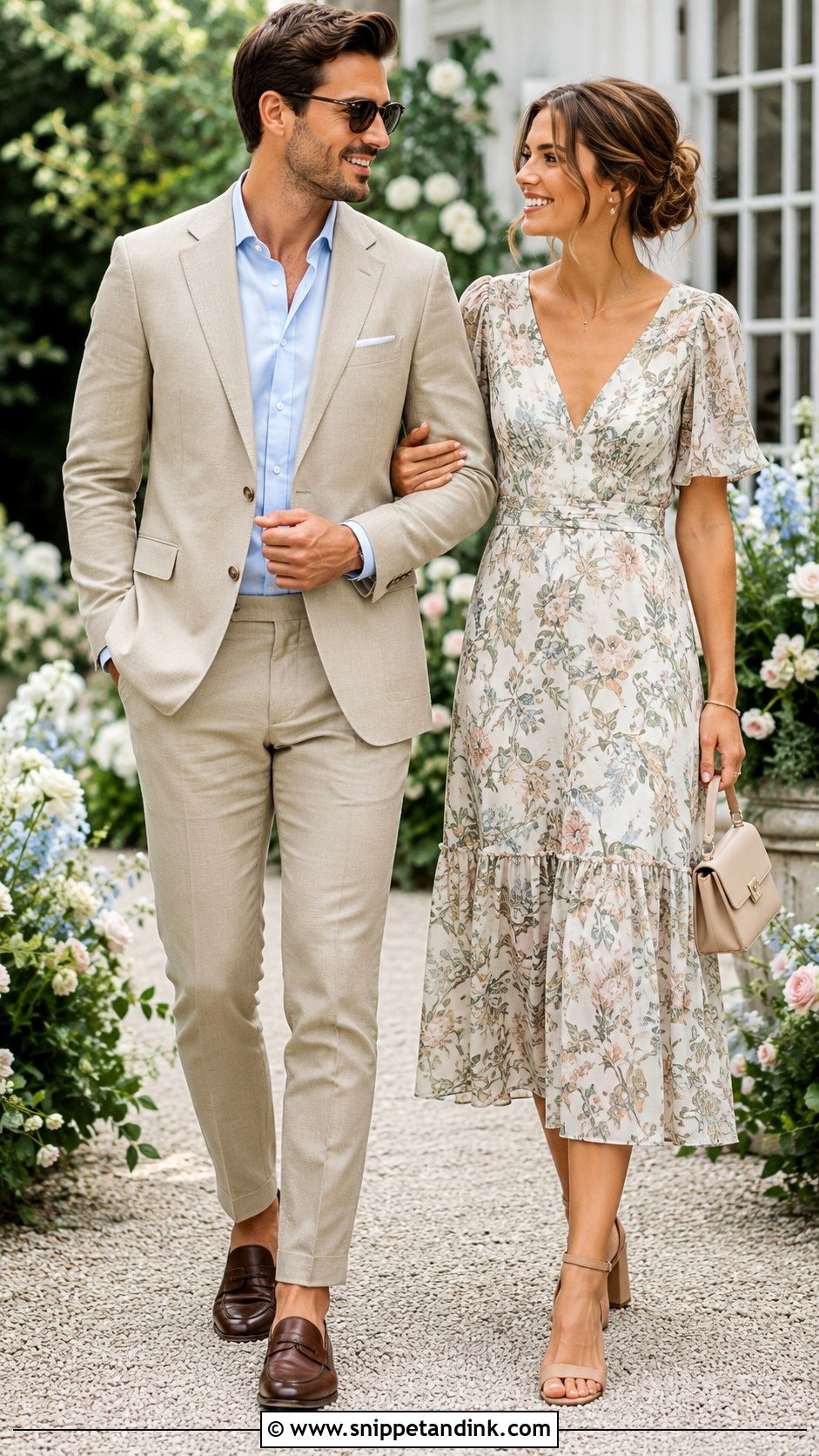
Coordinating with a print is easier than it looks. Pick one shade from the floral midi and repeat it, once, in the tie or pocket square. Pulling two or three colors from the print into the suit is when couples start to look costumed. A tan suit with a white or pale blue shirt and brown loafers is flexible enough to take almost any small botanical print. Keep the jewelry simple so it doesn’t compete with the pattern, and choose nude block heels if you’ll be standing on a lawn. A lightweight suit matters more than people expect at summer garden ceremonies, where guests often wait outdoors for half an hour before anything starts.
12. Burgundy Suit And Navy Dress
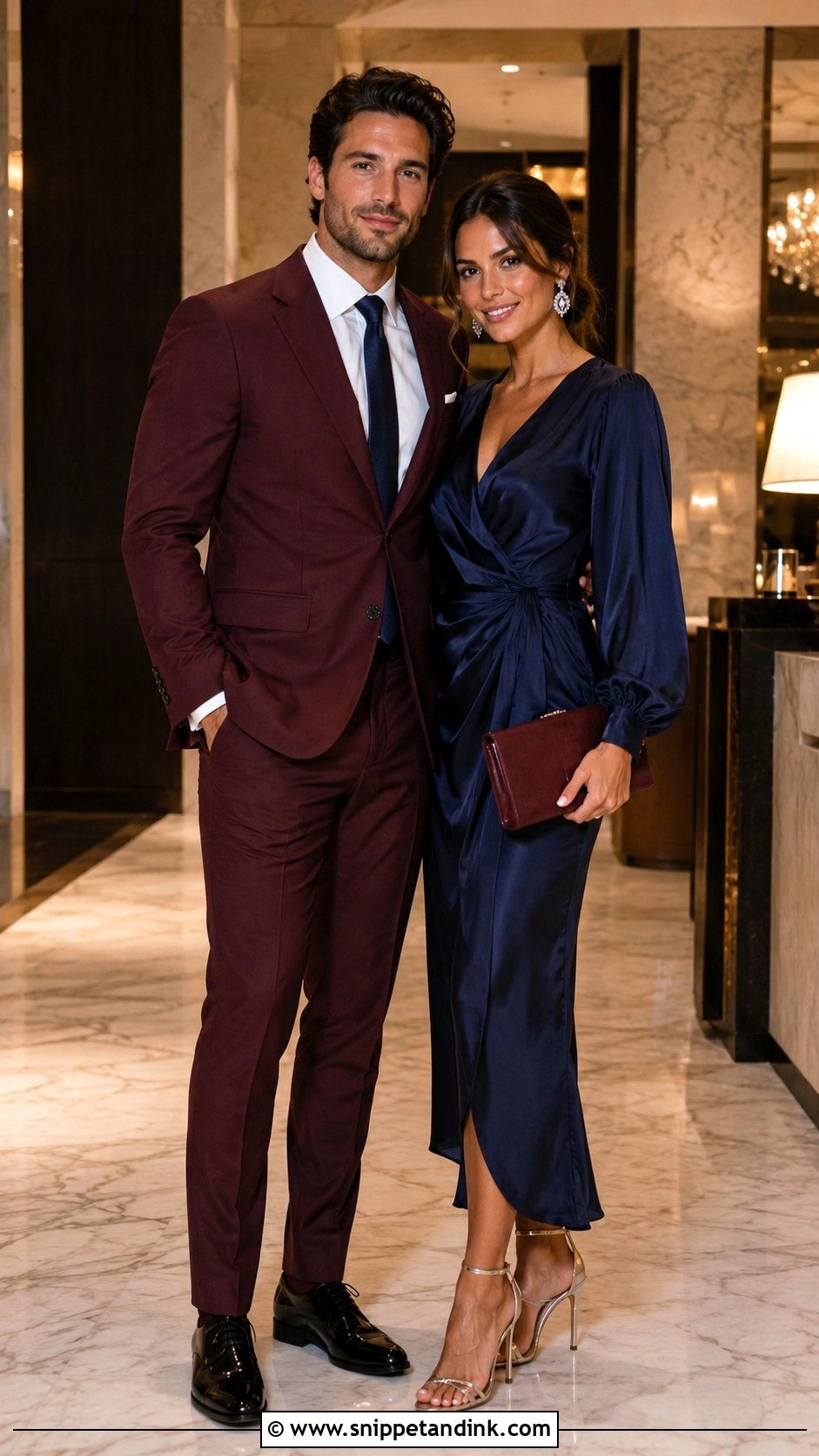
Burgundy as the suit color is a braver move than burgundy on the dress, and navy balances it. Ground the suit with a white shirt, navy tie, black shoes and a matching belt. The navy dress can be satin, crepe or lace; a wrap midi suits a cocktail code and a floor-length gown a formal evening. A burgundy clutch is the one link back to the suit, and that’s plenty. Both colors are deep, so they can merge into one dark mass in dim reception light. The white shirt and metallic heels are what keep the two of you distinct, and I’d save this pairing for fall and winter.
13. Pastel Blue Suit And Lavender Dress
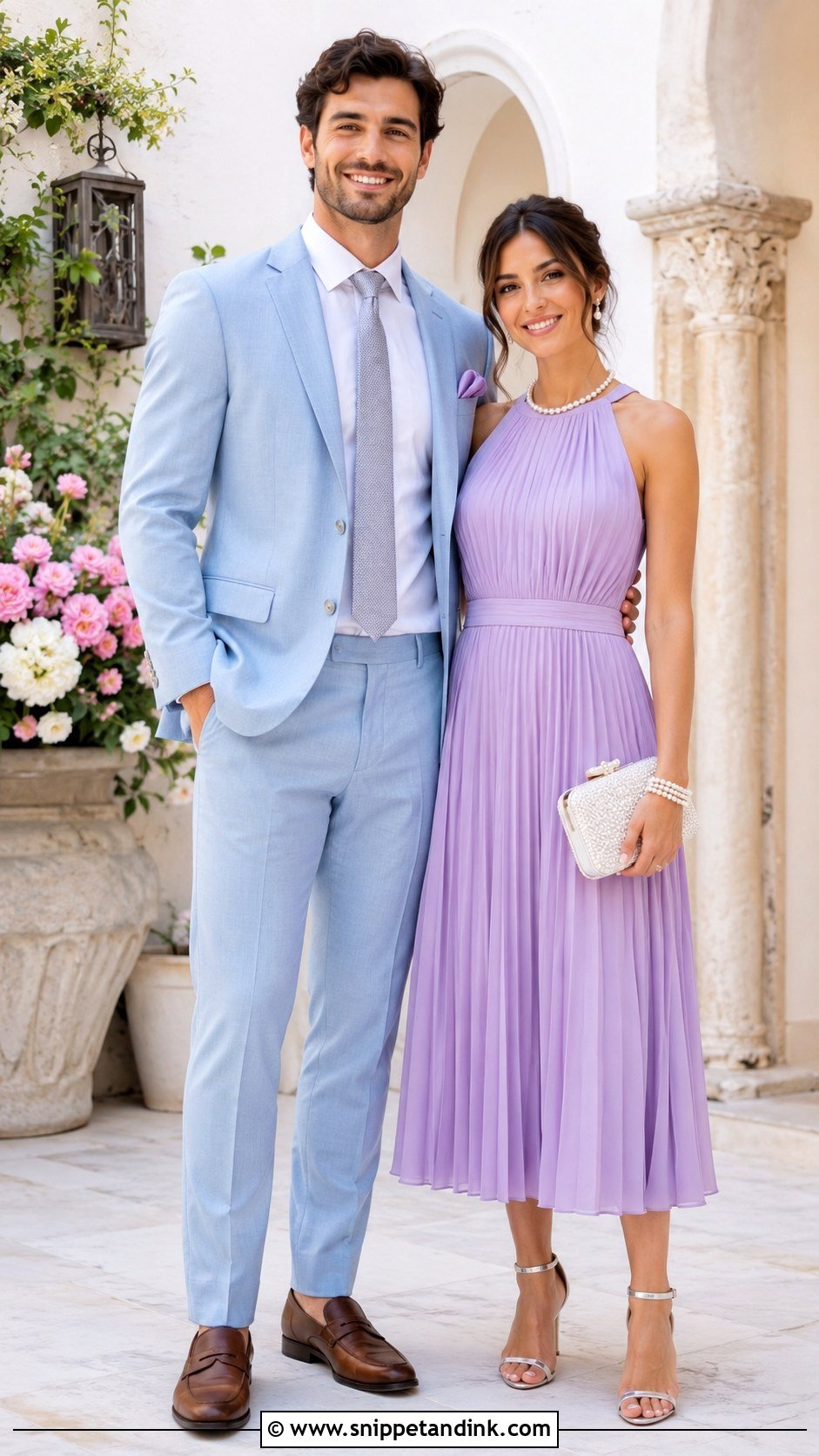
A pastel blue suit and a lavender dress are an easy warm-weather match as long as the two pastels share the same softness; a neon purple beside powder blue throws everything off. Style the suit with a white shirt, light gray tie, brown loafers and a lavender pocket square, and look for a lilac midi with an A-line or pleated skirt. Silver sandals and pearls stay in the cool family. On deeper skin tones I usually go a step richer on both shades, a cornflower suit with a true lavender, so neither color looks chalky. Pale suiting shows marks at collar and cuffs quickly, so pick a breathable weave and carry a stain pen.
14. Black Suit And Red Dress
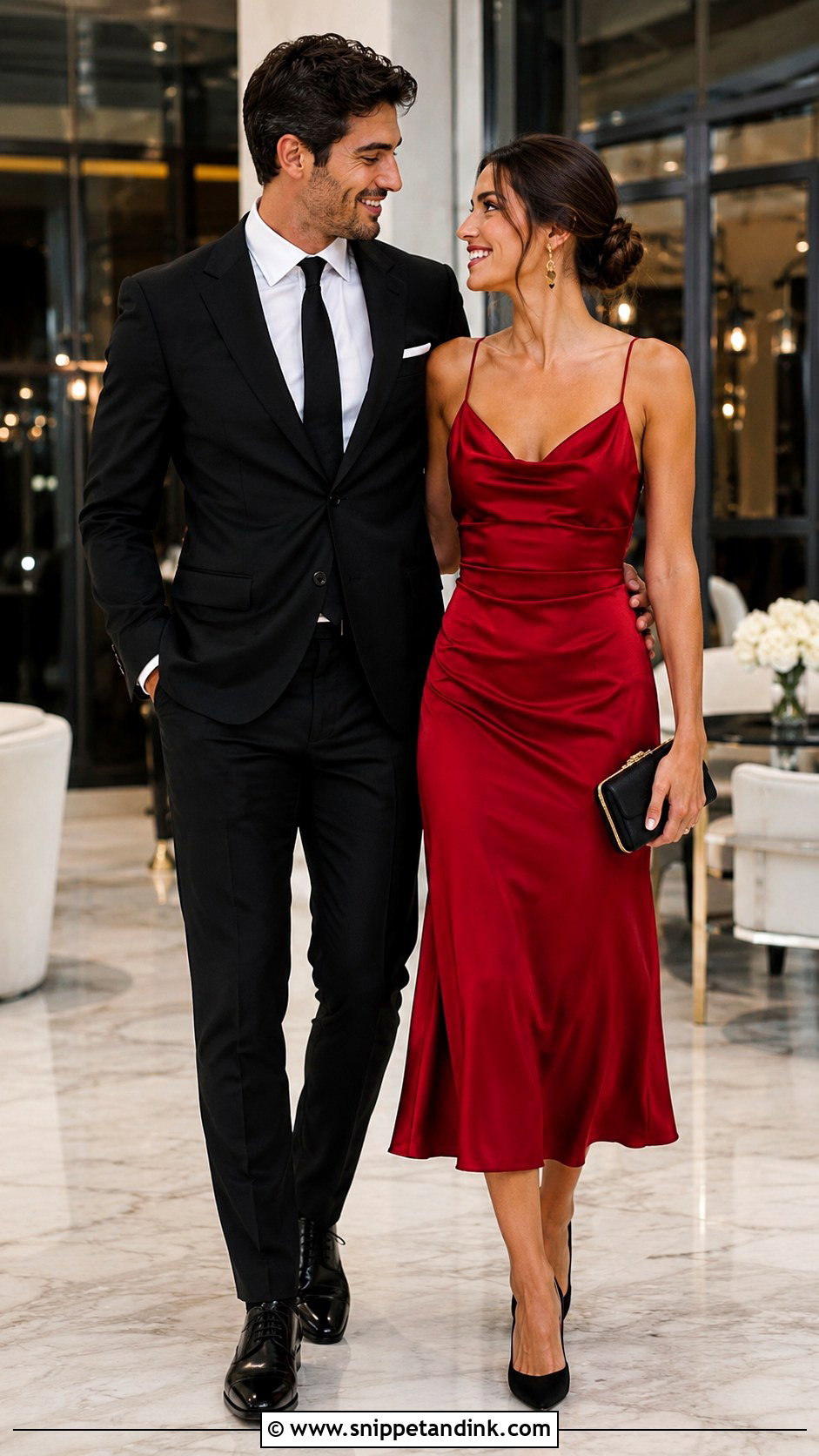
Black and red reads instantly at an evening event, so the job is restraint. Keep the suit streamlined: white shirt, black tie, black belt, polished shoes. The red dress, a satin column or a structured fit-and-flare, carries all the color. I’d skip a solid red tie; a dark patterned pocket square with a fleck of red connects you without competing. Garnet and burgundy are calmer than true red if you’d rather not be the brightest thing in the room, which at someone else’s wedding is worth weighing. Black heels and restrained gold jewelry finish it.
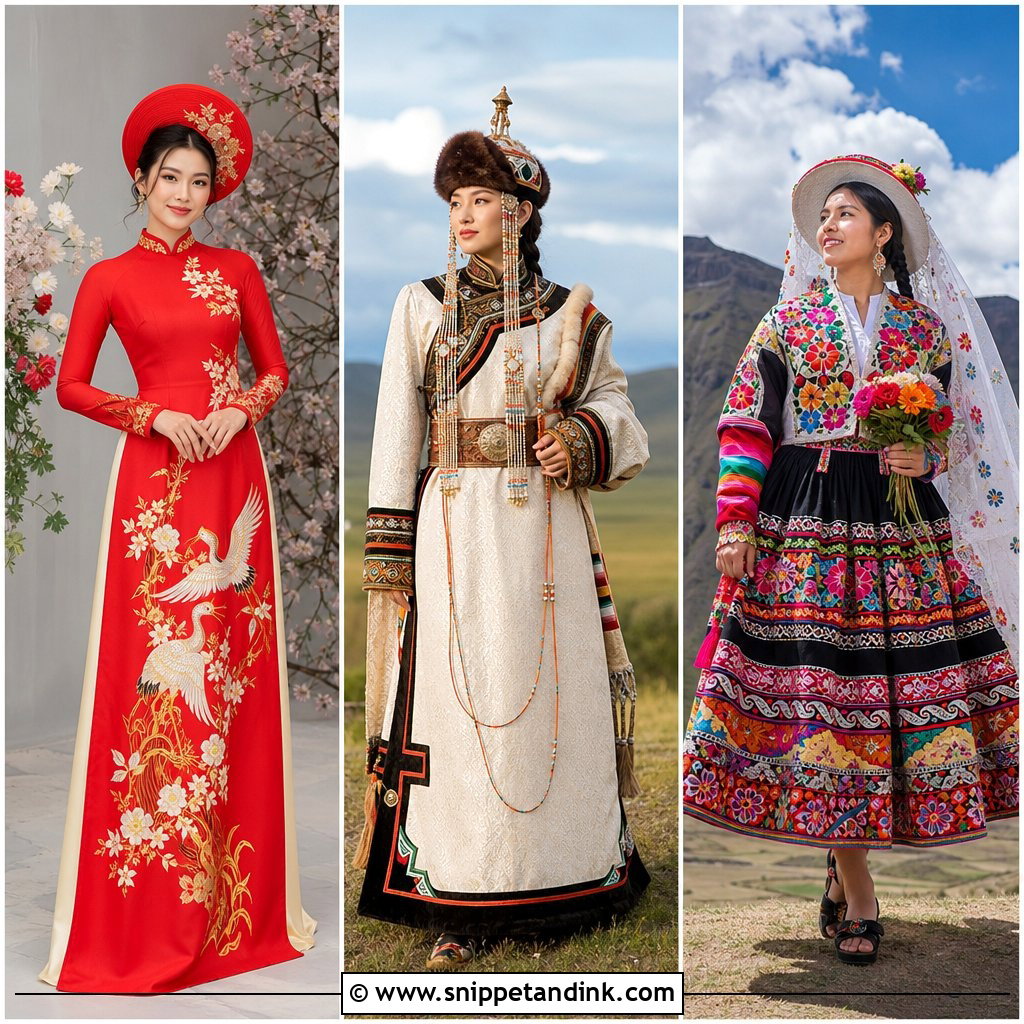
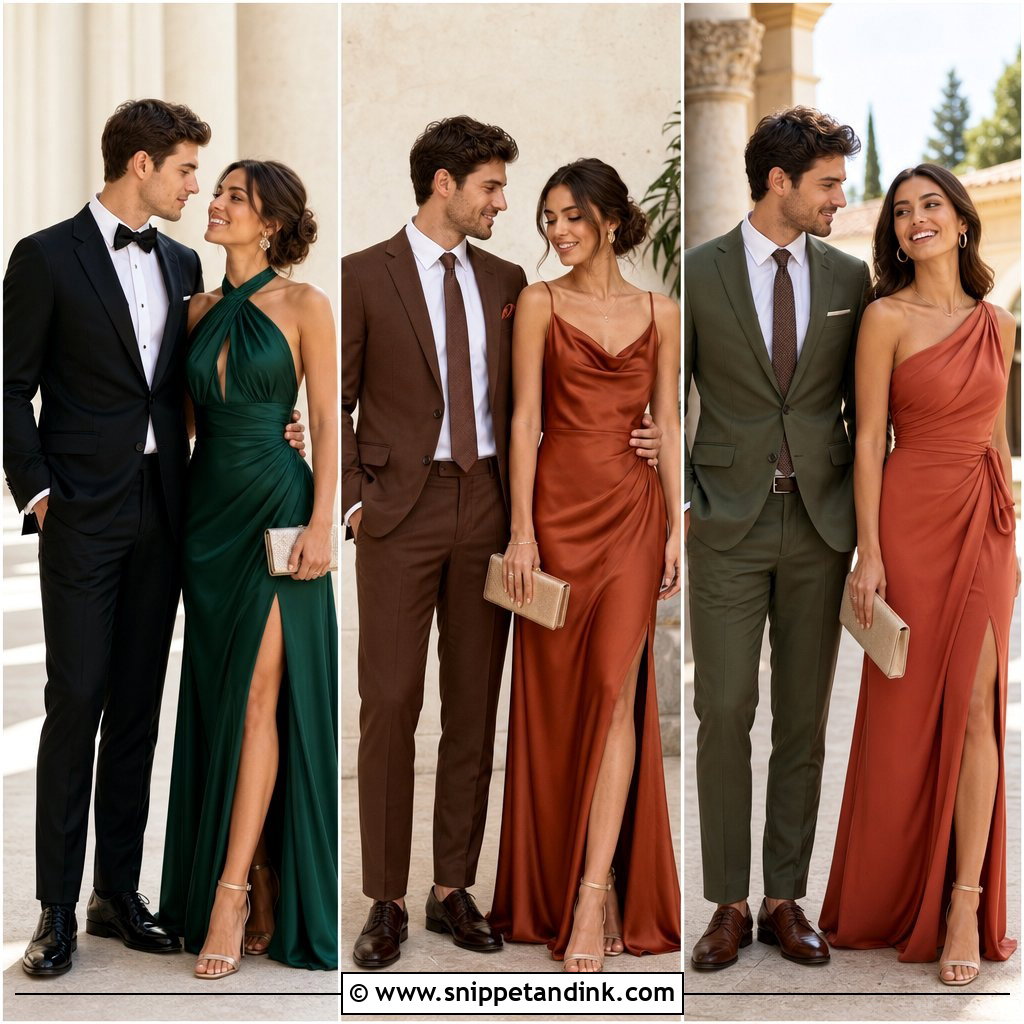
15. Plaid Suit And Solid Black Dress
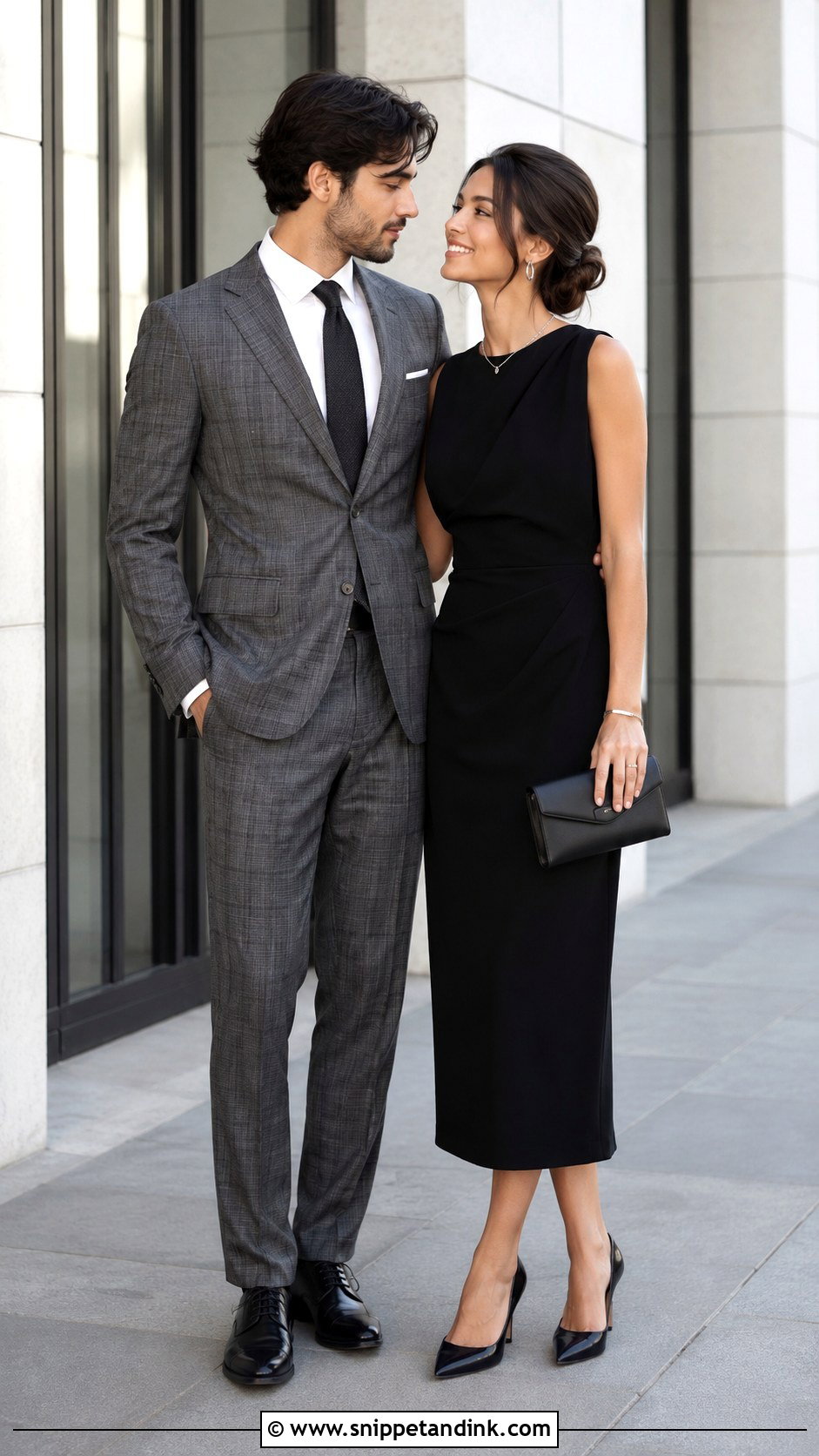
A plaid suit only works if everything around it stays plain. Choose a subtle gray, navy or brown check with a white shirt, a solid dark tie and leather shoes. The solid black midi is the anchor, and a little structure in it, a square neckline or a defined waist, keeps it from looking like an afterthought next to tailoring. The mistake I see is stacked pattern: plaid suit, printed dress, patterned tie and decorative shoes all at once. Pick one. Very tight, fine checks can also shimmer oddly on digital cameras, so a medium-scale check is safer if a photographer will be working the room. This sits nicely at cocktail weddings and city dinners where a tuxedo would be overkill.
16. Velvet Suit And Satin Dress
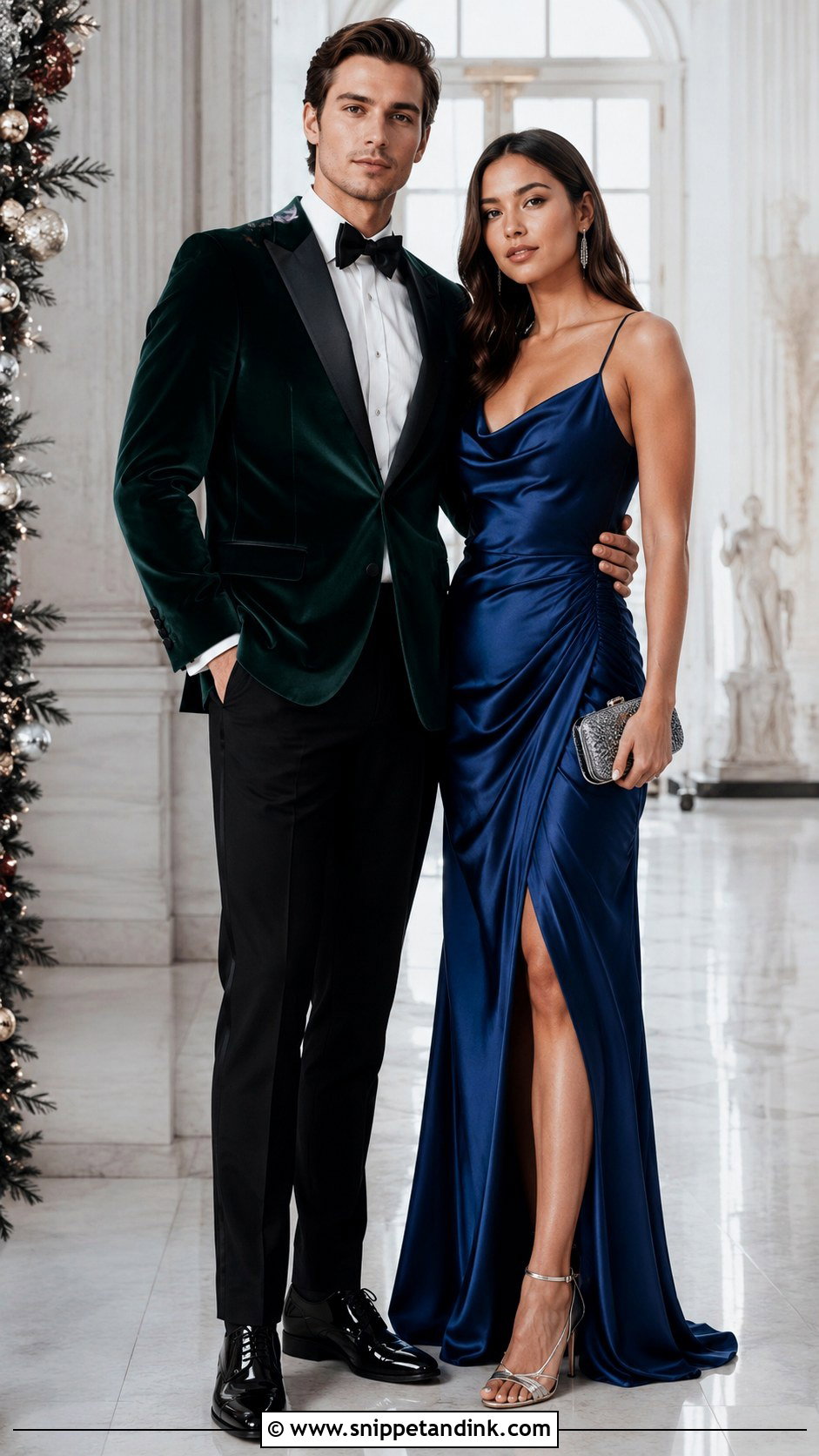
Velvet and satin connect through texture rather than color. A black, navy or forest green velvet dinner jacket goes with black trousers, a crisp white shirt, a bow tie and patent shoes, and the satin dress can come in emerald, sapphire or plum. Keep the dress shape simple, since the sheen is already the focal point. Both fabrics are warm, so I keep this to cooler months and indoor venues. Velvet needs care in transit: hang it, never fold it, and steam it from the inside to lift crushed pile instead of pressing it flat with an iron, which leaves a permanent shine.
17. Seersucker Suit And Yellow Dress
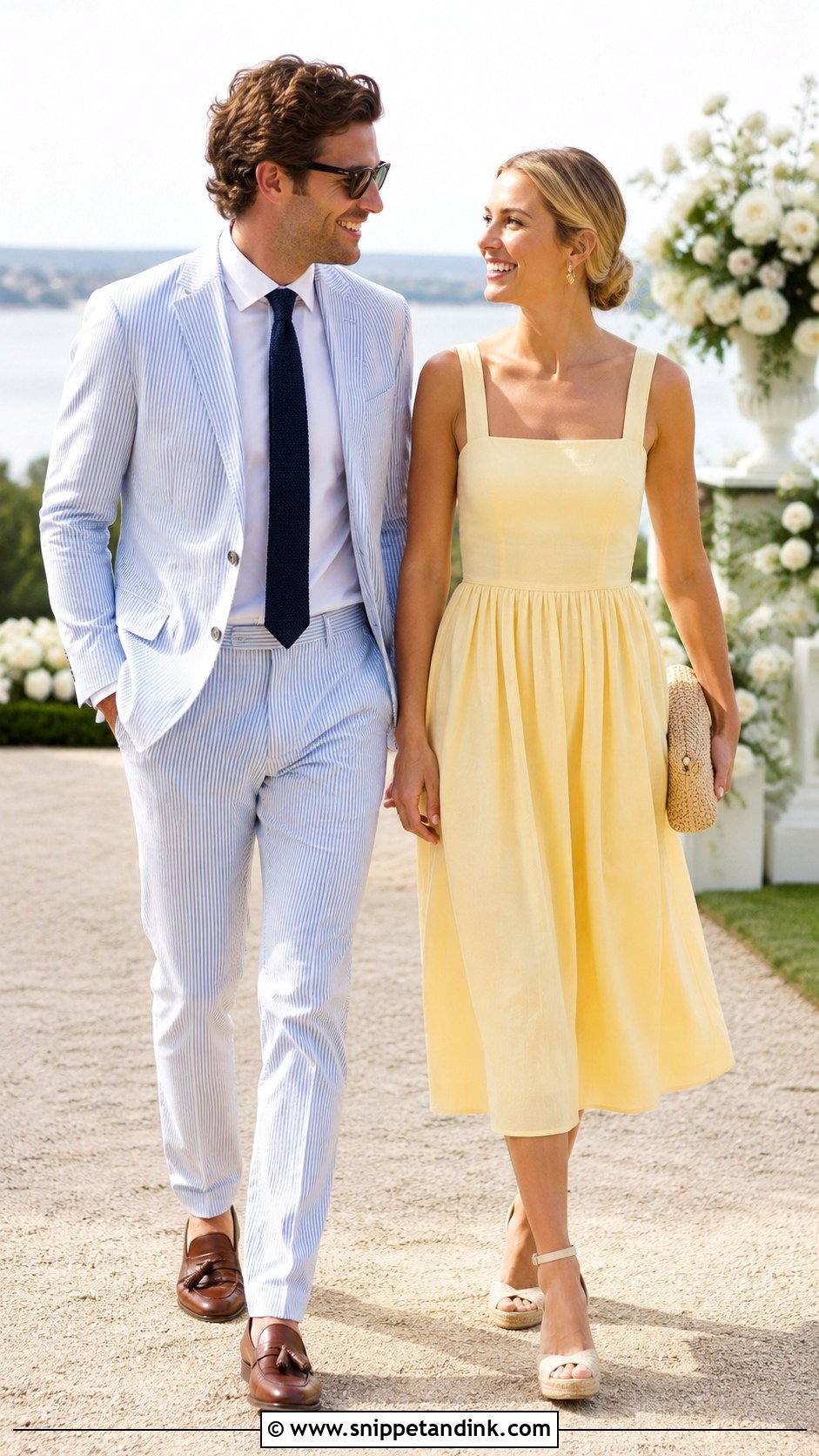
Seersucker is built for heat. The puckered weave holds the cloth slightly off your skin, which is why it survives a summer afternoon. Pair the blue-and-white suit with a white shirt, a navy knit tie and brown loafers. The yellow midi, in cotton, linen or light chiffon, should be butter or muted marigold, not fluorescent. Because the suit already carries a stripe, keep the dress and accessories solid. Have the trousers hemmed with little or no break; seersucker bunching over the shoe is what tips it from smart to sloppy. Espadrille wedges handle lawns and coastal boardwalks better than stilettos.
18. Three-Piece Suit And Lace Midi Dress
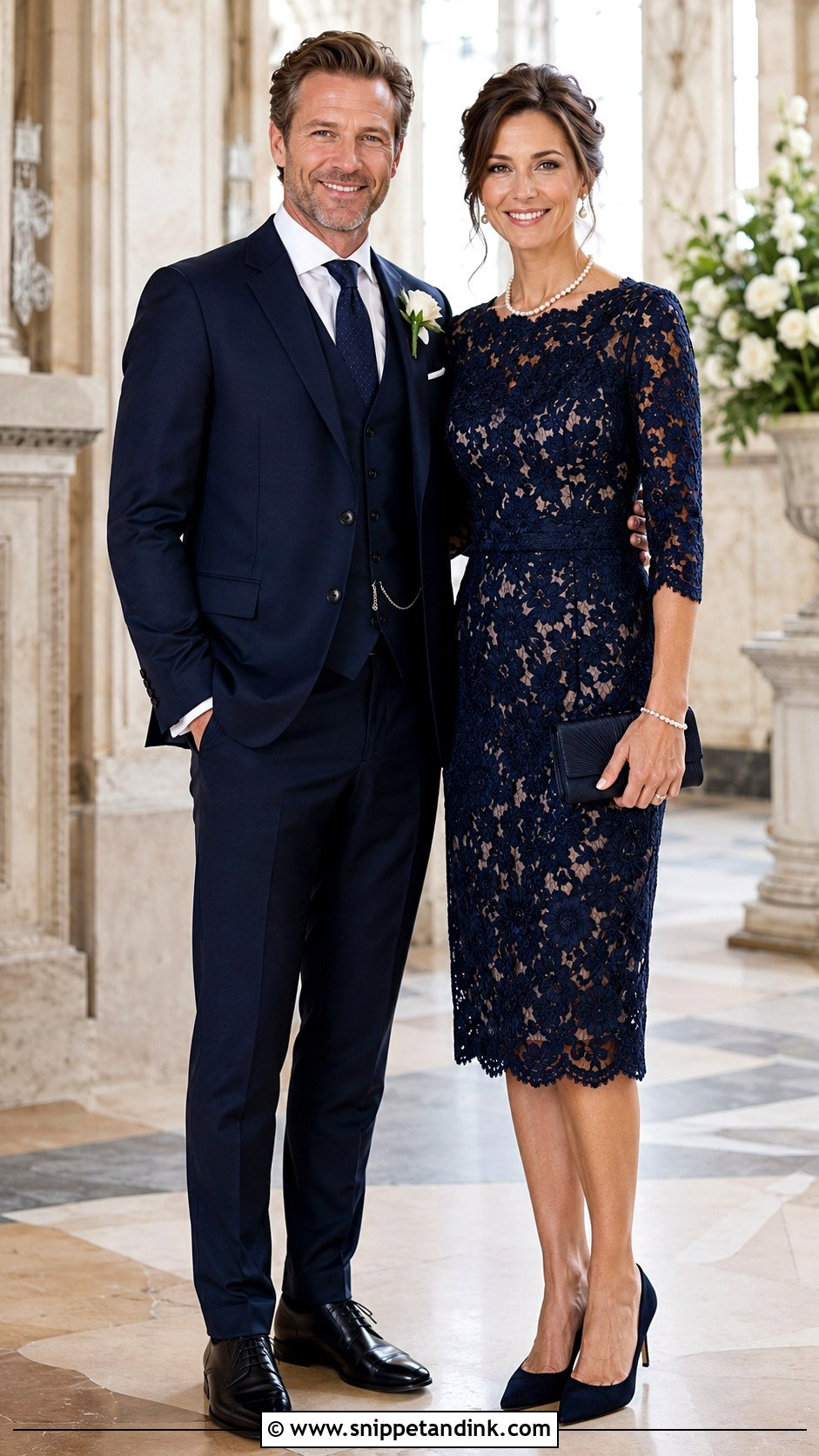
A three-piece suit raises formality on its own, so the dress beside it has to keep pace. Choose navy, charcoal or deep brown with a matching vest, white shirt, silk tie and leather Oxfords. The lace midi should be substantial, a corded or heavier lace over a lined bodice, rather than a crochet texture that looks like a summer day dress. A tie that picks up one quiet color from the dress connects the two of you. Vests ride up when you sit, so the waistcoat should cover the trouser waistband with a little to spare. Pearl or crystal jewelry and closed-toe pumps suit hotel ballrooms and older venues.
19. Double-Breasted Suit And Pleated Maxi Dress
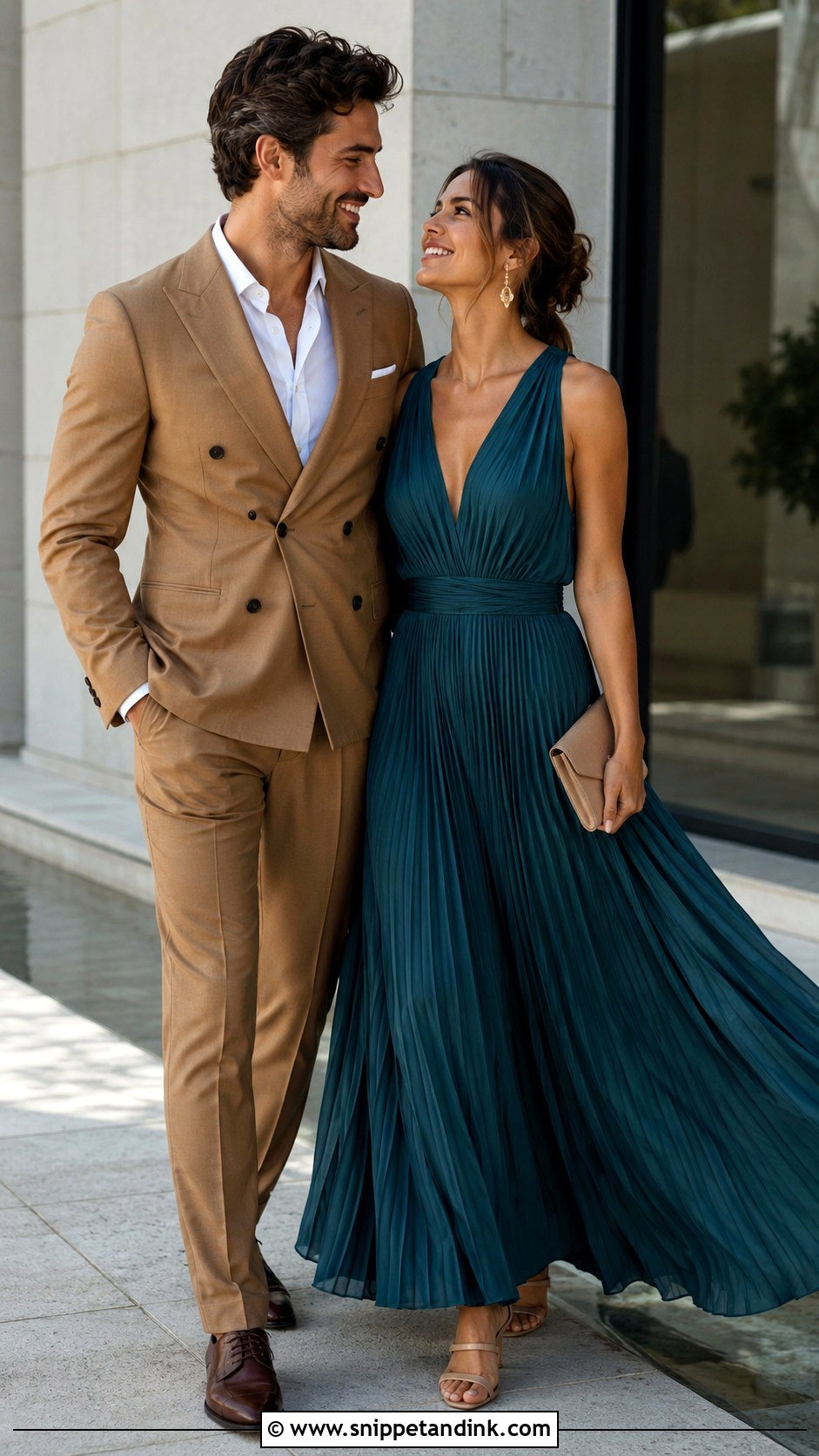
Double-breasted tailoring and a pleated maxi make a good contrast: strict lines on one side, movement on the other. Pick a navy, camel or charcoal suit with peak lapels, a plain shirt and a restrained tie. The pleated maxi in muted rose, teal or rust picks up light as it moves, which shows in candid photos. Here’s the fit point I check first. A double-breasted jacket is meant to stay buttoned while standing, so it has to close without pulling across the chest, or it looks a size too small all night. The dress hem should clear the floor in the actual heeled sandals she’ll wear.
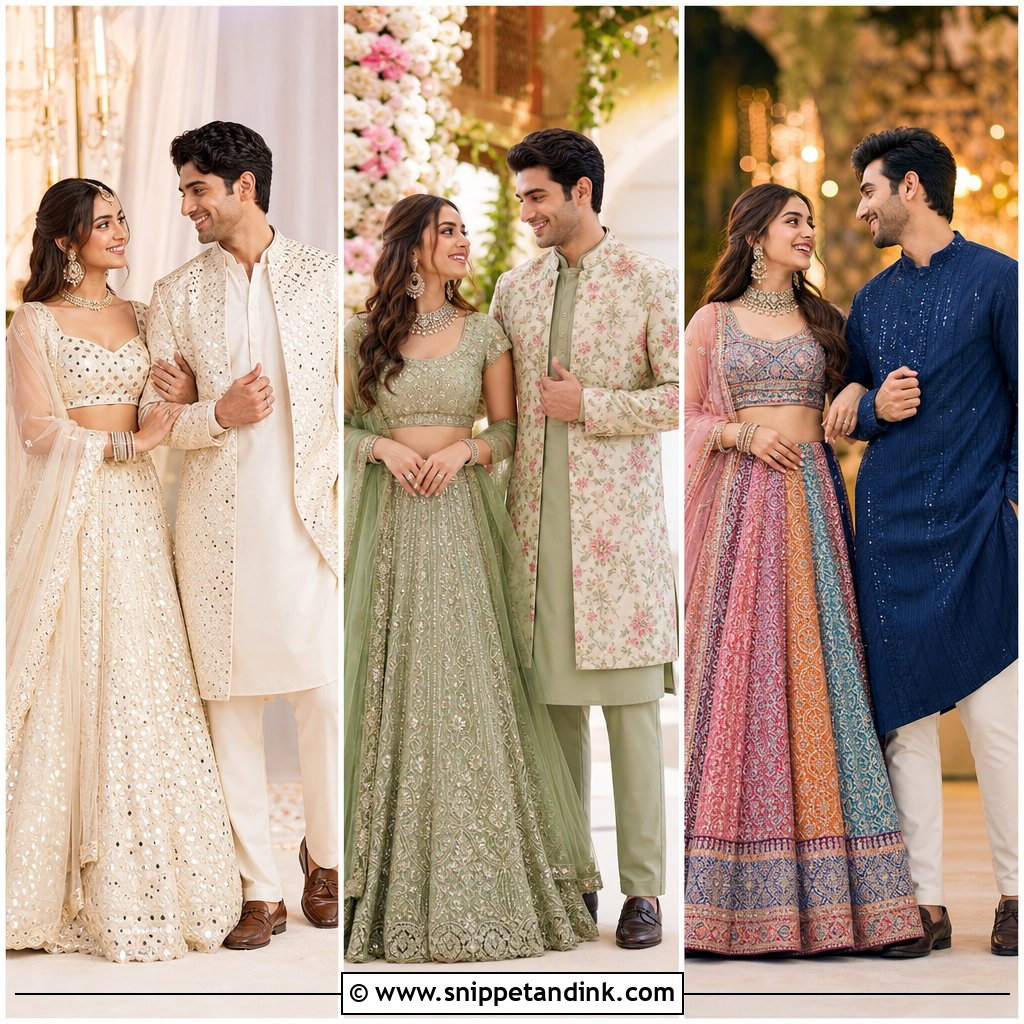
20. Gray Suit And Metallic Midi Dress
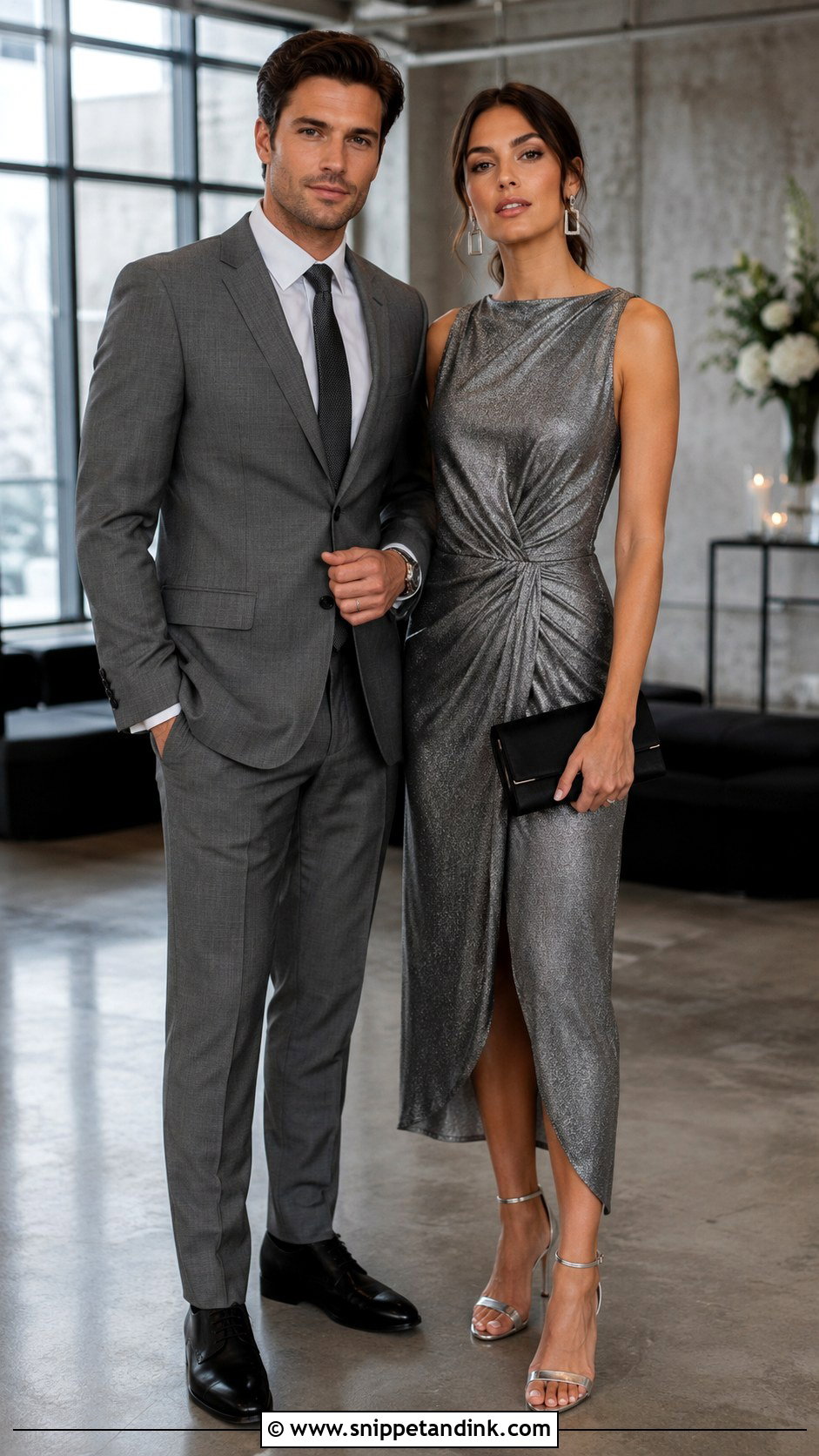
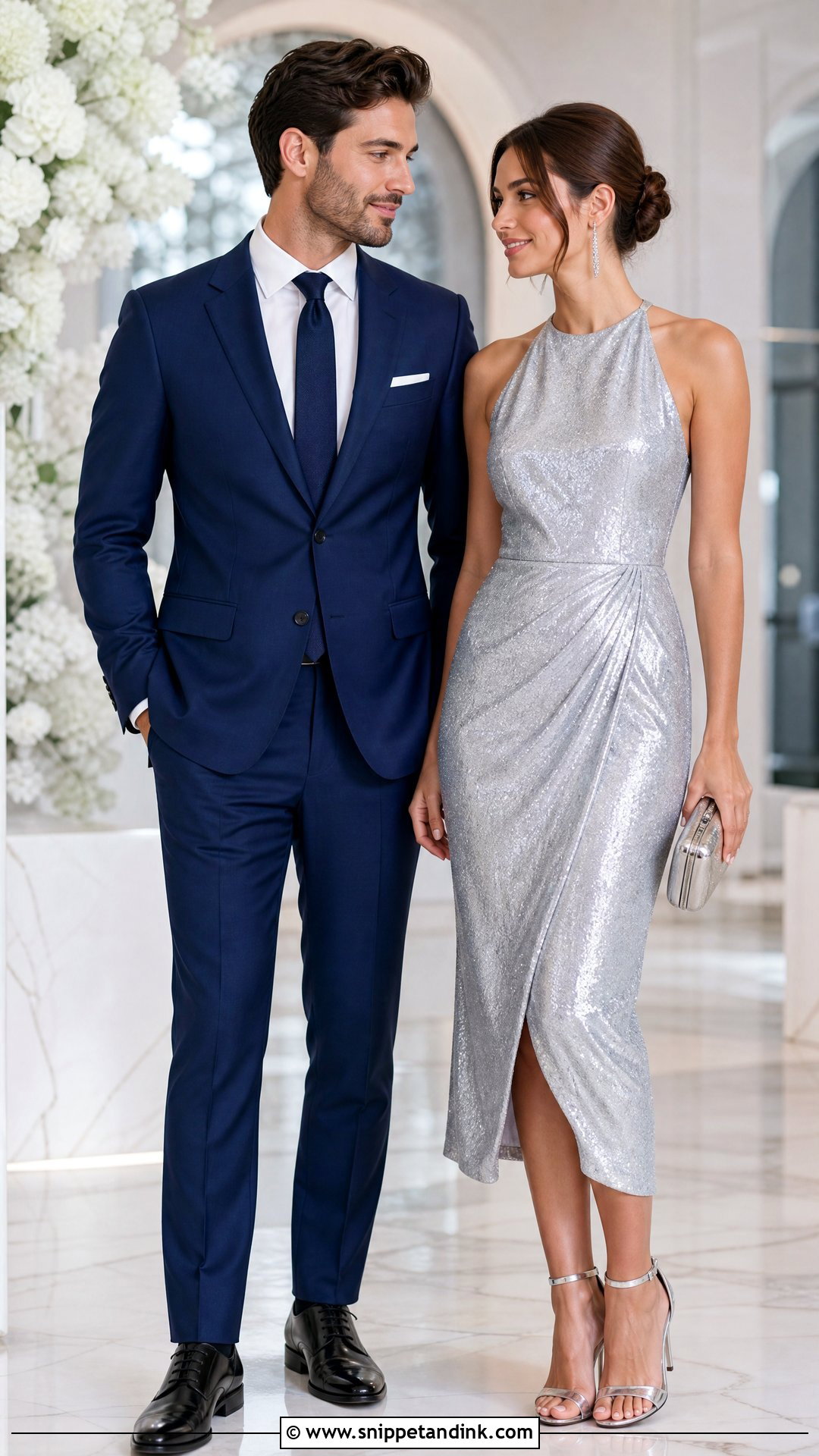
A medium-gray suit with a metallic midi is a modern alternative to all-black evening wear. Pair the suit with a white shirt, charcoal tie, black shoes and a brushed silver watch, and look for a dress in pewter or gunmetal. Matte wool beside reflective fabric creates the separation, so there’s no need to add shine to the suit. The danger is the costume effect: sequins plus glitter shoes plus oversized earrings is too much. Choose one sparkling element and keep the rest quiet. Industrial spaces and city rooftops suit this pairing.
Clearing Your Colors With the Wedding Party
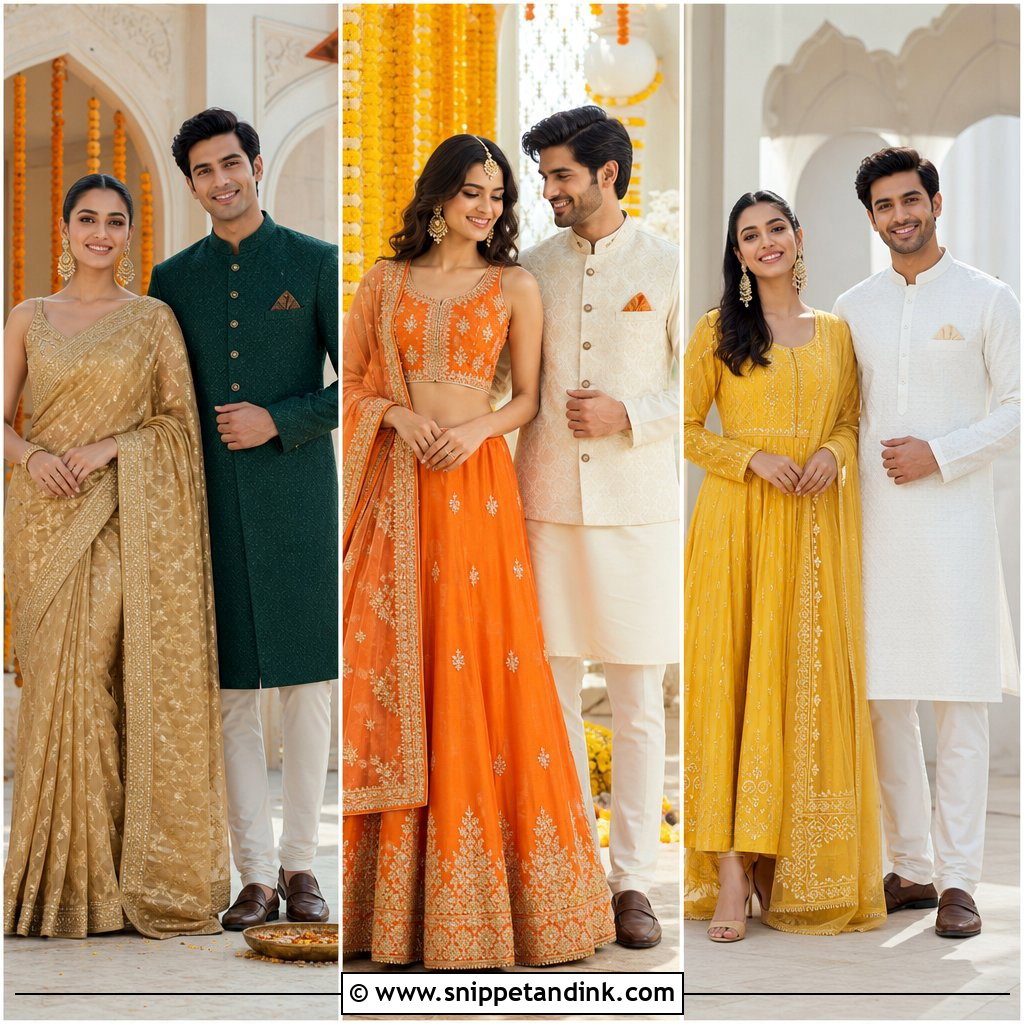
A guest couple is more visible than a single guest, so color choices count twice. White, ivory and pale champagne belong to the bride unless the couple has said otherwise. At many South Asian weddings red is traditionally the bride’s color too, which makes a red dress worth skipping there. If you know the bridesmaids’ color, keep the dress well away from it, because turning up in their exact sage looks like a mix-up.
Black is now widely accepted at evening weddings in many Western traditions, though some families still connect it with mourning. If the couple’s culture is unfamiliar to you, a short message to someone in the wedding party beats guessing.
Two Sets of Alterations on One Calendar
Alterations are where couple outfits fall apart, because two people’s fittings rarely line up. A suit hem and sleeve usually take a tailor a week or two in a quiet month, but that stretches during busy wedding seasons, so I’d book both fittings roughly a month out. Bring the actual shoes to every appointment. Trouser break depends on the shoe, and a dress hemmed for flats will drag the moment heels go on.
At the last fitting, test these
- Sit down in both outfits; jacket buttons, the dress zip and the waistband should all survive it.
- Reach forward as if hugging someone; sleeves shouldn’t drag the jacket up your back.
- Stand next to each other so hems and proportions look like a pair rather than two separate fittings.
A Side-by-Side Look the Night Before
Two people dressed well together still look like two people. Agree on formality first, then share one or two details, a dress shade repeated in a tie or a suit color echoed in a handbag. Think about how much walking and standing the day involves, because shoes decide how you feel by the reception. The night before, put both full outfits on, shoes and jewelry included, and stand side by side near a window and then under a lamp. That five-minute check is where clashing undertones, mismatched formality or one accessory too many show up, while there’s still time to swap something.
You'll Like These Ideas:


Leave a Reply