
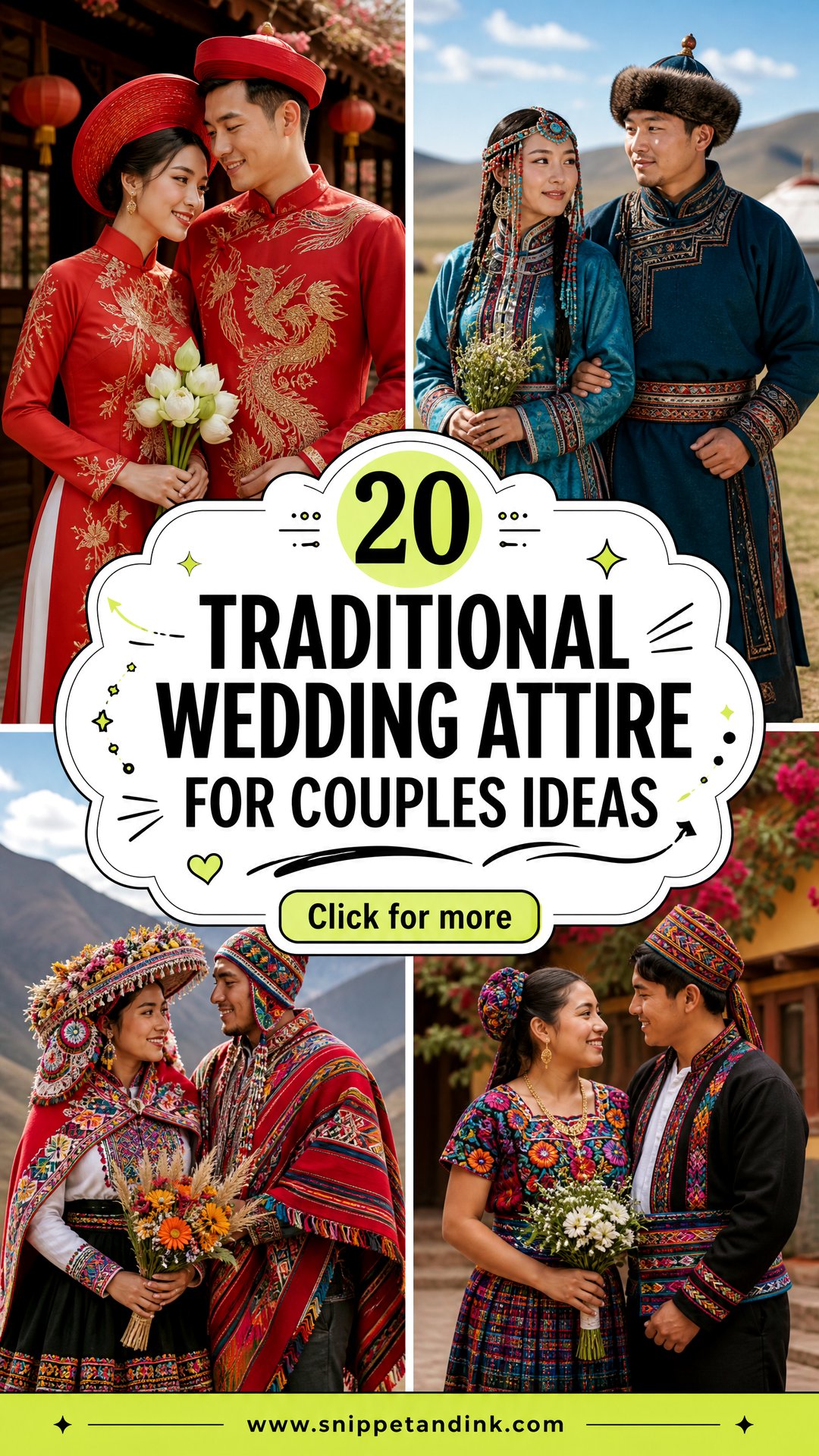
Coordinating Two Outfits Without Turning Them Into a Uniform
When I style a couple, I pick one thread to carry between them and leave everything else free. That thread might be a border color, an embroidery metal, a shared cloth or a single accent in his stole or her headpiece. Matching more than that usually flattens both outfits.
- Balance weight, not color. A heavily embellished bridal outfit next to a plain groom’s look reads as unfinished; give him one textured or embroidered piece.
- Share swatches between both tailors. Two reds from different dye lots can clash badly side by side in photos.
- Align timelines. Grooms’ outfits are often left late, but handwoven or embroidered menswear takes as long as bridalwear.
- Do one joint fitting, standing together in front of a mirror, before final alterations.
Height and scale matter as well. A tall headpiece or turban changes how a couple stands together in portraits, and a full skirt pushes the groom half a step away. I have couples stand, walk and sit side by side at that joint fitting so we see the pair as the photographer will, not two separate outfits on two hangers.
1. Indian Lehenga and Sherwani Traditional Wedding Attire
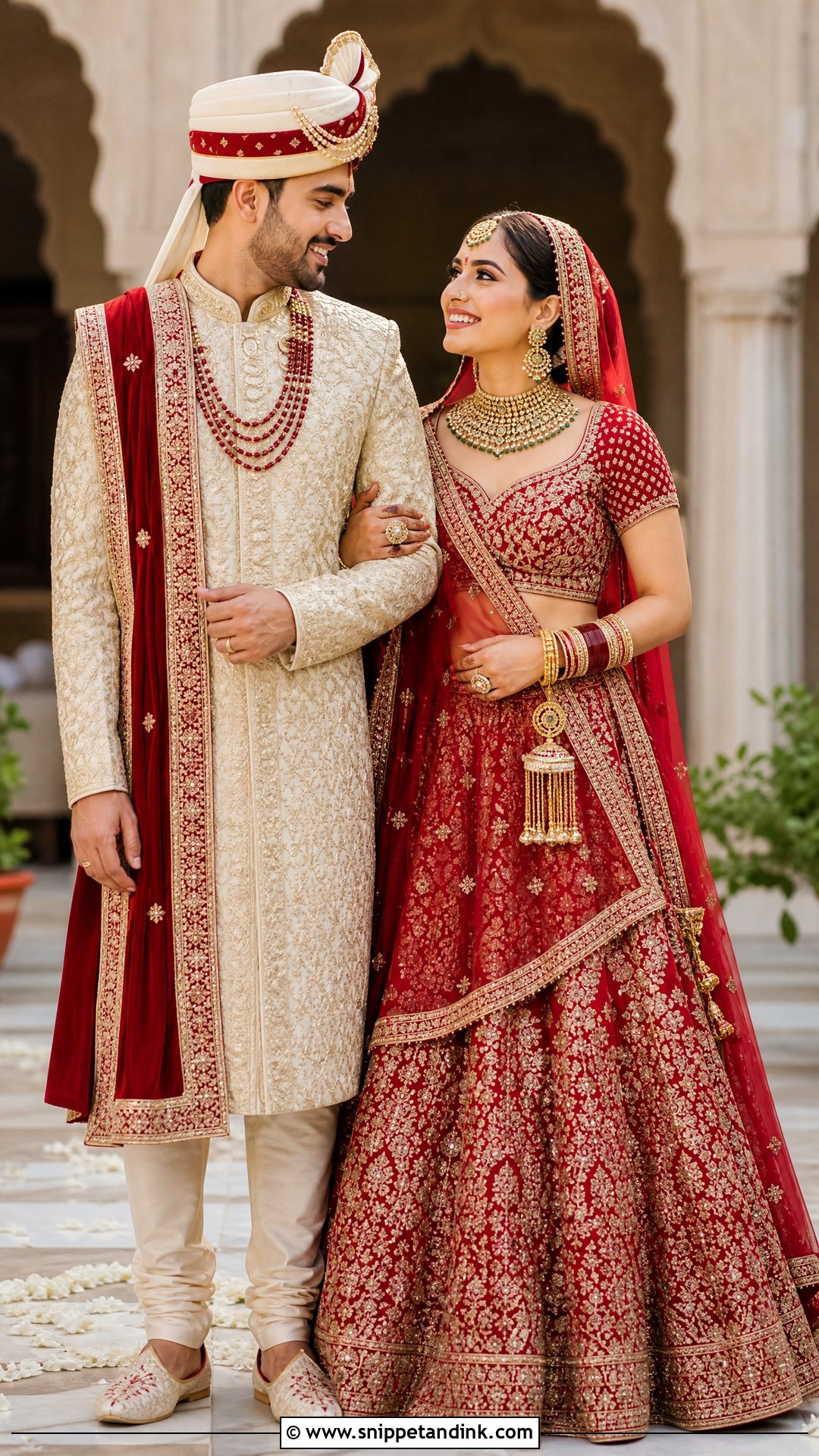
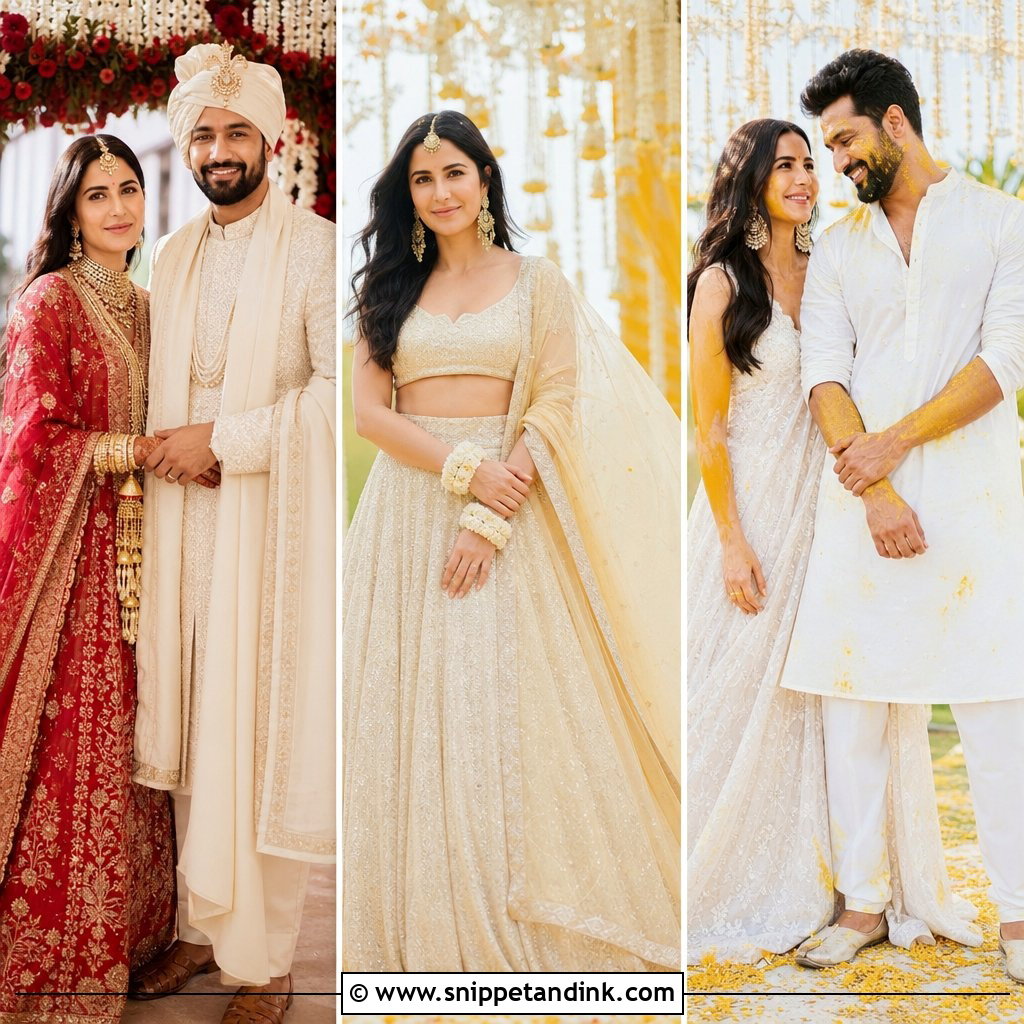
Red lehenga, ivory sherwani: it’s the pairing most guests picture, and it works because the two outfits are different weights of the same idea. She wears an embroidered lehenga, fitted choli and a dupatta over the head or shoulder, with gold jewelry, bangles, embellished juttis and a potli. He wears ivory with restrained gold embroidery, churidar and juttis, and a red stole or safa brings her color to him without making them twins. Maroon, pink or orange can replace red if the family prefers. One thing I check for both: lining. A heavy lehenga over a synthetic lining and a sherwani buttoned to the throat are hot through a long ceremony, so ask for cotton or silk linings.
2. South Indian Saree and Veshti Traditional Wedding Attire
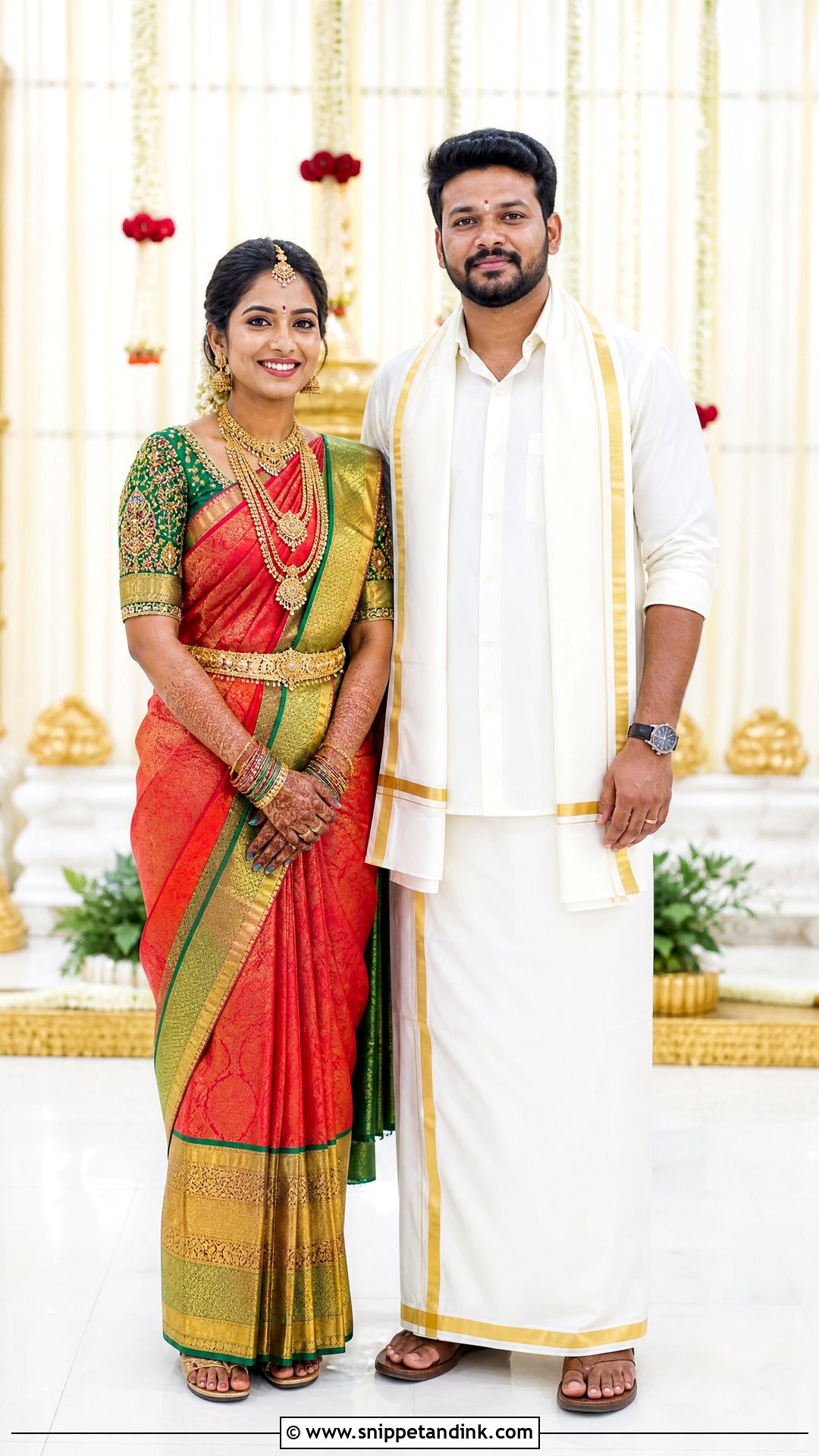
Gold borders do the coordinating here. The bride wears a silk saree in red, green, gold or a family-approved color with a fitted blouse, layered gold jewelry, bangles, an oddiyanam waist belt and jasmine in a braid. The groom wears a crisp veshti and angavastram, with a shirt or simply the upper cloth depending on community custom, and when both borders share a metal tone, the pair reads as one picture. Veshti and saree draping differ from community to community, and a veshti tied by someone who isn’t practiced loosens as soon as he sits cross-legged. Book a dresser for both of them, and pin every pleat. Neutral sandals keep the eye on the silk.
3. Pakistani Sharara and Sherwani Traditional Wedding Attire
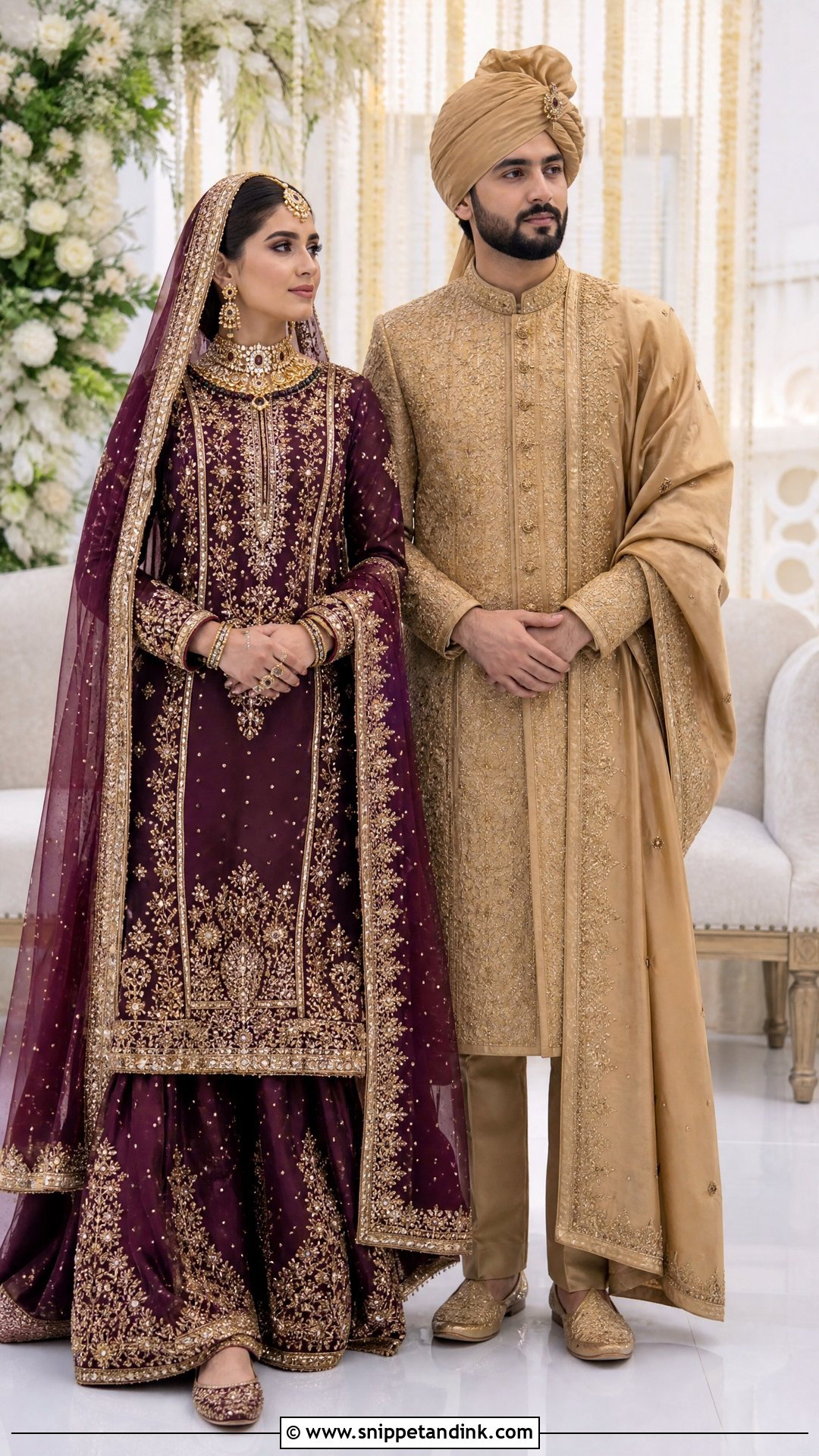
A sharara and sherwani give a Pakistani couple plenty of movement and detail. Her long embroidered kurti sits over wide sharara pants with a dupatta arranged over the head; his structured sherwani goes over straight trousers with khussas and a shawl. Deep red, emerald, plum, ivory and antique gold all hold up well on camera. Rather than matching colors, I repeat one embroidery tone, say her antique gold threadwork echoed in his buttons, stole or turban. Heavy dabka and stones at the inner arm and neckline rub raw skin over a long day; ask the designer to keep embellishment off those friction points.
4. Chinese Qun Kwa and Chang Pao Ma Gua Traditional Wedding Attire
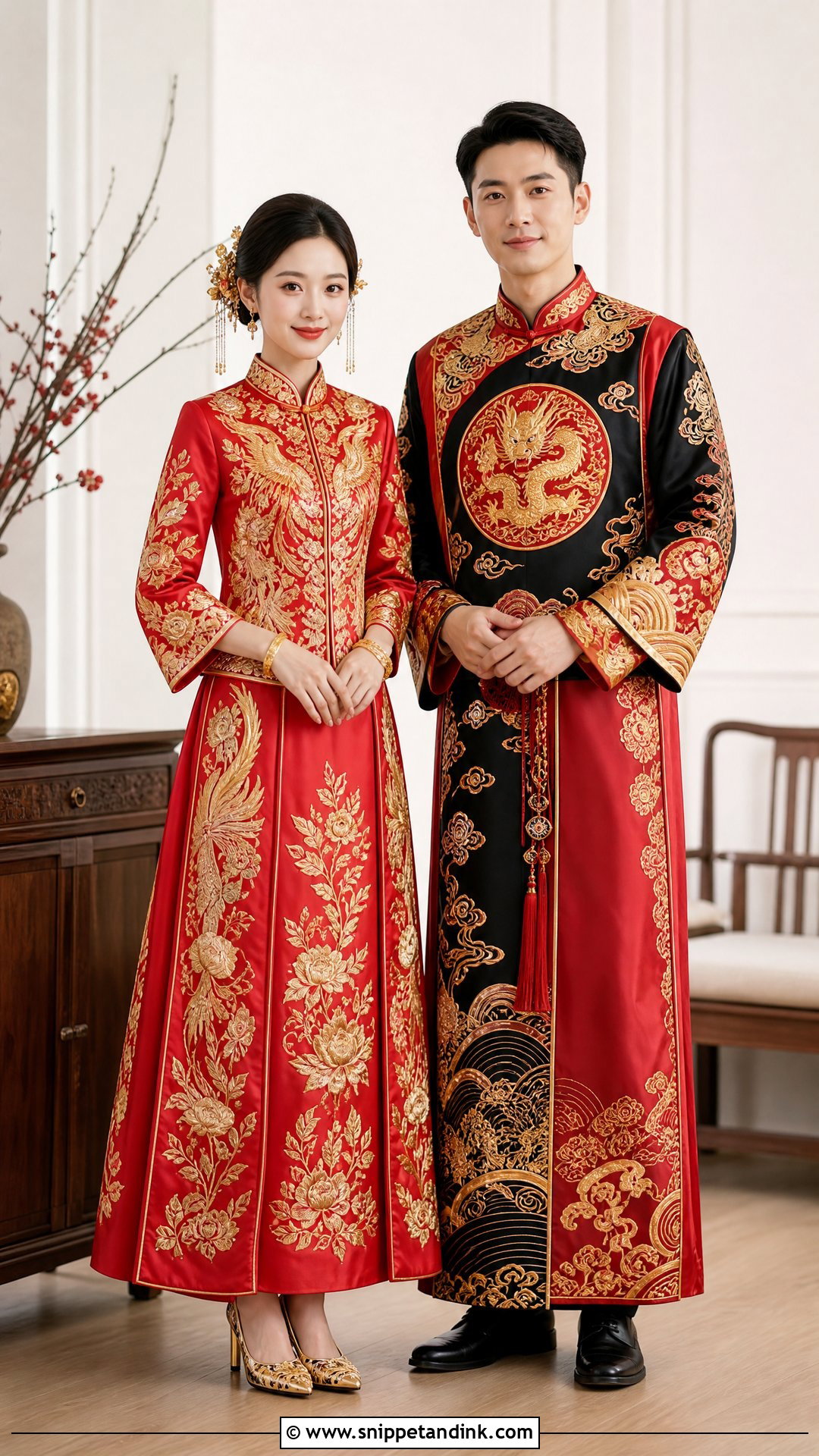
Red silk and dense gold embroidery make this traditional Chinese couple outfit unmistakable. The bride’s qun kwa is a two-piece of embroidered jacket and A-line skirt; the groom’s chang pao ma gua is a long robe with a short jacket over it. Red, black and gold balance the two. Many families care about the embroidered motifs, dragons and phoenixes most often, so let them weigh in. A qun kwa covered in metallic thread is heavy and stiff at the sleeve, and pouring tea while kneeling exposes a sleeve that’s too long or a skirt that’s too narrow. I have both partners rehearse the tea ceremony in the clothes before the day. Gold heels, bracelets, earrings and a refined hair ornament finish her look.
5. Chinese Qipao and Tang Suit Traditional Wedding Attire
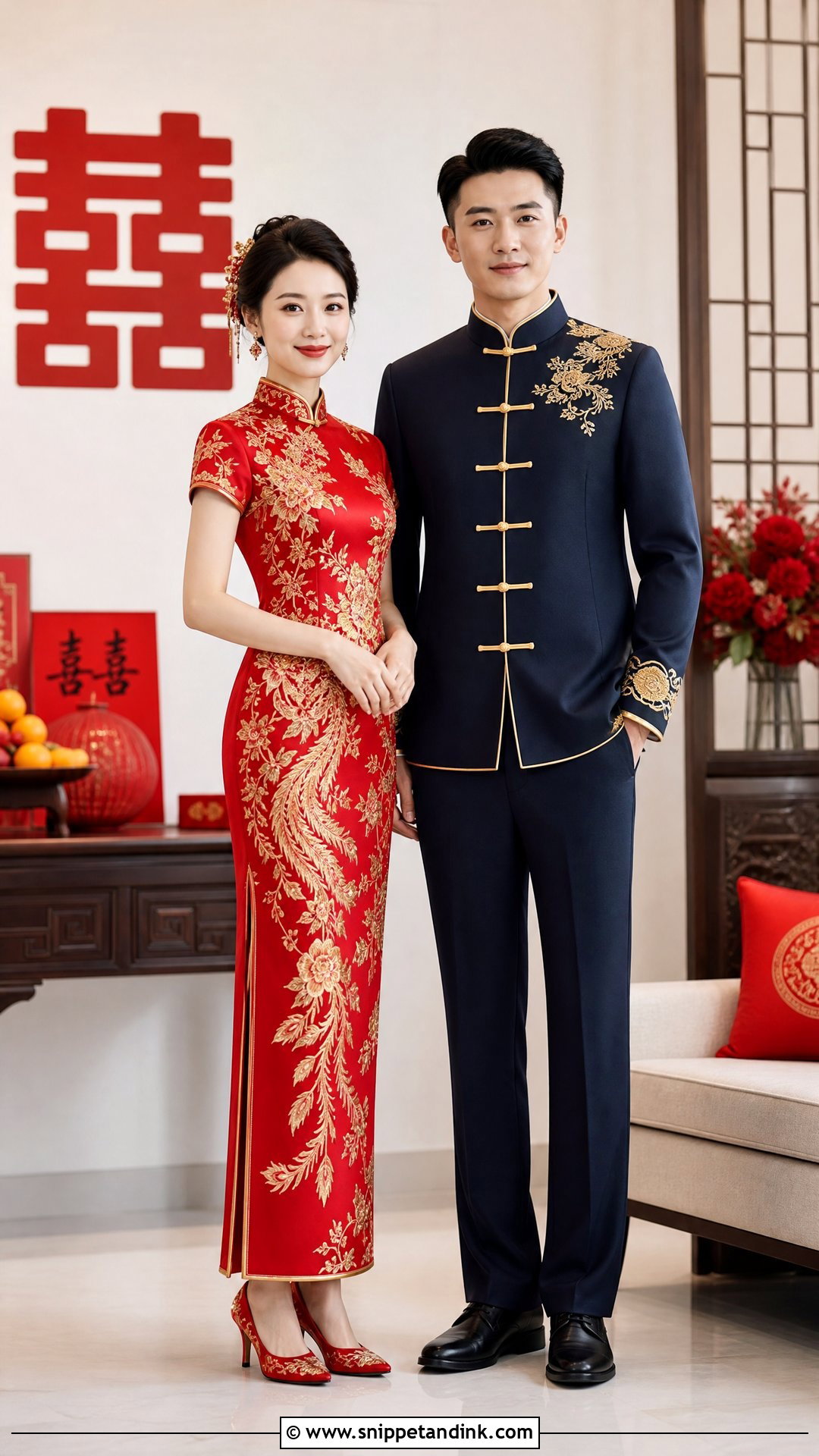
Pairing an elegant red qipao with a tang suit gives you a lighter, streamlined look that’s easy to wear for a tea ceremony, a reception entrance or a second outfit. Her dress has the Mandarin collar, knot closures, side slits and a little gold embroidery; his tang suit can be red, navy, grey or black with matching fastenings and gold piping to link them. A qipao cut close to the body tells you immediately if it’s too tight: the slits pull open and the collar creases when she sits. I fit it with the bride seated, not standing. Closed-toe heels, gold earrings and a polished updo finish it.
6. Korean Hanbok Traditional Wedding Attire
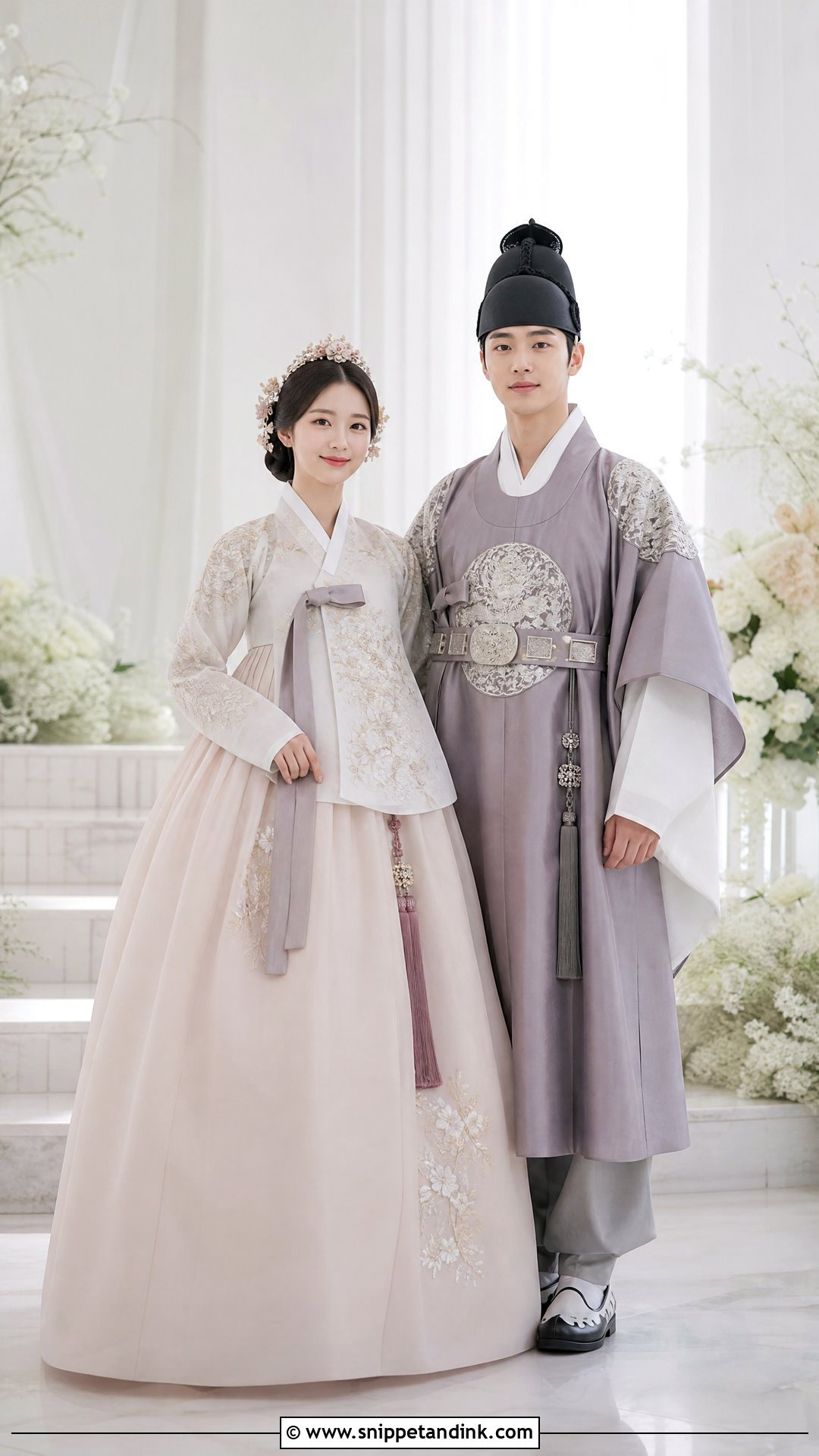
Hanbok for a couple is about line and color rather than matching. The bride wears a full chima skirt with a short jeogori, with colors chosen by family preference and the formality of the day, and for the formal rite she may add a ceremonial robe such as a wonsam or hwarot over it. The groom’s hanbok can include a long robe or jacket over trousers, with traditional headwear when appropriate. Repeat a trim color between them and let the silhouettes stay distinct. Hanbok closes with ties, not buttons, and a goreum that isn’t tied properly loosens within the hour, so a specialist who dresses weddings is worth booking.
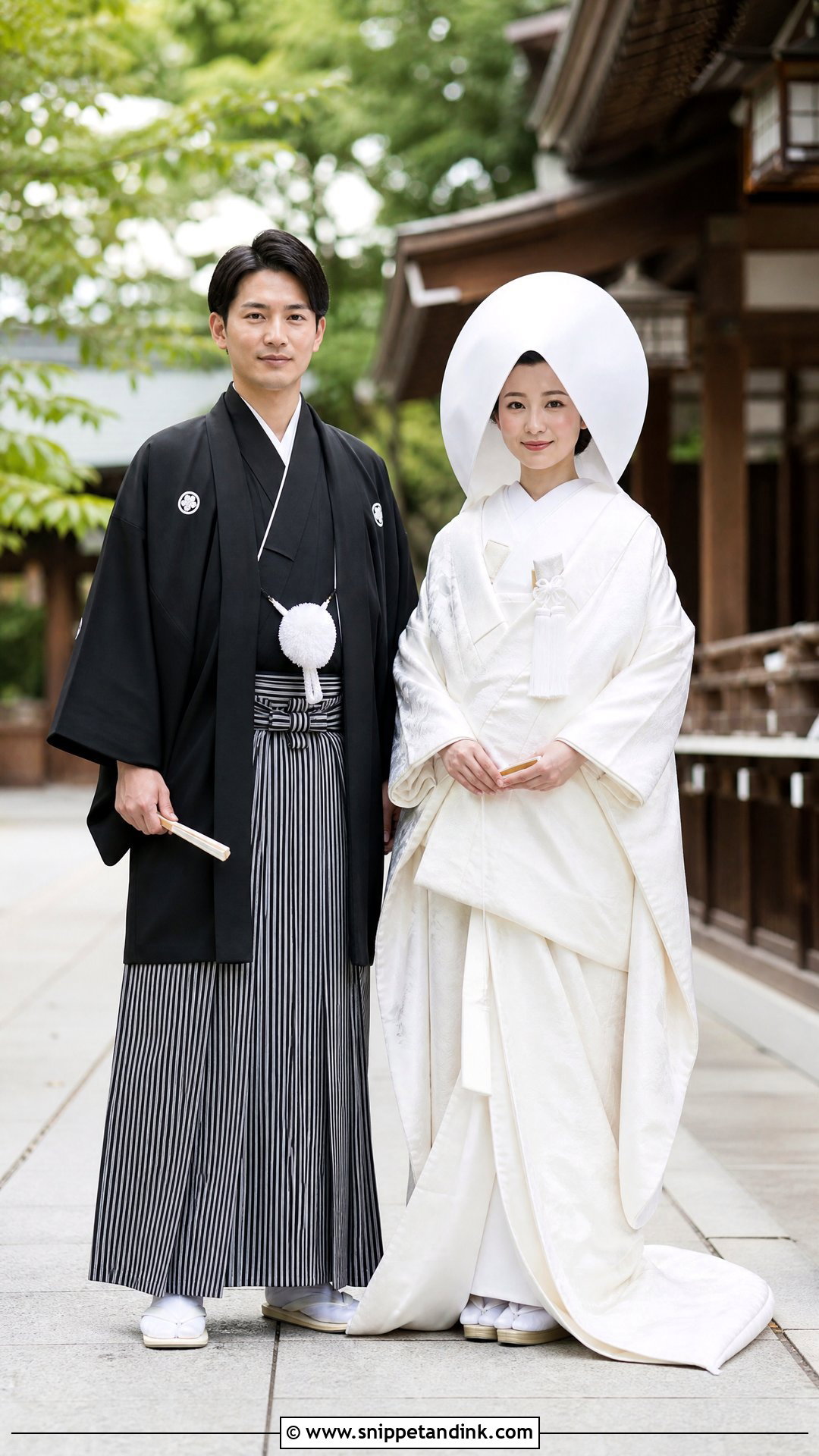
7. Japanese Shiromuku and Montsuki Hakama Traditional Wedding Attire
White shiromuku beside a black montsuki is one of the calmest pairings there is. For a Shinto ceremony, the bride wears the layered white kimono with traditional footwear and bridal headwear such as a wataboshi or tsunokakushi; the groom wears a black kimono with family crests, striped hakama and a haori. This is not clothing you put on yourself. Kitsuke, the dressing, is done by a trained dresser and takes real time, so it belongs in the schedule like hair and makeup. Keep accessories minimal. Many couples wear this for the ceremony and change for the reception. Practice short steps, sitting properly and rising together before the portraits; the layers make all three feel different from everyday clothes.
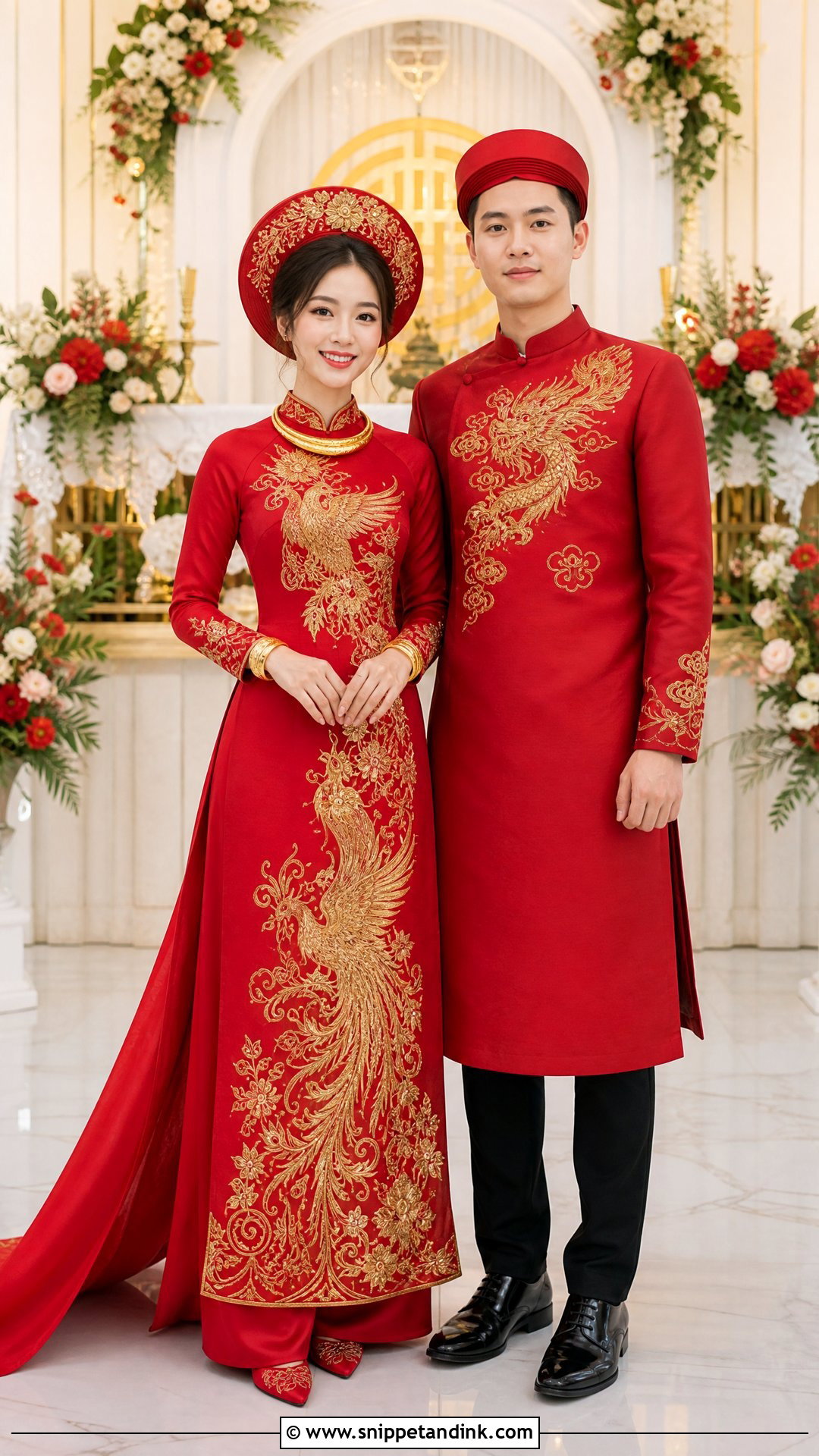
8. Vietnamese Ao Dai Traditional Wedding Attire
The long front and back panels of the ao dai move beautifully when you walk side by side. The bride wears red or a rich color over flowing trousers, often with an embroidered khan dong headpiece; the groom wears a structured men’s ao dai with matching trousers and complementary headwear. Red and gold is the classic palette, though blue, ivory, pink or jewel tones work where the family is happy with them. Matching fabric is fine, but I prefer coordinated embroidery. Fit decides everything with an ao dai. If the side slits start too low, the panels pull as she sits, so fit it with shoes, headwear and accessories in place.
9. Filipino Baro’t Saya and Barong Tagalog Traditional Wedding Attire
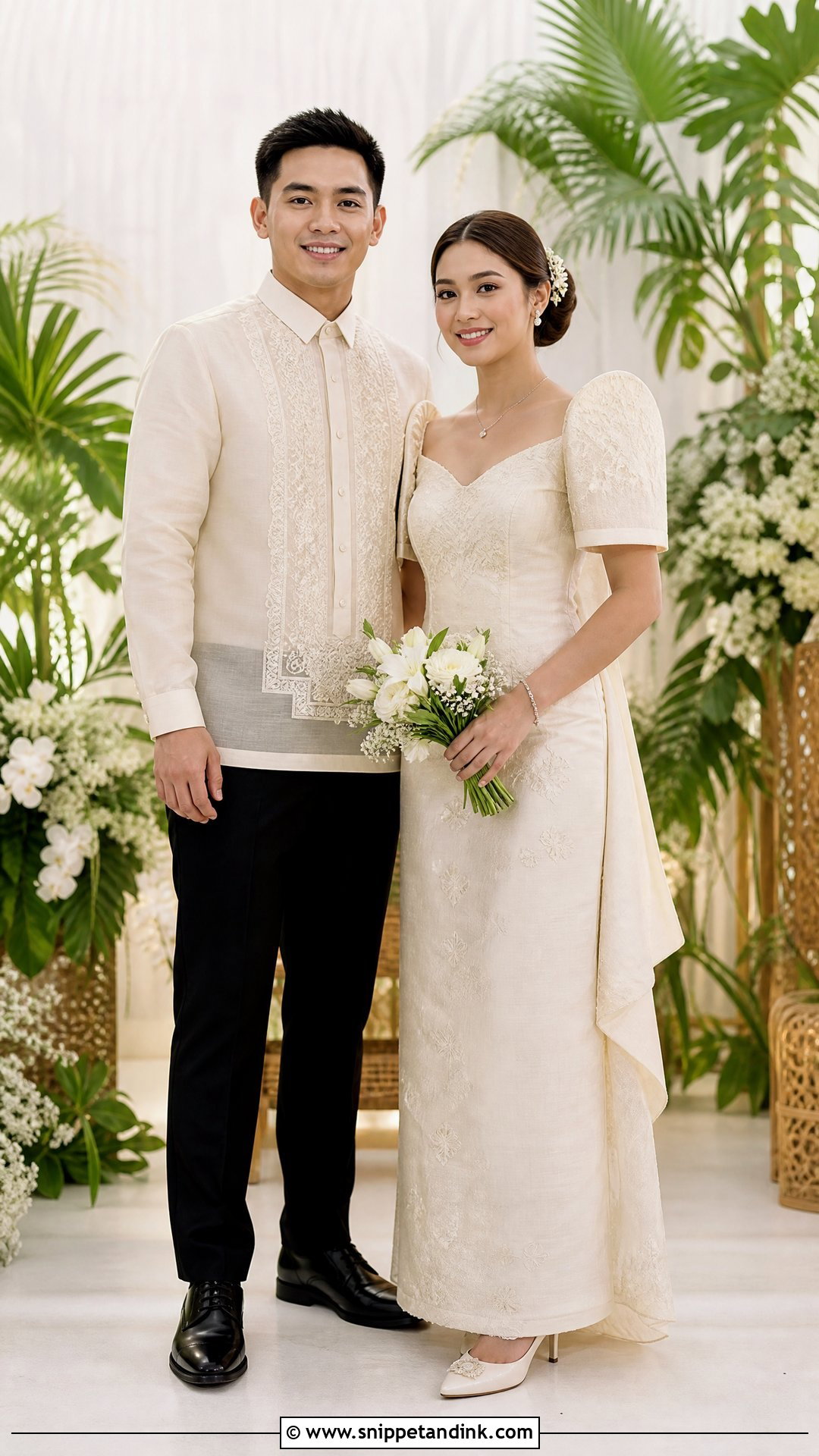
A bridal baro’t saya with a barong Tagalog is a light, formal pairing for warm weather. Her blouse has distinctive sleeves and pairs with a long skirt in ivory, cream or a meaningful color; delicate earrings, closed-toe shoes and a veil or hair ornament complete it. He wears an embroidered barong over an undershirt with dark trousers and polished shoes. Barong fabrics such as piña and jusi are sheer, so the undershirt is part of the outfit, not an afterthought. A plain white or skin-tone camisa de chino reads cleaner than a printed T-shirt showing through. Echo her embroidery in his, and check regional customs with relatives.
10. Mongolian Deel Traditional Wedding Attire
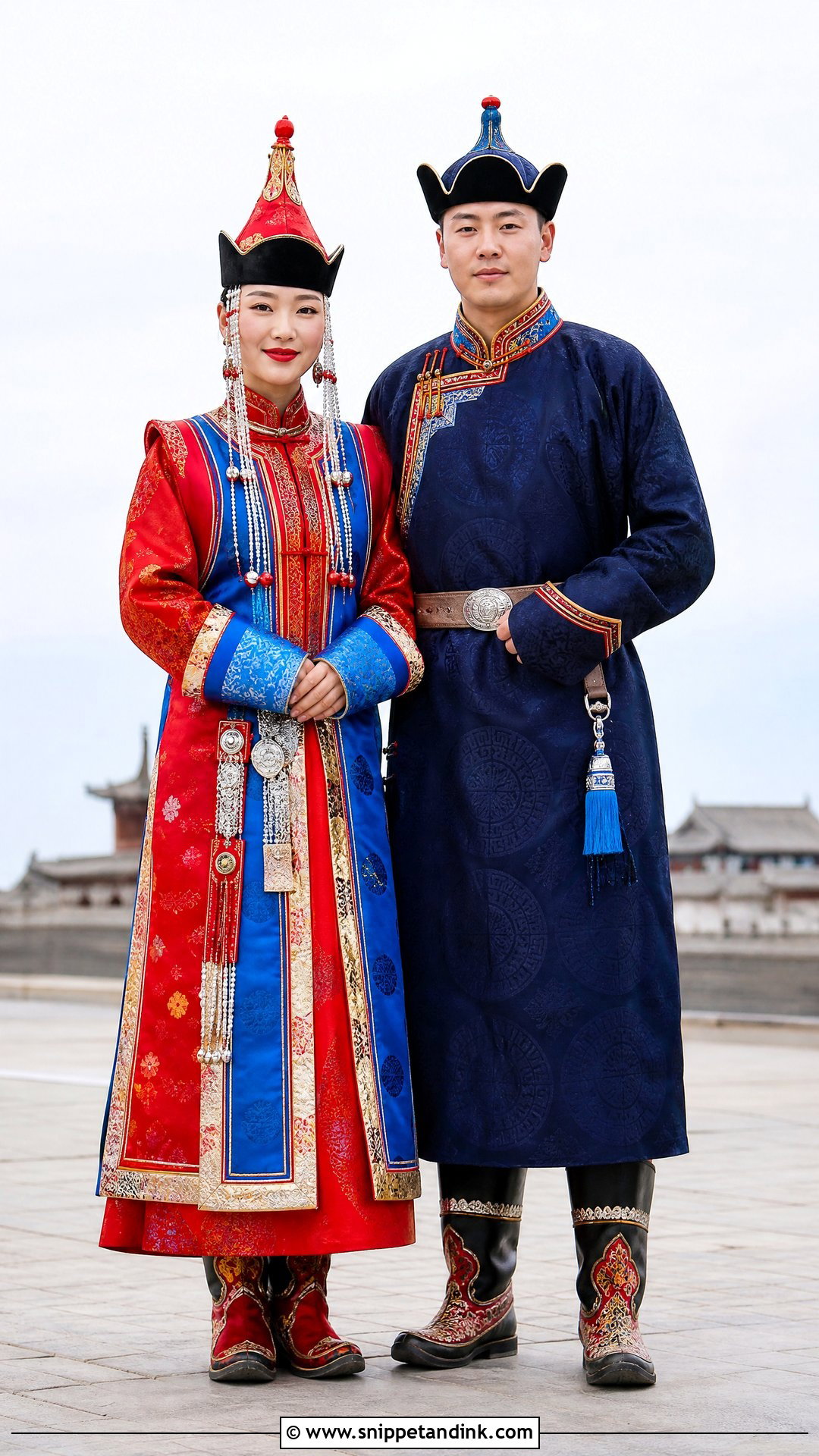
A deel is a long robe with a structured collar, fastened at the side and tied with a sash, and on a couple it reads as powerful. The bride often wears a bright ceremonial deel with traditional boots and headwear or jewelry; the groom wears a darker deel with a contrasting sash, tall boots and formal headwear. Shared trim ties them together. Sash placement is where I’d focus at the fitting. Too high and the robe bunches; too low and it looks sloppy. Silk and cotton blends hold the shape. Construction and decoration vary by region, so work with an artisan who knows yours.
11. Yoruba Aso-Oke Traditional Wedding Attire
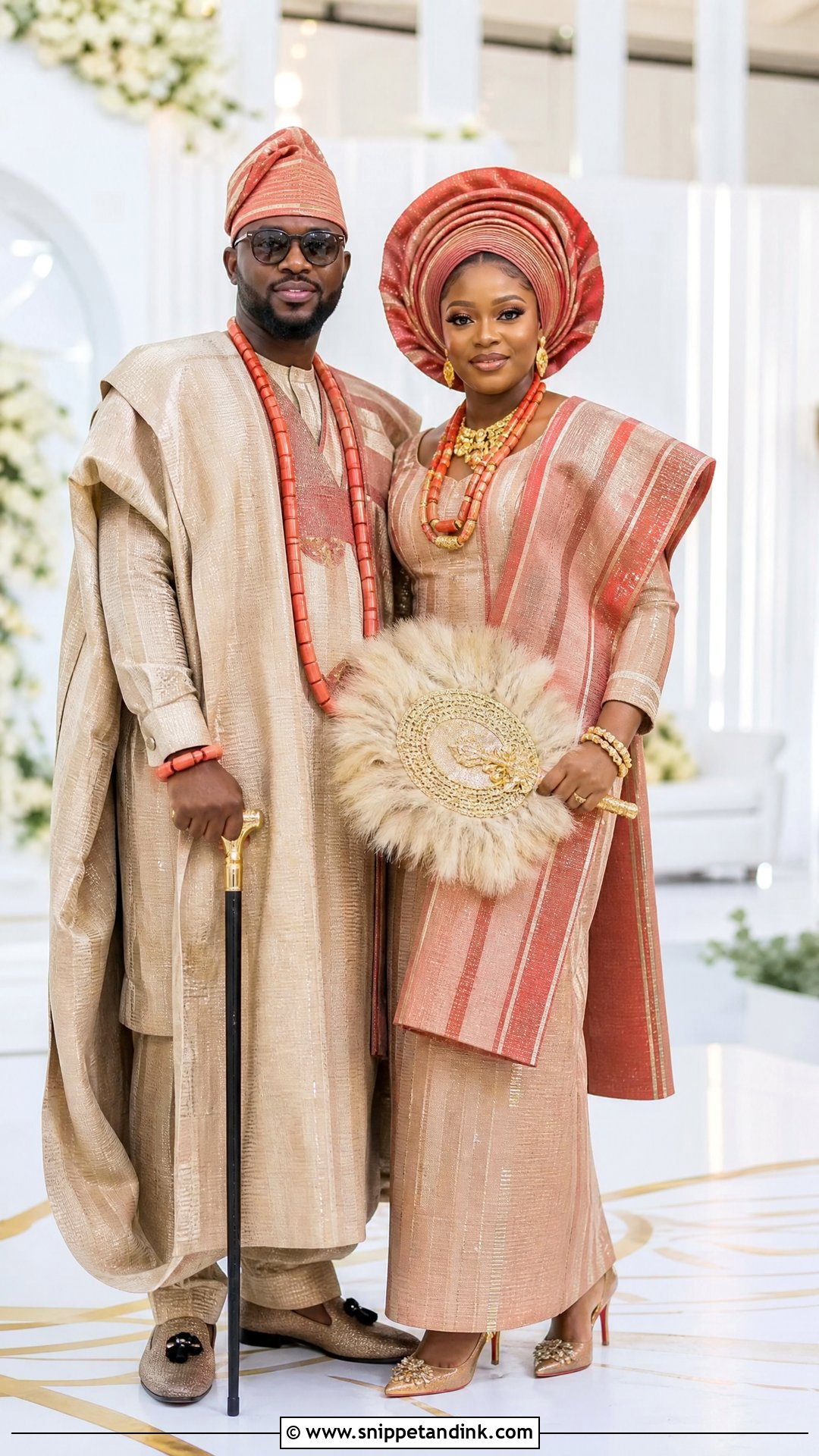
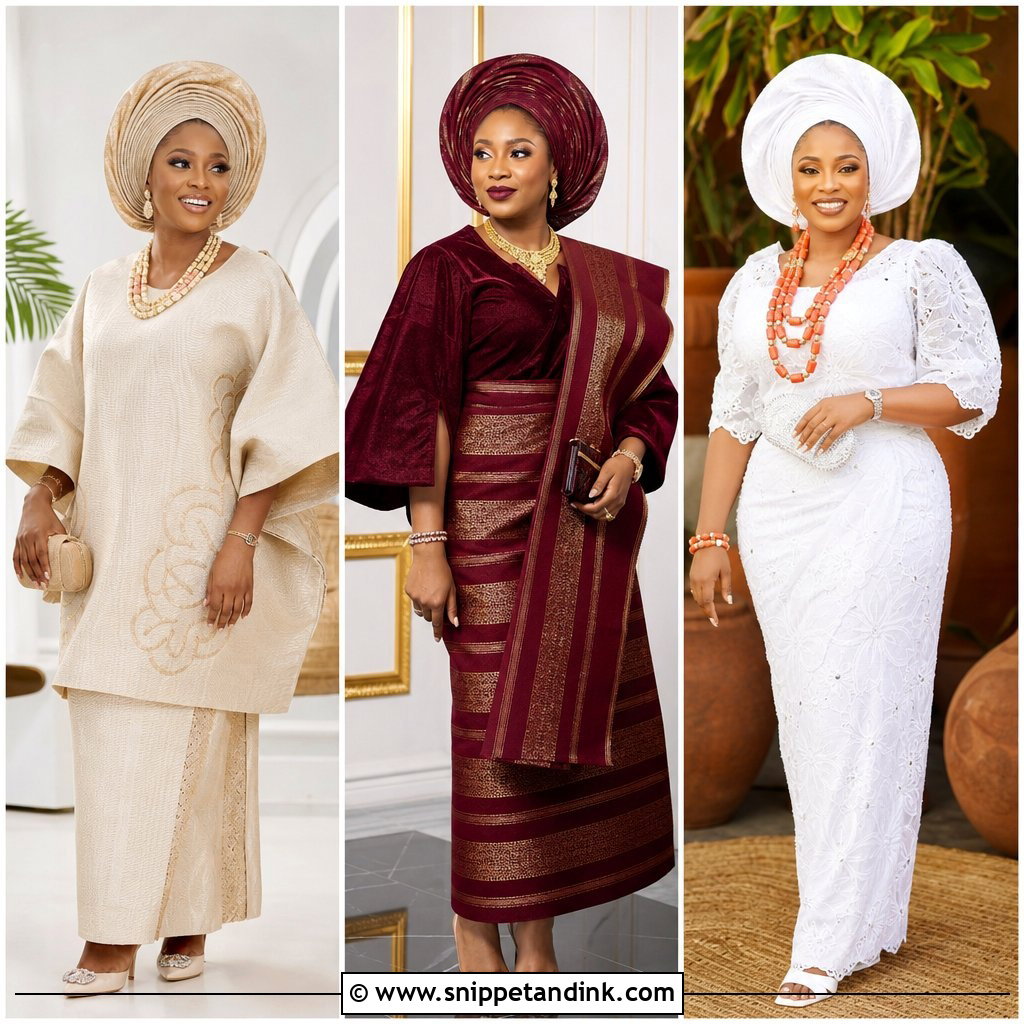
Aso-oke is a handwoven cloth with real body, and it gives Yoruba wedding attire its structure. The bride wears buba, iro, gele and ipele with statement jewelry, a hand fan and dressy shoes; the groom wears a grand agbada over matching garments with a fila and loafers or traditional footwear. One shared cloth or complementary colors make them read as a unit, and champagne, coral, burgundy, blue and metallic combinations all feel formal. The gele is the piece that makes or breaks the bride’s look. Stiff aso-oke holds a sculpted shape, but it needs an experienced tyer, and I’d book one with time to retie it after the first outfit change.
12. Igbo George Wrapper and Isi Agu Traditional Wedding Attire
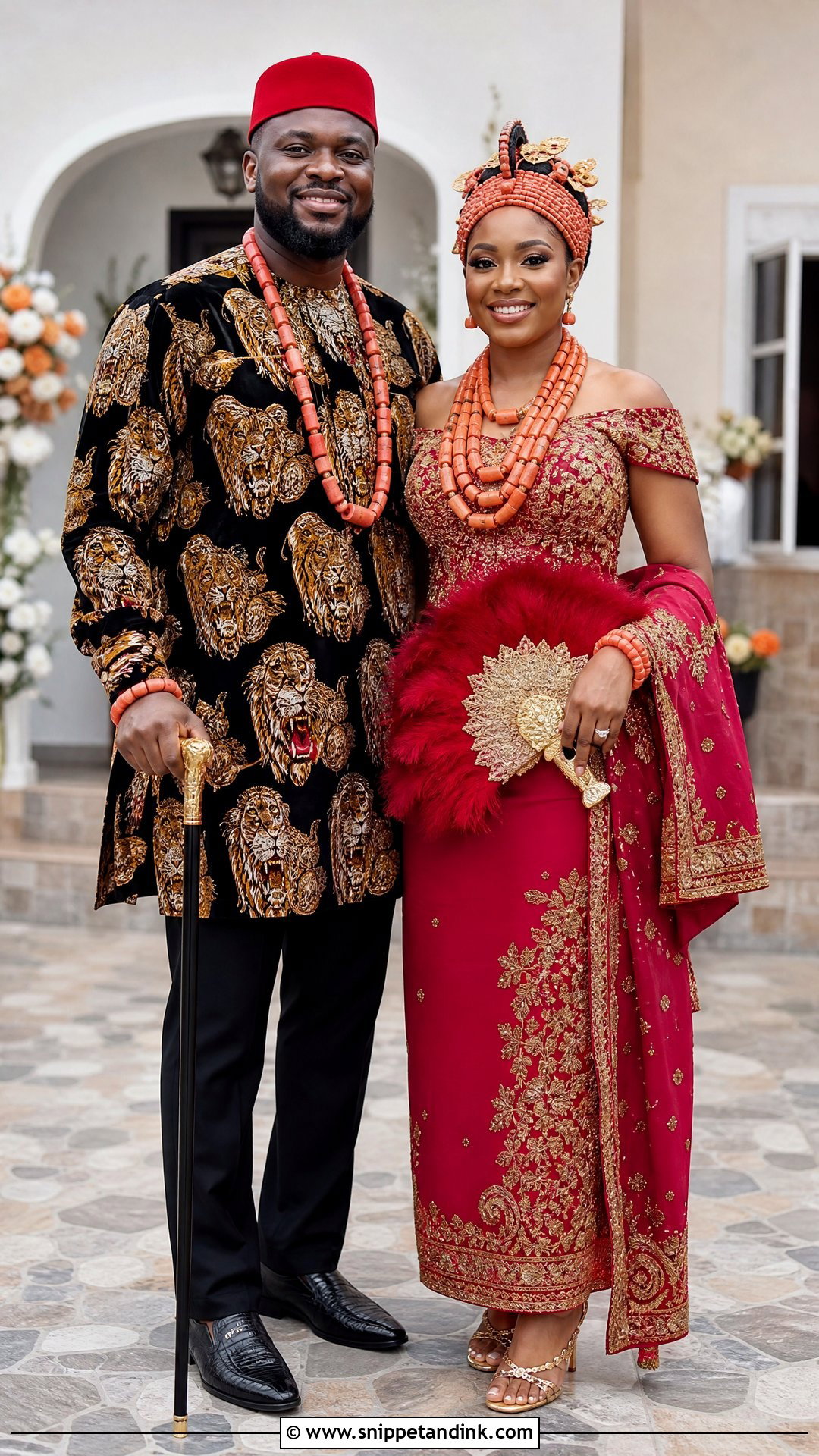
Coral beads and patterned fabric mark an Igbo couple outfit immediately. The bride wears a fitted blouse with a George wrapper, layered coral necklaces, bracelets and a headpiece, with a hand fan and comfortable heeled sandals. The groom can wear an isi agu top with trousers, a red cap, beads and formal shoes, and a walking stick where the family’s custom includes it. Her wrapper color can echo quietly in his trousers or beads. George is a heavy, often embellished fabric, and wrappers loosen with dancing. I’d tie it with a hidden inner tie or hook and plan the changes carefully: who helps, when photos happen, where outfits are kept.
13. Ghanaian Kente Traditional Wedding Attire
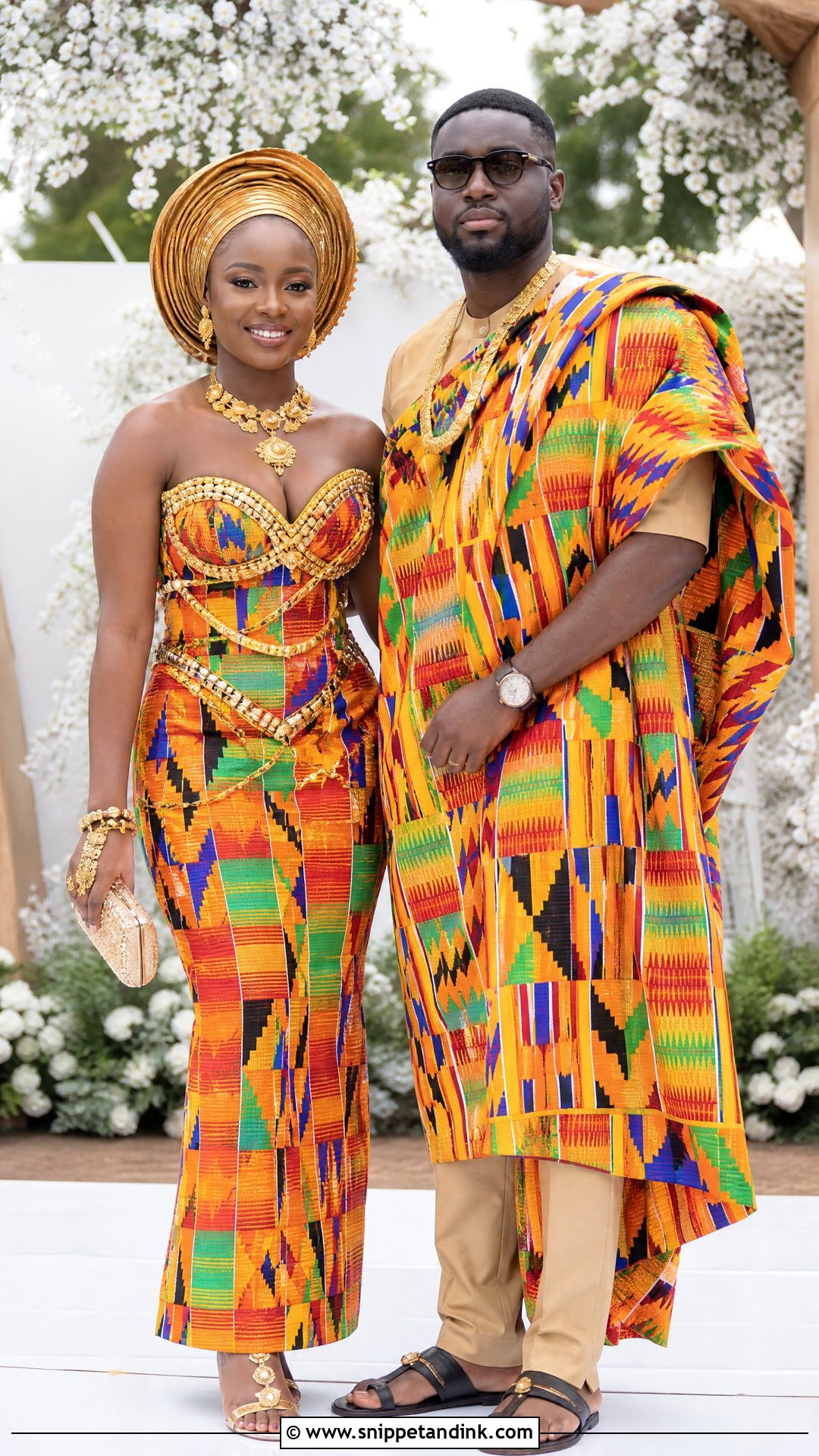
Kente is woven in narrow strips that are sewn together, and its patterns can carry names and meanings, so choose it with family or a knowledgeable weaver rather than by color alone. The bride can wear a fitted kente gown or a traditional wrapped style, with gold-toned jewelry, heels and a structured headwrap. The groom can drape the cloth in the customary way or wear a tailored piece in the same weave. A full kente drape is heavy. If he’s wearing it toga-style over one shoulder, practice keeping it in place while shaking hands. A solid underlayer keeps the couple’s look from becoming overwhelming, and the final fitting should include all jewelry and shoes.
14. Ethiopian Habesha Kemis and Kaba Traditional Wedding Attire
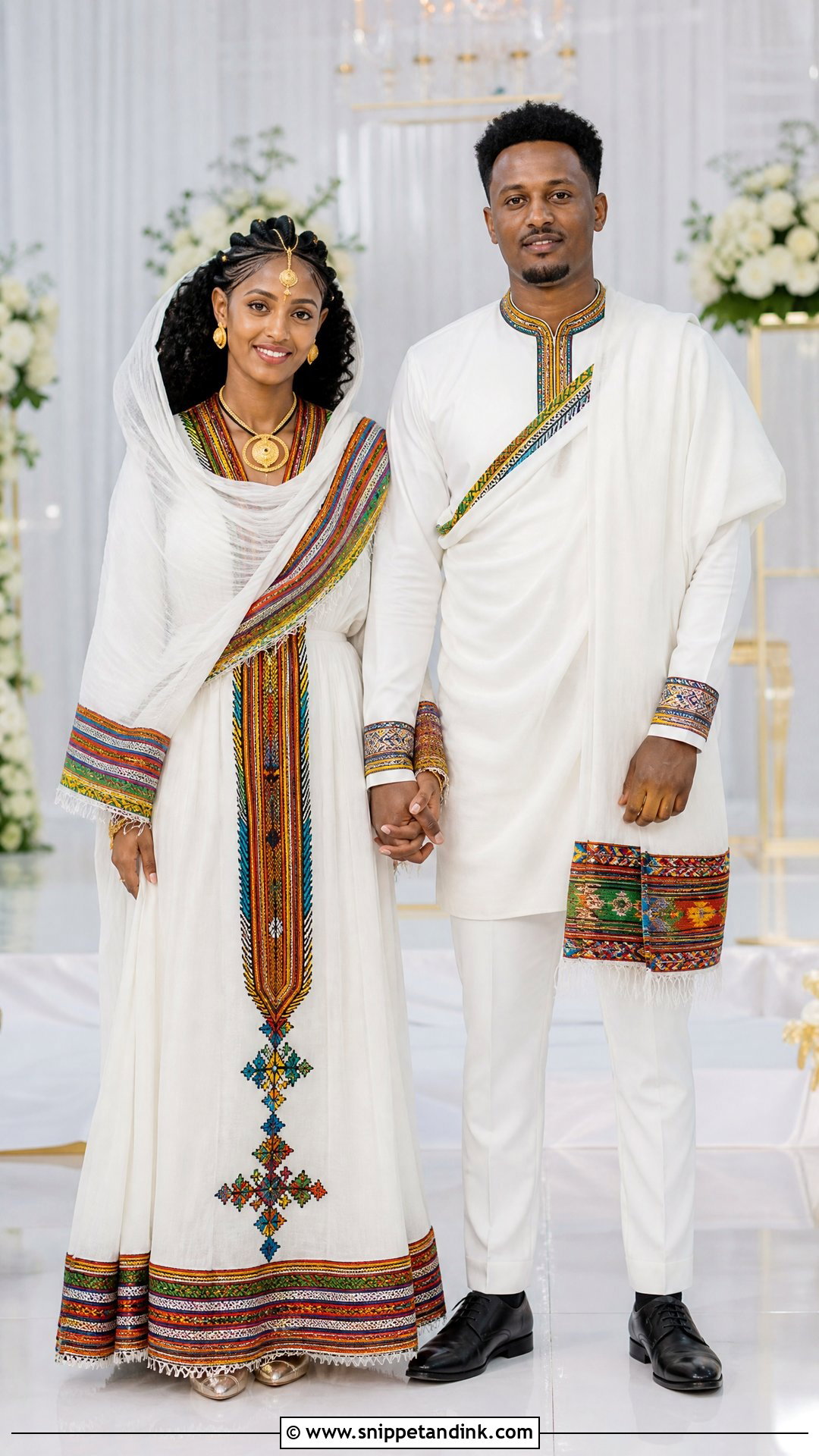
Crisp white cotton with colored tibeb borders gives an Ethiopian couple a bright, graceful look. The bride wears a habesha kemis with detailed tibeb trim, gold jewelry, white or metallic shoes and a shawl, with braided hair or another traditional style. The groom wears a white ensemble with matching woven accents and a kaba cape over it. Repeat the border colors and the pair looks unified without being identical. Handwoven cotton can shrink if it’s washed hot, so I make sure both garments are fitted after any pre-wash. Test the shawl and kaba before portraits; capes shift when you turn.
15. Moroccan Kaftan and Jabador Traditional Wedding Attire
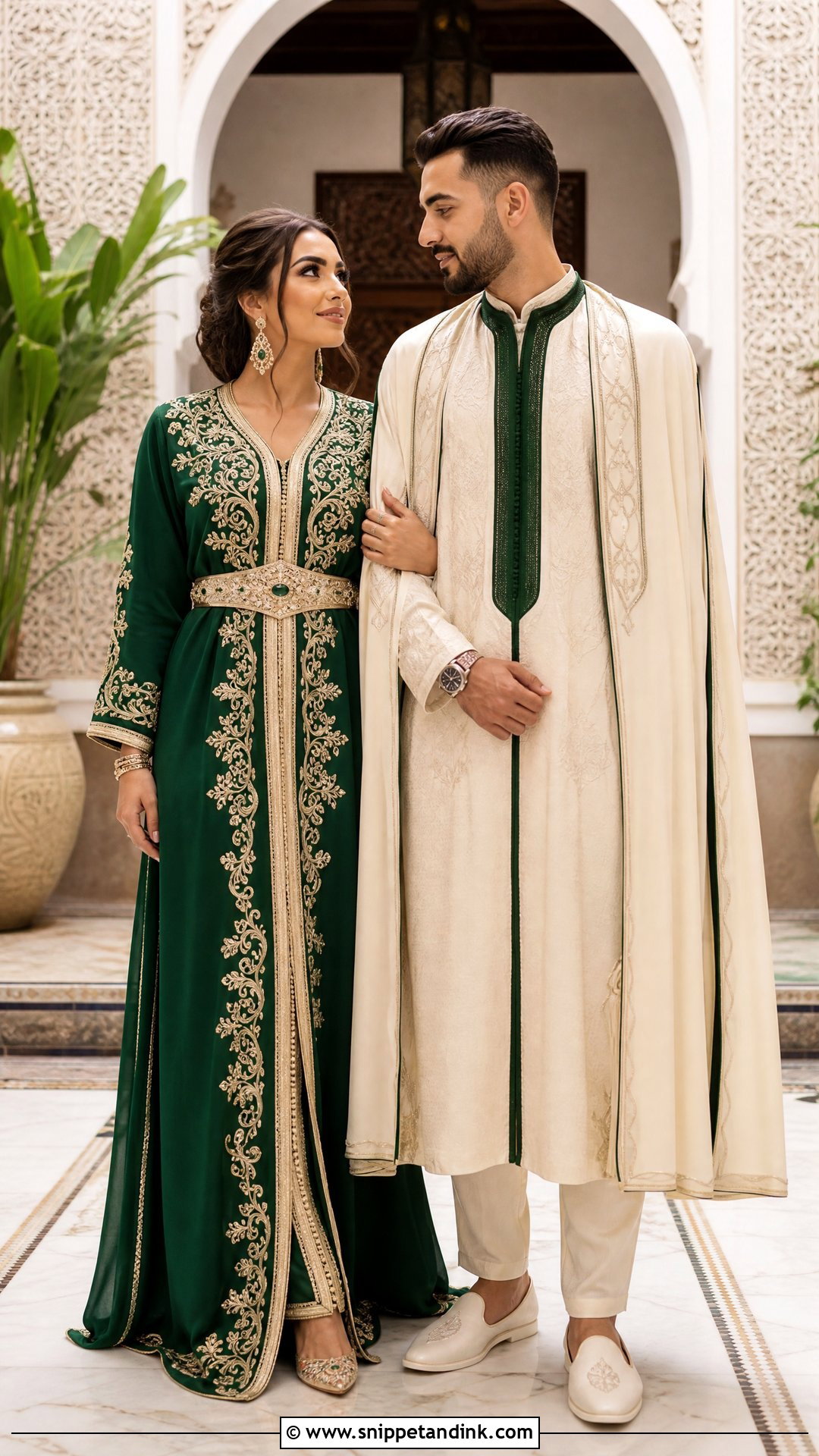
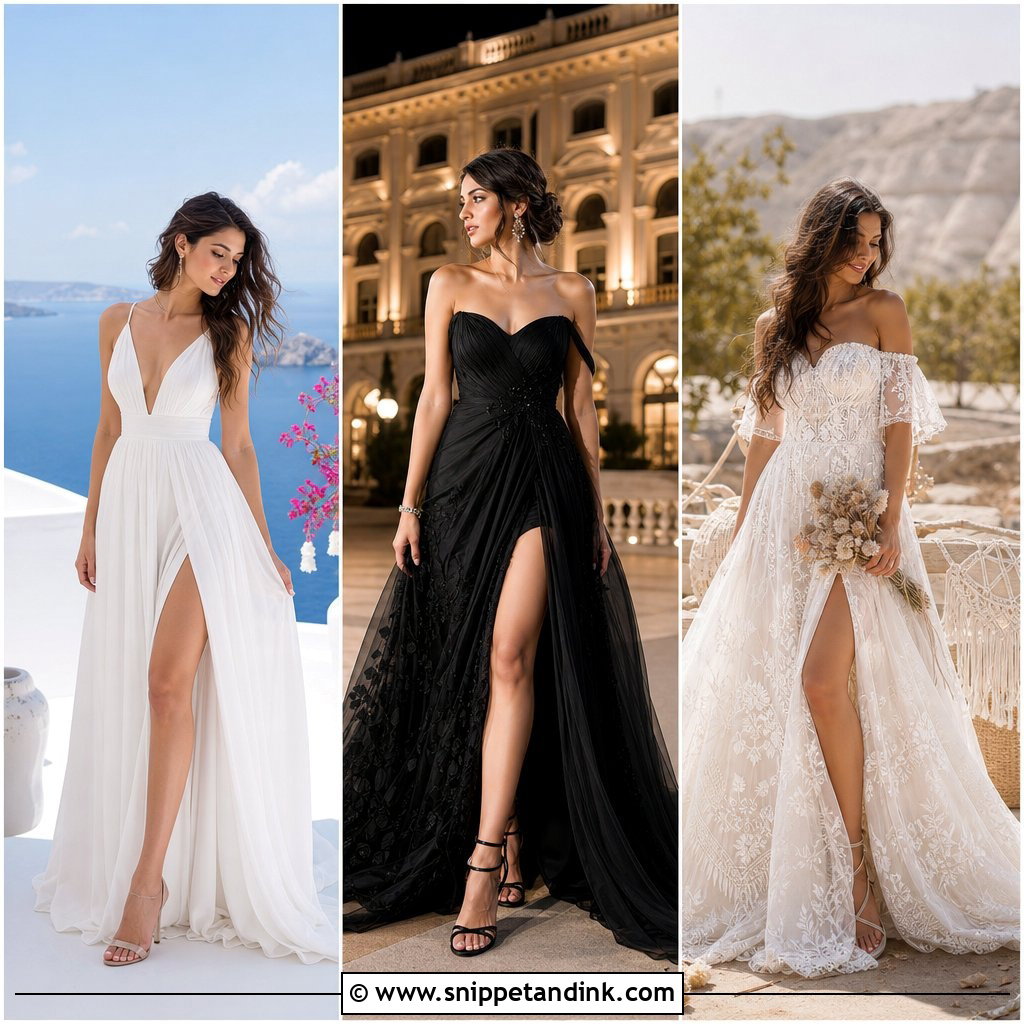
A Moroccan bride often wears several outfits in one evening, and the kaftan with a belted waist is a mainstay. Emerald, burgundy, royal blue, ivory and gold are classic, with ornate earrings, bracelets and embellished shoes. The groom can wear a jabador or other formal Moroccan ensemble with embroidery repeating one color from her outfit, and traditional slippers. Assign this pairing to a specific entrance. Changes go fastest with a practiced dresser who manages the belt and layers, so choose accessories only after the clothes are final.
16. Balinese Payas Agung Traditional Wedding Attire
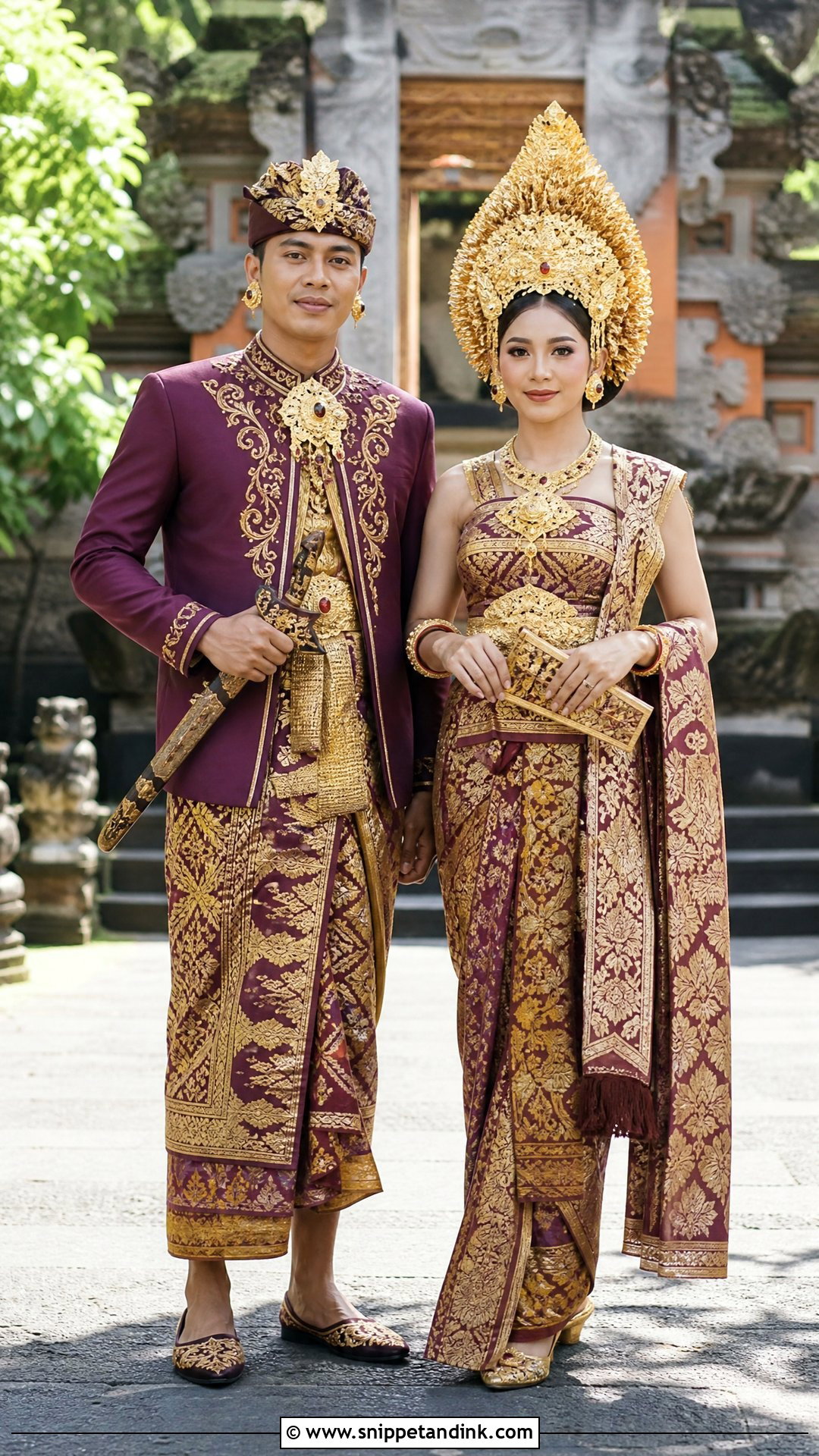
Payas Agung is the most elaborate Balinese wedding dress, with layered songket, a fitted top, a waist sash, gold jewelry and a tall gold headdress for the bride, and complementary songket, a formal upper garment and headwear for the groom. Every layer has a correct place, so this is dressing for specialists only. The headdress is heavy, and I’d plan several hours of dressing time and no rushed portraits afterward. Practice standing and walking together. A simple setting and quiet flowers let the gold work speak.
17. Scottish Tartan Traditional Wedding Attire
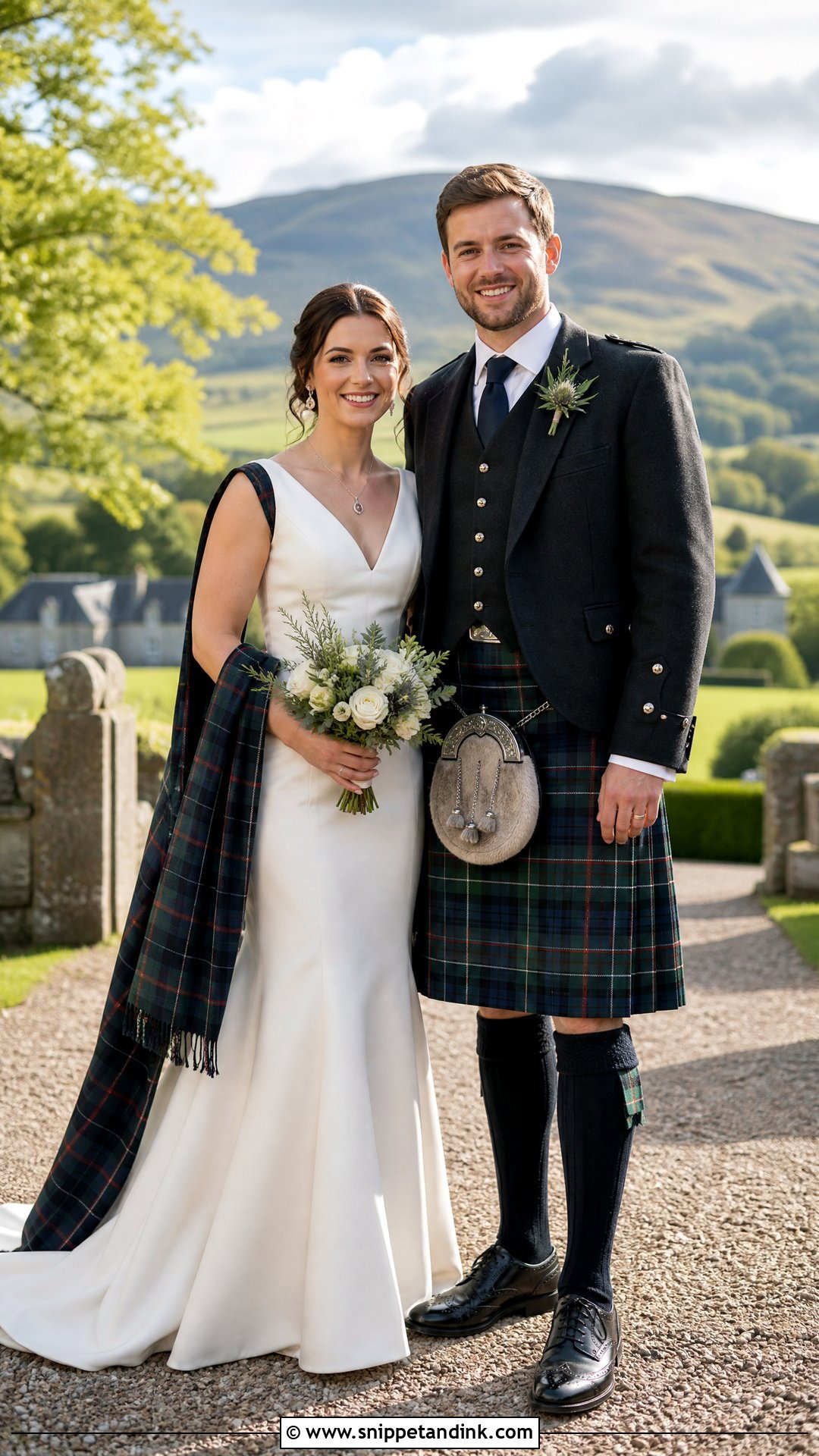
A tartan kilt beside a white gown is an easy way to bring Scottish heritage into familiar formalwear. The groom wears a family or approved tartan kilt with a jacket, waistcoat, sporran, kilt hose, flashes and brogues; the bride echoes it in a sash, cape, waistband or train detail. Pick a tartan with a genuine connection to you, and ask how the bride’s sash should be worn, since there are conventions. Wool tartan is warm. For a summer wedding I’d choose a lighter-weight kilt cloth and keep the bride’s tartan to a small piece. Repeat one tartan shade in his tie or her accessories and finish alterations before choosing outerwear.
18. Norwegian Bunad Traditional Wedding Attire
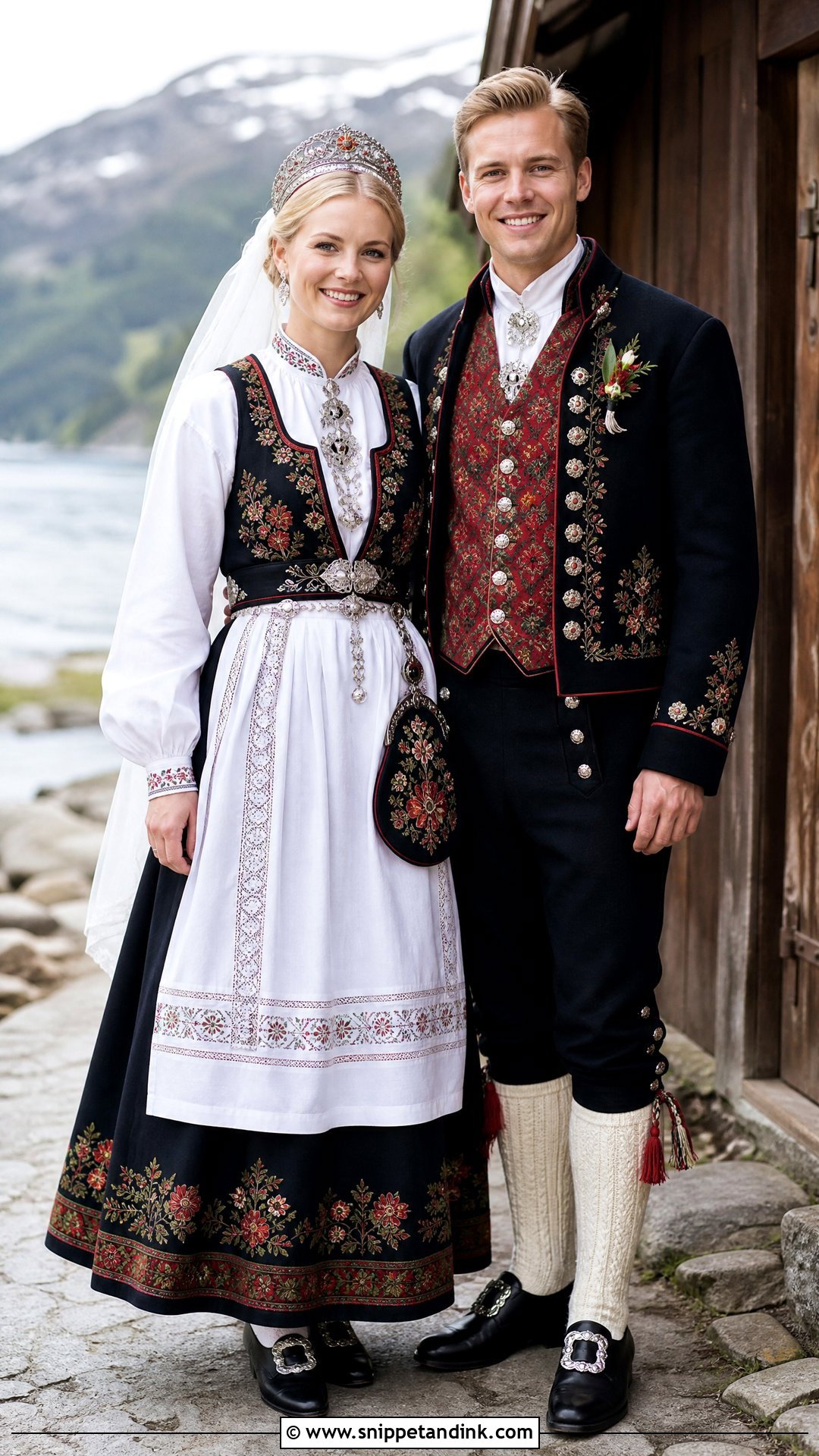
Bunad is regional by definition: each design belongs to a specific area of Norway, so mixing details for effect is the one thing to avoid. The bride wears a white blouse, embroidered bodice, full skirt, apron, silver jewelry and formal shoes, and a bridal crown where it suits her family and region. The groom wears a men’s bunad with a fitted jacket or vest, knee breeches, long socks and dark shoes. Bunad makers often have long waiting lists, and inherited pieces may need restoring or resizing, so start very early. Keep bouquets simple so the embroidery and silver show in full-length photos.
19. Peruvian Andean Traditional Wedding Attire
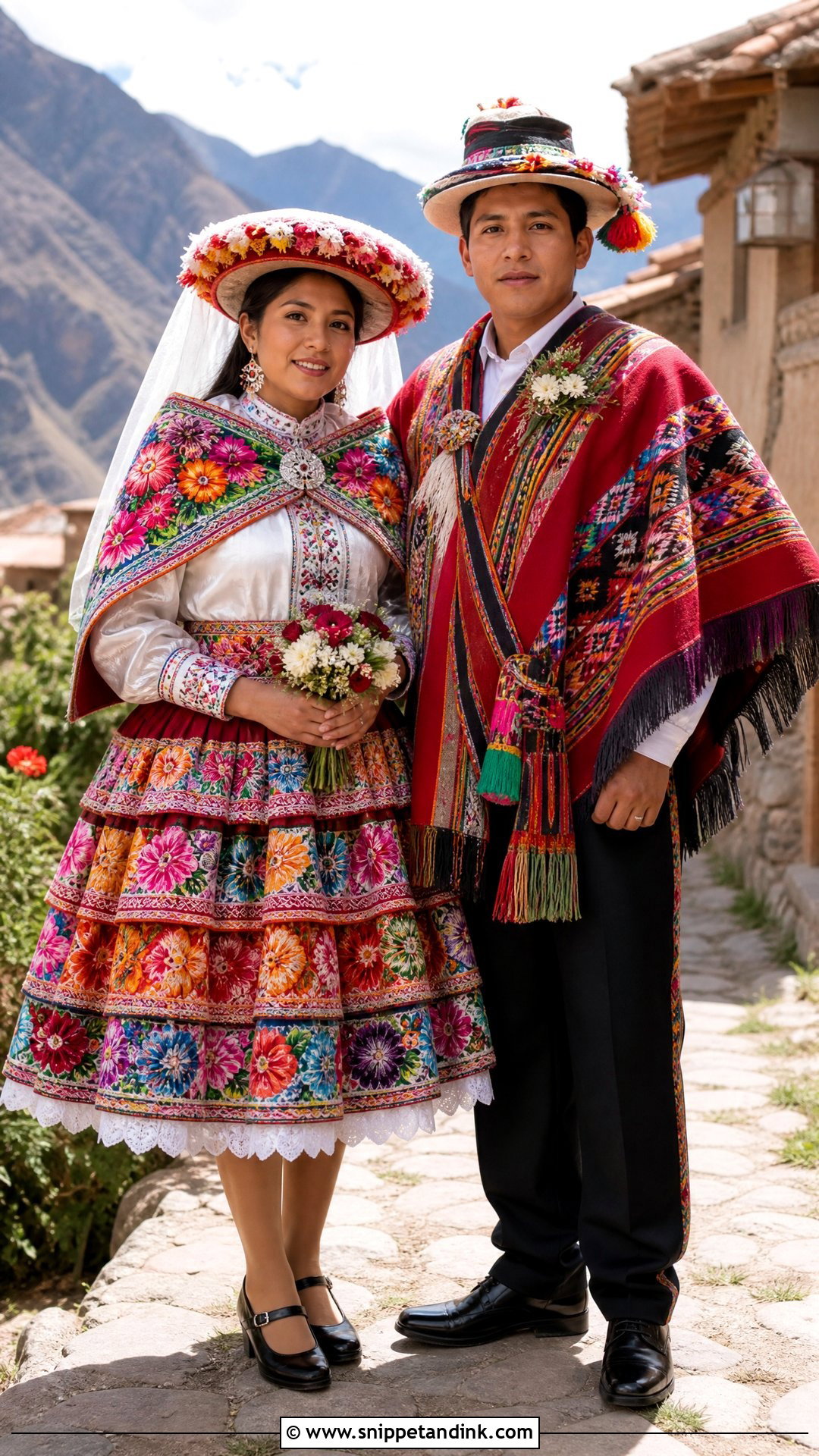
Andean textiles bring bold color and pattern to a Peruvian couple. The bride can wear a layered embroidered skirt with a decorative blouse, woven shawl, traditional hat and practical shoes; the groom, dark trousers, a woven poncho, a hat and suitable footwear. Repeating geometric colors between skirt and poncho connects them, but garments differ widely from community to community, so ask locally or within the family. Altitude and weather change everything here. Mornings in the highlands can be cold and afternoons strong with sun, so plan layers you can take off. Check at fittings that she walks easily in the skirts and that his poncho doesn’t hide what’s underneath.
20. Guatemalan Huipil Traditional Wedding Attire
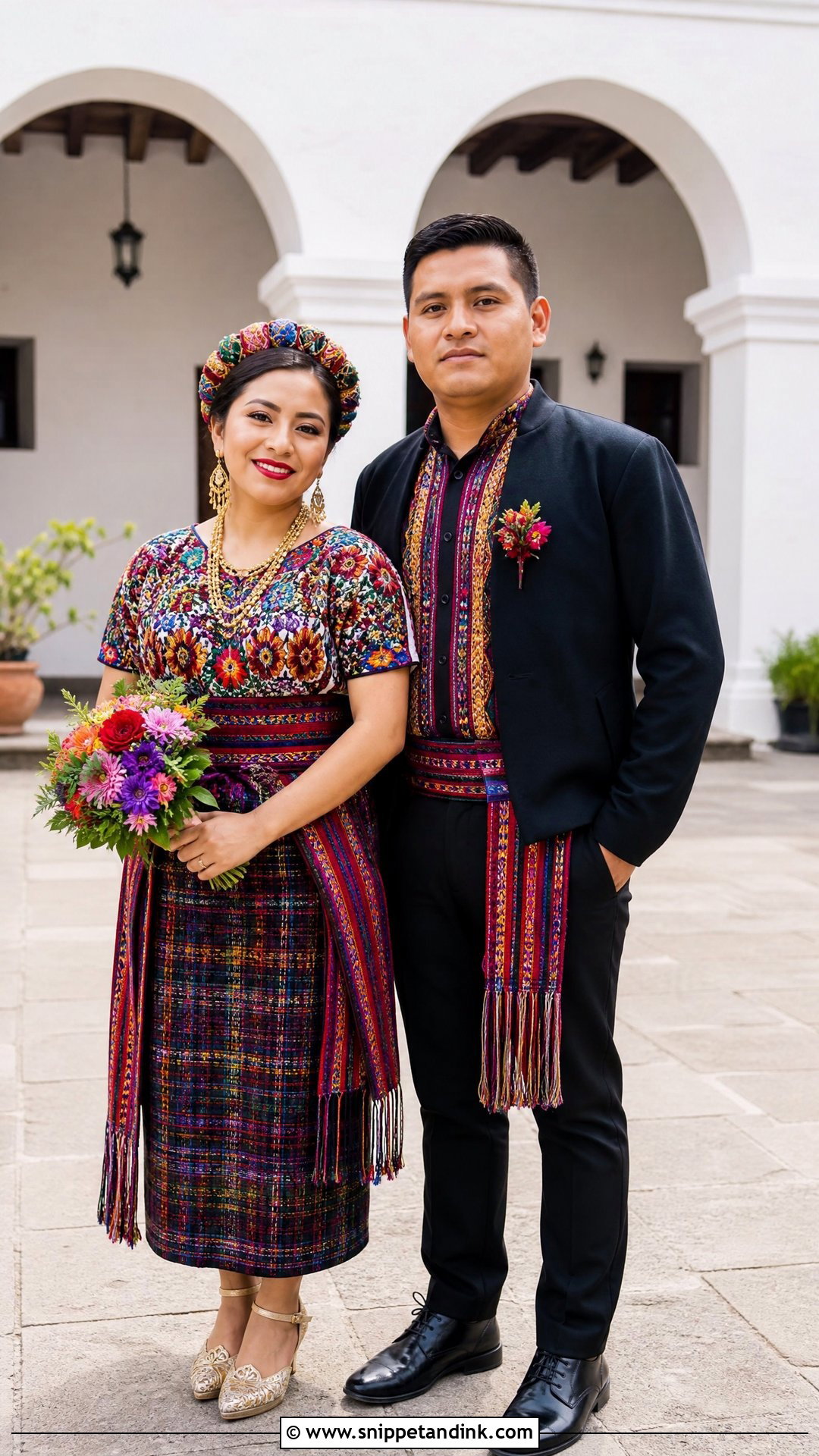
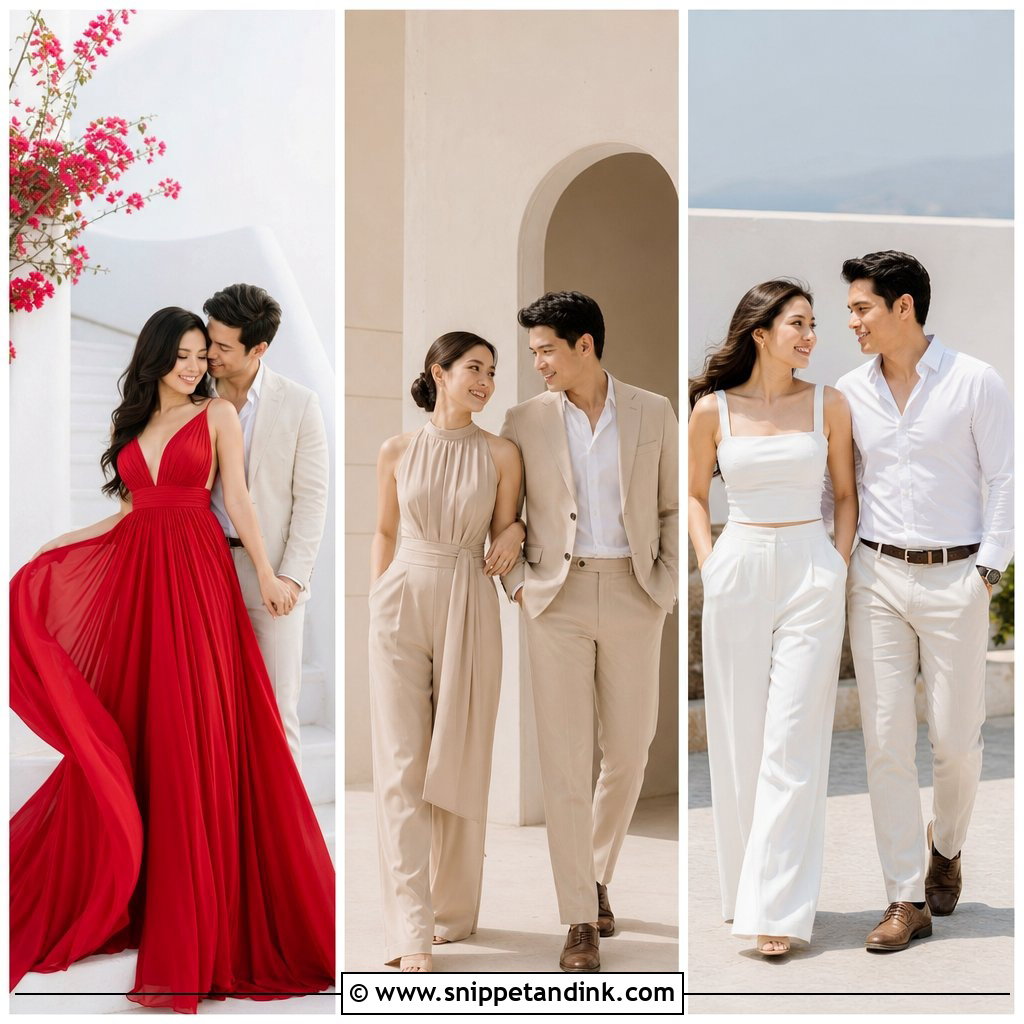
In Guatemala a huipil’s design can identify the town or region it comes from, so this is not a garment to choose by color chart. The bride wears a regionally appropriate huipil with a woven corte skirt and faja sash, comfortable shoes, jewelry and headwear when suitable; the groom coordinates through a woven shirt, dark trousers, sash, jacket or his community’s dress. I’d match related colors, not patterns, and never alter a meaningful design to fit a wedding palette. Work with family, local weavers or specialists. Simple accessories and a clean backdrop let the weaving show in full-length portraits.
When Each Family Brings a Different Tradition
More couples now hold two ceremonies, or one ceremony with rites from both sides. The cleanest approach I’ve found is to give each tradition its own moment in full dress rather than blending sacred garments into a single hybrid.
Ask each family which pieces carry meaning and which are simply fashion. A bridal headpiece, a blessed cloth or crest is usually not something to adapt, while colors and jewelry often are. Then let the reception be where you mix freely.
If one partner is wearing the other’s tradition for the first time, give them a full practice day in the clothes. Walking in a hakama, sitting in a sarong-style wrap or keeping a gele balanced are learned movements, and the person wearing them should feel at ease before guests are watching.
Putting Dressing Time on the Schedule
Several outfits on this list need a trained dresser: kimono, gele, Payas Agung, draped sarees and veshtis. Grooms need dressing time too, and it’s often forgotten. I write both partners’ dressing slots into the day’s timeline, add a buffer for every change, and keep a small kit nearby with pins, thread, fashion tape and a steamer. Rushed dressing is the most common reason traditional attire comes loose halfway through.
Two Outfits That Tell One Story
Fabric, color, craft and accessories are what connect two traditional outfits. The pairings that work best aren’t the ones that match every detail, but the ones that reflect the couple and respect the traditions involved. Talk with family and artisans first, then plan both outfits together, including shoes, jewelry and headwear. Book proper fittings and rehearse the movements the ceremony asks of you. Chosen this way, traditional dress honors heritage and keeps skilled crafts alive, and both partners look like themselves in the photos.
You'll Like These Ideas:


Leave a Reply