
Most of the couples I dress for formal events arrive with the dress already chosen and a vague plan to find a suit that goes with it. That works, but the pairs that look best never repeat one shade from head to toe. They share a color in one small place, a similar fabric weight and the same level of formality. Below are twenty dress and suit combinations for weddings, proms and galas, from quiet neutrals to jewel tones, each with the suit details I’d actually change to make it sit right beside the dress. Check the venue and dress code first; everything else follows from those two.

Leave the Suit Enough Time at the Tailor
A suit that fits looks expensive next to any dress. One that doesn’t makes even a good color pairing look off, because the eye goes straight to the loose shoulders or the pooling trousers. Off-the-rack suits almost always need some alteration, and that takes longer than people plan for.
I tell couples to have the suit in hand at least three to four weeks before the event. Simple jobs like hemming trousers or shortening sleeves can be quick, but tailors get booked up in spring and in prom and wedding season, and a second fitting is often needed. If you’re renting, ask when the suit arrives and whether there’s time to exchange a size.
What a tailor can and can’t fix
- Easy: trouser length, sleeve length, taking in the waist, slimming the trouser leg.
- Possible but costly: taking in the jacket body or shortening a jacket slightly.
- Not worth it: shoulders. If the shoulder seam sits past your shoulder or pinches it, buy the next size and alter the rest.
For fit, I look for about a quarter to half an inch of shirt cuff showing below the jacket sleeve, a collar that sits flat against the shirt, and trousers with a slight or no break so they don’t bunch over the shoes. Wear the shoes you’ll wear on the night to the fitting, because heel height changes where the hem falls.
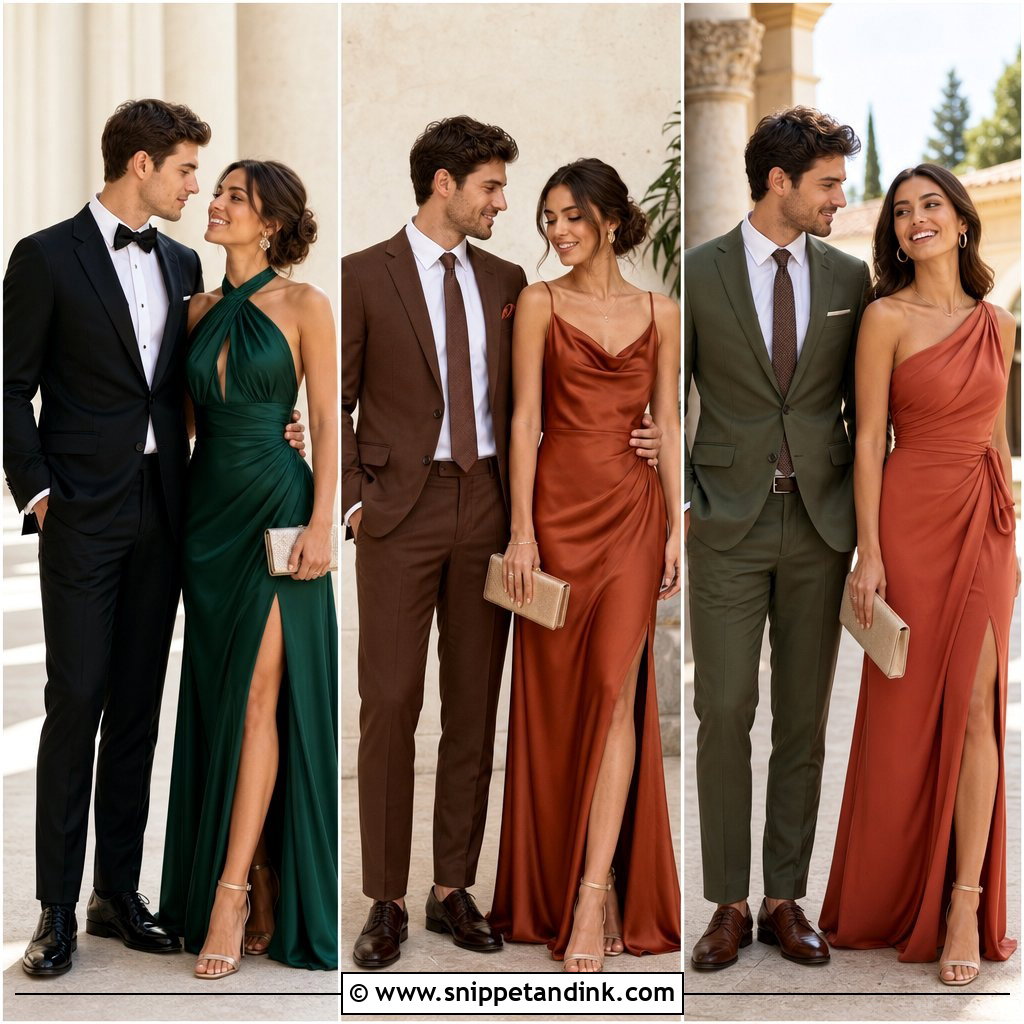
1. Emerald Green Dress and Black Suit
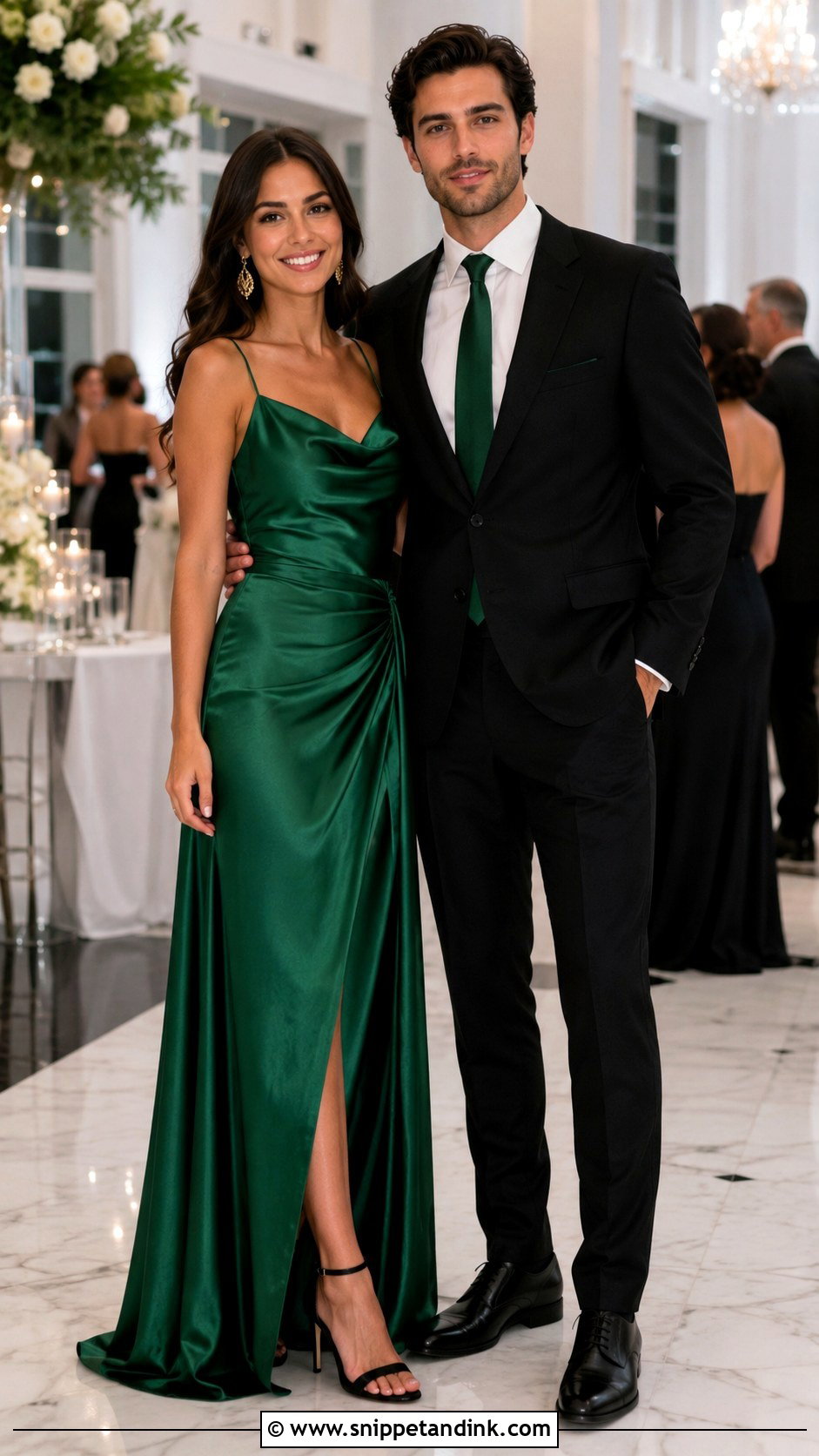
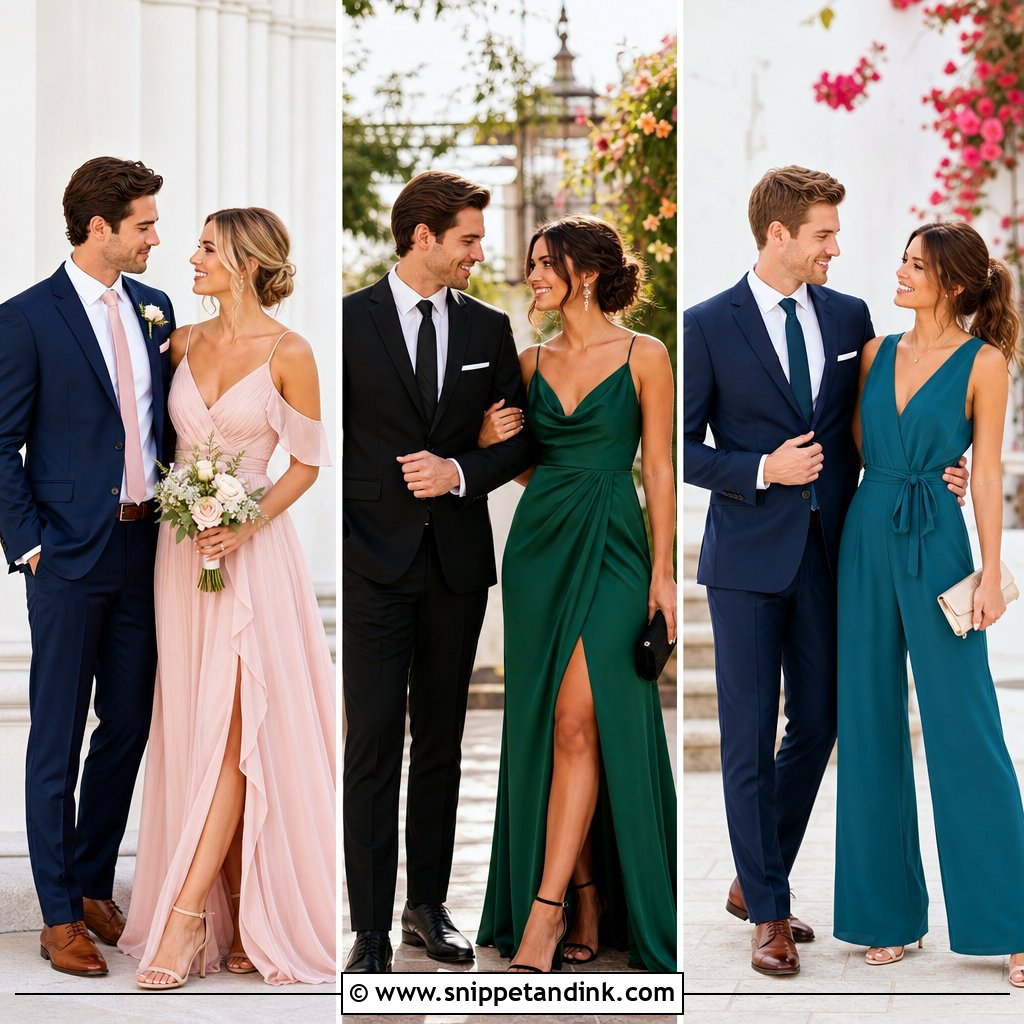
Black is the safest suit to put beside emerald, because it lets the green carry all the color without any competition. The dress can be satin, crepe or chiffon at midi or floor length, with black heels, a small metallic clutch and gold earrings. On the suit side I keep it strict: fitted black jacket and trousers, crisp white shirt, an emerald tie or pocket square, black Oxfords and a black leather belt. If the dress is sequined, go matte on everything the suit carries, since a shiny satin tie next to beading looks like two people competing for the light.
2. Burgundy Dress and Navy Suit
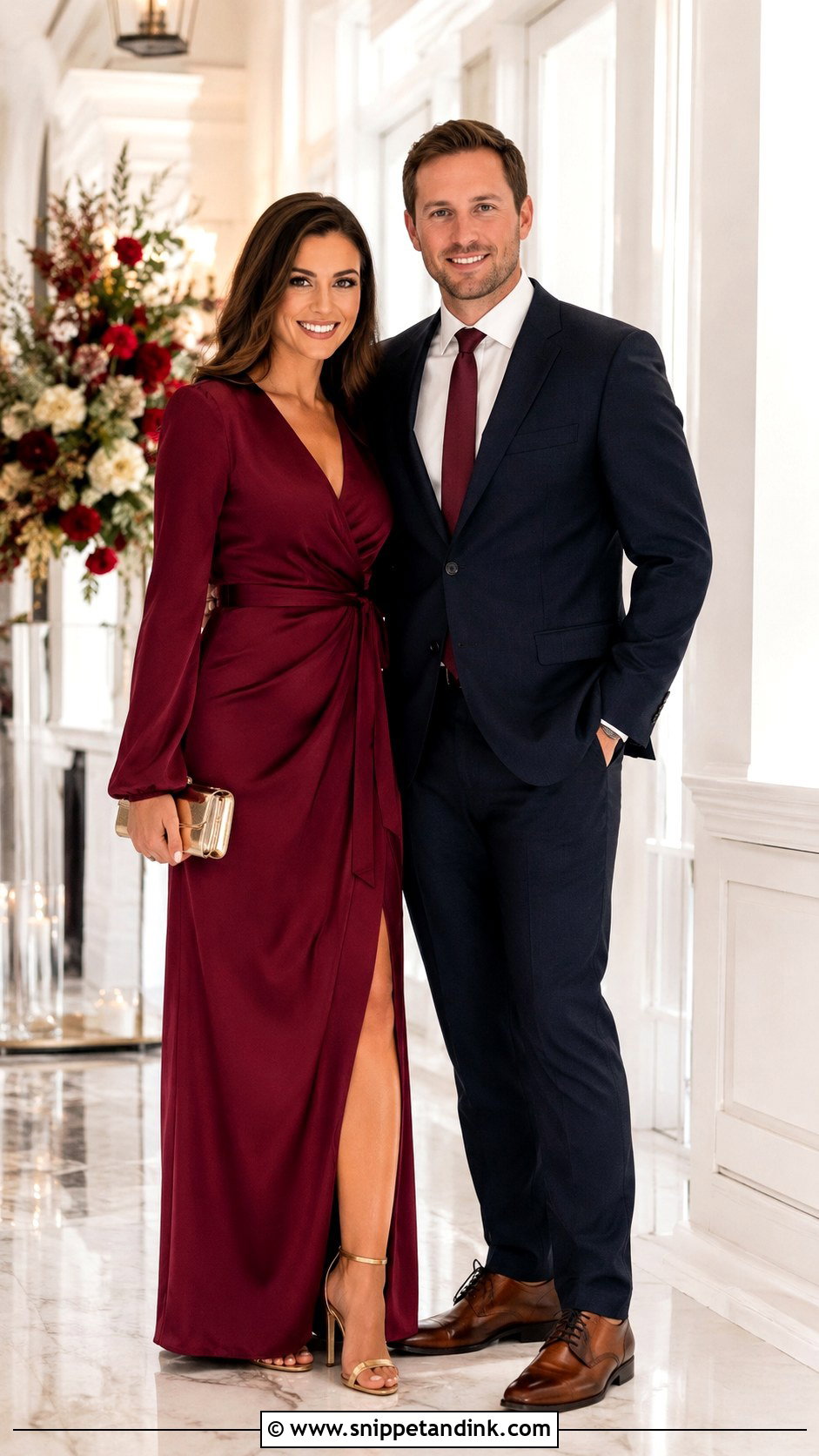
Navy is softer than black next to burgundy, and on a warm-toned dress that softness is the point. A burgundy wrap dress or one-shoulder midi takes nude or gold heels and a structured clutch. The suit gets a white shirt, burgundy tie and a plain white pocket square folded flat. Shoes change the mood more than people expect: dark brown warms the navy for a fall wedding, black makes it read evening-formal. I like a cross-reference here, burgundy on the suit and a navy detail on the dress side, and nothing else added.
3. Blush Pink Dress and Light Gray Suit
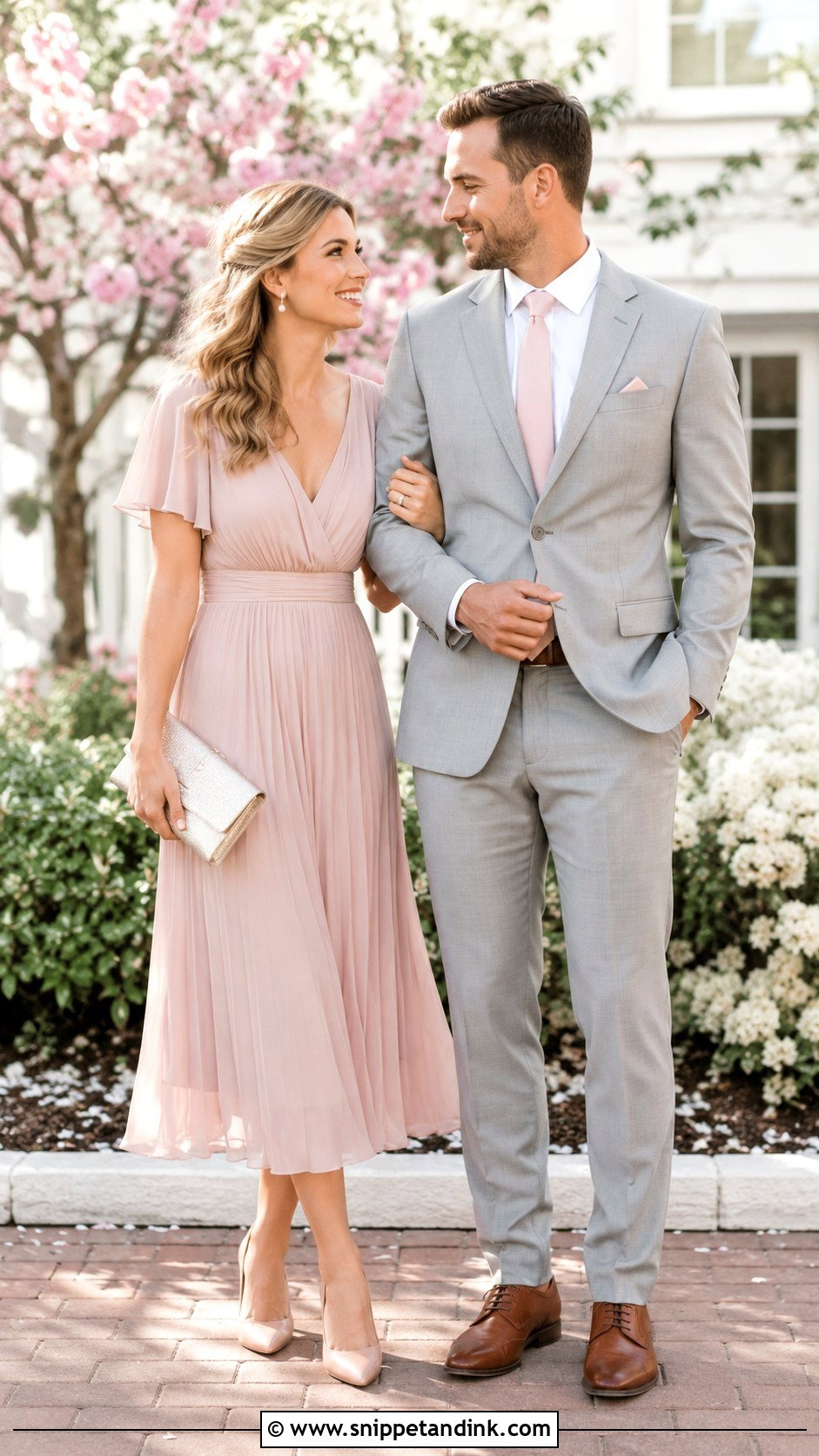
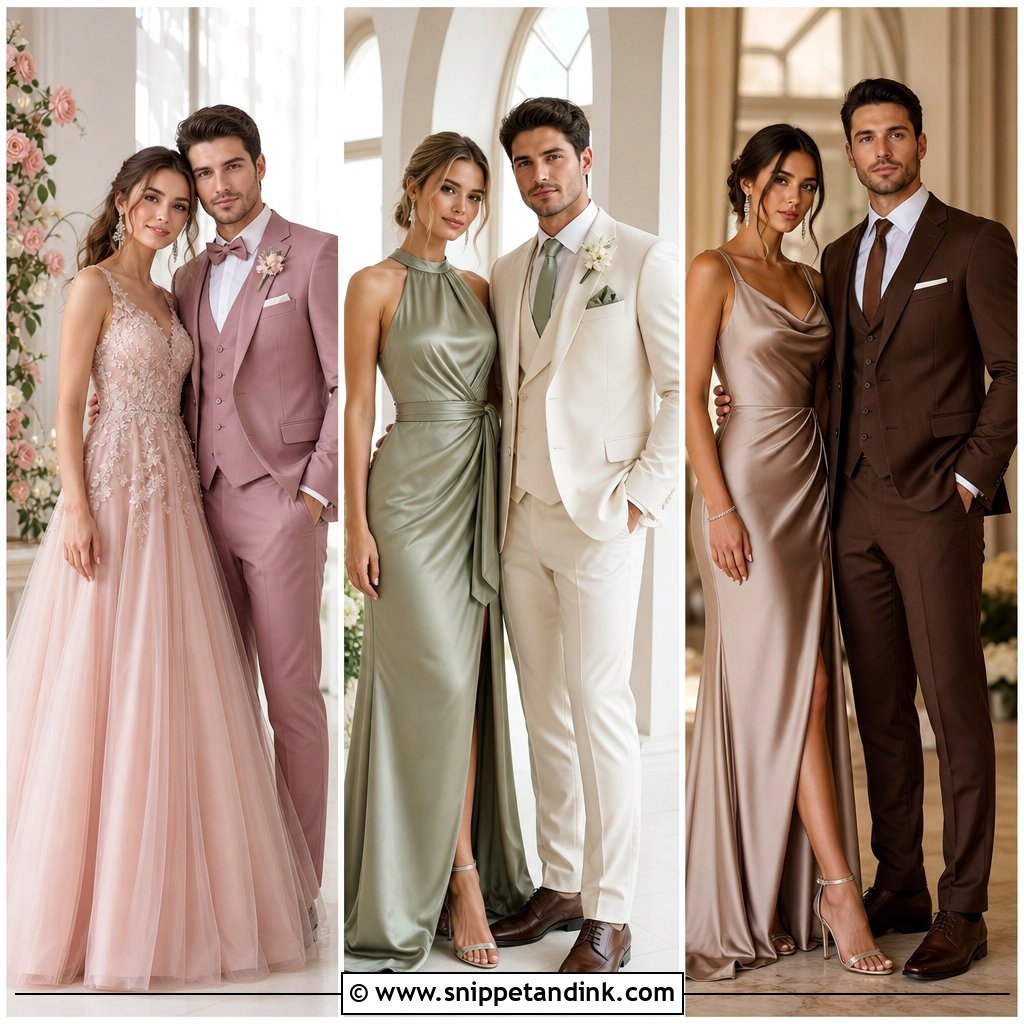
Undertone is the whole game with blush and gray. Cool, slightly blue-pink blush belongs next to silvery gray; peachy blush needs a warmer gray with a hint of taupe, or the suit looks drained beside it. Get that right and the rest is simple: a blush chiffon or pleated midi with nude pumps and pearl earrings, and a well-tailored light gray suit with a white shirt and a blush tie, ideally with a small pattern for depth. Brown shoes relax the gray; black ones formalize it. This matching dress and suit combination belongs at spring weddings and daytime garden receptions.
4. Red Dress and Charcoal Suit
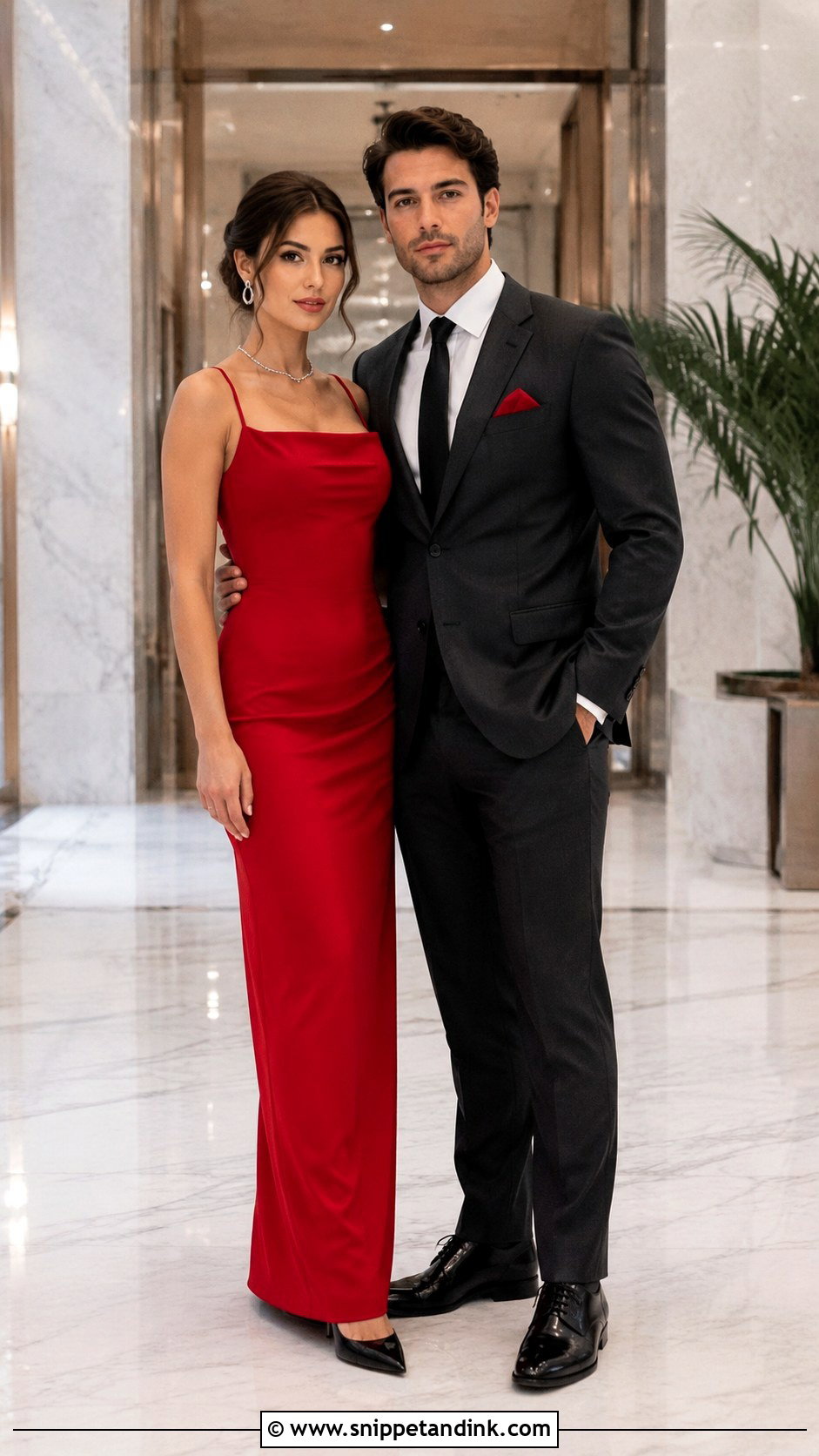
Red takes over any photo, so I build the suit to stay out of its way. Charcoal is my pick over black here; it grounds the red and still looks a touch softer. The dress should be clean, a midi or column with little embellishment, finished with black pointed heels, a compact clutch and fine silver jewelry. The suit gets a white shirt, black tie, polished black shoes and a red pocket square in a textured weave. One thing I check every time: the red in the square must share an undertone with the dress. A blue-red silk next to an orange-red dress is obvious from across a room.
5. Sage Green Dress and Tan Suit
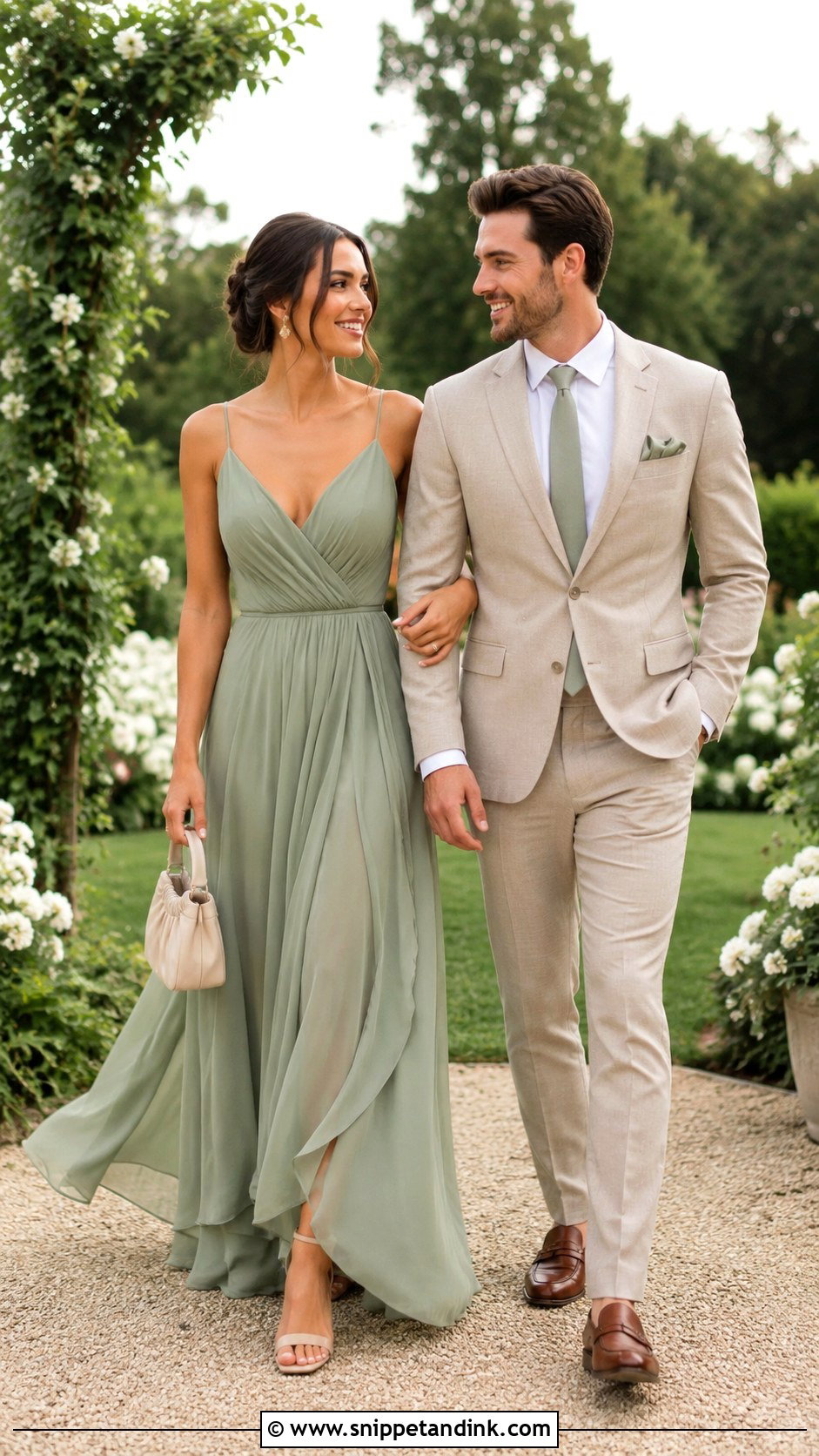
Fresh sage green is gentle enough that a black accessory feels harsh beside it, which is why I put it with tan. A flowing chiffon maxi or pleated midi with a modest neckline, nude block heels, small gold earrings and a cream bag on the dress side. The tan suit’s cloth depends on the season, from lightweight wool for spring to a linen blend in high summer, and it takes a white shirt, brown loafers and a sage tie or patterned square. The green on the suit doesn’t need to match the dress exactly; a shade off reads as depth, not error.
6. Royal Blue Dress and Gray Suit
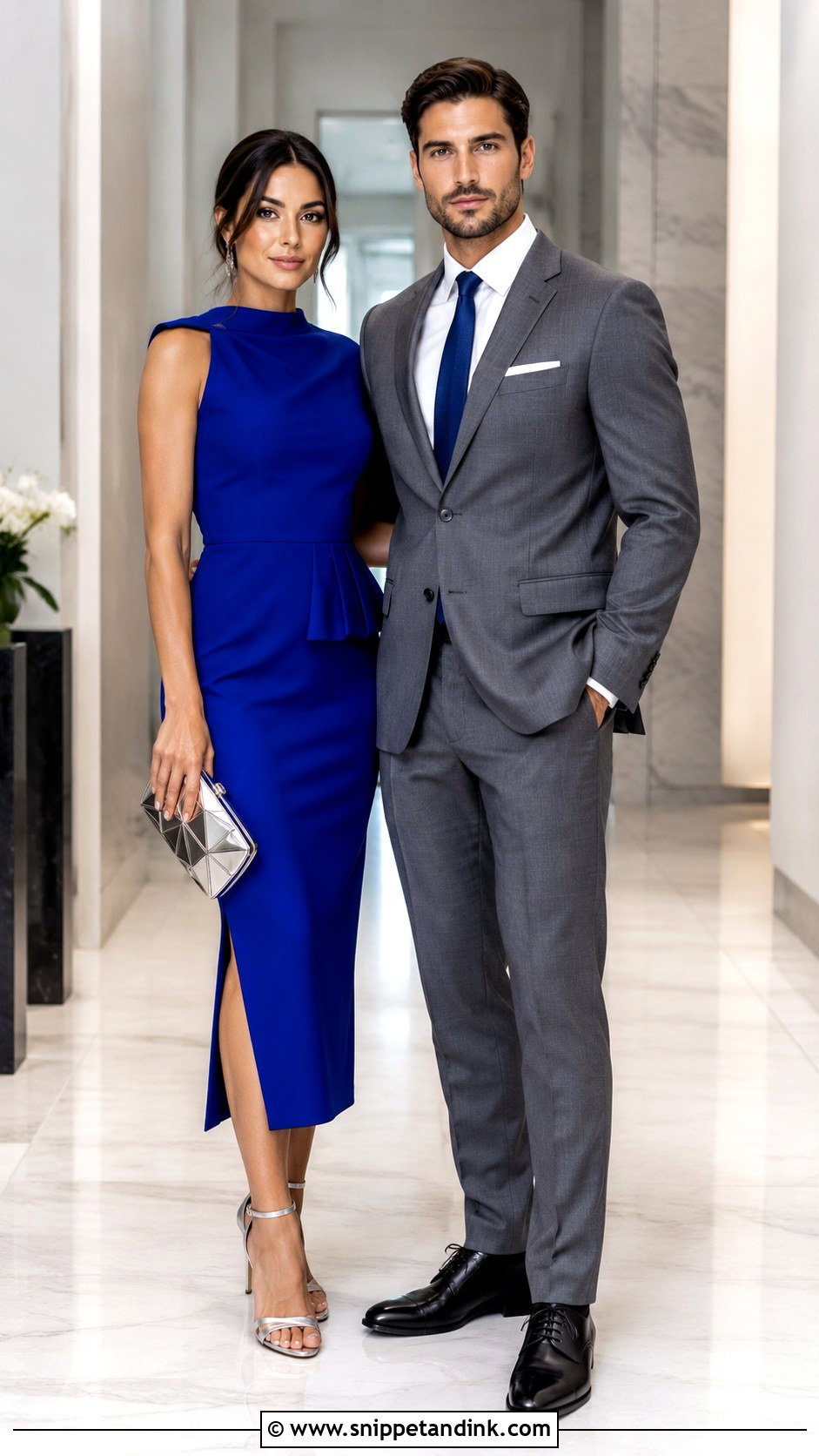
Royal blue is saturated, and saturated blue shifts between daylight and tungsten more than almost any other color. So before the event, I’d stand both outfits by a window and then under warm indoor light. The dress can be a fitted midi or structured off-the-shoulder gown in crepe or satin, with silver heels, crystal earrings and a metallic clutch. Keep the medium gray suit plain: white shirt, royal blue tie, white pocket square, and black shoes for formal or dark brown for softer. The dress is the statement; the suit is the frame.
7. Black Dress and Black Suit
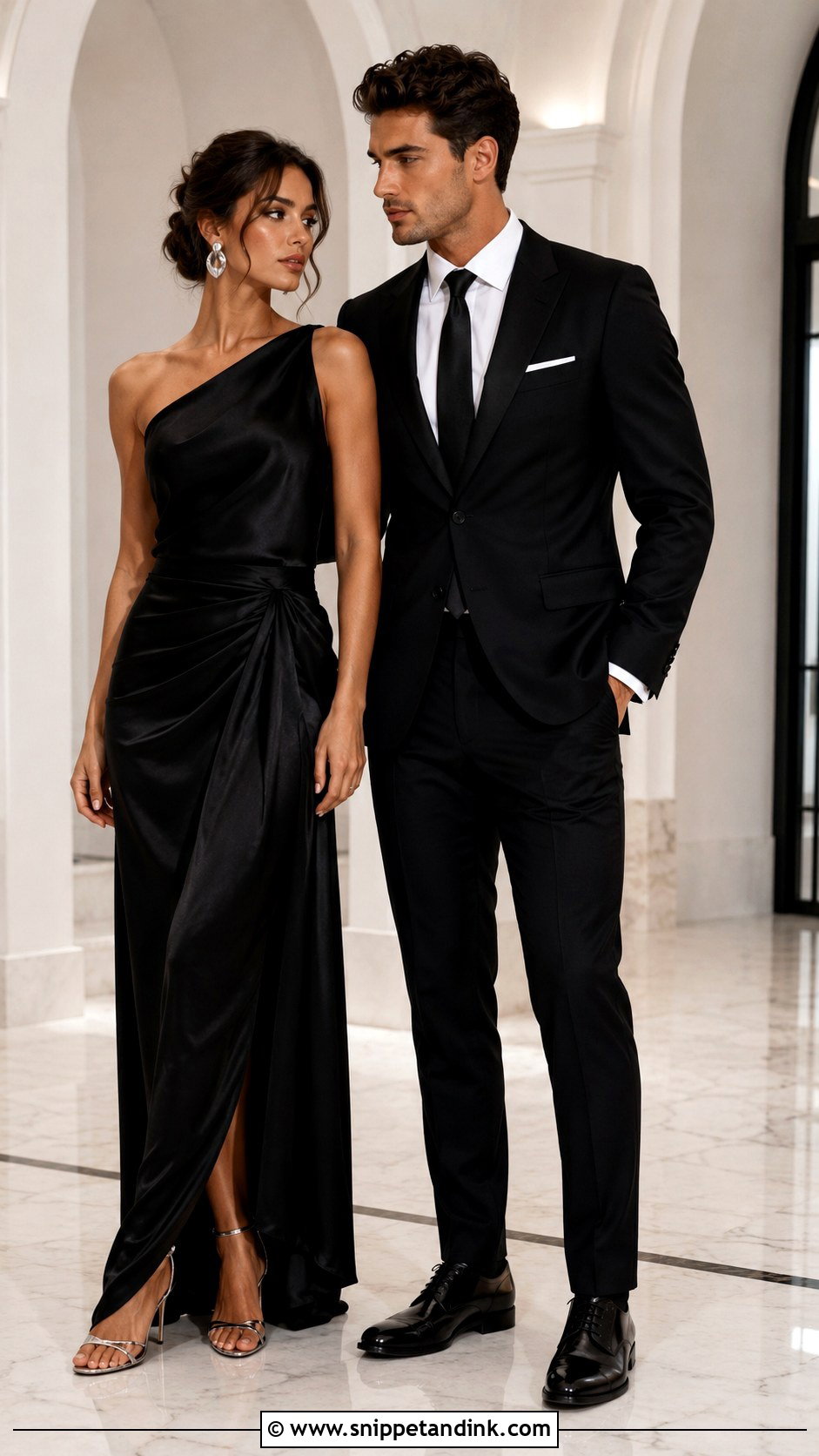
Two black outfits only look deliberate when the blacks match in depth and differ in surface. A slightly faded black jacket next to a fresh black dress is the giveaway, and it happens more than you’d think with a suit that has been dry-cleaned many times. Pick a satin slip, tailored midi or gown with a pleat, a drape or an asymmetric neckline, and add metallic heels, sculptural earrings and a metal clutch. The suit needs sharp tailoring, a crisp white shirt, a black silk tie, a white pocket square, polished Oxfords and a classic watch. For a looser event, lose the tie and switch to loafers.
8. Champagne Dress and Navy Suit
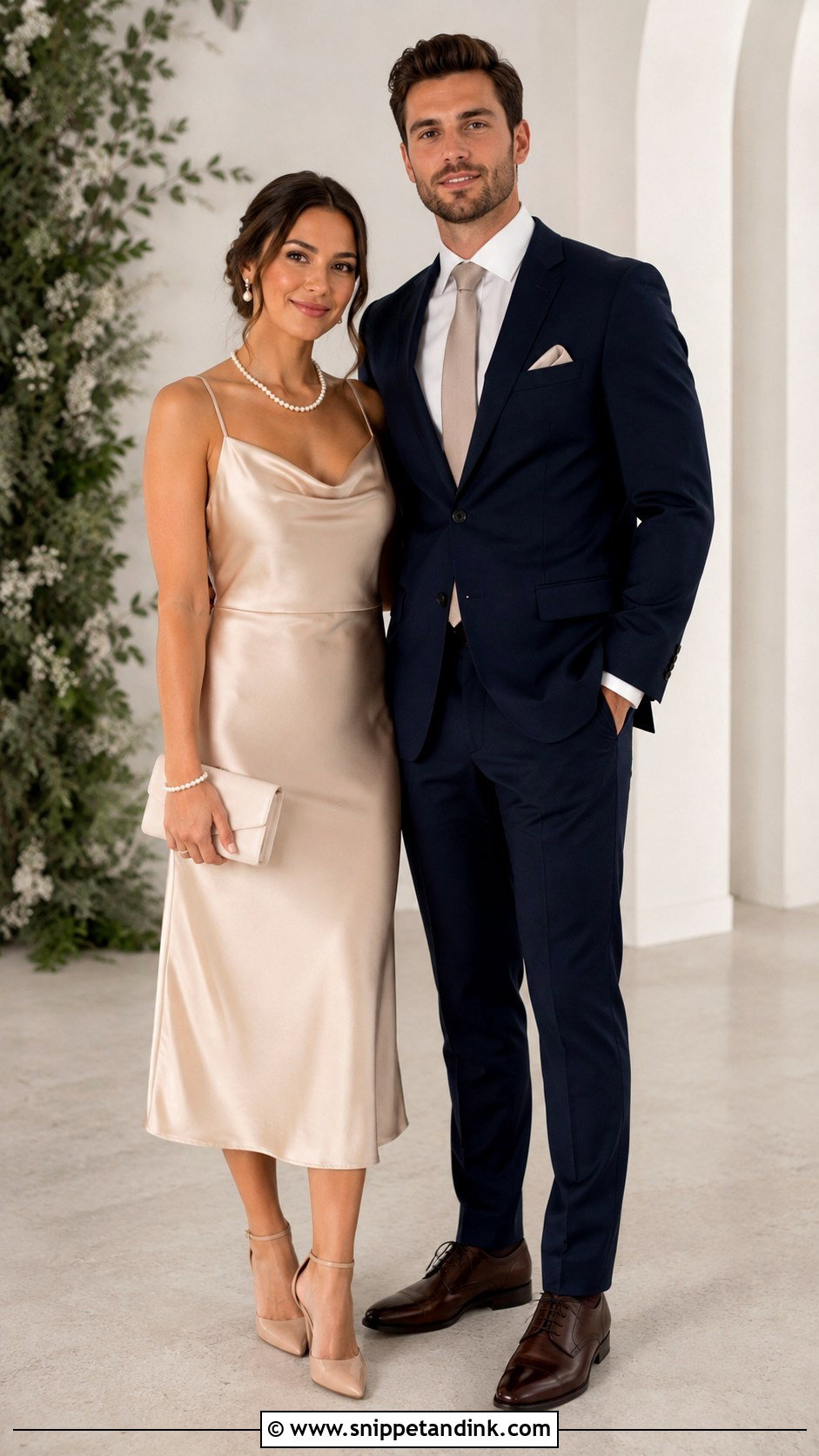
Champagne brings light into a navy pairing, especially under evening flash. A champagne satin midi or softly shimmering gown takes nude heels, pearl or gold jewelry and a cream clutch. The navy suit wants a tailored jacket, a white or pale blue shirt and a beige or subtly patterned tie. Dark brown shoes suit this palette best; save black for a strictly formal venue. As a wedding guest, be careful: champagne can photograph close to ivory, so I’d only send someone in this dress to a wedding if the couple has said it’s fine. For prom, galas and anniversary dinners there’s no such issue.
9. Lavender Dress and Dark Gray Suit
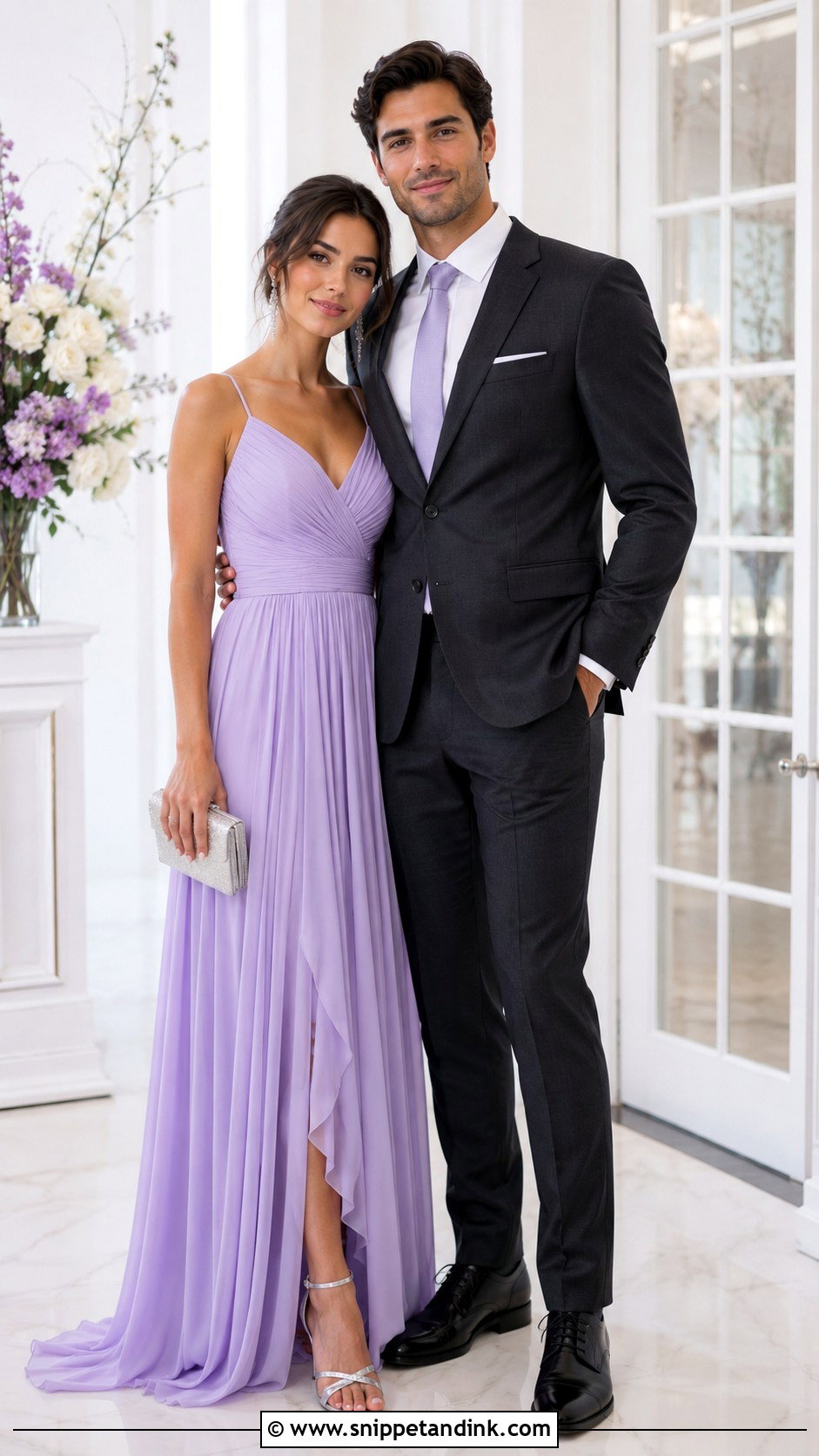
Lavender softens a dark gray suit without making it sweet, but only if the purple stays limited to one or two places on the suit. More than that and it starts to look like costume. A lavender pleated midi, chiffon maxi or satin one-shoulder gown pairs with silver sandals, a gray clutch and delicate crystal jewelry. The suit gets a white shirt, a lavender tie or square, black Derbys, a black belt and a slim watch. Charcoal gives stronger contrast at night; for an outdoor daytime event, a lighter gray suit works too.
10. Dusty Blue Dress and Beige Suit
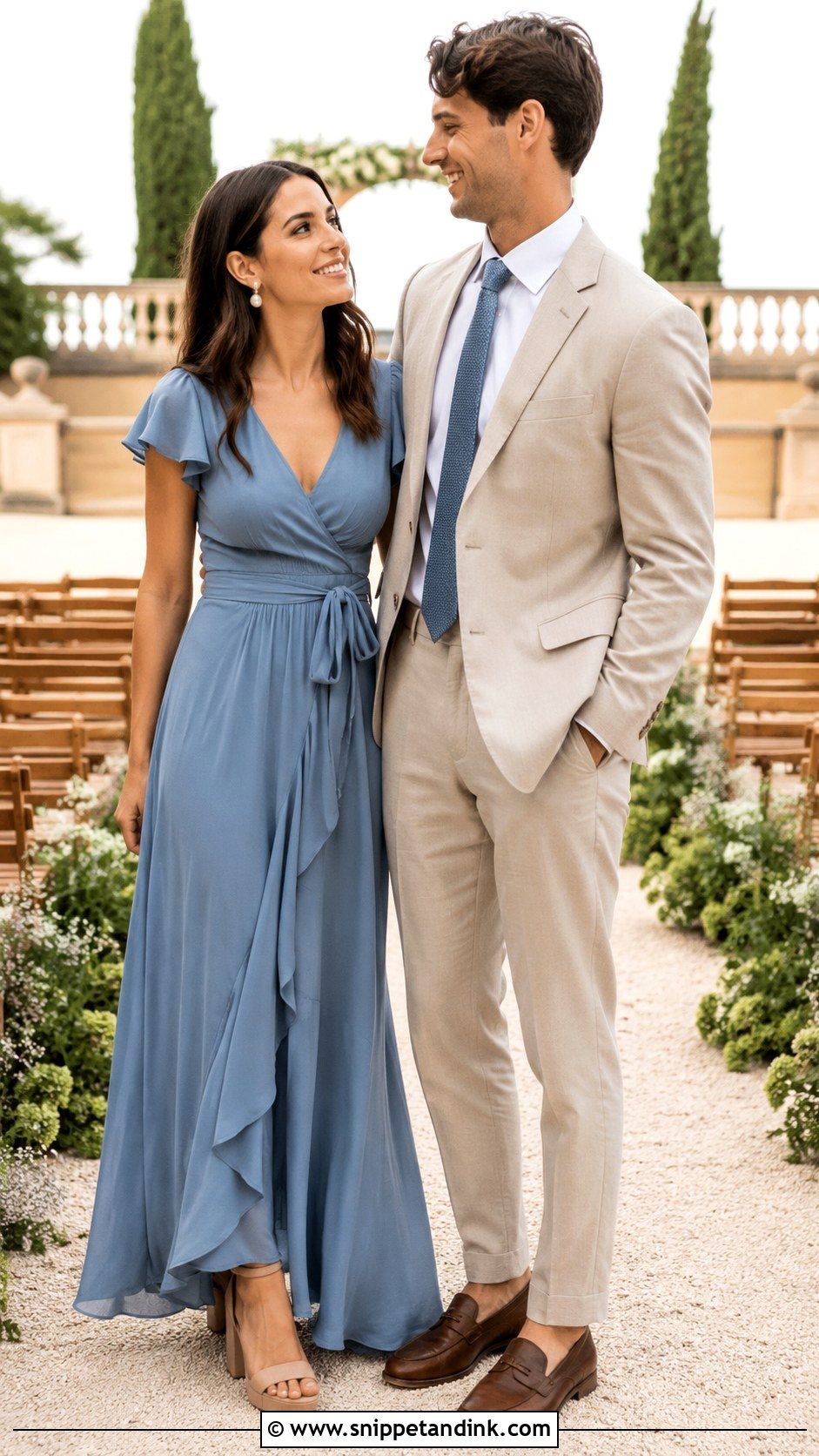
Dusty blue and beige suit a bright outdoor venue, but the suit has to be soft-shouldered to match. A heavily padded, structured beige suit next to a flowing chiffon dress looks stiff in movement. Ask for an unstructured or half-lined jacket in a lightweight wool or linen blend, and wear it with a white shirt, dusty blue tie, brown loafers and a matching belt. The dress side is a chiffon wrap midi or maxi with nude block heels, pearl earrings and a light beige bag. Leave out bright white shoes and black accessories. Both cut through the soft palette, especially at beach ceremonies and summer receptions.
11. Plum Dress and Black Suit
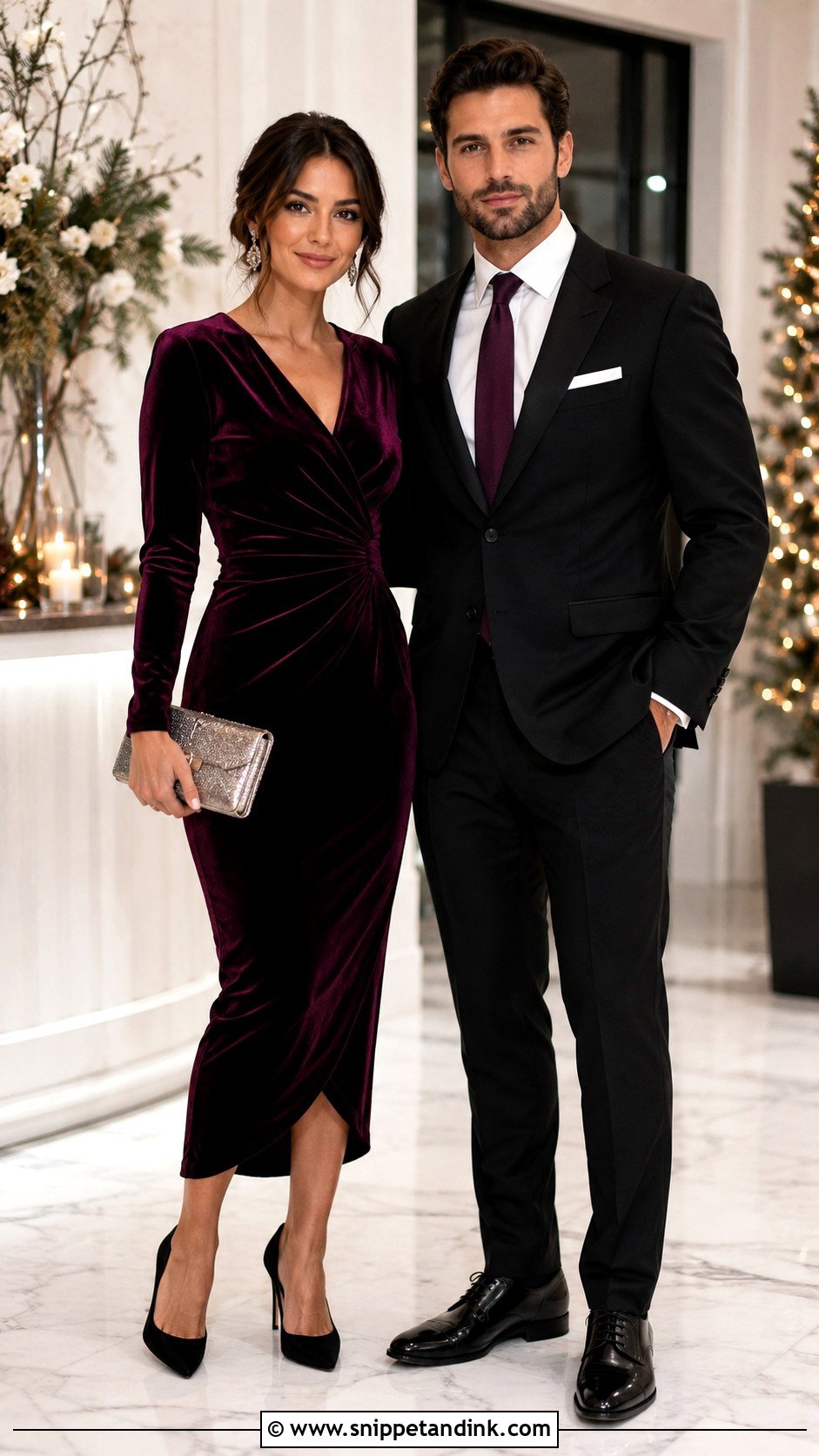
Plum and black make a moody jewel-tone look, and the risk is the upper half going dark in photos. A white pocket square fixes that on the suit; it’s a small thing, but it lifts the whole jacket. The dress can be a long crepe gown, velvet midi or satin wrap in deep purple, with black heels, an understated clutch, and gold or silver chosen by the dress undertone. The suit stays crisp with a white shirt and either a black or dark plum tie, polished shoes and a plain watch. Velvet is welcome in winter, but on one garment only, or the pair feels heavy.
12. Yellow Dress and Navy Suit
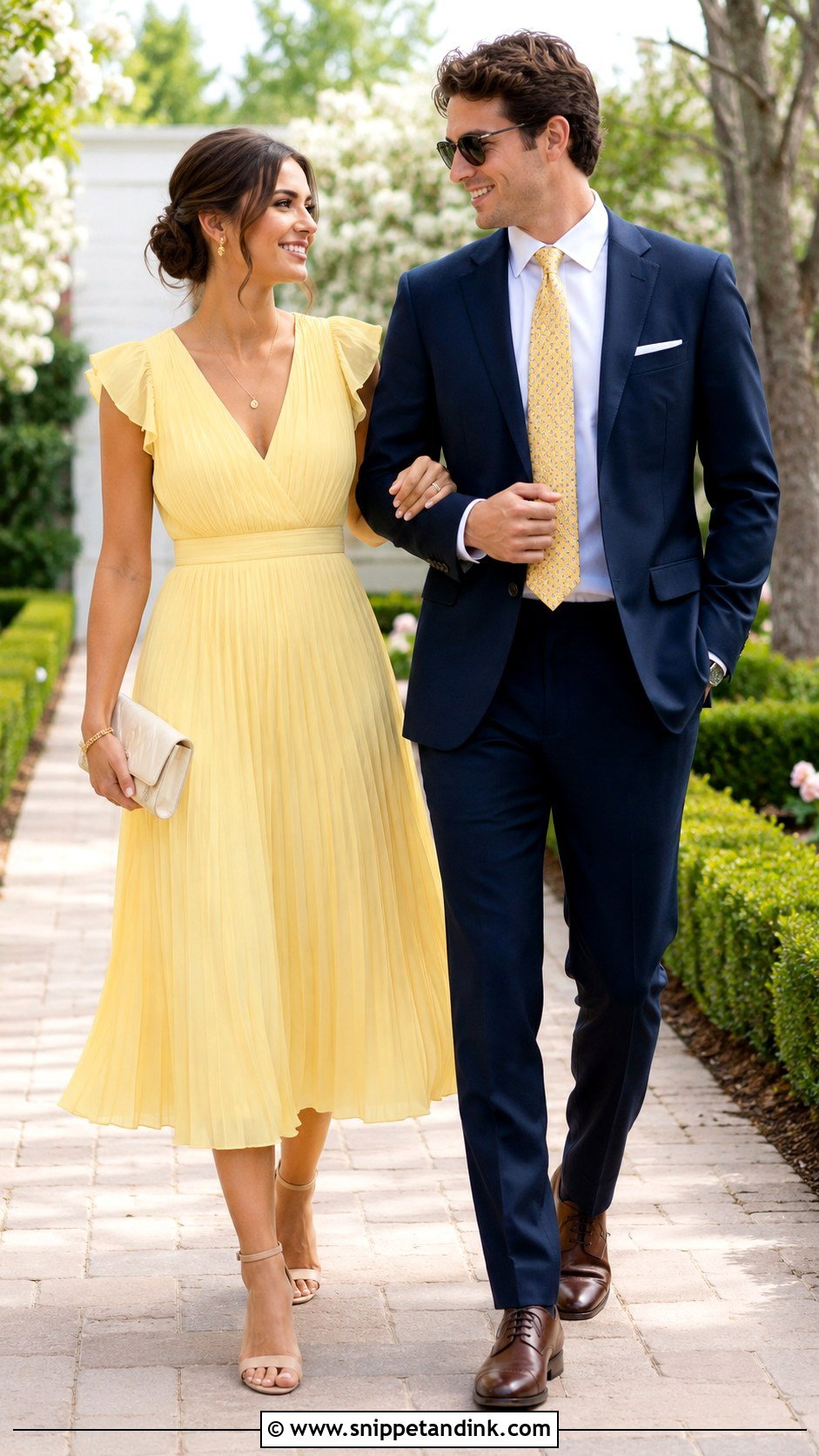
With yellow, I steer couples away from a fully matching tie. A butter yellow midi or marigold wrap dress with nude sandals, a cream clutch and gold jewelry has plenty of color; a patterned tie on the navy suit with just a fleck of yellow ties the two together more quietly. Navy anchors the brightness, a white shirt keeps it fresh, and brown shoes with a brown belt give the suit a warmer, daytime feel. Pale yellow belongs in spring, marigold in late summer and early fall. No third color.
13. Navy Dress and Burgundy Suit
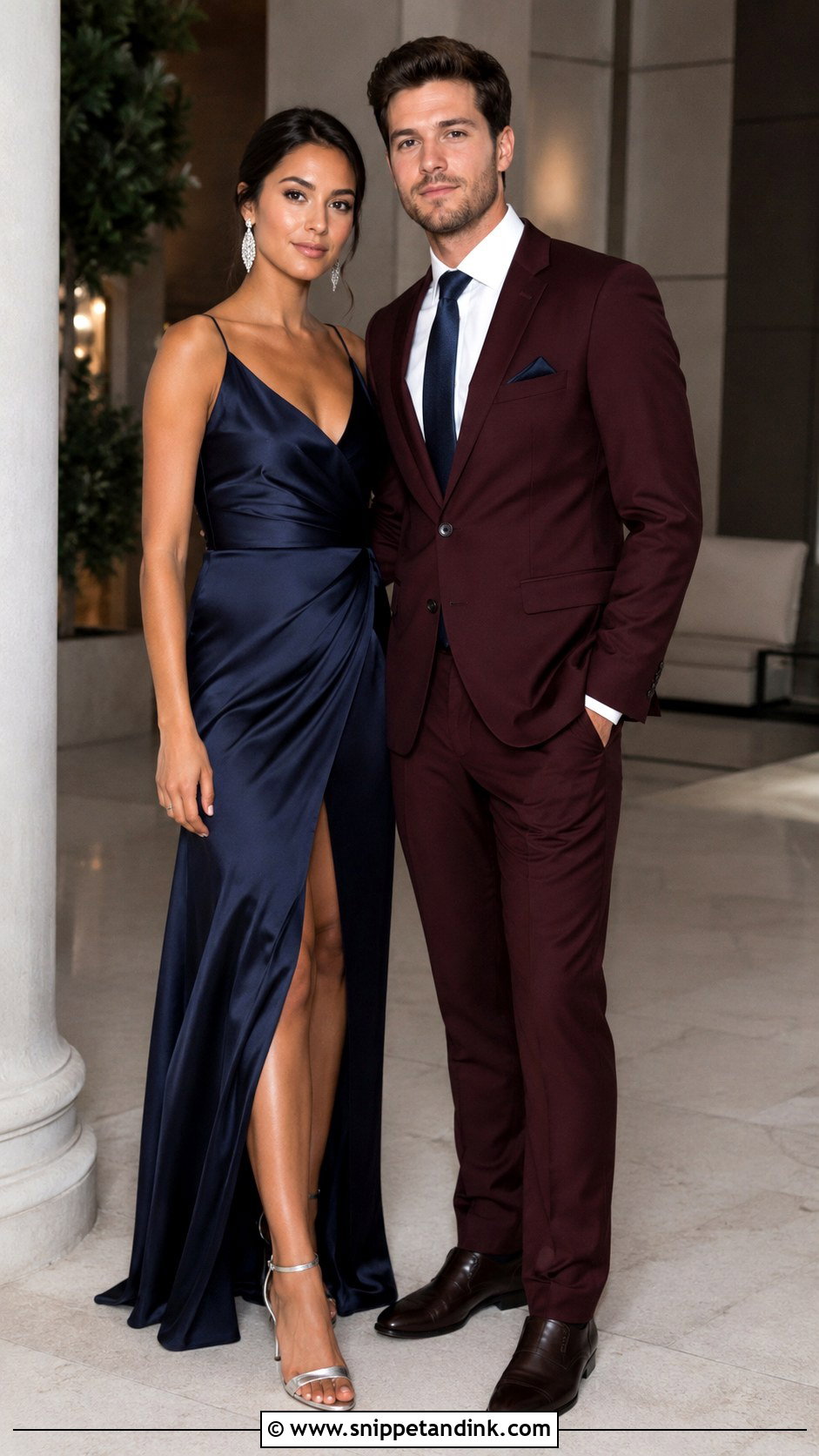
Here the suit carries the color, which reverses the usual setup and makes the tailoring matter twice as much. A burgundy suit with sloppy sleeves or pooling trousers looks like a costume; a precisely fitted one in deep wine looks confident. Keep it free of contrast piping and wear it with a white shirt, navy tie, white pocket square, and dark brown or black shoes. A bright red suit is harder to pull off than wine, in my experience. The navy column dress, satin midi or chiffon gown takes silver heels, a navy clutch and crystal or pearl earrings, and no extra strong color.
14. Floral Dress and Blue Suit
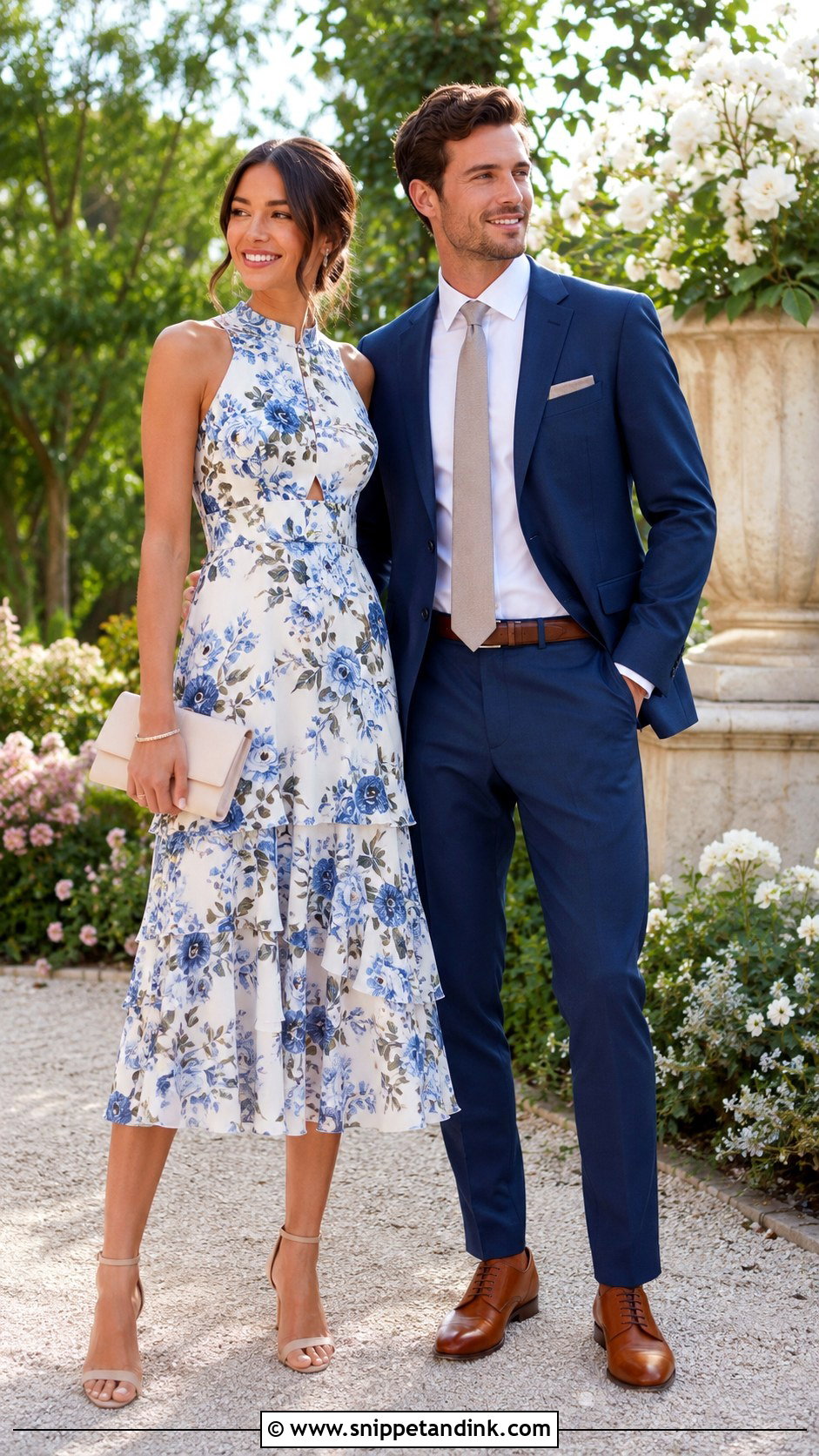
A floral dress chooses the suit for you, as long as the print has a clear blue in it. Pick a midi or maxi with a balanced print, then match the suit to one of its blues, not the dominant flower color. Neutral heels, a solid clutch and simple jewelry keep the dress from competing with itself. On the suit, a white shirt, a solid neutral tie, brown shoes and a matching belt. A floral tie against a floral dress is too much pattern for one photo, and with large-scale flowers I’d strip the suit accessories back even further.
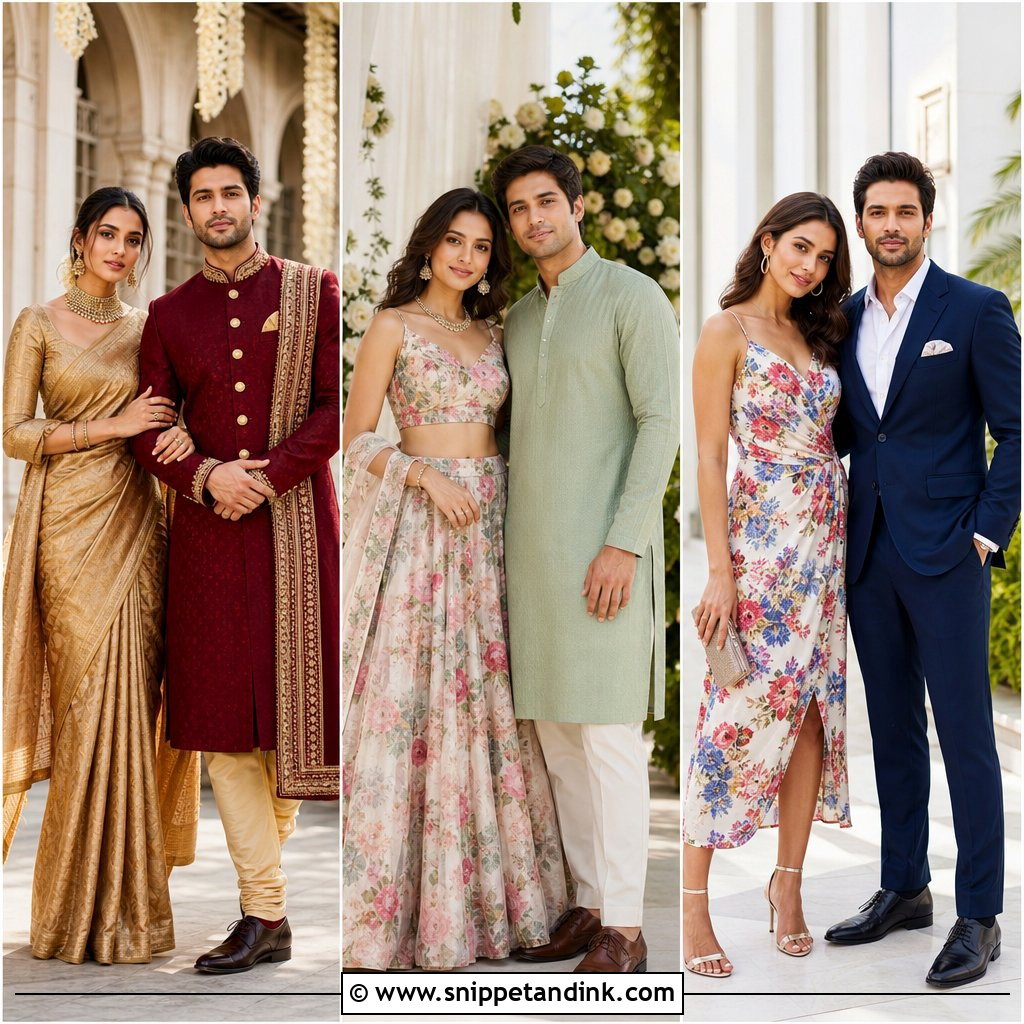
15. Coral Dress and Light Blue Suit
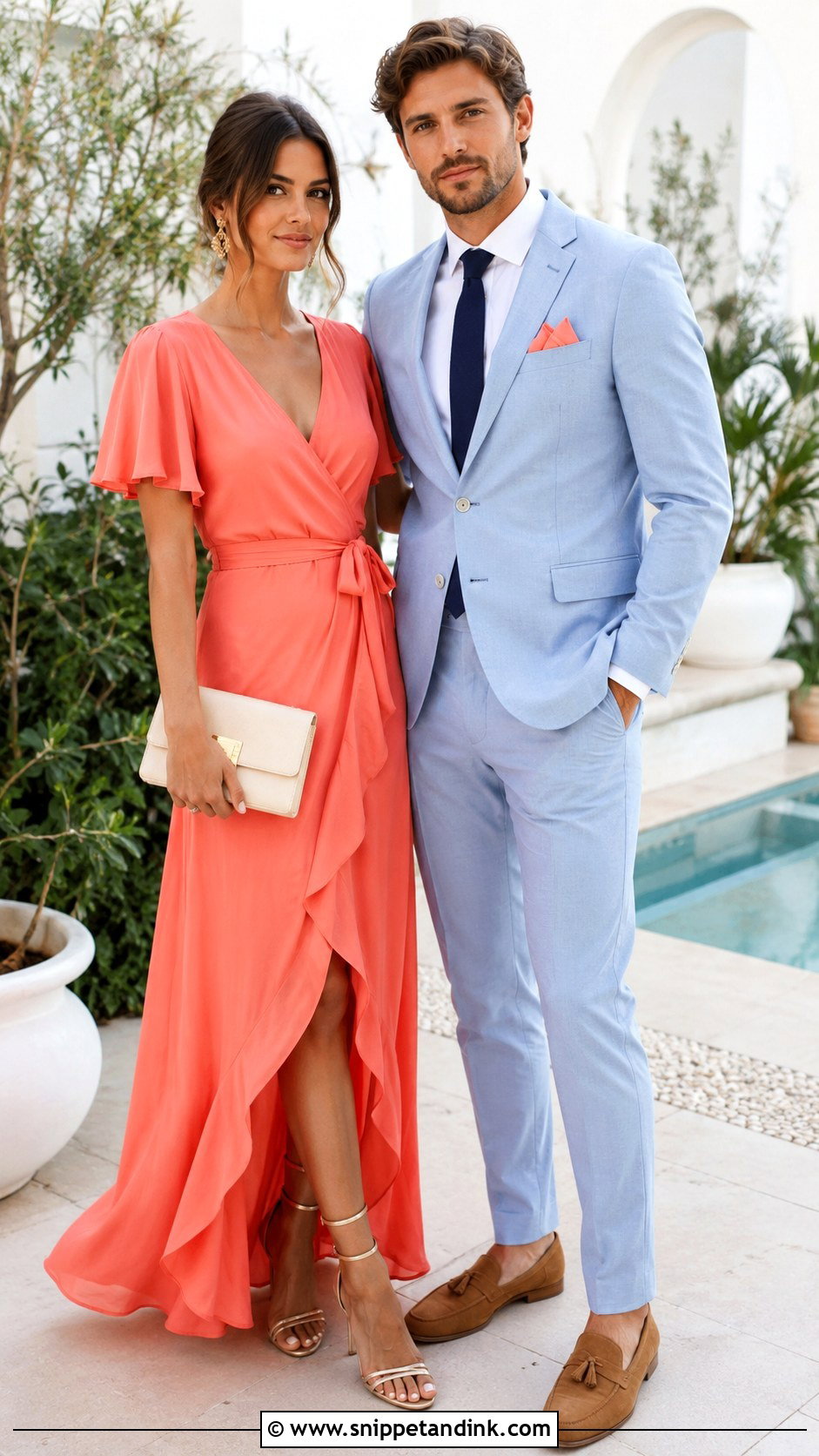
Pale blue suits look relaxed by nature, so this is a summer pairing, and the coral has to stay soft. Neon coral beside a powder blue jacket overwhelms it completely. A coral wrap midi, pleated maxi or simple fitted dress in a light fabric pairs with nude or metallic sandals, a cream clutch and fine gold jewelry. The suit takes a white shirt and a coral pocket square, with a navy tie if the dress code asks for one or an open collar when it doesn’t. Tan loafers and a matching belt keep it light. Coastal venues and outdoor daytime receptions suit it best.
16. Teal Dress and Navy Suit
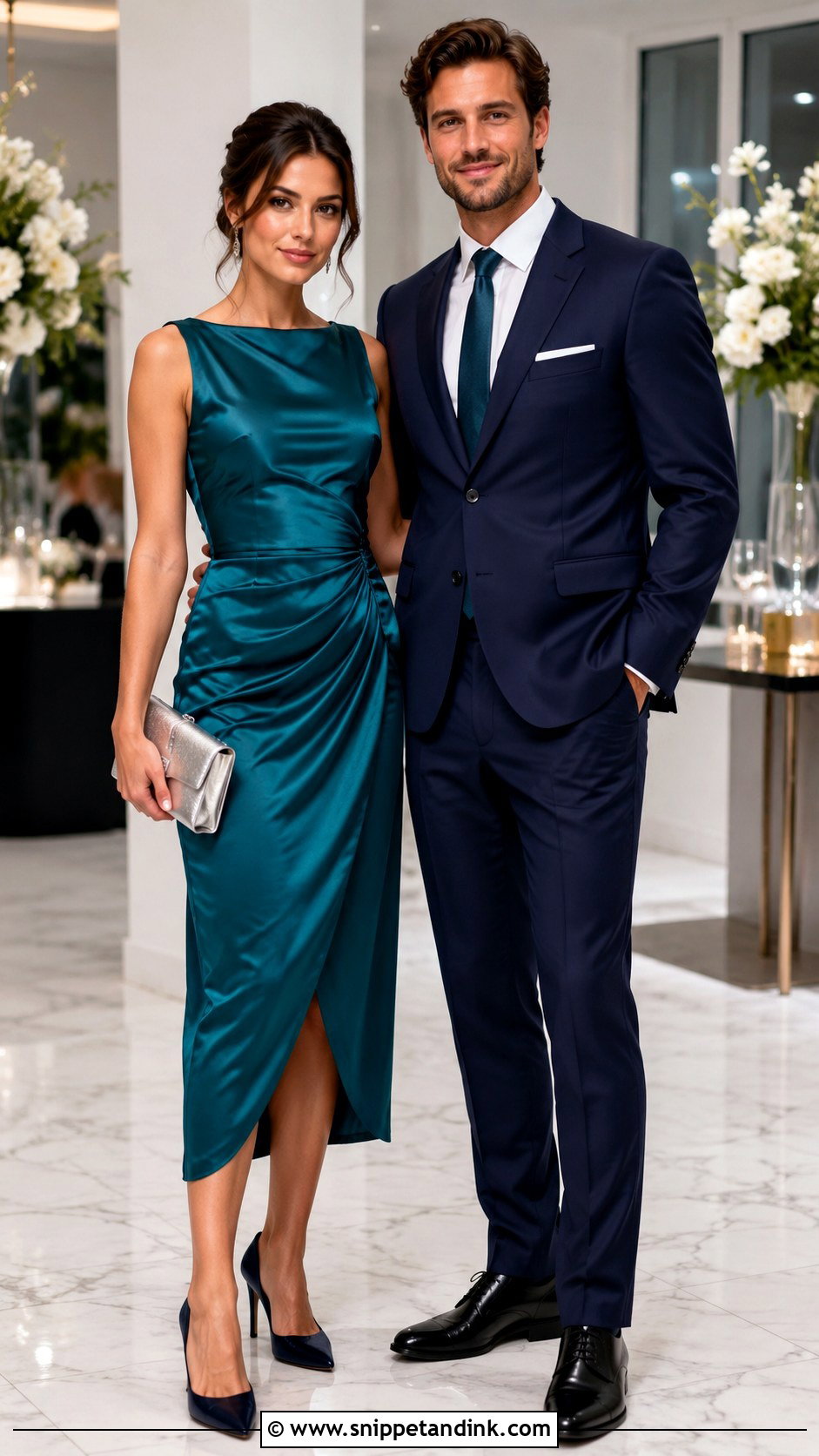
Teal and navy are close cousins, so the trouble is the opposite of most pairings: the outfit can feel heavy and dark rather than loud. A teal satin midi, draped maxi or formal jumpsuit-style dress alternative with clean lines takes navy heels, a metallic clutch and silver jewelry. On the suit, a white shirt with a subtle texture, a teal tie and a crisp white pocket square. Black shoes are more formal, dark brown slightly softer. Pearl earrings and a silver bag on the dress side add the brightness this deep palette needs, for weddings, proms and evening dinners year-round.
17. Rust Dress and Brown Suit
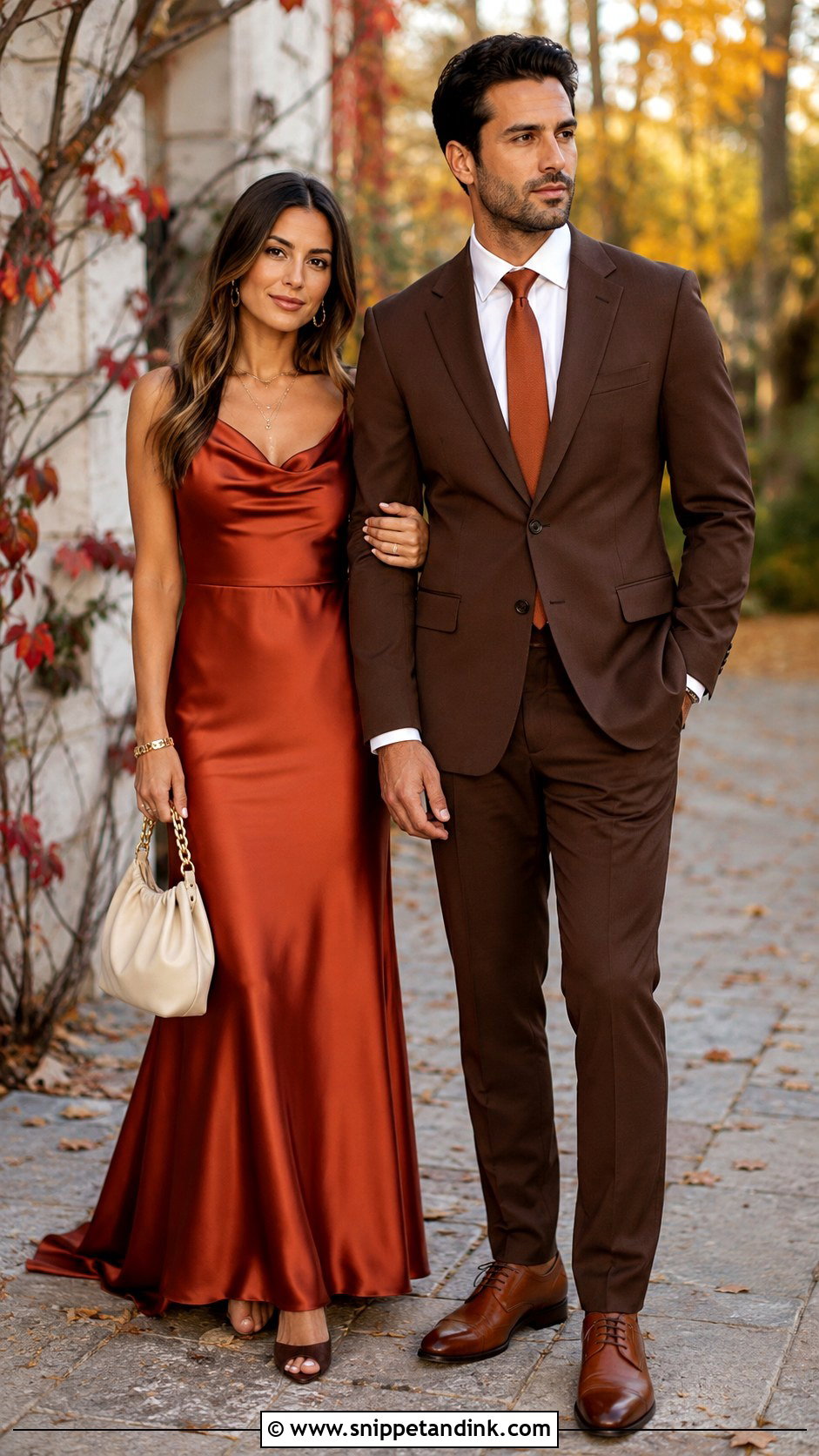
Rust and brown are an autumn pairing, and they need tonal contrast, because two near-identical warm shades merge into one blob in photos. Go dark chocolate on the suit if the dress is a mid rust, or a medium brown if the dress is deep. A rust satin slip, long-sleeve midi or chiffon gown takes chocolate heels, a cream bag and gold jewelry. The suit gets an ivory shirt, which gives the palette room to breathe, a textured rust tie, and cognac or dark brown shoes with a matching belt. Rustic venues, autumn outdoor weddings and engagement photos are where it looks most at home.
18. Hot Pink Dress and Charcoal Suit
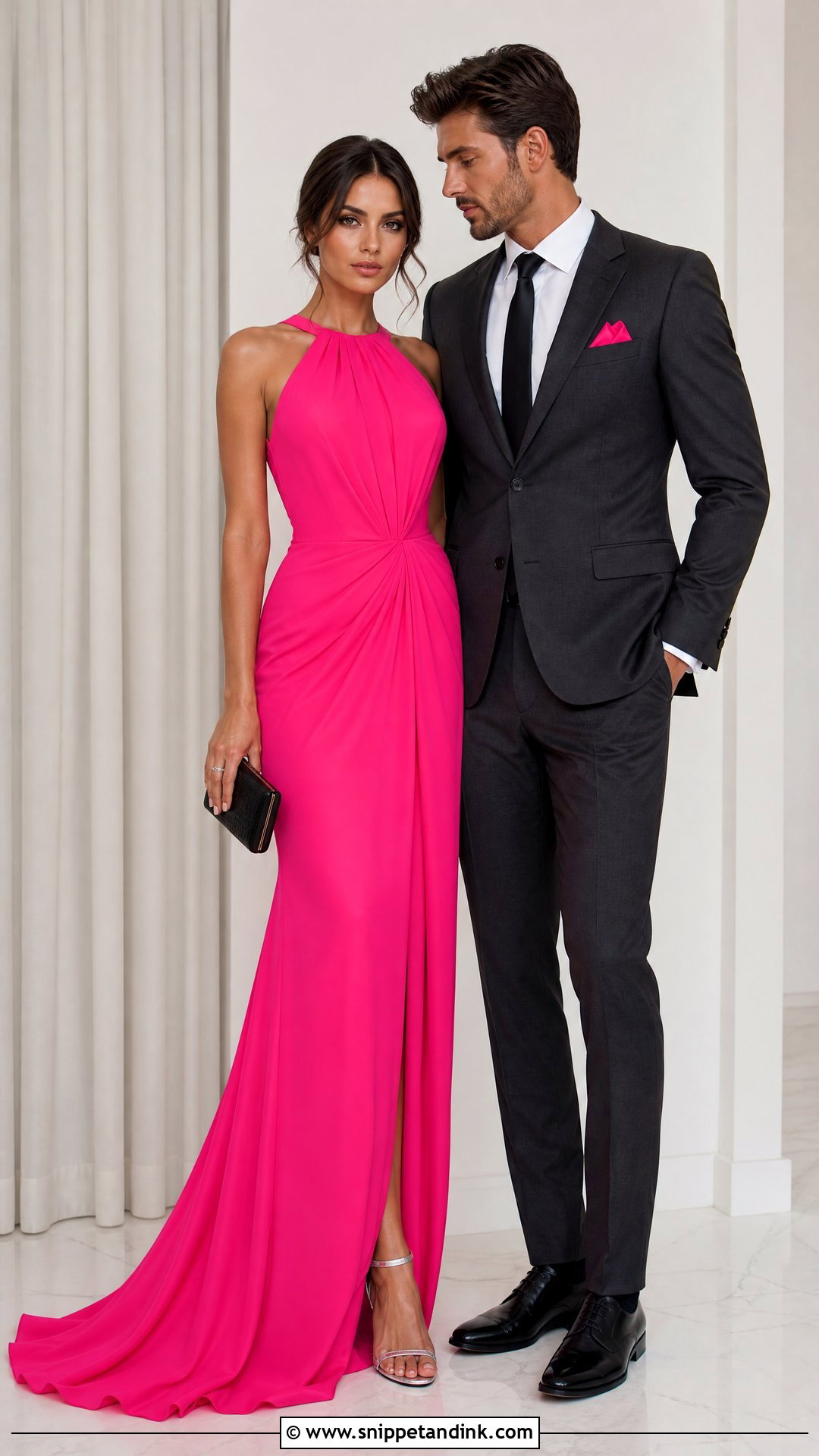
Hot pink can look refined, but only on a clean shape: one cutout or a ruffle at most, not both. A midi or floor-length dress with silver heels, a small black clutch and simple earrings. The charcoal suit stays streamlined with a white shirt, black tie, black shoes and belt, and a restrained pink pocket square. A softer rose in the square links the two without needing a perfect match, and it’s easier to find than an exact hot pink silk. Let the dress be the strongest thing in the frame. Save this one for galas, proms and weddings where the hosts welcome bright color.
19. Silver Dress and Black Suit
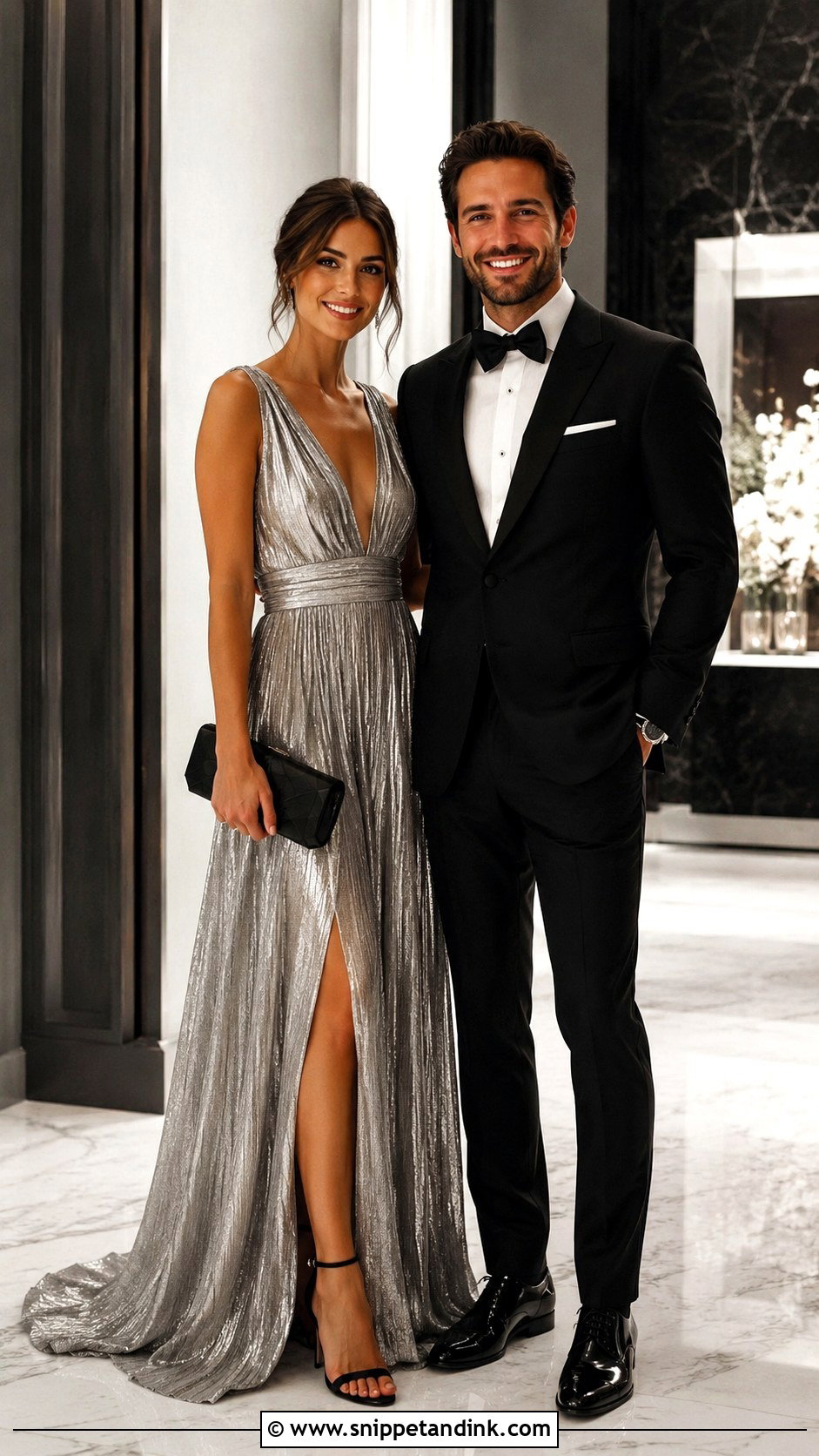
Metallic fabric reflects every light in a room, so the silver dress already counts as the accessory. A satin gown, beaded midi or metallic pleated dress with a simple silhouette needs only black heels, a structured clutch and small earrings. On the suit side I’d go with a classic black suit or tuxedo, a crisp white shirt and a bow tie or necktie. A silver pocket square tempts people, but white linen in a flat fold looks more refined against a shiny dress. Polished Oxfords and a minimal watch finish it. If the dress has sequins, the suit has to be at least as formal, so a tux is the safer call for black tie.
20. Cream Dress and Olive Green Suit
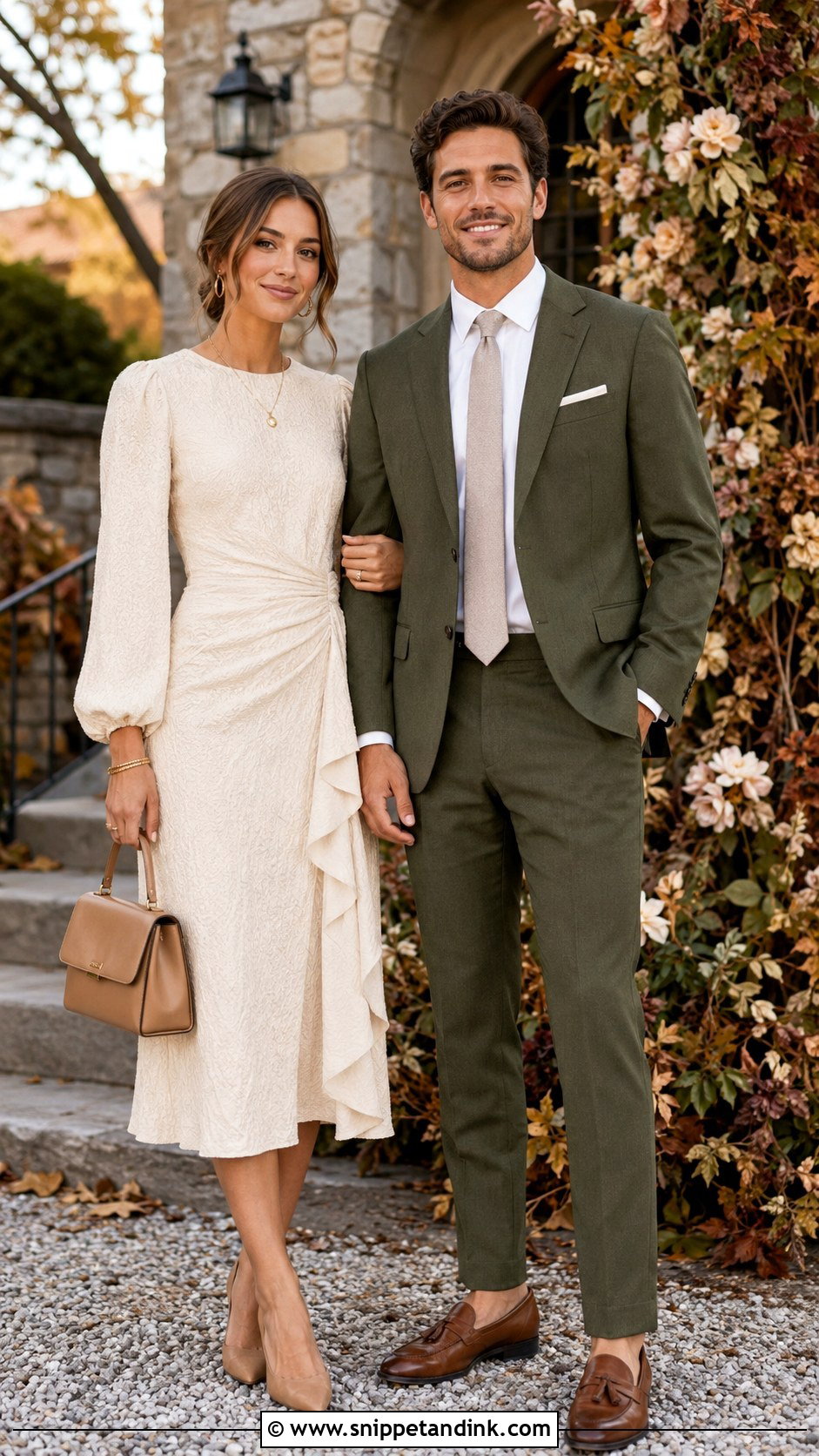
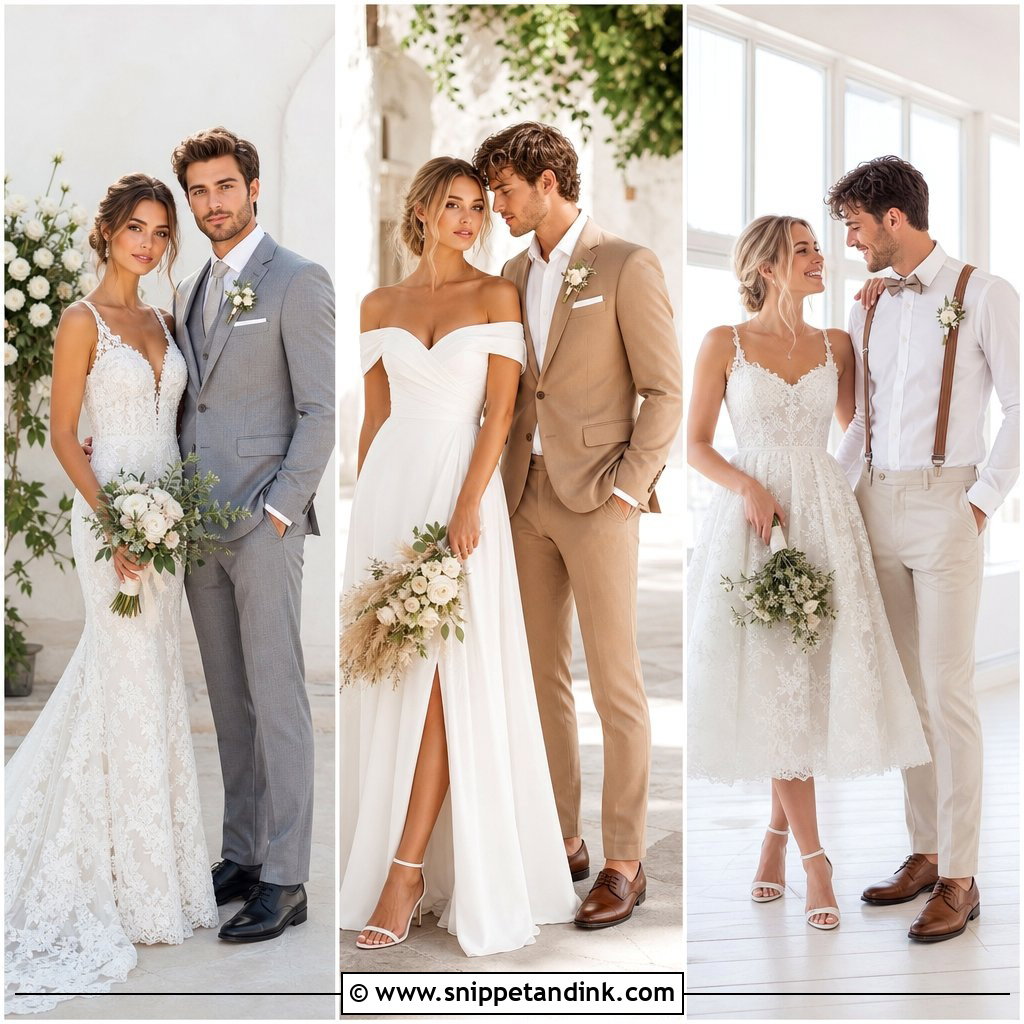
The olive matters more than the cream here. Bright military green looks like workwear; a muted olive in a soft wool or cotton looks deliberate. Wear it with an ivory shirt, a neutral tie and brown loafers or lace-ups, and fold a cream pocket square to link it to the dress. The dress side is a cream midi or maxi in satin or crepe, tan heels, a camel bag and simple gold. As a wedding guest, skip cream unless the couple has approved it, since it can be mistaken for bridal. For engagement sessions and autumn gatherings it’s ideal.
Tie, Pocket Square or Both? Matching Sheen as Well as Color
Most of the pairings above link the outfits through a single accessory, and which one you choose changes how strong the link looks. A tie puts the color in the center of the chest, right in the frame of every portrait. A pocket square puts it off to one side, smaller and quieter. If the dress is bold, the square is usually enough; if it’s a soft pastel, a tie in the same shade makes the connection visible.
I’d rarely do both in the exact dress color. Put the dress shade in one piece and let the other stay white or neutral, or use a pattern that only carries a little of it.
Shine is the detail people forget
A satin dress beside a matte wool tie in the same color can look like two different colors, because shiny fabric reflects light and appears lighter. Match finish to finish where you can: a silk tie for a satin or charmeuse dress, a grenadine or knit tie for crepe and chiffon, wool or linen for a cotton daytime dress. Velvet works best when it appears once in the pair, never on both people.
Folding the square
A flat, straight fold that shows a thin line above the pocket is the most formal and suits tuxedos and dark evening suits. A loose puff works with daytime suits and softer fabrics. Whatever the fold, the square shouldn’t match the tie in both color and pattern; a matching set straight out of one box looks cheap in close-ups.
Where the Dress Color Should Land on the Suit
Coordinated outfits connect through one color, a comparable texture and matching formality, and both people should still look like themselves. Before buying anything, check the dress code, the venue and the forecast, then lay both outfits side by side in daylight, since store lighting flatters everything. Repeat the dress color in one or two suit pieces at most, usually a tie or a pocket square. Get the suit fitted, settle the shoes, and the pairings above, from soft sage and tan to dramatic emerald and black, will look polished without looking identical.
You'll Like These Ideas:


Leave a Reply