
A lobola day asks a lot of two outfits. You’ll greet elders, sit for long stretches, stand for photographs and probably dance once the negotiations close, all in clothes both families will remember. When I style a couple for it, I start with respect and wearability, and only then think about how closely the two looks should match. Some couples share one Shweshwe print from collar to hem. Others share a single color, a band of beadwork or a headwrap fabric. Below are the pairings I see working best, from Xhosa Umbhaco and Sotho blankets to modern suits with traditional trims, each with the shoes and finishing pieces I’d put with it.
What Elders Expect to See at a Lobola
Before any fabric is bought, I ask the couple one question: what do your families expect? Customs differ between cultures, regions and households, and some families settle colors or cloth between them, or ask the bride to wear something specific when she is called in. Ask an aunt or the person handling the negotiations. It saves an expensive outfit that turns out to be wrong for the room.
Beyond that, a few things hold for most lobola days I’ve styled. Modest dressing reads as respect, so I keep shoulders covered by sleeves or a wrap, hemlines at the knee or lower, and necklines that stay put when she bends to greet someone. A headwrap or doek is expected for the bride in many families, and it’s never wrong to have one ready. And plan for sitting: some homesteads seat guests on low benches, chairs or mats, which rules out very tight skirts and long trains.
Questions to settle with family first
- Has either family already chosen a color or fabric for the couple?
- Will the bride be present during the talks, or brought in later?
- Is a head covering expected, and should it match the dress?
- Is there a second outfit for a celebration or gift exchange later in the day?
1. Matching Shweshwe Lobola Outfit
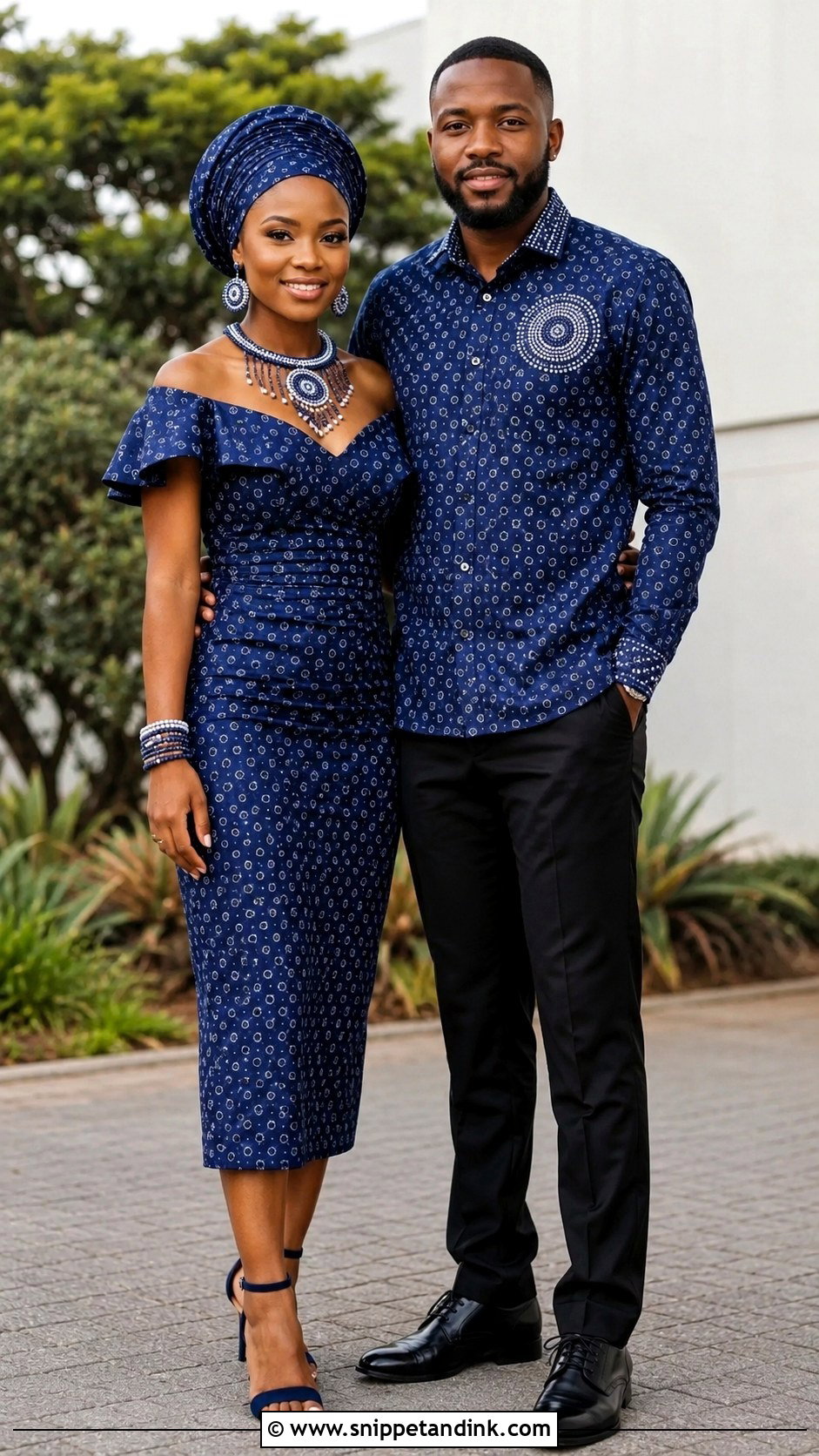
Matching Shweshwe is the classic pairing, and it rarely fails. For her, a fitted midi, mermaid or peplum dress in navy, brown, red or royal blue print, with a doek cut from the same cloth, simple heels and beaded jewelry. For him, a crisp shirt in the identical print with tailored trousers. One thing I always tell couples: buy both lengths from one bolt at the same time, because Shweshwe colors can shift slightly between batches and the difference shows when you stand together. If head-to-toe matching feels too much for him, a matching Shweshwe lobola outfit can be just as connected with the print kept to his collar, cuffs or waistcoat.
2. Xhosa Umbhaco Couple Outfit
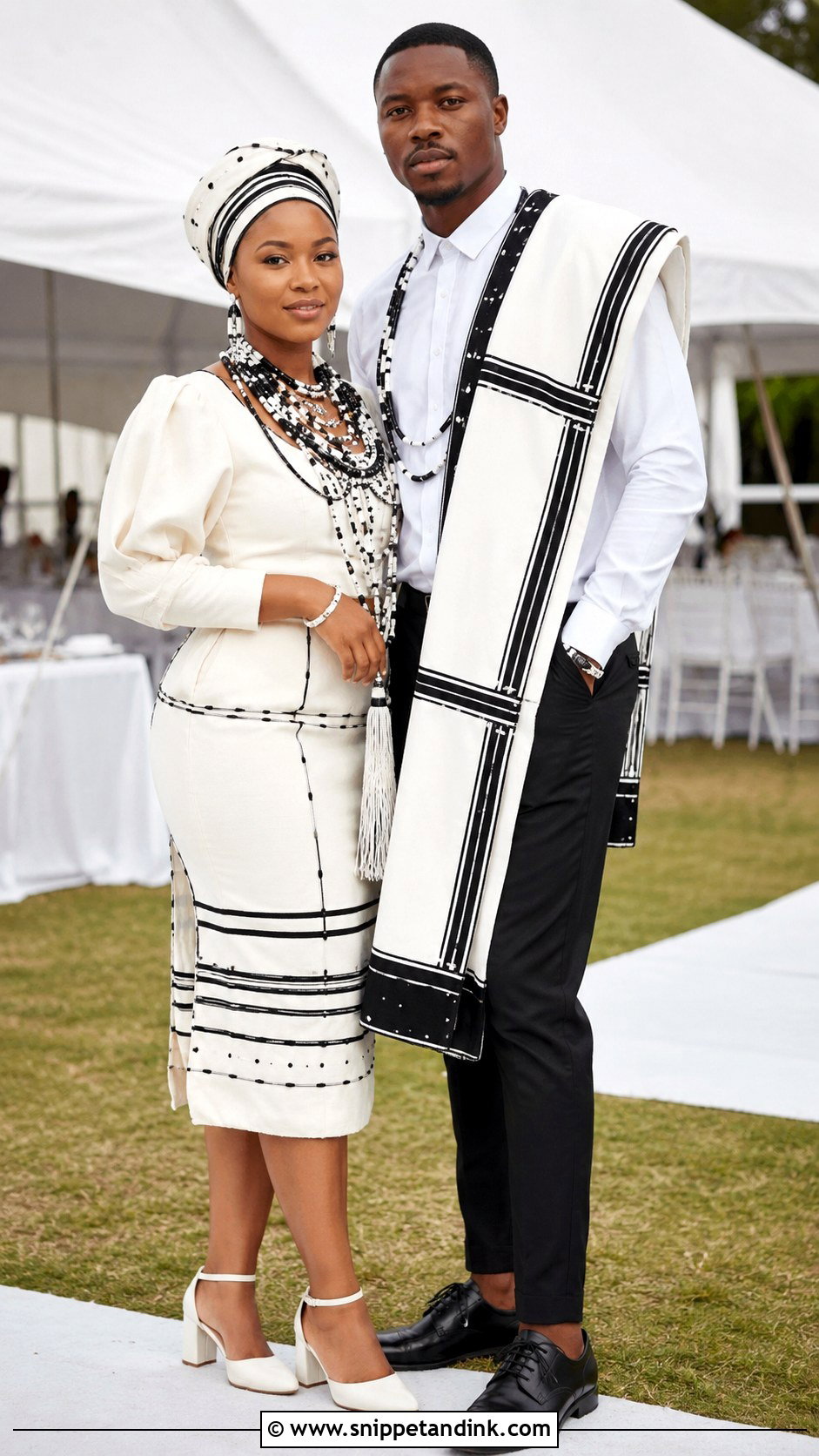
Umbhaco carries a strong traditional feel, and the black bias stripes do most of the work. She wears a white or cream dress with that striped trim, layered bead necklaces, a headwrap and comfortable block heels; he mirrors it with a white shirt, a black-trimmed shawl, tailored trousers and a few beaded pieces. The black and white palette makes it easy for both families to coordinate around you. Where I see this go wrong is in thin fabric. Umbhaco wants some body so the stripes lie straight, so I’d choose a structured cloth and have the trim stitched, not glued.
3. Zulu Beaded Lobola Outfit
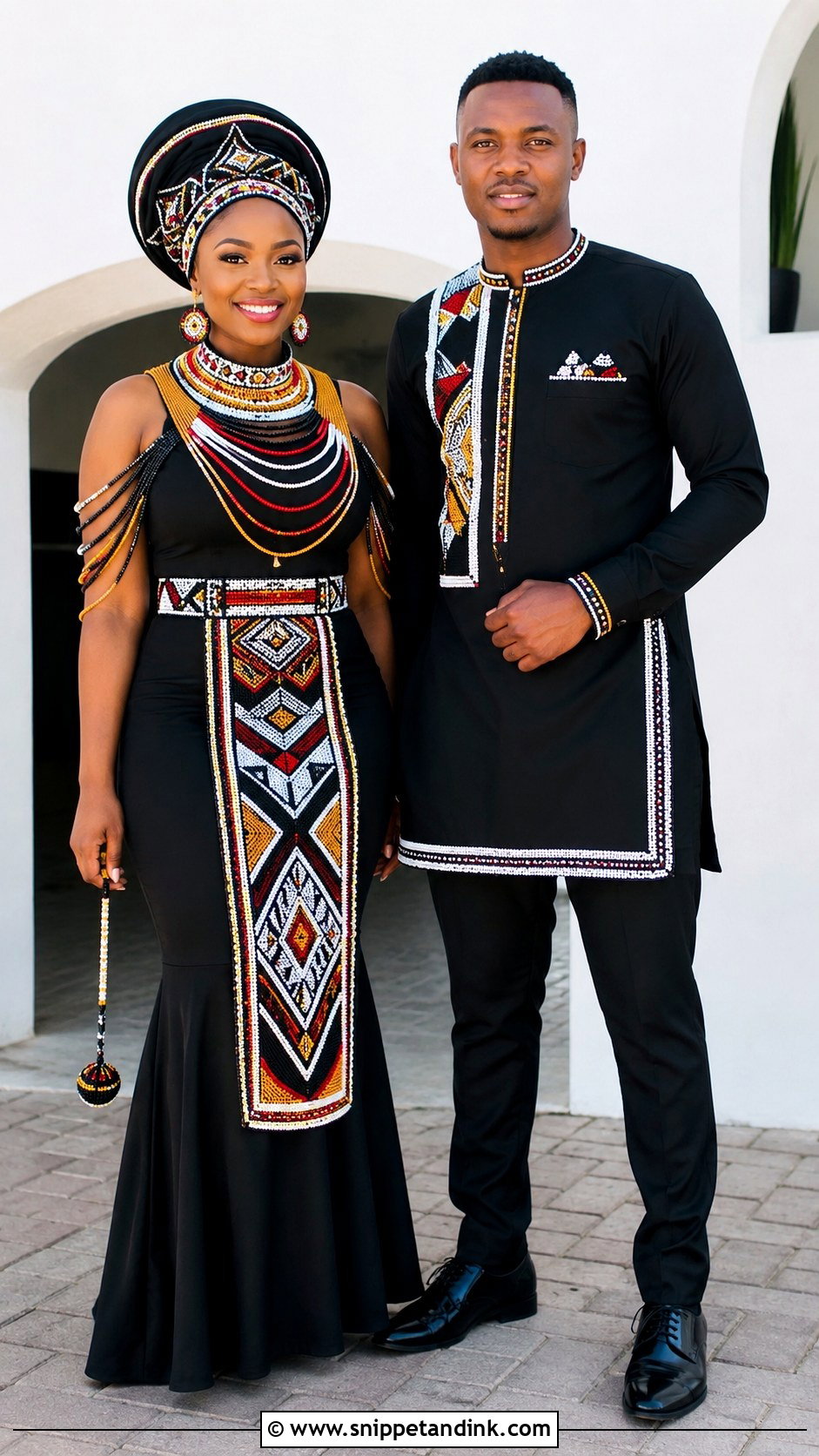
Zulu beadwork brings color and texture that no fabric can, and it should look deliberate rather than piled on. I’d pick one color story for her dress, perhaps black, white, red or mustard, and repeat it in his beaded accents. Keep her dress simple so the necklaces, belt and earrings stand out, and give him a tailored shirt or tunic with slim trousers and leather shoes. Beadwork colors and styles can carry meaning in Zulu tradition, so before you commission pieces, ask an elder or the beadworker which ones suit a lobola day.
4. Sepedi Color Block Couple Outfit
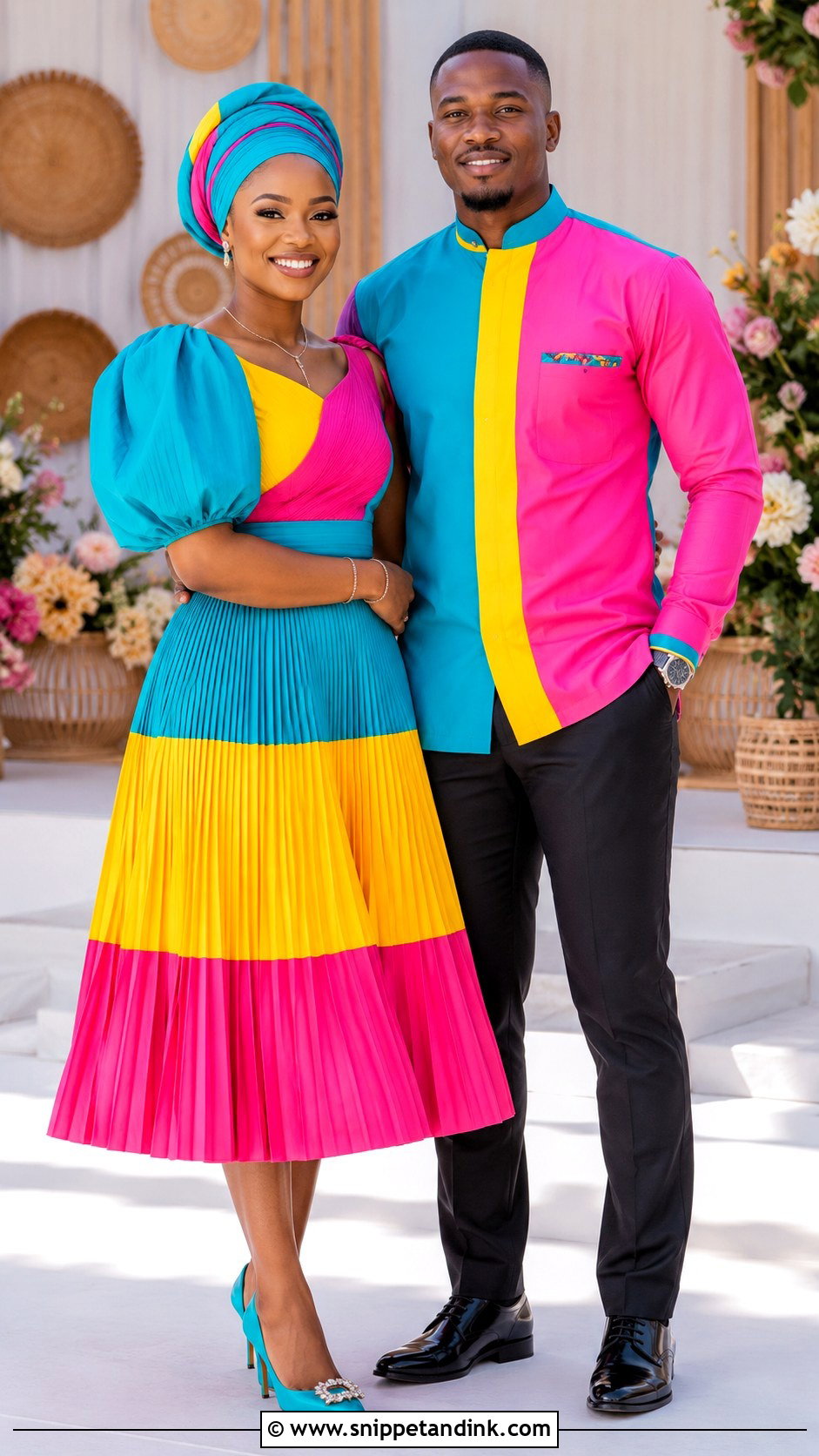
If you both love bright color, Sepedi color blocking is joyful without needing heavy accessories. She wears a pleated or peplum dress in turquoise, yellow, pink or orange with a matching headwrap; he wears a shirt with matching color-block panels and plain trousers. My rule here is two or three colors, no more, repeated across both outfits. A Sepedi color block couple outfit loses its polish the moment a fourth color creeps in through shoes or a bag. A structured dress shape keeps her look formal, and a good tailored fit keeps his sharp.
5. Sotho Blanket Couple Outfit
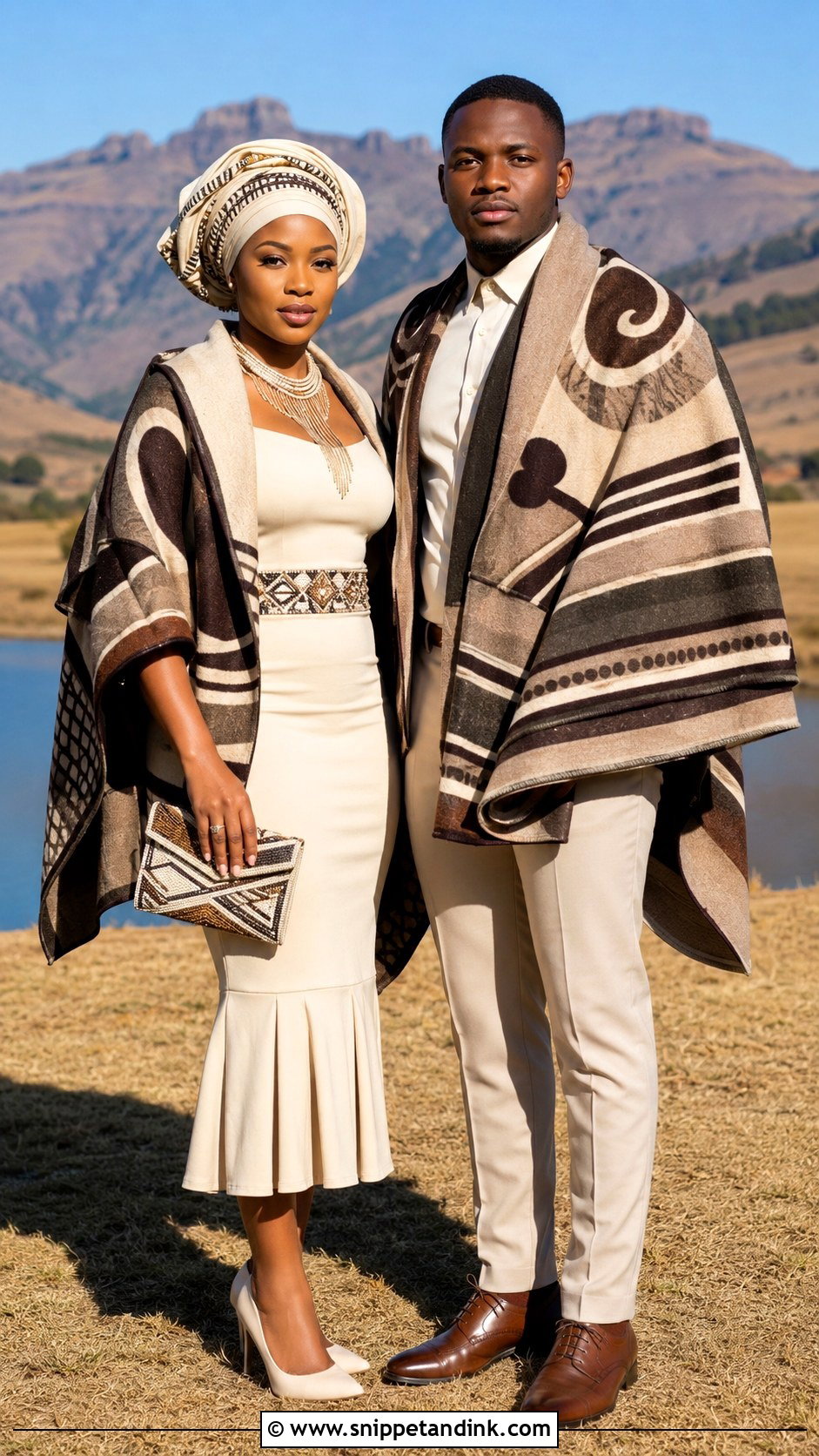
A Basotho blanket gives a couple instant presence, and it’s the warmest choice on this list for a winter or outdoor ceremony. Under it, she wears a fitted dress or skirt set in black, cream, navy or brown, with a headwrap, beadwork and closed-toe heels; he wears tailored trousers, a shirt and a matching blanket drape or blanket-cut jacket. Wool blankets are heavy, so I pin the drape at the shoulder with a large safety pin hidden in the fold, or it slides every time she bends to greet someone. Keep everything beneath it plain. A Sotho blanket couple outfit already carries all the pattern it needs.
6. Ndebele Beaded Couple Outfit
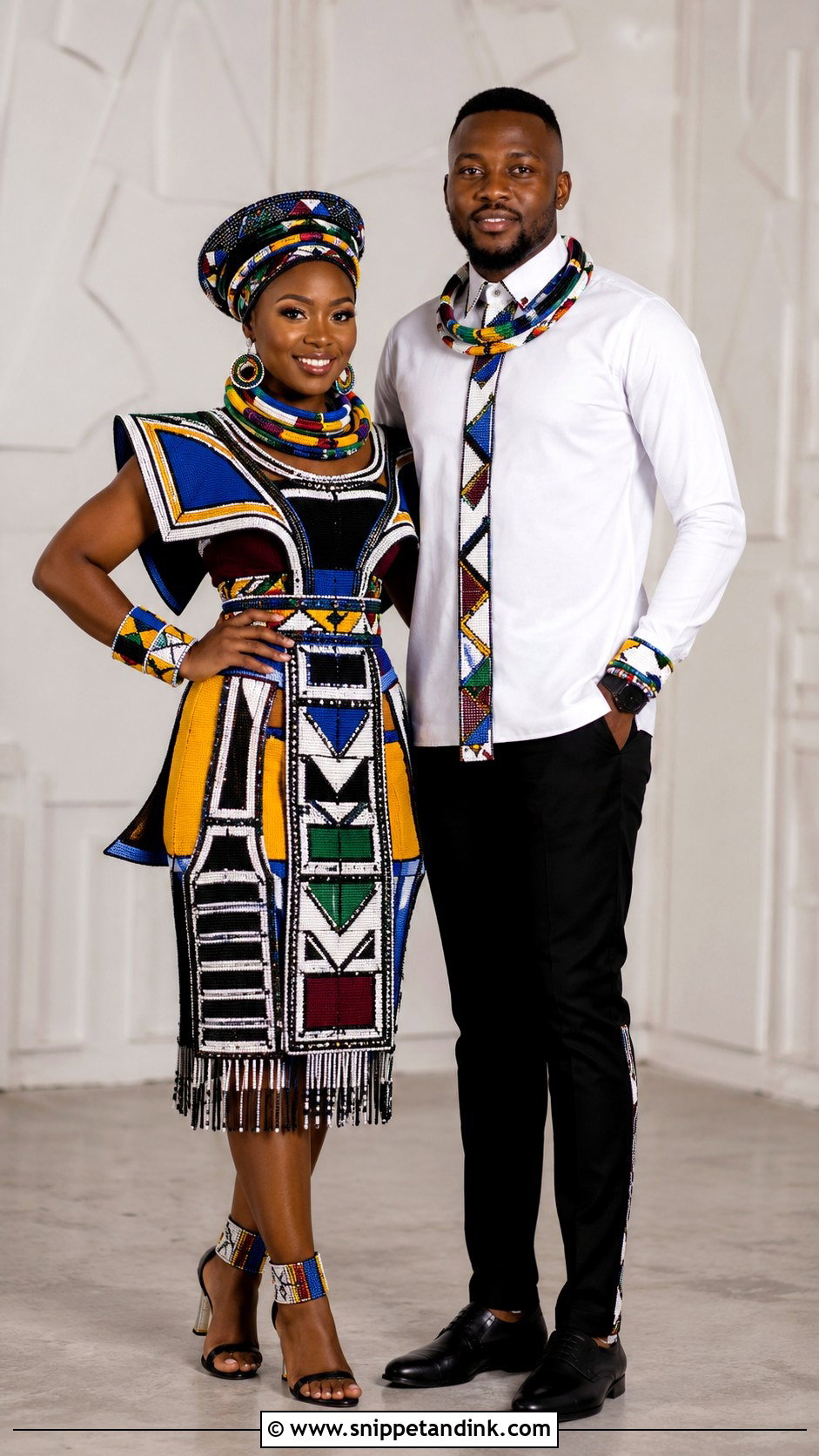
Ndebele geometry is bold, and that boldness needs a quiet base. I’d give her a simple structured dress with bright panel details, then let the necklaces, cuffs and headpiece carry the impact. For him, a black or white shirt or jacket with geometric trim lets the pattern read cleanly from across a yard. Crowding is the risk. Wide beaded neck rings and cuffs are heavy and stiff, so if she plans to wear them all day, try them on for an hour at home first to see how the neck and wrists feel.
7. Tswana Blue Lobola Outfit
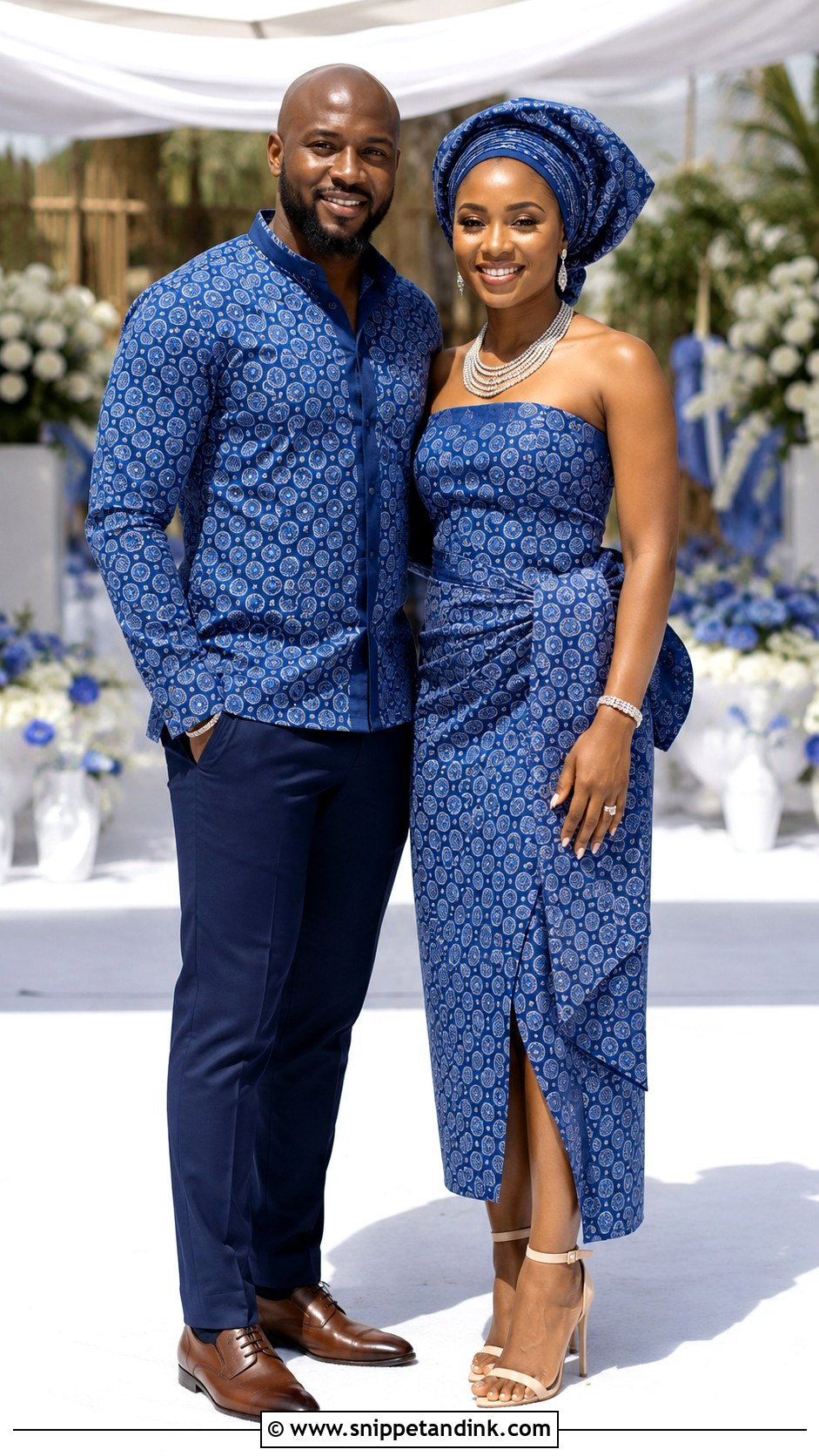
Blue reads calm in daylight, which is why Tswana blue suits morning and early afternoon ceremonies. She might wear a blue Shweshwe dress, a wrap dress or a skirt and blouse with a matching doek and silver or pearl jewelry. He can choose a blue print shirt, a navy suit with printed trim, or a plain shirt with a matching pocket. Most skin tones carry this shade well. I finish it with nude, black or metallic shoes, and I’d keep his tie off entirely if his shirt is printed.
8. Tsonga Print Couple Outfit
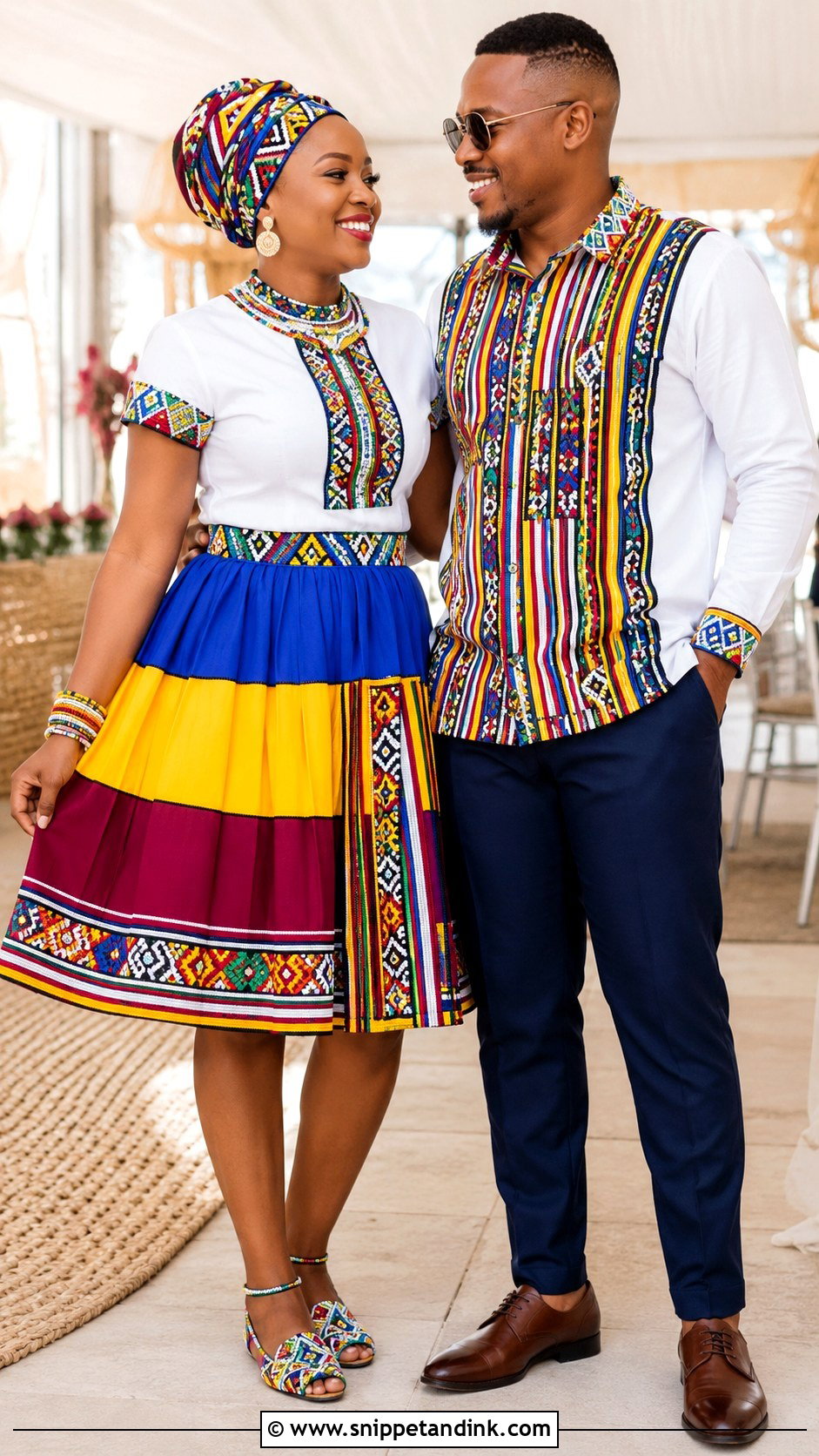
A Tsonga print couple outfit is made for movement. The xibelani-style skirt is gathered from a great deal of fabric so it swings when she dances, and that volume is heavy around the hips, so I fit the waistband snugly and pair it with flat or low embellished shoes. A fitted blouse, headwrap and beads complete her look. He wears a printed shirt with solid trousers, or a plain tunic with matching fabric accents. Tsonga prints are vivid, so I give each partner one plain piece to rest the eye.
9. Venda Stripe Couple Outfit
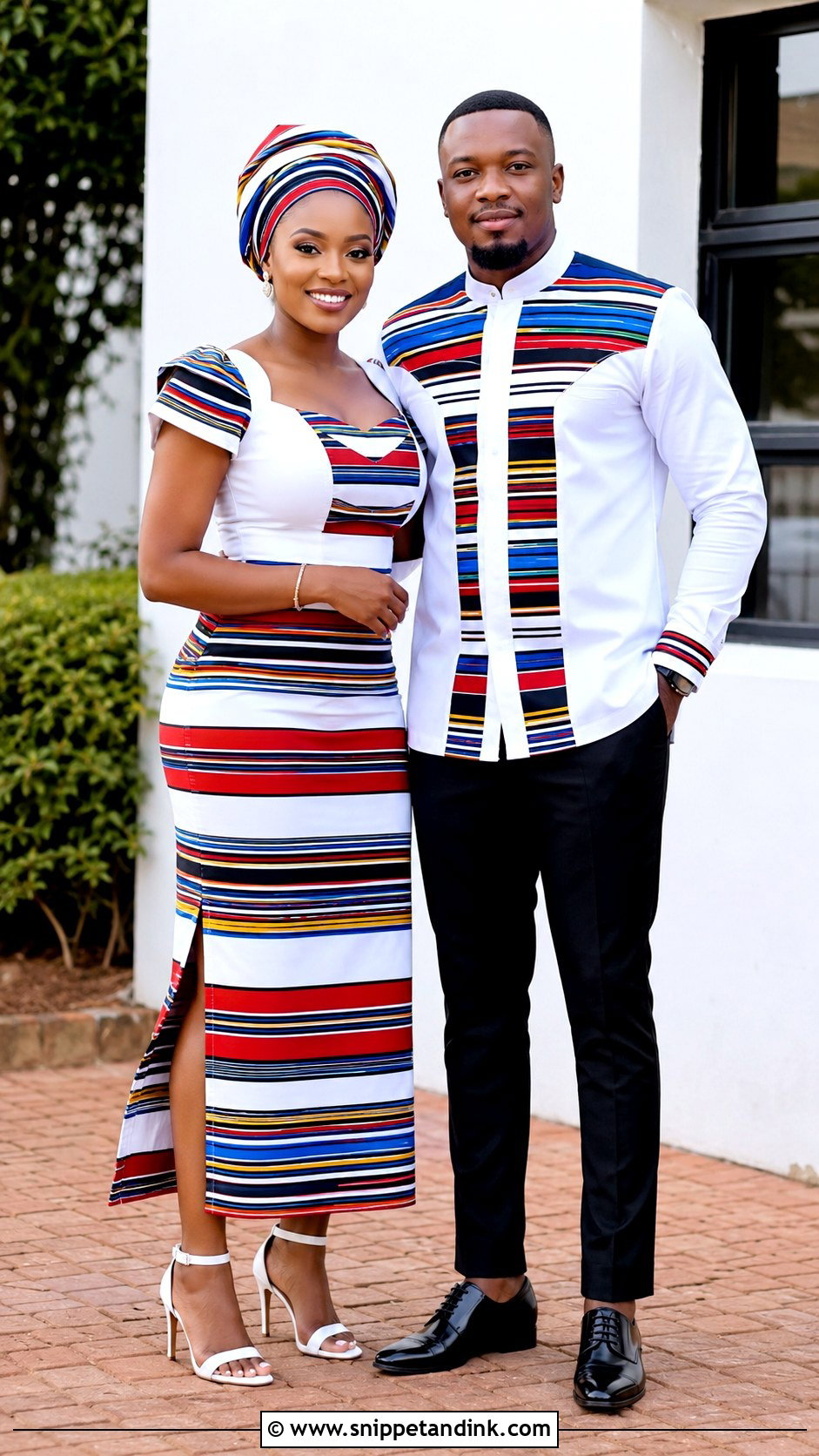
Venda stripes look best placed with intent: along a hem, down a front panel, across a bodice or at the sleeves. She can wear a striped wrap skirt or two-piece with a fitted top, a headwrap and matching jewelry, and he wears a shirt with Venda-inspired stripe panels, plain trousers and formal shoes. Choose one shared color, red, yellow, green or black, as the thread between you. I check stripe alignment at the seams before anything else. When a tailor rushes, stripes break at the side seams, and that’s the first thing the camera catches.
10. Modern Suit And Traditional Dress Outfit
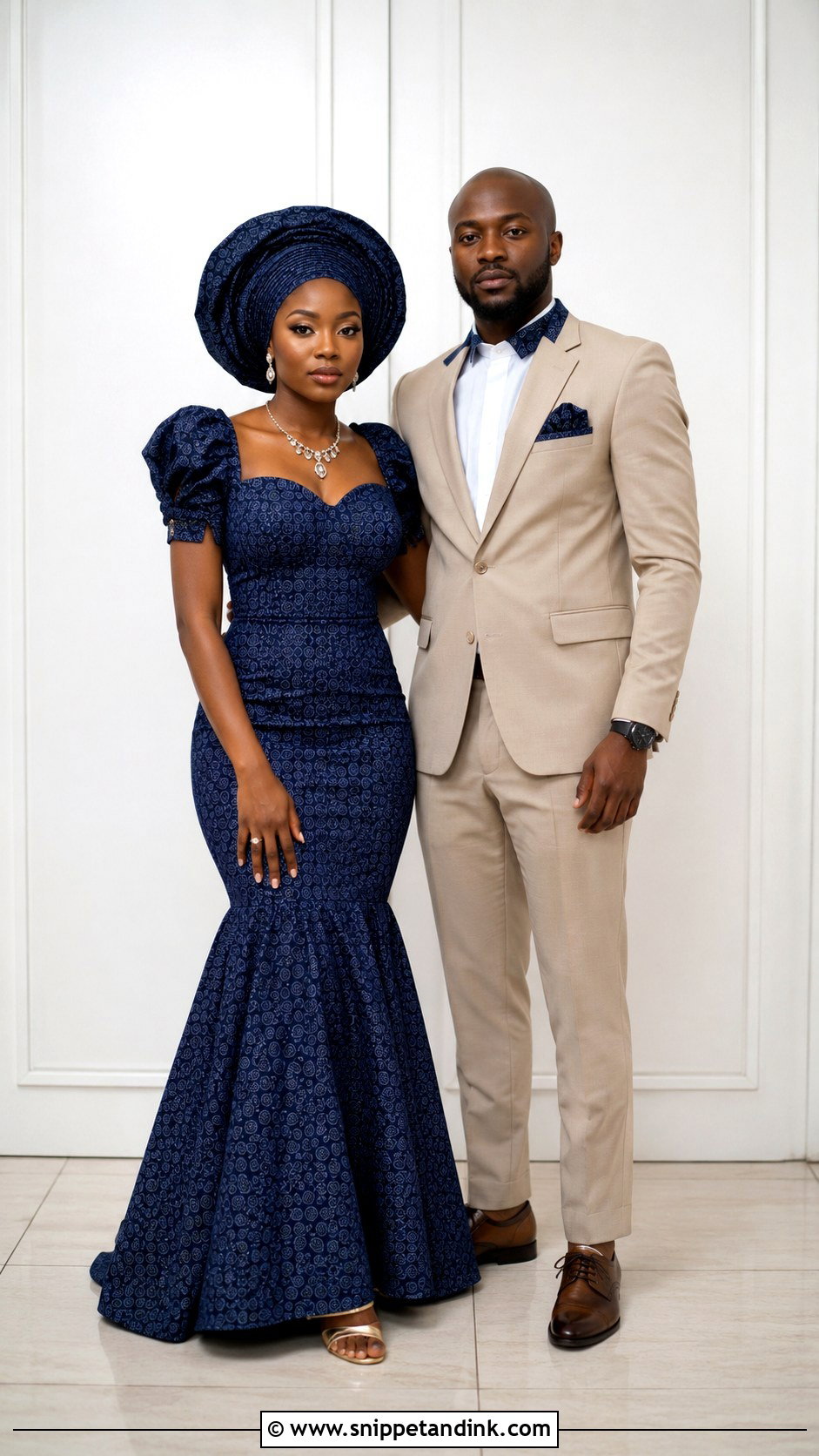
When one partner loves tailoring and the other wants tradition, this pairing keeps both happy. She wears a Shweshwe, Umbhaco or beaded dress with a headwrap, heels and polished jewelry; he wears a navy, black or cream suit and borrows her fabric for a pocket square, tie or collar trim. That one borrowed piece matters more than it seems. I ask for a fabric offcut from her seamstress so his accent is genuinely the same cloth, not a near match. It suits city ceremonies and indoor gatherings especially well.
11. White And Gold Lobola Outfit
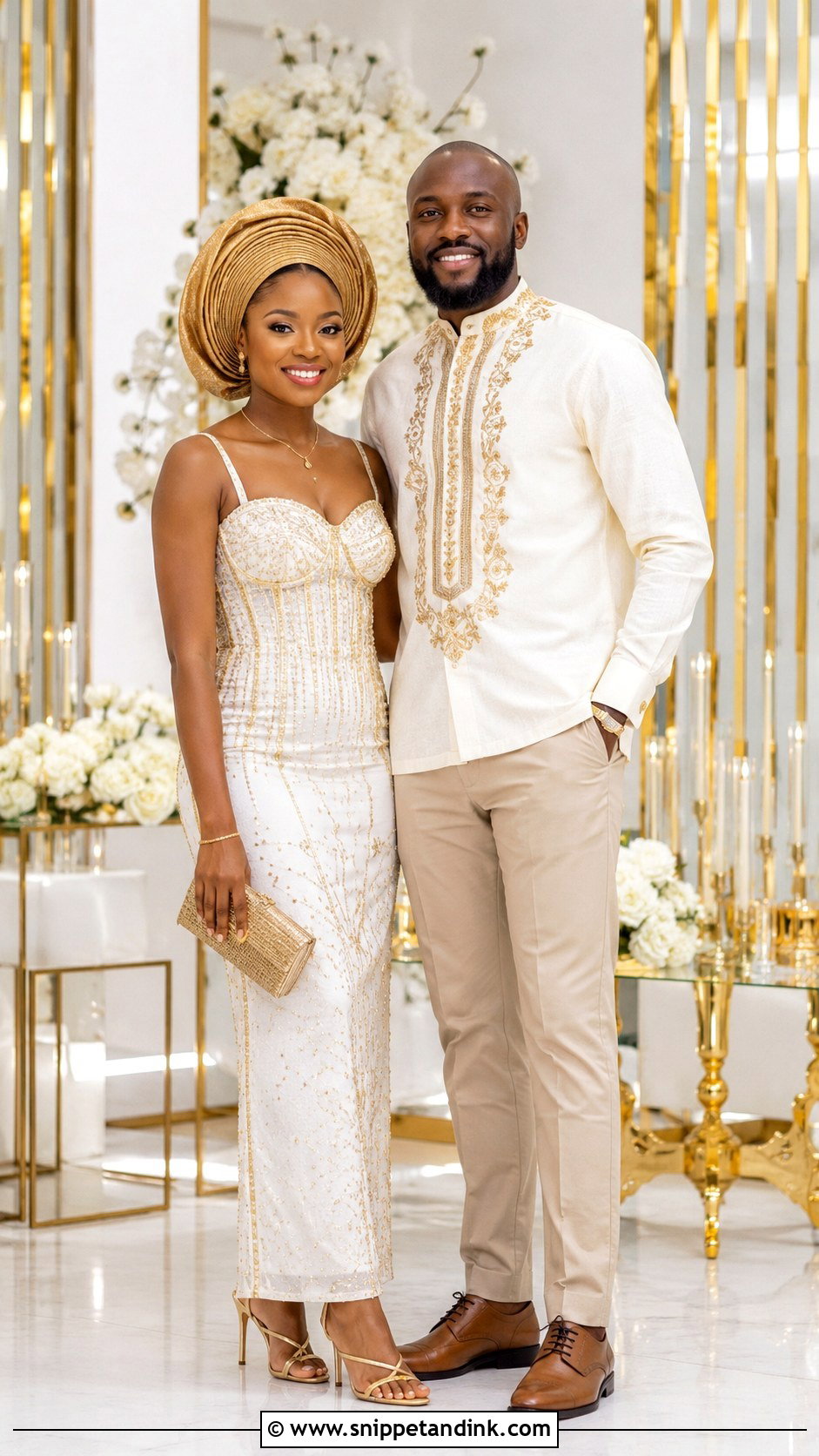
White and gold feels formal and quietly celebratory. She can wear a white fitted, lace or satin dress with gold beading, a gold headwrap, metallic heels and fine jewelry, and he wears a cream shirt with gold embroidery and beige trousers, or a cream suit. My caution is that all-white can tip into a Western bridal look, which some families find odd on a lobola day. I add something rooted in your heritage, an embroidered trim, beadwork or a traditional wrap, so the outfit still belongs to this ceremony.
12. Black And Red Lobola Outfit
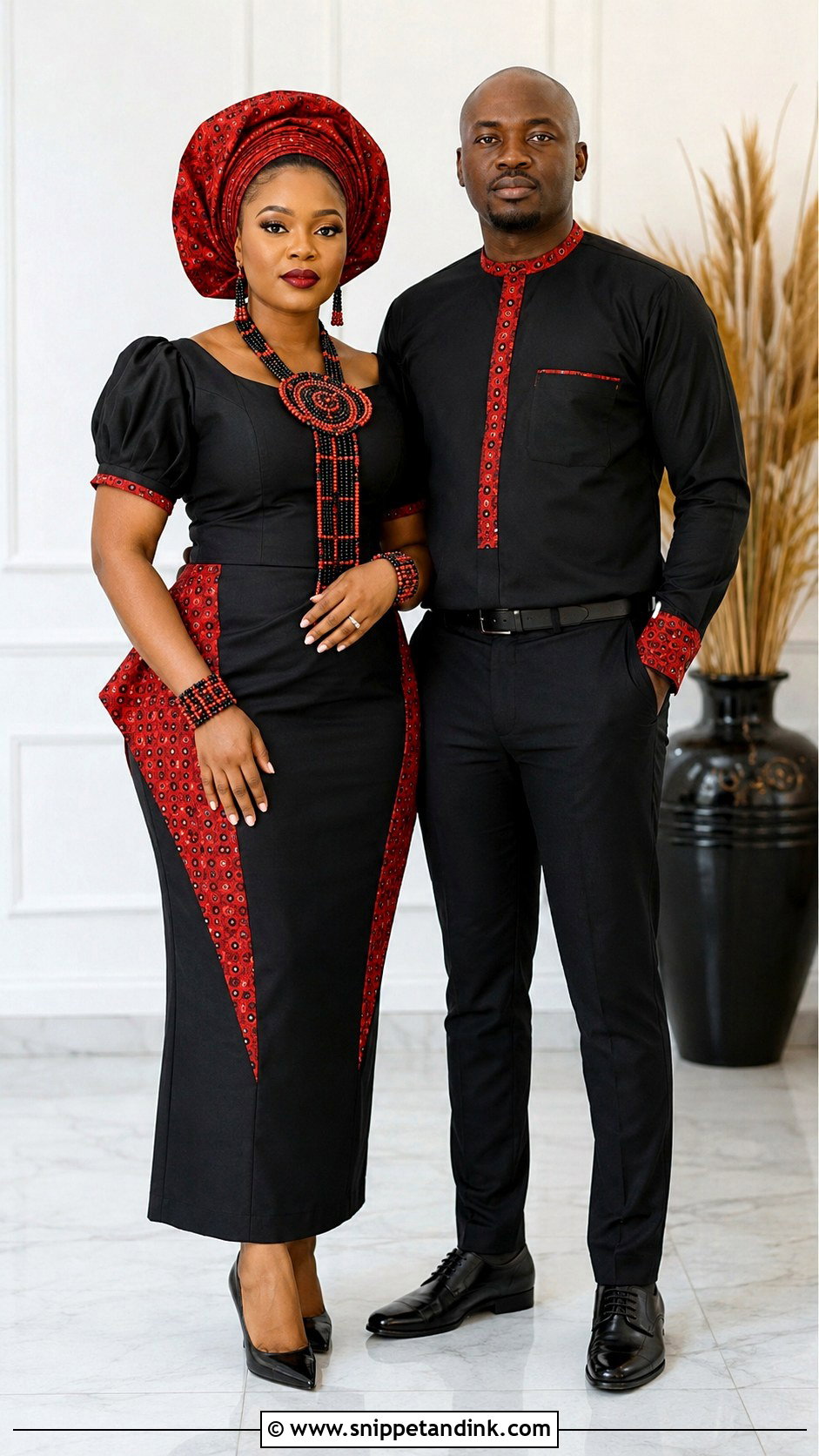
Black and red is confident and easy to coordinate, but it shows every flaw in tailoring. She wears a black dress with red Shweshwe panels, red beadwork, a red doek and black heels; he wears a black shirt or jacket with red print detail and sleek dress shoes. Let black do the balancing. Red can sit on her skirt, sleeves or headwrap and on his cuffs or a pocket square, and I’d stop at those two colors. For a formal family ceremony, it has real presence.
13. Navy Shweshwe Couple Outfit
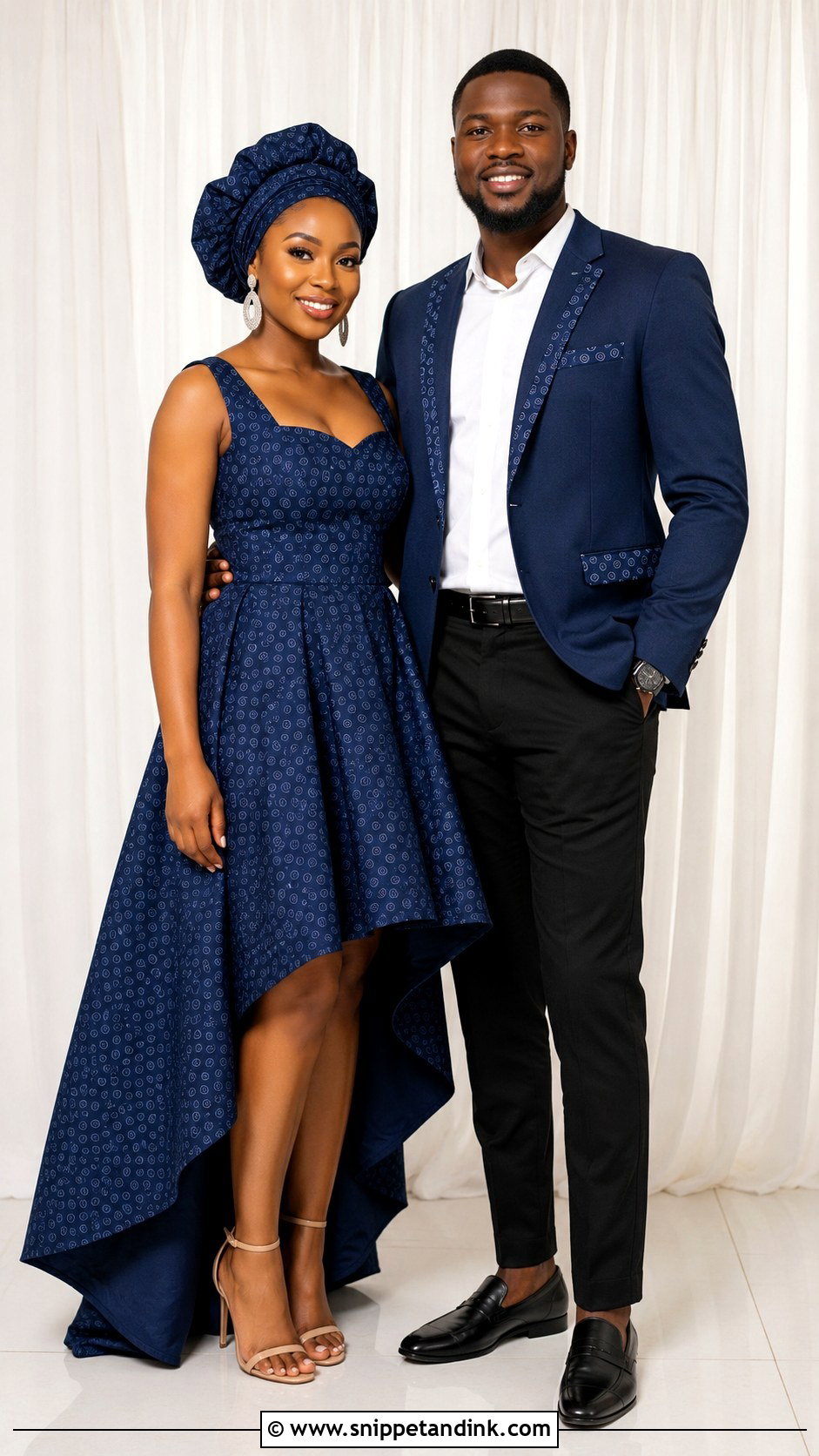
Navy Shweshwe is the outfit I suggest to couples who are nervous about color. It’s traditional and rich but far easier to wear than bright shades. She wears a navy Shweshwe midi, mermaid or high-low dress with nude or silver heels and a matching headwrap; he wears a navy print shirt with black trousers, or a navy blazer with Shweshwe trim. White, silver or tan accessories lift it. Navy also hides the creases and small marks that a long day of sitting and greeting inevitably leaves.
14. Brown And Cream Lobola Outfit
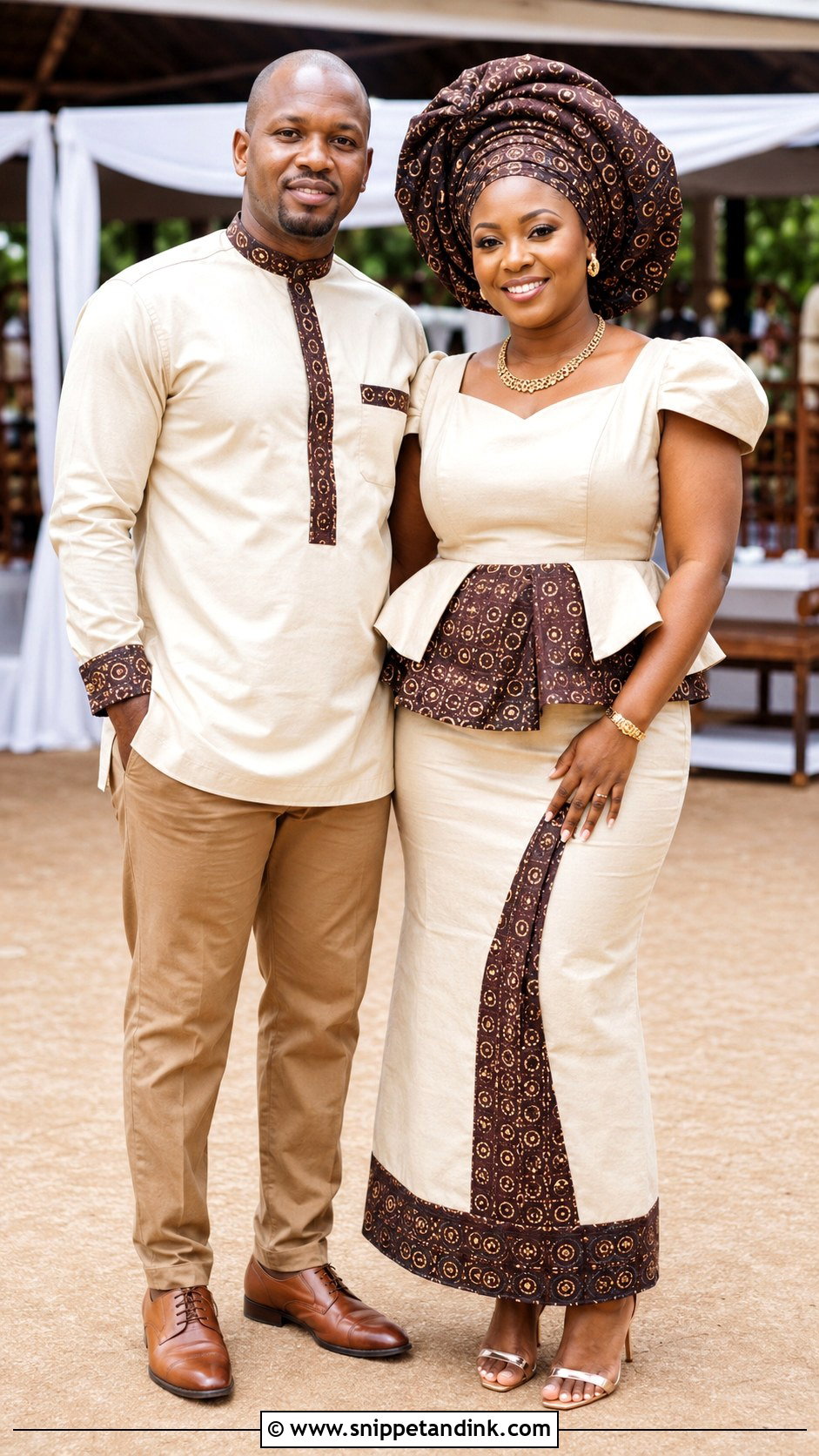
Brown and cream feels warm and grounded, the palette I reach for when a ceremony is family-centered and calm. She can wear a cream dress with brown print details or a brown Shweshwe skirt set with a matching doek; he wears a cream shirt with brown trim and tan trousers, or a brown blazer with traditional fabric accents. Gold jewelry, leather shoes and natural makeup suit it. Cream marks easily, so I keep it to the top half and let brown sit where she’ll be sitting.
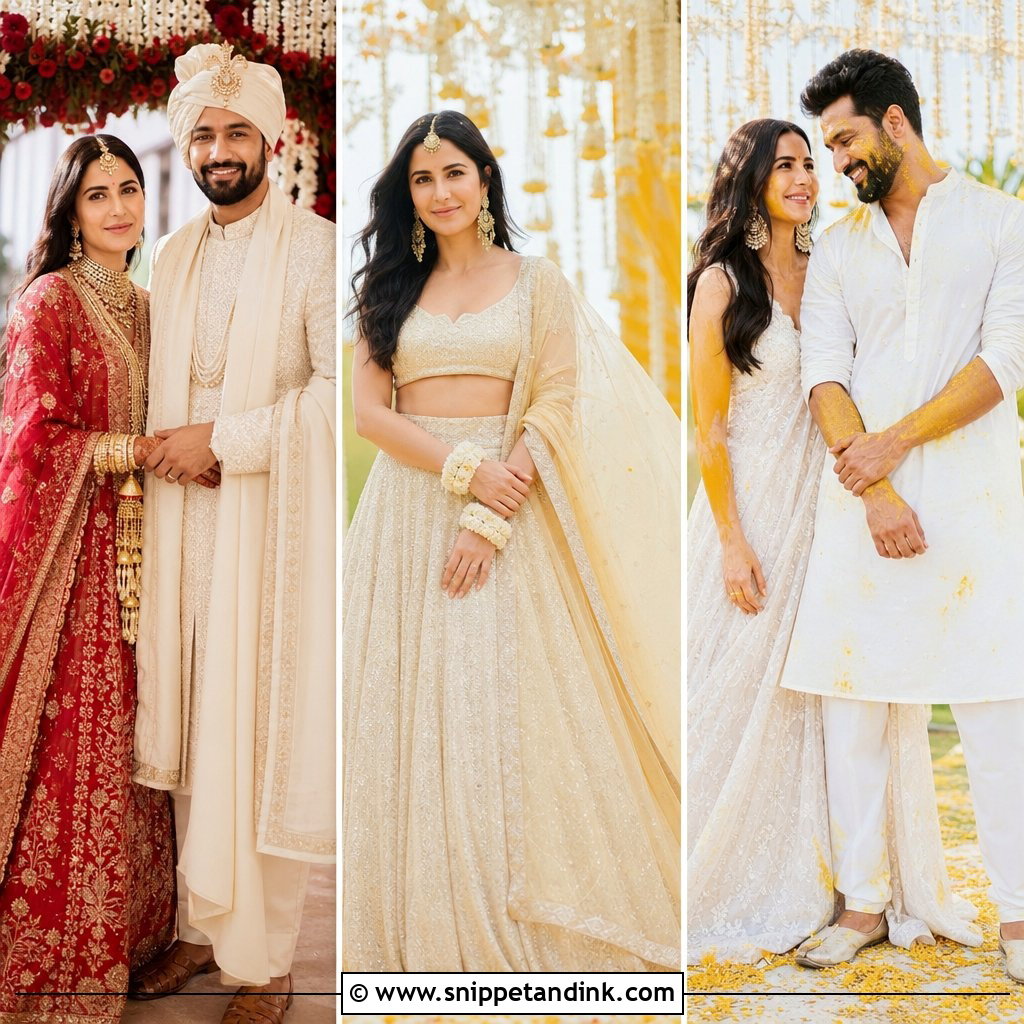
15. Green Traditional Couple Outfit
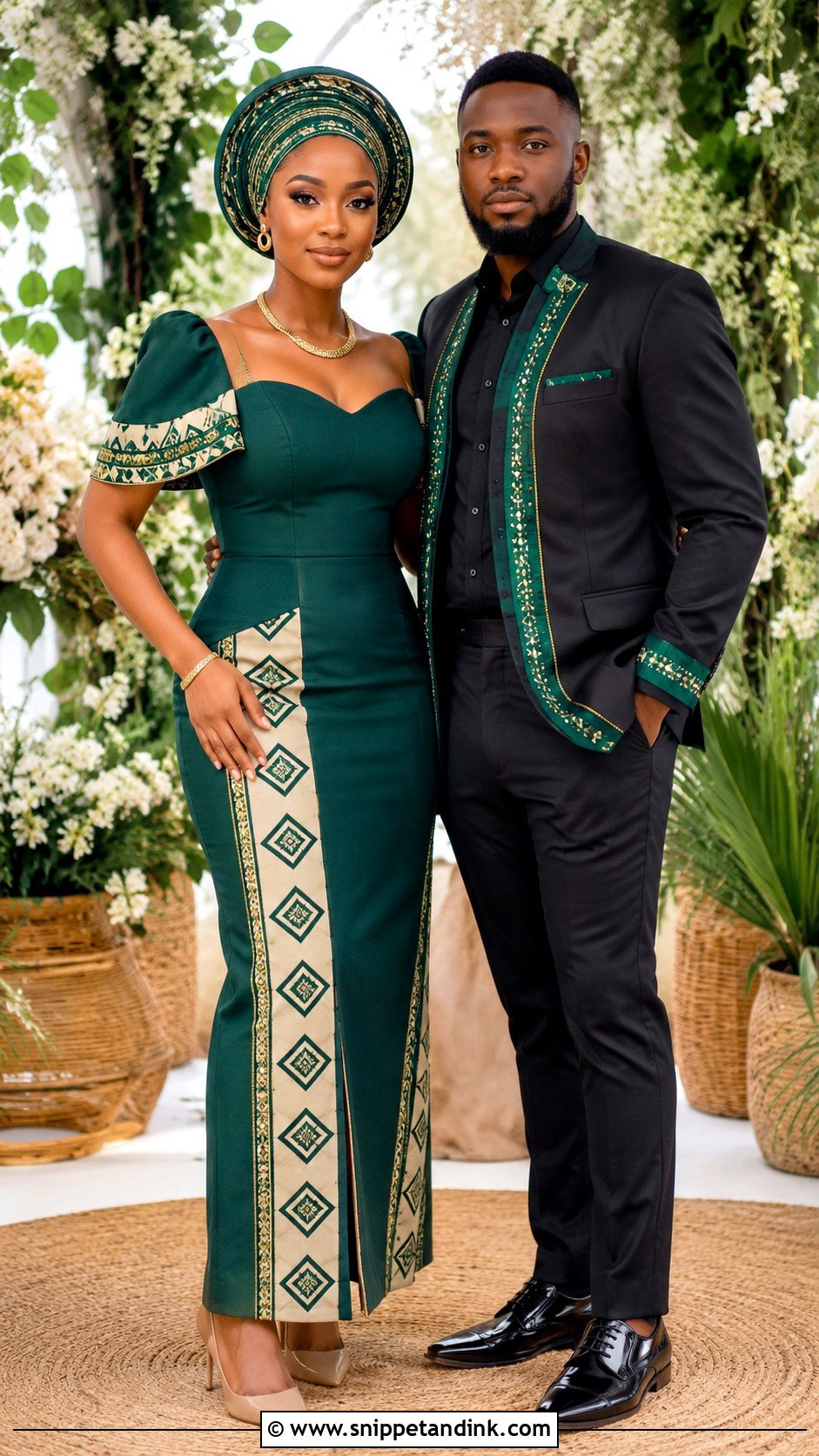
Green is fresh and works with almost everything: cream, black, gold, brown and white all sit happily beside it, so you can make it softer or more formal with accessories alone. She wears an emerald, olive or forest green dress with printed panels, a matching headwrap and gold jewelry; he wears a green-trimmed shirt, a matching waistcoat or a dark suit with green accents. Greens vary wildly in how they sit on different skin tones, so I hold fabric up to both faces in daylight before anyone commits. Outdoors, green blends into the setting rather than fighting it.
16. Burgundy Lobola Couple Outfit
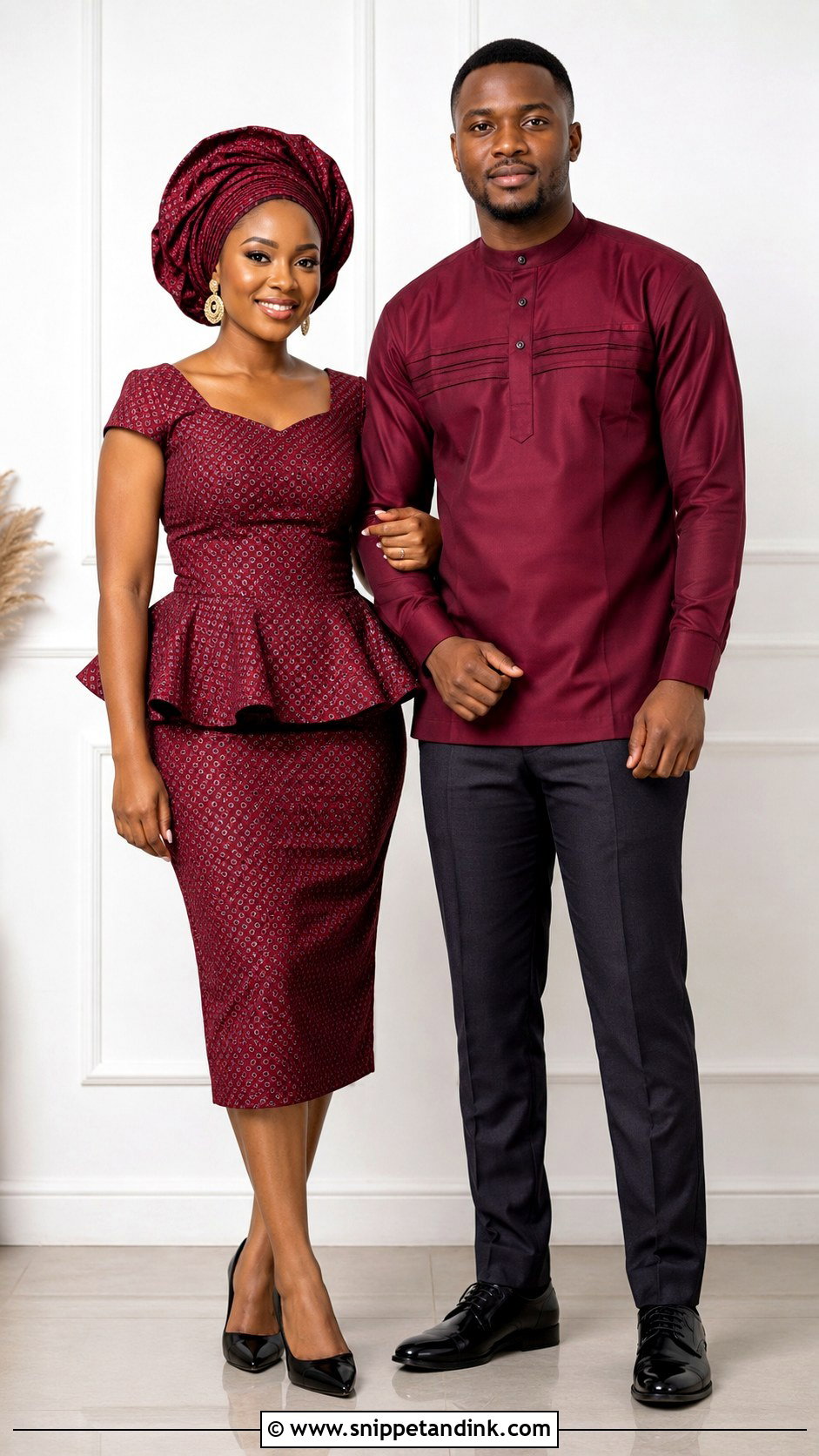
Burgundy is formal without being loud. She can choose a burgundy Shweshwe dress, a satin mermaid dress with African print trim or a peplum skirt set with a matching doek, while he wears a burgundy shirt, waistcoat or pocket detail with charcoal or cream trousers. It’s at its richest in autumn, winter and evening light, though it holds up in daylight too. Gold warms it and black sharpens it. A small link I like: match her heels or bag to his trim.
17. Pastel Lobola Couple Outfit
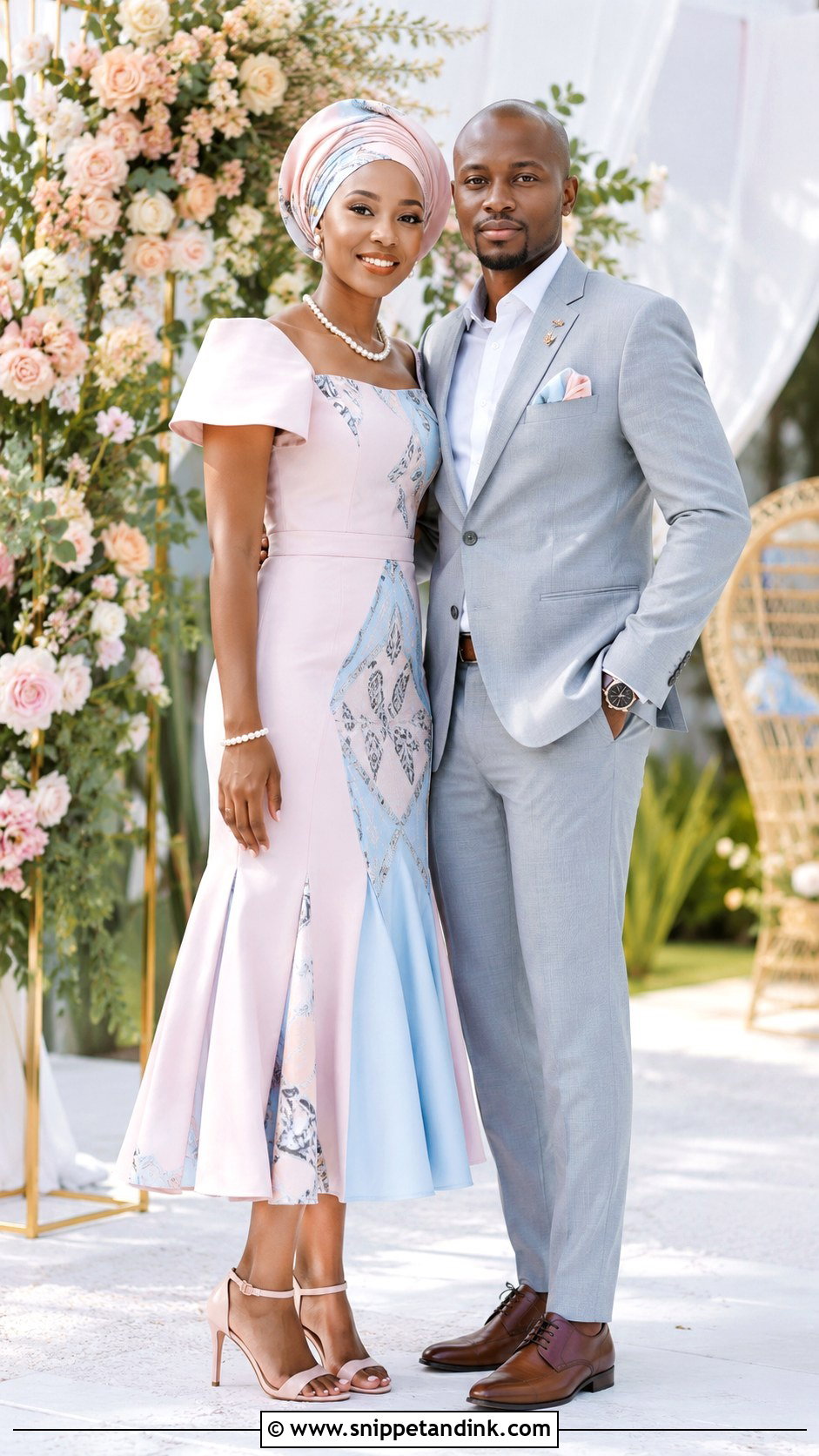
Pastels are delicate, and that’s both the appeal and the difficulty. Blush, mint, powder blue or lilac need clean fabric and simple shapes, because detail gets lost in pale color. She wears the dress with light print accents, pearl jewelry and a tonal doek; he wears a light shirt with pastel trim and beige trousers, or a soft grey suit. I always add a little print or beadwork so the look still reads as a lobola outfit. Pastels look their best at a daytime garden gathering, and they show sweat and makeup marks quickly, so plan for shade.
18. Ankara Lobola Couple Outfit
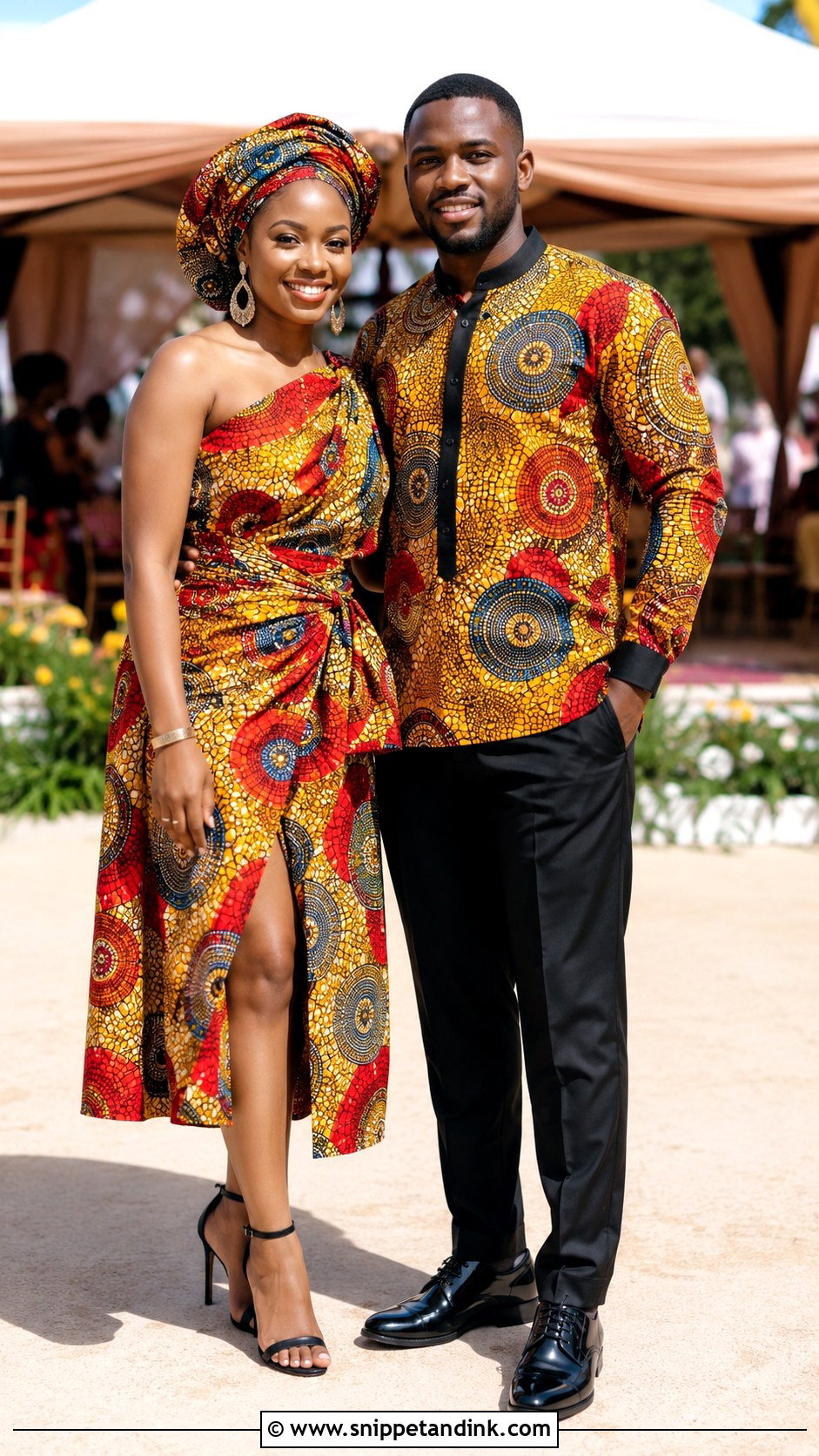
An Ankara lobola couple outfit is the easiest to tailor into modern shapes, which is why so many couples choose it. Pick one print that suits both of you, then wear it differently: an Ankara wrap or peplum dress with statement earrings and a headwrap for her, Ankara lapels on a blazer or a printed tunic over solid trousers for him. If her dress is full print, his should be an accent, and the reverse works too. Wax prints have a right side with crisper color, so I check every panel is cut face up.
19. Kente Inspired Lobola Outfit
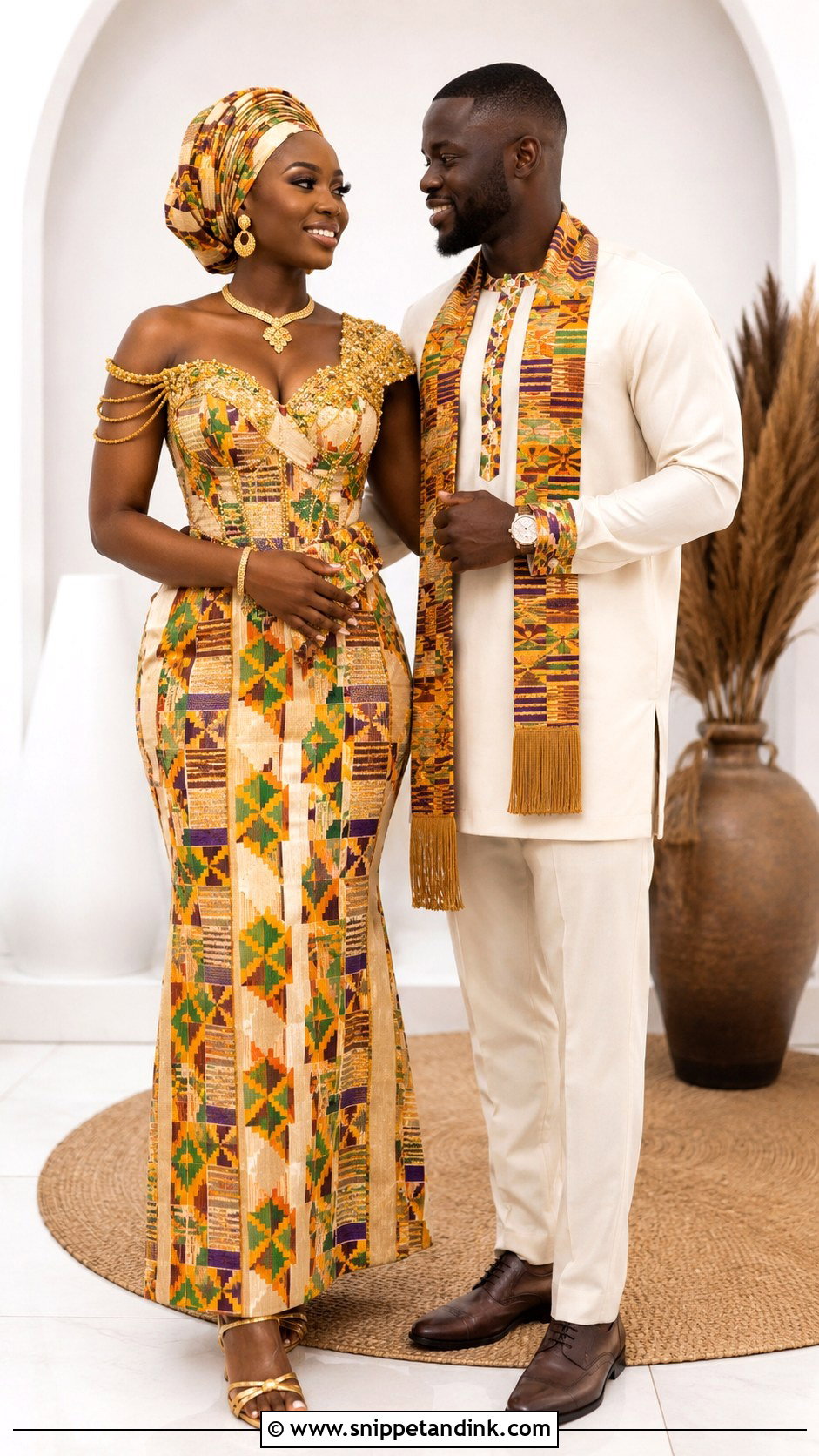
Kente is regal and very strong, so one partner should carry most of it. She can wear a fitted Kente-inspired dress or skirt set with gold jewelry and a matching headwrap, while he keeps to plain black or cream with Kente panels at the collar, cuffs or a stole. Kente belongs to Ghanaian tradition, and some South African families would prefer to see their own cloth at a lobola, so I’d check with both sides before building the day around it.
20. Lace And Shweshwe Couple Outfit
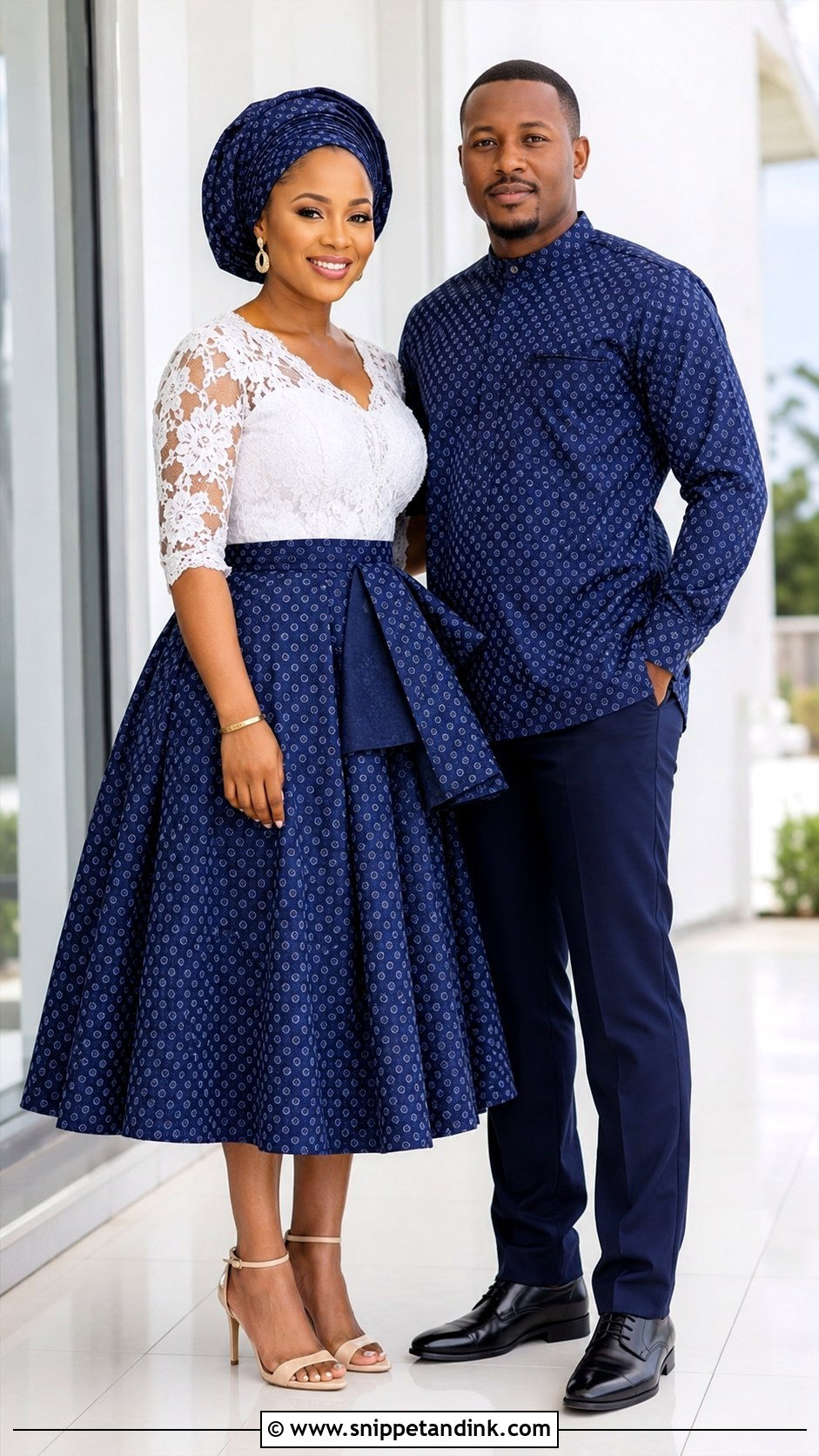
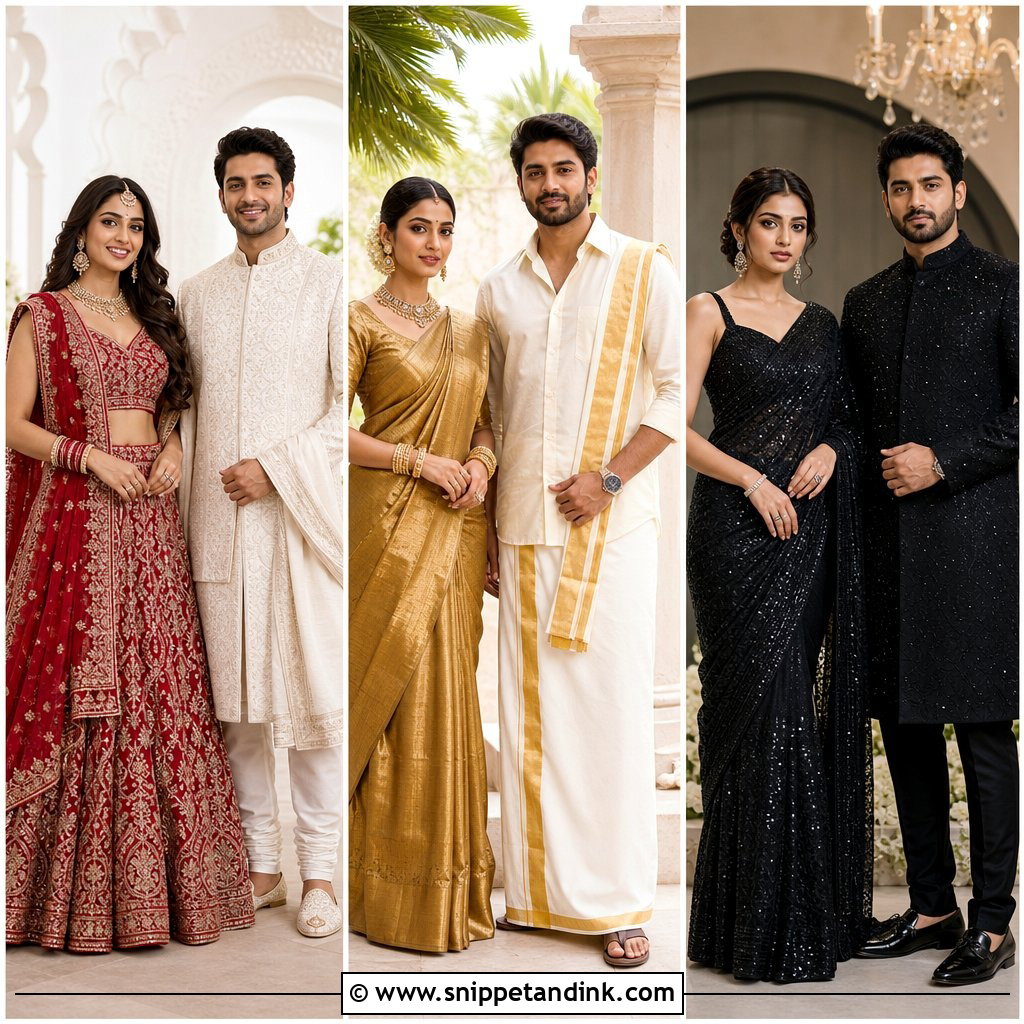
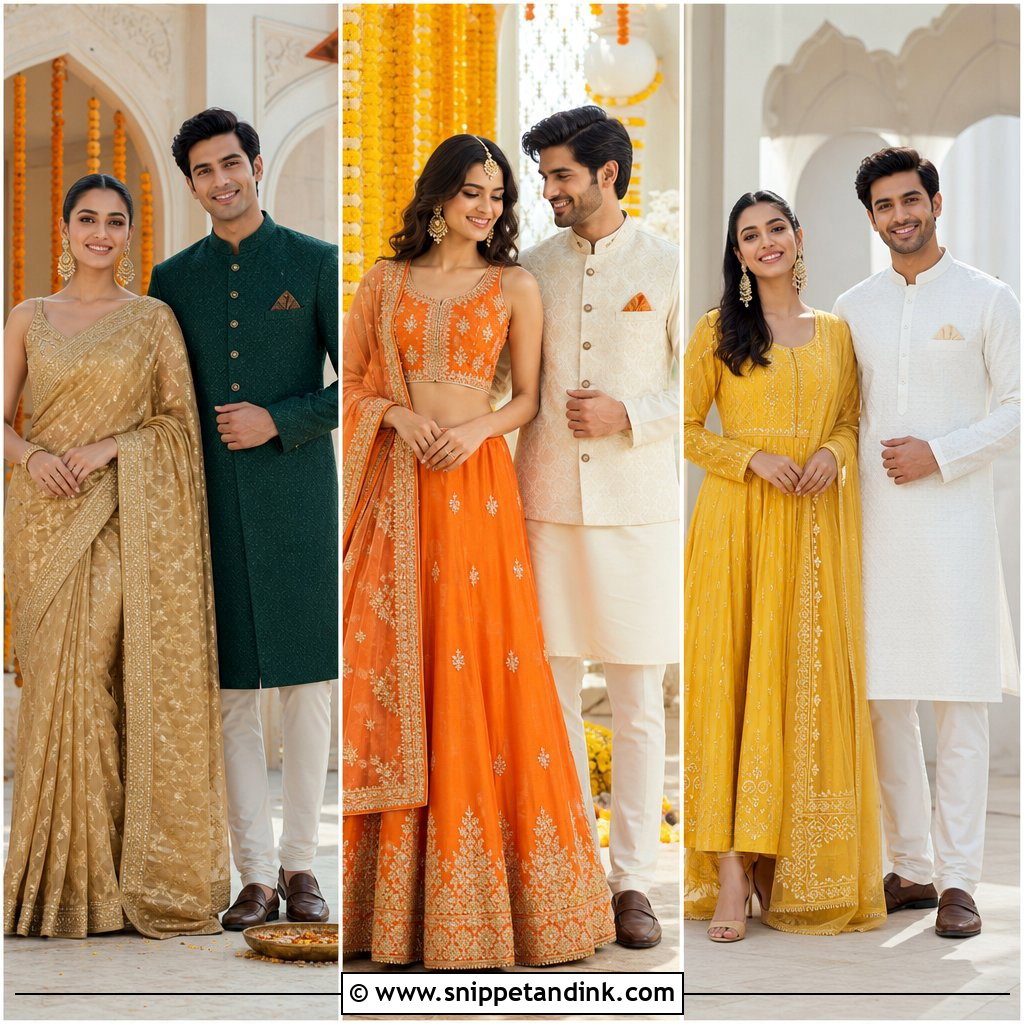
Lace softens Shweshwe without taking away its roots. Her dress might pair lace sleeves or a lace bodice with a Shweshwe skirt, finished with a matching doek, heels and simple jewelry, while he wears a Shweshwe shirt or a formal shirt with trim cut from her skirt fabric. It works in navy, burgundy, cream or royal blue. Cheap lace frays at the join with cotton print, so I ask the seamstress to bind that seam and choose a lace with a firm net base.
21. Peplum Dress And Matching Shirt Outfit
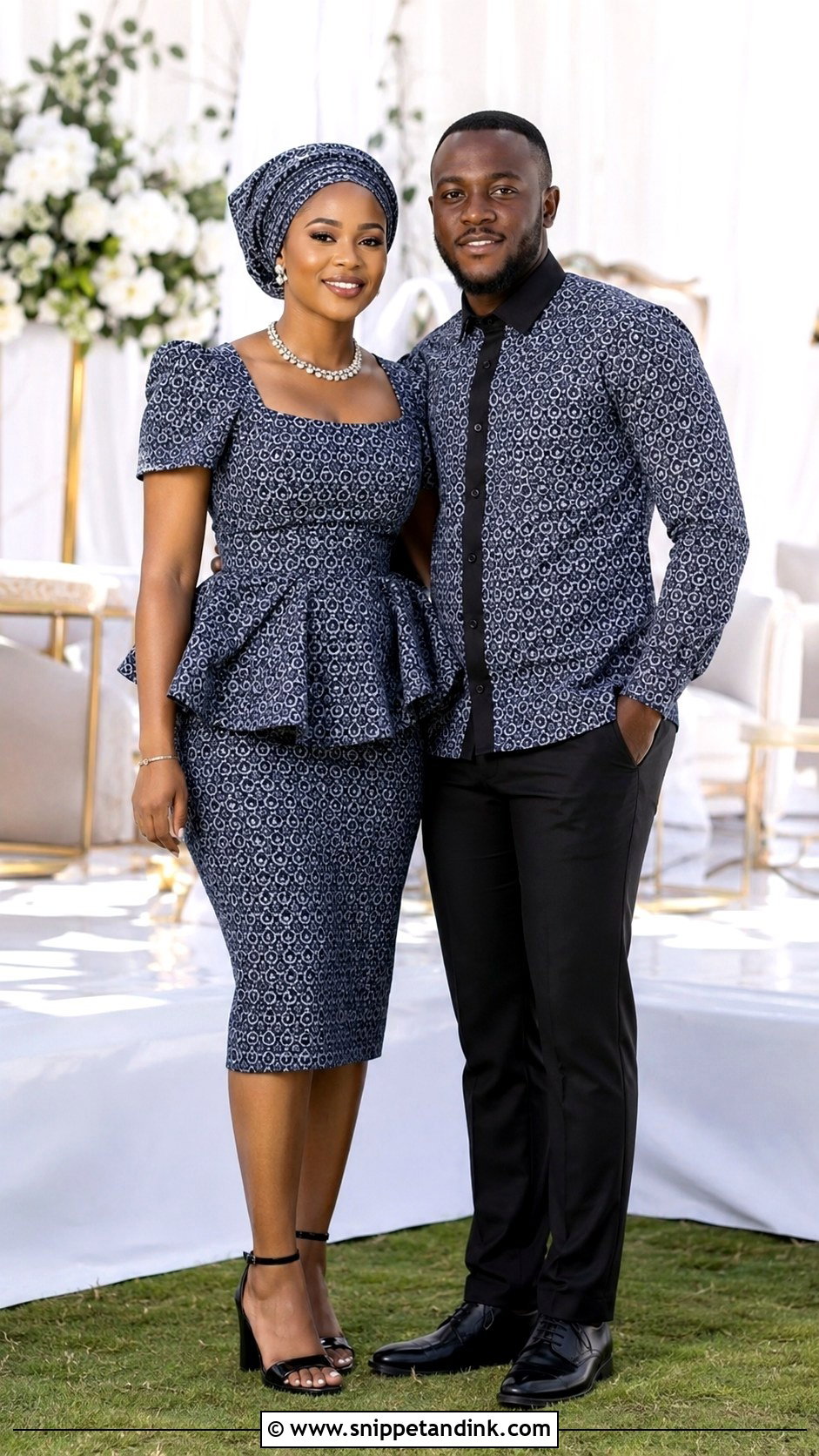
Peplum is popular for good reason: it looks dressed up, flatters most figures and still lets you move and sit. The detail that makes or breaks it is where the waist seam lands, and I fit that seam on the body rather than to a measurement chart. She wears a knee or midi-length peplum dress with a matching headwrap and block heels; he wears a shirt in the same fabric or a solid shirt with matching panels. Choose cloth with enough body to hold the flare, since a soft print collapses by the afternoon.
22. Mermaid Dress And Traditional Shirt Outfit
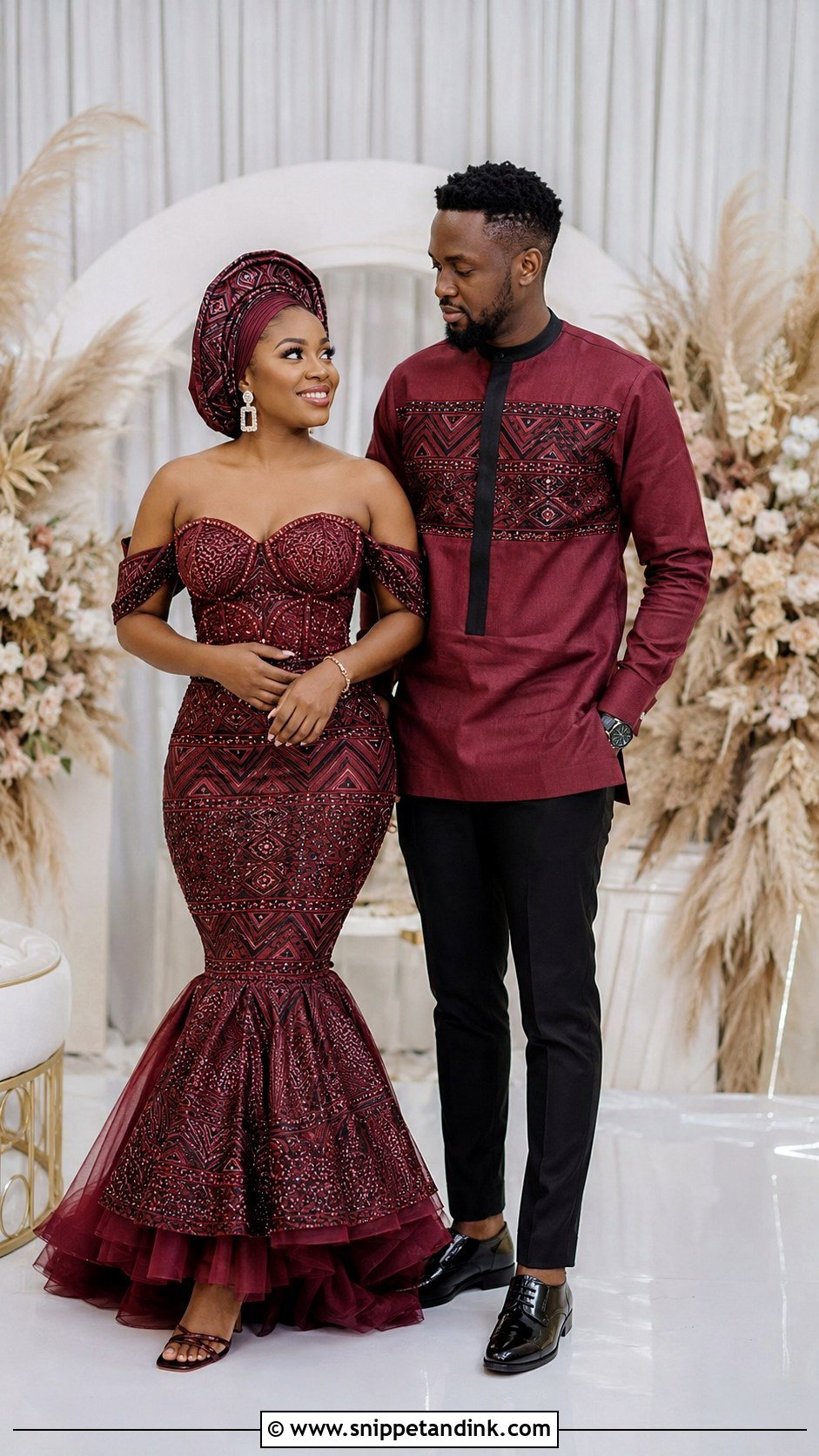
A mermaid dress is the glamorous option, and the one I fit most carefully for a lobola. You’ll walk across yards, step in and out of rooms and lower yourself onto chairs, benches or mats to greet people, and a tight knee line makes every one of those awkward. I set the flare a little higher than an evening mermaid so she can take a full stride. Style it in Shweshwe, printed satin or embroidered traditional fabric with heels, a doek and statement earrings. His traditional shirt can stay simple when her dress has this much shape.
23. Two Piece Traditional Couple Outfit
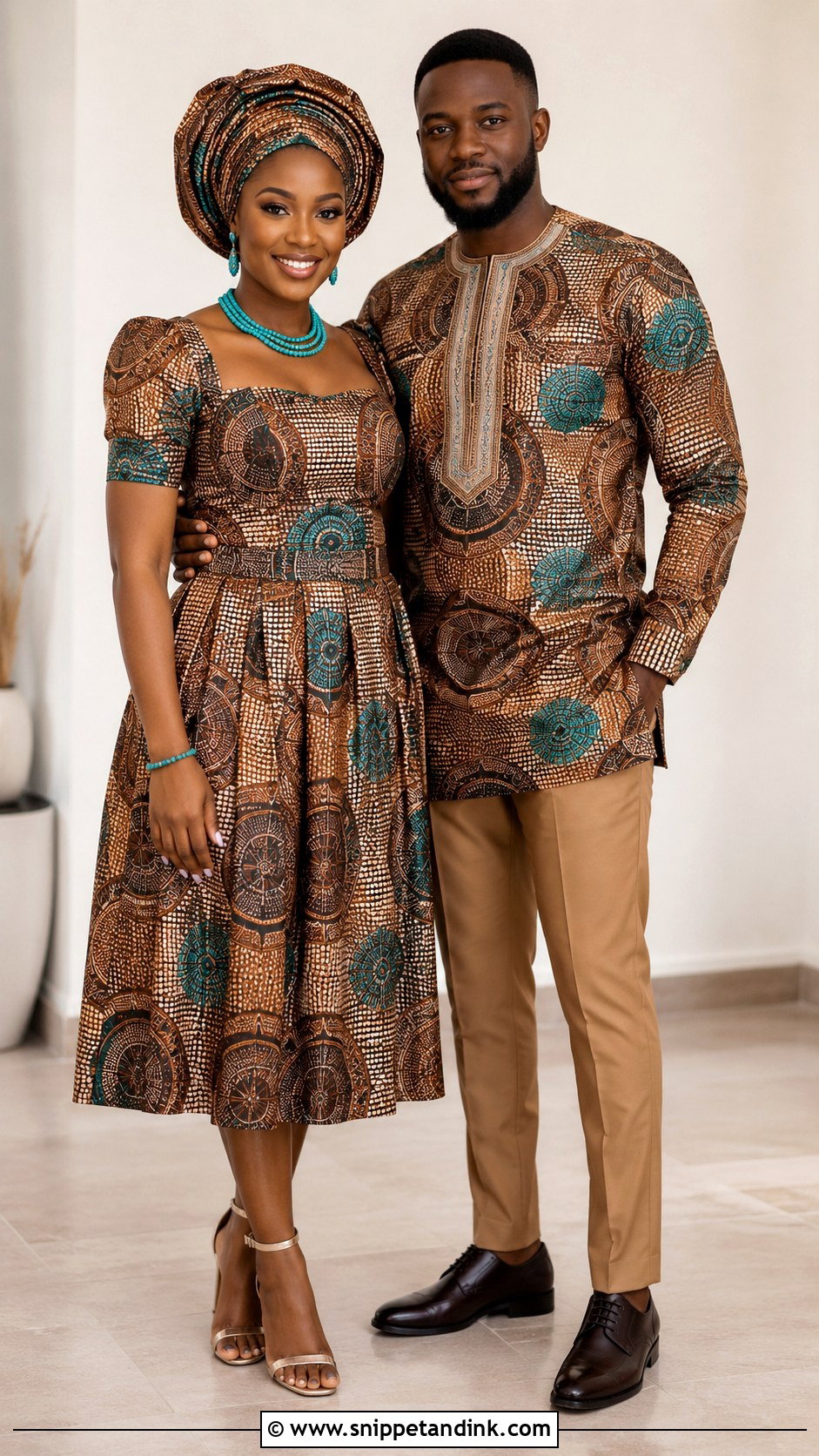
Two-piece outfits are the most forgiving to fit, because a top and skirt can each be sized separately, and they’re the easiest to wear again afterward. She can choose a crop blouse with a high-waisted skirt, a peplum top with a pencil skirt or a wrap top with a full midi skirt, adding a headwrap, heels and neat jewelry. He wears a matching shirt, tunic or jacket with plain trousers. Separates also let her mix textures, such as Shweshwe with satin or lace. For greeting elders, I’d keep the crop modest so no midriff shows when she bends.
24. Traditional Jumpsuit And Suit Outfit

A tailored jumpsuit is modern and practical. You can sit, kneel and climb steps without thinking about a hem. She wears one with Shweshwe, Ankara or beaded details, a belt, earrings and a sleek headwrap; he wears a suit or traditional shirt in the same color or print. Wide legs read more formal than slim ones, and I’d hem them for the exact heel she’ll wear. Some elders may still expect a skirt on this day, so I’d ask before choosing it for a traditional homestead rather than a city gathering.
25. Minimal Traditional Couple Outfit
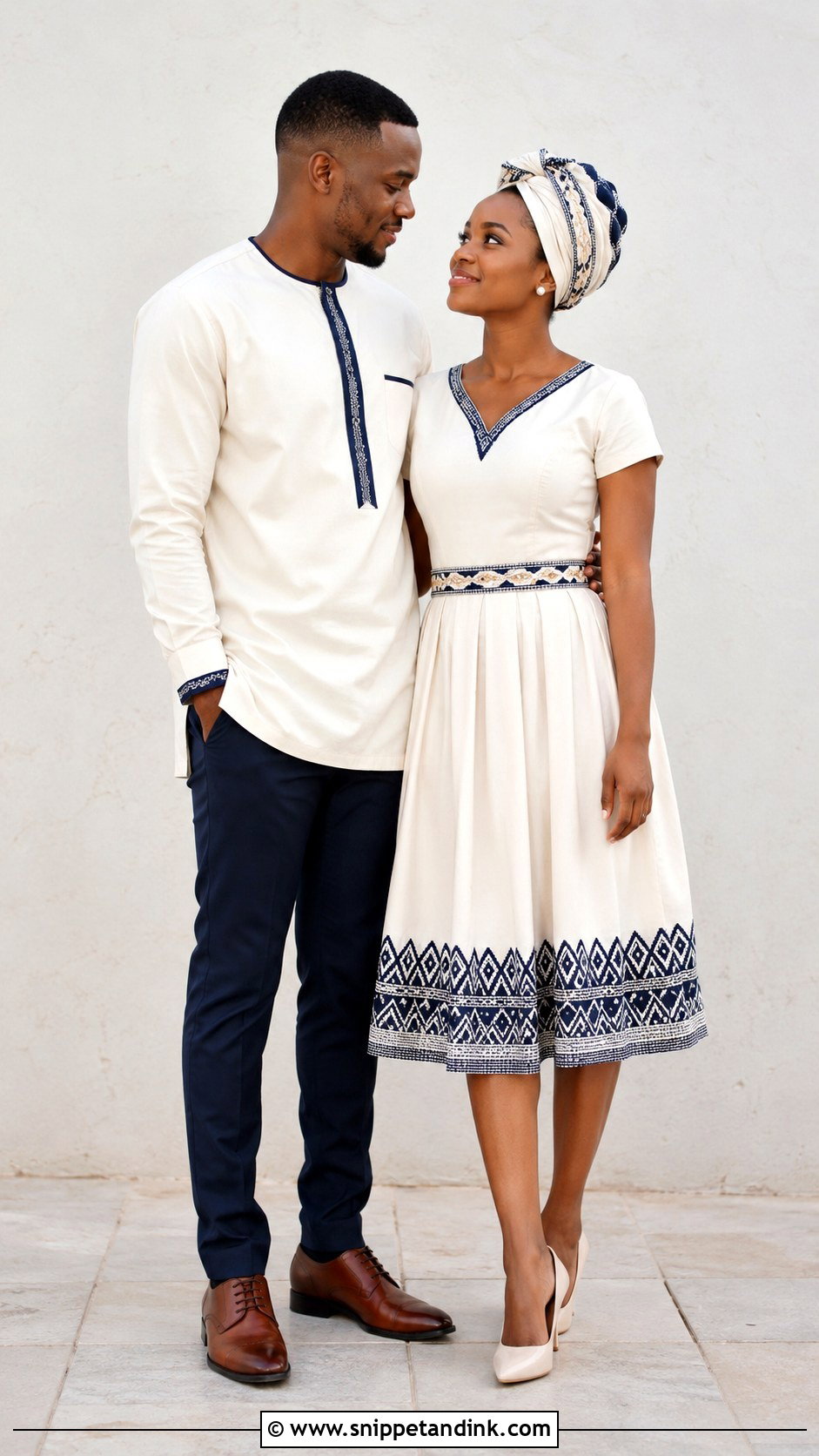
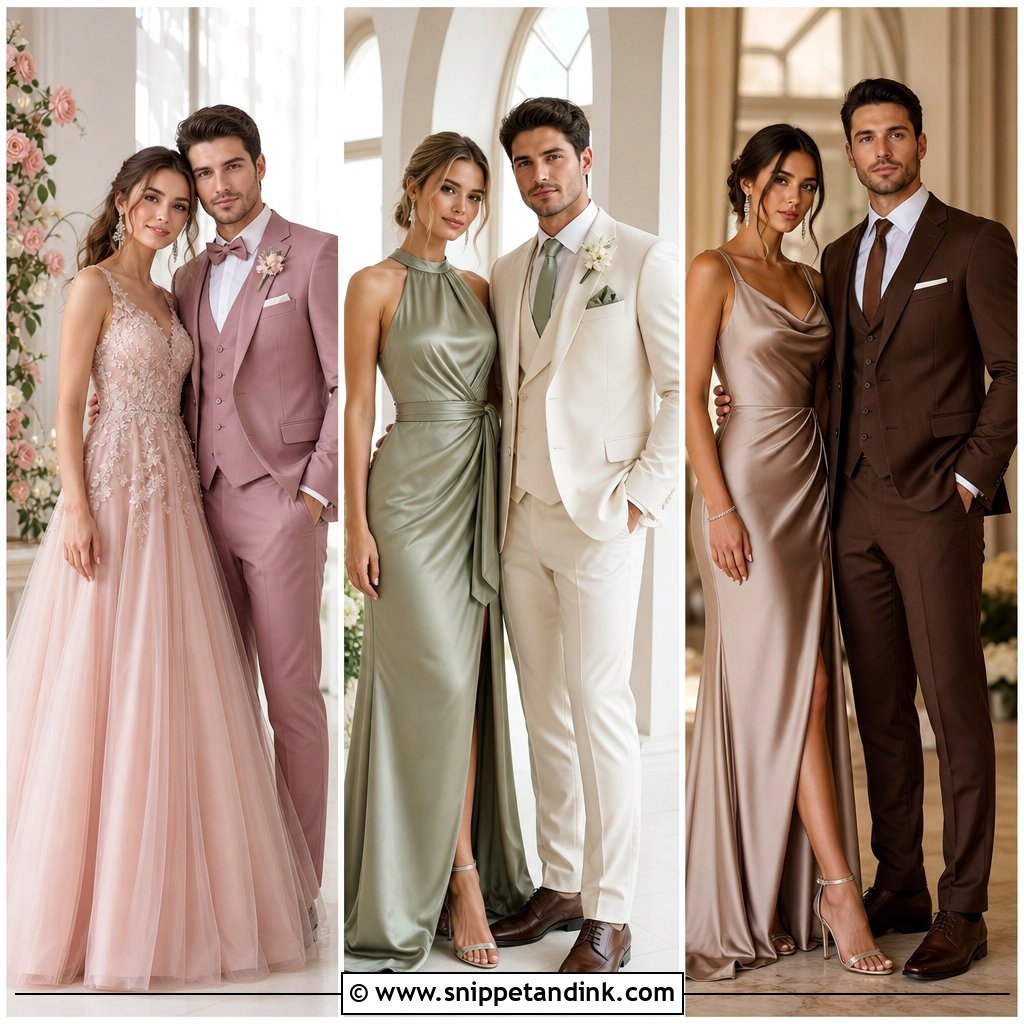
Quiet outfits can carry a lot of meaning. She wears a cream, black, navy or brown dress with one traditional detail, a printed hem, a beaded belt or an embroidered sleeve, plus a headwrap; he wears a plain tailored shirt and trousers with matching trim or a little beadwork. With so little decoration, fit and finishing are everything. I spend the money on tailoring here rather than embellishment, and the result is a pair of outfits you’ll both wear again.
Working With Your Seamstress on Shweshwe and Print
Most lobola outfits are made, not bought, and the way the fabric is handled before it’s cut matters as much as the design. New Shweshwe is stiff with starch and shrinks when washed. I have it soaked or washed and dried before cutting, otherwise a dress that fits at the final fitting can tighten after its first clean. The starch smell and stiffness disappear at the same time.
Buy the whole quantity for both partners in one visit so the dye lot matches, and add extra if the print has a strong direction or needs matching at the seams. Local tailors get busy toward the end of the year, when many families hold ceremonies, so give yourself several weeks and allow longer in that season.
Bring these to the first fitting
- The exact shoes for the day, so hems are set at the right height.
- Any beadwork or blanket that will sit over the garment, to check weight and drape.
- The headwrap fabric, so the seamstress can cut it from the same length.
- A photo of his outfit, so trims can be placed to line up when you stand together.
At the fitting, sit down in the outfit, lift your arms as if hugging an elder and walk across the room. Lobola clothing gets a full day of movement, and a seam that holds while you stand still tells you very little.
Two Outfits That Read as One Family
Full matching Shweshwe suits some couples; others look more natural sharing one color, a band of beadwork or a tailored suit with a borrowed trim. What matters is that the two outfits read as a pair and sit well with both families. Think about the setting, the weather and how many hours you’ll be in these clothes, and spend on fit before you spend on extras. Simple clothing that fits well looks more considered than an elaborate outfit pulling at the seams.
You'll Like These Ideas:


Leave a Reply