
Good coordinated wedding attire isn’t two people in matching clothes. I dress the second half of the couple, usually after the dress or lehenga is chosen, and my job is to make two different outfits look like they belong in the same photograph. That comes down to four things: the same level of formality, related colors, fabrics of similar weight, and one shared detail such as a metal tone, a pocket square pulled from the bouquet or an embroidery motif. Below are 25 pairings, from black tie and lace with charcoal to lehengas, saris, Western suits and two-suit or two-gown couples, with the tailoring notes I’d give at a fitting.
Swatching Both Outfits Together Before Anything Is Cut
Most coordination problems I fix come from two outfits that were chosen separately, in different shops, under different lighting. The fix costs nothing if you do it early. Ask the bridal shop for a fabric swatch of the gown or lehenga, or photograph it in daylight beside a white sheet of paper, and bring that to the suit or sherwani fitting.
- Hold the swatches together by a window, then again under warm indoor light. Ivory and cream can match in one and clash in the other.
- Take a quick photo with flash. Flash flattens texture and shows whether two whites are really the same.
- Settle the metal tone for jewelry, cuff links, buttons and belt buckles. Gold beside silver is the most common accidental mismatch.
- Check fabric weight. A heavy wool suit next to a floaty chiffon dress looks like two seasons.
I’d also decide early whether the outfits should contrast or blend. Contrast, like ivory and navy, keeps both people visible in group shots. Blending, like champagne and tan, looks soft but needs at least a little texture or tonal difference to stop you merging into one shape.
1. Black Tie Wedding Couple Outfit
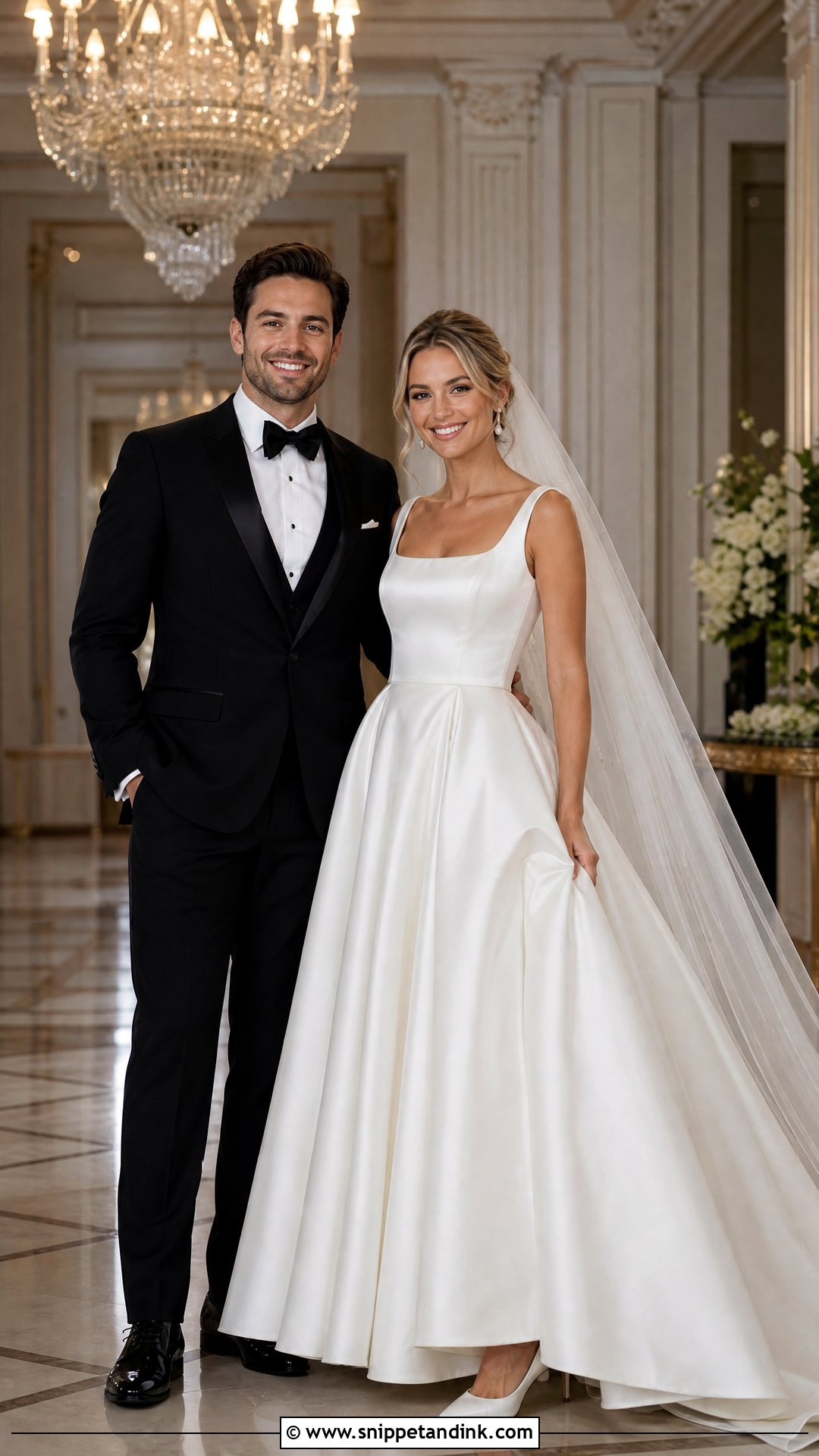
Black tie at a ballroom still means a white ball gown beside a black tuxedo, and the link between them is fabric. When the gown is satin, I match it with satin-faced lapels, peak or shawl, rather than grosgrain, so the two catch the light the same way. A structured bodice and full skirt, pointed ivory pumps and pearl or diamond-style earrings on one side. On the other: a crisp white dress shirt, a self-tie black bow tie, patent shoes and a white pocket square folded flat. Pre-tied bow ties sit too neatly and photograph like a costume, so I teach grooms to tie their own.
2. Satin Gown And Navy Suit Wedding Outfit
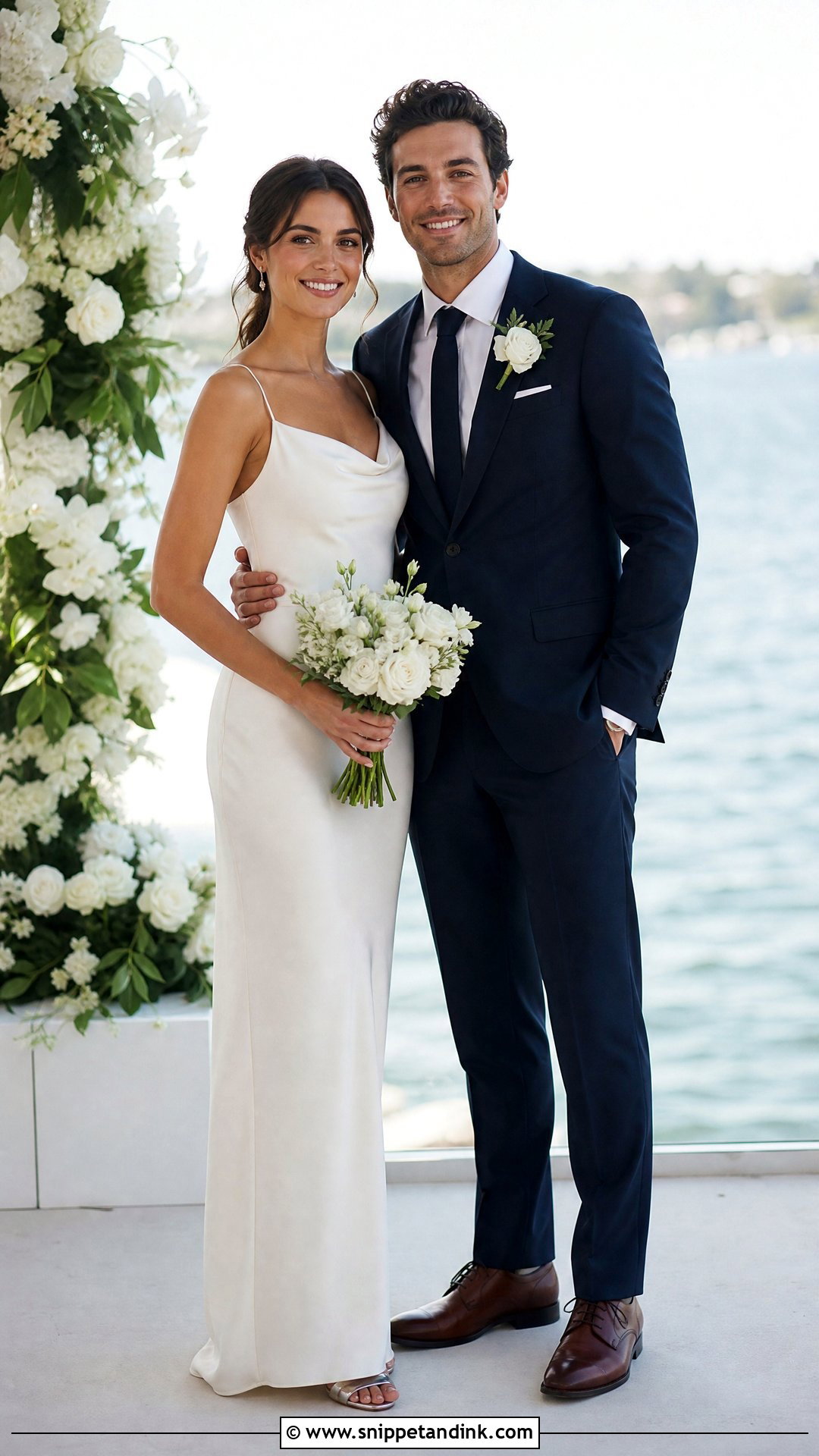
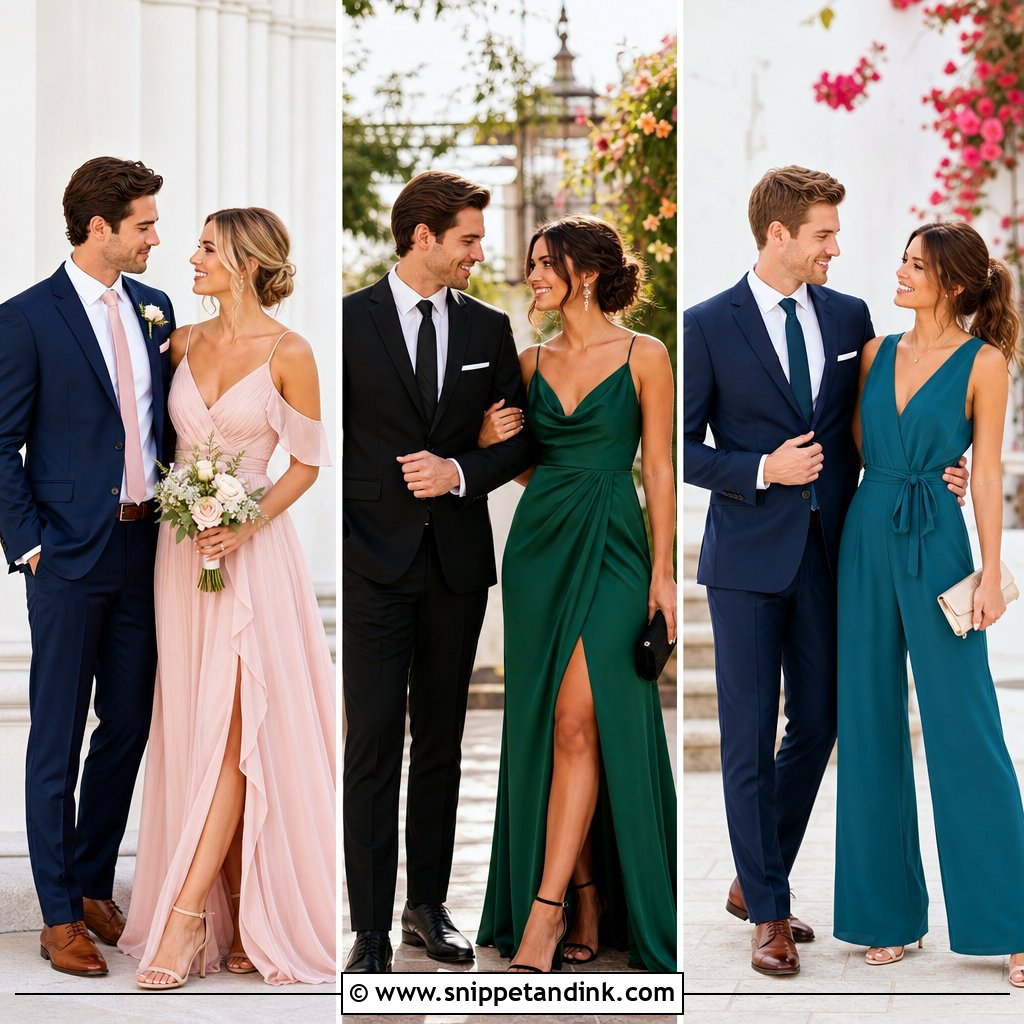
Navy is softer than black beside an ivory gown, which suits afternoon ceremonies and waterfront venues. Pair a fluid satin gown, cowl neck or clean column, with a tailored navy suit, white shirt, dark tie and brown leather shoes. Brown shoes are what keep navy from looking like a business suit. A boutonniere built from the bridal bouquet’s flowers ties the two together. For summer, I choose a lightweight wool with a half-lined jacket; it breathes far better than a fully lined one and still holds a sharp line.
3. Lace Dress And Charcoal Suit Wedding Outfit
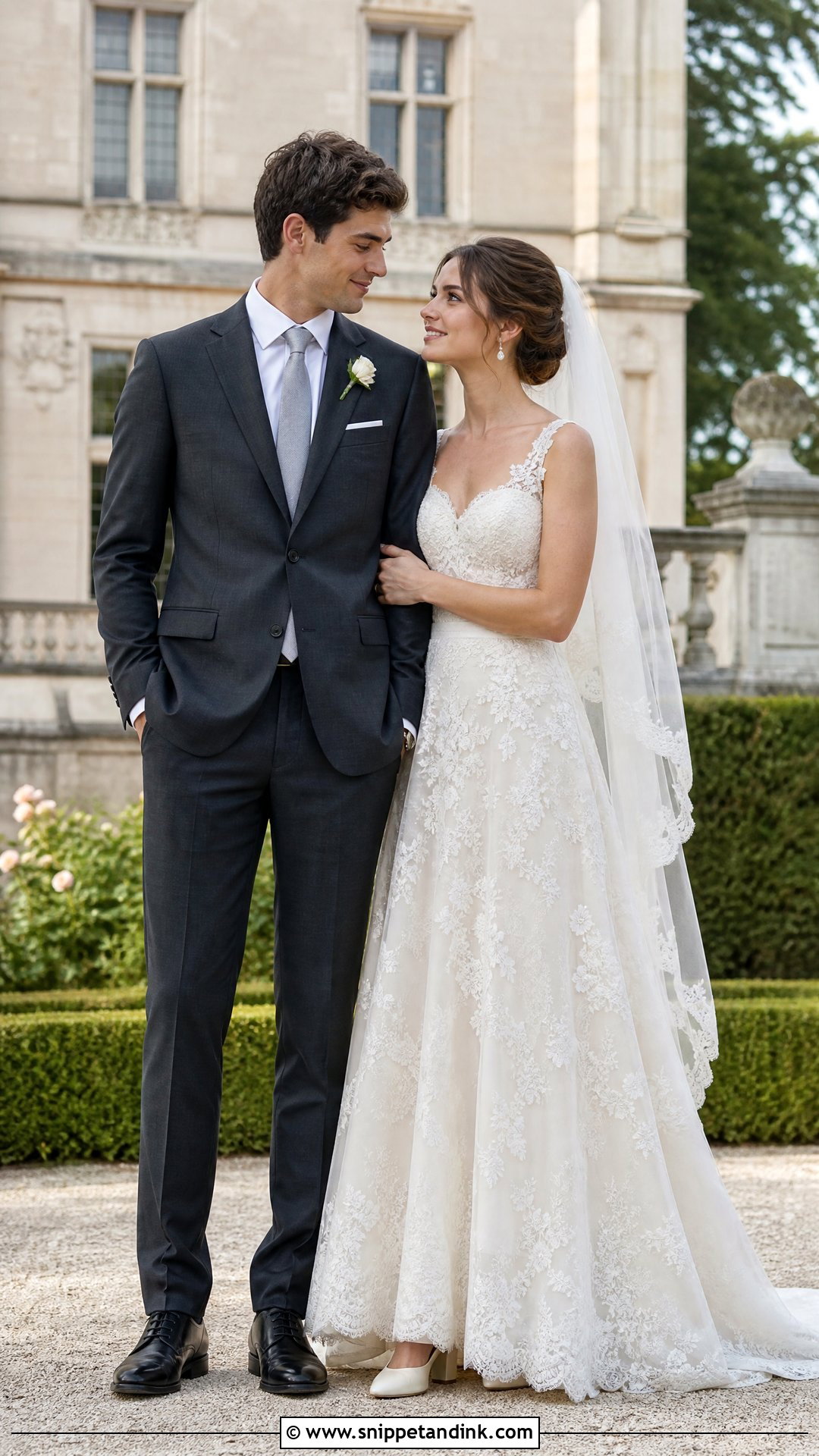
Charcoal frames a light lace dress better than black does, because it’s dark enough for contrast without swallowing detail in photos. The dress might be an A-line or fitted lace with a defined waist and a chapel veil, worn with ivory block heels and pearls. The charcoal suit takes a white shirt, a black or silver tie and polished black oxfords. I fold a pale pocket square that picks up the ivory of the lace without copying it. Historic estates and formal gardens suit this pairing well.
4. Minimalist Wedding Dress And Ivory Tuxedo Outfit
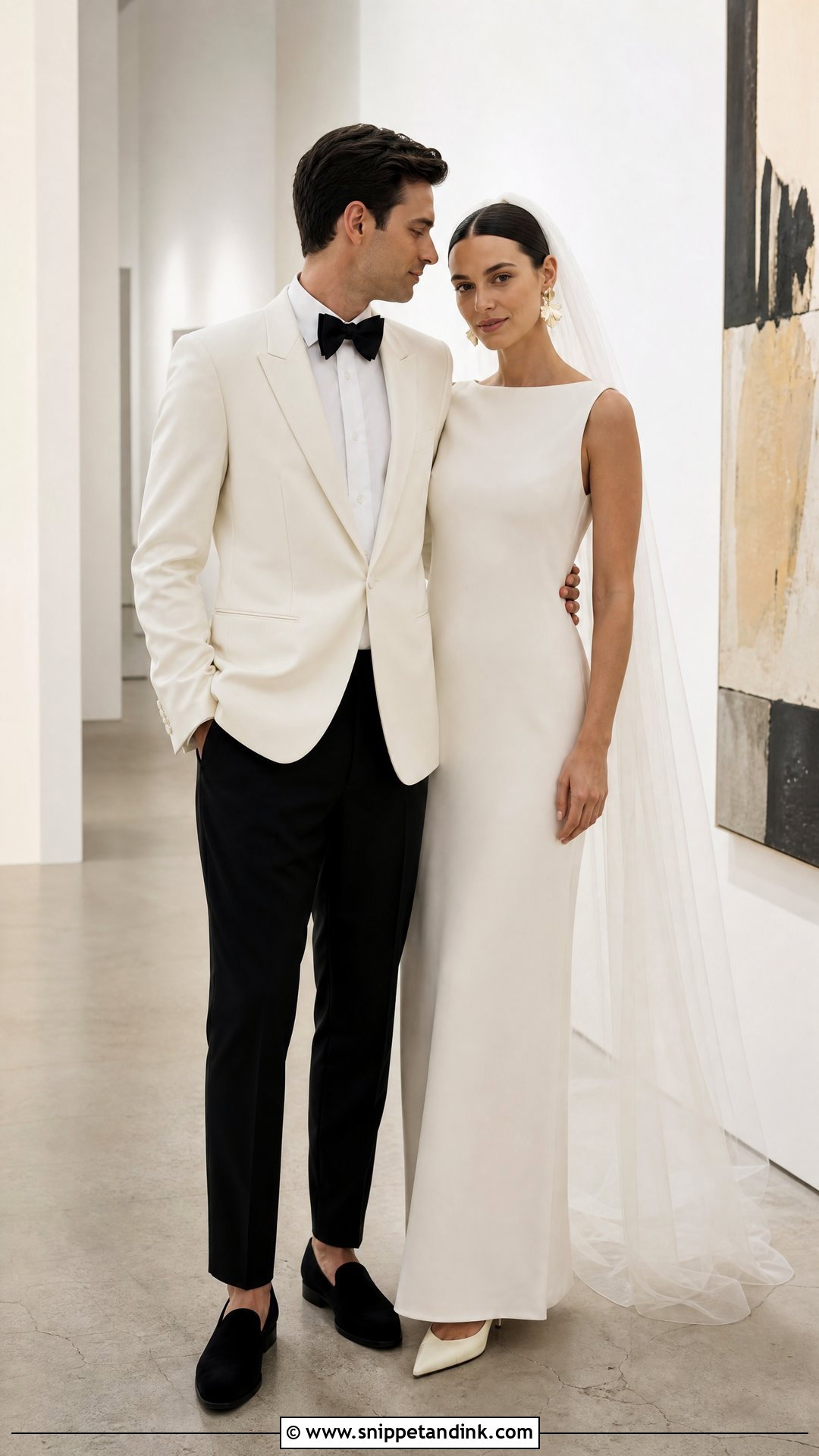
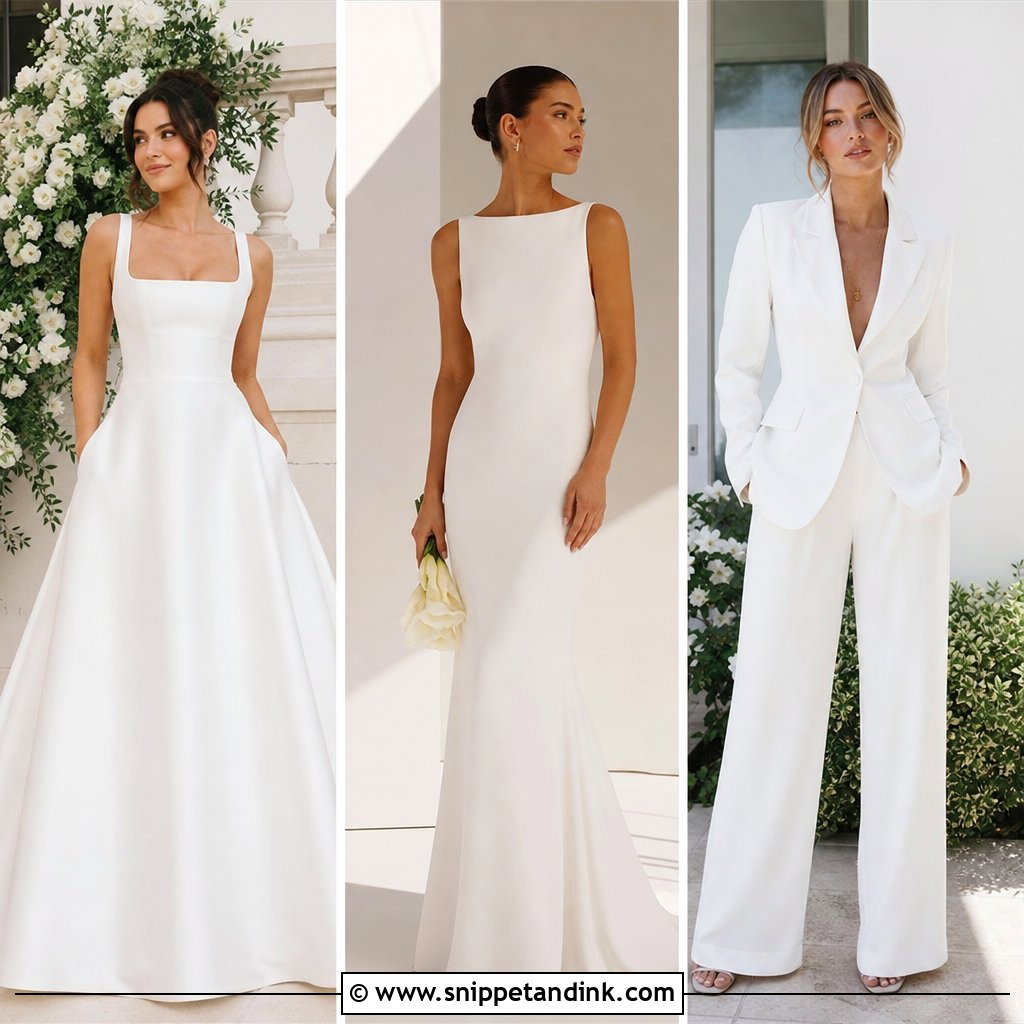
Minimalist couples get the most from fit, since there’s no embellishment to hide behind. A crepe column with a square neckline and a low back, sleek pumps and sculptural earrings, beside an ivory dinner jacket, black trousers, a white shirt, a black bow tie and black loafers. The trap here is two ivories that don’t agree. Crepe and a wool dinner jacket can be different whites, one warm and one cool, so I hold the jacket against the dress fabric in daylight before ordering. Hotels, galleries and rooftops suit it.
5. Blush Gown And Light Gray Suit Wedding Outfit
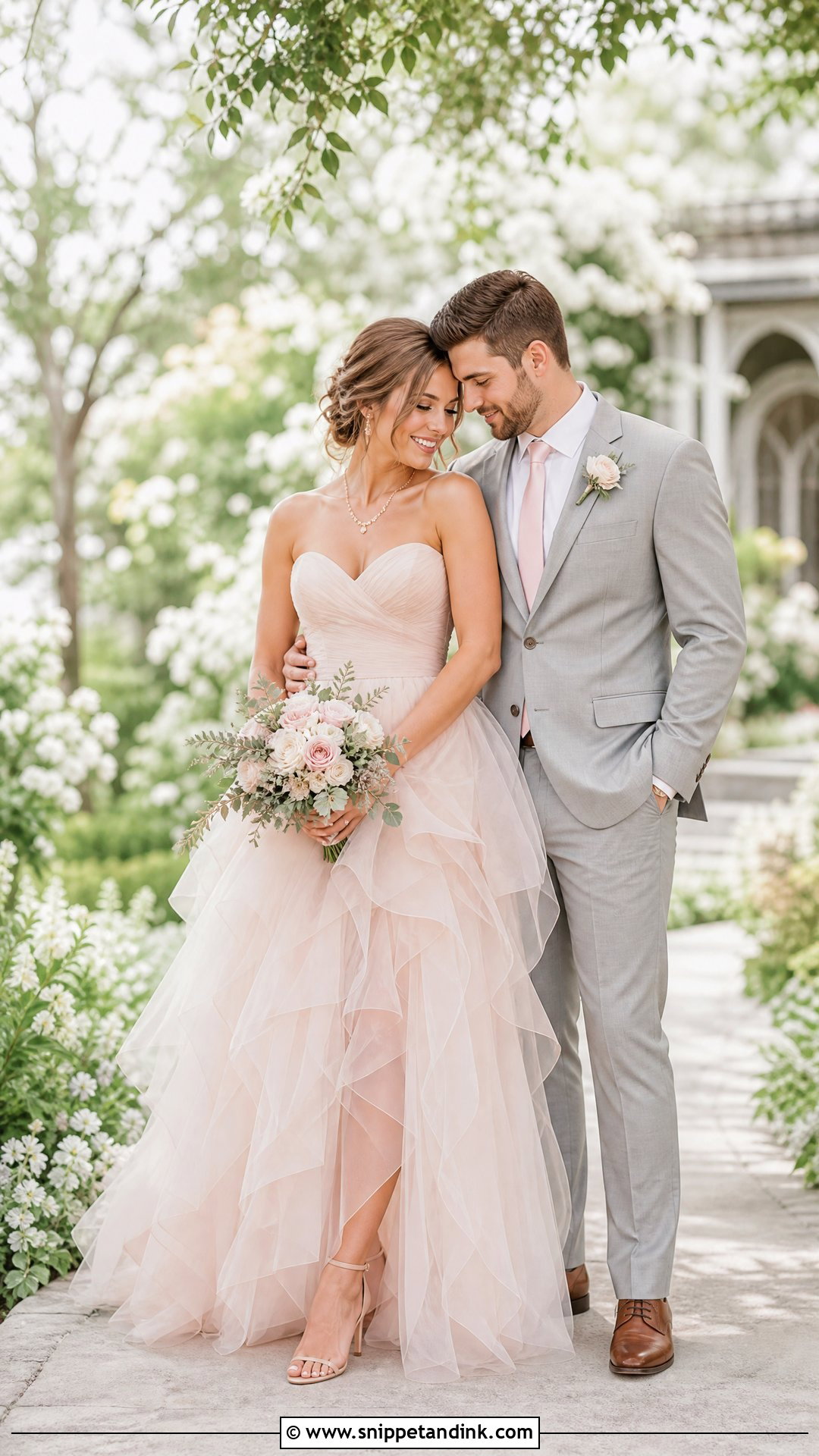
Blush beside light gray makes a soft spring palette, but gray suits vary more than people think. A warm, slightly brown gray can turn a blush gown peachy in photos, so I steer couples to a cool or neutral gray. The gown might be airy tulle with appliqués; nude heels, rose-gold jewelry and a cream and pale pink bouquet. The suit takes a white shirt, a blush tie one shade off the gown, brown shoes and a coordinating pocket square. Gardens, glasshouses and bright rooms with daylight show it best.
6. Champagne Dress And Tan Suit Wedding Outfit
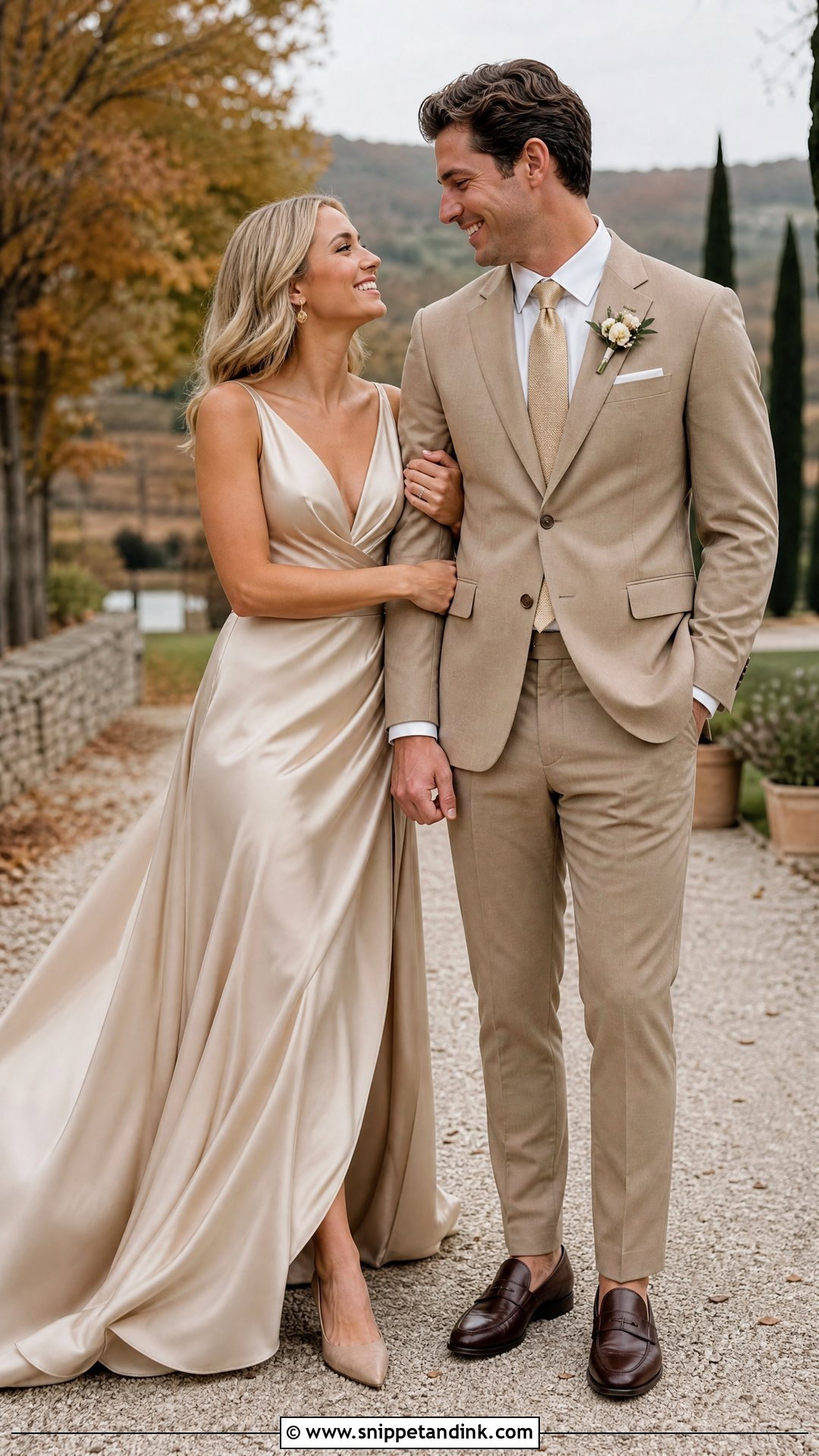
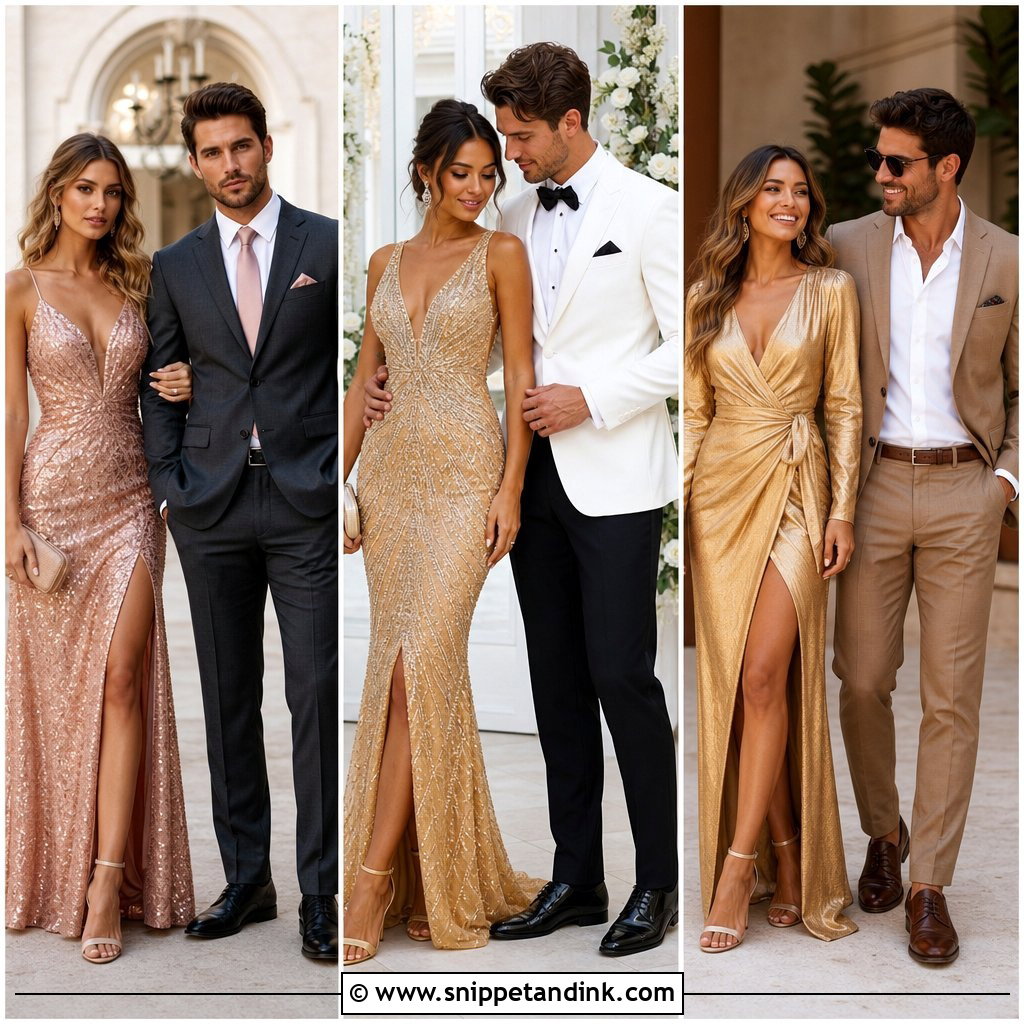
Champagne and tan are both warm, and the risk is that they merge into one beige block in photos. I keep them at least a couple of shades apart: a champagne satin, chiffon or lightly beaded dress, and a tan suit noticeably deeper. Gold earrings and neutral pumps on one side; an ivory shirt, brown loafers and a champagne or muted gold tie on the other. Tan cotton suits wrinkle at the elbows and the back of the knees within an hour, so I’d choose a wool or wool-blend tan for anything formal. Vineyards, deserts and early fall ceremonies suit it.
7. Floral Wedding Dress And Sage Green Suit Outfit
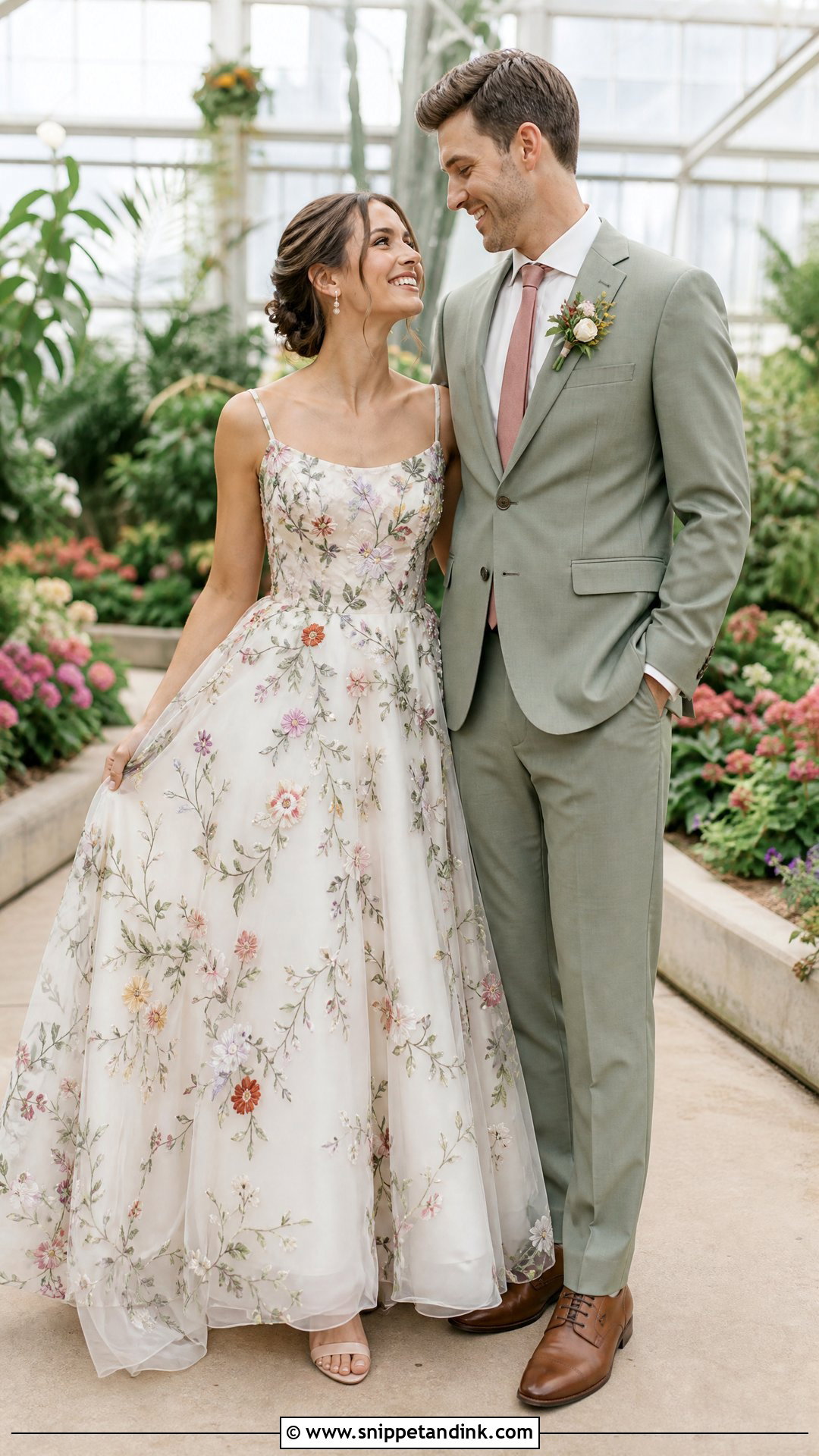
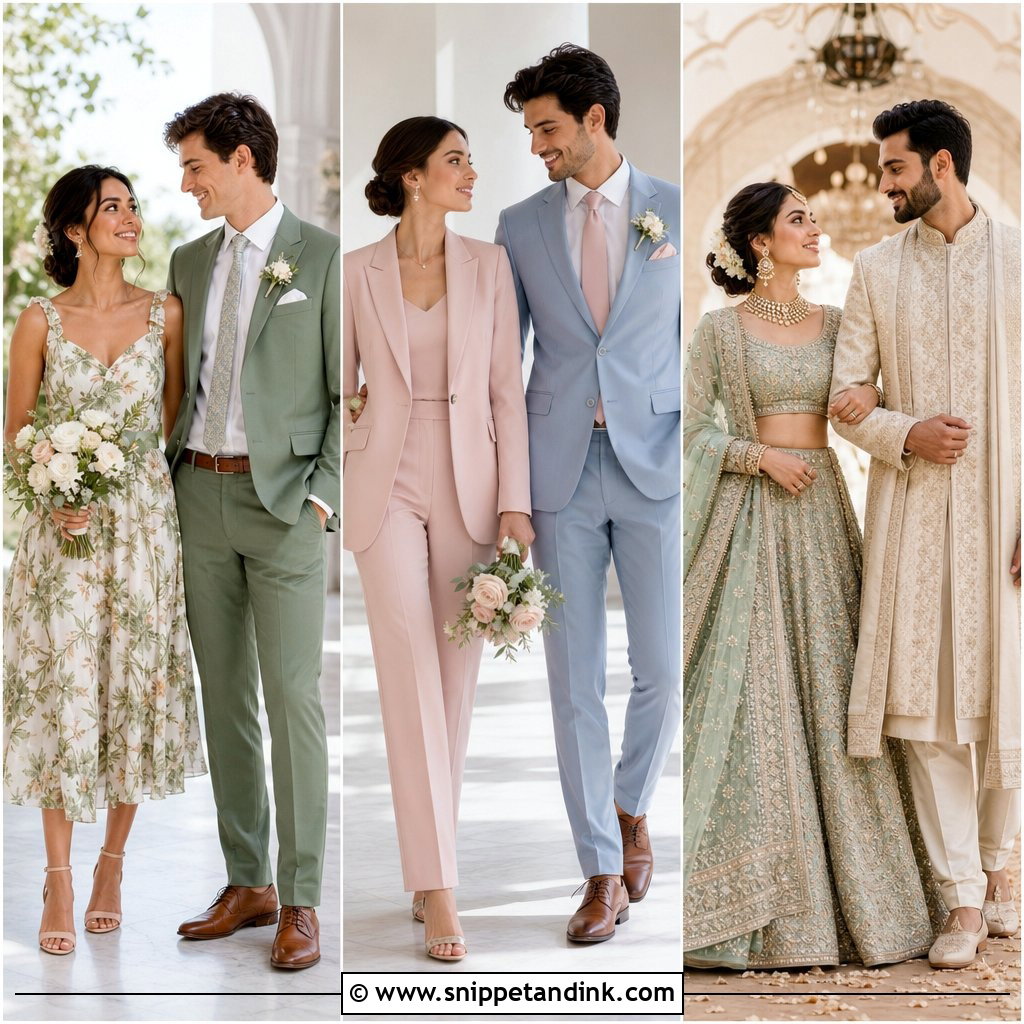
A floral wedding dress gives you a ready-made palette for the suit. I pull the tie color straight from the gown, dusty pink or muted blue from the embroidered flowers, and keep everything else plain. The sage suit goes with an ivory shirt and brown shoes. One print per couple is my rule; a patterned tie or pocket square next to a floral gown just looks busy. Neutral shoes and earrings that repeat one shade from the dress finish her side. Botanical gardens, woodland venues and conservatories make sense of the green.
8. Beach Wedding Dress And Linen Suit Outfit
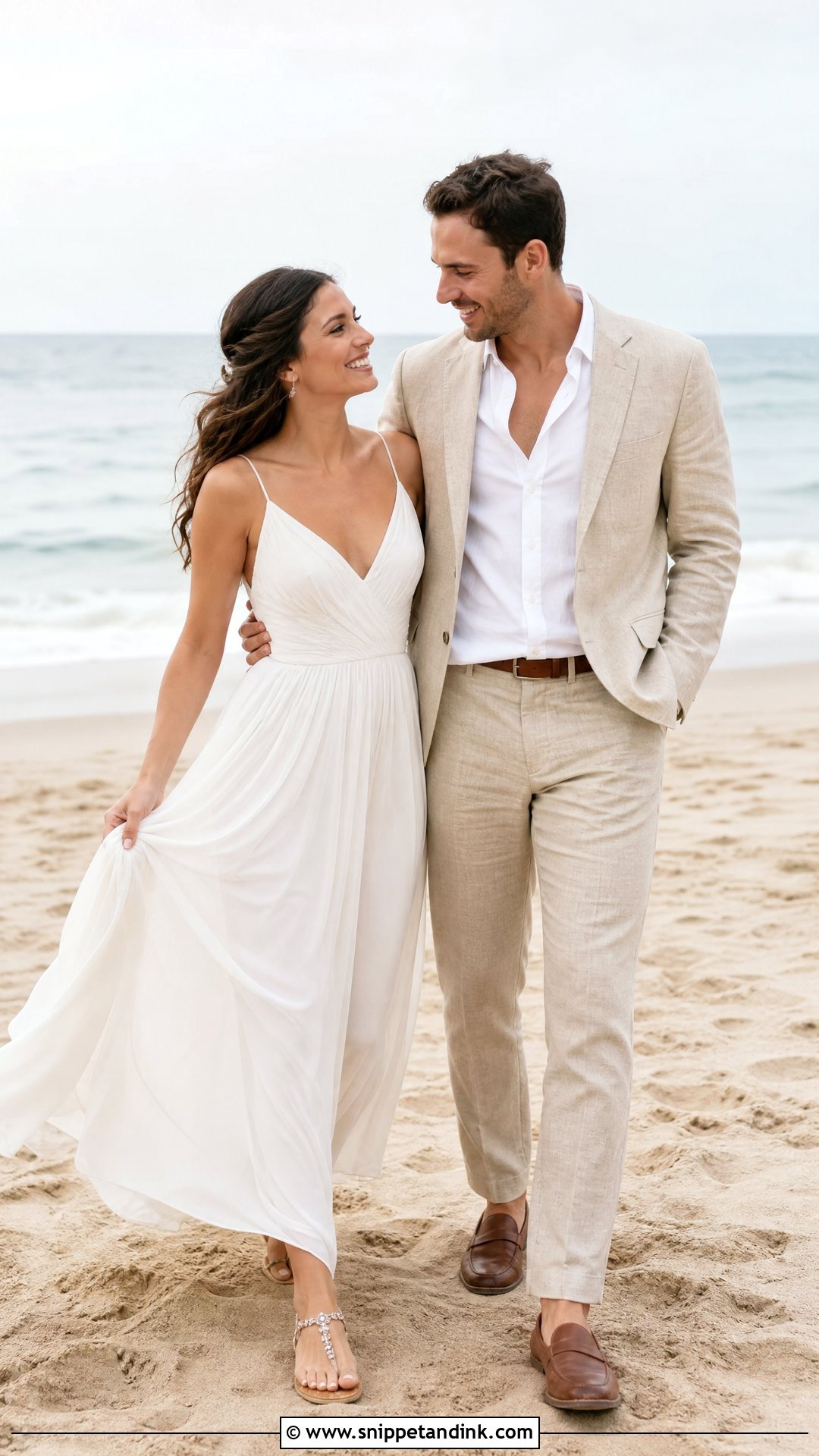
Beach ceremonies need fabrics that breathe on both sides. A chiffon or crepe dress with a simple silhouette, breathable lining and a short train, flat embellished sandals and soft hair. For the suit, a beige or pale blue linen blend, an open-collar white shirt and leather loafers or dress sandals. Linen creases within the first hour; that’s part of its charm, but only if the suit fits properly, otherwise it just looks crumpled. I’d skip the tie, and a pocket square in a soft blue links the two outfits to the water.
9. Courthouse Midi Dress And Cream Suit Outfit
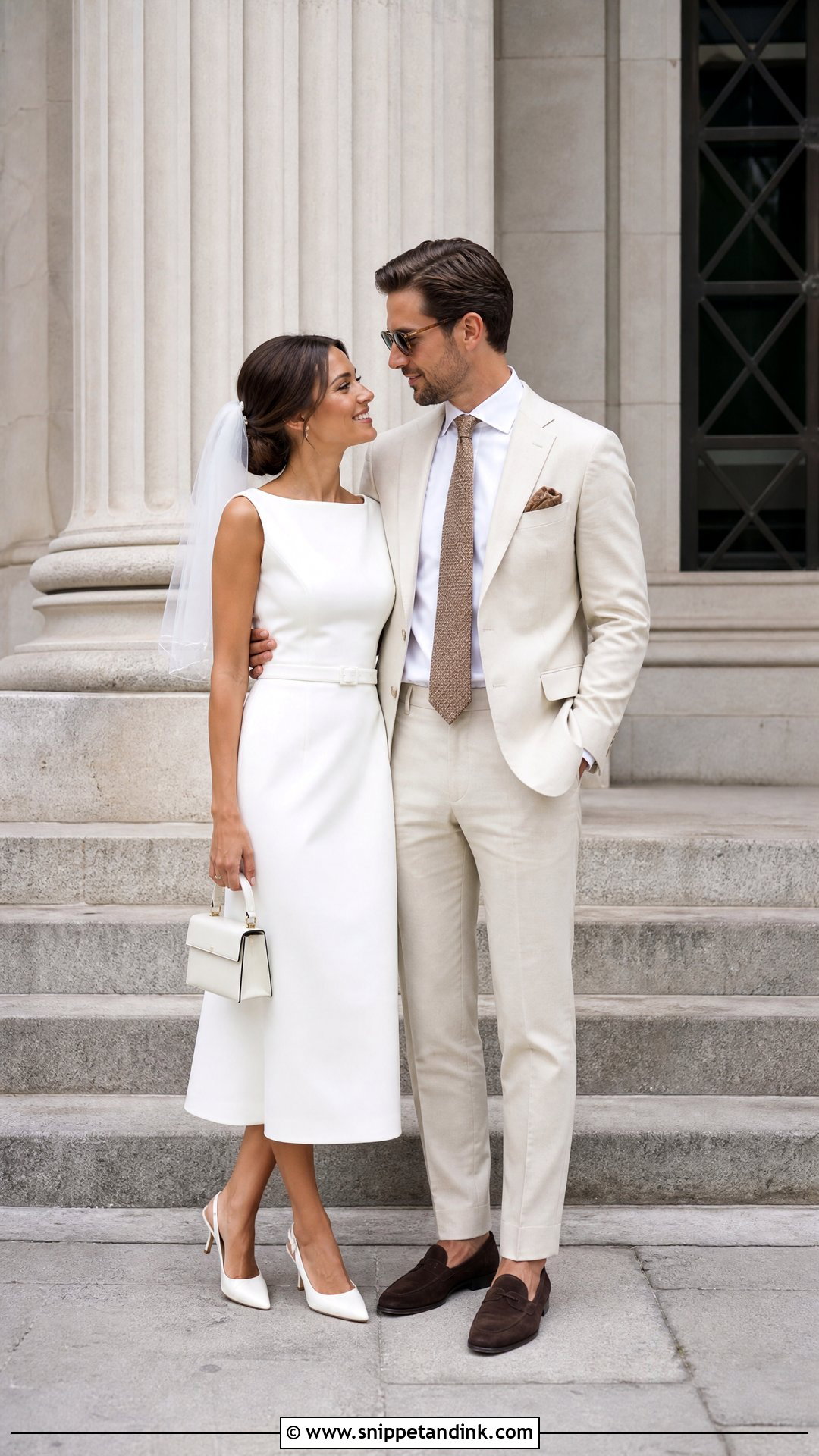
Courthouse days often include walking between a city building, a lunch and a few street portraits, so I plan both outfits for movement. A white midi with a fitted waist and a structured neckline, slingbacks, a small top-handle bag and a short veil. Next to it, a cream or light taupe suit, a white shirt, a textured knit tie and brown loafers. Wrinkle-resistant wool or a wool blend beats linen here. A compact bouquet and a matching boutonniere make it read as a wedding rather than a nice lunch.
10. Bridal Jumpsuit And Blue Suit Wedding Outfit
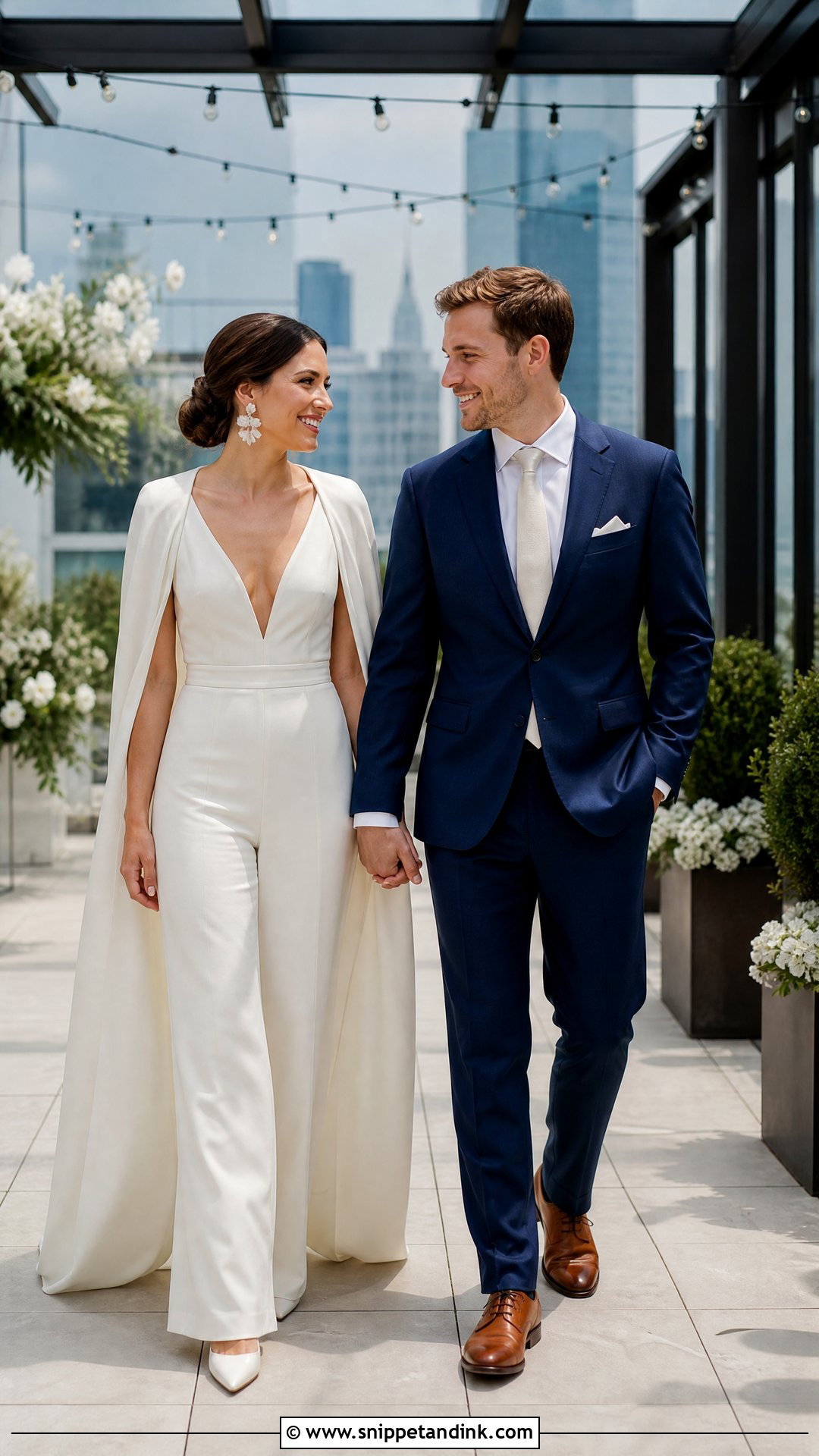
A bridal jumpsuit with wide legs, a defined waist and a structured or draped bodice pairs well with a medium or deep blue suit. Both are tailored, so they share a language, while the colors keep the photo interesting. Pointed pumps, statement earrings and a detachable cape or short veil on one side; a white shirt, an ivory tie and polished brown shoes on the other. Precise hemming matters for both: I hem the jumpsuit for the exact heel and the trousers with a slight or no break so neither pools at the floor.
11. Tea Length Dress And Three Piece Suit Outfit
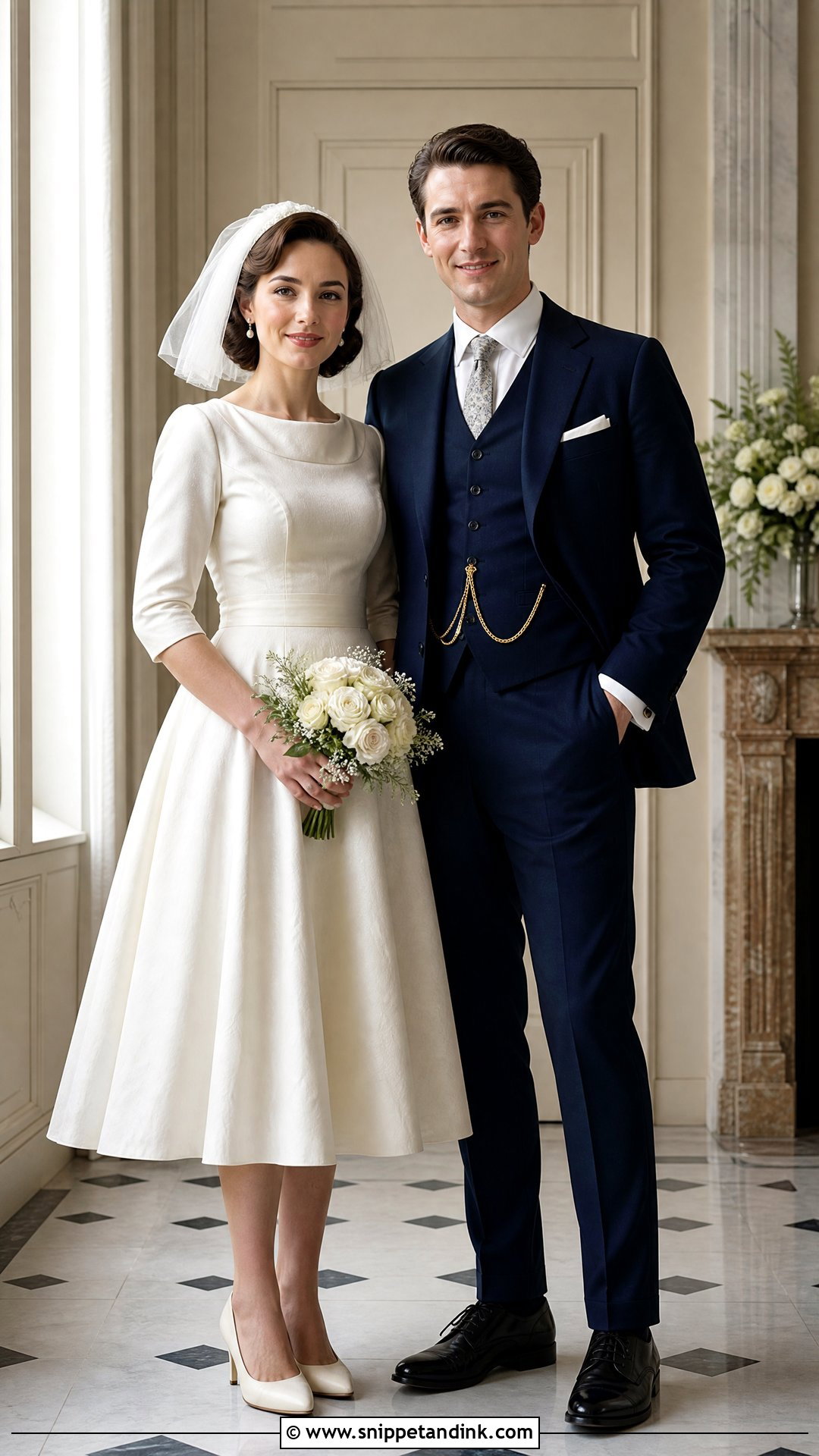
A tea-length dress and a three-piece suit have a vintage feel without tipping into costume when the suit stays restrained. Navy, charcoal or a quiet check, with a white shirt, a coordinating tie, a pocket watch and polished brogues. Two waistcoat rules I hold to: the waistcoat should cover the trouser waistband completely, and the bottom button stays undone. Her side: a fitted bodice, a skirt between knee and ankle, closed-toe pumps, pearl earrings and a short veil or hairpiece. Historic venues and daytime ceremonies suit it.
12. Boho Lace Dress And Brown Suit Wedding Outfit
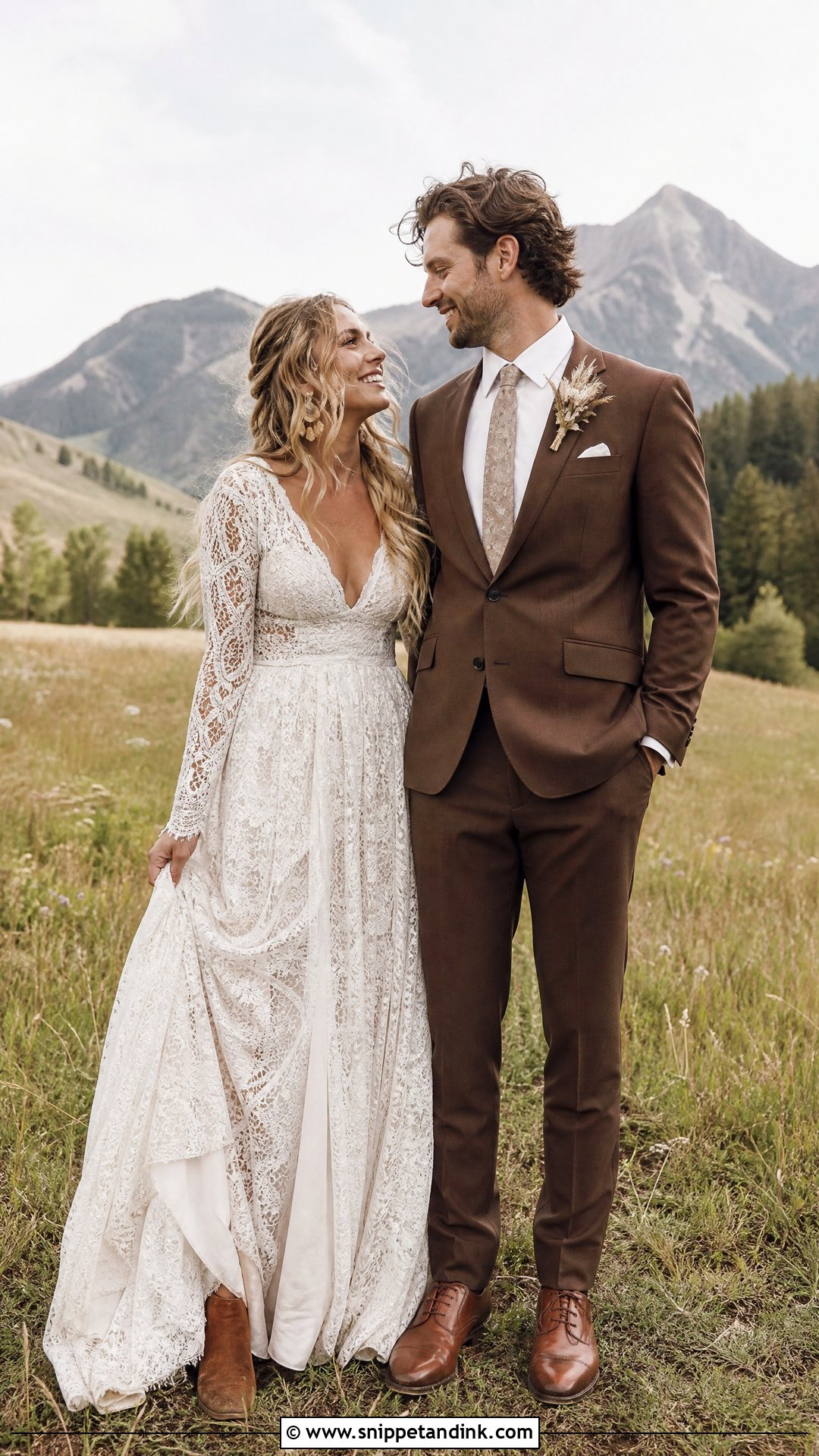
Relaxed outdoor weddings suit a bohemian lace dress with a warm brown suit. The dress might have soft sleeves, an open back and a flowing skirt, worn with low block heels or refined ankle boots and loose waves. For the suit, chocolate, tobacco or medium brown, an ivory shirt, a muted tie and matching leather shoes. I choose a slightly textured cloth, a soft flannel or a hopsack, so it matches the relaxed lace instead of looking like boardroom wool. A rust, olive or beige pocket square links it to the setting.
13. Rustic Wedding Dress And Tweed Suit Outfit
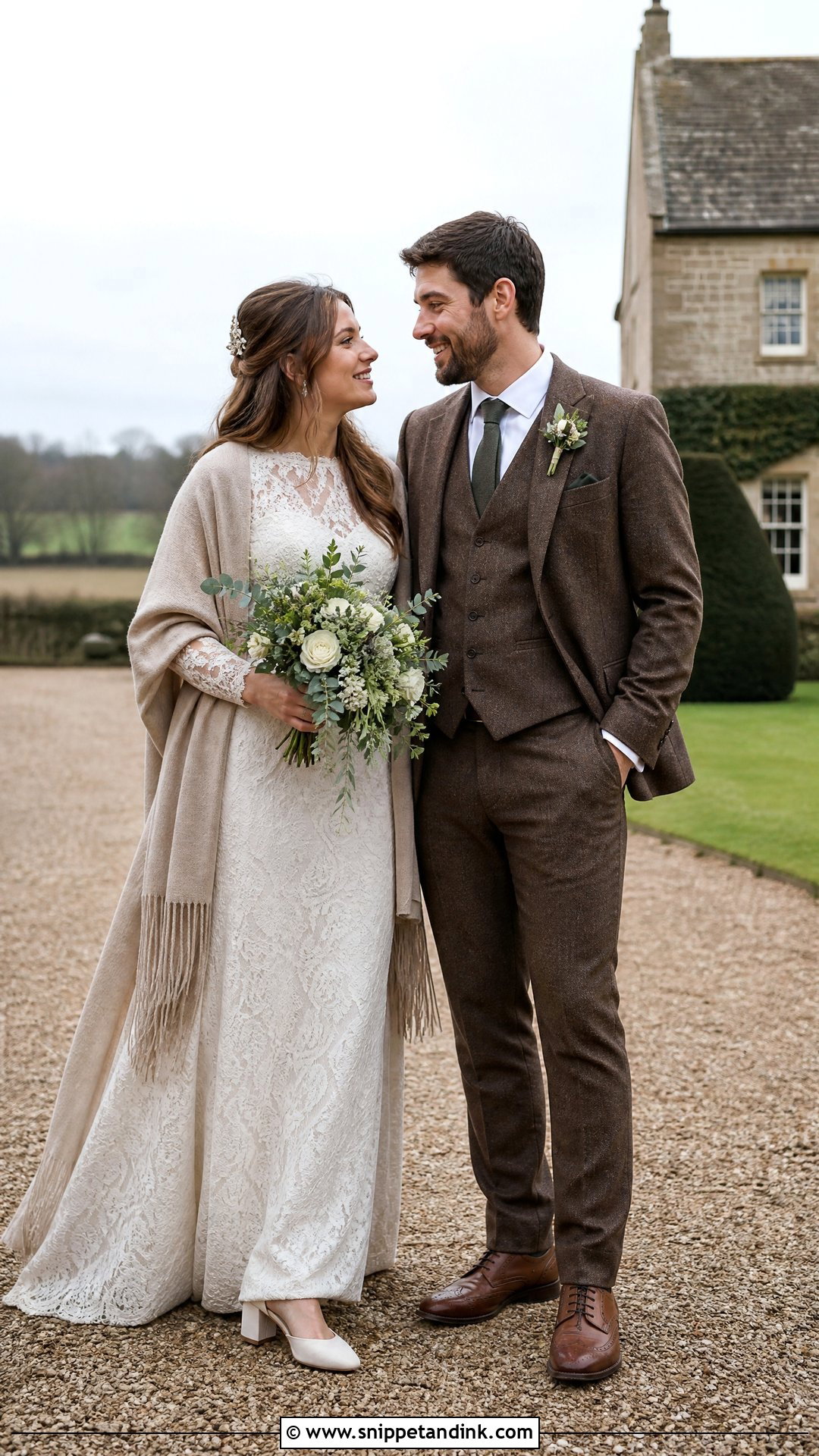
Tweed belongs at cool-weather rustic weddings, and it’s warm, heavy cloth. That’s perfect for photos outside a barn in October and miserable on a crowded dance floor, so I always plan for the jacket to come off and make sure the waistcoat looks finished on its own. Brown or gray tweed, a white shirt, a wool tie and leather brogues. Her side needs matching texture to balance the weight: an ivory gown with lace sleeves, closed-toe block heels, a textured wrap and small gold or pearl accessories. A boutonniere of greenery or dried flowers repeats the bouquet.
14. Winter Wedding Gown And Velvet Tuxedo Outfit
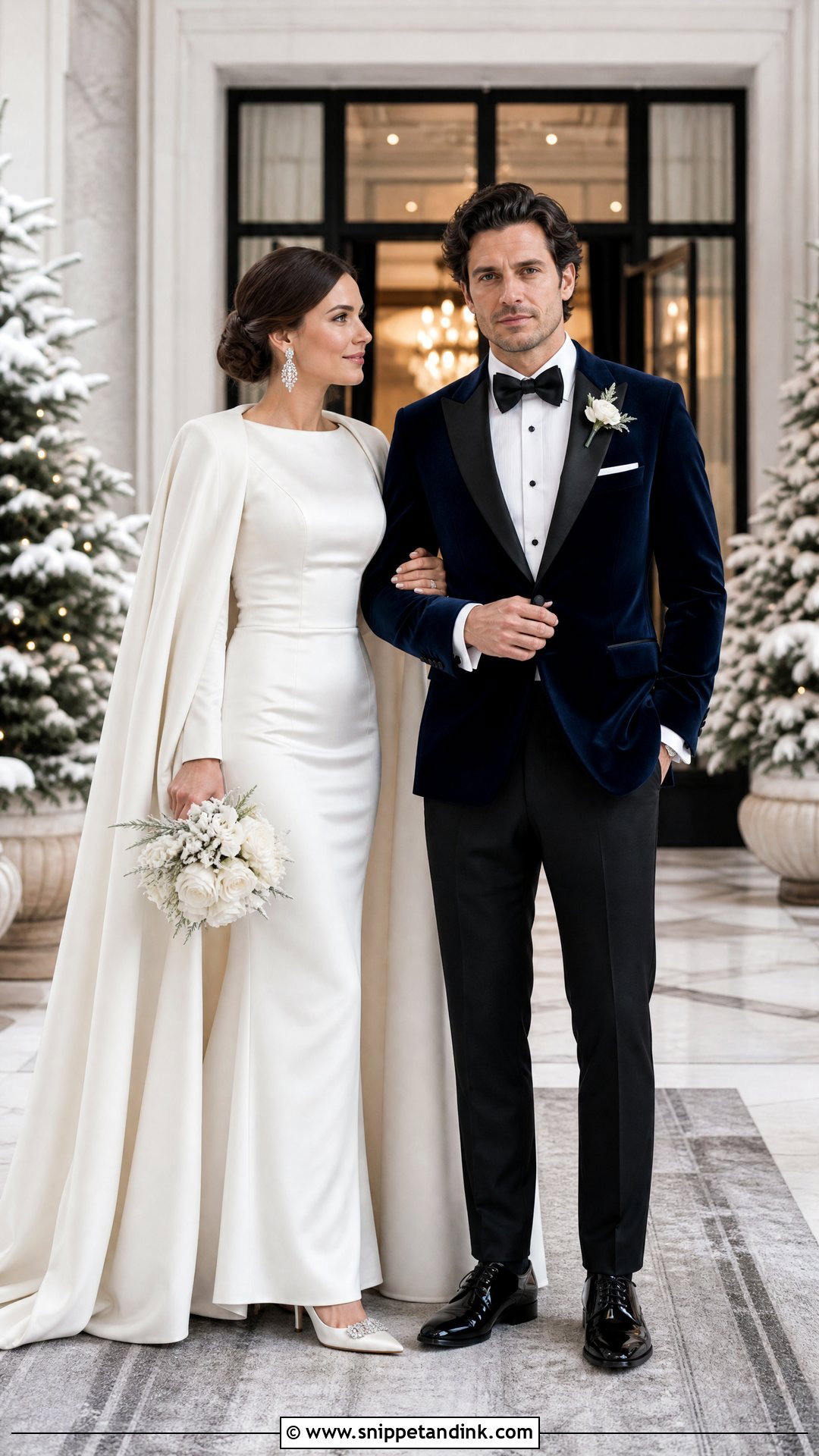
Velvet does the work in winter. A black, navy or burgundy velvet dinner jacket with black trousers, a white shirt, a bow tie and patent shoes, beside a long-sleeve satin gown or a structured beaded dress with a train. I keep velvet to the jacket only; velvet trousers look heavy and crush at the knees. Velvet nap also shows marks from a hand or a seatbelt, so I brush it with a soft clothes brush just before photos. Closed-toe heels, sparkling earrings and a tailored cape or faux-fur wrap for outdoor portraits.
15. Sequin Reception Dress And Black Tuxedo Outfit
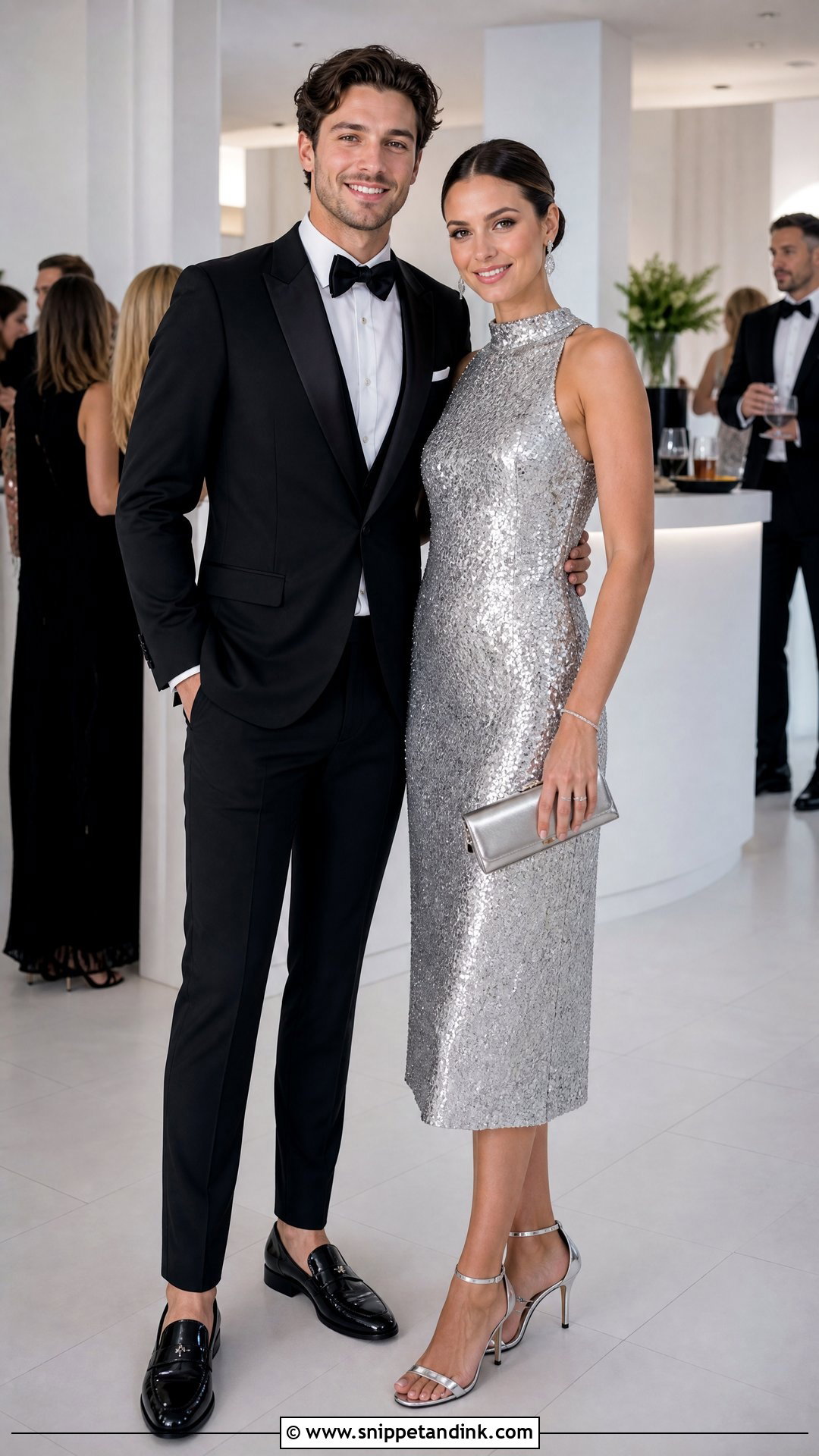
A sequin reception dress needs a calm partner, and a classic black tuxedo is exactly that. Silver, champagne or ivory sequins with a smooth lining and a hem you can dance in, metallic heels and small earrings. The tuxedo: satin lapels, a white shirt, a black bow tie and patent loafers. A metallic pocket square or simple cuff links can echo the shine, but I’d stop there. One thing to warn the partner about: sequins snag fine wool, so expect a few pulled threads on the jacket sleeve after slow dances.
16. Overskirt Wedding Dress And White Dinner Jacket Outfit
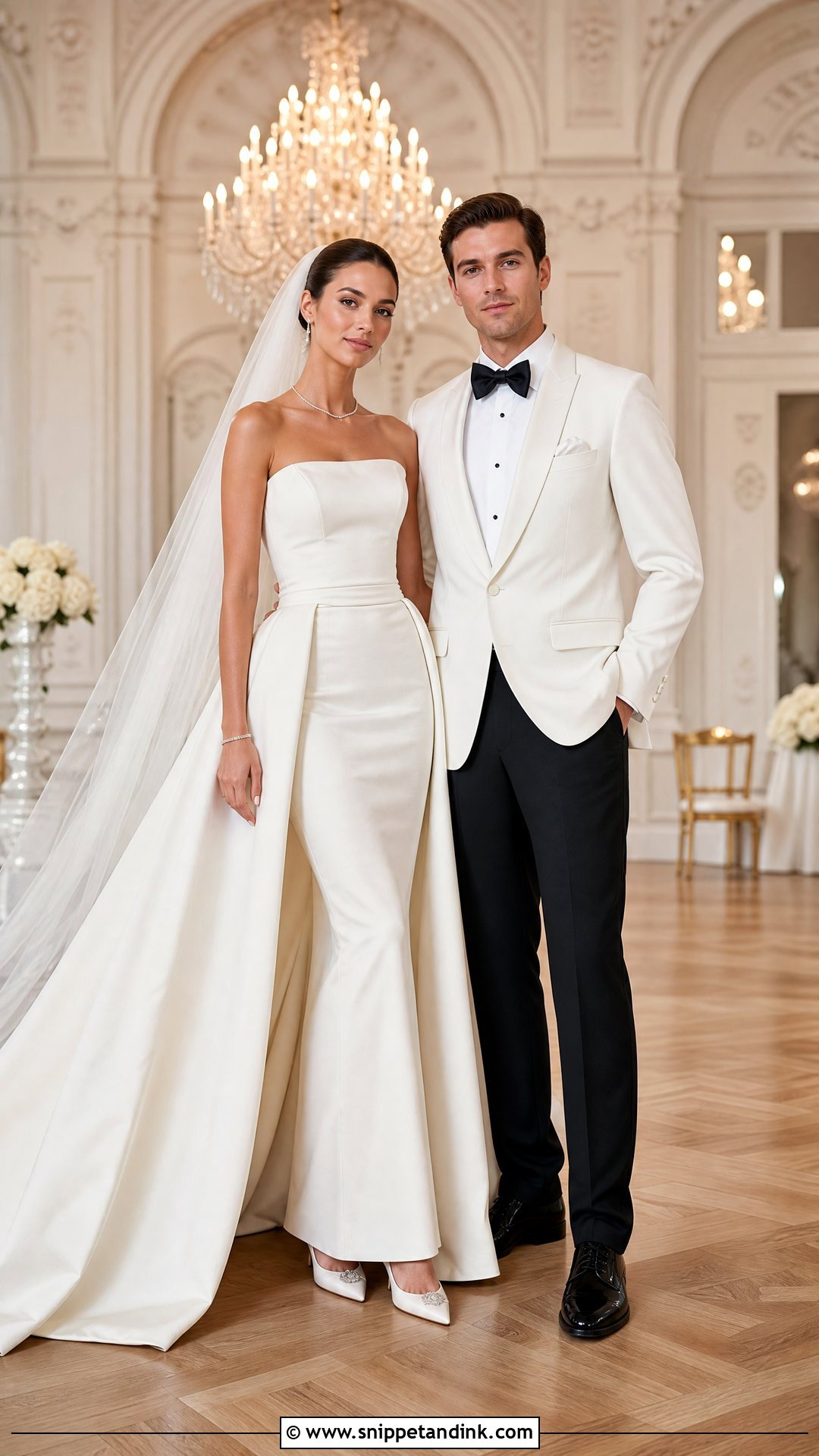
Detachable overskirts give one gown two shapes: full for the ceremony, slim for the reception. With a long veil and pointed heels for the ceremony, then the overskirt off for dancing. A white dinner jacket, black trousers, a white shirt and a bow tie work with both versions, and the light upper halves read as a pair in photos. White dinner jackets are traditionally a warm-weather or summer evening choice, which suits a formal summer wedding. I check the jacket’s shade against the gown’s ivory in daylight, as with any pair of whites.
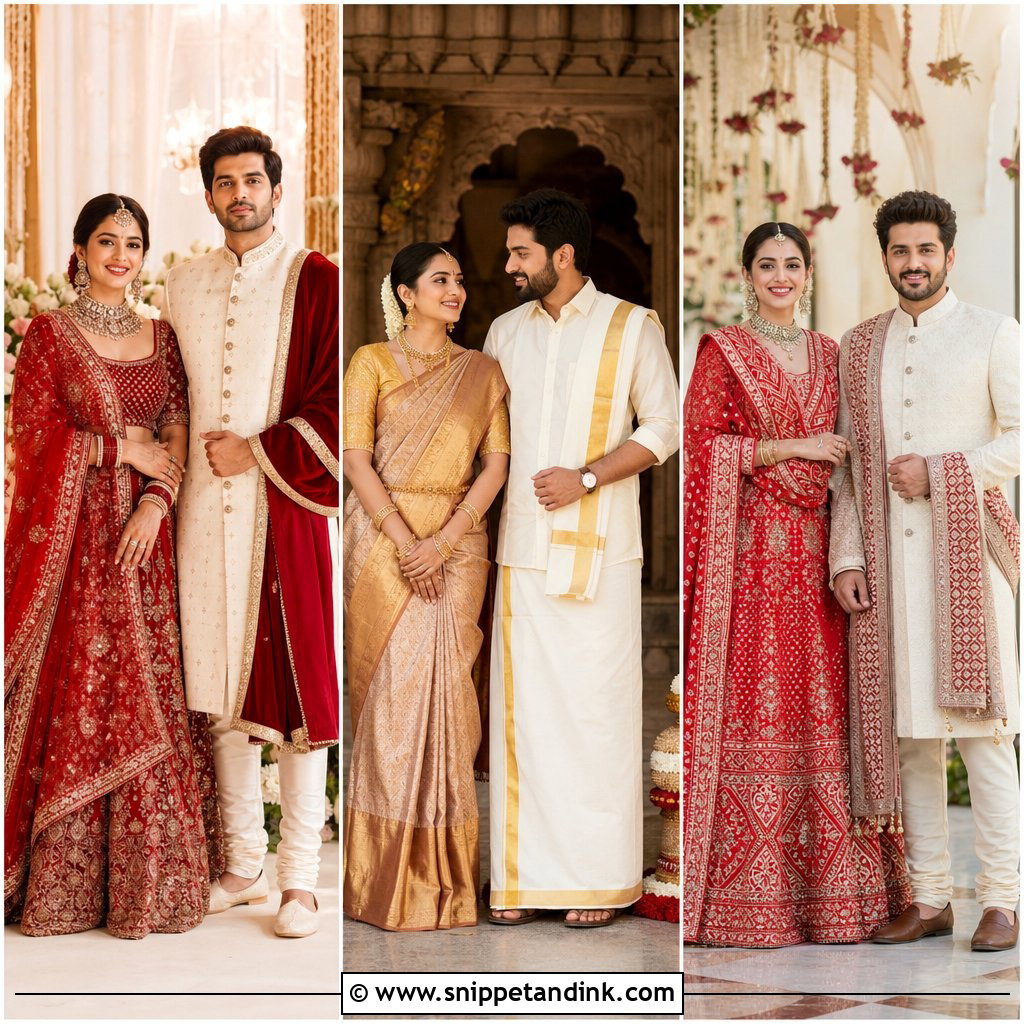
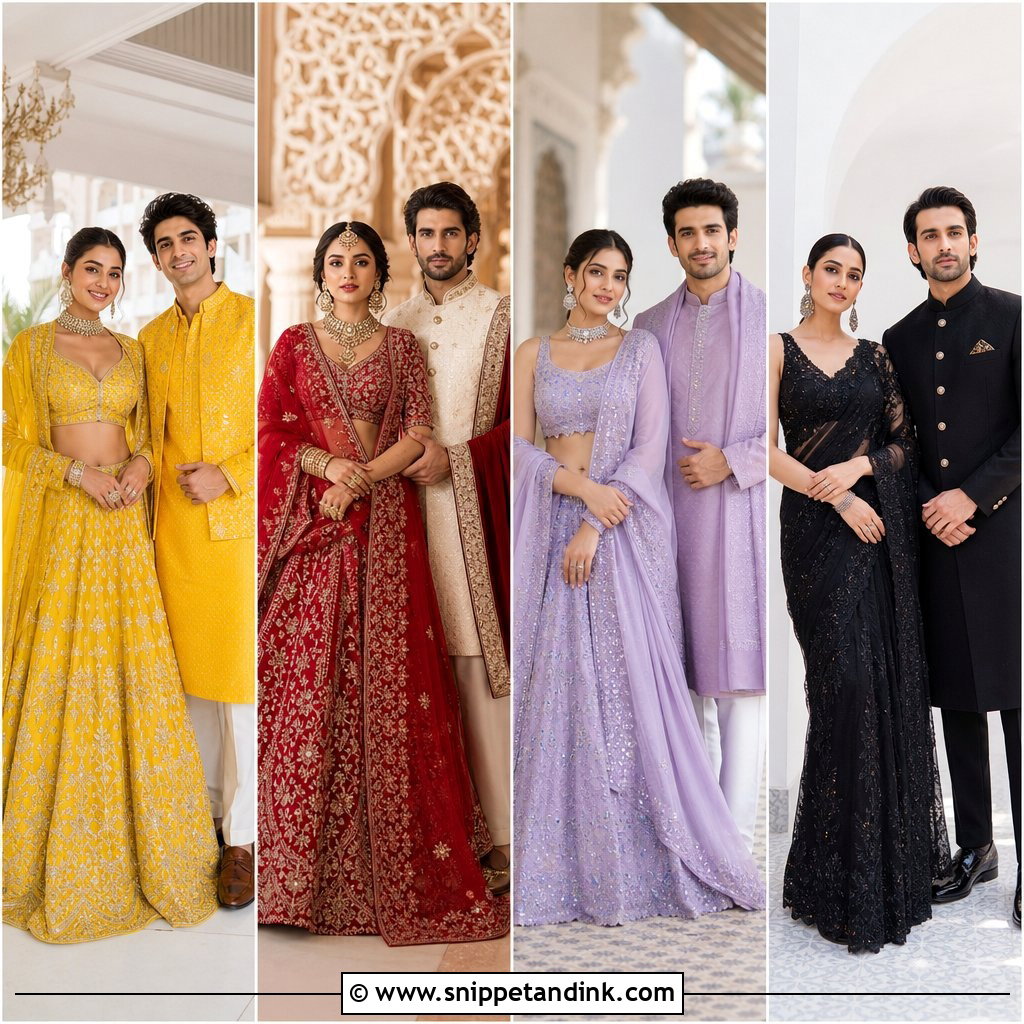
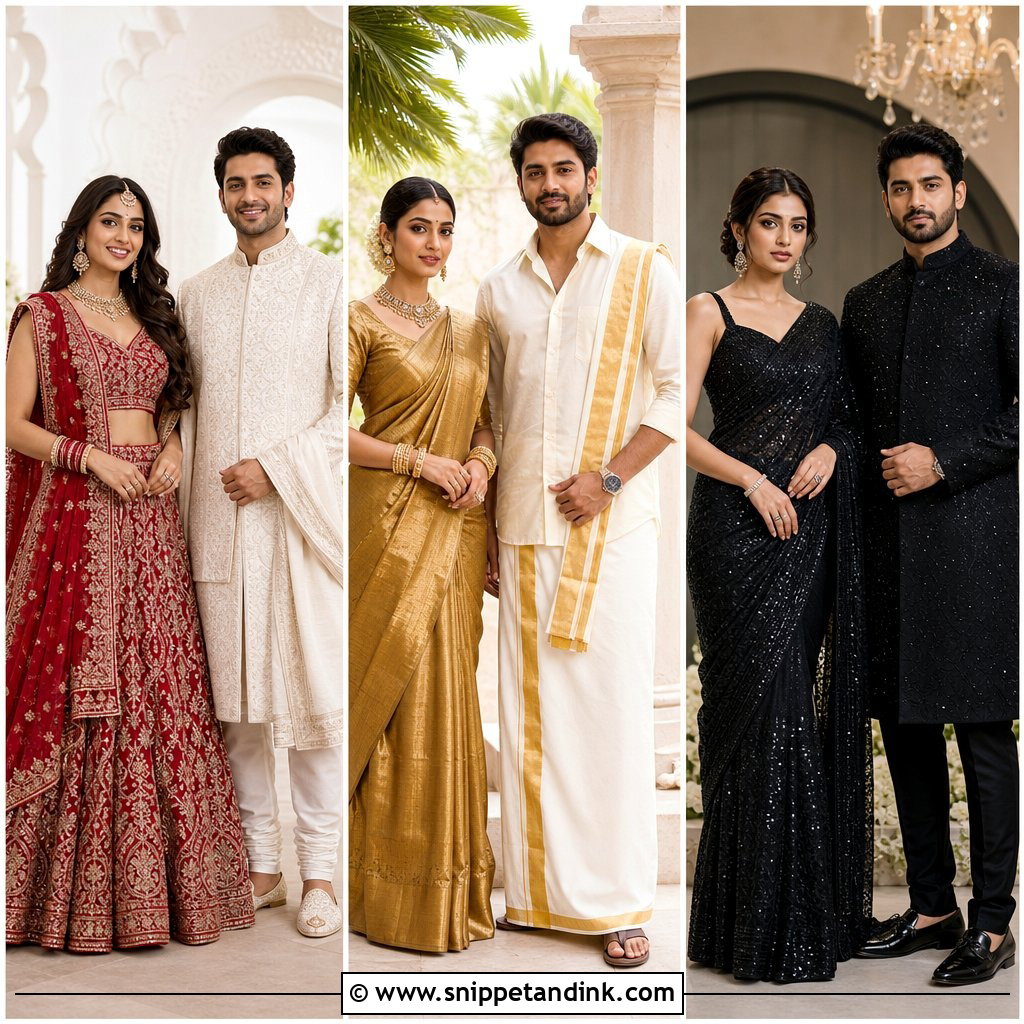
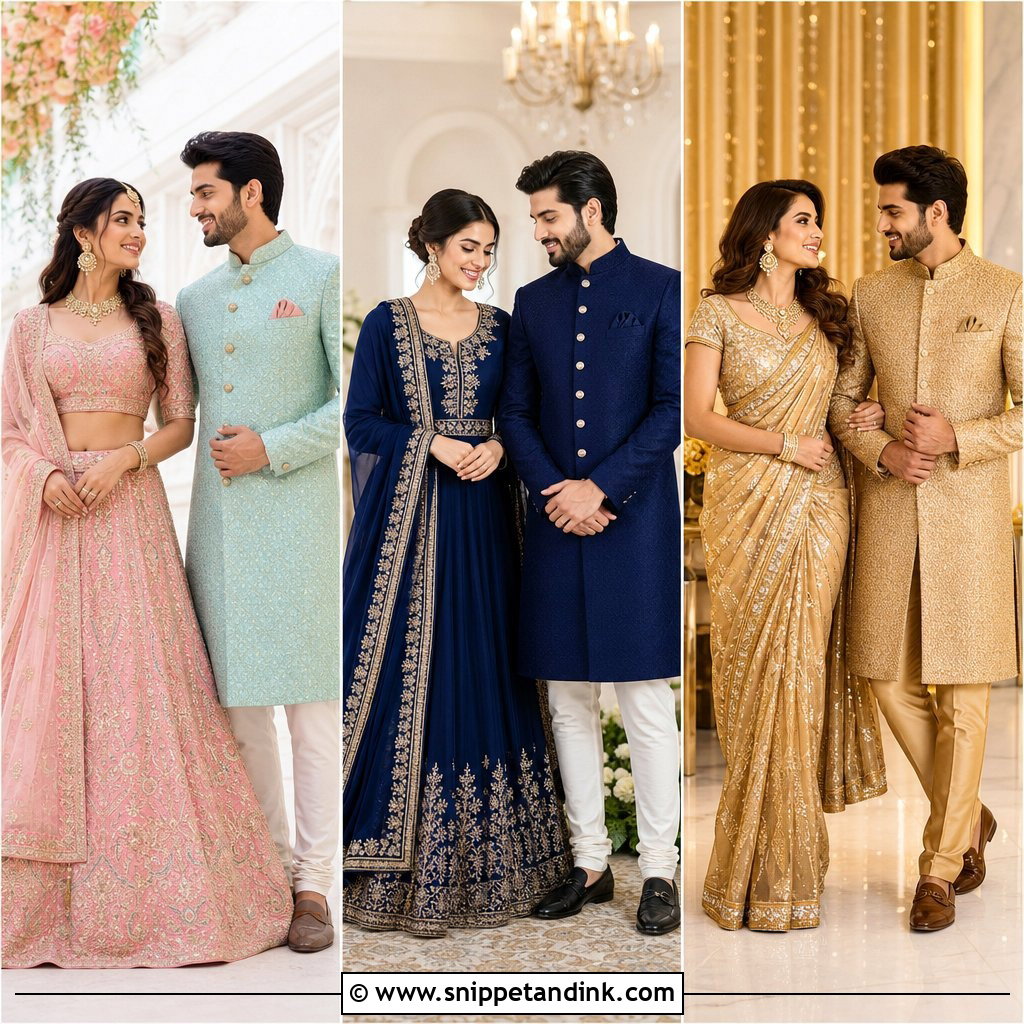
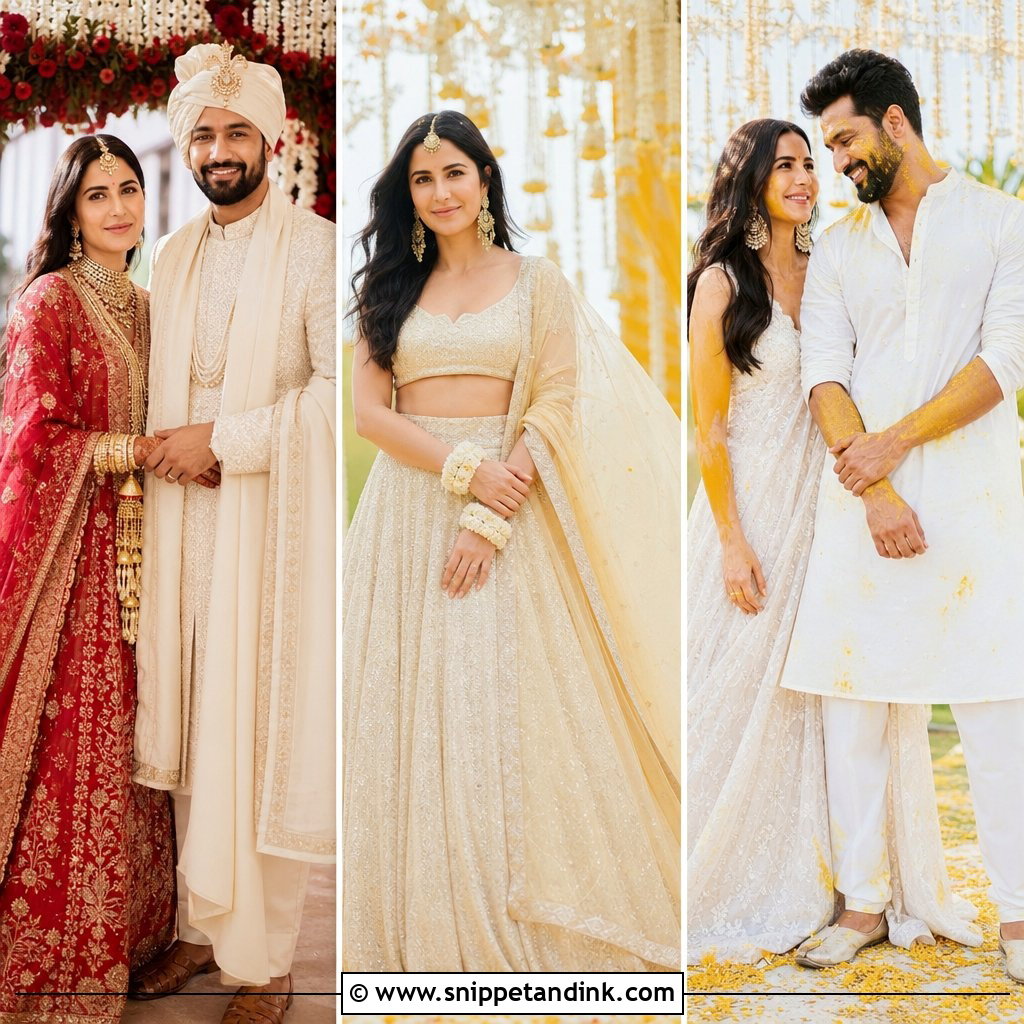
17. Red Lehenga And Ivory Sherwani Wedding Outfit
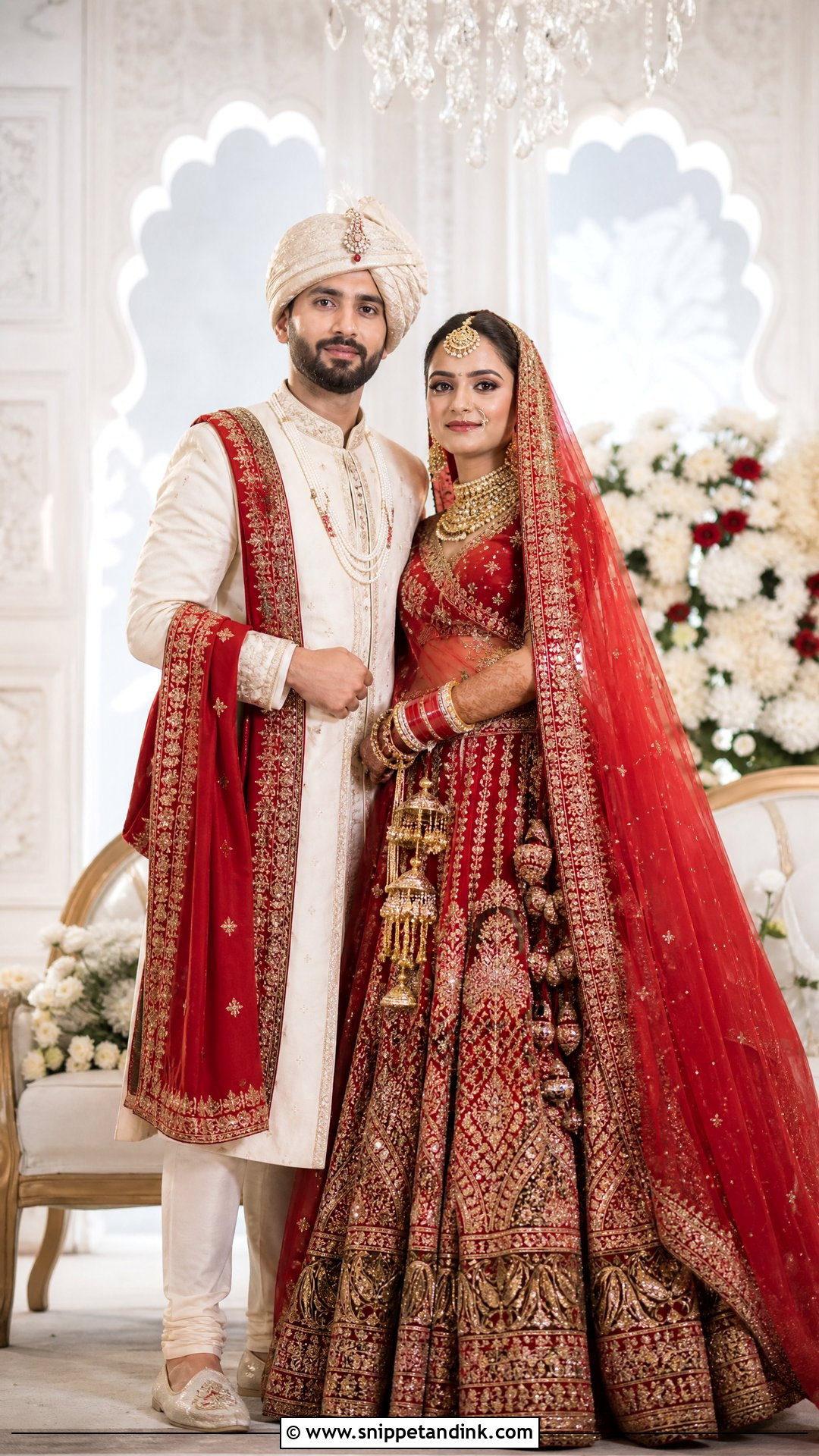
A red lehenga and ivory sherwani are a classic balance for an Indian wedding, and the key is letting red appear in smaller doses on the sherwani: at the collar, buttons, cuffs or stole. Her side: a red lehenga with gold embroidery, a matched blouse, a carefully pinned dupatta, gold jewelry and embroidered juttis. For the sherwani, I fit the shoulders and chest first, because the long body drapes from there, then check that the churidar gathers neatly at the ankle rather than bunching. Embroidered mojaris in a neutral tone finish it.
18. Pastel Lehenga And Matching Sherwani Wedding Outfit
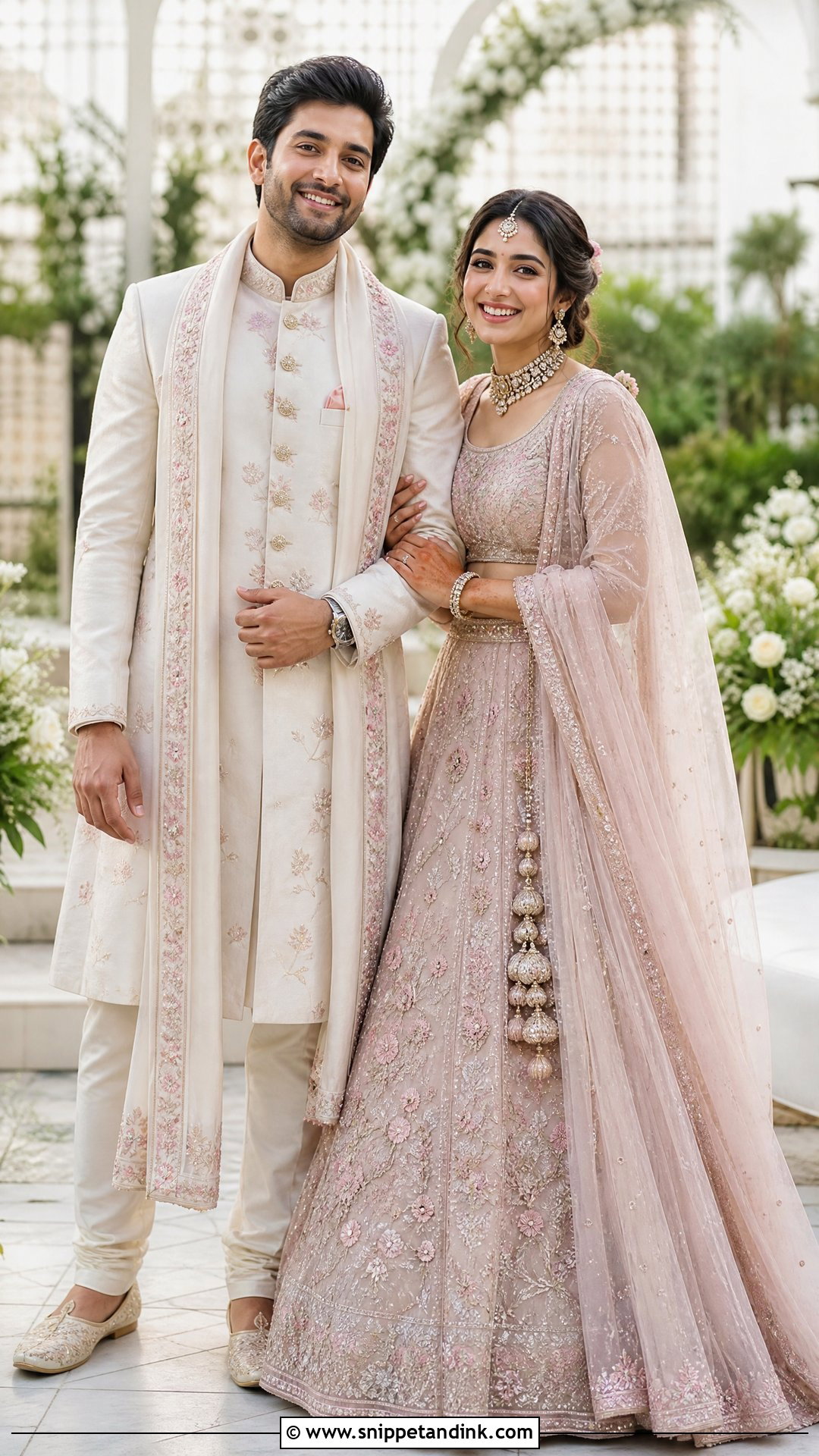
Pastels suit daytime celebrations, and I find they work best when the sherwani is lighter than the lehenga rather than identical. A blush, lavender, mint or powder-blue lehenga with tonal embroidery, a light dupatta, gemstone jewelry and comfortable embellished footwear. For him, ivory or a paler version of her color, with one embroidered motif or border repeated from the lehenga and a matching stole. Pale silks show perspiration easily in daytime heat, so I suggest a cotton undershirt under the sherwani.
19. Ivory Sari And Bandhgala Wedding Outfit
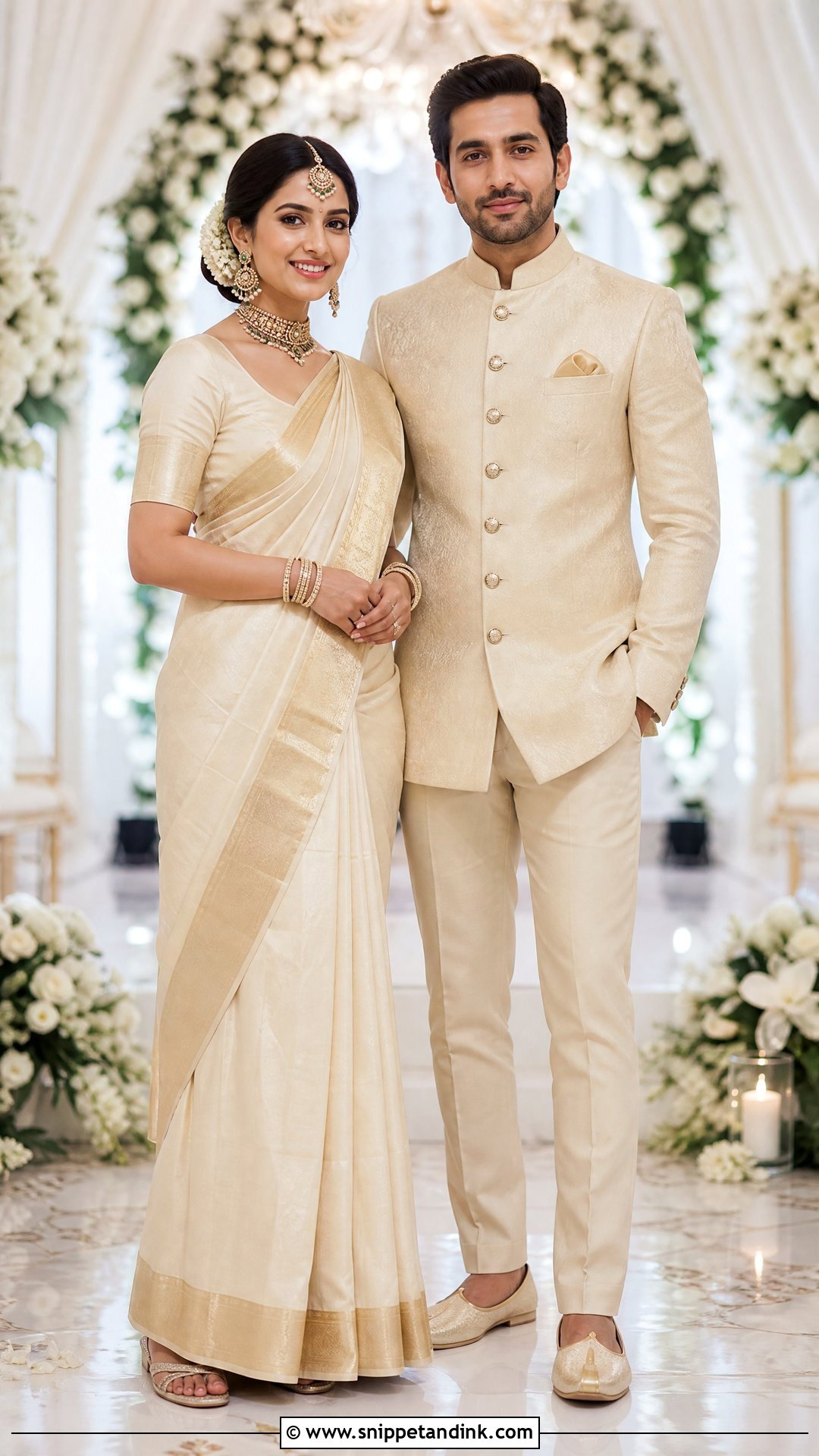
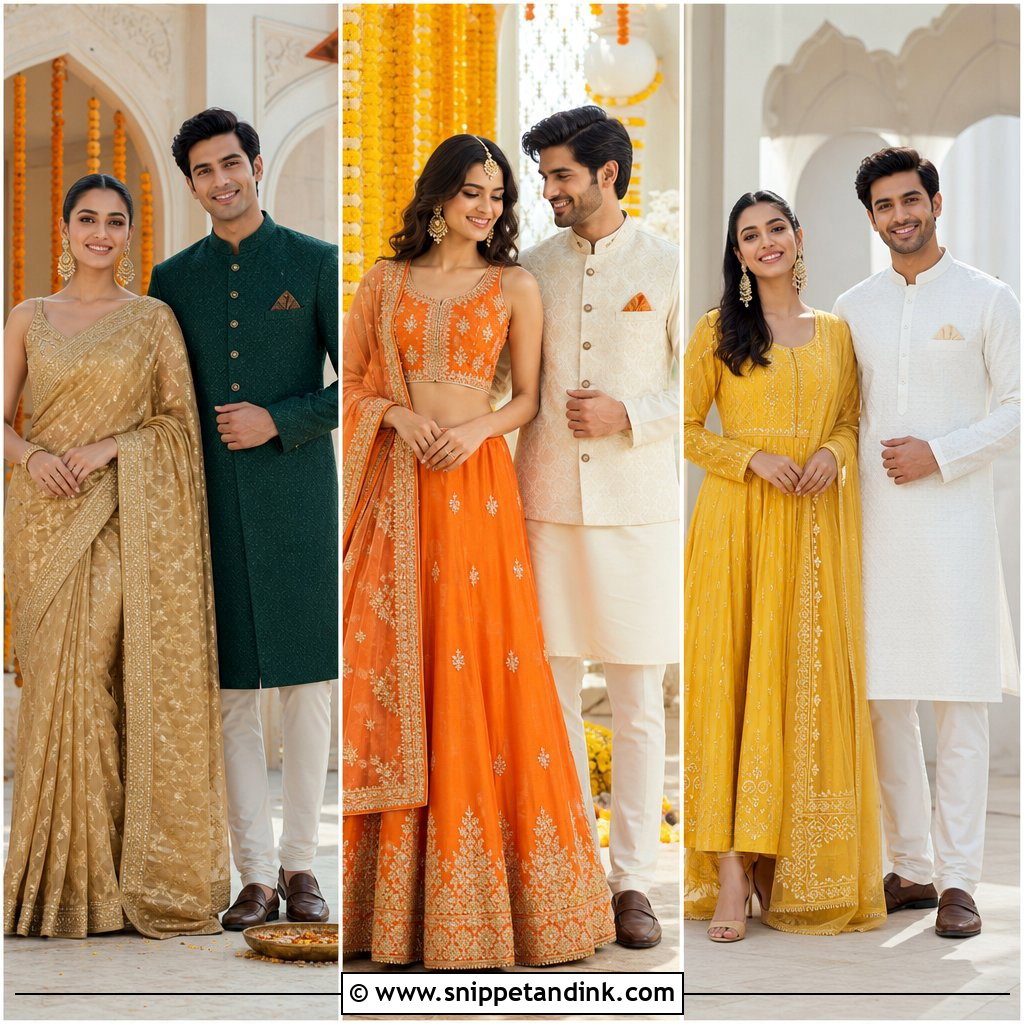
An ivory sari beside an ivory, beige or pale gold bandhgala can blur together, so I separate them with texture rather than color. Silk, organza or an embroidered sari with a gold, silver or muted border, a fitted blouse and a pinned drape that stays secure through a long ceremony. The bandhgala gets slim trousers, traditional footwear and a pocket square in the sari’s border color. The closed collar is the fit point I check most: you should slide one finger inside it comfortably, or it chokes by the third hour.
20. Jewel Tone Sari And Black Bandhgala Outfit
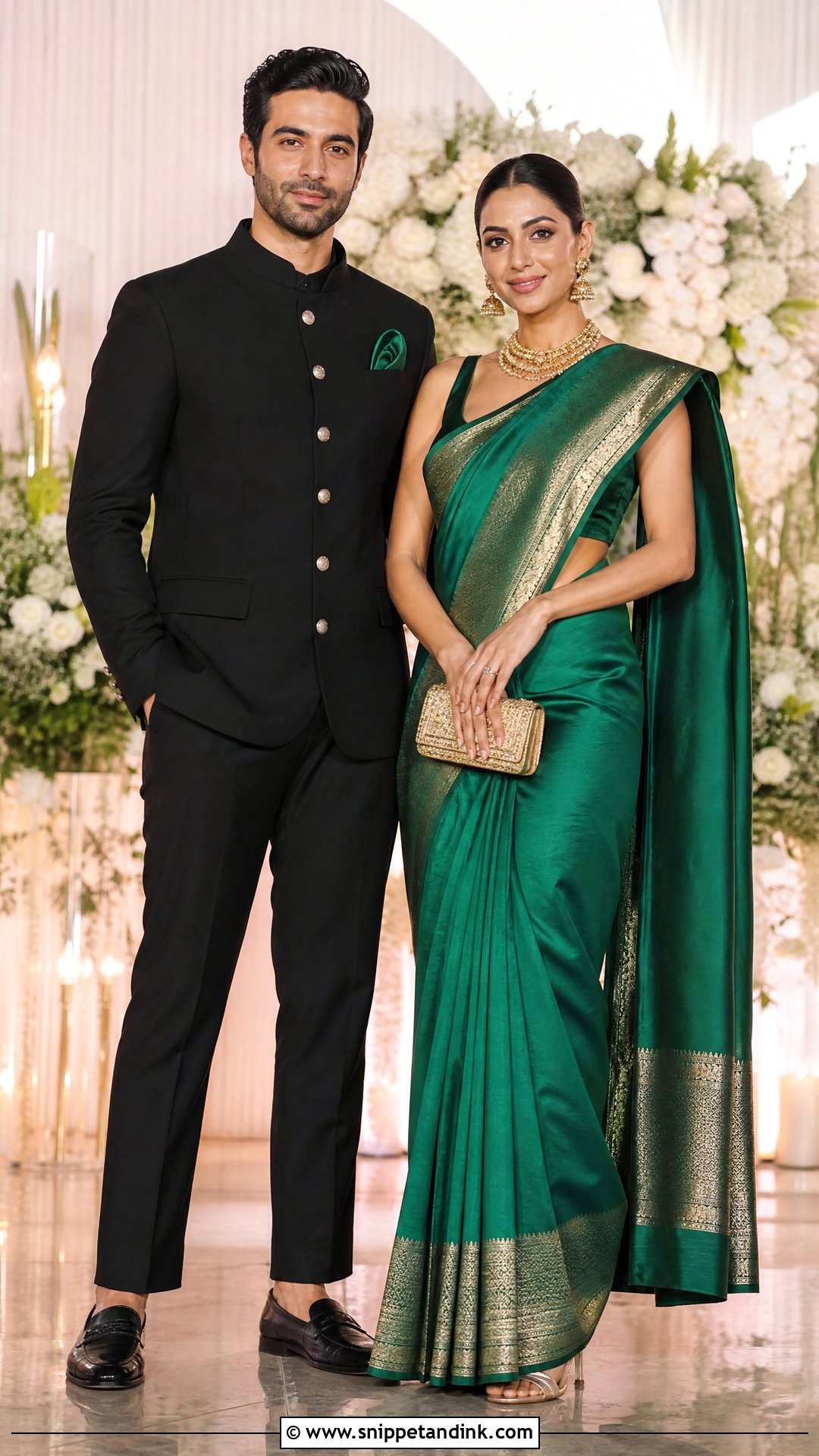
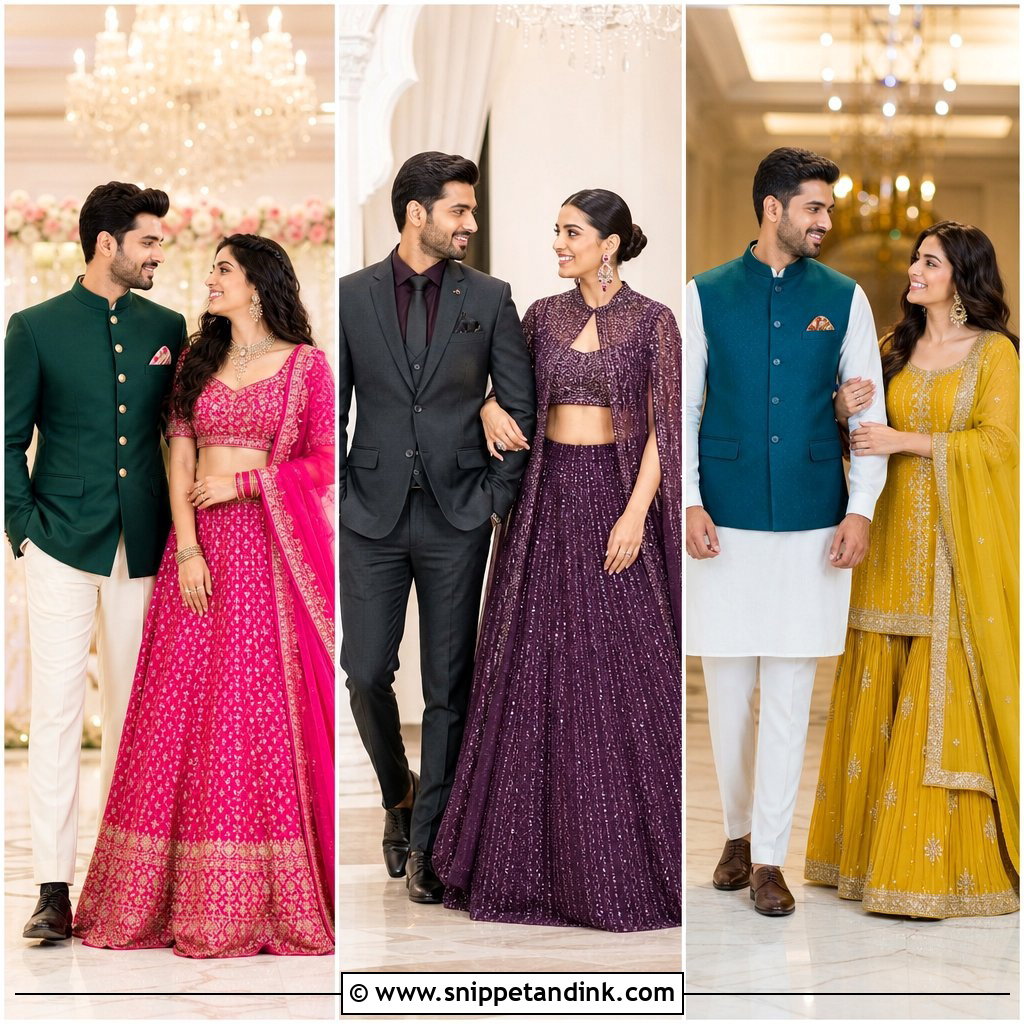
Jewel tones glow beside a sharply tailored black bandhgala. An emerald, ruby, sapphire or deep plum sari with metallic embroidery, coordinated heels, gold or silver jewelry and an embellished clutch. The bandhgala takes black trousers, polished loafers and a pocket square pulled from the sari. I swap plain buttons for metal ones that match her jewelry; it’s a small change that links the two outfits immediately. Evening ceremonies and cooler seasons suit this pairing. Keep accessories controlled; the color and tailoring already carry it.
21. Embroidered Anarkali And Kurta Suit Wedding Outfit
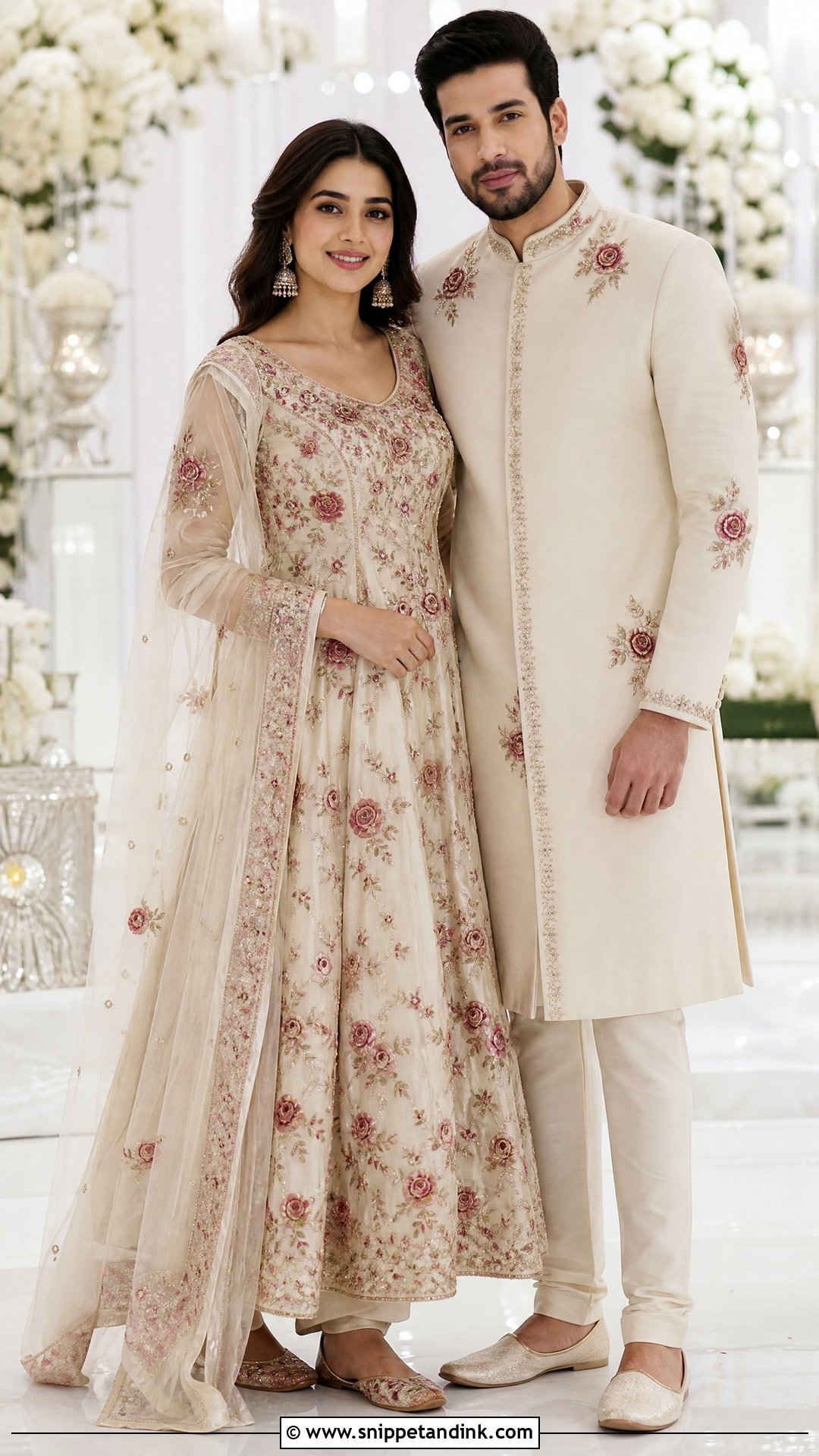
Anarkalis and kurta suits are among the most comfortable pairings for a long ceremony. A floor-length Anarkali in teal, rose, marigold or deep blue with detailed borders and a flowing dupatta, traditional earrings, bangles and embellished flats. The kurta works on a neutral base with embroidery in the Anarkali color, or you can reverse it and put color on him with a neutral Anarkali. I keep embroidery placement similar on both, say at the neckline and cuffs, so they look related without looking like a uniform. Fitted trousers and dressy traditional shoes.
22. Western Wedding Dress And Cowboy Suit Outfit
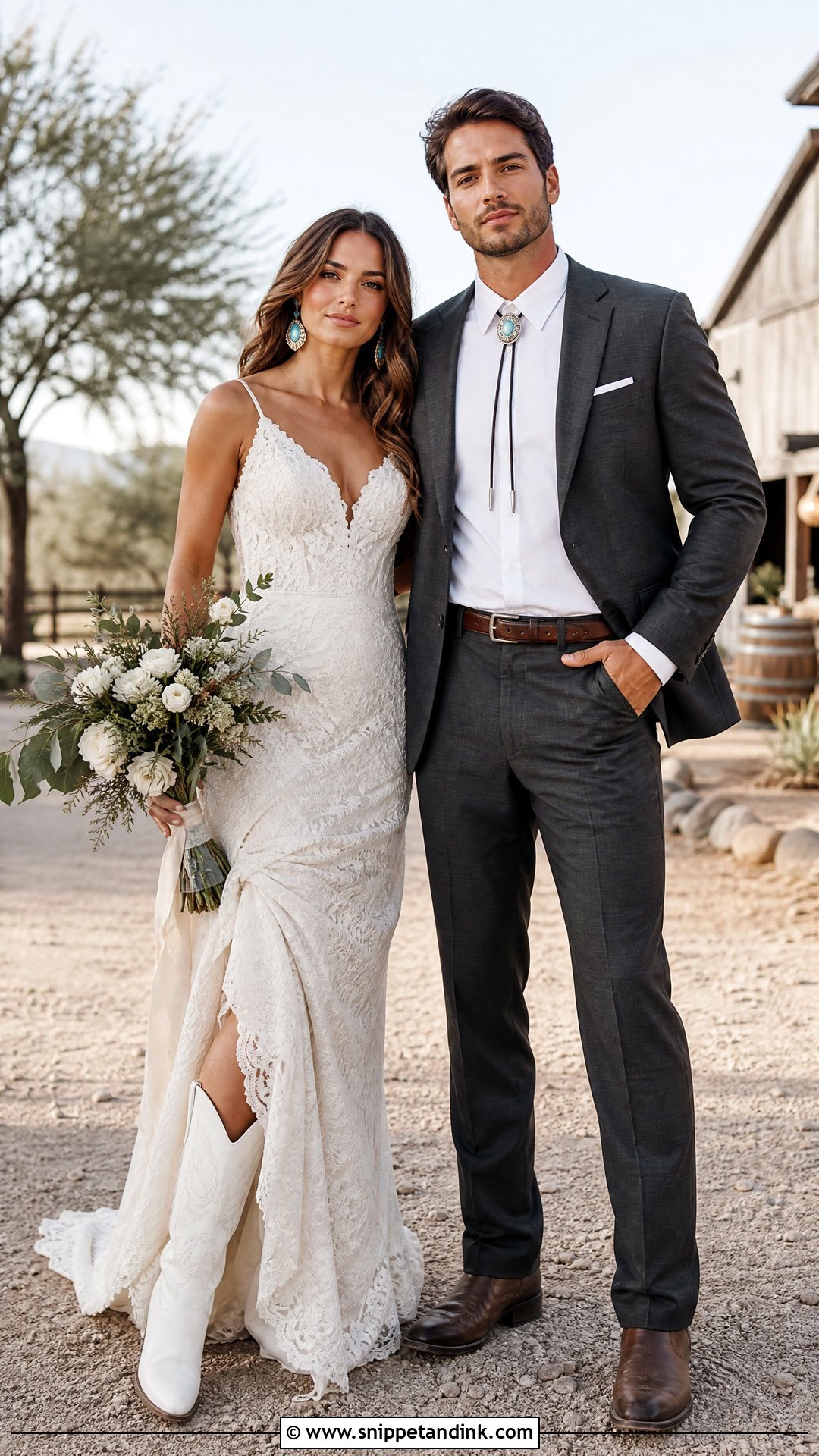
Western weddings work when the rustic details stay selective. A simple lace or crepe gown with a fitted waist and a manageable train, clean white or ivory boots, turquoise-style earrings and a structured bouquet. Beside it, a dark navy, brown, or charcoal suit, a crisp shirt, a leather belt, dress boots and a felt hat if the venue suits. Trousers worn over boots need a longer hem and a slightly wider leg opening, so I hem them with the boots on. A bolo tie can replace a standard tie if the dress code allows.
23. Two Suit Wedding Couple Outfit
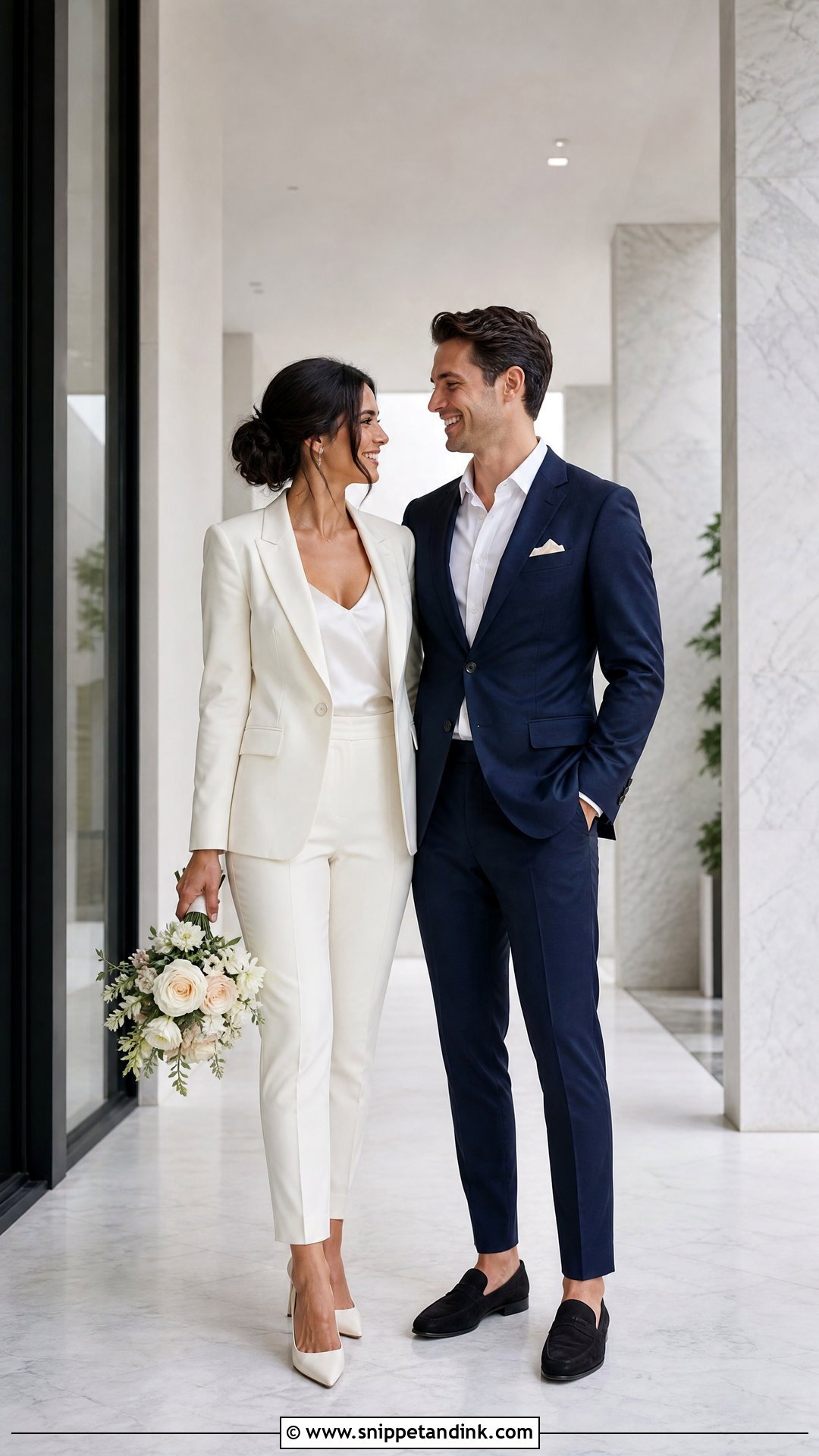
Two-suit couples look sharpest when the suits share construction rather than color. I match lapel width, fabric weight and trouser cut, then let the colors differ: ivory with a silk camisole or crisp shirt on one partner, navy, black or charcoal on the other. Mismatched lapel widths are the detail I notice first in photos, because they make one suit look a decade older. Loafers, pumps or lace-ups by preference. Shared boutonnieres, matching metal accessories or related pocket squares tie them together; identical suits only if that’s the intended statement.
24. Two Gown Wedding Couple Outfit
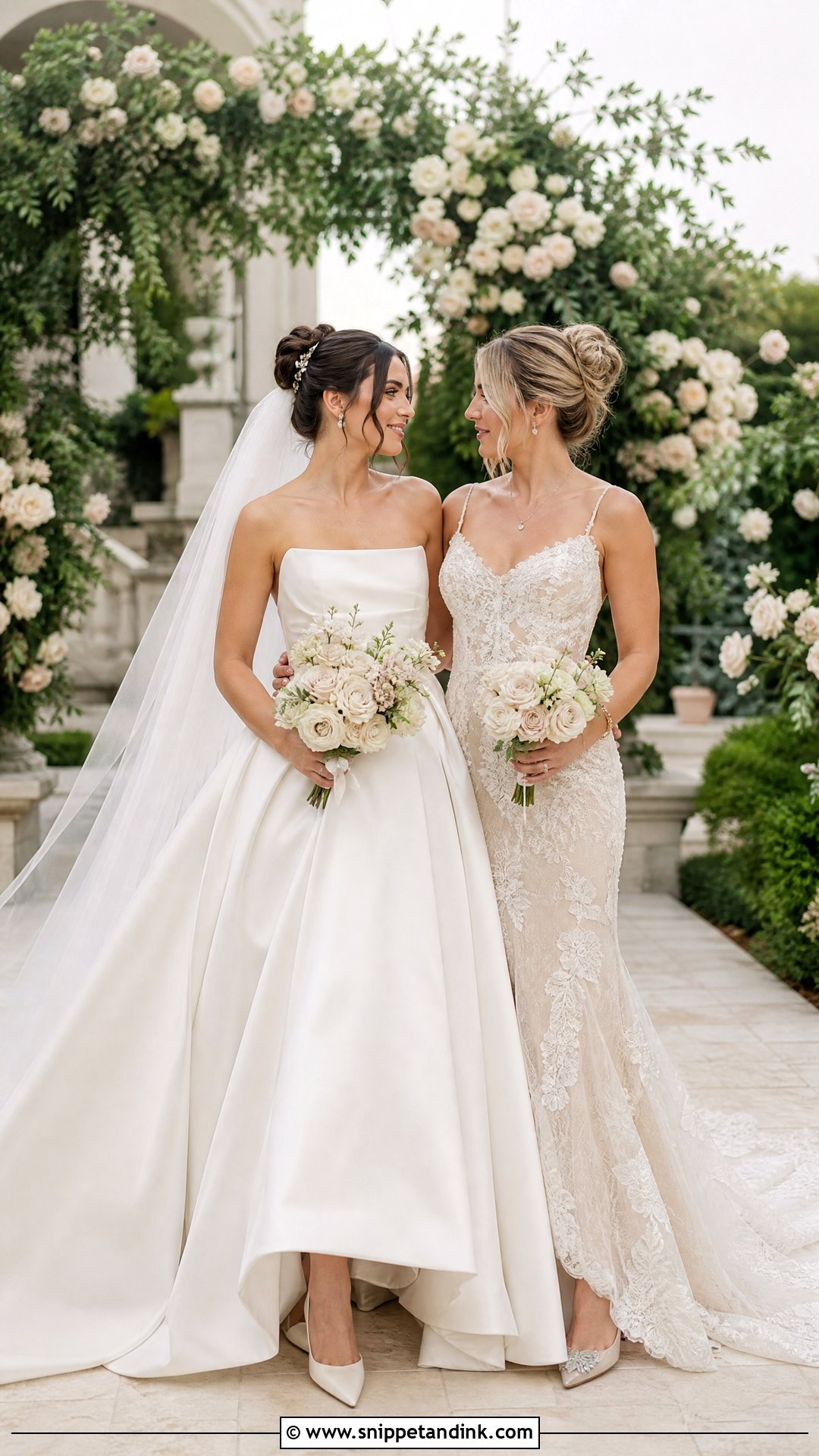
Two gowns coordinate through silhouette, fabric or color, and the thing I’d watch is formality. A cathedral-length satin ball gown beside a casual midi looks like two different weddings. Keep both in an ivory, soft white, champagne or blush range and let the shapes differ: a structured satin ball gown with a fitted lace or crepe dress, for example. Related veils, metal tones, bouquets or jewelry link them. Each person should choose a neckline that feels comfortable, since they’ll be standing side by side in every portrait.
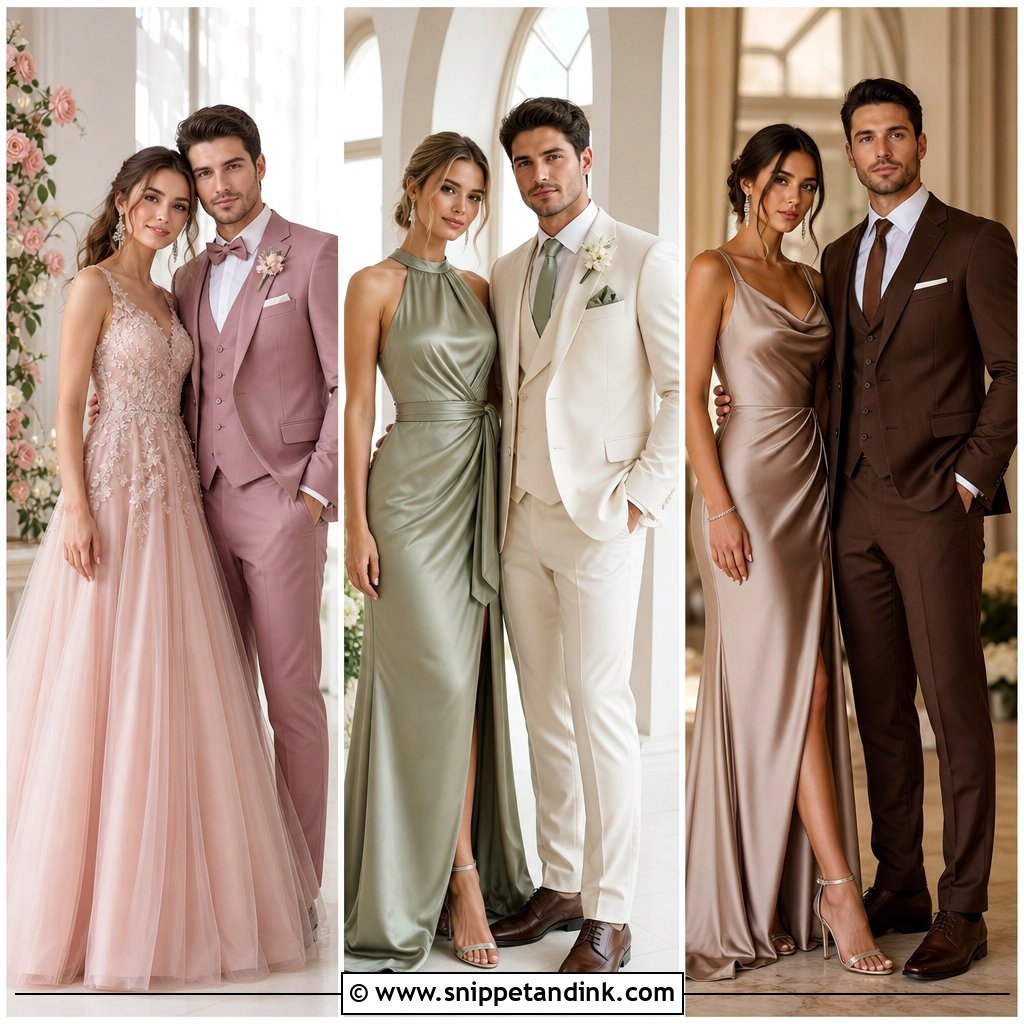
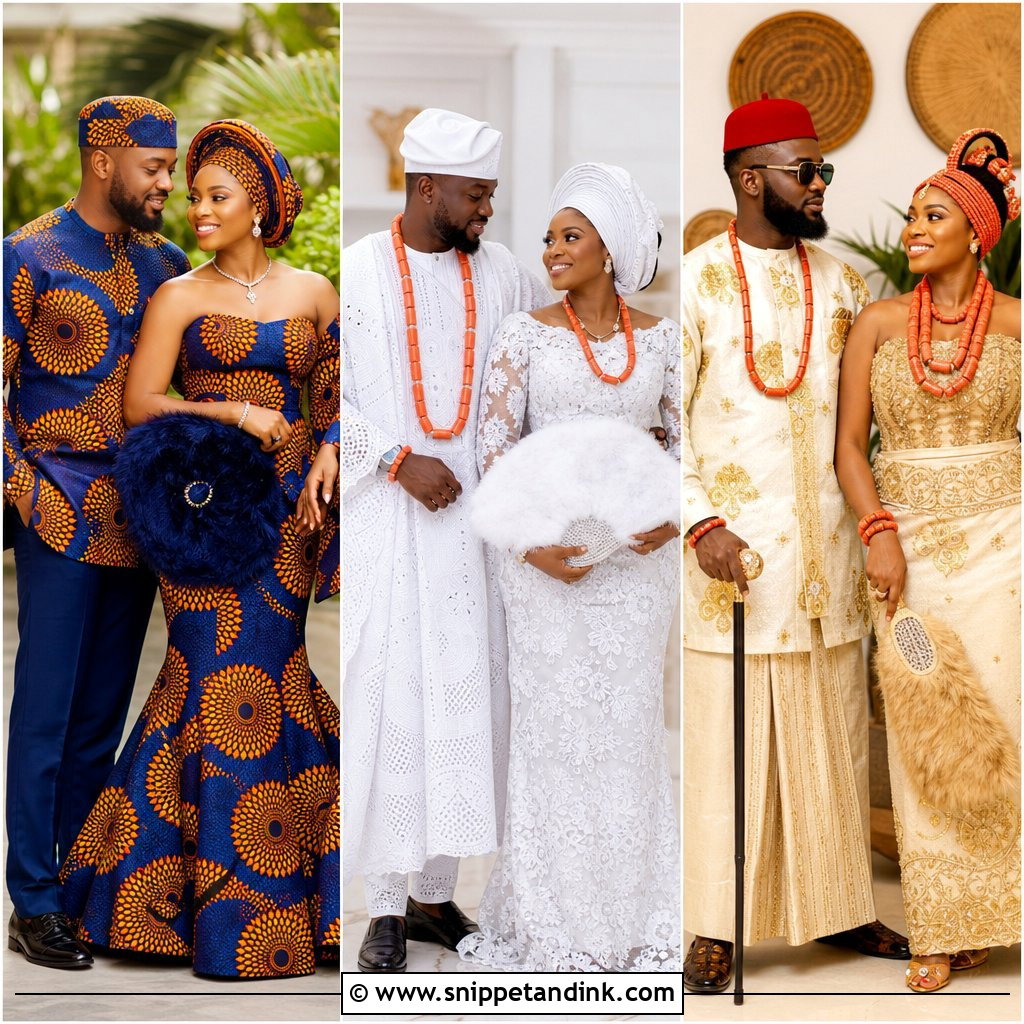
25. Mature Wedding Couple Outfit
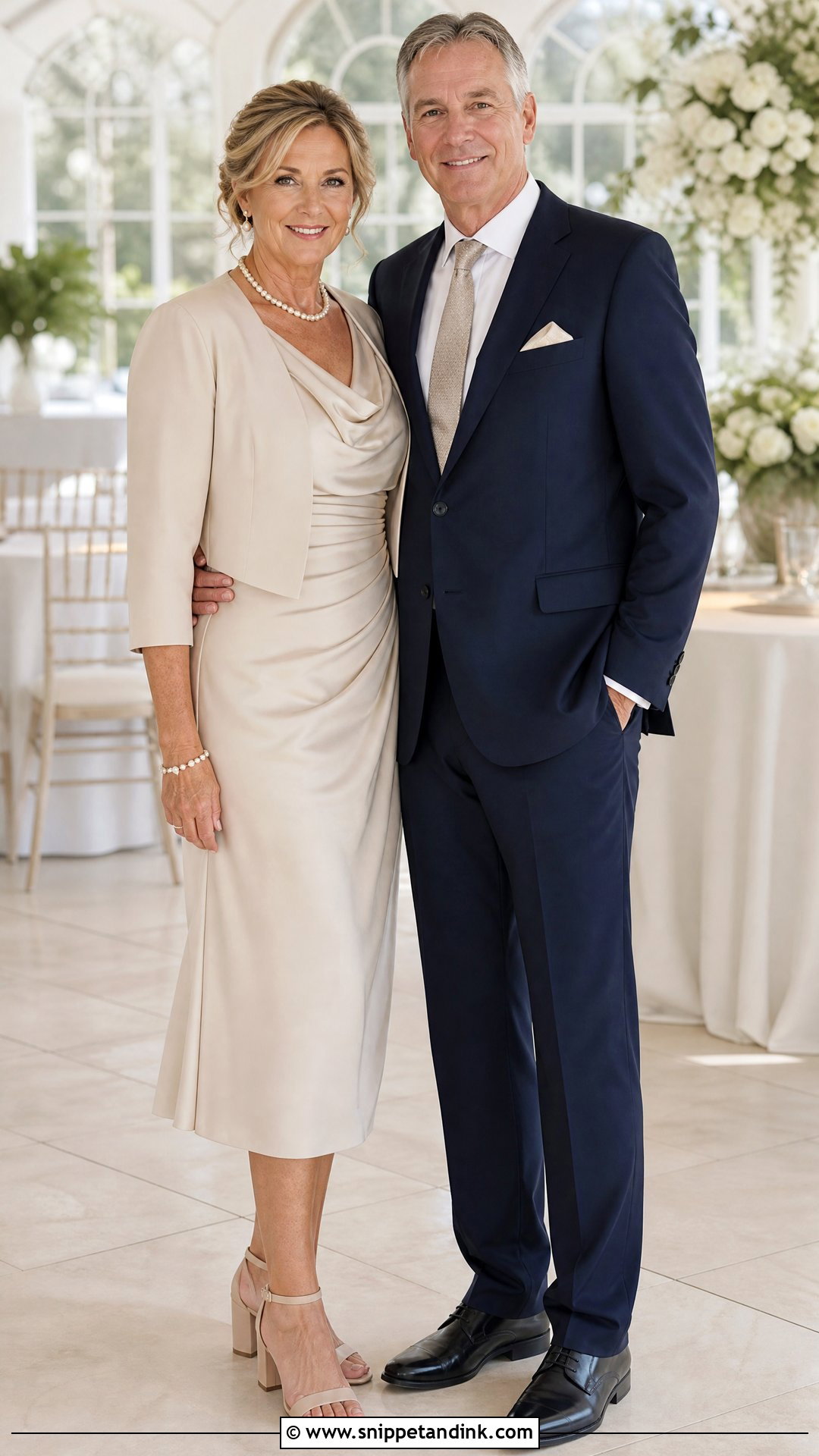
Tailoring and comfort come first for older couples, and confidence follows. A softly draped midi or full-length dress in ivory, champagne, blush or pale blue, supportive block heels, refined jewelry and a structured wrap or matching jacket. For the partner, navy, charcoal, taupe or cream in crepe, jacquard or a lightweight wool, with a quality shirt and a textured tie. I often choose a jacket with a softer, less padded shoulder, which is more comfortable for a long day and looks more natural on a mature frame. A shared accent color in the bouquet and pocket square connects them.
Which Outfit Gets Ordered First, and Why
The gown or lehenga almost always comes first, because it has the longest lead time and sets the palette. Many made-to-order gowns and heavily embroidered bridal outfits take several months; the suit can follow once the color is fixed. Timelines vary a lot between makers, so ask each of them directly.
- Choose and order the bridal outfit, then get a swatch or a clear daylight photo.
- Order a made-to-measure suit, tuxedo or sherwani a few months out; a rental or off-the-rack suit can follow later.
- Book alterations for both outfits so the final fittings fall in the last two to three weeks.
- Do one try-on together in full outfits, shoes included, before the wedding week.
A Long Day in a Jacket, and When It Can Come Off
At most weddings the person in the suit keeps the jacket on through the ceremony, portraits and formal entrances, then takes it off once the dancing starts or once the hosts do. For summer, I recommend a half-lined or unlined jacket, a cotton undershirt to keep the shirt dry, and a second shirt for the reception if the day is very hot. If a waistcoat is part of the look, make sure it fits well enough to stand alone, because it will be in every dance-floor photo.
Two Outfits Linked by a Single Shared Thread
The couples who look most connected in their photos usually share one or two details, not everything. Start with venue, season, dress code and how comfortable each of you needs to be, then pick a shared element: color, texture, embroidery, metal tone or simply matching formality. Compare the fabrics together in daylight and picture them in full-length portraits. Then get both outfits tailored, because fit is what makes simple clothes look expensive. Ball gown and tuxedo, cultural attire, two suits, two gowns or relaxed beach clothes all work when both of you still look like yourselves.
You'll Like These Ideas:


Leave a Reply