
More of my brides now walk in asking for trousers instead of a gown, and a suit is a far more exacting garment to get right than most people expect. A dress can hide a lot under volume. A suit shows every millimetre of fit at the shoulder, the sleeve and the hem, so the cut matters more than the trend. Below are the suit styles I’d actually put in front of a bride, from tuxedo lapels and cape blazers to corset layers and jumpsuits, with notes on who each one flatters, what it needs from the tailor, and where it tends to let people down.
Shoulders First, Hems Last: The Order I Fit a Bridal Suit
When a bride brings me a suit, I judge it in a fixed order, because some faults are cheap to fix and some aren’t worth fixing at all. Buy the size that fits your shoulders and upper back, then let the tailor handle everything below.
- Shoulders. The seam should end at your shoulder bone, with no dent below it and no fabric collapsing past it. This is the alteration I’d never rely on.
- Jacket closure. Buttoned, the front should lie flat with no X-shaped pull across the stomach. Small pulls can be eased; deep ones mean the next size up.
- Sleeves. Shortening is routine, unless the cuffs have working buttonholes, which makes it harder and sometimes impossible from the cuff end.
- Trouser seat and waist. Taken in or let out by a couple of centimetres without trouble, provided there’s seam allowance inside.
- Hem. Last, and only with your wedding shoes on. A change of heel height later means a new hem.
I’d plan two or three fittings and start them around six to eight weeks before the wedding, so the final one lands a couple of weeks out. Wear the camisole or corset you’ll actually marry in to every appointment. A thicker layer underneath changes how the jacket closes.
1. White Tuxedo Bridal Suit
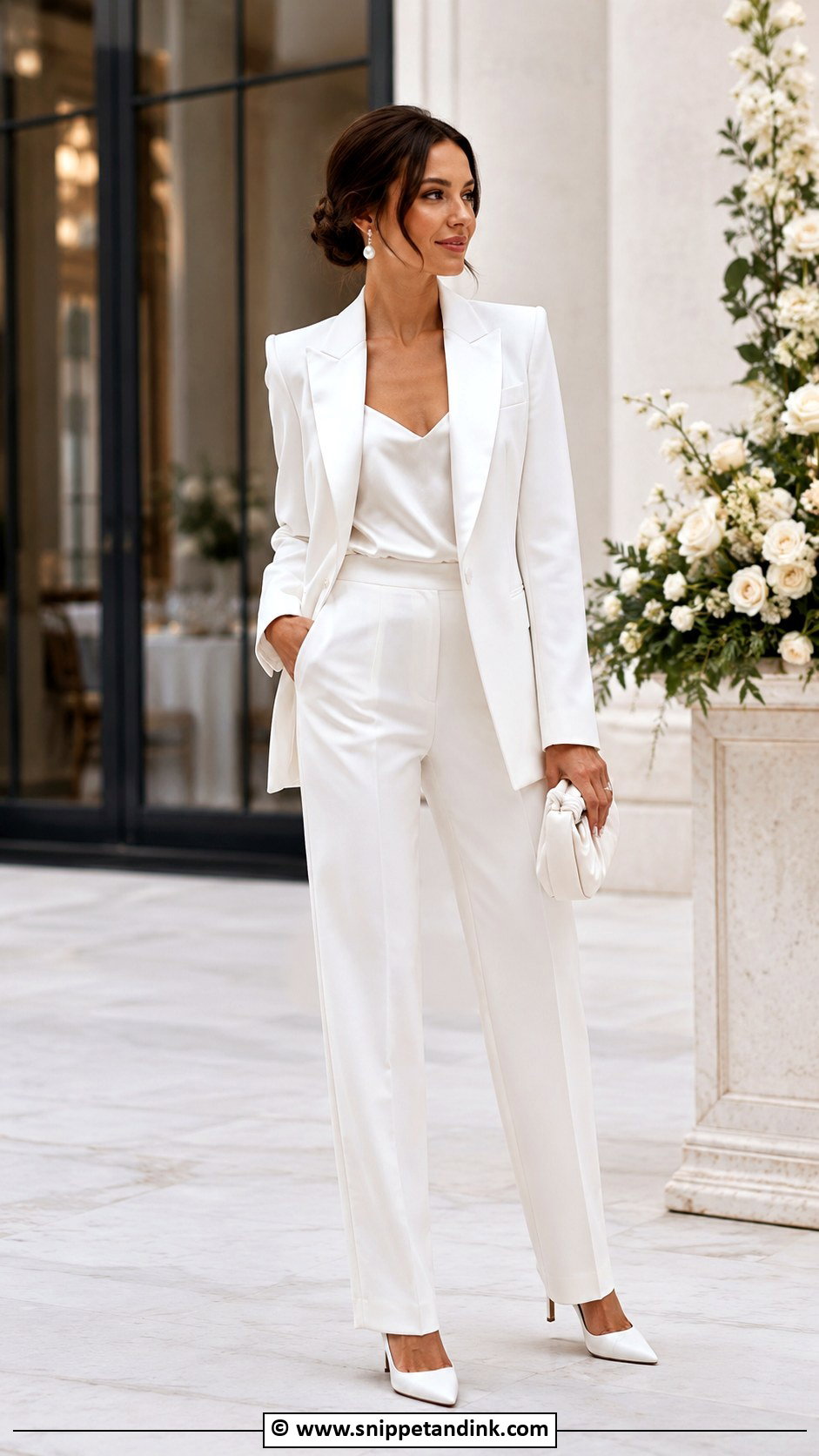
A white tuxedo bridal suit lives or dies on the shoulder seam. When I fit one, I check that the seam ends exactly at the shoulder bone, because a tailor can take in a waist and shorten sleeves easily but rebuilding a shoulder is costly and rarely perfect. Satin lapels over a silk camisole or a clean bodysuit keep the neckline simple, and pointed white pumps carry the trouser line down to the floor. City halls and hotel venues suit it well. If you’d like a little more ceremony, a detachable tulle overskirt or a long veil clipped low at the back adds it without changing the suit itself.
2. Ivory Pantsuit With Lace Camisole
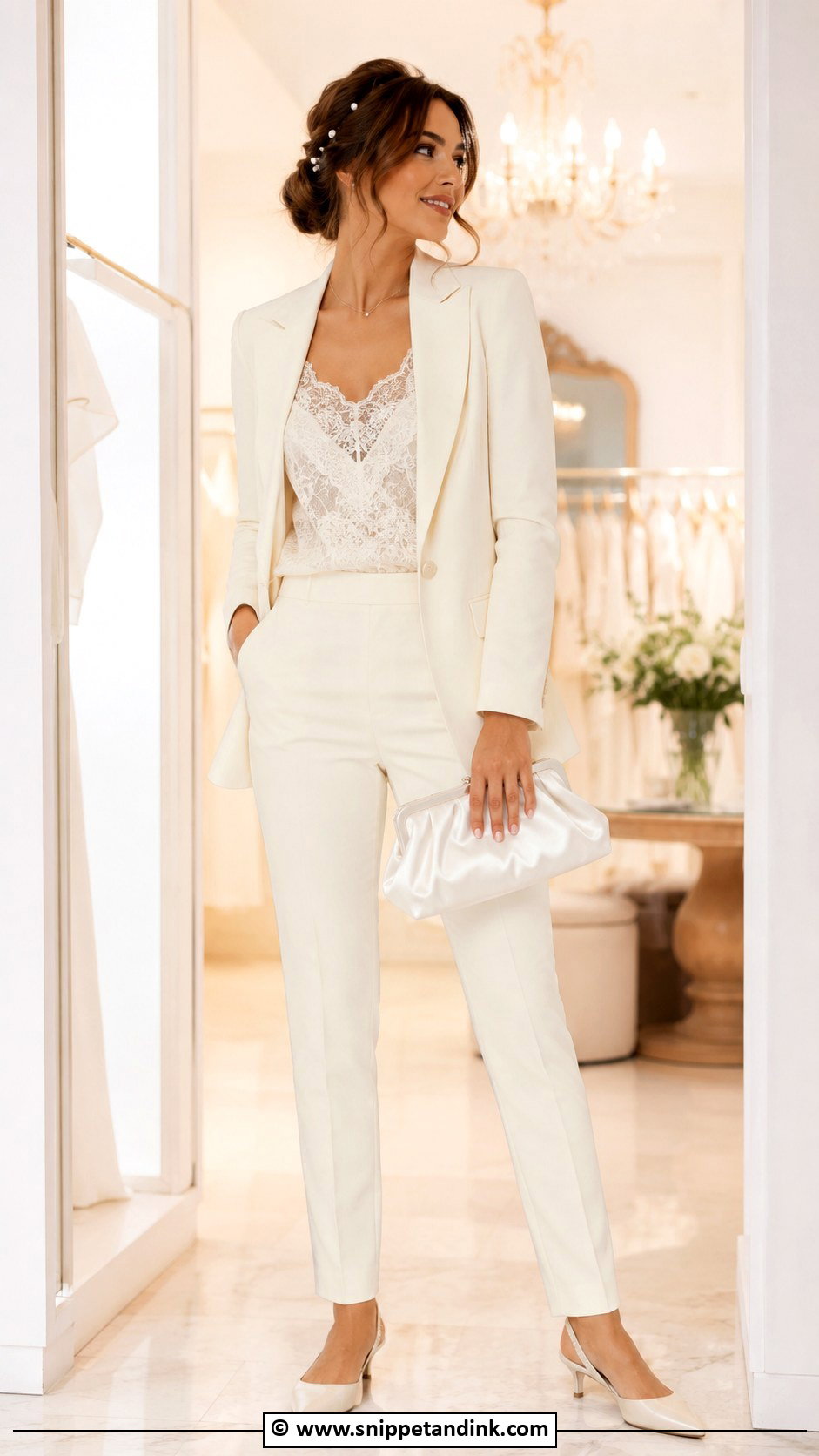
The lace camisole is what makes an ivory pantsuit read as bridal rather than smart. I always ask brides to try the camisole with the jacket open, buttoned and taken off, because lace edging that looks pretty on its own can bunch under a lapel. Crepe or a satin-back fabric breathes better in summer; a wool blend holds its shape through a long winter day. Ivory slingbacks and a few pearl pins in the hair are enough. It sits comfortably at garden ceremonies and small civil weddings where a full gown would feel like too much.
3. Satin Bridal Pantsuit
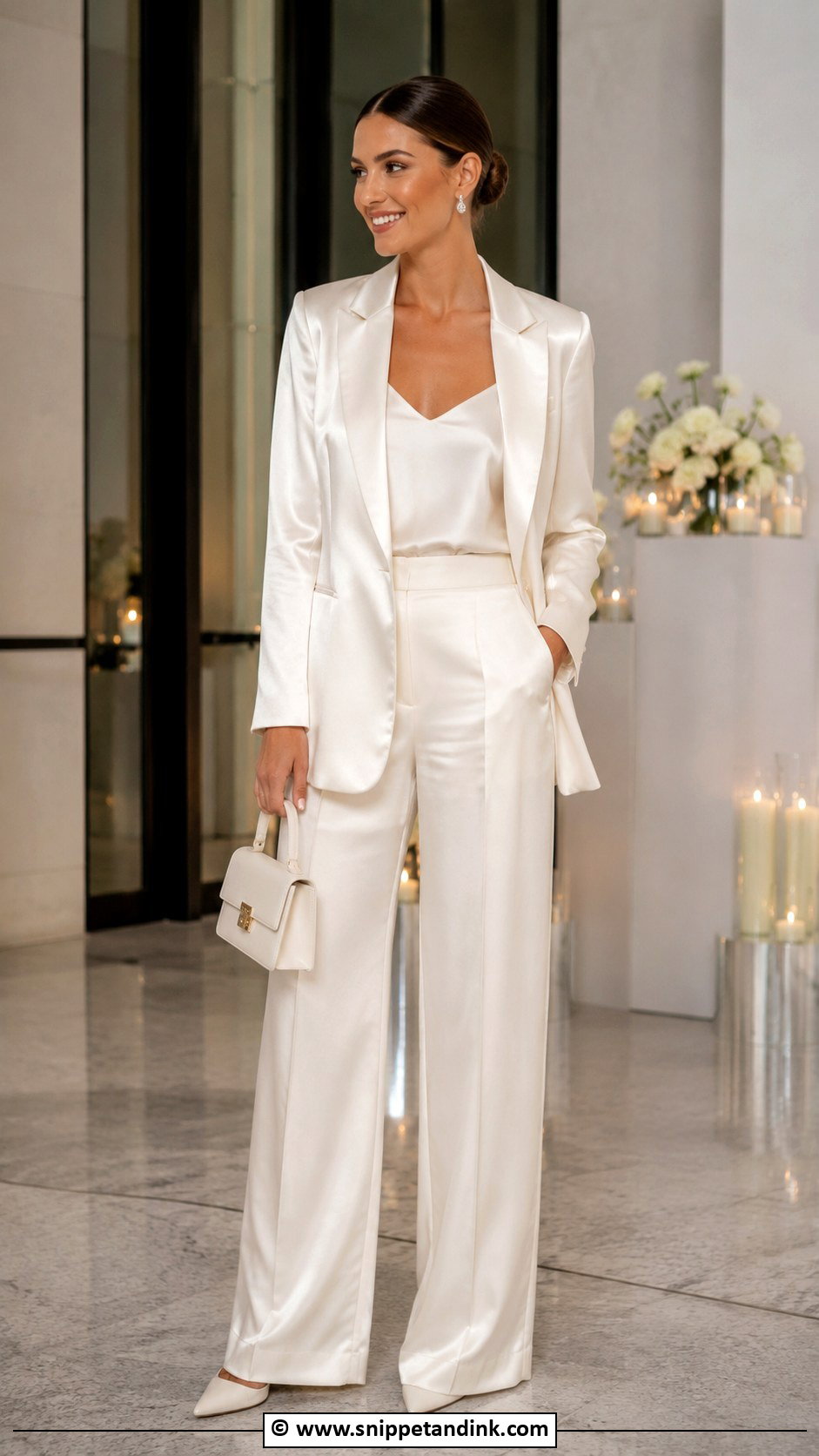
Satin is the fabric I warn people about most. A satin bridal pantsuit catches light in ivory, champagne or pearl white, but thin satin shows every crease from sitting in a car and clings across the hips. Ask for a heavy duchess satin or a satin crepe, which drapes instead of sticking. Wide-leg trousers and a clean-necked blazer let the sheen do the work, so keep jewellery to one piece. It suits evening receptions best, where warm lighting flatters the shine.
4. Bridal Suit With Wide Leg Pants
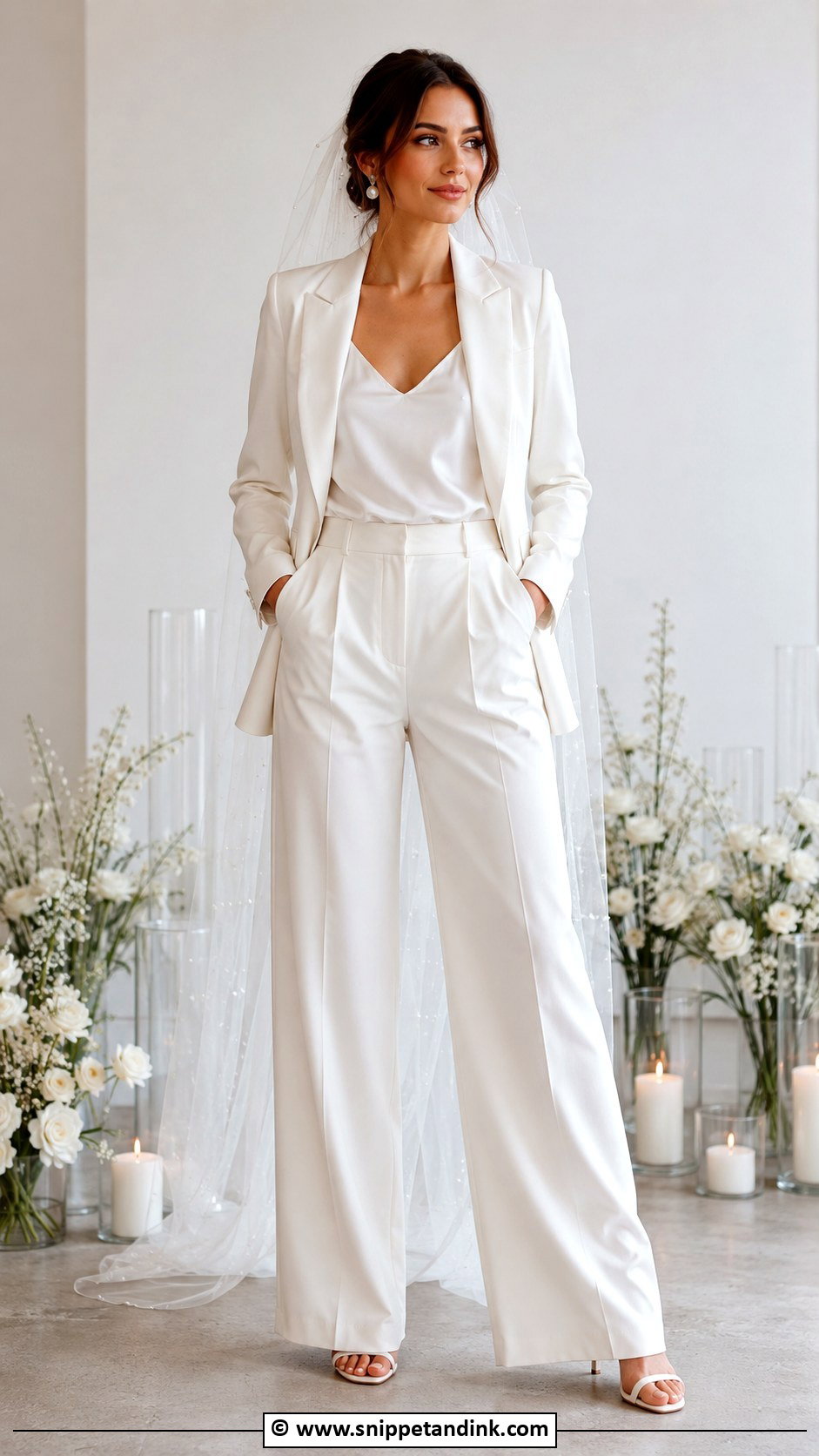
Wide-leg trousers move like a skirt when you walk, which is why brides who miss the swish of a gown often settle here. The proportions need care, though. On petite brides I keep the waist high and the blazer shorter so the trousers don’t swallow them; taller brides can carry a longer jacket and soft pleats. The hem should almost touch the floor in your actual wedding shoes, so bring them to every fitting. A veil or sculptural earrings then make it unmistakably bridal.
5. Bridal Suit With Cape Blazer
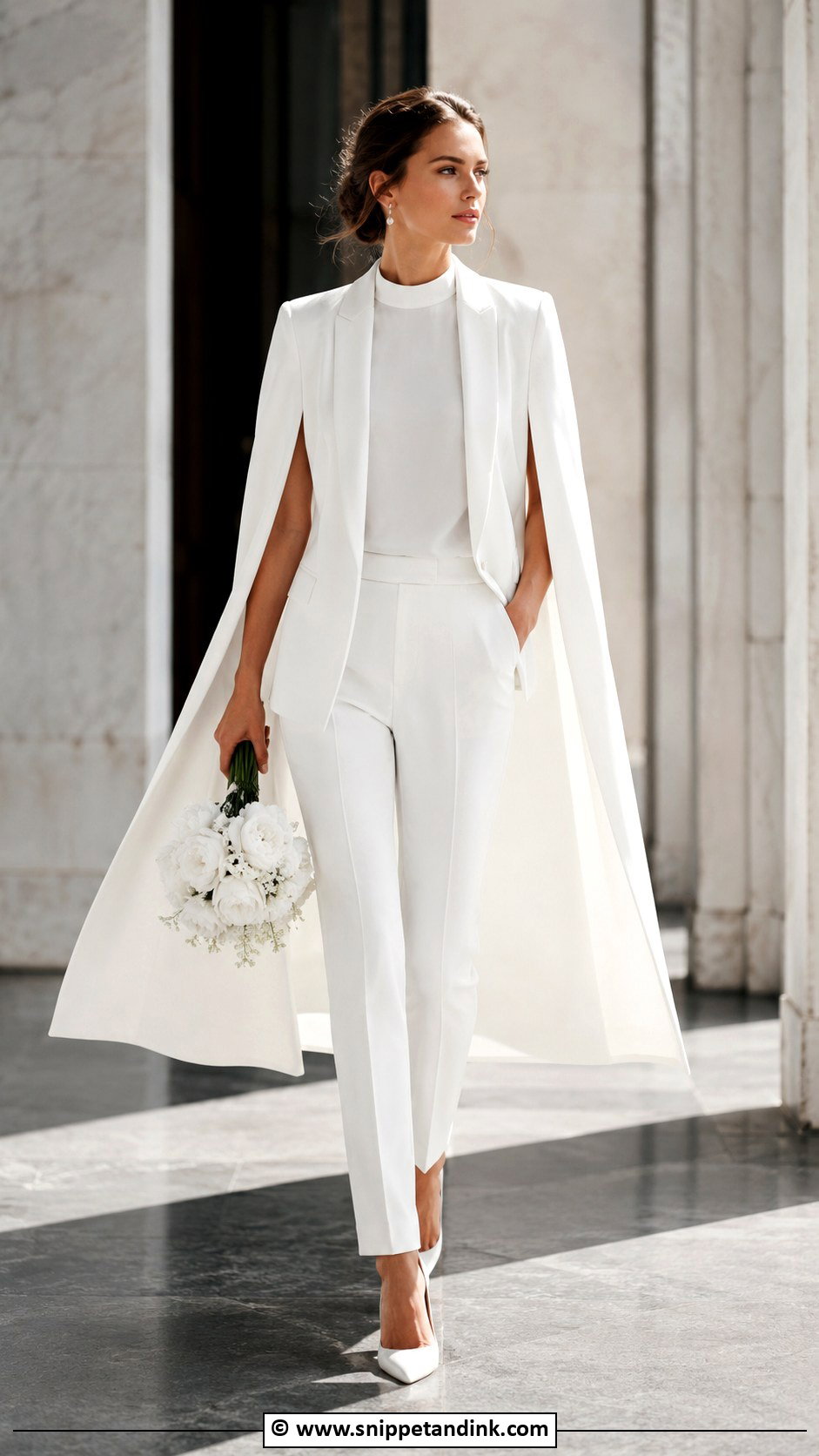
A cape blazer gives you the movement of a train from the back while the front stays sharp. Some capes are stitched into the shoulder seams, others clip on as a separate layer, and I’d choose the detachable kind if you plan to hug a lot of people at the reception. Keep the trousers slim so the outfit doesn’t get top-heavy, and wear a simple bandeau or high-neck shell underneath. Your photographer will want the aisle walk from behind for this one. A low bun stops the hair from catching on the cape.
6. Lace Bridal Suit
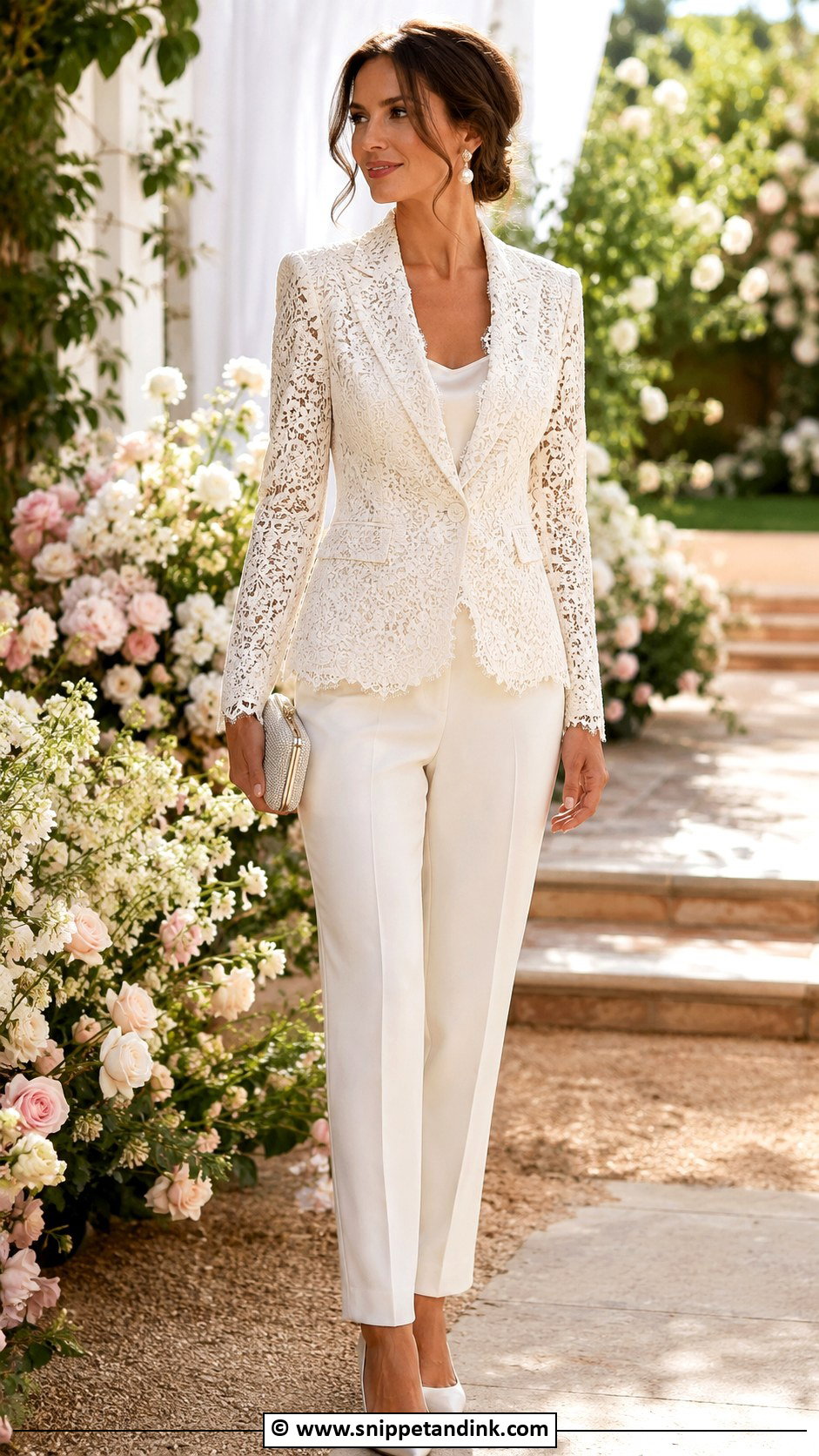
Lace and tailoring pull in different directions, so the trick with a lace suit is restraint. I prefer a lace blazer over a solid lining with plain crepe trousers, or matching lace trousers with a smooth top, rather than lace everywhere. Ivory lace over nude lining gives the pattern depth without showing skin. Check the lace at the inner thigh and underarm, where it rubs and pills fastest. With ornate lace, keep the hair quiet: soft waves or a sleek bun.
7. Bridal Suit With Train
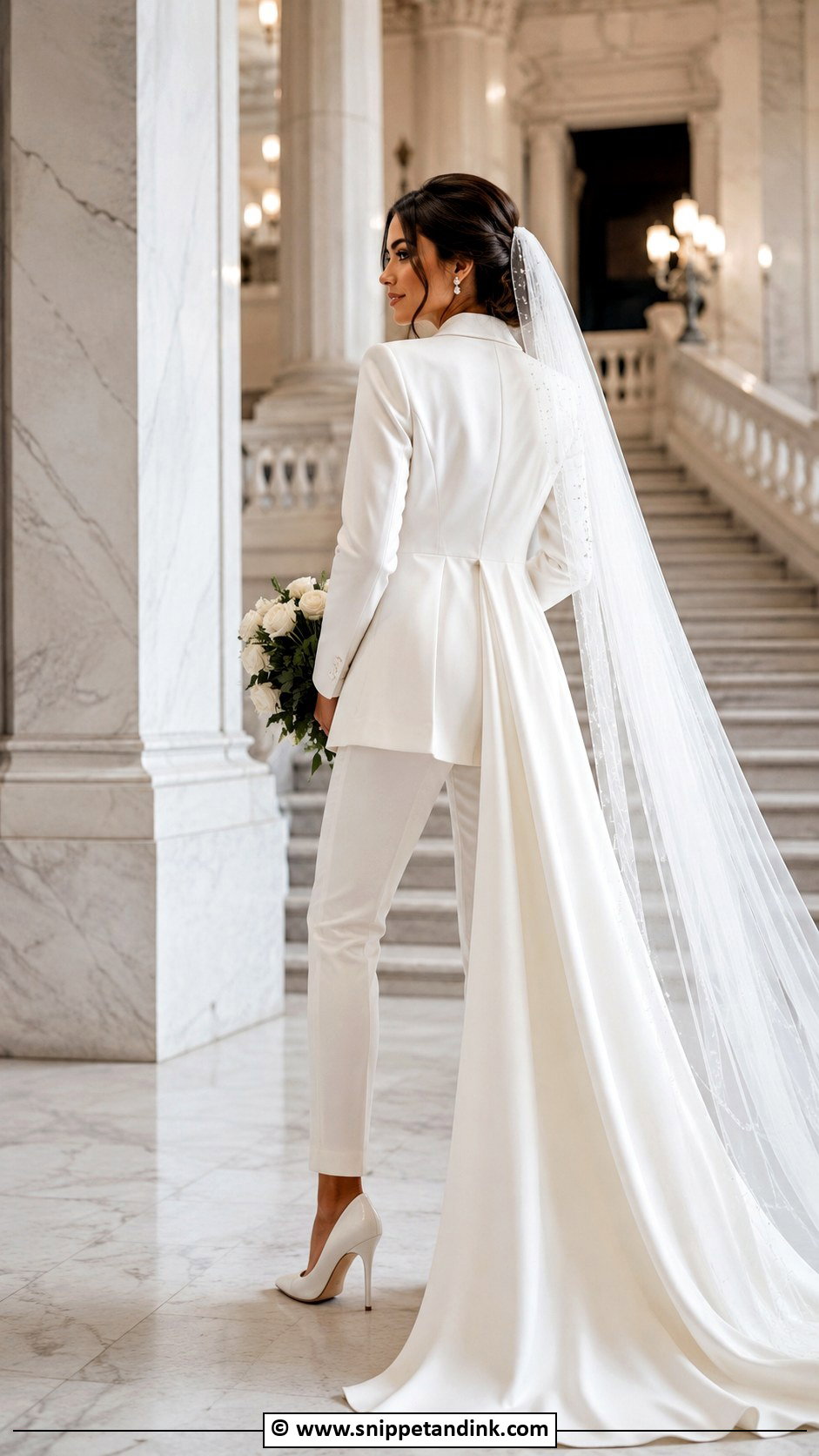
Brides who want the power of trousers and the entrance of a gown usually end up with a train. It may extend from the back of the blazer, attach at the waist or fall from a detachable overskirt. My practical question is always who removes it and when, because a waist-attached train needs a hidden hook or snap system your attendant can work in seconds. Keep the trousers slim or straight under it and define the waist with a fitted bodice. Then take it off before the dancing starts.
8. Double Breasted Bridal Suit
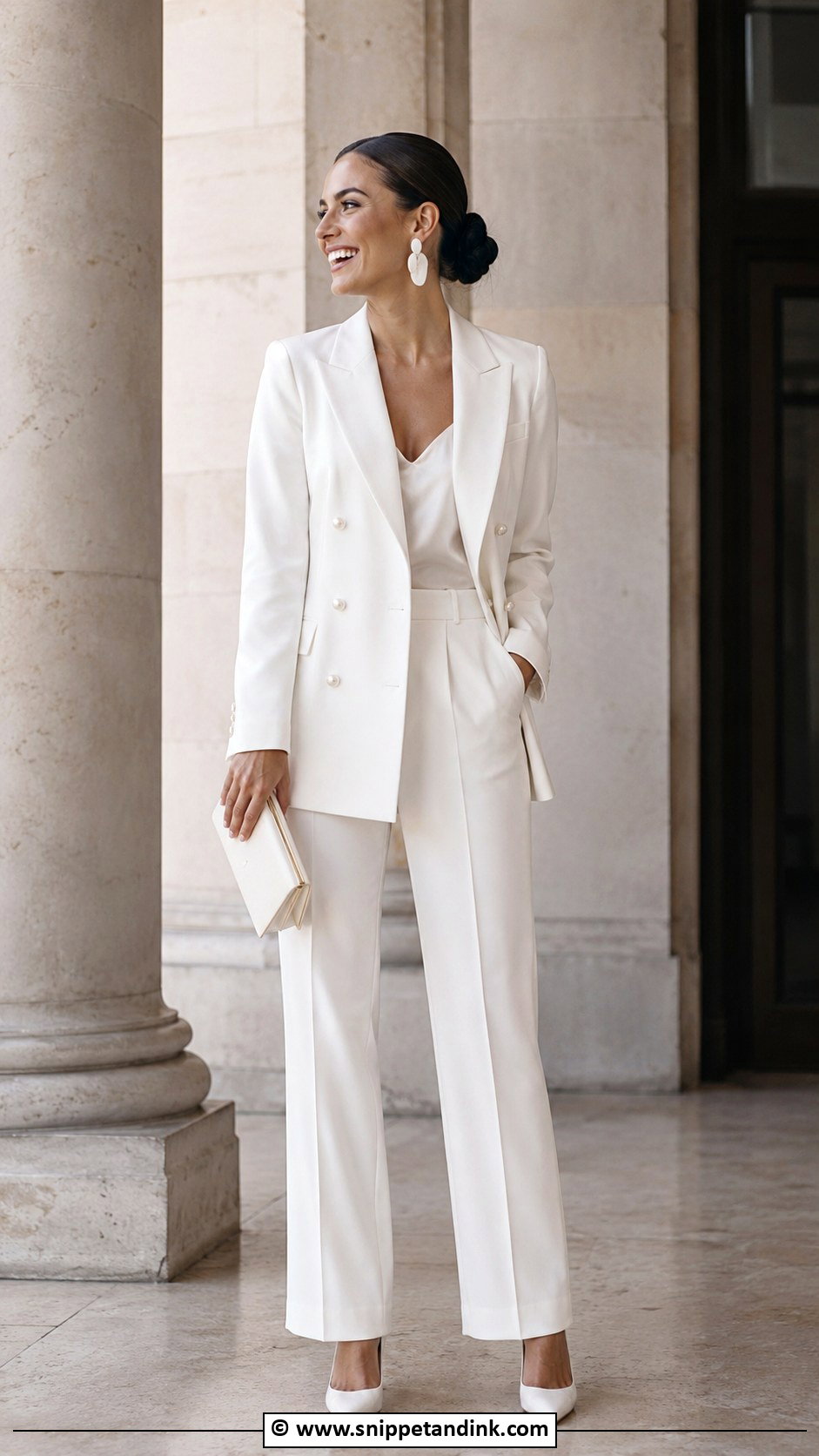
Double-breasted jackets are cut with more overlap, so they add width across the front. That suits slim or straight figures and can feel heavy on a fuller bust, where I’d steer you to a single-breasted cut instead. Worn buttoned with nothing showing, it looks very clean; a silk camisole underneath is kinder for a long day. Gold or pearl buttons are an easy swap a tailor can do. Ask for the waist to be suppressed slightly so it doesn’t box out when you sit.
9. Bridal Suit With Corset Top
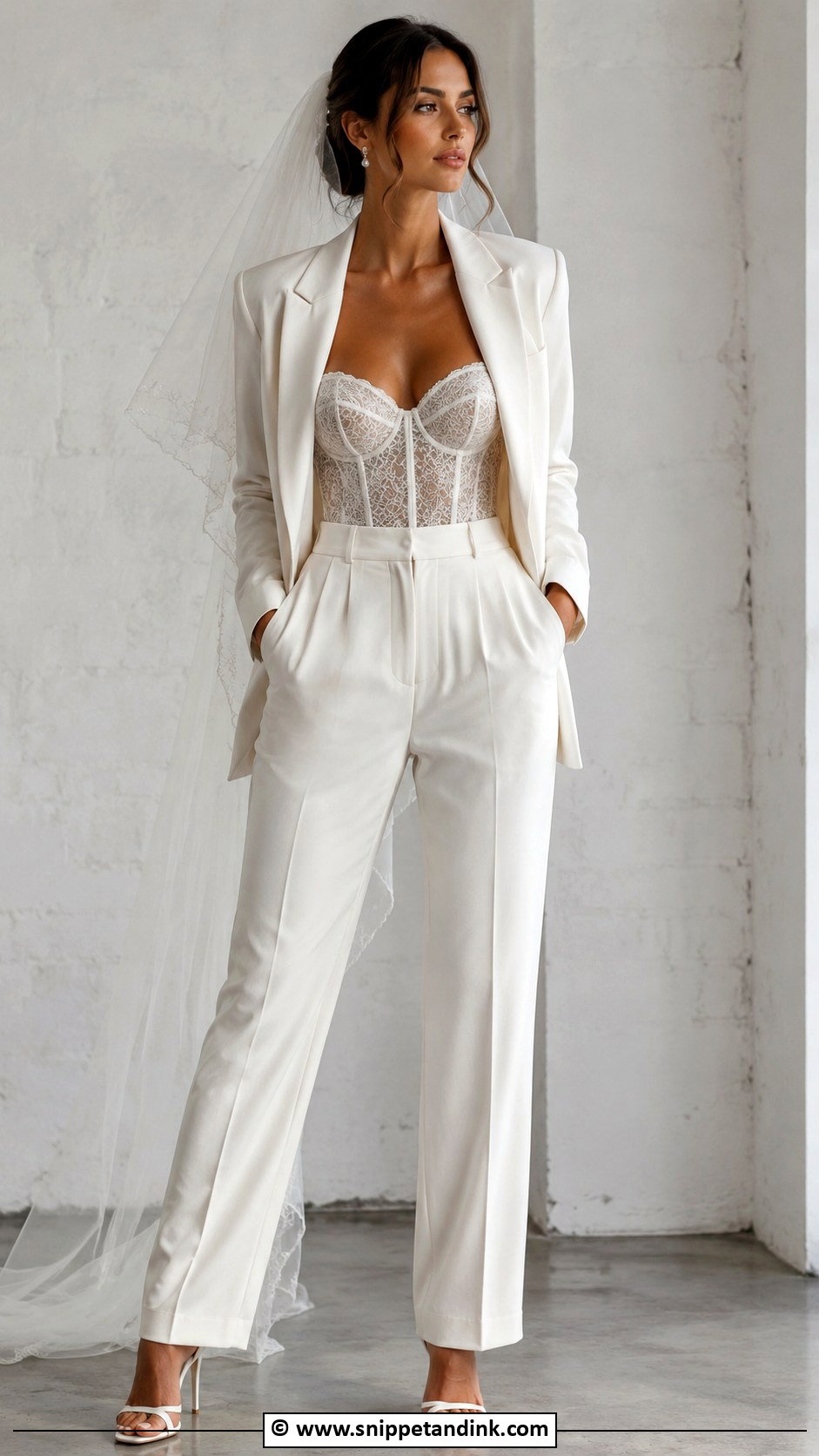
A corset top under an open blazer defines the waist that tailoring often hides. The difference between a comfortable corset and a painful one is the boning: spiral steel bends with you, plastic boning tends to dig in and warp after a few hours of sitting. Satin, lace or crepe all work, paired with high-waisted trousers for a long line. Sit down in it at the fitting, then lift your arms as if hugging someone. If it rides up or pinches, it’ll be worse by evening.
10. Bridal Suit With Vest
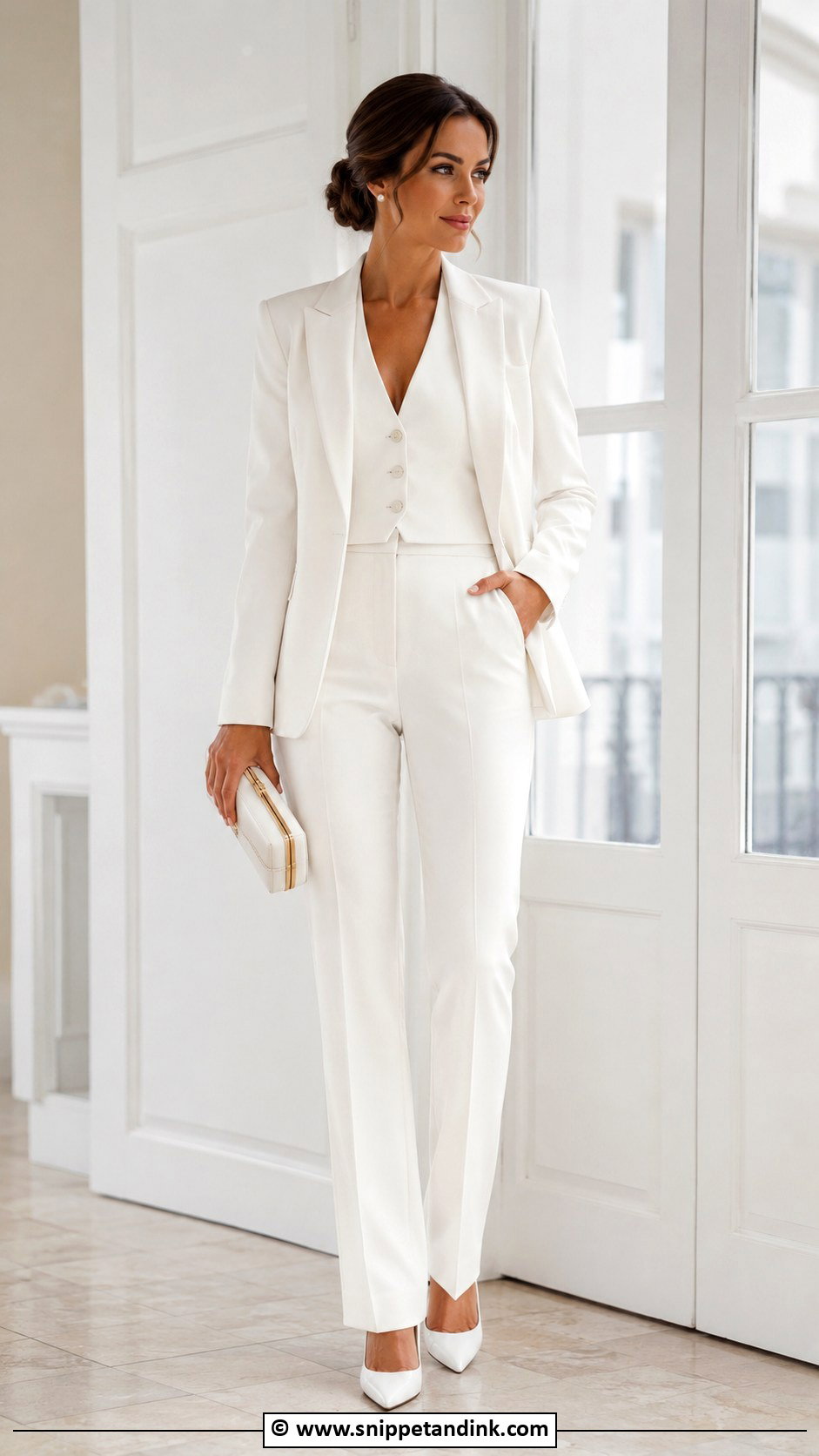
The vest is the useful piece here. Worn under the matching blazer for the ceremony, it becomes a sleeveless look for the reception once the jacket comes off, so you get two outfits without a change. A fitted waistcoat should end just over the trouser waistband with no shirt or skin showing between them when you raise your arms. Ivory crepe reads softer, white wool suiting sharper. A low bun and pearl studs keep it from tipping into office wear.
11. Bridal Suit With Blazer Dress
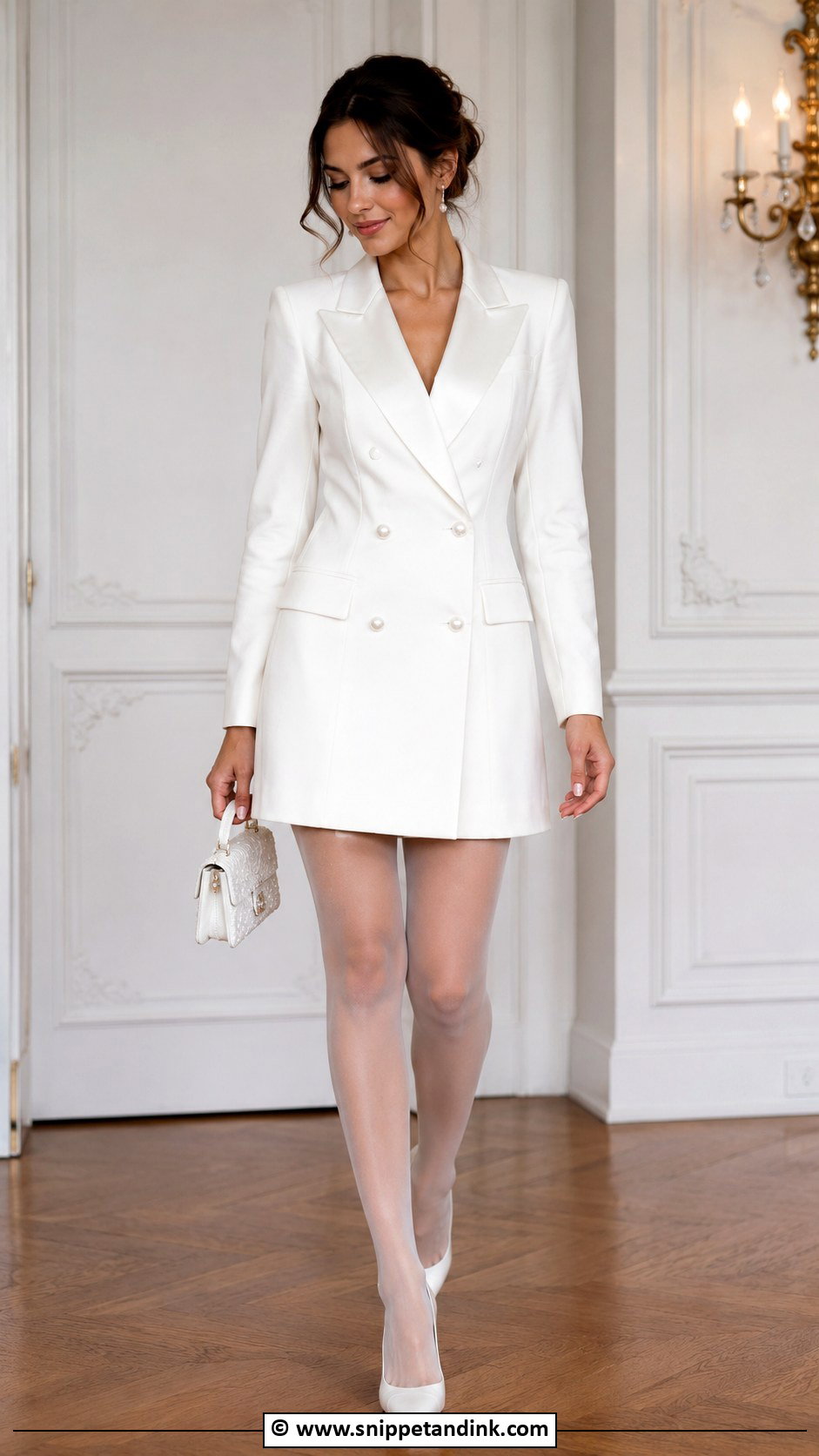
A blazer dress gives you tailored shoulders with a short hemline, and it’s the one I suggest most for a registry office or an after-party. Length is the thing to test: sit, climb a step and bend to pick something up in front of a mirror, because blazer dresses ride up faster than skirts. Tailored shorts underneath solve it if you’re unsure. A secure inner button or hidden snap at the overlap matters too. Pearl buttons or satin lapels make it bridal; sheer tights are optional.
12. Bridal Suit With Cigarette Pants
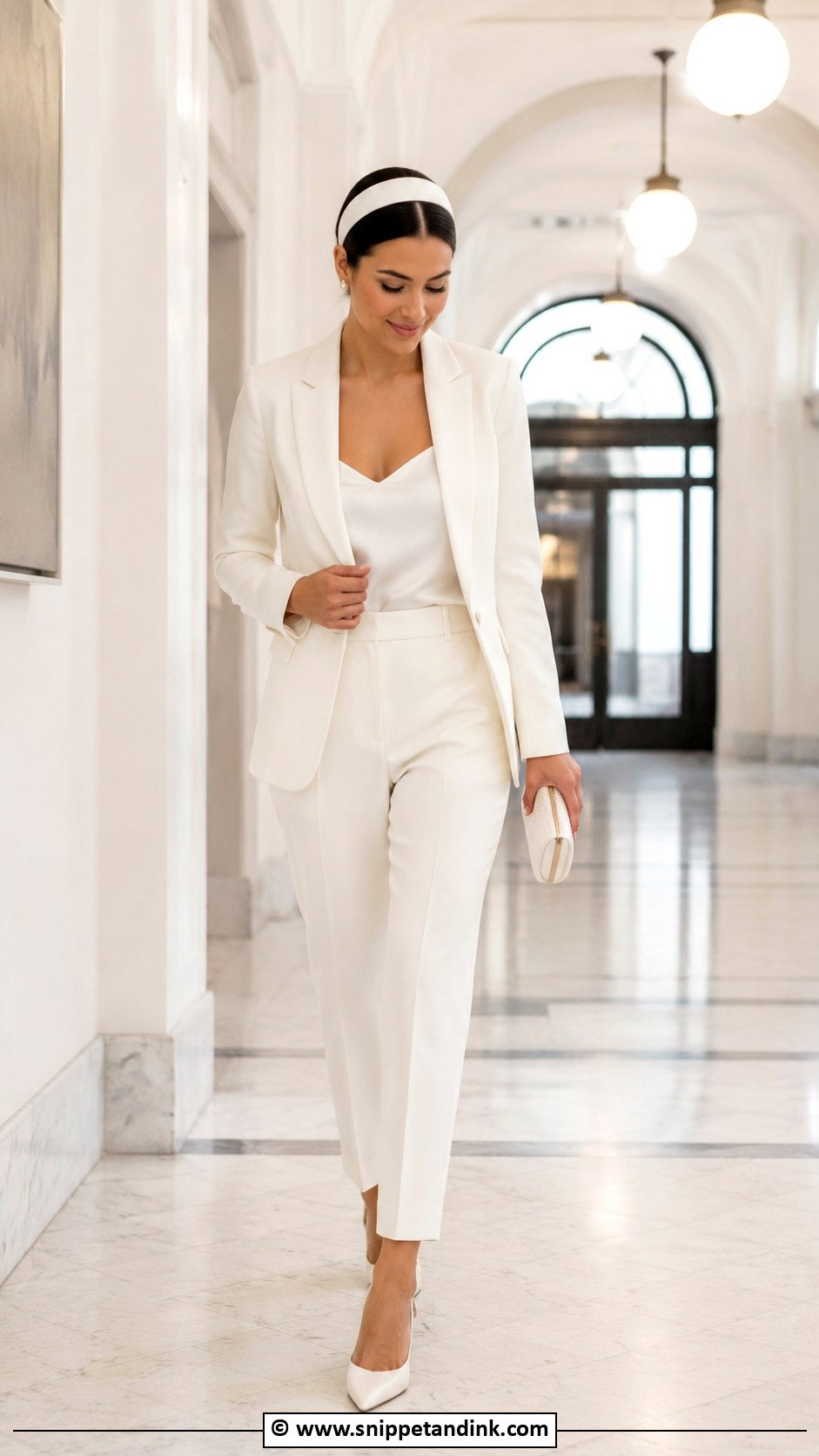
Cigarette pants are narrow and end just above the ankle, so the shoe becomes part of the outfit. Low-vamp pumps or slingbacks lengthen the leg, which is why I reach for this cut with petite brides. The hem is unforgiving: a centimetre too long and the trouser breaks over the shoe and looks borrowed. Keep it to a silk camisole, a tailored blazer and something small in the hair, such as a satin headband or short veil. It fits a courthouse or a lunch for twenty people.
13. Bridal Suit With Flared Pants
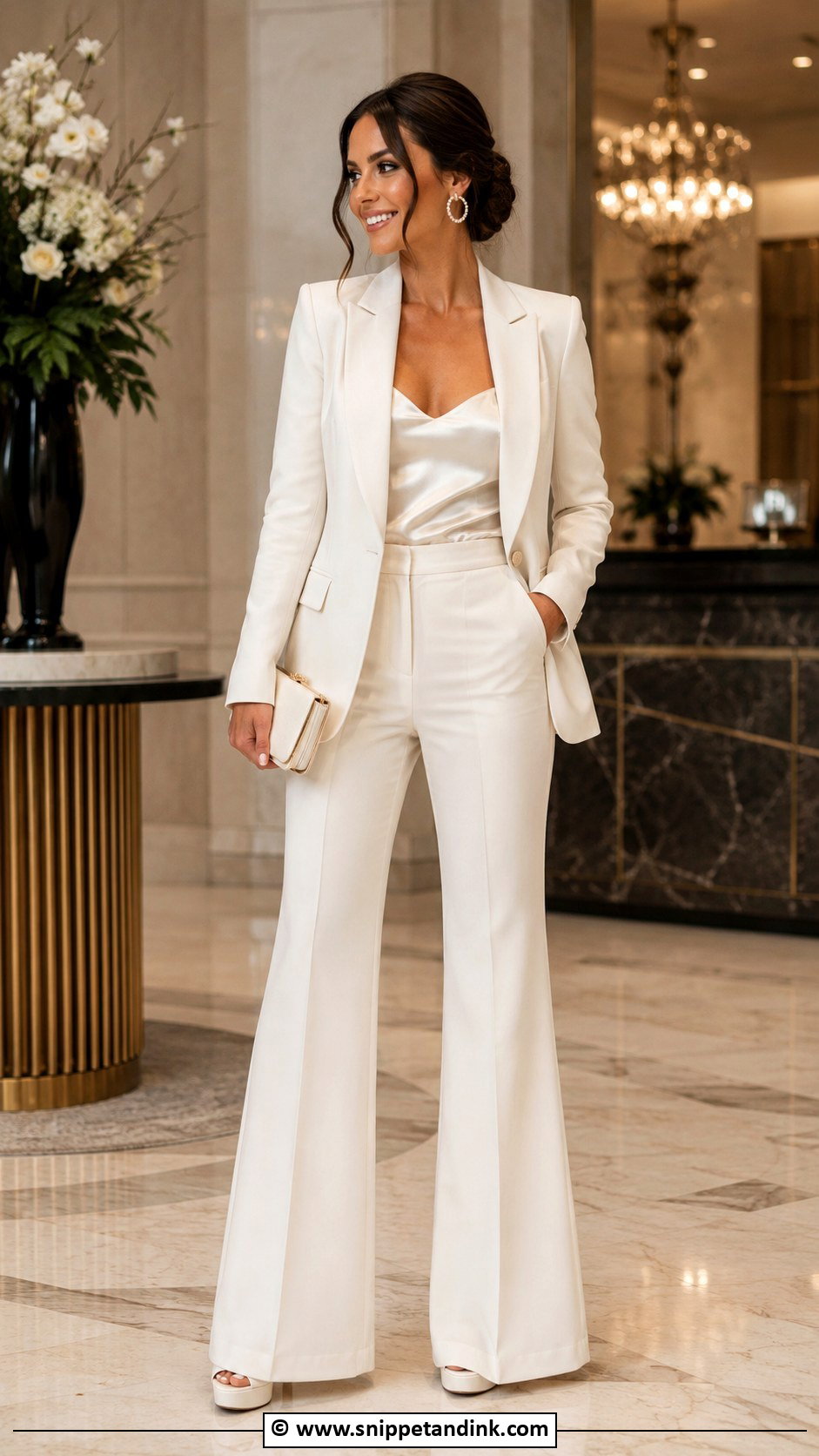
Flares balance wider hips and give a slightly seventies swing to the walk. Fabric decides whether they look fluid or stiff, so I look for ivory crepe, stretch suiting or satin-backed cloth that falls cleanly from the knee. Hem them for your exact heel height, since flares hide the shoe and a lower heel later turns them into a trip hazard. A fitted blazer or vest on top keeps the shape streamlined. Pearl hoops and a centre part suit the retro line.
14. Pearl Embellished Bridal Suit
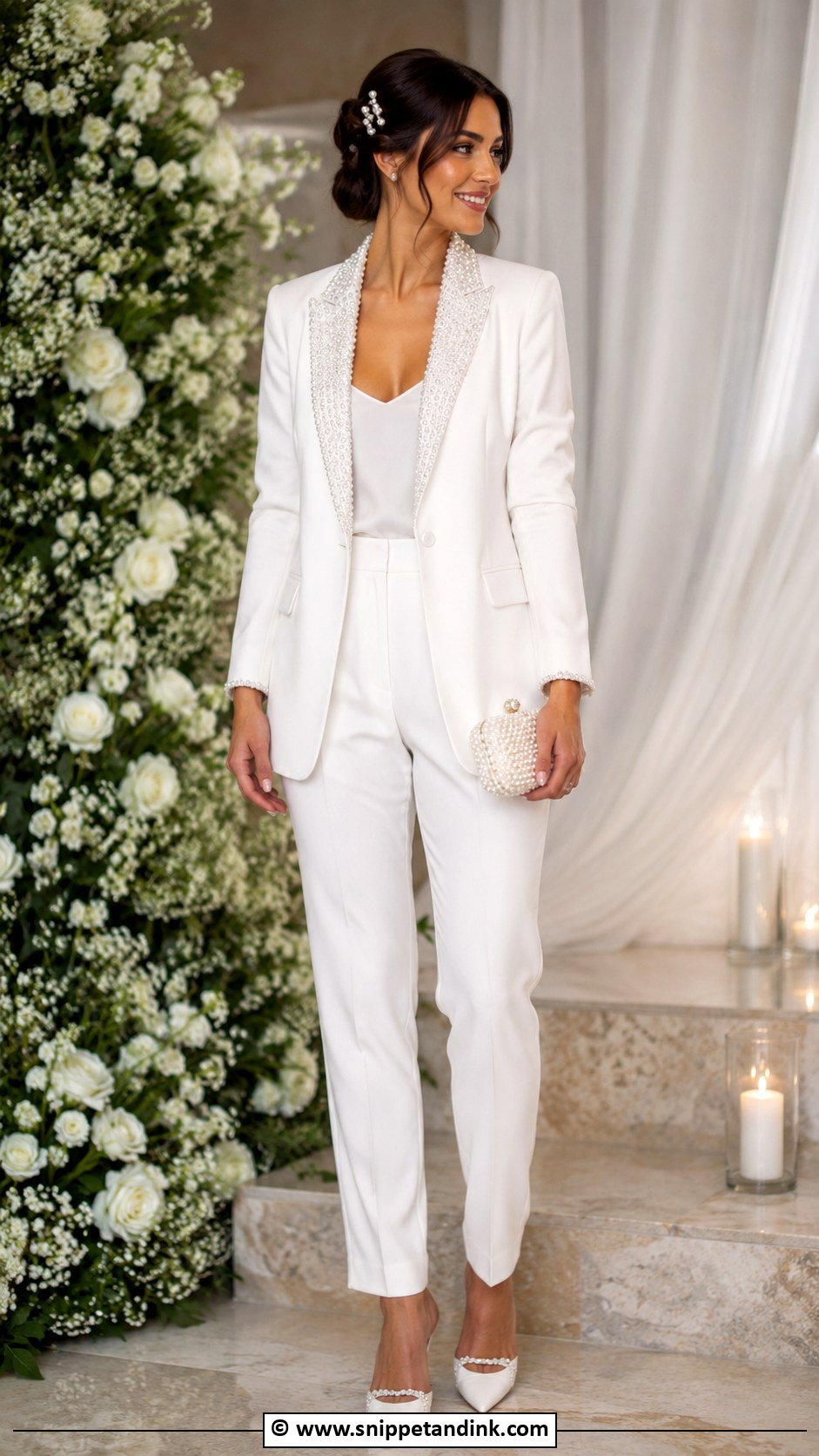
Pearls look best on a suit when they’re placed rather than scattered everywhere. I’d pick one zone, the lapels, the cuffs or a trouser side seam, and keep the rest plain. Hand-sewn pearls also snag on lace and knitwear, so think about who you’ll be hugging. Plain trousers, a smooth camisole and satin heels let the detail stand out. It gives a softer glow than sequins under evening light. One pearl accessory, a clutch or a few hair pins, is plenty.
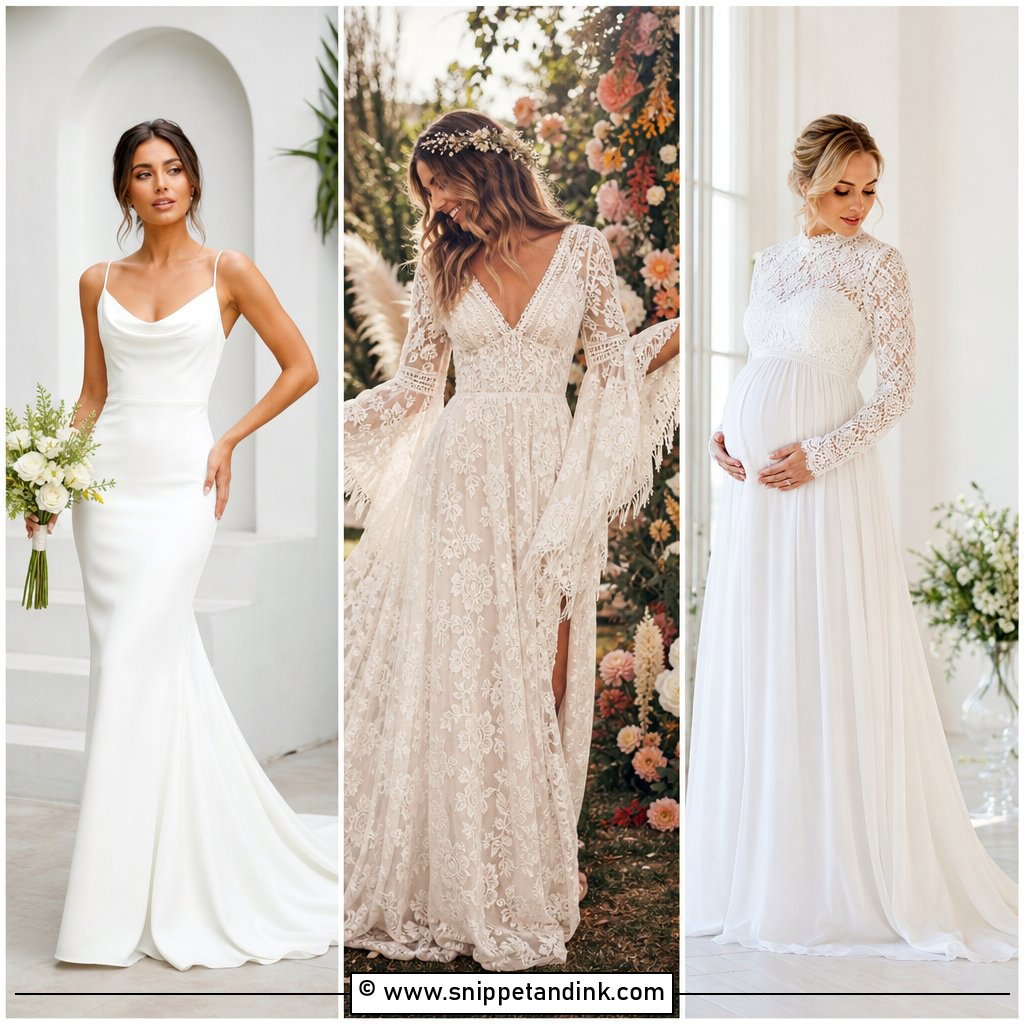
15. Bridal Suit With Oversized Blazer
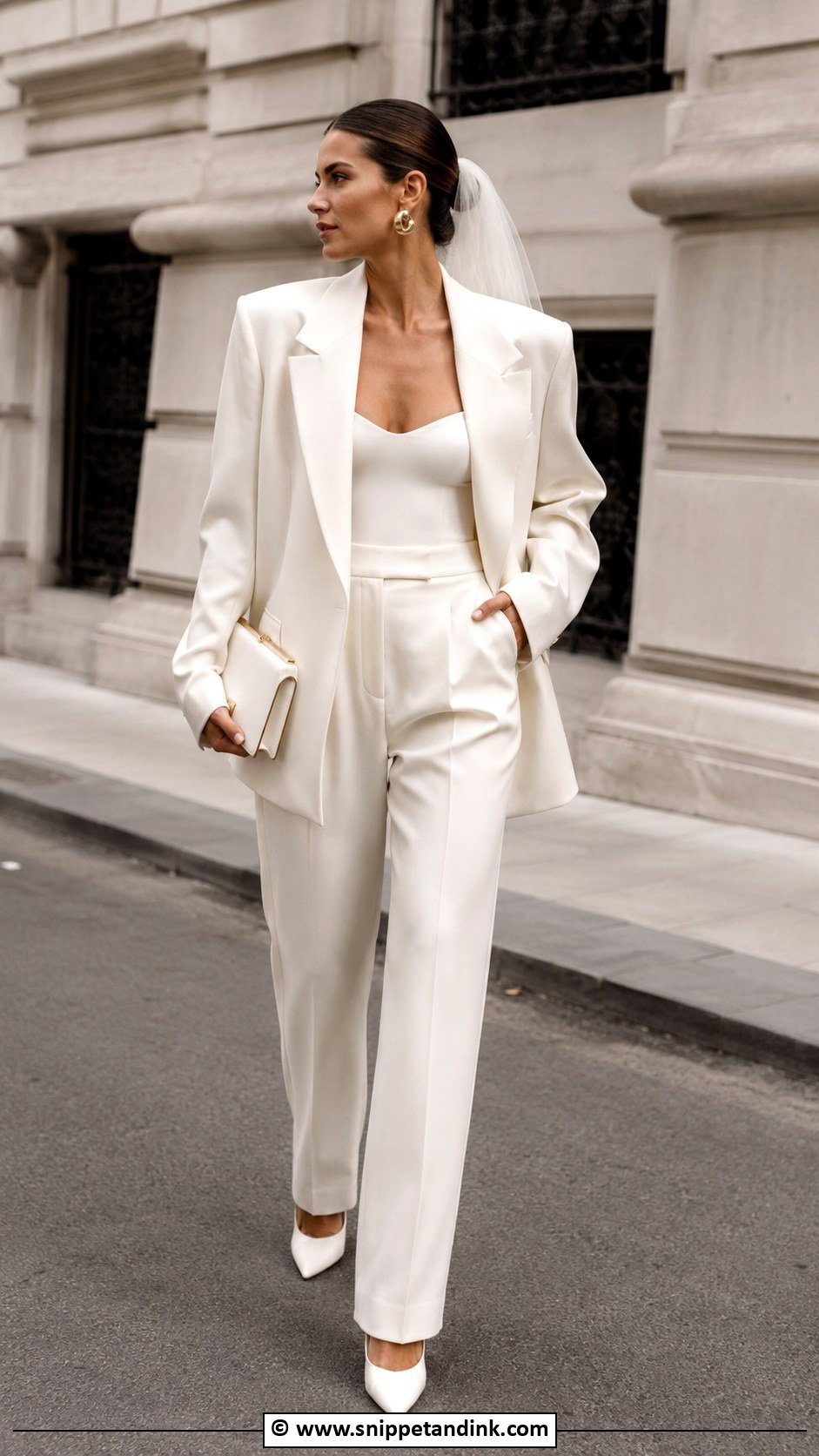
An oversized blazer is deliberately roomy, which means the tailoring has to be even more precise elsewhere. The shoulders should be dropped by design, not hanging off you, and the sleeves still need shortening to show a little wrist. Balance the volume with a fitted camisole, corset or bodysuit and straight or slim trousers. Brides who hate anything tight tend to feel most like themselves in this cut. Bold earrings and a clean clutch keep it polished and modern for a loft or courthouse wedding.
16. Bridal Suit With Cropped Blazer
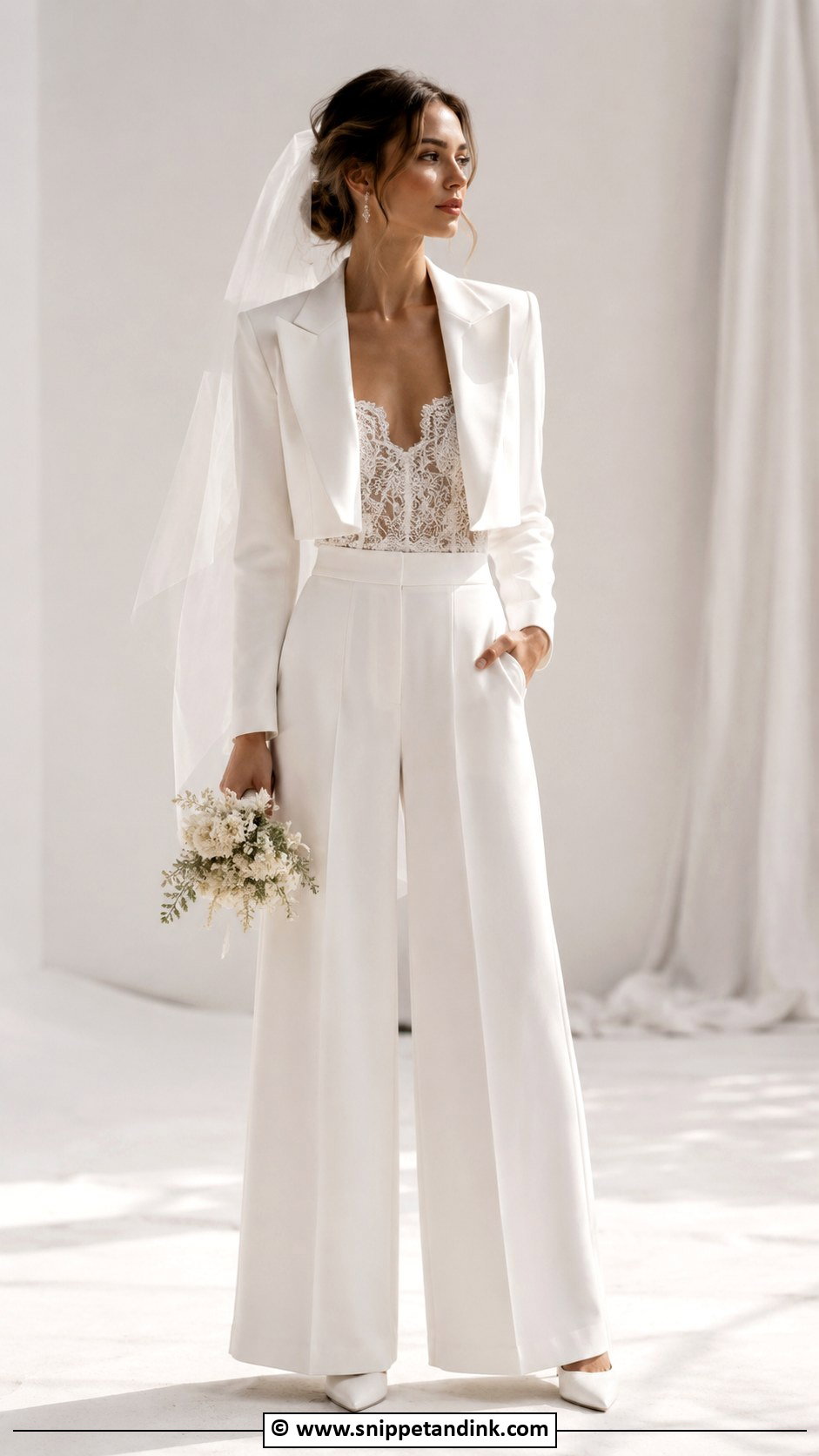
A cropped blazer stops at or just above the natural waist, so it shows off high-waisted trousers without needing a belt. I find it flatters shorter torsos and anyone who wants their waist defined while keeping the legs long. It’s a natural fit for a civil ceremony or a reception change. The gap matters: raise your arms at the fitting and check how much midriff appears under the jacket, then choose a lace camisole or shell with enough length. With very wide trousers, keep the blazer sharp and fitted for contrast.
17. Bridal Suit With Bow Blouse
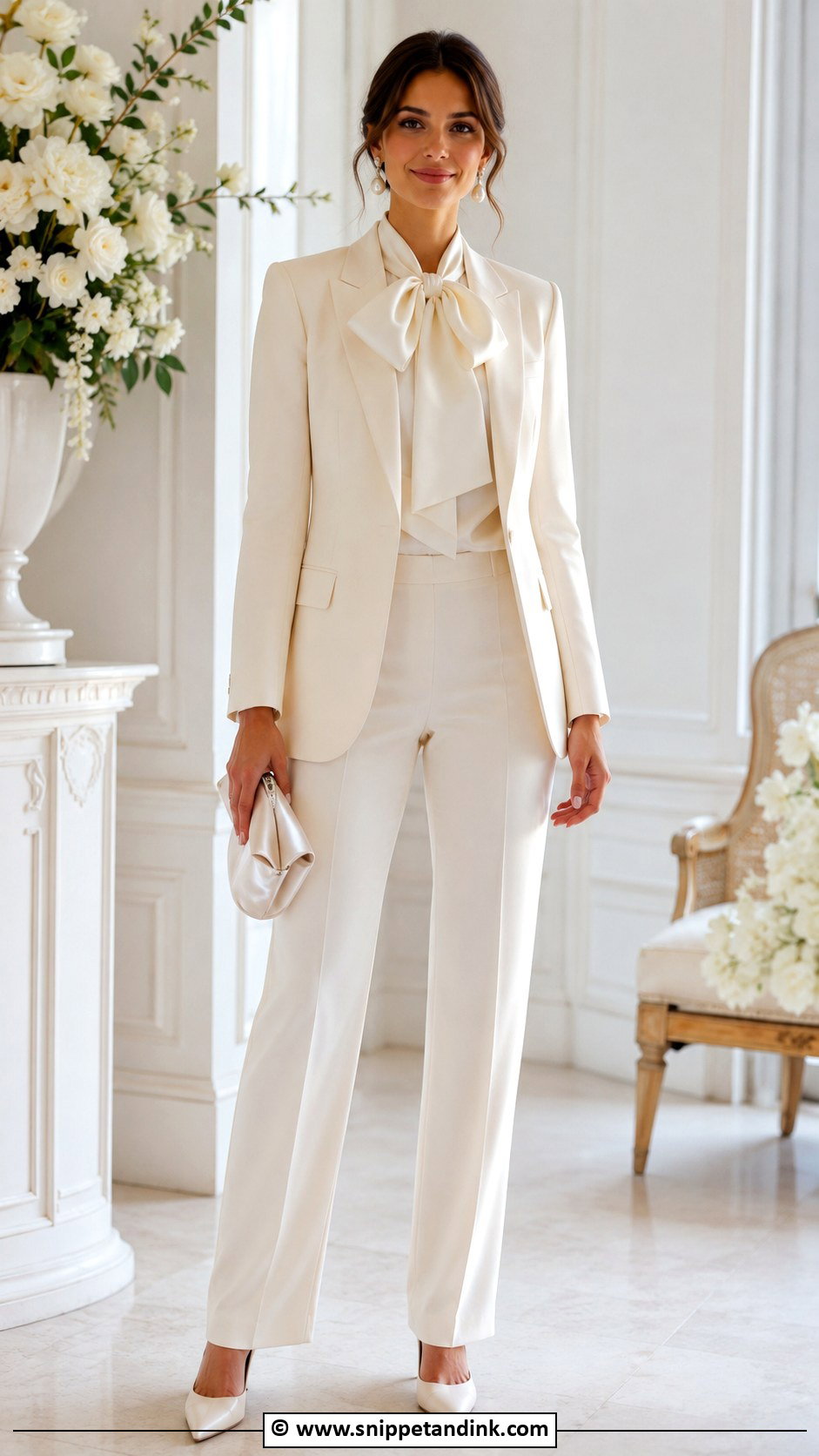
The bow blouse softens all that structure and covers the neckline for brides who prefer it. Organza holds a crisp bow, silk and chiffon drape into a softer tie, and I’d test the knot after an hour because chiffon bows often slide flat. Let the blouse be the statement and keep the blazer plain. Straight trousers, pointed pumps and a low bun finish it. It’s especially good in winter, when an open neckline feels cold.
18. Bridal Suit With Sheer Blouse
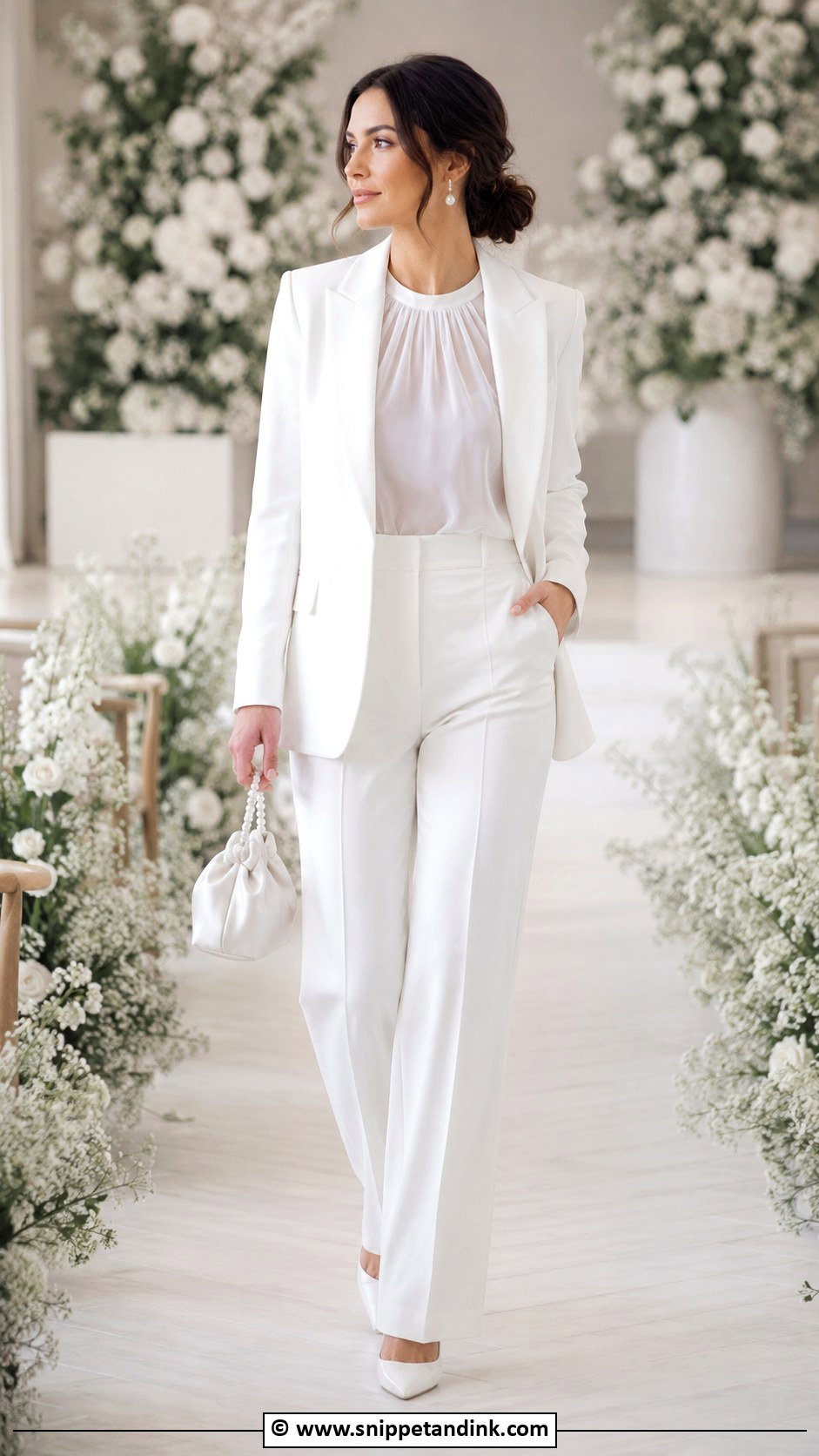
Sheer blouses need a plan for what sits underneath. A lined camisole or high-neck slip in skin tone stops the organza from showing straps in flash photography, which is the problem I see most. Pair it with tailored trousers and a structured blazer so the transparency reads light rather than revealing. If the blouse has puff sleeves, try the blazer over it before buying both: a narrow jacket crushes volume flat. Pearl drops and white pumps keep the rest calm, and spring suits it best.
19. Bridal Suit With Pleated Pants
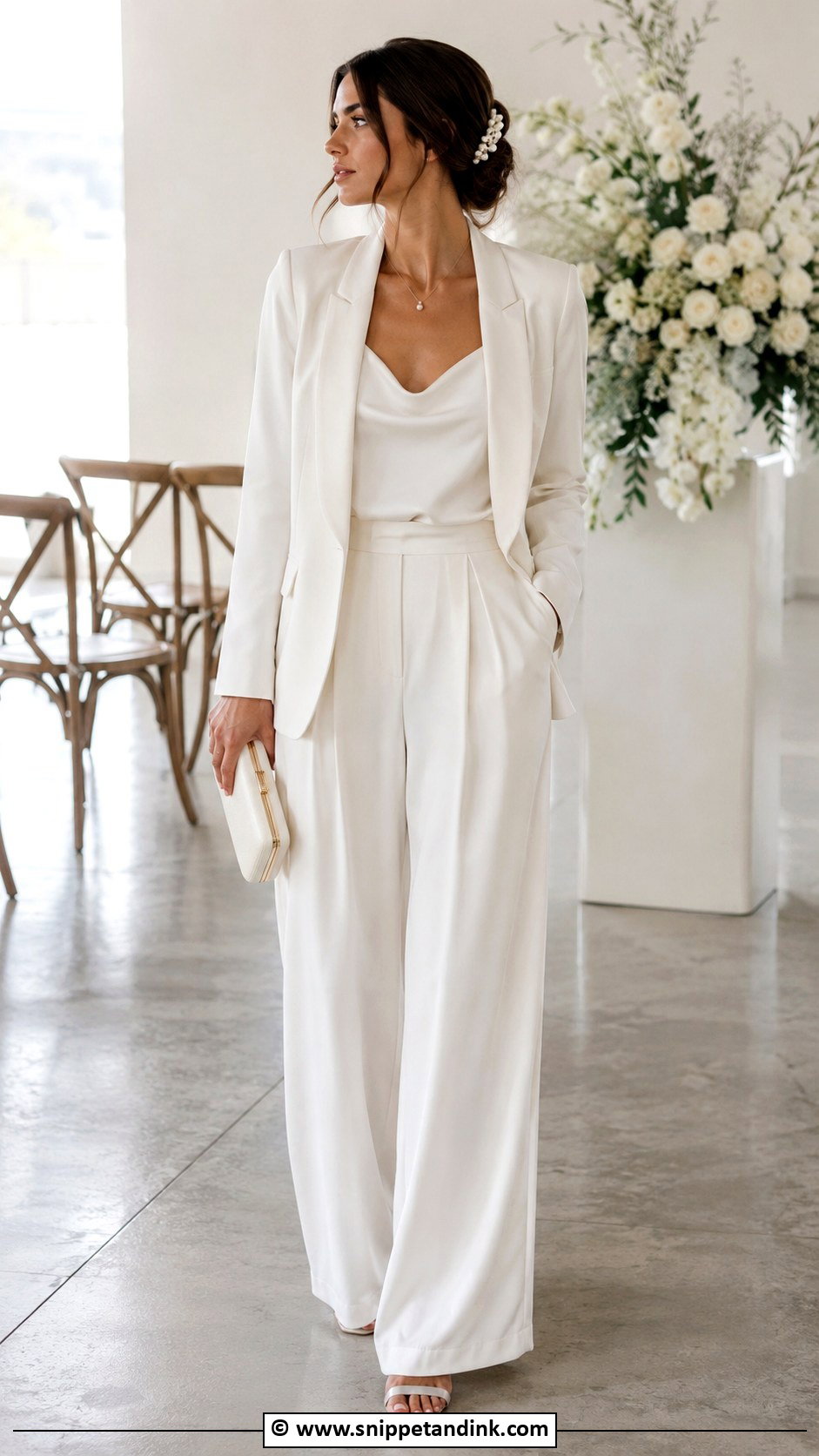
Pleats add room through the hips and thighs, so these trousers are the most comfortable choice on this list for a long day of sitting and dancing. A fluid ivory or cream suiting lets the pleats fall in clean lines; stiff fabric makes them puff out at the hip, which is the opposite of what you want. Tuck in a silk camisole or a fine knit shell and wear a fitted or semi-fitted blazer. Dressy flats are fine here. A fine necklace and a few pearl clips finish it.

20. Bridal Suit With Satin Lapels
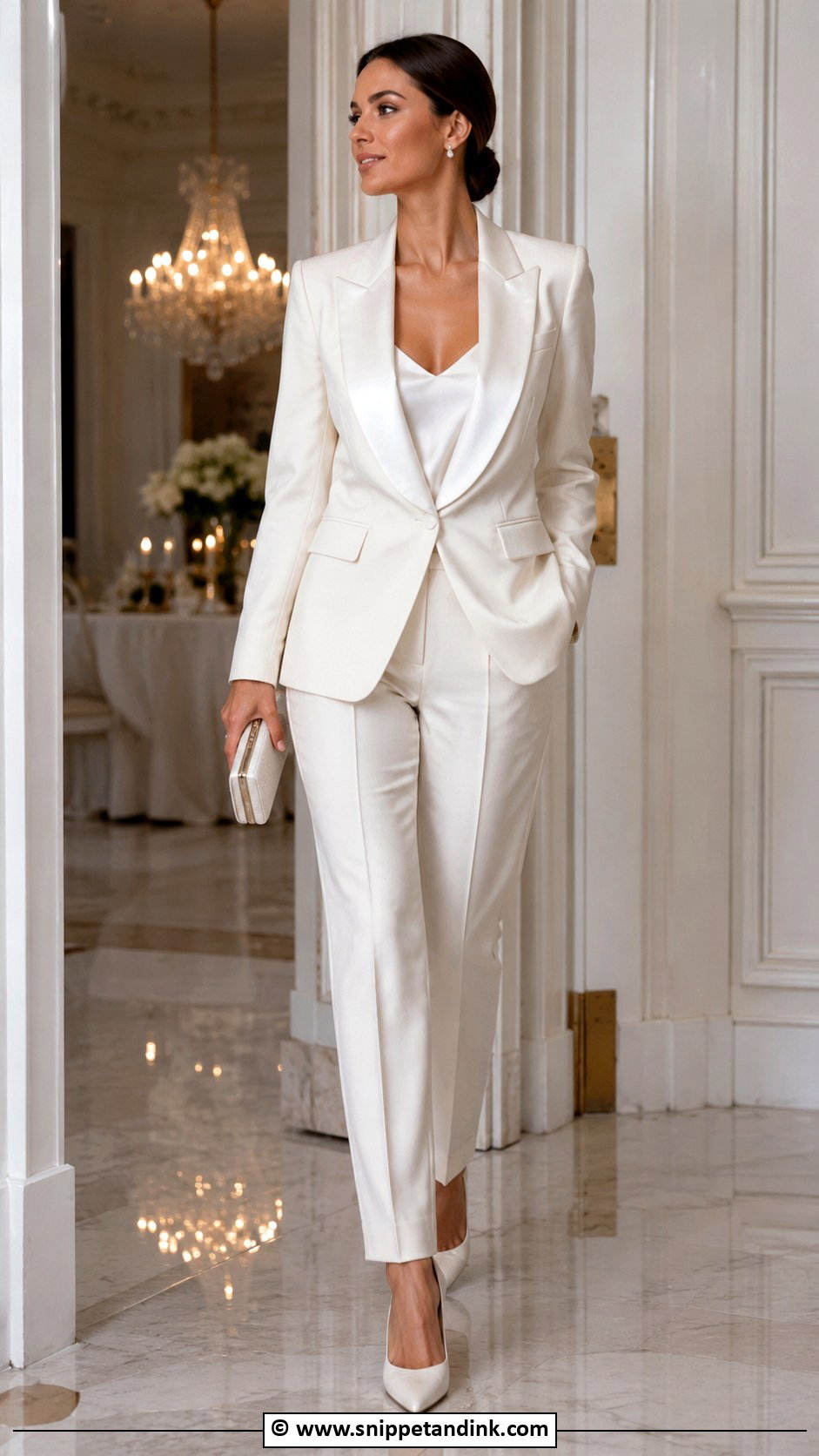
Satin lapels are the smallest change that turns suiting into eveningwear. The sheen near the face reads tuxedo, so I keep everything else matte. White satin on ivory suiting gives a soft contrast; bright white satin on white crepe looks sharper and more formal under flash. Matching trousers, a silk camisole and pointed pumps are enough. Wear a veil for the ceremony and take it off for the party. Diamond-style studs or small pearl drops stop the jewellery from fighting the lapels.
21. Champagne Bridal Suit
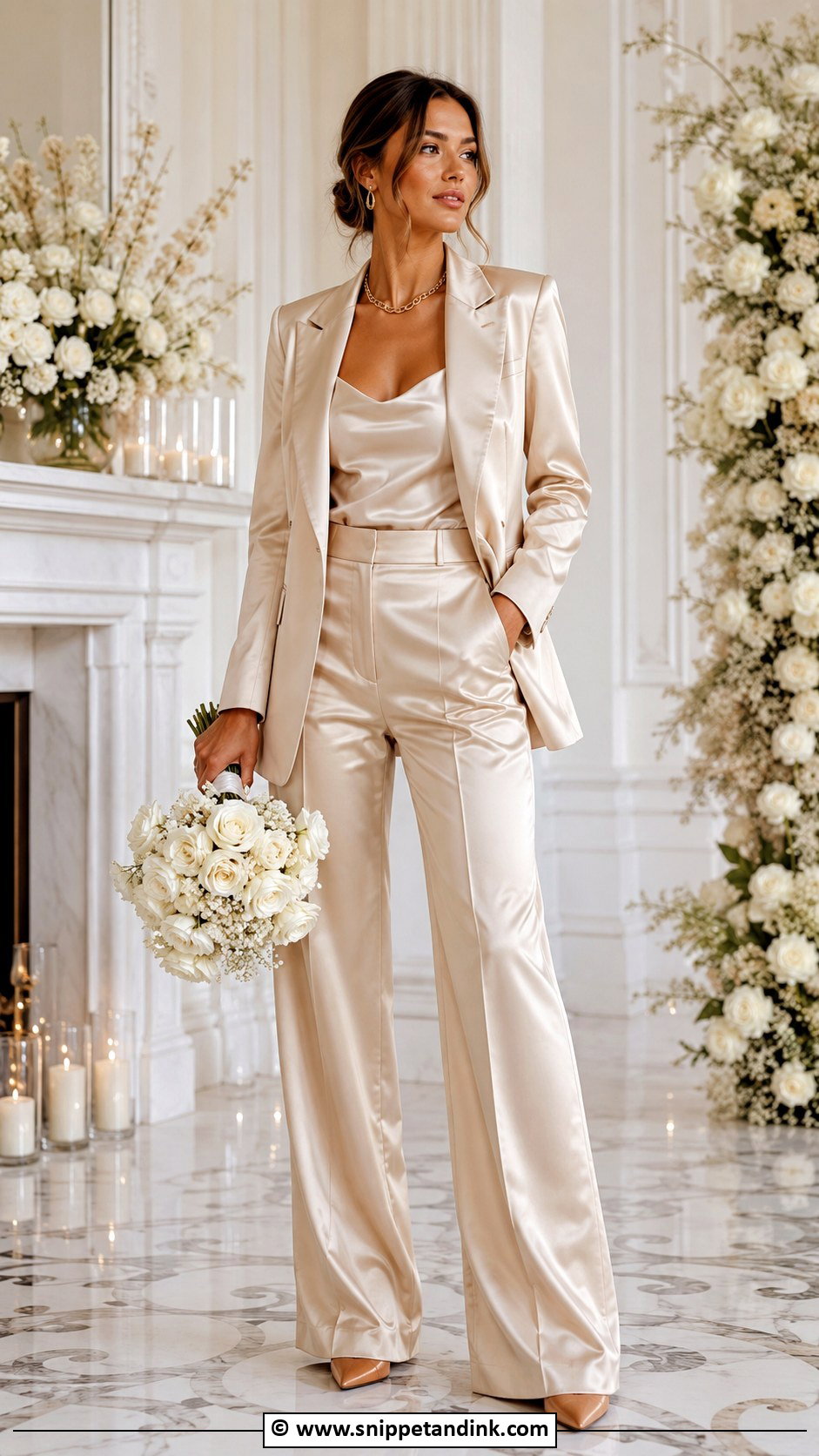
Champagne is the colour I suggest when bright white washes someone out. It warms most skin tones and looks rich in satin or silk crepe without needing decoration. Do check it in daylight next to your skin, though: some champagnes turn beige or greyish outdoors. Tonal heels and gold jewellery keep it cohesive, and a white bouquet or ivory veil restores a traditional bridal signal if you want one. Keep the cut simple, because the colour is already doing a lot.
22. Blush Bridal Suit
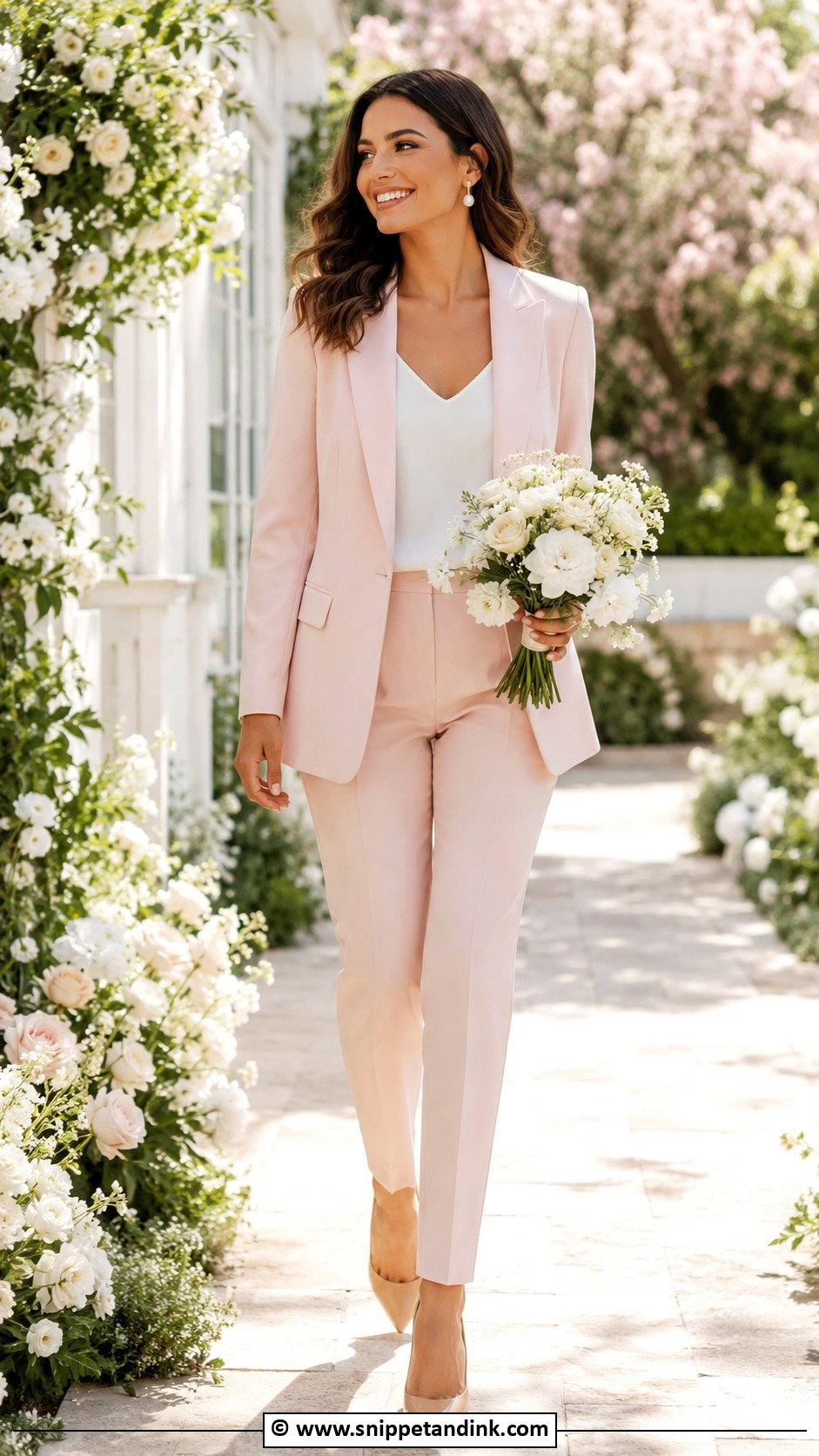
Blush works when it stays barely pink, the shade of a ballet slipper rather than a bright rose. Strong pinks start to look like a guest outfit in photos. I pair blush suiting with an ivory camisole and nude heels so the colour looks soft rather than sugary. Brides who feel stark white drains them often like this more than champagne. Lightweight crepe or satin suits spring and garden venues. Ivory accessories and gentle makeup pull it back into bridal territory.
23. Bridal Suit With Skirt Overlay
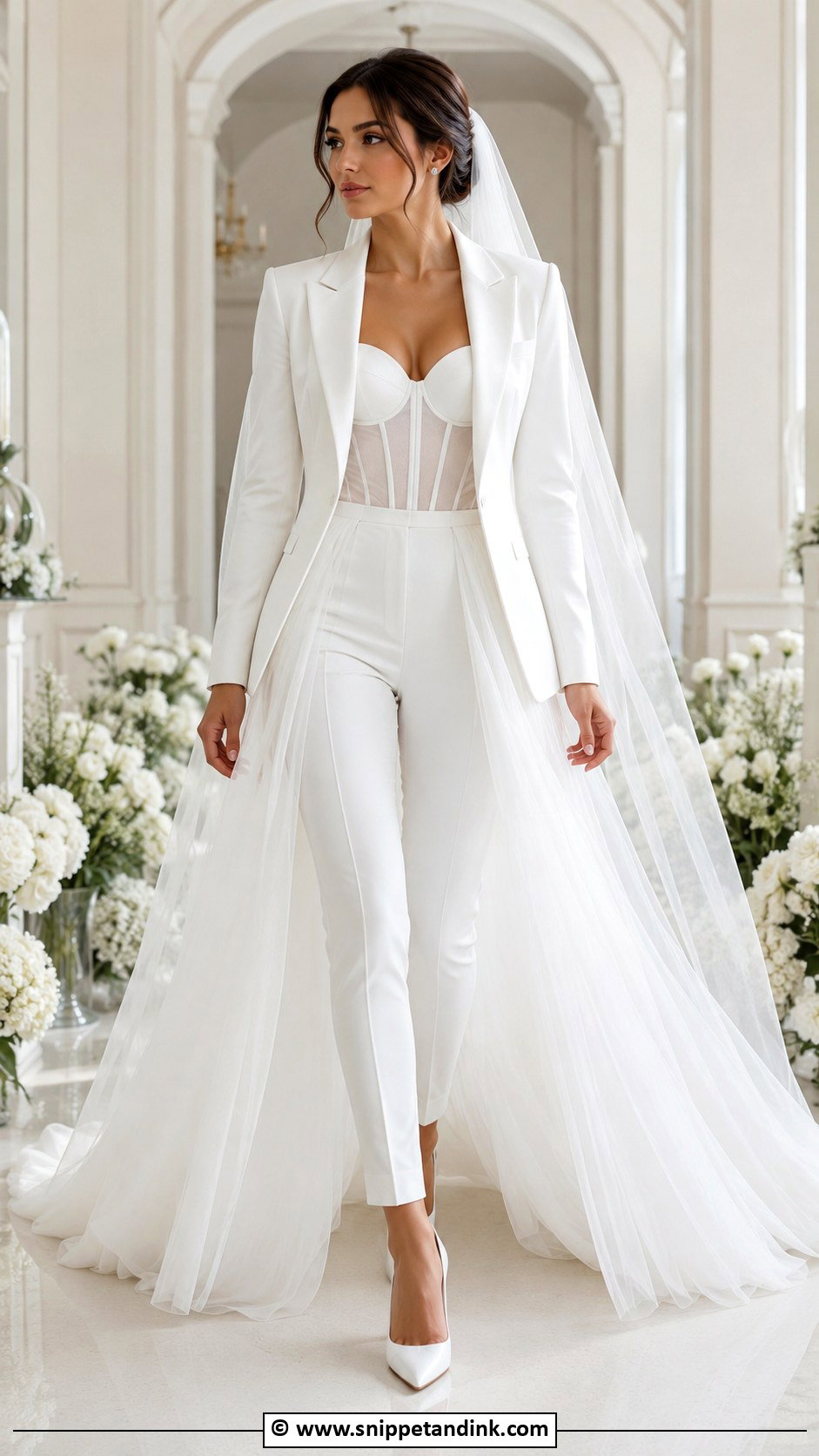
A bridal suit with a skirt overlay lets you walk the aisle in volume and dance in trousers. The overlay can be sheer tulle, organza, satin or lace, wrapped at the waist, attached to the blazer or trailing behind. I always check how it fastens. Ties slip; a hidden waistband with hooks stays put and comes off cleanly. Keep a fitted blazer or corset top over it to hold the waist, and once the overlay is off, the trousers underneath should still be hemmed for heels.
24. Bridal Suit Jumpsuit
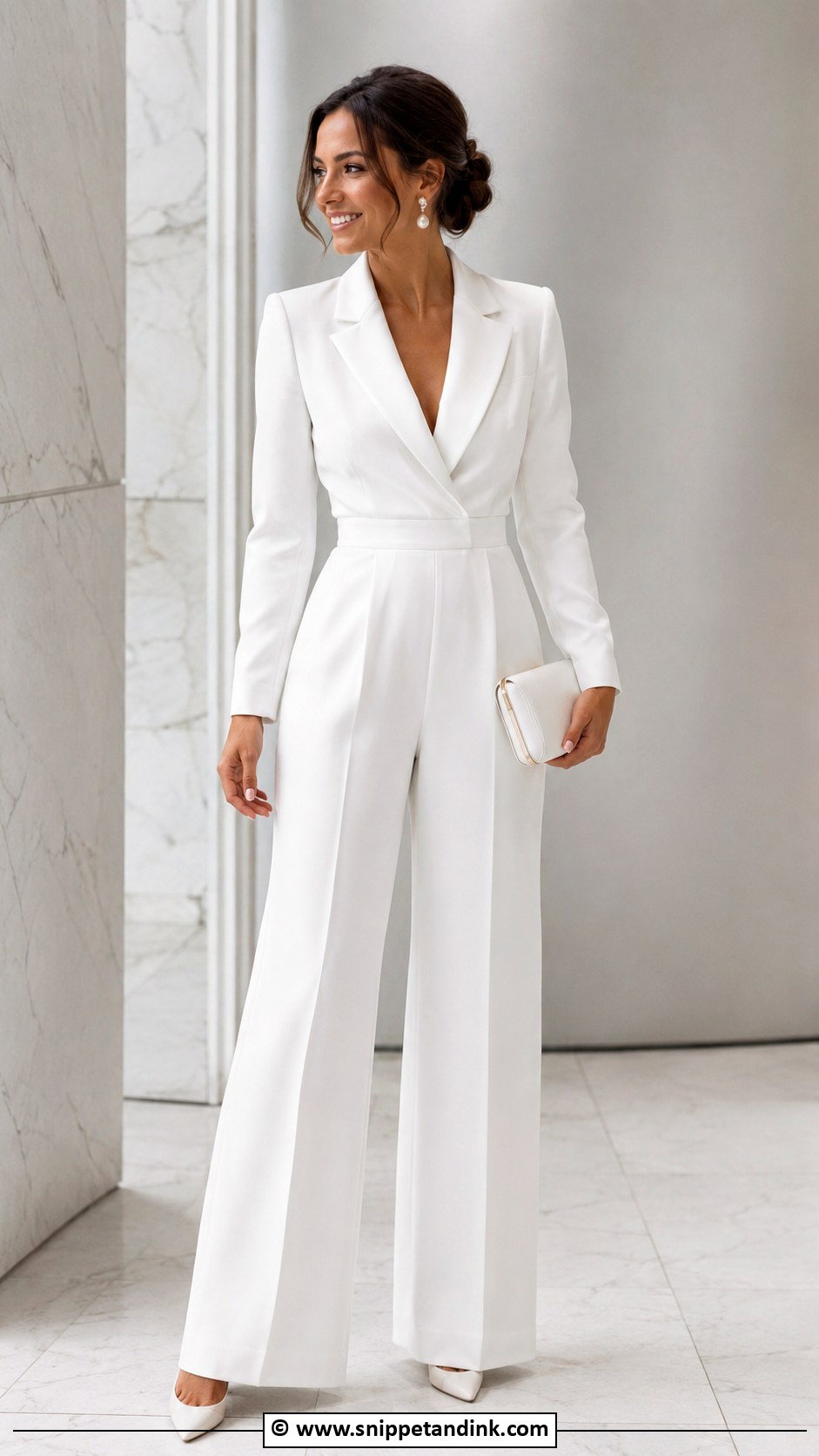
A jumpsuit gives the outline of a suit in one piece, and the one measurement that matters is torso length from shoulder to crotch. Too short and it pulls every time you sit or lift your arms; it is also the hardest thing to alter afterwards. A white or ivory jumpsuit with a blazer neckline and wide legs looks formal with pointed heels and a structured clutch. Check how you’d get out of it in a bathroom, which is a real question on a wedding day. A belt adds waist definition if it needs it.
25. Bridal Suit With Statement Hat
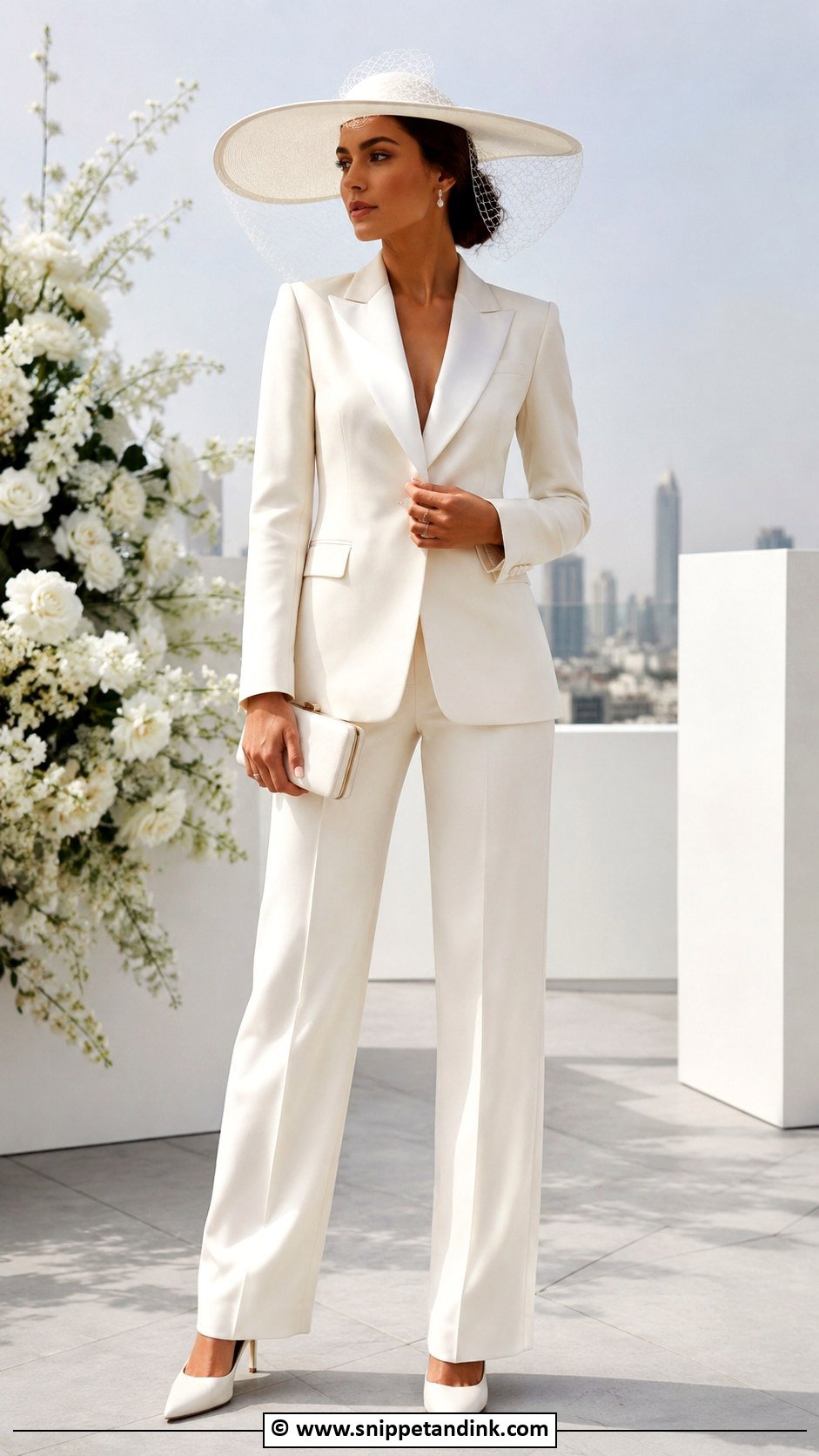
A statement hat turns a clean suit into a fashion picture, and the suit should stay plain so the hat leads. Wide brims, pillboxes or a hat with a short birdcage veil all work over straight trousers and satin lapels. A brim shadows the eyes in midday sun, so I’d talk to your photographer about angles before choosing a wide one. Hair needs to sit low and sleek, a bun or low ponytail, for the hat to sit level. With netting or flowers on the hat, keep jewellery minimal.
Two Ivories Rarely Match, So Buy the Pieces Together
This catches out more suit brides than any fit problem. Ivory, cream and off-white are not standard colours, and even the same shade from the same brand can vary between production runs. A jacket bought in one shop and trousers ordered online will often look fine indoors and obviously different next to a window.
I ask brides to buy the jacket and trousers at the same time from the same batch, and to hold any camisole, vest or overlay against them in daylight before cutting the tags. Satin and crepe also reflect light differently, so a satin lapel on crepe suiting will always look a touch brighter. That’s fine when it’s a design choice, less fine when it’s an accident. If you’re mixing pieces on purpose, choose a clear contrast, not two whites that are almost the same.
Creases, Lipstick and Lapels on the Day
Trousers crease at the lap the moment you sit in a car, and a white lapel sits right where foundation and lipstick land during hugs. A few habits keep a suit looking fresh through the photos:
- Get dressed last, after hair and makeup, and step into trousers rather than pulling them up past a made-up face.
- Have a handheld steamer at the venue. Steam satin from inside or from a short distance, since a hot iron can leave shiny marks.
- Stand in the car if the ride is short, or lay a clean scarf across your lap.
- Pack a lint roller, a white chalk stick for small marks, and blotting papers so nobody touches up makeup near the lapels.
- Hang the jacket on a shaped hanger during dinner rather than over a chair back, which stretches the shoulders.
Spend on the Tailor Before the Embellishment
A bridal suit is its own category now, not a compromise. Of the styles above, the one that will serve you best is whichever fits your shoulders off the rail, moves the way you need it to on the day, and reads clearly as bridal once shoes, hair and accessories are added. Spend on the tailor before you spend on embellishment. A plain suit cut properly looks far more special than an ornate one that pulls when you sit down.
You'll Like These Ideas:



Leave a Reply