
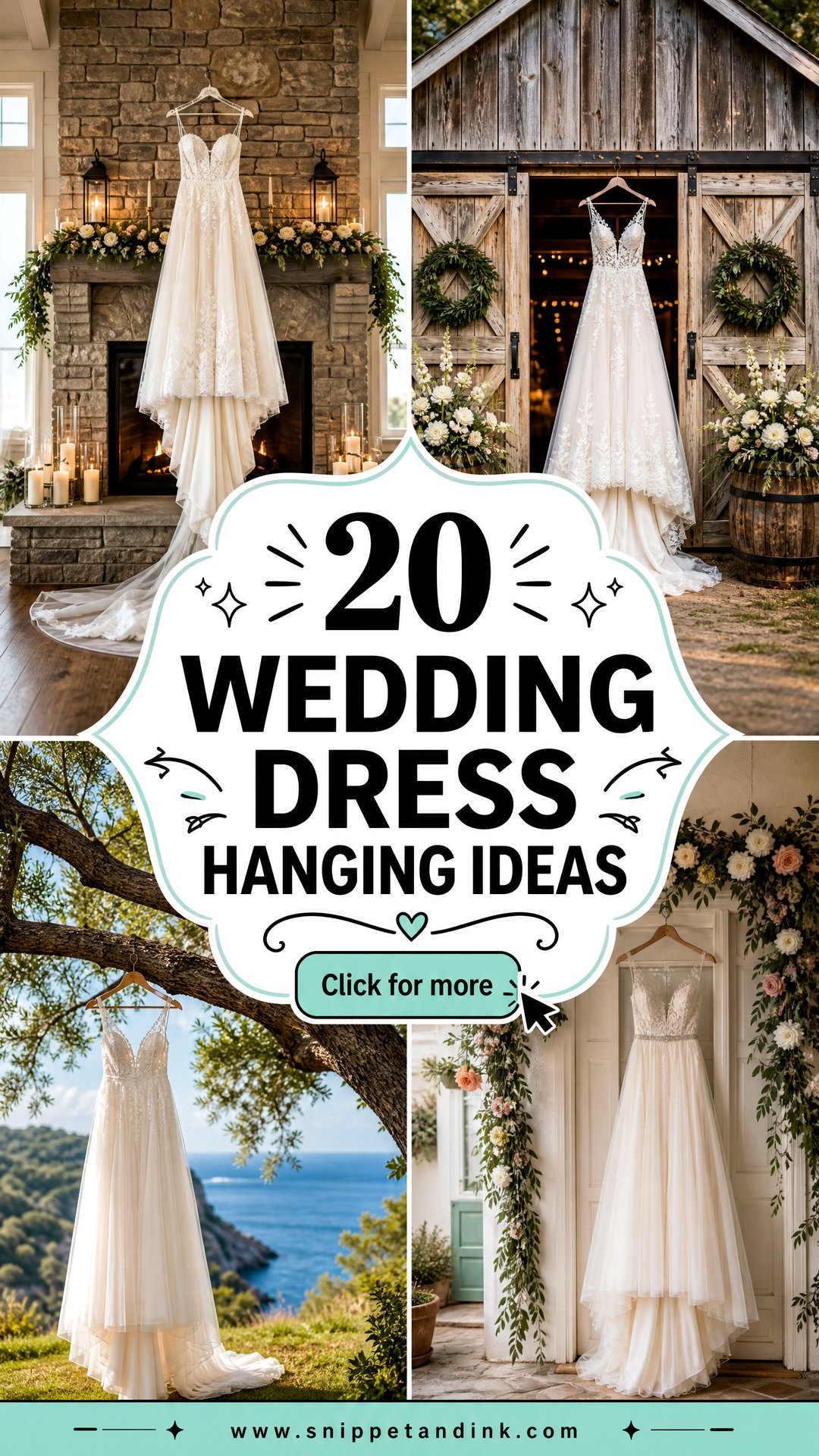
The hanging dress shot is usually the first frame of the day for me, and it sets the tone for the whole set of wedding photography that follows. It’s the one chance to show the gown’s full silhouette, train, lace and beading before anyone is wearing it. A window is still my default, because soft side light pulls out texture that flat overhead light flattens. Wherever you hang it, the gown needs a sturdy hanger, its internal hanging loops and a hook that can genuinely take its weight, plus enough clear space below for the skirt to fall. The twenty setups below run from bridal suites to garden arbors, so there’s something here for most venues.
Steaming, Loops and Weight: Prepping the Gown for Its Portrait
Creases show far more in a photo of an empty dress than on a bride, because nobody’s body is filling them out. Most gowns arrive folded in a bag, so I ask for the dress to be unpacked and hung up when the bride arrives at the suite, not five minutes before I need it.
Steaming Without Spotting the Fabric
A handheld steamer is the safest tool. Keep the nozzle a few inches from the fabric and work from the inside of the skirt where you can, since satin and silk can water-spot if the steamer spits. Test on an inner hem first. Skip any area with glued crystals or appliqués, and let the dress dry fully before it goes near a window or a backdrop. If the gown has a stubborn crease, ask whoever handles your alterations to press it before the day rather than risk an iron that morning.
Taking the Weight Off the Shoulders
Inside most wedding dresses are ribbon loops sewn at the waist seam. They exist to carry the weight of the skirt, so they go over the hanger first. Hanging a heavy gown by thin straps or the shoulders alone stretches them, and in my photos it shows as a puckered neckline. If a dress has no loops, a wide padded hanger and a second pair of hands to support the skirt while it’s hooked up make all the difference.
1. Wedding Dress Hanging By A Window
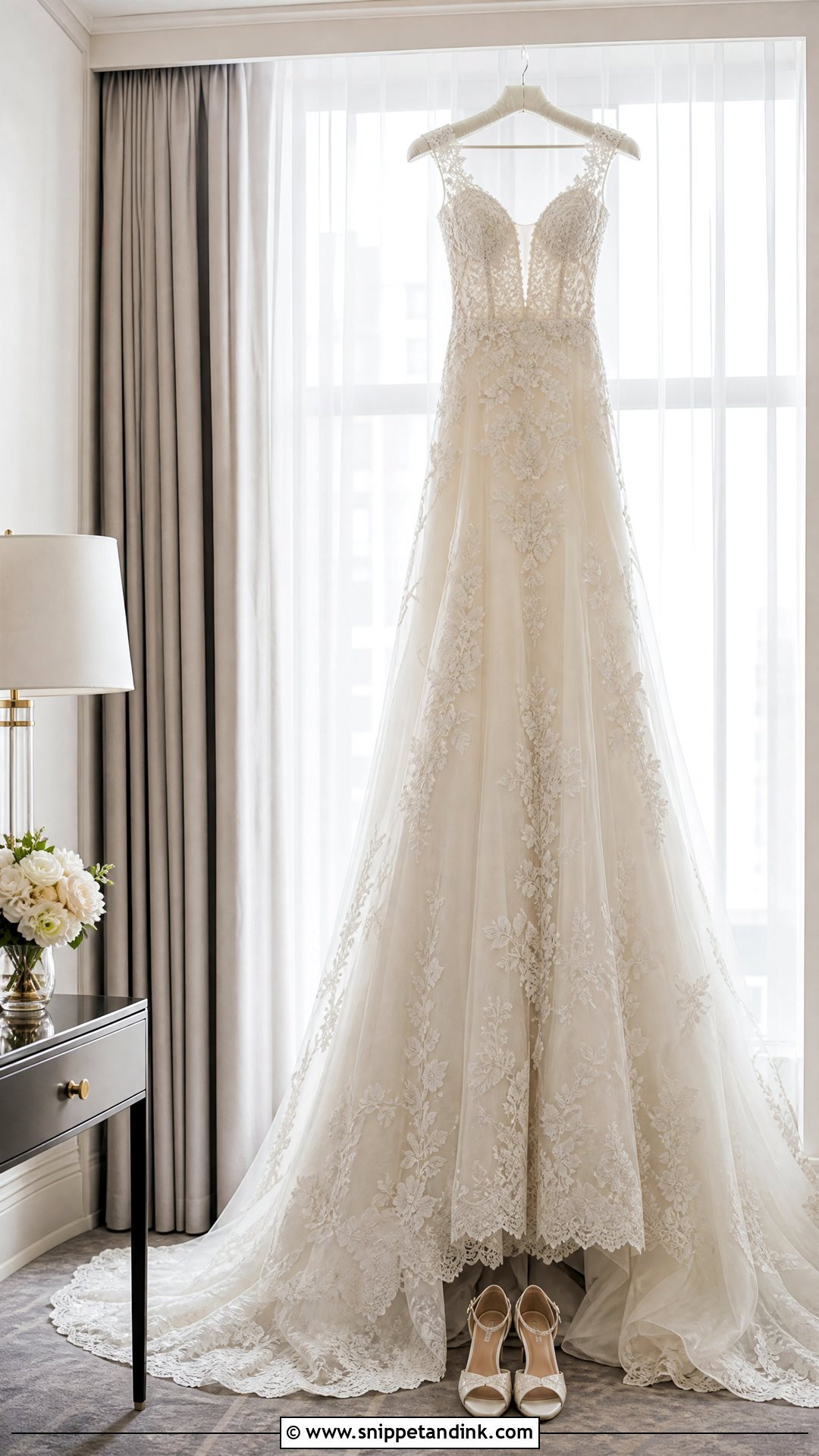
Window light does more for a white dress than any backdrop, because light coming from the side shows the relief of lace and beading. I hang the gown a step or two away from the glass rather than right against it, which lets me move around and shoot from an angle. Look for neutral curtains, clean trim and enough height that the hem clears the floor. A wooden or satin-covered hanger looks tidy in the frame. Clear the room of luggage, water bottles and phone cables before I arrive, since they always end up in the corner of the shot. If the window is bright enough to blow out the fabric, draw sheer curtains to soften it.
2. Wedding Dress Hanging On A Door
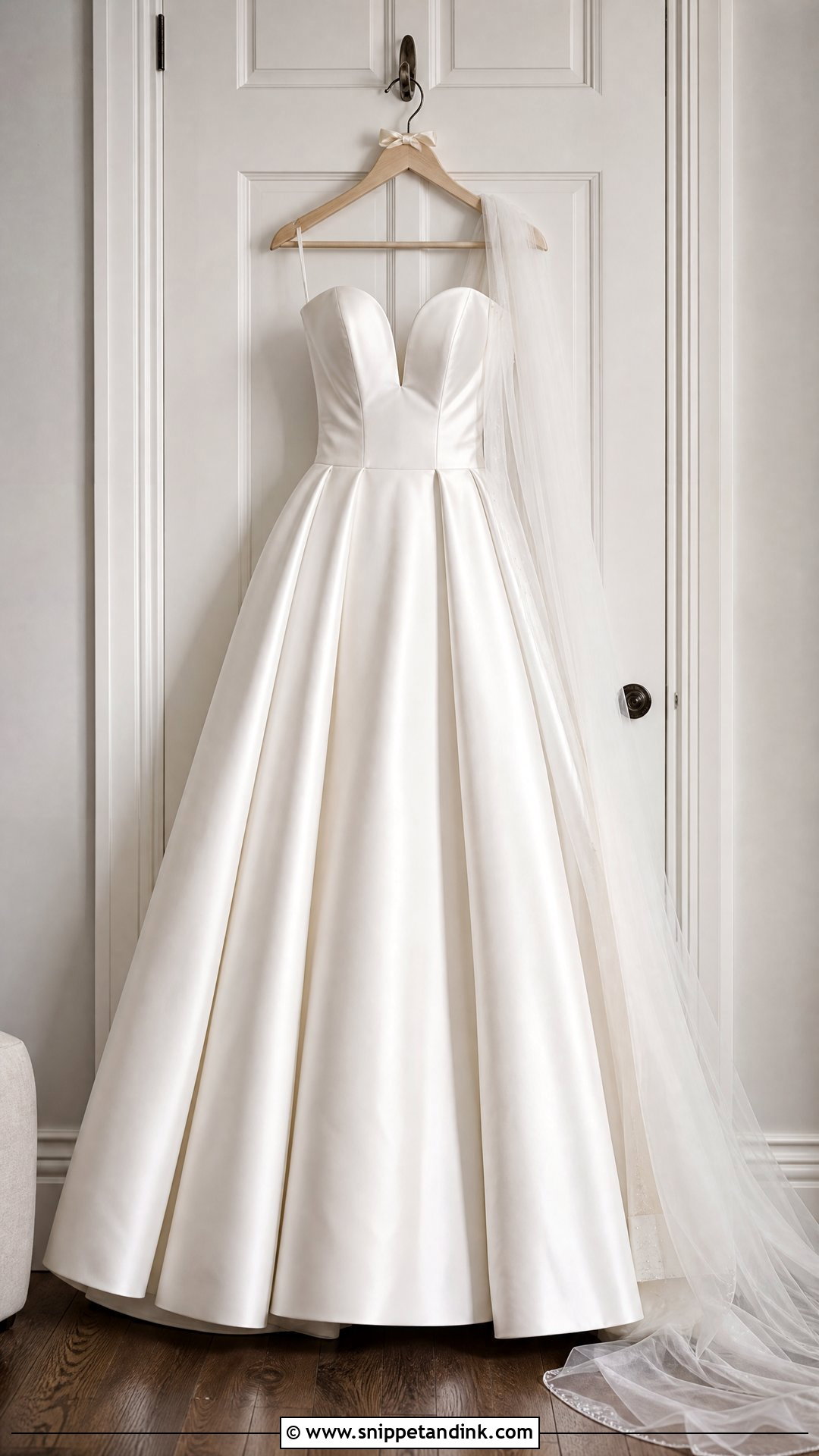
Tall panelled doors in historic hotels, country houses and old bridal suites give the dress a frame with real architectural character. A white door creates a calm, tone-on-tone image; natural wood adds warmth and makes an ivory gown look creamier. Use an over-the-door hook rather than wedging the hanger onto decorative moulding, which can slip and mark paint. The practical bit people forget is to lock the door or tape a note on the other side, because someone always walks through it. I arrange the train neatly below and add the veil only if the frame feels empty. Shot straight on and centred, a door gives a symmetrical, ceremony-ready picture.
3. Wedding Dress Hanging From A Four Poster Bed
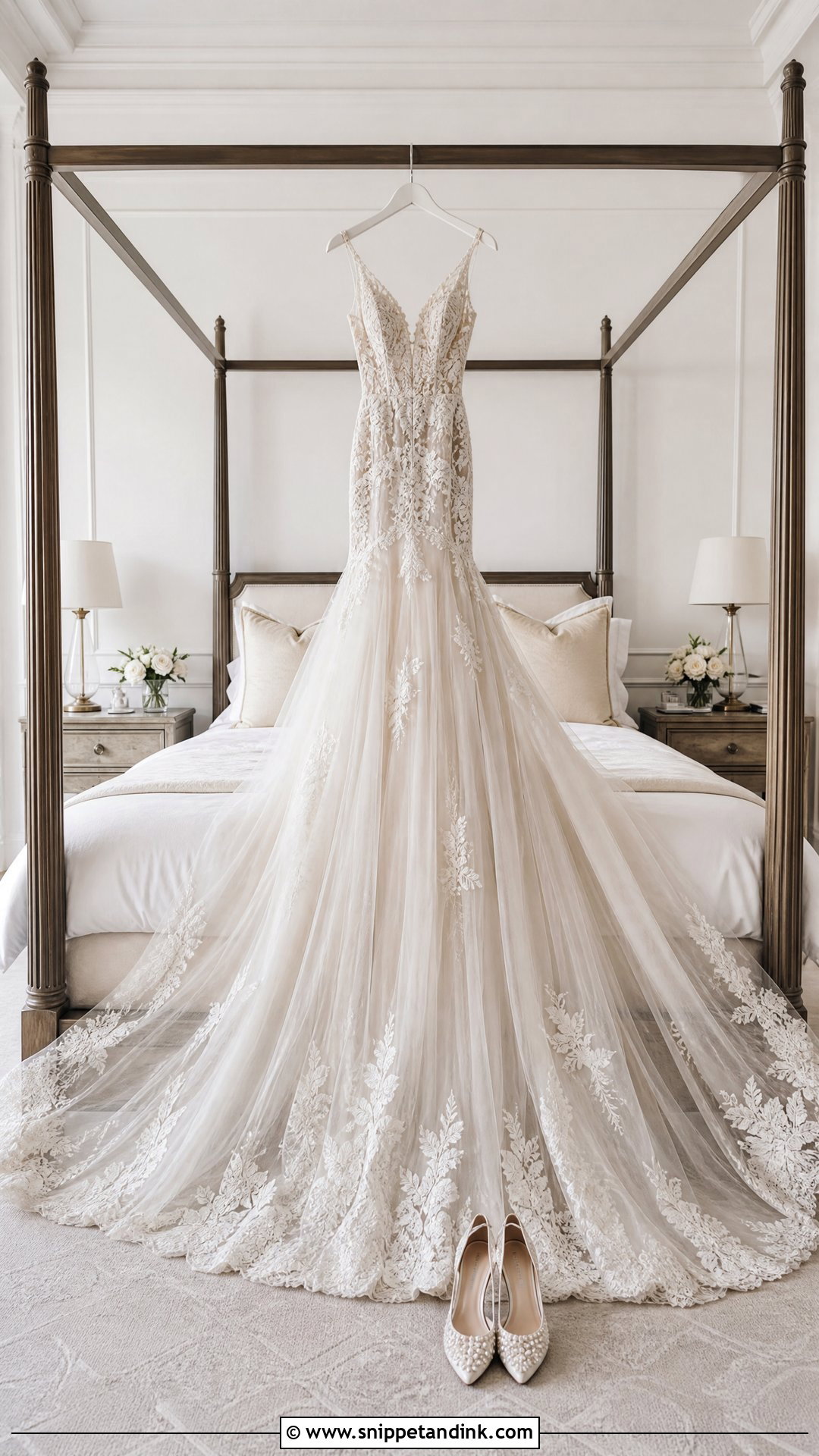
Before anything goes on a four-poster bed, I give the frame a firm push to check it doesn’t sway, as some antique and hotel beds are more decorative than solid. Hung from the centre of the top rail, a flowing A-line or a long tulle train fills the space between the posts well. Smooth the bedding and strip it back to plain colours so the gown stays the subject. Shoes at the foot of the bed and a veil draped lightly over one corner are plenty; extra pillows and petals make the picture busy. Leave some breathing room around the bed when framing, as a tight crop loses what makes the setting worth using.
4. Wedding Dress Hanging Inside An Armoire
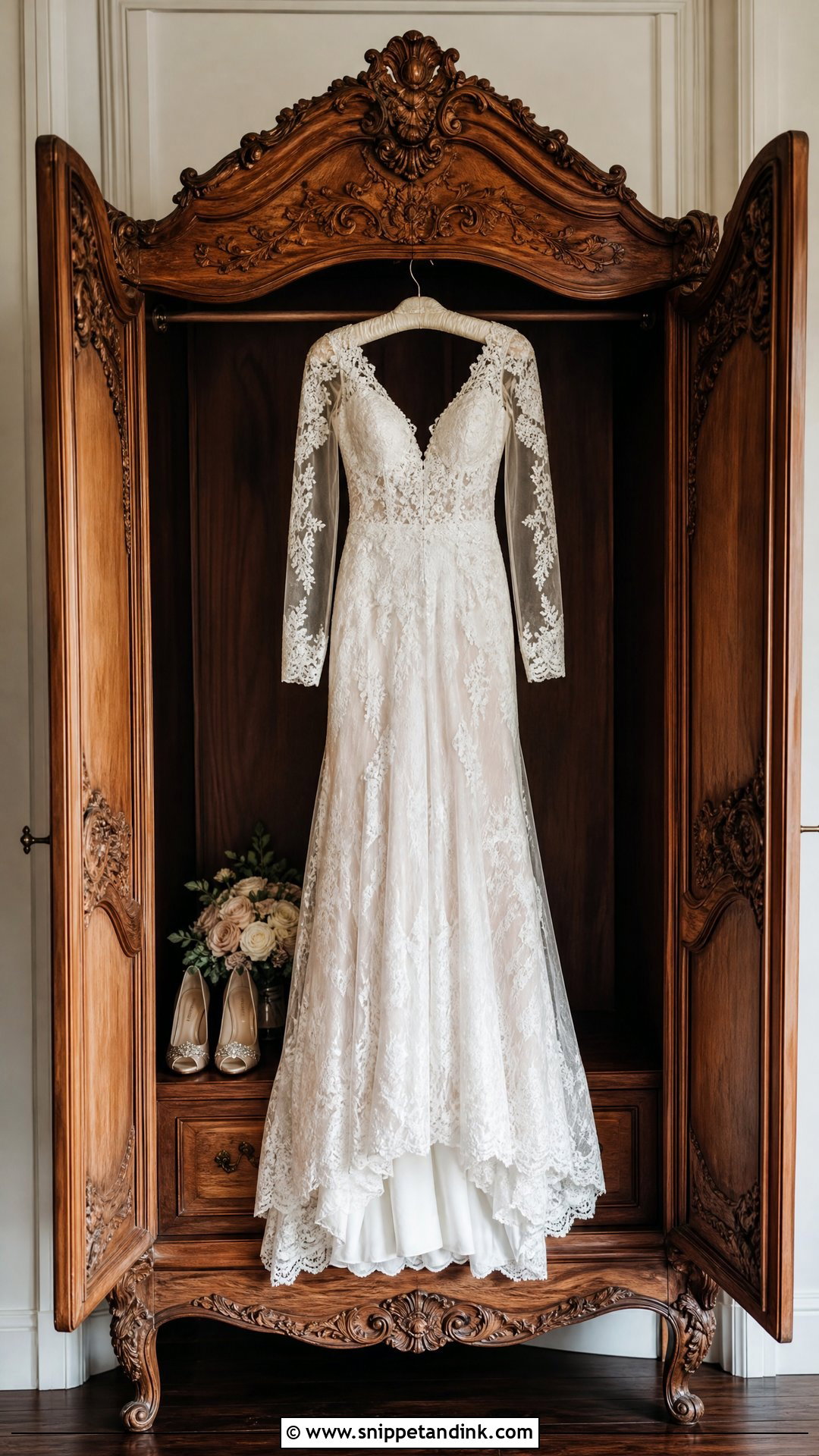
An open armoire makes an intimate, almost editorial frame, and it’s a lifesaver in rooms with no clear wall. The wardrobe needs enough interior height and depth that a full skirt isn’t crushed against the back panel. Antique wood suits vintage gowns; a white or mirrored piece reads more modern. Take out everyday clothes and empty hangers first, because a stray wire hanger in the corner is the kind of thing nobody notices until the album. Open both doors to frame the gown, then add one small detail on a shelf, such as a jewelry box or the bridal shoes.
5. Wedding Dress Hanging Above A Fireplace
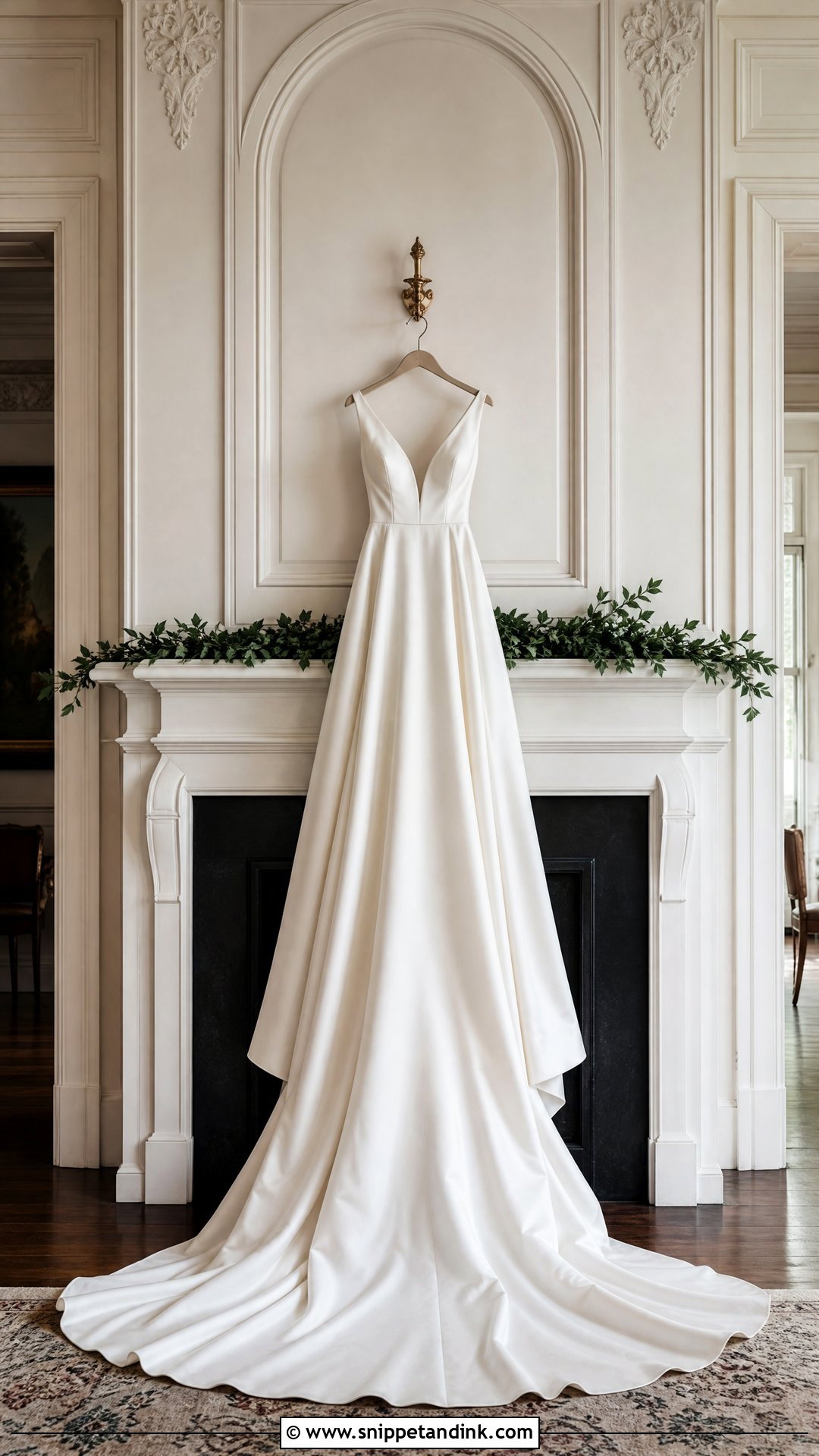
A mantel makes a grand focal point in manor houses, estates and older hotels, but I only use one if the fireplace is cold, clean and has been out of use. Ask the venue for an approved hook or removable fixture so nothing damages the stonework. Keep candles and anything that sheds soot well away, and make sure the hem and train hang clear of the firebox opening. Restrained greenery on the mantel can link the shot to the wedding decor. I shoot this one symmetrically, with the fireplace surround forming a frame, and that formal structure usually needs very few extra props.
6. Wedding Dress Hanging On A Staircase
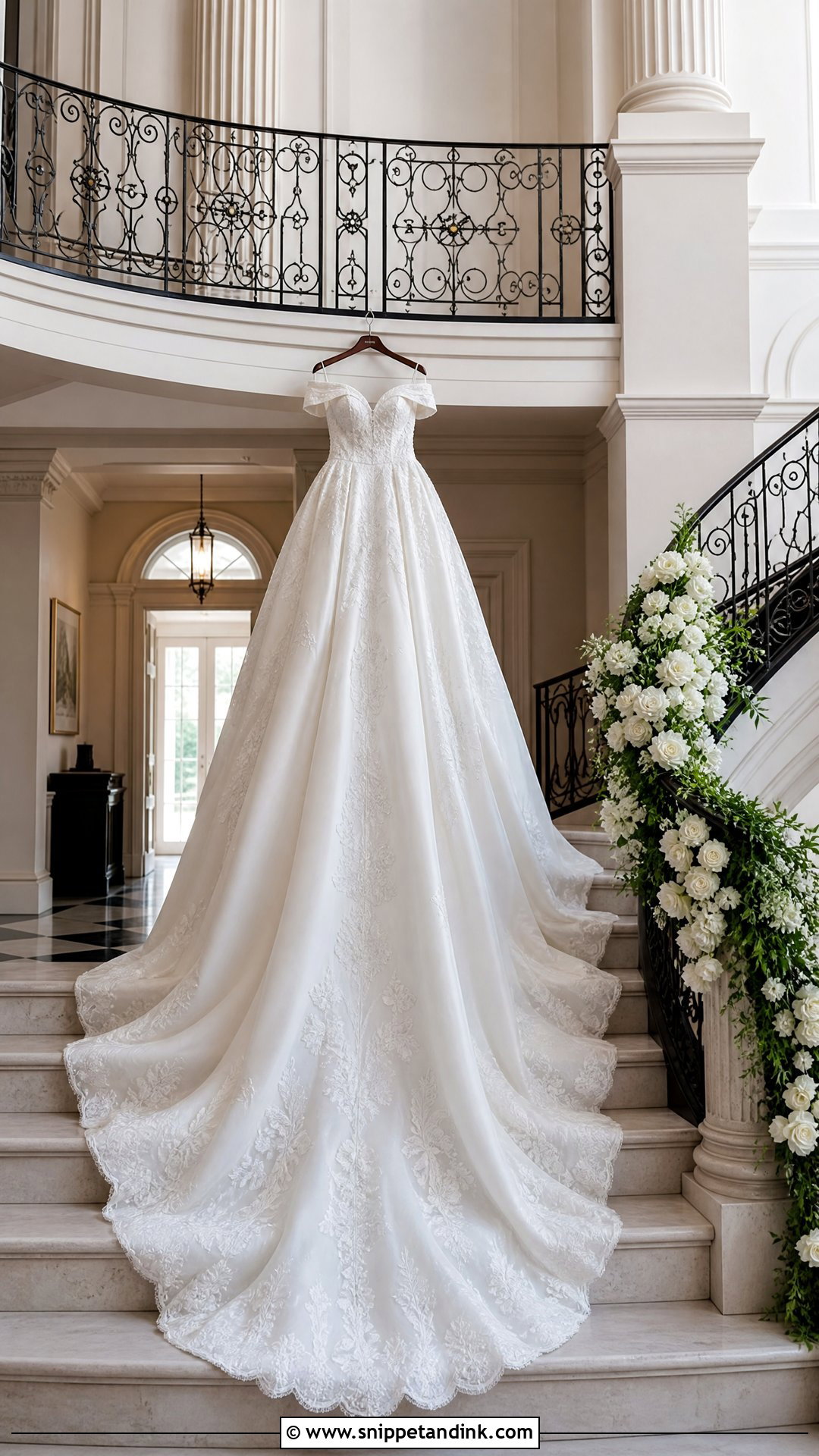
Staircases give height and leading lines, which is why they make one of the more dramatic hanging shots. Hang the gown from a sturdy upper rail or approved hook, and check it won’t block a route guests or suppliers will use while you’re shooting. Curved stairs suit full ball gowns; plain modern flights flatter sleek columns. If the steps are spotless, I’ll let the train spill down one or two of them; if not, I keep it lifted. Leave rail decorations sparse so they don’t cover the bodice. Shooting from the landing, the foot of the stairs and the hallway gives you three quite different pictures from one setup.
7. Wedding Dress Hanging By Balcony Doors
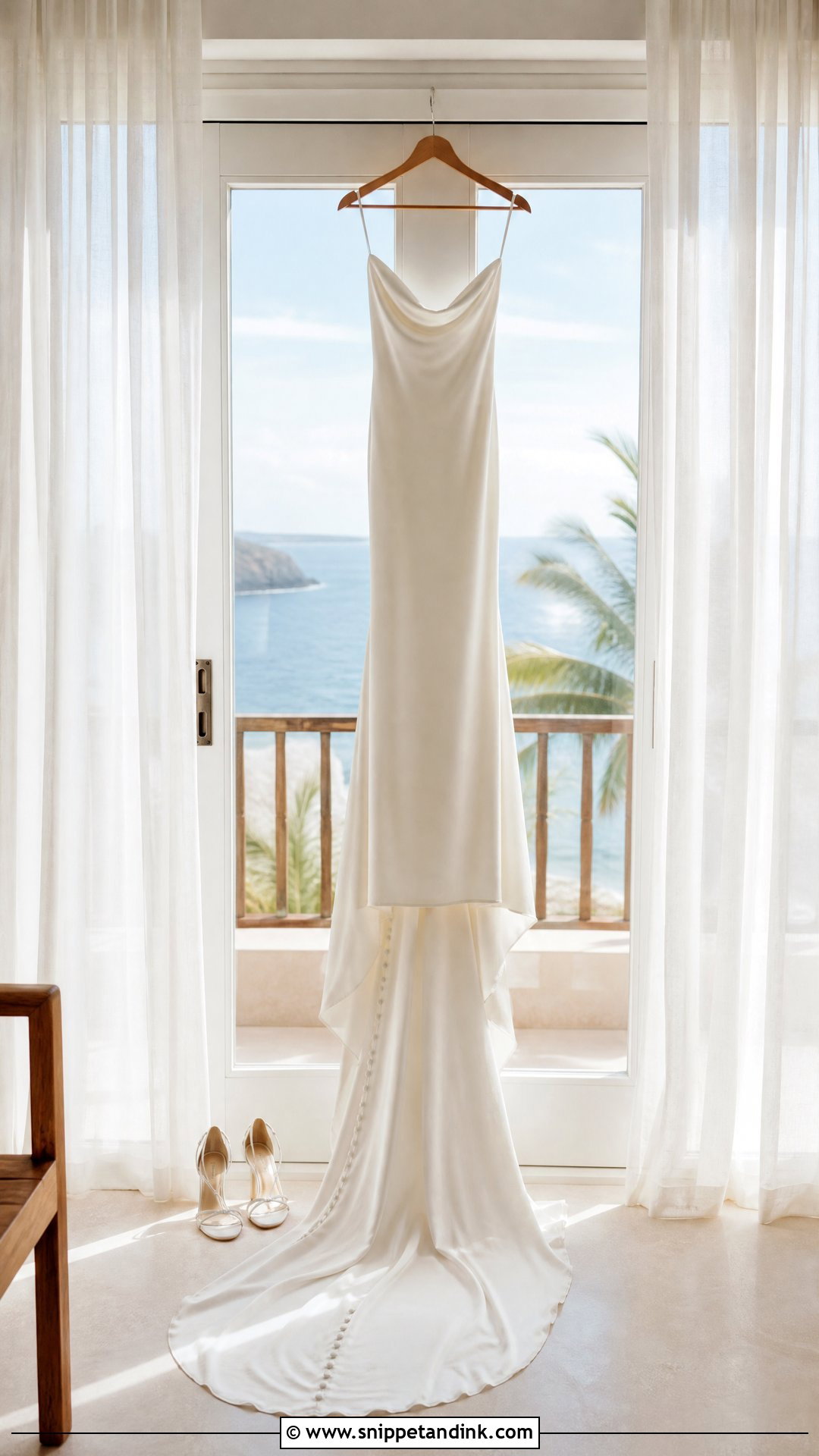
Balcony doors flood a room with light and hint at the view, which works well in destination venues, coastal hotels and city suites. The dress stays inside, though. Even a light breeze pulls a gown off its hanger, and outdoor dust or salt spray mark fabric quickly. Hang it from a strong hook centred between the doors or against one closed door. Open the curtains fully if the view is clean, or use sheers when there’s clutter outside. The train sits across the clean interior floor, with a bouquet or shoes to one side. You get the full gown and a sense of place in one frame.
8. Wedding Dress Hanging On Barn Doors
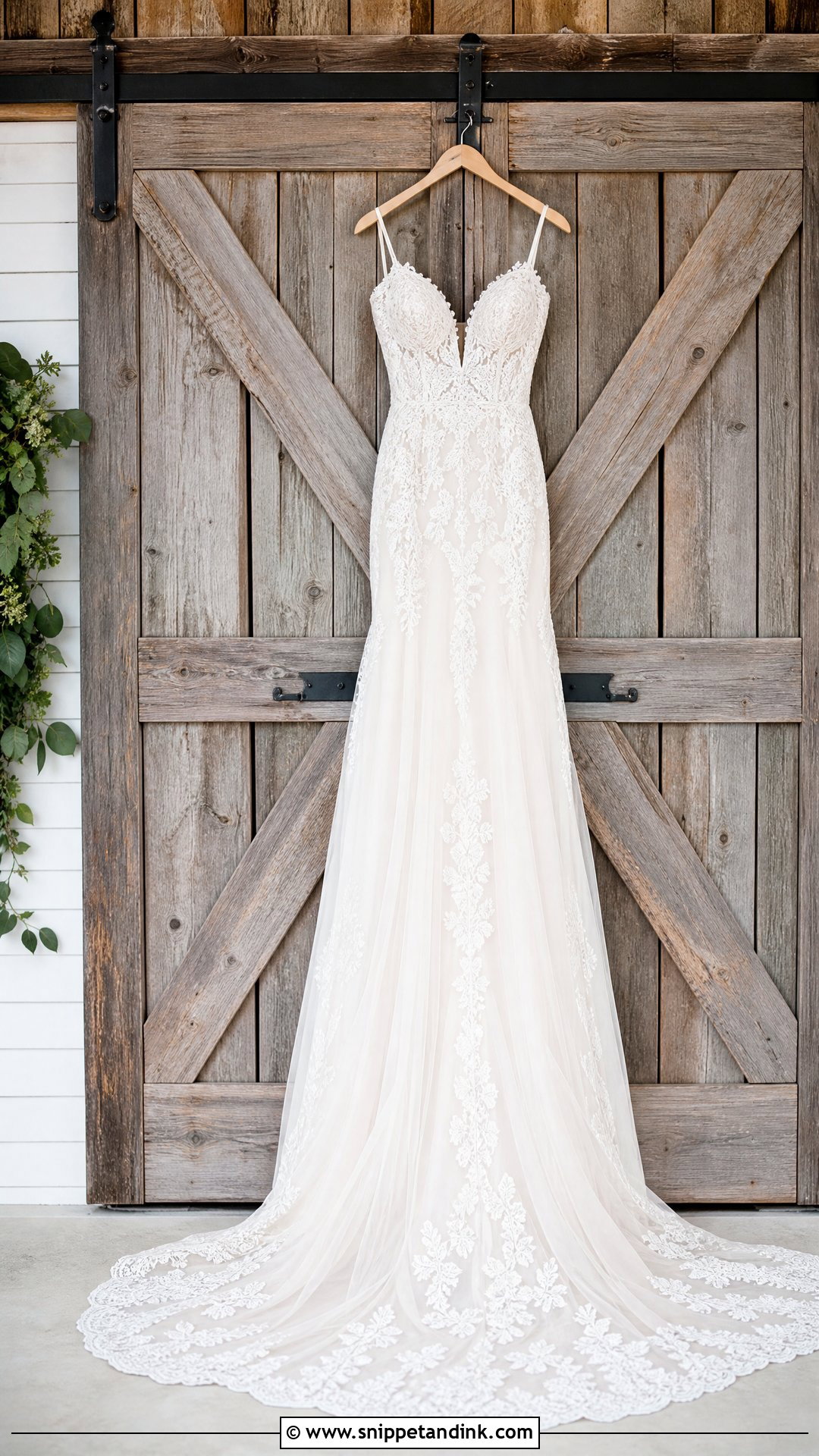
Weathered barn doors throw lace, satin and chiffon into sharp contrast, and they suit farm, ranch and countryside weddings naturally. Inspect the wood closely for splinters, rust, flaking paint and protruding nails, and hang the dress from its own secure hook with a little gap from the boards, never pressed against them. I keep a clean sheet under the train while we adjust everything, then whip it away just before the shot. A plain wooden hanger and a little greenery are enough; more props tip it into a themed look. Centring the gown between the doors balances the frame and shows off the timber texture.
9. Wedding Dress Hanging From A Garden Arbor
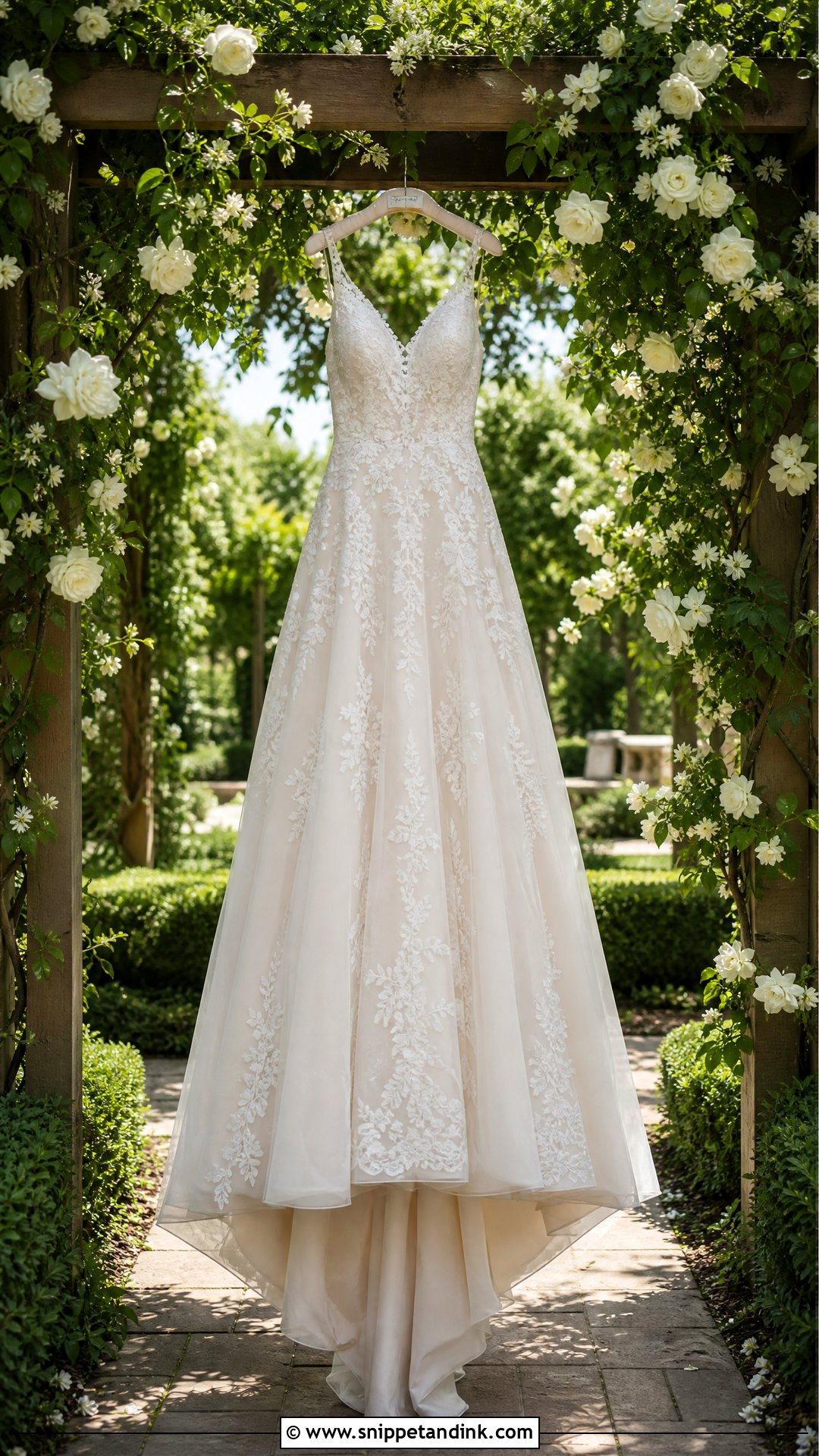
An arbor wraps the dress in flowers before the ceremony even starts, and it’s one of the prettiest outdoor options when the weather is calm and dry. Set it up away from sprinklers, mud and any area where the team is still building the ceremony. Test that the arbor doesn’t flex when the gown’s weight goes on, use a covered hanger, and hang the dress under the centre beam so the greenery frames the sides without touching the fabric. Keep the train lifted or resting on a clean cloth hidden from the camera. Early morning light suits this setting well. I include enough garden around the arbor to show the location, but no more.
10. Wedding Dress Hanging From A Tree Branch
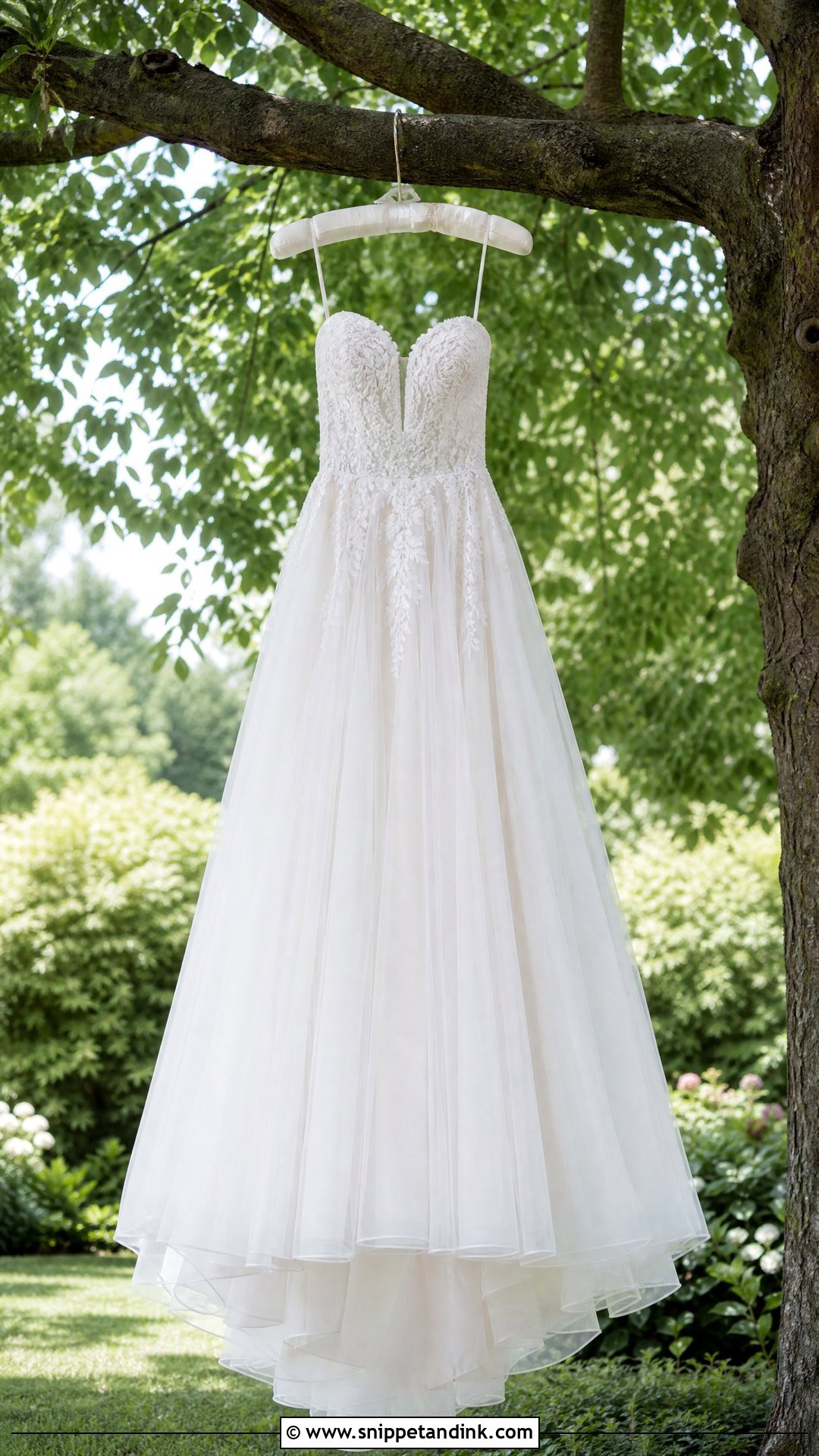
Tree branches look natural and wild in pictures, and they are also the riskiest place to hang a gown. Bark snags, sap stains, and insects and wind add to the problem. I never let the hanger sit directly on a rough branch; a covered hook or a padded ribbon loop goes on first, fitted by someone who has checked the branch is solid. Pick a sheltered tree close to the building so the dress is outside for minutes, not half an hour. Keep the hem off the ground and have someone standing by the whole time. A backdrop of leaves and soft daylight keeps the silhouette clear.
11. Wedding Dress Hanging Against A Brick Wall
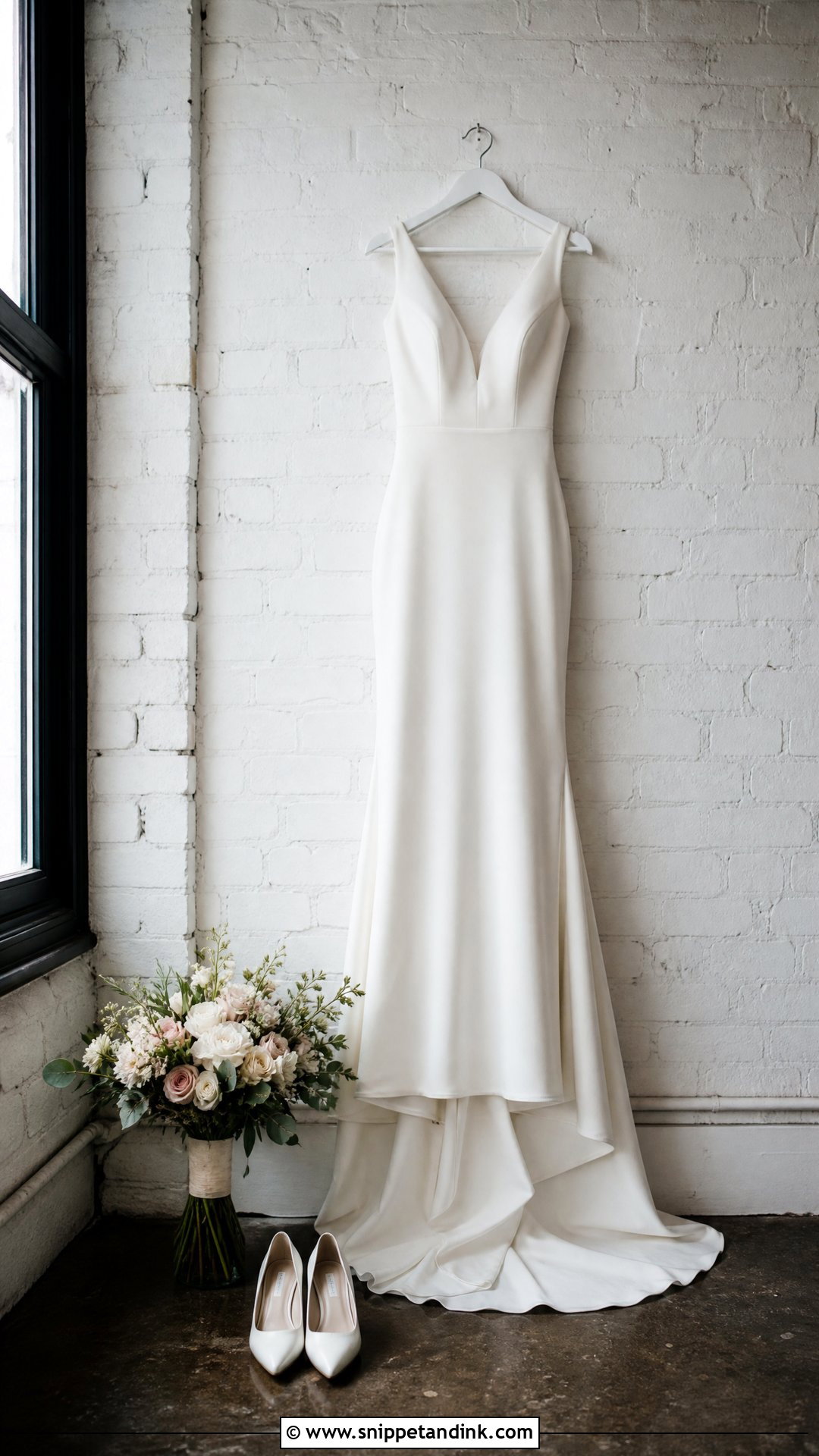
Brick adds texture and a slightly urban, editorial edge. Whitewashed brick gives a soft neutral backdrop, while red or weathered brick contrasts well with minimalist gowns and industrial venues. The danger is contact: mortar dust, old nails and rough edges will mark fabric that brushes against them, so I use a freestanding rail or an overhead hook to keep a clear gap from the wall. A simple hanger keeps the frame uncluttered. Add one or two details below the dress at most. Straight-on framing emphasises symmetry; an angled shot shows off both the brick texture and the depth of the skirt.
12. Wedding Dress Hanging In A Bridal Suite
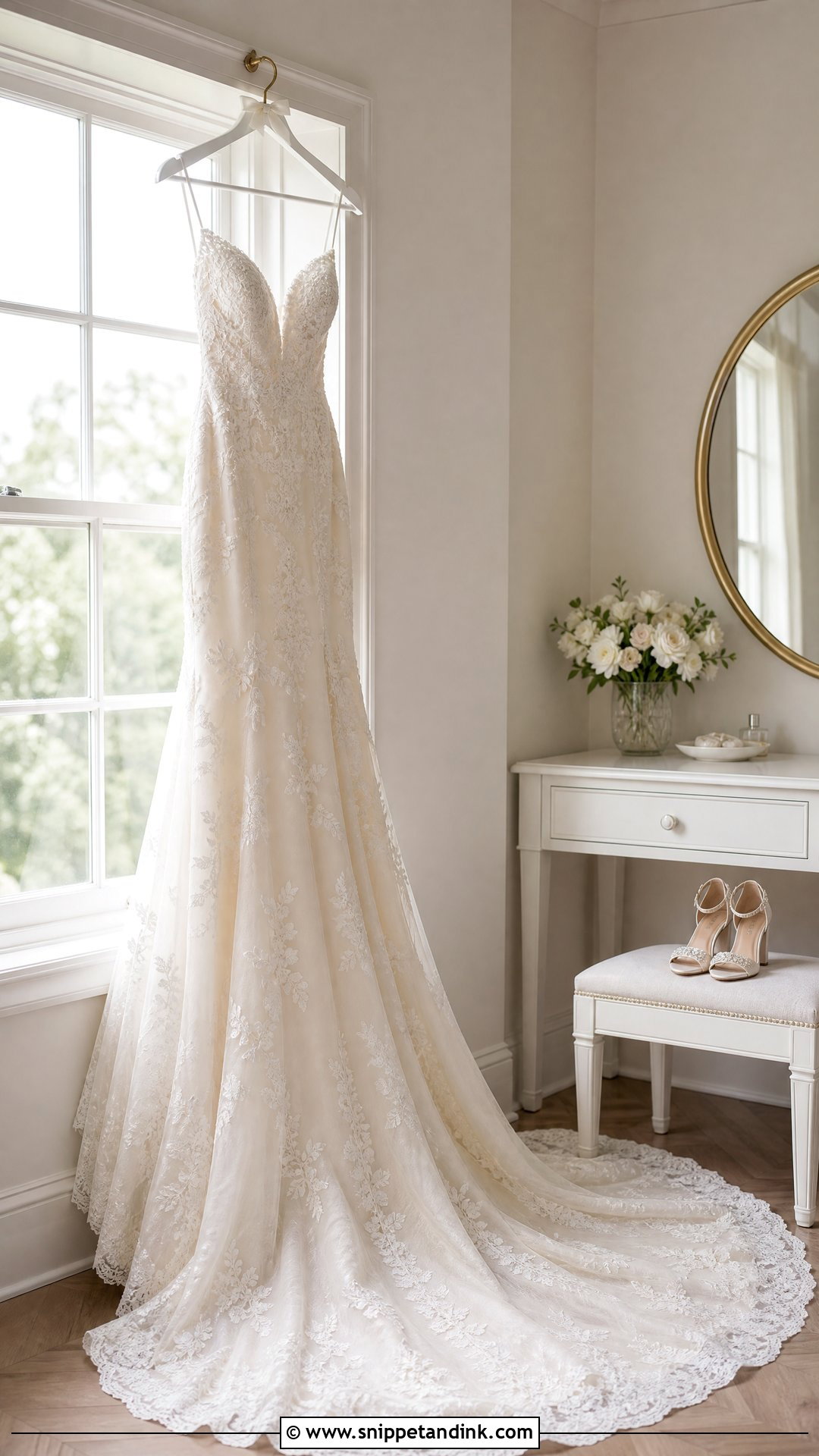
A well-arranged bridal suite captures the feel of the morning, but the nearest hook is rarely the best spot. When I walk into a suite, I look for the cleanest wall, the tallest window or one good piece of furniture before the dress comes out of its bag. Clear bags, takeaway cups, clothing, cables and makeup from that corner. Hang the gown high enough to show the full skirt while keeping it within easy reach for dressing. Robes, shoes or the bouquet can sit elsewhere in the room as secondary details. Ask people to step out of the background for the minute it takes to shoot.
13. Wedding Dress Hanging In Front Of A Mirror
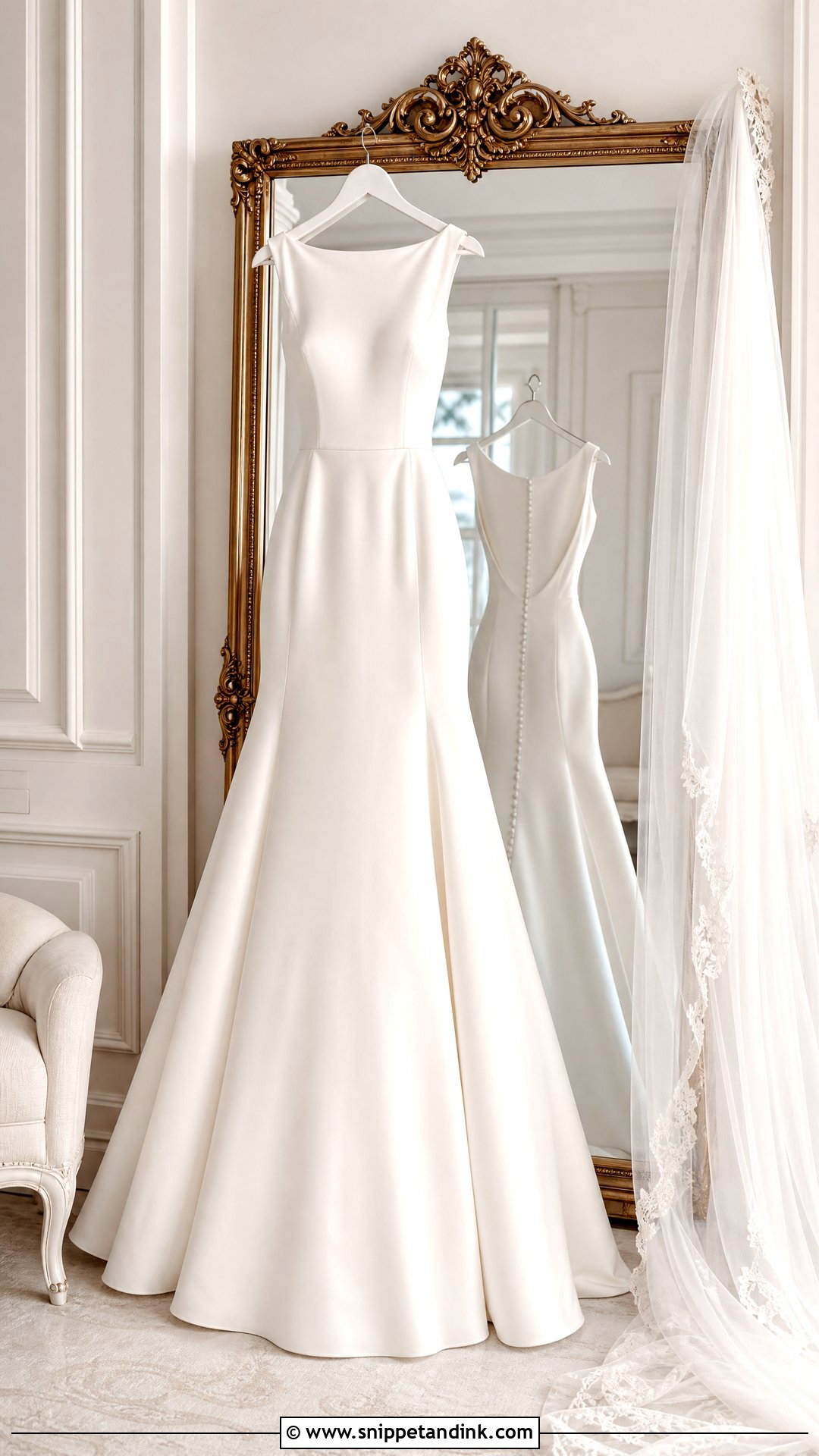
A large mirror lets you show front and back in a single frame, which is perfect for gowns with button backs, low backs or detailed trains. Hang the dress a couple of feet in front of the mirror, never pressed against it, so I can angle the camera to catch the front directly and the back in the reflection. Clean the glass thoroughly and check what else the mirror sees: open doors, people, my own reflection and kit. That last one takes careful positioning. A gilded frame suits traditional weddings; a frameless mirror looks cleaner. Keep accessories to a minimum, as the reflection already doubles the detail.
14. Wedding Dress Hanging From A Ceiling Beam
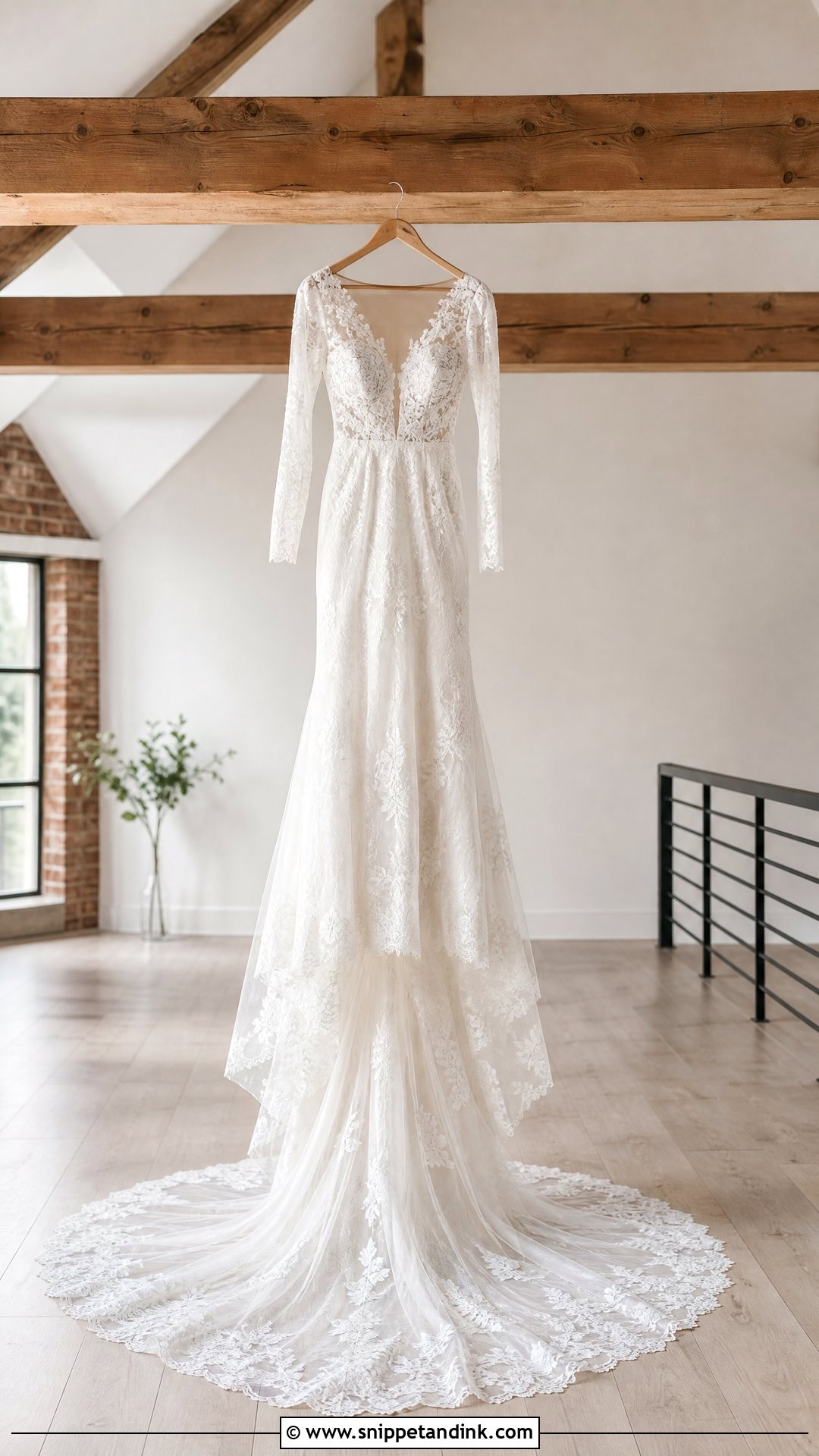
Exposed beams give long gowns all the height they need, and lofts, renovated barns and older houses often have them. Ask venue staff to approve the exact spot and supply a safe hook, and please don’t climb on chairs or tables to reach it. Hang the gown far enough from the wall that the skirt keeps its full shape. A long veil can drop behind it as long as its weight is supported separately. I shoot this from slightly below the dress’s waist height, which lengthens the gown, and I keep nearby lights and decorations out of the frame where I can.
15. Wedding Dress Hanging On A Decorative Ladder
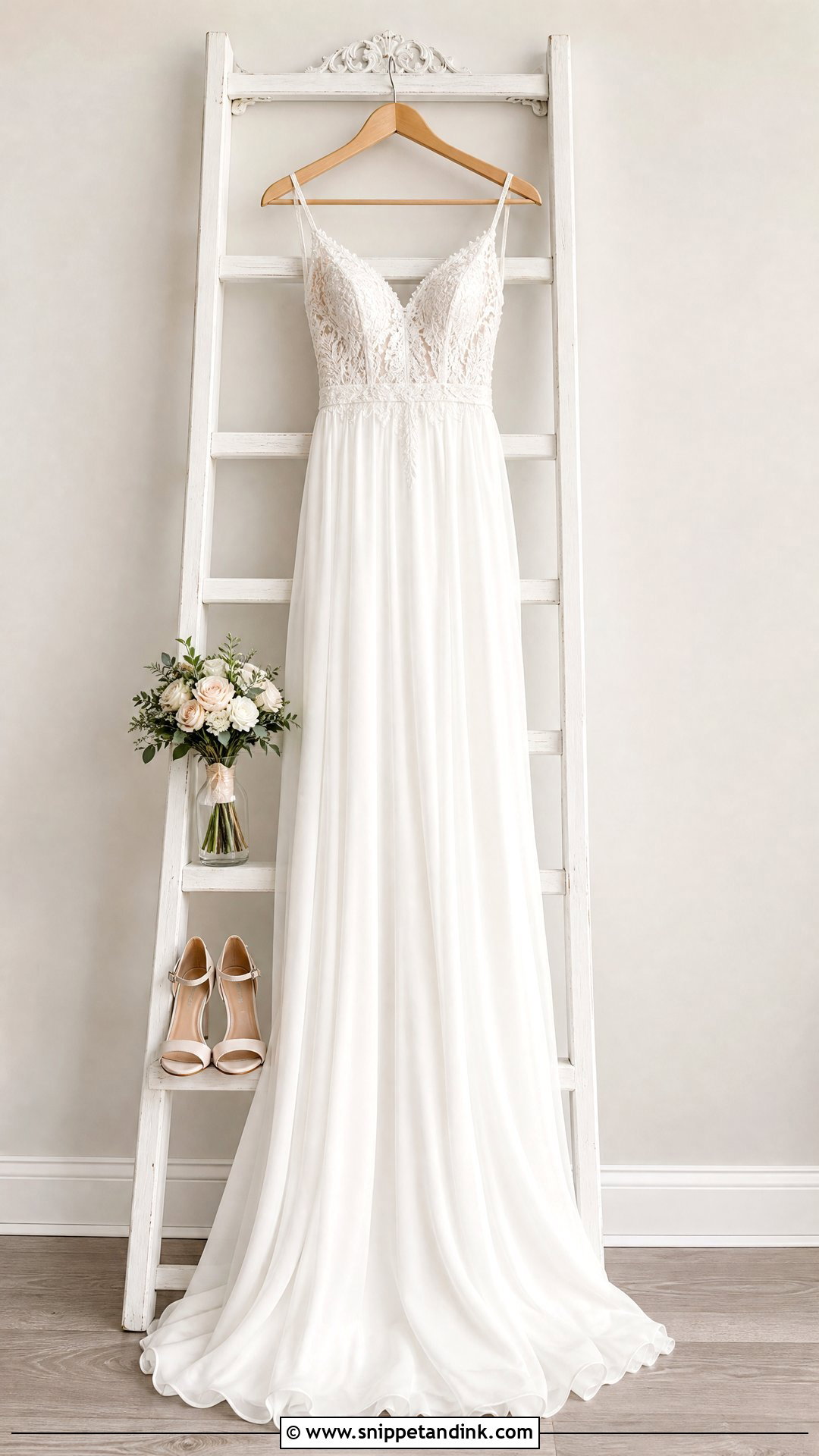
A decorative ladder solves the room with no good hooks, doors or windows. Use one made for decor or photography, sturdy and smooth, rather than an old ladder with loose rungs and rough edges that snag tulle. The gown hangs from a reinforced top bar, with shoes or a few flowers on a lower rung, as long as nothing touches the skirt. White ladders feel light; natural wood suits rustic and boho weddings. The big advantage is mobility. I can carry the ladder to the cleanest wall or the best window, so the dress doesn’t have to be moved around the venue again and again.
16. Wedding Dress Hanging With A Floral Garland
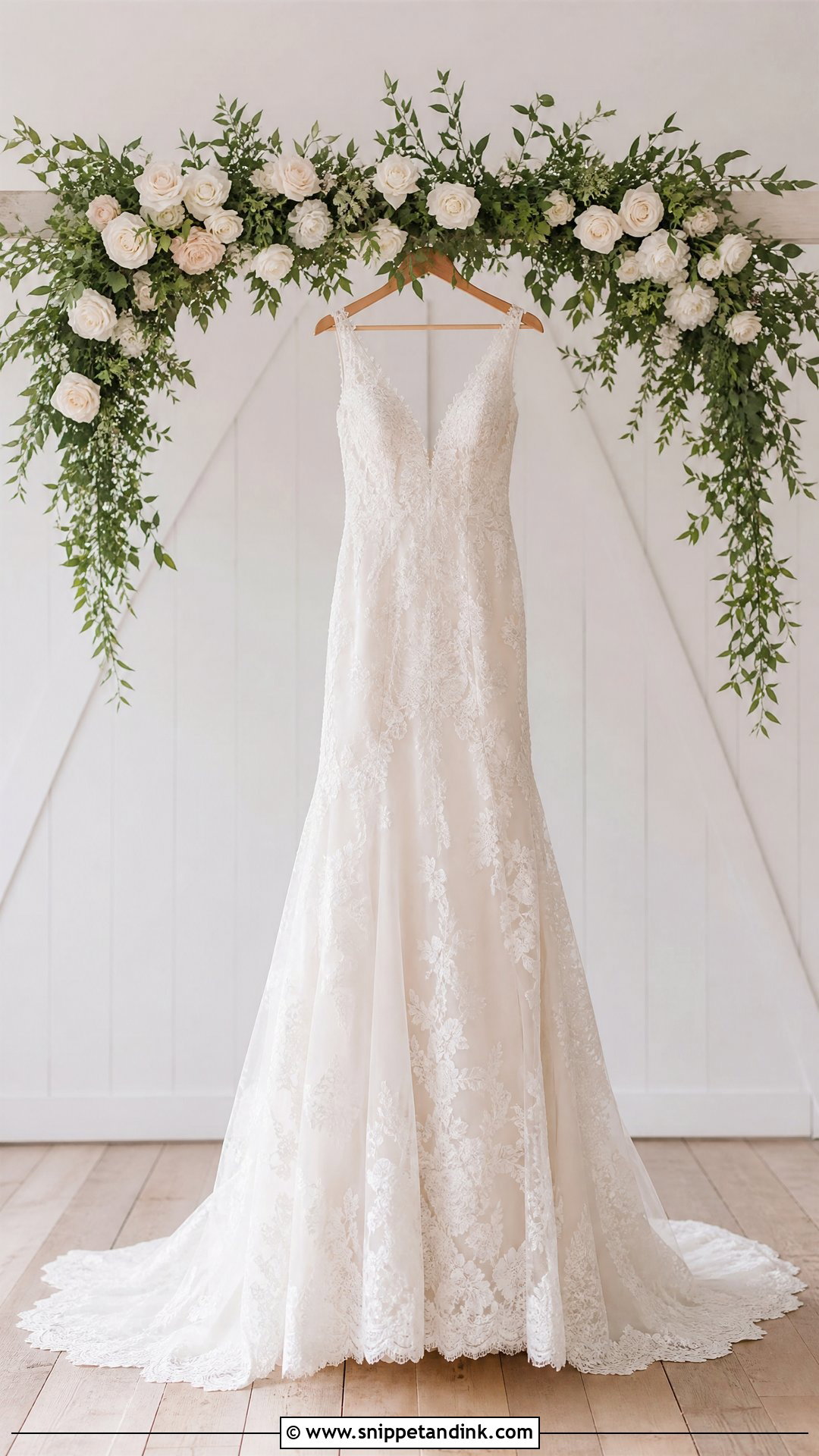
Flowers framing the dress connect the shot to the rest of the day’s design, but they shouldn’t touch the fabric. Fresh pollen, damp stems, greenery sap and florist wire all stain or snag, and lily pollen in particular is notoriously hard to get out of silk. Drape the garland above or around the hanging point instead, on a wall, doorway, arbor or freestanding frame, and leave clear space around the silhouette. Ask the florist to tape over sharp mechanics before the gown arrives. I like the flowers concentrated at the upper corners with a few light pieces trailing down, so they frame the dress rather than hide it.
17. Wedding Dress Hanging With The Veil
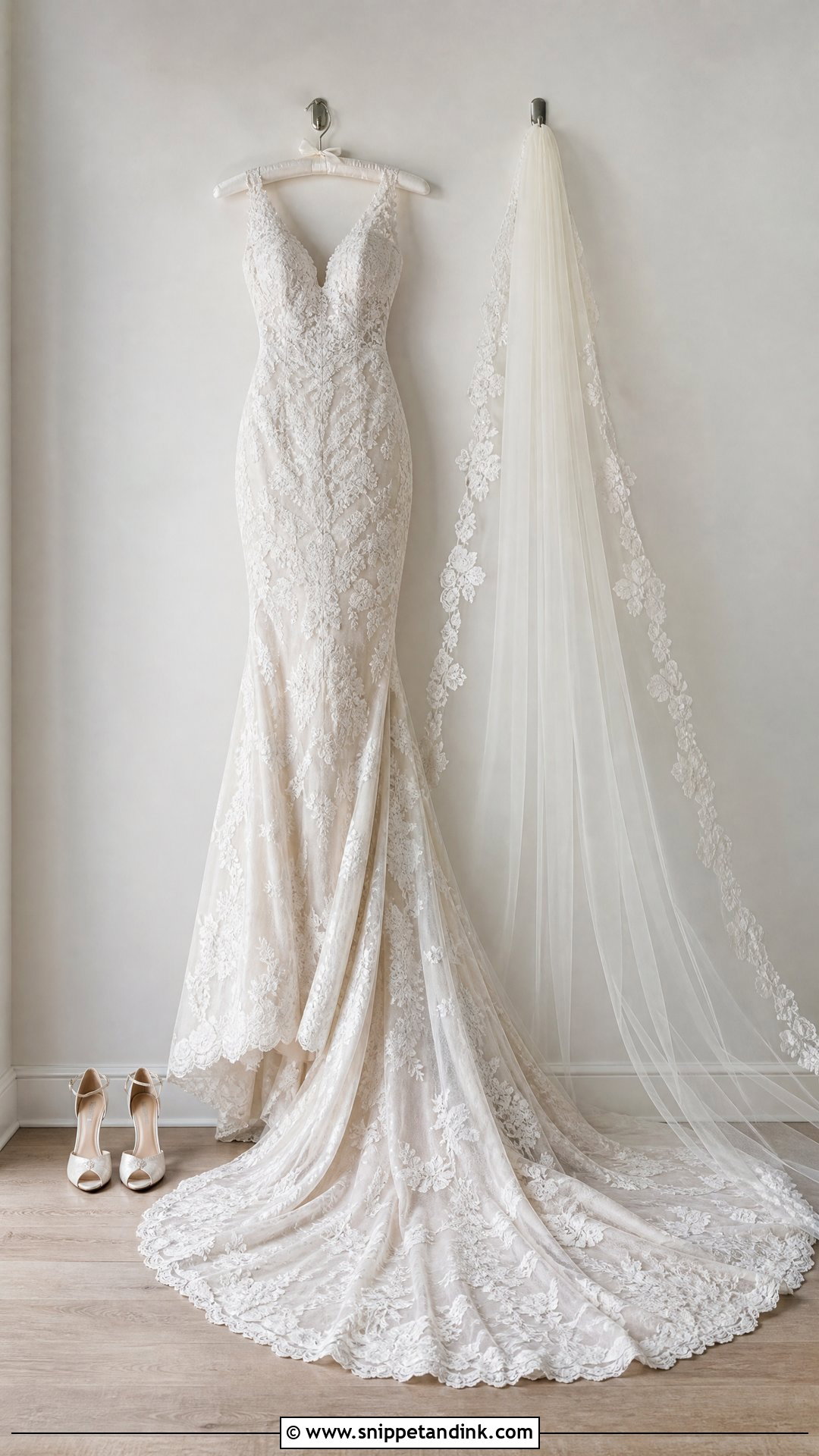
Showing the veil with the dress tells the full story of the bridal look before it’s worn. The veil needs its own padded hanger or a discreet hook behind the gown, because its weight hanging off the dress hanger drags the shoulders out of shape. A cathedral veil can flow beneath the skirt; fingertip and chapel lengths sit nicely along one side. Make sure embellished edges are visible, especially lace or pearls that match the dress. Layers of pale tulle lose definition easily, so I use a plain backdrop and soft light, and take one full-length frame plus close-ups of the comb and edging.
18. Wedding Dress Hanging With Bridal Accessories
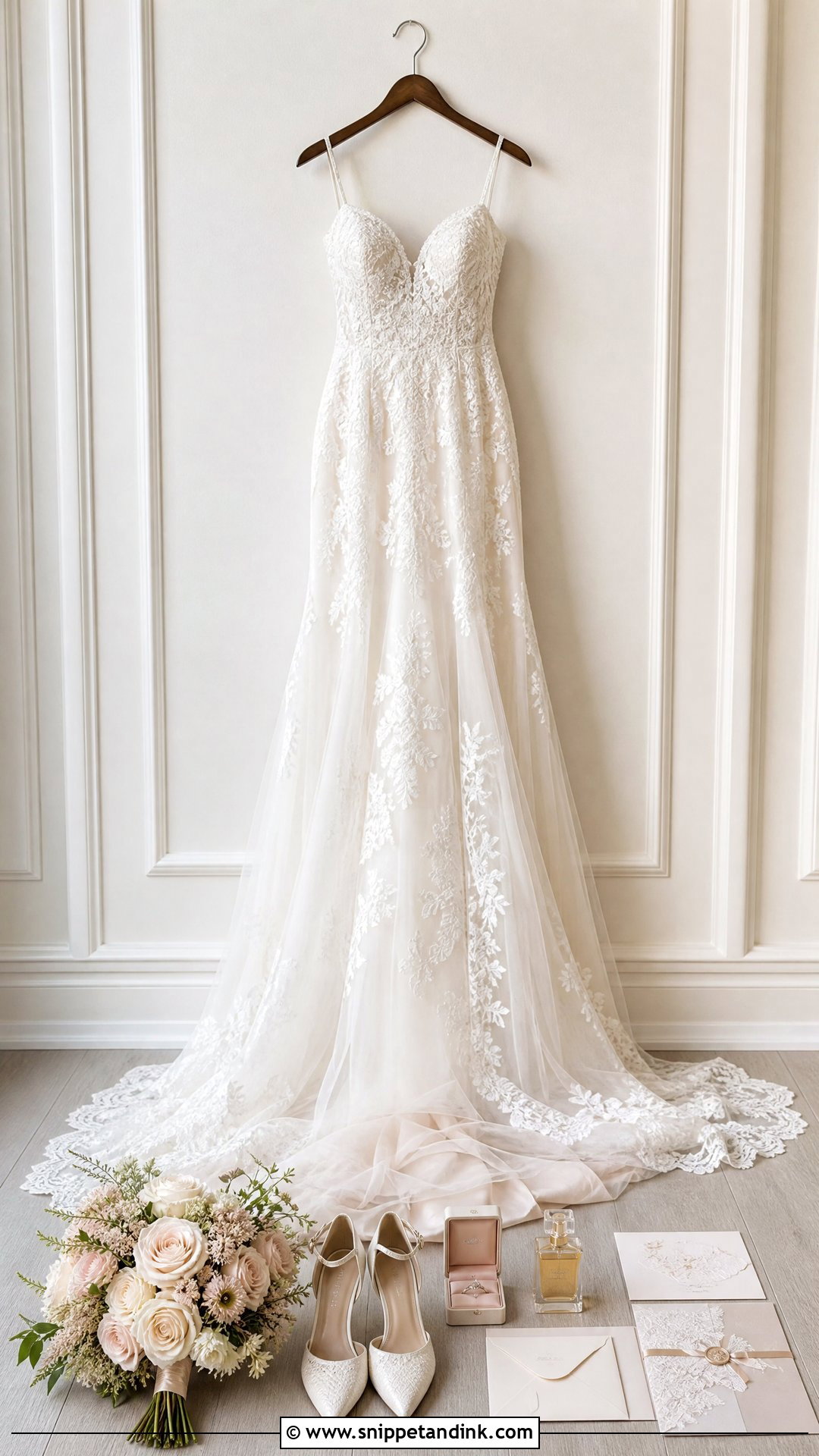
Accessories around the gown turn the hanging shot into a record of the whole look. Shoes go below the dress, jewelry in a small open box, the bouquet slightly to one side. An invitation suite, perfume, a hairpiece or an heirloom can join them if it means something to you. Nothing goes on the fabric itself, and the dress should stay the largest and brightest thing in the frame. Repeat only a couple of materials, such as pearl and satin or gold and ivory, so the arrangement looks considered. I shoot one wide frame of the whole set, then separate close-ups of the small pieces.
19. Wedding Dress Hanging With Bridesmaid Dresses
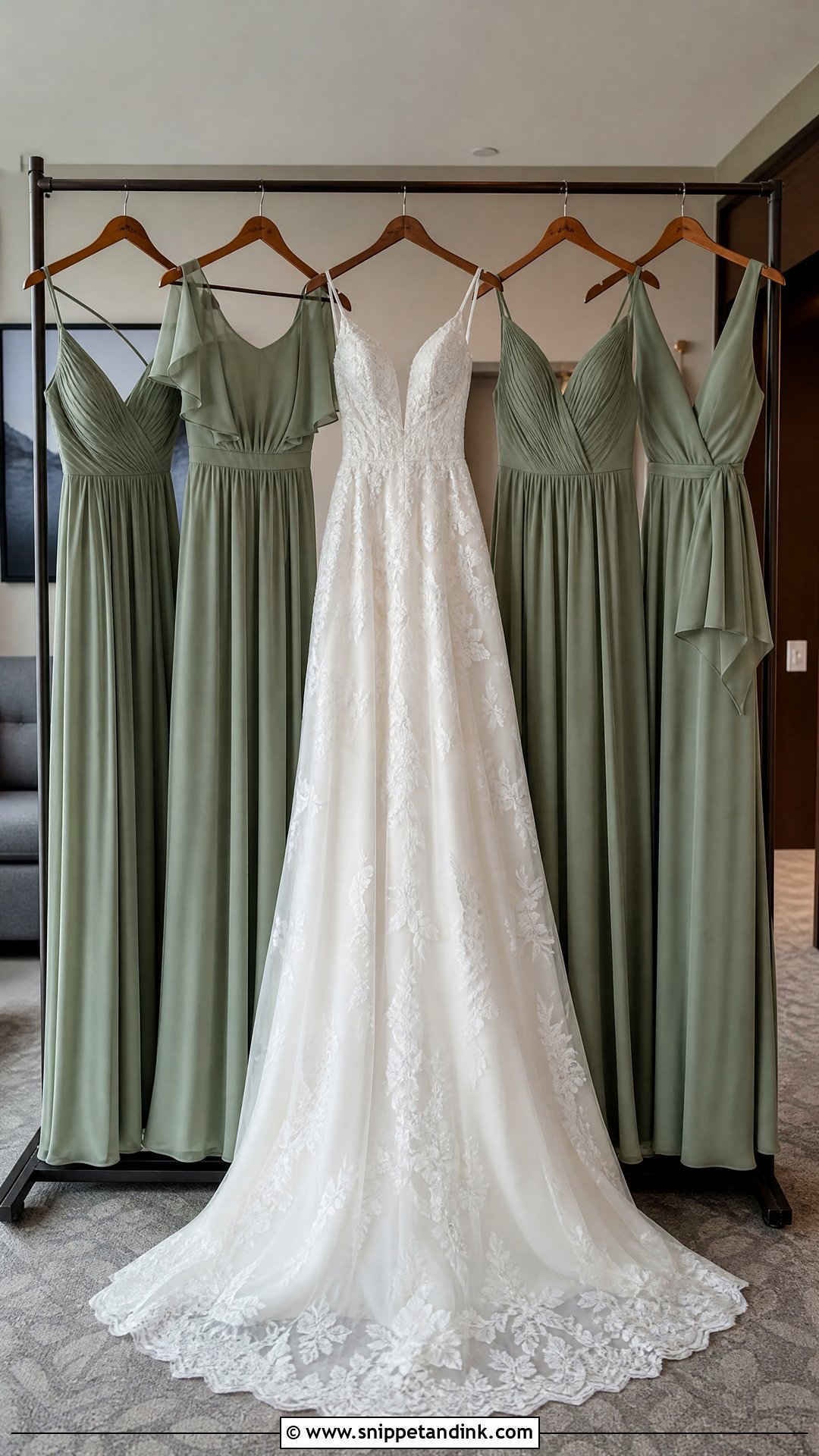
Lining the bridal gown up with the bridesmaid dresses shows the colour palette in a single image, which is helpful when the party wears mismatched cuts or shades. Keep the gown central or set slightly apart so it stays the obvious focus. Matching hangers for the bridesmaids and something distinctive for the bride make the row look intentional. Arrange the dresses by colour gradient, neckline or length, on a long rail, a row of wall hooks or a wide window. Before I shoot, I go along the row tucking in tags, hanger straps and loose loops, and check that every hem hangs level.
20. Wedding Dress Hanging With A Personalized Hanger
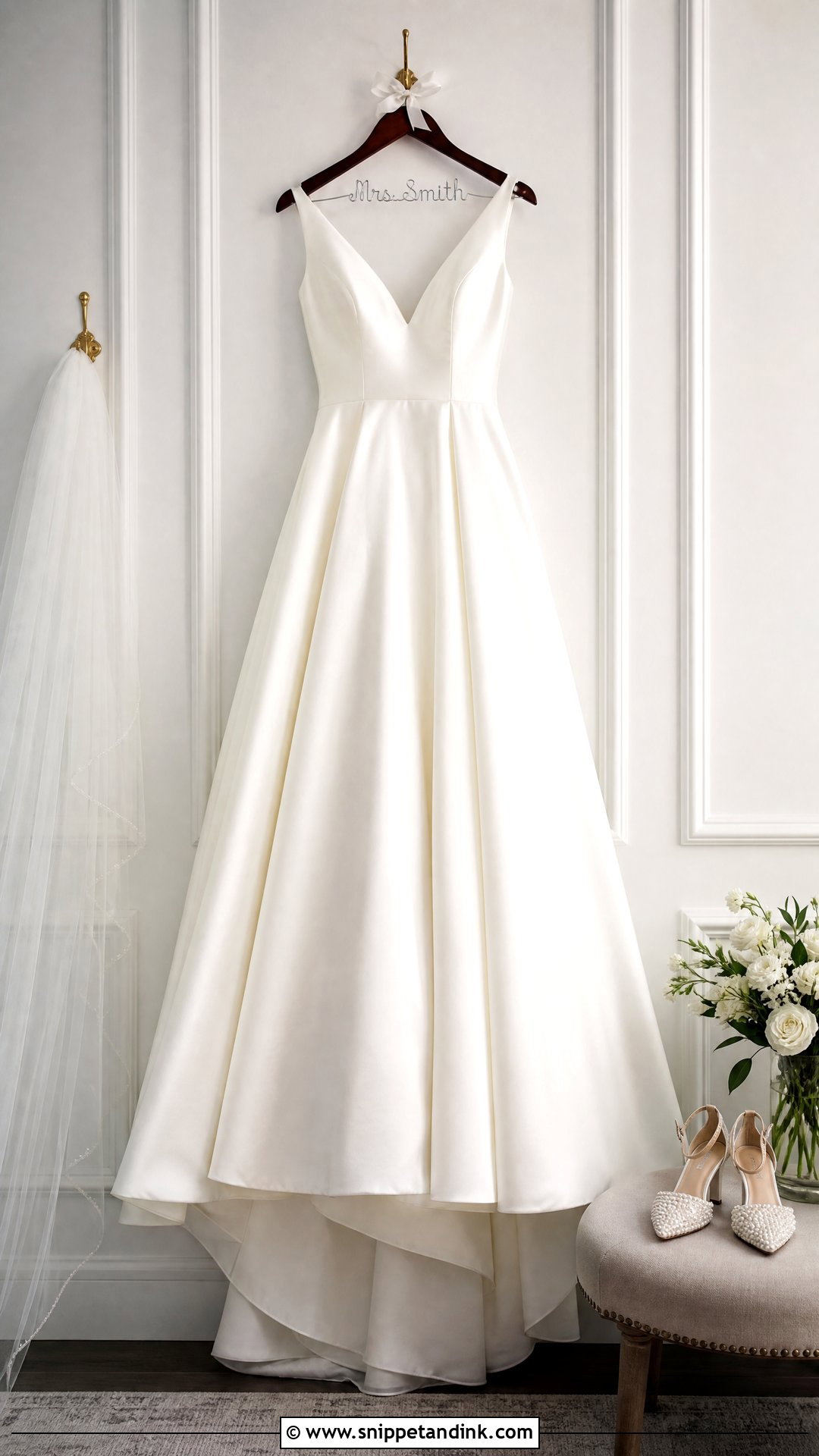
A personalised hanger adds a small, personal detail, whether it carries a first name, a new surname, the date or simply “Bride”. Choose a sturdy one with smooth edges and wide shoulders. Decorative wire lettering looks pretty but shouldn’t bear the gown’s weight or touch delicate lace. Hook the dress’s internal hanging loops over the hanger rather than relying on straps or sleeves, especially with heavy fabric. A clean background keeps the lettering readable in the shot. Afterwards, the hanger makes a practical keepsake, a closet display or part of a framed collection.
Exposing a White Dress So the Lace Still Shows
Cameras try to turn everything into a mid-tone, so an all-white gown often comes out greyish, or, overcorrected, as a flat bright shape with no detail. I meter for the dress itself and push the exposure up until the fabric looks white, then check the highlights to be sure the brightest parts of the bodice still have texture.
- Turn off warm table lamps and overhead bulbs so window light is the only source; mixed light turns ivory patchy, orange in one area and blue in another.
- Side light shows lace and beading in relief, while light straight from behind the camera flattens them.
- For the full-length frame, I step back and keep the camera level with the middle of the dress, so the gown doesn’t look top-heavy or squat.
- Ivory, champagne and blush gowns need a custom white balance, or they can come out looking yellow or grey.
Where the Hanging Shot Fits Into the Morning
On most wedding mornings, I photograph the dress, rings, shoes and invitation in the first part of my coverage, while hair and makeup are still underway. It usually takes around fifteen minutes if the dress is steamed and the spot is cleared, much longer if we’re still hunting for a hook. Tell your planner or coordinator where you’d like the dress to hang and have it unpacked before the photographer arrives.
Build in a buffer before you need to get dressed. Bridesmaids who need to step into their own dresses, a bustle that needs explaining, and a veil that needs steaming all take longer than people expect. A dress that comes down off the hook twenty minutes before you need it keeps the morning calm.
A Few Minutes on the Hook, Then Back in the Bag
A hanging shot only needs a few calm minutes, and the gown should be safe for every one of them. Pick a spot that suits the dress and the venue rather than whichever hook happens to be there. Soft light, a clean background, a sturdy hanger and the internal loops do most of the work. Outdoor setups should be quick and watched, with wind, damp, rough surfaces and greenery in mind. Before the wedding, follow your salon’s storage instructions and keep the gown in a suitable garment bag rather than leaving it on display for days.
You'll Like These Ideas:


Leave a Reply